

Submitted:
22 December 2024
Posted:
23 December 2024
You are already at the latest version
Abstract
This study was carried out to investigate the spatial distribution of dogs infected with Leishmania spp. through serological tests, as well as to compare it with the vector density in the urban region of Araçatuba, SP, Brazil. A total of 131 domestic dogs were serologically examined using the Dual Path Platform (DPP) and Enzyme-Linked Immunosorbent Assay (ELISA) for the diagnosis of Leishmania spp. Information about the peridomiciliary environment was recorded in the investigation forms. Entomological collections were also performed in March 2018. Antibodies to this protozoan were detected in 27 (20.61%) dogs using DPP, with serological confirmation in 11 (40.74%) using ELISA. Seropositive dogs were found mainly in the northern region, and none were found in the center of the city. The density of vectors per area was not related to the presence of these dogs. This study was carried out in Araçatuba, SP, an endemic region for Leishmania spp., and may contribute to epidemiological surveillance through diagnostic investigation in canines, as well as the densities of phlebotomine sandflies. Spatial analysis using the tests recommended by the Ministry of Health for the diagnosis of canine visceral leishmaniasis was performed for the first time in the urban region of Araçatuba, SP.
Keywords:
sandflies
; canine visceral leishmaniasis
; serology
1. Introduction
Visceral leishmaniasis (VL) is a zoonotic disease caused by the protozoan Leishmania infantum (syn. Leishmania chagasi) in Brazil [1]. It is transmitted by female sandflies [2], Lutzomyia longipalpis [3], Lu. Cruzi [4] and possibly by Pintomyia fischeri, which was incriminated as a potential vector in the State of São Paulo [5]. Approximately 50,000 to 90,000 new cases of human visceral leishmaniasis (HVL) are estimated annually, with Brazil being one of the ten countries with the highest prevalence of this disease [6].
In the state of São Paulo, Lu. longipalpis was detected for the first time in the city of Araçatuba, SP, in 1997 [7]. In the same municipality, in 1998 and 1999, autochthonous cases of canine visceral leishmaniasis (CVL) [8] and human visceral leishmaniasis [9] were reported, respectively.
Since then, there has been an expansion of HVL in the State of São Paulo, with autochthonous human cases reported in 18,45% (119/645) of municipalities by 2022 [10]. The emergence and spread of this zoonosis are associated with anthropogenic and climatic behaviors, migrating from the northwest to the southeast of the state [11]. In the last update from the Ministry of Health, on August 20, 2024, the municipality of Araçatuba had 229 human cases with 23 deaths [12].
Domestic dogs are seen as an important reservoir of L. infantum in Brazil [13]. It is important to note that there are reports that the presence of the vector increases the prevalence of canine disease and increases the possibility of human infection [9,14]. For this reason, dogs are the target of a control program in some countries, such as Brazil [15]. In 2018, 574 cases of CVL were registered in the municipality of Araçatuba (data from the Municipal Center for Zoonosis Control of Araçatuba, SP, unpublished), through the canine survey, however it was not carried out in the entire municipality.
As of Decree No. 51,838, of March 14, 1963, the euthanasia law for seropositive dogs became national, as well as the diagnosis of CVL as a prevention and control measure [16].
As of 2012, the Ministry of Health (MS) recommended the protocol with the use of the Dual Path Platform (DPP), as a screening test, and the Enzyme-Linked Immunosorbent Assay (ELISA) as a confirmatory test [17].
The epidemiological framework of this parasitosis involves the vector and the wild and domestic reservoirs and humans, all with different dispersion and movement capacities, therefore, the processes involved in this infection are spatially dependent [18]. Considering that HVL and CVL have a marked impact on Public Health, this study was carried out with the aim of investigating the spatial distribution of dogs infected by Leishmania spp. through DPP and ELISA serological tests, as well as analyzing the vector density in the urban region of Araçatuba, SP, Brazil.
2. Materials and Methods
2.1. Period and Study Area
The study was developed during the month of March 2018, in the urban area of the municipality of Araçatuba, located in the northwest region of the state of São Paulo, Brazil, with an area of 1,167.129 km2 and an estimated population of 195,874 inhabitants [19].
The city was divided into eight areas, with five sectors each, except for the eighth area that had only one sector, totaling 36 sectors, according to the Division of the Dengue Surveillance and Control Program (DPVCD). In each sector, two houses were selected with a minimum distance of 250 m between them, obeying the dispersion in the urban area of the species Lu. longipalpis [20].
2.2. Residences Selection
The 72 houses were selected by convenience sampling, in blocks where cases of human or canine visceral leishmaniasis had been confirmed in the last four years, based on information shared by the Superintendence of Endemic Control of Araçatuba, SP - SR-09 (SUCEN). As an exclusion criterion, residences where the owners stated that they had vaccinated their dogs against visceral leishmaniasis were not included. All houses were georeferenced for later spatial analyses.
2.3. Experimental Design
2.3.1. Sample Calculation
2.3.2. Study Population
To ensure safety, a total of 131 domestic dogs were serologically examined, 49 males and 82 females of mixed breed (SRD), living in the 72 selected houses. Regarding age groups, these animals were classified as young, adult and elderly, respectively dogs under two years old, from two to seven years old and over seven years [23].
2.3.3. Sample Collection
Individual blood samples of 3.0 mL were collected by cephalic venipuncture with disposable syringes and needles and stored in tubes containing Ethylenediamine Tetraacetic Acid (EDTA). Blood serum from the samples were obtained by centrifugation at 1000 g for 10 minutes and stored at -70°C until the time of serological analysis.
2.3.4. Phlebotomine Collections
Phlebotomine collections were performed using CDC light traps (Figure 1), which were placed in the houses of all project participants. Two traps were installed, one inside and the other outside the residence. Thus, the captures of these insects were conducted over three consecutive nights, with an exposure period from 7:00 p.m. to 7:00 a.m. At the end of this period, the collection bags were removed and placed in plastic bags and taken to the laboratory.
The captured sandflies were analyzed under a stereomicroscope to separate them from the other insects (Figure 2).
2.3.5. Investigation and Environmental Observation Form
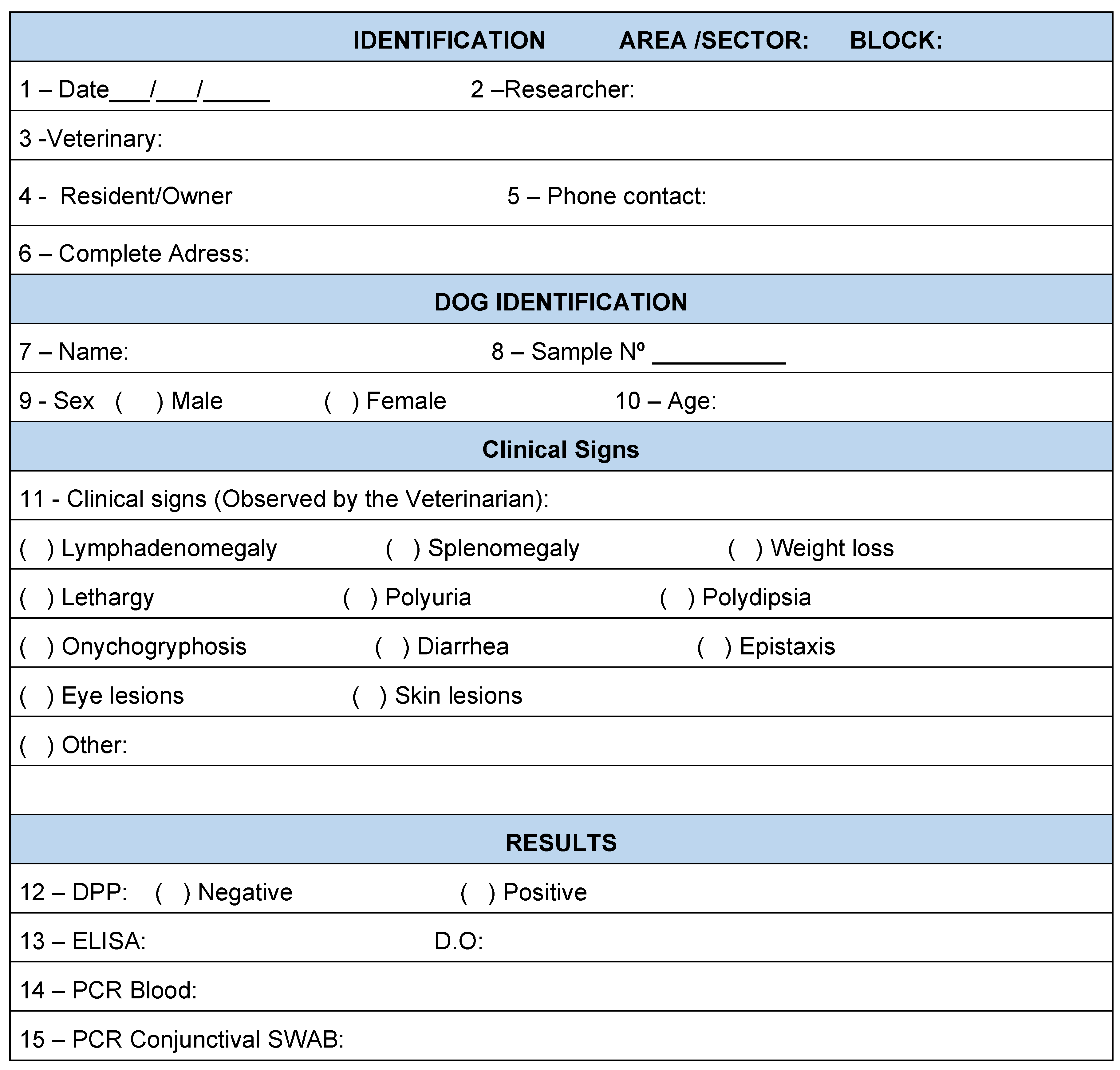
The investigation form (Appendix A) for each dog was filled out by its tutor, to obtain specific data, such as gender, age range and lifestyle - domesticated animals (those dependent on their owners who leave the home accompanied and restrained by collars) or semi-domiciled animals (dependent on their owners, who remain outside the home for an indefinite period).
The questionnaire (Appendix B) was carried out as an individual interview, being applied to obtain data from each participating resident, with the aim of defining the epidemiological variables that could be correlated with the occurrence of VL, as well as the presence of other domestic animals, vegetation and fruit trees.
2.4. Laboratory Tests
Two serological tests were used to detect antibodies to Leishmania spp. in dogs, the first being the rapid immunochromatographic test, Dual-Path Platform (TR DPP® - Bio-Manguinhos/Fiocruz, Rio de Janeiro, Brazil) used with recombinant rK39 proteins from L. chagasi and Protein A Conjugated to Colloidal Gold [24]. The confirmatory test for samples positive for DPP was the Enzyme-Linked Immunosorbent Assay (ELISA - Bio-Manguinhos/Fiocruz, Rio de Janeiro, Brazil) to detect Anti-L. major-like antibodies. The cut-off was defined based on the manufacturer’s instructions and considered from the average optical density of the negative controls multiplied by two [25]. Both tests were performed according to the guidelines recommended by the manufacturers.
2.5. Statistics
Data analysis consisted of descriptive statistics and multivariate logistic regression analysis to verify risk factors for CVL. Statistics were considered significant when p<0.05.
2.5.1. Kernel Analysis
This analysis allows visualization of both the spatial distribution and the intensity of events [26]. A quartic Kernel intensity function was used to compose a smoothed surface, the value of which is proportional to the intensity of events per unit area [27]. The analysis was estimated for both seronegative and seropositive animals, using the QGIS VERSION 3.2 software, and all maps were created using it.
2.5.2. Local Clustering
The spatial scanning method was performed using the SatScan® software version 9.5. Thus, cases (seropositive) and controls (seronegative) were considered for analysis using the statistical model with Bernoulli distribution. For each potential cluster, the likelihood ratio test was calculated comparing the hypothesis that the risk of the disease is greater inside the circle against the hypothesis that the risk is equal for the areas inside and outside the circle. The circle with the maximum likelihood ratio value is considered the most likely cluster [26]. The significance level considered for the clusters was p<0.05.
2.5.3. Vector Density
The vector density in each of the eight study areas was estimated by calculating the number of vectors captured by their geographic area (in km²).
2.6. Ethics Committee
The study was approved by the Animal Use Ethics Committee (CEUA) of the Araçatuba School of Dentistry and the Araçatuba School of Veterinary Medicine (FMVA) UNESP, Araçatuba Campus, FOA process No. 00870-2016 (Appendix C) and by the Research Ethics Committee (CEP) of the Araçatuba School of Dentistry-UNESP, Araçatuba Campus, FOA process No. 61241216.4.0000.5420 (Appendix D).
3. Results
From the analysis of cases and controls, it was observed that dogs seropositive for Leishmania spp. were concentrated mainly in the northern region (Figure 3). Seronegative dogs were found throughout the region, with greater evidence in the center and south of the study area (Figure 3). The density of seronegative dogs was much higher than that of seropositive dogs. However, although these are different areas, no significance was found in the spatial prevalence (p>0.05) throughout the study region, according to the local cluster analysis. There were two residences with seropositive and negative dogs.
Of a total of 131 dogs, 27 (20.61%; 95% CI: 14.57-28.33%) were reactive in the DPP test for Leishmania spp. and 11 of these (40.74%; 95% CI: 24.51-59.27%) were confirmed in the ELISA test, resulting in a prevalence of 8.4% (11/131).
The descriptive and regression statistics analysis showed no association (P < 0.05) between the variables analyzed and the occurrence of Leishmania spp. in the dogs evaluated (Table 1).
Lu. longipalpis was the only insect vector of L. infantum captured in the city of Araçatuba, SP, during the study period. A total of 120 specimens of the vector were captured in seven of the eight areas investigated. This may have been evidenced by the fact that area eight had only two houses and the other areas had ten.
Regarding the distribution of Lu. longipalpis, it was observed that there was no correlation between the areas of greater vector density and higher rates of occurrence of CVL (Figure 4). Thus, areas one (A1) and two (A2) demonstrated the same vector density. However, in the first area, a higher prevalence of seropositive dogs for Leishmania spp. was observed, 36.36% (4/11) compared to the second area, 18.18% (2/11). The fourth area (A4) presented a low prevalence, 9.09% (1/11), but a higher vector density.
Areas three (A3) and six (A6) showed the same vector density, however, the prevalence of seropositive animals was 18.18% (2/11) and 9.09% (1/11), respectively. In areas five (A5) and seven (A7) the same density of insects was also observed, however the prevalence of seropositive dogs was 9.09% (1/11) and 0% (0/11), respectively.
4. Discussion
For the first time, the spatial distribution and analysis of seropositive and seronegative canine cases by DPP and ELISA tests for Leishmania spp. is represented in the urban area of the municipality of Araçatuba, SP. A previous study was conducted with other serological tests [9].
Although there was no significant difference in prevalence in the different areas, the animals seropositive for Leishmania spp. were concentrated in the northern region, with some positive cases in the southern region. In another study, there was also a higher prevalence in the northern region, with no seropositivity in the southern region [9], which demonstrated that there was probably dispersion in this urban area of the municipality over time.
The seroprevalence of CVL in the study was 8.4%, consistent with studies carried out in the municipality, such as 12.1% in the canine serological census [9] and 8.1% in a specific region of the city [18].
In this study, 131 dogs were examined, of which 27 were seropositive for Leishmania spp. by DPP and only 11 were confirmed by ELISA. This difference can be explained by the fact that the rapid test presents a sensitivity and specificity based on rK39 proteins, and studies have already demonstrated a greater sensitivity for detecting symptomatic than asymptomatic dogs [28,29,30].
In endemic cities, such as Araçatuba, where euthanasia of dogs seropositive for CVL is adopted as a control measure, it was found that the population tends to be younger due to the replacement of dogs by their owners, and, therefore, more susceptible to infectious diseases [23,31]. On the other hand, in areas where euthanasia is not frequently applied, the prevalence of CVL tends to increase with age [32]. Although this research evaluated an area with frequent euthanasia and replacement of dogs, the results did not observe a significant difference in infection between age groups.
In the present study, although there were more infected males than females, this result was not significant. This has been previously observed as well as observed by other authors [32]. However, it has been noted that Leishmania spp. infection in male dogs was more prevalent than in females [33]. The lifestyle of dogs kept in the peridomicile during the night, period of greatest activity of Lu. longipalpis [34], may increase the risk of exposure to phlebotomine sandflies and consequently to this parasitosis [35]. The vector is active from twilight onwards [2]. Thus, this may possibly be a matter of environmental and behavioral exposure and not due to gender [36]. Or even a style of raising, in which owners keep their animals indoors or outdoors. In the present study, although 100% of the animals that sleep indoors were seronegative, this variable was not significant.
Of the specimens captured, Lu. longipalpis was the only vector found in seven of the eight areas investigated. The low vector density in area eight can be explained by the number of residences in this area and, consequently, the absence of LVC.
Although the entomological collections were carried out in only one month, it was noted that these insects expanded throughout the urban area of Araçatuba, SP, as in a previous study, they had a higher density in the central and southern regions of the city [9].
Regardless of no association was found between the occurrence of antibodies against Leishmania spp. and the presence of chickens, this can probably be explained by the low frequency of households with poultry.
Chickens can be a source of shelter and food for sand flies, as well as vegetation in the home [37], especially fruit trees [38], which have already been identified as risk factors for the presence of this disease due to attracting sand flies [39]. However, in the present study this factor also did not demonstrate significance for canine cases. The central region (A4) continues to be an area of greater vector density, as highlighted in another study [9]. This can be explained by the fact that these areas have residences with large backyards, with medium to large trees, mostly fruit trees, causing shade and humidity in the soil, as well as the raising of other animals such as cats, birds and chickens, as we know these factors can favor the breeding and proliferation of sand flies.
In the present study, no association was observed between the distribution of the vector and the residence of dogs infected by Leishmania spp. This result has already been observed [9] and may be due to the fact that vector captures were made at a specific time, while the serological result for Leishmania spp. may be due to recent or late infections, since high antibody titers in dogs can remain for more than a year [40,41].
5. Conclusions
The spatial analysis using the tests recommended by the Ministry of Health for the diagnosis of canine visceral leishmaniasis was performed for the first time in the urban region of Araçatuba, SP.
Appendix A Research form Applied to Dog Owners
Figure A1.
Appendix B Questionnaire Applied to Obtain Data from Each Participating Resident

| IDENTIFICATION | |
|---|---|
| 1 – Date___/___/_____ 2 – Researcher __________ 3 – Interview nº:__________ | |
| 4 -Complete Adress: __________________________________ 5 – CEP:_________________ | |
| 6 - GPS code : X(Long) _________ Y(Lat) _______ | |
| 7 – Resident/Owner Name:_____________________________________________ | |
| 8 – Occupation: ________________________________________ | |
| 9 – Phone: House ( ) ____________________ ( ) does not know ( ) does not have Mobile: ( ) ___________________ ( )does not know ( ) does not have | |
| 10 – Next visit ___/___/____ 11 – Next visit time: _____________ | |
| 12–Education: ( ) Completed 1st cycle of elementary school ( ) Incomplete 1st cycle of elementary school( ) Completed 2nd cycle of elementary school ( ) Incomplete 2nd cycle of elementary school ( ) Completed high school( ) Incomplete high school ( ) Completed higher education ( ) Incomplete higher education ( ) No education | |
| 13 – Gender: ( ) Female ( ) Male ( ) Other | |
| 14 – Skin color/ethnicity: ( ) White ( ) Black ( ) Yellow ( ) Brown ( ) Indigenous | |
| 15 – Date of birth ____/___/____ 16- Age:____________________ | |
| 17 – Marital status: ( ) Single ( ) Married ( ) Domestic partnership ( ) Divorced ( ) Widow | |
| 18 -This residence is: ( ) Owned ( ) Rented ( ) Other ___________________ | |
| 19 – Residence time:___________ | |
| 20 – Do you stay at home at night? ( ) Yes ( ) No | |
| 21 – Number of residents in the household ___________ | |
| 22 – Number of residents in the following age group: ( ) 0 a 17 years old ( ) 18 a 30 years old ( ) 31 a 50 years old ( ) over 51 years old | |
| 23 –Family income: ( ) 1 minimum wage ( ) Above 1 to 3 minimum wages ( ) Above 3 to 5 minimum wages ( ) Above 5 to 7 minimum wages ( ) Above 7 minimum wages ( ) No income ( ) Did not answer | |
| HOUE CARACHTERISTICS | |
| 24 – Sanitation/excreta management: ( ) Sewage system ( )Septic tank ( ) No system/treatment ( ) Other:________________ | |
| 25 – Do you have a water plumbing system? ( ) Yes ( ) No | |
| 26 – Presence of vegetation? ( ) Yes ( ) No | |
| 27- Vegetation Intensity: ( ) High1 ( ) High2 ( ) Medium 1 ( ) Medium 2 ( ) Low 1 ( ) Low 2 ( ) No Vegetation | |
| 28 - Garbage collection: ( ) No collection ( ) Daily ( ) Once a week ( ) Twice a week ( ) 3 times a week ( ) Other:______________ | |
| 29 – Predominant type of construction material of the house: ( ) Masonry with plaster ( ) Masonry without plaster( ) Masonry with plaster / Masonry without plaster ( ) Wood ( ) Half brick / Half wood( ) Others___________________ | |
| 30 – Does the house have any attachments? ( )Yes ( ) No (If the answer is no skip to question #33) | |
| 31 – Attachments: ( ) Room ( ) Animal shelter ( ) Other _____________________ | |
| 32 – Predominant type of wall in the attachment: ( ) masonry with plaster ( ) masonry without plaster ( ) half brick/half wood ( ) others _________________ | |
| 33- Does the residence have a wall to separate it from other houses? ( ) Yes ( ) No | |
| 34 – In case of affirmative answer, what type of wall: ( ) masonry with plaster ( ) masonry without plaster ( ) wood ( ) wire ( ) concrete slab ( ) hedge ( ) others ____________________ | |
| KNOWLEDGE ABOUT LV | |
| 35 Do you know what Leishmaniasis is? ( ) Yes, it is:_________________________ ( ) No (If the answer is no, skip to question #43) | |
| 36 – Who can get Leishmaniasis? ( ) Man ( ) Dog ( ) Cat ( ) Other _________ | |
| 37 – Do you know how leishmaniasis is transmitted? ( ) Yes ( ) No | |
| 38 – In case of affirmative answer, how is it transmitted? ( ) Mosquito bite What mosquito?_______________ ( ) Contaminated water ( ) Contact with animals ( ) Other______________ | |
| 39 – Do you know how to identify the symptoms of Visceral Leishmaniasis in men? ( ) Yes ( ) No | |
| 40 - In case of affirmative answer, what are the symptoms of the disease in men?: ( )Weight loss ( ) Fever ( ) Swelling in the abdomen ( ) Hemorrhages/bleeding ( ) Weakness ( ) Anemia ( ) Other _________________ | |
| 41 – Do you know how to identify the symptoms of Visceral Leishmaniasis in dogs? ( ) Yes ( ) No | |
| 42 - In case of affirmative answer, what are the symptoms of the disease in dogs? ( ) Hair loss ( ) Skin lesions ( ) abnormal nail growth ( ) Weight loss ( ) Excessive secretion in the eyes ( ) Loss of appetite ( ) Diarhea ( ) Other__________________________ | |
| DOG IDENTIFICATION | |
| 43- Do you currently have any dogs?? ( ) Yes, nº of dogs______ ( ) No, because (the reason):_________ (If the answer is no, skip to question 49) | |
| Animal nº1 Identification | |
| Name______________________________ Sex ( ) Male ( ) Female | |
| Breed: ______________________ Age: ____________________ | |
| The dog is: ( ) Domiciled ( ) Semi domiciled | |
| How often do you bathe your dog? ( ) Weekly ( ) Biweekly ( ) Monthly ( )Don’t bathe ( ) Don’t know ( ) Other ___________________ | |
| The environment where the dog lives is: ( ) Dirt floor ( ) Cemented floor ( ) Dirt/Cemented floor | |
| Where does the dog sleep? ( ) Inside the house ( ) Outside the house ( ) Both | |
| Animal nº2 Identification | |
| Name______________________________ Sex ( ) Male ( ) Female | |
| Breed______________________ Age: ____________________ | |
| The dog is: ( ) Domiciled ( ) Semi domiciled | |
| How often do you bathe your dog? ( ) Weekly ( ) Biweekly ( ) Monthly ( )Don’t bathe ( ) Don’t know ( ) Other ___________________ | |
| The environment where the dog lives is: ( ) Dirt floor ( ) Cemented floor ( ) Dirt/Cemented floor | |
| Where does the dog sleep? ( ) Inside the house ( ) Outside the house ( ) Both | |
| Animal nº3 Identification | |
| Name______________________________ Sex ( ) Male ( ) Female | |
| Breed______________________ Age: ____________________ | |
| The dog is: ( ) Domiciled ( ) Semi domiciled | |
| How often do you bathe your dog? ( ) Weekly ( ) Biweekly ( ) Monthly ( )Don’t bathe ( ) Don’t know ( ) Other ___________________ | |
| The environment where the dog lives is: ( ) Dirt floor ( ) Cemented floor ( ) Dirt/Cemented floor | |
| Where does the dog sleep? ( ) Inside the house ( ) Outside the house ( ) Both | |
| Animal nº4 Identification | |
| Name______________________________ Sex ( ) Male ( ) Female | |
| Breed______________________ Age: ____________________ | |
| The dog is: ( ) Domiciled ( ) Semi domiciled | |
| How often do you bathe your dog? ( ) Weekly ( ) Biweekly ( ) Monthly ( )Don’t bathe ( ) Don’t know ( ) Other ___________________ | |
| The environment where the dog lives is: ( ) Dirt floor ( ) Cemented floor ( ) Dirt/Cemented floor | |
| Where does the dog sleep? ( ) Inside the house ( ) Outside the house ( ) Both | |
| Animal nº5 Identification | |
| Name______________________________ Sex ( ) Male ( ) Female | |
| Breed______________________ Age: ____________________ | |
| The dog is: ( ) Domiciled ( ) Semi domiciled | |
| How often do you bathe your dog? ( ) Weekly ( ) Biweekly ( ) Monthly ( )Don’t bathe ( ) Don’t know ( ) Other ___________________ | |
| The environment where the dog lives is: ( ) Dirt floor ( ) Cemented floor ( ) Dirt/Cemented floor | |
| Where does the dog sleep? ( ) Inside the house ( ) Outside the house ( ) Both | |
| Animal nº6 Identification | |
| Name______________________________ Sex ( ) Male ( ) Female | |
| Breed______________________ Age: ____________________ | |
| The dog is: ( ) Domiciled ( ) Semi domiciled | |
| How often do you bathe your dog? ( ) Weekly ( ) Biweekly ( ) Monthly ( )Don’t bathe ( ) Don’t know ( ) Other ___________________ | |
| The environment where the dog lives is: ( ) Dirt floor ( ) Cemented floor ( ) Dirt/Cemented floor | |
| Where does the dog sleep? ( ) Inside the house ( ) Outside the house ( ) Both | |
| Animal nº7 Identification | |
| Name______________________________ Sex ( ) Male ( ) Female | |
| Breed______________________ Age: ____________________ | |
| The dog is: ( ) Domiciled ( ) Semi domiciled | |
| How often do you bathe your dog? ( ) Weekly ( ) Biweekly ( ) Monthly ( )Don’t bathe ( ) Don’t know ( ) Other ___________________ | |
| The environment where the dog lives is: ( ) Dirt floor ( ) Cemented floor ( ) Dirt/Cemented floor | |
| Where does the dog sleep? ( ) Inside the house ( ) Outside the house ( ) Both | |
| 44 – Do you use any prophylactic measure to prevent visceral leishmaniasis in dogs? ( ) Yes ( ) No | |
| 45 – In case of affirmative answer, what do you do? ( ) Screen on the kennel ( ) Screen on the windows ( ) Plant citronella in the yard ( ) Use Repellent Collar ( ) Use Repellent on the dog ( ) Vaccine for LVC ( ) use insecticide in the house ( ) Apply lime to the yard( ) Other_________________________ | |
| 46 - Do you clean the dog shelter/kennel? ( ) Yes ( ) No ( ) Don’t know | |
| 47 – In case of affirmative answer, what cleaning product do you usually use? ___________________ | |
| 48 – In case of affirmative answer, how often is the dog shelter cleaned? ( ) Daily ( ) Twice a week ( ) Three times a week ( ) Weekly ( ) Biweekly ( ) Monthly ( ) Other __ | |
| 49 – Do you know what prevention and control measures are recommended for canine visceral leishmaniasis? ( ) Yes ( ) No | |
| 50 - What are the recommended measures aimed at the canine population? ( ) Performing a VL test on dogs ( ) Euthanasia of dogs ( ) Use of insect repellent collars ( ) Use of screens in kennels ( ) Others ________________ | |
| 51- Do you know what prevention and control measures for VL are recommended for the human population?( ) Yes ( ) No | |
| 52 - What are the prevention and control measures aimed at the human population? ( ) Personal protection with repellent ( ) Information/knowledge ( ) Early diagnosis and treatment of people ( ) Use of screens on windows and doors( ) Others _________________________ | |
| 53 - Do you know what the prevention and control measures for VL vectors are?( ) Yes ( ) No | |
| 54 - Do you know what prevention and control measures are aimed at the LV vector? ( ) Spraying with insecticide ( ) sanitation/environmental management ( ) Others_____________________________ | |
| 55 – How did you learn about VL and its prevention and control measures? ( ) Veterinarian ( ) Health agent ( ) Newspapers and magazines ( ) Lectures ( ) Educational pamphlet ( ) Internet ( ) Television and radio ( ) Family/friend/neighbor ( ) Academic/professional training ( ) Others ______________________ | |
| PREVENTION | |
| 56- Have you had a dog with Leishmaniasis? ( ) Yes, how many?________ ( ) No ( ) Don’t know (If the answer is no, skip to question 59) | |
| 57 – Who diagnosed the dog with CVL? ( ) Private company ( ) Public service ( ) Others__________________ | |
| 58 – If there was an animal that tested positive for LVC, what action was taken: ( ) removal of garbage ( ) reduction of plants in the yard ( ) collection of organic matter ( ) euthanasia of the animal ( ) Did nothing ( ) Other________________ | |
| 59 - Has your property already been sprayed/disinfected against the LV vector? ( ) Yes ( ) No | |
| 60 – Do you have chickens in your property? ( ) Yes, number of chickens_____________ ( ) No(If the answer is no, skip to question 65) | |
| 61 – If yes, what is the reason? : ( ) Likes it ( ) Breeds it to eat ( ) Scorpion control ( ) Insect control ( ) Breeds it to sell ( ) Control weeds in the yard ( ) Others_______________ | |
| 62 – Where do chickens sleep? ( ) Coop ( ) Roost ( ) Trees ( ) Aviary( ) Cage ( ) Indoors ( ) Others_________________________ | |
| 63 - How often is the environment where the chickens sleep cleaned? ( ) Daily ( ) Twice a week ( ) Three times a week ( ) Weekly ( ) Biweekly ( ) Monthly ( ) No cleaning | |
| 64 – What do you do with the feces collected from chickens? ( ) put it on plants ( ) give it to people to use as fertilizer ( ) collect it in the backyard ( ) bury it ( ) throw it in the trash ( ) others ________________________ | |
| 65 – Do you have cats? ( ) Yes, number of cats __________ ( ) No(If the answer is no, skip to question 70) | |
| 66 – If yes, what is the reason? ( ) Company ( ) Others_______________ | |
| 67 – In which environment does the cat sleep? ( ) Outside the house ( ) Inside the house ( ) Both environments | |
| 68 – Where do cats defecate? ( ) Litter box ( ) Backyard, anywhere( ) Backyard, in a specific place ( ) Others_____________________ | |
| 69 - How often is the environment where cats sleep cleaned? ( ) Daily ( ) Twice a week ( ) Three times a week ( ) Weekly ( ) Biweekly ( ) Monthly ( ) No cleaning | |
| 70 - Do you raise other animals than those mentioned above? ( ) Yes ( ) No | |
| 71 – If yes, put the AMOUNT in front of each animal you raise: ( ) Pig ( ) Horse ( ) Bird ( ) Ducks ( ) Goose ( ) Rabbit ( ) Others__________________ | |
| 72 - In your opinion, does your home have any risk for the occurrence of VL?( ) Yes, which one?__________________ ( ) No, why?_______________ |
References
- 1 - Lainson R, Rangel EF. Lutzomyia longipalpis and the eco-epidemiology of American visceral leishmaniasis, with particular reference to Brazil - A Review. Mem. Inst. Oswaldo Cruz. 2005;100(8):811-27. [CrossRef]
- 2 - Brazil RP, Rodrigues AAF, Andrade Filho JD. Sand Fly Vectors of Leishmania in the Americas - A Mini Review. Entomol. Ornithol. Herpetol. 2015;4(2):1-4.
- 3 - Galati EAB, Nunes VL, Rego Junior FA, Oshiro ET, Rodrigues M. Estudo de flebotomíneos (Diptera, Psychodidae) em foco de leishmaniose visceral no Estado de Mato Grosso do Sul, Brasil. Rev. Saúde Pública. 1997;31(4):378-90. [CrossRef]
- 4 - Oliveira EF, Oshiro ET, Fernandes WS, Murat PG, Medeiros MJ, Souza AI, et al. Experimental infection and transmission of Leishmania by Lutzomyia cruzi (Diptera: Psychodidae): Aspects of the ecology of parasite-vector interactions. PLOS Negl. Trop. Dis. 2017;11(2):1-23. [CrossRef]
- 5 - Galvis-Ovallos F, Silva MD, Bispo GBS, Oliveira AG, Gonçalves Neto JR, Malafronte RS, Galati EAB. Canine visceral leishmaniasis in the metropolitan area of São Paulo: Pintomyia fischeri as potential vector of Leishmania infantum. Parasite. 2017;24(2):1-10.
- 6 - World Health Organization (WHO). Leishmaniasis. In: Leishmaniasis Key facts [Internet]. 14 March 2019 [cited 2019 Mar 14]; p. 1-5. Available from: http://www.who.int/mediacentre/factsheets/fs375/en/7 - Camargo-Neves VLF, Spínola R, Lage LA. A leishmaniose visceral americana no estado de São Paulo: situação epidemiológica em 2001-2002. Rev. Soc. Bras. Med. Trop. 2003;36:27-9.
- 7 - Camargo-Neves VLF, Spínola R, Lage LA. A leishmaniose visceral americana no estado de São Paulo: situação epidemiológica em 2001-2002. Rev. Soc. Bras. Med. Trop. 2003;36(Suppl II):27-9.
- 8 - Costa IP, Casanova C, Rodas LAC, Galati EAB. Atualização da distribuição geográfica e primeiro encontro de Lutzomyia longipalpis em área urbana no Estado de São Paulo, Brasil. Rev. Saúde Pública. 1997;31(6):632-3.
- 9 - Camargo-Neves VLF, Katz G, Rodas LAC, Poletto DW, Lage LC, Spínola RMF, Cruz OG. Utilização de ferramentas de análise espacial na vigilância epidemiológica de leishmaniose visceral americana – Araçatuba, São Paulo, Brasil, 1998-1999. Cad. Saúde Pública. 2001;17(5):1263-7.
- 10 - São Paulo - Centro de Vigilância Epidemiológica “Prof. Alexandre Vranjak”. Mapas Leish. Visceral. Fonte: SINANNET/Sucen [Internet]. [cited 2023 Apr 10]. Available from: https://www.saude.sp.gov.br/resources/cve-centro-de-vigilancia-epidemiologica/areas-de-vigilancia/doencas-de-transmissao-por-vetores-e-zoonoses/dados/leish/lv_mapas.pdf.
- 11 - Sevá ADP, Mao L, Galvis-Ovallos F, Tucker Lima JM, Valle D. Risk analysis and prediction of visceral leishmaniasis dispersion in São Paulo State, Brazil. PLOS Negl. Trop. Dis. 2017;11(2):1-17. [CrossRef]
- 12 - Brasil [b]. Ministério da Saúde. Leishmaniose Visceral. Situação Epidemiológica. Painel epidemiológico. Araçatuba. 20 de agosto de 2024 [Internet]. [cited 2024 Dec 5]. Available from: https://leishmanioses.aids.gov.br/app/dashboards?auth_provider_hint=anonymous1#/view/041e37d7-6f08-463e-8dd0e43c5c2b34c4?embed=true&_g=()&show-top-menu=false.
- 13 - Alvar J, Yactayo S, Bern C. Leishmaniasis and poverty. Trends Parasitol. 2006;22(12):552-7. [CrossRef]
- 14 - Di Lorenzo C, Proietti FA. Leishmaniose visceral canina como fator de risco para a leishmaniose visceral humana: o que sabemos e o que não sabemos ainda. Rev. Soc. Bras. Med. Trop. 2002;35:75-81.
- 15 - Dantas-Torres F, Solano-Gallego L, Baneth G, Ribeiro VM, Paiva-Cavalcanti M, Otranto D. Canine leishmaniosis in the Old and New Worlds: unveiled similarities and differences. Trends Parasitol. 2012;28(12):531-8. [CrossRef]
- 16 - Brasil. Presidência da República. Casa Civil, Subchefia para Assuntos Jurídicos. Decreto Nº 51.838, de 14 de março de 1963. Normas Técnicas Especiais para o Combate às Leishmanioses [Internet]. [cited 2024 Dec 15]. Available from: https://www.planalto.gov.br/ccivil_03/decreto/1950-1969/d51838.htm#:~:text=DECRETO%20N%C2%BA%2051.838%2C%20DE%2014,que%20lhe%20confere%20o%20art.
- 17 - Brasil. Ministério da Saúde. Secretaria de Vigilância em Saúde. Esclarecimentos sobre o diagnóstico sorológico da leishmaniose visceral canina utilizado na rede pública de saúde. Nota Técnica n.1/2011, UVR/CGDT/DEVEP/SVS/MS, 2011.
- 18 - Costa DNCC, Blangiardo M, Rodas LAC, Nunes CM, Hiramoto RM, Tolezano JE, et al. Canine visceral leishmaniasis in Araçatuba, state of São Paulo, Brazil, and its relationship with characteristics of dogs and their owners: a cross-sectional and spatial analysis using a geostatistical approach. Vet. Res. 2018;14(229):1-13. [CrossRef]
- 19 - Instituto Brasileiro de Geografia e Estatística (IBGE). IBGE Cidades@ [Internet]. 2019 [cited 2018 Jul 1]. Available from: http://cidades.ibge.gov.br/xtras/perfil.php?lang=&codmun=350280&search=sao-paulo%7Caracatuba%7Cinfograficos:-informacoes-completas.
- 20 - Oliveira EF, Silva EA, Casaril AE, Fernandes CES, Paranhos Filho AC, Gamarra RM, et al. Behavioral aspects of Lutzomyia longipalpis (Diptera: Psychodidae) in urban areas endemic for visceral leishmaniasis. J. Med. Entomol. 2013;50(2):277-84.21. [CrossRef]
- 21 - Nunes CM, Martines DA, Fikaris S, Queiroz LH. Avaliação da população canina da zona urbana do município de Araçatuba. Rev. Saúde Pública. 1997;31(3):308-9.
- 22 - Lwanga SK, Lemeshow S. Sample size determination in health studies: a practical manual. Geneva: World Health Organization; 1991. p. 80. [CrossRef]
- 23 - Bortoletto DV, Utsunomiya YT, Perri SHV, Ferreira F, Nunes CM. Age structure of owned dogs under compulsory culling in a visceral leishmaniasis endemic area. Cad. Saúde Pública. 2016;32(8):1-9.
- 24 - Hirschmann LC, Brod CS, Radin J, Simon CF, Recuero ALC. Leishmaniose visceral canina: comparação de métodos sorológicos em cães de área indene do Rio Grande do Sul no Brasil. Rev. Patol. Trop. 2015;44(1):33-44. [CrossRef]
- 25 - Coura-Vital W, Ker HG, Roatt BM, Aguiar-Soares RD, Leal GGA, Moreira ND, Oliveira LAM, Machado EM, Morais MHF, Oliveira RC, Carneiro M, Reis AB. Evaluation of change in canine diagnosis protocol adopted by the visceral Leishmaniasis control program in Brazil and a new proposal for diagnosis. PLoS ONE. 2014;9(3):1-6. [CrossRef]
- 26 - Pfeiffer D, Robinson T, Stevenson M, Stevens KB, Rogers DJ, Clements AC. Spatial analysis in epidemiology. 2008.
- 27 - Câmara G, Carvalho MS. Análise espacial de dados geográficos. Planaltina: Distrito Federal; 2004. p. 53-122.
- 28 - Grimaldi Jr G, Teva A, Ferreira AL, Santos CB, Pinto IS, Azevedo CT, Falqueto A. Evaluation of a novel chromatographic immunoassay based on dual-path platform technology (DPP® CVL rapid test) for the serodiagnosis of canine visceral leishmaniasis. Trans. R. Soc. Trop. Med. Hyg. 2012;106:54–59.
- 29 - Nunes CM, Lima VMF, Melo GD, Paula HB, Pereira MEG, Tronco CMT, Hiramoto RM, Laurenti MD, Burattini MN. Serological, parasitological and molecular tests for canine visceral leishmaniosis diagnosis in a longitudinal study. Braz. J. Vet. Parasitol. 2015;24(4):402-409. [CrossRef]
- 30 - Carvalho FLN, Riboldi EO, Bello GL, Ramos RR, Barcellos RB, Gehlen M, Halon ML, Romão PRT, Dallegrave E, Rossetti MLR. Canine visceral leishmaniasis diagnosis: a comparative performance of serological and molecular tests in symptomatic and asymptomatic dogs. Epidemiol. Infect. 2018;146:571–576. [CrossRef]
- 31 - Nunes CM, Lima VMF, Paula HB, Perri SHV, Andrade AM, Dias FEF, Burattini MN. Dog culling and replacement in an area endemic for visceral leishmaniasis in Brazil. Vet. Parasitol. 2008;153:19–23.
- 32 - Moreira EDJR, de Souza VM, Sreenivasan M, Lopes NL, Barreto RB, de Carvalho LP. Peridomestic risk factors for canine leishmaniasis in urban dwellings: new findings from a prospective study in Brazil. Am. J. Trop. Med. Hyg. 2003;69(4):393-7. [CrossRef]
- 33 - Dantas-Torres F, Brito MEF, Brandão-Filho SPS. Seroepidemiological survey on canine leishmaniasis among dogs from an urban area of Brazil. Vet. Parasitol. 2006;140:54–60.
- 34 - Brazil RP, Brazil BG. Biologia de flebotomíneos neotropicais. In: Rangel EF, Lainson R, editors. Flebotomíneos do Brasil. Rio de Janeiro: Fiocruz; 2003. p. 257-274.
- 35 - Dantas-Torres F. Canine leishmaniosis in South America. Parasit. Vectors. 2009;2(1):1-8. [CrossRef]
- 36 - Michelin AF, Maciel MOS, Okajima M, Nunes CM, Perri SHV, Bonfietti LX. Factors associated with positivity for canine visceral leishmaniosis in an endemic area in Brazil. Vet. Parasitol. 2018;12:13-16. [CrossRef]
- 37 - Oliveira EF, Silva EA, Fernandes CES, Paranhos Filho AC, Gamarra RM, Ribeiro AA, Brazil RP, Oliveira AG. Biotic factors and occurrence of Lutzomyia longipalpis in endemic area of visceral leishmaniasis, Mato Grosso do Sul, Brazil. Mem Inst Oswaldo Cruz. 2012;107(3):396-401. [CrossRef]
- 38 - Junnila A, Müller GC, Schlein Y. Attraction of Phlebotomus papatasi to common fruit in the field. J. Vector Ecol. 2011;36(1):206-211. [CrossRef]
- 39 - Vianna EN, Morais MHF, Almeida AS, Sabroza PC, Reis IA, Dias ES, Carneiro M. Abundance of Lutzomyia longipalpis in urban households as risk factor of transmission of visceral leishmaniasis. Mem. Inst. Oswaldo Cruz. 2016;111(5):302-310. [CrossRef]
- 40 - Oliva G, Scalone A, Manzillo VF, Gramiccia M, Pagano A, Muccio TD, Gradoni L. Incidence and time course of Leishmania infantum infections examined by parasitological, serologic, and nested-PCR techniques in a cohort of naïve dogs exposed to three consecutive transmission seasons. J. Clin. Microbiol. 2006;44(4):1318–1322.
- 41 - Garcia AM, Rebelo JMM, Caldas A, Gomes R, Vinhas V, Barral A. História natural da infecção causada por Leishmania chagasi em cães (Canis familiaris) domiciliados em área endêmica da Ilha de São Luis - Maranhão, Brasil. Gaz. Méd. Bahia. 2009;79(3):147–155.
Figure 1.
CDC type light traps, installed inside (left) and outside (right) the residences in the study.
Figure 1.
CDC type light traps, installed inside (left) and outside (right) the residences in the study.
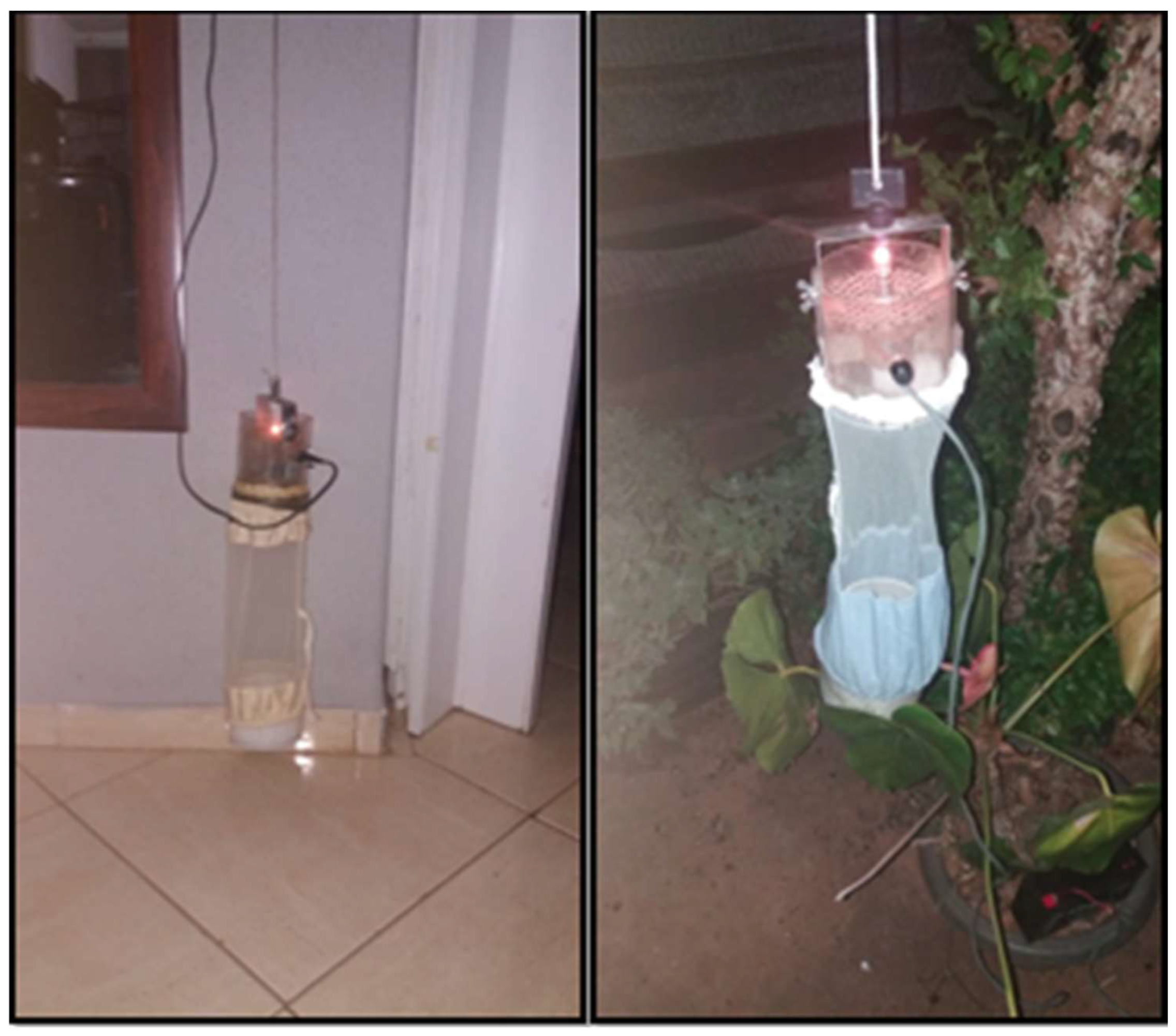
Figure 2.
Phlebotomine sandflies of the species Lu. longipalpis, represented by the male (left) and the female feeding on blood (right).
Figure 2.
Phlebotomine sandflies of the species Lu. longipalpis, represented by the male (left) and the female feeding on blood (right).
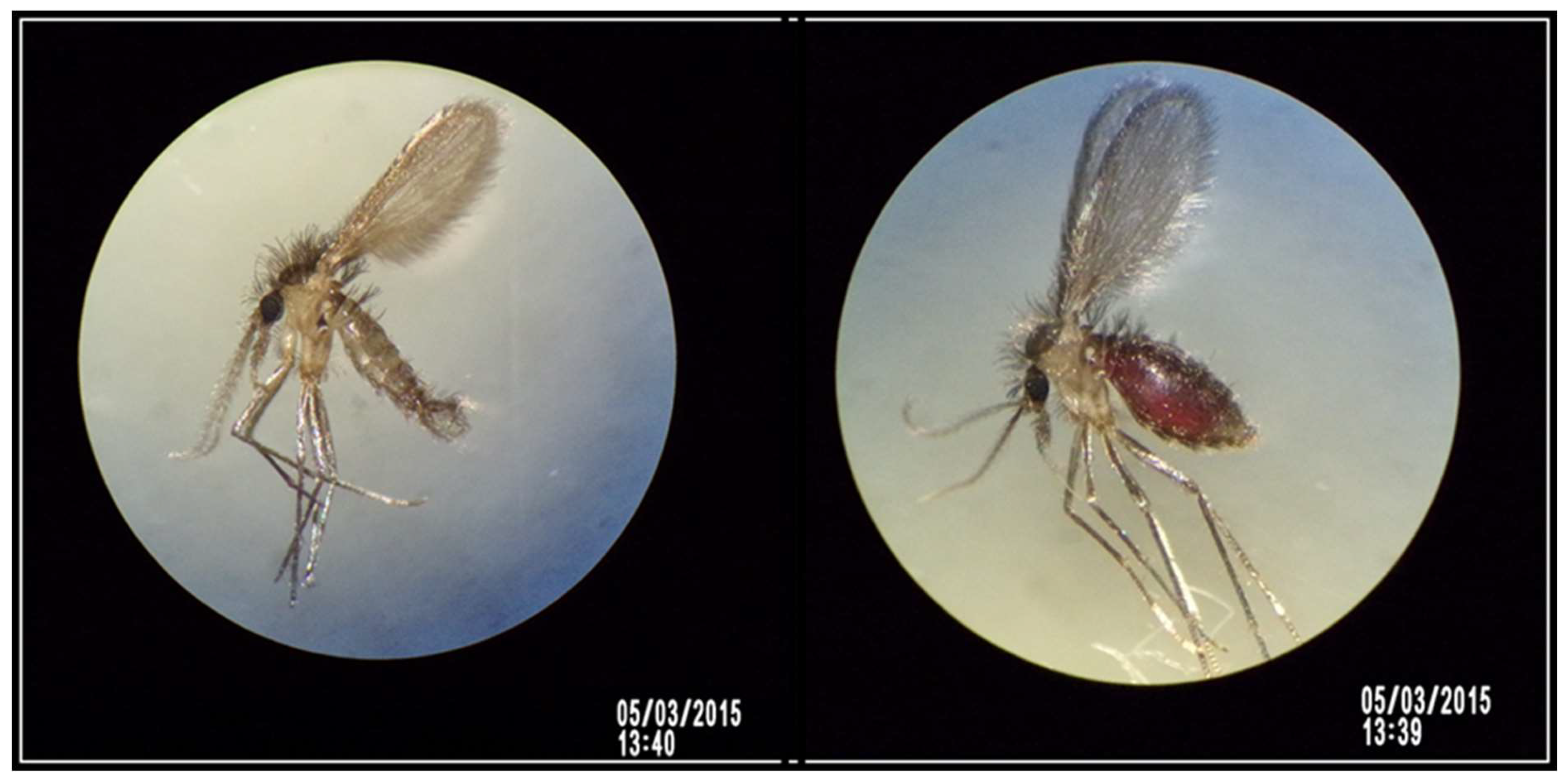
Figure 3.
Distribution of dogs according to their immunological status and Kernel density of dogs seropositive and seronegative for Leishmania spp. in the municipality of Araçatuba, SP, Brazil.
Figure 3.
Distribution of dogs according to their immunological status and Kernel density of dogs seropositive and seronegative for Leishmania spp. in the municipality of Araçatuba, SP, Brazil.
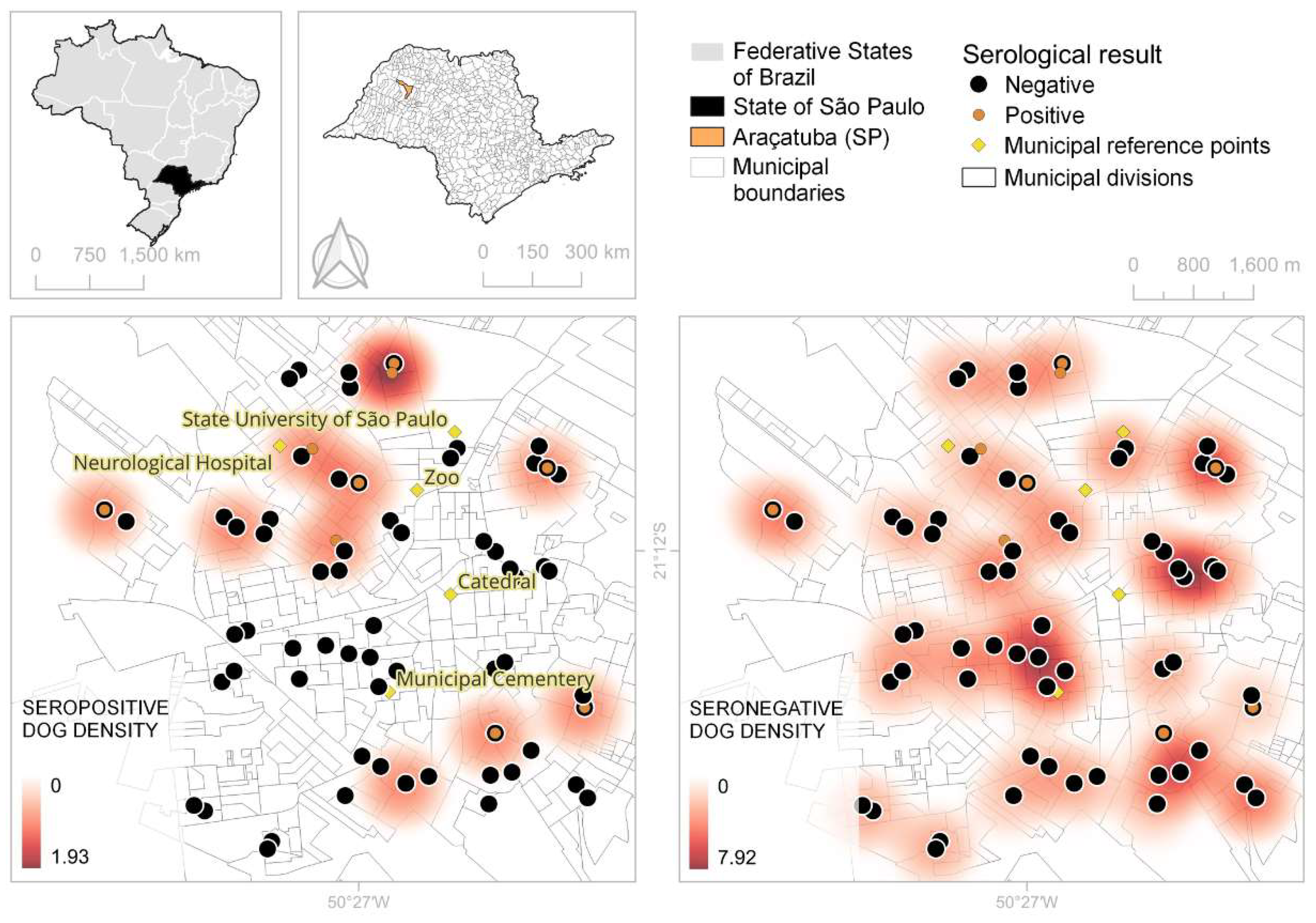
Figure 4.
Distribution of Lu. longipalpis by natural break of data in the eight areas in the municipality of Araçatuba, São Paulo, Brazil.
Figure 4.
Distribution of Lu. longipalpis by natural break of data in the eight areas in the municipality of Araçatuba, São Paulo, Brazil.
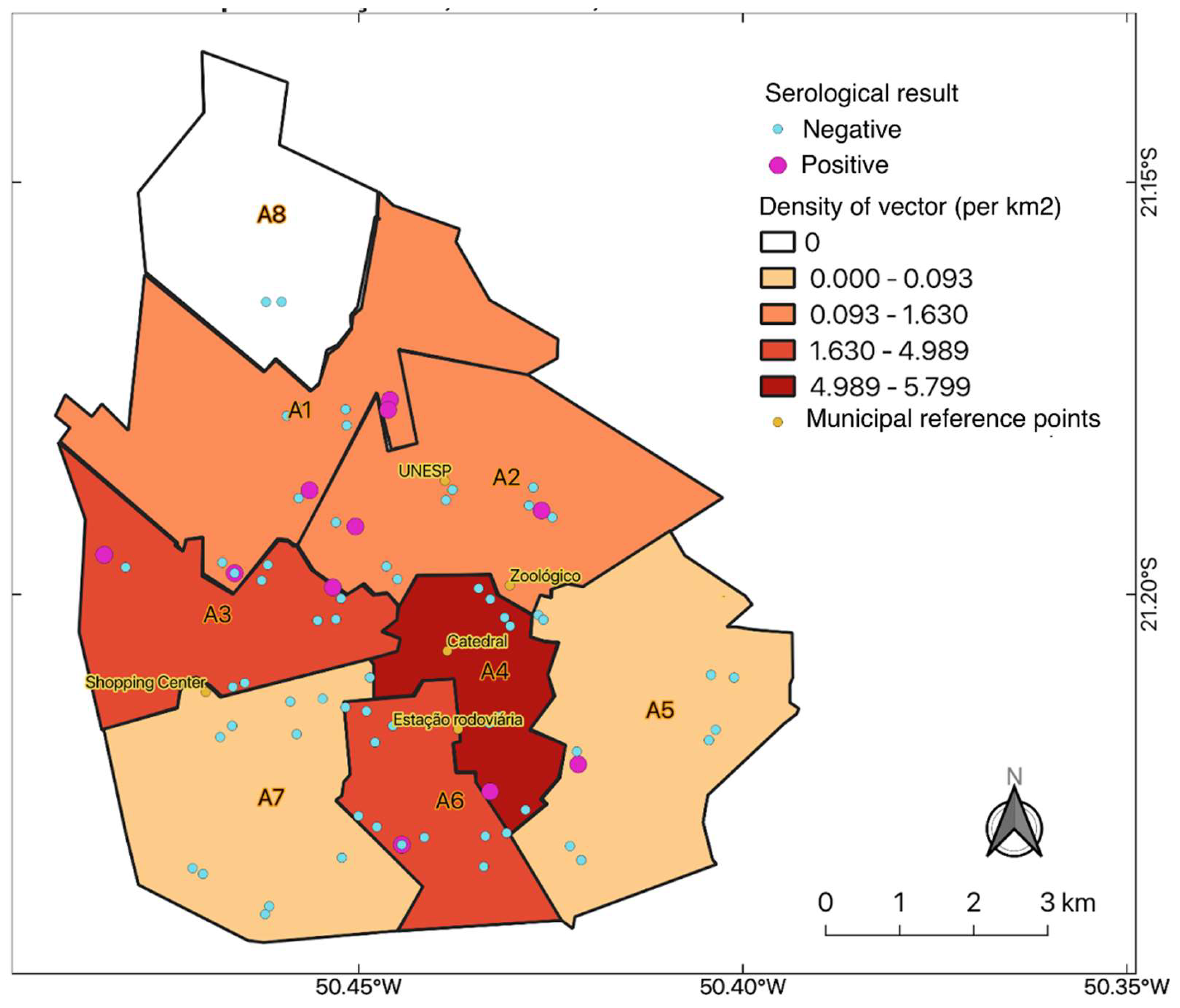
Table 1.
Dogs reactive and non-reactive by DPP and ELISA for Leishmania spp. according to the study variables.
Table 1.
Dogs reactive and non-reactive by DPP and ELISA for Leishmania spp. according to the study variables.
| Variables | Categories (N) | DPP + ELISA | |||
|---|---|---|---|---|---|
| Reactive | Non-reactive | ||||
| N | % | N | % | ||
| Sex | F (82) | 5 | 6,10 | 77 | 93,90 |
| M (49) | 6 | 12,24 | 43 | 87,76 | |
| Age Group | Young (23) | 2 | 8,70 | 21 | 91,30 |
| Adult (78) | 6 | 7,69 | 72 | 92,31 | |
| Elderly (30) | 3 | 10,00 | 27 | 90,00 | |
| Domiciled | Domiciled (102) | 8 | 7,84 | 94 | 92,16 |
| Semi-domiciled (29) | 3 | 10,34 | 26 | 89,66 | |
| Place where the dogs sleeps | Inside the house (27) | 0 | 0,00 | 27 | 100,00 |
| Outside the house (104) | 11 | 10,58 | 93 | 89,42 | |
| Presence of chickens | Yes (37) | 2 | 5,41 | 35 | 94,59 |
| No (94) | 9 | 9,57 | 85 | 90,43 | |
| Presence of cats | Yes (40) | 2 | 5,00 | 38 | 95,00 |
| No (91) | 9 | 9,89 | 82 | 90,11 | |
| Presence of birds | Yes (36) | 5 | 13,89 | 31 | 86,11 |
| No (95) | 6 | 6,32 | 89 | 93,68 | |
| Presence of Phlebotomine | Yes (31) | 1 | 3,23 | 30 | 96,77 |
| No (100) | 10 | 10,00 | 90 | 90,00 | |
| Vegetation | Yes (118) | 11 | 9,32 | 107 | 90,68 |
| No (13) | 0 | 0,00 | 13 | 100,00 | |
| Fruit tree | Yes (88) | 8 | 9,09 | 80 | 90,91 |
| No (43) | 3 | 6,98 | 40 | 93,02 | |
Disclaimer/Publisher’s Note: The statements, opinions and data contained in all publications are solely those of the individual author(s) and contributor(s) and not of MDPI and/or the editor(s). MDPI and/or the editor(s) disclaim responsibility for any injury to people or property resulting from any ideas, methods, instructions or products referred to in the content. |
© 2025 by the authors. Licensee MDPI, Basel, Switzerland. This article is an open access article distributed under the terms and conditions of the Creative Commons Attribution (CC BY) license (https://creativecommons.org/licenses/by/4.0/).
Copyright: This open access article is published under a Creative Commons CC BY 4.0 license, which permit the free download, distribution, and reuse, provided that the author and preprint are cited in any reuse.


