Preprint
Review

This version is not peer-reviewed.

Nursing Education in Albania and Comparison with International Experiences: A Systematic Review

Submitted:

14 December 2024

Posted:

17 December 2024

You are already at the latest version

Abstract

Background/Objectives: Nursing education is essential for preparing skilled health professionals capable of addressing public health challenges effectively. In Albania, aligning with international standards has brought significant changes to the nursing education system, yet challenges persist due to limited resources and the demand for diversified competencies. Comparing Albania's nursing education system with international experiences can provide valuable insights for enhancing its quality. This review examines the evolution of nursing education in Albania by comparing educational models and practices with international frameworks to identify strategies for improving nursing education in the Albanian context. Methods: A systematic review was conducted using major databases, including PubMed, Scopus, CINAHL, Web of Science, PsycINFO, and ProQuest, covering the period from 2014 to 2024. Peer-reviewed studies in English and Albanian focusing on educational models, professional skills, and nursing education in Albania or globally were included. Study quality was assessed using the CASP criteria. Results: Seven studies were selected, highlighting critical aspects of nursing education, including health literacy, professional self-efficacy, clinical skills, guideline adoption, and e-learning programs. Findings indicate that effective nursing education should integrate health literacy to enhance patient communication, leverage online learning to address geographical disparities, and diversify clinical experiences to prepare nurses for complex healthcare environments. Conclusions: This review underscores the importance of evidence-based educational frameworks and standardized guidelines for advancing nursing education in Albania. The adoption of international strategies, such as incorporating health literacy and e-learning, can enhance educational outcomes, improve the quality of care, and foster a more resilient healthcare system capable of meeting population needs.

Keywords: 
;  ;  ;  

1. Introduction

Nursing education is a fundamental pillar for the preparation of qualified health professionals, capable of responding effectively to the health needs of populations and contributing to the improvement of health services [1]. This is particularly relevant in countries such as Albania, where the healthcare sector is developing and the need for competent and well-trained nurses is crucial to address emerging challenges in healthcare. In Albania, as in many developing countries, the nursing education system has undergone significant transformations in recent years, in an attempt to adapt to international standards and to ensure a level of quality that meets European and global expectations. However, specific challenges remain that reflect the cultural, economic, and institutional characteristics of the country, while offering unique opportunities for improvement [2].
The importance of quality nursing education is highlighted by the increasing investments and reforms that are being implemented globally to improve educational standards [3]. Nursing education not only helps build technical skills but also develops analytical, communication, and management skills that are essential to a nurse's daily work in complex and rapidly changing settings [4,5]. In many advanced countries, the training of nurses provides for a high degree of specialization and continuous training, in order to ensure that healthcare professionals are always up-to-date on the latest practices based on scientific evidence [6,7].
In recent years, Albania has also taken steps to align with European directives in the field of nursing education, adopting practices and models that have been successfully tested in other international contexts [8]. However, significant differences remain compared to other countries, due to factors including the economic context, available resources, government policies and cultural traditions. These differences are manifested, for example, in the quality and quantity of educational resources available, in the opportunities for practical training and in the structure of educational programs, which often fail to fully respond to the needs of the Albanian population [9].
This study aims to examine the evolution of nursing education in Albania and to compare it with international experiences, with the aim of highlighting similarities and differences, and identifying potential areas for improvement. Through this literature review, we try to understand how successful educational models applied in other countries can be adapted to the Albanian context to improve the quality of nursing education and, consequently, of the health services offered to the population. This type of comparison is particularly useful because it allows us to identify effective approaches that could solve some of the current challenges of the nursing education system in Albania.
A crucial aspect that emerges from the literature is that nursing education plays a fundamental role not only in the technical training of nurses, but also in the promotion of ethical, relational and professional values that are essential for clinical work. In Albania, however, the evolution of nursing education faces many challenges, including the need to improve the quality of academic training, fill infrastructure gaps, and ensure an adequate level of skills among nursing professionals. Added to this is the difficulty of attracting qualified human resources and keeping nurses within the national health system, as many of them choose to migrate to other countries in search of better professional opportunities [10].
The integration of international experiences in the field of nursing education offers a unique opportunity to improve training standards in Albania, aiming at an alignment with European and global practices. Educational models adopted in countries with advanced health systems such as those in Northern Europe and the United States can serve as an example for improving curricula and training practices [11]. For example, many international nursing programs place a significant emphasis on hands-on clinical training and the development of leadership and management skills, aspects that could benefit from increased attention in Albania [2].
In recent years, Albania has implemented significant reforms in both the health and education sectors, in an effort to improve the skills of nurses and raise the quality of care provided. However, compared to other European countries, limited resources and the lack of continuing education programs are obstacles that prevent the full development of the nursing sector. Continuous training is an essential aspect of keeping healthcare personnel up-to-date on the latest innovations and clinical practices, and its absence represents a major gap in the Albanian healthcare system [12].
In this context, the aim of the present literature review is to explore international nursing educational experiences, compare them with the current situation in Albania and identify best practices that can be adapted to the Albanian context. In particular, the review focuses on educational models adopted in countries with limited resources, which face challenges similar to those of Albania, and which have developed innovative strategies to overcome economic and logistical difficulties. Such strategies include, for example, the use of practical simulations, mentoring programs, and collaborations between health and educational institutions to strengthen students' clinical competencies [13].
Another relevant aspect that emerges from the literature is the need for nursing education that takes into account the specific needs of local populations [14]. Albania, with its geographical and socio-economic peculiarities, needs a nursing education system that trains professionals capable of operating in rural and remote contexts, where access to health services is often limited [15]. In these areas, nurses must be able to handle complex clinical situations with limited resources, and for this reason, it is crucial that they receive practical training geared towards concrete problem-solving and self-employment [16,17].
The adoption of modern nursing education models is therefore crucial to cope with the growing needs of the population, especially in rural and remote areas of Albania, where access to health services is limited [18]. Another important factor is training in emergency and crisis management, an aspect that becomes essential in contexts where medical resources are scarce, and the timely intervention of nurses can make the difference between life and death [19]. Consequently, it is necessary to integrate elements of practical clinical training into nursing curricula, with a focus on the development of critical and analytical skills, so as to prepare nurses capable of dealing with high-intensity situations [20].
The present literature review focuses on the following aspects: (1) the current structure of nursing education in Albania, (2) the main challenges faced by nursing education programs, including lack of resources, the need for continuing education, and the exodus of professionals to other countries, and (3) the applicability of international models for improving the quality of nursing education in resource-limited settings. The analysis of international experiences can provide valuable insights for the development of innovative educational policies in Albania, aimed at creating a sustainable and high-quality nursing education system [21].
Nursing education in Albania is at a turning point, where opening up to international models and adapting proven practices in similar contexts can represent a significant turning point for the national health system. However, to achieve lasting results, it will require concerted efforts from the government, educational institutions, and health organizations to overcome existing barriers and ensure that Albanian nurses receive the training they need to operate successfully both nationally and internationally [22].
This review aims to answer the following research question structured according to the PICO framework:
  • Population: Nurses or nursing students in Albania and in international contexts of comparison.
  • Intervention: Methods and models of nursing education, including specific skills such as health literacy and standardized protocols.
  • Comparison: Educational models and clinical practices used in international contexts with respect to nursing education in Albania.
  • Outcome: Improvement of clinical skills, management skills and comprehensive training of nurses to adequately respond to health needs.

2. Materials and Methods

To conduct a comprehensive review of the literature on nursing education in Albania and international experiences, a systematic methodology covering a period of 10 years, from 2014 to 2024, was adopted. The goal of this extended period is to ensure a broader historical view and capture the significant evolutions in the field of nursing education in Albania, as well as the international trends of relevance. The review was carried out with strict selection criteria to identify high-quality studies, which offer an accurate comparison between the Albanian context and international experiences. To reduce publication bias and obtain a complete representation of the available data, the research was extended to sources of grey literature, including government reports, dissertations and institutional documents relevant to nursing education. This choice has made it possible to include studies that would otherwise not be published in the main peer-reviewed journals, but which offer significant contributions to the understanding of educational practices and models applicable to the Albanian context.

2.1. Sources and Databases Used

The research was carried out using a wide range of databases, to ensure comprehensive coverage of the studies published on the subject. The main sources used include PubMed, Scopus, CINAHL, Web of Science, PsycINFO, and ProQuest, each of which provides access to reliable, peer-reviewed scientific literature in the fields of nursing, healthcare, and social sciences. Each database was chosen for its potential to cover specific and multidisciplinary aspects of nursing education, such as the effectiveness of educational models, practical training, and the influence of health and social policies on nursing curricula.

2.2. Search Strings

To ensure the relevance of the results, specific search strings combined with Boolean operators (AND, OR) were used to refine the search across databases. Search strings used for database investigation include:
  • "nursing education" OR "nursing training" OR "healthcare education" OR "health sciences education" AND "Albania" OR "Balkan region" OR "Southeast Europe" OR "Europe" AND "international comparison" OR "education models" OR "global standards"
  • "nursing education models" AND "clinical training" AND "Albania" AND "Europe"
  • "nursing education standards" OR "curriculum development" OR "competency-based education" AND "healthcare reform"
  • "healthcare education reform" AND "nursing" AND "Albania" OR "Balkan region"
  • "comparative study" AND "nursing education" AND "Europe" OR "global perspectives"
These strings have been tailored to the specific requirements of each search platform to maximize the relevance of the results. The use of specific keywords, such as "nursing education models" and "clinical training", made it possible to isolate studies that provide a direct comparison between Albania and other countries. The use of Boolean operators further refined the results, reducing the number of irrelevant studies and increasing the accuracy of the search (Table 1).

2.3. Inclusion and Exclusion Criteria

The inclusion criteria have been updated to reflect the new revision time extension. Empirical and theoretical studies published between 2014 and 2024, focused on nursing education in Albania or comparable international educational models, were included. Articles had to be available in English or Albanian to allow for in-depth analysis. Studies published in other languages and articles that were not peer-reviewed or lacked a direct focus on nursing education were excluded. Priority was given to studies that presented empirical evidence and were relevant to the topic of the review.

2.4. Data Analysis and Synthesis Procedure

The quality of the studies included was assessed using the criteria of the Critical Appraisal Skills Programme (CASP), which considers fundamental methodological aspects such as internal validity, reliability of results and relevance to the population studied. The evaluation was conducted in duplicate by two independent researchers to ensure greater accuracy and reduce the risks of subjective interpretation, in line with best practices for systematic review. The studies were classified into thematic categories, with particular attention to three aspects: (1) the effectiveness of the educational models adopted, (2) the competences developed through training and (3) the specific challenges encountered in contexts with limited resources, such as Albania. This systematic review represents a detailed and structured analysis of the available data, offering a meaningful comparison between the nursing education system in Albania and international experiences, and identifying best practices for improving nursing education.

3. Results

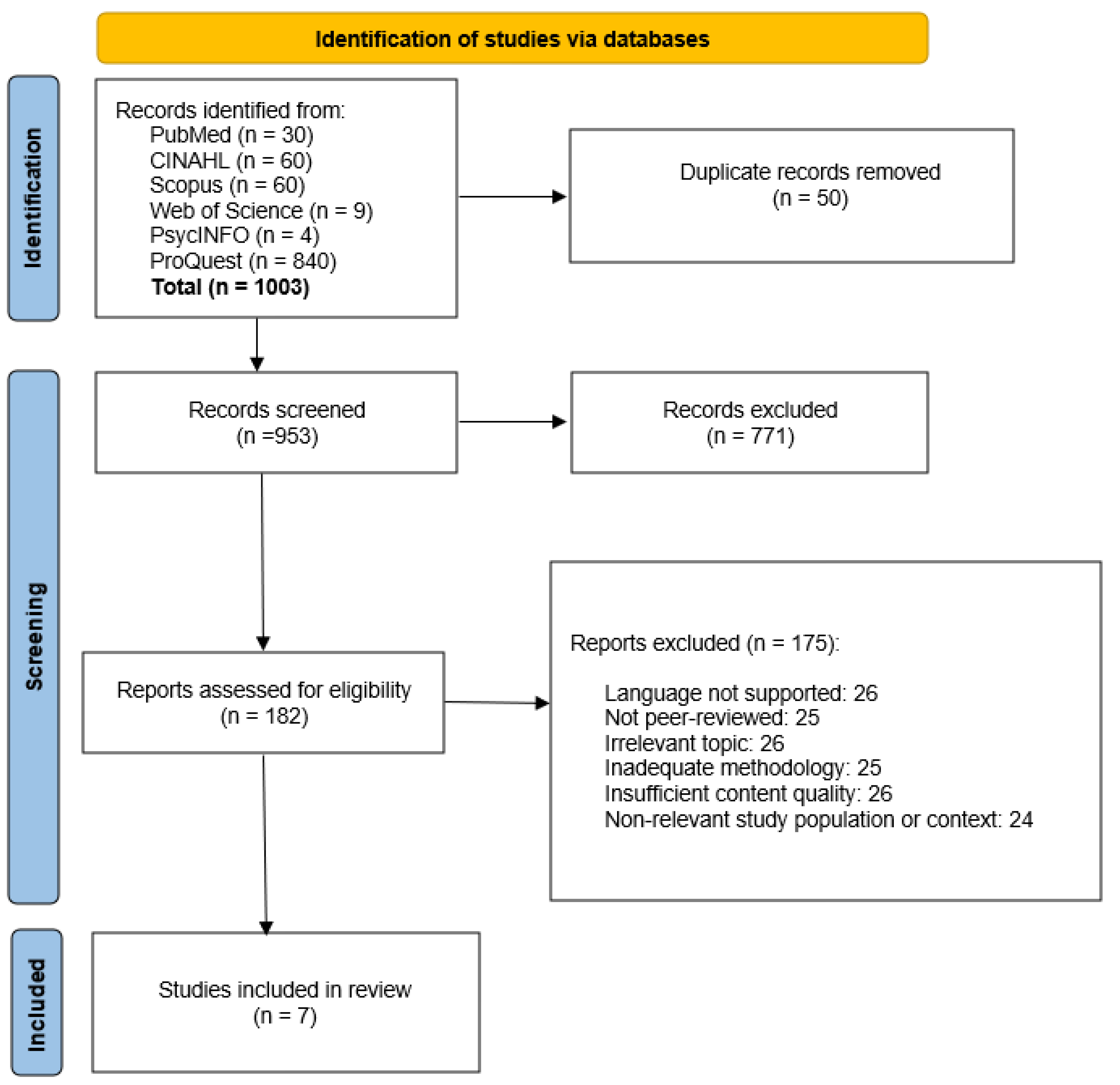
This review adopted a narrative synthesis of the data, since the included studies show significant methodological heterogeneity and variations in results, such as to make a meta-analysis impractical. Narrative synthesis makes it possible to highlight the common themes and the main differences, offering a complete but not quantitative view of the results present in the literature. After a rigorous selection process, seven studies were included in the review. These studies cover a range of topics relevant to nursing education and training models, with specific applications to the Albanian context and international scenarios. Initially, the database search yielded a total of 1003 articles: 30 from PubMed, 60 from CINAHL, 60 from Scopus, 9 from Web of Science, 4 from PsycINFO and 840 from ProQuest. After the removal of 50 duplicate items, 953 items were screened. Of these, 771 were excluded during the review of titles and abstracts, as they did not meet the inclusion criteria. In the next phase of detailed evaluation, an additional 175 articles were excluded for reasons such as unsupported language, lack of peer review, irrelevant topic, inadequate methodology, insufficient quality of content, and not relevant population or study context. At the end of the selection process, seven studies remain that fully meet the objectives of the review and provide a broad spectrum of contributions for nursing education. The study selection process was plotted using the PRISMA diagram, which clearly and in detail illustrates the phases of identification, screening, eligibility and inclusion of studies. The updated PRISMA diagram is included in figure 1, providing transparency and traceability in the item selection and evaluation process.
Figure 1. PRISMA Statement.
Preprints 142917 g001
The review included seven key studies that analysed central aspects of nursing education, with a focus on training skills and methods. Topics that emerged include competence in health literacy, professional self-efficacy, the adoption of clinical guidelines and the use of online learning modalities (Table 2).
Below is a summary of the main aspects of each theme, divided by study.
The study by Bulfone et al., assessed health literacy skills in nursing students, revealing a significant gap in the ability to interpret and communicate health information effectively [27]. The methodology included a competency analysis based on structured questionnaires, showing varying outcomes between students of different backgrounds.
Dowling et al., developed an online educational program for nurses operating in advanced oncology settings. The results show how the e-learning modality can facilitate access to specialized training, despite the absence of a control group that has limited comparisons with other teaching methods [28].
Duka et al., explored the link between professional skills and self-efficacy in nurses in Albania, using an observational design [29]. The data indicates a positive correlation between self-efficacy and perceived level of skills, underlining the importance of targeted training interventions to improve professional confidence.
Notarnicola et al., examined the perceived clinical competencies of nurses based on the work environment, identifying greater confidence in competencies among those operating in diverse clinical settings [30]. The analysis of the data, obtained through questionnaires, highlighted the need for varied practical experiences to enhance training.
Merry et al., focused on the difficulties faced by migrant nursing students, noting how language and cultural barriers negatively affect performance [31]. The qualitative methodology made it possible to identify specific support strategies, such as tutoring and language assistance, that improve academic integration.
Phillip et al., developed guidelines for monitoring type 1 diabetes, highlighting the value of evidence-based practices for nursing education as well [32]. The results suggest that wider adoption of clinical protocols during training could improve the uniformity of care provided.
Finally, Roehe et al., conducted a systematic review of teaching methods, highlighting the effectiveness of interactive modalities [33]. The research suggests that an engaging teaching approach can improve knowledge retention, a principle that can also be applied to nursing education to promote the transfer of skills from theory to practice.
In summary, these studies provide an empirical basis for improving nursing education in resource-limited settings, such as Albania, suggesting the importance of health literacy skills, online learning methodologies, and a standardized guideline-based approach to improve the quality of training and care. (Table 3).

4. Discussion

The results of this review provide an in-depth overview of various aspects of nursing education, highlighting how training models, professional skills and challenges for students can be improved in contexts such as Albania, where educational resources are often limited. Each study contributes significant elements that, compared with other similar works in the literature, allow us to outline the best practices to improve nursing education.
The study by Bulfone et al., which explores health literacy skills in nursing students, represents an important contribution to the preparation of health professionals capable of adequately responding to public health needs [27]. Numerous studies, confirm the importance of health literacy to improve communication between patients and nurses, especially in developing countries where health literacy is lower than in high-income countries [34,35,36]. Integrating these skills into educational curricula can improve not only patient autonomy, but also adherence to treatments, potentially reducing negative treatment outcomes. Although Bulfone et al.'s approach is methodologically sound, a comparable study conducted by Yang, Hu, & Qi, in China emphasizes that health literacy needs to be supported by digital and community resources to achieve sustainable impact, suggesting that nursing education in Albania could benefit from similar initiatives to improve the effectiveness of educational interventions [27,37].
The study by Dowling et al., implemented an online educational program for European nurses engaged in advanced cancer care [28]. This approach reflects the growing trend of using e-learning platforms to make up for the lack of access to quality educational resources, a common challenge also in Albania. Other studies, such as those by Moutsopoulos, show that online programs can be particularly useful for updating nurses' clinical skills, without interrupting hospital service. However, Dowling et al. did not include a control group, a shortcoming that limits direct comparison of efficacy compared to traditional methods [28]. Studies such as that of Nguyen et al., in Vietnam highlight that online program, while improving theoretical knowledge, may be less effective in practical training, suggesting that a combination of online learning and supervised hands-on clinical experience may be required to achieve comprehensive results in Albania [39].
The work of Duka et al., on the correlation between professional skills and self-efficacy in Albanian registered nurses highlights the importance of supporting nurses' confidence and competence to improve the quality of care [29]. International studies, such as that of Bandura, on the concept of self-efficacy, show that the perception of one's own competence influences motivation and work performance [29]. A similar study by Gagnè et al., found that self-efficacy correlates with intrinsic motivation and job satisfaction. Although the absence of an experimental dimension limits causal conclusions, Duka et al. confirm that increased support for vocational training could reduce burnout among nurses in Albania, a theme that is reflected in studies such as that of García-Lázaro et al., in the Latin American context, where levels of self-efficacy have been linked to higher quality of care and reduced staff turnover.
The study by Notarnicola et al. analyzes the clinical skills perceived by nurses in different work contexts [30]. According to Notarnicola et al., nurses with diverse experience report higher levels of competence and confidence in their clinical abilities. This finding is reflected in studies such as that of Benner (1984), which theorizes the "beginner to expert" model, highlighting that practice in various settings helps nurses develop more advanced skills and respond more flexibly to complex clinical situations. In addition, studies such as that of Baxter et al., indicate that opportunities for diverse experience not only increase clinical confidence but also improve the resilience of nurses, a crucial factor in an often-pressured healthcare system like the Albanian one [42]. Therefore, the Albanian education system could benefit from diversifying the clinical experiences offered to students, improving the quality of perceived clinical skills.
A study by Merry et al., analyzed the linguistic, cultural, and logistical difficulties faced by migrant and international nursing students, identifying supportive strategies that can facilitate these students' integration and academic success [31]. Other studies, such as that of Haverila et al., confirm that cultural integration is crucial to ensure the success of international students and reduce the dropout rate. Merry et al. suggest that the adoption of language support and cultural mentoring programs can increase retention and improve student performance [31]. Although there is no similar program for nursing students in Albania yet, such an initiative could not only improve the experience of international students, but also increase the intercultural skills of nursing staff, an increasingly relevant aspect in a globalized healthcare.
The work of Phillip et al., represents an example of how evidence-based guidelines can improve the quality and uniformity of health care [32]. In this case, the study develops guidelines for monitoring preclinical type 1 diabetes which, while not specific to nursing, offers a useful example of how standardizing protocols can reduce variability in care. Studies such as that of Orangi et al., show that the adoption of evidence-based guidelines not only improves the quality of care but also increases the effectiveness of interventions in low-income settings, as demonstrated in care projects in African countries [44]. In Albania, adopting clinical guidelines in the nursing curriculum could help students become familiar with standardized protocols, preparing staff for quality care.
Finally, the study by Roehe et al., explores the dynamics between teaching methods and academic performance, noting that interactive approaches can enhance learning [33]. This study aligns with other work in the field of health education, such as that of Challa et al., which shows that teaching methods based on interaction and active practice are more effective in promoting knowledge retention. In Albania, the introduction of interactive teaching methodologies could help improve nursing students' transition from theory to clinical practice, boosting confidence and skills. The comparison with the work of Hu et al., on the flipped classroom in China confirms that the use of innovative methods can increase engagement and improve the quality of learning, suggesting a potential for improvement for the Albanian nursing education system as well [46].
In summary, this review highlights how the integration of evidence-based educational models, the adoption of clinical guidelines, and the diversification of training experiences can significantly contribute to the training of competent and prepared nurses in Albania. Comparison with other international studies reinforces the idea that nursing education can benefit from an innovative and flexible approach, capable of adapting to local challenges and responding to global needs. Educational institutions in Albania could, therefore, consider implementing these models and strategies to improve the quality of nursing education and, consequently, the effectiveness of the national health system.

4.1. Limitations

This revision has some limitations that may affect the generalizability of the results. First, the research was limited to studies published in the last ten years and available in English or Albanian, thus excluding any articles in other languages or previously published. This choice may have limited the breadth of the framework presented, not including potentially relevant studies that could have enriched the review. Second, the inclusion of studies conducted in different cultural and health contexts, while offering a broad perspective, may have influenced the consistency of results, as educational facilities, available resources and training needs may vary considerably between countries. In addition, the absence of a quantitative analysis (meta-analysis) limits the possibility of drawing statistically robust conclusions on the effectiveness of the educational models compared. Finally, despite the use of the CASP method to assess the quality of the included studies, variation in study designs, methodologies and competency assessment criteria may have led to some heterogeneity in outcomes.

4.2. Implications for Clinical Practice and Educational Policies

The results of this review not only have direct practical implications for the improvement of nurses' clinical skills, but also suggest important areas of intervention for educational policies in Albania. The integration of health literacy skills, for example, could be promoted at national level as a standard for nursing education curricula, helping to train professionals capable of communicating effectively with patients. The use of online learning modalities and the diversification of clinical experiences represent strategies that could be formally adopted by institutional educational programs to make training more accessible, especially in rural or remote areas.
In addition, the creation of standardized guidelines for nursing education could improve the uniformity and quality of training programs, aligning them with the best international standards. At the policy level, these results offer ideas for the adoption of policies that encourage the continuous updating and diversification of nurses' training paths. The implementation of educational policies in line with these results would make it possible to improve the overall quality of healthcare and respond more effectively to the needs of the population.

4.3. Directions for Future Research

Considering the limitations and the results that emerged, there are several directions for future research in the field of nursing education. First, it would be useful to conduct longitudinal studies to assess the long-term effectiveness of the educational models implemented, with a focus on the impacts of health literacy skills and online programs on the clinical practice of nurses. In addition, further studies could explore the impact of diversifying clinical experiences, comparing outcomes between nurses trained in limited settings and nurses with diverse training. This could help identify key competencies that improve adaptability and clinical effectiveness.
Future research could also evaluate the application of support programs for international and migrant students in nursing in Albania, examining the effectiveness of linguistic and cultural interventions to improve the inclusion and academic performance of these students. Given the positive impact of standardized guidelines highlighted in other health sectors, further studies could analyze the effectiveness of evidence-based guidelines in improving the clinical readiness of nursing students, particularly in low-income settings such as Albania. Finally, it would be advantageous to conduct comparative studies between innovative teaching methods, such as the flipped classroom, and traditional methods, to identify the most effective learning models in fostering the transfer of knowledge from theory to clinical practice.

5. Conclusions

This review examined the main educational models and skills needed to improve nursing education, with a focus on the Albanian context and international experiences. The results indicate that an effective nursing education system must integrate health literacy skills, foster the diversification of clinical experiences and adopt innovative teaching techniques, such as online programs. The importance of these skills not only strengthens nurses' ability to respond to clinical needs, but also improves adherence to treatment and patient autonomy, thus increasing the quality of healthcare.
The selected studies underline how the promotion of self-efficacy and the adoption of evidence-based protocols can reduce variability in care practices, increasing the consistency and quality of care. The implications for nursing education in Albania are obvious: adopting educational strategies based on international evidence could improve the effectiveness of local programs, fostering the growth of competent nurses prepared to respond to the challenges of a changing health system. In particular, the adoption of online learning programs and clinical guidelines could reduce educational inequalities between urban and rural areas, making nursing education accessible and homogeneous throughout the country.
The limitations of the review, including variability in health care settings and differences in the educational models analyzed, highlight the need for further research to validate the applicability of these findings in the local setting. Despite this, this review offers a valuable starting point for Albanian educational institutions, which can draw on international experiences to develop more effective and future-oriented training programs. The continuous evolution of nursing education and the adaptation of training models globally can support the improvement of clinical skills and quality of care, contributing to a more resilient health system and nurses who are better prepared for the challenges of the profession.

Author Contributions

Conceptualization, A.D., E.K. and F.Z.; Data curation, V.B. and F.Z.; Formal analysis, E.K. and L.A.I.; Investigation, A.D. and L.A.I.; Methodology, F.Z., A.D. and E.K.; Project administration, V.B., L.A.I. and F.Z.; Resources, V.B. and F.Z.; Software, E.K.; Supervision, A.D. and F.Z.; Writing original draft, A.D., E.K. and F.Z.; Writing review and editing, F.Z. All authors have read and agreed to the published version of the manuscript.

Funding

This research received no external funding.

Data Availability Statement

The data presented in this study are available within the article.

Conflicts of Interest

The authors have declared no conflict of interest.

References

  1. Osunlaja, O., Enahoro, A., Maha, C. C., Kolawole, T. O., & Abdul, S. (2024). Healthcare management education and training: Preparing the next generation of leaders-a review. International Journal of Applied Research in Social Sciences, 6(6), 1178-1192. [CrossRef]
  2. World Health Organization. (2020). Operational framework for primary health care: transforming vision into action.
  3. Baker, C., Cary, A. H., & da Conceicao Bento, M. (2021). Global standards for professional nursing education: The time is now. Journal of Professional Nursing, 37(1), 86-92. [CrossRef]
  4. King, R., Taylor, B., Talpur, A., Jackson, C., Manley, K., Ashby, N., ... & Robertson, S. (2021). Factors that optimise the impact of continuing professional development in nursing: A rapid evidence review. Nurse education today, 98, 104652. [CrossRef]
  5. Gunawan, J. (2023). Exploring the future of nursing: Insights from the ChatGPT model. Belitung Nursing Journal, 9(1), 1. [CrossRef]
  6. Jarva, E., Mikkonen, K., Tuomikoski, A. M., Kääriäinen, M., Meriläinen, M., Karsikas, E., ... & Oikarinen, A. (2021). Healthcare professionals' competence in stroke care pathways: A mixed-methods systematic review. Journal of Clinical Nursing, 30(9-10), 1206-1235. [CrossRef]
  7. Ortega-Lapiedra, R., Barrado-Narvión, M. J., & Bernués-Oliván, J. (2023). Acquisition of competencies of nurses: improving the performance of the healthcare system. International journal of environmental research and public health, 20(5), 4510. [CrossRef]
  8. De Raeve, P., Davidson, P. M., Bergs, J., Patch, M., Jack, S. M., Castro-Ayala, A., ... & Preston, W. (2024). Advanced practice nursing in Europe—Results from a pan-European survey of 35 countries. Journal of advanced nursing, 80(1), 377-386.
  9. Barjaba, J., & Barjaba, K. (2023). Albania: Education and Employment Reforms Linking Professional Education and Labor Market. In Research, Policymaking, and Innovation: Teacher and Education Development in Belt and Road Countries (pp. 343-361). Singapore: Springer Nature Singapore.
  10. Adebayo, A., & Akinyemi, O. O. (2022). “What are you really doing in this country?”: emigration intentions of Nigerian doctors and their policy implications for human resource for health management. Journal of International Migration and Integration, 23(3), 1377-1396. [CrossRef]
  11. Elendu, C., Amaechi, D. C., Okatta, A. U., Amaechi, E. C., Elendu, T. C., Ezeh, C. P., & Elendu, I. D. (2024). The impact of simulation-based training in medical education: A review. Medicine, 103(27), e38813. [CrossRef]
  12. Alowais, S. A., Alghamdi, S. S., Alsuhebany, N., Alqahtani, T., Alshaya, A. I., Almohareb, S. N., ... & Albekairy, A. M. (2023). Revolutionizing healthcare: the role of artificial intelligence in clinical practice. BMC medical education, 23(1), 689. [CrossRef]
  13. Pedregosa, S., Fabrellas, N., Risco, E., Pereira, M., Dmoch-Gajzlerska, E., Şenuzun, F., ... & Zabalegui, A. (2020). Effective academic-practice partnership models in nursing students' clinical placement: a systematic literature review. Nurse Education Today, 95, 104582. [CrossRef]
  14. Agu, C. F., Stewart, J., McFarlane-Stewart, N., & Rae, T. (2021). COVID-19 pandemic effects on nursing education: looking through the lens of a developing country. International nursing review, 68(2), 153-158. [CrossRef]
  15. Kara, P. A., Ognjanovic, I., Hölscher, D., Šćekić, L., Kovacevic, P., Mantas, J., ... & Bokor, L. (2024). Human-Centric Digitization in Montenegro: Progress through 17 Years of National Independence and Future Trends. Electronics, 13(13), 2460. [CrossRef]
  16. Van Merode, F., Groot, W., & Somers, M. (2024, January). Slack Is Needed to Solve the Shortage of Nurses. In Healthcare (Vol. 12, No. 2, p. 220). MDPI. [CrossRef]
  17. Hossain, K. A. (2023). Evaluation of technological breakthrough in global education and future employment opportunity. Journal of Liberal Arts and Humanities (JLAH), 4(8), 1-62.
  18. Sota, J. (2022). Contribution to the General History of School Health Service in Albania (From Origins to Nowadays). Interdisciplinary Journal of Research and Development, 9(1), 13-13. [CrossRef]
  19. Elhakim, M., Hammoud, S. D., Gmach, S., Albadri, J., Mahrous, H., Arifi, F., ... & Samhouri, D. (2024). Learning interventions in the WHO Eastern Mediterranean region: supporting Member States to get prepared for better response to health emergencies in the region. Frontiers in Public Health, 12, 1441223. [CrossRef]
  20. Toews, A. J., Martin, D. E., & Chernomas, W. M. (2021). Clinical debriefing: a concept analysis. Journal of clinical nursing, 30(11-12), 1491-1501. [CrossRef]
  21. Podgorica, N., Pjetri, E., Müller, A. W., & Perkhofer, S. (2024). Difficulties and challenges experienced by nurses in eldercare institutions in Albania: A qualitative content analysis. Plos one, 19(3), e0300774. [CrossRef]
  22. Kotsani, M., Ellul, J., Bahat, G., Bogdanovic, N., Burazeri, G., Erceg, P., ... & Benetos, A. (2020). Start low, go slow, but look far: the case of geriatric medicine in Balkan countries. European Geriatric Medicine, 11, 869-878. [CrossRef]
  23. Barjaktarovic, D., Vukotic, G., & Lekovic, Z. (2019). Nursing education in developing countries: Challenges and opportunities. International Journal of Nursing Education, 11(2), 45-56.
  24. Manxhuka-Kërliu, S., Beqiri, D., & Shehu, S. (2022). Current status and future challenges of nursing education in Albania. Albanian Journal of Health Sciences, 14(3), 112-118.
  25. Sotiri, A. (2021). A comparative study on the effectiveness of clinical training in nursing programs: Albanian perspective. European Nursing Research, 8(1), 78-85.
  26. World Health Organization. (2020). State of the world's nursing 2020: Investing in education, jobs and leadership. World Health Organization. https://www.who.int/publications/i/item/9789240003279.
  27. Bulfone, G., Bressan, V., Zerilli, I., Mazzotta, R., Favara, G., Magnano San Lio, R., Barchitta, M., & Agodi, A. (2024). Nursing students' Health Literacy skills: a scoping review protocol for driving research. BMJ Open, 14(2), e075682. [CrossRef]
  28. Dowling, M., Shewbridge, A., Ryan, C., Clancy, C., Meade, E., Sheehan, S., de La Serna, C., Bağçivan, G., Kotronoulas, G., Erdem, S., Aroyo, V., Radia, B., Wiseman, T., & Drury, A. (2023). Development and Implementation of an Online Education Program on Advanced Breast Cancer for European Cancer Nurses: ABC4Nurses Project: a Brief Report. J Cancer Educ, 38(5), 1662-1666. [CrossRef]
  29. Duka, B., Stievano, A., Prendi, E., Spada, F., Rocco, G., & Notarnicola, I. (2023). An Observational Cross-Sectional Study on the Correlation between Professional Competencies and Self-Efficacy in Albanian Registered Nurses. Healthcare, 11(15), 2156. [CrossRef]
  30. Notarnicola, I., Ivziku, D., Tartaglini, D., Filomeno, L., Gualandi, R., Ricci, S., Lommi, M., Porcelli, B., Raffaele, B., Montini, G., Federica Maria Pia, F., Erica Di, M., De Benedictis, A., Baysal, E., Latina, R., Rocco, G., & Stievano, A. (2023). Self-Perceived Clinical Competence of Nurses in Different Working Experiences: A Cross-Sectional Study. Healthcare, 11(21), 2808. [CrossRef]
  31. Merry, L., Bilkis, V., & Verville-Provencher, K. (2021). Challenges, coping responses and supportive interventions for international and migrant students in academic nursing programs in major host countries: a scoping review with a gender lens. BMC Nursing, 20, 1-37. [CrossRef]
  32. Phillip, M., Achenbach, P., Addala, A., Albanese-O'Neill, A., Battelino, T., Bell, K. J., Besser, R. E. J., Bonifacio, E., Colhoun, H. M., Couper, J. J., Craig, M. E., Danne, T., de Beaufort, C., Dovc, K., Driscoll, K. A., Dutta, S., Ebekozien, O., Larsson, H. E., Feiten, D. J., Frohnert, B. I., Gabbay, R. A., Gallagher, M. P., Greenbaum, C. J., Griffin, K. J., Hagopian, W., Haller, M. J., Hendrieckx, C., Hendriks, E., Holt, R. I. G., Hughes, L., Ismail, H. M., Jacobsen, L. M., Johnson, S. B., Kolb, L. E., Kordonouri, O., Lange, K., Lash, R. W., Lernmark, Å., Libman, I., Lundgren, M., Maahs, D. M., Marcovecchio, M. L., Mathieu, C., Miller, K. M., O'Donnell, H. K., Oron, T., Patil, S. P., Pop-Busui, R., Rewers, M. J., Rich, S. S., Schatz, D. A., Schulman-Rosenbaum, R., Simmons, K. M., Sims, E. K., Skyler, J. S., Smith, L. B., Speake, C., Steck, A. K., Thomas, N. P. B., Tonyushkina, K. N., Veijola, R., Wentworth, J. M., Wherrett, D. K., Wood, J. R., Ziegler, A.-G., & DiMeglio, L. A. (2024). Consensus guidance for monitoring individuals with islet autoantibody-positive pre-stage 3 type 1 diabetes. Diabetologia, 67(9), 1731-1759. [CrossRef]
  33. Roehe, M. A., Trost, C., Grundnig, J. S., Anvari-Pirsch, A., & Holzinger, A. (2024). Evaluating the Dynamics of Learning Approaches: A Systematic Review Investigating the Nexus Between Teaching Methods and Academic Performance in Medical and Dental Education. Educational Psychology Review, 36(4), 118. [CrossRef]
  34. Heine, M., Lategan, F., Erasmus, M., Lombaard, C. M., Mc Carthy, N., Olivier, J., ... & Hanekom, S. (2021). Health education interventions to promote health literacy in adults with selected non-communicable diseases living in low-to-middle income countries: a systematic review and meta-analysis. Journal of evaluation in clinical practice, 27(6), 1417-1428. [CrossRef]
  35. Fox, S., Kramer, E., Agrawal, P., & Aniyizhai, A. (2021). Refugee and migrant health literacy interventions in high-income countries: a systematic review. Journal of immigrant and minority health, 1-30. [CrossRef]
  36. Yan, W., Li, M., Luo, L., Ju, X., Jamieson, L., & Liu, F. (2023). Oral health literacy and its associated factors among nurses: A cross-sectional study. Journal of Clinical Nursing, 32(15-16), 5056-5064. [CrossRef]
  37. Yang, K., Hu, Y., & Qi, H. (2022). Digital health literacy: bibliometric analysis. Journal of medical Internet research, 24(7), e35816. [CrossRef]
  38. Moutsopoulos, H. M. (2022). Chair of Internal Medicine, Ioannina University Medical School. In Passion for Excellence: My Lifelong Journey into Medicine and Public Service (pp. 87-138). Cham: Springer International Publishing.
  39. Nguyen, C. H., Nhan, T. T., & Ta, H. T. T. (2021). Joint-training programs in Vietnam: operation and quality management aspects gathered from institutional practices. Asia Pacific Education Review, 22, 333-347. [CrossRef]
  40. Gagné, M., Parker, S. K., Griffin, M. A., Dunlop, P. D., Knight, C., Klonek, F. E., & Parent-Rocheleau, X. (2022). Understanding and shaping the future of work with self-determination theory. Nature Reviews Psychology, 1(7), 378-392. [CrossRef]
  41. García-Lázaro, I., Colás-Bravo, M. P., & Conde-Jiménez, J. (2022). The impact of perceived self-efficacy and satisfaction on preservice teachers’ well-being during the practicum experience. Sustainability, 14(16), 10185. [CrossRef]
  42. Baxter, C., Schofield, R., Currie, G., & Gauley, P. (2024). Community health nurses leadership in advancing health equity. Public Health Nursing, 41(2), 310-317. [CrossRef]
  43. Haverila, M. J., Haverila, K., & McLaughlin, C. (2020). Variables affecting the retention intentions of students in higher education institutions: A comparison between international and domestic students. Journal of International Students, 10(2), 358-382.
  44. Orangi, S., Orangi, T., Kabubei, K. M., & Honda, A. (2023). Understanding factors influencing the use of clinical guidelines in low-income and middle-income settings: a scoping review. BMJ open, 13(6), e070399. [CrossRef]
  45. Challa, K. T., Sayed, A., & Acharya, Y. (2021). Modern techniques of teaching and learning in medical education: a descriptive literature review. MedEdPublish, 10. [CrossRef]
  46. Hu, J., Peng, Y., & Chen, X. (2023). Decoding Contextual Factors Differentiating Adolescents’ High, Average, and Low Digital Reading Performance Through Machine-Learning Methods. IEEE Transactions on Learning Technologies, 16(4), 516-527. [CrossRef]

Table 1. Database Search Strings.
Database Search Strings Record
PubMed ("nursing education" OR "nursing training" OR "health education" OR "health sciences education") AND ("Albania" OR "Balkan countries" OR "Southeast Europe" OR "Europe") AND ("education reform" OR "curriculum development" OR "educational standards" OR "clinical skills" OR "professional competencies") 30
Scopus TITLE-ABS-KEY("nursing education" OR "nursing training" OR "health education" OR "health sciences education") AND TITLE-ABS-KEY("Albania" OR "Balkan countries" OR "Southeast Europe" OR "Europe") AND TITLE-ABS-KEY("education reform" OR "curriculum development" OR "educational standards" OR "clinical skills" OR "professional competencies") 60
CINAHL ("nursing education" OR "nursing training" OR "healthcare education" OR "health sciences education") AND ("Albania" OR "Balkan countries" OR "Southeast Europe" OR "Europe") AND ("education reform" OR "curriculum development" OR "educational standards" OR "clinical skills" OR "professional competencies") 60
Web of Science TS=("nursing education" OR "nursing training" OR "healthcare education" OR "health sciences education") AND TS=("Albania" OR "Balkan countries" OR "Southeast Europe" OR "Europe") AND TS=("education reform" OR "curriculum development" OR "educational standards" OR "clinical skills" OR "professional competencies") 9
PsycINFO ("nursing education" OR "nursing training" OR "healthcare education" OR "health sciences education") AND ("Albania" OR "Balkan countries" OR "Southeast Europe" OR "Europe") AND ("education reform" OR "curriculum development" OR "educational standards" OR "clinical skills" OR "professional competencies") 4
ProQuest ("nursing education" OR "nursing training" OR "healthcare education" OR "health sciences education") AND ("Albania" OR "Balkan countries" OR "Southeast Europe" OR "Europe") AND ("education reform" OR "curriculum development" OR "educational standards" OR "clinical skills" OR "professional competencies") 840
Table 2. Thematic Subdivision of Included Studies.
Thematic Categories Study Topic
Effectiveness of the Educational Models Adopted Dowling et al. (2023) Study on the implementation of an e-learning program for nurses specializing in the treatment of advanced cancer, examining the effectiveness of the online model for continuing education.
Roehe et al. (2024) Systematic review of teaching methods in the health field, with particular attention to interactive teaching methods and their effectiveness in improving knowledge retention.
Skills Developed Through Training Bulfone et al. (2024) Study on health literacy skills among nursing students, evaluating how training can improve the ability to communicate health information to patients.
Duka et al. (2023) Observational study investigating the correlation between professional skills and self-efficacy in nurses, highlighting the role of training in enhancing professional confidence.
Notarnicola et al. (2023) Analysis of clinical skills perceived by nurses based on the variety of work experiences, suggesting that diverse training contributes to developing greater confidence in skills.
Specific Challenges in Resource-Constrained Contexts Merry et al. (2021) Study on the linguistic and cultural difficulties faced by migrant nursing students, and on the support, strategies needed to improve their academic and professional integration.
Phillip et al. (2024) Development of evidence-based guidelines for monitoring type 1 diabetes, suggesting that wider adoption of standardized protocols could improve uniformity of care in resource-constrained settings.
Table 3. Critical Analysis of Included Studies Using CASP Criteria.
Study Clear Aim Appropriate Methodology Study Design Clear Recruitment Strategy Appropriate Data Collection Methodology Ethical Considerations Results Clear Study Findings Validity Generalizability
Bulfone et al. (2024) Yes Yes Yes Yes Clear Yes Yes High Moderate
Dowling et al. (2023) Yes Yes Yes No Clear Yes Yes Moderate Low
Duka et al. (2023) Yes Yes Yes Yes Clear Yes Yes High Moderate
Notarnicola et al. (2023) Yes Yes Yes Yes Clear Yes Yes High Moderate
Merry et al. (2021) Yes Yes Yes Yes Clear Yes Yes Moderate Moderate
Phillip et al. (2024) Yes Yes Yes Yes Clear Yes Yes High Moderate
Roehe et al. (2024) Yes Yes Yes Yes Clear Yes Yes High High
Disclaimer/Publisher’s Note: The statements, opinions and data contained in all publications are solely those of the individual author(s) and contributor(s) and not of MDPI and/or the editor(s). MDPI and/or the editor(s) disclaim responsibility for any injury to people or property resulting from any ideas, methods, instructions or products referred to in the content.
Copyright: This open access article is published under a Creative Commons CC BY 4.0 license, which permit the free download, distribution, and reuse, provided that the author and preprint are cited in any reuse.
Prerpints.org logo

Preprints.org is a free preprint server supported by MDPI in Basel, Switzerland.

Subscribe

Disclaimer

Terms of Use

Privacy Policy

Privacy Settings

© 2025 MDPI (Basel, Switzerland) unless otherwise stated