
Preprint
Article

This version is not peer-reviewed.

Evaluation of the Quality of Tuberculosis Patient Care at the Anti-Tuberculosis Center in Brazzaville

Submitted:

13 December 2024

Posted:

13 December 2024

You are already at the latest version

Abstract

Introduction: Evaluating the quality of patient care is a key indicator of the effectiveness of a health system. In the context of tuberculosis, such an evaluation appears necessary and timely in one of the specialized centers for tuberculosis patient care to assess its impact on achieving the targets of a health program, such as the tuberculosis control program. Objective: To assess the quality of care provided to tuberculosis patients at the Anti-Tuberculosis Center in Brazzaville. Method: A de-scriptive study conducted over six months using a questionnaire administered to tuberculosis pa-tients receiving follow-up during the study period. Results: A total of 139 tuberculosis patients were interviewed, including 75 women (54%) and 64 men (46%). The mean age was 36.7 ± 16.82 years (range: 17–76 years). Most patients were married (56.1%), lived in Brazzaville (95%), and had a secondary education level (49%). The reception was poorly rated in 72% of cases at the administrative level and 65% at the care level, including the lack of respect for privacy (99%). Patients were informed about their disease (87%), and the information provided was clear (73%). However, the reception quality was rated as poor (83%), although administrative procedures were easy. The waiting time for consultations and care was relatively long in 73% and moderately long in 84% of cases, respectively. The waiting conditions were deemed very poor in 90% of cases, and cleanliness was insufficient in 85%. The consultation duration was considered adequate in 90% of cases. The level of patient sat-isfaction was rated as insufficient in 48.2% of cases. Therapeutic success was achieved in 88% of cases, while 7% of patients were lost to follow-up, and 4% died. Conclusion: The quality of care for tu-berculosis patients at the Anti-Tuberculosis Center in Brazzaville should be improved by prioritizing patient-centered care.

Keywords: 
;  ;  ;  

1. Introduction

Healthcare facilities place significant emphasis on patient satisfaction based on the quality of care they provide. Patient satisfaction remains a critical factor in assessing the performance and efficiency of a healthcare facility, including, in the case of tuberculosis, specialized care centers and health programs such as the tuberculosis control program [1].
Evaluating the quality of care is essential to ensure that patients benefit from services and achieve satisfaction. This evaluation involves minimizing iatrogenic risks to the best of current medical knowledge and assessing the effectiveness of diagnostic and care services for various pathologies [2].
High-quality care must be accessible, equitable, effective, safe, efficient, and patient-centered. Healthcare services should meet patient satisfaction levels and respond to their needs. Satisfaction is a subjective measure that reflects patients’ preferences and expectations, which may differ from the objective reality of their hospitalization experience.
In developing countries, care evaluation programs are not well established. As a result, many analyses that have been conducted use indicators to measure quality and assess the effectiveness of various interventions [3].
Such an evaluation is therefore timely and necessary to help improve the quality of tuberculosis care within the Congolese context.

2. Methods

2.1. Study Setting, Nature, Population, and Period

This study was conducted at the Anti-Tuberculosis Center of Brazzaville.It was a cross-sectional, descriptive, and evaluative study of the quality of care provided to tuberculosis patients.
The study population consisted of:
Primary target: All healthcare personnel involved in the care of tuberculosis patients at the Anti-Tuberculosis Center of Brazzaville.
Secondary target: Tuberculosis patients receiving follow-up at the Anti-Tuberculosis Center of Brazzaville.

2.2. Inclusion and Exclusion Criteria

For healthcare personnel:
Inclusion criterion: Healthcare workers involved in the care of tuberculosis patients at the Anti-Tuberculosis Center.
Exclusion criteria: Newly recruited healthcare workers during the study period at the Anti-Tuberculosis Center of Brazzaville.
For data sources:
Any tuberculosis patient data or management records deemed unusable were excluded from the study.
For tuberculosis patients:
Inclusion criterion: Tuberculosis patients enrolled during the study period and regularly recorded in the management registers at the Anti-Tuberculosis Center of Brazzaville.
Exclusion criteria: Tuberculosis patients not enrolled or not regularly recorded in the management registers, as well as those unwilling to participate in the study.
The study was conducted from March 1 to August 31, 2023, spanning six months.

2.3. Sampling Methods and Techniques

A non-probability sampling method and purposive selection technique were used for healthcare personnel involved in tuberculosis patient care at the center. A non-probability sampling method and exhaustive selection technique were applied to tuberculosis patients and their records that met the inclusion criteria during the study period.

2.4. Study Variables

The variables were categorized into two types: dependent and independent variables, distributed as follows:
Socio-demographic characteristics:
Age
Sex
Marital status
Place of residence
Level of education
Reception by care services
Respect for privacy
Information about the disease
Clarity of the information received
Quality of Relationships with Caregivers:
Irritating remarks by doctors
Irritating remarks by laboratory technicians
Politeness of the staff
Assistance with daily activities
Explanation about the disease
Explanation about the treatment
Explanation about the required tests (laboratory, X-ray, etc.)
Quality of Services at the Anti-Tuberculosis Center in Brazzaville:
Quality of reception at the Anti-Tuberculosis Center in Brazzaville
Administrative procedures
Waiting time for consultation
Waiting time for care
Waiting conditions
Cleanliness of the premises
Consultation duration
Perceived quality of care
Evaluation of Patient Satisfaction Levels
Definition and Operational Aspects of Variables
Definition of Variables
The dependent variable is the quality of tuberculosis care at the Anti-Tuberculosis Center of Brazzaville.
The explanatory components include anti-tuberculosis drugs, the care process, and treatment outcomes.

2.5. Scoring Procedure

The quality of care for tuberculosis patients was the main variable of the study, assessed through three components: anti-tuberculosis drugs, care process, and treatment outcomes.
Each component consisted of variables. To operationalize these variables, specific criteria were defined and assigned modalities. Each modality was scored as follows: the "yes" response indicating the presence of the desired event scored 1, while the "no" response scored 0 for its absence.
The quality of tuberculosis care was evaluated based on the percentage scores obtained for the different components. The overall quality score was determined by calculating the average scores of the three components.
Each component of the main variable was assessed at three levels, adapted from Corlien M. Varkevisser's measurement scale [4]:
Good quality if the score obtained is ≥ 80%
Average quality if the score obtained is between [60–80%]
Insufficient quality if the score obtained is between [0–60%]

2.6. Organization of Data Collection

A survey form was developed and distributed to investigators who were trained in data collection. Data collected from laboratory, pharmacy, and patient management records were entered into the survey form.

2.7. Data Processing and Analysis

Processing of Quantitative and Qualitative Data:
All data were manually processed from the survey form used for data collection and then entered and analyzed. Data entry was conducted using Excel software.
Data Analysis:
Variable analysis was performed using SPSS 22.0 software. Quantitative variables with normal distribution are presented as means with their standard deviations and summarized as measures of central tendency and dispersion. Qualitative data are presented in tables with absolute and relative frequencies.

2.8. Ethical Considerations

The National Tuberculosis Control Program provided authorization for the study, and patients gave their consent to participate. Refusal to participate in the study did not result in any changes or penalties in patient care. Confidentiality and data anonymity were also ensured.

3. Results

A total of 139 tuberculosis patients were surveyed, including 75 women (54%) and 64 men (46%). The sociodemographic characteristics of the tuberculosis patients are as follows. The mean age was 36.7 ± 16.82 years, with a range from 17 to 76 years.
Table 1. Distribution of Tuberculosis Patients by Sociodemographic Characteristics.
Male Female Total
N=64 N=75
n % n % n %
Marital status
Bachelor 23 35.9 28 37.3 51 36.7
Married 40 62.5 38 50.7 78 56.1
Divorce 0 0.0 2 2.7 2 1.4
Widower 0 0 7 9.3 7 5.1
Free union 1 1.6 0 0.0 1 0.7
Origin
Brazzaville 62 96.9 70 93.3 132 95.0
Other city 2 3.1 5 6.7 7 5.0
Level of study
Not in school 1 1.6 0 0.0 1 0.7
Primary 3 4.7 7 9.3 10 7.2
Secondary 28 43.7 40 53.3 68 49.0
Superior 32 50.0 28 37.4 60 43.1
The assessment of reception, respect for privacy, and the quality of the information received were evaluated (Table 2).
The relationship between the patient and the healthcare staff was also evaluated and reported in Table 3.
Similarly, the level of satisfaction of tuberculosis patients was assessed (Table 5).
Table 4. Distribution of Patients by Level of Satisfaction.
Male
N=64
Female
N=75
Total
n % n % n %
Level of satisfaction
Very satisfactory 6 9.4 12 16.0 18 12.9
Satisfying 10 15.6 9 12.0 19 13.7
Insufficient 27 42.2 40 53.3 67 48.2
Very bad 15 23.4 8 10.7 23 16.5
Rather not 1 1.6 6 8.0 7 5.1
No way 5 7.8 0 0.0 5 3.6
An observational analysis revealed that the Tuberculosis Center in Brazzaville lacks a patient reception area, sputum collection facilities, and toilets and showers for patients. Regarding staff training, only 2 out of 4 doctors received training. Eight staff members, including 4 from the social services department and 4 involved in medication dispensing, were trained in tuberculosis management. All laboratory technicians were trained, some abroad, in detecting both drug-sensitive and drug-resistant tuberculosis.
As for community health workers and association agents, all received training related to community support for tuberculosis management and tuberculosis/HIV co-infection. The fight against tuberculosis is funded by the Congolese government and the Global Fund. Throughout the study period, the center reported no shortages of supplies, laboratory consumables for diagnosis, or anti-tuberculosis medications.
Figure 1 shows the treatment outcomes of tuberculosis patients monitored during the study period.

4. Discussion

Some challenges were encountered due to the lack of a database at the anti-tuberculosis center in Brazzaville and the inability to contact certain tuberculosis patients lost to follow-up (e.g., missing phone numbers, false addresses, or patients residing in hard-to-reach areas). Consequently, the study has certain limitations, including:
Insufficient completion of tuberculosis patient screening and treatment tools, such as medical records, treatment monitoring forms, and care registers.
A significant percentage of patients lost to follow-up and unevaluated cases, affecting treatment success rates.

Sociodemographic Characteristics

Age and Gender

The study found that the majority of tuberculosis patients surveyed were women (54%), with an average age of 36.7 ± 16.82 years. These findings are consistent with studies by Ekono Bitchong in Cameroon [5] and Anniche in Morocco [6], which reported similar results of 52% and 62%, respectively. However, they differ from a 2019 evaluation conducted in the same center [7]. This discrepancy may be due to differing methodologies and the focus of certain studies on tuberculosis patients lost to follow-up. Tuberculosis is more prevalent among young adult males due to their higher activity levels and exposure to risk factors.

Marital Status

Most patients (56.1%) were married.This trend can be explained by the increasing adoption of Western customs, motivating socially active young adults to fulfill this administrative duty of marriage, which secures their partners' status.

Residence

The majority of our patients (95%) resided in Brazzaville.This is explained by the fact that the study took place in Brazzaville.
Education Level
The surveyed patients had secondary (49%) and higher (43%) education levels.This reflects data from the Global Literacy Atlas, which reports a literacy rate of 82.1% in Congo, primarily among youth [8].

Assessment of Reception, Privacy, and Quality of Information Received

The quality of reception at the entrance to the anti-tuberculosis center in Brazzaville is far from being appreciated (72% for administrative services and 65% for care services) reflecting those found by Yamba Yamba in the DRC who found 82.4% and 79.1% [9] and contrary to those found in France (88.4% and 91.9%) which was better appreciated [10].This is explained by the quality of the organization, the demotivation of staff and the low ownership of staff regarding the quality of care delivered to patients in underdeveloped countries compared to developed ones. Regarding respect for privacy, it was bad (61.2%) and very bad (37.4%) contrary to the results of Soufi in Morocco which was 75% in the sense of satisfaction [11].
The inequality of health policies varies from one country to another, from one continent to another. The implementation of environmental and hospital sanitation policies could also explain these inequalities.
Regarding information about the disease, it was always given to patients in 47.5% and almost always in 39.6%. It was clear in 26.6% and almost always in 46%.
The increasing interest shown by anti-tuberculosis center in Brazzaville staff towards the patients they treat comes from the regular training they receive from the National Tuberculosis Control Programme on case management, given that it is a large tuberculosis treatment centre.This information allows patients to adhere to their treatment.

Quality of the relationship between healthcare staff and patients

The majority of them were satisfied with both the laboratory technicians and those who provided care. More than 2/3 of them had benefited from help with daily living activities. The best predictor of patient satisfaction with the care they receive is the caregiver's behavior toward the patient. This aspect is as important to the patient as technical competence [12].

Quality of services at the anti-tuberculosis center in Brazzaville

The patients surveyed (83%) reported a very poor quality of reception and almost half of them considered that the administrative formalities were very easy for them.
However, the waiting time for consultation and treatment was respectively quite long (73%) and short (84%).
Waiting conditions were very poor in 90% of cases and the cleanliness of the premises was considered insufficient (85%).The consultation duration was correct in 90% of cases.The reception of the patient remains a primordial factor. The arrival of the patient in a care service is special, it is for him a strong moment, a moment of impregnation where he is sensitive and vulnerable and where he needs to hold on to someone. This therefore includes ethical considerations, demonstrations of empathy, organizational strategies adapted to the conditions and needs of the patient [13].
Waiting time is also a predictive factor of patient satisfaction.
To be satisfied, the patient hopes to wait less time: 11 minutes on average for Mendoza [12]. A delay that cannot be compared to the usual situation in developed countries where waiting times, even with an appointment, are rarely less than 15 minutes.
Waiting conditions and cleanliness of premises can impact on the attendance of the center. Monitoring of hygiene services could contribute to improving the working conditions of nursing staff and waiting conditions for patients .
The consultation duration was considered correct.
Although we did not objectively evaluate the consultation time, the good assessment of the patients could make us understand that it was normal.
However, it can be argued that this consultation time could be sufficient provided that the condition such as tuberculosis and the reason for consultation are simple enough to allow a diagnosis to be made based solely on risk factors or epidemiological arguments.
From this point of view, studies aimed at evaluating the performance of caregivers have confirmed that a short consultation does not allow either a correct diagnosis to be made or the illness for which the patient has come to consult to be properly managed [14,15].

Patient satisfaction level

The level of patient satisfaction was considered insufficient in 48.2%, unlike the result of Yamba Yamba [9] which was 63.25% and that found in France (80%) [10].
These results confirm findings in developed and some developing countries that show that perception of quality and judgment of it are highly individual and dynamic. Patient satisfaction only partially reflects the quality of the entire care process [16].
We can therefore ask ourselves to what extent does patient satisfaction reflect the real level of quality of care received? A question which will call for answers likely to vary from one country to another or from one culture to another.
In our context, patient satisfaction is considered insufficient and this should challenge our authorities or our decision-makers in order to improve the quality of care, by maintaining a fair balance between the conceptions that caregivers and patients have of it because satisfaction does not always mean that the care is good [17].

Infrastructure of the anti-tuberculosis center in Brazzaville

Some observations were made including:
The lack of a patient reception room, sputum collection and toilets and showers for patients.
Few staff have not been trained in the management of tuberculosis patients.
No shortage of inputs, laboratory consumables for screening and anti-tuberculosis drugs.
The quality of infrastructure could be considered today as one of the conditions for the success of patient care and this should challenge the infrastructure department of the ministry responsible for health in order to offer better working conditions in health centers. The competence and availability of staff is also a priority condition in patient care. Good patient care requires good reception and care conditions and a technical platform, where appropriate a suitable laboratory, sufficient resources and, above all, qualified personnel.
The absence of shortages in laboratory supplies and consumables for case detection, as well as the availability of anti-tuberculosis drugs, constitutes a strong element in patient therapeutic compliance. The quality of care also impacts the center's performance.
Thus, in our study, therapeutic success was 88%, the rate of loss to follow-up was 7% and deaths were 4%. These data corroborate those found previously at the national level. by Okemba-Okombi [7]: 75% therapeutic success and 10% lost to follow-up. Daix in Ivory Coast [18] found the same results: therapeutic success 72% and the rate of loss to follow-up at 11%. The mortality rate ranges from 4-10% [7,18]. The high mortality and morbidity observed in developing countries is partly explained by a high frequency of HIV co-infection [19]

5. Conclusions

This descriptive study conducted at the Anti-Tuberculosis Center in Brazzaville reveals worrying data for the proper management of tuberculosis patients. Patient satisfaction must be a strong link for managers of patient care centers. The Anti-Tuberculosis Center in Brazzaville, one of the major centers for the care of tuberculosis patients, should implement reforms by placing the tuberculosis patient at the center of the concerns of the healthcare staff from reception to their care.

References

  1. Gregory, D.; Kennedy Sarah, E.; Tevis Kent, C. Is there a relationship between patient satisfaction and favorable outcomes? Ann Surg 2014, 260, 592–600. [Google Scholar]
  2. Rachid, A.; Amina, A.B. Patient satisfaction as a tool towards quality improvement. Oman Medical journal 2014, 29, 3–7. [Google Scholar]
  3. Beattie, M.; Douglas, J.M.; Artherton, L.; Lauder, W. Instrument to measure patient satisfaction experience of health care quality in hospital: a systemic review Biomed Central. 2015, 4, 97. [Google Scholar]
  4. Varkevisser, C.M. Designing and conducting health systems research projets: Proposal. KIT Publishers,2003,195 pages.
  5. Bitchong, C.; Massongo, M.; Palai, Y. Devenir des patients traités pour tuberculose diagnostiquée cliniquement à l’hôpital Jamot-de-Yaoundé. Rev Mal Respir 2018, 35, A182. [Google Scholar] [CrossRef]
  6. Anniche H, Zaghba N, Benjelloun H, et al. La tuberculose multifocale chez l’immunocompétent. Rev Mal Respir 2022, 14, 268–269. [Google Scholar]
  7. Okemba-Okombi, F.H.; Ossibi Ibara, B.R.; Bopaka, R.G. État des lieux des patients tuberculeux perdus de vue à Brazzaville. Rev Mal Respir 2019, 36, A129. [Google Scholar] [CrossRef]
  8. Congo-taux d’alphabétisation des adultes (+ 15ans). Congo Taux d'alphabétisation des adultes, 1960-2022 - knoema.
  9. Yamba Yamba, M.K.; Mashinda, D.K.; Kayembe NJ, C.; Onyambokol, M.A.; Nyandwe, J.K. Evaluation de la qualité des soins aux cliniques universitaire de Kinshasa : Etude de satisfaction des patients hospitalisés. Ann.Afr. Med 2018, 11, 2926–2935. [Google Scholar]
  10. Haute Autorité de Santé, Satisfaction des patients hospitalisés & résultats 2016 qualité et sécurité des soins dans les hôpitaux et cliniques en France, Dossier de Presse 15 Décembre 2016. www.hassante.fr/portail/upload/docs/application/pdf/2016-12 Consulté le 28 Décembre 2016.
  11. Soufi, G.; Belayachi, J.; Salma, H.; Samir, H.; Zekraoui, A.; Abouqal, A. Patient satisfaction in an acute medicine department in Morocco. BMC Health Services Research 2010, 10, 149. [Google Scholar] [CrossRef]
  12. Mendoza Aldana Jorge, Piechulek Helga, Al-Sabir Ahmed. Satisfaction des patients et qualité des soins dans la zone rurale du Bangladesh. Bulletin of the World Heath Organisation, 2001, 79, 512–517. [Google Scholar]
  13. Margot, P. Qualité et continuité des soins. In : la personne au cœur du processus de soins : qualité et continuité. Coimbra, Portugal. 2005, 23.
  14. Al-Sabir, A. Evaluation of FWVs skills as MCH-FP services providers in Bangladesh. Dhaka (Bangladesh), National Institute of Population Research and Training, 1995.
  15. Kamal, GM; et al. The quality of NORPLANT services in Bangladesh. Dhaka (Bangladesh), Associates for Community and Population Research (ACPR), 1991.
  16. Brian, w. Patient satisfaction: a valid concept? Social Science and Medicine. 1994, 38, 509–516. [Google Scholar]
  17. Sitzia, J.; Wood, N. Patient satisfaction: a review of issues and concepts. Soc Sci Med. 1997, 45, 1829–43. [Google Scholar] [CrossRef]
  18. Daix A T J, Bakayoko A S, Coulibaly G, Samake K, Kone Z, Coulibaly T N, Diakité A, Pitta M, Kouasi F, Kouame A, Kouakou A O, Kouakou J, Domoua K. Effet de la guerre sur le contrôle de la tuberculose en Côte d’Ivoire de 2002 à 2007.Rev Pneumol Clin 2013, 69, 237–243.
  19. Mjid, M.; Cherif, J.; Ben Salah, N.; Toujani, S.; Ouahchi, Y.; Zakhama, H.; Louzir, B.; Mehiri-Ben Rhouma, N.; Beji, M. Epidémiologie de la tuberculose. Rev Pneumol Clin 2015, 71, 67–72. [Google Scholar] [CrossRef] [PubMed]
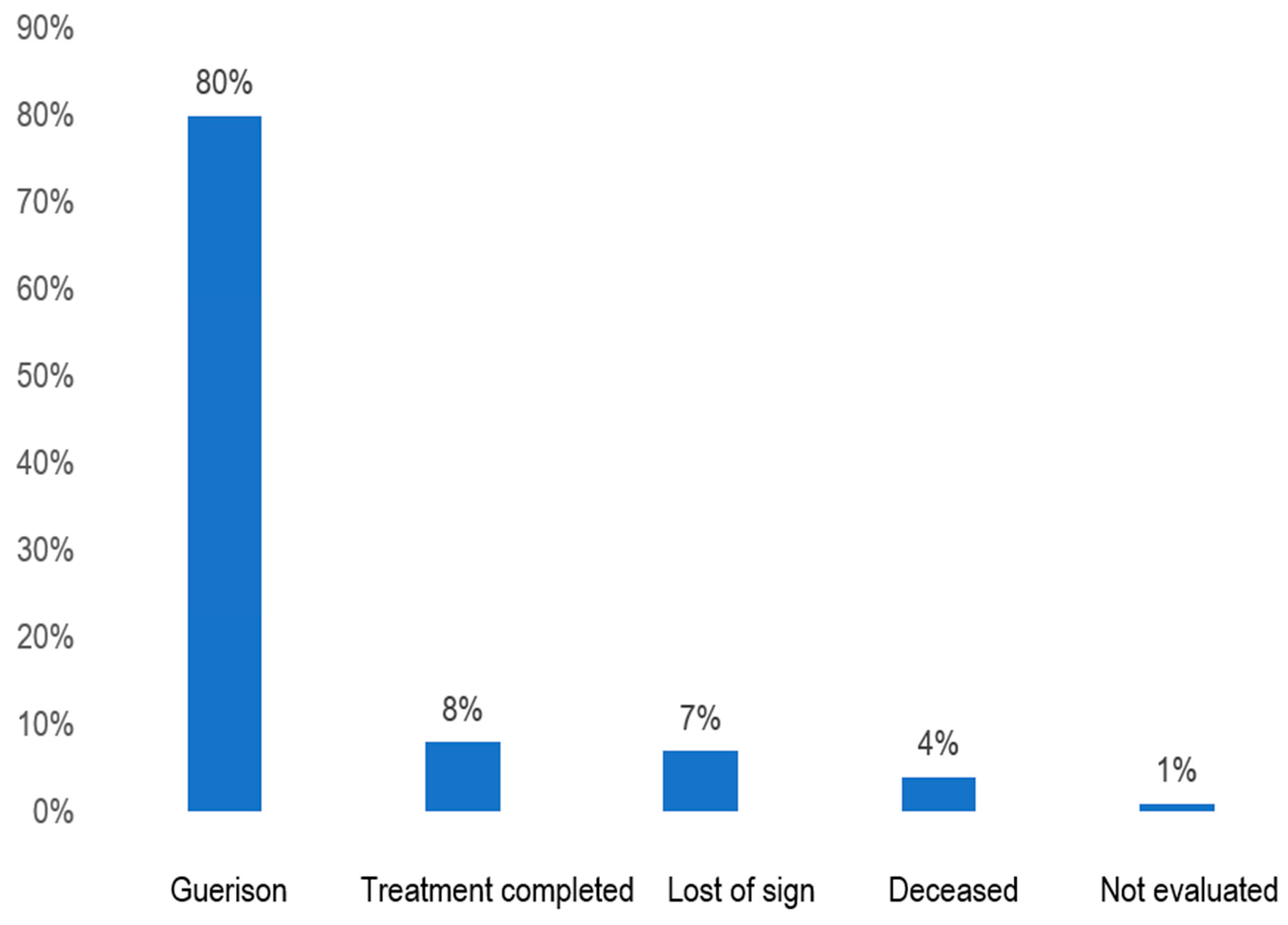
Figure 1. Results of anti-tuberculosis treatment at the CAT in Brazzaville.
Preprints 142820 g001
Table 2. Distribution Based on the Assessment of Reception, Respect for Privacy, and the Quality of Information Received.
Male
N=64
Female
N=75
Total
n % n % n %
Welcome at the entrance of the CAT
Excellent 1 1.6 3 4.0 4 2.9
Very good 6 9.4 4 5.3 10 7.2
Good 10 15.6 15 20.0 25 18.0
Bad 28 43.7 40 53.3 68 48.9
Very bad 19 29.7 13 17.4 32 23.0
Reception by care services
Excellent 6 9.4 10 13.3 16 11.5
Very good 8 12.5 6 8.0 14 10.1
Good 8 12.5 11 14.7 19 13.7
Bad 30 46.9 25 33.3 55 39.5
Very bad 12 18.7 23 30.7 35 25.2
Respect for privacy
Excellent 0 0.0 0 0.0 0 0.0
Very good 0 0.0 0 0.0 0 0.0
Good 2 3.1 0 0.0 2 1.4
Bad 35 54.7 50 66.7 85 61.2
Very bad 27 42.2 25 33.3 52 37.4
Information about the disease
Always 30 46.9 36 48.0 66 47.5
Almost always 25 39.0 30 40.0 55 39.6
Often 1 1.6 0 0.0 1 0.7
Sometimes 2 3.1 0 0.0 2 1.4
Very rarely or never 6 9.4 9 12.0 15 10.8
Clarity of information received
Always 27 42.2 10 13.3 37 26.6
Almost always 32 50.0 32 42.7 64 46.0
Often 5 7.8 3 4.0 8 5.8
Sometimes 0 0.0 22 29.3 22 15.8
Very rarely or never 0 0.0 8 10.7 8 5.8
Table 3. Distribution of Patients According to the Quality of Their Relationships with Healthcare Staff.
Male
N=64
Female
N=75
Total
n % n % n %
Annoying remarks from the doctor
Very often 0 0.0 0 0.0 0 0.0
Quite often 0 0.0 0 0.0 0 0.0
Sometimes 4 6.2 2 2.7 6 4.3
Very rarely 20 31.3 23 30.7 43 31.0
Never 40 62.5 50 66.6 90 64.7
Annoying remarks from the lab technician
Very often 0 0.0 0 0.0 0 0.0
Quite often 0 0.0 0 0.0 0 0.0
Sometimes 1 1.6 0 0.0 1 0.7
Very rarely 30 46.9 45 60.0 75 54.0
Never 33 51.5 30 40.0 63 45.3
Politeness of staff
Very often 57 89.1 71 94.7 128 92.1
Quite often 5 7.8 0 0.0 5 3.6
Sometimes 2 3.1 0 0.0 2 1.4
Very rarely 0 0.0 4 5.3 4 2.9
Never 0 0.0 0 0.0 0 0.0
Help with daily living activities
Always 30 46.9 41 54.7 71 51.1
Almost always 20 31.2 15 20.0 35 25.1
Often got the help needed 8 12.5 6 8.0 14 10.1
Sometimes 5 7.8 9 12.0 14 10.1
Very rarely or never 1 1.6 4 5.3 5 3.6
Explanation of the disease
Yes 64 100.0 75 100.0 139 100.0
No 0 0.0 0 0.0 0 0.0
Explanation of anti-tuberculosis treatment
Yes 64 100.0 75 100.0 139 100.0
No 0 0.0 0 0.0 0 0.0
Explanation of the tests to be carried out for monitoring
Yes 56 87.5 70 93.3 126 90.6
No 8 12.5 5 6.7 13 9.4
Table 3. Distribution of Patients According to the Quality of Their Relationships with Healthcare Staff.
Male
N=64
Female
N=75
Total
n % n % n %
Annoying remarks from the doctor
Very often 0 0.0 0 0.0 0 0.0
Quite often 0 0.0 0 0.0 0 0.0
Sometimes 4 6.2 2 2.7 6 4.3
Very rarely 20 31.3 23 30.7 43 31.0
Never 40 62.5 50 66.6 90 64.7
Annoying remarks from the lab technician
Very often 0 0.0 0 0.0 0 0.0
Quite often 0 0.0 0 0.0 0 0.0
Sometimes 1 1.6 0 0.0 1 0.7
Very rarely 30 46.9 45 60.0 75 54.0
Never 33 51.5 30 40.0 63 45.3
Politeness of staff
Very often 57 89.1 71 94.7 128 92.1
Quite often 5 7.8 0 0.0 5 3.6
Sometimes 2 3.1 0 0.0 2 1.4
Very rarely 0 0.0 4 5.3 4 2.9
Never 0 0.0 0 0.0 0 0.0
Help with daily living activities
Always 30 46.9 41 54.7 71 51.1
Almost always 20 31.2 15 20.0 35 25.1
Often got the help needed 8 12.5 6 8.0 14 10.1
Sometimes 5 7.8 9 12.0 14 10.1
Very rarely or never 1 1.6 4 5.3 5 3.6
Explanation of the disease
Yes 64 100.0 75 100.0 139 100.0
No 0 0.0 0 0.0 0 0.0
Explanation of anti-tuberculosis treatment
Yes 64 100.0 75 100.0 139 100.0
No 0 0.0 0 0.0 0 0.0
Explanation of the tests to be carried out for monitoring
Yes 56 87.5 70 93.3 126 90.6
No 8 12.5 5 6.7 13 9.4
Disclaimer/Publisher’s Note: The statements, opinions and data contained in all publications are solely those of the individual author(s) and contributor(s) and not of MDPI and/or the editor(s). MDPI and/or the editor(s) disclaim responsibility for any injury to people or property resulting from any ideas, methods, instructions or products referred to in the content.
Copyright: This open access article is published under a Creative Commons CC BY 4.0 license, which permit the free download, distribution, and reuse, provided that the author and preprint are cited in any reuse.
Prerpints.org logo

Preprints.org is a free preprint server supported by MDPI in Basel, Switzerland.

Subscribe

Disclaimer

Terms of Use

Privacy Policy

Privacy Settings

© 2026 MDPI (Basel, Switzerland) unless otherwise stated
