

Submitted:
12 December 2024
Posted:
13 December 2024
You are already at the latest version
Abstract
The rehabilitation of heritage steel bridges rises specific challenges due to their historical significance and structural complexity. This paper explores the transformative potential of Building Information Modelling (BIM) workflows in addressing these challenges, with a focus on seamless information transfer throughout a bridge’s lifecycle enabling infrastructure owners, particularly national road authorities, to leverage enhanced decision-making capabilities. The digitalization of bridge-related information can further enable the creation of digital twins for predictive maintenance, optimized resource allocation, and strategic planning for rehabilitation works. The approach proposed within this paper, including the definition and outline of Information Requirements, can be adapted by authorities and used as the backbone of efficient data management. Clearly defined information requirements ensure alignment between organizational objectives, asset-level needs, and project-specific deliverables, fostering a holistic information workflow. A key contribution of this research is the development of a template for Information Delivery Specification (IDS), that in intended to provide a clear framework for data exchange and quality control across all project phases. This technical document is meant to ensure seamless integration of technical and historical data into a centralized digital repository and to support the operational needs, during project implementation, and heritage preservation needs, on project hand-over. Additionally, present article explores the technical aspects of rehabilitation, including the structural assessment and strengthening strategies, while emphasizing that these should be directly integrated within the BIM workflow.
Keywords:
1. Introduction
2. Current State of the Art
2.1. Traditional Methods and Emerging Technologies for Bridge Inspection
2.2. Traditional Heritage Steel Bridge Rehabilitation Process
3. The Information Management Framework
- Data Collection and Integration of historical records in terms of existing design documents, maintenance logs, and existing on-site inspection reports.
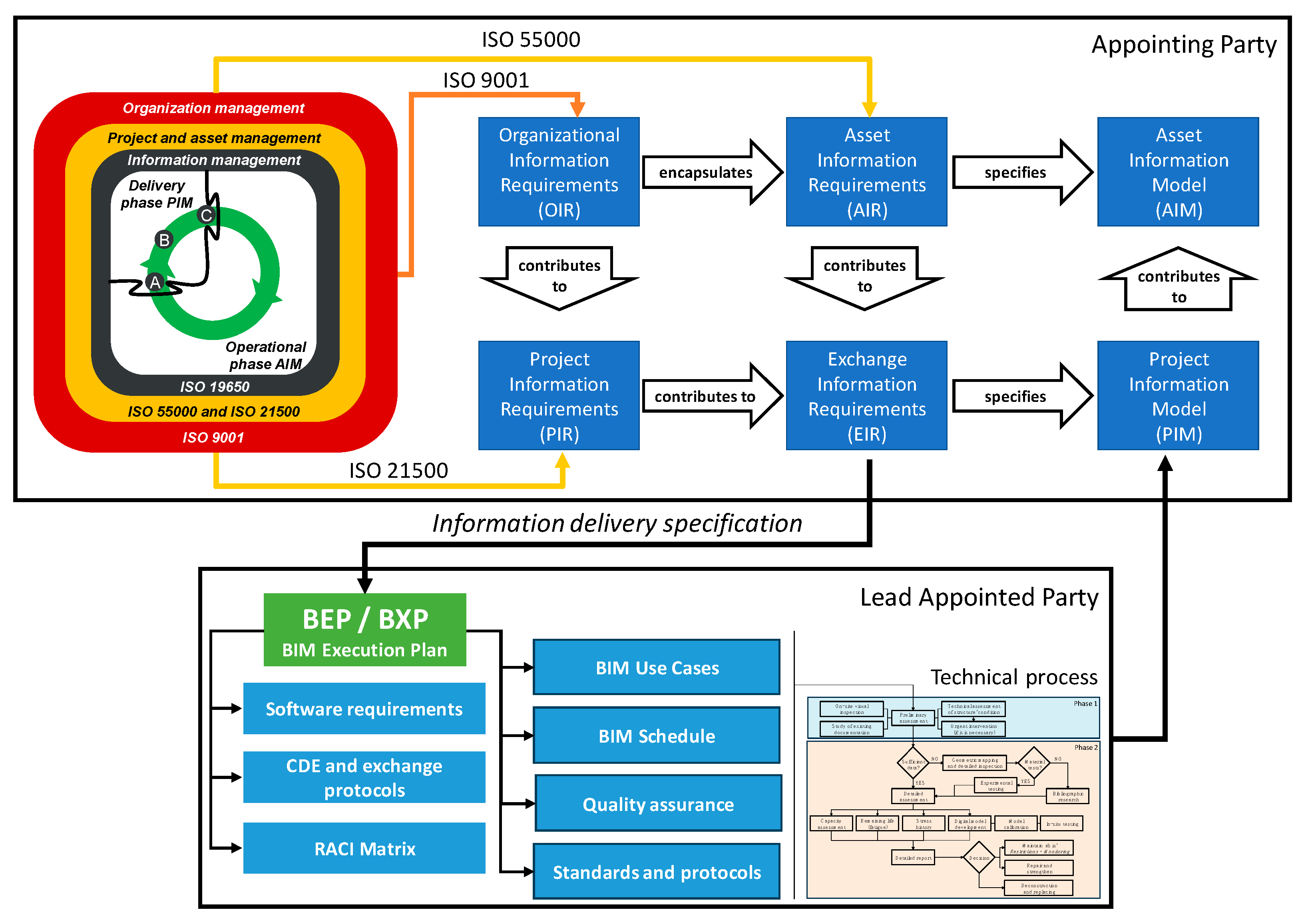
- Information Structuring and Standardization to ensure compatibility and ease of use across software tools and project teams. Implementing Industry Foundation Classes (IFC) [31,32,33] for data exchange and Information Delivery Specifications (IDS) ensures that all required data is correctly formatted and available at the appropriate project stages. Defining Organizational Information Requirements (OIR) and Asset Information Requirements (AIR) early in the project lifecycle further streamlines data management.
-
Model Creation and Simulation [34] to develop a federated model to act as a single source of truth central repository for graphical and non-graphical data, enabling:
- -
- Visualization for stakeholders to assess bridge’s current condition and/or proposed rehabilitation strategies through immersive visualizations.
- -
- -
- Collaboration, fostering coordination among architects, engineers, contractors, and regulatory authorities.
- -
- Rehabilitation Planning and Optimization [37], leveraging the insights gained from the BIM model to optimize:
- -
- Material Selection to allow evaluation of durability and sustainability of repair materials.
- -
- Repair Strategies, allowing for the identification of the most efficient and cost-effective methods for strengthening or replacing deteriorated components.
- -
- Monitoring and Feedback Loops post-rehabilitation [38,39] to maintain an up-to-date (As-Built) Asset Information Model (AIM) and enable monitoring and maintenance. By integrating IoT sensors [2], real-time performance data can be captured and analyzed to inform future rehabilitation projects. This feedback loop ensures continuous improvement of workflows and techniques.
- Legal and Regulatory Considerations, including compliance with transportation regulations, structural codes, and environmental policies to ensure that all interventions meet legal and operational benchmarks.
3.1. The Organizational Information Requirements
- organizational structure and RACI matrix should demonstrate how clear roles and responsibilities enhance collaboration and accountability.
- asset portfolio planning (e.g., exploitation, maintenance, space utilization, and portfolio adjustments) supported by a comprehensive a roadmap for tailored asset management.
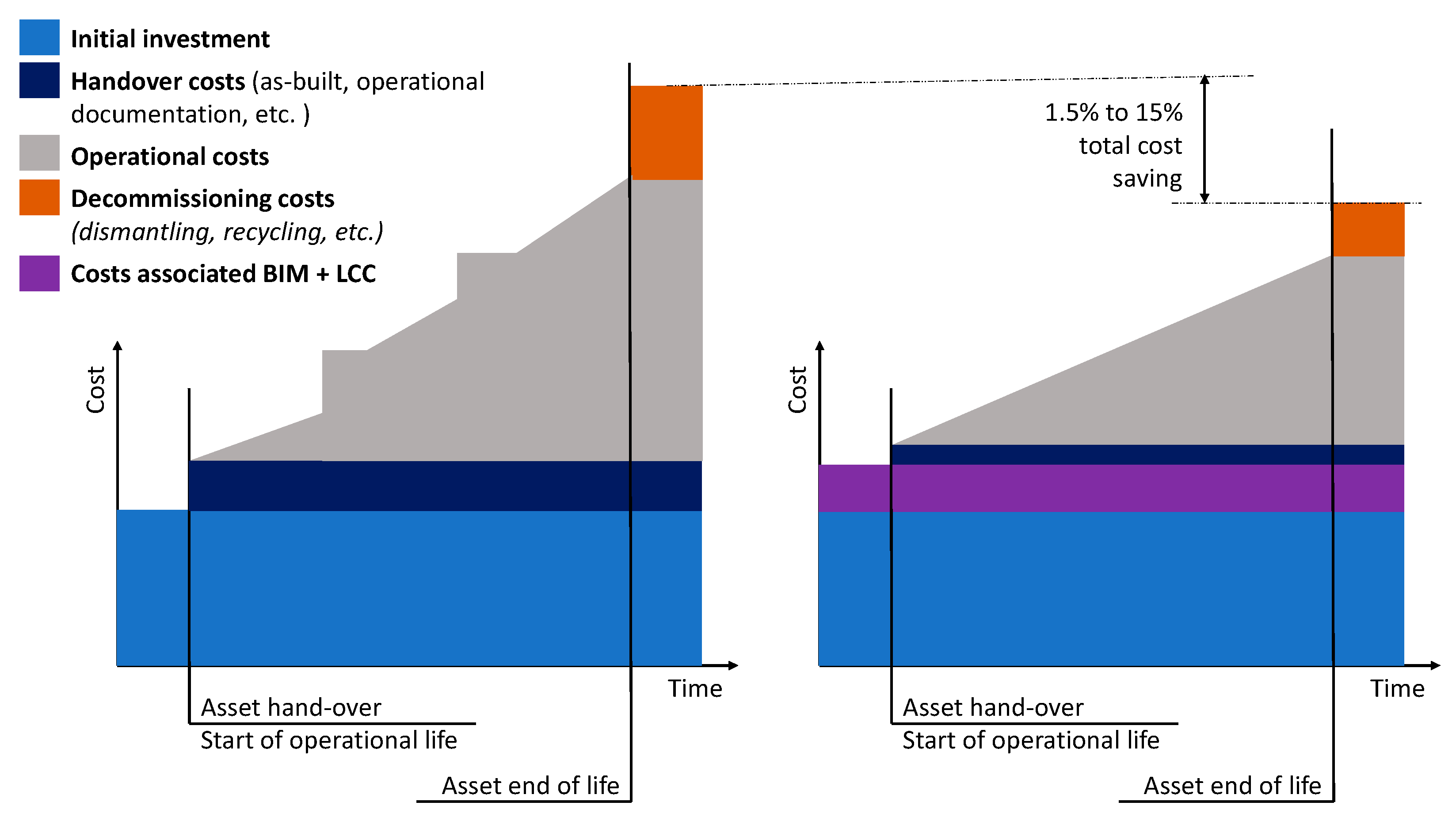
- assessment of lifecycle costs, risk assessments, and approaches to rehabilitation, replacement and/or decommissioning.
- environmental considerations, sustainability, and investments, emphasized as key components of a holistic approach.
- information exchange strategy across the organization, including relevant policies, internal and external factors, and implementation plans.
- continuous evaluation and review, to ensure that information remains accessible, consistent, and actionable, to form the foundation for informed decision-making and long-term organizational success.
3.2. The Asset Information Requirements
- Identify, Extract, and Categorize Organizational Requirements to ensure that the AIR aligns with the strategic objectives of the organization.
- Develop Asset Functions, Systems, and Products Within a Classification System to create a standardized understanding of how assets contribute to organizational functions, aiding in effective information management and interoperability.
- Identify Organizational Information Requirements (OIR) that directly supports the organizational goals and processes identified in Step 1. The OIR should align seamlessly with the previously categorized requirements to ensure the relevance and utility of the information.
- Develop Functional Information Requirements by translating the OIR into specific functional requirements. This step involves detailing the type of information needed for various operational, maintenance, and management functions, ensuring that all stakeholders have the data they require for decision-making.
- Develop Asset Information Requirements (AIR) using the functional information requirements as a basis. It should outline what data should be collected, how it should be formatted, and the processes for its maintenance throughout the asset’s lifecycle.
- Validate the Developed Information Requirements to confirm its fitness for purpose. This includes checking its completeness, alignment with organizational needs, and practicality for implementation. If the AIR is not adequate, review and refine it by revisiting earlier steps.
- Document and Communicate the Developed Information Requirements in a clear and accessible format to all relevant stakeholders, ensuring that the requirements are clearly understood and then integrated into the organizational workflows.
- Alignment with Organizational Goals, connecting the broader organizational strategy outlined in the OIR, including the organization’s commitment to preserving cultural heritage, sustainability, and efficient resource utilization, especially in the context of heritage steel bridges.
- Asset Inventory and Maintainable Components for all maintainable components, including unique identifiers for structural elements like trusses, beams, and rivets. For heritage assets, the inventory must also capture decorative and historically significant features.
- Lifecycle Management, specifying the requirements for inspection, rehabilitation, and replacement schedules, supported by detailed lifecycle cost analyses and risk assessments. Strategies for extending the lifespan of the asset while preserving its historical and structural integrity should also be included.
- Environmental and Sustainability Considerations on materials and techniques for rehabilitation. Data on the environmental impact of interventions, including carbon footprint and resource efficiency, should be considered.
- Operational Efficiency and Maintenance Strategies for asset performance monitoring, including the integration of IoT sensors to capture real-time data on stress, vibration, and temperature. This ensures proactive maintenance and long-term operational efficiency.
- Data Standards and Classifications, such as Industry Foundation Classes (IFC), to ensure compatibility across BIM tools and platforms. Specific classifications for heritage elements must be included, ensuring accessibility and consistency in information exchange.
- Data Exchange and Integration Protocols providing comprehensive guidelines for information exchange, storage, and access. This includes specifying data formats (e.g., IFC4, JSON) and ensuring interoperability with organizational systems and external stakeholders.
- Validation and Quality Control Metrics for data validation, including model checking tools (e.g., Solibri, Navisworks) and/or rule-based scripts. Metrics for completeness, accuracy, and adherence to preservation standards are essential for maintaining asset quality.
- Continuous Review and Improvement, emphasizing the need for ongoing evaluation to adapt to changing organizational needs and technological advancements. This ensures that the information remains relevant and supports informed decision-making throughout the asset lifecycle.
3.3. The Project Information Requirements
- Concept phase information needs, such as feasibility studies, preliminary design documents, and sustainability considerations. clear protocols for information exchange at this stage—particularly between the client and design teams—must also be established, including formats, classifications, and delivery deadlines;
- Detailed design phase requirements, outlining the information necessary to develop a detailed design that addresses technical, regulatory, and operational criteria, like: geometric and performance data for models and drawings, material specifications and engineering calculations, documentation on safety and constructability reviews. The lead appointed party shall ensure that data formatting adheres to recognized standards (e.g., Industry Foundation Classes - IFC) to enable seamless integration into the project’s BIM environment.
- Construction phase needs accounting for construction sequencing and scheduling data, inspection and testing plans, records of materials and equipment used, daily reports and deviations from the design. The information exchange protocol for this phase is critical, ensuring that the contractor’s data can be efficiently integrated into the federated model and ultimately the Project Information Model (PIM).
- Commissioning and handover phase information specifying the deliverables required to transition the project into operation. This includes the as-built models and drawings, operation and maintenance (O&M) manuals, warranty documents and certificates, digital data for IoT sensor integration, if applicable. The lead appointed party ensures that all information is delivered in formats compatible with the asset management systems defined in the AIR.
- Operation and maintenance phase data to ensure continuity post-handover, the PIR must include guidelines for ongoing information exchange between the project delivery team and asset managers. This encompasses regular updates to the AIM based on PIM data, performance monitoring data, and feedback loops for future asset interventions.
3.4. The Information Delivery Specification
4. Case Study for the Savârșin Heritage Steel Bridge
4.1. The OIR, AIR and PIR Documents
4.2. The IDS File
- Project ID: SAV-HB-2024;
- Phase: Development, Implementation, Handover;
- BIM related standards: ISO 19650-1:2019, ISO 19650-2:2018, ISO 16739-1:2024, ISO 7817-1:2024.
-
File formats
- -
- IFC4 for interoperability
- -
- Native file formats for design tools (e.g., Revit, Tekla Structures, Bonsai, etc.).
- -
- CSV or JSON for IoT sensor data.
- Software Compatibility: Must be compatible with common BIM tools and platforms such as Navisworks, BIM 360, and open-source tools adhering to buildingSMART standards
-
Development Phase
- -
-
Structural Assessments:Input: 3D scans (point cloud in .e57 format), initial condition reports (XML).Output: Preliminary BIM model with structural analysis data.
- -
- Environmental Impact:
-
Implementation Phase
- -
-
Construction Data:Input: Specifications for retrofitting materials (steel grades, paint types, rivets).Output: Updated BIM model showing real-time construction progress (weeekly .ifc updates).
- -
- Monitoring Integration:
Input: IoT sensor placement data (JSON).Output: Integration into a digital twin for real-time monitoring.
-
Handover Phase
- -
-
As-Built Documentation:Input: Final scans and updated design data.Output: Comprehensive as-built BIM model with maintenance schedules embedded.
- -
-
Training Materials:Input: Operation manuals, sensor data management protocols.Output: Interactive digital guides linked to the BIM model.
-
Validation Tools
- -
- Model checking tools (e.g., Solibri, Navisworks).
- -
- Custom scripts for rule-based validation (e.g., Python scripts).
-
Quality Control Metrics
- -
- Completeness (percentage of mandatory fields populated).
- -
- Accuracy (validation against reference standards e.g., ISO 1090-1, ISO 1090-2).
-
Access Levels
- -
- Read-only for public authorities.
- -
- Edit access for BIM managers and contractors.
-
Audit Trail
- -
- Maintain version history of the BIM model and associated documents.
4.3. The Technical Report and Rehabilitation Decision
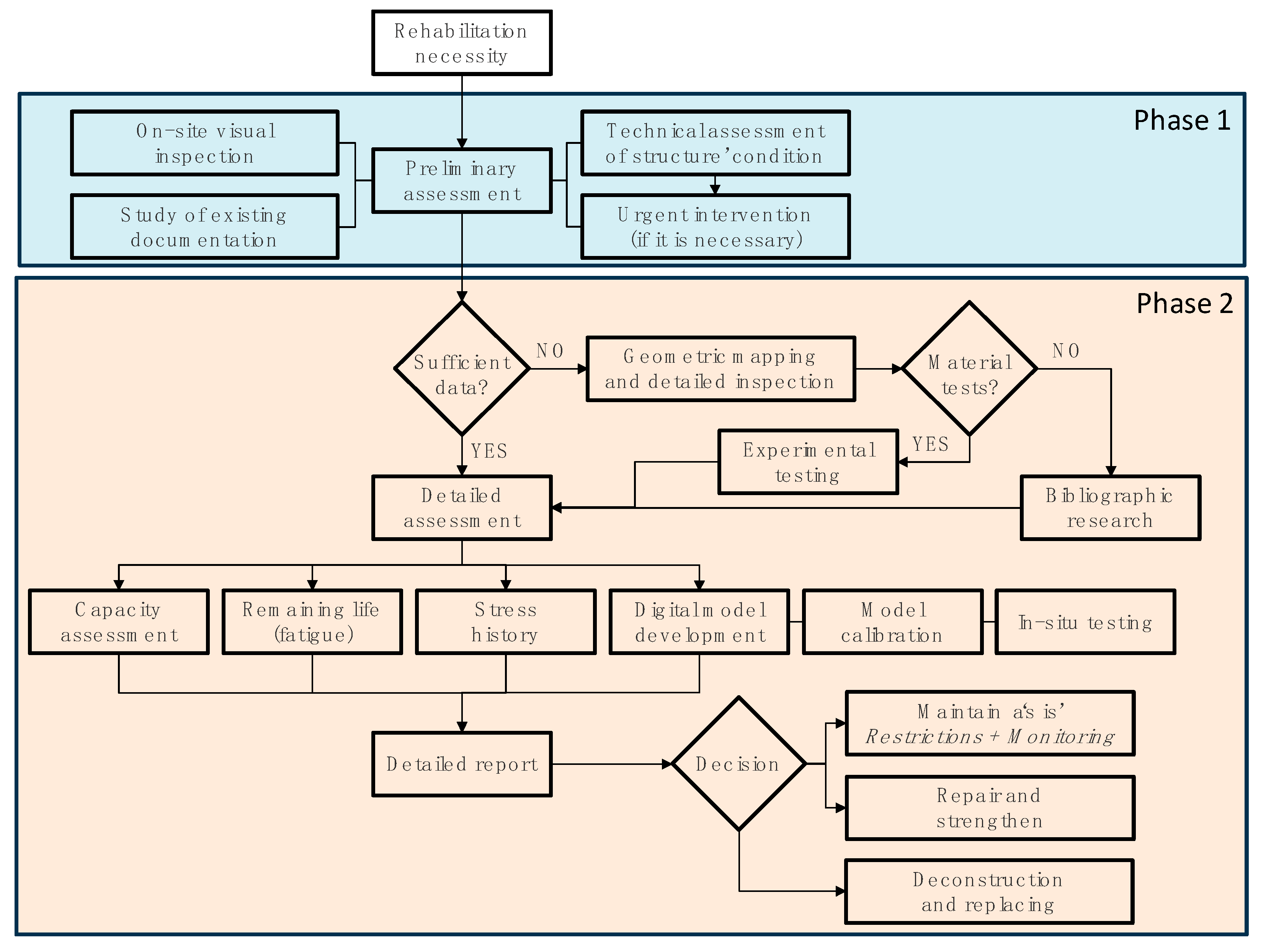
- Very good technical condition;
- Good technical condition;
- Satisfactory technical condition;
- Unsatisfactory technical condition;
- The present technical condition cannot assure the safety of the structure.
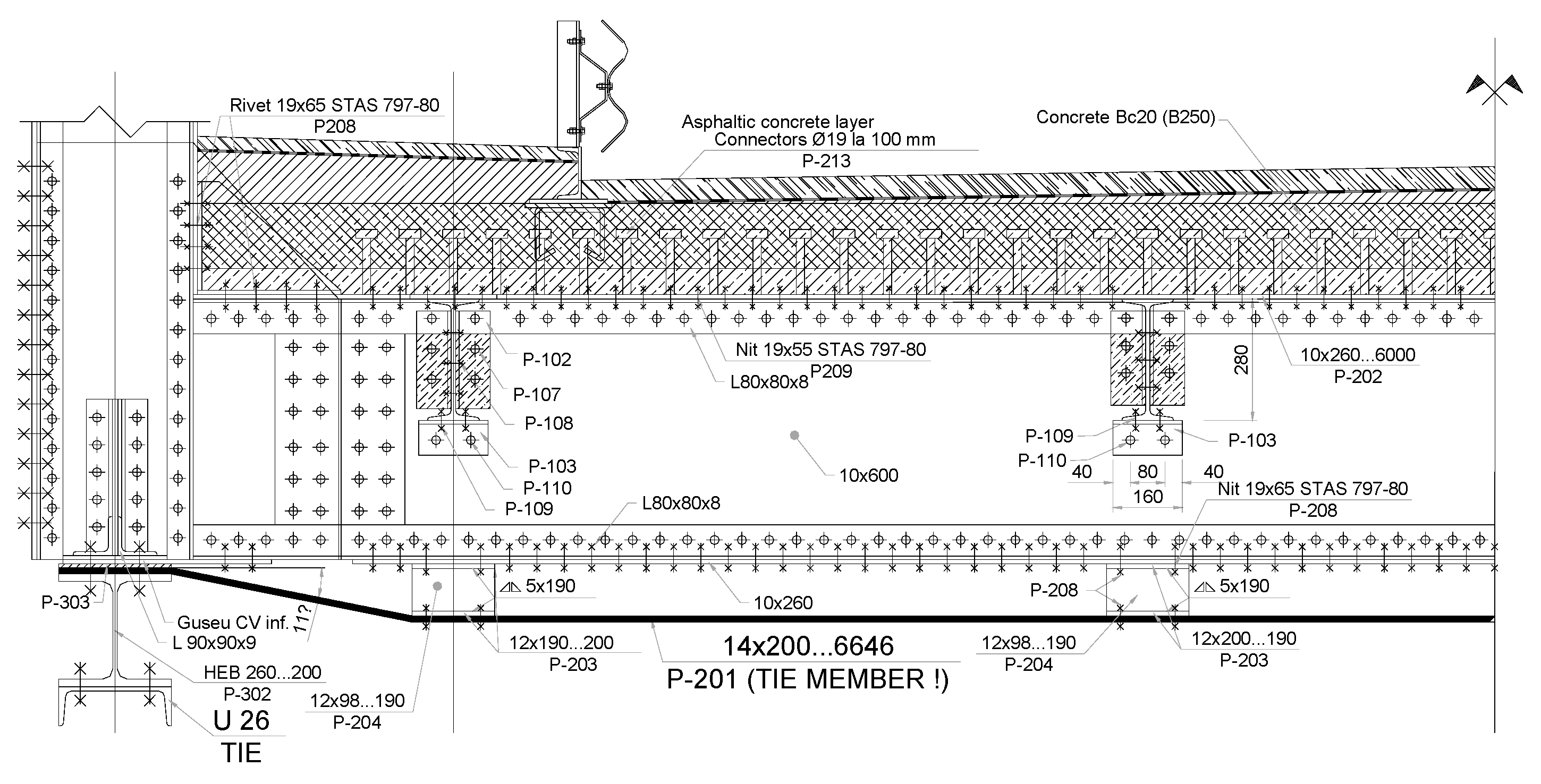
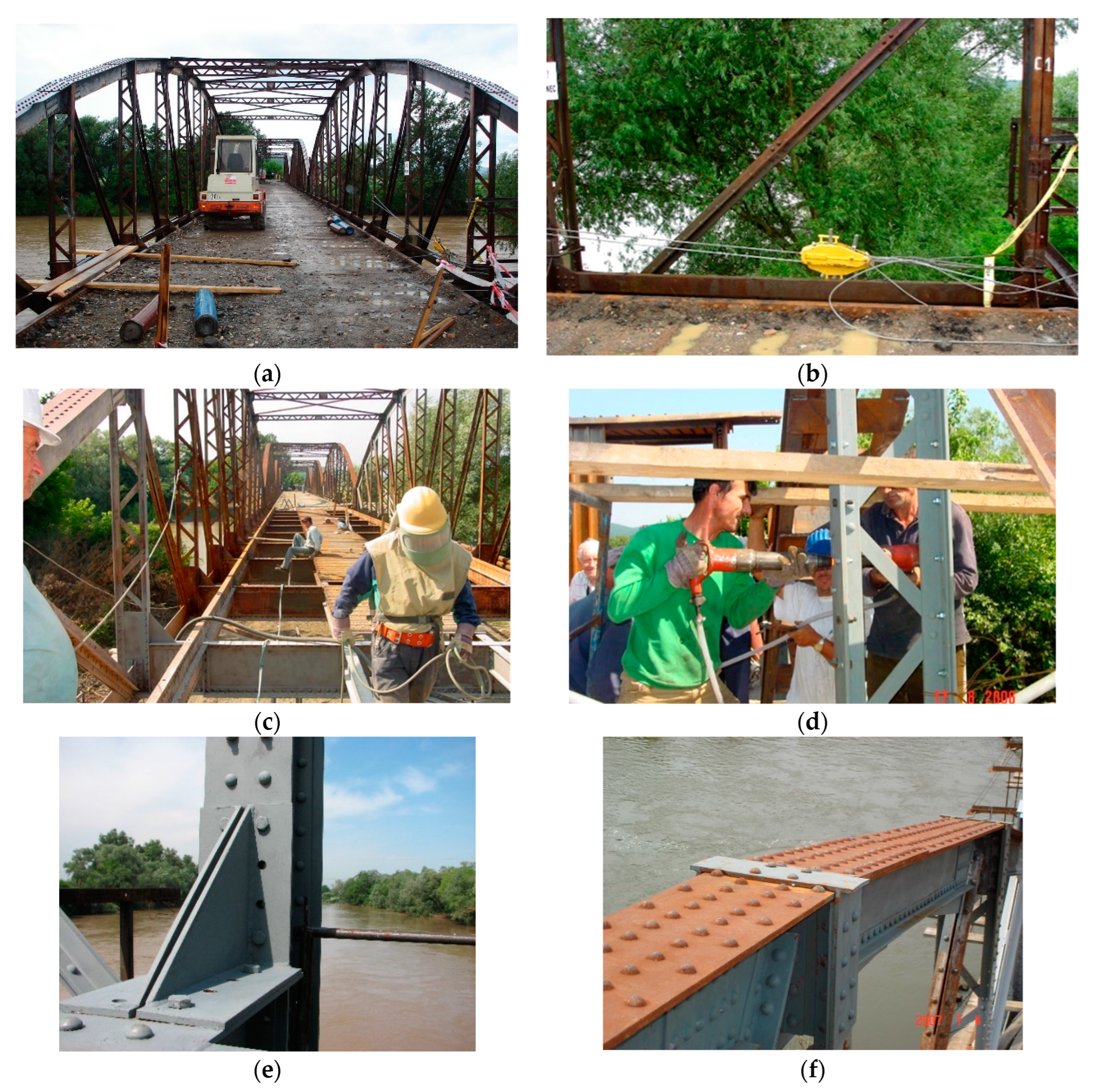
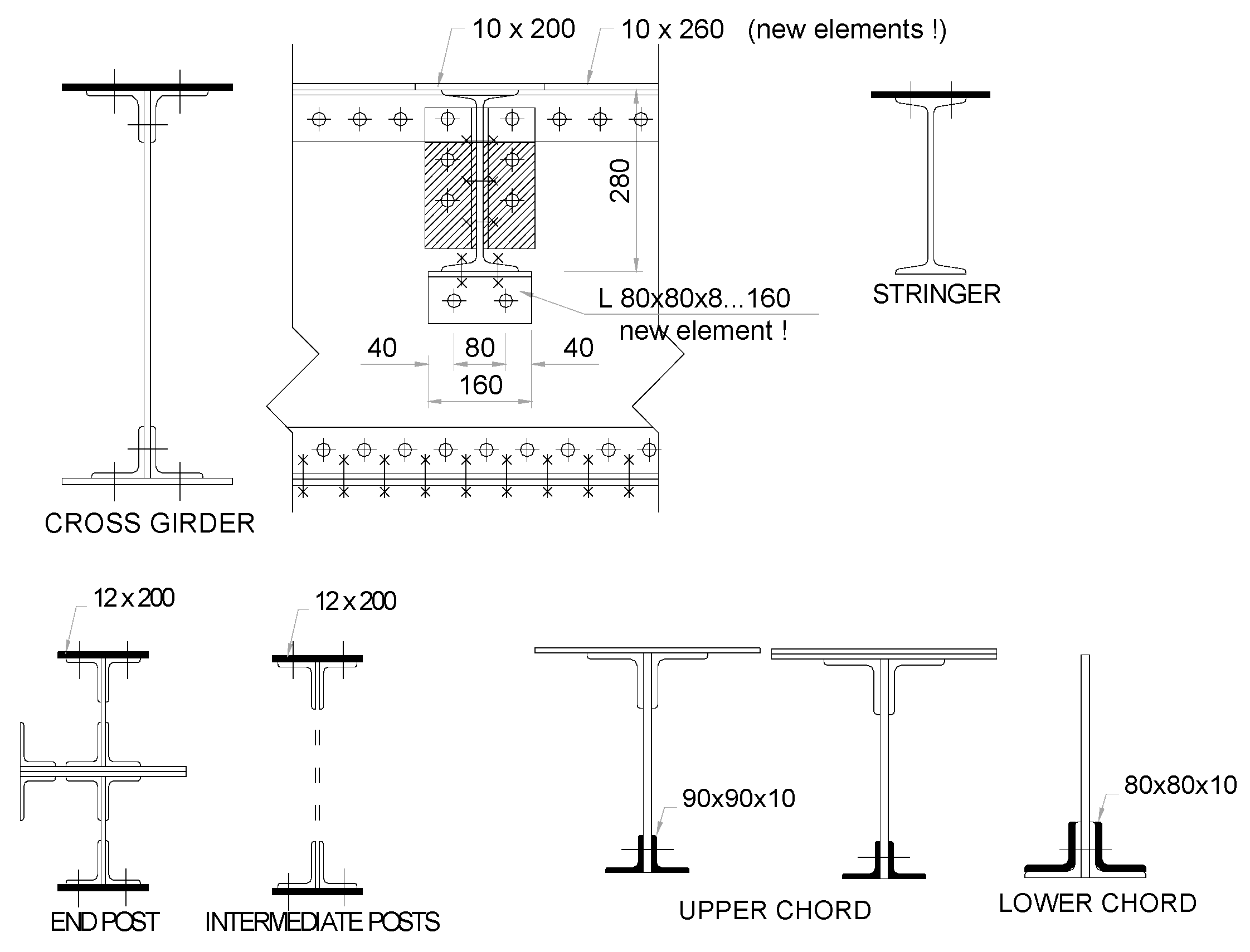
- the stringers the flanges were consolidated by supplementary plates (see Figure 8);
- the cross girders were transformed in switch girders (see Figure 9);
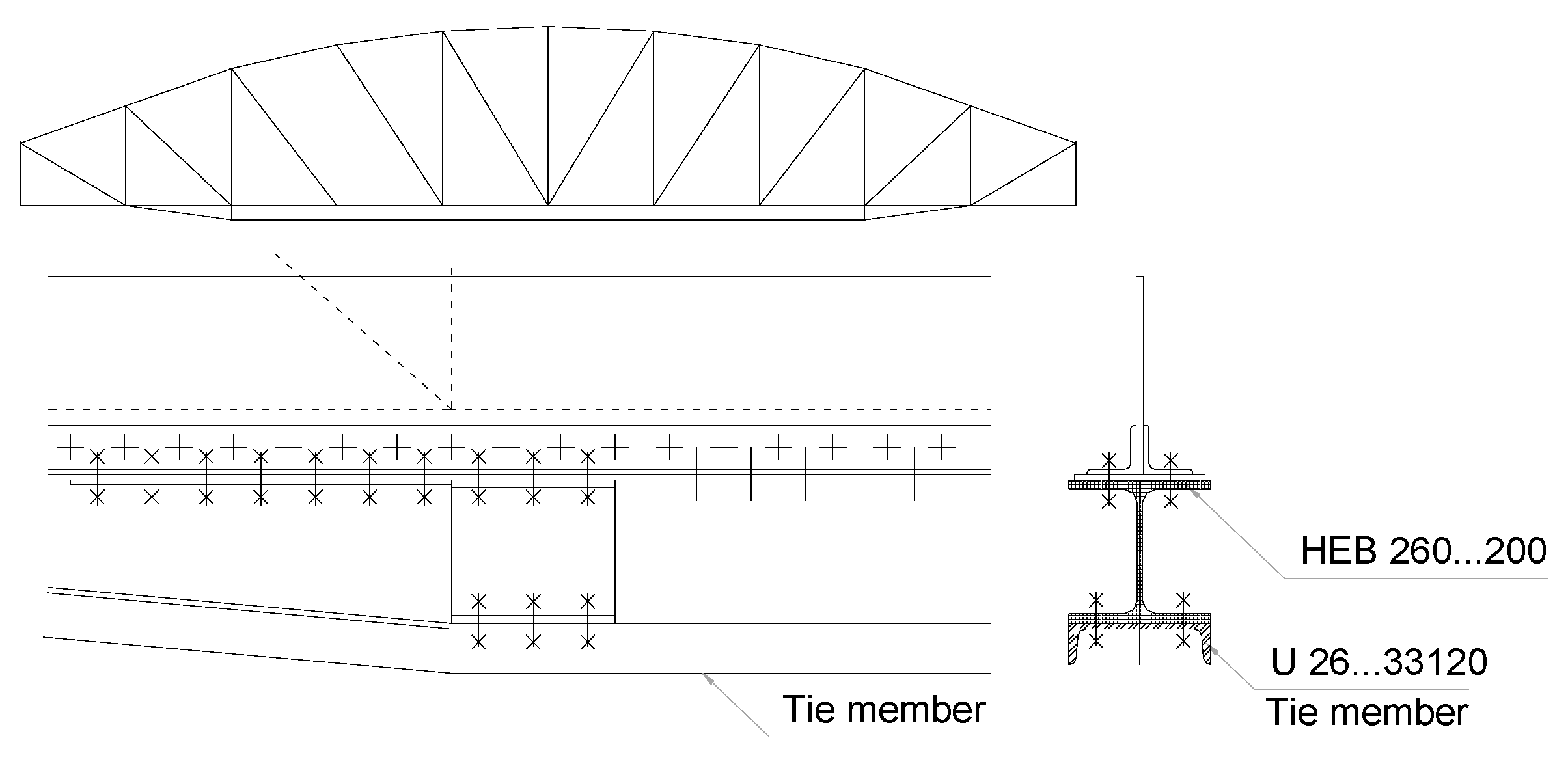
- supplementary tie member for the main girder lower chord (see Figure 10);
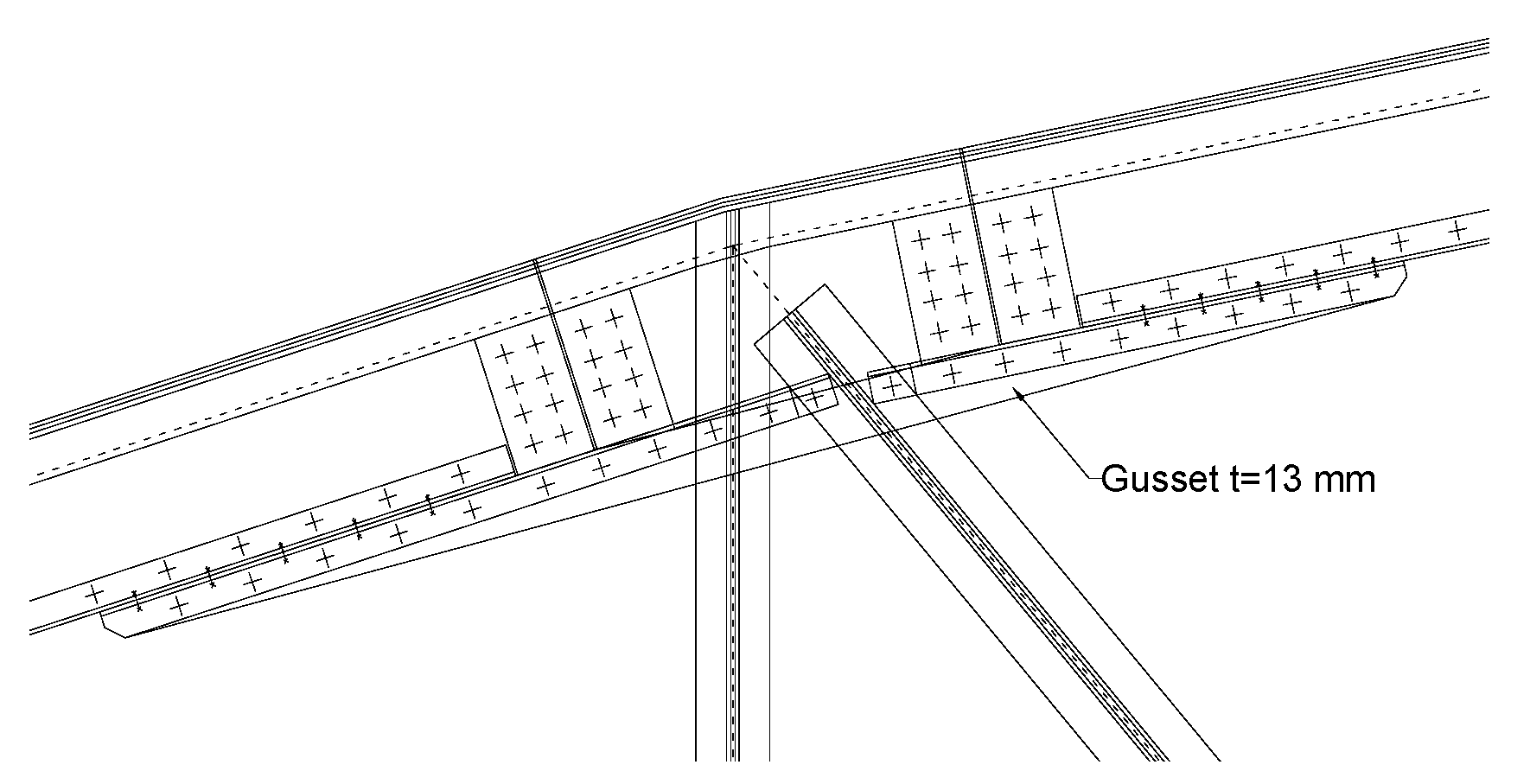
- the upper chord stability was improved by direct strengthening with two angle profiles (see Figure 11);
- diagonals and vertical members have to be first of all straighten, and strengthen by additional plates;
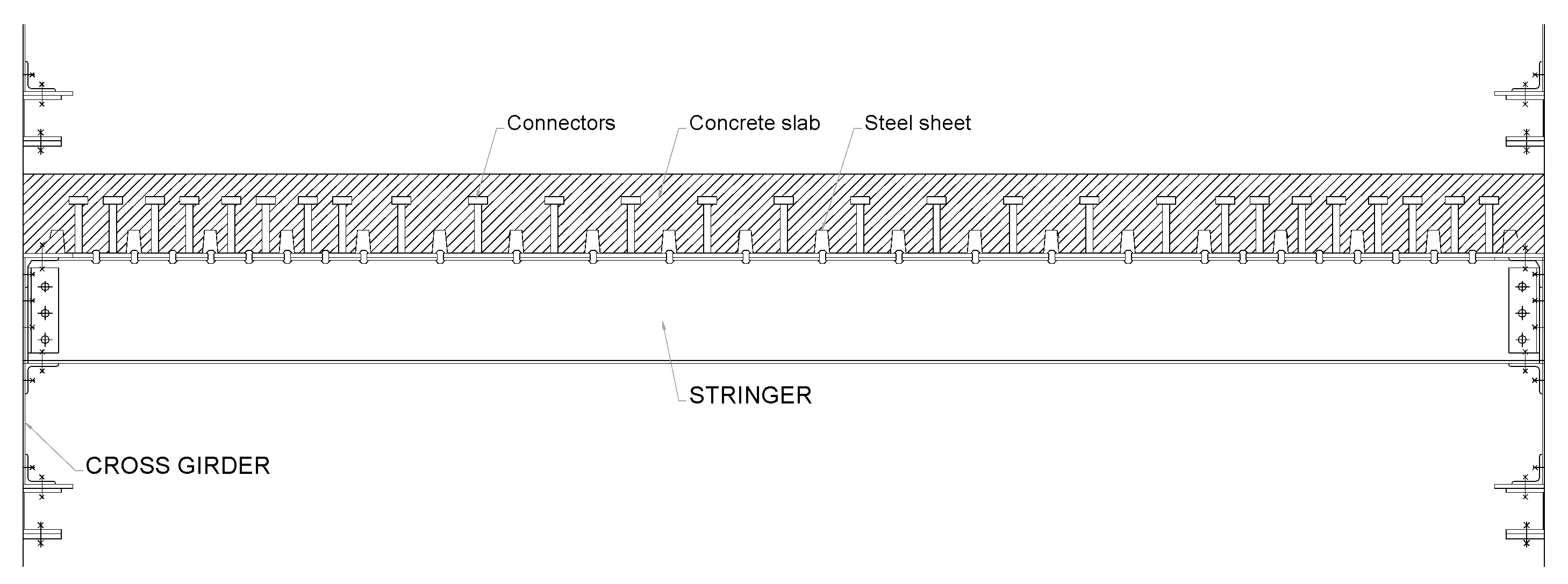
- the old deck system was replaced by a composite deck (see Figure 12).
5. Concluding Remarks
Author Contributions
Conflicts of Interest
Appendix A
References
- A. Bradley, H. Li, R. Lark, S. Dunn BIM for infrastructure: an overall review and constructor perspective, Autom. Constr., 71 (2016), pp. 139-152. [CrossRef]
- Aaron, C. , Alireza A., Hanjin H., Stuart S. C. Building Information Modeling (BIM) for transportation infrastructure – Literature review, applications, challenges, and recommendations, Automation in Construction, Volume 94, 2018, Pages 257-281, ISSN 0926-5805. [CrossRef]
- M. Minehane, K. Ruane, B. O’Keeffe, G. O’Sullivan, T. McKenna Developing an ‘as-is’ bridge information model (BrIM) for a heritage listed viaduct, Proc. in CITA BIM Gathering, November 12-13, Dublin, Ireland (2015), pp. 181-188. https://www.cita.ie/wp-content/uploads/2015/06/CitA-BIM-Gathering-Proceedings-2015-Part-3.pdf.
- Blaine Fanning and Caroline M. Clevenger and Mehmet E. Ozbek and Hussam Mahmoud Implementing BIM on Infrastructure: Comparison of Two Bridge Construction Projects, Practice Periodical on Structural Design and Construction JOURNAL, Vol. 20, 4, 2015, doi.10.1061/(ASCE)SC.1943-5576.0000239.
- https://de.wikipedia.org/wiki/Life_Cycle_Costing, last accessed on 11.12.2024.
- P. Matejka The importance of a Transport infrastructure construction for the implementation of BIM, Proc. in International Scientific Conference People, Buildings and Environment (PBE2016), October 15-17, Kromeriz, Czech Republic (2014), pp. 277-287. https://www.fce.vutbr.cz/ekr/pbe/.
- Proceedings/2014/027_14174.pdf.
- Tao Zhang, Arash Esmaili Zaghi Estimation of the residual bearing strength of corroded bridge girders using 3D scan data, Thin-Walled Structures, Volume 188, 2023, ISSN 0263-8231. [CrossRef]
- Z. Mirzaei, B.T. Adey, L. Klatter, and J.S. Kong, Overview of existing Bridge Management Systems, IABMAS Bridge Management Committee. 2014.
- Francesca Brighenti, Valeria Francesca Caspani, Giancarlo Costa, Pier Francesco Giordano, Maria Pina Limongelli, Daniele Zonta Bridge management systems: A review on current practice in a digitizing world, Engineering Structures, Volume 321, 2024, ISSN 0141-0296. [CrossRef]
- Zhiguo He, Wentao Li, Hadi Salehi, Hao Zhang, Haiyi Zhou, Pengcheng Jiao Integrated structural health monitoring in bridge engineering, Automation in Construction, Volume 136, 2022, ISSN 0926-5805. [CrossRef]
- Kamil Korus, Marek Salamak, Marcin Jasiński Optimization of geometric parameters of arch bridges using visual programming FEM components and genetic algorithm, Engineering Structures, Volume 241, 2021, ISSN 0141-0296. [CrossRef]
- Antonio Navarro-Manso, Juan José del Coz Díaz, Mar Alonso-Martínez, Daniel Castro-Fresno, Felipe Pedro Alvarez Rabanal Patch loading in slender and high depth steel panels: FEM–DOE analyses and bridge launching application, Engineering Structures, Volume 83, 2015, Pages 74-85, ISSN 0141-0296. [CrossRef]
- ISO 19650-1:2018, Organization and digitization of information about buildings and civil engineering works, including building information modelling (BIM) — Information management using building information modelling.
- ISO 55000:2024, Asset management — Vocabulary, overview and principles.
- ISO 55001:2024, Asset management — Asset management system — Requirements.
- ISO 21500:2021, Project, programme and portfolio management — Context and concepts.
- ISO 9001:2015, Quality management systems — Requirements.
- UK BIM Alliance, Information Management according to BS ISO 19650, Guidance Part 1: Concepts, 2019.
- ISO 7817-1:2024, Building information modelling — Level of information need, Part 1: Concepts and principles.
- Rashidi, M.; Mohammadi, M.; Sadeghlou Kivi, S.; Abdolvand, M.M.; Truong-Hong, L.; Samali, B. A Decade of Modern Bridge Monitoring Using Terrestrial Laser Scanning: Review and Future Directions. Remote Sens. 2020, 12, 3796. [Google Scholar] [CrossRef]
- Haidar H. H, Mohsen H. Digital Twin Technology for Bridge Maintenance using 3D Laser Scanning: A Review, Advances in Civil Engineering, 2022, 2194949, 15 pages, 2022.
- . [CrossRef]
- Mazzetto, S. Integrating Emerging Technologies with Digital Twins for Heritage Building Conservation: An Interdisciplinary Approach with Expert Insights and Bibliometric Analysis. Heritage 2024, 7, 6432–6479. [Google Scholar] [CrossRef]
- Ccanccapa Puma, J.; Hidalgo Valdivia, A.V.; Espinoza Vigil, A.J.; Booker, J. Preserving Heritage Riverine Bridges: A Hydrological Approach to the Case Study of the Grau Bridge in Peru. Heritage 2024, 7, 3350–3371. [Google Scholar] [CrossRef]
- Mohammadi, M.; Rashidi, M.; Mousavi, V.; Yu, Y.; Samali, B. Application of TLS Method in Digitization of Bridge Infrastructures: A Path to BrIM Development. Remote Sens. 2022, 14, 1148. [Google Scholar] [CrossRef]
- He, J.; Li, P.; An, X.; Wang, C. A Reconstruction Methodology of Dynamic Construction Site Activities in 3D Digital Twin Models Based on Camera Information. Buildings 2024, 14, 2113. [Google Scholar] [CrossRef]
- Castañeda, K.; Sánchez, O.; Herrera, R.F.; Gómez-Cabrera, A.; Mejía, G. Building Information Modeling Uses and Complementary Technologies in Road Projects: A Systematic Review. Buildings 2024, 14, 563. [Google Scholar] [CrossRef]
- Xu, Y. , Turkan, Y. (2019). Bridge Inspection Using Bridge Information Modeling (BrIM) and Unmanned Aerial System (UAS). In: Mutis, I., Hartmann, T. (eds) Advances in Informatics and Computing in Civil and Construction Engineering. Springer, Cham. [CrossRef]
- Hammervold, J. , Reenaas M., BrattebøB. Environmental Life Cycle Assessment of Bridges, Journal of Bridge Engineering, 2011, Volume 18, Issue 2. [CrossRef]
- ISO 16739-1:2024, Industry Foundation Classes (IFC) for data sharing in the construction and facility management industries, Part 1: Data schema.
- Jalaei, F. , Zhang, J., Mcneil- Ayuk, N., & McLeod, C. (2024). Environmental life cycle assessment (LCA) for design of climate-resilient bridges – a comprehensive review and a case study. International Journal of Construction Management, 1–16. [CrossRef]
- Park, S.I.; Park, J.; Kim, B.-G.; Lee, S.-H. Improving Applicability for Information Model of an IFC-Based Steel Bridge in the Design Phase Using Functional Meanings of Bridge Components. Appl. Sci. 2018, 8, 2531. [Google Scholar] [CrossRef]
- https://www.buildingsmart.org/standards/bsi-standards/industry-foundation-classes/, last accessed on 11.12.2024.
- ISO 16739-1:2024, Industry Foundation Classes (IFC) for data sharing in the construction and facility management industries, Part 1: Data schema, 2024.
- Dang, N.-S.; Rho, G.-T.; Shim, C.-S. A Master Digital Model for Suspension Bridges. Appl. Sci. 2020, 10, 7666. [Google Scholar] [CrossRef]
- Dea Fitri Pratama, S. T. , Irfan Rifai, A., Jaya Saputra, A., & Prasetijo, J. (2024). A Bridge Planning Simulation with Building Information Model: Steel Frame Structure. Journal Research of Social Science, Economics, and Management, 4(2), 310–317. [CrossRef]
- Nhamage, I.A.; Dang, N.-S.; Horas, C.S.; Poças Martins, J.; Matos, J.A.; Calçada, R. Performing Fatigue State Characterization in Railway Steel Bridges Using Digital Twin Models. Appl. Sci. 2023, 13, 6741. [Google Scholar] [CrossRef]
- Masoud, M. , Maria R., Yang Y., Bijan S. Integration of TLS-derived Bridge Information Modeling (BrIM) with a Decision Support System (DSS) for digital twinning and asset management of bridge infrastructures, Computers in Industry, Volume 147, 2023, 103881, ISSN 0166-3615. [CrossRef]
- Limin, S. , Haibin S., Wei Z., Yixian L. Hybrid monitoring methodology: A model-data integrated digital twin framework for structural health monitoring and full-field virtual sensing, Advanced Engineering Informatics, Volume 60, 2024, 102386, ISSN 1474-0346. [CrossRef]
- Panah, R.S.; Kioumarsi, M. Application of Building Information Modelling (BIM) in the Health Monitoring and Maintenance Process: A Systematic Review. Sensors 2021, 21, 837. [Google Scholar] [CrossRef]
- Alexa Mitchell, Francesca Maier, Julie Rivera, John Reese, Aaron Costin, Thomas Liebich, Jeffrey Ouellette, Stéphane Gros BIM for Bridges and Structures Final Report, TPF-5(372), 2024.
- https://bimforbridgesus.com/application/files/2016/8262/4510/Interactive_PDF_v13_2021.02.01_Markup_3.pdf, last accessed on 11.12.2024.
- Alexa Mitchell Chris Williges Sarah Henly-Tomas, John Messner Lifecycle BIM for infrastructure: A business case for project delivery and asset management, CRP Special Release 4, ISBN 978-0-309-69845-0. available at http://nap.nationalacademies.org/26731. [CrossRef]
- Saback, Vanessa, et al. “Asset Management of Existing Concrete Bridges Using Digital Twins and BIM: a State-of-the-Art Literature Review” Nordic Concrete Research, vol. 66, no. 1, Sciendo, 2022, pp. 91-111. [CrossRef]
- Center for Digital Built Britain, Organisational Information Requirements – Template. https://www.cdbb.cam.ac.uk/files/oir_guidance.pdf, last accessed on 11.12.2024.
- Center for Digital Built Britain, Asset Information Requirements – Template. https://www.cdbb.cam.ac.uk/files/air_guidance.pdf, last accessed on 11.12.2024.
- Center for Digital Built Britain, Proect Information Requirements – Template. https://www.cdbb.cam.ac.uk/files/pir_guidance.pdf, last accessed on 11.12.2024.
- James Heaton, Ajith Kumar Parlikad, Jennifer Schooling, A Building Information Modelling approach to the alignment of organisational objectives to Asset Information Requirements, Automation in Construction, Volume 104, 2019, ISSN 0926-5805. [CrossRef]
- https://www.buildingsmart.org/what-is-information-delivery-specification-ids/, last accessed on 11.12.2024.
- https://github.com/buildingSMART/IDS, last accessed on 11.12.2024.
- Schwalie, Alfred & Feier, Anamaria & S., Hernea & Băncilă, Radu. (2016). Four Historical Steel Bridges Over the Mureş River. Procedia Engineering. 156. 419-426. [CrossRef]
- ECE/TRANS/308, United Nations Economic Commission for Europe, Building Information Modelling (BIM) for road infrastructure: TEM requirements and recommendations, eISBN: 978-92-1-005549-9. https://unece.org/sites/default/files/2021-05/2017495_E_pdf_web.pdf, 2021.
- AND 522-2002, Instructiuni tehnice pentru stabilirea starii tehnice a unui pod, Ordin AND 19, BTR 16/2002, issued 17-01-2002.
- STAS 1844-75. Steel highway bridges. Design of the superstructure (Romanian Standard).
- I-AM 08/2002. Richtlinie für die Beurteilung von genieteten Eisenbahnbrücken, SBB CFF FFS.


| Organizational Information Requirements (OIR) | Asset Information Requirements (AIR) | Project Information Requirements (PIR) |
|---|---|---|
|
|
Project Development
|
| Field | Requirement | Format | Phase |
|---|---|---|---|
| Structural Element ID | Unique identifier for each component (e.g., beams). | String (UUID) | Development |
| Material Properties | Steel composition, corrosion resistance. | JSON, XML |
Development |
| Geometric Data | Dimensions, curvature, alignment tolerances. | IFC, .e57 | All phases |
| Heritage Details | Decorative features and original designs. | PDF, linked IFC | Development, Handover |
| Load Capacity | Maximum weight and stress tests results. | Numeric (kN) | Implementation |
| IoT Sensor Data | Vibration, stress, temperature readings. | JSON, CSV |
Implementation |
Disclaimer/Publisher’s Note: The statements, opinions and data contained in all publications are solely those of the individual author(s) and contributor(s) and not of MDPI and/or the editor(s). MDPI and/or the editor(s) disclaim responsibility for any injury to people or property resulting from any ideas, methods, instructions or products referred to in the content. |
© 2024 by the authors. Licensee MDPI, Basel, Switzerland. This article is an open access article distributed under the terms and conditions of the Creative Commons Attribution (CC BY) license (http://creativecommons.org/licenses/by/4.0/).


