

Submitted:
12 December 2024
Posted:
12 December 2024
You are already at the latest version
Abstract
Electrification has become increasingly common in aerospace due to climate change concerns. After successful applications in general aviation aircraft, electrification is now addressing subregional (<= 19 pax) and regional aircraft (~ 80 pax). Megawatt-class electric motors are needed both to drive propellers and to act as high-power generators in hybrid-electric propulsion systems. Although the efficiency of these electric machines is very high, the power levels require the design of heat management systems capable of dissipating a much higher quantity of heat than that dissipated by traditional cooling systems. Coolants also deserve renewed attention as their associated physical properties need to be improved to ensure greater heat removal than conventional coolants. The technical solution here explored is the addition of nanoparticles into a base liquid. Nanoparticles, in fact, have unique properties such as high thermal conductivity and large surface area that enhance the heat transfer capacity of base liquids. However, the addition of nanoparticles into a base liquid induces new challenges to be faced, such as stability, thermal and electrical conductivity properties of nanofluids, cleaning and erosion of equipment. The Italian Aerospace Research Centre (CIRA) has developed, as part of the European research initiative ORCHESTRA, a thermal management system (TMS) based on impinging jets technology for a 1 MW electric motor. This work presents the subsequent activities that CIRA has carried out to demonstrate the enhancements achievable from nanofluids. In particular, two different nanoparticles were added to the base liquid of the cooling system of the aforementioned 1 MW electric motor: alumina and graphite in two distinct molecular structure configurations, each with different concentrations between 1% and 10% (volume fraction of diathermic oil). The application of nanofluids to the reference TMS is shown to increase heat transfer at a fixed mass flow rate.
Keywords:
1. Introduction
- properties variability – nanofluids physical properties (e.g. thermal conductivity) reported in literature vary significantly [5];
2. Background and State of the Art
2.1. Brief Overview of Thermal Management Systems (TMSs) for Electric Motors
- liquid cooling [1]: such systems use coolant (usually water, oil, or a mixture) circulating through channels and/or pipes around critical motor components to remove heat. Such a system is efficient and has a high Technology Readiness Level (TRL=7), but requires additional weight and space.
- Refrigerant Assisted Cooling (RA) [22]: such systems combine traditional air cooling with a refrigerant-based system. RA Cooling, in fact, uses airflow and a secondary refrigerant to enhance heat dissipation, improving cooling efficiency without adding significant weight.
- heat exchangers [22]: they transfer heat between different fluid streams (e.g., coolant and air), enhancing overall thermal efficiency by optimizing heat exchange. They can be compact and lightweight.
- skin heat exchangers [1]: this type of system involves integrating cooling channels into the aircraft’s outer surface to dissipate heat. These systems minimize additional components.
- Vapor Cycle Systems (VCS) [23]: VCS uses a refrigerant cycle to manage heat. They are usually used for cabin cooling but can also be adapted for motor cooling. VCS systems are efficient but may add complexity.
2.2. Impinging Jets Technology
- confined: the fluid can circulate back into the impinging jet, leading to the creation of recirculation zones in the outlet flow area [30].
- unconfined jet: the heated fluid does not circulate back into the jet; it interacts with the surrounding ambient air, resulting in increased heat transfer coefficients [31].
- semi-confined: they have characteristics of both confined and unconfined jets.
2.3. Nanofluids Overview
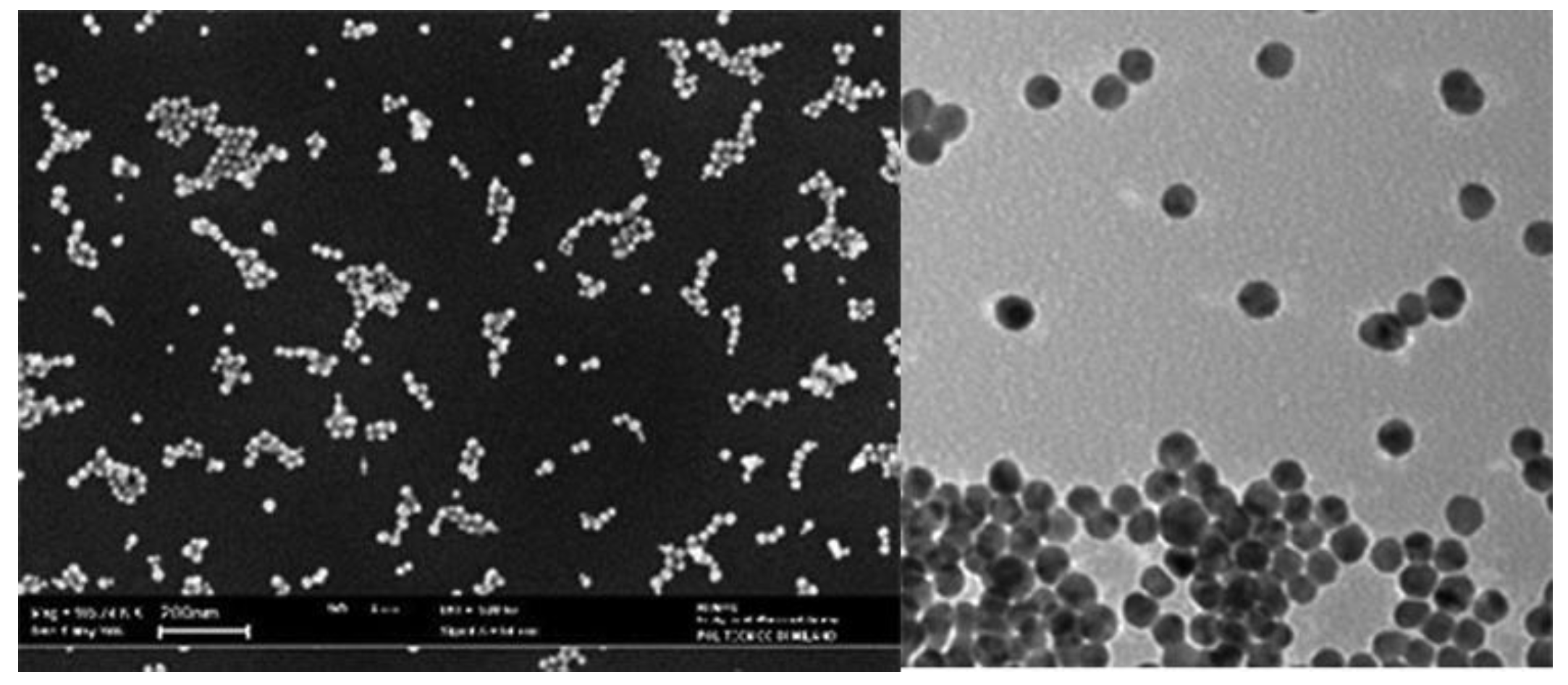
2.4. Nanoparticles for Thermal Management: Advantages and Challenges
- 1)
-
Advantages: one of the most important advantages of nanofluids is their enhanced thermal conductivity. The immersion of nanoparticles, such as metals, metal oxides, or carbon-based materials, significantly increases the base fluid's thermal conductivity. This enhancement is linked both to the high thermal conductivity of the nanoparticles themselves and to the increased surface area for heat transfer. The increased thermal conductivity of nanofluids allows them to achieve higher heat transfer rates, making such types of coolant suitable for applications requiring efficient thermal management, such as automotive cooling, electronic cooling, and industrial heat exchangers [39].Nanofluids also exhibit higher convective heat transfer coefficients. This is due to both the increased thermal conductivity and the Brownian nanoparticles’ motion, enhancing energy exchange within the coolant. This property is mostly beneficial in applications involving forced convection, where the fluid is actively circulated to dissipate heat. For example, cars radiators size and weight can be reduced without affecting cooling system performance [40].
- 2)
- Challenges: nanofluids stability is one of their main concerns. Nanoparticles tend to agglomerate over time, leading to sedimentation and a consequent decrease in thermal performance. To reduce this problem is possible to use surfactants or surface modifications, which could make more complex the preparation process and increase costs [42].
2.5. Nanofluids for Impinging Jets
3. Objective and Test Case Description
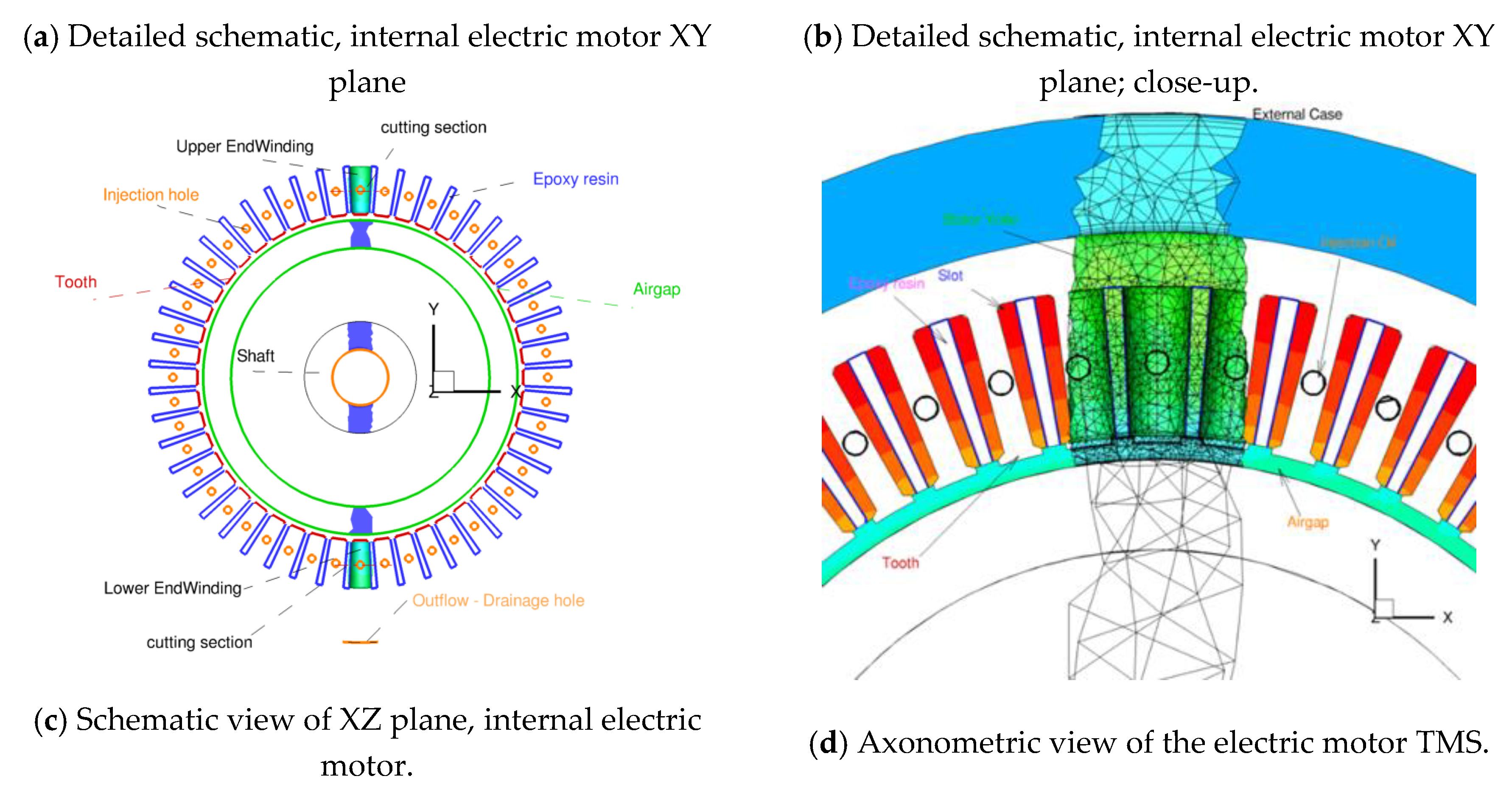
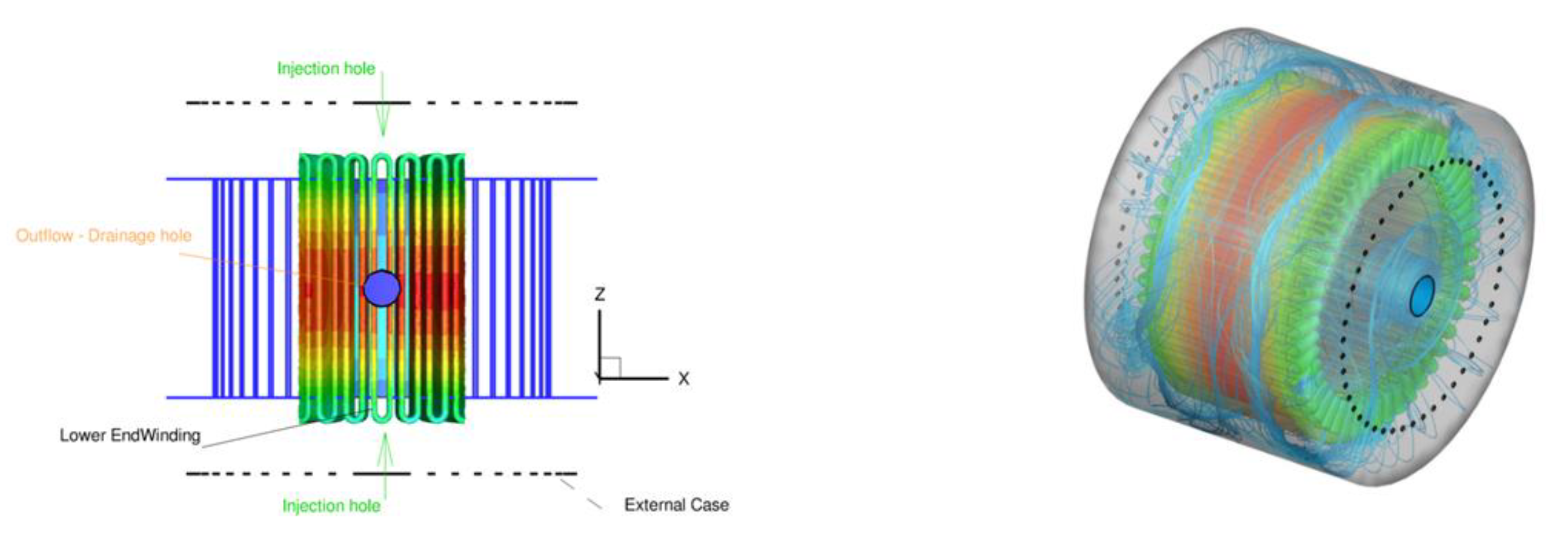
3.1. 1 MW Electric Motor and TMS Short Description
3.2. Selected Nanoparticles
- Alumina Al2O3
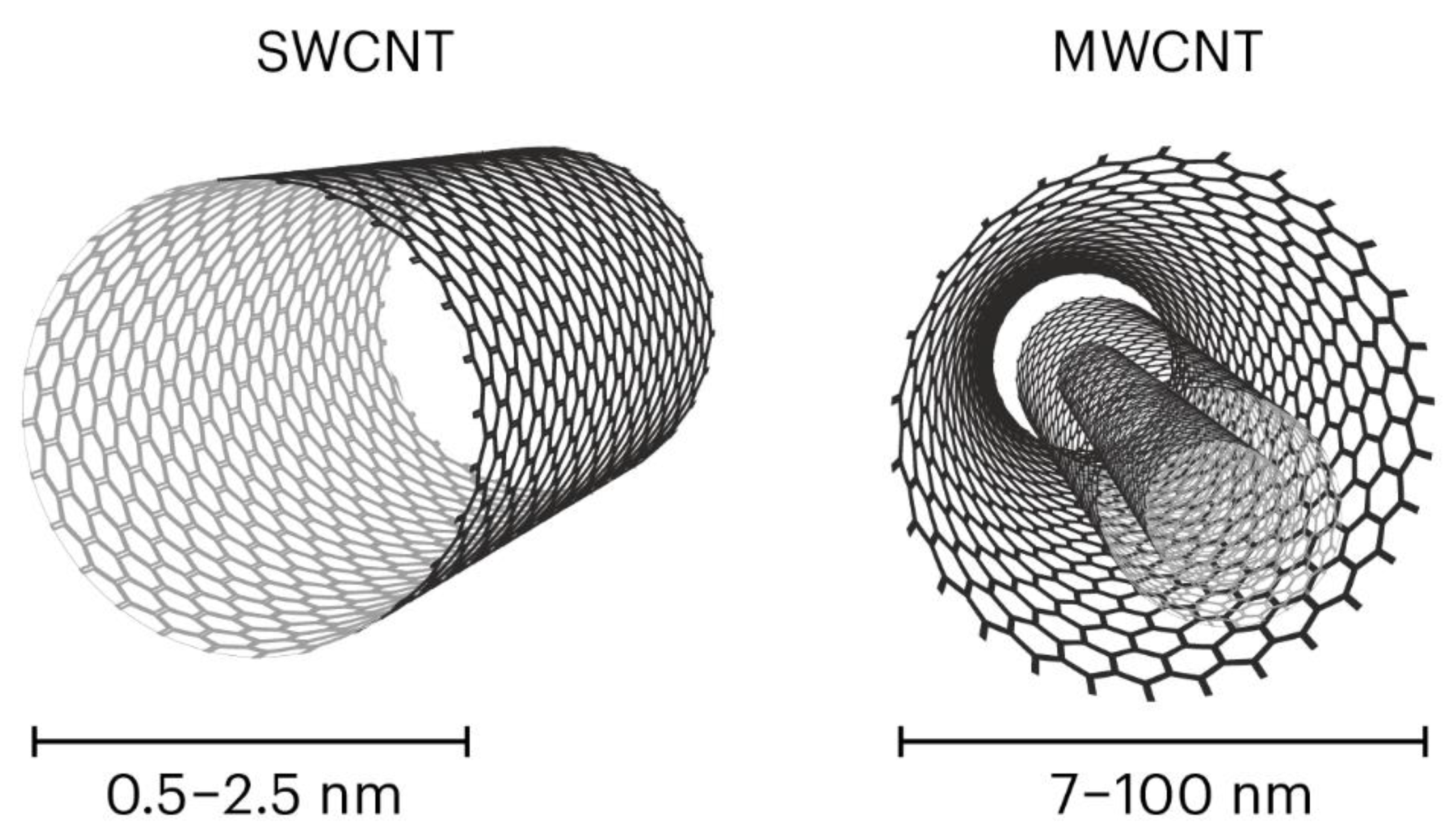
- Carbon nanotubes (CNTs)
4. Numerical Results
4.1. CFD Setup

- ρ: density [kg/m3]
- h: sensible enthalpy, [kJ/kgK]
- k: thermal conductivity [W/mK]
- T: temperature
- Sh: volumetric heat source.
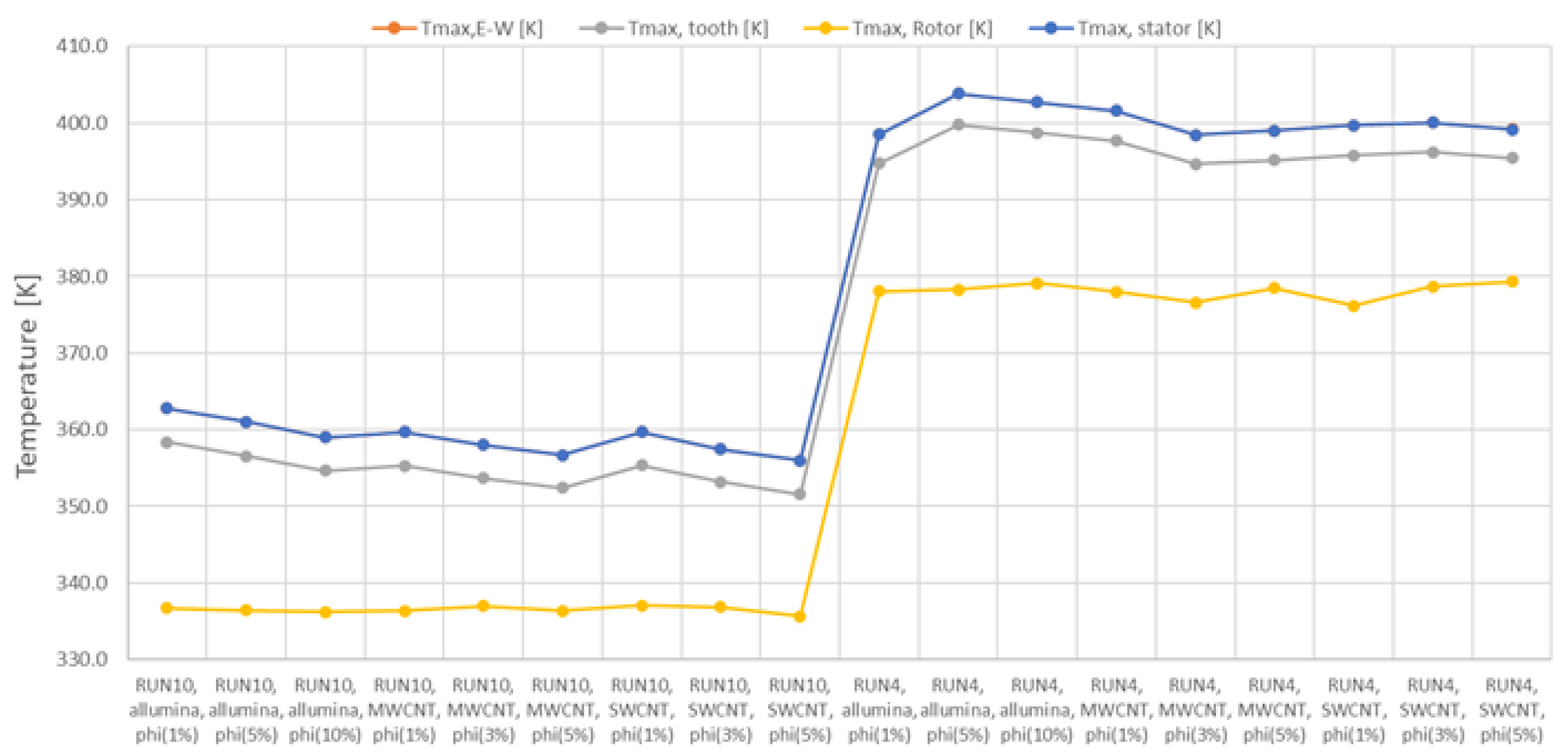
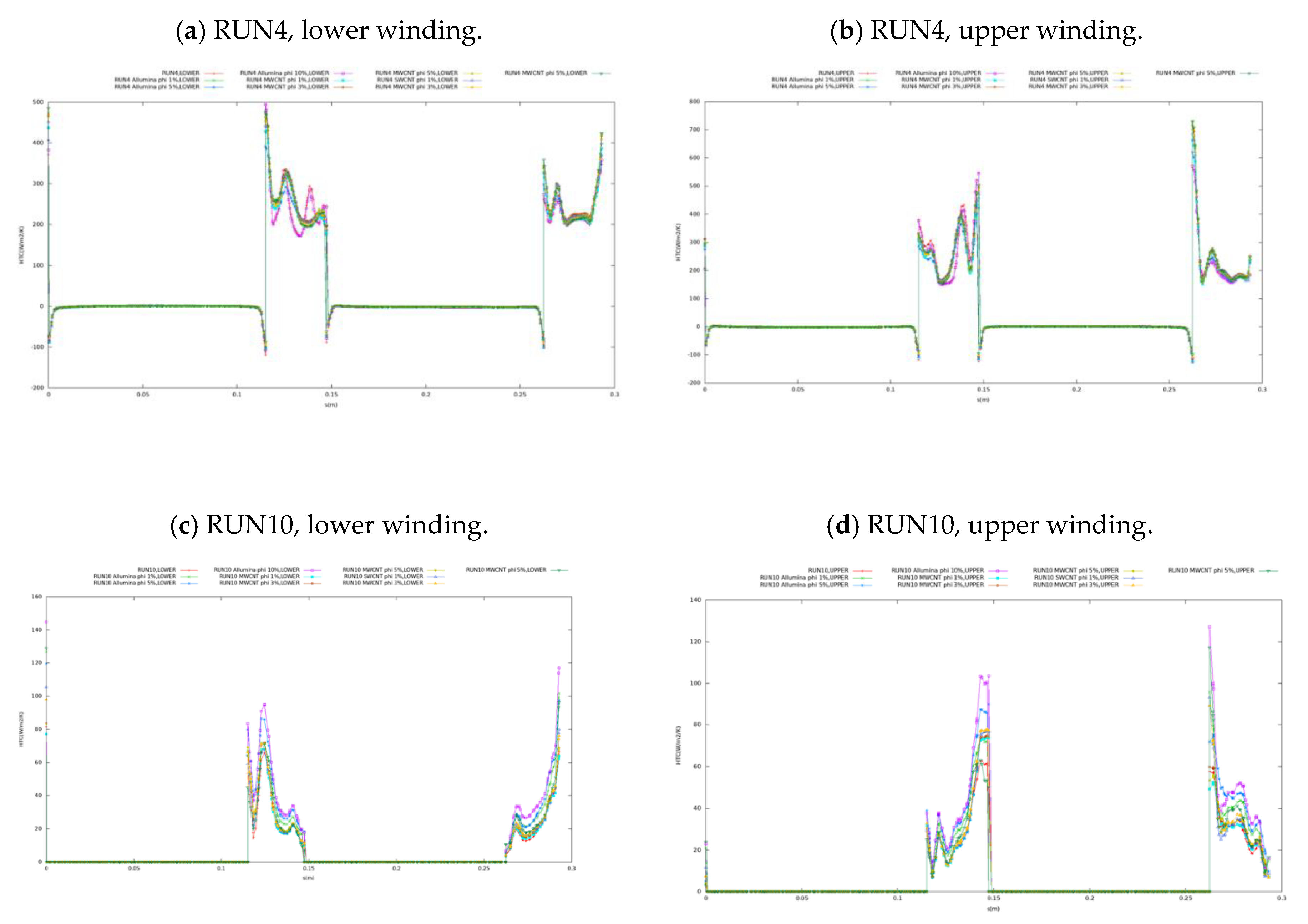
4.2. Results Analysis
5. Conclusions and Remarks
Author Contributions
Funding
Data Availability Statement
Acknowledgments
Conflicts of Interest
References
- Di Lorenzo, G.; Romano, D. G.; Carozza, A.; Pagano, A. Cooling of 1 MW Electric Motors through Submerged Oil Impinging Jets for Aeronautical Applications. Aerospace. 2024, 11, 585. [Google Scholar] [CrossRef]
- Mohammad, H. A.; Al-aswadi, A. A.; Shuaib, N. H.; Saidur, R. Convective heat transfer and fluid flow study over a step using nanofluids: A review. Renewable and Sustainable Energy Reviews. 2011, 15, 2545–3326. [Google Scholar] [CrossRef]
- da Cruz Schneid, A.; Albuquerque, L. J. C.; Mondo, G.B.; Colin, M.; Picco, A. S.; Cardoso, M. Colloidal stability and degradability of silica nanoparticles in biological fluids: a review. J Sol-Gel Sci Technol. 2022, 102, 41–62. [Google Scholar] [CrossRef]
- Yılmaz Aydın, D. , Gürü, M. Nanofluids: preparation, stability, properties, and thermal performance in terms of thermo-hydraulic, thermodynamics and thermo-economic analysis. J Therm Anal Calorim. 2022, 147, 7631–7664. [Google Scholar] [CrossRef]
- Mukherjee, S.; Mishra, P. Ch.; Parashar, S. K. S.; Chaudhuri, P. Role of temperature on thermal conductivity of nanofluids: a brief literature review. Heat Mass Transfer. 2016, 52, 2575–2585. [Google Scholar] [CrossRef]
- Ta, V. D.; Carter, R. M.; Esenturk, E.; Connaughton, C.; Wasley, T. J.; Li, J.; Kay, R. W.; Stringer, J.; Smith, P. J.; Shephard, J. D. Dynamically controlled deposition of colloidal nanoparticle suspension in evaporating drops using laser radiation. J Soft Matter. 2016, 12, 4530–4536. [Google Scholar] [CrossRef]
- Hubao, A; Cao, H. ; Hu, R.; Chen, Y.F.; Gui, C.; Yang, Z. Regulating droplet impact dynamics of nanoparticle suspension: Phenomena, mechanisms, and implications. Physics of Fluids. 2024, 36, 012002. [Google Scholar] [CrossRef]
- Escorcia-Díaz, D; García-Mora, S. ; Rendón-Castrillón, L. Ramírez-Carmona, M., Ed.; Ocampo-López, C. Advancements in Nanoparticle Deposition Techniques for Diverse Substrates: A Review. J Nanomaterials. 2023, 13, 2586.
- Topuz, A.; Engin, T.; Alper Özalp, A.; Erdoğan, B.; Mert, S.; Yeter, A. Experimental investigation of optimum thermal performance and pressure drop of water-based Al2O3, TiO2 and ZnO nanofluids flowing inside a circular microchannel. J Therm Anal Calorim. 2018, 131, 2843–2863. [Google Scholar] [CrossRef]
- Safaei M. R.; Ahmadi, G; Goodarzi, M. S.; Shadloo, M.S.; Goshayeshi, H. R.; Dahari, M. Heat Transfer and Pressure Drop in Fully Developed Turbulent Flows of Graphene Nanoplatelets–Silver/Water Nanofluids. 2016. 1. 20.
- Singh, S.; Ghosh, S. G. Pressure drop and heat transfer characteristics in 60° Chevron plate heat exchanger using Al2O3, GNP and MWCNT nanofluids. International Journal of Numerical Methods for Heat & Fluid Flow. 2022. 32. 2750-2777.
- Ali, A. R. I.; Salam, B. A review on nanofluid: preparation, stability, thermophysical properties, heat transfer characteristics and application. SN Appl. Sci. 2020, 2, 1636. [Google Scholar] [CrossRef]
- Ungar, E. K.; Erickson, L. R. (NASA – Johnson Space Center, Houston, TX, USA). Assessment of the Use of nanofluids in Spacecraft Active Thermal Control Systems. AIAA 2011, September 29.
- Narvaez, J. A.; Veydt, A. R.; Wilkens, R. J. Evaluation of Nanofluids as Potential Novel Coolant for Aircraft Applications: The Case of De-ionized Water-Based Alumina Nanofluids. J. Heat Transfer 2014, 136(5), 051702. [Google Scholar] [CrossRef]
- Sayyaadi, H.; Mehrabipour, R. Efficiency enhancement of a gas turbine cycle using an optimized tubular recuperative heat exchanger. Energy. 2012, 38, 362–375. [Google Scholar] [CrossRef]
- Siddique, M.; Khaled, A.-R.A.; Abdulhafiz, N.I.; Boukhary, A.Y. Recent Advances in Heat Transfer Enhancements: A Review Report. Int. J. Chem. Eng. 2010, 2010, 28. [Google Scholar] [CrossRef]
- Masuda, H.; Ebata, A.; Teramae, K. Alteration of Thermal Conductivity and Viscosity of Liquid by Dispersing Ultra-Fine Particles (Dispersion of Al2o3, Sio2 and Tio2 Ultra-Fine Particles); ScienceOpen Inc.: Boston, MA, USA; Berlin, Germany; Budapest, Hungary, 1993; 227–233.
- Choi, S.U.S.; Eastman, J.A. Enhancing thermal conductivity of fluids with nanoparticles. In Proceedings of the Conference 1995 International Mechanical Engineering Congress and Exhibition, San Francisco, CA, USA, 12–17 November 1995. Other Information: PBD: October 1995; Argonne National Lab.: Lemont, IL, USA, 1995. [Google Scholar]
- Ali, N.; Teixeira, J.A.; Addali, A. New pH Correlations for Stainless Steel 316L, Alumina. and Copper(I) Oxide Nanofluids Fabricated at Controlled Sonication Temperatures. J. Nano. Res. 2019, 58, 125–138. [Google Scholar]
- Asadi, A. A guideline towards easing the decision-making process in selecting an effective nanofluid as a heat transfer fluid. Energy Convers. Manag. 2018, 175, 1–10. [Google Scholar] [CrossRef]
- Choi, S. U. S. A new field of scientific research and innovative applications. Heat Transf. Eng. 2008, 29, 429–431. [Google Scholar] [CrossRef]
- Chapman, J. W.; Hasseeb, H., Schnulo S. (NASA – Glenn Research Center, Cleveland, OH, USA). Thermal Management System Design for Electrifi ed Aircraft Propulsion Concepts. NASA/TM-20205011477, March 2021.
- Alsouda, F.; Bennett, N. S.; Saha, S. C.; Salehi, F.; Islam, M. S. Vapor Compression Cycle: A State-of-the-Art Review on Cycle Improvements, Water and Other Natural Refrigerants. Clean Technol. 2023, 5(2), 584–608. [Google Scholar] [CrossRef]
- Swain, B.; Memon, S. A; Achari, A. M.; Mehta, V. A REVIEW ON ANALYSIS AND MODELLING OF IMPINGING JETS. Journal of Mechanical Engineering Research & Developments (JMERD) 2019, 42(4), 43–51. [Google Scholar]
- THERMOPEDIA. Available online: URL (accessed on 10 07 2024).
- Chen, Q.; Zhang, X.; Zhang, J. Effects of Reynolds and Prandtl Numbers on Heat Transfer Around a Circular Cylinder by the Simplified Thermal Lattice Boltzmann Model. Commun. Comput. Phys. 2015, 17, 937–959. [Google Scholar] [CrossRef]
- Rey, C.; Rosant, J.-M. Reynolds Number and Prandtl Number Influence on the Determination of Isotropic Velocity and Temperature Turbulent Length Scales. Comte-Bellot, G., Mathieu, J. (eds) Advances in Turbulence. Springer, Berlin, Heidelberg. 1987, 209-214.
- Shukla, A. K.; Dewan, A. Flow and thermal characteristics of jet impingement: comprehensive review. International Journal Of Heat And Technology. 2017, 35, 153–166. [Google Scholar] [CrossRef]
- Darwish, A. M.; El-Kersh, A.-F.; El-Sheikh, M. N.; El-Moghazy, I. M. A Review on Nanofluid Impingement Jet Heat Transfer. International Journal of Nanotechnology and Allied Sciences. 2017, 1, 1–15. [Google Scholar]
- Fitzgerald, J. A.; Garimella, S. V. A study of the flow field or a confined and submerged impinging jet. Int. J. Heat Mass Transfer. 1998, 41(8), 1025–1034. [Google Scholar] [CrossRef]
- Lupton, T.L.; Murray, D.B.; Robinson, A.J. The effect of varying confinement levels on the heat transfer to a miniature impinging air jet. Eurotherm. Eindhoven, Netherlands. 2008.
- QATS. Available online: URL (accessed on 09 07 2024).
- Frank, M.; Papanikoulaou, M.; Drikakis, D.; Salonitis, K. Heat transfer across a fractal surface. J. Chem. Phys. 2019, 151, 134705. [Google Scholar] [CrossRef]
- Frank, M.; Drikakis, D. Solid-like heat transfer in confined liquids. Microfluid. Nanofluidics 2017, 21, 148. [Google Scholar] [CrossRef] [PubMed]
- Papanikolaou, M.; Frank, M.; Drikakis, D. Nanoflow over a fractal structure. Phys. Fluids 2016, 28, 082001. [Google Scholar] [CrossRef]
- Liu, Y.C.; Wang, Q.; Li, Z.; Tao, W. Dynamics and density profile of water in nanotubes as one-dimensional fluid. Langmuir 2005, 21, 12025–12030. [Google Scholar] [CrossRef] [PubMed]
- McGaughey, A.J.H.; Kaviany, M. Thermal conductivity decomposition and analysis using molecular dynamics simulations Part II. Complex silica structures. Int. J. Heat Mass Transf. 2004, 47, 1799–1816. [Google Scholar] [CrossRef]
- Sun, G.X.; Bonaccurso, E.; Franz, V.; Butt, H.J. Confined liquid: Simultaneous observation of a molecularly layered structure and hydrodynamic slip. J. Chem. Phys. 2002, 117, 10311. [Google Scholar] [CrossRef]
- Tao, Q.; Zhong, F.; Deng, Y.; Wang, Y.; Su, C. A Review of Nanofluids as Coolants for Thermal Management Systems in Fuel Cell Vehicles. Nanomaterials. 2023, 13, 2861. [Google Scholar] [CrossRef] [PubMed]
- Okonkwo, E. C.; Wole-Osho, I.; Almanassra, I. W.; Abdullatif, Y. M.; Al-Ansari, T. An updated review of nanofluids in various heat transfer devices. Journal of Thermal Analysis and Calorimetry. 2021, 145, 2817–2872. [Google Scholar] [CrossRef]
- Fundamentals of nanofluids for thermal management systems. Available online: URL (accessed on 23-07-2024).
- Yılmaz Aydın, D.; Gürü, M. Nanofluids: preparation, stability, properties, and thermal performance in terms of thermo-hydraulic, thermodynamics and thermo-economic analysis. J Therm Anal Calorim. 2022, 147, 7631–7664. [Google Scholar] [CrossRef]
- Kaggwa, A.; Carson, J.K. Developments and future insights of using nanofluids for heat transfer enhancements in thermal systems: a review of recent literature. Int Nano Lett. 2019, 9, 277–288. [Google Scholar] [CrossRef]
- Di Lorenzo, G.; Manca, O.; Nardini, S.; Ricci, D. Laminar confined impinging slot jets with nanofluids on heated surfaces. In Proceedings of the 2011 17th International Workshop on Thermal Investigations of ICs and Systems (THERMINIC), Paris, France, 27–29 September 2011; Volume 6, pp. 1–6. [Google Scholar]
- Di Lorenzo, G.; Manca, O.; Nardini, S.; Ricci, D. Numerical study of laminar confined impinging slot jets with nanofluids. Adv. Mech. Eng. 2012, 4, 248795. [Google Scholar] [CrossRef]
- Manca, O.; Ricci, D.; Nardini, S.; Di Lorenzo, G. Thermal and fluid dynamic behaviors of confined laminar impinging slot jets with nanofluids. Int. Commun. Heat Mass Transf. 2016, 70, 15–26. [Google Scholar] [CrossRef]
- Choi, S. Enhancing thermal conductivity of fluids with nanoparticle. D.A. Siginer, H.P. Wang (Eds.), Dev. Appl. Non-Newtonian Flows, 2, FED, ASME, New York 1995, pp.99-105.
- Li, Q.; Xuan, Y.; Yu, F. Experimental investigation of submerged single jet impingement using Cu-water. Nanofluid Appl. Therm. Eng. 36, 2012, 426-433.
- Tsutsui, M.; Yokota, K.; Lun Hsu, W. ; Garoli, D; Daiguij, H. ; Kawai, T. Peltier cooling for thermal management in nanofluidic devices. Device 2024, 2, 100188. [Google Scholar]
- Aman, S.; Khan, I.; Ismail, Z.; Salleh, M.Z.; Alshomrani, A.S.; Alghamdi, M.S. Magnetic field effect on Poiseuille flow and heat transfer of carbon nanotubes along a vertical channel filled with Casson fluid Citation. AIP Adv. 2017, 7, 015036. [Google Scholar] [CrossRef]
- Brinkman, H.C. The viscosity of concentrated suspensions and solution. J. Chem. Phys. 1952, 20, 571–581. [Google Scholar] [CrossRef]
- Fernandez, J.G.; Etesse, G.; Comesaña, E.; Seoane, N.; Zhu, X.; Hirakawa, K.; Garcia-Loureiro, A.; Bescond, M. Optimization of thermionic cooling semiconductor heterostructures with deep learning techniques. In Proceedings of the 2023 International Conference on Simulation of Semiconductor Processes and Devices (SISPAD), Kobe, Japan, 27–29 September 2023; pp. 281–284. [Google Scholar] [CrossRef]
- Halelfadi, S.; Mare, T.; Estelle, P. Efficiency of carbon nanotubes water based nanofluids as coolants. Exp. Therm. Fluid Sci. 2014, 53, 104–110. [Google Scholar] [CrossRef]
- Xue, Q. Model for thermal conductivity of carbon nanotube-based composites. Phys. B Condens. Matter 2005, 368, 302–307. [Google Scholar] [CrossRef]
- aylor G. I. (1923), “Stability of a viscous liquid contained between two rotating cylinders”, Philosophical Transactions of the Royal Society of London. Series A, Containing Papers of a Mathematical or Physical Character 223289–343, Published:01 January 1923. [CrossRef]
- Fénot, Matthieu et al. (2011) “A review of heat transfer between concentric rotating cylinders with or without axial flow.” International Journal of Thermal Sciences 50 (2011): 1138-115.
- https://www.researchandmarkets.com/reports/5324906/the-global-market-for-multi-walled-carbon (accessed on 05 09 2024).
| Material | ρ [kg/m3] | cp [J/kg-K] | µ [Pa*s] | k [W/m-K] |
|---|---|---|---|---|
| Al2O3 | 3880 | 773 | // | 36 |
| Diathermic Oil | 890 | 1950 | 0.0803 | 0.0106 |
| Water | 998.2 | 4182 | 993x10-6 | 0.597 |
| KB | dp [nm] | Tref [K] | VB |
| 1.30x10⁻²³ | 30 | 293 | 0.457 |
| ϕ [%] | ρ [kg/m3] | cp [J/kg-K] | µ [Pa·s] @ 20°C | k [W/m-K] |
| 0 | 890 | 1.950E+03 | 8.032E-02 | 0.0106 |
| 1 | 919.9 | 1.938E+03 | 1.180E-01 | 0.0109 |
| 3 | 1010 | 1.903E+03 | 1.302E-01 | 0.0119 |
| 5 | 1040 | 1.891E+03 | 1.313E-01 | 0.0123 |
| 10 | 1189 | 1.832E+03 | 1.312E-01 | 0.0141 |
| Physical Properties | Density ρ [kg/m3] | Thermal Conduct k [W/m-K] | Specific Heat cp [J/kg-K] | |
|---|---|---|---|---|
| Water | 997 | 0.613 | 4197 | |
| Base fluid | Kerosene (lamp) oil | 783 | 0.145 | 2090 |
| Diathermic Oil/ Engine Oil | 890 | 0.144 | 1910 | |
| Nanoparticles | SWCNT(1) | 2600 | 6600 | 425 |
| MWCNT(2) | 1600 | 3000 | 796 | |
| Volume Fraction | Thermal Conductivity for SWCNT | Thermal Conductivity for MWCNT | |
| 0.00 | 0.145 | 0.145 | |
| 0.01 | 0.174 | 0.172 | |
| 0.02 | 0.204 | 0.200 | |
| 0.03 | 0.235 | 0.228 | |
| 0.05 | 0.266 | 0.257 | |
| Boundary Conditions | Zones |
| MASS FLOW INLET | inlet holes |
| OUTFLOW | exit hole |
| MOVING WALL | external rotor surfaces |
| WALL/no Slip | the remainder |
| Constant heat flux | teeth |
| Uniform heat power source (W/m3) | stator yoke, end-winding, copper |
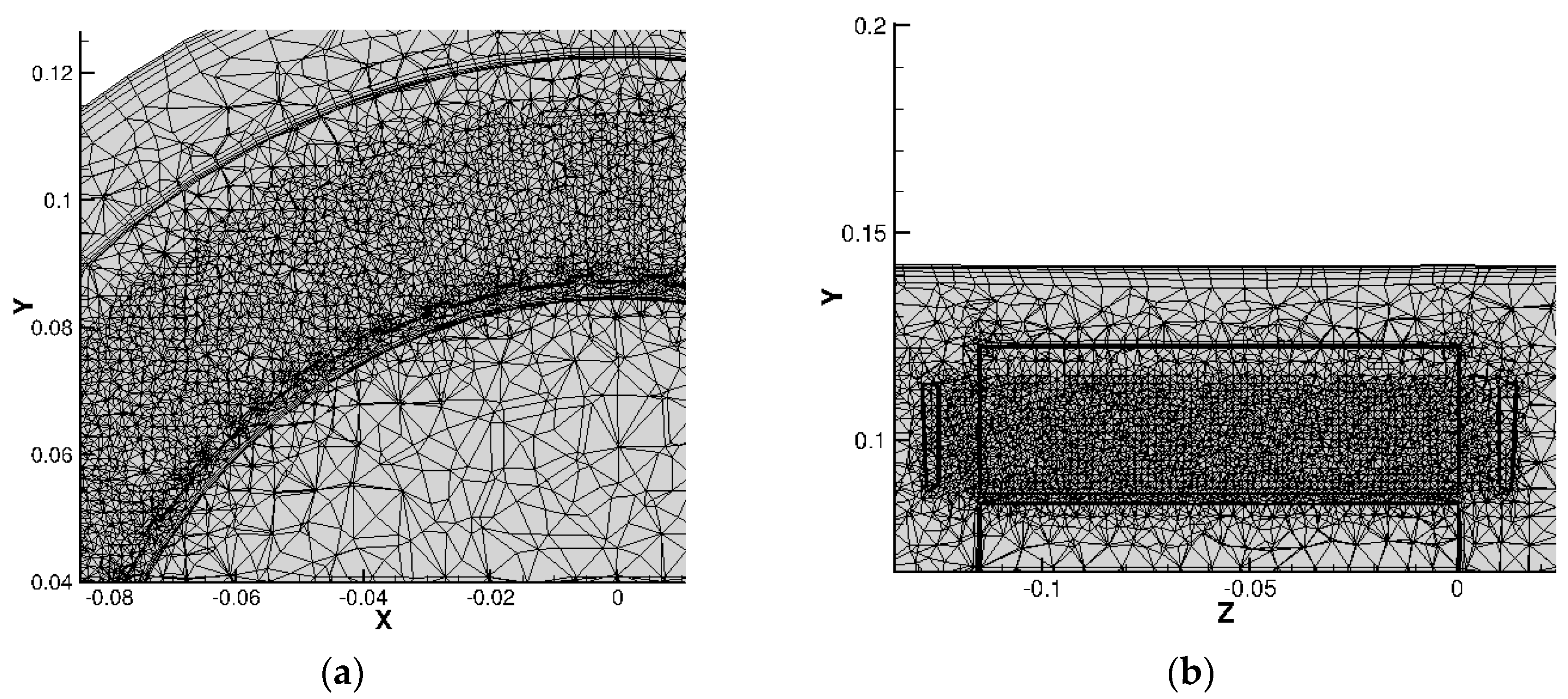
| Id. | Configuration Status 1 | Configuration Status 2 | Nr. Cells |
| Mesh1 | d = 2 mm | Without Epoxy Resin | 20M |
| Mesh 2 | d = 2 mm | With Epoxy Resin | 15M |
| Mesh 3 | d = 4 mm | Without Epoxy Resin | 20M |
| Mesh 4 | d = 4 mm | With Epoxy Resin | 15M |
 |
 |
Disclaimer/Publisher’s Note: The statements, opinions and data contained in all publications are solely those of the individual author(s) and contributor(s) and not of MDPI and/or the editor(s). MDPI and/or the editor(s) disclaim responsibility for any injury to people or property resulting from any ideas, methods, instructions or products referred to in the content. |
© 2024 by the authors. Licensee MDPI, Basel, Switzerland. This article is an open access article distributed under the terms and conditions of the Creative Commons Attribution (CC BY) license (http://creativecommons.org/licenses/by/4.0/).