Characteristics of the Control Center
- -
The Filter -
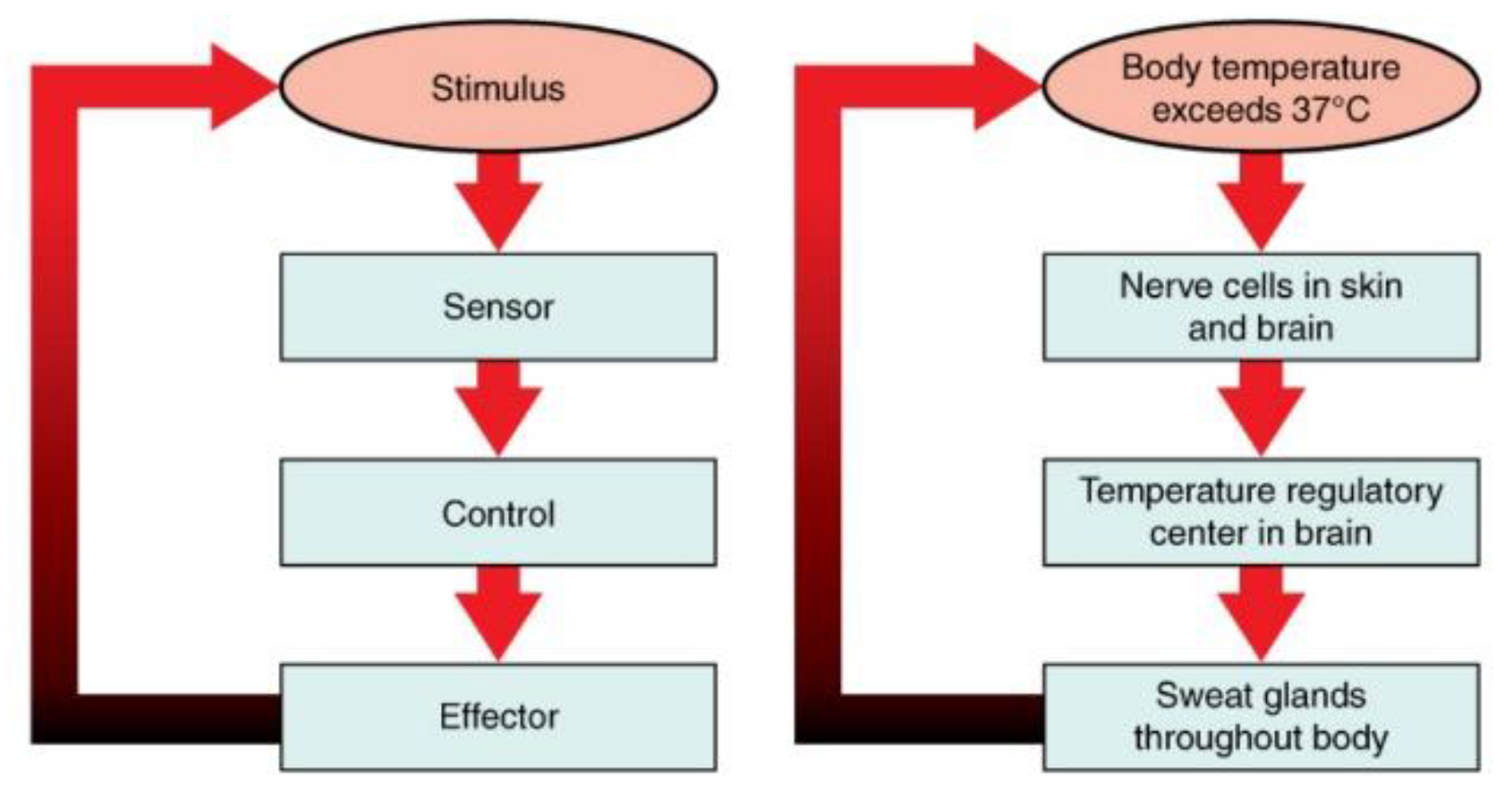
The filter in the control center is the totality of interconnected set-points. All the information from the external and internal environment continuously passes through it. This information includes data from the conscious five senses, emotional experiences, mental thoughts, autonomic nervous system information, the structures and functions of each cell, as well as the well described feedback systems controlling the main physiological systems such as oxygen needs, electrolytes balance, blood pressure, hydration status, appetite and hormonal balances etc. There is almost instantaneous processing of this information as it is identified and interpreted.
2 The next step requires communication with an effector to implement a reaction, such as a conscious reaction to avoid injury,
3 repair DNA, adjust methylation patterns on the epigenome or carry out any number of the almost countless repair operations needed in a cell. These reactions to an effector are temporally variable depending on the level of threat to the organism as a whole and the nature of influence. They can be extremely rapid, more gradual, extremely slow and or almost imperceptibly slow.
4,
5 Emotional reactions for example are continuous and instantaneous reactions from this filter even if they are not expressed. This explains why individuals have exact patterns to their personalities, as the characteristics of the total set-points are structurally pre-defined. The positive influences from the environment such as optimal nutrition and positive emotional interactions, as they pass through this filter, bring more vitality to the control center as a whole, promote development, increase adaptation, make bonds between set-points stronger, improve communication to the identity of the individual, optimize overall health and extend the life process. Negative influences, such as stress and toxicity do the opposite; they can alter and break communication pathways in the control center (such as leaving certain set-points inaccessible, exaggerating the influence of others or changing the order of their priority), thus disrupting homeostasis, delaying development and thus generate patterns of disease susceptibility.
This filter seems to exist in every cell and displays communication with the same filters in every other cell. These filters through a means not yet determined seem to be directly connected to every structure from each atom, chemical/electrical signal all the way to having a clear perception of the organism as a whole. This allows for the total amount of information processing and reactions to be shared by the control centers of every cell. This awareness makes it possible to either ignore certain information or when needed, respond to some distant cell's needs in some manner, called recruitment. The set-points for identity, hierarchical goals, developmental stages, and knowledge of the whole organism in each cell are taken into account with each reaction.
6 This leads to the best possible response for the organism as a whole, based on available resources, as well as the short and long term goals.
What are the mechanisms involved? The totality of the set-points are arranged in a hierarchy, a mechanism to evaluate incoming information and a means to communicate back to an effector. This mechanism relies on the characteristics of different types of information processing, the information collected from small molecules, such as mRNA, electrical signals and hormones. The control center displays a ‘subconscious knowledge’ of its identity; the totality of interconnected set-points, with a means to alter them and a capacity to build and alter every somatic end-point. Most likely when this subconscious identity in the control center interacts with the awake brain it helps the brain to experience conscious thoughts and feelings.
7 The totality of set-points can also be referred to as the reference image for that organism. As the organism develops it can continuously refer to this ideal blueprint to chart its course. The advantages of such a system includes, each cell having its individual identity, but also the ability to compare or reference this identity of one cell to the overall image. To achieve an overall ideal structure and function of the whole organism and a means to implement developmental stages - morphogenesis. This provides a means of checks and balances, the ability to compare one cell's role to the overall objectives of the whole organism in terms of all the defined set of healthy set-points, the agreed upon hierarchy of needs between cells and predetermined hierarchy of needs. If the identity of the reference image is unobstructed by present conditions or pathological inheritance patterns then not only can biological goals such as procreation be achieved but also the life goals of the individual. When individuals can’t achieve life goals untimely pathologies can develop.
8
One last attribute of the set-points acting as a dynamic whole is flexibility and creativity. Cells and organisms often need to find solutions to stresses never experienced before, as problem solving is necessary for survival and evolutionary reasons. As set-points can interact with the conscious mind, creativity is a consequence enabling the emergent functions of ingenuity, imagination and artistic ability. It is interesting that highly creative people report great difficulty in identifying the source of their abilities, as all the set-points are subconscious autonomic functions.
- -
The Recovery Mechanism -
When a stress is sustained in sufficient duration and intensity, it can temporarily overwhelm a particular homeostasis function, and begin a disease process. Even in these situations the control center has a remarkable ability to receive a negative influence and produce a counter response, so well coordinated, as to not only put order back into the cells affected, but also create immunity to that negative stress in the future. The healthy functioning of this mechanism explains all adaptive reactions, epigenetic evolution, viral immunity, drug resistance, emotional resilience and the healing mechanism itself. At times unfortunately the stress duration and intensity combine to break a connection in the homeostasis mechanism. The diagnosis of the deficiencies of this mechanism in the control center when diseases occur is the key to finding the cause and cure for every individual with a chronic disease. The mechanism involves the ability of this central processor to clearly and accurately understand the stress, the ability to find a solution and ability to implement a plan to counter the stress. But how can we access the control center and make a diagnosis of the set-points and their connections, which are no longer functional and rebuild them, thus restoring optimal homeostasis? This is discussed further in:
A Method to Reverse Epimutations [
11] and later in this paper.
- -
The Individual Patterns Within the Central Processor Filter -
Reactions from the filter follow a distinctive pattern for each individual. Each set-point of the filter has a relative strength, weakness and character associated with it, depending on many factors such as inheritance and present environmental conditions. This is perhaps the most interesting aspect of the homeostasis filter because each individual has certain areas that are very susceptible to a particular illness pattern and other areas that are resistant to illness. Each individual is born with certain genetic, epigenetic and homeostasis tendencies. It is the goal of the overall homeostasis functions in the control center to never let any of these disease tendencies be activated. It is the prime directive of every living entity to; ‘fight to preserve life and health’ - it is an active arrow pointing in one direction. Information from the environment, nourishment, emotional experiences, and stress are evaluated and the individual can either benefit from them, leading to an increase in overall vitality, or have to compensate for them in some way leading to an overall loss in vitality. If it can compensate, there is no disease process. If there is not enough compensation then a disease process can start. The disease will follow defined physical and emotional patterns; with the control center only able to allow symptoms and produce changes in physiology in areas defined by the limits of that individual’s particular structural susceptibility. Because the filter has a structure, which can become compromised, there are limits, depending on the severity of the problem or the degree that positive thinking techniques, or replacement therapy can be used to override these structural systems. These structural patterns in the control center are extremely individualized, for example, a hundred people with migraine headaches will unlikely have the same homeostasis patterns/the same filter/same character of set-point deficiencies. It is interesting that when autism brains were studied to find common genetic and epigenetic markers, there were almost none in common [
12]. Each person with autism, or on the spectrum seemed to have a separate disease process, but similar symptoms. The same is true of cancer. Diseases start as individual unique entities in the control center (depending on the set-points affected), and then after passing through stages, such as gene expression, protein formation and alterations in signal/chemical pathways, eventually the individual aspects join common end-point pathways resulting in frequent and prevalent symptoms that can be classified into diseases. Further on, the symptoms become more localized and finally end in still more common pathways such as producing pain, inflammation, fatigue, irritability and sleep disruption etc. The end-points will display these common symptoms but if closely observed some of the unique characteristics will remain. The defining characteristics of a disease, in order to be diagnosed at the causative level, need to be determined as unique entities in the control center. As these errors in the set points can’t be measured directly, the epigenetic patterns they create is most likely in the future the next best and most reliable diagnostic tool (combined with other data of each patient such as symptom picture and other lab tests).
- -
Set-Points and the Analysis Filter are Made of What Materials? -
As described in my paper,
Rebuilding Quantum Homeostasis [
13] - the analogue model is not sufficient to explain the functions of the control center or its filter. The physical structure would need to be very large in order to process the necessary information and no such structure exists in each cell.
9 The second possibility is a digital model. Signals could be measured along the DNA or mRNA. In this model, certain desirable signals resonate with desirable gene set-points, in which case no action is taken. In other cases, negative incoming signals light-up and resonate with genes that generate instructions to adjust the end-point. This model or another model explaining digital storage of information could explain some homeostasis functions, but these signals and mechanisms have not been found to explain every aspect, especially where the set-point is storing its information. Additionally, it does not solve the problem of cooperation and communication between cells to build organs, body systems or a whole viable organism. It also does not explain healing recruitment functions or a means to the overall unfolding of an organism's development through many stages of cellular differentiation. The last possibility is a quantum biological model [
14,
15].
Recently, developments in experimental techniques such as ultrafast spectroscopy, single molecule spectroscopy, time-resolved microscopy and single particle imaging have enabled us to study biological dynamics on increasingly small length and time scales, revealing a variety of processes necessary for the function of the living system that depend on a delicate interplay between quantum and classical physical effects [
14].
This model requires a quantum structure for all set-points in every cell. The advantage of this model is that no physical space is required, all the set-points are in a quantum superposition [
16],
10 arranged as a filter creating binary codes that either allow and promote a particular end-point structures and functions or disallow them and work against harmful environmental influences and pathological end-point structures and functions. It also allows for extremely rapid processing of information because entangled quantum fields:
… correlate <their> behavior instantaneously with <their> entangled partner, regardless of distance [
17].
Atoms and molecules already use this model to create and maintain themselves. The different fields for each atom of which there are many, are all superimposed on one another in a superposition, this information allows a certain atom or molecule to exist.
11 The information and number of fields involved in biological structures is just scaled upward to allow for the rules to create each cell type and a whole organism. This is the definition of biological quantum processing: complex patterns of field interacting. As this system is semi-conscious it is able to analyze information and make the best possible decisions based on available information and prime directives. It is partly structural and partly informational.
Because every set-point is a set of quantum fields interacting, it has knowledge of and is interconnected with every other set-point, it is possible to build a hierarchy. For example at the center of the hierarchy is the binary or perhaps qualitative structural determination for every afferent bit of information: “is this influence life enhancing or life limiting to the organism as a whole?” As every ‘bit of information’ is passed through all the set-points of the filter, a conclusion is reached and an action is taken to either react to compensate for the stress or react to use it to enhance the whole organism. For example, a sudden increase in blood pressure is recorded by the set-points. An evaluation is considered based on information collected from the whole organism, such as the nature of the situation, which in this instance is the individual running away from danger - a fight and flight situation. As a result, it is determined that the higher blood pressure is needed to save the life of the organism and the high blood pressure is allowed to continue, with an enhanced and supportive reaction from the rest of the organism, with some limits imposed. In a different situation, an individual from Mongolia is drinking salty tea on a daily basis, as this is part of their cultural diet [
18]. In this situation the organism reacts with every means possible to lower the blood pressure, such as increasing thirst to aid in salt excretion by the kidneys, through perspiration, by dilation of blood vessels and adjusting the heart's action. Perhaps it can also make the tea taste too salty to produce a behavioral change. All of these are compensation reactions which help to lower blood pressure, but not in all cases will it prevent pathology from developing. The filter in the control center, for each individual, is able to pass information through nearly all the quantum set-point parameters to determine what action or non action to take. It is a holistic and comprehensive model.
But how do afferent electrical signals, small molecule messengers, hormone receptors, thoughts and emotions manage to translate their data into a quantum language to be evaluated by the central processor and after processing it, how do quantum signals translate back into non-quantum effector instructions affecting physical end-points?
The theory of decoherence is precisely the study of such situations … in particular to the question of whether and how the ‘classical world’ may emerge from quantum mechanics [
19]
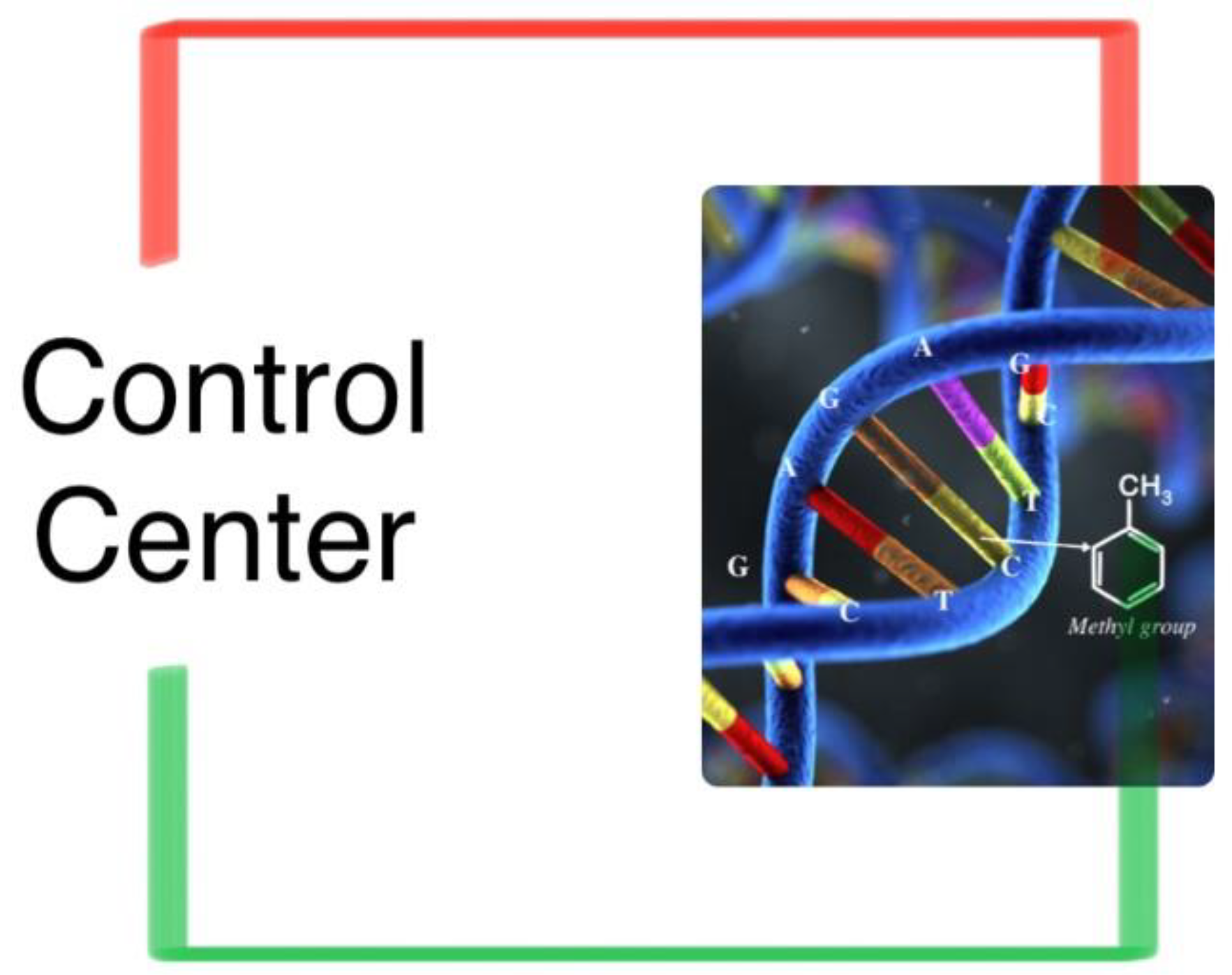
One possible theory is that biological molecules, cell organelles, organs and whole organisms (the totality of end-points) which are governed by classical physics are also at the ultra-microscopic level, made from quantum fields and obey the laws of quantum field theory, including the ability to be in a comprehensive superposition. Every structure and function in each organism is therefore already in a superposition, it’s at this level where all the analysis functions of homeostasis are taking place. This theory of a quantum biological computer, is based on the premise that all these biological fields are connected, they can receive information from every end-point directly and also receive some information through classical feedback systems. The quantum computer can then also send instructions to the effectors, such as arranging methylation patterns on the DNA, helping to fold proteins correctly and in communication with enzymes. Biological systems are all made of atoms and atoms/signals are ultimately made from quantum fields. All these quantum aspects from each atom, each molecule, each organelle and each cell are directly connected and evaluated in the quantum control center.
The red line is the collection of classical data, the green line is the collection of quantum data. The reaction to an effector can also follow to the end points by either or both routes.
This explains how information can pass back and forth between the two worlds (classical and quantum), they work together to maintain form and function. For example, can an iron atom in a red blood cell inform the quantum computer in the control center that it has just become bound to an oxygen atom? It’s a difficult question to answer [
20], but oxygen requirements are tightly controlled by homeostasis, neither too much or too little oxygen is permitted in any one area of the body [
21]. Nothing in biology that we can measure violates the theory above which defines this model. The healthy structures of quantum homeostasis, the totality of the set-points, their ability to analyze information, is based on specific connections and the quality of these connections. Circuits in a computer work because they are connected. What happens when these quantum connections fail or the set-points fail?
- -
Dysfunctional Homeostasis -
Most likely dysfunctional homeostasis and the beginning of a disease process comes from one or more of the following: (List 1:)
- -
A loss in connections between set-points. Isolation from necessary set-points.
- -
A loss in the accuracy of information between set-points.
- -
Certain set-points themselves are diminished/fading away
12.
- -
Certain set-points have become exaggerated and or too dominant.
- -
The recruitment mechanism has broken down between set-points.
- -
The mechanism to compare the information from the end-point to the set-point has broken down.
- -
Incorrect information or incorrect conclusions is/are retained in certain set-points, leading to incorrect analysis and incorrect effector responses.
13
- -
Information bounces between a limited number of set-points with no solution found.
14
- -
Incorrect translation between classical biological systems and quantum biological systems.
In any one individual, one or more of the above quantum homeostasis pathologies may be taking place. In this model, they can all affect or create an aberrant pattern onto the epigenome, then eventually create symptoms. These pathologies in the control center are conditional upon many factors, (too many to mention), but always the susceptibility inheritance pattern will play a role, life history and the conditions of the ambient present environment.
15 Episodes of famine endured in past generations, the effects of war on past generations, ground water tainted with toxins such as lead or arsenic, the chemical load acquired from highly processed foods, exposure to industrial chemicals, drug intake etc can all play a role in disturbing set-points. Set-points or their connections fail when the stress is repeated too often and is in a dose that is strong enough to produce a stress that is stronger than the connections between the set-points or the integrity/information of a set-point.
When overwhelming emotional experiences produce one of the effects listed above such as stress to a connection between two set points we actually have language to describe it. We use expressions like, ‘I felt like I was coming apart at the seams,’ or ‘at that moment, I snapped,’ or ‘I was falling apart,’ ‘I felt compressed or stretched.’ Or I felt ‘burned out’ or ‘I lost my perspective’. When positive events happen we can feel; ‘vibrant’, ‘energized’, ‘centered’, ‘serene’, ‘peaceful’ and can transmit these positive states of being to others. It makes sense that we are partially conscious of what is taking place in the quantum control center, as it is connected to every neuron. But many tendencies can be correlated with this list:
- -
A person with an inflated ego; this is more easily explained by a set-point that has become too dominant/exaggerated.
- -
Low confidence, the opposite, a diminished set-point leading to fear or a feeling of powerlessness.
- -
Grief is also most likely an exaggerated/inflexible connection or a set-point that has become too dominant.
- -
Cancer most likely is the loss of the connections to the identity set-points for that particular cell type. Or the identity set points for that cell type are themselves diminished or corrupted.
- -
Allergic reactions seem to be exaggeration reactions, based on set-points that are too dominant and too easily activated.
- -
Indignation; individuals who feel offended easily have set-points of identity that are too dominant and also too insecure.
- -
Phobias are most likely over-dominant set-points, too connected to over developed survival instincts.
- -
Indifference is most likely diminishment of certain set-points or a loss of connection to life goal set-points.
- -
Depression has many forms but some of the worst include set-points that contain overwhelming functions of self criticism. Healthy set-points in this domain can modify behavior with self reflection or learn from mistakes and move on. In other forms of depression there is a lack of connection to others, animals or vocation. Nourishing stimuli from the outside world never reach any set-point. If there is one or two connections remaining intact they often become exaggerated.
- -
Violence reactions; these are most likely connections that are exaggerated between set-points of dignity, self preservation, justice or fixed ideas about superiority.
- -
Pain, inflammation, sleep disruption and low vitality are end results and consequences of almost any imbalance in the control center.
When the control center is under stress, in most cases all that is needed to reestablish its integrity, viability and vitality is to replenish nutrition, regain hydration and sleep. The control center is holding organisms together through its network of connections. If the control center is compromised in some way or ways, the effect can be temporary or more permanent. In every case, because of its prime directives, this control center responds positively to all the information as best it can. If too many of the connections are broken or there is a complete loss of connection to the most vital set-points, there can be a lack of any healing reaction and death can occur. If an individual is born with certain disconnection patterns, a pathological configuration in the homeostasis filter, certain developmental stages may never be realized and certain cells can never be maintained in a healthy state. The totality of set-points left healthy are isolated and therefore insufficient recruitment occurs, allowing the reference image to remain for that cell type in a pathological condition. The control center is now, with new stressors from the environment more prone to create a certain chronic disease process. The leftover healthy functions of homeostasis attempt to compensate and often for brief periods of time are able to achieve a remission of symptoms. As time goes on, drugs too are only partially effective, for example corticosteroids decrease inflammation in many diseases such as eczema, asthma and autoimmune diseases, but over time larger and larger doses are often needed. This explains why drugs that only affect symptoms, or superficially affect the chemistry under the pathology eventually become ineffective. There are no current pharmaceutical drugs at the present time developed to correct the various pathologies of the control center. As more compensation mechanisms fail, even lifestyle changes are often not enough.
What is a scientific method to diagnose and correct pathological configurations at the causative level in the control center and rebuild them before they become incurable chronic diseases?
- -
Self Healing - The Vis Medicatrix Natural -
The ability to self heal comes from the coordinated responses of the control center. It is a function of homeostasis and a function of the adaptive response. The ability of an organism to produce exactly the opposite reaction in kind and in measure to any stress is the key to self healing. Most likely we will never be able to visualize or directly measure the algorithm of each healing function in the control center. Another method is needed to access the control center and make a diagnosis. One method involves the use of ultra-high dilutions.
- -
A Method to Indirectly Quantify the exact Net Errors of the Control Center -
A method to indirectly diagnose all variations of these fallible structures in the control center is available to us. This is the study of toxicogenomics[
22] and thousands of substances have already been cataloged in this way [
23]. If a known substance is used as a stress, such as Arsenic, it will produce physical effects and also break specific aspects in the quantum control center. As a result an epigenetic record is created (toxicity and a reaction to the toxicity), the most important aspect being what is especially unique as to how that substance changes the epigenome. This toxicology pattern can be recorded in terms of its epigenetic profile, as well as its metabolic markers, pathophysiology, histological studies, and totality of symptoms. These markers create an overall profile of the accumulated net errors in the control center, and therefore it can become a very accurate diagnostic tool based on the data which is reproducible and accurate if enough subjects are studied for each substance. Toxicology is a tool to name a specific pattern of breaks and deficiencies in the quantum control center. Each toxin creates its own pattern of stresses and breaks of homeostasis and therefore defines and names this pattern. Because there are so many substances to test, including all known mineral combinations, all species of plants on land and sea as well as all the interesting compounds made by animals; thankfully the list is almost endless. Because the mental and emotional set-points are connected to all the set-points affecting physical functions, each substance will always have an emotional story to go along with it.
For example the elements of Sodium and Chloride are associated with very strong tendencies to sentimentality, grief, easy infatuation and fear of criticism. Sulphur is associated with an enlarged ego, the need for praise on a daily basis and a critical disposition. Arsenic is associated with the tendency toward anxiety, fear of death and the need to control others in order to get their needs met. These traits/characteristics operating continuously in the subconscious can add to the totality of data (toxicogenomic) needed to make an accurate diagnosis of what substance is needed for each patient.
Toxicogenomics/epigenetic toxicology is over twenty years old now and becoming an established method of diagnosis. (https://www.sciencedirect.com/science/article/pii/S2468202023000591)
For example the epigenetic toxicology signature for Arsenic is quite well understood [
24].
While the precise mode of action in arsenic-induced disease is unknown, one of the proposed mechanisms is altered gene regulation via epigenetic modes of action such as DNA methylation… In conclusion, these results demonstrate that a large number of genes are epigenetically modified in the lymphocyte DNA of individuals exposed to As <Arsenic> with related arsenicosis… Our findings demonstrate the significant effects of iAs <Arsenic> on the epigenome. The identified methylation sites and differential DNA methylation patterns may serve as biomarkers of adverse health effects associated with iAs <Arsenic> exposure [
25].
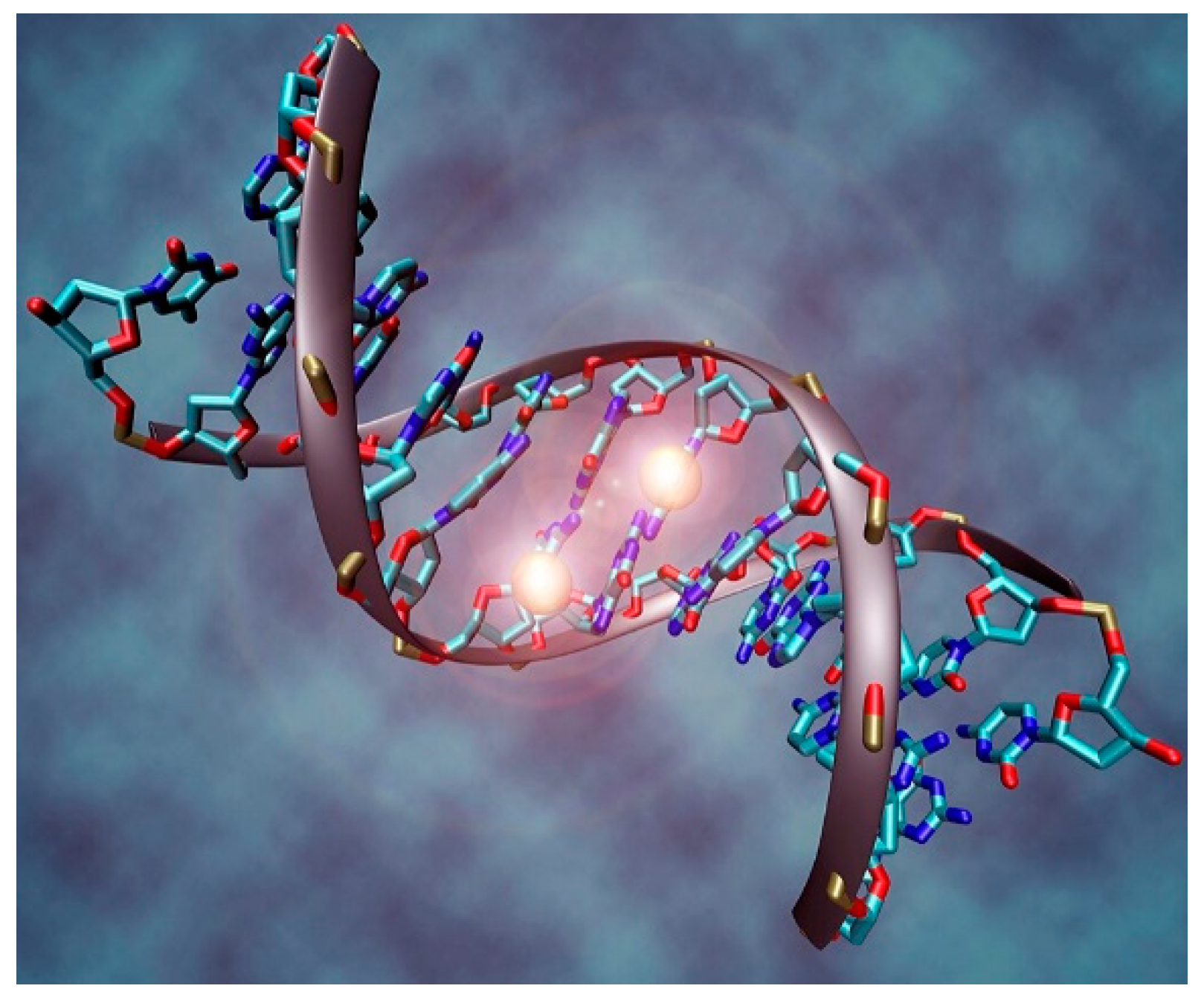
Here is an artistic representative image of an epimutation, the attached molecules on the DNA is incorrectly placed:
[
26]
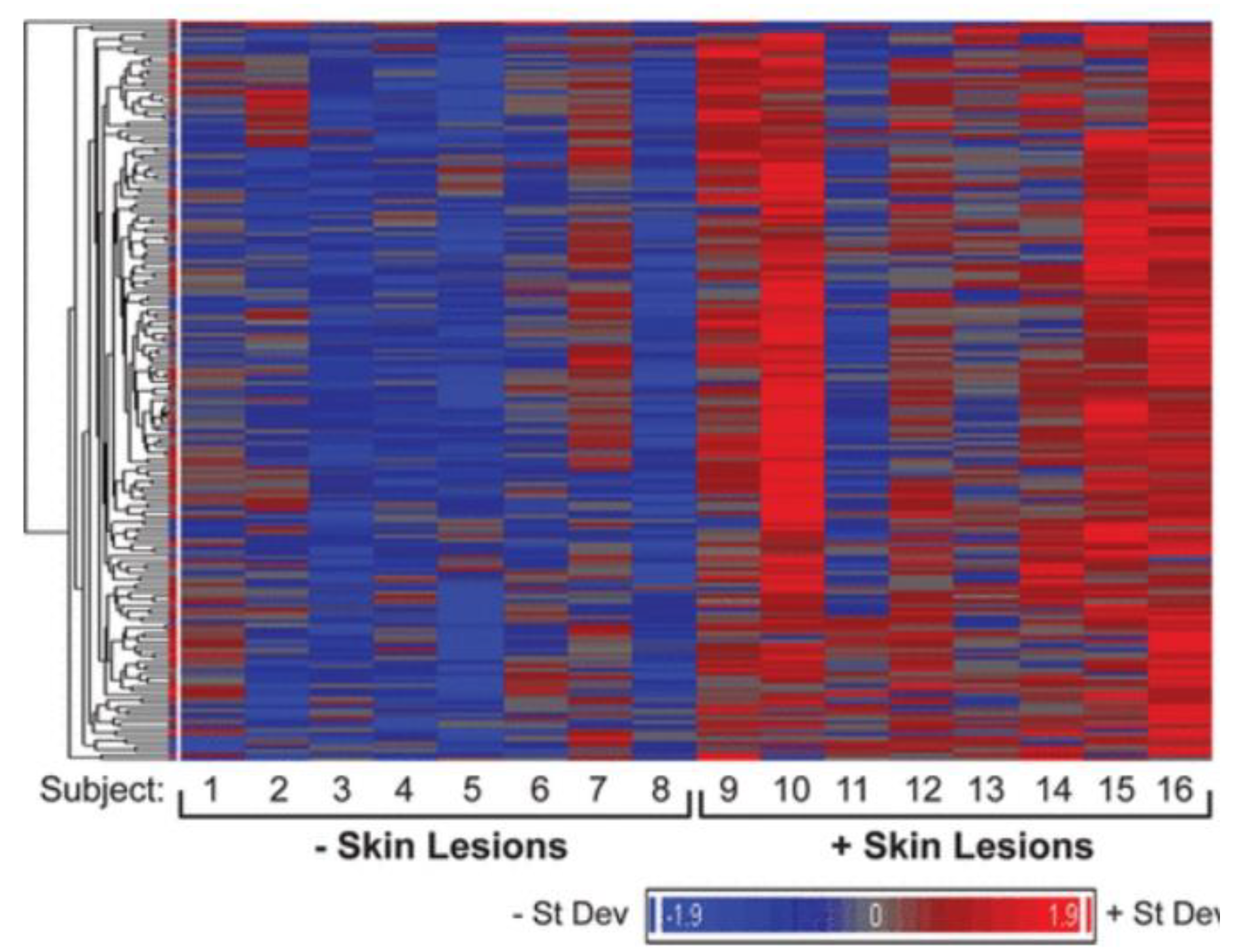
The two bright white spots depict methylation of a gene in a place that creates pathology. Here is an actual map of Arsenic epimutations:
Arsenicosis-associated patterns of DNA methylation. The heat map illustrates the average DNA methylation levels in promoter regions of 183 genes. Data are z-score normalized for each gene. Red represents a relative increase in CpG island methylation level, and blue represents a relative decrease we in methylation level [
25].
As is depicted above, Arsenic actually affects many genes, with both hypo and hyper-methylation patterns. These studies depict the possibility of an epigenetic signature or unique fingerprint for each toxin. If every substance can be individualized in terms of their signature a major accomplishment will be realized because it means a type of diagnosis has been made. Each substance is defining and naming a unique pathology. The totality of all the ways in which the control center can be broken by a substance is the same set as all natural occurring diseases. Diseases break the control center in the same ways as the breaks made by substances. For example a patient with hay fever is sick in the same way as if they had been exposed to onion vapor (Burning watery eyes and same epimutation profile). A gastroenteritis can have the same symptoms as if they had been exposed to Ipecac (Nausea and vomiting and same epimutation profile), a cancer can present as if they had been exposed to Arsenic (same histological features and same epimutation profile). The list of pathologies from substances correlates with the list of pathologies from all mixed causes; inherited and acquired. Time and testing will be needed to further prove this concept. There are a limited number of ways that homeostasis can be broken, each toxin breaks certain functions in homeostasis, the same functions can be broken by natural diseases.
In order to advance this model to the next step, the concept of hormesis needs to be introduced.
- -
Hormesis is a Dose Dependent Phenomena -
Hormesis studies, which number in the thousands [
27], tell us that all substances in large doses or if repeated too often become toxic - damage specific functions of homeostasis, while small doses of the same substances are stimulants, and the smallest doses - ultra high dilutions, are the strongest stimulants if not repeated too often. Stimulants to the exact same areas of homeostasis functions which the large doses can damage. One could call this one of the rules of nature, a natural law: for every action there is an equal and opposite reaction.
Indeed, under the push of a stressor at low doses, the stimulus source can positively promote or regulate the physiological functions of organisms by inducing the reconstruction of homeostasis. However, at high doses, the disruption of balance and the lack of compensation in the organism can lead to harmful effects [
27].
The mechanism/principle of hormesis is an example of the generalized adaptive response, which operates in every biological species. In this model, any substance, experience or influence can be a benefit or inflict harm depending on the dose and repetition. Most likely its benefits are achieved through the mechanisms of recruitment. The harm is inflicted because every structure and its corresponding set-points have limited integrity and can be overwhelmed.
Over time, hormesis has become recognized as a fundamental concept in biology. It affects, for example, toxicology, microbiology, medicine, public health, and agriculture [
28].
Hormesis - the use of the adaptive response, controlled by homeostasis, is used daily by the control center to make healthy functions more resilient, extend life, improve reproduction, increase intelligence but it also lends itself to a crucial function: the rebuilding of lost homeostasis. In order for hormesis to be effective in this way, as a therapeutic intervention, the match between the epigenetic signature of the substance and the patient's epimutations and symptom picture needs to be 99% or better. Why 99% or better? When homeostasis engineers a cellular function it has to be exact to work optimally. For example the Krebs Cycle in the mitochondria to create ATP is exact, 99 or 100% exact. If a part of this cycle breaks, exact knowledge and functions are needed to repair it. This is the same with any disease process. Every function is exact down to the molecular level, in order to repair it also requires an exact function. Many times the homeostasis mechanism when broken in a certain area can find a clever workaround to make up for the deficit, but it’s not optimal and leads to overall strain on the system and a lower energy state.
What is the mechanism of healing in this example of hormesis? Because the set-points have plasticity (qualitative features, size and quality of connection to other set-points), hormesis by an exact mechanism is still unknown. Such as searching for a more appropriate set-point, creating a new one, upgrading or downgrading a set-point and thus modify the pathology in the control center, according to the needs of the organism as a whole. During a disease process, when this capacity of recruitment is overwhelmed, severely compromised and or eventually lost, a specific stress in the form of a hormesis small dose, ultra-high dilution, can alert all the set-points to initiate a renewal of recruitment efforts to find a solution to the specific issue. In this model a disease on the quantum level can be defined as a pathological process in which the control center in certain cells has lost some of its abilities - see (List 1) above.
Isolated set-points for example restrict communication, limiting the overall abilities of homeostasis, allowing somatic pathology to develop. When the ultra-high dilution dose is exposed to all the cells, all the set-points, it can trigger latent recruitment mechanisms to reestablish themselves. In this way, the prima causum has been identified and repaired, self healing is now reestablished in an efficient and effective capacity. Order is reestablished into the affected cells. Why are small doses more effective? Their primary action (toxicity) is greatly diminished; their secondary action, hormesis effects are greatly enhanced. These effects can be tested quantitatively as proposed in the studies below.