
Submitted:
05 December 2024
Posted:
05 December 2024
Read the latest preprint version here
Abstract
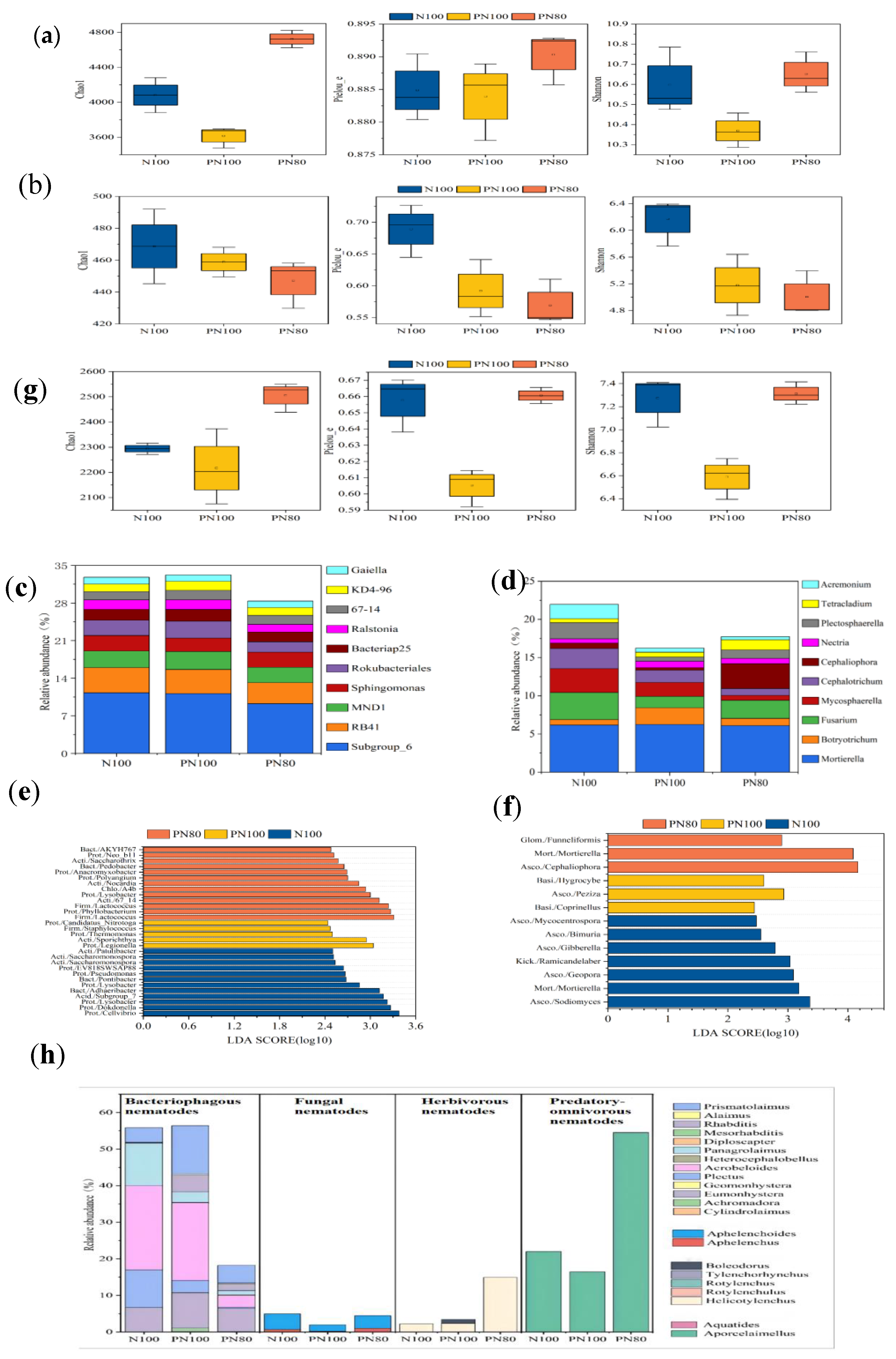
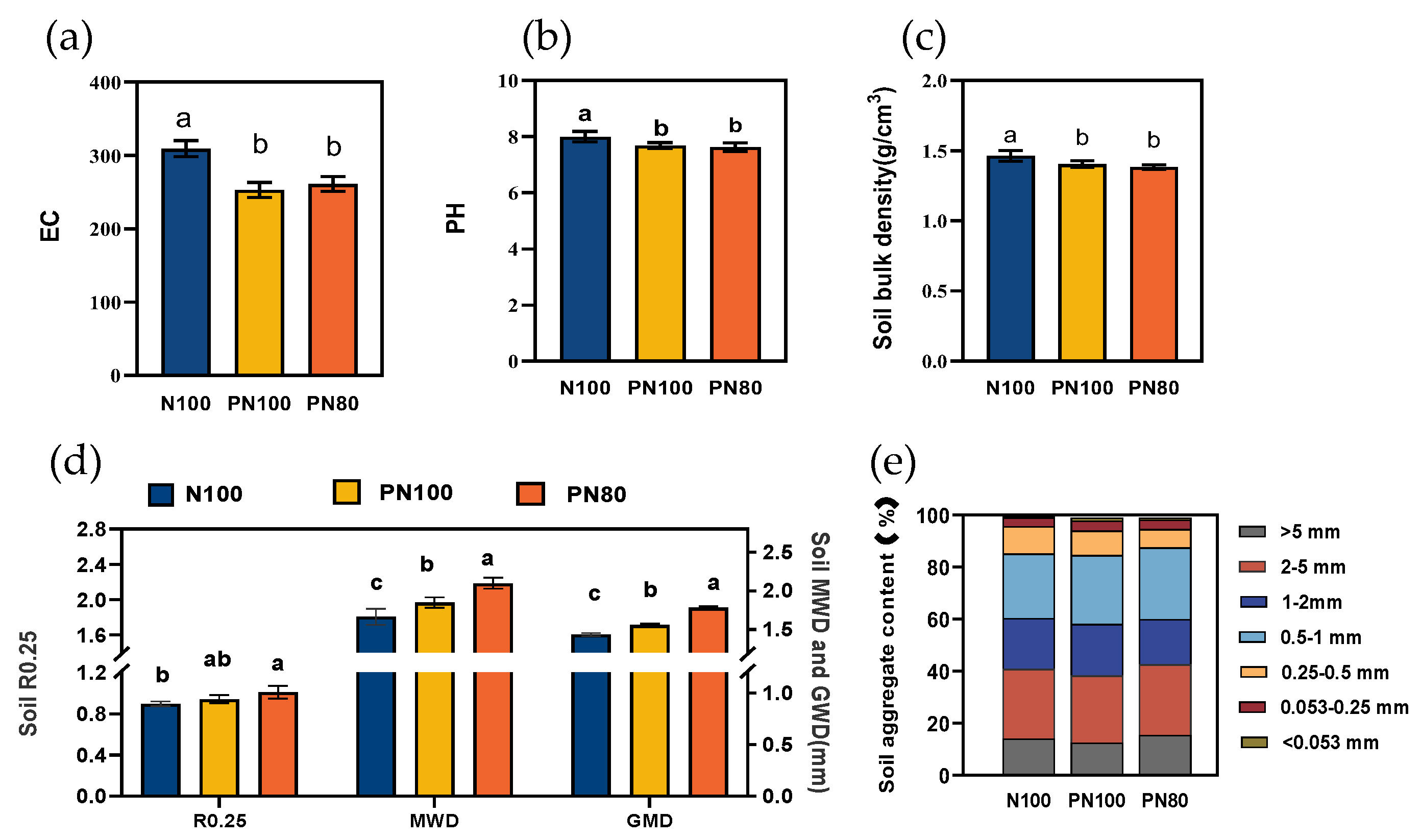
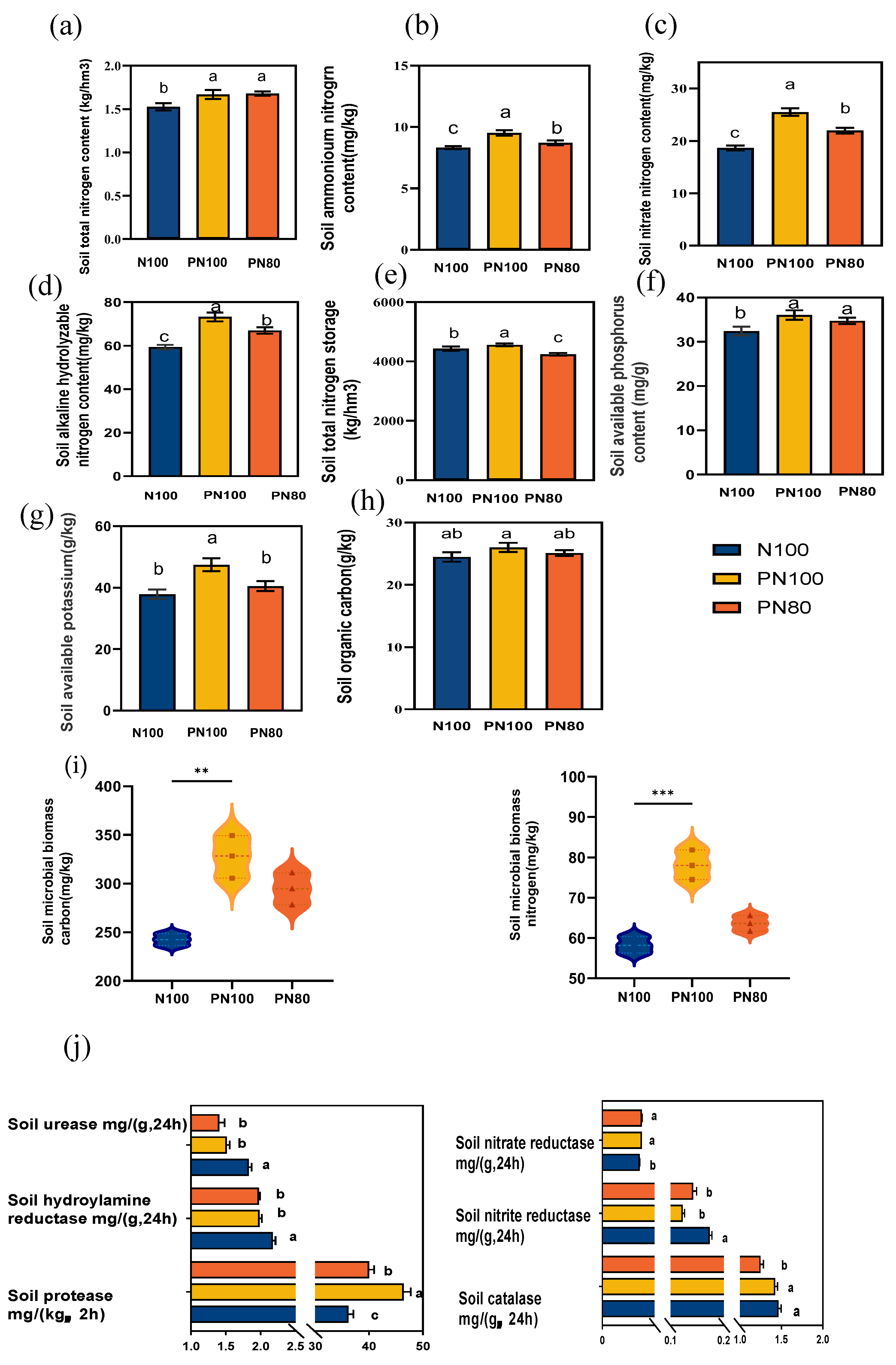
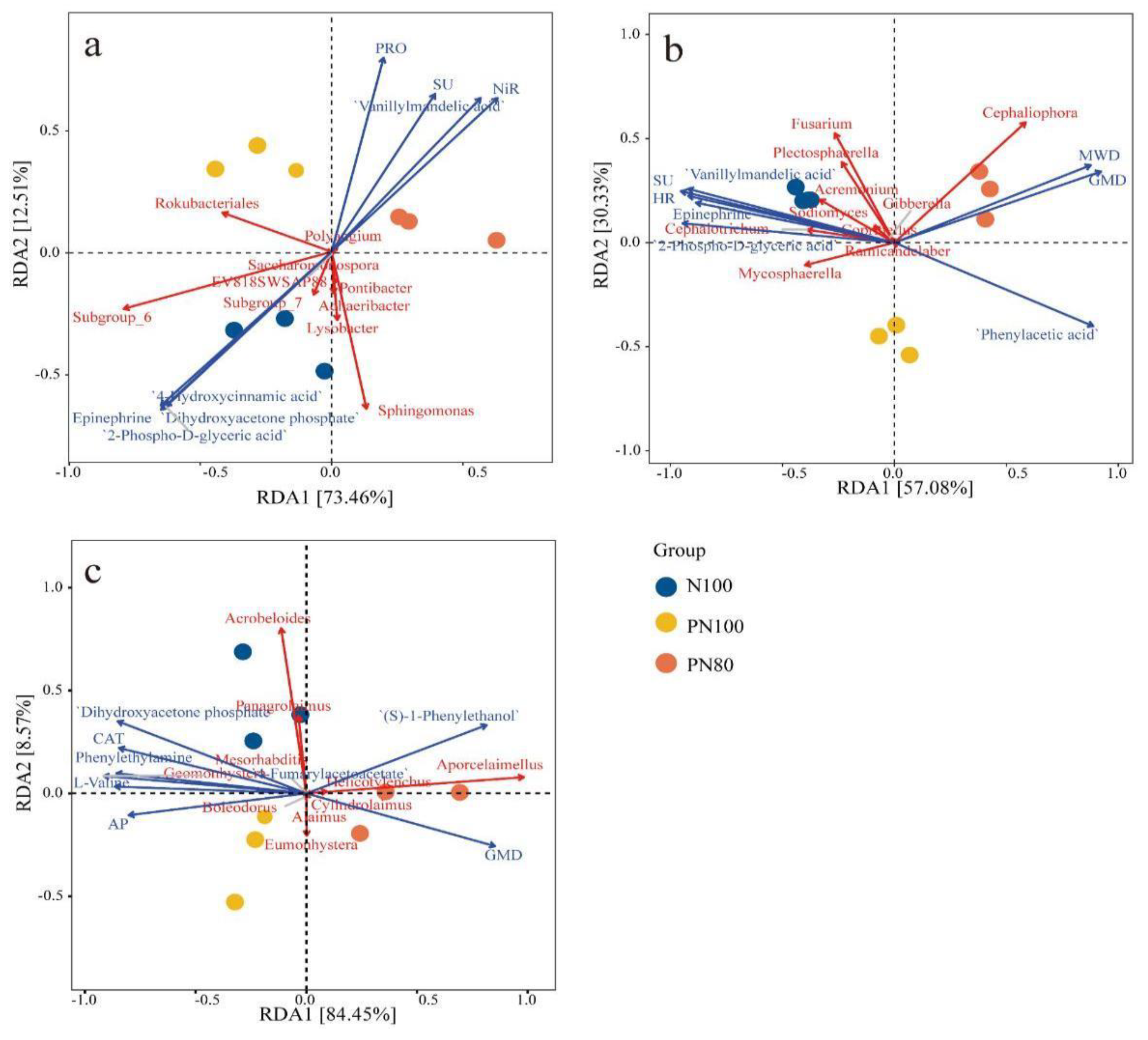
Polymers can be used as soil water-retention agents to slow down fertilizer nutrient release and improve soil properties. However, the mechanism of combined application of polymer and nitrogen fertilizer influencing soil biocommunity characteristics and nitrogen transformation is still unclear. In this study, the polymer PPM with water retention and slow-release functions was combined with nitrogen fertilizer (N100 treatment: 300 kg/hm2 of nitrogen fertilizer (traditional nitrogen application rate); PN100 treatment: PPM + 300 kg/hm2 of nitrogen fertilizer; PN80 treatment: PPM + 240 kg/hm2 of nitrogen fertilizer) to investigate soil biodiversity, enzyme activities, and metabolomics. The objective was to clarify the effects of combined application of polymer and nitrogen fertilizer on soil characteristics, biocommunity structure, and metabolites in drip-irrigated wheat fields in arid areas. The results showed that under the application of PPM, the contents of soil total nitrogen (TN), alkali hydrolyzable nitrogen (ANS), nitrate nitrogen, organic carbon (SOC), and microbial biomass nitrogen (MBN) increased with the decrease of nitrogen application rate, while soil bulk density, pH, and EC (electrical conductivity) showed an opposite change. The Chao 1 index of soil bacterial and nematode communities of the PN80 treatment increased by 30.63% and 10.68%, respectively, and the Shannon index increased by 2.72% and 2.64%, respectively, compared with those of N100 treatment, but there was no difference in the Pielo e index. The results of RDA (redundancy analysis) and co-occurrence network showed that combined application of PPM and nitrogen fertilizer improved soil physicochemical properties, and soil ammonium nitrogen, TN, SOC, and MBN contents were the key factors affecting the distribution of soil bacterial communities. In addition, in the short term, the addition of PPM affected the structure and composition of soil bacterial and nematode communities. Especially, the relative abundances of omnivorous (Aporcelaimellus) and bacterivorous (Prismatolaimus) nematodes increased significantly compared with those of N100 treatment, actively responding to changes in the soil environment. This regulated the soil microbial communities and metabolites, thereby promoting soil nitrogen transformation. This study will provide a scientific basis for nitrogen reduction, farmland environment protection, and agricultural production efficiency improvement in drip-irrigated wheat planting in arid regions.
Keywords:
1. Introduction
2. Materials and Methods
2.1. Experimental Site
2.2. Experimental Design
2.3. Sampling
2.4. Measurements
2.4.1. High-Throughput Sequencing
2.4.2. Metabolome Measurement
2.4.3. Measurement of Soil Enzyme Activity
2.4.4. Measurement of Soil Microbial Biomass Carbon and Microbial Biomass Nitrogen
2.4.5. Measurement of Soil Aggregates
2.5. Data Analysis
3. Results
3.1. Effects of Combined Application of PPM and Nitrogen Fertilizer on the α-Diversity Indices of Soil Biocommunity
3.2. Effects of Combined Application of PPM and Nitrogen Fertilizer on the Soil Biocommunity Structure and Abundance
3.3. Analysis of Differential Abundance Characteristics of Soil Bacterial and Fungal Communities
3.4. Effects of Combined Application of Polymer and Nitrogen Fertilizer on Soil Physicochemical Properties and Enzyme Activities
3.5. RDA of Soil Biocommunity and Soil Physicochemical Properties
3.6. Soil Metabolome Characteristics and Pathway Analysis
3.7. Correlation Network Analysis
4. Discussion
4.1. Effects of Combined Application of Polymer and Nitrogen Fertilizer on Soil Biocommunity Diversity and Structure
4.2. Effects of Combined Application of Polymer and Nitrogen Fertilizer on Soil Biocommunity Diversity and Structure
4.3. Effect of Combined Application of Polymer and Nitrogen Fertilizer on Soil Metabolic Pathways
5. Conclusions
Author Contributions
Funding
Data Availability Statement
References
- Feng, Z., Liu, C., Li, X., Xiao, M., Wang, Y., Li, L., & Li, X. (2024). The effect of phosphorus content on wheat root-associated prokaryotic community depends on growth stage and variety. Soil Science Society of America Journal, 88(2), 224-238.
- Kan, Z. R., Xu, Y., Virk, A. L., Liu, M., Pei, X., Li, Y., Yang, H., & Chen, C. (2024). Organic fertilizer substitution benefits microbial richness and wheat yield under warming. The Science of the total environment, 945, 174007. [CrossRef]
- Zhou, J., Jiang, X., Zhou, B., Zhao, B., Ma, M., Guan, D.,& Qin, J. (2016). Thirty four years of nitrogen fertilization decreases fungal diversity and alters fungal community composition in black soil in northeast China. Soil Biology and Biochemistry, 95, 135-143.
- Bebber, D. P., & Richards, V. R. (2022). A meta-analysis of the effect of organic and mineral fertilizers on soil microbial diversity. Applied Soil Ecology, 175, 104450.
- Xun, W., Zhao, J., Xue, C., Zhang, G., Ran, W., Wang, B., Shen, Q., & Zhang, R. (2016). Significant alteration of soil bacterial communities and organic carbon decomposition by different long-term fertilization management conditions of extremely low-productivity arable soil in South China. Environmental microbiology, 18(6), 1907–1917.
- Liu, X., Cheng, Y., Zhang, Y., Li, Y., Wang, F., & Shen, C. (2024). Soil microbiome response to reduced nitrogen supply in an over-fertilized wheat-maize system. Agronomy, 14(11), 2631.
- Chen, L. J., Feng, Q., Wei, Y. P., Li, C. S., Zhao, Y., Li, H. Y., & Zhang, B. G. (2017). Effects of saline water irrigation and fertilization regimes on soil microbial metabolic activity. Journal of Soils and Sediments, 17, 376-383.
- Zhang, Y., Li, T., Wu, H., Bei, S., Zhang, J., & Li, X. (2019). Effect of different fertilization practices on soil microbial community in a wheat–maize rotation system. Sustainability, 11(15), 4088.
- Zhou, X., Yang, X., Feng, S., Zhang, J., Wu, J., Liu, J., ... & Shen, T. (2023). Optimization of controlled-release urea application based on the winter wheat yield. European Journal of Agronomy, 151, 126987.
- Xiao, Y., Peng, F., Zhang, Y., Wang, J., Zhuge, Y., Zhang, S., & Gao, H. (2019). Effect of bag-controlled release fertilizer on nitrogen loss, greenhouse gas emissions, and nitrogen applied amount in peach production. Journal of Cleaner Production, 234, 258-274. [CrossRef]
- Hong, D., Chang, D., Shao, C., Cui, W., Lu, X., Dong, W., & Liu, Y. (2024). Effects of polymer conditioner and nitrogen fertilizer application on nitrogen absorption and utilization of drip-irrigated wheat in arid areas. Agronomy, 14(2), 232.
- Awad, Y. M., Lee, S. S., Ok, Y. S., & Kuzyakov, Y. (2017). Effects of biochar and polyacrylamide on decomposition of soil organic matter and 14 C-labeled alfalfa residues. Journal of Soils and Sediments, 17, 611-620.
- Yuan, Y., Gai, S., Tang, C., Jin, Y., Cheng, K., Antonietti, M., & Yang, F. (2022). Artificial humic acid improves maize growth and soil phosphorus utilization efficiency. Applied Soil Ecology, 179, 104587.
- Tian, X., Wang, K., Liu, Y., Fan, H., Wang, J., & An, M. (2020). Effects of polymer materials on soil physicochemical properties and bacterial community structure under drip irrigation. Applied Soil Ecology, 150, 103456.
- Liu, X. , Liu, H., Zhang, Y., Chen, G., Li, Z., & Zhang, M. (2023). Straw return drives soil microbial community assemblage to change metabolic processes for soil quality amendment in a rice-wheat rotation system. Soil Biology and Biochemistry, 185, 109131.
- Li, B. B. , Roley, S. S., Duncan, D. S., Guo, J., Quensen, J. F., Yu, H. Q., & Tiedje, J. M. (2021). Long-term excess nitrogen fertilizer increases sensitivity of soil microbial community to seasonal change revealed by ecological network and metagenome analyses. Soil Biology and Biochemistry, 160, 108349.
- Wei, Q. , Yin, Y., Tong, Q., Gong, Z., & Shi, Y. (2024). Multi-omics analysis of excessive nitrogen fertilizer application: Assessing environmental damage and solutions in potato farming. Ecotoxicology and Environmental Safety, 284, 116916.
- Liu, X. , Liu, H., Zhang, Y., Chen, G., Li, Z., & Zhang, M. (2023). Straw return drives soil microbial community assemblage to change metabolic processes for soil quality amendment in a rice-wheat rotation system. Soil Biology and Biochemistry, 185, 109131. [CrossRef]
- Juan, H. , Zhen, L., & Jian, Z. (2012). Improvement of indophenol blue colorimetric method on activity of urease in soil. Journal of Civil, Architectural & Environmental Engineering, 34, 102-107.
- Watanabe, K., & Hayano, K. (1995). Seasonal variation of soil protease activities and their relation to proteolytic bacteria and Bacillus spp in paddy field soil. Soil Biology and Biochemistry, 27(2), 197-203.
- Frankeberger, W. T., & Johanson, J. B. (1983). Method of measuring invertase activity in soils. Plant and soil, 74, 301-311.
- Li, B. B. , Roley, S. S., Duncan, D. S., Guo, J., Quensen, J. F., Yu, H. Q., & Tiedje, J. M. (2021). Long-term excess nitrogen fertilizer increases sensitivity of soil microbial community to seasonal change revealed by ecological network and metagenome analyses. Soil Biology and Biochemistry, 160, 108349.
- Wei, Q. , Yin, Y., Tong, Q., Gong, Z., & Shi, Y. (2024). Multi-omics analysis of excessive nitrogen fertilizer application: Assessing environmental damage and solutions in potato farming. Ecotoxicology and Environmental Safety, 284, 116916.
- Wang, C. , Liu D., Bai E. (2018). Decreasing soil microbial diversity is associated with decreasing microbial biomass under nitrogen addition. Soil Biology and Biochemistry, 120:126-133.
- AM, A. E. G., & Morsy, A. S. M. (2017). Integrated impact of organic and inorganic fertilizers on growth, yield of maize (Zea mays L.) and soil properties under Upper Egypt conditions. Journal of Plant Production, 8(11), 1103-1112.
- Li, X., He, J. Z., Liu, Y. R., & Zheng, Y. M. (2013). Effects of super absorbent polymers on soil microbial properties and Chinese cabbage (Brassica chinensis) growth. Journal of Soils and Sediments, 13, 711-719.
- Sojka, R. E., Entry, J. A., & Fuhrmann, J. J. (2006). The influence of high application rates of polyacrylamide on microbial metabolic potential in an agricultural soil. Applied Soil Ecology, 32(2), 243-252.
- Vestergård, M. (2004). Nematode assemblages in the rhizosphere of spring barley (Hordeum vulgare L.) depended on fertilisation and plant growth phase. Pedobiologia, 48(3), 257-265. [CrossRef]
- Koch, H. , & Sessitsch, A. (2024). The microbial-driven nitrogen cycle and its relevance for plant nutrition. Journal of experimental botany, 75(18), 5547–5556.
- Liu, H., Liu, J., Yu, J., Xu, S., & Shi, J. (2013). Effect of soil amendment of polyacrylate on soil microbial biomass nitrogen and soil enzyme activity. Soil Fertil. Sci. China, 1, 25-31.
- Wu, H. , Cui, H., Fu, C., Li, R., Qi, F., Liu, Z., Yang, G., Xiao, K., & Qiao, M. (2024). Unveiling the crucial role of soil microorganisms in carbon cycling: A review. The Science of the total environment, 909, 168627.
- Zhang, X., Chen, C., & Sulitan. (2017). On appropriate applied amount of polyacrylamide (PAM) for saline soil improvement. Soils, 49(6), 1216-1220.
- Wang, J.; et al. (2022). Feasibility of agricultural utilization of river sludge as a planting substrate following treatment with polyacrylamide. Journal of Cleaner Production 367, 132964.
- Wang, J., Liu, M., Han, K., Zhao, H., Zhang, H., Ma, Q., & Wu, L. (2022). Feasibility of agricultural utilization of river sludge as a planting substrate following treatment with polyacrylamide. Journal of Cleaner Production, 367, 132964. [CrossRef]
- Wu, Y. , Li, F., Zheng, H., Hong, M., Hu, Y., Zhao, B., & De, H. (2019). Effects of three types of soil amendments on yield and soil nitrogen balance of maize-wheat rotation system in the Hetao Irrigation Area, China. Journal of Arid Land, 11, 904-915.
- Zumstein, M. T. , Helbling, D. E. (2019). Biotransformation of antibiotics: Exploring the activity of extracellular and intracellular enzymes derived from wastewater microbial communities. Water Research, 155, 115–123.
- Ni L. X., Xu J. J., Chu X. L., Li S. Y., Wang P. F., Li Y. P., Li Y., Zhu L., Wang C. (2016). Correlation among soil enzyme activities, root enzyme activities, and contaminant removal in twostage in situ conxtructed wetlands purifying domestic wastewater. Bulletin of Environmental Contamination and Toxicology, 97, 131–137. [CrossRef]
- HUANG, J. ,Lu, Y. (2022). Decomposition of soil polymeric organic matter by Bacteroidetes and Clostridia: progress and perspectives. Microbiology China, 49(3), 1147-1157.
- Wang, H. , Li, J., Chen, H., Liu, H., & Nie, M. (2022). Enzymic moderations of bacterial and fungal communities on short-and long-term warming impacts on soil organic carbon. Science of The Total Environment, 804, 150197.
- Podosokorskaya, O. A. , Bonch-Osmolovskaya, E. A., Novikov, A. A., Kolganova, T. V., & Kublanov, I. V. (2013). Ornatilinea apprima gen. nov., sp. nov., a cellulolytic representative of the class Anaerolineae. International Journal of Systematic and Evolutionary Microbiology, 63(Pt_1), 86-92. [CrossRef]

| pH (soil: water = 1:2.5) |
Electrical conductivity (μS/cm) | Total nitrogen content (g/kg) |
Organic matter content (g/kg) |
Alkaline hydrolyzed nitrogen (mg/kg) |
Available phosphorus content (mg/kg) |
Available potassium content (mg/kg) |
|---|---|---|---|---|---|---|
| 7.51 | 344 | 1.76 | 24.32 | 70.24 | 18.23 | 204.32 |
| Treatment | Description |
|---|---|
| N100 | Nitrogen fertilizer was applied at 300 kg/hm2 (traditional nitrogen application rate) |
| PN100 | 12 kg/hm2 of polymer PPM and 300 kg/hm2 of nitrogen fertilizer were applied |
| PN80 | 12 kg/hm2 of polymer PPM and 240 kg/hm2 of nitrogen fertilizer were applied |
Disclaimer/Publisher’s Note: The statements, opinions and data contained in all publications are solely those of the individual author(s) and contributor(s) and not of MDPI and/or the editor(s). MDPI and/or the editor(s) disclaim responsibility for any injury to people or property resulting from any ideas, methods, instructions or products referred to in the content. |
© 2024 by the authors. Licensee MDPI, Basel, Switzerland. This article is an open access article distributed under the terms and conditions of the Creative Commons Attribution (CC BY) license (http://creativecommons.org/licenses/by/4.0/).


