

Submitted:
02 December 2024
Posted:
03 December 2024
You are already at the latest version
Abstract
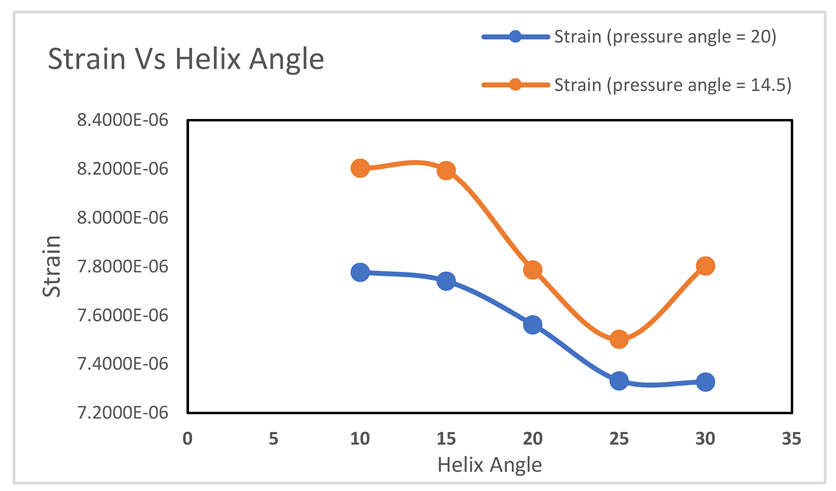
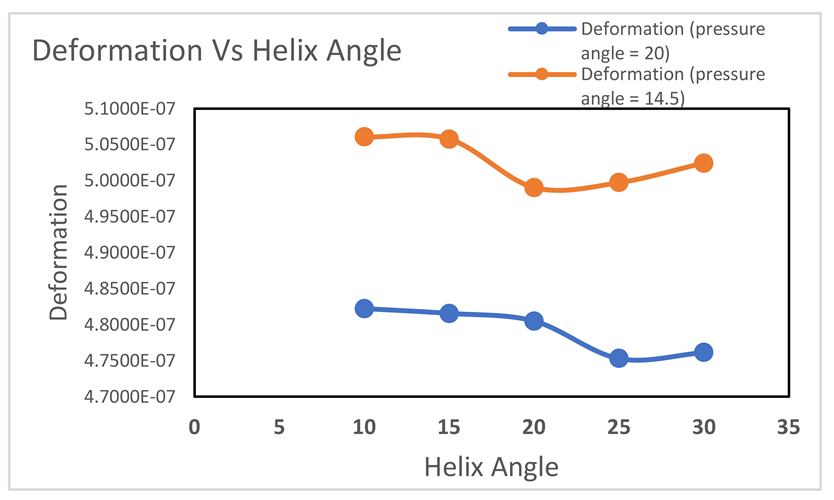
Double-helical gear is combined with the left and right-handed helical gears with the same twist angle, which smoothly transmits power between two parallel shafts on heavy loads for reduced noise and vibration operation. The helix angles influence the stress and deformation of double-helical gears before structural failures or breakdowns. Thus, variations in helix angles can result in wear, fatigue, increased stress, misalignment, and uneven load distributions. In this study, we modelled double-helical gear using SolidWorks software. By applying ANSYS 23.0, the effcets of helix angles on the stress distribution and overall performance were investigated. The evaluated data from both the ANSYS and AGMA (American Gears Manufacturing Association) approaches were compared, and this comparison achieved the result of a decrease in stress and strain with an increase in helix angle along the wider face width. At a helix angle of 30° and a constant value of face width, the stresses were found to be 1.4491 MPa and 1.5346 MPa for pressure angles of 20° and 14.5°, respectively, in ANSYS. After the comparison, discrepancies of 0.287% and 6.204% were identified between the evaluated stresses from the ANSYS and AGMA standards.
Keywords:
1. Introduction
2. Literature Review
3. Methodology

| PARAMETERS | SPECIFICATIONS |
|---|---|
| Module(m) | 16 mm |
| Face width (b) | 100 mm |
| Pitch diameter (d) | 800 mm |
| Number of teeth | 50 |
| Hub diameter | 200mm |
| Gear speed (N) | 1500 rpm |
| Power (p) | 100 KW |
| Power source | Uniform |
| Types of loads | Continuous |
| Safety factor | 1.1 |
3.1. Geometry
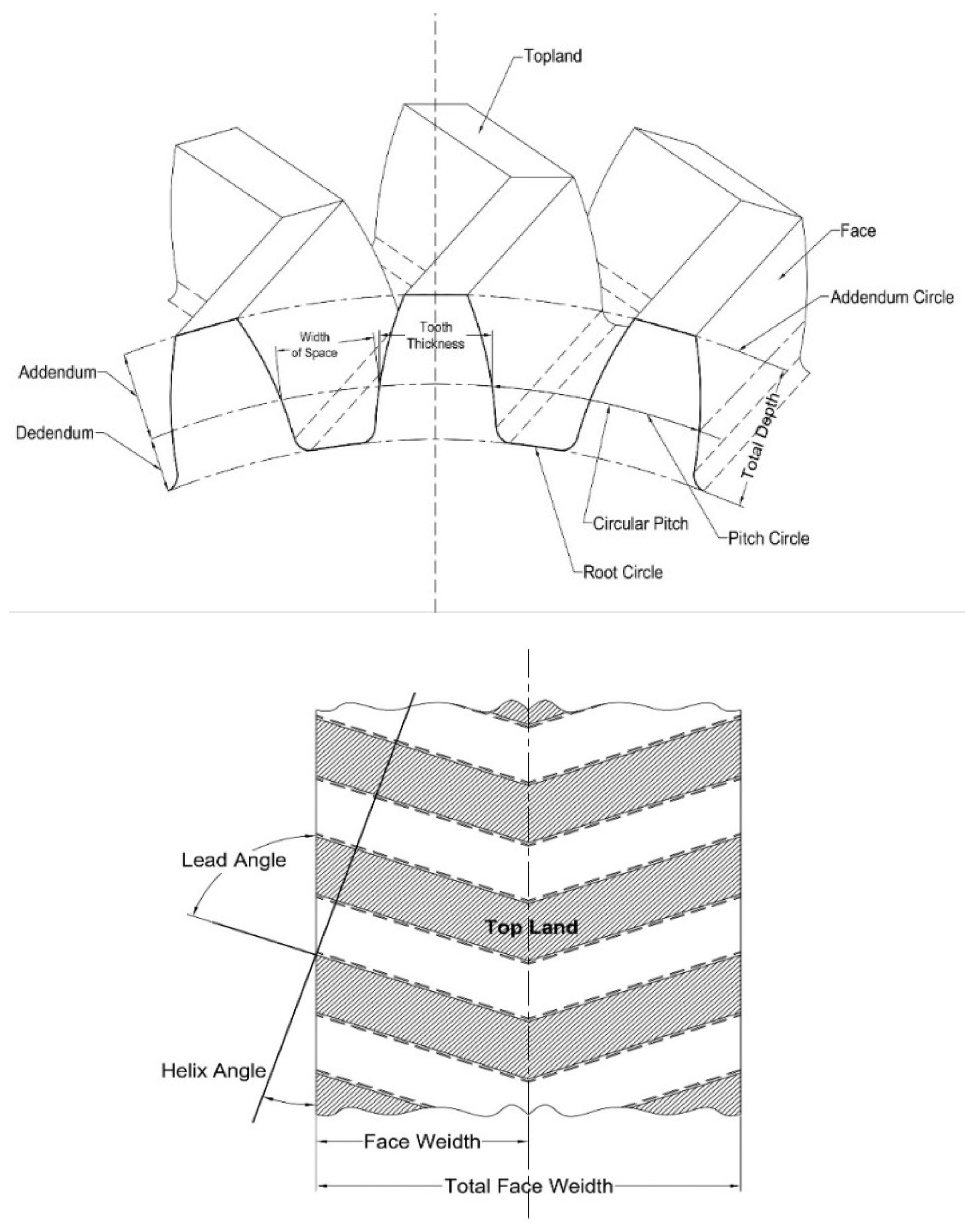
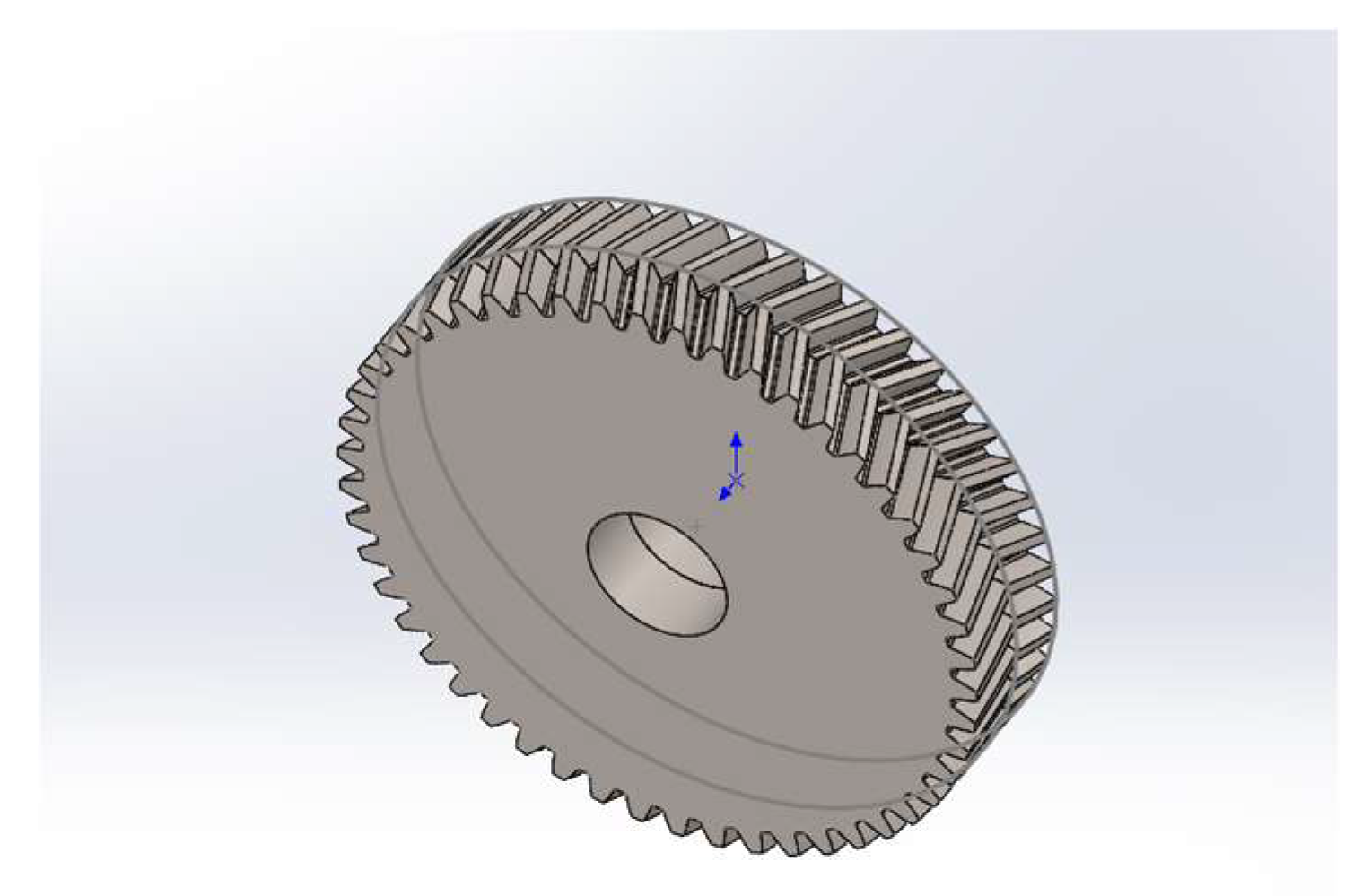
3.2. Boundary Conditions
- In double helical gear, applied torque distribution along the gear teeth.
- The applied force distribution directs the gear teeth due to the torque.
- The shaft diameter of the double helical gear is fixed.
- The double helical gear teeth are perfectly shaped without manufacturing error.
- The double helical gear materials are homogeneous and isentropic.
- The helical gear’s helix angle changes along the tooth profile.
- Uniform distribution of load along the line of action (contact line).
- The gear materials properties are constant such as Young’s modulus, Poisson’s ratio, bulk modulus, etc.
3.3. Governing Equations
- are the normal stress components.
- are the shear stress components.
- are the body forces per unit volume in the x, y, and z directions, respectively.
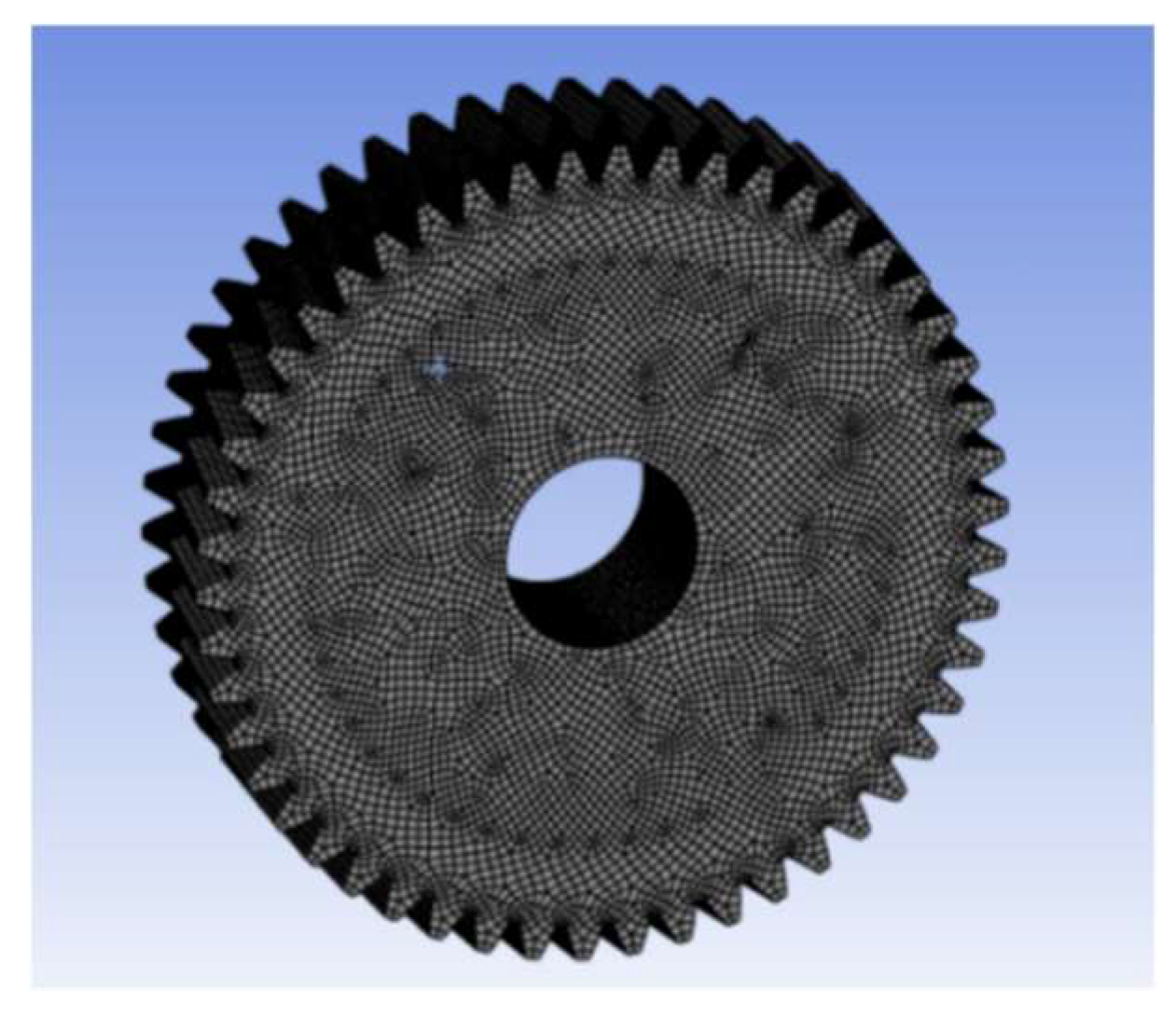
3.4. Mesh Refinement Test
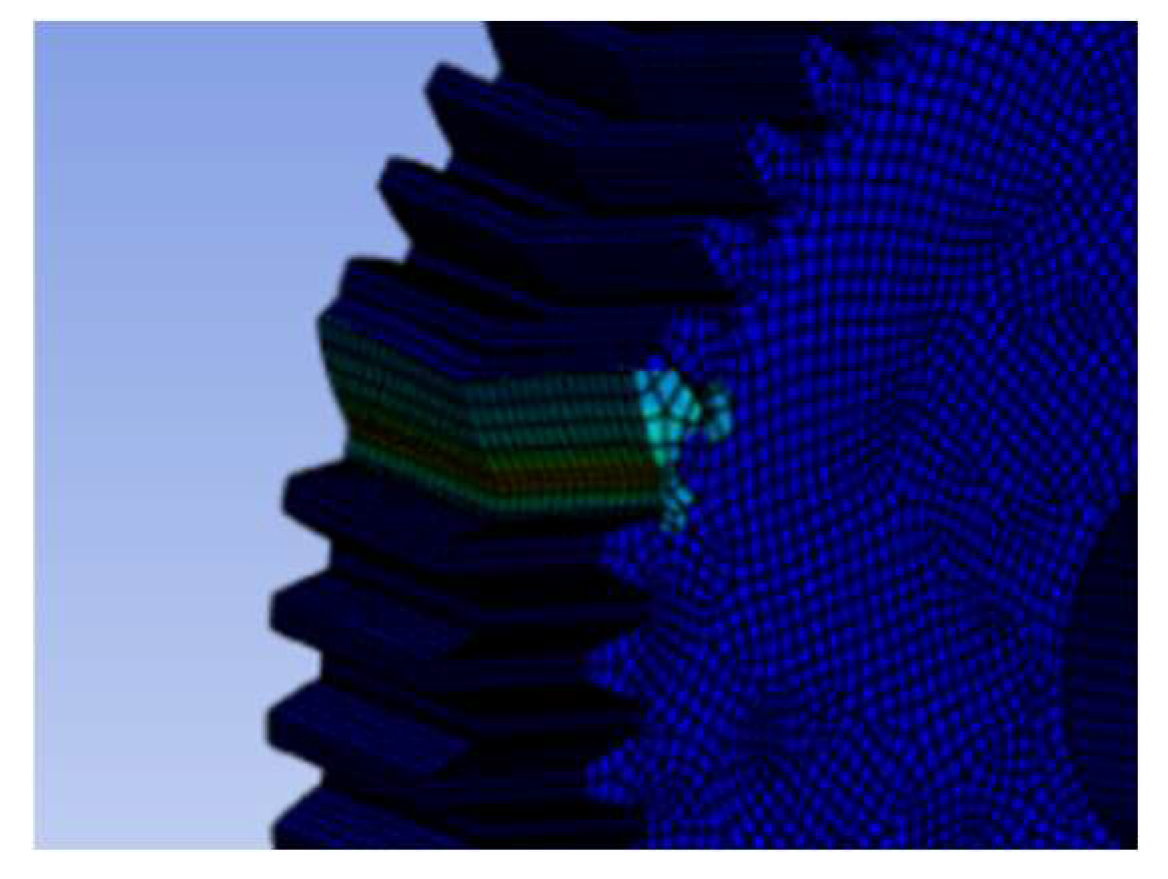
3.5. Code Validation
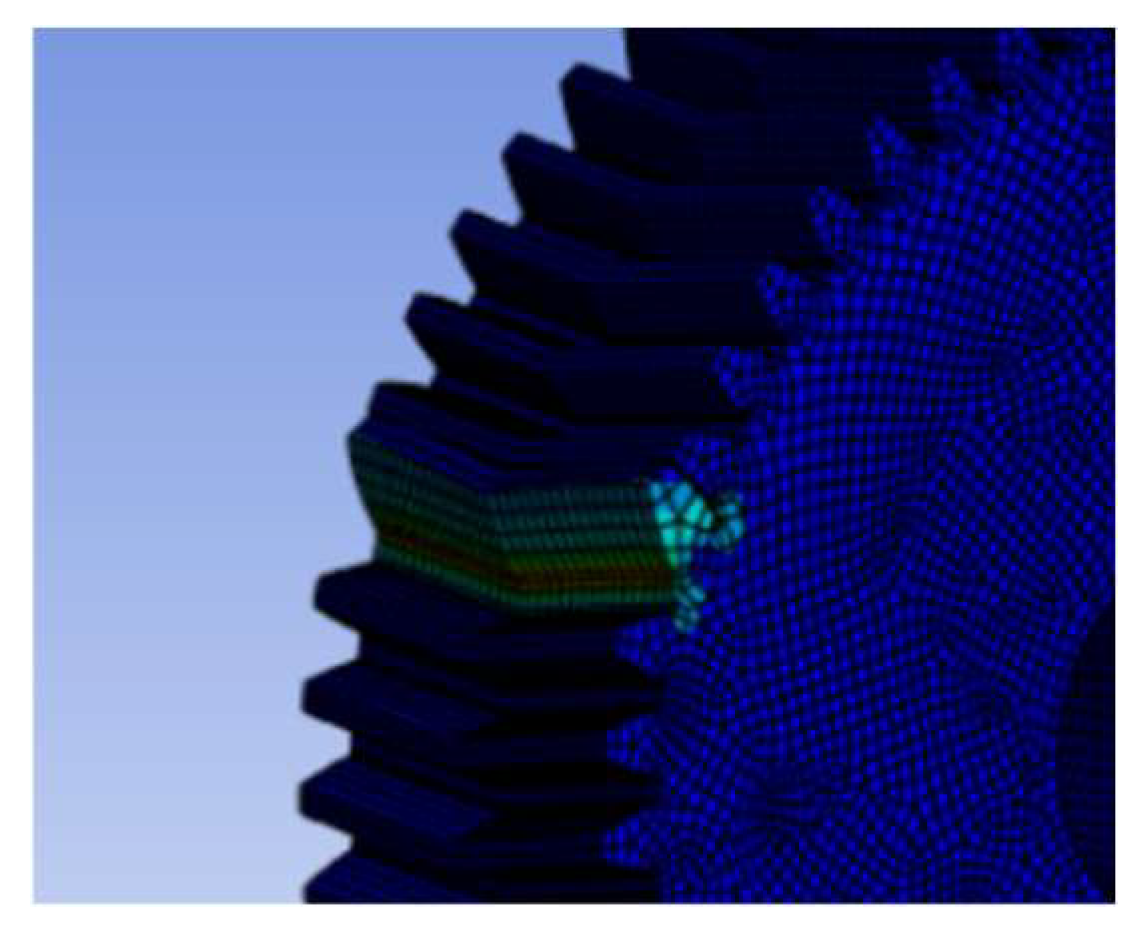
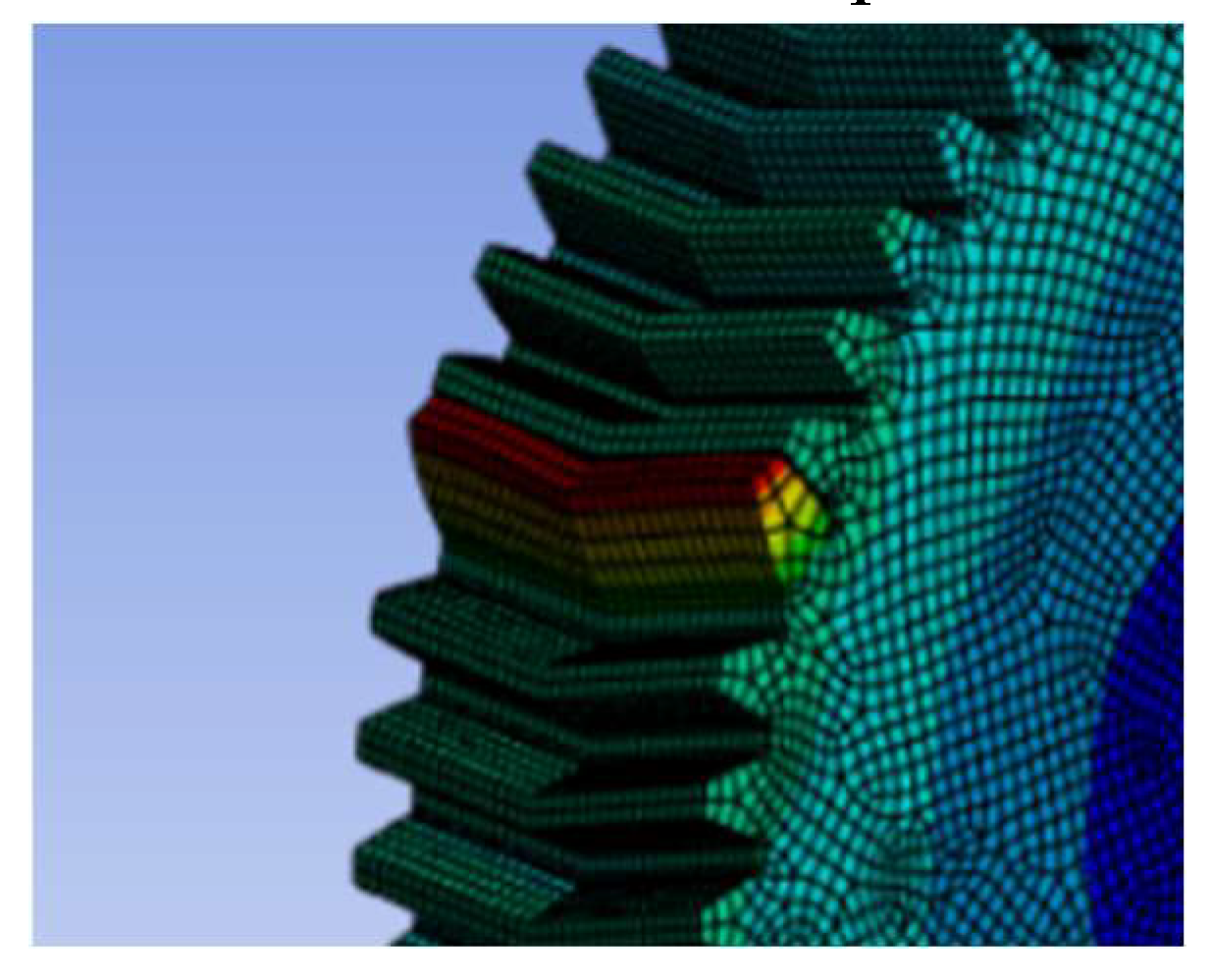
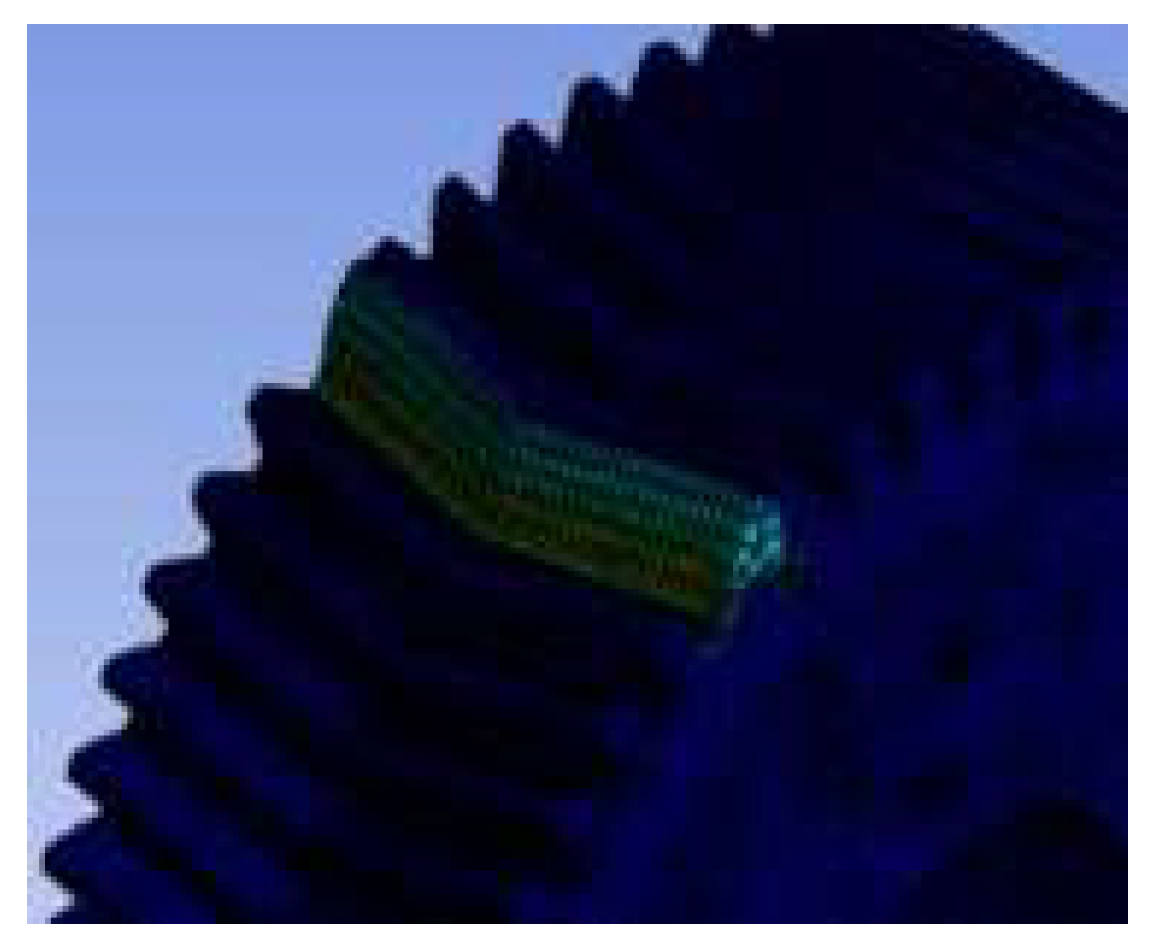
4. Result and Discussion
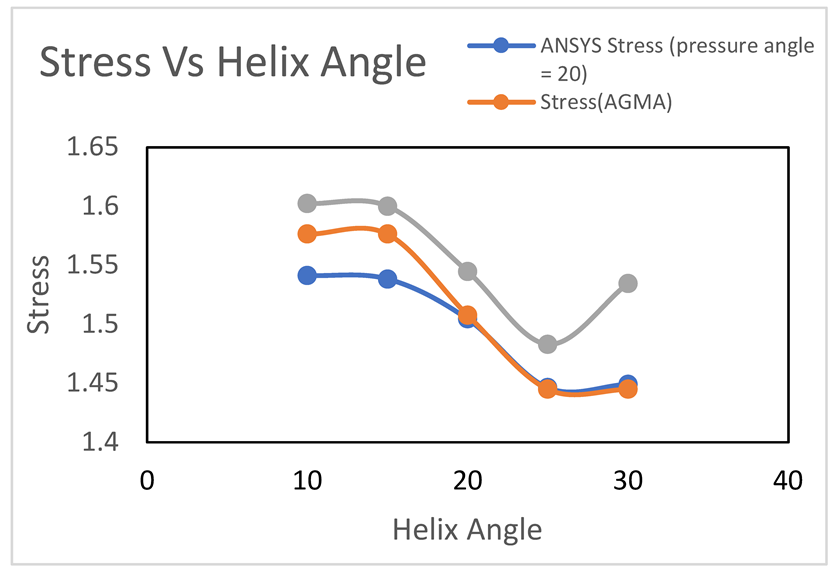
| Helix Angle | Face Width(mm) | Stress (Mpa)(ANSYS) | Stress (Mpa)(AGMA) |
|---|---|---|---|
| 10 | 50 | 2.8812 | 3.1526 |
| 10 | 100 | 1.5413 | 1.5763 |
| 10 | 150 | 0.9111 | 1.0509 |
| 20 | 50 | 3.1077 | 3.0156 |
| 20 | 100 | 1.5046 | 1.5078 |
| 20 | 150 | 0.98031 | 1.0052 |
| 30 | 50 | 2.54 | 2.8899 |
| 30 | 100 | 1.4491 | 1.4450 |
| 30 | 150 | 0.822 | 0.9633 |
5. Conclusions
Acknowledgements
Conflict of Interest
References
- L. A. Pillai, N., Sreenivas, N., Krishnaraj, K., Unnikrishnan, V., & Ajith, M. (2018). Thermal performance evaluation of cork phenolic for nozzle external thermal protection system using 250 kW plasma jet facility. Journal of Heat Transfer, 140(7). [CrossRef]
- L. Jian-Kai. (2015). Research on cutting tool wear based on fractional Brownian motion. International Journal of Mechanical Engineering and Applications, 3(1), 1. [CrossRef]
- Zhao, E., Cheng, K., Sun, W., Zhou, Z., & Zhao, J. (2017). Buckling failure analysis of truck-mounted concrete pump’s retractable outrigger. Engineering Failure Analysis, 79, 361–370. [CrossRef]
- Journal of Advanced Research in Dynamical and Control Systems. (2021). Journal of Advanced Research in Dynamical and Control Systems. [CrossRef]
- Raman, R. K. S. (2005). Characterisation of ‘rolled-in,’ ‘fragmented,’ and ‘red’ scale formation during secondary processing of steels. Engineering Failure Analysis, 13(7), 1044–1050. [CrossRef]
- Singh, B. (2017). Hall effect on MHD flow of visco-elastic micro-polar fluid layer heated from below saturating a porous medium. International Journal of Engineering Science and Technology, 9(4), 48–66. [CrossRef]
- Taghipour, J., Dardel, M., & Pashaei, M. H. (2018). Vibration mitigation of a nonlinear rotor system with linear and nonlinear vibration absorbers. Mechanism and Machine Theory, 128, 586–615. [CrossRef]
- Rao, Ch. R. M., & Muthuveerappan, G. (1993). Finite element modelling and stress analysis of helical gear teeth. Computers & Structures, 49(6), 1095–1106. [CrossRef]
- Ibrahim, M. A., Gidado, A. Y., Hussein, A., & Tijjani, N. (2019). Comparison of bending stresses for different face width of helical gear using AGMA and ANSYS. Retrieved from https://www.akademiabaru.com/submit/index.php/aram/article/view/1835.
- Zeng, L., Zang, Y., & Gao, Z. (2017). HOPF bifurcation control for rolling mill multiple-mode-coupling vibration under nonlinear friction. Journal of Vibration and Acoustics, 139(6). [CrossRef]
- Zhang, J. J., Esat, I. I., & Shi, Y. H. (1999). Load analysis with varying mesh stiffness. Computers & Structures, 70(3), 273–280. [CrossRef]
| Helix angle | Stress (Mpa)(ANSYS) | Strain(m/m) | Deformation(m) | Stress (AGMA) | Error (%) |
| 10 | 1.5413 | 7.7769 × 10⁻⁶ | 4.8225 × 10⁻⁷ | 1.5763 | 12.37132 |
| 15 | 1.5382 | 7.7400 × 10⁻⁶ | 4.8158 × 10⁻⁷ | 1.5763 | 2.417695 |
| 20 | 1.5046 | 7.5614 × 10⁻⁶ | 4.8051 × 10⁻⁷ | 1.5077 | 0.205611 |
| 25 | 1.4462 | 7.3324 × 10⁻⁶ | 4.7531 × 10⁻⁷ | 1.4450 | 0.086427 |
| 30 | 1.4491 | 7.3269 × 10⁻⁶ | 4.7616 × 10⁻⁷ | 1.4450 | 0.287126 |
| Helix angle | Stress (Mpa)(ANSYS) | Strain(m/m) | Deformation(m) | Stress (AGMA) | Error (%) |
| 10 | 1.6023 | 8.203× 10⁻⁶ | 5.0609 × 10⁻⁷ | 1.5763 | 1.770614 |
| 15 | 1.6 | 8.193 × 10⁻⁶ | 5.0577 × 10⁻⁷ | 1.5763 | 1.502853 |
| 20 | 1.5447 | 7.7870 × 10⁻⁶ | 4.9905 × 10⁻⁷ | 1.5077 | 2.454069 |
| 25 | 1.4831 | 7.5026 × 10⁻⁶ | 4.9975 × 10⁻⁷ | 1.4450 | 2.640147 |
| 30 | 1.5346 | 7.8038 × 10⁻⁶ | 5.0243 × 10⁻⁷ | 1.4450 | 6.204281 |
Disclaimer/Publisher’s Note: The statements, opinions and data contained in all publications are solely those of the individual author(s) and contributor(s) and not of MDPI and/or the editor(s). MDPI and/or the editor(s) disclaim responsibility for any injury to people or property resulting from any ideas, methods, instructions or products referred to in the content. |
© 2024 by the authors. Licensee MDPI, Basel, Switzerland. This article is an open access article distributed under the terms and conditions of the Creative Commons Attribution (CC BY) license (http://creativecommons.org/licenses/by/4.0/).