

Submitted:
27 November 2024
Posted:
02 December 2024
You are already at the latest version
Abstract
Quickmeds is web-based e-marketplace for pharmaceuticals and other lifestyle-based cosmetics. Quickmeds brings together different vendors (retailers), into a common virtual marketplace, enabling a healthy and competitive marketplace for prescription-based drugs and other lifestyle products. Quickmeds is the first of its kind e-marketplace, although a different variant of the same concept can be found all throughout the world with different purposes; example Amazon, etc. The intuitive concept of Quickmeds is not only to increase the user experience and ease of buying prescription drugs, but also to fight the issue of differential pricing of pharmaceutical drugs throughout the country, and the promotion of generic drugs. Apart from the mentioned major issue, Quickmeds also helps to minimize the cases of drug abuse especially through self-medication and also helps in analyzing the overall real requirements demand in the retail market of special drugs, categorized under psychedelics. Hence Quickmeds creates a safe and authentic distribution plat-form with registered and licensed vendors, within a common marketplace, giving the end users best pricing possible, along with guaranteeing quality and on time supply.
Keywords:
Online market place for medicine
; EHS integrated Market place
Declaration of Authorship
I, Renjith Kumar S, declare that this thesis titled, “"Quickmeds"
- An online market for medicine ” and the work presented in it are my own. I confirm that:
- This work was done wholly or mainly while in candidature for a research de- gree at this University.
- Where any part of this thesis has previously been submitted for a degree or any other qualification at this University or any other institution, this has been clearly stated.
- Where I have consulted the published work of others, this is always clearly attributed.
- Where I have quoted from the work of others, the source is always given. With the exception of such quotations, this thesis is entirely my own work.
Acknowledgements
I would first like to thank my thesis advisors Dr.Shazia Afsal for the Master thesis at Dublin Business School. The door to Dr.Shazia’s office was always open when- ever I ran into a trouble spot or had a question about my research or writing. She consistently allowed this paper to be my own work, but steered me in the right the direction whenever he thought I needed it.
I would also like to thank the people who were participated in survey for this research project.
I would also like to acknowledgeand Prof. Harnaik Dhoot of the Msc informa- tion systems with computing at Dublin Business School as the second reader of this thesis, and I am gratefully indebted to his for his very valuable comments on this thesis.. . .
Contents
| Declaration of Authorship | iii | ||
| Abstract | v | ||
| Acknowledgements | vii | ||
| 1 | Introduction | 1 | |
| 1.1 | Background of the research................................................................................ | 1 | |
| 1.2 | Aim of this research............................................................................................. | 2 | |
| 1.3 | Research Question................................................................................................ | 2 | |
| 1.3.1 Sub research question............................................................................. | 2 | ||
| 1.4 | Objectives.............................................................................................................. | 2 | |
| 1.5 | Scope and limitations of the research................................................................ | 3 | |
| 1.6 | Dissertation road map......................................................................................... | 3 | |
| 2 | Literature Review | 5 | |
| 2.1 | Existing distribution system............................................................................... | 5 | |
| 2.2 | Unavailability of medicines................................................................................ | 5 | |
| 2.3 | Distribution and pricing issues of pharmaceutical drugs in Ireland............. | 5 | |
| 2.3.1 Differential pricing of drugs and its effects on public........................ | 6 | ||
| 2.4 | Generic medicines, its importance and policy of Ireland government on promoting generic drugs............................................................................... | 6 | |
| 2.5 | Classification of pharmaceutical drugs............................................................. | 7 | |
| 2.6 | Effect of Common market place on the pricing of goods................................ | 8 | |
| 2.7 | Legal Scope of the Online pharmacies In European Union............................ | 9 | |
| 2.8 | Online Virtual Market as the common market place....................................... | 9 | |
| 2.9 | Existing Online retailers In Ireland.................................................................. | 10 | |
| 2.10 | Challenges and solutions.................................................................................. | 11 | |
| 2.11 | Summary............................................................................................................. | 11 | |
| 3 | Research Methodology and System Analysis | 13 | |
| 3.1 | Research philosophy.......................................................................................... | 13 | |
| 3.2 | Research Approach............................................................................................ | 13 | |
| 3.3 | Research ethics................................................................................................... | 13 | |
| 3.4 | Preliminary system planning............................................................................ | 14 | |
| 3.4.1 Data collection methodology............................................................... | 14 | ||
| 3.4.2 Questionnaire......................................................................................... | 14 | ||
| 3.4.3 Data analysis procedures...................................................................... | 14 | ||
| 3.4.4 Time horizon.......................................................................................... | 15 | ||
| 3.4.5 Twelve-week timeline.......................................................................... | 15 | ||
| 3.5 | System analysis.................................................................................................. | 15 | |
| 3.5.1 Identify problem and Observations.................................................... | 15 | ||
| 3.5.2 Feasibility study.................................................................................... | 16 | ||
| 3.6 Detailed System Study...................................................................................... | 16 | ||
| 3.7 Summary............................................................................................................. | 16 | ||
| 4 | Artefact Design | 19 | |
| 4.1 | Logical design.................................................................................................... | 19 | |
| 4.1.1 System Workflows................................................................................ | 20 | ||
| 4.2 | Physical design................................................................................................... | 21 | |
| 4.2.1 Product dashboard creation................................................................. | 21 | ||
| 4.2.2 Checkout creation................................................................................. | 22 | ||
| 4.2.3 Payment-page creation......................................................................... | 22 | ||
| 4.2.4 Modules.................................................................................................. | 23 | ||
| 4.3 | Architecture Design........................................................................................... | 25 | |
| 4.4 | Detailed Design.................................................................................................. | 26 | |
| 4.4.1 Software Development Methodology................................................. | 26 | ||
| 4.4.2 Minimum Viable Product..................................................................... | 27 | ||
| 4.4.3 Software Requirement Specification................................................... | 28 | ||
| 4.4.4 U M L Diagram...................................................................................... | 28 | ||
| 4.5 | Development technologies and tools.............................................................. | 29 | |
| 4.5.1 Technologies.......................................................................................... | 29 | ||
| 4.5.2 Development Environment(s)............................................................. | 29 | ||
| 4.5.3 Configuration Management tool......................................................... | 29 | ||
| 4.6 | Database design................................................................................................. | 29 | |
| 4.6.1 Business rules........................................................................................ | 29 | ||
| 4.7 | Summary............................................................................................................. | 30 | |
| 5 | Artefact Development | 31 | |
| 5.1 | Web Application Development........................................................................ | 31 | |
| 5.1.1 Models.................................................................................................... | 31 | ||
| 5.1.2 Controllers.............................................................................................. | 31 | ||
| Admin controller................................................................................... | 31 | ||
| Checkout controller............................................................................... | 31 | ||
| Account Controller................................................................................ | 31 | ||
| Home controller..................................................................................... | 31 | ||
| 5.1.3 Views...................................................................................................... | 32 | ||
| The landing page................................................................................... | 32 | ||
| Shopping cart page............................................................................... | 32 | ||
| Payment page........................................................................................ | 32 | ||
| Information window............................................................................. | 32 | ||
| Contact admin page.............................................................................. | 32 | ||
| Admin page........................................................................................... | 32 | ||
| Authentication page.............................................................................. | 32 | ||
| 5.2 | Mobile Application............................................................................................ | 33 | |
| 5.3 | Authorization and Authentication.................................................................. | 33 | |
| 5.4 | Application dashboard...................................................................................... | 33 | |
| 5.5 | Summary............................................................................................................. | 34 | |
| 6 | Data Analysis and Findings | 35 | |
| 6.1 | Introduction........................................................................................................ | 35 | |
| 6.2 | Findings............................................................................................................... | 35 | |
| 6.2.1 General size of the market................................................................... | 35 | ||
| 6.2.2 Awareness among the people.............................................................. | 35 | ||
| 6.2.3 Customer attitude and trends.............................................................. | 37 | ||
| Change in perspective.......................................................................... | 38 | ||
| Technology Adaptiveness Index......................................................... | 39 | ||
| Privacy Concern Index......................................................................... | 40 | ||
| 6.3 | Summary............................................................................................................. | 41 | |
| 7 | Discussions | 43 | |
| 7.1 | General perspectives.......................................................................................... | 43 | |
| 7.1.1 Medicine prices will be more transparent and market-oriented . | 43 | ||
| 7.1.2 Centralization of pharmaceutical industry........................................ | 43 | ||
| 7.1.3 Expand the pharmaceutical logistics market..................................... | 43 | ||
| 7.1.4 A complete service-oriented model. ................................................... | 44 | ||
| 7.1.5 Improved retail drugstores profitability............................................. | 44 | ||
| 7.1.6 A panel for information innovation.................................................... | 44 | ||
| 7.1.7 Health Benefits....................................................................................... | 44 | ||
| 7.2 | Social benefits..................................................................................................... | 45 | |
| 7.2.1 Better healthcare system....................................................................... | 45 | ||
| 7.2.2 A big financial relief.............................................................................. | 45 | ||
| 7.3 | System Feedback................................................................................................ | 45 | |
| 7.4 | System Benefits................................................................................................... | 46 | |
| 7.4.1 An easy window for showcasing products....................................... | 46 | ||
| 7.4.2 Review and ratings................................................................................ | 46 | ||
| 7.4.3 Price comparison................................................................................... | 46 | ||
| 7.5 | Summary............................................................................................................. | 46 | |
| 8 | Conclusion and Future scope | 47 | |
| 8.1 | Conclusion.......................................................................................................... | 47 | |
| 8.2 | Future scope........................................................................................................ | 48 | |
| A | Prototyping | 55 | |
| A.1 | Mobile Application - Prototype........................................................................ | 55 | |
| B | Questionnaire | 57 | |
| B.1 | Face to face interview Questionnaire for Pharmaceutical company Rep- resentative.................................................................................................. | 57 | |
| B.2 | Answers............................................................................................................... | 57 | |
| B.3 | Face to face interview Questionnaire for Pharmaceutical product re- tailers................................................................................................................... | 57 | |
| B.4 | General Questionnaire....................................................................................... | 58 | |
| C | Source code | 69 | |
| D | Application Screenshots | 71 | |
List of Figures
| 4.1 | EHR based Online pharmacy........................................................................... | 19 |
| 4.2 | Doctor Activity Diagram................................................................................... | 20 |
| 4.3 | Action Diagram.................................................................................................. | 20 |
| 4.4 | System overall workflow diagram................................................................... | 21 |
| 4.5 | Landing page-Activity diagram....................................................................... | 21 |
| 4.6 | Activity diagram- Checkout............................................................................. | 22 |
| 4.7 | Activity diagram- Payment.............................................................................. | 22 |
| 4.8 | Use-case diagram............................................................................................... | 23 |
| 4.9 | Entity relationship diagram.............................................................................. | 24 |
| 4.10 | Incremental Development................................................................................. | 26 |
| 4.11 | Product prototyping.......................................................................................... | 26 |
| 4.12 | Quality management process........................................................................... | 27 |
| 4.13 | Development process........................................................................................ | 27 |
| 4.14 | UML class diagram............................................................................................ | 28 |
| 4.15 | Database-tables................................................................................................... | 30 |
| 4.16 | Database-Diagram.............................................................................................. | 30 |
| 5.1 OWIN Schematic representation......................................................................33 | ||
| 5.2 Application dashboard......................................................................................34 | ||
| 6.1 | Survey candidates requiring continuous medication.................................... | 35 |
| 6.2 | Awareness on medication identification based on chemical composition | 36 |
| 6.3 | Awareness on the existence of generic medications and its price ad- vantage................................................................................................................ | 36 |
| 6.4 | Generic medicine prescription trends............................................................. | 37 |
| 6.5 | Public awareness on EHR and e-prescription................................................ | 37 |
| 6.6 | Buying platform preference of customers....................................................... | 38 |
| 6.7 | Customer opinion on online medical stores................................................... | 38 |
| 6.8 | Trends in opting generic medications.............................................................. | 38 |
| 6.9 | Internet usage statistics..................................................................................... | 39 |
| 6.10 | Internet usage purpose statistics...................................................................... | 39 |
| 6.11 | Customer payment preference......................................................................... | 40 |
| 6.12 | Customer acceptance in linking EHR and prescription................................ | 40 |
| 6.13 | Customer acceptance on online marketplace having access to EHR for e-prescription...................................................................................................... | 40 |
| A.1 | Mobile Application............................................................................................ | 55 |
| A.2 | Mobile Application 2......................................................................................... | 55 |
| A.3 | Mobile Application 3......................................................................................... | 56 |
| B.1 Answer 1..............................................................................................................58 | ||
| B.2 Answer 2..............................................................................................................59 | ||
| B.3 Answer 3..............................................................................................................60 | ||
| B.4 | Answer 4 | . . . . . . . . . . . . . . . . . . . . . . . . . . . . . . . . . . . . | 61 | |||
| B.5 | Survey 1 | . . . . . . . . . . . . . . . . . . . . . . . . . . . . . . . . . . . . | 62 | |||
| B.6 | Survey 2 | . . . . . . . . . . . . . . . . . . . . . . . . . . . . . . . . . . . . | 63 | |||
| B.7 | Survey 3 | . . . . . . . . . . . . . . . . . . . . . . . . . . . . . . . . . . . . | 64 | |||
| B.8 | Survey 4 | . . . . . . . . . . . . . . . . . . . . . . . . . . . . . . . . . . . . | 65 | |||
| B.9 | Survey 5 | . . . . . . . . . . . . . . . . . . . . . . . . . . . . . . . . . . . . | 66 | |||
| B.10 | Survey 6 | . . . . . . . . . . . . . . . . . . . . . . . . . . . . . . . . . . . . | 67 | |||
| B.11 | Survey 7 | . . . . . . . . . . . . . . . . . . . . . . . . . . . . . . . . . . . . | 68 | |||
| D.1 | Application Dash Board.................................................................................... | 71 | ||||
| D.2 | Category based selection................................................................................... | 71 | ||||
| D.3 | Content based selection..................................................................................... | 72 | ||||
| D.4 | Search option...................................................................................................... | 72 | ||||
| D.5 | Finding suitable Substitute............................................................................... | 72 | ||||
| D.6 | Shopping cart...................................................................................................... | 73 | ||||
| D.7 | Admin section.................................................................................................... | 73 | ||||
| D.8 | Admin operations.............................................................................................. | 73 | ||||
This dissertation is dedicated to my family, friends and teachers who encouraged me to pursue my dreams and finish my dissertation.. . .
Chapter 1
1. Introduction
1.1. Background of the research
The average spending on prescription drugs is ever been on the rise due to the changes in lifestyle and the average increase in expected lifespan and this has also created an increase in per capita health expenditure. With an increase in per capita health expenditure, and the increase in pricing of the medications, there is a huge re- quirement of less costly medication. The government of Ireland took a huge step in 2013 through the Health Act 2013, making availability of generic alternatives compulsory in the country (Electronic Irish Statute Book 2013). However, the con- cept of generic medicines and its acceptance among the general public is grow- ing at a slower pace. Hence the promotion of generic drugs and make awareness among people that several medications come with different names but with the same generic content. This may result in a reduction in per capita health expen- diture statistics referred to earlier. Promotion of these generic alternatives can cause a ripple effect bringing about a change in the problem of the existence of differential pricing in cross-brand identical drugs.
Based on the rules and regulations put forwarded by the Irish government, The regulations stated in section 18 of the Pharmacy Act 2007 and its amendments on 2008 and 2017 (Pharmaceutical Society Of Ireland 2007), (Pharmaceutical Society Of Ire- land 2008) prohibits the online sales of prescription medicines. But latest European Union Directive 2011/62/EU of 8 June 2011 (Directive, 2011) allows for the sale of medicinal products through remote methods such as telephonic order, or an online store, but restricts the permission of sale to licensed and registered pharmacists for accepting online orders. The directive in its article 85c, sections 3, and 1 (d)(iii) (Di- rective, 2011), further states the requirement of a common logo with a link to a di- rectory of registered pharmacists. Most of the EU countries have similar restrictions for residents in their countries, however, there are several exceptions. The restriction on email orders and phone orders are put in place because of the concerns about the difficulty in insuring 100 percent safety, efficiency, and quality of the services.
Based a case study on Britain’s online pharmaceutical business regulations (Na- talie and Ian, 2016) and European Association of Mail Service Pharmacy’s directions for accepting mail orders (European Association of Mail Service Pharmacy 2019), re- searcher arrives in a conclusion that online sales for pharmaceutical products can be performed by all pharmaceutical licensed vendors and retailers with the help of an online marketplace in Ireland with certain regulations, and it can be operated by ensuring 100 percent safety.
For example: The doctor should generate an online prescription that should be submitted to the E-records of the patient. Then patient and community pharmacist should have access to the prescription. They can use the online system to access the prescription and order it online.
Most of the prescription drug users especially those under long term medication were from the non-medical background and this meant they are less knowledgeable about drug-drug interactions (Bihari, 2019), there will be some side effects when they consuming prescription drugs along with Over the counter drugs, (National Medicines Information Centre 2008). Knowledge about the drug-drug interaction can be improved based on the implementation of EHR based online virtual market for medicine. The system also provides an information window for educating the public towards the Over the counter drugs and prescription drug usage.
1.2. Aim of this research
The project aims to bring about a change in the way pharmaceutical and lifestyle essential products are sold using an online platform, and an effort to bring about pricing equalization among different brands of identical pharmaceutical drugs while promoting generic alternatives.
1.3. Research Question
In the presence of a cloud-based EHR system how effectively pharmaceutical prod- ucts can be purchased by citizens?
1.3.1. Sub research question
- How to implement a new system for online sales of medicines?
- What kind of services could be provided to educate the citizens towards the usage of medicines?
1.4. Objectives
- 1.
- To eliminate the differential pricing of identical drugs.
By creating a more open and suggestive platform where pharmaceutical re- tailers assume the role of online retailers, the competition in the market ecosys- tem may be hiked up, forcing the retailers to cut down the margin, hence cre- ating a much price friendly market place. Further, the suggestive nature of the application which takes into account only the chemical composition of the drugs, which in turn suggests the user with drugs with identical composition will create a competitive market which will gradually force the pharmaceuti- cal companies to create a “uniform pricing” business strategy, which creates user-friendly pricing.
- 2.
- To promote generic medications in a user-centric way.
The Health Act of 2013 in Ireland has made the availability of generic al- ternatives mandatory in Ireland (Electronic Irish Statute Book 2013). However, the reach of the same to the public is limited to simpler OTC drugs. As sug- gested in the previous research question, the application being suggestive con- siders the medical composition of the prescribed drug (mentioning of which is mandatory as per Health act 2013) (Electronic Irish Statute Book 2013). This cre- ates an opportunity especially being an online portal, to list these generic alter- natives. The generic alternatives being lower in ‘user incurred cost’, presents a user-centric approach which creates a natural promotion process facilitating customer acquisition for generic alternatives.
- 3.
- To provide support for educates clients about the products, details with medi- cation guidance and other value-added services through information portals.
Over the counter drugs require no prescriptions and that exposes a very high chance of undesired drug-drug interaction (National Medicines Informa- tion Centre 2008) especially when taken together with the prescription drugs. This is because most of the customers are from non-medical background hav- ing very little or no information on the same. The availability of an online pharmacy platform will enable the opportunity to incorporate a questionnaire whenever the customers are purchasing OTC drugs have a list of prescription or otherwise medication which can have a negative drug-drug interaction and possibly warning the customers on the same. This creates a learning curve for customers who over time will be educated on possible drug-drug interactions and hence minimize and perhaps eliminated the cases of unintentional drug abuse.
1.5. Scope and limitations of the research
The main purpose of this research is to know if an online marketplace can help the public to get their medication through an online portal with the implementation of a cloud-based EHR. In a real-world scenario, a cloud-based system includes a lot of features and complexities but considering the time limitations of the project, a web application with a few sample features is developed to demonstrate the working and concept of the main system.
1.6. Dissertation road map
The entire document is divided into eight chapters.
- Chapter 1 provides the background, aims, and objectives of the research fol- lowed by the research questions. This chapter also talks about the scope, limi- tations of the research and the major contributions of the research.
- Chapter 2 reviews the existing literature to understand key terminologies and their significance.
- Chapter 3 talks about the research plan and the methods used in the study.
- Chapter 4 Explains the system design in detail.
- Chapter 5 Explains the system in detail. This chapter describes the system features and implementation of the system along with project management.
- Chapter 6 presents the data analysis and findings generated a part of the re- search survey.
- Chapter 7 talks about the insights gathered after examining the data findings.
- Chapter 8 provides the conclusion of the research concerning the research ques- tions and discusses the future scope of the system.
Chapter 2
2. Literature Review
2.1. Existing distribution system
Based on the detailed study conducted by the researcher, It is evident that the exist- ing supply chain of pharmaceutical products has many drawbacks. According to the rules and regulations put forward by the European Union, provision for distribut- ing pharmaceutical products are limited to only licensed wholesale companies or li- censed retailers. According to the current scenario in pharmaceutical product sales, Irish pharmaceutical manufacturers do not have any separate distribution channels (O’conel, 2019). The existing system of multiple layered distributions has the effi- ciency of product circulation by making medicines cost manually high. In addition to that, making medication costs more than double of cost price. (Department of Health 2017) This system also boosts certain pharmaceutical manufacture companies by making agreements with hospitals and pharmaceutical retail shops by offering rebates, commission and other standards.
2.2. Unavailability of medicines
As per the view from a customers perspective, the availability of certain medicines in a particular store is an only limited amount. They never have an option to check all category of medicines belong to the same generic name and medical composition. They are forced to buy the medicine which the pharmacist delivers. That means most often customers fail to find out their expected medicines from this kind of stores. In addition to that, people who live in remote places are unable to find there required products from existing shops in their provinces (Gorecki, 2017). So they are forced to travel long distance for getting sufficient medication. So an overall analysis implies that according to the current situation in Ireland people have no choice to select the medicines for just satisfy their needs. They are forced to opt costly medicines of companies prescribed by doctors even though medicines made with the same chemical composition are available at a cheaper cost.
2.3. Distribution and pricing issues of pharmaceutical drugs in Ireland
As per records stated by the Health Products Regulatory Authority, Ireland, there are 305 authorized wholesale distributors (Wholesale Distribution 2019), distributing both OTC and prescription drugs across the country. Ireland had over 9345 General physicians, 6534 specialists, and over 2139 trainee specialists (Murphy and Spillane, 2011) in 2010 and a massive leap in the number of healthcare practitioners was ob- served since then with a leap to 22,649 doctors registered during 2017. A natural
consequence of this expansion is the increase in competition between pharmaceuti- cal brands and its promotion done by the medical practitioners with direct or indi- rect benefits associated with them. It is quite interesting to note an article posted in “The Journal”, an online news platform, which states “The pharmaceutical industry made payments worth Euros 6.8 million to Irish doctors and Euros 10.7 million to Irish healthcare institutions in 2015” (Brennan, 2017). It directly suggests that the choice a patient’s doctor may make while prescribing drugs to the patient might be influenced by the pharmaceutical industry.
2.3.1. Differential pricing of drugs and its effects on public
One of the direct effects of the pharmaceutical industry is influencing a doctor’s decision in prescribing medication. This can be simply be analyzed with the busi- ness model of supply vs demand. When the demand of a particular item (in this case a particular medicine), is rising in a certain areas the distribution is made in such a way that supply is met where the demand is high (in the corresponding geo- graphical area), whereas in those areas where the demand is low the supply will be rationed down. This creates an uneven distribution of products leading to scarcity of medicines in particular areas and meeting demand in other areas. This, unfor- tunately, is an efficient method of business for a profit-driven pharmaceutical com- pany/distributor but in the user perspective, the patients are faced with direct con- sequences of the limited supply of medicines in some areas. This leads to an even bigger problem of differential pricing of drugs. As the supply is limited the retailers make the product demand higher by selling at a higher price than where the supply is unhindered. A case of this differential pricing was reported by Sean Murray in his article in (Murray, 2017), where there was a difference of 120 percent for drug venlafaxine between two different stores found in Dublin, Ireland (Murray, 2017). This scenario, however, is not limited to Ireland, and examples of the same may be found everywhere around the world. There is a huge disparity among medications with the same chemical composition labeled under different brand names. As an example of world scenario, In India, the world’s 3rd largest producer of pharmaceu- tical drugs (Tripathy, 2018); a drug Lenalidomide Capsules 10mg, having a brand name of Lenangio 10, costs 15 times the generic variant of the same drug (Lenan- gio 10 costs INR 490, approximately Euros 6.23, from a wholesaler, while the latter costs INR 32, approximately Euros 0.4, for a strip of 10 capsules). The above fact is reflected from personal experience on cancer drugs.
2.4. Generic medicines, its importance and policy of Ireland government on promoting generic drugs
The disparity in pricing for medications with the same chemical composition leads to the biggest question of all in the pharmaceutical market, -The Generic drugs. A generic drug is that drug which does not carry any brand name instead, it is identi- fied by the exact chemical composition the medication contains. To quote from the Food and Drug Administration, a federal agency of United States Department of Health and Human Services, “A generic drug is a medication created to be the same as an already marketed brand-name drug in dosage form, safety, strength, route of administration, quality, performance characteristics, and intended use” (Generic Drugs: Questions And Answers 2018). FDA further states that any generic drug will perform in the exact intended way as in case of any of its branded variants. This
questions the pricing difference between the branded and generic medications. Usu- ally, the generic medications are reproduced from the branded variants once their patents are discarded or expired (patents are released for a life span of 20 years, af- ter which they expire). During the patented period no patented drug may be repro- duced without written consent from the patent holder, which restricts the number of pharmaceutical companies producing them, and definitely, it does not incorporate any generic medicine manufacturer. This creates a monopoly in the particular drug and the drug selling cost is entirely set by the companies based on its demand and scope (Lynch, 2014). Once the patent is expired the chemical composition is open to all and anybody, who is licensed and sticks with the norms of drug production, may reproduce the same. This brings down the cost of the drug to a point where there is a huge point of disparity in pricing between the branded and generic drug, expos- ing the real cost of production and margin the branded companies were enjoying. However, the branded drugs stick to the same price and through extensive market- ing techniques still manage to sell the drug the same cost even when the generic variant is available at very less cost. The best two case studies for the same will be the cost difference of lenalidomide 10 mg medication as discussed earlier and the second case will be the one reported in Ireland by independent.ie (Generic Drugs: Questions And Answers 2018), where a cancer patient saved more than Euros 1600 a year on Bicalutamide 50mg (hormone-releasing drug used to treat prostate cancer).
Government policies affect the promotion and usage of generic drugs to a large extent. Ireland, in 2013, took its biggest step by introducing compulsory generic medicines substitution into the country, through the (Pricing and Supply of Medical Goods Act). (Electronic Irish Statute Book 2013). But amidst, this government pol- icy and the increase in usage of generic medicines from 11 percent in 2013 to more than 50 percent in 2018 (Generic Drugs: Questions And Answers 2018), it is interest- ing to note that HSE, under its high tech drug scheme still incorporates branded drugs whose generic variants are available in the market and are promoting the same through its subsidized schemes, as was the case with Mr. Michael Houri- gan, which was reported in independent and was mentioned in the last paragraph (Generic Drugs: Questions And Answers 2018). Another case study can be also consid- ered which is directly concerned with the generic drug production, as the production of generic drugs is a strong indicator of government policy trying to reduce the dis- parity in drug prices and making lifesaving drugs available for all.(O’Regan, 2016) Although Ireland is the home to 24 of the world’s top biotech and pharma compa- nies (Burke, 2019) and the 7th largest exporter of pharmaceutical drugs (Workman, 2019); it is very interesting to note that the largest exporter of generic drugs in In- dia, as per the supply annual report of UNICEF (Tripathy, 2018), which stands in the 10th place in overall export of the pharmaceutical drugs. This speaks in volume about the branded pharmaceutical drugs that are manufactured in Ireland the very low effort put forward by the government is promoting the generic drug production. However, the production can only be encouraged when there is enough demand in generic drugs within the country, for which the government is doing a commendable job through the health act and preferred drug initiative (Tripathy, 2018).
2.5. Classification of pharmaceutical drugs
Classification drugs are based on four dominant methods.
- By their therapeutic use, i.e. based on the conditions they are used to treat.
- By their mechanism of action or the biochemical reaction, the drug has when it is taken.
- By their body responds to the drug.
- By their chemical structure
Due to this diverse classification of drugs, some drugs may be grouped under one system but not under another.(Bihari, 2019) This can often confuse the users as doctors might state it under a particular group while pharmacist may state it under another group. Due to this prevalent usage of multiple classifications, the World Health Organisation in 1976 created a multidimensional classification called Anatomical Therapeutic Chemical Classification system (WHO, 2017) categorizing drug based on five levels.
- Level one – describes the organ system treats.
- Level Two – describes the drug’s therapeutic effect.
- Level Three – describes the mechanism.
- Level Four – general chemical properties of the drug.
- Level Five - describes the chemical composition.
Although the real classification of drugs is as described above; for the general public, awareness pharmaceutical drugs are mostly limited to two categories: Over- the-counter drugs and Prescription drugs.
Over-The-Counter or generally referred to as the OTC (Non-prescription medicines 2018) classified drugs are those therapeutic drugs which do not require any formal prescription from a registered medical institution or a medical practitioner. Medicines such as Acetaminophen (pain killer), Ibuprofen, Dyclonine, Antihistamines, etc may be purchased by any users without any prescription over any medical counter.OTC drugs are defined in Article 72 of Directive 2001/83/EC (Directive, 2001) which do not meet the following criteria (as mentioned in Article 72)
Likely to present a danger either directly or indirectly, even when used correctly, if utilized without medical supervision, Frequently and to a very wide extent used incorrectly, and as a result are likely to present a direct or indirect danger to human health, Contain substances or preparations thereof, the activity and/or adverse re- actions of which require further investigation, Normally prescribed by a doctor to be administered prenatally.
2.6. Effect of Common market place on the pricing of goods
A common market place will attract goods under several brands to be sold to cus- tomers. This will in effect, increase the potential competition among the manufac- turers as the common market place effectively hosts the different brands having the same functionality. As a case study, considering the effect of Amazon e-commerce portal in the US indicates that retailers tend to have single pricing or what is called as a “Uniform pricing” strategy is applied for identical goods. It may be also noted
that the frequency of price change in retail segment products has been increasing, which is a strong indicator of the market’s response to competition. The case study of the US is taken into account as an indicator to the response of what a common market place is capable of in a matured market, explaining low inflation in devel- oped economies. Prices are lower and more transparent online, forcing retailers to reduce prices. However the effect can go both ways, as the influence of e-commerce makes prices fluctuate more often, reacting immediately to factors like energy price, and exchange rate variations (Bershidsky, 2018).
Another interesting case study will be that of “Jan Aushadhi”, a government of India initiative, creating a chain of offline generic drug store operating under the guidelines of the Indian government. By the end of December 2018, India had 4300 such offline stores under the same name, creating a common market place, and plans to expand 2500 more of such stores by 2020 (Porecha, 2018). This offline strategy India took, effectively reduced the growth of overpriced branded drugs from 13.5 percent during FY 2015 to 10 percent during FY 2018 (Porecha, 2018).By 2020-21 the Jan Aushadhi scheme has the potential to disrupt 20 percent of IPM sales in India, which is forcing many of the branded drug manufacturers to reduce the price to match with a single pricing strategy along with other branded counterparts. This clearly states that the existence or creation of a common market place can help in reducing the disparity in pricing exercised by different manufacturers throughout Ireland.
2.7. Legal Scope of the Online pharmacies In European Union
The European Union Directive 2011/62/EU of 8 June 2011 (Directive, 2011) which is the latest amended version of directive 2001/83/EC of 6th November 2011 (Di- rective, 2001), allows registered pharmaceuticals retailers or distributors to offer “medicinal products for sale at a distance to the public”. The directive hence allows for the sale of medicinal products through remote methods such as telephonic or- der, or an online store, but restricts the permission of sale to licensed and registered pharmacists. The directive in its article 85c, sections 3, and 1 (d)(iii), further states the requirement of a common logo with a link to a directory of registered pharma- cists, so that the users can be aware of any fraudulent or unregistered online sellers. The report on the same was submitted by the EU Commission Implementing Regu- lation No 699/2014. The directive and the regulatory commission directly allows the online sale of pharmaceutical medicines by registered pharmacists and community pharmacists. This, in turn, supports the idea of a common online market place with registered and licensed pharmacy retailers having the required common logo (as per 2011/62/EU) (Directive, 2011), as the sale of medicinal products are carried out as per and well within the legal framework.
2.8. Online Virtual Market as the common market place
As was discussed in the earlier section, both online and offline methods in im- plementing a common market place is a wonderful step in solving the differential pricing issue over a short period. However, the offline stores require huge cash burn and would also mean that the Government of Ireland will have to restrict the sales to either a particular brand or generic drugs alone to create a healthy ecosystem. How- ever, facilitating a single brand can raise further issues limiting the option to generic
drugs alone. However, an online market place can easily resolve this issue, as facili- tation of multiple brands are then possible, creating a healthy ecosystem within the marketplace. This creates competition within identical brands which will then settle onto the “uniform pricing” strategy, as was the case observed with the “Amazon effect”.
Also instead of monopolizing the operations by creating an online pharmacy store; the proposal is inclusive of existing retailers. Including existing retailers as vendors are essential for creating a healthy competition. Existence/addition of multiple au- thorized and verified vendors will ensure a price competition between the sellers in an attempt to increase the sale volume, which will create a wave in price reduc- tion.(Giuseppe and Valerio, 2017) Also, the inclusion of retailers as key partners will ensure the smooth running or the online market place, as the platform then acts as a business facilitator, and increasing the revenue streams of these retailers.
2.9. Existing Online retailers In Ireland
Online pharmacies are not a novel implementation in Ireland or EU (Buying medicines online 2019), there are 47 (PSI Internet supply list 2019) registered online pharmaceu- ticals selling prescription and lifestyle products. However, it is interesting to note that all the present online retailers are single firm entities registered and listed as per the directive 2011/62/EU, and none represent either a common portal or a part- nership or even a conglomeration of registered pharmaceutical retail firms. The ad- vantage of being a singular legal entity is the ease of operation (as far as the legal entity is concerned), as well as the increase in revenue share while being operational strictly adhering to the legal framework related to the 2011/62/EU directive (Direc- tive, 2011). This is particularly interesting to note as the directive allows for all reg- istered pharmacy retailers to become listed in the “remote” sales operations (in this case online), but only a selected 47 is currently listed in the Republic of Ireland (PSI Internet supply list 2019). Hence it is not the legal restriction that is preventing such sales but the operational costs of such platforms and the technical capability required in maintaining them that is hindering the registered retailers from going online. The secondary issue is the validation of the prescription uploaded by the customer. The current system uses checkpoints such as General Practitioner registration number or hospital details, the prescription number and the prescription checkpoints such as date of the prescription, Rx notation, medication name, dosage, interval, a period of consumption and the signature of the practitioner. However, efforts made on actual and constant validation through verification calls or other methods to the issuer are not ensured in the current scenario. This creates a risk of prescription counterfeiting by public users. However by incorporating e-prescription that can be easily verified through its integration with national EHR this problem can be easily mitigated. In- tegration of such EHR verification system creates a privacy concern if shared with private online retailers, as monitoring in such cases will be restricted. This privacy issue can be mitigated if an online market place is created wherein the role of the market place is the verification of e-prescription and facilitation of registered phar- maceutical vendors for online sale. Such a market place should work within the legal frame, addressing all the privacy concerns while having access to the national EHR for prescription verification.
2.10. Challenges and solutions
Based on the studies of AgnieszkaSzewczyk,(Agnieszka, 2015) a successful e-commerce platform should be easy to learn for the users accomplishing basic tasks very soon
and also should be efficient enough for them for accomplishing the preferred task (Agnieszka, 2015). A pharmaceutical e-commerce platform is a particular challenge as it requires the users to search the medications by chemical composition and it is easier to make a mistake while doing so. Also, the task of verifying the authenticity of a user requirement is a challenge to be considered seriously. To minimize these errors and to speed up the verification process, the proposed system utilizes optical character recognition or OCR, wherein the user may simply scan the prescription document and based on the scan copy the medicines required (even the quantity) are auto-populated and amount it takes to buy from cross brands and cross vendors are displayed to the user to make the purchase, minimizing any chances of error or confusion and at the same time easing up the user process.
2.11. Summary
The current system of online pharmacy incorporates manual verification of printed prescriptions that are uploaded to the private enterprises’ offering such solutions. However, it is also interesting to note that such validation carries only basic steps and can be easily manipulated with. Further, the system also checks for the pre- viously issued status of medicines which can easily promote the unnecessary re- issue of medicinal products to the concerned patient. The offline retailers, on the other hand, base their business on the returns provided by multiple brands and their association with certain pharmaceutical companies which also independently promotes the sale of specific branded medicines through persuasive and incentive- based strategies including both registered practitioners and pharmacists as their stakeholders. Combining this fact with the presence of cross-brand differential pric- ing, the patients become the last lines victims for such corporate and profit-oriented business strategies.
The current system has a huge disadvantage when it comes to traceability and accountability for the distribution of prescription medications. Although the na- tional EHR includes the entire medical history of all patients, the current system does not employ any tracking on the disbursement of medications to them. This would mean that a patient may continue the medication for a longer period (a case of self-medication) than required or mandated by the physician and the pharmacists may disburse the medication upon showing the prescription. Hence the traceabil- ity and accountability of disbursement of medications should also be in place for a better healthcare system. This can be implemented using a gateway service which would retrieve the latest prescription details from the current EHR system to the market place which would then allow only the prescribed medication to the patient and the details of disbursement is recorded in the gateway which will prevent any further distribution of medication under the same prescription.
Chapter 3
3. Research Methodology and System Analysis
3.1. Research philosophy
The research aims in bringing about a change in pharmaceutical buying trends with an intent to promote the usage of generic medicines, and hence has a socio- economic impact in the society. Since the research is an inclusive study of exist- ing key partners in the pharmaceutical business, a pragmatic approach (McDermid, 2011) will be appropriate for achieving the objectives. In regards to the research, it may force multiple vendors to adopt a uniform pricing strategy or better known as ‘amazon effect’ in the market is an observable social reality. At the same time, the social cause of bringing a change in the society through awareness generation on drugs and promotion of generic medicines addresses and interprets the social roles of platform users.
3.2. Research Approach
The main purpose of the research was helping citizens in Ireland to obtain med- ication at low cost. So the researcher mainly focused on two methods, Quantita- tive and Qualitative Research. As the research requires validated corroboration with both in the qualitative and quantitative spectrum (Ltd, 2018) based on different inter- related modules acting together towards a socio-economic reform, the methodolog- ical choice is the simple mixed method. The statistical analysis of pricing differ- ence, drug awareness, etc. are collected quantitatively through basic questionnaires and surveys, etc. The qualitative analysis was made through focus groups and ob- servations on prescription trends, and preference patterns of customers, etc. The mixed-method is also considered due to its intrinsic property in delivering height- ened knowledge and validity (Home - PMC - NCBI).
3.3. Research ethics
Strict adherence to the code of conduct is ensured based on the listed principle ethics. Secondary ethical considerations derived from or part of the primary ethics were also strictly adhered to during research.
- Consent based on free will: All the data collected from participants online or offline is based on consent on free will, and volunteered to the research contri- bution, without any physical/psychological compulsion/harm.
- Data Integrity: No data collected from any resources including, but not limited to, the volunteer contributions are tampered with in any way and is an actual representation.
- Source Integrity: All sources from which data has been collected for reference was verified in the best way possible for its data integrity, minimizing any margin of data misrepresentation.
- Data Confidentiality and Anonymity: No data that could completely identify any individual volunteered for contributing data to the research or otherwise are collected for any purpose. No data collected shall be shared to any third party for monetary benefits or otherwise and only aggregated data are kept and published for research purposes.
3.4. Preliminary system planning
This is the first stage of the system development life cycle. It gives a clear picture of the actual system. It involves a brief investigation of the system under certain considerations. In practice, the initial system study involves the preparation of a ‘System Proposal’ which lists the Problem Definition, Objectives of the Study, Terms of reference for Study, Constraints, and Expected benefits of the new system, etc.
3.4.1. Data collection methodology
Online survey is the main collection technique adopted for this study. A web- based questionnaire survey was sent to the expected target market representatives and collected their response based on their experiences. The research aims to get feedback on the new concept from pharmaceutical companies, Vendors and Citi- zens based on the practical feasibility of the idea. Collecting data from pharmaceu- tical professionals are intending to understand how effectively the new idea works against existing problems. Vendors are also included in the survey to get their ideas and suggestion to improve the quality of the research outcome. Also, a face to face interview is conducted to collect system feedback from a representative of a phar- maceutical manufacturer and licensed vendor.
3.4.2. Questionnaire
For this research Google forms are used to collect opinion from different target markets. The target population includes Citizens, Pharmaceutical company mangers and licensed vendors. So three sets of questionnaires were formed to collect opinion from these professionals. The questions are framed in such a way that the people can express their opinions and experience they faced. The researcher has prepared a simple slide presentation to explain the new concept to the target population (Phar- maceutical representatives and Licensed Vendors) and shared along with the Face to face interview request.
3.4.3. Data analysis procedures
Descriptive statistics are used to compute mode, percentage, and frequency of re- sponses of both online and offline surveys based on stratified random sampling method used to collect the data. The analysis aims at illustrating the awareness
index of different strata of the general public and also computes the general tech- nology migration and adaptation trending public within the scope of the research which can positively affect the research. Content analysis is used to analyze and improve the qualitative factor of the research.
3.4.4. Time horizon
Time is an important aspect of this research. Within a short period, the researcher dealt with many activities for supporting and finding out an apt solution for re- search questions. Although a cross-sectional time horizon would efficiently address the initial phase of research till the launch of the first version of the artifact, the ul- timate aim of the research, which is to create a socio-economic reform, continuous revaluation, and adaptation are required as is suggested by the inclusion of action research in research strategy. For this reason, longitudinal studies, are apt, as they are repeated over an extended period, monitoring validation results and providing insights on required evolution of the artifact for achieving the goal of the research
3.4.5. Twelve-week timeline
- Week 1: Analysis of problem in detail.
- Week 2: Find out related articles, documents, and literature to support the solution.
- Week 3: Data collection via surveys, oral talk, and observations.
- Week 4: Data analysis and findings.
- Week 5: System development.
- Week 6: System development.
- Week 7: Testing and user reviews
- Week 8: Feedback collection about the system, Report generation.
- Week 9: System alteration based on Feedback.
- Week 10: Error correction
- Week 11: Discussions with clients, Report generation.
- Week 12: Final set up of Minimum Viable Product for delivery.
3.5. System analysis
3.5.1. Identify problem and Observations
To set up the context for this research, a scenario Planning exercise was performed a minimum viable product to design for solving existing issues in pharmaceutical product a minimum viable product. For this exercise mainly two features were con- sidered, how effectively collect peoples opinion about differential pricing, and the second one was to identify the major factors depends on the pharmaceutical sup- ply chain after online marketplaces’ implementation. Furthermore, an online sur- vey was conducted to collect more details and opinion about an online marketplace
for pharmaceutical products. Around 57 people out of 80 responded to the survey and voted their opinions. The survey was implemented using google forms. The survey was validated base on the needs and literature review. For improving the research the researcher had done an observation study before starting the develop- ment phase. Based on the observations and feasibility study the researcher found that the research is essential for improving the services of pharmaceutical compa- nies. The listed problems are mentioned in detail in the literature review sections 2.
3.5.2. Feasibility study
The feasibility study is one of the essential tasks to be completed before starting research. For this context, the researcher completed the feasibility studies based on the needs. Feasibility studies are relatively cheap and quick, However some times it will be a time-consuming procedure. The outcomes from feasibility studies will help to understand the real-world problems and tough tasks to be overcome in the future. Mainly this test aimed to understand the technical social and economic feasibility for implementing the system.
Technical feasibility test had been done for collecting the details about the re- sources needed for completing the research. For this context, the researcher ana- lyzed 2 software development platforms (PHP and Asp.net) for application develop- ment. After successful completion of technical feasibility test, the researcher selected ASP.net MVC platform for developing the web application. Technical feasibility re- port is included in the Appendix.
3.6. Detailed System Study
As per the feasibility study, the researcher decided that the system is essential to address the existing uncertainties in Ireland. For improving the service and user- focused selling attitude there must be some additional features included. Those are listed below.
- A page for display all medicines and its price. It should give the details of the manufacturer and supplier. And there must be a rating display for knowing the acceptability and experience of the customer.
- A page for selecting medicine based on category. This system must have an option to filter the medicines and display only the medicines which are pre- scribed by the doctor for that particular customer.
- All operations must be done after authentication and authorization.
- An option for searching a particular medicine. And there must be an option to search its substitutes.
- There must be a page for giving feedback.
3.7. Summary
In this session, the researcher discussed the methods and techniques to complete the entire research. The researcher selected a pragmatic approach for fulfilling the
project and mainly two methods are used for analysis purpose, Quantitative and Qualitative Research. discussed the problems and different ways of approach to- wards the problems. Based on the feasibility studies the researcher selected Asp.net as the main development tool. Based on the needs the researcher planned incremen- tal development as the development process.
Chapter 4
4. Artefact Design
4.1. Logical design
EHRs (or electronic health records) are becoming prevalent all over the world with UN-WHO directives gaining ground fast, with countries all over the world fast adopting and integrating EHR to their social system. Use of ICT (internet and communication technology) has made EHR integration easier, which also provides for the connectivity and management of healthcare professionals, patients, and care- givers, community medical distribution centers/pharmacists (who are the stake- holders in the process).
Figure 4.
1: EHR based Online pharmacy.
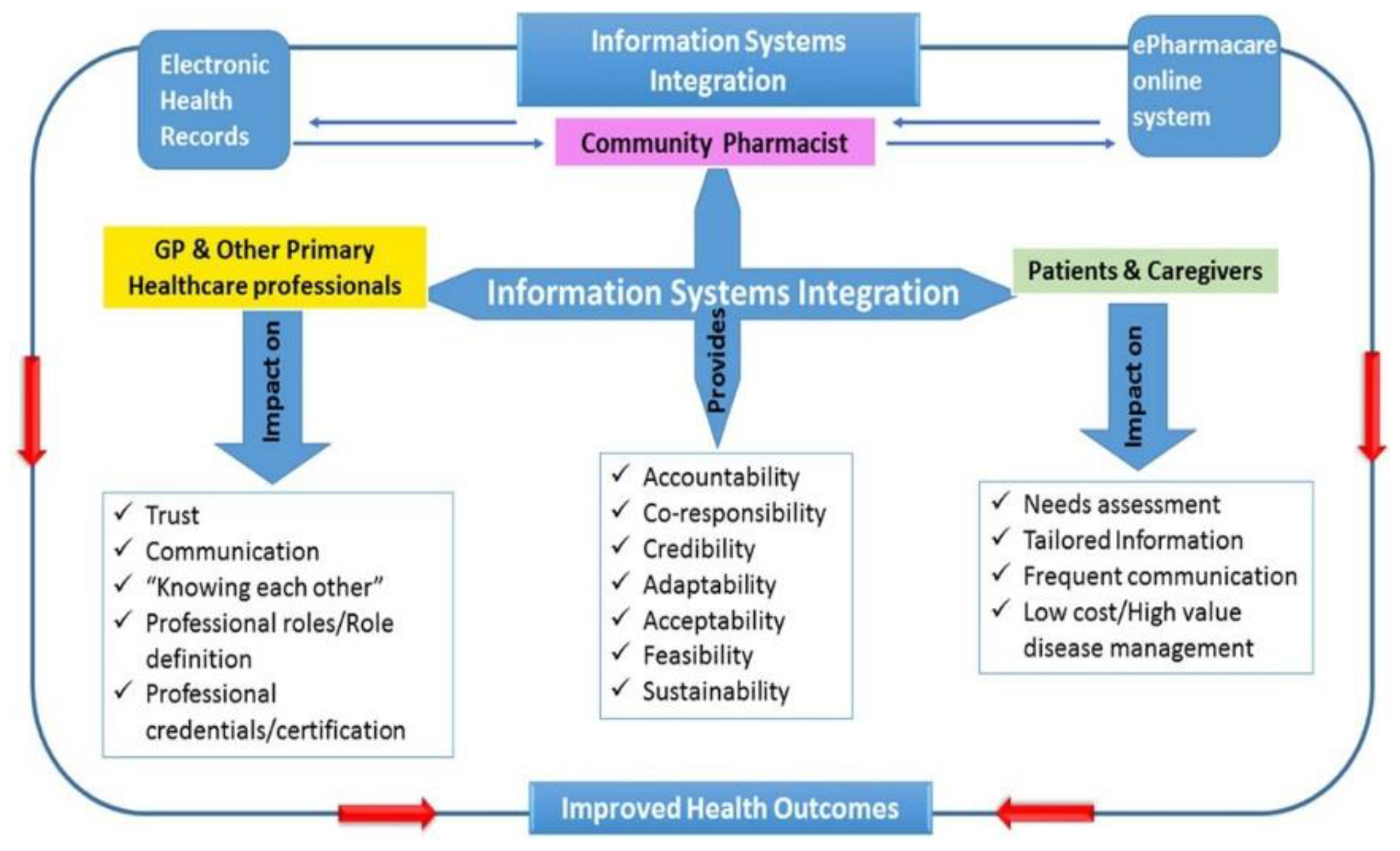
The Electronic Health Records which contains the details of patient’s health records serve as a centralized database for accessing the latest records required for our sys- tem. Institutions like hospitals and primary health care centers and general prac- titioners will have access to EHR based on patient’s unique identification numbers like Health card number (accounted for 30 percent of the Ireland residents, referred to as category 1 candidates by HSE) or PPS number provided during the patient reg- istration. This will help the registered doctors/panels/institutions in analyzing the medical history of the patient supporting the diagnosis procedure and devising the best possible treatment methods. By integrating to EHR, the portal will have access to prescription made by medical professionals. There will be a metric analysis to which the supply of drugs meets demand.
The community pharmacist having a centralized information and data manage- ment system will be the only entity having direct access to the EHR (other than the
Figure 4.
2: Doctor Activity Diagram.
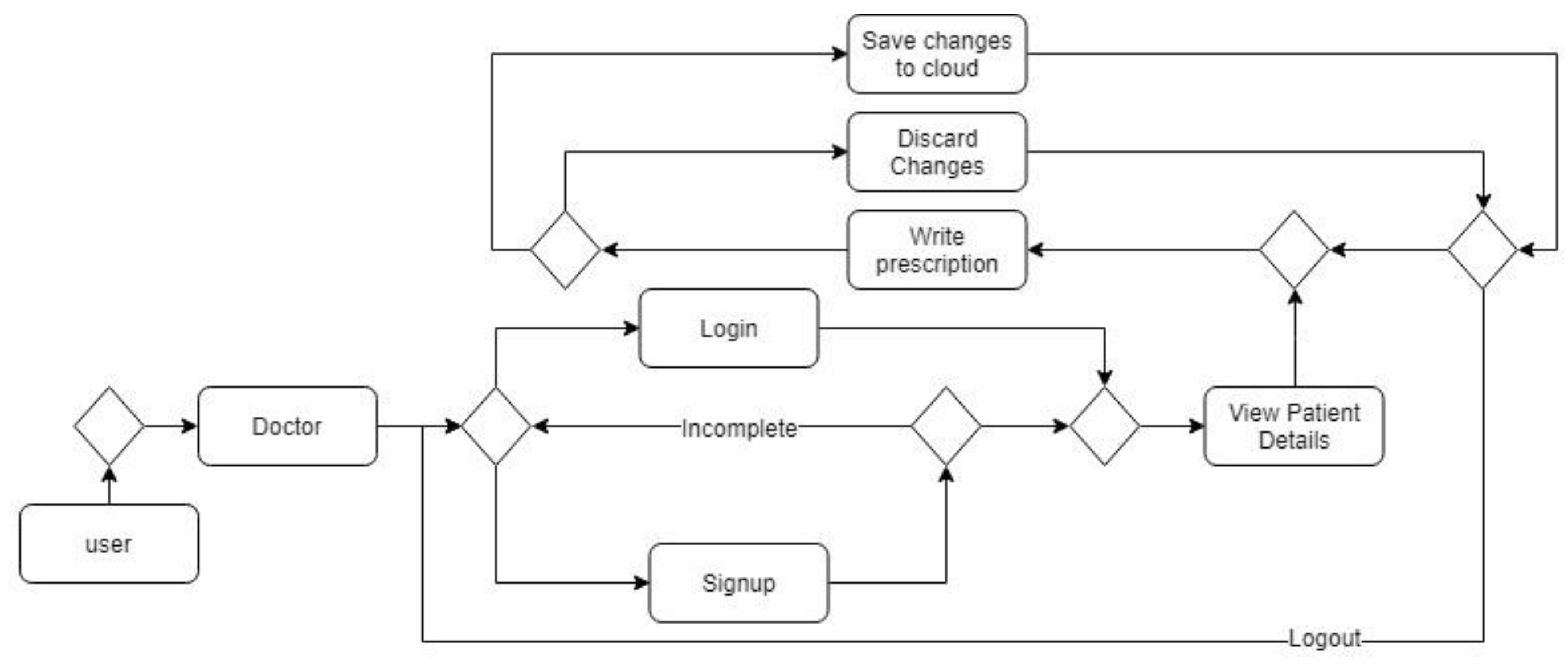
entities with the role of diagnosing and devising treatment) for accessing the up- dated pharmaceutical prescriptions issued by the authorized personnel or institu- tions. The direct data retrieval from EHR is limited to the community pharmacist’s centralized system, to ensure the security and privacy of the national EHR. The com- munity pharmacy being controlled by the government bodies will also have direct control in future alterations in permission and better information control.
Figure 4.
3: Action diagram.

Third-party pharmaceutical and healthcare bodies such as private enterprises, NGO controlled pharmacies, and registered caregivers may retrieve the prescrip- tion data based on patient details from EHR through the community pharmacists’ centralized system for dispensing the prescription medications. All the records on issuing medications based on the latest prescription will be maintained in the cen- tralized community pharmacists system. This ensures the preservation of national EHR in its original and current form, as all the data relating the dispensing of lat- est prescription medications are maintained in the community pharmacists system and being an online system, it is always updated. Each sale of prescription medi- cation is tagged with status and is immediately updated to the central system. This will ensure that the medication is not issued multiple times and always ensure the requirement of updated prescription, which in turn positively supports the health index and quality of healthcare in the country.
4.1.1. System Workflows
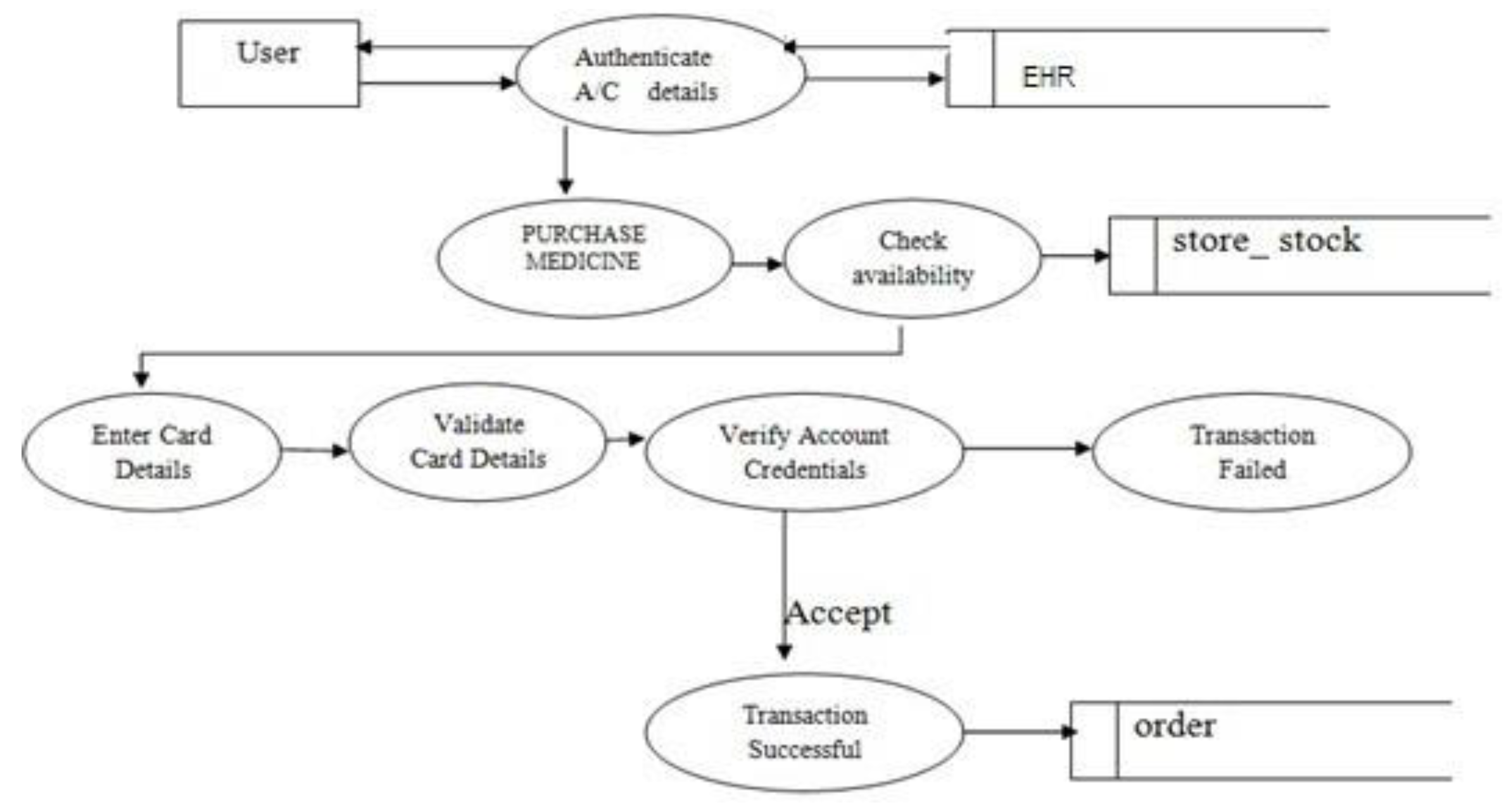
Considering the time constraints and the complication of a complete EHR section, the researcher implementing only a simple working model of the overall system with the basic features. There are three major workflows, those are explained in detail below.
Figure 4.
4: System overall workflow diagram.
4.2. Physical design
4.2.1. Product dashboard creation
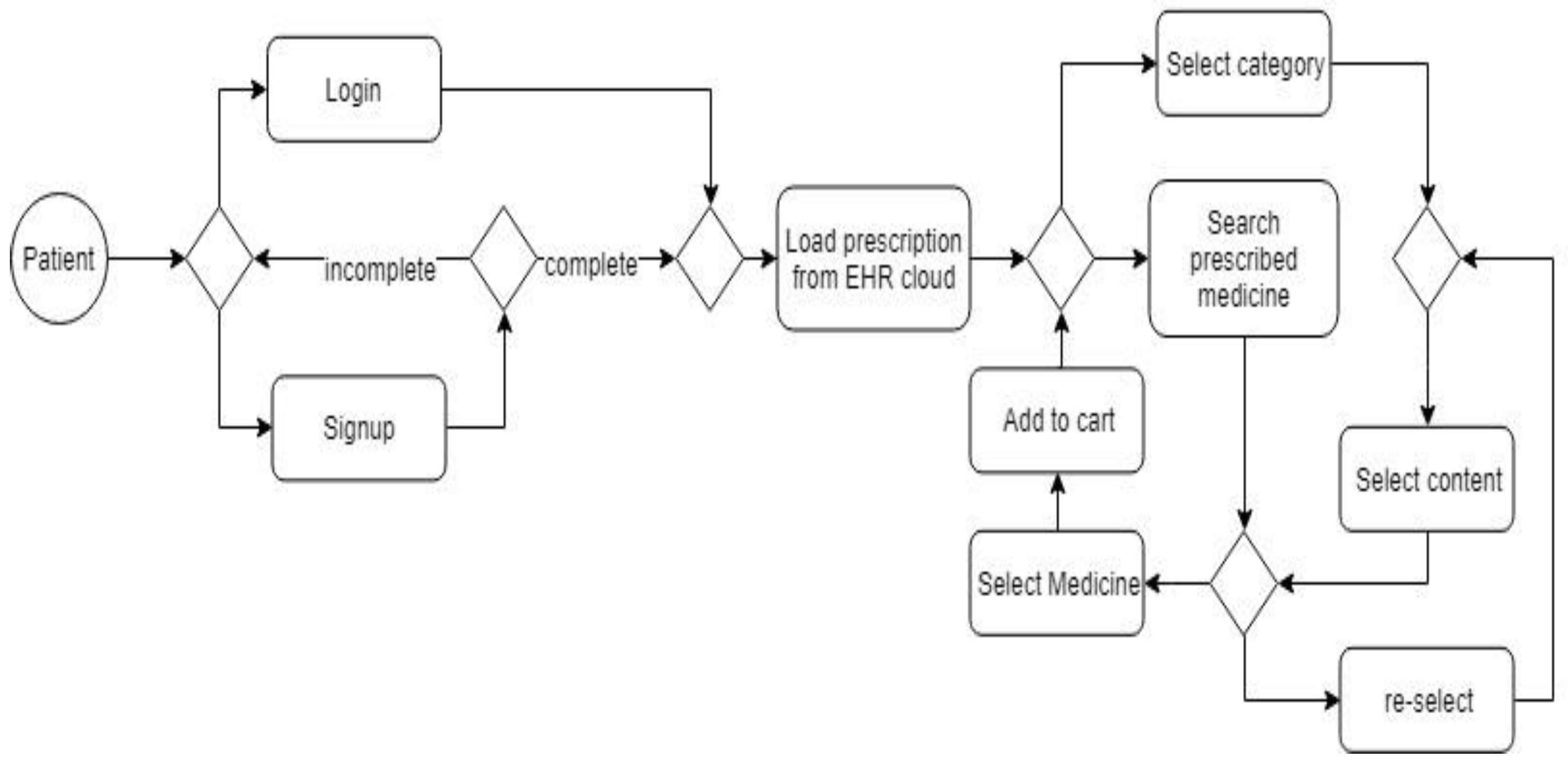
As the figure 4.5 says a user can select products based on his or her prescription uploaded on the EHR cloud. This system provides a facility to search and browse a specific product. If it is found the user can view that specific item and make deci- sions based on his or her needs. There is also a window for showing alternatives to medicine. For achieving this option the system provides a link named ’Substitute’. Once the button is pressed the link navigate to another window showing similar medicine with same generic names. Either the decision can be selected or none se- lected. Once the selection process completes the user can add that product to cart. This system may function with two different way of filtering one is based on the cat- egory of the medicine and the other is based on the content of the medicine. Thus it makes comparison and evaluation of the products easier and more efficient. It also provides a sorted display based on the price.
Figure 4.
5: Landing page-Activity diagram.
4.2.2. Checkout creation
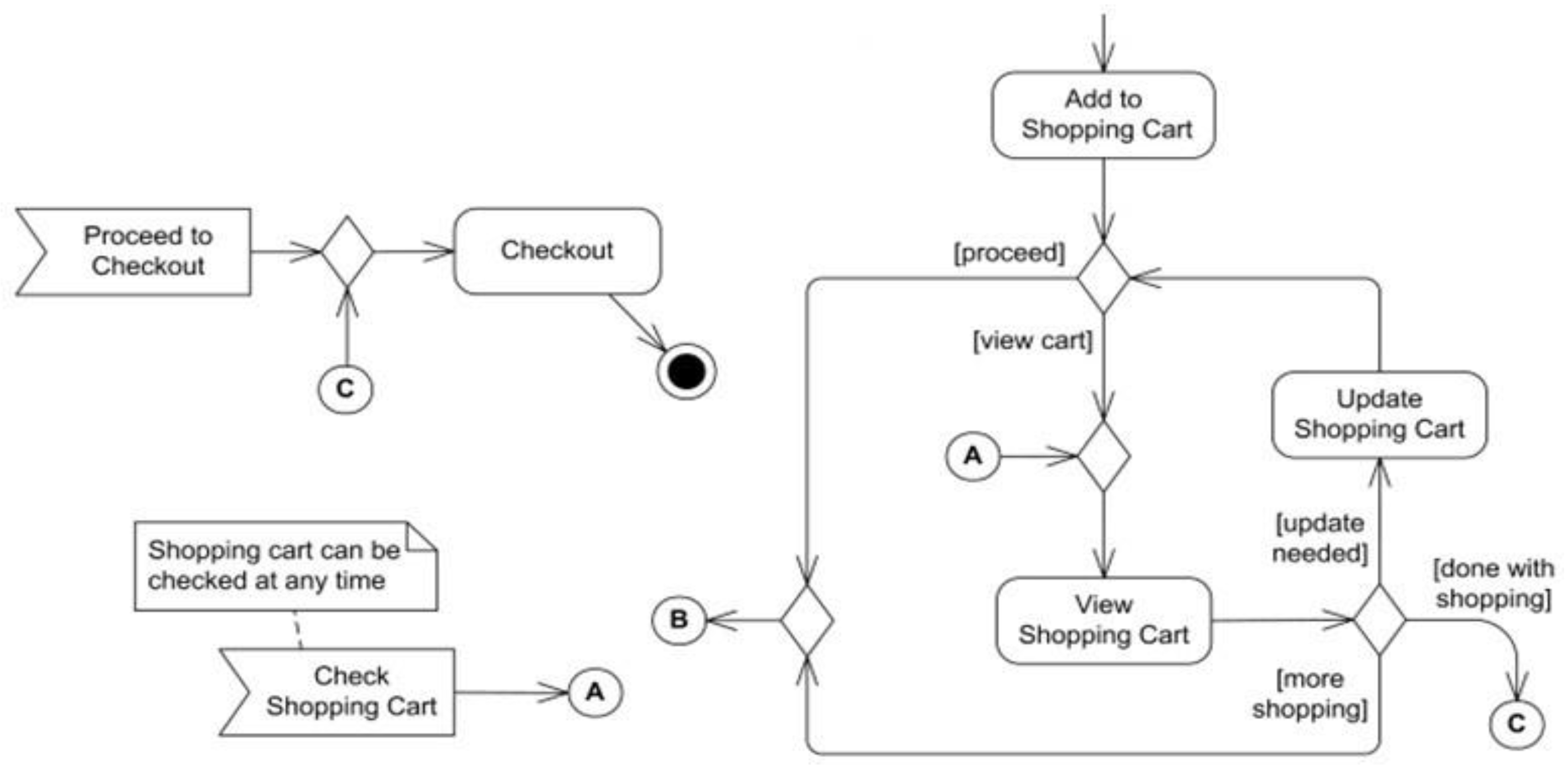
The system also provides an option for view and update shopping cart, checkout. User can view the shopping cart at any time. For more safety options Checkout is assumed to include user registration and login. For example for searching a partic- ular product customer need not log in to the system. Once he or she succeeded in finding products, it can be added to the wish-list that means into the cart. The user is also provided with a view of their added products. It also provides a facility to add more quantity or remove existing items from the shopping cart. Once the changes are completed the user can move forward to the payment section. For additional safety authentication techniques are provided. If the customer is not authorized, the shopping cart window will navigate to the login page for authentication. In the case of a new customer, there is an additional option for registration.
Figure 4.
6: Activity diagram- Checkout.
4.2.3. Payment-page creation
Figure 4.
7: Activity diagram for payment.
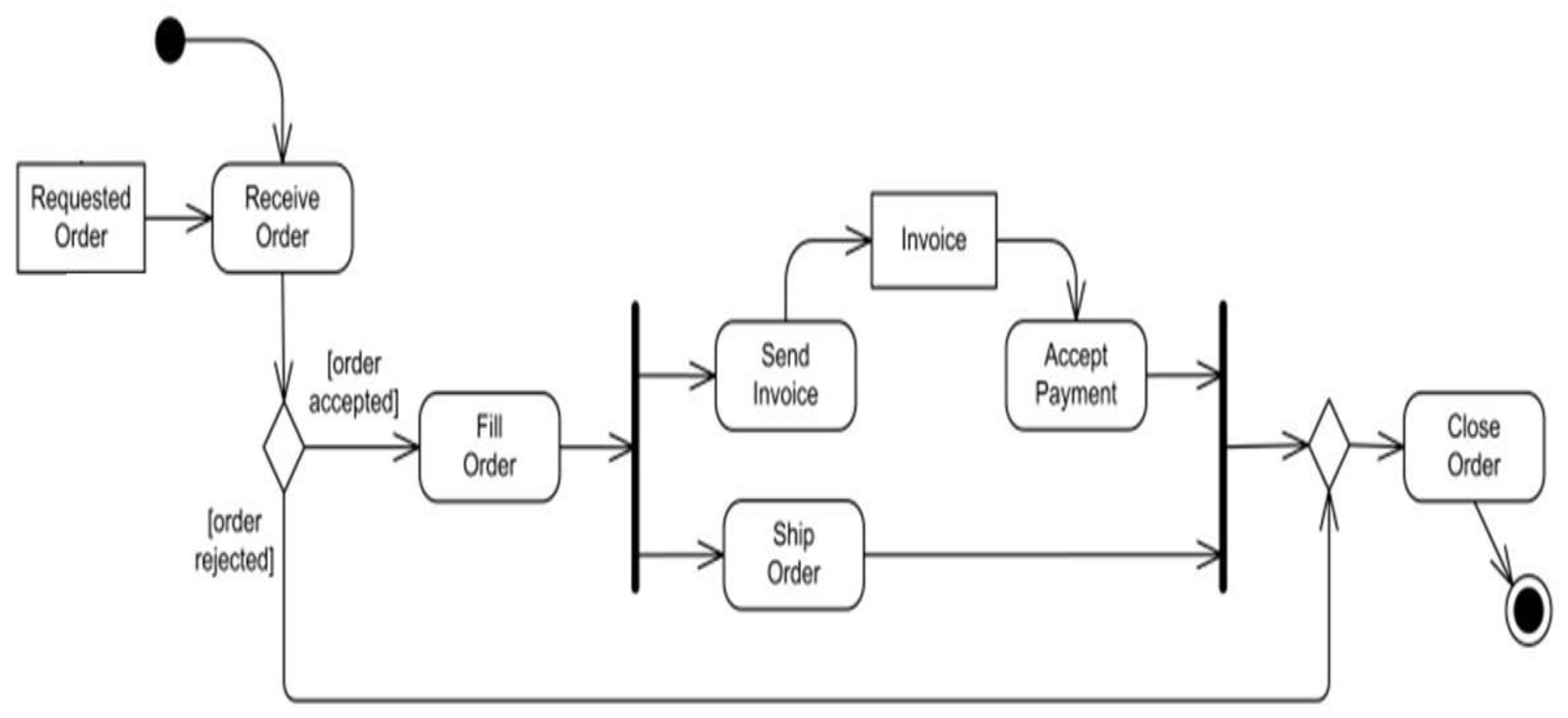
Once the user moves forward to purchase the product the system will show a payment page for doing the transaction. Requested Order is the input parameter of the Process Order activity. After the order is accepted and all required information is filled in, the user is provided with a choice to sect his payment method. It could be either cash on delivery or online payment. If the user selects online payment, the payment gateway window will be opened to the customer. once the payment is accepted system send a confirmation mail to the customer. It will include the order details and delivery time, which means this business flow allows order shipment before the invoice is sent or payment is confirmed. Also, a mail sends to the retailer as well. Order will be shipped by the licensed vendor or a retailer.
Figure 4.
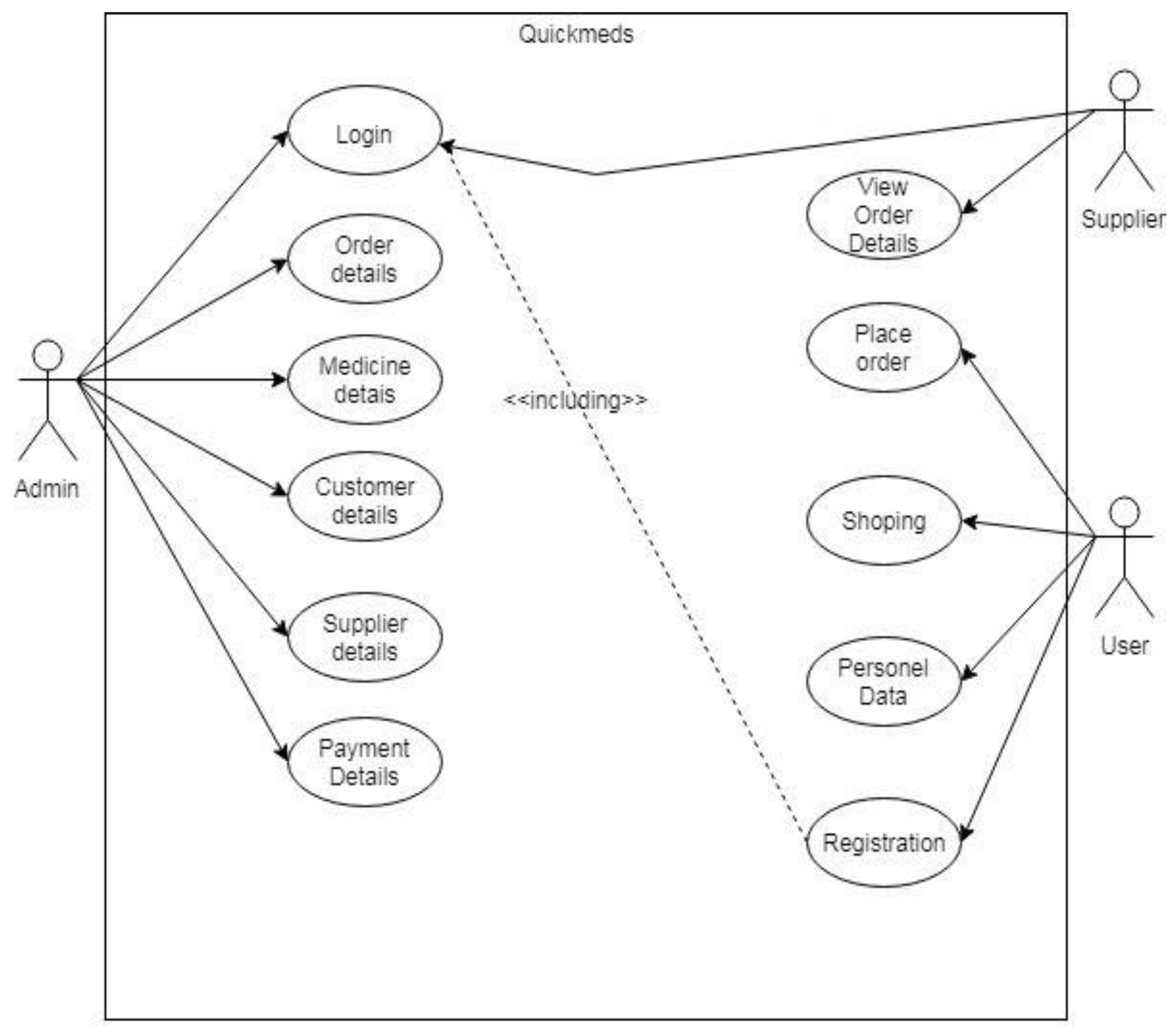
8: Use-case diagram.
4.2.4. Modules
During assessment and blend movement, the expert makes a model of the frame- work to improve comprehension of information and control stream, practical prepar- ing, operational conduct, and data substance Figure : ??. The model fills in as an es- tablishment for the product structure and reason for the making of determinations for programming.
The operational activities of our system can be mainly divided into 3 main mod- ules. They are :
- Admin module
- User module
- Supplier module
Admin: Admin is responsible for managing and monitoring the entire system. Admin is provided with the following functionality.
- Add Supplier details: Admin can add different supplier details across the county by using the basic details like store name, address, email id, and phone no. Once added, the login credentials will be sent to the supplier’s email id.
- Add products: Admin is provided with the functionality to add the various products. can add medicine with details like medicine name, category, generic name and re-order level.
- Add Category: Admin can provide a list of common medications.
- Manage Stock: Admin can manage the information of medicine stock by in- cluding information like quantity, and rate of medicine.
- Fast Moving Items: Admin can view the list of medicines which are quickly sold out.
- Health Tips: Can add health information and medical updates on healthy liv- ing ideas.
Figure 4.
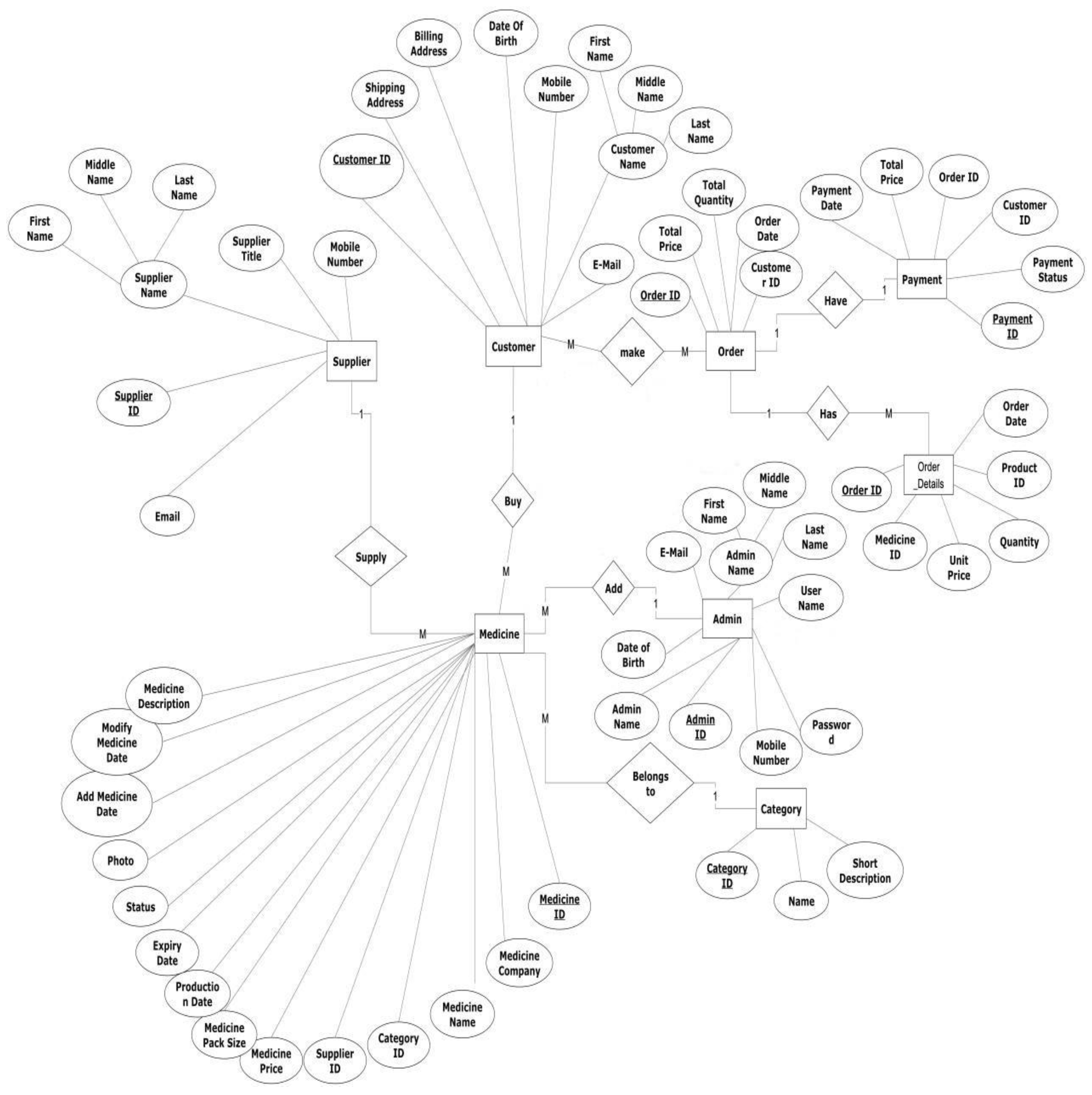
9: Entity relationship diagram.
Supplier: This module controls every one of the exercises identified with the therapeutic store and it incorporates.
- View Stock: Can check the stoke status.
- View Request: Can view client’s request for medicine...
- Make Conveyance: Once the request is placed the customer will be contacted through a mail.
- Update Profile: Can alter the profile as per the requirement.
- Quick Moving Items: Can see and arrange the order of fast-moving goods.
User :
- Search medicine: Users have the option to view medical products as per the proscription updated on the EHR cloud.
- Update Profile: An additional option to change registration details.
- Search Supplier: Users are also provided with a facility to view supplier details and contact details.
- Health Tips: Have the option to see helpful tips and collect information about certain drugs example OTC drugs.
- Purchase Medicine: User can purchase medicine using a credit card or debit card.
4.3. Architecture Design
Architectural design is a creative process so the process differs depending on the type of system being developed. However, several common decisions span all de- sign processes and these decisions affect the non-functional characteristics of the system. In this system researcher designed the same domain often have similar ar- chitectures that reflect domain concepts. Application product lines are built around a core architecture with variants that satisfy particular customer requirements. The architecture of a system may be designed around one or more architectural patterns or ‘styles’. These capture the essence of architecture and can be instantiated in dif- ferent ways. The researcher mainly pay attention to improve the features such as better performance, security, safety, availability, and maintainability
- performance:- By localizing critical operations and minimizing communica- tions performance can be increased up to a certain extent. In this context researcher mainly focused on using large components rather than fine-grain components.
- Security:- Used multilayered architecture with critical assets in the inner layers.
- Safety:- Localise safety-critical features in a small number of sub-systems.
- Availability:- Include redundant components and mechanisms for fault toler- ance.
- Maintainability:-For easy maintenance the researcher used fine-grain and re- placeable components.
4.4. Detailed Design
4.4.1. Software Development Methodology
Figure 4.
10: Schematic representation of Incremental development (Ian, 2016).
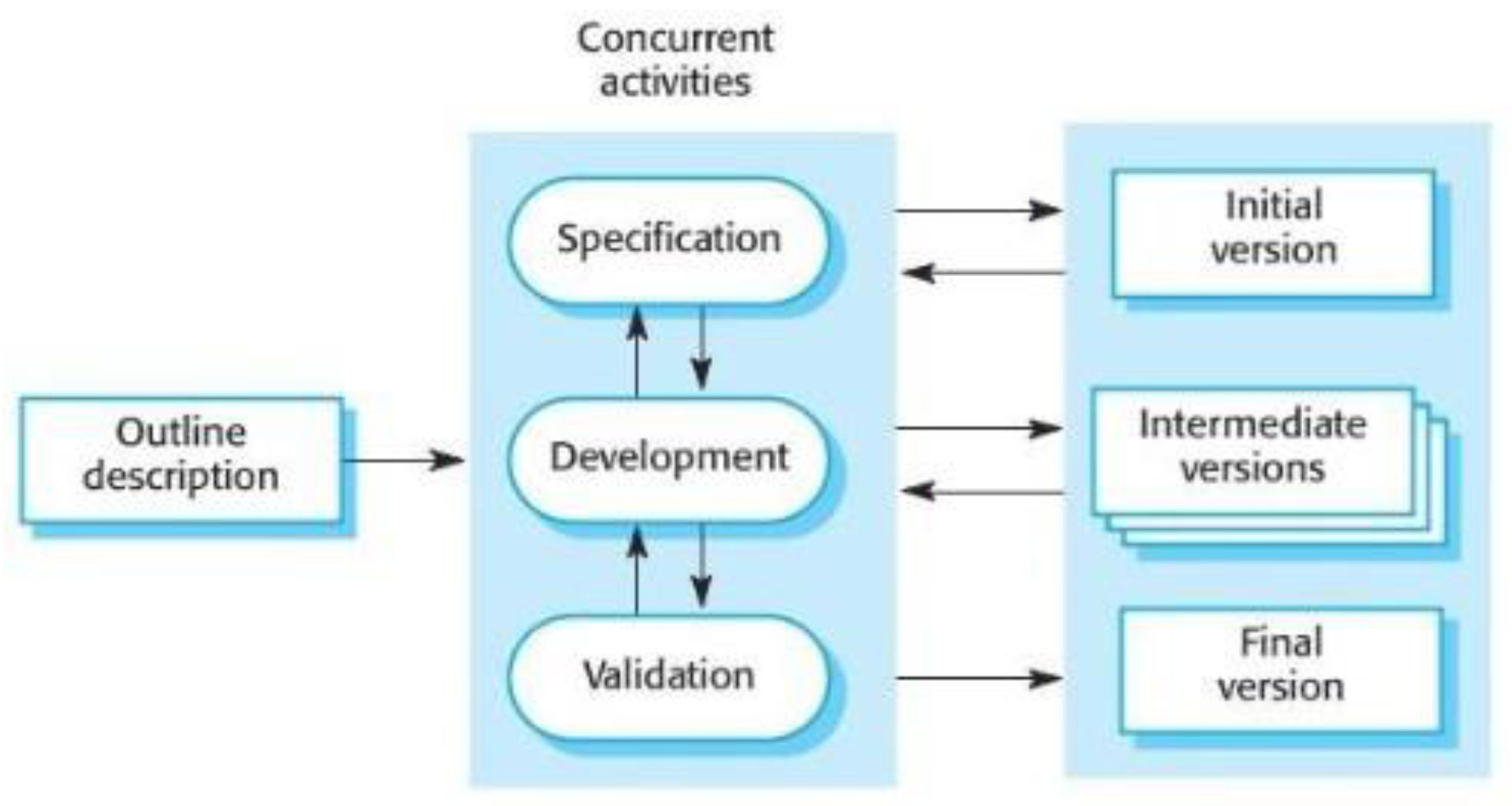
Figure 4.
11: Schematic representation of product prototyping (Ian, 2016).
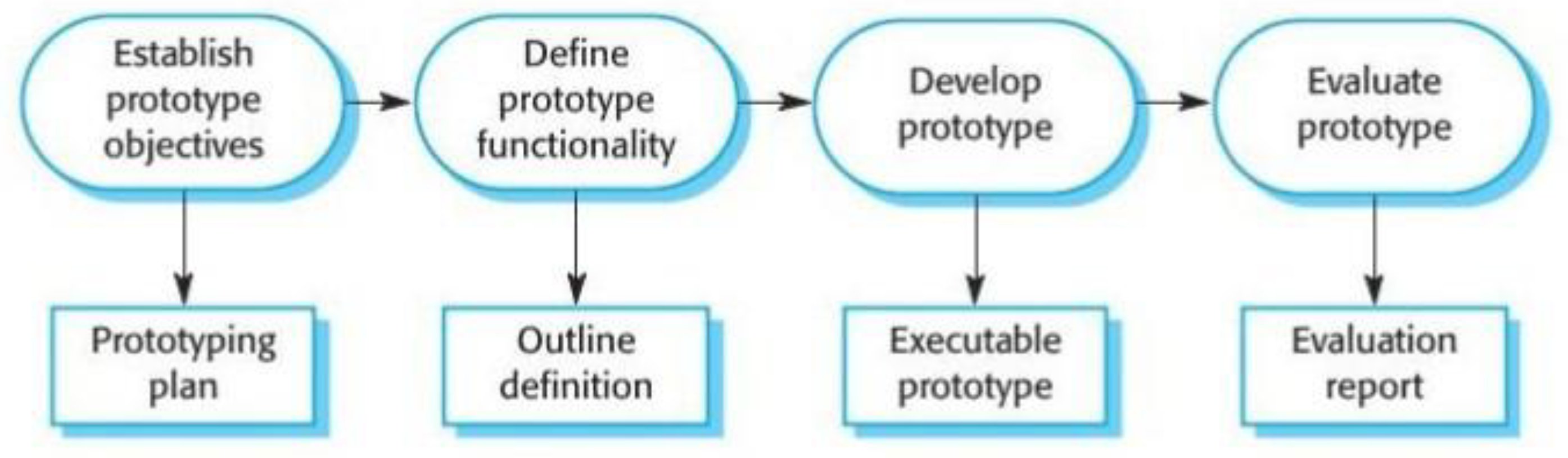
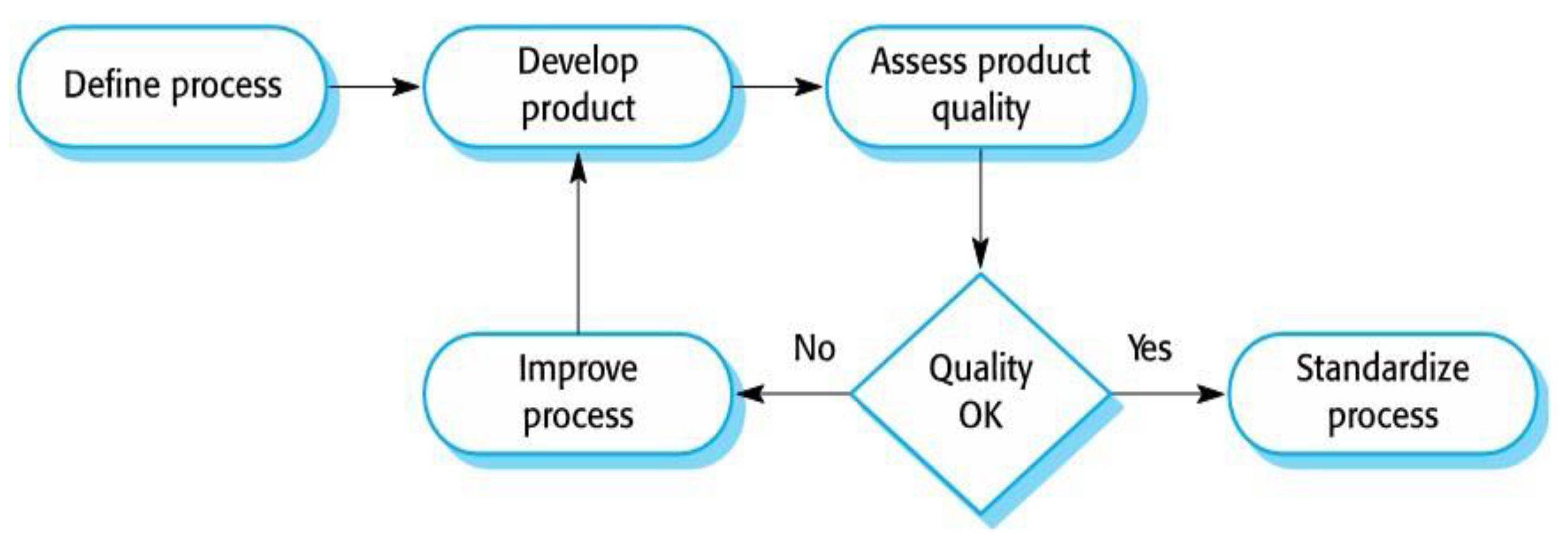
In this research, the researcher used the Agile software development methodol- ogy. Mainly focused on approach incremental development Figure: 4.10. According to the requirements, the researcher started feasibility studies. Based on the results the product design had been stared. The overall design completely based on the requirements and needs which are arisen in the developing stage. The researcher completed initial stage based on the set of business rules mentioned in the database design section. Later intermediate and final products were developed according to the errors and imperfections found in the initial product. For improving quality the researcher focused on ‘fitness for purpose’ rather than specification conformance. A quality plan sets out the desired product qualities and how these are assessed and defines the most significant quality attributes.Figure: 4.12 shows how quality maintains. The quality plan should define quality assessment process(Ian, 2016). It should set out which organizational standards should be applied and, where nec- essary, define new standards to be used. System component can be analyzed sepa- rately. The researcher used a software quality assurance test for ensuring that soft- ware has a low number of defects and that it reaches the required standards of main- tainability, reliability, portability, etc. Software standards are important for quality
assurance as they represent an identification of ‘best practice’.(Ian, 2016) When de- veloping software, standards provide a solid foundation for building good quality software. Software measurement can be used to gather quantitative data about soft- ware and the software process.
Figure 4.
12: Quality management process- Detailed description (Ian, 2016).
4.4.2. Minimum Viable Product
Figure 4.
13: Software development process (Ian, 2016).
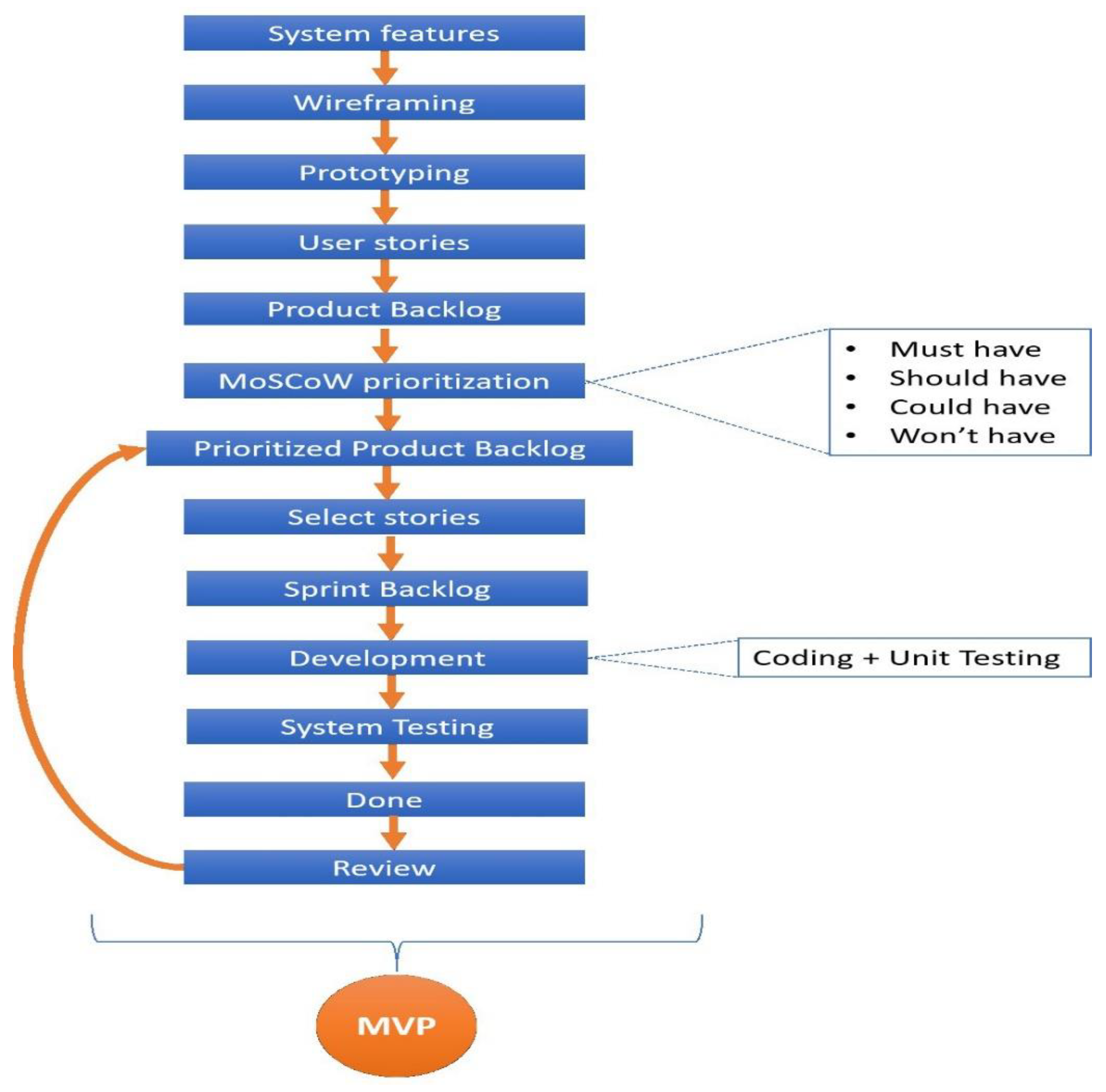
As per the work-flows and concepts, the proposed design on online marketplace for pharmaceutical products and also consider the time constraints for the research,
the researcher focusing only specific features of the web application and a few sets of business rule. Defined an MVP as that version of a new product which allows a team to collect the maximum amount of validated learning about customers with the least effort (Ries, 2018). The selected features will best depict the design without losing major business rules. These features can be altered when the system up-gradation process. As per the business aspects, there may be more changes accommodated to this system for improving security and user interactions. The figure 4.13 explains the process in detail.
4.4.3. Software Requirement Specification
The Software requirement specification contains the entire description and re- quirements of the projects in a detailed manner so that it gives clarity during the entire development phase. This application shall have three pages. The software needs to be web-based and should have a responsive layout enriching user experi- ence even on mobile devices. The users must have an option to register and login to the web page. This step ensures user integrity. The data sharing between EHR cloud and Application must be authenticated.
4.4.4. U M L Diagram
Figure 4.
14: UML class diagram- Representation.
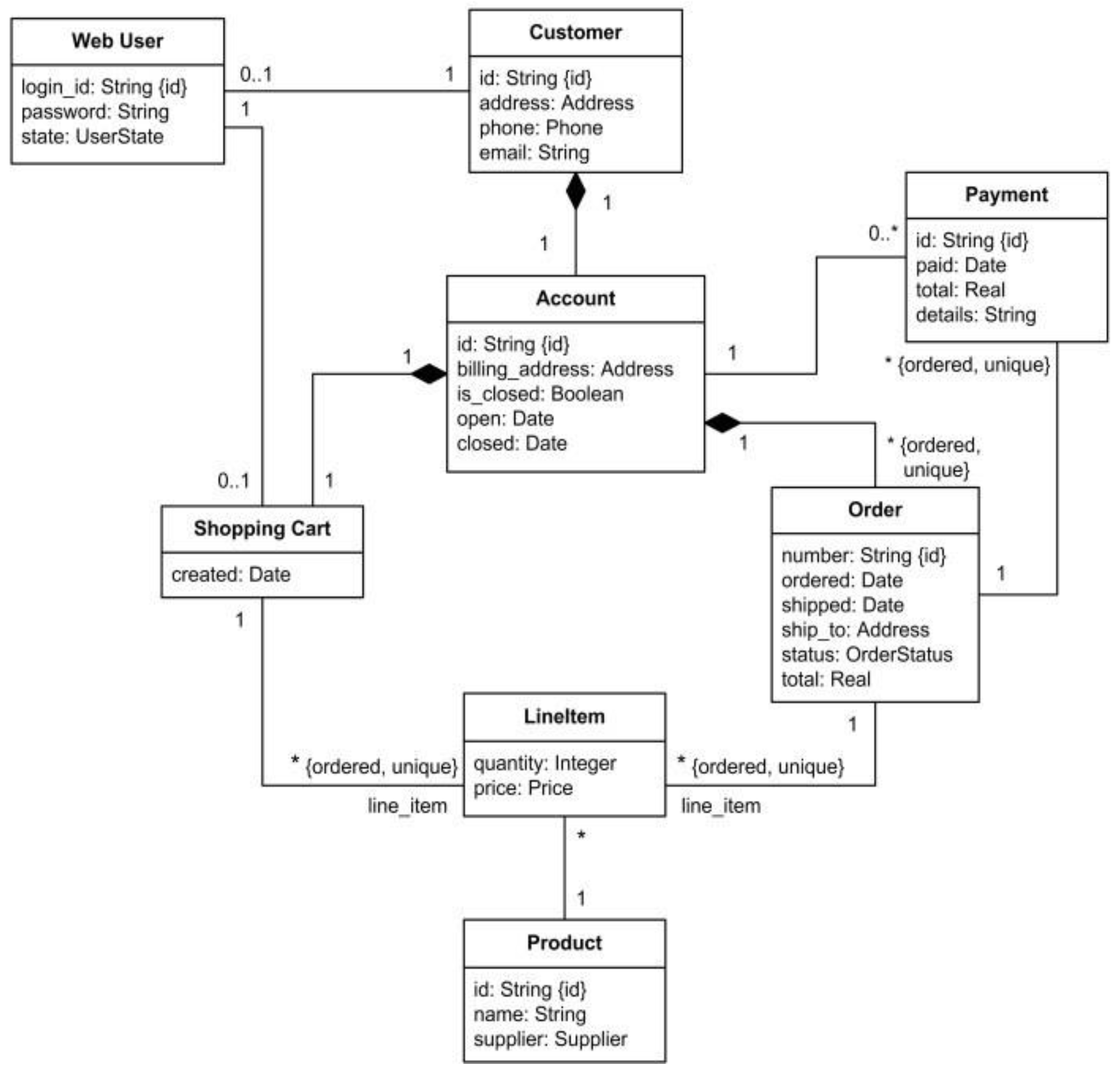
Unified Modelling Language:- it is a set of graphical notations that help us to build abstract models, some of which will be translated into code. These models represent either a conceptual perspective—i.e., the current business process, or a software perspective. The various diagram types can be used in many of the phases of the software development life cycle from analysis through to development and deployment. The UML diagram used to help communicate some aspect of a system and to better understand it. The UML describes a detailed design for a programmer to follow in writing source code 4.14. It can also be used to develop blueprint-level models that show interfaces of subsystems or classes. Diagrams are compiled di- rectly into the executable code so that the UML becomes the source code.
4.5. Development technologies and tools
4.5.1. Technologies
ASP.NET MVC, Web API, SQL Server, HTML5, CSS3, Bootstrap, JavaScript, jQuery.
4.5.2. Development Environment(s)
Visual Studio 2017, Microsoft SQL Server Management Studio 2017
4.5.3. Configuration Management tool
GitHub.
4.6. Database design
In database design, the researcher followed the database first approach. All re- quired tables and stored procedures were designed initially. In this section, the re- searcher followed the waterfall model of software engineering. There are three inner relations. All tables are in fourth normal form. The diagram was drawn concerning inner relationships. These describe features about the association between the en- tities in the relationship. Database diagram and database tales are shown in the figures 4.16 and 4.15 respectively.
4.6.1. Business rules
As per the detailed analysis, the researcher decided to develop the MVP by using a set of business rules. The selected business rules are listed below.
- Medical prescription will be downloaded from EHR cloud-based on customer authentication.
- Allow customers to become a part of the buying process while assisting cus- tomers through the experience with reviews and ratings.
- Customers must be able to do site navigation with easiness. So customers can search for products by category and content.
- Customers must understand what kind of products they are going to buy, there must be an information window providing with details of all drugs.
- All operations and transaction should be protected by an authentication pro- cedure. The user should register with the organization before doing any trans- actions.
Figure 4.
15: Database tables.
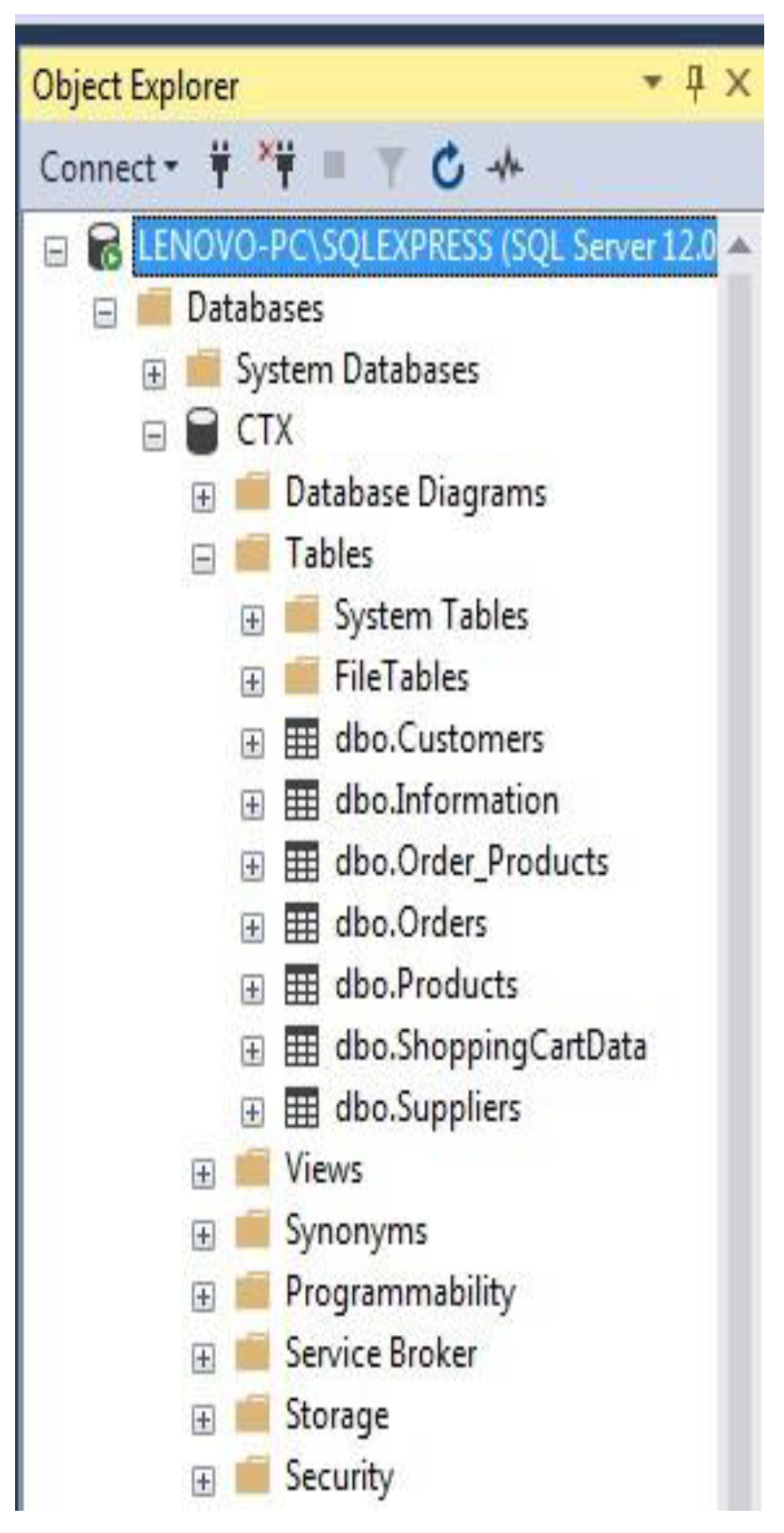
Figure 4.
16: Database diagram.
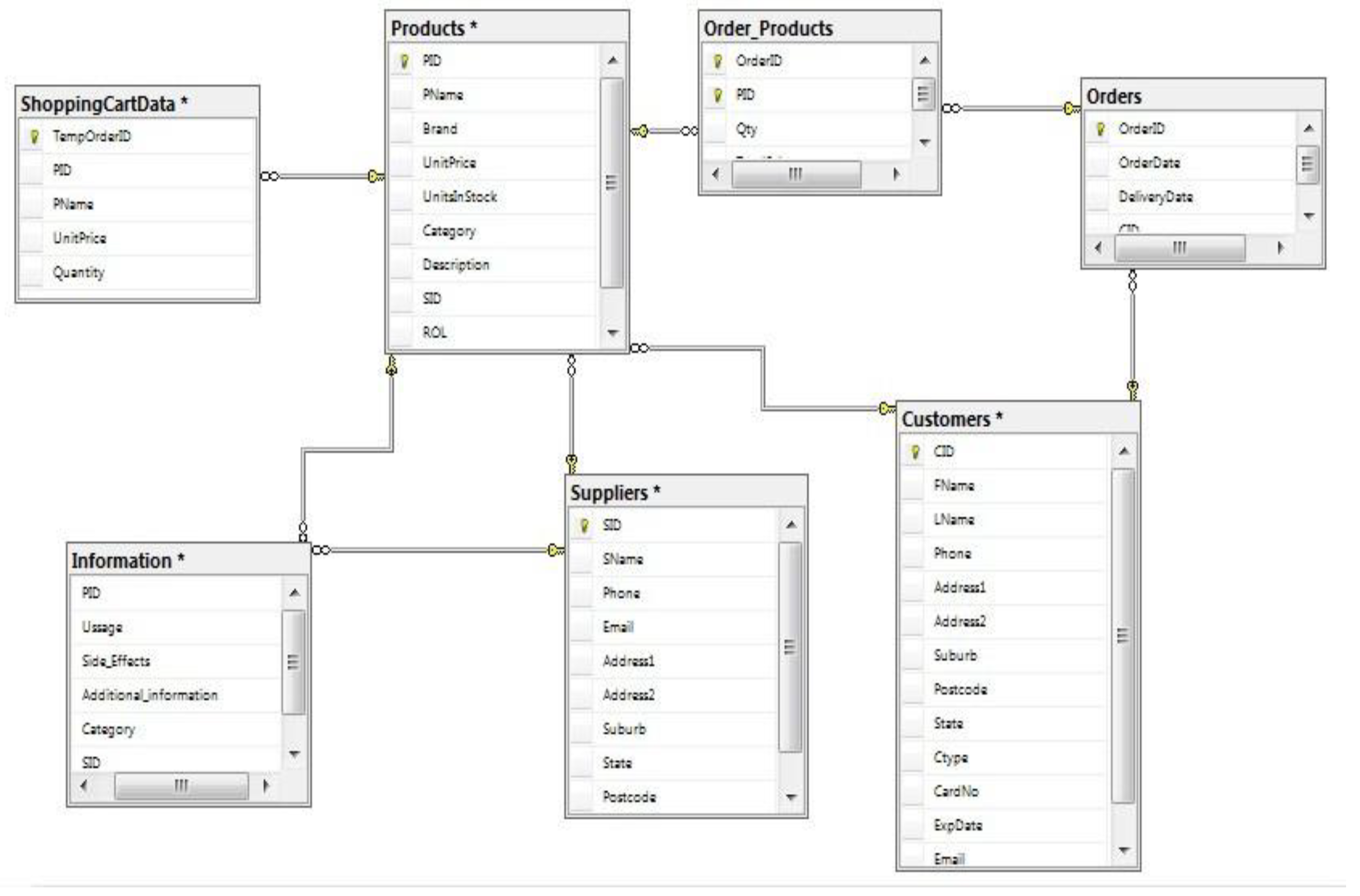
4.7. Summary
In this session the researcher discussed artifact design in detail. The EHR and online pharmacy basic features are included in the context. The design further classified into separate sections and explained the basic design features in detail.
Chapter 5
5. Artefact Development
5.1. Web Application Development
All designs are based on the concept of Agile incremental development. The de- sign approach clearly defines all the architectural modules of the product along with its communication and data flow representation with the external and third-party modules.
5.1.1. Models
In this research, the researcher used MVC design for developing software. The Models used for this research are AccountViewModels, customer models, Identity- Models, Product model and Supplier Model.
5.1.2. Controllers
Admin controller
In this section, the researcher included add products method (for adding new medicines), remove products method (for removing an existing medicine), View de- tail list method (for display all products), update stoke method (for update unit stoke of medicine.)
Checkout controller
This controller has the following methods. Quantity change method (for update the number of products based on add or remove operations), add method(increase the number of selected products within the cart), remove method(decrease the num- ber of selected products within the cart) and purchase method (for performing pur- chase operation).
Account Controller
In this section, the controller mainly deals with the authentication function. Asso- ciated methods are login method and register new user method.
Home controller
This controller is the heart and soul of this design. This controller holds all meth- ods which are useful to operate landing page and all other views. Main methods as- sociated with this controllers are categorized method(for categorizing product based on the medicine), content method (for categorizing product based on the content) and Add to cart method (for adding a product to customers wish-list). View meth- ods suppliers(for display the detailed view of supplier), contact(for display contact option).
5.1.3. Views
The landing page
The landing page or the application main screen contains all verities of medicines, which will be shown as a list in flex-wrap style. A categorization option should be provided to select the category of medicine and also a search button for customized searching. All pages should be accessed from landing page, That means the naviga- tion bar should contain links for concerning the pages see figure D.1.
Shopping cart page
When navigated to this page, it must load the data from shopping cart table in the database. There must be an option for add or remove products as per the user needs see figure D.6.
Payment page
When navigated to this page it must show an entry for entering customer details and credit card details. All transactions must be secured. So the customer must finish the authentication process before doing transactions.
Information window
This page should display the details of products such as the product belongs to which category of generic, the use of the product, main side effects an so on.
Contact admin page
This page should contain a support link either mail option or any other options to forward customer feedback.
Admin page
This page should be well developed. All medicine could be displayed on this page. There must be an option for editing, removing and adding product details see figure D.8.
Authentication page
For a new user, there must be an option to register a new account. For existing user must have a facility to login to his or her account. The user login credentials must be stored and protected.
Figure 5.
1: OWIN Schematic representation.
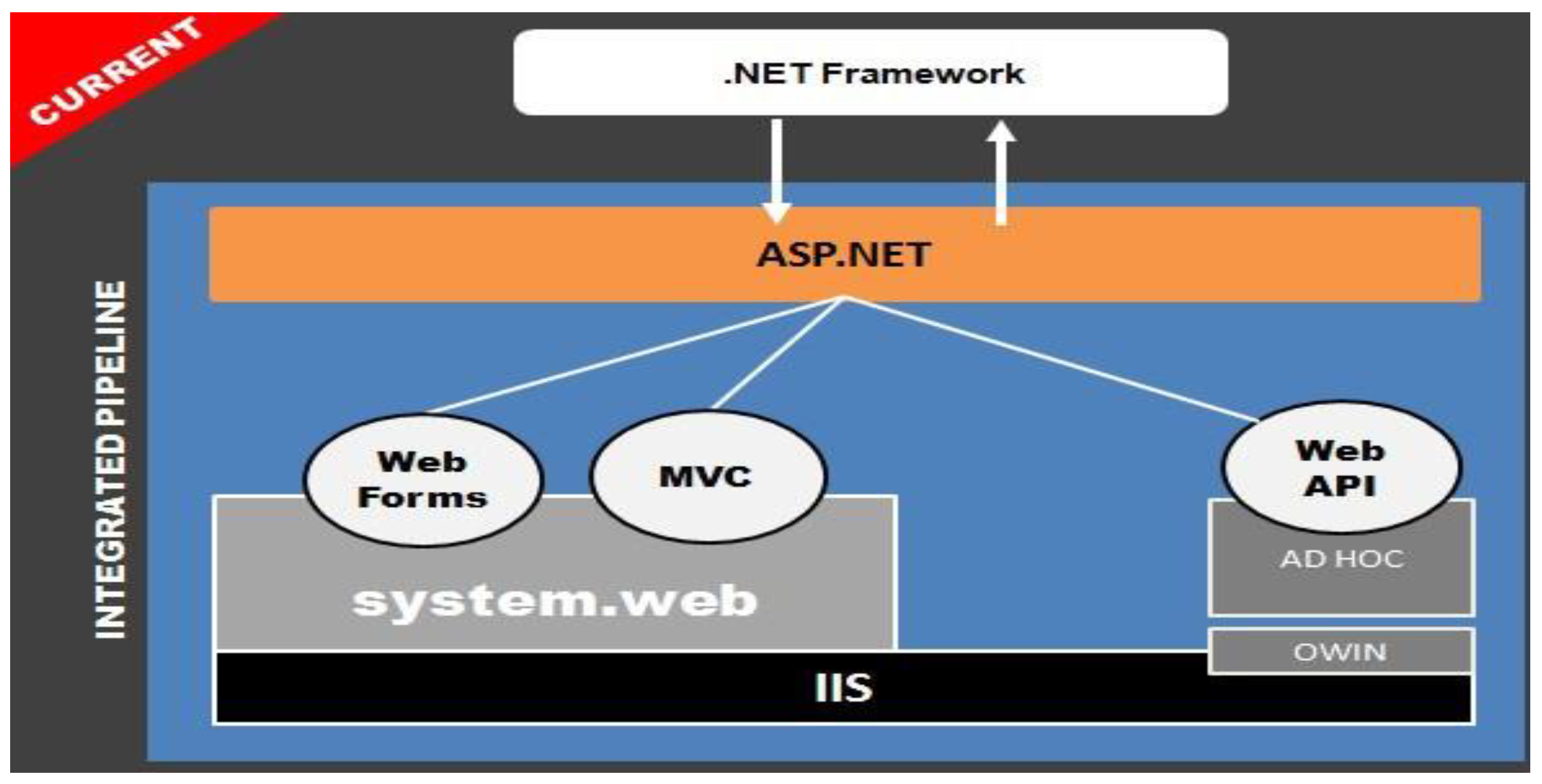
5.2. Mobile Application
For the fulfillment of the system, it is necessary to design a mobile application for easiness of access. A highly integrated android application will help to access the EHR based online application for medicine. But considering the time constraints, the researcher decided that a prototype can be developed for demonstrating the function. For employing this the researcher used Marvel, a rapid prototyping tool design user interface mockups and page navigations to create a real desktop experi- ence within minutes. This digital prototyping process helps to understand the end to end user experience. Appendix A shows the prototype images in detail.
5.3. Authorization and Authentication
For authentication purpose, the researcher used Microsoft OWIN technology, Figure:??, The Open Web Interface for .NET (OWIN) defines a standard interface between .NET web servers and web applications. The OAuth authorization framework helps a third-party application to obtain limited access to an HTTP service. The goal of OWIN technology is decoupled server and application encourage the simple mod- ules for dot.net development and by being an open standard, stimulate the open- source ecosystem of .net development tools. This is mainly a specification rather than an implementation ??. The system has role-based access. The user will be pre- sented with the screen elements and associated features based on their roles such as user, supplier, and admin. For example, A user can perform only shopping and mining information about medicines. But for an admin, able to perform all tasks.
5.4. Application dashboard
Figure 5.2 shows the dashboard of the proof-of-concept of the Online marketplace for medicine. The web application is responsive. As per the dashboard, the customer can buy the prescription medicines as per their prescriptions uploaded in the EHR. Please refer Appendix D for the screenshots of the proof-of-concept web application.
Figure 5.
2: Application dashboard.
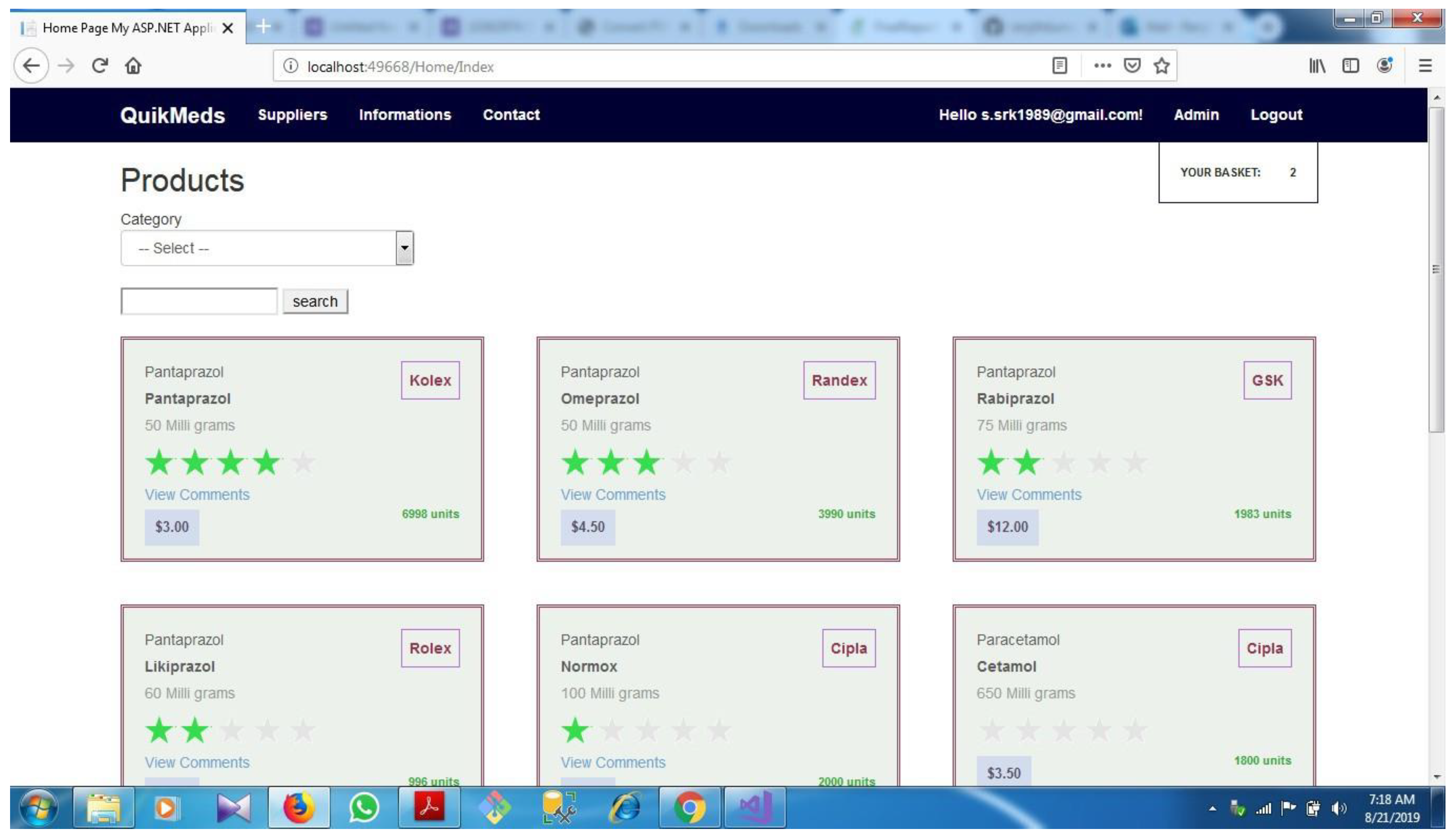
5.5. Summary
In this session, the researcher discussed artifact development in detail. The EHR and online pharmacy basic features are included in the context. The system mainly divided into 3 subdivisions. Authentication and selection of medicine is the first part. The second part is the checkout section and the third part is the purchase section. The authentication is employed with Microsoft Owin technology.
Chapter 6
6. Data Analysis and Findings
6.1. Introduction
Different objectives were targeted during the process of data collection through surveys, face to face interviews and case study analysis. The primary aim of the analysis of different objectives was not only to study the data independently but also to draw the correlation between these seemingly independent data sets quantifying wherever possible and having a descriptive analysis in case of non-quantifiable qual- itative factors. The online survey consisted of 58 respondents, selected randomly within the strata of the general public or potential users. This online survey aims at collecting quantifiable data on awareness of generic medication among the public, preference of medication and stigma among the common people on the quality of medication of identical drugs.
6.2. Findings
6.2.1. General size of the market
Of the 58 respondents of the online survey, which depicts the general user popu- lation (customer segment), it was observed that 13 members, equating to 22 percent of the customer segment, had a medical condition that required long term medical attention (as shown in figure 6.1).
Figure 6.
1: Survey candidates requiring continuous medication.
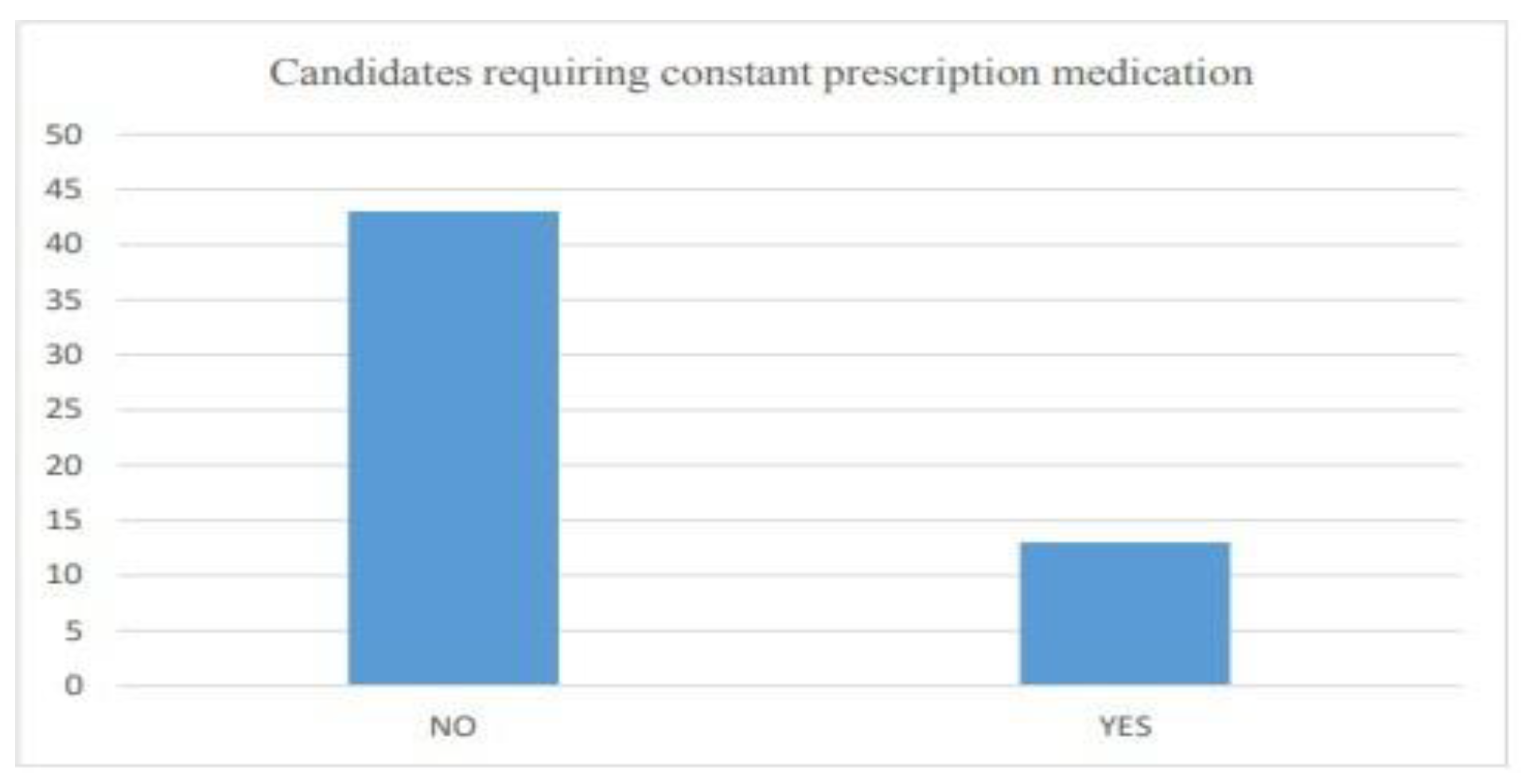
6.2.2. Awareness among the people
The awareness index among the customer segment is calculated based on the weighted average of the following parameters:
- Awareness on EHR and E-prescription
- Identification of drugs based on content and not brands
- Awareness of Generic alternatives and
- Trends in prescription by medical practitioners
35 percent weight age is allocated to awareness of medications based on chemical content and awareness on generic counterparts in the market, as these parameters are of paramount importance and are the major contributing factor for analyzing the customer awareness. The awareness of EHR and e-prescription also plays a vital part and is weighted with 20 percent importance and since the prescription trends affect the thought process and information flow to the customer the factor is also considered with 10 percent weight-age.
Figure 6.
2: Awareness on medication identification based on chem- ical composition.
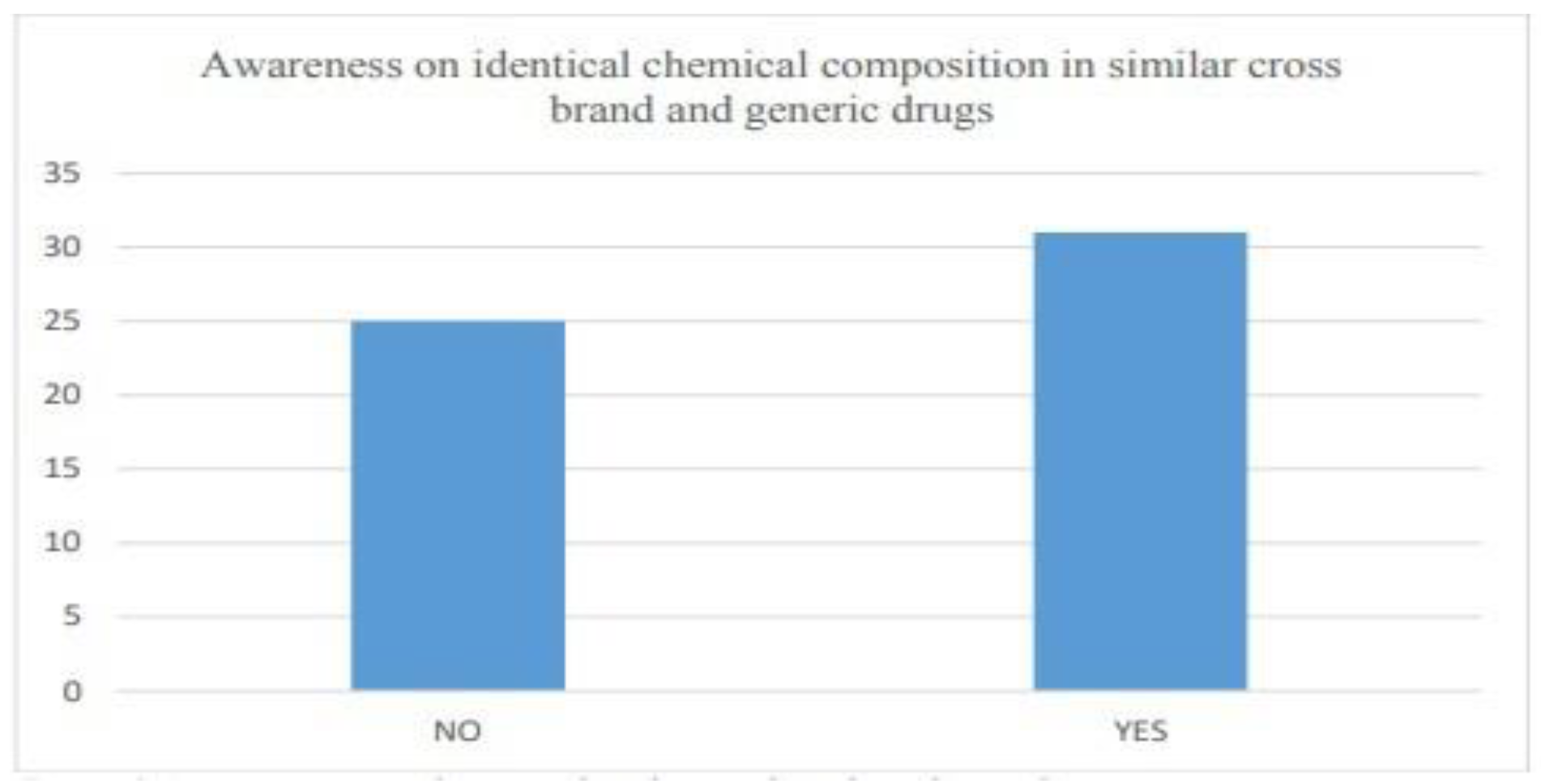
It can be seen from the figure 6.2 that 43 percent of the respondents are unaware that the chemical composition in medications with different brand names can have identical composition, and this can be the pin-pointing reason for the under pro- motion of the generic drugs in the Irish market, facilitating the high gain private enterprises to boom through unjustifiable pricing strategies.
Figure 6.
3: Awareness on the existence of generic medications and its price advantage.
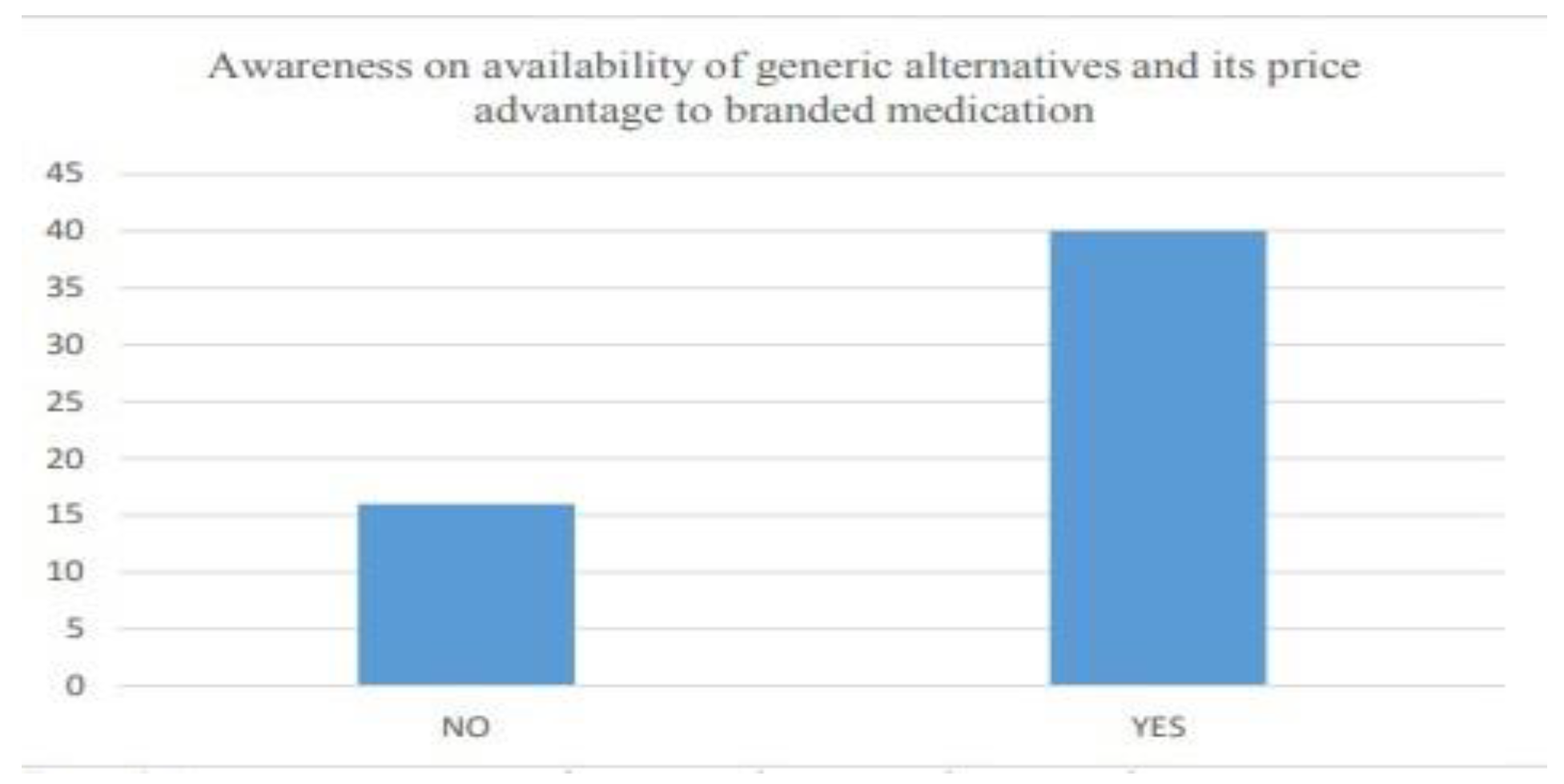
The awareness of the public on the existence of generic medicines in the market is represented in figure 6.3. It is very interesting to note that 69 percent of the re- spondents are aware of generic medications available in the market but analysing the same with the public awareness on identical chemical composition in similar medication states that the generic medication is not being promoted in the market through proper channel, as the promotion of generic medication requires creating and spreading awareness among the general public since generic medications are always named after its chemical composition and figure 6.2 clearly represents the statistics supporting the researcher’s claim.
Figure 6.
4: Generic medicine prescription trends.
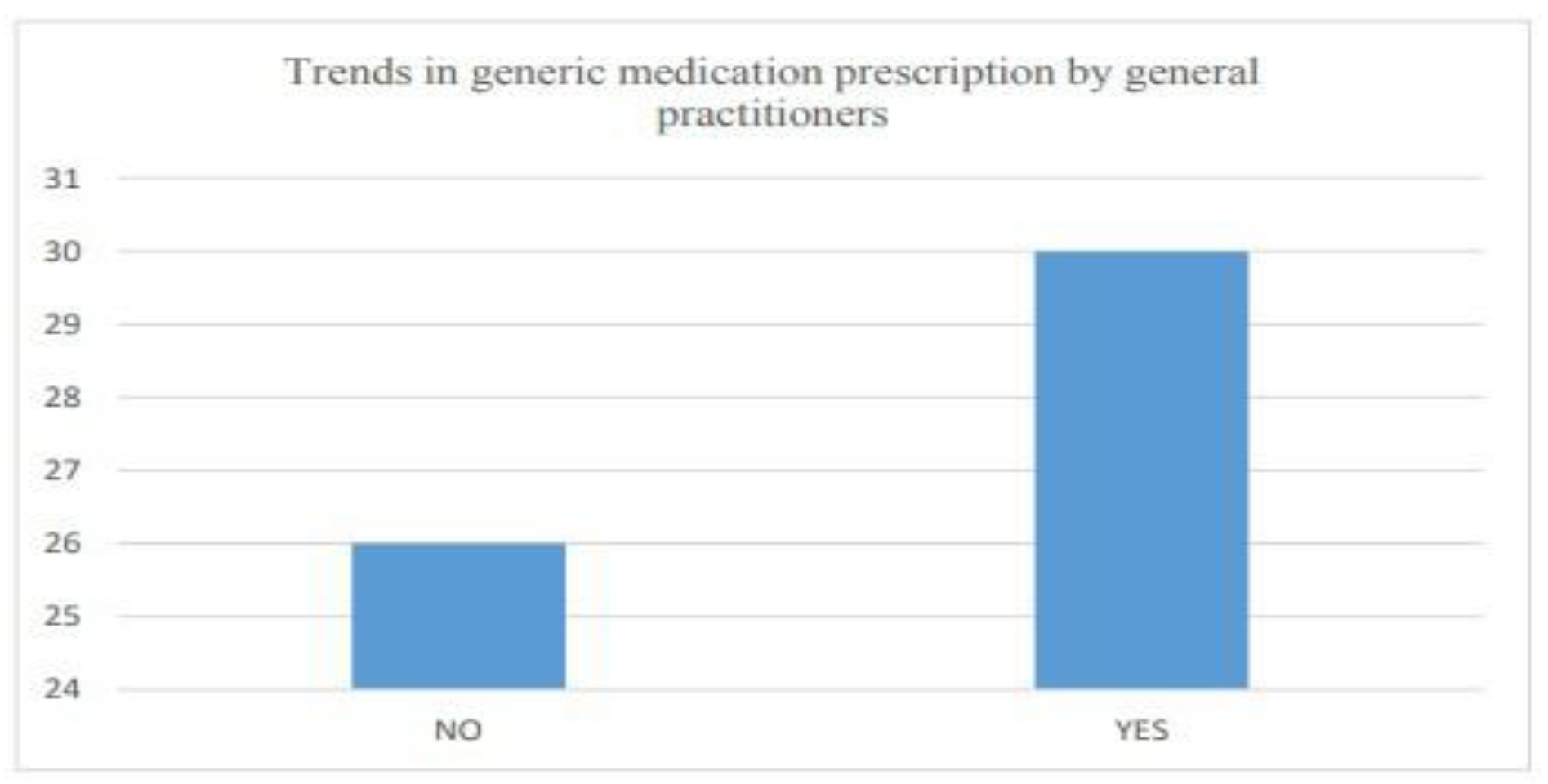
The strongest promoter of generic medication and its awareness promotion should come from the practitioner prescribing the medications. The survey on prescrip- tion trends in the perspective of a patient/customer showed that 45 percent (as il- lustrated in figure 6.4) of practitioners refrained from prescribing generic medica- tions to the general public. This is a huge contributing factor, that negatively affects the promotion of generic medications and perhaps shed light onto the dark side of incentive-based business tactics, coerced treatment decisions and the undesirable relation between the doctors and the pharmaceutical companies.
Figure 6.
5: Public awareness on EHR and e-prescription.
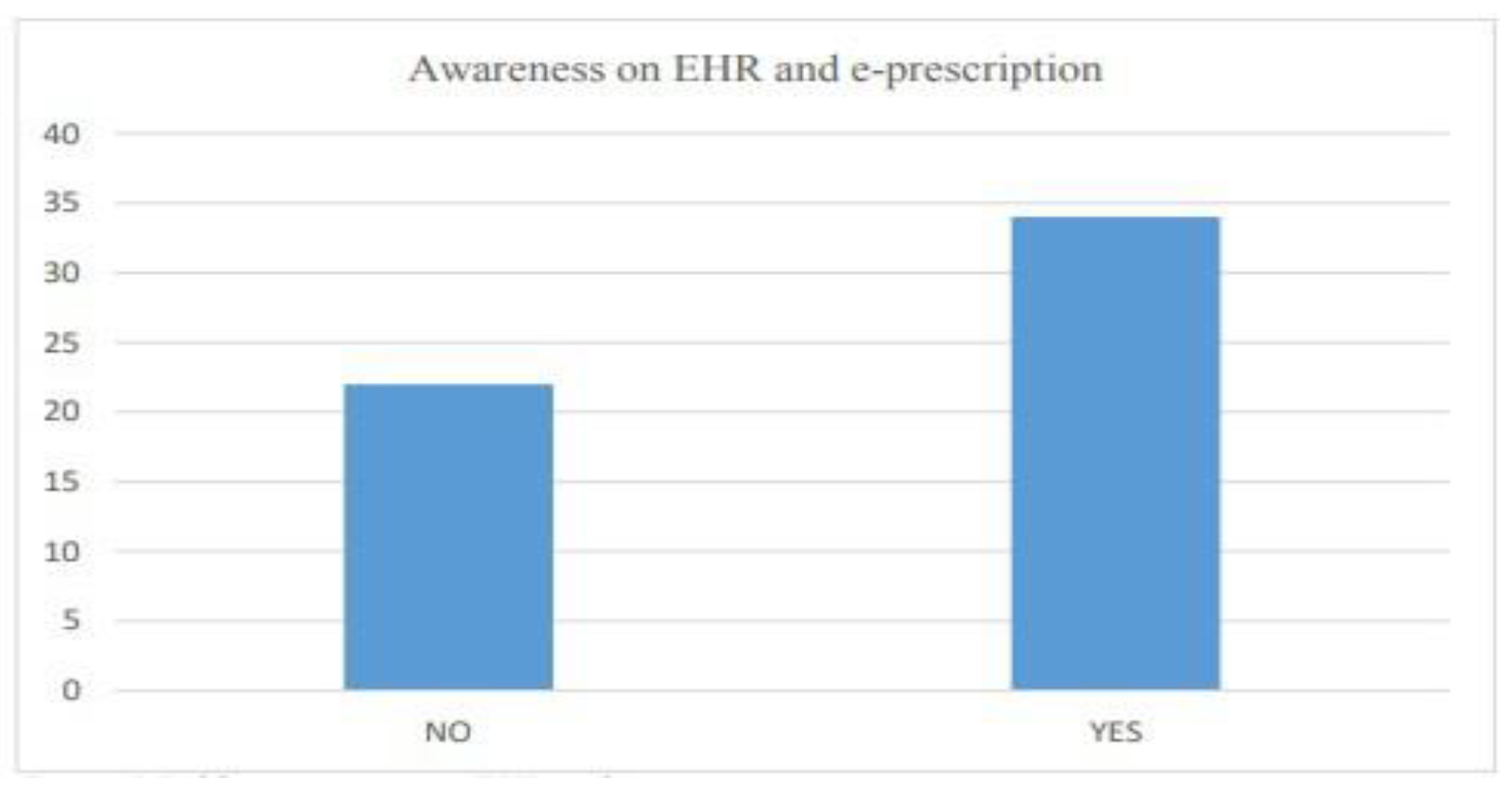
The general public is well aware of the existence of EHR and e-prescription, with 69 percent being knowledgeable about EHR and e-prescription (figure 6.5, which is an excellent channel for the promotion of generic medicine awareness and also ensures a smoother transition of user mentality during the integration of EHR with the pharmacy segment.
These data indicate an awareness index of 18.4375 percent, indicating an overall poor awareness among the general public on availability and similarity of different medications and the existence of systems which promote and support the generic medication.
6.2.3. Customer attitude and trends
Customer attitude analysis is split into three sections. The first section analyses the change in perspective in customers relating the generic medications. The second
Figure 6.
6: Buying platform preference of customers.
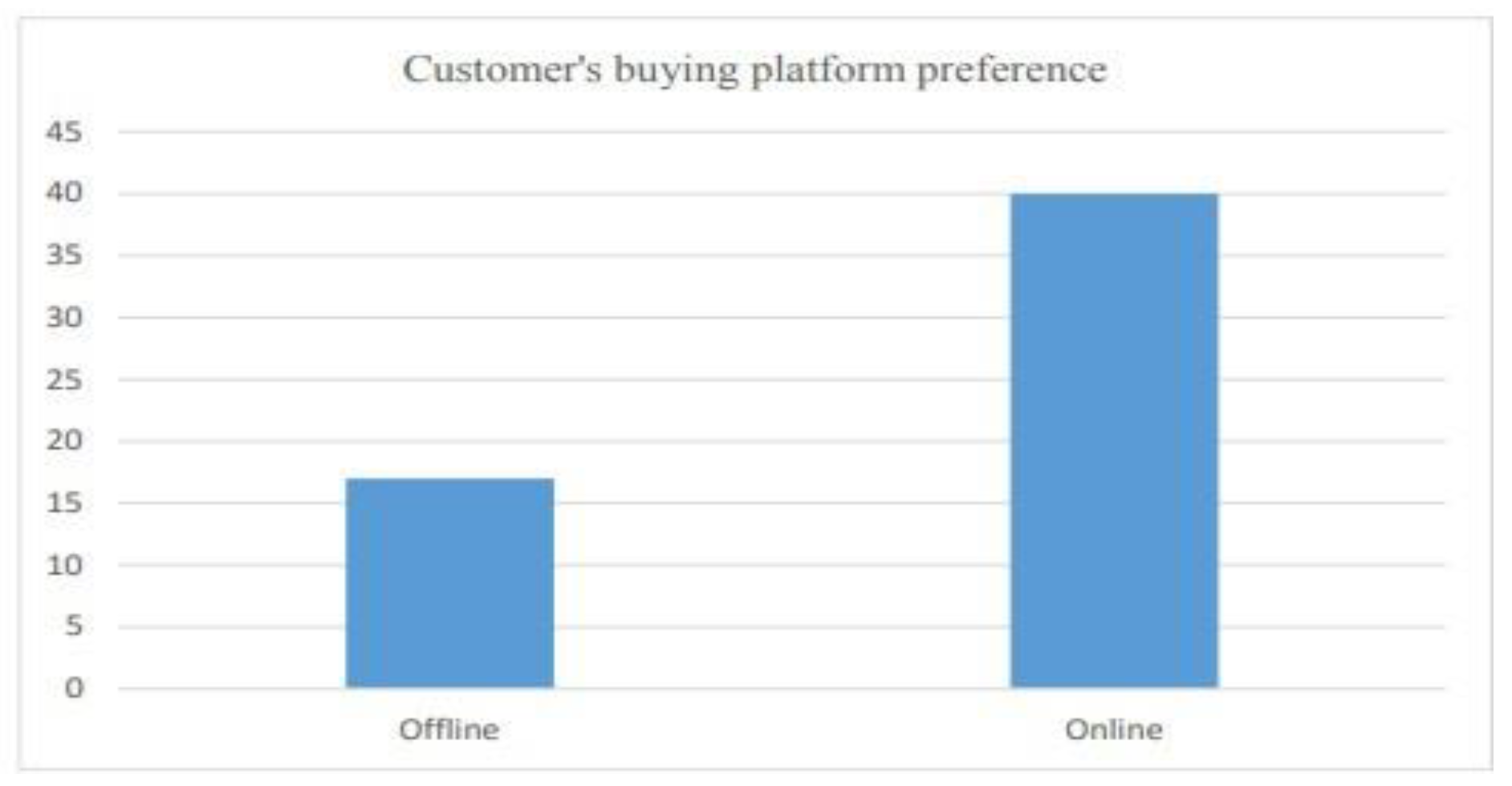
section analyses the customer’s Technology Adaptiveness Index and the third sec- tion analyses the customer’s privacy concerns (Privacy Concern Index) in sharing their prescription details using ICT.
Figure 6.
7: Customer opinion on online medical stores.
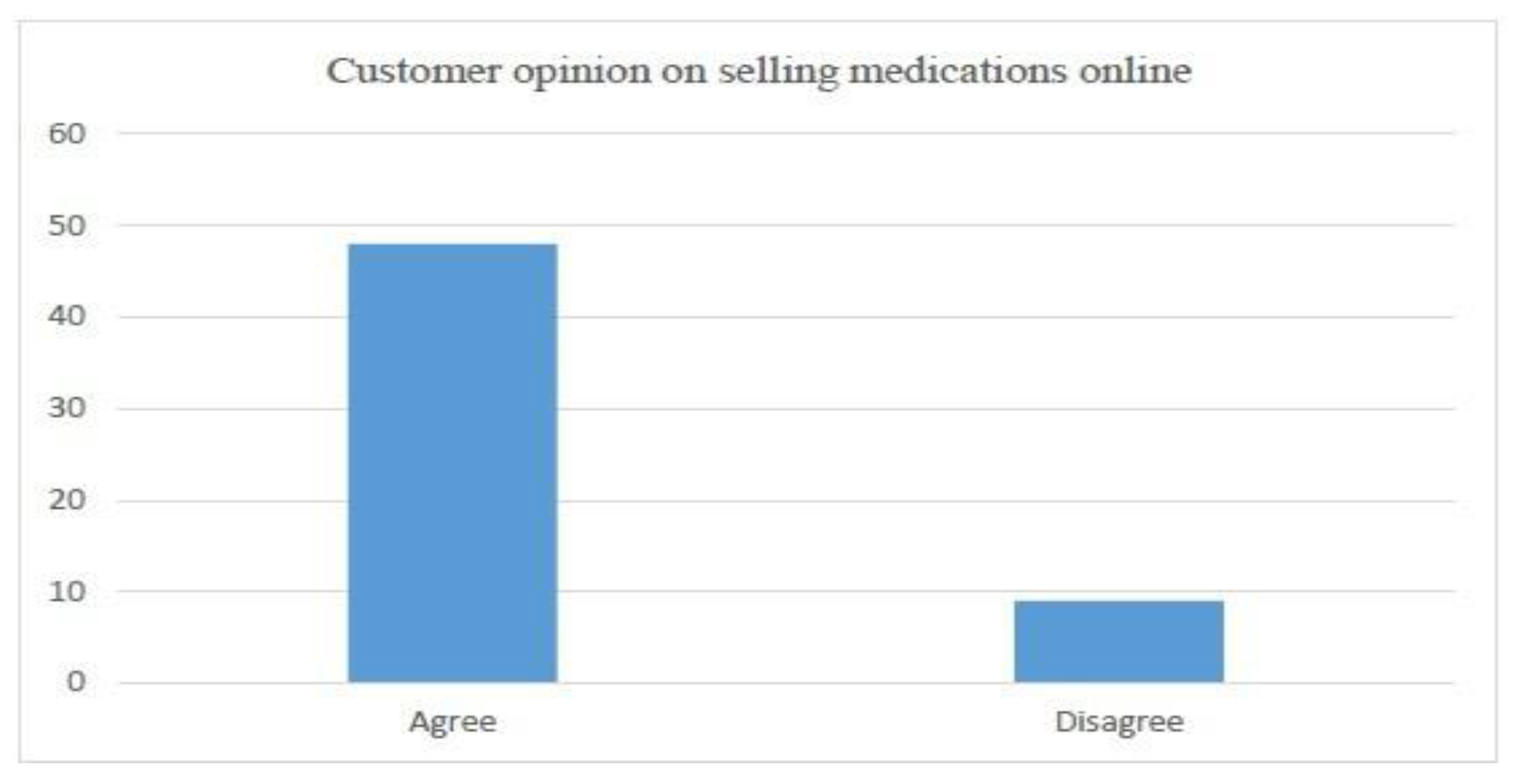
Change in perspective
This section analyses the customer’s changing trend in buying preferences. It is observed from the survey that 69 percent of the respondents adopted online mar- ket platforms as their preferred purchase platform and is shown in figure 6.6. 83
Figure 6.
8: Trends in opting generic medications.
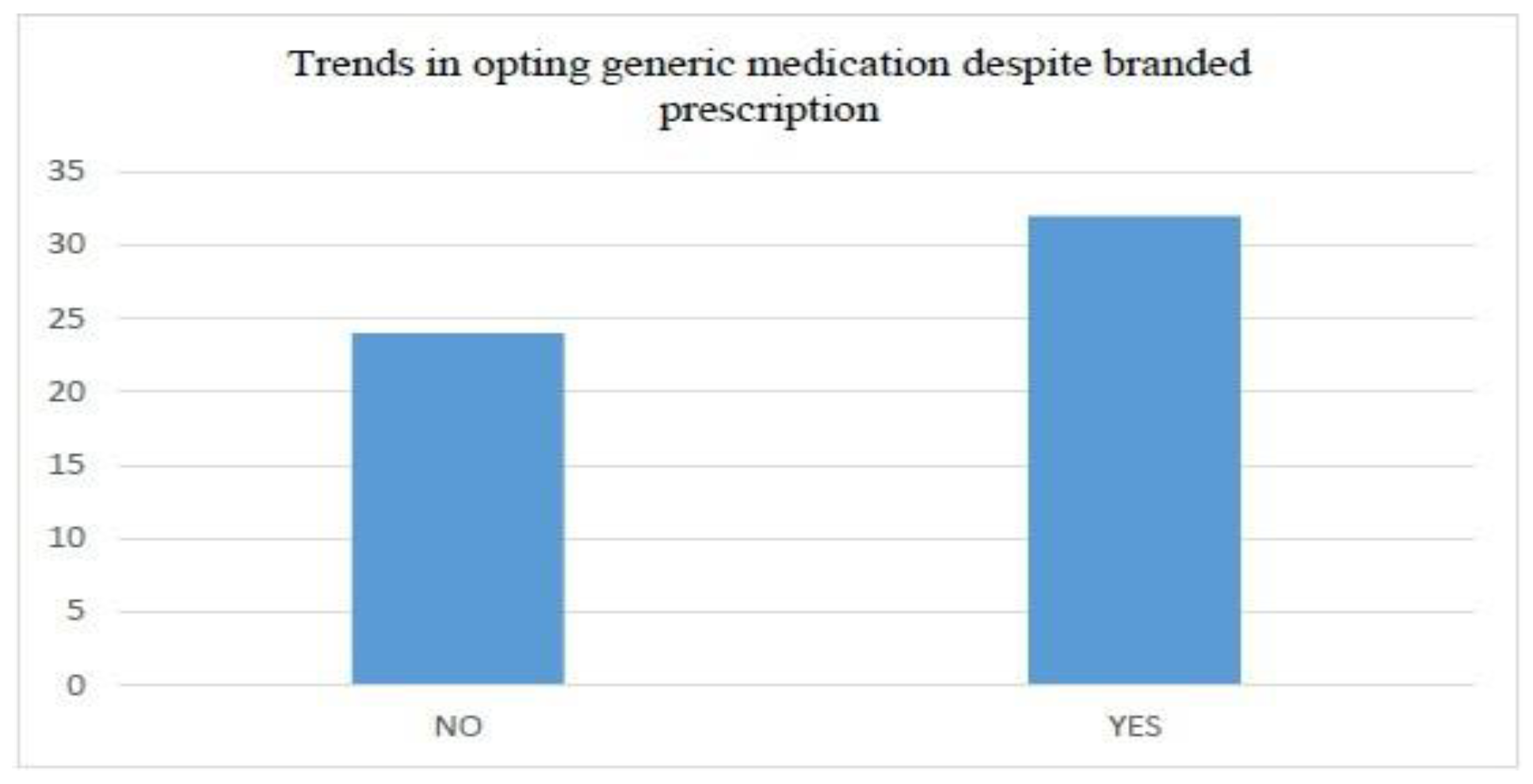
percent of the respondents were positively inclined towards having an online phar- macy and is shown in figure 6.7. It was also observed that 56 percent of the respon- dents were ready to opt for a generic variant even when doctors prescribed branded medications (Figure 6.8). This is consistent with the output on awareness of generic medications having an identical chemical composition with branded counterparts and serve as a secondary checking point for the integrity of data provided by the respondents.
Figure 6.
9: Internet usage statistics.
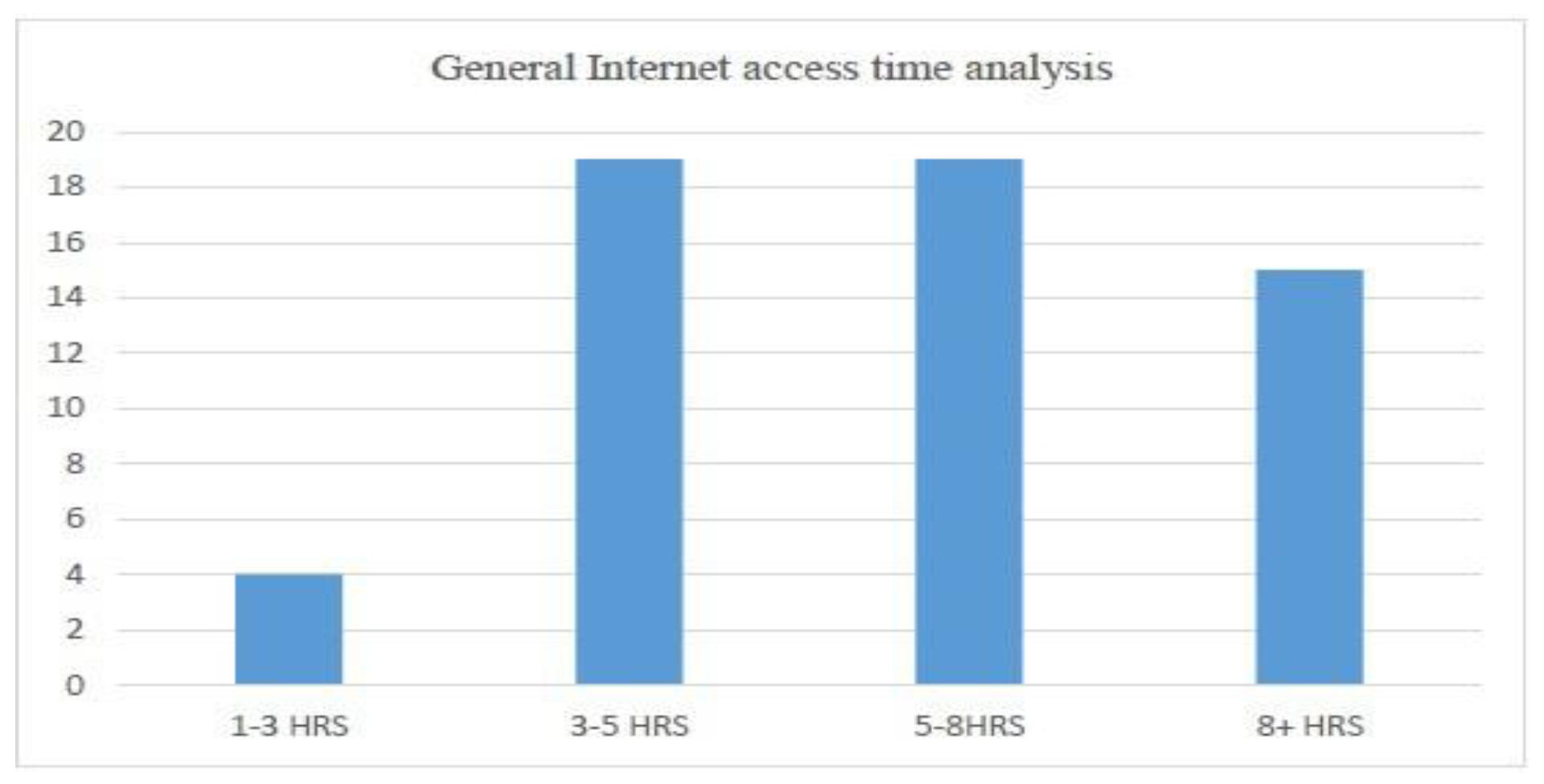
Technology Adaptiveness Index
The Technology Adaptiveness Index is a weighted average of the following factors
- Average Internet usage time and (weightage of 5 percent)
- Customer usage of the Internet for the purchase of goods (weightage of 40 percent)
- Customer’s buying platform preference (weightage of 15 percent)
- Preferred payment method for purchased goods (Weightage of 40 percent)
Figure 6.
10: Internet usage purpose statistics.
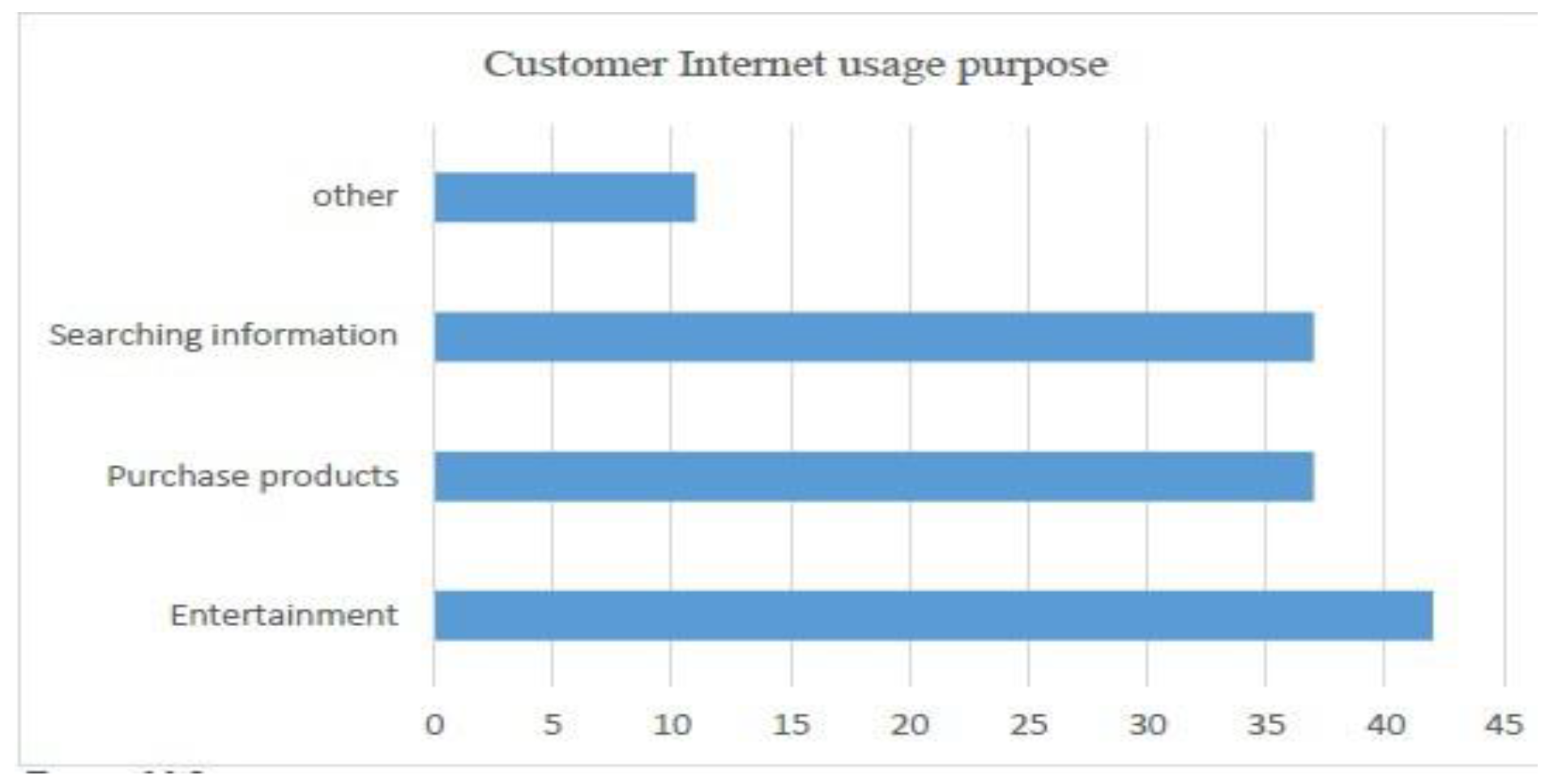
The average internet time usage is critical for the analysis of adaptive index al- though its weightage is low, as it represents the chances of public using internet for shopping purposes in present and immediate future instances, and higher usage statistics represent a higher probability of online shopping. Interestingly it was ob- served that 91.3 percent of users had a daily internet usage time of over 3 hours and 58 percent had a daily internet usage time of over 5 hours (represented in figure 6.9). For calculating the Adaptiveness Index, the 5+ hour usage statistics are considered, as it is a stronger indicator towards ICT adoption rate.
It was observed that 64 percent of the total respondents used the internet for shop- ping purposes (figure 6.10) among other things like entertainment, strongly indicat- ing the adoption rate of ICT in shopping trends. This is consistent with the respon- dents’ preferences on a shopping platform, which is 69 percent as indicated in figure 6.6.
Figure 6.
11: Customer payment preference.
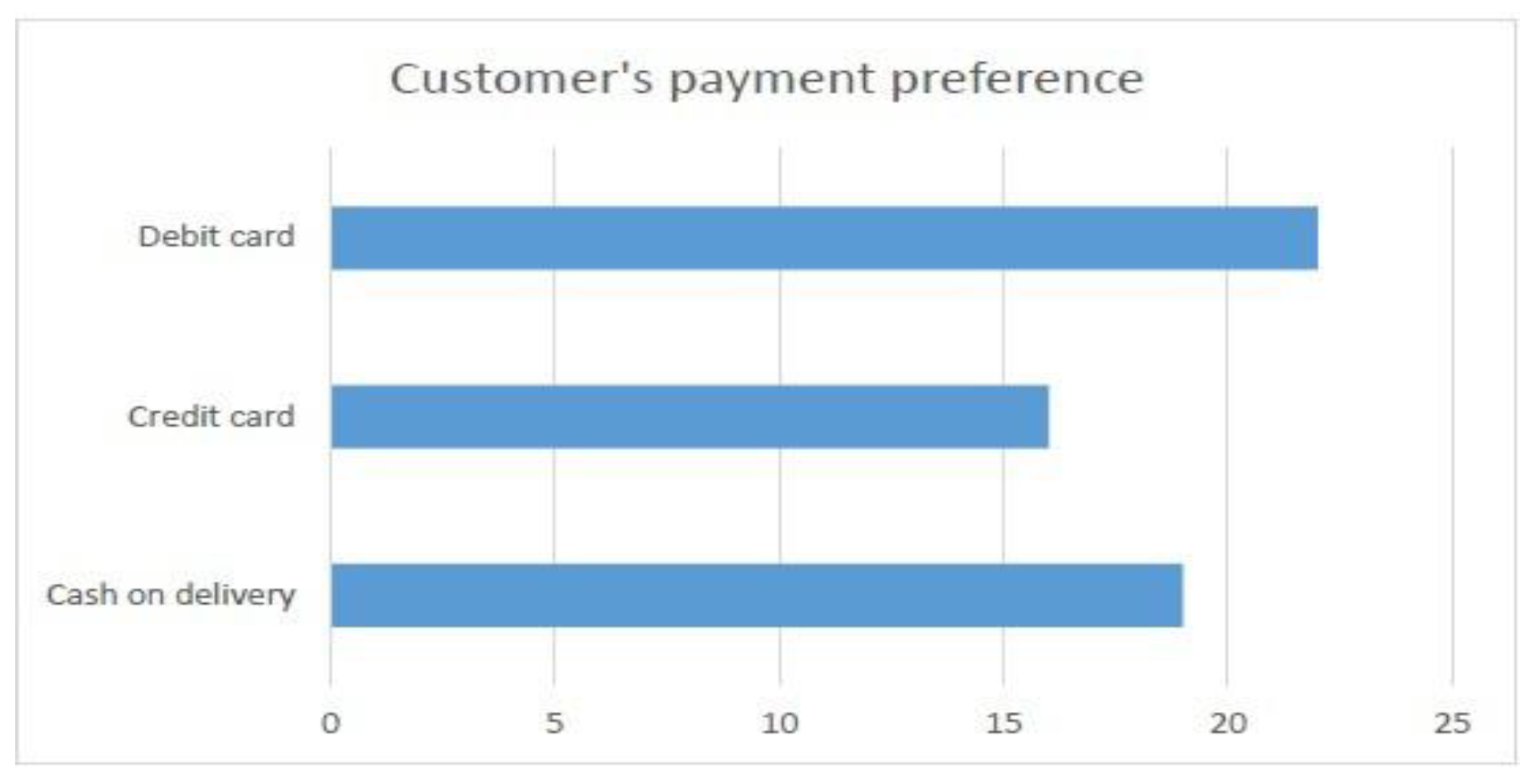
The majority of the customers (65 percent), opted for electronic methods such as usage of credit cards or debit cards for payment instead of cash payments (figure 6.11), indicating strong affinity to technology adoption. Based on the statistical fig- ures the weighted average indicates a very strong Technology Adaptiveness Index of 64.85 percent, indicating the market-ready nature and the very high technology adoption rate by the users.
Figure 6.
12: Customer acceptance in linking EHR and prescription.
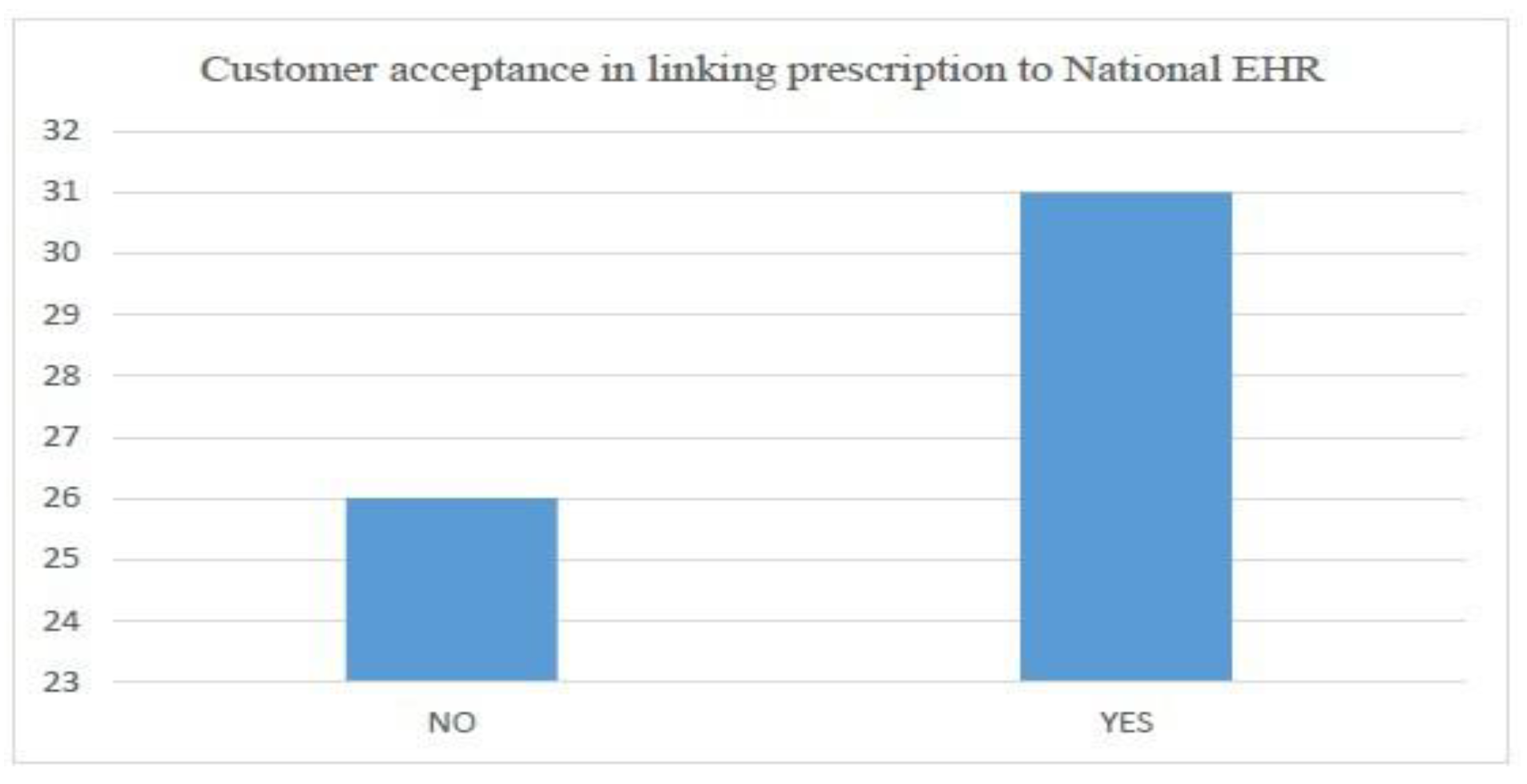
Privacy Concern Index
The Privacy Concern Index is a weighted average of the following parameters:
- Customer acceptance in generating e-prescription connected with national EHR (with weightage of 20 percent).
- Customer acceptance of having an online market place with access to e-prescription from national EHR (with weightage of 80 percent).
Figure 6.
13: Customer acceptance on online marketplace having ac- cess to EHR for e-prescription.
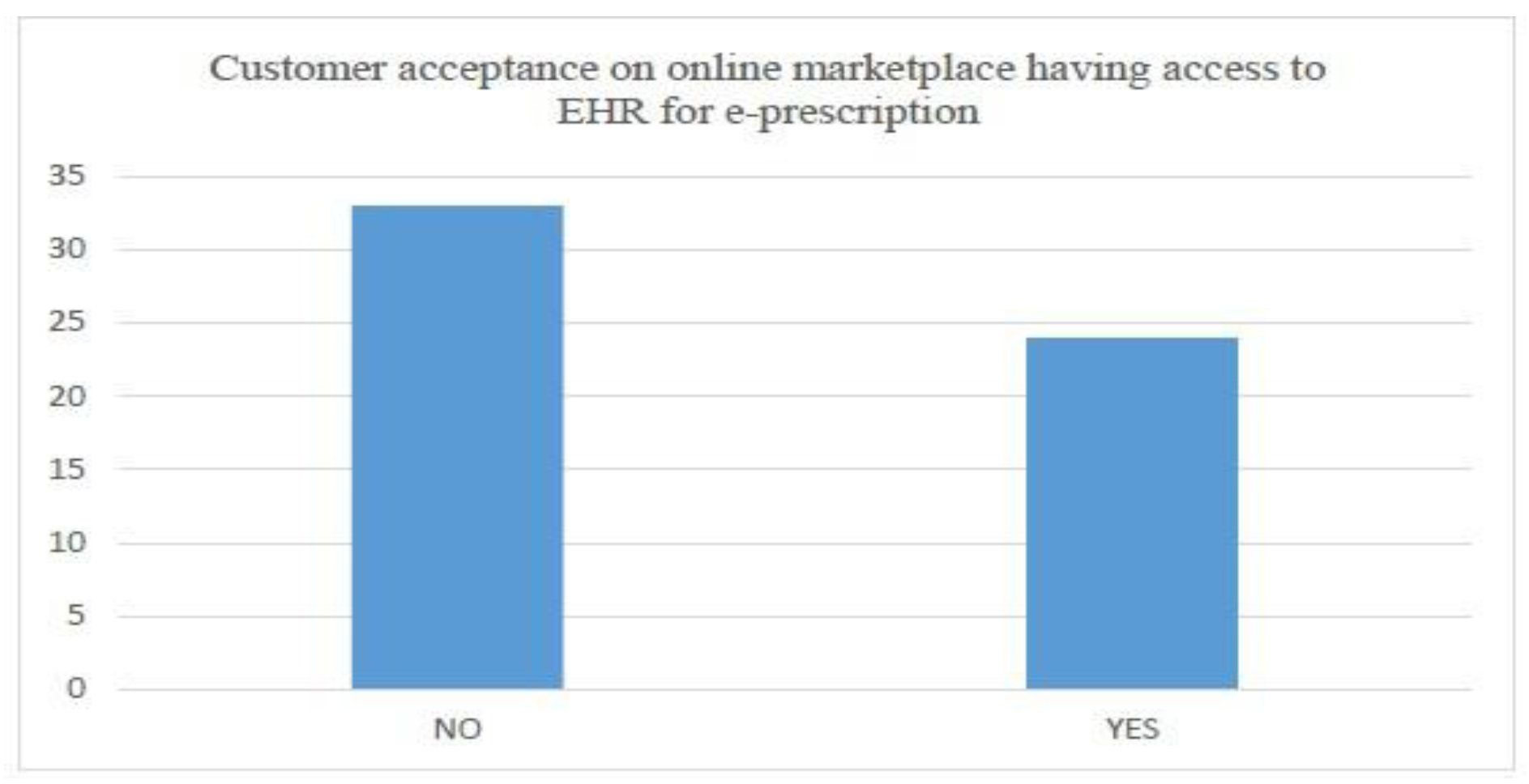
Although it is a common knowledge that the prescriptions are by nature and as of current scenario automatically updated to EHR for keeping track of medical his- tory, a strong 46.5 percent of respondents were against this idea and was concerned on leakage of their data (figure 6.12). Further, the respondents were very much con- cerned about their data privacy that a strong 57 percent were against the idea of an online market place having direct access to the EHR for e-prescription (figure 6.13)
6.3. Summary
In this session, the researcher has used descriptive statistics to compute the fre- quency and the percentages of the individual question responses to view graphically and draw inferences. Content analysis is used to analyze and improve the qualita- tive factor of the research.
Chapter 7
7. Discussions
7.1. General perspectives
7.1.1. Medicine prices will be more transparent and market-oriented
The advent of online market place for trading pharmaceutical commodities, will affect the overall nature of sales, creating a series of changes which although not speculated to be drastic, will affect manufacturers, wholesalers and retailers of such commodities. For the branded medicine market the increase in competition and meeting customer demand by ensuring availability will force the manufacturers to adopt a uniform pricing strategy which will effectively reduce the sale price of the drugs. Moreover the branded medicine retailers and wholesalers will reduce their profit margin in order to sustain in the competitive market, which will positively affect the consumers. However, it should also be noted that listed retailers will gain more reach among the public due to the online presence, which will essentially in- crease their volume of trade, increasing their gross profit even when their profit margins are cut short. The online presence of generic medications will ensure its growth in market share and also will encourage the generic retailers to obtain more trade volume through generic medication promotion, enabling an opportunity for better returns on generic medications.
7.1.2. Centralization of pharmaceutical industry
The pharmaceutical distribution in Ireland is highly fragmented in nature. ac- cording to the survey results, there are more than 15000 domestic wholesalers serve across the country. However top ten pharmaceutical wholesalers accounting more than 30 percent of the entire industry. As a result, the small scale wholesalers and decentralized distribution scenario increase the medicine circulation. Hence the dis- tribution costs teds to a huge amount. These results double the average gross profit rates of distributors compared to that of manufactures. The online marketplace will reduce the intermediate links in the distribution channels. That means unneces- sary distribution charges can be eliminated. This may results reduction of pricing of medicine and large agencies will be benefited from industry centralization.
7.1.3. Expand the pharmaceutical logistics market
The main expected impacts are the traffic of medicine will open a corridor for the logistic market at the business to consumer end(B-2-C).the features like dosage, dis- persion and so on will raise the volume of business, hence the logistic cost increases. This will result to outsource logistics to third party organization. The new amended rules related to the pharmaceutical product supply chain may allow organizations and enterprises to hand over the medicine supply task to third-party logistics firms to deliver medicines. The logistics companies can successfully utilize this oppor- tunity to build out a perfect supply chain for pharmaceutical product distribution. It is also beneficial for retail suppliers to meet GSP requirements and connect with the pharmaceutical online market supply chain. An important fact of Online market place is, the pharmaceutical stores will be a part of this logistics. The licensed agent or retailers can directly or indirectly deliver medicines to users.
7.1.4. A complete service-oriented model.
Revenue generated from medicines is the main source of income of hospitals. This is a well-known fact, that says most of the hospitals cover their expenses with medi- cal revenue. An online marketplace for pharmaceutical products will help customers to help up to a certain extent. According to the survey conducted in American phar- maceutical researchers, there is a general trend towards separating the clinic from the pharmacy. This may result in a change in gross profit. So to compensate for the reduced revenue, the hospitals must have to raise their medical services. That implies a service-oriented model.
7.1.5. Improved retail drugstores profitability
The concept of the online marketplace has many advantages compared to retail medical stores. The main advantage of the online market place is price competitive- ness and consumer purchasing access unrestricted based on the time and locations of the customer. The main impacts on retail stores and independent subsidiaries of pharmaceutical products are mixed in nature. So the after-effects will be differed based on the services provided by the retailers. There must be a chance for a com- parison between the services offered by retail stores and the online market place. So this may force the independent stores to merge with the centralized system of pharmaceutical product selling. They will be forced to give better customer services and value-added services. This will result in a good income in the long run. On a customers perspective, this is the beginning of a huge change in the current practice of selling goods. Beyond any doubts, the users will get products with less price and good services.
7.1.6. A panel for information innovation.
The data produced by the pharmaceutical online virtual market is not only sup- porting the citizens to buy their prescribed medicines but also provide a platform to help the public to get health tips to improve their daily routine. The informa- tion stored in the cloud will give guidance and other value-added services to the Irish public. The pharmaceutical companies also can get the details and analyze the business flow and make necessary arrangements to improve their sales.
7.1.7. Health Benefits
Medical errors are the main issues faced in the past few decades. With the imple- mentation of E-prescription and Online market, medical errors can be reduced up to a certain extent. Common errors include drug and dosage, that is incorrect, missing checks of allergies and lack of identity control. As a result of an error reduction at the stage of ordering, transcription and dispensing (Car and Black, 2008). Differ- ent studies found that there is a remarkable change can be observed in the system with E-prescription. For example, the case study of E- prescription in Estonia says that only 0.01 percent errors were found with the new system compared with that of old prescription system (Prescription - e-Estonia). Another study says that in Sweden prescription errors in delivered drugs and suggested dosages were reduced by 15 percent compared to the past analysis (Apoteket and Stokeholm, 2015). One of the main other benefits is better availability of medicines. With the ease of associated EHR and online pharmacy, time-critical medication will be more effective.
7.2. Social benefits
7.2.1. Better healthcare system
The combined E-prescription system with Online virtual market effectively address the existing issues in the health care system. It will contribute to patient satisfaction with the health system. It is evident that in Estonia 92 percent of individuals used the system and very much satisfied with the new climate. A survey conducted in 2015 E-prescription were among the most popular e-services in Estonia (Prescription
- e-Estonia). Similar statistics results were observed in Sweden with 85 percent of individuals were satisfied with the new implementation (Apoteket and Stokeholm, 2015).
7.2.2. A big financial relief
The implementation of a new system will reduce medication rates by 30 to 40 per- cent. It is evident from the current situation in Sweden, Estonia, Netherlands, and the UK. The government authorized the online market will help the citizens to buy medicines based on their needs without any additional service charges and rebates. People can opt for low-cost medicines based on their prescription uploaded in the EHR. The inclusion of the cheapest generic medicines will give an option to purchase low-cost medicine. Hence it will lead to big financial relief.
7.3. System Feedback
Medicine subscription and intake will be controlled through our portal dispens- ing medicines through the use of ICT. There will be a metric analysis to which the supply of drugs meets demand. This can check over-prescription and hence prolif- eration and overuse using our integrated e-medicine portal. The integration of the healthcare system via information systems (or ICT in general) will give healthcare professionals a “connected” feeling to their entire community. It draws the proper definitions of roles and responsibilities associated with each post of health care pro- fessional and helps in getting approvals and accreditation of the respective roles through clear verification and evaluation of the roles they perform as a part of their job. Their credentials and certifications will be made known to the entire community of stakeholders, making the professional’s job easier and by giving the community better people with good know-how. Community pharmacy is the main entity on which the majority of public health depends, as it is responsible for making avail- able all the drugs, consumables and medications available for the needy. Using EHR records the pharmacy can anticipate the demand and plan to meet the same with supply. It can also be integrated into our platform and supply via it to the needy. All linkages into the public EHR records from components in the scheme shall be through mandatory security proceedings and pre-requisites.
Connected information systems bring a different dimension to the solution of the problem faced by us, and solves them through methodical intervention using tech- nology as the instrument devising solution. It can thus provide characteristics ex- pected out of public or community-based health care (or any public utility). The normal denizen expects accountability from public institutions and servants, credi- bility in all the schemes and methods available to them, the acceptability factor of the system integrated, the feasibility of the system without over-spending tax-payers’ money, sustainability factor of the system implemented or proposed for. The com- munity health services shall be a co-responsible initiative with all the stake-holders effectively taking up roles anticipated from them during the design and validation of the system, making it move more towards its acceptability, scalability, credibility, accountability, and sustainability of the system itself.
7.4. System Benefits
Below are the benefits of the online marketplace for pharmaceutical products along with some extended features. In case it is implemented, it will further augment the momentum of selling and reach-ability of products.
7.4.1. An easy window for showcasing products
This system will show all products in a single window. Customers can easily filter products based on their need. It will also provide a supplier to buyer interaction. Hence it boosts the trading partnerships.
7.4.2. Review and ratings
Online reviews and ratings will increase the reach-ability of the system. If it is implemented as a commercial product, it will augment the sales based on the re- view given by the users. Impartial reviews of products and services may give new customers the confidence to buy.
7.4.3. Price comparison
This system offers a convenient way to compare prices of similar products. For example products with the same content and different price can be displayed either by ascending order or by its ratings. It also provides a platform to compare products from a single source.
7.5. Summary
The online marketplace offers greater transparency for product details and con- venient way to compare prices of similar products. Features such as availability of products, prices, contents, brand name, and stock levels are accessible in an open environment. Hence the user will know the whole details of products by using a single window.
Chapter 8
8. Conclusion and Future scope
8.1. Conclusion
This research has shown that a Virtual online market for medicine can easily solve the price difference of pharmaceutical products. The proposed idea will help Irish citizens to buy medicines as per their requirement with 100 percent costs effectively. The Virtual market will not only helpful for the public but the manufacturing compa- nies and retailers as well. The system will encourage hospitals to become a service- oriented model and will bring a big change in Pharmaceutical supply chain man- agement. The system will help Irish people to get their medication everywhere, that means the coverage of its service will be overall Ireland.
The project has implemented a minimum viable framework of a customer portal which is capable of interacting and serving the needs integrating with the EHR sys- tem. Use of EHR is the key factor of the design that is facilitating the customer to use data directly from the cloud to purchase the correct medicines. EHR will ensure min- imal errors and inconsistency which otherwise could creep in while the customer is ordering. It facilitates for reuse of digital records from cloud vault and lets users be free of keeping digitized records or preserving the non-digitized paper prescriptions and diagnosis or test reports.
Incorporating a common market place for the sale of medicinal products by reg- istered and authenticated pharmacy retailers will empower the patients to obtain the medications based on their prescription at lower costs, as such a marketplace will generate healthy competition within the sellers, who may cut down their mar- gins to generate better income through volume business. Since the medications in such a scenario will include the multi-brand drugs with similar chemical composi- tion, observable phenomenon like the ‘Amazon Effect’ or Uniform Pricing Strategy may be observed as the competition is not just within the retailers but will also af- fect the manufacturers who will adopt the pricing strategy to improve their business scope, in effect, making a positive environment for the patient availing the medica- tion. This, along with the addition of generic medicine retailers, and promotion of generic alternatives creates awareness among the users, gradually helping the na- tion to reduce its per capita health expenditure and better administration of Health Act of 2013, mandating the availability of generic alternatives in the country.
A system designed with all these parameters closely considered shall effectively reduce the unfair cross-brand differential pricing of identical drugs, promote the
usage of generic medications, create a healthy, competitive, non-disruptive and sus- tainable e-marketplace, with traceability and accountability on all levels of a phar- maceutical disbursement system.
8.2. Future scope
The project in itself has huge prospects of expansion when because EHR and dig- itization are becoming widely popular and implemented world-wide as per open standards set by the WHO. The EHR implementation as per latest framework from WHO intends to increase the transparency of medical diagnosis and treatment and make it as patient-friendly as possible. One of its greatest policies is to create aware- ness among the patients about the treatment and drugs prescribed, through the in- clusion of chemical component description, and also keep trace-ability of medical and treatment history of patients. This practice has been endorsed by the WHO to ensure that drug manufacturers and their channels shall not misinform the public through non-generic patented names that their products are the lone solution avail- able in the market and to prevent extorting huge pay-out from the users, and in the case of free public health systems from the respective government health depart- ments (saving precious tax-payers resources). Project can incorporate the above fea- ture as per WHO EHR and ICD (International Classification of Diseases) and make it region-specific (or region agnostic for checking internationally available alterna- tive) with the available drug inventory of the region, making the user able to finally decide for themselves (or through their trusted medical practitioner) the best op- tion available. Analysis and finding alternatives to medical drug composition is a big challenge for even the most efficient of medical practitioners, and an aspect of great apprehension to the general drug users. Comparison using available medical indices through the consultation of an experienced medical practitioner can be the only solution to the problem, and whereby the drug user might not be made avail- able the entire fall-outs of the drug composition used or its replacement derived. This might lead to anomalous results in the treatment.Our project future scope can include the derivation of these data and present (with or without data analysis) to the users or practitioners using the portal. The analysis of data can mean simplifying the data to be readable and comprehensible to the normal user and will make them understand what a drug composition will do the user (including a long-term usage), and what drug chemicals can give similar effects during treatment in case a specific drug composition is unavailable. This project can make use of various indices (and databases) already available for the comparison to obtained, which can also extend to data reports (preferably verified by agencies under respective governments) on various alternative medicine compositions made available specific treatment and drug
The greatest problem the WHO has in its findings from global studies is the overuse of drugs (at times, which turns into abuse). People seem to find even the smallest of problems greatly tormenting to them that they rush in to buy available medicines over the counter or through online as a remedy to their problem. This creates a history of drug overuse, which in turn becomes the greatest problem to the other- wise good health; even the most common drugs, like paracetamol, can be a potential poison for the body if frequently used (and health-care professionals are abstaining from such prescriptions). For a common man, the information on side-effects is truly unavailable or the information available is not compelling enough to make them refrain from buying and using the same. While the project has an opportunity to commit for such a social reform by giving compelling information on these so-called non-prescription drugs and their side-effects. Additionally, the project can include common alternatives (region-specific or simple alternative) to the health condition the user is facing – like for headache put forth a questionnaire that would analyse common causes (like sleep deprivation, using mobile or computers for long dura- tions etc.) and suggest solutions (“get some more sleep”) or for common cold to use steam and get relief from congestion. Also, findings have been made on a con- dition called medication overuse headaches (MOH) accounting for nearly 5 percent of the complainant population, which is caused by the drug used for mitigating a pre-existent headache This will not only ensure healthier people through minimal drug use, but greater savings (especially for public exchequer, when drugs have to be purchased and put over the counter).
The project possibilities are not limiting to the few that have been discussed and can mean there can be more relevant integrations that are possible and socially rele- vant. The portal can take more socio-political form rather than socio-economic form, for governments not only to get the services of drug disbursement to its general pub- lic, but also conduct demographic usage studies, continuous monitoring, demand- supply analysis, and public exchequer controls based on the studies.
Appendix A
Prototyping
Appendix A1 Mobile Application - Prototype
Figure 1.
Mobile application.
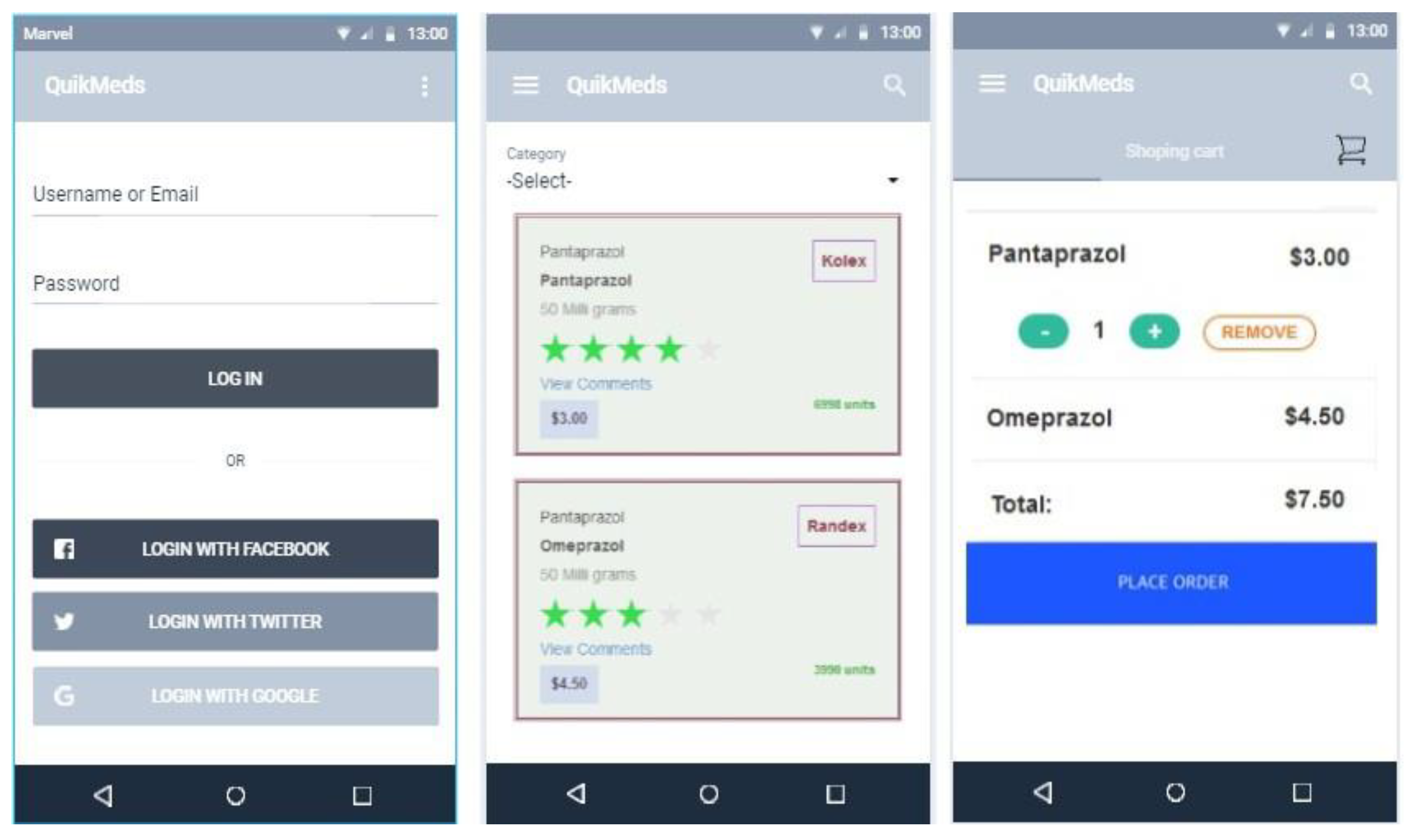
Figure 2.
Mobile application 2.
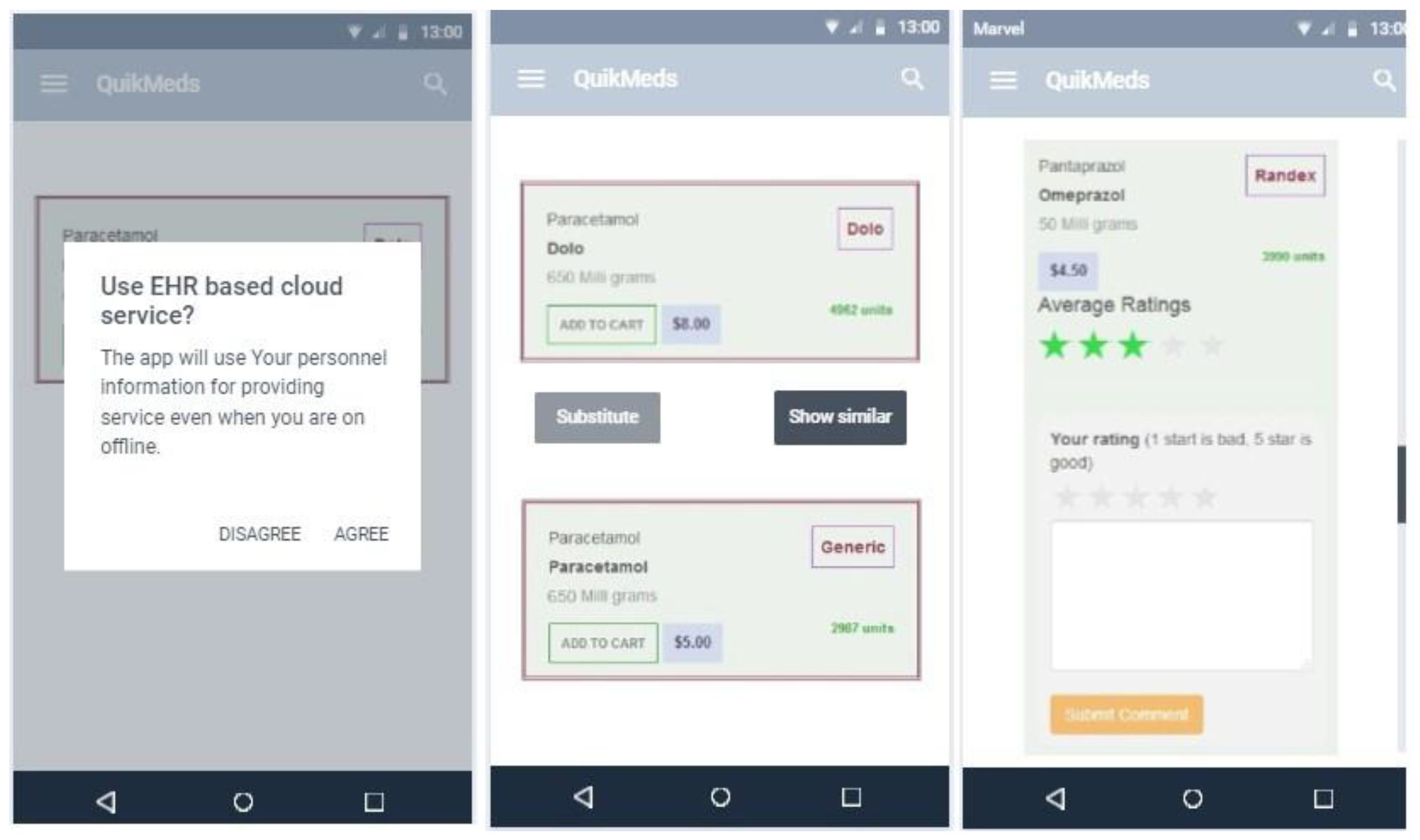
View prototype in :- https://marvelapp.com/986bj08
Figure 3.
Mobile application 3.
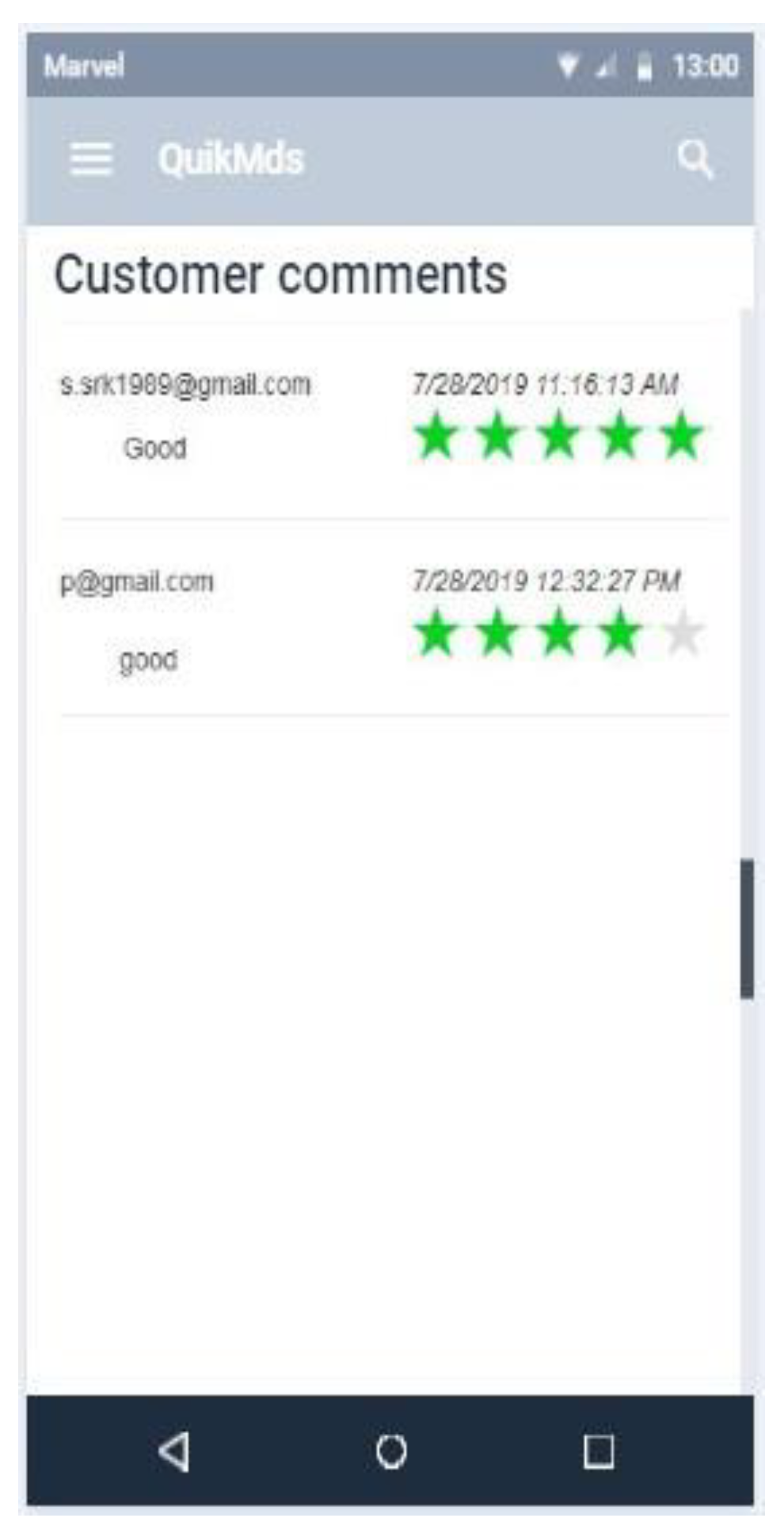
Appendix B
Questionnaire
Appendix B1 Face to face interview Questionnaire for Pharmaceutical company Representative
My name is Renjith Kumar Surendran Pillai. I am a student at the Dublin Business School on MSc Information Systems with Computing. I am working on my disser- tation on Creating an EHR based online market place for selling medicines. Thank you for taking part in this questionnaire and helping my studies. Completing this survey will not take more than 15 minutes. You can cancel your participation at any point and decide not to complete the questionnaire. The participation in this survey is voluntary and your answers will be anonymous. Your answers will be used only for the purpose of my thesis.
- Will the availability of an online sales channel enabling the registered retailers improve your business volume and distribution ease or will it disrupt your business?
- Do you support a healthy competitive online market space?
- Why is there a huge pricing difference between generic and brand medicines?
- Does creating an online market space where branded and generic medicines are simultaneously traded affect your business volume? If you feel it would, can you state the reasons?
See responses at Google Forms
Appendix B2 Answers
Appendix B3 Face to face interview Questionnaire for Pharmaceutical product retailers
- Will an online market, where you will be able to list your products, and receive your order be helpful to you?
- Will such a platform help to improve your volume of business?
- What is your biggest concern in such a platform?
- Will you be able to compete with other retailers in such an online platform?
- Are you ready to undercut your profit margin if you can increase your volume of sales?
Figure 1.
Answer 1.
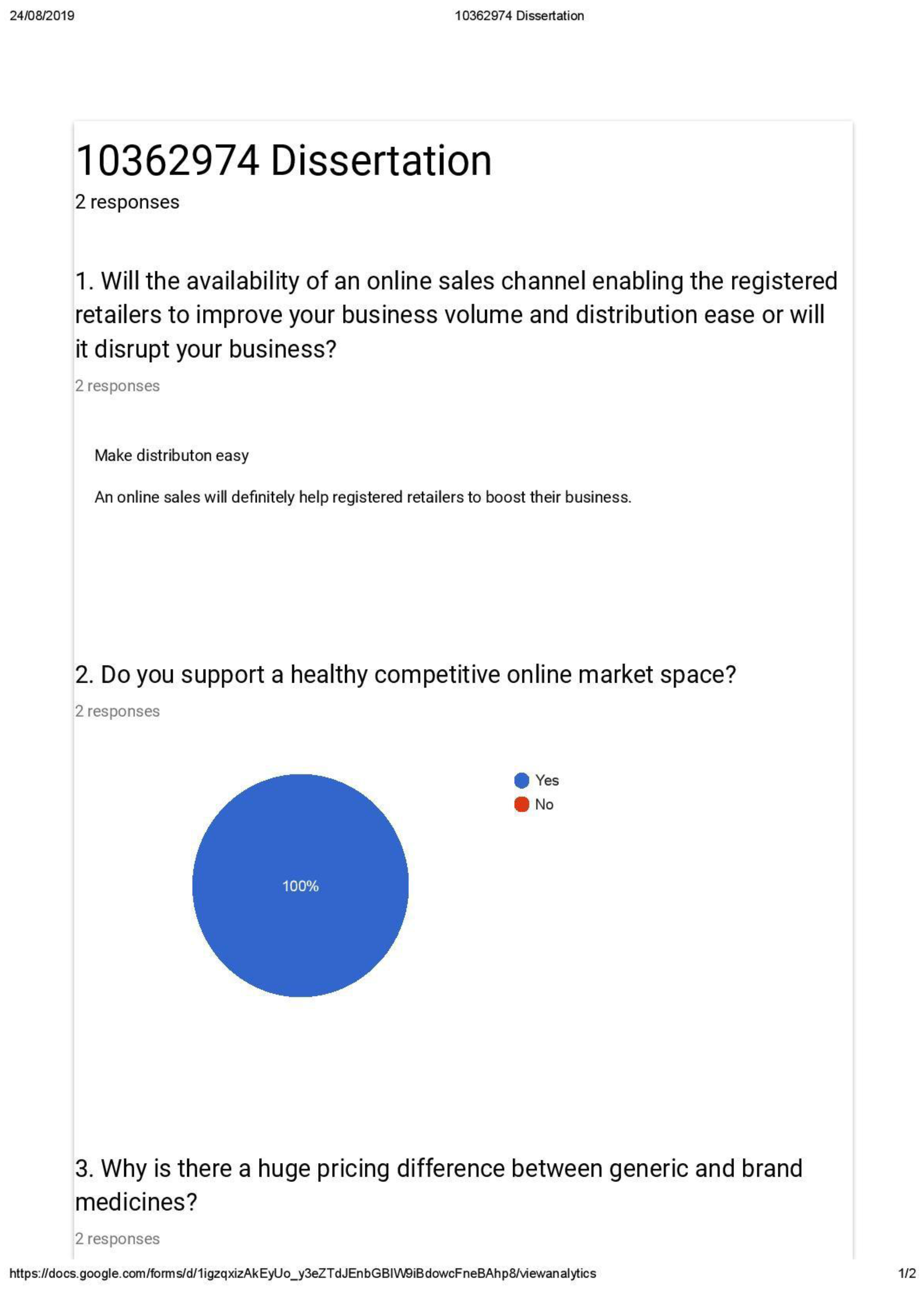
- Up to what percentage of your sales are you ready to give as facilitation/operational fee towards such a platform?
- What are the facilities you are expecting in relation with the facilitation fee you have specified in the previous question?
Appendix B4 General Questionnaire
See responses at Google forms
Figure 2.
Answer 2.
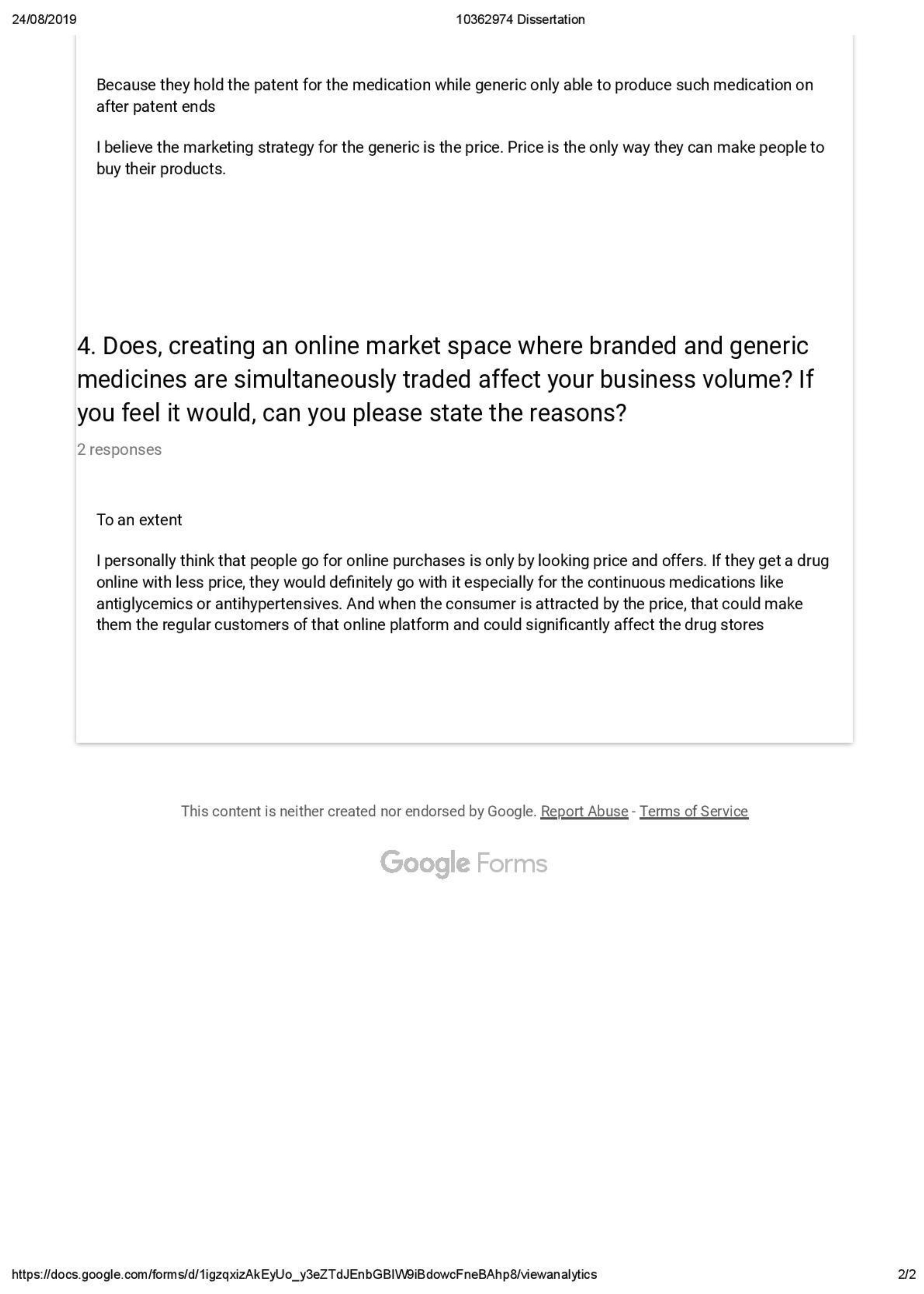
Figure 3.
Answer 3.
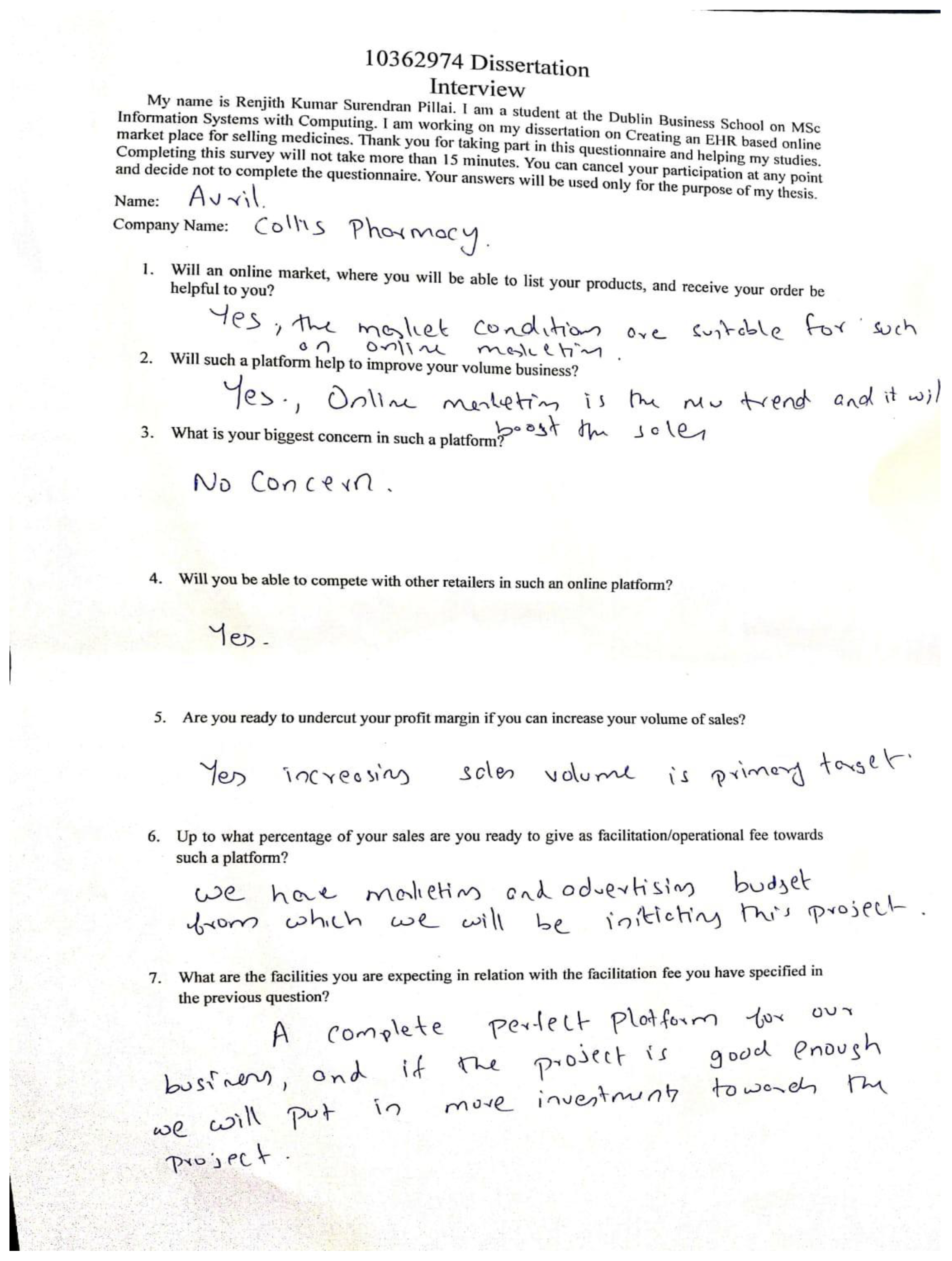
Figure 4.
Answer 4.
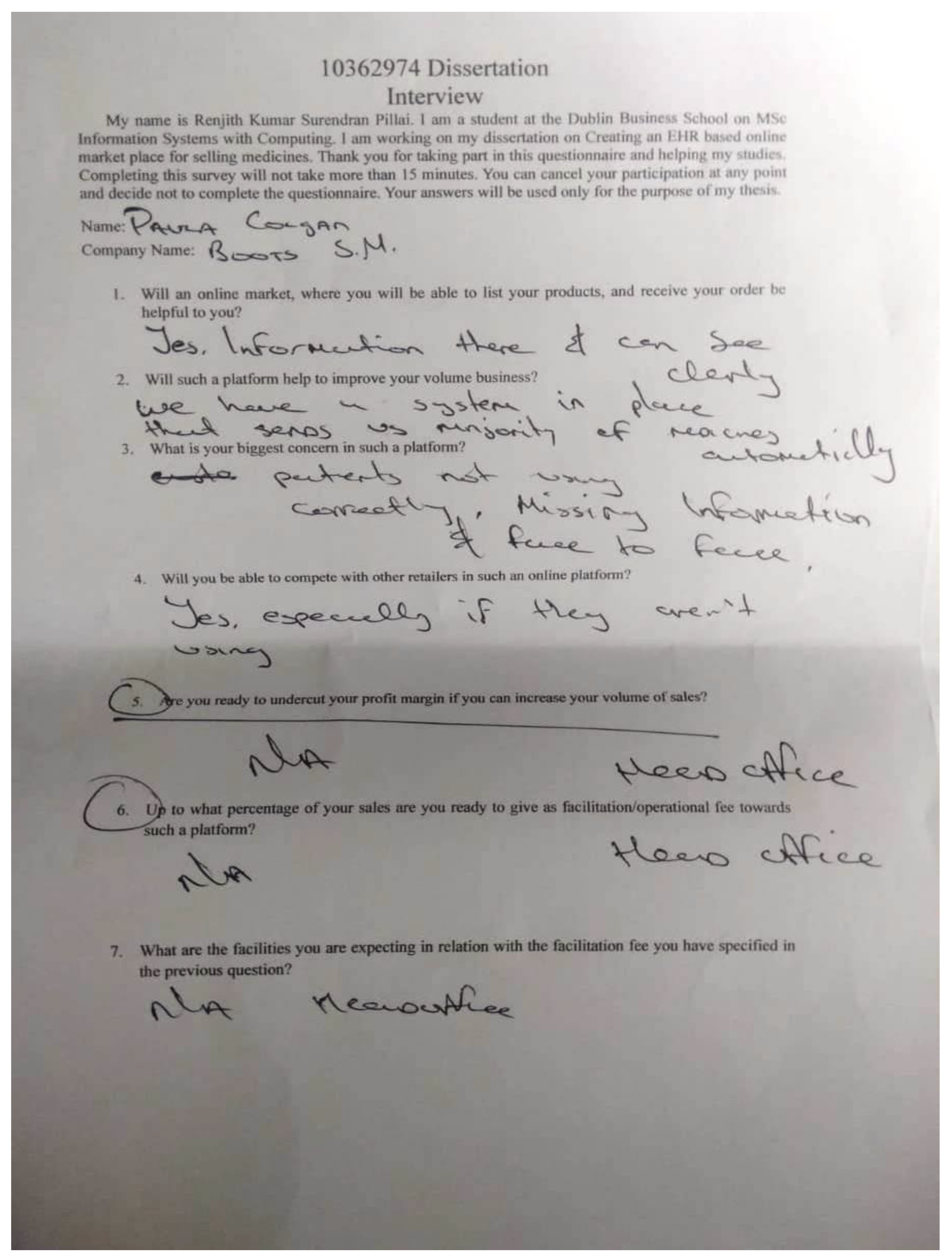
Figure 5.
Survey 1.
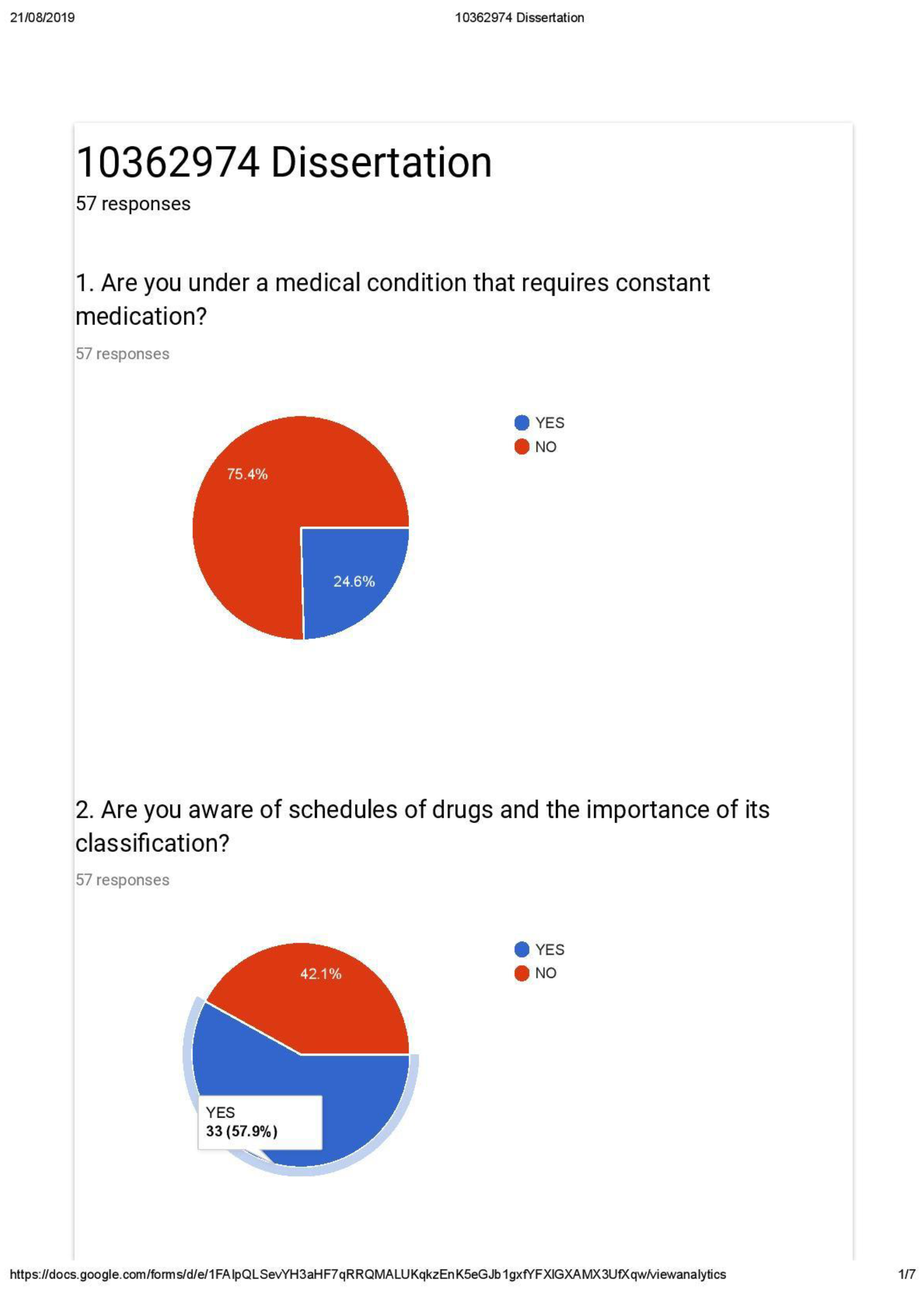
Figure 6.
Survey 2.
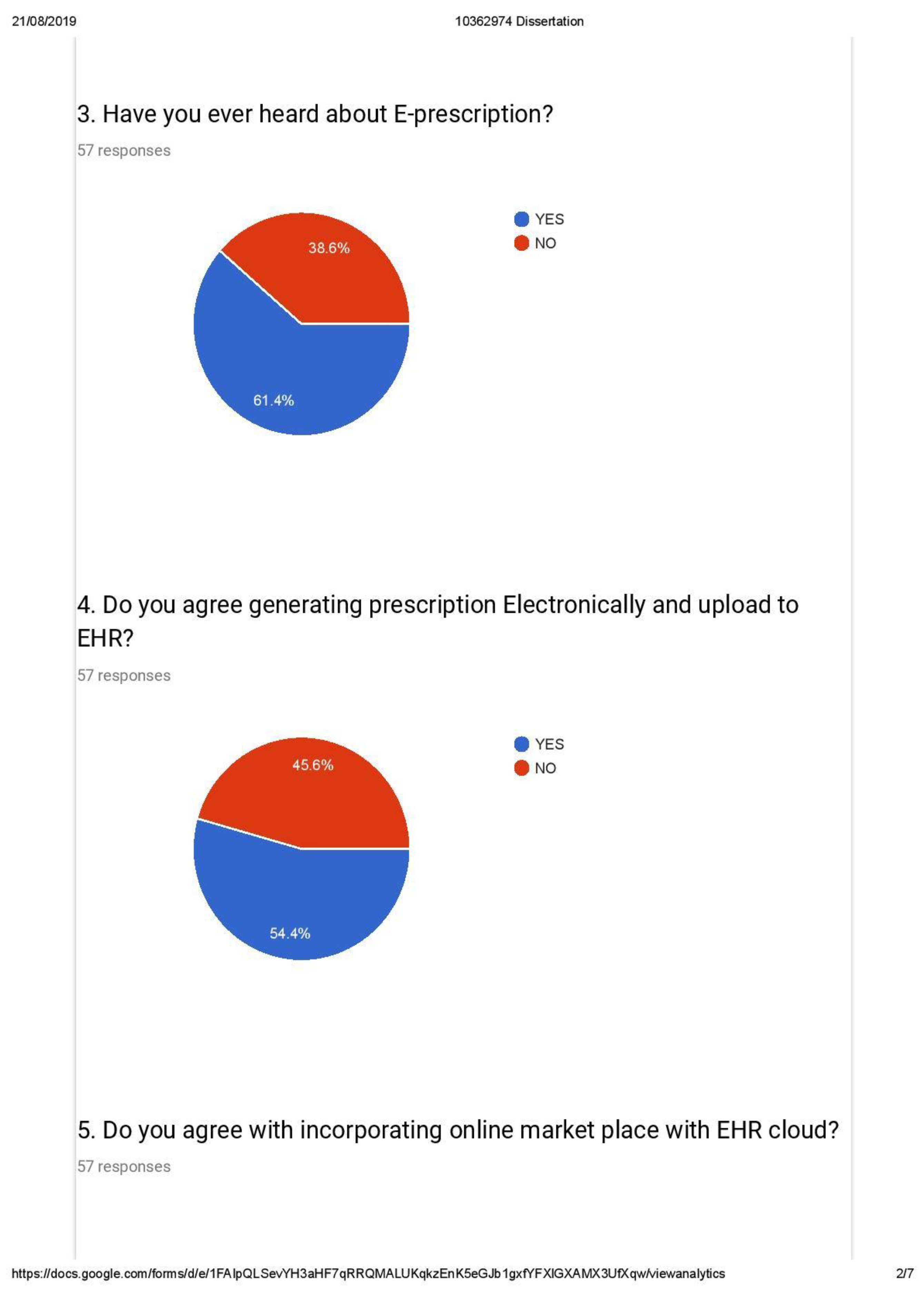
Figure 7.
Survey 3.
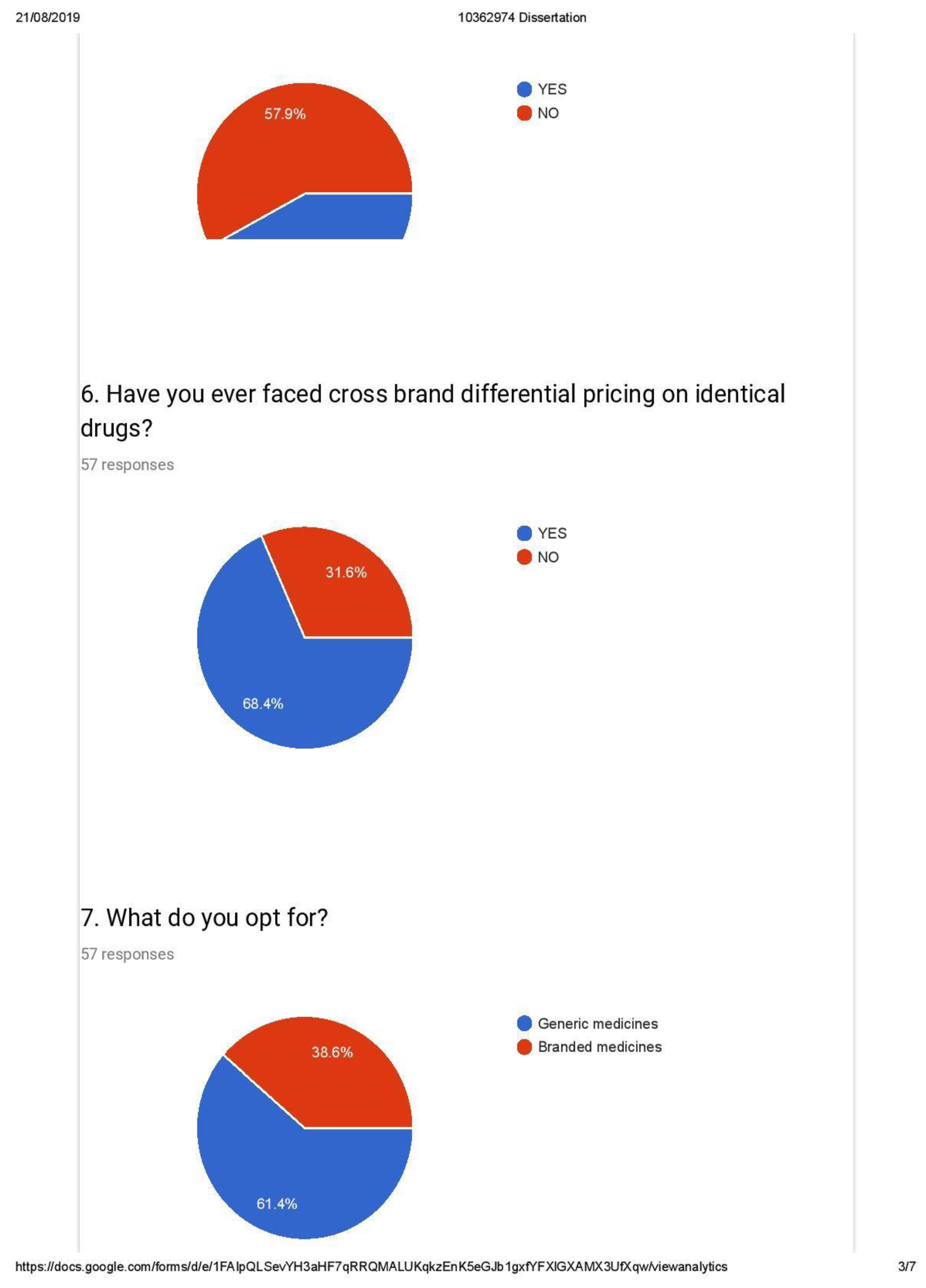
Figure 8.
Survey 4.
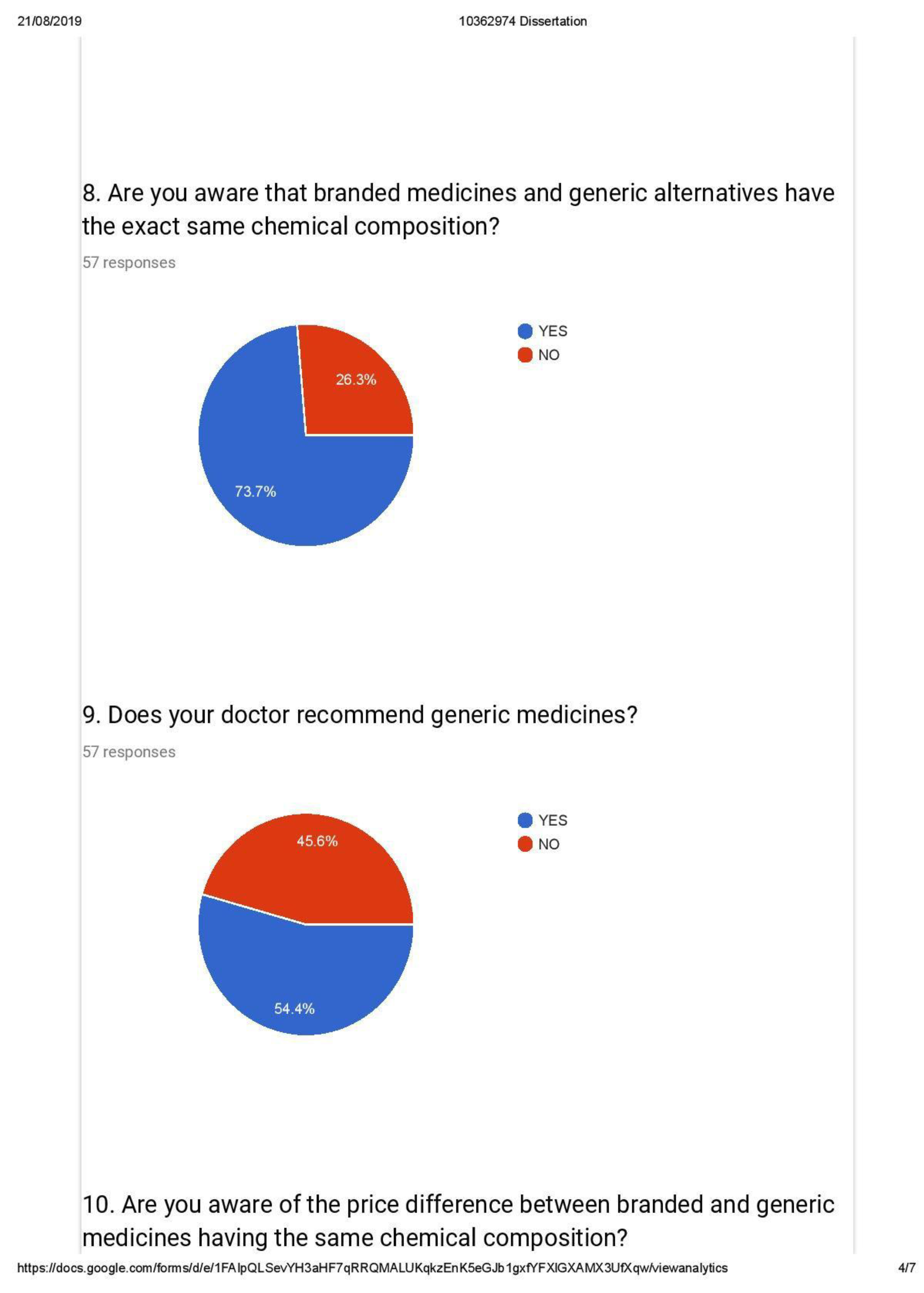
Figure 9.
Survey 5.
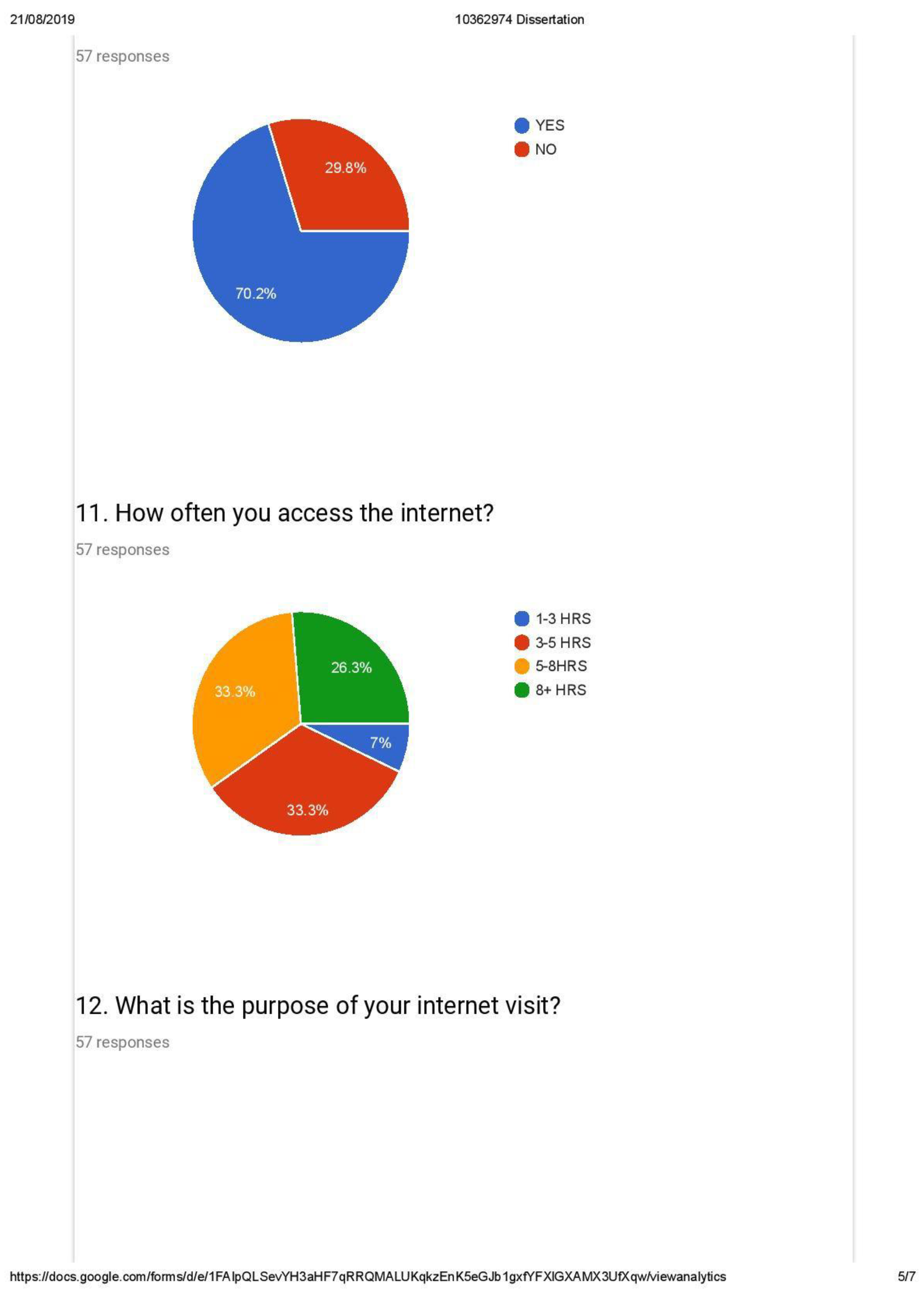
Figure 10.
Survey 6.
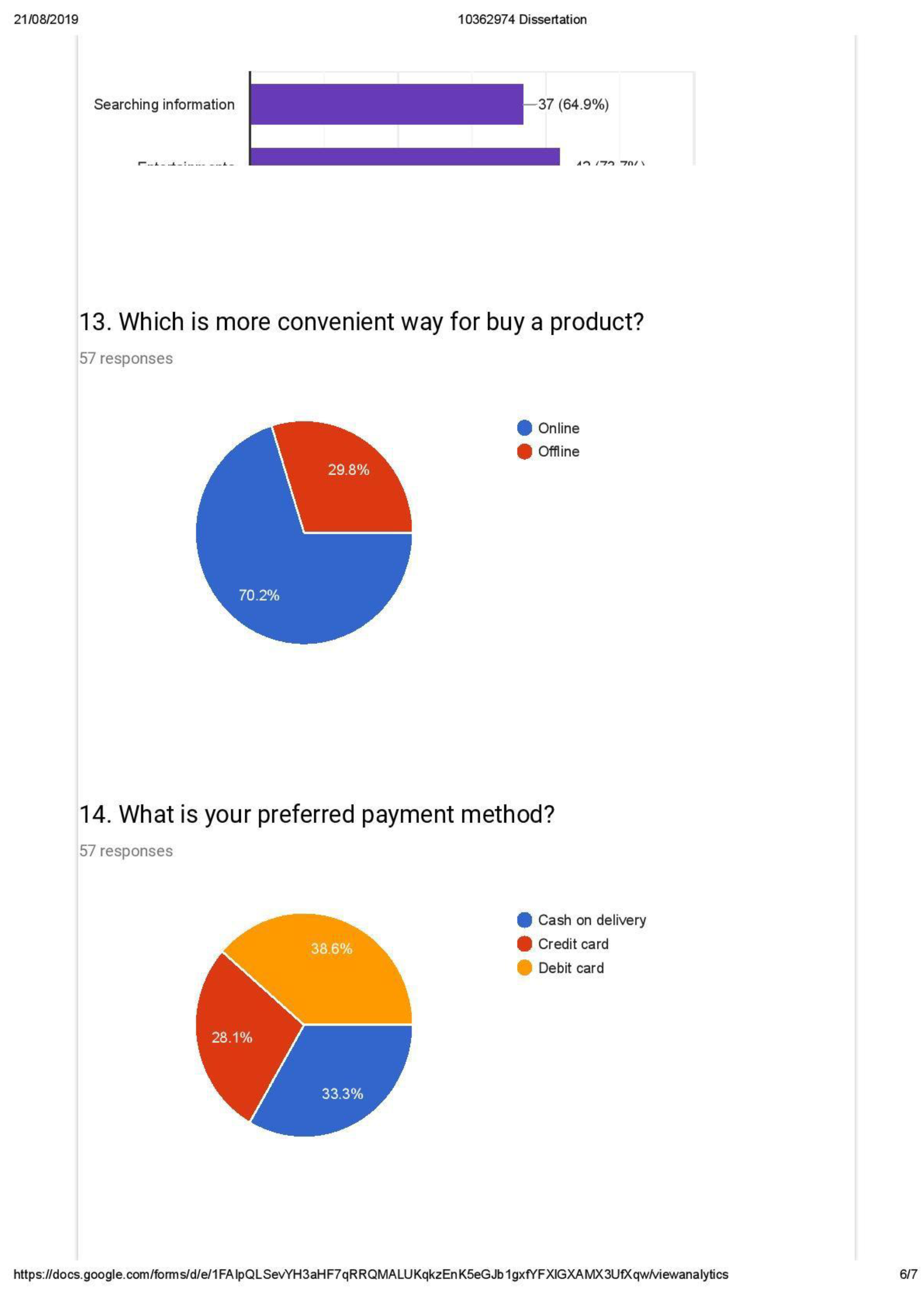
Figure 11.
Survey 7.
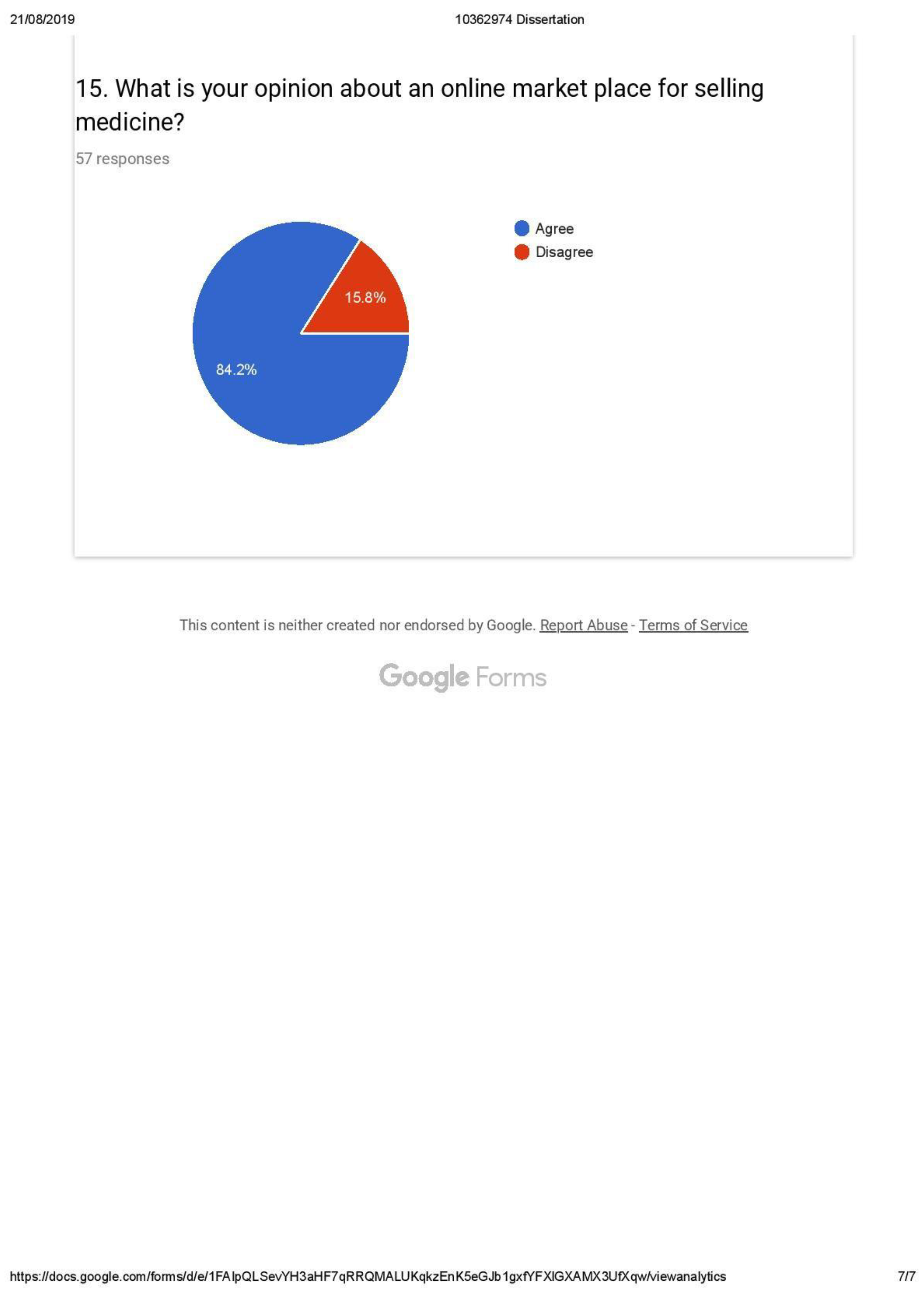
Appendix C
Source code
Both the application and the database code are available in the below GitHub repos- itory.
Appendix D
Application Screenshots
Figure 1.
Application Dash Board.
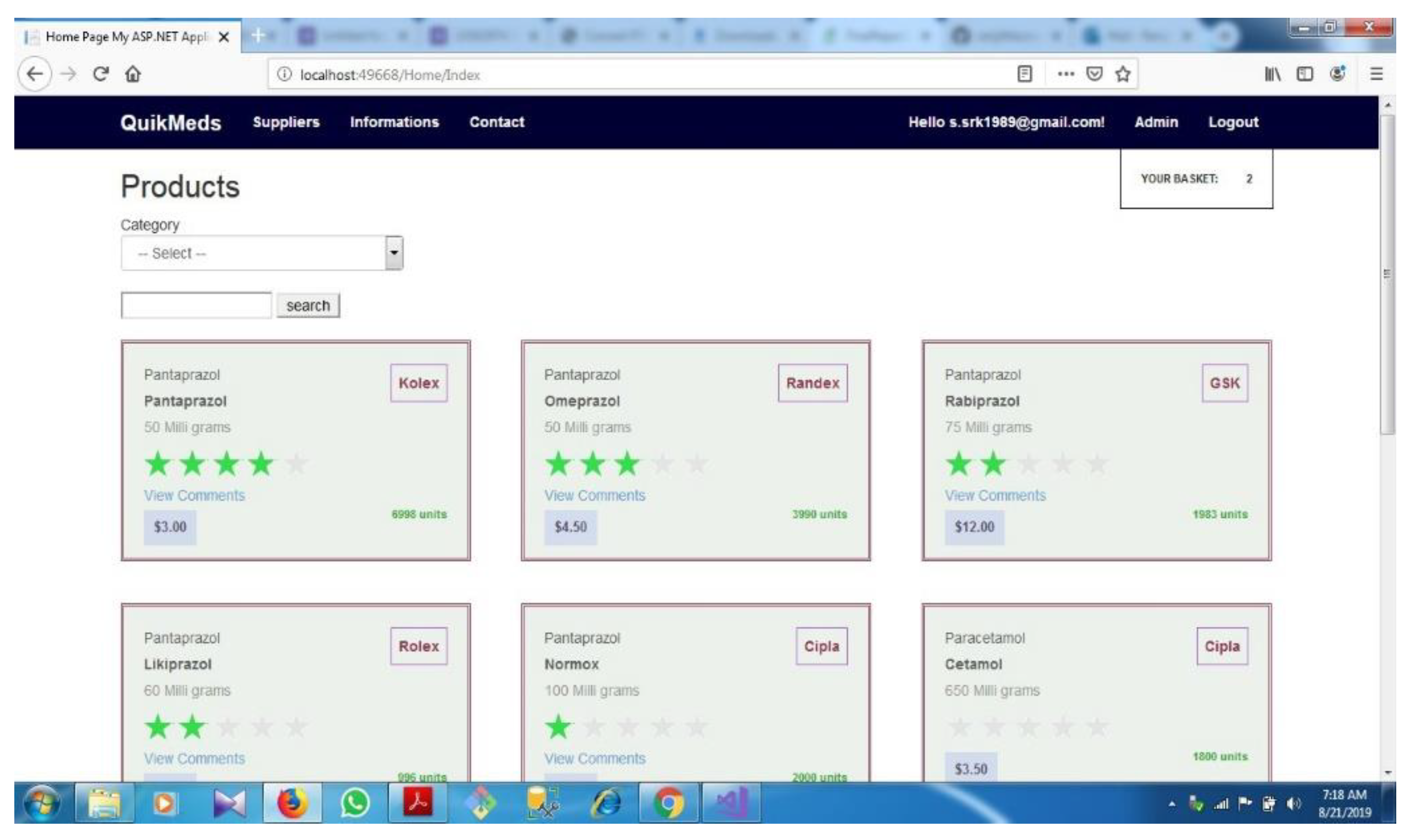
Figure 2.
Category based selection.
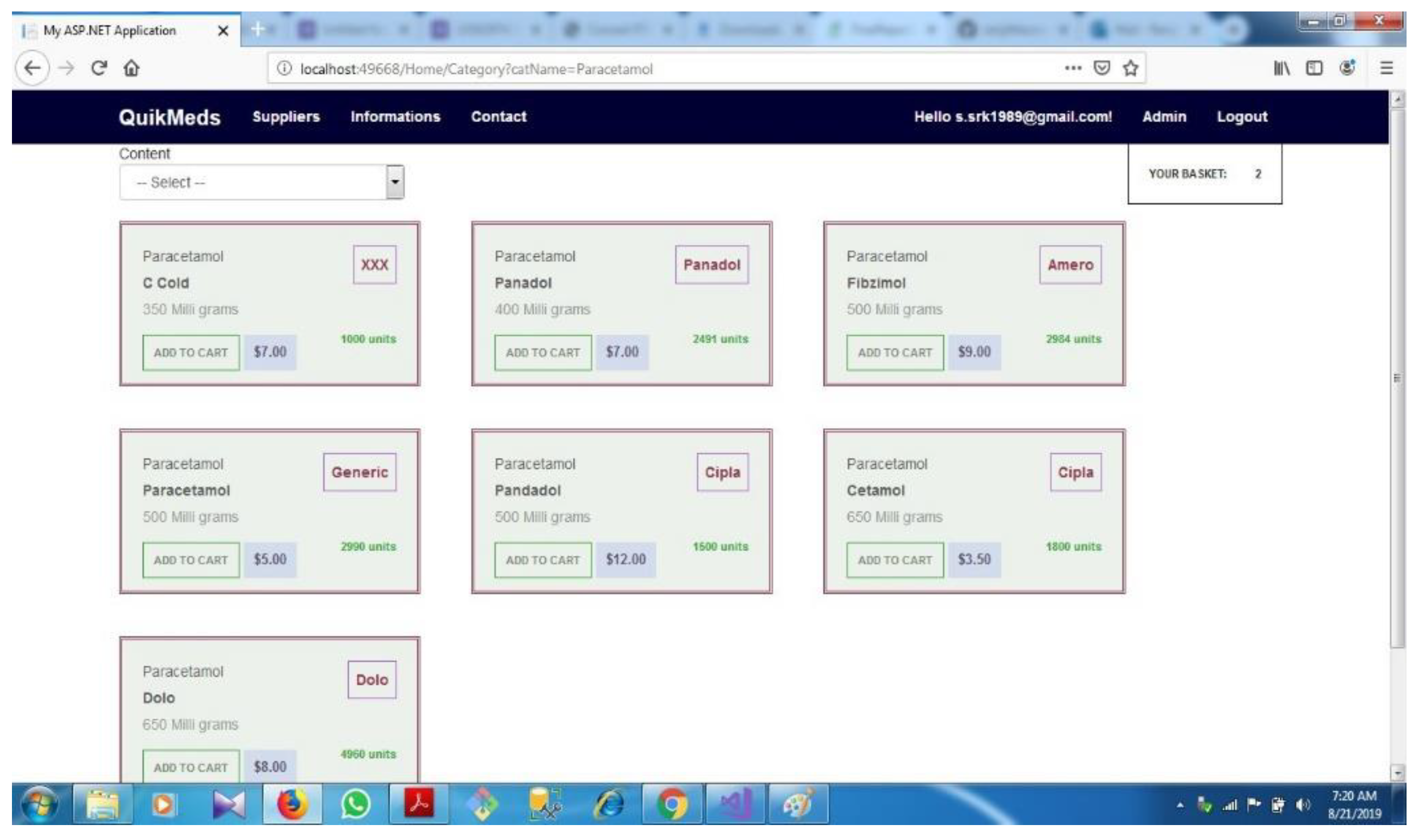
Figure 3.
Content based selection.
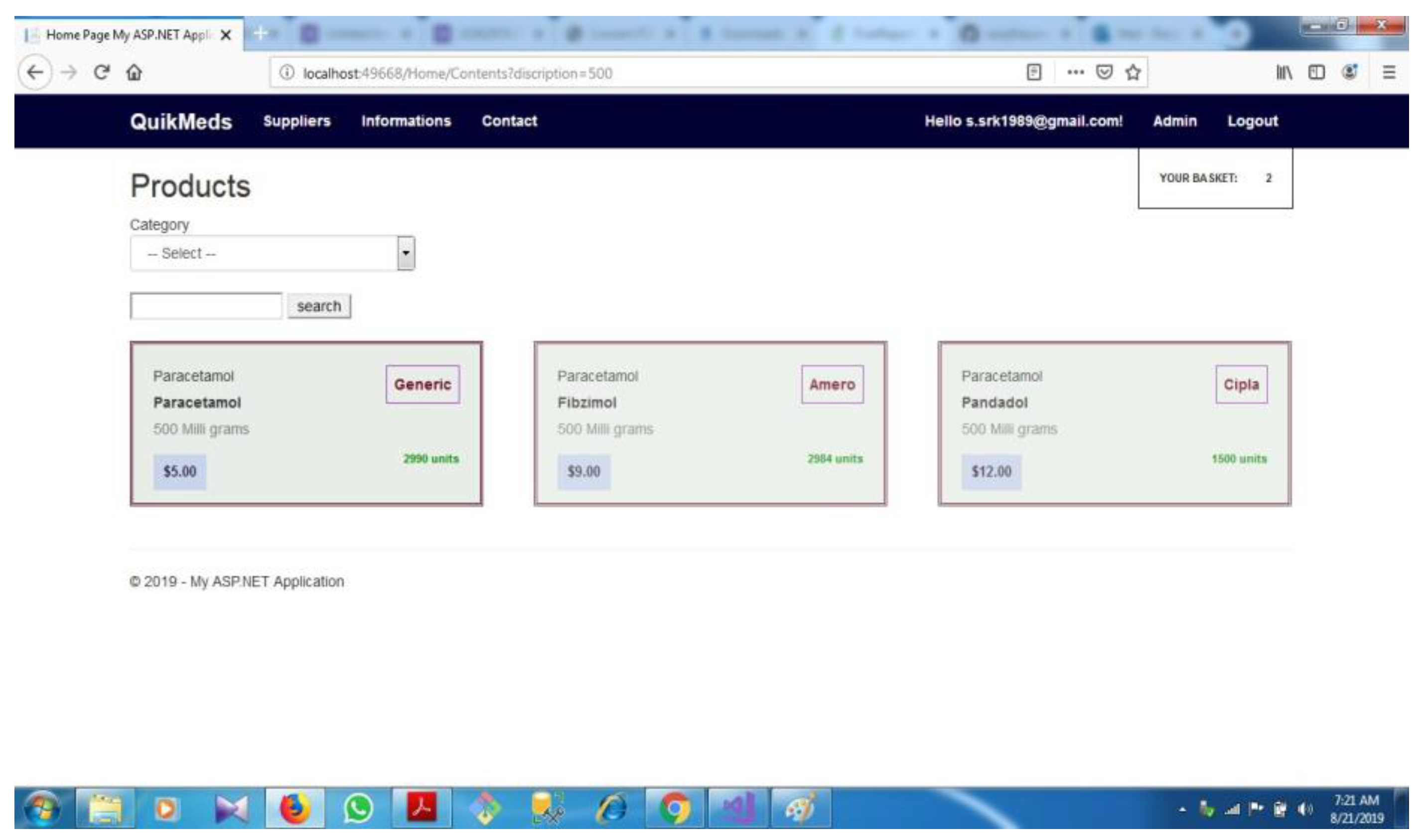
Figure 4.
Search option.
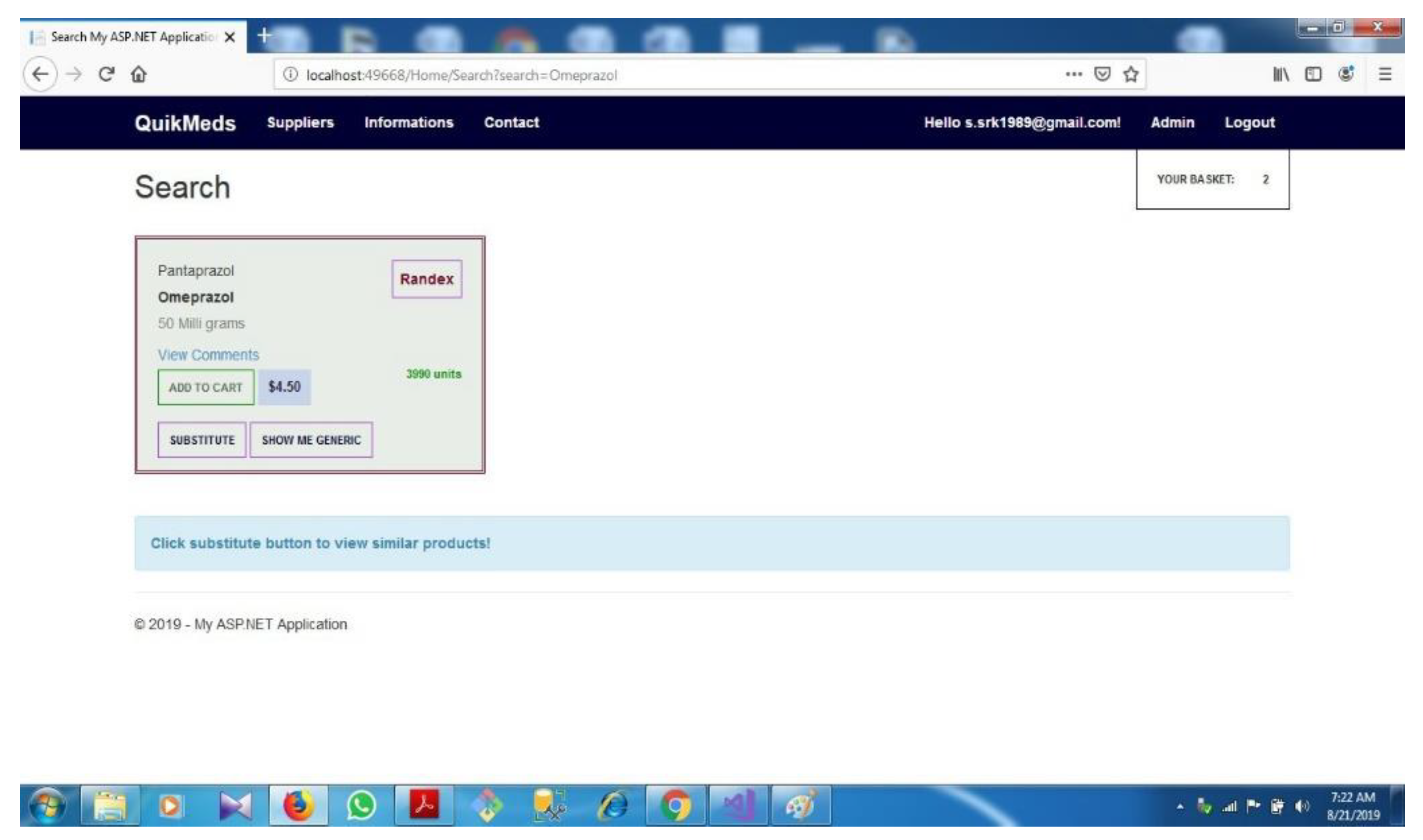
Figure 5.
Finding suitable Substitute.
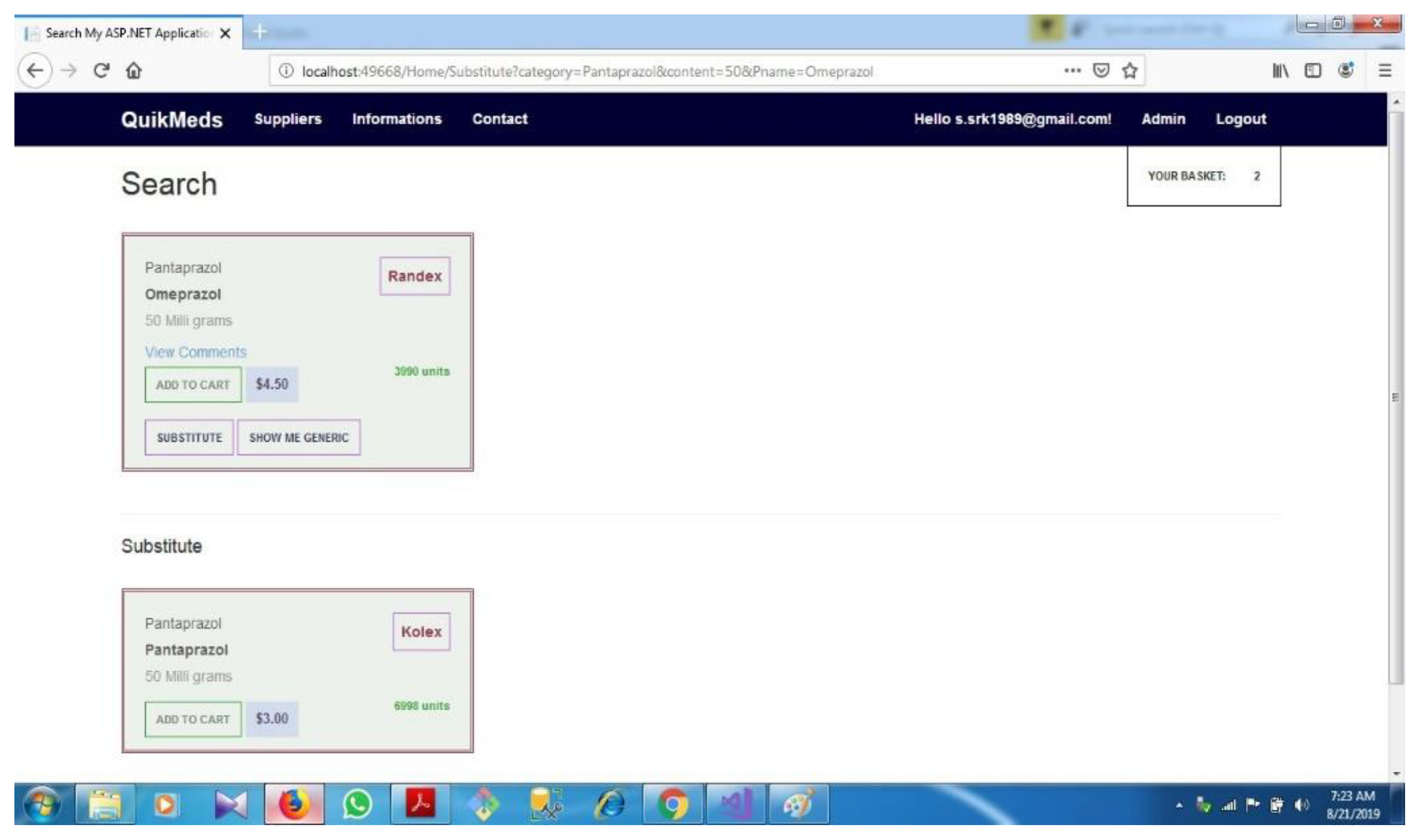
Figure 6.
Shopping cart.
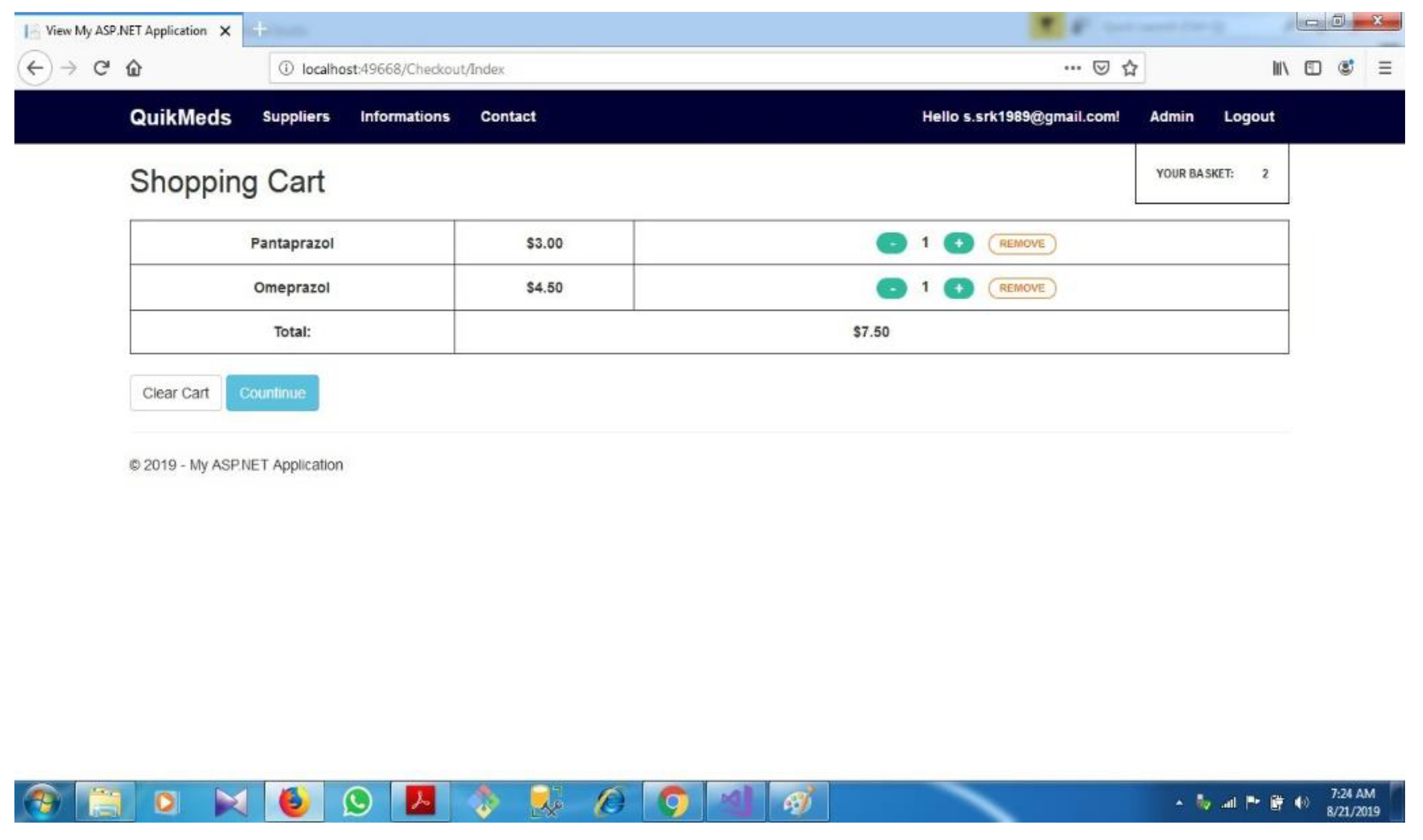
Figure 7.
Admin section.
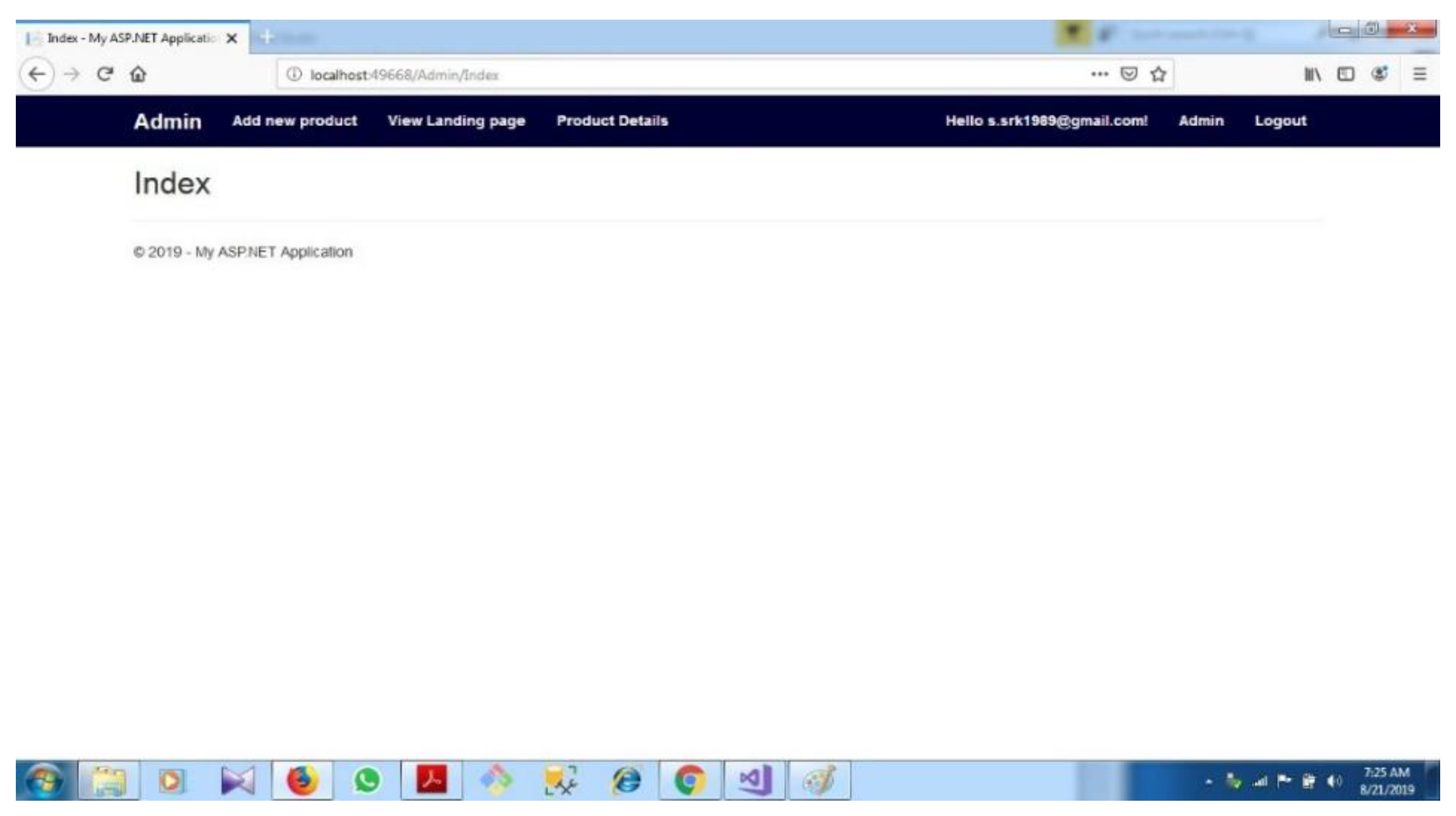
Figure 8.
Admin operations.
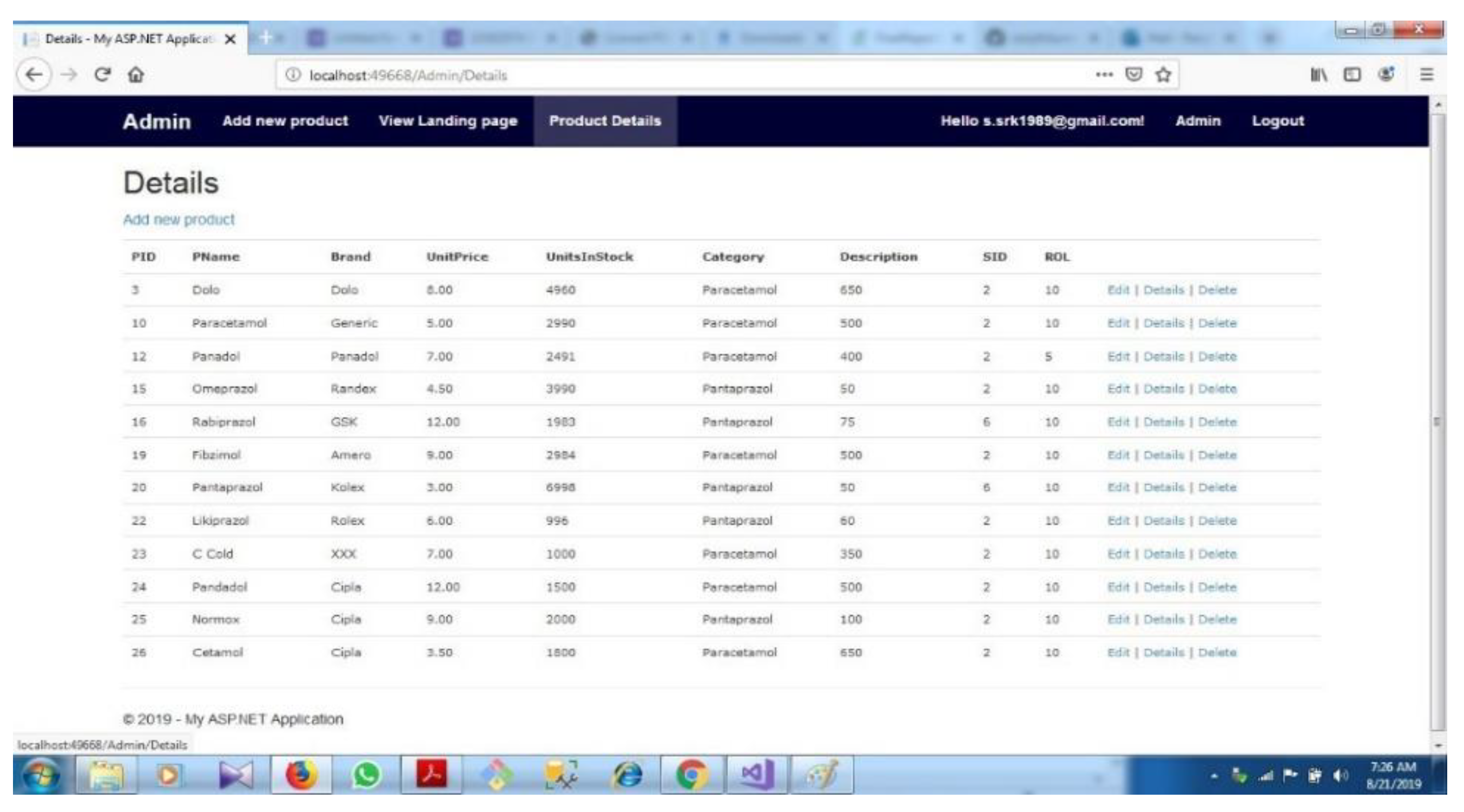
References
- Agnieszka, Szewczyk (2015). Usability Of Internet Shops Quating The Example Of E- pharmacies. Vol. 72. University of Szczecin.
- Apoteket and European Commission Stokeholm (2015). Prescriptions Apoteket and Stockholm County Council Sweden-eRecept an E-Prescribing Application.
- Bershidsky, Leonid (2018). The influence of a growing online retail industry increases con- sumers’ exposure to the fluctuations of energy prices and exchange rates. URL: https:.
- //www.bloomberg.com/opinion/articles/2018-10-12/the-amazon-effect- can-drive-prices-up-too.
- Bihari, Michael (2019). Drug Classes: Making Sense of What Medication Classifications Mean. URL: https://www.verywellhealth.com/drug-classes-1123991.
- Brennan, Cianan (2017). Pharmaceutical industry paid Irish doctors 3.7 million for "undis- closed" reasons in 2015. URL: https://www.thejournal.ie/big-pharma-ireland- 3068146-Nov2016/.
- Burke, Elaine (2019). Ireland is a home for 24 of the world’s top biotech and pharma com- panies. URL: https://www.siliconrepublic.com/careers/biotech- pharma- companies-ireland.
- Buying medicines online (2019). URL: https : / / www . ema . europa . eu / en / human - regulatory/overview/public-health-threats/falsified-medicines/buying- medicines-online.
- Car, Josip and Ashly Black (2008). “Prevention Using Information Technology Sys- tems”. In: Medication Errors: Prevention Using Information Technology Systems 62.1,.
- pp. 1–20.
- Department of Health (2017). URL: http://health.gov.ie/.
- Directive (2001). Directive 2001/83/Ec Of The European Parliament. URL: https : / / www . ema . europa . eu / en / documents / regulatory - procedural - guideline / directive- 2001/83/ec- european- parliament- council- 6- november- 2001- community-code-relating-medicinal-products-human-use_en.pdf.
- —(2011). Directive 2001/62/Ec Of The European Parliament. URL: https://eur-lex. europa.eu/LexUriServ/LexUriServ.do?uri=OJ:L:2011:174:0074:0087:EN: PDF.
- Electronic Irish Statute Book (2013). URL: http://www .irishstatutebook.ie/eli/ 2013/act/31/enacted/en/print#part1.
- European Association of Mail Service Pharmacy (2019). URL: https : / / www . eamsp . pharmacy/.
- Generic Drugs: Questions And Answers (2018). URL: https://www.fda.gov/drugs/ questions-answers/generic-drugs-questions-answers.
- Giuseppe, Colangelo and Tortie Valerio (2017). Selective distribution and online market- place restrictions under EU competition rules after Coty Prestige. 1st ed. Vol. 1. 81-109. Europiean Competition Journal.
- Gorecki, Paul (2017). PharmacoEconomics. URL: https://www.esri.ie/publications/ availability-and-pricing-new-medicines-in-ireland-reflections-and- reform.
- Home - PMC - NCBI. URL: https://www.ncbi.nlm.nih.gov/pmc/articles.
- Ian, Sommerville (2016). Software Engineering, 10th Edition. URL: https : / / www . pearson.com/us/higher-education/program/Sommerville-Software-Engineering- 10th-Edition/PGM35255.html.
- Ltd, White October (2018). FoodRisc Resource Centre. URL: http://resourcecentre. foodrisc.org/mixed-methods-research_185.html.
- Lynch, Priscilla (2014). Generic medicine: What’s in a name? URL: https://www.irishtimes. com/life-and-style/health-family/generic-medicine-what-s-in-a-name- 1.1834124.
- McDermid, Douglas (2011). “Pragmatism”. In: Pragmatism 62.1, pp. 1–20. URL: https:.
- //www.iep.utm.edu/pragmati/.
- Murphy, Kieran C and Caroline Spillane (2011). The Role of the Medical Council Pro- tecting Patients, Supporting Doctors. URL: https : / / www . medicalcouncil . ie / News - and - Publications / Publications / Annual - Reports - Statistics - /A - Statistical-Report,-June-2011.pdf/.
- Murray, Sean (2017). ’Oh, that’s just the price’: 11 difference in cost of same medication in two Dublin pharmacies. URL: https://www.thejournal.ie/pharmacy- prices- different-3544949-Aug2017/.
- Natalie, Richards and Hudson Ian (2016). UK medicines regulation: responding to cur- rent challenges. URL: https://bpspubs.onlinelibrary.wiley.com/doi/pdf/10. 1111/bcp.13077.
- National Medicines Information Centre (2008). URL: http :// www . stjames . ie / GPs / HealthcareProfessionals/Newsletters/NMICBulletins/NMICBulletins2008/.
- Non-prescription medicines (2018). URL: http://www.aesgp.eu/self-care/regulation/ non-prescription-medicines/.
- O’conel, Ronal (2019). Pharmacy. URL: https://www.google.com/publicdata/.
- O’Regan, Eilish (2016). ’My medication costs 144 a month in Republic - but I can get six-month supply for 50 in North’. URL: https:/ / www .independent .ie/ irish- news/health/my-medication-costs-144-a-month-in-republic-but-i-can- get-sixmonth-supply-for-50-in-north-34750761.html.
- Pharmaceutical Society Of Ireland (2007). URL: https://www.thepsi.ie/tns/about- psi/legislation.aspx.
- Pharmaceutical Society Of Ireland (2008). URL: https://www.thepsi.ie/tns/about- psi/legislation.aspx.
- Porecha, Maitri (2018). Sales at Jan Aushadhi drug stores cross 150 crore in Q2. URL: https://www.thehindubusinessline.com/economy/sales-at-jan-aushadhi- drug-stores-cross-150-crore-in-q2/article25382362.ece.
- Prescription - e-Estonia. URL: https://e- estonia.com/solutions/healthcare/e- prescription/.
- PSI Internet supply list (2019). URL: https://www.thepsi.ie/Libraries/Approved_ companies / PSI _ List _ of _ approved _ companies _ for _ the _ sale _ of _ non - prescription_medicines_online.sflb.ashx.
- Ries, Eric (2018). Minimum Viable Product. URL: http://www.startuplessonslearned. com/2009/08/minimum-viable-product-guide.html.
- Tripathy, Ansuman (2018). India Emerges As Top Five Pharmaceuticals Markets Of The World. URL: http://www.businessworld.in/article/India-Emerges-As-Top- Five-Pharmaceuticals-Markets-Of-The-World/05-05-2018-148349/.
- WHO (2017). 2. Anatomical Therapeutic Chemical (ATC) Classification. URL: https:// www.who.int/medicines/regulation/medicines-safety/toolkit_atc/en/.
- Wholesale Distribution (2019). URL: http :// www . hpra . ie / homepage / medicines / regulatory-information/wholesalers-and-distributors.
- Workman, Daniel (2019). Drugs and Medicine Exports by Country. URL: http://www. worldstopexports.com/drugs-medicine-exports-country/.
Disclaimer/Publisher’s Note: The statements, opinions and data contained in all publications are solely those of the individual author(s) and contributor(s) and not of MDPI and/or the editor(s). MDPI and/or the editor(s) disclaim responsibility for any injury to people or property resulting from any ideas, methods, instructions or products referred to in the content. |
© 2024 by the author. Licensee MDPI, Basel, Switzerland. This article is an open access article distributed under the terms and conditions of the Creative Commons Attribution (CC BY) license (https://creativecommons.org/licenses/by/4.0/).
Copyright: This open access article is published under a Creative Commons CC BY 4.0 license, which permit the free download, distribution, and reuse, provided that the author and preprint are cited in any reuse.


