

Submitted:
28 November 2024
Posted:
28 November 2024
You are already at the latest version
Abstract
The escalating issue of air pollution contributes to an alarming number of premature fatalities each year, thereby posing a significant threat to global health. The focus of recent research has shifted towards understanding its potential association with neurodegenerative diseases, specifically Alzheimer's disease (AD). AD is recognised for its characteristic deposition of toxic proteins within the brain, leading to a steady deterioration of cognitive capabilities, memory failure, and ultimately, death. There is burgeoning evidence implying that air pollution may be a contributing factor to this protein build up, thereby intensifying the course of AD. It has been demonstrated that the olfactory system, responsible for smell perception and processing, acts as a potential gateway for airborne pollutants to inflict brain damage. This review aims to elucidate the relationship between air pollution, olfactory deterioration, and AD. Additionally, this review aims to highlight the potential mechanisms through which pollutants might instigate the development of AD and the role of the olfactory system in disease pathogenesis. Moreover, the diverse model systems employed in exploring the correlation, public health policy ramifications, and prospective directions for future research will be discussed.
Keywords:
Olfactory system
; air pollution
; Alzheimer’s disease (AD)
; neuroinflammation
; environmental neurotoxicity
; olfactory modelling systems
; protein aggregation
; public health
1. Introduction
Air pollution has become a pressing global health issue, contributing to an estimated seven million premature deaths each year [1,2]. Beyond respiratory and cardiovascular impacts, a growing body of research suggests that air pollution may also play a role in the development of neurological diseases, including Alzheimer’s disease (AD) [3]. AD is a progressive neurodegenerative disorder characterised by cognitive decline, memory loss, and ultimately, mortality [4]. Although the exact aetiology of AD remains elusive, the accumulation of neurotoxic proteins, such as beta-amyloid and tau, is known to be central to its pathogenesis [4]. Emerging evidence suggests that exposure to airborne pollutants may exacerbate the accumulation of these proteins in the brain, potentially accelerating the onset and progression of AD [5].
One potential pathway for pollutant exposure to affect the brain is through the olfactory system, which processes sensory input related to smell. The olfactory system is unique in that it provides a direct link between the external environment and the brain, making it a vulnerable entry point for environmental toxins [6]. Fine particulate matter (PM), which is a major component of air pollution, can be inhaled through the nasal passages and subsequently enter the brain through the olfactory mucosa. This process bypasses the blood-brain barrier, a crucial defence mechanism that typically prevents harmful substances in the bloodstream from reaching brain tissue. Once in the brain, these pollutants can accumulate and induce damage, potentially triggering neuroinflammation and oxidative stress [7]. This exposure pathway underscores the unique susceptibility of the olfactory system to airborne pollutants and highlights a potential route by which air pollution could contribute to AD development.
Research suggests that the olfactory system may be one of the earliest affected regions in AD, with olfactory dysfunction often preceding more recognizable symptoms of cognitive decline [8]. This observation aligns with the hypothesis that pollutants entering the brain through the olfactory pathway could initiate or accelerate AD pathology. For example, airborne PM and associated toxins may trigger inflammation within olfactory structures, which could spread to connected brain areas, leading to the gradual accumulation of beta-amyloid and tau proteins. This mechanism is supported by findings that individuals exposed to high levels of air pollution, particularly in urban environments, exhibit greater deposits of these toxic proteins in the brain compared to those in cleaner environments [3]. Consequently, olfactory dysfunction observed in AD patients may reflect early-stage neural damage initiated by pollutant exposure.
Investigating the link between air pollution and AD requires appropriate model systems to simulate human exposure and disease processes accurately. Animal models, such as rodents exposed to controlled levels of airborne pollutants, have proven useful for studying the progression of neurodegenerative changes related to air pollution. Additionally, in vitro models using human brain organoids allow researchers to explore the molecular and cellular impacts of pollutants on neural tissue. Such models provide insight into how pollutants might directly or indirectly influence the aggregation of beta-amyloid and tau proteins, thereby advancing our understanding of pollution-induced neurotoxicity.
The potential link between air pollution, olfactory dysfunction, and AD emphasises the need for further research to identify the underlying mechanisms and clarify the role of the olfactory pathway in neurodegeneration. Future studies should aim to define how different types of air pollutants affect the brain and explore preventative strategies, particularly in high-risk urban areas. By improving our understanding of the complex relationship between air pollution and AD, we can work toward developing interventions to mitigate the neurotoxic effects of air pollution and potentially reduce the burden of AD and other neurodegenerative diseases.
2. Overview of the Olfactory System
The olfactory system is responsible for our sense of smell and plays an essential role in our ability to detect and recognise different odours. This system is comprised of several anatomical structures, including the olfactory mucosa, the olfactory bulbs, and the olfactory cortex (Figure 1).
The olfactory mucosa is a specialised tissue at the top of the nasal cavity containing specialised sensory neurons called olfactory receptor neurons [9]. These neurons detect and transduce different odours into electrical signals that are then sent to the olfactory bulbs located within the brain. Once the electrical signals reach the olfactory bulbs, they are processed and sent to different areas of the brain, including the olfactory cortex. The olfactory cortex is responsible for further processing and interpreting the signals, allowing us to perceive and recognise different odours [10].
Exposure to air pollution can significantly affect the olfactory system leading to inflammation, which then causes damage to the olfactory mucosa, resulting in a decreased ability to detect and recognise different odours. A recent study found that exposure to air pollution was associated with decreased olfactory function in older adults [11], while another study found that exposure to diesel exhaust particles led to inflammation and damage to the olfactory epithelium in mice [12]. These findings highlight the potential impact of air pollution on the olfactory system and the importance of understanding and addressing these effects.
3. The Composition of Air Pollution
Air pollution is a complex mixture of gases, PM, and other pollutants that can be detrimental to human health and the environment. It can originate from various sources, such as transportation, industrial processes, and natural sources, such as wildfires and dust storms [13]. The composition of air pollution can vary depending on its source and location, but it typically contains various toxic chemicals, including heavy metals such as lead and mercury, organic compounds such as polycyclic aromatic hydrocarbons, and other pollutants such as black carbon and nitrogen oxides [14]. PM, a mixture of solid and liquid particles small enough to penetrate deeply into lung and brain tissue, is one of the most concerning pollutants from natural and human-made sources. PM is classified based on particle size, with PM2.5 and PM10 being the most commonly measured. PM2.5 refers to particles less than 2.5 microns in diameter, whereas PM10 refers to particles less than 10 microns in diameter [15].
PM2.5 is of particular concern because it can be transported via the lungs and enter the bloodstream, causing damage to multiple organ systems [16,17]. Indeed, PM exposure has been linked to various adverse health effects, including respiratory and cardiovascular issues, diabetes, cognitive impairment, and cancer. According to recent research, specific populations are more vulnerable to the harmful effects of PM, including the elderly, children and those with pre-existing health conditions [14,17]. The greater susceptibility of these populations could be caused by factors such as weakened immune systems, developing organ systems, or worsening of pre-existing health problems. Furthermore, disparities in socioeconomic status, limited access to healthcare, and living in polluted regions can all contribute to their greater vulnerability. As a result, we must prioritise pollution exposure mitigation in those most susceptible in order to promote better health outcomes and reduce health inequalities.
4. Alzheimer’s Disease and Air Pollution
An increasing body of evidence suggests that air pollution exposure may play a role in the development and progression of neurodegenerative diseases, such as AD, Parkinson's disease and amyotrophic lateral sclerosis [3,5,18]. Alzheimer’s, in particular, has been extensively studied concerning air pollution. Numerous epidemiological studies have reported a link between air pollution exposure and cognitive decline, dementia, and specifically AD [19]. For example, a large prospective cohort study in the United States found that long-term exposure to PM2.5 correlated with accelerated cognitive decline and increased AD risk [20]. Another study in Sweden discovered that traffic-related air pollution exposure was associated with a heightened risk of both AD and vascular dementia [21].
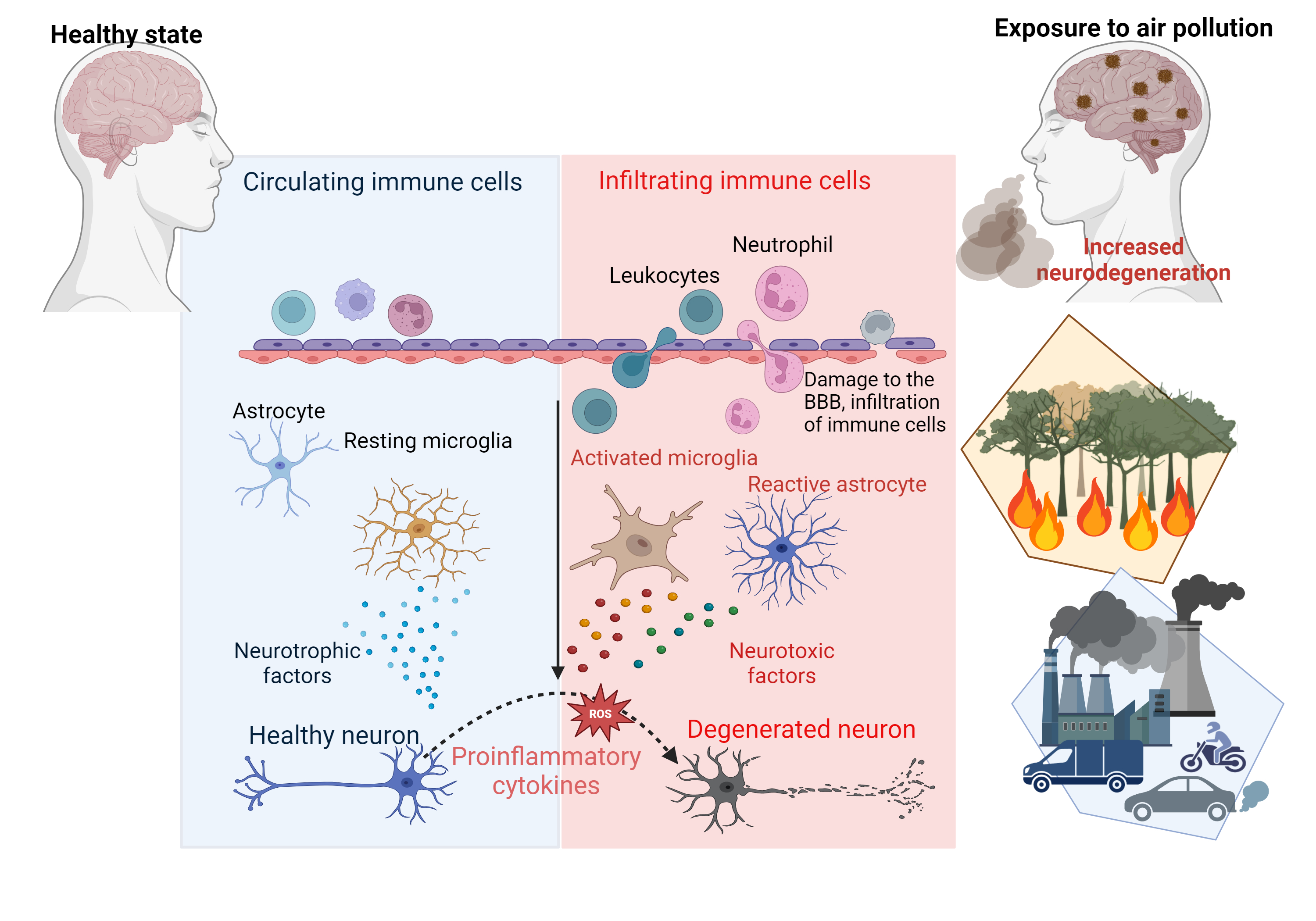
Air pollution is increasingly recognised as a key factor in the development of AD and other neurodegenerative conditions, contributing to these disorders through mechanisms such as neuroinflammation, oxidative stress, and blood-brain barrier (BBB) disruption [5,22] (Figure 2). Exposure to airborne pollutants initiates the release of pro-inflammatory cytokines and chemokines, which activate microglia and astrocytes within the brain [23]. Persistent activation of these cells generates reactive oxygen species (ROS), leading to oxidative stress and subsequent neuronal damage [24]. Furthermore, air pollution has been shown to weaken the BBB, a critical barrier that regulates molecular exchange between the blood and brain. When the BBB’s integrity is compromised, it allows toxic proteins to accumulate and promotes inflammation in the brain, fuelling AD progression [7].
In addition, PM2.5 can bypass the BBB entirely by entering through the olfactory mucosa, directly exposing the central nervous system to neurotoxic substances [5,25]. Studies have shown that PM2.5 is encapsulated and phagocytosed by mucosal cells in the nasal epithelium, which then transport it to the olfactory bulb and deeper brain regions. This process transforms the olfactory mucosa into a conduit for pollutants, enabling inflammation and oxidative stress that can further neurodegenerative processes [26].
The above aligns with the Braak hypothesis which suggests that certain pathogens or abnormal proteins may infiltrate the brain through the nasal cavity and initiate a cascade that results in protein aggregates. In AD, beta-amyloid proteins may act as promiscuous binders, forming aggregates that propagate in a prion-like fashion, spreading pathology to key regions of the brain over time. This prion-like mechanism might play a pivotal role in disease progression, as misfolded proteins propagate through interconnected neural pathways, particularly those linked to the olfactory system [27]. This model helps to explain how neurodegenerative damage systematically advances through brain regions, underscoring the air pollution’s role as an urgent public health concern with its potential to drive AD and other neurodegenerative diseases, especially as global population growth and urbanization intensify [28].
4.1. Olfactory Dysfunction as an Early Marker of Alzheimer's Disease
Olfactory dysfunction has been suggested as a potential early indicator of AD due to its connection with the regions of the brain affected by the disease, such as the entorhinal cortex and hippocampus, which are crucial for memory and among the first to deteriorate in AD [29,30,31]. In keeping with this, olfactory dysfunction has also been associated with the progression from mild cognitive impairment to AD [30,32]. Indeed air pollution may contribute to both olfactory dysfunction and AD. Numerous investigations have identified a relationship between air pollution exposure and cognitive decline [33,34]. These studies emphasise the detrimental effects of PM2.5 and nitrogen oxide exposure on cognitive functions such as verbal and mathematical abilities. Additional research is required to pinpoint the specific pathways through which air pollution influences cognitive functions and develop targeted interventions to reduce the risk of cognitive decline and neurodegenerative diseases in susceptible populations.
Air pollution has also been shown to cause inflammation and oxidative stress, which leads to neuronal damage and cognitive decline [3,5]. Higher levels of air pollution have been associated with an increased risk of olfactory dysfunction [21,35]. Calderón-Garcidueas et al.’s study in Mexico City, a location known for high levels of air pollution, found that children exposed to higher pollution levels had lower olfactory function than those in less polluted areas [36]. These results emphasise the need to understand the impact of air pollution on olfactory function and its broader implications for cognitive health and neurodegenerative diseases. Olfactory dysfunction may serve as a valuable marker for early detection of AD, with air pollution exposure potentially contributing to this dysfunction. Future research should investigate the mechanisms connecting air pollution to olfactory dysfunction and explore potential interventions to counteract the effects of air pollution on cognitive function.
5. Current Model Systems Used to Elucidate the Links Between Air Pollution, Olfactory Dysfunction, and Alzheimer's Disease
5.1. Animal Models of Air Pollution Exposure and Alzheimer's Disease
An expanding body of literature has begun to investigate the effects of air pollution on AD pathology by employing animal models. The olfactory system has emerged as a focus for researchers because it may serve as an entry point for air pollution, causing the onset of AD. Experiments on mice exposed to air pollution particles revealed increased beta-amyloid plaque accumulation, neuroinflammation, and oxidative stress in both the olfactory bulb and cortex [3,24]. Moreover, mice exposed to diesel exhaust particles showed increased concentrations of beta-amyloid and tau protein in the hippocampus, a critical region for memory and learning processes, as well as in the olfactory bulb [37]. In line with this, another study showed that mice exposed to concentrated ambient particles had increased beta-amyloid plaque accumulation in both the hippocampus and the olfactory bulb [38]. In addition, a recent report showed that mice exposed to nanoparticle-rich diesel exhaust increased oxidative stress and neuroinflammation in the olfactory bulb and increased beta-amyloid plaque accumulation in both the olfactory bulb and the hippocampus [39]. These findings suggest that exposure to air pollution, specifically ultrafine particulate matter and diesel exhaust particles, cause debilitating effects on the olfactory system and hippocampal regions of the brain, which could exacerbate AD pathology. However, while animal models have been highly beneficial in elucidating the effect of air pollution in AD, the findings may not be entirely applicable to humans, as there are significant differences in brain structure and function between species. Hence future research should incorporate advanced in vitro techniques, such as human brain organoids or induced pluripotent stem cell (iPSC)-derived neurons, along with epidemiological studies and controlled human exposure trials to better understand the direct impact of air pollution on AD pathology and to develop effective strategies for mitigating these effects.
5.2. Human Studies of Air Pollution Exposure and Olfactory Function and Alzheimer's Disease
Researchers have studied the effects of air pollution exposure on olfactory function in individuals from various regions worldwide. The study conducted in the polluted environment of Mexico City showed that children with higher exposure to PM2.5 had a significantly worse sense of smell than those with lower exposure levels [36]. A similar study conducted in Taiwan found that exposure to high levels of PM2.5 was associated with a decline in olfactory function in elderly individuals [22]. In addition to these observational studies, a few intervention studies have also been conducted to assess the impact of air pollution reduction on olfactory function. For example, a study conducted in Beijing found that after implementing an air pollution control policy, participants' olfactory function improved significantly [40]. Another study conducted in London found that reduced traffic-related air pollution was associated with improved olfactory function in children [41]. Several mechanisms have been proposed to explain the relationship between air pollution exposure and olfactory dysfunction. One proposed mechanism is that air pollution can cause inflammation and oxidative stress in the olfactory epithelium, damaging olfactory receptor neurons and ultimately impairing olfactory function [7]. Another proposed mechanism is that air pollution can lead to changes in the brain, including neuroinflammation and the accumulation of beta-amyloid plaques, characteristic of AD [5]. These changes in the brain may ultimately lead to olfactory dysfunction and contribute to the development of AD. Indeed, there is growing evidence that olfactory dysfunction may be an early indicator of AD. Studies have found that individuals with AD and those at risk for AD, such as those with mild cognitive impairment, have impaired olfactory function [29,42]. Moreover, studies have suggested that olfactory dysfunction may precede other cognitive symptoms of AD over several years, making it a potential biomarker for early disease detection [29,42].
5.3. In Vitro Models of Air Pollution Exposure and Alzheimer's Disease
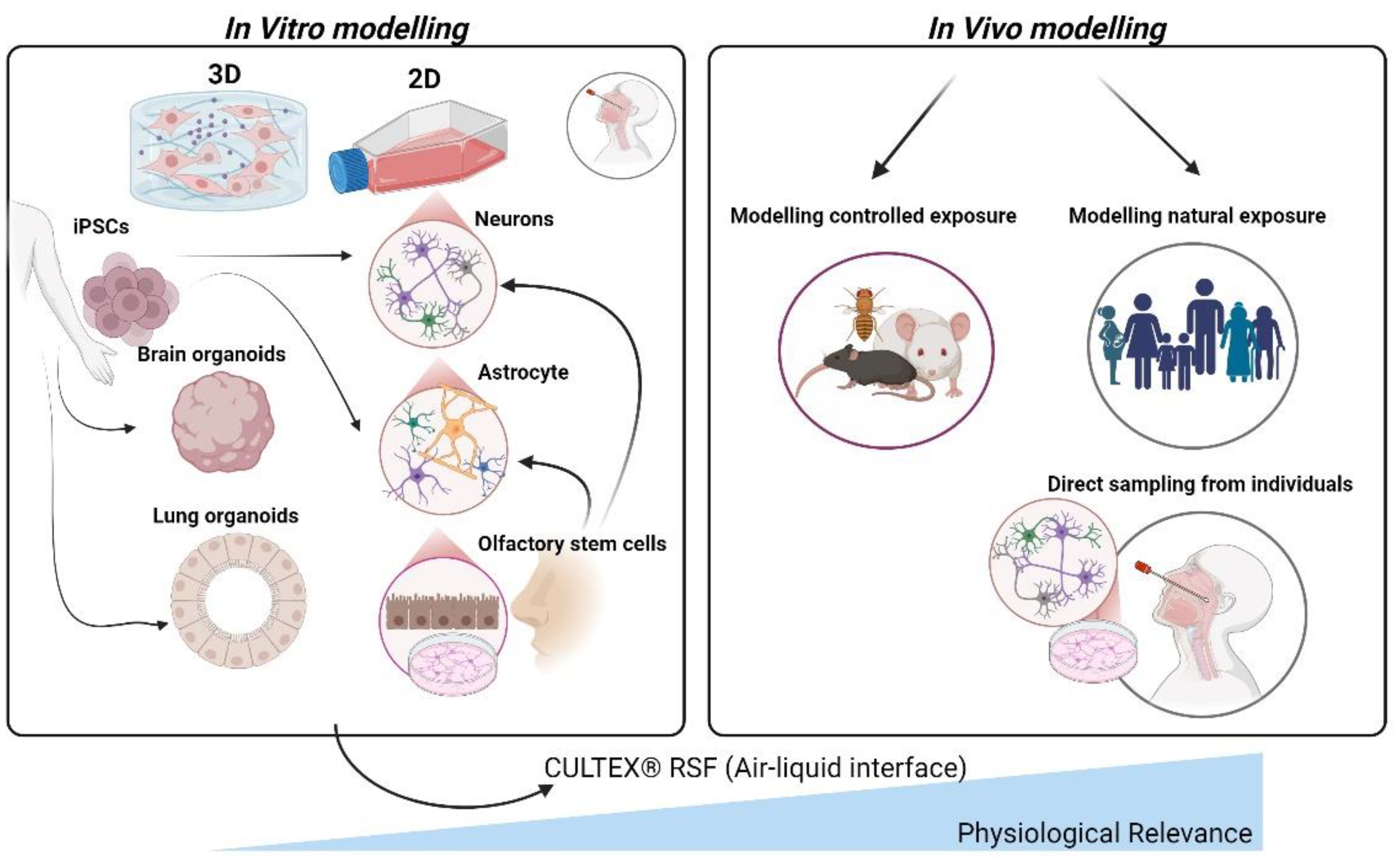
The importance of in vitro models for studying the effects of air pollution on the olfactory system and AD cannot be understated, particularly in light of ethical concerns and the limitations of extrapolating animal study results to humans (Figure 3). Additionally, the substantial disparities in brain structure and function across species present a challenge in translating biomarkers discovered through animal research to human studies. Various in vitro cell models have been developed for this purpose, which offer a more physiologically relevant environment to study the impact of air pollution on olfactory tissue (Figure 3). Primary cultures derived from human olfactory mucosal cells also provide a relevant model, although challenges such as limited tissue accessibility and donor variability exist [43,44,45,46]. Induced pluripotent stem cells (iPSCs) present a promising alternative for creating olfactory sensory neurons and other olfactory cell types, enabling researchers to study individual-specific responses to air pollution and identify genetic factors affecting susceptibility [47,48]. Additionally, co-culture models with multiple cell types and iPSC-derived brain organoids can help clarify the intricate interactions between various cell types in response to air pollution exposure [49].
A limitation of the previously mentioned model systems is that submerged cultures used for in vitro exposure of cultivated cells to airborne pollutants do not accurately mimic the in vivo environment [50]. This discrepancy is because pollutant deposition in submerged cultures relies on accumulation and Brownian diffusion, which differs from deposition in lung tissues [51]. To overcome this issue, researchers developed the CULTEX® Radial Flow System, which simulates the in vivo environment by cultivating cells at the air-liquid interface and facilitating direct cell-pollutant contact without media interference [52]. This system provides uniform exposure across the entire cell layer and employs suitable cell models for the target tissue type. After cultivation, cells can be exposed to atmospheric pollutants under dynamic or static conditions. Dynamic exposure necessitates a more sophisticated setup, including continuous and homogenous test atmosphere production, reproducible pollutant dispersion via electrostatic precipitation, and constant atmosphere removal [52].
6. Implications for Public Health
Current studies examining the relationship between air pollution and AD have crucial implications for public health policies. Multiple studies have shown that exposure to air pollution, specifically PM, correlates with an elevated risk of AD and other neurodegenerative diseases [20,48]. As discussed earlier, numerous epidemiological and animal investigations have discovered a connection between air pollution and AD risk. Moreover research has demonstrated that long-term exposure to PM2.5 raises the likelihood of AD and cognitive decline [20]. Likewise, urban air pollution is linked to a higher risk of AD, particularly in genetically predisposed individuals [20]. These results underscore the potential public health importance of decreasing air pollution to lower the risk of AD. Given the established link between air pollution and AD, public health policies should emphasise minimising air pollutant exposure. This can be achieved through urban planning measures that limit traffic pollution exposure, stricter air quality regulations, and encourage alternative transportation modes [3]. Public health should also focus on susceptible populations, such as the elderly and those with genetic predispositions, offering targeted interventions and risk communication [53]. The current body of research on the connection between air pollution and AD indicates that diminishing air pollution could lead to substantial public health improvements. Future studies should concentrate on understanding the underlying mechanisms, pinpointing vulnerable groups, and evaluating long-term effects and intervention effectiveness. Public health policies should prioritise reducing air pollutant exposure, especially for at-risk populations.
7. Conclusions
This review has provided valuable insights into the complex relationship between air pollution exposure, olfactory impairment, and AD. We have examined the mechanisms through which airborne pollutants may influence the onset and progression of AD, with a particular emphasis on the role of the olfactory system as a critical entry point for neurotoxic particles. The olfactory pathway’s unique vulnerability to environmental toxins highlights its potential role in early neurodegenerative changes that precede symptomatic cognitive decline. Furthermore, we reviewed the use of animal and in vitro models to investigate these associations, which have provided essential data on how pollutants contribute to neuroinflammation, oxidative stress, and the accumulation of toxic proteins such as beta-amyloid and tau in the brain. However, the exact molecular mechanisms by which pollutant particles damage the BBB and induce AD neuropathology remain unclear.
Our exploration underscores that the interplay between environmental and biological factors in AD pathogenesis is a vital area for further study. Understanding how pollutants interact with brain structures could help uncover key mechanisms that initiate or accelerate AD pathology, especially in populations exposed to high levels of air pollution. Moreover, this knowledge has significant implications for public health policies aimed at reducing the prevalence and progression of AD. By highlighting the impact of air quality on brain health, policymakers could advocate for stricter air quality standards and urban planning initiatives that reduce exposure to harmful pollutants. This approach could be particularly beneficial in densely populated urban areas, where pollution levels are highest, and the risks to cognitive health are most pronounced.
The findings in this review also suggest avenues for innovative preventative strategies. For instance, developing therapeutic interventions that protect or repair the olfactory system might mitigate the early neurotoxic effects of pollution. Additionally, as our understanding of the link between pollution and neurodegeneration grows, there is a strong case for public awareness campaigns that educate individuals about the cognitive risks associated with long-term pollution exposure, encouraging personal and community-level actions to minimize exposure where possible.
Future research should prioritise longitudinal studies that track air pollution exposure and cognitive outcomes over time, as well as studies that explore the molecular processes that govern how pollutants cross the olfactory mucosa and accumulate in the brain. Advancing the sophistication of experimental models, such as human brain organoids or more refined animal models, could provide even deeper insights into the pathological progression linked to pollution. Ultimately, by advancing research in this area, we can inform public health interventions that not only address AD prevention but also enhance overall cognitive well-being, aiming toward a future where environmental health is recognized as integral to neuroprotective strategies.
Author Contributions
Conceptualisation, L.O and R.S.; writing—original draft preparation, L.O, H.Q and R.S.; writing—review and editing, L.O, H.Q, C.C-L, A.R.W, R.S.; visualisation, L.O, H.Q, R.S; supervision, A.R.W and R.S. Funding acquisition, A.R.W, H.Q. All authors have read and agreed to the published version of the manuscript.
Funding
This work was supported by grants from NHMRC (APP1125796). A.R.W. is supported by an NHMRC Senior Research Fellowship APP1118452. H.Q is supported by an NHMRC Ideas Grant (APP2029183).
Conflicts of Interest
The authors declare no conflict of interest.
References
- Lelieveld, J.; et al. Cardiovascular disease burden from ambient air pollution in Europe reassessed using novel hazard ratio functions. European heart journal 2019, 40, 1590–1596. [Google Scholar] [CrossRef] [PubMed]
- Owusu, P.A.; Sarkodie, S.A. Global estimation of mortality, disability-adjusted life years and welfare cost from exposure to ambient air pollution. Science of the Total Environment 2020, 742, 140636. [Google Scholar] [CrossRef] [PubMed]
- Block, M.L.; et al. The outdoor air pollution and brain health workshop. Neurotoxicology 2012, 33, 972–984. [Google Scholar] [CrossRef] [PubMed]
- Selkoe, D.J.; Hardy, J. The amyloid hypothesis of Alzheimer's disease at 25 years. EMBO molecular medicine 2016, 8, 595–608. [Google Scholar] [CrossRef] [PubMed]
- Block, M.L.; Calderón-Garcidueñas, L. Air pollution: mechanisms of neuroinflammation and CNS disease. Trends in neurosciences 2009, 32, 506–516. [Google Scholar] [CrossRef]
- Chin-Chan, M.; Navarro-Yepes, J.; Quintanilla-Vega, B. Environmental pollutants as risk factors for neurodegenerative disorders: Alzheimer and Parkinson diseases. Frontiers in cellular neuroscience 2015, 9, 124. [Google Scholar] [CrossRef]
- Calderón-Garcidueñas, L.; et al. Exposure to severe urban air pollution influences cognitive outcomes, brain volume and systemic inflammation in clinically healthy children. Brain and Cognition 2011, 77, 345–355. [Google Scholar] [CrossRef]
- Attems, J.; Walker, L.; Jellinger, K.A. Olfaction and aging: a mini-review. Gerontology 2015, 61, 485–490. [Google Scholar] [CrossRef]
- Witt, M. Anatomy and development of the human gustatory and olfactory systems. 2020.
- Mackay-Sim, A. Olfactory mucosa: neural stem and progenitor cells for nervous system repair and cell models of brain disease, in Progenitor and Stem Cell Technologies and Therapies. 2012, Elsevier. p. 309-330.
- Scussiatto, H.O.; et al. Association of air pollution with olfactory identification performance of São Paulo residents: a cross-sectional study. International Archives of Occupational and Environmental Health, 2023: p. 1-8.
- Yokota, S.; et al. Gene expression changes in the olfactory bulb of mice induced by exposure to diesel exhaust are dependent on animal rearing environment. PLoS One 2013, 8, e70145. [Google Scholar] [CrossRef]
- Laumbach, R.J.; Kipen, H.M. Respiratory health effects of air pollution: update on biomass smoke and traffic pollution. Journal of allergy and clinical immunology 2012, 129, 3–11. [Google Scholar] [CrossRef]
- Kim, K.-H.; Kabir, E.; Kabir, S. A review on the human health impact of airborne particulate matter. Environment international 2015, 74, 136–143. [Google Scholar] [CrossRef] [PubMed]
- Fernandes, M.; et al. Respiratory gases, air pollution and epilepsy. Revue Neurologique 2019, 175, 604–613. [Google Scholar] [CrossRef] [PubMed]
- Losacco, C.; Perillo, A. Particulate matter air pollution and respiratory impact on humans and animals. Environmental Science and Pollution Research 2018, 25, 33901–33910. [Google Scholar] [CrossRef] [PubMed]
- Pope, C.A., III; Dockery, D.W. Health effects of fine particulate air pollution: lines that connect. Journal of the air & waste management association 2006, 56, 709–742. [Google Scholar]
- Shi, L.; et al. A national cohort study (2000–2018) of long-term air pollution exposure and incident dementia in older adults in the United States. Nature communications 2021, 12, 6754. [Google Scholar] [CrossRef]
- Genc, S.; et al. The adverse effects of air pollution on the nervous system. Journal of toxicology 2012, 2012, 782462–782462. [Google Scholar] [CrossRef]
- Cacciottolo, M.; et al. Particulate air pollutants, APOE alleles and their contributions to cognitive impairment in older women and to amyloidogenesis in experimental models. Translational Psychiatry 2017, 7, e1022. [Google Scholar] [CrossRef]
- Oudin, A.; et al. Traffic-related air pollution and dementia incidence in northern Sweden: a longitudinal study. Environmental health perspectives 2016, 124, 306–312. [Google Scholar] [CrossRef]
- Ajmani, G.S.; Suh, H.H.; Pinto, J.M. Effects of ambient air pollution exposure on olfaction: a review. Environmental health perspectives 2016, 124, 1683–1693. [Google Scholar] [CrossRef]
- Li, N.; et al. Ultrafine particulate pollutants induce oxidative stress and mitochondrial damage. Environmental health perspectives 2003, 111, 455–460. [Google Scholar] [CrossRef]
- Levesque, S.; et al. Diesel exhaust activates and primes microglia: air pollution, neuroinflammation, and regulation of dopaminergic neurotoxicity. Environmental health perspectives 2011, 119, 1149–1155. [Google Scholar] [CrossRef] [PubMed]
- Oberdörster, G.; Elder, A.; Rinderknecht, A. Nanoparticles and the brain: cause for concern? Journal of nanoscience and nanotechnology 2009, 9, 4996–5007. [Google Scholar] [CrossRef] [PubMed]
- Lucchini, R.; et al. Neurological impacts from inhalation of pollutants and the nose–brain connection. Neurotoxicology 2012, 33, 838–841. [Google Scholar] [CrossRef] [PubMed]
- Walker, L.C. Prion-like mechanisms in Alzheimer disease. Handbook of clinical neurology 2018, 153, 303–319. [Google Scholar] [PubMed]
- Peters, A.; et al. Particulate air pollution and nonfatal cardiac events. Part I. Air pollution, personal activities, and onset of myocardial infarction in a case-crossover study. Research report (Health Effects Institute), 2005: p. 1-66; discussion 67.
- Devanand, D.P.; et al. Olfactory identification deficits and increased mortality in the community. Annals of Neurology 2015, 78, 401–411. [Google Scholar] [CrossRef]
- Devanand, D.P.; et al. Combining Early Markers Strongly Predicts Conversion from Mild Cognitive Impairment to Alzheimer's Disease. Biological Psychiatry 2008, 64, 871–879. [Google Scholar] [CrossRef]
- Mesholam, R.I.; et al. Olfaction in neurodegenerative disease: a meta-analysis of olfactory functioning in Alzheimer's and Parkinson's diseases. Archives of neurology 1998, 55, 84–90. [Google Scholar] [CrossRef]
- Park, J.-W.; et al. Olfactory dysfunctions in drug-naive Parkinson's disease with mild cognitive impairment. Parkinsonism & Related Disorders 2018, 46, 69–73. [Google Scholar]
- Power, M.C.; et al. The relation between past exposure to fine particulate air pollution and prevalent anxiety: observational cohort study. BMJ 2015, 350. [Google Scholar] [CrossRef]
- Weuve, J.; et al. Exposure to particulate air pollution and cognitive decline in older women. Archives of internal medicine 2012, 172, 219–227. [Google Scholar] [CrossRef]
- Oudin, A.; et al. Association between air pollution from residential wood burning and dementia incidence in a longitudinal study in Northern Sweden.(Research Article)(Clinical report). PLoS ONE 2018, 13, e0198283. [Google Scholar] [CrossRef] [PubMed]
- Calderón-Garcidueñas, L.; et al. Air pollution, cognitive deficits and brain abnormalities: A pilot study with children and dogs. Brain and Cognition 2008, 68, 117–127. [Google Scholar] [CrossRef] [PubMed]
- Ehsanifar, M.; et al. Exposure to nanoscale diesel exhaust particles: Oxidative stress, neuroinflammation, anxiety and depression on adult male mice. Ecotoxicology and environmental safety 2019, 168, 338–347. [Google Scholar] [CrossRef] [PubMed]
- Fonken, L.K.; et al. Air pollution impairs cognition, provokes depressive-like behaviors and alters hippocampal cytokine expression and morphology. Molecular Psychiatry 2011, 16, 987. [Google Scholar] [CrossRef]
- Ehsanifar, M.; et al. Hippocampal inflammation and oxidative stress following exposure to diesel exhaust nanoparticles in male and female mice. Neurochemistry International 2021, 145, 104989. [Google Scholar] [CrossRef]
- Guan, W.-J.; et al. Impact of air pollution on the burden of chronic respiratory diseases in China: time for urgent action. The Lancet 2016, 388, 1939–1951. [Google Scholar] [CrossRef]
- Kelly, F.J.; Fussell, J.C. Air pollution and public health: emerging hazards and improved understanding of risk. Environmental geochemistry and health 2015, 37, 631–649. [Google Scholar] [CrossRef]
- Murphy, C. Olfactory and other sensory impairments in Alzheimer disease. Nature Reviews Neurology 2019, 15, 11–24. [Google Scholar] [CrossRef]
- Féron, F.; et al. New techniques for biopsy and culture of human olfactory epithelial neurons. Archives of otolaryngology–head & neck surgery 1998, 124, 861–866. [Google Scholar]
- Rantanen, L.M.; et al. An Alzheimer’s Disease Patient-Derived Olfactory Stem Cell Model Identifies Gene Expression Changes Associated with Cognition. Cells 2022, 11, 3258. [Google Scholar] [CrossRef]
- Stewart, R.; et al. A patient-derived olfactory stem cell disease model for ataxia-telangiectasia. Human molecular genetics 2013, 22, 2495–2509. [Google Scholar] [CrossRef] [PubMed]
- Stewart, R.; et al. A patient-specific stem cell model to investigate the neurological phenotype observed in ataxia-telangiectasia. ATM Kinase: Methods and Protocols, 2017: p. 391-400.
- Leeson, H.C.; et al. Reprogramming of human olfactory neurosphere-derived cells from olfactory mucosal biopsies of a control cohort. Stem Cell Research 2021, 56, 102527. [Google Scholar] [CrossRef] [PubMed]
- Xiong, S.; et al. Differentiation of induced pluripotent stem cells for future olfactory repair using an indirect co-culture technique. International Journal of Clinical and Experimental Pathology 2017, 10, 8072. [Google Scholar] [PubMed]
- Alfaro-Moreno, E.; et al. Co-cultures of multiple cell types mimic pulmonary cell communication in response to urban PM10. European Respiratory Journal 2008, 32, 1184–1194. [Google Scholar] [CrossRef]
- Rach, J.; et al. Direct exposure at the air–liquid interface: evaluation of an in vitro approach for simulating inhalation of airborne substances. Journal of Applied Toxicology 2014, 34, 506–515. [Google Scholar] [CrossRef]
- Fröhlich, E.; Salar-Behzadi, S. Toxicological Assessment of Inhaled Nanoparticles: Role of in Vivo, ex Vivo, in Vitro, and in Silico Studies. International Journal of Molecular Sciences 2014, 15, 4795–4822. [Google Scholar] [CrossRef]
- Aufderheide, M.; et al. The CULTEX RFS: A Comprehensive Technical Approach for the In Vitro Exposure of Airway Epithelial Cells to the Particulate Matter at the Air-Liquid Interface. BioMed research international 2013, 2013, 734137. [Google Scholar] [CrossRef]
- Kioumourtzoglou, M.-A.; et al. Long-term PM2. 5 exposure and neurological hospital admissions in the northeastern United States. Environmental health perspectives 2016, 124, 23–29. [Google Scholar] [CrossRef]
Figure 1.
Extracellular and intracellular entry routes via the olfactory mucosa for pollutants into the brain. The figure illustrates how pollutants can enter the brain through extracellular and intracellular routes via the olfactory mucosa. These pollutants, indicated by green arrows, get trapped in the apical layer cilia and can enter the olfactory bulb through the axons of olfactory sensory neurons. Once inside the bulb, the pollutants can move towards and accumulate in higher cognitive areas that are commonly affected in AD. The various cell types of the olfactory bulb that are involved in odour perception include: (i) granule cells, which adjust and fine-tune olfactory signals within the olfactory bulb; (ii) mitral cells, the primary projection neurons responsible for conveying processed odour signals to the olfactory cortex; (iii) juxtaglomerular cells, a collection of interneurons that manage activities in glomeruli, assisting in odour differentiation and contrast amplification, (iv) neural stem cells from the rostral migratory stream, which contribute to the continuous replenishment of interneurons and (v) astrocytes, which provide structural, metabolic, and trophic support to neurons and help maintain the extracellular environment within the olfactory system. Abbreviations: SVZ (subventricular zone).
Figure 1.
Extracellular and intracellular entry routes via the olfactory mucosa for pollutants into the brain. The figure illustrates how pollutants can enter the brain through extracellular and intracellular routes via the olfactory mucosa. These pollutants, indicated by green arrows, get trapped in the apical layer cilia and can enter the olfactory bulb through the axons of olfactory sensory neurons. Once inside the bulb, the pollutants can move towards and accumulate in higher cognitive areas that are commonly affected in AD. The various cell types of the olfactory bulb that are involved in odour perception include: (i) granule cells, which adjust and fine-tune olfactory signals within the olfactory bulb; (ii) mitral cells, the primary projection neurons responsible for conveying processed odour signals to the olfactory cortex; (iii) juxtaglomerular cells, a collection of interneurons that manage activities in glomeruli, assisting in odour differentiation and contrast amplification, (iv) neural stem cells from the rostral migratory stream, which contribute to the continuous replenishment of interneurons and (v) astrocytes, which provide structural, metabolic, and trophic support to neurons and help maintain the extracellular environment within the olfactory system. Abbreviations: SVZ (subventricular zone).
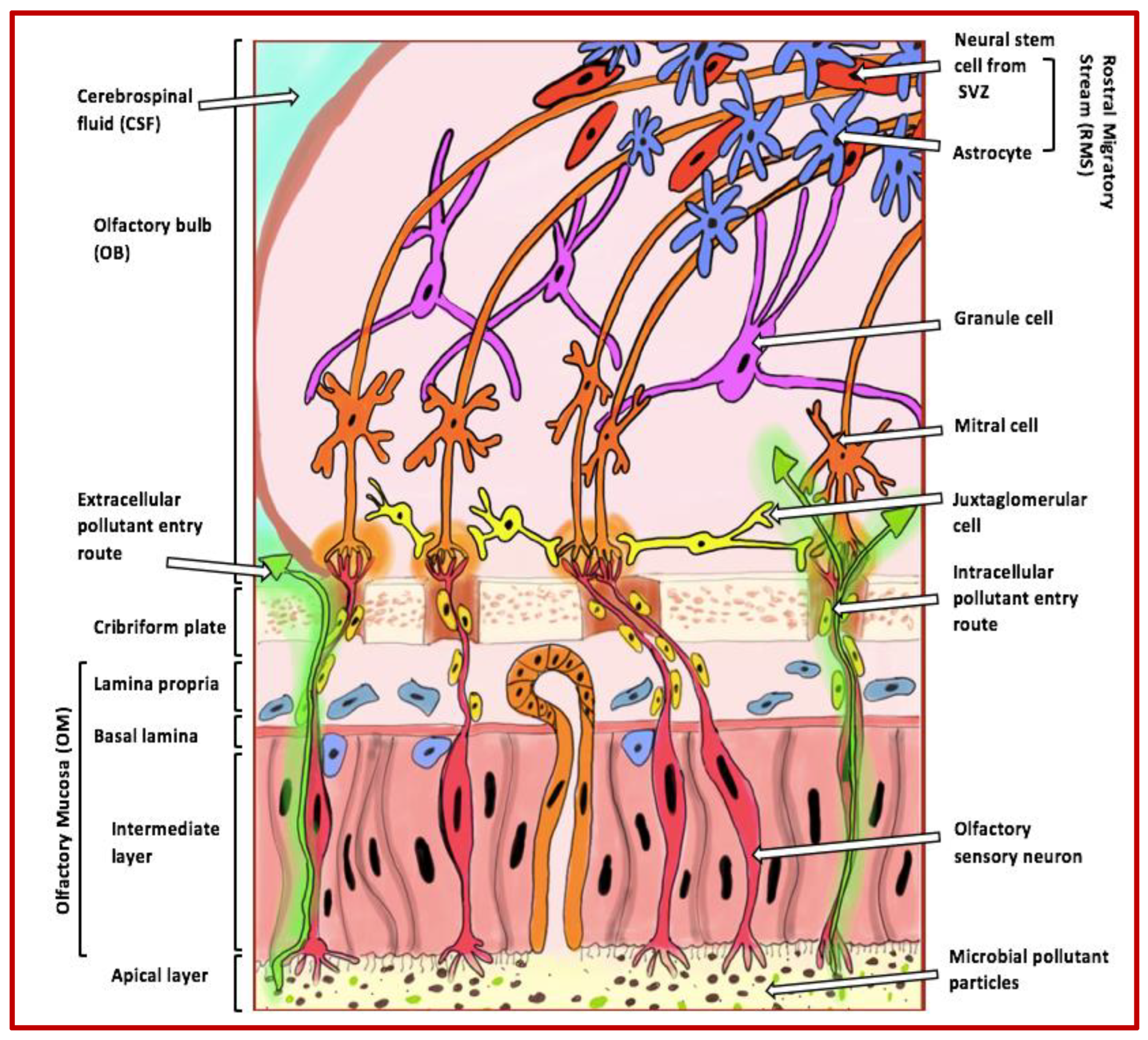
Figure 2.
Mechanisms of Air Pollution-Induced neurodegeneration. This schematic representation highlights the key processes through which air pollution contributes to neurodegenerative diseases such as AD. Exposure to air pollution triggers the production of pro-inflammatory cytokines and chemokines, activating microglia and astrocytes. Chronic activation of microglia and astrocytes generates reactive oxygen species (ROS), leading to neuronal cell damage. Moreover, air pollution can compromise the integrity of the Blood brain barrier (BBB), causing infiltration of immune cells, toxic protein accumulation and inflammation in the brain.
Figure 2.
Mechanisms of Air Pollution-Induced neurodegeneration. This schematic representation highlights the key processes through which air pollution contributes to neurodegenerative diseases such as AD. Exposure to air pollution triggers the production of pro-inflammatory cytokines and chemokines, activating microglia and astrocytes. Chronic activation of microglia and astrocytes generates reactive oxygen species (ROS), leading to neuronal cell damage. Moreover, air pollution can compromise the integrity of the Blood brain barrier (BBB), causing infiltration of immune cells, toxic protein accumulation and inflammation in the brain.
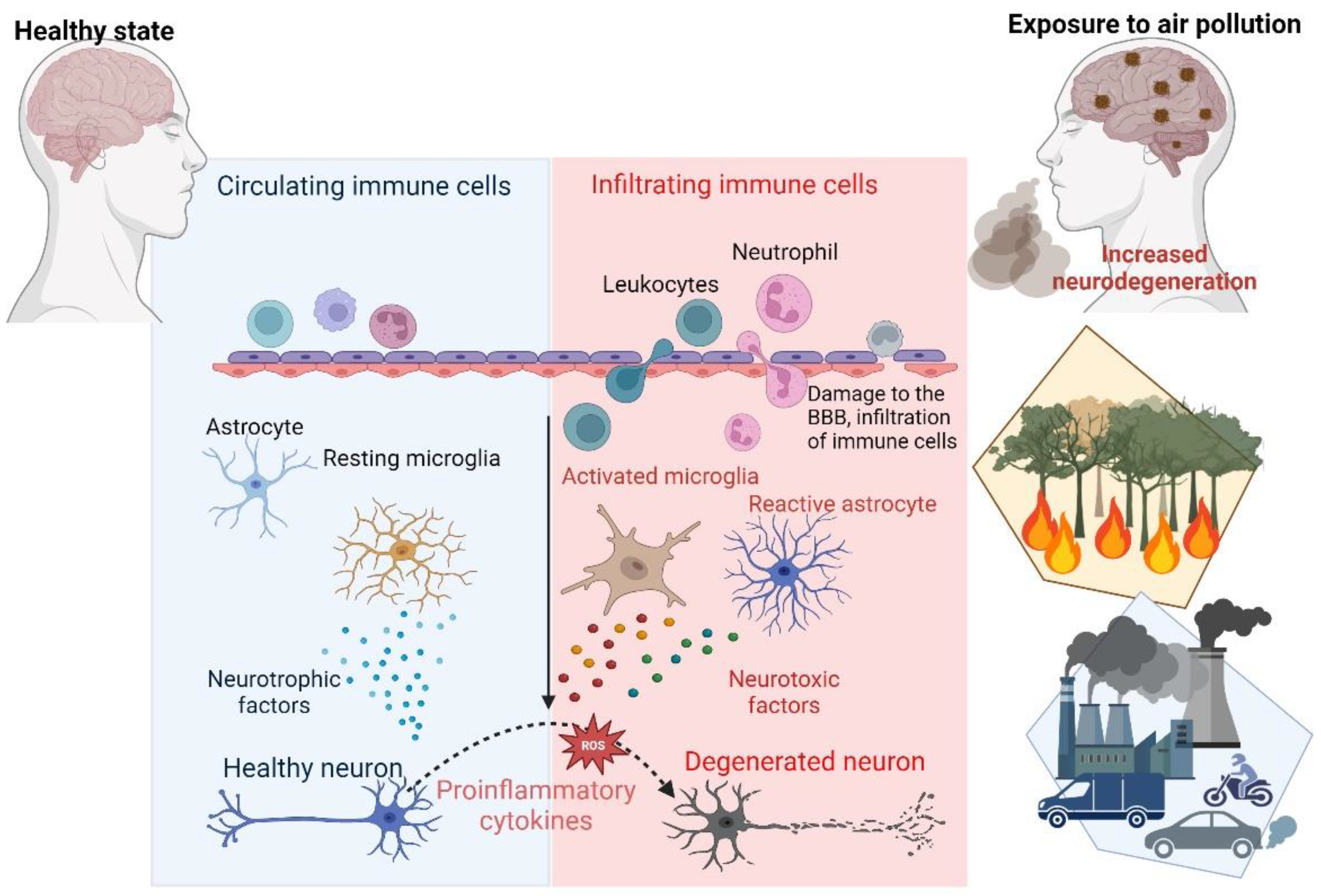
Figure 3.
Comparative in vitro and in vivo models for studying air pollution impacts on the olfactory system. This figure illustrates various in vitro (left) and in vivo (right) approaches to model the effects of air pollution on olfactory tissues. In vitro models, derived from induced pluripotent stem cells (iPSCs), include 2D and 3D cultures such as brain and lung organoids, neurons, astrocytes, and olfactory stem cells, providing controlled environments to study specific cellular responses. The CULTEX® Radial Flow System (RFS) is highlighted for its air-liquid interface, which mimics physiological conditions by allowing direct pollutant exposure to cultured cells. In vivo models comprise controlled exposure studies in animals and natural exposure assessments in human populations, including direct sampling from individuals' nasal tissues. Together, these models support a comprehensive understanding of air pollution’s effects on the olfactory system and its potential contributions to neurodegenerative disease development.
Figure 3.
Comparative in vitro and in vivo models for studying air pollution impacts on the olfactory system. This figure illustrates various in vitro (left) and in vivo (right) approaches to model the effects of air pollution on olfactory tissues. In vitro models, derived from induced pluripotent stem cells (iPSCs), include 2D and 3D cultures such as brain and lung organoids, neurons, astrocytes, and olfactory stem cells, providing controlled environments to study specific cellular responses. The CULTEX® Radial Flow System (RFS) is highlighted for its air-liquid interface, which mimics physiological conditions by allowing direct pollutant exposure to cultured cells. In vivo models comprise controlled exposure studies in animals and natural exposure assessments in human populations, including direct sampling from individuals' nasal tissues. Together, these models support a comprehensive understanding of air pollution’s effects on the olfactory system and its potential contributions to neurodegenerative disease development.
Disclaimer/Publisher’s Note: The statements, opinions and data contained in all publications are solely those of the individual author(s) and contributor(s) and not of MDPI and/or the editor(s). MDPI and/or the editor(s) disclaim responsibility for any injury to people or property resulting from any ideas, methods, instructions or products referred to in the content. |
© 2024 by the authors. Licensee MDPI, Basel, Switzerland. This article is an open access article distributed under the terms and conditions of the Creative Commons Attribution (CC BY) license (http://creativecommons.org/licenses/by/4.0/).
Copyright: This open access article is published under a Creative Commons CC BY 4.0 license, which permit the free download, distribution, and reuse, provided that the author and preprint are cited in any reuse.


