Preprint
Review

This version is not peer-reviewed.

Expanded Spectrum and Increased Incidence of Adverse Events Linked to COVID-19 Genetic Vaccines: New Concepts on Prophylactic Immuno-Gene Therapy, Iatrogenic Orphan Disease and Platform-Inherent Challenges

A peer-reviewed article of this preprint also exists.

Submitted:

11 February 2025

Posted:

13 February 2025

You are already at the latest version

Abstract

The mRNA- and DNA-based “genetic” COVID-19 vaccines can induce a broad range of adverse events (AEs), with statistics showing significant variation depending on timing and data analysis methods. Focusing only on lipid nanoparticle-enclosed mRNA (mRNA-LNP) vaccines, this review traces the evolution of statistical conclusions on AE prevalence and incidence associated with these vaccines, from initial underestimation of atypical, severe toxicities to recent claims suggesting the possible contribution of Covid-19 vaccinations to the excess deaths observed in many countries over the past few years. Among hundreds of different AEs listed in Pfizer’s pharmacovigilance survey, the present analysis categorizes the main symptoms according to organ systems, nearly all being affected. Using data from the US Vaccine Adverse Event Reporting System and a global vaccination dataset, a comparison of the prevalence and incidence rates of AEs induced by genetic versus flu vaccines revealed an average 26-fold increase in AEs with genetic vaccines. The difference is especially pronounced in the case of severe ‘Brighton-listed’ AEs, which are also observed in COVID-19 and post-COVID conditions. Among these, the increases of incidence rates relative to flu vaccines, given as x-fold rises, were 1,152x, 455x, 226x, 218x, 162x, 152x; and 131x, for myocarditis, thrombosis, death, myocardial infarction, tachycardia, dyspnea, and hypertension, respectively. The review delineates the concepts that genetic vaccines can be regarded as prophylactic immuno-gene therapies, and that the chronic disabling AEs might be categorized as iatrogenic orphan diseases. It also examines the unique vaccine characteristics that could be causally related to abnormal immune responses potentially leading to adverse events and complications. These new insights may contribute to improving the safety of this platform technology and assessing the risk-benefit balance of various products.

Keywords: 
;  ;  ;  ;  ;  ;  ;  ;  ;  ;  

1. Introduction

The mRNA-based vaccines, Pfizer-BioNTech’s BNT162b2 (Comirnaty) and Moderna’s mRNA-1273 (Spikevax), became the most widely used preventive measure against the SARS-CoV-2 virus during the COVID-19 pandemic. By blending nanotechnology with genetic engineering, this innovative approach introduced a novel class of medical intervention with promising applications beyond vaccination [1,2,3].
However, like any groundbreaking technology, the innovation has brought along challenges, such as the unexpected rise of a broad range of adverse events (AEs) and complications. This was not a major issue until the gravity and lethality of COVID-19 pandemic made the overwhelming benefit of vaccination over the risk unambiguous. Later on, however, as a result of the success of global immunization campaigns and gradual attenuation of the pathogenicity of new virus variants, and the World Health Organization declared (in May 2023) that COVID-19 was no longer a global public health emergency, the risk/benefit ratio should have been reevaluted in light of the increasing number of severe, disabling AEs [4,5]. Nevertheless, sustaining COVID-19 immunity through repeated vaccinations remains to be the prevailing guideline, as demonstrated by the US FDA’s recent approval of updated mRNA vaccines for adults and children, including 'emergency use' authorization for infants aged 6 months and older [6]. The AEs and complications associated with these vaccines remain unresolved, necessitating a reassessment of the risk-benefit ratio of mRNA vaccinations. A better understanding of the issue's scope and the mechanisms driving the AEs would be instrumental in this assessment. This review seeks to offer such an analysis.
Although the AE profile of DNA-based genetic vaccines, such as AstraZeneca’s Vaxzevria and Johnson & Johnson/Janssen’s Jcovden may in some regards be even worse than that of the mRNA vaccines, these vaccines have been withdrawn from the market and are therefore not included in the present review.

2. The “special interest” symptoms of post-vaccination syndrome and public reaction

The collection of AEs caused by the COVID-19 mRNA vaccines has been called as post-vaccination syndrome "[7,8,9,10] and some of the symptoms overlap with those of COVID-19 and post-COVID, referred to as “symptoms of special interest” or “Brighton case” symptoms, a compilation of AEs by the “Brighton Collaboration”, an international network of experts in drug and vaccine safety [11,12,13,14]. Over the past few years, the post-vaccination syndrome has attracted widespread public and scientific attention. Concerns have been raised that the AEs and complications may have played a role in the excess mortality recorded in various Western nations in recent years [15,16]. Physician coalitions have called for a moratorium, legal actions for compensation have been filed, and political debates have reached major institutions such as the British Parliament and the U.S. Congress. Additionally, public hearings and media discussions continue to showcase insights from experts, vaccine-injured individuals, and concerned public figures. Analysis of the literature in PubMed [17], using the search engine of End-Note (and search terms “Covid-19” “mRNA vaccines” and “adverse events”) gave near 1,500 articles (January, 2025), focusing on AEs and challenging the universal claim that these vaccines are “safe”. The latter statement is based on the low incidence rate of AEs in the 0.03%-0.5 % range (see later), defined as the number of AE reactors related to the overall number of vaccine recipients in a certain time-window. Indeed, the above incidence range counts as low by pharmacotherapy standards, where higher AE rates are generally accepted. However, vaccines differ in this regard, as AEs in a large population of healthy individuals are less acceptable than in patients receiving pharmacotherapy for existing illnesses. Additionally, the global scale of vaccinations has led to very high prevalence of AEs, i.e., total number of affected people in a certain time, imposing a significant burden on society. For these reasons, accurate quantification of vaccine-induced AEs is critical to assessing their risk-benefit ratio. Unfortunately, in the case of COVID-19 vaccines, the AE statistics vary significantly based on time, data collection, and analysis methods.

3. The unique features of mRNA vaccines and their adverse effects

The mRNA in Comirnaty and Spikevax codes for de novo, in loco antigen synthesis in immune cells, which is a revolutionary innovation in vaccine technology. Its advantages include the simplification, acceleration, and cost-reduction of vaccine production [18]. The efficiency facilitates a quick response to viral mutations and allows for the possibility of delivering multiple antigens at once, enabling combined vaccines against multiple viral strains.
Table 1 shows an organ system-classified list COVID-19 adverse events of special interest (AESIs), which is used to identify those special vaccine-induced severe AEs that resemble COVID-19, rather than those caused by traditional vaccines. The spectrum of AEs is uniquely broad and includes rare symptoms and diseases that are atypical for most other vaccines, drugs or even toxic agents, except for infection with SARS-CoV-2. This points to one or more very fundamental interference with multiple biological processes that are also seen in Covid-19 and post-Covid syndrome. Obviously, the occasional manifestation of AEs must depend on individual genetic and epigenetic factors, just as the rise and spectrum of symptoms in acute and chronic (long) Covid.

4. Prevalence and incidence of adverse events caused by mRNA-LNP vaccines: Inconsistent statistics

Clinical trials conducted before approval, large-scale post-marketing safety surveillance, prospective multicenter studies, and AE monitoring systems have yielded significantly different statistics on the AEs caused by Comirnaty.
In the initial, phase II/III randomized clinical trial studying the safety, tolerability, immunogenicity, and efficacy of RNA vaccine candidates against COVID-19 in healthy individuals (ClinicalTrials.gov ID: NCT04368728) 21,720 and 21,728 subjects were vaccinated with Comirnaty or placebo, Polack et al. reported no significant difference between the vaccine and placebo groups in the incidence of mild, common side effects of vaccinations. The severe AEs were claimed to have “low incidence” in both groups that were similar to that caused by other viral vaccines [19]. This was the pivotal study leading to the emergency use authorization of Comirnaty. However, a secondary analysis of the same data by Fraiman et al., counting the Brighton-listed AEs [12], found 36 % higher risk of severe AEs in the vaccine group compared to placebo. As it turned out, the selection of AEs for statistical analysis was limited only to the mild symptoms in the Polack et al. study [19], while the reanalysis focused on severe, Brighton-case AEs. The statistics in the latter study showed 18 (1.2-34.9 95% CI) serious AEs over placebo in 10,000 participants, corresponding to 1 person displaying severe vaccine-induced AE in about 556 participants (0.18%) [12]. The ratio of “special interest” AEs among all serious AEs was ~56% [12].
Three months after the global rollout of Comirnaty, Pfizer-BioNTech’s originally confidential, now publicly accessible post-authorization safety report through 28 February, 2021 [20] gave account of 42,086 AE case reports of 158,893 events out of 126,212,580 vaccine doses in 56 countries. This means 0.13% and 0.03% AE incidences related to events or reactors, respectively, or 1 reactor among ~3,000 vaccine recipients. Reactions were observed mainly in the 31-50-age range, 3-times more in women than man, and full recovery ensued in 47%. The rest recovered with sequalae or did not recover within 3 months. The report listed 2.9% fatality among the reactors, (1,223 deaths) implying ~0.001% fatality of overall vaccinations, or 1 death in about 103,000 vaccinations. However, the relationship between vaccination and reported death is uncertain.
Beyond the fact that 53% of the reactive people recovered with sequalae or did not recover within 3 months, what is astonishing in this report is the approximately 1,590 different words or terms of AEs used in the appended nine-page cumulative list of AEs [20]. Among many unique, unprecedented AEs, the list contained ~40 different types of autoimmune conditions and scores of inflammatory illnesses. Yet, the surveys' summary aligned with the conclusion of the Phase II-III study [19], claiming that “the data do not reveal any novel safety concerns or risks requiring label changes”. True, at that time, the pandemic was spreading uncontrollably.
The statement on safety was reinforced in an international 6-months efficacy and safety study involving 21,926 recipients of Comirnaty and an equal number of placebo [21]. This study reported 16.3% “any event” over placebo, which is 125-times higher than the AE incidence in Pfizer’s 3-month safety suveillance (0.13%) [20], and the 0.51% of severe reactions is about 100-fold higher than the 4% severe reactions of all AEs in the 3-months safety surveillance [20]. Yet, “no new safety signals were identified during the longer followup period” [21].
The next level of comprehensive statistics, provided by the Centers for Disease Control and Prevention (CDC) and the Food and Drug Administration (FDA), are based on continuous monitoring through various reporting systems, including the Vaccine Adverse Event Reporting System (VAERS) [22,23]. Unlike clinical trials wherein documentation of AEs is part of the study, the VAERS entries are volunteer reports by healthcare providers and patients. The first, 6-months post-marketing analysis of the AEs of Comirnaty and Spikevax, based on VAERS data [24], gave 0.11% AE reactor incidence rate (out of 298,792,852 doses), about 4-fold higher than the corresponding value in the 3-months Pfizer survey (0.03%) [20].
One reason for the above ambiguities regarding the occurrence of mRNA-induced AEs is the uncertainty about whether the reported numbers refer to individual events or affected individuals. An AE reporter may experience and document various symptoms, though recording personalized data is not customary. Additionally, inconsistencies exist in data collection. A 2010 study by the U.S. Department of Health and Human Services estimated that fewer than 1% of vaccine AEs and only 1–13% of serious events are reported to VAERS [26]. The reporting process appears to be complex, and not all AEs are documented, especially if they are mild or if the individual does not associate them with vaccination. Furthermore, an AE occurring after vaccination does not necessarily indicate causality, as different symptoms' mechanisms are interrelated, and a symptom may be secondary or a downstream consequence in the reaction chain. Despite these limitations, for comparing AEs of COVID-19 vaccines with those of other vaccines, such as flu vaccines, VAERS appeared to be the most suitable data source."

5. Comparison of mRNA-LNP and flu vaccines

Besides the prevalence and incidence of AEs, which reflect on the clinical impact of side effects, another key question regarding vaccine safety is how the risk of AEs compares to other vaccines, especially those that are also offered to a large population. In the case of COVID-19 mRNA vaccines, seasonal flu vaccines may serve as best reference since they are also administered to millions and target an airborne virus, like SARS-CoV-2. Table 2 compares the prevalence and incidence of AEs associated with Comirnaty, Spikevax and Jcovden (Janssen), a DNA-containing vaccine, developed by Johnson & Johnson) with those of flu vaccines. The latter data was obtained by aggregating the AE of 12 flu vaccines listed in VAERS (see legend to Table 2).
It is seen in the table that the incidence rate of AEs by the analyzed Covid-19 mRNA vaccines over 2.5 years was 20-32 times higher than that of flu vaccines during the same time. Considering only the DNA-based vaccine, Jcovden (Janssen), the AE relative risk compared to flu is 54-fold higher. This also means that the DNA vaccine caused ~2-fold more AEs than the mRNA vaccines. A comparison of Comirnaty and Spikevax suggested 57% more reactions in case of Spikevax. The substantial difference between the flu and the 2 mRNA vaccines and the relative similarity between Comirnaty and Spikevax in causing AEs provide clear indication that it is the mRNA-LNP technology, rather than any other special features of the 2 mRNA vaccines that accounts for the increased risk for AEs. On the other hand, the 20 and 32-fold increase of relative risk calculated for Comirnaty vs. Spikevax shows comparably increased toxicity, somewhat higher with Spikevax than Comirnaty.
Statistics on individual AEs. Using the flu vaccines as comparator, Table 3 shows the incidence rates of 12 Brighton-case AEs caused by the mRNA and flu vaccines in the order of decreasing prevalence.
Like in the case of all AEs combined (Table 2), the mRNA-LNP vaccine-induced incidence rates of all 12 distinct AEs were massively higher than those after flu vaccination, heart disease and thrombosis having the highest, roughly ~1,200 and ~500-fold increased risk, respectively. These data also show that the incidence rates of different AEs substantially vary within the 6-200 AEs/M range.
The 20,227 vaccine-related fatal outcomes reported to VAERS for all mRNA and DNA genetic COVID-19 vaccines (Table 3) after the administration of 672,529,633 vaccine doses (Table 2) suggest approximately 1 death per 33,000 vaccine recipients, or an incidence of ~0.003% which is close to the ~0.001%, reported in Comirnaty’s 3-month postmarket surveillance [20]. These ratios, taken together with production statistics in the manufacturers' websites, a total of 4,600M Comirnaty and 817M Spikevax doses were distributed across the world through 2024, estimating death cases in the 54,000-163,000 range. However, as mentioned, the report of death is not necessarily due to the vaccine, it can be coincidental due to comorbidity. A further useful information is that the % of severe AEs relative to all AEs is in the ~4 and ~18%range [24,28,29].
The incidence rates of various adverse events (AEs) associated with mRNA vaccines (italicized as AE/M in column 5 of Table 3), when multiplied by the total number of vaccine doses administered over 2.5 years since the start of the vaccination campaign, provide a rough estimate of the absolute number of individuals affected by these AEs. The bar graph in Figure 1 shows these numbers in increasing order, calculated for the US and Europe through May 2023, when the WHO declared the end of the global pandemic. Because of the larger number of vaccinations in Europe, the prevalence of different symptoms is also higher in Europe. It is also notable in the figure that after fever, rash and dyspnea were the most frequent AEs, whose coincidental occurrence is a symptom of liposome and other nanoparticle-induced complement activation [30,31,32], discussed below in detail.

6. Complement activation as a possible contributor to acute AEs

Most attention on vaccine AEs is drawn on the inflammatory and autoimmune complications affecting the heart, nerve-, and coagulation systems, overlooking the fact noted in Figure 1, that the front-runner symptoms in the AE prevalence list are fever, rash and dyspnea. These are acute pseudoallergic phenomena that most people tolerate without concern. Fever is a common sign of an innate immune response against infective agents, such as bacteria or viruses, or other types of external or internal harms. In the case of mRNA-LNPs, it may result from the proinflammatory actions of LNPs, involving complement activation. Beyond fever, however, the association of skin symptoms (e.g., rash, urticaria) with cardiopulmonary distress, manifested in dyspnea, hyper- and hypotension, tachycardia, bradycardia or arrhythmia, suggests the involvement of complement activation, whose immediate clinical picture typically includes these symptoms [30,31,32]. Another AE that can be related to complement activation is thrombosis and thrombocytopenia, since anaphylatoxins and the terminal complement complex activate the endothelial cells and platelets [33,34,35]. Further support for the involvement of complement activation in the acute vaccine reactions is the fact that the “AEs of special interest”, associated with mRNA vaccines, share similarities with the inflammatory symptoms of COVID-19, wherein intense complement activation plays a key pathogenic role [36,37,38,39,40]. Furthermore, C3, the central molecule in the complement activation cascade, is an ubiquitous innate mediator of inflammatory responses. It undergoes activation in most, if not all, systemic inflammatory processes [41]. Nevertheless, the strongest and most direct evidence for complement activation playing a role in the acute AEs is that Comirnaty is a potent complement activator, as shown in pigs [42] and human serum in vitro [43], and pig blood in vivo [44].
As for the mechanism of complement activation, we found in human serum the involvement of the alternative pathway [43], while in sera containing high anti-PEG antibody titers, complement activation via the classical pathway also becomes prominent [44]. As pointed out earlier, virtually all components of Comirnaty have the capability to activate complement, including the ionizable lipid (ALC-0315), DSPC, cholesterol, and the spike protein [32].
In conclusion, the most immediate and frequent inflammatory symptoms associated with mRNA vaccines may be due, in a great part, to complement activation. The produced anaphylatoxins, in addition to causing anaphylactic reactivity, also “spark the flame in early autoimmunity” [47]. The hypersensitivity reaction caused by complement activation, called complement activation-related pseudoallergy (CARPA) [30,31,32], can be life threatening in people with severe allergy [46]. Hence, genetic predisposition for allergic and/or autoimmune reactions, such as atopic constitution, represents a risk factor for vaccine-induced acute hypersensitivity reactions, anaphylaxis or autoimmunity. Importantly, these reactions can be prevented or attenuated by complement inhibitors [41,48,49].
Because of the resemblance of nanoparticles to pathogenic viruses, complement activation by the vaccine nanoparticles, an inherent feature of LNPs [32], is biologically rationalizable. Thus, beyond the vaccines, other present and future products of the mRNA-LNP technology may have to face the complement activation problem. Figure 2 outlines the reaction sequence by which vaccine-induced complement activation may casue the dicussed AEs.

7. Regulatory classification of mRNA vaccines

Despite the wide acceptance of the use of “mRNA vaccines”, the regulatory classification of Comirnaty and Spikevax is ambiguous. The proposed classification terms include “biotechnological medicines”, “biological products/drugs/medicines”, and “gene-based vaccines”. Some authors even argue that these formulations are not even vaccines but representations of gene therapy, as they exert transfection of genetic material (nucleic acid) to change genetic information. However, it may not be considered as gene therapy on the grounds that the DNA does not change, at least in theory, or the therapeutic goal of vaccination is not genetic correction. Nevertheless, there are studies claiming the reverse transcription into the host genome of the SP mRNA, or its parts, or sections from the plasmid DNA used for sequence-specific mRNA synthesis. These processes, if they in fact occur, imply iatrogenic gene-modification. A possible alternative to all above terminologies is immuno-gene therapy, a term that has previously been applied in cancer immunotherapy [50]. It expresses that gene translation is used to modify an immune phenomenon, namely, to accelerate the processing and presentation of an antigen. Its implications for public health and regulatory standards lies in the more accurate definition of the intervention.

8. The orphan disease proposition for categorizing persistent and/or disabling vaccine-induced chronic AEs

DespitedAn orphan disease is a rare medical condition that affects a small percentage of the population and often lacks sufficient research, treatment options, and financial incentives for drug development [51,52,53,54]. These diseases are usually genetic disorders, such as the Huntington's disease, cystic fibrosis, Duchenne muscular dystrophy, and certain rare cancers.
Despite the higher incidence of vaccine-related AEs compared to flu vaccines (Table 2 and Table 3), Figure 1 shows that the cumulative number of mRNA vaccine-induced distinct AEs in the U.S. (as of May 2023) ranges from approximately 4,000 to 130,000 cases, which is well below the threshold of 200,000 patients used to define the upper limit for orphan disease categorization in the U.S [53]. The vaccine injuries that lead to persistent and/or disabling conditions, in addition to being orphan diseases, could also be identified as “iatrogenic”, acknowledging that unlike the genetic orphan diseases, these conditions are unintended consequences of a medical intervention. The significance of this distinction lies in the fact that many countries have implemented special policies for orphan diseases ensuring dedicated research funding and the development of specialized treatments [52,53,54]. The U.S. Orphan Drug Act of 1983 [55] provides a relevant example of initiatives aimed at addressing the needs of patients with rare diseases.

9. The European experience: Paul-Ehrlich-Institute statistics

The COVID-19 vaccine-induced AEs are closely monitored in Europe as well. In Germany, the Paul Ehrlich Institute (PEI), a participant in the WHO-led Vaccine Safety Net project, serves as a primary source of statistics on genetic vaccine-induced AEs [28]. According to PEI, the incidence rate of severe AEs (of special interest) associated with mRNA vaccines was approximately 0.2 per 1,000 doses, or 0.02% [28]. For comparison, corresponding values from various U.S. statistics mentioned earlier in this review were 0.03% [20], 0.13% (VAERS, Table 2), 0.18% [12], and 0.5% [21].
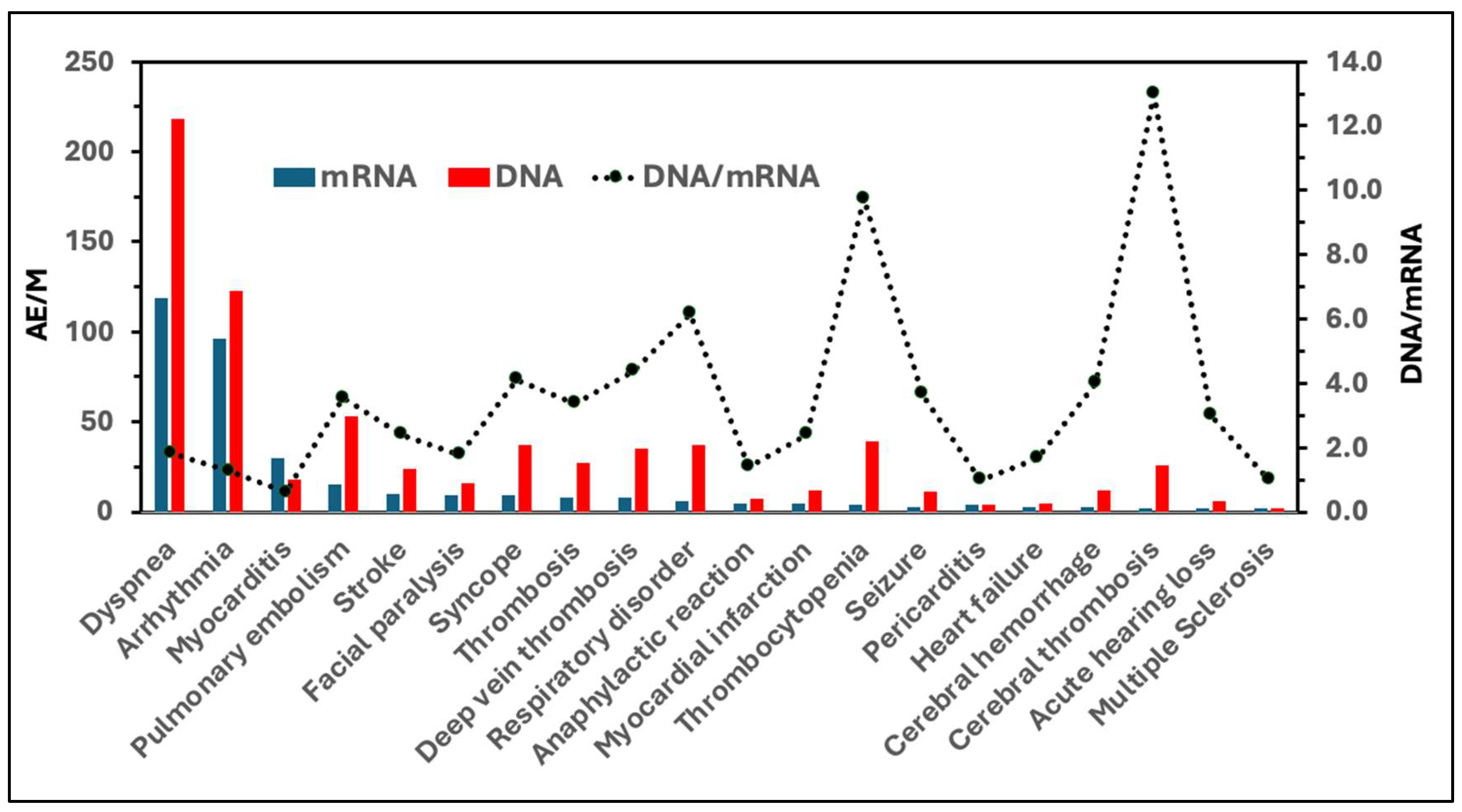
Table 4 presents the incidence rates of different AEs as reported by PEI. While the list of symptoms differs somewhat between regions, cardiopulmonary distress (e.g., dyspnea, arrhythmia) ranks on top of AE incidence in both U.S. and German data. As discussed above, these symptoms can be linked to activation of the icomplement system. Table 4 also reveals that the rates of dyspnea and stroke are similar across the two continents; however, cardiac involvement (e.g., arrhythmia, myocarditis) is reported to be 5–6 times more frequent in the PEI statistics compared to VAERS. This discrepancy between the two partially aligned datasets warrants further investigation to determine whether it is consistent, and if yes, what could be the reason?
Table 4 and Figure 2 also provide information on DNA vaccine-induced AEs compared to mRNA ones. Except for myo- and pericarditis, the incidence of all AEs were higher with the 2 DNA vaccines compared to the 2 mRNA vaccines, hemostatis disturbances and cardiopulmonary symptoms leading the extent of relative increase. The sums and differences are shown in the combination chart in Figure 2, wherin the bars show the sums of the AE/M values of the two mRNA and DNA vaccines, while their ratio is plotted on th 2nd y axis. The > 10-fold higher incidence of thrombocytopenia and thrombosis after the DNA vaccines is keeping with the reason of suspension and ultimate withdrawal of these DNA vaccines from the market, namely cerabral catastrophes, sinus thrombosis and vaccine-induced thrombotic thrombocytopenia. As mentioned earlier, complement activation is a major pathogenic factor in these hemostatic derangements [33,35], which remarkably coincides with the fact that adenoviruses are exceptionnally strong complement activators [56].

10. Potential plausible causes of adverse events inherent to the mRNA-LNP platform
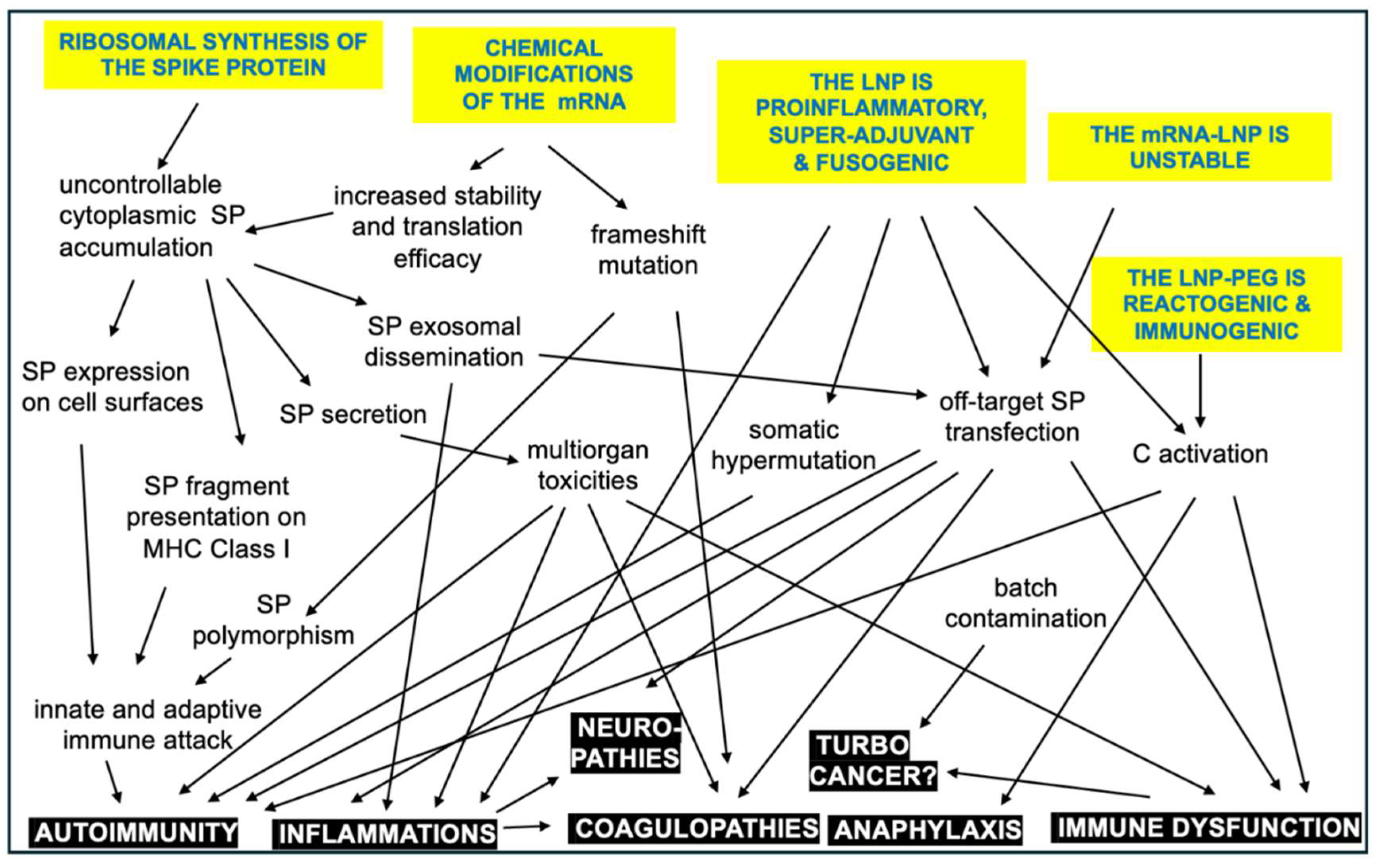
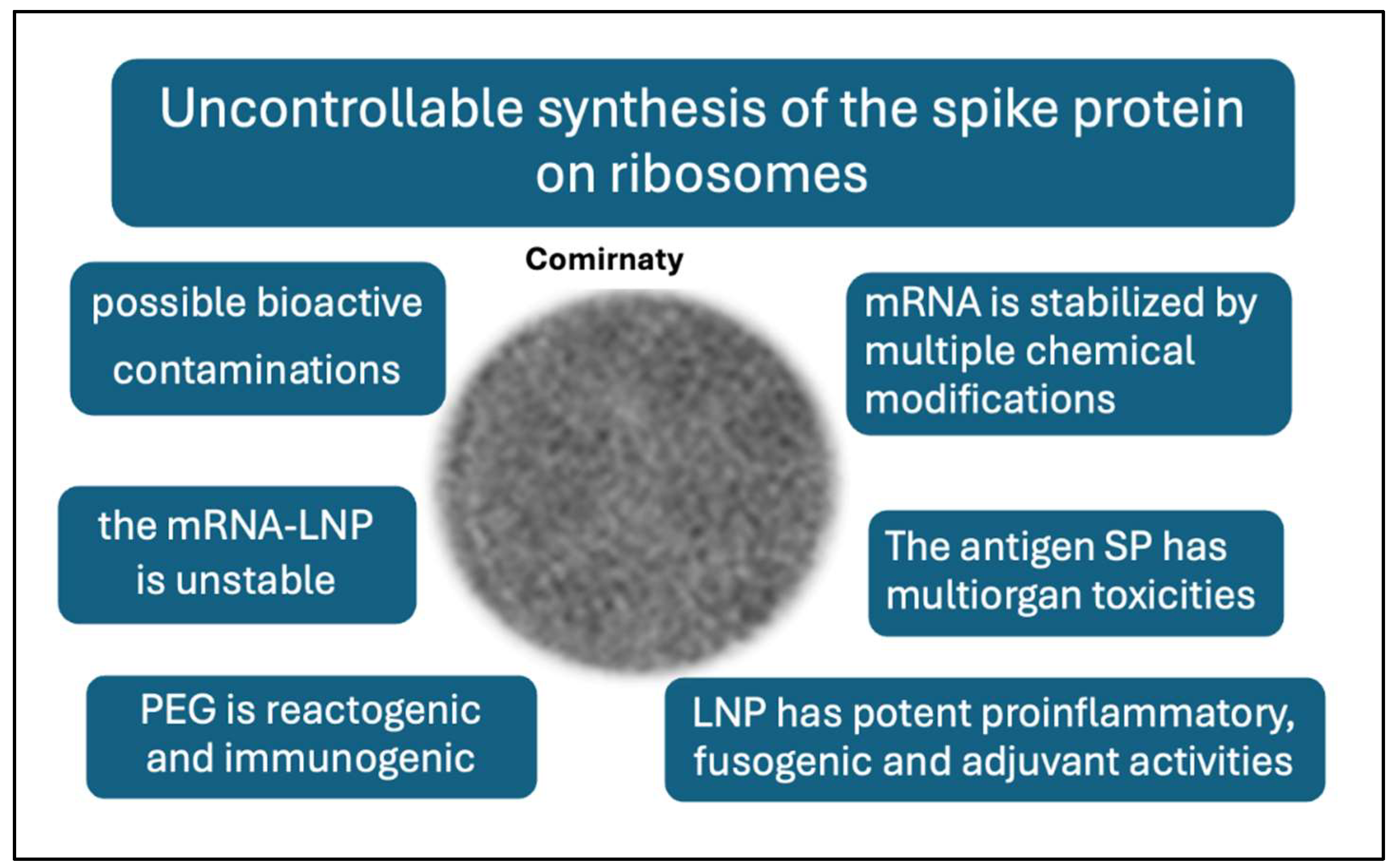
It is apparent that the root cause of vaccine-induced AEs and complications is the same as the main concern with gene therapy, namely, unintended immune processes, off-target effects and unforeseen toxicities [57]. It was mentioned that complement activation is an inherent property of mRNA-LNPs, however, as shown by Figure 4, there are many more features of mRNA vaccines that are different from those of tradtional vaccines and may be linked to AEs.
These differences include the following [58]; (i) the highly controlled, multistep pathway of antigen processing and presentation in natural immunogenicity is replaced in mRNA vaccines by uncontrollable ribosomal synthesis of the antigen. This reasults in a diversification of SP processing and presentation to unnatural directions [58]; (ii) nucleoside and other chemical modifications increase the stabilty of the mRNA, and, hence, the efficacy of SP translation and stability of the antigen [59,60]; (iii) the prefusion-stabilized antigen SP has multiorgan toxicities [61,62,63]. Its rapid entry into the bloodstream and multiorgan distribution [64,65] can cause atoimmune reactions and a variety of cell and tissue damages; (iv) the LNP is a robust proinflammatory agent [66,67] and multiorgan versatile mRNA transfectant [68,69], underlying multiorgan inflammation and autoimmune phenomena; (iv) the stabilizer polymer (polyethylene glycol, PEG), has anaphylactic reactogenicity and collateral anti-vaccine immunogenicity {Kozma, 2023 #8462;Barta, 2024 #8715; (v) the vaccine nanoparticles are unstable in water [70]; and (vi), the final injectable may contain residual DNA fragments in mRNA [71] odd molecular assemblies and inorganic metals and complexes [72].
The above deviations from standard textbook vaccine mechanisms offer plausible explanations for various adverse events [58]. As shown in the flowchart in Figure 4, there are many potential cause-effect relationships contributing to the AEs independently or simultaneously, in additive or synergistic fashions. The rise and extent of AEs also depend on genetic and epigenetic factors, as well as external and internal conditions, explaining the unpredictability of AEs.
Figure 5. Hypothetic cellular processes and conditions contributing to the AEs of mRNA vaccines. The arrows point from cause to potential effect in the intertwined reaction cascades underlying the vaccine-induced AEs and complications. The inherent vaccine properties are highlighted by blue in yellow, and the adverse events or complications by white in black. It needs to be strongly emphasized that this diagram is NOT a reaction scheme of the normal operation of the vaccine in non-reactive people, as presented for example by Verbeke et al. [73].
Preprints 149100 g005

11. Outlook

The occurrence of rare but severe adverse events related to vaccination is not unprecedented in medical history. A notable example is the 1976 swine flu pandemic in the U.S., where an increase in the incidence of Guillain-Barré syndrome and other complications resulted in approximately 30 deaths among 43 million administered vaccine doses, ultimately leading to the suspension of the vaccination campaign [74]. This example underscores that the term "safe" is relative, depending on varying criteria across different times and contexts.
At present the mainstream scientific literature and public health institutions hold the mRNA-LNP vaccines safe with high benefit/risk ratio. Accordingly, the technology platform is garning unprecedented interest and investment. The FDA has recently approved Moderna's second mRNA vaccine, mRESVIA (mRNA-1345), for RSV [75,76], and over 300 new mRNA-LNP-based drugs are in development across dozens of companies. Novel mRNA vaccines targeting influenza, Zika virus, respiratory syncytial virus (RSV), HIV, cytomegalovirus, and cancer are undergoing clinical trials, and a great number of preclinical studies suggest the potential utility of mRNA-LNPs as anticancer immunotherapies and multivalent vaccines [77,78,79]. However, the AEs discussed in this review present a biological barrier to the success of the mRNA-LNP platform technology. Therefore, as the field advances, it is crucial to develop a deeper understanding of the immune mechanisms underlying the AEs and complications associated with mRNA vaccines and other mRNA-LNP-based products.

Acknowledgments

The financial support by the European Union Horizon 2020 projects 825828 (Expert) National Research, Development, and Innovation Office (NKFIH) of Hungary (2020-1.1.6-JÖVŐ-2021- 00013) and 2022-1.2.5-TÉT-IPARI-KR-2022-00009 are acknowledged. The authors are grateful to Mr. Miklos and Zoltan Szebeni for performing the VAERS analysis and English revision.

Conflicts of Interest

The author is affiliated, among others, with an immune toxicology provider SME, SeroScience LLC.

References

  1. Sahin, U., Kariko, K., & Tureci, O. (2014). mRNA-based therapeutics: Developing a new class of drugs. Nature Reviews Drug Discovery, 13(10), 759-780. [CrossRef]
  2. Kariko, K., Whitehead, K., & van der Meel, R. (2021). What does the success of mRNA vaccines tell us about the future of biological therapeutics? Cell Systems, 12(8), 757-758. [CrossRef]
  3. Cullis, P. R., & Felgner, P. L. (2024). The 60-year evolution of lipid nanoparticles for nucleic acid delivery. Nature Reviews Drug Discovery. [CrossRef]
  4. Igyarto, B. Z., Jacobsen, S., & Ndeupen, S. (2021). Future considerations for the mRNA-lipid nanoparticle vaccine platform. Current Opinion in Virology, 48, 65-72. [CrossRef]
  5. DeSantis, R., & Ladapo, J. A. (2023). Health alert on mRNA COVID-19 vaccine safety. Florida Health. https://www.floridahealth.gov/_documents/newsroom/press-releases/2023/02/20230215-updated-health-alert.pdf.
  6. FDA. (2024). FDA approves and authorizes updated mRNA COVID-19 vaccines to better protect against currently circulating variants. FDA News Release. https://www.fda.gov/news-events/press-announcements/fda-approves-and-authorizes-updated-mrna-covid-19-vaccines.
  7. Oueijan, R. I., Hill, O. R., Ahiawodzi, P. D., Fasinu, P. S., & Thompson, D. K. (2022). Rare heterogeneous adverse events associated with mRNA-based COVID-19 vaccines: A systematic review. Medicines (Basel), 9(8), 1-12. [CrossRef]
  8. Krumholz, H. M., Wu, Y., Sawano, M., Shah, R., Zhou, T., Arun, A. S., ... & Iwasaki, A. (2023). Post-vaccination syndrome: A descriptive analysis of reported symptoms and patient experiences after COVID-19 immunization. medRxiv. [CrossRef]
  9. Palmer, M., Bhakdi, S., Hooker, B., Holland, M., DesBois, M., Rasnick, D., & Fitts, C. A. (2023). mRNA vaccine toxicity. Doctors for COVID Ethics.
  10. Shrestha, Y., & Venkataraman, R. (2024). The prevalence of post-COVID-19 vaccination syndrome and quality of life among COVID-19-vaccinated individuals. Vacunas, 25(1), 7-18. [CrossRef]
  11. Law, B. "Priority List of Covid-19 Adverse Events of Special Interest: Quarterly Update December 2020." Safety Platform for Emergency Vaccines (SPEAC) https://brightoncollaboration.org/wp-content/uploads/2023/08/SO2_D2.1.2_V1.2_COVID-19_AESI-update_V1.3-1.pdf (2021).
  12. Fraiman, J., J. Erviti, M. Jones, S. Greenland, P. Whelan, R. M. Kaplan, and P. Doshi. "Serious Adverse Events of Special Interest Following mRNA Covid-19 Vaccination in Randomized Trials in Adults." Vaccine 40, no. 40 (2022): 5798-805. [CrossRef]
  13. Faksova, K., D. Walsh, Y. Jiang, J. Griffin, A. Phillips, A. Gentile, J. C. Kwong, K. Macartney, M. Naus, Z. Grange, S. Escolano, G. Sepulveda, A. Shetty, A. Pillsbury, C. Sullivan, Z. Naveed, N. Z. Janjua, N. Giglio, J. Perala, S. Nasreen, H. Gidding, P. Hovi, T. Vo, F. Cui, L. Deng, L. Cullen, M. Artama, H. Lu, H. J. Clothier, K. Batty, J. Paynter, H. Petousis-Harris, J. Buttery, S. Black, and A. Hviid. "Covid-19 Vaccines and Adverse Events of Special Interest: A Multinational Global Vaccine Data Network (Gvdn) Cohort Study of 99 Million Vaccinated Individuals." Vaccine 42, no. 9 (2024): 2200-11. [CrossRef]
  14. Levitan, B., S. C. Hadler, W. Hurst, H. S. Izurieta, E. R. Smith, N. L. Baker, V. Bauchau, R. Chandler, R. T. Chen, D. Craig, J. King, P. Pitisuttithum, W. Strauss, S. Tomczyk, J. Zafack, and S. Kochhar. "The Brighton Collaboration Standardized Module for Vaccine Benefit-Risk Assessment." Vaccine 42, no. 4 (2024): 972-86. [CrossRef]
  15. Mostert, S., M. Hoogland, M. Huibers, and G. Kaspers. "Excess Mortality across Countries in the Western World since the Covid-19 Pandemic: ‘Our World in Data’ Estimates of January 2020 to December 2022. ." BMJ Public Health 2:e000282. (2024). [CrossRef]
  16. Rancourt, D.G., J. Hickey, and C Linard. "Spatiotemporal Variation of Excess All-Cause Mortality in the World (125 Countries) During the Covid Period 2020-2023 Regarding Socio-Economic Factors and Public-Health and Medical Interventions." Correlation https://correlation-canada.org/covid-excess-mortality-125-countries/ no. Report I 19 July 2024 (2024).
  17. Wang, S., K. Zhang, and J. Du. "Pubmed Captures More Fine-Grained Bibliographic Data on Scientific Commentary Than Web of Science: A Comparative Analysis." BMJ Health Care Inform 31, no. 1 (2024). [CrossRef]
  18. Du, P., N. Li, S. Tang, Z. Zhou, Z. Liu, T. Wang, J. Li, S. Zeng, and J. Chen. "Development and Evaluation of Vaccination Strategies for Addressing the Continuous Evolution Sars-Cov-2 Based on Recombinant Trimeric Protein Technology: Potential for Cross-Neutralizing Activity and Broad Coronavirus Response." Heliyon 10, no. 14 (2024): e34492.
  19. Polack, F. P., S. J. Thomas, N. Kitchin, J. Absalon, A. Gurtman, S. Lockhart, J. L. Perez, G. Perez Marc, E. D. Moreira, C. Zerbini, R. Bailey, K. A. Swanson, S. Roychoudhury, K. Koury, P. Li, W. V. Kalina, D. Cooper, R. W. Frenck, Jr., L. L. Hammitt, O. Tureci, H. Nell, A. Schaefer, S. Unal, D. B. Tresnan, S. Mather, P. R. Dormitzer, U. Sahin, K. U. Jansen, W. C. Gruber, and C. Clinical Trial Group. "Safety and Efficacy of the Bnt162b2 mRNA Covid-19 Vaccine." N Engl J Med 383, no. 27 (2020): 2603-15. [CrossRef]
  20. Worldwide Safety. "Cumulative Analysis of Post-Authorization Adverse Event Reports of Pf-07302048 (Bnt162b2) Received through 28-Feb-2021." https://phmpt.org/wp-content/uploads/2021/11/5.3.6-postmarketing-experience.pdf?fbclid=IwAR2tWI7DKw0cc2lj8 (2021).
  21. Thomas, S. J., E. D. Moreira, Jr., N. Kitchin, J. Absalon, A. Gurtman, S. Lockhart, J. L. Perez, G. Perez Marc, F. P. Polack, C. Zerbini, R. Bailey, K. A. Swanson, X. Xu, S. Roychoudhury, K. Koury, S. Bouguermouh, W. V. Kalina, D. Cooper, R. W. Frenck, Jr., L. L. Hammitt, O. Tureci, H. Nell, A. Schaefer, S. Unal, Q. Yang, P. Liberator, D. B. Tresnan, S. Mather, P. R. Dormitzer, U. Sahin, W. C. Gruber, K. U. Jansen, and C. Clinical Trial Group. "Safety and Efficacy of the Bnt162b2 mRNA Covid-19 Vaccine through 6 Months." N Engl J Med 385, no. 19 (2021): 1761-73. [CrossRef]
  22. VAERS. "VAERS Ids." https://vaers.hhs.gov/data/datasets.html (2023).
  23. OpenVAERS. "VAERS Covid Vaccine Adverse Event Reports." https://openvaers.com/covid-data https://openvaers.com/covid-data (2024).
  24. Rosenblum, H. G., J. Gee, R. Liu, P. L. Marquez, B. Zhang, P. Strid, W. E. Abara, M. M. McNeil, T. R. Myers, A. M. Hause, J. R. Su, L. E. Markowitz, T. T. Shimabukuro, and D. K. Shay. "Safety of mRNA Vaccines Administered During the Initial 6 Months of the Us Covid-19 Vaccination Programme: An Observational Study of Reports to the Vaccine Adverse Event Reporting System and V-Safe." Lancet Infect Dis 22, no. 6 (2022): 802-12. [CrossRef]
  25. Wikipedia. "Timeline of the Covid-19 Pandemic in the United States." Wikipedia https://en.wikipedia.org/wiki/Timeline_of_the_COVID-19_pandemic_in_the_United_States_%282021%29?utm_source=chatgpt.com (2025).
  26. Ross, L., and M. Klompas. "Electronic Support for Public Health–Vaccine Adverse Event Reporting System (Esp:Vaers)." In Grant Final Report: Grant ID: R18 HS 017045, 2010.
  27. word, CDC Our. "Our World in Data." https://ourworldindata.org/grapher/covid-vaccine-doses-by-manufacturer?country=European+Union~HUN~USA (2024).
  28. Institute, Paul Erlich. "Safety Report." https://www.pei.de/SharedDocs/Downloads/EN/newsroom-en/dossiers/safety-reports/safety-report-27-december-2020-31-march-2022.pdf?__blob=publicationFile&v=8 (2022).
  29. Mathieu, E., H. Ritchie, E. Ortiz-Ospina, M. Roser, J. Hasell, C. Appel, C. Giattino, and L. Rodes-Guirao. "A Global Database of Covid-19 Vaccinations." Nat Hum Behav 5, no. 7 (2021): 947-53. [CrossRef]
  30. Szebeni, J. "Complement Activation-Related Pseudoallergy: A New Class of Drug-Induced Acute Immune Toxicity." Toxicology 216, no. 2-3 (2005): 106-21. [CrossRef]
  31. Szebeni, J. "Complement Activation-Related Pseudoallergy: A Stress Reaction in Blood Triggered by Nanomedicines and Biologicals." Mol. Immunol. 61 (2014): 163-73. [CrossRef]
  32. Szebeni, J., G. Storm, J. Y. Ljubimova, M. Castells, E. J. Phillips, K. Turjeman, Y. Barenholz, D. J. A. Crommelin, and M. A. Dobrovolskaia. "Applying Lessons Learned from Nanomedicines to Understand Rare Hypersensitivity Reactions to mRNA-Based Sars-Cov-2 Vaccines." Nat Nanotechnol 17, no. 4 (2022): 337-46. [CrossRef]
  33. Ruf, Wolfram. "Links between Complement Activation and Thrombosis." Blood 134, no. Supplement_1 (2019): SCI-40-SCI-40.
  34. Luo, S., D. Hu, M. Wang, P. F. Zipfel, and Y. Hu. "Complement in Hemolysis- and Thrombosis- Related Diseases." Front Immunol 11 (2020): 1212. [CrossRef]
  35. Rawish, E., M. Sauter, R. Sauter, H. Nording, and H. F. Langer. "Complement, Inflammation and Thrombosis." Br J Pharmacol 178, no. 14 (2021): 2892-904. [CrossRef]
  36. Alosaimi, B., A. Mubarak, M. E. Hamed, A. Z. Almutairi, A. A. Alrashed, A. AlJuryyan, M. Enani, F. Q. Alenzi, and W. Alturaiki. "Complement Anaphylatoxins and Inflammatory Cytokines as Prognostic Markers for Covid-19 Severity and in-Hospital Mortality." Front Immunol 12 (2021): 668725. [CrossRef]
  37. Lim, E. H. T., R. B. E. van Amstel, V. V. de Boer, L. A. van Vught, S. de Bruin, M. C. Brouwer, A. P. J. Vlaar, and D. van de Beek. "Complement Activation in Covid-19 and Targeted Therapeutic Options: A Scoping Review." Blood Rev 57 (2023): 100995. [CrossRef]
  38. Siggins, M. K., K. Davies, R. Fellows, R. S. Thwaites, J. K. Baillie, M. G. Semple, P. J. M. Openshaw, W. M. Zelek, C. L. Harris, B. P. Morgan, and Isaric C. Investigators. "Alternative Pathway Dysregulation in Tissues Drives Sustained Complement Activation and Predicts Outcome across the Disease Course in Covid-19." Immunology 168, no. 3 (2023): 473-92. [CrossRef]
  39. Meroni, P. L., S. Croci, P. A. Lonati, F. Pregnolato, L. Spaggiari, G. Besutti, M. Bonacini, I. Ferrigno, A. Rossi, G. Hetland, I. Hollan, M. Cugno, F. Tedesco, M. O. Borghi, and C. Salvarani. "Complement Activation Predicts Negative Outcomes in Covid-19: The Experience from Northen Italian Patients." Autoimmun Rev 22, no. 1 (2023): 103232. [CrossRef]
  40. Ellsworth, C. R., Z. Chen, M. T. Xiao, C. Qian, C. Wang, M. S. Khatun, S. Liu, M. Islamuddin, N. J. Maness, J. A. Halperin, R. V. Blair, J. K. Kolls, S. Tomlinson, and X. Qin. "Enhanced Complement Activation and Mac Formation Accelerates Severe Covid-19." Cell Mol Life Sci 81, no. 1 (2024): 405. [CrossRef]
  41. Mastellos, D. C., D. Ricklin, E. Hajishengallis, G. Hajishengallis, and J. D. Lambris. "Complement Therapeutics in Inflammatory Diseases: Promising Drug Candidates for C3-Targeted Intervention." Mol Oral Microbiol 31, no. 1 (2016): 3-17. [CrossRef]
  42. Dezsi, L., T. Meszaros, G. Kozma, H. Velkei M, C. Z. Olah, M. Szabo, Z. Patko, T. Fulop, M. Hennies, M. Szebeni, B. A. Barta, B. Merkely, T. Radovits, and J. Szebeni. "A Naturally Hypersensitive Porcine Model May Help Understand the Mechanism of Covid-19 mRNA Vaccine-Induced Rare (Pseudo) Allergic Reactions: Complement Activation as a Possible Contributing Factor." Geroscience 44, no. 2 (2022): 597-618. [CrossRef]
  43. Bakos, T., T. Meszaros, G. T. Kozma, P. Berenyi, R. Facsko, H. Farkas, L. Dezsi, C. Heirman, S. de Koker, R. Schiffelers, K. A. Glatter, T. Radovits, G. Szenasi, and J. Szebeni. "mRNA-LNP Covid-19 Vaccine Lipids Induce Complement Activation and Production of Proinflammatory Cytokines: Mechanisms, Effects of Complement Inhibitors, and Relevance to Adverse Reactions." Int J Mol Sci 25, no. 7 (2024). [CrossRef]
  44. Barta, B. A., T. Radovits, A. B. Dobos, G. Tibor Kozma, T. Meszaros, P. Berenyi, R. Facsko, T. Fulop, B. Merkely, and J. Szebeni. "Comirnaty-Induced Cardiopulmonary Distress and Other Symptoms of Complement-Mediated Pseudo-Anaphylaxis in a Hyperimmune Pig Model: Causal Role of Anti-Peg Antibodies." Vaccine X 19 (2024): 100497. [CrossRef]
  45. Szebeni, J., L. Baranyi, S. Savay, M. Bodo, J. Milosevits, C. R. Alving, and R. Bunger. "Complement Activation-Related Cardiac Anaphylaxis in Pigs: Role of C5a Anaphylatoxin and Adenosine in Liposome-Induced Abnormalities in ECG and Heart Function." Am J Physiol Heart Circ Physiol 290, no. 3 (2006): H1050-8. [CrossRef]
  46. Kozma, G. T., T. Meszaros, P. Berenyi, R. Facsko, Z. Patko, C. Z. Olah, A. Nagy, T. G. Fulop, K. A. Glatter, T. Radovits, B. Merkely, and J. Szebeni. "Role of Anti-Polyethylene Glycol (PEG) Antibodies in the Allergic Reactions to PEG-Containing Covid-19 Vaccines: Evidence for Immunogenicity of PEG." Vaccine 41, no. 31 (2023): 4561-70. [CrossRef]
  47. Schanzenbacher, J., J. Kohl, and C. M. Karsten. "Anaphylatoxins Spark the Flame in Early Autoimmunity." Front Immunol 13 (2022): 958392. [CrossRef]
  48. Ricklin, D., D. C. Mastellos, and J. D. Lambris. "Therapeutic Targeting of the Complement System." Nat Rev Drug Discov (2019). [CrossRef]
  49. Kolev, M. Kolu, N. Yeh, M. Parikh, A. and Deschatelets, P. "The Future of Complement Therapeutics." Exploration of immunology 4, no. 5 (2024): 577-615. [CrossRef]
  50. Kyte, J. A., and G. Gaudernack. "Immuno-Gene Therapy of Cancer with Tumour- mRNA Transfected Dendritic Cells." Cancer Immunol Immunother 55, no. 11 (2006): 1432-42. [CrossRef]
  51. Daniel, M. G., T. M. Pawlik, A. N. Fader, N. F. Esnaola, and M. A. Makary. "The Orphan Drug Act: Restoring the Mission to Rare Diseases." Am J Clin Oncol 39, no. 2 (2016): 210-3. [CrossRef]
  52. Gabay, M. "The Orphan Drug Act: An Appropriate Approval Pathway for Treatments of Rare Diseases?" Hosp Pharm 54, no. 5 (2019): 283-84. [CrossRef]
  53. Schouten, A. "Ei Briefing Note 2020:4 Selected Government Definitions of Orphan or Rare Diseases Selected Government Definitions of Orphan or Rare Diseases". ." Knowledge Ecology International. R Nov 3 2020 (2020).
  54. Fermaglich, L. J., and K. L. Miller. "A Comprehensive Study of the Rare Diseases and Conditions Targeted by Orphan Drug Designations and Approvals over the Forty Years of the Orphan Drug Act." Orphanet J Rare Dis 18, no. 1 (2023): 163. [CrossRef]
  55. Sanders, T. I. "The Orphan Drug Act." Prog Clin Biol Res 127 (1983): 207-15.
  56. Tian, J., Z. Xu, J. S. Smith, S. E. Hofherr, M. A. Barry, and A. P. Byrnes. "Adenovirus Activates Complement by Distinctly Different Mechanisms in Vitro and in Vivo: Indirect Complement Activation by Virions in Vivo." J Virol 83, no. 11 (2009): 5648-58. [CrossRef]
  57. Radmer, A., and J. Bodurtha. "Prospects, Realities, and Safety Concerns of Gene Therapy." Va Med Q 119, no. 2 (1992): 98-100.
  58. Szebeni, János. "The Unique Features and Collateral Immune Effects of mRNA-Based Covid-19 Vaccines: Potential Plausible Causes of Adverse Events and Complications." In Preprints: Preprints, 2025.
  59. Kariko, K., H. Muramatsu, F. A. Welsh, J. Ludwig, H. Kato, S. Akira, and D. Weissman. "Incorporation of Pseudouridine into mRNA Yields Superior Nonimmunogenic Vector with Increased Translational Capacity and Biological Stability." Mol Ther 16, no. 11 (2008): 1833-40.
  60. Kariko, K., H. Muramatsu, J. Ludwig, and D. Weissman. "Generating the Optimal mRNA for Therapy: Hplc Purification Eliminates Immune Activation and Improves Translation of Nucleoside-Modified, Protein-Encoding mRNA." Nucleic Acids Res 39, no. 21 (2011): e142. [CrossRef]
  61. Moghaddar, M., R. Radman, and I. Macreadie. "Severity, Pathogenicity and Transmissibility of Delta and Lambda Variants of Sars-Cov-2, Toxicity of Spike Protein and Possibilities for Future Prevention of Covid-19." Microorganisms 9, no. 10 (2021). [CrossRef]
  62. Schwartz, L., M. Aparicio-Alonso, M. Henry, M. Radman, R. Attal, and A. Bakkar. "Toxicity of the Spike Protein of Covid-19 Is a Redox Shift Phenomenon: A Novel Therapeutic Approach." Free Radic Biol Med 206 (2023): 106-10. [CrossRef]
  63. Boros, L. G., A. M. Kyriakopoulos, C. Brogna, M. Piscopo, P. A. McCullough, and S. Seneff. "Long-Lasting, Biochemically Modified mRNA, and Its Frameshifted Recombinant Spike Proteins in Human Tissues and Circulation after Covid-19 Vaccination." Pharmacol Res Perspect 12, no. 3 (2024): e1218. [CrossRef]
  64. Pardi, N., S. Tuyishime, H. Muramatsu, K. Kariko, B. L. Mui, Y. K. Tam, T. D. Madden, M. J. Hope, and D. Weissman. "Expression Kinetics of Nucleoside-Modified mRNA Delivered in Lipid Nanoparticles to Mice by Various Routes." J Control Release 217 (2015): 345-51. [CrossRef]
  65. Ltd, Pfizer Australia Pty. "Nonclinical Evaluation Report: Bnt162b2 [mRNA] Covid-19 Vaccine (Comirnatytm)." https://www.tga.gov.au/sites/default/files/foi-2389-06.pdf https://t.co/Zrhakh7Xgv (2021).
  66. Sharma, P., D. Hoorn, A. Aitha, D. Breier, and D. Peer. "The Immunostimulatory Nature of mRNA Lipid Nanoparticles." Adv Drug Deliv Rev 205 (2024): 115175. [CrossRef]
  67. Catenacci, L., R. Rossi, F. Sechi, D. Buonocore, M. Sorrenti, S. Perteghella, M. Peviani, and M. C. Bonferoni. "Effect of Lipid Nanoparticle Physico-Chemical Properties and Composition on Their Interaction with the Immune System." Pharmaceutics 16, no. 12 (2024). [CrossRef]
  68. Cullis, P. R., and M. J. Hope. "Lipid Nanoparticle Systems for Enabling Gene Therapies." Mol Ther 25, no. 7 (2017): 1467-75.
  69. Ferraresso, F., K. Badior, M. Seadler, Y. Zhang, A. Wietrzny, M. F. Cau, A. Haugen, G. G. Rodriguez, M. R. Dyer, P. R. Cullis, E. Jan, and C. J. Kastrup. "Protein Is Expressed in All Major Organs after Intravenous Infusion of mRNA-Lipid Nanoparticles in Swine." Mol Ther Methods Clin Dev 32, no. 3 (2024): 101314.
  70. 7, J., B. Kiss, T. Bozo, K. Turjeman, Y. Levi-Kalisman, Y. Barenholz, and M. Kellermayer. "Insights into the Structure of Comirnaty Covid-19 Vaccine: A Theory on Soft, Partially Bilayer-Covered Nanoparticles with Hydrogen Bond-Stabilized mRNA-Lipid Complexes." ACS Nano 17, no. 14 (2023): 13147-57. [CrossRef]
  71. König, Brigitte, and Jürgen O. Kirchner. "Methodological Considerations Regarding the Quantification of DNA Impurities in the Covid-19 mRNA Vaccine Comirnaty®." Methods and Protocols, no. 3 (2024).
  72. Diblasi, L. , M. Monteverde, D. Nonis, and M. Sangorrín. "At Least 55 Undeclared Chemical Elements Found in Covid-19 Vaccines from Astrazeneca, Cansino, Moderna, Pfizer, Sinopharm and Sputnik V, with Precise Icp-Ms." International Journal of Vaccine Theory, Practice, and Research 3 (2024): 1367-93.
  73. Verbeke, R., M. J. Hogan, K. Lore, and N. Pardi. "Innate Immune Mechanisms of mRNA Vaccines." Immunity 55, no. 11 (2022): 1993-2005.
  74. Fineberg, H. V. "Swine Flu of 1976: Lessons from the Past. An Interview with Dr Harvey V Fineberg." Bull World Health Organ 87, no. 6 (2009): 414-5. [CrossRef]
  75. Wilson, E., J. Goswami, A. H. Baqui, P. A. Doreski, G. Perez-Marc, K. Zaman, J. Monroy, C. J. A. Duncan, M. Ujiie, M. Ramet, L. Perez-Breva, A. R. Falsey, E. E. Walsh, R. Dhar, L. Wilson, J. Du, P. Ghaswalla, A. Kapoor, L. Lan, S. Mehta, R. Mithani, C. A. Panozzo, A. K. Simorellis, B. J. Kuter, F. Schodel, W. Huang, C. Reuter, K. Slobod, S. K. Stoszek, C. A. Shaw, J. M. Miller, R. Das, G. L. Chen, and R. S. V. Study Group Conquer. "Efficacy and Safety of an mRNA-Based Rsv Pref Vaccine in Older Adults." N Engl J Med 389, no. 24 (2023): 2233-44.
  76. ModernaTX, Inc. "Prescribing Information: Respiratory Syncytial Virus Vaccine) Injectable Suspension, for Intramuscular Use." https://www.fda.gov/media/179005/download?attachment=&utm_source=chatgpt.com https://www.fda.gov/media/179005/download?attachment=&utm_source=chatgpt.com (2024).
  77. Wang, Y. S., M. Kumari, G. H. Chen, M. H. Hong, J. P. Yuan, J. L. Tsai, and H. C. Wu. "mRNA-Based Vaccines and Therapeutics: An in-Depth Survey of Current and Upcoming Clinical Applications." J Biomed Sci 30, no. 1 (2023): 84. [CrossRef]
  78. Ladak, R. J., A. J. He, Y. H. Huang, and Y. Ding. "The Current Landscape of mRNA Vaccines against Viruses and Cancer-a Mini Review." Front Immunol 13 (2022): 885371. [CrossRef]
  79. Sayour, E. J., D. Boczkowski, D. A. Mitchell, and S. K. Nair. "Cancer mRNA Vaccines: Clinical Advances and Future Opportunities." Nat Rev Clin Oncol 21, no. 7 (2024): 489-500. [CrossRef]
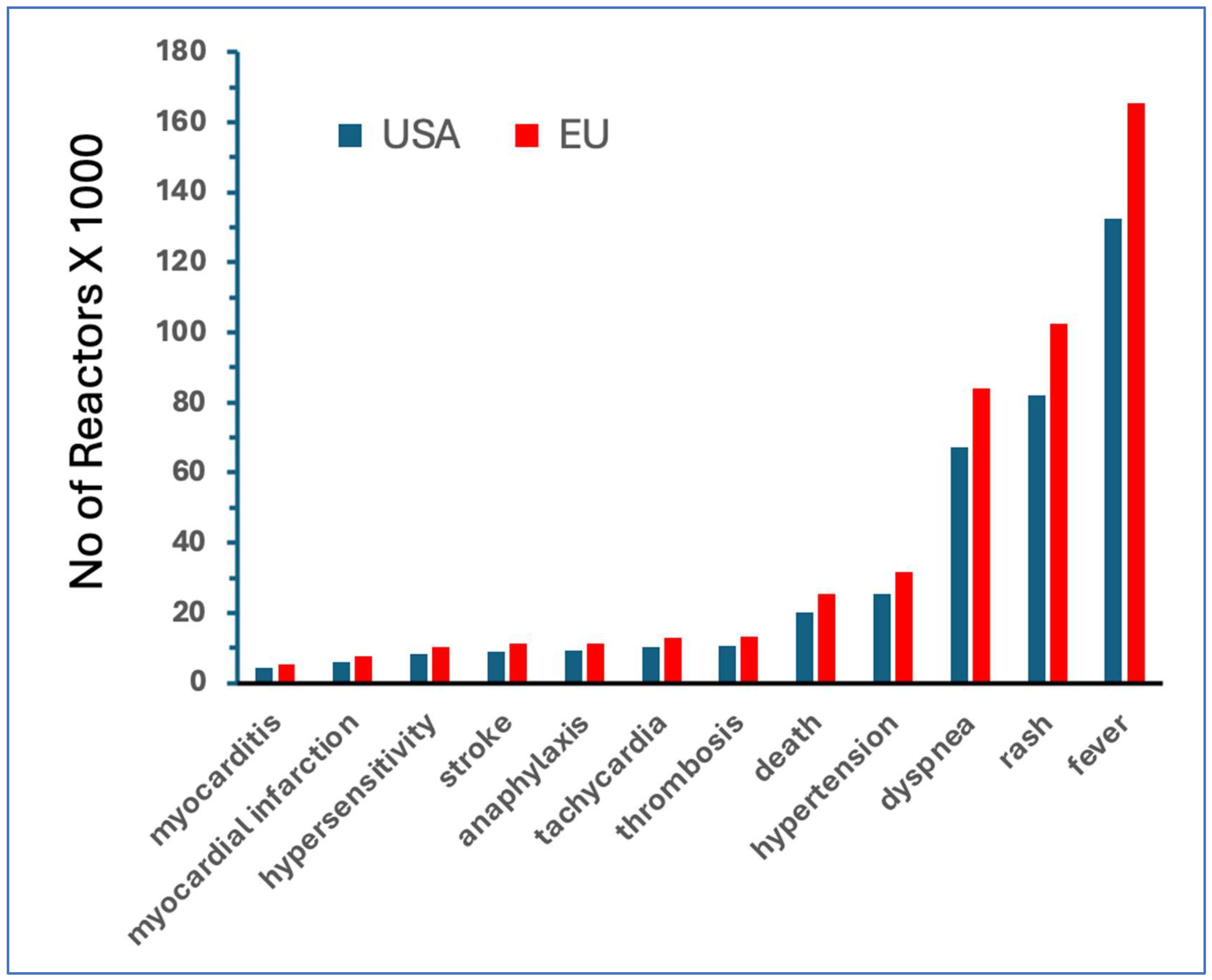
Figure 1. Rough estimates of the prevalence of mRNA vaccine-induced AEs in the USA and Europe during the COVID-19 pandemic, between December 2020 and May 2023. The calculations of the total number of AE reactors were based on the incidence rates for mRNA vaccines in Table 3 (obtained from the VAERS), multiplied by the number of Comirnaty + Spikevax mRNA doses injected during this period, obtained from the Our World in Data public database [27].
Preprints 149100 g001
Figure 2. Reaction pathways of complement-mediated vaccine AEs.
Preprints 149100 g002
Figure 3. The incidence rates of “special interest” AEs caused by mRNA and DNA-containing genetic vaccines in Germany. The bars show the sums of the AEs/M caused by Comirnaty and Spikevax (mRNA) and Icovden +Vaxzevria (DNA), while the DNA/mRNA is the ratio of the sums of the two types of vaccines. .
Preprints 149100 g003
Figure 4. Unique features of the mRNA vaccines that are not characteristic of traditional vaccines and may be linked to AEs. In the middle is a Comirnaty nanoparticle from ref. [70].
Preprints 149100 g004
Table 1. List of COVID-19 adverse events of special interest (AESIs)*.
Organ System Adverse Events
Cardiovascular acute coronary syndrome, aneurysm, arrhythmia, arrhythmias, arteriosclerosis, cardiac tamponade, coronary artery disease, deep vein thrombosis, cardiomyopathy, edema of the lip, tongue, face, endothelial dysfunction, heart failure, hypertension, hypotension, ischemia, large-vessel vasculitis, microangiopathy, myocardial infarction, myocarditis, non-bacterial thrombotic endocarditis, pericarditis, postural tachycardia syndrome, stroke, sudden death, Takotsubo syndrome (stress cardiomyopathy), vascular inflammation (Kawasaki disease)
Neurological acute disseminated encephalomyelitis, ageusia, anosmia, aseptic meningitis, Bell’s palsy, cerebral venous sinus thrombosis, CNS bleed, cranial polyneuropathy, dysesthesia with exanthem, dysgeusia, encephalitis, encephalopathy, facial nerve palsy, Guillain-Barré syndrome, hypogeusia, hypoglossal nerve palsy, hyposmia, myelitis, myoclonus, myoclonus-ataxia, ophthalmoplegia, oropharyngeal dysphagia, persistent hiccups, seizures, seizures, sensorineural hearing loss, Stroke (hemorrhagic, ischemic), vestibular neuritis
Respiratory acute chest syndrome, acute respiratory distress syndrome, bronchospasm, bullous lung disease, coughing, dyspnea, pulmonary vasculitis, hemopneumothorax, hemoptysis, hilar lymphadenopathy, hoarseness, hypoxia, pediatric croup, platypnea orthodeoxia syndrome, pneumomediastinum, pneumothorax, pneumomediastinum, pulmonary embolism, stridor
Gastrointestinal acute acalculous cholecystitis, angular cheilitis, appendicitis, cholecystitis, colitis, enteritis, enterocolitis, fulminant hepatic failure, hepatitis, intussusception, pancreatitis, paralytic ileus, parotitis, spontaneous hemoperitoneum, spontaneous splenic rupture, tongue ulcers
Musculoskeletal arthralgia, arthritis, aseptic arthritis, muscle spasms, myalgia, myositis, rhabdomyolysis
Dermatological angioedema, chilblain, chronic urticaria, cutaneous vasculitis, dermatographia, epidermal necrolysis, erythema multiforme, follicular eruption, Gianotti-Crosti rash, Gilbert type erythema nodosum, Grover-like eruption, hyperkeratosis, lower extremity bullae, maculopapular rash, nail bed red half-moon sign, oral vesiculobullous lesions, painful cystic lesion, pityriasis rosea, pustular eruption, rash, seborrheic dermatitis, Steven-Johnson syndrome, unilateral thoracic exanthema, urticaria (hives), vasculitis.
Hematological anemia, coagulopathy, cold agglutinin syndrome, hemophagocytic lymph histiocytosis, idiopathic thrombocytopenic purpura, lymphopenia, methemoglobinemia, stroke, thromboembolism, thrombocytopenia, thrombosis, thrombosis with thrombocytopenia
Endocrine/Metabolic adrenal injury, diabetes, hyperglycemia, myxedema, orchitis, pancreatitis, parotitis, prostatitis, prostatic infarction, sexual dysfunction, thyroiditis
Renal/Genitourinary glomerulopathy, hematuria, hypernatremia, IgA vasculitis with nephritis, nephrosis, proteinuria, renal failure, renal infarction, urinary retention, vasculitis with glomerulonephritis
Immune System anaphylaxis, autoimmune flare-ups, autoimmune glomerulonephritis, autoimmune hemolytic anemia, autoimmune hepatitis, autoimmune rheumatological diseases, CARPA, hypersensitivity reactions, lymphadenopathy, lymphadenopathy
General/Systemic abscess, alopecia, hyperferritinemic syndrome, hyperglycemia, hyponatremia, multisystem inflammatory syndrome, sepsis, septic shock
Psychiatric akathisia, altered mental status, catalepsy, convulsions, delirium, insomnia, mania, multiple sclerosis, narcolepsy, psychosis, seizures, status epilepticus, sudden and persistent dysphonia, suicide attempt
Ocular bilateral macular bleed, bilateral visual loss, conjunctivitis, episcleritis, ocular myasthenia gravis, ocular/orbital inflammation, retinopathy, uveo-retinitis
Reproductive abortion, ectopic pregnancy, fetal HELLP syndrome (hemolysis, elevated liver enzymes, and low platelet count)
Gynecological/obstetric amenorrhea, dysmenorrhea, endometritis, menorrhagia, metrorrhagia, oligomenorrhea, pelvic inflammatory disease, premenstrual syndrome
Oncological acute lymphocytosis, lymphoid leukemias, “turbo cancer”
*Among other sources, data from the “Safety Platform for Emergency vaccines SO2-D2.1.2 Priority List of COVID-19 Adverse events of special interest: Quarterly update December 2020, https://brightoncollaboration.org/wp-content/uploads/2023/08/SO2_D2.1.2_V1.2_COVID-19_AESI-update_V1.3-1.pdf.
Table 2. VAERS-reported adverse events associated with genetic (mRNA and DNA) COVID-19 vaccines and 12 flu vaccines combined, from December 2020 to May 2023.
Vaccine AE+n* Doses AE+/M** AE-/AE+*** COVID/flu
Comirnaty 434,821 401,685,954 1,082 924 20
Spikevax 426,714 251,852,502 1,694 590 32
Combined mRNA 861,535 653,538,456 1,318 759 25
Jcovden (Janssen) 54,728 18,991,177 2,882 347 54
All genetic 934,959 672,529,633 1,390 719 26
Flu 18,696 352,670,000 53 18,863 1
*AE+n, total number of individuals reporting one or more AEs within 1 day after vaccination, regardless of severity; Doses, number of vaccine doses given to people; **AE+/M**, AE numbers per million vaccine doses; ***AE-/AE+ ***, proportion of nonreactors relative to reactors; COVID/flu, genetic vaccine/flu vaccine AE/M ratio. The administered vaccine doses were “Word in Data” information [27]. The flu vaccines included in the statistics comprised various tri- or quadrivalent products with the brand names and (manufacturers): AFLURIA (CSL-Limited and Seqirus Inc.), FLUAD (Novartis, Seqirus Inc.), FLUARIX (GlaxoSmithKline, GSK), FLUBLOK (Protein Sciences Corp.), FLUCELVAX (Novartis, Seqirus Inc), FLUENZ TETRA (Medimmune Vaccines), FLULAVAL (GSK), FLUMIST (Medimmune Vaccines), and FLUZONE (Sanofi Pasteur). Three other flu vaccines considered had no brand names.
Table 3. VAERS data on the prevalence and incidence of “special interest” AEs caused by genetic COVID-19 and flu vaccines in selected organ systems in the US from December 2020 to May 2023.
Flu vaccines mRNA vaccines Fold increase
AE AE/M AE AE/M AE AE/M
fever 4294 7.9 132,447 201.70 31 26
rash 1118 2.06 82,113 125.05 73 61
dyspnea 622 1.14 67355 102.57 204 152
hypertension 160 0.29 25,292 38.52 158 131
death 74 0.14 20,227 30.8 273 226
thrombosis 19 0.03 10,439 15.9 549 455
tachycardia 52 0.1 10,205 15.54 196 162
anaphylaxis 117 0.22 9,094 13.85 78 64
stroke 280 0.52 8,939 13.61 32 26
hypersensitivity 122 0.22 8,153 12.42 67 55
MI 23 0.04 6,067 9.24 264 218
myocarditis 3 0.01 4,176 6.36 1392 1,152
Similar data collection and abbreviations as in Table 2, except that the analysis was done in SQL (Structured Query Language) using AE symptom search on multiple synonyms for each symptom, making sure that if multiple symptoms were listed for a patient, we counted them as one. The exact cause of death is not specified in VAERS. The AEs are listed in order of increasing prevalence rate (italicized 5th column). MI, myocardial infarction. Other conditions are the same as in Table 2.
Table 4. The incidence rates of “special interest” AEs* caused by 2 mRNA and 2 DNA-containing genetic vaccines in Germany.
AE of special interest AEs/Million
Comirnaty Spikevax Vaxzevria Jcovden
Dyspnea 55 64 110 108
Arrhythmia 46 50 57 66
Myocarditis 14 16 6 12
Pulmonary embolism 8 7 33 20
Stroke 6 4 15 9
Facial paralysis 5 4 7 9
Syncope 5 4 25 12
Thrombosis 4 4 19 8
Deep vein thrombosis 4 4 27 8
Respiratory disorder 3 3 33 4
Anaphylactic reaction 3 2 4 3
Myocardial infarction 3 2 6 6
Thrombocytopenia 3 1 32 7
Seizure 2 1 7 4
Pericarditis 2 2 1 3
Heart failure 2 1 2 3
Cerebral hemorrhage 2 1 8 4
Cerebral thrombosis 1 1 20 6
Acute hearing loss 1 1 5 1
Multiple Sclerosis 1 1 1 1
*Data collected by the Paul Erlich Institute between Dec 2, 2020 to March 2022 [28]. Vaxveria (Astra Zeneca), and Icovden (Ad26.COV2.S, Janssen) COVID-19 vaccines. The bars show the sums of the AEs/M caused by the 2 types of vaccines, and DNA/mRNA is the ratio of the sums of DNA/RNA vaccine induced AEs.
Disclaimer/Publisher’s Note: The statements, opinions and data contained in all publications are solely those of the individual author(s) and contributor(s) and not of MDPI and/or the editor(s). MDPI and/or the editor(s) disclaim responsibility for any injury to people or property resulting from any ideas, methods, instructions or products referred to in the content.
Copyright: This open access article is published under a Creative Commons CC BY 4.0 license, which permit the free download, distribution, and reuse, provided that the author and preprint are cited in any reuse.
Prerpints.org logo

Preprints.org is a free preprint server supported by MDPI in Basel, Switzerland.

Subscribe

Disclaimer

Terms of Use

Privacy Policy

Privacy Settings

© 2025 MDPI (Basel, Switzerland) unless otherwise stated