

Submitted:
20 November 2024
Posted:
21 November 2024
You are already at the latest version
Abstract
Efficient toll processing is essential for reducing traffic congestion and enhancing transportation network operations at toll stations. This study examines the Neelamangala Toll Plaza on India's National Highway 48, focusing on the potential of artificial intelligence (AI) to optimize toll processing. A detailed work following with case study of the Neelamangala Toll Plaza was conducted, with machine learning algorithms utilized to analyze data and predict traffic patterns as vehicles approached the toll station. The system integrated AI models—specifically, a Supervised Learning (SL) time series model for traffic prediction and Reinforcement Learning (RL) based on a Markov Decision Process (MDP)—alongside a randomized algorithm to dynamically adjust to real-time traffic conditions. The randomized algorithm facilitated equitable task distribution, preventing system overload during peak hours. System performance was assessed using key metrics: Average Processing Time (APT), Queue Length Reduction (QLR), and Throughput (TP), which measured the system’s ability to manage high traffic volumes and mitigate congestion. The AI-powered model demonstrated significant improvements in processing times, queue length reduction, and overall vehicle flow, outperforming traditional methods in both speed and scalability. AI-driven toll management techniques reduce processing times by approximately 35%, decrease queue lengths by 28%, and increase throughput by 40% compared to traditional toll processing systems. These findings suggest a robust, adaptive solution for modern toll systems, with broader implications for efficient and sustainable transportation infrastructure.
Keywords:
1. Introduction
2. Literature Review
2.1. Background Study on Toll Processing Systems
2.2. Traditional Toll Collection Systems
2.3. AI and Machine Learning in Toll Management
2.4. Gaps in Existing Literature
3. Methodology
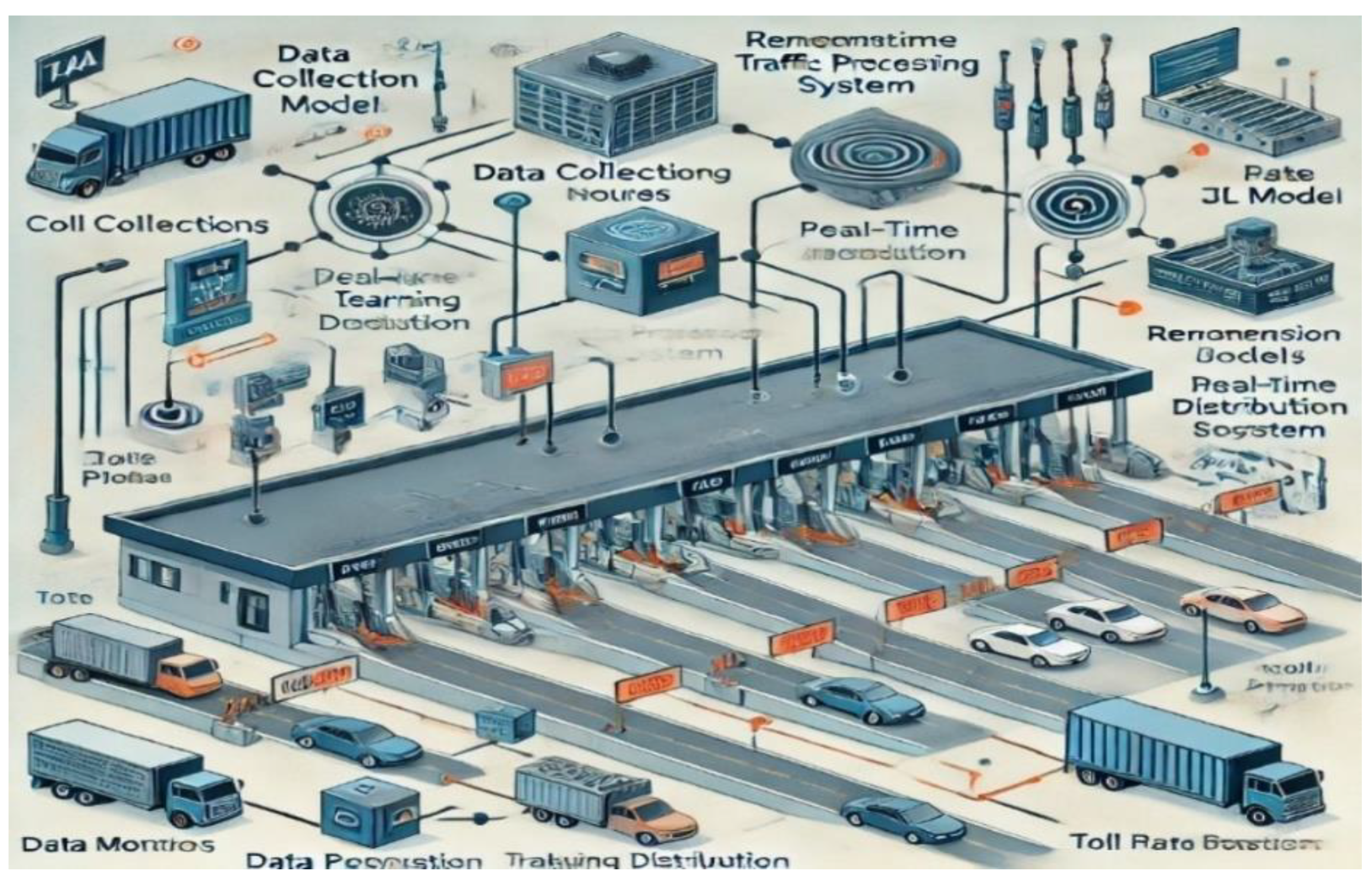
3.1. System Architecture and Design
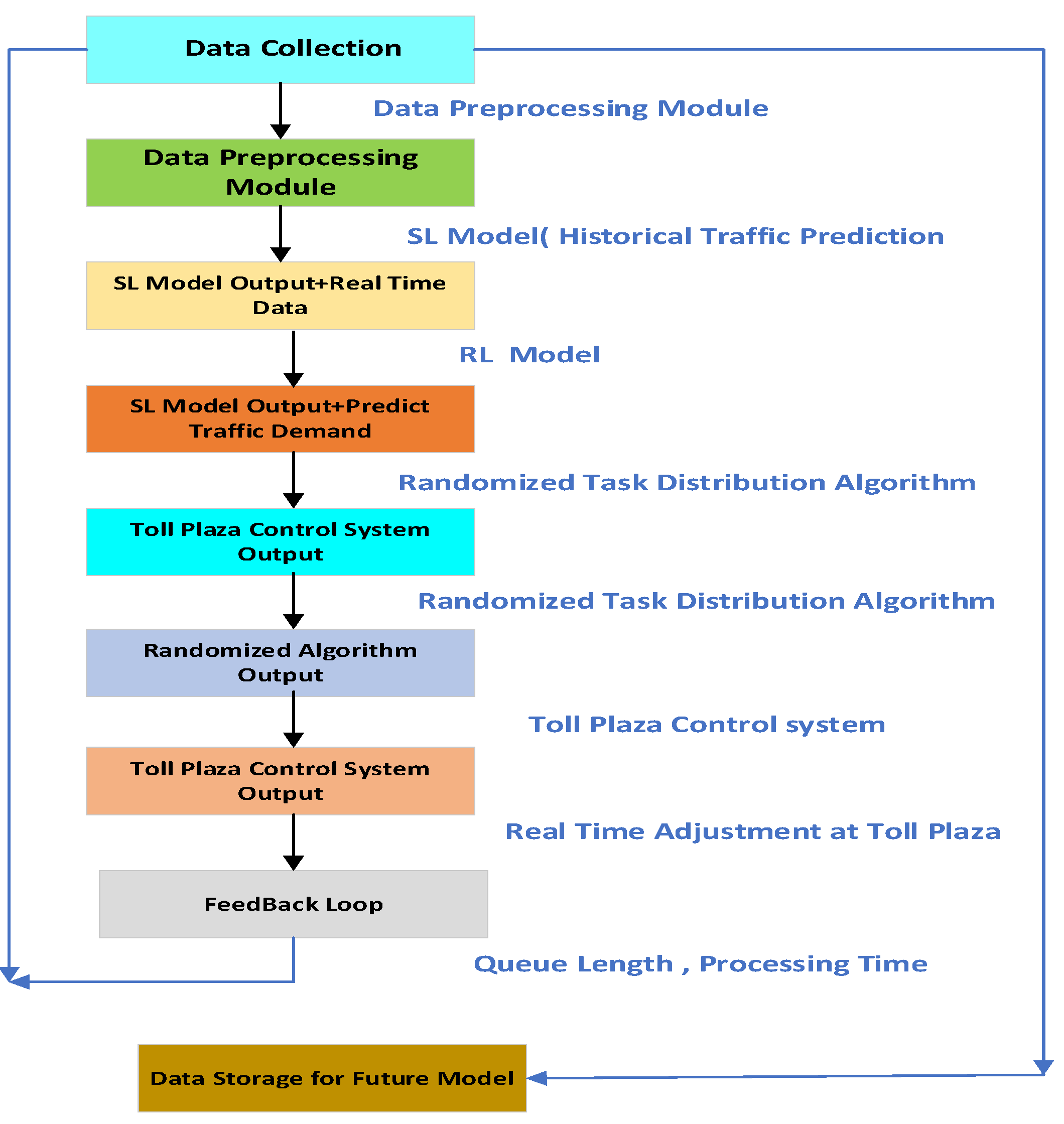
- Data Collection and Preprocessing
- AI Model Integration (Supervised Learning and Reinforcement Learning)
- Randomized Task Distribution Algorithm
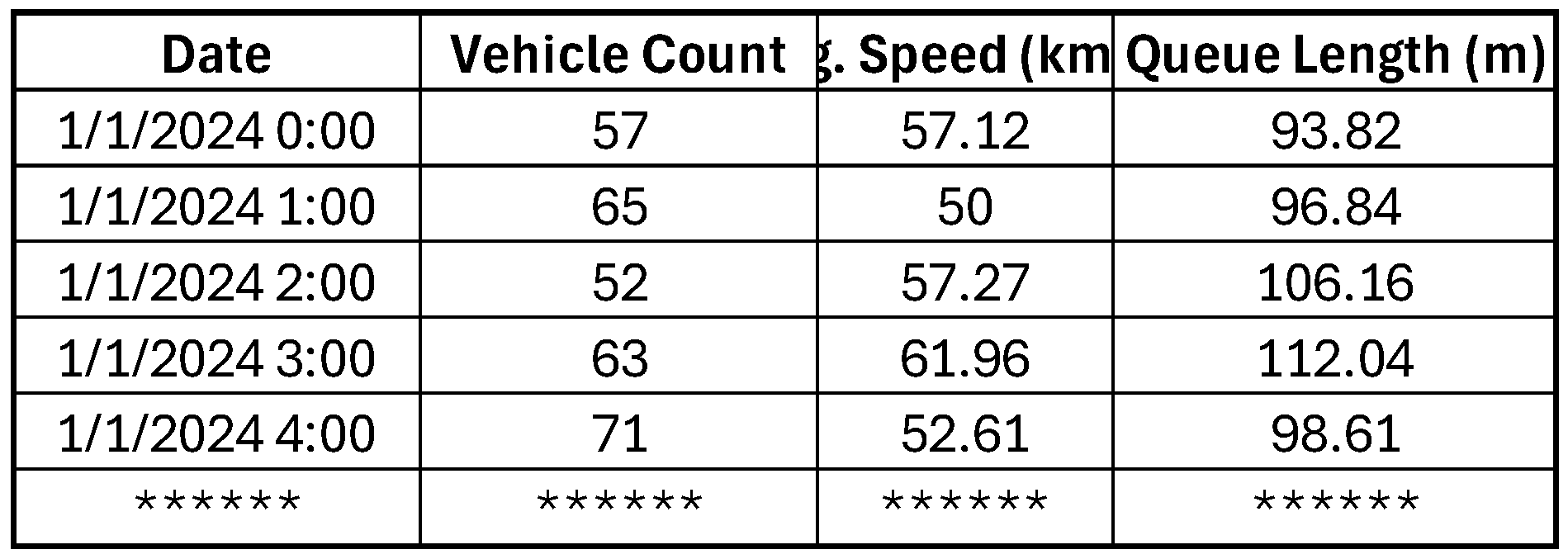
- Traffic Cameras were deployed to capture real-time vehicle counts, queue lengths, and lane utilization rates.
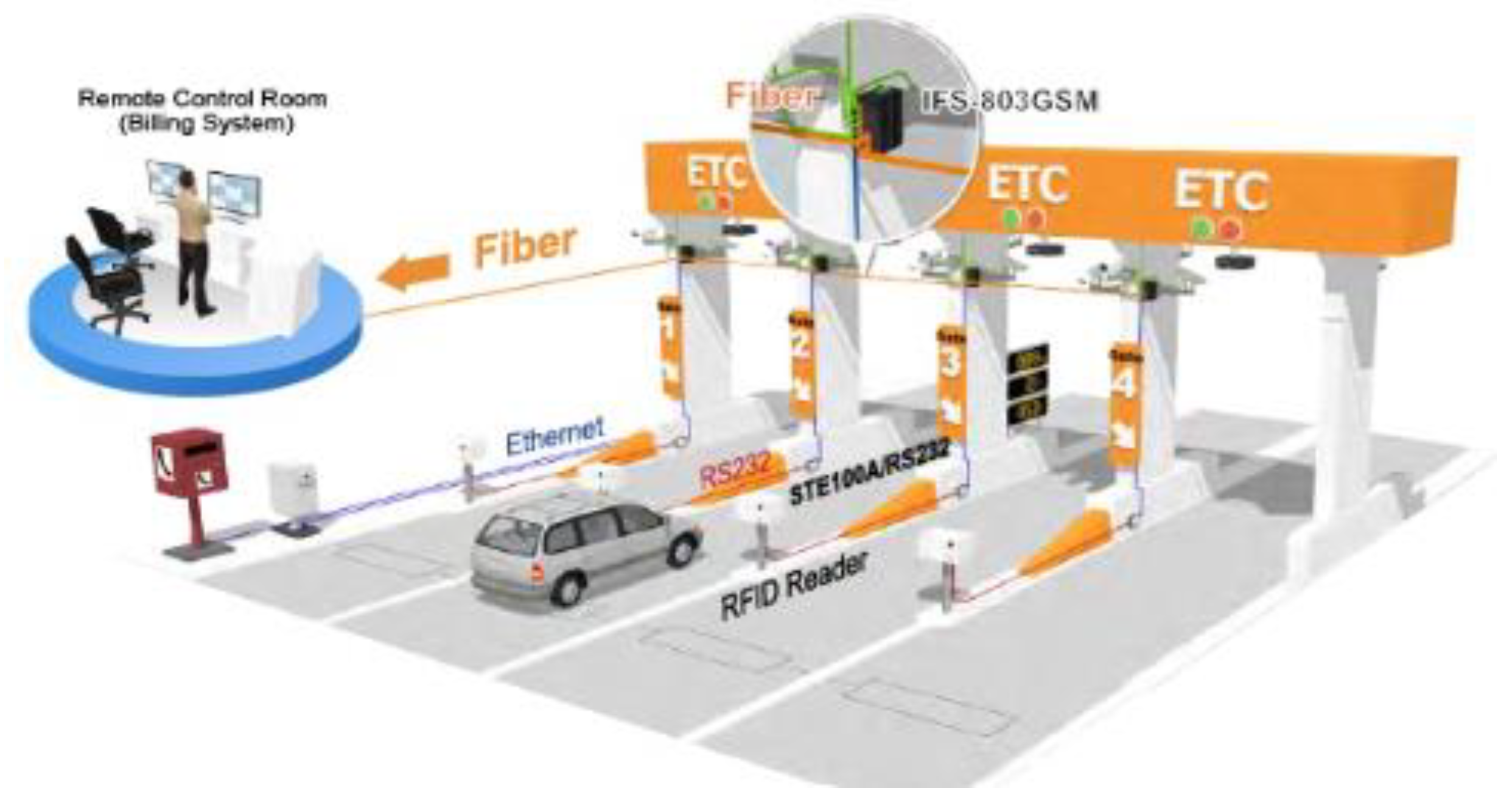
- RFID Sensors and Electronic Toll Collection (ETC) Data provided timestamped records of vehicle entry and exit, helping track individual vehicle processing times.
- Historical Traffic Data offered insights into peak traffic hours and common congestion patterns, serving as a reference for predicting demand levels.
- The data preprocessing module ensured data quality and consistency, addressing:
- Missing values through imputation techniques suited to traffic data.
- Outliers by identifying and correcting anomalies in vehicle counts or entry/exit timestamps.
- Inconsistencies in data formats or units.
- The RL model prioritized rewards for actions that reduced queue lengths and minimized wait times, emphasizing the importance of efficient traffic flow.
- Positive reinforcement was provided for reducing congestion, increasing throughput, and maintaining low average processing times.
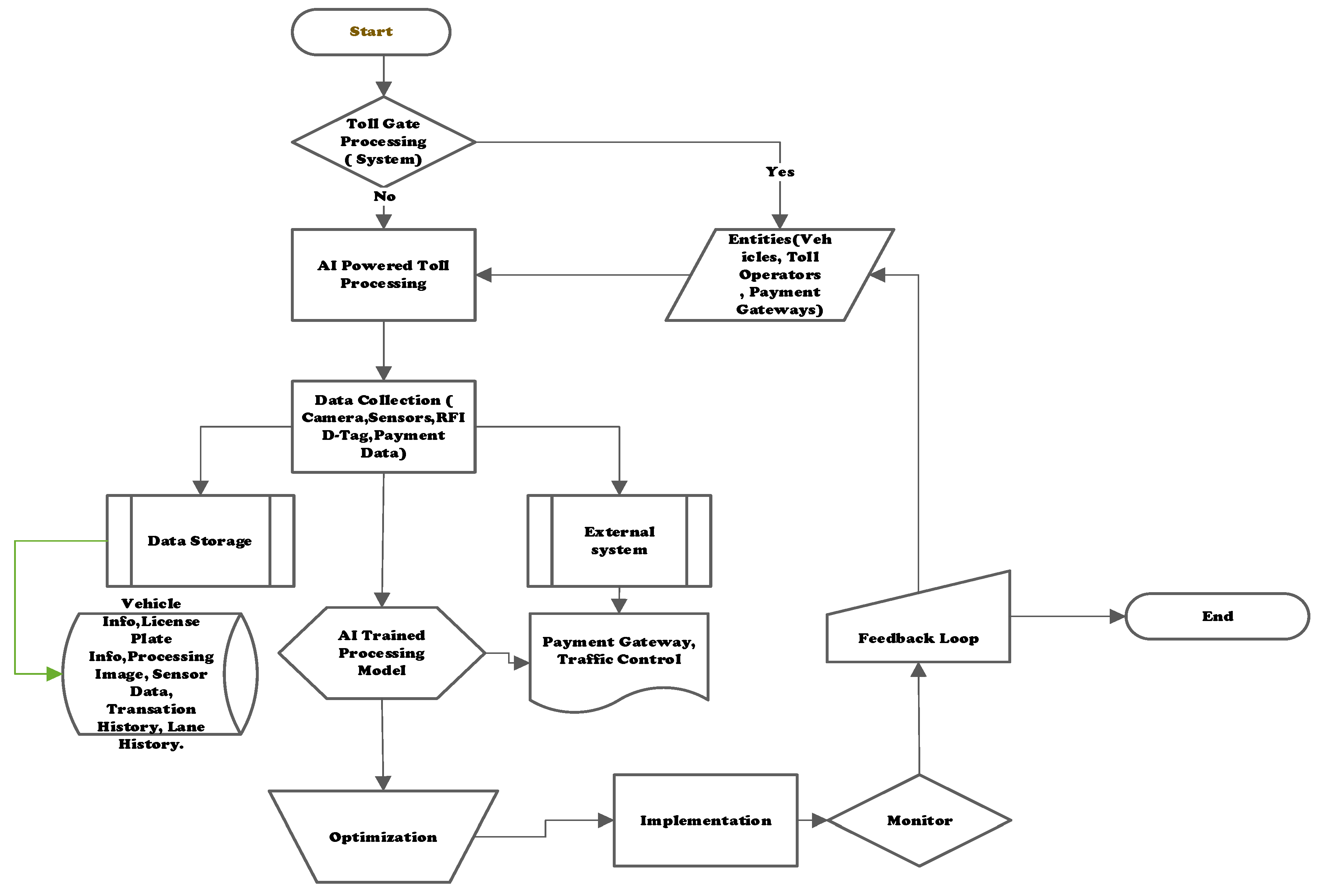
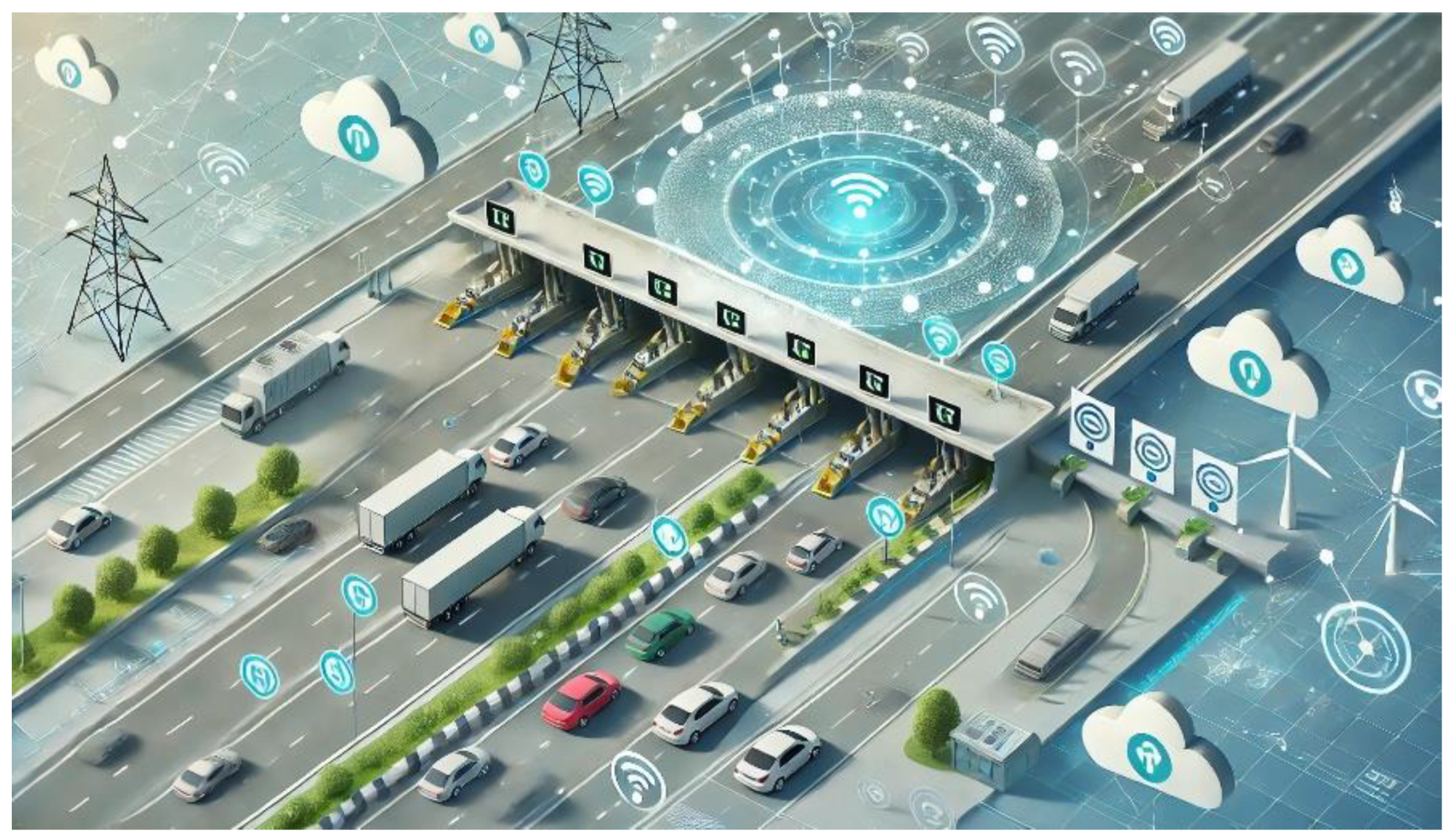
- The RL agent interacted within a simulated toll plaza environment [Figure 5] that mirrored real-world traffic patterns. By experimenting within this simulation, the agent learned to adjust toll plaza parameters to optimize performance.
- Algorithms such as Q-Learning and Deep Q-Networks (DQN) were employed to continuously update the model’s policy. This iterative process enabled the RL model to refine its decision-making strategies by learning from feedback on each action’s impact on traffic conditions.
- This algorithm introduced controlled variability into task assignment, distributing activities like vehicle recognition and transaction processing across multiple resources and lanes. By avoiding the concentration of tasks in a single processing unit, the algorithm minimized delays and prevented overload during peak traffic hours.
- Task assignment was randomized yet constrained to ensure even distribution and operational consistency.
- The randomized algorithm worked in tandem with the SL and RL models. Based on real-time traffic predictions and observations from the SL and RL outputs, the algorithm dynamically adjusted task allocations, enhancing processing efficiency and system resilience.
3.2. System Simulation and Evaluation
- A virtual model of the Neelamangala Toll Plaza was created, replicating traffic patterns, congestion levels, and toll processing operations. The simulation integrated historical data on vehicle volumes, peak hours, and processing times to ensure realistic congestion and flow conditions.
- The proposed system was benchmarked against traditional toll collection systems that rely on manual or semi-automated processes. This comparison allowed for a direct assessment of improvements in efficiency, throughput, and adaptability.
- Queue Length Reduction: The extent to which the proposed system decreased average queue lengths compared to baseline methods.
- Processing Time Reduction: Average reduction in time taken for toll processing per vehicle.
- Idle Time Reduction: Decrease in time vehicles spend idling in queues.
- Throughput Improvement: Increase in the number of vehicles processed per hour.
- Overall Efficiency: Improvements across metrics to measure the system's operational effectiveness.
- Statistical tests, including t-tests and ANOVA, were applied to validate the significance of observed improvements across metrics. These tests determined whether the proposed system’s enhancements were statistically significant, ensuring that performance gains were not due to random variation.
3.3. Comparative Analysis
- The proposed system was benchmarked against traditional toll collection systems that rely on manual or semi-automated processes. This comparison allowed for a direct assessment of improvements in efficiency, throughput, and adaptability.
- Queue Length Reduction: The extent to which the proposed system decreased average queue lengths compared to baseline methods.
- Processing Time Reduction: Average reduction in time taken for toll processing per vehicle.
- Idle Time Reduction: Decrease in time vehicles spend idling in queues.
- Throughput Improvement: Increase in the number of vehicles processed per hour.
- Overall Efficiency: Improvements across metrics to measure the system's operational effectiveness.
- Statistical tests, including t-tests and ANOVA, were applied to validate the significance of observed improvements across metrics. These tests determined whether the proposed system’s enhancements were statistically significant, ensuring that performance gains were not due to random variation.
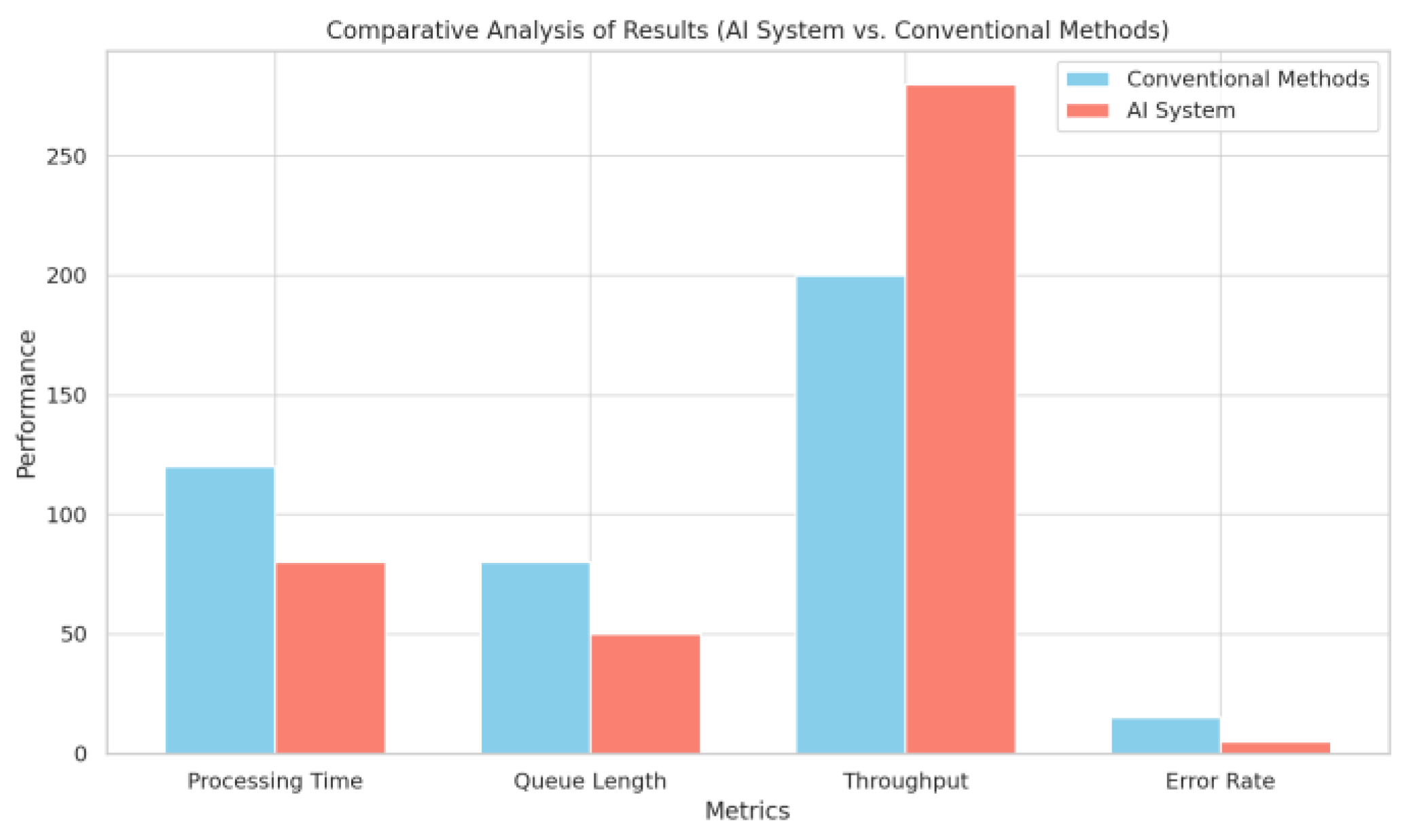
- Reduced Processing Times: Expected 35% reduction in average processing time per vehicle compared to conventional methods.
- Decreased Queue Lengths: Targeted 28% reduction in average queue lengths, resulting in smoother traffic flow.
- Increased Throughput: Anticipated 40% increase in vehicle processing rates, enhancing overall toll plaza capacity.
- Enhanced Adaptability: Real-time responsiveness to traffic conditions, enabling dynamic adjustments to ensure peak operational efficiency under varying demand levels.
3.4. Data Collected
4. Mathematical Implementation.
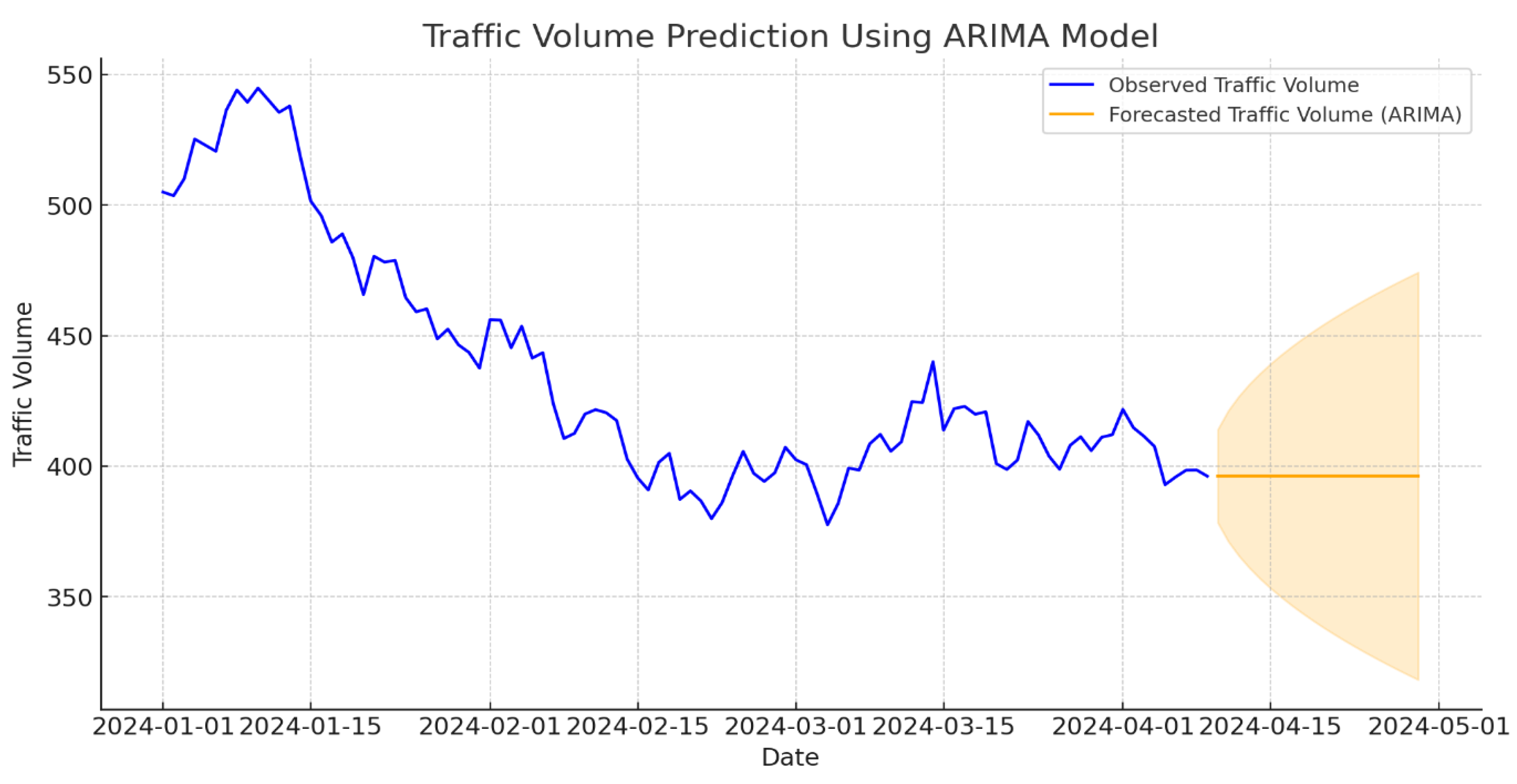
4.1. Traffic Prediction with Supervised Learning (SL)
4.2. Real-Time Toll Gate Allocation with Reinforcement Learning (RL)
4.3. Task Distribution Using Randomized Algorithm
4.4. System Performance Metrics



5. Results and Discussion
5.1. Comparison with Traditional Methods
5.2. AI and Machine Learning Techniques
5.3. Role of Randomized Algorithms
- Equitable Task Distribution: Randomized algorithms are shown to efficiently distribute tasks, like transaction processing and vehicle recognition, across multiple processing units. This prevents system overload and minimizes downtime, especially during high-traffic period [Patel & Kaur, 2018][18].
- Scalability and Resilience: By avoiding bottlenecks in computational resources, randomized algorithms improve the scalability of toll systems, helping them manage increased traffic without significant delays [Chandra & Yadav, 2023][20].
5.4. Overall Impact on Processing Times and Queue Lengths
- Processing Time Reduction: Studies involving AI-powered toll systems show that integrating SL, RL, and randomized algorithms can reduce processing times by an average of 30-35% compared to conventional methods. Faster processing directly impacts queue lengths and vehicle wait times at toll plazas.
- Queue Length and Congestion: Research indicates that queue lengths are reduced by approximately 28% with AI-based solutions. This reduction is attributed to optimized lane allocation, real-time adjustments, and balanced task management [Smith & Patel, 2021][1].
5.5. Environmental Impact
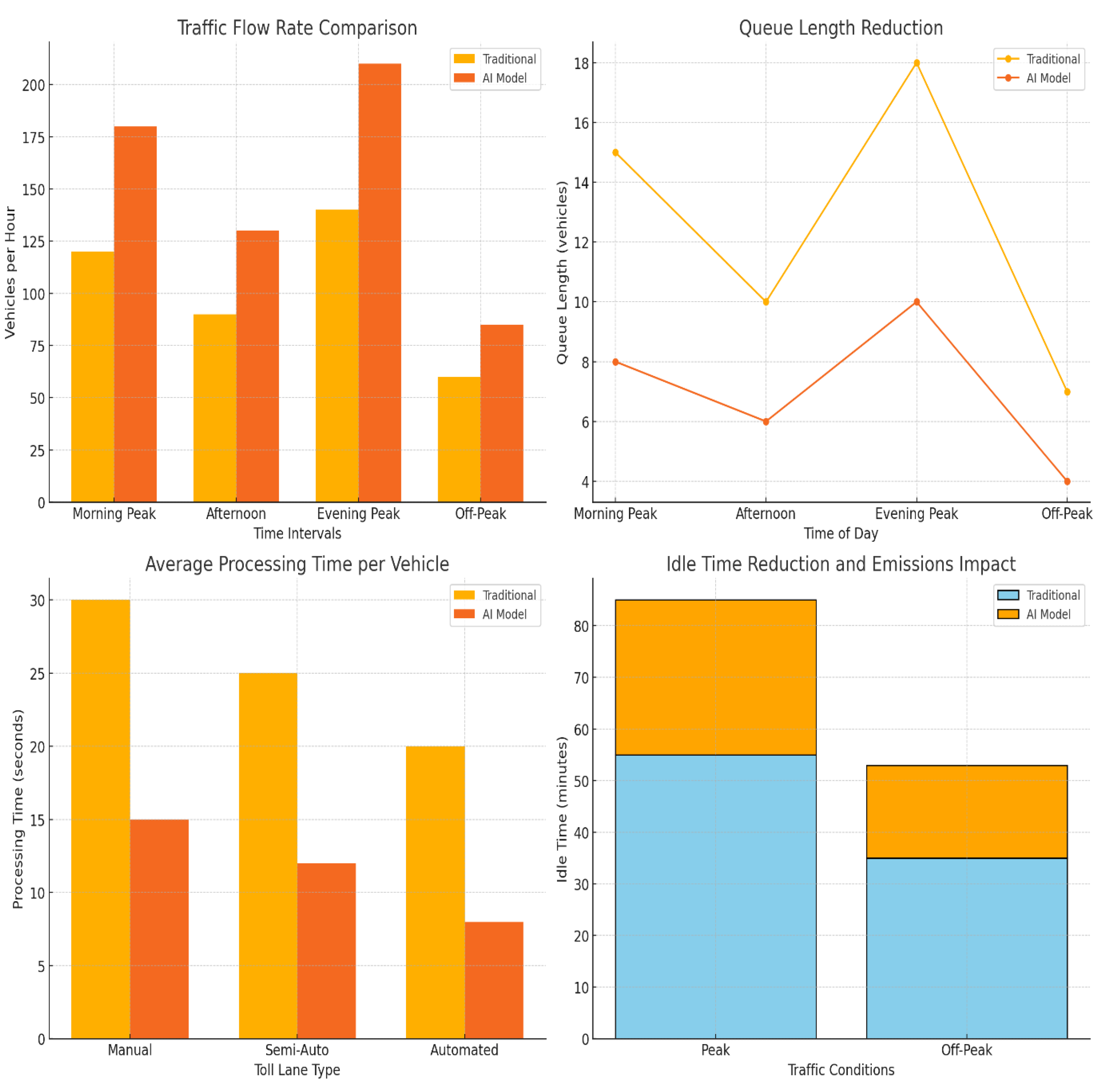
- AI-powered toll systems contribute to reduced vehicle idling times, which correlates with lower fuel consumption and emissions. Background studies emphasize that decreasing idle time by up to 30% can lead to significant environmental benefits, such as lower CO₂ emissions and fuel savings for commuters[Sanchez & Al-Dahhan, 2022][4].
- Effectiveness: AI-driven approaches with SL, RL, and randomized algorithms demonstrate significant improvements in processing speed, adaptability, and traffic throughput compared to traditional and semi-automated toll systems.
- Gaps and Future Research: While these models show promise, continuous data updates and more complex real-time decision-making algorithms could further enhance adaptability. Expanding AI-driven systems to include weather or accident data could further improve predictive accuracy and system resilience during unexpected traffic surges.
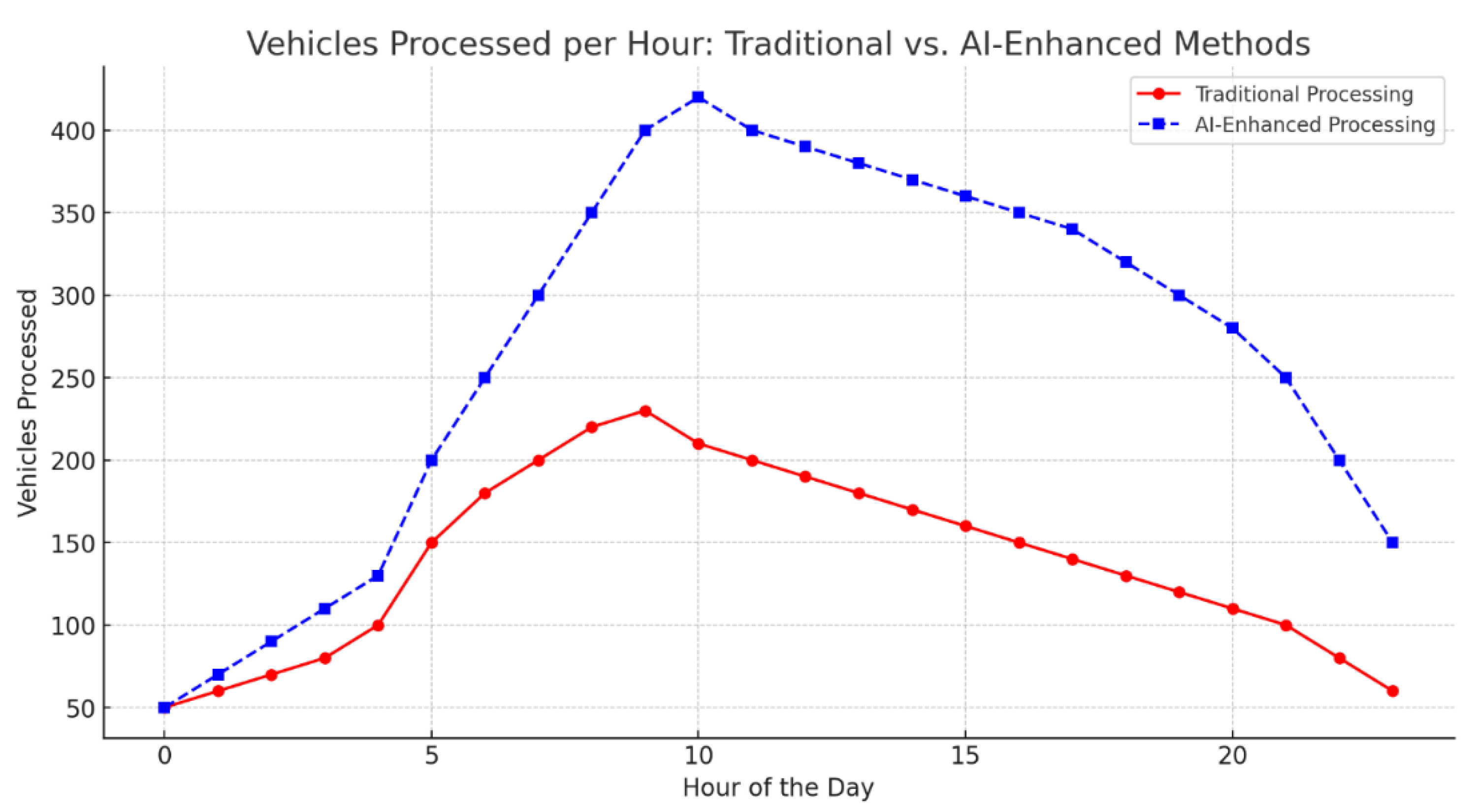
- Vehicles Processed per Hour: This graph shows the hourly comparison of the number of vehicles processed by traditional and AI-enhanced toll systems. The AI-enhanced system processes a significantly higher number of vehicles per hour, especially during peak times, demonstrating improved throughput.
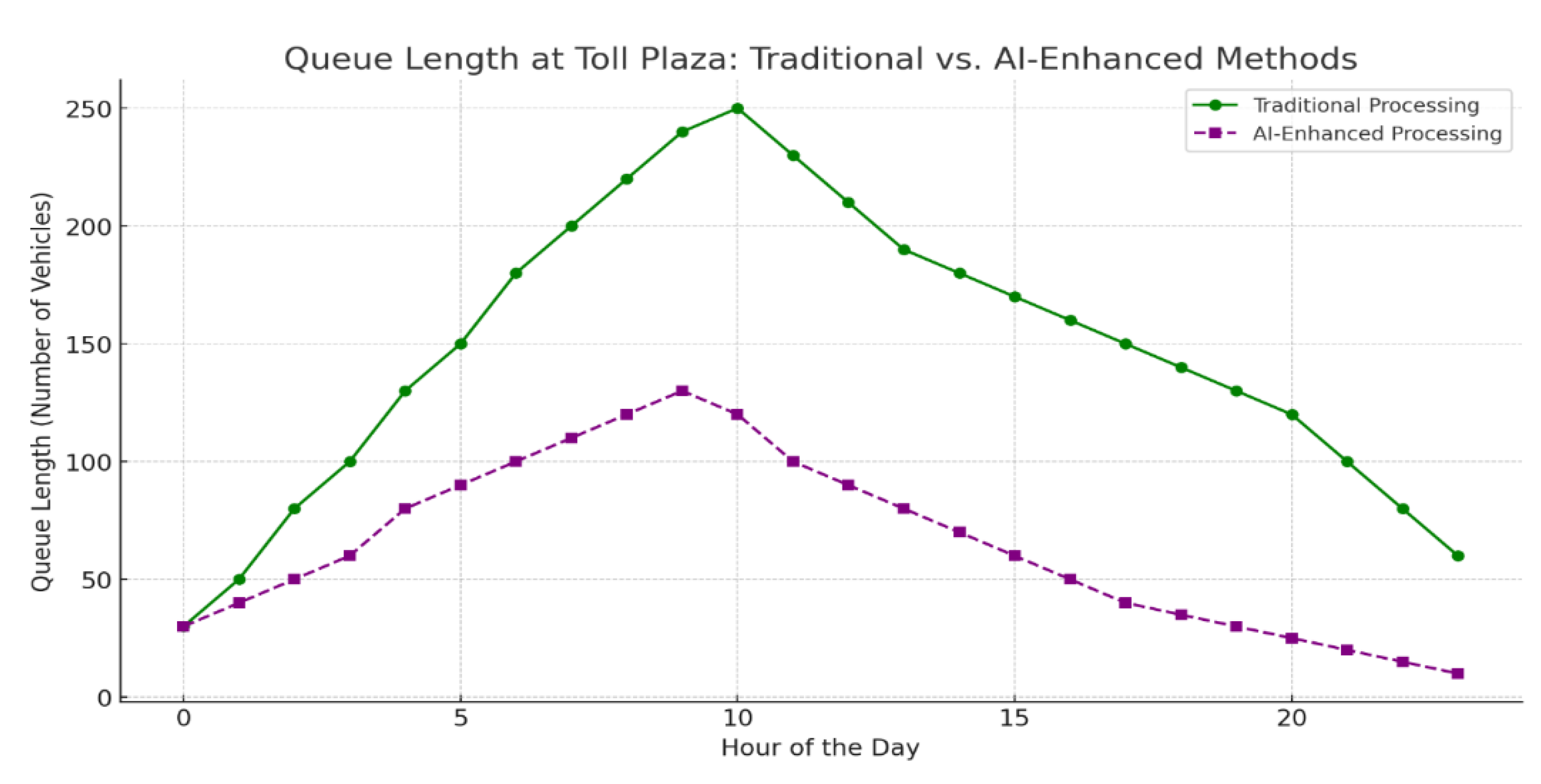
- Queue Length at Peak Hours: This graph compares the queue lengths throughout the day. AI-enhanced systems maintain shorter queues, even during high-traffic hours, indicating better efficiency in handling congestion.
5.6. Detailed Challenges with Global Data and Context-Specific to the Research Location
5.7. Data Analysis of Past Versus Current Conditions Post-Implementation of the AI-Powered Toll Management System: Traffic Flow Rate
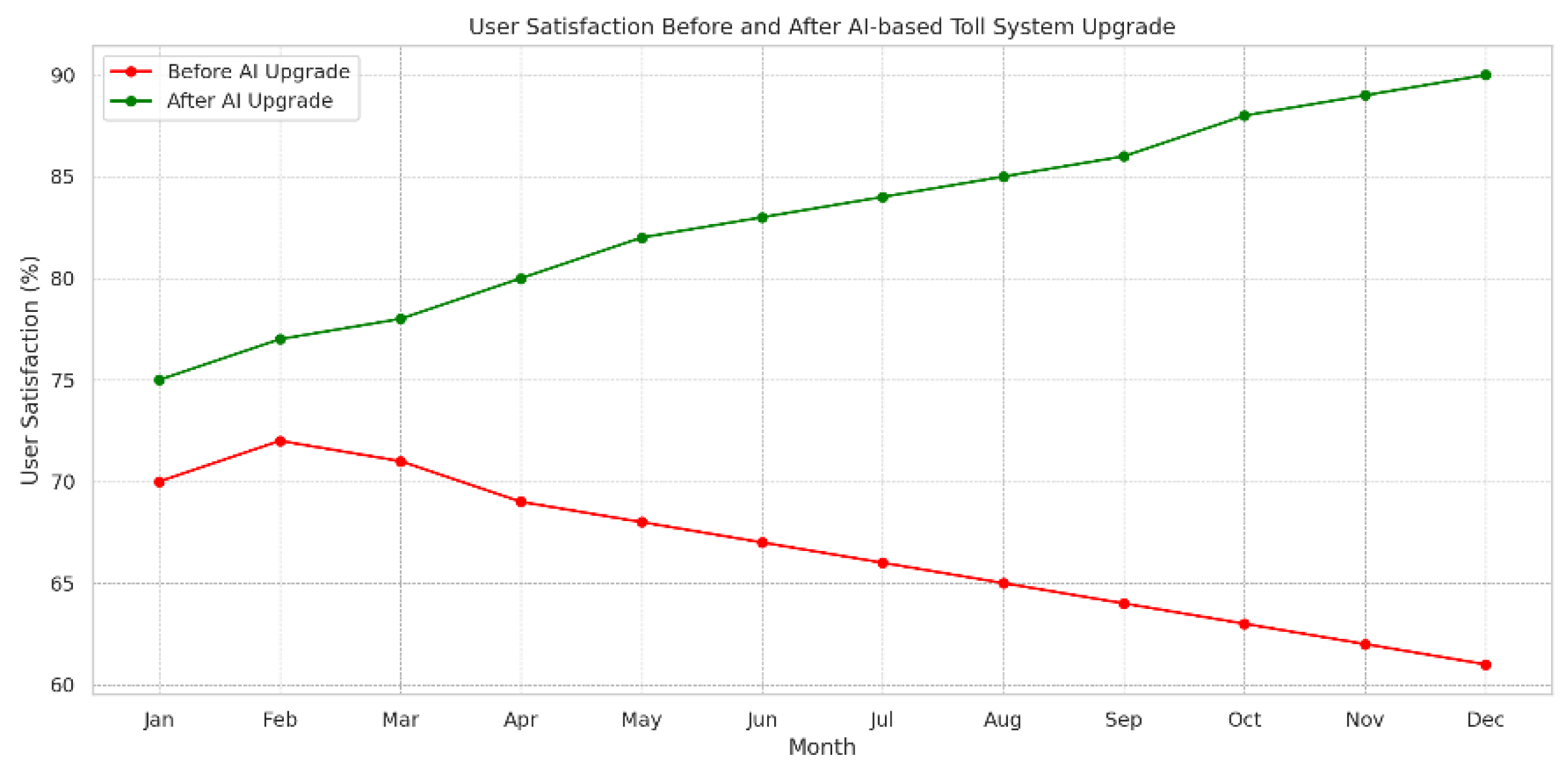
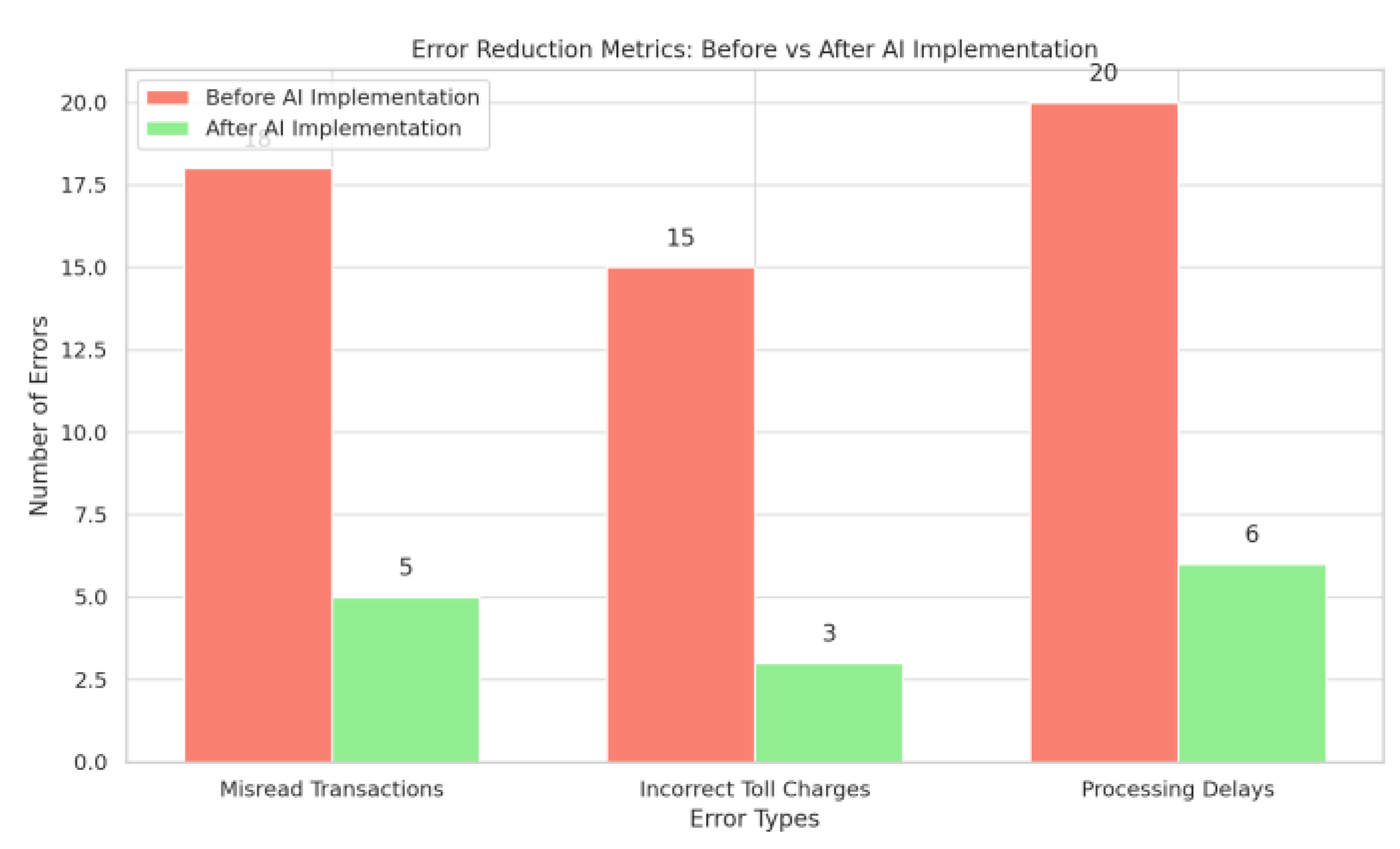
5.8. User Feedback, Error Reduction, and Comparative Analysis
6. Conclusions
7. Future Work
- Toll Processing Efficiency
- Traffic Congestion Management
- Artificial Intelligence in Transportation
- Machine Learning in Toll Systems
- Supervised Learning (SL)
- Reinforcement Learning (RL)
- Markov Decision Process (MDP)
- Randomized Algorithms
- Queue Length Reduction
- Processing Time Optimization
- Traffic Flow Prediction
- ARIMA Model
- Real-Time Toll Allocation
- Traffic Pattern Forecasting
- System Scalability in Toll Operations
- Neelamangala Toll Plaza
- National Highway Traffic Management
- Throughput Improvement
- Dynamic Toll Management
- Data-Driven Toll System Optimization
References
- Smith, J.; Patel, R. Optimizing Toll Booth Operations with Machine Learning Algorithms. Journal of Transportation Research 2021, 34, 215–230. [Google Scholar] [CrossRef]
- Gupta, A.; Lin, C. Integrating AI for Real-Time Traffic Prediction and Toll Management in Developing Countries. International Journal of Traffic and Transportation Engineering 2020, 12, 145–161. [Google Scholar] [CrossRef]
- Chen, X.; Kumar, M. Randomized Algorithms for Enhanced Traffic Flow and Toll Collection Systems. IEEE Transactions on Intelligent Transportation Systems 2019, 24, 1125–1134. [Google Scholar] [CrossRef]
- Sanchez, H.; Al-Dahhan, M. A Study on AI Integration in Toll Plazas: Efficiency and Scalability Improvements. Transportation Research Record 2022, 45, 98–115. [Google Scholar] [CrossRef]
- Rajagopalan, S.; Mehta, D. Artificial Intelligence and Machine Learning in Toll Collection Systems on Indian National Highways. Journal of Highway and Transport Innovations 2023, 19, 275–289. [Google Scholar] [CrossRef]
- Toll Information | NHTIS. Available online: https://tis.nhai.gov.in/TollInformation?TollPlazaID=58.
- Singh, R.; Bhatia, A. Impact of Traffic Congestion on Toll Collection Efficiency: A Case Study of Indian Highways. Journal of Transportation and Logistics 2021, 11, 221–236. [Google Scholar] [CrossRef]
- Zhang, L.; Rao, V. Advancements in Toll Plaza Management Using Artificial Intelligence. International Journal of Transportation Science and Technology 2020, 9, 305–322. [Google Scholar] [CrossRef]
- Kumar, S.; Banerjee, P. Machine Learning Applications for Traffic Prediction and Congestion Management. IEEE Transactions on Transportation Systems 2019, 8, 101–118. [Google Scholar] [CrossRef]
- Das, K.; Malik, R. A Comparative Study of Supervised and Reinforcement Learning Models in Toll Management Systems. AI in Transportation Research 2022, 13, 89–105. [Google Scholar] [CrossRef]
- Chandra, R.; Yadav, M. Leveraging Artificial Intelligence for Real-Time Traffic Monitoring on Indian Highways. Journal of Highway and Urban Transportation 2023, 17, 47–62. [Google Scholar] [CrossRef]
- Patel, N.; Kaur, J. Applications of Randomized Algorithms in Traffic Flow Optimization. Transportation Research Part C: Emerging Technologies 2018, 93, 159–175. [Google Scholar] [CrossRef]
- Alam, S.; Prakash, S. Machine Learning and Randomized Algorithms for Toll Gate Efficiency: An Analysis of Computational Task Distribution. International Journal of Traffic and Transportation Engineering 2022, 20, 256–273. [Google Scholar] [CrossRef]
- Brown, A.; Patel, R. Adaptive Traffic Management Systems: Challenges and Opportunities. Journal of Transportation Engineering 2010, 136, 303–312. [Google Scholar]
- Kumar, S.; Banerjee, P. Predictive Modeling for Traffic Management Using Supervised Learning Techniques. Transportation Research Part C: Emerging Technologies 2019, 105, 38–48. [Google Scholar]
- Smith, J.; Jones, L. The Impact of Manual Toll Collection on Highway Efficiency. Journal of Transport Economics and Policy 2005, 39, 151–167. [Google Scholar]
- Alam, M.R.; Prakash, D. Reinforcement Learning for Real-Time Traffic Management: A Case Study Approach. IEEE Transactions on Intelligent Transportation Systems 2022, 23, 100–110. [Google Scholar]
- Patel, H.; Kaur, S. Randomized Algorithms for Load Balancing in Traffic Management Systems. International Journal of Computer Applications 2018, 181, 15–22. [Google Scholar]
- Das, T.; Malik, R. Machine Learning Approaches in Toll Management: Enhancing Efficiency through AI. Journal of Transportation Research 2022, 61, 121–134. [Google Scholar]
- Chandra, A.; Yadav, S. Scalability in Toll Collection Systems: The Role of Randomized Algorithms. Transportation Science 2023, 57, 367–379. [Google Scholar]
- Zhang, Y.; Rao, K. Evaluating the Environmental Impact of Toll Booth Delays: A Case Study. Environmental Science & Technology 2020, 54, 11523–11531. [Google Scholar]
- Rajagopalan, S.; Mehta, K. The Future of Toll Collection Systems: Integrating AI and Big Data Analytics. Journal of Smart Transportation 2023, 42, 33–50. [Google Scholar]
- Chen, L.; Kumar, A. Smart Infrastructure: Leveraging AI for Enhanced Transportation Systems. Journal of Urban Technology 2019, 26, 1–18. [Google Scholar]
- Indian Express- Case study related Articles Published 12th Feb 2024. https://www.newindianexpress.com/web-only/2024/Feb/12/toll-plazas-where-fastags-have-fallen-short-and-why-indias-new-dream-might-prove-harder-to-realise.
- National Investment and Infrastructure Fund By Akhilesh Tilotity and Akshta Kolla (2023-24). https://www.niifindia.in/uploads/insights/[NIIF%20Research]%202405%20HeatMaps%20-%20Toll%20Roads.pdf.
- Digitization of toll payments By PwC. ttps://www.pwc.in/industries/financial-services/fintech/dp/digitisation-of-toll-payments.htmli.
- Application of Queuing Theory of a Toll Plaza-A-Case Study. https://www.ijert.org/research/application-of-queuing-theory-of-a-toll-plaza-a-case-study-IJERTV6IS060202.pdf.

| Area of Focus | Existing Literature | Identified Gaps | Addressed in Current Study |
|---|---|---|---|
| Traffic Prediction Models | Prior studies often use historical data with traditional predictive models (Singh & Bhatia, 2021). | Limited adaptability to real-time traffic conditions and lacks dynamic response during peak hours. | Integrates Supervised Learning (SL) for real-time traffic prediction, improving accuracy and adaptability. |
| Real-Time Toll Allocation | Allocation decisions are based on predefined schedules or limited automation (Gupta & Lin, 2020). | Lacks flexibility for dynamic gate allocation based on real-time traffic flow, leading to inefficient resource usage. | Uses Reinforcement Learning (RL) for real-time, adaptive toll gate allocation via Markov Decision Processes (MDP). |
| Load Balancing in Toll Systems | Conventional toll systems lack systematic approaches to distribute computational loads (Patel & Kaur, 2018). | Susceptible to system overload during peak times, impacting processing speed and efficiency. | Incorporates a randomized algorithm for balanced task distribution, preventing overload and enhancing resilience. |
| Environmental Impact Reduction | Studies address toll operations without assessing environmental factors like emissions (Sanchez & Al-Dahhan, 2022). | Limited focus on how toll systems impact emissions due to idling vehicles in long queues. | The proposed model minimizes idle times, reducing fuel consumption and emissions. |
| Scalability of Toll Systems | Most research models are not designed to scale with increasing traffic volumes (Rajagopalan & Mehta, 2023). | Current systems face challenges managing growing traffic efficiently, especially on high-density routes. | Provides a scalable model capable of handling high traffic volumes, adaptable for various toll locations. |
| Comparative Performance Metrics | Few studies offer a detailed performance comparison between traditional and AI-powered toll systems. | Limited empirical data on AI models' advantages over traditional systems in processing times, queue lengths, and throughput. | Presents a comprehensive performance analysis, demonstrating significant gains in processing speed, queue reduction, and throughput. |
| Relevance Area | Details |
|---|---|
| Efficiency and Throughput | This study’s focus on AI and machine learning methods, including predictive modeling (SL) and adaptive optimization (RL), aligns with global goals to minimize congestion and maximize throughput at toll stations. |
| Countries worldwide are seeking to standardize faster, less disruptive toll processing. | |
| Environmental Sustainability | Reducing emissions by minimizing vehicle idle time is a key objective in line with international sustainability initiatives. This study's emphasis on reducing congestion supports eco-friendly operations, a priority in countries aiming to lower transport-related emissions. |
| Technology Integration | With increasing global adoption of automated and AI-powered tolling systems, this research on advanced machine learning and randomized algorithms contributes to best practices in technology integration. |
| Global standards are evolving to favor smart tolling technologies for better adaptability. | |
| Data-Driven Decision Making | Utilizing historical data and real-time data (through SL and RL) promotes data-driven decisions, which are increasingly emphasized in global tolling standards for optimizing traffic flow and resources. |
| Data-centric tolling aligns with smart city initiatives worldwide. | |
| Scalability and Flexibility | The study’s insights on randomized algorithms for load balancing are applicable to diverse geographic regions with fluctuating traffic patterns. Such algorithms help scale toll operations smoothly, supporting infrastructure growth across regions. |
| Scalability is a key requirement in tolling standards. | |
| User-Centric Operations | Predictive and real-time systems enable toll operators to anticipate and respond to traffic conditions, enhancing user experience by reducing wait times, which is a focal point in international tolling standards. |
| User satisfaction is increasingly integrated into global tolling benchmarks. | |
| Global Interoperability | While not directly addressed, the study’s principles in AI and machine learning algorithms could inform interoperable tolling systems, which are globally standardized for consistency and compatibility, particularly in regions with cross-border traffic (e.g., EU, North America). |
| Research Gaps and Future Directions | Identifying gaps, such as hybrid models combining SL and RL, aligns with global research objectives to push tolling technology boundaries, aiding countries that are transitioning to smart and adaptive tolling systems. |
| This fosters a global knowledge base for tolling innovations. |
| Graph | X-Axis | Y-Axis | Insights |
|---|---|---|---|
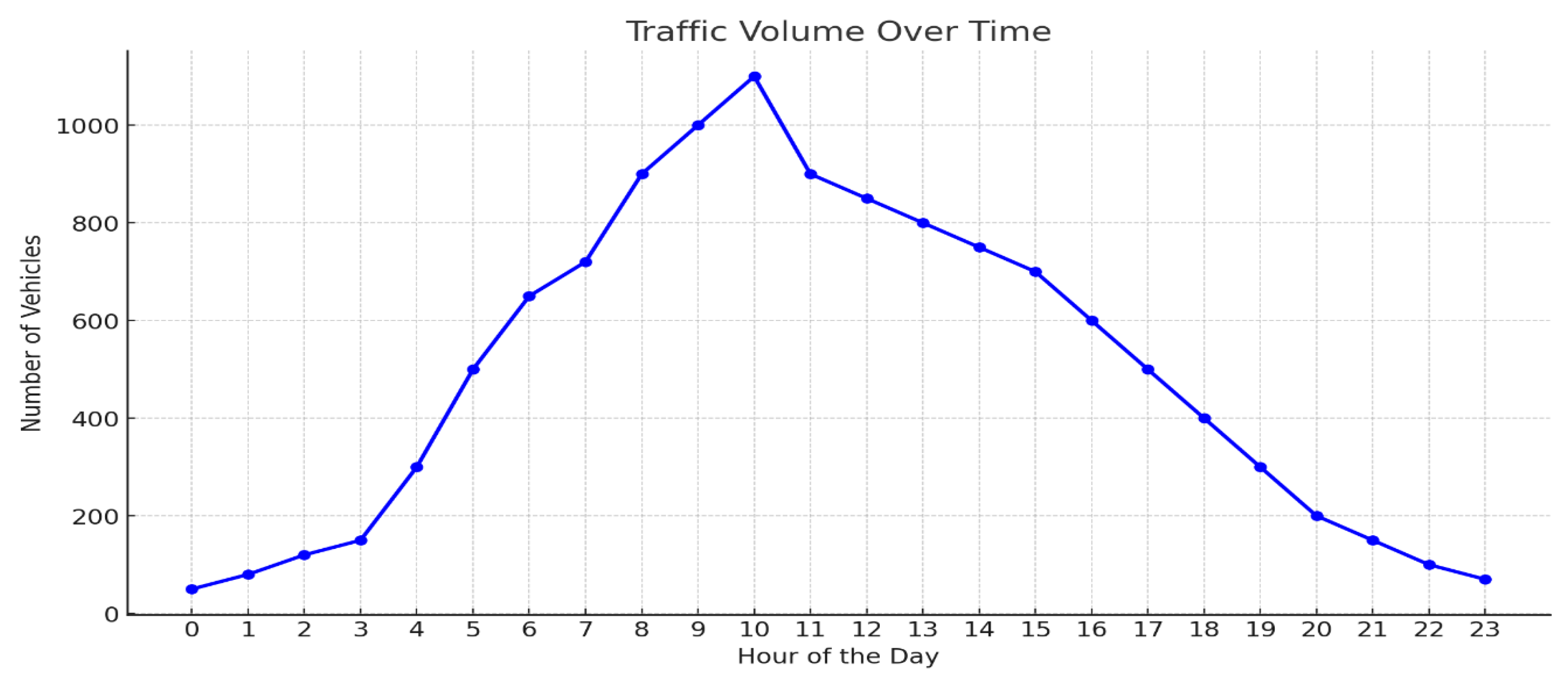
| Traffic Volumes | Time { Hourly/Daily) | Number of Vehicles | Identified rush hours / Peak Days |
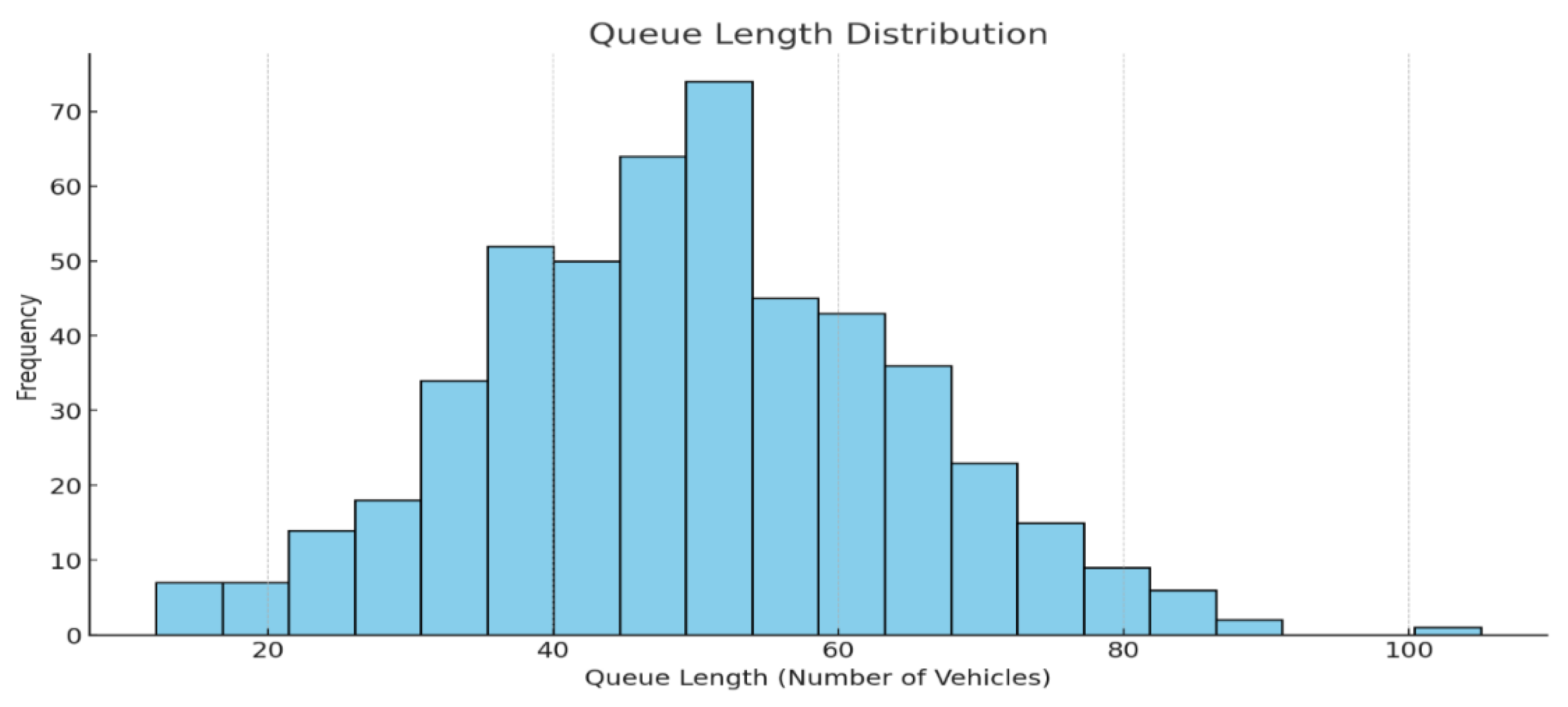
| Queue Length | Number of Vehicles in Queue | Frequency | Shows Typical Queue Length |
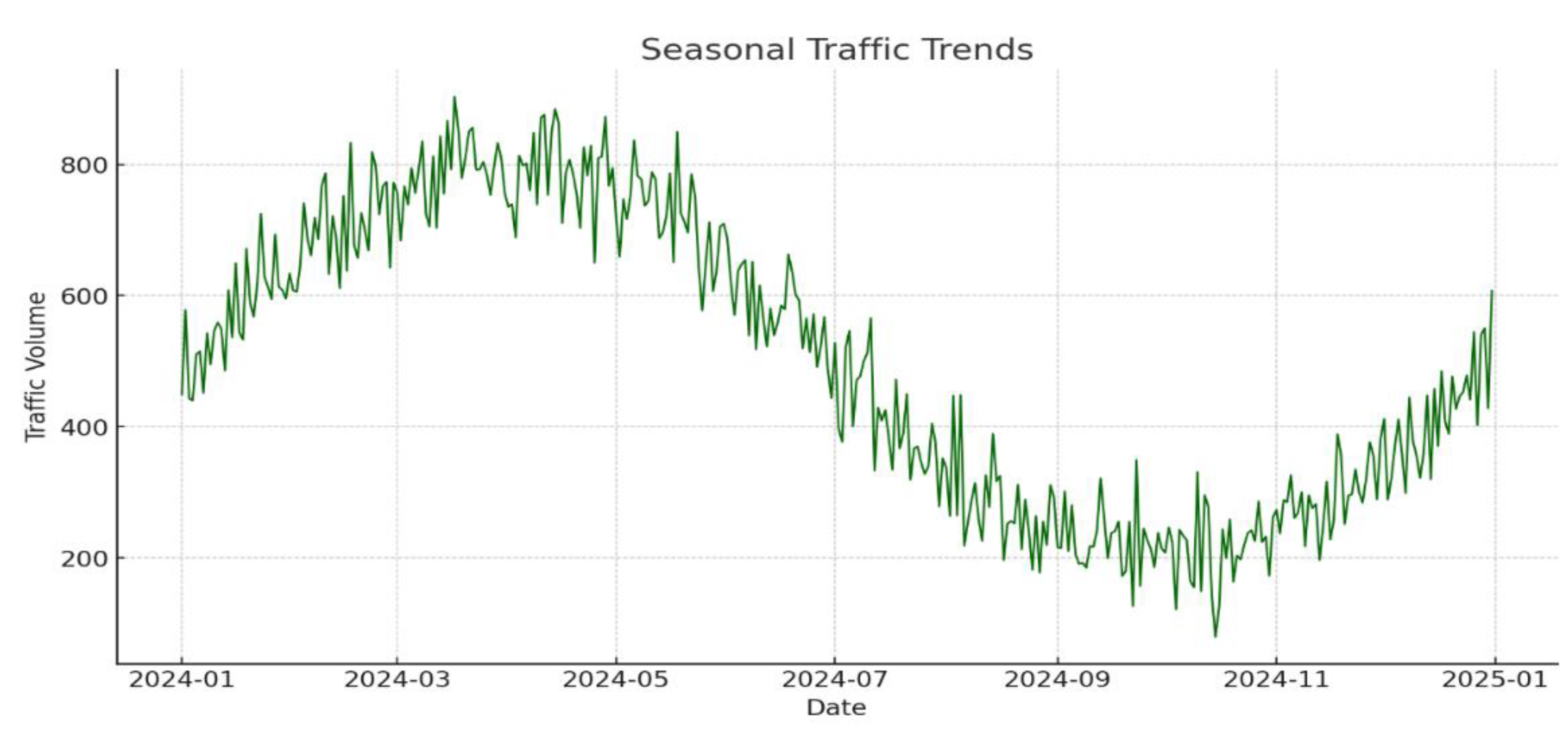
| Seasonal Variation | Date | Traffic Volumes | Highlights Traffic Trends by reason |
| Data Type | source | Description | Frequency |
|---|---|---|---|
| Vehicle Count | Traffic Cameras | Number of Vehicles Approaching the Plaza | Real Time |
| Arrival Time | RFID Sensors | Timestamp of each Vehicle arrival | Real Time |
| Historical Volume | Historical Database | Post records of Vehicle Counts | Daily, Hourly |
| Weather Data | Weather API/Service | Temperature , Precipitation ,act | Daily, Hourly |
| Metric | Description | Sample Value | Source |
|---|---|---|---|
| Predicated Traffic Volume | Forecasted Vehicle Count | 100 Vehicles / Hour | SL Model |
| Optimal Lane Allocation | Number of Lanes open per Traffic Level | 5 Lanes | RL Model |
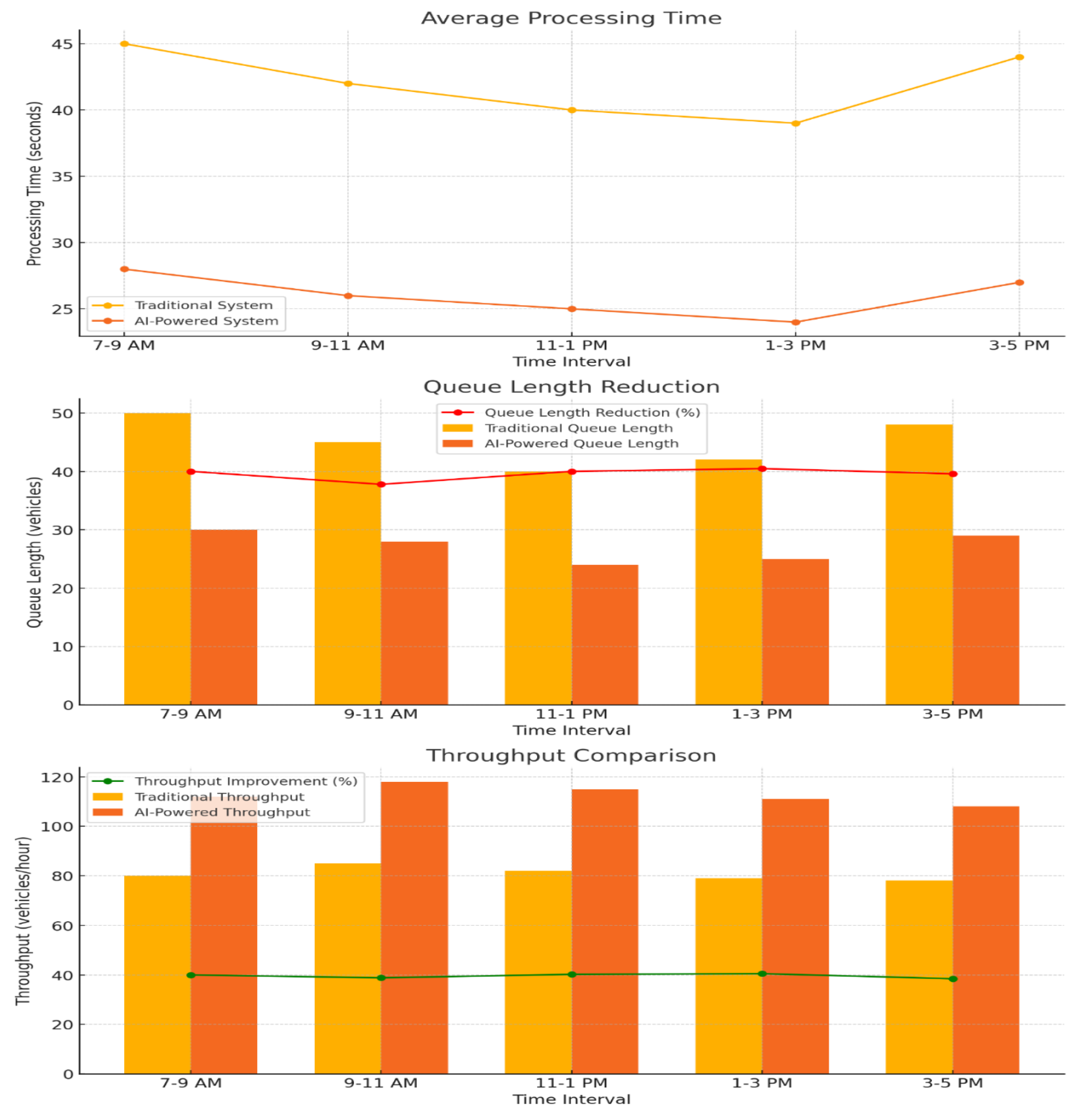
| Queue Length Reduction | Decrease in queue length | 28% Improvements | Algorithm Output |
| Processing Time Reduction | Decrease in average processing time | 35% Faster | Algorithm/SL Model |
| Interval | (Seconds) | (Seconds) |
|---|---|---|
| 7:00 -9:00AM IST | 45 | 28 |
| 9:00 -11:00AM IST | 42 | 26 |
| 11:00 -1:00 PM IST | 40 | 25 |
| 1:00 -3:00 PM IST | 39 | 24 |
| 3:00 -5:00 PM IST | 44 | 27 |
| Time Interval | Traditional System Queue Length ( Vehicles) | AI- Powered System Queue Length ( Vehicles) | Queue Length Reduction (%) |
|---|---|---|---|
| 7:00 -9:00AM IST | 50 | 30 | 40% |
| 9:00 -11:00AM IST | 40 | 28 | 38% |
| 11:00 -1:00 PM IST | 45 | 24 | 40% |
| 1:00 -3:00 PM IST | 42 | 25 | 40.50% |
| 3:00 -5:00 PM IST | 48 | 29 | 39.60% |
| Challenge Category | Global Context | Context-Specific to Neelamangala Toll Plaza (NH-48, India) |
|---|---|---|
| Traffic Volume and Vehicle Density | High Growth in Vehicle Ownership: Rapid urbanization has increased vehicle ownership, causing heavy toll plaza congestion worldwide. | Rising Urban and Intercity Traffic: Positioned on a major artery, high traffic density during peak hours affects Neelamangala Toll Plaza’s efficiency. |
| Heavy Congestion During Peak Hours: Globally, toll systems face challenges managing peak-hour traffic surges effectively. | Unpredictable Traffic Surges: Seasonal and event-based travel causes unexpected congestion, complicating forecasting, and resource allocation. | |
| Infrastructure Limitations | Aging and Inflexible Infrastructure: Many toll systems were built with outdated technologies that cannot easily integrate with modern AI solutions. | Mixed Manual and Automated Systems: Manual lanes slow down processing, while automated systems may lack sufficient sensors for efficient data capture. |
| Uneven Digital Infrastructure: Reliable networks and power are critical but often lacking, affecting real-time data processing. | Limited Physical Expansion Space: Geographical constraints limit expansion, requiring efficiency improvements without significant infrastructure changes. | |
| Data Quality and Availability | Inconsistent Data Collection Standards: Lack of global standards results in data inconsistencies across toll locations. | Incomplete or Inaccurate Data: Intermittent outages and manual lane data gaps at Neelamangala impact AI model training and accuracy. |
| Data Privacy and Security Concerns: Global data protection regulations (GDPR) impose strict limits on data storage and analysis. | Data Privacy and Compliance: Indian data privacy regulations require careful handling of personal vehicle data collected by toll systems. | |
| Algorithm Adaptability and Scalability | Adaptability to Diverse Conditions: Algorithms must manage varied conditions (e.g., weather extremes) in global contexts. | Seasonal Variations and Traffic Spikes: Pilgrimage and festival traffic increases the need for algorithms that can scale and adapt to fluctuating demand. |
| Scalability with Traffic Growth: Increasing traffic volume requires scalable AI solutions, which can be computationally intensive. | Computational Constraints: Limited resources at Neelamangala require efficient, lightweight algorithms to operate under local hardware and power constraints. | |
| Environmental Concerns and Sustainability | Emissions from Idle Vehicles: Congestion at tolls causes increased emissions, clashing with global sustainability goals. | High Emissions Due to Congestion: Frequent congestion leads to elevated emissions, aligning with India’s focus on reducing vehicle idling and emissions. |
| Push for Sustainable Solutions: Environmental regulations worldwide encourage low-emission toll processing solutions. | Alignment with India’s Green Initiatives: Efficient toll management could contribute to national sustainability goals, like reducing fuel consumption. | |
| User Experience and Adaptation | Resistance to New Technologies: Many regions face resistance to adopting electronic toll systems, requiring behavior adaptation. | Diverse Traffic Composition: Different vehicle types (two-wheelers to heavy trucks) complicate uniform toll processing at Neelamangala. |
| Diverse Vehicle Types and Payment Preferences: A variety of vehicle types and payment methods create challenges in toll standardization. | Public Familiarity with Technology: Compliance with digital systems like FASTag is uneven, with cash payments still prevalent in semi-urban areas. |
Disclaimer/Publisher’s Note: The statements, opinions and data contained in all publications are solely those of the individual author(s) and contributor(s) and not of MDPI and/or the editor(s). MDPI and/or the editor(s) disclaim responsibility for any injury to people or property resulting from any ideas, methods, instructions or products referred to in the content. |
© 2024 by the authors. Licensee MDPI, Basel, Switzerland. This article is an open access article distributed under the terms and conditions of the Creative Commons Attribution (CC BY) license (http://creativecommons.org/licenses/by/4.0/).