Preprint
Article

This version is not peer-reviewed.

Infant Crying, Sleeping, and Feeding Problems in Times of Societal Crises: The Mediating Role of Parenting Stress on Parenting Behavior in Fathers and Mothers

A peer-reviewed article of this preprint also exists.

Submitted:

18 November 2024

Posted:

18 November 2024

You are already at the latest version

Abstract

Background/Objectives: Infant regulatory problems (RP), i.e. crying, sleeping, and feeding problems, are associated with unfavourable outcomes in later childhood. RP increased during the pandemic, however their occurence in the face of today’s societal challenges remains unclear. RP are strongly linked to parenting stress and less positive parenting behaviors but their interplay is less investigated. Methods: In this cross-sectional questionnaire-based study (ntotal =7,039), we compared incidences of crying, sleeping, and feeding problems in infants (0-2 years) in a pandemic (npandemic= 1,391) versus a post-pandemic (npost-pandemic= 5,648) sample in Germany. We also investigated the relationship between post-pandemic infant RP and parenting behaviors with parenting stress as a potential mediator for fathers and mothers. Results: Crying/ Sleeping problems (34.8%) and excessive crying (6.3%) were significantly higher pronounced in the post-pandemic sample. In both mothers and fathers, infant RP were significantly associated with less positive parenting behaviors. Parenting stress partially mediated this rela-tionship. Conclusions: RP in the post-pandemic era are even higher pronounced than during the pandemic, highlighting the imperative for health care professionals to focus on infant mental health. Par-enting stress emerges as an entry point for addressing the cycle of infant RP and maladaptive behaviors in both fathers and mothers.

Keywords: 
;  ;  ;  ;  ;  ;  

1. Introduction

Over the past few decades, longitudinal research has consistently demonstrated the harmful effects of early psychosocial stress on children's mental health, with repercussions that can persist throughout the lifespan [1,2]. Psychosocial stress in families can arise from a variety of sources, including challenging living conditions (e.g., low socioeconomic status, lack of social support, or isolation), strained family relationships (e.g., between parents and children), and specific family burdens (e.g., health issues or limited childcare resources) [3]. The COVID-19 pandemic exacerbated these stressors, with families facing a significant increase in psychosocial pressure [4,5].
Concerns regarding child mental health emerged early in the pandemic, with national and international studies showing a marked rise in psychological problems among children and adolescents compared to pre-pandemic levels [6,7]. However, most research focused on school-aged children, paying less attention to the unique challenges faced by younger children. This is surprising, since very young children are known to be particularly vulnerable to the harmful effects of environmental stress [8]: They are almost entirely reliant on their parents for emotional and physical support during a critical phase of rapid brain development [9,10] in which key milestones in emotional regulation and learning have to be met [11]. When infants struggle to adapt to new conditions, it can manifests in regulatory problems, i.e., crying, sleeping, and feeding problems [12]. Their prevalence varies significantly depending on the diagnostic criteria and assessment tools used, but studies suggest that between 3% and 40% of physically healthy children experience behavioral difficulties during infancy and early childhood [13,14,15]. Although regulatory problems may resolve within a few months, they can persist in the form of various behavioral irregularities into preschool and elementary school years [16,17]. The persistence of regulatory issues increases the risk for social-emotional and cognitive difficulties. Children with multiple regulatory problems are particularly at risk for both internalizing and externalizing disorders later in life [18]. Hence, addressing these problems as early as possible is crucial.
Available studies investigating regulatory problems in the context of the pandemic predominantly suggest at least partially elevated levels of these difficulties compared to pre-pandemic periods [19,20]. Findings indicate that maternal pre- and postnatal concerns related to the pandemic, alongside anxiety and reduced wellbeing resulting from pandemic-related restrictions, may be associated with increases in infant regulatory problems [21,22,23,24,25]. The CoronabaBY study, which examined psychosocial stress factors such as parenting stress and mental health problems in families with children aged 0-3 years in Germany [26], revealed an increase in infant mental health problems during the course of the pandemic. Surprisingly, infant crying, sleeping and feeding problems did not follow a linear pattern in response to societal restrictions but remained on a distinctively high level compared to pre-pandemic data even after the reduction of pandemic restrictions. This finding suggests a staggered negative impact of pandemic-related factors on young children's mental health that may still be present today, even if the pandemic is fading from public attention. There is evidence from the pandemic period that psychological distress grows with the number of stressors present [27]. Since the aftermath of the pandemic, new stressors like e.g., inflation and the ongoing wars in Ukraine and the Middle East have emerged, hence families have had no time to rest navigating from one societal crisis to the next. This cumulation of stress factors may well have an impact on parents’ and infants wellbeing. Parents with their young children have indeed been identified as a particularly vulnerable group for mental health risks in this context [28,29,30]. However, up to date it remains largely unclear if infant mental health problems in the post-pandemic period are as pronounced as during COVD-19.
To be able to effectively address infant mental health problems in times of societal crises, it is crucial to know potential entry points for counselling and also for preventative measures. Regulatory problems are usually demanding for parents, often leading to frustration, feelings of overwhelm, and negative emotions towards both the child and the parental role, which can strain the parent-child relationship [12].
A shaping factor for the parent-child-relationship is parenting behavior. Positive parenting behaviors, i.e., parental sensitivity and responsiveness, characterized by timely and appropriate responses to the child's emotional and physical cues, are crucial for child mental health, particularly in early childhood [31,32]. Sensitive and responsive parenting behaviors promote positive interactions with the child, which in turn encourage positive emotions and cognitions about the parenting role [31]. However, in the context of infant regulatory problems, a parent’s ability to maintain this sensitivity and responsiveness can be impaired, making it harder to perceive and address the child’s needs effectively [11]. Parents of children with crying, sleeping, or feeding problems may become more insecure towards their child‘s emotional signals, leading to more inadequate parenting behaviors such as overreactivity (exaggerated emotional responses or impulsive reactions to a child's behavior) [33].
One key factor associated with less positive parenting behaviors is parenting stress, i.e., the burden resulting from demands of the parenting role [34]. As caring for children with crying, sleeping, and feeding problems is especially demanding, parenting stress is also known to be particularly pronounced in families encountering these infant mental health issues [35,36].
Taken together, regulatory problems are known to involve a complex interplay of infant behavioral problems in at least one developmental area, pronounced parenting stress and dysfunctional interaction patterns when dealing with the infant's behavior [11,12]. Pandemic-based research has shown that parent-child relationships suffered [37], less positive parenting behaviors emerged [38] and parenting stress increased steadily over the course of COVID-19 [39]. First insights even showed a further increase of parenting stress following the declared end of the pandemic [40]. These results seem highly relevant in the context of regulatory problems today, however their interplay is not yet clear. To our knowledge, few studies have examined these variables within one integrated model, and research on infants with regulatory problems—such as problems with crying, sleeping, and feeding—remains notably limited in this context. Given the practical and clinical significance of these early regulatory difficulties, it is advisable for future research to place greater emphasis on infant crying, sleeping and feeding problems within such models.
Existing literature on infant mental health is overwhelmingly based on mothers as caregivers. However, a broader societal trend has been observed over time, with an increasing expectation and willingness among fathers to take on a more active role in childrearing [41], reflected also by the rising number of fathers taking parental leave [42]. This shift has particularly intensified since the pandemic: Due to working from home and limited access to childcare, fathers spent more time with their children and became more actively involved in daily family life and its challenges [43,44,45]. Some of these changes, such as remote working, have persisted post-pandemic. However, as most mothers still bear the majority of caregiving responsibilities [46], fathers are often overlooked in research up to this point, negating their evolving roles in the family system.
The aim of this research is to deepen our understanding of the occurrence of infant crying, sleeping, and feeding problems in the post-pandemic context, as well as the dynamic with parenting stress and parenting behavior considering not only mothers but also the so far understudied group of fathers of infants with mental health problems. A thorough understanding will enable the development of more effective support strategies tailored to the specific needs of families, ensuring that both children and parents receive the appropriate care and intervention to promote healthy development and well-being also in times of societal crises.
Against this background we pursued to answer the following research questions:
Are infant mental health problems in the so-called post-pandemic era as pronounced as during the pandemic? To answer the first research question, we cross-sectionally compared incidences of crying, sleeping, and feeding problems in a sample of families with children aged 0-2 years old collected during the pandemic with a sample surveyed after the pandemic.
Are infant crying, sleeping, and feeding problems associated with fathers’ and mothers’ parenting behaviors, more precisely sensitivity, responsivity and overreactivity? Does parenting stress mediate this relationship? To answer the second research question, we investigated fathers and mothers in the post-pandemic group.

2. Material and Methods

This study is a cross-sectional comparison between a sample of parents with infants between 0 and 2 years surveyed during the pandemic and a sample investigated post-pandemic. We drew the samples from two datasets: A total of 2,940 parents participated in the CoronabaBY study conducted between February 2021 and March 2022. Of these, 1,391 (47.31%) were mothers and fathers of infants aged 0 to 2 years, who formed the pandemic sample for the present investigation. For further details on the CoronabaBY study, see [25,39,47]. The post-pandemic sample was drawn from the JuFaBY (Junge Familien in Bayern: Young Families in Bavaria) study, which is an ongoing investigation of psychosocial stress in families with young children (up to primary school age) in Bavaria (southern Germany). In this project, 20,807 caregivers participated between February 2023 and August 2024, of whom 5,648 (27.14%) were parents of infants between 0 and 2 years old, thus part of the post-pandemic sample. The study sample comprised a total of 7,039 participants. Study protocols for both the CoronabaBY and the JuFaBY projects were approved by the Ethics Committee of the Technical University of Munich (CoronabaBY: vote no. 322/20 S; JuFaBY: vote no. 2022-483_1-S-KH).

Participants and Procedure

All participants were recruited through the smartphone app 'My Pediatric Practice' (www.monks-aerzte-im-netz.de) and surveyed using a digital questionnaire. The app is a widely used tool in pediatric practice, aimed at facilitating communication between pediatricians and parents in outpatient pediatric care. An invitation to participate in the study was sent to all app users with children in the relevant age group. Parents were informed about the project via a detailed information text and could digitally consent to participate if interested. The invitations to participate in the survey were linked to the regular check-ups conducted as part of pediatric preventive care. These check-ups occur in Germany at the ages of three weeks, three months, six months, twelve months, and then annually until school entry. About 97% of parents participate in these examinations [48]. Only parents who could not understand the project information due to a lack of German language skills were excluded from participation. After giving informed consent, one caregiver for each child was asked to fill out digital questionnaires. As an incentive and a token of appreciation, families received a small gift for their child. For further details, refer to publications such as [25] and [39].
Data collection was based on standardized questionnaires, which were presented online in the 'My Pediatrician' app and could be completed and submitted by participating parents. In addition to infant crying, sleeping, and feeding problems, parenting stress, parenting behavior (sensitivity, responsivity, overreactivity) as well as sociodemographic characteristics were recorded.

Measurements

Sociodemographic Characteristics

General demographic characteristics of the parents and their children were surveyed including sex and age, the caregiving situation (single parent/not single parent), information on nationality and highest educational attainment and the number of children in the household.

Infant Crying, Sleeping, and Feeding Problems

Of the 'Questionnaire for Crying, Sleeping, and Feeding' [49] the two subscales 'Crying/Fussing/Sleeping' and 'Feeding' as well as the scale for 'overall infant regulatory problems' were used. Parents answered 38 questions about their infants' behaviors. The answers were based on four-point Likert scales ranging from 'never' to 'always'. Based on validated cut-off values, dichotomous outcomes for the areas 'Crying/Sleeping' (cut-off: 1.84, sensitivity: 87%, specificity: 92%) and 'Feeding' (cut-off: 1.27, sensitivity: 57%, specificity: 77%). were calculated as 'problematic' or 'non-problematic.' Furthermore a total score for 'infant overall regulatory problems' was recorded based on raw values. The questionnaire can also provide indications of excessive crying according to the Wessel criterion ('rule of three') [50]. The validity of the questionnaire has been confirmed by high internal consistencies of the scales and correlations with behavioral diaries and clinical diagnoses [49].

Parenting Stress

To assess parenting stress, the parent domain of the German adaptation of the ‘Parenting Stress Index (PSI)’ (“Eltern-Belastungs-Inventar” EBI) [51] was used. High scores indicate limited parental resources for upbringing and caring for the child. The parent domain includes the following subscales: ‘health’ (parental health impairment as a cause or a result of parenting stress), ‘isolation’ (lacking integration in social networks), ‘role restriction’ (perceived limitations as a result of being a parent), ‘parental competence’ (parental doubt about their own ability to manage upbringing and care for their child), ‘attachment’ (emotional relation of parent to the child), ‘depression’ (worries and negative thoughts due to the parental role) and ‘spouse-related stress’ (as a result of being a parent). Answers were given on a 5-point Likert scale ranging from 1=strongly agree to 5=strongly disagree, resulting in a possible score range of 28-140, which can be converted into EBI Total Score T-values. The three cut-off categories for each subscale and the whole parent domain were ‘not stressed’ (T-value<60), ‘stressed’ (T-value=60–69), and ‘strongly stressed’ (T-value≥70). The internal consistency of the parent domain has been proven to be good (α=0.93), and the retest reliability after one year has been shown to be r=0.87. Correlations with stress indicators and related constructs have resulted in the assumption of test validity [52].

Parenting Behavior

The Comprehensive Early Childhood Parenting Questionnaire (CECPAQ) assesses parental behavior in early and middle childhood [53] drawing on attachment theory and social learning theories. The original questionnaire consists of 54 items and encompasses five core dimensions of parental behavior: "parental support," "stimulation," "structuring," "positive discipline," and "harsh discipline." Each dimension is further divided into two to three subscales, allowing for analysis at both the dimension and subscale levels. The study focused on three selected subscales based on suitability for the age group of 0-2 year olds. The subscales for "responsiveness" and "sensitivity" are part of the "parental support" dimension, while the subscale for parental "overreactivity" belongs to the "structuring" dimension.. Responses to the questionnaire are measured on a six-point scale, ranging from "never" to "always." Cronbach's alpha of .75 for mothers and .77 for fathers in the structuring scale, and .88 for both parents in the support scale have been shown to be good/acceptable. Significant correlations with parenting stress and child behavioral problems indicate high validity of the questionnaire [54].

Statistical Analysis

The data collected were initially provided to the research team by the operators of the 'My Pediatrician' app in the form of an Excel file for further processing. The datasets were then imported into the statistical software IBM SPSS Statistics Data Editor 28.0 for Windows. Since participants were required to submit fully completed questionnaires, there were very few missing data points. Individual missing data were excluded from the analysis.
To address the first research question, we tested whether infant crying, sleeping, and feeding problems differed between the post-pandemic group (n = 5,648) and the pandemic group (n = 1,391). Socio-demographic characteristics of the pandemic (CoronabaBY) and post-pandemic (JuFaBY) samples were analysed for potential differences using Chi-square or Welch tests. To examine potential differences in the presence of problems ('problematic' vs 'not problematic' according to the cut-off) in terms of crying and sleeping (Crying/Sleeping subscale SFS), feeding (Feeding subscale SFS) as well as excessive crying according to the Rule of Threes (Excessive crying SFS) between the pandemic versus post-pandemic group, Chi-square tests was conducted. In case cell frequencies were below 5, Fisher-Exact test was calculated. Additionally, to assess the strength of the association between the variables, effect size Phi (φ) was calculated.
For the second research question, mothers and fathers in the post-pandemic sample were analyzed for possible differences in demographic characteristics using the Chi-square or Welch test. We conducted three mediation models for each fathers and mothers to investigate the relationship between overall infant regulatory problems (Infant overall regulatory problems SFS) and paternal respectively maternal parenting behavior (model :1 Subscale Sensitivity CEQPAQ, model 2: Subscale Responsiveness CEQPAQ, and model 3: Subscale Overreactivity CEQPAQ) and if this relationship was mediated by paternal or maternal parenting stress (EBI total score t-values). The mediation analyses were conducted using Hayes' free PROCESS tool. Potential heteroscedasticity in the data was controlled for using heteroscedasticity-consistent standard errors (HC3). This method accounts for possible non-constancy of error variance, improving the accuracy of standard error estimates. The mediation analysis included the calculation of direct effects for individual paths and the indirect mediation effect at a 5% significance level. In cases of full mediation, the total effect loses significance. If the significance of the relationship between the independent and dependent variables remains after the inclusion of the mediator but is reduced, partial mediation can be assumed. The mediation effect was evaluated using the bootstrap method with 5,000 resampling iterations, and confidence intervals for the indirect effect were calculated.
Finally, a post-hoc power analysis using G*Power was conducted to determine whether the power 1-β was within an acceptable range for small, medium and large effects.

3. Results

1. Descriptives

The comparison between the samples showed that parents in the post-pandemic (JuFaBY) group were, on average, younger and had younger infants than those in the pandemic group (CoronabaBY). Additionally, the post-pandemic group had a lower percentage of highly educated parents. Infant age was also, on average, lower in the post-pandemic group compared to the pandemic group. Due to differences in how nationality was recorded, the groups could not be compared on this variable. Effect sizes were consistently very small to small.
Table 1. Demographic Characteristics of the post-pandemic group and pandemic group.
Post-pandemic group (JuFaBY) Pandemic group Statistical Significance (Effect size)
(n = 5,648) (CoronabaBY)
(n=1,391)
Parents
Parental age (years), mean (SD) 32.06 (4.55) 32.75 (4.57) b<.001* (.15)
% n % n
Fathers 5.6 314 6.8 95 a.053 (-.02)
(At least one) parent born in Germany 96 5423 91 1266 n.a.
Single parent 7.4 420 7.5 105 a.864 ( .00)
Level of education a<.001* (.06)
high 59.5 3362 62.4 847
low 38.6 2178 37.6 511
others 1.9 108 2.4 33
Children
Mean infant age in months, (SD) 4.86 5.47 b<.001* (.16)
-3.83 -3.51
% n % n
Male 53.3 3013 51.8 720 a.297 (.02)
Siblings 30.5 1722 43.6 607 a<.001* (-.11)*
aChi-Square Test (Effect size Phi ϕ) bWelch-Test (Effect size Cohens d) * p ≤.05.
Comparing mothers and fathers of the post-pandemic group for the second research question, we found that fathers were, on average, older than mothers. Additionally, a slightly higher proportion of mothers reported, that one or both parents were born in Germany compared to fathers. The level of education also differed significantly, with a higher percentage of fathers having a higher education. There was also a notable difference in single parent status, with mothers being more likely to be single parents. In terms of the children, the average age of infants was lower among fathers than mothers, and a higher proportion of mothers reported having other children (siblings of the infant) (see Table 2). Effect sizes were very small to small except for the age difference in parents (medium effect).
Table 2. Demographic Characteristics of mothers and fathers in the post-pandemic sample.
Mothers Fathers Statistical Significance (Effect size)
(n = 5,334) (n = 314)
Parents
Parental age (years), mean (SD) 31.91 (4.47) 34.50 (5.24) b<.001* (-.57)*
% n % n
Parent born in Germany 96.2 5,129 93.6 294 a<.001* (.10)*
Predominantly single parent 7.8 417 1 3 a<.001* (-.06)*
Level of education a<.001* (.08)*
high 58.6 3,126 75.2 236
low 39.4 2,103 23.9 75
others 2 105 1 3
Children
Infant age (months), mean (SD) 4.93 (3.85) 3.65 (3.37) b<.001* (.34)*
% n % n
Male 53.4 2,851 51.6 162 a.310 (.02)
Siblings 31.2 1,662 19.1 60 a<.001* (-.06)*
aChi-Square Test/Fisher Exact Test (Effect size Phi ϕ) bWelch-Test (Effect size Cohens d) * p ≤.05.

2. Infant Crying, Sleeping and Feeding Problems During and After the Pandemic

According to the SFS, significantly more infants in the post-pandemic group showed problems in the areas of crying/fussing and sleeping (χ2(1,N=7,039) = 7.83,p = .005). This was also the case for excessive crying defined by the rule of threes, i.e. crying for three or more hours a day, on more than three days a week, for more than three weeks (χ2(1,N = 7,039) = 5.38,p = .020). Effect sizes were small. There were no significant differences between the two groups with regard to feeding problems. For detailed information, see Table 3.
Table 3. Differences in infant crying, sleeping and feeding problems in the post-pandemic and the pandemic sample.
Infant mental health (CSF) (above Cut-off) Post-pandemic group
(JuFaBY)
(n = 5,648)
Pandemic group (CoronabaBY)
(n = 1,391)
Statistical Significance (Effect size ϕ)
Noticable crying, feeding & sleeping problems % n % n
Excessive crying (Wessel criterion) 6.3 357 4.7 65 .020* (.028)
Crying/Whining/Sleeping 34.8 1,966 30.8 429 .005* (.033)
Feeding 35.1 1,981 36.7 510 .273 (-.013)
Chi-square test; *p ≤ .05.

3.1. Parenting Stress in Mothers and Fathers in the Post-Pandemic Sample

The mean paternal parenting stress score in the parent domain of the EBI for this sample was 72.26 (SD = 19.30), the mean maternal parenting stress score was 77.75 (SD = 20.34). The mean T-score was 55.42 (SD = 9.66) in fathers and 57.95 (SD = 9.61) in mothers, which on average falls within the 'not stressed' range (<59). Additionally, the categorical classification based on the global stress score showed that 37.5% of fathers and 48.5% in mothers felt stressed or very stressed.
Table 4. Parenting Stress in mothers and fathers in the post-pandemic sample.
Parenting Stress (EBI) % n % n
Categorial evaluation of the parent domain Fathers (n=314) Mothers (n=5,334)
No findings 62.4 196 51.5 2749
Stressed 29.9 94 34.5 1840
Strongly stressed 7.6 24 14.0 745

3.2. Parenting Behavior in Mothers and Fathers in the Post-Pandemic Sample

Fathers scored an average of M = 24.18 (SD = 3.80) (Mothers: M = 26.17, SD = 3.18) on the Responsiveness subscale and M = 18.58 (SD = 2.94) on the Sensitivity subscale (Mothers: M = 20.07, SD = 2.71). In the Overreactivity subscale, the average paternal score was M = 8.70 (SD = 3.36) (Mothers: M = 9.75, SD = 3.77).

3.3. Parenting Stress, Parenting Behavior, and Infant Crying, Sleeping, and Feeding Problems in the post-pandemic sample

3.3.1. Infant Crying, Sleeping and Feeding Problems, Parenting Stress and Sensitivity in Mothers and Fathers
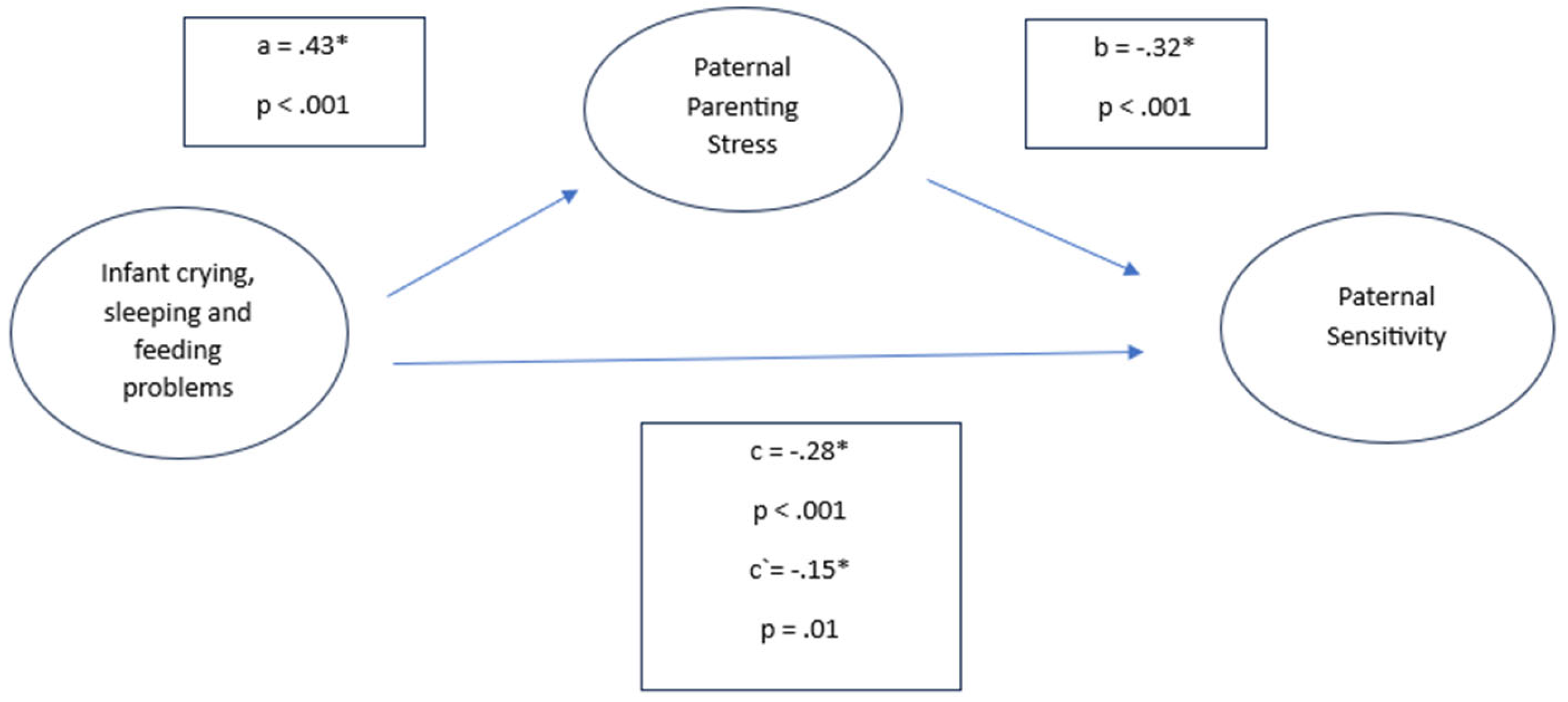
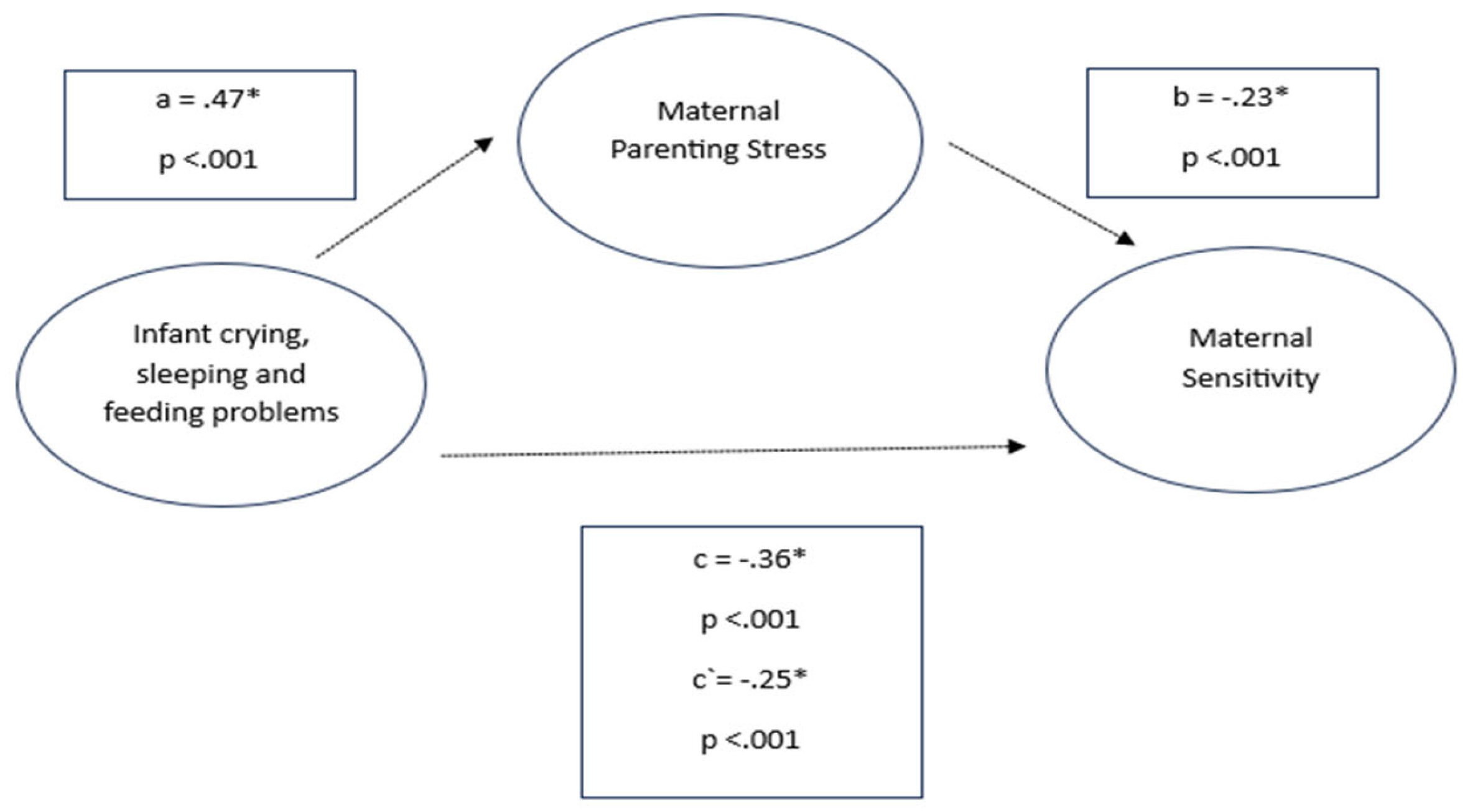
After parenting stress was included as a mediator in the model, infant crying, sleeping and feeding problems were found to significantly negatively predict sensitive parenting behavior (mothers: ß = -.36, p < .001; fathers: β = -.28, p < .001) and positively predict parenting stress (mothers: ß = .47, p < .001; fathers: β = 0.43, p < .001). Moreover, parenting stress was significantly negatively associated with sensitivity in both parents (mothers: ß = -.23, p < .001; fathers: β = -.32, p < .001). The indirect effect of both models (mothers: ß = -0.11, 95%-CI [-1.225, -0.946], fathers: β = -.14, 95%-CI [-.2005, -.0864]) indicates a significant mediation [54]. Despite the mediated effect, the direct effect of infant crying, sleeping and feeding problems on sensitivity remains significant (mothers: ß = -.25, p < .001; fathers: β = -.15, p < .001), suggesting a partial mediation.
Figure 1. Infant crying, sleeping and feeding problems, paternal parenting stress and paternal sensitivity.
Preprints 140019 g001
Figure 2. Infant crying, sleeping and feeding problems, maternal parenting stress and maternal sensitivity.
Preprints 140019 g002

3.1.2. Infant Crying, Sleeping and Feeding Problems, Parenting Stress and Responsiveness
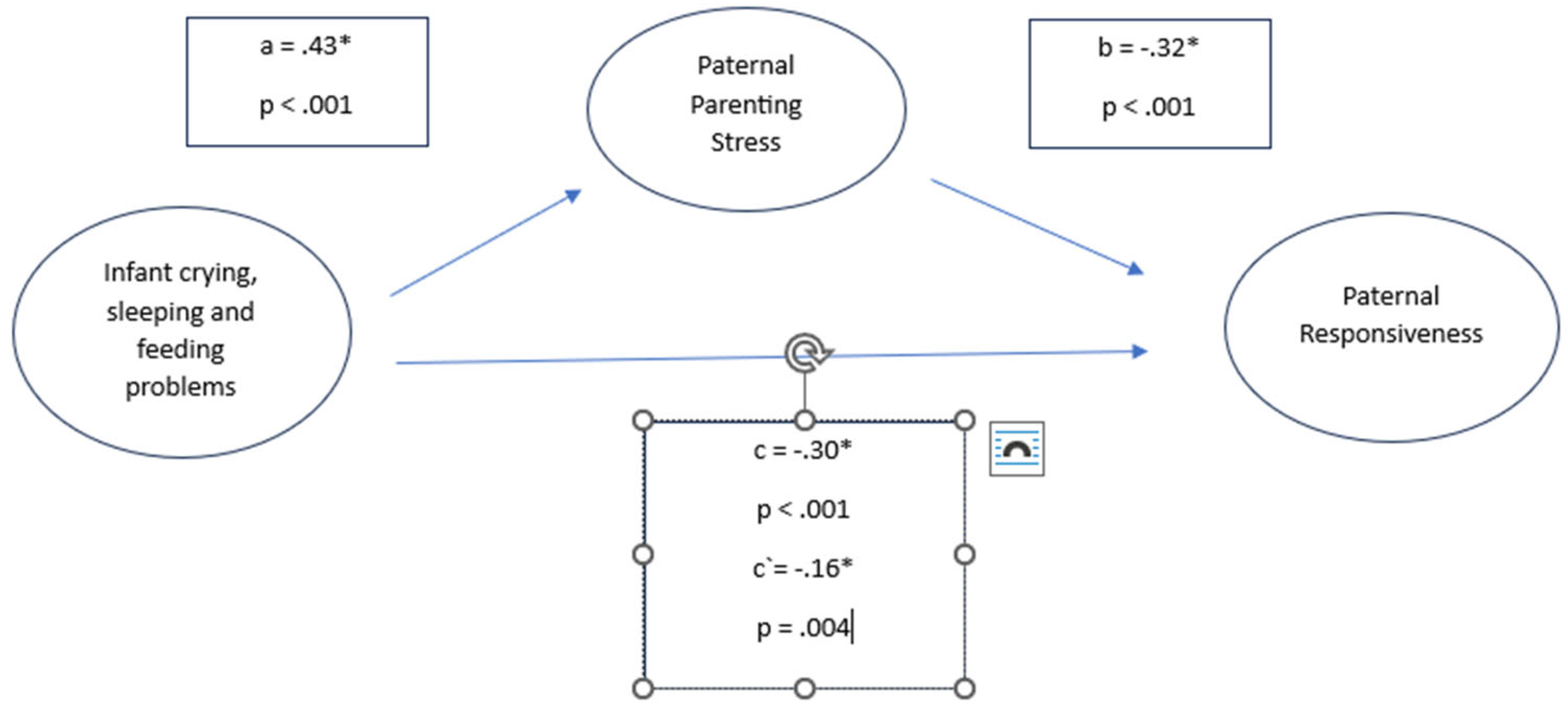
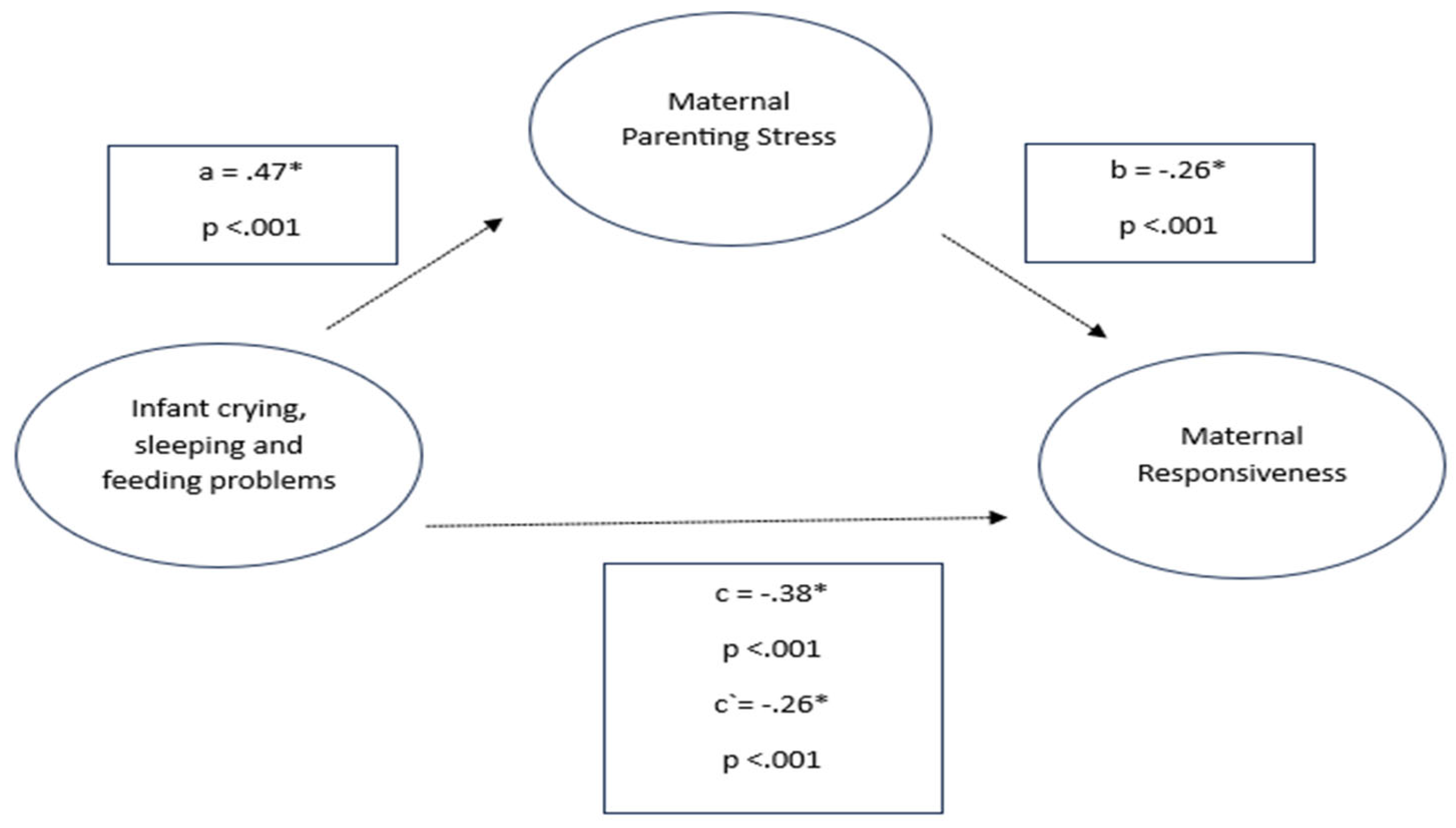
In the mediation models, infant crying, sleeping, and feeding problems were significantly associated with parenting stress and responsive parenting behavior in both mothers and fathers. Specifically, infant crying, sleeping, and feeding problems were positively associated with parenting stress (mothers: β = .47, p < .001; fathers: β = .43, p < .001) and negatively associated with responsive parenting behavior (mothers: β = -.38, p < .001; fathers: β = -.30, p < .001). Parenting stress was also negatively associated with responsiveness in both parents (mothers: β = -.26, p < .001; fathers: β = -.32, p < .001). Significant indirect effects were observed in both models, indicating a significant mediation (mothers: β = -.12, 95% CI [-.1353, -.1076]; fathers: β = -.14, 95% CI [−.2068, −.0837]). Despite the mediated effect, the direct effect of infant crying, sleeping, and feeding problems on responsiveness remained significant for both mothers (β = -.26, p < .001) and fathers (β = -.16, p = .004), indicating partial mediation.
Figure 3. Infant crying, sleeping and feeding problems, paternal parenting stress and paternal responsiveness.
Preprints 140019 g003
Figure 4. Infant crying, sleeping and feeding problems, maternal parenting stress and maternal responsiveness.
Preprints 140019 g004

3.1.3. Infant Crying, Sleeping and Feeding Problems, Parenting Stress and Overreactivity
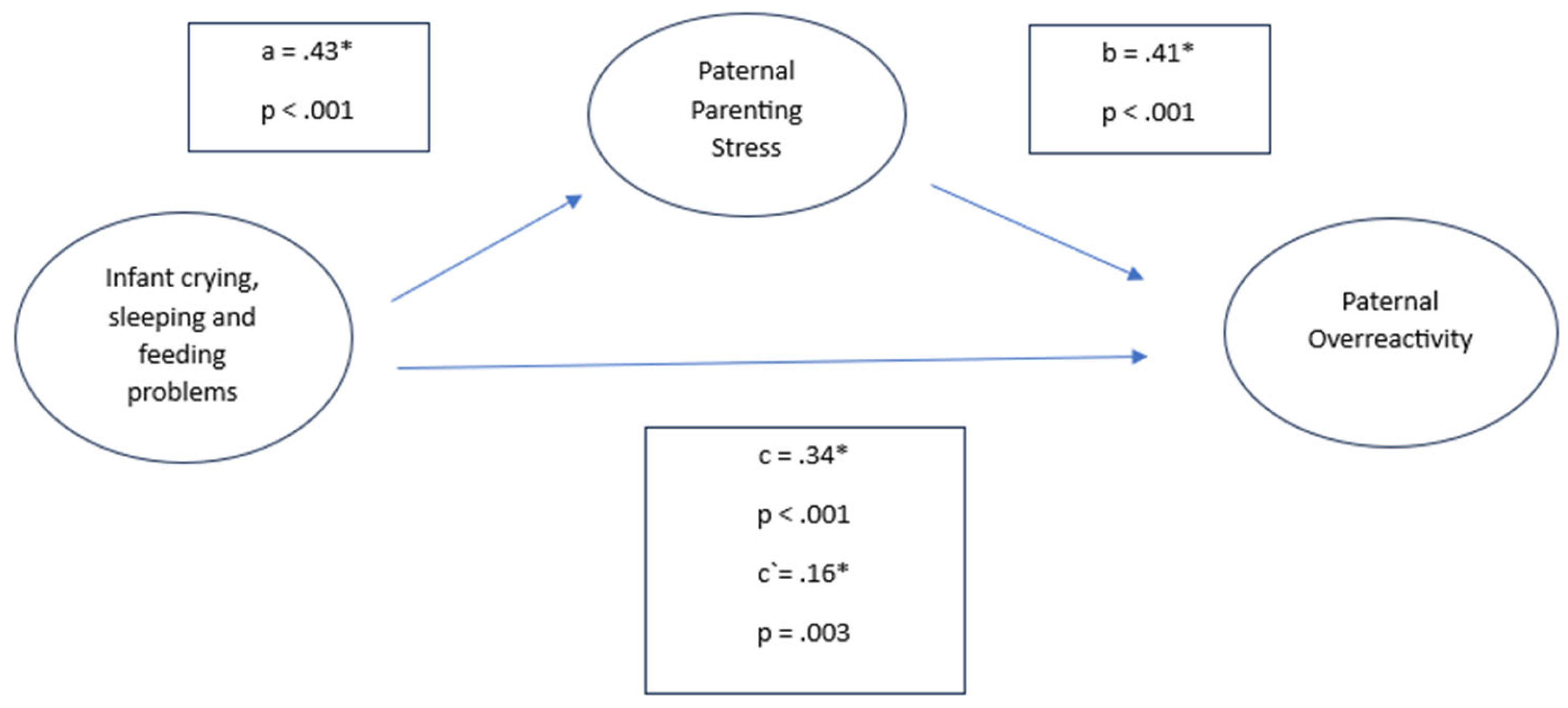
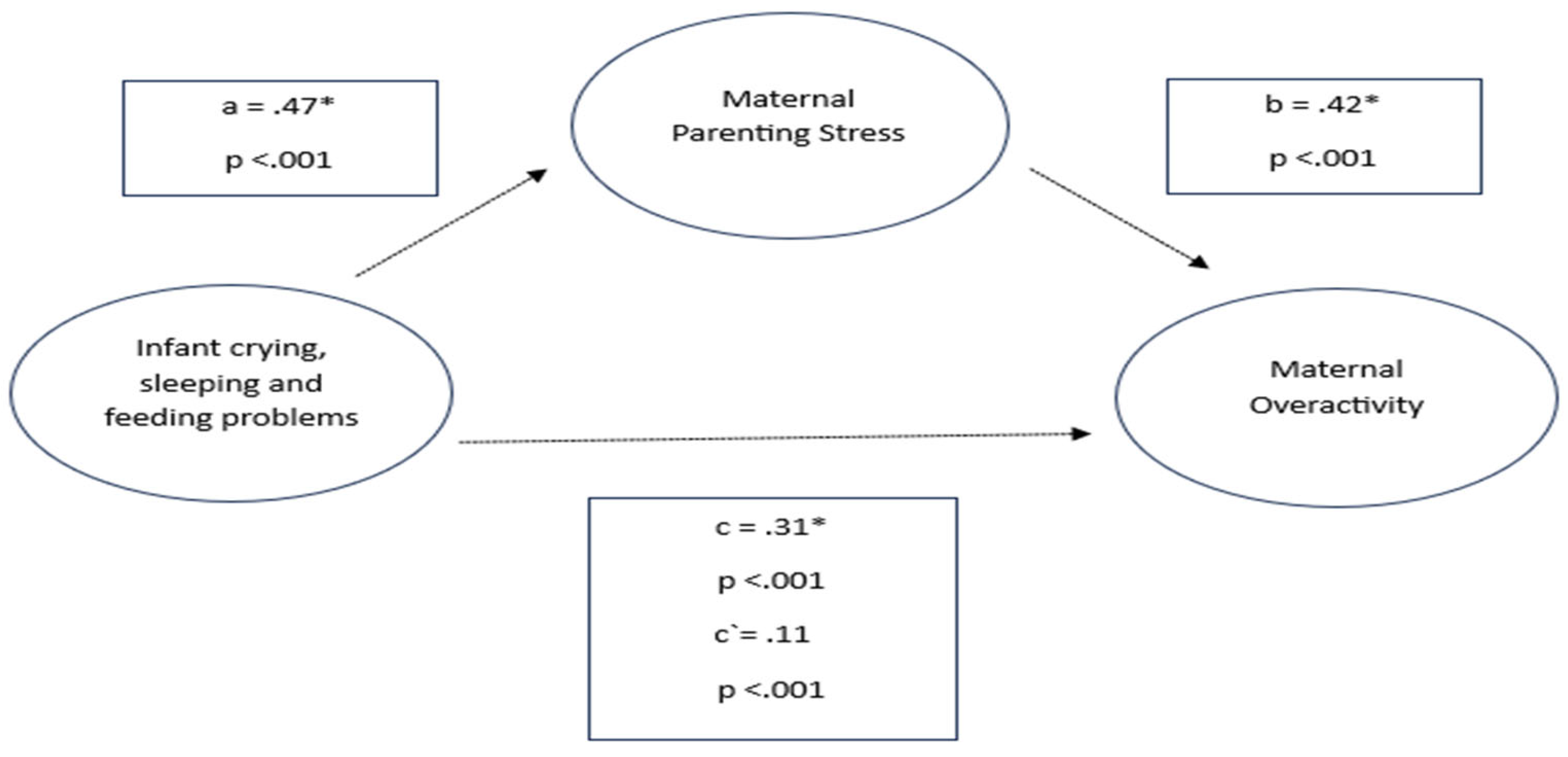
In a mediation model examining the effects of infant crying, sleeping, and feeding problems on parenting behaviors, parenting stress emerged as a significant mediator in the relationship between infant difficulties and overreactive parenting for both mothers and fathers. Infant crying, sleeping, and feeding problems were positively associated with parenting stress (mothers: β = .47, p < .001; fathers: β = .43, p < .001), which in turn was associated with higher levels of overreactive parenting behavior (mothers: β = .42, p < .001; fathers: β = .41, p < .001). Additionally, infant difficulties had a direct effect on overreactivity, with significant values observed in both parents (mothers: β = .31, p < .001; fathers: β = .34, p < .001).
Figure 5. Infant crying, sleeping and feeding problems, paternal parenting stress and paternal overreactivity.
Preprints 140019 g005
Figure 6. Infant crying, sleeping and feeding problems, maternal parenting stress and maternal overreactivity.
Preprints 140019 g006
The indirect effect of infant crying, sleeping, and feeding problems on overreactive parenting behavior through parenting stress was significant for both mothers and fathers, indicating partial mediation (mothers: β = .20, 95% CI [.1847, .2150]; fathers: β = .18, 95% CI [.1176, .2465]). Despite this mediated effect, the direct effect of infant crying, sleeping, and feeding problems on overreactivity remained significant for both (mothers: β = .11, p < .001; fathers: β = .16, p = .003), suggesting that parenting stress partially mediates the relationship between infant difficulties and overreactive parenting across both maternal and paternal models.

4. Discussion

In a cross-sectional comparison study of pandemic (n = 1,391) and post-pandemic (n = 5,648) samples, including mothers and fathers with children aged 0–2 years, we examined if the prevalence of infant crying, sleeping, and feeding problems differed between these two periods and whether parenting stress mediated the relationship between infant mental health problems and parenting behavior in the post-pandemic group. Our findings indicated significant differences in the prevalence of infant crying and sleeping problems as well as excessive crying between the pandemic and post-pandemic samples, suggesting infant regulatory problems remain notably pronounced and are partially even higher evident than during the pandemic. Maternal and paternal parenting stress partially mediated the association between infant crying, sleeping, and feeding problems and parenting behaviors with consistently small observed mediation effects.
Examining our results in detail, the comparison with the pandemic reference sample revealed that significantly more crying/sleeping problems and excessive crying were reported for infants of the post-pandemic group. 34.8% of parents in the post-pandemic sample reported infant crying and sleeping problems and 6.3% infant excessive crying, feeding difficulties appeared in 35.1% of infants in the post-pandemic group. Since regulatory problems are known to be transient in infancy and early childhood and vary significantly according to age and developmental stage, classifications remain challenging. Yet, we found the rates to be relatively high in comparison to pre-pandemic reference studies in non-clinical samples, where incidences for all these problems usually range up to around 20% [12,55,56,57,58,59]. The observed proportion of infants with regulatory problems also exceeded levels found during the pandemic in prior studies, suggesting that infant mental health is particularly vulnerable in times of societal crises.
Theoretical explanations for our result include the fact that infants are particularly susceptible to environmental influences, with primary caregivers and the family environment serving as dominant influencing factors in their early development [60,61]. Current studies on parenting stress indicate that parenting burdening remains alarmingly high post-pandemic [40]. The prolonged period of anxiety and uncertainty during the pandemic might have led to a state of mental exhaustion in parents [62]. Furthermore, the long-term effects of the pandemic—despite it being considered over—may be compounding with the impacts of new societal challenges, such as the existential threat of climate change, economic inflation and the wars in Ukraine and the Middle East. Today’s families are placed under unprecedented strain which might lead to a potential fatigue due to a cumulation of social challenges [40]. Societal crises also represent a risk factor for parental anxiety and depression [40] which, in turn, are known to have potential negative effects on children’s mental health [63]. However, the influence of the present societal crises on infant mental health will have to be investigated in future studies since we cannot confirm these ideas on the basis of our data.
Our mediation models revealed that infant crying, sleeping, and feeding problems were linked to reduced maternal and paternal sensitivity and responsiveness, along with increased overreactive behaviors in both parents. Due to the lack of comparable studies with corresponding models, the individual paths can primarily be classified within the existing literature. Research has demonstrated that positive parenting behaviors can support and strengthen children’s regulatory capacities, suggesting that sensitive and responsive parental actions positively impact child regulation [64]. Conversely, evidence also indicates a bidirectional relationship, whereby child and parent behaviors mutually shape one another. For instance, regulatory problems in children may contribute to increased parental uncertainty, especially when conventional soothing methods prove ineffective, potentially diminishing parental confidence. This interplay can, in turn, influence parental behavior, which may inadvertently reinforce regulatory problems in the infant [65,66]. Since the design of this study does not allow for conclusions about possible causal directions, further studies including longitudinal causal pathways should be conducted in this regard.
Additionally, infant crying, sleeping, and feeding difficulties positively predicted parenting stress in our study. In line with studies on parenting stress related to regulatory problems [36,67], heightened infant symptomatology was associated with increased parenting stress. Furthermore, stressed parents demonstrated lower sensitivity and responsiveness, paired with more overreactive parenting behaviors. These findings also add to the existing literature on parenting stress and behavior in parents, which has shown that higher stress levels correlate with harsher and more controlling parenting practices [38,68,69]. Parenting stress can also impair the ability to perceive and respond accurately to children’s needs [32,70]. In our study, maternal and paternal parenting stress partially mediated the link between infant crying, sleeping, and feeding problems and parenting behaviors. The models for mothers and fathers aligned in the direction of direct paths and demonstrated comparable effect sizes, with consistently small mediation effects in both cases, suggesting that these relationships may be similarly applicable for both parents. This implies that infant crying, sleeping, and feeding difficulties could partly contribute to increased parenting stress for both mothers and fathers, potentially reducing parenting capacity by lowering sensitivity and responsiveness while increasing overreactivity. While fathers still play a minor role in research related to infant mental health, during the pandemic, noticeable changes emerged in family dynamics, including an increased involvement of fathers in the daily care and upbringing of their children. Fathers tend to spend more time in the everyday life of their children [44]. This makes it all the more important to bring fathers and their influence on the family system into greater focus in future research.
The interplay between infant regulatory problems, parenting stress, and parenting behavior is central to understanding the dynamics surrounding crying, sleeping, and feeding difficulties within the family system. The reciprocal nature of these challenges indicates that while infant difficulties can impact parental sensitivity and responsiveness, parenting behaviors, in turn, influence the course of these issues [64]. Recognizing this cycle provides valuable opportunities for intervention, potentially breaking the loop and lessening the impact of regulatory problems on both parents and infants, thus increasing the chances of symptom relief. Given that parents often seek support only once regulatory issues are already present, we consider it particularly relevant in clinical practice to view already existing infant regulatory problems as a starting point for exploring the complex mechanisms within the family system.
Some strengths and limitations need to be considered when interpreting the underlying results. While the pandemic and the post-pandemic sample were relatively similar in structure, they differed in terms of parental age, infant age, presence of siblings and educational background. We decided against controlling for these factors due to the very small to small effect sizes and also based on theoretical considerations: To our knowledge, no studies specifically link parental age to infant regulatory problems. Although findings regarding the influence of having siblings/ birth order are somewhat inconsistent, most available data suggest no significant effects on infant crying or sleep patterns [71,72,73]. Evidence on the association between parental education and infant regulatory issues is very limited; to our knowledge there is one study that indicates that lower educational background may be a risk factor for infant crying, sleeping, and feeding problems [74]. However, this study was from Turkey and this result cannot fully be transferred to the German context. In addition, the total sample consisted of mainly high educated parents, making it less likely to act as a confounding factor.
Differences also emerged with respect to the child’s age. Typically, crying duration increases in the initial postnatal weeks, peaking around four to six weeks and then declining at around three to four months [75,76]. Since both samples, on average, are beyond this age range, age-related differences in crying behavior are not expected. Infant sleep patterns are variable and continually developing, but they generally start to stabilize around five to six months, with longer nighttime sleep and increased sleep consolidation [77]. Both groups fall within this age range, reducing the likelihood of age-related effects.
The sample of mothers and fathers in the post-pandemic sample also differed significantly in terms of single parenthood, educational level, and the presence of additional children. Yet, the inherent differences between mothers and fathers especially with regard to being a single parent and education are a reality that must be faithfully represented in research. Accurately capturing these distinctions is crucial for producing findings that genuinely reflect the complexities of real-life dynamics. Overall, the sample primarily consisted of highly educated parents from a German background, resulting in a limited generalizability of the findings to other populations.
Furthermore, the analysis is based on a cross-sectional design, which limits the ability to draw causal conclusions regarding the relationships between infant regulatory problems, parenting stress and parenting behavior. Additionally, the small effect sizes observed in the mediation models suggest that the findings should not be overinterpreted. While they provide important initial insights, they do not yet establish a clear, clinically relevant effect. Nevertheless, this study represented an initial investigation of constructs that increase the understanding infant regulatory problems as a triad of child behavior, parenting burden and parenting quality within a single model and for both mothers and fathers of infants. As such, it provided valuable starting points and insights for further research in this area. The use of self-report measures for assessing infant symptoms and parenting behavior is another limitation, , though standardized and validated instruments were employed.
Despite these limitations, the study presents several strengths. First, our study offers a comparison between a distinct pandemic vs. a post-pandemic group with a considerably high sample size, providing valuable insights into infant mental health during and after the pandemic. Furthermore, this study is one of the first to examine the role of both mothers and fathers in the context of infant regulatory problems, particularly in light of the changes in family structures during the pandemic.

5. Conclusions

In conclusion, our findings underscore the continued significance of addressing infant mental health in the post-pandemic period. In light of potentially lasting effects of the pandemic and the increasing influence of various societal challenges, it is imperative that both research and practice place greater emphasis on the well-being of infants and their families. Additionally, our results provide valuable insights into the complex interplay between infant regulatory problems, parenting stress, and parenting behaviors within the broader family system. A comprehensive understanding of these interrelated factors is amongst others crucial for developing effective support strategies aimed at enhancing the well-being of both the infant and the family as a whole. In particular, parenting stress—stemming from infant behavioral problems—emerges as a potential entry point for addressing the cycle of infant regulatory problems and maladaptive behaviors in both fathers and mothers. As fathers tend to take on more active roles in family caregiving, their involvement should be a focus of future research in regard to infant`s welfare.

Supplementary Materials

The materials necessary to attempt to replicate the findings presented here are not publicly accessible.

Author Contributions

Conceptualization, Anna Friedmann and Volker Mall; Data curation, Katharina Marie Richter; Formal analysis, Katharina Marie Richter; Funding acquisition, Volker Mall; Investigation, Anna Friedmann and Michaela Augustin; Methodology, Anna Friedmann, Katharina Marie Richter and Michaela Augustin; Project administration, Anna Friedmann and Volker Mall; Resources, Volker Mall; Supervision, Michaela Augustin; Validation, Anna Friedmann and Michaela Augustin; Writing – original draft, Anna Friedmann and Katharina Marie Richter; Writing – review & editing, Volker Mall and Michaela Augustin.

Funding

The authors declare that financial support was received for the research, authorship, and/or publication of this article. The project was funded by the Federal Ministry of Education and Research (Bundesministerium für Bildung und Forschung, BMBF) as part of the German Center for Child and Adolescent Health (DZKJ) under the funding code 01GL2406B.

Informed Consent Statement

Informed consent was obtained from all subjects involved in the study.

Data Availability Statement

The data necessary to reproduce the analyses presented here is not publicly accessible.

Acknowledgments

First, we thank all the pediatricians and families who participated in the CoronabaBY and JuFaBY study despite these challenging and particularly stressful times. This study could not have been realized without the support of BVKJ Bayern (Professional Association of Pediatricians in Bavaria) and Paednetz Bayern—represented by Dominik Ewald, Otto Laub and Gabi Haus—as well as Monks Aerzte-im-Netz GmbH and BVKJ Service GmbH, who also made the implementation of this digital study possible. We also the the CoronabaBY and JuFaBY Research Team, particularly Ina Nehring and Catherine Buechel.

Conflicts of Interest

The authors declare that they don`t have any conflicts of interest

Ethics approval statement and preregistration

The study protocol was approved by the Ethics Committee of the Technical University of Munich (CoronabaBY: vote no. 322/20 S; JuFaBY: vote no. 2022-483_1-S-KH). The CoronabaBY study was pre-registered in OSF (https://osf.io/search/?q=tksh5&page=1).

References

  1. Egle UT, Franz M, Joraschky P, Lampe A, Seiffge-Krenke I, Cierpka M. Gesundheitliche Langzeitfolgen psychosozialer Belastungen in der Kindheit - ein Update. Bundesgesundheitsblatt Gesundheitsforschung Gesundheitsschutz 2016; 59(10):1247–54. [CrossRef]
  2. Laucht M, Schmidt MH, Esser G. Motorische, kognitive und sozial-emotionale Entwicklung von 11-Jährigen mit frühkindlichen Risikobelastungen: späte Folgen. Z Kinder Jugendpsychiatr Psychother 2002; 30(1):5–19.
  3. Heilig L. Risikokonstellationen in der frühen Kindheit: Auswirkungen biologischer und psychologischer Vulnerabilitäten sowie psychosozialer Stressoren auf kindliche Entwicklungsverläufe. Z Erziehungswiss 2014; 17(S2):263–80.
  4. Huebener M, Waights S, Spiess CK, Siegel NA, Wagner GG. Parental well-being in times of Covid-19 in Germany. Rev Econ Househ 2021; 19(1):91–122. [CrossRef]
  5. Panda PK, Gupta J, Chowdhury SR, Kumar R, Meena AK, Madaan P et al. Psychological and Behavioral Impact of Lockdown and Quarantine Measures for COVID-19 Pandemic on Children, Adolescents and Caregivers: A Systematic Review and Meta-Analysis. J Trop Pediatr 2021; 67(1).
  6. Chawla N, Tom A, Sen MS, Sagar R. Psychological Impact of COVID-19 on Children and Ad-olescents: A Systematic Review. Indian J Psychol Med 2021; 43(4):294–9.
  7. Schlack R, Neuperdt L, Junker S, Eicher S, Hölling H, Thom J et al. Changes in mental health in the German child and adolescent population during the COVID-19 pandemic - Results of a rapid review. J Health Monit 2023; 8(Suppl 1):2–72. [CrossRef]
  8. Lopatina OL, Panina YA, Malinovskaya NA, Salmina AB. Early life stress and brain plasticity: from molecular alterations to aberrant memory and behavior. Rev Neurosci 2021; 32(2):131–42. [CrossRef]
  9. Brown TT, Jernigan TL. Brain development during the preschool years. Neuropsychol Rev 2012; 22(4):313–33. [CrossRef]
  10. Knickmeyer RC, Gouttard S, Kang C, Evans D, Wilber K, Smith JK et al. A structural MRI study of human brain development from birth to 2 years. J Neurosci 2008; 28(47):12176–82. [CrossRef]
  11. Ziegler M, Wollwerth de Chuquisengo R, Mall V, Licata-Dandel M. Frühkindliche psychische Störungen: Exzessives Schreien, Schlaf- und Fütterstörungen sowie Interventionen am Beispiel des „Münchner Modells“. Bundesgesundheitsbl 2023; 66(7):752–60. Available from: URL: https://link.springer.com/article/10.1007/s00103-023-03717-0. [CrossRef]
  12. Bilgin A, Wolke D. Regulatory Problems in Very Preterm and Full-Term Infants Over the First 18 Months. J Dev Behav Pediatr 2016; 37(4):298–305. [CrossRef]
  13. Cooke JE, Kochendorfer LB, Stuart-Parrigon KL, Koehn AJ, Kerns KA. Parent-child attachment and children's experience and regulation of emotion: A meta-analytic review. Emotion 2019; 19(6):1103–26. [CrossRef]
  14. Petzoldt J, Wittchen H-U, Einsle F, Martini J. Maternal anxiety versus depressive disorders: specific relations to infants' crying, feeding and sleeping problems. Child Care Health Dev 2016; 42(2):231–45. [CrossRef]
  15. Rask CU, Ørnbøl E, Olsen EM, Fink P, Skovgaard AM. Infant behaviors are predictive of functional somatic symptoms at ages 5-7 years: results from the Copenhagen Child Cohort CCC2000. J Pediatr 2013; 162(2):335–42. [CrossRef]
  16. Sidor A, Fischer C, Cierpka M. The link between infant regulatory problems, temperament traits, maternal depressive symptoms and children's psychopathological symptoms at age three: a lon-gitudinal study in a German at-risk sample. Child Adolesc Psychiatry Ment Health 2017; 11:10.
  17. Galling B, Brauer H, Struck P, Krogmann A, Gross-Hemmi M, Prehn-Kristensen A et al. The impact of crying, sleeping, and eating problems in infants on childhood behavioral outcomes: A meta-analysis. Front. Child Adolesc. Psychiatry 2023; 1. [CrossRef]
  18. Perez A, Göbel A, Stuhrmann LY, Schepanski S, Singer D, Bindt C et al. Born Under COVID-19 Pandemic Conditions: Infant Regulatory Problems and Maternal Mental Health at 7 Months Postpartum. Front Psychol 2021; 12:805543. [CrossRef]
  19. Sprengeler MK, Mattheß J, Galeris M-G, Eckert M, Koch G, Reinhold T et al. Being an Infant in a Pandemic: Influences of the COVID-19 Pandemic on Infants, Toddlers and Their Mothers in a Clinical Population. Children (Basel) 2023; 10(12). [CrossRef]
  20. Bradley H, Fine D, Minai Y, Gilabert L, Gregory K, Smith L et al. Maternal perceived stress and infant behavior during the COVID-19 pandemic. Pediatr Res 2023; 94(6):2098–104. [CrossRef]
  21. Nazzari S, Pili MP, Günay Y, Provenzi L. Pandemic babies: A systematic review of the asso-ciation between maternal pandemic-related stress during pregnancy and infant development. Neurosci Biobehav Rev 2024; 162:105723.
  22. Provenzi L, Grumi S, Altieri L, Bensi G, Bertazzoli E, Biasucci G et al. Prenatal maternal stress during the COVID-19 pandemic and infant regulatory capacity at 3 months: A longitudinal study. Dev Psychopathol 2023; 35(1):35–43. [CrossRef]
  23. Wiley KS, Fox MM, Gildner TE, Thayer ZM. A longitudinal study of how women's prenatal and postnatal concerns related to the COVID-19 pandemic predicts their infants' social-emotional development. Child Dev 2023; 94(5):1356–67.
  24. Reinelt T, Suppiger D, Frey C, Oertel R, Natalucci G. Infant regulation during the pandemic: Associations with maternal response to the COVID-19 pandemic, well-being, and socio-emotional investment. Infancy 2023; 28(1):9–33.
  25. Buechel C, Nehring I, Seifert C, Eber S, Behrends U, Mall V et al. A cross-sectional investigation of psychosocial stress factors in German families with children aged 0-3 years during the COVID-19 pandemic: initial results of the CoronabaBY study. Child Adolesc Psychiatry Ment Health 2022; 16(1):37. [CrossRef]
  26. Louie P, Upenieks L, Hill TD. Cumulative Pandemic Stressors, Psychosocial Resources, and Psychological Distress: Toward a More Comprehensive Test of a Pandemic Stress Process. Society and Mental Health 2023; 13(3):245–60. [CrossRef]
  27. Clayton S. Climate anxiety: Psychological responses to climate change. J Anxiety Disord 2020; 74:102263. [CrossRef]
  28. Lass-Hennemann J, Sopp MR, Ruf N, Equit M, Schäfer SK, Wirth BE et al. Generation climate crisis, COVID-19, and Russia-Ukraine-War: global crises and mental health in adolescents. Eur Child Adolesc Psychiatry 2024; 33(7):2203–16.
  29. Movsisyan A, Wendel F, Bethel A, Coenen M, Krajewska J, Littlecott H et al. Inflation and health: a global scoping review. Lancet Glob Health 2024; 12(6):e1038-e1048. [CrossRef]
  30. Georg AK, Bark C, Wiehmann J, Taubner S. Frühkindliche Regulationsstörungen: Störungsbilder und Behandlungskonzepte. Psychotherapeut 2022; 67(3):265–78.
  31. Cooke JE, Deneault A-A, Devereux C, Eirich R, Fearon RMP, Madigan S. Parental sensitivity and child behavioral problems: A meta-analytic review. Child Dev 2022; 93(5):1231–48. [CrossRef]
  32. Ward KP, Lee SJ. Mothers' and Fathers' Parenting Stress, Responsiveness, and Child Wellbeing Among Low-Income Families. Child Youth Serv Rev 2020; 116. [CrossRef]
  33. Goldstein LH, Harvey EA, Friedman-Weieneth JL. Examining subtypes of behavior problems among 3-year-old children, Part III: investigating differences in parenting practices and parenting stress. J Abnorm Child Psychol 2007; 35(1):125–36. [CrossRef]
  34. Abidin RR. Introduction to the Special issue: The Stresses of Parenting. Journal of Clinical Child Psychology 1990; 19(4):298–301. [CrossRef]
  35. Beebe SA, Casey R, Pinto-Martin J. Association of reported infant crying and maternal par-enting stress. Clin Pediatr (Phila) 1993; 32(1):15–9.
  36. Postert C, Averbeck-Holocher M, Achtergarde S, Müller JM, Furniss T. Regulatory disorders in early childhood: Correlates in child behavior, parent-child relationship, and parental mental health. Infant Ment Health J 2012; 33(2):173–86. [CrossRef]
  37. Chung G, Tilley JL, Netto N, Chan A, Lanier P. Parenting stress and its impact on parental and child functioning during the COVID-19 pandemic: A meta-analytical review. International Journal of Stress Management 2024; 31(3):238–51. [CrossRef]
  38. Chung G, Lanier P, Wong PYJ. Mediating Effects of Parental Stress on Harsh Parenting and Parent-Child Relationship during Coronavirus (COVID-19) Pandemic in Singapore. J Fam Violence 2022; 37(5):801–12. [CrossRef]
  39. Friedmann A, Buechel C, Seifert C, Eber S, Mall V, Nehring I. Easing pandemic-related re-strictions, easing psychosocial stress factors in families with infants and toddlers? Cross-sectional results of the three wave CoronabaBY study from Germany. Child Adolesc Psychiatry Ment Health 2023; 17(1):76. [CrossRef]
  40. Richter K, Buechel C, Augustin M, Friedmann A, Mall V, Nehring I. Psychosocial stress in young families after the pandemic: no time to rest; 2024.
  41. Oberndorfer R, Rost H. Neue Väter - Anspruch und Realität. Zeitschrift für Familienforschung 2005; 17(1):50–65. Available from: URL: https://www.ssoar.info/ssoar/handle/document/32405.
  42. Statistisches Bundesamt. Elterngeld 2022: Väteranteil steigt weiter auf 26,1 %; 2022 [cited 2024 Nov 6]. Available from: URL: https://www.destatis.de/DE/Presse/Pressemitteilungen/2023/03/PD23_123_22922.html.
  43. Cito G, Micelli E, Cocci A, Polloni G, Coccia ME, Carini M et al. Paternal Behaviors in the Era of COVID-19. World J Mens Health 2020; 38(3):251–3. [CrossRef]
  44. Margaria A. Fathers, Childcare and COVID-19. Fem Leg Stud 2021; 29(1):133–44.
  45. Weissbourd R, Batanova M, McIntyre J, Torres E. How the pandemic is strengthening fathers' relationships with their children; 2020. Available from: URL: https://mcc.gse.harvard.edu/s/report-how-the-pandemic-is-strengthening-fathers-relationships-with-their-children-final.pdf.
  46. Kellner R. Die erschöpfte Mutter. Z Psychodrama Soziom 2024; 23(2):315–27.
  47. Buechel C, Friedmann A, Eber S, Behrends U, Mall V, Nehring I. The change of psychosocial stress factors in families with infants and toddlers during the COVID-19 pandemic. A longitudinal perspective on the CoronabaBY study from Germany. Front Pediatr 2024; 12:1354089. [CrossRef]
  48. Schmidtke C, Kuntz B, Starker, Anne, Lampert T. Inanspruchnahme der Früherkennungsuntersuchungen für Kinder in Deutschland – Querschnittergebnisse aus KiGGS Welle 2.: Robert Koch-Institut; 2018.
  49. Gross S, Reck C, Thiel-Bonney C, Cierpka M. Empirische Grundlagen des Fragebogens zum Schreien, Füttern und Schlafen (SFS). Prax Kinderpsychol Kinderpsychiatr 2013; 62(5):327–47.
  50. WESSEL MA, COBB JC, JACKSON EB, HARRIS GS, Detwiller A. PAROXYSMAL FUSSING IN INFANCY, SOMETIMES CALLED "COLIC". Pediatrics 1954; 14(5):421–35. [CrossRef]
  51. Tröster H. Eltern-Belastungs-Inventar (EBI): Deutsche Version des Parenting Stress Index (PSI). Hogrefe; 2010.
  52. Testzentrale. EBI. Eltern-Belastungs-Inventar.; 2010. Available from: URL: https://www.testzentrale.de/shop/eltern.
  53. Verhoeven M, Deković M, Bodden D, van Baar AL. Development and initial validation of the comprehensive early childhood parenting questionnaire (CECPAQ) for parents of 1–4 year-olds. European Journal of Developmental Psychology 2017; 14(2):233–47. [CrossRef]
  54. Preacher KJ, Hayes AF. SPSS and SAS procedures for estimating indirect effects in simple mediation models. Behav Res Methods Instrum Comput 2004; 36(4):717–31. [CrossRef]
  55. Lindberg L, Bohlin G, Hagekull B. Early feeding problems in a normal population. Int. J. Eat. Disord. 1991; 10(4):395–405.
  56. Lorenz S, Ulrich SM, Sann A, Liel C. Self-Reported Psychosocial Stress in Parents With Small Children. Dtsch Arztebl Int 2020; 117(42):709–16. [CrossRef]
  57. Olsen AL, Ammitzbøll J, Olsen EM, Skovgaard AM. Problems of feeding, sleeping and excessive crying in infancy: a general population study. Arch Dis Child 2019; 104(11):1034–41. [CrossRef]
  58. Wake M, Morton-Allen E, Poulakis Z, Hiscock H, Gallagher S, Oberklaid F. Prevalence, stability, and outcomes of cry-fuss and sleep problems in the first 2 years of life: prospective communi-ty-based study. Pediatrics 2006; 117(3):836–42.
  59. Wolke D, Schmid G, Schreier A, Meyer R. Crying and feeding problems in infancy and cognitive outcome in preschool children born at risk: a prospective population study. J Dev Behav Pediatr 2009; 30(3):226–38. [CrossRef]
  60. Ainsworth MDS, Blehar MC, Waters E, Wall SN. Patterns of Attachment. Psychology Press; 2015.
  61. Sroufe LA. Early relationships and the development of children. Infant Ment Health J 2000; 21(1-2):67–74.
  62. Moradian S, Bäuerle A, Schweda A, Musche V, Kohler H, Fink M et al. Differences and simi-larities between the impact of the first and the second COVID-19-lockdown on mental health and safety behaviour in Germany. J Public Health (Oxf) 2021; 43(4):710–3.
  63. Petzoldt J. Systematic review on maternal depression versus anxiety in relation to excessive infant crying: it is all about the timing. Arch Womens Ment Health 2018; 21(1):15–30. [CrossRef]
  64. Samdan G, Kiel N, Petermann F, Rothenfußer S, Zierul C, Reinelt T. The relationship between parental behavior and infant regulation: A systematic review. Developmental Review 2020; 57:100923. [CrossRef]
  65. Kim J, Cicchetti D. Longitudinal pathways linking child maltreatment, emotion regulation, peer relations, and psychopathology. J Child Psychol Psychiatry 2010; 51(6):706–16. [CrossRef]
  66. Philbrook LE, Teti DM. Bidirectional associations between bedtime parenting and infant sleep: Parenting quality, parenting practices, and their interaction. Journal of Family Psychology 2016; 30(4):431–41.
  67. Georg AK, Schröder-Pfeifer P, Cierpka M, Taubner S. Maternal Parenting Stress in the Face of Early Regulatory Disorders in Infancy: A Machine Learning Approach to Identify What Matters Most. Front Psychiatry 2021; 12:663285. [CrossRef]
  68. Le Y, Fredman SJ, Feinberg ME. Parenting stress mediates the association between negative affectivity and harsh parenting: A longitudinal dyadic analysis. J Fam Psychol 2017; 31(6):679–88. [CrossRef]
  69. Mak MCK, Yin L, Li M, Cheung RY, Oon P-T. The Relation between Parenting Stress and Child Behavior Problems: Negative Parenting Styles as Mediator. J Child Fam Stud 2020; 29(11):2993–3003. Available from: URL: https://link.springer.com/article/10.1007/s10826-020-01785-3. [CrossRef]
  70. Deater-Deckard K, Panneton R. Parental Stress and Early Child Development. Cham: Springer International Publishing; 2017.
  71. Kaley F, Reid V, Flynn E. Investigating the biographic, social and temperamental correlates of young infants' sleeping, crying and feeding routines. Infant Behav Dev 2012; 35(3):596–605.
  72. Thunström M. Severe sleep problems among infants in a normal population in Sweden: prevalence, severity and correlates. Acta Pædiatrica 1999; 88(12):1356–63.
  73. Weissbluth M. Naps in children: 6 months-7 years. Sleep 1995; 18(2):82–7.
  74. Yalçin SS, Orün E, Mutlu B, Madendağ Y, Sinici I, Dursun A et al. Why are they having infant colic? A nested case-control study. Paediatr Perinat Epidemiol 2010; 24(6):584–96. [CrossRef]
  75. Brazelton TB. CRYING IN INFANCY. Pediatrics 1962; 29(4):579–88.
  76. St James-Roberts I, Halil T. Infant crying patterns in the first year: normal community and clinical findings. J Child Psychol Psychiatry 1991; 32(6):951–68. [CrossRef]
  77. Mindell JA, Leichman ES, Composto J, Lee C, Bhullar B, Walters RM. Development of infant and toddler sleep patterns: real-world data from a mobile application. J Sleep Res 2016; 25(5):508–16. [CrossRef]
Disclaimer/Publisher’s Note: The statements, opinions and data contained in all publications are solely those of the individual author(s) and contributor(s) and not of MDPI and/or the editor(s). MDPI and/or the editor(s) disclaim responsibility for any injury to people or property resulting from any ideas, methods, instructions or products referred to in the content.
Copyright: This open access article is published under a Creative Commons CC BY 4.0 license, which permit the free download, distribution, and reuse, provided that the author and preprint are cited in any reuse.
Prerpints.org logo

Preprints.org is a free preprint server supported by MDPI in Basel, Switzerland.

Subscribe

Disclaimer

Terms of Use

Privacy Policy

Privacy Settings

© 2025 MDPI (Basel, Switzerland) unless otherwise stated