

Submitted:
14 November 2024
Posted:
15 November 2024
You are already at the latest version
Abstract
Functional foods enriched with probiotics can contribute to maintaining health and improving mental and cognitive states. This research involved developing and characterizing a hyperproteic dietary supplement containing a blend of plant proteins and probiotic cells (Lactobacillus reuteri LRE 02 ID 1774). The supplement exhibited high nutritional quality, particularly in protein content and amino acid profile, containing all essential amino acids and branched-chain amino acids (BCAA). Omega-3 fatty acids (150 mg/100g), omega-6 (1420 mg/100g), and omega-9 (1180 mg/100g, cis-11-eicosenoic acid 20 mg/100g) were also detected. The supplement is a source of dietary fiber and probiotics (108 CFU/mL) and demonstrates moderate antioxidant activity. It can be considered innovative as it contains essential amino acids and oryzatein, an immuno-stimulating peptide. Its relevance lies in its hypoallergenic properties, low concentration of anti-nutritional factors, good digestibility, and being gluten- and lactose-free. Additionally, it includes Lactobacillus reuteri, a probiotic with potential immunomodulatory and neuro-cognitive benefits.
Keywords:
immunomodulator
; nutraceutical
; probiotic
; vegetable protein
1. Introduction
The demand for healthy foods and products with different characteristics has grown significantly over the past decade. The food industry has adapted to global trends, seeking to develop innovative foods with attractive nutritional characteristics [1,2,3]. In this context, functional foods are foods or ingredients that offer health benefits beyond their essential functions. They play a beneficial role in treating or preventing diseases and promote health and well-being. They can be isolated nutrients, specific products of biotechnology, genetically modified and artificial foods, processed foods, or plant derivatives [4,5].
Despite the extensive historical knowledge about certain foods' health benefits, countries took time to regulate the production and commercialization of functional foods. Japan was the first country to establish a regulatory system for functional foods in 1991, seeking to overcome issues related to healthcare expenditures. Afterward, functional foods gained momentum in regions of Northern Europe, North America, and East Asia populated with affluent populations [6,7].
Research into functional foods was already taking place in Japan in the 1930s. A fascinating example is the discovery provided by Japanese microbiologist Dr. Minoru Shirota on the health benefits promoted by the Lactobacillus casei bacterium, which assisted in regulating intestinal transit. Subsequently, in 1955, he founded Yakult Honsha Co., Ltd., and began producing fermented milk YAKULT® containing the probiotic Lactobacillus casei Shirota, which later became a worldwide success [8]. The Japanese authorities acknowledged the necessity of enhancing daily dietary practices. Consequently, in Japan, a new classification of foods termed FOSHU (Food for Specified Health Use) has been established, marked with a logo, and sanctioned by the Japanese Ministry of Health and Welfare [9]. It is essential to highlight that regulations for functional foods vary according to the legislation in each country. Culture, health concepts, and consumer acceptance influence this market.
The advancement and broadening of probiotic food formulations represent a significant research focus for food industries. Several studies have documented the utilization of probiotics as functional ingredients in food and their impact on the gut-brain axis [10,11]. Probiotics are among the most used functional ingredients in the industry. According to the Food and Agriculture Organization of the United Nations (FAO), probiotics are “live microorganisms that, when administered in adequate quantities, confer a health benefit on the host” [12,13].
Probiotic strains primarily interact with food through processes like glycolysis, lipolysis, and proteolysis, breaking down the food to release end products such as organic acids, amino acids, peptides, fatty acids, and bacteriocins.[14] Probiotic cultures are microbial supplements that significantly increase food's nutritional and therapeutic value and can be administered together with prebiotics, which are chemical substances that selectively promote the growth of beneficial bacteria. Among the various genera that comprise this group, the genera Bifidobacterium and Lactobacillus stand out, as they are part of the human gastrointestinal system, providing health benefits and improving the native microbiota [13].
The term probiotic is of Greek origin and means “for life” and was initially proposed to describe compounds or tissue extracts capable of stimulating microbial growth [15]. It was first used in the 1950s by W. Kollath (Werner Georg Kollath, German bacteriologist, hygienist, and food scientist), later used by Lilly and Stillwell in 1965 to describe live bacteria and spores that were used in feed supplementation for animal use to limit the use of antibiotics in livestock farming [16].
Some researchers believe that the gut microbiota may be the key to unraveling the cause and effects of autism spectrum disorder (ASD). Recent animal studies show that changes in the intestinal microbiota can positively impact the central nervous system [17]. Autism spectrum disorder (ASD) is a complex neurodevelopmental condition that affects brain development. The reported incidence of ASD has risen significantly over the past decade to 1 in 54 births, with a prevalence in males at a ratio of 4:1 [18]. School-age children generally have a prevalence of 1% ASD globally, with slight regional variations in developed countries from North America, Western Europe, Central Latin America, and Asia-Pacific [19].
Recent studies have suggested that introducing Lactobacillus reuteri into the intestinal microbiota can promote the remediation of some symptoms of ASD [20]. This bacterium may also be essential for restoring oxytocin levels. As a neuropeptide, oxytocin (OXT) regulates emotional and social behaviors. Supplementation with L. reuteri resulted in behavioral improvements in ASD mouse models dependent on oxytocin [21].
High protein levels have been prescribed worldwide as a strategy for weight reduction and to help combat obesity, as it increases the production of hormones that help with satiety. In this sense, the quality of the protein consumed is very important [22]. The use of protein supplements applied to hospital gastronomy techniques makes it possible to improve the nutritional and sensorial characteristics of the preparations offered, being an essential tool to increase the acceptance of the preparations provided to patients, favoring the maintenance and recovery of nutritional status, as well as reducing food waste [23]. Furthermore, high-protein diets have already been associated with reduced blood pressure and cholesterol and triglyceride levels, according to a study published by American researchers, which concluded that higher protein intake can contribute to lowering blood pressure [24].
Plant-based proteins, such as rice and peas, have high biological quality and low or no allergenicity [25]. In this context, the present study sought to develop a nutritional supplement rich in protein of vegetable origin, a source of essential amino acids, and oryzatein. The product was also enriched with the probiotic Lactobacillus reuteri, which focused on an auxiliary supplement for the remediation of some symptoms of ASD. Furthermore, a systematic review was conducted to verify the state of the art of research on rice and probiotics through a scientometric analysis.
2. Materials and Methods
2.1. Scientometric Approach to the Study Topic
The Web of Science (WoS), PubMed, and Scopus databases were consulted for this scientometric analysis. Publication dates, languages, or types of documents did not limit the search. The following search descriptors were used: ("Rice flour" OR "Rice protein" OR Rice) AND (Probiotic*). The last access to these data bases was made on 05/10/2024. The removal of duplicates and consolidation of documents in the same spreadsheet was carried out according to methods by Dutra et al. [26,27] and resulted in 731 articles. A search of the data bases conducted by 2 of us (T.F.M.M. and A.B.T.) reviewed all unique documents with DOIs, selecting studies that met the established criteria. Work that contained the words "rice" and "probiotics" in the title, abstract, and/or keywords were selected. After refinement, 371 reports were selected (WoS: 286; Scopus: 85). The VOSviewer and Citespace tools were used to analyze citation networks to visualize citation patterns and connections between selected documents.
2.2. Ingredients and Microorganisms Used in the Formulation
The functional food formulation includes Rice Protein, Pea Protein, Water-soluble Rice Extract, Arabic Gum, Xanthan Gum, Coconut Oil, and Medium Chain Triglycerides (MCT). Specialized food companies supplied the ingredients. Lactobacillus reuteri (LRE 02 ID 1774) was kindly provided by Probiotical, S.p.A, Italy. Rice and pea proteins were used as protein sources and as sources of lysine and methionine, respectively. The primary source of carbohydrates was water-soluble rice extract, and Arabic and xanthan gums were the sources of soluble dietary fiber, also acting as thickeners and stabilizers of the formulation. Coconut Oil and MCT were the sources of lipids. In addition to being a source of lipids, MCT can also contribute as an ingredient that stimulates neuronal functions. All ingredients used in the formulation were gluten-free, lactose-free, non-genetically modified, hypoallergenic, devoid of chemical additives, and preferably certified organic.
2.3. Nutritional Characterization of the Formulation
The samples were characterized by proximal composition, including total carbohydrates, crude protein, fat, moisture, mineral residue, dietary fiber, and water activity. Additionally, the amino acid and lipid profiles of the formulations were studied. The crude protein content was determined using the Kjeldahl method (method 979.09), while lipids were quantified through Soxhlet extraction (method 945.38). The mineral residue was estimated post-incineration at 450 °C (method 923.03), and dietary fiber content was determined via the enzymatic-gravimetric method (method 985.29) [28]. Moisture content was determined by drying the samples at 105 °C until a constant mass was achieved. The total carbohydrate content was calculated by subtracting the sum of water, proteins, lipids, and mineral residue from 100. The energy value of the developed product was estimated using the Atwater conversion factors: proteins (4 kcal/g), carbohydrates (4 kcal/g), and lipids (9 kcal/g) [29].
The amino acid profile of the samples was assessed using High-Performance Liquid Chromatography (HPLC), following the method outlined by White et al. [30]. Gas Chromatography (GC) determined the fatty acid composition, utilizing the official analysis method 996.06 of the Association of Official Analysis Chemists [28].
2.4. Assessment of Antioxidant Potential, Content of Total Phenolic Compounds, and Lipid Peroxidation
The samples' antioxidant potential and phenolic compound content were analyzed immediately after preparing the formulation and every 30 days over a 90-day duration. Samples at room temperature (25 ºC) and frozen (-18 ºC) were evaluated. The Folin-Ciocalteau method modified by Roesler et al., [31] was used to quantify the content of total phenolic compounds. The food formulations were extracted with 80% (v/v) ethanol using a 1:10 (w/v) ratio between sample and solvent. Extractions were carried out in 250 mL Erlenmeyer flasks in a shaker incubator (TE4200, Tecnal, Piracicaba, Brazil) at 45 ºC for 1 hour.
A volume of 500 µL of the extract was mixed with 2.5 mL of 10% Folin-Ciocalteau reagent and 2 mL of 4% sodium carbonate. The samples were homogenized using vortex and left to rest for 2 hours away from light. Absorbance was determined at 760 nm in a UV-VIS spectrophotometer (Biochrom Libra S12, Harvard Bioscience, USA). The gallic acid calibration curve was used to quantify total phenols. The results were expressed in gallic acid equivalents (mg GAE 100 g-1).
The antioxidant potential was estimated by evaluating the scavenging capacity of ABTS and DPPH radicals and the ferric ion-reducing antioxidant power (FRAP).
ABTS radical was generated in vitro by reacting 5 mL of ABTS solution (7 mmol L-1) with 88 µL of potassium persulfate solution (140 mmol L-1). The mixture remained in the absence of light for 16 hours. The ABTS radical solution was diluted in ethanol until an absorbance of 0.700 at 734 nm. In a test tube, 30 μL of properly diluted sample and 3 mL of solution containing the ABTS radical were added. Absorbance was measured on a UV-VIS spectrophotometer at 734 nm after 6 min of reaction, and ethanol was used as a blank control. Trolox standard curve (50 µM - 1.500 µM, R2 = 0.9996) was constructed, and results were expressed in µM Trolox equivalent [32].
DPPH radical scavenging activity was determined as described by Chen et al. [33] with subtle adaptation. A volume of 500 µL of the sample extract was placed in a 15 mL Falcon tube with a lid. Then, 2.8 mL of absolute ethanol (99.5% v/v) and 500 µL of DPPH solution were added and left to stand protected from light for 30 minutes. Absorbance was measured at 517 nm by zeroing the UV-VIS spectrophotometer with ethanol. The control comprised 2.8 mL of ethanol mixed with 500 µL distilled water and 500 µL DPPH solution. DPPH scavenging activity was assessed using a calibration curve with trolox (6-hydroxy-2,5,7,8-tetramethylchroman-2-carboxylic acid) as the standard (R2 = 0.9886). The results were expressed in µmol Trolox equivalent.
FRAP reagent solution was prepared by mixing 25 mL of 300 mM sodium acetate buffer pH 3.6, 2.5 mL of 10 mM TPTZ solution in 40 mM HCl, and 2.5 mL of 20 mM ferric chloride. In the tests, 90 µL of extract were transferred to 15 mL Falcon tubes, and 270 µL of distilled water and 2.7 mL of FRAP Reagent solution were added. The mixture was homogenized by vortexing and kept at 37 ºC in a water bath for 30 minutes, protected from light. The readings were taken at 595 nm and zeroing the UV-VIS spectrophotometer with the FRAP reagent. A standard curve of ferrous sulfate (0.2mM - 2.0 mM) was prepared, and the results were expressed in mM FeSO4·7H2O. The curve was constructed following the same reaction mixture, replacing the sample with the ferrous sulfate solution [34].
For the extraction of aldehydes from the samples, a solution of 7.5% (w/v) trichloroacetic acid (TCA) was prepared, containing 0.1% (w/v) propyl gallate and 0.1% (w/v) EDTA. Five grams of the food compound were previously dissolved in 20 mL of TCA in 50 mL Falcon tubes, vigorously shaken for 1 minute on a vortex tube shaker. Then, the sample was filtered, and 4 mL of the filtrate was placed in a screw-capped tube with 1 mL of 7.5% TCA and 5 mL of 0.02 mol L-1 TBA (thiobarbituric acid). The tubes with the samples were homogenized and placed in a water bath at 95°C for 40 minutes. Subsequently, the tubes were cooled in an ice bath, and the absorbance readings of the samples and the blank solution (5 mL of TBA and 5 mL of TCA) were taken at 538 nm on a UV-VIS spectrophotometer. For the determination of malondialdehyde (MDA) produced during the reaction, a calibration curve with the standard 1,1,3,3-tetramethoxypropane (TMP) was constructed. The results were expressed in mg MDA kg-1 of the sample.
2.5. Evaluation of Viable Probiotic Cell Content, Analysis of Resistance to Simulated Gastric and Intestinal Conditions, and Resistance to Heat Treatment
The concentration of viable probiotic cells was determined by plate counting on MRS Agar medium (Man-Rogosa-Sharpe), incubated at 37°C for 48 and 72 hours. The pour plate method was employed for plating. Probiotic cell viability was assessed immediately after formulation preparation and every 30 days over a 90-day storage period (see Table 1). Samples were suspended in sterilized peptone water (12.5 g of sample per 125 mL of peptone water), and serial dilutions were prepared. Colony-forming units (CFU) were enumerated according to the ISO 7218:2007 standard, with counts performed in triplicate [35].
A solution containing 0.85% sodium chloride, 0.3% pepsin, and pH adjusted with hydrochloric acid (pH 2.0) was prepared to simulate the gastric environment. A 0.2-gram portion of the formulation was mixed in 10 mL of simulated gastric juice (SGS) and submitted to slight agitation (57 rpm) for 5, 30, 60, and 120 minutes at 37 °C. After serial dilution in peptone water, the samples were inoculated on MRS Agar medium in triplicate using the pour plate technique and incubated for 48 and 72 hours at 37 °C [36]. Using the Cell counting app (CFU.Ai, Promega Colony Counter, APD Counter App PRO), the surviving cells were enumerated by plate counting. The assay was performed in triplicate.
Simulated intestinal juice (SIJ) was prepared by dissolving bile salts in an intestinal solution with minor adaptations, as mentioned by Rather et al. [36], The SIJ solution contained 0.65% NaCl, 0.0835% KCl, 0.022% CaCl2, and 0.1386% NaHCO3 (w/v), and the pH was adjusted to 7.5. The SIJ was diluted to a final concentration of 0.3% (v/v). A 0.2-gram portion of the formulation was mixed with 10 mL of the SIJ solution, and the mixture was incubated under gentle agitation (57 rpm) for 30, 60, and 120 min at 37 °C. Subsequently, the samples were diluted between 10-2 and 10-6, inoculated onto plates with MRS Agar (pour plate inoculation), and incubated for 48 and 72 hours at 37 °C.
The thermal resistance of probiotic cells was assessed at temperatures of 55, 65, and 75 ± 1 ºC. Samples, consisting of food formulation and probiotic cells (commercial start culture), were maintained at these temperatures for 1 and 10 minutes. Sterile Milli-Q water served as the suspension medium (1.0 g samples / 10 mL water) [29,36]. Heat treatments were conducted in an ultra-thermostated bath (NL 24-01C, Tecnal, Piracicaba, Brazil). After the treatments, the samples were cooled to room temperature and underwent serial dilutions before inoculation using the pour plate technique onto MRS Agar medium. Incubation occurred for 48 and 72 hours at 37 °C.
2.6. Morphological Aspects and Zeta Potential of Food Supplement
Micrographs of the formulation were obtained using a TM3000 Scanning Electron Microscope (Hitachi, Irving, USA). The sample was placed on a carbon tape, and images were obtained at amplitudes of 50, 200, and 1000 x, using voltages from 5 to 15 Kv.
The particle size distribution and zeta potential (ZP) were evaluated using a Zetasizer Nano ZS90 (Malvern Instruments, UK), equipped with a 633-nm laser and operating at a scattering angle 13°. The samples were diluted in 0.1 mol/L KCl to a concentration of approximately 0.025% (v/v).
2.7. Microbiological Quality of Food Supplement
Microbiological tests for coliform bacteria at 35 ºC and 45 ºC (AOAC 991.14, AOAC 9221:1), Salmonella spp. (AOAC 996.08), Escherichia coli (AOAC 998.08), molds and yeasts (AOAC 997.02), and Bacillus cereus (ISO 7932:2004) were conducted to evaluate the microbial quality of the food-formulated preparation [28,37].
2.9. Statistical Analysis
The statistical analysis was performed using one-way ANOVA followed by Tukey’s test. All analyses were performed in triplicate. Differences were considered significant between groups when p < 0.05 using the Statistica 8.0 software.
3. Results and Discussion
3.1. Scientometric Assessment
Research on probiotics and rice has increased considerably, with the most publications recorded in 2023 (Figure 1). In the first five months of 2024 alone, 7.5% of the total publications had already been produced, indicating that this field of study is rapidly growing. In recent years, public awareness of health and well-being has grown substantially, leading to a significant increase in the consumption of nutritional supplements [38] and the demand for functional foods [39]. In addition to fulfilling energy requirements, these foods possess properties that help modulate the immune system [39], which may explain the surge in scientific research during this period. Additionally, advances in microbiome studies have enhanced our understanding of the importance of beneficial microorganisms on human health [40].
The geographical distribution of publications and the network of connections between countries is shown in Figure 2. India has the most publications, followed by China, the United States, and South Korea. India and China are the world’s leading producers and consumers of rice [41], a staple food deeply embedded in their cultures and diets [42,43]. This drives research into innovative rice uses, particularly in probiotic-rich fermented food formulations [44]. Consequently, the rice industry plays a significant role in the economies of these countries, making research and innovation in this area essential for economic development and food security [45,46]. The agricultural dominance of these countries requires ongoing research to optimize rice production, improve nutritional value, and find innovative uses for rice by-products such as rice bran and protein [45]. Additionally, governments invest heavily in agricultural and food research and have well-established research institutions and universities focused on agricultural sciences, food technology, and biotechnology [45,47]. The growing consumer demand for healthy and functional foods strongly incentivizes exploring rice-based ingredients in food technology, leading to extensive research and publications.
Among the studies retrieved from the WoS database, 46.8% are from the Food Science and Technology research area, 13.2% from Microbiology, 12.2% and 11.5% from Biotechnology and Applied Microbiology, and Nutrition and Dietetics, respectively. Food Science and Technology is an interdisciplinary field that plays a critical role globally in ensuring the safety, quality, and availability of nutritious foods [48]. Food safety and security have received significant global attention, focusing on ensuring a sustainable supply of safe and nutritious food [49]. A strong emphasis is also evident in fields related to microbiology. In food production, the study of microbiology is crucial for maintaining food safety throughout the supply chain. In this context, both microbiology and biotechnology are closely related to Food Science and Technology, as advanced techniques such as DNA testing, mass spectrometry, and chromatography, among others, are essential for identifying and quantifying harmful substances, ensuring that food is safe for consumption [50,51].
The ten most frequently cited articles are presented in Table 1. The top-cited article, "Health Benefits of Kimchi (Korean Fermented Vegetables) as a Probiotic Food", was published in 2014 and received 263 citations. It highlights the benefits of fermenting vegetables with probiotic lactic acid bacteria [52]. On the other hand, the second most cited article highlights the potential benefits of less commonly used cereals in human nutrition, such as maize, sorghum, oats, and barley. It reports that these cereals possess antioxidant, hypoglycemic, and hypocholesterolemic properties that help prevent chronic diseases such as type 2 diabetes, cancer, and cardiovascular diseases [53].
The article, currently ranked as the third most cited, highlights evidence supporting using products such as soy protein, green tea, plant sterols, probiotic yogurt, marine-derived omega-3 fatty acids, and red yeast rice containing lovastatin in patients with dyslipidemia. These products have been shown to reduce triglyceride and low-density lipoprotein levels (e.g., LD-cholesterol) while increasing high-density lipoprotein levels [54].
The article that occupies the fourth position discusses the benefits of traditional fermented products in Japan, which are produced using conventional methods with cultures of non-toxic microorganisms, including lactic acid bacteria, acetic acid bacteria, sake yeast, koji mold, and natto Bacillus bacteria [55].
The article ranked fifth highlights the potential of xylo-oligosaccharides produced from rice husk hydrolyzates in promoting the growth of probiotic bacteria, including Bifidobacterium adolescentis CECT 5781, Bifidobacterium longum CECT 4503, Bifidobacterium infantis CECT 4551, and Bifidobacterium breve CECT 4839 [56]. The sixth most cited article reported success in using native rice starch and inulin to protect Lactobacillus rhamnosus during spray drying [57]. Meanwhile, the seventh most cited article used phosphorylated rice starch to encapsulate strains of Lactobacillus brevis (MTCC 01), Lactobacillus casei (MTCC 297), and Lactobacillus plantarum (MTCC 021), achieving an increase in viable cells in a gastrointestinal environment compared to free cells [58].
The work highlighted by Fukushima et al. [59], which successfully demonstrated a reduction in serum and liver cholesterol in rats using a probiotic composed of Bacillus, Lactobacillus, Streptococcus, Saccharomyces, and Candida species cultured in rice bran, is ranked eighth in citations. The ninth most cited article demonstrated the potential of pearl millet as a functional and alternative food with high nutritional content, rich in proteins, fiber, and fatty acids. Another highlighted property is that it is a gluten-free food, making it suitable for people with celiac disease [60]. Finally, in the tenth position among the most cited articles in the research on rice and probiotics available in the Web of Science database, is the work developed by Ghosh et al. [61]. This study evaluated the use of the probiotic Lactobacillus fermentum KKL1 in preparing a fermented rice beverage, reporting increased nutritional, antioxidant, and probiotic properties, resulting in improved digestibility and gastrointestinal health.
Among the selected studies on rice and probiotics, the most prominent keywords were "probiotic agent," "bacteria," "human," and "fermentation," as indicated by their larger font size in the keyword network (Figure 3A). The word "animals" showed the highest centrality, meaning it is the most influential term in this field of research. This centrality is illustrated by the purple outer diamond in Figure 3A. The keywords from the selected studies formed seven clusters, with the largest being #0 (probiotics), followed by #1 (probiotic bacteria), #2 (lactobacillus), #3 (rice husk), #4 (rat), #5 (amino acid formula), #6 (metabolic syndrome), and #7 (probiotic). According to the cluster timeline (Figure 3B), the oldest clusters are #1 and #3, while the most recent is #4.
Rice is a well-known plant commonly used in various fermented foods due to its chemical composition, which promotes the growth of numerous microorganisms with probiotic properties. The key keywords are significant in most reported references concerning the search terms and rice properties [39,62,63]. These include aspects of fermentation, human health, lactic acid bacteria in many fermented foods, and probiotic organisms [64,65].
In animal science and health, probiotics are primarily used to modulate the gut microbiota of animals, improving nutrient absorption and promoting weight gain. They are commonly applied in the commercial production of animals, such as poultry, pigs, ruminants, and fish [66,67,68]. The three main keyword clusters are related to microbes used as probiotics, particularly bacteria, and Lactobacillus. Among these, rice husk stands out as one of the oldest materials in the dataset. Rich in cellulose, lignin, and hemicellulose, rice husk is a byproduct of rice cultivation with various applications, including its use as a substrate for developing probiotics [69,70].
3.2. Nutritional and Microbiological Quality of Food Supplement Formulation
PDCAAS (Protein Digestibility–Corrected Amino Acid Score) is defined as the ratio between the content of the first limiting amino acid in the protein (mg g-1) and the content of that amino acid in a reference protein (mg g-1) multiplied by the true digestibility [71]. Despite criticism, the PDCAAS method of protein assessment is approved by the FDA and required when making a protein claim on a food label. While animal-based proteins like egg, whey, and casein have perfect or near-perfect PDCAAS scores (i.e., 1.0 or 100%). Vegetable proteins, by contrast, have presented a challenge to formulators, given their imperfect scores. Therefore, the supplement was formulated with a blend of two vegetable proteins (rice and pea), which complement each other in terms of naturally present amino acids, being a simple and effective way to improve the PDCAAS value of the formulation by making a complete amino acid claim. Grain-based proteins often complement and enhance the amino acid profile of a legume-based protein and vice-versa. The nutritional information described in the ingredient technical sheets provided by suppliers was considered to define the proportions of the ingredients in the formulation.
The food supplement crafted from plant-based ingredients exhibited high nutritional quality (Table 2). Notably, the formulation boasts a high protein content (48.78%) and a favorable amino acid profile, encompassing all essential amino acids and branched-chain amino acids (BCAAs), such as leucine (79.54 mg g-1), valine (55.97 mg g-1), and isoleucine (46.74 mg g-1). These BCAAs collectively contribute nearly one-third of the proteins required for muscle synthesis.
Some authors report that 32 grams of whey protein supplement provide only 10.9 grams of essential amino acids and 2.7 grams of leucine [72]. The suggested leucine intake per meal ranges from 0.7 grams to 3.0 grams [73], and it’s easy to meet these recommendations by maintaining healthy eating habits. However, in this context, it is essential to pay special attention to the adequate amounts of protein intake in the diet according to age group and recommendations for different phases of physical training, maintaining a diverse diet that includes legumes, cereals, and protein supplements in every meal. It is essential to highlight that the quality of a protein is directly associated with its amino acid composition, digestibility, and biological availability of essential amino acids. High-quality proteins have essential amino acids at levels higher than FAO's established and have digestibility (bioavailability) equal to or greater than egg white or milk proteins [74].
Plant proteins also significantly affect the intestinal microbiota, influencing the immune system and overall health. The microbiota, metabolites, and components are necessary for immunological homeostasis and affect the host's susceptibility to developing diseases and immunological disorders [75]. Concerning immunological modulation, it is necessary to remember that the supply of proteins with a complete amino acid profile is essential. Cystine (13.94 mg g-1) is a cofactor of several cytokines, chemokines, and innate immunity receptors, in addition to the modulation of oxidative stress, apoptosis, and cellular regulation, although it is not considered an essential amino acid. Both cysteine and glycine are vital for the proliferation of leukocytes, and for the regulation of cytokines, in addition to being involved in the synthesis of porphyrins, cytochrome c, glutathione, and heme radical [75]. We, therefore, highlight the complexity of amino acids present in the developed formulation and their importance in immunological modulation.
Fatty acids from the families Omega 3 (α-linolenic acid: 150 mg 100g-1), Omega 6 (linoleic acid: 1420 mg 100g-1), and Omega 9 (oleic acid: 1180 mg 100g-1, Cis-11-Eicosenoic acid 20 mg 100g-1) were also detected in the formulated product. The supplement developed can be considered a product with a high fiber content (6.49 g 100g-1) without added sugar, does not contain lactose, does not contain trans-fats, but does possess a high content of omega 6 fatty acids, high protein (48.78 g 100g-1), with a non-significant value for sodium (<5 mg 100g-1) and added probiotics.
A content of 25.56 g 100g-1 of carbohydrates was estimated in the formulation. There are different chemical classes of carbohydrates, each with a specific contribution in this context. Starch is the quantitatively most important source of energy in the global diet, followed by monosaccharides (glucose and fructose) and disaccharides (sucrose, maltose, and lactose) [76]. The formulation contains a blend of high-quality carbohydrates, including a hydrolyzed rice water-soluble extract, likely contributing 19.07 g 100 g-1 of total carbohydrates. It also contains dietary fiber (6.49 g 100g-1) derived from xanthan and Arabic gums and polydextrose used as a walling agent to encapsulate coconut oil spheres. Polydextrose (a synthetic carbohydrate polymer made up of repeat D-glucose residues and is classified as a soluble fiber) is known for its proven beneficial physiological effects [77] and is accepted by the Codex Alimentarius. Polydextrose can stimulate the growth of lactobacilli and bifidobacteria and fermentation throughout the intestinal colon [78], which occurs slowly. The gradual fermentation of polydextrose produces moderate amounts of fermentation products, such as short-chain fatty acids. These metabolites reduce the pH of the intestinal colon, leading, for example, to better absorption of minerals, including calcium, magnesium, and iron [79].
The supplement was also rich in minerals (mineral residue: 9.41 g 100 g-1), especially zinc (6.244 g 100 g-1), whose content in 100 grams of sample is much higher than the daily recommended intake of zinc in Brazil (DRI: 11 mg/day) according to Brazilian legislation (Normative Instruction No. 75 of the National Health Surveillance Agency) [80]. The phosphorus (390.0 g 100 g-1) and iron (10 g 100 g-1) contents are also high, with a portion of 100 grams of the supplement supplying 55.7% and 71.4%, respectively, of the recommended daily intake of these minerals. Another aspect that deserves to be highlighted is the low sodium content of the sample. According to Brazilian legislation, the supplement (Normative Instruction No. 75 of the National Health Surveillance Agency) [80] has a non-significant value for sodium (<5 mg 100g-1). The FAO recommends a DRI of less than 2,300 milligrams per day for foods and beverages higher in added sugars, saturated fat, and sodium [81].
As shown in Table 3, the formulated product met the microbiological quality standards required by Brazilian legislation regarding the maximum allowable quantity of microorganisms in plant-based protein foods and powdered food supplements, including vegetable flour, uncompacted cereal-based products, starch-based products, flours, semi-processed starches, and powdered mixtures with or without eggs [82]. These results indicate that the product was made with quality raw materials, followed appropriate sanitary production protocols, and was suitable for human consumption.
3.3. Antioxidant Potential and Lipid Peroxidation
The antioxidant potential of the developed supplement was evaluated using three different methods. It is essential to employ various methods for assessing anti-radical capacity due to the specific mechanisms of antioxidant mediation. The DPPH (1,1-diphenyl-2-picryl-hydrazyl) and ABTS (2,2′-azino-bis (3-ethylbenzthiazoline-6-sulfonic acid)) radical scavenging assays are based on the ability of antioxidant compounds to convert free radicals into non-radical species by donating an electron or hydrogen atom. On the other hand, the FRAP (Ferric Reducing Antioxidant Power) assay is based on the sample's ability to reduce ferric ions.
The TBARS (Thiobarbituric Acid Reactive Substances) assay allows for evaluating the degree of lipid peroxidation in the sample. Thiobarbituric acid reactive substances are formed as a byproduct of lipid peroxidation reaction, and malondialdehyde (MDA) is one of the several end-products derived from the decomposition of lipid peroxidation products. The results of the antioxidant potential and lipid peroxidation of the supplement developed are described in Table 4.
The supplement developed showed moderate to low antioxidant capacity compared to plant products rich in antioxidant substances, such as fruits with high polyphenols and anthocyanins. There was a reduction in the scavenging capacity values for DPPH and ABTS radicals and the reducing power of the ferric ion throughout storage both at room temperature and under freezing. The reduction in anti-radical activity values is commonly expected during food storage, as there is a tendency for oxidative reactions in the stored product. Notably, freezing temperature (-18 °C) does not prevent such alterations, as a similar behavior in the reduction of antioxidant activity values was observed over the storage period in both storage conditions.
After 90 days (≅ 13 weeks) of storage at room temperature and under freezing conditions, reductions of approximately 54.4% and 12.0% were observed in the ABTS and DPPH radical scavenging capacities, respectively. Freezing contributed to a lesser loss of ferric ion reduction capacity. During this 90-day storage period, the sample stored at room temperature experienced a reduction in FRAP potential by 22.71%, contrasting with the 12.9% loss observed in the frozen sample.
Encapsulation strategies for the probiotic L. reuteri could potentially maintain the antioxidant potential of the sample during the shelf life, as well as enhance its resistance to gastrointestinal conditions and improve its thermal stability, thus maintaining probiotic viability throughout its shelf life, whether stored at room temperature or freezing temperatures.
Malonaldehyde, resulting from the degradation of hydroperoxides formed during the oxidation of unsaturated fatty acids, presents a practical measure for evaluating the degree of lipid oxidation in food products [84]. As seen in Table 1, the formulated supplement presents a relatively high content of unsaturated fatty acids (2.79 g 100 g-1), which may make the product more susceptible to lipid oxidation. The presence of coconut oil and medium chain triglycerides (MCT) as ingredients justifies the content of unsaturated fatty acids in the formulated supplement. Freezing did not promote greater stability against lipid oxidation compared to storage at room temperature. However, it is essential to note that foods rich in unsaturated fatty acids are susceptible to lipid oxidation even when they have low water activity and are subjected to low temperatures [85]. Using α-tocopherol (vitamin E) as an ingredient in the formulation could reduce lipid oxidation activity in the product. Vitamin E serves a crucial function as an antioxidant by inhibiting lipid peroxidation. It achieves this by scavenging lipid peroxyl radicals, thereby disrupting chain propagation, irrespective of the type of free radicals responsible for initiating the chain reaction [86].
The TBARS values found are similar to those reported by Asomaning et al. [84] in a choline-rich cereal-based functional food, where the MDA content ranged from 2.7 mg MDA kg-1 (samples frozen at -20 °C) to 3.1 mg MDA kg-1 in samples stored in closed polyethylene bags maintained at room temperature for 12 weeks (84 days).
3.4. Resistance of Probiotic Cells to Simulated Gastric and Intestinal Conditions and Heat Stability
The resistance and tolerance to gastric and intestinal conditions are some of the most critical aspects for successfully incorporating probiotics into functional foods. Gastric juice primarily comprises water, hydrochloric acid, and digestive enzymes, making the conditions aggressive to microbial cells. For probiotics to exert beneficial health effects, they must reach the large intestine (colon) intact, where they will colonize. This requires them to withstand the harsh conditions of the acidic pH in the stomach and the presence of bile salts in the upper portion of the intestine (duodenum, jejunum, ileum) [29]. The survival of the probiotic cells exposed to simulated gastric juice (SGJ) and the simulated intestinal conditions (SIC) are shown in Figure 4.
A 40.89% reduction in viable probiotic cells was observed after incubating the food supplement sample in simulated gastric juice for 30 minutes. This loss of cell viability corresponded to a reduction of 3 logarithmic cycles. On the other hand, after 60 minutes of incubation, the probiotic cells adapted to the adverse conditions of the simulated gastric juice solution. During this incubation period, there was an increase of 10.34% in viable probiotic cells compared to the 30-minute time. Similarly, after 120 minutes of incubation, there was an increase of 17.04% in the number of viable cells. Similar behavior was found in the simulation tests of intestinal conditions, where after 30 minutes of incubation, a reduction of 36.7% in cell viability was observed. After 120 minutes of incubation in the simulated intestinal conditions (SIC), a cellular viability percentage of 67.5% was observed compared to the initial number of viable probiotic cells in the food supplement. Both in the simulated gastric juice conditions and in the simulation of intestinal conditions, after 30 minutes of incubation, the probiotic cells showed cellular adaptation to adverse conditions, remaining around 60% viable probiotic cells at the end of the assay period.
The gastrointestinal system is notoriously hostile to microbial colonization; however, the results obtained suggest that the L. reuteri LRE02 ID1774 strain could withstand gastric acids and bile salts present in the environment and adhere to intestinal epithelial cells. Its probiotic properties are stimulated there, releasing metabolites that promote health [87,88].
A study by Stasiak-Różańska et al. [89] reported an increase in the number of viable cells of a commercial strain of Lactobacillus plantarum in a food matrix simulating gastrointestinal passage, which was not observed with other lactic acid bacteria (Bifidobacterium BB-12, Lactobacillus casei, and Lactobacillus acidophilus) under the same conditions. It is essential to highlight that the cellular adaptation of probiotics to adverse conditions, including heat stress [90] and gastrointestinal conditions [91], has (25°C) (Figure 4A) and under freezing at -18°C (Figure 4B) for 60 days.
The thermal resistance (stability and survival) of probiotic cells is an important quality parameter since the technological processes of food production may involve heating. To investigate the thermal resistance of L. reuteri LRE 02 ID 1774 cells present in the formulation, cell viability was analyzed after exposing them to temperatures of 55 °C, 65 °C, and 75 °C for 1 and 10 minutes. The data obtained from heat treatments are presented in Table 5.
Submitting the supplement developed at a temperature of 55 °C for 1 minute promoted a reduction of 22.04% of viable cells in the supplement product. When the temperature was raised to 65 °C, 31.72% of viable cells decreased after 1 minute of treatment. When the formulation was subjected to temperatures of 55 °C and 65 °C for 10 minutes, percentages of cell viability loss of 77.7% and 92.5%, respectively, occurred. Higher temperatures (75 °C) promoted the complete elimination of cell viability after 10 minutes of exposure.
Exposure of L. reuteri TMW 1.656 cells to temperature conditions of 65 °C for 8 minutes have also been reported to reduce the probiotic's cell viability by 3 to 4 logs (CFU mL-1) [92]. These authors demonstrated that encapsulating the probiotic in alginate/cruciferin spheres protected the cells from simulated adverse gastrointestinal conditions and improved the thermal resistance of the probiotic exposed to 65 °C and 70 °C for up to 4 and 2 logarithmic cycles, respectively. Another aspect highlighted by these researchers was the increase in the shelf life of the probiotic for up to 8 weeks at 4 °C when encapsulated. Similarly, Lasta et al. [29] reported that the encapsulation of L. plantarum LA02 ID 1688 in alginate spheres reinforced with magnesium hydroxide and using chocolate coating promoted high resistance to heat. They observed a percentage of 94% and 70% viable probiotic cells after 10 minutes of exposure to temperatures of 55 °C and 65 °C, respectively.
3.5. Cell Viability During the Storage Period at Room Temperature and Under Freezing Conditions
The cell viability of L. reuteri LRE02 ID1774 in the formulated supplement was assessed under storage conditions at room temperature and freezing at -18 °C for 60 days, as depicted in Figure 5. The storage of the formulation at room temperature led to a significant reduction in cell viability (88.85%) after 30 days of storage. By 60 days, the loss of viability of the probiotic cells reached 98.94%. Alternatively, storage at freezing temperatures (-18 °C) contributed to a lower loss of viability. After 30 days, a survival rate of 90.3% was observed, and after 60 days, a viability of 89.5% of the probiotic cells was noted. These results indicate the importance of maintaining the formulation under freezing conditions at -18 °C.
3.6. Morphological Aspects and Zeta Potential
The scanning electron microscopy (SEM) images in Figure 6 provide insights into the structural characteristics of the product. The images depict particles with irregular surfaces and varying dimensions (Figure 6A), readily attributable to the ingredients in the formulation. Coconut oil encapsulated in polydextrose is identified by the spherical shape characteristic of the encapsulation process (Figure 6B, highlighted with a blue arrow). The microcapsules containing lyophilized L. reuteri can be visualized in Figure 6C (highlighted with a red arrow). Some spheres of the encapsulated probiotic cells are collapsed (Figure 6C), presenting a rough surface and the presence of grooves. Niño-Vásquez et al. [93] related the irregularity of the wall surface of the spheres of encapsulated products with a higher concentration of polymers in specific areas of the encapsulated product.
In Figure 6a, irregular structures with uneven surfaces can be observed, corresponding to the other ingredients in the formulation. The SEM images also confirmed the product's quality in terms of the absence of insect parts or foreign elements.
The food supplements’ particles zeta potential, average size, and polydispersity index (PdI) were -29.5 mV, 534 nm, and 0.636, respectively.
Food matrices are comprised of electrically charged particles that engage in interactions both amongst themselves and with the surrounding media. These interactions arise through various interface processes and mechanisms. Comprehending the complexities of electric charge interactions is crucial for advancing food systems, as they dictate the nature of interactions between particles and between particles and the media. These interactions profoundly shape food product’s structure and stability [94]. Zeta potential (ZP) serves as a physicochemical indicator reflecting the electrical potential of particles, offering insights into their physical stability. The ZP ranges from - 200 to + 200 millivolts (mV), and this variation depends on how the particle's surface chemically interacts with the surrounding solution as discussed by Cano-Sarmiento et al. [94]. Influenced by the dispersion medium and particle composition, ZP values above ± 30 mV prevent microparticle aggregation, signaling a stable suspension. Suspensions with ZP values greater than +30 mV or less than -30 mV are stable, while those with values above -30 mV and below +30 mV are unstable and have the tendency to flocculate [95].
Our analysis revealed a ZP value of approximately -29.5 mV, suggesting that the supplement's microparticles are unlikely to aggregate due to sufficient electrostatic repulsion. A study on PLGA (poly(lactic-co-glycolic acid)) nanoparticles found that zeta potential values ranging between -26.8 mV and -30.0 mV significantly contributed to the stability of the nanoparticles, indicating minimal aggregation [96]. Similarly, research on alginate/chitosan microparticles highlighted that zeta potentials around ±30 mV effectively prevent aggregation, thus stabilizing the particles in suspension [97].
The particle size of a food product can influence its functional properties. According to Jiang et al. [98], corn bran with a smaller particle size displayed a significantly enhanced hypoglycemic effect in vitro. Furthermore, the inhibitory activities of both α-glucosidase and α-amylase enzymes increased significantly with decreasing particle size. The developed food supplement had an average particle size of 534 nm and a PdI of 0.636.
An average particle size close to 500 nm in a food product suggests that the product has a finely dispersed or colloidal structure. This means the particles within the food are tiny, which can have several implications. Smaller particle sizes generally result in smoother textures, which is desirable in beverages where a smooth mouthfeel is preferred. Additionally, they can improve food products' stability since smaller particles are less prone to settling or separating, improving the product's overall shelf life and appearance. Furthermore, smaller particles can enhance flavor release by offering a larger surface area for interaction with the taste buds. Lastly, smaller particles are more easily suspended in liquid matrices.
The polydispersity index (PdI) is critical for characterizing nanoparticle formulations. Values approaching 0 denote a narrow, uniform size distribution, while those nearing 1 signify a broader, more heterogeneous distribution [95]. Our study revealed a relatively large distribution of particle sizes, with a PdI of 0.636, indicating significant heterogeneity in size distribution. A PdI value of 0 signifies a perfectly monodisperse system, where all particles are uniform, whereas a value close to 1 indicates a highly polydisperse system characterized by a wide range of particle sizes.
4. Conclusions
A functional dietary supplement rich in plant-based proteins, hypoallergenic, formulated with organic ingredients, and containing probiotics has been developed. The protein blend incorporated into the formulation substantially contributed to the product's nutritional quality and amino acid profile. This allowed for a formulation containing all essential and branched-chain amino acids. The developed dietary supplement is rich in fatty acids from the Omega-3 family (α-linolenic acid: 150 mg 100 g-1), Omega-6 family (linoleic acid: 1420 mg 100 g-1), and Omega-9 family (oleic acid: 1180 mg 100 g-1, cis-11-eicosenoic acid: 20 mg 100 g-1). The formulated supplement was identified as a source of dietary fiber and contained probiotic cell counts at 1 x 10⁸ CFU mL-1. Additionally, it exhibited low sodium and aluminum content, with notable levels of zinc (6.24 mg 100 g-1) and selenium (6.3 mg 100 g-1). The probiotic strain (Lactobacillus reuteri LRE02) present in the formulation exhibited high resistance in gastric and intestinal simulation conditions. The developed product offers various applications in the food industry due to the composition and solubility of its ingredients. The formulated product can also be marketed as a protein source with potential benefits for muscle development and overall health maintenance.
Author Contributions
Conceptualization, M.A.A.C., E.C.X.C., and D.M.; methodology, E.C.X.C., D.M.; T.F.M.M; J.D.; S.T.C.; P.A.; A.B.T.; and M.L.K.M; preparation, E.C.X.C., and D.M.; and review and editing, R.F.H.D., and M.A.A.C. All authors have read and agreed to the published version of the manuscript.
Funding
This work received financial support from the Universidade Tecnológica Federal do Paraná (UTFPR - PROPPG Notice 07/2023).
Data Availability Statement
The data presented in this study are available in the manuscript.
Acknowledgments
The authors acknowledge Fundação Araucária (Grant Number 282/2022 - NAPI SUDOESTE 3793-1 13539-9), CAPES and CNPq (Brazil). The authors thank the Multiuser Analysis Center of the Federal University of Technology – Paraná (Campus Pato Branco) for the analytical support provided.
Conflicts of Interest
The authors declare no competing financial interests.
References
- Christiansen, B.; Yıldız, S.; Yıldız, E. (Eds.) Transcultural Marketing for Incremental and Radical Innovation; 1st ed.; Business Science Reference: Hershey, 2013; ISBN 1466647493. [Google Scholar]
- Jadhav, H.B. Functional Triacylglycerols from Microalgae and Their Use in the Formulation of Functional Foods—Review. Food Chemistry Advances 2024, 4, 100695. [Google Scholar] [CrossRef]
- Jaiswal, A.K. (Ed.) Nutritional Composition and Antioxidant Properties of Fruits and Vegetables; 1st Editio.; Elsevier: London, 2020; ISBN 9780128127803. [Google Scholar]
- Abuajah, C.I.; Ogbonna, A.C.; Osuji, C.M. Functional Components and Medicinal Properties of Food: A Review. Journal of Food Science and Technology 2015, 52, 2522–2529. [Google Scholar] [CrossRef] [PubMed]
- Mileriene, J.; Serniene, L.; Kondrotiene, K.; Lauciene, L.; Kasetiene, N.; Sekmokiene, D.; Andruleviciute, V.; Malakauskas, M. Quality and Nutritional Characteristics of Traditional Curd Cheese Enriched with Thermo-coagulated Acid Whey Protein and Indigenous Lactococcus Lactis Strain. International Journal of Food Science & Technology 2021, 56, 2853–2863. [Google Scholar] [CrossRef]
- Farid, M.; Kodama, K.; Arato, T.; Okazaki, T.; Oda, T.; Ikeda, H.; Sengoku, S. Comparative Study of Functional Food Regulations in Japan and Globally. Global Journal of Health Science 2019, 11, 132. [Google Scholar] [CrossRef]
- Someko, H.; Yamamoto, N.; Ito, T.; Suzuki, T.; Tsuge, T.; Yabuzaki, H.; Dohi, E.; Kataoka, Y. Misleading Presentations in Functional Food Trials Led by Contract Research Organizations Were Frequently Observed in Japan: Meta-Epidemiological Study. Journal of Clinical Epidemiology 2024, 169, 111302. [Google Scholar] [CrossRef]
- Bringel, A. Complexo Industrial Da Yakult Completa 20 Anos. Available online: https://www.yakult.com.br/noticias/complexo- industrial-da-yakult-completa-20-anos/ (accessed on 10 October 2024).
- Sgroi, F.; Sciortino, C.; Baviera-Puig, A.; Modica, F. Analyzing Consumer Trends in Functional Foods: A Cluster Analysis Approach. Journal of Agriculture and Food Research 2024, 15, 101041. [Google Scholar] [CrossRef]
- Bagga, D.; Reichert, J.L.; Koschutnig, K.; Aigner, C.S.; Holzer, P.; Koskinen, K.; Moissl-Eichinger, C.; Schöpf, V. Probiotics Drive Gut Microbiome Triggering Emotional Brain Signatures. Gut Microbes 2018, 1–11. [Google Scholar] [CrossRef]
- Shirani, K.; Falah, F.; Vasiee, A.; Yazdi, F.T.; Behbahani, B.A.; Zanganeh, H. Effects of Incorporation of Echinops Setifer Extract on Quality, Functionality, and Viability of Strains in Probiotic Yogurt. Journal of Food Measurement and Characterization 2022, 16, 2899–2907. [Google Scholar] [CrossRef]
- Hill, C.; Guarner, F.; Reid, G.; Gibson, G.R.; Merenstein, D.J.; Pot, B.; Morelli, L.; Canani, R.B.; Flint, H.J.; Salminen, S.; et al. The International Scientific Association for Probiotics and Prebiotics Consensus Statement on the Scope and Appropriate Use of the Term Probiotic. Nature Reviews Gastroenterology & Hepatology 2014, 11, 506–514. [Google Scholar] [CrossRef]
- Vandenplas, Y.; Huys, G.; Daube, G. Probiotics: An Update. Jornal de Pediatria 2015, 91, 6–21. [Google Scholar] [CrossRef]
- Divyashree, S.; Ramu, R.; Sreenivasa, M.Y. Evaluation of New Candidate Probiotic Lactobacillus Strains Isolated from a Traditional Fermented Food- Multigrain-Millet Dosa Batter. Food Bioscience 2024, 57, 103450. [Google Scholar] [CrossRef]
- Schrezenmeir, J.; de Vrese, M. Probiotics, Prebiotics, and Synbiotics—Approaching a Definition. The American Journal of Clinical Nutrition 2001, 73, 361s–364s. [Google Scholar] [CrossRef] [PubMed]
- Quigley, E.M.M. Prebiotics and Probiotics in Digestive Health. Clinical Gastroenterology and Hepatology 2019, 17, 333–344. [Google Scholar] [CrossRef] [PubMed]
- Cupertino, M.D.C.; Resende, M.B.; Veloso, I.D.F.; Carvalho, C.A. de; Duarte, V.F.; Ramos, G.A. Transtorno Do Espectro Autista: Uma Revisão Sistemática Sobre Aspectos Nutricionais e Eixo Intestino-Cérebro. ABCS Health Sciences 2019, 44. [Google Scholar] [CrossRef]
- Maenner, M.J.; Shaw, K.A.; Bakian, A. V.; Bilder, D.A.; Durkin, M.S.; Esler, A.; Furnier, S.M.; Hallas, L.; Hall-Lande, J.; Hudson, A.; et al. Prevalence and Characteristics of Autism Spectrum Disorder among Children Aged 8 Years — Autism and Developmental Disabilities Monitoring Network, 11 Sites, United States, 2018. MMWR Surveillance Summaries 2021, 70, 1–16. [Google Scholar] [CrossRef]
- Ho, L.K.H.; Tong, V.J.W.; Syn, N.; Nagarajan, N.; Tham, E.H.; Tay, S.K.; Shorey, S.; Tambyah, P.A.; Law, E.C.N. Gut Microbiota Changes in Children with Autism Spectrum Disorder: A Systematic Review. Gut Pathogens 2020, 12, 6. [Google Scholar] [CrossRef]
- Mazzone, L.; Dooling, S.W.; Volpe, E.; Uljarević, M.; Waters, J.L.; Sabatini, A.; Arturi, L.; Abate, R.; Riccioni, A.; Siracusano, M.; et al. Precision Microbial Intervention Improves Social Behavior but Not Autism Severity: A Pilot Double-Blind Randomized Placebo-Controlled Trial. Cell Host & Microbe 2024, 32, 106–116.e6. [Google Scholar] [CrossRef]
- Kong, X.-J.; Liu, J.; Li, J.; Kwong, K.; Koh, M.; Sukijthamapan, P.; Guo, J.J.; Sun, Z.J.; Song, Y. Probiotics and Oxytocin Nasal Spray as Neuro-Social-Behavioral Interventions for Patients with Autism Spectrum Disorders: A Pilot Randomized Controlled Trial Protocol. Pilot and Feasibility Studies 2020, 6, 20. [Google Scholar] [CrossRef]
- Moon, J.; Koh, G. Clinical Evidence and Mechanisms of High-Protein Diet-Induced Weight Loss. Journal of Obesity & Metabolic Syndrome 2020, 29, 166–173. [Google Scholar] [CrossRef]
- Fischer, C. da C.; Flor, K. de O.; Zago, L.; Miyahira, R.F. Estratégias Gastronômicas Para Melhorar a Aceitabilidade de Dietas Hospitalares: Uma Breve Revisão. Research, Society and Development 2021, 10, e42510515138. [Google Scholar] [CrossRef]
- Buendia, J.R.; Bradlee, M.L.; Singer, M.R.; Moore, L.L. Diets Higher in Protein Predict Lower High Blood Pressure Risk in Framingham Offspring Study Adults. American Journal of Hypertension 2015, 28, 372–379. [Google Scholar] [CrossRef] [PubMed]
- Hertzler, S.R.; Lieblein-Boff, J.C.; Weiler, M.; Allgeier, C. Plant Proteins: Assessing Their Nutritional Quality and Effects on Health and Physical Function. Nutrients 2020, 12, 3704. [Google Scholar] [CrossRef] [PubMed]
- da Cruz Ferraz Dutra, J.; Passos, M.F.; García, G.J.Y.; Gomes, R.F.; Magalhães, T.A.; dos Santos Freitas, A.; Laguna, J.G.; da Costa, F.M.R.; da Silva, T.F.; Rodrigues, L.S.; et al. Anaerobic Digestion Using Cocoa Residues as Substrate: Systematic Review and Meta-Analysis. Energy for Sustainable Development 2023, 72, 265–277. [Google Scholar] [CrossRef]
- Dutra, J.; Gomes, R.; Yupanqui García, G.J.; Romero-Cale, D.X.; Santos Cardoso, M.; Waldow, V.; Groposo, C.; Akamine, R.N.; Sousa, M.; Figueiredo, H.; et al. Corrosion-Influencing Microorganisms in Petroliferous Regions on a Global Scale: Systematic Review, Analysis, and Scientific Synthesis of 16S Amplicon Metagenomic Studies. PeerJ 2023, 11, e14642. [Google Scholar] [CrossRef]
- AOAC International Official Methods of Analysis; Latimer Jr, G., Ed.; 20th ed.; AOAC INTERNATIONAL: Rockville, MD, 2016; Vol. 52; ISBN 0935584870.
- Lasta, E.L.; da Silva Pereira Ronning, E.; Dekker, R.F.H.; da Cunha, M.A.A. Encapsulation and Dispersion of Lactobacillus Acidophilus in a Chocolate Coating as a Strategy for Maintaining Cell Viability in Cereal Bars. Scientific Reports 2021, 11, 20550. [Google Scholar] [CrossRef]
- White, J.A.; Hart, R.J.; Fry, J.C. An Evaluation of the Waters Pico-Tag System for the Amino-acid Analysis of Food Materials. Journal of Analytical Methods in Chemistry 1986, 8, 170–177. [Google Scholar] [CrossRef]
- Roesler, R.; Malta, L.G.; Carrasco, L.C.; Holanda, R.B.; Sousa, C.A.S.; Pastore, G.M. Atividade Antioxidante de Frutas Do Cerrado. Ciência e Tecnologia de Alimentos 2007, 27, 53–60. [Google Scholar] [CrossRef]
- Re, R.; Pellegrini, N.; Proteggente, A.; Pannala, A.; Yang, M.; Rice-Evans, C. Antioxidant Activity Applying an Improved ABTS Radical Cation Decolorization Assay. Free Radical Biology and Medicine 1999, 26, 1231–1237. [Google Scholar] [CrossRef]
- Chen, N.; Zhao, M.; Sun, W. Effect of Protein Oxidation on the in Vitro Digestibility of Soy Protein Isolate. Food Chemistry 2013, 141, 3224–3229. [Google Scholar] [CrossRef]
- Savi, A.; Calegari, M.A.; Calegari, G.C.; Santos, V.A.Q.; Wermuth, D.; Cunha, M.A.A. da; Oldoni, T.L.C. Bioactive Compounds from Syzygium Malaccense Leaves: Optimization of the Extraction Process, Biological and Chemical Characterization. Acta Scientiarum. Technology 2020, 42, e46773. [Google Scholar] [CrossRef]
- Arenales-Sierra, I.M.; Lobato-Calleros, C.; Vernon-Carter, E.J.; Hernández-Rodríguez, L.; Alvarez-Ramirez, J. Calcium Alginate Beads Loaded with Mg(OH)2 Improve L. Casei Viability under Simulated Gastric Condition. LWT 2019, 112, 108220. [Google Scholar] [CrossRef]
- Rather, S.A.; Akhter, R.; Masoodi, F.A.; Gani, A.; Wani, S.M. Effect of Double Alginate Microencapsulation on in Vitro Digestibility and Thermal Tolerance of Lactobacillus Plantarum NCDC201 and L. Casei NCDC297. LWT - Food Science and Technology 2017, 83, 50–58. [Google Scholar] [CrossRef]
- International Organization for Standardization ISO 7932:2004 - Microbiology of Food and Animal Feeding Stuffs — Horizontal Method for the Enumeration of Presumptive Bacillus Cereus — Colony-Count Technique at 30 Degrees C; 2004; Vol. 2004, p. 13.
- Djaoudene, O.; Romano, A.; Bradai, Y.D.; Zebiri, F.; Ouchene, A.; Yousfi, Y.; Amrane-Abider, M.; Sahraoui-Remini, Y.; Madani, K. A Global Overview of Dietary Supplements: Regulation, Market Trends, Usage during the COVID-19 Pandemic, and Health Effects. Nutrients 2023, 15, 3320. [Google Scholar] [CrossRef] [PubMed]
- Mishra, S.; Mithul Aravind, S.; Charpe, P.; Ajlouni, S.; Ranadheera, C.S.; Chakkaravarthi, S. Traditional Rice-Based Fermented Products: Insight into Their Probiotic Diversity and Probable Health Benefits. Food Bioscience 2022, 50, 102082. [Google Scholar] [CrossRef]
- Cunningham, M.; Azcarate-Peril, M.A.; Barnard, A.; Benoit, V.; Grimaldi, R.; Guyonnet, D.; Holscher, H.D.; Hunter, K.; Manurung, S.; Obis, D.; et al. Shaping the Future of Probiotics and Prebiotics. Trends in Microbiology 2021, 29, 667–685. [Google Scholar] [CrossRef]
- Quinn, B.; McCarron, P.; Hong, Y.; Birse, N.; Wu, D.; Elliott, C.T.; Ch, R. Elementomics Combined with Dd-SIMCA and K-NN to Identify the Geographical Origin of Rice Samples from China, India, and Vietnam. Food Chemistry 2022, 386, 132738. [Google Scholar] [CrossRef]
- Tuneu-Corral, C.; Puig-Montserrat, X.; Flaquer, C.; Mata, V.A.; Rebelo, H.; Cabeza, M.; López-Baucells, A. Bats and Rice: Quantifying the Role of Insectivorous Bats as Agricultural Pest Suppressors in Rice Fields. Ecosystem Services 2024, 66, 101603. [Google Scholar] [CrossRef]
- Longvah, T.; Bhargavi, I.; Sharma, P.; Hiese, Z.; Ananthan, R. Nutrient Variability and Food Potential of Indigenous Rice Landraces (Oryza Sativa L.) from Northeast India. Journal of Food Composition and Analysis 2022, 114, 104838. [Google Scholar] [CrossRef]
- Chowdhury, A.; Choudhary, M.; Sharma, V.; Kant, A.; Vashistt, J.; Garlapati, V.K.; Simal-Gandara, J. Exploration of Indian Traditional Recipe “Tarvaani” from the Drained Rice Gruel for Nutritional and Probiotic Potential. International Journal of Gastronomy and Food Science 2023, 31, 100670. [Google Scholar] [CrossRef]
- Manzoor, A.; Pandey, V.K.; Dar, A.H.; Fayaz, U.; Dash, K.K.; Shams, R.; Ahmad, S.; Bashir, I.; Fayaz, J.; Singh, P.; et al. Rice Bran: Nutritional, Phytochemical, and Pharmacological Profile and Its Contribution to Human Health Promotion. Food Chemistry Advances 2023, 2, 100296. [Google Scholar] [CrossRef]
- Saha, I.; Durand-Morat, A.; Nalley, L.L.; Alam, M.J.; Nayga, R. Rice Quality and Its Impacts on Food Security and Sustainability in Bangladesh. PLOS ONE 2021, 16, e0261118. [Google Scholar] [CrossRef] [PubMed]
- Tan, X.W.; Kobayashi, K.; Shen, L.; Inagaki, J.; Ide, M.; Hwang, S.S.; Matsuura, E. Antioxidative Attributes of Rice Bran Extracts in Ameliorative Effects of Atherosclerosis-Associated Risk Factors. Heliyon 2020, 6, e05743. [Google Scholar] [CrossRef] [PubMed]
- Food Science and Technology; Campbell-Platt, G., Ed.; 2nd editio.; John Wiley & Sons: Hoboken, 2017; ISBN 978047706734423. [Google Scholar]
- Ansari, M.A. Nanotechnology in Food and Plant Science: Challenges and Future Prospects. Plants 2023, 12, 2565. [Google Scholar] [CrossRef] [PubMed]
- Balkir, P.; Kemahlioglu, K.; Yucel, U. Foodomics: A New Approach in Food Quality and Safety. Trends in Food Science & Technology 2021, 108, 49–57. [Google Scholar] [CrossRef]
- Alikord, M.; Mohammadi, A.; Kamankesh, M.; Shariatifar, N. Food Safety and Quality Assessment: Comprehensive Review and Recent Trends in the Applications of Ion Mobility Spectrometry (IMS). Critical Reviews in Food Science and Nutrition 2022, 62, 4833–4866. [Google Scholar] [CrossRef]
- Park, K.Y.; Jeong, J.K.; Lee, Y.E.; Daily, J.W. Health Benefits of Kimchi (Korean Fermented Vegetables) as a Probiotic Food. Journal of Medicinal Food 2014, 17, 6–20. [Google Scholar] [CrossRef]
- Kaur, K.D.; Jha, A.; Sabikhi, L.; Singh, A.K. Significance of Coarse Cereals in Health and Nutrition: A Review. Journal of Food Science and Technology 2014, 51, 1429–1441. [Google Scholar] [CrossRef]
- Hunter, P.M.; Hegele, R.A. Functional Foods and Dietary Supplements for the Management of Dyslipidaemia. Nature Reviews Endocrinology 2017, 13, 278–288. [Google Scholar] [CrossRef]
- Murooka, Y.; Yamshita, M. Traditional Healthful Fermented Products of Japan. Journal of Industrial Microbiology and Biotechnology 2008, 35, 791–798. [Google Scholar] [CrossRef]
- Gullón, P.; Moura, P.; Esteves, M.P.; Girio, F.M.; Domínguez, H.; Parajó, J.C. Assessment on the Fermentability of Xylooligosaccharides from Rice Husks by Probiotic Bacteria. Journal of Agricultural and Food Chemistry 2008, 56, 7482–7487. [Google Scholar] [CrossRef]
- Avila-Reyes, S. V.; Garcia-Suarez, F.J.; Jiménez, M.T.; San Martín-Gonzalez, M.F.; Bello-Perez, L.A. Protection of L. Rhamnosus by Spray-Drying Using Two Prebiotics Colloids to Enhance the Viability. Carbohydrate Polymers 2014, 102, 423–430. [Google Scholar] [CrossRef] [PubMed]
- Ashwar, B.A.; Gani, A.; Gani, A.; Shah, A.; Masoodi, F.A. Production of RS4 from Rice Starch and Its Utilization as an Encapsulating Agent for Targeted Delivery of Probiotics. Food Chemistry 2018, 239, 287–294. [Google Scholar] [CrossRef] [PubMed]
- Fukushima, M.; Nakano, M. The Effect of a Probiotic on Faecal and Liver Lipid Classes in Rats. British Journal of Nutrition 1995, 73, 701–710. [Google Scholar] [CrossRef] [PubMed]
- Dias-Martins, A.M.; Pessanha, K.L.F.; Pacheco, S.; Rodrigues, J.A.S.; Carvalho, C.W.P. Potential Use of Pearl Millet (Pennisetum Glaucum (L.) R. Br.) in Brazil: Food Security, Processing, Health Benefits and Nutritional Products. Food Research International 2018, 109, 175–186. [Google Scholar] [CrossRef]
- Ghosh, K.; Ray, M.; Adak, A.; Halder, S.K.; Das, A.; Jana, A.; Parua (Mondal), S.; Vágvölgyi, C.; Das Mohapatra, P.K.; Pati, B.R.; et al. Role of Probiotic Lactobacillus Fermentum KKL1 in the Preparation of a Rice Based Fermented Beverage. Bioresource Technology 2015, 188, 161–168. [Google Scholar] [CrossRef]
- Ray, M.; Ghosh, K.; Singh, S.; Chandra Mondal, K. Folk to Functional: An Explorative Overview of Rice-Based Fermented Foods and Beverages in India. Journal of Ethnic Foods 2016, 3, 5–18. [Google Scholar] [CrossRef]
- Rodzi, N.A.R.M.; Lee, L.K. Traditional Fermented Foods as Vehicle of Non-Dairy Probiotics: Perspectives in South East Asia Countries. Food Research International 2021, 150, 110814. [Google Scholar] [CrossRef]
- Fuloria, S.; Mehta, J.; Talukdar, M.P.; Sekar, M.; Gan, S.H.; Subramaniyan, V.; Rani, N.N.I.M.; Begum, M.Y.; Chidambaram, K.; Nordin, R.; et al. Synbiotic Effects of Fermented Rice on Human Health and Wellness: A Natural Beverage That Boosts Immunity. Frontiers in Microbiology 2022, 13. [Google Scholar] [CrossRef]
- Soemarie, Y.B.; Milanda, T.; Barliana, M.I. Fermented Foods as Probiotics. Journal of Advanced Pharmaceutical Technology & Research 2021, 12, 335–339. [Google Scholar] [CrossRef]
- Anee, I.J.; Alam, S.; Begum, R.A.; Shahjahan, R.M.; Khandaker, A.M. The Role of Probiotics on Animal Health and Nutrition. The Journal of Basic and Applied Zoology 2021, 82, 52. [Google Scholar] [CrossRef]
- Bhogoju, S.; Nahashon, S. Recent Advances in Probiotic Application in Animal Health and Nutrition: A Review. Agriculture 2022, 12, 304. [Google Scholar] [CrossRef]
- Kouhounde, S.; Adéoti, K.; Mounir, M.; Giusti, A.; Refinetti, P.; Otu, A.; Effa, E.; Ebenso, B.; Adetimirin, V.O.; Barceló, J.M.; et al. Applications of Probiotic-Based Multi-Components to Human, Animal and Ecosystem Health: Concepts, Methodologies, and Action Mechanisms. Microorganisms 2022, 10, 1700. [Google Scholar] [CrossRef] [PubMed]
- Tian, S.; Yang, Z.; Yan, F.; Xue, X.; Lu, J. Preparation of Xylooligosaccharides from Rice Husks and Their Structural Characterization, Antioxidant Activity, and Probiotic Properties. International Journal of Biological Macromolecules 2024, 271, 132575. [Google Scholar] [CrossRef] [PubMed]
- Kordi, M.; Farrokhi, N.; Pech-Canul, M.I.; Ahmadikhah, A. Rice Husk at a Glance: From Agro-Industrial to Modern Applications. Rice Science 2024, 31, 14–32. [Google Scholar] [CrossRef]
- Pehlivanoğlu, H.; Bardakçi, H.F.; Yaman, M. Protein Quality Assessment of Commercial Whey Protein Supplements Commonly Consumed in Turkey by in Vitro Protein Digestibility-Corrected Amino Acid Score (PDCAAS). Food Science and Technology 2022, 42. [Google Scholar] [CrossRef]
- Gorissen, S.H.M.; Crombag, J.J.R.; Senden, J.M.G.; Waterval, W.A.H.; Bierau, J.; Verdijk, L.B.; van Loon, L.J.C. Protein Content and Amino Acid Composition of Commercially Available Plant-Based Protein Isolates. Amino Acids 2018, 50, 1685–1695. [Google Scholar] [CrossRef]
- Kerksick, C.M.; Wilborn, C.D.; Roberts, M.D.; Smith-Ryan, A.; Kleiner, S.M.; Jäger, R.; Collins, R.; Cooke, M.; Davis, J.N.; Galvan, E.; et al. ISSN Exercise & Sports Nutrition Review Update: Research & Recommendations. Journal of the International Society of Sports Nutrition 2018, 15. [Google Scholar] [CrossRef]
- Hoffman, J.R.; Falvo, M.J. Protein - Which Is Best? Journal of sports science & medicine 2004, 3, 118–130. [Google Scholar]
- Rooks, M.G.; Garrett, W.S. Gut Microbiota, Metabolites and Host Immunity. Nature Reviews Immunology 2016, 16, 341–352. [Google Scholar] [CrossRef]
- Hervik, A.K.; Svihus, B. The Role of Fiber in Energy Balance. Journal of Nutrition and Metabolism 2019, 2019, 1–11. [Google Scholar] [CrossRef]
- Do Carmo, M.; Walker, J.; Novello, D.; Caselato, V.; Sgarbieri, V.; Ouwehand, A.; Andreollo, N.; Hiane, P.; Dos Santos, E. Polydextrose: Physiological Function, and Effects on Health. Nutrients 2016, 8, 553. [Google Scholar] [CrossRef] [PubMed]
- Jie, Z.; Bang-yao, L.; Ming-jie, X.; Hai-wei, L.; Zu-kang, Z.; Ting-song, W.; Craig, S.A. Studies on the Effects of Polydextrose Intake on Physiologic Functions in Chinese People. The American Journal of Clinical Nutrition 2000, 72, 1503–1509. [Google Scholar] [CrossRef] [PubMed]
- Röytiö, H.; Ouwehand, A.C. The Fermentation of Polydextrose in the Large Intestine and Its Beneficial Effects. Beneficial Microbes 2014, 5, 305–314. [Google Scholar] [CrossRef] [PubMed]
- Agência Nacional de Vigilância Sanitária (ANVISA) Instrução Normativa - IN N° 75, de 8 de Outubro de 2020, Que Estabelece Os Requisitos Técnicos Para Declaração Da Rotulagem Nutricional Nos Alimentos Embalados; Brasil, 2020; p. 53;
- Food and Agricultural Organization (FAO) - World Health Organization (WHO) Food-Based Dietary Guidelines - United States of America. Available online: https://www.fao.org/nutrition/education/food-based-dietary-guidelines/regions/countries/united-states-of-america/en/ (accessed on 10 October 2024).
- Agência Nacional de Vigilância Sanitária (ANVISA) Resolução - RDC No 331, de 23 de Dezembro de 2019, Que Dispõe Sobre Os Padrões Microbiológicos de Alimentos e Sua Aplicação.; Brasil, 2019; p. 1;
- Agência Nacional de Vigilância Sanitária (ANVISA) Instrução Normativa No. 60, Que Estabelece as Listas de Padrões Microbiológicos Para Alimentos.; Brasil, 2019; p. 41;
- Asomaning, J.; Zhao, Y.Y.; Lewis, E.D.; Wu, J.; Jacobs, R.L.; Field, C.J.; Curtis, J.M. The Development of a Choline Rich Cereal Based Functional Food: Effect of Processing and Storage. LWT 2017, 75, 447–452. [Google Scholar] [CrossRef]
- Cossa, M. de A.V.; Bilck, A.P.; Yamashita, F.; Mitterer-Daltoé, M.L. Biodegradable Packaging as a Suitable Protectant for the Conservation of Frozen Pacu ( Piaractus Mesopotamicus ) for 360 Days of Storage at −18°C. Journal of Food Processing and Preservation 2022, 46. [Google Scholar] [CrossRef]
- Niki, E. Lipid Oxidation That Is, and Is Not, Inhibited by Vitamin E: Consideration about Physiological Functions of Vitamin E. Free Radical Biology and Medicine 2021, 176, 1–15. [Google Scholar] [CrossRef]
- Huang, S.-H.; He, L.; Zhou, Y.; Wu, C.-H.; Jong, A. Lactobacillus Rhamnosus GG Suppresses Meningitic E. Coli K1 Penetration across Human Intestinal Epithelial Cells In Vitro and Protects Neonatal Rats against Experimental Hematogenous Meningitis. International Journal of Microbiology 2009, 2009, 1–7. [Google Scholar] [CrossRef]
- Plaza-Diaz, J.; Ruiz-Ojeda, F.J.; Gil-Campos, M.; Gil, A. Mechanisms of Action of Probiotics. Advances in Nutrition 2019, 10, S49–S66. [Google Scholar] [CrossRef]
- Stasiak-Różańska, L.; Berthold-Pluta, A.; Pluta, A.S.; Dasiewicz, K.; Garbowska, M. Effect of Simulated Gastrointestinal Tract Conditions on Survivability of Probiotic Bacteria Present in Commercial Preparations. International Journal of Environmental Research and Public Health 2021, 18, 1108. [Google Scholar] [CrossRef]
- Kulkarni, S.; Haq, S.F.; Samant, S.; Sukumaran, S. Adaptation of Lactobacillus Acidophilus to Thermal Stress Yields a Thermotolerant Variant Which Also Exhibits Improved Survival at PH 2. Probiotics and Antimicrobial Proteins 2018, 10, 717–727. [Google Scholar] [CrossRef]
- Fernández de Palencia, P.; López, P.; Corbí, A.L.; Peláez, C.; Requena, T. Probiotic Strains: Survival under Simulated Gastrointestinal Conditions, in Vitro Adhesion to Caco-2 Cells and Effect on Cytokine Secretion. European Food Research and Technology 2008, 227, 1475–1484. [Google Scholar] [CrossRef]
- Akbari, A.; Gänzle, M.G.; Wu, J. Cruciferin Improves Stress Resistance and Simulated Gastrointestinal Survival of Probiotic Limosilactobacillus Reuteri in the Model Encapsulation System. Food Hydrocolloids for Health 2023, 3, 100118. [Google Scholar] [CrossRef]
- Niño-Vásquez, I.A.; Muñiz-Márquez, D.; Ascacio-Valdés, J.A.; Contreras-Esquivel, J.C.; Aguilar, C.N.; Rodríguez-Herrera, R.; Flores-Gallegos, A.C. Co-Microencapsulation: A Promising Multi-Approach Technique for Enhancement of Functional Properties. Bioengineered 2022, 13, 5168–5189. [Google Scholar] [CrossRef] [PubMed]
- Cano-Sarmiento, C.; Téllez-Medina, D.I.; Viveros-Contreras, R.; Cornejo-Mazón, M.; Figueroa-Hernández, C.Y.; García-Armenta, E.; Alamilla-Beltrán, L.; García, H.S.; Gutiérrez-López, G.F. Zeta Potential of Food Matrices. Food Engineering Reviews 2018, 10, 113–138. [Google Scholar] [CrossRef]
- Iurckevicz, G.; Dahmer, D.; Q. Santos, V.A.; Vetvicka, V.; M. Barbosa-Dekker, A.; F. H. Dekker, R.; Maneck Malfatti, C.R.; A. da Cunha, M.A. Encapsulated Microparticles of (1→6)-β-d-Glucan Containing Extract of Baccharis Dracunculifolia: Production and Characterization. Molecules 2019, 24, 2099. [Google Scholar] [CrossRef]
- Hernández-Giottonini, K.Y.; Rodríguez-Córdova, R.J.; Gutiérrez-Valenzuela, C.A.; Peñuñuri-Miranda, O.; Zavala-Rivera, P.; Guerrero-Germán, P.; Lucero-Acuña, A. PLGA Nanoparticle Preparations by Emulsification and Nanoprecipitation Techniques: Effects of Formulation Parameters. RSC Advances 2020, 10, 4218–4231. [Google Scholar] [CrossRef]
- Caetano, L.; Almeida, A.; Gonçalves, L. Effect of Experimental Parameters on Alginate/Chitosan Microparticles for BCG Encapsulation. Marine Drugs 2016, 14, 90. [Google Scholar] [CrossRef]
- Jiang, C.; Wang, R.; Liu, X.; Wang, J.; Zheng, X.; Zuo, F. Effect of Particle Size on Physicochemical Properties and in Vitro Hypoglycemic Ability of Insoluble Dietary Fiber From Corn Bran. Frontiers in Nutrition 2022, 9. [Google Scholar] [CrossRef]
Figure 1.
The number of publications on probiotics and rice over time.
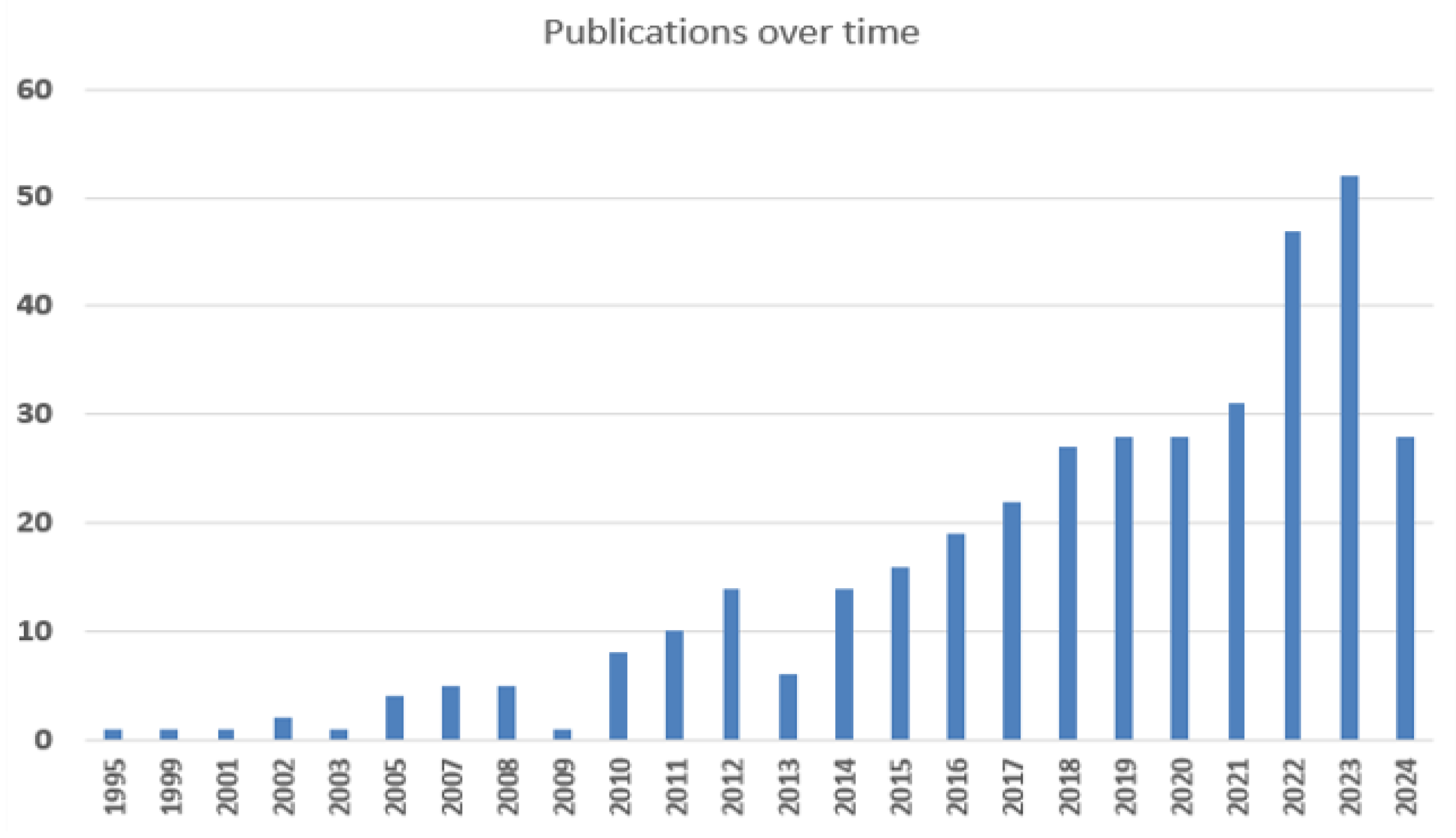
Figure 2.
Geographic distribution of publications on probiotics and rice (A). Citation network among countries that published on probiotics and rice (B).
Figure 2.
Geographic distribution of publications on probiotics and rice (A). Citation network among countries that published on probiotics and rice (B).
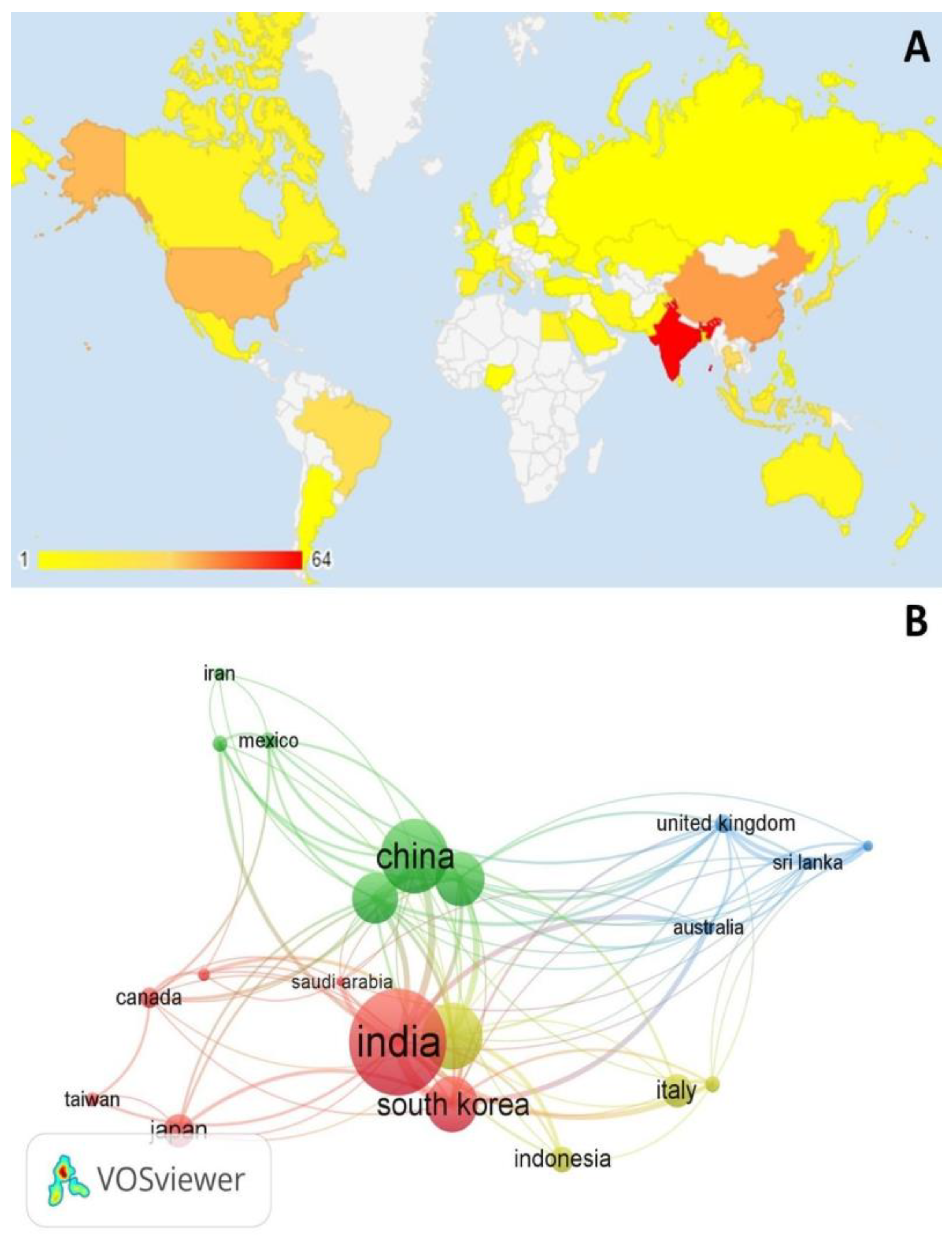
Figure 3.
(A) Collaboration network between the most prominent keywords among the selected studies on rice and probiotics. (B) Timeline of keyword clusters.
Figure 3.
(A) Collaboration network between the most prominent keywords among the selected studies on rice and probiotics. (B) Timeline of keyword clusters.
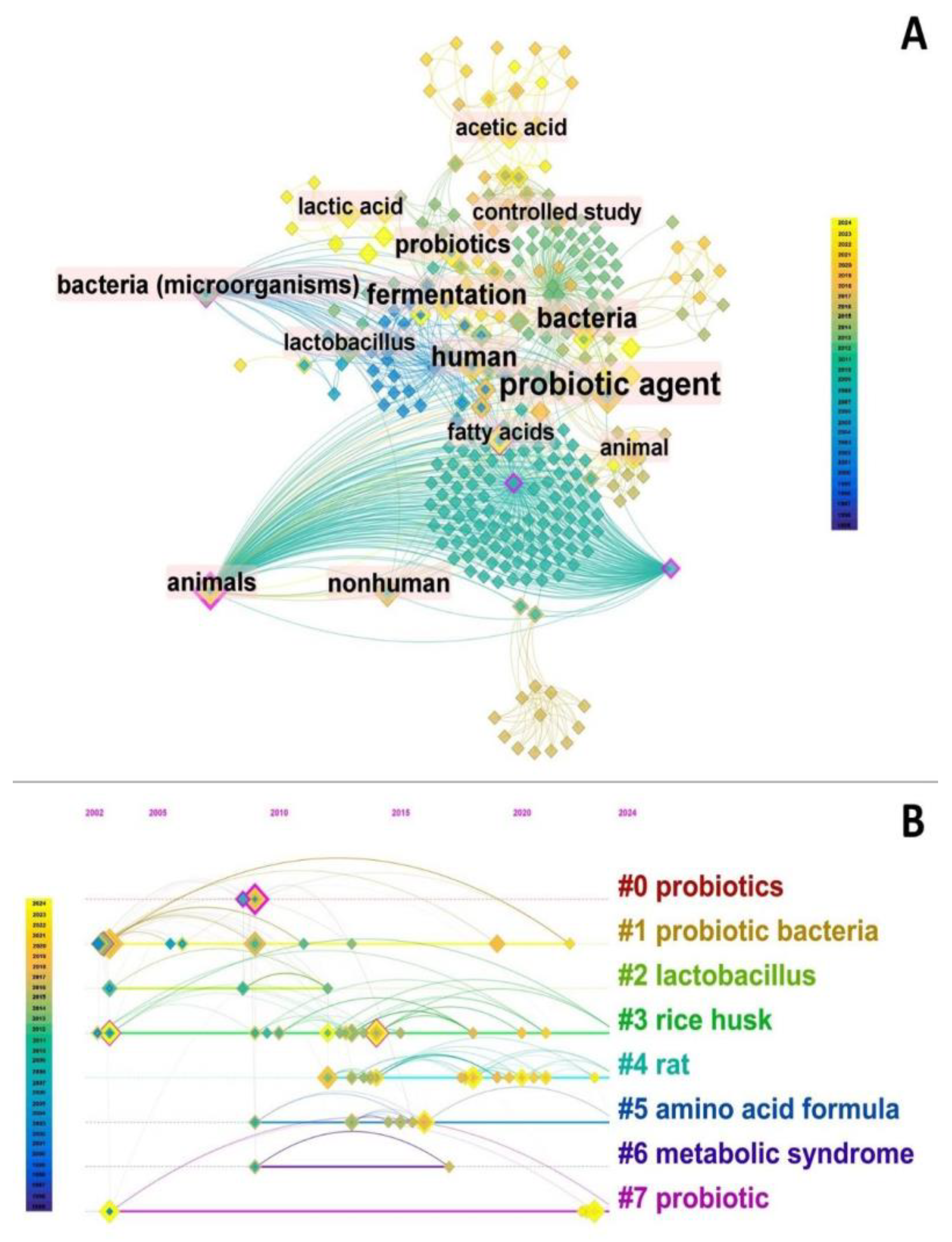
Figure 4.
Viability of Lactobacillus reuteri LRE02 ID1774 cells incorporated into the food supplement subjected to simulated gastric (A) and intestinal conditions (B).
Figure 4.
Viability of Lactobacillus reuteri LRE02 ID1774 cells incorporated into the food supplement subjected to simulated gastric (A) and intestinal conditions (B).
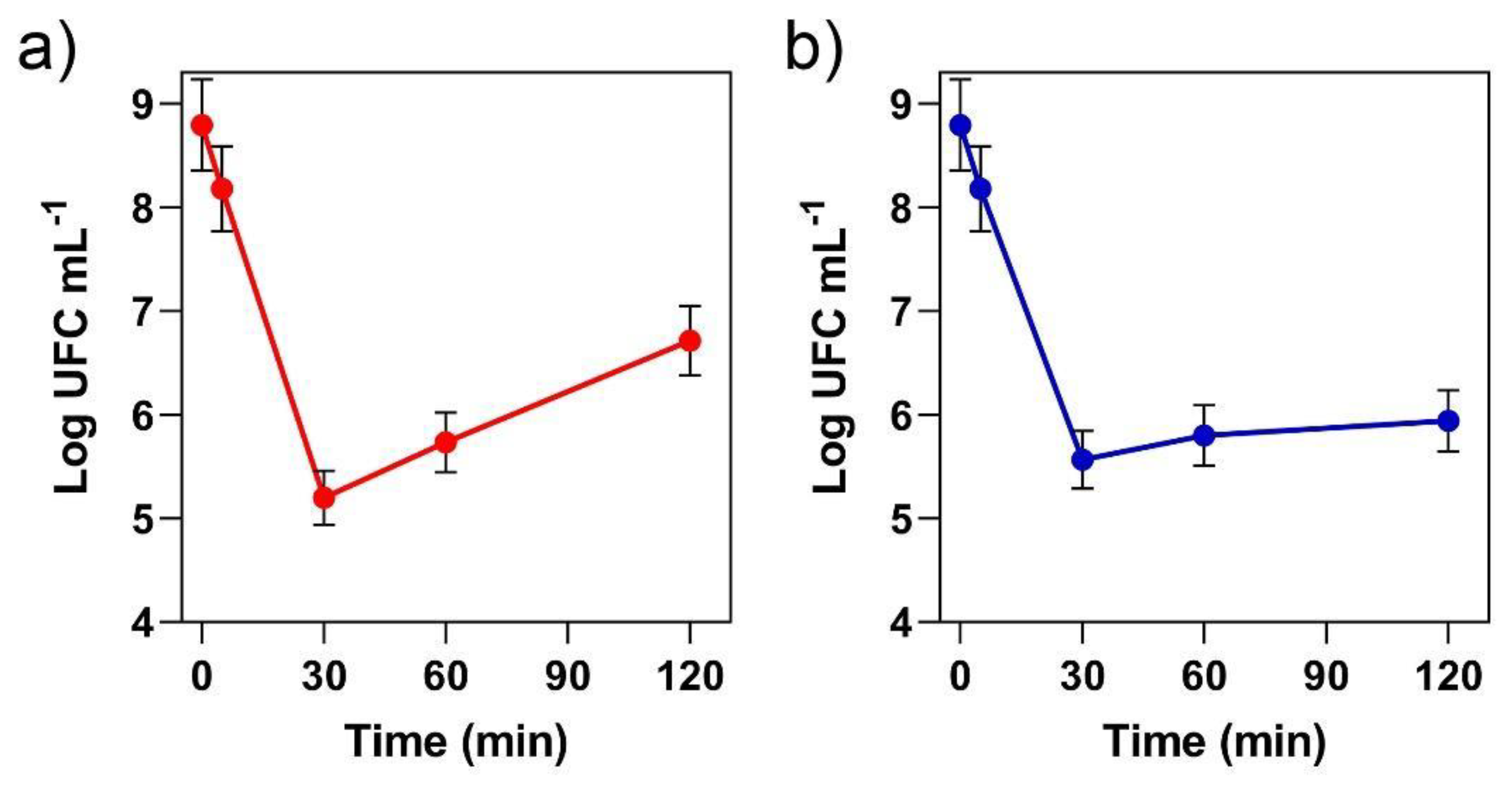
Figure 5.
Viability of Lactobacillus reuteri LRE02 ID1774 cells incorporated into the food supplement stored at room temperature (25°C) (A), and under freezing at -18 °C (B) for 60 days.
Figure 5.
Viability of Lactobacillus reuteri LRE02 ID1774 cells incorporated into the food supplement stored at room temperature (25°C) (A), and under freezing at -18 °C (B) for 60 days.
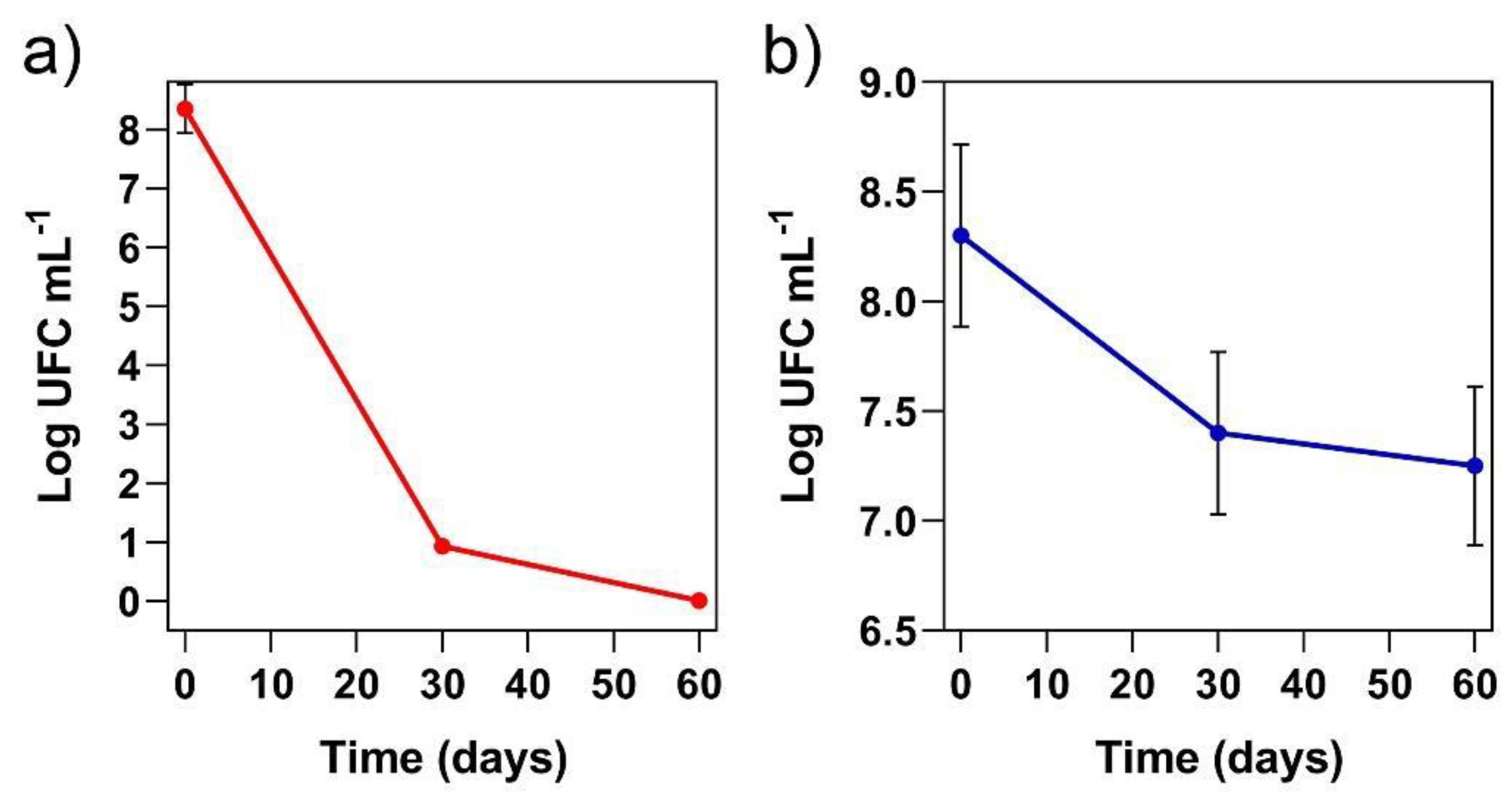
Figure 6.
SEM micrographs of the developed food supplement at magnifications of 50 x (A), 200 x (B), and 1000 x (C).
Figure 6.
SEM micrographs of the developed food supplement at magnifications of 50 x (A), 200 x (B), and 1000 x (C).
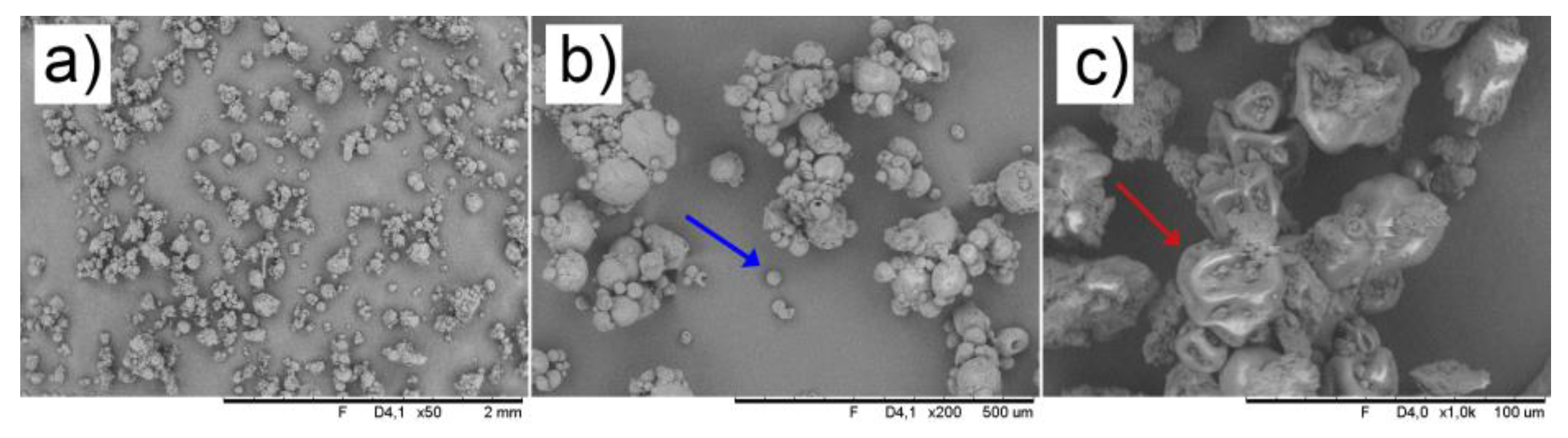

Table 1.
The 10 main publications in the area of research on rice and probiotics, available in the Web of Science database classified by citations.
Table 1.
The 10 main publications in the area of research on rice and probiotics, available in the Web of Science database classified by citations.
| Published article | Year | Journal Impact Factor (2023) | Citations | |
|---|---|---|---|---|
| 1st | Health benefits of kimchi (Korean fermented vegetables) as a probiotic food [52] | 2014 | Journal of Medicinal Food (IF: 1.7) | 263 |
| 2nd | Significance of coarse cereals in health and nutrition: a review [53] | 2014 | Journal of Food Science and Technology-Mysore (IF: 3.1) | 160 |
| 3rd | Functional foods and dietary supplements for the management of dyslipidemia [54] | 2017 | Nature Reviews Endocrinology (IF: 31.0) | 146 |
| 4th | Traditional healthful fermented products of Japan [55] | 2008 | Journal of Industrial Microbiology & Biotechnology (IF: 3.2) | 141 |
| 5th | Assessment on the fermentability of xylooligosaccharides from rice husks by probiotic bacteria [56] | 2008 | Journal of Agricultural and Food Chemistry (IF: 5.7) | 125 |
| 6th | Protection of L. rhamnosus by spray-drying using two prebiotics colloids to enhance the viability [57] | 2014 | Carbohydrate Polymers (IF: 10.7) | 111 |
| 7th | Production of RS4 from rice starch and its utilization as an encapsulating agent for targeted delivery of probiotics [58] | 2018 | Food Chemistry (IF: 8.5) | 110 |
| 8th | The effect of a probiotic on fecal and liver lipid classes in rats [59] | 1995 | British Journal of Nutrition (IF: 3.0) | 101 |
| 9th | Potential use of pearl millet (Pennisetum glaucum (L.) R. Br.) in Brazil: Food security, processing, health benefits and nutritional products [60] | 2018 | Food Research International (IF: 7.0) | 97 |
| 10th | Role of probiotic Lactobacillus fermentum KKL1 in the preparation of a rice based fermented beverage [61] | 2015 | Bioresource Technology (IF: 9.7) | 83 |
Table 2.
Nutritional characterization of the food supplement formulation.
| Proximal Composition* | ||||||||||||||
| Moisture at 105 ºC | 7.43 ± 0.068 | Total fats | 8.82 ± 0.21 | |||||||||||
| Carbohydrate | 25.56 ± 0.05 | Mineral residue | 9.41 ± 0.17 | |||||||||||
| Total protein | 48.78 ± 0.10 | Dietary fiber | 6.49 ± 0.52 | |||||||||||
| Calorifc value: 376,74 kcal 100g-1 or 1576.28 kj | ||||||||||||||
| Essential Amino Acids** | Non-essential amino acids** | |||||||||||||
| FAO/WHO*** | Aspartic Acid | 94.1 ± 1.18 | ||||||||||||
| Phenylalanine | 53.30 ± 2.67 | - | Glutamic Acid | 157.48 ± 1.33 | ||||||||||
| Histidine | 21.53 ± 0,55 | 15.0 | Alanine | 47.56 ± 0.59 | ||||||||||
| Isoleucine | 46.74 ± 1.17 | 30.0 | Arginine | 74.83 ± 0.94 | ||||||||||
| Leucine | 79.54 ± 1.09 | 59.0 | Cystine | 13.94 ± 0.18 | ||||||||||
| Lysine | 47.15 ± 1.18 | 45.0 | Glycine | 39.36 ± 0.49 | ||||||||||
| Methionine | 15.38 ± 0.38 | - | Hydroxy proline | 0.41 ± 0.05 | ||||||||||
| Threonine | 35.67 ± 0.89 | 23.0 | Proline | 42.03 ± 0.52 | ||||||||||
| Tryptophan | 5.76 ± 0.07 | 6.0 | Serine | 45.31 ± 0.23 | ||||||||||
| Valine | 55.97 ± 1.33 | 39.0 | Tyrosine | 39.77 ± 0.50 | ||||||||||
| Sulfur-containing Amino Acids | Aromatic Amino Acids | |||||||||||||
| FAO/WHO** | FAO/WHO** | |||||||||||||
| Methionine + Cystine: 28.91 ± 0.36 | 22.0 | Phenylalanine + Tyrosine: 93.07 ±1.16 | 38.0 | |||||||||||
| Monounsaturated Fatty Acids (MFA)* | ||||||||||||||
| Capric Acid C16: 1n7 (ω-7) |
0.46 | Oleic Acid C18:1n9c (ω-9) |
1.18 | |||||||||||
| Polyunsaturated Fatty Acids (PFA)* | ||||||||||||||
| Linoleic Acid C18:2n6c (ω-6) |
1.420 | α-Linolenic Acid C18:3n3 (ω-3) |
0.150 | |||||||||||
| Minerals# | ||||||||||||||
| DRI& | DRI& | |||||||||||||
| Sodium (Na) | 530.0 | 2000.0 | Zinc (Zn) | 6244.0 | 11.0 | |||||||||
| Calcium (Ca) | 200.0 | 1000.0 | Phosphorus (P) | 390.0 | 700.0 | |||||||||
| Iron (Fe) | 10.0 | 14.0 | Magnesium (Mg) | 70.0 | 420.0 | |||||||||
| Selenium (Se) | 0.06 | 60.0 | ||||||||||||
| Total Lipids* | ||||||||||||||
| Monounsaturated | 1.64 | Unsaturated | 2.79 | |||||||||||
| Polyunsaturated | 1.57 | Saturated | 3.24 | |||||||||||
*g 100 g-1; **mg g-1; ***Dietary Reference Intake (DRI) (>18 years old) in mg g protein-1 according to FAO/WHO (Food and Agriculture Organization / WHO: World Health Organization) [81]. #mg 100 g-1. &Dietary Reference Intake (DRI), according to Normative Instruction (IN) 75 of October 8, 2020, the National Health Surveillance Agency [80].
Table 3.
Microbiological quality of the developed food supplement.
| Microorganism | Brazilian standards* (CFU g-1) | Results (CFU g-1) |
| Salmonella spp. | Absence in 25 g | Absence in 25 g |
| Thermotolerant coliforms (at 45 ºC) | 5.0 x 10³ | < 1.0 x 101 |
| Total coliforms (at 35 ºC) | 1.0 x 101 | < 1.0 x 101 |
| Coagulase-positive Staphylococcus | 1.0 x 10² | < 1.0 x 101 |
| Bacillus cereus | 5.0 x 10² | < 3.0 x 10² |
| Mold and yeast | 1.0 x 10³ | < 1.0 x 101 |
Table 4.
Antioxidant potential (ABTS, DPPH, and FRAP) and lipid peroxidation indicator (TBARS) of the food supplement stored at room temperature and - 18ºC.
Table 4.
Antioxidant potential (ABTS, DPPH, and FRAP) and lipid peroxidation indicator (TBARS) of the food supplement stored at room temperature and - 18ºC.
| ABTS (mM Trolox equivalent g-1) | ||
| Storage period (days) |
Storage temperature | |
| 25 ºC | - 18ºC | |
| 0 | 86.53 ±0.31a | 86.53 ±0.31a |
| 30 | 56.96 ±0.72b | 56.22 ±0.37b |
| 60 | 37.93 ±0.79c | 40.27 ±0.09c |
| 90 | 35.58 ±0.73d | 39.52 ±1.05c |
| DPPH (mM Trolox equivalent g-1) | ||
| Storage period (days) |
Storage temperature | |
| 25 ºC | - 18ºC | |
| 0 | 7.60 ±0.06a | 7.60 ±0.06a |
| 30 | 6.80 ±0.09b | 7.24 ±0.02b |
| 60 | 6.50 ±0.06c | 6.73 ±0.10c |
| 90 | 6.41 ±0.01c | 6.71 ±0.09c |
| FRAP (mM Fe+2 g-1) | ||
| Storage period (days) |
Storage temperature | |
| 25 ºC | - 18ºC | |
| 0 | 24.96 ±0.54a | 24.96 ±0.54a |
| 30 | 21.21 ±0.31b | 22.74 ±0.20b |
| 60 | 20.94 ±0.18b | 22.34 ±0.70b |
| 90 | 19.29 ±0.57c | 21.75 ±0.26b |
| TBARS (mg MDA kg-1) | ||
| Storage period (days) |
Storage temperature | |
| 25 ºC | - 18ºC | |
| 0 | 2.54 ±0.23d | 2.52 ±0.21c |
| 30 | 2.96 ±0.12b | 2.93 ±0.11b |
| 60 | 3.44 ±0.11a | 3.48 ±0.10a |
| 90 | 3.48 ±0.11a | 3.45 ±0.10a |
Different letters on the same line differ statistically (p < 0.05).
Table 5.
Viability of Lactobacillus reuteri LRE 02 ID 1774 cells in the food supplement subjected to heat treatment.
Table 5.
Viability of Lactobacillus reuteri LRE 02 ID 1774 cells in the food supplement subjected to heat treatment.
| Time (minutes) |
Temperature (°C) |
Probiotic cells (log CFU mL-1) |
Reduction in cell viability (%) |
| 0 | 25 | 8.6 ± 0.6 | - |
| 1 | 55 | 6.7 ± 0.3 | 22.04 |
| 1 | 65 | 5.87 ± 0.3 | 31.72 |
| 1 | 75 | 0.6 ± 0.0 | 93.55 |
| 10 | 55 | 1.92 ± 0.0 | 77.69 |
| 10 | 65 | 0.7 ± 0.0 | 92.47 |
| 10 | 75 | 0 | 100 |
CFU: Colony-forming units.
Disclaimer/Publisher’s Note: The statements, opinions and data contained in all publications are solely those of the individual author(s) and contributor(s) and not of MDPI and/or the editor(s). MDPI and/or the editor(s) disclaim responsibility for any injury to people or property resulting from any ideas, methods, instructions or products referred to in the content. |
© 2024 by the authors. Licensee MDPI, Basel, Switzerland. This article is an open access article distributed under the terms and conditions of the Creative Commons Attribution (CC BY) license (https://creativecommons.org/licenses/by/4.0/).
Copyright: This open access article is published under a Creative Commons CC BY 4.0 license, which permit the free download, distribution, and reuse, provided that the author and preprint are cited in any reuse.


