

Submitted:
12 November 2024
Posted:
12 November 2024
You are already at the latest version
Abstract
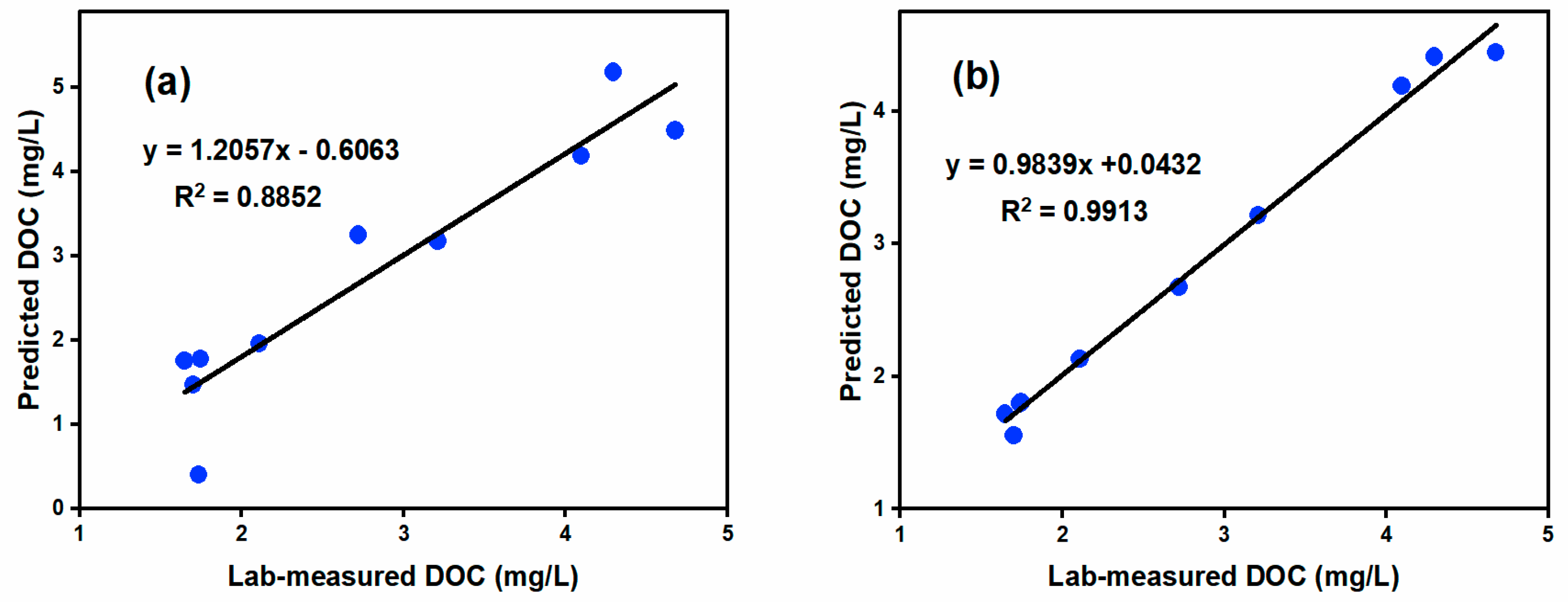
Dissolved organic carbon refers to soluble carbon substances in water bodies, and can be used as an important indicator for water pollution. Spectroscopic detection is commonly used to detect dissolved organic carbon in seawater. However, independent spectral methods are susceptible to interference, and insufficient extraction of the data features can occur. Accordingly, this study introduces a multi-source spectral fusion method that relies on a combination of principal component analysis and convolutional neural networks to construct the detection model. The Bayesian correction method is used for calibration, and the dissolved organic carbon contents of 10 groups of unfiltered seawater samples is analyzed. Correcting the spectral data acquired from samples containing impurities significantly improved the linear correlation coefficient R² of dissolved organic carbon from 0.8891 to 0.9838. Similarly, the mean absolute error is significantly reduced from 15.33% to 3.24%, while the individual absolute error is effectively controlled, remaining within 9%. The obtained results show that the developed method effectively integrates the ultraviolet absorption and fluorescence spectral data, and overcomes interference from other substances using the Bayesian correction method. Overall, this provides a highly accurate detection system with potential applications in monitoring the marine environment.
Keywords:
1. Introduction
2. Materials and Methods
2.1. Samples and Chemical Data Collection
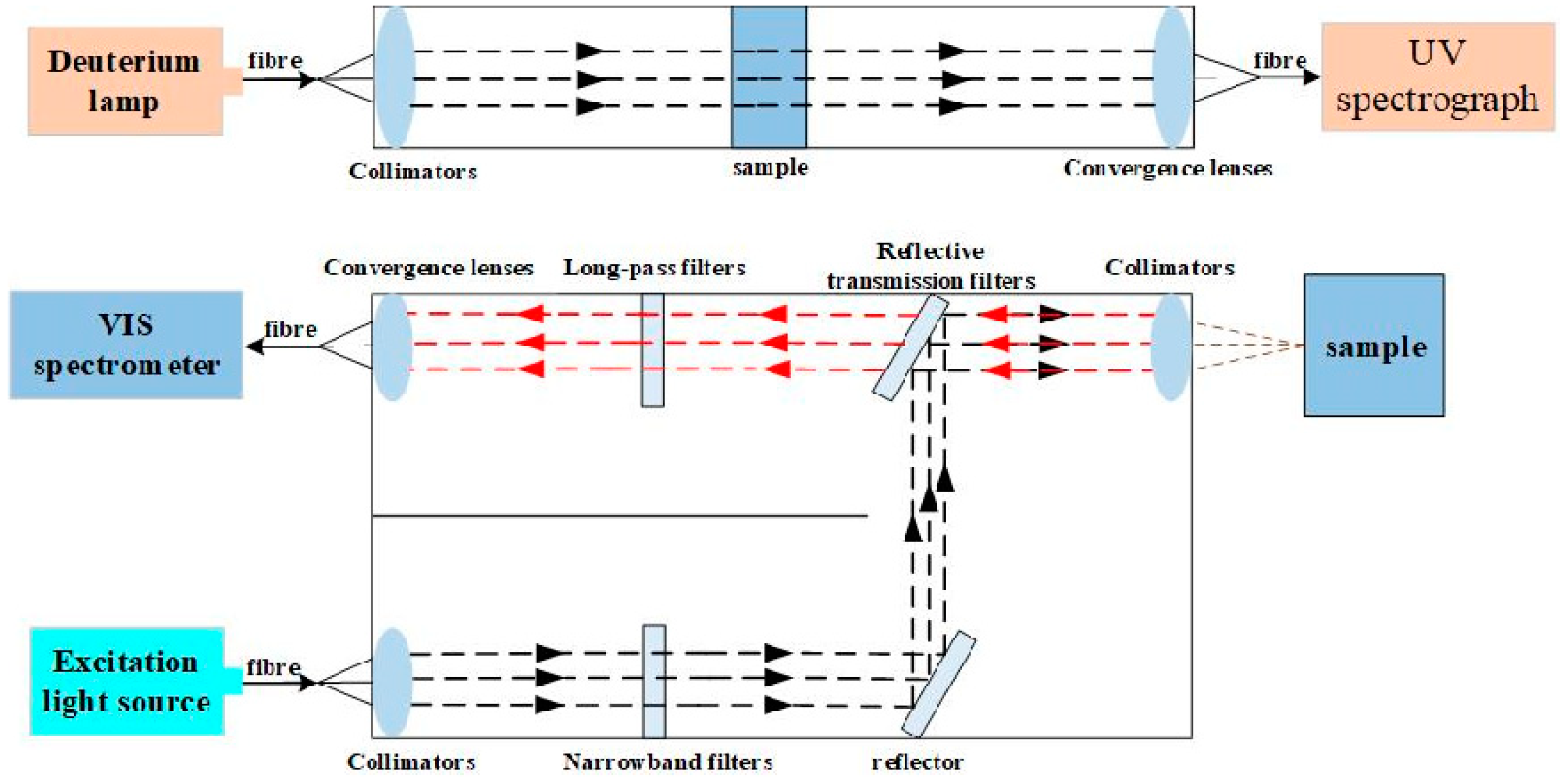
2.2. Spectral Data Acquisition
2.3. Data Analysis
2.3.1. PCA-CNN Detection Model
2.3.2. Bayesian Correction Model
2.3.3. Modelling Evaluation
3. Results
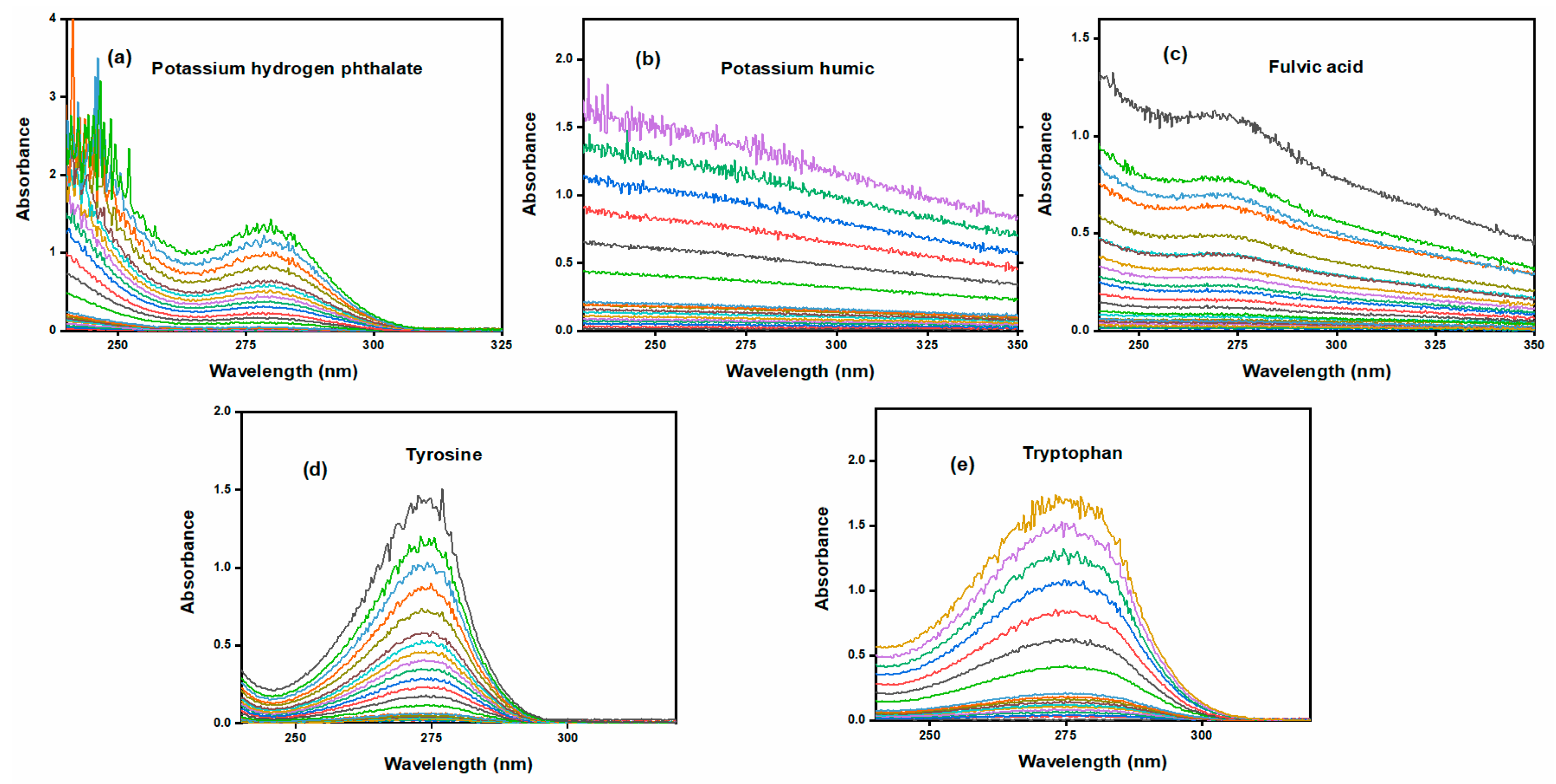
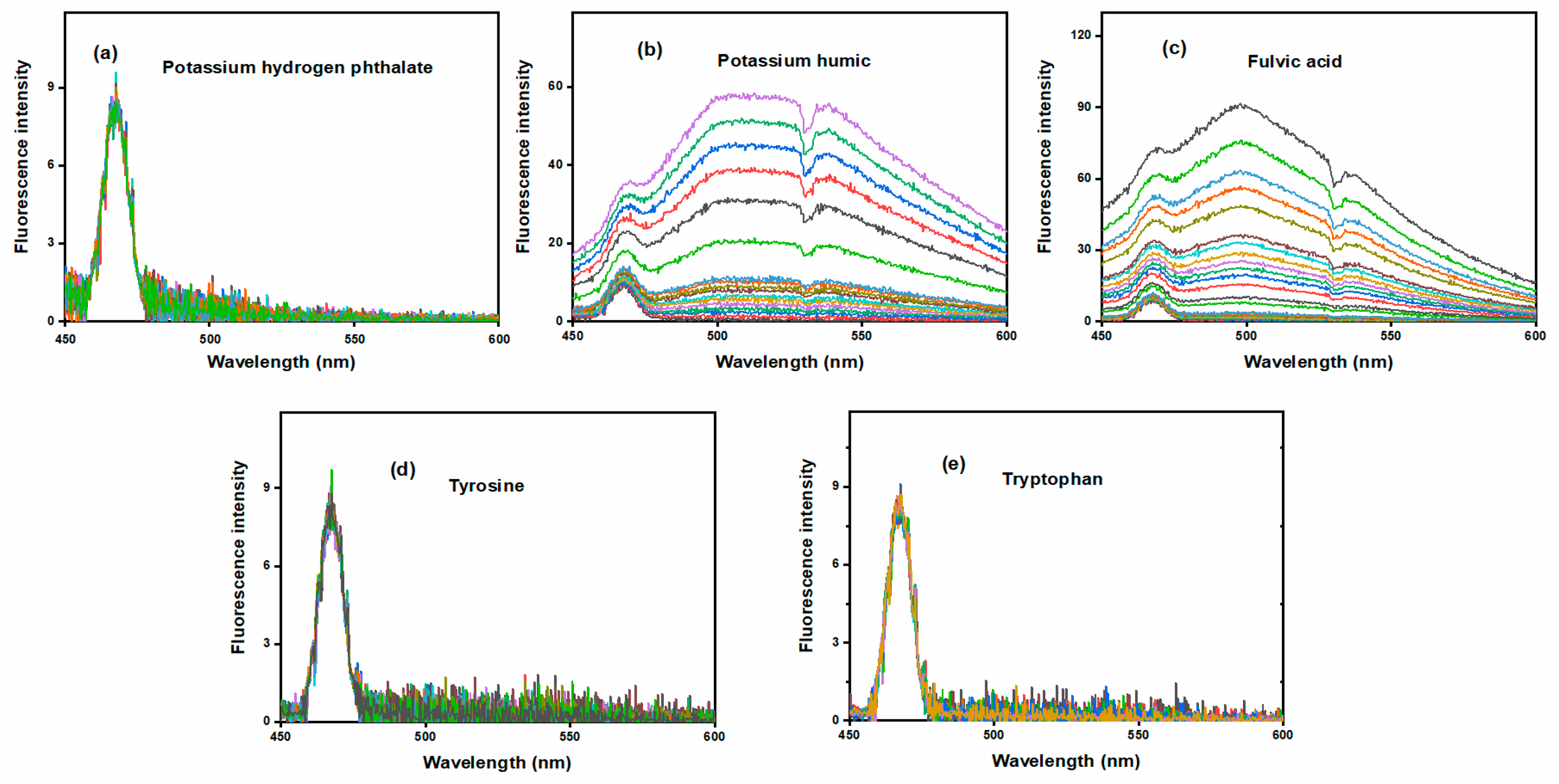
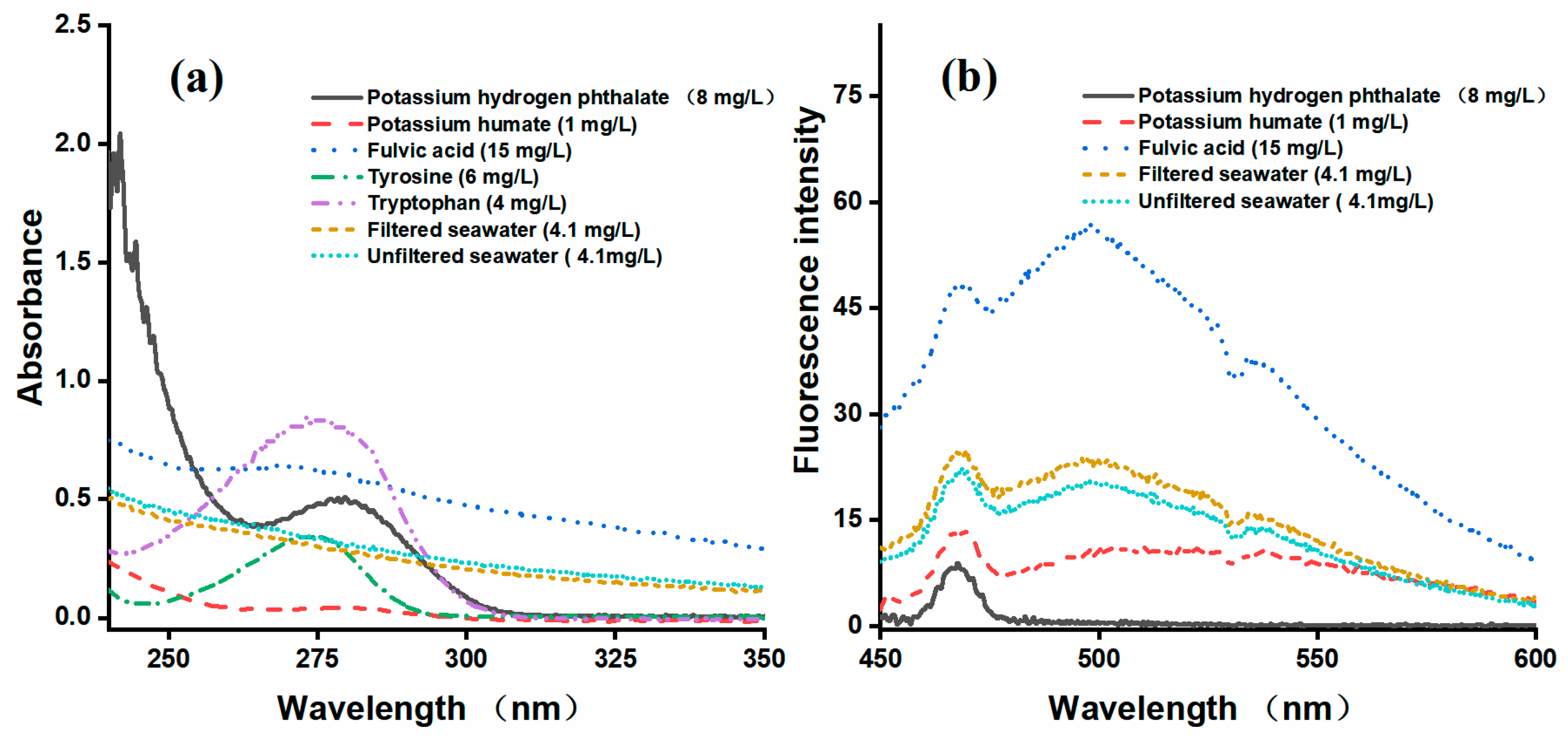
3.1. Data Acquisition
3.2. Data Analysis
3.2.1. Principal Component Analysis for Feature Extraction
3.2.2. PCA-CNN Detection Model
3.2.3. Seawater Testing
3.2.4. Bayesian Correction Model
4. Conclusions
Supplementary Materials
Author Contributions
Funding
Conflicts of Interest
References
- Dai, M.; Yin, Z.; Meng, F.; Liu, Q.; Cai, W.-J. Spatial distribution of riverine DOC inputs to the ocean: an updated global synthesis. COSUST, 2012, 4, 170–178. [Google Scholar] [CrossRef]
- Kim, Y. C.; Cramer, J. A.; Booksh, K. S. Investigation of a fiber optic surface plasmon spectroscopy in conjunction with conductivity as an in situ method for simultaneously monitoring changes in dissolved organic carbon and salinity in coastal waters. Analyst, 2011, 136, 4350–4356. [Google Scholar] [CrossRef] [PubMed]
- Pan, D.; Liu, Q.; Bai, Y. Review and suggestions for estimating particulate organic carbon and dissolved organic carbon inventories in the ocean using remote sensing data. AOS, 2014, 33, 1–10. [Google Scholar] [CrossRef]
- Sharp, J. H.; Carlson, C. A.; Peltzer, E. T.; Castle-Ward, D. M.; Savidge, K. B.; Rinker, K. R. Final dissolved organic carbon broad community intercalibration and preliminary use of DOC reference materials. Mar. Chem., 2002, 77, 239–253. [Google Scholar] [CrossRef]
- Wangersky P., J. Dissolved organic carbon methods: a critical review. Marine Chemistry, 1993, 41, 61–74. [Google Scholar] [CrossRef]
- Sharp, J. H.; Carlson, C. A.; Peltzer, E. T.; Castle-Ward, D. M.; Savidge, K. B.; Rinker, K. R. Final dissolved organic carbon broad community intercalibration and preliminary use of DOC reference materials. Marine Chemistry, 2002, 77, 239–253. [Google Scholar] [CrossRef]
- Maestre S. E., Mora J., Hernandis V.& Todolí J. L. A system for the direct determination of the nonvolatile organic carbon, dissolved organic carbon, and inorganic carbon in water samples through inductively coupled plasma atomic emission spectrometry. Analytical Chemistry, 75, 111-117.
- Spyres G., Nimmo M., Worsfold P. J., Achterberg E. P.& Miller A. E. J. Determination of dissolved organic carbon in seawater using high temperature catalytic oxidation techniques. Trac Trends in Analytical Chemistry, 19, 498-506.
- Yoon, G.; Park, S.; Yang, H.; Tsang, D. C.; Alessi, D. S.; Baek, K. Selection criteria for oxidation method in total organic carbon measurement. Chemosphere 2018, 199, 453–458. [Google Scholar] [CrossRef]
- Carter, H. T.; Tipping, E.; Koprivnjak, J.; Miller, M. P.; Cookson, B.; Hamilton-Taylor, J. Freshwater DOM quantity and quality from a two-component model of UV absorbance. Water Research, 2012, 46, 4532–4542. [Google Scholar] [CrossRef]
- Avagyan, A.; Runkle, B. R.; Kutzbach, L. Application of high-resolution spectral absorbance measurements to determine dissolved organic carbon concentration in remote areas. Journal of Hydrology, 2014, 517, 435–446. [Google Scholar] [CrossRef]
- Baker, A.; Spencer, R. G. Characterization of dissolved organic matter from source to sea using fluorescence and absorbance spectroscopy. Science of the Total Environment, 2004, 333, 217–232. [Google Scholar] [CrossRef]
- Wallage, Z. E.; Holden, J. Spatial and temporal variability in the relationship between water colour and dissolved organic carbon in blanket peat pore waters. Science of the Total Environment, 2010, 408, 6235–6242. [Google Scholar] [CrossRef] [PubMed]
- Kröckel, L.; Schwotzer, G.; Lehmann, H.; Wieduwilt, T. Spectral optical monitoring of nitrate in inland and seawater with miniaturized optical components. Water Res., 2011, 45, 1423–1431. [Google Scholar] [CrossRef] [PubMed]
- Li, J.; Tong, Y.; Guan, L.; Wu, W.; Li, D. A turbidity compensation method for COD measurements by UV–vis spectroscopy. Optik, 2019, 186, 129–136. [Google Scholar] [CrossRef]
- Yao, Y.; Li, Y.-Z.; Guo, X.-J.; Huang, T.; Gao, P. P.; Zhang, Y. P.; Yuan, F. Changes and characteristics of dissolved organic matter in a constructed wetland system using fluorescence spectroscopy. Environ. Sci. Pollut. Res. Int., 2016, 23, 12237–12245. [Google Scholar] [CrossRef] [PubMed]
- Li, G.; Yifei, T.; Jingwei, L.; Wu, S. Online COD measurement based on multi-source spectral feature-level fusion model. IOP Conf. Ser. Earth Environ. Sci., 2021, 781, 032022. [Google Scholar] [CrossRef]
- Dupuy, N.; Galtier, O.; Ollivier, D.; Vanloot, P.; Artaud, J. Comparison between NIR, MIR, concatenated NIR and MIR analysis and hierarchical PLS model. Application to virgin olive oil analysis. Anal. Chim. Acta, 2010, 666, 23–31. [Google Scholar]
- Martelo-Vidal, M. J.; Vázquez, M. Application of artificial neural networks coupled to UV–VIS–NIR spectroscopy for the rapid quantification of wine compounds in aqueous mixtures. CyTA – J. Food, 2015, 13, 32–39. [Google Scholar] [CrossRef]
- Hur, J.; Cho, J. Prediction of BOD, COD, and total nitrogen concentrations in a typical urban river using a fluorescence excitation-emission matrix with PARAFAC and UV absorption indices. Sensors, 2012, 12, 972–986. [Google Scholar] [CrossRef]
- Zhonghao, X. The study of advantages and applications of convolutional neural networks in computer vision tasks. ICIAAI, 2023. [CrossRef]
- Mahsa, M.; Mohammadreza, K. K. Application of robust principal component analysis–multivariate adaptive regression splines for the determination of °API gravity in crude oil samples using ATR-FTIR spectroscopy. Arab. J. Chem., 2023, 16.
- Rossat, D.; Baroth, J.; Briffaut, M.; Dufour, F.; Monteil, A.; Masson, B.; Michel-Ponnelle, S. Bayesian inference with correction of model bias for Thermo-hydro-mechanical models of large concrete structures. Eng. Struct., 2023, 278, 115433. [Google Scholar] [CrossRef]
- Yan, P.; Li, G.; Wang, W.; Zhao, Y. Qualitative and quantitative detection of microplastics in soil based on LIF technology combined with OOA-ELM/SPA-PLS. Microchem. J., 2024, 201, 110632. [Google Scholar] [CrossRef]
- Monedero, R. D.; Mezher, M. A.; Colomé, C. X.; Forné, J.; Soriano, M. Efficient k-anonymous microaggregation of multivariate numerical data via principal component analysis. Inf. Sci., 2019, 503, 417–443. [Google Scholar] [CrossRef]
- Zhou, H.; Sun, Q. Research on principle and application of convolutional neural networks. IOP Conf. Ser.: Earth Environ. Sci., 2020, 440, 042055. [Google Scholar] [CrossRef]
- Shukla S, Deo S B, Nemichand, et al. Spatially Resolved Fibre-Optic Probe for Cervical Precancer Detection Using Fluorescence Spectroscopy and PCA-ANN-Based Classification Algorithm: An In Vitro Study. Journal of biophotonics, 2024, e202400284.
- Barrera G J L, Zamora M A S, Carrazana N C J, et al. Chemometric analysis using infrared spectroscopy and PCA-LDA for early diagnosis of Fusariumoxysporum in tomato. Journal of Plant Diseases and Protection, 2024, (prepublish):1-18.
- Shao, Z.; Mei, X.; Liu, T.; et al. Trend Prediction and Operation Alarm Model Based on PCA-Based MTL and AM for the Operating Parameters of a Water Pumping Station. Sensors 2024, 24, 5416–5416. [Google Scholar] [CrossRef] [PubMed]
- Huynh C T, Hoang D N, Pham Q Q, et al. Electromechanical admittance-based automatic damage assessment in plate structures via one-dimensional CNN-based deep learning models. Frontiers of Structural and Civil Engineering, 2024, (prepublish):1-22.
- Nam J, Chang I, Lim S J, et al.Multispectral pattern camouflage materials based on PU/Al-flake composite: A CNN-based evaluation. Applied Surface Science, 2025, 680161436-161436.
- Belyaev, N.; Fedulov, V. Y.; Kravchishina, M.; Shchuka, S. A. Organic carbon content in dissolved and particulate forms in kara sea water. Oceanology, 2024, 64, 181–236. [Google Scholar] [CrossRef]
- Cáceres Guido, P.; Humberto Pavan, C.; Otamendi, E.; Bramuglia, G. F. Principles of Bayesian statistics and its relationship with applied pharmacokinetics [Principios de estadística Bayesiana y su relación con la farmacocinética aplicada]. Rev. Chilena Ped., 2020, 91, 838–839. [Google Scholar]
- Ferrari L, Manzi G, Micheletti A, et al. Correction: Pandemic data quality modelling: a Bayesian approach in the Italian case. Quality & Quantity, 2024, (prepublish):1-3.
- Benjamin, S. V. V. D.; Koen, B.; et al. Efficient Bayesian calibration of aerodynamic wind turbine models using surrogate modeling. Wind Energy Science, 2022, 7, 759–781. [Google Scholar]
- Hewen, N.; Mengxue, C.; Shichang, K.; Tanuj, S.; Huili, Q.; Wanni, G.; Shihai, H.; Fu, Z. A review of physicochemical properties of dissolved organic carbon and its impact over mountain glaciers. Journal of Mountain Science, 2024, 21, 1–19. [Google Scholar]
- Wenwu, T.; Jianjun, Z.; Xing, L.; Ziwen, Y.; Ke, X.; Li, W.; Haijun, L.; Guang, L.; Peng, G. Dissolved Oxygen Prediction Based on PCA-LSTM. Journal of Physics, 2022, 2337.
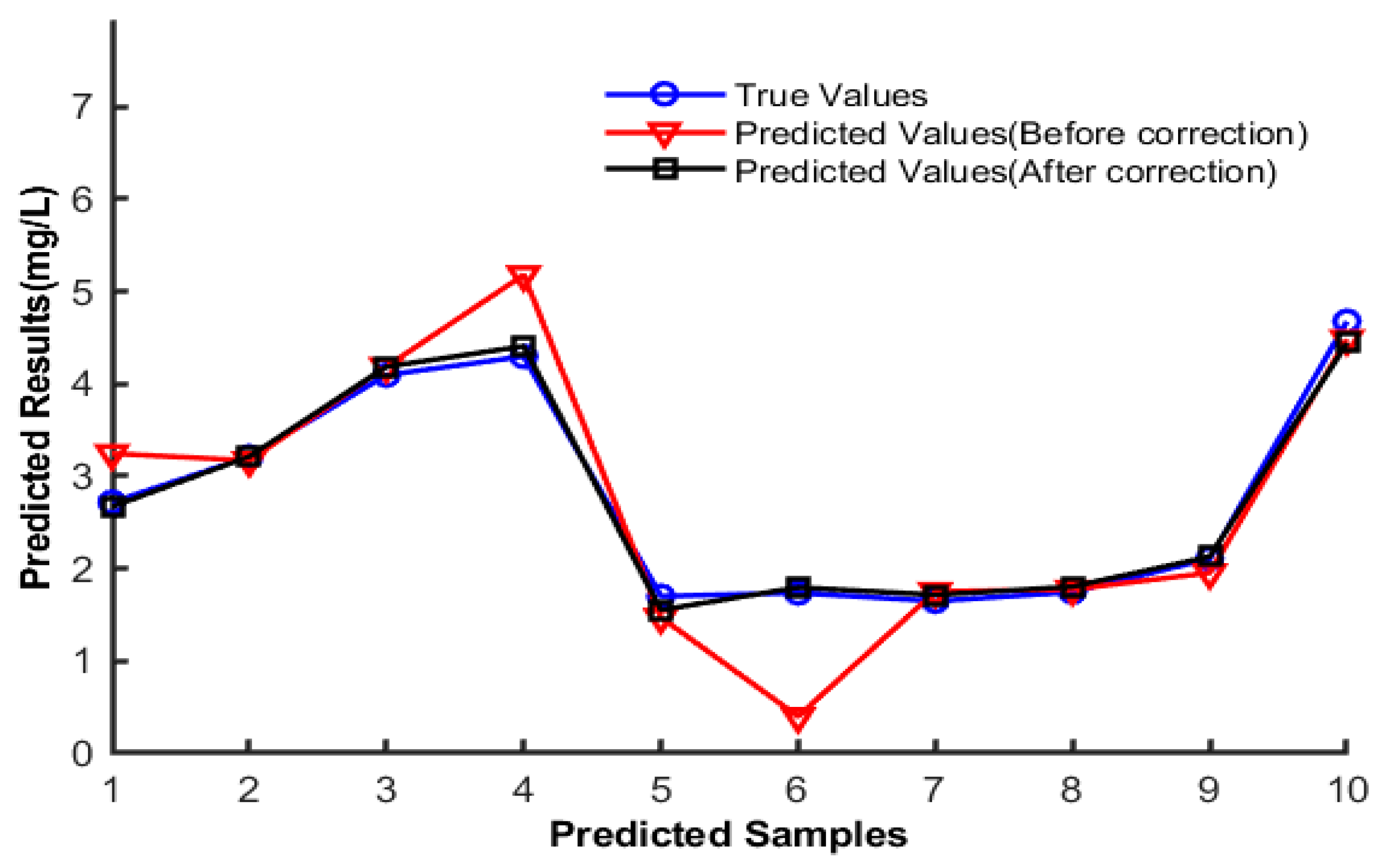

| Water sample | True concentration (mg/L) | Concentration before calibration (mg/L) | Error (%) | Concentration after calibration (mg/L) | Error (%) |
| 1 | 2.7198 | 3.2467 | 19.34 | 2.6724 | 1.74 |
| 2 | 3.2118 | 3.1708 | 1.27 | 3.2137 | 0.06 |
| 3 | 4.0958 | 4.1884 | 2.26 | 4.1864 | 2.21 |
| 4 | 4.2978 | 5.1810 | 20.55 | 4.4087 | 2.58 |
| 5 | 1.7018 | 1.4719 | 13.52 | 1.5522 | 8.78 |
| Water sample | True concentration (mg/L) | Concentration before calibration (mg/L) | Error (%) | Concentration after calibration (mg/L) | Error (%) |
| 6 | 1.7374 | 0.4000 | 77.01 | 1.7969 | 3.43 |
| 7 | 1.6484 | 1.7531 | 6.35 | 1.7168 | 4.15 |
| 8 | 1.7464 | 1.7765 | 1.72 | 1.8050 | 3.36 |
| 9 | 2.1074 | 1.9553 | 7.21 | 2.1299 | 1.07 |
| 10 | 4.6774 | 4.4854 | 4.10 | 4.4427 | 5.01 |
Disclaimer/Publisher’s Note: The statements, opinions and data contained in all publications are solely those of the individual author(s) and contributor(s) and not of MDPI and/or the editor(s). MDPI and/or the editor(s) disclaim responsibility for any injury to people or property resulting from any ideas, methods, instructions or products referred to in the content. |
© 2024 by the authors. Licensee MDPI, Basel, Switzerland. This article is an open access article distributed under the terms and conditions of the Creative Commons Attribution (CC BY) license (http://creativecommons.org/licenses/by/4.0/).


