

Submitted:
08 November 2024
Posted:
12 November 2024
You are already at the latest version
Abstract
Problems of sustainable development in rural areas are highlighted in the context of Sustainable Development Goals. Passengers and freight transport often lack infrastructure and services in rural areas, usually subject to lower population density and greater territorial dispersion. Integrating passengers and goods flow through scheduled or on-demand services is crucial to reducing territorial gaps. Services like Demand Responsive Transport (DRT), combined with logistics aspects, and other passengers-goods integration services are well suited to contexts with weak transport demand (titled DRTL), i.e. situations of potential social exclusion and demand niches not covered by traditional public transport. A systematic literature review was presented to classify, structure, and describe the main applications of passengers-goods integration services in rural contexts. More scientific databases were compared. The authors conducted, on the subset of works screened, a geographical and temporal analysis focusing on the classification of the methodologies adopted, highlighting the factors for improving integrated flexible services and promoting intelligent mobility and sustainable transport in urban and suburban environments. The manuscript highlights the need for further studies on transport in rural areas considering the integration of passengers and freight and, at the same time, provides a basis for local governments and public transport operators to improve implementation strategies for the planning and implementation of combined transport services following the goals of the Green Deal and Agenda 2030.
Keywords:
DRTL
; smart and sustainable mobility
; integrated transport system
; flexible mobility
1. Introduction
As of 2023, it is estimated that approximately 42.66% [1] of the world’s population lives in a rural context. Even in the most industrialised countries, it is clear that the percentages of non-urbanised population are significant: in the European Union in 2021, 25.2% of total residents were indicated in rural areas [2], in the USA the 17% considering 2010 census of rural population [3], and approximately 33% in China in 2023 [4]. It is important to consider that residents in rural areas are often disadvantaged in access to services. Cities, especially the large conurbations of the 21st century, represent formidable centers of attraction in which schools, hospitals, workplaces, and places of entertainment are concentrated, pushing more and more people to move towards these places, in a process lasting several centuries that began with the second industrial revolution.
It is important to recall the objectives of the United Nations, expressed in the document “Transforming our World: The 2030 Agenda for Sustainable Development” [5]. Main aim of UN Goals is to reduce inequalities on a global scale. Many Goals, and related Targets, insist on reducing inequalities between urban and rural areas. Table 1 lists the main Targets or Indicators of Agenda 2030 that explicitly refer to the rural theme.
It is particularly significant that the rural issue is already mentioned in the first Goal. The differentiation between urban and rural residents is equivalent to socio-demographic divisions by gender, age and occupation; this classification is repeated in Goal 4 on school parity indices. The role of rural areas is mentioned in Target 2.a, on the topic of rural infrastructures for the fight against hunger. Indicator 9.1.1 refers to accessibility to main roads by residents of rural areas. Finally, the topic of Target 11.a is central to this work, recalling the importance of connections between urban and peri-urban areas with rural areas. The last Goal mentioned is particularly relevant because it is often summarized as “Sustainable Cities and Communities”; here, the authors want to underline once again the equivalence between cities and communities.
Recalling UN Target 11.a, the importance of connectivity between rural areas and urban and peri-urban areas is highlighted. Rural areas are, by definition, characterized by a low population density [7] and residences located in scattered agglomerations; therefore, they experience difficulties in being hubs for aggregating services. Furthermore, low population density often makes traditional public transport systems based on the systematicity of the service inefficient [8]. The high average age of rural communities in much of the world, especially in less developed countries [9], combined with the previous reasons, often make urban communities isolated and reduce their accessibility.
In this context, the importance of flexible services emerges. Flexible services such as Demand-Responsive transit (DRT) have characteristics of frequency intermediate between conventional buses and taxis [10]. These services help reduce the inefficiencies of conventional public transport resulting from reduced demand, while at the same time guaranteeing the connection services required by the community. The role of these services is repeatedly mentioned in the literature regarding the issue of connections with rural communities [11,12,13]. European studies have highlighted the success factors for DRT in rural areas, suggesting above all that service operators operate on a large scale to exploit economies of scale [14]. The representation in Figure 1 defines the relationships between DRT and other transportation modes.
One of the peculiarities of these systems is linked to their characteristics of services for areas with low demand, where systematic inefficiencies are present. Already in 2004, Enoch et al. [15] have highlighted several critical issues of DRT, distinguishing these services into four categories based on their ability to survive:
- Commercially viable DRT,
- Acceptable subsidy DRT,
- Justifiable higher subsidy DRT,
- Financially unsustainable DRT.
The authors place rural transport in the third category, thus underlining the contribution of public subsidy and therefore the nature of reducing inequalities within the DRT.
The complementary sector is the freight sector, especially related to last-mile deliveries; it, however, struggles with rural transportation. Compared to urban last-mile delivery, the rural environment presents significant critical issues. The larger size of the areas involved, the greater distance between delivery nodes, and the reduced quantity of products ordered make rural last-mile logistics less efficient than urban logistics [16].
A solution to both problems, which allows to reduce the accessibility gap and at the same time improve the efficiency of the delivery service, is represented by the integration services between passenger transport and freight transport. These services often arise from the combination of on-call services such as DRT with elements of last-mile delivery [17]. The idea is that they combine the advantages of on-demand passenger transportation systems (reduction of inefficiencies in public transport service and flexibility) while using the residual capacity for the transport of parcels, limiting inefficiencies from the logistics system.
This research is to provide a literature review on these tools for integrating goods delivery and flexible passenger transport in rural areas. The review was carried out following the guidelines of the Preferred Reporting Items for Systematic Reviews and Meta-Analyses (PRISMA) [18]. PRISMA allows to classify the articles obtained within a systematic literature review, with a screening process that removes the articles starting from the initial search, identifying the final set of articles and guaranteeing the replicability of the work.
The study within this work is structured starting from two research questions:
- Identify the main general contributions present in the literature, defining in particular whether these contributions are systematic literature reviews or general overviews; the aim is to identify the contributions that address, across the literature, the issues of on-demand transport in the passenger sector, the integration between passenger and freight transport and transport in rural areas;
- Analytically define the most recent contributions that focus on the integration between passenger and freight transport in rural areas; identify the main common research trends; classify these works according to territorial characteristics and their environmental, economic, and social sustainability objectives.
The article is structured as follows. Section 2 discusses the main and most recent contributions on the topic, with emphasis on literature reviews and general overviews; Section 2 has the main purpose of providing an answer to research question 1. Section 3 presents the methodology adopted for the identification of the minimum set of research in rural areas. Section 4 shows the main results obtained. Section 5 focuses on the discussion of the results, allowing us to answer question 2, together with the previous sections 1, 3 and 4. Section 6 describes the conclusions, future developments, and limitations of the research.
2. Overview of Literature Reviews
The topic of integration between passenger and freight transport in rural areas has received, in recent years, significant consideration from the scientific literature. In the following, the most significant contributions on the topic are recalled and discussed. Because of the specificity of the topic, it is necessary to also analyse some significant works that deal with the topic even if only partially, or that mention the topic extensively only in one paragraph, even though they are part of the broader scope of rural passenger-goods transport through on-demand services. Furthermore, the authors intend to classify the works by specifying their essential characteristics. Two categories are distinguished: Literature Review, which defines the work as a Systematic Literature Review (SLR) carried out with schematic analyses according to bibliometric criteria; General Overview, in which the work shows or compares case studies and applications. One of the works considered is particularly interesting to cite, even though the aspect of comparison and collection of articles or case studies is not the central theme of the research; in it, the Overview part is proposed in a specific subsection and is not the core of the work.
This Section has the function of providing a literature base and at the same time providing an initial answer to research question 1, in this sense, the section can be seen as a meta-analysis of the literature, precisely because it is an analysis of the analyses.
The first difficulty in the definition itself concerns terminological ambiguity. Recalling the study proposed by Cavallaro & Nocera [19], it emerges that there is a notable heterogeneity in the definitions indicated in the literature. Among the names that are recalled, there are Share-a-ride, Co-modality, Collaborative freight and passenger transportation, Demand Responsive Transport and Logistics. Even a concept such as Mobility-as-a-service can contain elements that refer to the integration of passenger and freight transport. All these terms are part of a reference area that, overall, is vast and heterogeneous and has various references in the literature.
Davison et al. [20] one of the first scientific works carried out on the topic, proposed an analysis for the identification of demand niches for DRT services. The need to consider rural communities as a possible target for services is mentioned. Although it is not the focus of the research, the possibility of integration between passengers and goods in areas with low population density is mentioned, an element that characterizes rural areas.
In the analysis proposed by Ryley et al. [21] six niches of potential markets for passenger DRTs are analysed. One of the six niches is represented by rural hoppers. The role that DRT services often have in these connections is highlighted, often replacing standard public transport. Another service mentioned is access to shopping; in this case, the criticality in the asymmetry between an outward journey without parcels and a return journey with bags is highlighted. In both niches studied, reference is made to passenger transport, the presence of freight transport is there, but it is marginal and a substitute. The possibility of using DRTs as elements for the integrated transport of passengers and goods in rural areas is mentioned but not explored in depth.
A research that highlights the role of DRT systems for the integration of passenger and freight transport has been proposed by Fuchs [22]. The work highlights how DRT systems are well suited to serve rural communities; from this assumption, it is proposed to increase their efficiency through the integration of DRT with delivery services; an Adaptive Large Neighborhood Search model is proposed for the integration between the two elements.
Butler et al. [23] have carried out a Systematic Literature Review (SLR) focused on different innovative and sustainable transport modes. Starting from the analysis of numerous literature studies, the authors have highlighted how different contributions insist on the role of new sustainable mobility systems to improve the efficiency and effectiveness of transport systems in rural areas. It is useful to recall some works indicated in [23,24,25], underlined the role of DRT in reducing inequalities; Petersen [26] discussed the possibility of considering freight-passengers integration in rural areas; Graham et al. [27] highlighted how DRTs are often seen, within rural communities, as a mode of transport for the elderly; Axsen e Sovacool [28] highlighted the role of flexible transport systems in improving rural connectivity, also underlining the contribution of MaaS (Mobility as a Service).
Freiberg et al. [29] have proposed an overview of emerging solutions for passenger DRT systems. The role of services in rural areas is recalled. In particular, it is highlighted how, among the emerging possibilities, there is the possibility of using DRT services as a feeder system between peripheral users and the central hubs of the transport system or the activity system.
Currie & Forunier [30] have highlighted critical issues in the adoption of DRT systems, with an analysis of the failure rate of a set of DRT projects present in the literature relating to passenger transport. Although the role, particularly in Europe, in rural transport is recalled, they underline the role of subsidies for the sustenance of these systems.
Schasché et al. [31] have proposed a systematic literature review on the topic of DRT in rural areas, highlighting the implications in terms of policy. The focus of the work is on DRT in the passenger sector. They highlight how “although DRT is considered a mode of public transport for rural areas, suitable to address specific target groups, empirical investigations most of the time ignore this context and focus on the ecological dimension more recently consolidated in an urban context”.
Campisi et al. [32] have proposed a general overview of DRT applications in Europe. It has been highlighted how DRT are an element of the mature supply system in many European countries. Cases from the Baltic countries, Scandinavia, Southern Europe, and Germany have been recalled and analysed; in the last case, in particular, their use to improve connections with rural communities has been highlighted.
Cavallaro & Nocera [33] discuss, in the Section relating to the literature review, an analysis of the main research contributions relating to the integration between passenger and freight transport in rural areas. It is important to remember here that the authors have proposed a synthetic literature review that also includes urban cases and identifies the latest examples up to 2023.
A very recent systematic literature review on the general topic has been proposed by El Amrani et al. [34]. The focus of the research was on the analysis of freight-passenger integration in urban areas, showing an increase in the number of annual publications in the period analyzed (2015-2023) and the publications are dominated by China. The authors highlight how, from the review, it emerges that the dominant modes are the metro and the bus.
The research proposed by Parmaksız et al. [35] made a comprehensive analysis of Rural Transportation and Logistics (RTL), underlining the limited focus on the analysis of transport in rural areas. The proposed solutions are analysed through the quadruple bottom line (QBL) sustainability pillars. DRT systems are mentioned as among the most cited in literature in the rural area. The research focuses in general on aspects related to transport, both passengers and freight, in rural areas; several cases of passenger-freight integration are mentioned. It is highlighted among the conclusions that vehicles used for public passenger transport in rural areas often do not travel at full load; it is emphasized that, through analytical and optimization approaches, the residual space can be used for freight transport.
The analysed contributions are significant and show great attention to the topic in recent years, already at the first level, the level of analysis of works in literature. Of the 12 works cited, 10 were published from 2020 onwards. Table 2 summarizes the publications cited, underlining their main focus, and citing the scope of applications (whether rural, integration or DRT).
The meta-analysis is functional to the next step of the research. In particular, this work intends to deepen the analysis of the topic in a direction that is between Cavallaro and Nocera [19], Cavallaro and Nocera [33] and Parmaksız et al. [35], focusing mainly on the topic of passenger-freight integration in rural areas and wanting to provide a further geographical and temporal specification. In fact, as emerges from this analysis, it is highlighted that, while the treatment of the topic of DRT is at an advanced stage, few works allow to compare the various areas by providing synthetic answers on the validity of the DRT.
3. Methodology
The second level analysed is instead the one directly defined by the passengers-freight transportation integration theme. In this way, it is possible to use particularly qualified methodologies developed for systematic review and comparison.
The present systematic review is conducted using the Preferred Reporting Items for Systematic Reviews and Meta-Analyses (PRISMA) Methodology [18]. PRISMA methodology allows researchers to perform a Systematic Literature Review. Results of Methodology The methodology followed is divided into 4 main steps, to define sets of articles that fully meet the needs of the SLR:
- Identification: in this step the objectives of the research are defined, in terms of methods, keywords and databases considered. The total of the results obtained is the TOTAL RECORDS. The identification phase ends with the definition of the set of results purified from duplicates, RECORDS SCREENED. The number of duplicates obtained from the research is expressed by RECORDS REMOVED BEFORE SCREENING;
- Screening: the set of articles deprived of duplicates represents the total of the works that are subjected to the screening process. Once the criteria for carrying out the screening have been defined, starting from RECORDS SCREENED, three subsets are identified: RECORDS EXCLUDED, that is the set of articles removed from the search because they do not adhere to the theme of the same but are still results of the search methods carried out; REPORTS NOT RETRIEVED instead expresses the set of articles that, despite being on the theme, are inaccessible. The difference between the total of RECORDS SCREENED and the sum of these two sets expresses the REPORTS AS-SESSED FOR ELIGIBILITY;
- Eligibility: starting from the previous steps, all the unique articles, on topic and accessible to the authors, have been defined. In this phase, an in-depth study of the subset of REPORTS ASSESSED FOR ELIGIBILITY is carried out, defining the criteria for the definition of the studies and removing the EXCLUDED REPORTS that do not match the previously defined eligibility criteria;
- Inclusion: the last step therefore represents the definition of the final set of works included for qualitative and quantitative analyses.
The methods by which the research was carried out are defined below.
3.1. Research Motivations and Questions
The theme of the research, at this level, is the study of the integration between passenger and freight transport in rural areas. The need to carry out this study arises mainly downstream of four questions:
- RQ3.1 When were the works considered published, and whether particular temporal trends emerge;
- RQ3.2 Which are the geographical areas that are most driving research on the topic studied, and which are the geographical areas most interested in applications;
- RQ3.3 What is the real impact, actual or expected, of these methodologies, in terms of environmental, economic, and social sustainability;
- RQ3.4 Particular lines of research emerge, with marked differences in terms of the methodologies adopted.
Section 4 and Section 5 provide answers to these questions. Specifically, RQ3.1 is addressed in Section 4.1. RQ3.2 is addressed in Section 4.2 and 4.4. RQ3.3 and RQ3.4 are addressed in detail in Section 5.
3.2. Information Sources and Database
The SLR was carried out considering a keyword analysis, on the web, working on scientific literature databases. The databases considered are Scopus, ScienceDirect, MDPI, Web of Science and IEE Xlpore. Each database search was carried out following the criteria defined by the PRISMA methodology.
3.3. Key Terms and Search Strategy
The SLR was conducted working mainly by keywords. The criterion for the choice was to identify appropriate keywords to consider as input strings for each search engine. The search was extended, overall, to title, abstract, and keywords.
This allowed to widen to the maximum the range of potential searches obtained; also, this can guarantee that the topic analysed is present, in the generic work found, as the main topic of the work. The criterion for the selection of keywords reflects the complexity and the particularity of the theme. The schematisation proposed in Figure 1 allows to visualise the scope in which this research wants to be positioned:
To allow maximum adherence to the study area, and to limit the possibility of obtaining misleading results, the search was conducted considering strings composed of (RURAL) AND (PASSENGERS-RELATED WORDS) AND (FREIGHT RELATED WORDS). As defined in Section 1, the scope of passenger-freight integration is vast and is not always defined unambiguously; similar services, or those that may in any case fall within the scope, are defined with different names.
The approach followed here, therefore, was to use a wide range of combinations of terms that refer unequivocally to integrated freight and passengers transportation, according to the indications provided on the topic by previous works in the literature [19]. Figure 2 shows the tree considered for the construction of keywords. However, given the partially semi-automatic nature of the search, it is always possible to obtain results that go beyond the topic covered.
3.4. Eligibility Criteria
Defining the eligibility criteria for the set of papers to be defined is essential in the definition of a procedure that follows the PRISMA guidelines. Starting from the results obtained, the works were screened according to the following criteria:
- Duplicates have been removed. These articles are included in the REPORTS RE-MOVED BEFORE SCREENING;
- Articles that do not relate to the topic discussed have been removed. These articles fall into the RECORDS EXCLUDED;
- All works that did not have a text accessible to authors were excluded from the final analysis (REPORTS NOT RETRIEVED);
- All editorials and conference introductions were excluded. These articles are included in the REPORTS EXCLUDED;
- Articles and conference papers were included;
- No exclusions were made on a geographical or temporal basis;
- No exclusions were made based on the editor or journal.
3.5. Quality Assessment and Data Extraction
Each single article resulting from the research has been verified and analysed by the authors of this note. Duplicates have also been verified individually. The work has finally been organized on a Microsoft Excel sheet [36] with the help of Bibliometrix [37]. The research steps are detailed in Figure 3.
4. Results
In this section, the analytical results obtained from the final set of articles are discussed. 15 articles were found; the search screening was conducted rigorously according to the criterion defined in Section 3.
The obtained works are described in detail and characterized according to the year of publication, the country of origin of the research, the geographical characteristics of the evaluated studies, and the methodologies adopted. The relatively limited number of searches obtained is connected to two aspects: first, a very restrictive set of keywords was chosen, chosen to limit the scope of the study as much as possible to only articles interested in the topic; secondly, the innovative nature of the topic is once again recalled. It is also worth mentioning the relatively high number of “Records excluded”; this value is mainly linked to the unavoidable terminological ambiguity of some words, specifically “goods” and “logistics”, which recall, respectively, “good practices” and “logistic regressions”. All articles that focused exclusively on passenger transport services among those screened were excluded.
4.1. Temporal Analysis by Year of Publication
The selected articles were divided by year of publication. The results are plotted in Figure 4. The results cover a time span from 2015 to the present. It can therefore be considered that this time span is partly superimposable to the one identified in Section 2. It should be considered that, excluding the three works published in 2015 and 2019, the publication is continuous between 2021 and the present, with a peak in 2023. The value of the number of articles published in 2024 is not significant for the purposes of this analysis as it is the current year at the time of writing.
The diagram shows an increase in attention towards these methods in relation to the rural world, highlighting that the growth has occurred in correspondence with the definition of the objectives of Agenda 2030. The next few years of research will demonstrate whether the high number of publications in 2023 is an outlier or actually represents a change in the trend.
4.2. Geographic characterization of studies
The classification of the results by reference country of the universities or research centers of the authors of the different works is proposed.
The diagram in Figure 5 should be read considering the number of publications in which each country is involved. Consider how, globally, the works are mainly concentrated in East Asia. China and Japan contribute, respectively, in 5 and 3 publications. Also in Asia, one contribution is given by Bangladesh and one contribution by Israel. The other contributions all come from European countries. Sweden is the only country to contribute in two articles. The main characteristic that emerges is therefore linked to the two Eastern countries, in which a large part of the population lives in rural areas, particularly in China.
4.3. Overview of Proposed Workds.
Table 3 reports the works considered classified by author, year, and type of manuscripts.
The paper by Kamau et al. [42] focuses on the proposal of a hybrid multiservice demand-responsive mobility service, which combines aspects of scheduled services and on-demand services. The proposed service should perform passenger transportation during peak hours and provide complementary and supplementary services, such as home delivery of parcels in other time windows. The topic is proposed in the application in rural Bangladesh. The proposed simulation suggests a reduction in travel time and a greater efficiency of the system.
Van Duin et al. [40] focus on cargo-hitching. The aim of the proposed project is to use the unused capacity of public transport for parcel delivery; cargo that hitches a ride on a vehicle transporting persons, or persons hitching a ride on a vehicle transporting cargo are both considered in the analysis. An analysis of the rural area of the Netherlands is proposed, and the decrease in emissions is highlighted.
The study by Namgung et al. [51] suggests an on-demand public transport in rural areas, Integrated Transport between Passengers and Goods, with the aim to reducing costs for both public transport and private logistics companies; it focuses on the cost of delay, since goods handling operations can determine an increase in transit time. The subject of the study is the characterization of potential users. The case study is the city of Iwami, Tottori prefecture, Japan. Starting from the distribution of a Stated Preference questionnaire in the interested area, an estimate of a mixed logit panel is carried out. The role of elderly users in rural areas as potential users of the service emerges.
Molenbruch et al. [39] propose a model that combines the advantages of Dial-a-ride services and public transport in rural areas. This paper introduces a routing algorithm and integrated scheduling procedure to enforce this synchronization for problems of a realistic scale, enabling the design and operational implementation of an integrated mobility system. The proposed algorithm is a Large Neighborhood Search. The applied dataset is artificially generated. The results show an increase in the efficiency of the system by integrating dial-a-ride services with public transport. However, the paper does not delve into and integrate freight transport into the algorithm, despite the topic is repeatedly mentioned in the paper.
The research topic of Zeng & Qu [45] is mixed freight and passengers’ transportation. The main theme addressed is related to the possibility of exploiting the residual capacity of vehicles, due to the difference in terms of development and economic activities between urban and rural areas. A mixed-integer linear programming model is developed, with the aim of optimizing the vehicular routing of electric buses. Applications in Shanxi Province, China are proposed. The results suggest that this service can help logistics operators and public authorities to reduce operating costs and rebalance flows, making the system more efficient.
Begnini & Morita [38] address the issue of the combination of passenger and freight flows from a large city to rural areas, studying the mix between fixed-line public transport and parcel transport related to last mile delivery on demand. A Mixed Integer Linear Programming model is proposed to model and solve the problem. A case study in rural Japan is proposed. Among the main findings, the reduction in total travel time is highlighted.
Yang et al. [41] propose a Demand-Driven Passenger-and-Freight-Integration Service (DDPFIS) mode, starting from the considerations of inefficiency and poor environmental sustainability of traditional public transport systems with rural areas. A mixed integer linear programming model for vehicular routing is proposed. Numerical experiments are proposed, in Longkou, in rural China, with the aim of comparing this model with traditional vehicular routing models, in which freight and passenger transport are assumed to be separate. Integrated systems allow to better optimize the vehicular capacity; they are more sustainable, reducing the total distance travelled; integrated transports tend to be better for passengers with lower time sensitivity.
Cavallaro & Nocera [33] propose Integrated Demand-Responsive Transport (I-DRT), which combines elements of DRT with integrated passenger-freight services, and a framework for its development is proposed. To verify the practical suitability of I-DRT, its adoption in the Italian municipality of Misano Adriatico, Italy, was proposed and evaluated using selected KPIs. The results of the analysis revealed a reduction in kilometres travelled, fuel consumption, and air pollution, together with an increase in the area covered by the service, increase in daily potential deliveries (for freight transport), and increase in the occupancy rates of vehicles (for passengers).
Franco et al. [43] relate the emergence of New Mobility Services (NMS) in rural areas to big data, underlining how the development of NMS should be guided by the study of big data, with the aim of better understanding demand aspects. The paper proposes activity-based models for the reconstruction of patterns and a survey to define the most appreciated solutions in rural communities. The case of rural United Kingdom is studied. Among the proposed measures, the integration between scheduled services and DRT services, and the possibility of integrating freight delivery and passenger transport services are highlighted.
The paper by He et al. [44] introduces an integrated passenger and freight transportation system using electric buses in the rural context. A mixed-integer linear programming model is proposed for vehicular routing and bus scheduling. The solution algorithm is a hybrid heuristic based on an Adaptive Large Neighborhood Search (ANLS) and Tabu Search (TS). The case study is proposed in Shucheng County, Anhui Province, China. The research, compared to a case where the services are separated, suggests an economic saving for operators and passengers, shorter distance travelled, and an analysis for the minimization of unused spaces on buses is proposed.
The main theme of the work of He & Guan [46] is the Rural Bus Integrated Transportation Service with Incentive Contract (RBITS-IC). The paper designed a government subsidy incentive contract and a logistics alliance payment incentive contract. A bi-level programming model consisting of two principals (government and logistics alliance) and one agent (transit operator) was proposed to incentivize bus operators and improve passenger and freight service quality. A hybrid heuristic with ANLS embedded with multi-start mechanism and TS is proposed. A case study in Shucheng County, Anhui Province, China is proposed. With the proposed incentive mechanism, a reduction in passenger travel time and freight delivery time, as well as a reduction in total km travelled, is found.
The paper by Staritz et al. [47] defines Integrated Demand-Responsive passenger and freight Transport (IDRT) as a tool that can reduce negative externalities of transport, with reference to rural areas. The topic of balancing between rural and urban areas is present. Through an agent-based simulation model, a rebalancing strategy for IDRT is proposed that allows to better organize the transport capacity between different time slots. An agent-based simulation model is developed to illustrate and evaluate the rebalancing strategy to redistribute idle vehicles to achieve efficiency gains. The model has been proposed in the rural area of Sarstedt, Germany. The results show a reduction in total travelled km and in passenger waiting time.
Prillard et al. [48] have developed a tool in the field of Mobility-as-a-Service that allows to optimize resources and at the same time environmental objectives. The main theme is the possibility of providing support to planners operating in rural areas, in contexts of scarcity of resources and need for optimization. The proposed system is called Sustainable Transport Planning System (STPS). The tool aims to enable the utilization of all available resources for transportation, including the combination of passenger and freight transportation. The service is aimed at being flexible and providing various services, including home parcel delivery, and has been tested in Folldal, Norway. The system has shown margins of reduction of externalities and environmental sustainability.
The article by Ringsberg [49] studies the role of ferry transport in the context of Integrated Passenger and Freight (IPF). The main theme is the use of ferries in the First and Last mile of coastal rural areas. A survey through semi-structured interviews was carried out on a ferry line between Tuvesvik and the islands Gullholmen and Karing ¨ on, in Sweden. The results suggest that environmental sustainability can be achieved by using the residual capacity of ferries for logistic deliveries and enhancing compliance between traffic planning programs and the execution of FLM transport in coastal rural areas; furthermore, these systems would allow to improve accessibility, ensuring social sustainability objectives.
The paper by Xue et al. [50] proposed an integrated development model of public transport and logistics based on urban and rural public transport. The paper defines the Public Transport and Logistics Integration (PTLI) services. The aim of the article is to study the PTLI to support the rural economy and reduce inequalities. The paper analyzes the case study of Lianhua County, which belongs to Pingxiang City, Jiangxi Province, China. The proposed model improves resource utilization efficiency, reduce operating costs, increase revenue sources, and alleviate government financial pressure. At the same time, through a dense rural logistics network that relies on bus lines. The results of the case study show that the urban–rural bus integration model based on the integration of public transportation and logistics can reduce the deficit of urban–rural bus enterprises by 35.8% compared with the traditional urban–rural bus integration model, which can effectively alleviate the pressure of government financial subsidies.
4.4 Geographical distribution of case studies
Most of the analyzed articles propose either an application case study or a simulation/application with data based on case studies from rural territories. In Table 4 the territories considered are compared. The main element of the research is linked to the territorial dimension of the area considered. The case studies in Japan are all carried out on the territorial dimension of the City, which defines an area including both rural and urban territories. The two cases analyzed in Bangladesh are both carried out at the upazila level, which in the Bangladeshi territorial subdivision represents the sub-district. The Chinese case studies expressly report a territorial dimension of County (under Province). The UK cases also expressly speak of County; it is appropriate to specify the difference in terms of territorial expansion and population between the Chinese and British territories. The case studies in Central Europe, on the other hand, all focus on small municipalities, and examine the connection between these and a larger city territorial reality (these are the cases of Italy, Germany, The Netherlands). Finally, the two Scandinavian cases focus on municipalities of extremely small size (Norway) or on smaller islands (Sweden).
5. Discussion
In this section the authors want to comment on the key aspect that emerged from the set of articles described in Section 4.
In particular:
- Temporal and geographic characterization.
The manuscripts considered have shown a greater concentration in recent years. As seen, a peak of publications is reached in 2023, in which 9 of the 15 articles identified for the eligibility phase are concentrated. The geographical distribution of the authors shows a scattered interest, but mainly localized in Europe and Asia. Japan and China, together, contribute with more than half of the articles (8 out of 15). It is interesting to note how this happens in countries where some of the most densely populated areas of the planet are present; it is a sign that research is interested in reducing disparities, in terms of accessibility to services, between urban and rural areas. The geographical distribution of the case studies, however, shows applications that are often not comparable with each other. Although most of the research focuses on the connections between one or more small rural centers with the nearest city, the size scale considered is very different and ranges from the City/County level to the small municipality level. From this point of views it would seem that many cases are not directly transferable between them.
- Typology of services.
Begnini et al. [38] propose a system in which bus lines perform a combination of scheduled and on-demand passenger and freight services. Molenbruch et al. [39] analyse the Dial-a-Ride Problem (DARP), hypothesizing that on-demand dia-a-ride services can be used in rural areas where public transport is unprofitable. The topic treated by Van Duin et al. [40] is related to Cargo-Hitching, in which cargo vehicles can transport passengers and passenger vehicles can transport small goods. The paper by Yang et al. [41] proposes a Demand-Driven Passenger-and-Freight-Integration Service (DDPFIS) mode in which vehicle fleets can perform both passenger and freight services. Cavallaro & Nocera [33] propose an Integrated Demand-Responsive Transport (I-DRT), with reference to the DRT services mentioned in the introduction, in which the passenger DRT is combined with a freight transport component. Similarly, Staritz et al. [47] defines Integrated Demand-Responsive passenger and freight transport (IDRT). The service proposed by Kamau et al. [42] is a Hybrid Multiservice Demand Responsive System, with vehicles provided by a Multiservice Provider. In the context of New Mobility services, Franco et al. [43] propose to integrate DRT and scheduled services, with the possibility of extending to freight services. He et al. [44] define the problem as Mixed-Flow Urban-Rural Transit (MFURT) for the transport of passengers and goods in rural areas through the use of electric buses, and the same theme is defined by Zeng & Qu [45]. From similar bases, but with a greater focus on incentives, He and Guan [46] start in defining the rural bus integrated transportation service with incentive contract. The focus of Prillard et al. [48] is on the proposed Sustainable Transport Planning System; the work describes the tool in the context of the integration between different transport services (MAAS), and not a single integrated service. Ringsberg [49] analyses the role of ferries in the context of Integrated Passengers and Freight services (IPF), the only work of the 15 to focus on a non-road transport mode. Xue et al. [50] analyses Public Transport and Logistics Integration (PTLI) in the context of URBI (urban-rural bus integration). Namgung et al. [51] analyzes a service called Integrated Transport between Passengers and Goods (ITPG).
Two elements are evident. A reduced presence of some terms used in the keyword search (MAAS, Dial-a-ride, Cargo-Hitching), with only one paper each overall. The second element is that many services are often comparable, if not even superimposable; however, the literature has not yet adopted a univocal terminology for the definition of integrated services. Two articles define IDRTs, two articles MFURTs, while the others define different services but with similar characteristics. Confirming the ambiguity defined in [19], a univocal terminology shared by the literature seems to be missing.
- Sustainability aspects.
An element that emerges is that the proposed studies are inserted in the three dimensions of sustainability. Majority of the articles analyzed highlights the contribution in terms of environmental sustainability among the conclusions: Van Duin et al. [40] underlines how Cargo-Hitching can lead to a reduction in emissions, while many of the proposed researches [19,33,41,44,46,47] highlight that the reduction of the total kilometers traveled is an objective that can be achieved with the application of integrated passenger-freight methodologies in rural areas; the system proposed by Prillard et al. [48] in the context of the Maas allows the pursuit of environmental sustainability objectives; Ringsberg [49] highlights that the use of the residual capacity of ferries and better planning lead to both environmental and economic sustainability objectives. On the latter, moreover, various contributions emerge: [38,42,44,46] propose systems that allow the reduction of travel time, achieving economic savings for the user. Economic sustainability for operators is also present, through the reduction of operating costs and the optimization of capacity [41,44,45]; in some works the reduction of overall system costs is called for operators [39] and for the public authority [50]. Social sustainability is indirectly called for by all the works analyzed; all being aimed at improving services in rural areas. It is useful to recall some specific conclusions of some works: the work of Franco et al. [43] underlines how New Mobility Systems can be used to improve overall services in these areas; Ringsberg [49] underlines the role of the services analyzed for the improvement of accessibility; [41,51] relating the proposed services with the value of time, identify how these services are particularly suitable for the elderly.
Models and methods. Most of the proposed works is related to operational research for the optimization of the integrated passenger-freight problem under a specific set of constraints. In particular, [33,38,41,44,45,46] propose models that allow to solve the proposed problem using Mixed Integer Linear Programming or Integer Linear Programming models. Kamau et al. [42] performs simulations starting from the schedules of the proposed services; Xue et al. [50] performs comparisons starting from a cost function; Van Duin et al. [40] proposes and describes in detail an analyzed model and a pilot case; the tool proposed by Prillard et al. [48] belongs to the field of planning support tools; Staritz rt al. [47] proposes an agent-based model; finally [43,49,51] focus on statistical analyses starting from surveys, the latter proposing a logit model. It emerges that the field is of particular interest in operational research, placing the organizers of the services and the public authority at the center of the study.
It emerges that most of the works present in the literature are aimed at studying the system from the point of view of the service provider, whether it is passengers, freight, or integrated passengers-freight. It also emerges the limited presence of works that study the demand system as a determinant of the functioning of integrated passenger-freight systems however organized. In this sense, the problem emerged already from the pioneering work of Enoch et al. [15], common to many public services, of supporting the service with external contributions. What seems to be missing is the in-depth analysis of the development of demand, for any niches considered, in relation to the services offered by estimating on the one hand the negative economic differentials generated and on the other the positive social and environmental differentials in pursuing the sustainability objectives.
6. Conclusions
In this work, a literature analysis on integration between passengers and freight transportation in urban area is presented. The research analysed at a first level the main contributions in terms of literature analysis present; at a second level it focused on the application of a PRISMA methodology for the analysis of the investigated problem. The systematic search for papers was conducted rigorously. On the set of articles considered eligible, in-depth spatial and temporal analyses were conducted, as well as qualitative analyses on the contents present. Some aspects emerge: the topic covered is highly innovative but not widely spread in literature; there are terminological ambiguities in the names adopted for these services; the cases studied are mainly related to Central-Northern Europe and Eastern Asia; there are many contributions of operational research while there are fewer contributions of demand analysis.
The article highlights the importance of these methodologies to ensure environmental, economic and social sustainability in rural areas: reduction of emissions, reduction of costs for operators and users and improvement of accessibility of rural territories are recurring elements in the articles investigated. Some elements are highlighted lacking in the literature; some lines of development that the theoretical field must undertake or deepen. At the same time, it is useful to test real cases, with field research, with different organizations of passenger-freight integration in relation to estimated and measurable demand. In this sense, the research intends to develop further analyses in the future aimed at studying demand, addressing geographical contexts not interested in existing research, such as Southern Italy.
Considering the main findings of this work, the note is useful for researchers because it represents a systematic analysis of the topic and provides a common background on the topic of passenger-freight integration, highlighting in particular what are the methodological and applicative steps of progress of the topic discussed. Furthermore, it is of particular interest for policymakers, planners and operators of public transport and logistics, because it provides the current state of the art and the elements of strength and criticality of integrated passenger-freight services present in the literature, being of interest for those who should proceed with the design or modelling of an integrated service in a rural area.
Author Contributions
Conceptualization, A.R. and Y.Y.; methodology, A.R.; software, A.R.; validation, A.R., T.C. and M.A.A-R..; formal analysis, A.R.; investigation, A.R.; resources, T.C.; data curation, A.R.; writing—original draft preparation, A.R.; writing—review and editing, T.C. and M.A.A.-R.; visualization, M.A.A.-R.; supervision, G.T.; project administration, G.T.; funding acquisition, G.T. and T.C. All authors have read and agreed to the published version of the manuscript.”
Funding
No founding.
Acknowledgments
This research is supported by the MIUR (Ministry of Education, Universities and Research [Italy]) through a project entitled WEAKI TRANSIT: WEAK-demand areas Innovative TRANsport Shared services for Italian Towns (Project code: 20174ARRHT/CUP Code: J74I19000320008), financed with the PRIN 2017 (Research Projects of National Relevance) program. Activities also supported by the MUR (Italian Ministry of University and Research) through SMART3R-FLITS: SMART Transport for Travellers and Freight Logistics Integration Toward Sustainability (Project protocol:2022J38SR9_03, CUP Code: J53D23009330008), financed by the PRIN 2022(Research Projects of National Relevance) programme. The authors would also like to thank Prince Sultan University for their support. The authors also extend deep gratitude to the Center for Local Governance (CLG) at Prince Sultan University for its invaluable assistance and significant contributions to the success of this research.
Conflicts of Interest
The authors declare no conflicts of interest
References
- Statista. Share of the world’s population living in urban or rural areas from 1960 to 2023. 2024; Available from: https://www.statista.com/statistics/1262483/global-urban-rural-population/.
- Eurostat. Urban-rural Europe - introduction. 2022; Available from: https://ec.europa.eu/eurostat/statistics-explained/index.php?title=Urban-rural_Europe_-_introduction.
- United States Census Bureau. What is rural America? 2017.
- Statista. Urban and rural population of China from 2013 to 2023. 2024; Available from: https://www.statista.com/statistics/278566/urban-and-rural-population-of-china/.
- United Nations, Transforming our World: The 2030 Agenda for Sustainable Development. 2015.
- Statistics, U., Global indicator framework for the sustainable development goals and targets of the 2030 agenda for sustainable development. Developmental Science and Sustainable Development Goals for Children and Youth, 2019. 439.
- Velaga, N.; Nelson, J.; Wright, S.; Farrington, J. The Potential Role of Flexible Transport Services in Enhancing Rural Public Transport Provision. J. Public Transp. 2012, 15, 111–131. [CrossRef]
- Dias, A., J. Telhada, and M.S. Carvalho, Economic evaluation of a demand responsive transport in rural areas. 2011.
- Dasgupta, P., et al., Rural areas. 2014.
- Engels, D., G. Ambrosino, and M. Boero, Service typologies and scenarios. Demand Responsive Transport Services: Towards the Flexible Mobility Agency. ENEA, Rome, 2004: p. 55-73.
- González, M.A., et al. Value of Reliability for the Waiting Stage, In-vehicle Stage and Transfer Stage of Demand Responsive Transport (DRT) Services. in Caspt 2018: 14th Conference on Advanced Systems in Public Transport and TransitData 2018. 2018.
- Mulley, C.; Nelson, J.D. Shaping the New Future of Paratransit: An Agenda for Research and Practice. Transp. Res. Rec. J. Transp. Res. Board 2016, 2542, 17–24. [CrossRef]
- Kujala, R.; Weckström, C.; Darst, R.K.; Mladenović, M.N.; Saramäki, J. A collection of public transport network data sets for 25 cities. Sci. Data 2018, 5, 180089. [CrossRef]
- Sloman, L. and P. Hendy, A new approach to rural public transport. Commission for Integrated Transport (CfIT) report, 2008.
- Enoch, M., et al., Inter-mode: Innovations in Demand Responsive Transport, Report for Department for Transport and Greater Manchester Passenger Transport Executive, Final report, London, Department for Transport. Final report. London: Department for Transport, 2004.
- Kou, X.; Zhang, Y.; Long, D.; Liu, X.; Qie, L. An Investigation of Multimodal Transport for Last Mile Delivery in Rural Areas. Sustainability 2022, 14, 1291. [CrossRef]
- Antoniou, C., S. Nocera, and Y. Susilo, The integration of passenger and freight transport: Trends, gaps and future research challenges. TRANSPORTATION RESEARCH. PART A, POLICY AND PRACTICE, 2023. 173(July, art. n. 103724).
- Moher, D.; Liberati, A.; Tetzlaff, J.; Altman, D.G. Preferred reporting items for systematic reviews and meta-analyses: The PRISMA statement. Int. J. Surg. 2010, 8, 336–341. [CrossRef]
- Cavallaro, F.; Nocera, S. Integration of passenger and freight transport: A concept-centric literature review. Res. Transp. Bus. Manag. 2021, 43, 100718. [CrossRef]
- Davison, L.; Enoch, M.; Ryley, T.; Quddus, M.; Wang, C. Identifying potential market niches for Demand Responsive Transport. Res. Transp. Bus. Manag. 2012, 3, 50–61. [CrossRef]
- Ryley, T.J.; Stanley, P.A.; Enoch, M.P.; Zanni, A.M.; Quddus, M.A. Investigating the contribution of Demand Responsive Transport to a sustainable local public transport system. Res. Transp. Econ. 2014, 48, 364–372. [CrossRef]
- Fuchs, D., Integration of freight transportation in demand responsive transport systems. 2020.
- Butler, L.; Yigitcanlar, T.; Paz, A. How Can Smart Mobility Innovations Alleviate Transportation Disadvantage? Assembling a Conceptual Framework through a Systematic Review. Appl. Sci. 2020, 10, 6306. [CrossRef]
- Battellino, H. Transport for the transport disadvantaged: A review of service delivery models in New South Wales. Transp. Policy 2009, 16, 123–129. [CrossRef]
- O’Shaughnessy, M.; Casey, E.; Enright, P. Rural transport in peripheral rural areas. Soc. Enterp. J. 2011, 7, 183–190. [CrossRef]
- Petersen, T. Watching the Swiss: A network approach to rural and exurban public transport. Transp. Policy 2016, 52, 175–185. [CrossRef]
- Graham, S.; Barnett, J.; Mortreux, C.; Hurlimann, A.; Fincher, R. Local values and fairness in climate change adaptation: Insights from marginal rural Australian communities. World Dev. 2018, 108, 332–343. [CrossRef]
- Axsen, J. and B.K. Sovacool, The roles of users in electric, shared and automated mobility transitions. Transportation Research Part D: Transport and Environment, 2019. 71: p. 1-21.
- Freiberg, G.; Bueno, L.; Pizzol, B.; Escalante, D.; Pérez, T. Demand Responsive Transit: Understanding Emerging Solutions. WR I MÉXICO, May, 2021: p. 1-58. [CrossRef]
- Currie, G.; Fournier, N. Why most DRT/Micro-Transits fail – What the survivors tell us about progress. Res. Transp. Econ. 2020, 83, 100895. [CrossRef]
- Schasché, S.E.; Sposato, R.G.; Hampl, N. The dilemma of demand-responsive transport services in rural areas: Conflicting expectations and weak user acceptance. Transp. Policy 2022, 126, 43–54. [CrossRef]
- Campisi, T.; Cocuzza, E.; Ignaccolo, M.; Inturri, G.; Tesoriere, G.; Canale, A. Detailing DRT users in Europe over the last twenty years: a literature overview. Transp. Res. Procedia 2023, 69, 727–734. [CrossRef]
- Cavallaro, F.; Nocera, S. Flexible-route integrated passenger–freight transport in rural areas. Transp. Res. Part A: Policy Pr. 2023, 169. [CrossRef]
- El Amrani, A.M.; Fri, M.; Benmoussa, O.; Rouky, N. The Integration of Urban Freight in Public Transportation: A Systematic Literature Review. Sustainability 2024, 16, 5286. [CrossRef]
- Parmaksız, D.; Ülkü, M.A.; Weigand, H. Investigating Rural Logistics and Transportation through the Lens of Quadruple Bottom Line Sustainability. Logistics 2024, 8, 81. [CrossRef]
- Corporation, M. Microsoft Excel 2024; Available from: https://office.microsoft.com/excel.
- Aria, M.; Cuccurullo, C. bibliometrix: An R-tool for comprehensive science mapping analysis. J. Informetr. 2017, 11, 959–975. [CrossRef]
- Begnini, N.Q.; Morita, H. Analysis of last-mile operations for mobility and logistics in rural areas. World Rev. Intermodal Transp. Res. 2023, 11, 235–257. [CrossRef]
- Molenbruch, Y.; Braekers, K.; Hirsch, P.; Oberscheider, M. Analyzing the benefits of an integrated mobility system using a matheuristic routing algorithm. Eur. J. Oper. Res. 2021, 290, 81–98. [CrossRef]
- Van Duin, R., et al., Evaluating new participative city logistics concepts: The case of cargo hitching. Transportation Research Procedia, 2019. 39: p. 565-575.
- Yang, T.; Chu, Z.; Wang, B. Feasibility on the integration of passenger and freight transportation in rural areas: A service mode and an optimization model. Socio-Economic Plan. Sci. 2023, 88. [CrossRef]
- Kamau, J., et al. Hybrid multiservice demand responsive mobility service for developing countries. in eChallenges e-2015 Conference. 2015.
- Franco, P.; Kaba, D.; Close, S.; Jundi, S. Introduction of emerging mobility services in rural areas through the use of mobile network data combined with activity-based travel demand modelling. IET Intell. Transp. Syst. 2023, 17, 1509–1524. [CrossRef]
- He, D.; Ceder, A.(.; Zhang, W.; Guan, W.; Qi, G. Optimization of a rural bus service integrated with e-commerce deliveries guided by a new sustainable policy in China. Transp. Res. Part E: Logist. Transp. Rev. 2023, 172. [CrossRef]
- Zeng, Z.; Qu, X. Optimization of Electric Bus Scheduling for Mixed Passenger and Freight Flow in an Urban-Rural Transit System. IEEE Trans. Intell. Transp. Syst. 2022, 24, 1288–1298. [CrossRef]
- He, D.; Guan, W. Promoting service quality with incentive contracts in rural bus integrated passenger-freight service. Transp. Res. Part A: Policy Pr. 2023, 175. [CrossRef]
- Staritz, J., et al. Rebalancing Integrated, Demand-Responsive Passenger and Freight Transport – An Agent-Based Simulation Approach. in 2023 Winter Simulation Conference (WSC). 2023.
- Prillard, O., A. Karahasanovic, and A.L. Culén. Sustainability driven MaaS for rural areas. in 2023 8th International Conference on Smart and Sustainable Technologies (SpliTech). 2023.
- Ringsberg, H. Sustainable FLM transport based on IPF transport by ferry in coastal rural areas: A case from Sweden. Transp. Res. Part A: Policy Pr. 2023, 178. [CrossRef]
- Xue, Y.; Tu, H.; Zhang, B.; Tan, C.; Kong, Q.; Guan, H. The operation mechanism of integrating urban and rural passenger transportation and logistics under the strategy of rural revitalization–Case study of Lianhua County, China. Case Stud. Transp. Policy 2024, 16. [CrossRef]
- Namgung, H., et al., Estimating Heterogeneous Value of time for an Integrated Transport between Passenger and Goods: A Case study in a Japanese Rural area. Journal of the Eastern Asia Society for Transportation Studies, 2019. 13: p. 1321-1332.
Figure 1.
DRT and others mean of transport
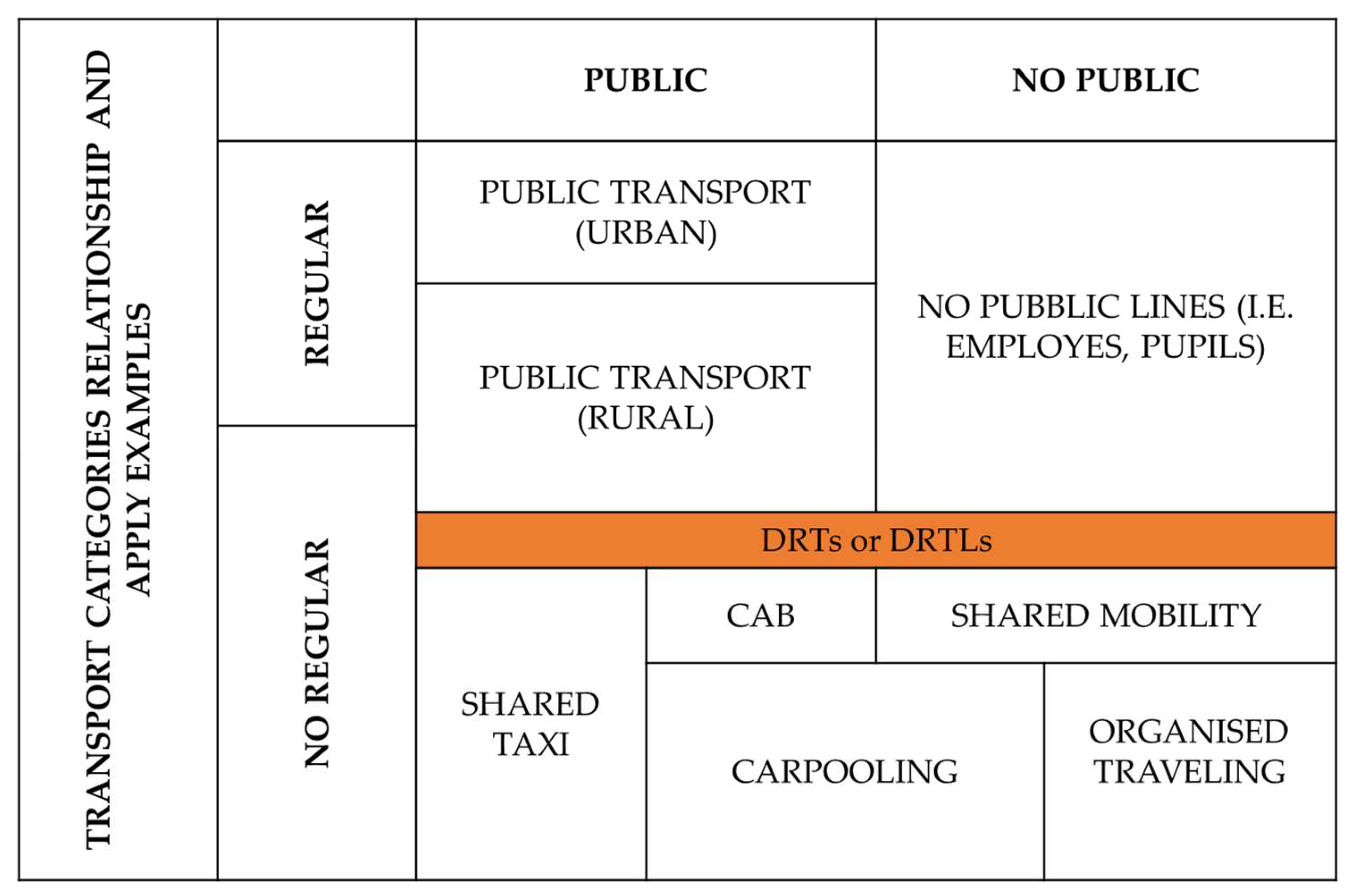
Figure 1.
Keywords scheme
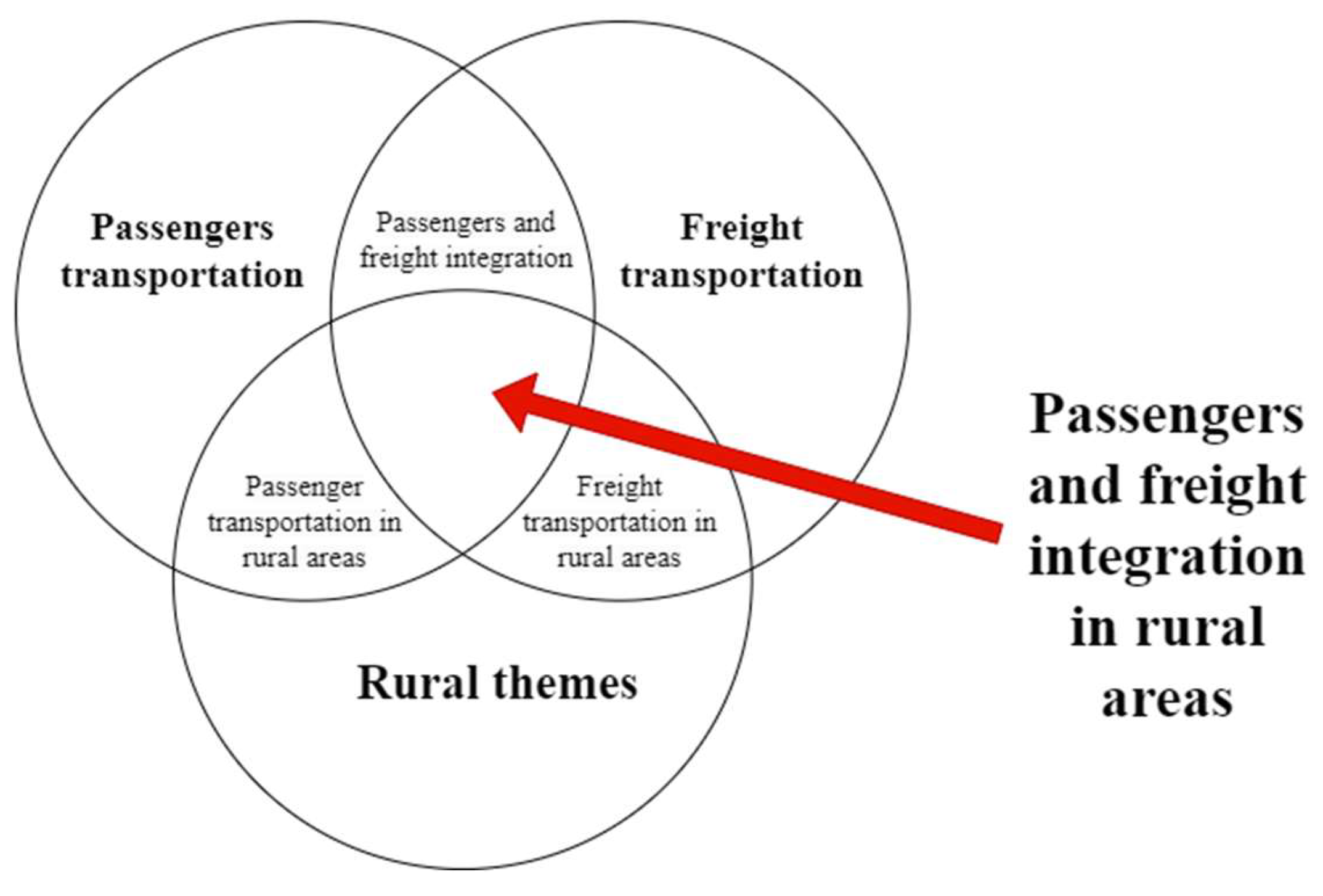
Figure 2.
Keywords tree used for the PRISMA analysis
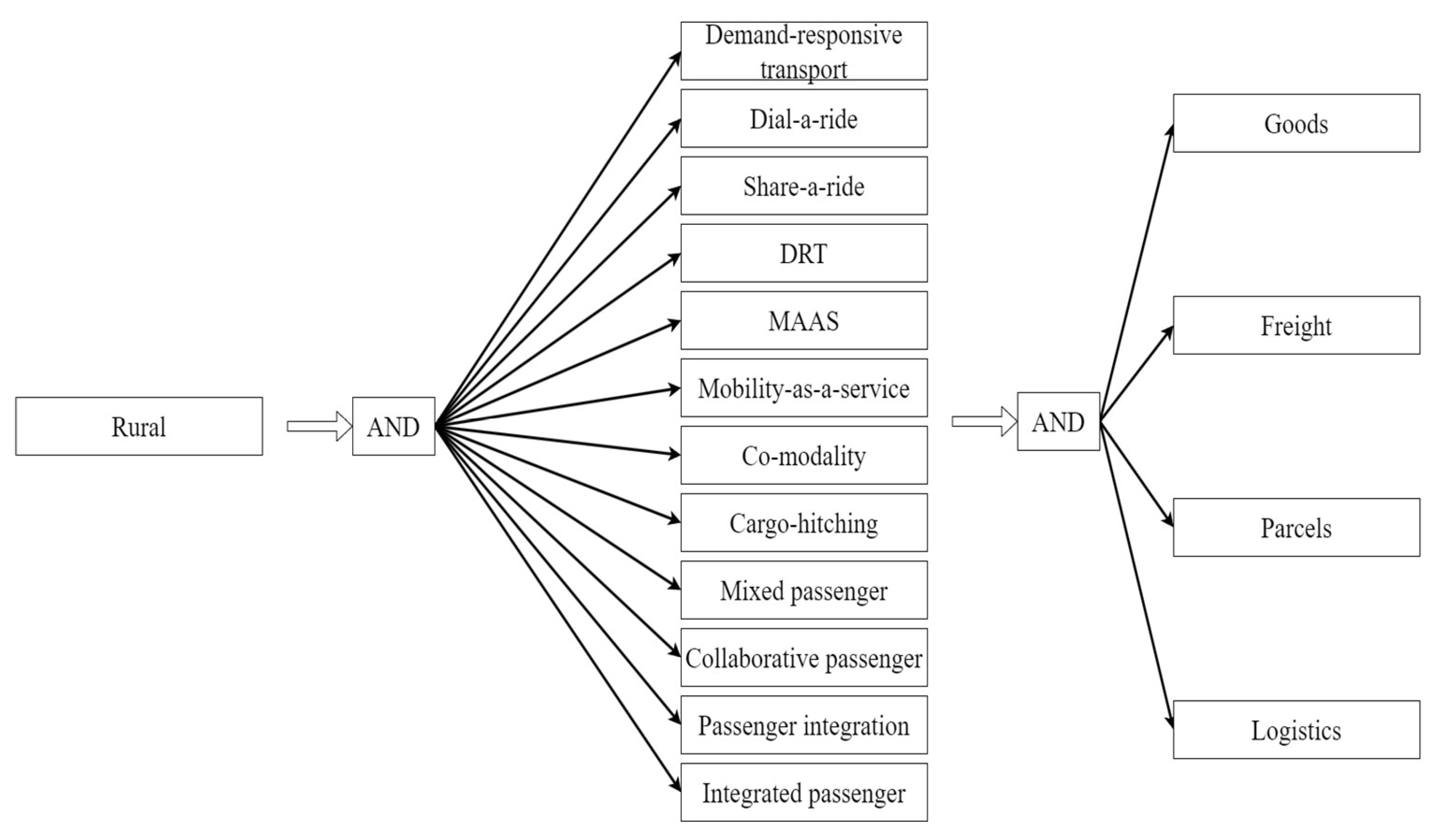
Figure 3.
Prisma scheme for the systematic literature review.
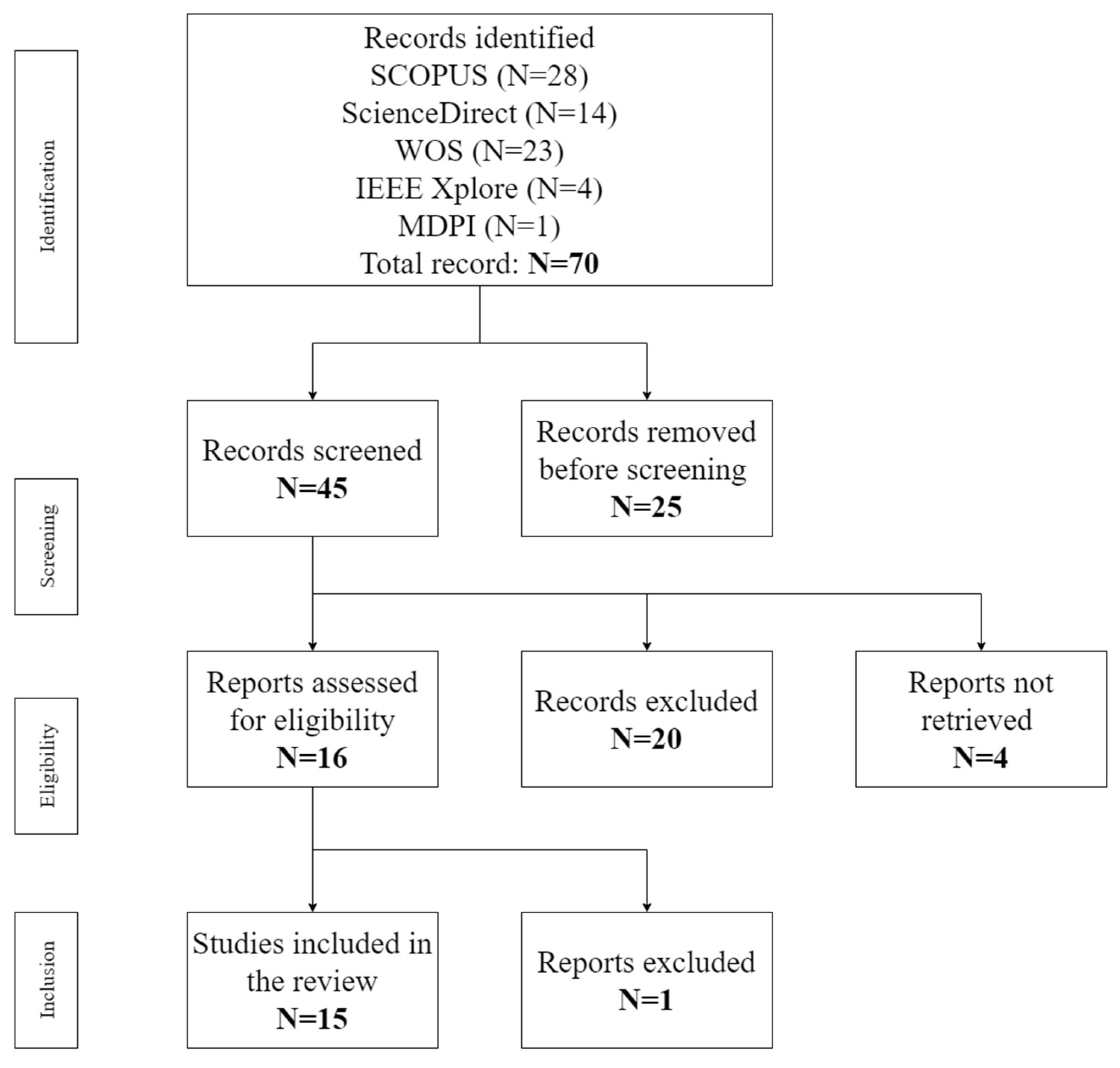
Figure 4.
Temporal evolution of studies.
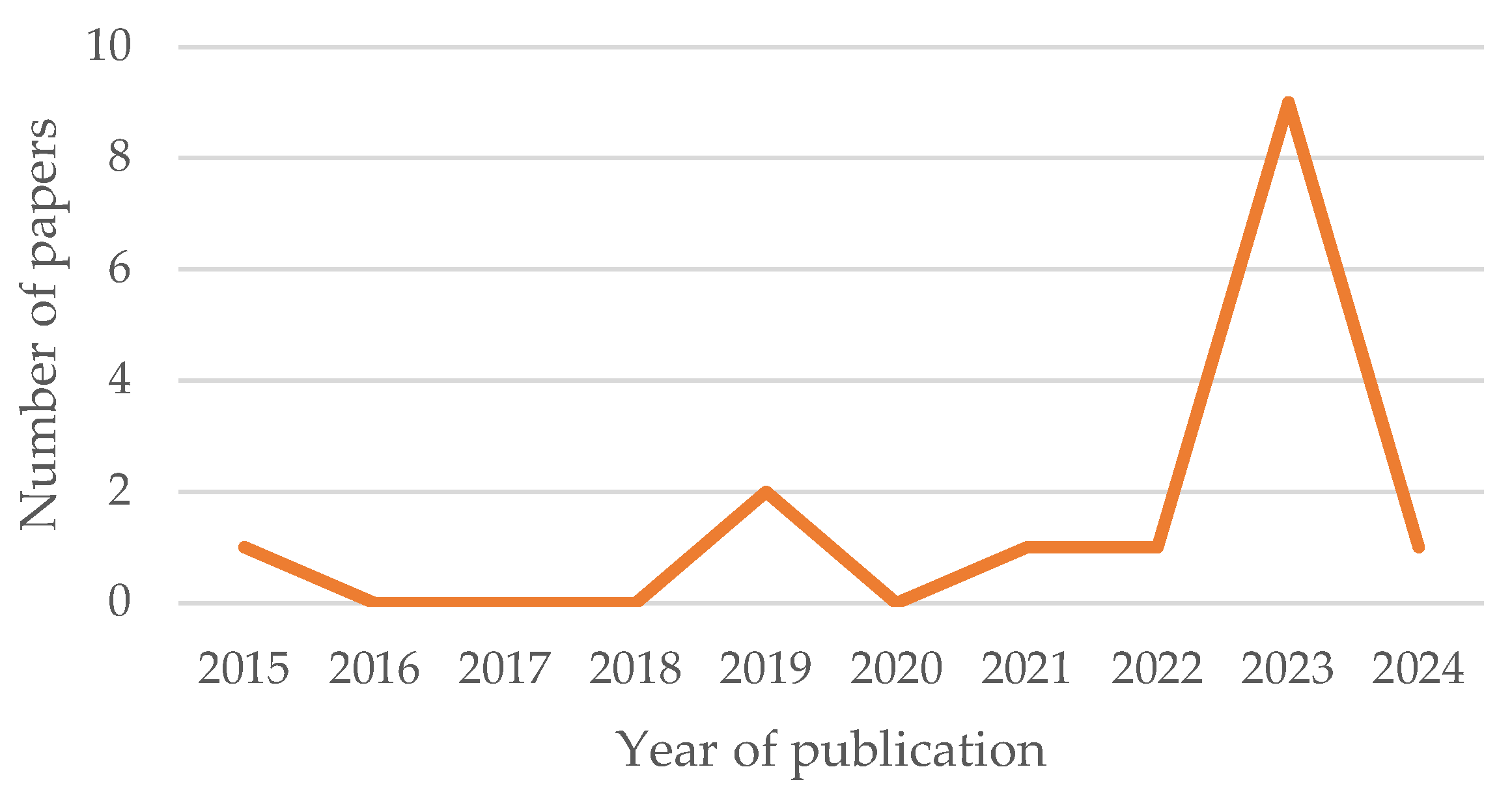
Figure 5.
Geographic contribution by country.
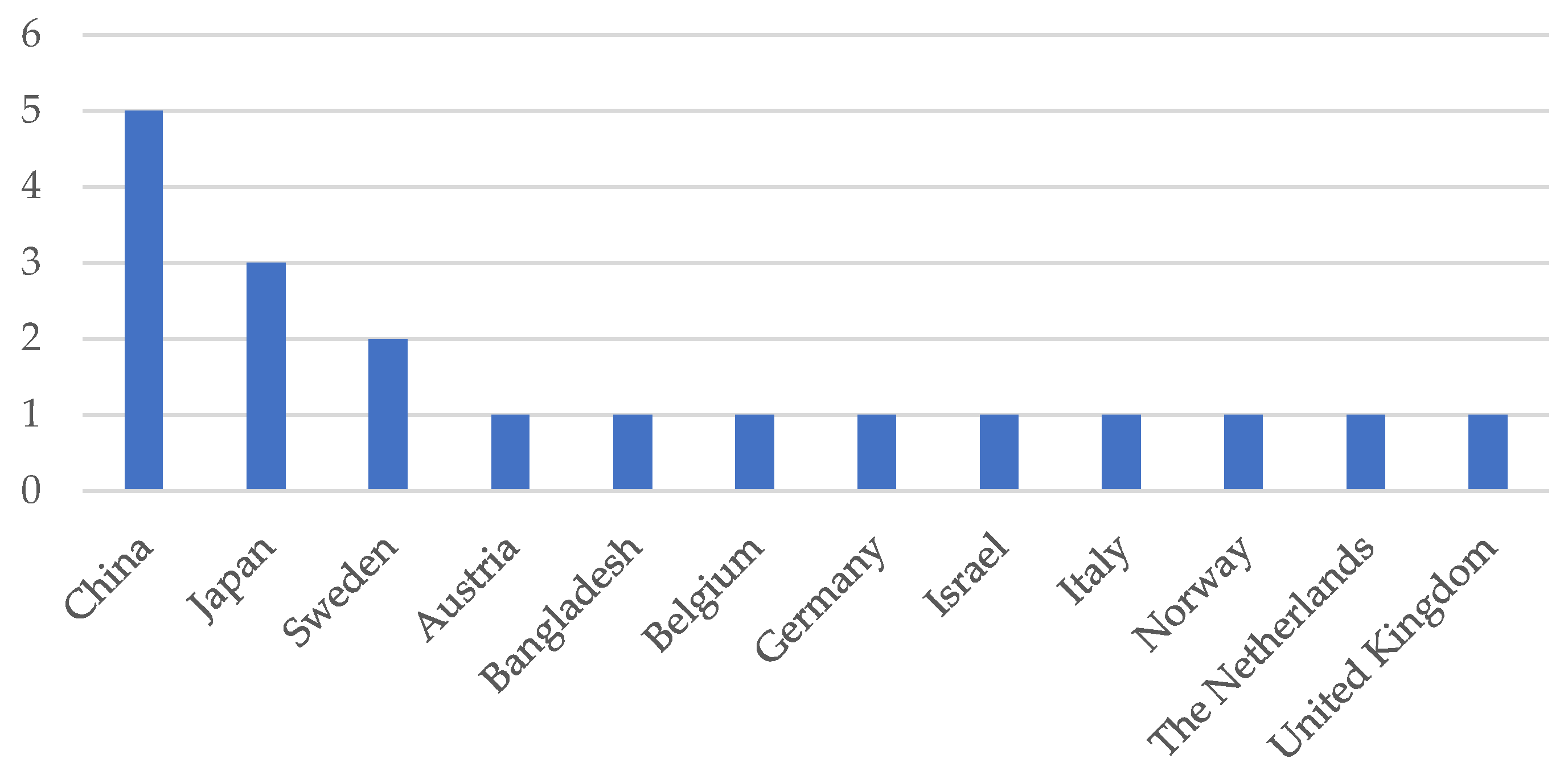

Table 1.
Agenda 2030 rural themes [6].
Table 1.
Agenda 2030 rural themes [6].
| Goals | Targets | Indicators |
|---|---|---|
| Goal 1. End poverty in all its forms everywhere | 1.1 By 2030, eradicate extreme poverty for all people everywhere, currently measured as people living on less than $1.25 a day | 1.1.1 Proportion of the population living below the international poverty line by sex, age, employment status and geographic location (urban/rural) |
| Goal 2. End hunger, achieve food security and improved nutrition and promote sustainable agriculture | 2.a Increase investment, including through enhanced international cooperation, in rural infrastructure, agricultural research and extension services, technology development and plant and livestock gene banks in order to enhance agricultural productive capacity in developing countries, in particular least developed countries | |
| Goal 4. Ensure inclusive and equitable quality education and promote lifelong learning opportunities for all | 4.5 By 2030, eliminate gender disparities in education and ensure equal access to all levels of education and vocational training for the vulnerable, including persons with disabilities, indigenous peoples and children in vulnerable situations | 4.5.1 Parity indices (female/male, rural/urban, bottom/top wealth quintile and others such as disability status, indigenous peoples and conflict-affected, as data become available) for all education indicators on this list that can be disaggregated |
| Goal 9. Build resilient infrastructure, promote inclusive and sustainable industrialization and foster innovation | 9.1 Develop quality, reliable, sustainable and resilient infrastructure, including regional and transborder infrastructure, to support economic development and human well-being, with a focus on affordable and equitable access for all | 9.1.1 Proportion of the rural population who live within 2 km of an all-season road |
| Goal 11. Make cities and human settlements inclusive, safe, resilient and sustainable | 11.a Support positive economic, social and environmental links between urban, peri-urban and rural areas by strengthening national and regional development planning |
Table 2.
Summary of works.
| Authors | Year | DRT-Focused | Rural-Focused | Integration Goods-Passengers | Literature Review |
|---|---|---|---|---|---|
| Davison, Enoch [20] | 2012 | x | x | General Overview | |
| Ryley, A. Stanley [21] | 2014 | x | x | General Overview | |
| Fuchs [22] | 2020 | x | x | x | General Overview |
| Butler, Yigitcanlar [23] | 2020 | x | SLR | ||
| Currie and Fournier [30] | 2020 | x | General Overview | ||
| Freiberg, Bueno [29] | 2021 | x | x | General Overview | |
| Cavallaro and Nocera [19] | 2022 | x | x | SLR | |
| Schasché, Sposato [31] | 2022 | x | General Overview | ||
| Campisi, Cocuzza [32] | 2023 | x | General Overview | ||
| Cavallaro and Nocera [33] | 2023 | x | x | Case study/General Overview | |
| El Amrani, Fri [34] | 2024 | x | x | SLR | |
| Parmaksız, Ülkü [35] | 2024 | x | x | SLR |
Table 3.
Classification of screened works.
| Authors | Year | Cathegory | Reference |
|---|---|---|---|
| Begnini, N. Q., & Morita, H. | 2023 | ARTICLE | [38] |
| Molenbruch, Y., Braekers, K., Hirsch, P., & Oberscheider, M. | 2021 | ARTICLE | [39] |
| Van Duin, R., Wiegmans, B., Tavasszy, L., Hendriks, B., & He, Y. | 2019 | CONFERENCE $$PAPER | [40] |
| Yang, T., Chu, Z., & Wang, B. | 2023 | ARTICLE | [41] |
| Cavallaro, F., & Nocera, S. | 2023 | ARTICLE | [33] |
| Kamau, J., Rebeiro-Hargrave, A., Hossain, N., Hossein, Z., Okajima, H., & Ahmed, A. | 2015 | CONFERENCE $$PAPER | [42] |
| Franco, P., Kaba, D., Close, S., & Jundi, S. | 2023 | ARTICLE | [43] |
| He, D., Ceder, A. A., Zhang, W., Guan, W., & Qi, G. | 2023 | ARTICLE | [44] |
| Zeng, Z., & Qu, X. | 2022 | ARTICLE | [45] |
| He, D., & Guan, W. | 2023 | ARTICLE | [46] |
| Staritz, J., Kütemeier, J., Sand, H., von Viebahn, C., & Wartenberg, M. | 2023 | CONFERENCE $$PAPER | [47] |
| Prillard, O., Karahasanovic, A., & Culén, A. L. | 2023 | CONFERENCE $$PAPER | [48] |
| Ringsberg, H. | 2023 | ARTICLE | [49] |
| Xue, Y., Tu, H., Zhang, B., Tan, C., Kong, Q., & Guan, H. | 2024 | ARTICLE | [50] |
| Namgung, H., Fujiwara, A., Chikaraishi, M., & Kuwano, M. | 2019 | CONFERENCE $$PAPER | [51] |
Table 4.
Classification of analysed regions.
| Authors | Area Considered | Country | Territorial Level |
|---|---|---|---|
| Begnini, N. Q., & Morita, H. | Akaiwa, Okayama Prefecture | Japan | City |
| Van Duin, R., Wiegmans, B., Tavasszy, L., Hendriks, B., & He, Y. | Millingen aan de Rijn (near Nijmegen) | Netherlands | Municipality |
| Kamau, J., Rebeiro-Hargrave, A., Hossain, N., Hossein, Z., Okajima, H., & Ahmed, A. | Bheramara upazila (in Kushtia district) | Bangladesh | Upazila (Sotto-distretto) |
| Kamau, J., Rebeiro-Hargrave, A., Hossain, N., Hossein, Z., Okajima, H., & Ahmed, A. | Kalihati upazila (in Tangail district) | Bangladesh | Upazila (Sotto-distretto) |
| Franco, P., Kaba, D., Close, S., & Jundi, S. | Northumberland | UK | County |
| Franco, P., Kaba, D., Close, S., & Jundi, S. | Essex County | UK | County |
| Zeng, Z., & Qu, X. | Yushe County, Shanxi Province | China | County |
| Staritz, J., Kütemeier, J., Sand, H., von Viebahn, C., & Wartenberg, M. | Sarstedt | Germany | Municipality |
| Prillard, O., Karahasanovic, A., & Culén, A. L. | Folldal | Norway | Municipality |
| Ringsberg, H. | Tuvesvik e le isole Gullholmen and Karingon | Sweden | Islands |
| Namgung, H., Fujiwara, A., Chikaraishi, M., & Kuwano, M. | città di Iwami, prefettura di Tottori | Japan | City |
| Yang, T., Chu, Z., & Wang, B. | Longkou County, Shandong Province | China | County |
| Cavallaro, F., & Nocera, S. | Misano Adriatico | Italy | Municipality |
| He, D., & Guan, W. | Shucheng County, Anhui Province | China | County |
| He, D., Ceder, A. A., Zhang, W., Guan, W., & Qi, G. | Shucheng County, Anhui Province | China | County |
| Xue, Y., Tu, H., Zhang, B., Tan, C., Kong, Q., & Guan, H. | Lianhua County, Jiangxi Province | China | County |
Disclaimer/Publisher’s Note: The statements, opinions and data contained in all publications are solely those of the individual author(s) and contributor(s) and not of MDPI and/or the editor(s). MDPI and/or the editor(s) disclaim responsibility for any injury to people or property resulting from any ideas, methods, instructions or products referred to in the content. |
© 2024 by the authors. Licensee MDPI, Basel, Switzerland. This article is an open access article distributed under the terms and conditions of the Creative Commons Attribution (CC BY) license (http://creativecommons.org/licenses/by/4.0/).
Copyright: This open access article is published under a Creative Commons CC BY 4.0 license, which permit the free download, distribution, and reuse, provided that the author and preprint are cited in any reuse.


