Preprint
Article

This version is not peer-reviewed.

Enhancing the Mechanical Properties of Sawdust Concrete with Silica Fume, Metakaolin, and Marble Powder

Submitted:

08 November 2024

Posted:

12 November 2024

You are already at the latest version

Abstract

This research explores the innovative use of sawdust as a sustainable aggregate in concrete, addressing both environmental and structural challenges. The study investigates the effects of incorporating sawdust at varying proportions (15%, 25%, and 35%) into concrete mixtures, aiming to reduce carbon emissions and promote lightweight construction. Recognizing the negative impact of waste glass powder on concrete strength, this research introduces silica fume (SF), metakaolin (MK), and marble powder (MP) as potential additives to enhance the compressive strength and reduce the specific weight of sawdust concrete. The experimental program involved 13 concrete mixtures, with SF, MK, and MP added at 5%, 10%, and 15% by mass to a 25% sawdust mix. Results indicate that increasing sawdust content significantly decreases compressive strength, with reductions from 31.655 MPa in the control to 6.291 MPa at 35% sawdust. However, the addition of SF and MK notably improved strength, with SF enhancing it by 68.8% at 10% addition and MK by 69.3% at 5%. MP, while less effective, still increased strength by 42.9%. Sawdust addition consistently reduced concrete density, from 2399 kg/m³ in the control to 2091 kg/m³ at 35% sawdust. SF further reduced density, whereas MK and MP increased it. The study concludes that 10% SF or 5% MK are optimal for improving sawdust concrete properties, offering a balance of enhanced strength and reduced weight. This research contributes to sustainable construction practices by demonstrating the viability of sawdust and specific additives in creating environmentally friendly, lightweight concrete solutions.

Keywords: 
;  ;  ;  ;  

1. Introduction

Due to its inherent durability and strength, concrete remains a fundamental construction material, employed extensively in civil engineering projects globally. Concrete is a carefully designed mixture of sand, cement, aggregates, and water, blended in precise ratios to ensure optimal performance. Concrete research is actively seeking sustainable solutions by exploring the integration of waste materials like plastic, glass, recycled plastic, palm shells, pumice, perlite, and sawdust [1-8], as a replacement for natural aggregates. This substitution promotes a reduction in sand content while simultaneously imparting lightweight characteristics to the concrete, deviating from conventional concrete formulations. Sawdust is a waste product generated during various woodworking operations, including cutting, sanding, and sawing. The combustion of sawdust generates significant carbon emissions, contributing to environmental pollution. However, incorporating this waste material into concrete production provides an opportunity to mitigate carbon dioxide emissions [9]. Sawdust's disposal challenges have led researchers to explore its potential as an aggregate in concrete mixes, particularly for lightweight concrete applications, offering an innovative solution.
The use of alternative materials such as cementitious, pozzolanic, and waste additives has become increasingly popular in recent years as a means to reduce the consumption of cement. Cement production is a major source of carbon dioxide emissions, prompting researchers to explore ways to reduce cement content in concrete mixtures by incorporating suitable additives. A wide range of materials, including fly ash [10], volcanic ash [11], metakaolin [12], waste glass powder [13,14], silica fume [15], marble powder [16], polyethylene terephthalate [17,18], and cold bitumen powder [7], are commonly used as additives to replace a portion of cement in concrete mixtures. Silica fume (SF), a finely-divided pozzolanic material widely used in concrete, is characterized by its light or dark gray, sometimes bluish-greenish gray color. It originates as a byproduct of silicon metal and ferrosilicon alloys production during their melting process, offering unique properties that benefit concrete construction. SF acts as a fine-grained filler, reducing the size of pores in the cement paste while also promoting more even distribution of hydration products as a pozzolan. Metakaolin (MK), a white, natural pozzolan, is a promising alternative to cement, demonstrating growing use in concrete production. Its pozzolanic reaction with calcium hydroxide in cement paste generates stable cementitious compounds, leading to reduced porosity and improved impermeability in concrete. Marble powder (MP) is a growing component in concrete construction, offering environmental and economic advantages. The abundance of MP, particularly from quarries, makes its use in concrete both practical and environmentally sound. By reducing waste and lowering concrete costs, MP also enhances the overall performance and properties of the final product. Marble powder's use in concrete offers a dual benefit: its filler effect reduces porosity, while its acceleration of hydration promotes strength. However, a dilution effect can occur due to the partial replacement of cement, potentially impacting compressive strength.
A significant body of research has focused on examining the consequences of using sawdust as a substitute for some of the aggregate materials. Previous studies have shown that using high percentages of sawdust in concrete can result in lower compressive strength and reduced resistance to bending. Ganiron [6] explored the feasibility of using sawdust as a substitute for sand in concrete, demonstrating its potential for creating lightweight concrete. Siddique et al. [19] investigated the effects of replacing fine aggregates with sawdust in concrete, finding that workability and hardened density decreased with increasing sawdust substitution. Ahmed et al. [20], Cheng et al. [21], Oyedepo et al. [22], and Osei and Jackson [23] also reported similar results. Sawant et al. [9] conducted an investigation into the effect of replacing up to 25% of sand with sawdust, incorporating metakaolin as an admixture, on the compressive and split tensile strengths of concrete. They noted that while a 5% sawdust replacement by weight produced satisfactory compressive and tensile strength, increased sawdust content negatively impacted the density of the concrete. Siddique [19] explored the properties of concrete containing different proportions of sodium silicate-treated sawdust as a replacement for sand and different water-to-cement ratios. Their study revealed that both 5% water content and the use of sodium silicate-treated sawdust resulted in concrete with compressive strength similar to that of the reference concrete. While a 5% sawdust replacement was successful, a 10% replacement caused a notable decrease in both compressive strength (30.30%) and split tensile strength (32.19%) after 28 days. Olutoge et al. [24] conducted research to examine the feasibility of using sawdust and palm kernel shells as substitutes for aggregates in construction. The findings suggested that a 25% replacement of both components with alternative materials produced a successful lightweight material. Farahinia et al. [8] explored the synergic effect of waste glass powder (15%, 20%, and 30%) and sawdust (25%) on the properties of hardened concrete. They also presented a prediction model using gene expression programming. The addition of sawdust and waste glass powder (WGP) to concrete led to a significant decrease in compressive strength. Samples containing higher proportions of WGP (20% and 30%) exhibited significantly lower compressive strength compared to those with no WGP or 15% WGP. Although the compressive strength decreased, the samples containing sawdust showed a notable reduction in density, averaging 15% less than the reference sample.
Since previous research by Farahinia et al. [8] showed that waste glass powder negatively impacted concrete strength, the authors of that research in the current research were looking for additives that can increase the compressive strength of sawdust concrete in addition to reducing the specific weight of the concrete mixture. SF, MK, and MP were selected as potential additives due to their ability to enhance environmental sustainability, improve compressive strength, and decrease the overall weight of the concrete mixture. The initial phase of the study involved examining the properties of sawdust concrete using varying sawdust proportions (15%, 25%, and 35%). Then, SF, MK, and MP were incorporated into sawdust concrete (with 25% sawdust content) at levels of 5%, 10%, and 15% by mass, respectively, to improve its properties after 28 days of curing. The research has identified the optimum additive type and percentage for the desired outcome.

2. Material and Methods

2.1. Materials

2.1.1. Aggregates

Crushed river sand and gravel, locally sourced from mines near Mashhad City, Iran, were used in this research. The coarse aggregates exhibited angular shapes. The maximum size of the coarse aggregates (CA) was 12.5 mm, whereas the fine aggregates (FA) had a maximum size of 4.75 mm. The particle size distribution of fine and coarse aggregates is depicted in Figure 1.

2.1.2. Cement and Water

All experiments in this study incorporated Portland cement, specifically type 325-1, exhibiting a specific gravity of 3150 kg/m3. This specific cement was manufactured in accordance with ASTM-C150 standards [25] by the Zaveh Cement Company. The chemical composition of the cement is presented in Table 1, and its physical properties are outlined in Table 2. Tap water was used in concrete mix preparation.

2.1.3. Sawdust

Sawdust is composed of small, irregular fragments of wood that result from the sawing of logs and timber. The cutting action of the saw blade expels wood chips, which are deposited on the floor. Sawdust for this investigation was sourced from a wood factory located in Mashhad, Iran. Table 3 provides a detailed analysis of the sawdust's chemical composition. To ensure uniform particle size, the dried sawdust was passed through an eighth-grade sieve, removing any remaining large wood fragments. Researchers advise that for optimal concrete mixing, sawdust should have particle sizes within the range of a 0.25-inch sieve to a 16-grade sieve.

2.1.4. Silica Fume (SF), Metakaolin (MK), Marble Powder (MP)

This study employed silica fume (SF) prepared specifically from the products of the Iran Ferrosilice Company. The physical properties of SF are comprehensively displayed in Table 4. ASTM C1240 standard [26] mandates a minimum amorphous silica content of 85%, a maximum moisture content of 3%, and a maximum L.O.I. of 6% for SF production. According to the standard, at least 90% of SF particles should be under 45 microns. Laser particle size analysis (PSA) of SF produced by Iran Ferrosilice Company shows that nearly 98% of its particles are smaller than 45 microns, exceeding the standard requirement.
Metakaolin (MK), a white powder, has a lower specific gravity compared to cement, indicating its lower density. Similar to SF, MK possesses a high specific surface area, meaning it has a large surface area relative to its volume. This research utilized MK obtained from Farzan Powder Company, located in Mashhad, Iran. While metakaolin is a white material with a density of 2600 kg/m3 and particle size of 5 microns, it stands out from cement due to its significantly higher specific surface area of 12 m2/g.
Marble powder (MP), a by-product of stonecutting operations, has been identified as a potential reinforcement or raw material in various industrial applications. The marble powder used in this study was obtained from Behboodi stonecutting, located in Shandiz City, Iran. The chemical composition of employed SF, MK, and MP in this study is presented in Table 5.

2.2. Mix Composition

A comprehensive concrete mixing plan, encompassing 13 mixtures, is presented in Table 6. This concrete mixture plan investigates the effects of varying sawdust content and different additives on the properties of concrete. The control mixture contains no sawdust, while the other mixtures incorporate sawdust at 15%, 25%, and 35% by volume. Additives SF, MK, and MP are introduced at different percentages (5%, 10%, and 15%) in various combinations to further explore their impact on the concrete's performance after 28 days of curing time. This detailed analysis allows for a comprehensive study of the relationship between these components and the resulting properties of the concrete, ultimately providing valuable insights for optimizing concrete mixtures using sawdust and additives. Three samples were created for each mixture, and the test data was derived by averaging the results from these 3 samples.

2.3. Cast and Curing

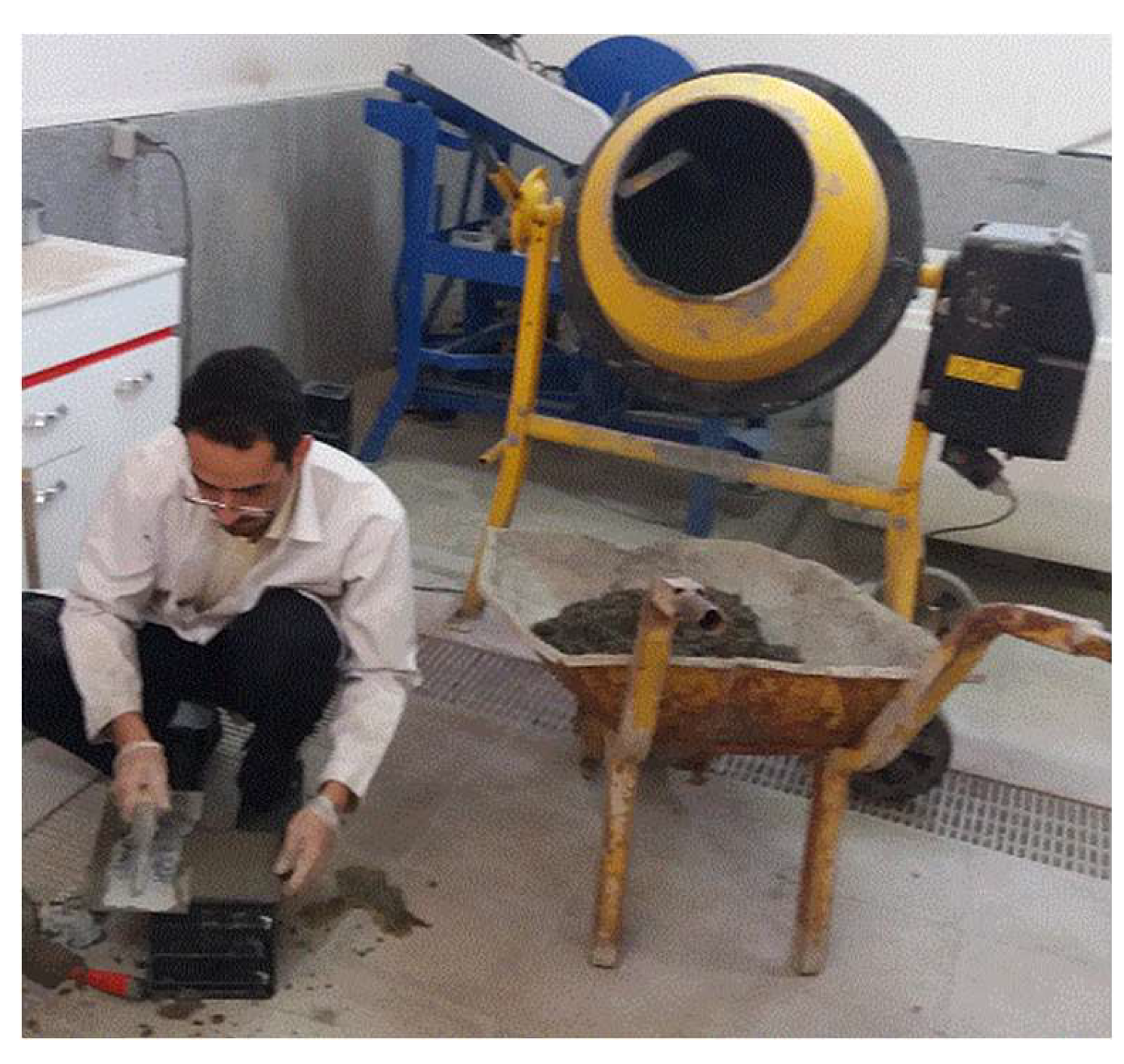
The sawdust was briefly soaked in water before being incorporated into the mix, preventing hydration issues. As the mixture was being prepared, sawdust was incorporated in place of a specific volume percentage of sand. The sand was carefully prepared for the concrete mixes by sieving, weighing, and placing it in buckets. The sawdust was moistened by adding water directly to the container, preparing it for the mixing process. Additionally, SF, MK, or MP were added to the cement in varying amounts to observe their effects as supplementary materials. The sand, cement, sawdust, and additives were dry-mixed in the mixer, as shown in Figure 2, after being added. The water was introduced in three increments to the spinning concrete mixture, facilitating a controlled and gradual mixing process. To enhance the workability of the concrete and eliminate air pockets, each mold was tapped and vibrated after being filled. Cube-shaped concrete samples (150mm x 150mm x 150mm) were formed in plastic molds and cured in a humid environment for 24 hours to promote initial hardening. Afterward, they were removed from the molds and immersed in water for 28 days to ensure complete strength development.

2.4. Testing:

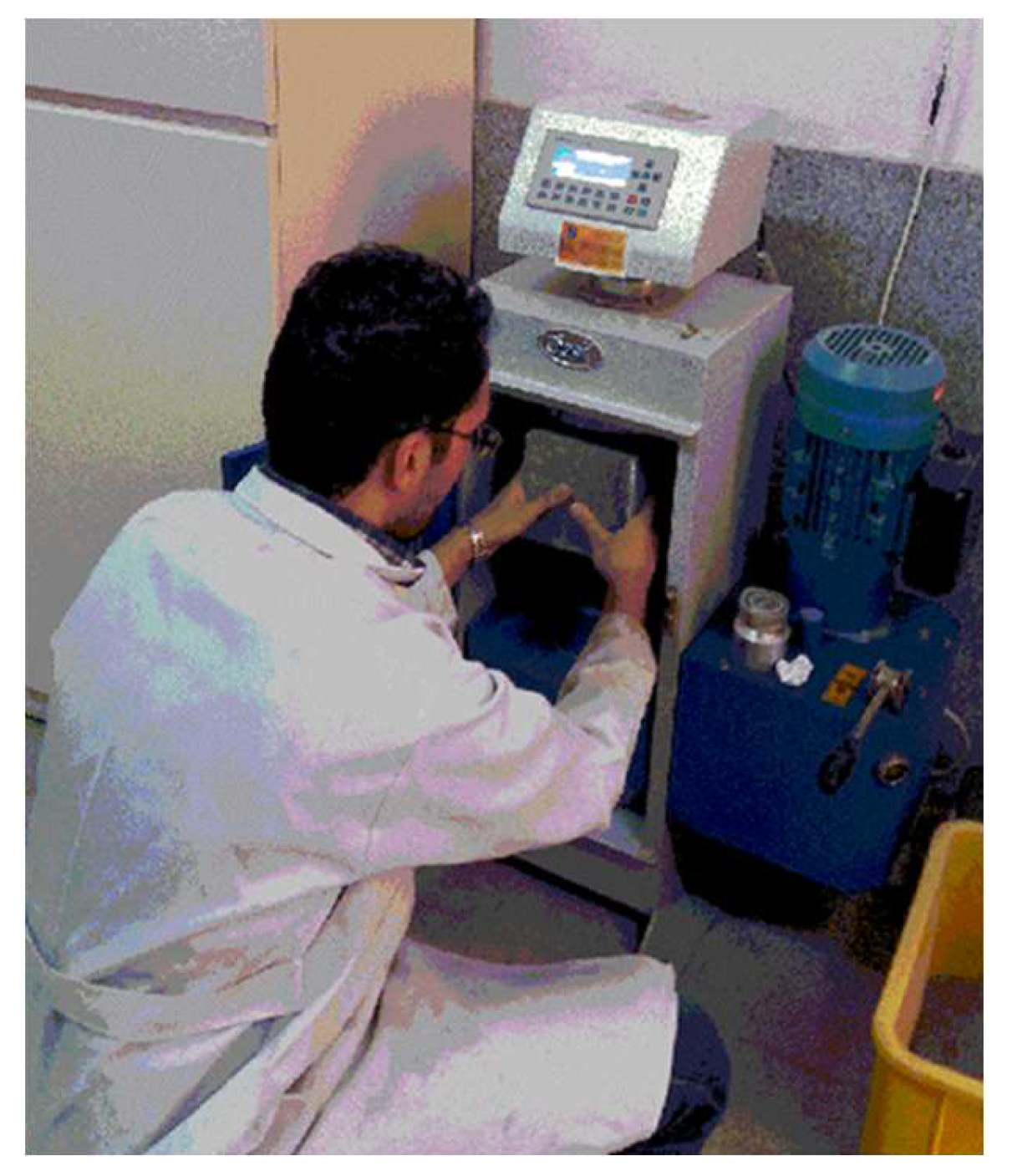
Upon completion of the curing duration, the specimens were extracted from the curing tank, and subjected to thorough cleaning, and their weights were recorded with a high degree of accuracy. The compressive strength test is the most widely used test for evaluating the strength of hardened concrete [27,28]. The compressive strength of the cube samples was measured after 28 days of curing, following the guidelines in BS EN 12390-3 [29], to determine their ability to withstand compressive forces using a compressive strength testing machine, as shown in Figure 3. Three specimens were tested for each concrete mixture, and the average of their compressive strength values represented the mixture's strength.

4. Results and Discussions

4.1. Compressive Strength

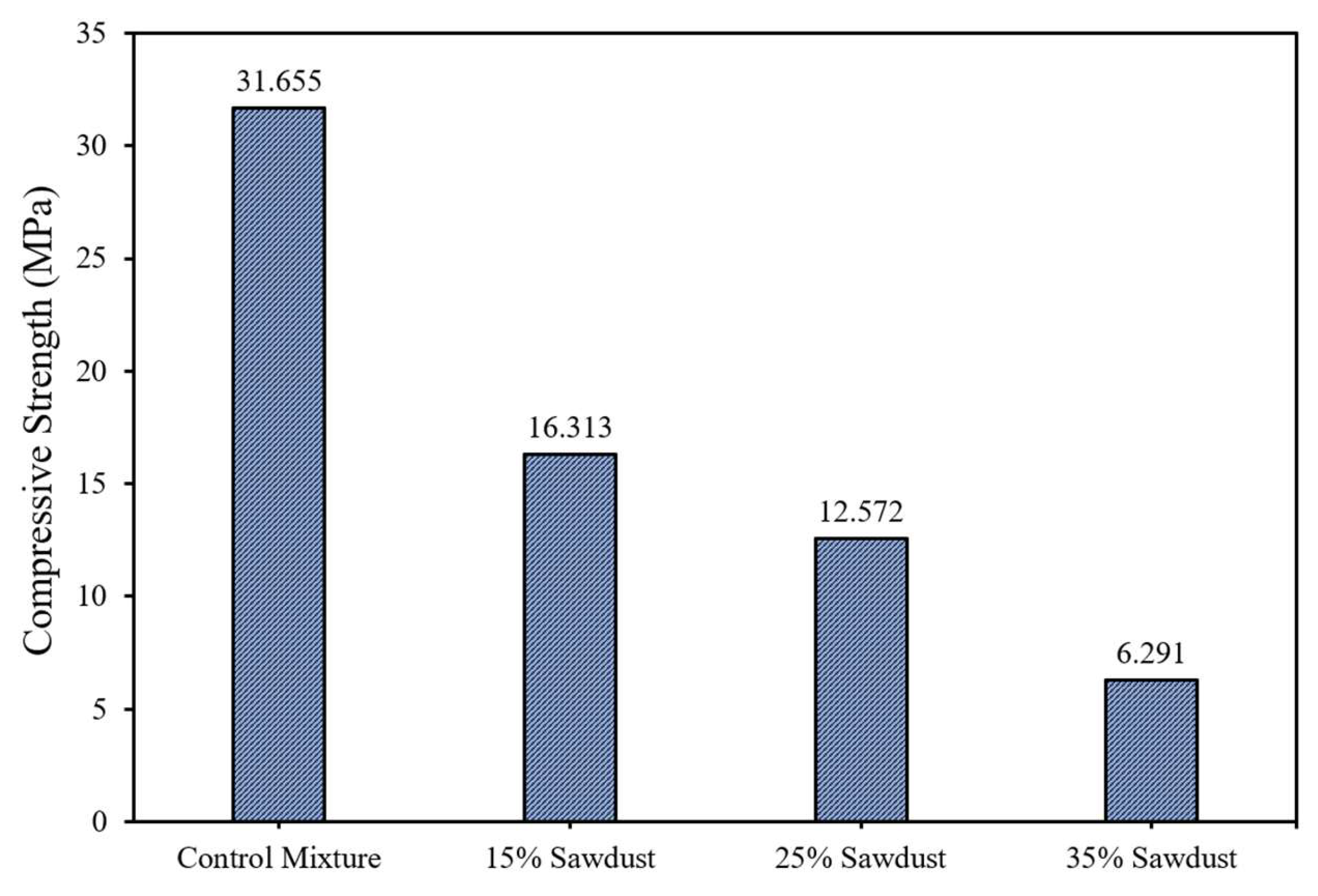
As shown in Figure 4, the compressive strength of concrete samples significantly decreased with increasing sawdust content. Compressive strength values represent the average of three individual sample tests. The control mixture (0% sawdust) exhibited the highest compressive strength of 31.655 MPa. With the introduction of 15% sawdust, the strength dropped to 16.313 MPa, representing a 48.3% decrease compared to the control. Further increasing sawdust content to 25% resulted in a compressive strength of 12.572 MPa, a 60.1% reduction compared to the control. Finally, the compressive strength reached its lowest point at 6.291 MPa with 35% sawdust, indicating a drastic 80.1% decline compared to the control. This substantial decline in compressive strength with increasing sawdust content can be attributed to several factors. Sawdust particles are significantly larger and more irregular than cement particles, leading to a less dense and more porous microstructure. This reduced packing density hinders the formation of a strong cement paste, ultimately weakening the concrete. The larger particles also disrupt the flow of the concrete mix, leading to poor workability and difficulty in achieving a homogenous mixture. Increasing the sawdust content necessitates a reduction in cement content to maintain a workable mix. This lower cement content directly affects the strength development of the concrete, as it reduces the amount of hydration products formed. The reduction in cement content also reduces the overall binder content, further impacting strength development. Sawdust is highly absorbent and can absorb water from the cement paste, reducing the available water for hydration reactions. This can delay and hinder the hydration process, leading to weaker concrete. The reduced hydration also affects the strength development and long-term durability of the concrete.
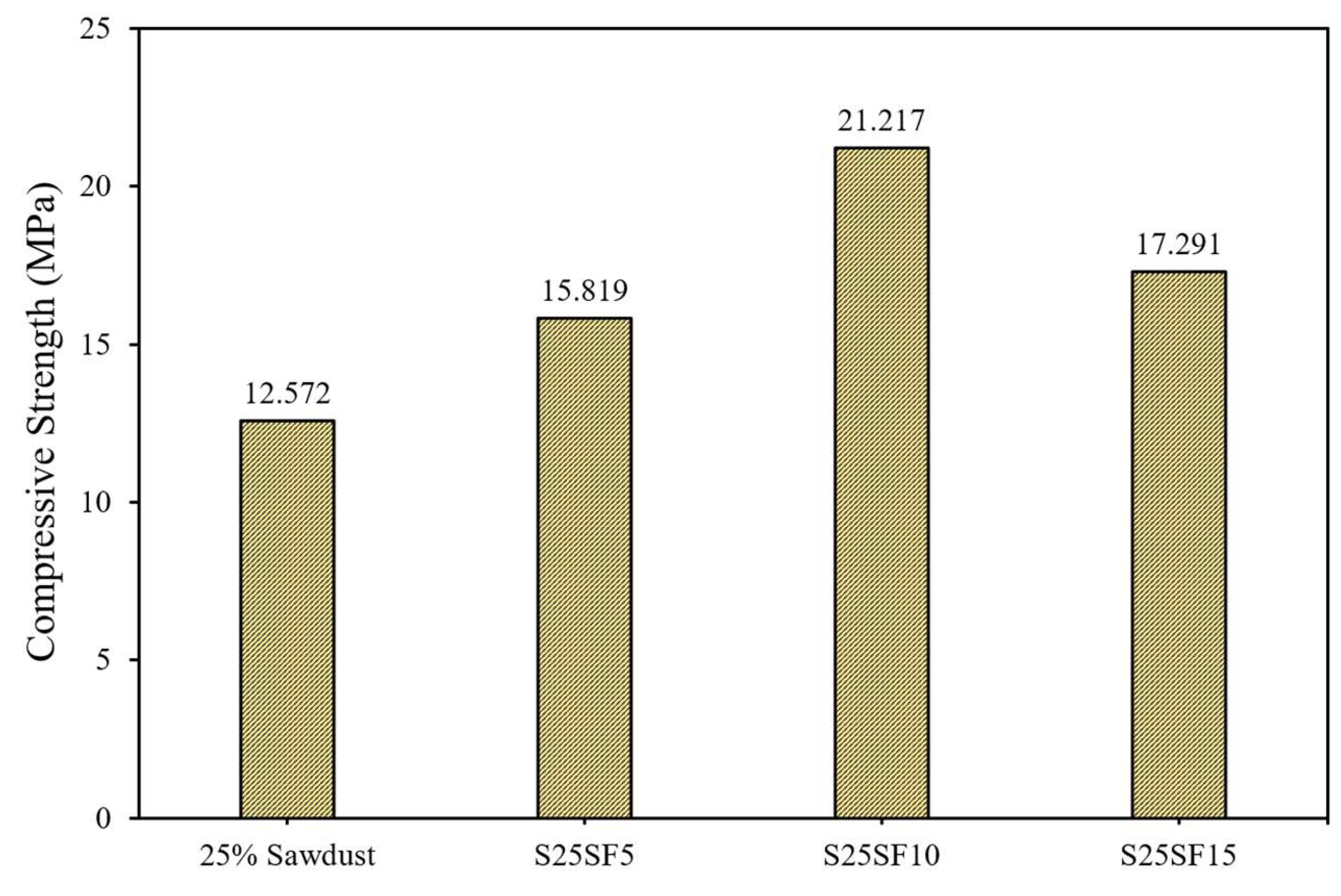
Adding SF to the 25% sawdust concrete resulted in a significant increase in compressive strength, as depicted in Figure 5. Each compressive strength value is based on the average of three test results. S25SF10 mixture (25% sawdust + 10% SF) exhibited the highest compressive strength of 21.217 MPa, a remarkable 68.8% increase compared to the 25% sawdust control (12.572 MPa). SF, a highly reactive pozzolan, reacts with calcium hydroxide (CH) released during cement hydration, forming an additional C-S-H (calcium silicate hydrate) gel. This secondary hydration reaction contributes to improved strength and durability, filling the voids created by the sawdust particles. SF particles are extremely fine, filling the voids in the concrete mixture and improving the packing density. This leads to a denser microstructure with reduced porosity, ultimately enhancing strength. The increased packing density also contributes to improved workability of the concrete mix.
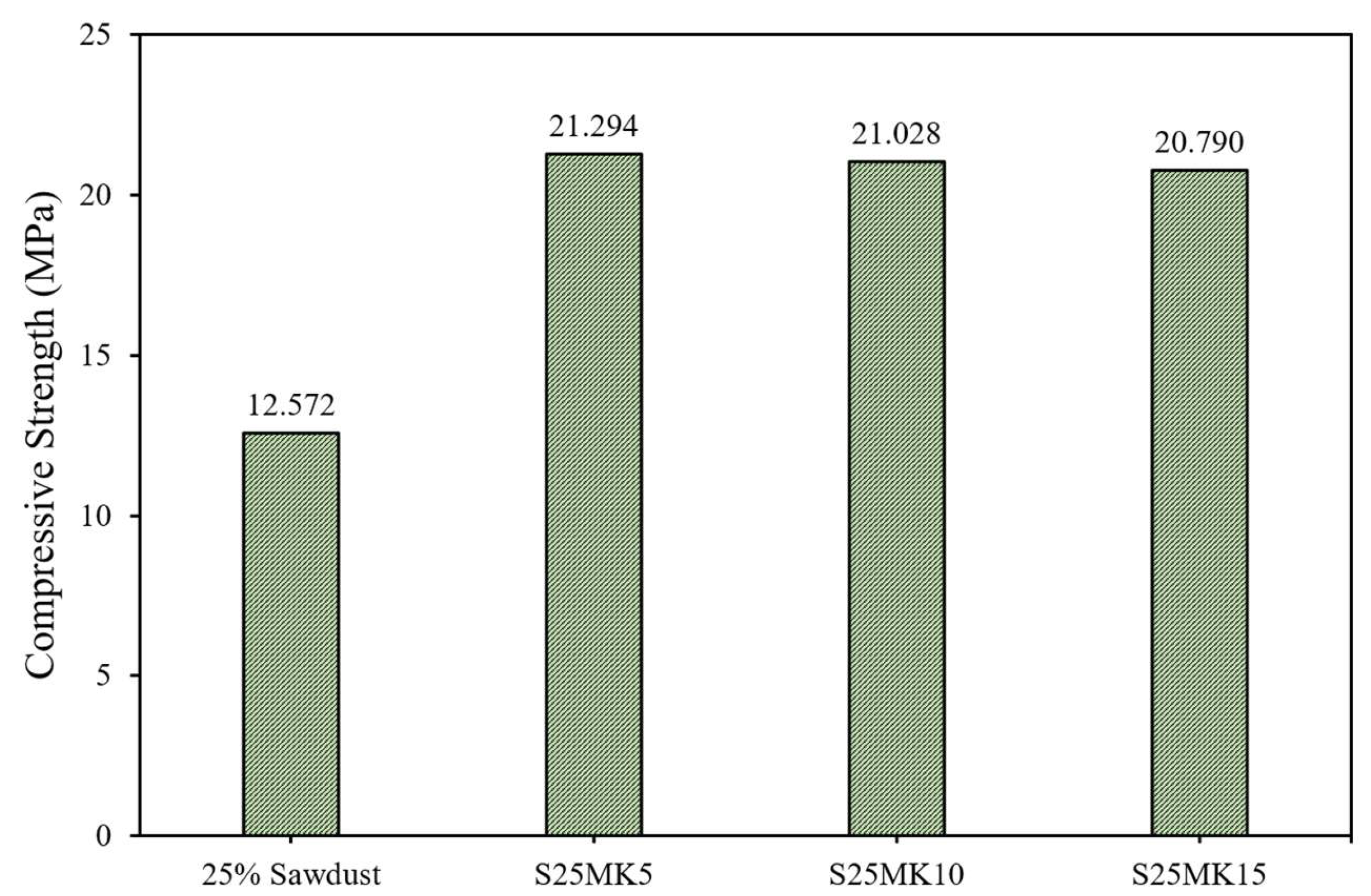
MK also demonstrated a positive effect on the compressive strength of the sawdust-containing concrete, as seen in Figure 6. Compressive strength data was obtained by averaging the results of three samples for each mixture. The compressive strength of the S25MK5, S25MK10, and S25MK15 samples was significantly higher than the 25% sawdust control. S25MK10 mixture achieved a compressive strength of 21.028 MPa, representing a 67.3% increase compared to the 25% sawdust control. Similar to SF, MK exhibits pozzolanic activity, reacting with CH to form additional C-S-H gel, improving strength. MK particles are finer than cement, acting as a filler material. This leads to a more dense and compact microstructure, reducing the negative impact of sawdust on strength.
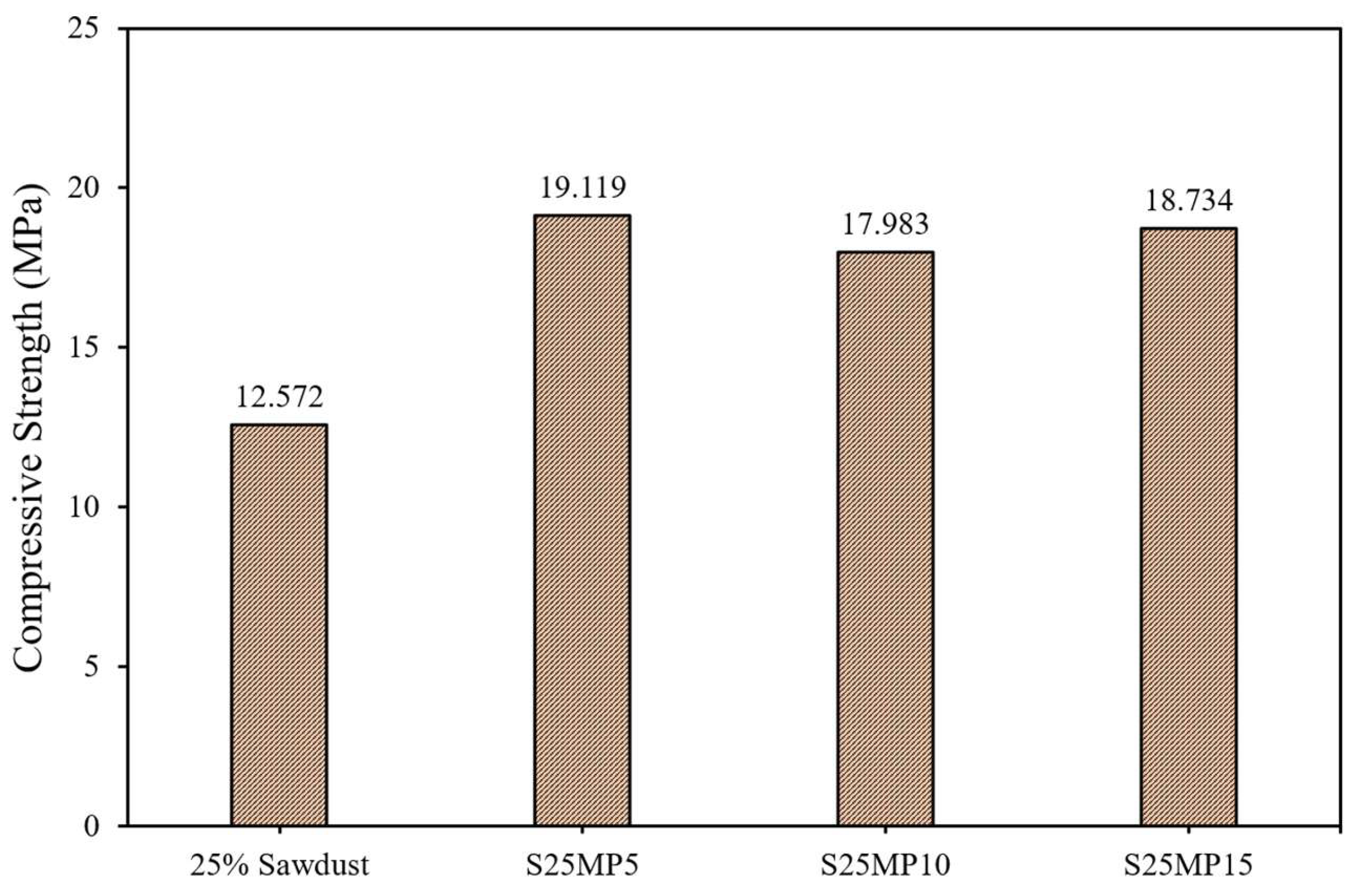
The addition of MP to the 25% sawdust concrete resulted in a moderate increase in compressive strength compared to the 25% sawdust control, but it was less effective than SF and MK, as shown in Figure 7. Compressive strength values represent the average of three individual sample tests. S25MP10 mixture achieved a compressive strength of 17.983 MPa, representing a 42.9% increase compared to the 25% sawdust control. MP particles are finer than cement and act as fillers, but their pozzolanic activity is limited. MP can reduce the risk of Alkali-Silica Reaction (ASR) by reducing the alkalinity of the pore solution, potentially contributing to improved durability. However, the effect on compressive strength is less pronounced compared to SF and MK.
The results indicate that an optimum dosage of additives exists. While incorporating additives generally improves the strength, exceeding a certain dosage can lead to a decrease in strength. For SF, the optimum dosage appears to be around 10%, while for MP, it's 5%. Overall, metakaolin (MK) demonstrated the most significant improvement in compressive strength, followed by silica fume (SF), and then marble powder (MP). This difference can be attributed to the higher reactivity and filling capabilities of SF and MK compared to MP. The incorporation of additives, particularly MK, and SF, successfully mitigated the negative effects of sawdust on the compressive strength of concrete. However, the optimum dosage of these materials should be carefully determined to achieve the desired strength properties. The use of sawdust as an aggregate in concrete, especially in combination with additives like SF and MK, shows potential for a more sustainable approach to concrete production, minimizing waste and potentially reducing the carbon footprint.

4.2. Density

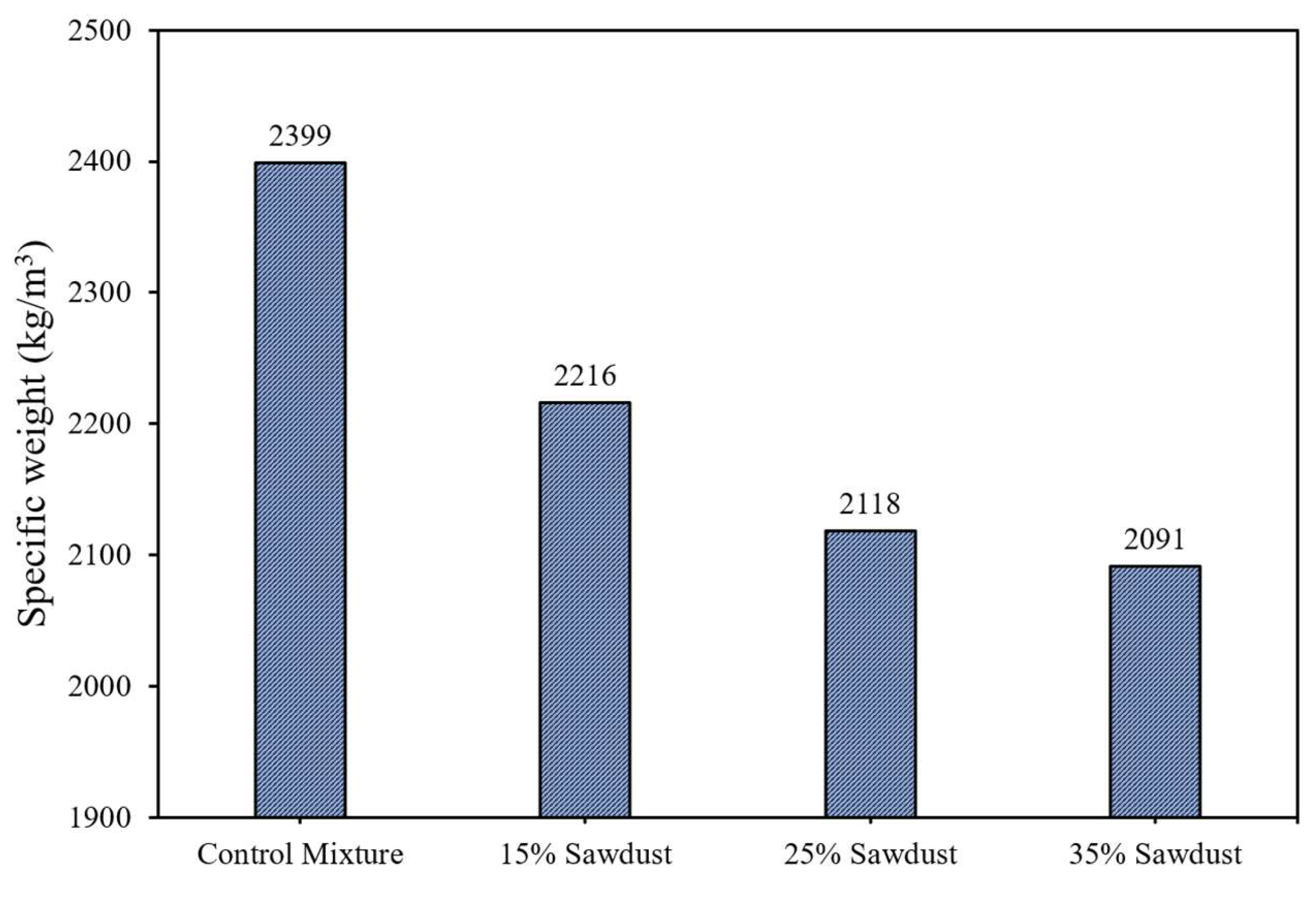
As depicted in Figure 8, increasing sawdust content led to a decrease in the density of the concrete. The control mixture (0% sawdust) displayed the highest density of 2399 kg/m3. This is expected, as the control mixture contains the highest proportion of dense cement and aggregates. The introduction of 15% sawdust resulted in a decrease to 2216 kg/m3, indicating a reduction in density. A further increase in sawdust content to 25% and 35% further reduced the density to 2118 kg/m3 and 2091 kg/m3 respectively. This decline in density with increasing sawdust content is primarily attributed to the following reasons. Sawdust is inherently less dense than traditional aggregates like sand and gravel. Replacing these aggregates with sawdust directly reduces the overall density of the concrete mix. The irregular shape and larger size of sawdust particles compared to traditional aggregates create voids within the concrete mixture. These voids lead to a less compact structure, contributing to the lower density.
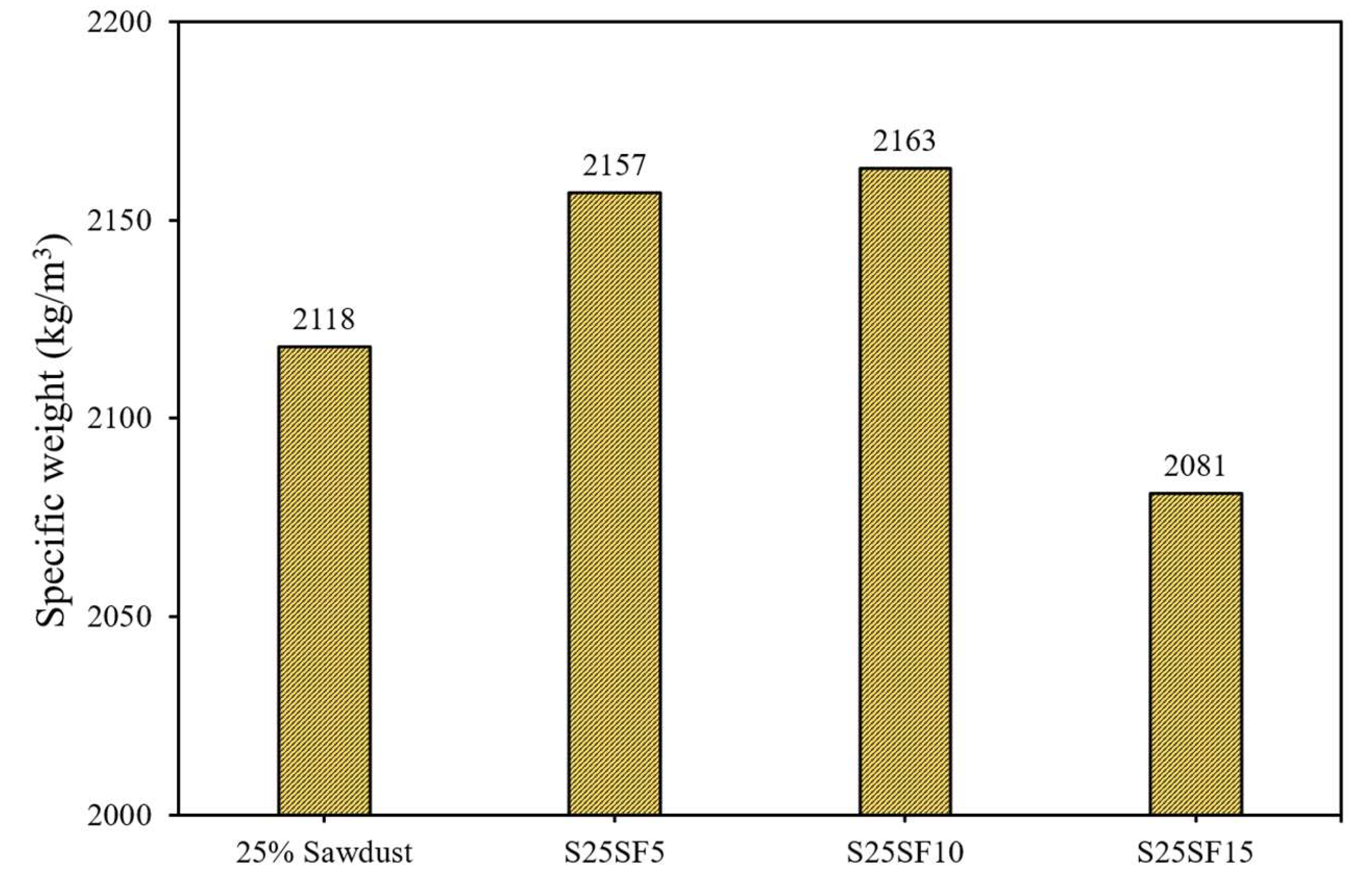
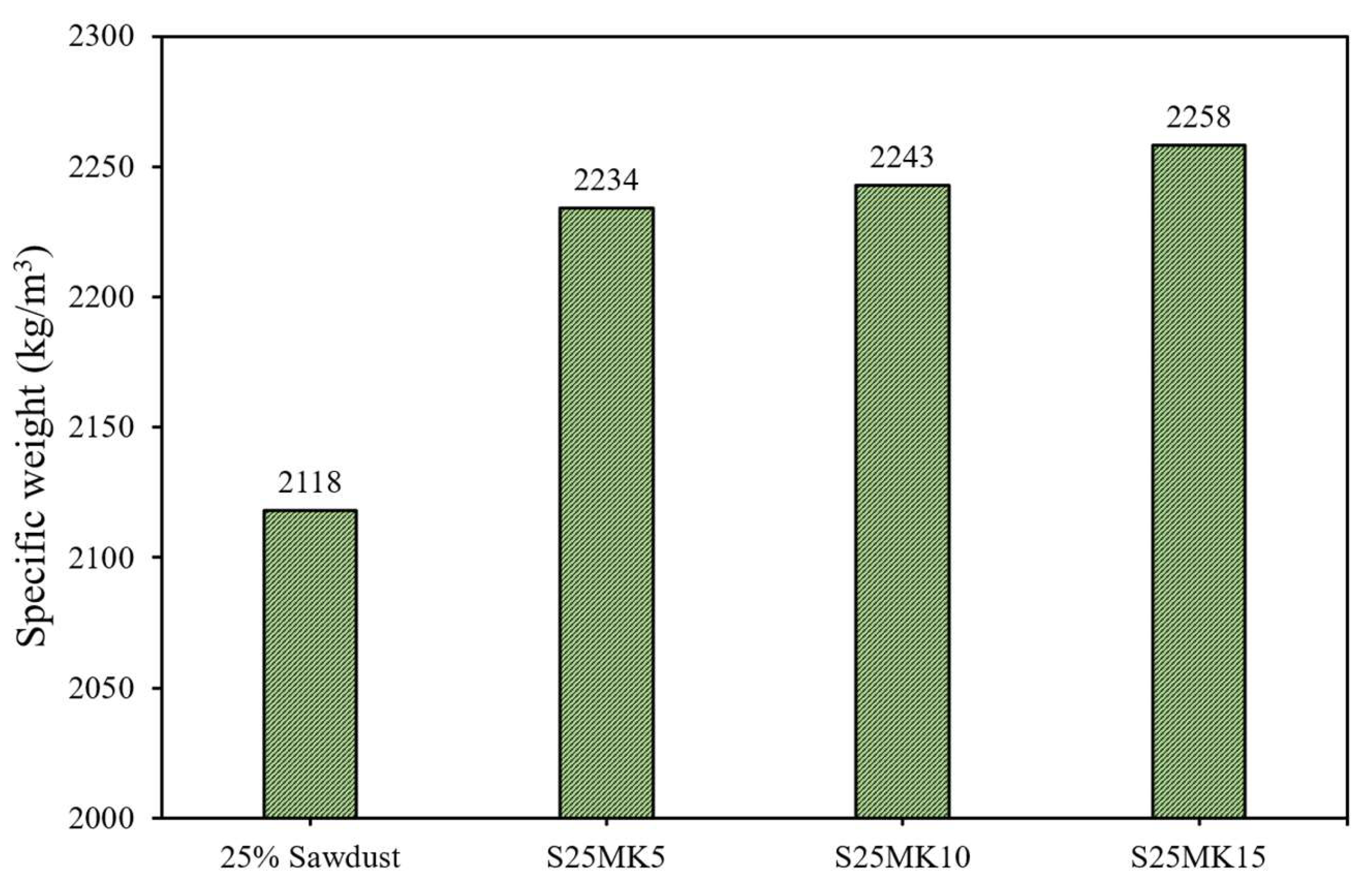
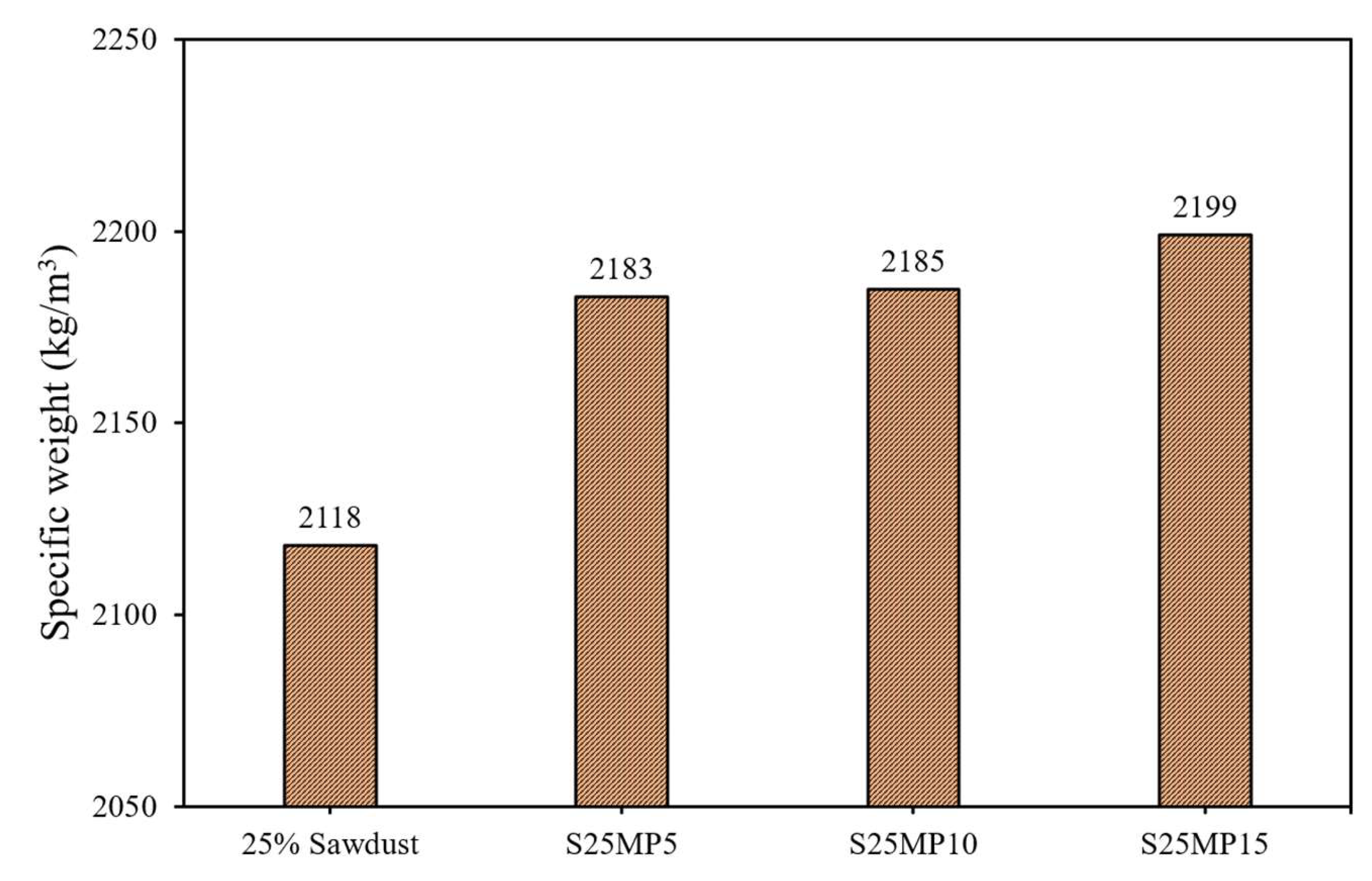
Figure 9 shows the density of concrete samples containing 25% sawdust and varying amounts of SF. It's observed that SF generally had a minimal impact on density, with the addition of 5% and 10% SF leading to a slight increase. However, incorporating 15% SF resulted in a decrease in density compared to the 25% sawdust control. This decrease could be due to the fine particles of SF filling some voids but also hindering the packing efficiency of other aggregates. Figure 10 displays the density of concrete mixtures containing 25% sawdust and varying MK dosages. Adding MK resulted in a consistent increase in density. The density increased from 2118 kg/m3 for the 25% sawdust control to 2234 kg/m3, 2243 kg/m3, and 2258 kg/m3 with 5%, 10%, and 15% MK respectively. This increase can be attributed to the fine particles of MK acting as a filler material, reducing the voids and increasing the overall packing density. Figure 11 illustrates the effect of MP addition on density. Like SF, the addition of MP had a moderate impact on density. The density increased slightly with increasing MP content, reaching 2199 kg/m3 with 15% MP, but the increase was less pronounced compared to MK. This suggests that MP, while filling some voids, also contributed to a less dense structure. The addition of sawdust significantly reduced the density of concrete. While SF and MP showed minimal effects on density, MK effectively increased density due to its filler properties. This understanding of density variations is crucial for optimizing concrete formulations, especially when incorporating alternative materials like sawdust.

5. Conclusions

The findings of this research can be summarized as follows:
  • Increasing sawdust content significantly reduces the compressive strength of concrete. The compressive strength decreased from 31.655 MPa for the control mixture (0% sawdust) to 16.313 MPa, 12.572 MPa, and 6.291 MPa with 15%, 25%, and 35% sawdust, respectively.
  • Additives such as silica fume (SF), metakaolin (MK), and marble powder (MP) improved the compressive strength of concrete with sawdust. Silica fume enhanced strength by 68.8% with 10% addition in a 25% sawdust mix. Metakaolin also significantly improved strength by 69.3% at 5% addition. Marble powder demonstrated lower improvements, with a 42.9% increase, mainly acting as a filler without significant pozzolanic activity. Overall, metakaolin led to the greatest increase in compressive strength, with silica fume being the next most effective, followed by marble powder.
  • Sawdust addition consistently reduced concrete density, from 2399 kg/m³ in the control to 2091 kg/m³ with 35% sawdust, due to its lower inherent density and irregular particle size. Silica fume reduced the density of the sawdust concrete samples, while metakaolin and marble powder increased the specific gravity of the sawdust concrete mixture.
  • Given that incorporating 10% silica fume greatly increases the strength of sawdust concrete while simultaneously reducing the weight of the mixture, silica fume is an ideal additive, like metakaolin, for sawdust concrete. Therefore, it is suggested to use metakaolin in the amount of 5% or silica fume in the amount of 10% to improve the properties of sawdust concrete.

Declaration of Competing Interest

The authors declare that they have no known competing financial interests or personal relationships that could have appeared to influence the work reported in this paper.

Data availability

All data generated or analyzed during this study are included in this published article. The raw data is also available from the corresponding author on reasonable request.

References

  1. Záleská, M.; Pavlíková, M.; Pokorný, J.; Jankovský, O.; Pavlík, Z.; Černý, R. Structural, mechanical and hygrothermal properties of lightweight concrete based on the application of waste plastics. Construction and Building Materials 2018, 180, 1–11. [Google Scholar] [CrossRef]
  2. Pournoori, P.; TQ, A.D.; Rajaee, A.; Ghodratnama, M.; Abrishami, S.; Masoodi, A.R. Experimental exploration of fracture behavior (pure mode III) in eco-friendly steel fiber-reinforced self-compacting concrete with waste tempered glass as coarse aggregates. Scientific Reports 2024, 14, 9043. [Google Scholar] [CrossRef]
  3. Colangelo, F.; Cioffi, R.; Liguori, B.; Iucolano, F. Recycled polyolefins waste as aggregates for lightweight concrete. Composites Part B: Engineering 2016, 106, 234–241. [Google Scholar] [CrossRef]
  4. Alengaram, U.J.; Al Muhit, B.A.; Jumaat, M.Z.B. Utilization of oil palm kernel shell as lightweight aggregate in concrete–A review. Construction and building materials 2013, 38, 161–172. [Google Scholar] [CrossRef]
  5. Demirboğa, R.; Örüng, İ.; Gül, R. Effects of expanded perlite aggregate and mineral admixtures on the compressive strength of low-density concretes. Cement and Concrete Research 2001, 31, 1627–1632. [Google Scholar] [CrossRef]
  6. Ganiron, T. Effect of sawdust as fine aggregate in concrete mixture for building construction. International Journal of Advanced Science and Technology 2014, 63, 73–82. [Google Scholar] [CrossRef]
  7. Miri, H.; Rajaee, A.; Ghodratnama, M.; Quchan, A.D.T.; Sheikhi, M.; Pournoori, P. Experimental and numerical investigation on water absorption and strength of lightweight concrete containing LECA and cold bitumen powder. International Journal of Sustainable Building Technology and Urban Development 2024, 15, 307–327. [Google Scholar] [CrossRef]
  8. Farahinia, E.; Sheikhi, M.; Amirhossein, D.T.Q.; Rajaee, A.; Ghodratnama, M.; Banihashem, S.M.; Pournoori, P. Experimental and numerical exploration of mechanical properties of sawdust concrete due to the addition of waste glass powder. International Journal of Sustainable Building Technology and Urban Development 2024, 15, 328–353. [Google Scholar] [CrossRef]
  9. Sawant, A.; Sharma, A.; Rahate, R.; Mayekar, N.; Ghadge, M. Partial replacement of sand with sawdust in concrete. Int Res J Eng Technol 2018, 5, 3098–3101. [Google Scholar]
  10. Orozco, C.; Tangtermsirikul, S.; Sugiyama, T.; Babel, S. Examining the endpoint impacts, challenges, and opportunities of fly ash utilization for sustainable concrete construction. Scientific Reports 2023, 13, 18254. [Google Scholar] [CrossRef]
  11. M. Amirnia, M. M. Amirnia, M. Sheikhi, N. Talebi, P. Pournoori, and A. Rajaee, "Evaluation of hardened properties of structural concrete containing waste tiles and volcanic ash.".
  12. Kumar, R. Effect of metakaolin on mechanical characteristics of the mortar and concrete: A critical review. Materials Today: Proceedings, 2023. [Google Scholar] [CrossRef]
  13. Baradaran, M.S.; Qazanfari, R.; Baradaran, S. Study of soil reinforcement in the east of Mashhad using glass granule. Materials Research Express 2023, 10, 055202. [Google Scholar] [CrossRef]
  14. S. BaridJavan, M. S. BaridJavan, M. Sheikhi, P. Pournoori, and A. Rajaee, "Glass powder and PVC granules as partial replacement of cement and aggregate; An experimental study.".
  15. Hamada, H.M.; et al. Effect of silica fume on the properties of sustainable cement concrete. Journal of Materials Research and Technology 2023, 24, 8887–8908. [Google Scholar] [CrossRef]
  16. Prakash, B.; Saravanan, T.J.; Kabeer, K.S.A.; Bisht, K. Exploring the potential of waste marble powder as a sustainable substitute to cement in cement-based composites: A review. Construction and Building Materials 2023, 401, 132887. [Google Scholar] [CrossRef]
  17. Baradaran, S.; Rahimi, J.; Ameri, M.; Maleki, A. Mechanical performance of asphalt mixture containing eco-friendly additive by recycling PET. Case Studies in Construction Materials 2024, 20, e02740. [Google Scholar] [CrossRef]
  18. Baradaran, S.; Aliha, M.; Maleki, A.; Underwood, B.S. Fracture properties of asphalt mixtures containing high content of reclaimed asphalt pavement (RAP) and eco-friendly PET additive at low temperature. Construction and Building Materials 2024, 449, 138426. [Google Scholar] [CrossRef]
  19. Siddique, R.; Singh, M.; Mehta, S.; Belarbi, R. Utilization of treated saw dust in concrete as partial replacement of natural sand. Journal of cleaner production 2020, 261, 121226. [Google Scholar] [CrossRef]
  20. Ahmed, W.; Khushnood, R.A.; Memon, S.A.; Ahmad, S.; Baloch, W.L.; Usman, M. Effective use of sawdust for the production of eco-friendly and thermal-energy efficient normal weight and lightweight concretes with tailored fracture properties. Journal of Cleaner Production 2018, 184, 1016–1027. [Google Scholar] [CrossRef]
  21. Cheng, Y.; You, W.; Zhang, C.; Li, H.; Hu, J. The implementation of waste sawdust in concrete. Engineering 2013, 5, 943. [Google Scholar] [CrossRef]
  22. Oyedepo, O.J.; Oluwajana, S.D.; Akande, S.P. Investigation of properties of concrete using sawdust as partial replacement for sand. Civil and Environmental Research 2014, 6, 35–42. [Google Scholar]
  23. Osei, D.Y.; Jackson, E.N. Compressive strength of concrete using sawdust as aggregate. International Journal of Scientific & Engineering Research 2016, 7, 1349–1353. [Google Scholar]
  24. Olutoge, F. Investigations on sawdust and palm kernel shells as aggregate replacement. ARPN Journal of Engineering and Applied Sciences 2010, 5, 7–13. [Google Scholar]
  25. Standard, A. C150: Standard Specification for Portland Cement. Annual Book of ASTM Standards, 2009. [Google Scholar]
  26. Concrete, A.S.F.T.M.C.C.-O.; Aggregates, C. , Standard specification for silica fume used in cementitious mixtures. ASTM International, 2011.
  27. Hameed, M.S.; Sekar, A.; Saraswathy, V. Strength and permeability characteristics study of self-compacting concrete using crusher rock dust and marble sludge powder. Arabian journal for science and engineering 2012, 37, 561–574. [Google Scholar] [CrossRef]
  28. Afshoon, I.; Miri, M.; Mousavi, S.R. Comprehensive experimental and numerical modeling of strength parameters of eco-friendly steel fiber reinforced SCC containing coarse copper slag aggregates. Construction and Building Materials 2023, 367, 130304. [Google Scholar] [CrossRef]
  29. Testing concrete: Method for determination of compressive strength of concrete cubes., B. S. I. (BSI), 1983.
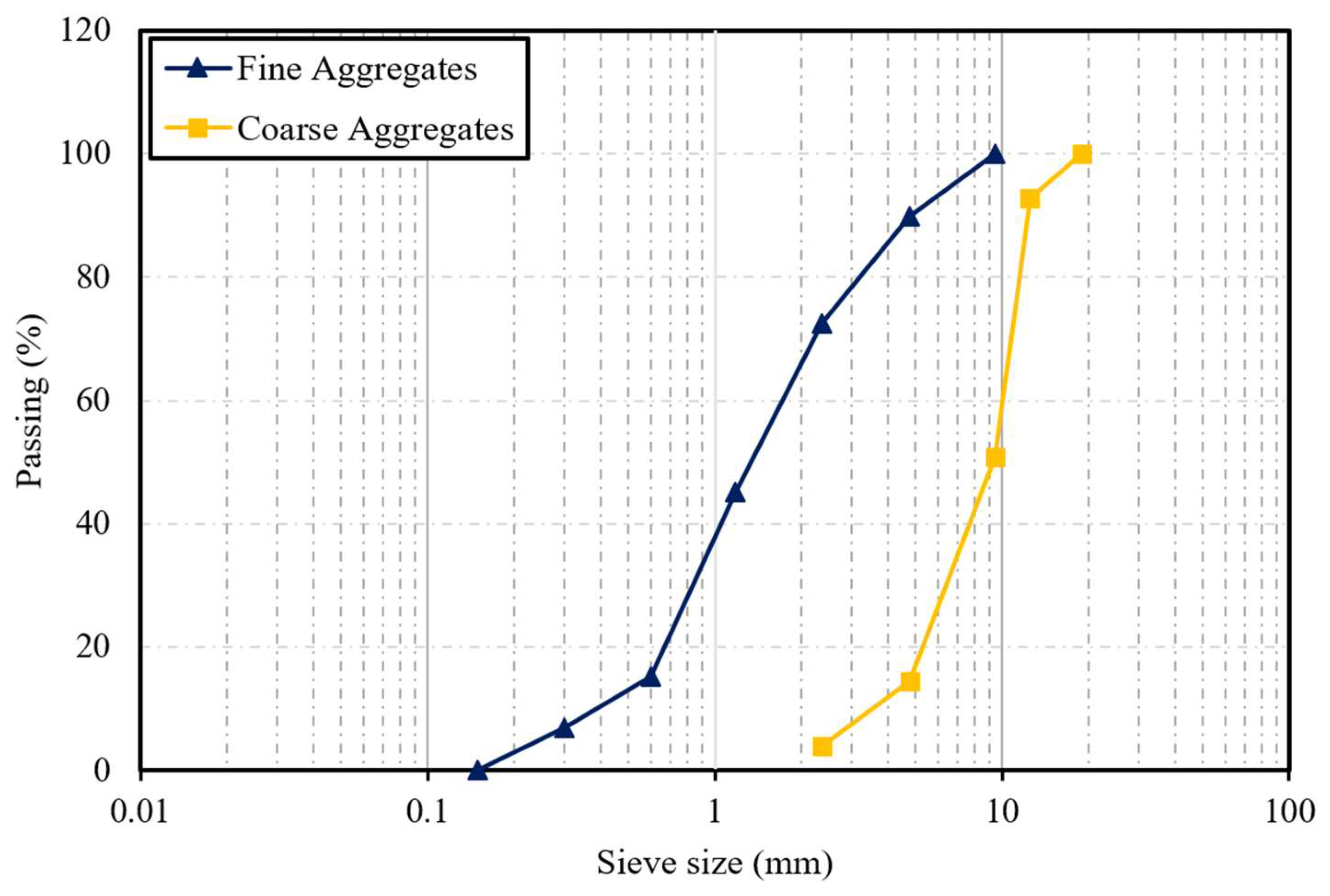
Figure 1. Distribution of particle sizes in fine and coarse aggregates.
Preprints 138990 g001
Figure 2. The process of concrete production: mixing and pouring.
Preprints 138990 g002
Figure 3. Compressive strength testing machine.
Preprints 138990 g003
Figure 4. Compressive Strength of Concrete Samples with Varying Sawdust Content.
Preprints 138990 g004
Figure 5. Compressive Strength of Concrete Samples with Varying Silica Fume Content (25% Sawdust).
Preprints 138990 g005
Figure 6. Compressive Strength of Concrete Samples with Varying Metakaolin Content (25% Sawdust).
Preprints 138990 g006
Figure 7. Compressive Strength of Concrete Samples with Varying Marble Powder Content (25% Sawdust).
Preprints 138990 g007
Figure 8. Density of Concrete Samples with Varying Sawdust Content.
Preprints 138990 g008
Figure 9. Density of Concrete Samples with Varying Silica Fume Content (25% Sawdust).
Preprints 138990 g009
Figure 10. Density of Concrete Samples with Varying Metakaolin Content (25% Sawdust).
Preprints 138990 g010
Figure 11. Density of Concrete Samples with Varying Marble Powder Content (25% Sawdust).
Preprints 138990 g011
Table 1. Chemical composition of the cement.
Material Chemical composition (%)
SiO2 Al2O3 Fe2O3 CaO MgO SO3 K2O Na2O C3S
Portland Cement 20.9 4.5 3.8 63.5 2.7 2 0.5 0.5 1.15
Table 2. Physical properties of the cement.
Material Setting Time Compressive Strength (kg/cm2)
Initial (min) Final (min) 3 days 7 days 28 days
Portland Cement 200 260 170 290 400
Table 3. Chemical composition of the sawdust.
Material Chemical composition (%)
SiO2 Al2O3 Fe2O3 CaO MgO LOI
Sawdust 87 2.5 2 3.5 0.24 4.76
Table 4. Physical properties of SF.
Material Silica Fume
particle sizes (µm) 98% of particles less than 45 µm
Bulk density 200-300 kg/m3
Specific weight 2200 kg/m3
Melting point 1550-1570 oC
Table 5. Chemical composition of SF, MK, and MP.
Material Chemical composition (%)
SiO2 Al2O3 Fe2O3 CaO MgO Na2O K2O LOI
Silica Fume 89.22 1.2 2.12 1.87 1.61 0.56 1.06 2.6
Metakaolin 67 30 0.02 0.02 0.04 0.5 0.7 1
Marble Powder 0.22 0.18 0.44 55.07 0.34 0.56 0.11 42.86
Table 6. Mix proportions of the 13 concrete mixes.
Mix ID Coarse Aggregates
(kg/m3)
Fine Aggregates
(kg/m3)
Water
(kg/m3)
Cement
(kg/m3)
Sawdust (kg/m3) SF (kg/m3) MK (kg/m3) MP (kg/m3)
Control 880 812 218 400 0
10.5
18.5
25.7
18.5
0 0 0
S15 880 690 264 400 0 0 0
S25 880 611 277 400 0 0 0
S35 880 528 284 400 0 0 0
S25SF5 880 611 277 400 20.8 0 0
S25SF10 880 611 277 400 18.5 41.6 0 0
S25SF15 880 611 277 400 18.5 62.4 0 0
S25MK5 880 611 277 400 18.5 0 20.8 0
S25MK10 880 611 277 400 18.5 0 41.6 0
S25MK15 880 611 277 400 18.5 0 62.4 0
S25MP5 880 611 277 400 18.5 0 0 20.8
S25MP10 880 611 277 400 18.5 0 0 41.6
S25MP15 880 611 277 400 18.5 0 0 62.4
Disclaimer/Publisher’s Note: The statements, opinions and data contained in all publications are solely those of the individual author(s) and contributor(s) and not of MDPI and/or the editor(s). MDPI and/or the editor(s) disclaim responsibility for any injury to people or property resulting from any ideas, methods, instructions or products referred to in the content.
Copyright: This open access article is published under a Creative Commons CC BY 4.0 license, which permit the free download, distribution, and reuse, provided that the author and preprint are cited in any reuse.
Prerpints.org logo

Preprints.org is a free preprint server supported by MDPI in Basel, Switzerland.

Subscribe

Disclaimer

Terms of Use

Privacy Policy

Privacy Settings

© 2026 MDPI (Basel, Switzerland) unless otherwise stated