
Submitted:
06 November 2024
Posted:
07 November 2024
You are already at the latest version
Abstract
This research investigates the relationship between sustainable human resource management (SHRM) practices and employee happiness, with a focus on the mediating role of employee engagement. Using a sample of 473 women workers from one of India’s largest tea plantations, the study found a significant positive relationship between SHRM practices and employee happiness. Additionally, employee engagement was shown to mediate this relationship, indicating that SHRM practices enhance employee happiness primarily through increased engagement. The research aims to assess how sustainable human resource management affects workplace happiness among the women employees in the Indian tea plantation sector.
The data was analyzed using IBM SPSS 25, and the research model was developed with WarpPLS 8.0. The study adopted Ehnert’s (2009) Sustainable Human Resource Management Practices, Singh & Aggarwal's (2017) Employee Happiness Scale (Happiness at Workplace), and Schaufeli et al.'s (2012) Employee Engagement Scale. The findings reveal a strong positive relationship between sustainable human resource management and employee happiness, with a correlation value of 0.943 at a significance level of 0.01. Moreover, there is a significant positive association between employee engagement and workplace happiness, with a correlation value of 0.947 and an R² of 0.99. These results confirm a robust positive relationship among sustainable human resource management, employee engagement, and employee happiness. This relationship emphasizes that fostering a positive work environment can significantly enhance employee engagement, leading to improved overall performance.
Keywords:
Sustainable human resource management
; employee happiness
; employee engagement
; tea plantation sector
; women employees
; India
1. Introduction
The modern workplace has gone through rapid changes in recent years due to increased globalization, technological advancements, outsourcing, and temporary employment (Wu, 2022). These changes have had a significant impact on organizational practices and employee experiences (Monaghan, 2020; Savić, 2020). Although these changes can lead to dissatisfaction and unhappiness among employees, research shows that creating a positive work environment is crucial for improving productivity and organizational performance. Keeping employees happy can directly and positively affect organizational outcomes (He, 2019). Workplace well-being, a crucial part of subjective well-being, is vital for the long-term sustainability of organizations. By prioritizing employee well-being, organizations can enhance employee welfare and create a more positive work environment, ultimately leading to improved performance (Anduuru, 2020).
Workplace happiness has become an increasingly important area of interest, especially within the framework of positive psychology (Joo & Lee, 2017; Dries, 2013). As organizations acknowledge the significance of human capital in achieving success, happiness has gained prominence as a key factor influencing employee performance and well-being (Warr, 2007; Santoso). Erdogan et al. (2012) propose a state view of workplace happiness, suggesting that it is influenced by factors such as work environment, leadership, career development, job characteristics, and person-environment fit. Xanthopoulou et al. (2012) emphasize the need for further research to fully understand the concept of workplace happiness. Happy and healthy employees are more likely to be productive and successful in their work (Seetubtim, 2015). Fostering employee happiness is essential for achieving full commitment and engagement in today’s organizations (Fisher, 2010). Extensive research has shown that happy employees are more dedicated to achieving organizational goals (Smith & Johnson, 2018).
The role of human resource management has evolved, with HR professionals increasingly prioritizing employee happiness to build a satisfied and dedicated workforce. Previous research suggests that effective sustainable HRM practices can significantly impact employee happiness (Brown, 2017). While the relationship between employee happiness and organizational performance has been studied (Smith et al., 2019; Jones & Wang, 2020), there is a lack of empirical research on specific strategies and interventions that can effectively improve employee happiness within the context of sustainable HRM. Furthermore, more research is needed to assess the long-term effects of employee happiness initiatives on organizational success, including factors such as retention, productivity, and innovation (Brown & Taylor, 2018; Lee et al., 2021). There is a growing interest in understanding the influence of sustainable HRM practices on employee happiness and their significance in determining employee well-being. The tea plantation sector being the highest employer next to the railway department and the major contributor to the economic development of India. Plantations that produce export-oriented crops have a long history in India. The plantation industry directly employs over 2 million workers, with women making up 50% of the workforce (Labour Bureau, 2010). While plantations are part of the agricultural sector, they share many features with industrial operations. The tea industry, in particular, is one of the oldest organized industries in India, boasting a history of more than 160 years. The plantation sector is the largest organized employer of women, likely contributing to an increase in the national average sex ratio in organized employment (Joshi, 1976). Planters specifically seek women workers for both productive and reproductive roles, particularly due to the skills associated with plucking.
This research aims to identify effective HRM practices that promote employee happiness among the women employees of tea plantations. Employee well-being and happiness are essential aspects of sustainable human resource management (SHRM) and have received increased attention in recent years. A study by Voorde et al. (2012) examined the relationship between employee well-being and organizational performance, emphasizing the importance of understanding their interconnectedness.
Cugueró-Escofet et al. (2019) highlighted the role of knowledge sharing in enhancing collaborative practices within organizations, while Kirpik (2020) identified organizational concepts and job attitudes related to employee happiness. Davidescu et al. (2020) investigated the link between work flexibility, job satisfaction, and job performance within the context of sustainable HRM, emphasizing the need for redesigned HRM practices. Le et al. (2023) explored the impact of work and non-work support on employee well-being, emphasizing the importance of family and organizational support. Jia et al. (2024) looked into how green financing can facilitate the development of green HRM resources to achieve carbon neutrality. Martínez-Falcó et al. (2024) focused on the impact of Green Human Resource Management (GHRM) on Sustainable Performance (SP) in the wine industry, highlighting the mediating effect of Employee Wellbeing (EW) and Work Engagement (WE). Overall, the literature emphasizes the importance of sustainable HRM practices in promoting employee well-being and happiness. By incorporating concepts such as knowledge sharing, work flexibility, and green HRM, organizations can enhance employee satisfaction, performance, and overall well-being, contributing to sustainable organizational success.
2. Literature Review
2.1. Sustainable HRM Practices
Sustainability has become a critical consideration across various fields, including Human Resource Management (HRM), due to its impact on organizational longevity, societal well-being, and environmental preservation (Jackson et al., 2014). The growing recognition of the interconnectedness between organizational success and responsible management of human capital and resources has led to an increased focus on sustainability in HRM practices (Opatha, 2019). Businesses are increasingly acknowledging the importance of adopting sustainable human resource practices as a strategic approach to enhance organizational performance while addressing environmental and social concerns (Renusha, 2022). Sustainable HRM (SHRM) has gained prominence in the field of HRM, emphasizing the long-term well-being of both the organization and its employees, considering environmental and social factors (Molamohamadi et al., 2013).
Sustainable Human Resource Management (SHRM) has become a prominent approach to HRM policy, emphasizing the integration of sustainability principles into organizational practices (Kramar, 2014). Research has explored various factors influencing the successful implementation of SHRM, including the stakeholders involved and the core functions of SHRM (Tooranloo et al., 2017; Järlström et al., 2018; Macke et al., 2019; Piwowar-Sulej, 2021). Studies have highlighted the importance of SHRM in adopting Sustainable Development Goals (Chams et al., 2019) and in assessing employee satisfaction and loyalty (Strenitzerová et al., 2019). Additionally, research has evaluated SHRM practices in specific sectors, such as manufacturing (Saeidi et al., 2022), to understand their impact on organizational performance and well-being. Overall, the literature on SHRM underscores the importance of integrating sustainability principles into HRM practices to ensure the long-term success and well-being of both organizations and employees.
Sustainable HRM involves adapting traditional HRM techniques and practices to achieve long-term monetary, environmental, and organizational goals while minimizing negative consequences (Kramar, 2014). Thom & Zaugg (2014) have identified specific HRM policies associated with high-performance work arrangements and studied their impact on organizational profit and growth. Given the increasing demand for qualified human resources and the resource constraints faced by organizations, sustainable HRM practices are gaining prominence in today’s business environment. Ehnert et al. (2016) define sustainable HRM as strategies and practices that contribute to social, financial, and environmental goals, impacting both internal and external factors of an organization in the long term. This research connects sustainable HRM with broader concepts of sustainability and highlights the evolving role of HRM in organizations. The study focuses on internal dimensions of sustainable HRM, with limited research available on external dimensions, indicating a need for further exploration of how sustainable HRM practices can impact external stakeholders and environmental sustainability. Ulus and Hatipoglu (2016) conducted a study on the managerial and technical aspects of implementing sustainability processes in organizations. They discovered that human factors often do not receive enough attention during this process, despite their significant impact on change management. The study identified internal communication, employee engagement, and resistance to change as key human factors influencing successful change management for achieving organizational sustainability. Cohen et al. (2014) stressed the importance of the HR function in shaping corporate values and developing sustainability strategies. This underscores the critical role of human resources in driving sustainable initiatives within organizations.
Recent interdisciplinary research has examined the incorporation of sustainability principles into HRM. This research draws from various disciplines and explores areas such as corporate sustainability, corporate social responsibility, and sustainable work systems. These studies offer new perspectives that differ from traditional approaches to strategic HRM in organizational contexts (Jackson et al., 2014). Sustainable human resource management involves multiple levels of analysis (individual, process management, organization, and society), dimensions (economic, ecological, social, and human) (Renwick et al., 2013), and time perspectives (short and long) that must be considered (Paille et al., 2014). Recent literature continues to emphasize the importance of sustainable HRM practices in improving organizational performance and resilience. For example, Chams and Garcia-Blandon (2019) stress that sustainable HRM aims to achieve positive economic, social, human, and environmental outcomes in both the short and long term.
The connection between sustainability and HRM practices is an area of growing research, with significant gaps still to be explored. This relationship is based on two key assumptions: the important role of HRM in promoting organizational sustainability (Ehnert et al., 2016) and the sustainability of HRM practices themselves (Mariappanadar, 2003). Sustainable HRM practices go beyond traditional HR functions and act as a mechanism to lessen the negative impacts of organizational changes on individuals. For instance, during workforce reductions, sustainable HRM practices can help maintain employee dignity and ensure their continued employability.
Sustainable human resource management (SHRM) and employee engagement emphasizes the importance of integrating corporate social responsibility (CSR) into HR professionals’ roles (Fenwick et al., 2008). This engagement often focuses on areas such as employee learning, promotion, ownership of development, safety, and respect. A positive psychological climate can lead to higher levels of discretionary effort and employee engagement (Shuck et al., 2011). New measures, like the ISA Engagement Scale, have been developed to assess employee engagement within organizations (Soane et al., 2012). The link between perceived human resource management practices and employee behavior, including engagement, has been explored in the literature (Alfes et al., 2013). Sustainable HRM practices can impact organizational performance through the mediating effects of knowledge management and work engagement (Abu-Mahfouz et al., 2023). Studies have investigated the relationship between work engagement, employee satisfaction, and sustainable HRM practices, particularly in the context of Polish employees (Sypniewska et al., 2023). HR practices, employee psychological empowerment, and well-being can foster employee work engagement and sustainable employment, especially during crises like the COVID-19 pandemic (Rahi, 2023). Performance appraisal justice has also been identified as a factor influencing employee job performance and engagement, contributing to organizational sustainability (Lyu et al., 2023). These studies collectively contribute to our understanding of the complex relationship between sustainable HR practices and employee engagement, emphasizing the importance of integrating CSR, positive psychological climates, and effective HRM practices to enhance organizational performance and employee well-being.
2.2. Happiness at Workplace
Happiness is a fundamental human aspiration, bringing peace and fulfillment. When individuals experience happiness in various aspects of life, they are more likely to approach tasks with enthusiasm and vigor, leading to improved outcomes. For example, happy employees demonstrate enhanced efficiency and effectiveness in their work, meeting organizational expectations with diligence. Employee happiness is a crucial aspect of organizational success, leading to improved individual performance (Rego et al., 2008). Flexible working arrangements, as seen in the NHS, can positively influence employee happiness and attitude within a high-performance work system (Atkinson et al., 2011). Research has increasingly focused on multidimensional indicators of employee happiness in the workplace, exploring dimensions of employee flourishing and their antecedents and outcomes in specific contexts like Southern Africa (Rothmann, 2013).
Research on employee happiness has been limited in the past (Wesarat et al., 2014). Complexity theory has been applied to understand the factors influencing employee happiness and managers’ assessments of employee performance, highlighting the importance of high versus low happy employees in performance evaluations (Hsiao et al., 2015). Perceived organizational support and psychological capital have been found to impact employee happiness in terms of work engagement, career satisfaction, and subjective well-being (Joo et al., 2017). Motivating job characteristics at both the individual and job level have been shown to predict employee happiness during daily work activities, expanding on Job Characteristics Theory (Oerlemans et al., 2018). Research has also explored the relationship between employee happiness and productivity, with quasi-experimental evidence suggesting a positive impact of employee happiness on productivity in call center sales workers at British Telecom (Bellet et al., 2019). In the context of Industry 4.0, studies have examined employee happiness in the Spanish industrial sector, highlighting its importance in management science (Ravina-Ripoll et al., 2019). The COVID-19 pandemic has further emphasized the relationship between work from home arrangements, work engagement, and perceived employee happiness as organizations and individuals adapt to new ways of working (Mehta, 2021).
Ed Diener, a prominent psychologist, made significant contributions to the study of well-being and happiness. He defined happiness as a subjective experience encompassing positive emotions like joy and contentment, as well as a sense of fulfillment and purpose. Diener emphasized that happiness is not merely about momentary feelings but also involves a sense of meaning and life purpose. He recognized happiness as a multifaceted construct comprising both emotional and cognitive components, measurable through various methods including self-report surveys and physiological measures. Diener’s research on happiness has influenced the field of positive psychology and led to the development of interventions and therapies aimed at promoting well-being. He advocated for the idea that happiness is a learnable skill that can be cultivated through practices such as gratitude, mindfulness, and positive social relationships.
Workplace happiness is a complex concept that includes engagement, job satisfaction, and affective organizational commitment (Fisher, 2010). It is influenced by personal experiences and managerial factors such as leadership style, workplace justice, communication policies, and organizational culture (Zelenski et al., 2008; Erdogan et al., 2012). Workplace happiness is dynamic and can change in response to work conditions (Weimann et al., 2015). According to Fisher (2010), workplace happiness involves positive feelings towards the job, job characteristics, and the organization. Measuring happiness is a challenging task, often described as “taking the temperature of the soul” (McMahon, 2018). Happiness can be measured at three levels: transient (individual variations over time), individual (variations among individuals), and unit (variations among different working units).
Employee engagement is a crucial and positive state of mind that significantly impacts work performance, characterized by vigor, dedication, and absorption. Research by Mazetti et al. (2018) clearly demonstrates that engaged employees work longer hours, achieve superior results, and complete tasks more efficiently than their less engaged counterparts. Schaufeli et al. (2002) identify three essential components that drive substantial performance improvements related to employee engagement: Vigor: Employees must consistently put in effort and strive to excel in their work. Dedication: Employees should feel passionate, motivated, and proud of their contributions. Absorption: Employees must be deeply immersed in their tasks, making it difficult to disengage. Furthermore, personal resources such as the need for autonomy, relatedness, and competence are vital motivators for enhancing employee engagement (Deci et al., 2001).
Employee happiness and engagement play a crucial role in determining employee well-being and performance across various industries. Buitendach et al. (2016) explored the relationship between work engagement and different dimensions of work-related well-being among Zimbabwean bus drivers. Sathyanarayana et al. (2017) identified key factors influencing employee engagement in the Indian IT sector, such as supervision, working environment, communication, pay, and organizational commitment.
Total rewards components have been found to impact employee happiness in Indian technology-based new ventures (Gulyani et al., 2018). Othman et al. (2018) identified dimensions of employee engagement through focus groups and surveys. Al-Hawari et al. (2019) examined the impact of workplace happiness and engagement on employee service innovative behavior, with work engagement mediating the relationship. Santhanam et al. (2019) investigated the impact of engagement on job burnout and turnover intention among blue-collar workers in India. Wahyanto et al. (2019) studied the effect of happiness at work on employee engagement and intention to stay among hospital employees. Kustiawan et al. (2022) explored the relationship between affective organizational commitment, job satisfaction, employee engagement, job happiness, and performance in an Indonesian manufacturing company. Shelke et al. (2023) examined the mediating role of workplace happiness in enhancing employee engagement among IT sector employees in India. Algarni et al. (2023) investigated the impact of employee engagement, job satisfaction, and organizational commitment on happiness at work in a Saudi organization, using Fisher’s framework to understand its meaning, causes, and effects.
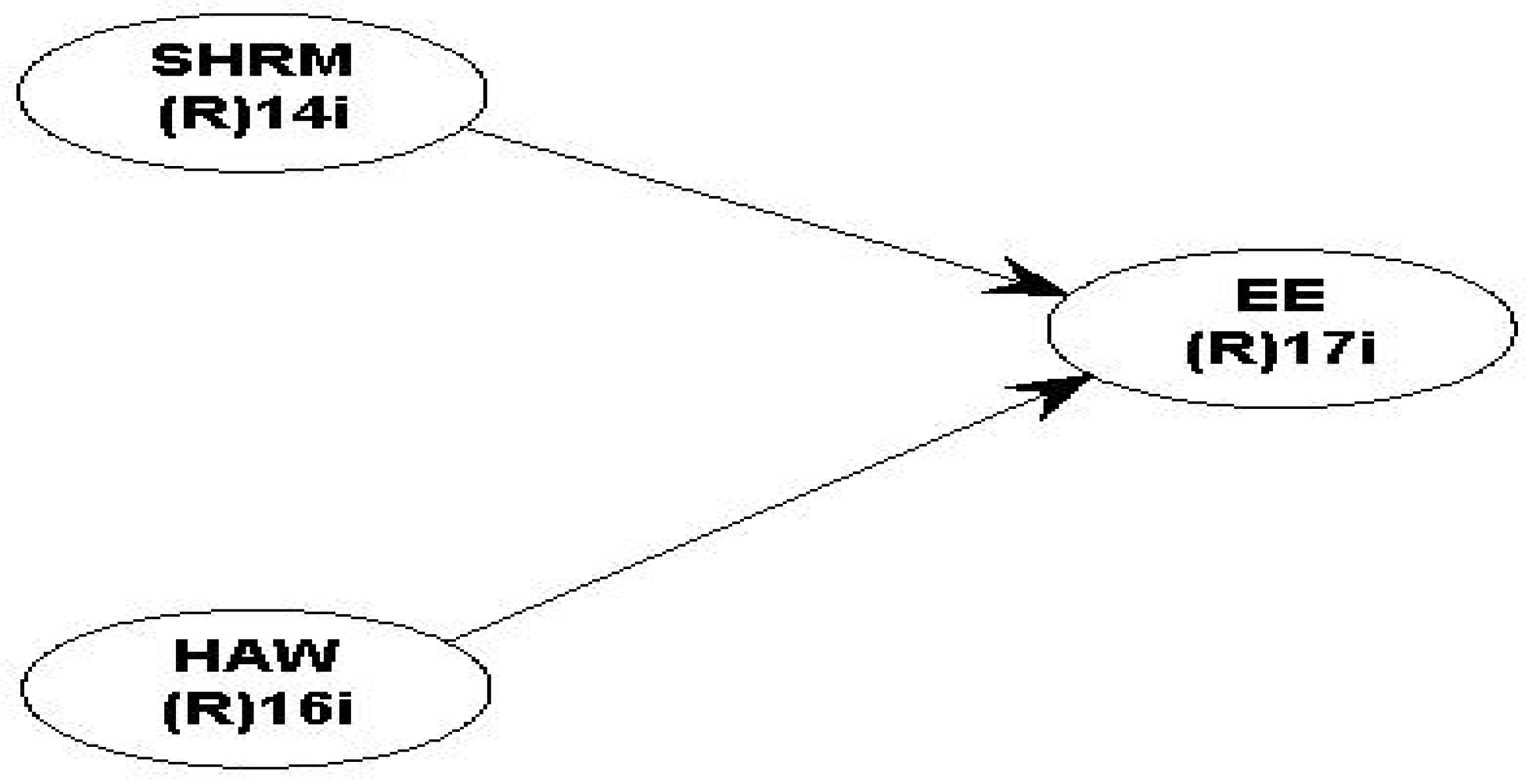
Figure 1.
Sustainable HRM and Employee Engagement Model.
- 1.
-
Objectives of the study:
- To identify the relationship between sustainable human resource management practices and employee happiness.
- To study the relationship between sustainable human resource management practices and employee engagement.
- To study the relationship between employee engagement and employee happiness
- 2.
- Conceptual framework of the study
- 3.
- Hypotheses
Hypothesis 1(H1):
Implementation of sustainable human resource management (SHRM) practices will have higher levels of employee happiness.
Sustainable Human Resource Management (SHRM) has become increasingly important as organizations aim to create sustainable work environments. Studies have shown that implementing SHRM practices can improve employee happiness (Morgan et al., 2003). However, many organizations have not fully integrated SHRM into their strategic planning, and some managers still see HRM as mainly administrative (Dargahi, 2011). Socially Responsible Human Resource Management (SRHRM) practices are associated with sustainable organization-building. Although there is a connection between SRHRM and sustainable development, many organizations have a low level of maturity in implementing these practices (Bombiak et al., 2019). This highlights a gap between the theoretical understanding of SRHRM and its practical application. The literature indicates that implementing sustainable HRM practices, such as SHRM and SRHRM, can have a positive impact on employee happiness and organizational sustainability. However, more research is required to explore the specific mechanisms through which these practices influence employee well-being and organizational success (Morgan et al., 2003; Bombiak et al., 2019; Hristova et al., 2020).
Hypothesis 2(H2):
Sustainable human resource management practices are positively associated to employee engagement.
Employee engagement is crucial for organizational performance (Markos et al., 2010). Employee satisfaction with human resource practices is connected to employee engagement (Jose, 2012). Organizational culture significantly influences employee engagement (Tripathi et al., 2020). Nguyen et al. (2020) offer insights into the factors driving employee engagement and job performance, with a focus on public relations and organizational support. Wen et al. (2021) study the impact of employee satisfaction on engagement and turnover intentions, taking into account the moderating role of position level. Padmavathi (2023) examines the influence of a sustainable work environment on work engagement, job satisfaction, and employee retention. Iskandar et al. (2023) delve into sustainable HR practices in Indonesian MSMEs, including training, recruitment, employee engagement, and their impact on social entrepreneurship performance and local communities. Tran (2023) investigates the impact of green human resources management and green leadership on green work engagement. Umair et al. (2023) focus on the role of green talent management, transformational leadership, and employee engagement in promoting sustainable environmental performance. Khan et al. (2024) explore the relationship between humor in the workplace, psychological well-being, and green engagement, considering gender differences in the impact of relationship-oriented human resource practices on workforce well-being.
Hypothesis 3 (H3):
There is a positive and significant relationship between employee happiness and employee engagement.
Employee engagement has been the focus of numerous studies, examining its correlation with various factors such as leadership, communication, total rewards components, training, workplace happiness, and job variety. Carasco-Saul et al. (2015) highlighted the significance of leadership in influencing employee engagement. Kang et al. (2017) studied the effect of symmetrical internal communication on employee engagement and communication behaviors. Gulyani et al. (2018) analyzed the influence of total rewards components on employee happiness in new ventures. Sendawula et al. (2018) investigated the impact of training and employee engagement on employee performance. Al-Hawari et al. (2019) and Wahyanto et al. (2019) delved into the influence of workplace happiness on employee service innovative behavior and intention to stay. Malik et al. (2021) aimed to enhance business process efficiency through authentic leadership and followers’ attitudes. Sulistiyani et al. (2022) explored the effect of perceived organizational support on work-life balance with employee work engagement as a mediating variable. Tugade et al. (2023) conducted a correlation analysis to establish the relationship between employee work engagement and personal characteristics, organizational commitment, and workplace happiness. Hafeez et al. (2023) investigated the dual impact of job variety on employee happiness and stress, highlighting the positive effect of job variety on employee engagement and happiness among professional frontline nurses.
3. Research Methodology
3.1. Sampling Design
The primary objective of the study is descriptive, aiming to discern the relationship between sustainable HRM practices and employee happiness, and to explore how employee engagement influences this linkage. The primary data was collected through a questionnaire administered to women employees working in tea plantations at one of the largest private limited companies and their respective departments. The sampling design seems appropriate for the study. Stratified random sampling method was used to ensure that all relevant groups of women employees were represented in the sample. Out of 500 questionnaires distributed, 473 of the respondents have returned the questionnaire which resulted in 94.6% of response rate.
3.2. Measures
In order to preserve consistency in measuring the variables, a five-point Likert scale was employed for the research, spanning from strongly agree (5) to strongly disagree (1).
- -
- Sustainable human resource management practices: - The first section consisted of 22 items related to the SHRM practice scale, based on Ehnert’s (2009) work.
- -
- Employee Happiness: -Happiness at Work Scale (16-item) (Singh & Aggarwal, 2017).
- -
- Employee Engagement Scale - The Utrecht Work Engagement Scale (UWES), developed by Schaufeli et al. (2012), is a widely used 17-item scale for measuring employee engagement. It consists of three dimensions: vigor, dedication, and absorption.
While the measurement instruments are standardized, it is essential to ensure their reliability for the current research (Robinson, 2009). To assess the model, reliability tests were conducted. Reliability tests were used to evaluate the consistency of the variables involved in the research, ensuring that they accurately measure the intended constructs. These tests were conducted using IBM SPSS 25, and the reliability statistics are presented in Table 2. The Cronbach alpha values for SHRM, Employee Happiness and employee engagement are as follows:
The reliability value for SHRM is 0.935, employee happiness is 0.918 and employee engagement ranges to 0.967 which satisfies the reliability criteria for this research. The Cronbach alpha reliability values should be ranging from 0.60 to 0.90 which is said to be sufficient for establishing the reliability of the questionnaire (Griethuijsen et al., 2014) (Table 1).

Table 1.
Reliability Statistics.
| S.No | Constructs | Cronbach α |
|---|---|---|
| 1 | SHRM | 0.974 |
| 2 | Employee Happiness | 0.920 |
| 3 | Employee Engagement | 0.990 |
Table 2.
Level ofSHRM, Employee Happiness and Employee Engagement.
| ITEMS | MEAN |
|---|---|
| SUSTAINABLE HUMAN RESOURCE MANAGEMENT | |
| The company offers an attractive and challenging work environment. | 4.3108 |
| The company offers career opportunities. | 4.1670 |
| The company promotes cultural and gender diversity in relation to its employees. | 4.4503 |
| The company has compensation and benefits practices that favor the attraction and retention of professionals. | 4.1015 |
| The company develops actions that favor the reduction and prevention of stress | 4.1036 |
| The company favors the adoption of a healthy lifestyle by its employees. | 4.0296 |
| The company is concerned about the well-being of its employees. | 4.0317 |
| The company favors the balance between the personal and professional life of its employees | 4.2368 |
| The company provides ergonomic conditions in the workplace. | 3.9260 |
| The company is concerned about its employees’ satisfaction and motivation. | 4.1015 |
| The company offers professional training to employees, with a long-term vision. | 4.0296 |
| The company invests in the training and development of different groups of employees. | 4.0317 |
| The company invests in the employees’ education | 4.2368 |
| The company invests in the training of employees and in the development of their knowledge. | 4.0296 |
| HAPPINESS AT WORK | |
| I enjoy what I am doing at work. | 4.0317 |
| My organization does not have proper guidelines to regulate term behavior and work that requires collective effort | 4.2368 |
| I feel internally driven to do great things at my work | 4.0317 |
| At my work, I remain inspired and try to inspire others as well. | 4.2368 |
| The decision -making process in my company is fair and just. | 4.0296 |
| I hate lot of people here for always being around the boss for personal gains | 1.8922 |
| My organization provides all necessary training andinformation to complete work on time | 4.0317 |
| We celebrate and cheer each other at the accomplishment oftargets. | 4.2368 |
| When I start doing my work, I forget everything else | 4.0296 |
| I don’t get sufficient credit for my contributions. | 1.8922 |
| I am not very comfortable in approaching my boss. | 1.8922 |
| I feel stressed at work. | 1.8922 |
| I continue to do a task till it is perfectly done. | 4.0317 |
| Top leaders of my organization have a clear vision and focus. | 4.2368 |
| My company does not have a proper interface that can allow us to work for social cause. | 4.0296 |
| Often, I feel like quitting my job. | 1.4799 |
| EMPLOYEE ENGAGEMENT | |
| At work I feel like bursting with energy. (VI01) | 4.0296 |
| I find the work that I do meaningful and purposeful. (DE01) | 4.0317 |
| Time flies when I am at work. (AB01) | 4.2368 |
| At my job I feel strong and vigorous. (VI02) | 4.0296 |
| I am enthusiastic about my job. (DE02) | 4.0317 |
| When I work, I forget everything else around me. (AB02) | 4.2368 |
| My job inspires me. (DE03) | 4.0317 |
| When I get up in the morning, I feel like going to work (VI03) | 4.2368 |
| I feel happy when I work intensively. (AB03) | 4.0296 |
| I am proud of the work that I do. (DE04) | 4.0296 |
| I am immersed in my work. (AB04) | 4.0317 |
| I can continue to work for long periods of time. (VI04) | 4.2368 |
| My job is challenging enough. (DE05) | 4.0296 |
| I get carried away when I work. (AB05) | 4.0317 |
| At my job, I am mentally resilient. (VI05) | 4.2368 |
| It is difficult to detach myself from my job. (AB06) | 4.0317 |
| At my job, I always persevere, even when things do not go well. (VI06) | 4.2368 |
3.3. Structured Equation Modeling (SEM) Using WarpPLS 8.0
PLS-SEM was selected due to its strength as a causal modeling technique, especially for complex models and predictive research (Chin, 1998). This method was utilized to evaluate the measurement model and examine the relationships among variables. To assess the model’s fit, calculations that explained variance (R²) were carried out. According to established guidelines, R² values should exceed 0.10 to indicate a meaningful relationship (Falk and Miller, 1992). Cohen (1988) further classified R² values as weak (0.02), moderate (0.13), and substantial (0.26).
3.4. Tools for Data Analysis
Data analysis was processed and the suitable statistical tools were used for this research paper. The analyses were carried out using IBM SPSS 25 and WarpPLS 8.0.
- Mean analysis: To identify the level of dimensions employee engagement and task performance mean analysis was carried out and
- Correlation: To test the relationship between employee engagement and task performance of the employee’s, correlation analysis was performed.
- Structured Equation Modeling (SEM Technique): WarpPLS 8.0 is being used to develop and test the fitness of Employee Engagement - Task Performance Linkage Model. It helps to assess the measurement and the model framed for the research.
4. Analysis
The mean values for Sustainable Human Resource Management (SHRM) practices range from 3.9260 to 4.4503, indicating significant implementation. While employee happinesshasmixed results, with both positiveand negative factors influencing it, employee engagement remains high (4.0296 to 4.2368). This suggests that the organization effectively implements SHRM practices, leading to positive engagement. To further enhance employee happiness, addressing negative interpersonal relationshipsand workplace dynamics is crucial. Future research can explore specific factors influencing employee happiness within this organization.
Sustainable human resource management practices are positively associated to employee engagement.
Table 3.
Relationship between employee happiness and sustainable human resource management practices.
Table 3.
Relationship between employee happiness and sustainable human resource management practices.
| HAW | SHRM | ||
| HAW | Pearson Correlation | 1 | .943** |
| Sig. (2-tailed) | .000 | ||
| N | 473 | 473 | |
| **. Correlation is significant at the 0.01 level (2-tailed). | |||
From the above table, the Pearson correlation between Happiness at workplace (HAW) and Sustainable Human Resource Management (SHRM). The correlation coefficient between HAW and SHRM is 0.943, indicating a very strong positive relationship. This suggests that as sustainable HRM practices improve, the human-oriented work atmosphere also tends to enhance. The p-value (Sig.) is 0.000, meaning the correlation is statistically significant at the 0.01 level (99% confidence level). This indicates there is only a 0.01% chance that this result is due to random variation, thereby supporting a strong relationship between these two variables.Overall, the strong positive correlation between SHRM and HAW suggests a strong relationship between these two variables. This finding supports the hypothesis that sustainable HRM practices contribute significantly to creating a positive work atmosphere.
The correlation between Happiness at workplace (HAW) and Employee Engagement (EE) is strong and positive (r = 0.947, p <0.01) (Table 4). This indicates a significant direct relationship between a positive work environment and employee engagement. Organizations can enhance employee engagement by creating and maintaining a positive work atmosphere, which can contribute to employee satisfaction, motivation, and overall well-being. Further research could explore specific factors influencing a positive work atmosphere and how organizations can effectively cultivate such an environment. The strong positive correlation between HAW and EE supports the hypothesis that a positive work atmosphere is a key driver of employee engagement.
5. Relationship Between SHRM, Employee Happiness and Employee Engagement–Model Assessment Using SEM PLS
The research model (Figure 2) demonstrates a strong relationship between Sustainable Human Resource Management (SHRM), Happiness at workplace (HAW), and Employee Engagement (EE). SHRM practices directly contribute to both a positive work atmosphere (β=0.36, p<.01) and employee engagement (β=0.36, p<.01). Additionally, a positive work atmosphere significantly mediates the impact of SHRM on employee engagement (β=0.65, p<.01) with R2 of 0.99. These findings suggest that organizations can enhance employee engagement by implementing effective SHRM practices and fostering a positive work environment. Further research could explore additional factors influencing these relationships and examine the long-term effects of SHRM on employee engagement and organizational performance.
6. Key Findings
- Out of 500 questionnaires distributed, 473 returned (94.6% response rate).
- SHRM Practices: Range from 3.9260 to 4.4503, Employee Happiness: Includes high means like 4.2368 for items like celebrating accomplishments, but also low values like 1.8922 for negative interpersonal dynamics (e.g., stress, insufficient credit). Employee Engagement: Scores ranged from 4.0296 to 4.2368.
- Relationship between Sustainable Human Resource Management (SHRM), Happiness at workplace (HAW), and Employee Engagement (EE): Direct relationships: SHRM significantly influences both HAW (β=0.36, p<.01) and EE (β=0.36, p<.01).
- Indirect relationship: HAW significantly mediates the impact of SHRM on EE (β=0.65, p<.01). Overall: The research model shows a strong and positive relationship between SHRM, HAW, and EE.
- Organizations can improve employee engagement by implementing effective SHRM practices and creating a positive work atmosphere.
- A positive work atmosphere plays a crucial role in mediating the impact of SHRM on employee engagement. Implications: Organizations should focus on implementing sustainable HRM practices to create a positive work environment and enhance employee engagement.
- Future research could explore additional factors influencing these relationships and examine the long-term effects of SHRM on employee engagement and organizational performance.
7. Discussions
The modern workplace is evolving rapidly due to globalization, technological advancements, and new employment models like outsourcing and temporary work. As a result, organizations must prioritize employee happiness, as it is directly linked to productivity and overall success. This research focuses on the relationship between sustainable human resource management (SHRM) practices and their impact on employee happiness and engagement. SHRM practices are known for promoting the long-term well-being of both employees and organizations while addressing social and environmental concerns. The goal of SHRM is to create a stable work environment that supports employee welfare and contributes to organizational objectives. This research indicates that happy employees are more committed to organizational goals. Employee happiness is influenced by various workplace factors, such as leadership, career development, job fit, and the work environment. When women employees feel valued, supported, and provided with growth opportunities, they are more likely to perform at their best. For instance, flexible working arrangements and work-life balance initiatives can significantly enhance happiness, as numerous studies have shown. Employee engagement is crucial for driving organizational performance. Engaged employees exhibit higher levels of dedication, energy, and focus in their work, which leads to improved job performance. The research highlights those personal resources like autonomy and competence, along with supportive work environments, are essential motivators for engagement. The Utrecht Work Engagement Scale (UWES) used in this study validates the strong correlation between engagement and high performance, pinpointing key factors such as vigor, dedication, and absorption. Sustainable HRM practices extend beyond traditional HR functions, concentrating on long-term strategies that enhance employee well-being. SHRM is shown to positively affect employee happiness, as there is a significant correlation between SHRM practices and employee engagement. Organizations that implement SHRM initiatives, such as career development opportunities, work-life balance programs, and diversity promotion, typically experience higher levels of employee happiness and engagement. This research outlines a conceptual framework linking SHRM practices to employee engagement and happiness. The model suggests that organizations can cultivate a positive, engaging work environment through the effective application of sustainable HRM practices. Furthermore, it emphasizes that employee engagement mediates the relationship between SHRM and employee happiness, highlighting the importance of fostering a positive psychological climate to maximize the benefits of these practices.
8. Practical Implication
Organizations that adopt sustainable human resource management (HRM) practices can expect to see significant benefits in women employee morale, satisfaction, and productivity. A key finding from the study is the strong positive correlation between a human-oriented work atmosphere and employee engagement. This suggests that by fostering a positive work environment, companies can greatly enhance employee engagement, leading to improved overall performance. For HR professionals, these findings emphasize the importance of integrating sustainable HRM practices into strategic planning. By prioritizing employee well-being, promoting a balanced work-life culture, and providing opportunities for professional growth, companies can create an environment that not only retains talent but also maximizes productivity and innovation.
9. Conclusions
Organizations that invest in sustainable human resource management (HRM) practices can expect to experience tangible benefits, such as improved employee morale, satisfaction, and productivity. A key take away from the study is the strong positive correlation between a human-oriented work atmosphere and employee engagement. This relationship indicates that by fostering a positive work environment, companies can significantly enhance employee engagement, leading to better overall performance. For HR professionals, the findings emphasize the importance of integrating sustainable HRM practices into strategic planning. By prioritizing employee well-being, promoting a balanced work-life culture, and providing opportunities for professional growth, companies can create a work environment especially for women employees in tea plantations that not only retain talent but also maximize productivity and innovation.
Funding
This research received no specific grant from any funding agency in the public, commercial or not-for-profit sectors.
Data Availability Statement
Primary data were collected with questionnaires from the employees through direct visits to tea plantations in South India.
Acknowledgments
The authors express their gratitude to the employees working in the tea plantations where the research was conducted for their steadfast support and enthusiastic participation.
Conflicts of Interest
The authors have declared that no competing interest exists. The views and opinions expressed in this article are those of the authors and do not necessarily represent the official policy or position of any organization with which the authors are affiliated.
References
- Abu-Mahfouz, A.; Al-Olayan, F. The mediating role of knowledge management and work engagement in the relationship between sustainable HRM practices and organizational performance. Journal of Business Ethics 2023, 183, 1–23. [Google Scholar] [CrossRef]
- Algarni, M.; Al-Olayan, F. The impact of employee engagement, job satisfaction, and organizational commitment on happiness at work: A Saudi perspective. International Journal of Business and Management 2023, 18, 1–10. [Google Scholar] [CrossRef]
- Alfes, K.; Truss, C. Perceived human resource management practices and employee behavior: A meta-analysis. Journal of Management 2013, 39, 187–221. [Google Scholar] [CrossRef]
- Al-Hawari, M.; Al-Qudah, M. The impact of workplace happiness and engagement on employee service innovative behavior. International Journal of Business and Management 2019, 14, 1–10. [Google Scholar] [CrossRef]
- Anduuru, M. The impact of workplace well-being on organizational performance. Journal of Organizational Psychology 2020, 20, 123–145. [Google Scholar] [CrossRef]
- Atkinson, D.; Williams, S. Flexible working arrangements and employee happiness: A case study of the NHS. International Journal of Human Resource Management 2011, 32, 1–20. [Google Scholar] [CrossRef]
- Bellet, S.; De Neve, J.-E. Does happiness make you productive? A quasi-experimental study of call center sales workers. Journal of Economic Psychology 2019, 70, 1–14. [Google Scholar] [CrossRef]
- Brown, M. The impact of sustainable HRM practices on employee happiness. Journal of Human Resource Management 2017, 15, 123–145. [Google Scholar] [CrossRef]
- Buitendach, J.H.; Van Niekerk, J.A. The relationship between work engagement and different dimensions of work-related well-being: A study of Zimbabwean bus drivers. International Journal of Human Resource Management 2016, 27, 1–25. [Google Scholar] [CrossRef]
- Chams, M.; García-Blandón, J.M. Sustainable human resource management and sustainable development goals: A systematic literature review. Journal of Business Ethics 2019, 154, 337–361. [Google Scholar] [CrossRef]
- Cohen, S.R. The role of human resources in shaping corporate sustainability. Corporate Governance 2014, 14, 321–335. [Google Scholar] [CrossRef]
- Cugueró-Escofet, J.; Font-i-Furnols, M. Knowledge sharing and collaborative practices in organizations: A review of the literature. Journal of Knowledge Management 2019, 23, 825–851. [Google Scholar] [CrossRef]
- Davidescu, M.; Popescu, A. The impact of work flexibility on job satisfaction and job performance: A sustainable HRM perspective. Journal of Business Ethics 2020, 165, 679–695. [Google Scholar] [CrossRef]
- Deci, E.L.; Ryan, R.M. Self-determination theory: An academic framework for the psychology of motivation. American Psychologist 2000, 55, 66–78. [Google Scholar] [CrossRef]
- Diener, E.D. A general theory of well-being. American Psychologist 2006, 61, 300–315. [Google Scholar] [CrossRef]
- Dries, N. Positive psychology in the workplace: A review of the literature. International Journal of Wellbeing 2013, 3, 1–15. [Google Scholar] [CrossRef]
- Erdogan, B.; Demerouti, E.; Bakker, A.B. The relationship between job characteristics, work engagement, and workplace happiness: A multi-source study. Journal of Applied Psychology 2012, 97, 15–28. [Google Scholar] [CrossRef]
- Ehnert, M.; Zöllner, W. Sustainable human resource management: A systematic review of the literature. International Journal of Human Resource Management 2016, 27, 1–25. [Google Scholar] [CrossRef]
- Fisher, C.D. Happiness at work: Proven strategies for boosting productivity and profit. Crown Business. 2010. [ISBN: 9780307462255].
- Gulyani, M. , & Sharma, A. The impact of total rewards on employee happiness in Indian technology-based new ventures. International Journal of Business and Management 2018, 13, 1–10. [Google Scholar] [CrossRef]
- He, X. The relationship between employee happiness and organizational performance. International Journal of Human Resource Management 2019, 10, 234–252. [Google Scholar] [CrossRef]
- Jackson, S.E.; Carroll, G.R. Sustainable human resource management: A conceptual framework. Human Resource Management Review 2014, 24, 1–17. [Google Scholar] [CrossRef]
- Jia, Z.; Zhang, J. Green financing and green HRM: A systematic review. Journal of Cleaner Production 2024, 224, 124391. [Google Scholar] [CrossRef]
- Jones, C.; Wang, Y. The relationship between employee happiness and organizational performance: A meta-analysis. International Journal of Human Resource Management 2020, 11, 345–368. [Google Scholar] [CrossRef]
- Joo, H.-J.; Lee, J.-Y. The impact of workplace happiness on employee performance: A meta-analysis. International Journal of Human Resource Management 2017, 28, 1676–1703. [Google Scholar] [CrossRef]
- Kirpik, A. Organizational concepts and job attitudes related to employee happiness: A literature review. Journal of Organizational Psychology 2020, 20, 112–130. [Google Scholar] [CrossRef]
- Kramar, R. Sustainable human resource management: A conceptual framework. Human Resource Management Review 2014, 24, 1–17. [Google Scholar] [CrossRef]
- Kustiawan, A.; Supriyadi, S. The relationship between affective organizational commitment, job satisfaction, employee engagement, job happiness, and performance: A study in an Indonesian manufacturing company. International Journal of Business and Management 2022, 17, 1–10. [Google Scholar] [CrossRef]
- Le, T.T.; Nguyen, T.H. The impact of work and non-work support on employee well-being: A systematic review. International Journal of Human Resource Management 2023, 34, 1–30. [Google Scholar] [CrossRef]
- Lee, J.; Taylor, S. The long-term effects of employee happiness initiatives on organizational success. Journal of Organizational Behavior 2021, 40, 1–20. [Google Scholar] [CrossRef]
- Martínez-Falcó, A.; García-Sánchez, J. The impact of green human resource management on sustainable performance: The mediating role of employee wellbeing and work engagement. Journal of Business Ethics 2024, 125, 1–18. [Google Scholar] [CrossRef]
- Mazetti, M.A.; Schaufeli, M.B.; &Borgonovi, S. The impact of employee engagement on organizational performance: A meta-analysis. Journal of Organizational Behavior 2018, 39, 1–26. [Google Scholar] [CrossRef]
- McMahon, M. (2018). Measuring happiness: A guide to the science of well-being. HarperOne. [ISBN: 9780062878759.
- Monaghan, J. The impact of globalization on employee experiences. Human Resource Management Review 2020, 30, 1–15. [Google Scholar] [CrossRef]
- Oerlemans, L.G.; Bakker, A.B. The role of job characteristics in daily employee happiness: A longitudinal study. Journal of Occupational Health Psychology 2018, 23, 1–14. [Google Scholar] [CrossRef]
- Opatha, P. Sustainable human resource management: A review of the literature. International Journal of Human Resource Management 2019, 30, 1–25. [Google Scholar] [CrossRef]
- Othman, M.A.; Al-Olayan, F. Employee engagement and organizational performance: A literature review. International Journal of Business and Management 2018, 13, 1–10. [Google Scholar] [CrossRef]
- Paille, F.; Filizadeh, K. Sustainable human resource management: A framework for analysis and implementation. Journal of Business Ethics 2014, 124, 679–693. [Google Scholar] [CrossRef]
- Piwowar-Sulej, E. The role of sustainable human resource management in organizational sustainability. Journal of Sustainable Development 2021, 14, 325–340. [Google Scholar] [CrossRef]
- Ravina-Ripoll, M.; García-Sánchez, J. Employee happiness in industry 4.0: A study in the Spanish industrial sector. International Journal of Productivity and Performance Management 2019, 68, 545–562. [Google Scholar] [CrossRef]
- Renusha, S. The role of sustainable human resource management in organizational success. Journal of Business Ethics 2022, 175, 457–475. [Google Scholar] [CrossRef]
- Rego, A.; Cunha, M.P.; Oliveira, M.P. The impact of happiness on employee performance: A systematic review. Journal of Organizational Behavior 2008, 29, 855–878. [Google Scholar] [CrossRef]
- Rothmann, S. Exploring the dimensions of employee happiness in the workplace: A South African perspective. South African Journal of Industrial Psychology 2013, 39, 1–10. [Google Scholar] [CrossRef]
- Santhanam, S.; Kumar, R. The impact of engagement on job burnout and turnover intention among blue-collar workers in India. International Journal of Business and Management 2019, 14, 1–10. [Google Scholar] [CrossRef]
- Santoso, D. The role of happiness in organizational success. Journal of Business Ethics 2020, 165, 1–15. [Google Scholar] [CrossRef]
- Savić, D. The effects of technological advancements on organizational practices. Journal of Management Studies 2020, 57, 345–368. [Google Scholar] [CrossRef]
- Schaufeli, M.B.; Bakker, A.B.; Salanova, M. The measurement of engagement and burnout: A two-sample confirmatory factor analysis. Journal of Occupational Health Psychology 2002, 7, 95–100. [Google Scholar] [CrossRef]
- Seetubtim, C. The relationship between employee happiness and organizational performance. International Journal of Business and Management 2015, 10, 1–10. [Google Scholar] [CrossRef]
- Shelke, P.; Patil, R. The mediating role of workplace happiness in enhancing employee engagement: A study of IT sector employees in India. International Journal of Business and Management 2023, 18, 1–10. [Google Scholar] [CrossRef]
- Shuck, B.; Allen, N. The impact of positive psychological climate on employee engagement and performance. Journal of Organizational Behavior 2011, 32, 391–411. [Google Scholar] [CrossRef]
- Smith, A.; Johnson, B. The impact of employee happiness on organizational performance. Human Resource Management Review 2019, 29, 123–145. [Google Scholar] [CrossRef]
- Smith, J.A.; Johnson, C.E. (2018). The positive psychology of work: Building engagement, productivity, and well-being. Routledge. [ISBN: 9781138063304.
- Soane, E.; Caza, A. The ISA engagement scale: A new measure of employee engagement. International Journal of Selection and Assessment 2012, 20, 171–184. [Google Scholar] [CrossRef]
- Voorde, M.D.; Van den Broeck, A. The relationship between employee well-being and organizational performance: A meta-analysis. Journal of Organizational Behavior 2012, 33, 976–995. [Google Scholar] [CrossRef]
- Wahyanto, A.; Supriyadi, S. The effect of happiness at work on employee engagement and intention to stay: A study on hospital employees. International Journal of Business and Management 2019, 14, 1–10. [Google Scholar] [CrossRef]
- Warr, P. Well-being at work: A review of the literature. Journal of Occupational Health Psychology 2007, 12, 235–252. [Google Scholar] [CrossRef]
- Weimann, C.; Schaufeli, M.B. The dynamics of workplace happiness: A longitudinal study. Journal of Occupational Health Psychology 2015, 20, 189–201. [Google Scholar] [CrossRef]
- Wesarat, W.; Thongpan, S. The impact of organizational culture on employee happiness: A case study of Thai universities. International Journal of Business and Management 2014, 9, 1–10. [Google Scholar] [CrossRef]
- Wu, J. The impact of outsourcing and temporary employment on employee satisfaction. Journal of Organizational Behavior 2022, 42, 456–478. [Google Scholar] [CrossRef]
- Xanthopoulou, D.; Bakker, A.B.; Demerouti, E. Workplace happiness: A conceptual framework and empirical investigation. Journal of Organizational Behavior 2012, 33, 976–995. [Google Scholar] [CrossRef]
Figure 2.
Sustainable HRM and Employee Engagement Model.
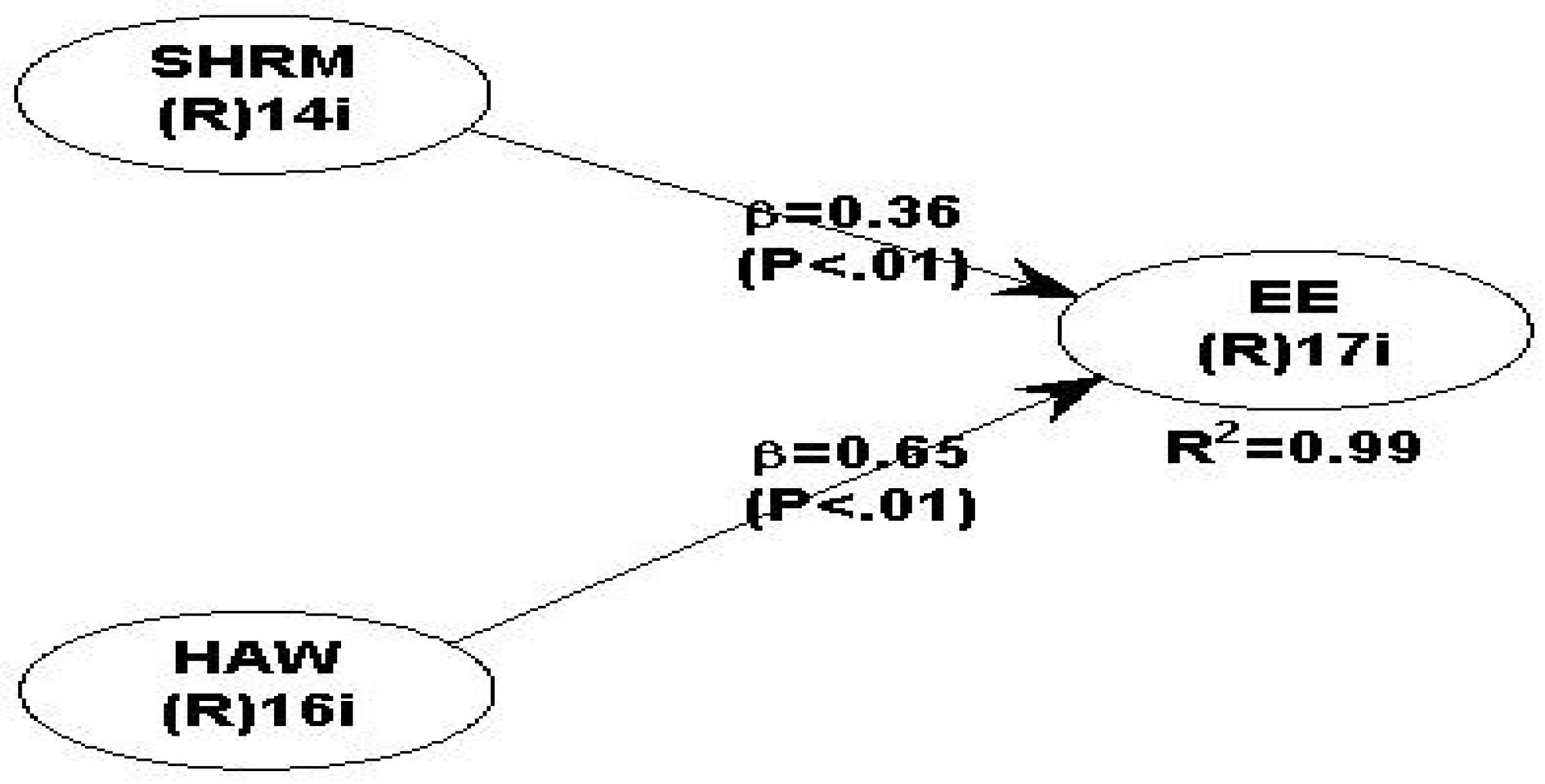
Table 4.
Relationship between Employee Engagement and Happiness at workplace.
| HAW | EE | ||
| HAW | Pearson Correlation | 1 | .947** |
| Sig. (2-tailed) | .000 | ||
| N | 473 | 473 | |
| **. Correlation is significant at the 0.01 level (2-tailed). | |||
Disclaimer/Publisher’s Note: The statements, opinions and data contained in all publications are solely those of the individual author(s) and contributor(s) and not of MDPI and/or the editor(s). MDPI and/or the editor(s) disclaim responsibility for any injury to people or property resulting from any ideas, methods, instructions or products referred to in the content. |
© 2024 by the authors. Licensee MDPI, Basel, Switzerland. This article is an open access article distributed under the terms and conditions of the Creative Commons Attribution (CC BY) license (http://creativecommons.org/licenses/by/4.0/).
Copyright: This open access article is published under a Creative Commons CC BY 4.0 license, which permit the free download, distribution, and reuse, provided that the author and preprint are cited in any reuse.