
Submitted:
01 November 2024
Posted:
01 November 2024
You are already at the latest version
Abstract
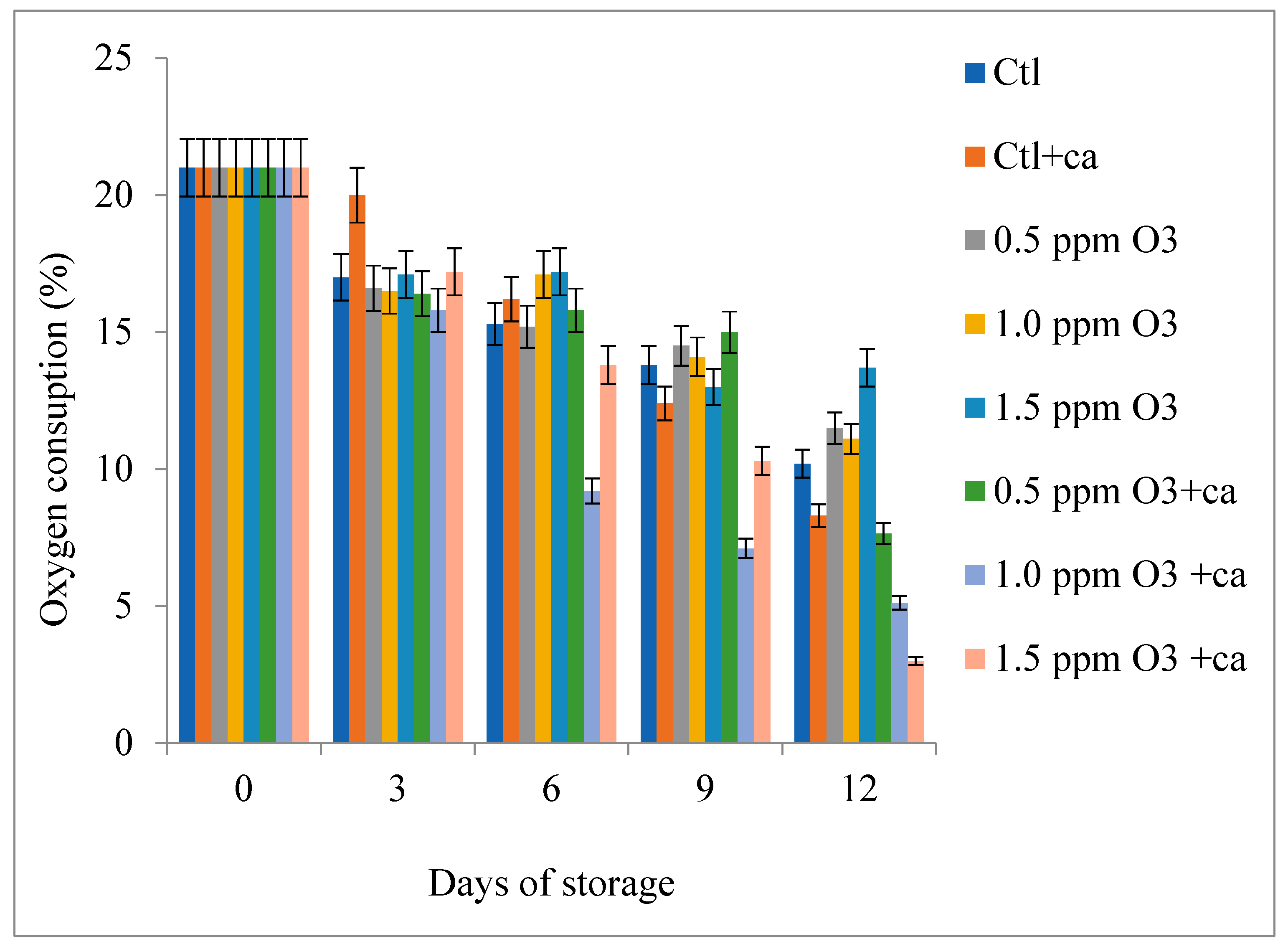
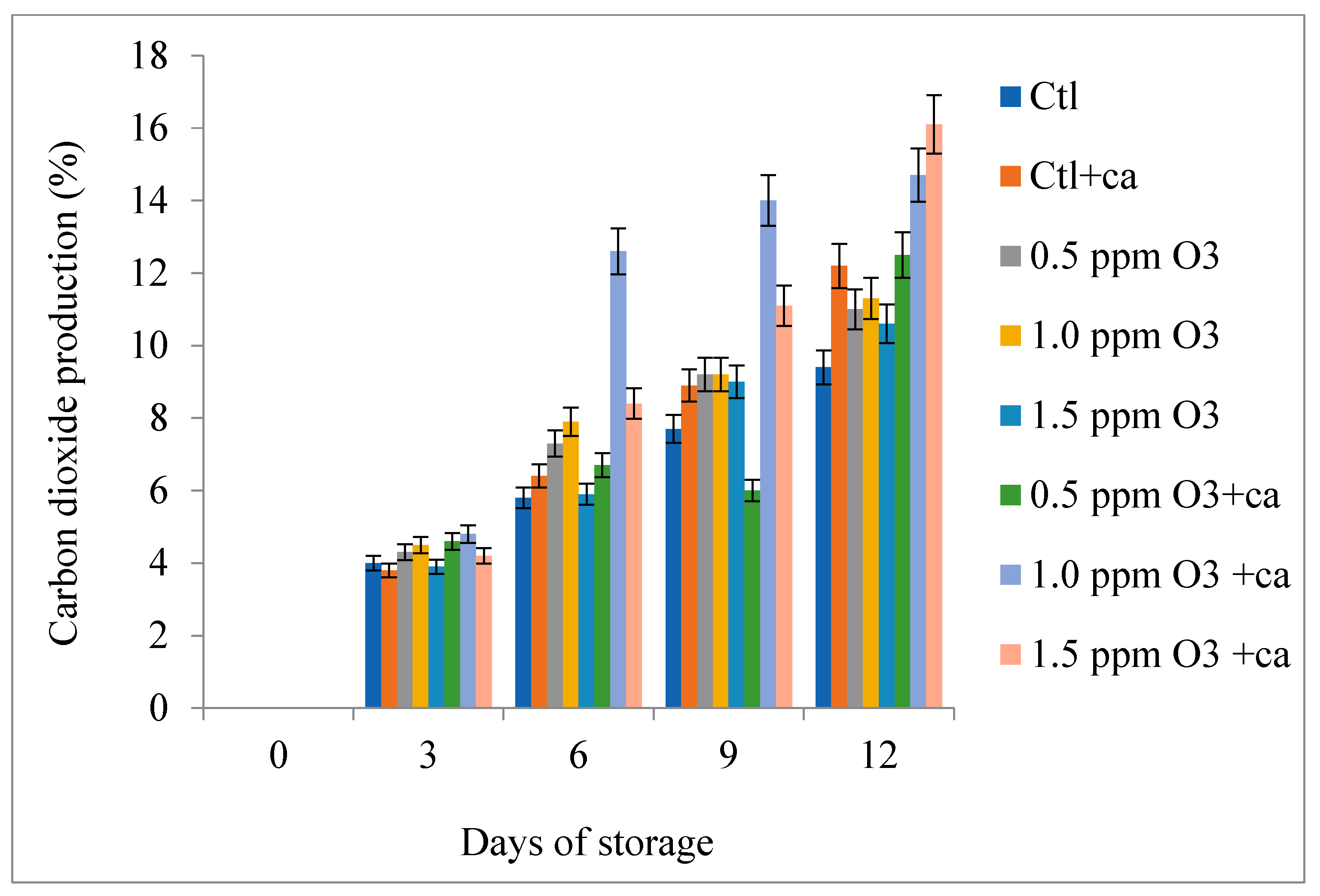
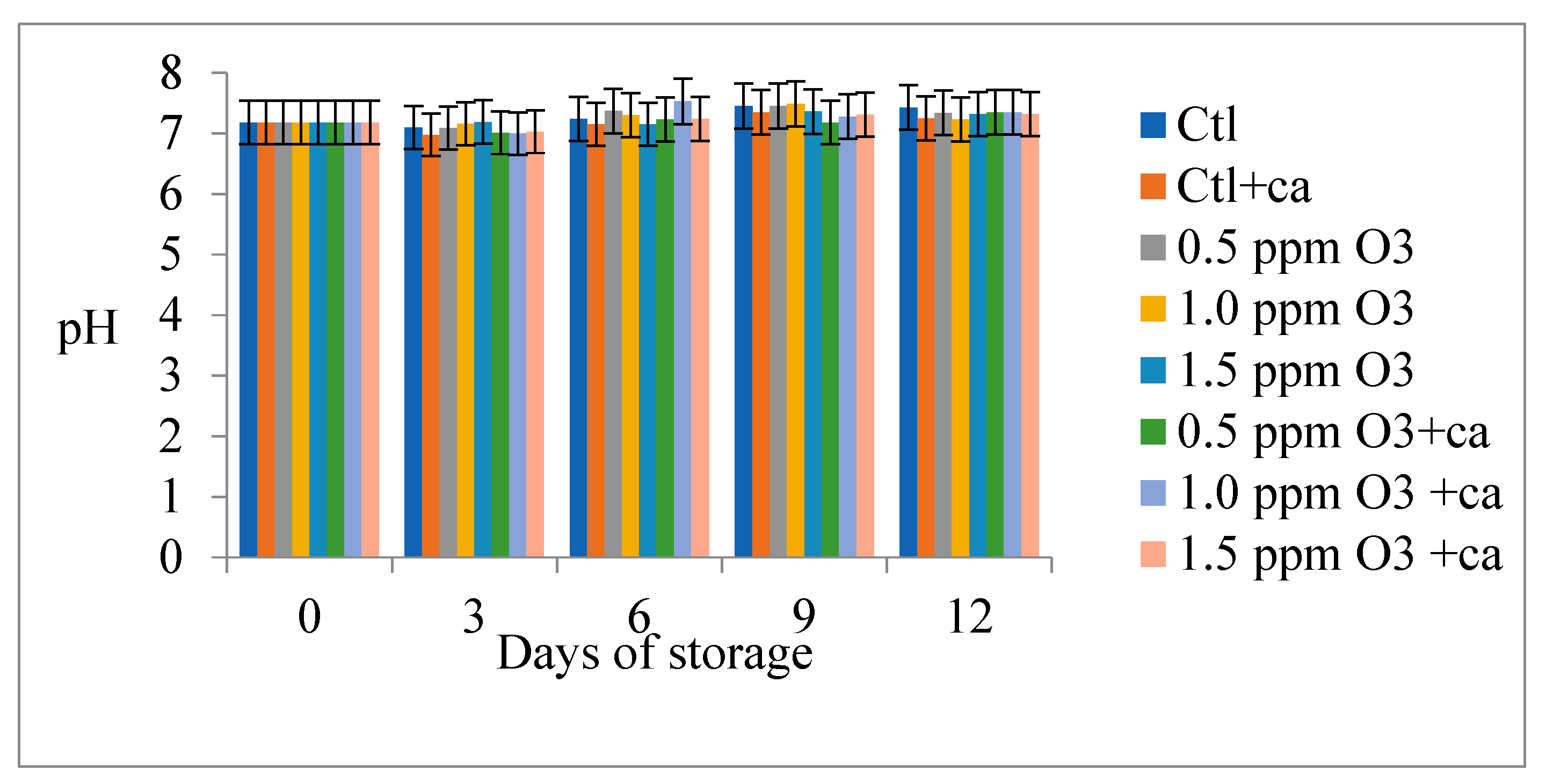
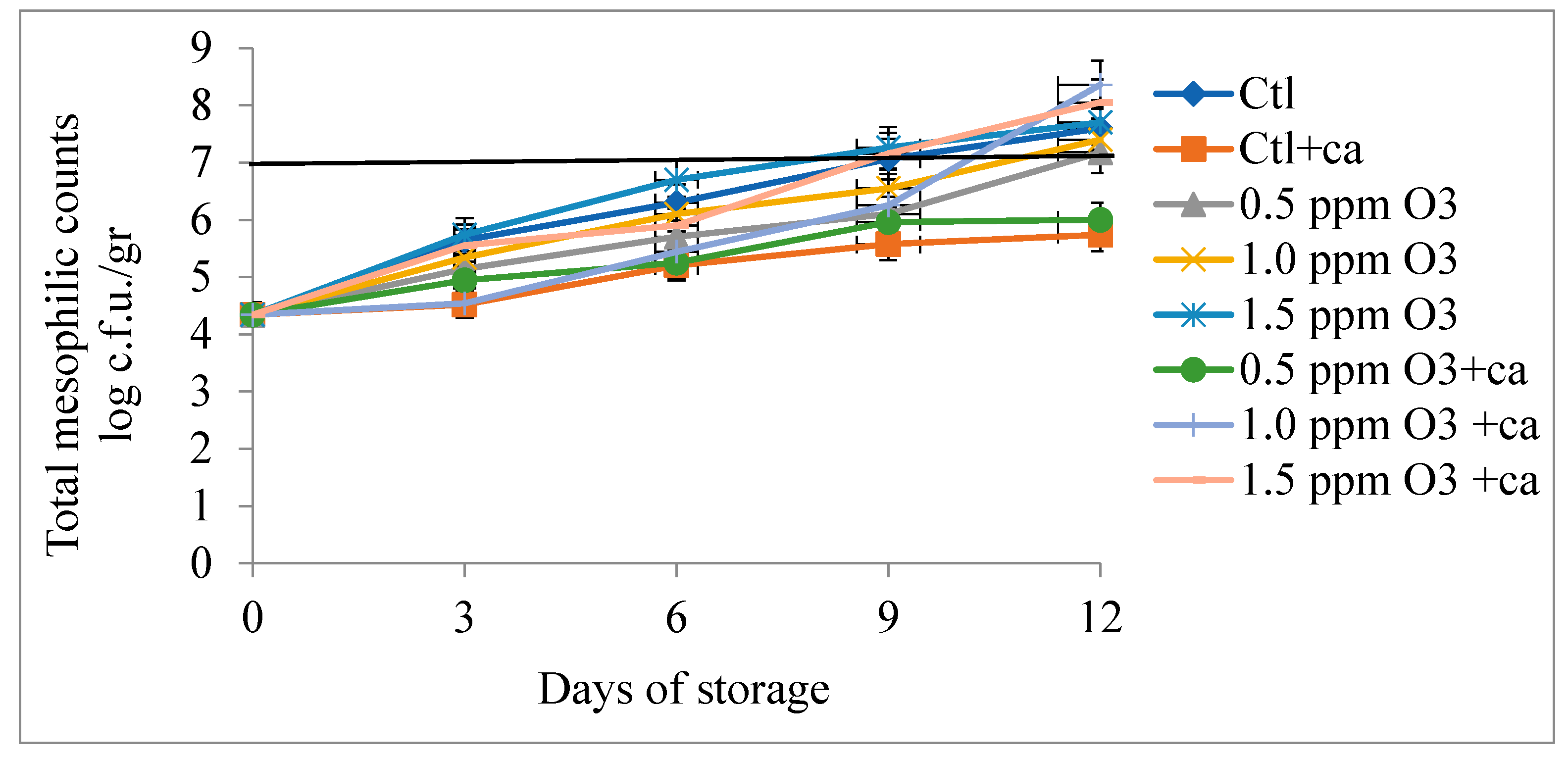
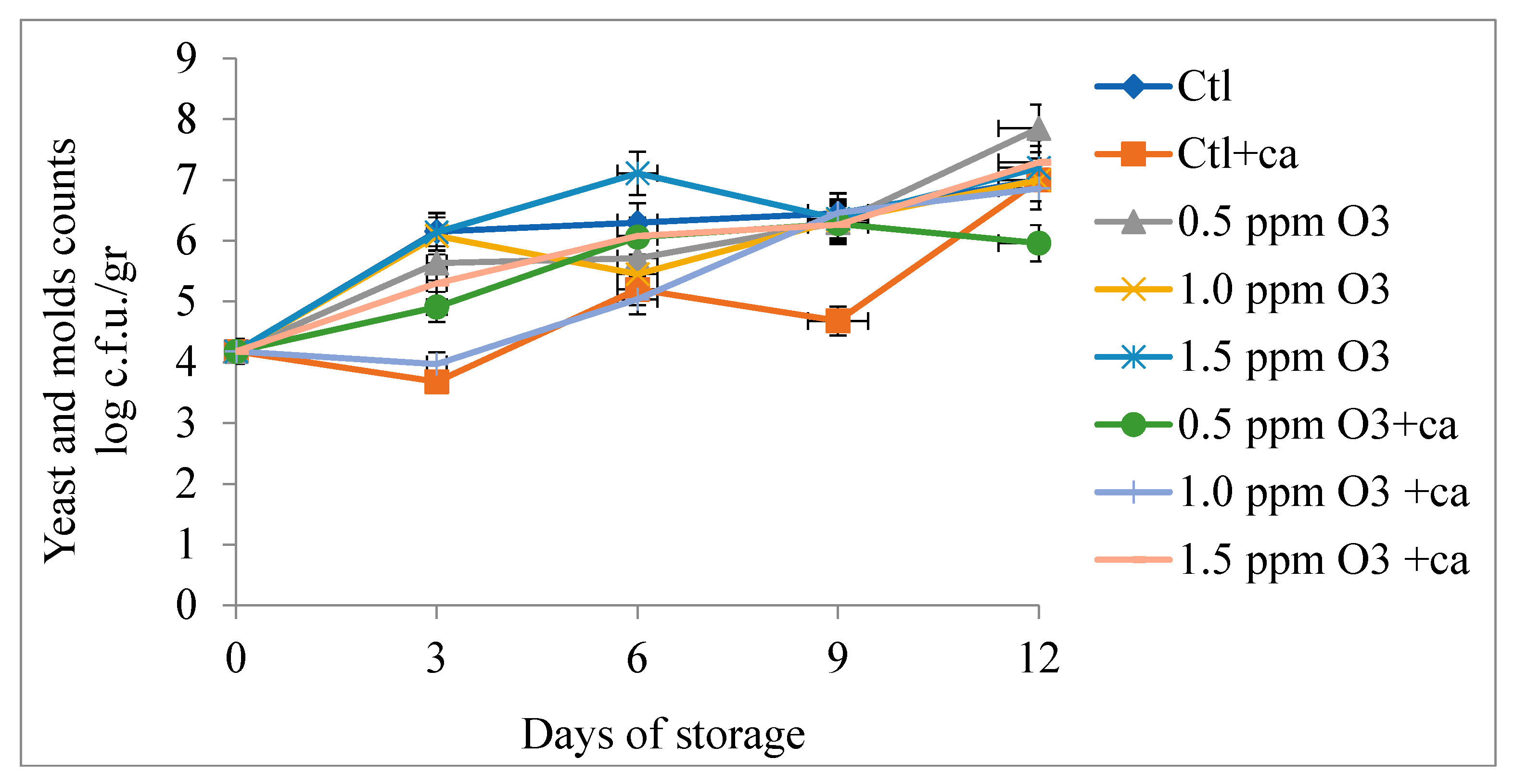
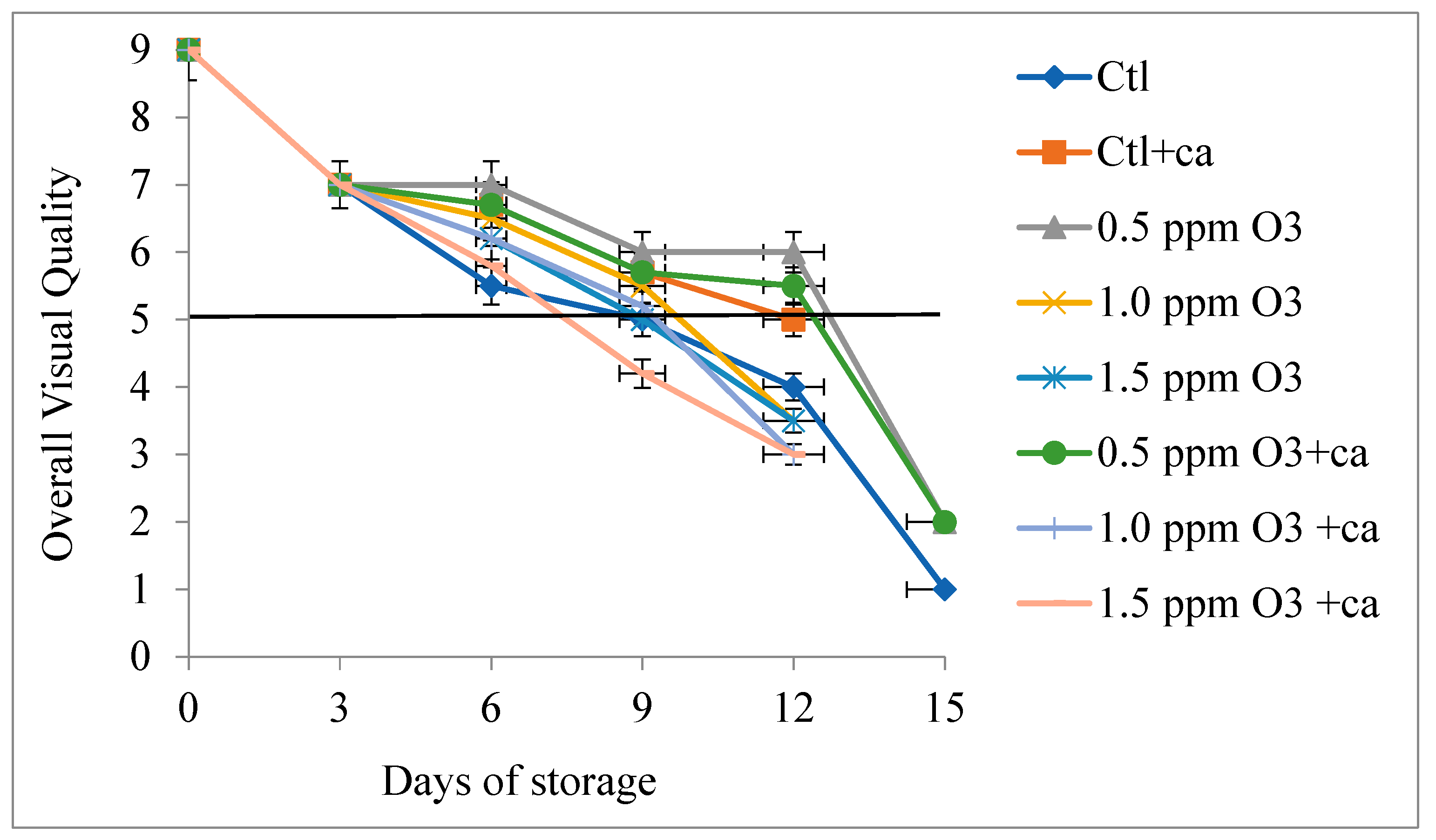
Ozone is considered a promising food preservation technique and has gained great interest because of its strong oxidizing properties and significant antimicrobial efficacy, and because its decomposition leaves no residue in food. In the present study the combined effect of ozone and citric acid treatment on quality and shelf life of freshly cut lettuce packaged under a passive modified atmosphere during cold storage was investigated. Lettuce were washed, cut and treated with ozone at 0.5, 1.0 or 1.5 ppm for 45 minutes. Another batch was treated with citric acid and 3 additional batches were treated with ozone at the above concentrations plus citric acid. Headspace analysis, color parameters, pH, microbiological and sensory analysis were monitored during cold storage. Carbon dioxide production rates increased significantly (p<0.05) in ozonated lettuce at 0.5 and 1.0 ppm compared to the control. Ozone treatment at 0.5 and 1.0 ppm and 0.5 ppm plus citric acid caused a significant decrease (p<0.05) in total mesophilic counts, L* and a* color parameters compared to the control. No treatments significantly (p <0.05) affected yeast and mold counts. Treatment with citric acid caused a significant (p <0.05) decrease in pH compared to the control. Ozone treatment at 0.5 ppm and 0.5 ppm plus citric acid extended shelf-life of lettuce by 4 days compared to the untreated samples during cold storage.
Keywords:
1. Introduction
2. Materials and Methods
2.1. Experimental Design
2.2. Headspace Analysis
2.3. Color
2.4. pH
2.5. Microbiological Analysis
2.6. Sensory Analysis
2.7. Statistical Analysis
3. Results
3.1. Headspace Analysis
3.2. Color
3.3. pH
3.4. Microbiological Analysis
3.5. Sensory Analysis
4. Discussion
5. Conclusions
Author Contributions
Funding
Institutional Review Board Statement
Informed Consent Statement
Data Availability Statement
Acknowledgments
Conflicts of Interest
References
- Aytac, S.A.; Ben, U.; Cengiz, C.; Taban, B.M. Evaluation of Salmonella and Listeria monocytogenes contamination on leafy green vegetables. J. Food Agric. Environ. 2010, 8, 275–279. [Google Scholar]
- McEvoy, J.L.; Luo, Y.; Conway, W.; Zhou, B.; Feng, H. Potential of Escherichia coli O157:H7 to grow on field-cored lettuce as impacted by postharvest storage time and temperature. Int. J. Food Microbiol. 2009, 128, 506–509. [Google Scholar] [CrossRef] [PubMed]
- Anonymous. Hepatitis A associated with consumption of frozen strawberries. Center for Disease Control and Prevention. Morb Mortal Wkly Rep. 1997a, 46(13), 288–295. [Google Scholar]
- Anonymous. Outbreaks of Escherichia coli O157:H7 infection associated with eating alfalfa sprouts. Center for Disease Control and Prevention. Morb Mortal Wkly Rep. 1997b, 46(32), 741–744. [Google Scholar]
- Farber, J.M.; Carter, A.O.; Varughese, P.V.; Ashton, F.E.; Ewan, E.P. Listeriosis traced to the consumption of alfalfa tablets and soft cheese. N. Engl. J. Med. 1990, 332(5), 338. [Google Scholar]
- Kim, J.G.; Yousef, A.E.; Chism, G.W. Use of ozone to inactivate microorganisms on lettuce. J. Food Saf. 1999, 19, 17–34. [Google Scholar] [CrossRef]
- Bilinski, P.; Kapsa-Skrzypczak, L.; Posobkiewicz, M.; Bondaryk, M.; Holownia, P.; Wojtyla, A. Public health hazards in Poland posed by foodstuffs contaminated with Escherichia coli O104:H4 bacterium from the recent European outbreak. Ann. Agric. Environ. Med. 2012, 19, 3–10. [Google Scholar]
- Artez, F.; Gomez, P.; Aguayo, E.; Escalona, V.; Artes-Hernandez, F. Sustainable sanitation techniques for keeping quality and safety of fresh-cut plant commodities. Postharvest Biol. Technol. 2008, 51, 287–296. [Google Scholar] [CrossRef]
- Selma, M.V.; Allende, A.; Lopez-Galvez, F.; Conesa, M.A.; Gil, M.I. Disinfection potential of ozone, ultraviolet-C and their combination in wash water for the fresh-cut vegetable industry. Food Microbiol. 2008, 25, 809–814. [Google Scholar] [CrossRef]
- Xu, L. Use of ozone to improve the safety of fresh fruits and vegetables. Food Technol. 1999, 53, 58–61. [Google Scholar]
- Graham, D.M. Use of ozone for food processing. Food Technol. 1997, 51, 72–75. [Google Scholar]
- Rice, R.G. Ozone in the United States of America–State-of-the-art. Ozone: Sci Eng. 1999, 21, 99–118. [Google Scholar] [CrossRef]
- Güzel-Seydim, Z.; Bever, P.I.; Greene, A.K. Efficacy of ozone to reduce bacterial population in the presence of food components. Food Microbiol. 2004, 21, 475–479. [Google Scholar] [CrossRef]
- Olmez, H.; Akbas, M.Y. Optimization of ozone treatment of fresh-cut green leaf lettuce. J Food Eng. 2009, 90, 487–494. [Google Scholar] [CrossRef]
- Alexopoulos, A.; Plessas, S.; Ceciu, S.; Lazar, V.; Mantzourani, I.; Voidarou, C.; Stavropoulou, E.; Beritzoglou, E. Evaluation of ozone efficacy on the reduction of microbial population of fresh cut lettuce (Lactuca sativa) and green bell pepper (Capsicum annuum). Food Control 2013, 30, 491–496. [Google Scholar] [CrossRef]
- Miller, F.A.; Silva, C. L. M.; Brandaõ, T. R. S. A Review on Ozone-Based Treatments for Fruit and Vegetables Preservation. Food Eng. Rev. 2013, 5, 77–106. [Google Scholar] [CrossRef]
- Piechowiak, T.; Migut, D.; Józefczyk, R.; Balawejder, M. Ozone Treatment Improves the Texture of Strawberry Fruit during Storage. Antioxidants 2022, 11, 821. [Google Scholar] [CrossRef]
- Xue, W.; Macleod, J.; Blaxland, J. The Use of Ozone Technology to Control Microorganism Growth, Enhance Food Safety and Extend Shelf Life: A Promising Food Decontamination Technology. Foods 2023, 12, 814. [Google Scholar] [CrossRef]
- Barthwal, R.; Negi, A.; Kathuria, D.; Singh, N. Ozonation: Post-harvest processing of different fruits and vegetables enhancing and preserving the quality. Food Chem. 2024, in press. [Google Scholar]
- Olmez, H.; Kretzschmar, U. Potential alternative disinfection methods for organic fresh-cut industry for minimizing water consumption and environmental impact. LWT-Food Sci. Technol. 2009, 42, 686–693. [Google Scholar] [CrossRef]
- Panou, A.A.; Karabagias, I.K.; Riganakos, K.A. Effect of gamma-irradiation on sensory characteristics, physicochemical parameters, and shelf life of strawberries stored under refrigerated conditions. Int. J. Fruit Sci. 2019, 20(2), 191–206. [Google Scholar] [CrossRef]
- Panou, A.A.; Akrida-Demertzi, K.; Demertzis, P.G.; Riganakos, K.A. Effect of Gaseous Ozone and Heat Treatment on Quality and Shelf Life of Fresh Strawberries during Cold Storage. Int. J. Fruit. Sci. 2021, 21(1), 218–231. [Google Scholar] [CrossRef]
- Beltran, D.; Selma, M.V.; Marin, A.; Gil, M.I. Ozonated water extents the shelf life of fresh-cut lettuce. J. Agric. Food Chem. 2005, 53, 5654–5663. [Google Scholar] [CrossRef] [PubMed]
- Zhang, L.; Lu, Z.; Yu, Z.; Cao, X. Preservation of fresh-cut-celery by treatment of ozonated water. Food Control 2005, 16, 279–283. [Google Scholar] [CrossRef]
- Rico, D.; Martin-Diana, A.B.; Frias, J.M.; Henehan, G.T.M.; Barry-Ryan, C. Effect of ozone and calcium lactate treatments on browning and texture properties of fresh-cut lettuce. J. Sci. Food Agric. 2006, 86, 2179–2188. [Google Scholar] [CrossRef]
- Jiang, Y.M.; Fu, J. Inhibition of polyphenol oxidase and the browning control of litchi fruit by glutathione and citric acid. Food Chem. 1998, 62, 49–52. [Google Scholar] [CrossRef]
- Whangchai, K.; Saengnil, K.; Uthaibutra, J. Effect of ozone in combination with some organic acids on the control of postharvest decay and pericarp browning of longan fruit. Crop Prot. 2006, 25, 821–825. [Google Scholar] [CrossRef]
- Goyeneche, R.; Aguero, M.V.; Roura, S.; Di Scala, K. Application of citric acid and mild heat shock to minimally processed sliced radish: Color evaluation. Postharvest Biol. Technol. 2014, 93, 106–113. [Google Scholar] [CrossRef]
- Singh, N.; Singh, R.K.; Bhunia, A.K.; Stroshine, R.I. Efficacy on chlorine dioxide, ozone and thyme essential oil or a sequential washing in killing Escherichia coli O157:H7 on lettuce and baby carrots. LWT- Food Sci. Technol. 2002, 35, 720–729. [Google Scholar] [CrossRef]
- Vurma, M.; Pandit, R.B.; Sastry, S.K.; Yousef, A.E. Inactivation of Escherichia coli O157:H7 and natural microbiota on spinach leaves using gaseous ozone during vacuum cooling and simulated transportation. J. Food Prot. 2009, 72, 1538–1546. [Google Scholar] [CrossRef]
- Klockow, P. A.; Keener, K. M. Safety and quality assessments of packaged spinach treated with a novel ozone-generation system. LWT- Food Sci. Technol. 2009, 42, 1047–1053. [Google Scholar] [CrossRef]
- Karaca, H.; Velioglu, Y.S. Effects of ozone treatments on microbial quality and some chemical properties of lettuce, spinach and parsley. Postharvest Biol. Technol. 2014, 88, 46–53. [Google Scholar] [CrossRef]
- Baur, S.; Klaiber, R.; Hammes, W.P.; Carle, R. Sensory and microbiological quality of shredded, packaged iceberg lettuce as affected by pre-washing procedures with chlorinated and ozonated water. Innov. Food Sci. Emerg. Technol. 2004, 5, 45–55. [Google Scholar] [CrossRef]
- King, A.; Magnunson, J.; Tӧrӧk, T.; Goodman, N. Microbial flora and storage quality of partially processed lettuce. J. Food Sci. 1991, 56, 459–461. [Google Scholar] [CrossRef]
- Jacxsens, L.; Devlieghere, F.; Ragaert, P.; Vanneste, E.; Debevere, J. Relation between microbiological quality, metabolite production and sensory quality of equilibrium modified atmosphere packaged fresh-cut produce. Int. J. Food Microbiol. 2003, 83, 263–280. [Google Scholar] [CrossRef] [PubMed]
- Gomez-Lopez, V.M.; Ragaert, P.; Jeyachchandran, V.; Debevere, J.; Devlieghere, F. Shelf-life of minimally processed lettuce and cabbage treated with gaseous chlorine dioxide and cysteine. Int. J. Food Microbiol. 2008, 121(1), 74–83. [Google Scholar] [CrossRef] [PubMed]
- Koseki, S.; Yoshida, K.; Isobe, S.; Itoh, K. Decontamination of lettuce using acidic electrolyzed water. J. Food Prot. 2001, 64, 652–658. [Google Scholar] [CrossRef]
- Koseki, S.; Isobe, S. Effect of ozonated water treatment on microbial control and on browning of iceberg lettuce (Lactuca sativa L.). J. Food Prot. 2006, 69, 154–160. [Google Scholar] [CrossRef]
- Hassenberg, K.; Idler, C.; Molloy, E.; Geyer, M.; Plochl, M.; Barnes, J. Use of ozone in a lettuce-washing process: an industrial trial. J. Sci. Food Agric. 2007, 87, 914–919. [Google Scholar] [CrossRef]
- Cullen, P.J.; Valdramidis, B.K.; Tiwari, B.K.; Patil, S.; Bourke, P.; O’ Donell, C.P. Ozone processing for food preservation: An overview on fruit juice treatments. Ozone: Sci. Technol. 2010, 32, 166–179. [Google Scholar] [CrossRef]
- Kumar Das, B.; Gang Kim, J.; Weon Choi, J. Edge browning and microbial quality of fresh-cut lettuce with different sanitizers and contact times. Bulg. J. Agric. Sci. 2011, 17(1), 55–62. [Google Scholar]
- Zuma, F.; Lin, J.; Jonnalagadda, S.B. Ozone-initiated disinfection kinetics of Escherichia coli in water. J. Environ. Sci. Health A 2009, 44(1), 48–56. [Google Scholar] [CrossRef]
- Achen, M.; Yousef, A.E. Efficacy of ozone against Escherichia coli O157:H7 on apples. J. Food Sci. 2001, 66, 1380–1384. [Google Scholar]
- Amerine, M. A.; Pangborn, R. M.; & Roessler, E. B. Principles of Sensory Evaluation of Food. Academic Press, New York, 1965, pp. 145-209.
- Willocx, F. (1995). Evaluation of microbial and visual quality of minimally processed foods: A case study on the product life cycle of cut endive. Doctoral thesis, Catholic University of Leuven, Belgium 1995.
- Abbot, J.A. Quality measurements of fruits and vegetables. Postharvest Biol. Technol. 1999, 15, 207–225. [Google Scholar] [CrossRef]
- Garcia, A.; Mount, J.R.; Davidson, R.M. Ozone and chlorine treatment of minimally processed lettuce. J. Food Sci. 2003, 68, 2747–2751. [Google Scholar] [CrossRef]
- Akbas, M.Y.; Olmez, H. Effectiveness of organic acids, ozonated water and chlorine dippings on microbiological reduction and storage quality of fresh-cut iceberg lettuce. J. Sci. Food Agric. 2007, 87, 2609–2616. [Google Scholar] [CrossRef] [PubMed]

| Lettuce samples | ||||||||
|---|---|---|---|---|---|---|---|---|
| Days of storage | Control |
Control +citric acid |
0.5 ppm ozone | 1.0 ppm ozone | 1.5 ppm ozone | 0.5 ppm ozone +citric acid | 1.0 ppm ozone +citric acid | 1.5 ppm ozone +citric acid |
| 0 | 48.83 1a ±1.85 | 48.83 3a ±1.85 | 48.83 4a ±1.85 | 48.83 5a ±1.85 | 48.83 8a ±1.85 | 48.83 9a ±1.85 | 48.83 11a ±1.85 | 48.83 12a ±1.85 |
| 3 | 49.83 1b ±3.34 | 51.20 3b ±3.69 | 52.26 4b ±3.66 |
52.50 6b ±1.90 |
51.97 8b ±3.28 |
51.52 9b ±1.78 |
49.97 11b ±3.26 |
49.16 12b ±2.10 |
| 6 | 49,44 1c ±1.40 | 51.05 3c ±1.95 | 51.36 4c ±1.13 |
48.74 7d ±1.59 |
50.21 8d ±0.44 |
48.33 10e ±0.94 |
49.30 11e ±2.37 |
48.73 12e ±1.83 |
| 9 | 49,68 1f ±1.55 | 50.51 3f ±4.31 | 49.63 4f ±4.38 |
48.08 7f ±0.63 |
48.47 8f ±3.46 |
47.75 10f ±1.07 |
49.07 11f ±0.19 |
48.41 12f ±1.42 |
| 12 | 45.42 2g ±1.83 |
48.99 3h ±1.51 |
49.08 4h ±3.59 |
47.32 7h ±2.68 |
47.77 8h ±1.54 |
46.96 10h ±1.23 |
48.29 11h ±1.56 |
47.47 12h ±0.80 |
| Lettuce sample | ||||||||
|---|---|---|---|---|---|---|---|---|
| Days of storage | Control |
Control +citric acid |
0.5 ppm ozone | 1.0 ppm ozone | 1.5 ppm ozone | 0.5 ppm ozone +citric acid | 1.0 ppm ozone +citric acid | 1.5 ppm ozone +citric acid |
| 0 | -16.18 13i ±0.53 | -16.1814 i ±0.53 | -16.1815 i ±0.53 | -16.18 16i ±0.53 | -16.18 18i ±0.53 | -16.18 19i ±0.53 | -16.18 20i ±0.53 | -16.18 22i ±0.53 |
| 3 | -16.78 13j ±0.28 | -16.0614k ±0.28 | -16.3715k ±1.01 | -16.9916k ±0.48 | -16.5818k ±0.48 | -15.9619k ±1.01 | -16.8520k ±0.22 | -15.7122k ±0.87 |
| 6 | -16.58 13l ±0.57 | -15.96 14l ±0.92 | -16.1815 l ±0.35 | -15.46 17l ±0.82 | -15.61 18l ±1.25 | -15.68 19l ±0.67 | -15.78 21l ±0.66 | -15.66 22l ±1.36 |
| 9 | -15.2813m ±1.82 | -15.8514m ±1.95 | -15.6415m ±0.99 | -15.1517m ±0.13 | -15.5218m ±0.74 | -15.1719m ±0.59 | -15.2521m ±1.16 | -15.2522m ±1.11 |
| 12 | -14.9313n ±1.52 | -15.7214n ±0.71 | -15.5115n ±1.16 | -15.1017n ±0.84 | -13.9918n ±2.28 | -15.1119n ±1.42 | -14.4021n ±0.88 | -14.2522n ±0.82 |
| Lettuce sample | ||||||||
|---|---|---|---|---|---|---|---|---|
| Days of storage | control | Control +citric acid | 0.5 ppm ozone | 1.0 ppm ozone | 1.5 ppm ozone | 0.5 ppm ozone +citric acid | 1.0 ppm ozone +citric acid | 1.5 ppm ozone +citric acid |
| 0 | 35.33 23o ±1.87 | 35.33 25o ±1.87 | 35.33 26o ±1.87 | 35.33 27o ±1.87 | 35.33 28o ±1.87 | 35.33 29o ±1.87 | 35.33 30o ±1.87 | 35.33 31o ±1.87 |
| 3 | 37.86 23p ±1.31 |
36.99 25p ±1.16 |
36.75 26p ±2.06 |
37.74 27p ±1.95 |
37.46 28p ±2.07 |
35.18 29p ±2.09 |
37.82 30p ±0.75 |
35.24 31q ±1.45 |
| 6 | 37.57 23r ±0.71 |
35.81 25s ±1.05 |
36.43 26s ±0.98 |
35.68 27s ±0.65 |
35.66 28s ±3.90 |
35.10 29s ±0.87 |
35.79 30s ±2.13 |
34.80 31s ±2.73 |
| 9 | 33.95 24t ±1.73 |
35.79 25t ±2.28 |
35.15 26t ±1.01 |
33.84 27t ±1.47 |
33.74 28t ±2.08 |
34.84 29t ±1.04 |
35.34 30t ±1.99 |
34.64 31t ±1.83 |
| 12 | 33.86 24u ±3.70 |
35.50 25u ±1.59 |
34.14 26u ±1.61 |
32.96 27u ±1.83 |
33.11 28u ±4.16 |
33.99 29u ±1.36 |
31.96 30u ±2.47 |
32.83 31u ±2.15 |
Disclaimer/Publisher’s Note: The statements, opinions and data contained in all publications are solely those of the individual author(s) and contributor(s) and not of MDPI and/or the editor(s). MDPI and/or the editor(s) disclaim responsibility for any injury to people or property resulting from any ideas, methods, instructions or products referred to in the content. |
© 2024 by the authors. Licensee MDPI, Basel, Switzerland. This article is an open access article distributed under the terms and conditions of the Creative Commons Attribution (CC BY) license (http://creativecommons.org/licenses/by/4.0/).


