

Submitted:
30 October 2024
Posted:
31 October 2024
You are already at the latest version
Abstract
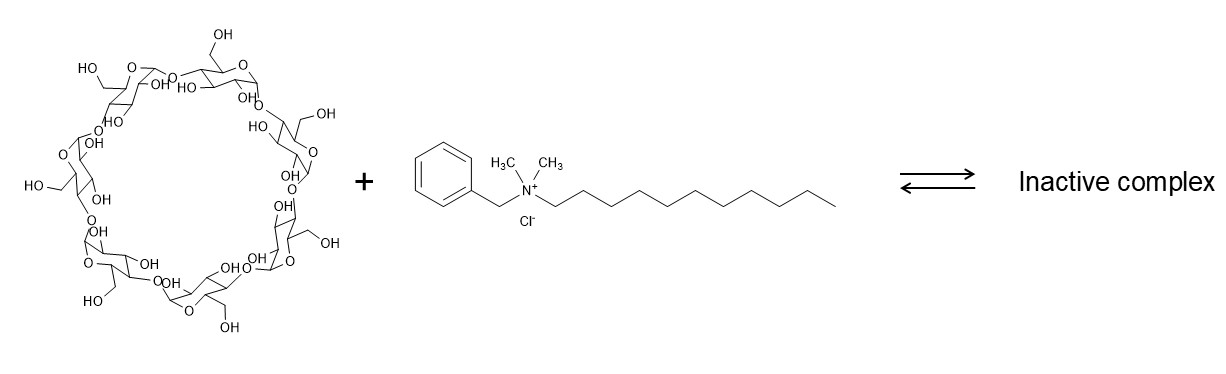
Antimicrobial preservatives are essential components of multidose pharmaceutical formulations to prevent microbial growth and contamination, many of which contain lipophilic and poorly water-soluble drugs in need of solubilizing excipients such as cyclodextrins (CDs). However, CDs frequently reduce or even abolish the antimicrobial activities of commonly used pharmaceutical preservatives. The degree of inactivation depends on the CD complexation of the preservatives, which in turn depends on their chemical structure and physiochemical properties. In general, lipophilic preservatives are more likely to be inactivated; however, CDs are also known to inactivate highly water-soluble preservatives. In some drug formulations, preservative inactivation has been offset by including excipients that possess some antimicrobial activity on their own. In this review we explain how CDs interact with some commonly used pharmaceutical preservatives and why some preservatives are more susceptible to CD inactivation than others are.
Keywords:
antimicrobial preservative
; cyclodextrin
; inactivation
; antimicrobial efficacy enhancer
1. Introduction
Antimicrobial preservatives are essential components of multidose pharmaceutical formulations in aqueous solutions that prevent microbial growth and contamination. These preservatives must possess broad-spectrum antimicrobial activity and stability, be non-irritating and non-toxic, and be compatible with other formulation components and primary packaging materials. Owing to multiple interactions in aqueous formulations, only a fraction of a given preservative is active, emphasizing the importance of understanding the physicochemical properties of preservatives and the effects of formulation composition. At least 20 different antimicrobial preservatives can be found in marketed pharmaceutical products, in addition to various excipients that can increase their antibacterial activity, such as chelating agents, essential oils, alcohols, and fatty acids, which possess some antimicrobial activity on their own and can have additive or synergistic antimicrobial effects [1,2,3,4,5,6]. The formulation type can also affect the antimicrobial efficacy of preservatives. For example, o/w emulsions consist of a dispersed oil phase and homogeneous aqueous phase. Microbial cells are mainly located in the aqueous phase, whereas preservatives are distributed between the two phases. Similarly, preservatives can bind to solid particles in pharmaceutical suspensions and to polymers in hydrogels. For a preservative to affect microbial growth, the concentration of the free preservative molecules in the aqueous phase must be sufficient. Water-soluble polymers, complexing agents, and surfactants can bind dissolved preservative molecules and render them inactive in aqueous solution. Furthermore, preservatives may be absorbed from aqueous media into plastics, rubber, and other elements of primary packaging materials, thereby reducing their activity. These incompatibilities have been described in many well-known pharmaceutical textbooks [7,8,9]. Although preservatives can prevent microbial contamination, they frequently cause other problems such as allergic reactions, irritation, and toxic side effects. Thus, it is recommended that the preservative concentration in pharmaceutical formulations should be maintained at levels just sufficient to comply with the compendial antimicrobial efficacy tests (e.g., the United States Pharmacopeia National Formulary (USP) Chapter <51> “Antimicrobial Effectiveness Testing” and the European Pharmacopeia (Ph. Eur.) Chapter 5.1.3 “Efficacy of Antimicrobial Preservation”). The tests are performed during drug formulation development and are harmonized with respect to how the tests are performed but differentiate between challenging microorganisms and acceptance criteria.
Cyclodextrins (CDs) reduce or abolish the antimicrobial activity of preservatives in aqueous pharmaceutical formulations. In general, CDs have a much greater effect than other common excipients [10,11,12,13,14,15]. Studies have also shown that by proper selection of CD and adjusting their concentration, it is possible to minimize the effect of CDs on antimicrobial activity [16]. CDs can also enhance the efficacy of lipophilic antimicrobial agents [17,18,19,20,21,22,23], possibly by increasing their solubility and availability in aqueous formulations [24]. Thus, CDs can decrease or occasionally enhance the antimicrobial activity of preservatives and other antimicrobial compounds. In some cases, excipients such as propylene glycol and boric acid can be added to counteract CD inactivation of preservatives such as benzalkonium chloride (BAC) and other quaternary ammonium compounds [25,26]. Holm et al. developed a mathematical model to calculate the required concentrations of both neutral (e.g., parabens) and ionized (e.g., benzoate) preservatives in aqueous CD solutions containing poorly soluble drugs [14]. Holm’s model is based on the stability constants of the drug/CD (D/CD) and preservative/CD (P/CD) complexes and the minimum inhibitory concentration (MIC) of the preservative. This model can explain the rather complex interactions in pure aqueous solutions containing a drug, preservative, and CD and helps formulators estimate the required preservative surplus. However, the efficacy of the final preservative concentration in a given formulation should be verified by a compendial antimicrobial efficacy test. The following is a review of how CDs affect the effectiveness of common antimicrobial preservatives in aqueous pharmaceutical formulations. The CDs found in marketed pharmaceutical products include α-cyclodextrin (αCD), β-cyclodextrin (βCD), 2-hydroxypropyl-β-cyclodextrin (HPβCD), sulfobutyl ether β-cyclodextrin sodium salt (SBEβCD), randomly methylated β-cyclodextrin (RMβCD), γ-cyclodextrin (γCD), and 2-hydroxypropyl-γ-cyclodextrin (HPγCD). All reported percentage concentrations are weight by volume (% w/v).
2. Classification of preservatives and their physiochemical properties
Pharmaceutical formulators generally prefer antimicrobial preservatives with compendial monographs, such as in Ph. Eur. or USP [5,27,28]. Examples of such preservatives are quaternary ammonium compounds such as benzalkonium chloride, cetrimonium bromide, and cetylpyridinium chloride; organic acids such as benzoic acid and sorbic acid, as well as their salts; parahydroxybenzoate esters (i.e., parabens) such as methylparaben, ethylparaben, propylparaben, and butylparaben; phenols such as chlorocresol, cresol, phenol, and thymol; and alcohols such as chlorobutanol, benzyl alcohol, and phenoxyethanol (Figure 1). The use of organomercurial preservatives (e.g., thiomersal) in pharmaceutical products is limited because of toxicity concerns [29]. The efficacy of an antimicrobial preservative in a given liquid pharmaceutical formulation is determined by the composition of the formulation and its pH, as well as the structure and physiochemical properties of the preservative. The physicochemical properties of common preservatives are listed in Table 1. Frequently, the antimicrobial activity of ionizable compounds is pH dependent. For example, phenols (pKa about 10) are inactive at pH values above 9, where they are ionized, and benzoic acid (pKa 4.2) has optimum antibacterial activity at pH values between 2.5 and 4.5 [28]. The tendency of preservatives to be absorbed into plastic containers and oil droplets in o/w emulsions increases with increasing lipophilicity. The antimicrobial activity of some preservatives, such as parabens, increases with increasing lipophilicity [30]. Quaternary ammonium compounds are inactivated by various polymers, anionic surfactants, and other anionic compounds via electrostatic interactions [28].
The number of hydrogen bond donors and acceptors in a preservative influences its ability to form bonds with surrounding molecules, including other pharmaceutical excipients [31,32]. In other words, the chemical structure and physiochemical properties of the preservatives determine the location and availability of the preservative molecules within the pharmaceutical formulation and the preservative concentration in contact with microbial contamination. Only a fraction of the dissolved preservative molecules can bind to microbes in aqueous pharmaceutical formulations to achieve the desired antimicrobial effect.
3. Preservative – cyclodextrin interactions
CDs can form inclusion and sometimes non-inclusion complexes with preservatives and the extent of such complexation is determined by the structure and physicochemical properties of the preservative. Most frequently, the concentrations of antimicrobial preservatives in the formulations are low (below 0.1% w/v); thus, even low CD concentrations can affect the antimicrobial availability of preservatives. At low concentrations, CDs enhance the antimicrobial activity of lipophilic and poorly water-soluble preservatives. However, at high CD concentrations, CDs can reduce antimicrobial activity (see Section 4). The most common type of preservative/CD complex (P/CD) in aqueous formulations, especially in dilute solutions, is a 1:1 complex in which one preservative molecule forms a complex with one CD molecule:
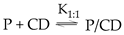
Under such conditions, the concentration of free preservative in a saturated solution can be calculated from the complexation efficacy (CE):
where K1:1 is the stability constant of the P/CD complex, S0 is the preservative solubility in the aqueous formulation when no CD is present, slope is the slope of the linear phase-solubility diagram (in moles/L), [P] is the concentration of the free preservative, [P/CD] is the concentration of the complex, ffree P is the fraction of free preservative in a CD solution, and [P]T is the total preservative concentration (i.e., [P] + [P/CD]) [33]. Comparable equations can be derived for drugs (D). Table 2 shows examples of the stability constants and estimated CEs for some preservative/CD complexes. These values may vary depending on the experimental conditions and the excipients present in the complexation media.
In aqueous drug formulations, CD concentration is determined by the amount needed to dissolve a given amount of drug, and generally, a small excess (e.g., 10%) is included to prevent drug precipitation during manufacturing and storage. The high CD concentration needed to dissolve the drug and the low CE of the drug-CD complex, leading to a high concentration of free CD molecules, pushes the equilibrium towards the preservative-CD complex (Equation (1)) decreasing the fraction of free preservatives even further. Figure 2 shows the dependance of the free fraction of a preservative on the CD concentration and the value of K1:1 of the preservative-CD complex in a pure aqueous CD solution (Equation (3)). The fraction decreased with increasing CD concentration and increasing value of K1:1. In other words, the degree of CD inactivation of a preservative is determined by the K1:1 of the preservative-CD complex and the CD concentration (Equation (3)).
The drug-to-CD molar ratio (Equation (4)) in the CD solution is determined as follows [33]:
The fraction of unbound CD in the solution can be calculated from the D:CD molar ratio. The data in Table 3 were used to draw Figure 3, which shows that when the CE was 0.1 about 90% of the dissolved CD was unbound and 80% when the CE was 0.25. Even when the CE is relatively high, as in the case of hydrocortisone in aqueous HPβCD solution, more than one-third of the CD molecules are unbound and can form a complex with the preservative in a CD solution saturated with the drug. The fraction of unbound CD is much higher because excess CD is required to prevent drug precipitation during storage and handling. Thus, the concentration of free (i.e., unbound) CD molecules is always relatively high in aqueous CD-containing drug formulations. These factors may influence the optimal preservative concentration in multi-dose CD-based formulations needed to achieve sufficient antimicrobial efficacy without causing adverse effects.
4. Studies of Antimicrobial Efficacy in Aqueous CD Solutions
Numerous reports have described the effect of CD concentration on the antimicrobial activity of preservatives in aqueous solutions (Table 4). Generally, antimicrobial inactivation increases with increasing CD concentrations. However, the degree of inactivation depends on the fraction of free preservatives in the aqueous solution (Equation (3)). For example, benzalkonium chloride (BAC) is a potent preservative with good solubility in water, but a high K1:1. Thus, BAC was not affected by low CD concentrations but displayed significant inactivation at higher CD concentrations. Notably, water-soluble preservatives such as BAC still form inactive water-soluble CD complexes in aqueous solutions. The antimicrobial efficacy of benzoic acid depends on ionization; the unionized form has higher antimicrobial activity; however, the unionized form is more lipophilic and has a higher affinity for the CD cavity (i.e., higher K1:1) [14]. Methyl paraben (solubility 5.5 mg/mL and effective concentration 0.1 to 0.4 mg/mL) has relatively high affinity for βCD and its derivatives (K1:1 from approx. 800 to 1500 M-1) and thus is inactivated by relatively low βCD concentrations (Table 1 and Table 2). At physiological pH, thiomersal is very hydrophilic (LogD7 -1.86, solubility approximately 1000 mg/mL at pH 7), and although it has significant affinity for HPβCD in its unionized form, HPβCD does not have much effect on its antimicrobial efficacy at physiological pH, where thiomersal is fully ionized. Although CDs are able to form complexes with both drugs and excipients, drugs generally do not have much effect on CD-inactivation of preservatives, partly due to the presence of excess CD needed to prevent drug precipitation during manufacturing and storage of the product, and partly due to the low preservative concentrations.
5. Examples of Marketed Products
Recently, Puskás et al. published a list of 130 approved pharmaceutical products formulated with parent CDs (i.e., αCD, βCD, and γCD) or their derivatives (e.g., HPβCD, SBEβCD, and RMβCD), approximately 50 of which are aqueous solutions [55]. Only a few are marketed in multidose containers, some of which contain antimicrobial preservatives. The exact composition of these formulations is, in most cases, not readily available; however, in some cases, the relevant patent literature reports nearly identical formulations. For example, Indocollyre® eye drops (Laboratoire Chauvin, Bausch & Lomb, France) are an aqueous solution containing 0.1% indomethacin, HPβCD, arginine, and thiomersal (i.e., mercurothiolate sodium). According to a European patent (EP0761217A1, Assignee: Laboratoires Chauvin), the composition may contain as much as 10% (w/v) HPβCD [56]. However, thiomersal is a potent and highly hydrophilic antimicrobial preservative with high solubility in water (Table 1) and low affinity for HPβCD in its ionized form, and therefore, provides acceptable antimicrobial preservation in this eye drop formulation. As Indocollyre® is approved in the EU, its formulation passes the Eur. Ph. antimicrobial efficacy test. The Vitrakvi® oral solution (Bayer, UK; Loxo Oncology, US) contained larotrectinib (2%) in a vehicle composed of sucrose (29.5%), HPβCD, glycerol, sorbitol (2.2%), sodium citrate, sodium phosphate, citric acid, propylene glycol (0.12%), potassium sorbate, methylparaben (0.02%), and flavoring agents in water. Patent literature (US11191766B2, Assignee: Loxo Oncology, US) indicates that the HPβCD concentration is close to 15% (w/v) [57]. Methylparaben has a significant affinity for HPβCD (high K1:1 value; Table 2); thus, HPβCD reduces its antimicrobial efficacy. In contrast, 29.5% sucrose and 15% HPβCD caused Vitrakvi® oral solution to become hyperosmotic. Preservation is achieved through hyperosmosis, antibacterial activity of methylparaben, and possibly by the antimicrobial effects of citric acid and propylene glycol. Pataday® extra-strength eye drops (Alcon, USA) are an aqueous solution containing 0.776% olopatadine hydrochloride (equivalent to 7 mg/mL olopatadine), povidone (4.0%), HPγCD (1.5%), polyethylene glycol 400 (4.0%), hydroxypropyl methylcellulose (0.4%), boric acid (0.3%), mannitol (0.2%), benzalkonium chloride (0.015%), and hydrochloric acid/sodium hydroxide (q.s. pH 7.2) (see www.accessdata.fda.gov; Appl. No. 0206276Orig1s005; Approval Date: July 13, 2020). The low concentration of HPγCD most likely results in some BAC inactivation. However, the combination of boric acid and mannitol possesses antibacterial activity and provides buffering at approximately physiological pH [58]. Thus, acceptable microbial preservation of Pataday® eye drops was achieved by combining BAC with boric acid and mannitol. Clorocil® eye drops (Laboratório Edol, Portugal) containing chloramphenicol (0.8%) in a vehicle containing boric acid, borax, BAC (0.01%), dimethyl-β-cyclodextrin (CD), which is closely related to RMβCD, and sodium chloride in purified water. Chloramphenicol is a broad-spectrum antibiotic although it is not effective against, for example, Pseudomonas aeruginosa. Thus, the preservative used in Clorocil® eye drops consists of the active ingredient and BAC.
The slope of the linear phase-solubility diagram of diclofenac in aqueous HPγCD solutions is greater than unity, indicating that the stoichiometry of the diclofenac/HPγCD complex is first-order with respect to HPγCD but second or higher order with respect to diclofenac [59]. Thus, the CE and funbound CD cannot be calculated as described above. According to the packaging, Voltaren® Ophtha CD (Novartis, Switzerland) contains diclofenac sodium (0.1%), benzalkonium chloride (0.005%), disodium edetate (EDTA), HPγCD, hydrochloric acid, propylene glycol, trometamol, tyloxapol, and water for injection (WFI). However, according to a Novartis patent application (WO1997010805A1; Applicant: Novartis AG, Switzerland), the composition may be as follows: diclofenac sodium (0.1%), benzalkonium chloride (0.005%), disodium edetate (0.1%), HPγCD (2.0%), hydrochloric acid (q.s. pH 7.96), propylene glycol (1.9%), trometamol (0.1%), tyloxapol USP (0.1%), and water for injections [60]. Sente et al. published a detailed description of the formulation development of Voltaren® Ophtha CD eye drops, stating that HPγCD does not form a complex with BAC and, thus, does not inactivate its antimicrobial effect at this low HPγCD concentration [61]. According to the authors, propylene glycol acts as an isotonic agent in addition to supporting the efficacy of BAC in the presence of HPγCD, and tyloxapol counteracts the incompatibility between positively charged BAC and negatively charged diclofenac. Disodium edetate (EDTA) is an antimicrobial efficacy enhancer, and trometamol (synonyms: tromethamine and Tris) forms a Tris-EDTA buffer that can also act as a complexing agent and solubilizer. The eye drops passed the Eur. Ph. antimicrobial efficacy test [61].
6. Examples from the Patent Literature
Patent literature contains some examples of preserved aqueous solutions containing CDs, and preservation is frequently obtained by combining several antimicrobial excipients. The antimicrobial preservative Purite® (Bio-Cide International Inc., USA) is an aqueous solution of an oxychloro complex in an equilibrium mixture of oxychloro species, predominantly chlorite, chlorate, and chlorine dioxide. A patent (US 6,933,289 B2) described prostaglandin eye drops containing 0.03% bimatoprost in an aqueous pH 7.3 solution containing HPβCD (1.0%), carboxymethylcellulose (1.0%), boric acid (0.60%), sodium borate (0.045%), sodium chloride, potassium chloride calcium chloride, magnesium chloride, and Purite® (0.01%) [62]. Purite® is a preservative, but boric acid/borate possesses some antibacterial effects and, thus, enhances antimicrobial efficacy. One patent (US 5,985,310) contains examples of aqueous 0.5% betaxolol eye drops containing HPβCD (7.5%), boric acid (0.5%), sodium chloride (0.3%), EDTA (0.01%), polyguaternium-1 (0.01%), and sodium hydroxide/hydrochloric acid at pH 7.0 [26]. The preservative is a combination of polyguaternium-1 and boric acid as well as the antimicrobial enhancer EDTA. CDs, especially SBEβCD, are known to enhance the antimicrobial activity of various compounds [63,64,65]. At sufficiently high concentrations, aqueous SBEβCD solutions can be characterized as self-preserved (US 10,463,677 B2 and US 2005/0250738 A1) [66,67]. A patent application (WO2023148231) describes an aqueous eye drop suspension containing 1.5% dexamethasone, 14% γ-CD, 2.5% poloxamer, 0.47% sodium thiosulfate, 0.10% EDTA, and 0.10% sodium chloride in purified water at pH 4.0 [68]. Even at this high γCD concentration, the eye drops passed the USP antimicrobial efficacy test. Sorbic acid has a very low affinity for CDs; thus, CDs generally have little effect on the antimicrobial activity of sorbic acid. However, sorbic acid and sorbate are not highly effective antimicrobial agents, and their antimicrobial activity is strongly influenced by the pH; thus, this formulation failed the Ph.Eur antimicrobial efficacy test.
7. Conclusions
Pharmaceutical excipients and various formulation types can reduce the effectiveness of antimicrobial preservatives in aqueous solutions. Thus, CDs can reduce or inhibit the antimicrobial activities of commonly used pharmaceutical preservatives. In this review, we explain how CDs interact with some antimicrobial preservatives and why some preservatives are more susceptible to CD inactivation than others are. Our main conclusions are as follows.
- The chemical structure and physiochemical properties of a preservative determine its affinity for CDs and their inactivation.
- Antimicrobial preservation is highly dependent on CD concentration, where approximately 1% CD can have an insignificant effect, but concentrations above approximately 5% have a significant effect.
- In general, highly hydrophilic preservatives have less affinity for CDs and are less likely to be inactivated by CDs.
- Highly water-soluble preservatives can be inactivated by CDs because preservative molecules that carry lipophilic moieties can form inclusion CD complexes.
- The CD concentration in a given aqueous drug formulation is determined by the drug concentration and is generally high with respect to the preservative. Thus, the drug will have negligible effect on the fraction of free preservatives in the formulation.
- The inclusion of excipients that possess some antimicrobial activity on their own (e.g., antimicrobial efficacy enhancers such as EDTA, boric acid, borax, and zinc ions) can boost the preservation efficacy of pharmaceutical excipients in aqueous CD formulations.
Author Contributions
Writing—original draft preparation, T.L.; writing—review and editing, P.J., H.H.S., F.P. All authors have read and agreed to the published version of the manuscript.
Funding
This research received no external funding.
Institutional Review Board Statement
Not applicable.
Informed Consent Statement
Not applicable.
Conflicts of Interest
The authors declare no conflicts of interest.
References
- Cox, S.D.; Mann, C.M.; Markham, J.L. Interactions between components of the essential oil of Melaleuca alternifolia. Journal of Applied Microbiology 2001, 91, 492–497. [Google Scholar] [CrossRef] [PubMed]
- Kurup, T.R.; Wan, L.S.; Chan, L.W. Availability and activity of preservatives in emulsified systems. Pharm Acta Helv 1991, 66, 76–82. [Google Scholar] [PubMed]
- Bean, H.; Heman-Ackah, S.; Thomas, J. The activity of antibacterials in two-phase systems. J. Soc. Cosmet. Chem 1965, 16, 15–30. [Google Scholar]
- Barnes, A.R. Compatibility of a commercially available low-density polyethylene eye-drop container with antimicrobial preservatives and potassium ascorbate. J. Clin. Pharm. Ther. 1995, 20, 341. [Google Scholar] [CrossRef] [PubMed]
- Anurova, M.N.; Bakhrushina, E.O.; Demina, N.B.; Panteleeva, E.S. Modern Preservatives of Microbiological Stability (Review). Pharm. Chem. J. 2019, 53, 564–571. [Google Scholar] [CrossRef]
- Inaba, K.; Minami, M.; Yamaguchi, M.; Goto, R.; Otake, H.; Kotake, T.; Nagai, N. Effects of the Ophthalmic Additive Mannitol on Antimicrobial Activity and Corneal Toxicity of Various Preservatives. Chem. Pharm. Bull. (Tokyo) 2020, 68, 1069–1073. [Google Scholar] [CrossRef]
- Allen, L.V. Rx Remington: The Science and Practice of Pharmacy, 22nd Edition: Volume 1-The Science of Pharmacy; PhP: 2013.
- Physicochemical Principles of Pharmacy in Manufacture, Formulation and Clinical Use; Florence, A.T., Attwood, D., Eds.; Pharmaceutical Press: 2015; p. 664.
- Sinko, P.J. , (Ed.) Martin's Physical Pharmacy and Pharmaceutical Sciences. 6 ed.; Wolters Kluwer/Lippincott Williams & Wilkins: Philadelphia, 2011. [Google Scholar]
- Loftsson, T.; Stefánsdóttir, Ó.; Friðriksdóttir, H.; Guðmundsson, Ö. Interactions between preservatives and 2-hydroxypropyl-β-cyclodextrin. 1992, 18, 1477-1484. [CrossRef]
- Miyajima, K.; Ikuto, M.; Nakagaki, M. Interaction of Short-Chain Alkylammonium Salts with Cyclodextrins in Aqueous Solutions. Chemical & Pharmaceutical Bulletin 1987, 35, 389–393. [Google Scholar] [CrossRef]
- Simpson, W.J. Neutralisation of the antibacterial action of quaternary ammonium compounds with cyclodextrins. FEMS Microbiology Letters 1992, 90, 197–199. [Google Scholar] [CrossRef]
- Lehner, S.J.; Müller, B.W.; Seydel, J.K. Interactions between p-hydroxybenzoic acid esters and hydroxypropyl-β-cyclodextrin and their antimicrobial effect against Candida albicans. International Journal of Pharmaceutics 1993, 93, 201–208. [Google Scholar] [CrossRef]
- Holm, R.; Olesen, N.E.; Alexandersen, S.D.; Dahlgaard, B.N.; Westh, P.; Mu, H. Thermodynamic investigation of the interaction between cyclodextrins and preservatives — Application and verification in a mathematical model to determine the needed preservative surplus in aqueous cyclodextrin formulations. European Journal of Pharmaceutical Sciences 2016, 87, 22–29. [Google Scholar] [CrossRef]
- Lehner, S.J.; Müller, B.W.; Seydel, J.K. Effect of Hydroxypropyl-β-cyclodextrin on the Antimicrobial Action of Preservatives. Journal of Pharmacy and Pharmacology 1994, 46, 186–191. [Google Scholar] [CrossRef] [PubMed]
- Malaekeh-Nikouei, B.; Fazly Bazzaz, B.S.; Soheili, V.; Mohammadian, K. Problems in Ophthalmic Drug Delivery: Evaluation of the Interaction Between Preservatives and Cyclodextrins. Jundishapur Journal of Microbiology 2013, 6, 6333. [Google Scholar] [CrossRef]
- Moraes, G.S.; Tozetto, N.M.; Pedroso, T.A.A.; de Mattos, M.A.; Urban, A.M.; Paludo, K.S.; dos Santos, F.A.; Neppelenbroek, K.H.; Urban, V.M. Anti-Candida Activity and in Vitro Toxicity Screening of Antifungals Complexed With β-cyclodextrin. Journal of Applied Toxicology 2024, 44, 747–755. [Google Scholar] [CrossRef] [PubMed]
- Bhargava, S.; Agrawal, G.P. Preparation and characterization of solid inclusion complex of cefpodoxime proxetil with β-cyclodextrin. Current Drug Delivery 2008, 5, 1–6. [Google Scholar] [CrossRef]
- Shlar, I.; Droby, S.; Choudhary, R.; Rodov, V. The Mode of Antimicrobial Action of Curcumin Depends on the Delivery System: Monolithic Nanoparticles vs. Supramolecular Inclusion Complex. RSC Advances 2017, 7, 42559–42569. [Google Scholar] [CrossRef]
- Jug, M.; Kosalec, I.; Maestrelli, F.; Mura, P. Analysis of triclosan inclusion complexes with β-cyclodextrin and its water-soluble polymeric derivative. J. Pharm. Biomed. Anal. 2011, 54, 1030–1039. [Google Scholar] [CrossRef]
- Mizera, M.; Szymanowska, D.; Stasilowicz, A.; Siakowska, D.; Lewandowska, K.; Miklaszewski, A.; Plech, T.; Tykarska, E.; Cielecka-Piontek, J. Computer-aided design of cefuroxime axetil/cyclodextrin system with enhanced solubility and antimicrobial activity. Biomolecules 2020, 10, 24. [Google Scholar] [CrossRef]
- Shi, Y.-g.; Li, D.-h.; Kong, Y.-m.; Zhang, R.-r.; Gu, Q.; Hu, M.-x.; Tian, S.-y.; Jin, W.-g. Enhanced antibacterial efficacy and mechanism of octyl gallate/beta-cyclodextrins against Pseudomonas fluorescens and Vibrio parahaemolyticus and incorporated electrospun nanofibers for Chinese giant salamander fillets preservation. Int. J. Food Microbiol. 2022, 361, 109460. [Google Scholar] [CrossRef]
- Teixeira, K.I.R.; Denadai, A.M.L.; Sinisterra, R.D.; Cortes, M.E. Cyclodextrin modulates the cytotoxic effects of chlorhexidine on microorganisms and cells in vitro. Drug Delivery 2015, 22, 444–453. [Google Scholar] [CrossRef]
- Sripetch, S.; Prajapati, M.; Loftsson, T. Cyclodextrins and Drug Membrane Permeation: Thermodynamic Considerations. Journal of Pharmaceutical Sciences 2022, 111, 2571–2580. [Google Scholar] [CrossRef]
- Kis, G.L.; Fetz, A.; Schoch, C. Ophthalmic compositions containing cyclodextrins and quaternary ammonium compounds. WO971 0805, 1997. [Google Scholar]
- Castillo, E.J.; Espino, R.L. Preservative systems for pharmaceutical compositions containing cyclodextrins. WO980 6381, 1998. [Google Scholar]
- Elder, D.; Crowley, P.J. Antimicrobial preservatives part one: choosing a preservative system. American Pharmaceutical Review 2017, 20, 44–52. [Google Scholar]
- Ali, Y.; Kimura, A.; Coffey, M.J.; Tyle, P. Pharmaceutical Development of Suspension Dosage Form. In Pharmaceutical Suspensions: From Formulation Development to Manufacturing, Kulshreshtha, A.K., Singh, O.N., Wall, G.M., Eds.; Springer: New York, 2017; pp. 103–126. [Google Scholar]
- Geier, D.A.; Sykes, L.K.; Geier, M.R. A Review of Thimerosal (Merthiolate) and its Ethylmercury Breakdown Product: Specific Historical Considerations Regarding Safety and Effectiveness. J. Toxicol. Environ. Health, Part B 2007, 10, 575–596. [Google Scholar] [CrossRef] [PubMed]
- Cashman, A.L.; Warshaw, E.M. Parabens: a review of epidemiology, structure, allergenicity, and hormonal properties. Dermatitis 2005, 16, 57–66. [Google Scholar] [CrossRef]
- Hutchins, K.M. Functional Materials Based on Molecules With Hydrogen-Bonding Ability: Applications to Drug Co-Crystals and Polymer Complexes. Royal Society Open Science 2018, 5, 180564. [Google Scholar] [CrossRef]
- Mayer, M.; Nakashima, S.; Zimmerman, S.C. Synthesis of a Soluble Ureido-Naphthyridine Oligomer That Self-Associates via Eight Contiguous Hydrogen Bonds. Organic Letters 2005, 7, 3005–3008. [Google Scholar] [CrossRef]
- Loftsson, T.; Brewster, M.E. Cyclodextrins as functional excipients: Methods to enhance complexation efficiency. Journal of Pharmaceutical Sciences 2012, 101, 3019–3032. [Google Scholar] [CrossRef]
- Murai, S. Inclusion into β-cyclodextrin and adsorption by β-cyclodextrin polymer for ionic surfactants. Kenkyu Hokoku - Kanagawa-ken Sangyo Gijutsu Senta 2008, 14, 10–13. [Google Scholar]
- Matsui, Y.; Mochida, K. Binding forces contributing to the association of cyclodextrin with alcohol in an aqueous solution. Bull. Chem. Soc. Jpn. 1979, 52, 2808. [Google Scholar] [CrossRef]
- Sá Couto, A.R.; Ryzhakov, A.; Larsen, K.L.; Loftsson, T. Interaction of native cyclodextrins and their hydroxypropylated derivatives with parabens in aqueous solutions. Part 1: evaluation of inclusion complexes. Journal of Inclusion Phenomena and Macrocyclic Chemistry 2019, 93, 309–321. [Google Scholar] [CrossRef]
- Qi, H.; Nishihata, T.; Rytting, J.H. Study of the interaction between β-cyclodextrin and chlorhexidine. Pharm. Res. 1994, 11, 1207. [Google Scholar] [CrossRef] [PubMed]
- Matsui, Y.; Nishioka, T.; Fujita, T. Quantitative structure-reactivity analysis of the inclusion mechanism by cyclodextrins. Top. Curr. Chem. 1985, 128, 61–89. [Google Scholar]
- Buvari, A.; Barcza, L. Complex formation of phenol, aniline, and their nitro derivatives with β-cyclodextrin. J. Chem. Soc., Perkin Trans. 2 1988, 543.
- Padula, C.; Pescina, S.; Grolli Lucca, L.; Demurtas, A.; Santi, P.; Nicoli, S. Skin Retention of Sorbates from an After Sun Formulation for a Broad Photoprotection. Cosmetics 2019, 6. [Google Scholar] [CrossRef]
- Loftsson, T.; Hreinsdottir, D.; Masson, M. Evaluation of cyclodextrin solubilization of drugs. International Journal of Pharmaceutics 2005, 302, 18–28. [Google Scholar] [CrossRef]
- Loftsson, T.; Hreinsdóttir, D.; Másson, M. The complexation efficiency. Journal of Inclusion Phenomena and Macrocyclic Chemistry 2007, 57, 545–552. [Google Scholar] [CrossRef]
- Maw, P.D.; Jansook, P. Cyclodextrin-based Pickering nanoemulsions containing amphotericin B: Part I. evaluation of oil/cyclodextrin and amphotericin B/cyclodextrin inclusion complexes. J. Drug. Deliv. Sci. Technol. 2022, 68, 103118. [Google Scholar] [CrossRef]
- Praphanwittaya, P.; Saokham, P.; Jansook, P.; Loftsson, T. Aqueous solubility of kinase inhibitors: I the effect of hydrophilic polymers on their γ-cyclodextrin solubilization. J. Drug. Deliv. Sci. Technol. 2020, 55. [Google Scholar] [CrossRef]
- Jansook, P.; Stefánsson, E.; Thorsteinsdóttir, M.; Sigurdsson, B.B.; Kristjánsdóttir, S.S.; Bas, J.F.; Sigurdsson, H.H.; Loftsson, T. Cyclodextrin solubilization of carbonic anhydrase inhibitor drugs: Formulation of dorzolamide eye drop microparticle suspension. European Journal of Pharmaceutics and Biopharmaceutics 2010, 76, 208–214. [Google Scholar] [CrossRef]
- Jansook, P.; Hnin, H.M.; Praphanwittaya, P.; Loftsson, T.; Stefansson, E. Effect of salt formation on γ-cyclodextrin solubilization of irbesartan and candesartan and the chemical stability of their ternary complexes. J. Drug. Deliv. Sci. Technol. 2022, 67, 102980. [Google Scholar] [CrossRef]
- Jansook, P.; Kulsirachote, P.; Loftsson, T. Cyclodextrin solubilization of celecoxib: solid and solution state characterization. J. Inclusion Phenom. Macrocyclic Chem. 2018, 90, 75–88. [Google Scholar] [CrossRef]
- Khin, S.Y.; Soe, H.M.S.H.; Chansriniyom, C.; Pornputtapong, N.; Asasutjarit, R.; Loftsson, T.; Jansook, P. Development of fenofibrate/randomly methylated β-cyclodextrin-loaded eudragit RL 100 nanoparticles for ocular delivery. Molecules 2022, 27, 4755. [Google Scholar] [CrossRef] [PubMed]
- Malaekeh-Nikouei, B.; Sajadi Tabassi, S.A.; Ashari, H.; Gholamzadeh, A. Evaluation the effect of cyclodextrin complexation on aqueous solubility of fluorometholone to achieve ophthalmic solution. J. Inclusion Phenom. Macrocyclic Chem. 2009, 65, 335–340. [Google Scholar] [CrossRef]
- Cirri, M.; Maestrelli, F.; Corti, G.; Furlanetto, S.; Mura, P. Simultaneous effect of cyclodextrin complexation, pH, and hydrophilic polymers on naproxen solubilization. Journal of Pharmaceutical and Biomedical Analysis 2006, 42, 126–131. [Google Scholar] [CrossRef] [PubMed]
- Soe, H.M.; Kerdpol, K.; Rungrotmongkol, T.; Pruksakorn, P.; Autthateinchai, R.; Wet-osot, S.; Loftsson, T.; Jansook, P. Voriconazole Eye Drops: Enhanced Solubility and Stability through Ternary Voriconazole/Sulfobutyl Ether β-Cyclodextrin/Polyvinyl Alcohol Complexes. Int. J. Mol. Sci. 2023, 24. [Google Scholar] [CrossRef]
- Malaekeh-Nikouei, B.; Bazzaz, B.S.F.; Soheili, V.; Mohammadian, K. Problems in Ophthalmic Drug Delivery: Evaluation of the Interaction Between Preservatives and Cyclodextrins. Jundishapur Journal of Microbiology 2013, 6. [Google Scholar] [CrossRef]
- Simpson, W.J. Neutralization of the antibacterial action of quaternary ammonium compounds with cyclodextrins. FEMS Microbiol. Lett. 1992, 90, 197. [Google Scholar] [CrossRef]
- Rahimian, A.; Lakzaei, M.; Askari, H.; Dostdari, S.; Khafri, A.; Aminian, M. In vitro assessment of Thimerosal cytotoxicity and antimicrobial activity. Journal of Trace Elements in Medicine and Biology 2023, 77, 127129. [Google Scholar] [CrossRef]
- Puskás, I.; Szente, L.; Szöcs, L.; Fenyvesi, E. Recent List of Cyclodextrin-Containing Drug Products. Periodica Polytechnica-Chemical Engineering 2023, 67, 11–17. [Google Scholar] [CrossRef]
- Maurin, F.; Pages, B.; Coquelet, C. Ready-to-use eye lotions containing indomethacin. EP076 1217A1, 1997.
- Cox, M.; Nanda, N. Methods of treating pediatric cancers. US1119 1766B2, 2017.
- Lopalco, A.; Lopedota, A.A.; Laquintana, V.; Denora, N.; Stella, V.J. Boric Acid, a Lewis Acid with Unique and Unusual Properties: Formulation Implications. J. Pharm. Sci. (Philadelphia, PA, U. S.) 2020, 109, 2375–2386. [Google Scholar] [CrossRef] [PubMed]
- Jansook, P.; Kurkov, S.V.; Loftsson, T. Cyclodextrins as solubilizers: formation of complex aggregates. Journal of Pharmaceutical Sciences 2010, 99, 719–729. [Google Scholar] [CrossRef] [PubMed]
- Kis, G.L.; Fetz, A.; Schoch, C. Ophthalmic compositions containing cyclodextrins and quaternary ammonium compounds. WO971 0805, 1997. [Google Scholar]
- Szente, L.; Kis, G.L.; Schoch, C.; Fetz, A.; Szeman, J.; Szejtli, J. Development of a diclofenac-Na/HPγCD ophthalmic composition. In Proceedings of the Cyclodextrin: From Basic Research to Market, International Cyclodextrin Symposium, 2000; pp. 210-218.
- Lyons, R.T.; Chang, J.N. Inhibition of irritating side effects associated with use of a topical ophthalmic medication. US2005000 4074, 2005. [Google Scholar]
- Carvalho Feitosa, R.; Souza Ribeiro Costa, J.; van Vliet Lima, M.; Sawa Akioka Ishikawa, E.; Cogo Müller, K.; Bonin Okasaki, F.; Sabadini, E.; Garnero, C.; Longhi, M.R.; Lavayen, V.; et al. Supramolecular Arrangement of Doxycycline with Sulfobutylether-β-Cyclodextrin: Impact on Nanostructuration with Chitosan, Drug Degradation and Antimicrobial Potency. Pharmaceutics 2023, 15, 1285. [Google Scholar] [CrossRef]
- Skuredina, A.A.; Tychinina, A.S.; Le-Deygen, I.M.; Golyshev, S.A.; Kopnova, T.Y.; Le, N.T.; Belogurova, N.G.; Kudryashova, E.V. Cyclodextrins and Their Polymers Affect the Lipid Membrane Permeability and Increase Levofloxacin’s Antibacterial Activity In Vitro. Polymers 2022, 14, 4476. [Google Scholar] [CrossRef]
- De Gaetano, F.; Marino, A.; Marchetta, A.; Bongiorno, C.; Zagami, R.; Cristiano, M.C.; Paolino, D.; Pistarà, V.; Ventura, C.A. Development of Chitosan/Cyclodextrin Nanospheres for Levofloxacin Ocular Delivery. Pharmaceutics 2021, 13, 1293. [Google Scholar] [CrossRef]
- Esaki, N.; Pipkin, J.D. Composition containing sulfoalkyl ether cyclodextrin and latanoprost. US10463677B2 2012.
- Mosher, G.L.; Gayed, A.A.; Wedel, R.L. Taste-masked formulations containing sertraline and sulfoalkyl ether cyclodextrin. US2005025 0738A1, 2005.
- Loftsson, T.; Pilotaz, F. Multidose aqueous ophthalmic compositions comprising drug/cyclodextrin complexes and sorbic acid. WO202314 8231, 2023. [Google Scholar]
Figure 1.
Structures of commonly used antimicrobial preservatives.
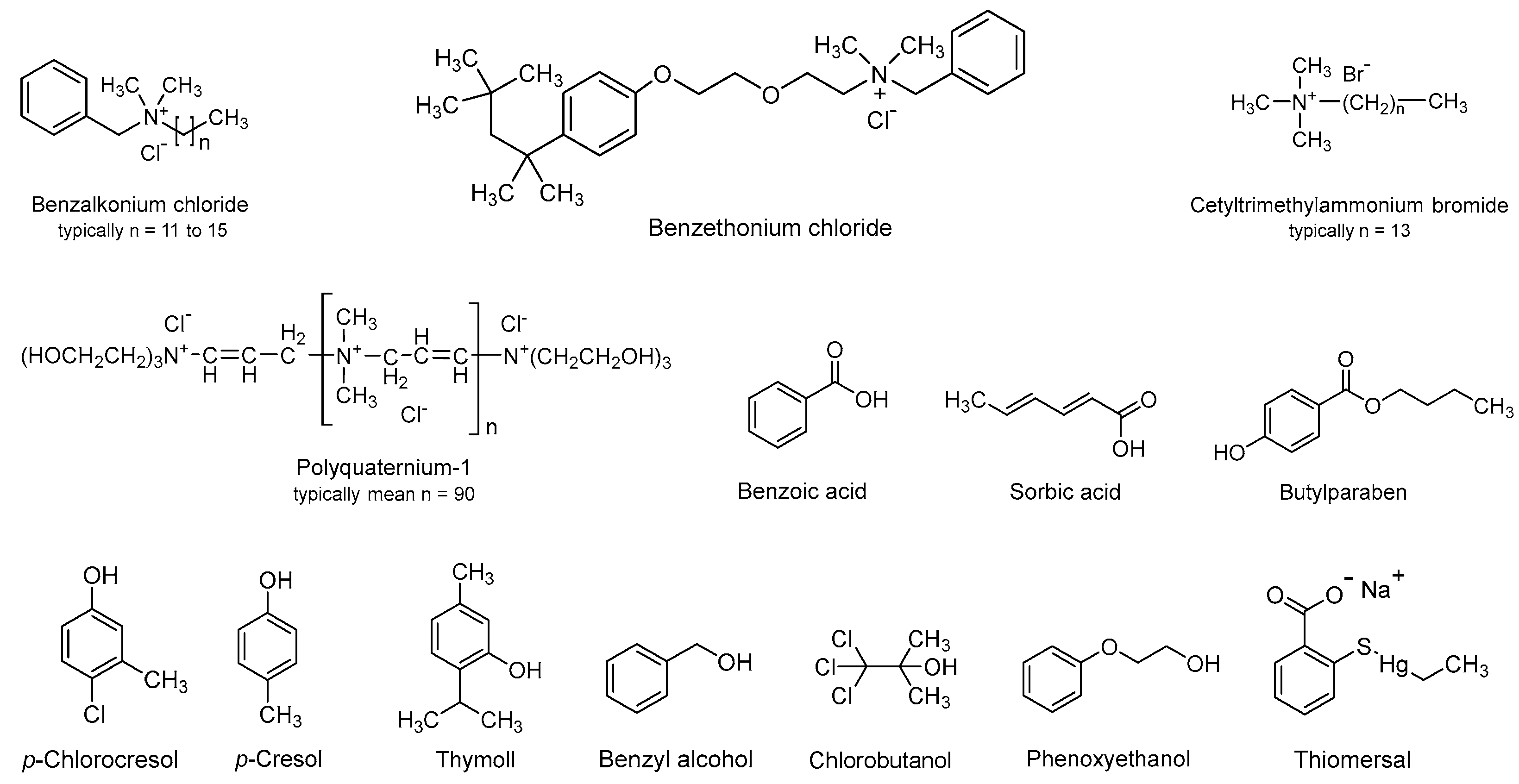
Figure 2.
The figure shows how the fraction of free preservative in aqueous CD solution (ffree P, Equation (3)) is affected by value of the stability constant (K1:1) of the preservative/CD complex and the CD concentration. The molecular weight of CD was set at 1400 g/mol and the values of K1:1 at 100, 500, 1000 and 1500 M-1.
Figure 2.
The figure shows how the fraction of free preservative in aqueous CD solution (ffree P, Equation (3)) is affected by value of the stability constant (K1:1) of the preservative/CD complex and the CD concentration. The molecular weight of CD was set at 1400 g/mol and the values of K1:1 at 100, 500, 1000 and 1500 M-1.
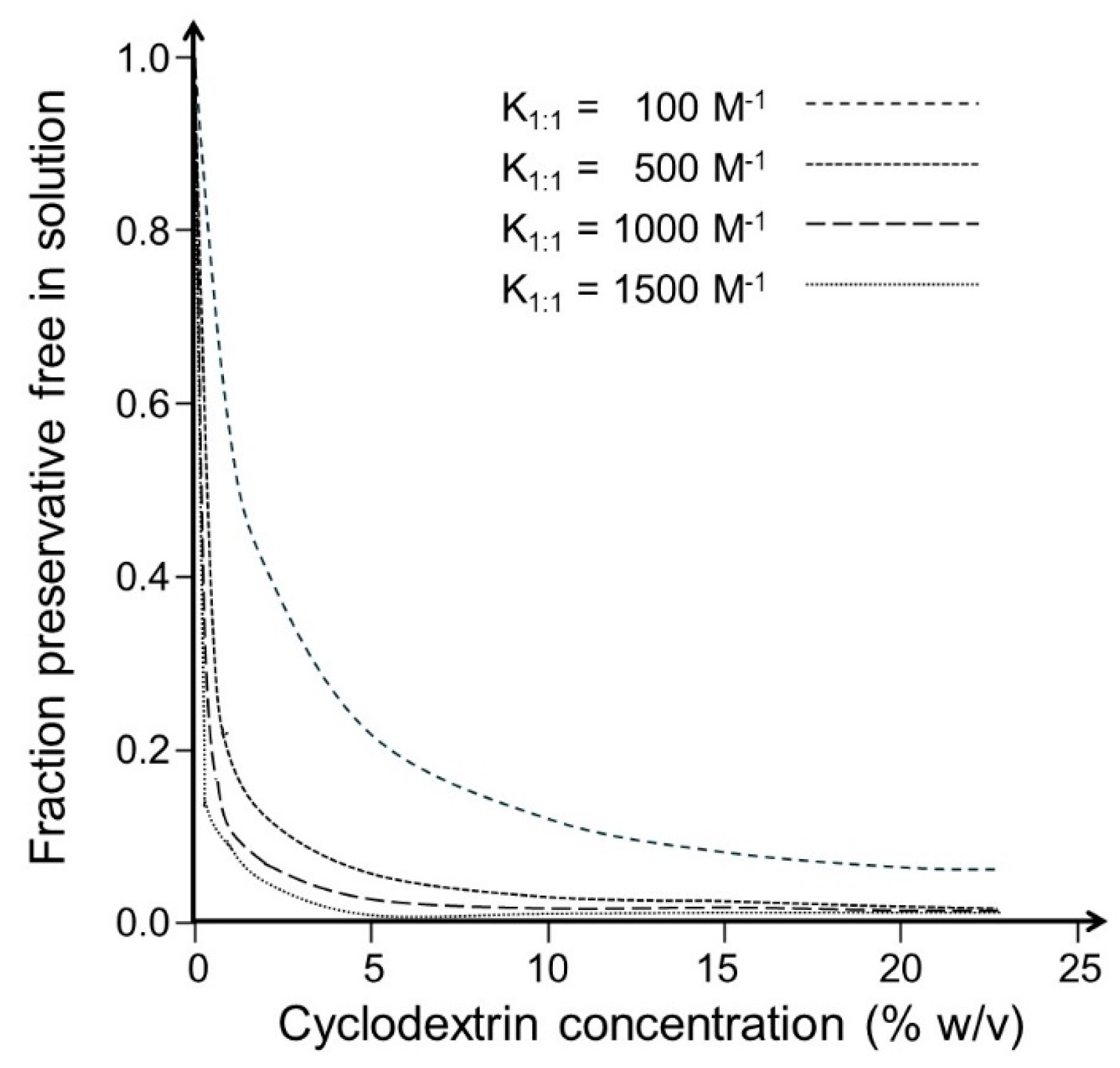
Figure 3.
Fraction of cyclodextrin unbound in aqueous solution saturated with a drug as a function of the complexation efficacy assuming formation of 1:1 D:CD complexes, based on data from Table 3.
Figure 3.
Fraction of cyclodextrin unbound in aqueous solution saturated with a drug as a function of the complexation efficacy assuming formation of 1:1 D:CD complexes, based on data from Table 3.
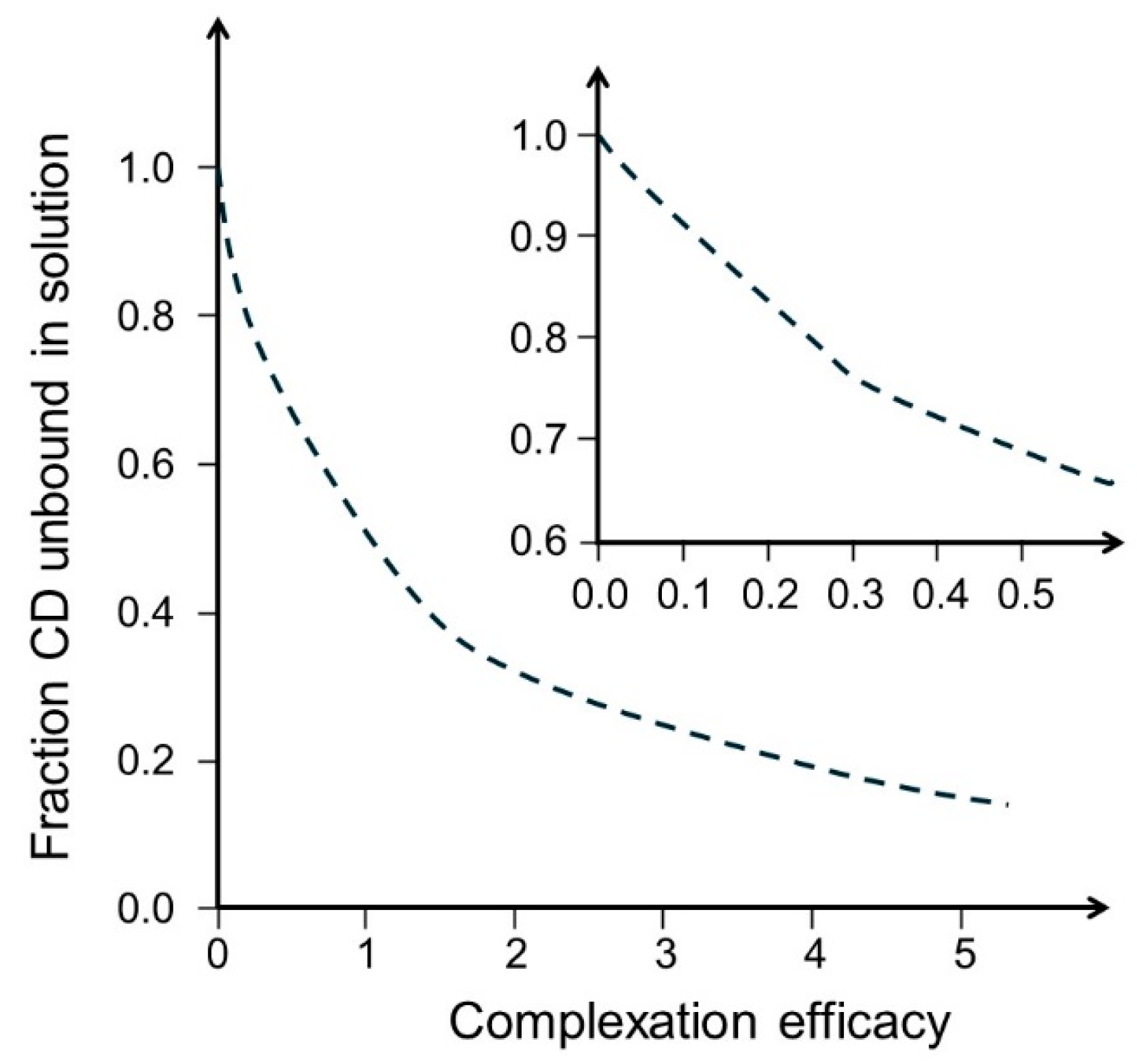

Table 1.
Some antimicrobial preservatives that are used in pharmaceutical products. Data collected from Chemical Abstracts Services (scifinder-n.cas.org) and Pubchem (pubchem.ncbi.nlm.nih.gov).
Table 1.
Some antimicrobial preservatives that are used in pharmaceutical products. Data collected from Chemical Abstracts Services (scifinder-n.cas.org) and Pubchem (pubchem.ncbi.nlm.nih.gov).
| Preservative | Molecular weight (g/mol) | pKa | H-bonds | LogD4 | LogD7 | Solubility (mg/mL) | ||
|---|---|---|---|---|---|---|---|---|
| Donors | Acceptors | pH 4 | pH 7 | |||||
| Benzethonium chloride | 448.08 | - | 0 | 3 | - | 4.0 | >10 | >10 |
| Benzoic acid | 122.12 | 4.20 | 1 | 2 | 1.35 | -1.08 | 8.8 | 1000 |
| Benzyl alcohol | 108.14 | - | 1 | 1 | 1.06 | 1.06 | 47 | 47 |
| Benzyldodecyldimethylammonium chloride* | 339.99 | - | 0 | 1 | 2.63 | 2.63 | 866 | 866 |
| Butyl paraben | 194.23 | 8.22 | 1 | 3 | 3.41 | 3.38 | 0.50 | 0.54 |
| Chlorobutanol | 177.46 | - | 1 | 1 | 1.73 | 1.73 | 10 | 10 |
| Chlorohexidine | 505.45 | 11.51 | 10 | 10 | 1.56 | 1.58 | 1.1 | 1.0 |
| m-Cresol | 108.14 | 10.07 | 1 | 1 | 2.04 | 2.04 | 23 | 23 |
| Diazolidinyl urea | 278.22 | 11.22 | 5 | 11 | -5.40 | -5.40 | 999 | 999 |
| Imidazolidinyl urea | 388.29 | 7.41 | 8 | 16 | -4.93 | -5.02 | 0.002 | 0.002 |
| Isobutyl paraben | 194.23 | 8.17 | 1 | 3 | 3.25 | 3.23 | 0.56 | 0.60 |
| Methyl paraben | 152.15 | 8.31 | 1 | 3 | 1.88 | 1.86 | 5.5 | 5.6 |
| Phenol | 94.11 | 9.86 | 1 | 1 | 1.54 | 1.54 | 96 | 96 |
| Phenoxyethanol | 138.16 | - | 1 | 2 | 1.25 | 1.25 | 17 | 17 |
| Polyquaternium-1 | >800 | - | 6 | ≥8 | -9.90 | -9.90 | ** | ** |
| Propyl paraben | 180.20 | 8.23 | 1 | 3 | 2.90 | 2.88 | 1.1 | 1.2 |
| Quaternium-15 | 251.16 | 3.7 | 0 | 4 | - | -0.1 | - | 1000 |
| Sorbic acid | 112.13 | 4.60 | 1 | 2 | 1.17 | -1.12 | 11 | 1000 |
| Thiomersal | 404.82 | 3.62 | 0 | 3 | - | -1.88 | - | 1000 |
* One of the main components of benzalkonium chloride (BAC) which is a mixture of alkyl dimethyl benzyl ammonium chlorides. ** Low molecular weight polyquaternium-1 (810 g/mol) is soluble in water but the solubility decreases with increasing molecular weight. High-molecular-weight polyquaternium-1 (30,000 g/mol) is only slightly soluble in water.
Table 2.
Effective concentrations in aqueous solutions, stability constants (K1:1), estimated complexation efficacy (CE) (Equation (2)) in aqueous cyclodextrin solution saturated with the preservative at 20 to 30°C.
Table 2.
Effective concentrations in aqueous solutions, stability constants (K1:1), estimated complexation efficacy (CE) (Equation (2)) in aqueous cyclodextrin solution saturated with the preservative at 20 to 30°C.
| Preservative | Effective conc. (% w/v) | Cyclodextrin | K1:1 (M-1) | CE | Ref. |
|---|---|---|---|---|---|
| Benzalkonium chloride | 0.004 – 0.02 | βCD | 1400 | 3500 | [34] |
| Benzoic acid, unionized | 0.1 – 0.2 | βCD | 678 | 30 | [14] |
| RMβCD | 1013 | 44 | [14] | ||
| HPβCD | 536 | 36 | [14] | ||
| SBEβCD | 924 | 41 | [14] | ||
| Benzyl alcohol | 0.5 – 5 | αCD | 22 | 9.5 | [35] |
| βCD | 50 | 22 | [35] | ||
| Butyl paraben | 0.02 – 0.4 | αCD | 701 | 0.38 | [36] |
| HPαCD | 323 | 0.18 | [36] | ||
| βCD | 4582 | 2.5 | [36] | ||
| HPβCD | 16,240 | 9.0 | [36] | ||
| Chlorohexidine | 0.1 – 0.2 | βCD | 268 | 0.58 | [37] |
| m-Cresol | 0.15 – 0.3 | βCD | 95 | 20 | [38] |
| Ethyl paraben | 0.1 – 0.3 | αCD | 193 | 0.84 | [36] |
| HPαCD | 149 | 0.65 | [36] | ||
| βCD | 1709 | 7.46 | [36] | ||
| Methyl paraben | 0.01 – 0.4 | HPαCD | 67 | 1.3 | [36] |
| βCD | 772 | 27 | [14] | ||
| RMβCD | 1453 | 52 | [14] | ||
| HPβCD | 1128 | 28 | [14] | ||
| SBEβCD | 1519 | 55 | [14] | ||
| Phenol | 0.2 – 0.5 | βCD | 129 | 129 | [39] |
| Phenoxyethanol | 0.25 – 0.5 | HPβCD | 100 | 12 | [13] |
| Propyl paraben | 0.005 – 0.1 | αCD | 240 | 0.42 | [36] |
| HPαCD | 230 | 0.39 | [36] | ||
| βCD | 1548 | 9.3 | [14] | ||
| RMβCD | 3544 | 21 | [14] | ||
| HPβCD | 2360 | 16 | [14] | ||
| SBEβCD | 3165 | 19 | [14] | ||
| Sorbic acid, unionized | 0.05 – 0.5 | αCD | [119]1 | [2.2]1 | [40] |
| HPβCD | [42]1 | [0.76]1 | [40] | ||
| Thiomersal | 0.001 – 0.1 | HPβCD | 1916 | 19 | [13] |
1 Estimated value from a phase-solubility diagram.
Table 3.
Molecular weight (MW), solubility (S0) of the unionized drug in pure water, approximate complexation efficacy (CE), the drug:CD molar ratio (Equation (4)), and fraction of unbound CD (funbound) in aqueous cyclodextrin (CD) solution saturated with the drug at ambient temperature assuming formation of 1:1 D/CD complexes.
Table 3.
Molecular weight (MW), solubility (S0) of the unionized drug in pure water, approximate complexation efficacy (CE), the drug:CD molar ratio (Equation (4)), and fraction of unbound CD (funbound) in aqueous cyclodextrin (CD) solution saturated with the drug at ambient temperature assuming formation of 1:1 D/CD complexes.
| Drug | MW (g/mol) | S0 (M) | Cyclodextrin | CE | D:CD molar ratio | funbound | Ref. |
|---|---|---|---|---|---|---|---|
| Acetazolamide (pKa 7.4) | 222.25 | 0.003 | HPβCD | 0.246 | 1:5 | 0.80 | [41] |
| RMβCD | 0.566 | 1:3 | 0.67 | [42] | |||
| HPγCD | 0.021 | 1:50 | 0.98 | [42] | |||
| Amphotericin B (pKa 5.7, 10.0)1 | 924.09 | 0.000002 | αCD | 0.002 | 1:500 | 1.0 | [43] |
| βCD | 0.001 | 1:1000 | 1.0 | [43] | |||
| γCD | 0.069 | 1:16 | 0.94 | [43] | |||
| HPγCD | 0.039 | 1:27 | 0.96 | [43] | |||
| Axitinib (pKa 4.3)2 | 386.47 | 0.000001 | γCD | 0.0002 | 1:5,000 | 1.00 | [44] |
| Brinzolamide (pKa 5.9, 8.4) | 383.51 | 0.001 | γCD | 0.02 | 1:50 | 0.98 | [45] |
| HPγCD | 0.03 | 1:35 | 0.97 | [45] | |||
| Candesartan cilexetil (pKa 3.5, 5.9)3 | 610.66 | 0.00001 | γCD | 0.0012 | 1:835 | 1.0 | [46] |
| Celecoxib (pKa 9.6) | 381.37 | 0.000003 | αCD | 0.0001 | 1:10,000 | 1.00 | [47] |
| βCD | 0.0022 | 1:500 | 1.00 | [47] | |||
| γCD | 0.0004 | 1:2,500 | 1.00 | [47] | |||
| HPβCD | 0.0075 | 1:135 | 0.99 | [47] | |||
| RMβCD | 0.0089 | 1:113 | 0.99 | [47] | |||
| Cyclosporin A | 1202.61 | 0.00001 | HPβCD | 0.004 | 1:250 | 1.00 | [41] |
| Dexamethasone | 392.46 | 0.0004 | HPβCD | 0.326 | 1:4 | 0.75 | [41] |
| Dovitinib (pKa 7.7)2 | 392.43 | 0.00002 | γCD | 0.011 | 1:92 | 0.99 | [44] |
| Fenofibrate | 360.83 | 0.00001 | αCD | 0.20 | 1:6 | 0.83 | [48] |
| βCD | 1.85 | 1:1.5 | 0.33 | [48] | |||
| γCD | 0.21 | 1:6 | 0.83 | [48] | |||
| SBEβCD | 0.63 | 1:3 | 0.67 | [48] | |||
| HPβCD | 2.62 | 1:1.4 | 0.29 | [48] | |||
| RMβCD | 4.54 | 1:1.2 | 0.17 | [48] | |||
| Fluorometholone | 376.46 | 0.00008 | SBEβCD | 1.91 | 1:1.5 | 0.33 | [49] |
| HPγCD | 0.467 | 1:3 | 0.67 | [49] | |||
| Hydrocortisone | 362.46 | 0.001 | HPβCD | 2.00 | 1:1.5 | 0.33 | [41] |
| Irbesartan (pKa 4.1, 7.4)3 | 428.53 | 0.00001 | γCD | 0.289 | 1:5 | 0.80 | [46] |
| Methazolamide (pKa 7.3) | 236.26 | 0.004 | γCD | 0.04 | 1:26 | 0.96 | [45] |
| HPγCD | 0.05 | 1:21 | 0.95 | [45] | |||
| Naproxen (pKa 4.84)2 | 230.26 | 0.0056 | HPβCD | 1.29 | 1:1.8 | 0.44 | [50] |
| Triamcinolone acetonide | 434.50 | 0.0003 | HPβCD | 0.063 | 1:17 | 0.94 | [41] |
| Voriconazole (pKa 1.7) | 349.31 | 0.002 | αCD | 0.066 | 1:17 | 0.94 | [51] |
| βCD | 0.658 | 1:3 | 0.67 | [51] | |||
| RMβCD | 0.545 | 1:3 | 0.67 | [51] | |||
| HPβCD | 0.668 | 1:3 | 0.67 | [51] |
1 pH 5.5. 2 Phosphate buffer, pH 7.5. 3 pH 6.4 to 6.8.
Table 4.
Effects of CDs on the antimicrobial efficacy of some preservatives.
| Preservative | Comment | Ref. |
|---|---|---|
| Benzalkonium chloride (BAC) |
In aqueous solution the preservative efficacy was not affected by 0.5% HPβCD but 5% HPβCD had significant effect. | [10] |
| HPβCD and SBEβCD reduced antimicrobial efficacy of BAC, both in the presence and absence of 0.1% EDTA, and presence of competing drug (0.1% fluorometholone) had no effect. Aqueous eye drops containing 0.1% fluorometholone, 5% HPβCD, 0.02% BAC and 0.1% EDTA1 passed the USP antimicrobial efficacy test. | [52] | |
| Benzethonium chloride | 1.1% (10 mM) βCD results in almost 1000-fold increase in the MIC. | [53] |
| Benzoic acid (pKa 4.2) | Aqueous 1% citric acid1 solution containing 5% HPβCD passes the European Pharmacopoeia antimicrobial efficacy test at benzoic acid concentrations ≥0.15% at pH 4.0 and ≥0.36% at pH 5.0. | [14] |
| Chlorobutanol | In aqueous solution the preservative efficacy was not affected by 0.5% HPβCD but 5% HPβCD had significant effect. | [10] |
| m-Cresol | An exponential increase of m-cresol inactivation was observed with rising HPβCD concentration. | [15] |
| Methyl paraben | Aqueous 1% citric acid1 solution, pH 5.0, containing 5% HPβCD passes the USP and Eur. Ph. antimicrobial efficacy test at preservative concentrations ≥0.46%. | [14] |
| HPβCD and SBEβCD reduced antimicrobial efficacy, both in the presence and absence of 0.1% EDTA1, and the presence of competing drug (0.1% fluorometholone) had no effect. | [52] | |
| Thiomersal | Thimerosal is water soluble and a very potent antimicrobial preservative. The antimicrobial activity of thimerosal is not inhibited by 4.5% HPβCD. | [15,54] |
1 Citric acid and ethylenediaminetetraacetic acid (EDTA) are antimicrobial enhancers.
Disclaimer/Publisher’s Note: The statements, opinions and data contained in all publications are solely those of the individual author(s) and contributor(s) and not of MDPI and/or the editor(s). MDPI and/or the editor(s) disclaim responsibility for any injury to people or property resulting from any ideas, methods, instructions or products referred to in the content. |
© 2024 by the authors. Licensee MDPI, Basel, Switzerland. This article is an open access article distributed under the terms and conditions of the Creative Commons Attribution (CC BY) license (http://creativecommons.org/licenses/by/4.0/).
Copyright: This open access article is published under a Creative Commons CC BY 4.0 license, which permit the free download, distribution, and reuse, provided that the author and preprint are cited in any reuse.