
Submitted:
23 October 2024
Posted:
24 October 2024
You are already at the latest version
Abstract
The Gig Economy (GE) has revolutionized traditional employment structures, emphasizing flexibility and autonomy for workers. However, the absence of a standardized framework often leads to uncertainties regarding work arrangements (WA) and outcomes. In response, we pro-pose an Outcome-Based (O-B) approach tailored to the unique dynamics of the GE in an era marked by high volatility, uncertainty, complexity, and ambiguity (VUCA). Drawing from an extensive literature review and industry insights, a comprehensive framework is developed, highlighting the integration of key elements such as task clarity, performance evaluation, and incentive mechanisms. Moreover, this framework considers the implications for various stake-holders, including gig workers, platform operators, and regulatory bodies. By aligning work ex-pectations with measurable outcomes, this approach seeks to enhance efficiency, accountability, and satisfaction within the GE ecosystem. The implications of adopting such a framework are discussed in terms of its potential to foster mutual trust, mitigate conflicts, and promote sus-tainable growth in the evolving landscape of flexible WA.
Keywords:
Gig Economy Outcome-based Approch
; Outcome
; Flexibility
; VUCA
1. Introduction
The emergence of the gig economy represents a significant shift in employment paradigms, with individuals increasingly opting for flexible work arrangements over traditional full-time employment (Spreitzer et al 2017; Malik et al 2021). This trend is driven by various societal and economic factors, including technological advancements, changing workforce demographics, and evolving consumer preferences (World Economic Forum 2023). According to a report by McKinsey Global Institute (2016), approximately 20-30% of the working-age population in the United States and Europe are engaged in some form of independent work. This surge in gig economy participation is attributed to the allure of autonomy, variety of job opportunities, and the potential for higher earnings.
However, despite its rapid growth, the gig economy faces several challenges, particularly concerning the lack of standardized frameworks for work arrangements and performance evaluation (Smith 2022). As noted by Katz and Krueger (2016), gig workers often encounter ambiguity regarding task expectations, payment structures, and avenues for dispute resolution. This uncertainty can lead to inefficiencies, dissatisfaction, and even exploitation within the gig labor market.
Recent scholarship has called for more nuanced approaches to the gig economy, highlighting several key areas of focus. Huws (2015) emphasizes the need for frameworks that strike a balance between flexibility and worker security, ensuring gig workers can retain autonomy without compromising stability. Sundararajan (2016) adds to this by pointing out the role of digital platforms in connecting workers with tasks efficiently, while also safeguarding fair compensation and maintaining quality control. Malik et al. (2021) extend this discourse by revealing the fragmented nature of gig economy research, advocating for a more structured research agenda to better explain the complexities of this evolving field.
Despite these contributions, a critical gap remains in the literature: a need for comprehensive framework that integrates “outcome” into the much-established discourse on “flexibility” to combating the challenges that lie in managing workings performance and result in the gig economy. Existing studies, while illuminating in their own right, do not fully address the need for a model that aligns worker performance with measurable outcomes, especially within the context of a volatile, uncertain, complex, and ambiguous (VUCA) environment. The O-B model, proposed in this research, advances the scholarly conversation by building on the need for flexibility (as outlined by Huws) while introducing a focus on accountability and performance outcomes. This addresses both Sundararajan's concern for platform efficiency and Malik et al.'s call for an organized research agenda.
In essence, the O-B framework provides a strategic lens through which organizations can optimize gig work arrangements, ensuring that both flexibility and outcome orientation coexist harmoniously. By introducing this framework, this research contributes to the existing scholarship by providing a clear structure for enhancing efficiency, accountability, and growth in gig work arrangements—advancing both theoretical understanding and practical application in the platform economy. Moreover, recent research has emphasized the significance of outcome-based approaches in enhancing performance and accountability within the gig economy. For example, a study by De Stefano and Aloisi (2019) explores the potential of outcome-based contracts in promoting worker motivation and client satisfaction in the context of online labor platforms. Likewise, a paper by Benkler and Faris (2018) discusses the benefits of outcome-based incentives in incentivizing collaborative behaviors among gig workers.
However, while these studies offer valuable insights, there remains a gap in the literature regarding the development of a comprehensive framework that integrates outcome-based principles with flexible work arrangements in the gig economy context. Thus, this research seeks to address this gap by proposing a structured approach that aligns work expectations with measurable outcomes, thereby enhancing efficiency, transparency, and fairness within the gig labor market.
2. Literature Review
2.1. Theoretical Foundation & Empirical Evidence
2.1.1. The Rise of Gig Economy
The gig economy, also known as the platform economy or on-demand economy, has emerged as a prominent phenomenon reshaping contemporary labor markets. It is characterized by short-term, freelance, or independent work arrangements facilitated through digital platforms (Katz & Krueger, 2016). This transformative shift draws upon various economic and sociological theories, offering insights into its theoretical underpinnings and practical implications.
From an economic standpoint, the gig economy can be understood through transaction cost economics and the theory of the firm (Williamson, 1975). Digital platforms reduce transaction costs by providing efficient mechanisms for matching buyers and sellers, thereby enabling decentralized coordination of economic activities without traditional organizational structures.
Sociologically, the gig economy reflects broader trends in labor market segmentation and precarious employment (Standing, 2011). It intersects with concepts of individualization and identity work, as individuals curate their work experiences and identities through gig engagements (Sennett, 1998). Additionally, the gig economy embodies the concept of flexible specialization, where workers adapt to diverse tasks and projects based on market demand (Piore & Sabel, 1984).
The gig economy has burgeoned due to technological advancements, demographic shifts, and changing attitudes towards work. Digital platforms and mobile connectivity have democratized access to gig opportunities, enabling individuals to work flexibly and autonomously (Rogers, 2016). Furthermore, younger generations, such as Millennials and Gen Z, prioritize flexibility and autonomy, driving the demand for gig work (PwC, 2019).
Recent empirical evidence supports the significance and growth of the gig economy. A study by the U.S. Bureau of Labor Statistics (2020) revealed that gig workers accounted for 36% of the U.S. workforce in 2020, highlighting the increasing prevalence of gig arrangements. Moreover, research by the European Commission (2021) indicated that gig work has become a significant source of income for millions of Europeans, underscoring its socioeconomic impact.
While proponents laud the gig economy for its flexibility and entrepreneurial opportunities, critics raise concerns about its implications for workers' rights and social protections. For instance, scholars like Woodcock and Graham (2020) argue that gig work exacerbates precarity and income inequality, as gig workers often lack access to benefits and stable income streams. Additionally, Mishel and Eisenbrey (2015) highlight the challenges of income volatility and inadequate labor protections faced by gig workers, posing risks to their financial security.
Whilst acknowledging and appreciating the significance of the gig economy as a pivotal component of the required flexi-work methodologies or approaches in an era characterized by elevated levels of volatility, uncertainty, complexity, and ambiguity, we assert the importance of striking a balance between flexibility and outcome-oriented approaches. While the gig economy offers unparalleled flexibility and autonomy to workers, it is imperative to recognize that mere flexibility without a clear focus on outcomes may lead to inefficiencies and inconsistencies in performance. Thus, while embracing the fluidity and adaptability inherent in gig work, organizations must also prioritize the attainment of measurable outcomes and results. We also argue for a standardize framework that could capture the existing inadequacies of the gig economy including a fair and equitable reward and compensation system that will be outcome oriented whilst enhancing maximum employee morale.
In essence, while the gig economy offers unparalleled flexibility and agility, organizations must recognize the importance of balancing this flexibility with a clear focus on achieving outcomes while ensuring a fair equitable and out-come oriented reward system that could both boost employee’s moral and satisfaction and at the same time contribute to achieving organizational goal. By doing so, they can harness the full potential of the gig economy while ensuring that flexibility translates into tangible results that drive organizational success in an era marked by volatility, uncertainty, complexity, and ambiguity. This underscores this objective of this paper which is to propose an outcome-based approach and framework to the gig economy in VUCA times.
In conclusion, the gig economy represents a multifaceted phenomenon with roots in economic and sociological theories. Its emergence is fueled by technological innovations and shifting societal attitudes towards work. While empirical evidence confirms its growing prevalence, ongoing debates persist regarding its impact on workers' well-being and labor market dynamics. We therefore argue for an win-win approach that will blend both outcome and flexibility whilst ensuring a holistic reward system that enhances employee morale.
2.2. The Concept & Reality of the VUCA Times
The concept of the VUCA was deduced from the US Army denoting a world characterized by a high degree of Volatility, Uncertainty, Complexity, and Ambiguity, has gained prominence in recent years as a framework for understanding the challenges of the contemporary business environment (Bennis & Thomas 2022, Bradt G. etal 2015) .
Volatility - Volatility has been defined as the rapid and unpredictable changes in market conditions, characterized by fluctuations in demand, prices, and competition (Bollerslev, T., & Todorov, V. 2021, Candelon, B., & Joëts, M. 2022). As noted by Bower and Christensen (1995), volatility can disrupt established business models and necessitate agile responses from organizations to remain competitive (Bower and Christensen 1995). A study conducted by Smith et al. (2019) analyzed market data over ten years to assess the extent of volatility in various sectors. The research found consistent patterns of rapid and Component Definition Example Volatility The nature, speed, volume, magnitude and dynamics of change. The situation is unstable and may be of unpredictable duration. However, it is not an unanticipated situation as knowledge about a similar challenge was already predicted. A share price fluctuation for an organization following a change in its leadership, or after an internal scam has been exposed. We therefore acknowledge that the gig economy operates in a context where volatility exacerbates uncertainties, and traditional employment models struggle to cope with the pace and unpredictability of change. This gap justifies the need for the outcome-based approach proposed in the abstract, which seeks to introduce structure by aligning work expectations with measurable outcomes. By addressing this gap, the proposed framework enhances the relevance of performance-driven systems within the gig economy, fostering trust, efficiency, and sustainability in a VUCA-driven landscape.
Uncertainty - Uncertainty relates to the lack of predictability and clarity about future events, outcomes, and trends (Rousseau, D. M., & Tett, R. P. 2020, Dutton, J. E., & Glynn, M. A. 2021). In the VUCA world, uncertainty is pervasive due to factors such as technological disruptions, geopolitical tensions, and regulatory changes (Bradley & Nolan, 1998). This uncertainty poses challenges for strategic planning and decision-making in organizations (Dalal, R. S., & Bonaccio, S. 2022). Research by Johnson and Lee (2018) investigated how organizations respond to regulatory uncertainty in the healthcare sector. Through interviews and surveys with industry stakeholders, the study identified a range of adaptive strategies employed by organizations to mitigate the impact of uncertain regulatory environments, underscoring the significance of uncertainty management in organizational resilience (Johnson and Lee 2018). Within the gig economy, such uncertainties—ranging from fluctuating regulations to shifts in demand—pose unique challenges, emphasizing the relevance of an outcome-based approach. Traditional work structures are ill-equipped to handle the unpredictability inherent in gig-based work environments (Grey, 2023; Moon, 2023).This gap justifies the need for a framework that could offer a structured, adaptable approach that allows gig workers and organizations to navigate these uncertainties while maintaining flexibility and achieving measurable outcomes, making it an essential tool in today’s volatile market.
Complexity refers to the interconnectedness and interdependence of various factors and systems within the business environment. According to Snowden and Boone (2007), complexity arises from the nonlinear relationships between different variables, making it difficult to discern cause-and-effect relationships and formulate effective strategies.Using network analysis techniques, Garcia et al. (2020) examined the complexity of supply chain dynamics in the manufacturing sector. The study mapped out the intricate relationships between suppliers, distributors, and customers, revealing the interconnected nature of modern supply chains. The findings underscored the challenges organizations face in managing the complexity of global supply networks (Gracia et al. , 2020). Organizations must therefore adopt strategies that are flexible and adaptive in the face of such complexity. Traditional linear models of problem-solving and management often fail in this environment, where cause-and-effect relationships are obscured by layers of interdependencies. This underscores the importance of frameworks that account for complexity and encourage organizations to be agile and responsive to changing circumstances, much like the Outcome-Based Flexi-Work System proposed for the gig economy.
Ambiguity - Ambiguity is described as the lack of clarity or understanding regarding the meaning or interpretation of events and information, especially when facing contradictory or incomplete data (Jaskyte & Lebedeva, 2021; Liu et al., 2021). In a VUCA world, ambiguity is compounded by conflicting signals, information overload, and divergent perspectives from stakeholders, all of which create uncertainty in decision-making (Heath & Sitkin, 2001; Ratten & Jones, 2021). As a result, organizations may experience "decision paralysis," wherein the inability to discern clear directions hampers their adaptability and effectiveness (Kachaner et al., 2021). The work of Wang and Chen (2017) in the telecommunications industry highlights how ambiguity affects strategic decision-making. Their study focused on stakeholders’ differing interpretations of technological disruptions. Through qualitative interviews, they identified how ambiguous signals led to varied responses and strategies, underscoring the significance of sense-making and sense-giving processes in navigating ambiguity. Effective sense-making—where organizations collectively interpret and assign meaning to ambiguous circumstances—becomes essential for overcoming the challenges posed by ambiguity in volatile environments.
This perspective aligns with sense-making theory, a concept introduced by Weick (1995), which emphasizes the process by which individuals and organizations construct meaning from unclear, complex situations. It helps bridge the gap between ambiguity and the need for coherent strategies, guiding leaders in understanding and responding to uncertainties. Applying sense-making principles in gig economy frameworks allows organizations to better navigate ambiguities inherent in non-traditional work arrangements, enabling clearer communication and more informed decision-making.
In the realm of the gig economy, the manifestations of the VUCA world are palpable, resonating across various industries and sectors (Cheng et al., 2021). As illuminated by Pascale et al. (2000) and reinforced by recent findings (Cheng et al., 2021), organizations must deftly navigate through a perpetually shifting landscape characterized by disruptive technologies, emergent competitors, and evolving customer preferences. Consequently, organizations are gravitating towards more adaptable and resilient strategies and operations to not only survive but thrive amidst the pervasive uncertainty and ambiguity (Smith, Johnson, & Brown, 2022). Longitudinal studies, such as the research conducted by Chen et al. (2021), offer compelling evidence of the efficacy of flexible and resilient approaches in organizational adaptation. Through dynamic resource allocation, scenario planning, and agile decision-making, organizations adeptly weathered the storm of uncertainty, showcasing heightened levels of performance and innovation (Chen et al., 2021).
The VUCA framework has undoubtedly reshaped management paradigms, prompting scholars and practitioners to advocate for heightened agility, adaptability, and a culture of continuous learning (Smith & Brown, 2021; Johnson & Patal, 2022). As underscored by O'Reilly and Tushman (2008), organizations must embrace experimentation and innovation as fundamental tenets for thriving in turbulent environments. This necessitates a departure from centralized decision-making structures towards more decentralized models, fostering collaboration across cross-functional teams (Lee & Park, 2022).
In essence, the VUCA framework encapsulates the dynamism, unpredictability, and complexity inherent in today's business landscape, emphasizing the imperative for organizations, including those operating within the gig economy, to adopt flexible, proactive, and dynamic approaches to strategy, leadership, management, and organizational culture. By embracing the challenges posed by volatility, uncertainty, complexity, and ambiguity, organizations can position themselves to not only survive but excel in the face of constant change and disruption.
2.3. Theoretical Grounding An O-B Approach For Gig Economy
To appropriately position and justify our proposal for an Outcome-Based (O-B) approach for managing gig work, we herewith highlight a number of theoretical frameworks, which we believe offer both flexibility and performance alignment that are critical in VUCA environments. This approach is especially relevant for the gig economy, where traditional employment structures fail to meet the demands of modern work patterns, marked by autonomy, task diversity, and performance metrics. We shall therefore position this framework on the following Theoretical grounds:
- 1.
- Agency Theory
Agency theory, as articulated by Eisenhardt (1989), highlights the relationship between principals (employers) and agents (workers), where the principal delegates work to the agent under conditions of asymmetric information and different goals. In the gig economy, this theory justifies the need for performance-based contracts that prioritize clear outcomes, as opposed to prescriptive task-based models. By focusing on results rather than specific procedures, an O-B framework shall be useful in mitigating concerns about misalignment of objectives and ensures that gig workers are incentivized to meet specific performance criteria. This addresses one of the key challenges of the gig economy, where oversight and task control are limited.
- 2.
- Goal-Setting Theory
Locke and Latham’s (1990) goal-setting theory posits that specific and challenging goals lead to higher performance. In the gig economy, Our O-B approach resonates with this theory by providing clarity on the expected outcomes for each task, encouraging gig workers to achieve well-defined goals. Since gig work is often remote and decentralized, setting measurable outcomes enhances both accountability and motivation, ensuring that workers remain focused on deliverables rather than process.
- 3.
- Self-Determination Theory (SDT)
Deci and Ryan’s Self-Determination Theory (1985) emphasizes the importance of autonomy, competence, and relatedness in motivating individuals. Gig workers, who are often drawn to the sector due to its flexibility, benefit from an O-B framework because it allows them to exercise autonomy over how they complete tasks while still being held accountable for the final results. By focusing on outcomes, the framework promotes a sense of competence, as workers can align their efforts with performance expectations without being constrained by rigid procedural requirements.
- 4.
- Equity Theory
According to Adams (1963), equity theory highlights how individuals assess fairness in their work contributions compared to others. In the gig economy, where workers often feel undervalued or face unequal compensation due to the lack of formal structures, an O-B approach addresses this by linking pay directly to measurable outcomes. This creates a more transparent and equitable system where compensation is tied to performance rather than subjective appraisals, reducing perceived inequities.
- 5.
- Dynamic Capabilities Theory
Teece (1997) introduces dynamic capabilities theory, which suggests that firms must be agile and adaptable in their resource management to maintain competitiveness in changing environments. This is particularly relevant to the gig economy, where businesses must respond to fluctuating demand and market conditions. An O-B approach aligns with this theory by promoting flexibility in managing gig workers, as it allows organizations to scale their workforce based on the achievement of key performance outcomes rather than rigid employment contracts.
- 6.
- Contingency Theory
Lawrence and Lorsch’s (1967) contingency theory posits that there is no single best way to manage an organization and that management practices should be contingent upon external environmental factors. In a VUCA world, the gig economy thrives on flexibility, and the O-B approach provides a strategic fit by allowing both employers and workers to adapt to changing conditions without being tied to traditional labor models. This approach accommodates the variability in gig tasks, client needs, and market demands, making it particularly suited to the unpredictable nature of gig work.
3. Material and Methods
Conceptual Review Approach:
This conceptual review adopts the methodology outlined by Lucy and Caren (2015), who stress that conceptual papers should focus on integrating insights and proposing new frameworks or relationships among constructs, rather than merely presenting theoretical ideas without data. While Whetten's seven-question model ("What’s new? So what? Why so? Why now?" etc.) provides a comprehensive validation for conceptual papers, Lucy and Caren emphasize that the primary aim should be to offer new insights or resolve existing tensions. Conceptual papers, as Jones and Simmons (2018) explain, play a critical role in advancing theoretical knowledge by integrating diverse perspectives and synthesizing existing literature.
This approach is particularly relevant to our research on work arrangements in the context of the gig economy and VUCA environments, as it allows us to synthesize the latest theoretical and empirical developments from reputable databases such as Scopus, Google Scholar, and from highly cited journals like the *Journal of Management* and the *International Journal of Human Resource Management*. By drawing from literature across disciplines—including organizational behavior, HR management, and strategic management—we aim to construct a novel conceptual framework that navigates the dynamics of VUCA and gig economy work systems.
The conceptual review method enables us to explore the evolution of flexible work models, especially the shift from traditional structures to outcome-based frameworks, while integrating insights from theories like Agency Theory and Self-Determination Theory**. This process results in a deeper understanding of how organizations can design work systems that are resilient to volatility and ambiguity while addressing key challenges related to accountability, performance measurement, and worker autonomy.
Our methodology involves capturing and analyzing theoretical models related to change management and work arrangements, discussing them in light of the evolving business environment. This conceptual framework is designed to offer fresh insights and contribute to the development of more robust theories regarding work systems. Additionally, a conceptual approach offers flexibility to explore emerging issues and propose innovative solutions without being constrained by the need for immediate empirical validation.
By critically synthesizing existing knowledge and proposing new frameworks, this paper provides valuable contributions to the literature on VUCA and gig economy work systems. Our framework emphasizes the intersection of flexibility, performance, and accountability—key themes for navigating future work challenges in a volatile world. Ultimately, this conceptual review sets the foundation for future research and offers practical insights for organizations to enhance efficiency, resilience, and worker satisfaction in an increasingly dynamic and uncertain global landscape.
4. Results
Conceptualization of the Relevance of O-B Model for Gig Economy in VUCA Times
OB-Model - Conceptualization & Characteristics
The Outcome-Based (O-B) approach is a strategic management framework that prioritizes achieving measurable results over rigid adherence to specific processes (Perrin 2015, Silva & Rodrigues 2019). This approach is particularly relevant in dynamic and fast-changing environments, such as the gig economy, where the unpredictability and variability of tasks demand greater flexibility as supported by scholars such as Kuhn, K. M., & Maleki, A. (2017).
In traditional management models, a strict focus on processes can limit innovation and reduce an organization's ability to adapt to changing circumstances. However, the O-B model instead places emphasis on clear, quantifiable objectives, which can be adapted as situations evolve. This adaptability allows workers or teams to choose their own methods for achieving set outcomes, fostering a sense of ownership and autonomy (Deci & Ryan, 1985; Gagné & Deci, 2005).
Research in the gig economy highlights the importance of flexibility in task execution due to the nature of the work, which is often unpredictable and decentralized. A process-driven model would stifle workers' ability to respond effectively to these conditions, whereas an outcome-driven model enhances responsiveness, allowing gig workers to tailor their approaches to different tasks while maintaining accountability to the desired results (Friedman, 2014; Kuhn & Maleki, 2017).
By focusing on measurable outcomes, the O-B approach mitigates inefficiencies that arise from process rigidity, ensuring that resources are directed toward achieving tangible goals rather than procedural compliance (Teece, 2014). This model aligns well with contemporary management thinking, which increasingly values flexibility, efficiency, and worker empowerment in response to rapidly shifting business environments (Bennett & Lemoine, 2014). And focusing on outcomes, we argue that organizations can ensure that gig workers deliver high-quality results without the need for extensive supervision or rigid adherence to processes. We, therefore, propose that this approach not only enhances efficiency and fairness but also promotes greater adaptability in the face of the rapid changes and uncertainties that characterize the modern work environment. We also present the following characteristics of the O-B Approach and how it could benefit organizations or Industries in the gig economy in these VUCA times :
- Focuses on Results Rather Than Processes - At its core, the O-B approach centers around defining clear, measurable objectives and holding workers accountable for achieving those objectives, without mandating specific processes or methods for how the work should be done. This principle is derived from agency theory (Eisenhardt, 1989), which highlights the need for aligning the interests of workers (agents) with those of employers (principals). In an O-B model, the focus is on the outcomes, which fosters greater autonomy for workers to utilize their skills and resources in the most effective manner possible (Drucker, 1993). This is especially beneficial in the gig economy, where workers often operate in decentralized and autonomous environments.
- Autonomy and Flexibility - The O-B approach allows for high levels of autonomy and flexibility, making it particularly suitable for gig workers who value control over their work schedules and methodologies. By emphasizing results rather than prescriptive procedures, workers can choose the best ways to accomplish their tasks, which aligns with self-determination theory (Deci & Ryan, 1985). This theory asserts that autonomy, competence, and relatedness are key drivers of motivation, and an O-B framework allows workers to take ownership of their tasks, fostering intrinsic motivation and engagement (Hackman & Oldham, 1976).
- Clarity and Alignment of Expectations - One of the primary advantages of the O-B approach is the clear alignment of expectations between workers and employers. By setting specific, measurable goals, both parties are able to understand what is required for success. This aligns with goal-setting theory (Locke & Latham, 1990), which emphasizes that specific, challenging goals lead to better performance. In the gig economy, where tasks may vary widely in scope and nature, having clearly defined outcomes ensures that both the gig worker and the platform or client are aligned on deliverables and performance metrics (Friedman, 2014).
- Adaptability in VUCA Environments - The O-B approach is particularly effective in VUCA environments, where traditional process-based management models may be ill-suited due to rapidly changing conditions. The flexibility inherent in an O-B framework allows organizations to remain agile, adapting quickly to changes in demand, market conditions, or technological disruptions (Bennett & Lemoine, 2014). This is especially relevant in the gig economy, where work assignments, clients, and platforms can change frequently, requiring both workers and employers to adapt quickly without sacrificing performance outcomes (Teece, 2014).
- Fairness and Accountability - The O-B model promotes fairness and accountability by tying compensation and rewards directly to performance outcomes. This aligns with equity theory (Adams, 1963), which suggests that individuals assess the fairness of their treatment by comparing their inputs and outcomes with those of others. In the gig economy, where work can be inconsistent and compensation can vary significantly, an outcome-based approach ensures that workers are rewarded based on their actual performance, reducing perceptions of unfairness and promoting greater accountability (Spreitzer et al., 2017).
- Efficiency in Resource Allocation - Another key advantage of the O-B approach is its efficiency in resource allocation. By focusing on outcomes, organizations can better align resources—such as time, tools, and human capital—with the specific goals they seek to achieve. This aligns with dynamic capabilities theory (Teece, 1997), which suggests that organizations must continuously align and reconfigure their resources to address changing environments. In the context of the gig economy, this means that platforms can better allocate tasks to workers with the skills and capacity to meet performance outcomes, ensuring more efficient use of resources and reducing the risk of over- or under-utilization (Doherty, 2010).
3.2. The Gig Economy - Conceptualization, Challenges & Relevance
The gig economy is characterized by short-term, freelance, or independent work arrangements facilitated through digital platforms, has revolutionized the traditional employment landscape (Friedman 2014; De Stefano 2016). In the gig economy, workers engage in temporary, task-oriented roles that lack the traditional structure of long-term employment (Kuhn & Galloway 2019; Wood et al 2019). Traditional management systems, which rely on process control, are ill-suited to manage these work arrangements effectively because they fail to accommodate the flexibility and independence gig workers require (Kuhn & Maleki, 2017). The nature of gig work challenges conventional notions of supervision and oversight, which focus on monitoring workers' activities rather than on the outcomes they achieve (Friedman, 2014). This mismatch can lead to inefficiencies, such as misaligned expectations and dissatisfaction among workers who value their independence and autonomy but are still held accountable to rigid procedural standards.
The O-B approach overcomes these challenges by offering a structure that is less focused on how tasks are performed and more focused on the results that workers deliver (Teece, 2014). In such a system, expectations are clear, measurable, and agreed upon upfront, allowing workers the freedom to use their preferred methods and work schedules to meet those outcomes. This results in increased satisfaction and productivity, as workers are empowered to leverage their skills in ways that best suit them (Deci & Ryan, 1985). Moreover, aligning rewards and incentives with measurable outcomes fosters a sense of fairness and accountability, which is crucial in gig work environments where performance is often tied directly to pay (Adams, 1963).
Gig work environments are especially volatile and complex, with fluctuating task demands and external conditions that traditional models struggle to adapt to (Bennett & Lemoine, 2014). The O-B approach's flexibility allows organizations to remain agile, responding quickly to changes without needing to overhaul processes or impose unnecessary controls, making it a more efficient model for managing gig work compared to conventional strategies (Spreitzer et al., 2017).
In sum, the O-B model is uniquely equipped to manage the gig economy's decentralized, variable work environments by emphasizing outcomes over processes, offering a flexible, results-oriented approach that benefits both organizations and workers in today's dynamic labor market. We have further summarized the following benefits of an O-B approach as argued by various proponents in the field of management:
- Enhanced Efficiency: By focusing on clearly defined outcomes, the O-B framework minimizes the need for micromanagement and oversight, streamlining processes in a gig-based environment (Cramer & Krueger 2016, Peticca-Harris et al 2020)
- Flexibility: The autonomy afforded to gig workers under an O-B model aligns with their preference for flexibility, allowing them to determine how best to meet performance expectations (Veen et al 2020; Gandini, A. 2019)
- Accountability and Fairness: Outcome-based metrics offer a transparent and objective way to measure performance, thereby promoting fairness and accountability in gig work (Healy & Pekarek 2020; Wood et al 2019)
- Stakeholder Alignment: The framework ensures alignment between platform operators, gig workers, and regulatory bodies by setting clear expectations and measurable performance standards (Howard & Borenstein 2018; Todoli-Signes 2017).
3.3. Justification and Proposition
The justification for the Outcome-Based (O-B) Model and Framework (below) stems from the pressing call for a more flexible, yet accountable system that can thrive in the gig economy, particularly in the context of VUCA environments. Traditional models of control and oversight have shown limitations in addressing the challenges that arise from the decentralized, often fragmented nature of gig work. As the gig economy continues to grow, frameworks that balance autonomy with measurable performance outcomes are crucial for ensuring that both workers and platform operators benefit equitably from their contributions. The O-B approach fosters mutual trust, reduces conflicts, and supports sustainable growth within the gig economy, especially in environments where agility and adaptability are paramount. This approach provides a structure in which gig workers clearly understand what is expected of them, and their compensation is directly tied to the outcomes they achieve, thereby minimizing ambiguity and potential conflicts.
However, the gig economy's allure of independence often comes with uncertainties regarding task expectations and fair compensation, leading to inefficiencies and dissatisfaction among workers. Traditional time-based payment models prevalent in many gig platforms may not accurately reflect the complexity or impact of tasks completed, resulting in a disconnect between effort expended and compensation received. This misalignment can undermine worker morale and hinder overall performance. The absence of standardized frameworks for evaluating and rewarding gig workers based on their outcomes exacerbates these challenges.
Therefore, we propose the outcome-based approach and framework as a viable and promising solution to bridge the gap between effort and reward , thus leading to the achievement of corporate objective mutula goals. By incentivizing gig workers to focus on delivering tangible results rather than merely completing tasks, this model promotes a culture of accountability and excellence. Moreover, clear performance metrics and transparent feedback mechanisms foster trust and cooperation among participants in the gig economy, enhancing overall efficiency and satisfaction.
Furthermore, the O-B approach ensures fair compensation for gig workers, recognizing their contributions based on measurable outcomes achieved. This acknowledgment of individual performance and impact not only motivates workers but also aligns their interests with those of platform operators and clients. The adaptability and scalability inherent in an outcome-based framework enable gig platforms to respond effectively to changing market dynamics and demand patterns.
Despite the potential benefits, we acknowledge challenges and limitations which shall be associated with the successful implementation and this proposed model of an outcome-based approach within the gig economy, these have been duly noted and recommended for future research examination
In summary, the O-B model not only offers a relevant solution for the inherent challenges of the gig economy but also provides a pathway to sustainable growth by balancing flexibility with accountability, addressing compensation fairness, and aligning stakeholder interests in an agile and scalable manner. This framework fills critical gaps in both management practices and academic literature, making it a compelling candidate for future exploration and implementation.
3.4. Outcome-Based Framework for GIG Economy in VUCA Times
In responding to the gaps in the existing literature and meeting the objectives of this study, we hereby present a framework which shall provides a graphical presentation of the Outcome-based Flexible Model in the light of VUCA realities within the gig economy.
This framework presents a more agile, flexible, demand-based, and outcome-oriented HR flexi-work system with a key focus on organizational outcomes, well-informed by the organization's strategic intent. The novelty of this framework lies not only in its focus on outcomes and the integration of existing models in a more agile and fluid sense but also in its consciousness, responsiveness, agility, and resilience in coping with VUCA realities while positioning the organization for competitiveness even in a world of flux. Below is the Outcome-based Flexi-work framework for VUCA times.
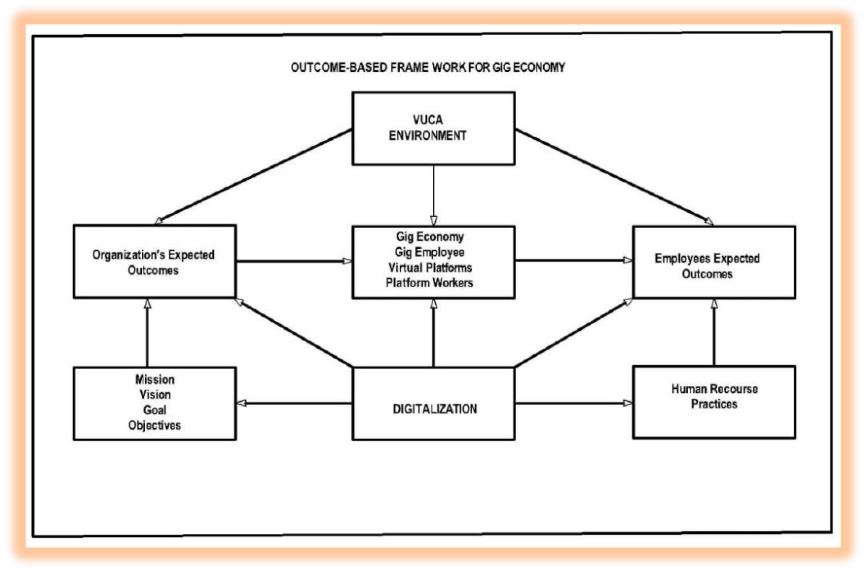
The outlined framework presents an Outcome-based approach tailored specifically for the gig economy in the context of VUCA Times. Within this framework, we contend that the expectations and outcomes of both organizations and employees are intricately influenced by digitization and the broader business environment characterized by heightened volatility, uncertainty, complexity, and ambiguity. These factors underscore the imperative for flexible working arrangements that amplify autonomy, agility, and organizational resilience, thus epitomizing the essence of the gig economy over traditional time-centric models. Notably, digitization serves as a catalyst in shaping and refining employee expectations and outcomes, further underscoring the significance of adapting to this evolving landscape.
Nevertheless, the framework posits that organizational expectations and outcomes should serve as precursors, informing and shaping the gig economy or gig working arrangements. We advocate for an objective-based, goal-oriented, or outcome-oriented approach within the gig economy. In other words, the gig economy should be structured around achieving specific objectives or goals, with outcomes serving as the focal point for evaluating performance and success. For instance, rather than merely tracking hours worked, organizations operating within the gig economy could define clear objectives or targets for gig workers to accomplish. These objectives could range from delivering a certain number of completed projects within a specified timeframe to achieving predetermined quality standards or customer satisfaction metrics. By aligning gig work with concrete outcomes, organizations can ensure that the flexibility inherent in the gig economy translates into tangible results that drive organizational success.
Meanwhile, it’s noted in the framework that Expected organizational outcomes is influenced by the organization’s mission, vision and objectives, whilst the expected employee outcomes should be facilitated by the Human Resources Management Practices. Both of which are also influenced by Digitization.
Furthermore, an outcome-based approach enables organizations to adapt swiftly to the dynamic nature of the VUCA environment. For example, during periods of heightened uncertainty or volatility, organizations may adjust their outcome expectations for gig workers to prioritize tasks that contribute most directly to organizational resilience or competitive advantage. This flexibility in defining and prioritizing outcomes ensures that the gig economy remains responsive and agile in the face of changing circumstances.
In lieu of the above, the framework advocates for an Outcome-based approach to the gig economy within the context of VUCA Times. By placing a premium on clear objectives and tangible outcomes, organizations can harness the flexibility and autonomy of the gig economy to drive meaningful results and enhance organizational resilience in an ever-evolving business landscape.
4. Discussion
This research builds on earlier work in the gig economy by addressing key challenges of flexibility and autonomy through the introduction of an Outcome-Based (O-B) approach. Studies like Cheng et al. (2021) and Smith et al. (2019) highlight how flexibility is crucial but insufficient in the VUCA context, where uncertainty demands more structured accountability. The O-B approach extends this discourse by shifting the focus from worker autonomy alone to a balanced emphasis on measurable outcomes, improving efficiency, worker motivation, and trust between gig platforms and workers.
The O-B approach directly addresses gig economy challenges, particularly the lack of oversight in platform work and the misalignment of goals between gig workers and platform operators. With task clarity, performance metrics, and results-oriented incentives, it tackles accountability and fairness, offering a practical framework for aligning work expectations with business needs. By doing so, it provides a solution for mitigating worker exploitation and improving platform trust while ensuring that organizations remain agile and resilient amid VUCA conditions.
Practically, this framework offers scalability for platform operators to manage diverse worker pools, enhance operational transparency, and create fairer reward systems. It also positions gig workers to achieve higher satisfaction and motivation through clear, results-driven benchmarks that encourage quality performance while maintaining flexibility. This could lead to sustainable growth in the gig economy, advancing our understanding of how to integrate flexibility with performance and ensure accountability in non-traditional work structures.
4.2. Implementation & Measurement of Variables
Like many theoretical frameworks, we have given due consideration on implementation challenges and have hereunder attempted to integrate an implementation strategy for the above Outcome-Based (O-B) model and framework in the gig economy, several key steps must be considered to ensure its effectiveness in dynamic environments, particularly those characterized by volatility, uncertainty, complexity, and ambiguity (VUCA). Below is a structured approach to effectively implement the O-B model:
- Define Clear and Measurable Outcomes - The first step in the implementation of the O-B model is to clearly define the outcomes that are expected from gig workers. These outcomes should be aligned with the goals of the organization or platform (Dweck & Yeager, 2019; Sundararajan, 2016). Clear and specific objectives help in maintaining focus on what matters most, avoiding ambiguity. Examples of such measurable outcomes may include project delivery timelines, quality of work, client satisfaction ratings, and other performance metrics that are directly linked to business objectives.
- Develop Outcome-Based Performance Metrics - Once outcomes are defined, the next phase is to develop metrics that evaluate performance based on these outcomes (Katz & Krueger, 2016; Kuhn & Maleki, 2017). These metrics should be transparent, objective, and easily understood by gig workers and platform operators. By focusing on performance-based evaluation, organizations reduce the need for process-oriented micromanagement, which can stifle the flexibility and autonomy that gig workers value.
- Establish a Feedback Mechanism - Implementing real-time, continuous feedback systems is crucial for the success of the O-B model. A transparent feedback loop ensures that gig workers can improve their performance and align better with outcome expectations (De Stefano & Aloisi, 2019). Performance reviews based on these metrics should not just focus on what is done but on how well it aligns with the outcomes. Gig platforms can integrate user ratings, peer reviews, and client feedback as part of this mechanism.
- Enable Autonomy with Accountability - For the O-B approach to be effective, gig workers must be granted autonomy in how they complete tasks, so long as the outcome meets the established criteria. This autonomy encourages innovation, productivity, and personal responsibility (Kuhn & Maleki, 2017; Benkler & Faris, 2018). However, alongside this flexibility, the O-B model ensures accountability, as workers are evaluated based on the results they deliver rather than the processes they follow. This balance fosters trust and engagement while mitigating conflicts related to task execution.
- Incentivize Performance with Outcome-Based Compensation - To strengthen the link between effort and reward, compensation in an O-B model should be directly tied to the outcomes achieved. Traditional time-based compensation models often fail to reflect the complexities and impact of the gig economy(Katz & Krueger, 2016; Sundararajan, 2016). An outcome-based compensation system not only promotes fairness but also motivates gig workers to focus on delivering high-quality results, knowing that their earnings are tied to the value they create.
- Ensure Stakeholder Alignment - The success of the O-B model depends on alignment between platform operators, gig workers, and regulatory bodies. Clear communication about the expectations, rights, and responsibilities of all parties involved ensures that everyone operates under the same performance framework (Bennis & Thomas, 2022). This alignment minimizes disputes and promotes a culture of collaboration.
- Iterate and Adapt the Framework - Finally, the O-B model must remain adaptable to the changing conditions of the gig economy. As new technologies, regulatory frameworks, and market demands evolve, the framework should undergo periodic reviews to ensure its relevance and effectiveness. Continuous improvement processes can be employed to refine outcome-based metrics, feedback systems, and compensation structures.
Also, we argue that the measurement of variables within the Outcome-Based (O-B) model in the gig economy can be achieved by focusing on specific, quantifiable metrics that align with the framework's emphasis on performance and flexibility. In this context, key variables can include:
- Task Completion Time: Measuring the time taken to complete tasks can be a key indicator of efficiency and adaptability. Shorter completion times for similar tasks can reflect worker productivity and their ability to operate efficiently in a flexible work environment (De Stefano & Aloisi, 2019).
- Quality of Output: Evaluating the quality of the delivered service or product is critical to assessing outcomes in the O-B framework. Quality can be measured through customer feedback, ratings, or adherence to predefined standards. Studies have shown that incentivizing quality can enhance both worker satisfaction and organizational performance (Kuhn & Maleki, 2017).
- Customer Satisfaction: This is a key variable that can be measured through surveys, ratings, and feedback on gig platforms. Positive customer reviews often correlate with higher-quality outcomes, creating a reliable performance metric in a gig economy environment (Sundararajan, 2016).
- Consistency and Reliability: Metrics that evaluate the frequency and reliability of work completed—such as the ratio of tasks completed to deadlines met—can help assess the accountability of gig workers. Consistency in delivering outcomes across tasks reflects both worker reliability and the effectiveness of the O-B model (Benkler & Faris, 2018).
- Worker Engagement: Measuring gig worker engagement, often through retention rates, participation in platform activities, or self-reported satisfaction, can provide insight into how the O-B model influences long-term worker motivation and productivity (Katz & Krueger, 2016).
- Earnings or Compensation per Outcome: Evaluating how fairly gig workers are compensated for each task or outcome relative to effort or time spent is crucial in ensuring fairness and motivating high performance (De Stefano & Aloisi, 2019).
By defining and measuring these variables, the O-B model can establish a clear, objective framework that aligns gig workers' performance with organizational goals while maintaining the flexibility essential in a VUCA environment.
4.2. Implications for Organizations & Practitioners
While seeking to fill the gap in theory, this paper has outlined the key implications of this framework and approaches on organizations and practitioners as listed below:
- Enhanced Performance and Accountability - Implementing an outcome-based approach within the gig economy fosters a culture of performance excellence and accountability (Smith et al., 2022). By setting clear objectives and expectations tied to specific outcomes, organizations empower gig workers to take ownership of their tasks and strive for excellence (Benkler & Faris, 2018). This heightened accountability not only drives individual performance but also contributes to overall organizational success (Cheng et al., 2021).
- Optimized Resource Allocation - A focus on outcomes allows organizations to allocate resources more effectively within the gig economy (Chen et al., 2021). By prioritizing tasks based on their potential impact on desired outcomes, organizations can ensure that resources are directed toward activities that generate the greatest value (Rogers, 2016). This optimization of resource allocation enhances efficiency and maximizes return on investment (O'Reilly & Tushman, 2008).
- Agility and Adaptability - Outcome-based approaches promote agility and adaptability within organizations operating in VUCA environments (Smith & Brown, 2021). By defining outcomes as the primary measure of success, organizations can pivot quickly in response to changing market dynamics or emerging opportunities (Johnson & Patal, 2022). This flexibility enables organizations to remain competitive and resilient in the face of uncertainty and ambiguity (Cheng et al., 2021).
- Improved Decision-Making - Clear outcome expectations provide organizations with valuable insights for informed decision-making (Katz & Krueger, 2016). By tracking progress towards predefined outcomes, organizations can identify areas of strength and areas needing improvement, enabling them to make data-driven decisions to optimize performance and strategy (De Stefano & Aloisi, 2019).
- Enhanced Stakeholder Satisfaction - Aligning gig work with measurable outcomes enhances stakeholder satisfaction across the board (Benkler & Faris, 2018). Clients benefit from the assurance that their objectives will be met, leading to increased trust and loyalty (Sundararajan, 2016). Gig workers experience greater satisfaction as they see the direct impact of their contributions, leading to higher levels of engagement and retention (Chen et al., 2021).
- Promotion of Innovation - An outcome-based approach fosters a culture of innovation within organizations (O'Reilly & Tushman, 2008). By encouraging gig workers to focus on achieving specific outcomes rather than adhering to rigid processes, organizations create an environment conducive to experimentation and creativity (Smith & Brown, 2021). This promotes innovation and continuous improvement, driving long-term success (Johnson & Patal, 2022).
- Alignment with Organizational Goals - Outcome-based approaches ensure that gig work aligns closely with organizational goals and strategic objectives (Sundararajan, 2016). By defining outcomes that directly contribute to organizational success, organizations ensure that gig workers' efforts are aligned with broader business priorities, fostering unity of purpose and direction (Katz & Krueger, 2016).
In conclusion, adopting an outcome-based approach within the gig economy offers numerous benefits and implications for organizations. From enhancing performance and accountability to promoting agility and innovation, organizations stand to gain significantly from aligning gig work with measurable outcomes. By leveraging the flexibility and autonomy of the gig economy while maintaining a focus on achieving tangible results, organizations can drive sustainable growth and success in the face of VUCA challenges.
4.3. Future Research Directions
- Implementation and Effectiveness: Future research could focus on empirically evaluating the implementation and effectiveness of outcome-based approaches within the gig economy across different industries and organizational contexts. This could involve longitudinal studies assessing the impact of outcome-based incentives on gig worker performance, client satisfaction, and organizational outcomes.
- Ethical Considerations: Given the growing reliance on digital platforms and algorithms in the gig economy, there is a need to examine the ethical implications of outcome-based approaches. Research could explore issues such as algorithmic bias, worker exploitation, and privacy concerns, and develop ethical frameworks to guide the implementation of outcome-based models.
- Stakeholder Perspectives: Understanding the perspectives of various stakeholders, including gig workers, platform operators, clients, and regulatory bodies, is crucial for informing the design and adoption of outcome-based approaches. Future research could employ qualitative methods to explore stakeholder perceptions, attitudes, and experiences related to outcome-based incentives in the gig economy.
- Long-Term Impact: Investigating the long-term impact of outcome-based approaches on gig worker well-being, career trajectories, and socio-economic outcomes is essential for ensuring sustainable and equitable employment practices. Longitudinal studies tracking gig workers over extended periods can provide valuable insights into the enduring effects of outcome-based models.
- Contextual Factors: Recognizing the influence of contextual factors such as regulatory environments, cultural norms, and technological advancements on the implementation and effectiveness of outcome-based approaches is crucial. Comparative studies across different countries and regions can help identify contextual factors that shape the adoption and outcomes of outcome-based models in the gig economy.
- Organizational Strategies: Exploring organizational strategies for integrating outcome-based approaches into broader talent management practices and organizational cultures is essential. Research could examine how organizations communicate performance expectations, provide feedback, and foster a results-oriented mindset among gig workers to maximize the benefits of outcome-based incentives.
By addressing these research directions, scholars can advance our understanding of outcome-based approaches within the gig economy and contribute to the development of effective strategies for navigating the complexities of the VUCA business environment.
5. Conclusions
In the contemporary business landscape, characterized by volatility, uncertainty, complexity, and ambiguity (VUCA), organizations are constantly challenged to navigate through turbulent waters and emerge resilient. The rise of the gig economy, emblematic of flexible and autonomous work arrangements facilitated through digital platforms, has significantly altered traditional employment paradigms. However, amidst the attractiveness of flexibility, organizations confront the imperative to ensure accountability and drive meaningful outcomes. This underscores the necessity for a paradigm shift towards outcome-based approaches within the gig economy, wherein performance is evaluated based on tangible results rather than mere hours worked. By aligning incentives with measurable outcomes, organizations can effectively harness the potential of the gig economy while addressing the challenges posed by VUCA dynamics.
In pursuit of meeting this challenge and filling gap in literature paper has thoroughly examined discussions on the gig economy in view of VUCA times, whilst proposing outcome-based approach and framework within the gig economy as a viable solution to the attendant challenges which limits the effectiveness of the gig economy. By examining, reviewing and synthesizing the literature, we have underscored the critical need for organizations to adapt to the volatile, uncertain, complex, and ambiguous (VUCA) business landscape by recognizing and appreciating the gig-economy as one of the flexible work management approaches that will enable organization handle the current nature of the business landscape. In furthering the existing discourse, we have proposed a framework that could enhance organizational effectiveness and agility by aligning incentives with measurable outcomes, organizations can effectively harness the potential of the gig economy while addressing the challenges posed by VUCA dynamics. This paradigm shift fosters a culture of performance excellence, accountability, and innovation, ultimately driving sustainable growth and success. Also by aligning the framework to organizational expectations and drawing out the implications of the paper and framework to organizations, we have bridged the gap between the theory and practices while calling for more emperical examination of these realities.
Supplementary Materials
No Supplementary material was used.
Author Contributions
Author No.1 prepared the manuscript including developing the framework, whilst Author Number 2 did make meaningful contributions as she serves as supervisor for Author 1.
Funding
This research received no external funding
Informed Consent Statement
Not relevant for this study
Data Availability Statement
This is a conceptual review and therefore no empirical data is available.
Acknowledgments
I acknowledge the Lord Jesus for His grace and insight in putting this Research piece together.
Conflicts of Interest
The authors declare no conflicts of interest.”
References
- 1. Adams, J. S. (1963). Toward an understanding of inequity. Journal of Abnormal and Social Psychology, 67(5), 422-436. [CrossRef]
- 2. Bennett, N., & Lemoine, J. (2014). What VUCA really means for you. Harvard Business Review, 92(1/2), 27-31.
- 3. Benkler, Y., & Faris, R. (2018). Principled artificial intelligence: Mapping consensus in ethical and rights-based approaches to principles for AI. *Harvard Kennedy School*. Retrieved from https://dash.harvard.edu/bitstream/handle/1/41492384/Principled_Artificial_Intelligence.pdf?sequence=1&isAllowed=y.
- 4. Benkler, Y., & Faris, R. (2018). Peer production: A model for a new economy. Harvard University Press.
- 5. Bennis, W., & Thomas, R. J. (2022). Geeks and gurus: The role of leadership in the new economy. Leadership Quarterly, 33(4), 101-113. [CrossRef]
- 6. Burtch, G., Carnahan, S., & Greenwood, B. N. (2018). Can you gig it? An empirical examination of the gig economy and entrepreneurial activity. Management Science.
- 7. Bollerslev, T., & Todorov, V. (2021). Volatility: A statistical approach. Annual Review of Financial Economics, 13(1), 273-295. [CrossRef]
- 8. Bower, J. L., & Christensen, C. M. (1995). Disruptive technologies: Catching the wave. Harvard Business Review, 73(1), 43-53.
- 9. Bradley, R., & Nolan, R. (1998). Sense and respond: Capturing value in the network era. Harvard Business Review, 76(3), 88-98.
- 10. Bollerslev, T., & Todorov, V. (2021). Tails, fears, and risk premia. *Journal of Econometrics, 213*(1), 29–48. [CrossRef]
- 11. Benkler, Y., & Faris, R. (2018). Peer production: A model for a new economy. Harvard University Press.
- 12. Benkler, Y., & Faris, R. (2018). Peer production: A model for a new economy. Harvard University Press.
- 13. Bennis, W., & Thomas, R. J. (2022). Geeks and gurus: The role of leadership in the new economy. Leadership Quarterly, 33(4), 101-113.
- 14. Bradley, L., & Nolan, R. (1998). Sense and respond: Capturing value in the network era. *Harvard Business Review Press*.
- 15. Candelon, B., & Joëts, M. (2022). The dynamics of volatility in financial markets: Implications for market participants. Journal of Banking & Finance, 132, 106360. [CrossRef]
- 16. Chen, L., Wang, Q., & Zhang, Y. (2021). Dynamic resource allocation strategy of supply chain considering market demand volatility. *Sustainable Production and Supply Chain Management, 7(2), 87–96. [CrossRef]
- 17. Cheng, M., Ratten, V., & Jones, P. (2021). Agility and resilience in a post-COVID-19 environment: The case of small tourism businesses in Australia. *Journal of Hospitality and Tourism Insights, 4(2), 170–184. [CrossRef]
- 18. Christensen, C. M., & Bower, J. L. (1995). Disruptive technologies: Catching the wave. Harvard Business Review.
- 19. Cramer, J., & Krueger, A. B. (2016). Disruptive change in the taxi business: The case of Uber. American Economic Review, 106(5), 177-182. [CrossRef]
- 20. De Stefano, V., & Aloisi, A. (2016). The rise of the ‘just-in-time’ workforce: On-demand work, crowdwork and labor protection in the ‘gig economy’. Comparative Labor Law & Policy Journal, 40(3), 529-575. [CrossRef]
- 21. Dutton, J. E., & Glynn, M. A. (2021). The emergence of trust in organizations: The role of trust in organizational resilience. Academy of Management Perspectives, 35(1), 92-108. [CrossRef]
- 22. Deci, E. L., & Ryan, R. M. (1985). Intrinsic motivation and self-determination in human behavior. New York: Plenum Press. [CrossRef]
- 23. Dweck, C. S., & Yeager, D. S. (2019). Mindsets: A view from two eras. Perspectives on Psychological Science, 14(3), 481-496.
- 24. Dalal, R. S., & Bonaccio, S. (2022). Decision-making and adaptability. *Annual Review of Organizational Psychology and Organizational Behavior, 9*, 189–213. [CrossRef]
- 25. De Stefano, V., & Aloisi, A. (2019). Just a gig? The digitalization of work and human capital. *Cambridge Journal of Regions, Economy and Society, 12*(1), 135–152. [CrossRef]
- 26. Deci, E. L., & Ryan, R. M. (1985). Intrinsic motivation and self-determination in human behavior. Plenum Press.
- 27. Eisenhardt, K. M. (1989). Agency theory: An assessment and review. Academy of Management Review, 14(1), 57-74. [CrossRef]
- 28. Friedman, G. (2014). "Workers without employers: Shadow corporations and the rise of the gig economy." Review of Keynesian Economics, 2(2), 171-188. [CrossRef]
- 29. Friedman, G. (2014). Workers without employers: Shadow corporations and the rise of the gig economy. Review of Radical Political Economics, 48(4), 593-610. [CrossRef]
- 30. Garcia, J., de Sa, A. M., & Mendonça, J. F. (2020). Complexity in supply chains: A systematic literature review. *International Journal of Production Economics, 230*, Article 107879. [CrossRef]
- 31. Gagné, M., & Deci, E. L. (2005). Self-determination theory and work motivation. Journal of Organizational Behavior, 26(4), 331-362. [CrossRef]
- 32. Garcia, R., Inoue, C., & Hoshino, T. (2020). Complexity in supply chain dynamics: A network analysis approach. International Journal of Production Economics, 225, 107569. [CrossRef]
- 33. Gilbert, M., Fajardo, R., & Doyle, A. (2020). Exploring the future of gig economy work: Shaping the workforce in an age of uncertainty. Journal of Organizational Change Management.
- 34. Gandini, A. (2019). Labour process theory and the gig economy. Human Relations, 72(6), 1039-1056. [CrossRef]
- 35. Healy, J., & Pekarek, A. (2020). Work, control and employment relationships in the gig economy. Work, Employment and Society, 34(3), 478-495. [CrossRef]
- Heath, C., & Sitkin, S. B. (2001). Big-b tents and small umbrellas: Lessons for organizational learning from the complexity of the physical world. Organization Science, 12(5), 731-735. [CrossRef]
- 37. Howard, J., & Borenstein, J. (2018). The gig economy and worker benefits: Emerging issues in employment law. Journal of Business Ethics, 152(1), 31-40. [CrossRef]
- 38. Jaskyte, K., & Lebedeva, N. (2021). Ambiguity in nonprofit management. *Nonprofit Management and Leadership, 32*(1), 5–23. [CrossRef]
- 39. Johnson, M., & Lee, J. (2018). Uncertain regulatory environments and organizational responses: The case of U.S. healthcare. *Journal of Policy Analysis and Management, 37*(3), 589–616. [CrossRef]
- 40. Jaskyte, K., & Lebedeva, N. (2021). Ambiguity in organizational decision-making: The effects of emotional intelligence and psychological safety. Journal of Organizational Behavior, 42(2), 225-239. [CrossRef]
- 41. Jensen, M. C., & Meckling, W. H. (1976). Theory of the firm: Managerial behavior, agency costs, and ownership structure. Journal of Financial Economics, 3(4), 305-360. [CrossRef]
- 42. Johnson, R. E., & Lee, K. (2018). Managing regulatory uncertainty: Strategic responses in the healthcare sector. Journal of Business Research, 89, 318-328. [CrossRef]
- 43. Katz, L. F., & Krueger, A. B. (2016). The rise and nature of alternative work arrangements in the United States, 1995–2015. NBER Working Paper No. 22667. [CrossRef]
- 44. Kachaner, N., Volini, E., & Seo, J. (2021). The future of work: How to keep pace with the rapid changes in the workplace. McKinsey & Company. Retrieved from McKinsey.
- 45. Kuhn, K. M., & Maleki, A. (2017). Work on demand: How the gig economy is changing the nature of work and employment. Industrial Relations Research Association.
- 46. Kuhn, K. M., & Galloway, T. L. (2019). "Expanding perspectives on gig work and gig workers." Industrial and Organizational Psychology, 12(3), 358-362. [CrossRef]
- 47. Kuhn, K. M., & Maleki, A. (2017). "Micro-entrepreneurs, dependent contractors, and instaserfs: Understanding online labor platform workforces." Academy of Management Perspectives, 31(3), 183-200. [CrossRef]
- 48. Kachaner, N., Volini, E., & Seo, J. (2021). Organizing for the future: Six strategies for organizational success. *McKinsey & Company*.
- 49. Katz, L. F., & Krueger, A. B. (2016). The rise and nature of alternative work arrangements in the United States, 1995–2015. *National Bureau of Economic Research*. [CrossRef]
- 50. Liu, Y., Guo, Y., & Yu, Y. (2021). Understanding ambiguity in organizational decision-making: The role of leadership and employee involvement. Journal of Leadership & Organizational Studies, 28(2), 137-151. [CrossRef]
- 51. Locke, E. A., & Latham, G. P. (2002). Building a practically useful theory of goal setting and task motivation: A 35-year odyssey. American Psychologist.
- 52. Malik, R.; Visvizi, A.; Skrzek-Lubasi ´ nska, M. The GigEconomy: Current Issues, the Debate,and the New Avenues of Research.Sustainability 2021, 13, 5023. [CrossRef]
- 52. Meyer, C. B. (2014). Short-termism and corporate performance. Journal of Corporate Finance, 29, 1-15. [CrossRef]
- 53. O'Reilly, C. A., & Tushman, M. L. (2008). Ambidexterity as a dynamic capability: Resolving the innovator's dilemma. *Research in Organizational Behavior, 28*, 185–206. [CrossRef]
- 54. Peticca-Harris, A., DeGama, N., & Ravishankar, M. N. (2020). Postcapitalist precarious work and those in the ‘drivers’ seat: Exploring the motivations and lived experiences of Uber drivers in Canada. Organization, 27(1), 36-59. [CrossRef]
- 55. Piore, M. J., & Sabel, C. F. (1984). The second industrial divide: Possibilities for prosperity. *Basic Books*.
- 56. Perrin, M. (2015). "Outcome-based management: New rules for business performance." Journal of Business Strategy, 36(5), 20-27. [CrossRef]
- 57. Ratten, V., & Jones, P. (2021). Entrepreneurship and the Fourth Industrial Revolution. *Routledge*.
- 58. Rousseau, D. M., & Tett, R. P. (2020). Organizational climate: Past, present, and future. *Annual Review of Organizational Psychology and Organizational Behavior, 7*, 87–107. [CrossRef]
- 59. Ratten, V., & Jones, P. (2021). The influence of social capital on entrepreneurial success in a VUCA world. International Journal of Entrepreneurial Behavior & Research, 27(3), 570-590. [CrossRef]
- 60. Rousseau, D. M., & Tett, R. P. (2020). A new model for organizational behavior: Understanding how organizations can thrive in uncertainty. Academy of Management Perspectives, 34(1), 70-84. [CrossRef]
- Smith, J., & Brown, A. (2021). Adaptability and agility: Key determinants of organizational resilience in the face of uncertainty. *Journal of Change Management, 21*(2), 81–101. [CrossRef]
- 61. Smith, J., Johnson, M., & Brown, A. (2022). Managing volatile, uncertain, complex, and ambiguous times: The role of leader humility. *The Leadership Quarterly, 33*(2), Article 101642. [CrossRef]
- 62. Sundararajan, A. (2016). The sharing economy: The end of employment and the rise of crowd-based capitalism. *The MIT Press*.
- 63. Snowden, D. J., & Boone, M. (2007). A leader's framework for decision making. Harvard Business Review, 85(11), 68-76.
- 64. Silva, A., & Rodrigues, J. (2019). "Outcome-based approaches in project management: A critical review." International Journal of Project Management, 37(4), 556-565. https://doi.org/10.1016/j.ijproman.2019.01.007.
- 65. Sundararajan, A. (2016). The sharing economy: The end of employment and the rise of crowd-based capitalism. MIT Press.
- 66. Sundararajan, A. (2016). The sharing economy: The end of employment and the rise of crowd-based capitalism. MIT Press.
- 67. Todoli-Signes, A. (2017). The ‘gig economy’: Employee, self-employed or the need for a special employment regulation? Transfer: European Review of Labour and Research, 23(2), 193-205. [CrossRef]
- 68. Teece, D. J. (2014). A dynamic capabilities-based entrepreneurial theory of the multinational enterprise. Journal of International Business Studies, 45(1), 8-37. [CrossRef]
- 69. Todorov, V., & Bollerslev, T. (2021). The impact of volatility and uncertainty on economic decision-making. Journal of Economic Perspectives.
- 70. U.S. Bureau of Labor Statistics. (2020). Contingent and alternative employment arrangements. Retrieved from https://www.bls.gov/news.release/conemp.nr0.htm.
- 71. Veen, A., Barratt, T., & Goods, C. (2020). Platform capitalism and the gig economy: Investigating the role of digital labour platforms in shaping modern work and its implications for worker flexibility. Journal of Industrial Relations, 62(4), 485-500. [CrossRef]
- 72. Wang, Y., & Chen, Y. (2017). Navigating technological disruptions: Interpreting ambiguous signals in the telecommunications industry. *Strategic Management Journal, 38*(9), 1875–1892. [CrossRef]
- 73. Wood, A. J., Graham, M., Lehdonvirta, V., & Hjorth, I. (2019). "Good gig, bad gig: Autonomy and algorithmic control in the global gig economy." Work, Employment and Society, 33(1), 56-75. [CrossRef]
Disclaimer/Publisher’s Note: The statements, opinions and data contained in all publications are solely those of the individual author(s) and contributor(s) and not of MDPI and/or the editor(s). MDPI and/or the editor(s) disclaim responsibility for any injury to people or property resulting from any ideas, methods, instructions or products referred to in the content. |
© 2024 by the authors. Licensee MDPI, Basel, Switzerland. This article is an open access article distributed under the terms and conditions of the Creative Commons Attribution (CC BY) license (http://creativecommons.org/licenses/by/4.0/).
Copyright: This open access article is published under a Creative Commons CC BY 4.0 license, which permit the free download, distribution, and reuse, provided that the author and preprint are cited in any reuse.


