

Submitted:
22 October 2024
Posted:
25 October 2024
You are already at the latest version
Preprints on COVID-19 and SARS-CoV-2
Abstract
Emotional intelligence (EI) is increasingly recognized as a key factor in healthcare, where managing emotions is critical for job satisfaction, productivity, and interpersonal relationships. For nurses, particularly during the COVID-19 pandemic, EI plays a pivotal role in navigating emotional challenges and improving their quality of work-life (QoWL). This study aims to examine how EI moderates the relationship between nurses' preparedness to care for COVID-19 patients and their QoWL. A cross-sectional, correlational design was used, involving 267 nurses from various healthcare settings. Data were collected through the Emotional Intelligence Scale, the Quality of Nursing Work Life survey, and demographic questionnaires, and analyzed using hierarchical regression. The results showed that nurses' preparedness to care for COVID-19 patients did not initially predict QoWL (β = .034, p = .57). However, when EI was included, it significantly moderated this relationship, explaining 41% of the variance in QoWL. Both personal and social competence components of EI had a buffering effect, highlighting the importance of EI in improving nurses' work-life quality (β = .578, .665, p < .001). These findings suggest that fostering EI in nurses can enhance their resilience and work-life quality, particularly in high-stress healthcare environments like those experienced during the pandemic.
Keywords:
healthcare crises
; Emotional intelligence
; quality of nursing work life
; nurses
; nurse well-being
; COVID-19 care preparedness
1. Introduction
Emotional Intelligence (EI) refers to the ability to recognize, understand, manage, and utilize emotions effectively in oneself and others. Goleman's model of Emotional intelligence comprises four primary skills: self-awareness, self-management, social awareness, and relationship management [1]. In this model, both self-awareness and self-management components focus on the person, while social awareness and relationship management are concerned with the individuals' relationships [2,3].
Although emotional intelligence does not naturally increase with age, anyone can develop it at any stage of their life. Some people can benefit from their life experiences. Furthermore, developing Emotional Intelligence isn't easy due to the necessity of perseverance, determination to change, and behavioral practice [4]. In the high-stress healthcare environment, where nurses frequently encounter emotionally charged situations, EI plays a pivotal role in their overall job satisfaction, well-being, and performance. In this context, in various studies, EI has been linked to work-life quality among employees, including nurses in healthcare settings.
Furthermore, EI has been found to affect organizational and nurses' performance [5,6]. Several epidemics and pandemics have occurred across the globe, impacting thousands to millions of people. Medical advancements have not prevented new pathogens from posing a threat to human life, economic security, and health systems [7].
Being at the forefront of the COVID-19 disease fight, nurses are at higher risk of contracting the disease and still face ethical dilemmas [8,9]. Furthermore, nurses working directly with Coronavirus patients often witness patients dying and suffering, which affects their mental well-being and causes fatigue of compassion [10] as well as manifestations of post-traumatic stress [11]. As a result of the significant stress nurses experienced during the COVID-19 pandemic, their health and well-being were negatively affected, and they were performing life-saving procedures under dangerous conditions [12].
In their integrative study, Al Thobaity and Alshammari [13] highlighted the most common problems nurses encounter when caring for COVID-19 patients, and emergency interventions have been recommended. The most frequently reported problem is a shortage of nurses, which becomes even more severe when some become ill or are quarantined. Additionally, anxiety-related depression and fear of infection, the lack of patient contact, fatigue due to long hours of work without adequate nutrition, and the lack of medical supplies and resources, especially personal protective equipment (PPE), were identified as significant concerns [13]. Generally, nurses who experience high levels of stress and emotional exhaustion report less work-life quality, decreased job satisfaction, and a greater desire to leave their current positions. Another possibility is compassion exhaustion, which occurs when coping abilities are depleted. As a result, their tolerance levels drop and they become burnt out, which adversely impacts their work lives and careers [13,14].
For the emergency interventions, Al Thobaity & Alshammari, (2020) recommended that nurses need to maintain a pandemic emergency plan to guide them before, during, and after health-related crises. Additionally, nursing leaders and powers should invest in nurses since they make up the largest group of healthcare professionals with very specific and important roles in care provision and management. Furthermore, all medical supplies, especially personal protective equipment, must be available to nurses and patients to prevent infection and keep them healthy [13].
The atmosphere in which nurses work is extremely dangerous. Nurses, among many others, face biological, physical, chemical, and psychosocial hazards. All of these considerations must be considered to establish a safe practice atmosphere [15].
The relationship between Emotional Intelligence and nurses' work life is profound. By enhancing their ability to manage emotions, foster positive relationships, and navigate the complexities of patient care, EI significantly contributes to a more fulfilling and sustainable nursing career.
Aim:
This study aims to explore how Emotional Intelligence (EI) moderates the relationship between nurses' preparedness to care for COVID-19 patients and their quality of work life.
Objectives:
- To evaluate the level of Emotional Intelligence among nurses during the COVID-19 pandemic.
- To assess nurses' perceptions of their work-life quality amid the COVID-19 pandemic.
- To examine the level of preparedness among nurses for managing COVID-19 patients.
- To analyze the interplay between Emotional Intelligence, preparedness to care for COVID-19 patients and quality of work-life among nurses.
Theoretical Framework
The current study is grounded in the Job Demands-Control (JDC) model, originally proposed by Karasek (1979)[16]. This model posits that an imbalance between job demands and job control is a key predictor of employees’ well-being. In this framework, job demands are defined as the physical, emotional, and psychological stressors that challenge an individual’s ability to complete tasks, whereas job control refers to the degree of decision-making autonomy and the ability to use skills in managing job-related responsibilities. According to the model, the interplay between job demands and job control creates different job experiences: high job demands with low control result in high-strain jobs, which can negatively affect workers’ health and psychological well-being, while high demands with high control lead to active jobs that foster learning, motivation, and positive well-being.
The model also emphasizes the importance of social support from peers and supervisors, which can buffer the negative effects of high job demands. In the context of nursing, this framework is particularly relevant, as nurses face intense demands in high-stress environments like those encountered during the COVID-19 pandemic.
In this study, emotional intelligence (EI) is hypothesized as a key moderating skill that enhances nurses’ ability to manage and control job demands. EI, through its components of self-awareness, self-regulation, empathy, and social skills, enables nurses to better navigate job stressors, make more informed decisions, and maintain emotional balance. By applying EI, nurses are expected to improve their job control, which would contribute to greater motivation, skills development, and ultimately, enhanced quality of work life (QoWL). Thus, EI is a crucial resource that mitigates the impact of job demands and fosters a more positive work environment, leading to improved well-being and performance (Refer to Figure 1).
Hypothesis: Emotional Intelligence (EI) is expected to influence nurses' Quality of Work Life (QoWL) both directly and indirectly by moderating the relationship between nurses' preparedness to care for COVID-19 patients and their QoWL (Refer to Figure 1).
Literature Review
In the healthcare sector, Emotional Intelligence (EI) is broadly defined as the ability to recognize, understand, manage, and influence one's own emotions and the emotions of others [17]. In healthcare settings, where stress is often high and relationships with patients and colleagues are crucial, EI has emerged as a critical factor influencing job satisfaction [18,19], interpersonal relationships [19], Patient outcomes [20], and overall nurses’ well-being [18,21].
International studies have consistently demonstrated the value of EI in healthcare. In Indonesia [22] and India, [23] the researchers found that nurses with higher levels of EI were better able to manage work-related stress. In contrast, Soriano-Vázquez [18] found that nurses working in Puro hospitals had higher levels of job satisfaction and career longevity. Concomitantly, Kerimi, Leggat, Bartram, et al. [24] explored how emotional awareness and self-regulation, key components of Emotional Intelligence, help healthcare professionals cope with the emotional toll of patient care. Their findings highlight that higher levels of Emotional Intelligence significantly contribute to improved mental well-being, psychological empowerment, and job performance, ultimately enhancing the quality of patient care and the overall work environment.
In the regional context, Othman, et al., [6] investigated the relationship between Emotional Intelligence, job satisfaction, and organizational commitment among first-line nurse managers in Qatar. Their study revealed that nurses with higher levels of Emotional Intelligence demonstrated better resilience, greater job satisfaction, and stronger organizational commitment. These findings are particularly relevant in the Gulf region, where nurses encounter unique cultural and systemic challenges, emphasizing the importance of Emotional Intelligence in navigating these complexities. Nationally, Aljarboa et al. [25] found that Saudi Arabian nurses with higher levels of Emotional Intelligence demonstrated greater resilience in managing stressors such as compassion fatigue and burnout, particularly during the COVID-19 pandemic. Their ability to effectively regulate emotions helped them cope with the overwhelming demands of the healthcare system, highlighting the critical role of Emotional Intelligence in maintaining mental well-being during crises.
Moreover, EI has been found to have a direct and significant relationship with nurses' Quality of Work Life (QWL). Several studies, including Nathaya et al., [26] found that Emotional Intelligence (EI) has a direct and significant impact on nurses' Quality of Work Life (QWL). Their study demonstrated that Indonesian nurses with higher EI experience better work-life balance, increased job satisfaction, and reduced burnout. By effectively managing emotional stressors, these nurses were able to maintain a healthier work environment, resulting in enhanced overall job performance and personal well-being. Similarly, Tajigharajeh et al. [27] investigated the relationship between EI, interpersonal sensitivity, and QWL in nurses. Their findings revealed that nurses with higher Emotional Intelligence were better equipped to handle interpersonal challenges, which contributed to improved QWL. The ability to manage emotions not only positively influenced their work-life balance but also enhanced their relationships with colleagues and patients, fostering a supportive and productive workplace.
In the Saudi Arabian context, Baghdadi et al. [28] highlighted the association between higher levels of Emotional Intelligence (EI) and better emotional regulation, which contributed to improved well-being and perceived caring behavior among nursing students. This reflects broader patterns observed among professional nurses, where EI plays a crucial role in managing stress and preventing burnout. Similarly, Shahin et al. [29] demonstrated that nurses with higher EI working in primary healthcare centers experienced lower levels of burnout and emotional fatigue, leading to improved job satisfaction and a better quality of work life. Conversely, nurses with lower EI found it more challenging to manage workplace stressors, which contributed to greater emotional exhaustion, reduced job satisfaction, and higher turnover intentions. In line with these findings, Almansour [30] emphasized that Saudi nurses and nursing students with elevated EI were more resilient and better equipped to handle the emotional demands of patient care, underscoring the importance of EI in promoting a healthier and more sustainable nursing work environment.
Preparedness is an essential concept in healthcare, particularly in response to pandemics and other health crises. The Theory of Planned Behavior (TPB) provides a useful framework for understanding the factors that influence nurses' preparedness to care for COVID-19 patients. According to TPB, behavior is driven by attitudes, subjective norms, and perceived behavioral control [31]. In the context of the pandemic, these factors are significantly shaped by the availability of resources, training, and support systems, which collectively enhance nurses’ confidence and preparedness to respond effectively.
International studies, such as those conducted by Razu et al. [32], highlighted the global challenges faced by healthcare professionals during the COVID-19 pandemic, including shortages of protective equipment, inadequate training, and emotional strain. Additionally, the National Academies of Sciences, Engineering, and Medicine [33] emphasized the importance of supporting the health and professional well-being of nurses, advocating for policies that address these challenges. Furthermore, research by Hill et al.[34] documented specific work-based concerns among Australian frontline healthcare workers during the first wave of the pandemic, reinforcing that feelings of preparedness can mitigate stress and enhance job satisfaction.
In Saudi Arabia, the preparedness of healthcare workers to respond to crises such as the COVID-19 pandemic has been pivotal. Research indicates that the country faced unique challenges and developed targeted interventions to enhance its healthcare response. A qualitative study by Arbaein et al. [35] examined the Makkah healthcare cluster's response during the pandemic, revealing significant challenges, including resource allocation, staff training, and the integration of emergency protocols. These factors are critical for ensuring that nurses and other healthcare professionals are adequately prepared to handle the demands of infectious disease outbreaks. Furthermore, a cross-sectional study by Altwaijri et al. [36] reported high levels of psychological distress among healthcare workers during the pandemic. This highlights the need for effective preparedness strategies that not only equip nurses with the necessary skills and resources but also address their mental health needs. The emotional and psychological burdens faced by nurses can significantly impact their performance and overall quality of care, making it essential to foster resilience and coping mechanisms within the workforce.
Sheerah et al. [37] provided a comprehensive overview of public health challenges during the pandemic, emphasizing the importance of strengthening healthcare infrastructure and support systems. They noted that while significant strides have been made, continuous improvement in training, resource availability, and emotional support for healthcare workers remains crucial for enhancing preparedness.
Together, these studies underscore the importance of a multifaceted approach to preparedness in Saudi Arabia, focusing not only on the practical aspects of training and resources but also on the psychological well-being of healthcare professionals. By prioritizing both elements, the Saudi healthcare system can better equip its workforce to manage future health crises effectively.
By emphasizing preparedness through the lens of the TPB, we can better understand how to cultivate an environment where nurses feel equipped to handle crises, ultimately leading to improved job satisfaction, quality of care, and overall well-being in challenging healthcare settings.
Streamlining, the relationship between preparedness and quality of work life (QWL) has been extensively explored in the context of nursing. Research indicates that a nurse's sense of preparedness for crises like COVID-19 significantly influences their work-life quality. For instance, Goniewicz et al. [38] highlighted that factors such as experience and organizational preparedness positively impact nurses' preparedness to respond to disasters, which in turn affects their overall QWL. Preparedness is not only linked to the ability to manage immediate challenges but also plays a critical role in reducing stress and burnout.
Additionally, a regional study by Fahmy et al. [39] found that Egyptian nurses who felt adequately prepared for the emotional and physical demands of working in isolation hospitals reported lower levels of compassion fatigue and better time management. This suggests that effective preparedness can lead to improved emotional resilience, ultimately enhancing the quality of work life.
National studies, in the Saudi Arabian context, Al Mutair et al. [40] conducted a descriptive cross-sectional study that revealed a direct correlation between the quality of nursing work life and the levels of preparedness among nurses. Their findings suggest that nurses who feel well-prepared for their roles report higher satisfaction in their work lives, highlighting the importance of training and resources in enhancing nurses' overall well-being. Similarly, Alharbi et al. and Alharbi et al. [10,41] echoed these findings, reporting that Saudi nurses with higher preparedness levels experienced better work-life quality and lower levels of stress, further underscoring the role of preparedness in fostering resilience in high-pressure healthcare environments.
Collectively, these findings underscore the importance of fostering a well-prepared nursing workforce, as it directly contributes to their mental well-being and job satisfaction. Nurses who feel ready to tackle the challenges of their roles are likely to experience reduced stress and emotional exhaustion, leading to a more positive and sustainable work-life quality.
The interaction between Emotional Intelligence (EI), Preparedness, and Quality of Work Life (QWL) is crucial in healthcare, especially during crises like the COVID-19 pandemic. Studies consistently show that nurses with higher EI are better equipped to manage stress and maintain preparedness, leading to enhanced QWL. Moradian et al. and Alam et al. [42,43] found that higher EI improves emotional regulation, and resilience, and reduces psychological stress in nurses. This not only allows them to cope more effectively with the demands of patient care but also mitigates the risk of burnout, even when facing resource constraints or remote working environments. Collectively, these findings emphasize EI as a key factor in enhancing preparedness and maintaining a healthier work-life balance for nurses.
In the Middle East, research consistently highlights the moderating role of Emotional Intelligence (EI) in reducing stress and enhancing work-life quality among nurses. Alhawatmeh et al. [44] found that resilience, supported by high EI, mitigated stress and improved the quality of life for Jordanian nurses during the COVID-19 pandemic. Similarly, Jawabreh [45] demonstrated that ICU nurses in the region with higher EI exhibited better coping mechanisms, allowing them to manage the intense emotional demands of critical care, thereby enhancing job satisfaction.
Nationally, Aljarboa et al. [25] observed that Saudi nurses with elevated EI were more resilient and able to maintain work-life balance despite the challenges of low preparedness during the pandemic. This aligns with Turjuman and Alilyyani's [46] findings, which emphasize that higher EI correlates with improved performance and work engagement among Saudi nurses, reinforcing the critical role EI plays in navigating crises and improving both preparedness and quality of work life.
The literature demonstrates a strong interconnection between Emotional Intelligence (EI), preparedness, and Quality of Work Life (QWL) among nurses, particularly in crises such as the COVID-19 pandemic. Both regional and national studies highlight the buffering effect of EI in mitigating stress and enhancing resilience, thereby improving nurses' preparedness and work-life balance, even in the face of insufficient resources. This review underscores the need for further investigation into how EI can be leveraged to support nursing staff, aligning with the aim of this study, which seeks to explore the moderating role of Emotional Intelligence in the relationship between preparedness to care for COVID-19 patients and the Quality of Work Life among nurses.
2. Materials and Methods
2.1. Study Design
The study employed a multi-site, descriptive, cross-sectional, correlational design using convenience sampling. The primary goal was to examine whether Emotional Intelligence (EI) moderates the relationship between nurses’ preparedness to care for COVID-19 patients (independent variable) and their Quality of Work Life (QWL) (dependent variable).
2.2. Participants
A convenience sample of registered nurses working in inpatient wards, emergency departments, and critical care units in four governmental hospitals affiliated with the Ministry of Health in four different cities in Saudi Arabia, namely: Riyadh, Mekka, AlMadinah Almonawarah and Hail. The registered nurses who cared for suspected or confirmed COVID-19 patients were invited to participate. Participants had to be full-time bedside nurses with at least one year of experience in their current setting, proficient in English, and willing to take part in the study. The sample size was calculated at 267 using the G*Power program.
2.3. Study Instrument
Data were collected using an electronic survey administered via an online platform. E-surveys were chosen due to their efficiency in reaching a large, geographically diverse sample across multiple hospital sites, particularly during the pandemic, when physical contact was limited. The e-survey was designed to be user-friendly and accessible on both mobile and desktop devices, ensuring ease of completion for participants.
The e-survey included the following sections:
- Demographic and Occupational Characteristics: Participants provided information on their demographic and occupational characteristics, including age, gender, marital status, educational level, nationality, work location, unit, job title, and working hours. In addition, the preparedness to care for COVID-19 patients information included previous COVID-19-related training, direct interaction with COVID-19 patients, perceived support, PPE availability, and stress levels.
- Emotional Intelligence Scale (EI (PcSc) Scale): The EI of participants was measured using the EI (PcSc) Scale [47] based on Goleman’s Emotional Intelligence Competency Model [17]. This 69-item scale assesses personal competence (self-awareness, self-motivation, and emotion regulation) and social competence (social awareness, social skills, and emotional receptivity), scored on a 5-point Likert scale. Higher scores reflect greater emotional intelligence. The scale has demonstrated strong reliability (Cronbach’s alpha = 0.91).
- Quality of Nursing Work Life (QNWL) Survey: The Quality of Nursing Work Life was assessed using a modified version of Brooks' Quality of Nursing Work Life Survey [48]. This 42-item survey covers four dimensions: work life, work context, work design, and work world, rated on a 5-point Likert scale. For this study, Cronbach’s alpha was 0.95, indicating excellent reliability.
A pilot study with 12 participants was conducted, and the survey was reviewed by eight expert reviewers to ensure its clarity and validity.
2.4. Ethical Considerations
Ethical approval was obtained from the Institutional Review Board (IRB) of [Institution Name]. Informed consent was collected electronically before survey participation, ensuring that participants were fully aware of the study’s purpose, procedures, and their rights. The anonymity and confidentiality of participants were strictly maintained throughout data collection and analysis. All data were stored securely and encrypted, accessible only by the research team.
For electronic surveys, additional ethical measures were taken to ensure participant privacy. Each participant was assigned a unique identifier, and responses were stored in a secure cloud-based platform compliant with regional and institutional data protection regulations. The study followed ethical standards consistent with the Declaration of Helsinki.
2.5. Method of Data Collection
Data collection was conducted through an electronic survey (e-survey) distributed to participants via a secure online platform. Before the administration of the e-survey, the necessary permissions were obtained:
- Adoption of Tools: Approval was sought from the original authors of the Emotional Intelligence (EI) Scale and Brooks' Quality of Nursing Work Life Survey to use and adapt their instruments for this study. Correspondence was initiated, and written consent was obtained, ensuring adherence to copyright regulations.
- Ethical Approval: Ethical clearance was obtained from the Research Ethics Committees in the Ministry of Health, ensuring compliance with national ethical guidelines for research involving human subjects. The research proposal was submitted for review, and feedback was incorporated before final approval was granted.
- Administrative Permissions: Official approval was secured from the administration of each participating hospital. This involved presenting the study’s objectives, methodology, and potential benefits to nursing staff and hospital management to ensure support and cooperation during the data collection process.
Following these approvals, the e-survey was distributed to registered nurses meeting the inclusion criteria. Participants received an invitation via email, which included a brief overview of the study, an assurance of anonymity, and a link to access the e-survey. Consent was obtained electronically before participants could proceed to complete the survey.
To ensure a high response rate, reminders were sent to participants one week after the initial invitation, encouraging their participation and emphasizing the importance of their input in enhancing nursing practices and policies.
2.6. Statistical Analysis
Data were analyzed using IBM SPSS Statistics version 27. Descriptive statistics, including frequencies, means, and standard deviations, were calculated to describe the sample characteristics and survey responses. Pearson’s correlation coefficient was used to explore the relationship between Emotional Intelligence, preparedness, and Quality of Work Life. Multiple regression analysis was employed to assess whether Emotional Intelligence moderates the relationship between preparedness and QWL. Interaction terms were created for moderation testing. A significance level of p < 0.05 was set for all analyses.
3. Results
3.1. General Characteristics:
The study sample comprised 267 participants, predominantly female (94.4%), with a mean age of 37.47 years (SD = 8.09) and an average of 8.43 years of experience (SD = 6.33). Most participants were married (59.6%) and held a bachelor’s degree in nursing (68.5%). Regarding nationality, 79% were non-Saudi. The majority worked in the central region (55.8%) and were bedside nurses (88.4%). A significant portion (82%) reported working more than 40 hours per week. For additional demographic details, see Table 1.
3.2. Preparedness to Care for COVID-19 Patients
Notably in Table 2, 87.3% of nurses attended workshops related to COVID-19, while 12.7% did not. Additionally, 84.3% reported direct interaction with COVID-19 patients, and 72.7% indicated they received proper support during the pandemic.
When questioned about the necessity of personal protective equipment (PPE), 100% agreed that PPE is essential for the care of COVID-19 patients. However, the perceived stress associated with providing nursing care to COVID-19 patients varied: 44.2% found it very stressful, 34.5% reported moderate stress, 17% indicated slight stress, and 4.5% stated it was not stressful (Table 2).
Overall, 76.4% of nurses felt ready to care for COVID-19 patients, while 13.5% reported being not ready and 10.1% were undecided.
3.3. Emotional Intelligence Among Nurses
Descriptive statistics indicated that 93.6% of nurses reported a good level of personal competence, while 6.4% rated themselves as fair. For social competence, 85.4% reported good levels and 14.6% fair, as detailed in Table 3.
3.4. Quality of Work Life During the Pandemic
Table 4 reveals that 71% of nurses perceived their quality of work life as good, while 29% rated it as fair.
3.5. Correlation Between Emotional Intelligence, Preparedness, and Quality of Work Life
Pearson correlation analysis indicated a significant positive correlation between personal competence (r = .33, p < .001) and social competence (r = .34, p < .001) with the quality of work life. However, preparedness to care for COVID-19 patients showed no significant correlation with either emotional intelligence or quality of work life (Table 5).
3.6. Moderation Effect of Emotional Intelligence
A hierarchical regression analysis was performed to examine the moderating effect of emotional intelligence. The initial model showed that preparedness to care for COVID-19 patients was not a significant predictor of quality of work life (β = .034, p = .57). However, when including interaction terms, the model explained 41% of the variance in quality of work life, indicating significant moderation effects (personal competence: β = .578, p < .001; social competence: β = .665, p < .001), as summarized in Table 6.
4. Discussion
Emotional Intelligence (EI) plays a pivotal role in shaping nurses' work life quality, especially during high-stress situations such as the COVID-19 pandemic. This study highlights the moderating effect of EI on the relationship between nurses’ preparedness to care for COVID-19 patients and the quality of their work life.
Our findings indicate that nurses exhibited high levels of personal and social competence, consistent with previous research that associates EI with better coping mechanisms and professional satisfaction [49]. For instance, nurses with strong emotional awareness can better recognize and manage their emotions, enabling them to handle workplace stress more effectively [25]. However, the observed levels of emotional intelligence, while acceptable, contrast with studies showing that frontline nurses in Wuhan reported varying degrees of emotional intelligence alongside significant anxiety and stress [50]. This discrepancy may stem from differences in sample demographics, the intensity of the pandemic's impact in different regions, or variations in support systems in place for nurses. For example, a supportive work environment with access to mental health resources could enhance EI among nurses by fostering resilience and adaptability during crises [25].
Regarding preparedness to care for COVID-19 patients, a majority reported feeling prepared, aligning with other studies that note increased resilience among healthcare professionals during crises [51]. In contrast, some studies highlight considerable stress and trauma among nurses, particularly during the initial waves of the pandemic [52,53]. This contrast might be justified by the presence of comprehensive training programs and psychological support systems in our sample, which could have bolstered nurses' confidence and preparedness to face the challenges of caring for COVID-19 patients [54]. For instance, nurses who underwent simulation training for COVID-19 care might have felt better equipped to handle patient interactions, leading to higher reported preparedness [55].
The quality of work life among nurses was reported positively by the majority, reflecting similar conclusions in studies that point to the impact of supportive work environments on employee morale [56]. However, findings from various healthcare settings indicate that the pandemic exacerbated issues such as burnout and compassion fatigue, highlighting the complexity of the work-life experience for nurses during this period [55,57]. This divergence can be attributed to differing organizational responses to the pandemic; for example, institutions that provided regular mental health check-ins, flexible scheduling, and peer support groups might have seen a more positive work-life compared to those that did not [58]. The contrast between our findings and those suggesting significant declines in quality of life could thus be attributed to the availability of resources and support systems tailored to meet the evolving needs of nursing staff during the pandemic.
The relationship between EI, preparedness, and quality of work life reveals significant correlations, reinforcing the notion that emotional and social competencies are essential for better work outcomes. This is supported by Pérez-Fuentes et al. findings [59], who found that nurses with higher emotional intelligence demonstrated greater engagement and job satisfaction. For example, nurses with strong social skills can foster better teamwork and communication [60], leading to more collaborative and supportive work environments [61]. However, the lack of significant correlation between preparedness to care for COVID-19 patients and either form of emotional intelligence suggests a complex interplay that may require a more nuanced examination. It is plausible that while nurses feel prepared, the emotional burden of the pandemic may overshadow their perceived competency, leading to feelings of inadequacy despite high preparedness scores [62].
Our analysis showed that EI moderated the relationship between preparedness and quality of work life, suggesting that nurses with higher emotional competencies experienced a buffer against the stresses associated with COVID-19 care. This aligns with findings by Aljarboa et al. [25], which highlight the critical role of EI in fostering resilience and improving outcomes for nursing staff during crises [42]. For example, nurses who are adept in emotional regulation might have been better equipped to manage challenging interactions with patients and families, reducing overall stress and enhancing their work experience. This underscores the need for targeted interventions to enhance EI as a strategy to support nurses in future healthcare challenges.
Limitations
Despite the valuable insights gained from this study, several limitations must be acknowledged. First, the cross-sectional design limits the ability to infer causality between emotional intelligence, preparedness to care, and quality of work life. Longitudinal studies could provide a deeper understanding of how these factors evolve, particularly during prolonged crises. Including a qualitative part would better explain such phenomena.
Second, the study relied on self-reported measures, which may be subject to bias, including social desirability bias. Future research could benefit from utilizing mixed methods or structured interviews to enhance the reliability of the findings.
Additionally, the sample was primarily composed of nurses working in specific regions, which may limit the generalizability of the results to other contexts or healthcare settings. Finally, while the study focused on emotional intelligence, other factors such as organizational culture, support systems, and external stressors were not explored in depth, which could significantly influence the dynamics of work-life quality.
5. Conclusions
In conclusion, this study underscores the importance of emotional intelligence as a moderating factor in the relationship between nurses’ preparedness to care for COVID-19 patients and their quality of work life. The findings suggest that fostering EI among nursing professionals can enhance their resilience, coping strategies, and overall work satisfaction, particularly in high-stress environments. While many nurses reported a positive quality of work life, the interplay of emotional competencies and preparedness to care reveals a complex relationship that warrants further exploration. Future research should aim to address the limitations identified in this study and explore additional factors that may influence the well-being of nurses in challenging healthcare settings. By prioritizing emotional intelligence training and support, healthcare organizations can better equip nurses to face the multifaceted challenges of patient care during crises, ultimately improving both nurse and patient outcomes.
Informed Consent Statement
All participants provided informed consent before participating in the survey, and their responses were anonymized to protect their privacy.
Author Contributions
Conceptualization, H.A., and A.B.; methodology, H.A., A.B. and H.M; software, H.M.; validation, H.A. and H.M.; formal analysis, H.M.; resources, H.A., A.B., and H.M; data curation, H.A. and H.M.; writing—original draft preparation, A.B. and H.A.; writing—review and editing, H.A.; visualization, H.A., A.B., and H.M; supervision, H.A.; project administration, H.A.; funding acquisition, H.A., and A.B. All authors have read and agreed to the published version of the manuscript.
Funding
This study was funded by the Deanship of Scientific Research through the Research Center at the College of Nursing, King Saud University. Please note that King Saud University does not provide funding to the authors until the study has been published. Therefore, no specific grant number was provided.
Institutional Review Board Statement
The study was conducted in accordance with the Declaration of Helsinki, and approved by the Institutional Review Board of King Saud University Medical City (KSUMC) (protocol code 23/0147/IRB dated 21/2/2023) and the Standing Committee for Research Ethics on Living Creatures in Ministry of Health, (protocol code H-02-K-076-0622-754 dated 15/8/2022), considering its scientific quality adequate and not identifying any ethical issues for its development.
Data Availability Statement
The corresponding author is willing to provide the data that supports this study’s findings upon receiving a reasonable request.
Acknowledgments
The authors extend their appreciation to the Deanship of Scientific Research, College of Nursing Research Center at King Saud University for logistically supporting this study. Concomitantly, they acknowledge the hospitals’ administration and the research centers in the selected hospitals, as settings for this study, for their administrative and technical support. Moreover, the authors acknowledge all the participants who made this study possible.
Conflicts of Interest
The authors declare that no conflict of interest might have impacted the results of this study.
References
- Drigas, A.S.; Papoutsi, C. A New Layered Model on Emotional Intelligence. Behavioral Sciences 2018, 8, 45. [Google Scholar] [CrossRef] [PubMed]
- MacCann, C.; Fogarty, G.J.; Zeidner, M.; Roberts, R.D. Coping Mediates the Relationship between Emotional Intelligence (EI) and Academic Achievement. Contemporary Educational Psychology 2011, 36, 60–70. [Google Scholar] [CrossRef]
- Kord Tamini, B.; K. Chadha, N. Emotional Intelligence and Quality of Work Life between Iranian and Indian University Employees: A Cross–Cultural Study. International Journal of Psychology (IPA) 2018, 12, 91–117. [Google Scholar] [CrossRef]
- Williams, M. Emotional Intelligence. Global Leadership Foundation.
- Al-Oweidat, I.; Shosha, G.A.; Baker, T.A.; Nashwan, A.J. The Relationship between Emotional Intelligence and Organizational Commitment among Nurses Working in Governmental Hospitals in Jordan. BMC Nursing 2023, 22, 195. [Google Scholar] [CrossRef]
- Othman, M.I.; Khalifeh, A.; Oweidat, I.; Nashwan, A.J. The Relationship between Emotional Intelligence, Job Satisfaction, and Organizational Commitment among First-Line Nurse Managers in Qatar. Journal of Nursing Management 2024, 2024, 5114659. [Google Scholar] [CrossRef]
- Chams, N.; Chams, S.; Badran, R.; Shams, A.; Araji, A.; Raad, M.; Mukhopadhyay, S.; Stroberg, E.; Duval, E.J.; Barton, L.M.; et al. COVID-19: A Multidisciplinary Review. Front Public Health 2020, 8, 383. [Google Scholar] [CrossRef]
- Aydogdu, A.L.F. Ethical Dilemmas Experienced by Nurses While Caring for Patients during the COVID-19 Pandemic: An Integrative Review of Qualitative Studies. J Nurs Manag 2022, 30, 2245–2258. [Google Scholar] [CrossRef]
- Chaudhary, P.; Payal; Nain, P. ; Pooja; Rana, P.; Verma, P.; Yadav, P.; Poonam; Prerna; Kashyap, G.; et al. Perceived Risk of Infection, Ethical Challenges and Motivational Factors among Frontline Nurses in Covid-19 Pandemic: Prerequisites and Lessons for Future Pandemic. BMC Nursing 2024, 23, 5. [Google Scholar] [CrossRef]
- Alharbi, J.; Jackson, D.; Usher, K. The Potential for COVID-19 to Contribute to Compassion Fatigue in Critical Care Nurses. J Clin Nurs 2020, 29, 2762–2764. [Google Scholar] [CrossRef]
- Gabra, M.A.; Mohammed, K.A.E.; Hegazy, M.N.; Hendi, A.E. Post-Traumatic Stress Disorder Symptoms among Nursing Staff Who Provided Direct Care to COVID-19 Patients: A Cross-Sectional Study. Middle East Current Psychiatry, Ain Shams University 2022, 29, 67. [Google Scholar] [CrossRef]
- Sperling, D. Ethical Dilemmas, Perceived Risk, and Motivation among Nurses during the COVID-19 Pandemic. Nurs Ethics 2021, 28, 9–22. [Google Scholar] [CrossRef] [PubMed]
- Al Thobaity, A.; Alshammari, F. Nurses on the Frontline against the COVID-19 Pandemic: An Integrative Review. Dubai Medical Journal 2020, 3, 87–92. [Google Scholar] [CrossRef]
- Zhou, X.; Edirippuige, S.; Snoswell, C.L.; Bambling, M.; Liu, D.; Smith, A.C.; Bai, X. It Was Like Going to a Battlefield: Lived Experience of Frontline Nurses Supporting Two Hospitals in Wuhan During the COVID-19 Pandemic. SAGE Open Nursing 2024, 10, 23779608241253977. [Google Scholar] [CrossRef]
- Ye, J.; Mao, A.; Wang, J.; Okoli, C.T.C.; Zhang, Y.; Shuai, H.; Lin, M.; Chen, B.; Zhuang, L. From Twisting to Settling down as a Nurse in China: A Qualitative Study of the Commitment to Nursing as a Career. BMC Nursing 2020, 19, 85. [Google Scholar] [CrossRef]
- Karasek, R.A. Job Demands, Job Decision Latitude, and Mental Strain: Implications for Job Redesign. Administrative Science Quarterly 1979, 24, 285–308. [Google Scholar] [CrossRef]
- Goleman, D. Emotional Intelligence; 25th anniversary edition.; Bantam Books: New York, 2020; ISBN 978-0-553-90320-1. [Google Scholar]
- Soriano-Vázquez, I.; Cajachagua Castro, M.; Morales-García, W.C. Emotional Intelligence as a Predictor of Job Satisfaction: The Mediating Role of Conflict Management in Nurses. Front. Public Health 2023, 11. [Google Scholar] [CrossRef] [PubMed]
- Foji, S.; Vejdani, M.; Salehiniya, H.; Khosrorad, R. The Effect of Emotional Intelligence Training on General Health Promotion among Nurse. J Educ Health Promot 2020, 9, 4. [Google Scholar] [CrossRef]
- Bock, L. Nurse Characteristics and the Effects on Quality. Nurs Clin North Am 2020, 55, 97–107. [Google Scholar] [CrossRef] [PubMed]
- Galanis, P.; Katsiroumpa, A.; Moisoglou, I.; Kalogeropoulou, M.; Gallos, P.; Vraka, I. Emotional Intelligence Protects Nurses against Quiet Quitting, Turnover Intention, and Job Burnout. AIMS Public Health 2024, 11, 601–613. [Google Scholar] [CrossRef]
- Yuza, H.; Lukito, H. The Effect of Emotional Intelligence and Job Stress on Nurse Commitment with Satisfaction as a Mediation Variable. AMAR (Andalas Management Review) 2022, 6, 18–31. [Google Scholar] [CrossRef]
- Regy, M.M.; Ramesh, N. Emotional Intelligence and Occupational Stress Among Nursing Professionals in Tertiary Care Hospitals of Bangalore: A Multicentric, Cross-Sectional Study. Indian Journal of Occupational and Environmental Medicine 2024, 28, 33. [Google Scholar] [CrossRef] [PubMed]
- Karimi, L.; Leggat, S.G.; Bartram, T.; Afshari, L.; Sarkeshik, S.; Verulava, T. Emotional Intelligence: Predictor of Employees’ Wellbeing, Quality of Patient Care, and Psychological Empowerment. BMC Psychology 2021, 9, 93. [Google Scholar] [CrossRef] [PubMed]
- Aljarboa, B.E.; Pasay An, E.; Dator, W.L.T.; Alshammari, S.A.; Mostoles, R.; Uy, M.M.; Alrashidi, N.; Alreshidi, M.S.; Mina, E.; Gonzales, A. Resilience and Emotional Intelligence of Staff Nurses during the COVID-19 Pandemic. Healthcare (Basel) 2022, 10, 2120. [Google Scholar] [CrossRef]
- Nathaya, A.D.; Hidayat, N.; Dalimunthe, S. The Effect of Emotional Intelligence with Work-Life Balance and Burnout on Job Satisfaction. Journal of Business and Behavioural Entrepreneurship 2022, 6, 21–35. [Google Scholar] [CrossRef]
- Tajigharajeh, S.; Safari, M.; Abadi, T.S.H.; Abadi, S.S.H.; Kargar, M.; Panahi, M.; Hasani, M.; Ghaedchukamei, Z. Determining the Relationship between Emotional Intelligence and Interpersonal Sensitivity with Quality of Work Life in Nurses. J Educ Health Promot 2021, 10, 174. [Google Scholar] [CrossRef]
- Baghdadi, N.A.; Sankarapandian, C.; Arulappan, J.; Taani, M.H.; Snethen, J.; Andargeery, S.Y. The Association between Nursing Students’ Happiness, Emotional Intelligence, and Perceived Caring Behavior in Riyadh City, Saudi Arabia. Healthcare (Basel) 2023, 12, 67. [Google Scholar] [CrossRef] [PubMed]
- Shahin, M.A.; Al-Dubai, S.A.R.; Abdoh, D.S.; Alahmadi, A.S.; Ali, A.K.; Hifnawy, T. Burnout among Nurses Working in the Primary Health Care Centers in Saudi Arabia, a Multicenter Study. AIMS Public Health 2020, 7, 844–853. [Google Scholar] [CrossRef]
- Almansour, A.M. The Level of Emotional Intelligence among Saudi Nursing Students: A Cross-Sectional Study. Belitung Nurs J 2023, 9, 471–477. [Google Scholar] [CrossRef]
- Ajzen, I. The Theory of Planned Behavior. Organizational Behavior and Human Decision Processes 1991, 50, 179–211. [Google Scholar] [CrossRef]
- Razu, S.R.; Yasmin, T.; Arif, T.B.; Islam, M.S.; Islam, S.M.S.; Gesesew, H.A.; Ward, P. Challenges Faced by Healthcare Professionals During the COVID-19 Pandemic: A Qualitative Inquiry From Bangladesh. Front Public Health 2021, 9, 647315. [Google Scholar] [CrossRef]
- National Academies of Sciences, Engineering, and Medicine; National Academy of Medicine; Committee on the Future of Nursing 2020–2030. The Future of Nursing 2020-2030: Charting a Path to Achieve Health Equity; Flaubert, J.L., Le Menestrel, S., Williams, D.R., Wakefield, M.K., Eds.; National Academies Press (US): Washington (DC), 2021; ISBN 978-0-309-68506-1. [Google Scholar]
- Hill, M.; Smith, E.; Mills, B. Work-Based Concerns of Australian Frontline Healthcare Workers during the First Wave of the COVID-19 Pandemic. Aust N Z J Public Health 2022, 46, 25–31. [Google Scholar] [CrossRef] [PubMed]
- Arbaein, T.J.; Alharbi, K.K.; Alfahmi, A.A.; Alharthi, K.O.; Monshi, S.S.; Alzahrani, A.M.; Alkabi, S. Makkah Healthcare Cluster Response, Challenges, and Interventions during COVID-19 Pandemic: A Qualitative Study. J Infect Public Health 2024, 17, 975–985. [Google Scholar] [CrossRef] [PubMed]
- Altwaijri, Y.; Bilal, L.; Almeharish, A.; BinMuammar, A.; DeVol, E.; Hyder, S.; Naseem, M.T.; Alfattani, A.; AlShehri, A.A.; Almatrafi, R. Psychological Distress Reported by Healthcare Workers in Saudi Arabia during the COVID-19 Pandemic: A Cross-Sectional Study. PLoS One 2022, 17, e0268976. [Google Scholar] [CrossRef]
- Sheerah, H.A.; Almuzaini, Y.; Khan, A. Public Health Challenges in Saudi Arabia during the COVID-19 Pandemic: A Literature Review. Healthcare (Basel) 2023, 11, 1757. [Google Scholar] [CrossRef] [PubMed]
- Goniewicz, M.; Khorram-Manesh, A.; Włoszczak-Szubzda, A.; Lasota, D.; Al-Wathinani, A.M.; Goniewicz, K. Influence of Experience, Tenure, and Organisational Preparedness on Nurses’ Readiness in Responding to Disasters: An Exploration during the COVID-19 Pandemic. J Glob Health 2023, 13, 06034. [Google Scholar] [CrossRef]
- Fahmy, A.M.; Saber, E.H.; Gabra, S.F. Relation between Compassion Fatigue, Pandemic Emotional Impact, and Time Management among Nurses at Isolation Hospitals during COVID- 19. Minia Scientific Nursing Journal 2022, 012, 57–68. [Google Scholar] [CrossRef]
- Al Mutair, A.; Al Bazroun, M.I.; Almusalami, E.M.; Aljarameez, F.; Alhasawi, A.I.; Alahmed, F.; Saha, C.; Alharbi, H.F.; Ahmed, G.Y. Quality of Nursing Work Life among Nurses in Saudi Arabia: A Descriptive Cross-Sectional Study. Nurs Rep 2022, 12, 1014–1022. [Google Scholar] [CrossRef]
- Alharbi, M.F.; Basheer, A.F.; Alharbi, W.S.; Aljohni, E.A. Quality of Nursing Work Life and Level of Stress across Different Regions in Saudi Arabia- a Cross Sectional Study. J Nurs Manag 2022, 30, 3208–3217. [Google Scholar] [CrossRef]
- Moradian, S.T.; Movahedi, M.; Rad, M.G.; Saeid, Y. Emotional Intelligence of Nurses Caring for COVID-19 Patients: A Cross-Sectional Study. Arch Psychiatr Nurs 2022, 36, 24–27. [Google Scholar] [CrossRef]
- Alam, F.; Yang, Q.; Rūtelionė, A.; Bhutto, M.Y. Virtual Leadership and Nurses’ Psychological Stress during COVID-19 in the Tertiary Hospitals of Pakistan: The Role of Emotional Intelligence. Healthcare 2023, 11, 1537. [Google Scholar] [CrossRef]
- Alhawatmeh, H.; Alsholol, R.; Dalky, H.; Al-Ali, N.; Albataineh, R. Mediating Role of Resilience on the Relationship between Stress and Quality of Life among Jordanian Registered Nurses during COVID-19 Pandemic. Heliyon 2021, 7, e08378. [Google Scholar] [CrossRef] [PubMed]
- Jawabreh, N. The Relationship Between Emotional Intelligence and Coping Behaviors among Nurses in the Intensive Care Unit. SAGE Open Nursing 2024, 10, 23779608241242853. [Google Scholar] [CrossRef] [PubMed]
- Turjuman, F.; Alilyyani, B. Emotional Intelligence among Nurses and Its Relationship with Their Performance and Work Engagement: A Cross-Sectional Study. Journal of Nursing Management 2023, 2023, 5543299. [Google Scholar] [CrossRef]
- Mehta, S.; Singh, Ms.N. Development of the Emotional Intelligence Scale. INTERNATIONAL JOURNAL OF MANAGEMENT & INFORMATION TECHNOLOGY 2013, 8, 1252–1264. [Google Scholar] [CrossRef]
- Brooks, B.A.; Storfjell, J.; Omoike, O.; Ohlson, S.; Stemler, I.; Shaver, J.; Brown, A. Assessing the Quality of Nursing Work Life. Nurs Adm Q 2007, 31, 152–157. [Google Scholar] [CrossRef]
- Abualruz, H.; Hayajneh, F.; Othman, E.H.; Abu Sabra, M.A.; Khalil, M.M.; Khalifeh, A.H.; Yasin, I.; Alhamory, S.; Zyoud, A.H.; Abousoliman, A.D. The Relationship between Emotional Intelligence, Resilience, and Psychological Distress among Nurses in Jordan. Arch Psychiatr Nurs 2024, 51, 108–113. [Google Scholar] [CrossRef]
- Sun, H.; Wang, S.; Wang, W.; Han, G.; Liu, Z.; Wu, Q.; Pang, X. Correlation between Emotional Intelligence and Negative Emotions of Front-Line Nurses during the COVID-19 Epidemic: A Cross-Sectional Study. J Clin Nurs 2021, 30, 385–396. [Google Scholar] [CrossRef]
- Cosentino, C.; Foà, C.; Bertuol, M.; Cappi, V.; Riboni, S.; Rossi, S.; Artioli, G.; Sarli, L. The Impact of the Alterations in Caring for COVID-19 Patients on Compassion Satisfaction and Compassion Fatigue in Italian Nurses: A Multi Method Study. Acta Biomed 2022, 93, e2022190. [Google Scholar] [CrossRef]
- Gordon, J.M.; Magbee, T.; Yoder, L.H. The Experiences of Critical Care Nurses Caring for Patients with COVID-19 during the 2020 Pandemic: A Qualitative Study. Appl Nurs Res 2021, 59, 151418. [Google Scholar] [CrossRef]
- Marcomini, I.; Agus, C.; Milani, L.; Sfogliarini, R.; Bona, A.; Castagna, M. COVID-19 and Post-Traumatic Stress Disorder among Nurses: A Descriptive Cross-Sectional Study in a COVID Hospital. Med Lav 2021, 112, 241–249. [Google Scholar] [CrossRef]
- Balay-Odao, E.M.; Alquwez, N.; Inocian, E.P.; Alotaibi, R.S. Hospital Preparedness, Resilience, and Psychological Burden Among Clinical Nurses in Addressing the COVID-19 Crisis in Riyadh, Saudi Arabia. Front Public Health 2020, 8, 573932. [Google Scholar] [CrossRef] [PubMed]
- Billings, J.; Ching, B.C.F.; Gkofa, V.; Greene, T.; Bloomfield, M. Experiences of Frontline Healthcare Workers and Their Views about Support during COVID-19 and Previous Pandemics: A Systematic Review and Qualitative Meta-Synthesis. BMC Health Services Research 2021, 21, 923. [Google Scholar] [CrossRef] [PubMed]
- Hasanpour Dehkordi, A.; Mirfendereski, S.; Hasanpour Dehkordi, A. Anxiety, Quality of Work Life and Fatigue of Iran Health Care Providers in Health Care Centers in COVID-19 Pandemic. Przegl Epidemiol 2021, 75, 463–470. [Google Scholar] [CrossRef]
- Ruiz-Fernández, M.D.; Ramos-Pichardo, J.D.; Ibáñez-Masero, O.; Cabrera-Troya, J.; Carmona-Rega, M.I.; Ortega-Galán, Á.M. Compassion Fatigue, Burnout, Compassion Satisfaction and Perceived Stress in Healthcare Professionals during the COVID-19 Health Crisis in Spain. J Clin Nurs 2020, 29, 4321–4330. [Google Scholar] [CrossRef] [PubMed]
- Simms, L.; Ottman, K.E.; Griffith, J.L.; Knight, M.G.; Norris, L.; Karakcheyeva, V.; Kohrt, B.A. Psychosocial Peer Support to Address Mental Health and Burnout of Health Care Workers Affected by COVID-19: A Qualitative Evaluation. Int J Environ Res Public Health 2023, 20, 4536. [Google Scholar] [CrossRef]
- Pérez-Fuentes, M.D.C.; Molero Jurado, M.D.M.; Gázquez Linares, J.J.; Oropesa Ruiz, N.F. The Role of Emotional Intelligence in Engagement in Nurses. Int J Environ Res Public Health 2018, 15, 1915. [Google Scholar] [CrossRef]
- Bragadóttir, H.; Kalisch, B.J.; Flygenring, B.G.; Tryggvadóttir, G.B. The Relationship of Nursing Teamwork and Job Satisfaction in Hospitals. SAGE Open Nurs 2023, 9, 23779608231175027. [Google Scholar] [CrossRef]
- Baek, H.; Han, K.; Cho, H.; Ju, J. Nursing Teamwork Is Essential in Promoting Patient-Centered Care: A Cross-Sectional Study. BMC Nurs 2023, 22, 433. [Google Scholar] [CrossRef]
- Babapour, A.-R.; Gahassab-Mozaffari, N.; Fathnezhad-Kazemi, A. Nurses’ Job Stress and Its Impact on Quality of Life and Caring Behaviors: A Cross-Sectional Study. BMC Nurs 2022, 21, 75. [Google Scholar] [CrossRef]
Figure 1.
Conceptual Framework.
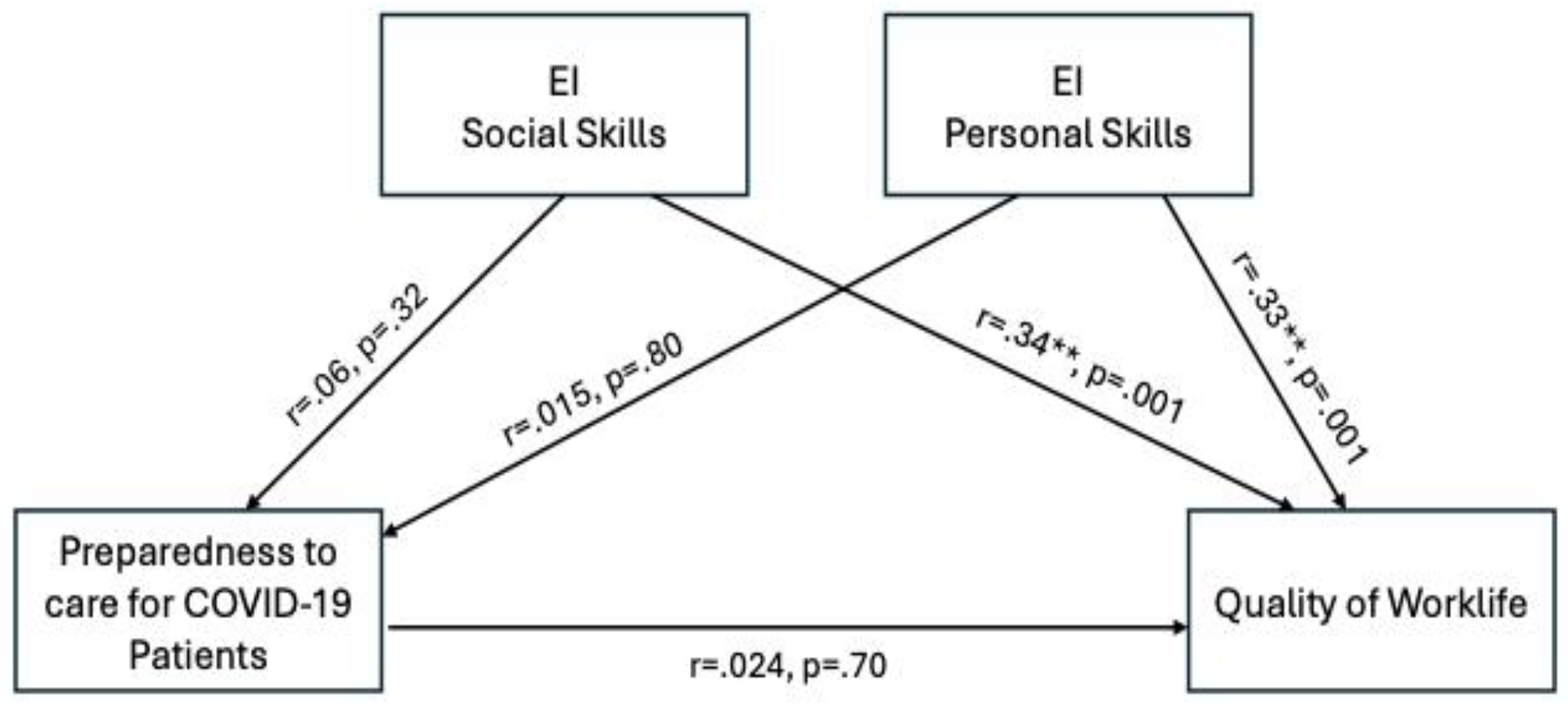

Table 1.
Demographic and work-related characteristics of the study participants (N = 267).
| Variable | Mean | SD | |
|---|---|---|---|
| Age (Yrs) | 37.47 | 8.09 | |
| Years of Experience (Yrs) | 8. 43 | 6.33 | |
| Variable |
Frequency (N=267) |
Percentage (%) |
|
| Gender | Men | 14 | 5.6 |
| Women | 252 | 94.4 | |
| Marital Status | Single | 95 | 35.6 |
| Married | 159 | 59.6 | |
| Divorced | 8 | 3 | |
| Widowed | 5 | 1.9 | |
| Educational Level | Diploma | 65 | 24.3 |
| Bachelor | 183 | 68.5 | |
| Postgraduate1 | 19 | 7.1 | |
| Nationality | Saudis | 56 | 21 |
| Non-Saudis | 211 | 79 | |
| Working Unit | General wards | 115 | 43.1 |
| Critical Care Units | 63 | 23.6 | |
| Specialized Units | 89 | 33.3 | |
| Job Title | Bedside nurse | 236 | 88.4 |
| Nurse managers | 31 | 11.6 | |
| Working hours per week | More than 40 hours | 219 | 82 |
| From 30 to 40 hours | 39 | 14.6 | |
| Less than 30 hours | 9 | 3.4 |
1 Include Master and PhD holders.
Table 2.
Preparedness to care for COVID-19 Patients (N = 267).
| Variable | Frequency (N=267) |
Percentage (%) |
|
|---|---|---|---|
| Attending COVID-19 related Workshop(s) | Yes | 233 | 87.3 |
| No | 34 | 12.7 | |
| Direct interaction with COVID-19 patients | Yes | 225 | 84.3 |
| No | 42 | 15.7 | |
| Received proper support during the pandemic | Yes | 194 | 72.7 |
| No | 73 | 27.3 | |
| PPEs are necessity to care for COVID-19 patients | Necessary | 267 | 100 |
| Not necessary | 0 | 0 | |
| Reported level of stress to care for COVID-19 patients | Very stressful | 118 | 44.2 |
| Moderately stressful | 92 | 34.5 | |
| Slightly stressful | 45 | 16.9 | |
| Not stressful | 12 | 4.5 | |
| Overall preparedness | Ready | 204 | 76.4 |
| Not decided | 27 | 10.1 | |
| Not ready | 36 | 13.5 |
Table 3.
Level of Emotional Intelligence among nurses working during the COVID-19 pandemic (N = 267).
Table 3.
Level of Emotional Intelligence among nurses working during the COVID-19 pandemic (N = 267).
| Emotional Intelligence | Frequency (N=267) |
Percentage (%) |
|
|---|---|---|---|
| Personal competence | Good | 250 | 93.6 |
| Fair | 17 | 6.4 | |
| Poor | 0 | 0% | |
| Social competence | Good | 228 | 85.4 |
| Fair | 39 | 14.6 | |
| Poor | 0 | 0 |
Table 4.
Nurses’ perception of the quality of their work life during the pandemic (N = 267).
| Variable | Frequency (N=267) |
Percentage (%) |
|
|---|---|---|---|
| Quality of work life | Good | 190 | 71 |
| Fair | 77 | 29 | |
| Poor | 0 | 0 |
Table 5.
Correlation between EI, preparedness, and quality of work life among nurses (N = 267).
| Variables | Personal competence | Social competence | Preparedness | Quality of work |
|---|---|---|---|---|
| Personal competence | - | |||
| Social competence | r = .52** p = .000 |
- | ||
| Preparedness | r = .015 p = 80 |
r = .060 p = .32 |
- | |
| Quality of work life | r = .33** p = .000 |
r = .34** p = .000 |
r = .024 p = .70 |
- |
** P< 0.001.
Table 6.
Regression test of moderation effect of EI on the relationship between preparedness to care for patients with COVID-19 and quality of work (N = 267).
Table 6.
Regression test of moderation effect of EI on the relationship between preparedness to care for patients with COVID-19 and quality of work (N = 267).
| Regression | B | SEB | β | p |
|---|---|---|---|---|
| Preparedness | -.487 | .081 | -1.17 | .000 |
| Personal competence x preparedness | .080 | .021 | .578 | .000 |
| Social competence x preparedness | .094 | .032 | .665 | .000 |
| r = .41** | p = .000 | |||
** P< 0.001.
Disclaimer/Publisher’s Note: The statements, opinions and data contained in all publications are solely those of the individual author(s) and contributor(s) and not of MDPI and/or the editor(s). MDPI and/or the editor(s) disclaim responsibility for any injury to people or property resulting from any ideas, methods, instructions or products referred to in the content. |
© 2024 by the authors. Licensee MDPI, Basel, Switzerland. This article is an open access article distributed under the terms and conditions of the Creative Commons Attribution (CC BY) license (http://creativecommons.org/licenses/by/4.0/).
Copyright: This open access article is published under a Creative Commons CC BY 4.0 license, which permit the free download, distribution, and reuse, provided that the author and preprint are cited in any reuse.


