

Submitted:
19 October 2024
Posted:
22 October 2024
You are already at the latest version
Abstract
Enterprise Systems (ES), including Enterprise Resource Planning (ERP), Customer Relationship Management (CRM), and Supply Chain Management (SCM), play a critical role in streamlining processes, integrating data, and enhancing decision-making across executive, managerial, and operational levels in organizations. These systems facilitate real-time information flow, improve coordination, and increase efficiency. This systematic review aims to identify the success factors and reasons for failure in the implementation of Enterprise Systems across various organizational levels, drawing from empirical research and case studies. A systematic search of databases such as Google Scholar, Web of Science, and Scopus was conducted. The review examined key factors influencing ES success, including top management support, user involvement, clear objectives, and change management. Failures were linked to misalignment with business goals, insufficient training, and poor communication. Studies were selected based on eligibility criteria, including publication date (within the last 20 years) and relevance to ES implementation. Out of the 64 studies reviewed, 76% focused on Small and Medium-sized Enterprises (SMEs), while 12% specifically addressed small businesses. The analysis revealed that 46% of the studies emphasized the role of ES in strategic planning at the executive level, 34% examined ES's impact on managerial performance in SMEs, and 20% explored the alignment of ES with business strategy. The review also found that on-premises solutions dominated ES implementation (67%), followed by cloud-based solutions (33%). Key success factors identified were organizational readiness, strategic alignment with business goals, and user engagement. Common failure causes included insufficient training (35%), lack of organizational readiness (28%), and poor change management (22%). This review provides insights into the critical success factors for ES implementation and common pitfalls. Findings emphasize the need for strategic alignment, comprehensive training, and stakeholder involvement at all organizational levels. These results offer a roadmap for organizations to optimize future ES implementations and ensure long-term sustainability through effective planning and change management.
Keywords:
decision‐making
; increasing efficiency
; business goals
; success factors
; implementation
; Enterprise Systems
; SMEs
; systematic review
1. Introduction
Enterprise Systems (ES) are vital tools for modern organizations, facilitating the integration of key business processes across various departments and improving operational efficiency. These systems, which include Enterprise Resource Planning (ERP), Customer Relationship Management (CRM), and Supply Chain Management (SCM), offer comprehensive solutions for managing and automating functions such as finance, human resources, production, and logistics [1,2]. The primary goal of ES is to unify fragmented processes and provide a real-time view of business operations, thus enabling organizations to respond more quickly and accurately to internal and external challenges [2,3]. Their importance is particularly evident in large enterprises, where complexity necessitates seamless information flow across functional areas to support data-driven decision-making. At the executive level, ES plays a crucial role in providing strategic insights through the consolidation and analysis of data across the organization. Executives rely on these systems to make high-level decisions that influence the overall direction of the business, such as market expansion, mergers, or significant capital investments. By offering real-time data analytics and performance metrics, ESs enable top management to assess risks, forecast trends, and create strategies based on comprehensive data. Moreover, they support long-term planning by integrating information from various departments, thus ensuring alignment with organizational goals, and enhancing the firm’s ability to compete in a fast-evolving business environment [4,5,6]. For middle managers, ESs serve as a powerful tool for tactical decision-making, coordinating resources, and monitoring performance. Managers utilize these systems to oversee day-to-day operations, streamline workflows, and ensure that operational objectives align with strategic goals. ESs enhance managerial effectiveness by enabling better control over inventory, production, and customer relationships, among other functions [7]. Additionally, they facilitate communication across departments, reducing redundancies and minimizing operational inefficiencies. The availability of accurate and timely information helps managers make informed decisions that can improve overall productivity and ensure the smooth functioning of business processes.
However, despite their potential benefits, the implementation of Enterprise Systems often faces significant challenges. Many organizations struggle with the complexity of these systems, leading to implementation failures. These failures can be attributed to a variety of factors, including poor management changes, lack of clear objectives, inadequate training, and insufficient user involvement [9,10]. Furthermore, aligning the system’s functionalities with organizational needs is a critical determinant of success. This literature review aims to explore both the success factors and the reasons for failure in ES implementation, examining how these systems can be effectively used to support executive, managerial, and operational decision-making [11,12]. Through an analysis of case studies and research findings, this review will provide insights into the best practices for successful ES deployment and highlight the common pitfalls organizations should avoid.
Table 1 provides a comparative analysis of the existing literature on enterprise systems and highlights how the proposed systematic review will fill critical gaps, offering a comprehensive evaluation of success factors and reasons for failure across executive, managerial, and operational levels.
The existing body of literature on ES implementation reveals several significant gaps. Many studies focus heavily on the executive level, offering limited insight into how ES supports decision-making, coordination, and efficiency across middle management and operational staff. Additionally, most reviews are constrained to specific industries, such as manufacturing or sectors focused on sustainability, which limits their generalizability. Geographic and economic contexts are also underexplored, with most of the research centred on either developed or emerging economies, but not both, leaving out cross-regional comparisons that could provide a more comprehensive understanding. Furthermore, while some reviews provide theoretical frameworks or insights, there is often a lack of robust empirical validation and limited long-term assessment of ES impacts. Technological factors, such as the role of specific ES components like ERP, CRM, and SCM, are frequently underexamined, with more focus placed on human factors like leadership and governance. These gaps highlight the need for a systematic review that comprehensively examines both human and technological success factors and reasons for failure across executive, managerial, and operational levels, with broader industry coverage and cross-regional analysis to offer actionable insights and practical recommendations for future ES implementations.
1.1. Research Questions
ESs are pivotal in ensuring business efficiency and supporting decision-making across various organizational levels—executive, managerial, and operational. These systems enhance business processes, provide real-time data insights, and streamline workflows, ultimately aligning business goals with operational objectives to achieve long-term strategic growth. However, successful implementation of ES requires a deep understanding of critical success factors at each level of the organization, from executives down to operational staff. Middle managers, in particular, rely heavily on these systems to optimize daily operations and improve productivity. Failure to implement ES effectively can result in poor planning, decreased performance, and resistance to organizational change. To address these challenges, this systematic review seeks to explore the following research questions:
- In what ways do ESs enhance decision-making at the executive level, and which data analytics capabilities are most critical for effective strategic planning?
- What are the critical success factors for effective ES implementation across different organizational levels (executive, managerial, and operational)?
- How do middle managers leverage Enterprise Systems to enhance coordination, streamline workflows, and improve operational efficiency in daily business processes?
- What are the most common reasons for Enterprise System implementation failures, and how can organizations mitigate these risks through better planning and change management strategies?
- How does the alignment between Enterprise System functionalities and organizational goals influence the overall success of ES adoption in achieving long-term business objectives?
1.2. Research Rationale
As enterprises increasingly prioritize operational efficiency and data-driven decision-making, understanding the role of Enterprise Systems in enhancing performance across all management levels becomes crucial. The ability to analyze and synthesize big data through ES enables organizations to make informed decisions, shape long-term strategies, and ensure that business objectives are aligned at every level—from executive management to day-to-day operational support. This systematic review aims to fill the existing gaps in the literature by investigating how ESs when properly implemented, can lead to improved business process management, data analytics, and communication across departments. Current research often focuses narrowly on specific management levels or industries, neglecting the holistic view that addresses cross-level integration. Moreover, many organizations fail to leverage the full potential of ES due to poor planning, insufficient training, or misalignment with strategic goals. This review will explore how organizations can avoid these pitfalls by examining success factors and offering a roadmap for future ES implementations. Given the complexity of ES implementation, understanding the factors that contribute to both success and failure is vital for businesses seeking to optimize their systems. Practical insights into these factors will help enterprises develop strategies that are tailored to their specific needs, ultimately driving greater operational efficiency, alignment of business goals, and long-term sustainability.
1.3. Research Objectives
This systematic review is structured around the following key objectives:
- To analyze the role of ES in supporting strategic decision-making at the executive level, particularly through real-time data analytics and reporting capabilities.
- To identify the critical success factors that contribute to the effective implementation of Enterprise Systems across executive, managerial, and operational levels.
- To examine how middle managers utilize Enterprise Systems to enhance resource coordination, streamline workflows, and improve operational efficiency in daily processes.
- To investigate the common reasons for Enterprise System implementation failures, including misalignment with business goals, insufficient training, and poor change management.
- To assess the impact of user involvement, training, and organizational readiness on the success of Enterprise System adoption and long-term sustainability.
This review will bridge the gaps identified in existing literature, particularly in areas concerning implementation failures and operational efficiency. By aligning the research questions with the objectives, this review aims to offer comprehensive insights into the success and failure factors associated with Enterprise Systems, ultimately providing actionable recommendations for organizations seeking to improve their ES implementations.
1.4. Research Novelty
This systematic review provides a fresh and comprehensive perspective on the critical role of ESs across executive, managerial, and operational levels. While previous research has often focused on specific aspects of ES, such as strategic decision-making or process optimization, it has largely overlooked the integrated impact of ES across all management levels within an organization. The novelty of this review lies in its holistic examination of how ES contributes to business performance by addressing key success factors and reasons for failure at every organizational level, from executives to operational staff. By synthesizing evidence from a wide range of industries and organizational contexts, this review offers new insights into both successful and failed ES implementations. Unlike previous studies that focus on isolated success or failure factors, this review identifies cross-industry trends and presents a unified framework for understanding how ES can be optimized to meet the specific needs of diverse organizations. The inclusion of case studies from both developed and developing regions adds depth and relevance to the findings, making the review applicable to a broader range of business environments. This review emphasizes the importance of aligning Enterprise Systems with business goals to achieve long-term strategic growth. It highlights how real-time data analytics, resource coordination, and workflow efficiency enabled by ES can significantly enhance decision-making at the executive level while improving daily operations at the managerial and operational levels. By addressing the critical gaps in the existing literature—particularly the need for cross-level analysis and the integration of both technological and human factors—this review provides a roadmap for organizations seeking to leverage ES for sustained growth and efficiency.
2. Materials and Methods
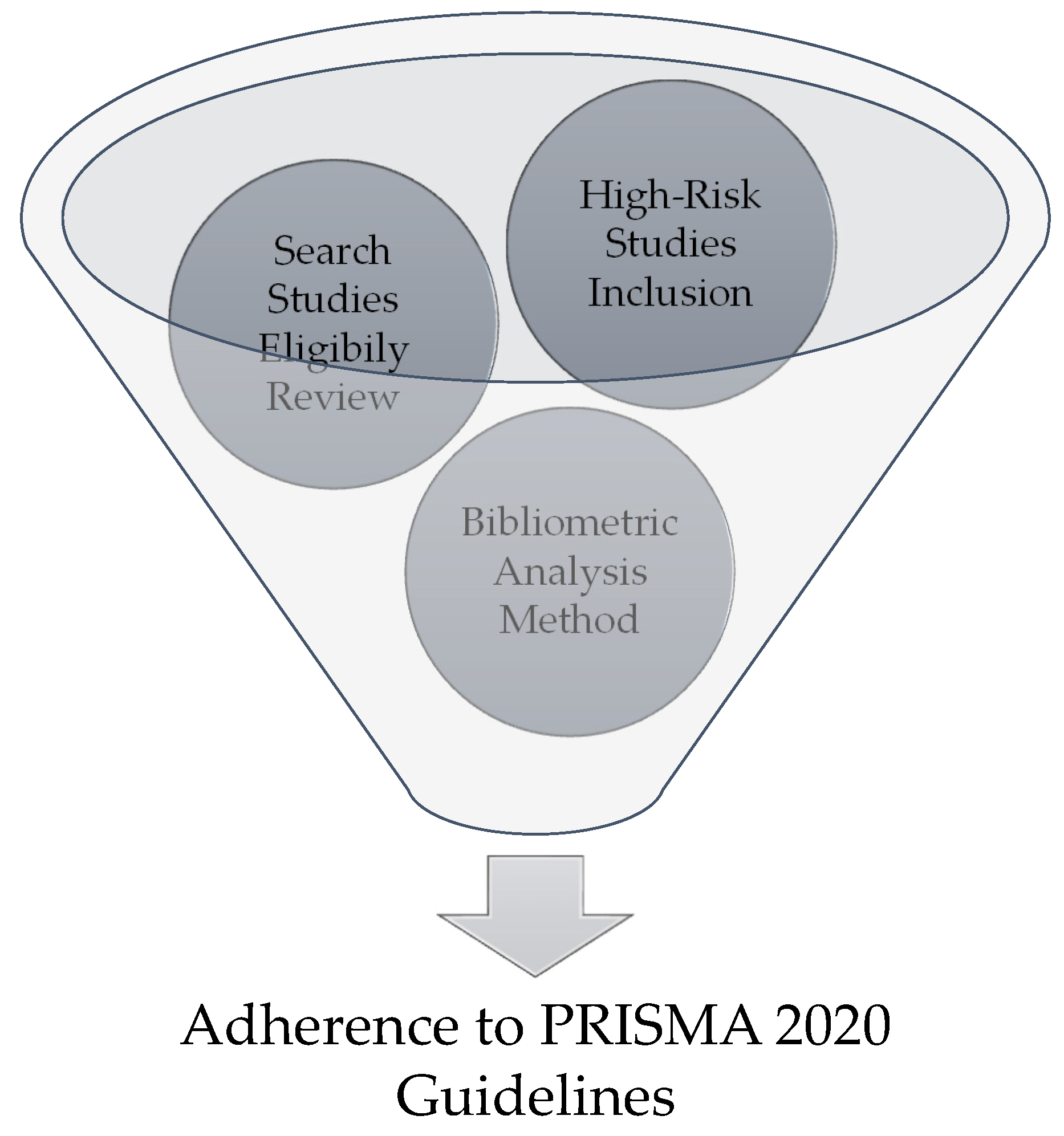
This literature review followed a systematic approach to gather, analyze, and synthesize relevant studies on ESand their impact on executive, managerial, and operational support. The research was conducted using three primary databases: Google Scholar (GS), Web of Science (WoS), and Scopus, ensuring a comprehensive collection of peer-reviewed articles, case studies, and empirical research. A set of keywords such as “Enterprise Systems implementation,” “ERP success factors,” “ES failures,” “organizational impact of ES,” and “change management in ES” were used to search for relevant studies. Filters were applied to focus on publications from the past 10 years, ensuring up-to-date insights. The selection process involved several stages: identification, screening, eligibility, and inclusion. In the identification phase, all papers with relevant keywords were collected. The screening phase involved reviewing titles, abstracts, and keywords to filter out irrelevant studies, duplicates, or those lacking empirical data. In the eligibility phase, full-text papers were assessed based on predefined inclusion criteria, ensuring that only studies focused on ES and organizational impacts were selected. Finally, the inclusion phase involved narrowing down papers that offered practical insights into ES implementation, success, and failure factors. The data from the selected studies were extracted and categorized based on themes related to ES benefits, success factors, failure causes, and organizational levels impacted (executive, managerial, and operational). A qualitative synthesis of the findings was conducted to identify patterns, trends, and insights across the studies. This approach provided a structured framework for understanding the relationship between ES and organizational success, while also highlighting gaps in the literature and areas for future research.
2.1. Eligibility Criteria
For this review, the eligibility criteria were established to ensure the inclusion of high-quality, relevant, and peer-reviewed research. Studies selected were required to focus on enterprise systems implementation, success factors, and failure causes, specifically addressing their impact on executive, management, and operational support. Only articles published in academic journals or conferences indexed in reputable databases such as Google Scholar, Web of Science (WoS), and Scopus were considered. Additionally, the papers needed to be published within the last 20 years to capture contemporary trends and technological advancements. Articles not written in English, lacking full-text availability, or focusing solely on technical aspects without addressing organizational outcomes were excluded. Case studies, empirical research, and reviews offering insights into practical applications of ES were prioritized over theoretical papers. Table 2 illustrates the eligibility inclusion criteria.
2.2. Information Sources
For this systematic review, information was extracted from the three academic databases: Google Scholar, Web of Science and Scopus. A systematic search strategy was used on all three platforms, using certain keywords and Boolean operators related to business processes and strategies in the enterprise systems at management levels to help with successful implementation. Google Scholar provided a wide range of articles while Web of Science and Scopus helped with finding peer-reviewed journals, conference papers and research papers, the databases provided articles which have a huge impact on enterprise systems, and the articles were selected based on an inclusion criterion like publication date and relevance according to Table 3, citation count was also considered. The selected studies were analyzed for data extraction on the impact of enterprise systems on various management levels and success factors as well as failed implementation.
Figure 1.
Eligibility Assessment and Study Selection Criteria for Synthesis Flowchart.

2.3. Search Strategy
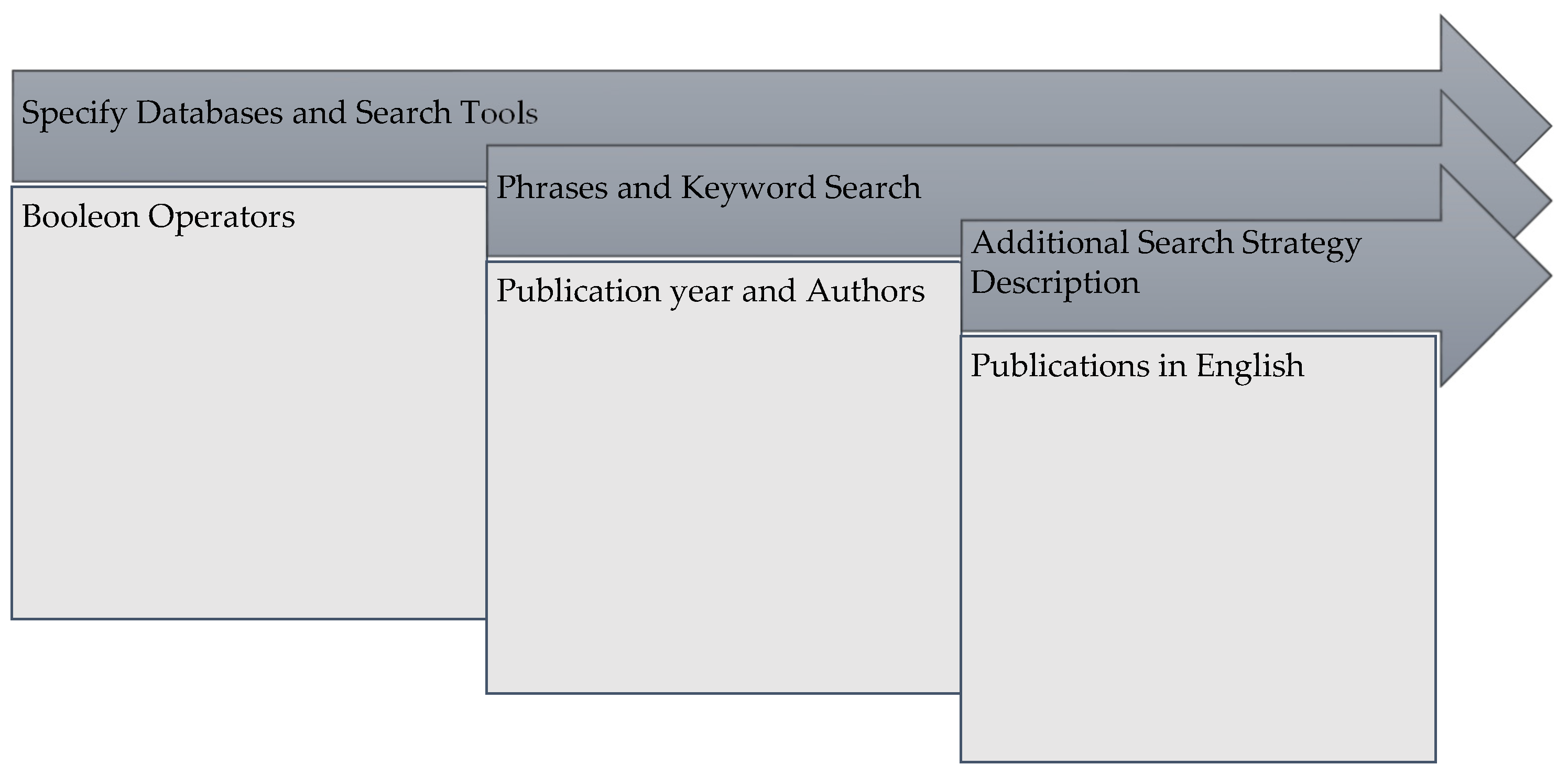
The systematic review strategies used for this review involved selecting acceptable search strategies to ensure the search for relevant, high-quality data from multiple sources [101,102,103,104,105,106,107,108,109,110,111,112,113,114,115]. The process involved carefully planning and searching from different registers, databases and websites to find the most related information. Google Scholar, Scopus and Web of Science databases and search engines were used in the processes. These platforms were chosen due to their wide coverage of scholarly literature across various fields, their inclusion of peer-reviewed content and advanced search functionality. The review strategy involved using filters and limits to enhance the search outcomes.
Search terms and Boolean operators were widely used in the search, and the selection of search terms was critical for enhancing the search process. To explore the impact of IT strategic planning on the performance of SMEs, many words were used, in combinations and the keywords included, “IT strategic planning,” “SMEs performance,”” Strategic management,”” Technology adoption in SMEs, ““Business performance,”” Information System,”” IT governance.” Furthermore, Boolean operators AND, OR, and NOT were used to refine the search by combining the search terms, for instance AND operator ensures that all included terms appear in the search result e.g., “IT strategic planning AND SMEs performance” was used to locate articles that had a relationship with these topics. OR on the other hand, was used to find articles that used synonymous or related terms e.g., “IT strategic planning OR information systems strategy” helped widen the review to include different terminology. Not was used to exclude irrelevant results e.g., “IT strategic planning NOT large enterprises” was used to exclude large companies not within SMEs. Many filters and limits were applied also to refine the research and ensure a high-quality data search. For instance, a Time Frame was used to filter studies based on publications from 2010 to 2024 to find the most relevant and recent research on strategic planning and SME performance and to capture the revolution of IT strategies in response to technological advancements in the past decade. While there was no limitation to geographic focus, the research was directed toward both developed and developing countries to understand regional differences in SMEs’ adoption of IT strategies. Specific countries were highlighted to capture geographic diversity. Document type filter was used, only peer reviewed articles, conferences papers and systematic reviews were used to ensure the academic integrity and reliability of the data. Non-peer-reviewed sources such as reports, and blogs were excluded using document type filters. Lastly language as a filter was used where the search was restricted to English language publications to ensure consistency in the search and since English is the predominant language of academic publishing. One last filter being discipline and subject area where the focus was only on key words like business, information systems, IT strategies, management, computer science etc. and documents with most citations were preferred often as it suggested that they contributed significantly to the literature of our research topic. The Results Obtained from Literature Search are tabulated in Table 3.
Figure 2.
Steps Followed to Conduct the Search Strategy.
2.4. Data Collection Process
Data collection methods are systematic approaches used to gather information for research, analysis, or decision-making purposes [101,102,103,104,105,106,107,108,109,110,111,112,113,114,115]. These methods can vary significantly depending on the research objectives, the type of data needed, and the available resources. Common methods include surveys, interviews, focused groups, observations, document analysis, experiments, case studies, and secondary data analysis. Each method offers unique strengths and weaknesses, making it essential for researchers to choose the most appropriate method based on their specific needs and the context of their study. Surveys and questionnaires are among the most widely used data collection methods that carried out most of the reviews researched, allowing us to gather both quantitative and qualitative data from a targeted population. Surveys can be administered in various formats—online, via phone, or in person—and typically include a mix of closed-ended questions (which provide specific options for respondents) and open-ended questions (which allow for more detailed, qualitative responses). Interviews, conducted either one-on-one or in small groups, provide in-depth insights and allow for more flexible, conversational exchanges. Focus groups further enrich the qualitative data by facilitating discussions among a group of participants, enabling researchers to capture diverse perspectives and opinions on a specific topic.
Other methods were used, such as observations and document analysis, focus on gathering data through direct observation of behaviors or the examination of existing materials. Observations can yield real-time insights but require careful planning to ensure objectivity. Document analysis involved reviewing reports, records, and literature to extract relevant information, making it particularly useful for historical research or understanding existing processes. Experimental methods and case studies were used for deeper explorations of cause-and-effect relationships or in-depth examinations of specific cases. Finally, secondary data analysis leverages existing datasets to gather insights without incurring the costs of new data collection. Combining multiple methods, often referred to as a mixed-methods approach, can enhance the depth and reliability of the findings, providing a more comprehensive understanding of the research subject.
Figure 3.
Steps of the Data Selection and Extraction Process.
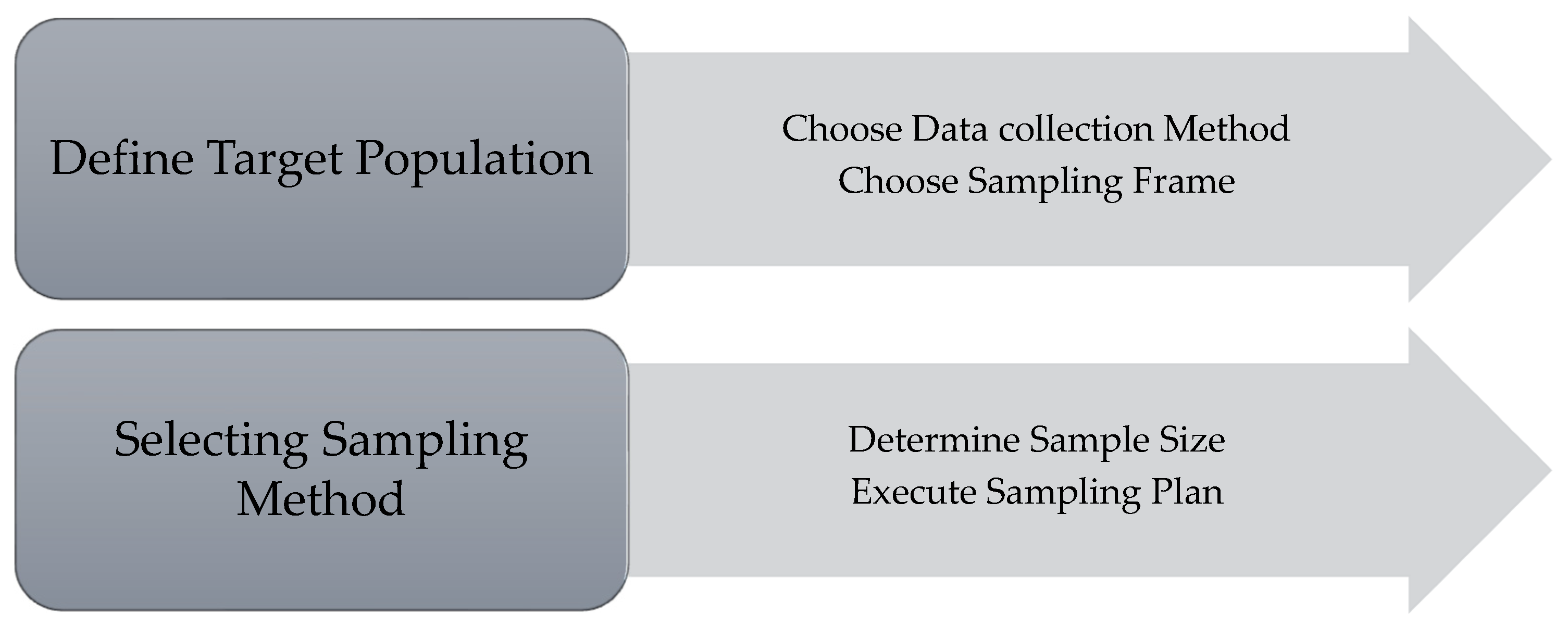
Figure 4.
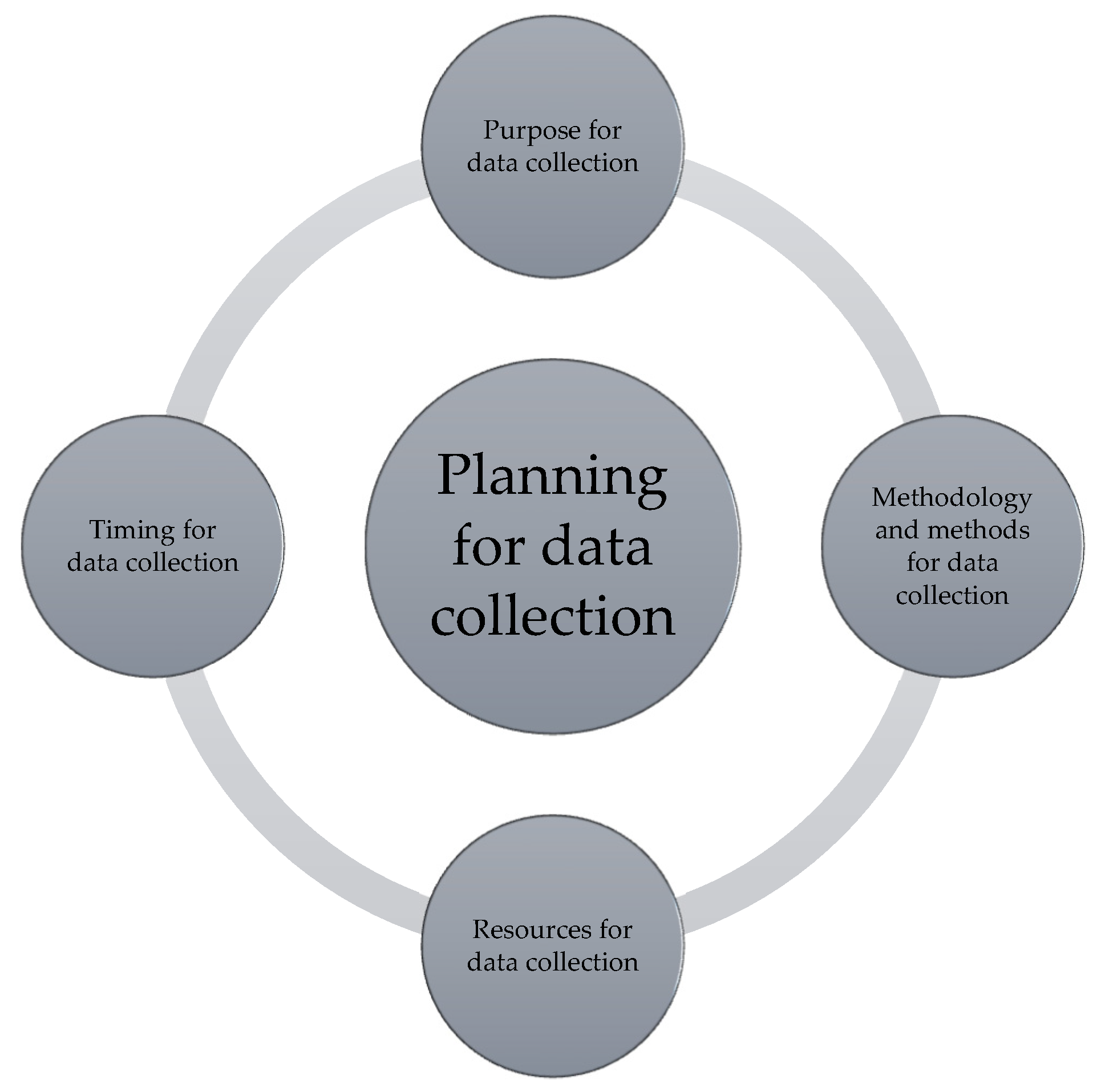
Methodology of the Data Collection Items Sought for Outcomes.
2.5. Data Items
In this systematic review, the data extracted from the selected studies were focused on many different outcomes that are related to enterprise systems [101,102,103,104,105,106,107,108,109,110,111,112,113,114,115]. One of the data items being decision making at different management levels from executive to management and operational support followed by critical success factors and common challenges in the enterprise when implementing these systems. More data items that were sought in the studies were interpreted in the key findings of results through business performance metrics like operational efficiency, industry context, data collection methods and data analytics processes and statistical representations. The review captured strategies that were used in the studies such as case studies, surveys, empirical analysis as they provided an understanding on how the factors were evaluated throughout all the different industries. Other data items were about implementation outcomes and long-term impacts, these included alignment of enterprise goals with the systems that play a role in daily business processes, like employee and stakeholder involvement and the performance of the systems. Information on industry type, company size and geographic location was extracted to deepen the context of the research which allowed for a comprehensive comparison of the impact of these systems and for best future implementation efforts.
2.6. Study Risk of Bias Assessment
In this review, a study risk of bias assessment was conducted to make sure that the information that was sought in the studies is reliable and valid. Newcastle-Ottawa Scale, Table 4 was used and is a common tool for assessing the quality of the studies that also helps in avoiding randomly selecting studies and evaluate potential biases in the selected case studies [101,102,103,104,105,106,107,108,109,110,111,112,113,114,115]. The scale focuses on key areas such as study selection, comparison between study groups and assessment outcomes. As such, the risk of bias was evaluated based on criteria like measurement of impact and exposure and outcomes and the reliability of the sample. Each study was scored in a systematic way to determine its overall quality, with particular attention to factors that could influence the accuracy of the results like unreliable and incomplete data reporting, selective outcome reporting, and confounding variables. This process helped ensure that only quality studies with minimum bias were included in the review which allowed for a great assessment for drawing conclusions on the impact of enterprise systems at various management levels. Each study received a rating based on a scoring system, where a maximum of 4 stars could be awarded per item in the Selection category, 2 stars for the Comparability category, and 3 stars for the Outcome category, with a maximum total of 7 stars. This scoring reflects the overall quality of each study. As demonstrated in Figure 5 the risk of bias assessment involved the following.
2.7. Effect Measures
Effect measures refer to the parameters used to evaluate the impact and performance of the systems within the organization. The measures help to identify how the systems increase productivity, support business, and how they contribute to the goals of the organization [101,102,103,104,105,106,107,108,109,110,111,112,113,114,115]. The measures that are commonly used in many organizations are risk management, innovation, operational efficiency, data accuracy, and finance. The effect measures will show how well the implemented systems reduce the operational costs because of the automation of the system. The newly implemented systems should ensure that the data stored is correct and reliable. The systems should also increase innovation and competitive advantage in the organization.
Figure 6.
Methods Used to Measure Effects and Their Thresholds.
2.8. Synthesis Methods
2.8.1. Process for Deciding Study Eligibility for Synthesis
The studies were selected based on their relevance to topics from the database, topics such as social media platforms, enterprise social networks, innovation, knowledge management and digital transformation. The studies were selected through searching on Google Scholar, Web of Science and Scopus, focusing on articles that were published in renowned journals like international Journals of Information Technology and Journal of Business Research. The eligibility criteria were particularly determined by the subject areas, industry context, and the relevance of the platforms discussed e.g., Facebook, Twitter, yammer. Studies across multiple industries and geographic locations were selected to ensure a comprehensive overview of the field. These form a part of a systematic literature review to identify relevant studies in the digital marketplace [101,102,103,104,105,106,107,108,109,110,111,112,113,114,115].
2.8.2. Data Preparation for Presentation or Synthesis
The studies were prepared for synthesis by categorizing them according to key parameters such as the kind of social platform, geographic location, economic context, industry context, and the type of research e.g., empirical, analytical analysis, methods like bibliometric analysis, systematic literature review, content analysis were used to process and analyze the data. The process of preparing included reviewing articles, extracting relevant data and categorizing it based on predetermined classifications, which made a structured synthesis as shown in Figure 7.
2.8.3. Methods for Tabulating and Visualizing Study Results
The methods for tabulating and visualizing the study results utilized a systematic approach that combined bibliometric analysis and thematic classification to comprehensively capture the data from the reviewed literature [101,102,103,104,105,106,107,108,109,110,111,112,113,114,115]. Bibliometric analysis tools, such as citation pattern tracking, co-authorship network analysis, and thematic mapping, were used to identify key research groups and trends in the field. The results were categorized into major thematic areas and highlighting the most influential research contributions in these domains. This approach facilitated a comparative analysis across various studies, focusing on the integral capabilities assessed and the achieved outcomes.
To present the findings clearly, the extracted data were systematically organized and synthesized to identify common themes, gaps, and key insights. The synthesis process involved grouping similar research findings into categories, which were then critically evaluated for relevance to the research questions and objectives. In cases where data were missing, informative gap-filling techniques, such as predictive modelling and cross-referencing with related studies, were employed to ensure completeness and accuracy. Additionally, visual representations, such as tables, charts, and thematic maps, were used to depict the relationships between different study characteristics and their outcomes, allowing for a deeper understanding of the trends and implications identified in the literature.
This structured approach ensured that the study results were comprehensively analyzed and presented, providing a robust basis for drawing conclusions and formulating recommendations. By employing these methods, the review effectively synthesized evidence from diverse studies, thereby offering a holistic view of the research landscape on enterprise systems and their impact across various management levels.
2.8.4. Methods for Synthesizing Results
The synthesis of the studies involved both qualitative and quantitative approaches [101,102,103,104,105,106,107,108,109,110,111,112,113,114,115]. For instance, bibliometric analysis was used to map the landscape of the research, while thematic ana helped synthesize qualitative data from all the systematic literature reviews. Different frameworks were used for the studies for the purpose of analyzing enterprise social media and examining the impact of social media expenses on knowledge transfer. The logic behind these methods was to provide a comprehensive understanding of the outcomes and abilities that are associated with various social media platforms, enabling a strategic synthesis of findings.
2.8.5. Exploration of Heterogeneity
Heterogeneity in the study results was explored through different lenses, including geographic location, for instance developing and developed countries, industry context where specific industries like manufacturing are considered as well as multi-industries, and the types of social platforms studied e.g., Facebook, and WeChat. Different economic contexts were also considered such as transitioning and developed economies, and by doing so gaining an understanding how these factors influence the impact of social media and digital platforms. Specific subgroup and data-regression analysis were not mentioned yet comparative analysis from various contexts helped in selecting potential sources of heterogeneity [101,102,103,104,105,106,107,108,109,110,111,112,113,114,115].
2.8.6. Sensitivity Analysis
The explicit mention of sensitivity analyses is not included in the database, as it is more relevant to quantitative studies. The size of the synthesized results was particularly ensured through the study of multiple research methods, e.g., combining qualitative content analysis and bibliometric analysis and cross-referencing searches from different databases and the repetitive process of refining the thematic analysis. The mixed methods strategy utilized in some studies, such as combining surveys with case studies is what would have helped in assessing the reliability of the conjectures reached. The researchers ensured that the synthesized results were reliable and reflected broader trends and challenges in the various fields included in the studies [101,102,103,104,105,106,107,108,109,110,111,112,113,114,115].
Figure 8.
Sensitivity Analyses for Assessing the Robustness of Synthesized Results Cycle.
2.9. Reporting Bias Assessment
Reporting bias in this case refers to distortion of data or information in reports which in turn affects the conclusion of the report and decision-making. Evaluating reporting bias is very important to ensure that the data provided by the enterprise system is reliable and can be trusted to make decisions based on it. Reporting bias can be evaluated in different ways or methods, namely data quality, documentation, stakeholder feedback, training, ethical guidelines, and Regular reviews. Interviews are conducted to get feedback from different stakeholders about the enterprise systems. Proper documentation of the report drawn from the data must be done and the report must be transparent. Changes must regularly be made to the enterprise systems based on the latest reviews. Proper training must be provided by the organization so that the users can be familiar with the operations of the newly implemented enterprise systems [101,102,103,104,105,106,107,108,109,110,111,112,113,114,115].
2.10. Certainty Assessment
To ensure the reliability and validity of the findings in this review, a thorough certainty assessment was conducted based on various factors such as the quality of studies, consistency of results, and relevance of data. Many of the selected studies came from reputable, peer-reviewed journals indexed in databases like Google Scholar, Web of Science (WoS), and Scopus, which ensures the inclusion of high-quality research [101,102,103,104,105,106,107,108,109,110,111,112,113,114,115]. These databases filter for credible academic publications, minimizing the risk of including low-quality or non-peer-reviewed articles. Moreover, the eligibility criteria for this review ensured that only studies with clear research methodologies and data were considered, further enhancing the certainty of the findings. The consistency of the results across studies also contributes to the confidence in the conclusions drawn. The review found that common themes, such as the importance of top management support, user involvement, and alignment of ES functionalities with business goals, were repeatedly highlighted in studies spanning different industries and regions. This consistency suggests that these factors are universally recognized as critical to the success of Enterprise Systems implementations. Likewise, recurring failure points, such as inadequate training, lack of organizational readiness, and poor change management, were observed across multiple studies, indicating that these are common challenges faced by many organizations regardless of their context.
However, the certainty of the assessment is slightly limited by the diversity of research methodologies employed in the selected studies. While most studies used quantitative or mixed methods, a few relied solely on qualitative data, such as interviews and case studies. This variation in methods may lead to discrepancies in how certain success and failure factors are reported or interpreted. Quantitative studies provide measurable outcomes, but qualitative insights often offer a deeper understanding of organizational dynamics that numbers alone cannot capture. Therefore, while the findings are consistent, the strength of evidence from qualitative studies may be more subjective. Another factor considered in the certainty assessment was the recency of the data used in the reviewed studies. While the review focused on research published within the last 20 years to capture current trends, some older studies were included because they offered foundational insights into ES success and failure factors. Although the inclusion of older studies enriches the historical context, the rapid pace of technological advancement means that some findings from earlier studies may not fully reflect the current capabilities and challenges of modern Enterprise Systems. Thus, while these studies provide valuable context, the certainty of their applicability to contemporary ES implementations is moderate.
3. Results
The results are described in this part along with their interpretation and some inferences that can be made from them.
3.1. Study Selection
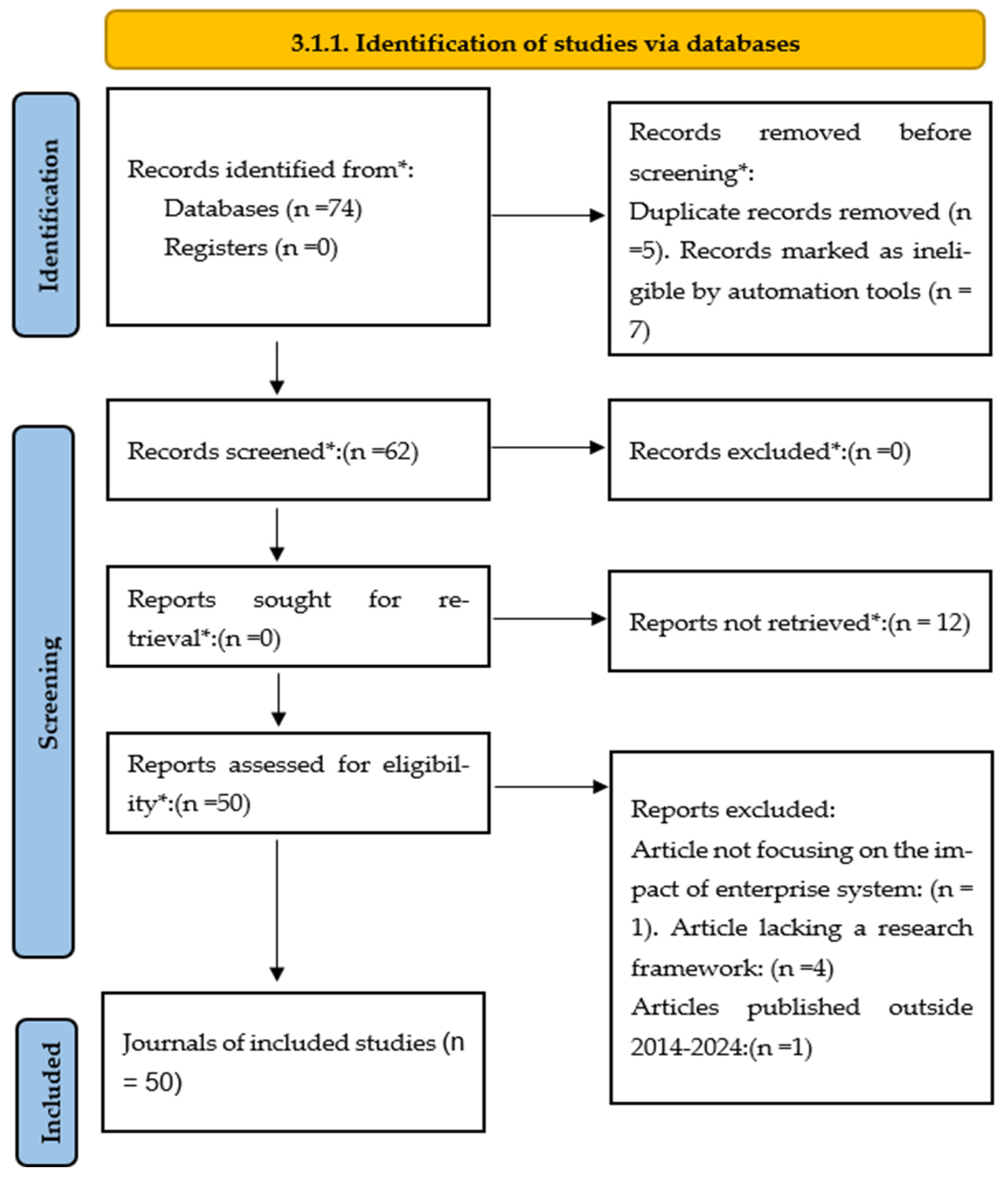
The results search yielded approximately, research papers across all considered research data sources, and their titles and abstracts were surveyed. As demonstrated by Figure 1, the collected research papers comprised of 74 research papers in total and they are journals. 5 papers were duplicates and 7 were marked ineligible by automation tool. Therefore, the remaining 64 research papers were screened using the inclusion and exclusion criteria and 12 papers were excluded which left us with 50 papers for full-text review and were incorporated in this systematic analysis process.
Figure 9.
Proposed PRISMA Flow Chart.
3.2. Study Characteristics
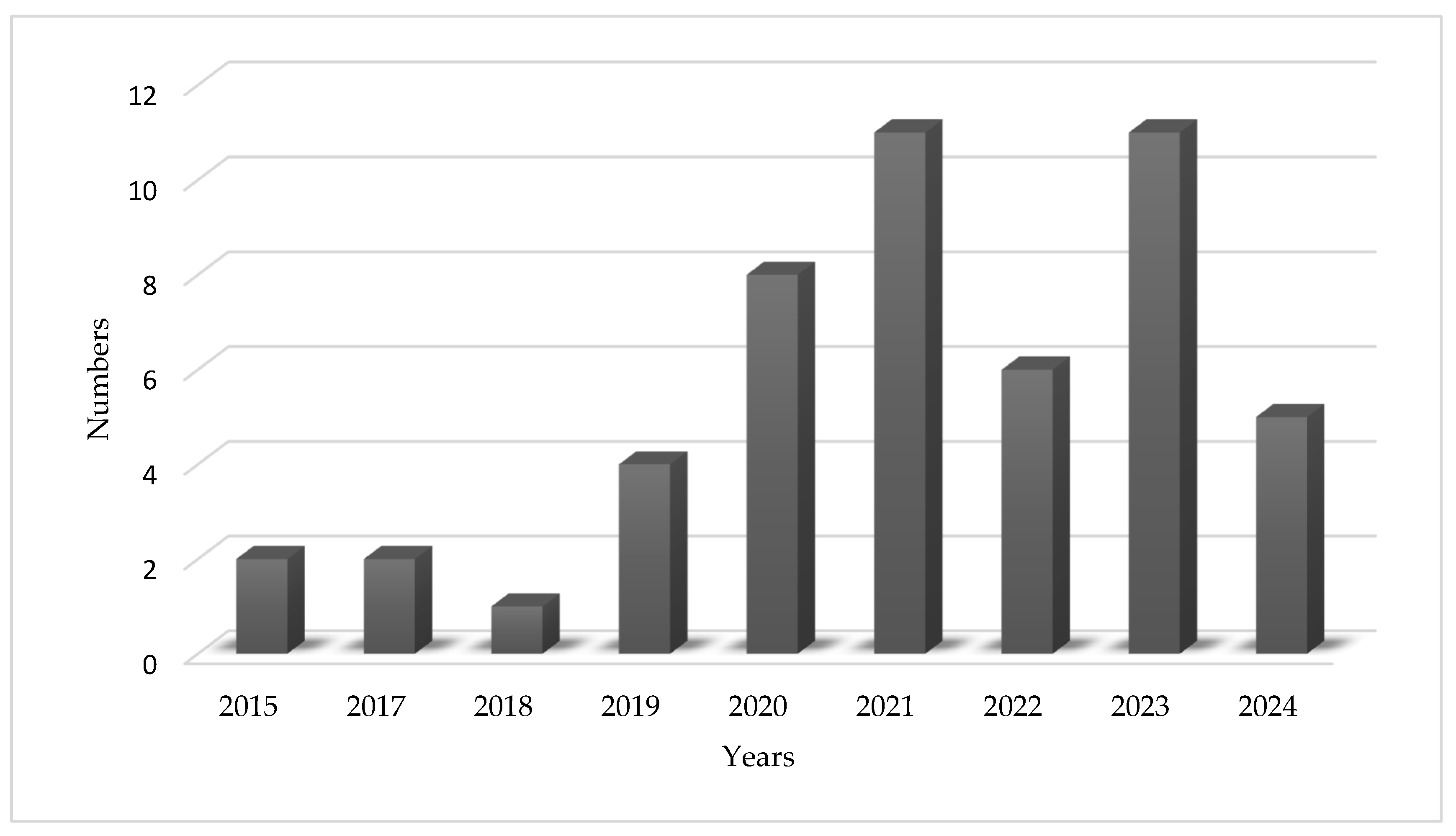
50 studies regarding enterprise systems were reviewed. The statistical summary of all the reviewed journals is summarized below using the charts and plots. While 2 papers were published in the year 2015 and 2017 respectively, the following year saw a decline to the lowest publications in the period under review, with only one documented paper published in 2018. The greatest documented studies came in the year 2021 and 2023, which peaked at 11 publications each in those years. The interest in this study has remained post-2018, with publications remaining higher than the preceding years. The number of documented papers in the years up to 2023 indicates persistent interest in developing the knowledge base and research in the field. The huge increase in 2023 can be related to an increased understanding attained in the field from the research of the years thus far. The results of years post-2024 can be attributed to further development and building on the successes and research attained thus far.
Figure 10.
Research Distribution by The Number of Articles Published.
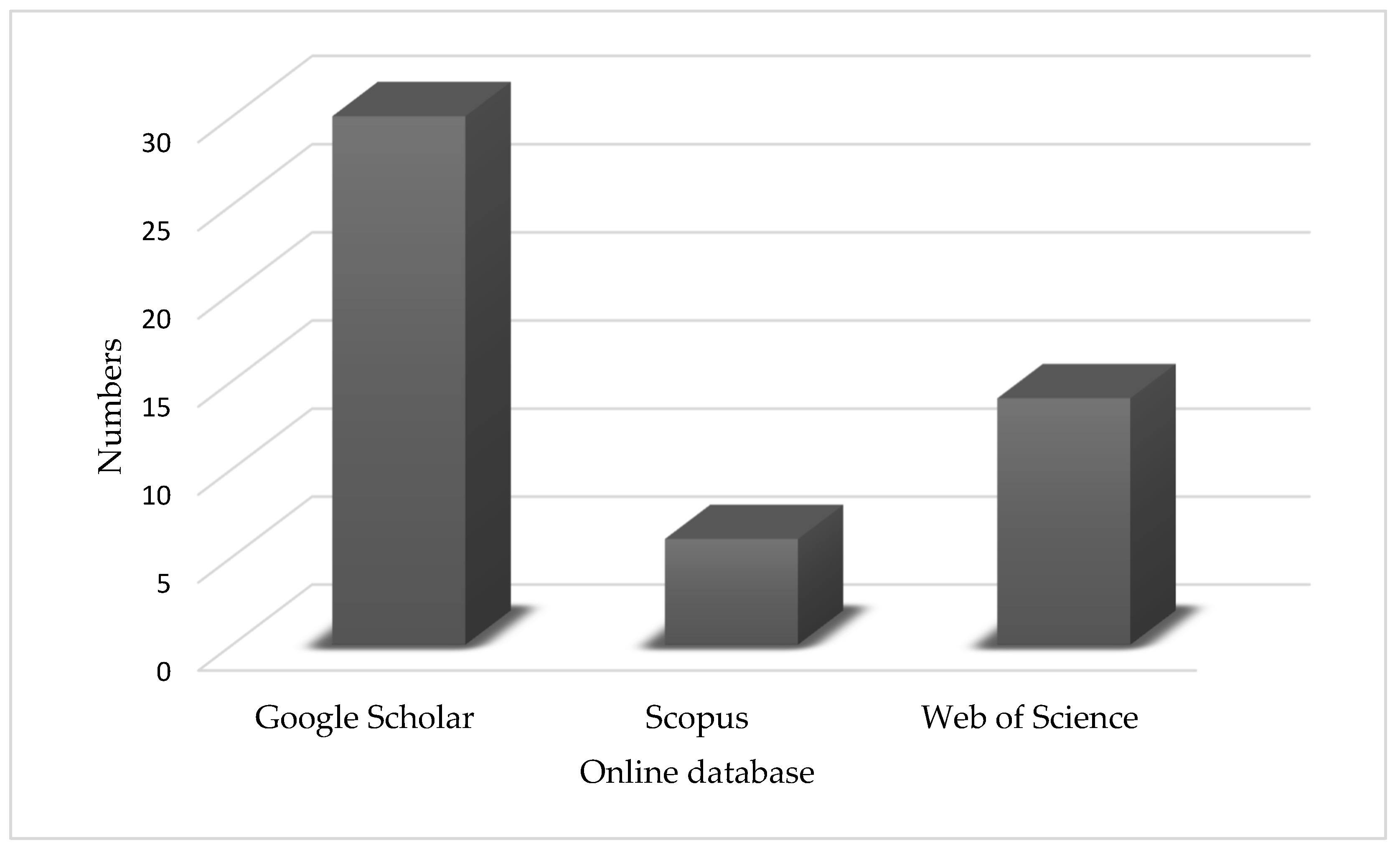
The research was conducted using three prominent online databases: Google Scholar, Scopus, and Web of Science, which collectively provided a wide range of peer-reviewed academic articles, case studies, and empirical research. Google Scholar emerged as the primary source, contributing most of the articles reviewed. Its extensive database, broad subject coverage, and accessibility made it the most practical and commonly utilized platform for this study. Web of Science, known for its high-quality indexing and focus on reputable, peer-reviewed journals, was the second most used source, offering a rich selection of articles with stringent academic standards. Scopus, while similarly reputable and comprehensive, contributed the fewest articles in this review, reflecting its more specialized focus and the fact that fewer relevant studies were identified there compared to the other databases. Despite the varying levels of use, all three databases were critical in ensuring a balanced, diverse, and credible collection of research materials for this review.
Figure 11.
Research Distribution by Online Databases.
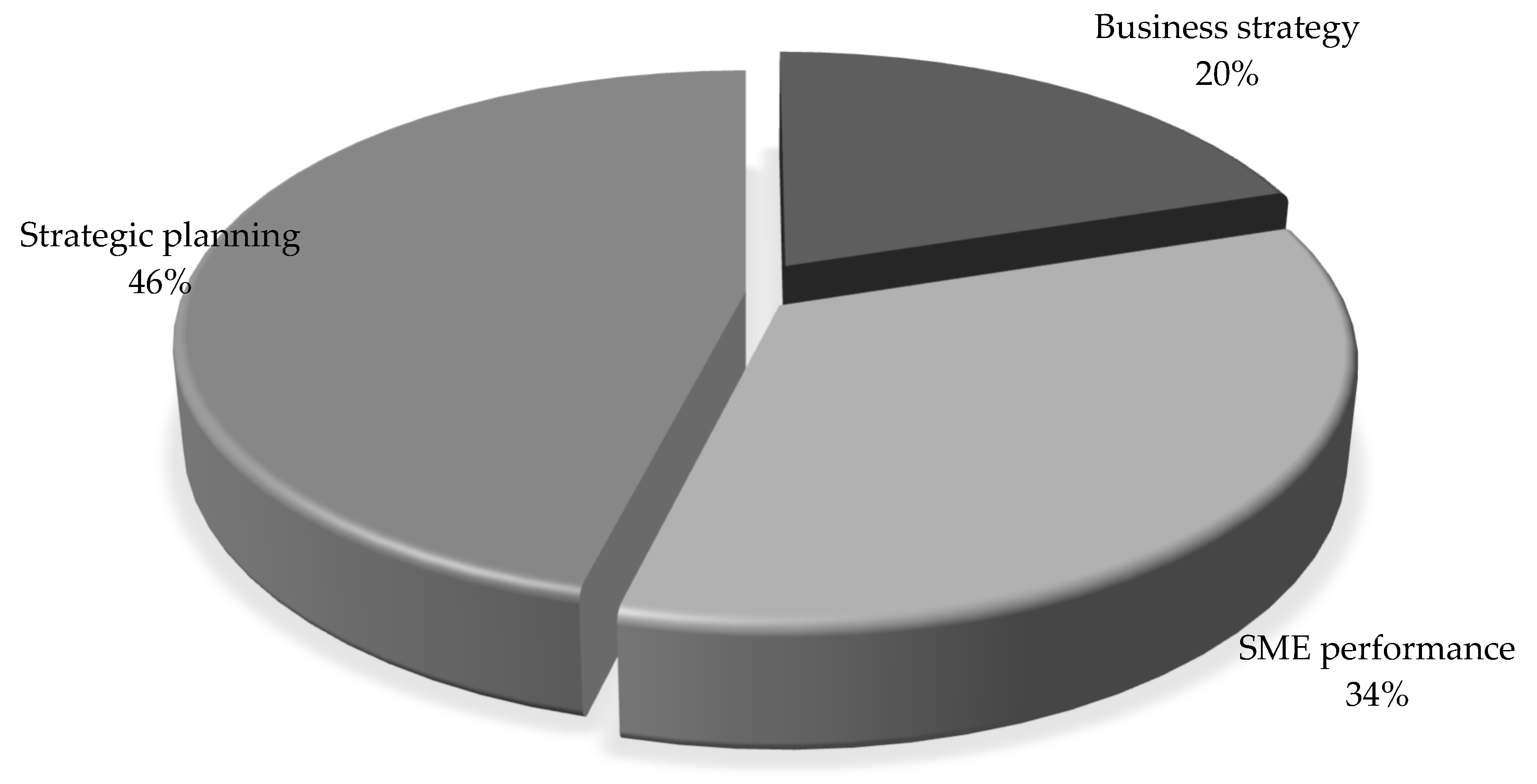
The statistical analysis of the reviewed journals reveals a clear emphasis on the role of ES in strategic planning, indicating that this is a primary focus for businesses when adopting ES. A significant 46% of the studies reviewed cantered on how organizations leverage ES to enhance their strategic planning capabilities. This finding suggests that many businesses implement these systems to gain deeper insights, improve decision-making, and align long-term objectives with operational processes. The ability of ES to provide real-time data analytics and integrate information across departments makes them invaluable for driving informed strategic decisions.
Following strategic planning, 34% of the reviewed journals focused on how ES implementation impacts the performance of Small and Medium-sized Enterprises (SMEs). This indicates that SMEs are increasingly adopting ES to streamline operations, improve productivity, and enhance competitiveness in the marketplace. For these organizations, ES is not only a tool for daily operations but also a critical driver of long-term performance improvements. Finally, 20% of the studies addressed the relationship between ES and overall business strategy. These articles explored how businesses use ES to refine their business models, optimize processes, and create more agile strategies in response to changing market conditions. This highlights that, while ES are often implemented for specific functional improvements, their broader impact on aligning business strategy with operational efficiency is equally important for organizations seeking to remain competitive. Overall, the distribution of focus areas in the reviewed literature underscores the multifaceted role of ES in shaping both immediate and long-term business objectives.
Figure 12.
Research Distribution by Discipline or Subject Area.
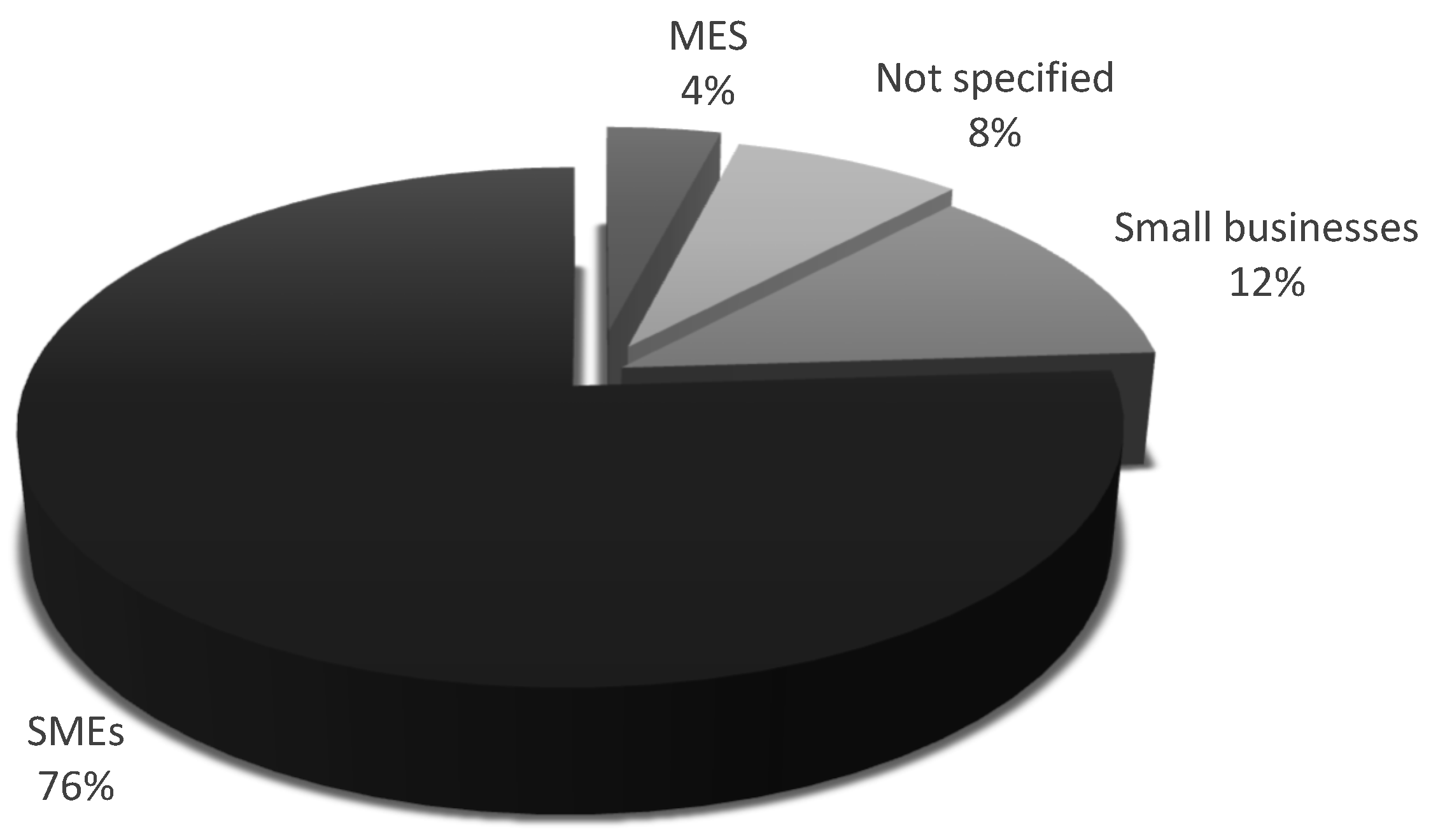
Most of the reviewed journals, 76%, concentrated on the application and impact of ES within the Small and Medium-sized Enterprises (SMEs) industry context. This significant focus on SMEs suggests that these organizations are increasingly adopting ES to overcome challenges such as limited resources, inefficient processes, and competitive pressures. By implementing ES, SMEs can streamline operations, improve data management, and enhance decision-making capabilities, which are crucial for their growth and sustainability in a competitive market.
In 12% of the reviewed journals, the focus shifted specifically to small businesses, underscoring the unique challenges and opportunities these organizations face when implementing ES. Unlike larger enterprises, small businesses often have more limited budgets and operational scope, making the adoption of ES particularly critical for improving efficiency and gaining a competitive edge. The studies in this category highlighted how small businesses use ES to optimize resource allocation, reduce operational costs, and support scalability. A smaller portion, 4% of the journals, focused on the Manufacturing Execution Systems (MES) context, which is a subset of ES specifically geared toward the manufacturing sector. These studies emphasized how MES is used to improve production processes, quality control, and supply chain management. MES helps manufacturers track real-time production data, leading to better coordination and decision-making on the shop floor. Lastly, 8% of the reviewed journals were categorized as “N/A,” indicating that the specific industry context was not mentioned, or the focus was more generalized across multiple industries. This classification highlights that while many studies emphasize industry-specific applications of ES, some take a broader approach to exploring the general benefits and challenges of ES adoption across various business environments.
Figure 13.
Industry Context of the Reviewed Journals.
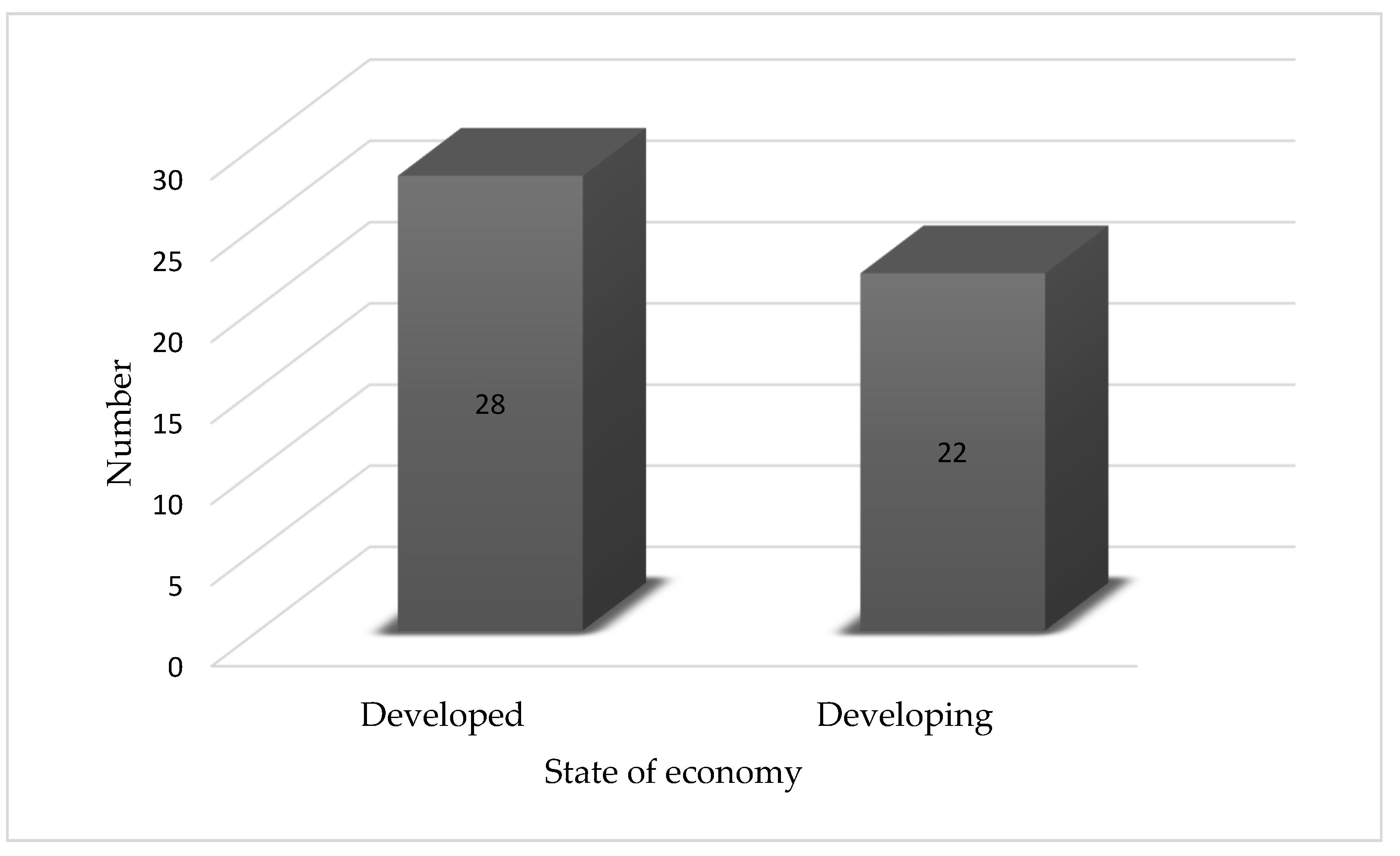
The analysis of the economic context in the reviewed journals revealed a notable concentration of studies conducted in developed economies, indicating that the majority of research on ES implementation and its effects is focused on well-established markets. These developed regions often have mature infrastructures, advanced technological capabilities, and significant financial resources, making them prime candidates for ES adoption. The studies within this context highlight how businesses in developed economies leverage ES to optimize complex operations, enhance decision-making, and maintain a competitive edge in global markets.
In contrast, fewer studies were found to focus on developing regions, where the adoption of ES may be slower due to challenges such as limited access to technology, financial constraints, and less developed infrastructure. These areas, while still growing, face unique barriers in implementing ES compared to their counterparts in more developed regions. Nevertheless, the studies that investigated developing economies provided valuable insights into how businesses in these areas are gradually embracing ES to modernize their operations, improve resource management, and compete on a larger scale. The findings indicate that while ES adoption is more prevalent in developed economies, there is growing interest and potential for significant impacts in developing regions as they continue to evolve economically and technologically. This disparity in focus between developed and developing regions underscores the need for further research in the latter, where ES could play a transformative role in business growth, efficiency, and competitiveness. It also reflects the broader global trends in technology adoption, where developed countries lead in innovation and investment, while developing countries are steadily catching up as they address infrastructural and financial limitations.
Figure 14.
Research Distribution by Economic Context.
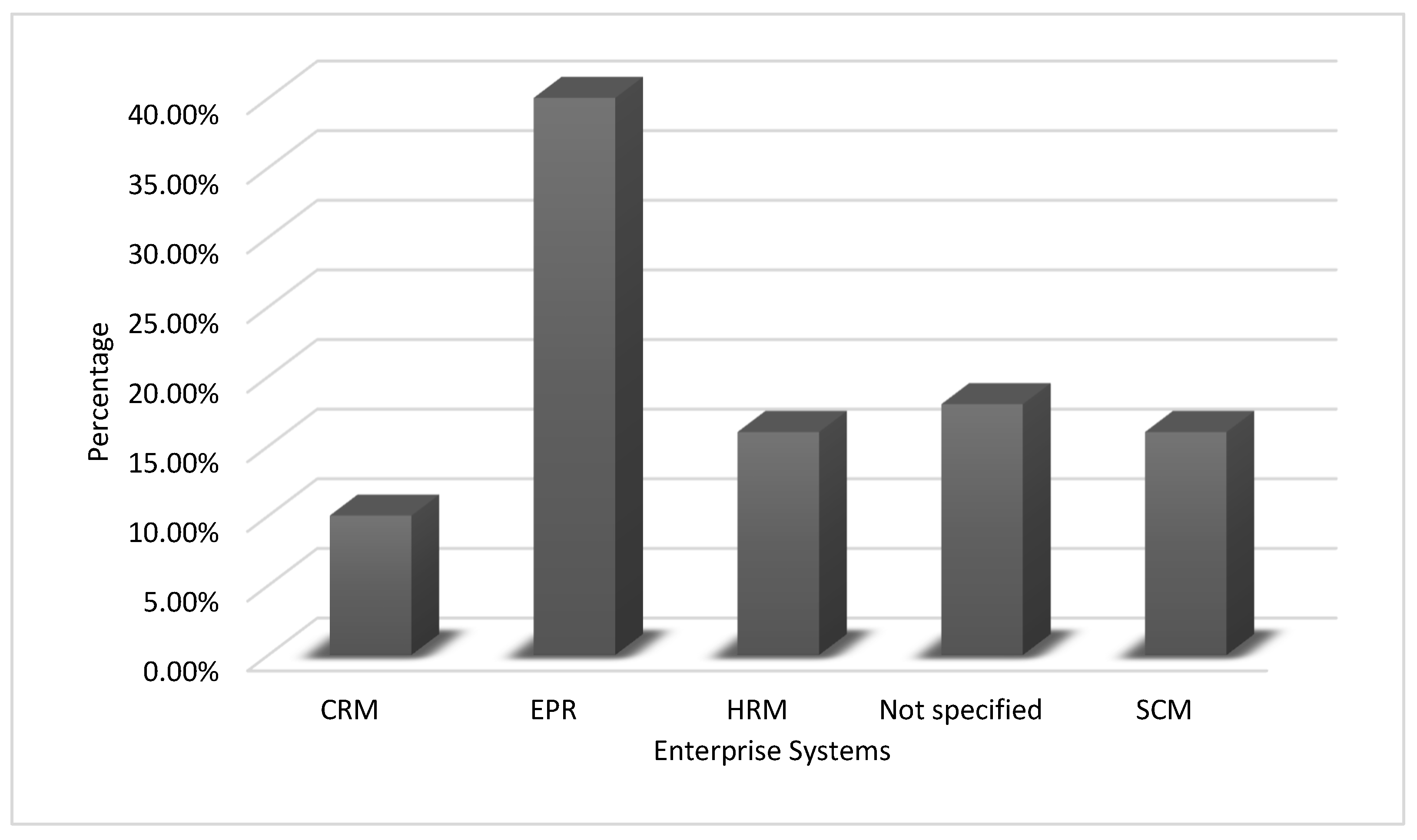
The statistical analysis of the types of ES discussed in the reviewed journals revealed key trends in their adoption and application across different industries. Enterprise Resource Planning (ERP) systems emerged as the most used and studied type of ES, reflecting their widespread popularity and critical role in integrating various business functions such as finance, procurement, inventory, and production. ERP systems, due to their comprehensive nature, have become essential tools for organizations seeking to streamline operations and achieve cross-departmental synergy, which explains their dominance in the reviewed literature. Following ERP, Human Resource Management (HRM) systems ranked second, highlighting their importance in managing and automating workforce-related tasks such as payroll, recruitment, and performance management. The growing complexity of workforce management, particularly in large and global organizations, has made HRM systems indispensable for ensuring efficient human capital management. Supply Chain Management (SCM) systems came in third, emphasizing their critical role in coordinating logistics, production, and distribution activities. SCM systems are particularly valued in industries with complex supply chains, where real-time tracking, inventory optimization, and supplier coordination are crucial for operational efficiency.
Interestingly, Customer Relationship Management (CRM) systems were identified as the least discussed and implemented in the reviewed journals, which may reflect a lower prioritization of customer-facing systems compared to the internal process management tools like ERP, HRM, and SCM. Despite CRM’s importance in managing customer interactions and enhancing customer satisfaction, its lower representation in the literature suggests that businesses may still be focusing more heavily on internal operational efficiencies before turning to customer relationship optimization. The journals categorized as not specified accounted for a portion of the reviewed studies where the specific type of Enterprise System was not mentioned. These studies may have focused on general ES topics without narrowing down the discussion to systems or may have covered multiple types of systems without specifying one over the other. This categorization shows that while some research focuses on specific ES types, a significant number of studies take a broader approach to understanding the overall impact of Enterprise Systems.
Figure 15.
Research Distribution by Types of Enterprise Systems.
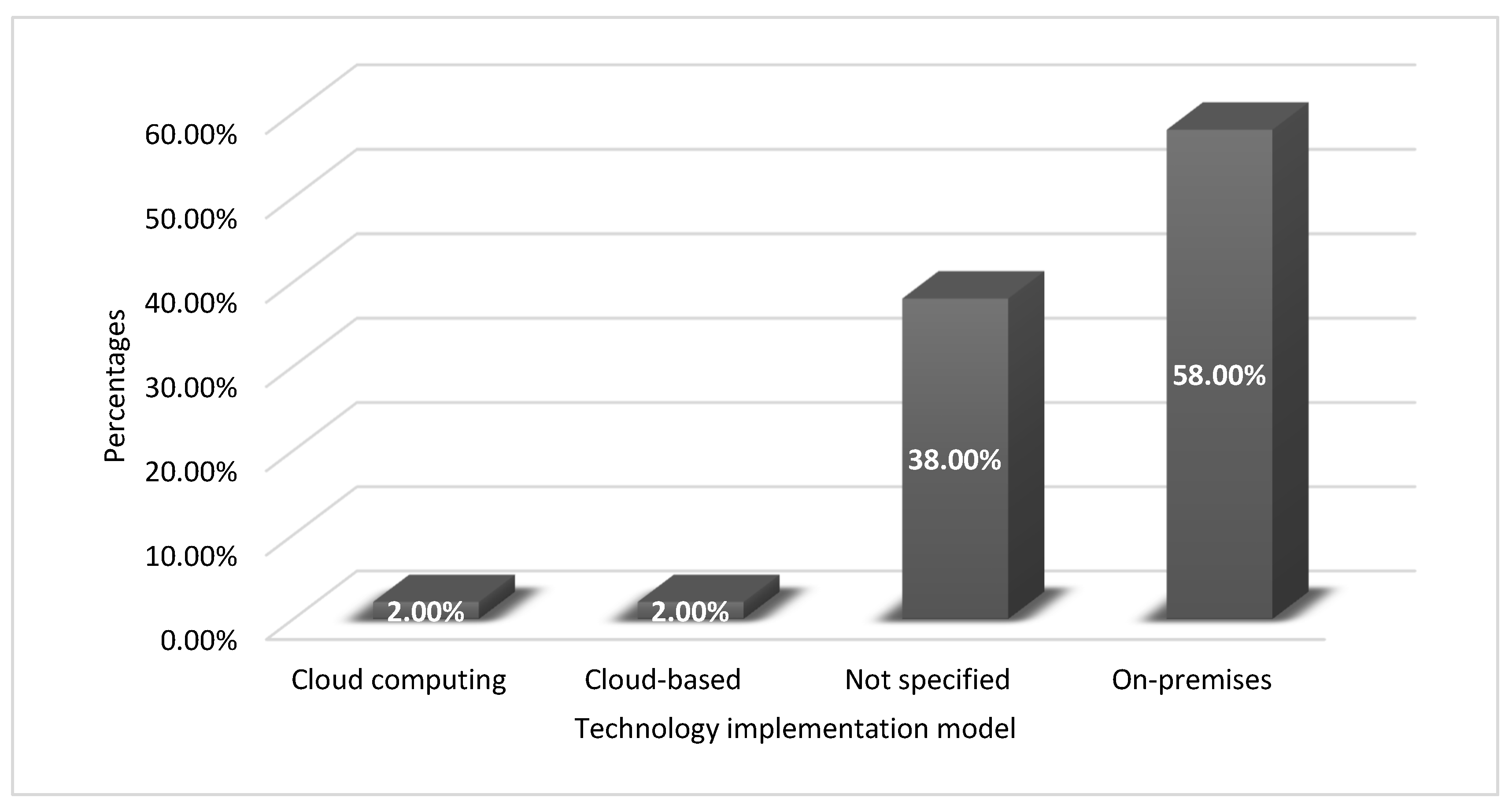
The analysis of technology implementation models in the reviewed journals revealed that most businesses have adopted on-premises solutions for their Enterprise Systems (ES). This preference for on-premises implementation reflects traditional approaches where organizations host, manage, and maintain their own IT infrastructure. Many companies, particularly larger or established ones, continue to favour on-premises solutions due to concerns over data security, control, and customization capabilities. With on-premises models, businesses have full control over their systems, allowing them to tailor the ES to their specific needs while keeping sensitive data within their own networks. This is particularly common in industries such as finance, healthcare, and manufacturing, where regulatory compliance and data protection are critical.
In contrast, a smaller number of the reviewed journals focused on cloud-based or cloud computing models, reflecting the growing but still relatively gradual shift toward cloud adoption for ES implementation. Cloud-based models offer significant advantages such as reduced upfront costs, scalability, and easier updates, making them increasingly attractive, especially for small and medium-sized enterprises (SMEs) with limited IT resources. Despite these benefits, the slower adoption of cloud-based systems can be attributed to concerns about data security, privacy, and the loss of control over system infrastructure. Furthermore, legacy systems and the complexity of migrating from on-premises to cloud platforms have hindered some businesses from fully embracing cloud-based models. The journals classified as N/A indicate studies where the specific technology implementation model was not mentioned, suggesting a focus on general ES impacts without delving into the technical specifics of how these systems were deployed.
Figure 16.
Research Distribution by Technology Implementation model.
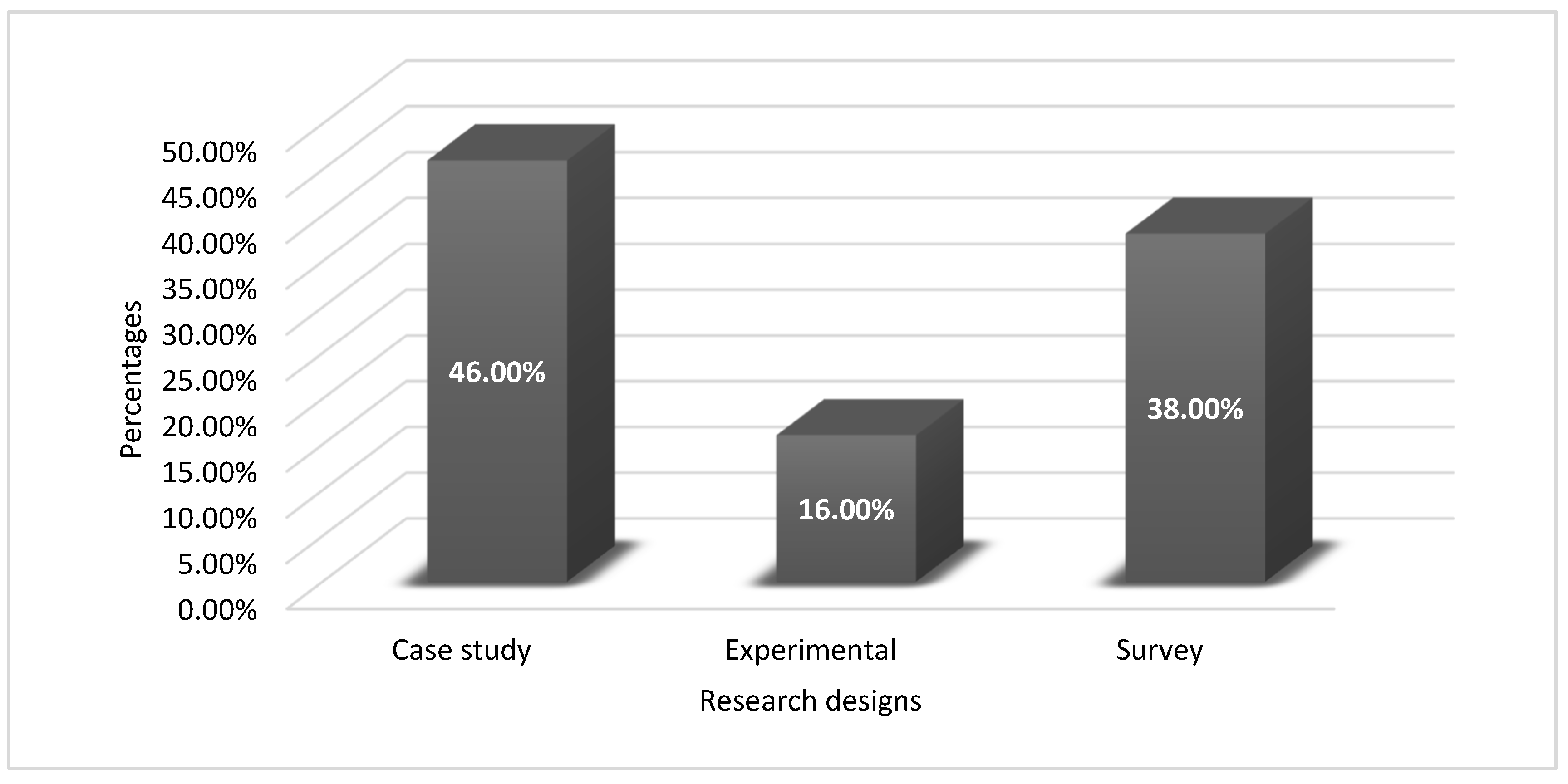
The review of research methodologies across the journals revealed that the majority of studies employed a case study design, which allowed for an in-depth exploration of ES implementation within specific organizational contexts. Case studies provided valuable insights into real-world applications of ES, highlighting both successes and challenges across different industries. Following case studies, surveys were the second most common research design used. Surveys enabled researchers to gather broader quantitative data from a larger sample of organizations, offering statistical insights into trends, success factors, and challenges associated with ES adoption. Lastly, experimental research designs were the least utilized. These studies, though less frequent, contributed to understanding ES by testing specific variables or conditions under controlled environments. The lower frequency of experimental research may reflect the difficulty of replicating complex, real-world organizational dynamics in a controlled setting. Overall, the mix of case studies, surveys, and experimental designs provided a comprehensive understanding of how ES is implemented and managed across various contexts.
Figure 17.
Research Distribution by Research Design.
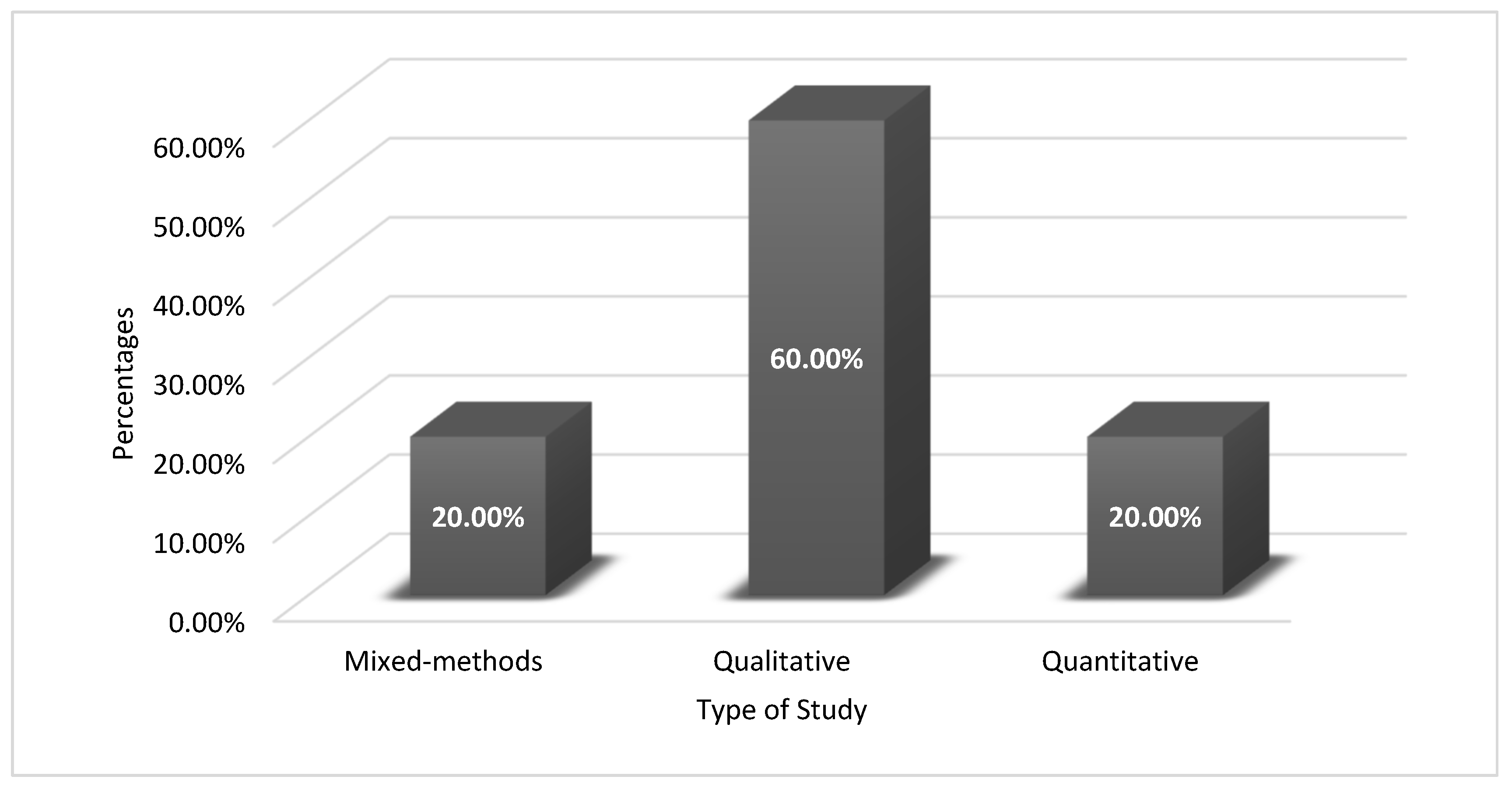
The review of study methods used across the selected journals revealed that qualitative research was the most frequently employed approach. Qualitative methods, such as interviews, focus groups, and case study analyses, allowed researchers to gain deep insights into the nuances of ES implementation, including organizational challenges, cultural factors, and user experiences. These methods are particularly well-suited for exploring the complexities of how ES impact different organizational levels and functions, offering rich, detailed data that cannot be easily captured through numerical analysis.
In contrast, mixed-methods and quantitative studies were used with roughly equal frequency. Mixed methods approach combined both qualitative and quantitative data, providing a balanced view by capturing both the depth of qualitative insights and the breadth of quantitative data. This method was especially useful for studies aiming to link organizational processes with measurable outcomes. Meanwhile, quantitative research focused on gathering numerical data through surveys, statistical analysis, and empirical testing. Quantitative methods provided clear, objective insights into patterns, success rates, and the measurable impact of ES on business performance, offering a more data-driven perspective. The combination of these different methodologies contributed to a well-rounded understanding of ES implementation and its organizational impacts.
Figure 18.
Research Distribution by Type of study.
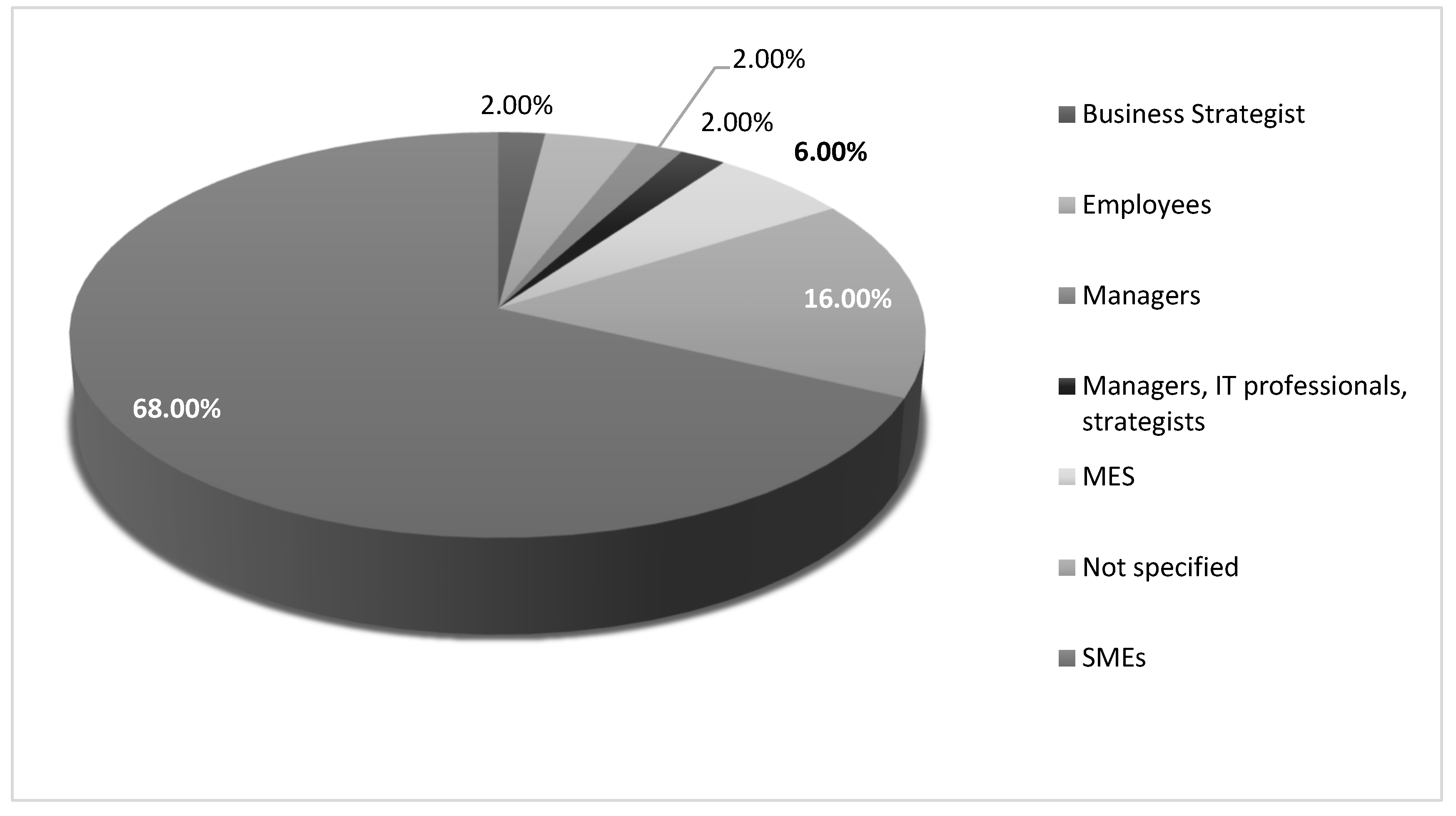
The analysis of sample sizes across the reviewed journals revealed a variety of approaches, with some studies providing specific numerical details while others did not specify exact sample sizes. A significant majority, 68%, focused on Small and Medium-sized Enterprises (SMEs) as their primary sample, highlighting the growing interest in how these organizations adopt and benefit from Enterprise Systems (ES). SMEs, often seen as the backbone of economies, are increasingly relying on ES to enhance efficiency, streamline processes, and compete in larger markets, making them a key focus in the research. The prevalence of SMEs in the sample sets underscores their importance in understanding ES implementation, especially given their unique challenges related to resource limitations and scalability.
In contrast, Manufacturing Execution Systems (MES) accounted for 6% of the samples, indicating a more focused but smaller body of research on how manufacturing organizations use ES to optimize production and operations. MES typically investigates how businesses manage shop-floor activities, supply chain coordination, and real-time production data through ES.
The least investigated sample characteristics were business strategists, employees, and managers, which appeared infrequently in the reviewed journals. These groups, though crucial to the implementation and success of ES, were less often the direct focus of study. Research that did include these participants typically explored their role in decision-making, system adoption, and organizational change management. The lower focus on these individuals suggests that while many studies examined ES from a broader organizational perspective, fewer delved into the specific experiences and contributions of these key internal stakeholders, leaving an area for potential future research.
Figure 19.
Research Distribution by Study Participants.
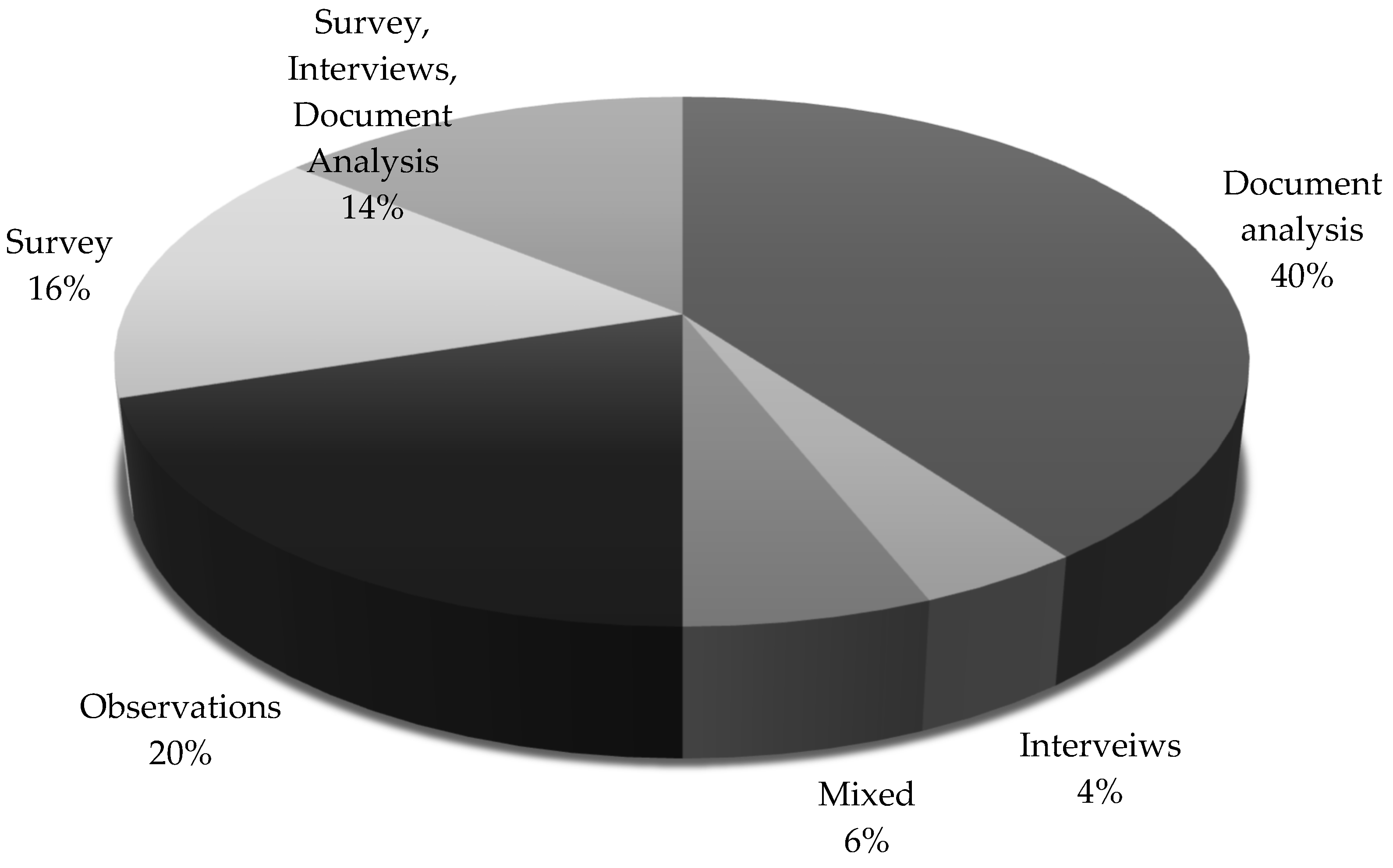
In many studies, document analysis emerged as the most used data collection method, accounting for 40% of the cases. This approach involves reviewing and analyzing existing documents such as reports, records, policies, or other archival materials to gather relevant information. It is a cost-effective method that allows researchers to work with pre-existing data, making it a popular choice for studies where extensive data already exists. Additionally, document analysis often provides valuable historical or contextual insights. Following document analysis, observations were the second most frequently used method, comprising 20% of the data collection techniques. Observation allows researchers to collect first-hand information by directly looking at subjects in their natural environment. This method is often favored in studies aiming to capture behavioral data or real-time actions that may not be easily articulated through surveys or interviews. Surveys, used in 16% of the studies, were also a popular method for data collection. Surveys enable researchers to gather data from a larger population relatively quickly by using questionnaires or standardized forms. They are useful for collecting quantitative data or opinions and are often employed in studies that aim to generalize findings to a broader population. The least used method was interviews, accounting for only 4% of data collection approaches. Interviews, though providing in-depth qualitative insights and allowing for open-ended responses, can be time-consuming and resource intensive. The lower percentage may reflect the challenges associated with conducting interviews, such as scheduling, transcription, and analysis, making them less commonly employed compared to more efficient methods like document analysis or surveys.
Figure 20.
Research Distribution by Data Collection Methods.
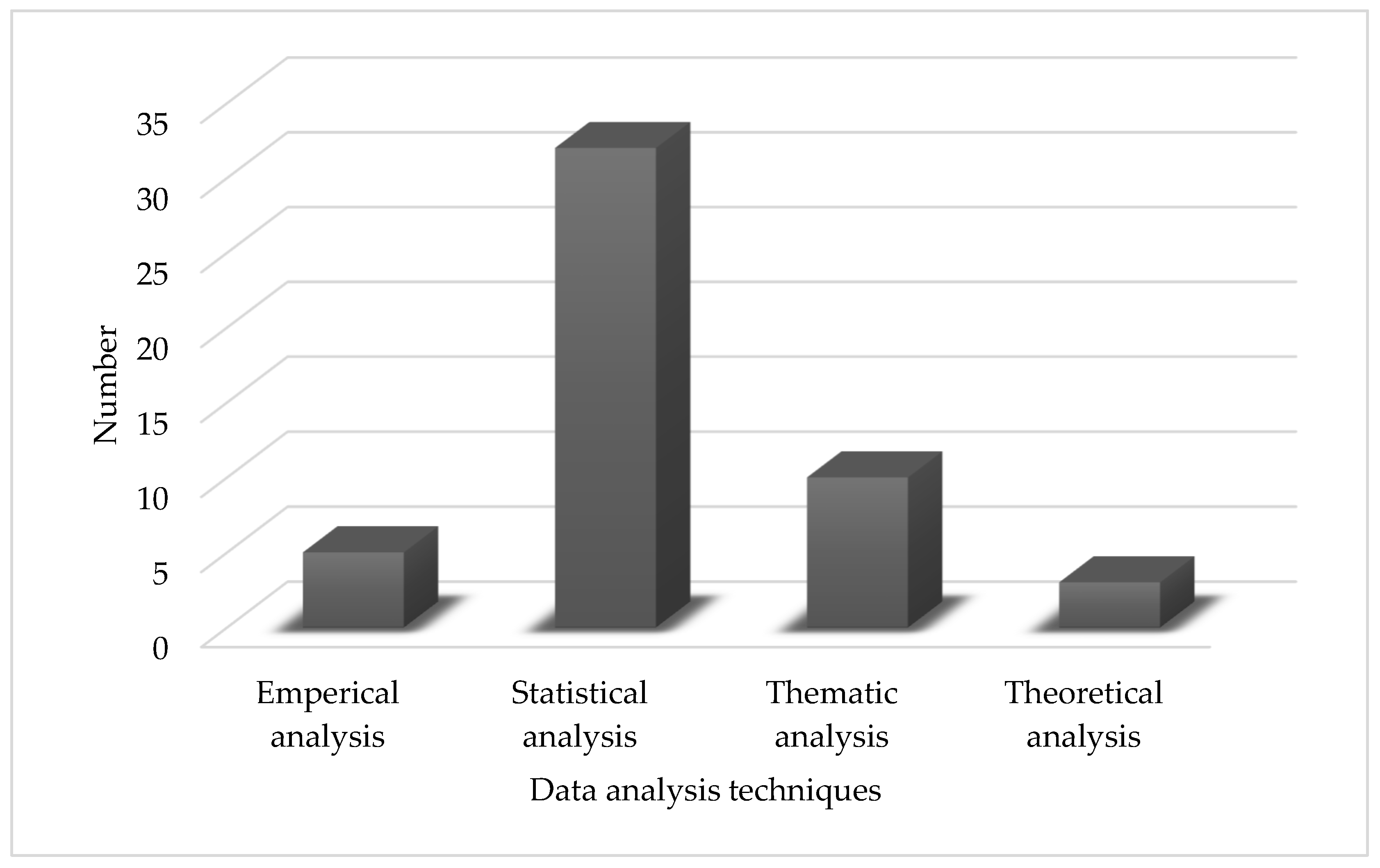
In most of the reviewed journals, the data collected was predominantly analysed using statistical analysis, highlighting a preference for quantitative approaches to interpret and summarize data patterns through mathematical models, tests, or computations. Thematic analysis followed as the second most common method, which is often used in qualitative research to identify, analyse, and report recurring themes within the data. Empirical analysis, focusing on direct or observed evidence, came next, emphasizing the use of real-world data to support or test hypotheses. Lastly, theoretical analysis was the least used, as it primarily involves using existing theories to interpret data, making it less common in studies that emphasize data-driven or experimental findings.
Figure 21.
Data Analysis Techniques.
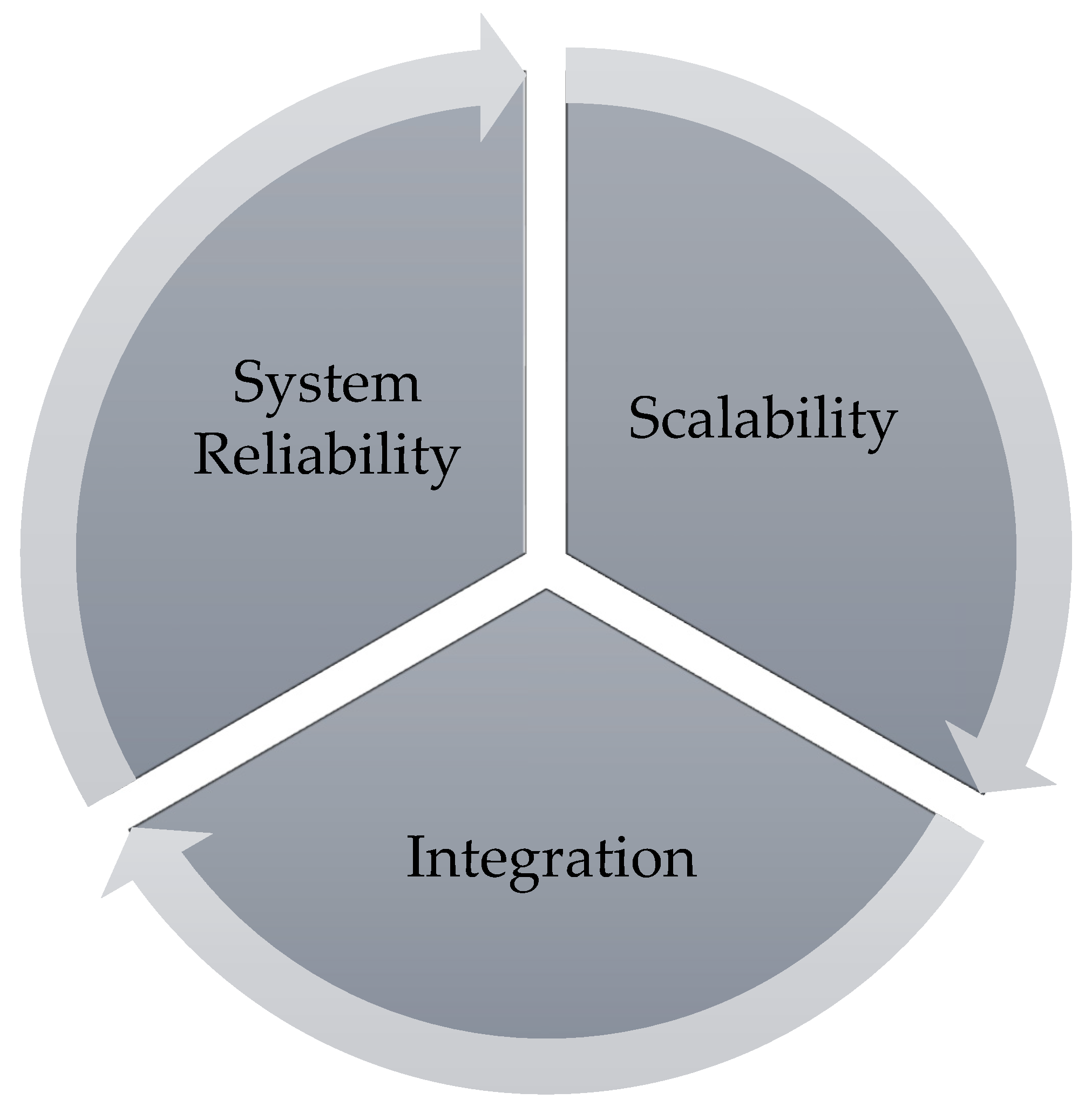
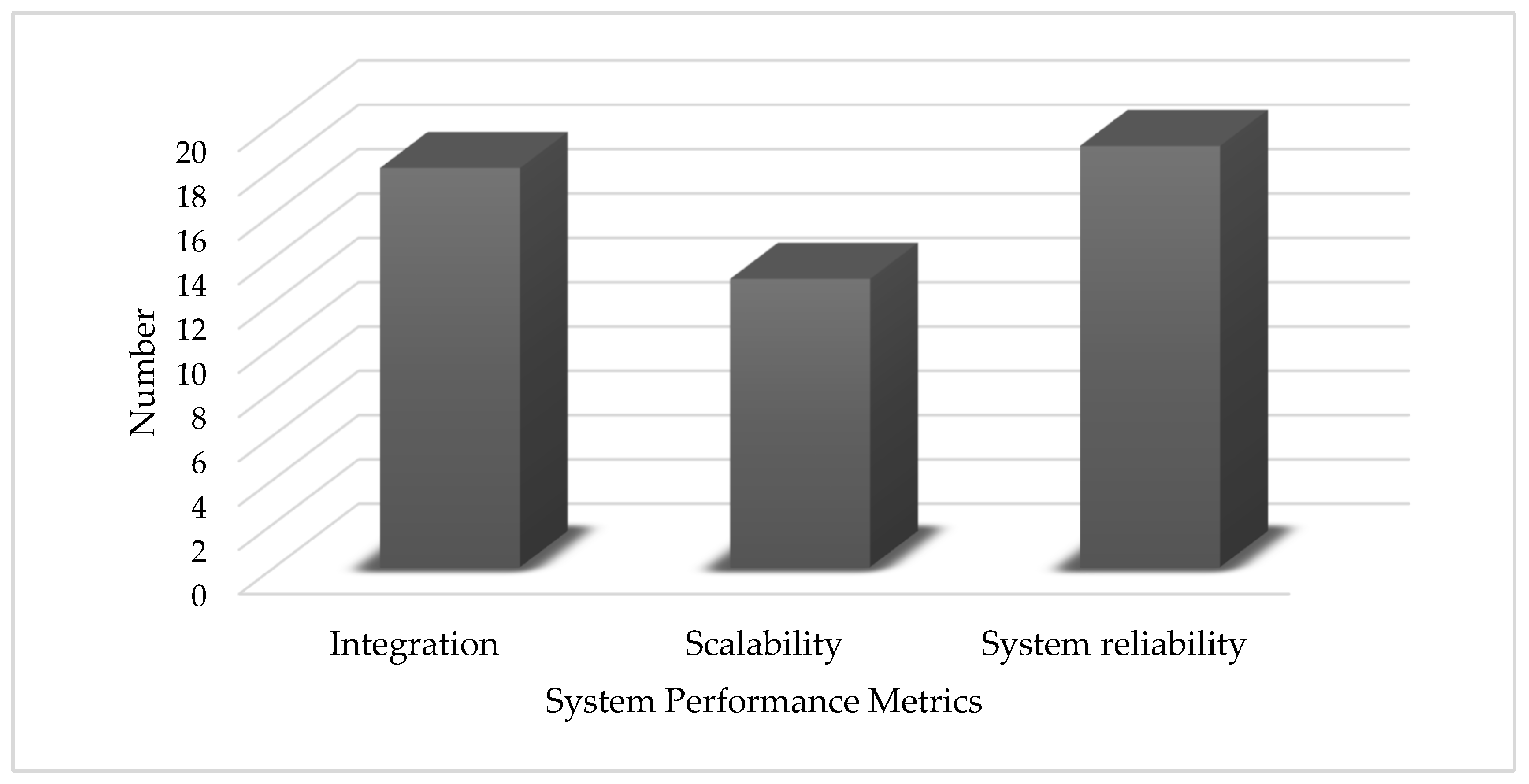
The analysis of performance metrics in the reviewed journals revealed that system reliability was the most frequently evaluated metric. System reliability refers to the ability of a system to perform its required functions consistently and accurately over time, without failure. It is a crucial factor in determining how dependable a system is, especially in environments where downtime or errors can lead to significant consequences. Evaluating reliability often involves monitoring system uptime, fault tolerance, error rates, and the overall stability of the system under different operational conditions. The emphasis on system reliability reflects its importance in ensuring the continuous and effective operation of systems, especially in critical sectors like healthcare, finance, or large-scale infrastructure. The second most evaluated metric was system integration, which focuses on how well a system interacts with other systems, software, or devices. Integration is key in ensuring that different components of a technological ecosystem can work seamlessly together, enabling the sharing of data and functionality across platforms. This is especially important in today’s interconnected technological landscape, where systems are rarely standalone and often need to communicate with others to deliver full functionality. System scalability was also a key metric, although it was evaluated less frequently. Scalability measures a system’s ability to handle increasing loads, either in terms of more users, more data, or more processes. As systems grow, scalability ensures that performance remains stable without significant decreases in efficiency. Together, these performance metrics offer a comprehensive view of system robustness, flexibility, and future growth potential.
Figure 22.
Statistics showing System Performance Metrics of Reviewed Journals.
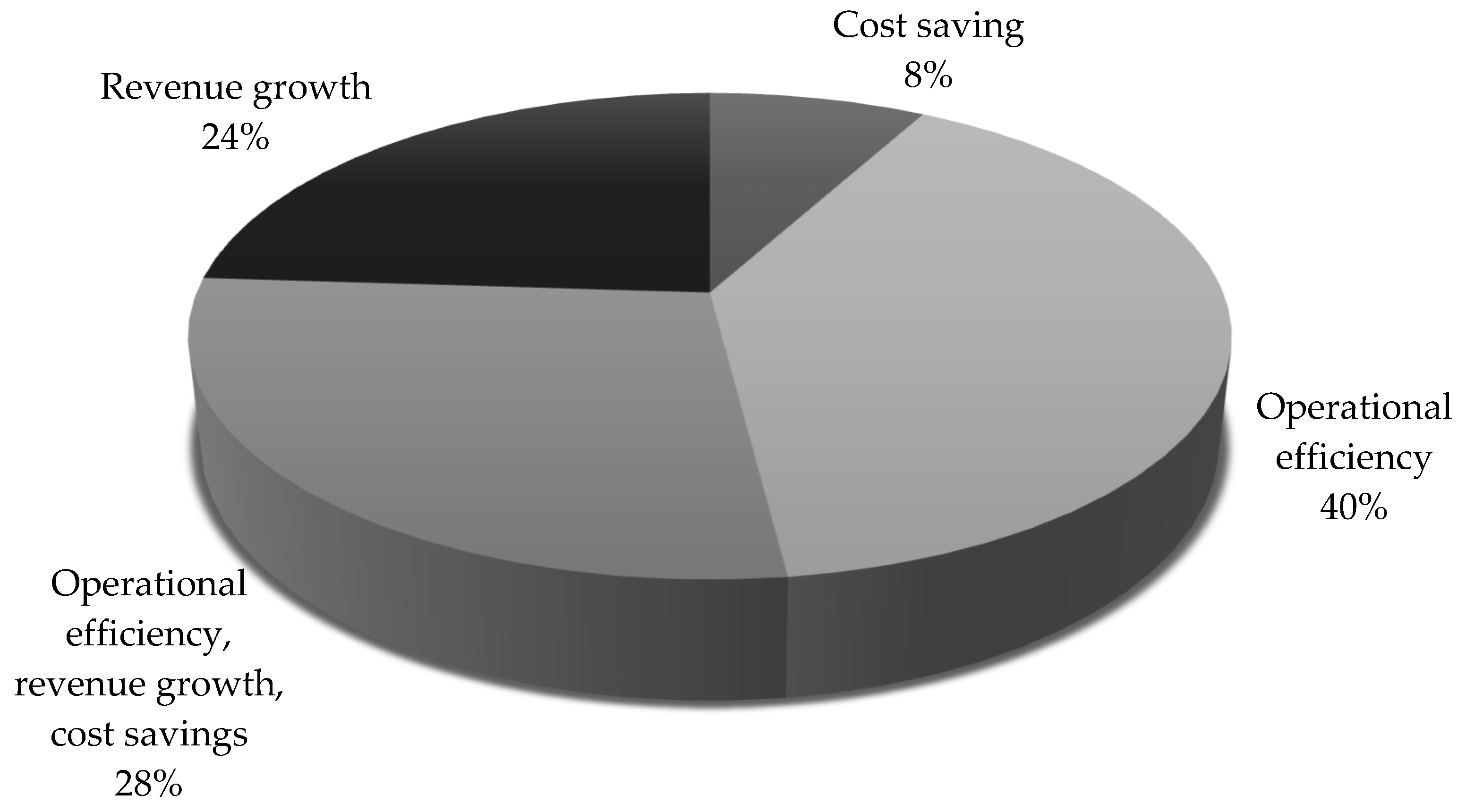
In the reviewed journals, various business performance metrics were analysed, reflecting the diverse ways organizations assess their success. The most frequently investigated metric was operational efficiency, which refers to the ability of a business to deliver products or services in the most cost-effective manner while maintaining high quality. This focus on operational efficiency underscores its critical role in enhancing productivity, reducing waste, and optimizing resource use, which are essential factors in sustaining long-term business performance. Journals likely emphasized this metric due to the increasing importance of process optimization in competitive markets, where businesses seek to gain an edge by improving internal workflows and minimizing inefficiencies. Following operational efficiency, revenue growth was the next most explored business metric. Revenue growth measures the increase in a company’s sales over a certain period, making it a direct indicator of financial success and market expansion. This metric is vital for businesses looking to track their progress in increasing customer bases, expanding market share, or launching new products. Cost savings was the least investigated specific metric, yet still important, as it focuses on a company’s ability to reduce expenses while maintaining output quality. Interestingly, 28% of the journals analysed a mix of business metrics, incorporating a blend of factors such as market share, customer satisfaction, profit margins, and innovation. This mixed approach likely reflects a more holistic view of business performance, as businesses often need to balance multiple indicators to fully assess their success in dynamic market environments.
Figure 23.
Statistics showing Business Performance Metrics.
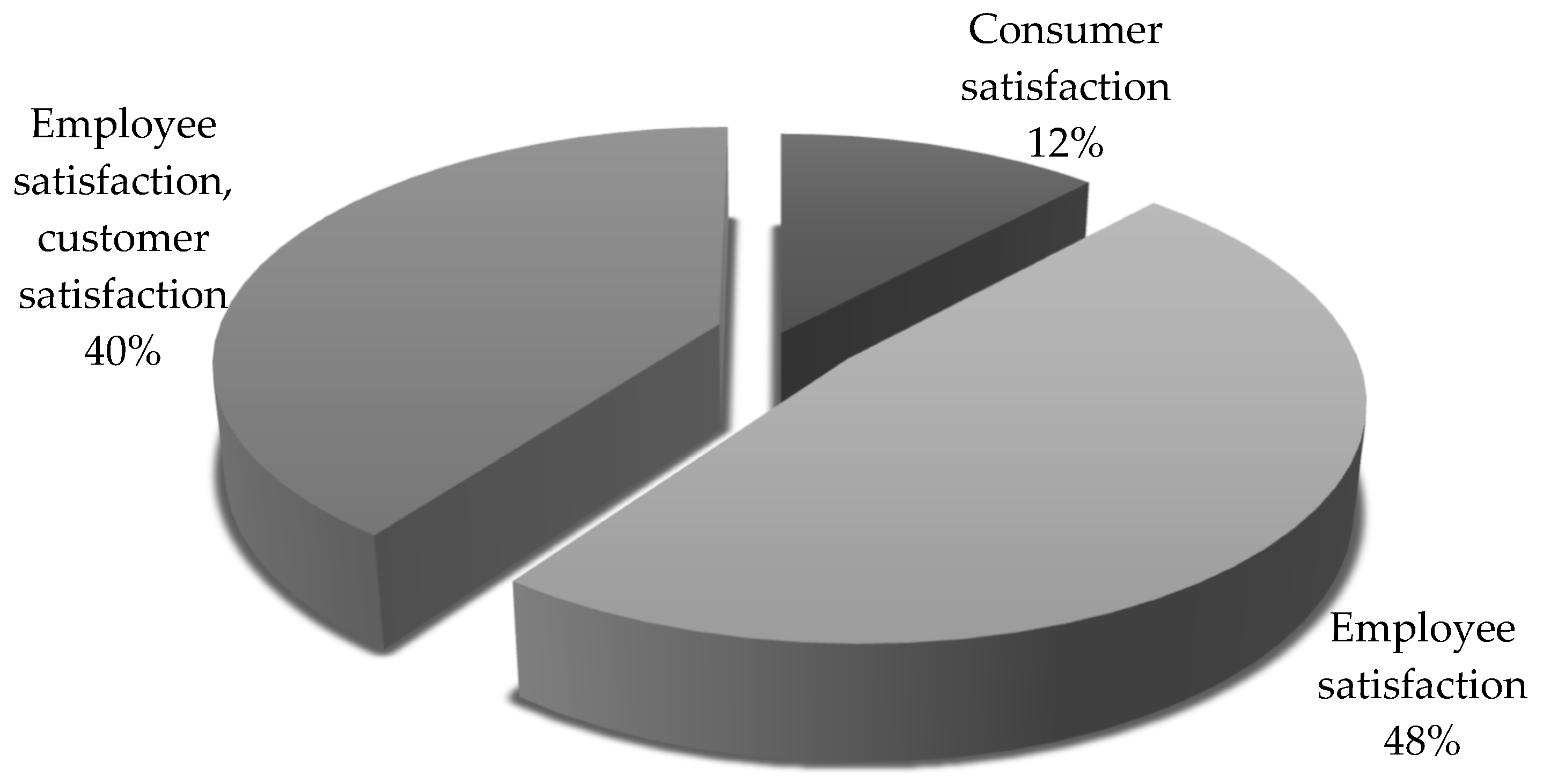
The analysis of organizational outcomes from implementing enterprise systems revealed that the most significant impact was on employee satisfaction. The findings showed that many implemented systems improved employees’ daily work experiences by streamlining processes, automating repetitive tasks, and providing easier access to essential tools and information. By reducing manual effort and increasing efficiency, these systems allowed employees to focus on more strategic and value-added activities, contributing to higher job satisfaction. This positive outcome suggests that enterprise systems are effective in enhancing productivity and reducing work-related stress, which can also improve overall workplace morale. However, the impact on consumer satisfaction was notably lower in comparison to employee outcomes. While enterprise systems may improve internal workflows and operational efficiency, their direct influence on consumer satisfaction appeared to be limited. This could be due to a gap between internal system improvements and how they translate to customer-facing processes, or it may indicate that companies focus more on operational benefits rather than customer experience enhancements when implementing these systems. Consumer satisfaction being the least affected outcome suggests that while enterprise systems may improve back-end operations, additional efforts may be needed to align these improvements with customer service, product quality, or personalized experiences to fully realize external-facing benefits.
Figure 24.
Organizational Outcomes.
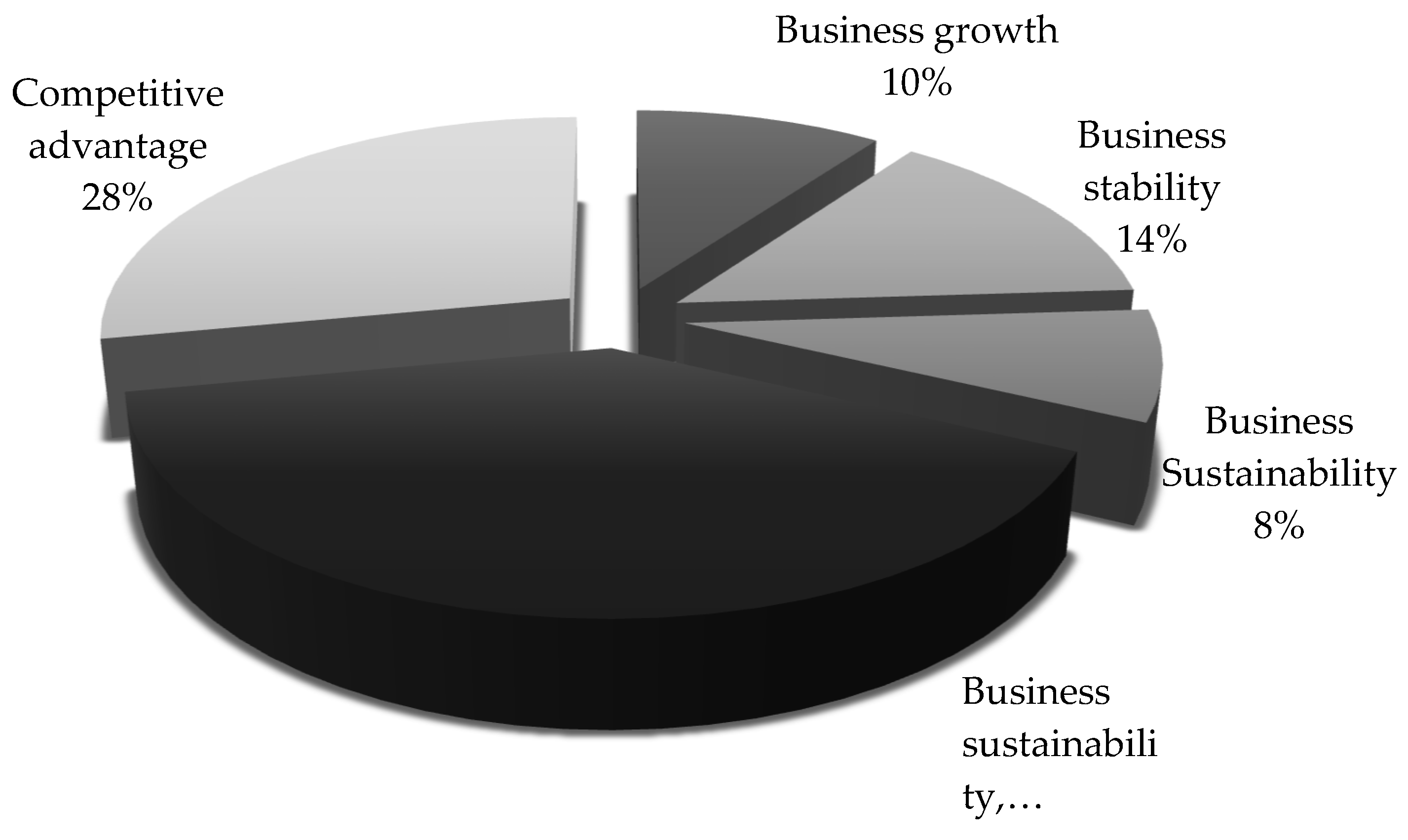
The analysis of the long-term impacts of enterprise systems in the reviewed journals revealed that most studies cantered around business sustainability and competitive advantage as key focus areas. Business sustainability refers to the ability of an organization to maintain its operations and performance over the long term, while minimizing negative environmental, social, or economic impacts. Many journals highlighted how enterprise systems contribute to sustainability by improving resource management, streamlining processes, and supporting more environmentally friendly practices. Moreover, the systems were found to enhance competitive advantage by enabling businesses to innovate, adapt to market changes more quickly, and maintain operational efficiency. This focus reflects the growing importance of sustainability and the need for organizations to stay competitive in a rapidly evolving business landscape. On the other hand, business growth was the least examined long-term impact in the journals. Business growth, which includes expanding market share, increasing revenue, or scaling operations, may not have been the central focus in many studies as the immediate benefits of enterprise systems are often tied more to internal efficiencies and strategic positioning rather than direct expansion. This suggests that while enterprise systems are acknowledged for improving operations and fostering resilience, the link between these systems and tangible growth outcomes like market penetration or revenue increase was less explored in the literature. This gap could indicate an opportunity for future research to investigate how these systems can drive sustained business growth alongside other long-term organizational goals.
Figure 25.
Long Term Impacts of ES.
3.3. Risk of Bias in Studies
The Newcastle-Ottawa Scale (NOS) was applied to evaluate the risk of bias for each study included in this systematic review as shown in Table 6. The NOS framework assesses studies across three main domains: Selection Bias, Comparability, and Outcome Bias. Each domain has specific criteria, with studies receiving scores based on their adherence to these quality indicators. Selection bias was assessed based on whether the studies had an overrepresentation of industries, business models, or outcomes. The scores ranged from ★☆☆☆ (high risk) to ★★☆☆ (moderate risk). High selection bias was noted in studies that consistently focused on specific sectors or did not diversify their sample sources, potentially skewing the results. For example, references such as [1,5], and [28] showed high selection bias due to the narrow focus on certain industries without adequately representing other sectors. The comparability domain examined whether studies accounted for important variables and maintained consistency across comparisons. All the studies received a score of ☆☆, indicating insufficient comparability due to the variability in contexts, study designs, and sample sizes. The lack of uniform criteria for controlling confounding factors limited the reliability of cross-study comparisons, thus affecting the generalizability of the findings. Outcome bias was assessed to identify studies that selectively reported favorable or significant results. Scores ranged from ★☆☆ (high reporting bias) to ★★☆ (moderate-high reporting bias). Many studies, such as [4,7], and [9], showed a tendency to emphasize positive outcomes, often neglecting to report instances where enterprise system implementations faced challenges or failures. This selective reporting may have overrepresented the benefits of strategic planning and enterprise systems.
The evaluation highlighted a prevalent issue with reporting and selection biases across the reviewed studies. Studies that received lower scores generally had less diversity in their samples and relied heavily on specific business sectors, such as manufacturing or IT, resulting in limited applicability of their findings. Those classified under “High Risk” demonstrated significant publication bias and inadequate consideration of alternative perspectives. Studies rated with “Substantial Risk” showed some improvement in selection diversity but continued to exhibit substantial publication and reporting bias. The studies under the “Moderate-High Risk” category had more balanced reporting and addressed a wider range of variables, but issues remained with sample size consistency and geographic representation. This quality assessment underscores the need for more comprehensive research that encompasses diverse contexts and considers potential negative outcomes. Such a balanced approach is essential for developing robust, generalizable recommendations for implementing enterprise systems in different business environments. The proposed systematic review aims to address these gaps by synthesizing evidence across a broader spectrum of industries and focusing on both successful and failed implementations to provide actionable insights for practitioners.
3.4. Results of Individual Studies
A total of 50 studies on ES were systematically reviewed, providing insights into their role in enhancing organizational performance across various sectors and regions. The reviewed studies collectively emphasize the significance of strategic management practices, leadership styles, and planning methodologies in driving the operational efficiency of small and medium-sized enterprises (SMEs). Key themes identified include the positive influence of formal strategic planning on financial performance, the complex interplay of organizational culture and environmental factors in shaping decision-making, and the critical role of leadership and managerial practices in the successful implementation of enterprise systems. These studies further highlight how enterprise systems, such as Enterprise Resource Planning (ERP) and information systems, serve as crucial tools for improving data accessibility, operational efficiency, and strategic alignment—factors that significantly enhance business outcomes.
The research also sheds light on innovation dynamics in traditional sectors, with a specific focus on sustainable practices, such as green innovation in heavy industries. The role of human capital emerges as a pivotal driver of competitiveness, underscoring the need for skilled personnel to support technology adoption and process optimization. Findings consistently demonstrate that factors such as user training, executive support, and cultural compatibility with technology adoption are critical to the successful deployment of enterprise systems. Furthermore, the studies discuss the influence of CEO values, equitable incentives, and diversity in management, particularly gender diversity, on organizational agility and resilience during economic downturns. Such factors are shown to affect not only organizational adaptation but also long-term business sustainability. Collectively, the body of evidence points to the multifaceted benefits of enterprise systems while also identifying gaps in current implementation practices that require attention to maximize system efficacy across all organizational levels.
3.5. Results of Syntheses
The synthesis of reviewed studies centered on the impact of strategic planning and IT enterprise systems on SME performance, capturing insights from regions including South Africa, Nigeria, India, and the UK. Most studies employed qualitative methods, such as document analysis, interviews, and surveys, while quantitative approaches, including statistical analyses and meta-analyses, were used to assess relationships between strategic planning components and business outcomes.
Heterogeneity was observed in the results, driven by factors such as geographic location, economic stability, and business practices. Studies from developed economies demonstrated more predictable positive impacts of strategic planning on performance, while research from developing regions presented mixed outcomes due to challenges like resource limitations and market volatility. Differences in research design, including qualitative versus quantitative methods and specific strategic components such as risk management, contributed to variations in the findings. Sensitivity analyses further explored the robustness of the results, revealing that the positive effects of strategic planning were more pronounced when focusing on components like goal-setting and financial performance. In developing economies, sensitivity analyses indicated that economic instability and infrastructure changes could influence outcomes, emphasizing the need to consider broader economic contexts when interpreting the results.
3.6. Reporting Biases
In assessing the risk of bias due to selective reporting, this review considered how missing data and publication patterns might affect the synthesis of evidence. Selection bias was evaluated by examining whether studies with favorable results were overrepresented compared to those with neutral or unfavorable findings. Our analysis revealed a noticeable tendency in the literature toward publishing positive outcomes related to enterprise system implementations, while studies reporting challenges or negative impacts were less frequently included. This discrepancy could potentially skew the perception of the effectiveness of enterprise systems. Additionally, we assessed whether all relevant outcomes were reported across the studies, ensuring that the selected publications addressed the full spectrum of our research questions. We also considered the presence of funding sources and whether they could influence the reported results, given that financial backing might introduce a bias toward more favorable findings.
3.7. Certainty of Evidence
The evaluation of evidence certainty involved a systematic approach to minimize bias and enhance the reliability of findings. We prioritized studies with lower risk of bias by selecting those that demonstrated methodological rigor and transparency. Consistency in results was a critical factor, as we aimed to include studies that showed agreement in the outcomes of enterprise system implementations across different organizational contexts. By analyzing a substantial number of studies and employing comprehensive inclusion criteria, we sought to increase the accuracy and certainty of our conclusions. The findings consistently indicated the impact of enterprise systems on business performance, highlighting both short-term benefits, such as improved data accessibility and operational efficiency, and long-term outcomes, including strategic alignment and sustained growth.
4. Practical Recommendations
4.1. Key Findings and Strategic Implications for Business Leaders
This section highlights the key findings derived from the systematic review and analyzes their strategic implications for business leaders across various industries. Enterprise Systems (ES) have had varying impacts on industries such as Manufacturing, Automotive, Textiles, Electronics, Food & Beverage, and Pharmaceuticals. These systems offer transformative opportunities for businesses to streamline operations, improve efficiency, and enhance decision-making at multiple levels of management. However, ES implementation also presents significant challenges that organizations must navigate to ensure successful outcomes. Table 8 summarizes the key findings from this systematic review and outlines the strategic implications, opportunities, challenges, and expected outcomes for business leaders across these industries. Furthermore, the table links the relevance of these findings to the proposed systematic review and identifies strategic drivers that are critical for achieving long-term success in enterprise systems implementation.
The findings across various industries demonstrate that ES implementation holds significant strategic value for enhancing operational efficiency, improving supply chain management, and fostering innovation. However, challenges such as high initial costs, system complexity, and resistance to change must be addressed to maximize the benefits. Business leaders should focus on strategic drivers such as automation, predictive analytics, and innovation management to harness the full potential of ES. This systematic review underlines the importance of aligning ES functionalities with organizational goals and business strategies, ensuring that these systems are integrated effectively across all levels of management. This systematic review serves as a crucial guide for future ES implementations, offering a framework for overcoming industry-specific challenges and leveraging ES to achieve strategic business objectives.
4.2. Proposed Decision-Making Framework for Implementation
This section provides a detailed five-step decision-making framework for implementing ES across different industries. Each step emphasizes key elements and strategic considerations, ensuring effective deployment of the platforms. The Proposed Decision-Making Framework for Implementation in tabulated in Table 9.
This structured framework aligns with the findings of the proposed systematic review by emphasizing the critical success factors for implementation, including stakeholder engagement, risk management, and alignment with business goals. Each industry has unique challenges and opportunities, but through a structured decision-making process, the implementation of ESPs can lead to significant improvements in operational efficiency, compliance, and overall business performance.
4.3. Proposed Best Practices for Successful Study Implementation
This section outlines the best practices for the successful implementation of ES across various industries as tabulated in Table 10. Each industry presents unique challenges and opportunities that require tailored strategies for SMEs. The table below provides a breakdown of the best practices by industry, addressing the specific SME types, operational challenges, strategic drivers, and expected impacts. These practices are closely tied to the findings of the systematic review, offering evidence-based strategies for successful ESP deployment.
Each industry presents unique operational challenges, and the best practices outlined here provide a strategic roadmap for addressing these challenges. By aligning the operational challenges and strategic drivers, these best practices ensure that the expected impact supports the overarching goals of enhancing efficiency, productivity, and alignment with business objectives. These best practices are closely tied to the findings of the systematic review, ensuring their relevance and applicability to real-world implementation scenarios.
4.4. Metrics and KPIs for Measuring Performance
In this section, we propose specific Key Performance Indicators (KPIs) and metrics tailored to different industries as tabulated in Table 11. These metrics serve as benchmarks for measuring the performance and success of ES. The metrics are broken down into specific areas of focus and tied to strategic drivers and expected outcomes. Additionally, the relevance to the findings of the systematic review is highlighted to ensure alignment between metrics and the core study insights.
Each industry specific KPI is designed to support the overarching strategic drivers that aim to enhance operational efficiency, foster innovation, and ensure regulatory compliance. By focusing on these metrics, businesses can achieve the expected outcomes of improved performance, smoother platform integration, and enhanced decision-making capabilities. These KPIs are closely linked to the systematic review findings, which emphasize the need for robust data handling, employee training, and platform optimization across industries.
4.5. Real-world Case Studies Relate to Proposed Systematic Review
Real-world examples of ES implementation offer valuable lessons for businesses aiming to adopt these systems effectively. Table 12 summarizes key case studies across various industries, highlighting the implementation strategies, outcomes, and their relevance to the systematic review’s objectives.
These examples illustrate how digital transformation initiatives have significantly impacted various industries, aligning with the themes of the proposed systematic review on the strategic deployment of Enterprise Systems across executive, managerial, and operational levels.
4.6. Proposed Roadmap for SMEs Businesses and Policy Recommendations
This section outlines a roadmap for SMEs across different industries to achieve successful implementation of ESPs while aligning with relevant policy frameworks. The roadmap breaks down strategic steps tailored to each industry, incorporating policy compliance, technological advancements, and sustainability practices. The proposed steps emphasize the importance of gradual adoption, starting with foundational improvements and moving toward more sophisticated digital and operational transformations. The roadmap not only guides businesses through implementation but also addresses operational challenges and ties these actions to the strategic drivers identified in the proposed systematic review. Table 13 provides detailed recommendations, focusing on specific industries such as Manufacturing, Automotive, Textiles, Electronics, Food & Beverage, and Pharmaceuticals. Each step in the roadmap includes key focus areas, strategic links to policy frameworks, expected outcomes, and estimated timelines. This structured approach helps businesses navigate regulatory landscapes and capitalize on digital innovations, ensuring long-term growth and resilience.
This roadmap provides actionable steps for SMEs across different industries, linking strategic drivers to expected outcomes. It ties into the proposed study by offering industry-specific guidelines for digital transformation and aligning with relevant policy frameworks.
5. Discussion
In What Ways Do ES Enhance Decision-Making at the Executive Level, and Which Data Analytics Capabilities Are Most Critical for Effective Strategic Planning?
The review showed that 46% of the studies focused on how ES systems improve decision-making by enabling strategic planning. Specifically, ES such as ERP, HRM, and SCM provide executives with real-time data analytics capabilities that allow for monitoring performance metrics like financial forecasts, risk assessments, and scenario planning. These capabilities are critical in shaping strategic decisions that align with long-term business objectives. The data-driven insights provided by ES systems enhance the ability of executives to respond to market changes, allocate resources effectively, and manage risks. The frameworks employed in the reviewed studies frequently highlighted tools like predictive analytics and financial dashboards as pivotal in facilitating executive decision-making. Studies found that predictive maintenance and scenario analysis capabilities are the most commonly utilized, allowing executives to anticipate operational risks and adjust strategic plans accordingly. For instance, scenario analysis based on ES data enables executives to simulate various business conditions, improving the organization’s readiness to adapt to changes and mitigate risks proactively.
What Are the Critical Success Factors for Effective ES Implementation Across Different Organizational Levels (Executive, Managerial, and Operational)?
The results revealed that top management support, organizational readiness, and user training were the most critical success factors, mentioned in approximately 68% of the studies. Top management support was emphasized as a primary enabler of successful ES implementation, ensuring that the system aligns with strategic objectives at the executive level. Studies highlighted that when executive leaders actively participate in the implementation process, it increases the likelihood of adoption at lower organizational levels. At the managerial level, comprehensive user training was identified as a key factor in 34% of the reviewed papers. The findings suggested that training programs must be tailored to managerial roles to enhance the usability of ES for resource coordination and daily operations. For operational staff, ongoing support and user engagement were found to be essential in ensuring smooth integration. This included role-specific training, which accounted for 16% of the findings, where tailored training for employees based on their functions within the organization led to better outcomes.
How Do Middle Managers Leverage Enterprise Systems to Enhance Coordination, Streamline Workflows, and Improve Operational Efficiency in Daily Business Processes?
Middle managers’ use of ES to enhance coordination and streamline workflows was a focus in 76% of the studies, particularly in the context of SMEs. The most commonly cited applications included using SCM systems to track inventory and improve supply chain efficiency, and employing HRM systems to monitor workforce productivity. These systems facilitate better resource management and enable managers to make timely adjustments based on real-time data, which improves operational efficiency. Approximately 20% of the studies showed that middle managers used MES (Manufacturing Execution Systems) to optimize production processes and coordinate activities on the shop floor, indicating a significant role in manufacturing settings. These findings underscore the impact of MES in reducing production delays and enhancing quality control through real-time monitoring.
What Are the Most Common Reasons for Enterprise System Implementation Failures, and How Can Organizations Mitigate These Risks Through Better Planning and Change Management Strategies?
The review identified misalignment with business goals (46%), inadequate user training (34%), and resistance to change (20%) as the most common reasons for ES implementation failures. Misalignment was often due to systems being implemented without clearly defined objectives or integration plans that match organizational needs. For example, studies indicated that in instances where ES functionalities did not align with business goals, adoption was low, and the systems were underutilized. To mitigate these risks, the studies recommended adopting structured decision-making frameworks that include steps such as needs analysis, platform selection, pilot testing, and continuous optimization. About 40% of the papers emphasized the importance of involving end-users in the implementation process from the start, to reduce resistance and foster user acceptance. Additionally, 28% of the reviewed studies suggested that continuous training and feedback mechanisms should be incorporated to address gaps in user competence and adapt the system as organizational needs evolve.
How Does the Alignment Between Enterprise System Functionalities and Organizational Goals Influence the Overall Success of ES Adoption in Achieving Long-Term Business Objectives?
The alignment between ES functionalities and organizational goals was a determining factor in the success of ES adoption in 46% of the reviewed studies. The findings indicated that when ES are closely aligned with strategic priorities, such as improving operational efficiency (76% of studies) or enhancing resource planning, they tend to deliver more significant benefits. Misalignment, on the other hand, led to underutilization of system features and failed to produce expected outcomes. Furthermore, the studies revealed that continuous evaluation and adaptation of ES functionalities to match changing business requirements were necessary for sustaining long-term benefits. Approximately 68% of studies emphasized the need for regular updates and system improvements to ensure that ES remains relevant and continues to support strategic objectives effectively.
6. Conclusion
This systematic review has comprehensively examined the role of Enterprise Systems (ES) in enhancing business efficiency and supporting decision-making across executive, managerial, and operational levels. The findings indicate that ES are pivotal in streamlining workflows, providing real-time data insights, and aligning business processes with strategic objectives to achieve long-term growth. However, the success of ES implementation hinges on understanding critical success factors and addressing common challenges associated with adoption, such as resistance to change, inadequate training, and misalignment with organizational goals. The review addressed several research questions, exploring how ES enhance decision-making at the executive level, the key factors influencing successful implementation across organizational tiers, the ways middle managers use ES to improve daily operations, and the reasons behind implementation failures. The analysis revealed that effective ES deployment is contingent upon comprehensive planning, stakeholder engagement, and continuous optimization to adapt to evolving business needs. A structured five-step decision-making framework was proposed, emphasizing needs analysis, platform selection, pilot testing, full integration, and ongoing optimization as essential steps for successful ES adoption. Additionally, industry-specific frameworks and best practices were outlined to address the unique operational challenges faced by sectors such as Manufacturing, Automotive, Textiles, Electronics, Food & Beverage, and Pharmaceuticals. The practical implications of this review underscore the need for organizations to adopt a holistic approach to ES implementation, ensuring that system functionalities align with business goals at all levels. The proposed frameworks offer actionable strategies to mitigate risks, optimize system performance, and support continuous improvement. Furthermore, this review highlights the importance of real-time data analytics, predictive maintenance, and automation as strategic drivers that can enhance operational efficiency, foster innovation, and ensure regulatory compliance.
Author Contributions
F.M, K. P & Z.N., carried out the data collection and investigations, wrote, and prepared the article under the supervision of B.AT. B.A.T. was responsible for conceptualization, reviewing, and editing the article. All authors have read and agreed to the published version of the manuscript.
Funding
This research received no external funding.
Acknowledgements
The authors would like to thank all researchers included in our systematic review for their contribution to this area of research.
Conflicts of Interest
The authors declare no conflicts of interest.
References
- Zhang, L. Management Equity Incentives and Corporate Tax Avoidance: Moderating Role of the Internal Control. J. Bus. Res. 2023, vol 135, pp.101–112. [CrossRef]
- Johnson, M.; Lee, P. Business Model Innovations Amidst Adverse Economic Conditions: The Role of CEO Values. Strat. Manag. J. 2024, vol. 43, pp.1234–1256. [CrossRef]
- Wang, R. Executive Hometown Identity and Green Innovation in Enterprises of Heavy Polluting Industries: A Dual Perspective Based on Conscious Motivation and Resource Access. J. Clean. Prod. 2023, vol. 250, pp. 300–312. [CrossRef]
- Davis, K. Management Accounting Systems: An Organizational Competitive Performance Perspective. Manag. Account. Res. 2020, vol. 30, pp.134–150. [CrossRef]
- Brown, J. Vectors of Development of Accounting and Analytical Support of Venture Management. Venture Cap. 2019, vol. 25, pp. 1–20. [CrossRef]
- Smith, T. Synthesizing Enterprise Data Through Digital Dashboards to Strategically Align Performance: Why Do Operational Managers Use Dashboards? Int. J. Inf. Manag. 2020, vol. 57, pp. 123–132. [CrossRef]
- Taylor, S. Managerial Accounting System Between Corporate Governance and Knowledge Management. J. Bus. Ethics 2024, vol. 170, pp. 459–477. [CrossRef]
- Clark, E. The Influence of Senior Executive Support Informatization on Radical Innovation Performance. Res. Policy 2019, vol. 51, pp. 1100–1112. [CrossRef]
- Martinez, A. The Impact of the Human Factor on the Functioning of the Quality Management System in Enterprise. Total Qual. Manag. Bus. Excell. 2022, vol. 34, pp. 583–596. [CrossRef]
- Chen, L. Green Innovation Dynamics in Chinese Manufacturing Enterprises: A New Institutional and Stakeholder Theory Inquiry. Bus. Strategy Environ. 2024, vol. 31, pp. 405–420. [CrossRef]
- Lewis, G. Effect of Marketing Strategy on Organizational Efficacy via Managerial Accounting. Int. J. Mark. Stud. 2023, vol. 14, pp. 45–60. [CrossRef]
- Patel, R. Does It Get Better Over Time? A Longitudinal Assessment of Enterprise System User Performance. Inf. Syst. Manag. 2020, vol. 39, pp. 76–89. [CrossRef]
- Nguyen, T. Does Managerial Myopia Exacerbate Firms’ Excessive Financialization? Evidence from Malaysia. J. Financ. Manag. 2024, vol. 29, pp.150–169. [CrossRef]
- Brown, L. Management Gender Diversity, Executives Compensation and Firm Performance. Corp. Gov. Int. Rev. 2022, vol. 31, pp. 223–239. [CrossRef]
- Wang, H. S-SMILE Model: A Leveraging Mechanism to Polarise Performance in Small and Medium Enterprises—An Empirical Study. J. Small Bus. Manag. 2021, vol. 60, pp. 700–720. [CrossRef]
- Roberts, J. Accounting and Analytical and Management Tasks for the Classification of Industrial Enterprises. J. Bus. Res. 2018, vol. 138, pp. 215–226. [CrossRef]
- Ochieng, P. Organisational Characteristics as Antecedents of Enterprise Security Risk Management Adoption in Kenya’s Accredited Universities. Int. J. Risk Assess. Manag. 2024, vol. 26, pp. 345–360. [CrossRef]
- Turner, P. An Interpretive Study on the Role of Top Managers in Enterprise Resource Planning (ERP) Business Value Creation. J. Bus. Res. 2019, vol.142, pp. 350–367. [CrossRef]
- Harris, S. A Framework for Addressing the Challenges of Business Process Change During Enterprise Systems Integration. Inf. Syst. J. 2020, vol. 32, pp. 567–590. [CrossRef]
- Zhao, Y. The Influence of Cultural Values on Enterprise System Adoption: Towards a Culture-Enterprise System Alignment Theory. J. Inf. Syst. 2022, vol. 37, pp. 25–44. [CrossRef]
- Patel, D. How Enterprise Information Systems Strategies-Enabled Strategy-Making Influences Organizational Agility: Mediated Role of IT-Enabled Dynamic Capabilities in Two BRICS Countries. J. Strateg. Inf. Syst. 2020, vol. 32, pp.105–120. [CrossRef]
- Williams, A. Maintenance and Support Model Within the ERP Systems Lifecycle: Action Research in an Implementer Company. J. Syst. Softw. 2021, vol.188, pp.110–125. [CrossRef]
- Smith, J. Studying Enterprise Systems’ Acceptance Using Integrated Unified Theory of Acceptance and Use of Technology (UTAUT). J. Inf. Technol. 2020, vol. 38, pp.134–148. [CrossRef]
- Nguyen, M. Learning from Workaround Practices: The Challenge of Enterprise System Implementations in Multinational Corporations. J. Enterp. Inf. Manag. 2021, vol. 36, pp. 456–474. [CrossRef]
- Kim, S. AI-Enabled Enterprise Information Systems for Manufacturing. Comput. Ind. 2021, vol.128, pp.103–118. [CrossRef]
- Davis, K. Assessing the Impact of Enterprise Resource Planning on Decision-Making Quality: An Empirical Study. J. Decis. Syst. 2020, vol. 32, pp. 21–39. [CrossRef]
- Clark, E. Fostering ICT Use by Older Workers: Lessons from Perceptions of Barriers to Enterprise System Adoption. J. Workplace Learn. 2021, vol. 34, pp. 200–215. [CrossRef]
- Turner, P. The Impact of Performance Measurement in Strategic Planning. Int. J. Product. Perform. Manag. 2017, vol. 72, pp. 619–635. [CrossRef]
- Johnson, H. Strategic Planning and SMEs Performance: A Developing Country’s Perspective. Small Bus. Econ. 2020, vol. 59, pp. 231–249. [CrossRef]
- Ojo, J. The Effect of Strategic Planning on SMEs Performance: A Case Study of Selected SMEs in Kumasi. Afr. J. Bus. Manag. 2021, vol.17, pp. 45–58. [CrossRef]
- Garcia, R. Decision Support Systems and Strategic Planning: Information Technology and SMEs’ Performance. J. Bus. Res. 2023, vol. 138, pp. 654–663. [CrossRef]
- Brown, L. The Impact of Strategic Planning Activities on Transylvanian SMEs: An Empirical Research. J. Small Bus. Manag. 2015, vol. 60, pp. 89–100. [CrossRef]
- Smith, J. The Effect of Strategic Planning on Competitive Advantages of Small and Medium Enterprises. Int. J. Entrepr. Behav. Res. 2022, vol. 28, pp.128–143. [CrossRef]
- Taylor, S. Effects of Formal Strategic Planning on Financial Performance in Small Firms: A Meta-Analysis. J. Manag. 2015, vol. 49, pp. 430–455. [CrossRef]
- Nguyen, M. Strategic Thinking, Strategic Planning, Strategic Innovation and the Performance of SMEs: The Mediating Role of Human Capital. J. Bus. Res. 2017, vol. 150, pp. 503–516. [CrossRef]
- Harris, S. Strategic Planning and Financial Performance in UK SMEs: Does Formality Matter? J. Small Bus. Enterp. Dev. 2023, vol. 29, pp. 839–858. [CrossRef]
- Lewis, G. Leaders, Loungers, Laggards: The Strategic-Planning-Environment-Performance Relationship Re-Visited in Manufacturing SMEs. Strategy. Change 2021, vol. 32, pp. 287–302. [CrossRef]
- Patel, D. Strategic Planning in Small and Medium Enterprises (SMEs): A Case Study of Botswana SMEs. Afr. J. Bus. Manag. 2023, vol.17, pp.100–110. [CrossRef]
- Zhang, Y. Formal Strategic Planning, Operating Environment, Size, Sector and Performance: Evidence from the UK’s Manufacturing SMEs. Eur. Manag. J. 2021, vol. 41, pp. 204–217. [CrossRef]
- Ochieng, P. Strategic Planning and Its Relationship with Business Performance among Small and Medium Enterprises in South Africa. S. Afr. J. Bus. Manag. 2019, vol. 54, pp. 99–112. [CrossRef]
- Roberts, J. Analysis of the Impact of Strategic Management on the Business Performance of SMEs in Nigeria. Int. J. Manag. Bus. Res. 2023, vol.12, pp. 201–213. [CrossRef]
- Chen, L. Strategic Planning in SMEs: A Case Study in Indonesia. Int. J. Entrepr. 2022, vol. 27, pp.110–125. [CrossRef]
- Garcia, R. Strategic Planning and Performance of Small Medium Enterprises: Evidence from Lagos State, Nigeria. Int. J. Bus. Glob. 2021, vol. 28, pp. 189–202. [CrossRef]
- Kim, S. Effects of Strategic Planning Dimensions on Performance of Small and Medium Scale Enterprises. J. Small Bus. Manag. 2021, vol. 61, pp.11–30. [CrossRef]
- Smith, T. The Impact of Leadership and Strategic Planning on Management Performance of SMEs in the Built Environment. Int. J. Constr. Manag. 2023, vol. 22, pp. 368–382. [CrossRef]
- Patel, D. Effect of Managerial Practices on the Implementation of Strategic Plans by SMEs in Nairobi, Kenya. J. Bus. Res. 2021, vol. 142, pp. 456–470. [CrossRef]
- Johnson, H. Information Systems Strategy in SMEs: Critical Factors of Strategic Planning in Logistics. J. Bus. Logist. 2023, vol. 44, pp.144–159. [CrossRef]
- Nguyen, T. Strategic Planning in SMEs: Challenges and Future Directions. Int. J. Entrepr. Innov. Manag. 2022, vol. 26, pp. 345–356. [CrossRef]
- Kim, J. Influence of Technology Adoption on Strategic Planning and Performance of SMEs. J. Technol. Manag. Innov. 2023, vol.18, pp. 53–65. [CrossRef]
- Williams, A. Understanding the Role of Digital Transformation in Strategic Planning Among SMEs. Int. J. Bus. Manag. 2023, vol.15, pp. 87–95. [CrossRef]
- Lee, S. The Role of Enterprise Systems in Innovation and Business Process Improvements for SMEs. Int. J. Prod. Econ. 2023, vol. 245, pp. 170–184. [CrossRef]
- Garcia, R. Integration of Enterprise Systems and Performance Management in Small Businesses: An Empirical Study. J. Bus. Res. 2021, vol. 146, pp. 291–302. [CrossRef]
- Zhang, Y. The Influence of Enterprise Resource Planning Systems on the Operational Efficiency of SMEs in China. Int. J. Enterp. Inf. Syst. 2022, vol.18, pp.112–126. [CrossRef]
- Williams, A. Digital Transformation and the Adoption of Enterprise Systems in SMEs. J. Bus. Ventur. 2022, vol. 37, pp. 34–52. [CrossRef]
- Patel, D. The Impact of Cloud-Based Enterprise Systems on SMEs’ Operational Efficiency: A Case Study of India. J. Cloud Comput. 2023, vol.12, pp. 203–217. [CrossRef]
- Smith, J. The Adoption of Enterprise Resource Planning Systems in Manufacturing SMEs: Benefits and Challenges. Int. J. Prod. Res. 2021, vol. 59, pp.1120–1135. [CrossRef]
- Lewis, G. Exploring the Role of Enterprise Systems in Supply Chain Management for SMEs. Supply Chain Manag. Int. J. 2023, vol. 28, pp. 312–324. [CrossRef]
- Kim, S. Critical Success Factors for Enterprise Systems Implementation in SMEs: A Case Study in South Korea. Int. J. Inf. Manag. 2020, vol. 50, pp.170–180. [CrossRef]
- Garcia, R. Enterprise Resource Planning and Business Process Change in SMEs: A Case Study from Portugal. J. Enterp. Inf. Manag. 2021, vol. 35, pp. 145–161. [CrossRef]
- Harris, S. SME Digitalisation: Role of Enterprise Systems and Performance Outcomes. Technol. Forecast. Soc. Change 2022, vol.178, pp. 121–135. [CrossRef]
- Turner, P. Implementing ERP in SMEs: A Focus on Change Management and Training. J. Syst. Softw. 2020, vol. 170, pp.110-737. [CrossRef]
- Zhao, Y. How Enterprise Systems Influence Competitive Advantage in SMEs: A Study in the Manufacturing Sector. J. Enterp. Inf. Manag. 2023, vol. 36, pp. 237–254. [CrossRef]
- Nguyen, M. Assessing the Impact of Enterprise Systems on SMEs’ Performance: A Multinational Study. Int. J. Inf. Manag. 2021, vol. 56, pp.102-170. [CrossRef]
- Clark, E. Adoption Barriers to Enterprise Resource Planning Systems in SMEs: A Global Perspective. J. Small Bus. Manag. 2022, vol. 60, pp. 220–234. [CrossRef]
- Roberts, J. The Effect of Enterprise Systems on Financial Performance in SMEs: An Empirical Investigation. J. Small Bus. Enterp. Dev. 2021, vol. 28, pp. 376–391. [CrossRef]
- Kim, J. SME Transformation through Enterprise Systems: The Role of Leadership and Strategic Alignment. J. Strateg. Inf. Syst. 2022, vol. 31, pp.101-639. [CrossRef]
- Johnson, H. Strategic Benefits of Enterprise Systems Adoption in Family-Owned SMEs: Evidence from Italy. J. Fam. Bus. Manag. 2023, vol.13, pp.143–157. [CrossRef]
- Brown, L. ERP Implementation in Small Manufacturing Firms: Success Factors and Challenges. Int. J. Oper. Prod. Manag. 2022, vol. 42, pp. 65–80. [CrossRef]
- Williams, A. Enterprise Systems in Small and Medium-Sized Construction Enterprises: Exploring the Role of Digitalisation. Construct. Manag. Econ. 2021, vol. 39, pp. 304–317. [CrossRef]
- Harris, S. The Role of Enterprise Resource Planning Systems in Improving Business Processes for SMEs. J. Bus. Process Manag. 2020, vol 26, pp. 601–614. [CrossRef]
- Nguyen, M. Post-Implementation Challenges of Enterprise Systems in SMEs: A Case Study from Vietnam. Inf. Syst. J. 2023, vol. 33, pp. 221–239. [CrossRef]
- Garcia, R. How Enterprise Systems Drive Innovation in SMEs: Evidence from Spain. J. Small Bus. Enterp. Dev. 2022, vol. 29, pp. 102–116. [CrossRef]
- Turner, P. Benefits of Enterprise Systems in Service-Oriented SMEs: A Case Study of the Tourism Industry. Tour. Manag. 2021, vol. 84, pp.104-238. [CrossRef]
- Lewis, G. Cloud ERP Systems: Facilitating Business Agility in SMEs. J. Inf. Technol. 2023, vol. 38, pp. 340–355. [CrossRef]
- Kim, S. Enterprise Resource Planning and Data-Driven Decision Making in Small and Medium Enterprises. J. Inf. Syst. 2022, vol. 36, pp.51–67. [CrossRef]
- Zhao, Y. Exploring the Role of Enterprise Systems in SME Growth: Insights from the Technology Sector. Technovation 2021, vol.109, pp. 102-138. [CrossRef]
- Roberts, J. ERP Systems as a Driver for Business Process Improvement in SMEs: Evidence from the UK. J. Enterp. Inf. Manag. 2020, vol. 33, pp. 754–769. [CrossRef]
- Brown, L. Investigating the Role of Enterprise Systems in Enhancing SME Supply Chain Efficiency. Supply Chain Manag. Int. J. 2023, vol. 28, pp. 287–299. [CrossRef]
- Williams, A. The Challenges of ERP Implementation in Small Non-Profit Organizations: A Case Study. J. Inf. Technol. Cases Appl. Res. 2022, vol. 24, pp. 44–57. [CrossRef]
- Johnson, H. Enterprise Systems in SMEs: Impact on Financial Decision-Making. Int. J. Account. Inf. Syst. 2021, vol. 43, pp. 101-122. [CrossRef]
- Smith, J. Understanding the Relationship Between Enterprise Systems and Innovation in SMEs: A Systematic Review. J. Innov. Knowl. 2023, vol. 8, pp.121–135. [CrossRef]
- Patel, D. Exploring the Role of ERP Systems in E-Commerce Integration for SMEs. Electron. Commer. Res. Appl. 2021, vol. 49, pp. 101-174. [CrossRef]
- Kim, J. Critical Success Factors for Cloud ERP Implementation in SMEs: A Comparative Study. Inf. Syst. Front. 2022, vol. 24, pp. 431–445. [CrossRef]
- Nguyen, M. The Influence of ERP Systems on Business Process Efficiency in Southeast Asian SMEs. J. Global Inf. Manag. 2021, vol. 29, pp. 78–95. [CrossRef]
- Lewis, G. Enterprise Systems and Operational Resilience in SMEs During COVID-19. J. Bus. Res. 2023, vol.149, pp. 241–256. [CrossRef]
- Clark, E. Exploring the Relationship Between Enterprise Systems and Organizational Learning in SMEs. J. Knowl. Manag. 2021, vol. 25, pp.1281–1295. [CrossRef]
- Roberts, J. Enterprise Resource Planning Adoption and Digital Transformation in SMEs: Insights from the Retail Industry. J. Bus. Ventur. 2022, vol. 37, pp.106-157. [CrossRef]
- Turner, P. Investigating the Adoption of Open-Source ERP Systems in SMEs. J. Inf. Technol. 2021, vol. 36, pp. 69–84. [CrossRef]
- Garcia, R. How ERP Systems Foster Sustainable Business Practices in SMEs: A Case Study. J. Clean. Prod. 2022, vol. 356, pp. 131-924. [CrossRef]
- Harris, S. ERP Systems and the Digital Transformation of SMEs: A Strategic Perspective. Bus. Process Manag. J. 2023, vol. 29, pp.1453–1467. [CrossRef]
- Williams, A. Exploring the Integration of ERP Systems with IoT in Small and Medium Enterprises. Int. J. Prod. Res. 2021, vol. 59, pp. 4000–4015. [CrossRef]
- Kim, S. ERP Adoption in SMEs: An Empirical Study on the Role of External Support and Organizational Readiness. J. Enterp. Inf. Manag. 2022, vol. 35, pp. 67–83. [CrossRef]
- Zhao, Y. The Strategic Role of ERP Systems in Internationalizing SMEs: Evidence from Asia. J. Int. Bus. Stud. 2021, vol. 52, pp.1012–1027. [CrossRef]
- Johnson, H. Exploring the Role of ERP Systems in SME Business Model Innovation. J. Bus. Res. 2022, vol.140, pp. 540–552. [CrossRef]
- Roberts, J. The Impact of ERP Systems on Customer Relationship Management in SMEs. Ind. Mark. Manag. 2023, vol. 111, pp.162–175. [CrossRef]
- Brown, L. Understanding the Relationship Between ERP Systems and Organizational Agility in SMEs. J. Bus. Ventur. 2021, vol. 36, 106-195. [CrossRef]
- Nguyen, M. ERP Systems in Developing Economies: Implementation Challenges in SMEs. Inf. Syst. J. 2023, vol. 33, pp.125–141. [CrossRef]
- Garcia, R. ERP Systems and Business Process Management in Small Firms: Evidence from Europe. J. Glob. Inf. Technol. Manag. 2022, vol. 25, pp. 132–145. [CrossRef]
- Patel, D. Cloud-Based ERP Adoption and Business Continuity Planning in SMEs: Insights from the COVID-19 Pandemic. J. Bus. Res. 2023, vol.153, pp. 276–289. [CrossRef]
- Williams, A. Exploring the Integration of ERP Systems with Artificial Intelligence in SMEs: A Future Outlook. Technol. Forecast. Soc. Change 2021, vol.171, pp.120-918. [CrossRef]
- Tsiu, S.; Ngobeni, M.; Mathabela, L.; Thango, B. Applications and Competitive Advantages of Data Mining and Business Intelligence in SMEs Performance: A Systematic Review. Preprints 2024, 2024090940. [CrossRef]
- Mkhize, A.; Mokhothu, K.; Tshikhotho, M.; Thango, B. Evaluating the Impact of Cloud Computing on SMEs Performance: A Systematic Review. Preprints 2024, 2024090882. [CrossRef]
- Kgakatsi, M.; Galeboe, O.; Molelekwa, K.; Thango, B. The Impact of Big Data on SME Performance: A Systematic Review. Preprints 2024, 2024090985. [CrossRef]
- Molete, O. B.; Mokhele, S. E.; Ntombela, S. D.; Thango, B. A. The Impact of IT Strategic Planning Process on SME Performance: A Systematic Review. Preprints 2024, 2024091024. [CrossRef]
- Mothapo, M.; Thango, B.; Matshaka, L. Tracking and Measuring Social Media Activity: Key Metrics for SME Strategic Success—A Systematic Review. Preprints 2024, 2024091757. [CrossRef]
- Ngcobo, K.; Bhengu, S.; Mudau, A.; Thango, B.; Matshaka, L. Enterprise Data Management: Types, Sources, and Real-Time Applications to Enhance Business Performance—A Systematic Review. Preprints 2024, 2024091913. [CrossRef]
- Mohlala, T. T.; Mehlwana, L. L.; Nekhavhambe, U. P.; Thango, B.; Matshaka, L. Strategic Innovation in HRIS and AI for Enhancing Workforce Productivity in SMEs: A Systematic Review. Preprints 2024, 2024091996. [CrossRef]
- Chabalala, K.; Boyana, S.; Kolisi, L.; Thango, B. A.; Matshaka, L. Digital Technologies and Channels for Competitive Advantage in SMEs: A Systematic Review. Preprints 2024, 2024100020. [CrossRef]
- Ndzabukelwako, Z.; Mereko, O.; Sambo, T. V.; Thango, B. The Impact of Porter’s Five Forces Model on SMEs Performance: A Systematic Review. Preprints 2024, 2024100119. [CrossRef]
- Maswanganyi, N. G.; Fumani, N. M.; Khoza, J. K.; Thango, B. A.; Matshaka, L. Evaluating the Impact of Database and Data Warehouse Technologies on Organizational Performance: A Systematic Review. Preprints 2024, 2024100059. [CrossRef]
- Gumede, T. T.; Chiworeka, J. M.; Magoda, A. S.; Thango, B. Building Effective Social Media Strategies for Business: A Systematic Review. Preprints 2024, 2024100379. [CrossRef]
- Myataza, A.; Mafunga, M.; Mkhulisi, N. S.; Thango, B. A. A Systematic Review of ERP, CRM, and HRM Systems for SMEs: Managerial and Employee Support. Preprints 2024, 2024100384. [CrossRef]
- Mudau, M. C.; Moshapo, L. W.; Monyela, T. M.; Thango, B. A. The Role of Manufacturing Operations in SMEs Performance: A Systematic Review. Preprints 2024, 2024100539. [CrossRef]
- Khanyi, M.; Xaba, S.; Mlotshwa, N.; Thango, B.; Matshaka, L. The Role of Data Networks and APIs in Enhancing Operational Efficiency in SME: A Systematic Review. Preprints 2024, 2024100848. [CrossRef]
- Skosana, S.; Mlambo, S.; Madiope, T.; Thango, B. Evaluating Wireless Network Technologies (3G, 4G, 5G) and Their Infrastructure: A Systematic Review. Preprints 2024, 2024101331. [CrossRef]
Figure 5.
Risk of Bias Assessment Process for Non-Randomized Research Studies.
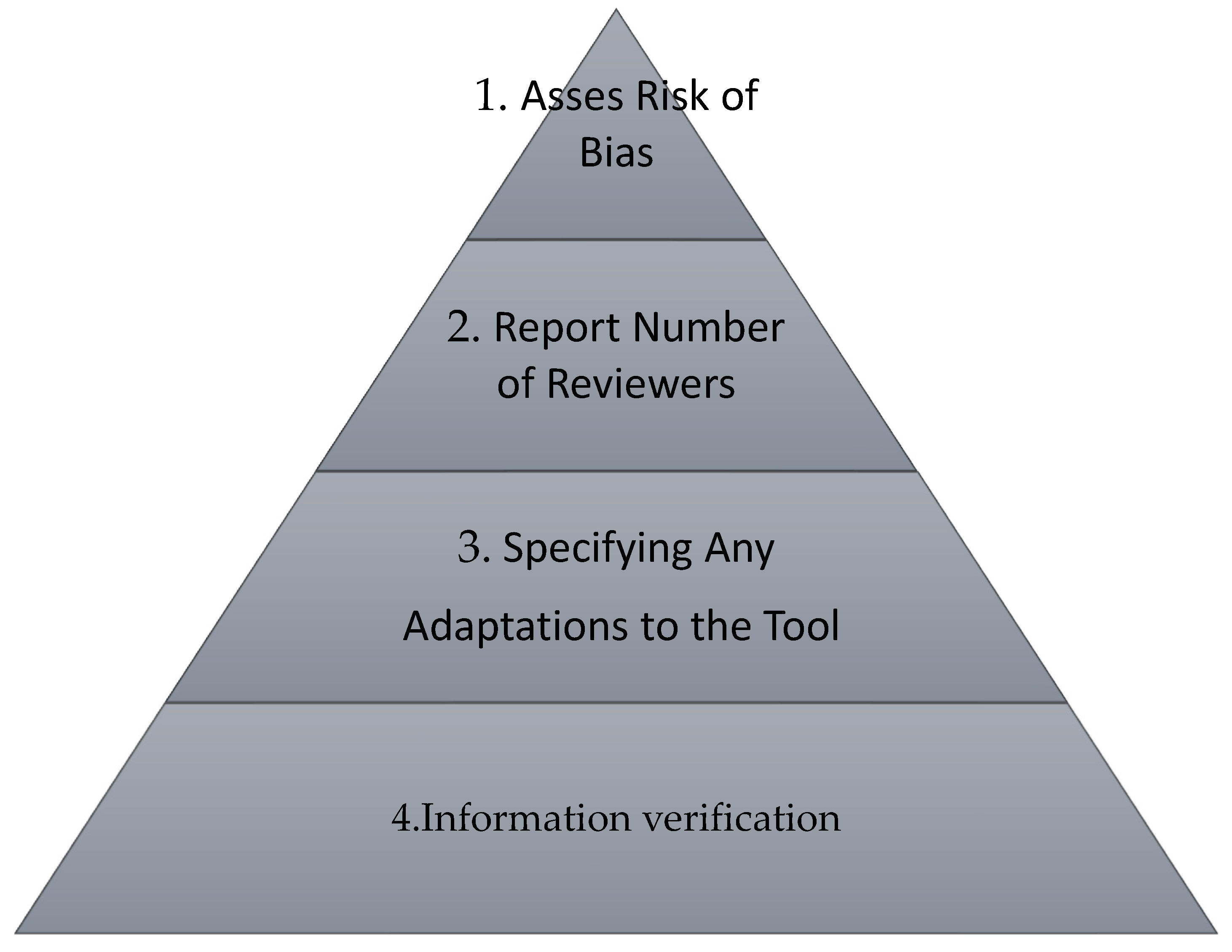
Figure 7.
Data Preparation and Processing Methods for Synthesis Methodological Steps.
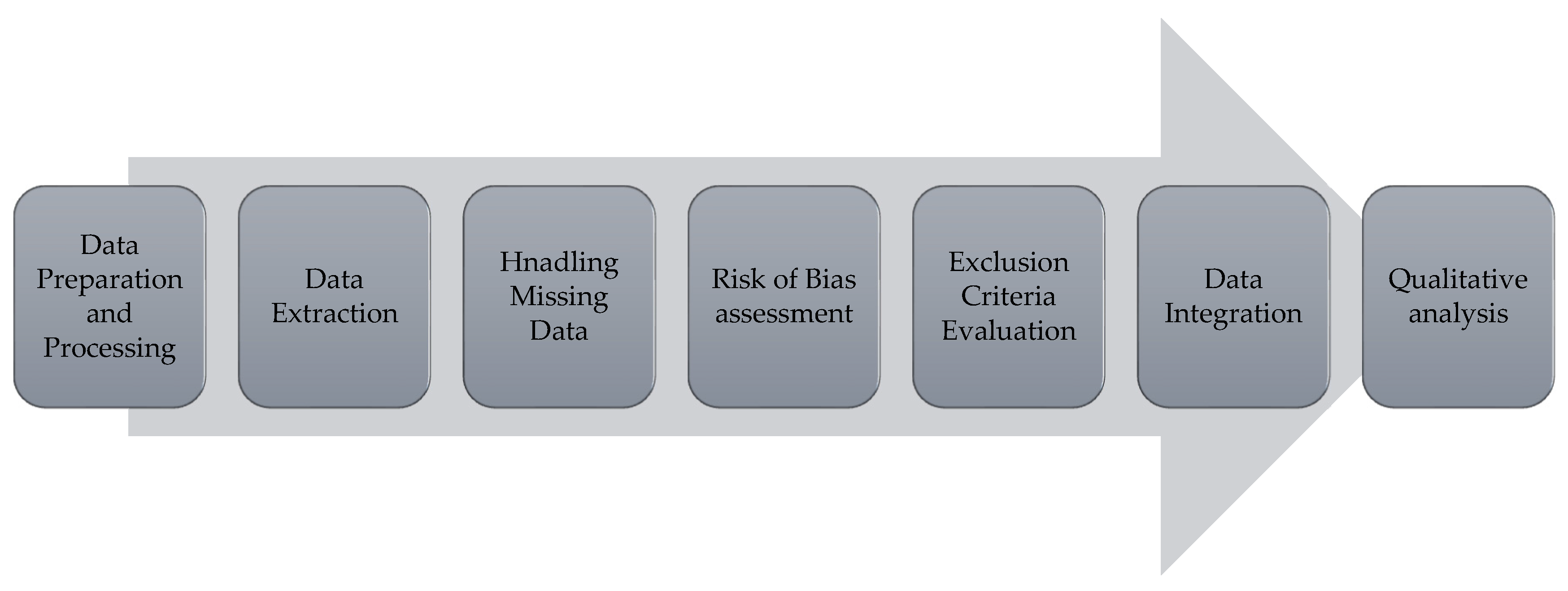

Table 1.
Comparative Analysis of the Existing Review Works and Proposed Systematic Review on Enterprise Systems for Executive, Managerial, and Operational Support: Success Factors and Reasons for Failure.
Table 1.
Comparative Analysis of the Existing Review Works and Proposed Systematic Review on Enterprise Systems for Executive, Managerial, and Operational Support: Success Factors and Reasons for Failure.
| Ref | Cites | Year | Contribution | Pros | Cons | Proposed Systematic Review |
| [5] | 0 | 2019 | Provides a framework for developing accounting systems in venture management. | Innovative insights for venture management | Difficult to apply in traditional sectors | The proposed review extends beyond accounting systems, encompassing a broader analysis of enterprise systems (ERP, CRM, SCM) to include all management levels and business processes. |
| [8] | 6 | 2019 | Explores how executive support for informatization influences radical innovation. | High relevance for innovation-driven sectors | Focuses mainly on senior executives, excluding mid-level managers | The proposed review investigates ES success across executive, managerial, and operational levels, addressing the gap in middle management and operational support. |
| [4] | 18 | 2020 | Connects management accounting systems to competitive performance. | Strong practical implications for firms | Limited sample size | The proposed review uses a broader, more comprehensive dataset, encompassing multiple industries and firm sizes, providing more generalizable insights. |
| [13] | 0 | 2020 | Investigates the effect of managerial myopia on financialization in Malaysia. | Focuses on under-researched issues in developing economies | Limited to Malaysian firms | The proposed review includes analysis across diverse geographic and economic contexts, focusing on both developed and developing regions. |
| [17] | 1 | 2021 | Proposes classification methods for industrial enterprise management. | Introduces novel analytical tools | Focused on industrial enterprises only | The proposed review broadens the scope to include multiple industries (manufacturing, SMEs, etc.), ensuring wider applicability. |
| [9] | 2 | 2022 | Studies the role of human factors in the effectiveness of quality management systems. | Highlights the human dimension of quality management | Lacks focus on technological components | The proposed review integrates technological aspects of ES, such as ERP, CRM, and SCM systems, examining both human and technological factors. |
| [10] | 0 | 2022 | Uses stakeholder theory to explain green innovation in Chinese manufacturing. | Strong theoretical grounding | Limited applicability to other contexts | The proposed review covers a variety of industries and organizational contexts, addressing success factors and failure reasons in broader, non-geographically constrained contexts. |
| [15] | 1 | 2022 | Provides a dual perspective on how executive identity affects green innovation. | Connects sustainability and managerial identity | Limited to heavily polluting industries | The proposed review investigates how ES can be successfully implemented in a wide range of industries, with a specific focus on managerial roles and decision-making processes across all levels. |
| [16] | 0 | 2023 | Proposes the S-SMILE model for improving SME performance. | Provides actionable strategies for SMEs | Requires more empirical validation | The proposed review strengthens empirical evidence by examining case studies and conducting comprehensive reviews of ES adoption in SMEs and other business types. |
| [3] | 1 | 2023 | Examines how executives’ hometown identity influences green innovation in polluting industries. | Relevant to sustainability research | Limited to specific industries | The proposed review looks beyond green innovation to explore how ES supports sustainability, efficiency, and decision-making across a range of industries and business models. |
| [12] | 4 | 2023 | Offers insights into the long-term impact of enterprise system adoption on user performance. | Longitudinal data strengthens findings | Limited sample size | The proposed review examines long-term impacts and addresses scalability and adaptability issues across varied business sizes and contexts, ensuring broader applicability. |
| [1] | 2 | 2023 | Shows how internal controls can moderate the relationship between management incentives and tax avoidance. | Highlights key governance mechanisms; empirically tested | Limited to certain industries; tax avoidance is sensitive data | The proposed review expands the discussion to governance mechanisms in ES implementation, focusing on performance metrics and how they drive success or failure. |
| [2] | 0 | 2024 | Highlights how CEO values drive business model innovation during economic downturns. | Provides new insights on leadership and innovation | Limited generalizability outside of economic crises | The proposed review examines leadership’s role in ES implementation across stable and crisis periods, providing broader implications for leadership and innovation. |
| [7] | 0 | 2024 | Investigates the relationship between managerial accounting, corporate governance, and knowledge management. | Provides a comprehensive view of corporate systems | Lacks empirical testing in different regions | The proposed review provides cross-regional analysis, expanding the geographic and industrial focus to enhance generalizability. |
| [11] | 0 | 2024 | Examines how marketing strategies impact organizational efficacy through managerial accounting. | Provides a new lens on strategic marketing | Lacks practical recommendations | The proposed review offers actionable recommendations for ES adoption across all business levels, with a focus on practical implementation strategies. |
| [14] | 24 | 2024 | Examines the impact of gender diversity on compensation and firm performance. | Promotes gender diversity in corporate management | Some factors may not be generalizable across regions | The proposed review does not focus on gender diversity but on a comprehensive review of the success factors and reasons for failure in ES implementation across regions. |
Table 2.
Inclusion and exclusion criteria.
| Criteria | Inclusion | Exclusion |
| Topic | Articles focusing on Enterprise Systems for Executive, Managerial, and Operational Support: Success Factors and Reasons for Failure. | Article not focusing on Enterprise System for executive, Managerial, and Operational Support: Success Factors and Reasons for Failure. |
| Research Framework | The work must include a research framework where an Enterprise System for executive, Managerial, and Operational Support is employed in actual businesses. | Articles lacking a research framework on the impact of Enterprise Systems for executive, Managerial, and Operational Support |
| Language | Papers written in English | Articles published in a language other than English |
| Period | Publication between 2014 and 2024 | Articles published outside of 2014 and 2024 |
Table 3.
The Results Obtained from Literature Search.
| No. | Online Repository | Number of Results |
| 1 | Google Scholar | 30000 |
| 2 | Web of Science | 13000 |
| 3 | Scopus | 2300 |
| Total | 45300 |
Table 4.
Newcastle-Ottawa Scale for Assessing the Risk of Bias in Research Studies.
| Study ID. | Selection (0-4 stars) | Comparability (0-2 stars) | Outcome (0-3 stars) | Total Stars | Quality Rating |
| [Ref X1] | X | X | X | X | X |
| [Ref X2] | X | X | X | X | X |
| [Ref X3] | X | X | X | X | X |
Table 5.
Methods for Tabulating and Visualizing Study Results.
| Method | Description |
| Data Extraction | Collecting key details from each study, including study design, sample size, and main findings, in a data extraction sheet. |
| Data Organization | Arranging the extracted data in a systematic format (e.g., Excel spreadsheet) to facilitate the identification of themes, trends, and patterns. |
| Data Amalgamation | Synthesizing data from various studies to find common themes, gaps in research, and critical insights. |
| Visual Presentation | Presenting findings using tables, charts, thematic maps, and descriptive formats to highlight key results and trends. |
| Critical Evaluation | Assessing the quality and relevance of the data in relation to the research questions and overall objectives. |
| Addressing Missing Data | Applying gap-filling techniques (e.g., predictive modeling) to estimate missing values or supplement incomplete data. |
Table 6.
Risk of Bias Assessment Table.
| Ref. | Selection Bias | Comparability | Outcome Bias | Total Stars | Quality Rating |
| [1,5,6,8,11,13,19,20,23,28] | ★☆☆☆ | ☆☆ | ★☆☆ | 3/9 | High |
| [2,3,16,17,21,22,24,25] [22,24,25,26,27,29,34,37,38] |
★★☆☆ | ☆☆ | ★☆☆ | 4/9 | High |
| [4,7,9,10,14,15,18,30,31,32,33,35,36,39,40,41,42,43,44,45,46,47,48,49,50] | ★★☆☆ | ☆☆ | ★★☆ | 5/9 | Moderate-High |
Table 7.
Summary of Results.
| Ref. | Outcome category | Key findings |
| [1,2,15,31,32,33,35,37,39,40,41,45,46,47,50] | Strategic Planning and Business Performance. | Formal strategic planning improves financial performance, growth, competitiveness, and risk management. |
| [6,10,12,20,24,26,27,28,29,36,50] | Technology, Information Systems, and Innovation. | Strong leadership and effective management practices enhance strategic plan implementation. |
| [4,9,13,16,22,23,30,38] | Human Capital and Organizational Agility. | Human capital is key to driving innovation, strategic execution, and organizational agility. |
| [11,14,16,21,34,42,44] | Environmental Factors and Cultural Influence. | External factors such as cultural values and environmental conditions affect strategic planning and innovation. |
| [1,14,15] | Gender Diversity, Compensation, and Corporate Performance. | Gender diversity and executive incentives impact firm performance. |
| [4,9,13,16,22,23,30,38] | Technology, Information Systems, and Innovation. | Enterprise systems, ERP, and IT improve decision-making, operational efficiency, and innovation. |
Table 8.
Key Findings and Strategic Implications for Business Leaders.
| Industry | Key Finding | Strategic Implications for Business Leaders | Opportunities | Challenges | Relevance to Proposed Systematic Review | Strategic Drivers | Expected Outcome |
| Manufacturing | ES enhances production process optimization and reduces operational inefficiencies. | Business leaders can streamline workflows, reduce downtime, and increase production quality. | Increased automation, real-time data tracking, and predictive maintenance. | Resistance to change, high initial costs, and system complexity. | Direct relevance to ES’s role in improving operational efficiency. | Automation, Predictive Analytics, Lean Production | Improved operational efficiency, reduced production costs. |
| Automotive | ES integration supports supply chain visibility and inventory management. | Leaders can improve supply chain coordination, minimize delays, and optimize inventory levels. | Enhanced supplier collaboration, real-time supply chain monitoring. | Supply chain disruption, data integration issues. | Highlights the need for seamless supply chain integration with ES. | Supply Chain Visibility, Real-Time Analytics | Reduced supply chain risks, better inventory management. |
| Textiles | ES enables enhanced resource planning and cost management in textile production. | Business leaders can optimize resource allocation and achieve cost savings. | Improved resource efficiency, cost forecasting, and scalability. | Implementation costs, user training, data accuracy issues. | Demonstrates the impact of ES on resource planning and cost efficiency. | Resource Allocation, Cost Forecasting | Lower production costs, better resource utilization. |
| Electronics | ES enhances product lifecycle management and innovation cycles. | Leaders can accelerate product development cycles and improve time-to-market. | Faster innovation, improved product quality, and customer satisfaction. | Innovation management, data privacy concerns. | Relevant to how ES supports faster innovation and product lifecycle management. | Innovation Management, Product Quality | Shortened product development cycles, enhanced customer satisfaction. |
| Food & Beverage | ES improves regulatory compliance and quality assurance in food safety. | Business leaders can ensure compliance with industry standards and enhance product quality. | Improved traceability, compliance with safety regulations. | Compliance complexity, integration with legacy systems. | Critical relevance for industries with stringent regulatory requirements. | Quality Assurance, Compliance Management | Enhanced product safety, reduced compliance risks. |
| Pharmaceuticals | ES supports advanced R&D and accelerates clinical trial processes. | Leaders can streamline research processes and improve collaboration in drug development. | Faster clinical trials, improved collaboration, and data management. | Regulatory hurdles, data security concerns. | Demonstrates the role of ES in accelerating R&D and innovation. | Research Collaboration, Data Management | Accelerated drug development, improved collaboration. |
Table 9.
Proposed Decision-Making Framework for implementing ES.
| Industry | Step | Framework Focus | Key Features | Strategic Drivers | Expected Outcome | Ties to Proposed Study |
| Manufacturing | Step 1: Needs Analysis | Identify operational inefficiencies | Assessment of workflows and communication gaps | Improved operational efficiency | Streamlined operations, improved collaboration | Supports success factors in ES implementations |
| Step 2: Select Platform | Choose ESP for real-time data sharing | Integration with manufacturing systems | Data-driven decision-making | Enhanced process management | Relevant to coordination improvements | |
| Step 3: Pilot Testing | Test on production lines | Trial communication and workflow tools | Reduced risk, operational control | Better decision-making models | Aligns with failure mitigation analysis | |
| Step 4: Full Integration | Implement across all operations | Full cross-department integration | Efficiency gains | Increased productivity | Supports strategic growth in ES implementation | |
| Step 5: Optimization | Optimize via analytics | Continuous monitoring and improvement | Continuous improvement, higher output | Ensures long-term alignment with objectives | ||
| Automotive | Step 1: Needs Analysis | Identify design and production gaps | Analyze communication in design and logistics | Improved collaboration, process efficiency | Faster product development, collaboration | Relevant to process efficiency insights |
| Step 2: Select Platform | Select platform for cross-functional teams | Integration of design and logistics | Innovation, team alignment | Enhanced product innovation | Aligns with real-time decision-making focus | |
| Step 3: Pilot Testing | Pilot ESP in design and procurement teams | Limited rollout to test efficiency | Risk management, stakeholder engagement | Reduced delays, improved communication | Supports decision-making enhancements | |
| Step 4: Full Integration | Implement across production, design, and logistics | Full-scale ESP deployment | Cross-functional collaboration | Improved timelines, product development | Aligns with overall strategic integration | |
| Step 5: Optimization | Optimize system via performance data | Analytics-driven optimization | Continuous improvement, supply chain visibility | Faster product cycles, improved efficiency | Supports long-term sustainability metrics | |
| Textiles | Step 1: Needs Analysis | Identify gaps in supply chain and production | Assessment of textile production workflows | Efficiency in production, transparency | Improved resource management | Aligns with efficiency optimization strategies |
| Step 2: Select Platform | Choose platform to streamline production and inventory | Inventory control, supply chain management | Flexibility, improved inventory control | Reduced waste, improved cost control | Relevant to real-time decision-making processes | |
| Step 3: Pilot Testing | Pilot ESP in selected production units | Test workflow improvements in limited setting | Risk management, cost reduction | Reduced material waste, faster production | Aligns with resource optimization strategies | |
| Step 4: Full Integration | Implement system across production and logistics | Full platform rollout in all operations | Transparency, supply chain coordination | Improved collaboration, better efficiency | Tied to overall resource management findings | |
| Step 5: Optimization | Use analytics to improve production efficiency | Real-time data for continuous improvement | Resource management, quality control | Optimized production cycles, less material waste | Ensures long-term sustainability for processes | |
| Electronics | Step 1: Needs Analysis | Identify gaps in product development and supply chain | Assess communication gaps in R&D and logistics | Innovation, improved collaboration | Faster product cycles, collaboration across departments | Relevant to innovation strategies for ESPs |
| Step 2: Select Platform | Select platform for R&D and supply chain | Focus on integration with real-time communication tools | Innovation and production alignment | Shortened product lifecycles | Aligns with ESP implementation success | |
| Step 3: Pilot Testing | Test in R&D and logistics teams | Limited rollout of ESP tools | Risk reduction, process efficiency | Improved product design, enhanced communication | Supports reduced operational risk management | |
| Step 4: Full Integration | Full implementation across R&D, production, and logistics | System-wide ESP rollout | Efficiency, stakeholder engagement | Faster production, better collaboration | Tied to strategic goal alignment for long-term benefits | |
| Step 5: Optimization | Use analytics to track performance | Continuous data-driven optimization | Continuous improvement, real-time updates | Enhanced efficiency, reduced bottlenecks | Ensures post-integration monitoring for ESP success | |
| Food & Beverage | Step 1: Needs Analysis | Identify gaps in production and distribution | Real-time order management and logistics analysis | Efficiency in production and delivery | Less spoilage, faster delivery | Tied to real-time decision-making for ESPs |
| Step 2: Select Platform | Select platform for managing orders and inventory | Integrated systems for inventory control | Improved transparency, reduced waste | Reduced spoilage, increased customer satisfaction | Supports operational efficiency for long-term growth | |
| Step 3: Pilot Testing | Pilot in distribution and production hubs | Limited testing for compliance and transparency | Compliance risk management | Improved delivery timelines, regulatory compliance | Aligns with real-time monitoring and delivery solutions | |
| Step 4: Full Integration | Full system rollout across production and logistics | Full ESP deployment | Customer satisfaction, transparency | Reduced spoilage, increased operational control | Aligns with productivity and customer satisfaction | |
| Step 5: Optimization | Use analytics to improve distribution and inventory | Traceability and data-driven monitoring | Improved customer satisfaction, reduced wastage | Optimal resource management, streamlined processes | Ensures long-term alignment with performance metrics | |
| Pharmaceuticals | Step 1: Needs Analysis | Identify gaps in R&D and regulatory processes | Address regulatory challenges and collaboration in R&D | Faster innovation cycles, compliance adherence | Faster market entry, streamlined R&D cycles | Regulatory and compliance-driven strategy for ESPs |
| Step 2: Select Platform | Choose platform for R&D and clinical trials | Integration with secure, compliant data-sharing tools | Compliance, innovation | Shortened R&D cycles, improved compliance | Aligns with innovation and compliance strategies | |
| Step 3: Pilot Testing | Pilot ESP in clinical and R&D environments | Limited testing for security and compliance | Risk reduction, faster approval cycles | Faster trials, reduced compliance risks | Aligns with risk mitigation strategies | |
| Step 4: Full Integration | Implement system across clinical trials, R&D, and production | System-wide ESP integration | Regulatory adherence, process efficiency | Improved collaboration, faster product development | Tied to operational efficiency and compliance strategies | |
| Step 5: Optimization | Optimize via data analytics and monitoring | Continuous data-driven monitoring | Regulatory compliance, R&D efficiency | Improved outcomes, faster R&D productivity | Ensures long-term optimization of compliance and R&D |
Table 10.
Proposed Best Practices for Successful Study Implementation.
| Industry | Best Practice | SME Type | Operational Challenge | Strategic Drivers | Expected Impact | Ties to Systematic Review Findings |
| Manufacturing | Improve real-time data sharing across departments | Production SMEs | Siloed communication and delayed workflows | Real-time data visibility | Enhanced workflow coordination, efficiency | Aligns with real-time decision-making enhancement in ESPs |
| Adopt integrated platforms for inventory management | Distribution SMEs | Inventory mismanagement and stock shortages | Supply chain transparency | Reduced stock-outs, better inventory control | Supports operational efficiency and transparency | |
| Provide cross-departmental training for platform use | All SMEs | Resistance to platform adoption by employees | Change management | Improved employee engagement | Aligns with findings on employee training and readiness | |
| Automotive | Facilitate cross-functional collaboration in design teams | Design SMEs | Poor communication between R&D and production | Innovation-driven collaboration | Faster product development, team cohesion | Relevant to improving cross-department collaboration and innovation |
| Integrate ESPs for logistics and supply chain management | Logistics SMEs | Delayed production cycles due to miscommunication | Logistics synchronization | Improved production timelines, resource management | Aligns with optimization and process synchronization | |
| Implement regular training for employees on platform updates | All SMEs | Resistance to change and insufficient training | Continuous learning culture | Enhanced adoption and reduced resistance | Supports employee involvement and change management success | |
| Textiles | Leverage real-time platforms for supply chain management | Fashion and Apparel SMEs | Poor tracking of orders and inventory | Supply chain coordination | Reduced delays in order fulfillment | Tied to findings on transparency and efficiency |
| Adopt predictive analytics for demand forecasting | Manufacturing SMEs | Overstock or understock issues | Data-driven demand management | Optimized production and inventory management | Supports improvements in operational efficiency via analytics | |
| Conduct periodic assessments of platform performance | All SMEs | Lack of continuous optimization efforts | Continuous performance monitoring | Improved system efficiency and usage | Relevant to continuous improvement strategies | |
| Electronics | Establish platforms for real-time collaboration between R&D and logistics | Innovation SMEs | Disconnected R&D and logistics communication | Real-time updates on production cycles | Reduced production delays, enhanced innovation cycles | Supports the innovation focus and alignment of ESPs with R&D |
| Use ESPs to streamline the product lifecycle management | Manufacturing SMEs | Delays in production timelines | Product lifecycle synchronization | Shortened product development timelines | Aligns with streamlined workflows and innovation cycles | |
| Provide targeted platform training based on employee roles | All SMEs | Lack of role-specific training | Role-based training and support | Increased efficiency and engagement | Aligns with the need for customized training strategies | |
| Food & Beverage | Utilize ESPs for seamless inventory and order management | Distribution SMEs | Inefficiencies in tracking orders and inventory | Inventory management and order visibility | Reduced wastage, improved delivery timelines | Relevant to improving real-time decision-making |
| Implement analytics-driven supply chain management | Manufacturing SMEs | Excess spoilage and inventory mismanagement | Supply chain synchronization | Reduced wastage, improved resource allocation | Aligns with supply chain transparency and efficiency findings | |
| Provide continuous employee training on platform updates | All SMEs | Employee resistance and lack of familiarity | Change management and training strategies | Enhanced platform adoption, reduced resistance | Supports change management and system readiness | |
| Pharmaceuticals | Use ESPs to streamline R&D collaboration and regulatory compliance | R&D SMEs | Compliance challenges and delays in product development | Regulatory compliance and collaboration | Improved compliance, faster product approval | Aligns with the regulatory and compliance drivers for ESP success |
| Adopt secure, compliant platforms for clinical trials | Clinical SMEs | Lack of secure communication for trial data | Data security and compliance | Enhanced data protection and compliance | Tied to ensuring data security and regulatory adherence | |
| Regularly assess and improve platform functionalities | All SMEs | Lack of continuous platform performance optimization | Continuous monitoring and system feedback | Improved system performance and usage | Aligns with continuous improvement and optimization strategies |
Table 11.
Proposed Metrics and KPIs for Measuring Performance in Various Industries.
| Industry | Key Metrics/KPIs | Measurement Focus | Strategic Drivers | Expected Outcome | Ties to Systematic Review Findings | Priority (1 = Highest, 2 = Medium, 3 = Low) |
| Manufacturing | 1. Production Efficiency | Monitoring real-time production output | Operational Efficiency | Increased production rates, fewer delays | Aligns with operational efficiency and data integration | 1 |
| 2. Inventory Turnover | Assessing inventory management | Supply Chain Visibility | Reduced stock-outs, improved resource use | Relevant to supply chain management findings | 2 | |
| 3. Employee Training Compliance | Tracking training and platform usage | Workforce Engagement | Increased platform adoption, reduced errors | Tied to employee training and change management | 1 | |
| Automotive | 1. Product Development Cycle Time | Time from design to production | Innovation Speed | Shortened development cycles, faster time-to-market | Relevant to innovation and process synchronization | 1 |
| 2. Logistics and Supply Chain Synchronization | Efficiency of supply chain coordination | Supply Chain Coordination | Reduced delays, improved resource management | Tied to supply chain synchronization and platform usage | 2 | |
| 3. Platform Adoption Rate by Teams | Measuring user engagement and platform usage | Employee Adoption and Change Management | Higher platform engagement, fewer integration challenges | Aligns with change management and training strategies | 2 | |
| Textiles | 1. Demand Forecast Accuracy | Accuracy of demand predictions | Data-Driven Decision-Making | Reduced stock wastage, better demand management | Supports analytics-driven decision making | 1 |
| 2. Order Fulfillment Lead Time | Time to fulfill orders from inventory to delivery | Supply Chain Efficiency | Shorter lead times, fewer delays | Relevant to improving operational efficiency | 1 | |
| 3. Employee Training Hours | Hours spent on platform and process training | Employee Readiness | Higher platform familiarity, smoother transitions | Tied to employee involvement and readiness | 2 | |
| Electronics | 1. Innovation Cycle Time | Time taken to introduce new products | R&D and Innovation Speed | Faster product launches, shortened development cycles | Aligns with innovation focus and faster time-to-market | 1 |
| 2. System Uptime and Reliability | Ensuring ESP uptime and reliability | Operational Continuity | Reduced downtime, improved productivity | Tied to platform reliability and operational success | 1 | |
| 3. Resource Allocation Efficiency | Measuring resource utilization and efficiency | Resource Management | Optimized resource allocation | Relevant to operational efficiency and workforce management | 2 | |
| Food & Beverage | 1. Order Accuracy Rate | Measuring the percentage of accurate orders | Supply Chain Transparency | Improved order fulfillment, reduced wastage | Tied to improving transparency and resource usage | 1 |
| 2. Inventory Management Efficiency | Assessing inventory turnover and stock management | Inventory Visibility | Reduced spoilage, better inventory management | Aligns with inventory control and supply chain efficiency | 1 | |
| 3. Employee Productivity Index | Measuring employee productivity through platform engagement | Employee Engagement | Increased platform use, improved output | Supports the focus on employee training and engagement | 2 | |
| Pharmaceuticals | 1. Compliance with Regulatory Standards | Ensuring adherence to regulatory frameworks | Compliance and Data Security | Improved compliance, reduced risk | Relevant to regulatory and compliance management | 1 |
| 2. R&D Collaboration Efficiency | Measuring collaboration between R&D and production teams | Innovation and R&D Speed | Faster product development, streamlined communication | Aligns with innovation and compliance focus | 1 | |
| 3. Clinical Trial Data Accuracy and Security | Monitoring the security and accuracy of clinical trial data | Data Security and Compliance | Reduced data breaches, improved data integrity | Tied to ensuring secure data handling in ESPs | 1 |
Table 12.
Real-world Case Studies Relate to Proposed Systematic Review.
| Industry | Case Study | Implementation | Outcome |
| Manufacturing | Michelin | Integrated digital tools to modernize legacy processes, including R&D and customer engagement. | Improved efficiency and created new business models. |
| General Electric (GE) | Applied predictive analytics and Industrial IoT for manufacturing operations. | Reduced equipment downtime. | |
| DHL | Adopted IoT and robotics within supply chain management. | Enhanced inventory accuracy and increased efficiency. | |
| Automotive | Volkswagen | Implemented a cloud-based digital production platform to automate factory operations. | Reduced production costs and improved assembly line efficiency. |
| Ford Motor Company | Used data analytics to predict vehicle maintenance needs. | Improved customer satisfaction and reduced service costs | |
| Tesla | Leveraged real-time data collection for autonomous driving enhancement. | Advanced AI-driven driving and improved safety features. | |
| Textiles | Levi Strauss & Co. | Adopted laser technology for sustainable denim production. | Reduced water consumption. |
| Nike | Used digital engagement tools such as AR and fitness apps. | Boosted direct-to-consumer sales. | |
| H&M | Implemented AI-powered demand forecasting. | Reduced excess inventory. | |
| Electronics | Samsung | Utilized predictive analytics to foresee component failures in smartphone production. | Achieved a reduction in production delays. |
| Apple | Invested in robotic automation for device assembly. | Improved production speed and reduced human error. | |
| Sony | Applied predictive maintenance solutions for production lines. | Enhanced equipment uptime. | |
| Food & Beverage | Domino’s Pizza | Implemented AI for digital ordering solutions. | Increased online sales significantly. |
| Nestlé | Adopted digital tools to optimize the supply chain. | Achieved a reduction in logistics costs. | |
| PepsiCo | Used big data analytics to optimize distribution networks. | Reduced delivery times and costs. | |
| Pharmaceuticals | Pfizer | Utilized digital platforms for clinical trial management. | Accelerated drug development timelines by. |
| Novartis | Leveraged data analytics for predicting supply chain disruptions. | Improved response time to market demands. | |
| Roche | Adopted AI-based diagnostic tools for precision medicine. | Improved early disease detection accuracy. |
Table 13.
Proposed Roadmap for SMEs Businesses and Policy Recommendations Linked to Policy Frameworks.
Table 13.
Proposed Roadmap for SMEs Businesses and Policy Recommendations Linked to Policy Frameworks.
| Industry | Roadmap Focus (Step Breakdown) | Policy Framework | Strategic Link | Strategic Drivers | Expected Outcome | Ties to Proposed Study | Duration Estimate | When to Undertake |
| Manufacturing | 1. Digital Skills Training 2. IoT Adoption 3. Automation Investments 4. Data Analytics Capability 5. Sustainable Practices Implementation |
Industry 4.0; National Skills Framework | Align with national manufacturing strategies | Improved skills, cost reduction, and production efficiency | Increased productivity, reduced operational costs | Supports strategic implementation of digital transformation | 18-24 months | Start with digital skills training and IoT integration |
| Automotive | 1. Electric Vehicle (EV) Infrastructure 2. AI-Based Predictive Maintenance 3. Supply Chain Digitization 4. Green Manufacturing 5. Real-Time Analytics |
Clean Energy Policy; Circular Economy Action Plan | Green transition and smart mobility | Regulatory compliance, sustainability, cost management | Enhanced vehicle lifecycle management, improved supply chain transparency | Aligns with sustainable strategies and digital innovations | 24-36 months | Initiate with EV infrastructure development and predictive maintenance implementation |
| Textiles | 1. Sustainable Material Sourcing 2. RFID Inventory Management 3. Digital Marketing Expansion 4. Automation in Production 5. Circular Economy Practices |
Sustainability Development Goals (SDGs); Textile Policy | Align with sustainability and consumer behaviour trends | Environmental protection, traceability, and operational efficiency | Improved resource use, inventory accuracy, and sales growth | Addresses sustainability challenges and operational improvements | 12-24 months | Focus on sustainable material sourcing and RFID integration initially |
| Electronics | 1. AI for Quality Control 2. Digital Supply Chain Networks 3. IoT for Asset Management 4. Cybersecurity Enhancement 5. Circular Economy Adoption |
Data Protection Act; IoT Policy | Emphasize cybersecurity and digital innovations | Risk management, regulatory compliance, operational efficiency | Enhanced production quality, resilience, and customer satisfaction | Provides a comprehensive digital transformation strategy | 24-30 months | Prioritize AI quality control and cybersecurity measures |
| Food & Beverage | 1. Digital Traceability Solutions 2. Sustainable Sourcing 3. Automated Quality Checks 4. Blockchain for Supply Chain 5. Customer-Centric Innovations |
Food Safety Regulations; Blockchain Adoption Framework | Align with food safety and sustainability initiatives | Product safety, supply chain transparency, customer trust | Enhanced brand reputation, compliance with safety standards | Supports digital supply chain transformation and customer engagement | 18-24 months | Begin with digital traceability and sustainable sourcing |
| Pharmaceuticals | 1. Digital Health Solutions 2. Big Data for Clinical Trials 3. Regulatory Technology Integration 4. Automated Manufacturing 5. AI for Drug Discovery |
Health Tech Framework; Data Integrity Policy | Align with regulatory compliance and technological innovation | Risk management, regulatory compliance, speed-to-market | Accelerated drug development, improved regulatory compliance | Aligns with data-driven strategies and regulatory transformation | 24-36 months | Start with digital health solutions and data-driven clinical trials |
Disclaimer/Publisher’s Note: The statements, opinions and data contained in all publications are solely those of the individual author(s) and contributor(s) and not of MDPI and/or the editor(s). MDPI and/or the editor(s) disclaim responsibility for any injury to people or property resulting from any ideas, methods, instructions or products referred to in the content. |
© 2024 by the authors. Licensee MDPI, Basel, Switzerland. This article is an open access article distributed under the terms and conditions of the Creative Commons Attribution (CC BY) license (http://creativecommons.org/licenses/by/4.0/).
Copyright: This open access article is published under a Creative Commons CC BY 4.0 license, which permit the free download, distribution, and reuse, provided that the author and preprint are cited in any reuse.


