

Submitted:
18 October 2024
Posted:
18 October 2024
You are already at the latest version
Abstract
Green marketing has emerged as an integral strategy in promoting sustainability across various industries, particularly in response to heightened environmental concerns and consumer demands for eco-friendly products. This paper critically reviews the concept of green marketing from environmental, consumer, corporate, and regulatory perspectives, highlighting both its opportunities and challenges. From the environmental standpoint, green marketing aims to mitigate the negative impacts of industrial activities by promoting products that are less harmful to the environment. On the consumer side, increasing environmental awareness drives demand for sustainable products, though challenges such as greenwashing often undermine consumer trust. Corporately, green marketing offers opportunities for enhancing brand image and competitiveness, though balancing profitability and sustainability goals remains a challenge for businesses. Regulatory frameworks play a crucial role in shaping green marketing practices, ensuring transparency and accountability, and preventing deceptive practices like greenwashing. The paper also discusses emerging trends such as digital transparency, the role of social media in green marketing, and the incorporation of circular economy principles into corporate strategies. The review concludes with recommendations for businesses to enhance their green marketing efforts, emphasizing the need for transparency, stakeholder collaboration, and interdisciplinary approaches to address complex sustainability challenges.
Keywords:
Green marketing
; sustainability
; consumer behaviour
; corporate strategy
; regulatory frameworks
Introduction
Green marketing has emerged as a critical component of modern business strategies, driven by increasing environmental awareness and the growing demand for sustainable products (Biswas & Roy, 2015; Papadas et al., 2017). This approach, as identified by Konar and Cohen (2001) and Cherian and Jacob (2012), involves promoting products or services based on their environmental benefits, aiming to reduce the ecological footprint of both producers and consumers. Also, Dangelico and Vocalelli (2017) and Lyon and Montgomery (2015) note that the importance of green marketing in today's business world is underscored by the heightened consumer awareness and regulatory pressures that compel companies to adopt sustainable practices. While, according to Rathore (2018), green marketing not only addresses the environmental concerns of consumers but also provides a competitive advantage to businesses that successfully integrate sustainability into their marketing strategies.
The concept of sustainability intersects significantly with marketing, creating a paradigm shift from traditional marketing practices focused solely on profit maximization to those that also consider environmental and social impacts (Papadas et al., 2018; Dangelico & Vocalelli, 2017). Sustainability in marketing emphasizes the long-term well-being of the planet and its inhabitants, advocating for practices that do not deplete resources or cause harm to ecosystems (Rahman et al., 2012). This shift is supported by the triple bottom line framework, which integrates environmental, social, and economic dimensions into business operations (Elkington, 1998). Companies that adopt green marketing practices are better positioned to meet the demands of environmentally conscious consumers, who are increasingly seeking products that align with their values and contribute to sustainability goals (Papadas et al., 2019).
This paper aims to initiate a comprehensive discussion on green marketing's implications for sustainability, exploring environmental, consumer, and corporate perspectives. It discusses how green marketing can promote sustainability and combat greenwashing (Lyon & Montgomery, 2015), and look at how consumer behavior and preferences towards green products (Biswas & Roy, 2015), and evaluates corporate strategies for leveraging green marketing to enhance brand reputation and achieve competitive advantage (Haffar & Searcy, 2017). This multi-faceted analysis seeks to provide insights that inform both academic research and business practices, addressing the complexities and challenges of implementing effective and credible green marketing strategies.
Conceptualization of Green Marketing
The definitions provided by scholars converge on several key points: the integration of environmental considerations into business practices, the role of green marketing in promoting sustainability, and the potential for green marketing to contribute to both environmental and economic goals. However, there are differences in emphasis. Konar and Cohen (2001) and Cherian and Jacob (2012) focus more on the societal and community impacts, while Rahman et al. (2012) and Katrandjiev (2016) highlight operational efficiency and profitability. Kiyak and Grigoliene (2023) place particular importance on the role of green marketing in product development and long-term sustainability.
Given the diverse perspectives and the need for a comprehensive approach, this paper adopts the following definition of green marketing: Green marketing involves a series of strategic activities and business operations aimed at promoting environmentally friendly products and practices. It seeks to meet consumer needs while protecting the natural environment, reducing waste, conserving energy, and contributing to the sustainability of society. Green marketing is integral to the development of new, sustainable business models and product innovations, balancing economic profitability with ecological and social responsibility. This definition captures the multifaceted nature of green marketing, integrating key elements from the various scholarly perspectives discussed and aligning with the broader objectives of promoting environmental sustainability, consumer satisfaction, and corporate accountability.
Theoretical Frameworks
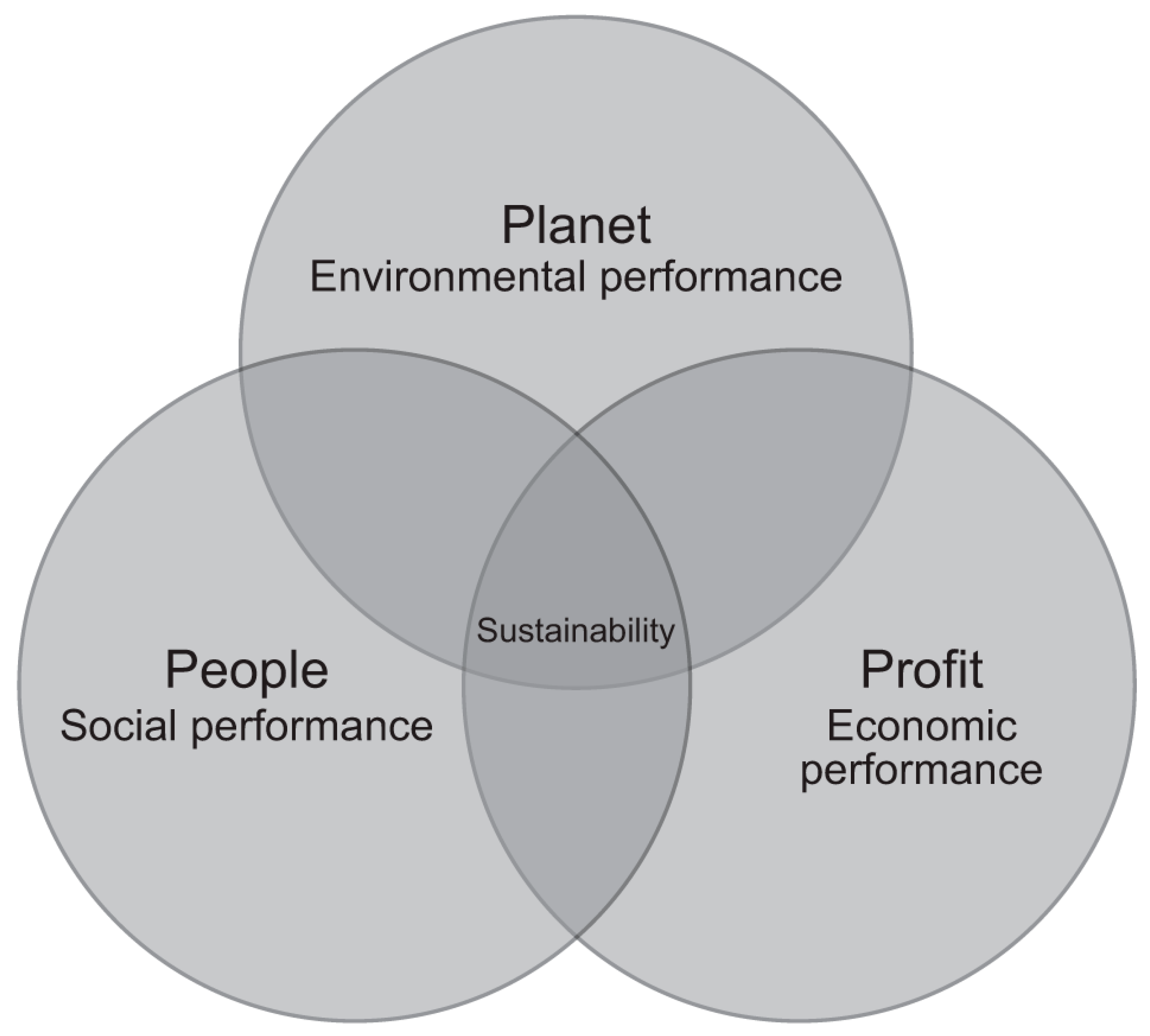
Environmental sustainability, consumer behavior, and corporate strategy are interwoven fields that have given rise to various theories, models, and frameworks, each contributing to our understanding of green marketing. One foundational theory in environmental sustainability is the Triple Bottom Line (TBL) framework by Elkington (1998), which emphasizes balancing economic, social, and environmental considerations. This framework has been instrumental in guiding businesses towards sustainable practices by highlighting the interconnectedness of these three pillars.
Figure 1.
Triple Bottom Line (TBL) framework by Elkington (1998).
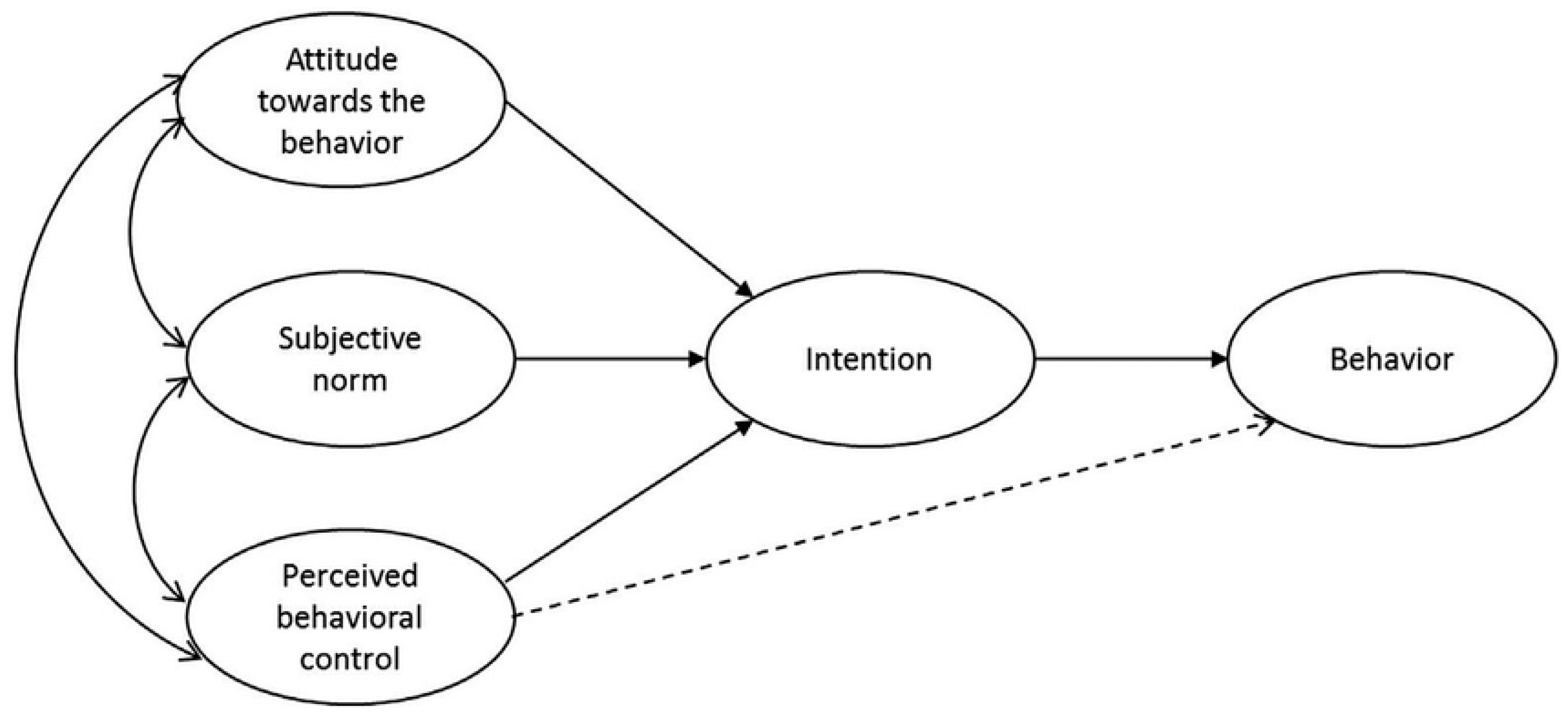
In the realm of consumer behavior, the Theory of Planned Behavior (TPB) by Ajzen (1991) is significant. This theory posits that individual behavior is driven by behavioral intentions, which are influenced by attitudes, subjective norms, and perceived behavioral control. This model helps explain how environmental attitudes and beliefs translate into sustainable consumer practices.
Figure 2.
Theory of Planned Behavior (TPB) by Ajzen (1991).
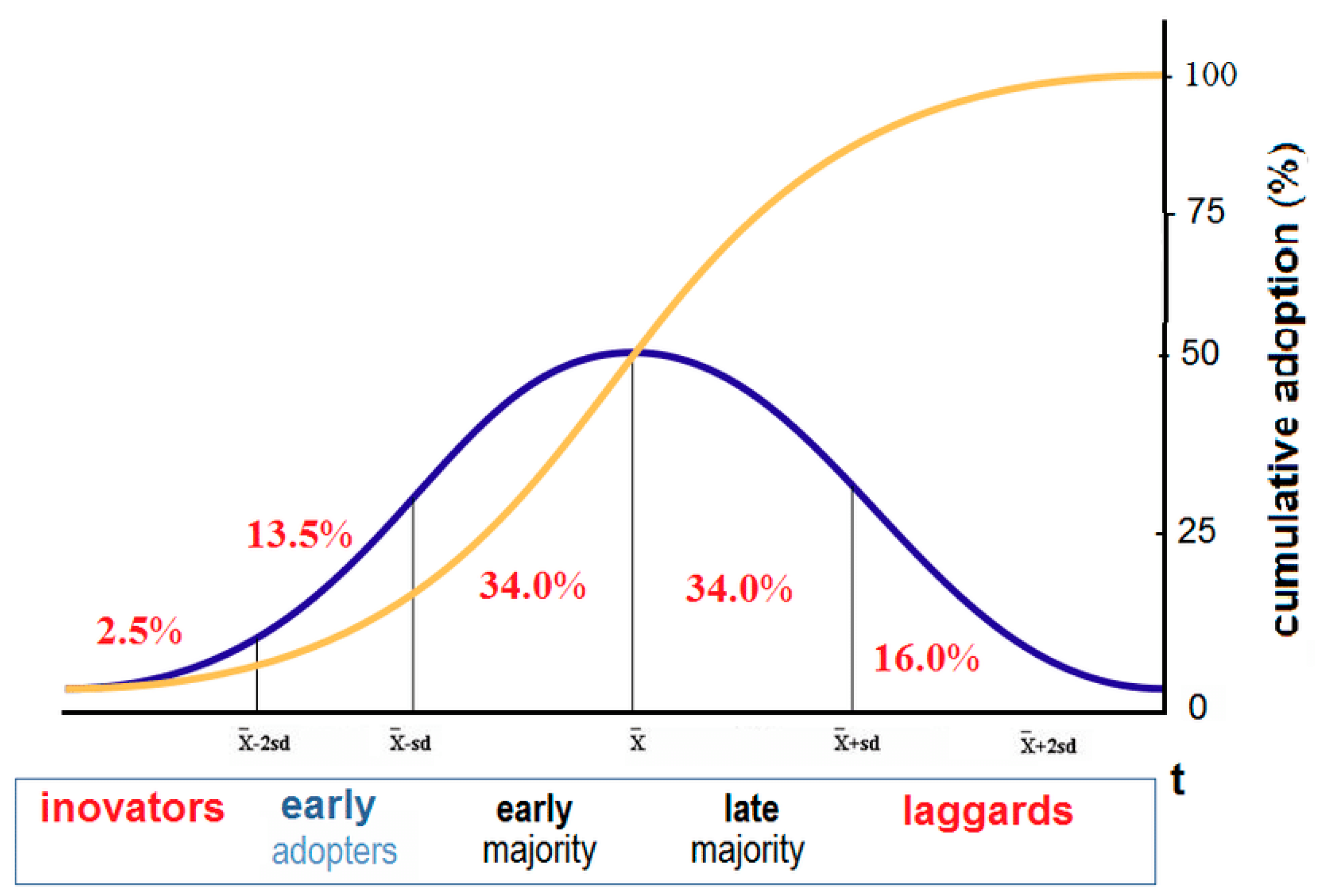
Another pertinent model is Rogers’ Diffusion of Innovations Theory (2003), which describes how new ideas and technologies spread within a culture, providing insights into how green products can achieve market penetration.
Figure 3.
Rogers’ Diffusion of Innovations Theory (2003).
From a corporate strategy perspective, the Resource-Based View (RBV) theory, introduced by Barney (1991), suggests that firms can gain a competitive advantage by leveraging their unique resources and capabilities. Integrating sustainability into these resources can differentiate a firm in the marketplace. The Natural-Resource-Based View (NRBV), proposed by Hart (1995), extends this theory by focusing specifically on the strategic importance of environmental resources.
Despite these robust frameworks, gaps and inconsistencies persist in the literature. One significant gap is the limited empirical research on the long-term economic impacts of sustainability initiatives on corporate performance. While studies like those by Papadas et al. (2017, 2018) highlight the potential benefits of aligning marketing practices with environmental objectives, comprehensive longitudinal studies are scarce. Furthermore, there is a need for more nuanced understanding of consumer skepticism towards green marketing claims, as highlighted by Kapitan (2022). This skepticism often stems from greenwashing, where companies exaggerate their environmental efforts (Lyon & Montgomery, 2015). Another inconsistency lies in the geographical focus of existing research. Much of the literature centers on developed countries, with limited insights into how green marketing strategies play out in developing economies. For instance, while Folasayo (2019) and Adonai et al. (2020) provide some insights into green marketing in Nigeria, more comparative studies across diverse cultural and economic contexts are needed.
Review of Literatures
Green Marketing in Developing Nations
The present state of green marketing in developing nations, including Nigeria, is characterized by a growing awareness and adoption of sustainable business practices. However, Dangelico and Vocalelli (2017) noted that the pace and extent of this adoption vary significantly across different countries and are often influenced by a range of economic, social, and regulatory factors. In Nigeria, green marketing is emerging as a response to environmental challenges and consumer demand for sustainable products (Folasayo, 2019). Studies have shown that green marketing strategies can positively influence consumer purchase decisions and contribute to achieving global environmentally sustainable goals (Obayelu, 2000; García-Salirrosas & Rondon-Eusebio, 2022). However, the country faces limitations such as inadequate infrastructure, technological gaps, and a lack of consumer awareness, which can hinder the effectiveness of green marketing initiatives (Niyi & Philips Olatunde, 2018). Comparatively, in developed countries, green marketing is more advanced due to stronger regulatory frameworks, higher consumer awareness, and better infrastructure to support sustainable practices (Saleem et al., 2021). For example, Adonai et al. (2020) noted that in countries like the United Kingdom and Germany, green marketing is not only well-established but also supported by government policies that encourage businesses to adopt sustainable practices. A study in Zimbabwe explored the influence of green marketing strategies on consumer purchase decisions and found that green advertising, eco-labeling, and green branding had a significant positive impact on consumer choices (Chagwesha et al., 2023). This suggests that if similar strategies were adopted and supported in developing nations like Nigeria, they could potentially lead to similar positive outcomes (Tawiah et al., 2021). Another study from Ghana investigated how sustainable marketing strategies contribute to attaining the Sustainable Development Goals (SDGs) in an emerging market context. The findings revealed a positive relationship between green marketing and purchase behavior, emphasizing the role of pricing as a mediating factor (Amoako et al., 2020).
Environmental Perspective
Environmental sustainability as noted by Markard et al. (2020) refers to the ability to meet the needs of the present generation without compromising the ability of future generations to meet their own needs. This concept as opined by Henderson and Loreau (2023) underscores the interconnectedness of human activities with the environment and the importance of preserving natural resources for long-term well-being. Environmental conservation as noted by Harvey et al. (2016) involves the protection and management of ecosystems, biodiversity, and natural habitats to maintain their ecological integrity and functions. The importance of sustainability and environmental conservation cannot be overstated. Human activities such as industrialization, urbanization, and intensive agriculture have led to widespread environmental degradation, including deforestation, pollution, habitat loss, and climate change (Scanes, 2018). These impacts have severe consequences for biodiversity, ecosystem services, and human health and well-being (Intergovernmental Platform on Biodiversity and Ecosystem Services, 2019). Sustainable development requires a holistic approach that balances economic growth, social equity, and environmental protection (United Nations, 2015). By adopting sustainable practices, Khan et al. (2022) assert that businesses can minimize their environmental footprint, reduce resource consumption, and mitigate the adverse impacts of their operations on ecosystems and communities. Moreover, promoting environmental sustainability is essential for achieving the Sustainable Development Goals (SDGs) outlined by the United Nations, which aim to address global challenges such as poverty, hunger, inequality, and climate change (UN, 2015).
Green marketing plays a crucial role in advancing environmental sustainability by promoting eco-friendly products and practices to consumers (Handayani, 2017). Green marketing initiatives aim to raise awareness about environmental issues, educate consumers about sustainable alternatives, and incentivize environmentally responsible behaviors (Handayani, 2017). Through green marketing, businesses can differentiate their products and brands based on their environmental attributes, such as recyclability, energy efficiency, and biodegradability (Piro et al., 2020). By highlighting these features in their marketing communications, companies can appeal to environmentally conscious consumers who prioritize sustainability in their purchasing decisions (Biswas & Roy, 2015). Moreover, green marketing can drive innovation and encourage businesses to develop more sustainable products and technologies. As consumer demand for eco-friendly products grows, companies are incentivized to invest in research and development to create greener alternatives to traditional products (Reddy, 2023). This innovation can lead to technological advancements, cost reductions, and market competitiveness, further accelerating the transition towards a more sustainable economy.
Despite its potential benefits, green marketing is not without its challenges. One of the most significant criticisms of green marketing is the phenomenon of greenwashing, where companies engage in deceptive or misleading practices to portray themselves as more environmentally friendly than they actually are (Delmas & Burbano, 2011). Greenwashing undermines consumer trust and credibility in green marketing claims, leading to skepticism and cynicism towards environmental initiatives (Lyon & Montgomery, 2015). Moreover, greenwashing can divert attention and resources away from genuine sustainability efforts, as companies prioritize superficial green branding over meaningful environmental improvements (Pimonenko et al., 2020). To address greenwashing and restore trust in green marketing, regulators, and advocacy groups have called for greater transparency, accountability, and third-party certification of environmental claims (Lyon & Montgomery, 2015). By holding companies accountable for their environmental practices and ensuring the accuracy of green marketing messages, stakeholders can promote genuine environmental stewardship and foster a more responsible approach to sustainability.
Consumer Perspective
Consumer awareness of environmental issues and sustainability has grown significantly in recent years, leading to a corresponding increase in demand for sustainable products and practices. Studies have shown that consumers are increasingly concerned about the environmental and social impacts of their purchasing decisions (Biswas & Roy, 2015; Tarabieh, 2021). This heightened awareness has been driven by various factors, including media coverage of environmental issues, educational campaigns, and advocacy efforts by environmental organizations (Prieto-Sandoval et al., 2022). The growing consumer demand for sustainable products presents opportunities for businesses to capitalize on this trend through green marketing initiatives. Companies that offer eco-friendly products and promote their environmental credentials are likely to attract environmentally conscious consumers and gain a competitive advantage in the marketplace (Rathore, 2018). Moreover, research suggests that consumers are willing to pay a premium for products that are perceived to be environmentally friendly, reflecting their values and preferences (González-Rodríguez et al., 2019). However, while consumer awareness of sustainability issues is on the rise, there remains a gap between intention and action. Despite expressing concern for the environment, consumers may not always prioritize sustainability in their purchasing decisions due to factors such as price, convenience, and product availability (Shao & Ünal, 2019).
Environmental consciousness can significantly influence consumer purchasing behavior, shaping preferences for environmentally friendly products and influencing brand perceptions (Yang, 2017). Yang (2017) suggests that consumers who are more environmentally conscious are more likely to seek out and purchase products that are perceived to be sustainable. Moreover, environmental considerations can influence brand loyalty and purchasing decisions, with consumers favoring brands that align with their values and beliefs (Biswas & Roy, 2015). The influence of environmental consciousness on purchasing behavior extends beyond individual products to broader consumption patterns and lifestyle choices. Consumers may adopt behaviors such as recycling, energy conservation, and sustainable transportation to reduce their environmental impact and contribute to global sustainability goals (Thøgersen & Nielsen, 2016). Businesses that recognize and appeal to these values can build strong relationships with environmentally conscious consumers and cultivate brand loyalty over time. However, while environmental consciousness may drive initial interest in sustainable products, factors such as price, quality, and brand reputation still play significant roles in purchasing decisions (Biswas & Roy, 2015).
Despite growing consumer awareness of sustainability issues, businesses face challenges in aligning consumer perceptions with genuine sustainability efforts. Greenwashing, or the deceptive promotion of products as environmentally friendly when they are not, undermines consumer trust and credibility in green marketing claims (Delmas & Burbano, 2011). This phenomenon can erode consumer confidence in sustainable products and discourage further engagement with green marketing initiatives. Moreover, Cai et al. (2017) noted that consumers may lack the knowledge or ability to assess the environmental credentials of products accurately. Green marketing claims can be complex and difficult to verify, making it challenging for consumers to distinguish between genuinely sustainable products and those that are merely greenwashed (Lyon & Montgomery, 2015). Therefore, Kim and Lee (2018) businesses must be transparent and credible in their environmental communications to build trust and credibility with consumers. Additionally, consumer perceptions of sustainability may vary depending on cultural, social, and demographic factors. What constitutes sustainability for one consumer may differ from another, leading to diverse interpretations and expectations regarding green marketing messages (Groening et al., 2018).
Corporate Perspective
The motivations behind adopting green marketing strategies vary among companies and are influenced by a combination of internal and external factors. One primary motivation is the desire to enhance corporate reputation and brand image by demonstrating a commitment to environmental sustainability (Cowan & Guzman, 2018). Businesses recognize that consumers are increasingly concerned about environmental issues and are more likely to support brands that align with their values (Payne et al., 2017). Therefore, adopting green marketing strategies can help companies differentiate themselves from competitors and attract environmentally conscious consumers. Another motivation for adopting green marketing strategies as noted by Papadas et al. (2018) is regulatory compliance and risk management. Companies may implement environmentally friendly practices to comply with environmental regulations, mitigate legal liabilities, and avoid reputational damage associated with environmental controversies (Delmas & Burbano, 2011). By proactively addressing environmental concerns, Dechezleprêtre and Sato (2017) noted that companies can reduce the risk of regulatory penalties, lawsuits, and negative publicity, thereby safeguarding their long-term viability and competitiveness. Additionally, Moravcikova et al. (2017) assert that cost savings and operational efficiency can serve as motivations for adopting green marketing strategies. Implementing sustainable practices such as energy conservation, waste reduction, and resource efficiency can lead to lower production costs, improved resource management, and increased profitability ((Lindgreen & Swaen, 2010)). By reducing their environmental footprint, companies can achieve cost savings while also benefiting the environment, demonstrating the potential synergies between sustainability and business performance (Chuang & Huang, 2016).
Balancing profitability with sustainability goals is a critical challenge for companies seeking to adopt green marketing strategies. While sustainability initiatives can yield long-term benefits such as enhanced brand reputation and competitive advantage, they may require upfront investments and entail additional costs (Bhutto, 2024). Therefore, Abdi et al. (2020) assert that companies must carefully evaluate the financial implications of sustainability initiatives and assess their potential return on investment. One approach to balancing profitability with sustainability goals is to integrate sustainability considerations into overall business strategy and decision-making processes (Haessler, 2020). By aligning sustainability objectives with core business objectives, companies can identify opportunities to create shared value for stakeholders while also generating financial returns. For example, investing in renewable energy sources or sustainable supply chain practices can reduce costs, improve efficiency, and enhance long-term profitability (Saavedra et al., 2018). Ethical considerations play a crucial role in corporate green initiatives, de Olde and Valentinov (2019) noted that as companies navigate complex ethical dilemmas related to environmental stewardship, social responsibility, and business ethics. While green marketing can enhance corporate reputation and brand image, it also raises ethical questions about authenticity, transparency, and accountability (Delmas & Burbano, 2011).
One ethical consideration is the risk of greenwashing, where companies exaggerate or misrepresent their environmental credentials to capitalize on consumer demand for sustainable products (Lyon & Montgomery, 2015). Greenwashing undermines consumer trust and confidence in green marketing claims, leading to skepticism and cynicism towards corporate environmental initiatives (Qayyum et al., 2022). Therefore, Bingaman et al. (2022) noted that companies must ensure that their green marketing messages are credible, transparent, and backed by genuine sustainability efforts to avoid accusations of greenwashing. Additionally, Khan et al. (2021) opined that ethical considerations extend to broader issues of environmental justice, equity, and social responsibility. Companies must consider the potential social and environmental impacts of their operations on local communities, workers, and marginalized groups (Yawar & Seuring, 2015). Ethical supply chain management, fair labor practices, and community engagement are essential aspects of corporate green initiatives that uphold ethical principles and promote responsible business conduct (Yawar & Seuring, 2015). Ultimately, ethical considerations are integral to corporate green initiatives, guiding companies in their pursuit of sustainability while upholding values of integrity, honesty, and accountability (Joseph et al., 2022). By adopting ethical practices and demonstrating a genuine commitment to environmental and social responsibility, companies can build trust with stakeholders, foster long-term relationships, and contribute to positive social and environmental outcomes.
Regulatory Perspective
Government policies and regulations play a crucial role in supporting green marketing initiatives by providing incentives, guidelines, and standards to promote environmental sustainability (Chang et al., 2019). In many countries, governments have implemented various measures to encourage businesses to adopt environmentally friendly practices and promote sustainable products (Dangelico & Vocalelli, 2017). These policies may include tax incentives for green investments, subsidies for renewable energy projects, and mandates for eco-labeling and certification schemes. For example, the European Union has established the Eco-labeling Regulation, which allows businesses to use the EU Eco-label to identify products that meet specific environmental standards (European Commission, 2024). Similarly, the US Environmental Protection Agency (EPA) has developed guidelines for green marketing claims to prevent deceptive or misleading environmental advertising (US Environmental Protection Agency, 2024). These regulatory frameworks provide clear guidelines and criteria for businesses to follow when marketing their products as environmentally friendly, thereby promoting transparency and consumer trust (Rahman & Nguyen-Viet, 2022). While government policies and regulations are intended to support green marketing and promote environmental sustainability, their effectiveness may vary depending on factors such as enforcement mechanisms, stakeholder engagement, and industry compliance (Delmas & Burbano, 2011). Some regulatory frameworks may lack clarity or specificity, leading to confusion among businesses and consumers about environmental requirements and standards.
Despite efforts to regulate green marketing practices, challenges remain in enforcement and combating greenwashing. Greenwashing can be difficult to detect and prevent, as companies may employ various tactics to exaggerate or misrepresent their environmental credentials (Lyon & Montgomery, 2015). Moreover, Lashitew (2021) noted that the the global nature of supply chains and markets complicates enforcement efforts, as regulatory jurisdictions may differ, and companies may engage in greenwashing across multiple regions. Another challenge is the lack of standardized metrics and criteria for assessing environmental claims, making it challenging for regulators to verify the accuracy and credibility of green marketing messages (Delmas & Burbano, 2011). Developing clear and consistent guidelines for environmental labeling, certification, and advertising can help address this challenge and promote transparency and trust in green marketing claims (Huang et al., 2024). Furthermore, consumer education and awareness are essential for combating greenwashing and empowering consumers to make informed purchasing decisions. By providing consumers with accurate information about environmental issues, sustainable products, and credible certification schemes, governments can help build consumer confidence and promote responsible consumption (Lyon & Montgomery, 2015).
Economic Perspective
Conducting a cost-benefit analysis of green marketing initiatives is essential for businesses to assess the financial implications of adopting sustainable practices (Mele et al., 2019). While investing in green marketing may incur upfront costs, such as research and development, product redesign, and marketing campaigns, it can yield various long-term benefits for businesses (Moravcikova et al., 2017). One benefit of green marketing initiatives is cost savings achieved through improved resource efficiency and operational efficiency. Sustainable practices, such as energy conservation, waste reduction, and supply chain optimization, can lead to lower production costs, reduced waste disposal expenses, and improved resource utilization (Moravcikova et al., 2017). By minimizing environmental impacts and enhancing operational efficiency, businesses can achieve cost savings and improve their bottom line. Moreover, green marketing initiatives can enhance brand reputation and customer loyalty, leading to increased sales and revenue. Consumers are increasingly concerned about environmental issues and are more likely to support brands that demonstrate a commitment to sustainability (Biswas & Roy, 2015). Therefore, investing in green marketing can help businesses differentiate themselves from competitors, attract environmentally conscious consumers, and build long-term relationships with loyal customers.
The market competitiveness of green products depends on consumer perceptions of their environmental attributes, quality, and value proposition. While some consumers prioritize sustainability in their purchasing decisions, others may prioritize factors such as price, performance, and brand reputation (Biswas & Roy, 2015). Therefore, the success of green products in the marketplace depends on their ability to meet consumer needs and preferences while also offering environmental benefits. Green marketing can influence consumer perceptions of green products by highlighting their environmental attributes and promoting their sustainability credentials (Nguyen-Viet, 2022). However, consumer perceptions of green products may vary depending on factors such as product labeling, certification, and marketing messages (Grebmer, 2020).
The long-term economic viability of sustainability-driven strategies depends on their ability to generate value for businesses, society, and the environment over time. While investing in sustainability may require upfront costs and sacrifices, such as transitioning to renewable energy sources or implementing environmentally friendly practices, it can yield various long-term benefits for businesses (Fang, 2023). Sustainable practices can lead to cost savings, operational efficiency, and risk reduction, contributing to improved financial performance and profitability (Fang, 2023). By minimizing environmental impacts, businesses can reduce resource consumption, waste generation, and environmental liabilities, thereby lowering operational costs and enhancing their competitive position in the marketplace. Moreover, sustainability-driven strategies can create value for businesses through enhanced brand reputation, customer loyalty, and market differentiation. Companies that demonstrate a commitment to sustainability are more likely to attract environmentally conscious consumers, investors, and employees, leading to increased sales, revenue, and shareholder value (Biswas & Roy, 2015).
Social Perspective
Corporate Social Responsibility (CSR) plays a significant role in green marketing by emphasizing the ethical, social, and environmental responsibilities of businesses towards society and the environment ((Lindgreen & Swaen, 2010)). CSR encompasses a range of initiatives and practices aimed at addressing social and environmental issues, promoting sustainability, and contributing to the well-being of communities (Khan et al., 2022)). One of the key benefits of integrating CSR into green marketing is the enhancement of corporate reputation and brand image. Consumers are increasingly concerned about the social and environmental impacts of businesses and are more likely to support companies that demonstrate a commitment to CSR (Biswas & Roy, 2015). Therefore, Amoako et al. (2021) noted that incorporating CSR principles into green marketing initiatives can help businesses differentiate themselves from competitors, build trust with consumers, and strengthen brand loyalty. Moreover, CSR initiatives can create shared value for businesses and society by addressing societal needs and environmental challenges while also generating economic value (Chung, 2019). For example, investing in community development projects, supporting environmental conservation efforts, or promoting sustainable supply chain practices can benefit both businesses and local communities, leading to positive social and environmental outcomes.
Green marketing can have a significant impact on societal values and norms by shaping consumer attitudes, behaviors, and perceptions towards sustainability (Chung, 2019). Through marketing communications, businesses can raise awareness about environmental issues, educate consumers about sustainable alternatives, and promote eco-friendly behaviors. One way in which green marketing influences societal values is by redefining consumer preferences and expectations regarding product quality, performance, and sustainability (Groening et al., 2018). As consumers become more aware of environmental issues and seek out sustainable products, businesses are incentivized to innovate and develop greener alternatives to meet changing market demands. This shift towards sustainability-driven consumption can lead to broader changes in societal norms and expectations regarding corporate responsibility and environmental stewardship. Additionally, green marketing can contribute to the normalization of sustainable behaviors and lifestyles, making eco-friendly choices more accessible and socially acceptable (Thøgersen & Nielsen, 2016). By promoting sustainable products and practices through marketing campaigns, businesses can inspire and empower consumers to adopt environmentally friendly behaviors, such as recycling, energy conservation, and sustainable transportation.
Addressing social inequalities and promoting access to sustainable products are essential considerations for businesses engaged in green marketing. While green products may offer environmental benefits, they may also be more expensive or inaccessible to certain demographic groups, particularly low-income or marginalized communities (Holston et al., 2020). One way in which businesses can address social inequalities is by adopting inclusive and equitable marketing strategies that target a diverse range of consumers and segments (Holston et al., 2020). This may involve developing affordable or value-priced green products, offering discounts or subsidies for sustainable options, or partnering with community organizations to promote environmental awareness and access to eco-friendly alternatives. Moreover, businesses can play a role in advocating for policy changes and regulatory reforms that promote social equity and environmental justice (Agrawal, 2020). By engaging with policymakers, advocacy groups, and civil society organizations, businesses can support initiatives to address systemic barriers to sustainability and promote a more inclusive and equitable green economy.
Future Directions and Recommendations
The future of green marketing and sustainability is shaped by emerging trends and developments in consumer behavior, technology, and policy. One significant trend is the growing emphasis on transparency, authenticity, and accountability in green marketing practices (Lyon & Montgomery, 2015). Consumers as noted by Szabo and Webster (2021) are increasingly demanding clear and credible information about the environmental impacts of products, driving businesses to adopt more transparent and honest communication strategies. Another emerging trend is the rise of digital and social media platforms as influential channels for green marketing and sustainability communication (Chen et al., 2021). Social media enables businesses to engage directly with consumers, share information about sustainability initiatives, and build communities around environmental causes. Moreover, digital technologies such as blockchain and Internet of Things (IoT) offer opportunities for enhancing traceability, supply chain transparency, and environmental accountability (Bocken et al., 2018). Additionally, there is a growing recognition of the importance of circular economy principles and sustainable consumption patterns in driving green marketing strategies (Geissdoerfer et al., 2017). Businesses are exploring innovative approaches such as product-as-a-service models, sharing economies, and closed-loop systems to minimize waste, extend product lifecycles, and promote resource efficiency.
To foster genuine sustainability efforts, businesses should prioritize transparency, authenticity, and accountability in their green marketing practices (Delmas & Burbano, 2011). This requires businesses to provide clear and credible information about their environmental impacts, disclose sustainability metrics and performance indicators, and engage stakeholders in meaningful dialogue and consultation. Moreover, businesses should integrate sustainability considerations into all aspects of their operations, from product design and supply chain management to marketing and communication (Moravcikova et al., 2017). By embedding sustainability into organizational culture and decision-making processes, businesses can ensure that sustainability becomes a core value and guiding principle rather than a superficial marketing tactic. Additionally, businesses should invest in stakeholder engagement and collaboration to address complex sustainability challenges effectively (Porter & Kramer, 2011). This may involve partnering with suppliers, customers, NGOs, and government agencies to identify shared goals, co-create solutions, and drive collective action towards sustainability. Furthermore, businesses should adopt a lifecycle approach to sustainability that considers the full environmental and social impacts of products and services across their entire lifecycle (Geissdoerfer et al., 2017). This involves assessing impacts from raw material extraction to end-of-life disposal, identifying hotspots and opportunities for improvement, and implementing measures to minimize negative impacts and maximize positive outcomes.
Interdisciplinary collaboration and holistic approaches are essential for addressing complex sustainability challenges that cut across multiple sectors, disciplines, and stakeholders (Pereno & Eriksson, 2020). Sustainability issues such as climate change, biodiversity loss, and social inequality require integrated and systemic solutions that consider the interconnectedness of environmental, economic, and social systems. Businesses can benefit from collaborating with experts from diverse fields, including environmental science, economics, sociology, and engineering, to develop innovative and holistic solutions to sustainability challenges (Schaltegger & Wagner, 2011). By bringing together different perspectives, knowledge, and expertise, businesses can gain insights into complex problems, identify synergies and trade-offs, and co-create strategies for sustainable development. Moreover, interdisciplinary collaboration can foster creativity, innovation, and resilience in addressing sustainability challenges (Bocken et al., 2018). By embracing diverse perspectives and approaches, businesses can unlock new opportunities for sustainable growth, drive technological advancements, and promote social innovation.
Conclusion
The synthesis of diverse perspectives on green marketing highlights its multifaceted nature and the complex interplay of environmental, social, economic, and regulatory factors. By critically analyzing green marketing through various lenses, this study has shed light on its opportunities, challenges, and implications across different dimensions. Moving forward, continued dialogue and critical examination of green marketing are imperative to address evolving sustainability challenges and stakeholder needs. By fostering collaboration between researchers, practitioners, policymakers, and civil society, we can enhance our understanding of green marketing and develop more effective strategies to promote environmental sustainability and social responsibility. Finally, it is crucial to acknowledge the complexity and interconnectedness of environmental, social, economic, and regulatory factors in shaping green marketing practices. Recognizing the interdependencies and trade-offs inherent in sustainability-driven business decisions is essential for promoting holistic and responsible approaches to green marketing.
References
- Abdi, Y., Li, X., & Càmara-Turull, X. (2020). Impact of Sustainability on Firm Value and Financial Performance in the Air Transport Industry. Sustainability, 12(23), 9957. [CrossRef]
- Adonai, O., Chioma, E., & Chris, M. (2020). Corporate Social Responsibility and Green Marketing In Nigeria: A Discourse. IDOSR JOURNAL of HUMANITIES and SOCIAL SCIENCES, 5(1), 100–109. https://idosr.org/wp-content/uploads/2020/08/IDOSR-JHSS-51-100-109-2020.pdf.
- Agrawal, S. K. (2020). Social Protection Policies for the Urban Informal Sector: The Indian Perspective. In Social Protection Policies in South Asia (pp. 35-77). Routledge India.
- Ajzen, I. (1991). The Theory of planned behavior. Organizational Behavior and Human Decision Processes.
- Amoako, G. K., Doe, J. K., & Dzogbenuku, R. K. (2021). Perceived firm ethicality and brand loyalty: the mediating role of corporate social responsibility and perceived green marketing. Society and Business Review, ahead-of-print(ahead-of-print). [CrossRef]
- Amoako, G. K., Dzogbenuku, R. K., Doe, J., & Adjaison, G. K. (2020). Green marketing and the SDGs: emerging market perspective. Marketing Intelligence & Planning, ahead-of-print(ahead-of-print). [CrossRef]
- Bhutto, D. S. M. S. Z. A. (2024). Sustainability in Business Management: Strategies for Long-Term Success. Journal for Business Research Review, 2(1), 39–50. https://journalbrr.com/index.php/Journal/article/view/22.
- Bingaman, J., Kipkoech, G., & Crowley, J. P. (2022). Inoculation & Greenwashing: Defending Against Misleading Sustainability Messaging. Communication Reports, 1–13. [CrossRef]
- Biswas, A., & Roy, M. (2015). Leveraging factors for sustained green consumption behavior based on consumption value perceptions: testing the structural model. Journal of Cleaner Production, 95, 332–340. [CrossRef]
- Bocken, N., Ingemarsdotter, E., & Gonzalez, D. (2018). Designing Sustainable Business Models: Exploring IoT-Enabled Strategies to Drive Sustainable Consumption. Sustainable Business Models, 61–88. [CrossRef]
- Cai, Z., Xie, Y., & Aguilar, F. X. (2017). Eco-label credibility and retailer effects on green product purchasing intentions. Forest Policy and Economics, 80, 200–208. [CrossRef]
- Chagwesha, M., Mhlanga, D., Mveku, B., Matizanadzo, N., & Dzingirai, M. (2023). Influence of Green Marketing Strategies on Consumer Purchase Decision: Evidence from Fast-Moving Consumer Goods Industry in Zimbabwe. 327–343. [CrossRef]
- Chang, K.-C., Hsu, C.-L., Hsu, Y.-T., & Chen, M.-C. (2019). How green marketing, perceived motives and incentives influence behavioral intentions. Journal of Retailing and Consumer Services, 49(1), 336–345. [CrossRef]
- Chen, Y., Kwilinski, A., Chygryn, O., Lyulyov, O., & Pimonenko, T. (2021). The Green Competitiveness of Enterprises: Justifying the Quality Criteria of Digital Marketing Communication Channels. Sustainability, 13(24), 13679. [CrossRef]
- Cherian, J., & Jacob, J. (2012). Green Marketing: A Study of Consumers’ Attitude towards Environment Friendly Products. Asian Social Science, 8(12). [CrossRef]
- Chuang, S.-P., & Huang, S.-J. (2016). The Effect of Environmental Corporate Social Responsibility on Environmental Performance and Business Competitiveness: The Mediation of Green Information Technology Capital. Journal of Business Ethics, 150(4), 991–1009. [CrossRef]
- Chung, K. C. (2019). Green marketing orientation: achieving sustainable development in green hotel management. Journal of Hospitality Marketing & Management, 29(6), 1–17. [CrossRef]
- Cowan, K., & Guzman, F. (2018). How CSR reputation, sustainability signals, and country-of-origin sustainability reputation contribute to corporate brand performance: An exploratory study. Journal of Business Research, 117(1). [CrossRef]
- Dangelico, R. M., & Vocalelli, D. (2017). “Green Marketing”: An Analysis of Definitions, Strategy Steps, and Tools through a Systematic Review of the Literature. Journal of Cleaner Production, 165(1), 1263–1279. Sciencedirect. [CrossRef]
- de Olde, E. M., & Valentinov, V. (2019). The Moral Complexity of Agriculture: A Challenge for Corporate Social Responsibility. Journal of Agricultural and Environmental Ethics, 32(3), 413–430. [CrossRef]
- Dechezleprêtre, A., & Sato, M. (2017). The Impacts of Environmental Regulations on Competitiveness. Review of Environmental Economics and Policy, 11(2), 183–206. [CrossRef]
- Delmas, M. A., & Burbano, V. C. (2011). The Drivers of Greenwashing. California Management Review, 54(1), 64–87. [CrossRef]
- Elkington, J. (1998). Partnerships from cannibals with forks: The triple bottom line of 21st-century business. Environmental quality management, 8(1), 37-51.
- European Commission. (2024, April 16). EU Ecolabel for Consumers. Environment. https://environment.ec.europa.eu/topics/circular-economy/eu-ecolabel/consumers_en.
- Fang, Z. (2023). Assessing the impact of renewable energy investment, green technology innovation, and industrialization on sustainable development: A case study of China. Renewable Energy. [CrossRef]
- Folasayo, A. M. (2019). Green Marketing and Perceived Corporate Image: A Study of Fast Moving Consumer Goods in Lagos State Nigeria. International Journal of Academic Research in Business and Social Sciences, 9(7). [CrossRef]
- García-Salirrosas, E. E., & Rondon-Eusebio, R. F. (2022). Green Marketing Practices Related to Key Variables of Consumer Purchasing Behavior. Sustainability, 14(14), 8499. [CrossRef]
- Geissdoerfer, M., Savaget, P., Bocken, N. M. P., & Hultink, E. J. (2017). The Circular Economy - a New Sustainability paradigm? Journal of Cleaner Production, 143(1), 757–768. [CrossRef]
- González-Rodríguez, M. R., Díaz-Fernández, M. C., & Font, X. (2019). Factors influencing willingness of customers of environmentally friendly hotels to pay a price premium. International Journal of Contemporary Hospitality Management, ahead-of-print(ahead-of-print). [CrossRef]
- Grebmer, C. (2020, February 12). The challenge of green marketing communication. Edoc.ub.uni-Muenchen.de. https://edoc.ub.uni-muenchen.de/25775/.
- Groening, C., Sarkis, J., & Zhu, Q. (2018). Green marketing consumer-level theory review: A compendium of applied theories and further research directions. Journal of Cleaner Production, 172(1), 1848–1866. [CrossRef]
- Haessler, P. (2020). Strategic Decisions between Short-Term Profit and Sustainability. Administrative Sciences, 10(3), 63. MDPI.
- Haffar, M., & Searcy, C. (2017). Classification of trade-offs encountered in the practice of corporate sustainability. Journal of Business Ethics, 140(3), 495–522. [CrossRef]
- Handayani, W. (2017). Green Consumerism : an Eco-Friendly Behaviour Form Through The Green Product Consumption and Green Marketing. Sinergi : Jurnal Ilmiah Ilmu Manajemen, 7(2). [CrossRef]
- Hart, S. L. (1995). A natural-resource-based view of the firm. Academy of management review, 20(4), 986-1014.
- Harvey, E., Gounand, I., Ward, C. L., & Altermatt, F. (2016). Bridging ecology and conservation: from ecological networks to ecosystem function. Journal of Applied Ecology, 54(2), 371–379. [CrossRef]
- Henderson, K., & Loreau, M. (2023). A model of Sustainable Development Goals: Challenges and opportunities in promoting human well-being and environmental sustainability. Ecological Modelling, 475, 110164. [CrossRef]
- Holston, D., Stroope, J., Greene, M., & Houghtaling, B. (2020). Perceptions of the Food Environment and Access among Predominantly Black Low-Income Residents of Rural Louisiana Communities. International Journal of Environmental Research and Public Health, 17(15), 5340. [CrossRef]
- Huang, L., Solangi, Y. A., Magazzino, C., & Solangi, S. A. (2024). Evaluating the efficiency of green innovation and marketing strategies for long-term sustainability in the context of Environmental labeling. Journal of Cleaner Production, 450, 141870–141870. [CrossRef]
- Intergovernmental Platform on Biodiversity and Ecosystem Services. (2019). The global assessment report on BIODIVERSITY AND ECOSYSTEM SERVICES SUMMARY FOR POLICYMAKERS SUMMARY FOR POLICYMAKERS OF THE IPBES GLOBAL ASSESSMENT REPORT ON BIODIVERSITY AND ECOSYSTEM SERVICES. https://files.ipbes.net/ipbes-web-prod-public-files/inline/files/ipbes_global_assessment_report_summary_for_policymakers.pdf.
- Joseph, C., Rahmat, M., Yusuf, S. N. S., Janang, J. T., & Madi, N. (2022). The ethical value disclosure index from the lens of SDG 16 and institutional theory. International Journal of Ethics and Systems. [CrossRef]
- Kapitan, S. (2022). Credibility vs. transparency in green marketing. 223–237. [CrossRef]
- Katrandjiev, H. (2016). Articles Ecological Marketing, Green Marketing, Sustainable Marketing: Synonyms or аn Evolution of Ideas? https://www.unwe.bg/uploads/Alternatives/Katrandjiev_br1_2016-7.pdf.
- Khan, M. I., Khalid, S., Zaman, U., José, A. E., & Ferreira, P. (2021). Green Paradox in Emerging Tourism Supply Chains: Achieving Green Consumption Behavior through Strategic Green Marketing Orientation, Brand Social Responsibility, and Green Image. International Journal of Environmental Research and Public Health, 18(18), 9626. [CrossRef]
- Khan, S. A. R., Yu, Z., & Farooq, K. (2022). Green capabilities, green purchasing, and triple bottom line performance: Leading toward environmental sustainability. Business Strategy and the Environment, 32(4), 2022–2034. [CrossRef]
- Kim, H., & Lee, T. H. (2018). Strategic CSR Communication: A Moderating Role of Transparency in Trust Building. International Journal of Strategic Communication, 12(2), 107–124. [CrossRef]
- Kiyak, D., & Grigoliene, R. (2023). Analysis of the Conceptual Frameworks of Green Marketing. Sustainability, 15(21), 15630. [CrossRef]
- Konar, S., & Cohen, M. A. (2001). Does the Market Value Environmental Performance? Review of Economics and Statistics, 83(2), 281–289. [CrossRef]
- Lashitew, A. A. (2021). Corporate uptake of the Sustainable Development Goals: Mere greenwashing or an advent of institutional change? Journal of International Business Policy, 4(1). [CrossRef]
- Lindgreen, A., & Swaen, V. (2010). Corporate social responsibility. International journal of management reviews, 12(1), 1-7.
- Lyon, T. P., & Montgomery, A. W. (2015). The Means and End of Greenwash. Organization & Environment, 28(2), 223–249. [CrossRef]
- Markard, J., Geels, F. W., & Raven, R. (2020). Challenges in the acceleration of sustainability transitions. Environmental Research Letters, 15(8). [CrossRef]
- Mele, P. M., Gomez, J. M., & Garay, L. (2019). To Green or Not to Green: The Influence of Green Marketing on Consumer Behaviour in the Hotel Industry. Sustainability, 11(17), 4623. [CrossRef]
- Moravcikova, D., Krizanova, A., Kliestikova, J., & Rypakova, M. (2017). Green Marketing as the Source of the Competitive Advantage of the Business. Sustainability, 9(12), 2218. mdpi. [CrossRef]
- Nguyen-Viet, B. (2022). The impact of green marketing mix elements on green customer based brand equity in an emerging market. Asia-Pacific Journal of Business Administration, ahead-of-print(ahead-of-print). [CrossRef]
- Niyi, A., & Philips Olatunde, O. (2018). _Published by European Centre for Research Training and Development UK (www.eajournals.org). British Journal of Marketing Studies, 6(1), 2053–4051. https://eajournals.org/wp-content/uploads/Marketing-Strategies-for-Sustainable-Development-in-Developing-Countries.pdf.
- Obayelu, A. E. (2000). Sustainable Consumption and Green Marketing in Developing Countries. Www.academia.edu. https://www.academia.edu/56918145/Sustainable_Consumption_and_Green_Marketing_in_Developing_Countries.
- Papadas, K. K., Avlonitis, G. J., Carrigan, M., & Piha, L. (2019). The interplay of strategic and internal green marketing orientation on competitive advantage. Journal of Business Research, 104, 632-643.
- Papadas, K.-K., Avlonitis, G. J., & Carrigan, M. (2017). Green Marketing orientation: Conceptualization, Scale Development and Validation. Journal of Business Research, 80(1), 236–246. [CrossRef]
- Papadas, K.-K., Avlonitis, G. J., Carrigan, M., & Piha, L. (2018). The interplay of strategic and internal green marketing orientation on competitive advantage. Journal of Business Research, 104(1). [CrossRef]
- Payne, A., Frow, P., & Eggert, A. (2017). The Customer Value proposition: evolution, development, and Application in Marketing. Journal of the Academy of Marketing Science, 45(4), 467–489. [CrossRef]
- Pereno, A., & Eriksson, D. (2020). A multi-stakeholder perspective on sustainable healthcare: From 2030 onwards. Futures, 122(2). [CrossRef]
- Pimonenko, T., Bilan, Y., Horák, J., Starchenko, L., & Gajda, W. (2020). Green Brand of Companies and Greenwashing under Sustainable Development Goals. Sustainability, 12(4), 1679. [CrossRef]
- Piro, B., Tran, H. V., & Thu, V. T. (2020). Sensors Made of Natural Renewable Materials: Efficiency, Recyclability or Biodegradability—The Green Electronics. Sensors, 20(20), 5898. [CrossRef]
- Prieto-Sandoval, V., Torres-Guevara, L. E., & García-Díaz, C. (2022). Green marketing innovation: Opportunities from an environmental education analysis in young consumers. Journal of Cleaner Production, 363, 132509. [CrossRef]
- Qayyum, A., Jamil, R. A., & Sehar, A. (2022). Impact of green marketing, greenwashing and green confusion on green brand equity. Spanish Journal of Marketing - ESIC, 27(3). Emerald. [CrossRef]
- Rahman, I., Reynolds, D., & Svaren, S. (2012). How “green” are North American hotels? An exploration of low-cost adoption practices. International Journal of Hospitality Management, 31(3), 720–727. [CrossRef]
- Rahman, S. ur, & Nguyen-Viet, B. (2022). Towards sustainable development: Coupling green marketing strategies and consumer perceptions in addressing greenwashing. Business Strategy and the Environment, 32(4). [CrossRef]
- Rathore, B. (2018). Navigating the Green Marketing Landscape: Best Practices and Future Trends. International Journal of New Media Studies: International Peer Reviewed Scholarly Indexed Journal, 5(2), 1–9. https://www.ijnms.com/index.php/ijnms/article/view/113.
- Reddy, K. Pradeep. (2023). Consumers perception on green marketing towards eco-friendly fast moving consumer goods. International Journal of Engineering Business Management, 15(15). [CrossRef]
- Saavedra, M. R., Fontes, C. H., & Freires, F. G. (2018). Sustainable and renewable energy supply chain: A system dynamics overview. Renewable & Sustainable Energy Reviews, 82, 247–259. [CrossRef]
- Saleem, F., Khattak, A., Ur Rehman, S., & Ashiq, M. (2021). Bibliometric Analysis of Green Marketing Research from 1977 to 2020. Publications, 9(1), 1. [CrossRef]
- Scanes, C. G. (2018). Human Activity and Habitat Loss: Destruction, Fragmentation, and Degradation. Animals and Human Society, 451–482. [CrossRef]
- Schaltegger, S., & Wagner, M. (2011). Sustainable entrepreneurship and sustainability innovation: categories and interactions. Business Strategy and the Environment, 20(4), 222–237.
- Shao, J., & Ünal, E. (2019). What do consumers value more in green purchasing? Assessing the sustainability practices from demand side of business. Journal of Cleaner Production, 209(1), 1473–1483. [CrossRef]
- Szabo, S., & Webster, J. (2021). Perceived Greenwashing: The Effects of Green Marketing on Environmental and Product Perceptions. Journal of Business Ethics, 171(4), 719–739. [CrossRef]
- Tarabieh, S. (2021). The impact of greenwash practices over green purchase intention: The mediating effects of green confusion, Green perceived risk, and green trust. Management Science Letters, 11(2), 451–464. http://m.growingscience.com/beta/msl/4295-the-impact-of-greenwash-practices-over-green-purchase-intention-the-mediating-effects-of-green-confusion-green-perceived-risk-and-green-trust.html.
- Tawiah, V., Zakari, A., & Adedoyin, F. F. (2021). Determinants of green growth in developed and developing countries. Environmental Science and Pollution Research, 28(29), 39227–39242. [CrossRef]
- Thøgersen, J., & Nielsen, K. S. (2016). A better carbon footprint label. Journal of Cleaner Production, 125, 86–94. [CrossRef]
- United Nations. (2015, September 25). Unanimously Adopting Historic Sustainable Development Goals, General Assembly Shapes Global Outlook for Prosperity, Peace | Meetings Coverage and Press Releases. Un.org. https://press.un.org/en/2015/ga11688.doc.htm.
- US Environmental Protection Agency . (2024, February 20). Frequent Questions about Sustainable Marketplace and Green Products. US EPA. https://19january2021snapshot.epa.gov/greenerproducts/frequent-questions-about-sustainable-marketplace-and-green-products.
- Yang, Y. C. (2017). Consumer Behavior towards Green Products. Journal of Economics, Business and Management, 5(4), 160–167. [CrossRef]
- Yawar, S. A., & Seuring, S. (2015). Management of Social Issues in Supply Chains: A Literature Review Exploring Social Issues, Actions and Performance Outcomes. Journal of Business Ethics, 141(3), 621–643. [CrossRef]
Disclaimer/Publisher’s Note: The statements, opinions and data contained in all publications are solely those of the individual author(s) and contributor(s) and not of MDPI and/or the editor(s). MDPI and/or the editor(s) disclaim responsibility for any injury to people or property resulting from any ideas, methods, instructions or products referred to in the content. |
© 2024 by the authors. Licensee MDPI, Basel, Switzerland. This article is an open access article distributed under the terms and conditions of the Creative Commons Attribution (CC BY) license (http://creativecommons.org/licenses/by/4.0/).
Copyright: This open access article is published under a Creative Commons CC BY 4.0 license, which permit the free download, distribution, and reuse, provided that the author and preprint are cited in any reuse.


