

Submitted:
17 October 2024
Posted:
18 October 2024
You are already at the latest version
Abstract
The presence of fecal indicator bacteria in therapeutic mineral waters (TMWs) represents an important factor that can alter their chemical properties and therapeutic effect, correlated with an increased health risk for patients.
The purpose of study was to evaluate the interrelationship between the level of contamination with coliform bacteria/Escherichia coli determined by the culture-dependent method and the concentrations of major ions, trace elements and gases in mineral waters that are used for curative or prophylactic purposes. Coliform bacteria showed a degree of survival modulated by the physical-chemical profile of TMWs, their viable count being statistically correlated with T°C, pH, TDS, EC and major ions (Mg2+, Ca2+, Fe2+, Cl-, HCO3-, SO42-). The prevalence of E.coli bacteria was not sen-sitive to the oscillation of the values of T°C; pH; TDS; EC of TMWs, but on the other hand, for the concentration variations of Cl-, HCO3-, total miner-alization from the composition of lakes/bathing pools, a positive correla-tion was identified with its numerical density. For sulfurous TMWs, the results showed a negative correlation between H2S concentration and the level of CB or E.coli, and in carbonated TMWs, CO2/CB values varied di-rectly proportionally, while E.coli evolved numerically independently of CO2 concentration fluctuations, as expected, being aerobe/facultative an-aerobic bacteria.
Keywords:
therapeutic mineral waters
; contamination
; coliform bacteria
; chemical composition of mineral waters
; bioproperties of therapeutic waters
1. Introduction
Balneotherapy is an important component of Physical and Rehabilitation Medicine, which uses natural factors in spa resorts for therapeutic purposes, to modulate the symptoms of numerous diseases, and also representing a non-pharmacologic alternative, easily accepted by patients, used for both curative and preventive purposes [1]. The use of medicinal natural resources combined with the healing properties of the climate contributes not only to the reduction of treatment time for many diseases but also helps improve the therapeutical results [2]. Spa therapy has a long tradition in Europe, being recognized as a complementary therapy in treatment of rheumatological, dermatological or gynecological pathological, and also having an impact in metabolic and orthopaedic pathologies.[3,4,5]. However, at the same time, hydrotherapy carried out in spas with microbiologically unsafe water can represent a health risk, especially for the elderly and immunocompromised patients, which represent the target group of population to whom balneotherapy is addressed [6]. Depending on the soil from which they origin, the mineral waters have different therapeutic indications, their biological properties also coming from their own microorganisms, very specific to the mineralization of these waters [7]. The results of numerous previous studies have proven the ability of mineral waters to positively influence the functionality of the digestive system, to eliminate various metabolic disorders and to regulate hormonal and immunological processes [8]. Studies have also shown the beneficial effect of balneotherapy on the quality of life of people with rheumatoid arthritis, an effect induced by both mineral water bathing procedures and peloidotherapy [9]. Coliform bacteria belong to the Enterobacteriaceae family, including species of several genera: Citrobacter, Enterobacter, Echerichia, Hafnia, Klebsiella, Serratia and Yersinia. The presence of coliform microorganisms in water attests to the contamination of faecal origin, but also indicates the possibility of contamination with other pathogenic bacterial species such as Shigella spp., Salmonella spp, Yersinia spp. or Vibrio cholerae [10], as well as problems that may intervene in the transport system of water [11]. The numerical density of coliform bacteria in water is determined by the complex interactions between biological, physical and chemical parameters, these interactions being controlled by factors that differ from one aquatic environment to another [12]. In recent years, an increase in the number of coliform bacteria in surface waters (lakes or water reservoirs) has been observed, but these high concentrations were rather correlated with an increase in temperature during the warm season, than with an induced faecal contamination with coliforms and intestinal enterococci [13]. E. coli is a human and animal commensal that reaches the water almost exclusively through human and animal fecal waste eliminated in the environment. These bacterial cells can also accumulate in the sediment, a niche which favors the horizontal gene transfer, including resistance genes to different antibiotics and virulence genes, which explains the existence of E.coli pathotypes [14,15]. Coliforms are Gram negative and non-sporogenes species as all family, with fermentative properties, producing acids and gas in special culture media, after a 48h of incubation at optimal temperature of 35-37°C. E.coli was first recognized as a human pathogen in 1982 and was divided into two main categories: commensal an pathogenic, the last one producing intestinal/diarrheal and extraintestinal infections; it can survive in water, depending on environmental conditions, which is why it is considered to be a bacterial indicator of a low sanitary quality of food and water, indicating their contamination with human and/or animal waste. Contamination can significantly change the chemical properties of groundwater, disrupting the general balance of ecosystems and causing economic losses because the respective waters become unfit for human consumption [16]. Environmental factors such as the texture of sand and gravel in the aquifer or an underground environment with accumulations of precipitation, have been correlated with a low or medium level of faecal coliform pollution, while a high level of faecal pollution was frequently identified in tap water from humanized areas, where there are also large populations of animals and birds [17]. Usually present in the lower intestinal tract of warm-blooded animals, E. coli can be released outside the host, thus ending up in waste water, drinking water or recreational water. Although for a long time E.coli was considered an indicator of recent faecal contamination, its ability to adapt to different natural habitats can create confusion in its use as a faecal indicator [18]. The abundance of E.coli can also vary depending on the dynamics of the human population and the degree of urbanization, socio-economic circumstances and extreme weather conditions (floods or drought) [19].
2. Materials and Methods
The study, carried out in the period 2019-2021, aimed to evaluate the contamination with coliform bacteria (Enterobacteriaceae that express β-D-galactosidase enzyme) and E.coli (with simultaneous β-D-galactosidase and β-glucuronidase activity) of the mineral waters used in curative or prophylactic purpose, in spa resorts, and the impact of this microbiological pollution on their physical and chemical properties. The analyzed samples were taken from hydro-mineral sources of underground origin (springs, boreholes, wells) or above ground (natural lakes, swimming pools arranged for bathing in spas) that were in operation at the time of sampling. The physical parameters that condition a normal biological activity of microorganisms were monitored: temperature, pH, amount of salts (TDS) and, implicitly, electrical conductivity. To determine the pH and electrical conductivity, the electrometric method was used according to the method standards in force [20,21]. To define the chemical characterization of therapeutic mineral waters contaminated with coliform bacteria/E.coli, 14 chemical parameters were quantified (5 cations, 6 anions, 2 gases (CO2, H2S), total mineralization) considered to have a primary role in defining their chemical profile that is responsible for the therapeutic effect. The quantitative determinations were made according to the method standards in force for natural mineral waters and the obtained results were expressed in mg·l-1. Since the level of nitrate and nitrite concentrations can affect human health but also aquatic organisms [22], nitrogen compounds (NH4+, NO3-, NO2-) were also monitored in parallel with the evolution of the numerical densities of coliform bacteria and E.coli from TMWs. The samples were taken from natural lakes and bathing ponds from depths of 0.5 m; from springs, boreholes or wells, the sampling procedure was carried according to SR EN ISO 19458:2007 [23], with measures taken in order to avoid external contamination. The abundance of coliform bacteria and E.coli was quantified by culture-based method using the membrane filtration technique (cellulose ester membrane, 0,45 µm pore size) and the culture medium used was Microinstant Chromogenic Coliform Agar which was obtained by Scharlab S.L. The β-galactosidase positive colonies were counted as coliform bacteria-not E.coli and β-galactosidase positive/β-glucuronidase positive colonies were counted as E.coli. To confirm the identification of E.coli colonies, indole production was checked by adding the Kovacs reagent. The number of E.coli and coliform bacteria was obtained by counting the specific colonies developed on culture media according to SR EN ISO 9308-1:2015/A1:2017 [24]. The results of microbiological analysis were expressed in colony-forming units (CFU) per unit volume. The obtained results were processed in GraphPad Prism 9 version 9.5.1 and statistically analyzed by simple linear regression, multiple linear regression, 2 way ANOVA and Pearsonʼs correlation.
3. Results
Microbiological contamination with coliform bacteria β-galactosidase+ (CB β-galactosidase+) and E.coli was monitored in 52 samples of TMWs, 44.23% being underground therapeutic waters (spring-type natural sources (15) or artificially drilled (13 water drills, 1 well) and 55.77% above-ground therapeutic bathing waters (natural therapeutic lakes (11 samples) and bathing pools from spa resorts (12 samples)). CB β-galactosidase+ contaminated the TMWs regardless of the type of source, while E coli bacteria was mainly identified in natural lakes or bathing pools introduced in the spa circuit (86.96%), always in association with the pollution indicator - total coliforms (Figure 1).
The physical and chemical characteristics of the TMWs included in the study are presented in Table 1. They were specific to each analyzed sample, while their total degree of mineralization (total dissolved solids) recorded values that were included in the range of (0.25-165.8) g·dm-3.
CB β-galactosidase+ and E.coli were identified in 17 samples of oligomineral TMWs (with <1g·dm-3 mineral substances), in 11 samples of TMWs with medium mineralization (1-15 g·dm-3 mineral substances) and in 24 concentrated or very concentrated TMWs (with 15-150 g·dm-3 mineral substances) (Figure 2a,b).
The maximum density (4.14∙102 CFU∙100ml-1) of CB β-galactosidase+ populations was recorded in Lake Ursu-Sovata (exploitation point), where the water mineralization value was 65210.8 mg∙l-1 and the lowest, 0.1∙10 CFU∙100ml-1 in the sample taken from F4011, Băile Felix (Bihor), with a mineralization of 814.8 mg∙l-1.
The maximum level of E.coli was identified in Izvorul 2 Moineşti (Bacău), with a mineralization of 1420.4 mg∙l-1, while the minimum numerical density of 0.1∙10 CFU∙100ml-1 was recorded in the samples from Izvor 3 Moineşti (Bacău), Izvor 3 Slănic Moldova (Bacău), Izvor 11 Olăneşti (Vâlcea), Izvorul de Vest Vatra-Dornei (Suceava), F1-4714 Carei (Satu Mare), whose degree of mineralizations was measured and included in the interval ( 254.9-14941.1) mg∙l-1.
The physical parameters in the contaminated underground TMWs evolved differently compared to the numerical levels of the target polluting microorganisms; thus, according to the results of the statistical analyses, either there was an interdependence of the CB β-galactosidase+ levels, the T°C values (F=19.11; p=0.0002) and the pH (F=26.14; p<0.0001) (Figure 3) or these micropollutants had an independent evolution in this type of ecosystems, regardless of the variation of TDS (F=3.075; p=0.0905) and EC (F=2.533; p=0.1227) values .
In the same type of samples (underground TMWs), the numerical densities of the E.coli populations evolved independently of the variation in the values of all the monitored physical parameters: T°C (F=0.7135; p=0.4054), pH (F=1.775; p=0.1935) (Figure 3b), TDS (F=0.1987; p=0.6592) and EC (F=0.1419; p=0.7093).
For surface TMWs, the statistical results reflected a behavior of CB β-galactosidase+ populations depending on the variation of their physical parameters: T°C (F=29.85; p<0.0001), pH (F=25.37; p<0.0001), TDS (F=10.46; p=0,0038) si EC (F=15.70; p=0,0007) (Figure 4a). E.coli was present in numerical densities that varied proportionally only with the values recorded for T°C (F=18.09; p=0.0003), pH (F=19.24; p=0.0002) and TDS (F= 4.774; p=0.0398) (Figure 4b).
a b
In sulfurous underground TMWs (with a concentration ≥1 mg/l of titratable sulfur in the form of H2S, HS-, S2-), waters whose bioproperties have not yet been fully understood exactly, in the context of their healing capacity [25], the variation of H2S concentrations was not associated with the population oscillations of CB β-galactosidase+ (p=0.1886) nor with those of E.coli bacteria (p=0.5258) (Figure 5a).
For carbonated TMWs (with a concentration ≥1000 mg/l of CO2), the level of CO2 concentration was correlated with the numerical densities of CB β-galactosidase+ (p=0.0287), while the populations variations of E.coli were not influenced by the CO2 concentration fluctuations in the underground TMW (p=0.9999)(Figure 5b).
Since in carbonated TMWs, the iron ion is frequently found at a high concentration level, the combined effect of the two chemical constituents on the incidence of E.coli and coliform bacteria was studied comparatively, observing an independent evolution of these microorganisms (p=0.9680; p=0.9806) compared to the variation of the two chemical indicators in the composition of the analyzed waters (Figure 6).
Regarding the intervention of nitrogen compounds in modulating the presence and survival of CB β-galactosidase+ and E.coli, the statistical results indicated a correlation of the degree of pollution induced by total coliforms with the level of concentrations of NO3- (p=0.0030), NO2- (p<0.0001) or with the pH value (p<0.0001) from contaminated underground TMW (Figure 7).
For underground TMWs, the major ions whose concentration values were correlated with the level of CB β-galactosidase+ were Mg2+(p=0.0010), Ca2+(p=0.0002), HCO3-(p=0.0273) (Figure 8a), while the numerical variations of E.coli evolved independently of the quantitative variations of Na+(p=0.8521), Mg2+(p=0.4812), Ca2+ (p=0.083), Fe2+ (p=0.6383) and NO3- anions (p=0.1341), Cl-(p=0.8685), I-(p=0.88180, HCO3-(p=0.494)(Figure 9a).
In surface TMWs contaminated with CB β-galactosidase+, the ions that registered concentration oscillations were Mg2+(p=0.0169), Fe2+(p=0.0061), Cl-(p=0.0015), HCO3-(p=0.0002), SO42-(p=0.0227)(Figure 8b), while the numerical oscillations of E.coli were dependent on the levels of Cl-(p=0.0302), HCO3-(p=0.0054) anions, as well as the degree of mineralization of this type of water (p=0.0325) (Figure 9b).
Figure 10 and Figure 11 express the correlation matrix between CB β-galactosidase+/E.coli and the physicochemical parameters of underground and surface TMWs; significant correlations were identified between different parameters for a value of α=0.05.
4. Discussion
The behavior of CB β-galactosidase+ in surface TMWs that we observed corresponds to the already known trends according to which, in surface waters, the presence and population densities of coliform bacteria are more likely to be affected by physical and climatic factors (water temperature, precipitation, leaks, solar radiation, dissolved nutrients, competition with other bacteria or other physico-chemical conditions) and in groundwater, where geochemical processes (dissolution, hydrolysis, precipitation, adsorption and ion exchange, redox) control the water chemistry, and the presence of coliforms is controlled by these processes [26].
For E.coli, the results obtained outlined a similar evolution to the data of previous studies that identified the stressful effect of temperature, pH, UV light and nutrient availability on the viability of this bacterium from faecal-polluted waters [27] or the significant predictive value of precipitation on high concentration levels of E.coli [28].
Identifying the independence of the numerical variations of coliform bacteria and E coli compared to the H2S concentrations in underground or surface TMWs represents an important element in the management of the therapeutic use of these waters, knowing that this gas is considered to be an important biological mediator involved in the processes of vasodilatation, neuromodulation or anti-inflammatory processes [29], with beneficial effects on diabetes, glucose metabolism [30] but also with a significant antiviral activity on a large range of RNA enveloped viruses [31,32] and even with a significant decreasing effect on the expression of the transmembrane protein serine 2 (TMPRSS2), one of the two main host proteins involved in the SARS-Cov2 infection process [33].
For carbonated TMWs, the results obtained confirm a behavior already known from previous studies that presented a tendency to reduce the abundance of faecal coliforms and that of faecal streptococci at high CO2 concentrations in spring and borehole groundwater [34], a rapid numerical decrease of E.coli was also observed in the bottled carbonated mineral waters, due to the decrease in the pH value, induced by the formation of carbonic acid and the cellular effects caused by CO2 [35].
The interdependent evolution of the abundance of coliform bacteria and that of the concentrations of nitrogen compounds in underground TMWs reconfirmed the effectiveness of using these indicators (fecal bacteria/nitrates) in the screening of micropollutants from affected water wells or boreholes of poor sanitation conditions [36] but also the need to regulate this ion and its metabolites (nitrite, nitric oxide and N-nitroso compounds) which have a potentially negative effect on health [37].
The identification of the numerical variations of coliform bacteria and E.coli depending on the degree of mineralization/salinity of the surface TMWs (natural lakes or bathing pools introduced into the spa circuit), reflects the dependence of the two variables, otherwise there are previous studies that show a negative correlation between the density of total and faecal coliforms with the salinity of recreational waters [38].
On the other hand, it is already known that there is a significant correlation between the rhythm of anthropogenic activities combined with precipitation and the level of total and faecal coliform groups [39]. The results obtained, which reflect the higher numerical densities of E.coli and coliform bacteria in the allochthonous microbiota of surface TMWs ( therapeutic lakes and pools used for hydrotherapy), could therefore represent the effect induced by the combined intervention of several pollution factors (leakage of seepage water, spills of agricultural fertilizers, household waste or excrement of permanent or seasonal avifauna) that can affect this type of ecosystems at a given time.
The European directives in force regarding the quality of bathing water express the enumeration of bacteria indicator for faecal pollution, but not for the identification of sources of contamination, nor for the variation in the inactivation rates of potentially pathogenic microorganisms, in the ecological contexts of origin, which are dependent on factors such as temperature, solar radiation, salinity [40]. This aspect could however prevent a better management of the use of natural therapeutic factors, and implicitly, an effective protection of patients.
5. Conclusions
The intervention of faecal pollution indicator bacteria in the microbiota of mineral, underground or surface waters, which are used in the treatment bases of spa resorts, for curative or prophylactic purposes, was reflected differently by their physico-chemical characteristics.
Coliform bacteria (β-galactosidase+), showed a degree of survival modulated by the structural profile of TMWs, their viable count being statistically correlated with both physical parameters (T°C/p=0.0002/<0.0001, pH/ p<0.0001/<0.0001; TDS/p=0.0038; EC/p=0.0007) as well as with major chemical indicators (Mg2+ (p=0.0010/0.0169), Ca2+(p=0.0002), Fe2+(p=0.0061), Cl-(p=0.0015), HCO3-(p=0.0273/0.00012), SO42-(p=0.0227)).
The prevalence of E.coli bacteria was not sensitive to the oscillation of the values of the physical parameters (T°C p=0.4054; pH p=0.1935; TDS p=0.6592; EC p=0.7093) regardless of the origin of TMWs, but only to the variation of certain chemical indicators in the composition of lakes/bathing pools (Cl- (p= 0.0302), HCO3-(p=0.0054), and total mineralization (p=0.00325)), for which we obtained a positive correlation with its numerical density.
For sulfurous TMWs (with >1 mg/l titratable Sulfur), the results showed a negative correlation between H2S concentration and the level of CB (p=0.1886) or E.coli (p=0.5258), and in carbonated TMWs (with ≥1000 mg/l CO2), CO2/CB values varied directly proportionally (p=0.0287), while E.coli evolved numerically independently of CO2 concentration fluctuations (p=0.9999).
The degree to which microbiological contamination affects the bioproperties of TMWs, represents a problem that requires a permanent assessment throughout their route of adduction, transport and use in spa resorts. The moment when microbiological pollution occurs, its intensity, the type of polluting microorganism, the quantitative variations of the chemical elements involved in bacterial metabolism and/or those with therapeutic action, are factors that must be monitored and identified in order to preserve the chemical identity of TMWs and, implicitly their expected beneficial effect, but also minimize the human health risk of infections.
Author Contributions
Conceptualization, G.G. and L.G.; methodology, L.G and B.M..; software, G.G .; validation, G.G. L.G. and E.H.; formal analysis, G.G and E.H.; investigation, L.G.; resources, L.G.; data curation, L.G.; writing—original draft preparation, G.G and L.G..; writing—review and editing, V.L. and E.H.; visualization, G.G. and B.M.; supervision, L.G.; project administration L.G. G.G. and V.L. All authors have read and agreed to the published version of the manuscript.
Funding
This research received no external funding.
Data Availability Statement
The data presented in this study are available upon request from the corresponding author.
Acknowledgments
The present investigation were possible thanks to the administrative and technical support provided by the managerial and medical team of the Romanian spa resorts from which the samples were taken (Baile Herculane, Olanesti, Sarata Monteoru, Baile Felix, Borsec, Covasna, Calimanesti, Govora, Sangeorz-Bai, Tusnad, Ocna Sibiului, Amara, Lacu-Sarat Braila, Techirghiol, Sovata).
Conflicts of Interest
The authors declare no conflicts of interest.
References
- Dumitrescu, Magdalena; Iliescu, Gabriela Madalina; Mazilu, Laura; Micu, S.I.; Suceveanu, A.P.; Voinea, F.; Voinea Claudia; Stoian-Pantea, Anca; Suceveanu, Andra-Iulia. Benefits of crenotherapy in digestive tract pathology. Exp Ther Med 2022, 23, 122. [CrossRef]
- Ziemska, Joanna; Szynal, T.; Mazańska, M.; Solecka, J. Natural medicinal resources and their therapeutic applications, Rocz Panstw Zakl Hig. 2019, 70(4), 407-413.
- Savulescu-Fiedler, I.; Mihalcea, R.; Dragosloveanu, S.; Scheau, C.; Baz, R.O.; Caruntu, A.; Scheau, A.-E.; Caruntu, C.; Benea, S.N. The Interplay between Obesity and Inflammation. Life 2024, 14, 856. [Google Scholar] [CrossRef] [PubMed]
- Dragosloveanu, S.; Capitanu, B.-S.; Josanu, R.; Vulpe, D.; Cergan, R.; Scheau, C. Radiological Assessment of Coronal Plane Alignment of the Knee Phenotypes in the Romanian Population. J. Clin. Med. 2024, 13, 4223. [Google Scholar] [CrossRef] [PubMed]
- Periferakis, A.; Periferakis, A.-T.; Troumpata, L.; Dragosloveanu, S.; Timofticiuc, I.-A.; Georgatos-Garcia, S.; Scheau, A.-E.; Periferakis, K.; Caruntu, A.; Badarau, I.A.; et al. Use of Biomaterials in 3D Printing as a Solution to Microbial Infections in Arthroplasty and Osseous Reconstruction. Biomimetics 2024, 9, 154. [Google Scholar] [CrossRef] [PubMed]
- Gere, Dóra; Róka, Eszte; Záray, G. ; Varga, Márta. Disinfection of Therapeutic Spa Waters: Applicability of Sodium Hypochlorite and Hydrogen Peroxide-Based Disinfectants, Water 2022, 14, 690.
- Lebaron, P. Thermal waters: when minerality and biological signature combine to explain their properties, Ann Dermatol Venereol 2020, 147(15), 1520-1524.
- Kulikov, A.G.; Turova, E.A. Drinking mineral waters: problematic issues and prospects of use in treatment and rehabilitation, Vopr Kurortol Fizioter Lech Fiz Kult. 2021, 98(6),.54-60. https://doi.org./10. 1711. [Google Scholar]
- Fernandez-Gonzalez, Maria; Fernandez-Lao, Carolina; Martin-martin, Lydia; Gonzalez-Santos, Angela; Lopez-Garzon, Maria; Ortiz-Comino, Lucia; Lozano-Lozano, M. Therapeutic benefits of Balneotherapy on Quality of Life of Patients with Rheumatoid Arthritis: A Systematic Review, Int J Environ Res Public Health 2021, 18(24), 13216. [CrossRef]
- Curuţiu, Carmen; Iordache, F; Gurban Petruţ; Lazăr, Veronica; Chifiriuc, Mariana- Carmen. Main Microbiological Pollutants of Bottled Waters and Beverages, Bottles and Packaged Water, Woodhead Publishing Bucharest, Romania, 2019, pp. 403-422. [CrossRef]
- Platzer, Sabine; Baumert, Rita; Reinthaler, F.; Kopeinig-Ofner, Petra (Eds.) ; Inwinkl, Sarah, Maria; Platzer, Sabine; Baumert, Rita; Reinthaler, F.; Kopeinig-Ofner, Petra (Eds.) Hass, Dora. Cefsulodin and Vancomycin: A Supplement for Cromogenic Coliform Agar for Detection of Escherichia coli and Coliform Bacteria from Different Water Sources, Microorganisms 2022, 10, 2499.
- Aram Appah, S.; Saalidong, M.B.; Lartey, O.P. Comparative assessment of the relationship between coliform bacteria and water geochemistry in surface and ground water systems, PLoS ONE 2021, 16(9). [CrossRef]
- Reitter, Carolin; Petzoldt, H.; Korth, A.; Schwab, F.; Stange, Claudia; Hambsch, B.; Tiehm, A.; Lagkouvardos, I.; Gescher, J.; Hügler, M. Seasonal dynamics in the number and composition of coliform bacteria in drinking water reservoirs, Sci Total Environ 2021, 787. [CrossRef]
- Purohit, M.; Diwan, V.; Parashar, V.; Tamhankar, A.J.; Stålsby Lundborg, C. Mass bathing events in River KShipra, central India- influence on the water quality and the antibiotic susceptibility patter of commensal E.coli, PloS ONE 2020, 15(3).
- Pokharel, P.; Dhakal, S.; Dozois, C.M. The Diversity of Escherichia coli Pathotypes and Vaccination Strategies against This Versatile Bacterial Pathogen, Microorganisms 2023, 11, 344. 11. [CrossRef]
- Braga, F.H.R.; Dutra, M.L.S.; Lima, N.S.; da Sila, G.M.; de Miranda, R.C.M.; Firmo, W.C.A.; de Moura, A.R.L.; Monteiro, A.S.; da Silva, L.C.N.; da Silva, D.F.; Silva, M.R.C. Study of the Influence of Physicochemical Parameters on the Water Quality Index (WQI) in the Maranhão Amazon, Brazil, Water 2022, 14, 1546. 14,. [CrossRef]
- Jang, C-S. Aquifer vulnerability assessment for fecal coliform bacteria using multi-threshold logistic regression, Environ Monit Assess 2022, 194(10), 800. [CrossRef]
- Behruznia, M.; Gordon, D.M. Molecular and metabolic characteristics of wastewater associated Escherichia coli strains, Env Microbiol Rep 2022, 14(4), 646-654. [CrossRef]
- Iqbal, M.S.; Islam, M.; Hassan, M.; Bilal, H.; Ali Shah, I.; Ourania, T. Modeling the fecal contamination (fecal coliform bacteria) in transboundary waters using the scenario matrix approach: a case study of Sutlej River, Pakistan, Environ Sci Pollut Res Int 2022, 52, 79555-79566. [CrossRef]
- SR EN ISO Standard, No. 10523:2012. Water quality. Determination of pH. The Romanian Standardization Association, Bucharest, Romania, 2012.
- SR EN Standard, No. 27888:1997. Water quality. Determination of electrical conductivity. The Romanian Standardization Association, Bucharest, Romania, 1997.
- Kaynar, P.M.; Demli, P.; Orhan, G.; Ilter, H. Chemical and microbiological assessment of drinking water quality, Afr Health Sci 2022, 22(4), 648-652. [CrossRef]
- SR EN ISO Standard No. 19458:2007 Water quality. Sampling for microbiological analysis. The Romanian Standardization Association, Bucharest, Romania, 2007.
- SR EN ISO Standard No. 9308-1:2015/A1:2017. Water quality. Enumeration of Escherichia coli and coliform bacteria. Part 1: Membrane filtration method for waters with low bacterial background flora. The Romanian Standardization Association, Bucharest, Romania, 2017.
- Kosińska B, Grabowski ML. Sulfurous Balneotherapy in Poland: A Vignette on History and Contemporary Use. Adv Exp Med Biol. 2019;1211:51-59. [CrossRef] [PubMed]
- Aram Appah, S.; Saalidong, M.B.; Lartey, O.P. Comparative assessment of the relationship between coliform bacteria and water geochemistry in surface and ground water systems, PLoS ONE 2021, 16(9).
- Kemper, M.A.; Veenman, C.; Blakk, H.; Schets, Franciska M. A membrane filtration method for the enumeration of Escherichia coli in bathing water and other waters with high levels of background bacteria, J.Water Health 2023, 21(8), 995-1003.
- Maphanga, T.; Madonsela, B.S.; Chidi, B.S.; Shale, K.; Munjonji, L.; Lekata, S. The effect of Rainfall on Escherichia coli and Chemical Oxygen Demand in the Effluent Discharge from the Crocodile River Wastewater Treatment; South Africa, Water 2022, 14, 2802.
- Zaorska, Ewelina; Tomasova, Lenka; Koszelewski, D.; Ostaszewski, R.; Ufnal, M. Hydrogen Sulfide in Pharmacotherapy, Beyond the Hydrogen Sulfide-Donors, Biomol 2020, 10(323).
- Karagülle, M-Z.; Karagülle, M. Effects of drinking natural hydrogen sulfide (H2S) waters: a systematic review of in vivo animal studies, Int J Biometeorol 2020, 64(6), 1011-1022.
- Bazharov, N.; Escaffre, O.; Freiberg A.N. Broad-range antiviral activity of hydrogen sulfide against highly pathogenic RNA viruses, Sci Rep 2017, 7:41029.
- Bailly, Mélina; Evrard, B.; Coudeyre, E.; Rochette, Corrine; Meriade, L.; Blavignac, C.; Fournier, Anne-Cécile; Bignon, Y-J.; Duthell, F.; Duclos, M. Health management of patients with COVID-19: is there a room for hydrotherapeutic approaches ?, Int.J.Biometeorol 2022, 66, 1031-1038.
- Pozzi, Giulia; Masselli, Elena; Gobbi, Giuliana; Mirandola, P.; Taborda-Barata, L.; Ampollini, L.; Carbognani, P.; Micheloni, Cristina; Corazza, F.; Galli, Daniela; Carubbi, Cecilia; Vitale, M. Hydrogen Sulfide Inhibits TMPRSS2 in Human Airway Epithelial Cells: Implications for SARS-Cov-2 Infection, Biomedicines 2021, 9(9), 1273.
- Nola, M.; Njine, T.; Djulkom E.; Foko, V.S. Faecal coliforms and faecal streptococci community in the underground water in an equatorial area in Cameroon (Central Africa): the importance of some environmental chemical factors, Water Res. 2002, 36(13), 3289-97.
- Schalli, M.; Platzer, Sabine; Haas, Doris; Reinthaler, F.F. The behavior of Escherichia coli and Pseudomonas aeruginosa in bottled mineral water, Heliyon 2023, 9(11).
- Thuy Do, Q. T.; Otaki, M.; Otaki, Y.; Tushara, C.; Sanjeewa, I. W. Pharmaceutical Contaminants in Shallow Groundwater and Their Implication for Poor Sanitation Facilities in Low-Income Countries, Environ Toxicol Chem 2022, 41(2), 266-274.
- Shaban J.; Al-Najar, H.; Kocadal K.; Almghari K.; Saygi, S. The effect of Nitrate-Contaminated Drinking Water and Vegetables on the Prevalence of Acquired Methemoglobinemia in Beit Lahia City in Palestine, Water 2023, 15, 1989.
- Kazemitabar, S.M.; Amirnezhad, R.; Rahnavard, A.; Fahimi, F. Exploring Relationships between Fecal Coliforms and Enterococci Groups as Microbial Indicators in Recreational Coastal Waters in Eastern Mazandaran, Iran-the Caspian Sea, Pol.J.Environ.Stud. 2021, 30(6), 5909-5915.
- Ramos-Ramirez, L.D.C; Romero-Bañuelos, C.A.; Jiménez-Ruiz, E.I.; Palomino-Hermosillo, Y.A.; Saldaña-Ahuactzi, Z.; Martinez-Laguna, Y.; Handal-Silva, A.; Castañeda-Roldán, E.I. Coliform Bacteria in San Pedro Lake, western Mexico, Water Environ Res 2021, 93(3), 384-392.
- Tiwari, A.; Oliver, D.M.; Bivins, A.; Sherchan, S.P.; Pitkȁnen, Taria Bathing Water Quality Monitoring Practices in Europe and the United States, Int.J. Environ.Res.Public Health 2021, 18, 5513.
Figure 1.
The numerical variation of coliform bacteria/E/coli in different types of contaminated TMWs sources.
Figure 1.
The numerical variation of coliform bacteria/E/coli in different types of contaminated TMWs sources.
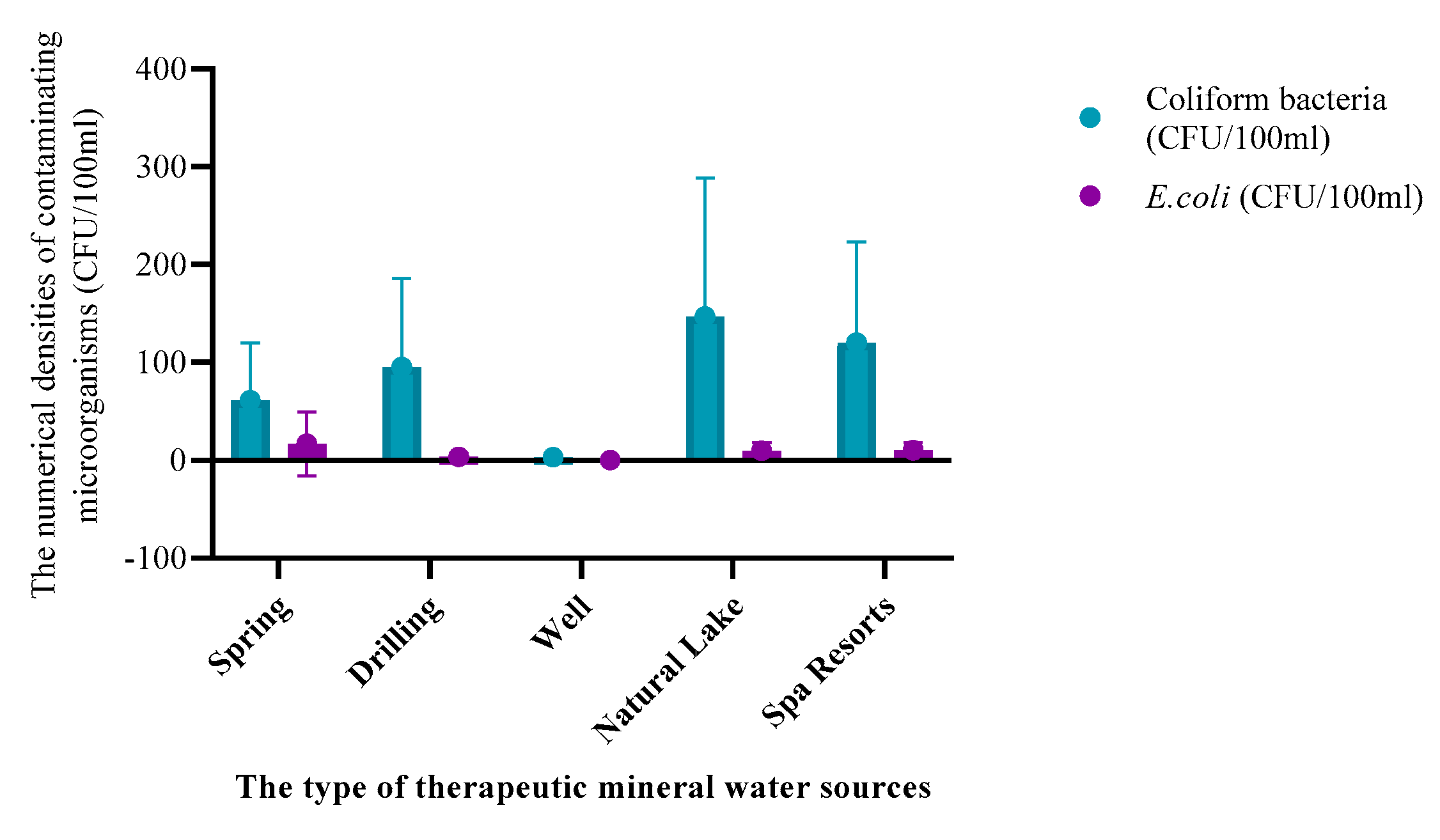
Figure 2.
The distribution of coliform bacteria/E.coli (CFU/100ml) in underground/surface TMWs with different degrees of mineralization: (a) surface TMWs; (b) underground TMWs.
Figure 2.
The distribution of coliform bacteria/E.coli (CFU/100ml) in underground/surface TMWs with different degrees of mineralization: (a) surface TMWs; (b) underground TMWs.
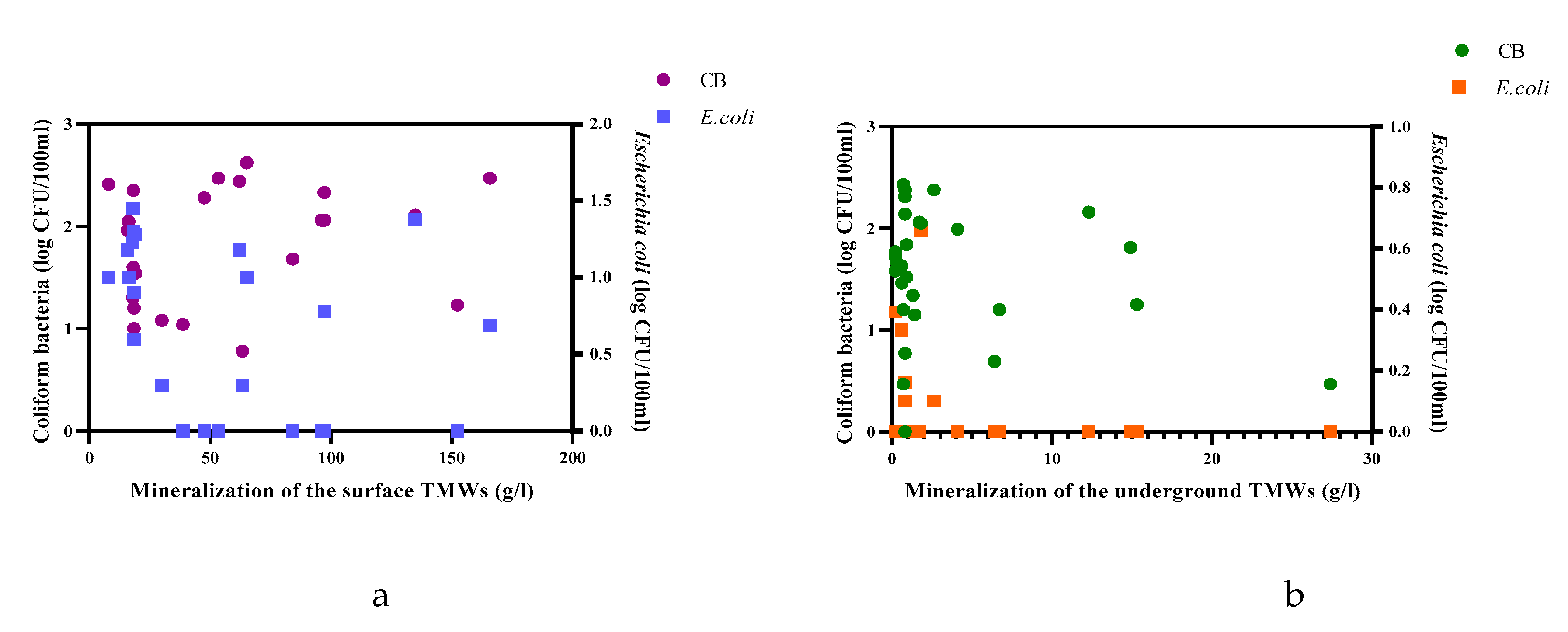
Figure 3.
The behavior of coliform bacteria (variation in numerical densities) according to pH and T°C value of underground TMWs.
Figure 3.
The behavior of coliform bacteria (variation in numerical densities) according to pH and T°C value of underground TMWs.
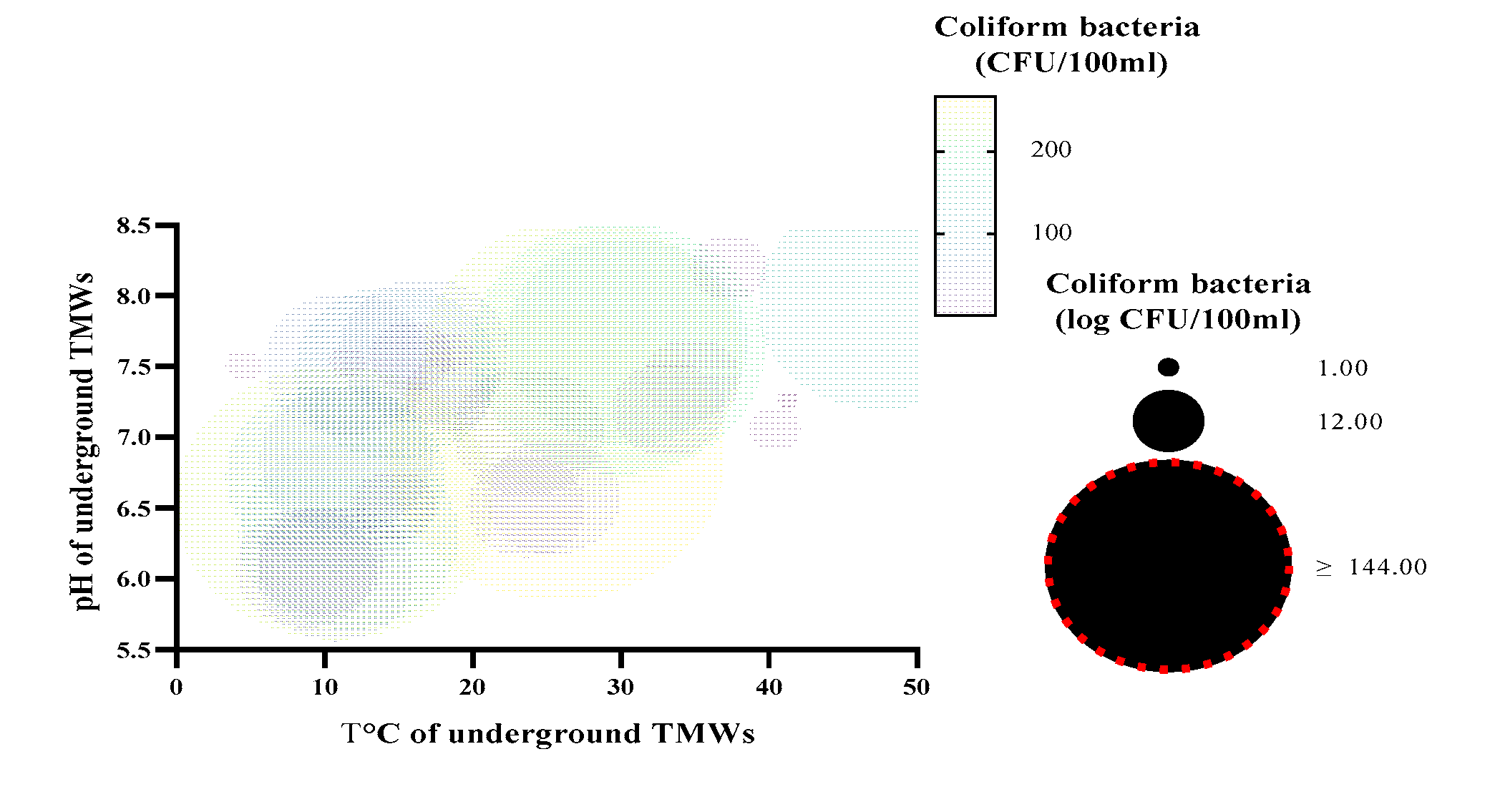
Figure 4.
– The relationship between coliform bacteria(a)/E.coli(b) and physical parameters of the surface TMWs.
Figure 4.
– The relationship between coliform bacteria(a)/E.coli(b) and physical parameters of the surface TMWs.
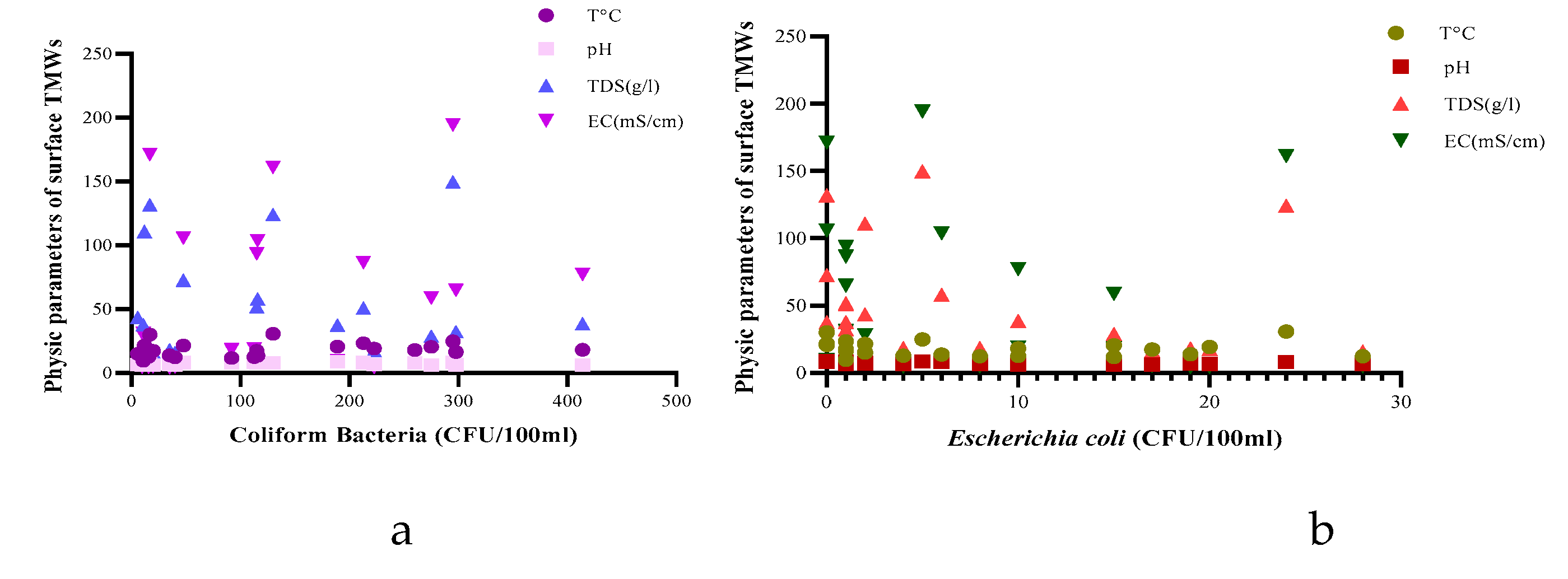
Figure 5.
– The relationship between the H2S(a)/CO2(b ) content of underground TMWs and the level of coliform bacteria/E.coli.
Figure 5.
– The relationship between the H2S(a)/CO2(b ) content of underground TMWs and the level of coliform bacteria/E.coli.
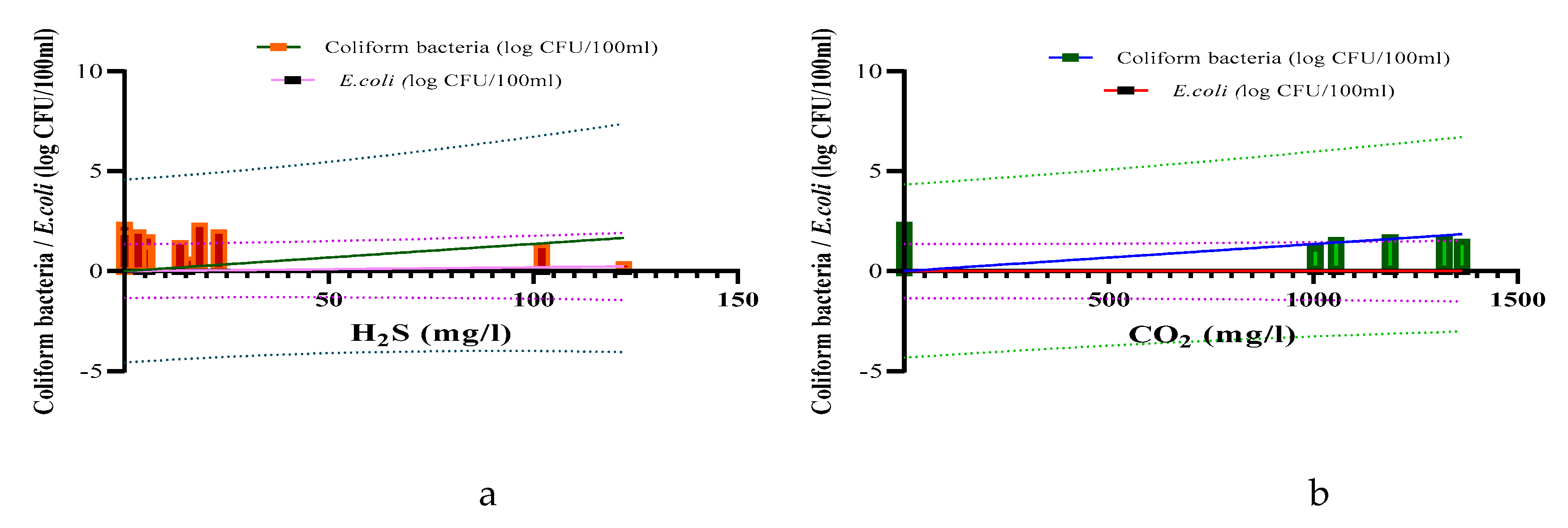
Figure 6.
– The relationship between the content of CO2/Fe2+ and the level of coliform bacteria/E.coli.
Figure 6.
– The relationship between the content of CO2/Fe2+ and the level of coliform bacteria/E.coli.
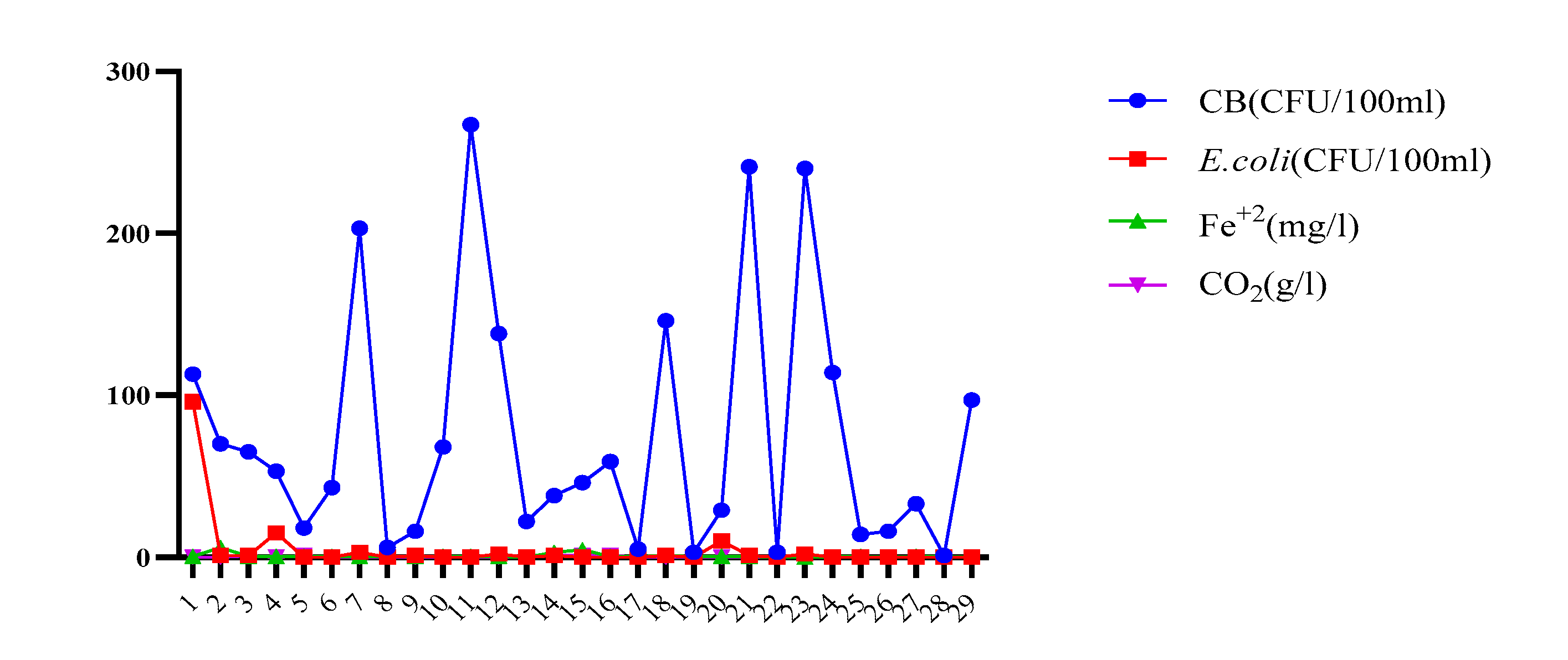
Figure 7.
– The relationship between pH, mineralization and the content of nitrogen compounds in underground TMWs and the level of coliform bacteria/E.coli.
Figure 7.
– The relationship between pH, mineralization and the content of nitrogen compounds in underground TMWs and the level of coliform bacteria/E.coli.
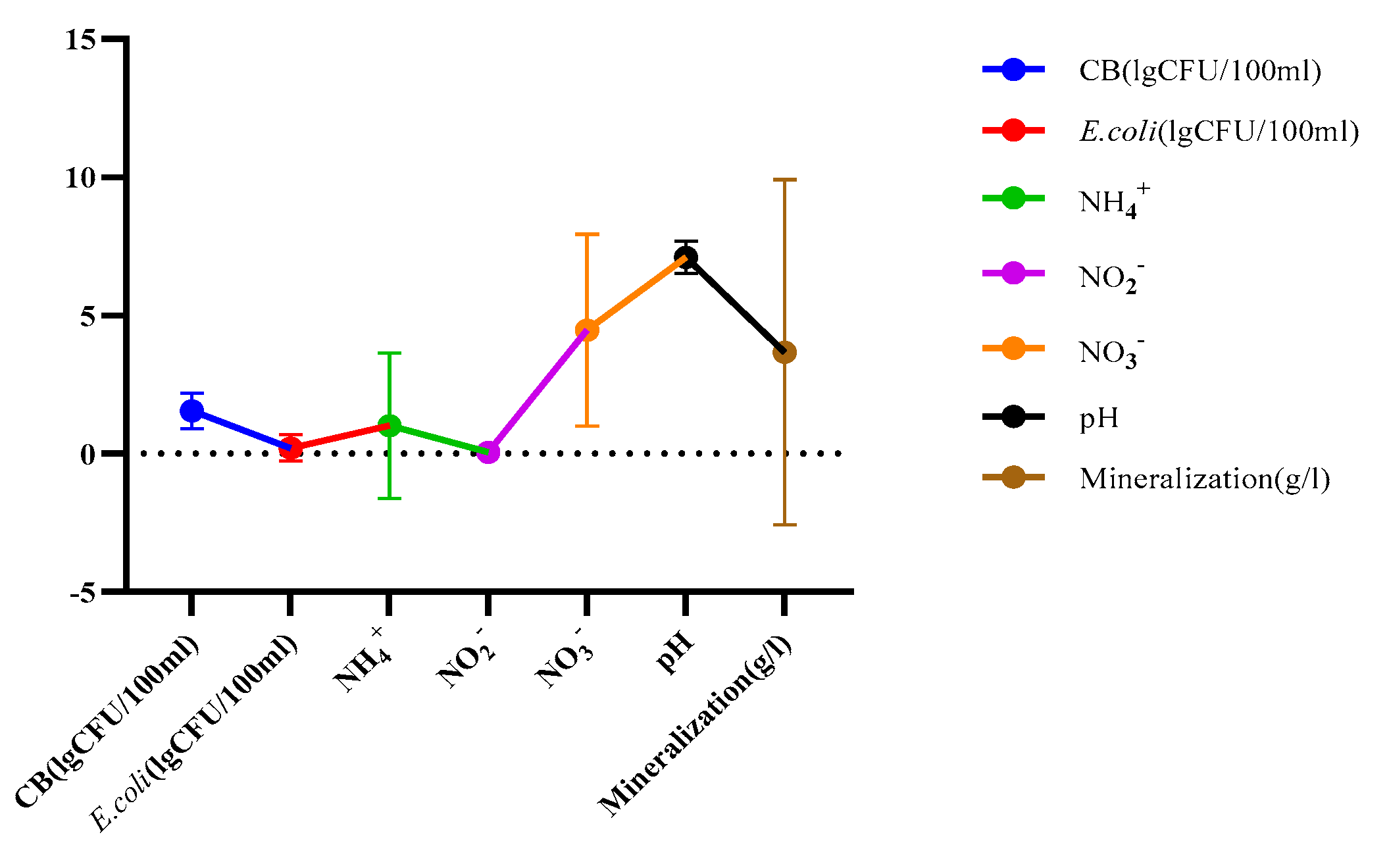
Figure 8.
The effect of the chemical composition of the underground (a)/surface TMWs (b) on the incidence of coliform bacteria (CFU/100ml).
Figure 8.
The effect of the chemical composition of the underground (a)/surface TMWs (b) on the incidence of coliform bacteria (CFU/100ml).
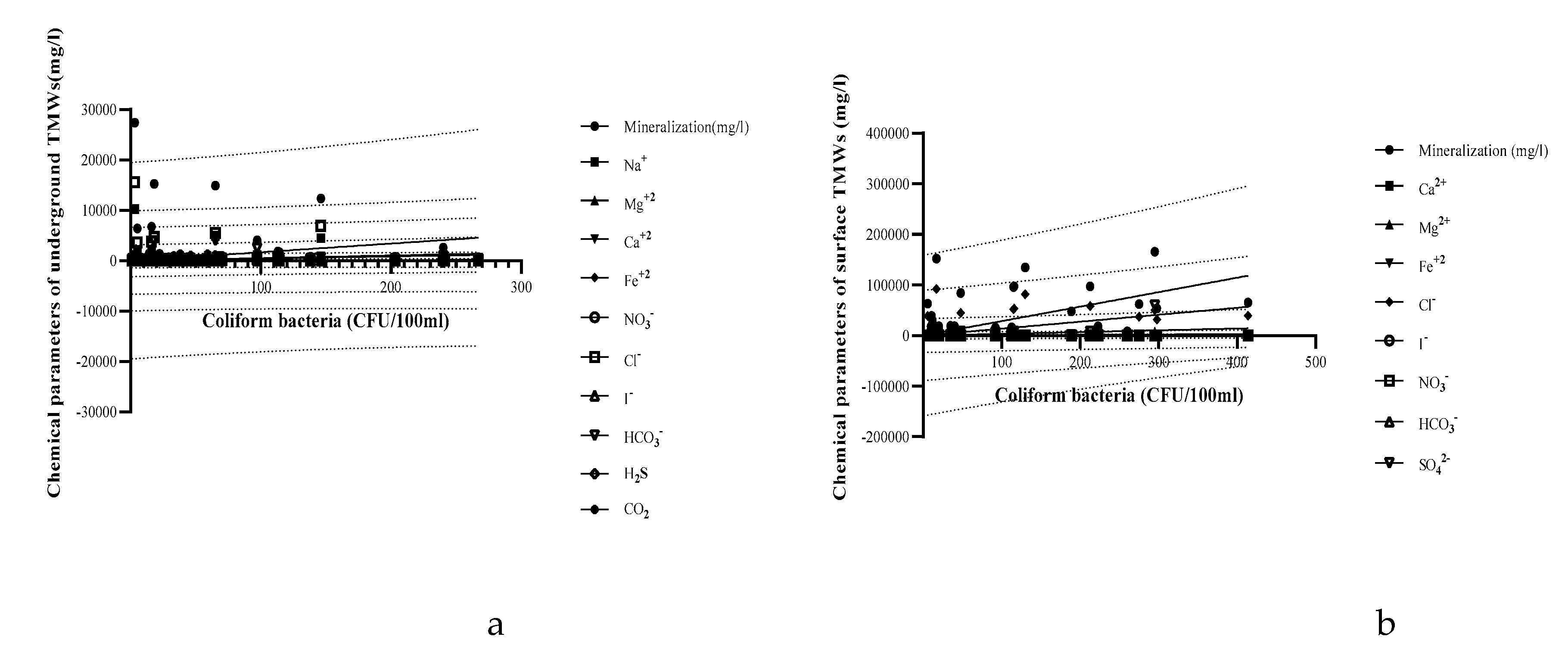
Figure 9.
The effect of the chemical composition of the underground (a)/surface TMWs (b) on the incidence of Escherichia coli (CFU/100ml).
Figure 9.
The effect of the chemical composition of the underground (a)/surface TMWs (b) on the incidence of Escherichia coli (CFU/100ml).
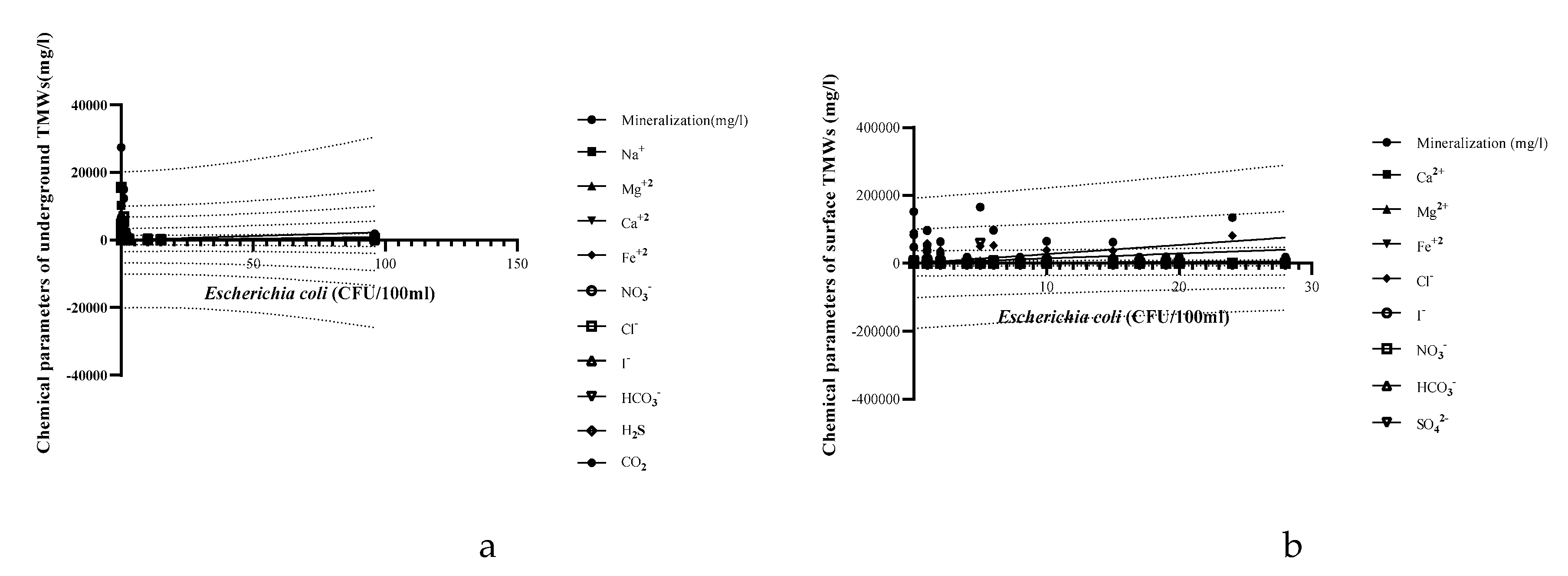
Figure 10.
Pearsonʼs correlation matrix for physicochemical parameters and coliform bacteria/E.coli in underground/surface therapeutic water.
Figure 10.
Pearsonʼs correlation matrix for physicochemical parameters and coliform bacteria/E.coli in underground/surface therapeutic water.
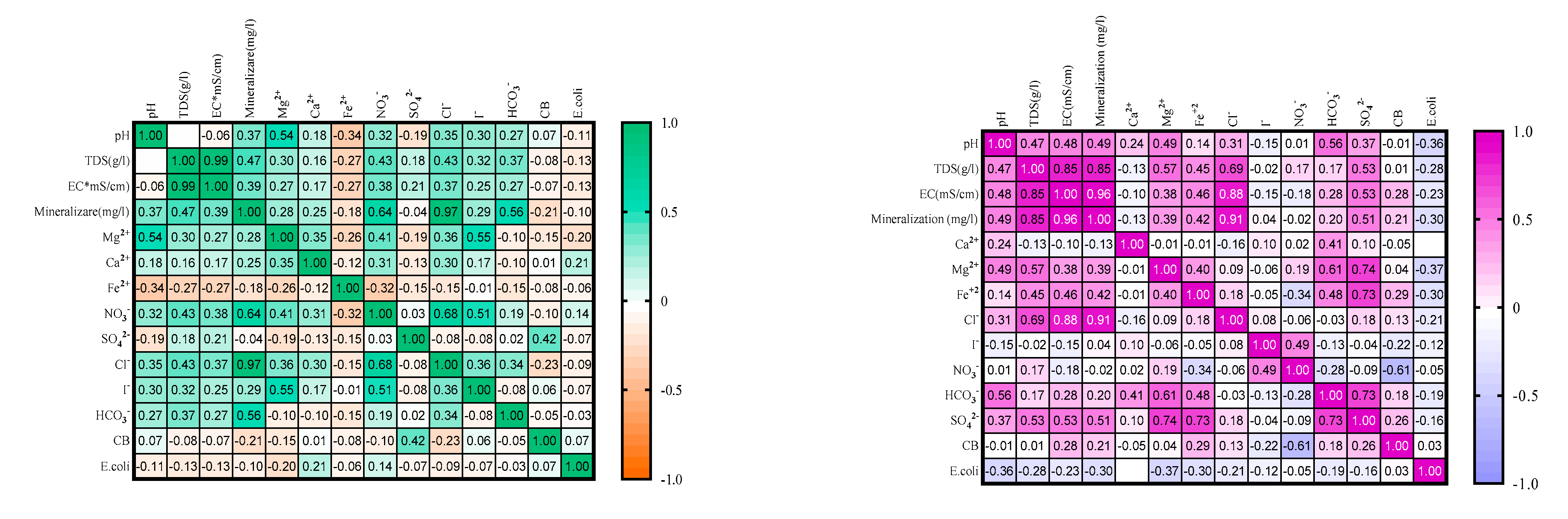

Table 1.
Statistical data of underground and surface therapeutic mineral water (TMWs) samples.
| Parameters | Underground TMWs (spring, well, drilling) N=29 |
Surface TMWs (natural lake, bathing basin) N=23 |
|---|---|---|
| Physical | Min/Max/SD | Min/Max/SD |
| Temperature (°C) pH Total dissolve solids (g/l) Electrical Conductivity (mS/cm) |
4.5/47.6/11.34 6.04/8.2/0.58 |
9.7/30.7/5.53 6.08/8.94/0.95 |
| 0.24/14.94/4.19 | 9.15/149.61/41.01 | |
| 0.19/16.76/2.6 | 4.2/194.3/57.87 | |
| Chemical | ||
| Total Mineralization (g/l) | 0.25/27.44/6.13 | 8.11/165.80/45.91 |
| Cations | ||
| Na+ (g/l) Ca2+(mg/l) Mg2+ (mg/l) Fe+2(mg/l) NH4+(mg/l) |
0.012.7/1.03/2.29 | 1.95/59.32/17.09 |
| 16.1/234.1/53.32 0.5/79.7/33.38 0.05/6.1/1.33 0.06/12.2/2.58 |
32.1/3935.7/770.22 25.3/7898.1/2166.16 0.05/2.1/0.49 Abs* |
|
| Anions | ||
| Cl-(g/l) I-(mg/l) NO2-(mg/l) NO3-(mg/l) HCO3-(mg/l) SO42-(mg/l) |
0.018/15.61/3.27 | 0.027/92.18/25.98 |
| 0.1/6.6/0.46 | 0.1/1.2/0.22 | |
| 0.06/0.1/0.06 | Abs | |
| 0.06/12.5/3.41 48.8/4148.1/991.97 2.4/652.3/167.3 |
2.5/20.1/3.94 146.4/1189.1/268.2 28.4/59800.1/11979.2 |
|
| Gas | ||
| H2S(mg/l) CO2(mg/l) |
Abs/122.1/28.26 Abs/1364.1/452.05 |
Abs Abs |
| Microbiological | ||
| Coliform bacteria (β-galactosidase+) (CFU/100ml) Escherichia coli (β-galactosidase+, indol+) (CFU/100ml) |
1/267/76.73 | 6/414/116.97 |
| Abs/96/17.56 | Abs/28/8.31 |
*abs=absent.
Disclaimer/Publisher’s Note: The statements, opinions and data contained in all publications are solely those of the individual author(s) and contributor(s) and not of MDPI and/or the editor(s). MDPI and/or the editor(s) disclaim responsibility for any injury to people or property resulting from any ideas, methods, instructions or products referred to in the content. |
© 2024 by the authors. Licensee MDPI, Basel, Switzerland. This article is an open access article distributed under the terms and conditions of the Creative Commons Attribution (CC BY) license (http://creativecommons.org/licenses/by/4.0/).
Copyright: This open access article is published under a Creative Commons CC BY 4.0 license, which permit the free download, distribution, and reuse, provided that the author and preprint are cited in any reuse.


