

Submitted:
16 October 2024
Posted:
17 October 2024
You are already at the latest version
Abstract
Material Flow Analysis (MFA) is a key tool in the circular bioeconomy, providing insight into the flow of materials within a system. Its use in the wood-based value chain is increasingly recognized and provides valuable information for policy making. Based on a comprehensive literature review, this article presents recent applications, challenges and research gaps related to MFA methodologies that are crucial for describing the expanding circular wood-based bioeconomy. Different MFA models and their methodologies are described and classified according to their scale and scope. The discourse on future research directions highlights the need to critically examine new material flows associated with bioeconomy development, including hidden by-product streams and end-use wood product recycling, as well as the role of regulators. The results of this study provide advice on data collection methods and the implementation of MFA models, offering valuable information for future research in the sector.
Keywords:
Material Flow Analysis
; forestry sector
; wood products
1. Introduction
The use of Material Flow Analysis (MFA) is critical to understanding and navigating the complexities of different economic sectors. When applied to sectors characterised by multifaceted dynamics, such as the energy and commodities sectors, MFA provides invaluable insights into material flows and stocks, as well as vertical and horizontal linkages between the different components of the value chain Kullmann, Markewitz [1]. MFA is a fundamental tool to analyse the growing bioeconomy, where concepts such as circularity are increasingly emphasised, affecting all the single components of the system that can be based on the use of virgin fibres, by-products from other components of the system or/and recycled materials [2]. MFA can be of particular interest when applied to products, such as biomass, which can be used at different stages of the value chain both for energy production and as input materials for different purposes, ranging from traditional uses (e.g., in the construction and building sector) to innovative economic applications (e.g., biorefinery products such as bioplastics) [3]. This complexity requires a thorough understanding of material flows and stocks, which MFA provides by systematically assessing input and output flows within specified and bounded systems [4].
The emergence of new applications for wood-based raw materials within the bioeconomy makes MFA studies even more important. The rapid growth and development of new bio-based materials and products is adding another layer of complexity to MFA [3,5]. The possible impacts of the forest bioeconomy on the carbon cycle in terms of climate change mitigation and adaptation potential further underlines the relevance of MFA. By using biomass as a renewable energy source to replace fossil fuels and by implementing carbon capture and storage in forests and durable wood products, the forest bioeconomy can have a relevant positive impact on the greenhouse gas balance in the atmosphere [6], as well as a negative impact if, for example, overharvesting and conversion of forest land to other uses are implemented. MFA allows monitoring of these processes, but challenges remain and tend to increase, particularly in terms of data availability and quality related to the new materials and products as well as their interconnections, including possible trade-offs, with traditional ones. Discrepancies in official statistics on wood removals, bioenergy flows and the use of wood by-products (such as chips, black liquor, recycled wood and paper products) highlight the need to improve data collection and accuracy [7].
Considering these challenges and opportunities, this research aims to review existing studies on MFA applied to the forest-based wood sector. By examining the current state of MFA research, this study seeks to assess the potential of MFA as a methodological tool for investigating wood value chains and their impact on climate change mitigation [8].
2. Materials and Methods
The literature review was conducted using a systematic approach to comply with the Preferred Reporting Items for Systematic Review and Meta-Analysis guidelines [9]. This methodology was adopted to reduce potential selection bias and to produce a literature review that is transparent and reproducible, with the overall aim of including all relevant peer-reviewed material [10]. Considered a valid tool in the review process, content analysis of the selected literature was used [11].
2.1. Literature Collection
The search was limited to articles published in English, in peer-reviewed journals and available in full, without geographical restrictions. The bibliographic database Scopus was used to search for available evidence at a first stage. In addition, the Google Scholar search engine was used at a second stage, according to the workflow shown in Figure 1.
The initial search was carried out for papers published from January 2000 to January 2024 and available in the Scopus database. The search string developed for searching via Scopus was: [TITLE-ABS-KEY (wood OR wood-based products OR wood product) AND (material flow analysis OR MFA OR wood value chain)]. The total number of retrieved papers was 375.
In the next stage, the Google Scholar search engine was used, with different keywords selected as shown in Table 1. The search criteria were chosen to be more general than those used to search in Scopus to obtain a more comprehensive literature search. In addition, review articles were excluded from the search. Publish or Perish software [12] was used to extract citations from Google Scholar. By using a search string consisting of the keywords reported in Table 1 a total of 540 papers were identified via Google Scholar.
The combined search via SCOPUS and Google Scholar search engine thus resulted into a total number of 915 papers.
Prior to the screening process, the collected papers were processed via the EPPI reviewer web [13] to identify and remove duplicate articles. In total 272 duplicates were detected, finally resulting into 643 papers to be screened for inclusion/exclusion.
2.2. Article Screening and Eligibility Criteria
Articles were further refined via a two-stage screening process to narrow down the selection based on alignment with the research objectives.
First, an abstracts-based screening allowed selecting articles that specifically refer to MFA or related terms, and their application to wood products (in a broad sense) within the abstract. This step included publications related to wood-based products, paper products, etc. and those that explicitly discussed the modelling approaches used in MFA studies. In addition, review articles were excluded. A total of 86 papers were selected. Abstracts referring to potentially ambiguous subjects, such as product substitution, recycled wood, renewable energy, final consumption and cascading use were also included for further detailed evaluation.
The selected articles were then subjected to a full-text evaluation, which included conference papers and excluded articles not available in full text through academic subscription or authorized dissemination by the authors. This narrowed the selection to 71 papers. To further enrich the review, additional literature was sought by examining relevant references within the selected articles, via a snow-ball approach, thus leading to the inclusion of 15 more articles. These additional articles were also screened according to the previous criteria. In total, 86 articles were initially compiled. Of these, 30 articles did not meet the criteria and were excluded, resulting in a final selection of 56 articles.
Based on full-text reading of the articles, as well as an in parallel assessment of already existing reviews, we identified a set of descriptors to be used as a framework for organizing and discussing the results of our review. The four main descriptors we identified include:
- geographical scale (3.1),
- time scale (3.2),
- methodological approaches used in the construction of the MFA for wood-based products, related to the predominant use of the MFA (3.3),
- MFA data sources (3.4).
3. Results
An overall growing trend in the number of articles published on the topic was observed within the targeted period, showing a steady increase from 2000 to 2015, with some fluctuations in the subsequent years. The number of articles increased significantly in 2015, following moderate activity in 2014. By 2023, a total of 12 new articles were published, indicating a renewed interest or research focus in recent years, following some fluctuations in research interest on wood-based MFA studies between 2015 and 2020. The cumulative number of articles (represented by the orange line in Figure 2) shows a consistent increase since 2014, reflecting sustained and growing scholarly attention to this field. This cumulative growth is particularly notable from 2015 onwards, despite some fluctuations in yearly publications.
3.2. Geographical Scale
MFA for wood-based products is conducted at various scales, ranging from the microscale (e.g., product level) to different degrees of macroscale, i.e. from sub-national to global. (e.g., global, regional, national, sub-national). Table S2 within Supplementary materials provide a list of the papers reviewed for this study, organised from a global down to a product scale.
At the microscale, MFA tracks material flows within specific wood-based products or processes, such as the production and life cycle of a wooden chair [15]. At the microscale, MFA assesses material flows within industries or sectors, such as wood processing or furniture manufacturing. This level of analysis helps identify opportunities for material efficiency, supply chain bottlenecks, and environmental impacts within a specific industry [8,16]. Table S1 in the Supplementary materials provides an overview of the studies focused on the microscale level of analysis.
At the macroscale, MFA analyses the entire flow of wood-based materials at sub-national, national, regional (i.e. across two or more countries within the same region, e.g. Europe) or global levels, covering stages from harvesting and production to consumption, recycling, and disposal [3,17]. This high-level perspective informs policy decisions, sustainable resource management strategies, and the implementation of the cascading use of wood principle [18,19].
The choice of the scale for a wood-based MFA study depends on the specific research questions, the availability of data, and the required level of detail to address the problem at hand [20].
Approximately 67% of the studies analysed in this survey are national-level evaluations. The remaining studies are categorised as follows: product-level evaluations (5.3%), regional-level evaluations (14.3%), sub-national-level evaluations (8.9%) and global-level evaluations (3.5%) (Figure 3).
3.3. Time Scale
Existing literature includes both spot and dynamic approaches to MFA. Spot MFA focuses on evaluating product and material flows within a single period, providing a snapshot of material stocks and flows at a specific point in time (e.g., year) [3]. This approach is useful for assessing the current state of material efficiency and identifying immediate hotspots or inefficiencies. In contrast, dynamic MFA extends the assessment over several years or different points on time, considering the variable lifespan of products and materials. This time dimension allows for a more comprehensive understanding of the evolution and sustainability of material flows, capturing medium and sometimes long-term trends, and allowing some forecasts on potential future scenarios [3].
In addition to the traditional spot and dynamic approach, considering past-oriented (ex-post) and future-oriented (forecasting) perspectives can indeed provide a more comprehensive understanding of material flows as. Here’s how these perspectives contribute to MFA as described by [21]:
- Past-oriented MFA (ex-post assessment): 24 studies were based on past data, emphasizing the importance of ex-post ass assessments in understanding historical material trends and their implications. This perspective focus on analysing historical data to evaluate past material flow and stocks. By examining historical trends, past -oriented MFA offers insight into the evolution of material systems, identifies long-term patterns, and assesses the effectiveness of pervious material management practices. This approach aligns closely with spot MFA, which provides a snapshot at a specific point in time but can also utilize historical data to inform the current assessment.
- Future-oriented MFA (forecasting and scenarios analysis): 8 studies were focused on forecasting future trends, highlighting the value of scenarios-based forecasts for anticipating future material flows and potential sustainability challenges. This approach involves projecting future material flows based on different scenarios and assumptions. Future-oriented MFA is crucial for strategic planning and policymaking, as it helps anticipate potential challenges and opportunities in material management. By simulating various future scenarios, this perspective allows for the exploration of potential developments and supports informed decision-making for long-term sustainability.
- Routine vs ad-hoc: MFA studies can be part of routine assessment, regularly updated, or produced on an ad-hoc basis depending on specific research needs or emerging issues.
- Short-term vs. long-term perspectives: the temporal focus of MFA studies can range from short-term analyses, which are useful for immediate assessment, to long-term evaluation, which capture medium to long-term trends and impacts.
Integration of time perspective: spot MFA provide a detailed snapshot of material flow at a specific point in time, useful for immediate assessments. In contrast, dynamic MFA extends the analysis over multiple periods, capturing temporal changes and trends. Incorporating past-oriented approaches allows for understanding historical context and evaluating past performance, while future-oriented approaches enable forecasting and scenarios analysis for long-term planning.
The two different time perspectives to MFA are given almost the same emphasis within the analysed literature. Indeed, about 45% of the studies use dynamic MFA, highlighting its importance for investigating temporal changes as well as medium and long-term impacts on material systems. The remaining proportion uses spot MFA, underlining its value in providing a detailed assessment of material use, immediate assessment of material uses and efficiency. Some studies integrate both past data and future forecasts, illustrating the practical application of dynamic MFA. This approach not only frames past trends but also provides insights into future developments based on current data and scenarios.
3.4. Methodological Approaches
MFA has evolved into a critical tool for understanding and managing the flow and stock of materials in various systems, defined in both space and time. Initially conceptualized by Baccini and Brunner (2003), MFA builds in the Idea of social metabolism, which extends the biological concept of metabolism to human societies. [22] were among the first to lay the foundation for the MFA with their seminal work, Metabolism of the Anthroposphere. They conceptualized MFA as a systematic method for assessing material flows and stocks within a defined system, focusing on the interaction between human activities and natural systems. This foundational framework was applied in various contexts, such as by [23], who used the MFA described by [22,24] to analyse the timber chain and assess the role of wood in future resource planning, as shown in Table S1 in the Supplementary materials.
Building in this foundation, [24] expanded the scope of MFA to encompass more complex systems and interactions. They emphasized the need for a comprehensive methodology that could account for various material flows across different sectors. This expanded framework was later used by [25], who applied the MFA described by [26] to quantify wood in non-residential building structures in Quebec, Canada, utilizing a top-down approach.
[27] introduced the concept of social metabolism in her work Society’s Metabolism: The Intellectual History of Material Flow Analysis. She framed MFA as a tool to understand the material and energy exchanges between society and the environment, with a particular emphasis on the socio-economic dimensions of these flows. Fisher-Kowalski’s approach was later utilized by [28], who applied this methodology to quantify and model wood flows in Turkey, highlighting the socio-economic impacts on material use and waste generation.
[29] refined the concept of MFA further by introducing the Material Input per Service Unit. This approach focused on quantifying the material inputs required to provide spec services, linking material flows directly to economic activities. [30] applied this framework to assess the circularity of products, demonstrating how MFA can facilitate sustainable resource management and promote circular economy principles.
[3] made significant contributions to the practical application of MFA with their Practical Handbook of Material Flow Analysis. Their work provided detailed guidelines for conducting MFA, emphasizing the importance of transparency and reproducibility in the analysis process. This approach has been widely adopted in various studies, as shown in Table S1 in the Supplementary materials. Denmark to analyse wood flow, circularity, and the cascade use of wood. Similarly, [31] applied this framework in Sweden, integrating MFA with LCA to evaluate the environmental impact of process chains developed or BDO production from wood residues. Other notable applications include [16], who used this methodology in the Orchid City wood-value chain in the Netherland, and [17], who employed it in Portugal. The versatility and applicability of Brunner and Rechberger’s approach are further demonstrated by its use in a variety of geographical contexts. For instance, [32] applied the methodology in Norway, [33] in France, and [34] in Finland, where it was combined with LCA and simulation modelling. [35] used it for a comprehensive MFA in Spain, and [36] applied it in Germany to developed a predictive model for the recovery of timber.
The evolution of MFA has been marked by increasing complexity and refinement in methodologies. Starting with the foundational principles established by Baccini and Brunner, subsequent scholars expanded and enhanced MFA to address more complex systems, integrate practical indicators, and ensure methodological rigor. The contribution of Fisher-Kowalski emphasized the integration of social dimensions, enriching the framework further, this progression, as illustrated by the diverse application in Table S1 in the Supplementary materials, has made MFA an essential tool for understanding and managing material flows in various contexts, from individual sectors to entire economies.
MFA encompasses a range of methodological approaches, each providing unique perspectives and tools for understanding and quantifying material flows within different contexts. These approaches can be broadly categorised into several main groups, each with specific methodologies and applications, as shown in Figure 4. Material Flow Accounting (MFAc) represents a core MFA component regardless the methodological approach adopted; therefore, we provide first an outlook of different ways to deal with it. This includes providing methodological options to Input-Output Analysis (IOA) as this represent a key part of MFAc.
Among the various methodologies with MFAc, IOA stands out as a key approach. IOA provides detailed insights into the economic transactions and material flows between different sectors forming a critical part of MFAc. Dynamic MFA model introduced by [37] serves as a foundational framework for understanding the relationship between material stocks and flows, with a particular focus on forecasting future resource demands and waste generation. This model has been instrumental in analysing how materials accumulate and are utilized over time, especially within the housing and construction sectors.
[37] model emphasizes stock dynamics, allowing for the prediction of material flow based on existing stocks and inflows. By employing extrapolation methods such as linear and logistic models, the framework enables forecasting of future trends in material use and waste generation. For example, as noted in Table S1 in the Supplementary materials, [38] applied this model in Austria to predict resource demand and waste within the sector, highlighting its versatility in different regional context. Additionally, [39] showcase inflow-driven dynamic stock modelling, which further refines this framework by focusing on how material inflows contribute to stock accumulation.
The application scope of Müller’s model, initially cantered on housing in the Netherlands, has been expanded in subsequent studies to encompass a broader range of sectors and geographical contexts. For instance, [40] adopted the model for use in Switzerland, integrating it with LCA to know the environmental impact of wood-based products and resource demand forecasts. Similarly [41] applied the model to Switzerland, further demonstrating its utility across different national settings.
Advances in dynamic MFA have also focused on refining data treatment methodologies, improving the handling of data uncertainty and spatial distribution of material flows. These enhancements have increased the model’s predictive accuracy and broadened its applicability. Furthermore, integration with other models, such as economy-wide material flow analysis, has enabled a more comprehensive understanding of material flows across entire economies, rather than limiting the analysis of specific sector.
3.4.1. Material Flow Accounting
MFAc as a MFA core component is the foundation of the broader field of industrial ecology, building on the concept of social metabolism (Krausmann et al., 2017). It focuses on the systematic accounting of material inputs, outputs and stocks within a defined system. Over time, various approaches have been developed to enhance its accuracy and applicability across different contexts.
For example, [42] applied the MFAc approach alongside LCA at regional level in the European Union to analyse the environmental impact of the wood-based value chain. This integration of MFAc and LCA provided comprehensive understanding of material flows and their environmental consequences, offering valuable insights for sustainable resource management. Similarly, [43] utilised MFAc in North Italy to assess the environmental impacts generated by the three subsystems of the bioenergy value chain—forestry, logistics, and conversion. By implementing a multi-method framework of environmental accounting, this study offered critical insights into material and energy flows within the bioenergy sector. [44] used the standard of Material and Energy Flow Accounting [45] throughout their study for global wood flow analysis from 1990 to 2010. This approach provided a detailed examination of wood flow across different regions and time periods, demonstrating the utility of MEFA in understanding global material flow and their implication for resource management as shown in Table S1 in the Supplementary materials.
These examples demonstrate the versatility and relevance of Material and Energy Flow Accounting, especially when combined with methodologies like LCA, in providing detailed analyses of material flows and their environmental impacts across various sector and regions.
Bottom-up material stock analysis (MSA). Bottom-up Material Stock Analysis (MSA) is characterized by its focus on detailed, granular examination, beginning with end-product and tracing back to the input materials and their associated flows. This methodology focuses on analysing individual stocks and material at a detailed site or project level to estimate total material stocks and flows [46]. Essential data parameters for a bottom-up MSA include detailed information on the composition, quantity and location of materials within a product, building or infrastructure, tracking the different types and quantities of materials used [47]. For instance, as shown in Table S1 in the Supplementary materials, [48] applied a bottom-up modelling approach in France to analyse the wood fuel and supply chain (WFC). Their study defined two segments within the WFC: forest harvesting and processing. This detailed examination allowed for a comprehensive understanding of material flow and efficiency within the wood fuel sector. Additionally, research has utilized this approach to examine material flows in 13 cities in China, providing an in-depth analysis of material use [49]. Similarly, studies in Finland have examined the use of wood in construction projects, providing information on the dynamics of material flows within the construction industry [50]. The granularity of this approach lies not in introducing a new methodology but in the detailed level of data analysis it employs, allowing for precise estimation and a deeper understanding of material efficiency and flows.
Physical accounting. Nicolas Georgescu-Roegen’s work on the entropy law provides the foundation of modern material and energy flow accounts, linking thermodynamics systems and highlighting the importance of tracking matter alongside energy in a Closed thermodynamics system [51]. His concept of maintaining separate account for matter and energy laid the groundwork for national material and energy accounts, which evolved into tools such as National Resource Accounts (NRA), Material and Energy Balances (MEB), and ultimately MFA.
From a broader perspective, MFA can be integrated within Environmental Management Accounting (EMA), which combines both physical and monetary environmental data to support internal decision-making [52]. EMA includes information on the use, flows, and destinies of energy, water, and materials, as well as the financial aspects of environmental cost and savings. In its basic form, MFA operates through a material flow and mass balance assessment, forming the core of physical environmental accounting.
[53] applied the approach in Slovakia studying the wood industry by combining official data and surveys to examine production, consumption, and recycling in 2011. [54] assessed biomass flows in Austria, explicitly quantifying internal flows. [55] used the method for wood-based material in Brazil, while [56] applied it to the European Union. Research has also integrated MFA with LCA to enhance the understanding of resource use and environmental impacts. Studies like that one by [57] focused on the wood industry in 2013, and [58] used the approach in Germany. Furthermore, [59] modelled the land footprint of EU consumption through the physical accounting approach and LCA.
MFA, along with tools like physical input-output tables, helps to link environmental impacts with economic sector and support the greening of national account [60]. This holistic framework enables more informed strategies for resource management, sustainability, and reducing environmental impacts.
Material Flow Cost Accounting. EMA involves the generation, analysis, and use of both financial and non-financial information to optimize corporate and economic performance, thereby contributing to long-term business success [61]. EMA provides tools for estimating environmental impacts in physical and monetary terms, serving as a framework to enhance both accountability and managerial effectiveness within organizations [62]. While EMA primarily aids environmental management, it is also crucial for accounting and finance, as the growing importance of environmental considerations makes it a significant strategic variable for businesses to address [63].
EMA is based on two key premises: first, that environmental issues are increasingly important and will continue to gain significant over time, and second, that management accounting techniques and approaches are valuable tools for improving environmental performance. Within the EMA framework, Material Flow Cost Accounting (MFCA) is a specialized method that quantifies and cost material and energy flows, allocating these costs to responsible products and services, and providing opportunities for organizations to reduce negative impacts and save costs [64]. MFCA, built on the mass-balance approach advocated by the European Commission, is particularly effective for managing complex resource and waste stream [65].
For example, a study by European commission employed MFCA across EU countries, utilizing online survey of 90 companies to track material flows and improve both environmental and financial performance [66]. The concept of MFCA, formalized later in the ISO 14051 standard, originated form environmental management project at the textile company Kunert in Southern Germany during the late 1980s and early 1990s [67]. According to ISO 14051, MFCA is defined as a tool for tracing and quantifying material flows and stocks within an organization in both physical and economic units [68,69]. MCFA is considered as attractive decision-support tool for resource, waste, and environmental management, reflecting a linear relationship were reducing product-related waste leads to decreased input flows [70]. Widely utilized, especially in Japan, MFCA is known by various names, including resource efficiency accounting, flow cost accounting, and material-flow oriented activity-based costing [71].
3.4.2. Input-Output Analysis
IOA is a technique that examines the interdependencies and relationship between different sectors and industries in an economy [72]. It quantifies the flows of materials, energy and waste between different processes or economic sectors [73]. This allows a detailed accounting of material inputs, processing and outputs within a defined system boundary [72]. The input-output framework is used to track how materials move through a production or consumption system, from extraction to final disposal or recycling [73]. IOA is a powerful tool for examining the interdependencies between different sectors of an economy through the lens of material flows. It provides a structured framework for understanding how materials move between industries and are transformed into products and services. Two main different approaches to IOA can be adopted: Economy-Wide Material Flow Analysis (EW-MFA) and Environmentally Extended Input-Output Analysis (EE-IOA). They are shortly presented below.
Input-Output Tables serve as fundamental data sources for various MFAc methodologies offering detailed information on material inputs and outputs across different sectors. These tables enable analysis of economic transactions and material flows within an economy, forming the basis of IOA and EE-IOA.
An example of this is the use of Input-Output Tables illustrate the flow of goods and services between producers and consumers, showing how industries interact with final consumers through sales and purchases. In some studies in Germany [74,75], physical input and output tables were used to map material flows across sectors and end-use categories. The focus was on wood-based products, particularly in construction and waste management, as shown in Table S1 in the Supplementary materials.
Economy-Wide Material Flow Analysis (EW-MFA). This approach applies the principles of IOA on a macro scale, normally a single country, providing a comprehensive view of material flows across entire economies [76]. The key differentiator of EW-MFA is its focus on capturing material flows across whole economies, rather than specific sectors or smaller areas. The primary purpose of EW-MFA is to describe the physical interaction of the national economy with the natural environment and the rest of the world economy in term of material flows. It achieves this by capturing the mass balances with an economy, where total inputs (resource extraction plus imports) must equal total outputs (domestic consumption, export, accumulation, and waste) [77].
EW-MFA is a statistical accounting framework that systematically records material flows into and out of an economy. This approach allows for the compilation of data that tracks the movement of material from natural resources into the economy, through processes of extraction, trade, consumption, and disposal, providing a detailed and comprehensive picture of material use and resource efficiency [76].
For instance, as illustrated in Table S1 in the Supplementary materials, [78] carried out an investigation of wood flow patterns in the EU-27 using EW-MFA in conjunction with official databases for the period 2002-2011. This study exemplifies the use of EW-MFA to clarify the dynamics of material flows within specific geographical areas, thus facilitating informed decision-making processes for sustainable resource management and policy formulation. Similarly, [79] utilized the EW-MFA methodology to analyse material flows in Slovakia and Czech Republic, providing insight into reginal material use and resource management. [80] applied the EW-MFA framework in Switzerland, examining the country’s material efficiency and circularity. [81] used EW-MFA to study material flows in Germany, highlighting the importance of MFA in understanding national resource use and waste generation.
EM-MFA has evolved through several stages of standardization. It became the first standardized analysis in the Eurostat methodological guide following pilot studies such as those by [82]. Further standardization was achieved through the Eurostat compilation guide [83] and within the OECD work programme on material flows (2004-2008). The standardization process culminated in the OECD guide to material flow and resource productivity [4]. The aim of EW-MFA is to quantify the physical exchange between a national economy, the environment, and foreign economies based on the total material mass flowing across the boundaries of the national economy, with the goal of achieving a material balance [84]. As evidenced by the examples in Table S1 in the Supplementary materials, the standardized framework of EW-MFA is instrumental in providing consistent and comparable data across different studies and regions, enhancing its utility for global and regional material flow analysis.
Environmentally Extended Input-Output Analysis (EE-IOA). Building on the traditional IOA framework, EE-IOA incorporates environmental impacts such as energy use and emissions into the analysis of material flows [85]. The use of input-output tables in this approach provides a deeper understanding of the exchange of goods and services between different sectors and final consumers, while incorporating environmental aspects such as material flows, energy consumption and pollutant emissions [86]. By integrating economic and environmental data through EE-IOA, researchers and policy makers can effectively assess the environmental impacts of economic activities and consumption patterns [85]. EE-IOA can also be considered a type of EW-MFA if the analysis is conducted at a macro-economic level, capturing the overall material flows within an economy.
They distinguished activities into foreground and background systems, following the principles LCA. This study demonstrates the use of EE-IOA in examining the environmental impacts of specific industries and provides valuable information for the development of sustainable policies and decision-making.
3.4.3. Model-Based approaches
While IOA provides a static snapshot of economic and environmental interactions, model-based approaches provide dynamic simulations that can predict future scenarios and assess policy impacts. Originally introduced by Wassily Leontief in 1936, IOA illustrated interdependencies between industries, where the output of one sector becomes the input for another. This framework relied on detailed input-output table, which quantifies the inputs (energy, raw materials, labour, capitals, …) used by the industries and the output distributed to other sectors. IOA’s mathematical structure, built on matrix algebra, enables economists to analyse these interactions and assess the impact of changes in demand or production on different parts of the economy.
Recent studies have applied IOA to specific national contexts using the foundational principles introduced by Leontief. For instance, [87] used Leontief’s IOA model to estimate input-out multiplier for Norway, linking the gross output of economic sector to the technical coefficient matrix and the final demands for sectoral output. The methodology draws on the detailed explanation provided by [88] regarding the mechanics of the IO model. Similarly, [89] applied the IOA approach to Japan, constructing a matrix with 32 sectors of production activity and 48 sectors covering products, waste, and resource. These studies demonstrate the flexibility of IOA in assessing resource flows and sectoral interactions across different national economies, and their findings are summarised in Table S1 in the Supplementary materials.
While IOA provides valuable insights into the static relationship within an economy, it can be significantly enhanced through the incorporation of dynamic, model-based approaches. Techniques such as agent-based modelling and system dynamics enables the simulation of material flows over time, capturing the evolving interactions and feedback loops within complex system. These dynamic simulations allow for the prediction of future scenarios and the assessment of policy impacts on global or sectoral material flows. Rather than being seen as alternatives, IOA and model-based approaches are complementary. Together, they provide a more comprehensive analysis of material consumption and resource use, facilitating a deeper un both static and dynamic aspects of economic and environmental systems.
Generalised Forest Product Model (GFPMX). Tailored specifically to the forest-based industries, GFPMX models material flows within this critical sector. It helps to understand supply chain dynamics and the impact of different policies on forest product markets. The GFPMX model is a global forest products model designed to forecast the consumption, production, import, export and price of various forest products such as fuelwood, industrial roundwood, sawnwood and others for each country and year [90]. In the GFPMX model developed by [90], which is based on the spider web theorem, it is assumed that markets take time to adjust to shocks. The article explains the structure of the model, the derivation of parameters from international statistics, and assesses the impact of the COVID-19 recession on the global forest sector.
French Forest Sector Model. The French Forest Sector Model (FFSM) is a recursive bio-economic model designed to analyse the interaction between the economic and biological dynamics of the French forest sector. The model was developed by [91,92] based on two key modules: an inventory-based forest dynamic module (FD) and a partial equilibrium market module (MK). The FD module tracks the stock and growth of forest resources, while the MK modules model the economic behaviour in the forest sector, focusing on the supply and demand for raw wood and processed products. At each annual steps, the MK modules calculate the market equilibrium, determining the harvest for that year. This back-and-forth between the economic and biological modules ensures that the model captures both the economic drivers and biological realities of the forest sector.
The FFSM has proven useful in evaluating the impact of various climate policies, such as those promoting energy wood consumption or incentivizing carbon sequestration. In the study by [8] the base year for the model is set to 2009, with simulation running through 2020, ensuring consistency with the MFA framework used for evaluating wood flows in the French forest sector. By modelling both the biological and economic aspects of the sector, FFSM provides a comprehensive tool for assessing the sustainability of resource management and the long-term viability of the forest sector under different policy scenarios. As illustrated in Table S1 in the Supplementary materials, bio-economic model like FFSM have been applied in various regions to support decision-making, emphasizing the importance of integrated approaches for sustainable forest management and policy development.
Similarly [93] utilized the methodology of [8] and applied the cascade approach to wood flow analysis introduced by [56] to evaluate primary wood processing, further demonstrating the value of integrated bio-economic models in supporting decision-making and policy development for sustainable forest management. As illustrated in Table S1 in the Supplementary materials, models like the FFSM and those incorporating cascading approaches are applied in various regions to enhance decision-making and promote sustainable forest management.
3.4.4. Agent-Based approaches
To capture the complexity and dynamics of material flows, agent-based and system dynamic approaches are used. These methods provide dynamic insights by simulating interactions and feedback loops within complex systems.
Material flow and agent analysis. Material flow analysis, as defined by [94], is a quantitative technique used to monitor the movement and accumulation of materials within a given system, such as a geographical area, an industry or a product life cycle. This approach considers material flows in terms of agents (e.g. industries, sectors) and their interactions. It allows detailed analysis of specific components within a system, such as the behaviour of individual firms or the impact of regulatory changes. It provides a comprehensive view of resource use and waste production within the system under study. Agent analysis, also known as Structural Agent Analysis as explained by [95], is a complementary MFA approach that examines the influence of different actors or 'agents' in shaping material flows. It assesses how the actions, decisions and interactions of different agents (e.g. producers, consumers, policy makers) affect the patterns of material consumption and handling within the system. For example as illustrated in Table S1 in the Supplementary materials, [94] applied this methodology in Switzerland for analysing the wood-based value chain, demonstrating how MFA can offer insights into sector-specific resource management. Similarly [96] conducted a study across Slovakia, Italy, and Austria from 2008-2014, using MFA along with SWOT analysis to evaluate the environmental impacts of the wood value chain and assess internal strength and weakness alongside external opportunities and threats.
Combining MFA and SWOT analysis, as exemplified by [96], offers a holistic perspective by integrating environmental and organisational factors, thus providing a robust framework for evaluating both material flows and strategic factors impacting sustainability.
Another related framework that complements the dynamic MFA model is the Stock and Flow adaptation model discussed in the context of climate change adaptation strategies. Originally introduced by Faist, Emmenegger, and Frischkneckt [97], this model distinguishes between two types of adaptation: stock adaptation and flow adaptation. Stock adaptation refers to long-term, capital-intensive investments aimed at reducing the long-term impact of climate change, such as the development of resilient infrastructure. Flow adaptation, on the other hand, involves short-term, flexible measures that can be adjusted as needed, often requiring less upfront investment but offering temporary solutions. The balance between these two adaptations strategies is crucial for effective climate policy. For example, [98] applied this approach in Switzerland to the entire wood supply chain. Emphasizing the importance of strategic investment in both stock and flow adaptations to ensure long-term sustainability and resilience (as illustrated in Table S1 in the Supplementary materials).
Additionally, the Material Input Stock and Output framework, used by [99], employs an inflow-oriented modelling approach to monitor material flows and stock across the economy from 1990 to 2019 in four specific countries. This model was integrated with the circular economy monitoring framework proposed by [100] to assess the circularity performance of the national socio-economic system.
These models, including system dynamics and stock and flow adaptation, collectively enhance our ability to understand and manage material flows and resources, both in response to environmental challenges and in anticipation of future demands. By integrating such models with broader environmental and economic frameworks, a more comprehensive analysis of material consumption and resource use can be achieved, contributing to more effective sustainability and climate mitigation strategies.
3.4.5. Other Approaches
In addition to the methods described above, there are several other approaches that provide complementary tools and data sources for conducting MFA.
STREAM (Spatial and Temporal Resource Assessment). Emphasises the spatial and temporal dimension of material flows, often used for regional or local assessments. This approach helps to understand the geographical distribution and temporal changes of material flows. The methodology known as STREAM has proven to be a valuable tool for conducting MFA on wood-based products. STREAM provides a structured approach to systematically track and quantify material flows and stocks within a specific system, such as the value chain of wood-based products [101]. When applied to wood-based products, STREAM involves the delineation of different stages in the product life cycle, including harvesting of raw wood materials, manufacturing, distribution, use and end-of-life management [8,20,102]. This comprehensive methodology provides an in-depth understanding of material flows and stock changes related to wood-based products [15].
The critical component of the STREAM methodology is the use of Physical Supply and Use Tables (PSUT). These tables are an extension of the monetary supply and use tables utilized in national accounting and are a key resource for analysing wood-related production, trade, and consumption at the product and industry levels within an economy, as shown in the Danish context. The PSUT, which are part of the Environmental-Economic Accounts or Green National Accounts, provide data for 2016 and 2018, capturing the magnitude (in tonnes) and nature of material and commodities flowing within the economy and between the economy and nature [103]. These tables overs the entire economy, detailing imports, domestic production across 117 industry groups, and around 1800 physical products and exports. Input from natural resource extraction and flows of residuals to the environment, such as emission and solid waste, are also included.
The PSUT are especially relevant for analysing wood flows because they are coded to correspond with the European goods classification system, the Combined Nomenclature (CN). This allows for direct correspondence to products in Chapter 44 (Wood and Articles of Wood; Wood Charcoal) and Chapter 94 (Miscellaneous Manufactured Articles, including Furniture and prefabricated buildings). The PSUT’s structure includes a wood product sub-grouping, primarily consisting of products from these chapter, making it an invaluable tool for understanding material flows within the wood-based product industry.
For example, as detailed in Table S1 in the Supplementary materials, studies have applied the STREAM method.
To the wood and paper industry in the Netherlands, using PSUT to provide an integral view of material flow in the economy [104,105]. Similarly, another study examined Danish wood flows n 2018, utilizing the PSUT to monitor the circulation of wood resources in the bioeconomy and asses circular and cascading use [106]. These studies demonstrate how STREAM, supported by the detailed data in PSUT, effectively captures material flows and provides insights into the sustainability of resource use, particularly within the wood-based product industry.
3.5. Data Sources
An examination of the data sources used in MFA research on wood-based products reveals considerable diversity. Major statistical databases such as COMTRADE, FAOSTAT, EUROSTAT and others are identified as the primary source of data in MFA research, with 53.4% of studies using these repositories. Scientific publications provide valuable information in 20% of the studies, demonstrating the rigorous methodological standards inherent in academic discussions (Figure 5). Grey literature, which includes reports, working paper, government documents, white papers, conference proceedings and more enhances the diversity of data used in MFA research, with 8.3% of studies relying on this type of information. A further 18.3% of studies use a variety of data collection methods, such as surveys and expert judgements.
4. Discussion
The growing interest in the MFA of wood and wood-based products over time can be attributed to the recognition of wood as a key renewable resource for a sustainable bioeconomy [107]. Within the existing literature, there is a strong emphasis on national-level assessment using MFA, a dimension that has attracted considerable attention from academics. Researchers from Austria and Germany have emerged as prolific contributors to MFA applications in the wood value chain. It is evident that the MFA framework is well suited for material recovery and flow assessment purposes. Fundamental to product-level MFA is the availability of comprehensive and reliable data sources, which are essential to accurately represent material flows and facilitate sustainability assessments. A critical facet prevalent in wood-based MFA studies relates to the underlying methodological frameworks, which often rely on assumptions in key areas. However, the applicability of such assumptions to real-world scenarios remains questionable, particularly in cases where different end products are mistakenly assigned identical conversion factors.
Due to the variety of methodological approaches described in section 3.4, which sometimes produce inconsistent results, there is a need for standardised approaches to wood flow analysis [108]. This interest is particularly notable in the construction sector, where wood products are increasingly being used, requiring a method to quantify material use and assess its impacts [25].
Despite the widespread use of different MFA methodologies, a significant proportion of the literature highlights challenges related to data quality. Most of the studies reported data quality issues for end-use products, waste streams, fuelwood data, secondary processing products, intersectoral flows and wood recycling (Table S1 in the supplementary materials). A notable challenge in MFA studies related to official data collection is the mis-estimation of certain categories, in particular the use of wood biomass for energy (Table S1 in the Supplementary materials), where problems often arise from missing or underestimated data related to own or local informal consumption or mis-estimation (wood biomass from urban forest or/and agricultural activities considered as forest biomass). An illustrative example can be found in Europe (e.g. Italy, Sweden and Germany), where official databases consistently underestimate fuelwood volumes, as can be seen from official statistics reporting repeated values over many successive years, indicating a widespread problem of overlooking data quality in MFA analyses shown in Figure S1 of the Supplementary materials.
Many studies have reported difficulties in obtaining accurate data on the end use of wood-based products, which is critical for understanding the full life cycle and fate of materials. Accurate tracking of waste streams is essential for assessing the efficiency of material use and the potential for recycling and reuse, but inconsistencies and gaps in waste data often undermine the robustness of MFA. In addition, the secondary processing of wood products such as plywood and particleboard involves complex flows that are often poorly documented, leading to gaps in the MFA. Understanding how materials move between different sectors of the economy is crucial for a comprehensive MFA, but such flows are often poorly recorded. In addition, accurate data on the recycling of wood materials is needed to assess sustainability and resource efficiency, but many studies have highlighted the challenges of accurately tracking recycled wood flows. Some studies have identified a significant problem with the neglect of the waste stream due to data availability constraints and limitations of the models used. This problem is due to the fact that certain models rely on monetary values as a primary input, whereas the waste stream itself has no tangible monetary value. Therefore, the above factors represent only a part of the common constraints that require thorough investigation and effective mitigation strategies.
The conventional view of the bioenergy sector is severely lacking in relevant information, especially for novel products such as pellets, Sustainable Aviation Fuel and other recycled products whose origins remain undisclosed. A comprehensive understanding of the bioeconomy sector is hampered by the lack of data on the recycling of final wood products and other segments such as biotextiles, bioplastics and various products derived from innovative chemical processes, together with their associated conversion factors.
Taken together, these data quality issues represent significant barriers to achieving accurate and reliable MFA results.
As pointed out by [109], the top-down approach often introduces data uncertainty at the MFA level. It is imperative to develop a detailed composition of different waste items at the material level to capture the benefits and potential improvements at the process level (especially at recycling facilities).
Further research is needed to identify the final sinks, to trace the flow of waste products to these sinks and to analyse the actors involved in these processes. At the national level, many surveys are currently including all final products. The scope is currently limited to traditional wood-based products (paper, wood packaging, building material, furniture), leaving out green chemistry and wood-plastic composites.
Many studies are currently limited in scope and require the development of a detailed model that captures all flows, including hidden ones, while integrating each sector with economic indicators such as employment figures, turnover rates and GDP metrics. Due to the data-intensive nature of MFA, the study of the cycle of different sectors up to the recycling stage, based on aspects such as sales, stocks and lifetimes, can be facilitated by using historical sales data from developed countries with a time series framework. However, numerous studies reviewed in the literature have highlighted the need to establish a standardisation process for data sets at both product and material level obtained from recycling facilities through material characterisation. In addition to the downstream data requirements in MFA studies, sales and import data are emerging as key parameters for MFA, especially in the context of national level estimations using various supplementary methods such as the time step method, distribution lag and simple lag. It is imperative that policy makers address this issue and focus on the establishment of a national product inventory database that is regularly updated on an annual basis. The integration of concepts such as the Internet of Things and big data seem extremely promising for the development of such a database.
In summary, a major limitation of wood-based MFA is the scarcity of data and the considerable uncertainty associated with the available data, which are typical hurdles in MFA [8]. Another challenge is the complexity of adjusting to fluctuations in the global market, which can affect the wood processing sector [8]. In addition, limitations such as cut-off thresholds, data non-disclosure and high levels of data aggregation in official production statistics can also limit analysis [81]. These limitations impede a comprehensive understanding of wood flows and have implications for several areas, including trade balances, forest management, economic policies and climate change strategies [106].
5. Conclusions
The predominant focus of material flow accounting (MFA) models has been on national level assessments, with Austria and Germany leading the way in research publications. However, there is a noticeable lack of assessment of products at a detailed level, highlighting the need for comprehensive data and analysis to effectively address waste management issues and minimise environmental impacts. Methodologies are often based on assumptions rather than empirical evidence, leading to inaccuracies, particularly in estimating fuelwood use. There is also a lack of recognition of stock in use from previous years, inconsistencies in units of analysis, and an urgent need for more comprehensive and integrated methodologies.
By synthesising the distribution of data sources, this analysis offers important perspectives on the methodological diversity underlying MFA research, providing guidance for future research efforts and methodological improvement. Incorporating economic indicators into MFA studies could encourage cooperation among supply chain participants and accelerate the development of recycling. Future research efforts should address these shortcomings by adopting a holistic approach that integrates MFA with LCA and covers all aspects of sustainability. Life Cycle Sustainability Assessment, which combines LCA with social and economic impact assessments, is a promising method for assessing environmental, social and economic impacts throughout the life cycle. This transformation will require a shift towards circular economy principles, emphasising mass conservation and integrating emerging sectors of the bioeconomy, such as wood-plastic composites and green chemical products. In addition, the integration of standardised datasets and product repositories at the national level, facilitated by technologies such as the Internet of Things and big data, will be crucial for accurate and thorough assessments.
Ultimately, advancing MFA in the forest sector requires a fundamental shift towards circularity, encompassing a wider range of products and considering the complex interplay of economic, technical and socio-political factors. Integrated and forward-looking methodologies are essential to effectively address the complex challenges of sustainable resource management and to contribute to the transition towards a more resilient and environmentally sound forest sector. Recommendations for future research and policy action include revisiting the Statistical classification of economic activities in the European Community (NACE) and the Standard International Trade Classification (SITC) classifications to better capture nuanced data and integrating social elements into MFA analyses to provide a more holistic understanding of resource use and its impacts.
Supplementary Materials
The following supporting information can be downloaded at the website of this paper posted on Preprints.org.
Author Contributions
Conceptualization, D.P.; methodology, M.T.K., D.P., M.M.; formal analysis, M.T.K.; writing, review and editing, M.T.K., D.P., M.M. All authors have read and agreed to the published version of the manuscript.
Funding
This study was funded by the European Union - NextGenerationEU, Mission 4, Component 2, in the framework of the GRINS - Growing Resilient, INclusive and Sustainable project (GRINS PE00000018 Spoke 6). The views and opinions expressed are solely those of the authors and do not necessarily reflect those of the European Union, nor can the European Union be held responsible for them.
Conflicts of Interest
The authors declare no conflicts of interest.
References
- Kullmann, F., et al., Combining the worlds of energy systems and material flow analysis: a review. Energy, Sustainability and Society, 2021. 11(1): p. 13. [CrossRef]
- Balanay, R.M., R.P. Varela, and A.B. Halog, Circular economy for the sustainability of the wood-based industry: the case of Caraga Region, Philippines. Circular economy and sustainability, 2022: p. 447-462.
- Brunner, P.H. and H. Rechberger, Handbook of material flow analysis: For environmental, resource, and waste engineers. 2016: CRC press.
- OECD, O., Measuring material flows and resource productivity. 2008, Organization for Economic Co-Operation and Development.
- Palahi, M. and J. Adams. Why the world needs a'circular bioeconomy'–for jobs, biodiversity and prosperity. in World Economic Forum. 2020. World Economic Forum Cologny, Switzerland.
- McCormick, K. and N. Kautto, The bioeconomy in Europe: An overview. Sustainability, 2013. 5(6): p. 2589-2608. [CrossRef]
- Silva, M.T.P. and D.O. Meza, Lessons for the forest-based bioeconomy from non-timber forest products in Mexico, in The bioeconomy and non-timber forest products. 2022, Routledge. p. 92-108.
- Lenglet, J., J.-Y. Courtonne, and S. Caurla, Material flow analysis of the forest-wood supply chain: A consequential approach for log export policies in France. Journal of Cleaner Production, 2017. 165: p. 1296-1305. [CrossRef]
- Page, M.J., et al., The PRISMA 2020 statement: an updated guideline for reporting systematic reviews. Bmj, 2021. 372. [CrossRef]
- Petticrew, M. and H. Roberts, Systematic reviews in the social sciences: A practical guide. 2008: John Wiley & Sons.
- Mayring, P., Qualitative content analysis: theoretical foundation, basic procedures and software solution. 2014.
- Harzing, A.-W., The publish or perish book. 2010: Tarma Software Research Pty Limited Melbourne, Australia.
- Tsou, A.Y., et al., Machine learning for screening prioritization in systematic reviews: comparative performance of Abstrackr and EPPI-Reviewer. Systematic reviews, 2020. 9: p. 1-14. [CrossRef]
- Islam, M.T. and N. Huda, Reverse logistics and closed-loop supply chain of Waste Electrical and Electronic Equipment (WEEE)/E-waste: A comprehensive literature review. Resources, Conservation and Recycling, 2018. 137: p. 48-75.
- Parobek, J. and H. Paluš, Wood-Based Waste Management—Important Resources for Construction of the Built Environment, in Creating a Roadmap Towards Circularity in the Built Environment. 2023, Springer Nature Switzerland Cham. p. 213-223.
- Cammack, C., Material Flow Analysis of Wood in a Self-Sufficient Community. 2023.
- Gonçalves, M., F. Freire, and R. Garcia, Material flow analysis of forest biomass in Portugal to support a circular bioeconomy. Resources, Conservation and Recycling, 2021. 169: p. 105507. [CrossRef]
- Hendriks, C., et al., Material flow analysis: a tool to support environmental policy decision making. Case-studies on the city of Vienna and the Swiss lowlands. Local Environment, 2000. 5(3): p. 311-328. [CrossRef]
- Allesch, A. and P.H. Brunner, Material flow analysis as a decision support tool for waste management: A literature review. Journal of Industrial Ecology, 2015. 19(5): p. 753-764. [CrossRef]
- Streeck, J., et al., A review of methods to trace material flows into final products in dynamic material flow analysis: From industry shipments in physical units to monetary input–output tables, Part 1. Journal of Industrial Ecology, 2023. 27(2): p. 436-456. [CrossRef]
- Burritt, R.L., T. Hahn, and S. Schaltegger, Towards a comprehensive framework for environmental management accounting—Links between business actors and environmental management accounting tools. Australian Accounting Review, 2002. 12(27): p. 39-50. [CrossRef]
- Baccini, P. and P.H. Brunner, Metabolism of the anthroposphere: analysis, evaluation, design. 2023: mit Press.
- Müller, D.B., H.P. Bader, and P. Baccini, Long-term coordination of timber production and consumption using a dynamic material and energy flow analysis. Journal of Industrial Ecology, 2004. 8(3): p. 65-88. [CrossRef]
- Baccini, P. and H.-P. Bader, Regionaler stoffhaushalt: erfassung, bewertung und steuerung. 1996: Spektrum Akademischer Verlag Heidelberg.
- Cordier, S., et al. Enhancing consistency in consequential life cycle inventory through material flow analysis. in IOP Conference Series: Earth and Environmental Science. 2019. IOP Publishing. [CrossRef]
- Sandberg, N.H. and H. Brattebø, Analysis of energy and carbon flows in the future Norwegian dwelling stock. Building Research & Information, 2012. 40(2): p. 123-139. [CrossRef]
- Fischer-Kowalski, M. and H. Haberl, Sustainable development: socio-economic metabolism and colonization of nature. International Social Science Journal, 1998. 50(158): p. 573-587. [CrossRef]
- Eker, M.; and Acar, H.H Actual Wood Flow Analysis for State-Forestry in Turkey. In Proceedings of the 2nd International Symposium of Forest Engineering and Technologies, Tirana, Albania, 04-06 September 2019; pp. 92.
- Bringezu, S., Material Flow Analysis—unveiling the physical basis of economies, in Unveiling Wealth: On Money, Quality of Life and Sustainability. 2002, Springer. p. 109-134.
- Mancini, L., L. Benini, and S. Sala, Resource footprint of Europe: Complementarity of material flow analysis and life cycle assessment for policy support. Environmental Science & Policy, 2015. 54: p. 367-376. [CrossRef]
- Ebrahimian, F. and A. Mohammadi, Assessing the environmental footprints and material flow of 2, 3-butanediol production in a wood-based biorefinery. Bioresource Technology, 2023. 387: p. 129642. [CrossRef]
- Las Heras Hernández, M., System Analysis of a Multi-Plant Sawmill Company. Application to inform logistics. 2021, NTNU.
- Layton, R.J., et al., Material flow analysis to evaluate supply chain evolution and management: An example focused on maritime pine in the landes de gascogne forest, France. Sustainability, 2021. 13(8): p. 4378. [CrossRef]
- Hurmekoski, E., et al., Does expanding wood use in construction and textile markets contribute to climate change mitigation? Renewable and Sustainable Energy Reviews, 2023. 174: p. 113152.
- Sevigné-Itoiz, E., et al., Methodology of supporting decision-making of waste management with material flow analysis (MFA) and consequential life cycle assessment (CLCA): case study of waste paper recycling. Journal of Cleaner Production, 2015. 105: p. 253-262. [CrossRef]
- Szichta, P., et al., Potentials for wood cascading: A model for the prediction of the recovery of timber in Germany. Resources, Conservation and Recycling, 2022. 178: p. 106101. [CrossRef]
- Müller, D.B., Stock dynamics for forecasting material flows—Case study for housing in The Netherlands. Ecological economics, 2006. 59(1): p. 142-156. [CrossRef]
- Kalcher, J., G. Praxmarer, and A. Teischinger, Quantification of future availabilities of recovered wood from Austrian residential buildings. Resources, Conservation and Recycling, 2017. 123: p. 143-152. [CrossRef]
- Aryapratama, R. and S. Pauliuk, Estimating in-use wood-based materials carbon stocks in Indonesia: Towards a contribution to the national climate mitigation effort. Resources, Conservation and Recycling, 2019. 149: p. 301-311. [CrossRef]
- Suter, F., B. Steubing, and S. Hellweg, Life cycle impacts and benefits of wood along the value chain: the case of Switzerland. Journal of Industrial Ecology, 2017. 21(4): p. 874-886. [CrossRef]
- Mehr, J., et al., Environmentally optimal wood use in Switzerland—Investigating the relevance of material cascades. Resources, Conservation and Recycling, 2018. 131: p. 181-191. [CrossRef]
- Bais-Moleman, A.L., et al., Assessing wood use efficiency and greenhouse gas emissions of wood product cascading in the European Union. Journal of cleaner production, 2018. 172: p. 3942-3954. [CrossRef]
- Nikodinoska, N., et al., Wood-based bioenergy value chain in mountain urban districts: An integrated environmental accounting framework. Applied Energy, 2017. 186: p. 197-210. [CrossRef]
- Bais, A.L.S., et al., Global patterns and trends of wood harvest and use between 1990 and 2010. Ecological Economics, 2015. 119: p. 326-337. [CrossRef]
- Fischer-Kowalski, M., et al., Methodology and indicators of economy-wide material flow accounting: State of the art and reliability across sources. Journal of Industrial Ecology, 2011. 15(6): p. 855-876.
- Bide, T., et al., A bottom-up building stock quantification methodology for construction minerals using Earth Observation. The case of Hanoi. Cleaner Environmental Systems, 2023. 8: p. 100109. [CrossRef]
- Mohammadiziazi, R. and M.M. Bilec, Building material stock analysis is critical for effective circular economy strategies: a comprehensive review. Environmental Research: Infrastructure and Sustainability, 2022. 2(3): p. 032001. [CrossRef]
- Bilot, N., et al., Management-related energy, nutrient and worktime efficiencies of the wood fuel production and supply chain: modelling and assessment. Annals of Forest Science, 2023. 80(1): p. 15. [CrossRef]
- Wang, X., et al., An urban material flow analysis framework and measurement method from the perspective of urban metabolism. Journal of cleaner production, 2020. 257: p. 120564. [CrossRef]
- Nasiri, B., C. Piccardo, and M. Hughes, Estimating the material stock in wooden residential houses in Finland. Waste management, 2021. 135: p. 318-326. [CrossRef]
- Seifert, H., New results about ternary lanthanide chlorides. Thermochimica acta, 1993. 214(1): p. 41-46. [CrossRef]
- Development, U.N.D.f.S., et al., Environmental management accounting procedures and principles. 2001: UN.
- Parobek, J., et al., Analysis of wood flows in Slovakia. BioResources, 2014. 9(4): p. 6453-6462. [CrossRef]
- Kalt, G., Biomass streams in Austria: Drawing a complete picture of biogenic material flows within the national economy. Resources, Conservation and Recycling, 2015. 95: p. 100-111. [CrossRef]
- Silva, E.J.d., G. Schmidt, and U. Mantau, Wood resource balance for plantation forests in brazil: Resources, consumption and cascading use. Cerne, 2020. 26: p. 247-255. [CrossRef]
- Mantau, U., Wood flow analysis: Quantification of resource potentials, cascades and carbon effects. Biomass and bioenergy, 2015. 79: p. 28-38. [CrossRef]
- Parobek, J. and H. Paluš, Material flows in primary wood processing in Slovakia. Acta logistica, 2016. 3(2): p. 1-5. [CrossRef]
- Iost, S., et al., Setting up a bioeconomy monitoring: Resource base and sustainability. 2020.
- De Laurentiis, V., A. Galli, and S. Sala, Modelling the land footprint of EU consumption. Publications Office of the European Union, Luxembourg, 2022.
- Stahmer, C., M. Kuhn, and N. Braun, Physical Input-Output Tables for Germany, 1990, German Federal Statistical Office, prepared for DG XI and Eurostat. 1998.
- Bennett, M. and P. James, The Green Bottom Line: current practice and future trends in environmental management accounting. Sheffield: Greenleaf Publishing, 1998.
- Papaspyropoulos, K.G., et al., Challenges in implementing environmental management accounting tools: the case of a nonprofit forestry organization. Journal of Cleaner Production, 2012. 29: p. 132-143. [CrossRef]
- Kennerley, M. and A. Neely, A framework of the factors affecting the evolution of performance measurement systems. International journal of operations & production management, 2002. 22(11): p. 1222-1245. [CrossRef]
- Papaspyropoulos, K.G., et al., Enhancing sustainability in forestry using material flow cost accounting. Open Journal of Forestry, 2016. 6(5): p. 324-336. [CrossRef]
- Kokubu, K. and H. Tachikawa, Material flow cost accounting: significance and practical approach∗. Handbook of sustainable engineering, 2013: p. 351-369.
- ANDREADOU, M.V., Material Flow Cost Accounting as a method for finding Bioeconomy opportunities in the Forest Industry.
- Wagner, B., A report on the origins of Material Flow Cost Accounting (MFCA) research activities. Journal of Cleaner Production, 2015. 108: p. 1255-1261. [CrossRef]
- Jasch, C.M., Environmental and material flow cost accounting: principles and procedures. Vol. 25. 2008: Springer Science & Business Media.
- Kovanicová, D., Material flow cost accounting in Czech environment. European Financial and Accounting Journal, 2011. 6(1): p. 7-18. [CrossRef]
- Herzig, C., et al., Environmental management accounting: case studies of South-East Asian companies. 2012: Routledge.
- Schaltegger, S. and D. Zvezdov, Expanding material flow cost accounting. Framework, review and potentials. Journal of Cleaner Production, 2015. 108: p. 1333-1341. [CrossRef]
- Nakamura, S. and K. Nakajima, Waste input–output material flow analysis of metals in the Japanese economy. Materials transactions, 2005. 46(12): p. 2550-2553. [CrossRef]
- Bailey, R., Ecological input-output analysis of material flows in industrial systems, in Handbook of Input-Output Economics in Industrial Ecology. 2009, Springer. p. 715-733.
- Bösch, M., et al., Physical input-output accounting of the wood and paper flow in Germany. Resources, Conservation and Recycling, 2015. 94: p. 99-109. [CrossRef]
- Bösch, M., et al., Costs and carbon sequestration potential of alternative forest management measures in Germany. Forest policy and Economics, 2017. 78: p. 88-97. [CrossRef]
- Krausmann, F., et al., Economy-wide material flow accounting introduction and guide. Institute of Social Ecology: Vienna, Austria, 2015.
- Krausmann, F., et al., From resource extraction to outflows of wastes and emissions: The socioeconomic metabolism of the global economy, 1900–2015. Global environmental change, 2018. 52: p. 131-140. [CrossRef]
- O'Brien, M. and S. Bringezu, European timber consumption: developing a method to account for timber flows and the EU's global forest footprint. Ecological economics, 2018. 147: p. 322-332.
- Kanianska, R., et al., Use of material flow accounting for assessment of energy savings: A case of biomass in Slovakia and the Czech Republic. Energy Policy, 2011. 39(5): p. 2824-2832. [CrossRef]
- Wiedmann, N.S., A. Athanassiadis, and C.R. Binder, Streamlining the regionalization of economy-wide material flow accounts (EW-MFA): The case of swiss cantons. Cleaner and Responsible Consumption, 2023. 10: p. 100127. [CrossRef]
- Schweinle, J., et al., Monitoring sustainability effects of the bioeconomy: a material flow based approach using the example of softwood lumber and its core product Epal 1 Pallet. Sustainability, 2020. 12(6): p. 2444. [CrossRef]
- Matthews, A., Productivity growth in Irish agriculture. 2000.
- Weisz, H., et al., Economy-wide material flow accounting. A compilation guide. Eurostat and the European Commission, 2007.
- Schandl, H., et al., Handbook of Physical Accounting: Measuring Bio-Physical Dimensions of Socio-economic Activities; MFA, EFA, HANPP. 2002: Federal Ministry of Agriculture and Forestry, Environment and Water ….
- Kitzes, J., An introduction to environmentally-extended input-output analysis. Resources, 2013. 2(4): p. 489-503. [CrossRef]
- Giljum, S., Environmentally extended input–output analysis (EE-IOA), in Dictionary of Ecological Economics. 2023, Edward Elgar Publishing. p. 204-205.
- Johansen, U., A. Werner, and V. Nørstebø, Optimizing the wood value chain in northern Norway taking into account national and regional economic trade-offs. Forests, 2017. 8(5): p. 172. [CrossRef]
- Miller, R.E. and P.D. Blair, Input-output analysis: foundations and extensions. 2009: Cambridge university press.
- Fujino, M. and M. Hashimoto, Economic and Environmental Analysis of Woody Biomass Power Generation Using Forest Residues and Demolition Debris in Japan without Assuming Carbon Neutrality. Forests, 2023. 14(1): p. 148. [CrossRef]
- Buongiorno, J., GFPMX: A Cobweb Model of the Global Forest Sector, with an Application to the Impact of the COVID-19 Pandemic. Sustainability, 2021. 13(10): p. 5507. [CrossRef]
- Caurla, S. and P. Delacote, FFSM: a French forest-wood sector model which takes forestry issues into account in the fight against climate change. INRA Sciences sociales, 2013. 2013.
- Lecocq, F., et al., Paying for forest carbon or stimulating fuelwood demand? Insights from the French Forest Sector Model. Journal of Forest Economics, 2011. 17(2): p. 157-168. [CrossRef]
- Babuka, R., A. Sujová, and V. Kupčák, Cascade use of wood in the Czech Republic. Forests, 2020. 11(6): p. 681. [CrossRef]
- Binder, C.R., et al., Transition towards improved regional wood flows by integrating material flux analysis and agent analysis: The case of Appenzell Ausserrhoden, Switzerland. Ecological Economics, 2004. 49(1): p. 1-17.
- Binder, C.R., From material flow analysis to material flow management Part II: the role of structural agent analysis. Journal of Cleaner Production, 2007. 15(17): p. 1605-1617. [CrossRef]
- Ilc, S., ASSESSMENT OF THE DEVELOPMENT POTENTIAL OF FOREST-WOOD PROCESSING CHAIN. 2016, Univerza v Novi Gorici, Fakulteta za podiplomski študij.
- Emmenegger, M.F., et al., Métabolisme des activités économiques du Canton de Genève–Phase 1. Repéré sur le site de la République et canton de Genève, section Thèmes, Environnement, Ecologie industrielle: http://www. ge. ch/themes/themes_environnement. asp, 2003.
- Suomalainen, E., Dynamic Modelling of Material Flows and Sustainable Resource Use: Case Studies in Regional Metabolism and Space Life Support Systems. 2012, Université de Lausanne, Faculté des géosciences et de l'environnement.
- Zhu, W., et al., Tracking the post-1990 sociometabolic transitions in Eastern Europe with dynamic economy-wide material flow analysis. Resources, Conservation and Recycling, 2023. 199: p. 107280. [CrossRef]
- Mayer, A., et al., Measuring progress towards a circular economy: a monitoring framework for economy-wide material loop closing in the EU28. Journal of industrial ecology, 2019. 23(1): p. 62-76. [CrossRef]
- Streeck, J., et al., A review of methods to trace material flows into final products in dynamic material flow analysis: Comparative application of six methods to the United States and EXIOBASE3 regions, Part 2. Journal of Industrial Ecology, 2023. 27(2): p. 457-475. [CrossRef]
- Marques, A., et al., Contribution towards a comprehensive methodology for wood-based biomass material flow analysis in a circular economy setting. Forests, 2020. 11(1): p. 106. [CrossRef]
- Pedersen, O.G. and N.N. Deveci, Construction of physical supply-use and input-output tables for Denmark. Statistics Denmark, Eurostat grant agreement, 2014. 50904: p. 004-2012.432.
- Joosten, L., et al., STREAMS: a new method for analysing material flows through society. Resources, Conservation and Recycling, 1999. 27(3): p. 249-266. [CrossRef]
- Hekkert, M.P., L.A. Joosten, and E. Worrell, Analysis of the paper and wood flow in the Netherlands. Resources, Conservation and Recycling, 2000. 30(1): p. 29-48. [CrossRef]
- Brownell, H., B.E. Iliev, and N.S. Bentsen, How much wood do we use and how do we use it? Estimating Danish wood flows, circularity, and cascading using national material flow accounts. Journal of Cleaner Production, 2023. 423: p. 138720. [CrossRef]
- Goldhahn, C., E. Cabane, and M. Chanana, Sustainability in wood materials science: An opinion about current material development techniques and the end of lifetime perspectives. Philosophical Transactions of the Royal Society A, 2021. 379(2206): p. 20200339. [CrossRef]
- Wang, R. and P. Haller, Dynamic material flow analysis of wood in Germany from 1991 to 2020. Resources, Conservation and Recycling, 2024. 201: p. 107339. [CrossRef]
- Van Eygen, E., et al., Resource savings by urban mining: The case of desktop and laptop computers in Belgium. Resources, conservation and recycling, 2016. 107: p. 53-64.
Figure 1.
Literature review workflow.
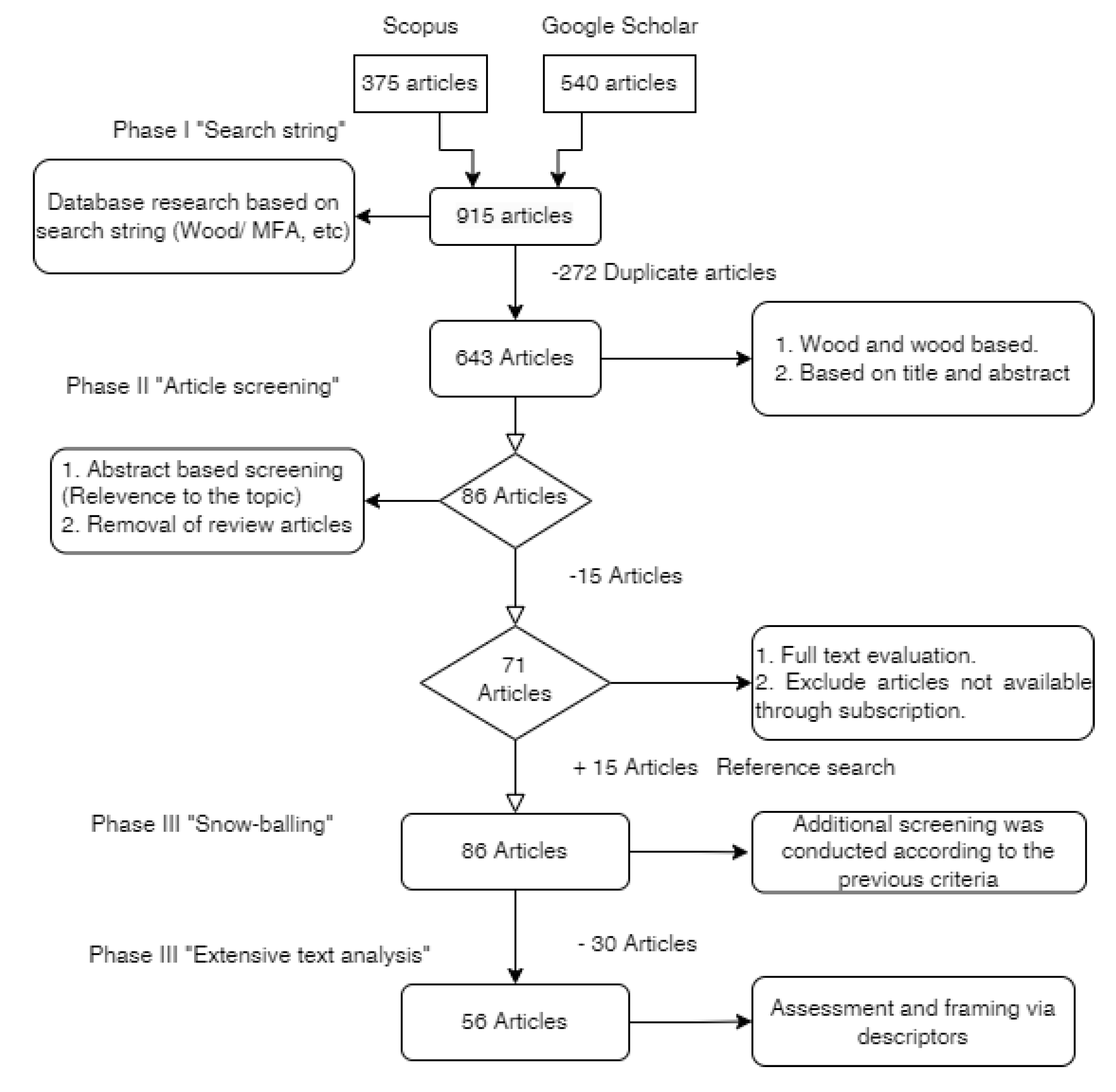
Figure 2.
Number of articles published on yearly basis (bars) and as a total (line) between 2000 and 2023 (data for 2023 is incomplete and thefore not included in the figure).
Figure 2.
Number of articles published on yearly basis (bars) and as a total (line) between 2000 and 2023 (data for 2023 is incomplete and thefore not included in the figure).
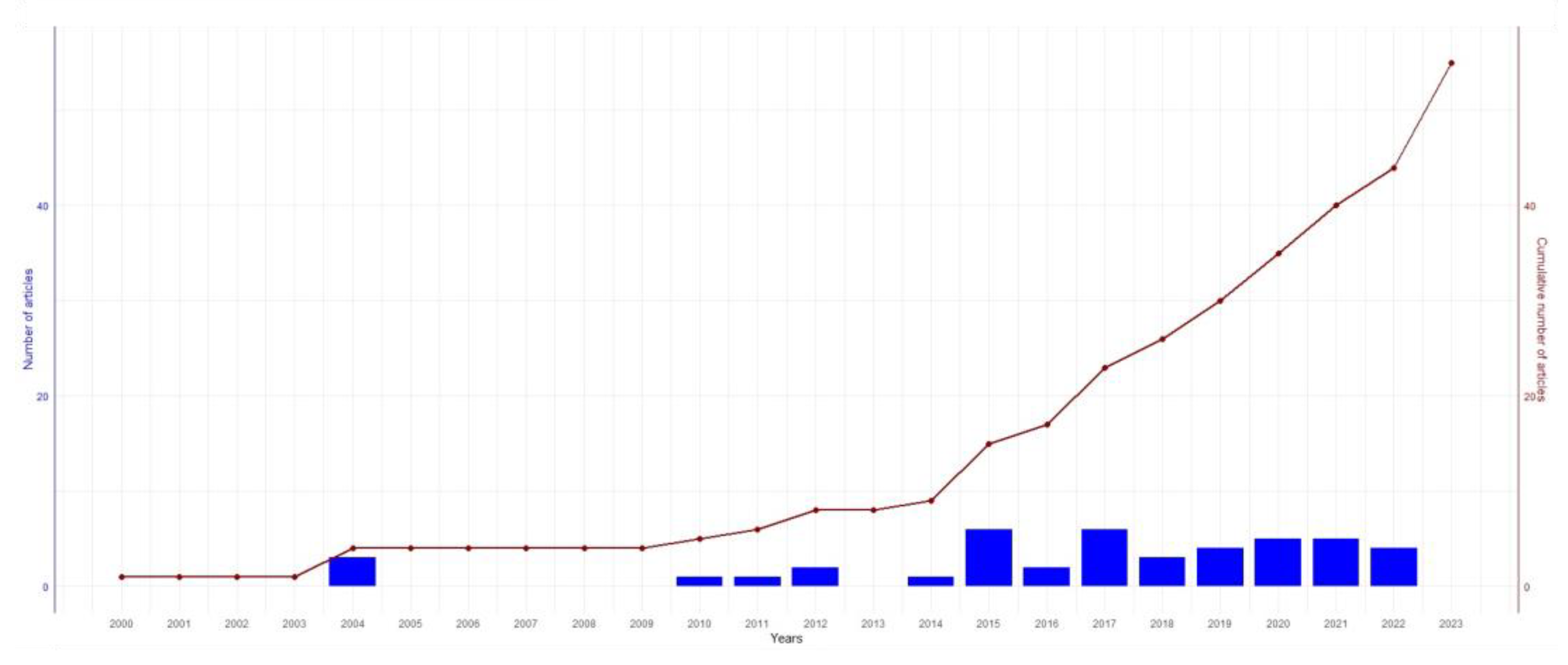
Figure 3.
Reviewed MFA studies according to their geographical scale.
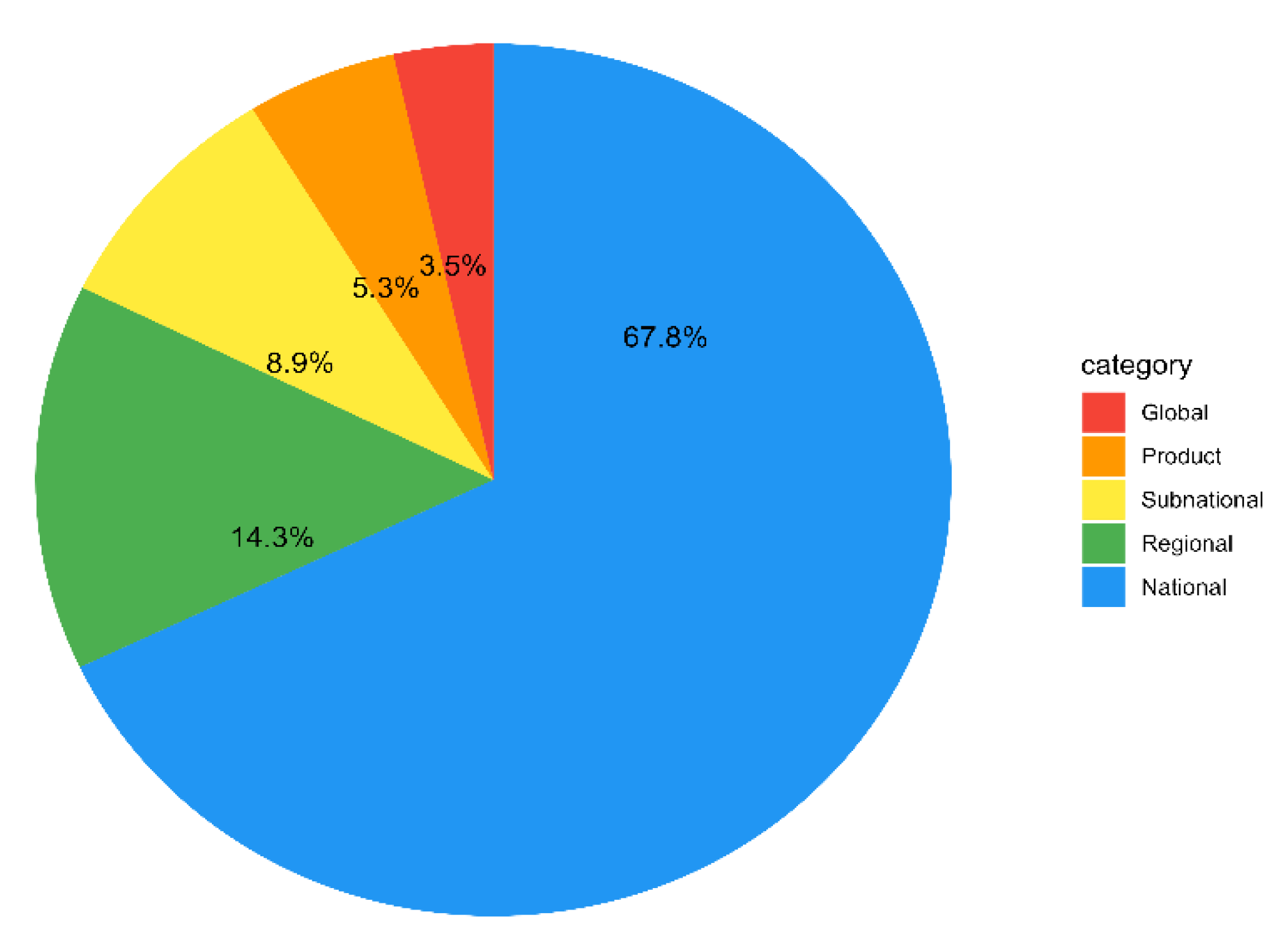
Figure 4.
Categorization of methodological approaches used for MFA.
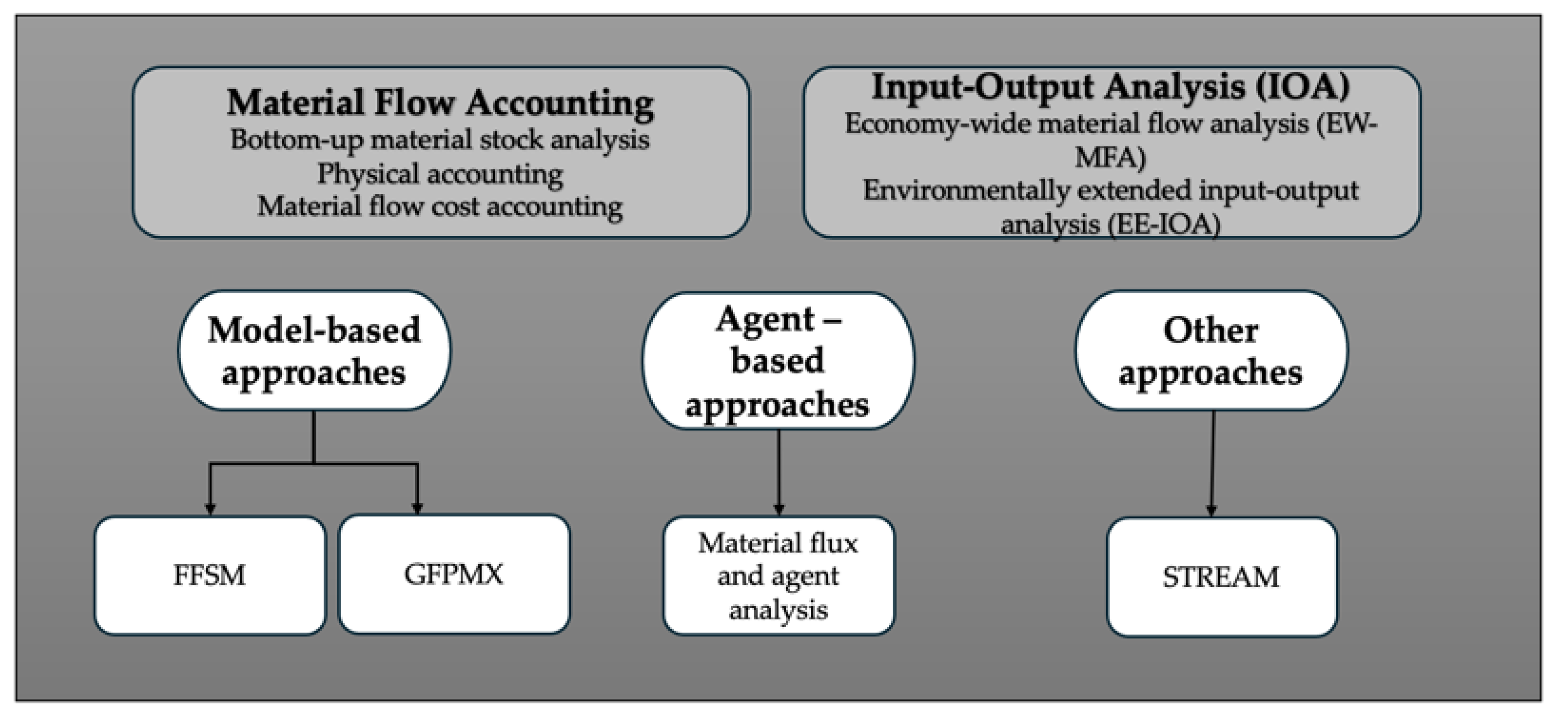
Figure 5.
Different data sources used in wood-based MFA studies.
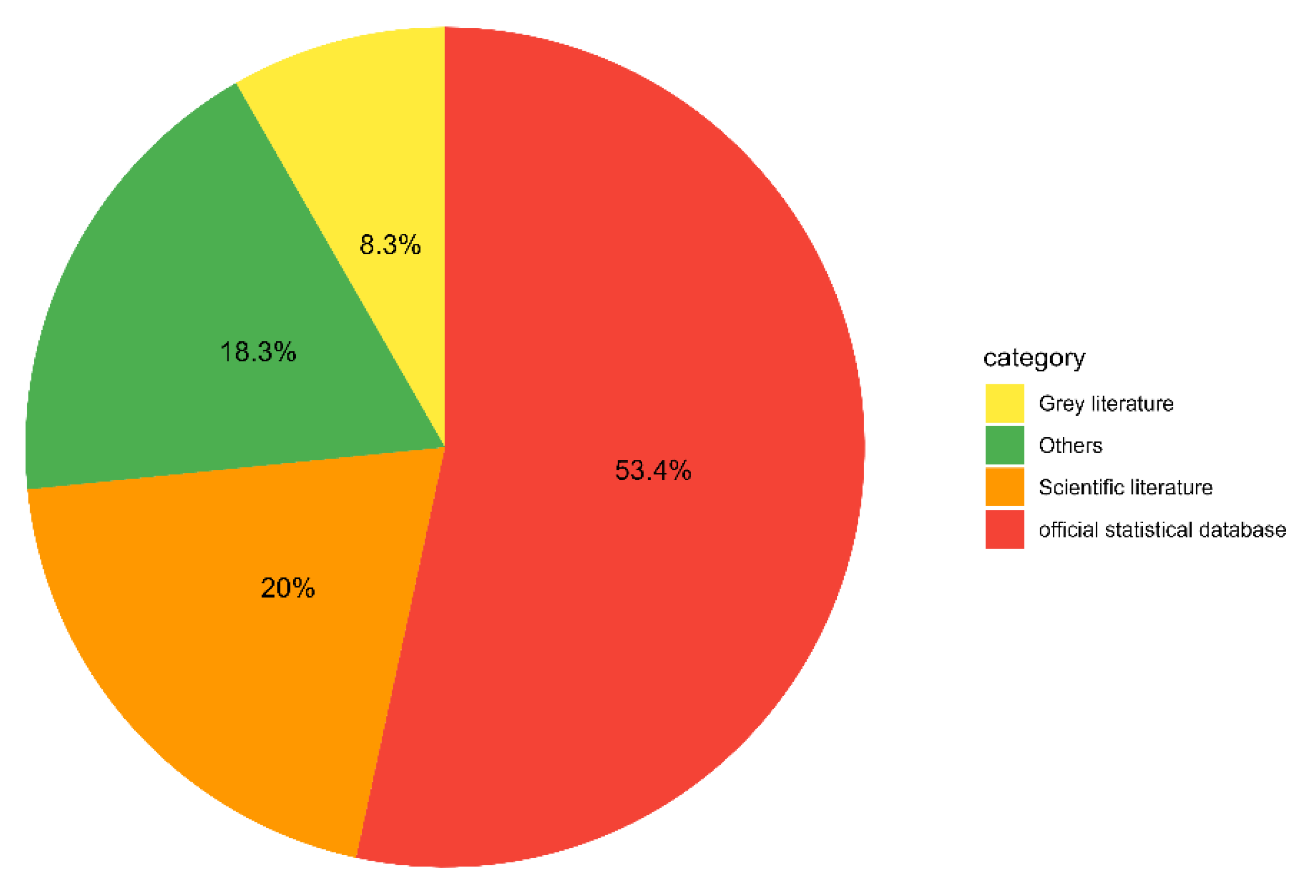

Table 1.
Keywords used in the literature review on MFA via Google Scholar.
| Article title, Abstract, Keywords: mass flow analysis OR wood flow analysis OR wood value chain OR material flow analysis OR paper flow analysis |
| AND |
| Article title, Abstract, Keywords: wood resource balance OR wood balance OR spatial and temporal resource flows OR physical input-output table OR economic modelling OR dynamic modelling economic-wide material flow accounting OR dynamic stock modelling OR sankey diagram |
| AND |
| Article title OR keywords: Raw material OR Wood processing residues OR Wood utilization OR Natural resources OR Forest resources OR Forest product OR Forest sector modelling OR Wood based products OR Natural resources. |
Disclaimer/Publisher’s Note: The statements, opinions and data contained in all publications are solely those of the individual author(s) and contributor(s) and not of MDPI and/or the editor(s). MDPI and/or the editor(s) disclaim responsibility for any injury to people or property resulting from any ideas, methods, instructions or products referred to in the content. |
© 2024 by the authors. Licensee MDPI, Basel, Switzerland. This article is an open access article distributed under the terms and conditions of the Creative Commons Attribution (CC BY) license (http://creativecommons.org/licenses/by/4.0/).
Copyright: This open access article is published under a Creative Commons CC BY 4.0 license, which permit the free download, distribution, and reuse, provided that the author and preprint are cited in any reuse.


