

Submitted:
15 October 2024
Posted:
16 October 2024
You are already at the latest version
Abstract
The main objective of the present study is to demonstrate the possibility of actively influencing the position of the bow shock wave and the main parameters of supersonic flow over a blunt body by organizing a gas discharge near the front surface, in the region between the body and the bow shock wave. The research is carried out using both experimental and numerical methods. The working gas was xenon. It is shown that the steady bow shock wave stand-off distance along with the current and power of the discharge, is associated with the change in the adiabatic index of the plasma created by the discharge, which, in turn, is determined by the plasma parameters, such as the degrees of nonequilibrium and the degree of ionization. It is shown that the adiabatic index with the power supplied to the impact zone in the range of 30-120 kW can both increase and de-crease in the range of 1.25-1.288. The study of the discharge created plasma zone was conducted and the correspondence between the discharge current and power, and the average parameters in the plasma zone created by the discharge is presented. A good agreement between the numerical and experimental data was shown. The results may be useful in developing control systems for high-speed civil aircrafts.
Keywords:
1. Introduction
2. Experimental Setup and Results Obtained
2.1. The Experiment Arrangement
2.2. Characteristics of the Surface Discharge
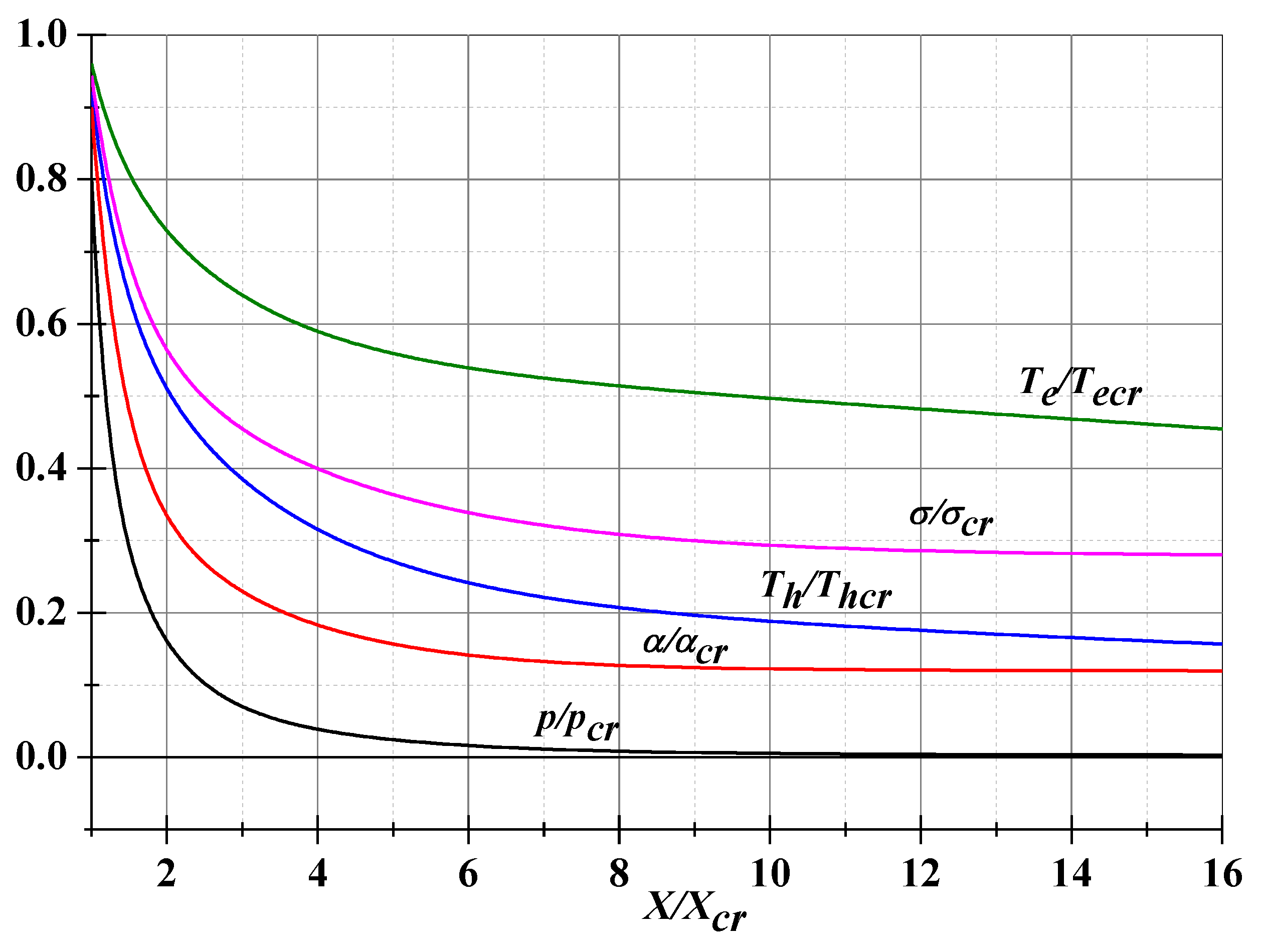
2.3. Calculation of Plasma Parameters in the Accelerating Nozzle
3. Numerical Simulations of the Impact of a Surface-Energy Deposition on the Bow Shock Wave and Aerodynamic Characteristics of a Model
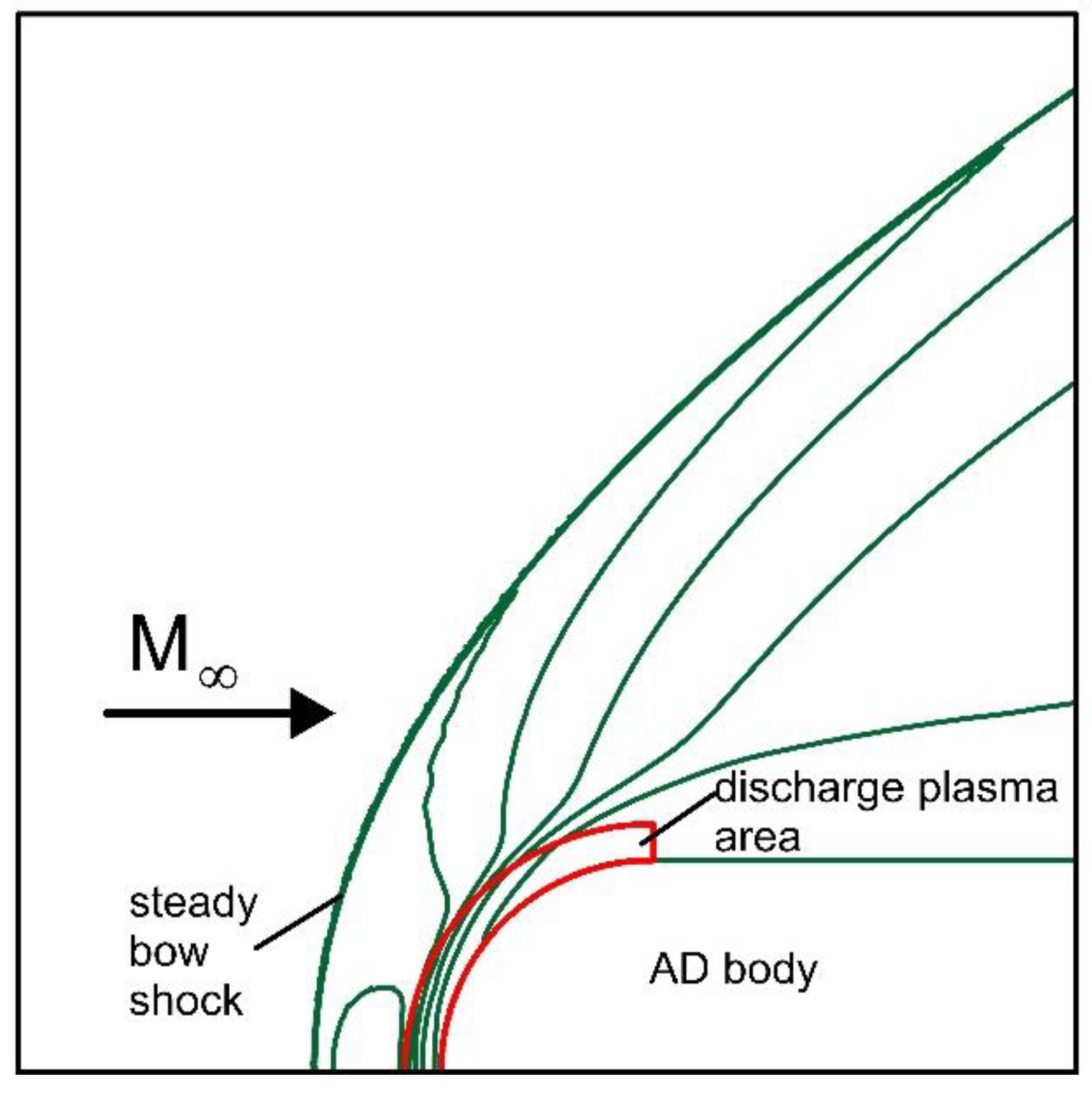
3.1. Methodology and Statement of the Problem
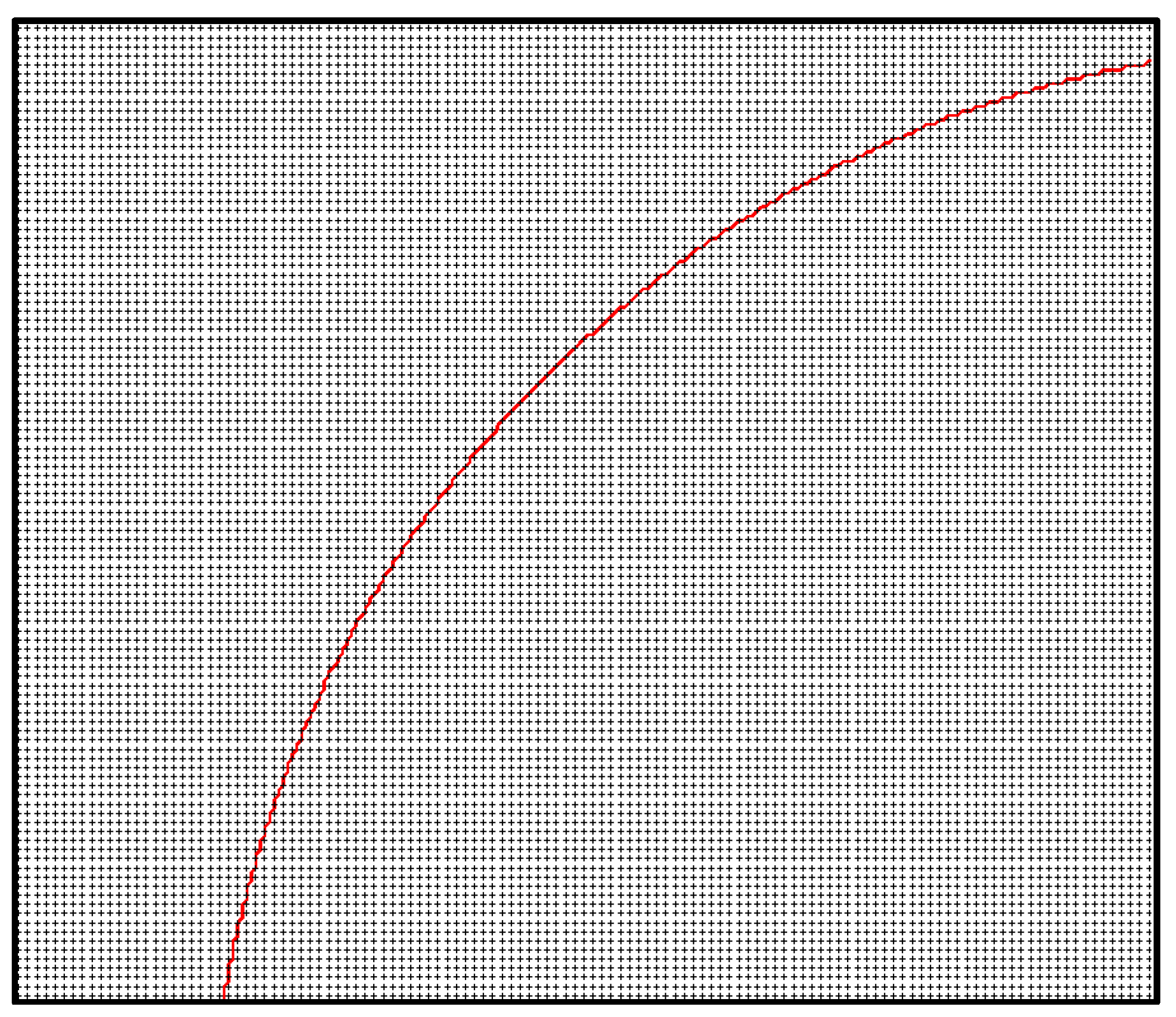
3.2. Analysis of the Grid Convergence
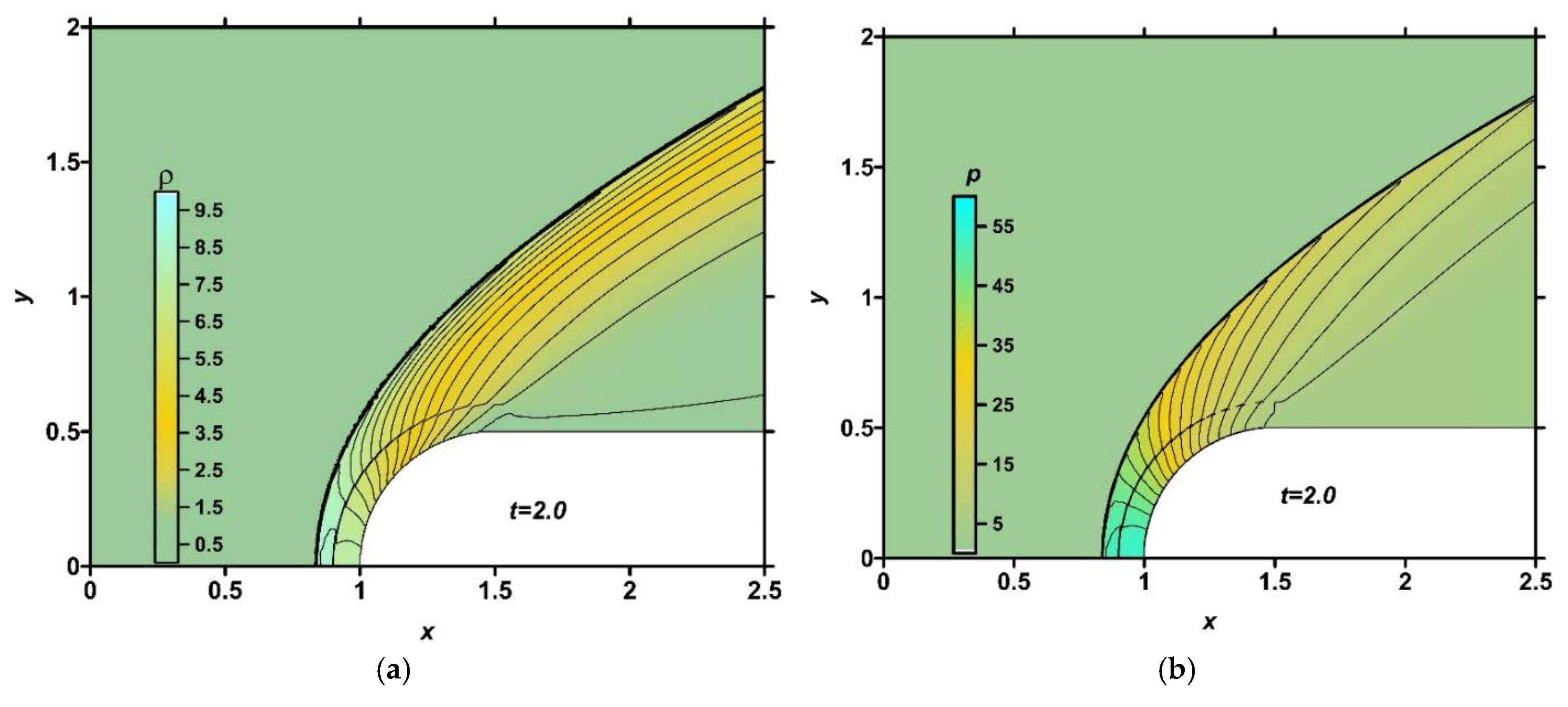
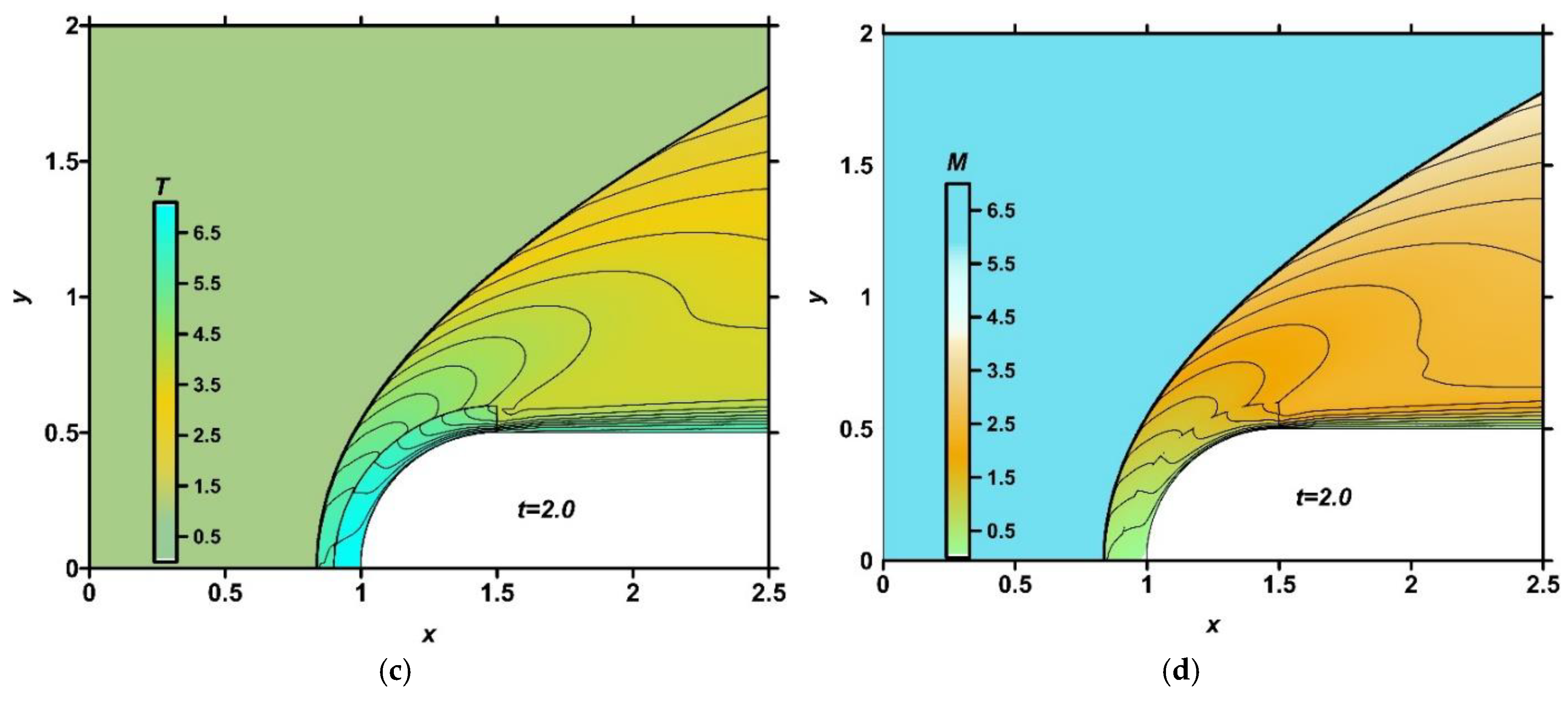
3.3. Results of the Simulations
4. Quantitative Comparison of the Experimental and Numerical Results
5. Comparison of the Results Obtained with the Dependences Defined by the Theory of K. Burm et al.
6. Conclusions
- -
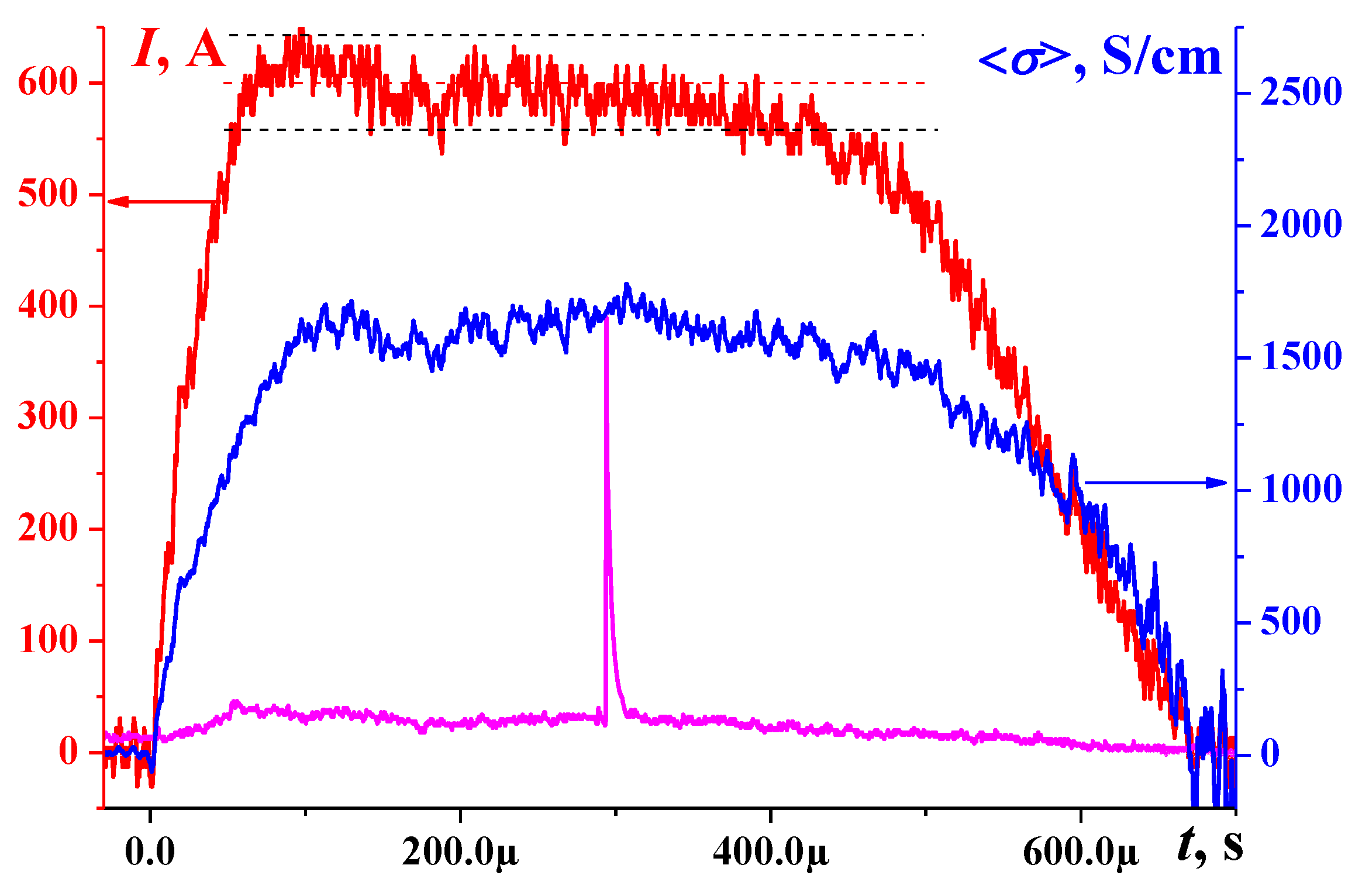
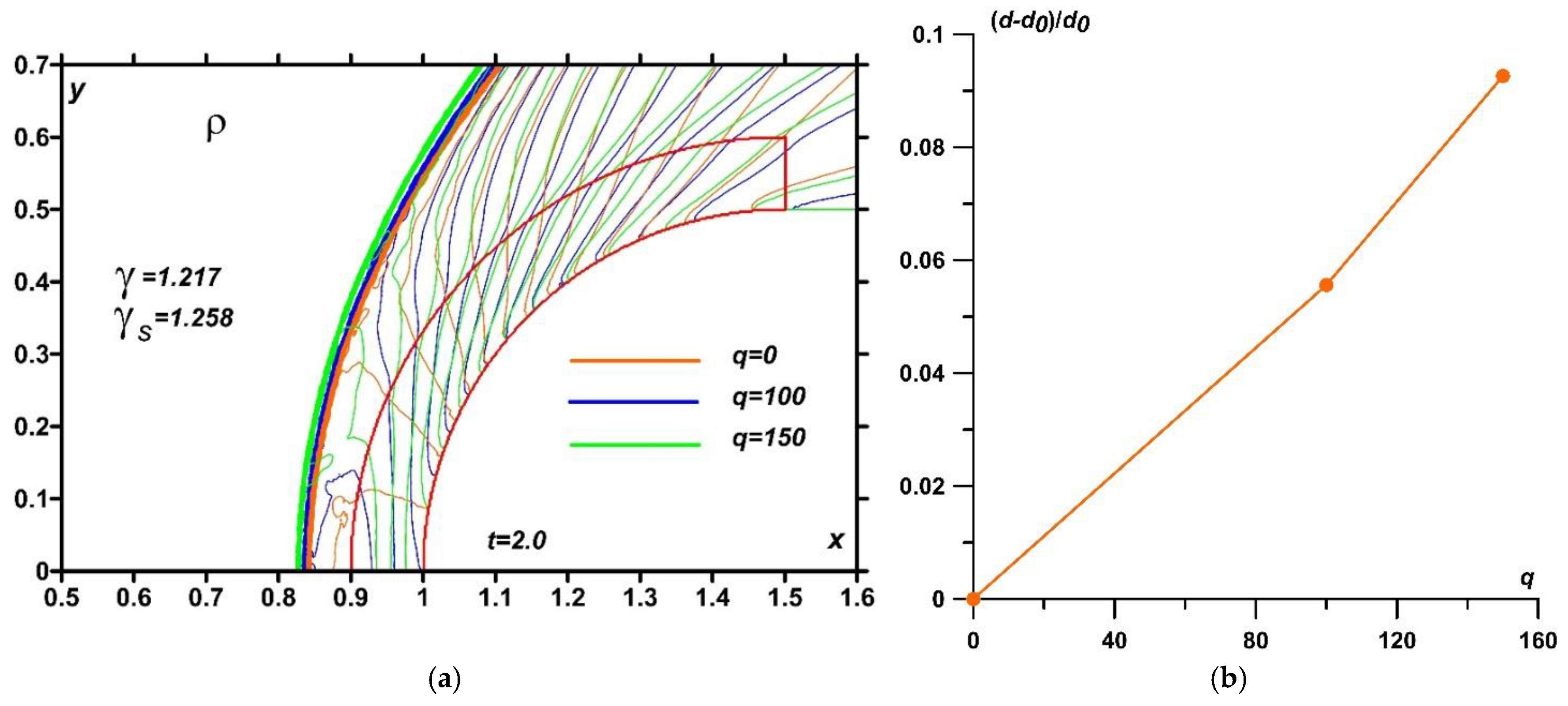
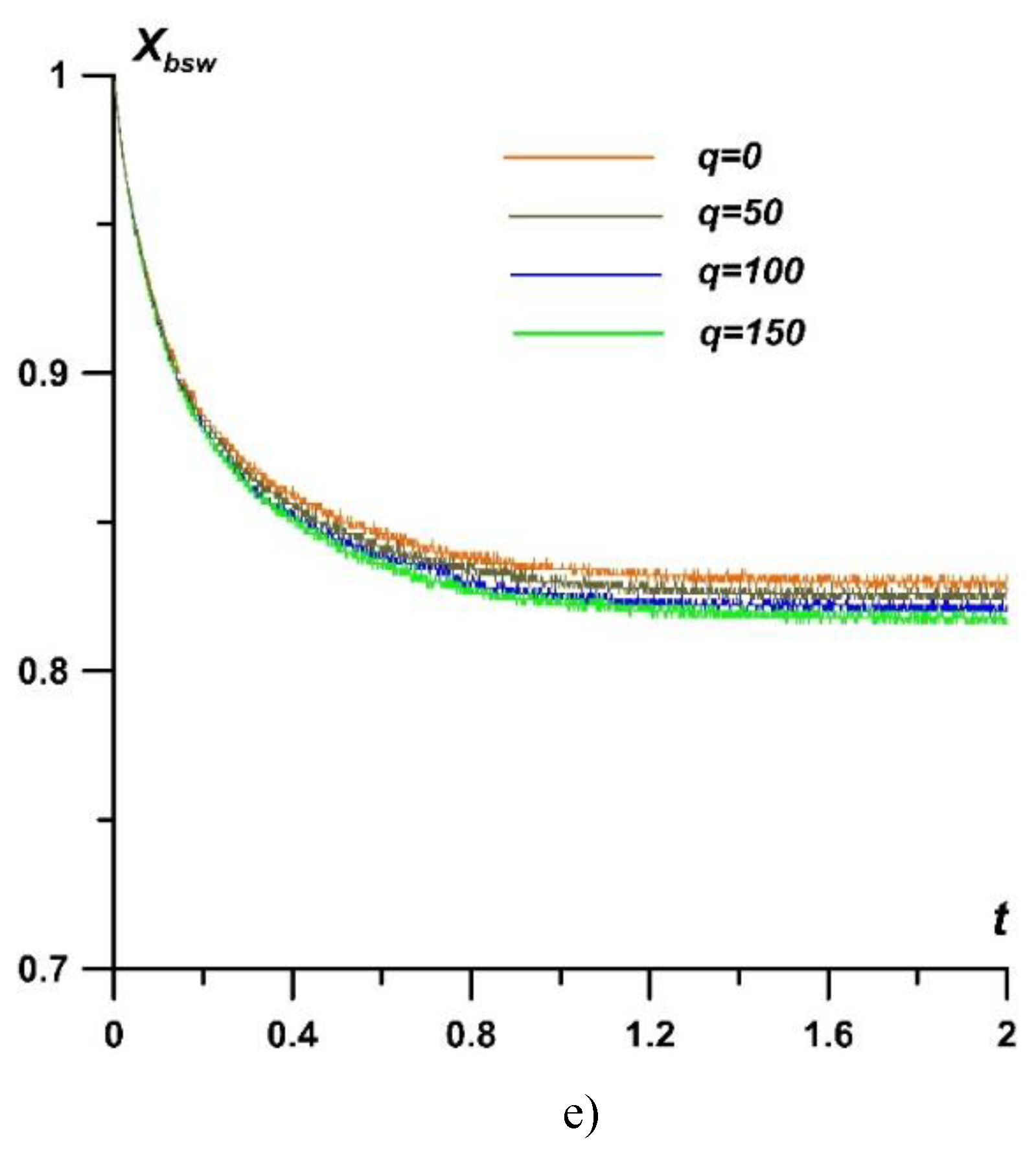
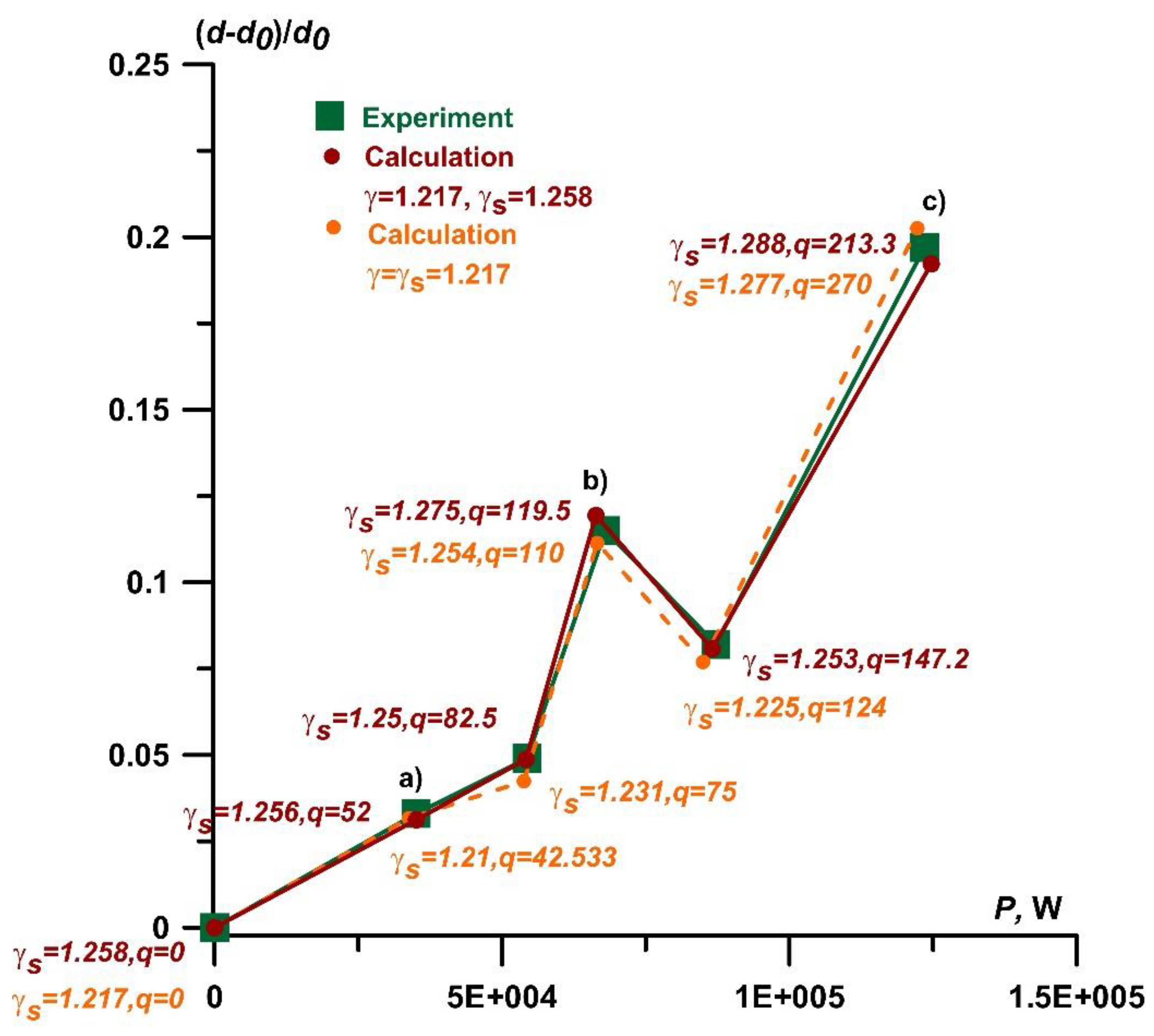
- It was obtained that when the discharge power is in the interval 0<P<5.42×10⁵W and the discharge current is in the interval 0<I<600A, the dependence of the relative stand-off on the discharge power is close to linear. Besides, the oscillation of the relative stand-off distance was obtained at 1.25×10⁵W<P<8.66×10⁵W and 600A<I<800A. This oscillation is associated with a strong dependence of the adiabatic index γs on the degree of ionization in this current range, which can lead to both its increase and decrease.
- -
- The comparison is presented for the results obtained with taking into account the initial ionization ahead of the model and without it. It was concluded that taking into account the primary ionization ahead of the body is important both for small currents (since for these values there is a noticeable difference in the values of γs) and for large currents, for which a large difference in the estimates of the necessary discharge specific power was obtained.
- -
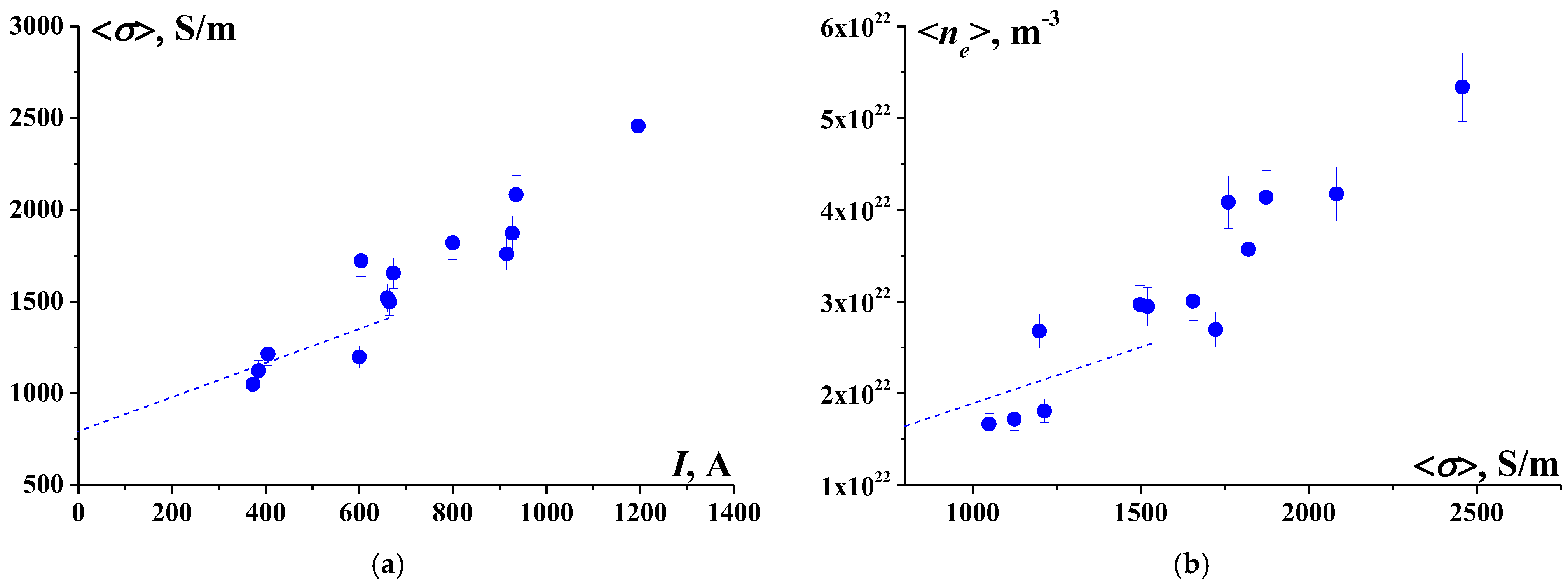
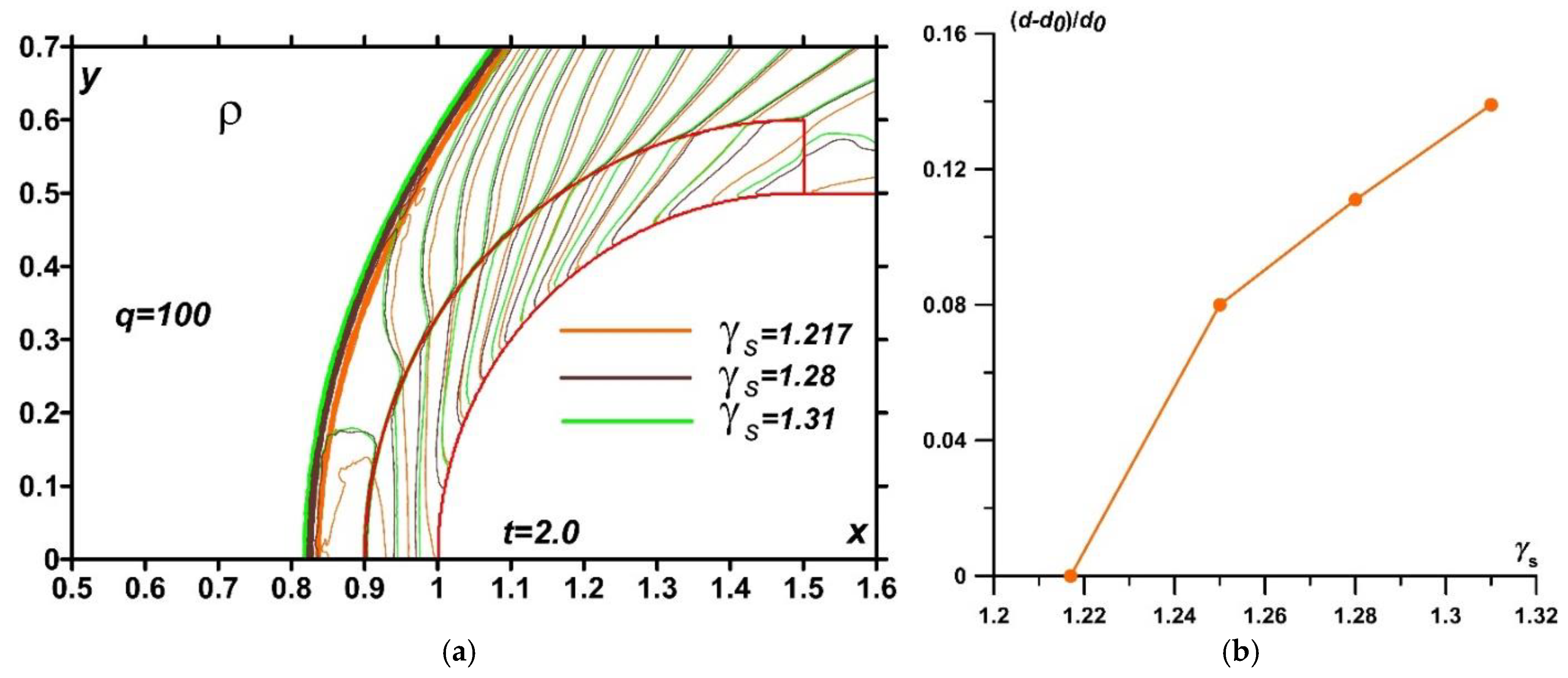
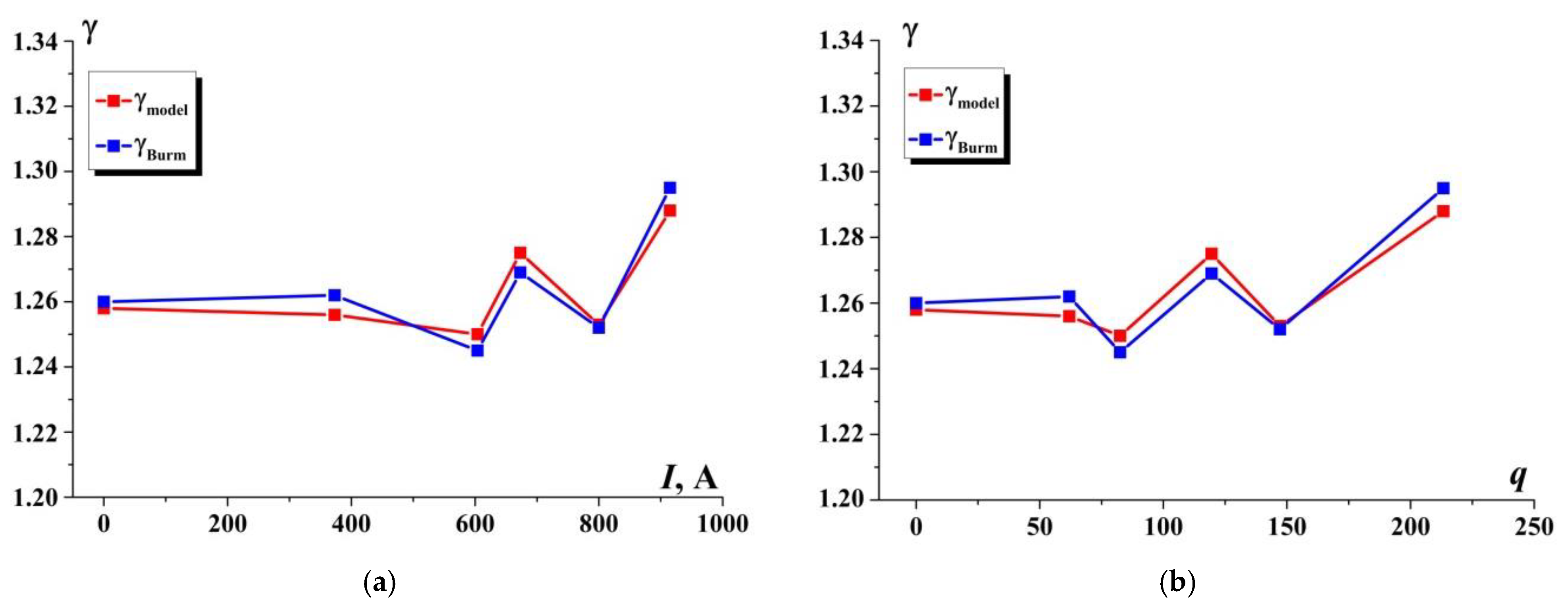
- A correspondence between the specific power q produced by the discharge, the discharge current I, and the value of the adiabatic index in the discharge zone γs. was analyzed. It is shown that the adiabatic index with the power supplied to the impact zone in the range of 30-120 kW can both increase and decrease in the range of 1.25-1.288. It was obtained that with the growth of the discharge current, the specific power increases, and γs tends to increase.
- -
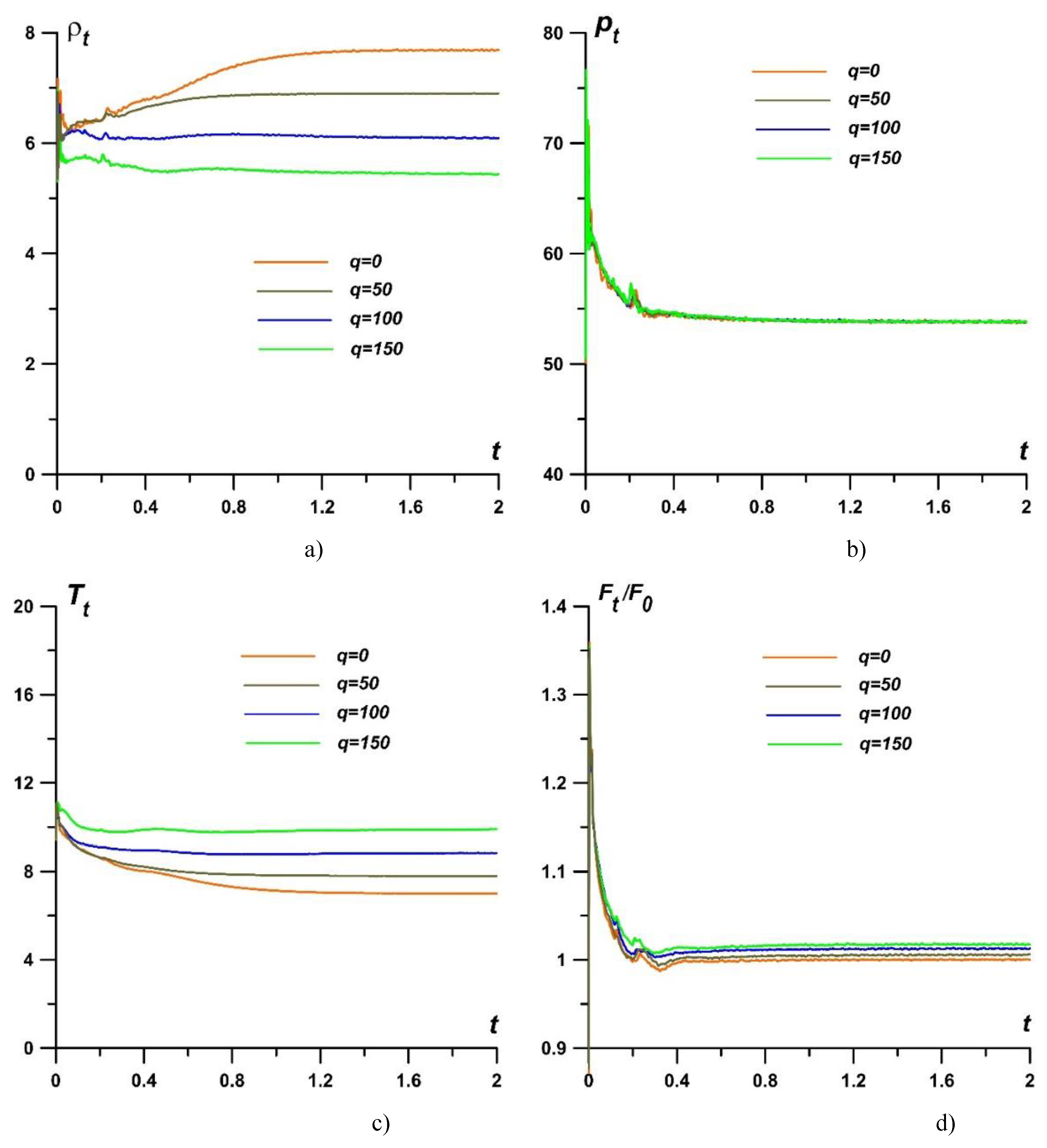
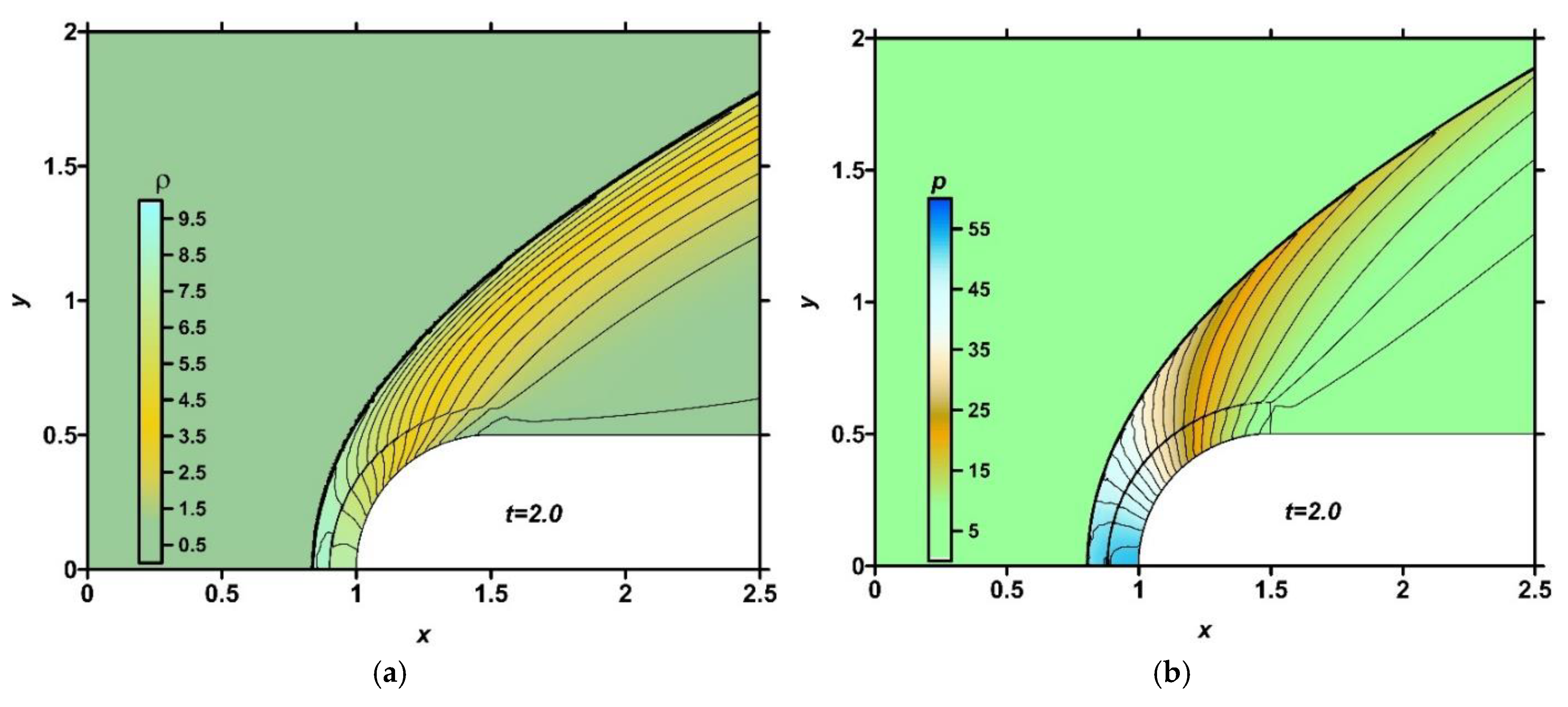
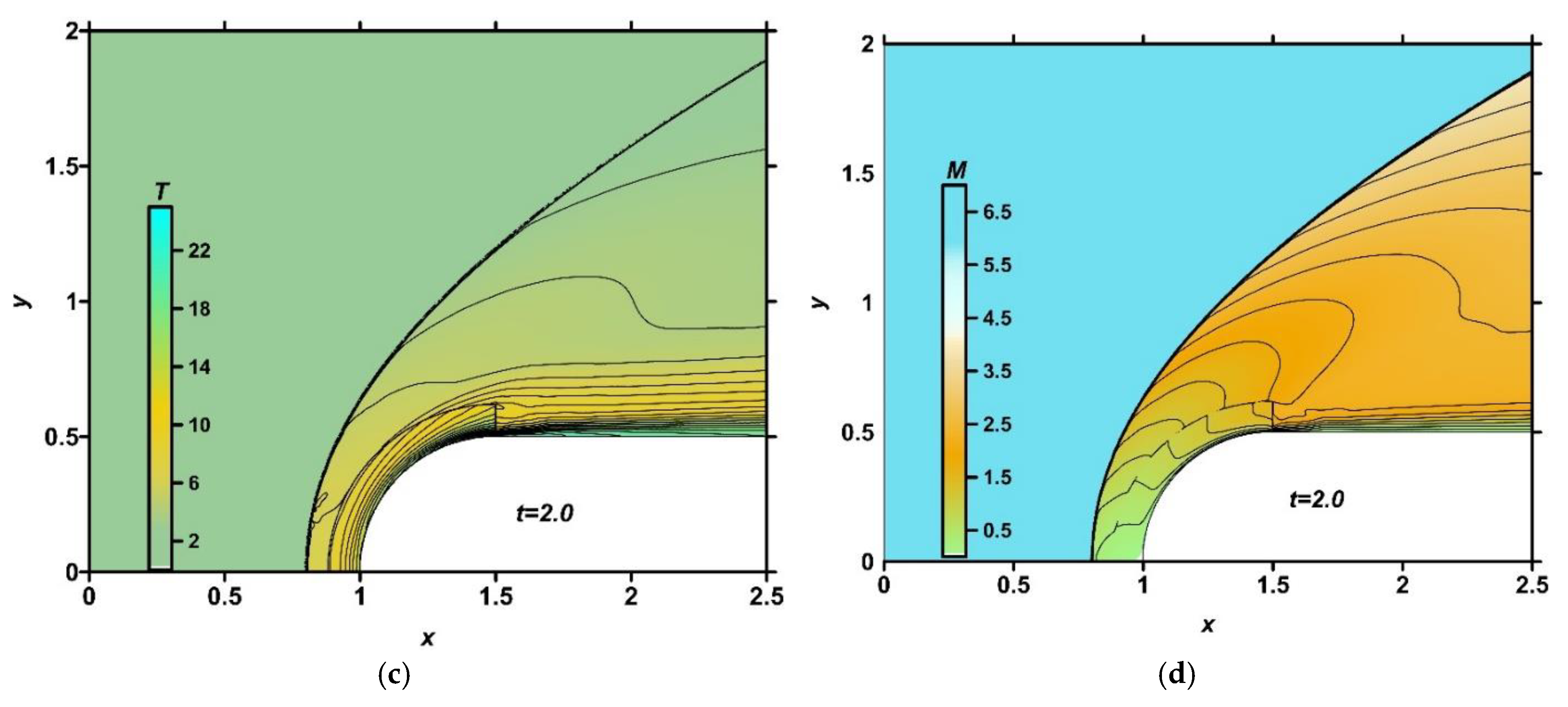
- Based on the experimental results, the simulations yielded average values of density, pressure, temperature, electron density, degree of ionization, and degree of non-equilibrium for the monoatomic xenon plasma in the steady flow regime. It was shown that with an increase in the discharge current and power, the average density in the action zone decreases, the temperature is increasing, and the pressure is weakly dependent on the discharge current. The plasma parameters, such as the electron density and the degree of ionization were shown to increase with the discharge current.
- -
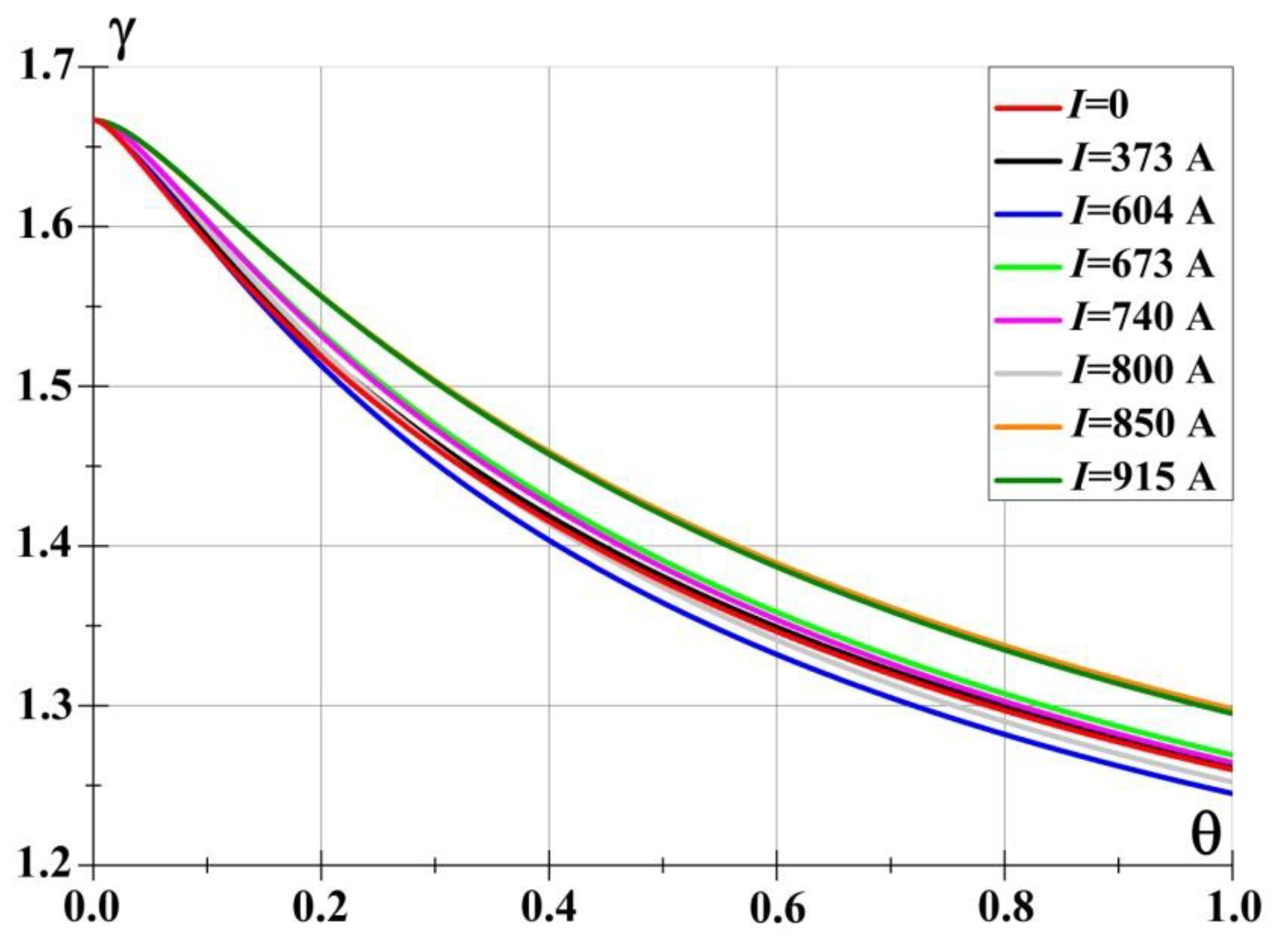
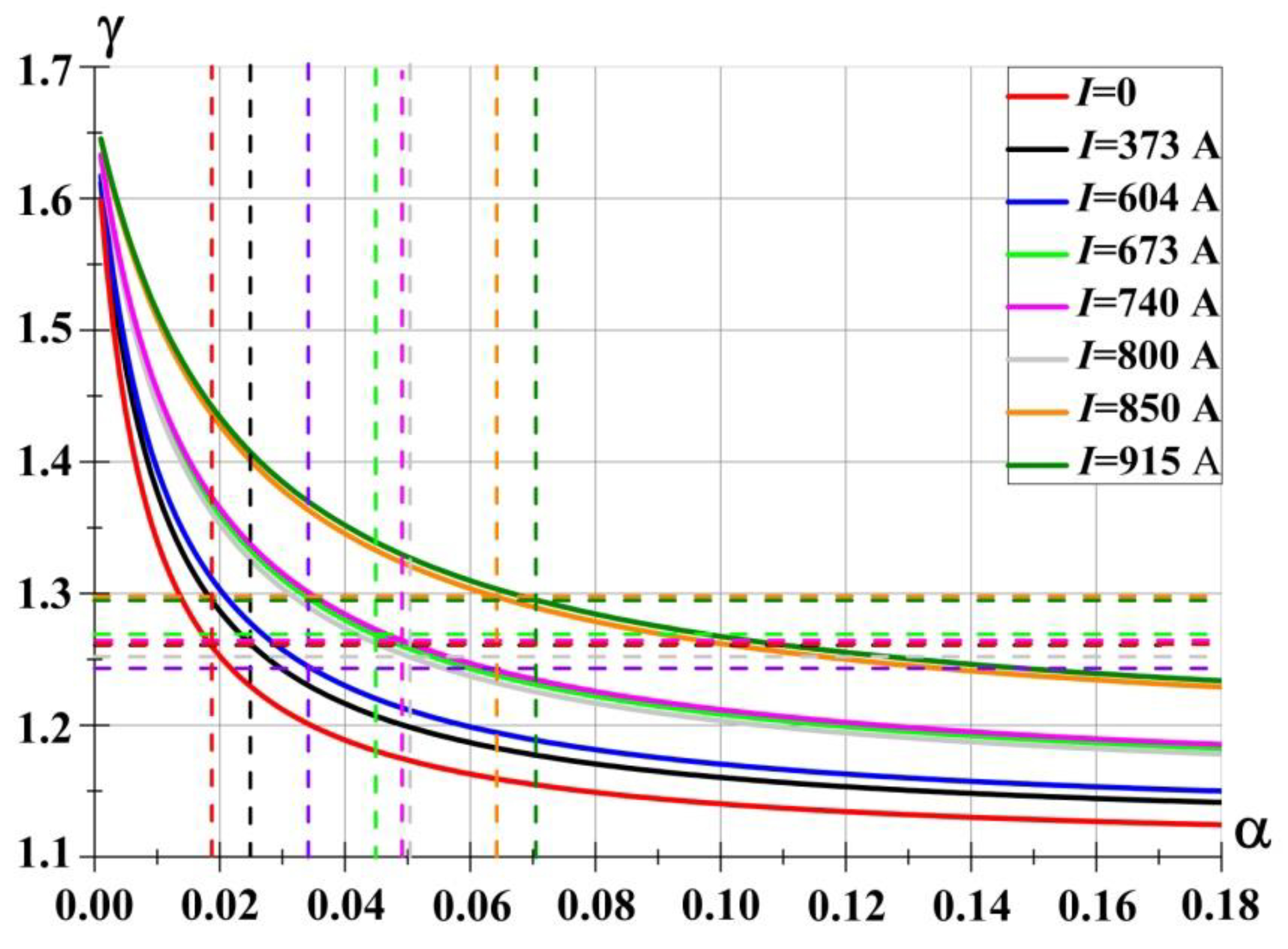
- A strong dependence of the adiabatic index γs on the degree of ionization and the degree of nonequilibrium was shown experimentally and numerically, which was in agreement with the theory of K. Burm et al. It was shown that the corresponding values of γs obtained in numerical simulation are close to the values of adiabatic index calculated according to the theory of K. Burm et al. at thermodynamic equilibrium.
- -
- It was found that, depending on the range of the gas-discharge current, it is possible to distinguish different degrees of influence of plasma characteristics on the value of γs: weak at the currents of 0-600 A, strong at the currents of 600-800 A, when γs can both increase and decrease with a small change in the degree of ionization, and thermal in the range >800 A, where γs is determined mainly by the gas temperature.
- -
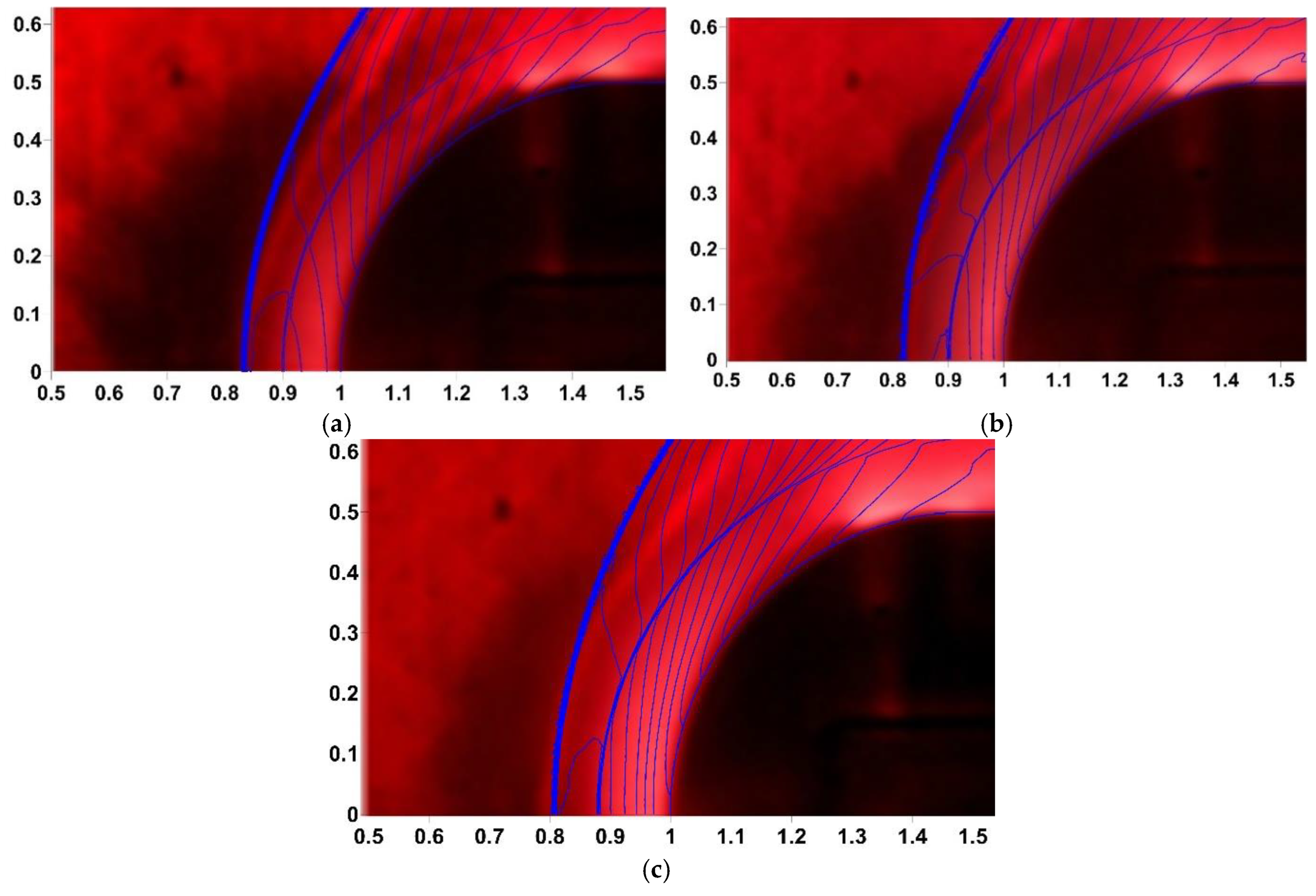
- It was shown that the steady position of the bow shock wave is significantly affected by both the specific discharge power q and the gas adiabatic index γs in the discharge plasma zone, which is determined by the characteristics of the plasma zone, namely the average density, pressure, temperature, as well as the degree of ionization and the degree of nonequilibrium.
Author Contributions
Funding
Conflicts of Interest
Nomenclature
| Parameters | |
| D, m; R, m | diameter and radius of an aerodynamic body |
| d, m | bow shock wave stand-off distance from the body |
| d0, m | bow shock wave stand-off distance from the body at the absence of energy deposition |
| F, N | drag force of the body’s front surface |
| F0, N | drag force of the body’s front surface at the absence of energy deposition |
| hx, hy | space steps |
| I, A | discharge current |
| J, A/m3 | gas discharge current density |
| M | Mach number |
| M1 | Shock wave Mach number in the shock tube |
| ne, m-3 | electron concentration |
| p, P, ρ, kgm-3, T, K | pressure, density, and temperature of the gas |
| P, W | discharge power |
| q, kW/kg | specific power |
| Re, Pr | the Reynolds number and the Prandtl number |
| U, m/s | vector of the flow velocity, U=(u,v) |
| Upl, V | voltage across the discharge gap |
| Xbsw, m | coordinate of the bow shock wave |
| α | degree of ionization |
| γ | adiabatic index (ratio of specific heats, isentropic exponent) |
| γs | adiabatic index in the discharge created plasma region |
| Ɵ | degree of nonequilibrium |
| σ, S/cm | effective plasma conductivity |
| Indices | |
| t | parameters at the central point of the semi-cylinder |
| a | average flow characteristics in the discharge created plasma region |
| n | normalizing parameters |
| ∞ | freestream parameters |
| cr | parameters in the critical section of the nozzle |
| e | parameters of electrons |
| h | parameters of heavy particles |
| Abbreviations | |
| AD | aerodynamic |
| MHD | magnetohydrodynamic |
| MW | microwave |
References
- Knight, D.D. Energy Deposition for High-Speed Flow Control; Cambridge University Press: Cambridge, UK, 2019; 450p.
- Knight, D. Survey of aerodynamic drag reduction at high speed by energy deposition. J. Propuls. Power 2008, 24, 1153–1167. [CrossRef]
- Ahmed, M.Y.M.; Qin, N. Forebody shock control devices for drag and aero-heating reduction: A comprehensive survey with a practical perspective. Prog. Aerosp. Sci. 2020, 112, 100585. [CrossRef]
- Rashid, S.; Nawaz, F.; Maqsood, A.; Salamat, S.; Riaz, R. Review of wave drag reduction techniques: Advances in active, passive, and hybrid flow control. Proc. Inst. Mech. Eng. Part G J. Aerosp. Eng. 2022, 12, 2851–2884. [CrossRef]
- Leonov, S.B.; Adamovich, I.V.; Soloviev, V.R. Dynamics of near-surface electric discharges and mechanisms of their interaction with the airflow. Plasma Sources Sci. Technol. 2016, 25, 063001. [CrossRef]
- Leonov, S.B. Review of plasma-based methods for high-speed flow control. In Proceedings of the Sixth International Conference on Fluid Mechanics AIP Conference Proceedings, Guangzhou, China, 30 June–3 July 2011; pp. 498–502.
- Znamenskaya, I.A. Methods for panoramic visualization and digital analysis of thermophysical flow fields. A review. Sci. Vis. 2021, 13, 125–158.
- Georgievsky, P.Y.; Levin, V.A Control of the flow past bodies using localized energy addition to the supersonic oncoming flow. Fluid Dyn. 2003, 38, 794–805. [CrossRef]
- Artem’ev, V.I.; Bergel’son, V.I.; Nemchinov, I.V.; Orlova, T.I.; Smirnov, V.A.; Hazins, V.M. Changing the regime of supersonic streamlining obstacles via raising the thin channel of low density. Izv. Akad. Nauk SSSR Meh. Židk. Gaza 1989, 5, 146–151. (In Russian).
- Riggins, D.; Nelson, H.F.; Johnson, E. Blunt-body wave drag reduction using focused energy deposition. AIAA J. 1999, 37, 460–467. [CrossRef]
- Kolesnichenko, Y.; Brovkin, V.; Azarova, O.; Grudnitsky, V.; Lashkov, V.; Mashek, I. Microwave energy release regimes for drag reduction in supersonic flows. 40th AIAA Aerospace Sciences Meeting & Exhibit, AIAA Paper No. 2002-0353, 2002.
- Tretyakov, P.K.; Fomin, V.M.; Yakovlev, V.I. New principles of control of aerophysical processes—Research development. In Proceedings of the International Conference on the Methods of Aerophysical Research, Novosibirsk, Russia, 29 June–3 July 1996; p. 210.
- Bityurin, V.A.; Klimov, A.I.; Leonov, S.B.; Potebnya, V.G. On interaction of longitudinal pulse discharge with bow shock. In Proceedings of the Workshop “Perspectives of MHD and Plasma Technologies in Aerospace Applications”, IVTAN, Moscow, Russia, 24–25 March 1999; p. 114.
- Bityurin, V.A.; Klimov, A.I.; Leonov, S.B.; Lutsky A. E.; Van Wie, D.; Brovkin, V. G.; Kolesnichenko, Yu. F. Effect of heterogeneous discharge plasma on shock wave structure and propagation. Proceedings of the 3rd Weakly Ionized Gases Workshop, Norfolk, VA, USA, 1–5 November 1999; AIAA Paper 1999-4940.
- Benard, N.; Moreau, E. Electrical and mechanical characteristics of surface AC dielectric barrier discharge plasma actuators applied to airflow control. Experiments in Fluids 2014, 55. [CrossRef]
- Lapushkina, T.A.; Erofeev, A.V. Supersonic flow control via plasma, electric and magnetic impacts. Aerosp. Sci. Technol. 2017, 69, 313–320. [CrossRef]
- Lapushkina, T.A.; Vasil’eva, R.V.; Erofeev, A.V.; Ponyaev, S.A.; Bobashev, S.V. Ionization Kinetics in a Supersonic Xenon Plasma Flow Entering Electric Field. Technical Physics Letters 2004, 30, 724–726. [CrossRef]
- Bobashev, S.; Mende, N.; Sakharov, V.; Van Wie, D. MHD Control of the Separation Phenomenon in a Supersonic Xenon Plasma Flow. 41st Aerospace Sciences Meeting and Exhibit, AIAA Paper No. 2003-168, 2003.
- Bobashev, S.; Mende, N.; Sakharov, V.; Van Wie, D. MHD Control of the Separation Phenomenon in a Supersonic Xenon Plasma Flow II. 42nd AIAA Aerospace Sciences Meeting and Exhibit, AIAA Paper No. 2004-0515, 2004.
- Zhao, X.; Xiang, X.; Yu, J.; Shen, Q. An experiment investigation on shock-induced turbulent boundary layer separation flow-field. In Proceedings of 54th AIAA Aerospace Sciences Meeting, San Diego, California, USA, 2016.
- Yan, H.; Liu, F.; Xu, J.; Xue, Y. Study of oblique shock wave control by surface arc discharge plasma. AIAA Journal 2017, 56, 532–541. [CrossRef]
- Tang, B.; Guo, S.; Hua, L. Experimental study on high-energy surface arc plasma excitation control of cylindrical detached shock wave. Contributions to Plasma Physics 2020, 61. [CrossRef]
- Azarova, O.A.; Erofeev, A.V.; Lapushkina, T.A. A comparison of plasma and thermal effects upon supersonic flow past aerodynamic bodies. Tech. Phys. Lett. 2017, 43, 405–408. [CrossRef]
- Burm, K.T.A.L.; Goedheer, W.J.; Schram, D.C. The isentropic exponent in plasmas. Physics of Plasmas 1999, 6, 2622–2627. [CrossRef]
- Lago, V.; Joussot, R.; Parisse, J. Influence of the ionization rate of a plasma discharge applied to the modification of a supersonic low reynolds number flow field around a cylinder. Journal of Physics D Applied Physics 2014, 47, 125202. [CrossRef]
- Azarova, O.A.; Lapushkina, T.A.; Shustrov, Y.A. Near-surface gas discharge effect on a steady bow shock wave position in a supersonic flow past a cylindrically blunted body in the air. Phys. Fluids 2022, 34, 066117. [CrossRef]
- Raizer, Yu. P. Gas Discharge Physics (Springer, Berlin, 1991).
- Roache, P. J. Computational Fluid Dynamics (Mir, Moscow, 1980).
- Azarova, O. A. Complex conservative difference schemes for computing supersonic flows past simple aerodynamic forms, Comput. Math. Math. Phys. 2015, 55(12), 2025-2049. [CrossRef]
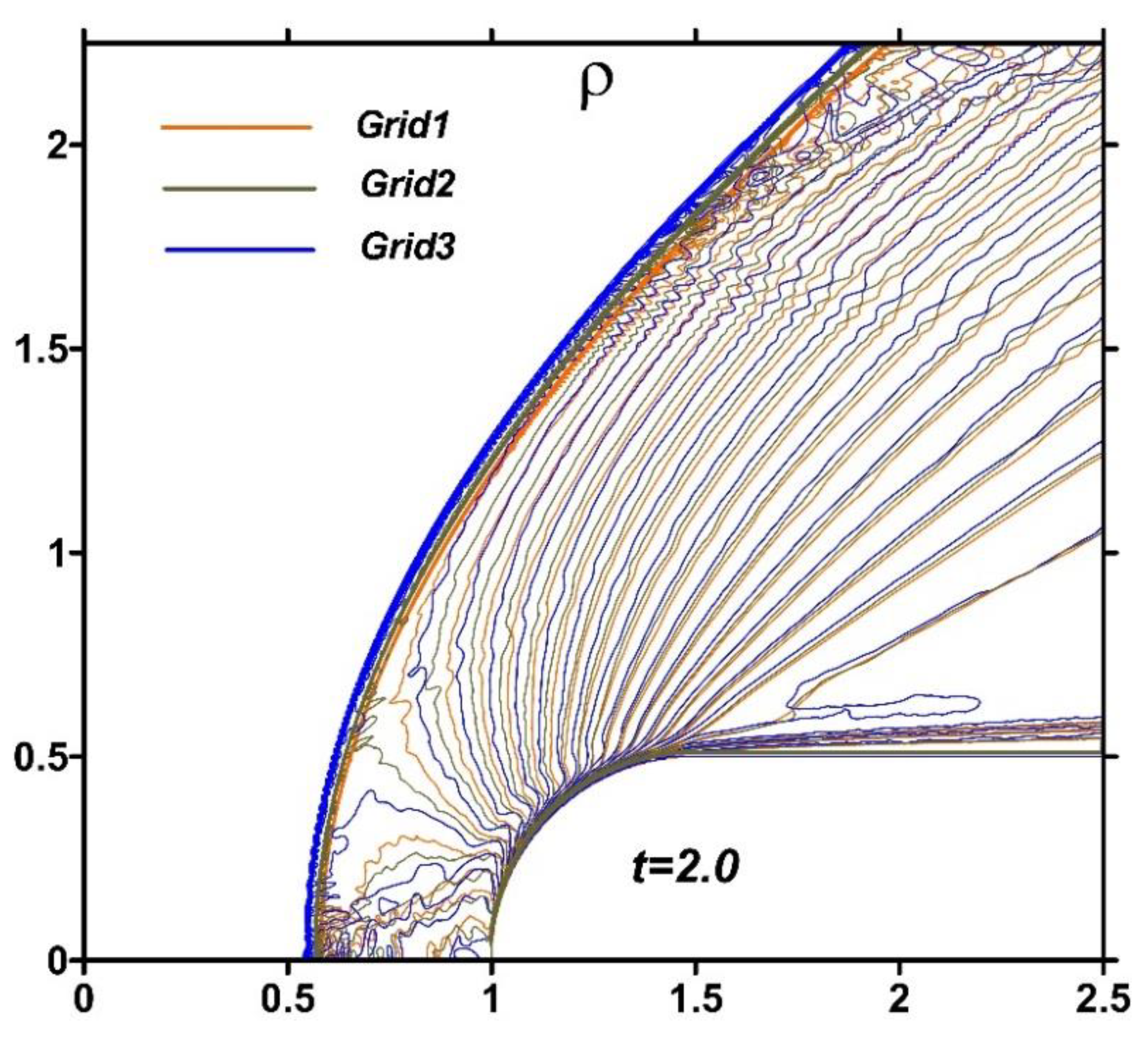
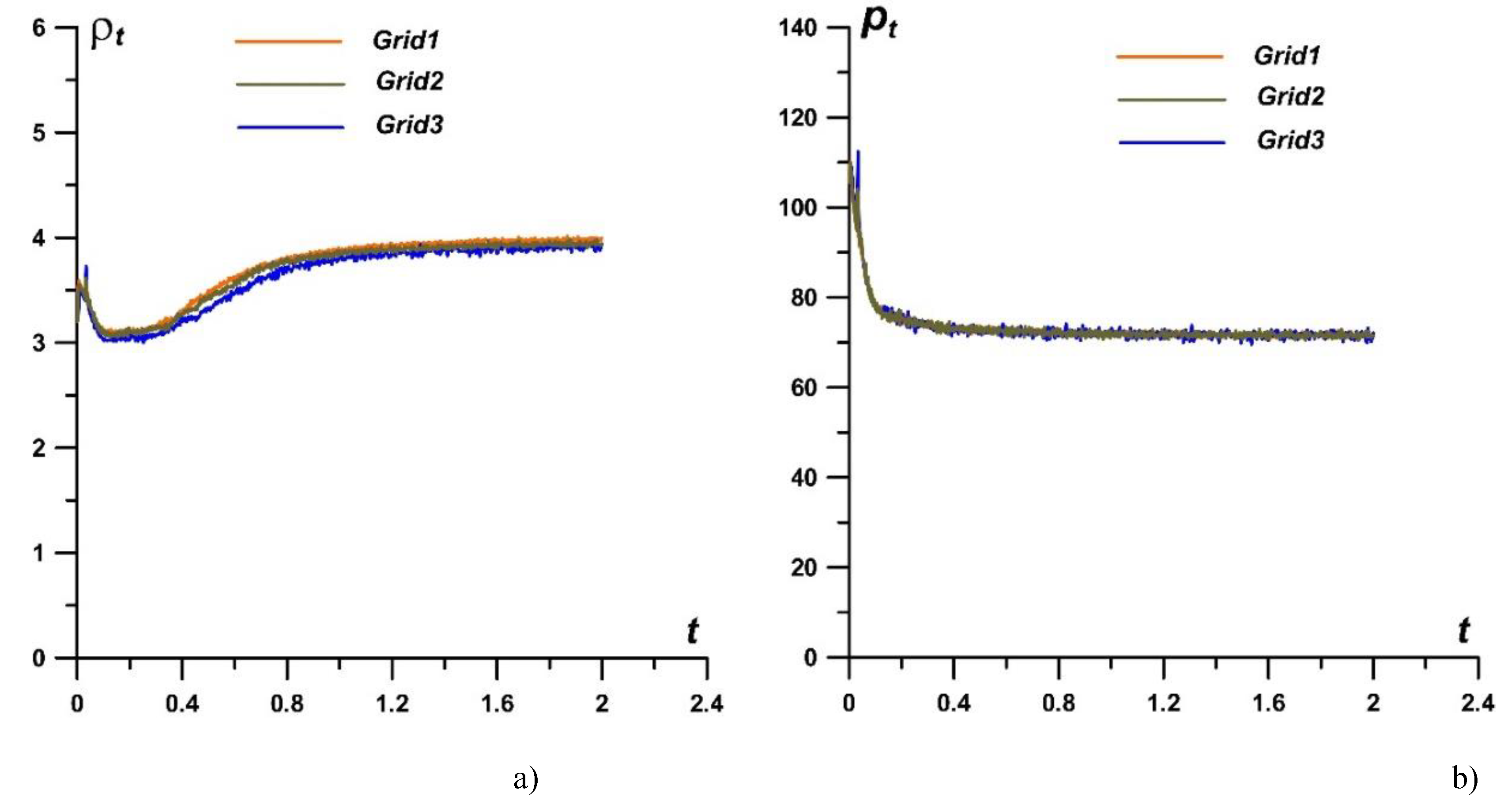
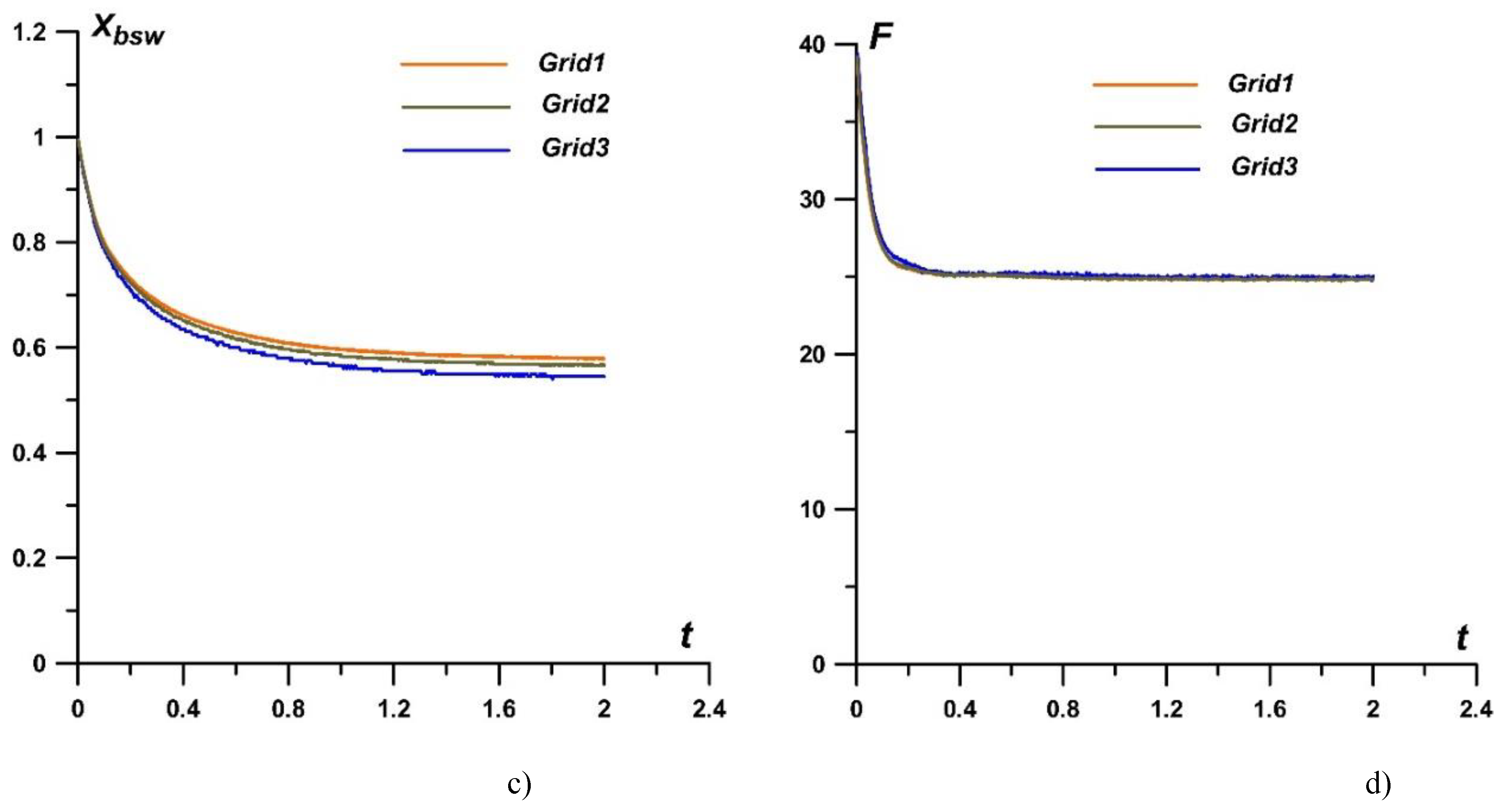

| Difference grid | A number of working nodes in the grid | The values of time steps hx, hy | Relative error, pt:abs(pt - pt theor)/ pt theor ×100% | Relative error, ρt:abs(ρt - ρt theor)/ ρt theor ×100% |
| Grid 1 | 5.625×10⁶ | hx=hy=0.001 | 0.091% | 1.080% |
| Grid 2 | 2.758×10⁶ | hx=hy=0.0014286 | 1.011% | 5.798% |
| Grid 3 | 9.0×10⁵ | hx=hy=0.0025 | 1.609% | 6.608% |
| Description | Dimensional value | Dimensionless value | Normalizing coefficient |
|---|---|---|---|
| Freestream Mach number M∞ | 6.8 | ||
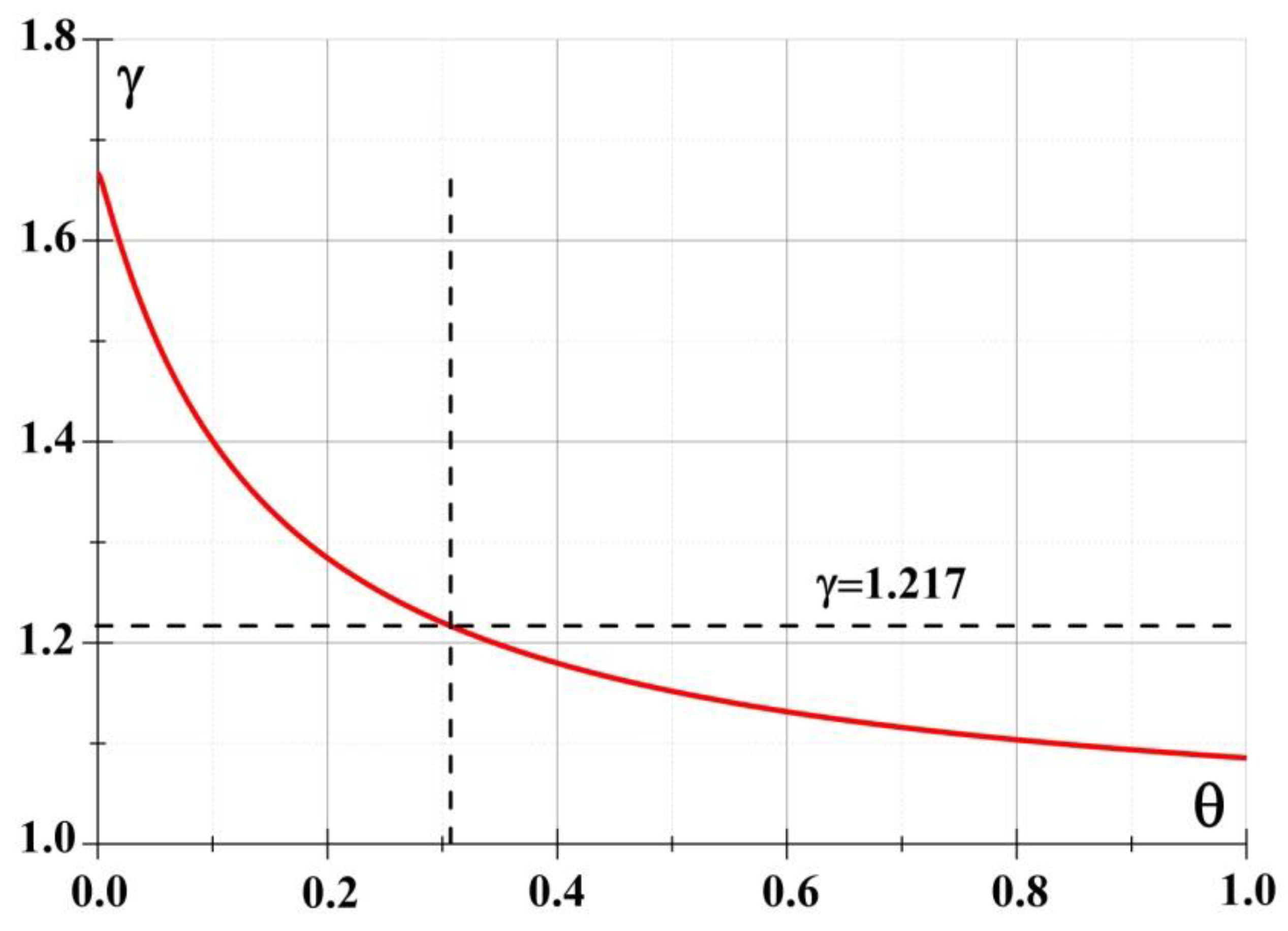
| Adiabatic index in freestream flow γ | 1.217 | ||
| Reynolds number Re | 4558.9 | ||
| Prandtl number Pr | 0.623 | ||
| Freestream gas pressure p∞ | 3.1·103 Pa | 1.0 | pn= p∞ |
| Freestream gas density ρ∞ | 0.040793 kg/m3 | 1.0 | ρn= ρ∞ |
| Freestream gas temperature T∞ | 1200 K | 1.0 | Tn= T∞ |
| Adiabatic index in oncoming flow γ∞ | 1.217 | ||
| Specific power in the plasma region q | qn= pn/ (tn ρn)= =0.698299×10⁶ kW/kg | ||
| Body’s diameter D | 3×10⁻² m | 1.0 | ln=D=3×10⁻² m |
| Velocity u | 2067.96 m/s | 7.502 | un=(pn / ρn)0.5= 275.668 m/s |
| Time t | 1.0 | tn=ln/un=108.827 µs |
| I, A | 0 | 373 | 604 | 673 | 800 | 915 |
| q | 0 | 52 | 82.5 | 119.5 | 147.2 | 213.3 |
| qdim×10-6 kW/kg | 0 | 36.312 | 57.610 | 83.447 | 102.790 | 148.947 |
| γs | 1.258 | 1.256 | 1.25 | 1.275 | 1.253 | 1.288 |
| I, A | P, W | ρa, kg/m3 | Ta, K | pa, P | ne*10-22 | α | γs for Ɵ=1 |
| 0 | 0 | 0.19180 | 7530.2 | 94900.9 | 1.65 | 0.01871 | 1.26 |
| 373 | 35099.2 | 0.17759 | 8507.3 | 95868.2 | 2.03 | 0.02486 | 1.262 |
| 604 | 54166.8 | 0.17275 | 9003.6 | 96546.7 | 2.70 | 0.03399 | 1.245 |
| 673 | 66345.3 | 0.146076 | 10905.1 | 96281.7 | 3.0 | 0.04467 | 1.269 |
| 800 | 86576.5 | 0.154749 | 10647.2 | 97396.8 | 3.57 | 0.05018 | 1.252 |
| 915 | 124693 | 0.125886 | 14064.2 | 98334.9 | 4.08 | 0.07049 | 1.295 |
Disclaimer/Publisher’s Note: The statements, opinions and data contained in all publications are solely those of the individual author(s) and contributor(s) and not of MDPI and/or the editor(s). MDPI and/or the editor(s) disclaim responsibility for any injury to people or property resulting from any ideas, methods, instructions or products referred to in the content. |
© 2024 by the authors. Licensee MDPI, Basel, Switzerland. This article is an open access article distributed under the terms and conditions of the Creative Commons Attribution (CC BY) license (http://creativecommons.org/licenses/by/4.0/).