

Submitted:
15 October 2024
Posted:
16 October 2024
You are already at the latest version
Abstract
The increasing demand for sustainable construction practices has prompted the exploration of innovative materials, such as waste plastics, to enhance both environmental and mechanical performance in concrete, particularly for rigid pavements. This review investigates the mechan-ical properties of concrete incorporating four types of waste plastics—High-Density Polyethylene (HDPE), Low-Density Polyethylene (LDPE), Polyvinyl Chloride (PVC), and Polypropylene (PP). The primary focus is on how these materials affect key mechanical properties, including com-pressive strength, tensile strength, and flexural strength. The analysis reveals that HDPE and PP, at optimal levels (5-10%), can enhance flexural and crack resistance, making them suitable for non-structural applications. Conversely, LDPE and PVC tend to reduce both compressive and tensile strengths at higher substitution levels due to poor bonding with cementitious materials. Despite these challenges, incorporating waste plastics into concrete presents significant envi-ronmental and economic benefits, including plastic waste reduction and lower reliance on natural aggregates. The review also highlights the need for further research on improving plastic-cement bonding through surface treatments and hybrid mix designs. This paper contributes to the growing body of knowledge aimed at promoting the use of waste plastics in concrete, offering insights for the development of sustainable, high-performance construction materials.
Keywords:
Mechanical Properties of Concrete
; Compressive Strength
; Splitting Tensile Strength
; Flexural Strength
; Waste Plastics
; HDPE
; LDPE
; PP
; PVC
1. Introduction
The increasing demand for sustainable construction practices has led to the exploration of innovative materials that can enhance the performance and environmental impact of conventional construction materials [1]. One such area of exploration is the use of waste plastics in concrete, particularly for rigid pavement applications. Rigid pavements, typically constructed using concrete, require materials with high mechanical strength and durability to withstand significant traffic loads and environmental stressors. However, the production of conventional concrete is associated with high energy consumption and CO2 emissions, contributing to environmental degradation [2].
Australia generated 2.5 million tons of plastic waste, yet only 7% of it was effectively recycled. Alarmingly, a staggering 86% ended up in landfills, and another 7% were mismanaged, underscoring the significant challenges faced in waste management and recycling efforts. These figures highlight the urgent need for more effective strategies to improve recycling rates and reduce reliance on landfills in Australia [3]. Incorporating waste plastics into concrete offers a promising solution to these dual challenges by reducing the reliance on natural aggregates while diverting plastic waste from landfills. The goal of producing ecological materials is associated with improved material management, waste reduction, and the creation of materials that possess suitable physical and mechanical properties [4].
Numerous studies have explored the incorporation of plastic waste materials, such as polyethylene (PE) and polypropylene (PP), into concrete mixtures, aiming to improve the material’s overall strength. Polypropylene (PP), and Polyvinyl Chloride (PVC) are among the most researched plastic types for use in concrete, with studies showing their potential to improve specific mechanical properties, such as durability and crack resistance [5,6]. For instance, the use of PP fibers in concrete has been shown to improve tensile strength and crack resistance, which is critical for enhancing the structural integrity of concrete used in pavements and other non-structural applications [7,8]. Abu-Saleem et al. investigated the strength characteristics of concrete containing plastic aggregates like high-density polyethylene (HDPE). This study examines the impact of various plastic waste types on the mechanical properties of concrete, and the findings hold significant potential for advancing the development of innovative construction materials in the future [9,10].
Rigid pavements require concrete with high mechanical strength, durability, and resistance to environmental stressors. The integration of waste plastics in concrete has been shown to improve certain properties, such as workability and density, but often at the cost of reduced compressive strength. From an environmental standpoint, this project offers a dual benefit: reducing the volume of plastic waste and decreasing the reliance on natural aggregates, which are finite resources. Economically, using waste plastics could lower material costs and potentially reduce the energy consumption associated with producing traditional concrete [5].
Given this context, the study aims to provide a thorough understanding of how different types of waste plastics influence the mechanical properties of concrete, particularly for use in rigid pavement applications. Key anticipated outcomes include identifying the optimal replacement levels for each type of plastic that ensures satisfactory mechanical performance while offering environmental benefits.
This study seeks to establish an open-access knowledge base on the use of waste plastics in concrete, aiming to drive the development of sustainable, high-performance construction materials that support the circular economy. The findings will contribute to the creation of guidelines and standards for incorporating waste plastics into rigid pavements, encouraging widespread adoption by the construction industry. Successfully integrating plastic waste into concrete will not only mitigate its environmental impact but also promote the conservation of natural resources.
2. Literature Review
2.1. Environmental Impact
Globally, plastic waste generation has become a significant environmental challenge, with an estimated 300 million tons of plastic waste produced each year. The primary sources of this plastic waste include packaging materials, single-use plastics, and various consumer goods. High-income countries contribute significantly to this volume due to their higher consumption rates of plastic products, while lower-income countries often struggle with inadequate waste management infrastructure, leading to increased plastic pollution [11].
2.1.1. Plastic Pollution Crisis
Plastic waste is one of the most pressing environmental problems today. Since plastics are non-biodegradable, they persist in the environment for centuries, accumulating in landfills, oceans, and other ecosystems. According to recent studies, the world produces over 300 million tons of plastic each year, of which a significant portion becomes waste, polluting landscapes and waterways [12]. This plastic waste causes extensive damage to marine life, with millions of tons ending up in the oceans annually. It leads to what is commonly referred to as "plastic soup," where microplastics enter the food chain, affecting both aquatic life and human health [13]. By reusing plastic waste in concrete production, particularly in rigid pavements, this approach mitigates the environmental harm caused by plastic pollution. Instead of allowing plastics to accumulate in the environment, they are repurposed in a beneficial way, transforming what was once a pollutant into a valuable resource for construction.
2.1.2. Carbon Footprint of Traditional Concrete
Concrete production is associated with high carbon emissions, mainly due to the energy-intensive process of cement manufacturing. For every ton of cement produced, nearly a ton of CO₂ is released into the atmosphere. As concrete is the second most consumed material globally, its environmental footprint is substantial [12]. The cement industry alone accounts for approximately 8% of global CO₂ emissions, making it a significant contributor to climate change. The incorporation of waste plastics into concrete provides an opportunity to reduce the demand for raw virgin materials such as sand and gravel. This, in turn, lowers the carbon footprint of concrete production, as less energy is required for the extraction, processing, and transportation of these materials. Additionally, by partially replacing cement with plastic materials, the overall CO₂ emissions associated with concrete manufacturing can be reduced, contributing to more sustainable construction practices [13].
2.1.3. Waste Management
Traditional waste management strategies, including landfilling and incineration, have significant drawbacks when dealing with plastic waste. Plastics take hundreds of years to decompose, meaning they accumulate in landfills, occupying valuable space and posing long-term environmental risks. Incineration, while reducing the volume of waste, releases harmful greenhouse gases and toxic substances, such as dioxins, into the atmosphere, further worsening pollution [13]. The use of plastic waste in concrete offers an innovative alternative to these conventional disposal methods. By diverting plastic waste from landfills and incinerators, it reduces the environmental burden associated with plastic disposal. This approach not only helps manage the waste more effectively but also aligns with the principles of a circular economy, where waste materials are recycled and repurposed into new products rather than discarded [12].
2.2. Economic and Practical Benefits
2.2.1. Cost Reduction
One of the most immediate and tangible economic benefits of using plastic waste in concrete is the reduction in raw material costs. Traditional concrete production relies heavily on natural aggregates such as sand, gravel, and crushed stone, which are becoming increasingly scarce and expensive due to over-extraction and rising global demand. By replacing a portion of these natural aggregates with recycled plastic, the cost of producing concrete can be significantly reduced. Kamaruddin et. al (2017) highlighted that plastic waste is readily available and inexpensive, making it an attractive alternative to more costly natural aggregates. This is particularly important in regions where natural resources are limited or heavily regulated, as plastic-modified concrete provides a more affordable construction material [14].
Ramana Devi et al. (2024) further emphasizes that the use of plastic waste in concrete can lower production costs, especially in non-structural applications such as pavements, walkways, and lightweight concrete blocks. These applications do not require the same level of mechanical strength as structural concrete, allowing for higher plastic content without compromising the material’s performance. The ability to use plastic waste as a low-cost substitute for traditional materials aligns with the construction industry’s ongoing efforts to reduce overall project costs, making it an economically viable solution for large-scale infrastructure projects [13].
In addition to cost savings, the inclusion of plastic waste in concrete offers practical benefits, such as improved workability and reduced weight. Ramana Devi et al. and Almohana et al. (2022) note that plastic-modified concrete tends to have better workability compared to conventional concrete mixes. This is due to the lightweight nature of plastic aggregates, which enhances the ease with which the concrete can be mixed, transported, and placed on site. Improved workability not only simplifies the construction process but also reduces labor costs, as the concrete is easier to handle and requires less effort to mix and pour [12,13].
2.2.2. Durability and Low Maintenance Costs
While plastic-modified concrete may exhibit reduced compressive strength, the improved durability and resistance to environmental factors offer long-term economic benefits, particularly in applications like pavements. The study by Ahmed and Yousif (2022) shows that plastic-modified concrete is more resistant to cracking and shrinkage due to the flexible nature of plastic aggregates, which absorb stress better than traditional aggregates. This increased durability means that plastic-modified pavements may require less frequent repairs and maintenance, translating into lower lifecycle costs [15].
The improved durability of plastic-modified concrete directly translates into lower maintenance costs over the long term. Ahmed and Yousif (2022) and Ramana Devi et al. (2024) both emphasize that, due to its resistance to cracking and environmental degradation, concrete containing plastic aggregates requires fewer repairs and less frequent maintenance. This is a crucial factor in large-scale infrastructure projects such as roadways and pavements, where maintenance can be both costly and disruptive to traffic [12,15].
Incorporating plastic waste into concrete for rigid pavements is not only beneficial for the environment but also has long-term implications for urban development. As cities grow and expand, the demand for sustainable construction materials will increase. Developing concrete mixes that use plastic waste will help cities build infrastructure that is more environmentally friendly, while also addressing the global plastic waste problem.
Rigid pavements are a significant component of urban infrastructure. They are designed for high traffic loads and long service lives, meaning that innovations in their material composition can have lasting environmental benefits. Using recycled plastics in the production of these pavements aligns with the sustainability goals of modern urban planning, reducing both plastic waste and the carbon footprint of construction [12].
2.3. Types of Waste Plastics and Its Applications
2.3.1. High – Density Polyethylene (HDPE)
The use of High-Density Polyethylene (HDPE) in concrete offers significant environmental benefits, primarily through the reduction of plastic waste and its associated environmental impacts. Plastics, including HDPE, are non-biodegradable and can persist in the environment for hundreds of years, contributing to land and marine pollution. By incorporating HDPE into concrete, the construction industry can help divert large volumes of plastic waste from landfills and waterways, contributing to waste management solutions. This practice aligns with circular economy principles by returning plastic into productive use rather than allowing it to degrade the environment [16].
Compressive Strength
The compressive strength of concrete is a crucial factor in determining its structural performance, and incorporating HDPE plastic waste into concrete has shown varying effects on this property depending on the replacement level and other materials used [17]. High-Density Polyethylene (HDPE) into concrete, multiple studies have found a clear trend: compressive strength tends to decrease as the amount of HDPE increases. This decline is primarily due to the inherent properties of HDPE, such as its hydrophobic nature and low stiffness compared to traditional coarse aggregates. HDPE plastic tends to reduce the compressive strength of concrete, especially at higher percentages, due to the weak bonding between plastic particles and the cement matrix. The inclusion of HDPE particles introduces voids and air pockets in the concrete mix, which negatively affects its ability to bear compressive loads. However, at 5% HDPE content, the reduction in compressive strength is minor and within acceptable limits for non-structural applications, including rigid pavements, which require moderate compressive strength [17,18]. Abbas et al. (2022) supported these findings by reporting that the compressive strength of concrete containing uncoated HDPE was significantly lower than that of conventional concrete. Specifically, the compressive strength values decreased by 21%, 39%, and 47% for HDPE replacement levels of 10%, 20%, and 30%, respectively [19]. The reason behind this trend is the smooth surface texture and non-porous nature of HDPE, which limit the mechanical interlocking between the aggregate and the cement matrix. The lack of roughness means that HDPE particles act more as inert fillers rather than actively participating in the load-bearing structure of the concrete.
Splitting Tensile Strength
Tensile strength is particularly important for rigid pavements, which are subjected to tensile stresses due to loading from vehicles and environmental effects like temperature fluctuations. Studies suggest that while compressive strength decreases, the tensile strength of concrete with HDPE can either remain stable or improve slightly at low percentages of plastic addition (around 5%) [17]. Abbas et al. (2022) investigated the split tensile strength of concrete incorporating uncoated and sand-coated HDPE. The results showed that uncoated HDPE reduced split tensile strength by 16.1%, 30.5%, and 43.7% at replacement levels of 10%, 20%, and 30%, respectively. This reduction in tensile strength is mainly attributed to the hydrophobicity and smooth surface of HDPE, which prevents it from bonding well with the cement matrix [19].
The performance of HDPE concrete in terms of tensile strength also varies with curing time. Studies have shown that while the 7-day and 14-day splitting tensile strength of HDPE concrete can be comparable or slightly improved compared to conventional concrete, there is often a clear reduction in tensile strength at 28 days. This reduction is attributed to the weakening bond between HDPE and the cement matrix over time [17]. This suggests that the long-term performance of HDPE concrete in tension requires careful consideration, especially in applications that rely heavily on tensile properties, such as pavements subjected to significant tensile stresses.
Flexural Strength Test
Flexural strength is a critical property in concrete used for rigid pavements because it determines the material’s ability to resist bending stresses caused by vehicular loads, temperature fluctuations, and environmental factors. In rigid pavements, higher flexural strength indicates that concrete can withstand these bending forces without cracking, ensuring a longer service life and reducing maintenance costs [20,21].
According to Shanmugapriya and Santhi (2017), a 56.4% increase in flexural strength was observed when 10% HDPE (HDPE-10) was incorporated, with the strength peaking at 6.1 MPa. However, beyond this point, the strength declined to 4.7 MPa at HDPE-15, indicating that excessive HDPE content can weaken the concrete’s flexural capacity due to poor bonding between HDPE and the concrete matrix [20]. Similarly, Biswas (2020) found that flexural strength improved by 54.1% when HDPE content increased from HDPE-0 to HDPE-10, reaching a peak strength of 5.98 MPa, but dropped by 28.9% at HDPE-15, confirming a similar trend [21].
In line with these findings, Abeysinghe et al. (2021) highlighted that the flexural strength of HDPE concrete generally decreases as HDPE content increases, despite initial gains. The researchers noted that HDPE’s non-reactivity, hydrophobicity, and smooth surface characteristics contribute to weaker bonding between the HDPE particles and the cement paste, which reduces the concrete’s mechanical performance at higher substitution levels. Nonetheless, the study observed that at HDPE-10%, flexural strength increased by 56% compared to HDPE-0 [22]. Moreover, Badache et al. (2014) also observed that while the flexural strength of HDPE concrete improved slightly at low replacement levels, the strength reduced drastically at higher concentrations of HDPE. Their study showed a flexural strength drop of 1.4 MPa at HDPE-15 and further reductions with increasing HDPE content, supporting previous findings on the weakening effects of excessive HDPE [23]. Additionally, Lopez et al. (2020) demonstrated that increasing HDPE content from 10% to 20% caused a reduction in flexural strength, highlighting the same challenges of poor interfacial bonding between HDPE and the cementitious matrix [24].
2.3.2. Low – Density Polyethylene (LDPE)
Among the different types of plastics, Low-Density Polyethylene (LDPE) is one of the most widely produced, commonly used in products such as plastic bags and containers. LDPE, which is non-biodegradable, has persisted in the environment for hundreds of years, making its disposal a significant challenge. Studies have shown that incorporating LDPE into concrete addresses both waste management concerns and raw material shortages in construction, providing a sustainable waste management solution [25].
Compressive Strength
Most studies show that LDPE reduces the compressive strength of concrete, particularly when used in higher quantities. This is primarily due to the poor interaction between the LDPE particles and the surrounding cement paste. For instance, research has shown that with LDPE content of 10%, the compressive strength of the concrete is significantly reduced compared to conventional concrete [25]. This reduction can range from 20% to 50% depending on the size of the LDPE particles and the over-all mix design.
In the study conducted by Nursyamsi et al. (2018), the compressive strength of light concrete bricks decreased significantly when 20% of the fine aggregate was replaced with LDPE. The compressive strength of the LDPE-modified bricks was 43.05 kg/cm², a 57% reduction compared to the control mix’s 100.15 kg/cm² [26]. LDPE does not facilitate the hydration process in the same way as traditional aggregates, resulting in voids and weaker bonds within the concrete matrix. This reduction places the LDPE-enhanced concrete in the lower quality categories based on SNI standards, which is often acceptable for non-structural applications like lightweight bricks, but not suitable for load-bearing structures. In a similar study by Setyarini and Tajudin, the stability of asphalt concrete mixtures increased by 63.75% when 7% LDPE was used as an aggregate coating. However, this enhanced stability did not translate into improved compressive strength, as the material remained less suitable for high-load applications [26].
Splitting Tensile Strength
The inclusion of LDPE in concrete typically results in a reduction in tensile splitting strength due to the weak bonding between the hydrophobic LDPE particles and the cement matrix. Several studies highlight the behavior of LDPE-modified concrete under tensile splitting tests, with varying outcomes based on the proportion of LDPE added and the size and shape of the plastic particles. In one study, when LDPE plastic waste was used to replace fine aggregate at levels of 5%, 10%, and 20%, the tensile splitting strength decreased as the LDPE content increased [27]. The tensile strength dropped by as much as 45.15% when 20% LDPE was used in place of fine aggregate [26].
To maintain tensile performance while benefiting from the environmental advantages of using LDPE, researchers have identified an optimal LDPE content of 5% to 10% by weight. At these levels, the reduction in tensile splitting strength is more manageable, and the concrete retains enough strength for non-structural applications such as lightweight pavement blocks and sidewalks [26]. Lower percentages of LDPE (e.g., 5%) have been shown to reduce tensile strength by a smaller margin, while higher percentages (10%-20%) lead to more significant reductions. The study by Saikia and De Brito (2014) confirmed that 5% LDPE maintains a reasonable balance between tensile strength and the material’s ability to resist cracking [26,28].
Studies consistently show that incorporating LDPE into concrete results in a decrease in tensile splitting strength. This reduction is primarily due to the poor bond between the hydrophobic LDPE particles and the cement paste, which weakens the overall concrete matrix. A study by Vivek et al. (2024) examined the replacement of fine aggregates with 5%, 10%, 15%, and 20% LDPE in M20-grade concrete. It was observed that tensile strength reduced significantly as the percentage of LDPE increased. For instance, the split tensile strength of the concrete with 20% LDPE was measured at 0.92 MPa, compared to 2.18 MPa for the control mix without LDPE. This shows a reduction of approximately 57.8% in tensile strength, highlighting the negative impact of higher LDPE content on the material’s ability to withstand tensile forces [29].
Flexural Strength Test
The incorporation of LDPE into concrete has been shown to affect its flexural strength, with results varying depending on the percentage of LDPE used and the specific characteristics of the plastic. LDPE, being a more flexible and lightweight plastic, generally results in a reduction of flexural strength when added to concrete. For instance, in a study by Radhi et al. (2021), it was found that the flexural strength decreased with increasing LDPE content. At 5% LDPE substitution, the flexural strength of concrete showed only a marginal reduction, but at 10% and 15% substitution levels, the decrease became more significant, with the strength dropping by approximately 20% compared to the control mix. The researchers concluded that LDPE’s lack of proper bonding with the cement matrix weakens the ability of the concrete to withstand flexural stresses [17]. Similarly, Mourad Boutlikht et al. (2023) reported a reduction in flexural strength as the percentage of LDPE increased. Their study demonstrated that the flexural strength decreased by around 15% when 10% LDPE was incorporated, and this reduction reached nearly 30% at 20% LDPE substitution. The authors attributed this to the reduced adhesion between the smooth LDPE particles and the surrounding cement paste, which diminishes the overall load-carrying capacity of the concrete under bending stresses [30].
2.3.3. Polyvinyl Chloride (PVC)
PVC is commonly used in pipes, cables, and window frames, and incorporating it into concrete reduces the reliance on natural aggregates while addressing plastic waste disposal issues. However, the inclusion of PVC in concrete significantly affects its mechanical properties, particularly compressive strength and tensile strength.
Compressive Strength
Research consistently shows that incorporating PVC waste into concrete affects compressive strength, often leading to a reduction in strength as PVC content increases. The hydrophobic nature of PVC limits its bonding ability with the cement paste, creating weak points in the matrix that compromise load-bearing capacity. For instance, a study by Boutlikht et al. (2023) found that increasing the percentage of PVC as a sand replacement beyond 5%-10% led to a significant decrease in compressive strength due to the poor adhesion between the PVC particles and cement [30]. However, at lower levels (up to 10%), the mechanical properties remained within acceptable limits for non-structural applications, highlighting the importance of controlling the PVC content to balance sustainability and performance [31].
Similarly, Dawood and Adnan (2022) found that using 1.25% PVC in concrete mixtures resulted in a 31.66% increase in compressive strength, demonstrating that at low concentrations, PVC can positively affect concrete performance. However, as the PVC content increased to 5%, the compressive strength decreased, indicating that PVC’s benefits are highly contingent on keeping its proportion in the mix relatively low [32].
Splitting Tensile Strength
The percentage of PVC used in the concrete mixture is a major determinant of the material’s tensile splitting strength. Research consistently shows that the tensile strength decreases as the PVC content increases, primarily due to weak bonding between the hydrophobic PVC particles and the cement paste. This weak bond causes stress concentrations at the PVC-cement interfaces, leading to premature cracking under tensile loads. For example, Dawood and Adnan (2022) found that using 1.25% PVC resulted in a 6.45% increase in tensile splitting strength, demonstrating that small amounts of PVC can improve tensile performance [32]. In another study, it was observed that using fine PVC particles as a replacement for sand in the concrete mix led to a more pronounced reduction in tensile strength compared to using PVC fibers. Fine PVC particles increased the void content and weakened the concrete’s internal structure, causing a greater loss of tensile performance [31].
Flexural Strength Test
In a study by Jaramillo et al. (2019), it was found that incorporating 5% PVC waste into concrete resulted in a slight improvement in flexural strength, reaching 5.2 MPa, compared to the control mix. However, as the PVC content increased to 10%, the flexural strength began to decrease to 4.8 MPa, and at 15%, it further dropped to 4.3 MPa. The authors attributed this decline to poor bonding between the PVC particles and the cement matrix, which reduces the material’s load-bearing capacity under bending stresses [31]. Similarly, Chandrasekaran et al. (2021) explored the use of PVC waste in concrete and found that while 5% PVC content slightly improved the flexural strength, higher substitution levels led to reduced performance due to weak interfacial bonding. Their findings showed that PVC-modified concrete exhibited an optimal flexural strength at lower levels of substitution, making it suitable for applications where bending resistance is critical [33].
2.3.4. Polypropylene (PP)
The incorporation of PP in concrete has gained attention due to its potential to enhance the mechanical properties of concrete while promoting sustainability by recycling plastic waste. PP is a thermoplastic polymer widely used in various industries and is often explored as a replacement for natural aggregates or as fiber reinforcement in concrete.
Compressive Strength
Research consistently shows that the compressive strength of concrete generally decreases as the proportion of polypropylene increases, especially at higher replacement levels. This reduction is primarily due to the hydrophobic nature of polypropylene, which leads to poor bonding between the PP particles and the cement paste. The weak interfacial transition zones (ITZs) between the polypropylene and the cement matrix result in reduced load-bearing capacity and the formation of microcracks. For example, a study by Md. Jahidul Islam found that incorporating 10% polypropylene as a coarse aggregate replacement led to a 39% increase in compressive strength compared to conventional concrete. However, beyond 10%, the compressive strength decreased due to the reduced adhesion between the PP and cement matrix [34]. This trend was also observed in other studies where the inclusion of polypropylene fibers or recycled polypropylene waste reduced compressive strength as the percentage of PP increased, particularly beyond 20% [35,36].
In a study involving polypropylene pellets, the optimal replacement level for compressive strength was found to be 20%, where the compressive strength increased by 31.75% compared to the control mix [37]. However, at replacement levels exceeding 20%, the compressive strength declined due to increased porosity and void formation, as PP’s hydrophobic properties prevented proper bonding with the cement paste, leading to weak spots in the matrix.
Splitting Tensile Strength
The inclusion of polypropylene in concrete tends to improve tensile strength at lower replacement levels, but excessive amounts can lead to a reduction in tensile performance. The optimal range for improving tensile splitting strength generally falls between 5% and 20%, depending on the form of polypropylene. For instance, the study conducted by Md. Jahidul Islam demonstrated that using 10% polypropylene waste as coarse aggregate resulted in minimal reduction in tensile strength, while higher proportions (20% or more) caused a more noticeable decline due to poor bonding between the PP and the cement matrix [34]. Similarly, the incorporation of polypropylene pellets at 20% replacement led to a 12.98% increase in tensile splitting strength compared to the control mix, making it an ideal replacement level for improving tensile performance [37]. However, tensile strength began to decline beyond 20%, likely due to increased void formation and the hydrophobic nature of polypropylene, which limits its bonding with the cement.
In the case of polypropylene fibers, the study by Dawood and Adnan (2022) reported that a small proportion of 1.25% PP fibers led to a 6.45% increase in tensile splitting strength, as the fibers helped delay the propagation of cracks [32]. However, when the PP fiber content exceeded 5%, the tensile strength began to drop, indicating that excessive fiber content may reduce the cohesion of the concrete matrix.
Flexural Strength Test
Polypropylene fibers have a notable impact on flexural strength due to their crack-bridging capacity, which delays crack initiation and propagation under flexural loads. A study by Boutlikht et al. (2023) found that adding polypropylene fibers at 10%-20% improved the concrete’s flexural strength, particularly at lower replacement levels, where the fibers distributed stresses more effectively [30,35]. The improvement was attributed to the fiber’s ability to enhance the toughness and ductility of the concrete, making it more resilient under bending forces.
In the study on polypropylene pellets, flexural strength showed the most significant improvement at 30% replacement, where a 34.8% increase in flexural strength was observed compared to conventional concrete [37]. This high increase indicates that PP pellets can be highly effective in applications where bending forces dominate. However, this improvement was seen specifically with pellets, as their shape and size allow them to distribute bending stresses across the matrix more evenly than irregular or fine aggregates.
Recycled polypropylene waste, when used as a coarse aggregate replacement, exhibited more moderate improvements in flexural strength. The study showed that concrete with 10%-20% recycled PP exhibited comparable flexural strength to conventional concrete, suggesting that recycled polypropylene can be used without significantly compromising the material’s performance under flexural loads [5]. Similarly, the use of polypropylene pellets at 30% replacement showed the highest increase in flexural strength due to the pellets’ ability to distribute flexural stresses more effectively across the concrete matrix [37]. The pellets act as stiff inclusions that help support the matrix during bending, improving the overall toughness of the material.
3. Results
3.1. High-Density Polyethylene
3.1.1. Mechanical Properties
The optimal percentage and size of High-Density Polyethylene (HDPE) particles to enhance the mechanical properties of concrete, particularly for rigid pavement applications, is crucial for balancing both strength and durability while leveraging the environmental and economic benefits. Based on the research studies provided, the optimal HDPE content and particle size have been identified as 5% by weight of cement with a particle size of 5 × 20 mm. This combination provides the best performance in terms of compressive and tensile strength, as well as durability [16,18]. Figure 1 shows the results based on the research of the various study containing HDPE Plastics.
In HDPE concrete, the addition of plastic particles generally reduces the tensile strength, especially at higher plastic contents. The reason for this reduction lies in the poor bonding between the hydrophobic HDPE particles and the cement matrix. Unlike natural aggregates, which form a strong bond with the cement, HDPE particles tend to create weaker interfaces that fail under tensile loads [17,18]. However, when HDPE is added in optimal amounts (around 5% by weight of the aggregate), the tensile strength remains relatively unaffected or even slightly improved (see Figure 2). This improvement is attributed to the micro-reinforcing effect of HDPE particles, which help resist crack propagation by acting as barriers when microcracks begin to form [16].
The incorporation of High-Density Polyethylene (HDPE) into concrete as a replacement material shows a trend of initial improvement in flexural strength, followed by a decline at higher substitution levels. The results from various studies on HDPE-incorporated concrete show that moderate levels of HDPE (5-10% - See Figure 3) can enhance flexural strength, peaking around 10% substitution. For example, Shanmugapriya and Santhi (2017) observed a 56.4% increase in flexural strength at 10% HDPE incorporation. However, beyond this optimal point, flexural strength declines due to the poor bonding between HDPE and the cementitious matrix [20]. This decline suggests that while HDPE can improve the performance of rigid pavements, excessive amounts could compromise the material’s ability to handle bending stresses effectively. The balance between improving mechanical properties and maintaining the workability and bonding strength of the concrete matrix is essential for optimal pavement performance [22]
3.2. Low-Density Polyethylene
3.2.1. Mechanical Properties
One of the most critical factors affecting both compressive and tensile strength is the percentage of LDPE used in the concrete mixture. Studies show that increasing the proportion of LDPE generally leads to a reduction in both compressive and tensile strength. For instance, research by Vivek et al. (2024) demonstrated that as the percentage of LDPE increased from 5% to 20% (See Figure 4), the compressive strength decreased by approximately 71.95% [29].
Similarly, the tensile splitting strength also declined, with a 57.8% reduction observed at 20% LDPE (See Figure 5). The weak bond between the hydrophobic LDPE particles and the cement paste is the primary cause of this reduction in strength. However, when LDPE is limited to 5%-10%, the reduction in strength remains manageable, making it suitable for non-structural applications [26].
The results of flexural strength testing for concrete incorporating waste plastics, such as LDPE, indicate how well the modified concrete can perform under these conditions. For instance, studies have shown that while the addition of LDPE tends to reduce flexural strength at higher substitution levels, moderate percentages (such as 5% - See Figure 6) may not significantly compromise performance. This means that, although LDPE-modified concrete may not reach the same level of flexural strength as conventional concrete, it can still provide adequate resistance for certain pavement applications [30]. However, the reduction in flexural strength observed at higher LDPE content reflects a limitation in the material’s ability to bond with the cement matrix, which weakens its load-carrying capacity. Therefore, balancing the use of recycled LDPE for environmental benefits with the mechanical demands of rigid pavement applications is essential for successful implementation.
3.3. Polyvinyl Chloride (PVC)
3.3.1. Mechanical Properties
Although the compressive strength of PVC-enhanced concrete tends to decrease with higher PVC content, studies indicate that optimizing the PVC proportion can allow for a balance between mechanical performance and sustainability. Keeping the PVC content below 10% is generally recommended to maintain compressive strength within acceptable ranges for non-structural applications such as sidewalks, pavement blocks, and non-load bearing walls [30,31]. See Figure 7 for the results.
The hydrophobic nature of PVC poses a significant challenge to improving the tensile strength of PVC-enhanced concrete. PVC does not bond well with the cement paste, resulting in poor interfacial bonding and weak points within the concrete. This weak bonding contributes to the formation of microcracks at the interfaces, which significantly lowers the tensile strength of the material under stress. In tensile splitting strength tests, these weak interfaces are more likely to lead to crack initiation and propagation, causing premature failure. The poor adhesion between PVC and the cement matrix exacerbates this issue, particularly when fine PVC particles are used, as they create more stress concentration points in the concrete [31]. However, as the PVC content increased to 5%, the tensile strength declined significantly, indicating that higher percentages of PVC reduce the material’s ability to resist tensile forces. Similarly, Mourad Boutlikht et al. (2023) reported that tensile strength decreased sharply when PVC content exceeded 10%, making it less suitable for load-bearing applications [30].
Research suggests that keeping the PVC content within an optimal range of 5%-10% helps balance the environmental benefits of incorporating PVC with acceptable tensile strength performance. Studies indicate that at 5% PVC, the tensile strength reduction is manageable, making the material suitable for non-structural applications where tensile loads are minimal [30]. Beyond 10%, the loss of tensile strength becomes more pronounced, limiting the concrete’s use in situations where tensile performance is critical (See Figure 8).
3.4. Polypropylene (PP)
3.4.1. Mechanical Properties
Based on the findings from the various studies, the optimal replacement level for maintaining or enhancing compressive strength while incorporating polypropylene ranges between 10% - 20% (See Figure 10).
- At 20% replacement, the positive effects on compressive strength remain evident, particularly in the case of polypropylene pellets, where a 31.75% increase in compressive strength was observed [37].
However, beyond 20%, compressive strength typically decreases across all types of polypropylenes, including fibers, pellets, and recycled aggregates, due to increased void content and the lack of strong bonding with the cement matrix [35,37].
The optimal replacement level for improving tensile splitting strength depends on the form of PP used. Studies consistently show that PP performs best at 10%-20% replacement in terms of tensile strength enhancement (See Figure 11).
- Polypropylene fibers: Optimal performance is generally achieved with 1.25% to 5% fiber content, beyond which tensile strength begins to decline due to poor fiber distribution and increased void content [7].
- Polypropylene pellets: For polypropylene pellets, the optimal replacement level is 20%, where tensile splitting strength was shown to increase by 12.98% [37].
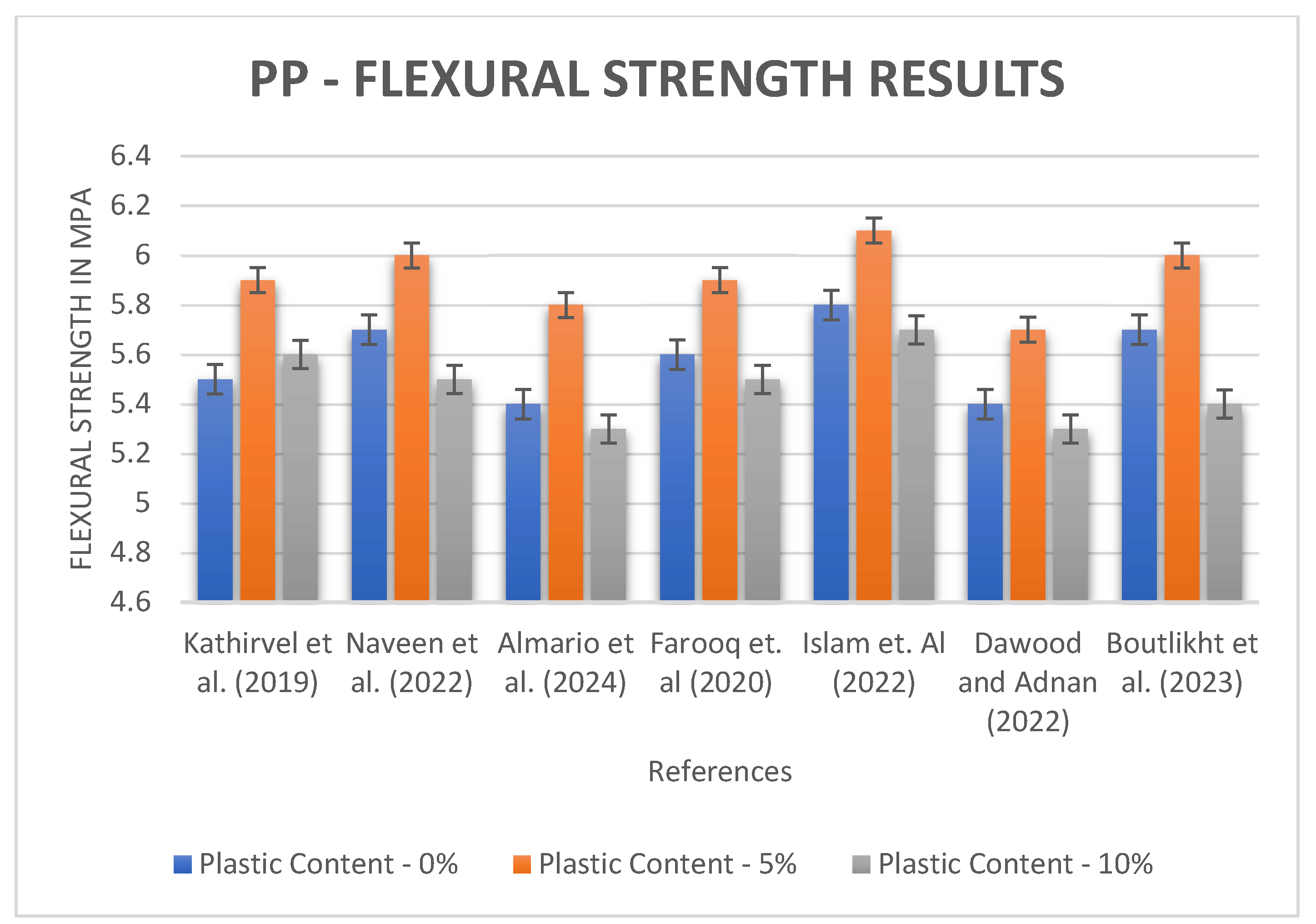
Studies consistently indicate that the optimal replacement levels for maximizing flexural strength in polypropylene-enhanced concrete range from 10% to 30% (See Figure 12), depending on the form of PP:
- Polypropylene fibers: The optimal content for improving flexural strength is typically between 1.25%-5%, beyond which the fibers may cause poor distribution within the matrix, leading to a reduction in performance [32].
- Polypropylene pellets: For polypropylene pellets, 30% replacement was found to be the most effective for improving flexural strength, resulting in a 34.8% increase compared to conventional concrete [37]. This makes PP pellets particularly suitable for pavements and flooring systems, where flexural performance is critical.
- Recycled polypropylene waste: While 10%-20% replacement of coarse aggregates with recycled polypropylene provides moderate improvements in flexural strength, exceeding this percentage generally results in diminishing returns due to weak bonding and increased void content [5].
Polypropylene pellets also enhance flexural strength, with the greatest improvement observed at 30% replacement, making them suitable for applications that require high resistance to bending forces. Recycled polypropylene waste, while effective at lower replacement levels, offers more moderate improvements. Overall, polypropylene-enhanced concrete offers substantial benefits in terms of crack resistance, ductility, and durability, making it suitable for non-structural applications such as pavements, sidewalks, and lightweight slabs [5,7,32].
4. Discussion
The incorporation of waste plastics such as HDPE, LDPE, PVC, and PP into concrete mixtures has shown significant potential for improving environmental sustainability by reducing plastic waste and the reliance on natural aggregates. However, while these materials offer environmental benefits, their effects on the mechanical properties of concrete, particularly for rigid pavement applications, vary depending on the type of plastic, the percentage used, and the concrete mix design.
The reviewed studies demonstrate that HDPE, when used in moderate amounts (around 5-10%), can enhance flexural strength, with an increase observed in many studies such as Shanmugapriya and Santhi (2017) and Biswas (2020), who reported improvements up to 56.4% at 10% HDPE content [20,21]. However, excessive incorporation of HDPE (beyond 10%) tends to reduce both compressive and flexural strength, primarily due to the hydrophobic nature of HDPE and poor bonding with the cement matrix [17,18]. These findings suggest that while HDPE has potential for use in non-structural applications, careful optimization of its content is essential to balance strength and durability.
Similarly, LDPE incorporation in concrete shows a consistent trend of reduced mechanical strength at higher substitution levels. Studies like those by Vivek et al. (2024) and Radhi et al. (2021) indicate that LDPE can cause a reduction in both compressive and tensile strengths, with a drop of up to 57.8% in tensile strength observed when LDPE content reaches 20% [25,17]. This reduction is attributed to the weak bonding between LDPE particles and the cementitious materials, which introduce voids and compromises the material’s ability to bear loads. However, lower levels of LDPE (5-10%) still present a viable option for non-structural uses where mechanical strength is not the primary concern [29].
In contrast, PVC-modified concrete generally exhibits a more significant reduction in both compressive and tensile strengths across the board. The hydrophobicity of PVC limits its ability to bond effectively with the cement matrix, leading to significant reductions in tensile strength, as observed in studies by Dawood and Adnan (2022) and Boutlikht et al. (2023) [32,30]. Despite these challenges, the optimal PVC content of 5-10% could still be utilized in applications such as sidewalks and pavement blocks where load-bearing requirements are lower [30,31]. More research is needed to develop surface treatments or admixtures that can improve the bonding of PVC particles with cementitious materials to unlock its full potential.
Polypropylene (PP) has shown promise in enhancing concrete’s mechanical properties, particularly in terms of crack resistance and flexural strength. Research by Md. Jahidul Islam et al. (2022) demonstrates that PP can improve compressive and flexural strengths when used at levels up to 20%, with a reported increase of 31.75% in compressive strength at optimal PP content [34,37]. However, like other plastics, excessive PP content reduces strength due to poor interfacial bonding with the cement [35]. PP fibers have also shown potential in improving flexural performance by distributing stresses more effectively, making them suitable for rigid pavement applications that require enhanced bending resistance [36].
5. Conclusions
This review has explored the mechanical properties of concrete incorporating different types of waste plastics—HDPE, LDPE, PVC, and PP—for rigid pavement applications. The results from various studies demonstrate that the use of these waste plastics in concrete can offer significant environmental and economic benefits, particularly in reducing plastic waste and conserving natural aggregates. However, the mechanical performance of concrete modified with waste plastics is highly dependent on the type of plastic, its content, and the mix design.
HDPE and PP have shown potential for improving flexural strength and crack resistance at moderate replacement levels (5-10%), making them suitable for non-structural applications in rigid pavements. On the other hand, LDPE and PVC tend to reduce both compressive and tensile strengths, especially at higher content levels, due to their hydrophobic nature and weak bonding with cementitious materials. Despite these challenges, these plastics can still be viable in certain applications, provided their content is optimized for balancing mechanical performance and sustainability.
The key challenge remains enhancing the bonding between plastic particles and the cement matrix to prevent significant reductions in strength. Techniques such as surface treatments or the development of hybrid mixes may provide solutions to this problem. Future research should focus on addressing these issues and evaluating the long-term durability of plastic-modified concrete under real-world conditions.
Author Contributions
Project leader and supervision [N.S.M.], writing original draft [A.D.S.], data analysis [A.D.S.], review and editing [A.D.S.] and [ N.S.M.], resources and validation [A.D.S.] and [ N.S.M.], funding [ N.S.M.].
Funding
This research received no external funding.
Institutional Review Board Statement
Not applicable.
Informed Consent Statement
Not applicable.
Data Availability Statement
Not applicable.
Acknowledgments
Guidance and support received from the school of engineering Edith Cowan university is highly acknowledged.
Conflicts of Interest
The authors declare no conflict of interest.
References
- Nilimaa, J. Smart Materials and technologies for sustainable concrete construction. Developments in the Built Environment 2023, 15, 100177. [Google Scholar]
- Vallero, D.A. Chapter 2 – Green Engineering and Sustainable Design Aspects of Waste Management. Waste: A Handbook for Management 2011; pp. 11-21. [CrossRef]
- Australian National Waste Report. Retrieved from Department of Agriculture, Water and the Environment, Australian Government 2020. 2020. Available online: https://www.environment.gov.
- Diaconu, L.D.; Rujanu, M.; Groll, L. Clay - Ecological Natural Binder. Procedia Engineering 2017, 181, 391–395. [Google Scholar] [CrossRef]
- Islam, M.J.; Shahjalal, M.; Haque, N.M.A. Mechanical and durability properties of concrete with recycled polypropylene waste plastic as a partial replacement of coarse aggregate. Journal of Building Engineering 2022, 54, 104597. [Google Scholar] [CrossRef]
- Marappan, K.; D, S.; K, S. Experimental investigation on strength properties of concrete using polypropylene pellets. International Research Journal of Multidisciplinary Technovation, 2019, 1, 509-516. [CrossRef]
- Latifi, M.; Mardani, U.; Altun, O.B. Effect of the addition of polypropylene fiber on concrete properties. Journal of Adhesion Science and Technology 2022, 1-27, 1922221.
- Naveen, D.C.; Naresh, K.; Keerthi Gowda, B.S.; G, M.S.R.; Durga Prasad, C.; Shanmugam, R. Effects of Polypropylene Waste Addition as Coarse Aggregates in Concrete: Experimental Characterization and Statistical Analysis. Advances in Materials Science and Engineering 2022, pp. 1-11, 7886722.
- Abu-Saleem, M.; Zhuge, Y.; Hassanli, R.; Ellis, M.; Rahman, M.; Levett, P. Evaluation of concrete performance with different types of recycled plastic waste for kerb application. Construction and Building Materials 2021, 293, 123477. [Google Scholar] [CrossRef]
- Askar, M.k.; Al-Kamaki, Y.S.S.; Hassan, A. Utilizing Polyethylene Terephthalate PET in Concrete: A Review. Polymers 2023, 15(15), 3320. [Google Scholar] [CrossRef] [PubMed]
- Dolores, A.J.S.; Lasco, J.D.; Bertiz, T.M.; Lamar, K.M. Compressive Strength and Bulk Density of Concrete Hollow Blocks (CHB) Infused with Low-density Polyethylene (LDPE) Pellets. Civil Engineering Journal 2020, 6(10), 1932-1943, 03091593.
- Almohana, A.I.; Abdulwahid, M.Y.; Galobardes, I.; Mushtaq, J.; Almojil, S.F. Producing sustainable concrete with plastic waste: A review. Environmental Challenges 2022, 9, 100626. [Google Scholar] [CrossRef]
- Devi, R.; Aravinda, K. , Kumar, A.; Lakhanpal Sorabh, Vandana Arora Sethi, Muhamed, H.; Dinesh Kumar Yadav. Use of plastic waste as recycled material in the concrete. E3S Web of Conferences 2024, 529, 01035–01035. [Google Scholar]
- Kamaruddin, M.A.; Abdullah, M.M.A.; Zawawi, M.H.; Zainol, M.R.R.A. Potential use of Plastic Waste as Construction Materials: Recent Progress and Future Prospect. IOP Conference Series: Materials Science and Engineering 2017, 267, 012011. [Google Scholar] [CrossRef]
- Kocher, K. Yousif. An investigation of the use of plastic waste as aggregate in concrete. Journal of Geoinformatics & Environmental Research 2022, 3(02), pp. 46-57, 30248.
- Tabish Wani, Syed Afsar Quadri Pasha, Sanskar Poddar, & Balaji H V. A Review on the use of High-Density Polyethylene (HDPE) in Concrete Mixture. International Journal of Engineering and Research & Technology 2020, V9(05), pp. 861-864, 050569.
- Radhi, M.M.; Khalil, W.I.; Abdulqader, S.S. Performance of Sustainable Concrete Containing HDPE Plastic Wastes as Coarse Aggregate: Minor Review. IOP Conference Series: Materials Science and Engineering 2021, 1058(1), 012064.
- Tamrin, & Nurdiana, J. The Effect of Recycled HDPE Plastic Additions on Concrete Performance. Recycling 2021, 6(1), 6010018. 2021; 6, 1, 6010018.
- Abbas, S.N.; Qureshi, M.I.; Abid, M.M.; Tariq, M.A.U.R.; Ng, A.W.M. An Investigation of Mechanical Properties of Concrete by Applying Sand Coating on Recycled High-Density Polyethylene (HDPE) and Electronic-Wastes (E-Wastes) Used as a Partial Replacement of Natural Coarse Aggregates. Sustainability 2022, 14(7), 4087. [Google Scholar] [CrossRef]
- Shanmugapriya, M. Shanmugapriya, M., & M. Helen Santhi. Strength and Chloride Permeable Properties of Concrete with High Density Polyethylene Wastes. International Journal of Chemical Sciences 2017, 319207621.
- Biswas, S. Determination of Strength Characteristics of Concrete by Partial replacement of aggregates with e-waste and hdpe granules. J. Xian University Architectural Technology 2020, 12, 90-118.
- Abeysinghe, S.; Gunasekara, C.; Bandara, C.; Nguyen, K.; Dissanayake, R.; Mendis, P. Engineering Performance of Concrete Incorporated with Recycled High-Density Polyethylene (HDPE)—A Systematic Review. Polymers 2021, 13(11), 1885. [Google Scholar] [CrossRef] [PubMed]
- Badache, A.; Benosman, A.S.; Senhadji, Y.; Mouli, M. Thermo-physical and mechanical characteristics of sand-based lightweight composite mortars with recycled high-density polyethylene (HDPE). Construction and Building Materials 2018, 163, pp. 40-52, 12069.
- Lopez, N.; Collado, E.; Diacos, L.A.; Morente, H.D. Evaluation of Pervious Concrete Utilizing Recycled HDPE as Partial Replacement of Coarse Aggregate with Acrylic as Additive. MATEC Web of Conferences 2019, 258, 01018. [Google Scholar]
- Ni Luh Setyarini, & Tajudin, A. Characteristics of Asphalt Concrete Mixed Using Aggregates Coated by Low Density Polyethylene (LDPE). Plastic Waste 2019, 10.2991.
- Nursyamsi, N.; Indrawan, I.; Ramadhan, P. The influence of the usage of LDPE plastic waste as fine aggregate in light concrete bricks. MATEC Web of Conferences 2019, 258, 01006. [Google Scholar] [CrossRef]
- Bahij, S.; Omary, S.; Feugeas, F.; Faqiri, A. Fresh and hardened properties of concrete containing different forms of plastic waste – A review. Waste Management 2020, 113, pp. 157–175, 05048. [Google Scholar] [CrossRef]
- Saikia, N.; de Brito, J. Mechanical properties and abrasion behavior of concrete containing shredded PET bottle waste as a partial substitution of natural aggregate. Construction and Building Materials 2014, 52, pp. 236–244, 11049. [Google Scholar] [CrossRef]
- Vivek, S.; Hari Krishna, P.; Gunneswara Rao, T.D. A study on the mechanical behavior of concrete made with partial replacement of fine aggregate with waste plastic (LDPE). Materials Today: Proceedings 2023, 04059.
- Boutlikht, Mourad.; Hebbache, Kamel.; Douadi, Abdellah.; Tabchouche, Seifeddine. Assessment of the PVC Waste Addition Effect on the Concrete Mechanical Performance. Revue Des Composites et Des Matériaux Avancés 2023, 33(2), pp. 85-94, 330203.
- Jaramillo de León, O.P.; Cando Tipán, W.O.; Quel Guerón, A.F.; Flores David, J.D. Analysis of the Physical-Mechanical Properties of Concrete Using Recyled PVC and Aggregates. Proceedings of International Structural Engineering and Construction 2024, 11(1), 14455. [Google Scholar] [CrossRef]
- Dawood, A.; Hamsa Mahir Adnan. Mechanical Properties of Concrete Contained Recycled PVC Additives. Misan Journal of Engineering Sciences 2022, 1(1), pp. 1-15, 61263.
- Chandrasekaran, P.; Nirmalkumar, K.; Uthra, R.; Vihash Kumar, K.S.; Vishnu, R. Study on Construction of Roads Using PVC Wastes-review. IOP Conference Series: Materials Science and Engineering 2021, 1145(1), 012105.
- Islam, Md. J. Comparative Study of Concrete with Polypropylene and Polyethylene Terephthalate Waste Plastic as Partial Replacement of Coarse Aggregate. Advances in Civil Engineering 2022, pp. 1-13, 4928065.
- Desireddy Chinnappareddy Naveen, K.; Naresh, Gowda, K.; Reddy, S.; C. Durga Prasad, & Shanmugam, R. Effects of Polypropylene Waste Addition as Coarse Aggregates in Concrete: Experimental Characterization and Statistical Analysis. Advances in Materials Science and Engineering 2022, pp. 1-11, 7886722.
- Almario, C.V.; Mora, O.; Mattos-Rodríguez, A.; Loaiza, M.F.; Restrepo, D.B.; Maldonado, R.S.; Saldarriaga, C.A.F.; Millán, S.G.; Urueta, S.V.; Naranjo, T. Effect of Incorporation of Recycled Polypropylene Plastic on Mechanical Properties of Concrete. Civil Engineering and Architecture 2024, 12(3A), pp. 2198-2211, 121319.
- Kathirvel, M.; Sowndharya, D.; Sudharson, K. Experimental investigation on strength properties of concrete using polypropylene pellets. International Research Journal of Multidisciplinary Technovation 2019, pp. 509-516, 34256.
Figure 1.
The Compressive Strength of HDPE in various researchers.
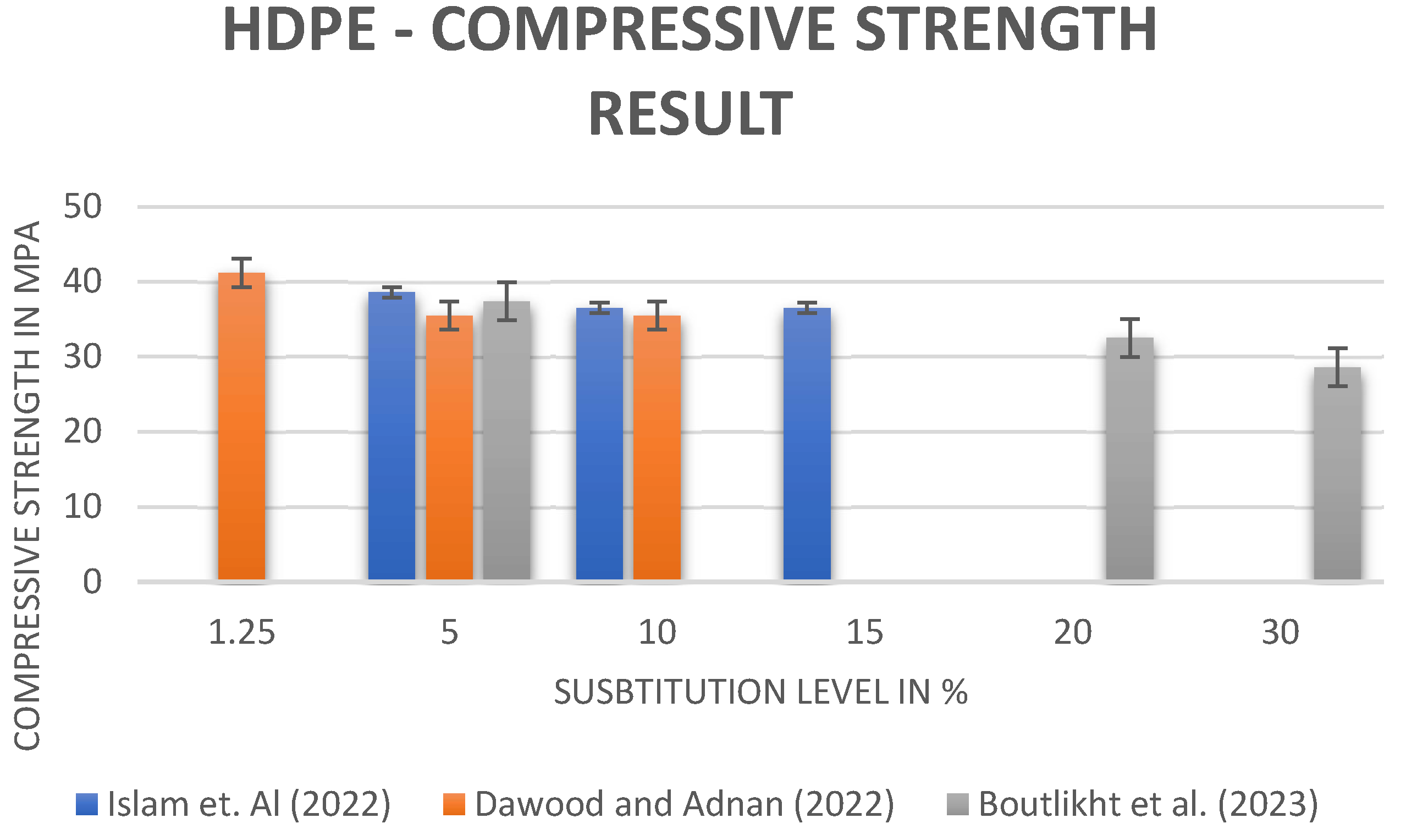
Figure 2.
The Splitting Tensile Strength of HDPE in various researchers.
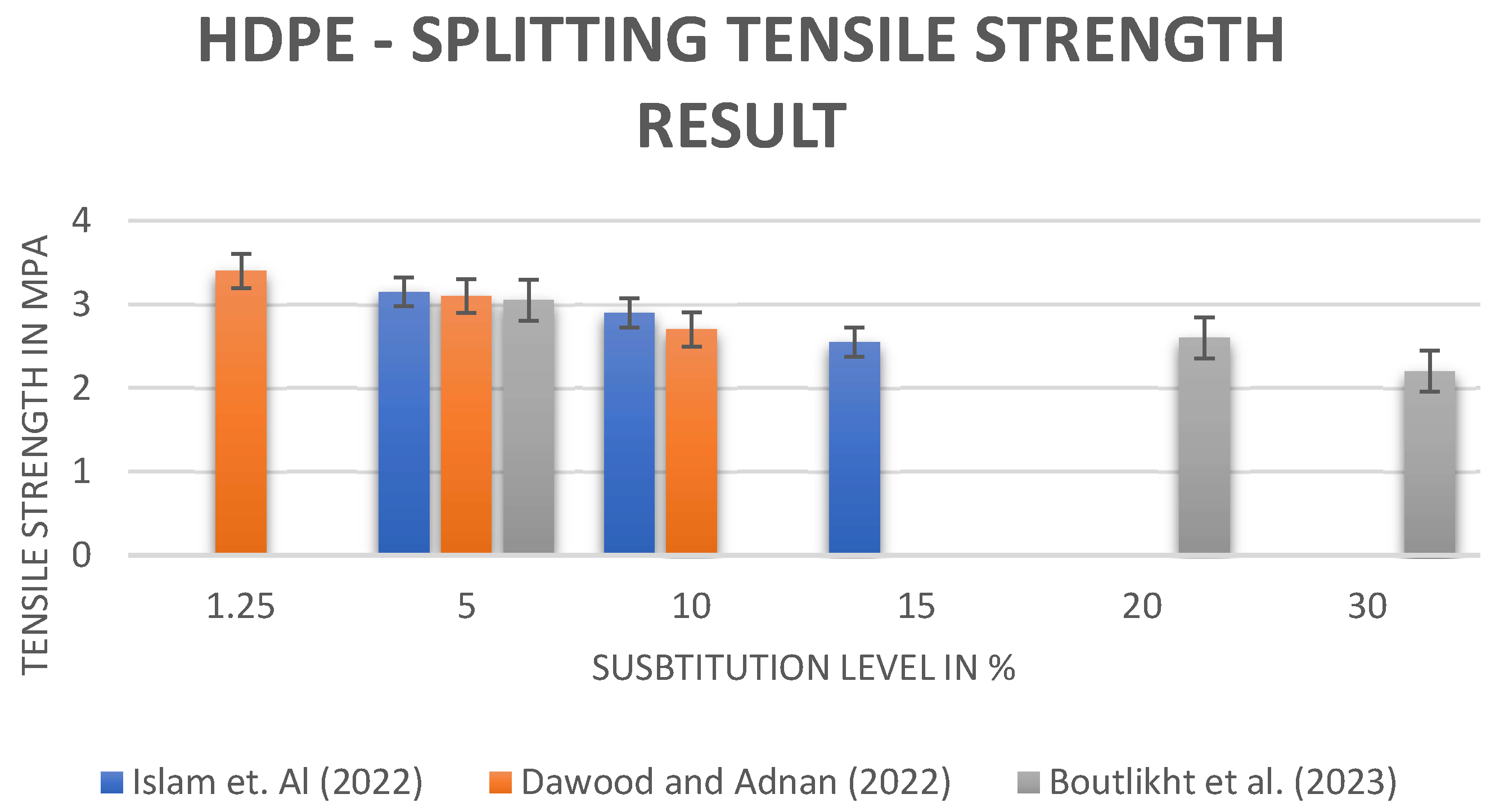
Figure 3.
The Flexural Strength of HDPE in various researchers.
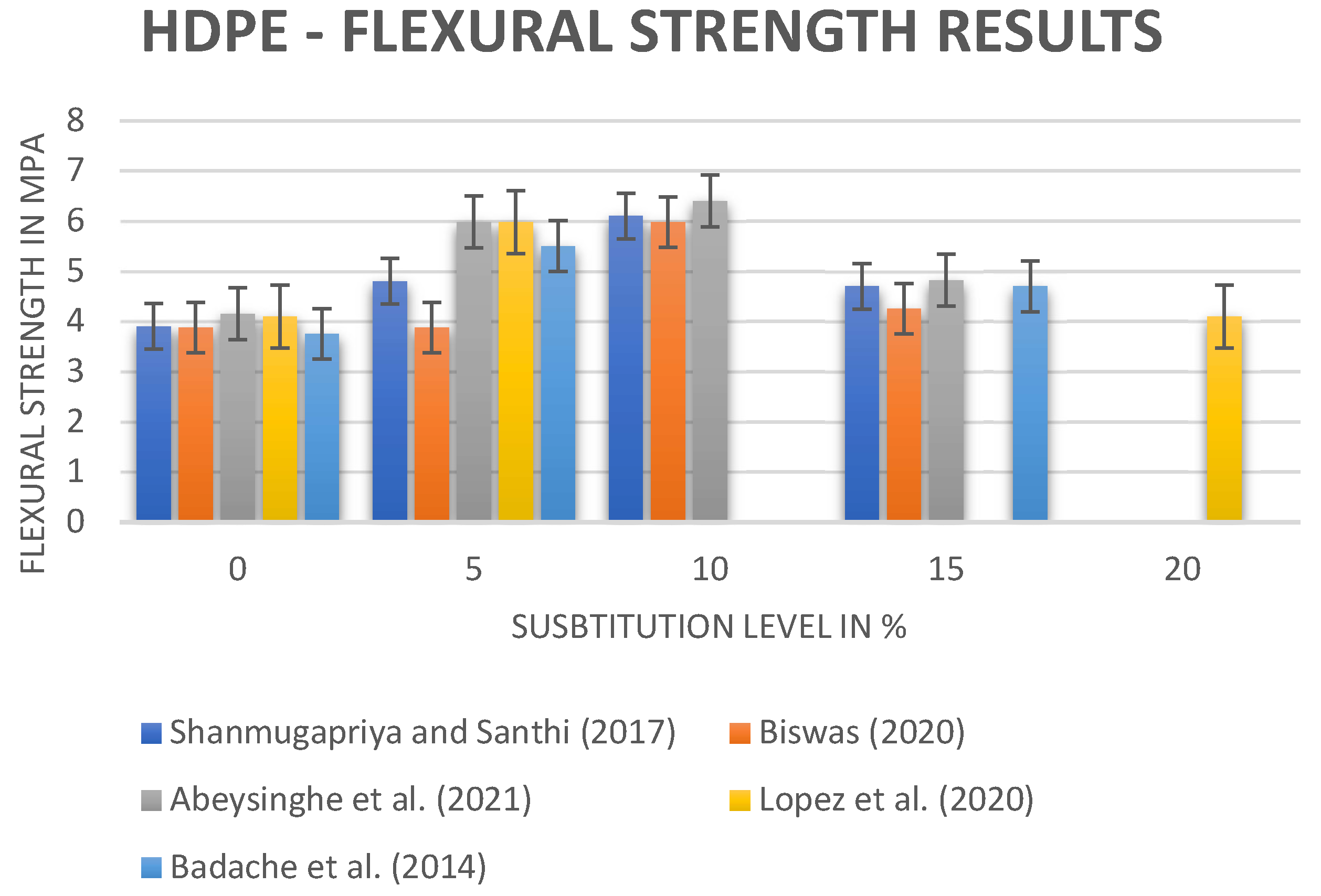
Figure 4.
The Compressive Strength of LDPE in various researchers.
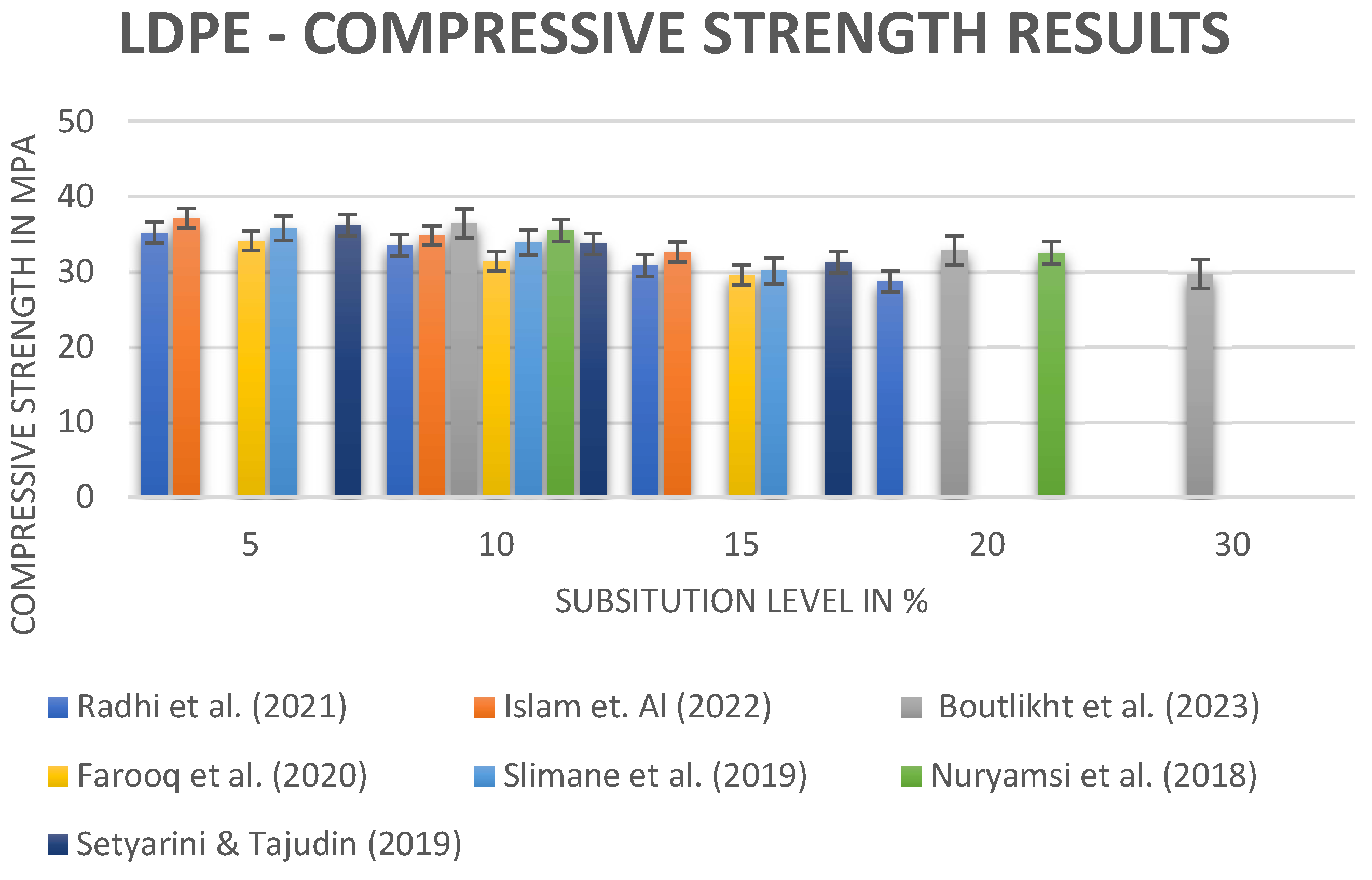
Figure 5.
The Splitting Tensile Strength of LDPE in various researchers.
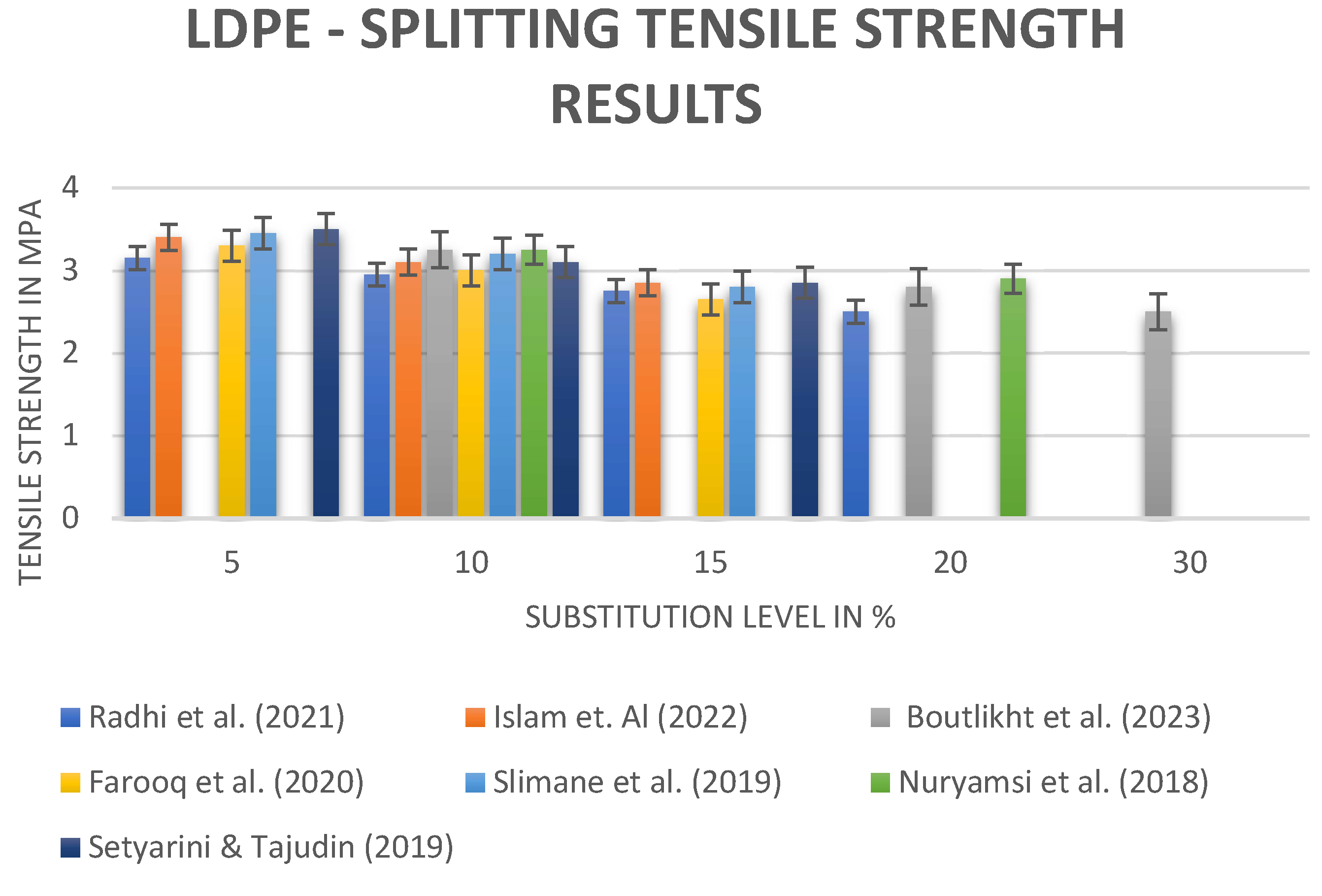
Figure 6.
The Flexural Strength of LDPE in various researchers.
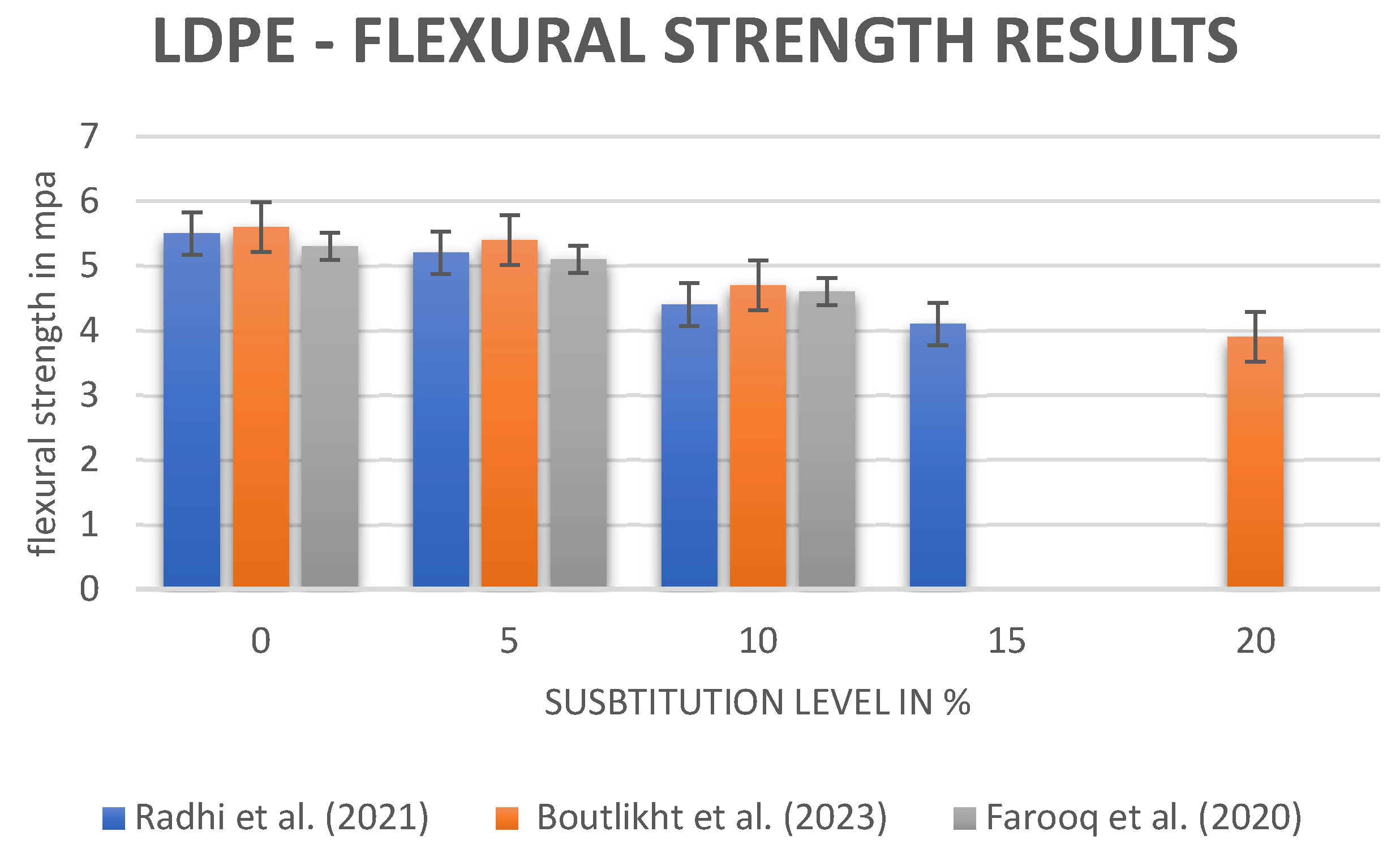
Figure 7.
The Compressive Strength of PVC in various researchers.
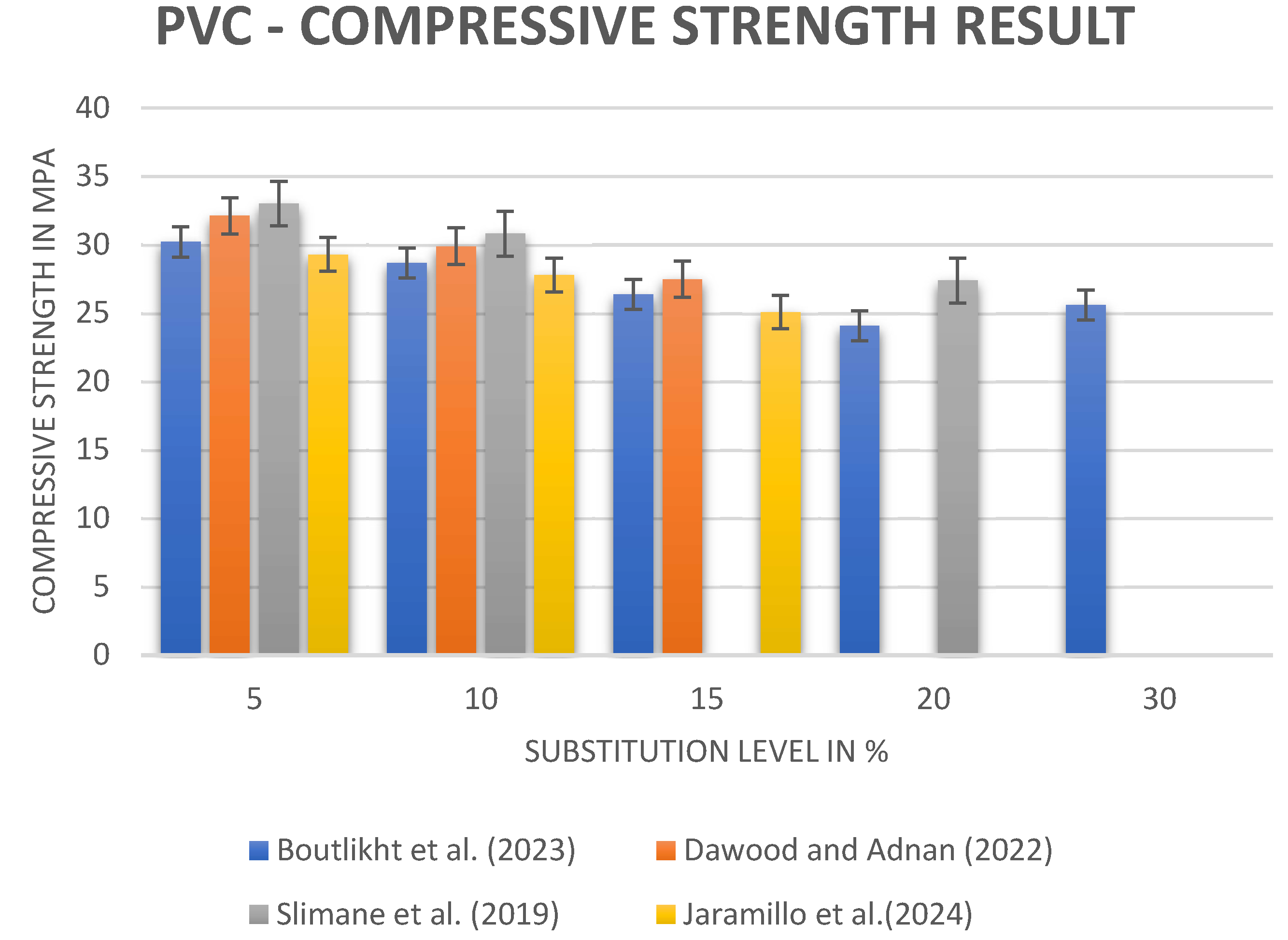
Figure 8.
The Splitting Tensile Strength of PVC in various researchers.
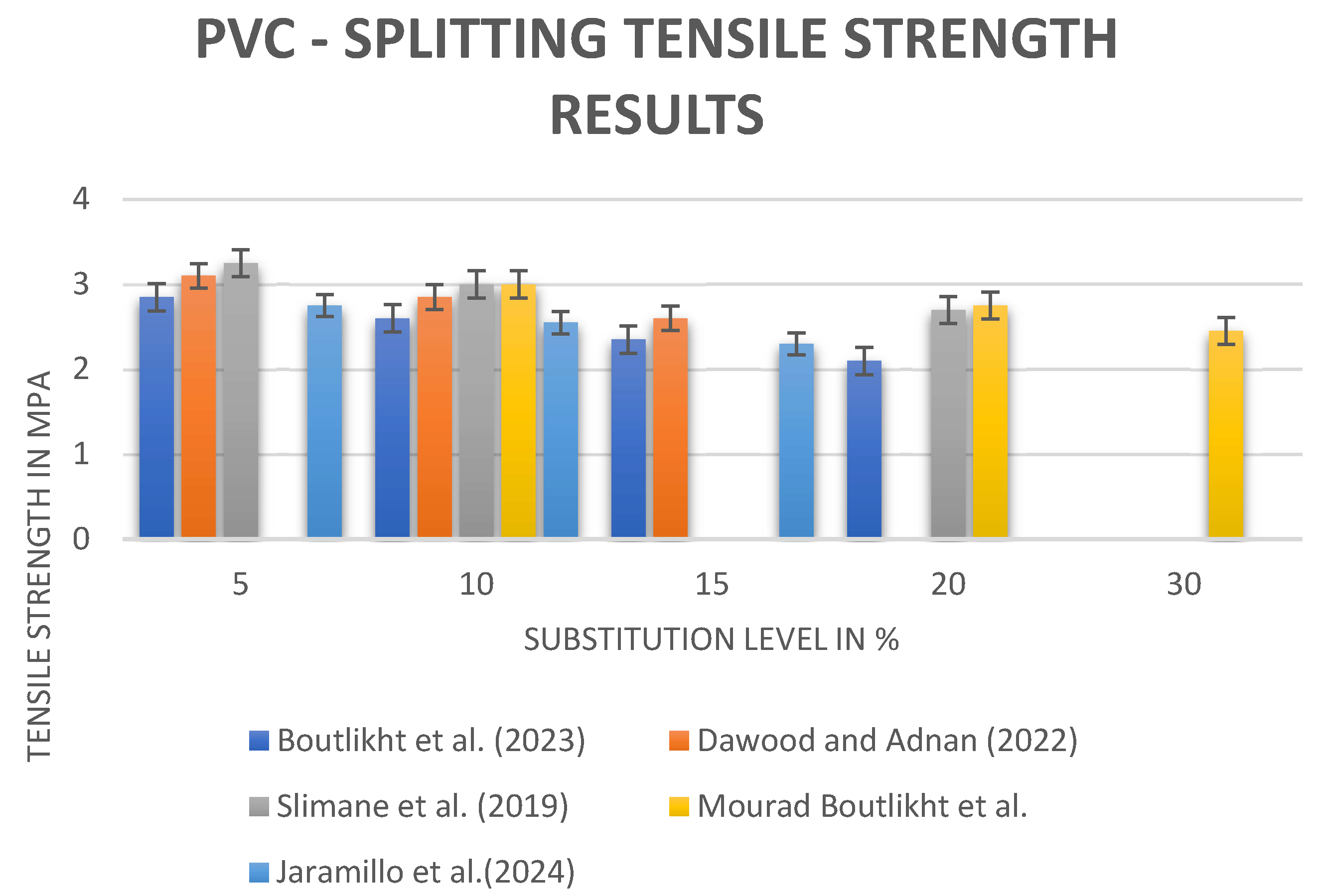
Figure 9.
The Flexural Strength of PVC in various researchers.
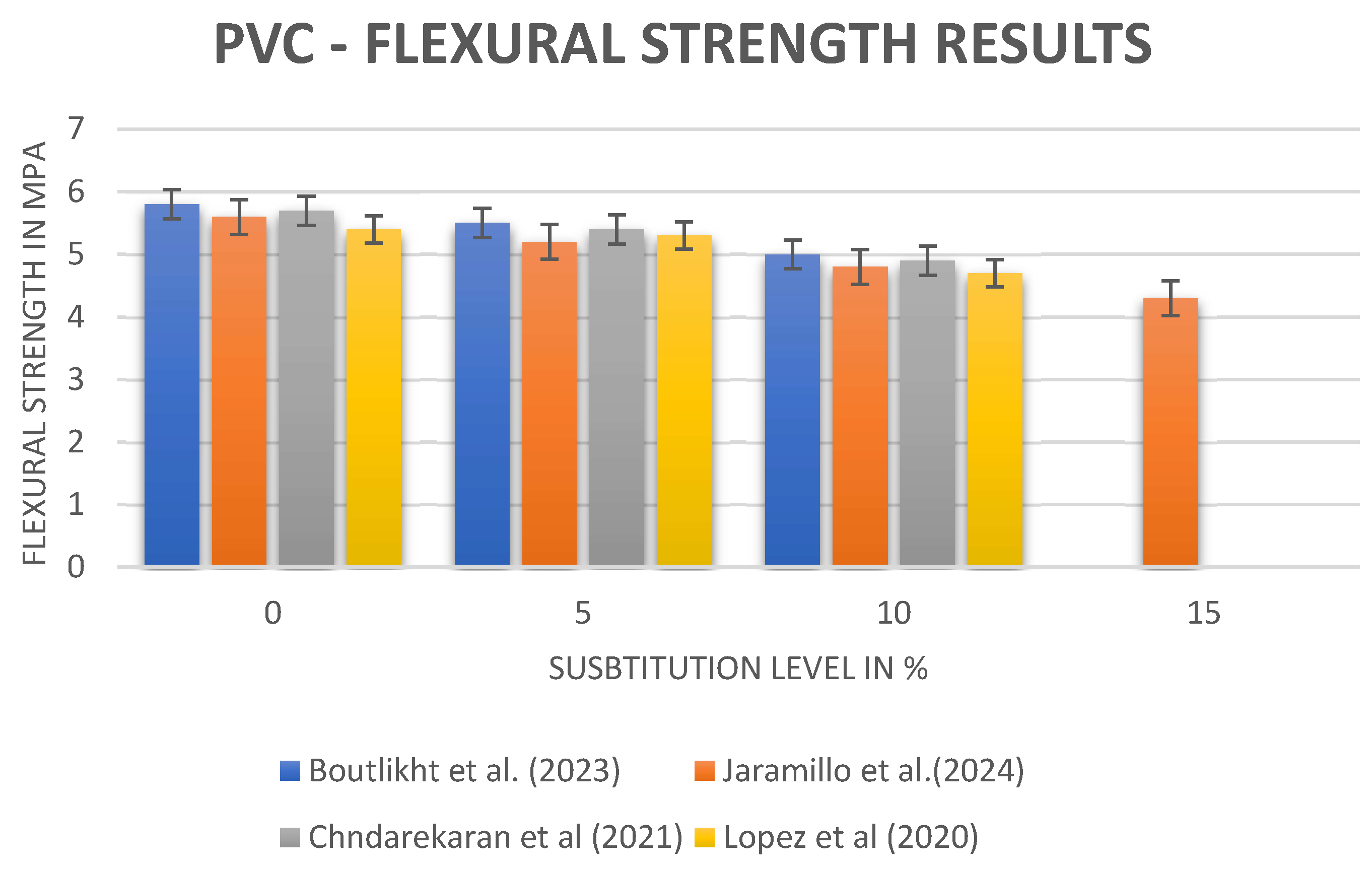
Figure 10.
The Compressive Strength of PP in various researchers.
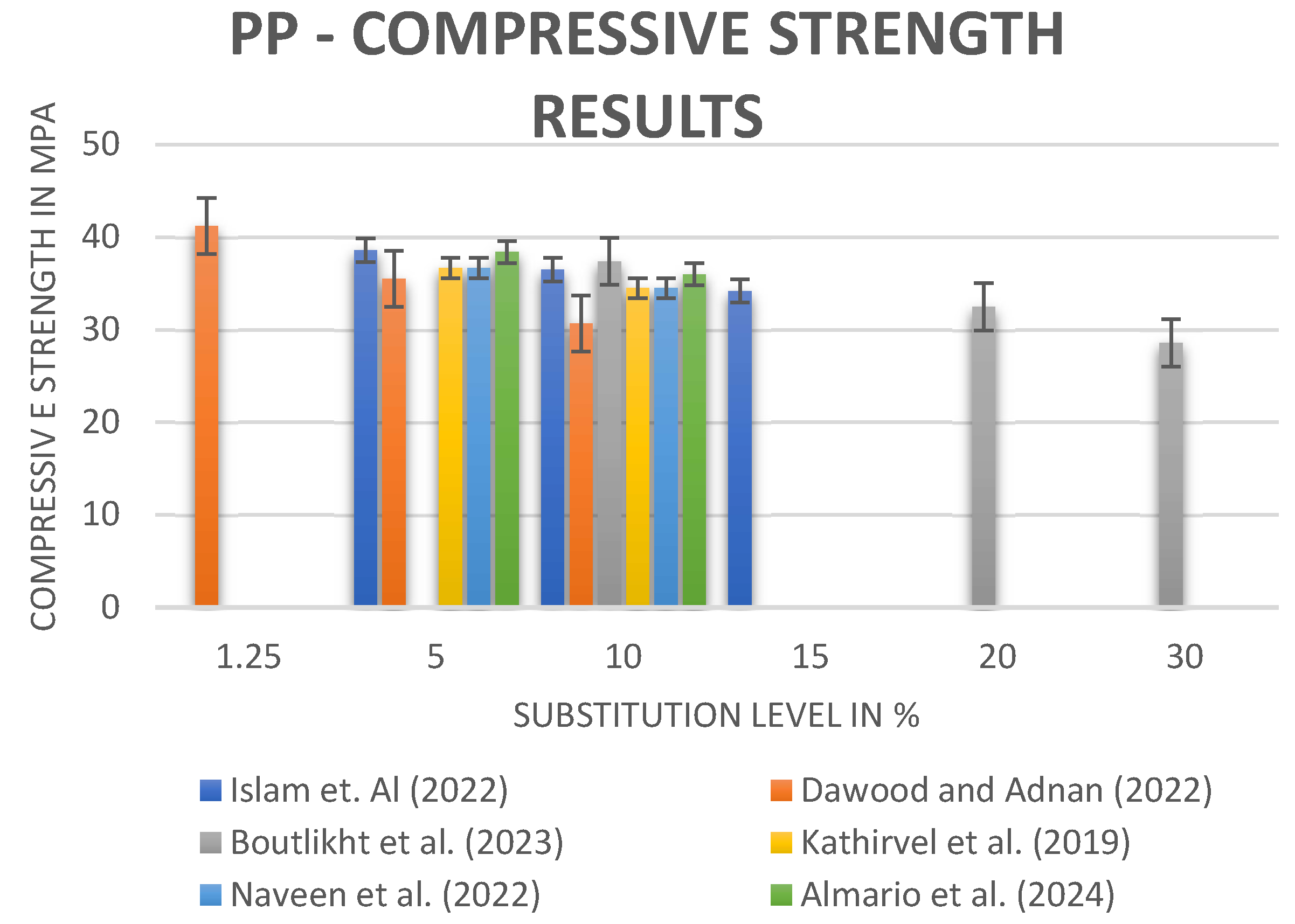
Figure 11.
The Splitting Tensile Strength of PP in various researchers.
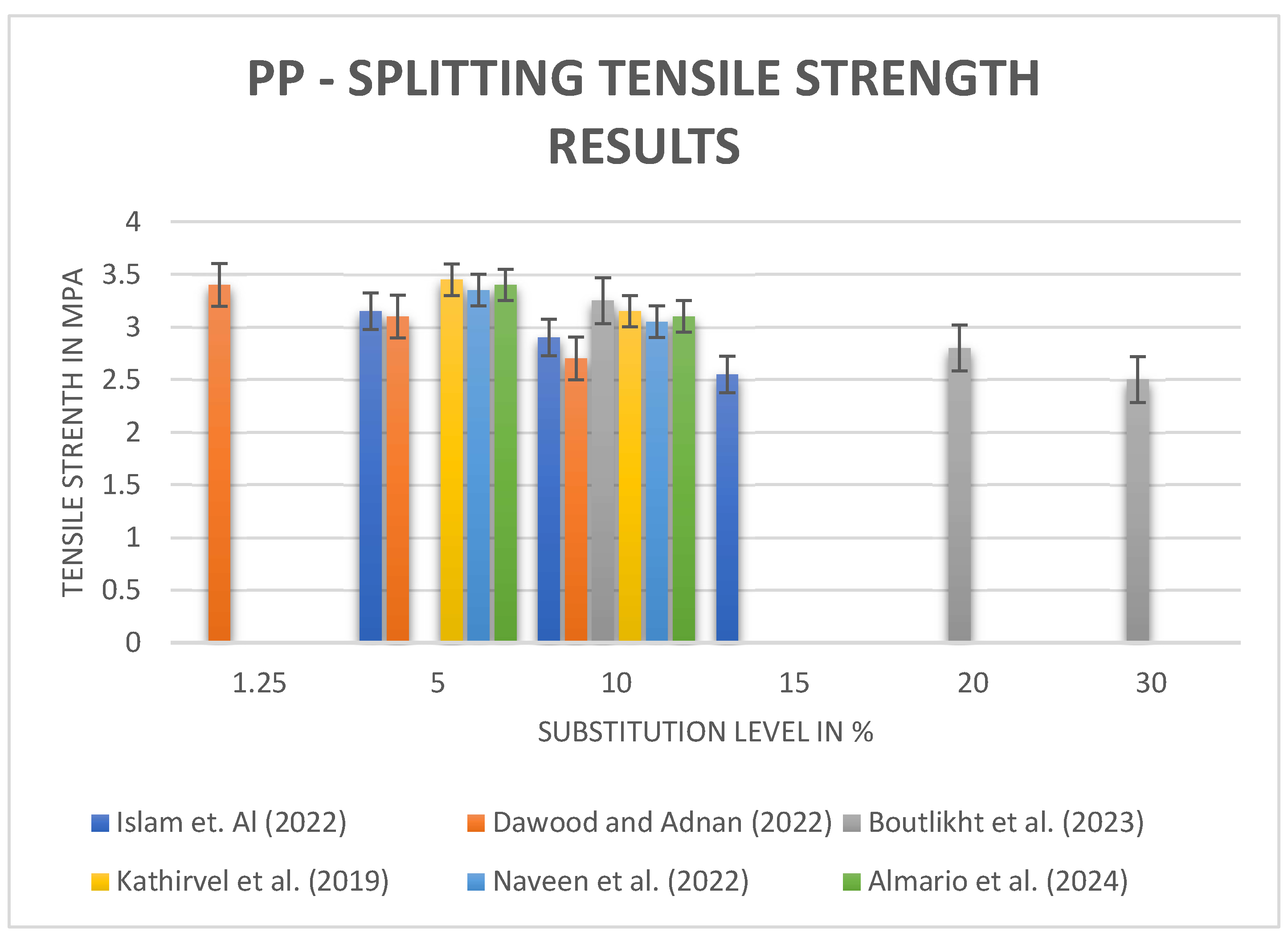
Figure 12.
The Flexural Strength of PP in various researchers.
Disclaimer/Publisher’s Note: The statements, opinions and data contained in all publications are solely those of the individual author(s) and contributor(s) and not of MDPI and/or the editor(s). MDPI and/or the editor(s) disclaim responsibility for any injury to people or property resulting from any ideas, methods, instructions or products referred to in the content. |
© 2024 by the authors. Licensee MDPI, Basel, Switzerland. This article is an open access article distributed under the terms and conditions of the Creative Commons Attribution (CC BY) license (https://creativecommons.org/licenses/by/4.0/).
Copyright: This open access article is published under a Creative Commons CC BY 4.0 license, which permit the free download, distribution, and reuse, provided that the author and preprint are cited in any reuse.