

Submitted:
11 October 2024
Posted:
11 October 2024
You are already at the latest version
Abstract
The revolution of physiotherapy is achieved by the application of artificial intelligence (AI) in medical rehabilitation programs. While the integration of virtual reality (VR) and robotics has already marked significant strides in the industry, AI is taking patient rehabilitation to new heights. The integration of AI, VR and robotics in physiotherapy linked to a significant leap forward in patient rehabilitation. These technologies not only increase the effectiveness of the treatment, but also make it more accessible and attractive. In this article, we propose to study the use of AI in the management of medical rehabilitation programs, and we present a comprehensive survey of the latest empirical studies, highlighting AI-based technologies that facilitate the rehabilitation process, trying to demonstrate that the integration of AI in medical rehabilitation programs offers a transformative approach to patient care.
Keywords:
artificial intelligence
; machine learning
; rehabilitation
; recovery program management
1. Introduction
Rehabilitation is an essential component of both local and global healthcare services, complementing treatment, palliative care, disease prevention, and health promotion. It plays a crucial role in helping individuals—be they older adults, young adults, or children—achieve maximum independence in daily activities and participate actively in work, education, recreation, and other meaningful pursuits. In recent years, the field of Artificial Intelligence (AI) has seen significant advancements, and these developments have increasingly benefited various aspects of rehabilitation [1].
This paper aims to explore the myriad advantages AI offers to rehabilitation and examine its transformative impact on the rehabilitation process [2].
We present a comprehensive survey of the latest empirical studies, highlighting AI-based technologies that facilitate the rehabilitation process. The review categorizes technological solutions into seven distinct areas, providing illustrative examples of practical applications. Additionally, the implications of these findings for both research and practice are critically discussed.
While most AI applications in rehabilitation are still in their early stages [3], they continue to evolve, offering new opportunities and advancements. Finally, we discuss various challenges and propose future research directions to further enhance the integration of AI in rehabilitation programs [4].
2. Methods
AI in rehabilitation can augment the patient care by aiding physiotherapists in several ways e.g. providing a thorough assessment, forecasting patient’s performance, establishing a diagnosis. AI in medical and rehabilitation practices can also be applied to problem solving, x-ray diagnosis and protocols for best practice [5].
Advance assessment of the potential functional improvement of patients undergoing
a rehabilitation program is crucial in developing precision medicine tools and patient-oriented rehabilitation programs, as well as in better allocating resources in hospitals [6].
The study focuses on critical aspects of rehabilitation that stand to gain from AI, including personalized rehabilitation applications, assistive rehabilitation, neurological and developmental disorder rehabilitation, virtual reality rehabilitation, neurodegenerative disease rehabilitation, and cardiovascular telerehabilitation.
2.1. Personalized Rehabilitation Applications
Personalized rehabilitation applications represent a transformative approach in the management of medical rehabilitation programs, leveraging AI and other advanced technologies to tailor treatments to individual patient needs. This approach has shown significant promise in improving patient outcomes by offering customized, responsive, and accessible rehabilitation solutions.
Wearable sensors and mobile health applications are pivotal in personalized rehabilitation. These devices provide continuous monitoring and real-time feedback on patients' physical activities, enabling more precise assessments and adjustments to therapy protocols. By capturing detailed movement data in naturalistic environments, these technologies enhance the ability to identify specific movement dysfunctions and improve the accuracy of treatment plans [7].
2.2. Rehabilitation Robots
Rehabilitation robots are instrumental in delivering personalized therapy, particularly in telerehabilitation contexts. These robots provide physical assistance and data-driven feedback, which are crucial for patients with severe impairments. However, current challenges include the precision in voluntary motor effort detection and the effective promotion of neuroplasticity. Continuous advancements are being made to improve the effectiveness and usability of these robotic systems in home settings [7,8].
Robotics combined with AI is transforming the rehabilitation landscape. For instance, the use of cable-driven robots and exoskeletons has shown significant benefits in post-stroke rehabilitation and for patients with spinal cord injuries. These robotic systems facilitate precise and repetitive movements, which are crucial for neural re-education and recovery [9].
2.3. Neurological and Developmental Disorder Rehabilitation
The integration of Artificial Intelligence (AI) in the rehabilitation of neurological and developmental disorders has shown promising advancements from 2020 to 2024. AI technologies are being leveraged to improve diagnostics, personalize treatment plans, and enhance rehabilitation processes for various neurological and developmental conditions.
2.3.1. Neurological Disorder Rehabilitation:
AI algorithms, including machine learning and deep learning, are increasingly utilized in analyzing neuroimaging data. These technologies help in the accurate and timely diagnosis of conditions such as stroke, brain tumors, and spinal disorders by identifying patterns that may not be immediately apparent to human clinicians [10].
AI enables the customization of rehabilitation plans based on individual patient data. By integrating vast amounts of clinical data, AI can tailor therapeutic exercises and monitor patient progress, thereby optimizing outcomes and reducing recovery times
AI is used to predict disease progression and treatment responses. This is particularly beneficial for managing chronic neurological conditions, as it helps clinicians make informed decisions about modifying treatment plans in real time based on predictive models [10].
2.3.2. Developmental Disorder Rehabilitation
AI-driven digital platforms, such as MuLiMi, are designed for the early identification of developmental language disorders in children. These tools use AI to administer and score language tasks, making the screening process efficient and accurate [11,12].
The COVID-19 pandemic has accelerated the adoption of telehealth solutions. AI-powered tele-assessment tools, like TeleFE, are used to evaluate executive functions in children remotely, ensuring continuous care without the need for in-person visits [13].
For children with autism spectrum disorder (ASD), AI-based emotion recognition software is being developed to analyze facial expressions and other non-verbal cues. These tools assist therapists in understanding and improving the emotional and social skills of children with ASD [14].
AI is also employed in creating interactive educational applications that aid in the cognitive development of children with various developmental disorders. These applications adapt to the child's learning pace and provide engaging ways to develop essential skills [15].
Overall, the application of AI in the rehabilitation of neurological and developmental disorders offers a promising avenue for enhancing patient care through improved diagnostics, personalized treatments, and innovative rehabilitation techniques. The continued development and integration of these technologies hold great potential for future advancements in this field.
2.4. Virtual Reality Rehabilitation
VR and XR technologies have revolutionized the rehabilitation landscape by creating immersive environments for patients to engage in therapeutic activities. These technologies not only increase patient engagement but also improve motor control through enhanced sensory feedback. AI-driven adaptive environments within XR systems dynamically adjust therapy tasks based on real-time data, ensuring that patients receive appropriately challenging exercises without being overwhelmed [16].
Upper Limb Rehabilitation in Stroke Patients VR has proven effective in upper limb rehabilitation for stroke patients. A systematic review and meta-analysis revealed that VR interventions significantly improve motor function, functional independence, and quality of life compared to conventional therapy. These VR systems range from non-immersive to fully immersive setups, offering interactive environments that motivate patients and provide real-time feedback, which is crucial for recovery [17].
Cognitive Rehabilitation for Neurological Conditions Studies have demonstrated the benefits of VR in cognitive rehabilitation for patients with acquired brain injuries (ABI). VR-based systems employ serious games to train cognitive functions, offering an immersive and engaging platform that enhances user motivation and participation. A study involving 20 ABI patients found high usability and feasibility for VR interventions, indicating potential for widespread clinical application [18].
Multiplayer Immersive Systems Multiplayer VR systems facilitate social interaction and cognitive function development by enabling multiple patients to engage in collaborative tasks within a shared virtual space. This approach is particularly beneficial for social cognitive therapy, promoting social skills and providing a supportive environment for patients with conditions like autism and stroke
AI-Driven VR Innovations Recent advancements integrate AI with VR to create dynamic and personalized rehabilitation experiences. AI enhances VR by generating synthetic data, creating realistic and adaptive environments, and providing detailed user interaction analysis. These AI-driven VR solutions improve therapy effectiveness by tailoring interventions to individual patient needs and monitoring progress with precision [19].
Feasibility and User Experience The feasibility of VR-based rehabilitation tools is supported by multiple proof-of-concept trials, highlighting positive user experiences and minimal adverse effects. Studies report high levels of patient satisfaction, ease of use, and substantial interest in incorporating VR into regular rehabilitation routines, reinforcing the technology's potential to transform traditional rehabilitation practices [18].
The integration of AI in VR rehabilitation offers promising advancements in the management of various conditions, particularly in enhancing the efficacy of therapeutic interventions. As technology continues to evolve, VR systems are expected to become more sophisticated, providing highly personalized and effective rehabilitation solutions that can be widely adopted in clinical settings.
2.5. Neurodegenerative Disease Rehabilitation
The use of AI in neurodegenerative disease rehabilitation has shown considerable promise. AI technologies are being increasingly applied to support diagnosis, treatment, and management of conditions such as Alzheimer's disease, Parkinson's disease, and other neurodegenerative disorders.
AI is significantly enhancing early diagnosis through predictive analytics and machine learning models. These technologies analyze vast amounts of data, including genetic information, imaging data, and clinical records, to predict the onset and progression of neurodegenerative diseases. For example, Wang et al. developed a risk prediction model for Alzheimer's disease using demographic and clinical [20]. Similarly, Zhao et al. demonstrated the use of AI in analyzing structural MRI images for early detection of Alzheimer’s disease [21].
AI enables the customization of rehabilitation programs by tailoring them to individual patient needs. This includes adjusting therapies based on patient response and disease progression. Fabrizio et al. discussed how AI can help in creating personalized treatment regimens for Alzheimer’s patients by analyzing neuropsychological measures and other patient-specific data [22].
AI-driven cognitive training programs are being developed to support patients in maintaining cognitive function. These programs use adaptive algorithms to provide exercises that are tailored to the patient’s current cognitive abilities and adjust the difficulty based on performance. Battista et al. (2020) highlighted the effectiveness of AI in enhancing cognitive rehabilitation through neuropsychological measures [23].
Tele-rehabilitation platforms powered by AI are enabling continuous monitoring and support for patients remotely. These platforms use AI to analyze patient data in real-time, providing feedback and adjusting rehabilitation exercises accordingly. This approach is particularly beneficial for patients with limited access to in-person care [24].
AI applications in speech and motor rehabilitation involve using machine learning algorithms to improve speech recognition and motor function. AI systems can provide real-time feedback and adjust therapy exercises to improve patient outcomes. Studies have shown that AI can significantly enhance the rehabilitation process by providing precise and timely interventions [25].
Despite the promising developments, several challenges remain. These include the need for large datasets to train AI models, ensuring patient data privacy, and integrating AI technologies into existing healthcare systems. Future research should focus on addressing these challenges, improving AI algorithms, and validating AI applications through extensive clinical trials.
2.6. Cardiovascular Telerehabilitation
Cardiovascular telerehabilitation (CTR) leverages AI technologies to extend the benefits of cardiac rehabilitation beyond traditional in-person settings, offering personalized and remote care.
AI enhances the personalization of rehabilitation programs by analyzing patient data to tailor exercise regimens and monitor progress. Patients engage in supervised, home-based aerobic and resistance training, which can help them overcome physical limitations and reduce exercise-related anxiety. AI-driven applications provide real-time feedback and support, enabling continuous adjustment of exercise intensity and ensuring safety and efficacy [26].
Recent studies have demonstrated that CTR can lead to significant improvements in clinical outcomes, such as reduced resting heart rate, enhanced physical activity levels, improved muscle strength, and better nutritional status. These programs also offer high patient satisfaction due to their convenience, safety (particularly during the COVID-19 pandemic), and the individualized nature of the care provided [27].
Maintaining long-term adherence to physical activity is a common challenge in cardiovascular rehabilitation. AI-driven CTR programs show promise in sustaining exercise capacity and physical activity levels over extended periods. For instance, blended interventions combining online applications with human support have shown modest improvements in cardiovascular risk profiles, although the optimal form and duration of CTR are still under investigation
AI technologies facilitate various aspects of cardiovascular care, including digital biomarkers for disease risk assessment, AI-augmented clinical encounters, and AI-enabled high-quality community care. These technologies aim to democratize cardiovascular care by overcoming barriers related to geographic location and accessibility, thus ensuring that more patients can benefit from comprehensive rehabilitation services [28].
Despite the promising results, there are challenges that need addressing, such as selection bias in study participants, lack of long-term follow-up data, and the heterogeneity of interventions. Future research should focus on standardizing CTR interventions and developing robust outcome measures to ensure that AI applications can be effectively translated into clinical practice
These advancements underscore the potential of AI to revolutionize cardiovascular rehabilitation by providing accessible, personalized, and efficient care. As research continues to evolve, it is expected that AI-driven CTR will play a pivotal role in improving the quality of life for patients with cardiovascular diseases.
3. Results
The integration of Artificial Intelligence (AI) in the planning and management of medical rehabilitation programs is revolutionizing the field, providing enhanced outcomes across various conditions, including neurological, developmental, neurodegenerative diseases, cardiovascular rehabilitation, and more.
AI enables the customization of rehabilitation programs tailored to individual patient needs. Through machine learning algorithms and data analysis, AI can develop personalized treatment plans that adjust in real-time based on patient progress and responses. This approach has shown significant benefits in areas such as stroke rehabilitation, where AI-driven robotic systems and adaptive therapies facilitate precise and repetitive movements crucial for neural recovery
AI technologies offer superior diagnostic tools and predictive analytics, particularly in neurodegenerative and cardiovascular rehabilitation. For instance, AI models can analyze vast datasets, including imaging and genetic data, to predict disease onset and progression, enabling early intervention and better management of conditions like Alzheimer's and Parkinson's diseases
In cardiovascular telerehabilitation, AI assists in monitoring patient data remotely, predicting adverse events, and adjusting rehabilitation plans to optimize outcomes
The combination of AI and VR is creating immersive rehabilitation environments that enhance patient engagement and motivation. VR systems, driven by AI, offer interactive and adaptive therapeutic exercises that improve motor and cognitive functions in patients with neurological and developmental disorders. These technologies provide real-time feedback and adjust to the patient's needs, making rehabilitation more effective and enjoyable
AI-powered tele-rehabilitation platforms are crucial in extending care to patients who cannot access in-person therapy. These platforms use AI to deliver personalized rehabilitation exercises, monitor patient progress remotely, and provide timely feedback. The convenience and effectiveness of AI in tele-rehabilitation were particularly highlighted during the COVID-19 pandemic, ensuring continuous care despite physical restrictions
While AI applications in medical rehabilitation are still in their early stages, ongoing research and development are uncovering new opportunities. Future directions include refining AI algorithms, enhancing data integration, and addressing challenges such as data privacy and standardization of AI interventions. Continued collaboration between technology developers and healthcare professionals is essential to maximize the potential of AI in rehabilitation.
In summary, AI is transforming the landscape of medical rehabilitation by providing personalized, efficient, and effective therapeutic interventions. Its ability to analyze complex data, predict outcomes, and adapt treatments in real-time makes it an invaluable tool in improving patient care and recovery outcomes across various medical conditions. As research progresses, AI-driven rehabilitation programs are expected to become increasingly sophisticated, accessible, and integral to modern healthcare practices.
4. Discussion
An AI-generated recovery program for medical rehabilitation would be comprehensive, incorporating various exercises and medical equipment tailored to individual patient needs (see Figure 1). Here’s a detailed look at what such a program might include:
- Exercises
- Motor Skill Rehabilitation:
- -
- Robotic-Assisted Therapy: Devices like the Lokomat, an exoskeleton for gait training, or the Armeo, a robotic arm for upper limb therapy, use AI to adjust support levels based on patient progress.
- -
- Functional Electrical Stimulation (FES): AI systems control electrical impulses to stimulate muscle contractions, aiding in the recovery of motor functions.
- -
- VR-Based Motor Training: AI-driven VR systems create immersive environments where patients can perform repetitive, targeted movements. These systems provide real-time feedback and adapt difficulty levels based on patient performance.
- Cognitive Rehabilitation:
- -
- Serious Games: AI-powered cognitive games designed to improve memory, attention, and executive functions. These games adapt in real-time to the patient's cognitive abilities, ensuring optimal challenge and engagement.
- -
- Virtual Reality Cognitive Training: AI integrates with VR to simulate real-life scenarios for cognitive practice, helping patients with conditions like stroke or traumatic brain injury.
- Cardiovascular Rehabilitation:
- -
- Tele-rehabilitation Exercises: AI-driven platforms monitor cardiovascular metrics during home-based exercises, adjusting intensity and type based on real-time data.
- -
- Adaptive Aerobic and Resistance Training: AI customizes exercise regimens to improve cardiovascular health, continuously updating the program based on patient feedback and performance metrics.
- Medical Equipment
- Wearable Sensors:
- -
- Motion Sensors: Devices like accelerometers and gyroscopes track movement patterns. AI analyzes this data to assess progress and identify areas needing improvement.
- -
- Heart Rate Monitors: AI algorithms use data from these monitors to ensure exercises remain within safe cardiovascular limits.
- Robotic Devices:
- -
- Exoskeletons: AI-controlled exoskeletons for lower limb rehabilitation help patients practice walking, providing varying levels of assistance based on real-time assessments.
- -
- Robotic Arm Trainers: Devices like the InMotion ARM use AI to facilitate repetitive arm movements for stroke recovery.
- Virtual Reality (VR) Equipment:
- -
- Head-Mounted Displays (HMDs): Used in VR rehabilitation to immerse patients in therapeutic environments. AI adjusts the complexity and nature of tasks based on patient responses.
- -
- Interactive VR Gloves: These gloves provide haptic feedback and track hand movements, allowing patients to interact with virtual objects and perform rehabilitative exercises.
- Tele-rehabilitation Platforms:
- -
- Remote Monitoring Devices: AI-powered systems collect data from home-based sensors and devices, allowing therapists to monitor progress and adjust treatment plans remotely.
- -
- Smartphone Applications: AI-driven apps guide patients through exercises, providing real-time feedback and tracking progress over time.
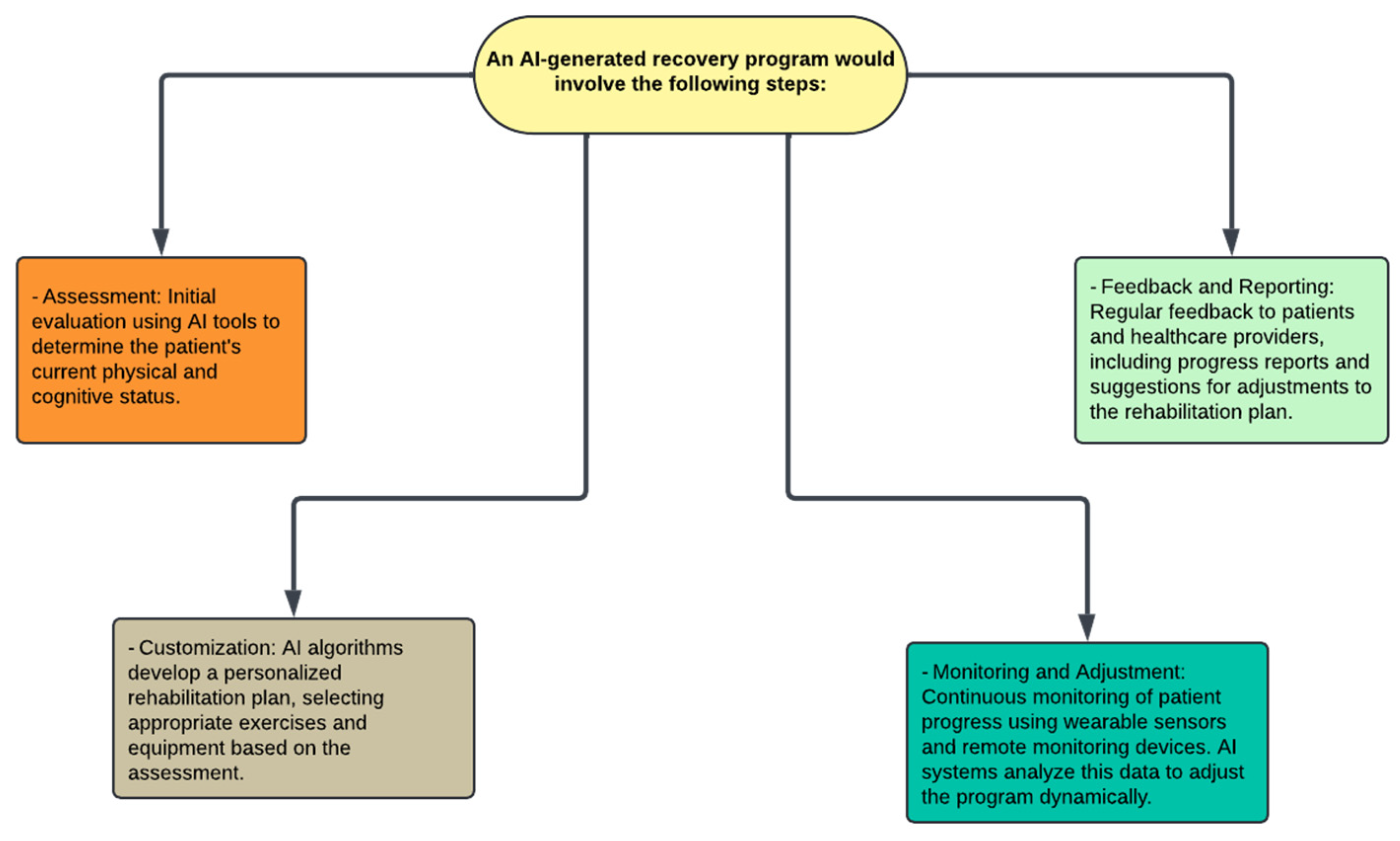
An AI-generated recovery program involves an initial evaluation using AI tools to assess the patient's physical and cognitive status (see Figure 2). AI algorithms then create a personalized rehabilitation plan, selecting suitable exercises and equipment. Continuous monitoring and dynamic adjustment of the program, along with regular feedback and progress reports to patients and healthcare providers, ensure optimal rehabilitation outcomes.
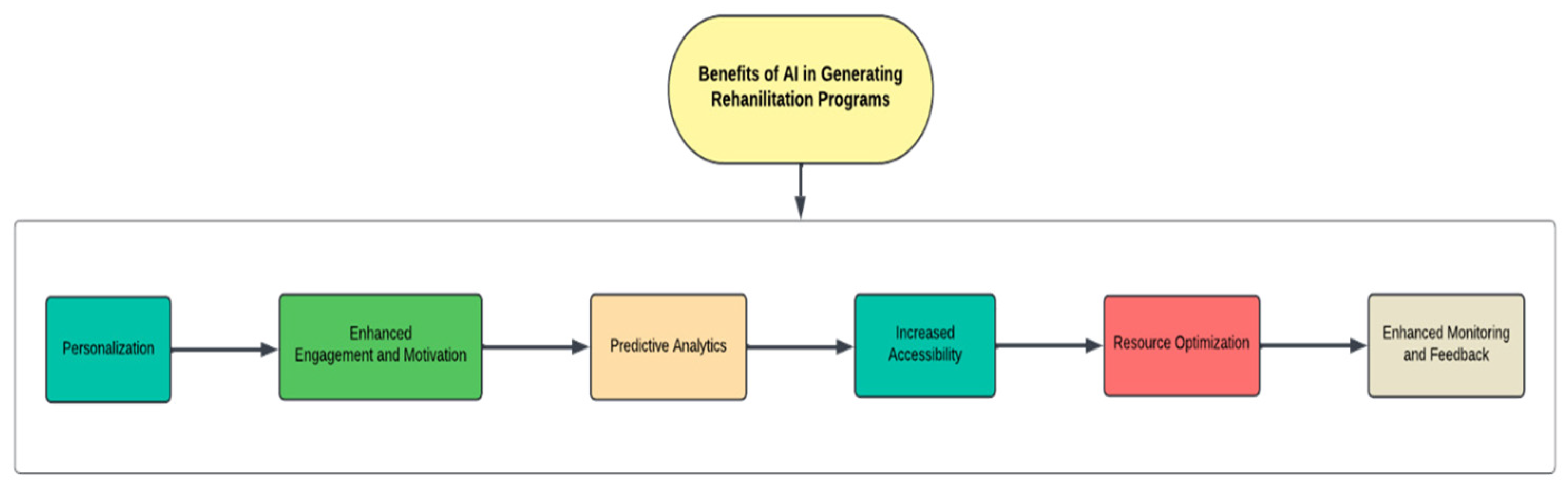
Considering the articles studied and those presented previously, we can mention a few reasons to Use AI in Generating Rehabilitation Programs.
AI customizes rehabilitation programs to the unique needs of each patient by analyzing individual data points and adjusting the treatment plans accordingly. This ensures that each patient receives the most effective and appropriate therapy, which can lead to faster and more efficient recovery
Continuous monitoring and real-time feedback can be provided using AI, allowing for immediate adjustments in rehabilitation programs. This dynamic adaptability ensures that patients are always performing exercises at the optimal intensity and correctness, reducing the risk of injury and improving outcomes
Prediction of potential complications and the adjustment of rehabilitation plans preemptively can be made with AI. By analyzing historical and real-time data, AI algorithms can identify patterns and foresee issues, enabling early interventions that can prevent setbacks in recovery
AI-powered tele-rehabilitation platforms make high-quality rehabilitation accessible to patients regardless of their geographic location. This is particularly beneficial for individuals who cannot regularly visit rehabilitation centers due to distance, mobility issues, or other constraints
Optimizing resource allocation by identifying the most effective treatments and interventions can be realized with AI, thus reducing the time and cost associated with rehabilitation. This efficiency benefits healthcare providers and patients alike, making rehabilitation more sustainable and accessible
Through AI-integrated VR systems and serious games, rehabilitation exercises become more engaging and enjoyable for patients. This increased engagement is crucial for adherence to rehabilitation programs, leading to better long-term outcomes
Figure 3.
Summarizing the main benefits obtained after planning a rehabilitation program with the help of AI.
Figure 3.
Summarizing the main benefits obtained after planning a rehabilitation program with the help of AI.
5. Conclusions
The use of Artificial Intelligence (AI) in the management of medical rehabilitation programs has demonstrated substantial potential to revolutionize patient care by enhancing the precision, personalization, and efficiency of rehabilitation treatments. AI technologies are being effectively integrated into various aspects of rehabilitation, including the planning, execution, and monitoring of therapeutic interventions.
AI's ability to analyze vast amounts of data and generate insights allows for the development of highly personalized rehabilitation plans tailored to individual patient needs. For example, in stroke rehabilitation, AI-powered robotic systems provide precise, repetitive motion exercises crucial for neural recovery
In cardiovascular and neurodegenerative disease rehabilitation, AI-driven predictive analytics offer early diagnosis and customized treatment adjustments based on real-time patient data
Moreover, AI integration in Virtual Reality (VR) systems has significantly enhanced cognitive and motor rehabilitation. VR environments, enriched with AI, provide immersive, engaging, and adaptive exercises that maintain patient motivation and participation, critical factors for successful rehabilitation.
In conclusion, the integration of AI in medical rehabilitation programs offers a transformative approach to patient care, providing personalized, dynamic, and data-driven solutions that enhance the efficiency and effectiveness of rehabilitation outcomes.
Author Contributions
Conceptualization, C.L., C.C. and R.F.; methodology, C.C. and C.L.; formal analysis, D.M., C.C. and S.D..; investigation, I.O., S.D., D.M.; resources, R.F., I.O., S.D., C.L. and C.C..; data curation, C.L., C.C. and D.M.; writing—original draft preparation, R.F., C.L. and C.C.; writing—review and editing, C.L. All authors have read and agreed to the published version of the manuscript.
Funding
This research received no external funding.
Institutional Review Board Statement
Not applicable.
Informed Consent Statement
Not applicable.
Data Availability Statement
No new data were created or analyzed in this study. Data sharing is not applicable to this article.
Conflicts of Interest
The authors declare no conflicts of interest.
References
- Umamah bint Khalid, Muddasar Naeem, Fabrizio Stasolla, MadihaHaider Syed, Musarat Abbas & Antonio Coronato. Impact of AI-Powered Solutions in Rehabilitation Process: Recent Improvements and Future Trends. International Journal of General Medicine 2024, 943-969. [CrossRef]
- Francesco Lanotte, Megan K. O’Brien, Arun Jayaraman. AI in Rehabilitation Medicine: Opportunities and Challenges. Ann Rehabil Med 2023, 47, 444-458, eISSN: 2234-0653. [CrossRef]
- Korteling, J.E.H.; van de Boer-Visschedijk, G.C.; Blankendaal, R.A.M.; Boonekamp, R.C.; Eikelboom, A.R. Human- versus Artificial Intelligence. Front Artif Intell 2021, 4, 622364. [Google Scholar] [CrossRef] [PubMed]
- French MA, Roemmich RT, Daley K, Beier M, Penttinen S, Raghavan P, et al. Precision rehabilitation: optimizing function, adding value to health care. Arch Phys Med Rehabil 2022, 103:1233-9. [CrossRef]
- Alsobhi, M.; Khan, F.; Chevidikunnan, M.F.; Basuodan, R.; Shawli, L.; Neamatallah, Z. Physical Therapists’ Knowledge and Attitudes Regarding Artificial Intelligence Applications in Health Care and Rehabilitation: Cross-sectional Study. J Med Internet Res. 2022, 24, e39565. [Google Scholar] [CrossRef] [PubMed]
- Santilli, V.; Mangone, M.; Diko, A.; Alviti, F.; Bernetti, A.; et al. The Use of Machine Learning for Inferencing the Effectiveness of a Rehabilitation Program for Orthopedic and Neurological Patients. Int. J. Environ. Res. Public Health 2023, 20, 5575. [Google Scholar] [CrossRef] [PubMed]
- Kristin R Archer, Theresa D Ellis. Advances in Rehabilitation Technology to Transform Health. Physical Therapy 2024, 104, 2. [CrossRef]
- Huang, Y.; Yang, B.; Wong, T.W.-L.; Ng, S.S.M.; Hu, X. Personalized robots for long-term telerehabilitation after stroke: a perspective on technological readiness and clinical translation. Front. Rehabil. Sci. 2024, 4:1329927. [CrossRef]
- Carbone G and Gonçalves. Robot-assisted rehabilitation for neurological disorders. Front. Robot. AI 2022, 9:1014681. [CrossRef]
- Nguyen, T.N.Q.; García-Rudolph, A.; Saurí, J.; Kelleher, J.D. Multi-task learning for predicting quality-of-life and independence in activities of daily living after stroke: a proof-of-concept study. Front. Neurol. 2024, 15:1449234. [CrossRef]
- https://osf.io/qvk74 (accessed on 30.09.2024).
- Borasio, F.; Mascheretti, S.; Lorusso, M.L. New Digital Technologies for Diagnosis and Rehabilitation of Neurodevelopmental Disorders. Appl. Sci. 2023, 13, 12165. [Google Scholar] [CrossRef]
- Rivella, C.; Ruffini, C.; Bombonato, C.; Capodieci, A.; Frascari, A.; Marzocchi, G.M.; Mingozzi, A.; Pecini, C.; Traverso, L.; Usai, M.C.; et al. TeleFE: A New Tool for the Tele-Assessment of Executive Functions in Children. Appl. Sci. 2023, 13, 1728. [Google Scholar] [CrossRef]
- Landowska, A.; Karpus, A.; Zawadzka, T.; Robins, B.; Erol Barkana, D.; Kose, H.; Zorcec, T.; Cummins, N. Automatic Emotion Recognition in Children with Autism: A Systematic Literature Review. Sensors (Basel) 2022, 22, 1649. [Google Scholar] [CrossRef] [PubMed] [PubMed Central]
- Ugalde, L.; Santiago-Garabieta, M.; Villarejo-Carballido, B.; Puigvert, L. Impact of Interactive Learning Environments on Learning and Cognitive Development of Children with Special Educational Needs: A Literature Review. Front Psychol. 2021, 12:674033. [CrossRef] [PubMed]
- Akbar, K.; Passaro, A.; Di Gioia, M.; Martini, E.; Dragone, M.; Zullo, A.; Stasolla, F. Reviewing the Horizon: The Future of Extended Reality and Artificial Intelligence in Neurorehabilitation for Brain Injury Recovery. Information 2024, 15, 501. [Google Scholar] [CrossRef]
- Soleimani, M.; Ghazisaeedi, M.; Heydari, S. The efficacy of virtual reality for upper limb rehabilitation in stroke patients: a systematic review and meta-analysis. BMC Med Inform Decis Mak 2024, 24, 135. [Google Scholar] [CrossRef] [PubMed]
- Prats-Bisbe, A.; López-Carballo, J.; García-Molina, A.; Leno-Colorado, D.; García-Rudolph, A.; Opisso, E.; Jané, R. Virtual Reality–Based Neurorehabilitation Support Tool for People With Cognitive Impairments Resulting From an Acquired Brain Injury: Usability and Feasibility Study. JMIR Neurotech 2024, 3:e50538. [CrossRef]
- Quan, W.; Liu, S.; Cao, M.; Zhao, J. A Comprehensive Review of Virtual Reality Technology for Cognitive Rehabilitation in Patients with Neurological Conditions. Appl. Sci. 2024, 14, 6285. [Google Scholar] [CrossRef]
- Wang, L.; Li, P.; Hou, M.; Zhang, X.; Cao, X.; Li, H. Construction of a risk prediction model for Alzheimer’s disease in the elderly population. BMC Neurology 2021, 21, 271. [Google Scholar] [CrossRef] [PubMed]
- Zhao, X.; Ang CK, E.; Acharya, U.R.; Cheong, K.H. Application of Artificial Intelligence techniques for the detection of Alzheimer’s disease using structural MRI images. Biocybernetics and Biomedical Engineering 2021, 41, 456–473. [Google Scholar] [CrossRef]
- Fabrizio, C.; Termine, A.; Caltagirone, C.; Sancesario, G. Artificial intelligence for Alzheimer’s disease: Promise or challenge? Diagnostics 2021, 11, 1473. [Google Scholar] [CrossRef] [PubMed]
- Battista, P.; Salvatore, C.; Berlingeri, M.; Cerasa, A.; Castiglioni, I. Artificial intelligence and neuropsychological measures: The case of Alzheimer’s disease. Neuroscience & Biobehavioral Reviews 2020, 114, 211–228. [Google Scholar] [CrossRef]
- Mathur, S.; Jaiswal, A. Demystifying the Role of Artificial Intelligence in Neurodegenerative Diseases. In: Gaur, L., Abraham, A., Ajith, R. (eds) AI and Neuro-Degenerative Diseases. Studies in Computational Intelligence, 2024, vol 1131. Springer, Cham. [CrossRef]
- Rajaraman, S. Artificial Intelligence in Neuro Degenerative Diseases: Opportunities and Challenges. In: Gaur, L., Abraham, A., Ajith, R. (eds) AI and Neuro-Degenerative Diseases. Studies in Computational Intelligence, 2024, vol 1131. Springer, Cham. [CrossRef]
- Brouwers, R.W.M.; Scherrenberg, M.; Kemps, H.M.C.; et al. Cardiac telerehabilitation: current status and future perspectives. Neth Heart J 2024, 32, 31–37. [Google Scholar] [CrossRef] [PubMed]
- Bryant, M.S.; Fedson, S.E.; Schutz, A.; et al. Telerehabilitation: Future of Phase II Cardiac Rehabilitation: Review of Preliminary Outcomes. J Med Syst 2022, 46, 94. [Google Scholar] [CrossRef] [PubMed]
- The Potential of AI in Cardiovascular Care. American College of Cardiology 2024. https://www.acc.org/latest-in-cardiology/articles/2024/06/24/16/51/the-potential-of-ai-in-cardiovascular-care-focus-of-review.
Figure 1.
The structure of a recovery program generated by AI taking into account the reports studied in the specialized literature.
Figure 1.
The structure of a recovery program generated by AI taking into account the reports studied in the specialized literature.
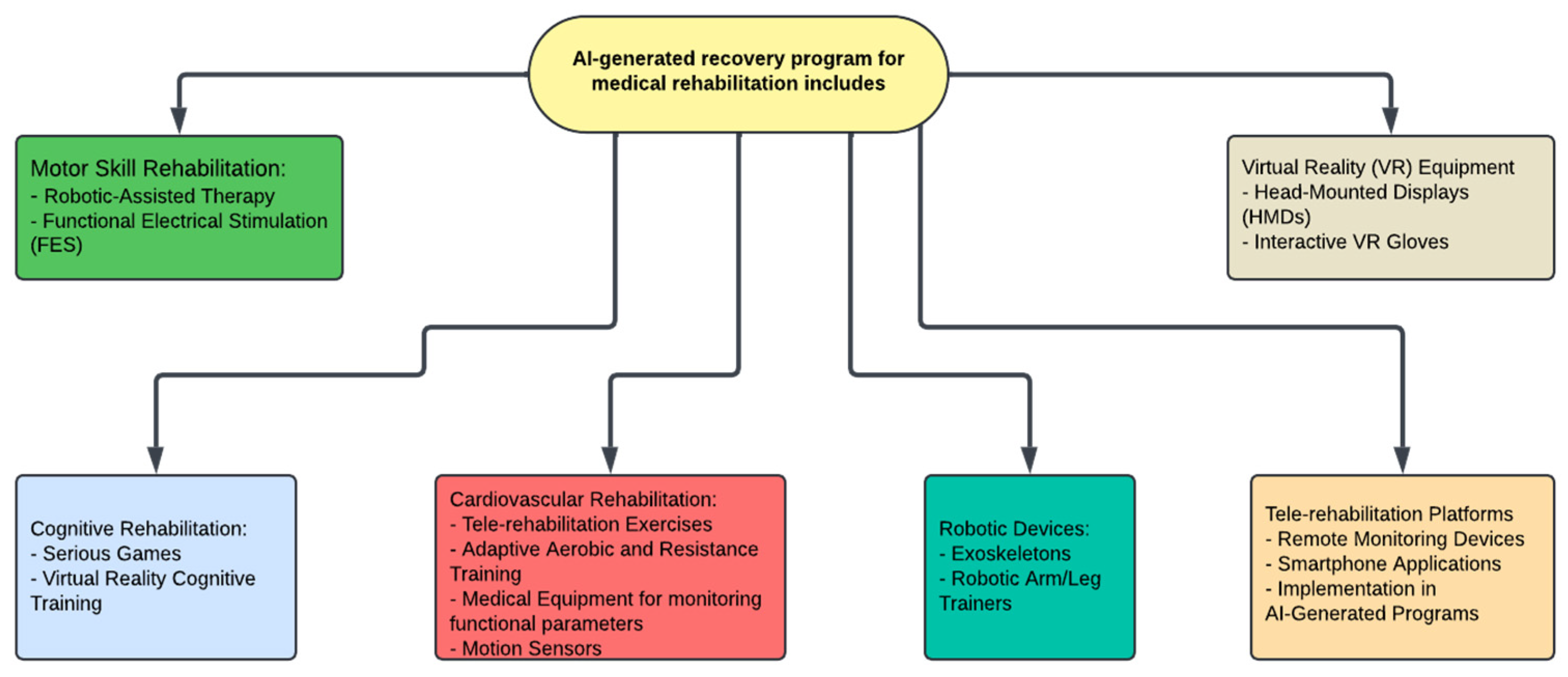
Figure 2.
The steps that an AI generated recovery program would include and what are the types of data’s that we need for the recovery program generation.
Figure 2.
The steps that an AI generated recovery program would include and what are the types of data’s that we need for the recovery program generation.
Disclaimer/Publisher’s Note: The statements, opinions and data contained in all publications are solely those of the individual author(s) and contributor(s) and not of MDPI and/or the editor(s). MDPI and/or the editor(s) disclaim responsibility for any injury to people or property resulting from any ideas, methods, instructions or products referred to in the content. |
© 2024 by the authors. Licensee MDPI, Basel, Switzerland. This article is an open access article distributed under the terms and conditions of the Creative Commons Attribution (CC BY) license (http://creativecommons.org/licenses/by/4.0/).
Copyright: This open access article is published under a Creative Commons CC BY 4.0 license, which permit the free download, distribution, and reuse, provided that the author and preprint are cited in any reuse.


