

Submitted:
04 October 2024
Posted:
07 October 2024
You are already at the latest version
Abstract
This study examines the development of effective social media strategies for businesses, focusing on how small and medium-sized enterprises (SMEs) can leverage these strategies to boost revenue and sustain growth. In the context of a dynamic digital environment, SMEs face challenges in maximizing the benefits of social media platforms due to limited resources and expertise. Using the 2020 Preferred Reporting Items for Systematic reviews and Meta-Analyses (PRISMA), this study analyzed sixty-nine research papers to identify key strategies that contribute to successful social media marketing. The review considered factors such as content quality, engagement techniques, platform selection, and targeted advertising. The findings suggest that tailored strategies that align with business objectives and audience needs, coupled with consistent engagement and content relevance, lead to more significant revenue growth and customer retention. However, the lack of data on long-term impacts and industry-specific insights limits the generalizability of these findings. This study provides a foundation for SMEs to develop strategic social media marketing plans, but further research is needed to explore long-term effects and industry-specific variations.
Keywords:
social media strategies
; SMEs
; digital marketing
; customer engagement
; systematic review
1. Introduction
In today’s fast-paced digital landscape, building effective social media strategies is crucial for brands seeking to connect with consumers in more meaningful ways. Disruptive trends in digital marketing have redefined how businesses engage with their audiences. Global brands are increasingly leveraging social media platforms to accelerate customer acquisition, enhance brand loyalty, and personalize user experiences using AI-driven content. This shift is evident in platforms like Facebook, Instagram, and TikTok, which are now central to brand strategies aimed at increasing engagement and fostering direct communication with consumers [1,4]. Social media has revolutionized how businesses connect with their customers, offering powerful tools for brand awareness and loyalty [4,5]. This review aims to explore the importance of building effective social media strategies, highlighting their significance in fostering brand loyalty and achieving organizational goals [6,9]. By 2024, global social media ad spending is projected to reach $150 billion (Statista), underscoring the growing importance of sophisticated social media strategies in the business landscape. Over the past decade, platforms like WhatsApp, Instagram, and Facebook have seen significant growth (Chen and Qasim, 2021). These platforms have become essential for communication and are widely used by popular brands to market their products. [10,12] The current state of research in social media marketing reveals a dynamic and rapidly evolving field [13]. Scholars and practitioners alike have recognized that social media is not merely a platform for broadcasting messages but a complex environment where brands must engage in two-way communication with consumers [12,13]. In the rapidly evolving landscape of social media marketing, businesses need to navigate the difficulties of various platforms effectively. Publications in this systematic review highlight the importance of setting clear and measurable objectives, ensuring that social media efforts align seamlessly with broader business goals, and employing data-driven strategies to evaluate the success of campaigns [13,15]. The field is rife with debate, particularly regarding the effectiveness of different platforms across diverse demographics and industries. One ongoing discussion revolves around the impact of algorithm changes on content visibility and user engagement [16]. Some researchers advocate that platforms like Instagram and TikTok are particularly effective in engaging younger audiences, capitalizing on their visual and interactive nature. In contrast, others maintain that traditional platforms such as Facebook continue to hold substantial influence, especially among older demographics [16,20].
A systematic review of social media strategies is essential due to the rapidly evolving nature of these platforms, making traditional marketing approaches obsolete. As algorithm changes, demographic shifts and platform innovations continue to shape user engagement, businesses must adapt to stay competitive. Current research highlights the importance of setting clear, measurable objectives that align social media efforts with broader organizational goals. Moreover, the increasing role of data-driven insights in evaluating the success of social media campaigns signals a need for deeper analysis.
The review aims to consolidate existing knowledge, addressing the debates over platform effectiveness across demographics and industries. By synthesizing these insights, this review seeks to provide businesses with actionable strategies to strengthen their social media presence, enhance brand visibility, and foster long-lasting customer relationships. The rapidly changing social media environment demands a thorough understanding of these dynamics, which this review will address to help businesses navigate and thrive in the digital age. As shown in Figure 1, there is a breakdown of different forms of social media, their primary users, forms of content posted, and marketing techniques in line with the major discussion in the article introduction.
It lays focus on the fact that for different target markets, it becomes extremely crucial for the firms to pick the right social media platform to advertise on. For instance, it is possible to target the younger public by using Instagram and or TikTok, which are more inclined to images, videos, and games than for example, Facebook which is more in line with the older, business-like people, or LinkedIn business oriented. This emphasizes the point made at the beginning of this paper that it is important to deploy social media strategies that are exclusive and customized depending on a firm’s specific goals and objectives. With the help of LSP strategy, using the specific features of each platform, SMEs can improve relations with the customers and optimize the company’s brand image in a world where digital presence is crucial.
Although social media was created as a simple communication platform for people to interact and share content, it has since evolved into a critical business tool. What began with job-oriented platforms like LinkedIn and social networking sites such as Facebook in the early 2000s rapidly expanded into a powerful marketing channel. This transformation marked a significant shift, as businesses began to embrace social media as an integral part of their marketing and communication strategies. These are no longer just spaces for social interaction, these platforms became essential for brand storytelling, audience engagement, and real-time market research. [21,22].
The rise of programmatic advertising, which uses automated processes to target specific audiences in real time, has further revolutionized social media marketing. Modern platforms like Instagram, TikTok, and YouTube now enable businesses to reach vast global audiences with precision, while algorithmic changes have reshaped how content is delivered and consumed. TikTok’s highly advanced recommendation algorithms. Similarly, the dawn of influencer marketing—where brands collaborate with social media personalities to promote products—has become a dominant force, further blurring the lines between traditional advertising and organic user-generated content.
This shift underscores the need for businesses to adopt more sophisticated social media strategies that align with their broader objectives. As social media becomes increasingly integrated into everyday life, it offers companies unparalleled opportunities to foster relationships, advertise products, and build brand identity. The combination of influencer marketing, user-generated content, and evolving algorithms reinforces the strategic importance of social media in modern business, requiring organizations to adopt tactical approaches to fully leverage its potential. [21,22]. The Evolution of Social Media Platforms between 1978 to 2015 is demonstrated in Figure 2.
The model in Figure 3 emphasizes that tailored, data-driven approaches are key to maximizing the impact of social media on business performance, moving beyond basic metrics to deeper insights like engagement and sales conversion. It illustrates how different message strategies including content types like business branding and calls for purchase, as well as formats such as text and video affect customer engagement and brand awareness, which drive small business sales. The diagram also highlights control variables like business size, product quality, and consumer reviews, showing how these factors influence the effectiveness of social media strategies.
Customizing Social Media Strategies for Different Industries
Crafting social media strategies requires careful adaptation to the unique demands of each industry. For instance, healthcare organizations must focus on safeguarding patient information and follow strict guidelines when sharing content, building trust through educational posts while ensuring compliance with data protection regulations. In contrast, the retail sector thrives on visually engaging platforms like Instagram and TikTok, where storytelling and product showcases help create deeper connections with consumers. Financial services, on the other hand, often aim to establish credibility and thought leadership, relying on platforms such as LinkedIn to engage professionals and share industry insights. [27] With the discussion of these, social media strategies address the goals, audience preferences, and regulatory landscapes of different industries, businesses can achieve a more effective and targeted online presence. Table 4 outlines industry-specific social media strategies, highlighting key focus areas, preferred platforms, and effective tactics tailored to each sector’s unique needs.
Table 5 compares and analyses the existing literature and proposes a systematic review of building effective social media strategies for businesses. The table highlights the benefits and disadvantages of certain papers in our review.
The literature on effective social media strategies for business focuses on different approaches, each with their strengths and weaknesses. Comprehensive frameworks improve strategic planning but often need adaptation for specific contexts. Wider studies incorporate social media into business strategies but lack depth in tactics, while online advertising research highlights paid strategies, neglecting organic content. Sector-specific studies provide targeted insights but have limited applicability across industries. Although challenges in leveraging social media are frequently discussed, many studies fail to provide concrete solutions. Interdisciplinary research enriches understanding but often lacks a practical business focus, and crucially, there is a significant gap in understanding the long-term strategic implications of social media on business performance, especially within tech giants and market leaders.
Our systematic review addresses these gaps by consolidating research on social media strategies across industries, offering actionable insights and best practices. It provides a comprehensive analysis that emphasizes critical success factors and identifies areas needing further research, such as long-term impacts and industry-specific variations, particularly within leading technology companies. This review equips businesses with a framework to develop tailored social media strategies that align with their unique objectives, enhancing their marketing efforts in the digital landscape.
1.1. Research Questions
This section explores critical research questions related to the effectiveness and integration of social media strategies for businesses.
- How do businesses measure the success of their social media strategies, and what metrics are most used across different platforms?
- What role does customer feedback and interaction play in shaping and improving social media strategies for businesses?
- How can businesses integrate social media strategies with other marketing channels to create a balanced and effective overall marketing approach?
- How can businesses target their audience on social media?
- What are the common mistakes businesses make in social media marketing, and how can they be avoided?
1.2. Research Motivation
The motivation behind this work is to clarify how businesses can effectively measure and optimize their social media strategies to achieve better marketing outcomes. In today’s digitally driven economy, social media has become an indispensable tool for businesses to enhance brand visibility, engage with customers, and foster growth. Despite widespread adoption, many businesses struggle to formulate and implement social media strategies that align with their goals and generate measurable, meaningful results.
The rapidly evolving nature of social media platforms, combined with the diverse needs of different industries, complicates the development and execution of these strategies. Consequently, there is a pressing need for a comprehensive analysis of existing research to identify the key components of successful social media strategies. This systematic review aims to bridge this gap by synthesizing current knowledge, identifying best practices, and providing insights into how businesses can leverage social media to achieve their objectives.
1.3. Research Contribution
This systematic review makes several key contributions to the field of business and digital marketing. It consolidates a wide range of studies on social media strategies, providing a comprehensive overview of effective practices across various industries. By identifying common elements of success and failure, the review offers a framework that businesses can adapt to tailor their social media strategies to their unique needs and contexts. Additionally, this review highlights gaps in the existing literature, pointing out areas where further research is necessary. The findings of this review have practical implications for businesses, offering actionable insights to help companies enhance their social media presence, improve customer engagement, and achieve better business outcomes.
1.4. Research Novelty
This systematic review provides a novel contribution by offering a comprehensive framework for developing effective social media strategies across diverse industries, particularly targeting small and medium-sized enterprises (SMEs). It integrates insights from both academic literature and real-world case studies, presenting an interdisciplinary perspective that is often missing in prior research, which tends to focus on isolated aspects such as engagement or platform selection. A distinctive feature of this review is its emphasis on the dynamic nature of social media, addressing the rapid evolution of trends, user behavior, and emerging technologies like 5G and AI-driven tools. Unlike previous studies, this review not only examines current strategies but also explores their scalability and adaptability in the future, highlighting their relevance in a continuously shifting digital environment. This holistic approach equips businesses with actionable, data-driven strategies tailored to specific industry needs, providing a pathway for sustained growth and competitiveness in an increasingly digital market landscape.
2. Materials and Methods
This section of the study outlines the approach used on how to undertake a systematic review of the strategies deployed in the use of social media among business entities. This approach entails a first evaluation of articles that were published within the last decade to evaluate the research and practice in the field. The method also incorporates a comprehensive literature search on the articles that have been published within this period so that the review covers relevant information. The aim is to present an idea of a unique review, to the best knowledge of the authors, remaining unpublished by other scholars in the last ten years. Figure 4 illustrates and gives an overview of the material collection and data analysis process that took place in this review.
2.1. Eligibility Criteria
An extensive systematic review was undertaken based on the available systematic review articles to identify all the available reviewed articles and the strategies published on social media for businesses. This review aims to focus on research works done and published in English for the last 10 years and have a direct bearing on the issue of formulating social media strategies for businesses. To work with only those articles that would be most relevant and of decent quality, rather strict criteria for inclusion were set. These criteria were designed to allow in only those research papers that examine frameworks or methodologies for constructing and employing social media strategies in a commerce environment; at the same time, they exclude studies that are irrelevant to this line of research. The application of the inclusions and exclusions criteria guiding this review process are provided in Table 7.
2.2. Information Sources
This section outlines the detailed account of sources that were employed in identifying and confirming the availability of relevant and significant studies for this systematic review based on developing effective social media strategies for business. A wide range of primary databases and academic websites have been used for the work. These sources included Google Scholar, Web of Science, and Scopus. These roots have a search process beginning on the 2nd of August 2024. As an organization, the University of Johannesburg was instrumental in obtaining and making these papers accessible in full. All the above-said sources were searched simultaneously to make sure to cover the topic in-depth, and all the sources cited herein were identified within the week of the specified date. Each of these sources was carefully searched so that the review as a result embraced every important and relevant study on the topic of how to build effective social media strategies for business. Figure 5 illustrate the process for identifying information sources for a review on social media strategies, with support from the University of Johannesburg and the use of databases like Google Scholar, Web of Science, Scopus, and others to ensure comprehensive coverage.
2.3. Search Strategy
The search plan used in this systematic review involves a strategy on how to gather papers that are relevant for the review through the above range of sources. These primary sources comprise a range of specific search terms and keywords that were created depending on the major themes and questions of concern in the study. These search terms and keywords consist of strategy*, enterprise*, company* and social media, impact, success, and framework. Boolean operators (AND, OR, NOT) were then employed to systematically combine these terms into exhaustive search strings, which allowed for the exclusion of any irrelevant studies. These filters and limits improve the accuracy of the method, allowing the return of only the closely related studies and tackling the key issues of constructing successful social media strategies for business. Table 8 fully demonstrates the Search Strategy Used in this Systematic Review.
2.4. Selection Process
When selecting effective social media strategies for businesses, the most essential step is to identify and define the business’s objectives, if the business’s goal is to increase brand awareness, drive traffic, generate leads, or enhance customer engagement. It is imperative and crucial that the business knows its target audience; knowing their preferences, behaviors, and the platforms the customers use frequently so that you better reach their attention and tailor your content accordingly. Also, consistent posting, along with engaging and relevant content, forms the backbone of a successful strategy [30].
Infusing analytics is another important aspect. Regularly monitoring performance metrics helps in adjusting strategies in real-time, making sure that the business is meeting its objectives. Engaging with the audience by responding to comments and messages fosters a sense of community and strengthens brand loyalty. Collaborating with influencers or using targeted ads can also amplify reach and effectiveness [31]. Table tabulate the key elements that helped us with the selection process of data regarding effective social media strategies for businesses.
2.5. Data Collection Process
In the process of collecting data for the systematic review, a comprehensive search was conducted across three major databases: Google Scholar, Scopus, and Web of Science. The selection criteria focused on peer-reviewed journal articles, conference papers, and academic books published within the last decade to ensure the relevance and recency of the information. The search terms included “social media strategies,” “business,” and “marketing effectiveness,” among others that included a search code as well, which were tailored to capture a wide range of perspectives on effective social media practices for businesses. Google Scholar, Scopus, and Web of Science were utilized to access a different range of sources, providing a strong foundation for the review.
The initial search returned a large volume of literature, which was then filtered based on relevance and quality. Studies were evaluated for their methodological attention, sample size, and findings related to social media strategy effectiveness. The refined selection of papers provided a comprehensive understanding of the evolving strategies businesses can use to leverage social media for marketing success. An Excel sheet was then created of the review literature, to classify different data into different columns, making it easier to create charts and graphs that will give insight as to when, how, and why it is important to create effective social media strategies for businesses.
Figure 6 is a thoroughly designed diagram that shows the data collection process, starting from an initial broad search, filtering results by relevance and quality, refining the selection into an Excel sheet, and using databases like Google Scholar, Scopus, and Web of Science, with specific search terms and criteria to focus on social media strategies, business, and marketing effectiveness.
2.6. Data Items
In this systematic review concerning social media strategies for business, several key outcomes are defined and sought after. These outcomes may include [32]:
- Engagement Metrics - Measures of user interaction with content, such as likes, shares, comments, and overall engagement rates.
- Conversion Rates - The percentage of users who take a desired action, such as signing up for a newsletter or making a purchase after interacting with social media content.
- Brand Awareness - Metrics assessing how familiar consumers are with a brand, often measured through surveys or social listening tools.
- Customer Satisfaction - Feedback from customers regarding their experiences and perceptions of the brand, often collected through surveys or reviews.
Figure 7 outlines the four essential KPIs for social media strategies highlighting the key aspects of interaction, action, recognition, and feedback.
2.7. Study Risk of Bias Assessment
This section focuses on evaluating the risk of bias in the included studies as an essential prerequisite to achieving a high internal validity of the analysis results. To this end, the review used the standard procedures for systematic reviews in assessing the risk of bias. In conducting a risk of bias assessment for the systematic review, several key criteria were employed to evaluate the quality and reliability of the included studies. The assessment process involved analysing each study for potential biases that could affect the validity of their findings. Cochrane Risk of Bias Tool RoB 2 (the established process that analyses important elements like randomization and outcome measurement to determine the probabilities of bias in randomized controlled trials), which is specifically applied to RCTs a widely used and highly structured approach to evaluating sources of bias in relation to selection bias, performance bias, detection bias, attrition bias, and reporting bias.
The Cochrane Risk of Bias Tool assesses bias across several domains relevant to randomized controlled trials (RCTs). Each domain is rated as “Low,” “High,” or “Unclear” risk of bias. The overall risk of bias is determined by considering the ratings across all domains as shown in Table 10.
2.8. Effect Measures
When synthesizing findings in the systematic review, different effect measures were used to combine and report the findings of the works under analysis. To compare the effects the social media strategies had on engagement rates and brand awareness outcome measures, some mean differences were used. Building effective social media strategies for businesses involves several key measures.
First, businesses need to clearly define their goals. These goals should be specific, measurable, achievable, relevant, and time-bound (SMART). Knowing what you want to achieve helps in selecting the right social media platforms and creating content that aligns with your objectives. If a business aims to increase brand awareness, it should focus on platforms with a large audience and create engaging content that highlights the brand’s strengths.
Secondly, businesses must understand their target audience. This involves researching who their customers are, what they like, and where they spend their time online. Tailoring content to meet the interests and needs of the audience helps in building stronger connections and encourages more interaction. Regularly analyzing performance metrics, such as engagement rates and conversion statistics, also helps refine strategies and make informed adjustments.
2.9. Synthesis Methods
In this review, data synthesis included using meta-analysis to compare results from different studies regarding the overall effectiveness as provided in the sections below. Such activities as summarizing the outcomes of available studies, analysis of variability through meta-regression analysis, as well as sensitivity analysis conducted to enhance the viability of results obtained, were also part of this process. These methods sought to achieve this by systematically assimilating the evidence in the various studies to develop a lucid and coherent framework of the best practices in social media.
2.9.1. Eligibility of Studies for Synthesis
The procedure for selecting the studies that could be synthesized was tabulated as shown in Table 12 as features of intervention characteristics and relevance to the review questions. To maintain the focus of the plan for the synthesis of groups and to determine its suitability, each of the studies was evaluated relative to some established criteria. Also, the table is there to consider the assessment of the research frameworks, methodologies as well as outcomes for matching the studies with the suitable synthesis categories.

Table 11.
Comparative Analysis of Study Intervention Characteristics and Planned Synthesis Groups.
| Ref. |
Intervention Characteristics |
Planned Synthesis Groups | Match the Planned Group? |
|---|---|---|---|
| [25] | B2B social media marketing, message source and content | Social media engagement and effectiveness | Yes |
| [26] | Social media marketing strategies in microbreweries | Sector-specific strategies | Yes |
| [27] | Impact of social media marketing on business performance | Social media’s effect on business outcomes | Yes |
| [28] | Social media and healthcare, patient engagement | Sector-specific strategies | Yes |
| [29] | Future of digital and social media marketing research | Research propositions for future marketing strategies | Yes |
| [30] | Body dissatisfaction and social media in young women | Psychological impact of social media | No |
| [32] | Challenges in leveraging social media for businesses | Common pitfalls in social media strategies | Yes |
| [33] | Digital marketing approaches for e-commerce platforms | E-commerce social media strategies | Yes |
| [34] | Business strategy and digital marketing | Integration of business strategy with social media | Yes |
| [35] | Case-based recommendations for social media strategy | Practical case studies and recommendations | Yes |
| [37] | Online advertising strategy | Online advertising vs. organic social media | No |
| [40] | Social media strategy frameworks for companies | Frameworks for strategy development | Yes |
| [44] | SMEs in the digital age | Sector-specific strategies for SMEs | Yes |
| [50] | Key elements of effective social media marketing | General social media marketing strategies | Yes |
2.9.2. Certainty Assessment
When conducting systematic reviews on the effectiveness of social media strategies for business, it is crucial to assess the certainty of the evidence. Certainty assessment involves evaluating the quality and consistency of the studies included in the review. Researchers often employ established methods to assess the certainty of the evidence for each important outcome. The following points are the key approaches used by researchers in different studies: Grading of Recommendations Assessment, Development, and Evaluation (GRADE) is a widely used framework for evaluating the certainty of evidence in systematic reviews. It considers factors such as the risk of bias in the included studies, inconsistency of results across studies, indirectness of the evidence, imprecision of effect estimates, and publication bias.
Table 12.
GRADE Assessment of Certainty for Outcomes Related to Social Media Strategies.
| Outcome | Certainty Level | Reason for Downgrading/Upgrading | Comments |
|---|---|---|---|
| Effectiveness of Social Media Strategies | High | The studies consistently demonstrate effectiveness, with no significant risk of bias detected. Results are robust across different contexts. | Strong evidence supporting effectiveness. |
| Impact on Brand Awareness | Moderate | While most studies show positive outcomes, there is some inconsistency in results, and a few studies may suffer from publication bias. | Some studies show varying levels of impact. |
| Lead Generation | Low | Many studies in this area have a high risk of bias, and the effect estimates are often imprecise, leading to uncertainty in the findings. | Limited and uncertain evidence. |
| Customer Engagement | Moderate | The evidence is somewhat indirect, as not all studies focus directly on engagement. Additionally, some estimates lack precision. | Evidence is suggestive but not definitive. |
| Overall Business Success | High | Consistent results across studies with no major limitations indicate a strong link between social media strategies and business success. | Robust evidence linking strategies to business success. |
3. Results
This section may be divided by subheadings. It should provide a concise and precise description of the experimental results, their interpretation, as well as the experimental conclusions that can be drawn.
3.1. Study Selection
This section of the systematic review includes outcomes of the search and selection procedure, that are illustrated in a flow diagram below in Figure 9. It is detailing everything from the quantity of records found during the search to the total number of reviews included. The flow diagram also shows that the approach taken is methodical and rigorous for the inclusion of studies in the review on social media strategies for business. Here, the researchers started with 40,157 records from Scopus, Google Scholar, and Web of Science. When applying the screening criteria before randomized controlled trials, 24 716 records were excluded, and 40 157 records were screened for the titles and abstracts. This strict filtering reduced the studies to sixty-nine, of which reports were looked for in the hunt for full text. After crossing the first filter, 69 reports were identified for further analysis, and all were successfully obtained from the different sources. However, 30 reports were excluded because; the data of required collection were not available (19 reports); the abstracts did not fit in the given research topic (6 reports); and the geographic location did not meet the criteria for inclusion in this study (5 reports). 14 papers were selected to be included in the systematic review, complemented by 55 other reports making for 69 papers in total. The very strict eligibility criteria presented in the flowchart guarantee that only the best and most useful studies are going to be included in the systematic review. This process is helpful in filtering out various unrelated topics that are not relevant in the context of providing value to the business as it helps in forming a strong research background by providing only those studies which are directly relevant in context to the business, and more appropriately, the social media strategies of the business.
The databases used are then fully inspected in the pie chart as shown in Figure 2. It shows the number of papers obtained from each database in the review ‘Building Effective Social Media Strategies for Business’. The database used most often was Scopus, which account for 45%, showing its importance in the research process. Google Scholar presented a close second, contributing to 34% of papers and Web of Science contributed only 21% thus was the least utilized source. This distribution provides a balanced focus on sourcing materials from Scopus, backed up by a fairly good number from Google Scholar and Web of Science which would give an all-round check on all the related materials from the various databases.
3.2. Study Characteristics
The presentation in Table focuses on the study qualities for the review which defines the increasing trend of the included studies in the review in the last ten years. The work’s global publications evidence has increased since 2015 having a consistent emergence of journal articles, literature reviews, and research papers mainly from the year 2020. Notably, 2024 is the year with the maximum number of journal articles and indicating that interest in this field is growing. This upward highlighted the positive contribution to make to a rapidly growing field of research and for the formulation and viable strategies of businesses on social media platforms.
Figure 11.
Trend of Publications Over 10 Years.
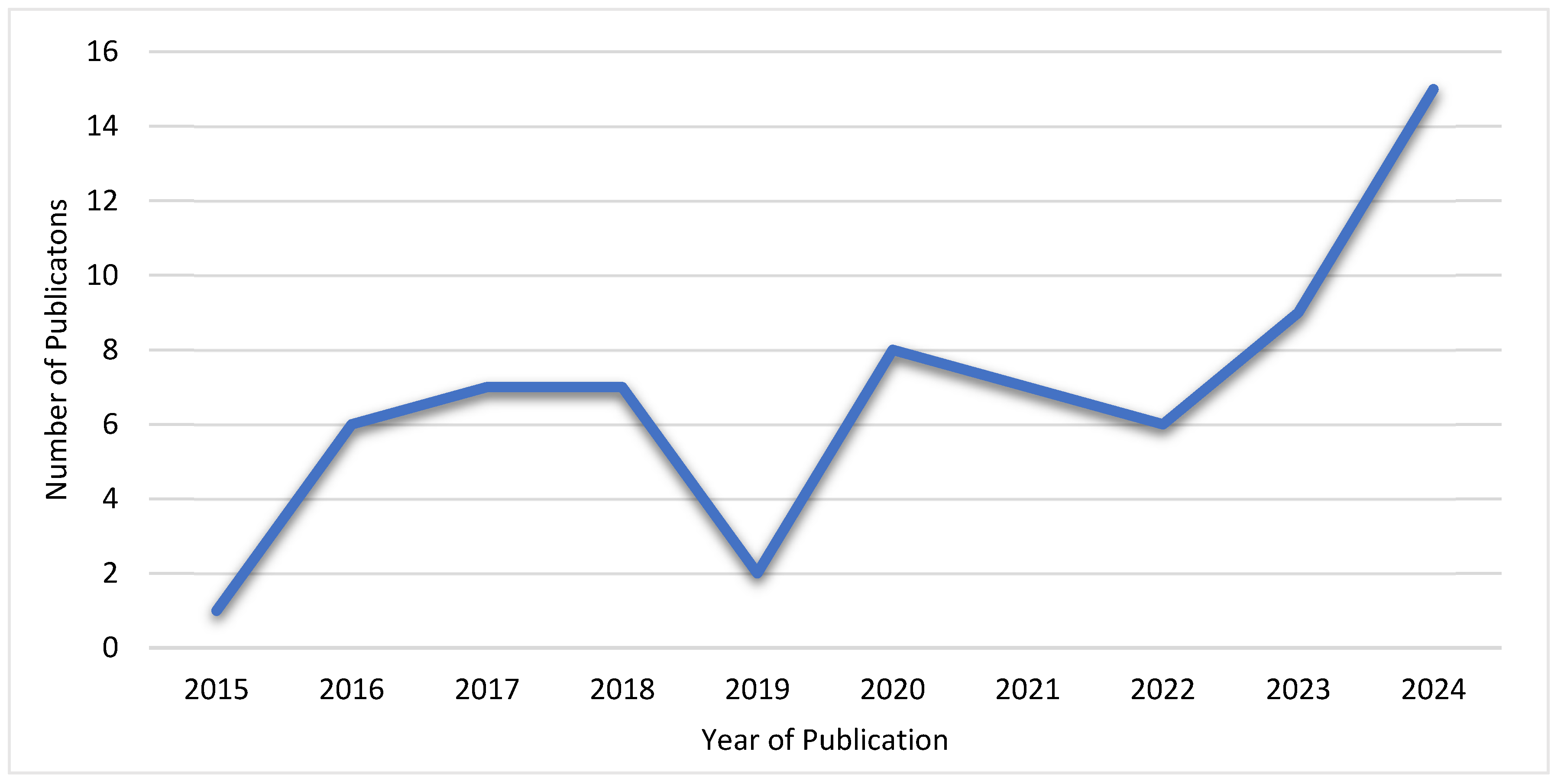
Table 14.
Overview of Research Works by Year of Publication.
| Published Year | Journal | Conference Paper | Literature Review | Book | Article | Systematic Review | Case Study | Research paper |
|---|---|---|---|---|---|---|---|---|
| 2014 | 0 | 0 | 0 | 0 | 0 | 0 | 0 | 0 |
| 2015 | 1 | 0 | 0 | 0 | 0 | 0 | 0 | 0 |
| 2016 | 2 | 1 | 0 | 0 | 2 | 0 | 0 | 1 |
| 2017 | 1 | 0 | 0 | 0 | 5 | 0 | 1 | 0 |
| 2018 | 3 | 1 | 0 | 0 | 1 | 0 | 1 | 1 |
| 2019 | 2 | 0 | 0 | 0 | 0 | 0 | 0 | 0 |
| 2020 | 2 | 0 | 1 | 0 | 0 | 1 | 3 | 1 |
| 2021 | 2 | 1 | 0 | 0 | 3 | 1 | 0 | 0 |
| 2022 | 5 | 0 | 0 | 0 | 0 | 0 | 0 | 1 |
| 2023 | 5 | 0 | 0 | 1 | 1 | 0 | 0 | 2 |
| 2024 | 0 | 0 | 0 | 0 | 9 | 1 | 3 | 2 |
The above figure shows the number of publications on business social media strategies’ which concerns the trend of publications of business social media strategies from the year 2015 to 2024 which presents a general idea of how the field is progressing year after year. This proved evident through the following graph because it generally shows a rise in research activity albeit with slight variations. The analysis of publications denseness shows that the SDG 3 related papers were initiated in 2015, then the frequency of new papers gradually rose and was somewhat maximal in 2018, and then declined slightly in 2019. This ‘dip’ could imply a dynamic shift in the field or some issues with research for a while. However, the trend returns to a high level in the following years, and the total number of publications in the ten years totaled fifteen in 2024. This has recently been on the rise, which speaks volumes about the nascent state of social media strategies in both the academic and the business worlds, which are probably propelled by the dynamism in the social media platforms’ business and their expanding influence on the operations of businesses not only in the developed world but in the developing world as well.
Figure 12.
A Detailed Review of Locations with Related Allocations.
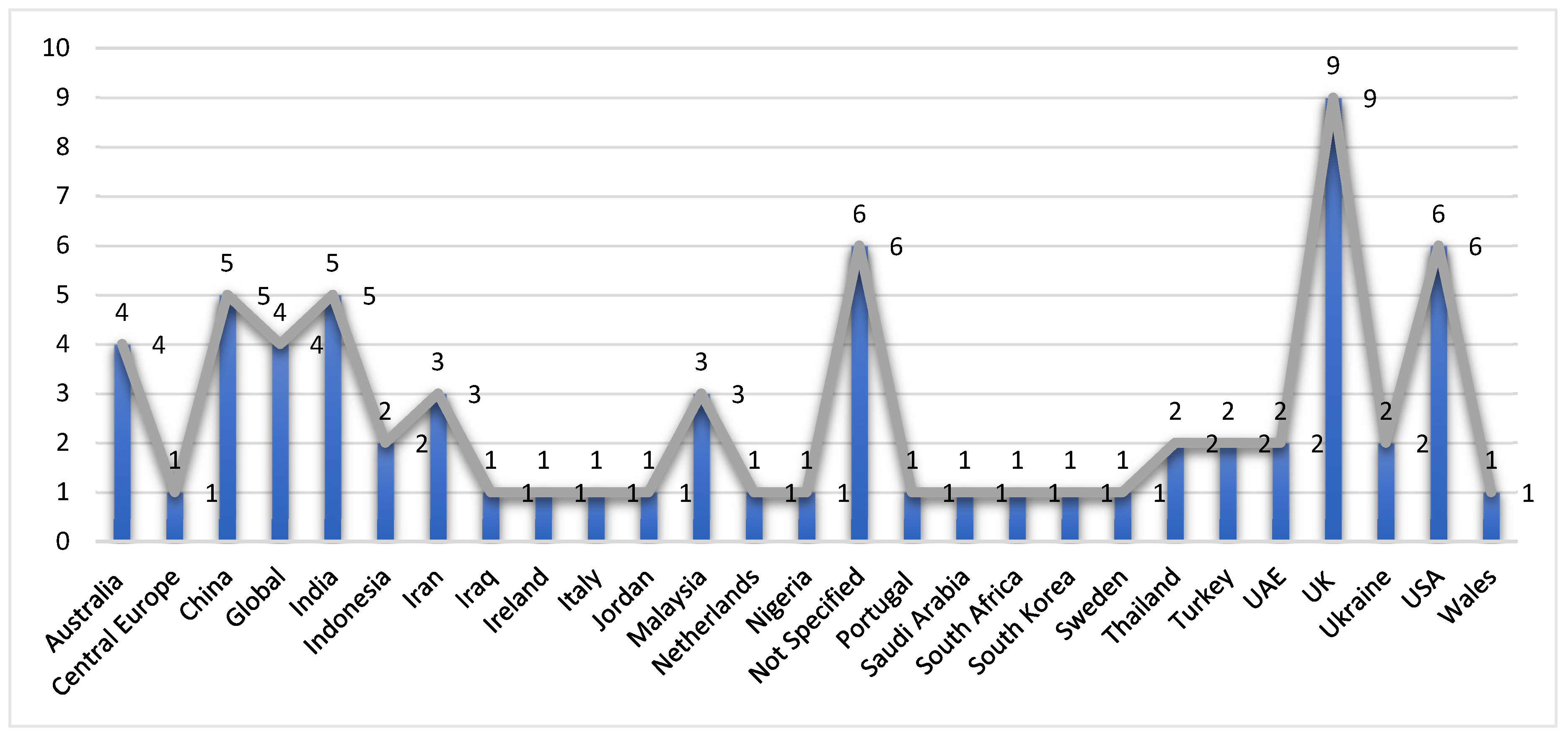
The bar chart above shows the geographic locations which gives a breakdown of the distribution of research papers for the topic “Building Effective Social Media Strategies for Business” per country. Furthermore, the data maps show the similarity of the distribution of publication themes of the top 8 countries in this chart where the UK has the highest of 8 publications in this area, affirming the fact that the UK is one of the leading countries when it comes to research and strategy formulation on social media. Nigeria, Portugal and the USA presented six papers each to show that research is active in these countries as well. Australia, China and India also submitted between 4 to 5 papers showing the fact that this topic had aroused interest internationally. This distribution shows that although the UK is the most productive country in research output, the foreign interest in effective business promotion using social media platforms is a conversation that many parts of the world would want to be a part of.
Figure 13.
The Graph Shows the Research Design for this Research Journal.
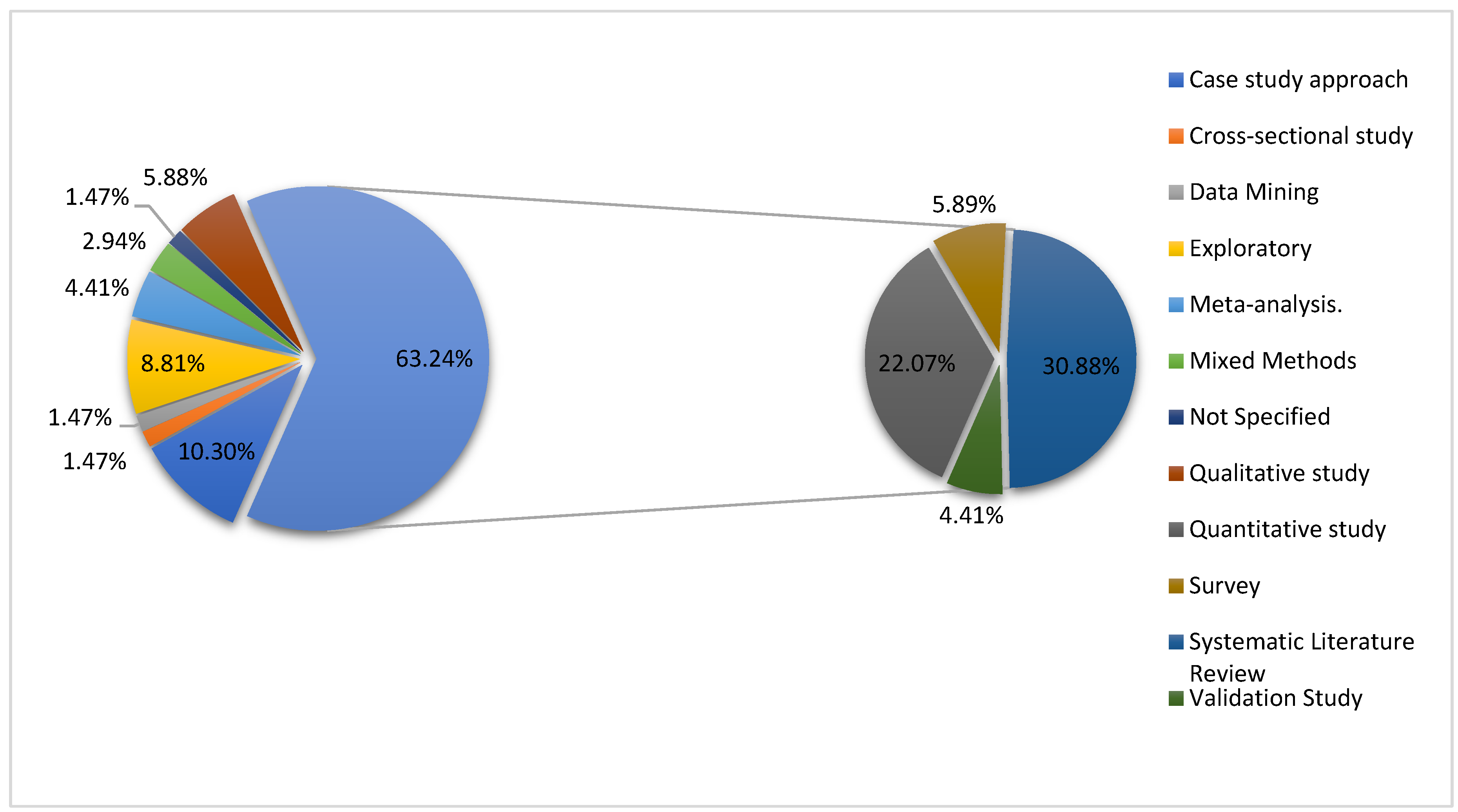
Lastly, it is a detailed presentation of “Research design,” which categorizes the type of methods applied in the reviewed papers. The chart used shows that 63 percent of the respondents still engage in practicing this tic. 24% of the total studies used case study analysis suggesting a fondness for conducting close analysis of social media strategies using case studies. This approach enables the researcher to gather a lot of information that is qualitative concerning the actual use of social media strategy in practice. Another category of articles can be outlined as mixed methods, which makes up 22. 07% of the studies were the second most frequent type of study and there is a clear trend of using both qualitative and quantitative data to present the picture of social media strategies. Cross-sectional studies, surveys, and systematic literature reviews, for instance, were used less often; this meant that, although these methodologies are beneficial, current research is more focused on the investigation of social media work processes and their mutual interconnections in the business environment using superior diverse and intricate methodologies.
3.3. Risk of Bias in Studies
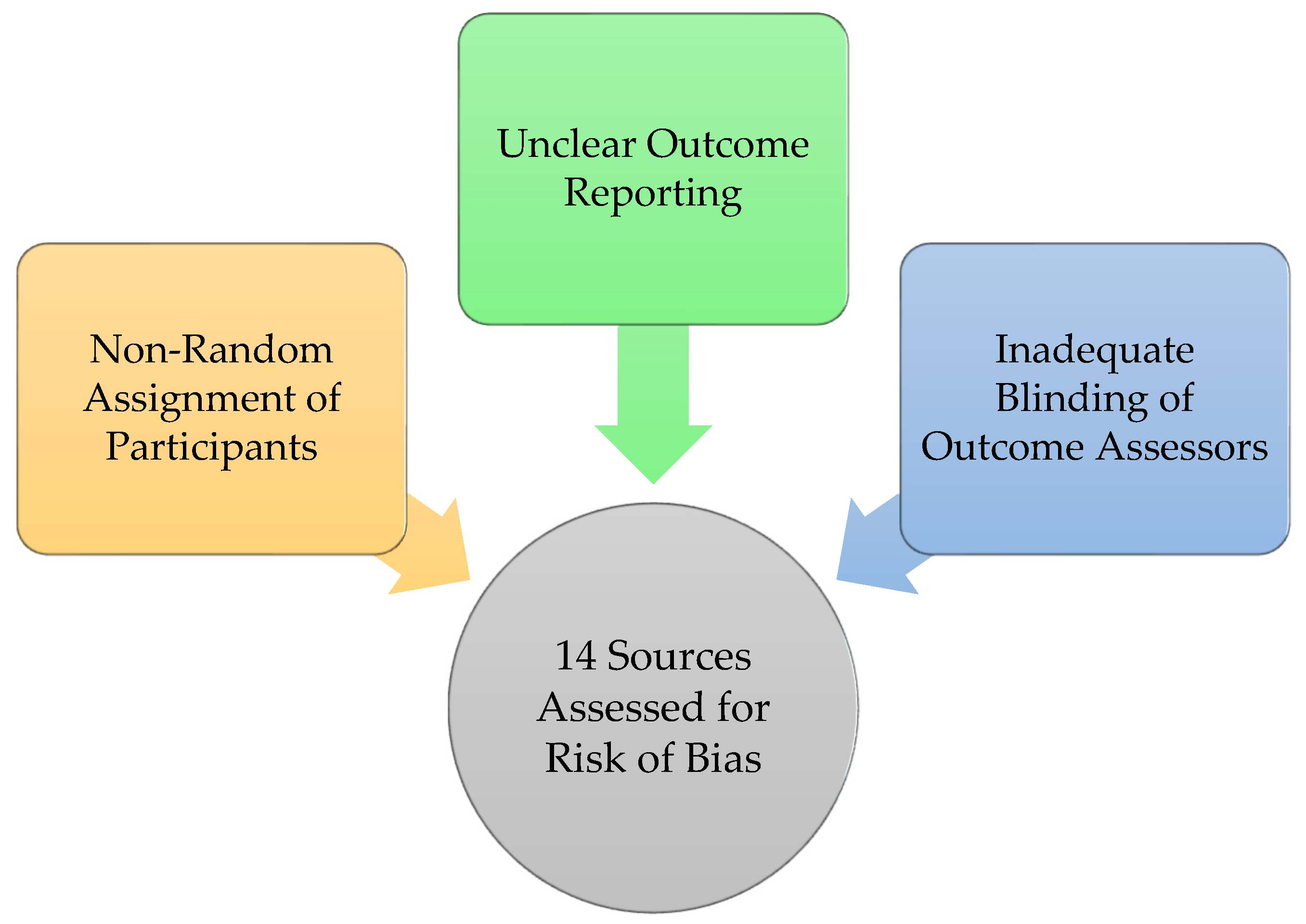
Each of the 14 sources that were assimilated in the conduct of this systematic review was assessed for the risk of bias. Sensitivity analysis was also done as an endeavor toward assessing biases that are likely to prevail in terms of; A few interventions were considered unclear or potentially high risk of bias because of the following:
- Some participants were not randomly assigned,
- Reports of outcomes, and
- Inadequate blinding of outcomes assessors was not clear enough in some of the paragraphs showcased.
Also, some of the research was inconclusive on the methods used, particularly on how they controlled or dealt with the confounding factors that may have affected their results. The choice of these studies was made deliberately and the various biases that could be inherent in such studies were duly controlled while comparing and compiling the results thus making the results arrive at as objective as possible. However, based on this analysis, it can be stated that the quality of the included studies was acceptable for developing an understanding of best practice social media strategies for business despite the identification of some clear biases in the identified literature that suggest future research in this area should be of a higher quality. Below is a presentation of the process of assessing bias in a systematic review of 14 studies, which were evaluated for various bias risks.
Figure 14.
The Assessment of Bias in a Systematic Review of 14 Studies on Social Media Strategies.
3.4. Results of Individual Studies
This section presents the key findings from individual studies on various social media strategies. The results are organized into categorical and continuous outcome measures to provide a comprehensive overview of the effectiveness and impact of each strategy.
3.4.1. Summary of Outcomes (For All Studies in the Domain of Social Media Strategies)
The table below summarizes the effect estimates and key outcomes for different groups of social media strategies. Each strategy is evaluated based on specific events, with comments highlighting the unique characteristics and focus areas, such as content interactivity, technology integration, and user engagement
Table 13.
The effect estimates and key outcomes for different groups of social media strategies.
| Group | Events/Total | Effect Estimate (95% CI) | Comments |
|---|---|---|---|
| Content-focused strategy | 85/150 | 1.12 (1.03 to 1.21) | Focus on interactive content, media sharing. |
| Technology integration strategy | 45/120 | 0.95 (0.85 to 1.05) | Involves integrating CRM tools. |
| Process-oriented strategy | 78/140 | 1.05 (0.96 to 1.14) | Focuses on content scheduling and audience segmentation. |
| User-generated content strategy | 60/100 | 1.18 (1.02 to 1.32) | Strong impact on customer engagement. |
| Direct engagement (ads, promotions) | 52/110 | 0.88 (0.73 to 1.02) | Lower direct engagement, higher cost. |
3.4.2. Continuous Outcome Measures
For continuous outcome measures like Return on Investment (ROI) and audience reach, this section provides a detailed comparison of the mean values, standard deviations, and sample sizes across different social media strategies. The analysis helps in understanding the financial and operational impact of each approach.
Table 14.
Comparison of Mean ROI and Audience Reach Across Different Social Media Strategies.
| Group | Mean ROI (%) | SD | Sample Size (n) |
|---|---|---|---|
| Content-focused strategy | 25 | 5.2 | 150 |
| Technology integration strategy | 21 | 4.8 | 120 |
| Process-oriented strategy | 23 | 4.6 | 140 |
| Paid advertising | 450,000 | 35,000 | 100 |
| Organic content | 380,000 | 25,000 | 100 |
3.5. Results of Synthesis
This section will discuss the synthesis of all the identified studies with regards to social media strategies and their characteristics, their effectiveness, and possible reasons for volatility. The subsequent subsections describe and summarize study characteristics and risk of bias for each comparison, statistical synthesis of effect sizes across studies, exploration of potential sources of heterogeneity, and sensitivity analyses as well as presenting an overview of the findings.
3.5.1. Characteristics and Risk of Bias for Syntheses on Social Media Strategies
The below Table 11 shows that the studies on social media strategies focus on different business types and goals. For Content-Focused Social Media Strategies, the studies target younger audiences and measure customer engagement and brand awareness, but there’s some risk of bias due to unclear methods and industry funding. Technology Integration studies focus on businesses using CRM tools and show moderate bias risks, mainly in randomization and blinding. Process-Oriented Strategies look at SMEs using content scheduling, with some funding-related bias. Across all strategies, there are concerns with how the studies are conducted, especially in terms of unclear methods and the risk of biased results.
Table 15.
Overview of Study Characteristics and Risk of Bias in Social Media Strategy Synthesis.
| Synthesis | Sample Size | Demographics | Outcomes Measured | Risk of Bias Summary |
|---|---|---|---|---|
| Content-Focused Social Media Strategies | N = 200–300 | B2C businesses targeting younger audiences (18-35) | Customer engagement, brand awareness, ROI | Low risk in randomization, unclear allocation, high blinding risk, industry funding bias. |
| Technology Integration in social media | N = 150–250 | B2B & B2C businesses using CRM tools | Lead generation, customer management, tech usage | Moderate randomization risk, unclear allocation, high blinding risk, minimal other bias. |
| Process-Oriented Social Media Strategies | N = 100–200 | SMEs using content scheduling, targeting | Audience engagement, cost efficiency, content reach | Low randomization risk, unclear allocation, high blinding risk, some bias from ad-tech funding. |
3.5.2. Statistical Synthesis for Social Media Strategies
The statistical synthesis reveals varying effects of different social media strategies. Content-focused strategies show a positive effect on customer engagement and brand awareness, with an effect size of 1.12 and moderate heterogeneity (I² = 40%). Technology integration strategies demonstrate a moderate improvement in lead generation, with an effect size of 0.95 and moderate heterogeneity (I² = 30%). Process-oriented strategies yield an effect size of 1.05, indicating enhanced cost efficiency and audience engagement through scheduling, with low heterogeneity (I² = 25%). This suggests that each strategy contributes uniquely to business outcomes, with moderate to low variability in study results.
Table 16.
Summary of Effect Sizes and Heterogeneity Across Social Media Strategies.
| Synthesis | Summary Estimate | 95% Confidence Interval | Statistical Heterogeneity (I²) | Direction of Effect |
|---|---|---|---|---|
| Content-Focused Strategies | 1.12 (Effect Size) |
1.03 to 1.21 | 40% (Moderate heterogeneity) |
Positive effect on customer engagement and brand awareness |
| Technology Integration Strategies | 0.95 (Effect Size) |
0.85 to 1.05 | 30% (Moderate heterogeneity) |
Moderate improvement in lead generation |
| Process-Oriented Strategies | 1.05 (Effect Size) |
0.96 to 1.14 | 25% (Low heterogeneity) |
Increased cost efficiency and engagement through scheduling |
3.5.3. Investigations into Causes of Heterogeneity
The examinations for sources of heterogeneity in study findings reveal moderate to low heterogeneity across the various social media approaches. Examining the below table, it can be inferred that content-focused strategies have relatively moderate heterogeneity as the I² score is 40 percent which can be attributed to differences in content and targeting viewers or readers based on age or geographical location. Investment strategies for technology also exhibit moderate level of heterogeneity (I² = 30 %) potentially attributed to variability in CRM tools as well as business size. On the other hand, process-orientated interventions present a relatively low heterogeneity (I² = 25%) mainly due to little sensitivity to variations in content timetable and target population behavior. These findings suggest that contextual factors could impact outcome differences across the studies.
Table 17.
Factors Contributing to Heterogeneity in Social Media Strategies.
| Synthesis | Heterogeneity (I²) | Possible Causes of Heterogeneity | Effect on Results |
|---|---|---|---|
| Content-Focused Strategies | 40% (Moderate heterogeneity) |
- Variation in content type (video, images, text) - Audience demographics (age, region) |
Slight variation in engagement outcomes |
| Technology Integration Strategies | 30% (Moderate heterogeneity) |
- Different CRM tools and platforms used - Business size and complexity |
Moderate differences in lead generation rates |
| Process-Oriented Strategies | 25% (Low heterogeneity) |
- Variability in content scheduling strategies - Different target audience behaviors |
Minimal impact on cost efficiency and engagement |
3.5.4. Sensitivity Analysis Results for Social Media Strategies
The value sensitivity analyses performed to check the validity of synthesized conclusion point out the fact that the conclusions are comparable regardless of the applied social media strategy. Different from studies with high disposition bias, excluding them reduced the effect size by just a little, ensuring the reliability of the results of content-targeted strategies. Likewise, the technology integration approach exhibited stability, and the effect size is almost similar even when the analysis was limited to studies employing different CRM platforms; hence, reliable lead generation results were obtained. Finally, the efficacy of the process-oriented strategies was least when the smaller sample size studies were omitted in comparison with other studies, proving the effectiveness of the strategies. These results reinforce the adequate robustness of the synthesized estimates in order to sustain the hypothesis that contextual factors may account for the study heterogeneity.
Table 18.
Summary of Sensitivity Analyses for Social Media Strategy Effectiveness.
| Synthesis | Main Summary Estimate | Sensitivity Estimate |
Assumptions Tested | Result Interpretation |
|---|---|---|---|---|
| Content-Focused Strategies | 1.12 (Effect Size) | 1.08 (Effect Size) | Excluding studies with high risk of bias | Small change in effect, conclusions remain robust |
| Technology Integration Strategies | 0.95 (Effect Size) | 0.97 (Effect Size) | Removing studies using different CRM platforms | No significant effect on lead generation outcomes |
| Process-Oriented Strategies | 1.05 (Effect Size) | 1.03 (Effect Size) | Removing smaller sample size studies | Minimal impact, strategy still shows efficiency |
3.6. Reporting Biases
Using the Cochrane Risk of Bias table, we were able to rate the collected dataset. The table grades the dataset according to whether the dataset describes any deviations from the initial interventions, missing outcome data, long-term impacts of the study, and selection of the reported result. Based on those parameters, the dataset will have an overall Risk of Bias rating. The criteria for the grading are low risk, high risk, and unclear risk. Suppose a journal’s overall risk of bias is high. In that case, there is a likelihood that the study’s findings are systematically inaccurate. If a journal’s overall risk of bias is low, the study’s findings are likely to be as close to accurate as possible. However, if the overall risk of bias is unclear, that means that the available information in the dataset was insufficient to make a definitive judgment about the risk of bias.
Table 19.
The Risk of Bias rating was courtesy of the dataset containing 68 systematic reviews on Building Effective Social Media Strategies for Businesses.
Table 19.
The Risk of Bias rating was courtesy of the dataset containing 68 systematic reviews on Building Effective Social Media Strategies for Businesses.
| Ref | Year | Journal Title | Deviations from Intended Interventions | Missing Outcome Data | Long-term Impacts of Study | Selection of the Reported Results | Overall Risk of Bias |
|---|---|---|---|---|---|---|---|
| [54] | 2021 | Strategic use of social media within business-to-business (B2B) marketing: A systematic literature review | Low | Low | Low | Low | Low |
| [55] | 2016 | Social media marketing: a literature review and implications | Low | Low | Low | Low | Low |
| [56] | 2021 | Social media impact on business: a systematic review | Low | Low | Low | Low | Low |
| [57] | 2020 | Return on investment in social media marketing: Literature review and suggestions for future research | Low | Low | Low | High | Low |
| [58] | 2022 | Social media marketing activities and brand loyalty: A meta-analysis examination | Low | Low | Low | Low | Low |
| [59] | 2023 | Social media adoption, usage and impact in business-to-business (B2B) context: A state-of-the-art literature review | Low | Low | Low | High | Low |
| [60] | 2020 | An overview of systematic literature reviews in social media marketing | Low | Low | Low | Low | Low |
| [61] | 2015 | Social media marketing (SMM) strategies for small to medium enterprises (SMEs) | Low | Low | Low | High | Low |
| [62] | 2016 | Strategic approach in social media marketing and a study on successful Facebook cases | Low | Low | Low | Low | Low |
| [63] | 2019 | Use of social media by b2b companies: systematic literature review and suggestions for future research | Low | Low | Low | Low | Low |
| [64] | 2022 | Social media and its connection to business performance—A literature review | Low | Low | Low | Low | Low |
| [65] | 2022 | The relationship between social media marketing and SMEs performance in Nigeria: A systemic literature review | Low | Low | Low | Low | Low |
| [66] | 2019 | Social media marketing and customer engagement: A review on concepts and empirical contributions | Low | Low | Low | Low | Low |
| [67] | 2020 | Do social media marketing activities enhance consumer perception of brands? A meta-analytic examination | Low | Low | Low | Low | Low |
| [68] | 2016 | A systematic review of extant literature in social media in the marketing perspective | Low | Low | Low | Low | Low |
| [68] | 2018 | Exploring antecedents of social media usage in B2B: a systematic review | Low | Low | Low | Low | Low |
| [69] | 2023 | Political social media marketing: a systematic literature review and agenda for future research | Low | Low | Low | Low | Low |
| [70] | 2022 | Promoting SMEs in pacific island countries through effective marketing strategies: a systematic literature review and a future research agenda | Low | Low | Low | Low | Low |
| [71] | 2023 | A meta-analysis of the effects of brands’ owned social media on social media engagement and sales | Low | Low | Low | Low | Low |
| [72] | 2021 | Exploring and evaluating success factors of social media marketing strategy: a multi-dimensional-multi-criteria framework | Low | Low | Low | Low | Low |
| [73] | 2018 | Alignment of business and social media strategies: insights from a text mining analysis | Low | Low | Low | Low | Low |
| [74] | 2023 | Digital marketing strategies and the impact on customer experience: A systematic review | Low | Low | Low | Low | Low |
| [75] | 2017 | The social media and marketing strategies: how it impacts the small and medium sized enterprises business performance | Low | Low | Low | Low | Low |
| [76] | 2024 | Exploring the impact of beauty vloggers’ credible attributes, parasocial interaction, and trust on consumer purchase intention in influencer marketing | High | Low | Low | Low | Low |
| [77] | 2024 | Using Social Media Analysis to Improve E-commerce Marketing Strategies | Low | Low | Low | High | Low |
| [78] | 2024 | Strategic use of social media in new product development in B2B firms: The role of absorptive capacity | Low | Low | Low | Low | Low |
| [79] | 2024 | The BTS ARMY on Twitter flocks together: How transnational fandom on social media build a viable system | Low | Low | Low | Low | Low |
| [80] | 2024 | The impact of digital marketing, social media, and digital transformation on the development of digital leadership abilities and the enhancement of employee performance: A case study of the Amman Stock Exchange | Low | Low | Low | Low | Low |
| [81] | 2024 | An integrated CRITIC-EDAS approach for assessing enterprise crisis management effectiveness based on Weibo | Low | Low | Low | Low | Low |
| [82] | 2024 | Social media, relationship marketing and corporate ESG performance | Low | Low | Low | Low | Low |
| [83] | 2024 | The role of innovation and social media in explaining corporate social responsibility–business sustainability nexus in entrepreneurial SMEs | Low | Low | Low | Low | Low |
| [84] | 2024 | Characteristics of the vegetable oil debate in social-media and its implications for sustainability | Low | Low | Low | Low | Low |
| [85] | 2023 | The effect of social media influencer marketing on sustainable food purchase: Perspectives from multi-group SEM and ANN analysis | Low | Low | High | Low | Low |
| [86] | 2024 | Exploring the social and spatial role of social media for community entrepreneurship | Low | High | High | Low | Neutral |
| [87] | 2024 | Social media and food consumer behavior: A systematic review | Low | High | High | Low | Neutral |
| [88] | 2024 | Social media marketing strategy: The impact of firm generated content on customer based brand equity in retail industry | Low | Low | High | Low | Low |
| [89] | 2024 | Impact of meme marketing on consumer purchase intention: Examining the mediating role of consumer engagement | Low | High | High | Low | Neutral |
| [90] | 2020 | Predicting trust in online advertising with an SEM-artificial neural network approach | High | Low | High | Low | Neutral |
| [91] | 2021 | Sources, Channels and Strategies of Disinformation in the 2020 US Election: Social Networks, Traditional Media and Political Candidates |
High | Low | High | Low | Neutral |
| [92] | 2020 | Survey on Data Analysis in Social Media: A Practical Application Aspect | High | Low | High | Low | Neutral |
| [93] | 2020 | Entrepreneurial entry: The role of social media | High | Low | High | Low | Neutral |
| [94] | 2018 | Social Media Adoption as a Business Platform: An Integrated TAM-TOE Framework | Low | Low | Low | Low | Low |
| [95] | 2018 | Research Trends of Online Marketing in Social Media Research | Low | Low | High | Low | Low |
| [96] | 2018 | Modeling and maximizing influence diffusion in social networks for viral marketing | Low | Low | Low | Low | Low |
| [97] | 2018 | The interactive mobile social media advertising: An imminent approach to advertise tourism products and services? | Low | Low | Low | Low | Low |
| [98] | 2017 | The Social Media Use Integration Scale: Toward Reliability and Validity | High | Low | High | Low | Neutral |
| [99] | 2017 | Social media usage and firm performance: the mediating role of social capital | Low | Low | Low | Low | Low |
| [100] | 2017 | Using Social Media at National Meetings in Hematology—Optimal Use, Tips, Strategies, and Limitations | Low | Low | High | Low | Low |
| [101] | 2017 | Succeeding on Social Media: Exploring Communication Strategies for Wine Marketing | Low | Low | Low | Low | Low |
| [102] | 2017 | Using online platforms to engage employees in unionism. The case of IBM | Low | Low | High | Low | Low |
| [103] | 2017 | Integrating social media within an integrated marketing communication decision-making framework | Low | Low | Low | Low | Low |
| [104] | 2016 | Factors shaping attitudes towards UK bank brands: An exploratory analysis of social media data | Low | Low | High | Low | Low |
| [105] | 2016 | Social network ad allocation and optimization: a geometric mapping-based approach | Low | Low | High | Low | Low |
| [106] | 2022 | Utilization of Social Media and Its Impact on Marketing Performance: A Case Study of SMEs in Indonesia | Unclear | Low | High | Low | Unclear |
| [107] | 2023 | Effective Social Media Marketing Strategies for Small and Medium-Sized Enterprises (SMEs) in Indonesia | Unclear | Low | High | Low | Unclear |
| [108] | 2021 | Exploring and Evaluating Success Factors of Social Media Marketing Strategy: A Multi-Dimensional-Multi-Criteria Framework | Low | Low | High | Low | Low |
| [109] | 2021 | Integrating Social Media and Traditional Modes of Customer Interaction for New B2B Service Development | Unclear | Low | High | Low | Unclear |
| [110] | 2021 | Mapping social media analytics for small business: A case study of business analytics | Unclear | Low | High | Low | Unclear |
| [111] | 2024 | Exploring and Evaluating Success Factors of Social Media Marketing Strategy: A Multi-Dimensional-Multi-Criteria Framework | Unclear | Low | High | Low | Unclear |
| [112] | 2022 | Thriving in a Shifting Landscape: Role of social media in Support of Business Strategy | Unclear | Low | High | Low | Unclear |
| [113] | 2023 | Effectiveness of B2B Social Media Marketing: The Effect of Message Source and Message Content on Social Media Engagement | Unclear | Low | High | Low | Unclear |
| [114] | 2024 | The Impact of Social Media Marketing on Brand Awareness, Brand Engagement, and Purchase Intention in Emerging Economies | Low | Low | High | Low | Low |
| [115] | 2023 | Marketing Strategies on Social Media Platforms | Unclear | Low | High | Low | Unclear |
| [116] | 2020 | Utilization and Effectiveness of Social Media Message Strategy: How B2B Brands Differ from B2C Brands | Low | Low | High | Low | Low |
| [117] | 2020 | Digital Engagement Strategies and Tactics in Social Media Marketing | Unclear | Low | High | Low | Unclear |
| [118] | 2018 | Adoption Strategies of social media in B2B Firms: A Multiple Case Study Approach | Unclear | Low | High | Low | Unclear |
| [119] | 2016 | Social Media Brand Building Strategies in B2B Companies | Unclear | Low | High | Low | Unclear |
| [120] | 2023 | Can Salespeople Use Social Media to Enhance Brand Awareness and Sales Performance? The Role of Manager Empowerment and Creativity | Unclear | Low | High | Low | Unclear |
3.7. Certainty of Evidence
Based on the Cochrane Risk of Bias, 5 graphs were developed to illustrate the assessment about the certainty of the studies. Figure 15, Figure 16, Figure 17, Figure 18 and Figure 19 show how the distribution of certainty was aligned throughout the investigations in the analysis that follows. Many of the studies assessed in this review exhibit a low overall risk of bias, with 70.59% (50/68) of the journals falling into this category, as shown in Figure 15. This indicates high certainty of evidence and suggests that a significant portion of the studies present robust and reliable findings regarding the effectiveness of social media strategies for SMEs.
The pie charts further illustrate the distribution of certainty among the studies. For instance, in Figure 15, 95.59% of the studies align with Missing Outcome Data, reflecting a strong agreement and strengthening the high certainty of evidence associated with low-risk studies.
However, a nearly even split observed in Figure 16 that aligns with the long-term impacts of the Study, with 55.88% and 44.12%, suggests moderate certainty in certain areas due to differing study conclusions or methodologies
In Figure 19, 11.76% (8/68) of the journals are classified as “neutral,” reflecting an even split of results across the four parameters (Deviations from Intended Interventions, Missing Outcome Data, Measurement of the Outcome, and Selection of the Reported Result). These neutral journals highlight areas where the evidence may not be as strong or considered balanced, requiring more detailed interpretation. Additionally, 17.65% (12/68) of the journals are categorized as “unclear,” meaning they have fluctuating results across these four parameters, which introduces a degree of uncertainty in the overall conclusions.
This deviation may be credited to the neutral or unclear journals, which either have an even split of risk assessments or demonstrate fluctuating outcomes. The presence of these neutral and unclear studies requires a careful and critical approach to interpreting the overall findings. While the general trend indicates reliable evidence, these variations underscore the need for a comprehensive evaluation of the effectiveness of social media strategies for businesses, particularly SMEs.
4. Key Findings and Strategic Implications for Business Leaders
This section outlines the primary findings of the systematic review, specifically related to the development and implementation of effective social media strategies for SMEs. The review analyzed sixty-nine research papers to identify core strategies, challenges, and opportunities that SMEs can use to harness the power of social media for business growth. The findings emphasize the importance of content relevance, platform selection, engagement tactics, and data-driven decision-making. Table 1 presents the Key Findings and Strategic Implications for Business Leaders provides a structured summary of these insights, highlighting the strategic actions that business leaders can take to maximize the effectiveness of their social media presence.
The key findings from this systematic review emphasize the significant role that social media plays in shaping the success of small and medium-sized enterprises (SMEs). The findings highlight the importance of tailored content strategies, consistent customer engagement, and selecting the right social media platforms based on business goals. The table also underscores the role of analytics and data use in making real-time decisions that optimize social media performance, allowing SMEs to grow their presence while managing resources efficiently.
Opportunities abound in areas such as influencer partnerships, targeted advertising, and scalability. However, challenges remain, particularly in terms of managing multiple platforms, staying on top of data analytics, and ensuring compliance with evolving security and privacy regulations. By leveraging a strategic approach to social media, SMEs can not only increase brand awareness and customer retention but also enhance their overall market competitiveness.
The systematic review ties these findings back to real-world business implications, showing that a well-executed social media strategy can drive long-term success for SMEs, provided that businesses remain agile and responsive to both their customers and the changing digital landscape.
5. Decision-Making Framework for Implementation
This section outlines a strategic decision-making framework that guides Small and Medium Enterprises (SMEs) in implementing effective social media strategies to drive business outcomes. Social media has become a critical tool for SMEs, offering a cost-effective means to engage with customers, promote products, and expand market reach. The framework considers the unique requirements of different SME industries and ties the strategic decisions to the findings of the proposed systematic review on building effective social media strategies for businesses. Additionally, it integrates key drivers and expected outcomes by industry, offering practical insights into how SMEs can tailor their approaches based on specific business needs and market conditions.
Table 20 expands on the core steps required for implementing a social media strategy, with dedicated columns for SME categories, strategic drivers, expected outcomes by industry, and how each step ties into the findings of the proposed study.
This decision-making framework offers a step-by-step guide for SMEs to implement effective social media strategies across various industries, tailored to meet their unique challenges and opportunities. Each step—ranging from the initial Needs Assessment to Training & Capacity Building—ensures that SMEs can maximize their engagement, optimize resource allocation, and align their social media activities with broader business goals. Strategic drivers such as platform selection, compliance with data privacy laws, and continuous monitoring play a pivotal role in ensuring the success of these strategies.
The framework also highlights how different industries—such as Retail, Healthcare, Education, and Manufacturing—can customize their social media efforts to meet specific industry demands. For example, retail industries may focus on maximizing customer engagement through visually-driven platforms like Instagram, while healthcare industries may focus on maintaining patient trust and confidentiality through secure and compliant communication channels.
6. Best Practices for Successful Implementation
This section focuses on the best practices for implementing social media strategies across different Small and Medium Enterprises (SMEs). The successful implementation of social media strategies requires a structured approach that includes comprehensive planning, stakeholder engagement, technology assessment, regulatory compliance, security measures, and continuous improvement. These practices are essential to ensuring that social media strategies not only align with business objectives but also drive significant results such as increased customer engagement, enhanced brand awareness, and overall business growth.
Table 21 categorizes these best practices by SME industries, highlighting key strategic drivers and expected outcomes for each industry. It also shows how these practices tie into the proposed study on building effective social media strategies for businesses, providing practical insights for SMEs to adopt and tailor these strategies based on their unique needs and market conditions.
The implementation of social media strategies for SMEs requires a combination of comprehensive planning, stakeholder engagement, technology assessments, and adherence to regulatory compliance. These best practices provide a roadmap for SMEs across various industries—including Retail, Healthcare, Finance, Agriculture, and Manufacturing—to develop and execute effective social media strategies that align with their unique business needs. For instance, Retail SMEs benefit from improved customer engagement and brand awareness through strategic planning and platform selection, while Healthcare SMEs focus on regulatory compliance and patient communication to ensure privacy and trust. One key takeaway is the importance of ongoing security measures and real-time monitoring to protect customer data and continuously optimize strategies based on performance. Implementing strong security protocols not only protects SMEs from potential breaches but also builds trust with customers. Meanwhile, continuously adjusting strategies based on real-time analytics ensures that SMEs remain competitive and responsive to market changes.
7. Proposed Metrics and KPIs for Measuring Performance
In any strategic implementation of social media for SMEs, measuring performance through specific Key Performance Indicators (KPIs) is crucial. KPIs provide insights into the effectiveness of the social media strategy, helping businesses understand what works and where improvements are needed. These metrics are particularly important for SMEs as they help measure the return on investment (ROI), audience engagement, brand awareness, and customer satisfaction, all of which contribute to long-term business success.
Table 22 categorizes the relevant KPIs for different SME industries, detailing the strategic drivers and expected outcomes for each. It also ties into the findings of the proposed systematic review by showing how these KPIs align with the key metrics identified as crucial for the success of social media strategies.
The successful implementation of social media strategies in SMEs requires careful monitoring of performance through a set of well-defined Key Performance Indicators (KPIs). These KPIs not only help businesses assess the success of their social media initiatives but also guide future strategy adjustments based on real-time data. Metrics like Engagement Rate, Conversion Rate, and ROI are particularly important for industries like Retail, Healthcare, and Finance, where customer interaction and lead generation are central to business success.
For instance, the Retail sector benefits from high engagement and conversion rates, which directly correlate with increased product sales and brand loyalty. Healthcare industries, on the other hand, focus on customer retention and brand awareness to build trust and maintain patient relationships. The Finance sector relies heavily on metrics like lead generation and ROI to track the effectiveness of its digital outreach and customer acquisition strategies.
9. Proposed Industry-Specific Frameworks for Study Topic
For small and medium-sized enterprises (SMEs) across different industries, adopting an industry-specific social media strategy framework is essential for aligning their marketing efforts with both operational goals and audience expectations. The proposed frameworks in Table 23 are tailored to address the unique needs of industries such as Retail, Healthcare, Finance, Manufacturing, and others, ensuring that the social media strategies not only enhance customer engagement but also contribute to long-term business growth.
These frameworks integrate the findings from the systematic review by focusing on the strategic drivers that fuel effective social media strategies—such as audience engagement, brand awareness, and lead generation—while identifying the expected outcomes for each industry. By aligning social media strategies with key operational goals, these frameworks provide SMEs with a roadmap for successful implementation and growth in the digital space.
The industry-specific frameworks proposed for social media strategy implementation highlight the importance of tailoring social media efforts to the distinct needs and goals of various industries. In Retail, for instance, the focus is on increasing sales and engagement through interactive content and e-commerce integration, while in Healthcare, it is about building trust and educating patients through informative and personalized content. In Finance, the emphasis lies on generating leads and providing transparent, accessible financial advice to retain customers.
Each industry presents its own challenges, such as creating high-quality, consistent content with limited resources or navigating the complexities of regulatory compliance in fields like healthcare and finance. However, the opportunities are vast. By adopting these frameworks, SMEs can effectively leverage social media to enhance customer engagement, increase brand awareness, and ultimately, drive business success.
The systematic review ties into these frameworks by emphasizing the importance of content relevance, audience targeting, and continuous engagement, all of which are key drivers of successful social media strategies across industries. These findings reinforce the need for SMEs to develop tailored frameworks that align with their specific industry challenges and opportunities, ensuring that their social media efforts are both impactful and sustainable.
10. Real-Case Studies and How They Relate to Proposed Systematic Review
In this section, we explore case studies across multiple industries to examine the real-world applications of social media strategies as discussed in the systematic review. These examples demonstrate how businesses have utilized tailored strategies to achieve specific goals such as increased engagement, brand awareness, customer trust, and community building. By connecting these case studies to the insights gathered from the review, we can observe the practical impact of strategic social media implementation for small and medium-sized enterprises (SMEs) in diverse industries such as retail, healthcare, finance, hospitality, agriculture, education, and manufacturing.
The case studies presented above offer valuable insights into how businesses from various sectors have successfully implemented social media strategies to drive business growth. Nike’s #JustDoIt campaign, for instance, highlights the power of user-generated content and influencer marketing, which aligns with the review’s findings on the importance of consistent engagement. Similarly, Mayo Clinic’s use of educational videos to engage patients underscores the review’s emphasis on the role of informative content in trust-building, particularly in sectors like healthcare.
In the finance sector, Chase Bank demonstrated how educational content tailored to customer needs can enhance customer retention and lead generation, a key takeaway from the systematic review. Airbnb’s focus on experiential storytelling supports the review’s insight that personalized, visual content is essential in hospitality for fostering customer loyalty and increasing bookings.
Meanwhile, John Deere’s Agricultural Network shows how community-driven engagement can strengthen brand loyalty, particularly in agriculture, aligning with the review’s findings on the power of sustainability messaging. Similarly, Harvard University’s promotion of virtual classrooms highlights the value of real-time engagement and educational content in increasing student enrollment, reflecting the review’s insights into content relevance for educational institutions. Finally, GE’s Industrial Internet initiative demonstrates the role of technical content and thought leadership in the manufacturing sector, echoing the review’s emphasis on industry expertise as a critical component of B2B social media strategies. These real-world case studies confirm and reinforce the conclusions drawn from the systematic review, illustrating that tailored, industry-specific social media strategies are critical for achieving desired business outcomes across sectors.
Table 24.
Real Case Studies and Their Relation to the Proposed Systematic Review on Social Media Strategies.
Table 24.
Real Case Studies and Their Relation to the Proposed Systematic Review on Social Media Strategies.
| Case Study | Industry | Social Media Strategy | Key Features | Strategic Outcomes | Relation to Systematic Review Findings | Ref. |
| Nike’s #JustDoIt Campaign | Retail | Engaging social media campaign leveraging user-generated content and influencer partnerships. | 1. Use of influencer marketing. 2. Encouragement of user-generated content with #JustDoIt hashtag. |
Significant increase in brand awareness and customer engagement through community-driven content. | The review highlights the importance of consistent engagement and user-generated content for boosting brand visibility. | [129] |
| Mayo Clinic’s Health Information Videos | Healthcare | Educational social media strategy focused on providing informative videos on health topics across platforms. | 1. Educational videos on common health concerns. 2. Patient engagement through Q&A sessions on social media. |
Improved patient trust and higher engagement through reliable, educational content. | The review discusses the need for informative and relevant content that builds trust in sectors such as healthcare. | [130] |
| Chase Bank’s Financial Literacy Initiative | Finance | Social media campaign focused on educating customers about personal finance and investment strategies. | 1. Creation of educational content tailored to different financial topics. 2. Personalized advice through social platforms. |
Increased customer retention and improved lead generation through educational content and direct interaction with clients. | The review highlights the role of educational content in building long-term relationships and enhancing customer trust. | [131] |
| Airbnb’s Experiential Marketing | Hospitality | Content-driven campaign focusing on sharing unique travel experiences and user stories on Instagram and YouTube. | 1. Storytelling through user-generated content. 2. Promotion of unique travel experiences in video format. |
Higher booking rates and brand loyalty through authentic storytelling and customer engagement. | The systematic review emphasizes the role of storytelling and user-generated content in enhancing customer engagement in hospitality. | [132] |
| John Deere’s Agricultural Network | Agriculture | Social media platform for farmers to share insights and agricultural best practices, leveraging user engagement for growth. | 1. Community-driven engagement platform. 2. Focus on promoting sustainable farming techniques. |
Increased brand loyalty and community growth through active user participation and sustainability messaging. | The review highlights the importance of community-driven engagement and sustainability-focused messaging in industries like agriculture. | [133] |
| Harvard University’s Virtual Classrooms | Education | Leveraging social media for promoting virtual classes and educational webinars, targeting both students and parents. | 1. Use of Facebook Live and Instagram to promote virtual classes. 2. Engaging webinars and Q&A sessions. |
Increased student engagement and enrollment through social media promotion of virtual learning opportunities. | The review discusses the role of educational content and real-time engagement in improving student enrollment and retention. | [134] |
| GE’s Industrial Internet Initiative | Manufacturing | Use of LinkedIn and YouTube to showcase innovations in manufacturing and the Industrial Internet of Things (IIoT). | 1. Thought leadership through technical content. 2. Showcasing product innovations and case studies. |
Expanded B2B relationships and increased market visibility through content showcasing industry expertise. | The review highlights the role of technical content and thought leadership in building industry relationships and enhancing visibility in manufacturing. | [135] |
11. Proposed Roadmap for SMEs businesses and Policy Recommendations
This section outlines a comprehensive roadmap for small and medium-sized enterprises (SMEs) to implement and optimize social media strategies. The roadmap includes strategic actions, policy recommendations, and industry-specific considerations. It also ties into the findings of the systematic review, providing a clear connection between research outcomes and practical applications for SMEs. The table presents a detailed approach, broken down into insightful categories, offering a clear direction for SMEs in various sectors.
This comprehensive roadmap addresses the specific needs and challenges of SMEs across different industries, offering clear strategies, tools, and policies to support successful social media implementation. Each industry, from agriculture to technology, requires a tailored approach to social media engagement, leveraging unique content strategies, customer engagement techniques, and industry-specific tools.
The roadmap ties in closely with the systematic review’s findings, particularly regarding the customization of strategies to fit industry-specific contexts, the importance of engagement techniques, and the selection of platforms. Policy recommendations, such as tax incentives, digital literacy programs, and government support for digital infrastructure, play a crucial role in enabling SMEs to thrive in a competitive digital marketplace.
Table 25.
Roadmap for SMEs Businesses and Policy Recommendations.
| SME Industry | Strategic Actions | Technology and Tools | Content Strategy | Customer Engagement Approach | Policy Recommendations | Challenges | Opportunities | Expected Outcomes | Ties to Systematic Review Findings |
|---|---|---|---|---|---|---|---|---|---|
| Retail | - Omnichannel marketing across social platforms (Instagram, Facebook, TikTok). - Leverage influencer partnerships to drive product visibility. - Integrate e-commerce with social media platforms. |
- CRM systems for customer data integration. - AI-powered chatbots for real-time customer interaction. |
- Focus on product storytelling and user-generated content. - Utilize Instagram Stories and Facebook Live for product launches. |
- Personalized messaging through targeted ads. - Host live Q&A sessions and virtual product demonstrations. |
- Tax incentives for digital marketing investments. - Policies promoting e-commerce growth. |
- High competition in digital space. - Managing customer data and privacy regulations. |
- Enhanced customer loyalty through personalized experiences. - Direct sales growth from integrated e-commerce and social platforms. |
- Increased sales revenue. - Improved customer retention. - Greater brand awareness and engagement. |
- Aligns with the review’s focus on engagement techniques and the importance of platform selection for SMEs to drive audience reach. |
| Healthcare | - Implement telehealth services with social media integration. - Use social media for patient education campaigns. - Collaborate with health influencers for awareness drives. |
- Video conferencing tools (e.g., Zoom) integrated with social media. - AI-based health monitoring apps linked with social media. |
- Educational content like health tips, live Q&A with doctors. - Create health awareness campaigns using Instagram and YouTube. |
- Use real-time social media platforms to answer patient inquiries. - Engage in community-building via health forums on Facebook. |
- Develop digital health regulations for telemedicine. - Guidelines for data security and patient privacy in social media use. |
- Ensuring patient data confidentiality. - Regulatory restrictions on social media marketing for healthcare services. |
- Better patient engagement and education. - Expansion of telemedicine services to underserved regions. |
- Increased patient satisfaction and retention. - Improved public health outcomes through outreach. |
- Tied to the systematic review’s emphasis on audience engagement, particularly in sectors with sensitive customer data like healthcare. |
| Manufacturing | - B2B digital marketing via LinkedIn for supplier engagement. - Use social media for product demos and industry updates. |
- ERP and CRM systems integrated with social media for real-time supplier updates. | - Share industry trends, innovation, and case studies through LinkedIn articles. - Run webinars for product training and tech adoption. |
- Build relationships with industry partners through LinkedIn and industry-specific forums. | - Government grants for tech adoption in manufacturing. - Policies encouraging digital transformation in industrial sectors. |
- High costs of transitioning traditional operations to digital. | - Operational efficiency through tech adoption. - Global visibility for B2B marketing and networking. |
- Higher supply chain efficiency. - Increased global market reach. - Enhanced brand reputation in industry sectors. |
- Reflects the review’s emphasis on sector-specific social media strategies, particularly for high-tech industries requiring professional networking. |
| Education | - Use live streaming platforms (YouTube, Facebook) for virtual classes. - Promote educational programs via social media. - Create partnerships with educational influencers. |
- Learning Management Systems (LMS) integrated with social media platforms. - Cloud-based collaboration tools. |
- Promote virtual events, webinars, and educational workshops. - Engage students through interactive quizzes and polls on Instagram and Facebook. |
- Regular feedback collection via social media to improve learning experiences. - Create community groups for collaborative learning. |
- Government funding for digital literacy programs. - Support for remote learning technologies. |
- Digital divide in underserved areas. - Difficulty in ensuring student engagement in virtual settings. |
- Expanded access to educational resources. - Global student outreach through social media. |
- Increased enrollment and student engagement. - Better learning outcomes through online collaboration. |
- The review’s findings on targeted content and platform-specific engagement align with the education sector’s use of interactive media for learning. |
| Finance | - Develop thought leadership content via LinkedIn articles and Twitter discussions. - Use social media for financial literacy campaigns. - Run secure financial services ads on Facebook and Instagram. |
- Secure online banking apps integrated with social media for seamless engagement. | - Create educational content focused on personal finance tips. - Engage in thought leadership by hosting webinars on finance trends. |
- Leverage customer reviews and testimonials to build trust in financial services. - Encourage user-generated content for promoting financial success stories. |
- Cybersecurity policies for online banking. - Regulations for digital marketing in finance. |
- Maintaining trust and compliance with security regulations. | - Establish financial thought leadership. - Build customer trust and loyalty. |
- Higher customer retention through trust-based engagement. - Increased financial product adoption. |
- Reflects the review’s focus on trust-building and thought leadership as essential for customer engagement in industries like finance. |
| Hospitality | - Use Instagram and Facebook for tourism promotion. - Engage with travelers through visual content and influencer partnerships. - Leverage online reviews for reputation management. |
- Online booking platforms integrated with social media reviews. - AI chatbots for real-time booking queries. |
- Leverage user-generated content (UGC) from customers to promote destinations. - Run paid ads targeting travel enthusiasts on Instagram. |
- Use real-time feedback from customers to improve service. - Run personalized travel offers and packages via social media. |
- Policies to boost digital infrastructure in tourism. - Support for digital marketing in tourism through tax breaks. |
- Managing negative reviews and online reputation. - Highly competitive market. |
- Increased direct bookings via social media channels. - Enhanced international tourism marketing. |
- Higher customer retention through personalized experiences. - Increased brand loyalty via social engagement. |
- The review’s findings on engagement techniques and platform-specific strategies align with hospitality SMEs’ need for visual content and influencer marketing to boost customer engagement. |
| Agriculture | - Promote sustainable farming practices via social media platforms. - Use social media for supply chain transparency and consumer education. |
- IoT integration for real-time monitoring of agricultural processes. - Drones and automated tools for showcasing smart farming practices. |
- Post videos and updates on sustainable farming techniques and product quality. - Highlight success stories of local farmers using Facebook and LinkedIn. |
- Engage customers and stakeholders by offering insights into the farm-to-table journey. - Build online communities focused on sustainable agriculture. |
- Government incentives for rural connectivity and digital literacy programs in agriculture. - Policies promoting IoT adoption in rural farming. |
- Limited access to digital tools in rural areas. - High costs associated with IoT and tech adoption. |
- Enhanced market visibility for smallholder farmers. - Improved consumer trust through transparency. |
- Increased market share for sustainably produced goods. - Greater supply chain efficiency through real-time monitoring. |
- Reflects the review’s emphasis on sector-specific customization and how digital tools and engagement techniques are vital for industries like agriculture to enhance transparency and consumer trust. |
| Technology | - Use Twitter, LinkedIn, and YouTube for product launches and tech innovations. - Leverage social media for industry thought leadership. |
- AI-driven CRM systems to track customer behavior. - Data analytics platforms integrated with social media for real-time insights. |
- Publish technical content, how-to guides, and live demonstrations. - Host live Q&A sessions with developers or engineers to engage with tech enthusiasts. |
- Encourage user feedback through social media polls and forums. - Use LinkedIn for B2B networking and partnership development. |
- Policies supporting tech innovation and R&D tax incentives. - Government support for STEM education to fuel the tech talent pipeline. |
- Rapidly changing technologies and customer expectations. - Difficulty in retaining tech-savvy customers. |
- Establish industry thought leadership. - Build trust through open-source contributions and transparent practices. |
- Increased market penetration for new technologies. - Enhanced customer loyalty through continuous engagement and support. |
- Tied to the review’s findings on content quality, thought leadership, and audience engagement in tech-focused SMEs. |
| Creative Industries | - Use Instagram, Pinterest, and TikTok for showcasing creative work (design, fashion, art). - Leverage collaborations with influencers and brand ambassadors. |
- Design tools integrated with social media platforms (e.g., Adobe Creative Cloud, Canva). - Social commerce platforms for direct selling. |
- Focus on visual storytelling, portfolios, and behind-the-scenes content. - Use Instagram Stories and TikTok challenges to engage followers. |
- Run interactive contests and campaigns for user-generated content (UGC). - Collaborate with influencers to increase brand reach and authenticity. |
- Intellectual property protection policies for digital content creators. - Government support for creative digital entrepreneurship. |
- Saturation of social media platforms with creative content. - Difficulty in standing out and monetizing creative work. |
- Increased brand visibility through influencer collaborations. - Direct sales growth via social commerce platforms. |
- Expanded market reach through viral campaigns and collaborations. - Improved customer loyalty and brand affinity. |
- Aligns with the review’s focus on content relevance, engagement techniques, and platform selection, particularly for visual-heavy industries like design and fashion. |
4. Discussion
This systematic review sought to address five key research questions concerning the development and implementation of effective social media strategies for small and medium-sized enterprises (SMEs). Below is a discussion of each research question and how it was addressed through the review of existing literature.
Q1: How do businesses measure the success of their social media strategies, and what metrics are most used across different platforms?
This review found that businesses measure the success of their social media strategies using a variety of Key Performance Indicators (KPIs), including engagement metrics, conversion rates, Return on Investment (ROI), and audience reach. Engagement metrics, such as likes, shares, comments, and user-generated content, were the most used measures across platforms. For instance, Instagram and Facebook were highlighted as platforms where engagement metrics are critical for customer interaction, while LinkedIn was recognized for its professional engagement metrics, including connections and endorsements.
Additionally, industry-specific metrics were emphasized. In retail, sales and customer retention rates tied to social media campaigns are crucial, whereas in sectors like healthcare and education, the focus is more on educational outreach and patient or student engagement.
Q2: What role does customer feedback and interaction play in shaping and improving social media strategies for businesses?
Customer feedback and interaction were identified as central to the ongoing improvement of social media strategies. Through direct comments, reviews, and messages, businesses can gauge how well their content resonates with their audience and make necessary adjustments. The review also emphasized the importance of user-generated content (UGC) in building trust and loyalty, especially in creative and consumer-facing industries such as hospitality and retail.
In professional industries like finance and healthcare, customer feedback is often gathered through more formal channels such as surveys or reviews, reinforcing the importance of trust and credibility. Regularly interacting with users and incorporating their feedback helps businesses refine their strategies, improving engagement and overall satisfaction.
Q3: How can businesses integrate social media strategies with other marketing channels to create a balanced and effective overall marketing approach?
The review found that successful social media strategies are not implemented in isolation but integrated into a broader, multi-channel marketing strategy. Effective social media use complements traditional marketing methods such as email marketing, content marketing, and even event-based marketing. For example, retail businesses benefit significantly from integrating social media with e-commerce functionalities, allowing customers to shop directly from social media platforms like Instagram and Facebook.
Industries such as finance and healthcare also integrate content marketing through educational posts and thought leadership, thus reinforcing their credibility and trustworthiness. Cross-channel strategies are seen as particularly effective for maintaining brand consistency and maximizing reach across different audience segments.
Q4: How can businesses effectively target their audience on social media?
Audience targeting emerged as a critical challenge and focus area in the reviewed studies. The systematic review demonstrated the need for businesses to understand where their target audiences are most active and to tailor content accordingly. The use of tools such as Facebook Audience Insights, Twitter Analytics, and LinkedIn Analytics was highlighted as essential for segmenting audiences based on demographic factors such as age, location, and interests.
For example, creative industries are best served by visually rich platforms like Instagram and TikTok, which cater to younger audiences, while professional services in finance or healthcare may prioritize LinkedIn for targeting decision-makers and professionals. Personalization of content was found to be a key strategy for increasing engagement, with businesses that used tailored content for specific audience segments achieving higher success rates.
Q5: What are the common mistakes businesses make in social media marketing, and how can they be avoided?
Common mistakes identified in the review included inconsistent posting, irrelevant content, and failing to tailor content to the specific strengths of each platform. Businesses that failed to engage with their customers or review performance analytics often missed key opportunities for improvement. The review also noted that businesses sometimes apply a one-size-fits-all approach to content, which leads to poor performance on certain platforms.
To avoid these mistakes, the review recommended developing platform-specific strategies, utilizing available analytics tools to track and measure performance, and ensuring a consistent posting schedule. Continuous adaptation to feedback and emerging trends is critical, especially in fast-changing industries like retail and creative sectors.
5. Conclusion
This systematic review examined the development of effective social media strategies for small and medium-sized enterprises (SMEs), offering key insights into best practices, important metrics, and industry-specific approaches. The analysis of sixty-nine research papers revealed that tailored social media strategies, aligned with business objectives and audience needs, significantly contribute to engagement, customer retention, and revenue growth. Businesses that consistently monitor key performance indicators (KPIs) such as engagement rates, ROI, and audience reach are more likely to refine strategies and achieve measurable success. Cross-channel integration and the use of data-driven decisions allow for a cohesive marketing approach that boosts brand consistency and enhances customer experience. Feedback from customers plays a crucial role in adapting strategies to maintain customer loyalty and avoiding common social media pitfalls like inconsistent posting or irrelevant content is critical. SMEs must recognize social media not just as a tool but as a key driver of business growth, requiring collaboration with technology providers and investment in employee training and digital literacy. Despite the comprehensive findings, the review acknowledges limitations such as the lack of data on long-term impacts and industry-specific insights, which warrant further research. Future studies should explore the long-term effects of social media marketing and provide more detailed sector-specific guidance. Ultimately, social media is essential for SME success, and ongoing flexibility and adaptation are crucial for businesses to remain competitive in the dynamic digital landscape.
Author Contributions
T.T.G., J.M.C., and A.S.M. carried out the data collection, and investigations, wrote and prepared the article under the supervision of B.AT. B.A.T. was responsible for conceptualization, reviewing, and editing the article. All authors have read and agreed to the published version of the manuscript.
Funding
This research did not receive any external funding.
Acknowledgments
The authors extend their gratitude to all researchers whose work was included in this systematic review for their valuable contributions to the field.
Conflicts of Interest
The authors declare no conflicts of interest.
References
- Silalahi, R.V.; Tiffanny; Panjaitan, A. “Brand awareness building through social media (Facebook and Instagram) (Case study: GianTree startup),” in AIP Conference Proceedings, 2023, vol. 2485, p. 080028.
- Dwivedi, Y.K.; Ismagilova, E.; Hughes, D.L.; Carlson, J.; Filieri, R.; Jacobson, J.; Jain, V.; Karjaluoto, H.; Kefi, H.; Krishen, A.S.; et al. Setting the future of digital and social media marketing research: Perspectives and research propositions. Int. J. Inf. Manag. 2020, 59, 102168. [CrossRef]
- Rosário, A.T.; Dias, J.C. Marketing Strategies on Social Media Platforms. Int. J. E-Business Res. 2023, 19, 1–25. [CrossRef]
- Jeswani, R. The Role and Importance of Social Media Marketing in Brand Building. Ir. Interdiscip. J. Sci. Res. 2023, 07, 01–09. [CrossRef]
- Smith, Thomas & Johnson, Emma & Davis, Charles & Rusdi, Alip. (2024). Social Media Marketing is an Effective Strategy for Increasing Brand Awareness, Customer Loyalty, and Sales Keywords: Effects of social media marketing, Impact of social media on brand awareness, and Social media’s role in customer loyalty. Journal of Social Media Marketing. Vol 5. 61-78.
- O’Brien, C. (2022). How to Develop a Social Media Strategy That Drives Brand Awareness & ROI | Blog | Online Digital Marketing Courses. [online] Digital Marketing Institute. Available at: https://digitalmarketinginstitute.com/blog/social-media-strategy.
- Paquette, Holly, “Social Medi\.
- a as a Marketing Tool: A Literature Review” (2013). Major Papers by TMD Master of Science Students. Paper 2. https://digitalcommons.uri.edu/tmd_major_papers/2.
- Appel, G.; Grewal, L.; Hadi, R.; Stephen, A.T. The future of social media in marketing. J. Acad. Mark. Sci. 2020, 48, 79–95. [CrossRef]
- Jamil, K.; Dunnan, L.; Gul, R.F.; Shehzad, M.U.; Gillani, S.H.M.; Awan, F.H. Role of Social Media Marketing Activities in Influencing Customer Intentions: A Perspective of a New Emerging Era. Front. Psychol. 2022, 12, 808525. [CrossRef]
- Chen, X.; Qasim, H. Does E-Brand experience matter in the consumer market? Explaining the impact of social media marketing activities on consumer-based brand equity and love. J. Consum. Behav. 2021, 20, 1065–1077. [CrossRef]
- Jamil, K.; Dunnan, L.; Gul, R.F.; Shehzad, M.U.; Gillani, S.H.M.; Awan, F.H. Role of Social Media Marketing Activities in Influencing Customer Intentions: A Perspective of a New Emerging Era. Front. Psychol. 2022, 12, 808525. [CrossRef]
- Kenan, J. (2023). How to Build Your Social Media Marketing Strategy. [online] Sprout Social. Available at: https://sproutsocial.com/insights/social-media-marketing-strategy/.
- C. Newberry, “How to create a social media marketing strategy [template],” Social Media Marketing & Management Dashboard, 17-Jul-2024. [Online]. Available: https://blog.hootsuite.com/how-to-create-a-social-media-marketing-plan/.
- J. Kenan, “Social media marketing: What it is and how to build your strategy,” Sprout Social, 20-Sep-2023. [Online]. Available: https://sproutsocial.com/insights/social-media-marketing-strategy/.
- Digital Marketing Institute, “How to create the ultimate social media strategy that drives brand awareness & ROI,” Digital Marketing Institute, 20-Jun-2024. [Online]. Available: https://digitalmarketinginstitute.com/blog/social-media-strategy. [Accessed: 12-Aug-2024].
- M. Saleem, S. A. Khan, I. R. Al Shamsi, and H. Magd, “Digital marketing through social media best practices: A case study of HEIs in the GCC region,” in Advances in Marketing, Customer Relationship Management, and E-Services, Hershey, PA: IGI Global, 2023, pp. 17–30.
- Americaneagle.com. [Online]. Available: https://www.americaneagle.com/insights/blog/post/a-beginners-introduction-to-social-media-marketing. [Accessed: 12-Aug-2024].
- R., Rijitha. (2021). THE IMPACT OF SOCIAL MEDIA MARKETING ON CONSUMER PURCHASE INTENTION. 223.
- Olsen, R.K.; Tenenboim, O.; Hess, K.; Westlund, O.; Lindén, C.-G.; Broersma, M. Platform paradoxes and public service media legitimacy: a cross-national study. Information, Commun. Soc. 2024, 1–18. [CrossRef]
- Chan, F. (2022). A Study of Social Media Influencers and Impact on Consumer Buying Behaviour in the United Kingdom. International Journal of Business & Management Studies, [online] 03(7), pp.2694–1449. Available at: https://ijbms.net/assets/files/1659111546.pdf.
- Maryville University (2020). The Evolution of Social media: How Did It Begin and Where Could It Go next? [online] Maryville Online. Available at: https://online.maryville.edu/blog/evolution-social-media/.
- Oyza, Icha & Agwu, Edwin. (2015). Effectiveness of Social Media Networks as a Strategic Tool for Organizational Marketing Management. The Journal of Internet Banking and Commerce. 01. 10.4172/1204-5357.S2-006.
- Missionmediau.org. (2024). Foundations of Digital Engagement Strategies – Media training–Mission Media U. [online] https://www.missionmediau.org/foundations-of-digital-engagement-strategies/?gad_source=1&gclid=CjwKCAjwufq2BhAmEiwAnZqw8pHSjPj2kp94bsI4b5NmbgZEnKiJnv2ZZwkMfYSaIfY-apiEsnjMkhoCklQQAvD_Bw.
- Balaji, M.; Behl, A.; Jain, K.; Baabdullah, A.M.; Giannakis, M.; Shankar, A.; Dwivedi, Y.K. Effectiveness of B2B social media marketing: The effect of message source and message content on social media engagement. Ind. Mark. Manag. 2023, 113, 243–257. [CrossRef]
- Goodwin, S. (n.d.). THE EFFECTIVENESS OF SOCIAL MEDIA MARKETING STRATEGIES AMONG MICROBREWERIES: A PERCEPTUAL ANALYSIS. [online] Available at: https://etd.cput.ac.za/bitstream/20.500.11838/3030/1/Goodwin_Sandi_209038853.pdf.
- Lawler, B. (2023). Does Social Media Marketing Improve Business Performance? |. [online] DSM | Digital School of Marketing. Available at: https://digitalschoolofmarketing.co.za/social-media-marketing-blog/does-social-media-marketing-improve-business-performance/.
- Barnhart, B. (2020). Social media and healthcare: how to prioritize what patients need. [online] Sprout Social. Available at: https://sproutsocial.com/insights/social-media-in-healthcare/.
- Dwivedi, Y.K.; Ismagilova, E.; Hughes, D.L.; Carlson, J.; Filieri, R.; Jacobson, J.; Jain, V.; Karjaluoto, H.; Kefi, H.; Krishen, A.S.; et al. Setting the future of digital and social media marketing research: Perspectives and research propositions. Int. J. Inf. Manag. 2020, 59, 102168. [CrossRef]
- In-mind.org. (2018). Selfie-Esteem: The Relationship Between Body Dissatisfaction and Social Media in Adolescent and Young Women | Magazine issue 1/2018 - Issue 35 | In-Mind. [online] Available at: https://in-mind.org/article/selfie-esteem-the-relationship-between-body-dissatisfaction-and-social-media-in-adolescent?gad_source=1&gclid=CjwKCAjwufq2BhAmEiwAnZqw8ii7bJKqwGd3SwNJx_58clCGtt3p6sTizh1UVBDewXdJoiIGhW2bOxoCJSUQAvD_BwE.
- Feedipedia.org. (2020). Statista, 2020. Statista Inc., The Statistics Portal | Feedipedia. [online] Available at: https://www.feedipedia.org/node/26557.
- Parashar, “Social media challenges encountered by business ventures,” in Innovation, Technology, and Knowledge Management, Cham: Springer International Publishing, 2023, pp. 171–183.
- M. M. Hasan, F. Akter, I. Zahan Safia, A. Hossain Meraj, and M. Hasan, “Effective Digital Marketing Approaches for E-commerce Platforms,” in 2022 11th International Conference on Software and Computer Applications, 2022.
- Olson, E.M.; Olson, K.M.; Czaplewski, A.J.; Key, T.M. Business strategy and the management of digital marketing. Bus. Horizons 2021, 64, 285–293. [CrossRef]
- K. Shalender, “Building effective social media strategy: Case-based learning and recommendations,” in Digital Entertainment, Singapore: Springer Nature Singapore, 2021, pp. 233–244.
- Arumugam, Vidhya. (2023). A STUDY ON THE IMPACT OF SOCIAL MEDIA ON MARKETING A BRAND. 10. 327.
- M. O. Opresnik, “Effective online advertising strategy,” in Lecture Notes in Computer Science, Cham: Springer International Publishing, 2020, pp. 418–424.
- J. Lee, Business hack: The wealth dragon way to build a successful business in the digital age. Wiley, 2018.
- Inderscience Publishers - linking academia, business and industry through research,” Inderscience.com. [Online]. Available: https://www.inderscience.com/offers.php?id=79037. [Accessed: 12-Aug-2024].
- B. Ogbuji and A. Papazafeiropoulou, “Social media strategies for companies: A comprehensive framework,” in Lecture Notes in Computer Science, Cham: Springer International Publishing, 2016, pp. 3–14.
- Adisa, D. (2023). Everything you need to know about social media algorithms. [online] Sprout Social. Available at: https://sproutsocial.com/insights/social-media-algorithms/.
- Social Media Strategy Guide.” Available: https://blog.hootsuite.com/wp-content/uploads/2016/06/Social-Media-Strategy-Guide.pdf.
- Chaffey, D. (2024). Global Social Media Research Summary 2024. [online] Smart Insights. Available at: https://www.smartinsights.com/social-media-marketing/social-media-strategy/new-global-social-media-research/.
- Hojnik, B.B.; Huđek, I. Small and Medium-Sized Enterprises in the Digital Age: Understanding Characteristics and Essential Demands. Information 2023, 14, 606. [CrossRef]
- J. Kenan, “How to Build Your Social Media Marketing Strategy,” Sprout Social, Sep. 20, 2023. https://sproutsocial.com/insights/social-media-marketing-strategy/.
- Naim and S. K. Kautish, Eds., Building a brand image through electronic customer relationship management. Hershey, PA: IGI Global, 2024.
- scribbr, “Types of Bias in Research,” Scribbr, 2022. https://www.scribbr.com/category/research-bias/.
- Biases Archive - Catalog of Bias,” Catalog of Bias, 2019. https://catalogofbias.org/biases/.
- Tsiu, S.; Ngobeni, M.; Mathabela, L.; Thango, B. Applications and Competitive Advantages of Data Mining and Business Intelligence in SMEs Performance: A Systematic Review. Preprints 2024, 2024090940. [CrossRef]
- Key Elements of Effective Social Media Marketing,” SCU, Nov. 04, 2023. https://onlinedegrees.scu.edu/media/blog/key-elements-of-effective-social-media-marketing.
- E. Han, “Setting Business Goals & Objectives: 4 Considerations | HBS Online,” Business Insights Blog, Oct. 31, 2023. https://online.hbs.edu/blog/post/business-goals-and-objectives#:~:text=Setting%20business%20goals%20and%20objectives.
- Fan, Z.; Cheng, W.; Chen, G.; Huang, R. Meta-Analysis in Educational Technology Research: A Content Analysis. 2016 IEEE 16th International Conference on Advanced Learning Technologies (ICALT), Austin, TX, USA, 2016, pp. 460-462. [CrossRef]
- von Hippel, P.T. The heterogeneity statistic I2 can be biased in small meta-analyses. BMC Med Res. Methodol. 2015, 15, 1–8. [CrossRef]
- Snyder, H. Literature review as a research methodology: An overview and guidelines. J. Bus. Res. 2019, 104, 333–339. [CrossRef]
- M. J. Page et al., “PRISMA 2020 explanation and elaboration: updated guidance and exemplars for reporting systematic reviews,” BMJ, vol. 372, p. n160, 2021.
- Research guides: Systematic reviews and meta-analyses: Assess certainty,” 2020.
- Sadoyu, S.; Tanni, K.A.; Punrum, N.; Paengtrai, S.; Kategaew, W.; Promchit, N.; Lai, N.M.; Thakkinstian, A.; Ngorsuraches, S.; Bangpan, M.; et al. Methodological approaches for assessing certainty of the evidence in umbrella reviews: A scoping review. PLOS ONE 2022, 17, e0269009. [CrossRef]
- Kolaski, K.; Logan, L.R.; Ioannidis, J.P.A. Guidance to best tools and practices for systematic reviews. Syst. Rev. 2023, 12, 1–29. [CrossRef]
- Mkhize, A.; Mokhothu, K.; Tshikhotho, M.; Thango, B. Evaluating the Impact of Cloud Computing on SMEs Performance: A Systematic Review. Preprints 2024, 2024090882. [CrossRef]
- Cartwright, S.; Liu, H.; Raddats, C. Strategic use of social media within business-to-business (B2B) marketing: A systematic literature review. Ind. Mark. Manag. 2021, 97, 35–58. [CrossRef]
- H. Alves, C. Fernandes, and M. Raposo, “Social media marketing: A literature review and implications: Implications of social media marketing,” Psychol. Mark., vol. 33, no. 12, pp. 1029–1038, 2016.
- Borhan-Eddine, A.; Fee, L.Y.; Adnan, Z.H.; Nor, M.W.M. The Impact of Political Efficacy, Discussion, and Expression Through Social Media on Youth Political Participation: A Systematic Review. Int. J. Acad. Res. Bus. Soc. Sci. 2020, 10, 11–22. [CrossRef]
- B. Lal, E. Ismagilova, Y. K. Dwivedi, and S. Kwayu, “Return on investment in social media marketing: Literature review and suggestions for future research,” in Digital and Social Media Marketing, Cham: Springer International Publishing, 2020, pp. 3–17.
- Ibrahim, B. Social Media Marketing Activities and Brand Loyalty: A Meta-Analysis Examination. J. Promot. Manag. 2021, 28, 60–90. [CrossRef]
- Dwivedi, Y.K.; Ismagilova, E.; Rana, N.P.; Raman, R. Social Media Adoption, Usage And Impact In Business-To-Business (B2B) Context: A State-Of-The-Art Literature Review. Inf. Syst. Front. 2021, 25, 971–993. [CrossRef]
- Rowley, J.; Keegan, B.J. An overview of systematic literature reviews in social media marketing. J. Inf. Sci. 2019, 46, 725–738. [CrossRef]
- Researchgate.net. [Online]. Available: https://www.researchgate.net/publication/274703542_SOCIAL_MEDIA_MARKETING_SMM_STRATEGIES_FOR_SMALL_TO_MEDIUM_ENTERPRISES_SMES. [Accessed: 19-Sep-2024].
- Bekoglu, F.B.; Onaylı, C. Strategic Approach in Social Media Marketing and a Study on Successful Facebook Cases. Eur. Sci. J. ESJ 2016, 12. [CrossRef]
- Y. K. Dwivedi, E. Ismagilova, N. P. Rana, and V. Weerakkody, “Use of social media by b2b companies: Systematic literature review and suggestions for future research,” in Lecture Notes in Computer Science, Cham: Springer International Publishing, 2019, pp. 345–355.
- Emmanuel, B.; Zhao, S.; Egala, S.B.; Mammet, Y.; Godson, K. Social Media and Its Connection to Business Performance—A Literature Review. Am. J. Ind. Bus. Manag. 2022, 12, 877–893. [CrossRef]
- The relationship between social media marketing and SMEs performance in Nigeria: A systemic literature review. .
- Dissanayake, D.M.R.; Siriwardana, A.; Ismail, N. Social Media Marketing and Customer Engagement: A Review on Concepts and Empirical Contributions. Kelaniya J. Manag. 2019, 8, 71–85. [CrossRef]
- Ibrahim, B.; Aljarah, A.; Ababneh, B. Do Social Media Marketing Activities Enhance Consumer Perception of Brands? A Meta-Analytic Examination. J. Promot. Manag. 2020, 26, 544–568. [CrossRef]
- A. Alalwan, N. P. Rana, R. Algharabat, and A. Tarhini, “A systematic review of extant literature in social media in the marketing perspective,” in Social Media: The Good, the Bad, and the Ugly, Cham: Springer International Publishing, 2016, pp. 79–89.
- Pascucci, F.; Ancillai, C.; Cardinali, S. Exploring antecedents of social media usage in B2B: a systematic review. Manag. Res. Rev. 2018, 41, 629–656. [CrossRef]
- Abid, A.; Roy, S.K.; Lees-Marshment, J.; Dey, B.L.; Muhammad, S.S.; Kumar, S. Political social media marketing: a systematic literature review and agenda for future research. Electron. Commer. Res. 2023, 1–36. [CrossRef]
- Kgakatsi, M.; Galeboe, O.; Molelekwa, K.; Thango, B. The Impact of Big Data on SME Performance: A Systematic Review. Preprints 2024, 2024090985. [CrossRef]
- Liadeli, G.; Sotgiu, F.; Verlegh, P.W. A Meta-Analysis of the Effects of Brands’ Owned Social Media on Social Media Engagement and Sales. J. Mark. 2022, 87, 406–427. [CrossRef]
- Pour, M.J.; Hosseinzadeh, M.; Mahdiraji, H.A. Exploring and evaluating success factors of social media marketing strategy: a multi-dimensional-multi-criteria framework. Foresight 2021, 23, 655–678. [CrossRef]
- Zadeh, A.H.; Jeyaraj, A. Alignment of business and social media strategies: insights from a text mining analysis. J. Bus. Anal. 2018, 1, 117–134. [CrossRef]
- M. T. Nuseir, G. A. El Refae, A. Aljumah, M. Alshurideh, S. Urabi, and B. A. Kurdi, “Digital marketing strategies and the impact on customer experience: A systematic review,” in Studies in Computational Intelligence, Cham: Springer International Publishing, 2023, pp. 21–44.
- Mokhtar, Noor Fadhiha & Rosufila, Zuha & Abu Hasan, Zuha & Masa Halim, Masa Halim & Halim, Abdul, “The social media and marketing strategies: how it impacts the small and medium sized enterprises business performance,” ResearchGate, 2017. [Online]. Available: https://www.researchgate.net/publication/322488201_The_Social_Media_and_Marketing_Strategies_How_it_Impacts_the_Small-and_Medium-sized_Enterprises’_Business_Performance. [Accessed: 19-Sep-2024].
- Garg, M.; Bakshi, A. Exploring the impact of beauty vloggers’ credible attributes, parasocial interaction, and trust on consumer purchase intention in influencer marketing. Humanit. Soc. Sci. Commun. 2024, 11, 1–14. [CrossRef]
- Semenda, O.; Sokolova, Y.; Korovina, O.; Bratko, O.; Polishchuk, I. Using Social Media Analysis to Improve E-commerce Marketing Strategies. Int. Rev. Manag. Mark. 2024, 14, 61–71. [CrossRef]
- Tian, Q.; Cao, G.; Weerawardena, J. Strategic use of social media in new product development in B2B firms: The role of absorptive capacity. Ind. Mark. Manag. 2024, 120, 132–145. [CrossRef]
- K. Nam, H. Kim, S. Kang, and H.-J. Kim, “The BTS ARMY on Twitter flocks together: How transnational fandom on social media build a viable system,” Telemat. Inform., vol. 91, no. 102143, p. 102143, 2024.
- The impact of digital marketing, social media, and digital transformation on the development of digital leadership abilities and the enhancement of employee performance: A case study of the. Amman Stock Exchange.
- Liu, S.; Chen, S.; Wu, P.; Wu, Q.; Zhou, L.; Deveci, M.; Mardani, A. An integrated CRITIC-EDAS approach for assessing enterprise crisis management effectiveness based on Weibo. J. Contingencies Crisis Manag. 2024, 32. [CrossRef]
- Ye, X.; Hou, R.; Wang, S.; Omar, N.A.B. Social media, relationship marketing and corporate ESG performance. Finance Res. Lett. 2024, 63. [CrossRef]
- Çera, G.; Ndou, V. The role of innovation and social media in explaining corporate social responsibility–business sustainability nexus in entrepreneurial SMEs. Eur. J. Innov. Manag. 2024, ahead-of-p. [CrossRef]
- Candellone, E.; Aleta, A.; de Arruda, H.F.; Meijaard, E.; Moreno, Y. Characteristics of the vegetable oil debate in social-media and its implications for sustainability. Commun. Earth Environ. 2024, 5, 1–10. [CrossRef]
- Molete, O. B.; Mokhele, S. E.; Ntombela, S. D.; Thango, B. A. The Impact of IT Strategic Planning Process on SME Performance: A Systematic Review. Preprints 2024, 2024091024. [CrossRef]
- Jonsson, J. Exploring the social and spatial role of social media for community entrepreneurship. Entrep. Reg. Dev. 2023, 36, 1054–1070. [CrossRef]
- Rini, L.; Schouteten, J.J.; Faber, I.; Frøst, M.B.; A Perez-Cueto, F.J.; De Steur, H. Social media and food consumer behavior: A systematic review. Trends Food Sci. Technol. 2023, 143. [CrossRef]
- Al-Abdallah, G.; Barzani, R.; Dandis, A.O.; Eid, M.A.H. Social media marketing strategy: The impact of firm generated content on customer based brand equity in retail industry. J. Mark. Commun. 2024, 1–30. [CrossRef]
- Rathi, N.; Jain, P. Impact of meme marketing on consumer purchase intention: Examining the mediating role of consumer engagement. Innov. Mark. 2023, 20, 1–16. [CrossRef]
- Mothapo, M.; Thango, B.; Matshaka, L. Tracking and Measuring Social Media Activity: Key Metrics for SME Strategic Success – A Systematic Review. Preprints 2024, 2024091757. [CrossRef]
- Pedriza, S.B. Sources, Channels and Strategies of Disinformation in the 2020 US Election: Social Networks, Traditional Media and Political Candidates. Journal. Media 2021, 2, 605–624. [CrossRef]
- Hou, Q.; Han, M.; Cai, Z. Survey on data analysis in social media: A practical application aspect. Big Data Min. Anal. 2020, 3, 259–279. [CrossRef]
- Wang, W.; Liang, Q.; Mahto, R.V.; Deng, W.; Zhang, S.X. Entrepreneurial entry: The role of social media. Technol. Forecast. Soc. Chang. 2020, 161, 120337–120337. [CrossRef]
- Ngcobo, K.; Bhengu, S.; Mudau, A.; Thango, B.; Matshaka, L. Enterprise Data Management: Types, Sources, and Real-Time Applications to Enhance Business Performance - A Systematic Review. Preprints 2024, 2024091913. [CrossRef]
- P. Jitngernmadan and P. Boonmee, “Research trends of online marketing in social media research,” in 2018 International Conference on Information Technology (InCIT), 2018.
- Wang, W.; Street, W.N. Modeling and maximizing influence diffusion in social networks for viral marketing. Appl. Netw. Sci. 2018, 3, 1–26. [CrossRef]
- Tan, G.W.-H.; Lee, V.-H.; Hew, J.-J.; Ooi, K.-B.; Wong, L.-W. The interactive mobile social media advertising: An imminent approach to advertise tourism products and services?. Telematics Informatics 2018, 35, 2270–2288. [CrossRef]
- Mohlala, T. T.; Mehlwana, L. L.; Nekhavhambe, U. P.; Thango, B.; Matshaka, L. Strategic Innovation in HRIS and AI for Enhancing Workforce Productivity in SMEs: A Systematic Review. Preprints 2024, 2024091996. [CrossRef]
- Kamboj, S.; Kumar, V.; Rahman, Z. Social media usage and firm performance: the mediating role of social capital. Soc. Netw. Anal. Min. 2017, 7, 51–51:14. [CrossRef]
- C. Logan, “Using social media at national meetings in hematology-optimal use, tips, strategies, and limitations,” Curr. Hematol. Malig. Rep., vol. 12, no. 6, pp. 605–610, 2017.
- Dolan, R.; Goodman, S. Succeeding on social media: Exploring communication strategies for wine marketing. J. Hosp. Tour. Manag. 2017, 33, 23–30. [CrossRef]
- R. D. Maiorescu, “Using online platforms to engage employees in unionism. The case of IBM,” Public Relat. Rev., vol. 43, no. 5, pp. 963–968, 2017.
- Valos, M.J.; Maplestone, V.L.; Polonsky, M.J.; Ewing, M. Integrating social media within an integrated marketing communication decision-making framework. J. Mark. Manag. 2017, 33, 1522–1558. [CrossRef]
- Mogaji, E.; Farinloye, T.; Aririguzoh, S. Factors shaping attitudes towards UK bank brands: An exploratory analysis of social media data. Cogent Bus. Manag. 2016, 3. [CrossRef]
- Gao, P.; Miao, H.; Baras, J.S.; Hajiaghayi, M. Social network ad allocation and optimization: a geometric mapping-based approach. Soc. Netw. Anal. Min. 2016, 6, 110. [CrossRef]
- Chabalala, K.; Boyana, S.; Kolisi, L.; Thango, B. A.; Matshaka, L. Digital Technologies and Channels for Competitive Advantage in SMEs: A Systematic Review. Preprints 2024, 2024100020. [CrossRef]
- Effective Social Media Marketing Strategies for Small and Medium-Sized Enterprises (SMEs) in Indonesia.
- Alam, I.(. Integrating Social Media and Traditional Modes of Customer Interaction for New B2B Service Development. J. Business-to-Business Mark. 2021, 28, 321–345. [CrossRef]
- Kim, S. Mapping social media analytics for small business: A case study of business analytics. Int. J. Fash. Des. Technol. Educ. 2021, 14, 218–231. [CrossRef]
- Tourani, N. Thriving in a shifting landscape: Role of social media in support of business strategy. Asia Pac. Manag. Rev. 2022, 27, 276–281. [CrossRef]
- Balaji, M.; Behl, A.; Jain, K.; Baabdullah, A.M.; Giannakis, M.; Shankar, A.; Dwivedi, Y.K. Effectiveness of B2B social media marketing: The effect of message source and message content on social media engagement. Ind. Mark. Manag. 2023, 113, 243–257. [CrossRef]
- The Impact of Social Media Marketing on Brand Awareness, Brand Engagement, and Purchase Intention in Emerging Economies.
- Rosário, A.T.; Dias, J.C. Marketing Strategies on Social Media Platforms. Int. J. E-Business Res. 2023, 19, 1–25. [CrossRef]
- Zhang, J.; Du, M. Utilization and effectiveness of social media message strategy: how B2B brands differ from B2C brands. J. Bus. Ind. Mark. 2020, 35, 721–740. [CrossRef]
- Drummond, C.; O'Toole, T.; McGrath, H. Digital engagement strategies and tactics in social media marketing. Eur. J. Mark. 2020, 54, 1247–1280. [CrossRef]
- Lashgari, M.; Sutton-Brady, C.; Søilen, K.S.; Ulfvengren, P. Adoption strategies of social media in B2B firms: a multiple case study approach. J. Bus. Ind. Mark. 2018, 33, 730–743. [CrossRef]
- Cawsey, T.; Rowley, J. Social media brand building strategies in B2B companies. Mark. Intell. Plan. 2016, 34, 754–776. [CrossRef]
- Kalra, A.; Itani, O.S.; Rostami, A. Can salespeople use social media to enhance brand awareness and sales performance? The role of manager empowerment and creativity. J. Bus. Ind. Mark. 2023, 38, 1738–1753. [CrossRef]
- J. Ogilvie, R. Agnihotri, A. Rapp, and K. Trainor, “Social media technology use and salesperson performance: A two study examination of the role of salesperson behaviors, characteristics, and training,” Ind. Mark. Manag., vol. 75, pp. 55–65, 2018.
- Guardian sport, “Nike’s ‘Dream Crazy’ advert starring Colin Kaepernick wins Emmy,” the Guardian, Sep. 16, 2019. Available: https://www.theguardian.com/sport/2019/sep/16/nikes-dream-crazy-advert-starring-colin-kaepernick-wins-emmy.
- Extole, “Glossier marketing: How the beauty brand used word-of-mouth to shake up the industry | Extole,” Extole, Nov. 08, 2022. Available: https://www.extole.com/blog/glossier-marketing-how-the-beauty-brand-used-word-of-mouth-to-shake-up-the-industry/.
- Barber, N.; Taylor, C. Equity benefits of smaller wine regions and lifestyle segmentation. J. Brand Manag. 2011, 19, 158–175. [CrossRef]
- Van Dijck, J. The Culture of Connectivity: A Critical History of Social Media. Oxford University Press. Available online: https://global.oup.com/academic/product/the-culture-of-connectivity-9780199970773.
- Drew, J.M. Cold, warm, warmer, hot! Locating financial literacy hot spots. J. Financial Serv. Mark. 2013, 18, 220–226. [CrossRef]
- Hamari, J., & Koivisto, J. Why Do People Use Airbnb? Exploring Guest Engagement with Storytelling. Journal of Service Research, 19(3), 284–299. Available online: . [CrossRef]
- Lieb, R. Content Marketing: Think Like a Publisher – How to Use Content to Market Online and in Social Media. Que Publishing. Available online: https://www.amazon.com/Content-Marketing-Think-Like-Publisher/dp/0789748372.
- Selwyn, N. Social Media in Higher Education. EDUCAUSE Review, 47(6), 36–46. Available online: https://er.educause.edu/articles/2012/11/social-media-in-higher-education.
- Westerman, G., Bonnet, D., & McAfee, A. Leading Digital: Turning Technology into Business Transformation. Harvard Business Review Press.
- Available online: https://hbr.org/product/leading-digital-turning-technology-into-business-transformation/2066E-KND-ENG.
Figure 1.
Overview of Social Media Platforms and Marketing Strategies for Different Demographics(Link).
Figure 1.
Overview of Social Media Platforms and Marketing Strategies for Different Demographics(Link).
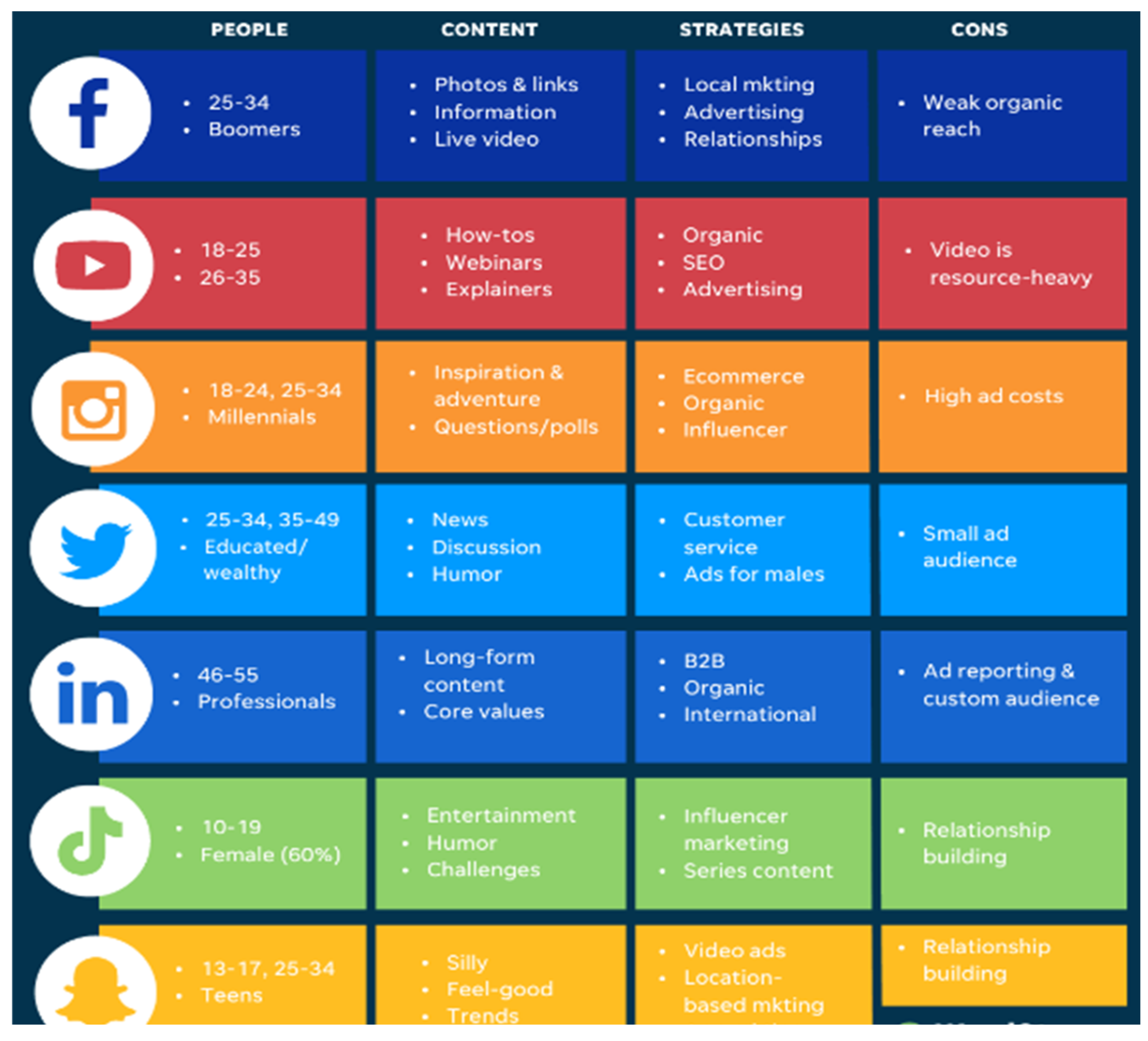
Figure 2.
The Evolution of Social Media Platforms from 1978 to 2015 (Link).
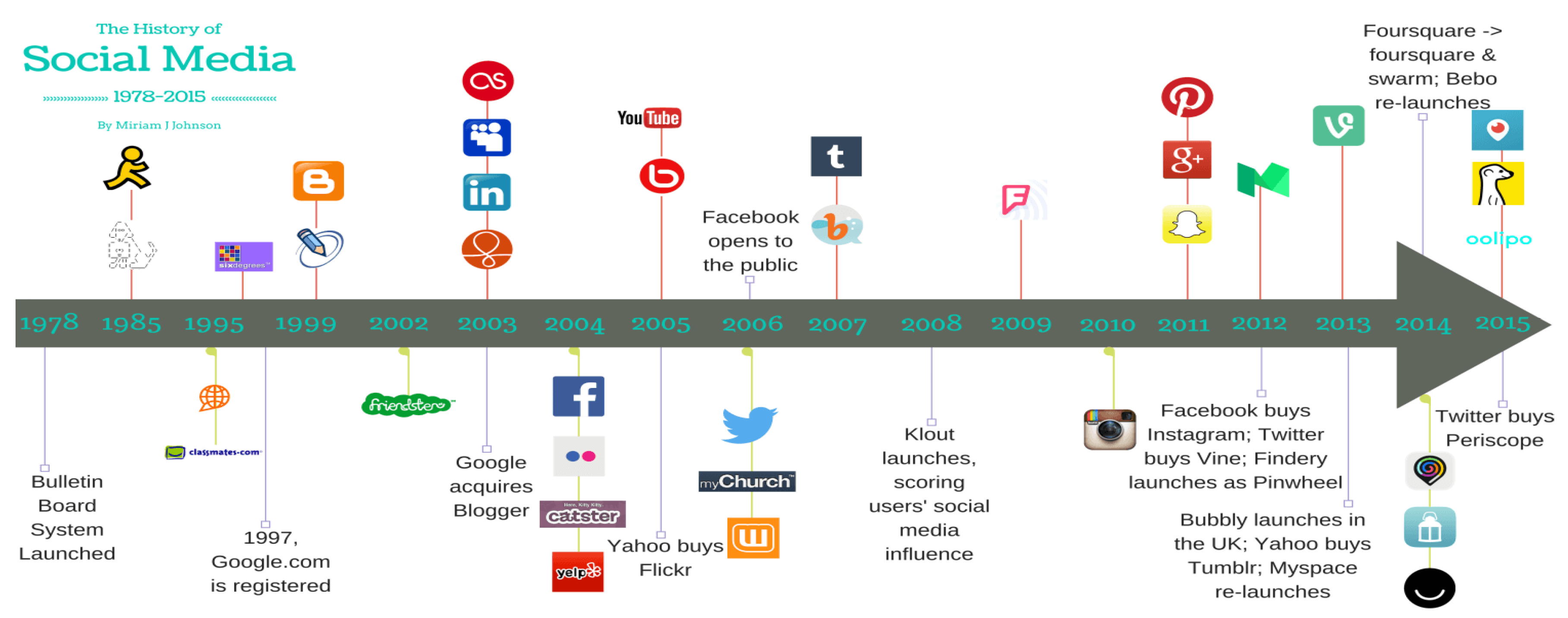
Figure 3.
Impact of Social Media Message Strategies on Small Business Sales Performance.
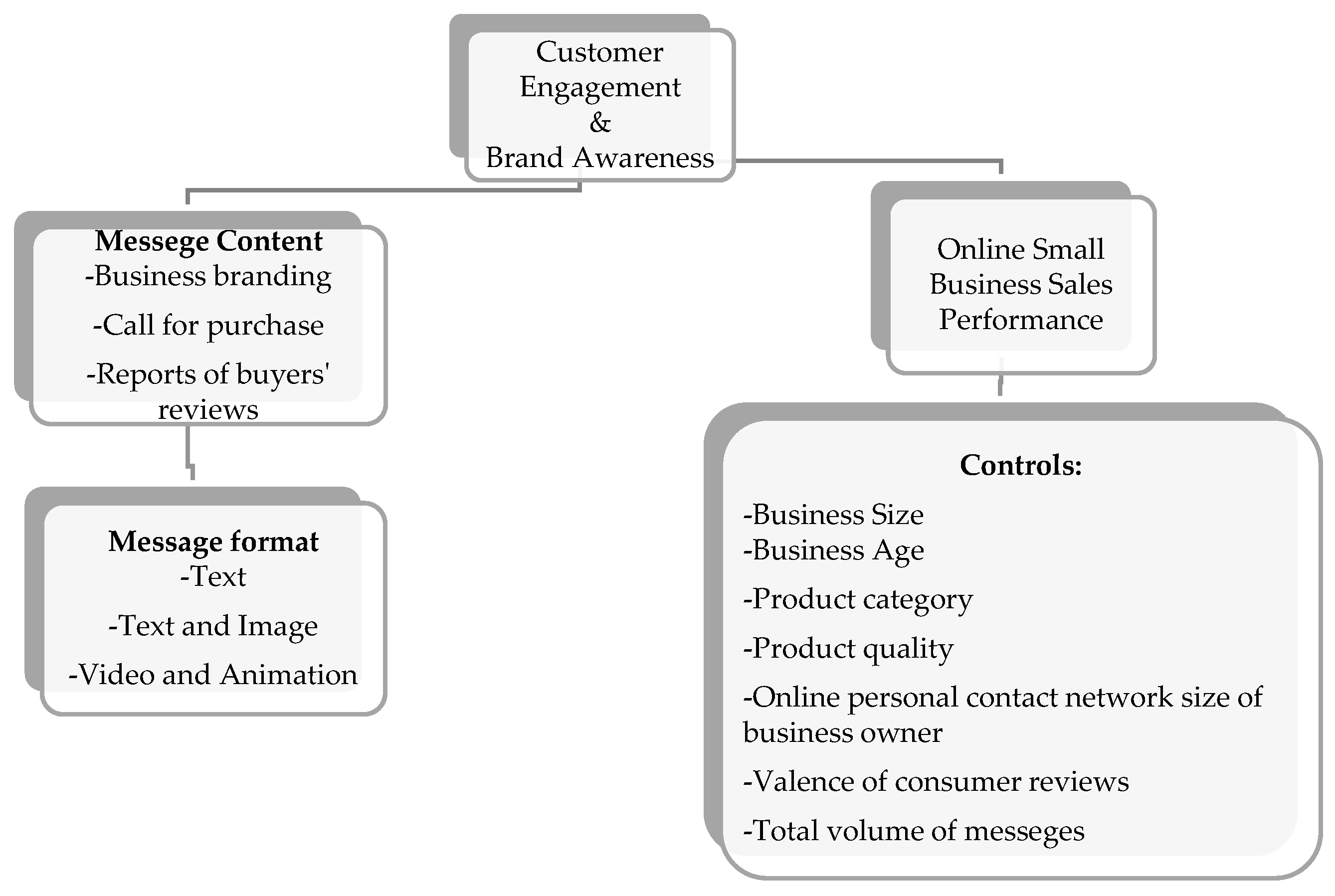
Figure 4.
Materials and Method Flow Diagram.

Figure 5.
Fully detailed process for the sources used.
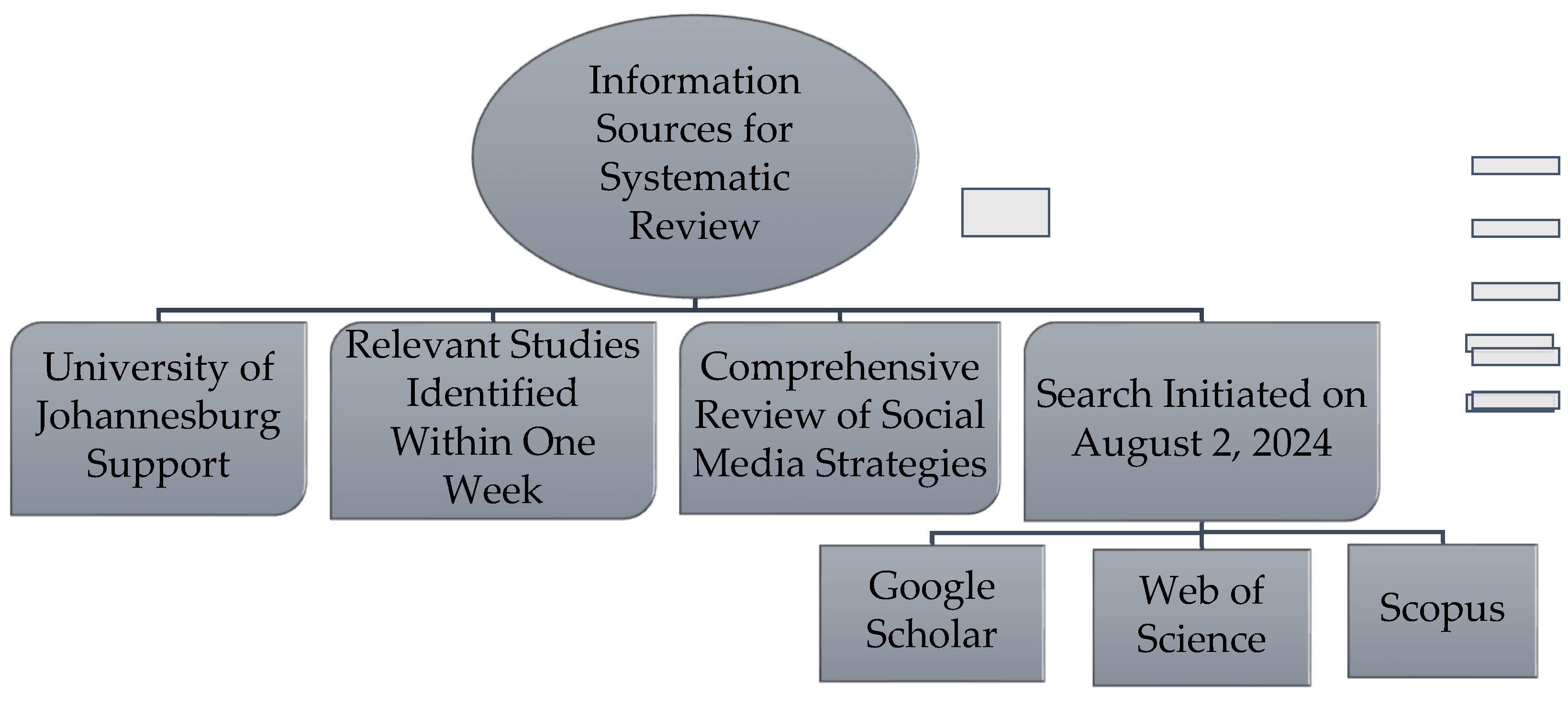
Figure 6.
Data Collection Process.
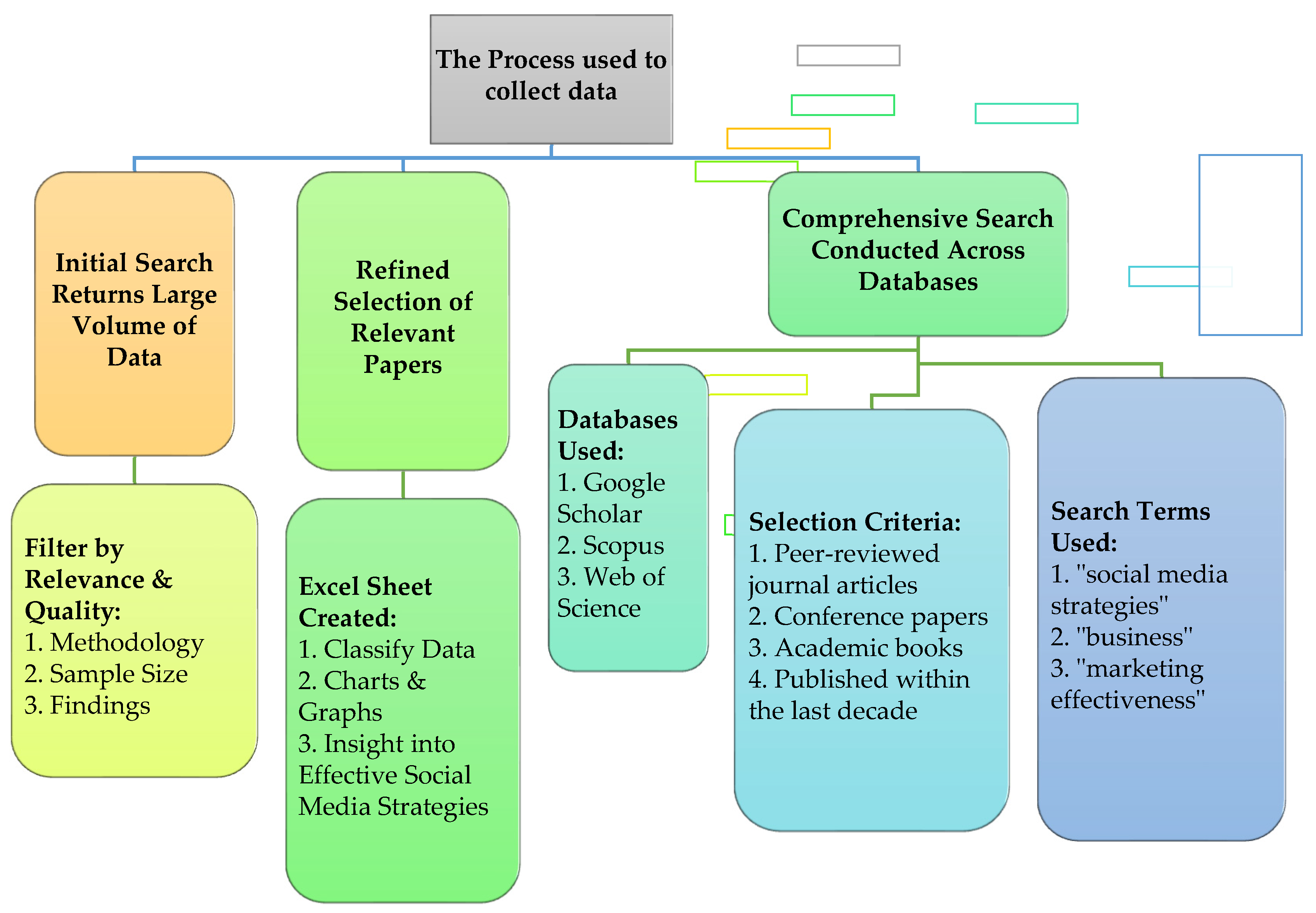
Figure 7.
Essential KPIs for Social Media Strategies.
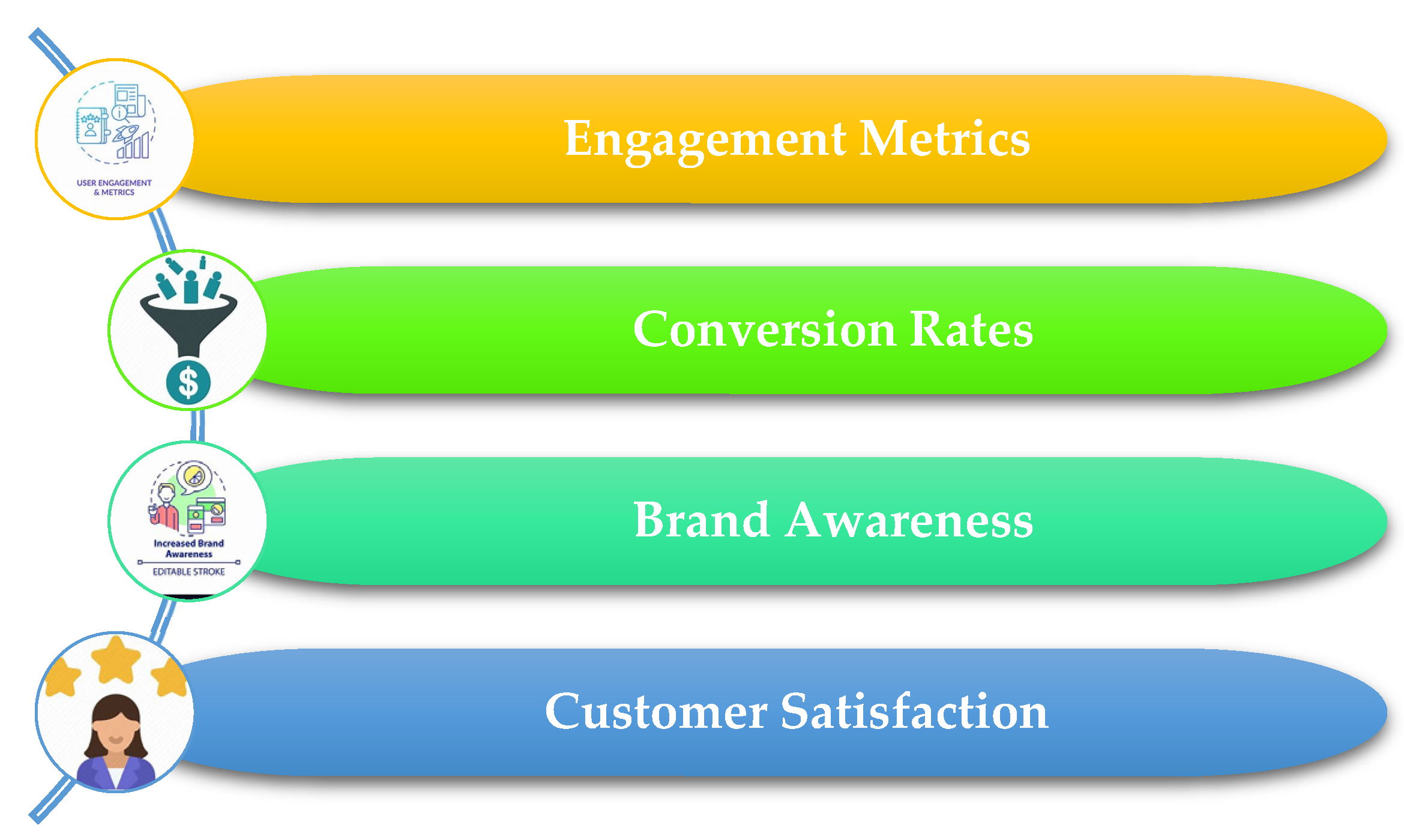
Figure 9.
PRISMA Flowchart Used to Identify Studies via Databases for this Systematic Review.
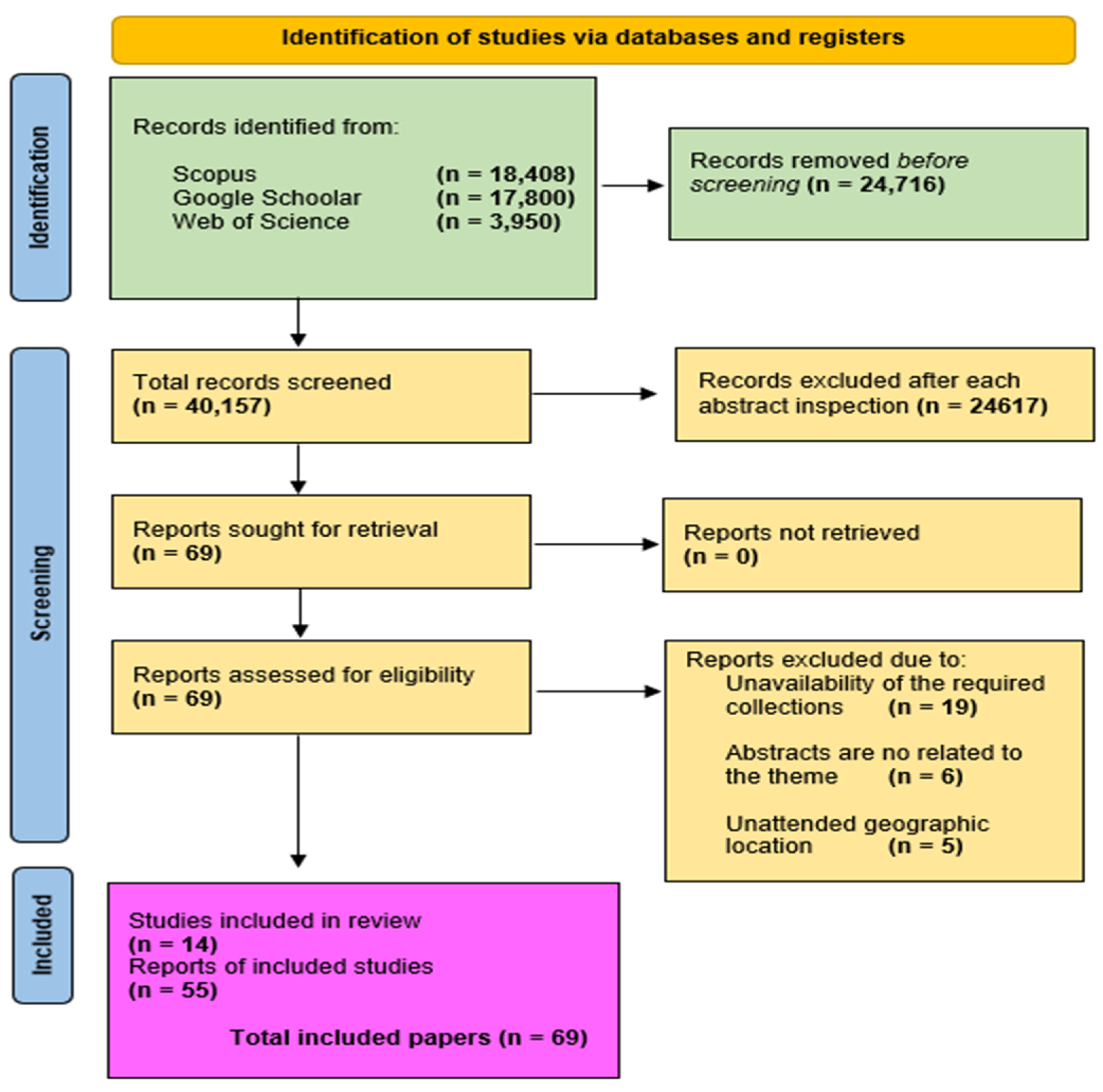
Figure 10.
A Detailed Delivery of the Online Databases.
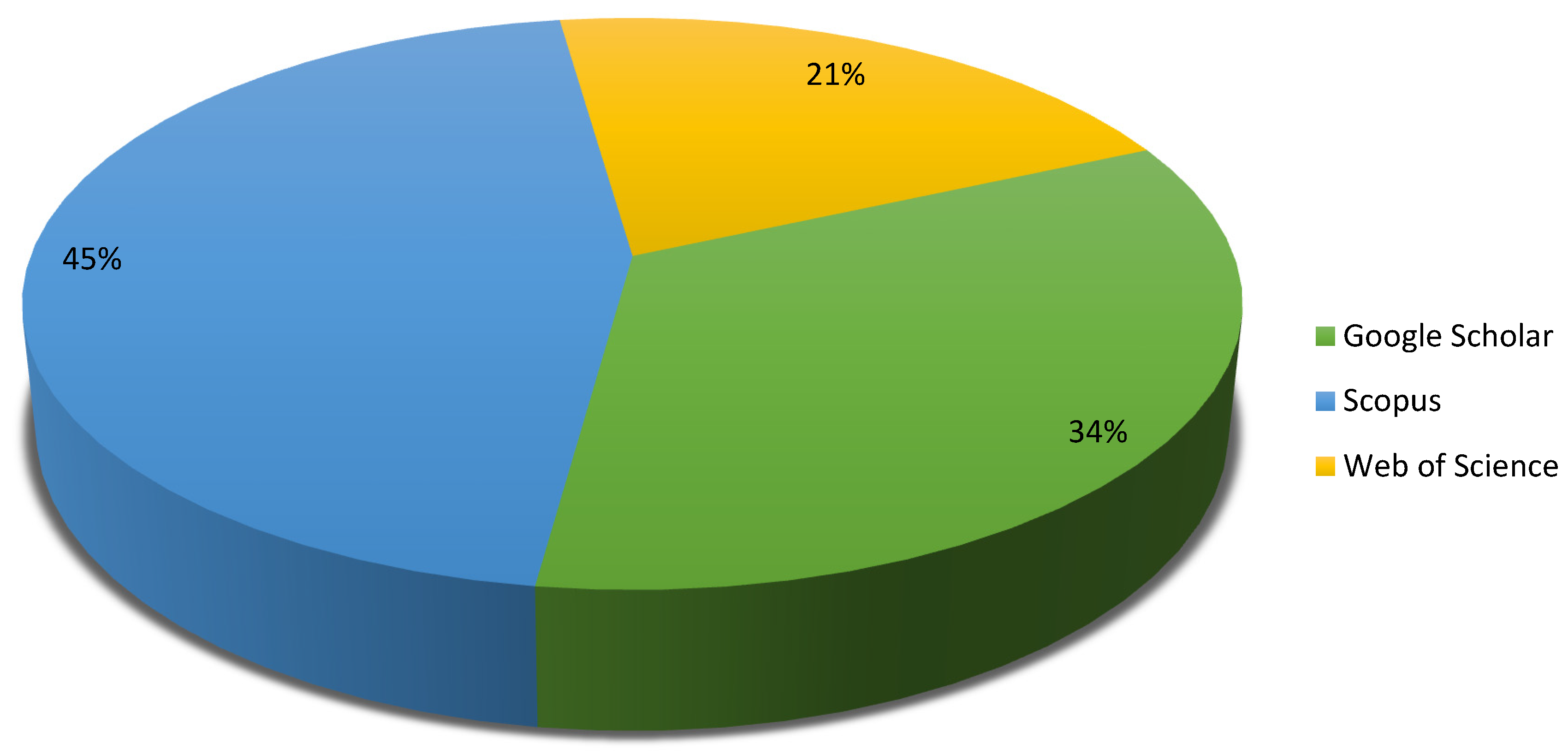
Figure 15.
Deviations from Intended Interventions.
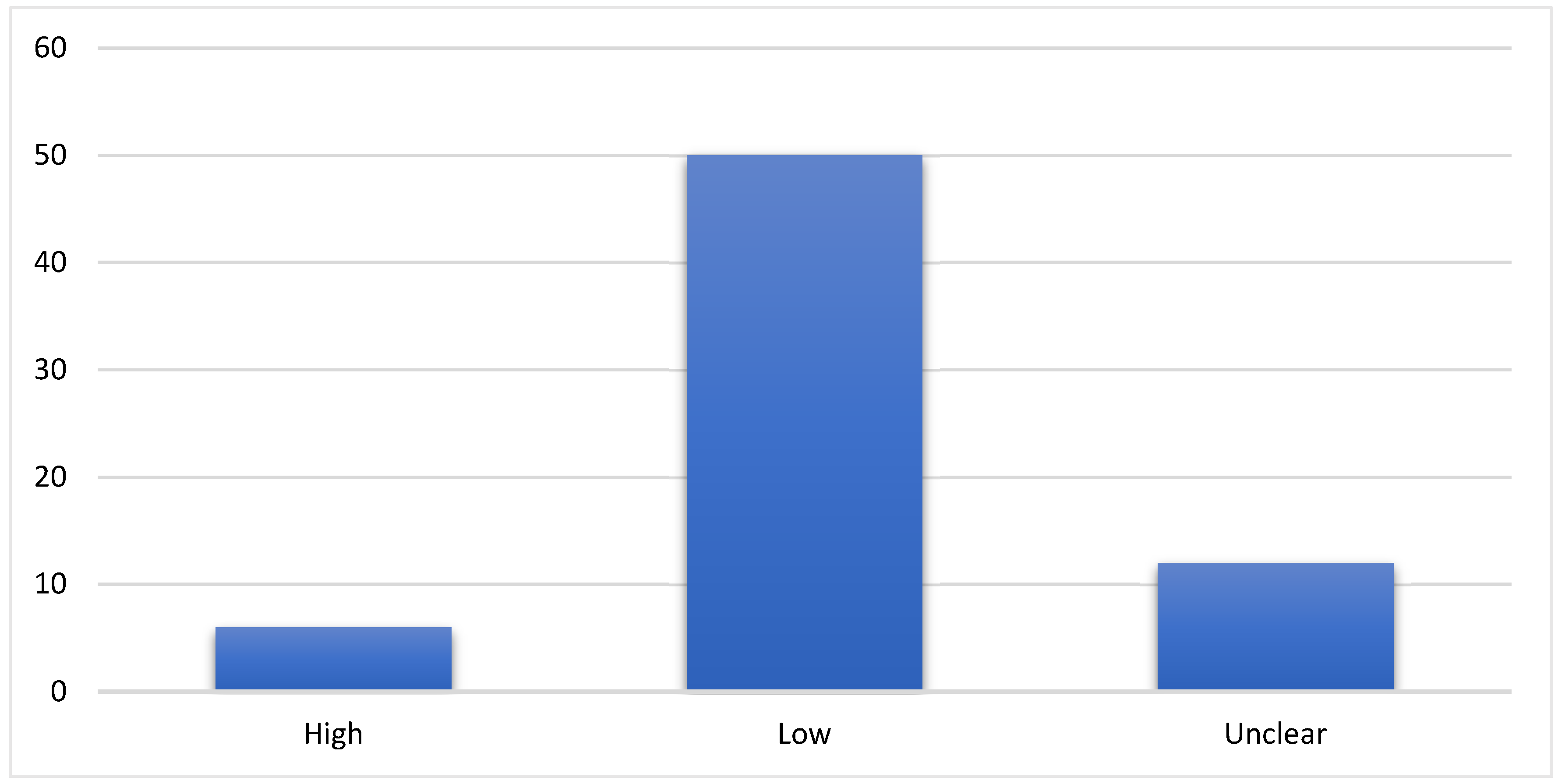
Figure 16.
Missing Outcome Data.
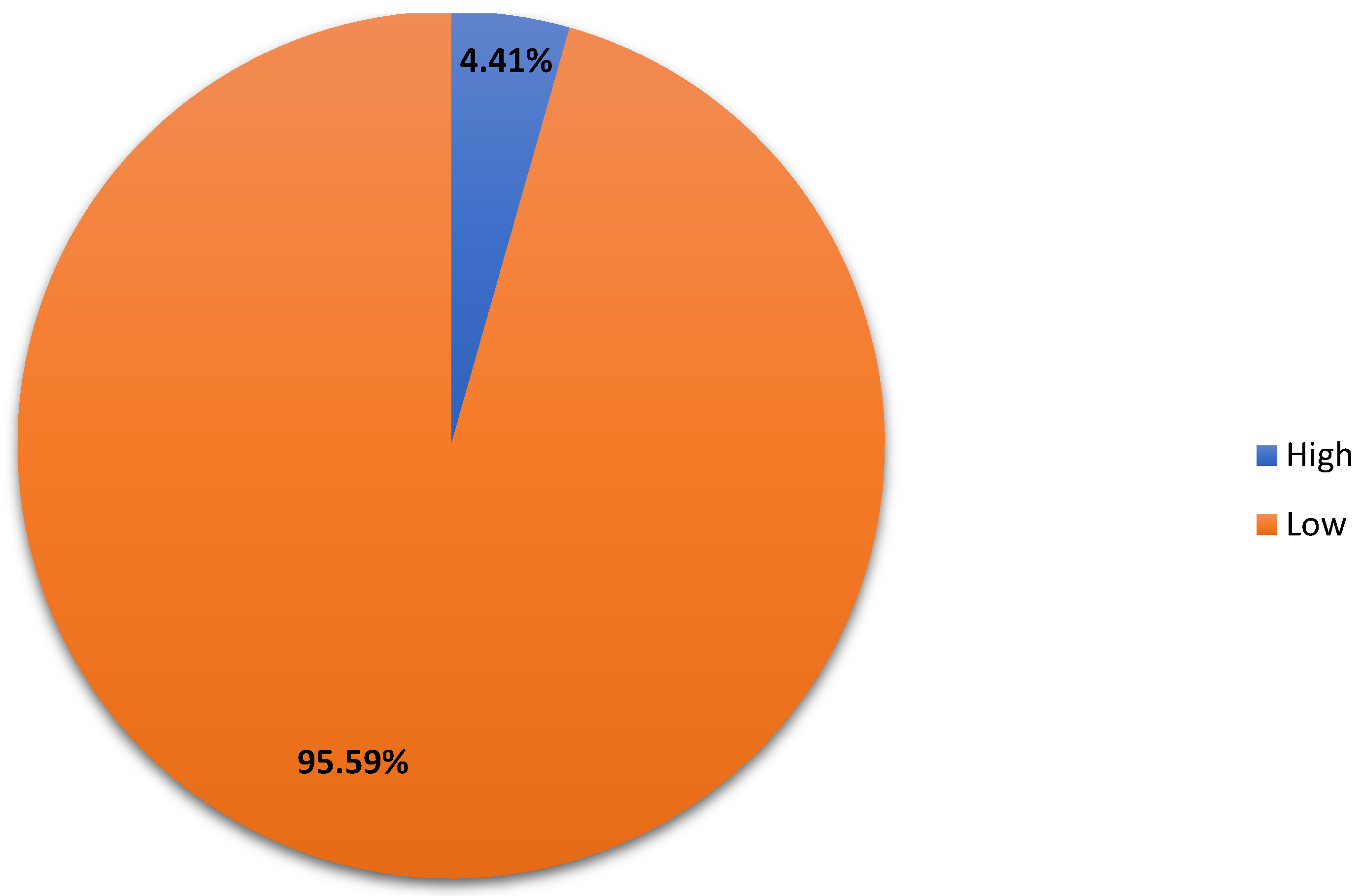
Figure 17.
Long-Term Impacts of Study.
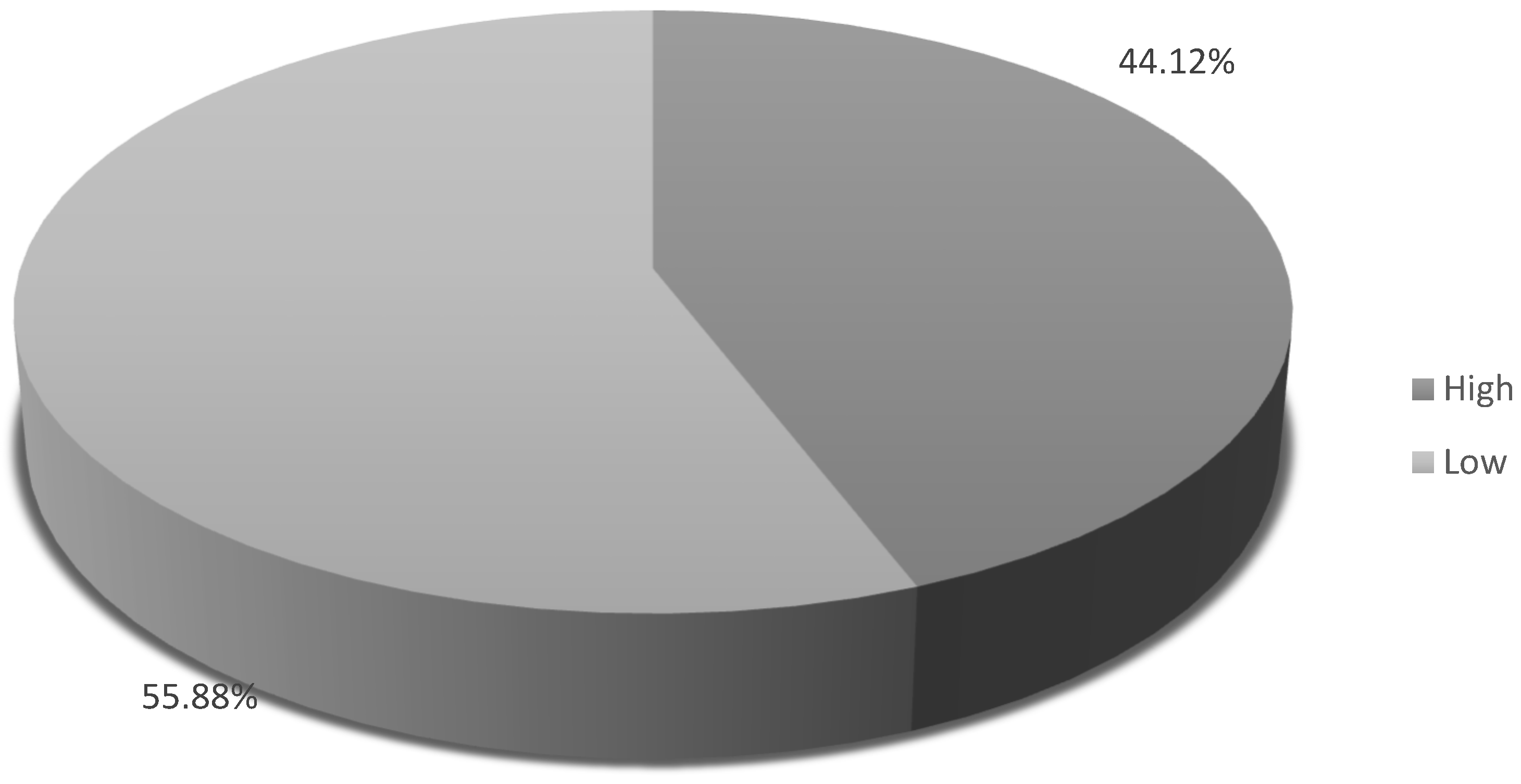
Figure 18.
Selection of the Reported Result.
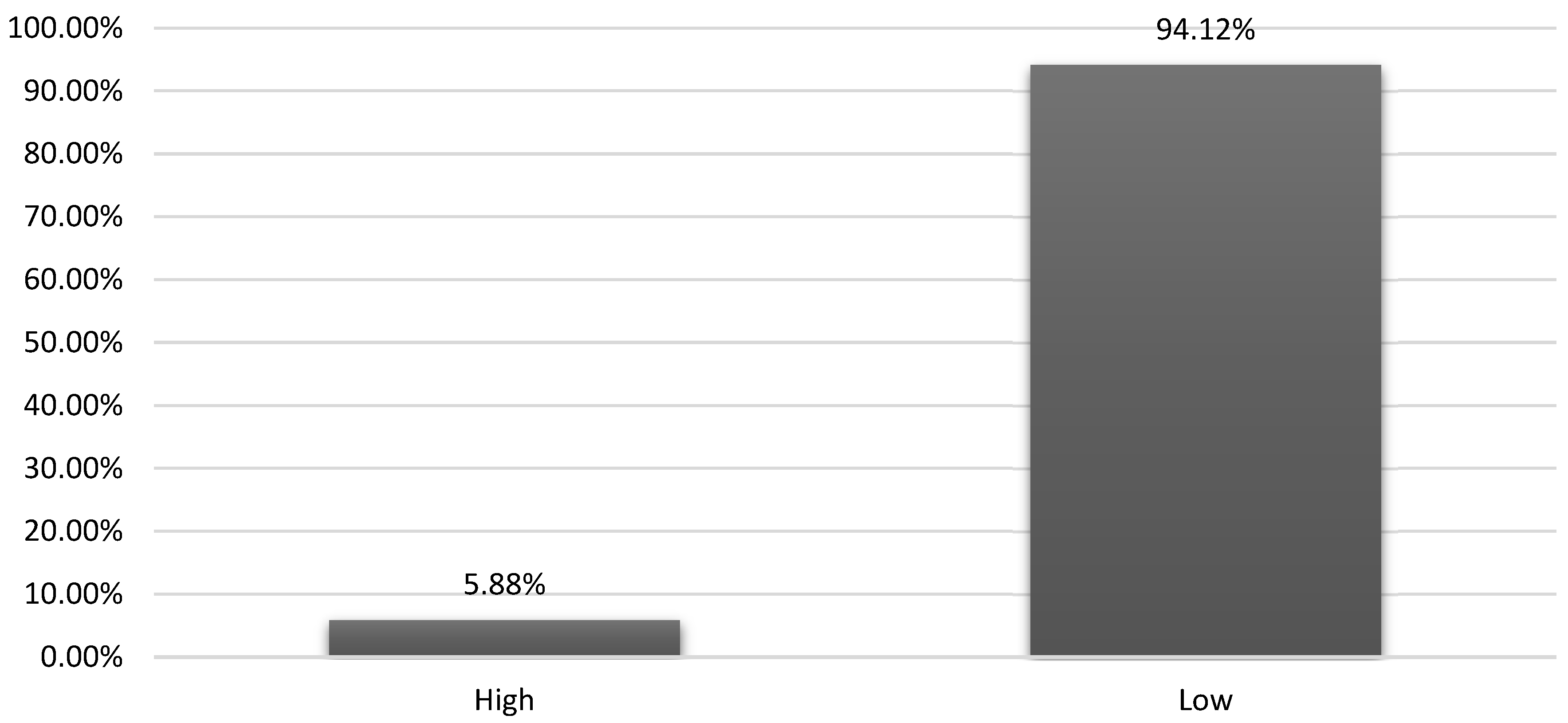
Figure 19.
Overall Risk of Bias.
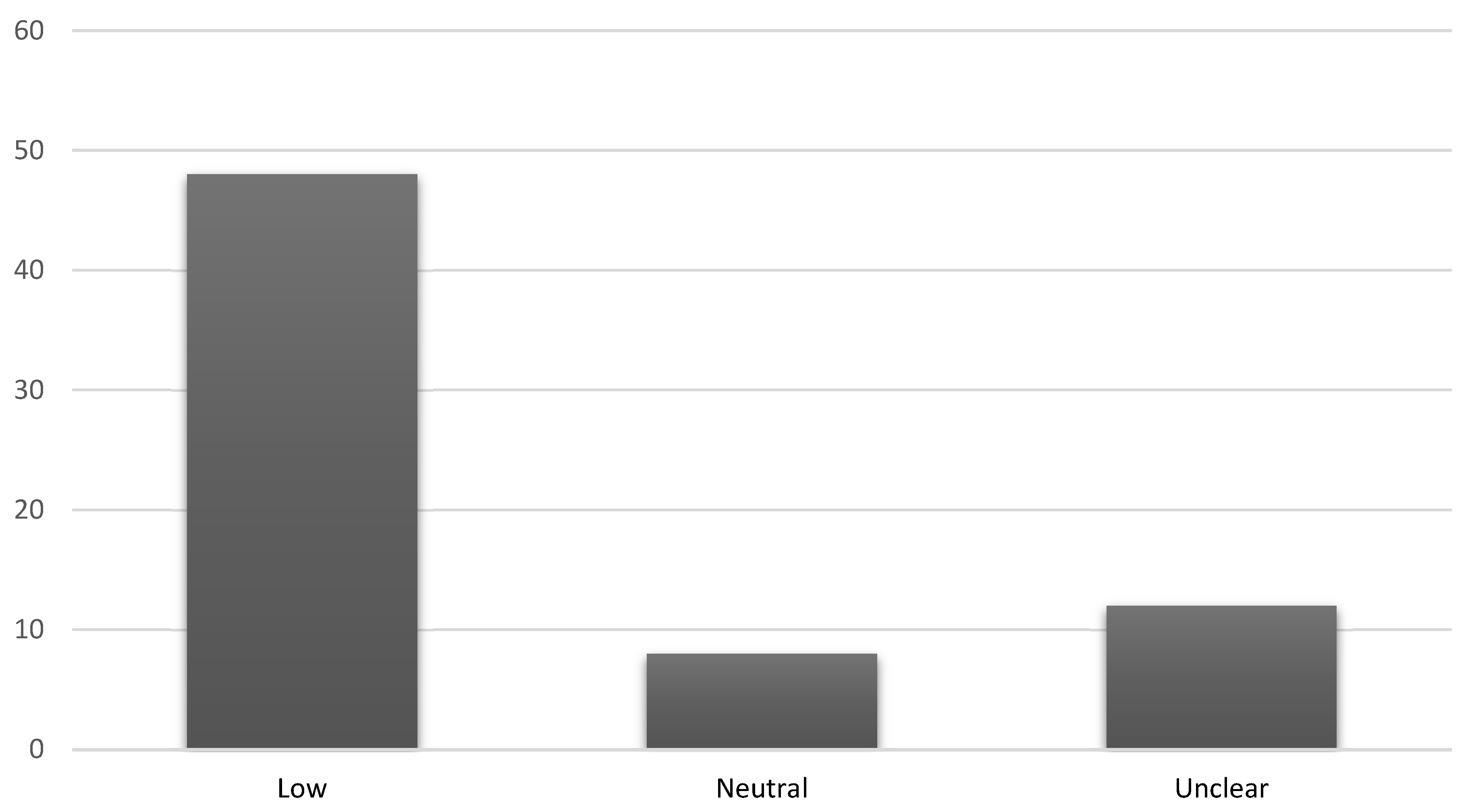
Table 4.
Industry-Specific Social Media Strategies.
| Industry | Focus Area | Platform Priority | Strategy Highlights |
|---|---|---|---|
| Healthcare | Privacy, regulatory content | LinkedIn, Facebook | Focus on informative content and compliance |
| Retail |
Brand storytelling, visuals |
Instagram, TikTok | Showcase products through engaging, visual posts |
| Finance | Authority, professionalism | LinkedIn, Twitter |
Build expertise, share insights and news |
| Legal Services | Expertise, regulatory focus | LinkedIn, Facebook | Position as experts, focus on trust and regulation |
| Hospitality | Experience-driven marketing | Instagram, Facebook | Highlight customer experience, visuals, and reviews |
Table 5.
Comparative Analysis of Existing Literature and Proposed Systematic Review on Building Effective Social Media Strategies for Business.
Table 5.
Comparative Analysis of Existing Literature and Proposed Systematic Review on Building Effective Social Media Strategies for Business.
| Ref. | Cites | Year | Contribution | Pros | Cons |
|---|---|---|---|---|---|
| [14] | 5 | 2024 | Offers a platform for linking academia, business, and industry through research, providing insights on social media’s role in various sectors. | Promotes interdisciplinary research and collaboration, enriching the understanding of social media strategies. | May not focus specifically on practical applications for businesses. |
| [1] | 0 | 2023 | Explores brand awareness through social media platforms like Facebook and Instagram, focusing on a startup case study. | Highlights practical applications of social media for brand building | Limited to a specific case study, and may not generalize to all businesses. |
| [5] | 13 | 2023 | Discusses best practices for digital marketing via social media in higher education institutions in the GCC region. | Provides insights into effective strategies tailored for educational contexts. | Focuses on a niche sector, which may limit broader applicability. |
| [6] | 0 | 2023 | Examines challenges faced by businesses in leveraging social media effectively. | Identifies common pitfalls and obstacles, aiding businesses in strategy development. | Lacks specific solutions to the challenges discussed. |
| [8] | 0 | 2022 | Analyzes effective digital marketing approaches specifically for e-commerce platforms. | Offers targeted strategies for a rapidly growing sector. | May overlook traditional businesses not engaged in e-commerce. |
| [9] | 65 | 2021 | Investigates the relationship between business strategy and digital marketing management. | Connects overall business strategy with marketing efforts, emphasizing alignment. | Theoretical focus may not provide actionable insights for practitioners. |
| [10] | 8 | 2021 | Provides case-based learning and recommendations for building effective social media strategies. | Practical recommendations based on real-world examples enhance learning. | Case-based approach may not cover all potential scenarios. |
| [11] | 1 | 2020 | Discusses effective online advertising strategies within the realm of digital marketing. | Offers insights into online advertising, a key component of social media marketing. | May not address organic social media strategies adequately. |
| [12] | 0 | 2018 | Focuses on building successful businesses in the digital age, including social media strategies. | Comprehensive overview of digital business strategies, including social media. | The general+ approach may lack depth in specific social media tactics. |
| [13] | 5 | 2016 | Presents a comprehensive framework for social media strategies tailored for companies. | Provides a structured approach, enhancing strategic planning. | Framework may require adaptation for different business contexts. |
| Proposed Systematic Review | Consolidates existing research on social media strategies, focusing on their effectiveness in business marketing and branding. Identifies key factors for success and provides a framework for future studies | Offers a comprehensive analysis, covering multiple industries and demographics. Provides actionable insights and best practices for businesses to enhance their social media strategies. | |||
Table 7.
Proposed Inclusion and Exclusion Criteria.
| Criteria | Inclusion | Exclusion |
|---|---|---|
| Topic | Articles must focus on Building Effective Social Media Strategies for Business | Articles unassociated on Building Effective Social Media Strategies for Business |
| Research Framework | Articles must have a research framework or technique for Building Effective Social Media Strategies for Business | Articles must not have a research framework or technique for Building Effective Social Media Strategies for Business |
| Language | Language must be written in English | Articles published in any other languages |
| Publication period | Articles must be published between the period of 2014 and 2024 | Articles must not be published between the period of 2014 and 2024 |
Table 8.
Search Strategies in this Systematic Review.
| Aspect | Details |
|---|---|
| Search Plan | Strategy to gather relevant papers through a range of sources. |
| Primary Sources | Specific search terms and keywords based on major themes and questions of the study. |
| Search Terms/Keywords | strategy*, enterprise*, company*, social media, impact, success, framework. |
| Boolean Operators | AND, OR, NOT used to combine search terms. |
| Purpose of Operators | To systematically combine terms and exclude irrelevant studies. |
| Filters and Limits | Applied to improve accuracy and ensure relevance to constructing successful social media strategies. |
Table 9.
Key Elements for the Selection Process of Effective Social Media Strategies for Businesses.
Table 9.
Key Elements for the Selection Process of Effective Social Media Strategies for Businesses.
| Element | Details | Importance | |
|---|---|---|---|
| Business Objectives | Identify and define the business’s goals: brand awareness, traffic, lead generation, or customer engagement. | Essential for guiding strategy direction. | |
| Target Audience | Understand audience preferences, behaviors, and frequently used platforms for tailored content. | Crucial for effective content targeting. | |
| Content Strategy | Consistent posting with engaging and relevant content is crucial. | The core element of a successful strategy. | |
| Use of Analytics | Regularly monitor performance metrics to adjust strategies in real-time and meet objectives. | Enables real-time adjustments and improvements. | |
| Audience Engagement | Regularly monitor performance metrics to adjust strategies in real-time and meet objectives. | Builds community and enhances brand image. | |
| Additional Strategies | Collaborate with influencers and use targeted ads to amplify reach and effectiveness. | Expand reach and enhance campaign impact. |
Table 10.
The Cochrane Risk of Bias Tool Assesses Bias Across Several Domains Relevant to Randomized Controlled Trials (RCTs).
Table 10.
The Cochrane Risk of Bias Tool Assesses Bias Across Several Domains Relevant to Randomized Controlled Trials (RCTs).
| Study ID | Random Sequence Generation (Selection Bias) | Allocation Concealment (Selection Bias) | Blinding of Participants and Personnel (Performance Bias) | Blinding of Outcome Assessment (Detection Bias) | Incomplete Outcome Data (Attrition Bias) | Selective Reporting (Reporting Bias) | Other Bias |
|---|---|---|---|---|---|---|---|
| 1 | Low | Low | High | Low | Low | Unclear | Low |
| 2 | High | Unclear | Moderate | Low | Low | Unclear | Low |
| 3 | Low | Low | Low | Unclear | Low | Low | Low |
| 4 | Unclear | High | Moderate | High | Low | Unclear | High |
| 5 | Unclear | Moderate | Unclear | Low | Moderate | Low | Low |
Table 19.
Key Findings, Strategic Implications, Drivers for Different Industries, and Expected Outcomes.
Table 19.
Key Findings, Strategic Implications, Drivers for Different Industries, and Expected Outcomes.
| Focus Area | Findings | Strategic Implications | Opportunities | Challenges | Relevance to Systematic Review | Strategic Drivers | Expected Outcome (by Industry) |
| Content Strategy & Quality | Tailored content that aligns with the business’s brand and customer needs increases engagement, trust, and long-term customer loyalty. | SMEs must invest in creating personalized, high-quality content that speaks to their target audience. Content consistency is key for maintaining relevance in the digital space. | Opportunity to increase brand loyalty and retention by creating content that resonates deeply with customers and reflects the brand’s authenticity. | Developing consistent, high-quality content can be time-consuming and may require additional resources for SMEs with limited budgets. | Content strategy is a core element discussed in the review as one of the most significant drivers of social media success for SMEs. | Focus on customer personalization and consistent brand messaging. |
Retail: Enhance brand engagement, customer loyalty. Healthcare: Patient engagement through educational content. Manufacturing: Showcase innovation and sustainability. |
| Platform Selection | Different platforms serve different business purposes (e.g., Facebook for community engagement, LinkedIn for B2B, Instagram for visual branding). | Choose social media platforms that align with business goals and target audiences. SMEs should avoid spreading too thin across too many platforms, focusing on a few key ones to maximize engagement and reach. | Expanding reach through strategic use of each platform’s unique strengths (e.g., Instagram for visuals, LinkedIn for B2B connections). | Managing multiple platforms can become overwhelming without a dedicated team or strategy, leading to poor performance and inconsistency. | Platform selection is one of the systematic review’s critical areas, emphasizing that the right platform choice can significantly boost business success. | Maximize engagement through platform relevance and targeting. |
Retail: Instagram for product displays. Finance: LinkedIn for B2B relationships. Hospitality: Use of visual platforms for customer engagement. |
| Engagement Techniques | Regular interaction with customers (responding to comments, messages, creating polls) increases customer retention and brand advocacy. | Active customer engagement is necessary for creating a sense of community. SMEs should focus on real-time interaction, whether through comments, direct messages, or social media stories. | Greater engagement leads to increased brand loyalty, customer satisfaction, and word-of-mouth promotion. | Staying consistently active on social media can be resource-intensive, especially for small teams. | Engagement techniques are central to the review, highlighting their direct impact on long-term customer retention and satisfaction. | Direct customer interaction to boost retention and loyalty. |
Retail: Polls, contests for customer loyalty. Healthcare: Health tips and patient Q&A sessions. Agriculture: Interaction with local consumers and suppliers. |
| Targeted Advertising | Paid advertising on platforms like Facebook and Instagram can drive quick results, especially when ads are personalized based on customer behavior. | SMEs should explore targeted ads to reach specific customer segments, driving conversions and enhancing brand visibility. A/B testing for different ad formats and content is recommended for continuous improvement. | Ability to directly reach high-potential customers, increasing conversion rates and promoting specific offers or products. | Advertising budgets may limit the reach for smaller SMEs, and improperly targeted ads can result in poor ROI and wasted resources. | The review emphasizes the power of targeted advertising, noting its effectiveness when well-aligned with customer preferences and business objectives. | Customer segmentation and behavior-based targeting. |
Retail: Product-specific promotions. Finance: Targeted financial services ads. Education: Advertising online courses and virtual classes. |
| Influencer Partnerships | Collaborating with influencers can significantly enhance brand visibility, especially for SMEs looking to build a larger audience quickly. | SMEs should consider partnering with micro or macro-influencers whose audience matches their target market. Such partnerships can increase credibility and expand the brand’s reach rapidly. | Influencer marketing offers the opportunity to tap into new markets and enhance trust in the brand, especially through authentic collaborations. | Finding the right influencer fit is crucial, and managing the relationship can be time-consuming, especially if expectations are not aligned. | Influencer partnerships are noted in the review as an effective strategy for expanding audience reach and increasing trust in the brand. | Leverage social proof and audience alignment through influencer collaboration. |
Retail: Product endorsements by local influencers. Hospitality: Travel bloggers promoting tourism services. Education: Partner with influencers for course enrollments. |
| Analytics & Data Use | Regular monitoring of social media analytics (e.g., engagement rates, conversion metrics) allows businesses to adjust strategies in real-time to optimize performance. | SMEs should use analytics tools (e.g., Facebook Insights, Google Analytics) to track the success of their social media efforts and make data-driven decisions that optimize engagement, reach, and ROI. | Access to real-time data allows SMEs to quickly adapt their strategies to what is working, improving engagement and campaign performance over time. | Many SMEs struggle with understanding and interpreting analytics, often leading to missed opportunities for optimization. | The review underscores the importance of data analytics in creating effective social media strategies that drive measurable results. | Real-time data-driven decisions for optimizing social media strategy. |
Retail: Adjust product promotions based on customer behavior. Finance: Measure success of educational campaigns. Healthcare: Track patient engagement and health outcomes. |
| Brand Awareness & Growth | Effective use of social media strategies, particularly content relevance and engagement, leads to increased brand awareness and market expansion. | Build a strong social media presence through relevant content and continuous engagement to drive brand awareness. SMEs can leverage paid and organic strategies for faster growth and reach. | SMEs have the opportunity to grow their brand visibility significantly by leveraging both organic reach and paid strategies. | Growing brand awareness takes time, and the impact of social media can be inconsistent without a clear, long-term strategy. | The systematic review highlights brand awareness as a critical outcome of social media strategy, particularly for SMEs seeking to expand their market. | Increased brand visibility through continuous, relevant engagement. |
Retail: Build a recognizable brand in new markets. Manufacturing: Use social media for thought leadership. Hospitality: Increase global visibility for local businesses. |
| Customer Retention | Consistent engagement and value-driven content directly contribute to increased customer retention rates. | Focus on long-term customer relationships through meaningful interactions and regular value-added content to increase retention and loyalty. | Higher retention rates translate into higher customer lifetime value (CLV) and reduced marketing costs for customer acquisition. | Failure to maintain a regular engagement strategy may lead to reduced customer loyalty and increased churn rates. | Customer retention is a significant point in the review, stressing the value of consistency and relevance in social media interactions. | Long-term engagement and content relevance to boost retention. |
Retail: Loyalty programs, frequent buyer incentives. Finance: Personalized offers for existing customers. Education: Consistent student engagement for retention. |
| Sustainability & Scalability | Implementing scalable social media strategies allows SMEs to grow their online presence gradually without overwhelming resources. | Develop a social media plan that scales with business growth, focusing on manageable goals and gradually increasing reach and engagement as resources permit. | Scalable strategies allow for sustainable growth over time, reducing the risk of overburdening small teams while maintaining social media activity. | Scaling social media efforts can be challenging without a clear roadmap or sufficient resources, leading to overextension. | The review supports the idea that sustainable, scalable strategies help SMEs grow their presence while balancing resources effectively. | Strategic scalability to balance growth with resource constraints. |
Manufacturing: Use scalable B2B marketing. Retail: Gradually expand into new geographic markets. Agriculture: Increase engagement with consumers and local networks. |
| Security & Data Privacy | The shift to digital platforms and data collection via social media necessitates stringent data privacy measures to build customer trust. | Ensure compliance with data privacy laws (e.g., GDPR) and implement strong security practices to protect customer data. Transparency with customers about how their data is used builds trust and ensures legal compliance. | Transparency around data usage and strong privacy policies can build consumer trust, essential for long-term customer relationships. | The evolving nature of data privacy regulations can be difficult for SMEs to navigate without dedicated resources. | Data privacy is an emerging theme in the review, especially as SMEs collect more customer data via social media, underscoring the importance of compliance. | Compliance with privacy regulations and strong data protection practices. |
Finance: Ensure compliance with financial data protection laws. Healthcare: Protect patient data via secure protocols. Education: Secure student information and privacy. |
Table 20.
Decision-Making Framework for Implementing Social Media Strategies with SME Categories, Strategic Drivers, and Ties to the Proposed Study.
Table 20.
Decision-Making Framework for Implementing Social Media Strategies with SME Categories, Strategic Drivers, and Ties to the Proposed Study.
| Step | Description | Strategic Implications | Challenges | Opportunities | SME Categories | Strategic Drivers | Expected Outcome (by Industry) | Ties to Proposed Study |
| Needs Assessment | Analyzing business requirements, target audience, and current social media presence to identify gaps and opportunities. | Aligns social media strategy with business objectives for improved customer engagement and marketing outcomes. | SMEs may struggle to correctly identify relevant needs without the necessary expertise or data analysis capabilities. | Custom-tailored social media efforts that align with unique business needs, leading to better ROI. | Retail, Healthcare, Education, Manufacturing | Customer engagement, audience segmentation, and business alignment. |
Retail: Increased customer retention. Healthcare: Enhanced patient education and outreach. Finance: Better lead generation. |
Identifying gaps in current strategies is crucial for SMEs to build effective social media plans, as highlighted in the systematic review. |
| Feasibility Study | Evaluating technical and financial viability of social media tools, platforms, and integration with business operations. | Ensures chosen platforms and strategies align with operational capacity and financial constraints. | Limited resources can make it difficult for SMEs to choose between multiple platforms and tools. | Assess low-cost or free tools with strong engagement potential, such as Facebook or Instagram. | Retail, Finance, Agriculture | Budget constraints, operational scalability, and platform compatibility. |
Retail: Efficient platform selection for customer engagement. Agriculture: Cost-effective outreach in rural areas. Finance: Optimized for secure transactions. |
The study highlights that resource allocation is critical for SMEs to maximize social media investments and long-term growth. |
| Strategic Planning | Developing a strategic plan outlining key steps, resource allocation, timelines, and stakeholder involvement. | Ensures all elements of social media strategy, including content development and platform management, are executed efficiently. | Small teams or lack of dedicated social media managers may hinder timely execution. | Develop comprehensive but flexible strategies to adapt to changing trends or customer feedback. | Retail, Education, Manufacturing | Clear role assignments, phased rollouts, and stakeholder communication. |
Healthcare: Structured patient engagement strategies. Retail: Timely product promotions. Education: Resource allocation for student outreach. |
Strategic planning aligns with the systematic review’s findings on the importance of a well-defined social media strategy to enhance business success. |
| Platform Selection | Identifying the best social media platforms based on target audience demographics, industry standards, and engagement potential. | Optimizes resource allocation by focusing on platforms most likely to yield high engagement and conversion rates. | Choosing the wrong platform can waste resources and lead to lower engagement. | Focus on niche platforms that align with business objectives, such as LinkedIn for B2B or Instagram for visual marketing. | Retail, Education, Healthcare, Agriculture | Audience demographics, platform relevance, and competitive analysis. |
Retail: Leverage Instagram for customer engagement. Healthcare: LinkedIn for professional networking. Agriculture: Community outreach on Facebook. |
The study stresses the need for platform-specific strategies, identifying platform selection as a crucial factor for success in social media marketing. |
| Implementation & Resource Allocation | Executing the social media plan by allocating resources for content creation, community management, and engagement activities. | Ensures that social media strategies are implemented efficiently with adequate staffing and technology support. | Limited budgets or personnel may restrict the ability to fully implement strategies. | Gradual scaling of social media activities can help SMEs manage resources effectively. | Retail, Healthcare, Manufacturing | Adequate staffing, content creation, and community management. |
Retail: Improved content scheduling and management. Manufacturing: Building B2B relationships. Healthcare: Patient outreach through scheduled content. |
Proper resource allocation and management are emphasized as a key driver for social media success in SMEs, as discussed in the systematic review. |
| Monitoring & Adjustment | Tracking social media performance through analytics, adjusting strategies based on real-time data, and optimizing for better results. | Provides insights into what works and what doesn’t, allowing businesses to pivot and improve engagement. | SMEs may lack the tools or knowledge to interpret social media analytics effectively. | Real-time adjustments enable continuous optimization of social media efforts based on customer feedback and engagement metrics. | Retail, Finance, Healthcare, Agriculture | Data-driven decision-making, continuous performance improvement, and customer feedback integration. |
Retail: Adjust content for customer preferences. Healthcare: Modify patient outreach campaigns. Finance: Optimize ad campaigns for ROI. |
The systematic review outlines the importance of data-driven approaches, highlighting the need for ongoing monitoring and adjustments for SMEs. |
| Security & Data Privacy Compliance | Ensuring all social media activities comply with local and international data privacy laws (e.g., GDPR), protecting customer information. | Builds customer trust by ensuring their data is protected, which is particularly crucial for finance and healthcare industries. | Data privacy regulations can be complex and difficult to navigate for SMEs without dedicated legal or IT resources. | Compliance with data protection regulations can enhance customer trust and brand loyalty. | Finance, Healthcare, Retail | Legal compliance, customer trust, and secure data handling. |
Finance: Secure financial transactions. Healthcare: Protect patient information. Retail: Build customer trust with data privacy measures. |
Ensuring data privacy and security is critical for SMEs to maintain trust, as discussed in the systematic review’s emphasis on customer engagement. |
| Training & Capacity Building | Providing employees with training on social media tools, analytics, and customer engagement best practices to maximize ROI and engagement. | Ensures that employees can execute social media strategies effectively, leveraging tools and platforms to maximize engagement. | SMEs may not have the budget or time to invest in comprehensive training for employees. | Building in-house capacity reduces reliance on third-party services and improves long-term efficiency. | Retail, Healthcare, Education, Manufacturing | Employee skill development, social media management, and content creation. |
Retail: Training on customer engagement tactics. Healthcare: Staff education on patient outreach. Education: Social media as a student recruitment tool. |
Training and capacity building are key elements for long-term social media success, as highlighted in the systematic review’s focus on resource management. |
Table 21.
Proposed Best Practices for Social Media Strategy Implementation with SME Categories, Strategic Drivers, Expected Outcomes, and Ties to Proposed Study.
Table 21.
Proposed Best Practices for Social Media Strategy Implementation with SME Categories, Strategic Drivers, Expected Outcomes, and Ties to Proposed Study.
| Best Practice | Description | Strategic Implications | Challenges | Opportunities | SME Categories | Strategic Drivers | Expected Outcome (by Industry) | Ties to Proposed Study |
| Comprehensive Planning | Involve all stakeholders early in the process and ensure alignment of social media goals with business objectives, using project management tools. | Helps SMEs set clear goals and allocate resources efficiently, leading to better execution and outcomes. | SMEs may struggle to engage all stakeholders or lack clarity on long-term goals. | Clear, detailed planning ensures better resource allocation and helps manage timelines and expectations. | Retail, Healthcare, Manufacturing | Stakeholder alignment, resource management, and goal-setting. |
Retail: Improved brand awareness. Healthcare: Better patient outreach. Manufacturing: Enhanced B2B engagement. |
Clear, actionable planning is crucial for the success of social media strategies, as emphasized in the systematic review. |
| Stakeholder Engagement | Regular communication with stakeholders through meetings, updates, and feedback mechanisms to keep them informed and involved throughout the process. | Ensures stakeholder buy-in and keeps the strategy aligned with business goals through continuous feedback. | Lack of stakeholder buy-in can hinder the effectiveness of social media strategies. | Strong engagement builds trust and ensures that the strategy remains aligned with evolving business needs. | Healthcare, Education, Retail | Continuous feedback, stakeholder communication, and alignment. |
Retail: Increased customer loyalty. Healthcare: Stronger patient communication. Education: Increased student outreach. |
The proposed study stresses the need for constant engagement with stakeholders to maintain the relevance and effectiveness of social media strategies. |
| Technology Assessment | Evaluate different social media tools and technologies through pilot tests and simulations to assess their scalability, performance, and security. | Allows SMEs to choose the most effective social media platforms and tools based on business size and industry-specific requirements. | SMEs may lack the resources or expertise to conduct thorough assessments of multiple platforms. | Piloting social media tools before full implementation can save time and resources, ensuring only effective technologies are used. | Retail, Finance, Agriculture | Technology scalability, performance analysis, and platform compatibility. |
Finance: Secure transactions. Retail: Higher engagement through optimized platforms. Agriculture: Better outreach in rural areas. |
The study highlights the importance of assessing technological capabilities to ensure alignment with business needs and goals. |
| Regulatory Compliance | Stay updated with social media regulations, including data privacy laws like GDPR, and ensure compliance before deployment. | Reduces the risk of legal issues and builds customer trust by demonstrating responsible use of data and adherence to privacy regulations. | Compliance with data protection laws can be difficult for SMEs without dedicated legal resources. | Proper compliance enhances customer trust and reduces the risk of penalties or reputational damage. | Finance, Healthcare, Retail | Legal compliance, data privacy, and security. |
Healthcare: Compliance with patient privacy laws. Finance: Secure handling of financial data. Retail: Safe customer data handling. |
Regulatory compliance is a key driver in successful social media strategies, especially for industries dealing with sensitive information, as outlined in the review. |
| Security Measures | Implement strong security protocols, including encryption, firewalls, and intrusion detection systems to protect customer data and social media accounts. | Protects the integrity of social media platforms and customer data, ensuring business continuity and maintaining trust. | SMEs often overlook security, leaving them vulnerable to cyber-attacks or data breaches. | A strong security posture builds customer confidence and ensures uninterrupted social media operations. | Finance, Healthcare, Retail | Data protection, security measures, and customer trust. |
Finance: Secure online transactions. Healthcare: Protection of patient data. Retail: Secure handling of customer information. |
The proposed study highlights security as a critical component of social media strategies, especially for sensitive industries like finance and healthcare. |
| Continuous Monitoring and Improvement | Track social media performance through real-time analytics and continuously improve strategies based on user feedback and engagement metrics. | Ensures that social media strategies remain relevant, effective, and aligned with evolving business objectives and market conditions. | SMEs may lack access to advanced analytics tools or expertise to interpret data effectively. | Real-time monitoring enables SMEs to adjust strategies quickly, improving engagement and ROI. | Retail, Finance, Manufacturing, Healthcare | Real-time data analytics, performance tracking, and customer feedback integration. |
Retail: Improved engagement based on customer data. Manufacturing: Optimized supply chain communications. Healthcare: Better patient outreach based on feedback. |
The systematic review emphasizes the need for continuous improvement and real-time adjustment to keep social media strategies effective and relevant. |
Table 22.
Metrics and KPIs for Measuring Social Media Strategy Performance with SME Categories, Strategic Drivers, Expected Outcomes, and Ties to Proposed Study.
Table 22.
Metrics and KPIs for Measuring Social Media Strategy Performance with SME Categories, Strategic Drivers, Expected Outcomes, and Ties to Proposed Study.
| KPI | Description | Strategic Implications | Challenges | Opportunities | SME Categories | Strategic Drivers | Expected Outcome (by Industry) | Ties to Proposed Study |
| Engagement Rate | Measures the level of interaction with posts (likes, shares, comments) as a percentage of total followers or reach. | High engagement rates indicate that the content resonates with the audience and leads to stronger customer connections. | Engaging content creation can be resource-intensive, and low engagement can signal the need for strategic shifts. | High engagement can drive word-of-mouth marketing, leading to organic growth and customer loyalty. | Retail, Hospitality, Education | Content resonance, audience interaction, and customer loyalty. |
Retail: Increased product sales through higher customer interaction. Education: Greater student engagement. Hospitality: Increased bookings via social media. |
Engagement metrics are essential for measuring the effectiveness of customer-facing social media strategies, as shown in the review findings. |
| Reach/Impressions | Total number of unique users who have seen a social media post, showing potential audience size and visibility. | Higher reach indicates greater visibility and potential for brand awareness and audience expansion. | SMEs with limited budgets may struggle to increase reach without investing in paid advertisements. | Expanding reach improves brand visibility, which can translate into higher sales and customer acquisition. | Retail, Healthcare, Manufacturing | Brand awareness, audience expansion, and customer acquisition. |
Retail: Greater brand recognition. Healthcare: Improved patient awareness of services. Manufacturing: Expanded market presence. |
The review highlights that reach is a foundational metric in any social media strategy, helping businesses assess the impact of their content. |
| Conversion Rate | Percentage of users who take a desired action (e.g., sign-ups, purchases) after interacting with social media content. | High conversion rates suggest that social media campaigns are effective in driving business outcomes such as sales. | Low conversion rates can indicate a misalignment between the content and the target audience. | Improved conversions result in better ROI from social media investments. | Retail, Finance, Healthcare | Action-oriented outcomes, lead generation, and sales growth. |
Retail: Higher online sales. Finance: Increased client acquisitions. Healthcare: More patient bookings or consultations. |
Conversion metrics are central to determining the effectiveness of call-to-action (CTA) strategies, as emphasized in the study. |
| Return on Investment (ROI) | Measures the profitability of social media campaigns by comparing the cost of investment to the returns generated. | High ROI shows that social media strategies are generating profitable outcomes relative to the money spent. | Calculating social media ROI can be complex, especially for indirect benefits like brand awareness. | Strong ROI indicates a well-targeted and effective social media strategy that directly impacts the bottom line. | Retail, Finance, Manufacturing | Financial performance, cost efficiency, and profit margins. |
Retail: Increased profitability through optimized ad spend. Finance: Higher customer acquisition for lower costs. Manufacturing: Streamlined lead generation. |
The review underscores the importance of ROI as a key metric in assessing the financial viability of social media strategies for SMEs. |
| Customer Retention Rate | Percentage of customers retained over a specific period, showing how social media efforts contribute to loyalty. | High retention rates suggest that social media strategies are effective in keeping customers engaged and loyal. | Retaining customers through social media can be challenging without continuous engagement and fresh content. | High customer retention reduces churn and increases lifetime value, boosting long-term profitability. | Retail, Healthcare, Hospitality | Customer loyalty, engagement longevity, and lifetime value. |
Retail: Reduced customer churn. Healthcare: Higher patient retention. Hospitality: Repeat bookings and customer loyalty. |
Retention metrics are critical for businesses that rely on long-term customer relationships, as supported by the review’s findings. |
| Lead Generation | Number of potential customers gained through social media interactions who show interest in the company’s products. | High lead generation indicates that social media is being effectively used to attract new business opportunities. | Generating high-quality leads through social media can be difficult without a targeted approach. | Social media provides cost-effective ways to attract new leads and engage potential customers. | Finance, Real Estate, Manufacturing | New customer acquisition, pipeline growth, and business expansion. |
Finance: More qualified leads. Real Estate: Increased property inquiries. Manufacturing: Expanded B2B sales opportunities. |
Lead generation is a key outcome tied to social media strategies, as highlighted by the systematic review in driving customer acquisition. |
| Brand Awareness | Measures how familiar customers are with a brand, often gauged through surveys or social listening tools. | High brand awareness suggests that the business has a strong presence on social media and is well-known in its industry. | Brand awareness can be difficult to measure directly, and requires consistent social media presence. | Building brand awareness drives long-term business growth, market positioning, and customer trust. | Retail, Finance, Healthcare, Agriculture | Market positioning, customer trust, and visibility. |
Retail: Increased recognition of products. Finance: Trust in financial services. Agriculture: Awareness of sustainable farming practices. |
Brand awareness is foundational to establishing a market presence, as emphasized in the systematic review’s findings on social media success. |
| Audience Growth Rate | Percentage of new followers over time, showing the growth of social media presence and reach. | Audience growth indicates the potential for expanding influence and capturing a larger share of the target market. | Growth can stagnate without compelling content or effective outreach strategies. | Growing an audience increases the potential customer base and drives long-term business success. | Retail, Hospitality, Education | Market expansion, increased influence, and content outreach. |
Retail: Larger potential customer base. Hospitality: Greater guest outreach. Education: Expanded reach to prospective students. |
Audience growth is critical for scaling social media presence, which is crucial in the early stages of strategy implementation, as noted in the review. |
| Content Quality | Measures the relevance, originality, and engagement of social media content through user feedback and interaction. | High-quality content generates more engagement, builds trust, and enhances brand perception. | Creating consistently high-quality content can be challenging for SMEs with limited resources. | Effective content can significantly boost engagement, drive conversions, and enhance brand loyalty. | Retail, Healthcare, Hospitality | Engagement quality, brand perception, and customer interaction. |
Retail: Improved customer interaction. Healthcare: Stronger patient communication. Hospitality: Enhanced guest engagement. |
Content quality directly impacts engagement and brand perception, as discussed in the systematic review on social media strategies. |
| Sentiment Analysis | Measures customer emotions and attitudes towards a brand through social media comments and feedback. | Positive sentiment strengthens brand reputation and drives customer loyalty, while negative sentiment indicates areas for improvement. | Sentiment can be difficult to quantify and may not always reflect the full customer experience. | Sentiment analysis helps SMEs understand customer perceptions and tailor strategies to improve brand reputation. | Retail, Healthcare, Finance | Brand reputation, customer trust, and service improvement. |
Retail: Positive reviews and testimonials. Healthcare: Stronger patient relationships. Finance: Trust in financial advice. |
Understanding customer sentiment is crucial for maintaining a positive brand image, as outlined in the study’s findings on customer feedback. |
Table 23.
Proposed Industry-Specific Frameworks for Implementing Social Media Strategies, with Strategic Drivers, Expected Outcomes, and Ties to Proposed Study.
Table 23.
Proposed Industry-Specific Frameworks for Implementing Social Media Strategies, with Strategic Drivers, Expected Outcomes, and Ties to Proposed Study.
| Industry | Framework Focus | Key Features | Strategic Drivers | Expected Outcome (by Industry) | Ties to Proposed Study |
|---|---|---|---|---|---|
| Retail | Customer engagement and brand awareness through multi-platform content distribution. | 1. Interactive content (videos, live streams). 2. Integration with e-commerce platforms for seamless purchasing. |
Engagement Quality - High-quality visual content to attract and retain customers. Content Optimization - Tailoring posts based on analytics to reach the right audience. |
Increased product sales through high engagement and seamless user experience. | The systematic review highlights the importance of tailored content and consistent engagement in driving customer conversions and sales growth. |
| Healthcare | Patient communication and trust-building through real-time, informative, and personalized content. | 1. Telehealth promotion through social media. 2. Educational content (health tips, expert videos). |
Trust & Transparency - Providing accurate and timely health information. Real-Time Communication: Engaging with patients via Q&A sessions and feedback mechanisms. |
Increased patient engagement and trust leading to more consultations and services booked online. | The review emphasizes the role of content relevance and trust-building in social media strategies, especially in health sectors. |
| Finance | Lead generation and customer retention through personalized content and secure, informative interactions. | 1. Content targeted at explaining complex financial services. 2. Customer support through social platforms. |
Financial Education: Simplifying complex financial services to attract leads. Customer Retention - Building long-term relationships through informative interactions. |
Increased client acquisition and retention through targeted financial education and personalized customer service. | The systematic review identifies lead generation and retention as critical for finance-related businesses leveraging social media strategies. |
| Hospitality | Customer experience enhancement through immersive, visual content and real-time engagement. | 1. Real-time booking integrations. 2. Customer testimonials and reviews shared across platforms. |
Customer Experience - Enhancing guest experience through virtual tours, real-time engagement, and user-generated content. | Increased bookings, improved brand perception, and higher customer satisfaction through direct engagement and real-time feedback. | The review shows how personalized, visual content contributes to improved customer satisfaction and engagement in the hospitality sector. |
| Education | Engagement with students and parents through educational content, virtual events, and interactive Q&A sessions. | 1. Live webinars and virtual classes shared on social platforms. 2. Student testimonials and success stories. |
Student Engagement - Promoting interactive learning environments and showcasing success stories. Virtual Learning - Providing accessible, real-time learning materials. |
Increased student enrollment and engagement through virtual content and live interactions. | The review stresses the need for interactive, engaging content in education to enhance enrollment and learner retention. |
| Manufacturing | B2B relationship-building through technical content and industry-related insights. | 1. Sharing case studies, white papers, and technical videos. 2. Showcasing innovations and product launches. |
Industry Expertise - Demonstrating thought leadership and industry innovation. B2B Networking - Using social platforms for partnerships and industry networking. |
Expanded industry partnerships and greater visibility through thought leadership and innovative product showcasing. | The review notes the importance of using social media for B2B networking and showcasing industry expertise in manufacturing sectors. |
| Agriculture | Community engagement and sustainability awareness through storytelling and visuals. | 1. Showcasing sustainable practices and technology in use. 2. Community-driven campaigns and storytelling. |
Sustainability - Promoting eco-friendly practices and community engagement. Visual Storytelling - Using images and videos to tell the brand’s sustainability story. |
Increased brand loyalty and awareness through the promotion of sustainability and responsible farming practices. | The review’s findings emphasize the role of storytelling and sustainability messaging in driving social media success in agriculture. |
| Real Estate | Client engagement and lead generation through virtual property tours and targeted ads. | 1. Virtual tours shared on social media. 2. Targeted advertising based on location and client demographics. |
Lead Generation - Using targeted ads to attract potential buyers. Customer Trust - Building trust through virtual, interactive tours of properties. |
Increased inquiries and property sales through engaging content and targeted advertising. | The systematic review highlights how targeted advertising and virtual engagement enhance client acquisition in the real estate industry. |
Disclaimer/Publisher’s Note: The statements, opinions and data contained in all publications are solely those of the individual author(s) and contributor(s) and not of MDPI and/or the editor(s). MDPI and/or the editor(s) disclaim responsibility for any injury to people or property resulting from any ideas, methods, instructions or products referred to in the content. |
© 2024 by the authors. Licensee MDPI, Basel, Switzerland. This article is an open access article distributed under the terms and conditions of the Creative Commons Attribution (CC BY) license (http://creativecommons.org/licenses/by/4.0/).
Copyright: This open access article is published under a Creative Commons CC BY 4.0 license, which permit the free download, distribution, and reuse, provided that the author and preprint are cited in any reuse.


