

Submitted:
27 September 2024
Posted:
30 September 2024
You are already at the latest version
Abstract
The stems of Rubus idaeus L., a by-product of the fruit-food industry, are known sources of bioactive compounds. The main objective of this study was to investigate the composition of the polyphenolic compounds in R. idaeus stems. 7 cultivated raspberry varieties, 13 garden samples, including five well-known raspberry varieties and 13 wild raspberry samples from different locations in Estonia were analyzed. The HPLC-MS method detected 62 substances, of which 42 were identified, 12 were tentatively identified, and 8 compounds remained unknown. Protocatechuic acid pentoside was dominant in most varieties and in all garden and wild raspberry samples. Dihydroxybenzoic acid hexoside 1, p-coumaroyl quinic acid 1, quercetin 4’-glucuronide and p-coumaric acid glycoside were found in significant quantities. Correlations between the contents of individual compounds have been established. When studying the dynamics of polyphenolic compounds accumulation on the example of the GR1 sample during the year, it was found that the largest amount of them in raspberry stems accumulates in April, slightly less in January and October. Investigating the dependence of the accumulation of polyphenols on the parts of the stem, it was found that the upper parts have the highest phenolics content. Therefore, it is recommended to harvest approximately the upper third of the stem.
Keywords:
Rubus idaeus
; stems
; рolyphenolic compounds
; HPLC/MS analysis
1. Introduction
Rubus idaeus L., or raspberries, or red raspberries, of the Rosaceae family, is a well-known plant with a natural habitat in Europe, Asia, and North America, introduced in other regions of the world. It is one of the most famous cultivated berry crops [1,2]. In 2022, world production of raspberries was 1,43 billion kg. The main producers were Mexico (18.33% of the world total), Serbia (12.25%), Poland (11.07%), the United States (8.07%) and Ukraine (3.54%) [3].
This fruit provides the vitamins, minerals, fatty acids [4,5], proteins, polyphenolic compounds [6,7,8], especially ellagitannins [9] and anthocyanins [10], carbohydrates and dietary fibre [11] needed for healthy nutrition in humans and animals [12,13,14,15]. Adding raspberries to starch-based foods has not altered the glycemic response [16].
Antioxidant [17,18,19,20,21,22,23], anti-inflammatory [24,25], antihypertensive [26], vasorelaxation [27], neuroprotective [28] and antimicrobial [29] activity have been established for raspberry fruits. Its potential in modulating the risk of metabolic diseases, especially cardiovascular disease, diabetes, obesity, and Alzheimer's disease – all of which have critical metabolic, oxidative, and inflammatory connections have been confirmed [20]. It has been found that raspberry polyphenols may be a dietary route to slow down or alleviate neurodegenerative dysfunctions [21]. The flavonoids of R. idaeus had a good therapeutic effect on the perimenopausal mouse model after administration of its high, medium, and low doses for some time [22].
The chemical composition of raspberry leaves has been extensively studied. It was discovered polyphenolic compounds [30,31,32,33,34,35,36,37], mainly hydrolyzable tannins (2.6% to 6.9%) [38], including gallotannins which are esters of gallic acid and D-glucose [38,39], dimeric and tetrameric ellagitannins have also been identified; flavonoids such as kaempferol, Kaempferol hexosides, quercetin and quercetin glycosides [38]; phenolic acids such as chlorogenic, gallic, ferulic, and caffeic acids [40]. In addition, terpenes such as oxygenated monoterpenes, 1,8-cineole (50.8%), α-terpineol (5.2%), terpinyl acetate (3.7%), and camphor (2.9%) and others [40], carotenoids [8,35], Vitamin C and E, and minerals such as calcium, magnesium and zinc have been identified. A monograph on Raspberry Leaf (ref.:2950) was newly included in Ph. Eur. [41].
In the EC, the dry extract of R. idaeus leaves (solvent water) is a herbal remedy for the symptomatic relief of minor spasms associated with menstrual periods, for the symptomatic treatment of mild inflammation in the mouth or throat and for the symptomatic treatment of mild diarrhoea [42,43].
Raspberry leaf extract can significantly modulate platelet reactivity in whole blood: it affects platelet aggregation, possibly through modulation of redox state, which depends on the oxidative activity of neutrophils [44]. Fatty acids and terpenoids account for the antifungal effect of raspberry leaves and stems against Candida albicans [45]. Experimental studies show that red raspberry leaf extract has antioxidant, antibacterial, and anti-inflammatory effects [46,47].
Stems are studied less than fruits, probably because of the wide use of fruit in human nutrition. However, the antioxidant, antimicrobial and neutrophil-modulating activity of extracts of the herb R. idaeus have been established [48,49]. The crude aqueous extracts from the aerial part of raspberries exhibit antiparasitic activity against Toxoplasma gondii [50]. Antioxidant activity of raspberry stem and bark extracts was found [51]. Research has shown that ethanolic extracts from the fruits, roots, stems, seeds, leaves, unripe fruits, and inflorescences of raspberry “Polka” are effective against Staphylococcus aureus, Listeria monocytogenes, Salmonella typhimurium, Bacilus subtilis, Enterococcus faecalis, and Pseudomonas aeruginosa [52]. Raspberry stem extract has also been found to inhibit the activity of α-amylase and α-glucosidase, and exhibit anti-AGE activity [53].
Raspberry stems have traditionally been used in Estonia as tea to relieve symptoms of colds and reduce fever. In addition, raspberry stems have played an important role in relieving various pains (including rheumatism, joint, head and abdominal pain), cough, menstrual ailments, diarrhoea, indigestion, intestinal inflammation, internal bleeding and anaemia [54,55]. Tea of the stems and leaves taken from the barn helps with acute respiratory diseases, with a decoction of the leaf and stem, the throat should be rinsed for angina and laryngitis [56]. Baths made from stems and twigs have been used for rheumatic pains, skin inflammations and eczema [57].
In Estonian folk traditions, it is recommended to use different forms of raspberry plant primarily to lower fever in case of a cold, and this is precisely because of their sweating effect. Raspberry stems were the most common, followed by fruits and jam made from them [58]. In addition to lowering the fever, the old people considered raspberry stalk tea a good treatment for cough (especially closed, unproductive cough), sore throat, bronchitis and runny nose. It was said that when suffering from tuberculosis, one had to drink tea made from coarse raspberry stems. Also, for diabetes, raspberry stem tea was recommended, which was supposed to be drunk 1 litre per day. Raspberry stalk tea was also a good remedy for relieving abdominal pain. In addition to the above, raspberry stem tea was important for women with painful menstruation. It was suggested that rather younger shoots be used [58]. Since raspberries raise diuresis, they were also considered useful for bladder problems. Raw raspberries were eaten half a litre daily for nervous diseases and fever [58].
It is known that the content of polyphenolic compounds and their composition differ in wild and garden raspberries, as well as their different varieties, and, in addition, depend on the stage of development and environmental conditions [51,59,60,61,62,63,64,65].
In farms that cultivate raspberries, pruning and thinning raspberry bushes are regular agrotechnical means [2]. Removed stems and shoots are production waste and will not be used further. But, considering the experience of their use in traditional medicine, they can be an additional source of valuable biologically active compounds (BAC).
The aim of the study was to analyze the qualitative and quantitative content of polyphenolic compounds in stems of 1) raspberry cultivars (RC), garden raspberry (GR) and wild raspberry (WR); 2) in different parts of raspberry stems (five parts from top to bottom); and also 3) to establish dynamics of the content of polyphenolic compounds in stems within 12 months.
2. Results
The results of the HPLC analysis of the raspberry stems are presented in Table 1 and Figure 1. For identification, the m/z of fragments of the MS/MS spectra of the substances were compared with literature data [66,67] and data of standard substances.
The content of identified phenolic compounds in the analyzed raspberry stems was from 180.5 mg% in sample GR11 to 2246.2 mg% in sample GR12 (Figure 2 and Figure 3, Table 2 and Table 3). The content of polyphenols in the raspberry stems growing in the wild (WR1-WR13) is presented in Table 4.
In addition, a couple of samples were analyzed by positive ionization, which detected the presence of cyanidin hexoside, apparently either a glucoside or a galactoside. The mass of the corresponding positive molecular ion was 449, the main fragment had a mass of 287.
It has been established that for most raspberry varieties, the dominant components are: Protocatechuic acid pentosidetechuic acid (5 cultivars), p-coumaroyl quinic acid 1 (3 cultivars), p-coumaroyl quinic acid 2, Dihydroxybenzoic acid hexoside 1 and 2, and Quercetin 4’-glucuronide (Figure 4).
In all garden and wild raspberry samples, Protocatechuic acid pentosidetechuic acid is the absolute dominant. Dihydroxybenzoic acid hexoside 1, quercetin 4’-glucuronide and p-coumaric acid glycoside are in significant quantities.
The raspberry bush used to study content dynamics year-round was also a sample GR 1. GR 1 was collected in mid-July 2016, and the July sample was collected in early July 2017. Interestingly, when comparing the two samples with each other, the difference is significant (936.9 mg for GR 1 (Figure 3), and 222.4 mg for July (Figure 5). This difference probably comes primarily from the fact that, for some reason, in all the samples of the dynamics of the year, dihydroxybenzoic acid hexosides 1 and 2, protocatechuic acid pentoside, dihydroferulic acid glycoside, and hydroxy-benzoic acid glycoside, which were present in the sample in GR 1 and most others in fairly large quantities, are missing (Appendix A).
When studying the dependence of the accumulation of polyphenolic compounds in different parts of the stem on the example of GR 12, GR 13 and OCT samples (Appendix A, Table A1), it was found that the upper parts differ in their highest content (Figure 6). Therefore, harvesting about the upper third of the stem is advisable.
When studying the correlation between the content of individual compounds in raspberry stems, a number of regularities were established (Appendix B, Table A2 and Table A3).
3. Discussion
As a result of the HPLC analysis, 39 polyphenolic components were found in raspberry stems. In addition, 12 substances were found, the identification of which gave grounds for suspicion, and 11 unknown substances were fixed. In total, the peaks of 62 substances were detected. The total content of polyphenolic compounds for individual cultivars such as Glen Ample and Polka differs from data from other researchers [52,61].
The largest species composition is distinguished by samples GR 1, GR 4 and GR 9, where all 62 substances listed in the previous table were present. In addition to these, more than 56 substances (more than 90%) could be found in samples WR 1, WR 3, WR 4, GR 2, GR 4, GR 5, GR 6, GR 7, GR 8, GR 12, CR ’Aita’, CR ’Glen Ample’, and CR ’Siveli’ (Table 2, Table 3 and Table 4). Less than 43 substances (˂ 70 %) were found in sample GR 11 ('Ottawa'). Epicatechin, catechin, ellagic acid, ellagic acid 4-acetylarabinoside and acetylxyloside, quercetin, quercetin 3-(6''-(3-hydroxy-3-methylglutaroyl)-hexoside 1, quercetin pentosides 1 and 2, rhamnetin/isorhamnetin and Isorhamnetin rhamnosideives 1, 2, and 3, were detectable in all samples.
DiHydroxybenzoic acid hexosides 1 and 2, protocatechic acid pentoside, chlorogenic acid, procyanidins 2 and 3, p-coumaroyl quinic acid 1 and 2, p-coumaric acid glycoside, dicaffeic acid derivative, hyperoside, Quercetin rutinoside alias rutin, Quercetin 4’-glucuronide, isoquercetin, quercetin pentoside 3, quercetin hexoside malonate, Kaempferol hexoside and glucuronide, isorhamnetin pentosides 1 and 2, isorhamnetin rhamnoside, Isorhamnetin hexoside 1, and Isorhamnetin rhamnosideives 5 and 6, were detectable in over 80% of the samples. The detection of Quercetin 3-glucuronide and quercetin glucosylrhamnoside (rutin) is consistent with previously published data on their presence in raspberry leaves [37]. The dominance of ellagic acid, the presence of protocatechic and chlorogenic acids, hyperoside, quercetin-3-O-glucuronide, isoquercetin, monomeric catechin and epicatechin, as well as dimeric proanthocyanidins – procyanidin B1 and B2 in raspberry shoots is confirmed by other scientists [51,52,60,61]. Hydroxybenzoic acid glucoside and neochlorogenic acid rhamnoside were present in less than 50% of the samples studied.
In general, the fluctuations between the months seemed to be considerably large, apparently due to weather conditions precisely in spring and autumn (melting snow and freezing), the low concentration in June and July in summer can be explained by the fact that the energy of the plant is primarily focused on the ripening of fruits.
It should be noted that for some reason, all samples of the dynamics of the year do not contain glycosides of dihydroxybenzoic acid 1 and 2, protocatechic acid pentoside, dihydroferulic acid glycoside and hydroxy-benzoic acid glycoside, which were present in the sample in GR 1 and most others in sufficiently large quantities.
Procyanidin B(1) (2.6 – 13.5 mg%), procyanidin B(2) (47.0 – 271.0 mg%, highest in April, lowest in December) and procyanidin B(3) (4.3 – 71.0 mg%, exceptionally high in August), catechin (1.9 – 23.9 mg%, highest in October) and epicatechin (24.3 – 66.8 mg%, highest in May, April and February), p-coumaric acid glycoside (2.0 – 32.8 mg%, highest in January and April) were consistently found during the year, quercetin pentoside 1 (0.7 – 2.0 mg%), ellagic acid (10.8 – 33.0 mg%), quercetin pentoside 2 (1.7 – 2.9 mg%), isoquercetin (1.3 – 49.0 mg%, highest in September, January and October, lowest in December), Isorhamnetin hexoside 1 (0.3 – 3.3 mg%), isorhamnetin pentoside 1 (0.3 – 1.4 mg%), Isorhamnetin rhamnosideive 1 (6.9 – 19.8 mg%), rhamnetin/isorhamnetin (0.2 – 1.4 mg%), ellagic acid acetylarabinoside (13.7 – 35.5 mg%, highest in April), ellagic acid acetylxyloside (9.4 – 32.2 mg%, highest in April), Isorhamnetin rhamnosideive 2 (0.7 – 2.3 mg%) and Isorhamnetin rhamnosideive 6 (1.1 – 3.9 mg%).
Of the other substances, chlorogenic acid and neochlorogenic acid, which were found in low concentrations, can be singled out only from August to November (chlorogenic acid also in January). Concentrations of p-coumaroyl quinic acids 1 and 2 were higher from August to November and January, with the remaining months remaining several times lower. A similar phenomenon occurred with quercetin rutinoside alias rutin, from August to October and higher concentrations in January. The concentration of quercetin 4’-glucuronide was lowest in July, February and March. Quercetin Pentoside 3 was found more in January and September. An interesting sample was collected in July, which turned out to be the only one in which p-coumaroyl quinic acids 1 and 2, quercetin pentoside 3, quercetin hexoside malonate, chlorogenic acid rhamnoside, quercetin and quercetin 4’-glucuronide were not detectable.
Also, with most individual substances, a smooth decrease in concentrations is noticeable, deficient in several cases near the stem. For samples GR 13 and GR 12, protocatechic acid pentoside content decreases from the top of the stem to the bottom. However, it was not detected at all in the OКT sample. Of the more significant changes, it would be pointed out that in the sample GR 13, the largest amount of diHydroxybenzoic acid hexoside was found in the II quarter (almost 3 times higher than the next), followed by III and I, the lowest was still close to the stem. However, for the same substance in the GR 12 sample, the lowest level was in the middle part (III) and then rose slightly as it moved to both sides. Hydroxybenzoic acid hexoside was uniformly around 20 mg% in the first three parts of GR 13, with 8.7 mg% in the stem part. For the same substance in the GR 12 sample, the highest level was in the stem part of II; the lower I and IV, and III and V were undetected. In the second part of the stem, GR 12 also had higher levels of both catechin and epicatechin, but GR 13 and OKT decreased evenly as we moved from the apex to the stem. A kind of dynamics appeared with procyanidins, which were the highest in Part II of the GR 12 sample, and the OKT sample smoothly when it fell but then rose again in parts IV and V. The level in the GR 13 samples was relatively constant in each section but still slowly decreasing. Differences may have arisen in parts of the stem due to the different lengths of the stems.
For the remaining substances, the changes were either barely noticeable or decreased according to the expected dynamics, being the highest at the peak and the lowest near the stem. Apparently, in the lower part of the stem, substances have a lower concentration since on the stem side, the stem is woodier. Many substances, which were also not originally present in very high concentrations, are absent when close to the strain.
As a result of the data analysis (Table 2, Table 3 and Table 4, Appendix B: Table A2 and Table A3), quite strong correlations between the content of biologically active substances and the Pearson coefficients confirm this. Thus, the correlation coefficients between the content of procyanidins and catechins are: r = 0.60-0.93; procyanidins and flavonoids: r=0.60-0.73; derivatives of benzoic and ellagic acids: r=0.60-0.70; individual hydroxycinnamic acids: r=0.70-0.97; hydroxycinnamic acids and flavonoids: r=0.60-1.00; benzoic acid derivatives and flavonoids: r=0.62-0.84; ellagic acid derivatives and flavonoids: r=0.61-0.88; individual flavonoids: r=0.60-0.97.
An absolute positive correlation was established between the content of neochlorogenic acid rhamnoside – isorhamnetin rhamnosideive 7 (r = 1.0). A very strong correlation (r = 0.97) has been established for pairs of compounds such as quercetin 3-glucuronide-glucoside – isorhamnetin rhamnosideive 7, p-coumaroyl quinic acid 1 – p-coumaroyl quinic acid 2, chlorogenic acid rhamnoside – neochlorogenic acid rhamnoside; dicaffeoyl quinic acid – isorhamnetin rhamnosideive 7 (r = 0.94); procyanidin B(2) – epicatechin (r = 0.93); quercetin 3-glucuronide-glucoside – quercetin hexoside malonate, isoquercetin – isorhamnetin rhamnoside and quercetin – isorhamnetin rhamnosideive 7 (r = 0.92); isorhamnetin rhamnosideive 1 – isorhamnetin rhamnosideive 6 (r = 0.91).
There is a strong inverse correlation between pairs of compounds, such us quercetin pentoside – isorhamnetin rhamnosideive 7 (r = -1.0), Isorhamnetin rhamnosideive 1 – neochlorogenic acid rhamnoside (r = -0.82), neochlorogenic acid – quercetin pentoside (r = -0.80) and a moderate inverse correlation between pairs of compounds, such as neochlorogenic acid rhamnoside – Isorhamnetin rhamnosideive 6 (r = -0.78) and Hydroxybenzoic acid hexoside – Isorhamnetin rhamnosideive 7 (r = -0.74) (Appendix B).
Phenolic compounds are known to have an adaptive function in plant life. Many works are devoted to studying the relationship between the accumulation of phenolic compounds and the duration of the light period, the elemental composition of the soil, humidity, and altitude above sea level. We took the average data on the content of biologically active substances in 33 different cultivars of the species R. idaeus. Therefore, the revealed correlations between different groups of biologically active substances characterise the genotypic correlations of substances of the species.
The presence of positive strong correlations indicates the conjugated biosynthesis and accumulation of these compounds in 33 samples of stems of R. idaeus L. varieties, which confirms the genotypic relationships of these compounds, being a characteristic of this species.
4. Materials and Methods
4.1. Raw Materials
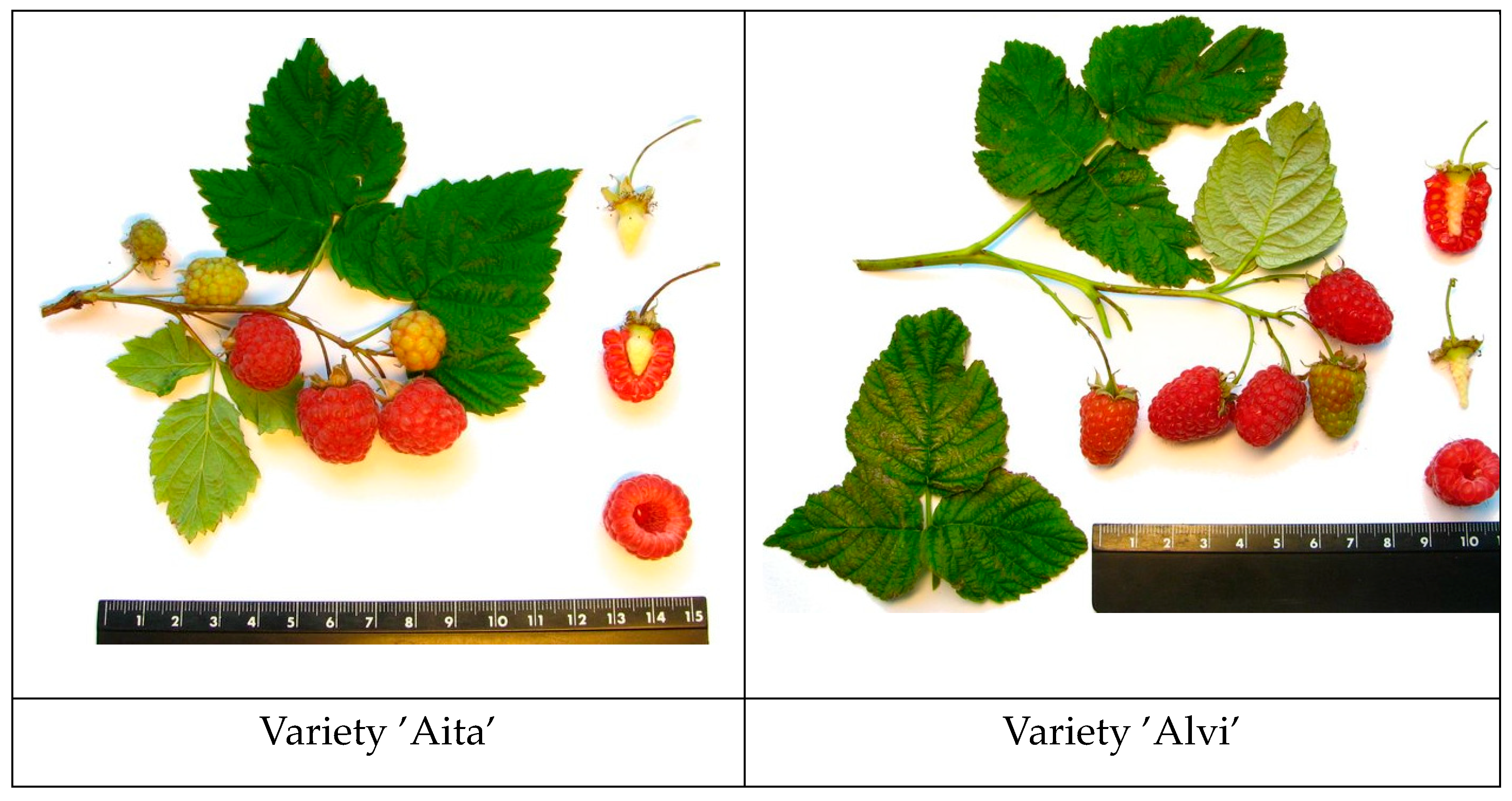
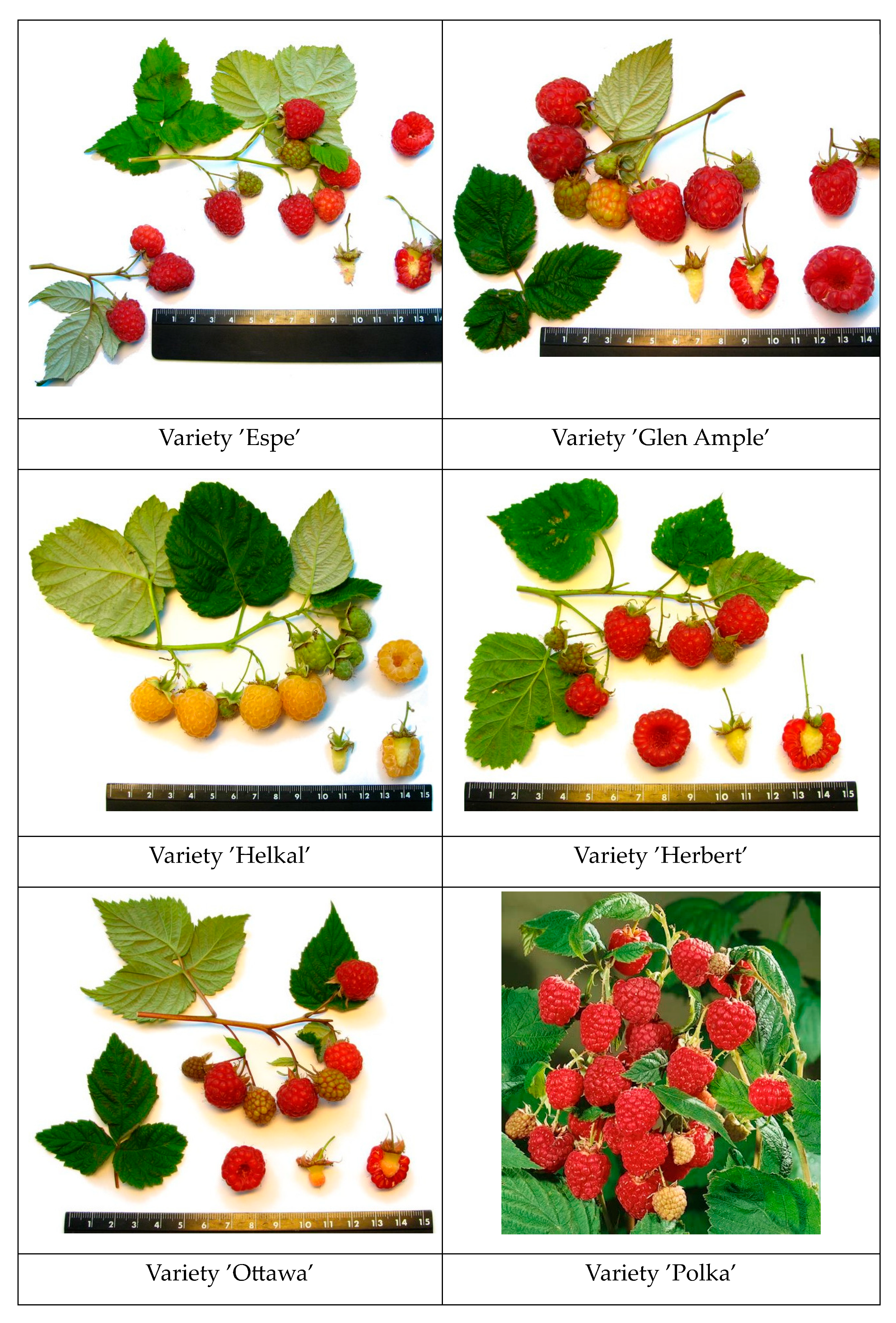
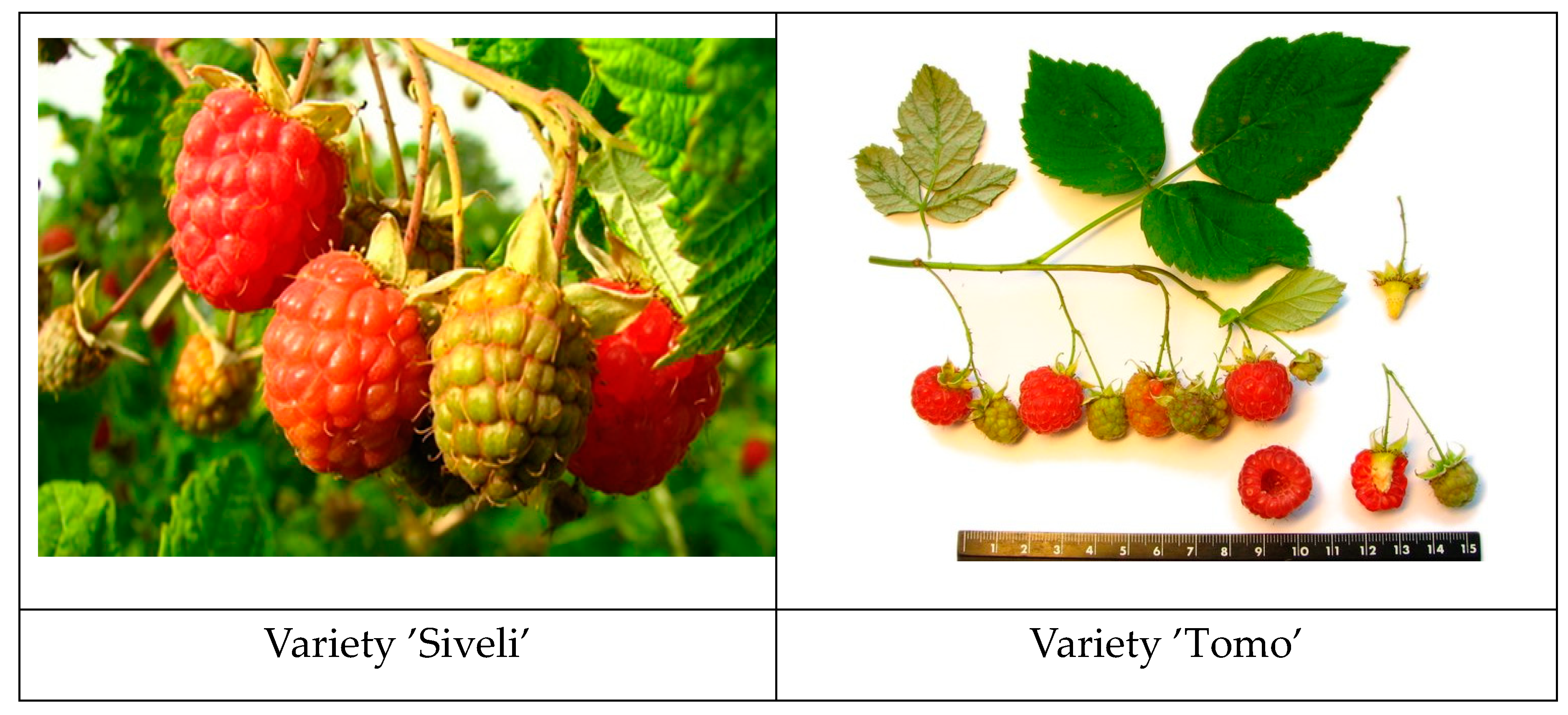
The work considers both garden varieties of raspberries in homes and specific varieties of crops (Table 1). The varieties of stems obtained from people's home gardens were largely unknown. A brief description of the varieties studied in this work (EMÜ, 2017, Neeva Garden, 2014) and their photos are given in Appendix C.
The raspberry stems used in the research were collected in the summer of 2016: 7 raspberry cultivated varieties (CR1-CR7) from the Polli garden of the EEC Horticultural Research Center, 13 from different home gardens (GR1-GR13), including five known raspberry varieties and 13 samples from wild raspberries (WR1-WR13) from different benefits in Estonia. Thus, a total of 33 samples of raspberry stems from different places of growth were analyzed. Most of the samples were from Southern Estonia. 19 samples were collected from Viljandi County, 4 from Lääne County, 4 from Valga County, 3 from Tartu County, 2 from Ida-Viru County and 1 from Rapla County (Table 5, Appendix C). A top part 20 cm long was collected on the stems for examination. To study the dynamics of the content of polyphenolic compounds during a year, one sample was collected every month from one and the same bush (sample GR1, apex parts 20 cm long). The content of the substances to be determined in different parts of the raspberry stems was also determined using the example of three raspberry bushes (GR12, GR13, and the October sample). From the bushes, stems of as similar lengths as possible were cut from the ground, and divided into five parts of equal length. The collected material was stored in a refrigerator at -18 oC and analyzed immediately after defrosting.
4.2. Preliminary Test to Determine a Suitable Solvent
Preliminary tests were conducted with different ethanol concentrations (20-80%), methanol and distilled water to find the most suitable solvent for extracting the phenolic compounds under investigation. In doing so, the base area of the HPLC UV chromatogram was estimated at 280 nm, where most of the phenolic substances absorb radiation, and it was concluded, based on both the qualitative and quantitative content of the substances, that it is optimal to use 60 % ethanol for the study of polyphenols (Figure 7).
4.3. Extraction and HPLC/MS Analysis of Polyphenolic Compounds in Raspberry Stems
To extract polyphenols, raspberry stems were chopped into 1-2 mm long pieces with scissors, 0.50 g was weighed into a test tube and 60% ethanol/water (v/v) was added to 10 mL. The samples were then allowed to stay for 24 hours with occasional slight shaking then the samples were filtered through a paper filter and centrifuged at 6000 rpm for 10 minutes
Agilent 1100 Series LC/MSD Trap-XCT with ESI ionization unit was used. Blocks: autosampler, solvent degasser, binary pump, column in thermostat and UV-Vis diode array detector. Column: Zorbax 300SB-C18 (2.1 mm × 150 mm), with a particle diameter of 5 μm. HPLC 2D ChemStation software was used in combination with the ChemStation Spectral SW module to control the process. 5 μL of the test solution was injected into the column, the elution time was 50 minutes, the UV-Vis diode detector operated at the wavelength range of 190-530 nm, the temperature of the column was kept at 35 °C. The analytes were separated using a C18 reversed-phase column and an ascending linear gradient of an aqueous 0,1 % formic acid solution (eluent A) and acetonitrile (eluent B). Polyphenols were identified by an ion trap with an MS/MS detector using negative ionization mode (Table 2, Figure 2). The particle mass-to-charge ratio range (m/z) under study was 50-1700, with a target m/z of 1000. The flow rate was 0.3 ml/min.
To determine the quantitative content of polyphenols, solutions of a certain concentration of 96% ethanol were prepared from the standard substances and chromatographed under the same conditions as rhubarb stem extracts, with the difference that the target mass of the characteristic substances was 700 m/z. With the help of a computer program, the base areas of the characteristic peaks were determined, and a calibration graph was prepared for each standard substance. Standards used: quercetin glucoside (Sigma-Aldrich), ≥ 90 % HPLC purity, quercetin galactoside (Sigma-Aldrich), ≥ 97 % HPLC purity, myricetin (Sigma-Aldrich), ≥ 96 % HPLC purity, kaempferol (Sigma-Aldrich), ≥ 90 % HPLC purity, quercitrin (Alpha-Aesar), caffeic acid (Sigma-Aldrich). A similar methodology has been used in our previous studies [68]
By comparing the basal areas of the characteristic peaks with those of raspberry, the content of substances in 1 g of herbal drug was calculated. Since some of the standard polyphenols were in the form of aglycones (for example, myricetin and kaempferol), but in the plant material they were present as glycosides, a coefficient was used for the aglycone, with the help of which the concentration of glycoside was obtained. The coefficient (x) was calculated according to the formula:
The content of a particular substance in the dried herbal drug was calculated according to the straight formula of the calibration graph of the characteristic substance:
where:
x – substance content in dried herbal drug (µg/g)
y – area under the peak of the test substance (PÜ)
b – straight intersection with the y-axis
m – straight ascent
z – coefficient
5. Conclusions
The composition of the stems of wild and garden raspberries has been compared for the first time in this work. The HPLC-MS method detected 62 substances, of which 42 compounds were identified, 12 were suspected, and 8 were unknown.
The largest amount of polyphenolic compounds was found in the garden raspberry sample GR12 (’Polka’) - 2246,2 mg% and in the sample GR4 - 2089,6 mg%.
The main polyphenolic ingredients of raspberry stems are Protocatechuic acid pentosidetechuic acid, p-coumaroyl quinic acid 1, p-coumaroyl quinic acid 2, diHydroxybenzoic acid hexosides 1 and 2, and Quercetin 4’-glucuronide. There are no significant differences in the chemical composition of garden and wild raspberries.
The raspberry variety and its place of growth significantly impact the composition of the substances contained in the stems. During the year, the largest amount of them accumulates in raspberry stems in January (570.1 mg%), April (645.1 mg%) and October (529.3 mg%.. Therefore, these months are the most optimal for procuring raw materials.
When studying the correlation between the content of individual compounds in raspberry stems, a number of regularities were established. An absolutely positive correlation was established between the content of neochlorogenic acid rhamnoside and Isorhamnetin rhamnosideive 7 (r = 1.0); an inverse correlation between quercetin pentoxide and Isorhamnetin rhamnosideive 7 (r = -1.0).
Different phenolic substances are more numerous at the apex of the raspberry stalk, than near the stem, and the concentration of these substances is also higher at the apex.
Author Contributions
Conceptualization, A.R., A.K. and T.P.; methodology, A.R., A.K., T.I. and T.P.; validation, A.R., A.K., T.I. and T.P.; formal analysis, A.V., O.K. and T.P.; investigation, A.R., A.V., A.K., T.I. and T.P.; resources, A.R. and T.P.; data curation, A.R., A.V., A.K., T.I. and T.P.; writing—original draft preparation, A.R., A.K., T.I., O.K. and T.P.; writing—review and editing, A.R., A.K., T.I., O.K. and T.P.; visualization, A.K., T.I., and O.K.; supervision, A.R. and T.P.; project administration, A.R.; funding acquisition, A.R. All authors have read and agreed to the published version of the manuscript.
Funding
This research was supported by the European Union in the MSCA4Ukraine project “Design and development of 3D-printed medicines for bioactive materials of Ukrainian and Estonian medicinal plants origin” [ID number 1232466].
Institutional Review Board Statement
Not applicable.
Informed Consent Statement
Not applicable.
Data Availability Statement
The data supporting the results of this study can be obtained from the corresponding authors upon reasonable request.
Acknowledgments
The authors sincerely appreciate all the Partners’ support for standing with Ukraine and thank all Ukrainian defenders and the armed forces of Ukraine.
Conflicts of Interest
The authors declare no conflicts of interest.
Appendix A

Table A1.
Polyphenols in different parts of raspberry stems, mg%.
| Compound | Parts of raspberry stems | |||||||||||||
|---|---|---|---|---|---|---|---|---|---|---|---|---|---|---|
| GR 12 I | GR 12 II | GR 12 III | GR 12 IV | GR 12 V | GR 13 I | GR 13 II | GR 13 III | GR 13 IV | OCT I | OCT II | OCT III | OCT IV | OCT V | |
| Dihydroxybenzoic acid hexoside 1 | 212.7 | 139.2 | 38.5 | 47.9 | 56.1 | 49.2 | 146.8 | 55.8 | 34.5 | - | - | - | - | - |
| Dihydroxybenzoic acid hexoside 2 | 22.6 | 67.1 | - | 18.1 | - | 32.6 | 28.6 | 21.1 | 16.4 | - | - | - | - | - |
| Pentozide of protocatechic acid | 1052.6 | 516.4 | 173.9 | 98.4 | 85.5 | 402.8 | 292.2 | 170.6 | 72.4 | - | - | - | - | - |
| Hydroxybenzoic acid hexoside | 11.1 | 42.5 | - | 8.2 | - | 22.4 | 17.8 | 20.6 | 8.7 | - | - | - | - | - |
| Procyanidin B(1) | 3.5 | 8.2 | 6.2 | 3.5 | 3.2 | 12.6 | 9.8 | 5.9 | 4.2 | 5.0 | 5.1 | 2.5 | - | - |
| Dihydroxyferulic acid glycoside | 22.7 | 14.3 | 1.5 | - | - | - | - | - | - | - | 4.0 | 2.1 | - | - |
| Catechin | 7.1 | 16.3 | 6.3 | 1.9 | 1.7 | 10.1 | 5.4 | 4.8 | 4.1 | 23.9 | 8.3 | 2.4 | 2.5 | 2.6 |
| Chlorogenic acid | 1.4 | 1.0 | - | - | - | 0.8 | - | - | - | 2.4 | 1.4 | - | - | - |
| Procyanidin B(2) | 53.6 | 150.2 | 110.7 | 69.8 | 64.4 | 88.5 | 85.5 | 85.2 | 83.5 | 109.4 | 91.3 | 53.2 | 59.2 | 80.0 |
| Procyanidin B(3) | 15.3 | 32.1 | 7.8 | 4.7 | 3.5 | 13.0 | 9.3 | 8.9 | 6.9 | 13.1 | 9.2 | 5.2 | 5.3 | 7.6 |
| Neochlorogenic acid | 0.9 | - | - | - | - | - | - | - | - | 0.9 | - | - | - | - |
| Quercetin 3-glucuronide-glucoside | 1.2 | 0.5 | - | - | - | - | - | - | - | 0.1 | ˂ 0.1 | - | - | - |
| Epicatechin | 54.7 | 124.5 | 87.5 | 60.1 | 52.1 | 65.6 | 64.0 | 64.7 | 58.7 | 42.4 | 38.0 | 25.0 | 25.0 | 31.0 |
| p-Coumaroyl quinic acid 1 | 7.6 | 2.0 | - | - | - | - | - | - | - | 46.9 | 18.1 | 4.0 | - | - |
| p-Coumaric acid glycoside | 51.8 | 19.7 | 4.6 | 2.4 | 2.4 | 4.6 | 2.5 | 2.0 | 2.0 | 23.4 | 14.3 | 4.6 | 2.6 | 1.9 |
| p-Coumaroyl quinic acid 2 | 3.7 | 1.3 | - | - | - | - | - | - | - | 31.4 | 13.0 | 2.3 | 1.3 | - |
| Quercetin glucorhamnoside | 0.4 | ˂ 0.1 | - | - | - | - | - | - | - | 0.2 | ˂ 0.1 | - | - | - |
| Quercetin pentoxide | ˂ 0.1 | ˂ 0.1 | - | - | - | - | - | - | - | ˂ 0.1 | 0.2 | - | - | - |
| Quercetin pentoside 1 | 6.0 | 4.5 | 3.4 | 3.1 | 2.5 | 2.2 | 2.2 | 2.2 | 2.0 | 0.7 | 0.9 | 1.3 | 1.1 | 1.1 |
| Ellagic acid | 67.2 | 47.5 | 27.6 | 19.9 | 13.1 | 40.2 | 21.8 | 24.0 | 18.2 | 10.8 | 12.1 | 14.9 | 15.0 | 11.9 |
| Quercetin entoside 2 | 10.0 | 6.6 | 4.7 | 3.7 | 3.0 | 7.2 | 5.4 | 5.5 | 4.8 | 2.0 | 2.0 | 2.4 | 2.2 | 2.3 |
| Quercetin rutinoside alias rutin | - | - | - | - | - | - | - | - | - | 0.6 | 0.5 | - | - | 1.0 |
| Hyperoside | 10.5 | 17.7 | 2.0 | 0.6 | 0.2 | 1.0 | 0.5 | ˂ 0.1 | ˂ 0.1 | 26.9 | 1.8 | ˂ 0.1 | - | - |
| Quercetin 4’-glucuronide | 108.0 | 82.3 | 6.0 | 0.1 | ˂ 0.1 | 1.1 | 0.1 | ˂ 0.1 | ˂ 0.1 | 43.1 | 24.2 | 1.8 | ˂ 0.1 | ˂ 0.1 |
| Isoquercetin | ˂ 0.1 | ˂ 0.1 | ˂ 0.1 | ˂ 0.1 | ˂ 0.1 | 0.2 | ˂ 0.1 | ˂ 0.1 | ˂ 0.1 | 47.0 | 3.2 | 0.4 | ˂ 0.1 | ˂ 0.1 |
| Quercetin 7-glucuronide | 2.8 | 2.4 | 0.4 | 0.1 | ˂ 0.1 | 0.4 | ˂ 0.1 | ˂ 0.1 | ˂ 0.1 | 0.5 | 0.1 | ˂ 0.1 | ˂ 0.1 | ˂ 0.1 |
| Quercetin pentoside 3 | ˂ 0.1 | 0.1 | ˂ 0.1 | - | - | - | - | - | 12.3 | 6.9 | 1.1 | ˂ 0.1 | - | |
| Quercetin 3-(6''-(3-hydroxy-3-methyl-glutaroyl)hexoside) 1 | 0.8 | 0.3 | ˂ 0.1 | ˂ 0.1 | ˂ 0.1 | ˂ 0.1 | - | ˂ 0.1 | - | 0.6 | 0.3 | - | - | - |
| Kaempferol hexoside | 3.5 | 1.1 | 1.6 | 1.3 | 1.1 | 1.8 | 1.6 | 2.0 | 1.6 | ˂ 0.1 | - | - | - | - |
| Quercetin hexoside malonate | 0.1 | 0.1 | - | - | - | ˂ 0.1 | - | - | - | 14.8 | 0.7 | ˂ 0.1 | - | - |
| Isorhamnetin hexoside 1 | 3.0 | 2.2 | 0.2 | ˂ 0.1 | ˂ 0.1 | 0.6 | ˂ 0.1 | ˂ 0.1 | ˂ 0.1 | 1.1 | 0.6 | ˂ 0.1 | ˂ 0.1 | ˂ 0.1 |
| Quercetin 3-(6'''-(3-hydroxy-3-methyl-glutaroyl)hexoside) 2 | 0.4 | 0.3 | ˂ 0.1 | ˂ 0.1 | - | - | - | - | - | 0.2 | ˂ 0.1 | - | - | - |
| Isorhamnetin Pentoside 1 | - | 1.2 | - | - | - | - | - | - | - | 0.3 | 0.3 | 0.4 | 0.2 | 0.3 |
| Kaempferol glucuronide | 2.5 | 1.8 | ˂ 0.1 | ˂ 0.1 | - | ˂ 0.1 | - | - | - | 7.5 | 0.1 | - | - | - |
| Isorhamnetin rhamnosideive 1 | 2.7 | 2.1 | 0.8 | 0.6 | 0.6 | 2.5 | 2.0 | 2.2 | 2.2 | 13.1 | 0.9 | 0.8 | 0.6 | 0.4 |
| Dicaf acid derivative | 66.4 | 28.4 | 16.0 | 7.1 | 3.0 | 6.4 | 6.6 | 3.9 | - | - | - | - | - | - |
| Isorhamnetin Pentoside 2 | ˂ 0.1 | ˂ 0.1 | 0.1 | 0.1 | ˂ 0.1 | 0.8 | 0.5 | 0.7 | 0.7 | ˂ 0.1 | 0.1 | 0.1 | 0.2 | 0.2 |
| Rhamnetin/isorhamnetin | 1.9 | 0.8 | 0.5 | 0.3 | 0.1 | 1.4 | 0.7 | 0.8 | 0.6 | 0.2 | 0.3 | 0.3 | 0.2 | 0.2 |
| Acetylarabinoside of ellagoic acid | 115.8 | 71.3 | 37.3 | 25.7 | 22.3 | 19.4 | 16.8 | 18.3 | 12.7 | 21.6 | 15.1 | 16.8 | 13.4 | 11.0 |
| Acetylxyloside of ellagic acid | 67.6 | 42.8 | 24.9 | 15.8 | 13.8 | 25.3 | 29.8 | 31.6 | 27.3 | 17.5 | 14.9 | 12.1 | 6.1 | 8.1 |
| Dicaffeoyl quinic acid | 1.2 | - | - | - | - | - | - | - | - | 1.4 | 1.2 | - | - | - |
| Isorhamnetin rhamnoside | 2.1 | 1.5 | - | - | - | 1.3 | 0.5 | - | - | 0.2 | - | - | - | - |
| Isorhamnetin rhamnosideive 2 | 8.5 | 4.6 | 2.7 | 1.5 | 1.2 | 1.9 | 1.5 | 1.9 | 1.2 | 1.1 | 0.7 | 0.4 | 0.3 | 0.2 |
| Chlorogenic acid rhamnoside | 1.1 | - | - | - | - | - | - | - | - | 2.5 | 1.7 | - | - | - |
| Isorhamnetin rhamnosideive 3 | 4.0 | 2.6 | 1.7 | 0.8 | 0.5 | 1.2 | 1.0 | 1.3 | 0.9 | ˂ 0.1 | ˂ 0.1 | ˂ 0.1 | ˂ 0.1 | ˂ 0.1 |
| Quercetin | 0.4 | 5.3 | 0.5 | - | - | 0.2 | 0.1 | - | - | 0.1 | 0.3 | ˂ 0.1 | - | - |
| Neochlorogenic acid rhamnoside | - | - | - | - | - | - | - | - | - | 1.4 | 1.8 | 1.1 | - | - |
| Isorhamnetin rhamnosideive 6 | 1.9 | 0.9 | 0.3 | 0.1 | ˂ 0.1 | ˂ 0.1 | ˂ 0.1 | ˂ 0.1 | ˂ 0.1 | 2.2 | ˂ 0.1 | ˂ 0.1 | ˂ 0.1 | - |
| Isorhamnetin rhamnosideive 7 | 9.9 | 7.3 | 3.6 | 2.5 | 2.1 | 2.4 | 1.8 | 2.4 | 1.7 | - | 1.4 | 1.0 | 0.6 | 0.7 |
| Total: | 2021.4 | 1470.8 | 571.1 | 398.3 | 332.4 | 819.3 | 754.6 | 536.2 | 365.3 | 529.1 | 295.0 | 156.8 | 135.9 | 160.4 |
Appendix B
Table A2.
Positive correlation between the content of individual compounds in Raspberry stems.
| Pairs of compounds | Correlation coefficient, r |
|---|---|
| Procyanidin - catechine | |
| Procyanidin B(1) - Epicatechin | 0.60 |
| Procyanidin B(1) - Procyanidin B(2) | 0.64 |
| Procyanidin B(3) - Epicatechin | 0.76 |
| Procyanidin B(2) - Procyanidin B(3) | 0.78 |
| Procyanidin B(2) - Epicatechin | 0.93 |
| Procyanidin - flavonols | |
| Procyanidin B(2) - Isorhamnetin rhamnosideive 7 | 0.60 |
| Procyanidin B(3) - Isorhamnetin hexoside 1 | 0.62 |
| Procyanidin B(3) - Isorhamnetin rhamnoside | 0.71 |
| Procyanidin B(3) - Isoquercetin | 0.73 |
| Benzoic acid derivates - Ellagic acids derivates | |
| Dihydroxybenzoic acid hexoside 2 - Ellagic acid | 0.62 |
| Ellagic acid acetylarabinoside - Acetylxyloside of ellagic acid | 0.64 |
| Dihydroxybenzoic acid hexoside 2 - Hydroxybenzoic acid hexoside | 0.70 |
| Hydroxycinnamic acids derivates | |
| Chlorogenic acid - Dicafeoyl quinic acid | 0.70 |
| Chlorogenic acid - Neochlorogenic acid | 0.79 |
| Chlorogenic acid - Chlorogenic acid rhamnoside | 0.73 |
| Chlorogenic acid rhamnoside - Neochlorogenic acid rhamnoside | 0.97 |
| p-Coumaroyl quinic acid 1 - p-coumaroyl quinic acid 2 | 0.97 |
| Hydroxycinnamic acids derivates - catechin – Procyanidin | |
| Dihydroferulic acid glycoside - Epicatechin | 0.61 |
| Dihydroferulic acid glycoside - Procyanidin B(2) | 0.63 |
| Dihydroxybenzoic acid derivates - flavonols | |
| Dihydroxybenzoic acid hexoside 2 - Isorhamnetin rhamnosideive 6 | 0.62 |
| Dihydroxybenzoic acid hexoside 2 - Isorhamnetin rhamnosideive 1 | 0.63 |
| Dihydroxybenzoic acid hexoside 1 - Quercetin | 0.64 |
| Dihydroxybenzoic acid hexoside 2 - Isorhamnetin rhamnosideive 2 | 0.64 |
| Dihydroxybenzoic acid hexoside 2 - Quercetin Pentoside 1 | 0.66 |
| Dihydroxybenzoic acid hexoside 2 - Isorhamnetin rhamnosideive 3 | 0.66 |
| Dihydroxybenzoic acid hexoside 2 - Quercetin Pentoside 3 | 0.72 |
| Hydroxybenzoic acid hexoside - Hyperoside | 0.78 |
| Hydroxybenzoic acid hexoside - Quercetin 3-(6''-(3-hydroxy-3-methylglutaroyl)hexoside) 1 | 0.84 |
| Ellagic acid derivates - flavonols | |
| Quercetin 3-glucuronide-glucoside - Acetylxyloside of ellagic acid | 0.61 |
| Quercetin hexoside malonate - Acetylxyloside of ellagic acid | 0.64 |
| Acetylxyloside of ellagic acid - Isorhamnetin rhamnosideive 7 | 0.65 |
| Quercetin Pentoside 1 - Acetylxyloside of ellagic acid | 0.66 |
| Ellagic acid acetylarabinoside - Isorhamnetin rhamnosideive 6 | 0.70 |
| Quercetin Pentoside 1 - Ellagic acid acetylarabinoside | 0.71 |
| Ellagic acid acetylarabinoside - Isorhamnetin rhamnosideive 3 | 0.76 |
| Isorhamnetin rhamnosideive 1 - Ellagic acid acetylarabinoside | 0.78 |
| Ellagic acid - Rhamnetin/isorhamnetin | 0.87 |
| Ellagic acid - Quercetin Pentoside 2 | 0.88 |
| Hydroxycinnamic acids derivates - flavonols | |
| Dihydroferulic acid glycoside - Isorhamnetin rhamnosideive 7 | 0.60 |
| Neochlorogenic acid - Quercetin hexoside malonate | 0.60 |
| Quercetin 3-(6''-(3-hydroxy-3-methylglutaroyl)hexoside) 2 - Neochlorogenic acid rhamnoside | 0.60 |
| Dihydroferulic acid glycoside - Rhamnetin/isorhamnetin | 0.61 |
| Chlorogenic acid - Isorhamnetin rhamnosideive 7 | 0.61 |
| Chlorogenic acid - Quercetin | 0.62 |
| Neochlorogenic acid - Isorhamnetin rhamnoside | 0.64 |
| Chlorogenic acid rhamnoside - Isorhamnetin rhamnosideive 7 | 0.64 |
| Chlorogenic acid - Isorhamnetin Pentoside 1 | 0.64 |
| p-Coumaroyl quinic acid 1 - Isorhamnetin hexoside 1 | 0.68 |
| Dihydroferulic acid glycoside - Isorhamnetin Pentoside 1 | 0.68 |
| Ellagic acid acetylarabinoside - Isorhamnetin rhamnosideive 2 | 0.68 |
| Neochlorogenic acid - Isorhamnetin hexoside 1 | 0.70 |
| Quercetin 3-(6''-(3-hydroxy-3-methylglutaroyl)hexoside) 1 - Neochlorogenic acid rhamnoside | 0.68 |
| Chlorogenic acid - Isorhamnetin hexoside 1 | 0.73 |
| Quercetin hexoside malonate - Dicafeoyl quinic acid | 0.73 |
| p-Coumaric acid glycoside - Quercetin pentoxoside | 0.76 |
| Dicafeoyl quinic acid - Quercetin | 0.78 |
| Kempferol glycoside - Dicafeoyl quinic acid | 0.78 |
| Chlorogenic acid - Isorhamnetin rhamnoside | 0.78 |
| Chlorogenic acid - Quercetin 3-glucuronide-glucoside | 0.81 |
| Neochlorogenic acid - Isorhamnetin rhamnosideive 7 | 0.87 |
| Quercetin 3-glucuronide-glucoside - Dicafeoyl quinic acid | 0.86 |
| Dicafeoyl quinic acid - Isorhamnetin rhamnosideive 7 | 0.94 |
| Neochlorogenic acid rhamnoside - Isorhamnetin rhamnosideive 7 | 1.00 |
| Flavonols - flavonols | |
| Quercetin Pentoside 1 - Kempferol glycoside | 0.60 |
| Quercetin 4’-glucuronide - Isorhamnetin rhamnoside | 0.62 |
| Quercetin glucoramnoside - Isorhamnetin rhamnosideive 7 | 0.64 |
| Quercetin pentoxoside - Hyperoside | 0.64 |
| Isoquercetin - Isorhamnetin Pentoside 1 | 0.64 |
| Isoquercetin - Isorhamnetin rhamnosideive 7 | 0.64 |
| Quercetin glucoramnoside - Isorhamnetin Pentoside 1 | 0.65 |
| Quercetin 4’-glucuronide - Kempferol glucuronide | 0.65 |
| Isorhamnetin rhamnoside - Isorhamnetin rhamnosideive 7 | 0.65 |
| Quercetin 3-glucuronide-glucoside - Quercetin 3-(6''-(3-hydroxy-3-methylglutaroyl)hexoside) 2 | 0.66 |
| Quercetin 4’-glucuronide - Isorhamnetin Pentoside 1 | 0.66 |
| Quercetin 3-(6''-(3-hydroxy-3-methylglutaroyl)hexoside) 2 - Kempferol glucuronide | 0.67 |
| Quercetin 3-glucuronide-glucoside - Kempferol glucuronide | 0.68 |
| Quercetin 4’-glucuronide - Isoquercetin | 0.68 |
| Isoquercetin - Isorhamnetin hexoside 1 | 0.68 |
| Quercetin hexoside malonate - Isorhamnetin hexoside 1 | 0.68 |
| Quercetin Pentoside 1 - Isorhamnetin rhamnosideive 6 | 0.69 |
| Quercetin hexoside malonate - Kempferol glucuronide | 0.69 |
| Quercetin hexoside malonate - Quercetin | 0.69 |
| Quercetin 3-glucuronide-glucoside - Quercetin | 0.70 |
| Quercetin glucoramnoside - Isorhamnetin Pentoside 2 | 0.70 |
| Quercetin Pentoside 3 - Isorhamnetin rhamnosideive 7 | 0.70 |
| Kempferol glycoside - Quercetin | 0.70 |
| Quercetin Pentoside 2 - Rhamnetin/isorhamnetin | 0.71 |
| Quercetin 4’-glucuronide - Quercetin hexoside malonate | 0.71 |
| Quercetin hexoside malonate - Quercetin 3-(6''-(3-hydroxy-3-methylglutaroyl)hexoside) 2 | 0.71 |
| Quercetin glucoramnoside - Kempferol glucuronide | 0.72 |
| Isorhamnetin hexoside 1 - Isorhamnetin rhamnoside | 0.72 |
| Quercetin 3-glucuronide-glucoside - Isorhamnetin Pentoside 1 | 0.73 |
| Isoquercetin - Quercetin hexoside malonate | 0.73 |
| Quercetin 3-glucuronide-glucoside - Isorhamnetin rhamnoside | 0.74 |
| Isoquercetin - Kempferol glucuronide | 0.75 |
| Quercetin 3-(6''-(3-hydroxy-3-methylglutaroyl)hexoside) 2 - Isorhamnetin rhamnoside | 0.75 |
| Isorhamnetin Pentoside 1 - Isorhamnetin Pentoside 2 | 0.75 |
| Quercetin hexoside malonate - Isorhamnetin rhamnoside | 0.76 |
| Isorhamnetin rhamnoside - Isorhamnetin rhamnosideive 7 | 0.77 |
| Quercetin Pentoside 1 - Isorhamnetin rhamnosideive 1 | 0.78 |
| Quercetin Pentoside 1 - Isorhamnetin rhamnosideive 2 | 0.78 |
| Quercetin Pentoside 1 - Isorhamnetin rhamnosideive 3 | 0.78 |
| Quercetin 3-glucuronide-glucoside - Kempferol glycoside | 0.79 |
| Quercetin glucoramnoside - Quercetin pentoxoside | 0.80 |
| Quercetin 3-(6''-(3-hydroxy-3-methylglutaroyl)hexoside) 2 - Isorhamnetin rhamnosideive 7 | 0.81 |
| Hyperoside - Quercetin 3-(6''-(3-hydroxy-3-methylglutaroyl)hexoside) 1 | 0.82 |
| Isoquercetin - Quercetin 3-(6''-(3-hydroxy-3-methylglutaroyl)hexoside) 2 | 0.83 |
| Isorhamnetin Pentoside 1 - Isorhamnetin rhamnosideive 7 | 0.83 |
| Quercetin glucoramnoside - Quercetin 3-(6''-(3-hydroxy-3-methylglutaroyl)hexoside) 2 | 0.84 |
| Kempferol glucuronide - Isorhamnetin rhamnoside | 0.84 |
| Isorhamnetin rhamnosideive 2 - Isorhamnetin rhamnosideive 6 | 0.84 |
| Quercetin hexoside malonate - Isorhamnetin rhamnosideive 7 | 0.85 |
| Quercetin 3-(6''-(3-hydroxy-3-methylglutaroyl)hexoside) 2 - Isorhamnetin Pentoside 1 | 0.85 |
| Isorhamnetin rhamnosideive 7 - Isorhamnetin rhamnosideive 6 | 0.85 |
| Isorhamnetin Pentoside 1 - Isorhamnetin rhamnoside | 0.86 |
| Isorhamnetin Pentoside 1 - Kempferol glucuronide | 0.87 |
| Isorhamnetin rhamnosideive 1 - Isorhamnetin rhamnosideive 2 | 0.88 |
| Isorhamnetin rhamnosideive 1 - Isorhamnetin rhamnosideive 3 | 0.88 |
| Isorhamnetin rhamnosideive 2 - Isorhamnetin rhamnosideive 3 | 0.89 |
| Isorhamnetin rhamnosideive 1 - Isorhamnetin rhamnosideive 6 | 0.91 |
| Quercetin 3-glucuronide-glucoside - Quercetin hexoside malonate | 0.92 |
| Isoquercetin - Isorhamnetin rhamnoside | 0.92 |
| Quercetin - Isorhamnetin rhamnosideive 7 | 0.92 |
| Quercetin 3-glucuronide-glucoside - Isorhamnetin rhamnosideive 7 | 0.97 |
Table A3.
Negative correlation between the content of individual compounds in Raspberry stems.
| Pairs of compounds | Correlation coefficient, r |
|---|---|
| Hydroxybenzoic acid hexoside - Isorhamnetin rhamnosideive 7 | -0.74 |
| Neochlorogenic acid rhamnoside - Isorhamnetin rhamnosideive 6 | -0.78 |
| Neochlorogenic acid - Quercetin pentoxide | -0.80 |
| Isorhamnetin rhamnosideive 1 - Neochlorogenic acid rhamnoside | -0.82 |
| Quercetin pentoxoside - Isorhamnetin rhamnosideive 7 | -1.0 |
Appendix C
Table A4.
Short descriptions of cultivated varieties Rubus idaeus.
| Variety | Place of selection | The cross was made | Fruit | Bush |
|---|---|---|---|---|
| Aita | Polli Horticultural Research Centre, Estonia | seedling of Johannes Parksepp Nr. 2–64–24 × ‘Glen Clova’. | early maturing, light red, big (average 3.7 g), round, druplets cohering firmly, easy cropping | moderately growing, young canes light green with weak spines; fruiting-canes are light brown |
| Alvi | seedling 67-60-12 × ‘Novost Kuzmina’. | ather late, dark red, bright, big (average 3.5 g), conical, druplets cohering firmly, with good quality | moderately growing, young canes light green with few spines; fruiting-canes are greyish brown | |
| Helkal | seedling of breeder 67-60-12 (‘Golden Queen’ × ‘Spirina Belaja’) × ‘Novost Kuzmina’. | midseason, orange yellow, big (average 3.5 g), round conical, druplets cohering firmly | moderately strong, produces numerous erect canes, which are light green, covered thickly with spines; fruitingcanes are light brown | |
| Espe | 'Deutschland' and 'Novost Kuzmina' | Red blunt-cone-shaped fruits are medium-ripening and medium in size (an average of 2.5 g). The partial fruits are well joined and firmly attached to the base of the flower. | Erect stems are high, their stems slightly curled. Light green shoots are strong, have single weak spikes. The stems of the second year are light brown | |
| Тoмo | ‘Superlative’ × ‘Novost Kuzmina’. | midseason, dark red, medium, round or oblate, druplets cohering firmly | moderately growing, produces medium or numerous erect canes, which are light green with few weak spines; the fruiting-cane is light brown with grey tinge | |
| Siveli | 'Golden Queen' × 'Spirina belaja' x 'Novost kuzmina' | Red fruits are medium-sized rounded or broad-rounded, partial fruits well joined, relatively resistant to collapse | The height of the erect stem is average. The shoots are light green with weak spikes, which are more sparsely located at the top of the stem. In the second year, the stems are light brown with a grayish tinge | |
| Polka | dark red, large and conical | medium-growing, upright and high-yielding | ||
| Glen Ample | Scotland | by crossbreeding, 'Glen Rosa', 'Meeker' | large and conical, bright red berries that can weigh up to 3gm | stems strong and erect, spine-free |
| Herbert | Canada | The fruits are round | The growth of stems is moderate, the shoot with a slightly purple bark, on the branch a lot of sharpening spikes just in the ladva part. Bright red spikes are very sharp. |
Figure A1.
Illustrations of the studied raspberry varieties.
References
- WFO (2024): Rubus idaeus L. Published on the Internet;http://www.worldfloraonline.org/taxon/wfo-0001000827. Accessed on: 20 Sep 2024.
- Funt, R.C.; Hall, H.K. Raspberries. 2013. 282 p. ISBN :; Crop production science in horticulture series; 23rd ed.; 2013; ISBN 978-1-84593-791-1.
- TRIDGE. Digital Platform that Combines Technology and Human Network to Connect Buyers and Suppliers Globally. Available online: https://www.tridge.com/intelligences/raspberry (accessed on 06 Огту 2024).
- Ispiryan, A.; Viškelis, J.; Viškelis, P. Red Raspberry (Rubus Idaeus L.) Seed Oil: A Review. Plants 2021, 10, 944. [Google Scholar] [CrossRef] [PubMed]
- Pieszka, M.; Tombarkiewicz, B.; Roman, A.; Migdał, W.; Niedziółka, J. Effect of Bioactive Substances Found in Rapeseed, Raspberry and Strawberry Seed Oils on Blood Lipid Profile and Selected Parameters of Oxidative Status in Rats. Environmental Toxicology and Pharmacology 2013, 36, 1055–1062. [Google Scholar] [CrossRef] [PubMed]
- Määttä-Riihinen, K.R.; Kamal-Eldin, A.; Törrönen, A.R. Identification and Quantification of Phenolic Compounds in Berries of Fragaria and Rubus Species (Family Rosaceae). J. Agric. Food Chem. 2004, 52, 6178–6187. [Google Scholar] [CrossRef] [PubMed]
- Lee, J.; Dossett, M.; Finn, C.E. Rubus Fruit Phenolic Research: The Good, the Bad, and the Confusing. Food Chemistry 2012, 130, 785–796. [Google Scholar] [CrossRef]
- Lopez-Corona, A.V.; Valencia-Espinosa, I.; González-Sánchez, F.A.; Sánchez-López, A.L.; Garcia-Amezquita, L.E.; Garcia-Varela, R. Antioxidant, Anti-Inflammatory and Cytotoxic Activity of Phenolic Compound Family Extracted from Raspberries (Rubus Idaeus): A General Review. Antioxidants 2022, 11, 1192. [Google Scholar] [CrossRef]
- Mullen, W.; Yokota, T.; Lean, M.E.J.; Crozier, A. Analysis of Ellagitannins and Conjugates of Ellagic Acid and Quercetin in Raspberry Fruits by LC–MSn. Phytochemistry 2003, 64, 617–624. [Google Scholar] [CrossRef]
- De Ancos, B.; Ibañez, E.; Reglero, G.; Cano, M.P. Frozen Storage Effects on Anthocyanins and Volatile Compounds of Raspberry Fruit. J. Agric. Food Chem. 2000, 48, 873–879. [Google Scholar] [CrossRef]
- Kosmala, M.; Zduńczyk, Z.; Juśkiewicz, J.; Jurgoński, A.; Karlińska, E.; Macierzyński, J.; Jańczak, R.; Rój, E. Chemical Composition of Defatted Strawberry and Raspberry Seeds and the Effect of These Dietary Ingredients on Polyphenol Metabolites, Intestinal Function, and Selected Serum Parameters in Rats. J. Agric. Food Chem. 2015, 63, 2989–2996. [Google Scholar] [CrossRef]
- Schulz, M.; Chim, J.F. Nutritional and Bioactive Value of Rubus Berries. Food Bioscience 2019, 31, 100438. [Google Scholar] [CrossRef]
- Del Bo’, C.; Martini, D.; Porrini, M.; Klimis-Zacas, D.; Riso, P. Berries and Oxidative Stress Markers: An Overview of Human Intervention Studies. Food Funct. 2015, 6, 2890–2917. [Google Scholar] [CrossRef]
- Beekwilder, J.; Hall, R.D.; Ric Vos, C.H.D. Identification and Dietary Relevance of Antioxidants from Raspberry. BioFactors 2005, 23, 197–205. [Google Scholar] [CrossRef] [PubMed]
- Rao, A.V.; Snyder, D.M. Raspberries and Human Health: A Review. J. Agric. Food Chem. 2010, 58, 3871–3883. [Google Scholar] [CrossRef]
- Clegg, M.E.; Pratt, M.; Meade, C.M.; Henry, C.J.K. The Addition of Raspberries and Blueberries to a Starch-Based Food Does Not Alter the Glycaemic Response. Br J Nutr 2011, 106, 335–338. [Google Scholar] [CrossRef] [PubMed]
- Çekiç, Ç.; Özgen, M. Comparison of Antioxidant Capacity and Phytochemical Properties of Wild and Cultivated Red Raspberries (Rubus Idaeus L.). Journal of Food Composition and Analysis 2010, 23, 540–544. [Google Scholar] [CrossRef]
- Beekwilder, J.; Jonker, H.; Meesters, P.; Hall, R.D.; Van Der Meer, I.M.; Ric De Vos, C.H. Antioxidants in Raspberry: On-Line Analysis Links Antioxidant Activity to a Diversity of Individual Metabolites. J. Agric. Food Chem. 2005, 53, 3313–3320. [Google Scholar] [CrossRef]
- Bobinaitė, R.; Viskelis, P.; Bobinas, Č.; Mieželienė, A.; Alenčikienė, G.; Venskutonis, P.R. Raspberry Marc Extracts Increase Antioxidative Potential, Ellagic Acid, Ellagitannin and Anthocyanin Concentrations in Fruit Purees. LWT - Food Science and Technology 2016, 66, 460–467. [Google Scholar] [CrossRef]
- Burton-Freeman, B.M.; Sandhu, A.K.; Edirisinghe, I. Red Raspberries and Their Bioactive Polyphenols: Cardiometabolic and Neuronal Health Links. Advances in Nutrition 2016, 7, 44–65. [Google Scholar] [CrossRef]
- Garcia, G.; Nanni, S.; Figueira, I.; Ivanov, I.; McDougall, G.J.; Stewart, D.; Ferreira, R.B.; Pinto, P.; Silva, R.F.M.; Brites, D.; et al. Bioaccessible (Poly)Phenol Metabolites from Raspberry Protect Neural Cells from Oxidative Stress and Attenuate Microglia Activation. Food Chemistry 2017, 215, 274–283. [Google Scholar] [CrossRef]
- Fu, Z.; Wei, Z.; Miao, M. Effects of Total Flavonoids of Raspberry on Perimenopausal Model in Mice. Saudi Journal of Biological Sciences 2018, 25, 487–492. [Google Scholar] [CrossRef]
- Chen, L.; Xin, X.; Zhang, H.; Yuan, Q. Phytochemical Properties and Antioxidant Capacities of Commercial Raspberry Varieties. Journal of Functional Foods 2013, 5, 508–515. [Google Scholar] [CrossRef]
- Fotschki, B.; Jurgoński, A.; Juśkiewicz, J.; Zduńczyk, Z. Dietary Supplementation with Raspberry Seed Oil Modulates Liver Functions, Inflammatory State, and Lipid Metabolism in Rats. The Journal of Nutrition 2015, 145, 1793–1799. [Google Scholar] [CrossRef] [PubMed]
- Noratto, G.D.; Chew, B.P.; Atienza, L.M. Red Raspberry (Rubus Idaeus L.) Intake Decreases Oxidative Stress in Obese Diabetic (Db/Db) Mice. Food Chemistry 2017, 227, 305–314. [Google Scholar] [CrossRef] [PubMed]
- Jia, H.; Liu, J.; Ufur, H.; He, G.; Liqian, H.; Chen, P. The Antihypertensive Effect of Ethyl Acetate Extract from Red Raspberry Fruit in Hypertensive Rats. Phcog Mag 2011, 7, 19. [Google Scholar] [CrossRef] [PubMed]
- Mullen, W.; McGinn, J.; Lean, M.E.J.; MacLean, M.R.; Gardner, P.; Duthie, G.G.; Yokota, T.; Crozier, A. Ellagitannins, Flavonoids, and Other Phenolics in Red Raspberries and Their Contribution to Antioxidant Capacity and Vasorelaxation Properties. J. Agric. Food Chem. 2002, 50, 5191–5196. [Google Scholar] [CrossRef] [PubMed]
- Chen, W.; Su, H.; Huang, Z.; Feng, L.; Nie, H. Neuroprotective Effect of Raspberry Extract by Inhibiting Peroxynitrite-Induced DNA Damage and Hydroxyl Radical Formation. Food Research International 2012, 49, 22–26. [Google Scholar] [CrossRef]
- Puupponen-Pimia, R.; Nohynek, L.; Meier, C.; Kahkonen, M.; Heinonen, M.; Hopia, A.; Oksman-Caldentey, K.-M. Antimicrobial Properties of Phenolic Compounds from Berries. J Appl Microbiol 2001, 90, 494–507. [Google Scholar] [CrossRef]
- Chwil, M.; Kostryco, M. BIOACTIVE COMPOUNDS AND ANTIOXIDANT ACTIVITY OF Rubus Idaeus L. LEAVES. Acta.Sci.Pol.,Hortorum Cultus 2018, 17, 135–147. [Google Scholar] [CrossRef]
- Costea, T.; Lupu, A.R.; Vlase, L.; Nencu, I.; Gird, C.E. Phenolic Content and Antioxidant Activity of a Raspberry Leaf Dry Extract. Rom. Biotechnol. Lett. 2016, 11345–11356. [Google Scholar]
- De Santis, D.; Carbone, K.; Garzoli, S.; Laghezza Masci, V.; Turchetti, G. Bioactivity and Chemical Profile of Rubus Idaeus L. Leaves Steam-Distillation Extract. Foods 2022, 11, 1455. [Google Scholar] [CrossRef]
- Li, Z.-H.; Guo, H.; Xu, W.-B.; Ge, J.; Li, X.; Alimu, M.; He, D.-J. Rapid Identification of Flavonoid Constituents Directly from PTP1B Inhibitive Extract of Raspberry ( Rubus Idaeus L.) Leaves by HPLC–ESI–QTOF–MS-MS. J Chromatogr Sci 2016, 54, 805–810. [Google Scholar] [CrossRef]
- Pavlovic, M.; Kovacevic, N.; Tzakou, O.; Couladis, M. The Essential Oil of Valeriana Officinalis L. s.l. Growing Wild in Western Serbia. Journal of Essential Oil Research 2004, 16, 397–399. [Google Scholar] [CrossRef]
- Ponder, A.; Hallmann, E. Phenolics and Carotenoid Contents in the Leaves of Different Organic and Conventional Raspberry (Rubus Idaeus L.) Cultivars and Their In Vitro Activity. Antioxidants 2019, 8, 458. [Google Scholar] [CrossRef]
- Tian, Y.; Liimatainen, J.; Alanne, A.-L.; Lindstedt, A.; Liu, P.; Sinkkonen, J.; Kallio, H.; Yang, B. Phenolic Compounds Extracted by Acidic Aqueous Ethanol from Berries and Leaves of Different Berry Plants. Food Chemistry 2017, 220, 266–281. [Google Scholar] [CrossRef] [PubMed]
- Venskutonis, P.R.; Dvaranauskaite, A.; Labokas, J. Radical Scavenging Activity and Composition of Raspberry (Rubus Idaeus) Leaves from Different Locations in Lithuania. Fitoterapia 2007, 78, 162–165. [Google Scholar] [CrossRef] [PubMed]
- Gudej, J.; Tomczyk, M. Determination of Flavonoids, Tannins and Ellagic Acid in Leaves fromRubus L. Species. Arch Pharm Res 2004, 27, 1114–1119. [Google Scholar] [CrossRef]
- Durgo, K.; Belščak-Cvitanović, A.; Stančić, A.; Franekić, J.; Komes, D. The Bioactive Potential of Red Raspberry ( Rubus Idaeus L.) Leaves in Exhibiting Cytotoxic and Cytoprotective Activity on Human Laryngeal Carcinoma and Colon Adenocarcinoma. Journal of Medicinal Food 2012, 15, 258–268. [Google Scholar] [CrossRef]
- Pavlović, A.V.; Papetti, A.; Zagorac, D.Č.D.; Gašić, U.M.; Mišić, D.M.; Tešić, Ž.Lj.; Natić, M.M. Phenolics Composition of Leaf Extracts of Raspberry and Blackberry Cultivars Grown in Serbia. Industrial Crops and Products 2016, 87, 304–314. [Google Scholar] [CrossRef]
- European Pharmacopoeia; 11th ed.; Council of Europe: Strasbourg, 2022.
- Assessment Report on Rubus Idaeus, L. , Folium 2014.
- Maslov, O.; Komisarenko, M.; Kolisnyk, S.; Derymedvid, L. Evaluation of Anti-Inflammatory, Antioxidant Activities and Molecular Docking Analysis of Rubus Idaeus Leaf Extract. Jordan j. pharm. sci. 2024, 17, 105–122. [Google Scholar] [CrossRef]
- Dudzinska, D.; Bednarska, K.; Boncler, M.; Luzak, B.; Watala, C. The Influence of Rubus Idaeus and Rubus Caesius Leaf Extracts on Platelet Aggregation in Whole Blood. Cross-Talk of Platelets and Neutrophils. Platelets 2016, 27, 433–439. [Google Scholar] [CrossRef]
- Bernard, C.; Juin, C.; Vitry, M.; Le, V.T.D.; Verdon, J.; Toullec, A.-S.; Imbert, C.; Girardot, M. Can Leaves and Stems of Rubus Idaeus L. Handle Candida Albicans Biofilms? Pharmaceuticals 2020, 13, 477. [Google Scholar] [CrossRef]
- Maslov, O.; Komisarenko, M.; Ponomarenko, S.; Horopashna, D.; Osolodchenko, T.; Kolisnyk, S.; Derymedvid, L.; Shovkova, Z.; Akhmedov, E. Investigation the Influence of Biologically Active Compounds on the Antioxidant, Antibacterial and Anti-Inflammatory Activities of Red Raspberry ( Rubus Idaeous l.) Leaf Extract. Current Issues in Pharmacy and Medical Sciences 2022, 35, 229–235. [Google Scholar] [CrossRef]
- Maslov, O.; Komisarenko, M.; Ponomarenko, S.; Kolisnyk, S.; Osolodchenko, T.; Golik, M. Antimicrobial, Antifungal, Antioxidant Activity and Phytochemical Investigation of Phenolcarboxylic Acids by GC–MS of Raspberry ( Rubus Idaeus L.) Shoot Lipophilic Extract. European Pharmaceutical Journal 2024, 71, 26–31. [Google Scholar] [CrossRef]
- Denev, P.; Kratchanova, M.; Ciz, M.; Lojek, A.; Vasicek, O.; Blazheva, D.; Nedelcheva, P.; Vojtek, L.; Hyrsl, P. Antioxidant, Antimicrobial and Neutrophil-Modulating Activities of Herb Extracts. Acta Biochim Pol 2014, 61, 359–367. [Google Scholar] [CrossRef] [PubMed]
- Maslov, O.; Komisarenko, M.; Kolisnyk, S.; Kostina, T.; Golik, M.; Moroz, V.; Tarasenko, D.; Akhmedov, E. Investigation of the Extraction Dynamic of the Biologically Active Substances of the Raspberry ( Rubus Idaeus L.) Shoots. Current Issues in Pharmacy and Medical Sciences 2023, 36, 194–198. [Google Scholar] [CrossRef]
- Mohammad Rahimi, H.; Khosravi, M.; Hesari, Z.; Sharifdini, M.; Mirjalali, H.; Zali, M.R. Anti- Toxoplasma Activity and Chemical Compositions of Aquatic Extract of Mentha Pulegium L. and Rubus Idaeus L.: An in Vitro Study. Food Science & Nutrition 2020, 8, 3656–3664. [Google Scholar] [CrossRef]
- Garjonyte, R.; Budiene, J.; Labanauskas, L.; Judzentiene, A. In Vitro Antioxidant and Prooxidant Activities of Red Raspberry (Rubus Idaeus L.) Stem Extracts. Molecules 2022, 27, 4073. [Google Scholar] [CrossRef]
- Ispiryan, A.; Atkociuniene, V.; Makstutiene, N.; Sarkinas, A.; Salaseviciene, A.; Urbonaviciene, D.; Viskelis, J.; Pakeltiene, R.; Raudone, L. Correlation between Antimicrobial Activity Values and Total Phenolic Content/Antioxidant Activity in Rubus Idaeus L. Plants 2024, 13, 504. [Google Scholar] [CrossRef]
- Parmar, I.; Rupasinghe, H. Antioxidant Capacity and Anti-Diabetic Activity of Wild Berry Stem Infusions. EJMP 2015, 8, 11–28. [Google Scholar] [CrossRef]
- Raal, A. Maailma Ravimtaimede Entsüklopeedia; Eesti Entsüklopeediakirjastus.; 2010.
- Maslov, O.Yu.; Komisarenko, M.A.; Golik, M.Yu.; Kolisnyk, S.V.; Altukhov, A.A.; Baiurka, S.V.; Karpushina, S.A.; Tkachenko, O.; Iuliia, K. Study of Total Antioxidant Capacity of Red Raspberry (Rubus Idaeous L.) Shoots. Vitae 2023, 30. [CrossRef]
- Gorbunova, T. Ravimine Taimedega; Tallinna Raamatutrükikoda.; Tallinn, 1995.
- Raal, A. Eesti Põhiravimtaimed; Tartu Ülikool.; Tartu, 2005.
- Sõukand, R.; Kalle, R. (koostajad). 2008. HERBA: Historistlik Eesti Rahvameditsiini Botaaniline Andmebaas. Võrguteavik. Tartu: EKM Teaduskirjastus. http://herba.folklore.ee.
- Vlasova, I.; Gontova, T.; Grytsyk, L.; Zhumashova, G.; Sayakova, G.; Boshkayeva, A.; Shanaida, M.; Koshovyi, O. Determination of Standardization Parameters of Oxycoccus Macrocarpus (Ait.) Pursh and Oxycoccus Palustris Pers. Leaves. SR: PS 2022, 48–57. [CrossRef]
- Krauze-Baranowska, M.; Głód, D.; Kula, M.; Majdan, M.; Hałasa, R.; Matkowski, A.; Kozłowska, W.; Kawiak, A. Chemical Composition and Biological Activity of Rubus Idaeus Shoots – a Traditional Herbal Remedy of Eastern Europe. BMC Complement Altern Med 2014, 14, 480. [Google Scholar] [CrossRef]
- Kula, M.; Głód, D.; Krauze-Baranowska, M. Two-Dimensional Liquid Chromatography (LC) of Phenolic Compounds from the Shoots of Rubus Idaeus ‘Glen Ample’ Cultivar Variety. Journal of Pharmaceutical and Biomedical Analysis 2016, 121, 99–106. [Google Scholar] [CrossRef]
- Tosun, M.; Ercisli, S.; Karlidag, H.; Sengul, M. Characterization of Red Raspberry ( Rubus Idaeus L.) Genotypes for Their Physicochemical Properties. Journal of Food Science 2009, 74. [CrossRef]
- Veljkovic, B.; Djordjevic, N.; Dolicanin, Z.; Licina, B.; Topuzovic, M.; Stankovic, M.; Zlatic, N.; Dajic-Stevanovic, Z. Antioxidant and Anticancer Properties of Leaf and Fruit Extracts of the Wild Raspberry (Rubus Idaeus L.). Not Bot Horti Agrobo 2018, 47, 359–367. [Google Scholar] [CrossRef]
- Wang, S.Y.; Lin, H.-S. Antioxidant Activity in Fruits and Leaves of Blackberry, Raspberry, and Strawberry Varies with Cultivar and Developmental Stage. J. Agric. Food Chem. 2000, 48, 140–146. [Google Scholar] [CrossRef] [PubMed]
- Wu, L.; Liu, Y.; Qin, Y.; Wang, L.; Wu, Z. HPLC-ESI-qTOF-MS/MS Characterization, Antioxidant Activities and Inhibitory Ability of Digestive Enzymes with Molecular Docking Analysis of Various Parts of Raspberry (Rubus Ideaus L.). Antioxidants 2019, 8, 274. [Google Scholar] [CrossRef] [PubMed]
- Marzullo, L.; Ochkur, O.; Orlandini, S.; Renai, L.; Gotti, R.; Koshovyi, O.; Furlanetto, S.; Del Bubba, M. Quality by Design in Optimizing the Extraction of (Poly)Phenolic Compounds from Vaccinium Myrtillus Berries. Journal of Chromatography A 2022, 1677, 463329. [Google Scholar] [CrossRef] [PubMed]
- Melnyk, N.; Pawłowska, K.A.; Ziaja, M.; Wojnowski, W.; Koshovyi, O.; Granica, S.; Bazylko, A. Characterization of Herbal Teas Containing Lime Flowers – Tiliae Flos by HPTLC Method with Chemometric Analysis. Food Chemistry 2021, 346, 128929. [Google Scholar] [CrossRef]
- Raal, A.; Kuiv, K.; Ilina, T.; Kovalyova, A.; Avidzba, Y.; Koshovyi, O.; Püssa, T. A Qualitative and Quantitative Analysis of Polyphenolic Compounds in Five Epilobium Spp. with a Possible Potential to Alleviate Benign Prostatic Hyperplasia. ScienceRise: Pharmaceutical Science 2024, 37–46. [CrossRef]
Figure 1.
Illustrations of chromatograms (Base Peak Chromatogram). The upper graph represents the sample VA 4, the lower WR 1. Substances corresponding to peaks: 1 – Dihydroxybenzoic acid hexoside 2; 2 – Protocatechuic acid pentosidetechic acid; 3 – Chlorogenic acid; 4 – Procyanidin B(2); 5 – Procyanidin B(3); 6 – Epicatechin; 7 – p-Coumaric acid glycoside; 8 – p-Coumaroyl quinic acid 2; 10 – Quercetin glucorhamnoside; 11 – Quercetin pentoside 1; 12 – Ellagic acid; 13 – Hyperoside; 14 – Quercetin 4’-glucuronide; 15 – Quercetin 7-glucuronide; 16 – Kaempferol glucoside; 17 – Isorhamnetin glucoside, 18 – Quercetin-3-(6''-(3-hydroxy-3-methylglutaroyl)hexoside); 19 – Kaempferol glucuronide; 20 – Isorhamnetin/rhamnetin; 21 – Unknown 6; 22 – Acetylxyloside of ellagic acid; 23 – Isorhamnetin rhamnoside; 24 – Isorhamnetin rhamnosideive 2; 25 – Unknown 10; 26 – Dihydroxybenzoic acid glucoside 1; 27 – p-Coumaroyl quinic acid 1; 28 – Isoquercetin; 29 – Isorhamnetin rhamnosideive 1; 30 – Chlorogenic acid rhamnoside; 31 – Neochlorogenic acid rhamnoside; 32 – Isorhamnetin C-hexoside 2.
Figure 1.
Illustrations of chromatograms (Base Peak Chromatogram). The upper graph represents the sample VA 4, the lower WR 1. Substances corresponding to peaks: 1 – Dihydroxybenzoic acid hexoside 2; 2 – Protocatechuic acid pentosidetechic acid; 3 – Chlorogenic acid; 4 – Procyanidin B(2); 5 – Procyanidin B(3); 6 – Epicatechin; 7 – p-Coumaric acid glycoside; 8 – p-Coumaroyl quinic acid 2; 10 – Quercetin glucorhamnoside; 11 – Quercetin pentoside 1; 12 – Ellagic acid; 13 – Hyperoside; 14 – Quercetin 4’-glucuronide; 15 – Quercetin 7-glucuronide; 16 – Kaempferol glucoside; 17 – Isorhamnetin glucoside, 18 – Quercetin-3-(6''-(3-hydroxy-3-methylglutaroyl)hexoside); 19 – Kaempferol glucuronide; 20 – Isorhamnetin/rhamnetin; 21 – Unknown 6; 22 – Acetylxyloside of ellagic acid; 23 – Isorhamnetin rhamnoside; 24 – Isorhamnetin rhamnosideive 2; 25 – Unknown 10; 26 – Dihydroxybenzoic acid glucoside 1; 27 – p-Coumaroyl quinic acid 1; 28 – Isoquercetin; 29 – Isorhamnetin rhamnosideive 1; 30 – Chlorogenic acid rhamnoside; 31 – Neochlorogenic acid rhamnoside; 32 – Isorhamnetin C-hexoside 2.
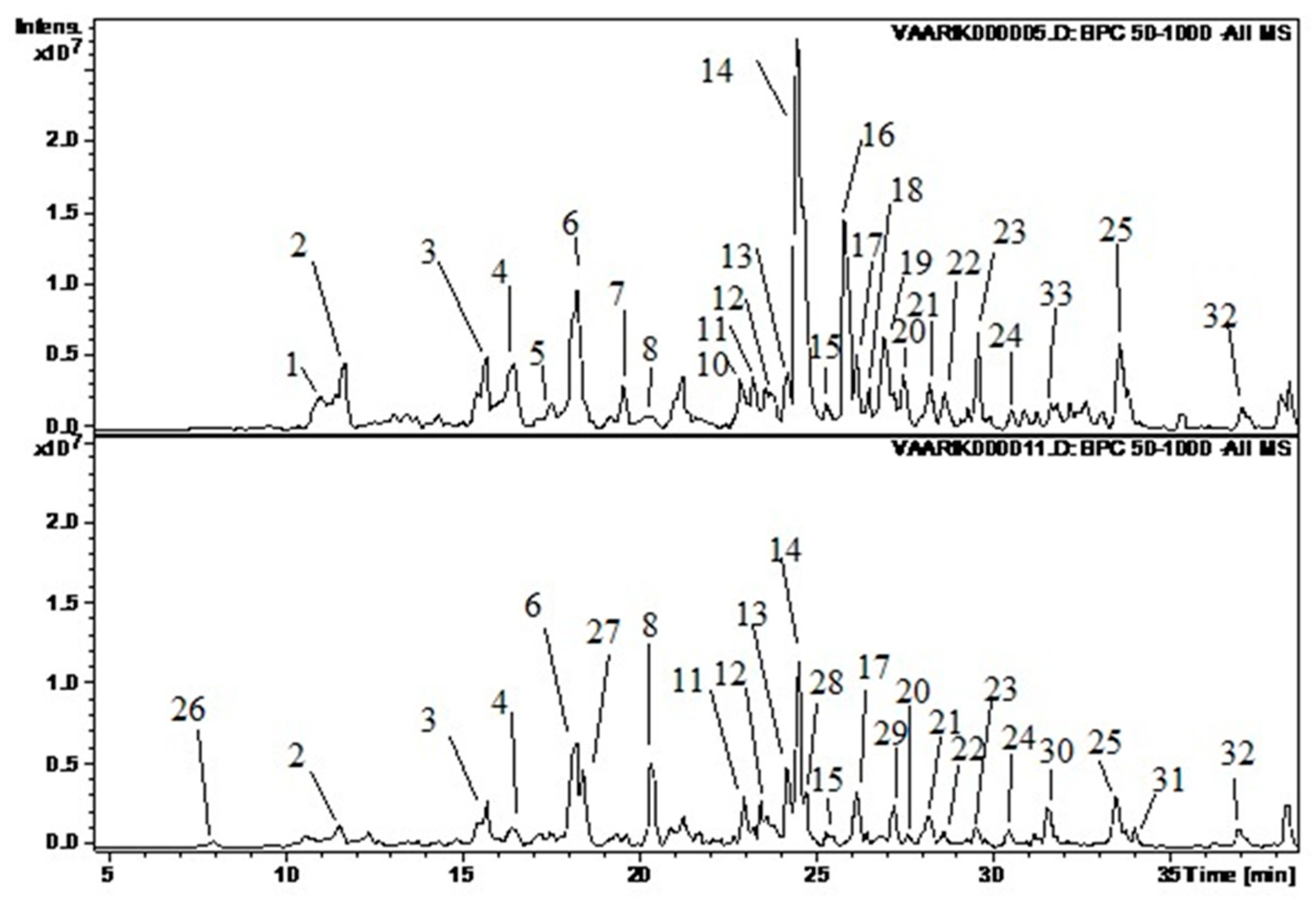
Figure 2.
Graph for comparing the total concentrations of all the substances studied in all 33 samples.
Figure 2.
Graph for comparing the total concentrations of all the substances studied in all 33 samples.
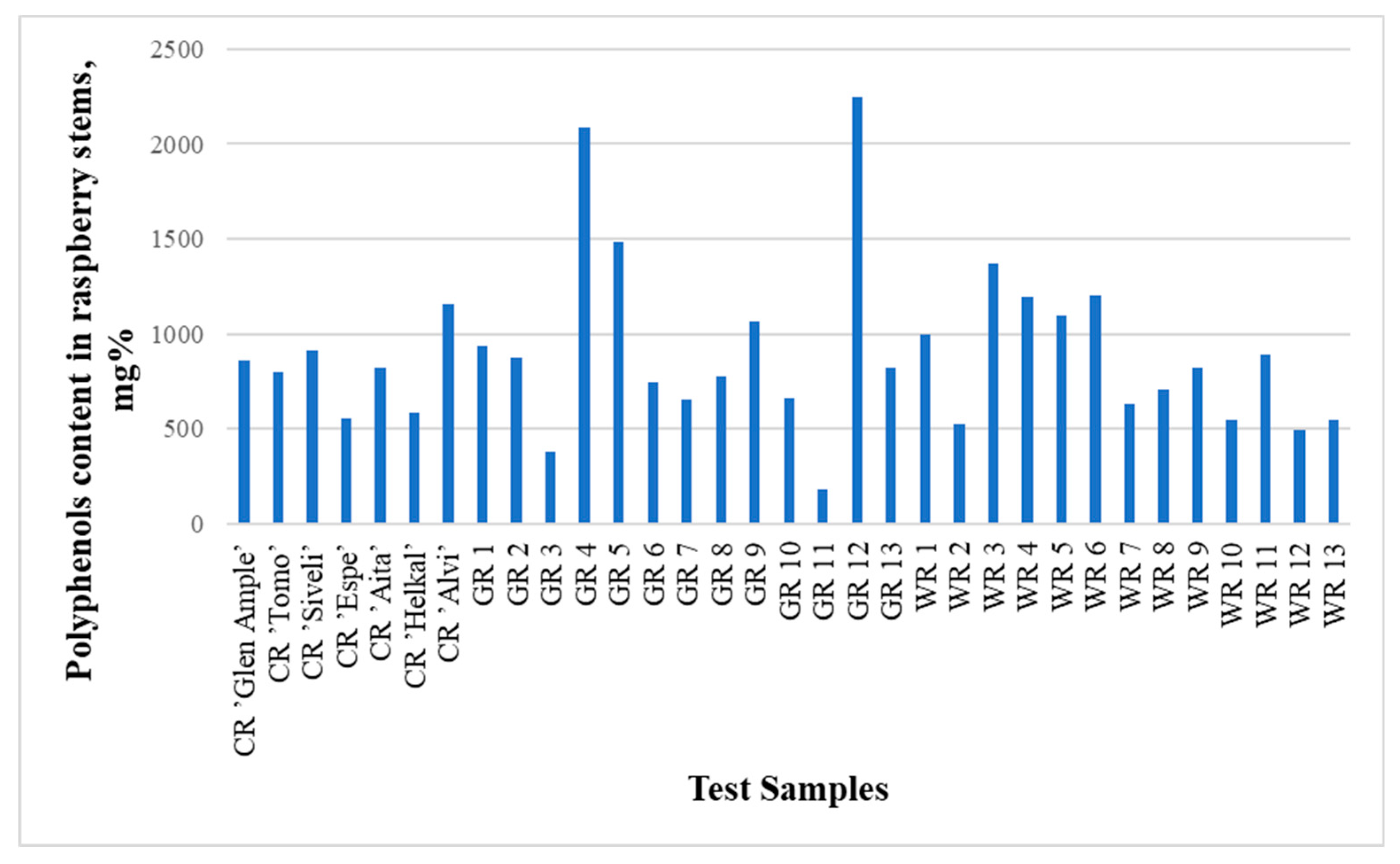
Figure 3.
Graph for comparison of the total concentrations of all substances in samples of known raspberry varieties.
Figure 3.
Graph for comparison of the total concentrations of all substances in samples of known raspberry varieties.
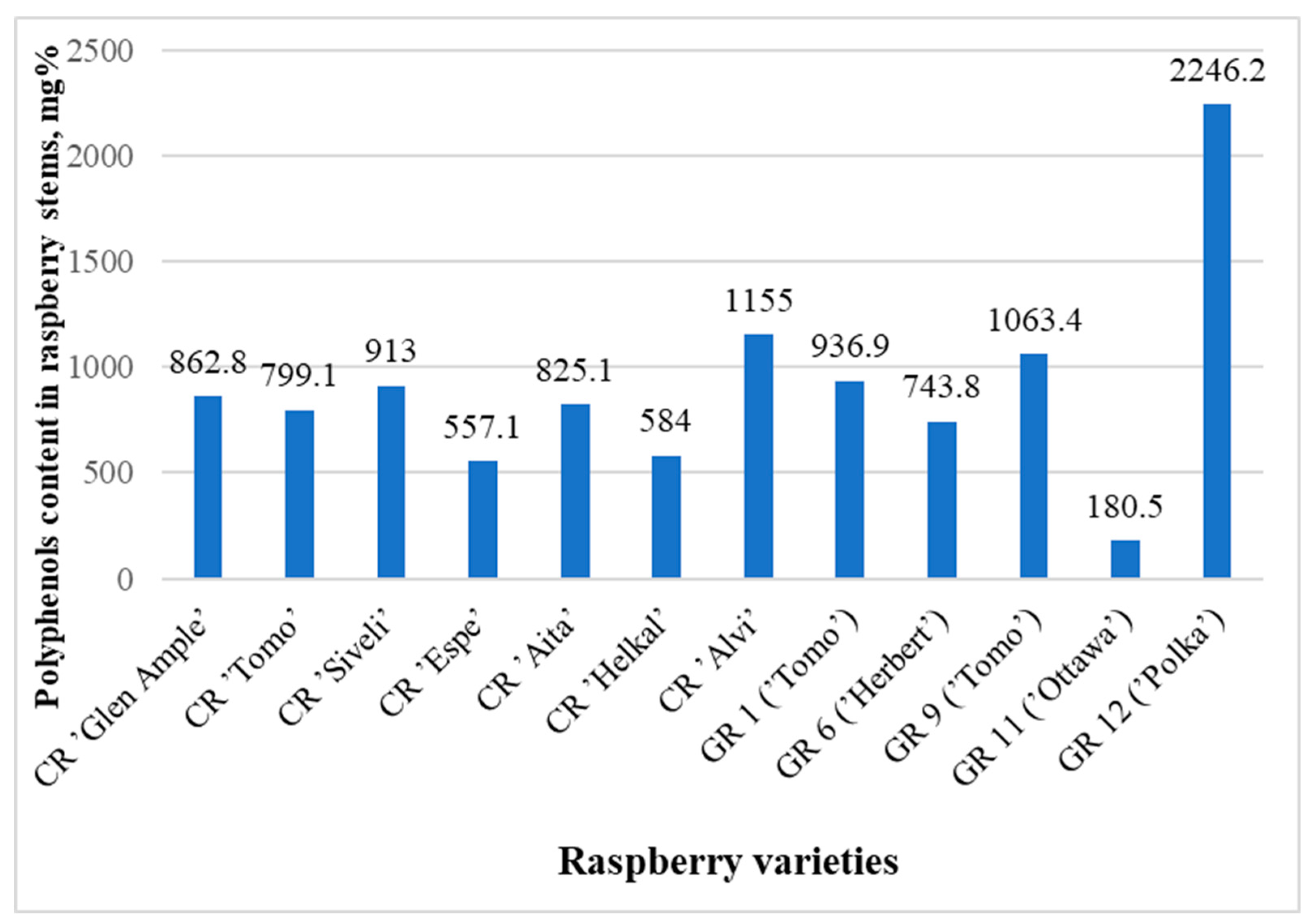
Figure 4.
Comparison of dominant polyphenolic compounds in Raspberry cultivars.
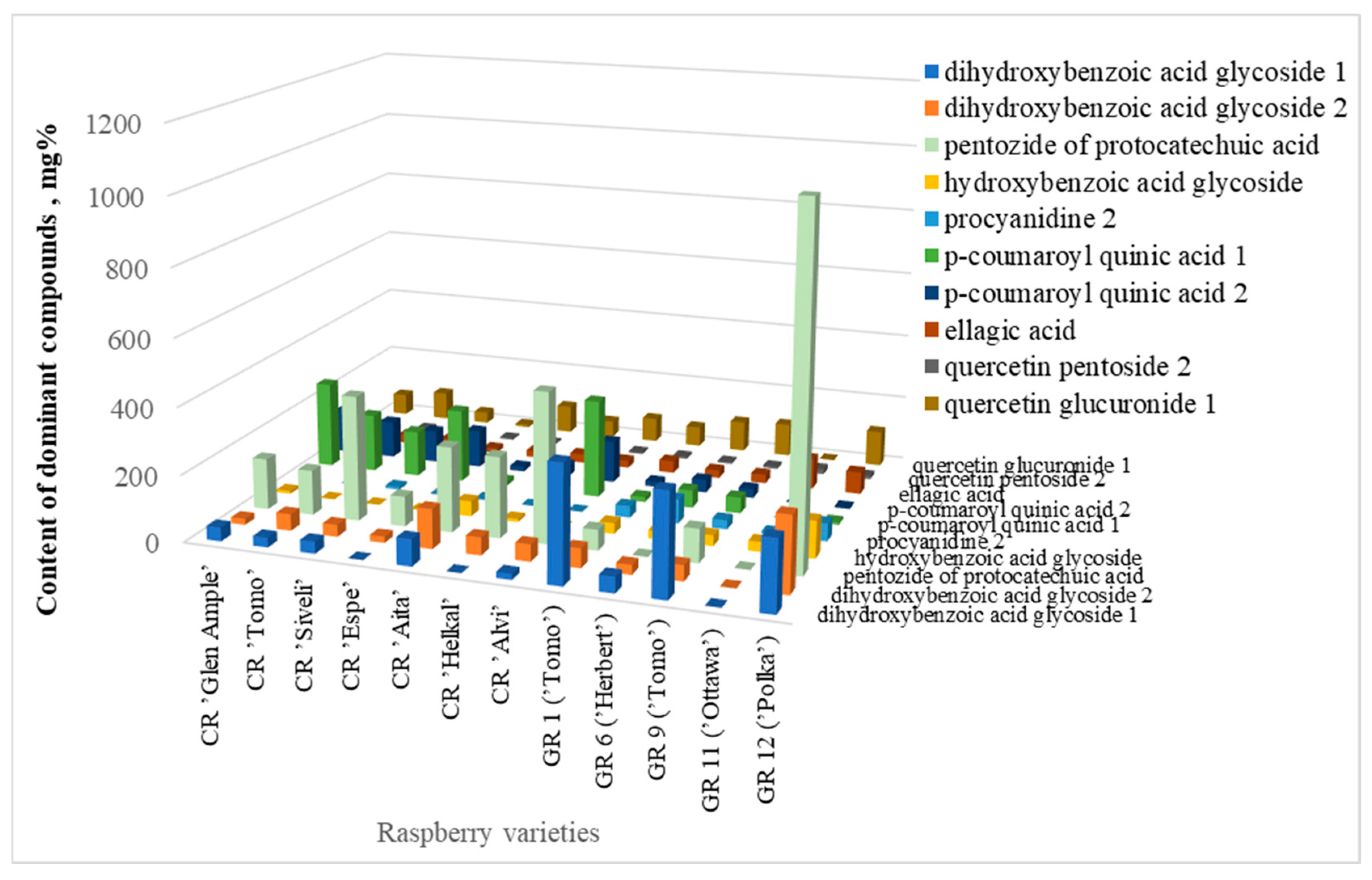
Figure 5.
Total content dynamics of polyphenolic compounds in GR1 sample over the year.
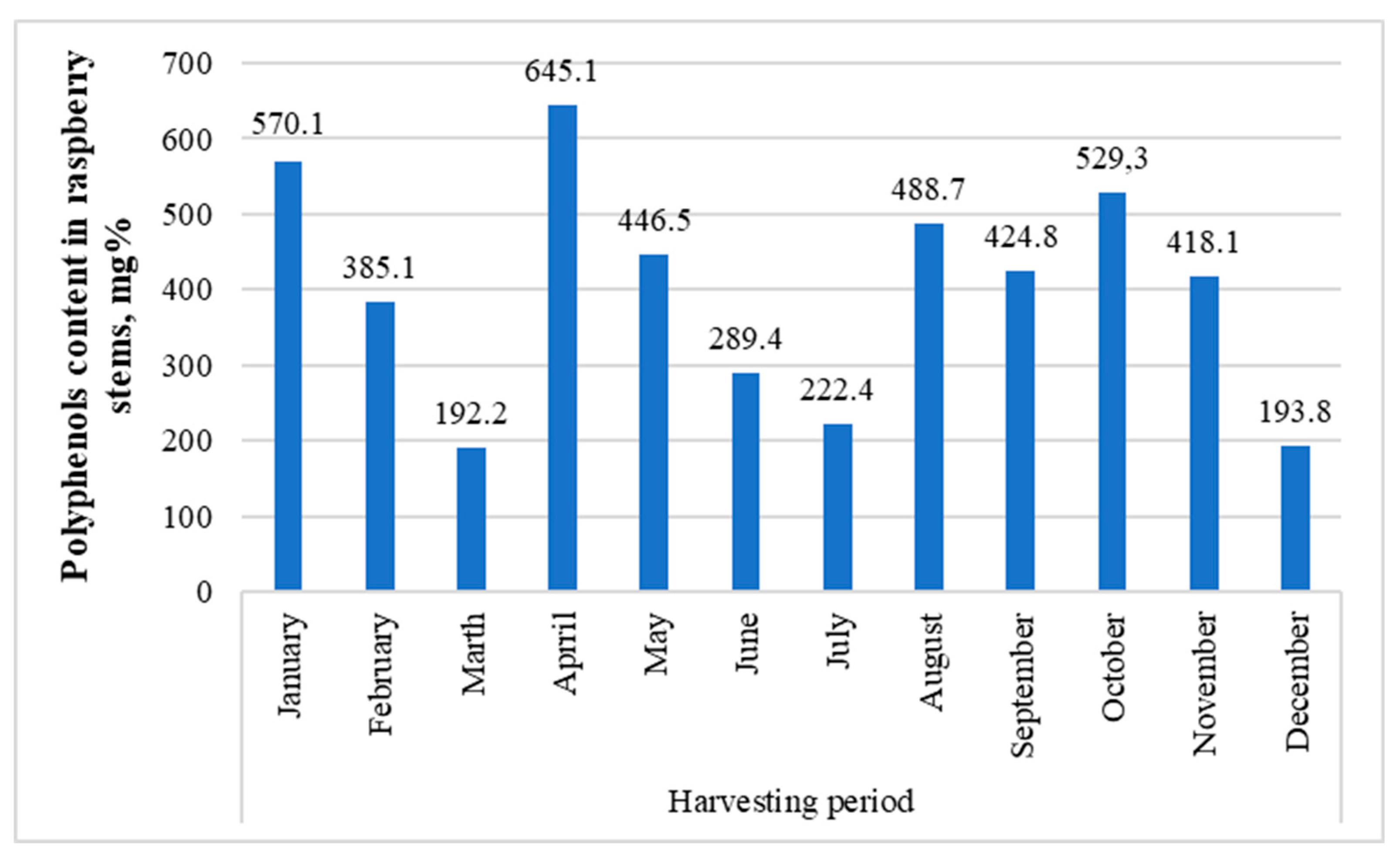
Figure 6.
The content of polyphenolic compounds in different parts of raspberry stems, mg%. The parts of the stem, starting from the apex, are marked with numbers I to IV.
Figure 6.
The content of polyphenolic compounds in different parts of raspberry stems, mg%. The parts of the stem, starting from the apex, are marked with numbers I to IV.
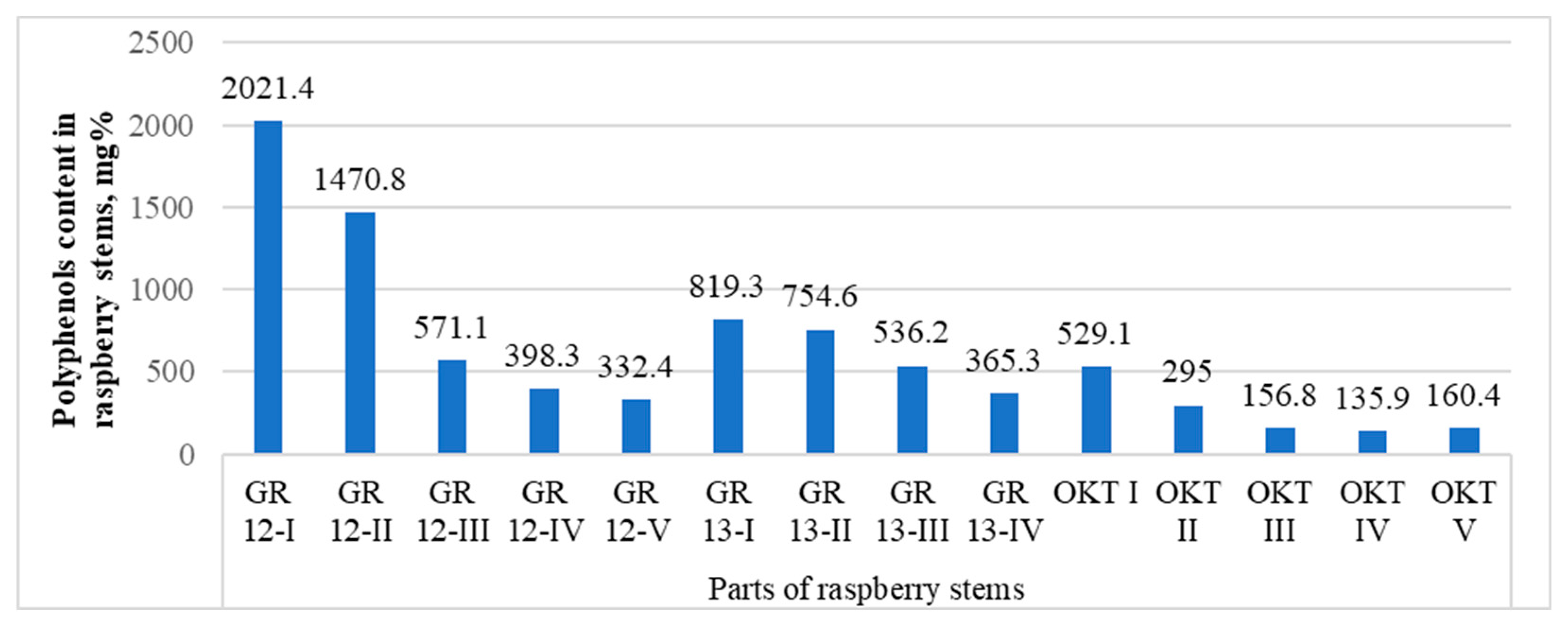
Figure 7.
Areas of UV chromatograms obtained with different solvents.
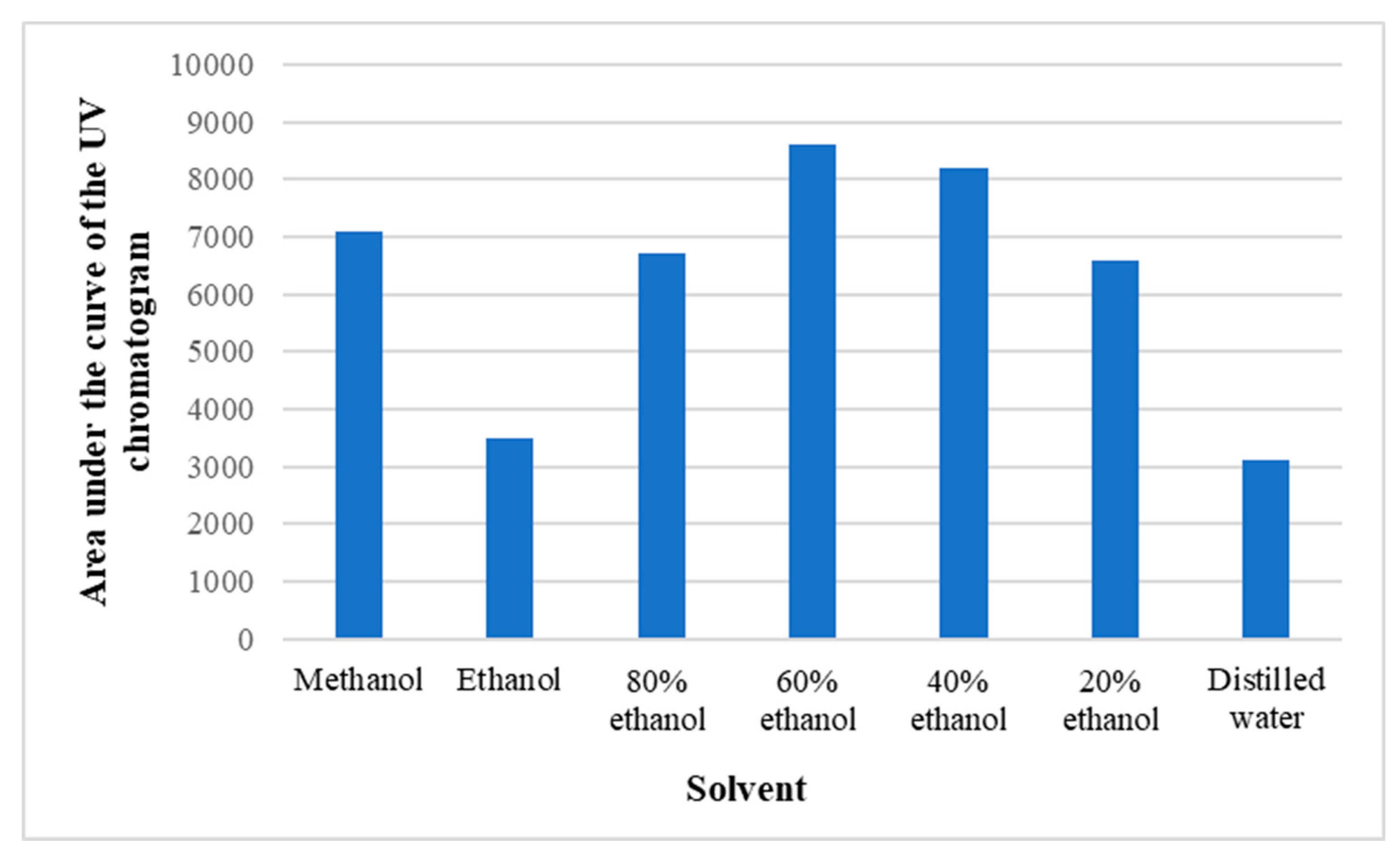
Table 1.
Phenolic compounds detected in raspberry stems.
| Rt | M/z | M/z of main collision fragments | Compound |
|---|---|---|---|
| 8.1 | 315 | 153;109 | Dihydroxybenzoic acid hexoside 1 |
| 11.8 | 315 | 297;153;109 | Dihydroxybenzoic acid hexoside 2 |
| 12 | 285 | 153;109 | Protocatechuic acid pentoside |
| 13.8 | 299 | 179;137;135 | Hydroxybenzoic acid hexoside |
| 14.7 | 577 | 559;451;425;407;289 | Procyanidin B(1) |
| 14.8 | 357 | 195;339 | Dihydroxyferulic acid glucoside |
| 15.1 | 289 | 245;205;179;125 | Catechin |
| 16 | 353 | 191;179;135 | Chlorogenic acid |
| 16.7 | 577 | 559;451;425;407;289 | Procyanidin B(2) |
| 17.7 | 577 | 559;451;425;407;289 | Procyanidin B(3) |
| 18.2 | 353 | 191;179;135 | Neochlorogenic acid |
| 18.5 | 639 | 463;301 | Quercetin 3-glucuronide-glucoside |
| 18.6 | 289 | 245;205;179;125 | Epicatechin |
| 18.8 | 337 | 191;163;173;301 | p-Coumaroyl quinic acid 1 |
| 19.6 | 325 | 163;119;289 | р-Coumaric acid hexoside |
| 20.7 | 337 | 191;163;173;301 | p-Coumaroyl quinic acid 2 |
| 23.1 | 609 | 301;302;431;179 | Quercetin glucorhamnoside |
| 23.2 | 595 | 463;343;301;300;179 | Quercetin pentohexoside alias rumarin |
| 23.4 | 433 | 301;300;151 | Quercetin рentoside 1 |
| 23.9 | 301 | 229;257;185;284 | Еllagic acid |
| 23.9 | 433 | 300;302;387;161 | Quercetin рentoside 2* |
| 24.4 | 463 | 301;179;343;271 | Quercetin galactoside alias hyperoside |
| 24.6 | 477 | 301;179 | Quercetin 4`-glucuronide |
| 24.6 | 567 | 341;329;521;279 | Unknown 1 |
| 24.6 | 609 | 301;343;271;179 | Quercetin rutinoside alias rutin |
| 24.8 | 499 | 475;463;489 | Unknown 2 |
| 24.9 | 463 | 301;271;179;355;161 | Quercetin glucoside alias Isoquercetin |
| 25.6 | 477 | 301;323;221;179;161 | Quercetin 7-glucuronide |
| 26.0 | 433 | 300;301;151;179 | Quercetin pentoside 3 |
| 26.2 | 447 | 285;255 | Kaempferol hexoside |
| 26.2 | 505 | 463;301;300;271 | Quercetin acetylhexoside 1 |
| 26.2 | 607 | 463;301;151;545;505 | Quercetin 3-[6"-(3-hydroxy-3-methylglutaroyl)-hexoside] 1 |
| 26.4 | 477 | 315;153;433 | Isorhamnetin hexoside 1 |
| 26.8 | 447 | 315;300 | Isorhamnetin pentoside 1 |
| 26.8 | 607 | 463;301;151;545;505 | Quercetin 3-[6"-(3-hydroxy-3-methylglutaroyl)-hexoside] 2 |
| 26.9 | 505 | 461;301;300;271;179 | Quercetin acetylhexoside 2 |
| 27.0 | 461 | 285;323;357;175 | Kaempferol glucuronide |
| 27.2 | 475 | 301;300;315;153 | Isorhamnetin rhamnosideive 1 |
| 27.3 | 477 | 301 | Quercetin 3-glucuronide |
| 27.4 | 567 | 521;179;559;341;390 | Dicaffeic acid derivative * |
| 27.5 | 447 | 315;300 | Isorhamnetin pentoside 2 |
| 27.7 | 315 | 300;301;271;153 | Rhamnetin or isorhamnetin * |
| 28.2 | 505 | 323;389;301;179;161 | Acetyl hexoside |
| 28.3 | 475 | 415;300;301;185 | Ellagic acid acetylarabinoside * |
| 28.3 | 571 | 523;345;357;195;493 | Quercetin-3-glucuronide |
| 28.7 | 475 | 300;301;323 | Ellagic acid acetylxyloside* |
| 28.7 | 515 | 353;191;179;317;299 | Dicaffeoyl quinic acid |
| 29.6 | 461 | 301;315;159;179;151 | Isorhamnetin rhamnoside 1* |
| 29.8 | 571 | 523;345;357;195;493 | Unknown 3 |
| 30.4 | 489 | 315;429;300 | Isorhamnetin rhamnosideive 2* |
| 31.6 | 499 | 353;173;203;255 | Chlorogenic acid rhamnoside * |
| 31.7 | 489 | 315;429;300 | Isorhamnetin rhamnosideive 3* |
| 31.8 | 301 | 151;179;257;211 | Quercetin |
| 32.1 | 517 | 300;457;179 | Unknown 4 |
| 32.6 | 489 | 315;429;300 | Isorhamnetin rhamnosideive 4* |
| 33.4 | 585 | 537;359;330;223 | Unknown 5 |
| 33.5 | 517 | 300;457;179 | Unknown 6 |
| 33.8 | 585 | 537;359;330;223 | Unknown 7 |
| 34.1 | 499 | 353;173;460;256 | Unknown 8 |
| 35.8 | 531 | 471;300;314;411;456 | Isorhamnetin C-hexoside 1* |
| 36.9 | 531 | 315;300;411;471 | Isorhamnetin C-hexoside 2*1 |
| 38.0 | 531 | 315;300;471;411 | Isorhamnetin C-hexoside 3* |
* In the case of these substances, doubts arose due to the non-overlap of some fragments, the retention time, or the identity of the substance came mainly from the literature.
Table 2.
Polyphenolics in the stems of raspberry cultivars, mg%.
| Compound | CR ’Glen Ample’ | CR ’Tomo’ | CR ’Siveli’ | CR ’Espe’ | CR ’Aita’ | CR ’Helkal’ | CR ’Alvi’ |
|---|---|---|---|---|---|---|---|
| Dihydroxybenzoic acid hexoside 1 | 41.5 | 29.3 | 36.1 | - | 80.5 | - | 17.5 |
| Dihydroxybenzoic acid hexoside 2 | 18.1 | 49.9 | 35.7 | 18.5 | 118.5 | 53.5 | 51.1 |
| Protocatechuic acid pentosidetechuic acid | 153.6 | 135.1 | 375.0 | 89.8 | 254.8 | 242.7 | 448.8 |
| Hydroxybenzoic acid hexoside | 8.2 | - | - | - | 45.3 | 8.3 | - |
| Procyanidin B(1) | 2.4 | - | - | - | - | - | - |
| Dihydroxyferulic acid glycoside | - | - | 2.0 | - | - | - | - |
| Catechin | 7.8 | 7.7 | 15.2 | 2.3 | 7.8 | 6.8 | 2.7 |
| Chlorogenic acid | 5.6 | - | 3.0 | 7.2 | 1.2 | 1.5 | 5.2 |
| Procyanidin B(2) | 16.3 | - | 8.9 | - | 3.6 | - | - |
| Procyanidin B(3) | 4.8 | 5.9 | 3.2 | 2.2 | 8.6 | 5.1 | 2.5 |
| Neochlorogenic acid | 1.0 | 5.9 | 1.0 | 1.0 | - | 0.8 | 1.0 |
| Quercetin 3-glucuronide-glucoside | ˂ 0.1 | 0.1 | - | ˂ 0.1 | 0.6 | - | ˂ 0.1 |
| Epicatechin | 2.9 | 2.0 | 2.8 | 0.4 | 2.3 | 2.6 | 1.5 |
| P-Coumaroyl quinic acid 1 | 261.5 | 175.9 | 138.5 | 220.9 | 14.7 | 57.8 | 296.8 |
| P-Coumaric acid glycoside | - | 8.4 | 10.5 | 34.7 | - | 2.2 | 9.5 |
| p-Coumaroyl quinic acid 2 | 139.2 | 112.1 | 98.0 | 114.1 | 14.5 | 37.1 | 127.4 |
| Quercetin glucoramnoside | ˂ 0.1 | 1.5 | 0.1 | - | 1.3 | ˂ 0.1 | 0.1 |
| Quercetin pentoxoside | - | ˂ 0.1 | - | - | 0.1 | - | - |
| Quercetin Pentoside 1 | 2.1 | 1.9 | 2.3 | 0.8 | 2.4 | 1.5 | 1.5 |
| Ellagic acid | 15.1 | 27.34 | 28.2 | 14.2 | 19.6 | 26.8 | 22.0 |
| Quercetin Pentoside 2 | 4.6 | 5.6 | 6.2 | 4.0 | 3.8 | 5.8 | 5.1 |
| Hyperoside | 0.6 | 2.6 | 1.2 | 1.3 | 2.0 | 1.2 | 1.4 |
| Quercetin rutinoside alias rutin | 24.3 | 4.1 | 1.6 | 2.2 | 5.8 | 2.2 | 3.1 |
| Quercetin 4’-glucuronide | 65.7 | 85.9 | 34.4 | 7.8 | 84.9 | 49.6 | 74.0 |
| Isoquercetin | 4.3 | 13.3 | 6.1 | 0.4 | 14.9 | 3.1 | 2.8 |
| Quercetin 7-glucuronide | 0.1 | 0.1 | 0.2 | - | ˂ 0.1 | ˂ 0.1 | - |
| Quercetin Pentoside 3 | 0.1 | 39.8 | 17.3 | ˂ 0.1 | 51.9 | 27.7 | 16.2 |
| Quercetin 3-(6''-(3-hydroxy-3-methylglutaroyl)hexoside) 1 | 0.4 | 3.1 | 1.0 | 5.6 | 5.5 | 2.8 | ˂ 0.1 |
| Kaempferol hexoside | 1.6 | - | 1.1 | 0.2 | - | 0.5 | 0.9 |
| Quercetin hexoside malonate | 0.5 | - | - | ˂ 0.1 | ˂ 0.1 | ˂ 0.1 | 0.5 |
| Isorhamnetin hexoside 1 | ˂ 0.1 | ˂ 0.1 | ˂ 0.1 | ˂ 0.1 | 0.2 | ˂ 0.1 | ˂ 0.1 |
| Quercetin 3-(6''-(3-hydroxy-3-methylglutaroyl)hexoside) 2 | - | 2.5 | 0.1 | - | 2.5 | 0.5 | ˂ 0.1 |
| Isorhamnetin Pentoside 1 | 5.8 | - | ˂ 0.1 | ˂ 0.1 | ˂ 0.1 | ˂ 0.1 | - |
| Kaempferol glucuronide | 3.6 | 1.2 | 0.5 | 0.2 | 1.8 | 0.6 | 1.4 |
| Isorhamnetin rhamnosideive 1 | 2.4 | 3.4 | 3.5 | 1.1 | 4.6 | 2.3 | 2.7 |
| Dicaffeic acid derivative | 7.0 | 14.2 | 18.0 | - | 20.0 | 7.3 | - |
| Isorhamnetin Pentoside 2 | ˂ 0.1 | 1.3 | 0.2 | ˂ 0.1 | 1.3 | ˂ 0.1 | 0.8 |
| Rhamnetin/isorhamnetin | ˂0.1 | 0.6 | 0.4 | 0.2 | 0.2 | 0.3 | 0.2 |
| Ellagic acid acetylarabinoside | 37.9 | 38.9 | 39.0 | 13.6 | 36.8 | 24.5 | 28.6 |
| Acetylxyloside of ellagic acid | 12.2 | 6.6 | 10.1 | 0.3 | 2.8 | 4.5 | 17.3 |
| Dicafeoil quinic acid | 1.3 | 1.2 | 1.2 | 1.6 | 1.2 | - | 1.4 |
| Isorhamnetin rhamnoside | ˂ 0.1 | ˂ 0.1 | ˂ 0.1 | ˂ 0.1 | ˂ 0.1 | - | ˂ 0.1 |
| Isorhamnetin rhamnosideive 2 | 1.5 | 2.6 | 2.6 | 0.7 | 2.6 | 1.3 | 2.2 |
| Chlorogenic acid rhamnoside | 3.3 | 2.1 | 1.6 | 7.8 | 1.2 | 1.1 | 2.9 |
| Isorhamnetin rhamnosideive 3 | 0.7 | 1.2 | 1.2 | 0.3 | 1.2 | 0.4 | 0.6 |
| Quercetin | 0.1 | 0.8 | 0.2 | 0.1 | 0.2 | 0.2 | 0.8 |
| Neochlorogenic acid rhamnoside | 1.7 | 1.3 | 1.1 | 3.4 | - | - | 1.5 |
| Isorhamnetin rhamnosideive 6 | 3.2 | 3.7 | 4.1 | 0.6 | 4.2 | 1.6 | 2.5 |
| Isorhamnetin rhamnosideive 7 | ˂ 0.1 | - | ˂ 0.1 | - | ˂ 0.1 | - | 0.8 |
| Total: | 862.8 | 799.1 | 913.0 | 557.1 | 825.1 | 584.0 | 1155.0 |
Table 3.
Polyphenols in the raspberry stems growing in home gardens (GR1-GR13), mg%.
| Compound | Garden raspberry | ||||||||||||
|---|---|---|---|---|---|---|---|---|---|---|---|---|---|
| GR 1 | GR 2 | GR 3 | GR 4 | GR 5 | GR 6 | GR 7 | GR 8 | GR 9 | GR 10 | GR 11 | GR 12 | GR 13 | |
| Dihydroxybenzoic acid hexoside 1 | 350.7 | 132.5 | - | 93.6 | 124.6 | 48.2 | 35.4 | 55.0 | 307.7 | 63.1 | - | 212.7 | 49.2 |
| Dihydroxybenzoic acid hexoside 2 | 58.0 | 66.3 | - | 88.7 | - | 28.8 | 27.2 | 28.9 | 47.4 | 32.4 | - | 226.8 | 32.7 |
| Pentozide of protocatechic acid | 62.2 | 373.2 | 134.3 | 1233.7 | 1077.7 | - | 278.3 | 297.4 | 101.5 | 262.1 | - | 1052.6 | 402.8 |
| Hydroxybenzoic acid hexoside | 31.7 | 35.4 | - | 45.3 | - | 24.2 | - | 52.0 | 31.4 | - | 29.4 | 111.1 | 22.4 |
| Procyanidin B(1) | 7.2 | - | - | 4.1 | - | 4.4 | 2.8 | 2.5 | 3.1 | 4.8 | 4.1 | 3.5 | 12.6 |
| Dihydroxyferulic acid glycoside | 19.7 | 5.3 | - | 24.1 | 9.3 | 15.4 | 2.6 | 27.8 | 8.4 | 3.0 | - | 22.7 | - |
| Catechin | 0.8 | 0.7 | 0.3 | 1.7 | 0.5 | 2.5 | 1.4 | 0.8 | 2.4 | 10.8 | 1.4 | 7.1 | 10.1 |
| Chlorogenic acid | 6.2 | 2.0 | 1.2 | 11.2 | 1.2 | 8.6 | 2.8 | 1.4 | 5.5 | 1.0 | - | 1.4 | 0.8 |
| Procyanidin B(2) | 35.1 | 20.0 | 2.2 | 62.6 | 16.7 | 72.9 | 11.7 | 32.8 | 27.6 | 50.6 | 6.4 | 53.6 | 88.5 |
| Procyanidin B(3) | 6.9 | 4.8 | - | 16.3 | 5.6 | 30.3 | 2.8 | 7.0 | 6.0 | 15.4 | 8.2 | 15.3 | 13.0 |
| Neochlorogenic acid | 1.2 | 1.0 | 0.9 | 1.7 | - | 2.0 | 1.0 | - | 1.2 | 0.8 | - | 0.9 | - |
| Quercetin 3-glucuronide-glucoside | 1.0 | ˂ 0.1 | ˂ 0.1 | 7.9 | ˂ 0.1 | 2.7 | ˂ 0.1 | ˂ 0.1 | 4.0 | 0.2 | - | 1.2 | - |
| Epicatechin | 22.3 | 8.1 | 1.1 | 34.7 | 11.7 | 46.6 | 4.8 | 26.6 | 15.0 | 42.2 | 2.7 | 54.7 | 65.6 |
| p-Coumaroyl quinic acid 1 | 15.2 | 11.6 | 49.7 | 18.3 | 1.2 | 53.3 | 21.7 | 1.5 | 48.1 | 6.0 | - | 7.6 | - |
| p-Coumaric acid glycoside | 24.2 | 6.2 | 4.2 | 10.6 | 2.8 | 27.6 | 7.8 | 3.1 | 52.0 | 38.3 | 6.2 | 51.8 | 4.6 |
| p-Coumaroyl quinic acid 2 | 15.5 | 9.2 | 32.4 | 12.5 | 1.7 | 39.0 | 17.8 | 1.8 | 27.7 | 5.6 | - | 3.7 | - |
| Quercetin glucoramnoside | 1.9 | 1.2 | 0.3 | 4.2 | 1.0 | 1.2 | 0.1 | 2.1 | 2.8 | ˂ 0.1 | - | 0.4 | - |
| Quercetin pentoxoside | 0.9 | - | - | 0.6 | 0.3 | 0.9 | ˂ 0.1 | 1.0 | 1.8 | - | - | ˂ 0.1 | - |
| Quercetin рentoside 1 | 3.4 | 3.0 | 0.8 | 4.5 | 2.6 | 1.6 | 2.1 | 2.4 | 3.3 | 2.4 | 0.3 | 6.0 | 2.2 |
| Ellagic acid | 36.9 | 19.9 | 35.5 | 44.4 | 29.5 | 24.00 | 21.4 | 25.1 | 26.8 | 15.1 | 92.8 | 67.2 | 40.2 |
| Quercetin рentoside 2 | 7.0 | 4.7 | 6.10 | 9.2 | 6.9 | 5.6 | 5.9 | 6.4 | 6.6 | 2.6 | 14.9 | 10.0 | 7.2 |
| Hyperoside | 2.7 | 1.9 | 2.3 | 4.0 | 6.4 | 2.3 | 2.1 | 7.4 | 3.7 | ˂ 0.1 | - | ˂ 0.1 | 0.1 |
| Quercetin rutinoside alias rutin | 4.1 | 1.9 | 1.5 | 4.2 | 22.7 | 15.1 | 16.7 | 8.1 | 7.5 | - | - | - | 1.0 |
| Quercetin 4’-glucuronide | 61.1 | 32.8 | 45.9 | 105.5 | 54.6 | 93.2 | 54.5 | 36.8 | 100.6 | - | ˂ 0.1 | 107.9 | 1.1 |
| Isoquercetin | 5.0 | 4.8 | 1.9 | 28.5 | 7.1 | 48.1 | 5.0 | 4.3 | 19.9 | 8.0 | - | 10.5 | 0.2 |
| Quercetin 7-glucuronide | 0.6 | 1.0 | - | 2.3 | 1.1 | 2.5 | - | 0.8 | 2.1 | 57.0 | ˂ 0.1 | 2.8 | 0.4 |
| Quercetin рentoside 3 | 21.5 | 14.6 | 11.9 | 33.9 | 0.6 | 0.1 | 5.4 | ˂ 0.1 | 43.6 | ˂ 0.1 | - | ˂ 0.1 | - |
| Quercetin 3-(6''-(3-hydroxy-3-methyl-glutaroyl)hexoside 1 | 2.2 | 3.1 | 1.3 | 2.4 | 10.4 | 2.2 | 3.5 | 1.2 | 4.4 | ˂ 0.1 | ˂ 0.1 | 0.4 | ˂ 0.1 |
| Kaempferol hexoside | ˂ 0.1 | - | - | 8.4 | 1.3 | 0.8 | 0.6 | 0.5 | ˂ 0.1 | 0.5 | 0.1 | 3.5 | 1.8 |
| Quercetin hexoside malonate | 1.2 | 0.1 | 0.2 | 5.5 | 2.8 | 3.4 | 2.4 | 1.8 | 5.1 | 1.2 | - | 1.8 | ˂ 0.1 |
| Isorhamnetin hexoside 1 | 2.3 | 0.8 | - | 3.2 | 2.0 | 6.7 | 0.2 | 1.5 | 5.3 | 0.6 | ˂ 0.1 | 3.0 | 0.6 |
| Quercetin 3-(6''-(3-hydroxy-3-methyl-glutaroyl)hexoside 2 | 0.8 | 1.8 | 0.4 | 3.7 | 0.3 | ˂ 0.1 | - | - | ˂ 0.1 | - | ˂ 0.1 | 0.8 | - |
| Isorhamnetin Pentoside 1 | 2.1 | 1.2 | 0.6 | 4.7 | 2.7 | 5.1 | 1.7 | 2.6 | 2.4 | 0.4 | 0.3 | - | - |
| Kaempferol glucuronide | 1.9 | 0.5 | 1.0 | 5.6 | 3.3 | 6.7 | 2.1 | 2.3 | 2.6 | 1.5 | - | 2.5 | ˂ 0.1 |
| Isorhamnetin rhamnosideive 1 | 3.5 | ˂ 0.1 | 1.9 | 3.4 | 3.3 | 1.7 | 4.1 | 3.5 | 2.8 | 3.1 | 0.3 | 6.9 | 2.5 |
| Dicaffeic acid derivative | 29.7 | 59.0 | 10.2 | 19.9 | 5.7 | 37.9 | 4.0 | 32.2 | 30.8 | 10.4 | 4.0 | 66.4 | 6.4 |
| Isorhamnetin Pentoside 2 | 0.4 | ˂ 0.1 | 0.8 | ˂ 0.1 | - | - | - | ˂ 0.1 | 0.5 | - | - | ˂ 0.1 | 0.8 |
| Rhamnetin/isorhamnetin | 0.6 | 0.3 | 1.4 | 1.4 | 0.9 | 1.4 | 0.5 | 0.4 | 0.5 | 0.2 | 3.9 | 1.9 | 1.4 |
| Ellagic acid acetylarabinoside | 31.1 | 21.8 | 18.7 | 50.5 | 28.6 | 28.6 | 46.0 | 53.1 | 34.1 | 12.9 | 3.1 | 67.6 | 19.4 |
| Acetylxyloside of ellagic acid | 42.3 | 19.7 | 6.7 | 43.5 | 30.3 | 30.1 | 44.8 | 35.0 | 48.6 | 4.2 | 1.3 | 34.8 | 25.3 |
| Dicafeoil quinic acid | 2.3 | 1.5 | 1.2 | 4.2 | 1.5 | 1.6 | 1.4 | 1.2 | 2.8 | - | - | 1.2 | - |
| Isorhamnetin rhamnoside | 0.7 | 0.3 | - | 6.6 | 1.6 | 7.6 | ˂ 0.1 | 0.6 | 2.8 | 0.1 | ˂ 0.1 | 2.1 | 1.3 |
| Isorhamnetin rhamnosideive 2 | 3.1 | 1.2 | 1.5 | 3.6 | 2.3 | 0.9 | 2.6 | 2.5 | 2.67 | 2.1 | 0.3 | 8.5 | 1.9 |
| Chlorogenic acid rhamnoside | 2.2 | 1.3 | 1.6 | 3.7 | 1.1 | 3.9 | 2.2 | - | 2.8 | - | - | 1.1 | - |
| Isorhamnetin rhamnosideive 3 | 1.5 | 0.5 | 0.3 | 1.0 | 0.6 | 0.3 | 1.3 | 1.2 | 1.0 | 0.6 | 0.1 | 4.0 | 1.2 |
| Quercetin | 1.7 | 0.1 | 0.6 | 1.8 | 0.7 | 0.9 | 0.2 | 0.1 | 1.9 | 0.2 | 0.1 | 0.4 | ˂ 0.1 |
| Neochlorogenic acid rhamnoside | 1.5 | 1.2 | - | 1.6 | - | 1.8 | 1.4 | - | 1.6 | - | - | - | - |
| Isorhamnetin rhamnosideive 6 | 3.3 | 2.5 | 1.78 | 3.2 | 2.0 | 1.3 | 3.3 | 2.9 | 3.4 | 3.5 | 0.4 | 7.5 | - |
| Isorhamnetin rhamnosideive 7 | ˂ 0.1 | ˂ 0.1 | 0.2 | 3.7 | ˂ 0.1 | - | ˂ 0.1 | ˂ 0.1 | ˂ 0.1 | ˂ 0.1 | ˂ 0.1 | 0.5 | 2.4 |
| Total: | 936.9 | 878.6 | 382.6 | 2089.6 | 1486.9 | 743.8 | 653.8 | 775.4 | 1063.4 | 662.8 | 180.5 | 2246.2 | 819.2 |
Table 4.
Polyphenols in the raspberry stems growing in the wild (WR1-WR13), mg%.
| Compound | Wild raspberry | ||||||||||||
|---|---|---|---|---|---|---|---|---|---|---|---|---|---|
| WR 1 | WR 2 | WR 3 | WR 4 | WR 5 | WR 6 | WR 7 | WR 8 | WR 9 | WR 10 | WR 11 | WR 12 | WR 13 | |
| Dihydroxybenzoic acid hexoside 1 | 141.0 | 23.4 | - | 98.5 | 123.3 | 106.1 | - | 74.0 | 15.9 | 22.7 | 55.7 | 17.2 | - |
| Dihydroxybenzoic acid hexoside 2 | 36.5 | 76.4 | 176.5 | 59.8 | 36.4 | 74.8 | - | 84.6 | - | 19.5 | 21.3 | 13.8 | 32.0 |
| Pentozide of protocatechic acid | 456.9 | 130.6 | 530.1 | 517.7 | 742.6 | 793.5 | 199.4 | 294.1 | 457.3 | 185.3 | 597.1 | 224.2 | 175.9 |
| Hydroxybenzoic acid hexoside | - | 72.3 | 300.8 | 41.0 | - | 40.8 | - | - | - | - | - | - | - |
| Procyanidin B(1) | 2.1 | - | 2.3 | - | - | - | 3.6 | - | 5.7 | 3.0 | 1.7 | - | - |
| Dihydroxyferulic acid glycoside | 9.8 | 1.4 | 10.2 | 19.1 | - | - | - | 1.9 | - | 1.5 | - | 2.0 | - |
| Catechin | 0.5 | 0.8 | 0.5 | 1.4 | 0.7 | 0.3 | 1.6 | 4.1 | 1.5 | 6.0 | 0.7 | 0.8 | 0.6 |
| Chlorogenic acid | 6.1 | 1.4 | 2.4 | 3.2 | 1.0 | 0.8 | - | 1.2 | - | 1.4 | 0.8 | 2.4 | 2.1 |
| Procyanidin B(2) | 18.2 | 4.5 | 25.4 | 27.9 | 6.7 | 9.5 | 56.8 | 14.6 | 93.0 | 24.3 | 20.5 | 4.2 | 2.8 |
| Procyanidin B(3) | 8.2 | 3.2 | 7.8 | 9.9 | 3.6 | 4.2 | 9.6 | 7.1 | 15.6 | 9.8 | 4.7 | 3.0 | 2.2 |
| Neochlorogenic acid | 1.8 | - | 0.9 | 0.9 | - | - | - | - | - | - | - | 0.9 | - |
| Quercetin 3-glucuronide-glucoside | ˂ 0.1 | ˂ 0.1 | 1.2 | 3.6 | ˂ 0.1 | ˂ 0.1 | - | 0.1 | - | ˂ 0.1 | - | - | - |
| Epicatechin | 19.1 | 3.0 | 13.6 | 25.8 | 4.2 | 3.0 | 18.1 | 17.8 | 81.9 | 17.8 | 7.9 | 6.5 | 2.1 |
| p-Coumaroyl quinic acid 1 | 65.8 | 15.4 | 2.7 | 2.3 | 4.3 | - | - | 7.4 | - | 16.4 | - | 37.4 | 109.8 |
| p-Coumaric acid glycoside | - | 6.3 | 11.3 | 39.4 | 48.4 | 2.1 | 43.2 | 6.1 | 21.9 | 36.5 | 16.5 | 39.5 | 78.3 |
| p-Coumaroyl quinic acid 2 | 62.9 | 9.4 | 2.5 | 3.1 | 3.7 | - | - | 3.7 | - | 12.3 | - | 29.2 | 60.0 |
| Quercetin glucoramnoside | - | ˂ 0.1 | 0.5 | 8.4 | - | ˂ 0.1 | - | - | 0.1 | ˂ 0.1 | ˂ 0.1 | - | - |
| Quercetin pentoxoside | 0.4 | ˂ 0.1 | ˂ 0.1 | 2.7 | - | - | - | ˂ 0.1 | ˂ 0.1 | ˂ 0.1 | - | - | - |
| Quercetin Pentoside 1 | 1.2 | 2.1 | 3.1 | 3.5 | 1.1 | 2.6 | 4.3 | 1.3 | 2.2 | 2.6 | 2.5 | 1.5 | 1.0 |
| Ellagic acid | 24.9 | 18.6 | 31.2 | 21.0 | 14.6 | 27.2 | 82.8 | 26.8 | 48.4 | 24.2 | 31.3 | 27.2 | 15.9 |
| Quercetin Pentoside 2 | 1.4 | 1.9 | 6.5 | 4.8 | 4.0 | 4.9 | 23.1 | 4.7 | 7.2 | 5.0 | 6.4 | 5.4 | 2.5 |
| Hyperoside | 5.3 | 6.3 | 16.6 | 12.2 | 3.5 | 7.4 | 0.1 | 2.8 | 0.5 | ˂ 0.1 | - | 5.9 | 6.2 |
| Quercetin rutinoside alias rutin | 4.1 | 4.9 | 10.2 | 6.1 | 2.5 | 4.2 | - | 1.7 | - | 2.1 | 0.5 | 4.5 | 4.0 |
| Quercetin 4’-glucuronide | 17.5 | 40.0 | 63.7 | 83.1 | 12.5 | 21.3 | 0.9 | 67.2 | 3.8 | 67.4 | 12.7 | 6.7 | 16.9 |
| Isoquercetin | 4.0 | 4.9 | 7.1 | 16.5 | 2.3 | 2.8 | 1.9 | 4.7 | 3.0 | 14.9 | 1.6 | 2.3 | 1.9 |
| Quercetin 7-glucuronide | 0.8 | - | 1.5 | 2.3 | ˂ 0.1 | 0.4 | 1.4 | - | 1.4 | - | 1.0 | ˂ 0.1 | - |
| Quercetin Pentoside 3 | ˂ 0.1 | ˂ 0.1 | ˂ 0.1 | 22.8 | 3.9 | ˂ 0.1 | - | 16.6 | ˂ 0.1 | - | - | 0.1 | ˂ 0.1 |
| Quercetin 3-(6''-(3-hydroxy-3-methyl-glutaroyl)hexoside) 1 | 5.3 | 3.9 | 24.6 | 9.1 | 0.4 | 6.9 | 0.2 | 2.1 | 0.1 | ˂ 0.1 | ˂ 0.1 | 2.4 | 8.9 |
| Kaempferol hexoside | ˂ 0.1 | 1.0 | 0.5 | 0.4 | 0.1 | 0.1 | - | ˂ 0.1 | 0.9 | 1.3 | 3.0 | 1.6 | 1.2 |
| Quercetin hexoside malonate | ˂ 0.1 | 1.3 | 1.5 | 3.5 | 0.5 | 0.8 | ˂ 0.1 | 0.6 | ˂ 0.1 | 2.8 | ˂ 0.1 | 0.3 | 0.1 |
| Isorhamnetin hexoside 1 | 3.0 | ˂ 0.1 | ˂ 0.1 | 1.6 | 0.2 | 0.7 | 3.7 | 0.1 | 3.0 | ˂ 0.1 | 0.7 | ˂ 0.1 | ˂ 0.1 |
| Quercetin 3-(6'''-(3-hydroxy-3-methyl-glutaroyl)hexoside) 2 | ˂ 0.1 | - | 0.8 | 4.3 | ˂ 0.1 | ˂ 0.1 | - | 0.4 | ˂ 0.1 | 2.6 | 0.8 | - | ˂ 0.1 |
| Isorhamnetin Pentoside 1 | 0.8 | 1.4 | 1.5 | 4.8 | 1.5 | 0.9 | 1.9 | 1.1 | ˂ 0.1 | - | - | 1.1 | 0.7 |
| Kaempferol glucuronide | 0.8 | 2.2 | 2.5 | 7.3 | 1.0 | 0.8 | ˂ 0.1 | 1.5 | 0.4 | 1.5 | 0.3 | 0.6 | 1.1 |
| Isorhamnetin rhamnosideive 1 | 1.9 | 4.0 | 2.9 | 3.5 | 2.8 | 3.7 | 4.6 | 2.2 | 1.0 | 4.0 | 3.0 | 2.3 | 1.8 |
| Dicaffeic acid derivative | 38.5 | 7.4 | 9.6 | 41.1 | 11.1 | 12.5 | 12.3 | - | 2.2 | 4.9 | 23.5 | 10.0 | 2.7 |
| Isorhamnetin Pentoside 2 | 0.1 | ˂ 0.1 | 0.4 | 1.9 | 1.0 | 0.1 | 1.0 | 0.3 | 0.5 | ˂ 0.1 | 2.8 | 0.8 | ˂ 0.1 |
| Rhamnetin/isorhamnetin | 0.8 | 0.2 | 0.4 | 0.9 | 0.3 | 1.1 | 2.7 | 0.2 | 2.9 | 0.6 | 1.6 | 0.6 | 1.0 |
| Acetylarabinoside of ellagoic acid | 26.8 | 48.7 | 48.1 | 40.3 | 39.0 | 43.2 | 80.8 | 34.4 | 26.2 | 38.9 | 41.0 | 24.4 | 13.2 |
| Acetylxyloside of ellagoic acid | 16.6 | 14.0 | 34.3 | 19.9 | 11.7 | 19.2 | 69.1 | 12.8 | 25.7 | 9.9 | 23.2 | 4.8 | ˂ 0.1 |
| Dicafeoil quinic acid | 2.2 | - | 2.3 | 1.7 | - | - | - | 1.1 | - | - | - | 1.1 | - |
| Isorhamnetin rhamnoside | 1.1 | ˂ 0.1 | 2.1 | 3.6 | ˂ 0.1 | 0.8 | 1.8 | 0.1 | 1.2 | ˂ 0.1 | 0.3 | - | - |
| Isorhamnetin rhamnosideive 2 | 1.5 | 2.8 | 2.2 | 3.8 | 2.7 | 2.8 | 2.9 | 1.8 | 0.5 | 3.4 | 3.2 | 1.9 | 1.3 |
| Chlorogenic acid rhamnoside | 5.4 | 1.3 | 1.4 | 1.1 | - | - | - | - | - | - | - | 1.4 | 1.3 |
| Isorhamnetin rhamnosideive 3 | 0.5 | 1.2 | 0.9 | 1.0 | 0.9 | 1.6 | 2.3 | 0.6 | 0.4 | 1.3 | 0.8 | 0.5 | 0.4 |
| Quercetin | 0.8 | 0.2 | 0.6 | 0.9 | - | ˂ 0.1 | 0.2 | 0.3 | 0.3 | 0.4 | ˂ 0.1 | 0.2 | 0.1 |
| Neochlorogenic acid rhamnoside | 2.8 | - | - | - | - | - | - | - | - | - | - | - | - |
| Isorhamnetin rhamnosideive 6 | 2.0 | 4.6 | 3.4 | 3.1 | 3.0 | 4.2 | 3.9 | 3.0 | 0.6 | 5.1 | 2.1 | 1.6 | 1.7 |
| Isorhamnetin rhamnosideive 7 | - | - | ˂ 0.1 | 2.0 | 1.9 | ˂ 0.1 | ˂ 0.1 | 0.8 | - | ˂ 0.1 | 1.4 | 0.4 | ˂ 0.1 |
| Total: | 999.3 | 520.8 | 1368.4 | 1192.8 | 1097.4 | 1205.2 | 634.1 | 705.9 | 825.0 | 549.1 | 890.3 | 490.5 | 549.7 |
Table 5.
Origin of samples.
| Sample | Origin |
|---|---|
| CR 1 (’Glen Ample’) | EMÜ Centre for Horticultural Research, Polli, Karksi parish, Viljandi County |
| CR 2 (’Tomo’) | EMÜ Centre for Horticultural Research, Polli, Karksi parish, Viljandi County |
| CR 3 (’Siveli’) | EMÜ Centre for Horticultural Research, Polli, Karksi parish, Viljandi County |
| CR 4 (’Espe’) | EMÜ Centre for Horticultural Research, Polli, Karksi parish, Viljandi County |
| CR 5 (’Aita’) | EMÜ Centre for Horticultural Research, Polli, Karksi parish, Viljandi County |
| CR 6 (’Helkal’) | EMÜ Centre for Horticultural Research, Polli, Karksi parish, Viljandi County |
| CR 7 (’Alvi’) | EMÜ Centre for Horticultural Research, Polli, Karksi parish, Viljandi County |
| GR 1 (’Tomo’) | Simmi farm, Kivilõppe village, Tarvastu parish, Viljandi County |
| GR 2 | Iisaku, Iisaku parish, Ida-Viru County |
| GR 3 | Kadarbiku village, Taebla parish, Lääne County |
| GR 4 | Kadarbiku village, Taebla parish, Lääne County |
| GR 5 | Vanamõisa farm, Kolila village, Ridala parish, Lääne County |
| GR 6 (’Herbert’) | Soe village, Tarvastu parish, Viljandi County |
| GR 7 | Soe village, Tarvastu parish, Viljandi County |
| GR 8 | Paeküla, Märjamaa parish, Rapla County |
| GR 9 (’Tomo’) | Rüssa farm, Kivilõppe village, Tarvastu parish, Viljandi County |
| GR 10 | Raudtee street, Tõrva city, Valga County |
| GR 11 (’Ottawa’) | Raudtee street, Tõrva city, Valga County |
| GR 12 (’Polka’) | Rebase Street, Tartu, Tartu County |
| GR 13 | Rebase Street, Tartu, Tartu County |
| WR 1 | Paju otsas, Simmi farm, Kivilõppe village, Tarvastu parish, Viljandi County |
| WR 2 | Simmi Forest, Kivilõppe village, Tarvastu parish, Viljandi County |
| WR 3 | Härma quarry, Helme parish, Valga county |
| WR 4 | Palu mets, Järveküla, Tarvastu parish, Viljandi County |
| WR 5 | Iisaku Forest, Iisaku Parish, Ida-Viru County |
| WR 6 | Vanamõisa lakeside, Tõrva city, Valga county |
| WR 7 | Kadarbiku village, Taebla parish, Lääne County |
| WR 8 | Vasara village, Viljandi parish, Viljandi County |
| WR 9 | Kolila village, Ridala parish, Lääne County |
| WR 10 | Lake Võrtsjärve, Kivilõppe village, Tarvastu parish, Viljandi County |
| WR 11 | Rüssa Forest, Kivilõppe village, Tarvastu parish, Viljandi County |
| WR 12 | Rulli village, Põdrala parish, Valga County |
| WR 13 | Ahimäe village, Karksi parish, Viljandi County |
CR – cultivar raspberry, GR – garden raspberry, WR – wild raspberry.
Disclaimer/Publisher’s Note: The statements, opinions and data contained in all publications are solely those of the individual author(s) and contributor(s) and not of MDPI and/or the editor(s). MDPI and/or the editor(s) disclaim responsibility for any injury to people or property resulting from any ideas, methods, instructions or products referred to in the content. |
© 2024 by the authors. Licensee MDPI, Basel, Switzerland. This article is an open access article distributed under the terms and conditions of the Creative Commons Attribution (CC BY) license (http://creativecommons.org/licenses/by/4.0/).
Copyright: This open access article is published under a Creative Commons CC BY 4.0 license, which permit the free download, distribution, and reuse, provided that the author and preprint are cited in any reuse.


