
Submitted:
26 September 2024
Posted:
27 September 2024
You are already at the latest version
Abstract
The study was conducted in the milking parlor of a cattle farm with a capacity of 400 cows of the Holstein-Friesian breed. The milking installation was a double 8 "Herringbone" type without windows, and the roof was constructed of glass. The reporting of temperature, air humidity and temperature-humidity index (THI) was performed three times during each milking (at the start, in the middle and at the end of milking) with measurements repeated during the morning, noon and evening milking. The highest mean and maximum daytime air temperature values were recorded in summer and spring. Although the average values for the spring season were lower than those for summer (by about 4 ⁰ C), the maximum values reached were equally high – 31.4 ⁰ C. In terms of relative air humidity, the highest mean values were reported for the winter sea-son – 82.39%. For the other seasons, the relative humidity values were on average high and close in value - from 62.51 to 67.46%. In THI, the highest average daily and maximum values were re-ported in the summer months - 73.41 and 80, respectively.
Keywords:
dairy cows
; milking parlor
; temperature humidity
; THI
1. Introduction
In recent decades, there has been a continuation of the long-term trend of global warming, and changes resulting from this warming have already become evident in different regions of the planet [1], and these climate changes are expected to worsen with time [2,3]. Particularly for Europe, the projections are for increasing temperatures in all seasons [4]. These seasonal changes in weather conditions will affect many economic sectors and especially agriculture [5].
The increase in ambient temperature and relative humidity reduces the ability of cows to cool themselves. Worsening climate change increases the existing risk of heat stress (HS) in cattle [6,7]. HS can be defined as the sum of external forces acting on the animal that cause an increase in body temperature and trigger a physiological response [8]. The occurrence of HS can be a phenomenon of one or several days, but it can also be a phenomenon that extends over a certain period. It is a joint result of multiple factors, of which ambient temperature and relative humidity are the two most important [9,10].
For the study of HS in animal husbandry, the temperature-humidity index (THI) is a commonly used bioclimatic index [11]. The THI is expressed as a single value representing the combined effect of air temperature and humidity, which index is commonly used to assess the degree of thermal discomfort in dairy cows [6].
The purpose of the conducted research was to determine the values of temperature, humidity and THI in a milking parlor during the different milkings of the day and by seasons, and to determine whether the conditions in a milking parlor correspond to the physiological requirements of dairy cows.
2. Materials and Methods
The study was carried out in the milking parlor of a dairy cattle farm for 400 cows of the Holstein-Friesian breed. The milking installation was a double 8 "Herringbone" type without windows, and the roof was built of glass. The installation is in operation for 12 years. This type of parlor is widespread in Bulgaria, as it does not require a large space and is relatively easy to modify.
The duration of one milking was within 2.5 hours, and the milking was done three times a day.
The reporting of temperature, air humidity and THI was three times during each milking (at the start, in the middle and at the end of milking) as the measurements were repeated during the morning, noon and evening milking. The reporting was carried out every month for a calendar year. The indicators were measured at the animal level. The same indicators were recorded in the area of the farm at a distance of 10 m outside the buildings subject to the study. The temperature and humidity levels in the milking parlor were measured using a Lutron MCH-383SDB (Figure 1).
The THI was reported directly with the Kestrel weather station (Figure 2).
The MS Excel package was used for basic statistical processing of the data, and the corresponding STATISTICA modules of StatSoft (Copyright 1990-1995 Microsoft Corp.) were used to obtain means, errors, and analysis of variance.
3. Results and Discussion
The studied farm falls into a climatic area characterized by a transitional continental climate. The average January temperature is from -1.5 to + 1 °C, the average July temperature is from 22 to 24 °C, and the maximum summer temperatures reach 40 °C [12]. In recent years, an increase in average temperatures has been observed, especially for the summer period. Such data indicated for the region of Southern Bulgaria and Dimov et al. [13]. Therefore, this farm was chosen because the summer temperatures were supposed to be a problem for dairy cows.
Table 1 shows the average daily values and the maximum deviations of the three studied indicators of the microclimate in the milking parlor by season: temperature, relative humidity and THI. The highest average and maximum daytime air temperature values were recorded in summer and spring. Although the average values for the spring season were lower than those for summer (by about 4 0C), the maximum values reached are equally high – 31.4 0C. For the winter and autumn seasons, the average daily temperatures, as well as the maximum ones, were moderate - from 11 to 14 0С. In general, dairy farming and in particular cattle farming is the most affected by climate warming [14], since most high-yielding breeds originate from cold regions of the planet [15]. Dairy cows have the ability to adapt to a wide range of climatic conditions. However, they show the highest productivity under precisely defined conditions [16]. According to Perissinotto et al. [17] the thermoneutral zone (zone of thermal comfort) is in the range from 4 to 26 °C, precisely in this temperature zone, according to the authors, cows are expected to realize their highest production. In our study, there was a slight increase in the average temperature values for the summer season, consistent with the given recommendation, but there were considerably higher values at maximum temperatures - above 30 0C, this was a prerequisite for HS in dairy cows.
According to the Bulgarian legislation Ordinance No. 44 [18], the optimal temperature in the living area of cows should be within 10 to 15 0C, with the minimum permissible value being 5 0C and the maximum 28 0C. In connection with the values specified in the Ordinance, the recorded average temperatures in milking parlor considerably exceed the optimal specified values, but the maximum specified was not reached.
In terms of relative air humidity, the highest average daily values were reported for the winter season – 82.39%. For the other seasons, the relative humidity values were on average high and close in value - from 62.51 to 67.46%. For this indicator, quite high maximum deviations were reported for the three seasons – autumn, winter and spring, from 85.5% for the autumn to 89.8% in the winter months, respectively. According to Ozhan et al. [19] the optimal relative humidity in livestock housing is between 60 and 70 %. Referred to the obtained data, for this recommendation it was evident that there was no problem with the average values except for the winter season. In the majority of cow and heifer premise, relative humidity limits are exceeded [20]. According to the regulations in force in our country [18], the optimal humidity in premises for cows is within 70-75%, the minimum permissible is 50%, and the maximum is 85% (there are no specifics for milking parlors). Related to this recommendation, the data we received showed that during the winter months the average relative humidity values were dangerously close to the maximum allowable values according to the regulation.
Adequate air velocity (ventilation) contributes to lowering humidity, harmful gases, temperature and air contamination with microorganisms [21]. Seasonal differences and environmental effects (temperature and humidity) directly affect the comfort of dairy cows [22]. Aggarwal and Upadhyay [23] found that in high-yielding cows under heat stress, the decline in milk production was 26.6% and in lower-yielding cows the decline was 15.2%.
In THI, the highest average daily and maximum values were reported in the summer months - 73.41 and 80, respectively. These values showed that during the summer the animals as well as the people in the milking parlor were exposed to conditions of mild to moderate temperature stress. Some risk conditions were also reported in the spring, the average daily values of THI were 68.49, but the maximum were above 72 (78.06). According to recent studies [24], similar conditions for mild thermal discomfort were also reported in spring - THI above 69. The same authors also give the following classification, corresponding values of THI <68 (no risk), 68 ≤ THI <72 (mild discomfort), 72 ≤ THI <75 (discomfort), 75 ≤ THI <79 (danger signal), 79 ≤ THI <84 (danger), and THI ≥84 (emergency). In our study, the average values of the index reached the classes from "mild discomfort" to "discomfort". At the maximum reported values of the index, the zone classified as "danger" was reached.
Microclimatic indicators were reported in detail according to the sequence of milking for the day (morning, noon and evening), as well as the changes during each milking (start, middle and end of milking). Based on these observations, an analysis of variance was made for the effect of the controlled factors on the three microclimatic indicators in the milking parlor (Table 2). Season was found to have a statistically significant (P<0.001) effect on the three indicators in the milking parlor. Milking sequence had a significant effect on air temperature (P<0.01) and THI values (P<0.05). Due to the relatively short time (about 2 hours) of milking, although there was some change in the values of the three indicators, the differences in their values at the beginning, middle and end of the respective milking were not unidirectional and statistically significant.
In order to make a comparison between the two temperatures, the first recorded temperature of each milking, which has not yet been compromised by the animals themselves and processes taking place in the milking parlor, was taken as the internal temperature.
In order to make a comparison between the two temperatures, the first recorded temperature of each milking, which has not yet been compromised by the animals themselves and processes taking place in the milking parlor, was taken as the internal temperature. The aim was to establish what insulating qualities the milking parlor has, so that it provides better microclimatic conditions regardless of the external climatic conditions in the farm area. It is clear from the data that when comparing the reported temperatures outside and inside, no significant differences were found. This showed that the milking parlor had almost no insulating qualities and was unable to provide a comfortable microclimate for work. The reported differences were about 2 degrees, and in the summer months it was lower inside the milking parlor, and in the rest it was higher than outside. The reported differences between outdoor and indoor temperatures were not statistically significant.
On Figure 3 the LS mean values for air temperature in the milking parlor by season and milking sequence are presented. Normally, the lowest temperature values in a milking parlor were reported during the morning milking, the peak temperature was reported during the noon milking, with the exception of the autumn season, when the lowest value was during the evening milking. During the summer season, there is a prerequisite for HS in dairy cows, therefore it is necessary to take measures to limit its occurrence. In recent decades, the number of days with extremely high temperatures has increased, and according to the latest meteorological studies, this trend will continue. Therefore, it is necessary in the design of livestock buildings and technological systems to provide an optimal environment for the animals, which will reduce the negative effect of climatic extremes [25].
In Figure 4 presents LS mean values of the relative air humidity in the milking parlor by season and milking sequence
Normally, the highest values of relative humidity were reported for the winter season at noon milking. In other seasons, higher humidity was reported during the evening milking. This was primarily related to washing the milking parlor after the previous two milkings. According to Huber [26], high values of relative temperature lead to a considerable deterioration in the comfort of dairy cows. High air humidity and high intensity of solar radiation, according to the author, intensify the negative effects of high ambient temperature.
Figure 5 presents LS mean values of THI in a milking parlor by seasons and reporting during milking.
The highest THI values were registered for summer season during noon and evening milking and for spring season during noon milking. According to the authors' recommendation [24], the animals were under conditions of mild to moderate HS at that time. This was because then the highest temperature values were also reported. The lowest values of the index were reported during the morning milking, except for the autumn season. During the summer season, the index reached threatening values, which indicated that the animals were under temperature stress. Upadhyay et al. [27] concluded that high THI values have a negative impact on milk productivity of cows. According to Moallem et al. [28], the main negative effect of high THI values is a decrease in the rumination period, which leads to a decrease in dry matter intake and a subsequent decrease in milk yield. Predicting HS and adequately and timely responding to this problem can significantly reduce its negative effects. In this regard, the THI is an excellent assistant to farmers in the field of dairy cattle breeding [29].
4. Conclusion
The reported values of the air temperature inside a milking parlor were significantly higher than the allowable ones regulated by the regulation in force in our country concerning the temperature in livestock premises for cows. The average values of the relative air humidity in the milking parlor, especially during the winter season, exceed the maximum permissible values regulated by the current regulations for this indicator. The THI values in the summer season were a precondition for the appearance of HS in dairy cows.
Regulations for THI values are missing in the current regulatory documents in our country. There is also a lack of specifics for the livestock premises, it is necessary to include a milking parlor as a separate premise where the cows spend a lot of time, depending on the farming technology adopted (number of milkings per day). It is necessary to update the specified parameters for the various microclimatic indicators in the current ordinance in order to adequately meet the requirements of dairy cows.
Author Contributions
Conceptualization, D.D.; methodology, D.D. and T.P.; software, I.M.; validation, I.M., T.P. and D.D.; formal analysis, D.D.; investigation, T.P.; resources, D.D.; data curation, D.D.; writing—original draft preparation, D.D. and T.P.; writing—review and editing, D.D. and I.M.; visualization, I.M.; supervision, T.P.; project administration, T.P.; funding acquisition, T.P. All authors have read and agreed to the published version of the manuscript.
Funding
This research was funded by the Bulgarian Ministry of Education and Science (MES) in the frames of the Bulgarian National Recovery and Resilience Plan, Component "Innovative Bulgaria," the Project № BG-RRP-2.004-0006-C02 "Development of research and innovation at Trakia University in service of health and sustainable well-being."
Institutional Review Board Statement
Not applicable
Informed Consent Statement
Not applicable
Data Availability Statement
All data presented in this study are available on request from the corresponding author.
Acknowledgments
This work was supported by the Intelligent Husbandry project and funded by Bulgarian Ministry of Education and Science.
Conflicts of Interest
The authors declare no conflict of interest.
References
- Poulek, V.; Dang, M.Q.; Libra, M.; Beránek, V.; Šafránková, J. PV Panel with Integrated Lithium Accumulators for BAPV Applications—One Year Thermal Evaluation. IEEE J. Photovolt. 2020, 10, 150–152.
- Christensen, J.; Hewitson, B.; Busuioc, A.; Chen, A.; Gao, X.; Held, I.; Jones, R.; Kolli, R.; Kwon, W.T.; Laprise, R.; et al. Regional Climate Projections. In IPCC Climate Change 2007: The Physical Science Basis; Solomon, S., Qin, D., Manning, M., Hen, Z., Marquis, M., Averyt, K., Tignor, M., Miller, H., Eds.; Cambridge University Press: Cambridge, UK; New York, NY, USA.
- Van Oldenborgh, G.; Collins, M.; Arblaster, J.; Christensen, J.H.; Marotzke, J.; Power, S.; Rummukainen, M.; Zhou, T. Annex I: Atlas of Global and Regional Climate Projections. In Climate Change 2013: The Physical Science Basis; Stocker, T., Qin, D., Plattner, G.-K., Tignor, M., Allen, S., Boschung, J., Nauels, A., Xia, Y., Bex, V., Midgley, P., Eds.; Cambridge University Press: Cambridge, UK; New York, NY, USA, 2013.
- Kjellström, E.; Nikulin, G.; Strandberg, G.; Christensen, O.B.; Jacob, D.; Keuler, K.; Lenderink, G.; van Meijgaard, E.; Schär, C.; Somot, S. European climate change at global mean temperature increases of 1.5 and 2.0 C above pre-industrial conditions as simulated by the 30 EURO-CORDEX regional climate models. Earth Syst. Dyn. 2018, 9, 459–478.
- Nardone, A.; Ronchi, B.; Lacetera, N.; Ranieri, M.S.; Bernabucci, U. Effects of climate changes on animal production and sustainability of livestock systems. Livest. Sci. 2010, 130, 57–69.
- Armstrong, D.V.. Heat stress interaction with shade and cooling. J. Dairy Sci. 1994, 77, 2044–2050.
- Silanikove, N.; Shapiro, F.; Shinder, D. Acute heat stress brings down milk secretion in dairy cows by up-regulating the activity of the milk-borne negative feedback regulatory system. BMC Physiol. 2009, 9, 13.
- Dikmen, S.; and Hansen, P. J. Is the temperature-humidity index the best indicator of heat stress in lactating dairy cows in a subtropical environment? J. Dairy Sci., 2009, 92, 109–116.
- Renaudeau, D.A.; Collin, S.; Yahav, V.; De Basilio, J.L.; Gourdine, R.J. Adaptation to hot climate and strategies to alleviate heat stress in livestock production. Animal, 2012, 6, 707–728.
- Allen, J.D.; Hall, L.W.; Collier, R.J.; Smith, J.F. Effect of core body temperature, time of day, and climate conditions on behavioral patterns of lactating dairy cows experiencing mild to moderate heat stress. J. Dairy Sci., 2015, 98, 118–127.
- Hahn, G. L.; Mader, T. L. and Eigenberg R. A. Perspective on development of thermal indices for animal studies and management. EAAP Technical Series, 2003, 7:31–44.
- Alexandrov, V. Report on the spatial distribution of soil drought in Bulgaria. Agronet, 2006, Sofia. [BG].
- Dimov, D.; Marinov, I.; Penev, T.; Miteva, Ch.; Gergovska, Zh. Influence of temperature-humidity index on comfort indices in dairy cows. Sylwan, 2017, 161 (6): 68-85.
- Nardone, A.; Ronchi, B.; Lacetera, N. and Bernabucci, U. Climatic effects on productive traits in livestock. Vet. Res. Com., 2006, 30(Suppl. 1), 75–81.
- Hernandes-Rivera, J. A.; Alvarez-Valenzuela, F.D.; Correa-Calderon, A.; Macias-Cruz, U.; Fadel, J.G.; Robinson, P.H.; Avendano-Reyes, L.. Effect of short-term cooling on physiological and productive responses of primiparous Holstein cows exposed to elevated ambient temperatures. Acta Agriculturae Scand Section A, 2011, 61: 34-39.
- Provolo, G. and Riva. E. Daily and seasonal patterns of lying and standing behaviour of dairy cows in a freestall barn. In Proc. International Conference “Innovation Technology to Empower Safety, Health and Welfare in Agriculture and Agro-Food Systems,” 2008, Ragusa, Italy.
- Perissinotto, М.; Moura, D.; Matarazzo, S.; Mendes, A. and Naas, I.. Thermal Preference of Dairy Cows Housed in Environmentally Controlled Freestall. Agricultural Engineering International: the CIGR Ejournal. 2006, Manuscript BC 05 016. Vol. VIII. March.
- MAFWE. Ordinance № 44 on the veterinary requirements for livestock farms. April 20, 2006 SG no. 41/2006, Bulgaria (Bg).
- Ozhan, M.; Tiizcmen, N.; and Yanar M. "Buyukbas hayvan yetistirme. Ucuncii baski.' Atatiirk Universitesi Ziraat Fakiiltesi Ofset Tesisi, 2001, Erzurum. (TR).
- Šoch, M.; Matoušková, E.; Trávníček, J. The Microclimatic conditions in cattle and sheep stables at selected farms in Šumava. In: Proc. 3rd Int. Scientific Conference Agroregion, 2000, Zootechnical Section, České Budějovice, 151–152.
- Miteva, Ch. Hygienic aspects of production in dairy cows in freestall barns. Trakia University Publishing House, Stara Zagora; 2012, ISBN 978-954-338-048-0 (Bg).
- Uzal, S.. Seasonal variation of the lying and standing behavior indexes of dairy cattle at different daily time periods in free-stall housing. An. Sci. J., 2013, 84, 708–717.
- Aggarwal, A.; and Upadhyay, R. Heat Stress and Animal Productivity. DOI 10.1007/978-81-322-0879-2_3, © Springer India. 2013.
- Segnalini, M.; Bernabucci, U.; Vitali, A.; Nardone, A.; Lacetera, N. Temperature humidity index scenarios in the Mediterranean basin. Int J Biometeorol., 2013, 57: 451–458.
- Brouček, J.; Mihina, Š.; Ryba, Š.; Tongeľ, P.; Kišac, P.; Uhrinčať, M.; Hanus, A. Effects of High Air Temperatures on Milk Efficiency in Dairy Cows. Czech J. Anim. Sci., 51, 2006 (3): 93–101.
- Huber, P. Temperature, humidity and air movement variations inside a free-stall barn during heavy frost. Ann. Anim. Sci., 2013, Vol. 13, No. 3 587–596.
- Upadhyay, R.C.; Ashutosh, A.K.; Gupta, S.K.; Singh, S.V.; Rani, N.. Inventory of methane emission from livestock in India. In: Aggarwal PK (ed) Global climate change and Indian agriculture. ICAR, New Delhi, 2009, pp 117–122.
- Moallem, U.; Altmark, G.; Lehrer, H.; Arieli, A. Performance of high-yielding dairy cows supplemented with fat or concentrate under hot and humid climates. J. of Dairy Sci. 2010; 93(7):3192–3202. doi: . [CrossRef]
- Dimov, D.; Penev T.; and Marinov, Iv. Temperature-humidity index – an indicator for prediction of heat stress in dairy cows. Vet. ir Zootech. 2020, 78(100): 74-79.
Figure 1.
Lutron MCH-383SDВ.
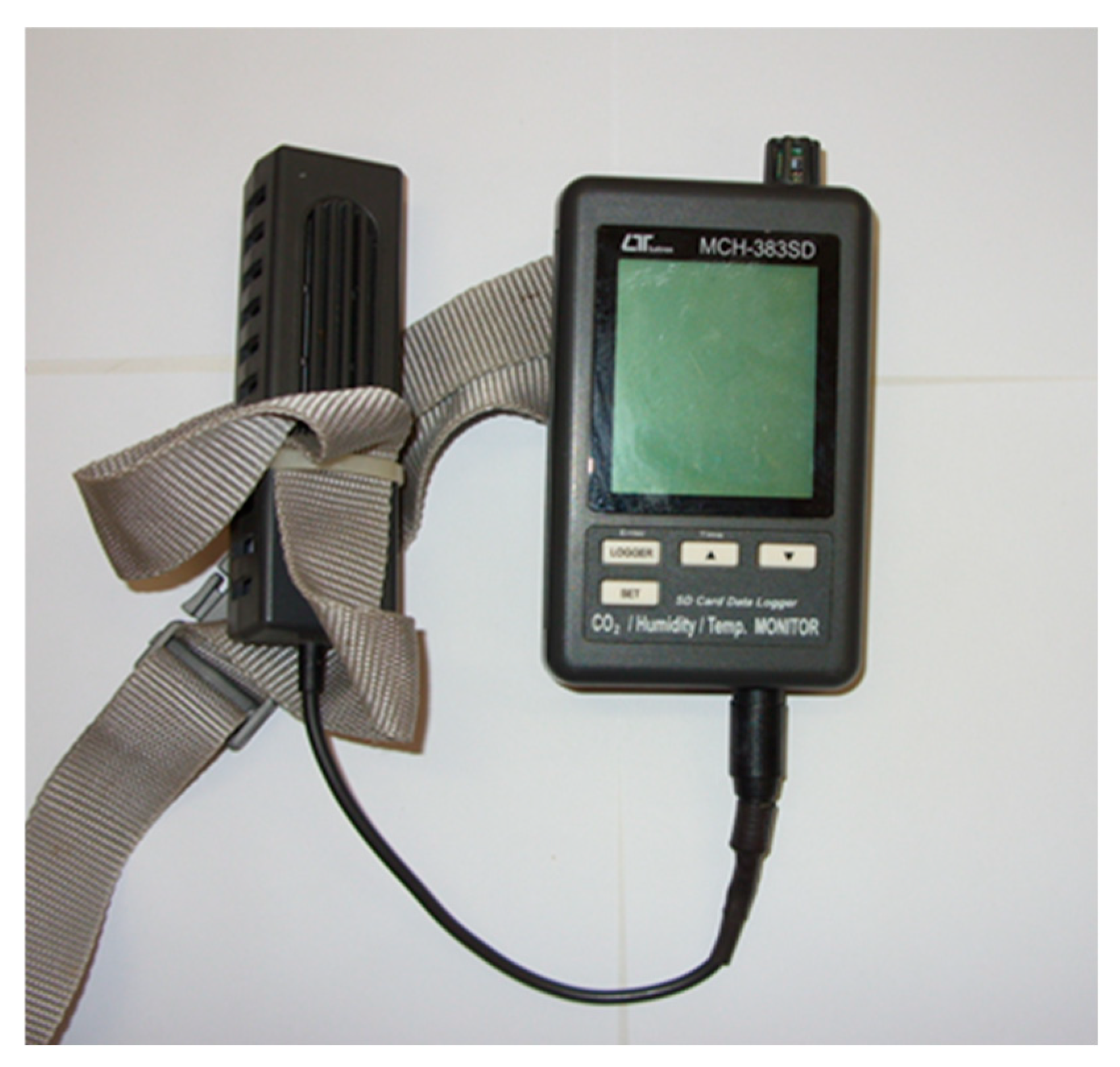
Figure 2.
Weather station Kestrel.

Figure 3.
LS mean values for air temperature in the milking parlor by season and milking sequence.

Figure 4.
LS mean values of the relative air humidity in the milking parlor by season and milking sequence.
Figure 4.
LS mean values of the relative air humidity in the milking parlor by season and milking sequence.
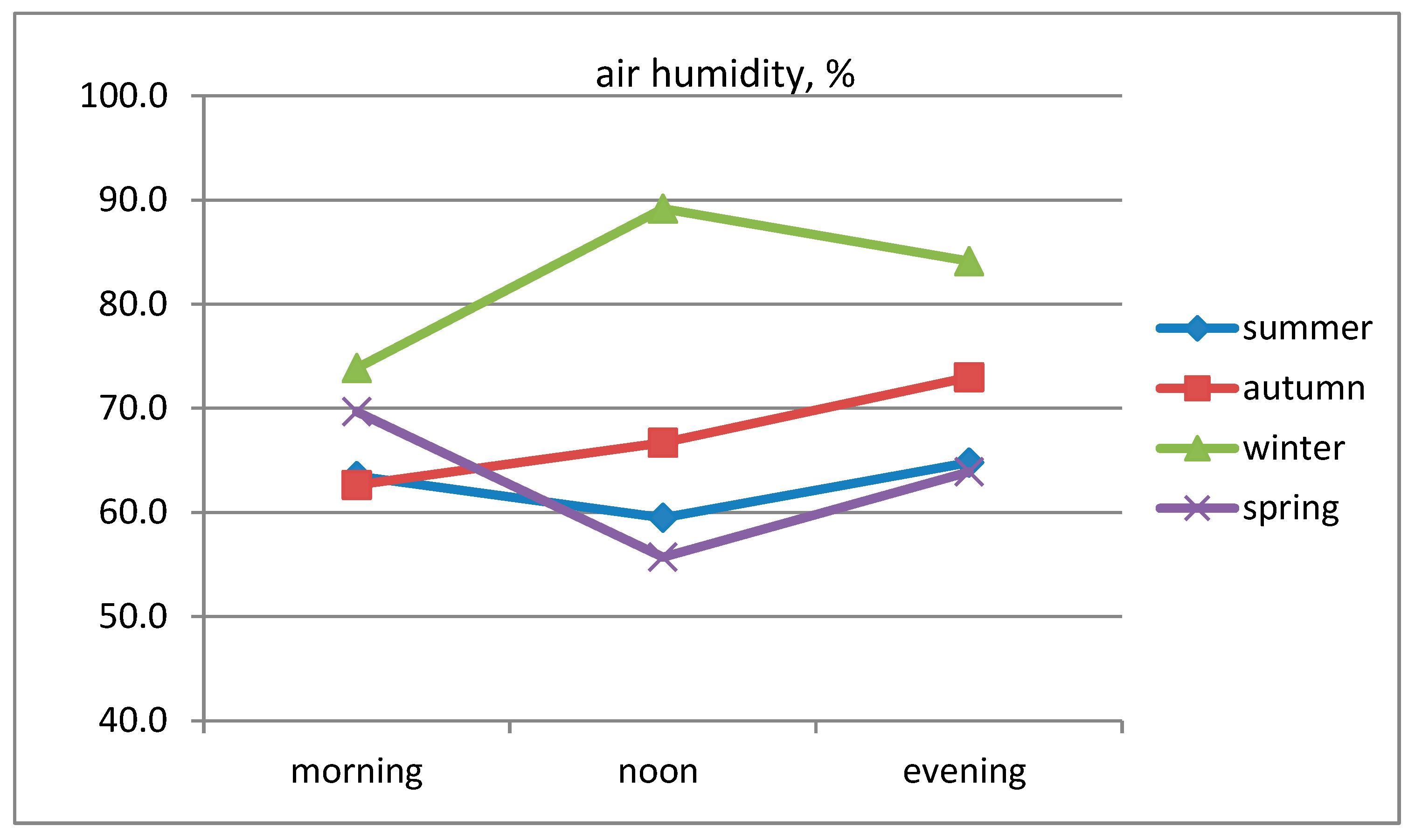
Figure 5.
LS mean THI values in the milking parlor by seasons (A, B, C, D).
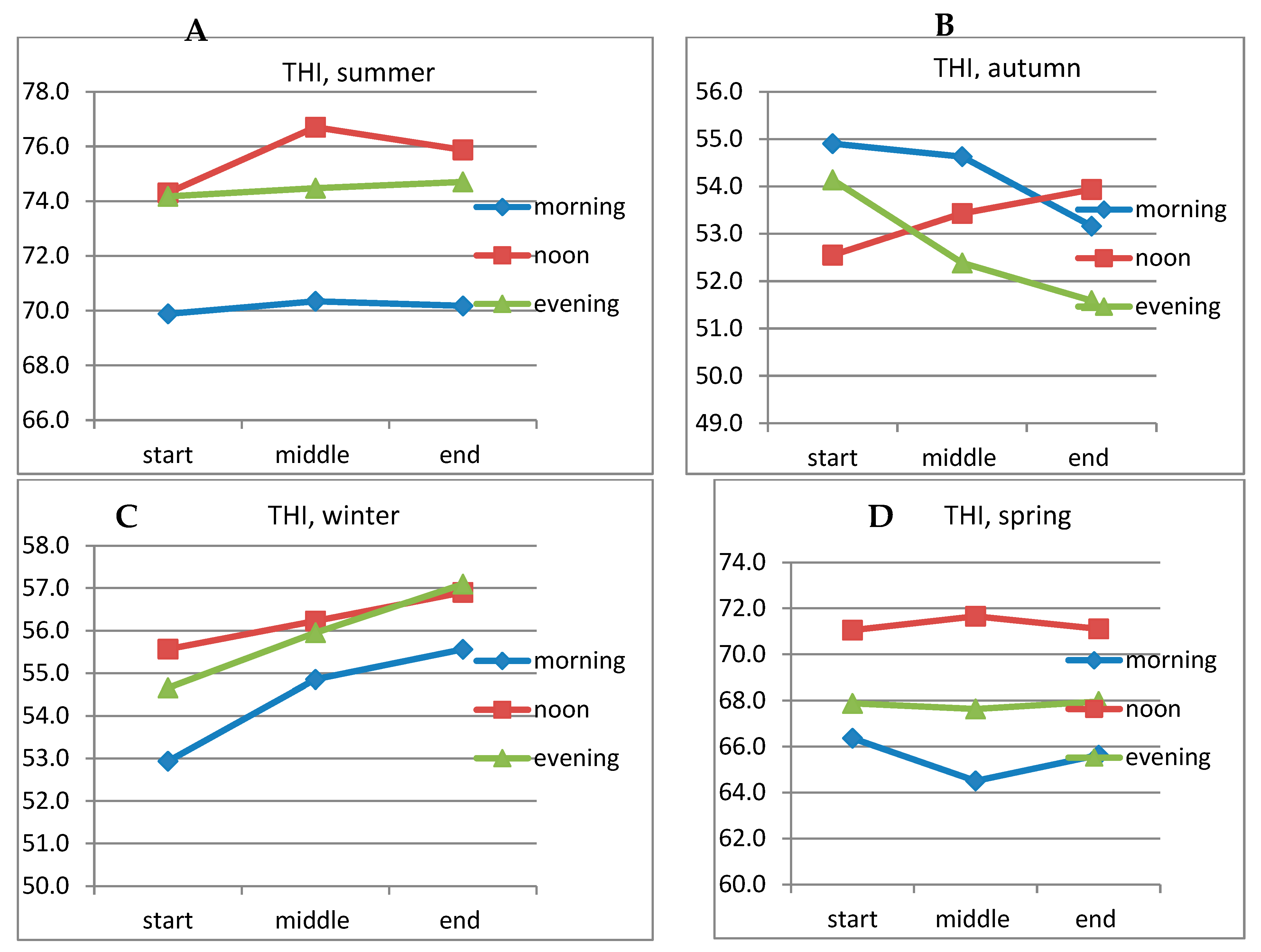

Table 1.
Average daily and maximum values of air temperature, relative humidity and THI by seasons in the milking parlor.
Table 1.
Average daily and maximum values of air temperature, relative humidity and THI by seasons in the milking parlor.
| Season | Number of observations (n) | Temperature, 0С | Humidity, % | THI | |||
| X ± Se | Max | X ± Se | Max | X ± Se | Max | ||
| Summer | 27 | 25.30±0.43 | 31.4 | 62.60±1.29 | 78.0 | 73.41±0.55 | 80.0 |
| Autumn | 18 | 11.37±0.53 | 14.4 | 67.46±2.97 | 85.5 | 53.19±0.88 | 57.92 |
| Winter | 9 | 12.90±0.29 | 13.9 | 82.39±2.32 | 89.8 | 55.53±0.42 | 57.09 |
| Spring | 21 | 21.90±0.95 | 31.4 | 62.51±1.90 | 87.8 | 68.49±1.29 | 78.06 |
Table 2.
Analysis of variance for influence of controlled factors on temperature, humidity and THI.
| Source of variation | Degrees of freedom (n – 1) | Temperature, 0С | Humidity, % | THI | |||
| MS | F P | MS | F P | MS | F P | ||
| Total for model | 7 | 403.79 | 31.27*** | 536.85 | 5.68*** | 827.92 | 32.68*** |
| Season | 3 | 887.90 | 68.78*** | 1047.4 | 11.08*** | 1854.5 | 73.21*** |
| Milking sequence | 2 | 71.21 | 5.52** | 246.3 | 2.60 - | 99.2 | 3.91* |
| Reporting during milking | 2 | 0.49 | 0.04 - | 54.5 | 0.58 - | 0.7 | 0.03- |
| Error | 79 | 12.91 | 94.6 | 25.3 | |||
Significans: * Р < 0,05; ** Р < 0,01; *** Р < 0,001.
Disclaimer/Publisher’s Note: The statements, opinions and data contained in all publications are solely those of the individual author(s) and contributor(s) and not of MDPI and/or the editor(s). MDPI and/or the editor(s) disclaim responsibility for any injury to people or property resulting from any ideas, methods, instructions or products referred to in the content. |
© 2024 by the authors. Licensee MDPI, Basel, Switzerland. This article is an open access article distributed under the terms and conditions of the Creative Commons Attribution (CC BY) license (http://creativecommons.org/licenses/by/4.0/).
Copyright: This open access article is published under a Creative Commons CC BY 4.0 license, which permit the free download, distribution, and reuse, provided that the author and preprint are cited in any reuse.


