

Submitted:
23 September 2024
Posted:
25 September 2024
You are already at the latest version
Abstract
This study examined the connection between teenage social skill development and social media use, with an emphasis on both male and female participants. Data were gathered from 101 teenagers using a snowball sampling technique in descriptive survey research. The purpose of the study was to investigate the relationship between social skill development and social media usage, as well as the frequency and intensity of social media use. The results showed that there was no statistically significant difference (ꭕ2 =1.983, p < .05, .01) in the amount of time male and female teenagers spent on social media. Furthermore, there were no statistically significant differences (t=1.29, p > α) in the impact of social media on the development of social skills between genders. Gender did not appear to be a significant impact (ꭕ2 =1.143, p > α) in the way social media affected the development of social skills, even though a higher number of females saw more significant advances in social skills, especially at higher levels of influence. The study also revealed a stronger correlation between increased social skill improvement and moderate social media use, especially in the "more than one hour" category. Excessive use, such as spending the entire day online, did not, however, considerably aid in the development of social skills. Overall, the results indicate that, when used moderately, social media can typically improve teenage social skills, with little variation in the effects observed between boys and females.
Keywords:
Adolescents
; Influence level
; School students
; Social media
; Social skills
1. Introduction
Social media, especially among teenagers, is constantly evolving, with young people often leading these changes. For the current generation, social media refers to platforms and apps that enable users to create, share, and engage with content, serving as virtual spaces for communication, networking, and self-expression. The widespread use of social media is a hallmark of the modern era, raising important questions about its influence on social interactions in today’s world. This research explores the impact of social media on intergroup dynamics within various social groups, communities, and movements, utilizing a qualitative approach to analyze data from different sources. The study’s findings reveal that social media has profoundly reshaped contemporary social interactions (Saini & Mir, 2023; Subramanian, 2017). These changes include enhanced global connectivity, shifts in how people construct their social identities, and the empowerment of social movements. However, these effects are not solely positive; they also pose challenges such as increased social isolation, unhealthy comparisons, and the spread of harmful information. Social skills are essential for success in society and effective communication, but they are not innate. Individuals must cultivate these abilities through practice to become socially adept and adaptable. Social media exerts a strong influence on students and young people, prompting them to reflect on aspects of human nature and potentially fostering tendencies toward greed and fanaticism. While it can be used for constructive purposes, it also poses risks to individuals’ values and ethics (Kusuma & Susantini, 2022). Social interaction, as Buarqoub (2019) defines, it involves the dynamic exchange of information, emotions, ideas, and actions among individuals or groups within a social context. It encompasses various ways people connect, from intimate exchanges with loved ones to broader interactions within communities and organizations.
In the digital age, social media has revolutionized the way businesses interact with their target audiences (Khanom, 2023). With billions of users on platforms like Facebook, Instagram, Twitter, LinkedIn, and YouTube, these channels have become indispensable for engaging customers and strengthening brand presence. From small startups to established corporations, effectively leveraging social media can significantly enhance online visibility, increase brand awareness, and drive growth. The broad reach of social media offers businesses access to vast audiences, providing opportunities for tailored content and targeted strategies. The advanced advertising tools on these platforms enable businesses to reach specific demographics and interests, enhancing engagement with the right audience. Regularly sharing valuable content and engaging directly with followers on social media helps build brand recognition and trust. These platforms provide a unique space to showcase a brand’s personality, values, and offerings, setting it apart from competitors. Engaging with customers through social media also fosters trust, allowing for real-time communication, addressing concerns, and gathering feedback, which strengthens customer relationships. Moreover, social media is an essential tool for maintaining personal and community connections, even across physical distances. Through blog posts, videos, images, and infographics, these platforms facilitate content sharing, driving website traffic and generating leads for businesses. Partnering with influencers within specific niches can further extend a brand’s reach and enhance credibility. Social media platforms offer businesses valuable insights into user behavior, engagement, and preferences through their built-in analytics tools. These insights allow for continuous improvement of social media strategies, refining content, and gaining a better understanding of target audiences. The viral nature of social media ensures that innovative ideas, compelling content, or unique campaigns can quickly gain traction and widespread exposure, boosting brand visibility.
In today’s digital world, a strong social media presence is not just advantageous but expected by consumers. Businesses that actively engage on these platforms gain a competitive edge over those that are less involved or entirely absent. To maximize the benefits of social media, businesses must adopt a strategic approach, taking into account their target audience, platform preferences, and specific goals. This ensures effective engagement with their audience, promotion of their brand, and achievement of business objectives. During the COVID-19 pandemic, social media saw a sharp increase in activity, with platforms experiencing a 50% surge in messaging, according to Facebook analytics. This spike was driven by people seeking to stay connected and entertained during lockdowns and social distancing. While social media became a vital means of maintaining relationships, there were concerns about over-reliance on virtual interactions in the absence of face-to-face communication. The pandemic also changed the way people, including celebrities, politicians, and professionals, used social media (Lelisho et al., 2023; Pöyry et al., 2022). These platforms became crucial for disseminating information, sharing humour, and offering distractions like internet memes during difficult times. However, prolonged social isolation negatively impacted mental health, leading to an increased demand for online counseling services through social media, providing a lifeline for those seeking mental health support. The pandemic also revealed the dangers of misinformation on social media, often referred to as an “infodemic.” Platforms like Twitter and YouTube provided direct access to vast amounts of content, making users susceptible to rumours and unreliable information, which in turn affected public behavior and hindered governmental efforts to manage the crisis. Social media is also heavily utilized by politicians, social movements, and health organizations to spread information quickly and reach large audiences. The pandemic underscored both the power and challenges of managing information flow in the digital age, emphasizing the critical role of online communication during global crises.
1.1. Review of Related Literature
Research suggests that excessive social media use negatively impacts students’ academic performance, with a striking huge percentage of young individuals acknowledging its significant influence on their social behavior (Rani, 2019). Increased digital and social media engagement among children has been linked to several negative outcomes, including higher rates of depression, anxiety, and cyberbullying. Spending too much time in front of screens, particularly before bedtime, disrupts sleep patterns and leads to behavioral issues. Additionally, activities such as sexting and prolonged screen exposure raise the risk of developing myopia (near-sightedness) in children. To reduce these risks, it is crucial for parents and caregivers to promote responsible digital habits and encourage a balanced approach to screen time and real-world activities (Spina et al., 2021). Gonzales and Hancock (2010) explains that online social interaction, often referred to as social networking, plays a pivotal role in the lives of young people, deeply influencing their self-esteem and overall well-being. Social media platforms provide a virtual space for youth to connect, communicate, and express themselves. While these platforms offer valuable opportunities for social engagement and self-expression, they also present challenges. Continuous exposure to carefully curated online personas can lead to social comparisons, where young people evaluate themselves against idealized standards, potentially harming their self-esteem. Numerous studies have found a strong correlation between increased screen time among adolescents and diminished well-being (Twenge & Campbell, 2019; Twenge et al., 2021), lower life satisfaction and happiness (Booker et al., 2015; Twenge et al., 2018), heightened feelings of loneliness (Kelly et al., 2018; Twenge et al., 2021), and increased depression (Kelly et al., 2018; Twenge & Campbell, 2018). Carraher et al. (2009) noted that social media platforms serve as effective channels for communicating brand values and attributes by promoting open dialogue. Furthermore, engaging with digital platforms can enhance the desire for competence by allowing individuals to explore personal interests. These interactions can develop various skills, such as fostering creativity through content creation (Rasheed et al., 2020). The widespread use of social media has fundamentally transformed social interactions in today’s society. This shift has brought about a variety of effects, including greater global connectivity, changes in how people define their social identities, and the rise of platforms for social activism. However, these impacts come with challenges, such as increased social isolation, unhealthy comparisons, and the spread of harmful content.
1.2. Rationale of the Study
The rationale for this study on the influence of social media on adolescent social skill development is rooted in its potential to enhance understanding of how these platforms shape young individuals’ interpersonal abilities. As Hansen et al. (2018) note, social media consists of online tools that facilitate communication among users, and during adolescence, a key developmental phase—these tools play a significant role in shaping how young people interact and communicate. Social media’s pervasive presence makes it essential to examine its impact on the formation of social skills, which are critical for future relationships and interactions. This study addresses a timely issue, offering valuable insights into both the risks and benefits of social media use. These insights can inform the creation of guidelines and educational programs that promote responsible usage. By equipping adolescents with a deeper understanding of how their online behavior affects their offline social skills, the study empowers them to make informed choices and develop digital literacy. It also contributes to the academic field by expanding research on the relationship between social media and adolescent development, uncovering patterns that may guide future studies. Moreover, schools and communities can use the findings to design strategies that encourage positive social behaviors in the context of a digitally dominated world. Ultimately, the study holds the potential to inform policies, interventions, and educational practices that support adolescents in navigating social media’s challenges while fostering healthy social skills.
1.3. Statement of the Problem
We conducted a thorough review of numerous articles to identify the underlying issues, challenges, and potential solutions related to the impact of social media on the social skills of teenagers. The study, titled “An Investigation into the Influence of Social Media on the Development of Social Skills Among Adolescents,” aims to examine how patterns of social media usage, exposure to content, and online interactions contribute to the formation of social skills in young individuals. By addressing this gap in current research, the study seeks to offer valuable insights into the connection between social media use and adolescent social development. Ultimately, this research intends to contribute to the development of informed strategies that promote healthy social growth in the digital age.
1.4. Objectives of the Study
1. To examine the frequency and intensity of social media usage among adolescents.
2. To assess the impact of social media on the development of social skills in male and female adolescents.
3. To explore the relationship between the amount of time spent on social media and the level of social skills among adolescents.
1.5. Research Questions
1. How does the amount of time spend on social media correlate with the development of social skills in adolescents?
2. What specific social skills (e.g., communication, empathy) are influenced by social media usage among adolescents?
3. What are the positive and negative effects of social media on the development of social skills in adolescents?
1.6. Hypotheses
1. There will be a significant difference in the frequency of social media usage between male and female adolescents.
2. There will be a significant difference between male and female adolescents in how social media influences the development of their social skills.
3. The amount of time spent on social media will have a positive effect on the overall development of social skills among adolescents.
2. Methodology
2.1. Research Design
A research design serves as the blueprint for how a study is conducted, guiding researchers in selecting appropriate methods and techniques. It provides a structured and systematic approach, ensuring that the study yields valid, reliable, and meaningful results. For the present study on the “Influence of social media on the development of social skills among adolescents,” a Descriptive Survey Research method was chosen. This approach is particularly effective for gaining a comprehensive understanding of a specific population by identifying key attributes through online surveys. It is both time-efficient and highly engaging for the participants central to the research. The Descriptive Survey method allowed the researchers to explore the subject in depth, offering valuable insights for further study (Creswell & Clark, 2017; Sutton & Austin, 2015). Data collected through the surveys was analyzed statistically to generate meaningful conclusions. The sampling method used was Snowball sampling (Kirchherr & Charles, 2018), incorporating both exponential non-discriminative and exponential discriminative strategies to ensure broad and relevant data collection. This study employed quantitative research methods to analyze the impact of social media on adolescents. Techniques such as online surveys and questionnaires were utilized to gather precise data on the influence of social media on the development of social skills in adolescents. These quantitative methods enabled the collection of data that could be statistically analyzed, providing a robust foundation for drawing insightful research conclusions.
2.2. Tools Used in the Study
To collect primary quantitative data, a self-administered questionnaire was employed, distributed through an online survey using Google Forms. Prior to participation, all students provided full consent for the online survey. Only those who completed the questionnaire during the data collection phase were included in the study. The questionnaire comprised 18 closed-ended statements. The 18 closed-ended items were constructed using a Likert five-point psychometric scale ranging from Strongly Agree to Strongly Disagree (Dykema et al., 2022; Tanujaya et al., 2022). The questionnaire was shared via Google Forms and distributed to the student population through email and WhatsApp. The responses were then subjected to statistical analysis to draw meaningful conclusions from the data. The total possible score for each individual ranged from a minimum of 18 to a maximum of 90. To ensure the questionnaire’s reliability, its items were standardized through content and face validity assessments, conducted by a panel of five experts, including the supervisor, all of whom were specialists in the relevant field.
2.3. Sample
The study’s participants consisted of 101 adolescents aged 12 to 19. This age range was chosen to capture a broad spectrum of developmental stages during adolescence. The sample was selected to represent various social media usage patterns and their effects on social skills. By including participants across this age range, the research aimed to obtain a comprehensive understanding of how social media influences the social skills development of teenagers at different stages of adolescence. This diverse sample provides a robust basis for analyzing trends and patterns in social media usage and its impact on social skills among young individuals.
2.4. Statistical Techniques
The data collected from the adolescents were analyzed using several statistical techniques. Frequencies and percentages were calculated to summarize the distribution and proportion of responses. Additionally, t-test and Chi-square test were employed to compare the means between and among different groups, (Mishra et al., 2021; Rana & Singhal, 2015) helping to determine if there were significant differences in social media usage and its impact on social skills. These statistical methods provided a clear and detailed understanding of the data, allowing for robust conclusions about the relationship between social media usage and the development of social skills among adolescents.
2.5. Delimitation of the Study
The study had several defined limitations. It focused on a sample of 101 students aged 12 to 19, all enrolled in schools within West Bengal, specifically in the Kolkata region. The research was conducted over a maximum period of six months. The geographical scope was restricted to Kolkata, West Bengal, India and the study concentrated solely on examining how social media affects the development of social skills among adolescents. Other potential factors that might influence social skills were not included in this study. These boundaries outline the specific context and scope of the research, highlighting the targeted population and timeframe.
3. Results
3.1. Hypothesis 1
To test hypothesis 1, gender-wise frequencies of social media usage duration were calculated, categorized and finally analyzed using the Chi-square test. The table includes the observed frequency (f₀), expected frequency (fe), the difference between observed and expected frequencies (f₀ - fe), the square of the difference (f₀ - fe)², the ratio of the squared difference to the expected frequency (f₀ - fe)² / fe, degrees of freedom (df), the Chi-square value (ꭕ²), and the p-value. These statistical measures highlight the gender-based variations in social media usage patterns.
The Table 1 summarizes the gender-wise frequency distribution of social media usage among adolescents, categorized by the duration of use, and analyzed using the Chi-square test. For male adolescents, the observed frequency (f₀) of using social media for one hour is 17, while the expected frequency (fe) is 14.43, yielding a contribution of 0.46 to the Chi-square value. For those using social media for more than one hour, the observed and expected frequencies are 24 and 26.99, respectively, contributing 0.33 to the overall Chi-square statistic. In the “whole day” category, the observed frequency is 4, closely matching the expected frequency of 4.19, with a negligible contribution of 0.01. For males who do not use social media frequently, the observed frequency is 2, slightly above the expected 1.40, contributing 0.26. Similarly, for female adolescents, 14 participants reported using social media for one hour, with an expected frequency of 16.57, contributing 0.40 to the Chi-square statistic. For those using social media for more than one hour, the observed and expected frequencies are 34 and 31.01, respectively, contributing 0.29. In the “whole day” category, the observed frequency is 5, compared to the expected 4.81, with a negligible contribution of 0.01. Finally, for females who do not use social media frequently, the observed frequency is 1 against an expected 1.60, contributing 0.23. The total computed Chi-square value (ꭕ²) is 1.983 which is much lower than the both the critical values 7.81, 11.34 at .05 and .01 level of significance with 3 degrees of freedom (df), yielding a p-value of .576, which is not statistically significant at p < .05. This suggests that there is no significant difference in the frequency of social media usage between male and female adolescents based on the duration of use.
There could be other reasons for the Chi-square result, which shows that there is no significant difference in the amount of time that male and female adolescents spend on social media (Booker et al., 2018; Twenge & Martin, 2020). Firstly, there’s a chance that in recent years, social media usage habits have become more gender-neutral, with teenage boys and girls using online platforms in comparable ways. Traditional gender divides may also become less clear due to social media’s growing accessibility and integration into daily life, particularly for communication, entertainment, and academic purposes. More notable differences might not have been seen if the sample size or category distribution had been larger or more diversified. Finally, there may be less discernible variations in the frequency and length of social media use due to shifting cultural or societal norms that influence gender-specific behaviors around technology usage.
Figure 1 shows two important locations on the graph, with a distribution that is skewed to the right. The null hypothesis is accepted within the range of χ² values indicated by the green area. On the other hand, the red region represents the crucial value (α), above which the null hypothesis is deemed invalid.
3.2. Hypothesis 2
To tabulate data on the influence of social media on the development of social skills among male and female adolescents, their social skills scores were considered. A t-test was used to calculate the significant difference between the two groups. The table presents the Mean (M), Standard Deviation (SD), Standard Error of the Mean (SEM), Number of Adolescents (N), Standard Error of the Difference (SED), Degrees of Freedom (df), and the t and p values for the gain scores of male and female adolescents.
Table 2 presents the analysis of the significant differences between male and female adolescents regarding the influence of social media on the development of their social skills. The mean social skills score for male adolescents (M1) is 55.26, with a sample size (N1) of 47, a standard deviation (SD1) of 14.24, and a standard error of the mean (SEM1) of 2.08. For female adolescents, the mean score (M2) is 58.59, with a sample size (N2) of 54, a standard deviation (SD2) of 11.80, and a standard error of the mean (SEM2) of 1.61. With a total sample size of 101 and 99 degrees of freedom (df), the calculated t-value is 1.29, which is lower than the critical values 1.98 and 2.63 (1.29 < 1.98, 2.63) at .05 and .01 level of significance and the p-value is .2008. Since the p-value is greater than .05, it indicates that there is no statistically significant difference between male and female adolescents in how social media influences the development of their social skills. Therefore, the influence of social media on social skills development appears to be similar for both genders.
A number of factors could explain the lack of relevance, including the potential that the development of social skills is similar for both male and female adolescents due to similar online surroundings or similar ways of using social media (Fabris et al., 2023; Rashid et al., 2021). Furthermore, it’s possible that the sample sizes (47 men and 54 women) were insufficient to pick up on minute variations. As a result, the evidence suggests that social media has a similar impact on the development of social skills in both genders, with no discernible gender difference.
Figure 2 illustrates that the t-distribution, which resembles the normal distribution but has heavier tails, is symmetric and bell-shaped. The acceptance region, denoted by the green area in the middle of the distribution, is where the null hypothesis is not rejected. Comparably, the critical regions are represented by the red areas, which are found at both distribution tails and usually correlate to a significant level (α).
Table 3 illustrates the influence of social media on the development of social skills among adolescents, with data separated by gender (male and female) and categorized into three levels: high, moderate, and low. The table provides a detailed breakdown of frequency, gain scores, and the percentage of gain scores for both males and females, followed by the total percentage of gain scores. At the high influence level, which encompasses a score range of 61-90, there are 18 males and 25 females reporting substantial social skill development through social media. Their corresponding gain scores are1270 for males and 1640 for females, representing 13.97% and 18.04% of the total gain scores, respectively. When combined, this accounts for 32.01% of the overall gain scores, highlighting that a significant proportion of both males and females experience notable improvement in their social skills from social media engagement. In the moderate influence category (scores between 31-60), 23 males and 25 females show moderate development of social skills. The male and female gain scores in this group are 1208 and 1354, accounting for 13.29% and 14.90% of the total gain scores, respectively. Together, moderate influence constituted 28.19% of the total percentage of gain scores, indicating that a considerable number of adolescents receive social skill benefits from social media, but to a lesser degree compared to those in the high influence group. The low influence group, with scores under 30, comprised 6 males and 4 females. Their gain scores are 174 for males and 117 for females, contributing to only 1.91% and 1.29% of the total gain scores, respectively. This low-influence category made up just 3.2% of the total percentage, suggesting that only a small fraction of adolescents gain minimal social skills from social media interaction.
Overall, the data show that social media positively influences the social skills of adolescents, with a notable difference between high, moderate, and low influence levels across genders. A larger proportion of females seem to experience greater gains compared to males, particularly at the high influence level. A number of factors can be ascribed to the observed results, which show that social media has a good impact on teenagers’ social skills—with females seeing bigger benefits. Women tend to interact more on social media, which could improve their emotional intelligence and communication abilities (Drigas et al., 2023). This could be one factor. In addition, they may be able to enhance their social competences by using social media platforms to establish and preserve relationships more skilfully. Additionally, compared to men, who might participate in more competitive or less socially engaging online activities, women are typically more inclined toward collaborative and helpful online contacts, which might foster superior social skill development (Reigstad, 2021; Shanmugasundaram & Tamilarasu, 2023). Moreover, because men and women socialize differently, women may gain more from social media’s interactive and supportive features while men may place less of a focus on developing their social skills through online activities. The higher percentage of gain scores among females in the high influence category can be attributed to these factors taken together.
Figure 3 showing the influence of social media on the development of social skills in male and female adolescents.
The Table 4 presents the chi-square analysis to compare the influence of social media on the development of social skills among male and female adolescents. A chi-square test is performed to examine the relationship between gender and the level of social skills development (high, moderate, low) influenced by social media. The observed (f₀) and expected (fₑ) frequencies are compared across these categories for both genders. For males, 18 are categorized as having high social skills development, 23 as moderate, and 6 as low. For females, 25 have high, 25 moderate, and 4 low social skills development. The computed chi-square (ꭕ²) statistic is 1.143 which is much lower than the both the critical values 5.99 and 9.21 at .05 and .01 level of significance with 2 degrees of freedom, hence, it falls within the region of acceptance, meaning there is no statistically significant difference between males and females regarding the influence of social media on the development of social skills, p = .565 which is greater than the threshold significance levels of .05 and .01 (p < .05, and .01). This indicates that gender does not significantly impact how social media influences the development of social skills in adolescents. Since the p-value is greater than the alpha level (α = .05), the null hypothesis (H₀) is accepted, implying that the observed differences between males and females in social skills development are likely due to random chance rather than a systematic influence of social media. The result suggests that both male and female adolescents are similarly affected by social media in terms of their social skills development, and there is no evidence of gender-based differences in this regard (Keles et al., 2020; Senekal et al., 2023). Therefore, interventions aimed at improving social skills via social media should target adolescents as a whole, rather than focusing on gender-specific strategies.
The distribution shown in Figure 4 is a positively skewed Chi-Square (χ²) distribution. Acceptance of the null hypothesis is indicated by the range of χ² values indicated by the green area under the curve. The null hypothesis is rejected if the estimated χ² value falls within the crucial region (α), which is represented by the little red area on the right. When the vertical green line indicates the calculated χ² value in a given test and it falls inside the acceptance region, it usually indicates that the observed differences are statistically significant and the null hypothesis would not be rejected for that test.
3.3. Hypothesis 3
The amount of time spent on social media positively improve the level of overall social skills among adolescents.
The image in the Figure 5 presents a line graph showing the percentage of gain scores related to time invested on social media. It compares two groups, likely male and female adolescents, in terms of time spent on social media and its effect on their gain scores (possibly related to social skills or another measured variable). The x-axis represents “Time Invested on Social Media” with categories: “One hour,” “More than one hour,” “Whole day,” and “Not frequently.” The y-axis shows the “Percentage of Gain Scores.”
The data presented in Table 5 and Figure 5 examine the relationship between time spent on social media, usage frequency, and the gain scores in social skills for both male and female participants. Of the participants who use social media for one hour, 17 males and 14 females report gain scores of 885 and 738, respectively. This translates to 9.73% for males and 8.12% for females, with a total gain score percentage of 17.85%. Of the participants who use social media for more than an hour, there is a higher representation: 24 males and 34 females report gain scores of 1,418 and 1,998, respectively. This yields percentages of 15.60% for males and 21.98% for females, or 37.58% of the total. Conversely, just 4 males and 5 females make up the group of individuals that use social media nonstop throughout the day, with gain scores of 256 and 317, respectively, and percentages of 2.82% and 3.49% for men and women, for a total of 6.31%. Just two males and one female make up the group of people who do not use social media regularly; their gain scores are 93 and 58, respectively, meaning that the overall percentage for males and females who do not use social media frequently is 1.66%. The distribution as a whole suggests that women spend more time than men on social media, and that higher time investments especially in the “more than one hour” category—are linked to higher social skill gain scores (Keles et al., 2020; Krasnova et al., 2017; Vermeren, 2015). On the other hand, prolonged use, such as using it all day—does not considerably advance the acquisition of skills. The results indicate a moderate correlation between social skill improvement and moderate social media use, particularly when consumption is balanced rather than excessive.
3.4. Major Findings
- There was no significant difference in the amount of time spent on social media between male and female adolescents when considering the duration of usage. The impact of social media on the development of social skills was also found to be similar for both genders, with no statistically significant variation observed. This suggested that social media influenced the social skills of both male and female adolescents in comparable ways.
- Social media had a generally positive effect on adolescents’ social skills, though the degree of influence categorized as high, moderate, or low varied between genders. A larger percentage of females experienced more substantial social skill gains than males, particularly at higher levels of influence. However, this difference was not statistically significant, indicating that gender did not play a key role in how social media affected social skill development.
- The overall data trends suggested that females tend to spend more time on social media than males, and moderate use particularly in the “more than one hour” range correlates with higher social skill improvement. On the other hand, extensive usage, such as being on social media all day, did not appear to contribute much to social skill acquisition. The findings point to a moderate link between social media used and improved social skills, especially when the usage was balanced and not excessive.
4. Discussion
Social media now plays a major role in the everyday lives of teenagers, influencing their social skills development, communication, and interaction (Bozzola et al., 2022). The impact of social media use on the social skills of teenagers, both male and female, was examined in this study. It covered the subtleties of online time, the effect it was thought to have on social skills, and prospective gender variations in these domains. As could be seen from the data, there were some trends regarding how differently genders used social media and how that usage affects the development of social skills, but these differences were not statistically significant, indicating that social media had an equal impact on the social skills of adolescents regardless of gender (Ciacchini et al., 2023). The investigation made clear in this study that there was no apparent difference in the amount of time that male and female teenagers spend on social media. This was one of the main findings. Despite the widespread belief that women used social media more than men did because of societal and cultural norms surrounding communicating and forming relationships, research indicated that teenagers of both genders spent similar amounts of time on social media (Caddel, 2018; Karatsoli & Nathanail, 2020). Thus, an equal amount of time had been spent utilizing social media by male and female teenagers, as evidenced by the lack of a discernible difference in usage patterns between the sexes. This suggested that teens interacted with one another on social media regardless of gender, challenging certain prevalent assumptions. What’s more, this equality of time spent on social media implies that other factors, such the type of interactions, platform preferences, and individual usage patterns, were more likely to be responsible for any variations in outcomes, like the development of social skills, rather than time spent on social media (Huang, 2017; Riehm et al., 2019). Consequently, one imperative conclusion drawn from the research was that social media, regardless of gender, generally had a favourable effect on teenagers’ social skill development. This was an insightful discovery that challenged some of the myths around social media, especially the one that claimed it undermined interpersonal interactions (Hall & Liu, 2022; Shabbir et al., 2021). Rather, the information suggested that social media served as a communication enabler, enabling teenagers to hold discussions, uphold connections, and acquired a variety of social skills in a digital setting. Meanwhile, social networking platforms gave teenagers the chance to practice three crucial social skills: empathy, teamwork, and conflict resolution. They additionally enable users to engage with a wider range of individuals than they could come into contact with in their offline life, which could expand their social circles and improved their capacity to handle a variety of social circumstances. Even though the study discovered that social media had a similar good impact on social skills for both genders, the impact’s intensity did differ. Significant improvements in social skills were seen in a greater percentage of female adolescents, especially at higher levels of influence (Bala et al., 2019; Salavera et al., 2020). This could be a reflection of the kinds of social connections that women have on the platforms. According to research, women might use social media more regularly to communicate in more relational ways, keep close friendships, and offer emotional support—all of which might help women acquire social skills at a higher rate (Li & Zhuo, 2023). Significantly, though, the difference in the degree of social skill gain between males and females was not statistically significant. According to this, gender might not have a significant influence on how social media affects the development of social skills, even though there might be minor disparities between how social media affected men and women. Social media benefited people of both genders in similar ways, highlighting the fact that social media gave teenagers in general a wide platform to improve their social skills (Bozzola et al., 2022; Sumadevi, 2023).
The correlation between social skill development and social media usage habits was another noteworthy result from the data. According to the data, moderated social media use, that was, using it for “more than one hour” a day was linked to improved social skill development. According to this correlation, there was a sweet spot for teenage social media used where they could get the advantages of online connections without running the risk of addiction. Through direct messaging, group conversations, or public posts, teens who used social media responsibly appeared to have many opportunities to hone and improve their social skills. The adolescent’s ability to sustain real-world contacts and obligations was not overburdened by this moderate usage, which permitted meaningful social involvement. Teenagers who moderately used social media were also probably better able to manage their online and offline lives and bring the social skills they acquired there to in-person interactions. In contrast, it did not seem that heavy social media use, such as staying online all day, contributes significantly to the development of social skills. This finding was consistent with earlier studies on the harmful impacts of excessive screen time, which had linked extended usage of digital devices to unfavourable outcomes like decreased in-person communication, social isolation, and even anxiety (Domingues, 2017; Muppalla et al., 2023). Even if social media offered beneficial avenues for social connection, an over dependence on these platforms could impede the growth of more complex, subtle social skills, which were often developed through face-to-face interactions. Overall data trends indicated that women used social media slightly more frequently than men did. This was consistent with other research suggesting that women were more likely to use social media for social networking, and men were more likely to use it for pleasure, like gaming or content consumption (Noguti et al., 2018; Wadsley et al., 2022). Nonetheless, the disparity in the amount of time spent on the internet was insignificant enough to yield a statistically significant effect on the social skill development results. It’s crucial to keep in mind that different genders might utilize different social media sites, which could have an impact on how well people engage with one another. Similarly, males might favour platforms that focused gaming or content creation, like YouTube or Twitch, while females might go toward platforms that highlighted communication and connection, like Instagram, Snapchat, or WhatsApp (Cabeza-Ramírez et al., 2020; Park et al., 2023). These platform choices might have a subtle impact on the social skills that were learned. However, the study indicated that the overall impact on social skills was consistent for both genders, even with these possible variations in platform usage.
5. Conclusion
The study that looks at how social media affects teenagers’ social skill development provides important new information about how digital platforms affect young people’s social development. A primary conclusion drawn from the research is that the duration of time spent on social media significantly influences its consequences. Since moderate usage gives teenagers the chance to interact meaningfully with their peers, especially in the “more than one hour” range, it is linked to more significant improvements in social skills. Effective social interactions need the development of critical communication skills including empathy, active listening, and conflict resolution, all of which are facilitated by this participation (Avitasari at al., 2023). But the study also emphasizes how excessive use of social media has diminishing returns. Teenagers who overindulge in social media—many hours or more every day—do not reap the same advantages in terms of social skills. This implies that even though social media provides avenues for social contact, excessive usage of the platform might have unfavourable effects, such as social isolation or an excessive dependence on virtual communication, which can impede the growth of interpersonal skills in person (Chen et al., 2022; Pantic, 2014). Thus, the results underscore the need of engaging in social media in a balanced and thoughtful manner. This finding has significant educational ramifications for educators as well as parents. The study’s conclusions can be used by educators to launch lectures on digital literacy, social media etiquette, and the value of striking a balance between online and offline contacts. Through cultivating a more profound comprehension of the influence social media has on social skills, educators may furnish pupils with the necessary resources to maneuverer through the digital landscape while preserving and advancing vital interpersonal competencies. However, parents indeed can also gain from knowing how social media affects their kids’ social growth (Procentese et al., 2019). According to the report, parents should set clear expectations for their kids’ social media use and have candid conversations with them about their experiences there. Adolescents’ general social skill development can be further supported by encouraging them to engage in offline activities like sports, hobbies, or in-person contacts with friends and family. The study also emphasizes the necessity of focused interventions given teenagers’ differing degrees of social media influence. When it comes to adolescents who use social media to display low or moderate levels of social skill development, parents and educators should collaborate to encourage responsible online behavior, improve digital literacy, and educate teenagers to think critically about how they use digital platforms (Agnihotri, 2024). Adolescents who are more heavily exposed to social media may benefit greatly from customized programs that cover online relationships, stress management, and privacy. The study’s result emphasizes how intricate social media’s influence on teenage growth is. It provides worthwhile chances for the development of social skills, but it also brings difficulties that need to be handled with caution. Teachers, parents, and legislators need to work together to make sure that teenagers use social media in a balanced, healthful manner that promotes their general social development. We can assist teenagers in maximizing the benefits of social media while minimizing any potential negative effects by encouraging responsible and thoughtful use of digital platforms.
References
- Agnihotri, A. (2024, May 27). Parenting guide: 10 effective strategies for parents to foster digital literacy in adolescents. Hindustan Times. https://www.hindustantimes.com/lifestyle/relationships/parenting-guide.
- Avitasari, I., Seneru, W., Sumarwan, E., & Wibawa, R. (2023). The Influence of Communication Skills toward Social Interaction Students in Buddhist College. Journal of Communication, Religious, and Social Sciences, 1(1), 1-12. [CrossRef]
- Bala, R., Sangwan, S., & Rani, P. (2019). Significance of Social Skills among Adolescents. International Journal of Current Microbiology and Applied Sciences, 8(3), 2470-2474. [CrossRef]
- Booker, C. L., Kelly, Y. J., & Sacker, A. (2018). Gender differences in the associations between age trends of social media interaction and well-being among 10-15 year olds in the UK. BMC public health, 18, 1-12. [CrossRef]
- Booker, C. L., Skew, A. J., Kelly, Y. J., & Sacker, A. (2015). Media use, sports participation, and well-being in adolescence: cross -sectional findings from the UK household longitudinal study. American journal of public health, 105(1), 173-179.
- Bozzola, E., Spina, G., Agostiniani, R., Barni, S., Russo, R., Scarpato, E.,... & Staiano, A. (2022). The use of social media in children and adolescents: Scoping review on the potential risks. International journal of environmental research and public health, 19(16), 9960. [CrossRef]
- Buarqoub, I.A.S. (2019). Language barriers to effective communication. Utopíay Praxis Latinoamericana, 24(6), 64–77.
- Cabeza-Ramírez, L. J., Sánchez-Cañizares, S. M., & Fuentes-García, F. J. (2020). Motivations for the use of video game streaming platforms: The moderating effect of sex, age and self-perception of level as a player. International journal of environmental research and public health, 17(19), 7019. [CrossRef]
- Caddel, M. J. (2018). The effects of social media on body image constructs among active women [Doctoral dissertation, California Southern University].
- Carraher, D. W., & Schliemann, A. D. (2018). Cultivating Early Algebraic Reasoning. In C. Kieran (Ed.), Teaching and learning algebraic thinking with 5- 12- year-olds. The Global Evolution of an Emerging Field of Research and Practice, 107-138.
- Chen, E., Wood, D., & Ysseldyk, R. (2022). Online social networking and mental health among older adults: a scoping review. Canadian Journal on Aging/La Revue Canadienne Du Vieillissement, 41(1), 26-39. [CrossRef]
- Ciacchini, R., Orrù, G., Cucurnia, E., Sabbatini, S., Scafuto, F., Lazzarelli, A.,... & Conversano, C. (2023). Social Media in Adolescents: a retrospective correlational study on addiction. Children, 10(2), 278. [CrossRef]
- Creswell, J. W., & Clark, V. L. P. (2017). Designing and Conducting Mixed Methods Research. Thousand Oaks, CA: Sage Publications.
- Domingues, M. S. (2017). Clinical and psychological effects of excessive screen time on children. Journal of paediatrics and child health, 53(4), 333-338. [CrossRef]
- Drigas, A., Papoutsi, C., & Skianis, C. (2023). Being an Emotionally Intelligent Leader through the Nine-Layer Model of Emotional Intelligence—The Supporting Role of New Technologies. Sustainability, 15(10), 8103. [CrossRef]
- Dykema, J., Schaeffer, N. C., Garbarski, D., Assad, N., & Blixt, S. (2022). Towards a reconsideration of the use of agree-disagree questions in measuring subjective evaluations. Research in Social and Administrative Pharmacy, 18(2), 2335-2344. [CrossRef]
- Fabris, M. A., Settanni, M., Longobardi, C., & Marengo, D. (2023). Sense of Belonging at School and on social media in Adolescence: Associations with Educational Achievement and Psychosocial Maladjustment. Child Psychiatry & Human Development, 1-14. [CrossRef]
- Gonzales, A. L., & Hancock, J. T. (2011). Mirror, mirror on my Facebook wall: Effects of exposure to Facebook on self-esteem. Cyberpsychology, behavior, and social networking, 14(1-2), 79-83.
- Hall, J. A., & Liu, D. (2022). Social media use, social displacement, and well-being. Current Opinion in Psychology, 46, 101339. [CrossRef]
- Hansen, N., Kupfer, A. K., & Hennig-Thurau, T. (2018). Brand crises in the digital age: The short-and long-term effects of social media firestorms on consumers and brands. International Journal of Research in Marketing, 35(4), 557-574. [CrossRef]
- Huang, C. (2017). Time spent on social network sites and psychological well-being: A meta-analysis. Cyberpsychology, Behavior, and Social Networking, 20(6), 346-354.
- Karatsoli, M., & Nathanail, E. (2020). Examining gender differences of social media use for activity planning and travel choices. European Transport Research Review, 12(44), 1-9. [CrossRef]
- Keles, B., McCrae, N., & Grealish, A. (2020). A systematic review: the influence of social media on depression, anxiety and psychological distress in adolescents. International journal of adolescence and youth, 25(1), 79-93. [CrossRef]
- Kelly, Y., Zilanawala, A., Booker, C., & Sacker, A. (2018). Social media use and adolescent mental health: Findings from the UK Millennium Cohort Study. E Clinical Medicine, 6, 59-68.
- Khanom, M. T. (2023). Using social media marketing in the digital era: A necessity or a choice. International Journal of Research in Business and Social Science (2147-4478), 12(3), 88-98. [CrossRef]
- Kirchherr, J., & Charles, K. (2018). Enhancing the sample diversity of snowball samples: Recommendations from a research project on anti-dam movements in Southeast Asia. PloS one, 13(8), e0201710. [CrossRef]
- Krasnova, H., Veltri, N. F., Eling, N., & Buxmann, P. (2017). Why men and women continue to use social networking sites: The role of gender differences. The Journal of Strategic Information Systems, 26(4), 261-284. [CrossRef]
- Kusuma, A. E., & Susantini, E. (2022). The Effect of Rode Learning Model on Enhancing Students Communication Skills. Studies in Learning and Teaching, 3(3), 132-140.
- Lelisho, M. E., Pandey, D., Alemu, B. D., Pandey, B. K., & Tareke, S. A. (2023). The negative impact of social media during COVID-19 pandemic. Trends in Psychology, 31(1), 123-142. [CrossRef]
- Li, P., & Zhuo, Q. (2023). Emotional straying: Flux and management of women’s emotions in social media. Plos one, 18(12), e0295835. [CrossRef]
- Mishra, P., Singh, U., Pandey, C. M., Mishra, P., & Pandey, G. (2019). Application of student’s t-test, analysis of variance, and covariance. Annals of cardiac anaesthesia, 22(4), 407-411. [CrossRef]
- Muppalla, S. K., Vuppalapati, S., Pulliahgaru, A. R., & Sreenivasulu, H. (2023). Effects of excessive screen time on child development: an updated review and strategies for management. Cureus, 15(6). [CrossRef]
- Noguti, V., Singh, S., & Waller, D. S. (2018). Gender differences in motivations to use social networking sites. In Social media marketing: breakthroughs in research and practice (pp. 680-695). IGI Global. [CrossRef]
- Pantic, I. (2014). Online social networking and mental health. Cyberpsychology, Behavior, and Social Networking, 17(10), 652-657. [CrossRef]
- Park, K., Ging, D., Murphy, S., & McGrath, C. (2023). The impact of the use of social media on women and girls. Parlamento europeo. Directorate-General for Internal Policies of the Union, European Parliament.
- Pöyry, E., Reinikainen, H., & Luoma-Aho, V. (2022). The role of social media influencers in public health communication: Case COVID-19 pandemic. International Journal of Strategic Communication, 16(3), 469-484. [CrossRef]
- Procentese, F., Gatti, F., & Di Napoli, I. (2019). Families and social media use: The role of parents’ perceptions about social media impact on family systems in the relationship between family collective efficacy and open communication. International journal of environmental research and public health, 16(24), 5006. [CrossRef]
- Rana, R., & Singhal, R. (2015). Chi-square test and its application in hypothesis testing. Journal of Primary Care Specialties, 1(1), 69-71. [CrossRef]
- Rani, P. U. (2019). Padmalosani,“Impact of social media on youth,”. Int. J. Innov. Technol. Explor. Eng, 8(11), 786-787.
- Rasheed, R. A., Kamsin, A., & Abdullah, N. A. (2020). Challenges in the online component of blended learning: A systematic review. Computers & education, 144, 103701. [CrossRef]
- Rashid, T., Shehzadi, K., & Yousaf, F. (2021). Development of Social Skills: A Study Comparing Male and Female Students’ Social Skills in Public Schools of Lahore. Global Social Sciences Review, 5(3), 259-268. [CrossRef]
- Reigstad, A. K. (2021). Gender differences in communication styles and their influence on workplace communication and the practice of public relations in the United States [Doctoral dissertation, University of Leicester].
- Riehm, K. E., Feder, K. A., Tormohlen, K. N., Crum, R. M., Young, A. S., Green, K. M.,... & Mojtabai, R. (2019). Associations between time spent using social media and internalizing and externalizing problems among US youth. JAMA psychiatry, 76(12), 1266-1273. [CrossRef]
- Saini, N., & Mir, S. A. (2023). Social media: Usage and the impact on education. Journal of Namibian Studies: History Politics Culture, 33, 4670-4689.
- Salavera, C., Usán, P., & Jarie, L. (2020). Styles of humor and social skills in students. Gender differences. Current Psychology, 39, 571-580. [CrossRef]
- Senekal, J. S., Ruth Groenewald, G., Wolfaardt, L., Jansen, C., & Williams, K. (2023). Social media and adolescent psychosocial development: a systematic review. South African Journal of Psychology, 53(2), 157-171. [CrossRef]
- Shabbir, T., Nadeemullah, M., Khan, A., & Khan, N. (2021). Impact of Social Media on Interpersonal Communication between Student and a Teacher. Journal of Public Administration and Government, 3(2), 154-164.
- Shanmugasundaram, M., & Tamilarasu, A. (2023). The impact of digital technology, social media, and artificial intelligence on cognitive functions: a review. Frontiers in Cognition, 2, 1203077. [CrossRef]
- Spina, G., Bozzola, E., Ferrara, P., Zamperini, N., Marino, F., Caruso, C.,... & Villani, A. (2021). Children and Adolescent’s perception of media device Use consequences. International journal of environmental research and public health, 18(6), 3048. [CrossRef]
- Subramanian, K. R. (2017). Influence of social media in interpersonal communication. International journal of scientific progress and research, 38(2), 70-75.
- Sumadevi, S. (2023). Impact of social media on Youth: Comprehensive Analysis. Shodh Sari-An International Multidisciplinary Journal, 2(4), 286-301. [CrossRef]
- Sutton, J., & Austin, Z. (2015). Qualitative research: Data collection, analysis, and management. The Canadian journal of hospital pharmacy, 68(3), 226. [CrossRef]
- Tanujaya, B., Prahmana, R. C. I., & Mumu, J. (2022). Likert scale in social sciences research: Problems and difficulties. FWU Journal of Social Sciences, 16(4), 89-101. [CrossRef]
- Twenge, J. M., & Campbell, W. K. (2018). Associations between screen time and lower psychological well-being among children and adolescents: Evidence from a population-based study. Preventive medicine reports, 12, 271-283. [CrossRef]
- Twenge, J. M., & Campbell, W. K. (2019). Media use is linked to lower psychological wellbeing: Evidence from three datasets. Psychiatric Quarterly, 90, 311-331. [CrossRef]
- Twenge, J. M., & Martin, G. N. (2020). Gender differences in associations between digital media use and psychological well-being: Evidence from three large datasets. Journal of adolescence, 79, 91-102. [CrossRef]
- Twenge, J. M., Haidt, J., Blake, A. B., McAllister, C., Lemon, H., & Le Roy, A. (2021). Worldwide increases in adolescent loneliness. Journal of adolescence, 93, 257-269. [CrossRef]
- Vermeren, I. (2015, January 28). Men vs. Women: Who Is More Active on Social Media? Brandwatch. https://www.brandwatch.com/blog/men-vs-women-active-social-media/.
- Wadsley, M., Covey, J., & Ihssen, N. (2022). The predictive utility of reward-based motives underlying excessive and problematic social networking site use. Psychological reports, 125(5), 2485-2516.
Figure 1.
Chi-Square distribution regarding the frequency of social media usage between male and female adolescents.
Figure 1.
Chi-Square distribution regarding the frequency of social media usage between male and female adolescents.
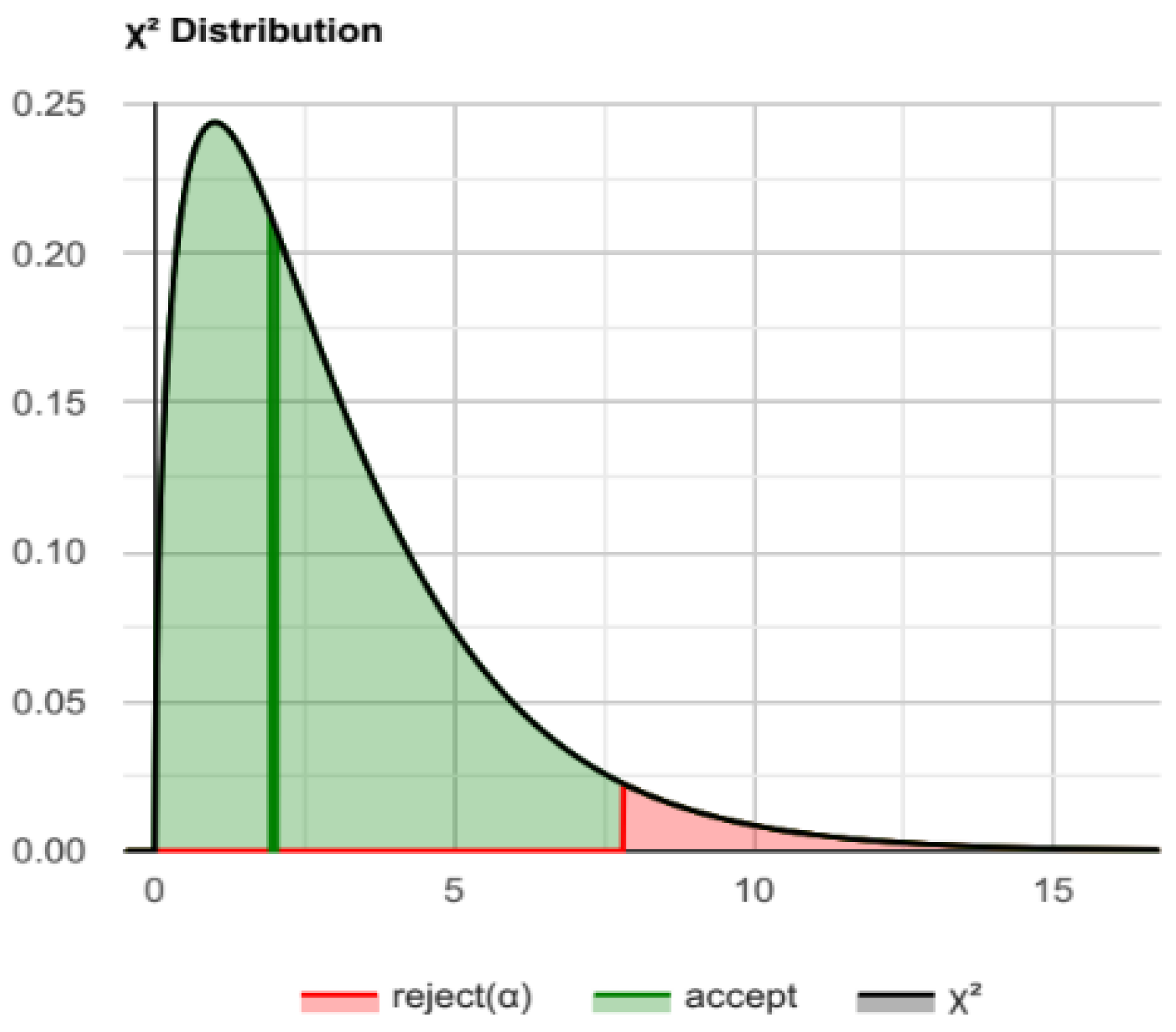
Figure 2.
The t-distribution regarding the development of male and female adolescents’ social skills influenced by social media.
Figure 2.
The t-distribution regarding the development of male and female adolescents’ social skills influenced by social media.
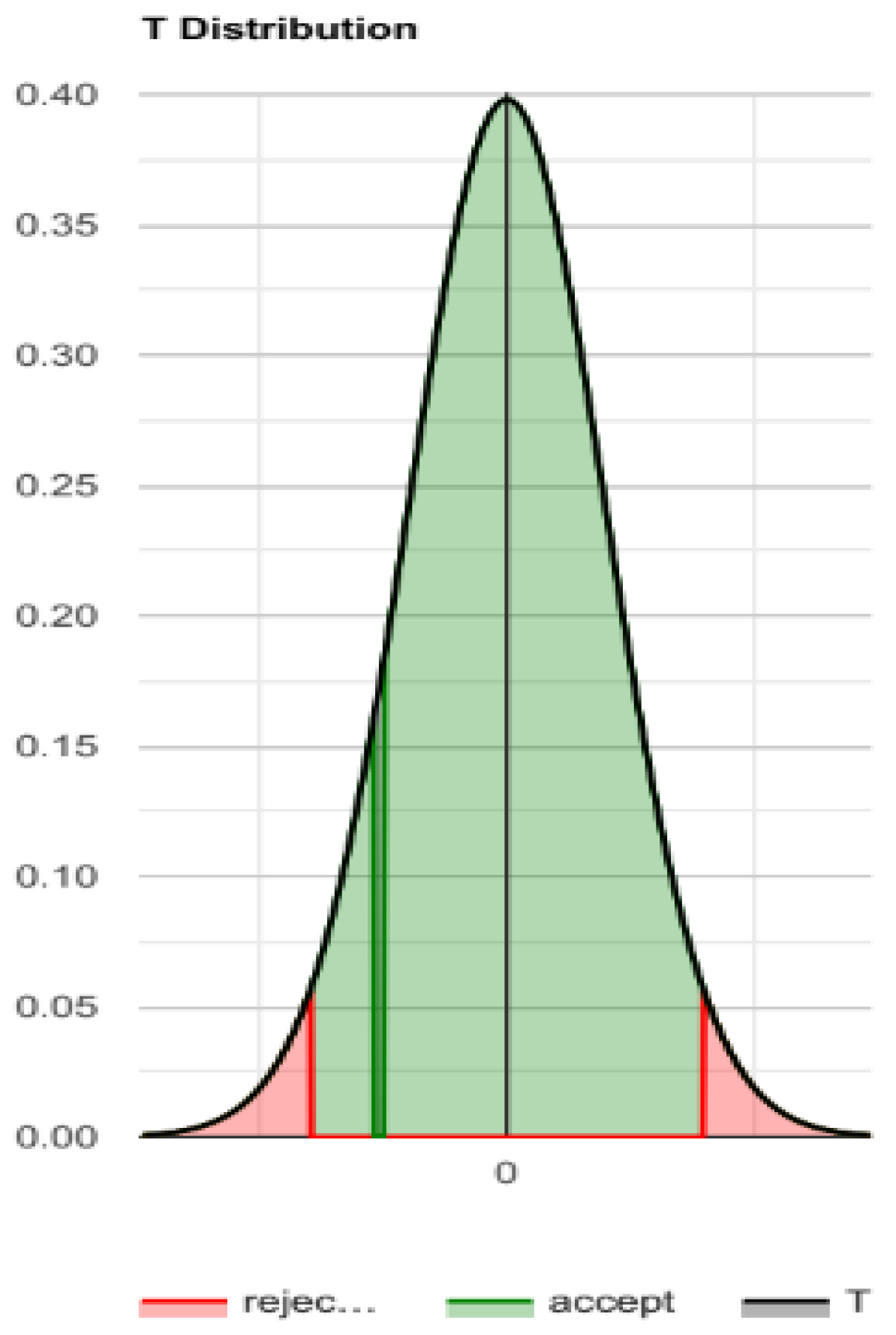
Figure 3.
Level wise distribution of percentage of gain scores.
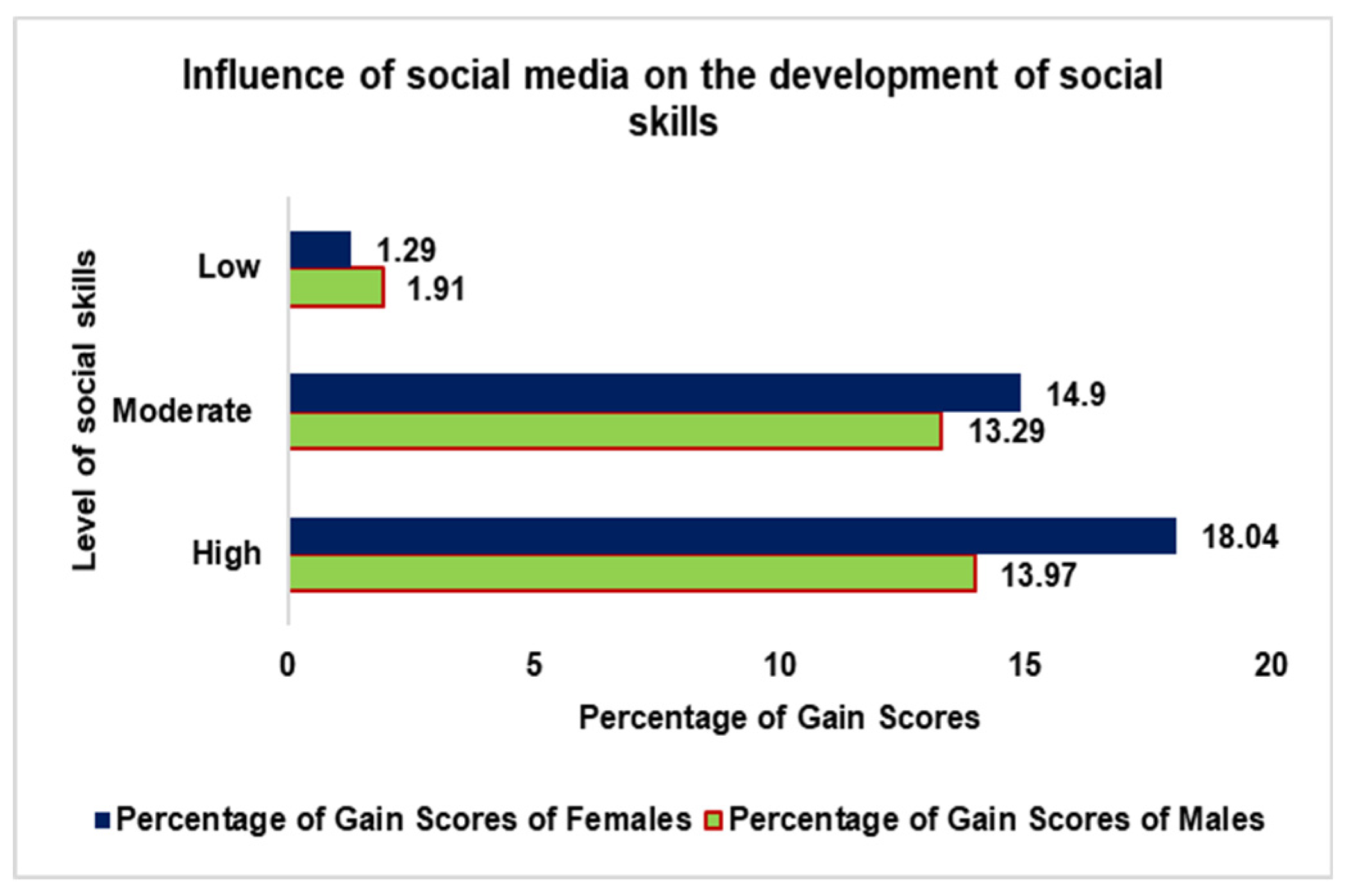
Figure 4.
Chi-Square (χ²) Distribution and Critical Region.
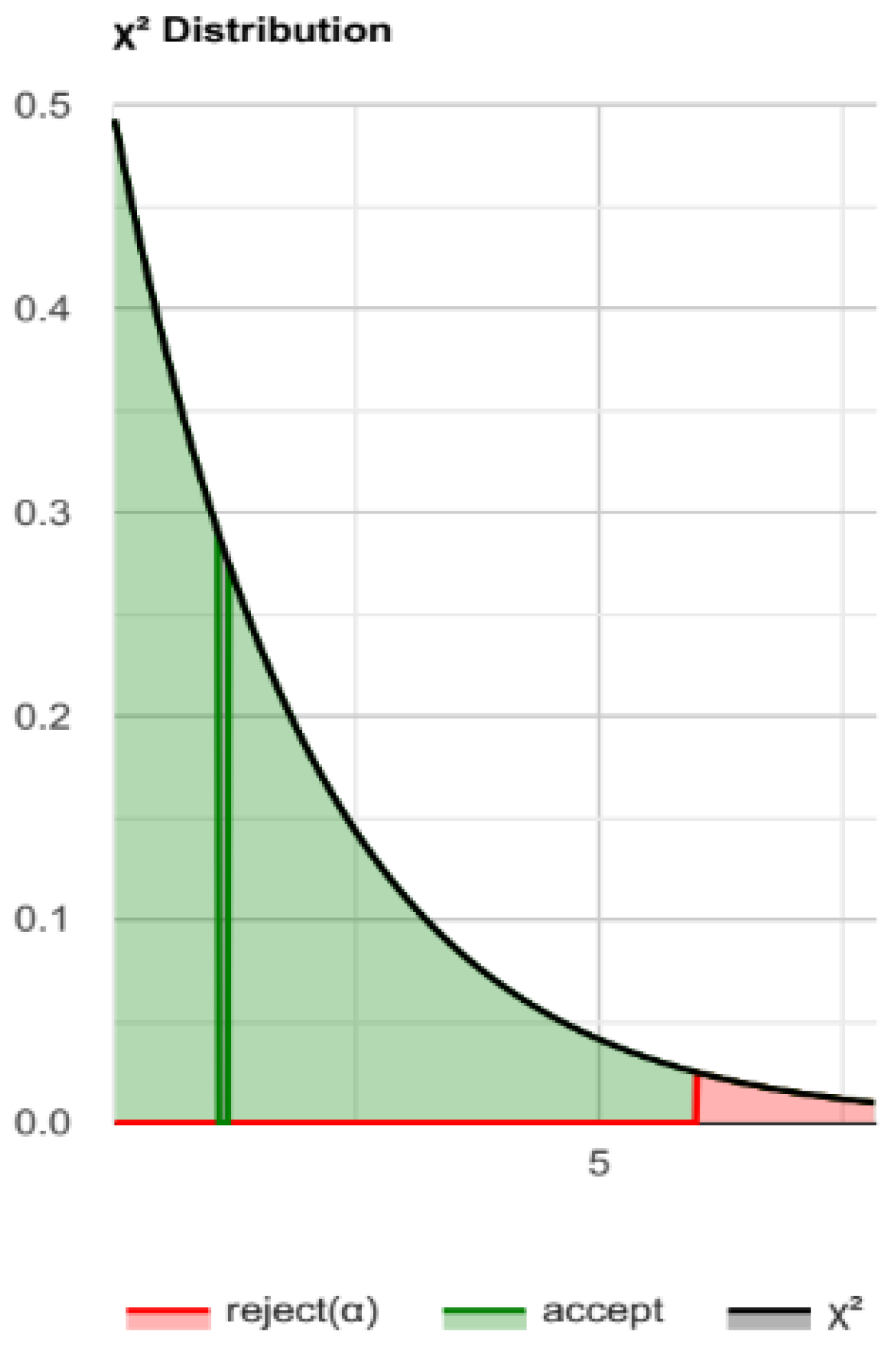
Figure 5.
Percentage of gain scores based on time invested on social media.
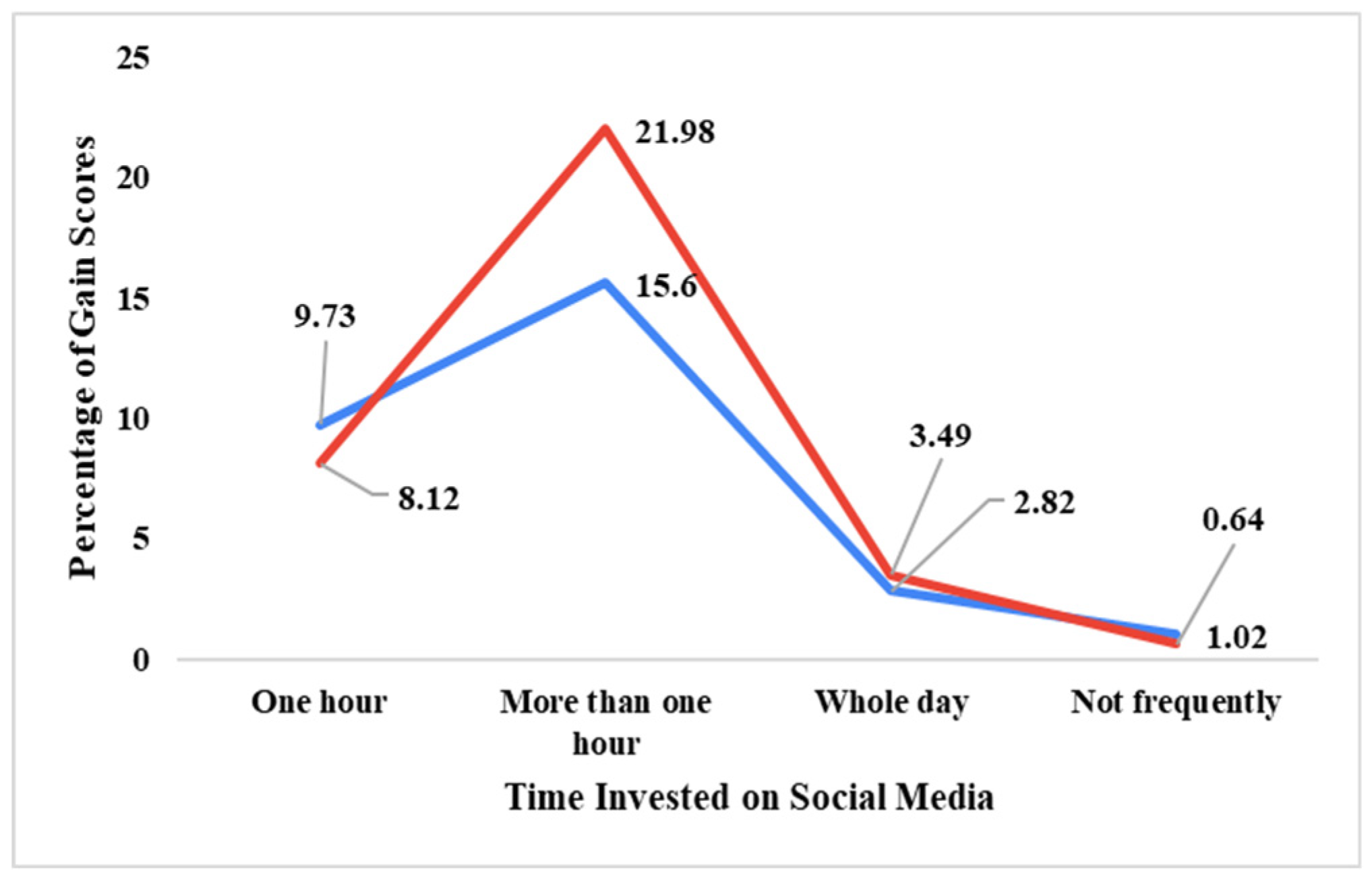

Table 1.
Showing significant difference in the frequency of social media usage between male and female adolescents.
Table 1.
Showing significant difference in the frequency of social media usage between male and female adolescents.
| Gender wise frequencies of using social media | Duration of using social media | (f0) | (fe) | (f0 - fe)2 /fe | df | ꭕ2 | P Value |
|---|---|---|---|---|---|---|---|
| Male | One hour | 17 | 14.43 | 0.46 | 3 | 1.983 | 0.576 p < .05 |
| More than one hour | 24 | 26.99 | 0.33 | ||||
| Whole day | 4 | 4.19 | 0.01 | ||||
| Not frequently | 2 | 1.40 | 0.26 | ||||
| Female | One hour | 14 | 16.57 | 0.40 | |||
| More than one hour | 34 | 31.01 | 0.29 | ||||
| Whole day | 5 | 4.81 | 0.01 | ||||
| Not frequently | 1 | 1.60 | 0.23 | ||||
| Total | 101 | 101 | 1.983 | ||||
Table 2.
Showing significant difference between male and female adolescents in how social media influences the development of their social skills.
Table 2.
Showing significant difference between male and female adolescents in how social media influences the development of their social skills.
| Influence of social media on social skills development | Male | Female | N | df | t-value | p-value | ||||||
| M1 | N1 | SD1 | SEM1 | M2 | N2 | SD2 | SEM2 | |||||
| 55.26 | 47 | 14.24 | 2.08 | 58.59 | 54 | 11.80 | 1.61 | 101 | 99 | 1.29 | 0.2008 | |
Table 3.
Showing the influence of social media on the development of social skills in male and female adolescents.
Table 3.
Showing the influence of social media on the development of social skills in male and female adolescents.
| Social media’s influence on the development of social skills | Range of Scores | Frequency |
Gain Scores |
Percentage of Gain Scores | Total Percentage of Gain Scores | |||
|---|---|---|---|---|---|---|---|---|
| Male | Female | Male | Female | Male | Female | |||
| High | 61-90 | 18 | 25 | 1270 | 1640 | 13.97 | 18.04 | 32.01 |
| Moderate | 31-60 | 23 | 25 | 1208 | 1354 | 13.29 | 14.90 | 28.19 |
| Low | < 30 | 6 | 4 | 174 | 117 | 1.91 | 1.29 | 3.2 |
| Total | 101 | 2652 | 3111 | 29.17 | 34.23 | |||
Table 4.
Showing the significant differences between male and female adolescents concerning the influence of social media on the development of social skills.
Table 4.
Showing the significant differences between male and female adolescents concerning the influence of social media on the development of social skills.
| Gender wise influence of social media on the development of social skills | Number of adolescents at each level of social skills development | (f0) | (fe) | (f0 - fe)2 /fe | df | ꭕ2 | P Value |
|---|---|---|---|---|---|---|---|
| Male | High | 18 | 20.01 | 0.20 | 2 | 1.143 | .565 p <.05 |
| Moderate | 23 | 22.34 | 0.02 | ||||
| Low | 6 | 4.65 | 0.39 | ||||
| Female | High | 25 | 22.99 | 0.18 | |||
| Moderate | 25 | 25.66 | 0.02 | ||||
| Low | 4 | 5.35 | 0.34 | ||||
| Total | 101 | 101 | 1.143 | ||||
Table 5.
Showing how frequently adolescents use social media.
| Time Invested on Social Media | Frequency | Gain Scores on Social Skills | Percentage of Gain Scores | Total Percentage of Gain Scores | |||
|---|---|---|---|---|---|---|---|
| Male | Female | Male | Female | Male | Female | ||
| One hour | 17 | 14 | 885 | 738 | 9.73 | 8.12 | 17.85 |
| More than one hour | 24 | 34 | 1418 | 1998 | 15.60 | 21.98 | 37.58 |
| Whole day | 4 | 5 | 256 | 317 | 2.82 | 3.49 | 6.31 |
| Not frequently | 2 | 1 | 93 | 58 | 1.02 | 0.64 | 1.66 |
| Total | 101 | 2652 | 3111 | 29.17 | 34.23 | ||
Disclaimer/Publisher’s Note: The statements, opinions and data contained in all publications are solely those of the individual author(s) and contributor(s) and not of MDPI and/or the editor(s). MDPI and/or the editor(s) disclaim responsibility for any injury to people or property resulting from any ideas, methods, instructions or products referred to in the content. |
© 2024 by the authors. Licensee MDPI, Basel, Switzerland. This article is an open access article distributed under the terms and conditions of the Creative Commons Attribution (CC BY) license (http://creativecommons.org/licenses/by/4.0/).
Copyright: This open access article is published under a Creative Commons CC BY 4.0 license, which permit the free download, distribution, and reuse, provided that the author and preprint are cited in any reuse.


