

Submitted:
24 September 2024
Posted:
24 September 2024
You are already at the latest version
Abstract
The textile and clothing (T&C) industry, despite its significant contribution to the European economy, is one of the most polluting industries globally. Therefore, the EU's Green Deal has identified the T&C sector as a strategic area for allocating public funding and transitioning towards a circular economy (CE). In this context, the “Circular Design for Natural Fibers” project, financed by the PNRR MICS “Made in Italy Circolare e Sostenibile” programme, focuses on enhancing the use of natural fibrous material, related by-products and waste from local production chains. In the research, a crucial aspect is the evaluation of the effectiveness of circularity through life cycle approaches, such as LCA, LCC, S-LCA and LCSA, for environmental, economic and social sustainability evaluation, respectively. A systematic review was carried out, to provide a synthesis of the available scientific evidence regarding the life cycle approaches in the international/national context within the production, processing, and post-consumer supply chains of natural fibers. The study identifies gaps in the literature on life cycle evaluation approaches for natural fibers. Specifically, the LCA approach appears preponderant compared to the others. The paper offers insights for researchers and professionals interested in improving the sustainability of natural fiber production processes and the evaluation of their overall sustainability.
Keywords:
LCA
; LCC
; S-LCA
; LCSA
; circular design
; natural fibers
; environmental sustainability
; social sustainability
; economic sustainability
; evaluation approaches
; life cycle
1. Introduction
Assuming the objectives of the “Made in Italy Circolare e Sostenibile” (MICS) an ongoing project (2023-2025), the “Circular design for natural fibers”(CD4NF) project, included in the MICS, focuses on the clothing and furniture sectors, with particular reference to the textile and agro-industrial supply chains and the related waste and by-products. Precisely, the project focuses on exploring and enhancing the use of natural fibrous material and related by-products and waste from local production chains. In fact, the textile and clothing (T&C) industry, despite its significant contribution to the European economy, is one of the most polluting industries globally. The EU's Green Deal has identified the T&C sector as a strategic area for allocating public funding and transitioning towards a circular economy (CE).
The research project aims to evaluate the effectiveness of circularity through life cycle approaches for evaluating, also jointly, the economic, social and environmental sustainability. Focus is posed on approaches normed by the international standards and regulations such as Life Cycle Assessment (LCA), Life Cycle Costing (LCC), Social LCA (S-LCA), and Life Cycle Sustainability Assessment (LCSA).
As a first step of the research project, a systematic review was carried out, with an in-depth literature analysis conducted with the support of specific tools (i.e. VOSviewer software). This involved the use of several keywords and queries to identify relevant findings. The systematic review aims to outline and provide a comprehensive and unbiased synthesis of the available scientific evidence regarding the application of life cycle approaches in the international and national context within the production, processing, and post-consumer supply chains of natural fibers. A ‘Bibliographic Portfolio’ (BP) built- up by selecting the most representative research products highlights the current state of the art, emphasising their implications for environmental, social and economic sustainability within the circular design framework of the textile and furniture sector.
The study identifies gaps in the literature on life cycle assessment approaches about natural fibers and aims to fill these gaps by providing a brief overview of current research. The paper shows an imbalance in the scientific literature between the different approaches. Specifically, publications on the LCA approach appear preponderant compared to other approaches (LCC, S-LCA, LCSA). Moreover, there has been an increasing trend from 2005 to 2023, with a particular escalation in publications over the last five years.
The study serves as a foundation for subsequent research steps that focus on defining and testing a methodology based on life cycle assessment approaches in the context of natural fibers addressed to the textile and building sectors. The paper offers valuable insights for researchers and professionals interested in improving the sustainability of natural fiber production processes and provides a scientific background for defining a methodology to evaluate their overall sustainability.
The paper is articulated as follows. Section 1 introduces the work. Section 2 presents the research methodology and the assumptions of the literature review. Section 3 illustrates and comments on the results of the literature review. Section 4 discusses the strengths and weaknesses of the research. Finally, section 5 concludes by outlining future research addresses.
2. Materials and Methods
The goal of life cycle approaches is to assess sustainability by proposing solutions and interventions through integrated, comprehensive and participatory processes in which both the scientific and social paradigms work together [1]. Life Cycle Thinking (LCT) principles are based on the life cycle concept, playing a crucial role. LCT conception involves the implementation of principles aimed at the continuous improvement of sustainability performance at all stages of a system's life cycle, including design (eco-design), as well as production, use, disposal and end-of-life. The holistic conception of sustainability, through approaches such as Life Cycle Assessment (LCA), Social Life Cycle Assessment (S-LCA) and Life Cycle Costing (LCC), recalled below, includes the environmental, social, cost and benefit assessment associated with products, sectors or processes, from the extraction of raw materials to the end of the product's life cycle itself creating a global view of the production system [2]. It also allows the integration of the three domains of sustainability into the assessment discipline through the Life Cycle Sustainability Assessment/Analysis (LCSA) approach, as synthesized in Figure 1.
2.1. Life Cycle Approaches
The standard UNI EN ISO 14040/44, Environmental management - Life cycle assessment - Principles and framework, based on ISO/TC 2007/SC 5 activities, defines Life Cycle Assessment (LCA) as a “compilation and evaluation of the inputs, outputs and potential environmental impacts of a product system throughout its life cycle.” System inputs are the parameters involved in discussing energy resource conservation issues, while outputs relate to pollution and waste issues. The LCA approach can be developed at product and supply chain scales [3]. In the ISO definition it is divided into four main steps: 1) Goal and Scope Definition; 2) Life Cycle Inventory Analysis - LCI; 3) Life Cycle Impact Assessment - LCIA; and 4) Life Cycle Interpretation.
Social Life Cycle Assessment (S-LCA) is a methodology for assessing the social impacts of products and services throughout their life cycle and it is based on a combination of methods, models, and data used to provide a representation of a product's life cycle. The S-LCA approach provides a framework for a systematic assessment that combines quantitative and qualitative data and provides information on social and socioeconomic aspects for decision-making, with a view to improving an organisation's social performance and, ultimately, the well-being of stakeholders [4]. UNEP, within its guidelines, proposes an inventory that encompasses indicators that relate to the five main groups of stakeholders: workers, consumers, local communities, society, and actors in the value or production chain. S-LCA can be applied alone or in combination with Life Cycle Assessment (LCA) and/or the Life Cycle Costing (LCC) approach.
Life Cycle Costing (LCC) is an approach for quantifying the costs and benefits of a product or service, starting from the stages before production to its final disposal, to select scenarios capable of minimising costs over the entire life cycle. Total costs are assumed to be the sum of the costs of each phase of the building life cycle [5] Like all LC approaches, the LCC takes the form of a decision support tool that can be applied to a single product or component, a system or an entire building, or an intervention project on an existing asset [6].LCC can be applied to compare different production processes by estimating the relative difference between the costs in the life cycle and the cost budget. Inherent to Life Cycle Costing are the concepts of global cost, whole life cost, life cycle cost in construction, and life cycle cost in use, which support the assessment of economic feasibility and performance and can be grouped according to life cycle stages. SETAC has defined three types of Life Cycle Costing [3]:
- Conventional LCC: in the analysis of all costs related to a product's life cycle that are directly the responsibility of the primary producer or primary user during the product's life cycle.
- Environmental LCC: the assessment of all costs related to a product's life cycle that are directly assumed by one or more participants in the product's life cycle
- Societal LCC: assessment of costs associated with the entire life cycle of a product, which is the responsibility of all individuals in society, both in the current period and in the long term.
Within the international scientific community, a study model based on “Life Cycle Thinking” logic is currently being widely debated, which integrates the three pillars of sustainability, environmental, social and economic, through the use of Life Cycle Sustainability Assessment/Analysis. To date, there are two definitions of LCSA [7]: the LCSA analysis understood as Life Cycle Sustainability Assessment by Klöpffer (2008) [8] and later also taken up by Valdivia et al. (2011) [9] differs from the LCSA analysis understood as Life Cycle Sustainability Analysis by Guinèe (2011) [10]. In the former case, sustainability assessment simultaneously requires environmental, economic and social study without considering their mutual relationships [11] and without requiring formal weighting among the three pillars by applying the formula:
LCSA = (environmental) LCA + LCC + S-LCA
where:
LCA is the SETAC/ISO life cycle environmental assessment;
LCC is the ISO life cycle economic assessment;
S-LCA stands for social assessment in the life cycle.
In the second case, a holistic approach is adopted in Life Cycle Sustainability Analysis [10] which introduces causal relationships between activities in various domains, such as product-level (product-oriented), sector-level (meso-level) and economy-wide (economy-wide), integrating the three dimensions of environmental, social and economic [3].
2.2. Systematic Literature Review: Methodology
The systematic review aims to outline the state of the art of research, providing a comprehensive and unbiased synthesis of the available scientific evidence, concerning the application of life cycle approaches in the international and national context within the production, processing, and post-consumer supply chains of natural fibers.
The review is based on a replicable method that uses clear and planned a priori criteria to identify, select, evaluate, and synthesise publications, providing a structured list of bibliographic sources examined during the research process.
For the selection of publications, the time frame from 2005 to the present was defined to collect the widest variety of publications produced on the topic.
The search was done on the online databases Scopus, Science Direct and Web of Science using keywords. The keywords chosen to identify Life Cycle approaches (LCA, S-LCA, LCC, LCSA) target areas described by the MICS project (fashion, furniture) and the processes and products (fiber, waste, by-product) of the supply chains under investigation (agrifood, textile).
Next, VOSviewer software (Projest S.p.A., version 1.6.19) was used to:
- visualise citation networks between different articles or authors, observing connections and influences between scientific papers;
- identify thematic clusters by investigating related research areas and groups of articles covering similar topics;
- analyse keywords to better understand prevailing themes and areas of interest;
- explore and graphically represent the information in the bibliographic data to identify trends, connections and research patterns within the subject area.
The clustering of the most relevant and recurrent terms within the publications proposed by VOSviewer was reworked by the authors according to the selection criteria and research objectives. The keywords were divided into categories that, when combined crosswise, generate the selection criteria for publications. The combinations of terms were searched within the titles, abstracts and keywords of the publications.
Finally, it was necessary to further narrow the boundary of the search system by specifying the reference areas (fashion and furniture) only for the LCA approach, which had the highest number of results.
3. Results
3.1. Bibliographic Portfolio (BP)
The selection of items to compose the Bibliographic Portfolio followed several steps (Figure 2) that included greater specification within the scope of the research and the elimination of repetitive, redundant, and unrelated articles to the research topic.
The first selection criteria defines the topics, the second is related to the reference area, and the third is related to the topics of the MICS project.
The survey of bibliographic data was identified (Figure 3) in the first step of 1422 publications. Performing a reading by life cycle approach, a high prevalence of LCA studies is observed (1344 results) that amounts to 95% of the total number of publications, a smaller amount of publications are related to the LCC approach (65 results), and finally, only a few can be attributed to the S-LCA (7 results) and the LCSA approach (6 results).
Further investigation carried out based on the keywords related to the LC approaches sees that most of the results can be traced back to the items “natural fiber” and “food and waste.” Concerning the LCA approach, the topic “food and waste” got 931 articles out of 1344 dealt with as a search result, while 252 articles responded to the search made through the keywords “natural fibers.” Similar dynamics are also found for the LCC approach but with proportionately lower results.
Due to the topics' complexity and the high number of results obtained for the LCA approach, it was necessary to introduce additional filters in the literature search by specifying the reference areas (fashion and furniture). Further investigation of the survey showed that there is no correlation between the keywords “furniture”/“fashion” and “food and waste” (Figure 4).
On the other hand, the keyword “waste,” linked to the areas “fashion” and “furniture,” produced results more relevant to the search, therefore a total of 1237 results were excluded, selecting only 185 articles relevant to the survey.
Finally, articles that emerged through the keyword search dealt with:
- topics not relevant to the scope of the research, such as LC methodologies applied to the study of food supply chains, water management and treatment, chemicals, plastics and non-natural fibers;
- methodological approaches applied to the evaluation of waste management and collection;
- topics that are inherent but address neither the model definition of the LC approach nor the application of the approaches.
The third and last selection criteria is relevant to point out that articles that present an interesting application of the methodological approach are included in the search, even if they concern topics unrelated to the MICS project. Thus, the BP of this review consists of 80 articles obtained from three selection criteria (Figure 2).
3.2. Scientific Publications Over Time
The dynamic nature of scientific evolution over time, depicted by Figure 5, reflects a division into three phases:
- a first phase from 2005 to 2007 characterised by a small number of publications (total No. 1) and an absence of research-related scientific production in 2006 and 2007;
- a second phase from 2008 to 2016, in which there was a development of scientific production (No. 28) with peaks of publications in 2011 and 2013 (+27% compared to phase I);
- a third phase between 2017 and 20231, which sees a scientific deepening of the review topics and an increase in the number of publications (73 total) (160.7% increase over phase II).
The year 2017 is characterised by a sudden increase in publications; this can be attributed to the deepening of economic tools for life cycle assessments akin to the present review. The year with the largest number of papers produced is 2022, with a total of No. 15 publications. It should be noted that the scientific production for the year 2023 is partial as it is in progress at the time of delivery of the ‘work package’ related to the state of the art (MICS). Therefore, the following analyzis could be implemented with the subsequent publications (May 2023 to date).
3.3. Research Journals
The distribution of journal articles includes 60 different sources, reflecting a wide variety of multidisciplinary sources such as energy, waste, construction, environment, and sustainability, which are strongly related to the Life Cycle.
The impact factor, assessed by Thomson Reuters (JCR), is considered the main metric for evaluating scientific journals. This represents a summary index that measures the mean number of citations received by articles published in a scientific journal in the previous two years.
The journal with the highest impact factor is Resources, Conservation and Recycling, followed by the Journal of Cleaner Production and Science of the Total Environment. In addition, the Journal of Cleaner Production reports the highest number of publications.
3.4. Results Interpretations VOSviewer
Affiliation
The BP includes articles and publications from 43 countries in the global context.
The use of VOSviewer software made it possible to depict the relevance of countries based on the number of publications, citations, and link strength (total link strength). The latter, in the VOSviewer software, refers to the sum of link strengths between network elements, i.e., the measure used to assess the overall intensity of connections between different elements, such as authors, keywords, or scientific papers.
Analysis of the data shows that Italy represents the country most engaged, in the time frame considered, in scientific production on the study and application of Life Cycle approaches related to natural fiber fields (Figure 6).
Keywords
Keywords represent the basic units of a specific field of study and can provide insight into knowledge structures and research trends.
Through the use of VOSviewer software, an analysis of keywords was conducted by investigating into their frequency and recurrence. Within the software, keywords with a minimum limit of 5 occurrences were selected, providing a more in-depth analysis of the characteristics/content of the literature. Each identified keyword corresponds to a junction in the network, and the recurrences of the keywords constitute the edges between the junctions. The connection between the two junctions is expressed through the co-occurrence relationship [12].
The most recurrent keywords are “life cycle” (occurrences 46), “life cycle assessment” (occurrences 45) and “environmental impact” (occurrences 37).
The keyword mapping revealed that the life cycle dimension of environmental sustainability prevails over the economic (cost analysis) and social dimensions. In fact, in the ranking compiled by recurrence, the keyword “cost” is ranked 13th, and the Life Cycle Costing (LCC) approach is ranked 71st. The S-LCA approach is not represented by any keyword highlighting a poor presence in the BP of the social issue.
This mapping was graphed with VOSviewer software highlighting the presence of 4 strongly interconnected categories. Each category is identified by distinct colours (Figure 7):
- red colour, associated with the “Life Cycle” theme, deals with issues related to waste recycling, with particular attention to the implications on environmental impacts, declining further toward energy valorisation processes;
- green colour, related to the “Life Cycle Assessment” theme, is related to environmental issues, focusing more on impact categories;
- blue colour, assigned to the “Recycling” theme, addresses issues related to waste recycling;
- yellow colour, identified with the “Waste Management” and “Cost” themes, deals with impacts concerning the economic value of waste.
From the above and depicted in Figure 7, it can be seen that the red and green categories are strongly interconnected, and both refer to the environmental impacts associated with LCA while the blue and yellow categories are more oriented toward waste management and valorization.
In Figure 8 the keywords are indicated in order based on the recurrence of the term and the strength of the connection as elaborated by the VOSviewer software.
The core of the investigation is represented by the keyword Life Cycle, which is located in the central position of the diagram, because it constitutes the method used to assess the environmental, social and economic impacts on which the research focuses and is declined in the LCA, LCC, S-LCA, LCSA (Figure 7).
Another keyword on par with “Life Cycle” is “Life Cycle Assessment” since it is the most frequently addressed assessment tool in the sample of articles considered in the literature analysis. Another important aspect to note is that some keywords can be aggregated since they have the same meaning, such as the terms “Life Cycle Assessment,” “LCA,” and “Life Cycle Assessment (LCA)”; this further underscores the importance of the LCA approach as prevalent over the others. The issues most related to the LCA predominantly address certain impact categories, including acidification, eutrophication, land use, global warming potential and carbon footprint. It can be argued that the presence of these impacts, within the selected publications, can be attributed to the nature of the research focused on natural fibers, as the life cycle of natural fibers directly affects these aspects. Other important issues related to LCA and in line with the nature of the research project are related to resources understood as biomass, electricity, biofuels, and fossil fuels and also to products, as described for example by the keywords “wood products”, “furniture,” “by-product” and production processes, such as “supply chain.”
For the economic evaluation tool, referred to by both the terms “Life Cycle Costing” and “LCC,” the most closely related issues address the valorization of waste as research investigates whether waste possesses economic value as by-products that can be reintegrated into the market. Economic evaluation is employed to consider the cost benefits “Cost Benefit Analysis” in the practices of “Recycling” and “Reuse” of waste and by-products in a circular economy “Circular Economy” perspective. A connection between economic evaluation, environmental impacts and LCA can be observed.
As mentioned above, in the areas investigated regarding natural fibers by VOSviewer, the methodological approach of S-LCA emerges neither as a keyword nor as a connecting force. The only term referring to the social sphere appears alongside the economic aspects “Economic and Social Effects.” This shows a lack of investigation on the topic in the Bibliographic Portfolio and, more generally, in the research compared to the other two evaluation methods.
The keyword mapping highlighted the dimension of sustainability in the three pillars with a prevalence on the environmental pillar over the economic and social pillars, giving particular importance to the issues of reuse, recycling and waste management.
Critical analysis of the results
The process of content classification is a procedure by which items and components of the Bibliographic Portfolio (BP) are categorised into ’clusters’, which refer to a grouping of items or data that are similar to each other.
The goal of this categorization is to create a homogeneous data set by macro-theme, with the purpose of:
- facilitating the reading of clustered content;
- facilitating the management of complex information;
- facilitating interpretation of the data;
- providing a conceptual framework;
- facilitating the possibility to implement data during the research activities
In the first instance, the articles part of the BP were classified on the basis of the approaches used, which are either applied individually or in a joint and integrated manner, namely: LCA, S-LCA, LCC, LCA+LCC, LCA+S-LCA and LCSA. The research group provided a further categorization of the BP by research themes. The clusters identified are as follows:
- ‘energy’, includes a wide range of aspects related to the production, transformation, distribution and use of energy;
- ‘product’, refers to a specific product, its use and/or development within a business, industrial or commercial context;
- ‘by-product’, refers to the production of a result and/or product that is obtained as a consequence of a main process or activity to obtain added economic value;
- ‘end of life’, includes all those studies in which processes are analysed up to the end of a product's life without investigating its subsequent management;
- ‘manufacture’, refers to the process of producing goods or products through the transformation of raw or semi-finished materials using specific equipment and techniques;
- ‘method’, includes scientific production that describes the application of one or more evaluative approaches to issues that are also outside the subject of the research but methodologically significant (e.g., LCA, S-LCA, LCC etc.);
- ‘system’, refers to a set of interconnected components working together to achieve a common purpose.
The clusters identified with their respective prevalence percentages within the research have been graphically represented. From the study conducted, it can be seen that the prevailing macro themes appear to be ‘product’ with a percentage of 21,4 percent and ‘method’ with a percentage of 21,4 percent (Figure 9).
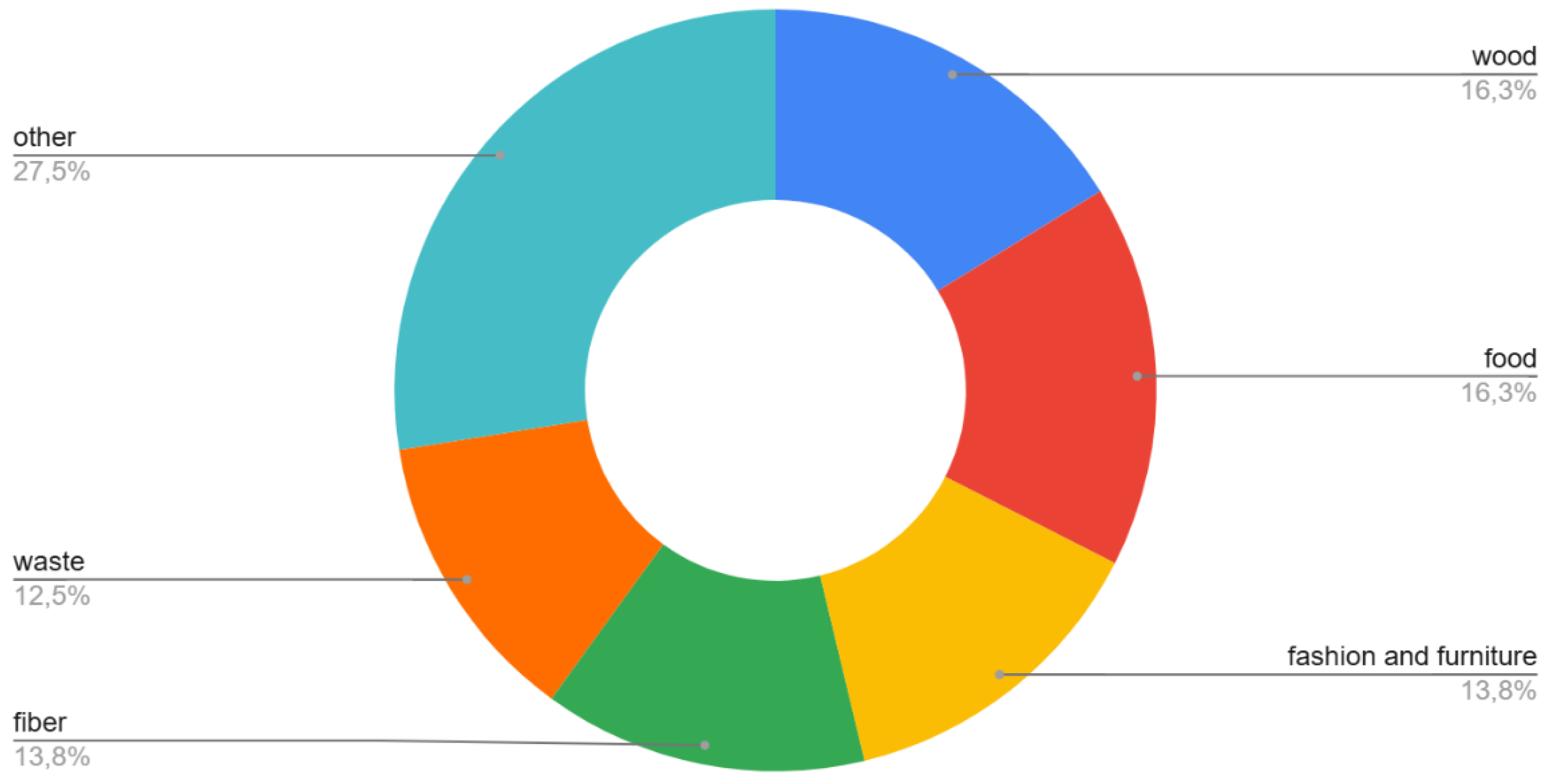
To enhance data management and information interpretation, ‘categories’ related to the aforementioned clusters were identified. These categories describe the services or products to which environmental assessments were applied in the analyzed studies. These categories are as follows:
- ‘fashion and furniture’, is a category used for publications that are particularly focused on the research topics (“Made in Italy Circolare Sostenibile” - MICS);
- ‘fibers’ category that identifies the project “Circular Design for Natural fibers”(CD4NF)
- ‘wood’, is the category chosen for articles that have wood-based products as the subject of the research;
- ‘waste’, groups all articles that investigate the treatment and management of waste from different supply chains;
- ‘food’, includes all articles investigating food products;
- ‘others’, identifies selected articles in the BP that do not have as their object of analysis products, systems, and services that fall under the above categories but have topics of more general interest for the MICS project, for example topics related to biofuels.
It is interesting to observe that scientific research has mainly focused on products identifiable as ‘wood’ or related to the food sector ‘food’ or to ‘other’ topics not strictly related to the topics of the CD4NF project (Figure 10).
Further deepening of the content resulted in the drafting of 22 article filings related to the category ‘fashion and furniture’ and ‘fiber’, among which 17 studies apply LCA. Only 1 article refers to the LCC methodological approach, and 3 additional publications use the LCC approach combined with LCA. The S-LCA methodological approach was used within one study only, combined with the LCA approach.
The analysis explores multiple dimensions beyond methodological approaches, focusing on critical aspects such as the type of study, product context, and data sources. It categorizes studies based on whether they are comparative or single-application and whether they contribute to methodological development or are practical applications. Critical elements like functional units, which form the basis of the assessments, and commonly calculated impact indicators are investigated to identify environmental hotspots. Additionally, databases and software are reviewed to highlight existing resources and tools, while the analysis of life cycle phases helps establish system boundaries and enable comparison across studies. This comprehensive evaluation aids in better understanding environmental assessments within the scope of circular design for natural fibers.
The filing of items related to the subcategory “Fashion and Furniture” shows:
- the research ranges between pre- and post-consumer textile waste, natural fibers and bio-composites;
- most of the articles are applicative, i.e., they involve the application of an evaluative approach according to the relevant methodological framework;
- the articles involve a comparative study between several products or focus on a single product/service;
- the functional units appear highly diversified from each other and specific to each evaluative study, leading to criticality in a possible future comparative analysis;
- the calculation of indicators is not uniformly present among different articles. In this regard, several methodologies can be found, the most popular for LCA being the ILCD, ReCiPe, and CML methods. In cases where no preferred method is highlighted, individual indicators are given in full. The evaluation of costs considers different types at a given life cycle stage. No specific indicator calculation methods are given in the S-LCA;
- the most consulted databases for environmental assessment appear to be Ecoinvent and Gabi, but frequently, studies have found it necessary to supplement inventory analysis with primary data from the literature. In addition, referring to a general analysis of the BP, it appears that the most widely used database for S-LCA analysis is PSICLA, which carries the name of the software in which it is used;
- as for the software used for the environmental assessment method, these is SimaPro and OpenLCA. For LCC, the cost analysis provides a specific quantification for each case study, with no references related to databases and software;
- regarding the life cycle taken into account by the different studies, this appears to be variable: some research considers the entire life cycle (from cradle to cradle, A1-D), but most analyses only the production phase (from cradle to gate, A1-A3).
The filing, aimed at deepening and categorization the information of the most relevant articles in the BP, has seen strong interest from the scientific community in the “product” and “energy” clusters and, specifically, regarding the areas of the research project (MICS), pre- and post-consumer textile waste, natural fibers, and bio-composite products or materials. The analysis regarding the ‘fashion and furniture’ and ‘fiber’ can be carried out for the other aforementioned categories.
Citations of the 22 filed articles are given in extended form in the “List of Filed Articles” as an additional file.
Data of the Bibliographic Portfolio (80 publications) are given in extended form in the “Bibliographic Portfolio” as an additional file.
4. Discussion
The discussions are related to the Bibliographic Portfolio and more specifically to the “Made in Italy Circolare Sostenibile” “Circular Design for Natural Fibers”.
It is interesting to highlight that the majority of the publications are related to LCA and specifically the ‘fashion and furniture’ industries. A small part investigates topics related to the automotive industry. These three areas are defined by the MICS projects as the “3A” which are Abbigliamento, Arredamento and Automazione (fashion, furniture and factory automation).
In addition, it is relevant to underline that the LCC approach appears to have been investigated longer than the others, and is mainly related to topics of ‘food’ and ‘waste’. In the context of the research project CD4NF, LCC is mainly concerning the context of construction and building production [13,14,15,16].
Concerning the social aspect of S-LCA, which is scarcely investigated in publications, it is important to point out that it is often applied correlated with LCA and LCC [13,14,15,16]. This could be determined by the fact that LCA and LCC approaches involve a structured regulatory and methodological framework. An issue attached to S-LCA studies lies in the inventory phase since the data are not only quantitative in nature but also qualitative and difficult to find.
LCA and LCC are regulated by international standards and based on a national and European regulatory framework; S-LCA and LCSA refer to guidelines drafted by UNEP/SETAC and CALCAS.
The mismatch between different approaches and their regulatory frameworks generates a critical element but, at the same time, a research potential for integrated assessment of social, environmental and economic aspects. The complexity of integrating approaches results, for example, in a dual interpretation of LCSA [7], namely as a holistic approach (LCSA-Analysis) or a reductionist approach (LCSA-Assessment). The study on the different LCSA types shows a more circumscribed scientific production than the other evaluative approaches.
The critical issues regarding the difficult comparability of data and results is determined by multiple aspects, including:
- the absence of a regulatory framework for S-LCA, LCSA;
- the difficult applicability of the approaches to sectors other than construction and to different product, process and system levels;
- the limited presence of benchmarks, which causes researchers to frequently develop comparative analyses with Business As Usual (BAU) products;
- the site-specific aspect of LC analyses due to supply chain fragmentation (geographic location, local regulations, energy systems, etc...).
5. Conclusions and Future Outlooks
This systematic review shows an imbalance in the scientific literature between the different approaches. Specifically, out of a total of 1430 publications, those related to the LCA approach are predominant (95%) compared to other approaches (LCC, S-LCA, LCSA), and for this reason, there is an increasing trend in the time span from 2005 to 2023 with a particular increase in publications in the last 5 years (2017-2023). The systematic review was deepened by conducting a keyword and content reading of the data. Specifically, the use of VOSviewer software made it possible to analyze keywords by delving into their frequency and recurrence. This showed that the life cycle dimension of environmental sustainability prevails over economic and social sustainability. Therefore, keywords related to ‘cost’ and ‘Life Cycle Costing’ are less recurrent than those related to environmental impacts and ‘Life Cycle Assessment’. Keywords regarding the social sphere did not recur except in relation to ‘cost’. In addition, from a general reading of the keywords, four categories can be observed that address strongly interrelated aspects, namely: environmental impacts with a greater declination toward energy valorization processes, environmental issues but with a greater declination toward impact categories, issues related to waste recycling, and finally considerations of the economic value of waste.
A Bibliographic Portfolio (BP) was created to showcase the most significant research on circular design in the textile and furniture industries.
Articles of the Bibliographic Portfolio (BP) have been published in multiple journals, with “Resources, Conservation and Recycling” being the editorial venue with the highest impact factor, followed by “Journal of Cleaner Production” and “Science of the Total Environment.” However, the journals with the highest number of publications are “Journal of Cleaner Production” and “International Journal of Life Cycle Assessment.” The focus of the journals in which the articles in the BP were published is related to energy, waste, construction, environment and sustainability issues.
Regarding the affiliation of the authors of the publications in the BP, it can be seen that Italy represents the country most engaged, in the time frame considered, in scientific production on the study and application of Life Cycle approaches related to the areas of natural fibers.
Further investigation of the contents of BP articles resulted in categorization by research themes and the identification of seven clusters, among which the prevailing macro themes were ‘product’ with a percentage of 24 per cent and ‘method’ with a percentage of 23 per cent.
To simplify data management and information understanding, categories related to the above-mentioned clusters were defined, such as ‘fashion and furniture’, ‘wood’, ‘waste’, ‘food’, and ‘other’. The application of the clusters and categories allowed for the emergence of items closely related to the areas of the “3A”(Abbigliamento, Arredamento and Automazione / fashion, furniture and factory automation), which characterise the “Circular Design for Natural Fibers” CDNF project, for which filings were made. The aforementioned made it possible to delve into the methodological approaches applied, organising information regarding the comparative or singular application nature of the study, the methodological or application study, functional units, impact indicators, databases, software, and life cycle stages considered.
The filing procedure further highlighted that the scientific community has taken particular interest in studying issues related to the ‘product’ and ‘energy’ clusters. In particular, in-depth interest emerges in pre- and post-consumer textile waste, natural fibers, and bio-composite products or materials. Consistent with keyword mapping, content analysis, and filing, a prevalence of interest in Life Cycle Assessment and environmental issues over economic and social issues was confirmed. In addition, the filings see a prevalence of application studies to products, processes and services compared with Business As Usual products.
Starting from the outcomes of the systematic review, future research needs deepening through, for example, the construction of the taxonomy of approaches and indicators concerning the specific application domains, aimed at the creation of a methodological structure designed to classify and organise the different methodologies (approaches) and assessment measures (indicators) according to the specific contexts of use (application domains). In addition, it needs an in-depth study of the critical aspects that may arise in the actual application of the investigated approaches.
Author Contributions
Conceptualization, F.T, E.F. and R.G.; methodology, F.T, E.F., A.M. and C.S.; software, A.M.; validation, F.T, E.F., R.G.; formal analysis, A.M., C.S. and F.M.; investigation, A.M., C.S. and F.M.; writing—original draft preparation, A.M., C.S., E.F., F.T. and F.M.; writing—review and editing, F.T, E.F. and F.M; visualization, A.M. and C.S.; supervision, F.T, E.F. and R.G.; project administration, E.F. All authors have read and agreed to the published version of the manuscript.
Funding
This study was carried out within the MICS (Made in Italy – Circular and Sustainable) Extended Partnership and received funding from the European Union Next-GenerationEU (PIANO NAZIONALE DI RIPRESA E RESILIENZA (PNRR) – MISSIONE 4 COMPONENTE 2, INVESTIMENTO 1.3 – D.D. 1551.11-10-2022, PE00000004). This manuscript reflects only the authors’ views and opinions, neither the European Union nor the European Commission can be considered responsible for them.
This publication is part of the project PNRR-NGEU which has received funding from the MUR – DM 118/2023 (author F. Morselli).

Conflicts of Interest
The authors declare no conflicts of interest.
| 1 | The results of the work package related to the analyzis of the state of the art was finished in November 2023, therefore the BP represents a time frame from 2005 to the date of the delivery of the work package. During the next phases of the research new results emerge and therefore will be integrated and considered for future phases of the research MICS project (duration 2023 – 2025). The Figure 5 shows this integration. |
References
- European Commission. Joint Research Centre. Safe and Sustainable by Design Chemicals and Materials :Review of Safety and Sustainability Dimensions, Aspects, Methods, Indicators, and Tools.; Publications Office: LU, 2022.
- Sala, S.; Farioli, F.; Zamagni, A. Life Cycle Sustainability Assessment in the Context of Sustainability Science Progress (Part 2). Int. J. Life Cycle Assess. 2013, 18 (9), 1686–1697. [CrossRef]
- Thiebat, F. Life Cycle Design: An Experimental Tool for Designers; PoliTO Springer Series; Springer International Publishing: Cham, 2019. [CrossRef]
- UNEP. Guidelines for Social Life Cycle Assessment of Products and Organization 2020.; United Nations Environment Programme (UNEP), 2020.
- Hunkeler, D.; Lichtenvort, K.; Rebitzer, G. Environmental Life Cycle Costing, 0 ed.; CRC Press, 2008. [CrossRef]
- Fregonara, Elena. Valutazione Sostenibilità Progetto. Life Cycle Thinking e Indirizzi Internazionali., 1st ed.; Franco Angeli, 2015.
- Guinée, J. Life Cycle Sustainability Assessment: What Is It and What Are Its Challenges? In Taking Stock of Industrial Ecology; Clift, R., Druckman, A., Eds.; Springer International Publishing: Cham, 2016; pp 45–68. [CrossRef]
- Kloepffer, W. Life Cycle Sustainability Assessment of Products: (With Comments by Helias A. Udo de Haes, p. 95). Int. J. Life Cycle Assess. 2008, 13 (2), 89–95. [CrossRef]
- Valdivia, S.; Ugaya, C. M. L.; Hildenbrand, J.; Traverso, M.; Mazijn, B.; Sonnemann, G. A UNEP/SETAC Approach towards a Life Cycle Sustainability Assessment—Our Contribution to Rio+20. Int. J. Life Cycle Assess. 2013, 18 (9), 1673–1685. [CrossRef]
- (Guinée, J. B.; Heijungs, R.; Huppes, G.; Zamagni, A.; Masoni, P.; Buonamici, R.; Ekvall, T.; Rydberg, T. Life Cycle Assessment: Past, Present, and Future. Environ. Sci. Technol. 2011, 45 (1), 90–96. [CrossRef]
- Zamagni, A.; Reale, F. ES-LC e Patrimonio Naturale Life Cycle Analisi Ambientale e Sociale Di Un’area Protetta - Capitolo 2 Approccio Life Cycle e Valutazione Della Sostenibilità; Firenze University Press., 2015.
- Azevedo, S. G.; Santos, M.; Antón, J. R. Supply Chain of Renewable Energy: A Bibliometric Review Approach. Biomass Bioenergy 2019, 126, 70–83. [CrossRef]
- La Rosa, A.D. et al. (2013) 'Life cycle assessment of a novel hybrid glass-hemp/thermoset composite,' Journal of Cleaner Production, 44, pp. 69–76. [CrossRef]
- Gounni, A. et al. (2019) 'Thermal and economic evaluation of new insulation materials for building envelope based on textile waste,' Applied Thermal Engineering, 149, pp. 475–483. [CrossRef]
- Gkoloni, N., Golonis, Ch. and Kostopoulos, V. (2022) 'Integration of LCA and LCC for decision making in biocomposite production,' IOP Conference Series, 1123(1), p. 012071. [CrossRef]
- Ead, A.S. et al. (2021) 'Life cycle analysis for green composites: A review of literature including considerations for local and global agricultural use,' Journal of Engineered Fibers and Fabrics, 16, p. 155892502110269. [CrossRef]
Figure 1.
Life Cycle approaches in the context of Life Cycle Sustainability Assessment and Life Cycle Thinking. Source: Authors' re-elaboration from Caldeira, C., Farcal, F., Moretti, C. Mancini, L., Rauscher, H., Rasmussen, K., Riego Sintes, J., & Sala, S. (2022). Safe and Sustainable by Design chemicals and materials: Review of safety and sustainability dimensions, aspects, methods, indicators, and tools, [1] p. 13.
Figure 1.
Life Cycle approaches in the context of Life Cycle Sustainability Assessment and Life Cycle Thinking. Source: Authors' re-elaboration from Caldeira, C., Farcal, F., Moretti, C. Mancini, L., Rauscher, H., Rasmussen, K., Riego Sintes, J., & Sala, S. (2022). Safe and Sustainable by Design chemicals and materials: Review of safety and sustainability dimensions, aspects, methods, indicators, and tools, [1] p. 13.
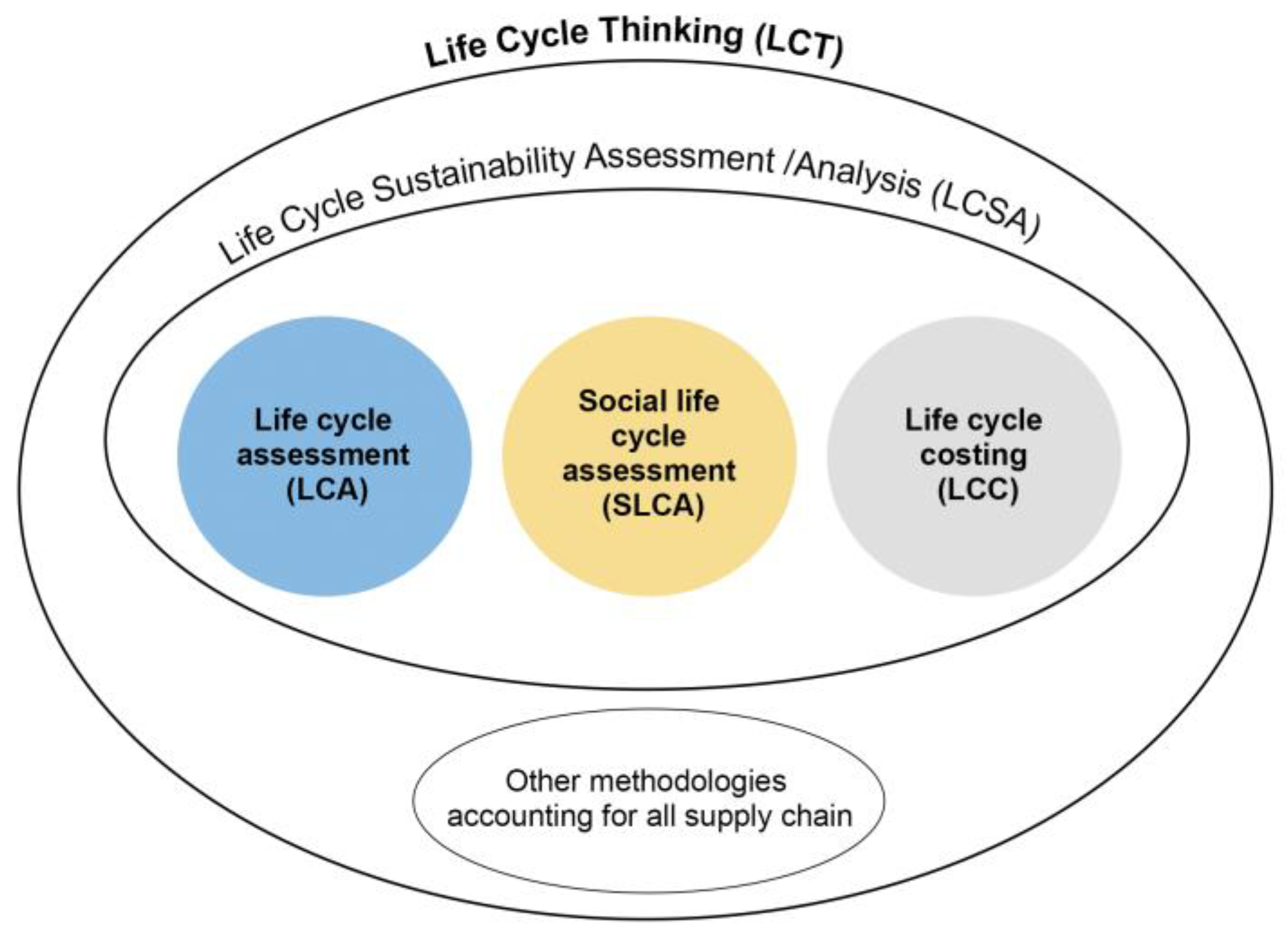
Figure 2.
Number of results related to the three selection criteria. Source: Authors' elaboration.
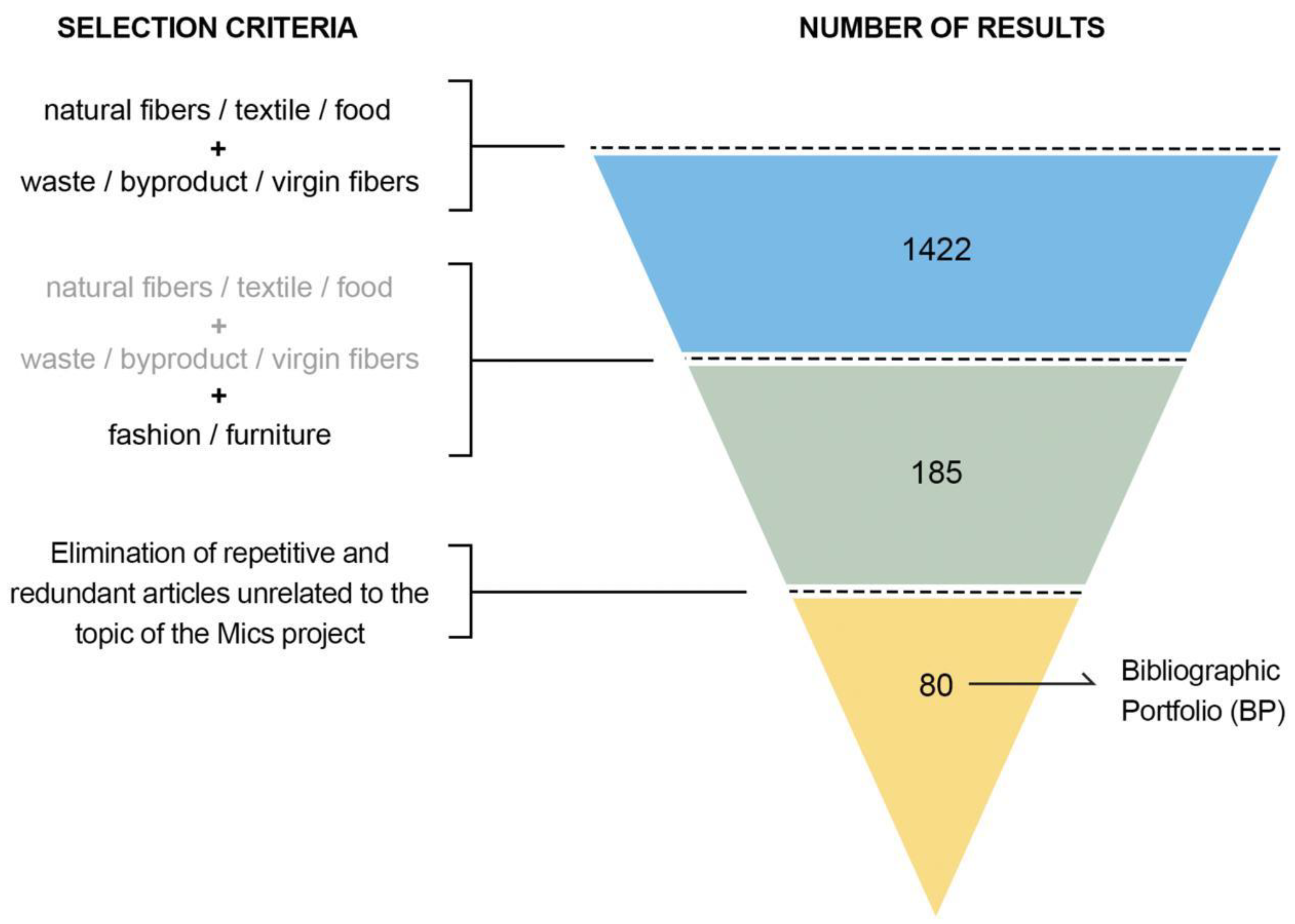
Figure 3.
Number of results expressed by approaches (first selection criterion). Source: Authors' elaboration.
Figure 3.
Number of results expressed by approaches (first selection criterion). Source: Authors' elaboration.
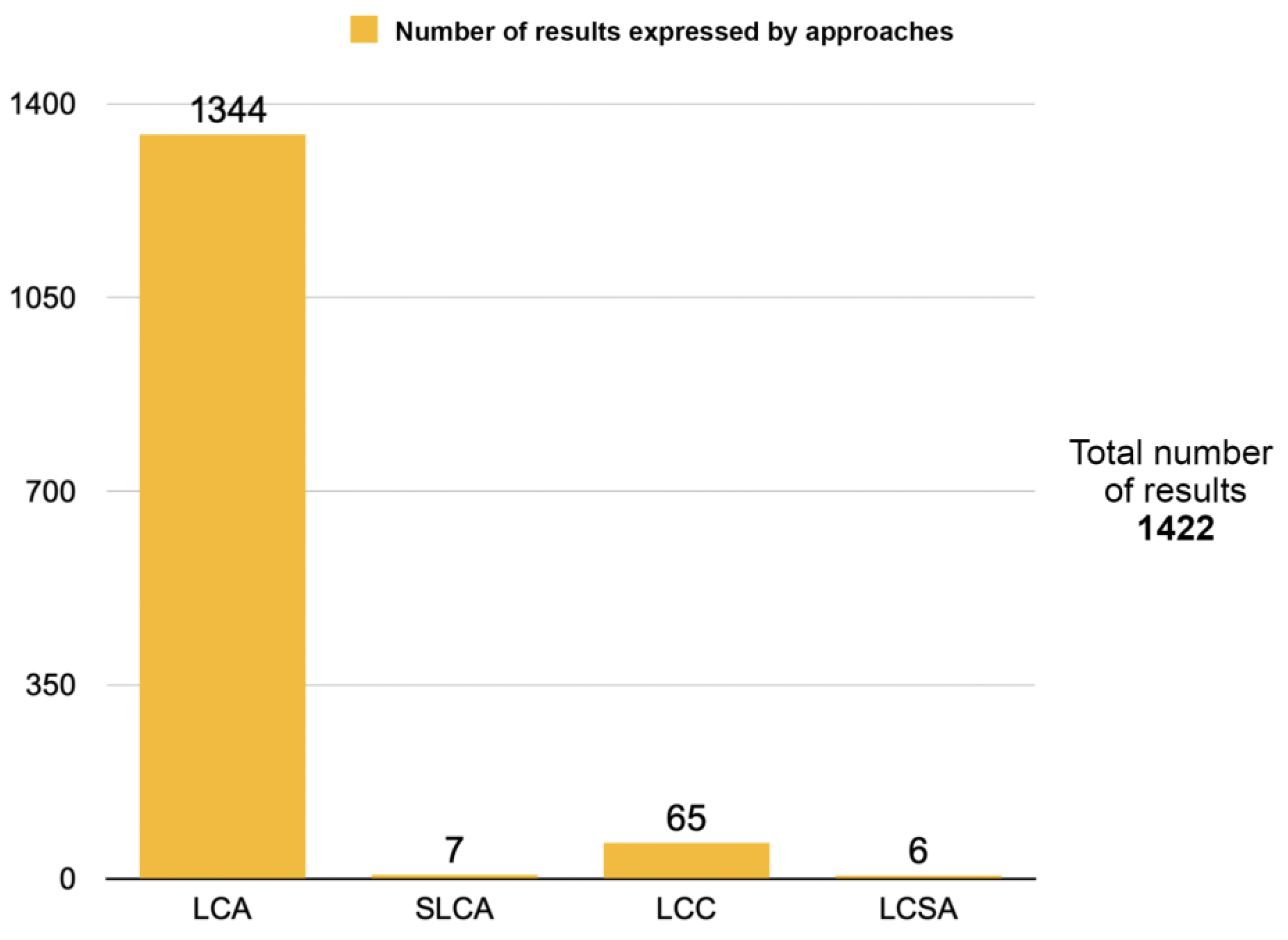
Figure 4.
Number of results expressed by keywords in relation to approaches (first selection criterion). Source: Authors' elaboration.
Figure 4.
Number of results expressed by keywords in relation to approaches (first selection criterion). Source: Authors' elaboration.
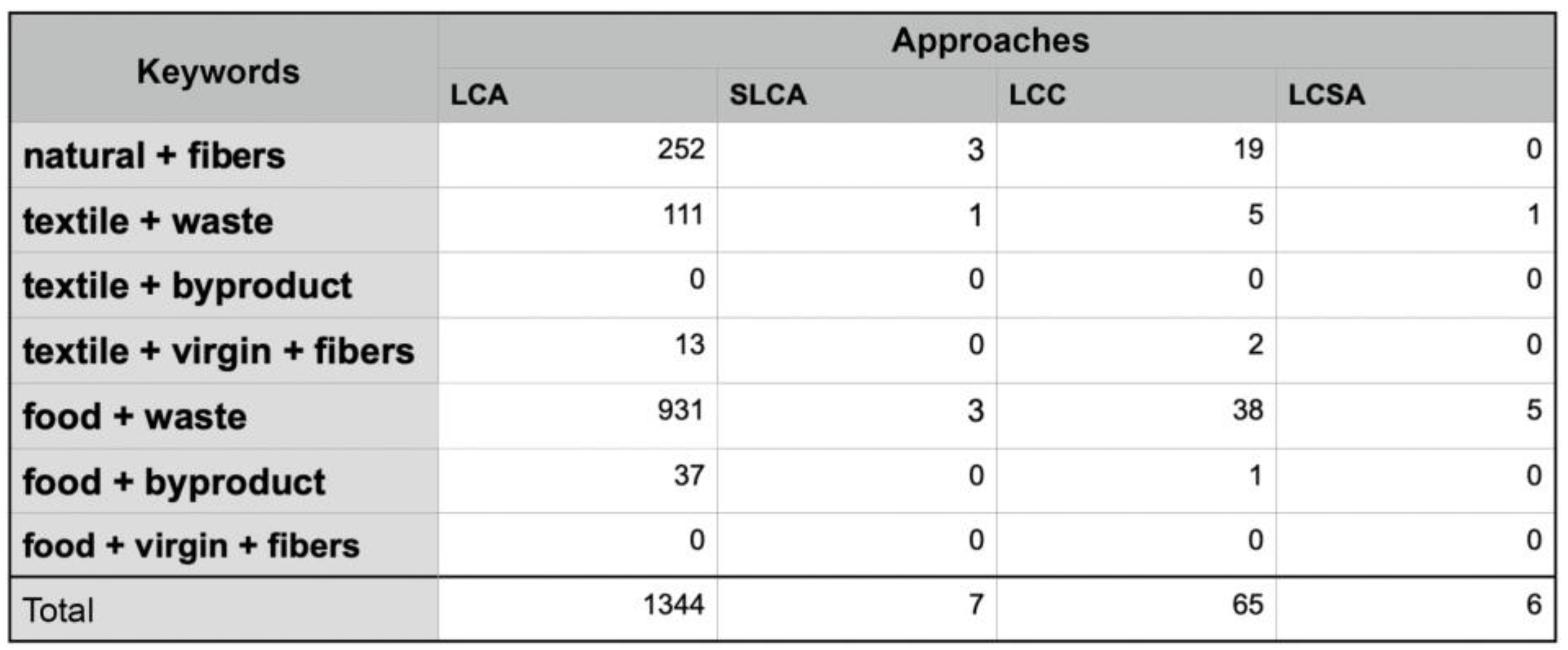
Figure 5.
Time distribution of publications (2005-2023)1. Source: Authors' elaboration.
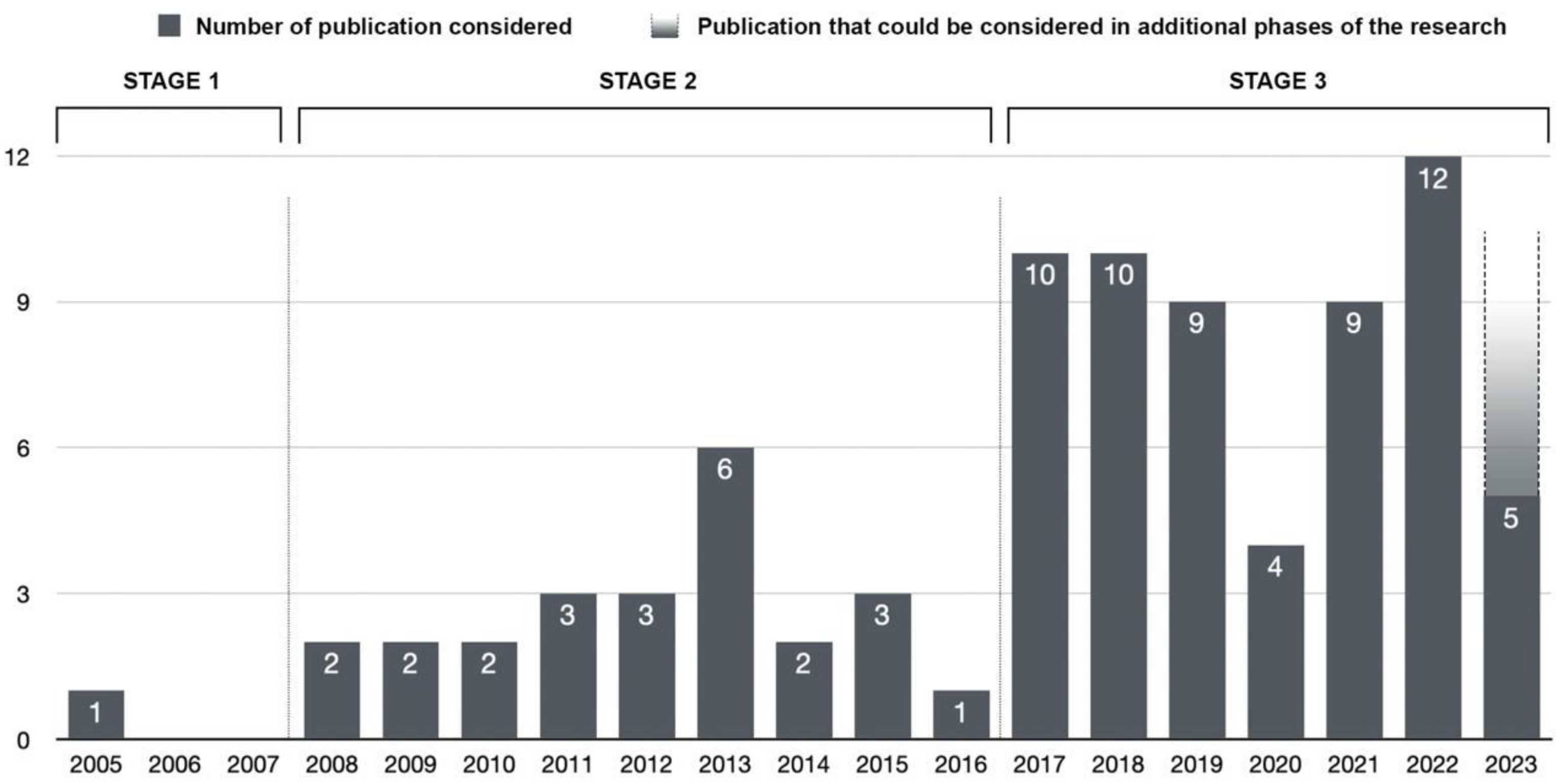
Figure 6.
Relevance of countries based on number of publications, citations and the strength of links. Source: Authors' elaboration using VOSviewer software.
Figure 6.
Relevance of countries based on number of publications, citations and the strength of links. Source: Authors' elaboration using VOSviewer software.
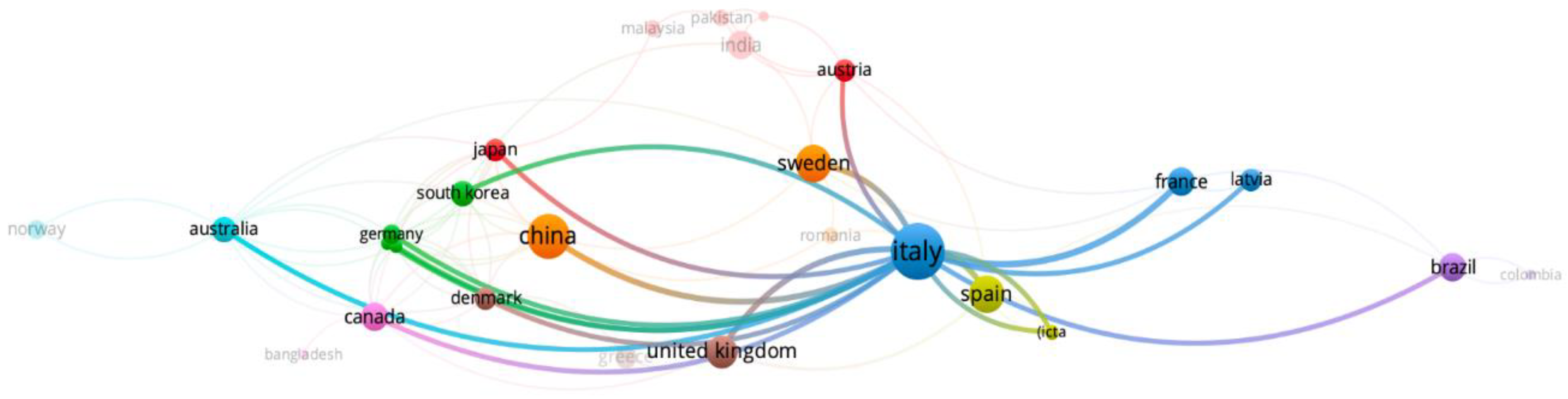
Figure 7.
The keyword mapping performed using VOSviewer software. Source: Authors' elaboration.
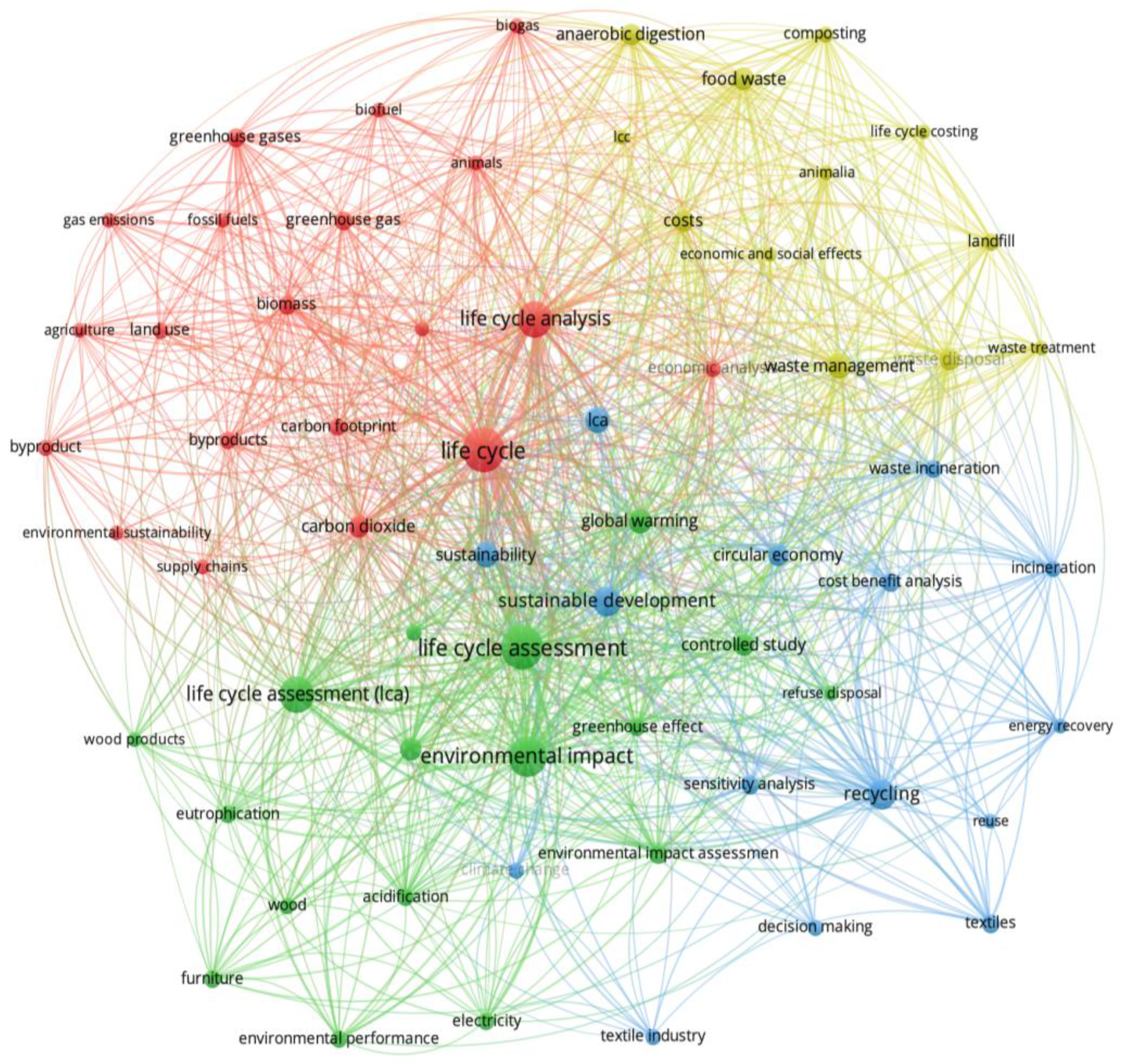
Figure 8.
BP's top 15 keywords by recurrence and strength of connections. Source: Authors' elaboration.
Figure 8.
BP's top 15 keywords by recurrence and strength of connections. Source: Authors' elaboration.
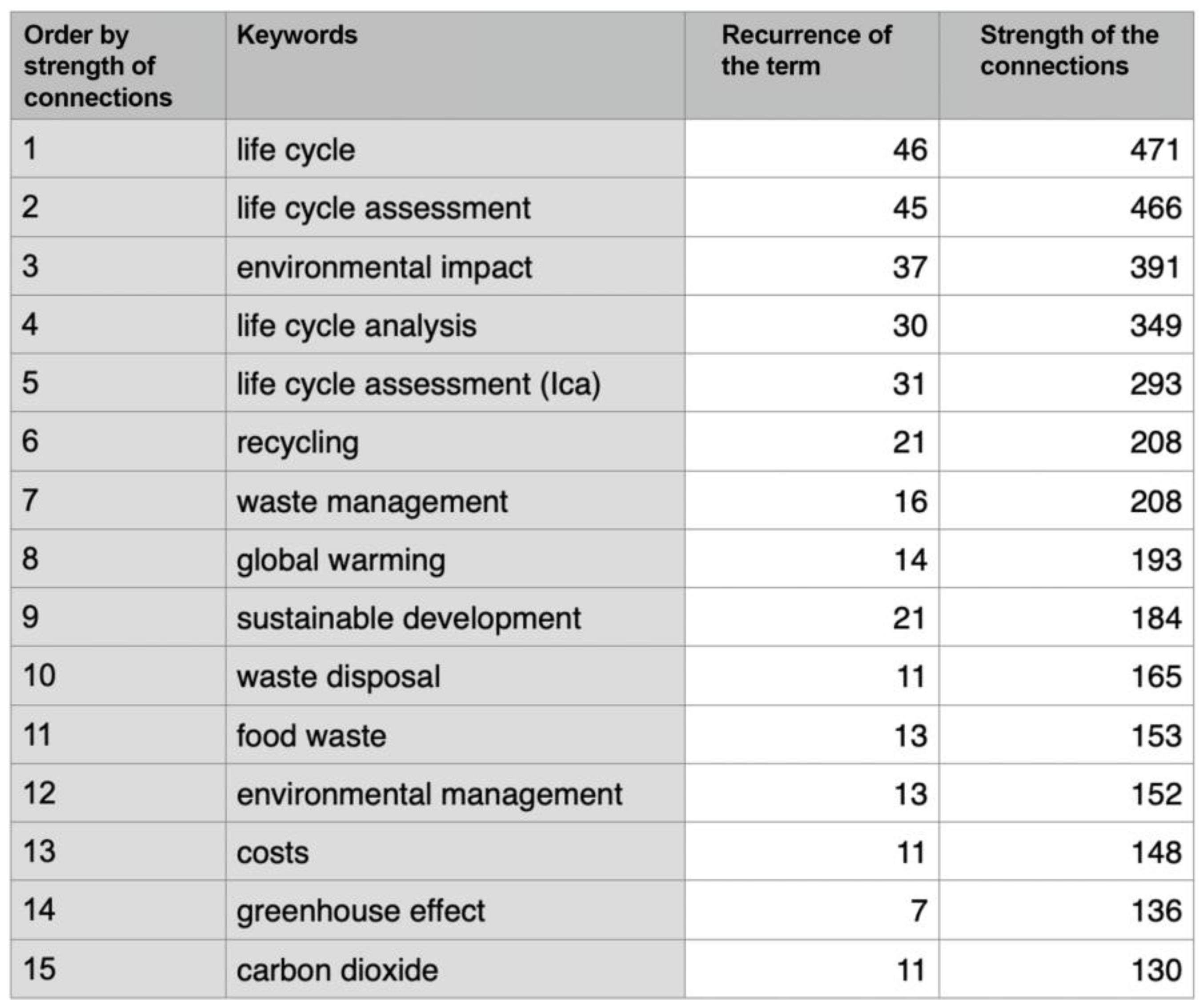
Figure 9.
Percentage prevalence of clusters. Source: Authors' elaboration.
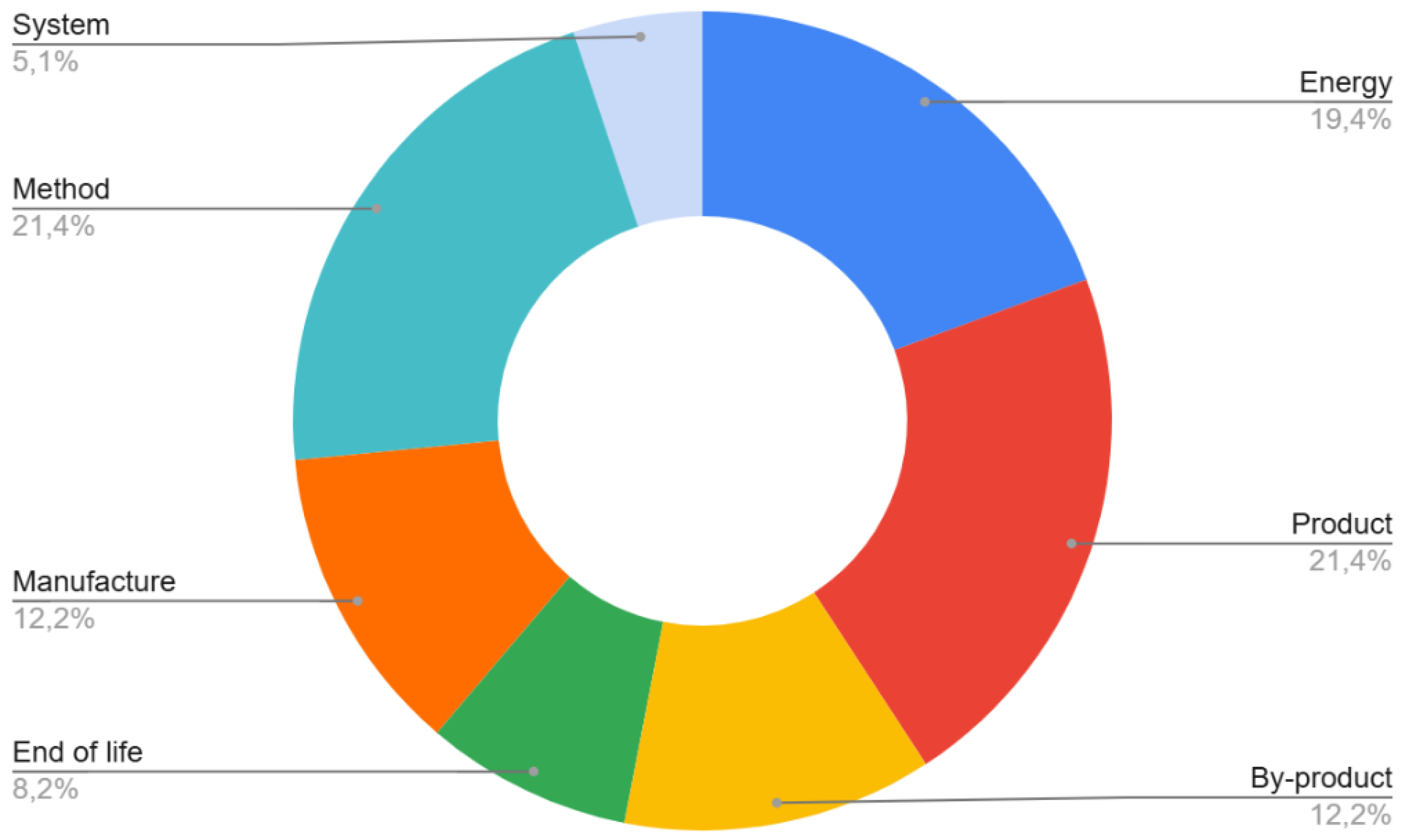
Figure 10.
Percentage prevalence of categories. Source: Authors' elaboration.
Disclaimer/Publisher’s Note: The statements, opinions and data contained in all publications are solely those of the individual author(s) and contributor(s) and not of MDPI and/or the editor(s). MDPI and/or the editor(s) disclaim responsibility for any injury to people or property resulting from any ideas, methods, instructions or products referred to in the content. |
© 2024 by the authors. Licensee MDPI, Basel, Switzerland. This article is an open access article distributed under the terms and conditions of the Creative Commons Attribution (CC BY) license (http://creativecommons.org/licenses/by/4.0/).
Copyright: This open access article is published under a Creative Commons CC BY 4.0 license, which permit the free download, distribution, and reuse, provided that the author and preprint are cited in any reuse.


