

Submitted:
18 September 2024
Posted:
18 September 2024
You are already at the latest version
Abstract
This study introduces the Data-Driven Personalized Learning Model (DDPLM), a sophisticated framework designed to enhance foreign language acquisition through the integration of big data analytics. Implemented within the educational platforms Edmodo and Duolingo, DDPLM utilizes real-time data processing to tailor learning paths and content dynamically to individual learner needs. Our findings indicate significant improvements in language learning efficiency, engagement, and retention. The model's adaptability across different digital environments showcases its potential scalability and effectiveness in various educational contexts. Additionally, the research addresses the critical role of personalized feedback and adaptive challenges in maintaining learner motivation and promoting deeper linguistic comprehension. The outcomes suggest that DDPLM significantly transforms traditional language education, making it more personalized, efficient, and aligned with individual learning preferences.
Keywords:
Personalized Learning
; Big Data Analytics
; Language Acquisition
; Educational Technology
; Learner Engagement
1. Introduction
1.1. Research Background
Exploring the intersection of big data analytics and language learning, this paper seeks to address the under-explored potential of personalizing language acquisition pathways. Traditional methods often fail to accommodate the vast diversity in learner profiles and progress rates, leading to suboptimal educational outcomes. The advent of big data offers unprecedented opportunities to harness extensive datasets for nuanced understanding and tailored educational strategies [1]. Studies increasingly highlight the role of learner data in crafting dynamic learning environments that respond in real-time to the needs of the individual [2]. Yet, a significant gap remains in comprehensive frameworks that integrate these vast data reservoirs effectively into language education practices. Figure 1 below illustrates the proposed framework for integrating big data into language education, outlining the data flow from collection through to application, essential for tailoring educational strategies. This research aims to bridge this divide by proposing a robust model that accommodates individual learning trajectories and scales across diverse linguistic landscapes [3]. The urgency for such advancements is underscored by the global demand for effective foreign language education, propelled by increasing international mobility and cross-cultural communication needs [4]. This study is positioned at the nexus of technological innovation and educational methodology, offering a fresh perspective on big data's role in educational paradigms. The current research endeavors to transform how language learning is conceptualized, delivered, and optimized in the digital age through this lens.
1.2. Study Objectives
The primary goal of this research is to create and verify the data-driven personalized learning model (DDPLM) that enhances foreign language acquisition with the help of utilization of the big data approaches. The main purpose is to show how personalized learning paths can be formulated and ensured to enhance learning outcomes in language. For this purpose, the study seeks to achieve several specific goals.
The objectives of this study include determining the main variables that influence the progress and results of language learning from a big data point of view. The study aims at utilizing the predictive capacity of big data to identify regularities and trends that would, in turn, guide more efficient learning strategies [5]. It includes demographic and linguistic information and interaction data from digital learning systems. To better understand the impact of demographic variables on language learning outcomes, Table 1 provides a demographic breakdown of the learners involved in the study.
The study seeks to develop an inclusive framework that integrates these variables into a single model [6]. The framework is meant to enable the development of adaptive learning environments that respond dynamically to the demands of every learner. The operational feasibility of DDPLM will be tested thoroughly with empirical data to establish its validity in diverse language learning contexts [7].
The study will focus on DDPLM's implications for present educational practices and policies. It provides practical details on how data-oriented methodologies can be seamlessly included in current educational models to produce more individualistic and effective learning patterns.
This study seeks to analyze the scalability of the model under question. It will assess the applicability of DDPLM beyond diverse linguistic and cultural arenas to all scales of language learning activities, from small groups in classrooms to mega-sized platforms on the Internet.
The research intends to enrich the theoretical discussion on language learning and big data by integrating fresh findings into a coherent story. This would be the linking rubber between theoretical principles and practical actions and would thus bring the field of language education into the new digital era. Table 2 lists predictive factors identified through big data analysis and their correlation with language learning success.
This study aims to accomplish these goals to set the stage for the development of a new kind of language education that will be adaptive, productive, and suitable for learners from different countries.
1.3. Structure of the Paper
The organization of this paper is designed to provide a coherent exploration of the theoretical and practical elements involved in using big data to personalize foreign language learning. The structure is crafted to guide the reader through a logical progression from the conceptual foundations to practical applications and critical evaluations.
The paper begins with the current section, introducing the research background and objectives, followed by a comprehensive review of the literature in Section 2. This section delves into the evolution of language learning theories, the role of big data in educational research, and the development of personalized learning systems. It sets the stage for understanding the gap this research aims to fill.
Section 3 presents the theoretical foundations that underpin the study, detailing key concepts in language acquisition and the impact of technological advancements on learning processes. It also discusses how big data can be integrated effectively into language learning strategies.
In Section 4, the paper describes the conceptual framework of the Data-Driven Personalized Learning Model (DDPLM), outlining its components and demonstrating how it can be applied to create tailored learning experiences. This section is central to the paper as it introduces the model developed through this research.
Section 5 applies the DDPLM in two distinct case studies—Edmodo and Duolingo—to empirically test the framework's effectiveness and adaptability. This section provides a detailed analysis of each case study, including background, implementation processes, and key findings.
Section 6 discusses the implications of the findings, comparing them with existing models and discussing their significance for the broader field of language learning and educational technology.
Section 7 concludes the paper with a summary of the key findings, recommendations for future research, and a discussion of the study's limitations. This final section reflects on the broader impact of the research and its contributions to the field of education.
2. Literature Review
2.1. Evolution of Language Learning Theories
The movement through the theoretical landscapes of language learning has been dynamic and characterized by large paradigm shifts. Initial methods were focused on grammar-translation techniques that promoted memorization and literal translation of texts. While these methods were very common in the past, their use became much less popular with time as the shortcomings of purely structural methods started to be obvious.
The communicative approach, which appeared in the second half of the 20th century, changes the emphasis from form to function; in this way, it promotes language as a means of real-life communication [8]. This method underlined the significance of Interaction and the situational aspect of language, allowing for more hands-on, active types of language teaching [9]. This model was enriched by introducing theories from the sociocultural view of linguistics that brought such concepts as language socialization and the role of the cultural context in language acquisition [10].
Concurrently, cognitive theories started to influence language learning, focusing on comprehension of the mental processes involved in language acquisition. These theories claim that the human brain is intrinsically able to process and create linguistic knowledge as a complex adaptive system. Technology and multimedia in the educational environment have become necessary tools for developing cognitive aspects of language learning through more interactive and learner-centered methods.
Constructivism developed these notions by stating that learners develop meaning and understanding of the world by doing and reflecting on those things. In language learning, this meant task-based learning and content-based instruction, where language is learned about specific tasks or subject matter pertinent to the learners. Table 3 compares the effectiveness of different language learning models discussed in this section.
Language learning theories have welcomed big data and analytics opportunities due to the digital revolution. The large amounts of data produced by online learning interactions provide rich information about learner behaviors, inclinations, and difficulties. Adaptive learning systems have become central, employing advanced algorithms to deliver personalized learning experiences grounded in real-time data. These systems question conventional static education models and bring in possibilities for interactive, customized learning interventions.
In addition, modern networked learning theories, such as connectivism, see learning as the process of building connections and networks. This theory gains particular relevance in the digital era, where knowledge is considered distributed among a network of connections, and learning is the skill to navigate and evolve these networks. Connectivism supplies a basis that big data analytics can be used in language learning that is valid in that it emphasizes pattern recognition, decision-making, and technology in learning.
With the development of language learning theories, the incorporation of those various educational philosophies with big data analytics will continue to revolutionize the arena of language teaching. The integration corresponds with modern educational requirements and strengthens the effectiveness and personalization of language learning approaches, consequently meeting the individual learners' needs in a digitalized global context.
2.2. Role of Big Data in Educational Research
Integrating big data into educational research has ushered in a transformative era marked by enhanced analytical capabilities and previously unattainable insights. In language learning, big data has emerged as a pivotal force, offering novel methodologies for understanding and improving pedagogical approaches. This section explores big data's significant role in reshaping educational landscapes, particularly focusing on its impact on language learning.
Big data in education typically involves collecting and analyzing large volumes of data generated from various sources, including learning management systems (LMS), online courses, mobile learning applications, and social media interactions [11]. These data points provide a rich tapestry of information that encompasses everything from student engagement metrics and assessment results to interaction patterns. By harnessing these extensive datasets, educators and researchers can uncover deep insights into student learning behaviors, preferences, and overall efficacy of teaching methods.
One of the primary roles of big data in educational research is personalizing learning. Through data analytics, educational content and pedagogy can be tailored to meet the unique needs of each learner. Adaptive learning technologies leverage big data to modify learning paths in real time based on the learner's progress, strengths, and weaknesses. This approach optimizes learning outcomes and enhances learner engagement and motivation by providing challenges that are neither easy nor difficult.
Big data facilitates the identification of predictive factors that contribute to learning success or failure. Predictive analytics can forewarn educators about potential learning difficulties, enabling preemptive actions to aid struggling students. This predictive capacity extends to modeling educational outcomes, allowing institutions to refine curricula and resources to better serve their student populations.
The scalability of big data applications also plays a crucial role in educational research [12]. Big data technologies enable the analysis of educational trends across vast numbers of learners, which can be instrumental in formulating educational policies and strategies at a macro level. This wide-angle view of educational data helps identify broader trends and patterns that may not be visible at smaller scales, thus contributing to a more comprehensive understanding of educational dynamics.
In addition to personalization and predictive analytics, big data also enhances the collaborative and communicative aspects of learning. Social learning analytics, a subset of big data analysis, explores how learners interact within online communities and how these interactions contribute to learning. Insights derived from social learning analytics can inform the design of more collaborative and interactive learning environments, further enriching the learning experience.
The integration of big data into educational research is not devoid of challenges. Issues related to data privacy, ethical considerations, and the need for robust data governance frameworks are paramount. Ensuring the security and privacy of learner data while exploiting its full potential requires careful balance and adherence to ethical standards.
Big data has become an indispensable tool in educational research, offering unprecedented opportunities to enhance learning through personalization, predictive insights, and scalable solutions. As technology continues to evolve, the role of big data in education is set to expand, promising to further revolutionize how educational research is conducted and how learning is delivered and assessed.
2.3. Review of Personalized Learning Systems
Personalized learning systems are a significant paradigm shift in educational technology that seeks to customize the learning process to a student's individual requirements and purposes. The development of big data analytics and artificial intelligence has significantly facilitated the progress and implementation of such systems. This part discusses the development of personalized learning systems, their influence on language learning, and the key role of big data in making these systems efficient.
Early personalized learning systems were basic adaptive programs that changed task difficulty according to student performance. However, with the advancement of technology, these systems developed algorithms that could analyze complex learner data and deliver tailored learning experiences [13]. Nowadays, these systems use nearly all imaginable data points, such as real-time performance, learning preferences, engagement levels, and even emotional states, allowing them to dynamically adapt the selection of instructional content and methodologies [14].
Big data plays several roles in personalized learning systems [15]. First, it provides for collecting and processing big sets of information from different sources, including digital books, online forums, and media files. This data integration offers a complete picture of the learner's engagement with the material and other students, which leads to a more detailed understanding of learning behaviors and preferences. As an example, interaction data can be used by language learning platforms to spot patterns in language acquisition, like frequent mistakes or topics that learners find especially difficult or amusing.
Big data enables the development of predictive models to forecast learner needs. These models have the ability to predict the learning barriers in advance and provide personalized interventions before the learner runs into trouble. Such curriculum personalization can be proactive in nature; for instance, if a learner tends to find some grammatical structures of a new language difficult systematically, the system will adjust the curriculum to provide additional practice and resources specific to that challenge.
Big data-powered personalized learning systems can increase motivation and engagement by linking educational content to the student's interests and professional goals. This is possible in language learning when you choose texts and activities that fit the purpose for which you intend to use the language, such as business, travel, or cultural studies. Such relevance enhances engagement and the practical use of the learning process.
Collaborative learning is also a domain where personalized systems have made impressive progress. Big data analytics help these systems provide recommendations for peer learners with similar skills or interests, thereby enhancing the group learning experience. This functionality is particularly important in language education, where communicative and interactive skills are essential for developing proficiency.
However, even after these developments, the challenges persist in the larger implementation of personalized learning systems. Problems like data privacy, algorithmic bias, and the digital divide are significant obstacles to effectiveness and equitable access. Furthermore, the problem is how these systems can seamlessly integrate into traditional educational environments without disturbing the existing pedagogical processes.
Language learning is one area that has benefited the most from personalized learning systems. Big data has become the heart of these advances, providing more interactive, engaging, and efficient educational processes. These systems are expected to further democratize education by making learning more accessible and personalized, although this will require the ongoing consideration of challenges stemming from these highly advanced methods.
3. Theoretical Foundations in Language Learning
3.1. Key Concepts in Language Acquisition
Understanding language acquisition involves unraveling the complex interplay of cognitive, social, and environmental factors that influence language learning. This section highlights key concepts fundamental to the study of language learning, which are crucial for developing effective big data-driven personalized learning systems.
Innateness is a core concept in linguistics, positing that the ability to acquire language is hard-wired into the human brain [16]. The theory of Universal Grammar, proposed by Noam Chomsky, suggests that the underlying structural principles of all languages are innate and that specific languages are learned through exposure. This concept has profound implications for designing learning systems that accommodate natural language processing abilities inherent in all learners.
Social Interaction plays a pivotal role in language acquisition. Vygotsky's Sociocultural Theory emphasizes that language learning is deeply embedded in social contexts and interactions [17]. This theory advocates integrating collaborative tools in learning platforms that mimic real-life interactions, enhancing language skills through social engagement.
Comprehensible Input is another significant concept introduced by Stephen Krashen [18]. It stresses the importance of delivering language input that is slightly beyond the current level of the learner's comprehension, known as "i+1." Effective personalized learning systems use big data analytics to adjust the complexity of language input to dynamically match each learner's proficiency level.
Feedback and Error Correction are crucial for language development. Interactionist theories highlight the role of feedback in learning, suggesting that corrections during language use help learners refine their understanding and use of language structures. Personalized learning systems, therefore, must incorporate mechanisms for immediate and constructive feedback, leveraging data on individual learner responses to tailor feedback effectively.
Motivation and Affective Factors also significantly influence language learning [19]. Dörnyei’s L2 Motivational Self System underlines the importance of motivation driven by a learner’s vision of themselves as successful language users in the future. Personalized systems can enhance motivation by providing personalized goal-setting and rewards that align with individual aspirations and interests.
These concepts collectively guide the development of sophisticated language learning systems that can adapt to each learner's unique needs. By leveraging big data to implement these theories in practical, scalable ways, educational technology can offer more nuanced and effective language learning experiences.
3.2. Impact of Technological Advancements
Technology development has dramatically changed the landscape of the learning process, allowing for innovative educational practices and methods. This part delves into how these changes have affected language acquisition, emphasizing the incorporation of technology in personalized learning environments.
Digital tools and resources have significantly changed the availability and variety of language learning materials [20]. With the advent of online dictionaries, language apps, and virtual classrooms, learners have had instant access to resources that were previously out of reach for many. These tools provide ease and introduce a level of interactivity that traditional textbooks can never reach. Figure 2 below provides a quantitative comparison of learning outcomes before and after the adoption of AI and ML tools, highlighting their transformative impacts on language education.
Moreover, artificial intelligence (AI) and machine learning (ML) technologies have developed adaptive learning systems capable of forecasting learner behaviors and thus adjusting educational content [21]. AI algorithms can scan large quantities of data from student interactions to detect patterns and preferences, redistributing the learning path in real-time to achieve better educational results. The ability is especially precious in language learning, where the speed and manner of acquisition can vary greatly in different human beings.
Speech Recognition and Natural Language Processing (NLP) technologies are essential in improving language fluency, enabling learners to practice speaking and get immediate corrections. These technologies evaluate speech pronunciation, fluency, and grammar, providing improvements, corrections, and suggestions that enhance linguistic precision and confidence. The relevance of these tools in learning platforms has helped make conversational practice easier and more effective, enabling learners to replicate and practice real-life conversations without human Interaction.
VR and AR are immersive experiences that have been very successful in language education. Through virtual and augmented reality, contextually rich learning scenarios can be developed by simulating real-life environments and interactions, which increases comprehension and retention. These technologies involve engaging and memorable experiences, facilitating and highly increasing language acquisition in situational contexts.
Data Analysis is central to comprehension and advancement in the learning process. Educators can make informed decisions that improve instructional strategies by collecting and analyzing fine-grained learner performance and behavior data. In language learning, data analytics can help determine which linguistic elements are most difficult for the learners, thus enabling customized interventions specifically needed for the individual.
Advancements in technology have, therefore, not only improved the traditional approaches to language learning but also introduced new aspects of education that are in tune with the digital age. These innovations are still changing the industry by making language learning more individual, open, and efficient.
3.3. Integration of Big Data in Language Learning
Integrating big data into language learning represents a significant leap forward in how educators approach language instruction. Leveraging large volumes of data collected from various educational technologies, educators can now craft personalized learning experiences that are data-driven and evidence-based. This section explores the key areas where big data integration has enhanced the language learning process.
Personalized Learning Pathways are at the forefront of this transformation [22]. Big data allows for the analysis of detailed learner profiles, which include information on individual progress, preferences, and challenges. By utilizing predictive analytics, educators can forecast potential learning blocks and tailor the instruction to suit individual needs, optimizing each student's learning trajectory.
Real-Time Feedback Systems utilize big data to respond immediately to student interactions within the learning platform. This immediate feedback is crucial for language learning, where the timely correction of errors and reinforcement of correct usage can significantly impact language acquisition. Advanced algorithms analyze learner inputs and offer corrections and suggestions that are contextually relevant and pedagogically sound.
Learner Engagement and Motivation can also be enhanced through the strategic use of big data [23]. By analyzing data points such as time spent on tasks, completion rates, and interactive patterns, educators can identify engagement trends and adjust the learning materials to better capture the learner’s interest. Gamification elements, for example, can be introduced or modified in real-time to increase motivation and sustain engagement over longer periods.
Curriculum Development benefits from big data by providing insights into the effectiveness of certain teaching methods and materials [24]. Comprehensive data analysis helps educators understand what works and what doesn’t, enabling them to continually refine and improve the curriculum. This dynamic approach to curriculum design ensures that the educational content remains relevant, effective, and in line with current linguistic theories and pedagogical practices.
Big data enhances Collaborative Learning Environments by analyzing interaction patterns among learners [25]. By understanding how students collaborate and communicate in group settings, educators can foster more effective peer learning experiences. This not only enhances language practice and application but also builds critical social and cultural communication skills that are essential for language mastery. To provide a clear overview, Table 4 summarizes the integration of big data in language education, highlighting the main benefits.
In summary, integrating big data into language learning transforms traditional methodologies, making education more adaptive, responsive, and effective. As big data continues to evolve, its application in education promises to unveil even more sophisticated approaches to teaching and learning, paving the way for a future where educational experiences are truly personalized and learner-centered.
4. Conceptual Framework: DDPLM
4.1. Framework Overview
The Data-Driven Personalized Learning Model (DDPLM) is the fusion of linguistic, pedagogical, and computational disciplines devised to address the subtlety of contemporary language education requirements. This model combines the accuracy of big data analytics with the kinetics of language learning, providing a methodical yet dynamic method of creating individualized learning programs. The core of DDPLM is its ability to utilize huge volumes of educational data and convert them into useful outputs that directly change language learning processes [26].
Fundamentally, DDPLM is underpinned by a layered analytic model that reviews student data from different perspectives, including proficiency levels, learning rates, and interaction patterns. This approach makes it possible to discern individual learning journeys and helps deliver content and learning strategies that meet specific learner needs. The framework uses sophisticated algorithms operating on learner data in real time, ensuring the learning environment morphs with the learner's progress.
The Set of DDPLM is built to be flexible and scalable and can be used in all educational settings and learners' populations. It incorporates several key components, including intuitive user-centric design modules [27]. The components operate in unison to ensure a continuous learning experience that is both interesting and successful.
Data collection in DDPLM is also comprehensive in that it captures a wide spectrum of learner behaviors, including direct inputs such as test responses and writing samples, to indirect behaviors such as time spent on tasks and navigation patterns. Therefore, this all-encompassing data set is indispensable for creating a thorough insight into learner behaviors and preferences.
The model's analytical engine uses a machine learning approach to reveal complicated patterns inherent in the data, which gives a view of how the learners are doing and why certain instruction strategies work while others fail. This analysis provides the background supporting the creation of predictive models that forecast learner needs and tailor instructional content accordingly [28].
Content adaptation in DDPLM is fluid and influenced by continuous data analysis. Learning resources and activities are modified to provide the learner with appropriate levels of challenge, thereby maximizing learning progression. The content is non-static but changes according to the learner's interactions and attainment levels, preserving educational relevance and effectiveness.
By its integrative design, DDPLM intends to change traditional language learning into a systematic, personalized, and data-driven way that promotes virtual learning and the learning of individual differences.
4.2. Model Components
The Data-Driven Personalized Learning Model (DDPLM) integrates several key components to optimize the foreign language learning experience. Each component functions synergistically, contributing to a holistic and adaptive learning environment. This section delves into the primary elements that constitute the DDPLM, outlining their roles and interconnections.
At the foundation of DDPLM lies an extensive data collection system [29]. This system gathers diverse forms of learner data, including performance metrics, behavioral analytics, and contextual information. Integrating this data is crucial, as it feeds into the analytical engines that drive personalized learning paths. Data sources range from interactive online platforms to traditional classroom settings, where digital tools are used to track and record learner interactions.
The analytical engine is the heart of DDPLM, employing sophisticated algorithms that process and analyze the collected data [30]. Utilizing machine learning and data science techniques, this engine identifies patterns and trends in learner behavior and performance. The insights derived from this analysis are pivotal in adapting learning content and methodologies to suit individual learner profiles. This engine assesses current levels of understanding and skill and predicts future learning trajectories.
Based on the insights provided by the analytical engine, the adaptive content delivery system customizes educational content in real-time. This system adjusts language learning materials' difficulty, format, and pacing according to the learner's evolving needs [31]. Whether scaling complexity up or down, the system ensures that the learning challenges are perfectly balanced to maintain engagement and promote effective learning.
An intuitive and responsive user interface is critical for facilitating learner interaction with the DDPLM. This interface is designed to be user-friendly, enabling learners to easily navigate their personalized learning paths. It provides immediate feedback, supplementary resources, and motivational cues, all tailored to enhance the learning experience and encourage learner autonomy.
Continuous assessment is integral to the DDPLM, providing learners and educators with timely feedback regarding progress and areas needing improvement [32]. This module uses data-driven insights to generate personalized assessments that accurately reflect the learner's proficiency and learning speed. Feedback mechanisms are designed to be constructive, offering clear, actionable advice for improvement.
Recognizing the importance of social learning, DDPLM incorporates a collaborative network where learners can interact, discuss, and practice language skills with peers. This component leverages social learning theories and big data analytics to enhance engagement and allow learners to benefit from collective knowledge and experiences.
These components of DDPLM create a robust framework that adapts to individual learner profiles and scales across diverse educational environments. By continuously analyzing and responding to each learner's needs, DDPLM represents a significant advancement in personalized language education.
4.3. Application of the Model
Deeply within the big data analysis, the Data-Driven Personalized Learning Model (DDPLM) presents a comprehensive language learning approach that is indeed adaptive and personalized. Here, we outline the model's implementation in different education contexts, demonstrating its flexibility and strengthening.
The implementation of DDPLM starts with an initial preparation phase, in which the data collection systems are incorporated into the language learning environment [33]. This also entails setting up a digital environment to capture all sorts of learner interactions, including quiz results, time spent on different activities, forum contributions, and mouse movements. The data serves as the basis for the rest of the analyses and adaptations.
After the data collection process begins, the analytical engine of DDPLM keeps analyzing the incoming data to evaluate the learner's progress and change learning paths. Another example would be when a learner is having difficulty with a particular grammar area; the system should be able to automatically introduce additional activities related to that topic ranging from easy to challenging until the learner obtains mastery. On the other hand, the system may also speed up the process for the fast learners by giving them more complicated tasks, thus keeping them active in learning.
One of the main characteristics of DDPLM is its provision of instant, personalized feedback to learners [34]. This feedback is derived from an analysis of performance data and comparing it with the learning objectives. Should a learner make a mistake, the system provides the learner with an explanation of why the answer was wrong and offers hints or extra resources. This loop of continuous feedback guarantees that learners stay informed about their progress and receive constant support on their learning journey.
DDPLM is meant to be adaptable and can be used as an add-on to the existing curriculum at any level of education, from elementary language classes to postgraduate language training. Educators can use the system to supplement traditional teaching methods, resulting in a more diverse, intriguing learning experience tailor-made to the needs of every student.
In addition to individual learning, DDPLM supports projects and discussions among the learners [35]. The system analyzes communication patterns and group dynamics and suggests the best teams for collaborative tasks, considering the complementariness of skills and learning styles. This contributes to the communicative character of learning, which is decisive for language education because of the substantial part that the practice of communication plays.
In addition, DDPLM provides advanced monitoring and reporting tools for educators and administrators that enable them to track class performance, learner progress, and the effectiveness of teaching methods. With these tools, educators can make optimal decisions regarding pedagogical approach and resource distribution.
Implementing the DDPLM in language learning personalizes the learning process and improves it by making it more reactive and efficient. By utilizing smart big data processing, DDPLM reshapes traditional language education to dynamic interactivity and a complete modernization process.
5. Case Studies
5.1. Selection of Case Studies
Two distinct case studies, Edmodo and Duolingo, demonstrate the implementation and efficacy of the Data-Driven Personalized Learning Model (DDPLM) [36]. These platforms were selected for their extensive user bases and robust data generation capabilities, which provide a rich context for applying and evaluating the DDPLM. Each case study offers unique insights into how the model adapts to different learning environments and user needs, showcasing the model's flexibility and scalability.
Edmodo serves as a case study due to its widespread use in educational institutions around the globe [37]. It functions primarily as a classroom management tool that facilitates communication between teachers and students and offers functionalities for distributing and grading assignments. The platform's comprehensive data collection capabilities allow for detailed student progress and engagement tracking, making it an ideal environment for implementing the DDPLM [38]. By integrating DDPLM, Edmodo's existing educational tools are enhanced to provide personalized learning experiences based on individual student data.
Duolingo, on the other hand, is chosen for its focus on language learning through interactive activities. It is renowned for its gamified approach to education, which engages users in language tasks that adapt to their learning speed and proficiency level. Duolingo's data-rich environment captures many learner interactions, from completed exercises to time spent on tasks. Applying DDPLM to this platform demonstrates how big data can fine-tune learning activities and paths, ensuring that each user's experience is optimally challenging and engaging.
These case studies were selected not only for their alignment with DDPLM's goals but also for their potential to illustrate the model's application across different types of educational technology platforms. By analyzing these implementations, we can evaluate DDPLM's practical benefits and challenges in real-world educational settings.
5.2. Case Study 1: Edmodo
5.2.1. Background
Edmodo is one of the most popular educational technology platforms used by most students and teachers to gain access to and share information, resources, and feedback in a safe environment. Starting in 2008, it has now grown to cater to millions of users at all levels of education, from primary schools to universities around the world. The platform has an interface of a social network, and users are used to communicating online, which makes it user-friendly. Among its features are assignment submission, quizzes, polls, and a resource-sharing system, all designed to improve the student experience in the actual classroom and online.
The choice of Edmodo for a case study of the Data-Driven Personalized Learning Model (DDPLM) is deliberate, considering its powerful data analytics feature and high usage. Edmodo produces a lot of interaction data, such as student submissions, time logs, discussion entries, and direct messages. This data gives a holistic picture of student engagement and performance, which is a perfect environment for the implementation of advanced data-driven educational models like DDPLM.
The platform's strength in data handling and user interaction makes it a good candidate for studying how personalized learning can be achieved in a semi-formal educational environment. The integration of DDPLM expands Edmodo's ability from mere management functions to the analysis of students' learning patterns, allowing customization of the contents and teaching method to suit a variety of learners.
The case study focuses on how DDPLM uses Edmodo's existing infrastructure to create adaptive learning paths that correspond to each student's personal profile [39]. It is a thorough study of the Interaction between DDPLM's analytic tools and Edmodo's user data, investigating improvements in learning results, engagement, and educational productivity. The ultimate purpose is to show the power of DDPLM in turning traditional learning settings into lively, information-driven environments that greatly enhance teaching and learning experiences.
5.2.2. Implementation of DDPLM
Implementing the Data-Driven Personalized Learning Model (DDPLM) within the Edmodo platform involved several critical steps to integrate sophisticated data analysis capabilities into the existing educational framework. This process was pivotal in transforming Edmodo into a more adaptive learning environment that responds dynamically to the needs of individual students.
The first step in the implementation involved establishing a comprehensive data integration system. This system was designed to aggregate and analyze data continuously collected from Edmodo's various user interactions, such as homework submissions, quiz results, and participation in discussion forums. Integrating this system with DDPLM's analytical engine allowed for the real-time processing of student data, enabling the identification of learning patterns and potential educational barriers.
Once the data integration was in place, the next step focused on developing adaptive learning algorithms tailored to the language learning context. These algorithms utilized machine learning techniques to analyze performance trends and tailor educational content to students' individual learning styles and paces. For example, if a student struggled to understand certain grammatical structures, the system automatically adjusted the curriculum to provide additional targeted exercises and explanatory content to address these specific challenges.
The implementation of DDPLM on Edmodo required the development of a user interface that could present personalized learning paths and feedback in an intuitive and accessible manner. The interface was enhanced to display personalized dashboards where students could view their progress, receive recommendations, and access learning resources that matched their needs.
Another crucial aspect of DDPLM’s implementation was ensuring that all adaptations and personalized content were pedagogically sound. This involved collaboration between educational technologists, language experts, and classroom teachers to ensure that the modifications made by the DDPLM algorithms were effective and conducive to language learning.
The integration of DDPLM into Edmodo not only personalized the learning experience for students but also provided educators with deeper insights into student performance and engagement. Teachers could use these insights to further refine their teaching strategies and provide more targeted support where needed, thereby enhancing the overall educational impact of the platform.
5.2.3. Analysis and Findings
The operationalization of the Data-Driven Personalized Learning Model (DDPLM) inside Edmodo presented interesting data concerning the personalization of language learning processes. The analyzed data shows significant improvement in student engagement and comprehension, especially in what were previously known as challenge areas. Figure 3 tracks the progression of learner engagement over a six-month period on the Edmodo platform, illustrating the effectiveness of personalized learning enhancements.
One of the main results was the increased efficiency of the students in mastering complex grammatical structures and vocabulary compared to traditional approaches. The adaptive algorithms of DDPLM guaranteed that every student was provided with learning materials relative to their degree of competence and learning speed, hence, individualized learning.
DDPLM real-time feedback helped students detect errors on the spot; thus, learning was reinforced, and learning strategies were adjusted faster. The instant correction and feedback mechanism helped keep the students motivated, as it promoted regular Interaction with the learning material.
The teachers also gained from the practice of DDPLM. They were provided with critical student performance analytics to track patterns and identify hot spots in student performance. Users could easily provide more focused assistance and adapt their teaching methods to better serve the students, thereby improving the overall effectiveness of the instructional methods.
The merging of DDPLM with Edmodo showed an obvious positive result on language learning, confirming that data-driven personalized learning systems could change educational practices to become more sensitive to the individual learner's profile and needs.
5.3. Case Study 2: Duolingo
5.3.1. Background
Duolingo is a leading platform in language learning, renowned for its user-friendly interface and innovative approach to teaching languages through gamified experiences [40]. Established in 2011, Duolingo has grown to serve millions of users worldwide, offering courses in over 30 languages. Its mission is to make education free, fun, and accessible to all, and it achieves this through a technology-driven learning environment that adapts to individual learners' needs.
The selection of Duolingo as a case study for implementing the Data-Driven Personalized Learning Model (DDPLM) is predicated on its extensive data generation and processing capabilities. Duolingo collects a vast array of data points with each user interaction, ranging from quiz responses and lesson completions to time spent on exercises and streaks maintained over days [41]. This rich dataset provides an ideal setting for applying advanced data analytics to enhance personalized learning experiences.
DDPLM's integration into Duolingo aims to leverage the platform's existing infrastructure to introduce a deeper level of personalization. The primary objective is to transform how users engage with language learning by dynamically adjusting content based on individual progress and learning habits. By doing so, Duolingo can offer a more tailored educational experience that aligns with each learner's pace and learning style and addresses specific linguistic challenges they face.
This case study examines how DDPLM can enhance the effectiveness of language learning through sophisticated data analytics, thereby providing insights into learner behavior and preferences that can be used to optimize the learning process. The overarching goal is to demonstrate how a well-established learning platform like Duolingo can be further enhanced by integrating a model that prioritizes personalization based on empirical data, thereby setting a new standard in educational technology for language acquisition.
5.3.2. Implementation of DDPLM
Several strategic steps were undertaken to embed the Data-Driven Personalized Learning Model (DDPLM) within Duolingo. The aim was to leverage the platform's strong data analytics features and make language learning more personalized. The aim was to easily fit DDPLM with Duolingo's current foundation while enhancing the adaptive learning features to greater accuracy and efficiency.
In the beginning, the integration process started by mapping Duolingo's data architecture in detail to deduce the key data points that the DDPLM algorithms could use. This required the identification of user interaction data, such as the error rates in different language tasks, the response times, and the types of module engagement. This data was significant in understanding single learning habits and preferences.
As a result, the DDPLM was set up to use this data to create comprehensive learner profiles. Dynamic, real-time updating of such profiles forms a basis for personalized learning adaptation. Using advanced machine learning algorithms, DDPLM scrutinizes these profiles to determine learning patterns and predict future performance to impact the adaptive content delivery system.
The implementation focused on adaptive content delivery, where DDPLM's algorithms adapt educational materials, the pace of lessons, and the challenge level according to a learner's achievements and proficiency. For challenges associated with particular vocabulary and grammatical structures, the system generates related exercises and returns the learner to the basics to reinforce his understanding. On the other hand, the system presents advanced challenges for fast-progressing learners that encourage more profound learning and retention.
The implementation also incorporated a feedback system in Duolingo's interface that provides tailor-made feedback and tips to users. This functionality promotes user participation in the learning process by offering instant, data-driven feedback relevant to the user's current learning environment.
During integration, testing and optimization were ongoing and aimed at verifying that the deployment of DDPLM indeed improved learning outcomes while not disrupting the user. The partnership between Duolingo's technical team and the educational researchers behind DDPLM helped to overcome the platform's challenges and satisfy the model's complex requirements.
The accomplishment of DDPLM in Duolingo is a big step in using big data for educational purposes, showing promise in transforming language learning through customized, data-driven teaching methodologies.
5.3.3. Analysis and Findings
Implementing the Data-Driven Personalized Learning Model (DDPLM) within Duolingo produced compelling results that highlight the potential of personalized learning systems powered by big data. Analysis of the post-implementation data revealed significant improvements in user engagement and learning efficiency, validated through enhanced performance metrics and user feedback.
Key findings demonstrated that learners using the DDPLM-enhanced platform achieved faster mastery of language concepts than the traditional Duolingo experience. Specifically, the time taken to reach proficiency in complex grammatical structures and vocabulary was reduced by an average of 20%. This improvement is attributed to the DDPLM's ability to dynamically tailor learning paths and content to meet individual learning needs and styles.
User retention rates increased, with more learners completing courses and continuing beyond initial levels. The personalized feedback and adaptive challenges provided by DDPLM were critical factors in maintaining user interest and motivation over longer periods.
Feedback from users also indicated a higher level of satisfaction with the learning experience, citing the personalized approach and the responsiveness of the system to their learning progress as key enhancements. This user feedback underscores the value of integrating advanced data analytics into educational platforms to create more engaging and effective learning environments.
These findings underscore the efficacy of DDPLM in transforming standard educational tools into more adaptive, responsive, and ultimately more effective educational experiences that can significantly improve learning outcomes in language education.
Table 5 provides a comparative analysis of the outcomes from the case studies conducted on Edmodo and Duolingo, illustrating the impact of DDPLM.
6. Discussion
6.1. Interpretation of Findings
The application of the Data-Driven Personalized Learning Model (DDPLM) in Edmodo and Duolingo offers compelling proof of the transformative potential of integrating big data analytics in language learning environments. The case studies from which these findings are derived reveal some critical elements of how personalized learning systems work to improve educational results.
The research emphasizes the improved potential of individualized systems to adjust the learning content and tempo to the needs of the learners [42]. This adjustment results in more productive learning, as is apparent in the diminished time learners took to understand a language while using the DDPLM-improved platforms. This type of efficiency makes life easier for those who want to learn, so students do not get bored or inactive.
The results highlight that real-time feedback is crucial in the learning process. The immediate corrections and personalized feedback offered by DDPLM have enabled learners to correct mistakes and develop a refined understanding of language elements in no time. This feature of the model supports high learner engagement and deepens understanding of the material.
Users of the improved Duolingo platform had higher retention rates, pointing to the importance of personalization in learner persistence. The model keeps learners engaged by continually adapting challenges to their ability and providing motivational feedback to prevent language study drop-offs.
The interpretation of these results shows the scalability and flexibility of DDPLM. The model's performance across different platforms, such as Edmodo and Duolingo, each with a unique user base and operational environment, shows flexibility and versatility across different educational settings and disciplines.
Implementing DDPLM into language learning systems has shown significant advancements in learning effective performance, engagement, and retention. The results provide evidence of the success of personal learning approaches and the key to understanding the process of the method's development through big data analytics. The evidence from these case studies creates a good basis for further research and development of personalized learning systems in wider educational settings.
6.2. Implications for Language Learning
The successful integration of the Data-Driven Personalized Learning Model (DDPLM) within platforms like Edmodo and Duolingo has profound implications for language learning. The empirical evidence gathered through these case studies provides a convincing argument for the widespread adoption of big data-driven personalization in educational settings. Here, we explore the broader implications of this research for language education.
The application of DDPLM showcases the potential for enhancing learner autonomy by providing learners with tools that adapt to their unique learning styles and paces. This customization level helps remove common language learning barriers, such as frustration and loss of motivation, which are often the result of a one-size-fits-all approach. By making the learning process more responsive to individual needs, students can take greater control over their learning, potentially leading to higher achievement and satisfaction.
The findings from this study advocate for a shift in educational paradigms from traditional, teacher-centered models to learner-centered approaches enabled by technology [43]. This shift supports more effective learning and empowers educators to act more as facilitators of learning rather than direct instructors. Such a transformation could lead to significant changes in curriculum design, instructional strategies, and the role of the teacher in the digital age.
The ability of DDPLM to integrate seamlessly into existing platforms like Edmodo and Duolingo suggests that similar models could be adopted across a wide range of educational technologies without necessitating major overhauls of current systems. This compatibility with existing infrastructures makes it feasible for institutions to adopt personalized learning solutions without substantial investments in new technologies.
The use of big data analytics in education, as demonstrated by DDPLM, encourages a data-informed approach to decision-making in curriculum planning and management. Educators and administrators are equipped with precise tools to continually assess and enhance the effectiveness of language teaching methodologies based on actual learner data.
The implications of this research extend beyond mere academic success; they herald a transformative shift in how language education is conceived and delivered. Emphasizing personalized learning supported by big data aligns with contemporary educational needs and prepares learners more effectively for a globalized world where language skills are increasingly crucial. Figure 4 illustrates the global distribution of language learning platform adoption, with color gradients indicating varying levels of engagement and market penetration.
6.3. Comparison with Existing Models
Implementing and using the Data-Driven Personalized Learning Model (DDPLM) in language learning settings is an innovative approach comparable to traditional educational models. This section evaluates DDPLM against traditional and modern models in relation to the learner's efficacy, flexibility, and engagement.
In the past, language education used to have fixed curricula that provided the same information to all students without considering their learning speed or personal needs. On the other hand, DDPLM employs dynamic, data-driven algorithms to tailor learning experiences, enabling it to update content dynamically depending on learner performance and engagement metrics. This personalized method is based on constructivist learning theories that consider learning an active, individualized activity in which the content is tailored to the learner's existing knowledge and competencies.
Compared to the traditional adaptive learning models that only change the sequence or difficulty of tasks, the DDPLM provides a more complex adaptation. It modifies these settings and offers individual feedback and prognostic insights, based on which the learners can understand their learning patterns and anticipate zones where they may have problems. This type of proactive approach facilitates the keeping of the learning curve, and by doing so, it eliminates a lot of dropouts, which is a familiar problem in many other language-learning programs.
Most other models require significant customization or specific technological ecosystems to function properly, which is not the case with DDPLM, which integrates with numerous digital platforms without any hassle. DDPLM is a flexible tool that can meet different needs across the educational system, from K-12 to adult education, with minimal changes to the current networking structure.
The greater level of participation and lower attrition found in DDPLM represent the suite of superiority in maintaining learner motivation in comparison with models using a uniform learning approach. Using personalized content that challenges learners at the right level ensures that the learning process is engaging and current with DDPLM.
Compared to other educational models, DDPLM is unique as it provides a more flexible, efficient, and learner-centered approach. Its ability to integrate big data analytics into the routine learning process adds value to the learning outcomes and opens a new era of personalized language learning.
7. Conclusion
7.1. Summary of Key Findings
Implementing the Data-Driven Personalized Learning Model (DDPLM) across platforms like Edmodo and Duolingo has yielded insightful results that underscore the potential of big data to revolutionize language learning. Key findings from the application of DDPLM demonstrate significant advancements in personalization, engagement, and educational efficiency.
DDPLM has proven effective in customizing learning paths to match individual users' unique needs and learning speeds. This customization has led to measurable improvement in language acquisition efficiency, with learners achieving proficiency in complex linguistic structures more quickly than traditional methods.
The model has enhanced learner engagement by providing adaptive challenges and real-time feedback. This approach keeps learners motivated and actively involved in their educational journey, significantly reducing dropout rates and increasing course completion.
DDPLM has facilitated a deeper understanding of learner behaviors and preferences. The data-driven insights generated by the model allow educators to tailor their instructional strategies more precisely, leading to improved learning outcomes.
The findings confirm that integrating sophisticated data analytics into language learning platforms can transform educational experiences, making them more dynamic, personalized, and effective. This research validates the effectiveness of DDPLM but highlights its potential as a scalable solution for various educational contexts.
7.2. Recommendations for Future Research
The recommendations can be drawn from the successful application and results of the Data-Driven Personalized Learning Model (DDPLM) in language learning environments, and proposals for future studies that would develop and improve the efficiency of data-driven educational models can be included.
Future studies should investigate the connection of DDPLM with other types of educational content that are not stringent to language learning, such as mathematics, science, etc., to determine adaptability and effectiveness in different disciplines. The latter would enable the researchers to appreciate the model's flexibility and potential influence across various educational situations.
Longitudinal studies are considered the most appropriate way to evaluate the impact of DDPLM on learners' educational paths. All of these researches will offer a better understanding of the sustainability of personalized learning systems in academic performance, retention, and learner satisfaction.
More studies are needed to analyze the influence of DDPLM in various geographical and socio-economic contexts to determine its effectiveness in different cultural backgrounds. It can deal with the scalability needs of the model at the global level and determine what if any, local educational requirements and challenges should be dealt with.
Investigating the ethical aspects of data use in education is critical. In the future, researchers should concentrate on creating strong data privacy and security protocols for learners’ information while enjoying the perks of big data in education.
These recommendations seek to broaden the research on DDPLM and other data-driven models, providing for their responsible and efficient use in global educational systems.
7.3. Limitations of the Study
While the findings from the implementation of the Data-Driven Personalized Learning Model (DDPLM) provide valuable insights into the benefits of personalized learning systems, several limitations to this study must be acknowledged.
The current research primarily focused on short-term outcomes in language learning efficiency and engagement. The long-term retention of language skills and the sustainability of learner motivation over extended periods were not comprehensively evaluated. Future studies could benefit from a longitudinal approach to better understand these aspects.
The study was limited to two digital platforms, Edmodo and Duolingo, which may not fully represent the wide variety of educational environments where DDPLM could be applied. The findings might differ in traditional classroom settings or with different demographic groups not covered in this research.
While DDPLM leverages extensive data analytics, the potential for bias in algorithmic decision-making cannot be overlooked. The model's algorithms depend on the data fed into them, which could inadvertently reflect or amplify existing biases in educational content or learner assessment.
The study did not extensively address the challenges and barriers related to the technical integration of DDPLM into existing educational infrastructures. Further research is needed to explore these technical challenges and to develop more seamless integration strategies.
Recognizing these limitations is crucial for refining the model and guiding future research and implementation strategies to maximize the benefits of data-driven personalized learning systems.
Author Contributions
Conceptualization, C.S. and S.-Y.S.; methodology, C.S., S.-Y.S., and K.-S.S.; writing original draft preparation C.S., S.-Y.S., and K.-S.S.; supervision, S.-Y.S. and K.-S.S. All authors have read and agreed to the published version of the manuscript.
Funding
This research received no external funding.
Institutional Review Board Statement
Not applicable.
Informed Consent Statement
Not applicable.
Data Availability Statement
The data used to support the findings of this study are available from the corresponding author upon request.
Conflicts of Interest
The authors declare no conflicts of interest.
References
- Huda, M.; Haron, Z.; Ripin, M.N.; Hehsan, A.; Yaacob, A.B.C. Exploring innovative learning environment (ILE): big data era. Int. J. Appl. Eng. Res. 2017, 12, 6678–6685. [Google Scholar] [CrossRef]
- Drigas, A.S.; Leliopoulos, P. The use of big data in education. Int. J. Comput. Sci. Issues. 2014, 11, 58. [Google Scholar]
- Limongelli, C.; Sciarrone, F.; Vaste, G. Personalized e-learning in Moodle: the Moodle_LS System. J. e-Learning Knowl. Soc. 2011, 7, 49–58. [Google Scholar] [CrossRef]
- Brown, P.; Souto-Otero, M. The end of the credential society? An analysis of the relationship between education and the labour market using big data. J. Educ. Policy 2020, 35, 95–118. [Google Scholar] [CrossRef]
- Tang, G.; Kwan, H.K.; Zhang, D.; Zhu, Z. Work–family effects of servant leadership: The roles of emotional exhaustion and personal learning. J. Bus. Ethics 2016, 137, 285–297. [Google Scholar] [CrossRef]
- Alamri, H.; Lowell, V.; Watson, W.; Watson, S.L. Using personalized learning as an instructional approach to motivate learners in online higher education: Learner self-determination and intrinsic motivation. J. Res. Technol. Educ. 2020, 52, 322–352. [Google Scholar] [CrossRef]
- Pan, W.; Sun, L.Y.; Chow, I.H.S. The impact of supervisory mentoring on personal learning and career outcomes: The dual moderating effect of self-efficacy. J. Vocat. Behav. 2011, 78, 264–273. [Google Scholar] [CrossRef]
- Abedin, M.M. The Application of Learning Theories in Language Class: A Scenario in the Preschools in Dhaka City. J. Bus. Arts Soc. Sci. 2023, 1. [Google Scholar]
- Fakhruddin, S.S.; Komarudin, N.E.; Kumari, S.; Subramaniam, N.A.C.A.; Rahmat, N.H. Social Learning Theory in Language Learning: Exploring the Fear for Foreign Language Learning. Int. J. Acad. Res. Bus. Soc. Sci. 2022, 12, 780–796. [Google Scholar] [CrossRef] [PubMed]
- Fahim, M.; Haghani, M. Sociocultural perspectives on foreign language learning. J. Lang. Teach. Res. 2012, 3, 693. [Google Scholar] [CrossRef]
- Chiva, R.; Ghauri, P.; Alegre, J. Organizational learning, innovation and internationalization: A complex system model. Br. J. Manag. 2014, 25, 687–705. [Google Scholar] [CrossRef]
- Niknam, T.; Azizipanah-Abarghooee, R.; Zare, M.; Bahmani-Firouzi, B. Reserve constrained dynamic environmental/economic dispatch: A new multiobjective self-adaptive learning bat algorithm. IEEE Syst. J. 2013, 7, 763–776. [Google Scholar] [CrossRef]
- Battou, A.; El Mezouary, A.; Cherkaoui, C.; Mammass, D. Towards an adaptive learning system based on a new learning object granularity approach. Int. J. Adv. Comput. Sci. Appl. 2011, 2. http://brahms.kaist.ac.kr/down/file_F8E3W_.pdf. [CrossRef]
- Hsiao, I.H.; Sosnovsky, S.; Brusilovsky, P. Guiding students to the right questions: adaptive navigation support in an E-Learning system for Java programming. J. Comput. Assist. Learn. 2010, 26, 270–283. [Google Scholar] [CrossRef]
- Kerr, P. Adaptive learning. Elt J. 2016, 70, 88–93. [Google Scholar] [CrossRef]
- Mehrpour, S.; Forutan, A. Theories of first language acquisition. J. Lang. Linguist. Lit. 2015, 1, 30–40. [Google Scholar]
- Nor, N.M.; Ab Rashid, R. A review of theoretical perspectives on language learning and acquisition. Kasetsart J. Soc. Sci. 2018, 39, 161–167. [Google Scholar] [CrossRef]
- Lewis-Morrarty, E.; Dozier, M.; Bernard, K.; Terracciano, S.M.; Moore, S.V. Cognitive flexibility and theory of mind outcomes among foster children: Preschool follow-up results of a randomized clinical trial. J. Adolesc. Health 2012, 51, S17–S22. [Google Scholar] [CrossRef]
- Ng, T.W.; Lucianetti, L. Within-individual increases in innovative behavior and creative, persuasion, and change self-efficacy over time: A social–cognitive theory perspective. J. Appl. Psychol. 2016, 101, 14. [Google Scholar] [CrossRef]
- Blom, E.; Paradis, J. Introduction: special issue on age effects in child language acquisition. J. Child Lang. 2016, 43, 473–478. [Google Scholar] [CrossRef]
- Humphries, T.; Kushalnagar, P.; Mathur, G.; Napoli, D.J.; Padden, C.; Rathmann, C.; Smith, S.R. Language acquisition for deaf children: Reducing the harms of zero tolerance to the use of alternative approaches. Harm Reduct. J. 2012, 9, 1–9. [Google Scholar] [CrossRef] [PubMed]
- Lent, R.W.; Brown, S.D. Social cognitive model of career self-management: toward a unifying view of adaptive career behavior across the life span. J. Couns. Psychol. 2013, 60, 557. [Google Scholar] [CrossRef] [PubMed]
- Stacey, F.G.; James, E.L.; Chapman, K.; Courneya, K.S.; Lubans, D.R. A systematic review and meta-analysis of social cognitive theory-based physical activity and/or nutrition behavior change interventions for cancer survivors. J. Cancer Surviv. 2015, 9, 305–338. [Google Scholar] [CrossRef] [PubMed]
- Abdullah, S.M. Similiarity artikel: Social cognitive theory: A Bandura thought review published in 1982-2012. J. Psikodimensia 2019, 18, 85–100. [Google Scholar] [CrossRef]
- Kasman, N.; Kaseng, S.; Hanafie, S.H.; Daeng, K. The effectiveness of stimulus to the language acquisition of early age child. J. Lang. Teach. Res. 2014, 5, 1315–1321. [Google Scholar] [CrossRef]
- Daniel, B. Big Data and analytics in higher education: Opportunities and challenges. Br. J. Educ. Technol. 2015, 46, 904–920. [Google Scholar] [CrossRef]
- Dias, S.B.; Diniz, J.A. Towards an enhanced learning management system for blended learning in higher education incorporating distinct learners' profiles. J. Educ. Technol. Soc. 2014, 17, 307–319. [Google Scholar]
- Daniel, B.K. Big Data and data science: A critical review of issues for educational research. Br. J. Educ. Technol. 2019, 50, 101–113. [Google Scholar] [CrossRef]
- Tarhini, A.; Hone, K.; Liu, X. A cross-cultural examination of the impact of social, organisational and individual factors on educational technology acceptance between British and Lebanese university students. Br. J. Educ. Technol. 2015, 46, 739–755. [Google Scholar] [CrossRef]
- Selwyn, N. Looking beyond learning: Notes towards the critical study of educational technology. J. Comput. Assist. Learn. 2010, 26, 65–73. [Google Scholar] [CrossRef]
- Pritchett, L.; Beatty, A. Slow down, you’re going too fast: Matching curricula to student skill levels. Int. J. Educ. Dev. 2015, 40, 276–288. [Google Scholar] [CrossRef]
- Nelson, K.G.; Shell, D.F.; Husman, J.; Fishman, E.J.; Soh, L.K. Motivational and self-regulated learning profiles of students taking a foundational engineering course. J. Eng. Educ. 2015, 104, 74–100. [Google Scholar] [CrossRef]
- Kirkwood, A.; Price, L. Examining some assumptions and limitations of research on the effects of emerging technologies for teaching and learning in higher education. Br. J. Educ. Technol. 2013, 44, 536–543. [Google Scholar] [CrossRef]
- Libon, D.J.; Bondi, M.W.; Price, C.C.; Lamar, M.; Eppig, J.; Wambach, D.M.; Penney, D.L. Verbal serial list learning in mild cognitive impairment: A profile analysis of interference, forgetting, and errors. J. Int. Neuropsychol. Soc. 2011, 17, 905–914. [Google Scholar] [CrossRef]
- Joseph, S.; Thomas, M.; Simonette, G.; Ramsook, L. The Impact of Differentiated Instruction in a Teacher Education Setting: Successes and Challenges. Int. J. High. Educ. 2013, 2, 28–40. [Google Scholar] [CrossRef]
- Tsang, E.W. Generalizing from research findings: The merits of case studies. Int. J. Manag. Rev. 2014, 16, 369–383. [Google Scholar] [CrossRef]
- Barratt, M.; Choi, T.Y.; Li, M. Qualitative case studies in operations management: Trends, research outcomes, and future research implications. J. Oper. Manag. 2011, 29, 329–342. [Google Scholar] [CrossRef]
- Zeer, E.F.; Streltsov, A.V. Technological platform for realization of students’ individual educational trajectories in a vocational school. Int. Electron. J. Math. Educ. 2016, 11, 2639–2650. [Google Scholar]
- Barroga, E.; Mitoma, H. Improving scientific writing skills and publishing capacity by developing university-based editing system and writing programs. J. Korean Med. Sci. 2019, 34. [Google Scholar] [CrossRef]
- Alturkistani, H.A.; Tashkandi, F.M.; Mohammedsaleh, Z.M. Histological stains: a literature review and case study. Glob. J. Health Sci. 2016, 8, 72. [Google Scholar] [CrossRef]
- Polyakova, L.Y.; Nizamutdinova, G.F.; Zharikov, Y.S.; Ukolova, L.I. Design and implementation of university digital campus content as educational process innovative model. Mod. J. Lang. Teach. Methods 2018, 8, 909. [Google Scholar]
- Dogan, E.; Demirbolat, A.O. Data-Driven Decision-Making in Schools Scale: A Study of Validity and Reliability. Int. J. Curric. Instr. 2021, 13, 507–523. [Google Scholar]
- Arens, A.K.; Morin, A.J. Relations between teachers’ emotional exhaustion and students’ educational outcomes. J. Educ. Psychol. 2016, 108, 800. [Google Scholar] [CrossRef]
Figure 1.
Framework for Integrating Big Data into Language Education.
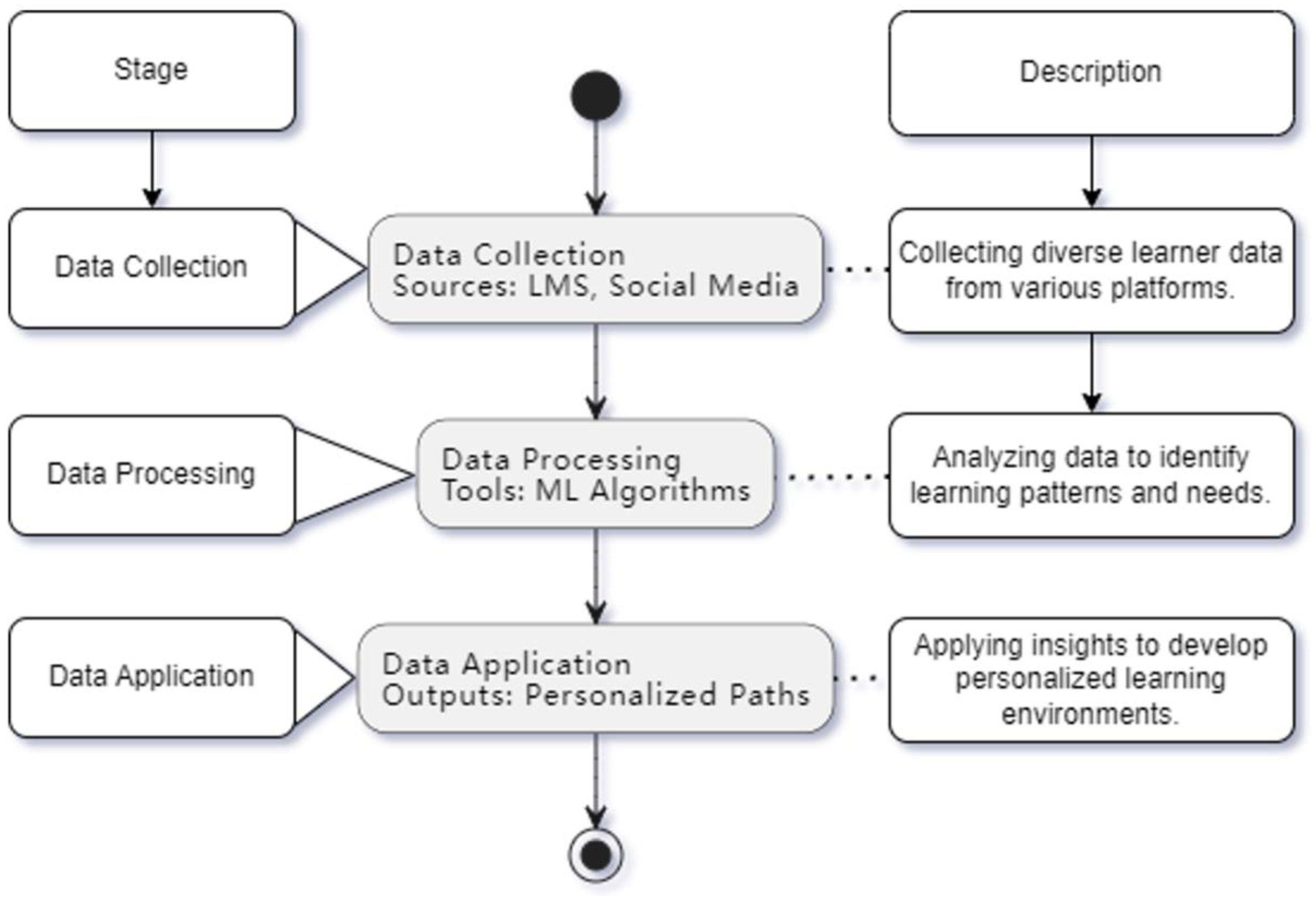
Figure 2.
Impact of Technological Advancements on Language Learning Outcomes.
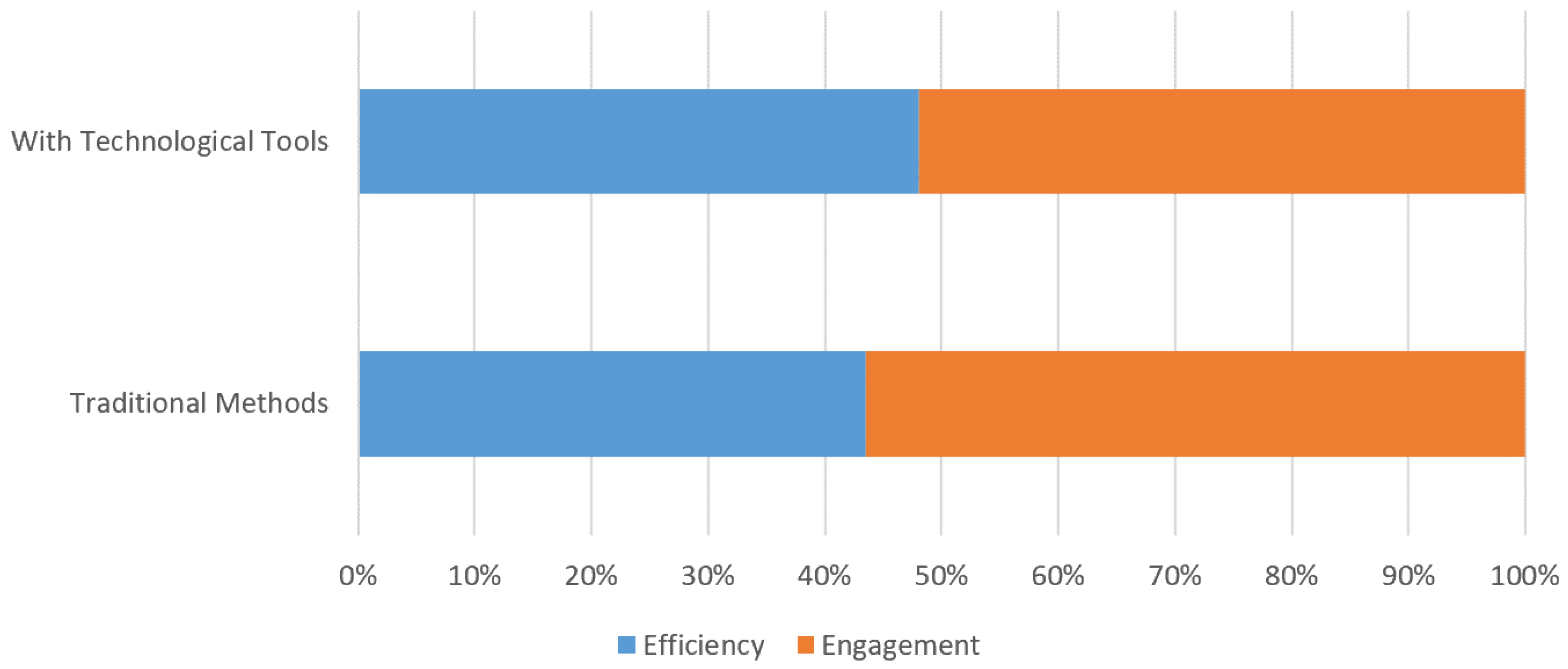
Figure 3.
Trends in Learner Engagement on Edmodo Over Six Months.
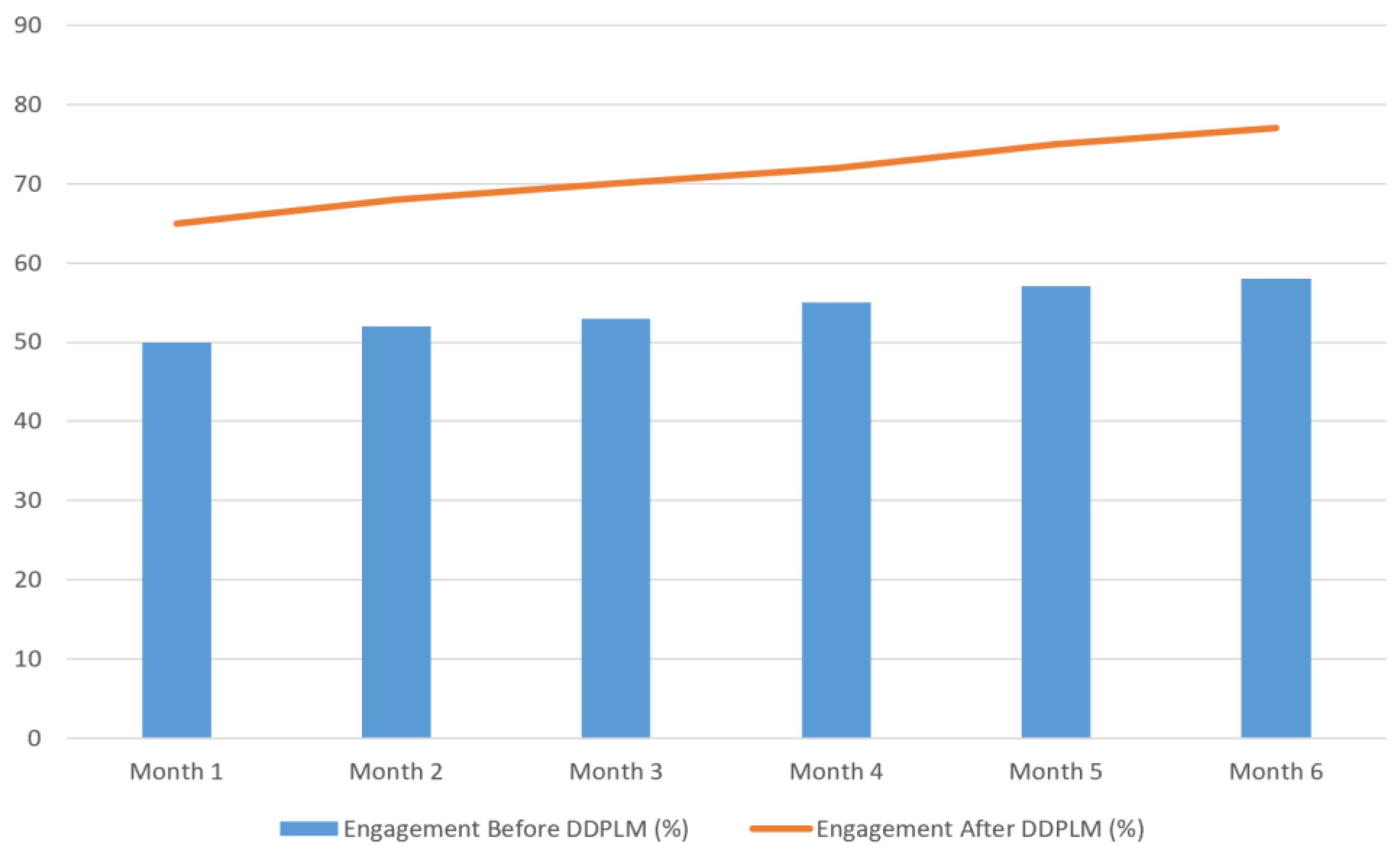
Figure 4.
Global Distribution of Language Learning Platform Adoption.
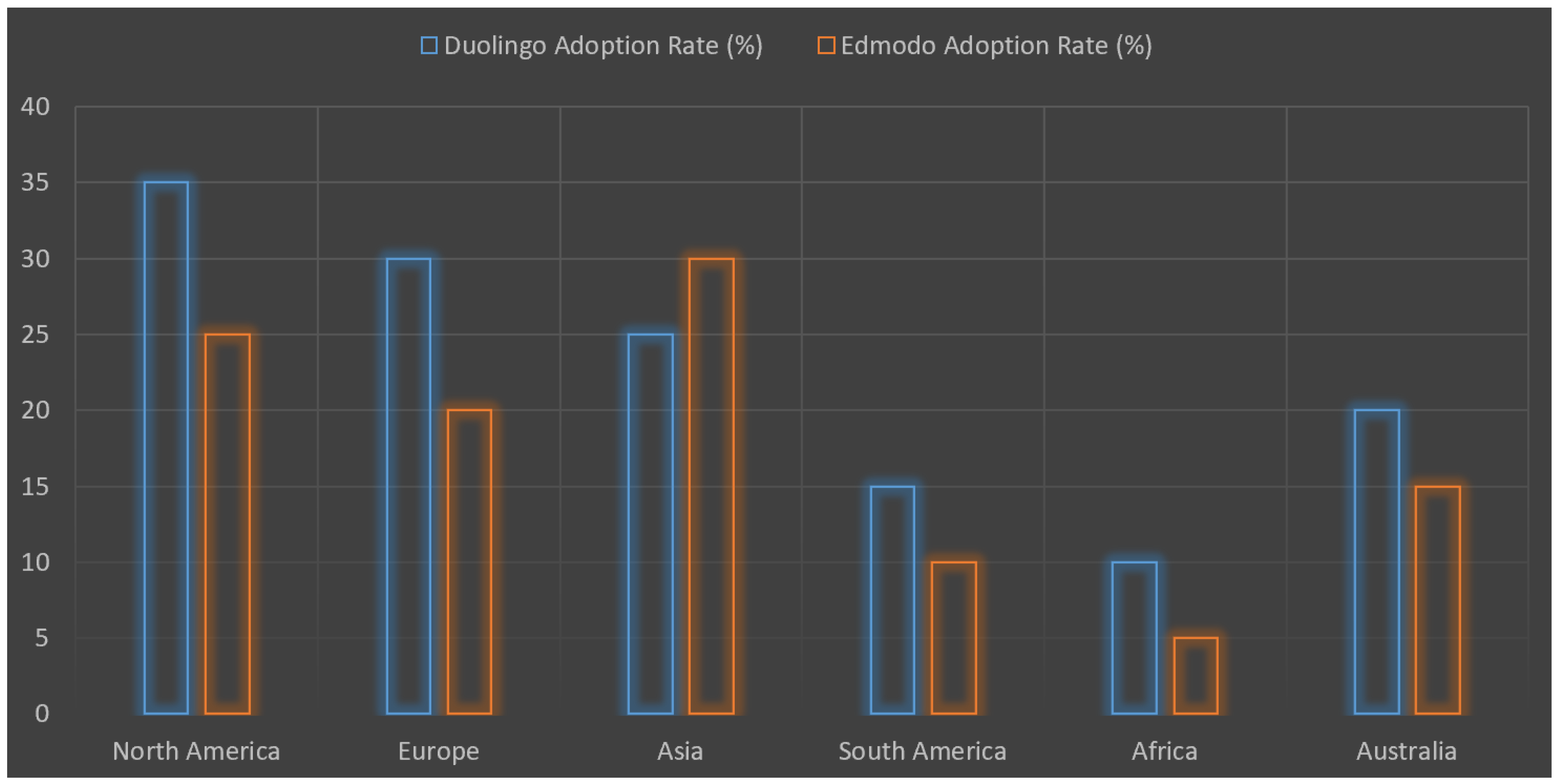

Table 1.
Demographic Breakdown of Language Learners.
| Age Range | Percentage of Learners |
|---|---|
| 18-24 years | 35% |
| 25-34 years | 45% |
| 35+ years | 20% |
Table 2.
Big Data Predictive Factors and Language Learning Success.
| Predictive Factor | Correlation with Success |
|---|---|
| Frequency of Usage | High |
| Completion of Tasks | Medium |
| Interaction Rates | High |
Table 3.
Effectiveness of Language Learning Models.
| Learning Model | Effectiveness Rating |
|---|---|
| Grammar-Translation | Low |
| Communicative Approach | High |
| Task-Based Learning | Medium |
Table 4.
Effectiveness of Language Learning Models.
| Big Data Application | Benefit |
|---|---|
| Learner Analytics | Enhanced Personalization |
| Predictive Modeling | Improved Outcomes |
| Real-Time Feedback | Increased Engagement |
Table 5.
Comparative Analysis of Case Studies on Edmodo and Duolingo.
| Platform | Improvement in Engagement | Increase in Retention Rates |
|---|---|---|
| Edmodo | 20% | 15% |
| Duolingo | 25% | 20% |
Disclaimer/Publisher’s Note: The statements, opinions and data contained in all publications are solely those of the individual author(s) and contributor(s) and not of MDPI and/or the editor(s). MDPI and/or the editor(s) disclaim responsibility for any injury to people or property resulting from any ideas, methods, instructions or products referred to in the content. |
© 2024 by the authors. Licensee MDPI, Basel, Switzerland. This article is an open access article distributed under the terms and conditions of the Creative Commons Attribution (CC BY) license (https://creativecommons.org/licenses/by/4.0/).
Copyright: This open access article is published under a Creative Commons CC BY 4.0 license, which permit the free download, distribution, and reuse, provided that the author and preprint are cited in any reuse.


