

Submitted:
17 September 2024
Posted:
18 September 2024
You are already at the latest version
Abstract
Since the 1960s, the countries of sub-Saharan Africa have been affected by an urban crisis due to the demographic explosion in cities and the resulting land pressures. These have resulted in the proliferation of spontaneous housing areas which question the future of urban vegetation and its degree of inclusion in city planning. To analyze the state of knowledge on the research already carried out on the development of urban landscape, particularly in sub-Saharan Africa, a literature review on urban forestry covering the period 1998-2022 was carried out in order to better orient future research works for a greater consideration to urban forestry and their contributions in combating the adverse effects of climate change. Out of a set of 110 scientific papers selected, 50 were considered relevant because of their direct link with urban forestry. From the analysis of this papers, a classification of the articles according to 05 themes was carried out. These are: management of green spaces in urban areas, functions of trees in an urban environment, development of urban forestry, characterization of urban tree flora and financing of urban forestry. Thus, “function of trees in an urban environment and the characterization of urban tree flora” are the most addressed respectively at 42% and 28%. “Financing urban forestry” is practically not addressed (2%). The analysis of the 50 selected articles reveals a significant geographic concentration of urban forestry research. Countries like South Africa, Kenya, and Ghana are more represented in the literature, while vast regions in Central and Western Africa (e.g., Democratic Republic of Congo, Chad, and Niger) have minimal or no documented research on urban forestry. Future research should address these underrepresented themes, as they are crucial for the long-term sustainability of urban forestry projects. Particularly, research on financing mechanisms is essential to unlock sustainable funding sources for urban forestry, a critical barrier to its expansion.
Keywords:
Urban forestry
; green space
; urban heat islands
; forest landscape restoration
; city planning
1. Introduction
Urban estates and landscapes have become increasingly vulnerable due to relentless urbanisation, climate change, migration and the transition to more globally competitive environments [1,2,3,4,5]. Thus, there is a steady erosion of the urban commons through privatisation [6]. In Sub-Saharan Africa (SSA), the estates and landscapes that constitute the urban commons are held in high esteem by most traditional communities. Since their independence, the countries of SSA have been affected by a crisis in urban planning due to the demographic explosion of cities and the resulting pressure on land. These pressures are reflected in rapid urban sprawl, based on local horizontal planning approaches, and in the proliferation of informal settlements that raise questions about the future of urban landscapes and the extent to which they are included in urban planning [7]. Therefore SSA is experiencing unprecedented rates of urbanization, with urban populations expected to double by 2050. This rapid growth is placing immense pressure on natural ecosystems and green spaces, contributing to the loss of biodiversity and the exacerbation of climate-related challenges, including heat islands, air pollution, and flooding. Meanwhile, climate change is amplifying these risks, threatening urban sustainability and the livelihoods of millions.
Urban forestry, defined as the management and cultivation of tree populations within urban settings, presents a multifaceted solution to some of the most pressing environmental and social challenges faced by cities today. Unlike rural forests, urban forests serve a diverse array of functions, including climate regulation, air quality improvement, stormwater management, and the provision of recreational spaces for urban populations. Many case studies show how in the urban environment, avenue trees often fall victim to the development or expansion of roads [8], as the construction of road infrastructure in urban areas sometimes requires the destruction of existing property and equipment and, above all, the felling of trees. According to [9], large areas of urban forest or woodland are destroyed every year in Africa as a result of urbanisation. For example, urban expansion in the city of Lubumbashi in the Democratic Republic of Congo has led to a decline in green space cover of around 3.6 km² per year [10]. Also, in the city of Abomey-Calavi in Benin, road development and opening works have led to the felling of 620 trees [11].
This state of affairs poses a problem in terms of environmental degradation and the conditions for maintaining ecosystem balance [12,13]. This is also partly responsible for the formation of urban heat islands (UHIs), which occur in cities, most often at night, and lead to the deaths of thousands of people worldwide [14]. However, urban forestry and the greening of degraded spaces offer a multitude of benefits to city dwellers [15].
In the context of developing countries, urban forestry debates appear to be poorly represented in regional and international literature. A survey of peer-reviewed literature confirms that nearly 80% of articles come from the context of the developed world while publications on urban forestry and environment from Africa are very poorly represented [15]. The few works carried out on the subject, particularly in sub-Saharan Africa, relate to topics such as: analysis of the situation of mature trees in the face of road development in cities [16], floristic diversity of urban plant formations [17], the problem of managing green spaces in urban environments [18], characterization of the diversity of fruit trees in households in fast-developing cities to shed light on the sociological aspects of their management [10], the inventory and carbon sequestration of vegetation in the urban right-of-way [19], the role of tree cover in mitigating heat islands in urban centres [20], residents’ perceptions, attitudes and expectations of urban green spaces [21], the assessment of the visions and attitudes of municipal officials and decision-makers for an understanding of the distribution and abundance of trees along streets and in urban green spaces [22], public policy for the management of green spaces [23], people’s perceptions of urban forests [24], perceptions, trends and preferences in urban forestry, the development of urban forestry and the effect of population growth on the urban forest landscape, analysis of the factors of urban forest degradation, etc. [25,26].
Despite the recognized benefits of urban forests, cities in SSA often lack comprehensive strategies for the integration and sustainable management of urban green spaces. Resource constraints, land-use conflicts, and insufficient public awareness further hinder the adoption of urban forestry initiatives across the region. Understanding the challenges, contributions, and future directions for urban forestry in this context is essential to combat climate change and restore urban ecosystems. In addition, results obtained on other subjects of importance for woodland management in the urban context are still very patchy, which does not facilitate a cross-reading of knowledge on urban forestry in SSA. However, the term ‘urban forestry’ was first used in the late 1800s by municipalities referring to the silvicultural context, i.e. the care of individual trees in urban space [27]. The aim of this article is to analyze the state of knowledge on research already carried out on the management of planted areas, particularly in SSA, in order to identify the thematic axes that have not yet been sufficiently addressed and to better orient future research work towards greater consideration of urban forestry and its contribution to the well-being of urban populations and the fight against the harmful effects of climate change.
2. Materials and Methods
2.1. Location of the Study Area
This article considers only publications from the sub-Saharan African region, which covers an area of 24,328,299 km2 (WB, 2020). It is home to forty-eight states, whose borders are the result of decolonization (Figure 1). Its urban population increased more than threefold (3) between 1990 and 2020, from 136 million to 459 million, and more than 1.25 billion Africans will be living in cities by 2050 (United Nations, 2018). Sub-Saharan Africa is clearly becoming more urban, and cities are expected to absorb almost 80% of the continent’s additional inhabitants between now and 2050.
According to the FAO (1995), SSA is subdivided into five (5) regions: (i) Sudano-Sahelian Africa (Burkina Faso, Chad, Gambia, Mali, Mauritania, Niger, Senegal, Somalia and Sudan). The vegetation in this region consists mainly of savannahs dominated by grasses and trees, bordered to the south by open forests and to the north by grassy steppes and desert formations ; (ii) Humid and Sub-humid West Africa (Benin, Côte d’Ivoire, Ghana, Guinea, Guinea-Bissau, Liberia, Nigeria, Sierra Leone, Togo).
The vegetation in the northern part of this region consists mainly of open forests, while dense evergreen and semi-deciduous forests predominate in the south and west. Between the two, there is a transitional zone made up of a mosaic of forest and savannah resulting from human intervention on the original dense forest. Extensive mangrove swamps can be found along the west coast of Africa; (iii) Humid Central Africa (Cameroon, Congo, Gabon, Equatorial Guinea, Central African Republic, Zaire). The central half of this region is covered by the largest remaining tract of tropical rainforest in Africa (around 160 million hectares). The north and south are dominated by deciduous light forests while the Eastern part contains high altitude forests and savannahs; (iv) Sub-humid mountainous East Africa (Burundi, Ethiopia, Kenya, Madagascar, Rwanda and Uganda). In the lowest and driest parts of this region, various types of open forest and savannah predominate. The remaining natural forests are located mainly on the slopes and are classified as state forests, mainly for the conservation of biodiversity and the protection of watersheds, or as national parks and (v) Sub-humid and semi-arid southern Africa (Angola, Botswana, Lesotho, Malawi, Mozambique, Namibia, Swaziland, Tanzania, Zambia, Zimbabwe). The main forest type in this region is open deciduous forest.
2.2. Methodological Approaches
The study was based essentially on a review and analysis of the literature, which provided an overview of knowledge on urban forestry over the last twenty-five years, i.e. research work covering the period 1998-2022. The choice of base year is justified by the fact that the oldest scientific article in the set of articles analyzed dates back to 1998. The literature search covered scientific articles, dissertations and theses dealing specifically with urban forestry issues.
The scientific articles were obtained via a bibliographic search using keywords relating to the theme of urban forestry using the search engines Google scholar (https://scholar.google.com ), Bielefeld Academic Search Engine (BASE, https://www.base-search.net ) and Science direct (www.sciencedirect.com). The approach used consisted of: (i) entering keywords relating to urban forestry in the search bar of the above-mentioned sites; (ii) selecting the search language and the documents to be searched; (iii) launching the search engine and (iv) selecting and downloading the appropriate documents. Only articles published in French and English were analyzed.
Out of a total of one hundred and ten (110) articles selected, fifty (50) were deemed relevant because of their direct link with urban forestry. These documents were organized according to research theme, year of publication, country concerned and topics covered. The data were organized in an Excel spreadsheet and analyzed using STATA statistical software.
3. Results
3.1. Research Focus and Thematic Gaps in Research
The analysis of the 50 selected articles reveals a significant geographic concentration of urban forestry research. Countries like South Africa, Kenya, and Ghana are more represented in the literature, while vast regions in Central and Western Africa (e.g., Democratic Republic of Congo, Chad, and Niger) have minimal or no documented research on urban forestry.
A majority of the literature (over 60%) focuses on topics related to tree inventory, species diversity, and carbon sequestration. There are fewer studies on the socio-economic aspects of urban forestry, including community engagement, policy frameworks, and the integration of indigenous knowledge (Figure 2).
In terms of the themes addressed by country, the management of green spaces in urban areas (GEVMU) was addressed more by South Africa and Niger. The functions of trees (FAMU) were addressed more by Togo, Ghana, Chad, Burundi, Cameroon, Kenya and Ivory Coast. The development of urban forestry (DFU) was addressed more by Togo and Benin. Characterization of urban tree flora (CFAU) was addressed more by the Democratic Republic of Congo. The topic of financing urban forestry was only addressed by Nigeria (Figure 3).
3.2. Impact of Urbanization on Urban Green Spaces and Role of Urban Forestry in Climate Change Mitigation
On average, cities in Sub-Saharan Africa have lost 10-15% of their green space in the last two decades. For example, the case of Lubumbashi (DRC) shows a 3.6 km² annual decline in green space. Urban forests contribute significantly to climate change mitigation by reducing urban heat islands (UHI) and improving air quality. Studies, particularly from South Africa, indicate that urban green spaces can reduce surface temperatures by 2-3°C in densely populated areas.
Review of published papers also revealed that urban forests in SSA have a substantial capacity for carbon sequestration, contributing to climate change mitigation. Studies indicate that mature urban trees can sequester between 22-45 kg of carbon per year. What it is the case of our study. However, the main barriers identified for the development of urban forestry across the literature include:
- Lack of funding: Cities often do not allocate sufficient budget to urban forestry initiatives;
- Weak policy enforcement: Although some cities have green space policies, enforcement is often weak or non-existent;
- Limited public awareness: The benefits of urban forestry are not widely understood or prioritized by the general population and decision-makers.
3.3. Evolution over Time of Interest in Urban Forestry in Sub-Saharan Africa
According to the results of the analysis of publications, Togo, Nigeria, Benin, Congo and South Africa have done more work in the field of urban forestry. Togo accounts for 22% of publications, Benin and Nigeria for 10% and South Africa and Congo for 8%. Burundi, Cameroon, Chad, Ethiopia, Kenya, Madagascar and the DRC carried out little work in the field of urban forestry. This represents (2%) for each country (Figure 4).
In terms of interest in urban forestry, this really began to emerge in sub-Saharan Africa just after 2011, where the work carried out rose from 2% to 12% by 2022 (Figure 5).
3.4. Sources of Funding
An analysis of publications on urban forestry in sub-Saharan Africa shows that 34% of scientific articles are published in English, compared with 66% in French. Of the forty-eight (48) countries in sub-Saharan Africa, 45.831% have French as their official language, compared with 39.58% who speak English. The remaining 14.59% speak Portuguese, Arabic, Spanish, Amharic and Somali. In the context of this review, the sources of funding used to conduct urban forestry research include: (i) UMR PALOC and Eco-anthropologie; (ii) International Foundation for Science (IFS), Stockholm, Sweden; (iii) Food and Agriculture Organization of the United Nations (FAO); (iv) German Federal Ministry of Education and Research (BMBF); (v) Sasagawa Scientific Research Fellowship of the Japan Society of Sciences; (vi) A. P. Leventis Ornithological Research Institute (APLORI), University of Jos, Nigeria; (vii) Development Cooperation Commission of the Academy of Research and Higher Education (ARES-CCD) in Belgium; (viii) GIZ, Deutsche Gesellschaft für Internationale Zusammenarbeit; (ix) TWAS (The World Academy of Sciences); (x) Matsumae international foundation (MIF); (xi) Afrox; (xii) Bradlows Foundation and (xiii) National Research Foundation of South Africa. In addition, funding through development projects, citizens’ initiatives, private sector support, donations and town twinning programs, among others, can also be used.
Inaddition, the surveys indicate that urban populations often undervalue the ecological services provided by trees, transforming green spaces to bars, football field. However, those who are more aware of these benefits show strong support for urban greening projects, indicating that awareness campaigns could significantly enhance community engagement.
4. Discussion
Tree planting is an important tool for improving the attractiveness of cities, but it must be done properly. Many strategies exist and can be used to incorporate trees into cities. For example, [9] identify five main types of urban and peri-urban forests: (i) peri-urban forests and wooded areas; (ii) city parks and urban forests (>0.5 hectares); (iii) mini-parks and gardens with trees (<0.5 hectares); (iv) trees in streets or public squares and (v) other green spaces with trees. The urban forest model should respect the basic principles of landscape design in terms of unity and structure, scale, proportion and balance, division and definition of space, light and shade, colour, texture and form. Trees can be adapted to suit almost any situation, helping to address issues such as rainwater management and climate change, as well as meeting specific aesthetic objectives.
The Santamour rule (sometimes called the ‘10 per cent rule’) proposes maximum percentages for tree species, types and families in a plantation. This rule states that no more than 10 per cent of any one species, no more than 20 per cent of any one genus and no more than 30 per cent of any one family should be planted in a plantation. The aim behind the rule is to maximise protection against pest outbreaks. Urban forest models should also aim for an appropriate age distribution, i.e. trees in age brackets that allow individuals to be planned for ageing, as well as the appropriate and sequential removal and replacement of dead or dying trees. In order to meet the challenges of rapid urbanization on urban forests, a radical revision of forestry policies is needed by African governments. Countries’ current forest management policies have been largely influenced by colonial forestry policies, without the participation of local people. This has led to local indifference to developing urban forestry and to the destruction of forests. For urban forests to be sustainable in Africa, a participatory management approach is needed that engages communities in the planning, design, creation and maintenance of forests [25,26].
For [28], themes such as the value of trees and the inventory and composition of trees in urban landscapes were better addressed than the theme of policy and legislation, while themes relating to funding and human resources for urban forestry were neglected by research and even by municipalities. A survey of the peer-reviewed literature confirms that almost 80% of articles come from the developed world context while publications from Africa are very poorly represented [29]. This reflects the greater availability of funding and research staff from developed countries to conduct research on a number of topics and in particular urban forestry [29]. This situation is also revealed by the work of [28], who indicates that publications in urban forestry from Africa in the world over the period 1800 to 2015 represent only (1%). This rate is highest in Central Europe (27%), followed by Asia (26%) and North America (17%). However, most regions have seen an increase in the number of publications since the 2010s, with an increase of more than 90% for publications in Africa.
In addition, the construction of urban infrastructures will also have to take into account urban forestry aspects. In fact, the 2030 Agenda for Sustainable Development, with its 17 Sustainable Development Goals, has paved the way for environmental awareness in countries and cities around the world. Several of the Sustainable Development Goals are directly linked to or indirectly refers to the need to develop and/or invest in green infrastructure for the benefit of all. There are four (4) main categories of green infrastructure: the urban canopy, greened public spaces, green vertical structures and green roofs (Bartesaghi et al., 2017). Details on each of these infrastructures are as follows:
- The urban canopy refers to the extent of vegetation cover formed by trees in an area, including green alleys, street trees and shrubs, and the urban forest;
- Vegetated public spaces include, among others: green belts, green corridors, green spaces, urban parks, vegetated ground cover;
- Green roofs are also known as eco-roofs, green roofs, rain roofs and roof gardens. There are mainly three components: a vegetation layer, a light growing medium layer and a storage or drainage layer placed on top of an impermeable membrane (Li et al., 2019). There are two main types: extensive and intensive. The biggest difference between the two types is the thickness of the growing substrate (Li et al., 2019). Thus, the former has a substrate 15 centimetres thick or less, while the latter consists of a substrate more than 15 centimetres thick (Li et al., 2019).
- The green vertical structure encompasses various phytotechnologies that can be installed on the exterior or interior walls of buildings on a permanent basis (Zaid, et al., 2018). The terminology of green vertical structures includes biomurs, green facades, green walls, exterior or interior green walls and vertical vegetation.
In the context of this analysis, no article has addressed green vertical structures and green roofs. Most of these infrastructures have been installed primarily to combat urban heat islands (Lapierre and Pellerin, 2018). Yet the four (4) categories of green infrastructure offer numerous benefits and advantages for adapting to and mitigating the adverse effects of climate change, in particular for combating flooding and the effects of urban heat islands (Table 1).
5. Conclusions
A look at urban forestry since 1960 makes it clear that urban forestry is more than planting, maintaining and managing forests. It is a challenge to the profession that must be met in the interests of creating a nation with ‘roots’ and a ‘community spirit’, living and working in the best possible human environment that man can create and maintain. The analysis of the state of knowledge on the research already carried out on the management of planted areas, particularly in sub-Saharan Africa, in order to identify the areas that have been sufficiently addressed and to better orient future research work towards greater consideration of urban forestry and its contribution to the fight against the harmful effects of climate change, has made it possible to classify the articles relating to urban forestry according to five (5) themes, namely: (1) management of green spaces in urban areas; (2) functions of trees in urban areas; (3) development of urban forestry; (4) characterization of urban tree flora and (5) financing of urban forestry.
The findings from the analysis of publications on urban forestry in SSA indicate several key implications for research, policy, and practice. Firstly, the geographic distribution of research is uneven, with countries such as Togo, Nigeria, Benin, Congo, and South Africa conducting the majority of studies, while other countries remain underrepresented. The thematic focus of existing research reveals significant gaps that need to be addressed for a more comprehensive approach to urban forestry. While topics such as the functions of trees in urban environments and the characterization of urban tree flora dominate the literature, important areas such as the development of urban forestry and the financing of urban forestry are grossly underexplored. Future research should address these underrepresented themes, as they are crucial for the long-term sustainability of urban forestry projects. Particularly, research on financing mechanisms is essential to unlock sustainable funding sources for urban forestry, a critical barrier to its expansion.
Furthermore, the steady decline of green spaces in urban environments, exacerbated by rapid urbanization, highlights the urgent need for urban planning policies that prioritize the protection and expansion of urban forests. As cities in SAA grow, it becomes critical to incorporate urban forestry into broader urban planning frameworks to mitigate the negative impacts of urbanization, including the reduction of urban heat islands and the loss of biodiversity. Urban forestry also plays a pivotal role in climate adaptation strategies, particularly in regions vulnerable to extreme heat stress. By integrating urban forestry into climate action plans, cities can enhance resilience and improve the quality of life for urban residents. Moreover, addressing the barriers to effective urban forestry, such as limited funding, weak policy enforcement, and low public awareness, will be essential for the success of future initiatives. Strengthening policy frameworks, securing sustainable funding, and raising public awareness about the ecological, economic, and social benefits of urban forestry will foster broader support and engagement from both governments and local communities.
Author Contributions
“Conceptualization: Kossi ADJONOU; Methodology: Kossi ADJONOU, Sawaba ALE and Kouami KOKOU; Validation: Kossi ADJONOU, Sawaba ALE, Kossi SEGLA, Kossi KOMI, Jean-Bosco Benewinde ZOUNGRANA, Coffi AHOLOU, and Kouami KOKOU; Formal analysis: Kossi ADJONOU, Sawaba ALE, Kossi SEGLA, Kossi KOMI; Investigation: Sawaba ALE, Kossi ADJONOU, Kossi SEGLA, Kossi KOMI; Data curation: Kossi ADJONOU, Kossi SEGLA, Kossi KOMI, Koumai KOKOU; Writing—original draft preparation: Sawaba ALE, Kossi ADJONOU ; Writing—review and editing: Kossi ADJONOU, Sawaba ALE, Kossi SEGLA, Kossi KOMI, Jean-Bosco Benewinde ZOUNGRANA, Coffi AHOLOU, and Kouami KOKOU; Supervision: Coffi AHOLOU and Kouami KOKOU; Project administration: Kossi ADJONOU; Funding acquisition: Kossi ADJONOU and Kouami KOKOU. All authors have read and agreed to the published version of the manuscript.”.
Funding
This research received financial support from the African Centre of Excellence, Regional Centre of Excellence on Sustainable Cities in Africa (CERVIDA-DOUNEDON) through the grant awarded to the Forest Research Laboratory (LRF) of the University of Lomé for research and development work on ‘Opportunities for forest landscape restoration to combat urban heat islands (UHI) in the context of climate change in Greater Lomé, Maritime Region’ (CONVENTION N° __/2022/CERViDA-DOUNEDON).
Data Availability Statement
Data sources are contained within the article.
Acknowledgments
This research received financial support from the African Centre of Excellence, Regional Centre of Excellence on Sustainable Cities in Africa (CERVIDA-DOUNEDON) through the grant awarded to the Forest Research Laboratory (LRF) of the University of Lomé for research and development work on ‘Opportunities for forest landscape restoration to combat urban heat islands (UHI) in the context of climate change in Greater Lomé, Maritime Region’ (CONVENTION N° __/2022/CERViDA-DOUNEDON). The study also benefited from support from the Forests4Future/GIZ Programme for field data collection. The authors of this publication would like to express their sincere thanks to both programmes.
Conflicts of Interest
The authors declare that the research was conducted in the absence of any commercial or financial relationships that could be construed as a potential conflict of interest.
References
- Abubakari M., Ibrahim A.-S., Dosu B., Mahama M. Sustaining the urban commons in Ghana through decentralized planning. Helyion, 2023, 9(5). e15895. [CrossRef]
- Foster S.R. and Iaione C. Design principles and practices for the urban commons. Routledge handbook of the study of the sommons, 2019, pp. 235-255.
- Roggero M., Bisaro A., Villamayor-Tomas S. Institutions in the climate adaptation literature: a systematic literature review through the lens of the Institutional Analysis and Development framework. J. Inst. Econ., 2018, 14 (3), pp. 423-448. [CrossRef]
- Timilsina R.R., Kotani K., Kamijo Y. Sustainability of common pool resources. PLoS One, 2017, 12 (2), e0170981. [CrossRef]
- Unnikrishnan H., Manjunatha B., Nagendra H. Contested urban commons: mapping the transition of a lake to a sports stadium in Bangalore. Int. J. Commons, 2016, 10 (1) : pp. 265–293. URL:http://www.thecommonsjournal.org. [CrossRef]
- Brain D. Reconstituting the urban commons: public space, social capital and the project of urbanism. Urban Plann., 2019, 4 (2): 169-182. [CrossRef]
- Dauvergne S. Les espaces urbains et péri-urbains à usage agricole dans les villes d’Afrique sub-saharienne (Yaoundé et Accra) : Une approche de l’intermédiarité en géographie. Thèse de Doct. ENS LYON, 2011. NNT: 2011ENSL0679. 385 p. https://theses.hal.science/tel-00682525.
- Alvey A.A. Promoting and preserving biodiversity in the urban forest. Urban forestry & urban greening, 2006, 5(4), 195-201. [CrossRef]
- Borelli S., Conigliaro M. and Yujuan. Directives sur la foresterie urbaine et périurbaine. Étude FAO: Forêts (FAO), 2017, fre no. 178.
- Useni Y.S., Malaisse F., Yona J.M., Mwamba T.M., and Bogaert J. Diversity, use and management of household-located fruit trees in two rapidly developing towns in Southeastern DR Congo. Urban Forestry & Urban Greening, 2021, 63: 127220. [CrossRef]
- Amontcha A.A.M., Lougbegnon T., Tente B., Djego J. and Sinsin B.A. Aménagements urbains et dégradation de la phytodiversité dans la Commune d’Abomey-Calavi (Sud-Bénin). Journal of Applied Biosciences, 2015, 91: 8519-8528.
- Hansen R., Mattes A., Meier M. and Kurths A. Reorienting urban green infrastructure planning towards biodiversity – Perspectives and ongoing debates from Germany. Urban Forestry & Urban Greening, 2023, 90: 128155. [CrossRef]
- Seitz, B., Buchholz, S., Kowarik, I., Herrmann, J., Neuerburg, L., Wendler, J., et al., 2022. Land sharing between cultivated and wild plants: urban gardens as hotspots for plant diversity in cities. Urban Ecosyst. 2022. [CrossRef]
- Feng X. and Myint S.W. Exploring the effect of neighboring land cover pattern on land surface temperature of central building objects. Building and Environment, 2016, 95: 346-354.
- Shackleton S., Chinyimba A., Hebinck P., Shackleton C., and Kaoma H. Multiple benefits and values of trees in urban landscapes in two towns in northern South Africa. Landscape and Urban Planning, 2015, 136: 76-86. [CrossRef]
- Osseni A.A. Bilan et contraintes de la sauvegarde des arbres matures d’alignement face aux aménagements routiers dans la ville de Cotonou. Afrique SCIENCE, 2022, 20(1) : 112-124.
- Sehoun L.C., Osseni A.A., Orounladji M., Lougbegnon T.O. and Codjia J.C.T. Diversité floristique des formations végétales urbaines au Sud du Bénin (Afrique de l’Ouest). Revue Marocaine des Sciences Agronomiques et Vétérinaires, 2021, 9(2) : 266-273, p-ISSN: 2028-991X.
- Banon F., Danvidé B. and Baye A.Y. Problématique de la gestion des espaces verts en milieu urbain : Projet de conservation et de valorisation de la ceinture verte de Niamey au Niger. Managing green spaces in urban areas: conservation and valorization of the Niamey green belt in Niger. e-ISSN (Online), 2021, 2790-3230.
- Folega F., Bimare K., Konate D., Wala K., Kanda M. and Akpagana K. Inventaire et séquestration de carbone de la végétation de l’emprise urbaine de la ville de Dapaong, Togo. Espace Géographique et Société Marocaine, 2020, 41/42 : 273-289.
- Polorigni, B. (2019). Rôle du couvert végétal dans l’atténuation des îlots de chaleur dans les centres urbains : Cas de la ville de Lomé au Togo. Lomé.
- Hervé K.R., Richard N.G.J., Jean-Clovis K.Y., and Augustin A.A.S. Perception, attitude et attentes des résidents à l’égard des espaces verts urbains de Yamoussoukro (Côte d’Ivoire). European Scientific Journal (ESJ), 2019, 15(3) : 389-405. [CrossRef]
- Gwedla N. and Shackleton C.M. The development visions and attitudes towards urban forestry of officials responsible for greening in South African towns. Land Use Policy, 2015, 42: 17-26. [CrossRef]
- Polorigni B., Radji R.A. and Kokou K. Politique publique de gestion des espaces verts de la ville de Lomé au Togo. International Journal of Biological and Chemical Sciences, 2015, 9(4): 1888-1901. [CrossRef]
- Faleyimu O.I. Public perceptions of urban forests in Okitipupa Nigeria: Implication for environmental conservation. Journal of Applied Sciences and Environmental Management, 2014, 18(3): 469-478.
- Vilanova C., Ferran J.S, Concepci’on E.D. Integrating landscape ecology in urban green infrastructure planning: A multi-scale approach for sustainable development. Urban Forestry & Urban Greening, 2024, 94: 128248. [CrossRef]
- Zhang B. and MacKenzie A. Trade-offs and synergies in urban green infrastructure: A systematic review. Urban Forestry & Urban Greening, 2024, 94: 128262. [CrossRef]
- Konijnendijk C.C., Ricard R.M., Kenney A. and Randrup T.B. Defining urban forestry–A comparative perspective of North America and Europe. Urban forestry & urban greening, 2006, 4(3-4): 93-103. [CrossRef]
- Kampelmann S. Knock on wood: Business models for urban wood could overcome financing and governance challenges faced by nature-based solutions. Urban Forestry & Urban Greening, 2021, 62: 127108. [CrossRef]
- Shackleton S., Chinyimba A., Hebinck P., Shackleton C. and Kaoma H. Multiple benefits and values of trees in urban landscapes in two towns in northern South Africa. Landscape and Urban Planning, 2015, 136: 76-86. [CrossRef]
- Bartesaghi Koc C., Osmond P., Peters A. Towards a comprehensive green infrastructure typology: a systematic review of approaches, methods and typologies. Urban Ecosys. 2017, 20: 15–35. [CrossRef]
- Li X., Du J. and Long H. Dynamic analysis of international green behavior from the perspective of the mapping knowledge domain. Environ Sci Pollut Res. 2019, 26 : 6087–6098. [CrossRef]
- Zaid S., Perisamy E., Hussein H., Myeda N.E., Zainon N. Vertical Greenery System in urban tropical climate and its carbon sequestration potential: a review. Ecol. Indicat., 2018, 91 : 57–70. [CrossRef]
Figure 1.
Sub-Saharan Africa.
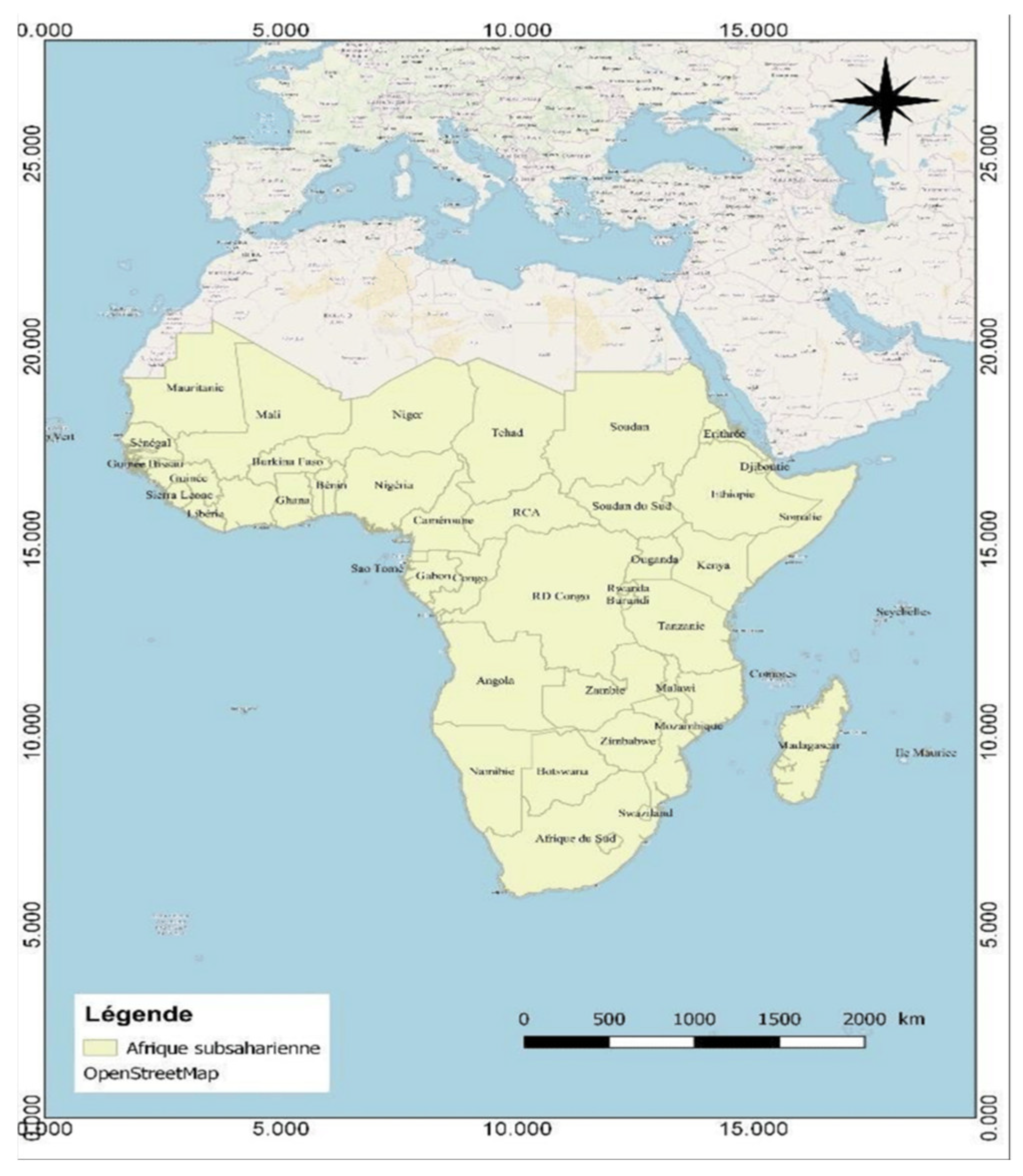
Figure 2.
Themes addressed in urban forestry research in sub-Saharan Africa.
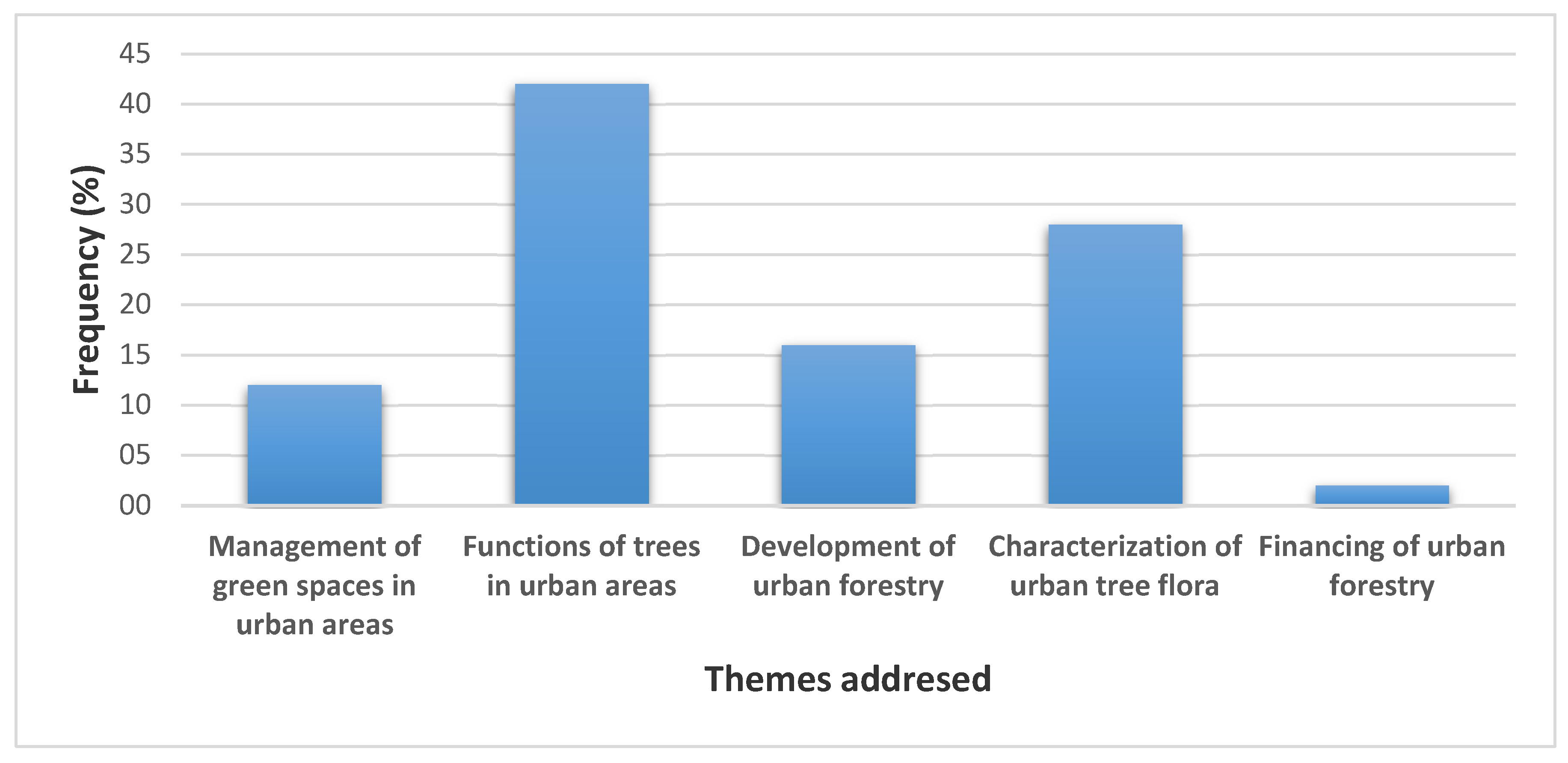
Figure 3.
Topics covered in research work by country.
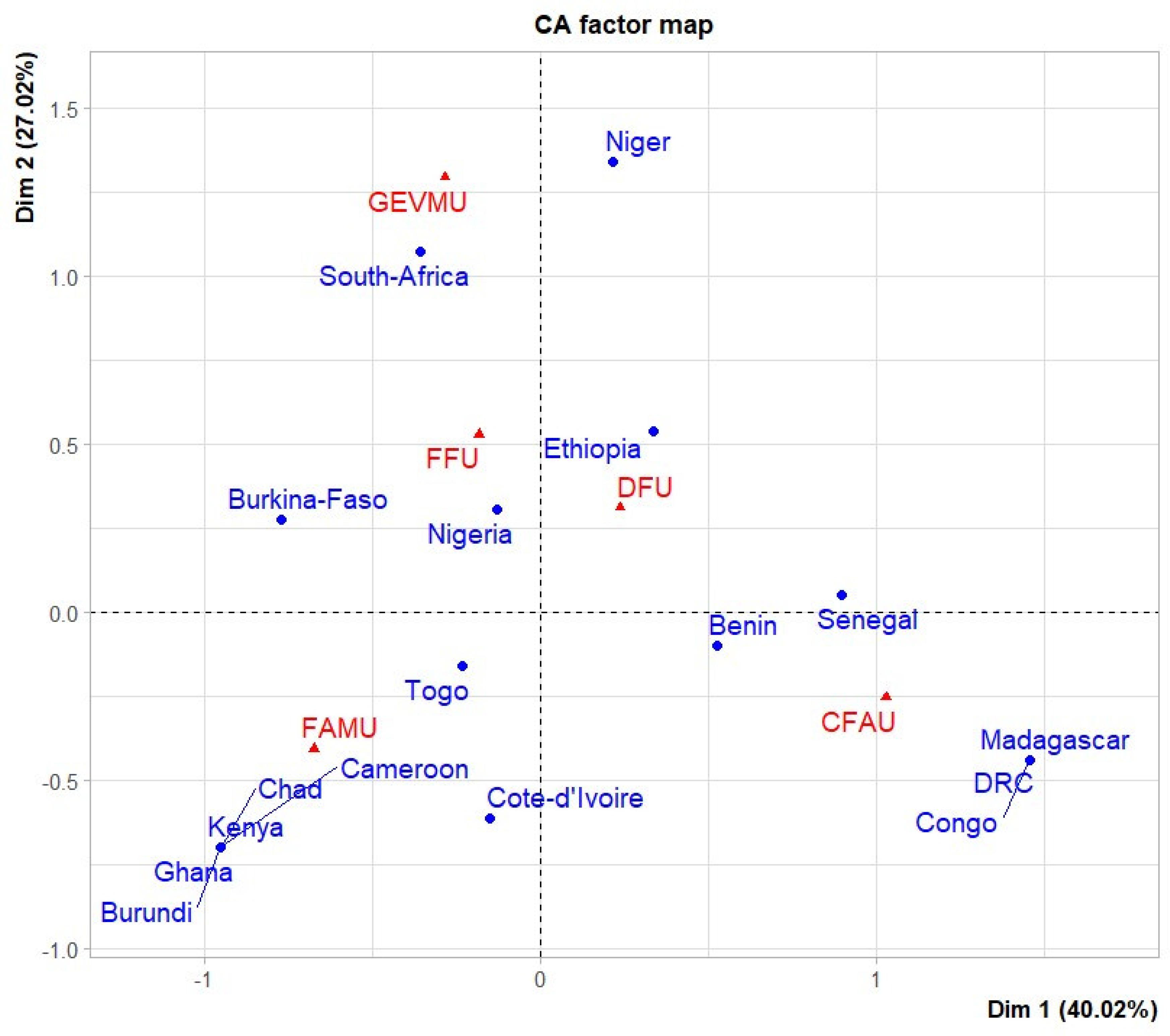
Figure 4.
Articles published on urban forestry by country.
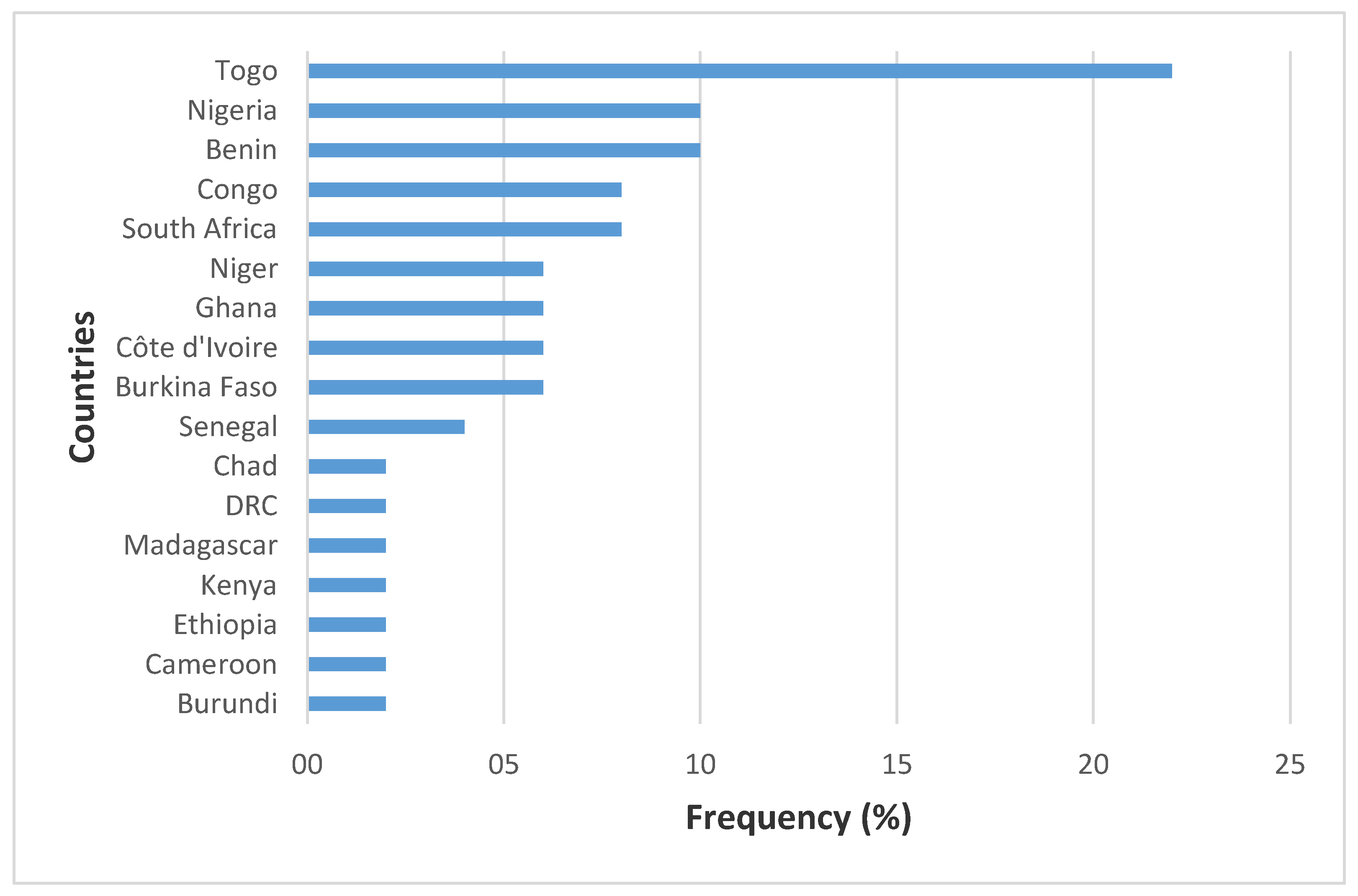
Figure 5.
Urban forestry articles by year.
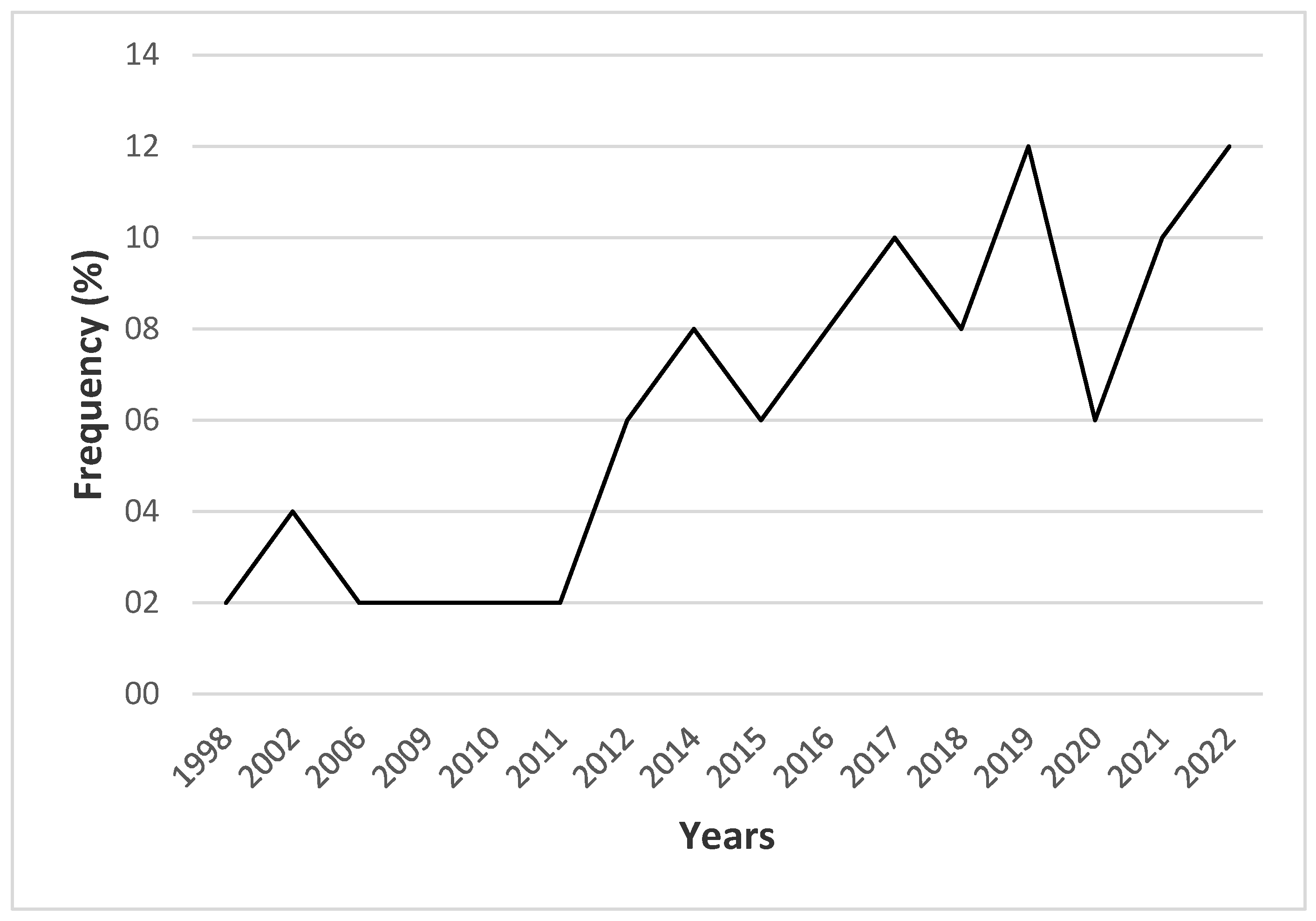

Table 1.
Contribution of green infrastructure to the fight against climate change.
| Green infrastructure | Main benefits for adaptation | Main mitigation benefits |
|---|---|---|
| Urban canopy |
|
Carbon sequestration and storage (D) |
| Green public spaces |
|
Carbon sequestration and storage (D) |
| Green roofs |
|
|
| Vertical green structures |
|
|
| Green infrastructure for rainwater management | Reducing the effects of intense rainfall and flooding (D) | Reducing energy consumption in wastewater treatment plants (I) |
Legend: D: direct effect, I: indirect effect; Source: Beatriz Osorio Rodriguez, 2020.
Disclaimer/Publisher’s Note: The statements, opinions and data contained in all publications are solely those of the individual author(s) and contributor(s) and not of MDPI and/or the editor(s). MDPI and/or the editor(s) disclaim responsibility for any injury to people or property resulting from any ideas, methods, instructions or products referred to in the content. |
© 2024 by the authors. Licensee MDPI, Basel, Switzerland. This article is an open access article distributed under the terms and conditions of the Creative Commons Attribution (CC BY) license (http://creativecommons.org/licenses/by/4.0/).
Copyright: This open access article is published under a Creative Commons CC BY 4.0 license, which permit the free download, distribution, and reuse, provided that the author and preprint are cited in any reuse.