

Submitted:
13 September 2024
Posted:
16 September 2024
You are already at the latest version
Abstract
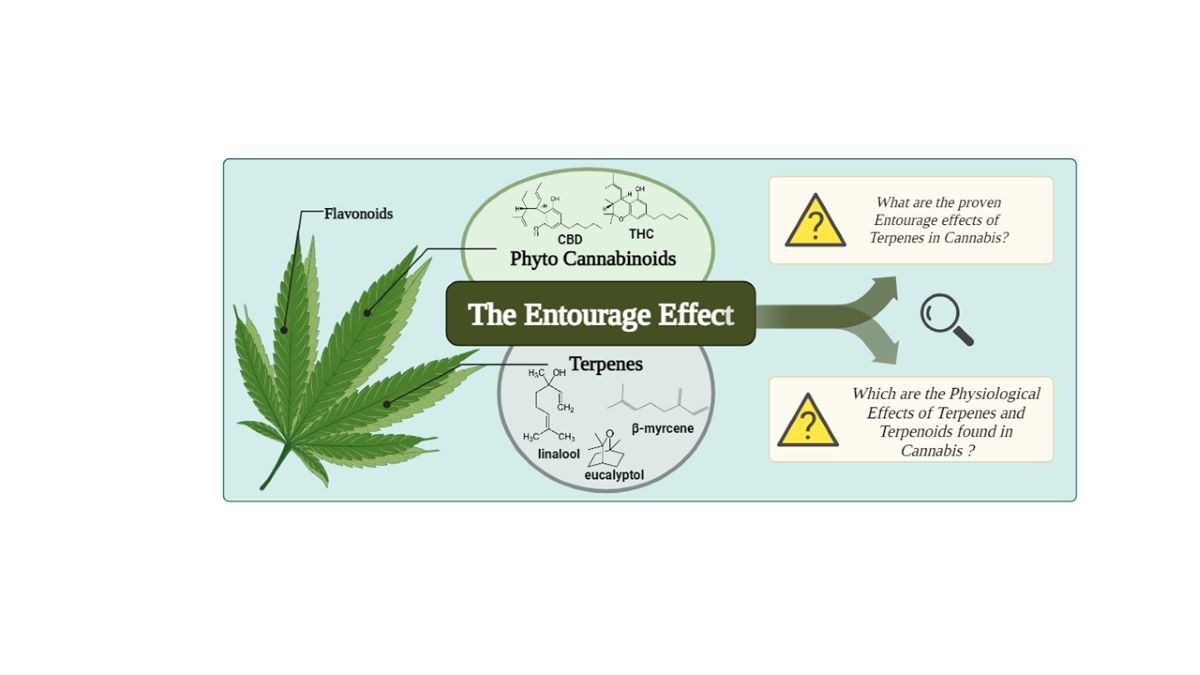
This study explores the complementary or synergistic effects of medicinal cannabis constituents, particularly terpenes, concerning their therapeutic potential, known as the entourage effect. A systematic review of the literature on cannabis entourage effects was conducted using the PRISMA model. Two research questions conducted the review: (1) What are the Physiological Effects of Terpenes and Terpenoids found in Cannabis? (2) What are the proven Entourage Effects of Terpenes in Cannabis? The initial approach involved an exploratory search in electronic databases using predefined keywords and Boolean phrases across PubMed/MEDLINE, Web of Science, and EBSCO databases, using Medical Subject Headings (MeSH). Analysis of published studies shows no evidence of neuroprotective or anti-aggregatory effects of α-pinene and β-pinene against β-amyloid-mediated toxicity, however, modest lipid peroxidation inhibition by α-pinene, β pinene, and terpinolene may contribute to the multifaceted neuroprotection properties of these C. sativa-prevalent monoterpenes and their triterpene friedelin. Myrcene demonstrated anti-inflammatory proprieties topically, however, in combination with CBD did not show significant additional differences. Exploratory evidence suggests various therapeutic benefits of terpenes, such as myrcene for relaxing; linalool as sleep aid, exhaustion relief and mental stress; D-limonene as an analgesic; caryophyllene for cold tolerance and analgesia; valencene for cartilage protection, borneol for antinociceptive and anticonvulsant potential; and eucalyptol for muscle pain. While exploratory research suggests terpenes as influencers in the therapeutic benefits of cannabinoids, the potential for synergistic or additive enhancement of cannabinoid efficacy by terpenes remains unproven. Further clinical trials are needed to confirm these constituents' individual and combined effects.
Keywords:
Cannabis
; Cannabinoids
; Terpene(s)
; Entourage Effect
; Influencers
1. Introduction
1.1. The Entourage Effects Concepts
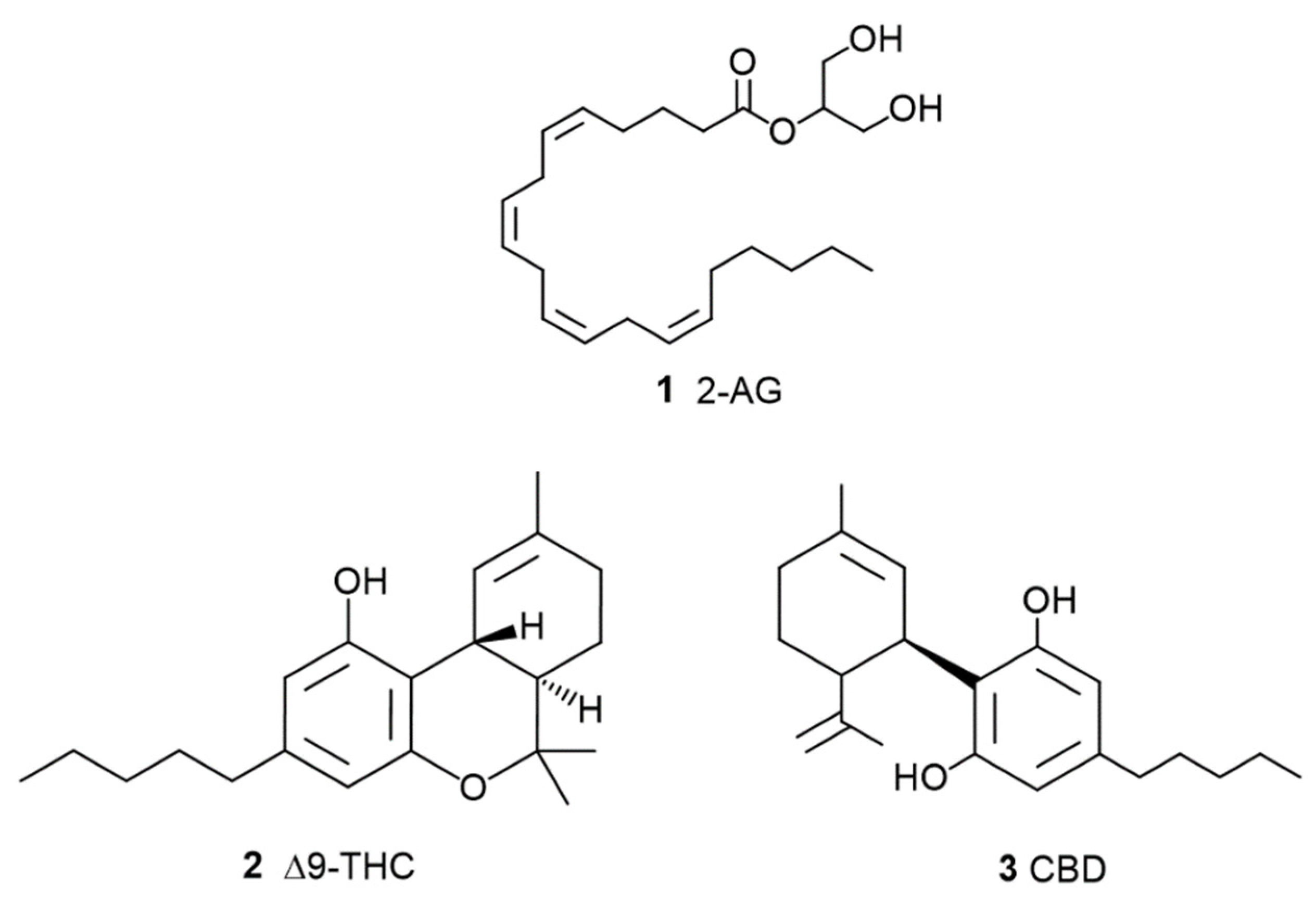
The term “entourage effect” has been applied for the first time in a preclinical study by Ben-Shabat et al., 1998. The study found that inactive metabolites of endogenous cannabis, such as fatty acid glycerol esters, can enhance the effects of the endocannabinoid 2-Arachidonoylglycerol (2-AG) (1, Error! Reference source not found.) when tested together in both in vitro and in vivo studies.
The enhanced effect observed within specific metabolite concentration ranges has been described as the ‘entourage effect’ and suggests a potential role in the therapeutic application of Cannabis-based products. The authors discussed bioactive compounds from plants are accompanied by chemically related substances, often referred to as ‘entourage compounds’, which are inactive when administered individually.
In a recent scoping review, Christensen et al., (2023) the ‘entourage effect’ can be understood using traditional pharmacological concepts to other plant-based medicinal products and multi-drug interactions such as synergy and bio enhancement.
The concept was later compared to polypharmacy, particularly to full-spectrum medicinal Cannabis products, which are said to produce a higher effect than isolated compounds such as Δ9-tetrahydrocannabinol (THC) (2, Error! Reference source not found.) and Cannabidiol (CBD) (3, Error! Reference source not found.), and their synthetic analogs. Proponents argue that the “entourage effect” explains why many patients report better results with full-spectrum cannabis products (ElSohly et al., 2017). Since its introduction, the pharmacological basis and relevance of the “entourage effect” have been debated, with critics asserting that the term lacks scientific support and is primarily used as a marketing tool in the cannabis industry.
Figure 1.
Chemical structures of the key cannabinoids related to the “entourage effect”, 2-Arachidonoylglycerol (2-AG, 1), Δ9-tetrahydrocannabinol (THC, 2) and Cannabidiol (CBD, 3).
Figure 1.
Chemical structures of the key cannabinoids related to the “entourage effect”, 2-Arachidonoylglycerol (2-AG, 1), Δ9-tetrahydrocannabinol (THC, 2) and Cannabidiol (CBD, 3).
Research has focused highly on exploring and understanding the pharmacological effects underlying the ‘entourage effect’(Worth, 2019)While the exact mechanisms of action remain unclear, it is widely believed that they involve interactions between compounds in winterized extract, where cannabinoids and other compounds like terpenes and flavonoids are preserved, but plant waxes are removed. These interactions occur when one compound is either enhanced or diminished by other compounds (Caesar & Cech, 2019; Niu et al., 2019; Y. Yang et al., 2014). The ‘entourage effect’ is often attributed to beneficial synergistic effects, with discussions typically avoiding antagonistic or additive adverse effects (Namdar et al., 2020). Two distinct types of ‘entourage effects’ have been defined with Cannabis-derived compounds: ‘intra-entourage’, which involves interactions between cannabinoids or terpenes, and ‘inter-entourage, which refers to interactions between cannabinoids and terpenes(Koltai & Namdar, 2020).
A wide range of chemical classes—18 in total—including sugars, nitrogenous compounds, terpenes, hydrocarbons, simple fatty acids, and amino acids, all contribute to the pharmacological and toxicological properties of cannabis (Turner et al., 1980). Botanical synergy in cannabis was first demonstrated by THC (2) with other “minor” cannabinoids. In a study by Johnson et al. (2010), a cannabis-based extract was tested on patients with intractable pain. While a THC (2) dominant extract showed no significant improvement over a placebo, a whole plant extract that included CBD (3) demonstrated a significant improvement (J. R. Johnson et al., 2010). Animal studies focused on pain relief also revealed that full-spectrum cannabis extract produced a stronger analgesic effect compared to dosing just with pure cannabinoid (3) (Gallily et al., 2015).
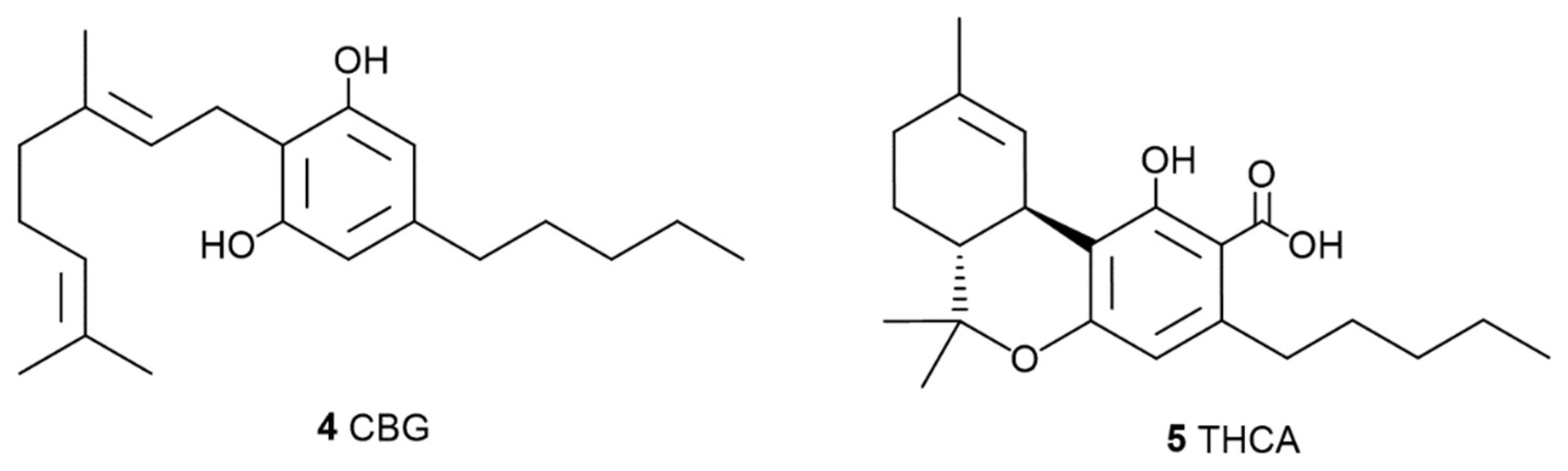
Further research on cannabis extracts has demonstrated synergistic interactions on colorectal cancer cell lines (Nallathambi et al., 2018). Different experiments using a mouse model for seizures tested different cannabis strains containing an equivalent CBD (3) concentration. All strains were effective, but notable differences in efficacy were observed between them. A study profiling 94 Phyto cannabinoids across 36 widely used Cannabis plants in Israel concluded that other cannabinoids have an impact on the overall efficacy of cannabis plant extracts (Berman et al., 2018). Additionally, an in vitro study (Blasco-Benito et al., 2018) on breast cancer cell lines found that whole cannabis extracts were more effective than THC (2) alone; with the increased activity attributed to the presence of “minor” cannabinoids like cannabigerol (CBG) (4,Error! Reference source not found.) and tetrahydrocannabinolic acid (THCA) (5, Error! Reference source not found.).
Figure 2.
Chemical structures of cannabigerol (CBG, 4), and tetrahydrocannabinolic acid (THCA, 5), minor cannabinoids with potential therapeutic potential.
Figure 2.
Chemical structures of cannabigerol (CBG, 4), and tetrahydrocannabinolic acid (THCA, 5), minor cannabinoids with potential therapeutic potential.
Phytocannabinoids are compounds with high antioxidant capacity due to their terpene phenolic chemical structures with the presence of hydroxyl groups which, together with their lipophilic nature and anti-inflammatory effects further enhance their potential as therapeutic candidates for various systemic disorders. Within the Central Nervous System (CNS), Phytocannabinoids can effectively cross the blood-brain barrier (BBB), modulate the immune response, and impact multiple aspects of neurodegenerative processes. These characteristics have been well established for main cannabinoids 2 and 3 but are still poorly studied for some of the minor constituents. Only with the development of this knowledge will be possible to fully understand the therapeutic potential of Cannabis sativa.
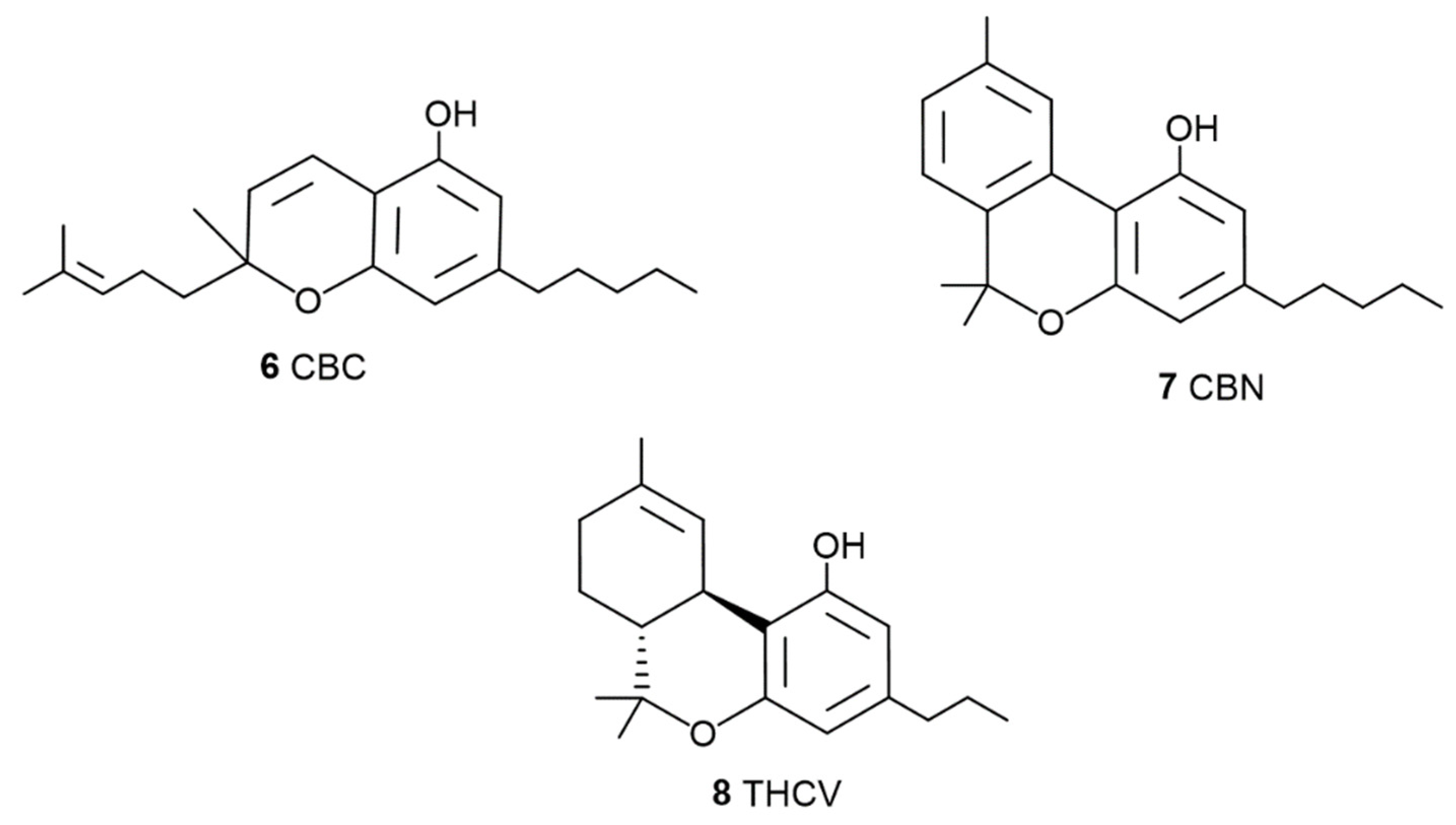
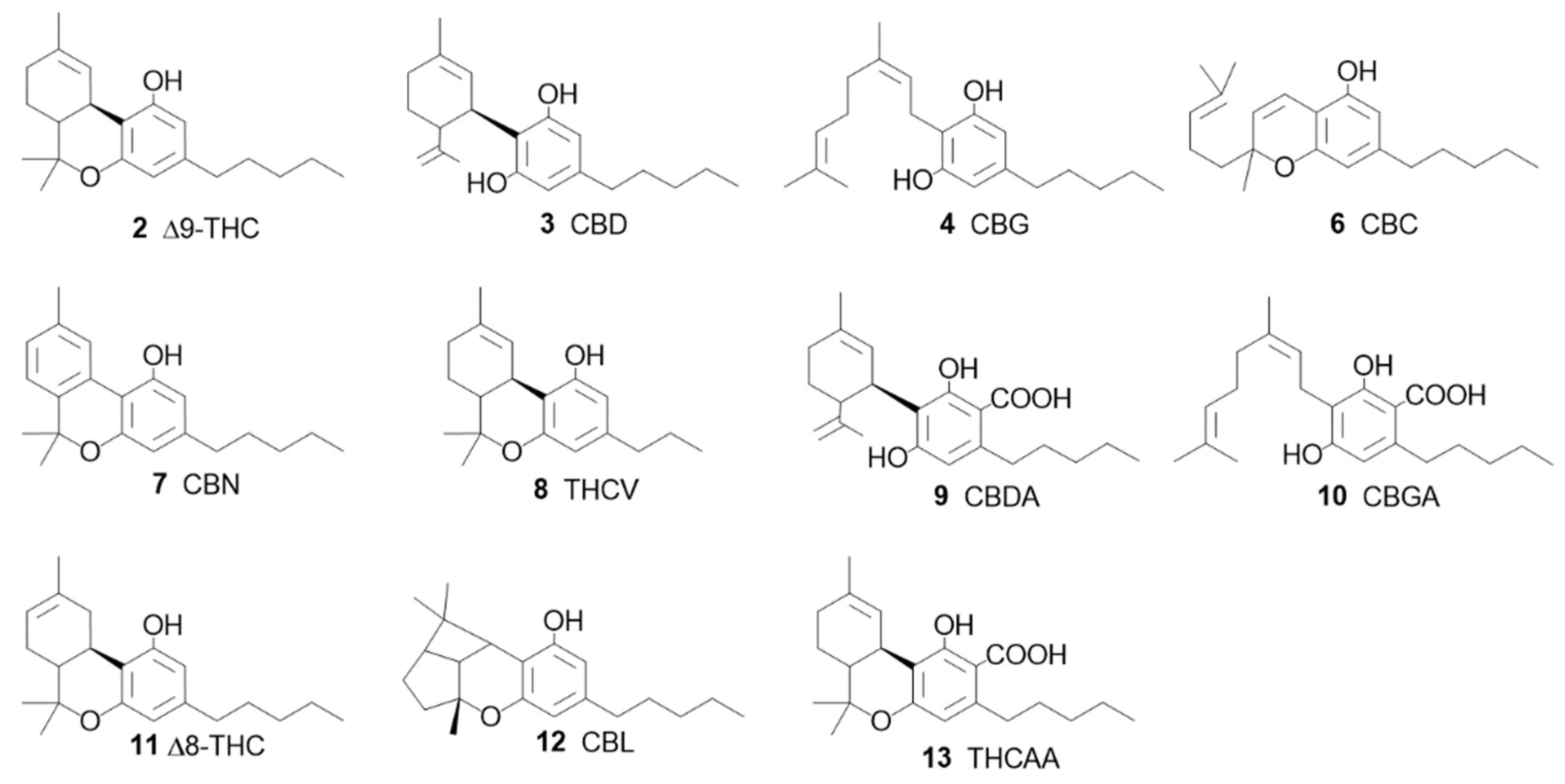
Particular emphasis has been placed in the scientific community on all cannabinoids that, when isolated, have possible medicinal properties, in addition to (–)-trans-Δ9-tetrahydrocannabinol (Δ9-THC) (2, Error! Reference source not found.), namely CBD (3, Error! Reference source not found.), CBG (4, Error! Reference source not found.), cannabichromene (CBC) (6, Error! Reference source not found.), cannabinol (CBN) (7, Error! Reference source not found.), and tetrahydrocannabivarin (THCV) (8, Error! Reference source not found.).
Figure 3.
Chemical structures of minor cannabinoids with therapeutic applications, Cannabichromene (CBC, 6), cannabinol (CBN, 7), and tetrahydrocannabivarin (THCV, 8). Source: ElSohly et al., 201.7.
Figure 3.
Chemical structures of minor cannabinoids with therapeutic applications, Cannabichromene (CBC, 6), cannabinol (CBN, 7), and tetrahydrocannabivarin (THCV, 8). Source: ElSohly et al., 201.7.
Of note is the analytical development that currently allows the quantification of nearly a cent of cannabinoids in a single HPLC run, a major evolution since the pioneering work analyzing of Wang et al. which initially focused on analyzing 11 cannabinoids (Error! Reference source not found.) (Wang et al., 2018). In their study, optimized extraction solvents and a validated UHPLC–UV– MS method were applied to analyze 32 cannabis samples including flowers, leaves, and hashish.
Figure 4.
Cannabinoids identified in a single HPLC run: Δ9-tetrahydrocannabinol (Δ9-THC, 2), Cannabidiol (CBD, 3), Cannabigerol (CBG, 4), Cannabichromene (CBC, 6), Cannabinol (CBN, 7), Tetrahydrocannabivarin (THCV, 8), Cannabidiolic acid (CBDA, 9), Cannabigerolic acid (CBGA, 10), 8-tetrahydrocannabinol (Δ8-THC, 11), Cannabicyclol (CBL, 12), and Tetrahydrocannabinolic acid A (THCAA, 13) (ElSohly et al., 2017).
Figure 4.
Cannabinoids identified in a single HPLC run: Δ9-tetrahydrocannabinol (Δ9-THC, 2), Cannabidiol (CBD, 3), Cannabigerol (CBG, 4), Cannabichromene (CBC, 6), Cannabinol (CBN, 7), Tetrahydrocannabivarin (THCV, 8), Cannabidiolic acid (CBDA, 9), Cannabigerolic acid (CBGA, 10), 8-tetrahydrocannabinol (Δ8-THC, 11), Cannabicyclol (CBL, 12), and Tetrahydrocannabinolic acid A (THCAA, 13) (ElSohly et al., 2017).
Definitions became critical in the case of cannabis species. Cannabis sativa L. commonly known as “cultivated Cannabis” was likely first described by Classen et al., (2001). This Latin binomial was later adopted by Linnaeus in his comprehensive work Species Plantarum published in 1753 (Linnaeus, 1753), where he used it to describe European hemp. About thirty years later, Lamarck characterized a distinct species, Cannabis indica, noting its bushier form and slightly shorter stature with narrower leaflets, originating from the subcontinent (Lamarck, 1783). Since then, there has been ongoing debate and lack of consensus regarding Cannabis species (Piomelli & Russo, 2016). In 1974, Richard Schultes also described plants with compact growth and wide leaflets from Afghanistan, as C. indica (Schultes et al., 1974). Other experts, including Ernest Small defended a unified classification of species (Small & Cronquist, 1976). The argument assumes practical clinical implications in contemporary times, as commercial labels like “sativa” or “indica” are often used to describe the different effects of Cannabis varieties such as “head up” or “body up” when advising patients on which variety to select for their treatment.
Aside from species controversy, there is also the challenge of distinguishing Cannabis plants based on their genetic or biochemical characteristics. In commerce, the term “strains” is frequently used to refer to these variations, although it lacks formal recognition in botanical science(Brickell et al., 2009; Usher, 1996).
Some experts prefer “variety” or “cultivar”, which originally came from the concept of “cultigen variety” (Bailey & Bailey, 1976). However, some modern authorities (Small, 2016) argue that international plant nomenclature rules technically disallow such classifications for Cannabis varieties as cultivars must be officially registered. The illegality of Cannabis in many regions has restricted this classification to a few examples. Consequently, others recommend the use of the term “chemovars” to describe Cannabis varieties, which highlights their unique biochemical and genetic attributes.
Indeed, genetic variability characterizes the three species: Cannabis indica, Cannabis ruderalis and Cannabis sativa. These three species exhibit genetic differences in terms of terpene composition, growth characteristics, and cannabinoid profiles. However, poly hybrids have been developed between these species with varying proportions worldwide, commonly marketed as “Cannabis sativa”. Each of the three species has a vast array of cultivars and “strains” (Error! Reference source not found.), each with a specific genetic profile. These genetic variations lead to differences in cannabinoid content (e.g., THC and CBD levels), terpene profiles, and plant morphology, , which lead to different effects and uses. The current definitions are resumed in Table 1.
Genetic differences have been registered in genetic databanks after breeding and genetic modification programs. Cannabis breeding efforts has been focused on develop strains with specific characteristics, including enhanced terpene profiles, elevated cannabinoid content, and increased resistance to diseases and pests. Genetic modification techniques are also being explored for potential applications in cannabis cultivation. Parallel phenotypic variations have been associated with each strain/cultivar. Even within a single cannabis strain, there can be phenotypic variation due to environmental factors, such as soil composition, climate, and cultivation methods. This can lead to differences in plant size, cannabinoid content, and overall quality. Coherently, for medicinal use, the European Pharmacopoeia established categories of Cannabis based on cannabinoid composition: Type I is characterized by a predominance of THC (2) which is commonly available in both medical and recreational marketplaces. Type II refers to cannabis that contains levels of both THC (2) and CBD (3) and CBD (3)- is predominant in Type III
According to Lewis et al., (2018), high-THC (2, Error! Reference source not found.) and high-myrcene (14, Error! Reference source not found.) chemovars dominate the market, though these profiles may not be ideal for patients who need different biochemical compositions for effective symptom management. Furthermore, Lewis et al., (2018) reported that Type II and III Cannabis chemovars, that display higher levels of CBD (3) terpenoids have the potential to enhance THC (2) therapeutics effects while minimizing associated adverse.
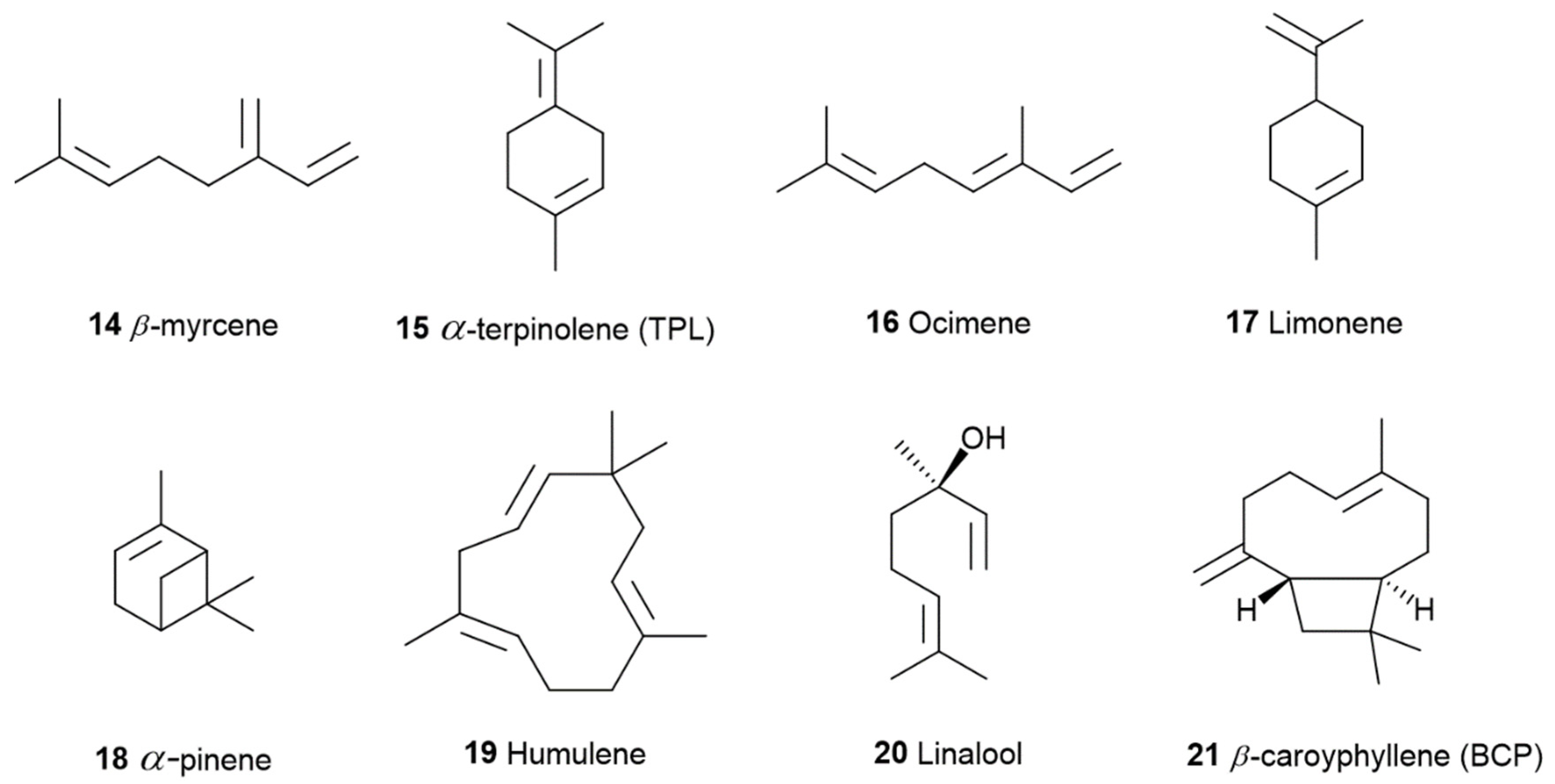
In addition to the already identified Phyto cannabinoids, researchers over the years have identified that terpenoid content, rather than cannabinoid ratios, is the most distinct marker between different chemovars (Elzinga S & Fischedick J, 2015; Hillig, 2004). The majority of Cannabis terpenoids are produced in glandular trichomes found on the unfertilized female flowering tops, which are also the main source of Phyto cannabinoids. To date, approximately 200 different terpenoids have been isolated in Cannabis with their composition primarily influenced by genetics rather than «environmental factors. Despite their relatively low concentration in Cannabis preparations, terpenoids are highly potent and can significantly impact behaviors, modulating activity levels in rodents even when serum levels are minimal or undetectable (Buchbauer et al., 1993). Historically, terpenoid concentrations in Cannabis flowers were approximately 1% with up to 10% found in trichomes. However, selective breeding over recent decades has led to flower concentrations exceeding 3.5%. The pharmacological effects and ecological roles of terpenoids, which contribute to the synergistic properties of Cannabis have been thoroughly explored in the literature (McPartland & Russo, 2014; E. B. Russo, 2011a; E. B. Russo & Marcu, 2017a) and several predominate to form eight “Terpene Super Classes”: myrcene (14), terpinolene (15), ocimene (16), limonene (17), α-pinene (18), humulene (19), linalool (20), and β-caryophyllene (21) (Error! Reference source not found.).
Figure 5.
Terpene compounds found in Cannabis are considered to qualify “Super Classes”.
In 2020 the population structure and the genetic diversity of Cannabis were estimated by Zhang et al., (2020) using the 59 (72 loci) validated polymorphic Simple Sequence Repeat Markers (SSRs) and three phenotypic markers. Genome-wide analyses of genetic diversity and population structure offer a basis for deeper investigations into Cannabis species through techniques such as molecular-assisted breeding, association analysis, and quantitative trait loci (QTL) mapping. and. These studies, combined with the exchange of Cannabis germplasms between regions, pave the way for the introduction of new Cannabis varieties on a global scale.
Molecular markers have also been used to estimate the genetic diversity of different germplasm resources. Single-hexanucleotide short tandem repeat (STR), known as NMI101 was applied to study the distribution of 93 processed seeds (Shirley et al., 2013). An analysis utilizing single-nucleotide polymorphisms (SNPs) in 81 marijuana and 43 hemp samples demonstrated significant genome-wide differences between the two, with hem showing higher genetic similarity to Cannabis indica type than the Cannabis sativa (Sawler et al., 2015). Another study used expressed sequence tag SSRs (EST-SSRs) to assess the genetic diversity of 115 hemp germplasm resources, classifying them into four distinct groups (Gao et al., 2014). SSR markers have been shown to exhibit high levels of polymorphism, with genomic SSRs approved to be more stable and polymorphic than EST-SSRs (Soler et al., 2017). Several studies have explored Cannabis classification, its genealogical classification, and population structure. However, the genetic links between geographically related strains remain unclear. To better understand these relationships, more accurate molecular markers are necessary to assess the diversity within the Cannabis population.
Ioannidis et al., (2022) assessed the genetic stability of regenerated, micro-propagated, and acclimatized plants from high CBD (3), and high CBG (4) varieties of Cannabis sativa L. using SSR markers. Their findings suggest that the in vitro multiplication protocols developed are suitable for large-scale propagation of these C. sativa varieties, confirming the effectiveness and reliability of this in vitro propagation system.
Understanding the anthropological and genetic variability of cannabis is crucial for its responsible cultivation, regulation, and utilization as medicine (Pereira da Silva Oliveira et al., 2023). It also underscores the complexity of the plant and its potential for diverse applications, both historically and in modern contexts. Legal and cultural perspectives on cannabis continue to evolve, which further contributes to its variability in use and perception around the world.
1.2. The Phyto Cannabinoids Entourage
THC (2) has been identified as a partial agonist of both cannabinoid type 1 receptor (CB2R). It also interacts with various other targets, as demonstrated in several pre-clinical studies (Christensen et al., 2023) (Table S1). The effects of THC (2) can vary between antagonistic and agonistic effects depending on factors such as the presence of additional ligands that bind to the same targets (e.g., endocannabinoids or other cannabinoids derived from Cannabis), the receptor expression state, and cell type. Additionally, the concentration of other compounds co-administered with THC (2), such as (i.e., ‘entourage compounds’) can impact its pharmacological effects (Maccarrone et al., 2023; Morales et al., 2017).
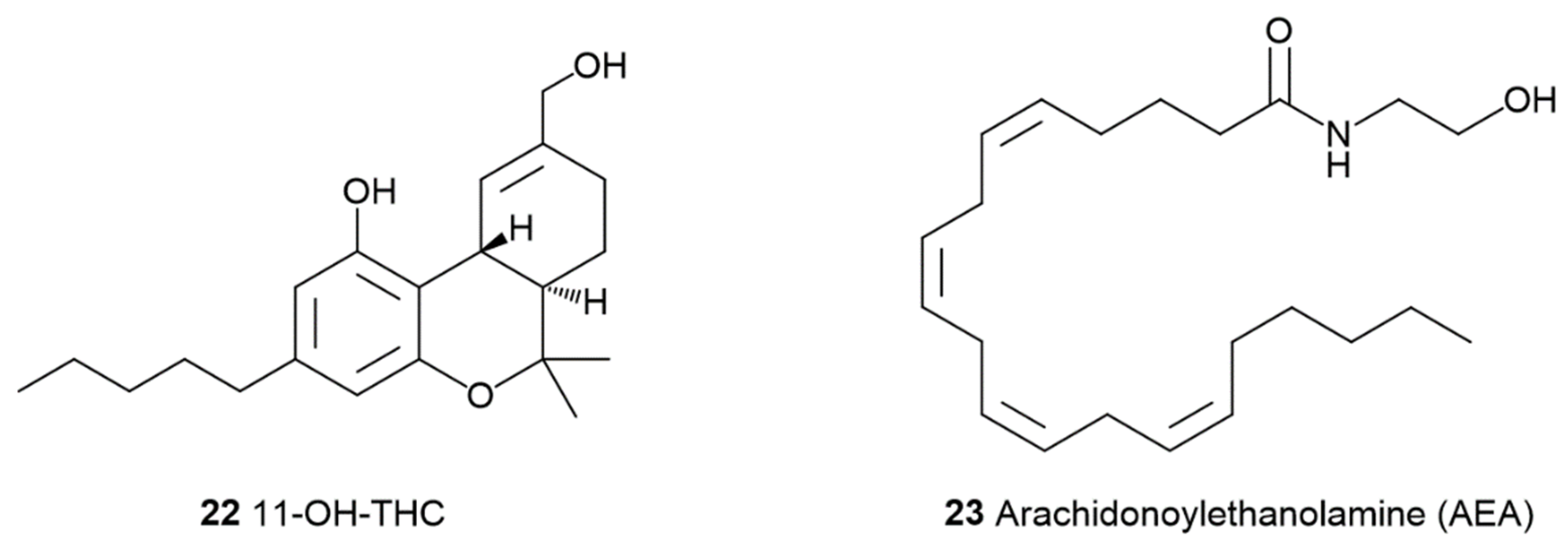
Cannabinoid 3 (Figure 1) binds with numerous biological targets (summarized in Table S1) giving it a complex and broad pharmacological profile (Christensen et al., 2023; Vitale et al., 2021). Its Poly pharmacology is still under extensive investigation for various therapeutic applications, including neuropsychiatric, neurological, and inflammatory disorders)(Castillo-Arellano et al., 2023; Zagzoog et al., 2020). certain mechanisms, like its role as an allosteric negative modulator of CB1 (Laprairie et al., 2015), can impact the bioactivity of THC. This has prompted the suggestion that CBD functions as an ‘entourage compound’ (E. Russo & Guy, 2006). Additionally, CBD (3, Figure 1) can affect the pharmacokinetics of THC (2, Figure 1) by inhibiting some hepatic enzymes, such as those in the cytochrome P450 family. This slows the conversion of 2 into its more potent psychoactive metabolite,11-OH-THC (22, Error! Reference source not found.). CBD can also modulate endocannabinoid levels by inhibiting fatty acid amide hydrolase (FAAH), thus inhibiting the degradation of arachidonoylethanolamine (AEA) (23, Error! Reference source not found.) (De Petrocellis et al., 2011).
Figure 6.
Chemical structure of 11-OH-THC (22), a potent metabolite of THC, and arachidonoylethanolamine (AEA, 23), an endocannabinoid degraded by FAAH.
Figure 6.
Chemical structure of 11-OH-THC (22), a potent metabolite of THC, and arachidonoylethanolamine (AEA, 23), an endocannabinoid degraded by FAAH.
Different pre-clinical studies covering various diseases have demonstrated that full-spectrum Cannabis extracts or combinations of major cannabinoids, with or without other compounds, tend to be more effective than single cannabinoids like THC (2) or CBD (3) alone (Blasco-Benito et al., 2018; Ferber et al., 2020). For instance, concerning the anti-cancer potential of Cannabis, Blasco-Benito et al., (2018) described a higher anti-tumor effect from a whole plant extract compared to pure THC (2). This enhanced therapeutic outcome was not attributed to the presence of five commonly found terpenes but rather to the interaction of multiple compounds affecting several targets and mechanisms of action in the extract.
Cannabinoids other than THC (2) that are naturally present in cannabis are termed ‘‘minor’’ cannabinoids. Many of the minor cannabinoids display pharmacologic properties that are similar to 2, in that they act as a partial agonist at CB1R and CB2R (Pertwee, 2008). To date, studies examining the behavioral pharmacology of minor cannabinoids are limited. Existing preclinical evidence demonstrates that 8-tetrahydrocannabinol (Δ8-THC) (11) has cannabimimetic effects, producing catalepsy and hypothermia, reducing thermal sensitivity, and altering motor behavior in a dose- and route-dependent manner (Durbin et al., 2024). Several human studies indicate a weaker potency of Δ8-THC (11) at CB1R compared with Δ9-THC (2). THCV (8), a propyl analog of 2 that exerts biphasic agonist/antagonist action at CB1R and partial agonist action at CB2R, reportedly rescues schizophrenia-like behavior in the phencyclidine rat model of schizophrenia without altering behavior in unmanipulated rats (Cascio et al., 2015).
In a study published in 2019, the authors (Wong & Cairns, 2019) investigated whether intramuscular injections of three non-psychoactive cannabinoids alone (CBD (3), CBC (6), CBN (7)) and in combination could provide similar relief in sensitized muscle, further minimizing the potential for limiting adverse effects. Although no undesirable effects were found in either treatment group, it was found that the non-psychoactive cannabinoids CBD, CBN, and CBC were less effective than THC at the same concentration (1 mg/mL) in reducing muscle sensitization, a result interpreted by the fact that these cannabinoids have a weaker binding affinity for CB1R when compared to the affinity of THC: CBN (˜1 / 10º), CBC (˜1 / 20º) and CBD (˜1 / 100º), having also taking into account that the same author had demonstrated in a previous study (2017) that the activation of the CB1R is responsible for the local analgesic effect of THC.
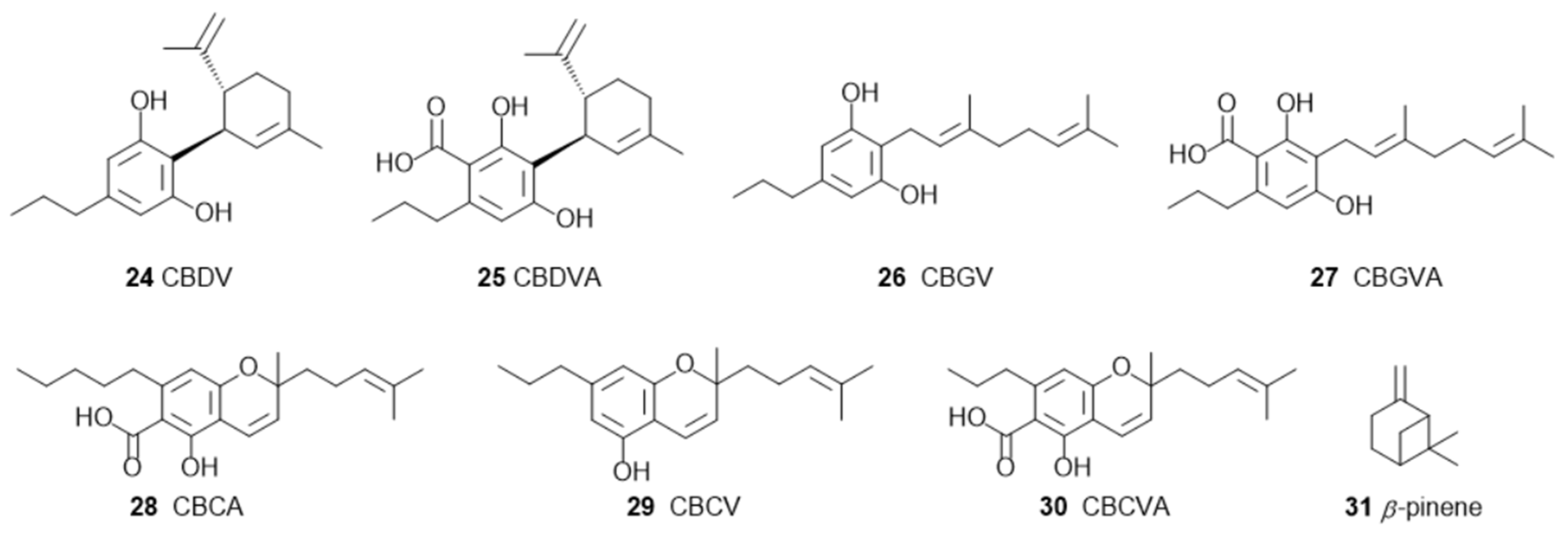
A systematic review was published (Stone et al., 2020) on the neuroprotective properties of Phyto cannabinoids other than CBD (3, Error! Reference source not found.), and THC (2, Error! Reference source not found.), namely for the following cannabinoids: CBG (4, Error! Reference source not found.), Δ9-tetrahydrocannabinolic acid (Δ9-THCA) (5, Error! Reference source not found.), CBC (6, Error! Reference source not found.), CBN (7, Error! Reference source not found.) Δ9-tetrahydrocannabivarin (Δ9-THCV) (8, Error! Reference source not found.), cannabidiolic acid (CBDA) (9, Error! Reference source not found.), cannabigerolic acid (CBGA) (10, Error! Reference source not found.), cannabidivarin (CBDV) (24, Error! Reference source not found.), cannabidivarinic acid (CBDVA) (25, Error! Reference source not found.), cannabigerivarin (CBGV) (26, Error! Reference source not found.), cannabigerovarinic acid (CBGVA) (27, Error! Reference source not found.), cannabichromenic acid (CBCA) (28, Error! Reference source not found.), cannabichromevarin (CBCV) (29, Error! Reference source not found.), and cannabichromevarinic acid (CBCVA) (30, Error! Reference source not found.). Of 2341 studies, 31 articles met the inclusion criteria. CBG (4) (doses ranging from 5 mg.kg-1 to 20 mg.kg-1) and CBDV (24) (doses ranging from 0.2 mg.kg-1 to 400 mg.kg-1) demonstrated effectiveness in preclinical models of epilepsy and Huntington's disease. Δ9-THCA (5) (20 mg.kg-1), CBC (6) (10-75 mg.kg-1), and Δ9-THCV (8) (doses ranging from 0.025-2.5 mg.kg-1) exhibited potential in hypomobility and seizure, Parkinson's disease and Huntington's disease. Limited mechanistic insights showed both CBG (4) and Δ9-THCA (5) had some of their effects via PPARγ receptors. The in vivo and in vitro data are included in that review.
Figure 7.
Chemical structures of Phyto cannabinoids with neuroprotective properties: Cannabidivarin (CBDV, 24), Cannabidivarinic Acid (CBDVA, 25), Cannabigerivarin (CBGV, 26), Cannabigerovarinic Acid (CBGVA, 27), Cannabichromenic Acid (CBCA, 28), Cannabichromevarin (CBCV, 29), and Cannabichromevarinic Acid (CBCVA, 30).
Figure 7.
Chemical structures of Phyto cannabinoids with neuroprotective properties: Cannabidivarin (CBDV, 24), Cannabidivarinic Acid (CBDVA, 25), Cannabigerivarin (CBGV, 26), Cannabigerovarinic Acid (CBGVA, 27), Cannabichromenic Acid (CBCA, 28), Cannabichromevarin (CBCV, 29), and Cannabichromevarinic Acid (CBCVA, 30).
Although terpenes have well-identified common targets with cannabinoids, (Christensen et al., 2023)(Table S2) separate studies demonstrated that none of the terpenes myrcene (14), limonene (17), α-pinene (18), linalool (20), β-caryophyllene (21) in Error! Reference source not found., and β-pinene (31) were observed to modify potassium channel signaling in AtT20 cells that express CB2 receptors. Additionally, they did not interact with THC at the receptor (Santiago et al., 2019), nor did not influence intracellular calcium levels at the human transient receptor potential ankyrin 1 (hTRPA1) or human transient receptor potential vanilloid 1 (hTRPV1) channels (Heblinski et al., 2020).
1.3. The Polyphenols Entourage
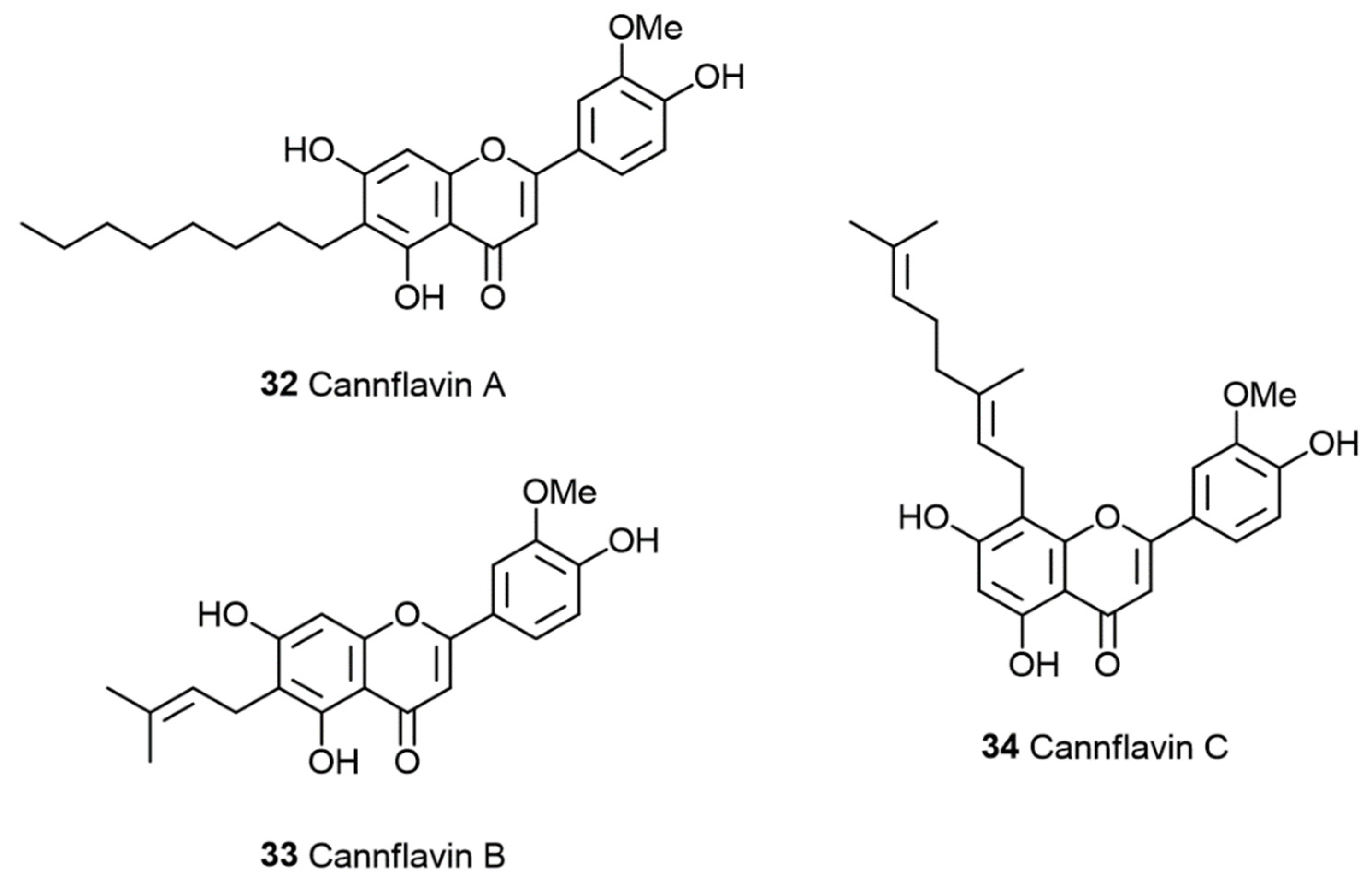
Similar to the terpenoids and terpenes, cannabis also contains a diverse range of polyphenolic compounds, many of which are prevalent in plants generally. However, some polyphenolics appear to be predominantly or exclusively present in cannabis. Several of these compounds have names starting with the prefix ‘cann’ reflecting their initial identification in cannabis extracts. Unlike terpenes, these polyphenolics are not typically found in trichomes but are usually located in other parts of the plant(Bautista et al., 2021). This category includes flavonoids with geranyl and prenyl substitutions, such as cannaflavin A (32), B (33), and C (34) (Error! Reference source not found.), which are found in the flowers, twigs, leaves and pollen, of the cannabis plant. These Cannaflavins A-C (32 to 34, Figure 8) have been reported to possess neuroprotective, anti-viral, anti-inflammatory, and anti-cancer effects. These compounds are likely to play a role in the overall therapeutic effects of Cannabis-derived extracts and may also be considered as ‘entourage compounds’ too.
Figure 8.
Flavonoids found in cannabis: Cannaflavin A (32), Cannaflavin B (33), and Cannaflavin C (33) (Duggan, 2021)..
Figure 8.
Flavonoids found in cannabis: Cannaflavin A (32), Cannaflavin B (33), and Cannaflavin C (33) (Duggan, 2021)..
2. Physiological Effects of Terpenes and Terpenoids Found in Cannabis
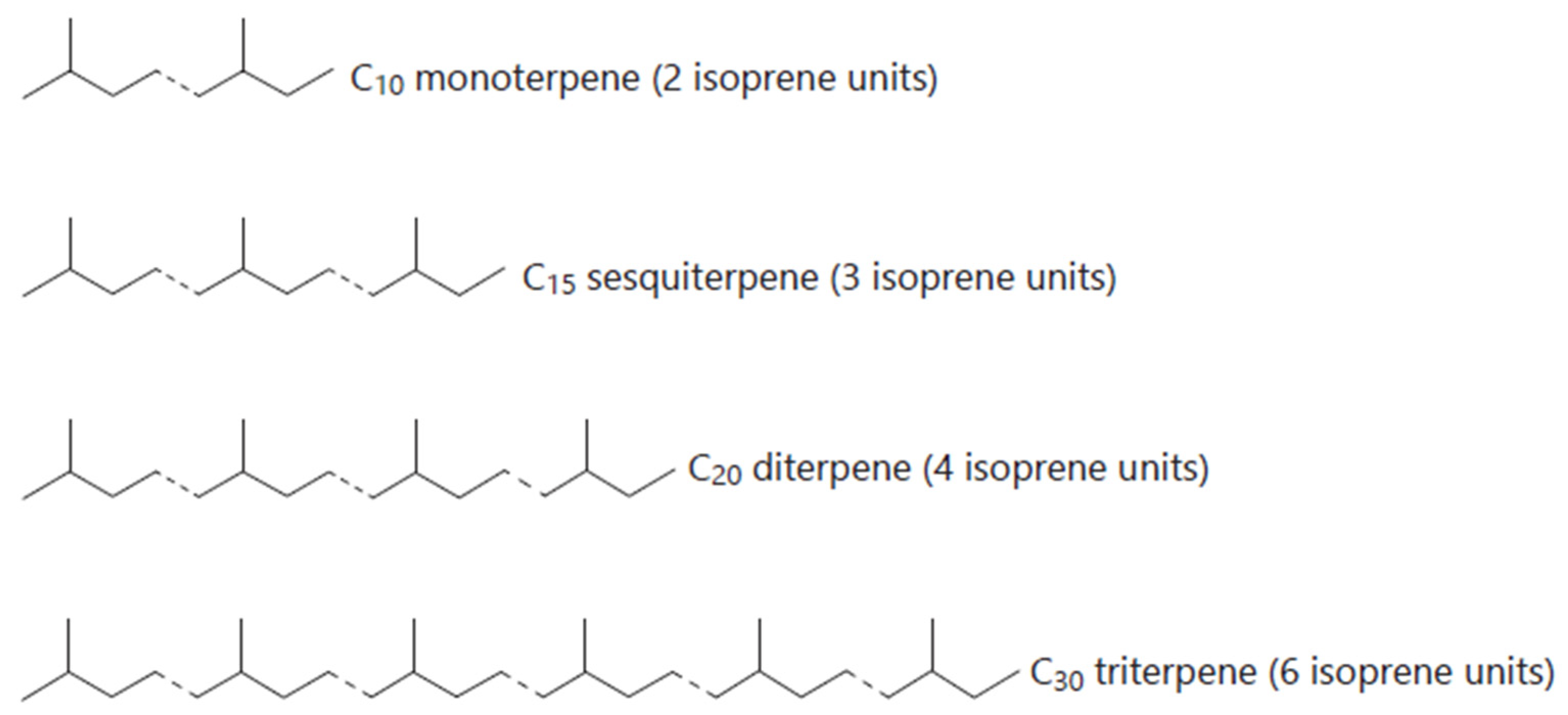
Terpenes are classified based on the number of carbon atoms they contain, namely monoterpenes (C10), sesquiterpenes (C15), diterpenes (C20), and triterpenes (C30), consisting of two, three, four, or six isoprene units, respectively, as depicted in Error! Reference source not found..
Figure 9.
Linking isoprene units “head to tail” C30 triterpene (6 isoprene units) to form terpenes, the backbones of terpenoids.
Figure 9.
Linking isoprene units “head to tail” C30 triterpene (6 isoprene units) to form terpenes, the backbones of terpenoids.
More than 100 different monoterpenes have already been identified in cannabis. This type of terpenes consists of two isoprene units, with a molecular formula C10H16. Common examples of monoterpenes found in cannabis include myrcene, limonene, pinene, and terpinolene. Each chemovar of cannabis may have a unique terpene profile, which contributes to its distinctive aroma, flavor, and potential therapeutic effects. The exact number and types of monoterpenes can vary across different cannabis varieties.
Sesquiterpenes contain three isoprene units, resulting in a molecular formula that is typically represented as C15H24. Examples of this type of terpene found in cannabis include -caryophyllene, humulene, and guaiol, among others. Like monoterpenes, sesquiterpenes contribute to the overall aroma, flavor, and potential therapeutic effects of cannabis. The variety of terpenes present in cannabis is one of the factors that contribute to the unique characteristics of different chemovars or “strains”.
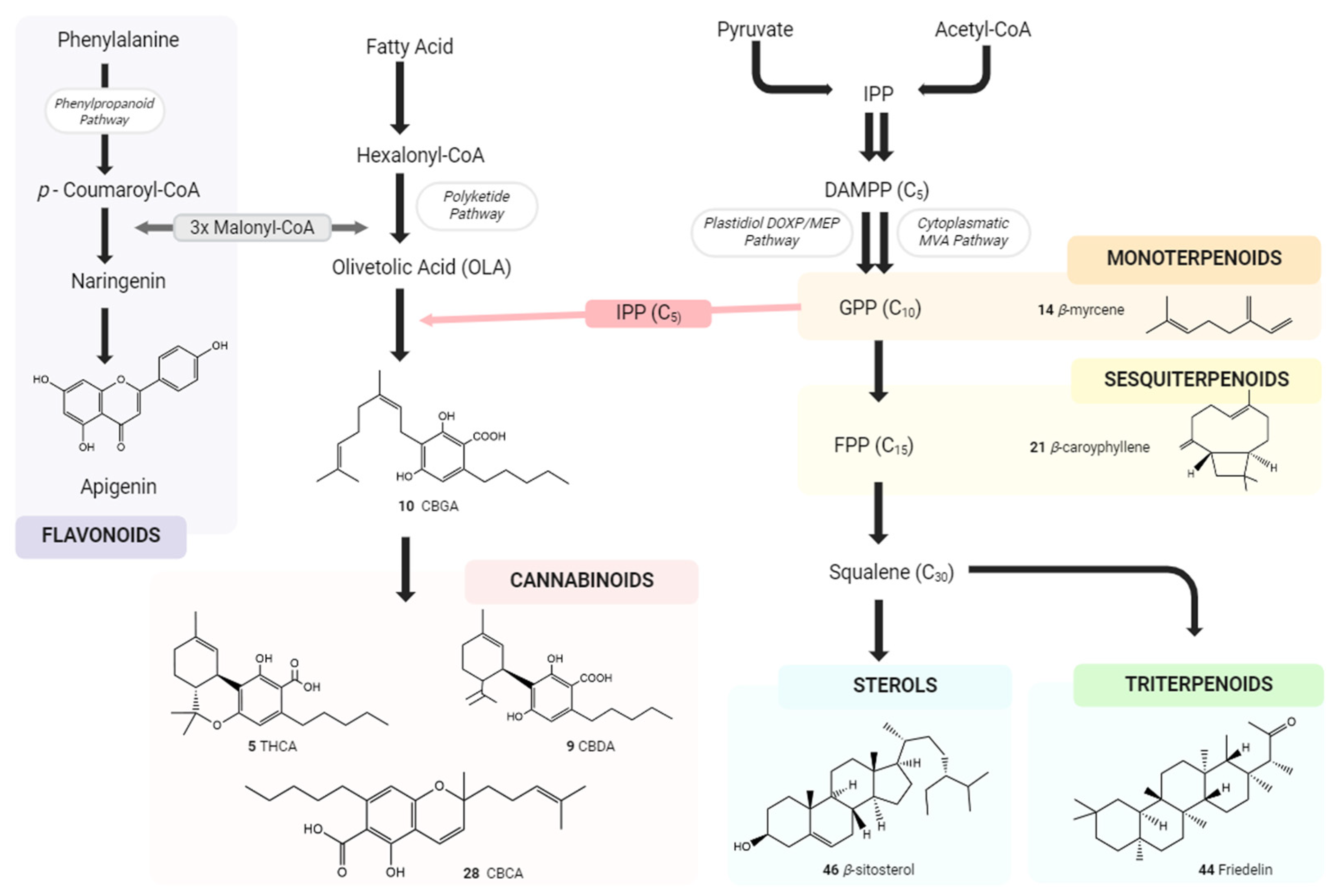
Additionally, diterpenes consist of four isoprene units corresponding to the molecular formula C20H32, whereas triterpenes are built from six isoprene units, give them the molecular formula C30H48. The linear triterpene squalene backbone, a key component of shark liver oil, is also present in trace amounts in cannabis (Error! Reference source not found.).
Figure 10.
Biosynthesis pathways for cannabinoids, terpenoids, sterols, and flavonoids, with example molecules from each group. Cannabinoids and terpenoids are synthesized and stored in the secretory cells of glandular trichomes, predominantly found in the aerial parts of cannabis plants, especially concentrated on the top surfaces of seedless female flowers (Adapted from Jin et al., 2020).
Figure 10.
Biosynthesis pathways for cannabinoids, terpenoids, sterols, and flavonoids, with example molecules from each group. Cannabinoids and terpenoids are synthesized and stored in the secretory cells of glandular trichomes, predominantly found in the aerial parts of cannabis plants, especially concentrated on the top surfaces of seedless female flowers (Adapted from Jin et al., 2020).
So far, 38 sesquiterpenes and 58 monoterpenes have been characterized across different cannabis genotypes (Rice & Koziel, 2015; Ross & ElSohly, 1996; Wanas et al., 2020). The chromatogram of the terpene extract from cannabis floral tissue is shown inError! Reference source not found.a. The key monoterpene components found were β-myrcene (14), limonene (17), α-pinene (18), and linalool (20) with trace amounts of terpinolene (15) and ocimene (16) (Ternelli et al., 2020) (Error! Reference source not found.b), with β-caryophyllene (21), E-β-farnesene (35), E-caryophyllene (36), and caryophyllene oxide (37) as the predominant sesquiterpenes (Error! Reference source not found.) (Abdollahi et al., 2020). Cannabinoids are biologically synthesized from diterpene structures, forming phenol terpenoids accounting for almost 25% of all metabolites (Hanuš & Hod, 2020). Thus, this diverse terpene profile contributes to the unique aromas of different cannabis “strains” described previously
Figure 11.
(a) Gas chromatogram of a cannabis terpene extract (butanol) from the floral tissue of Cannabis sativa L. (b) and predominant terpene chemovars. Adapted from (Sommano et al., 2020). The dried cannabis flower (0.2 g) was extracted with propanol with ultrasonic-assisted method, and GC-MS analysis was performed using the protocol described by Sriwichai et al., 2019.
Figure 11.
(a) Gas chromatogram of a cannabis terpene extract (butanol) from the floral tissue of Cannabis sativa L. (b) and predominant terpene chemovars. Adapted from (Sommano et al., 2020). The dried cannabis flower (0.2 g) was extracted with propanol with ultrasonic-assisted method, and GC-MS analysis was performed using the protocol described by Sriwichai et al., 2019.
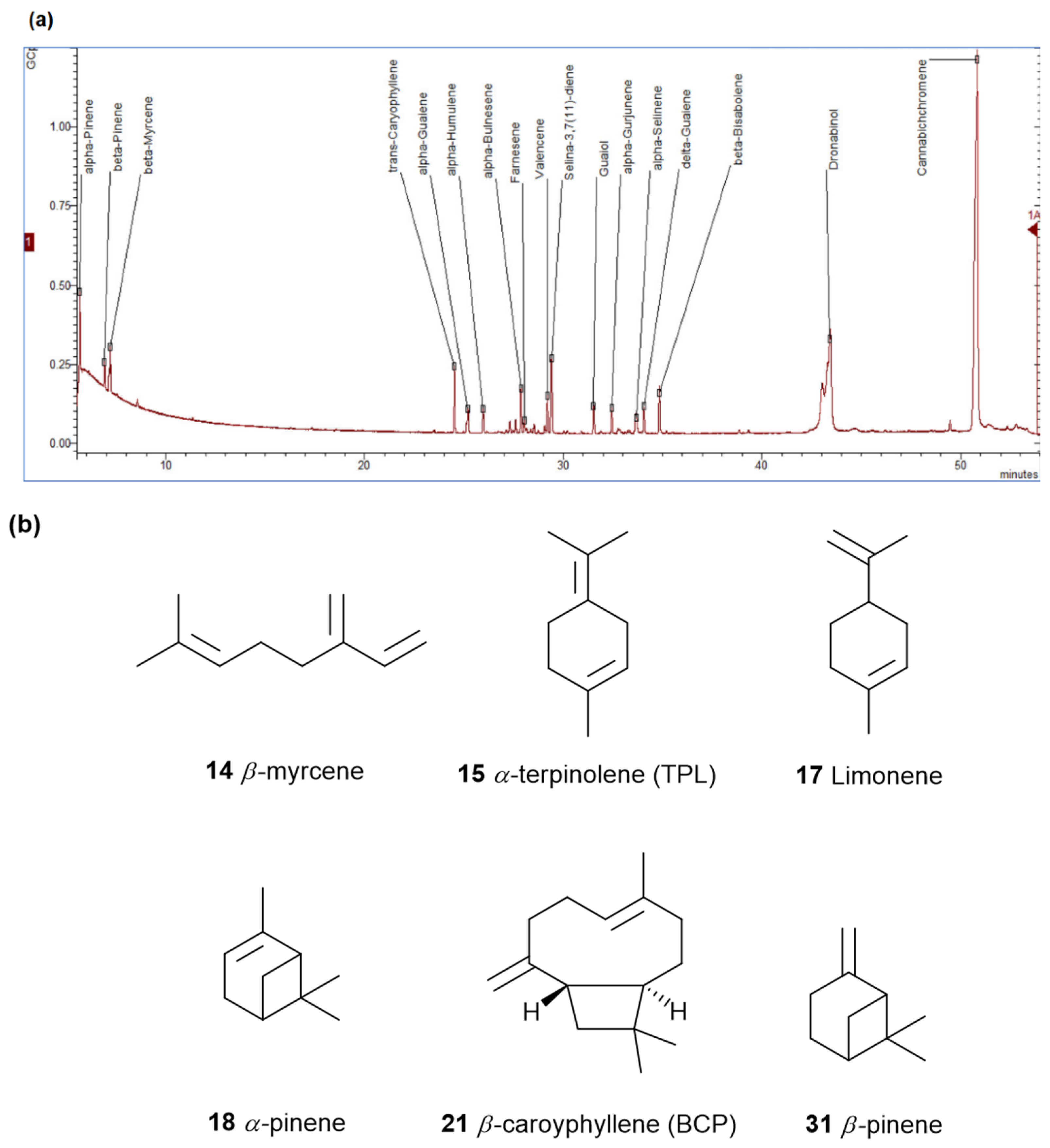
Figure 12.
Some mono- and sesqui- terpenoids which are commonly found in cannabis.
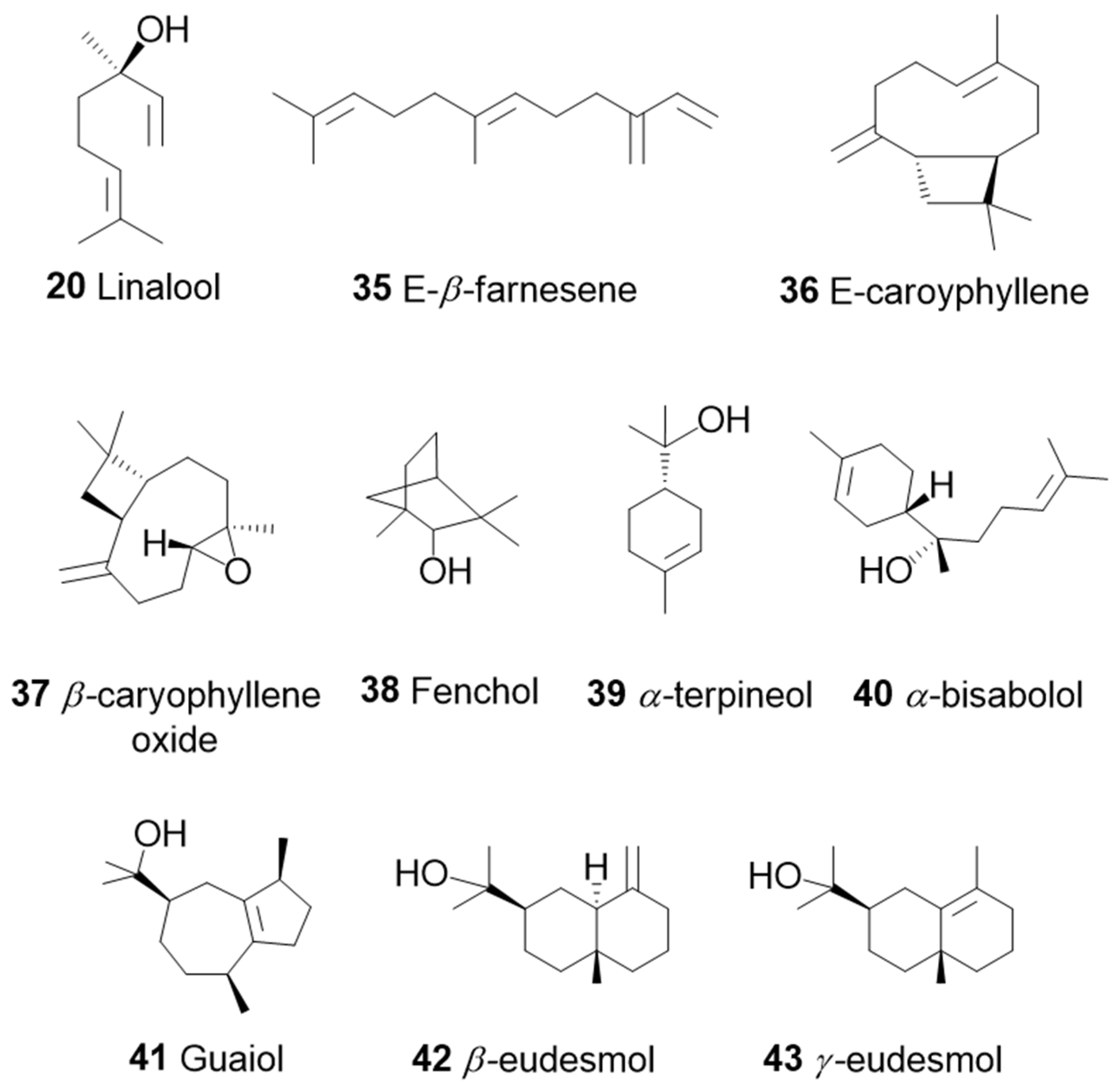
Lee et al., 2023 characterized the inflorescences of hybrid Cannabis species, i.e., combinations of C. indica and C. sativa, known as medicinal cannabis, and the terpene compositions in the leaves. It is worth mentioning that the current cultivation and micropropagation of medicinal cannabis, called Cannabis sativa, L is carried out by hybridization of seeds/female inflorescences of Cannabis sativa and Cannabis indica, in variable but constant, well-defined percentage (e.g. 50-70% C. sativa: 30-50% C. indica), and which constitute a variety with certification, and genetic lineage defined and deposited in a database.
The term “terpenoid” is attributed to all terpenes that are naturally or synthetically modified with different functional groups in the hydrocarbon skeleton, particularly hydroxyl groups and methyl groups that may be oxidized or moved at various positions and even removed (Error! Reference source not found.).
Terpenoids are well known as Bioenhancers, i.e., bioavailability modifiers. Bioavailability refers to the portion of a drug that enters the bloodstream and reaches its intended therapeutic targets. For example, Costa et al., 2015 were the first to assess the ability of triterpene to act as a promotor and therefore enhance the permeation of ibuprofen. This triterpene, Friedelin (44), is also found in cannabis (Error! Reference source not found.).
Figure 13.
Triterpenoids and a phytosterol found in cannabis.
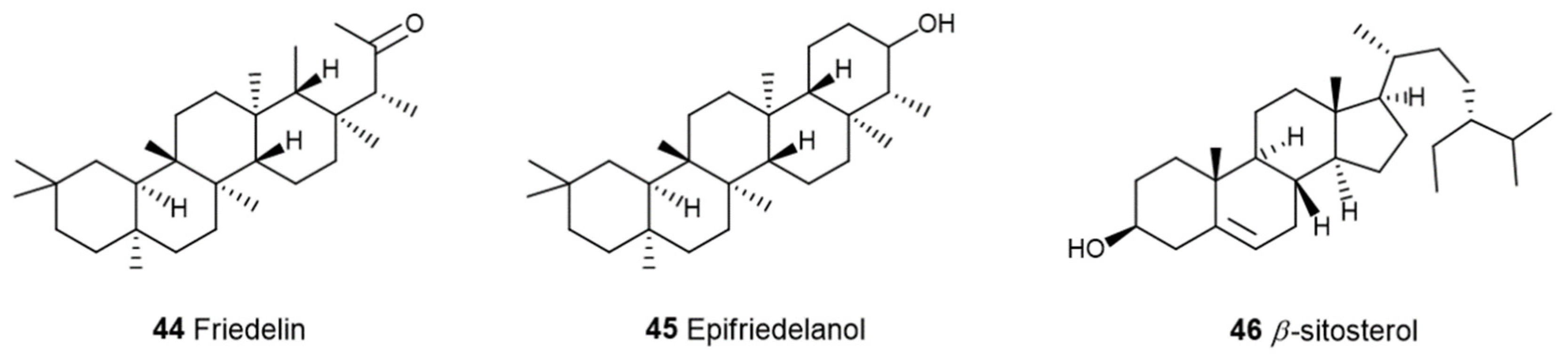
Bioenhancers improve bioavailability, thus allowing the drugs to achieve their therapeutic response at lower doses and potentially having the additional benefit of reducing the risk of adverse effects (Peterson et al., 2019). This concept has been revolutionary in modern medicine (Zafar N., 2017). For a bioactive compound to achieve its full therapeutic potential, its bioavailability and absorption are crucial. Factors that can decrease the compound’s bioavailability include the route of administration with the oral route being the most restrictive, water solubility, permeability limitations, and first-pass metabolism in the liver. Because of their lipophilic chemical nature, hence low water solubility, Cannabinoids are prone to poor bioavailability, as well as the reported first-pass metabolism of both CBD (3) and THC (2) (Peterson et al., 2019). Bioenhancer mechanisms of action address these challenges by, e.g., enhancing the absorption, blocking drug efflux membrane transporters, and inhibiting cytochrome P-450 (CYP450) liver enzymes.
Each monoterpene does not exist isolated in nature, and even when it is the predominant component of an essential oil, it rarely exceeds 80% of the relative composition, so the reported biological effects are influenced by the remaining qualitative and quantitative composition. There are, however, many in vivo and in vitro studies of isolated, purified, or synthesized molecules, but the results thus obtained cannot be extrapolated to a mixture in which their proportion is variable, since the effects will be a function of the dose, and imponderable from one to another. Terpene presence is at a trace of ng/mL level, in the case of a cannabis-based preparation. Unless the monoterpene is added.
All essential oils are generally characterized by antimicrobial, antioxidant, anti-inflammatory, and analgesic adjuvant activities, in addition to specificities that characterize the traditional use of the plant where they are produced.
3. The Terpenes Entourage Effects Studied in Cannabis
Terpenes in cannabis are often referred to as THE ‘entourage compounds’ due to their ability to enhance the blood-brain barrier permeability, thereby improving the pharmacokinetic properties of, e.g., THC (Boggs et al., 2018; De Petrocellis et al., 2011).
There are over 20,000 different terpenes identified in nature, and they are found in various plants, fruits, and flowers. Terpenes are organic compounds that contribute to the aroma and flavor but also to anti-inflammatory, antimicrobial, and other biologic activities of many plants, including cannabis. Each plant species can produce a unique combination and concentration of terpenes, giving them distinct scents and potential therapeutic properties. In cannabis, terpenes work alongside cannabinoids like THC and CBD to influence the overall effects, potentially playing a role in what is often referred to as the entourage effect.
Case studies follow, depending on the state of the art identified for studies designed to investigate the potential effect of a cannabis-associated terpene molecule.
3.1. β-Caryophyllene and Terpinolene
In a study by A. L. Johnson et al., 2023 terpinolene (TPL) (15, Error! Reference source not found.) had an anxiolytic effect on zebrafish behavior, whereas bisabolol (40, Error! Reference source not found.) had no significant effects. In the second phase of this study, TPL (15) and β-caryophyllene (BCP) (21, Error! Reference source not found.) (were administered after the administration of rimonabant, AM630, or a control solution. Both TPL (15) and BCP (21) reduced zebrafish anxiety-like behavior in the open field test when zebrafish were pretreated with a control solution. Zebrafish pretreated with rimonabant did not show any different behavioral responses than without rimonabant. However, AM630 eliminated the anxiolytic effects of both TPL (15) and BCP (21). These results indicate that TPL (15) and BCP (21) have an anxiolytic effect on zebrafish behavior which CB2R may mediate and not CB1R. In summary, it was provided direct evidence that CB2R regulates the anxiolytic effects of TPL (15) and BCP (21). This result confirms the cooperative effect of some terpenes with cannabinoids, which helps to explain the complex effect of cannabis on behavior.
In phase 1 testing, TPL (15) (purity ≥93%) was administered in 0.01% (n = 20), 0.05% (n = 20), and 0.1% (n = 20) concentrations. For phase 2 testing, TPL (15) was administered in 0.1% concentrations (n = 15) after the administration of CB receptor antagonists. In phase 2 testing, BCP 21 (purity ≥80%) was administered in 4% concentrations (n = 15) dissolved in 0.1% ethanol (EtOH) after the administration of CB receptor antagonists.
The main components of the lavender essential oil obtained from Lavandula officinalis are monoterpene alcohols (60-65%) such as linalool (20) (20-50% of the fraction) (Error! Reference source not found.), linalyl acetate (47) (25-46% of the fraction) (Error! Reference source not found.). Others include cis-ocimene (3-7%) (16, Error! Reference source not found.), terpinene-4-ol (3-5%) (Error! Reference source not found.), limonene (17, Error! Reference source not found.), cineole also known as eucalyptol (49, Error! Reference source not found.), camphor (50, Error! Reference source not found.), lavandulyl acetate (51, Error! Reference source not found.), lavandulol (52, Figure) and α-terpineol (53, Error! Reference source not found.), β-caryophyllene (21, Error! Reference source not found.), geraniol (53, Error! Reference source not found.), α-pinene (18, Error! Reference source not found.), and non-terpenoid aliphatic components (Thieme Medical Publishers, 2009).
Figure 14.
Chemical structure of some of the components in lavender essential oil.
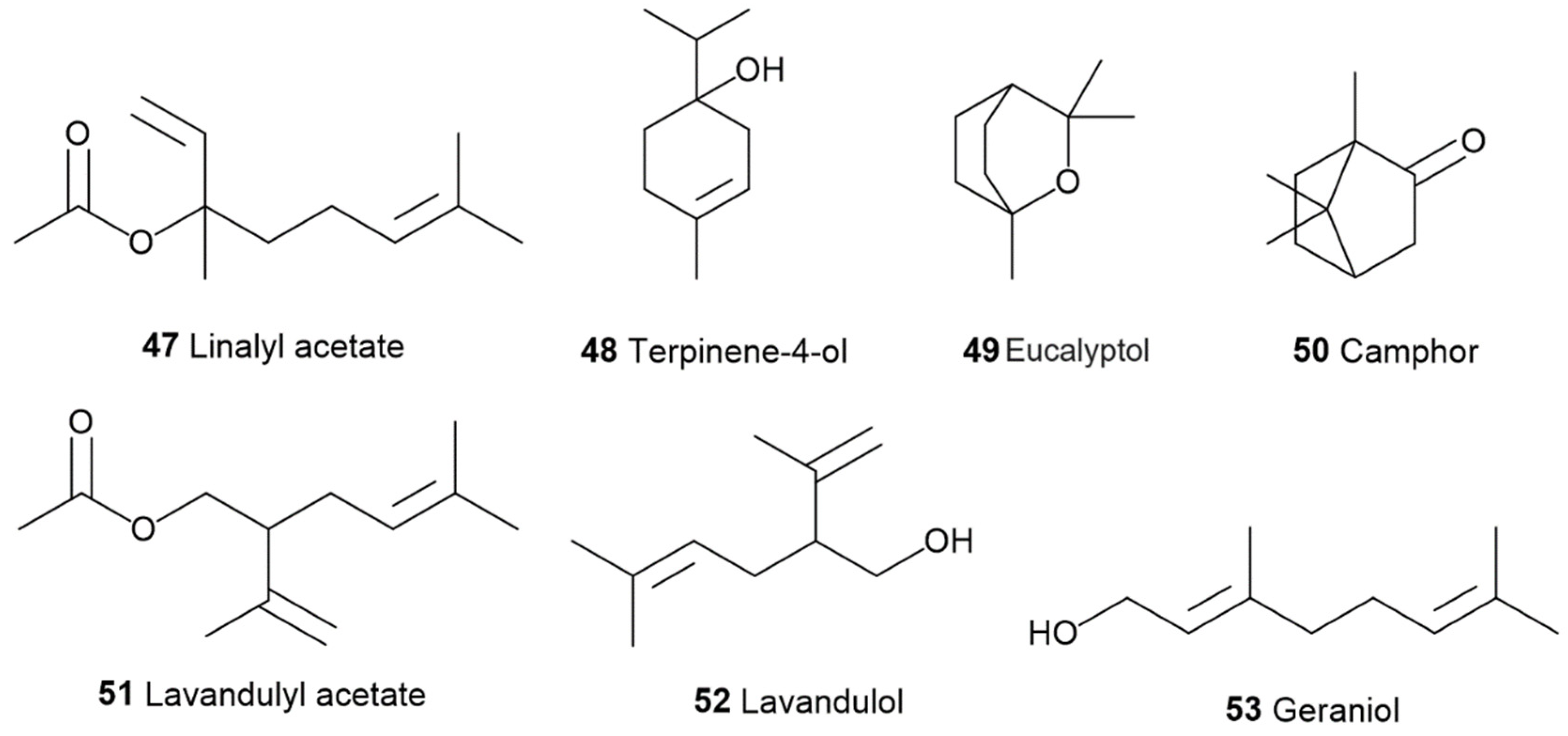
The key terms generally associated include (alone or in combination): lavender, Lavandula, disorder, stress, relaxation, anxiety, sleep, sleeping, and essential oil.
Traditionally, essential oil and flowers of Lavandula officinalis have been used throughout Europe and worldwide for their sedative proprieties (Weiss & Fintelmann, 2000). Despite several pre-clinical and clinical pharmacology and efficacy studies performed on anxiolytic activity, the EMA (European Medicines Agency) has not yet endorsed lavender flowers and oil for the treatment of general anxiety disorders (cf. ICD-10 F 41.1) (European Medicines Agency, 2012a). Existing research has highlighted the potential of linalool in treating depression due to its interaction with various targets within the monoaminergic system and its similarity to traditional antidepressant drugs (dos Santos et al., 2022). Linck et al., 2009 found that inhaling linalool at concentrations of 1% and 3% could extend the duration of sleep induced by pentobarbital, lower the body temperature, and slow down the exercise behavior of mice, without affecting their coordination. Other studies (Dobetsberger & Buchbauer, 2011) have shown that linalool (20) can induce sedation, promote relaxation, and decrease aggression and hostility. Additionally, both linalool (20) and lavender essential oil have been observed to produce behavior sedative-like effects by reducing the renal sympathetic nerve activity and enhancing the parasympathetic nerve activity (Peana et al., 2002; Shen et al., 2007). The modulation of glutamatergic neurotransmission could accomplish the sedative effect of linalool (20). Linalool (20) has been found, in both In vivo and in vitro studies, to act as a competitive antagonist of the excitatory neurotransmitter glutamate by binding to glutamatergic N-methyl-D-aspartate (NMDA) receptors (Elisabetsky et al., 1999). Furthermore, linalool (20) also reduced the release of glutamate triggered by potassium stimulation (Silva Brum et al., 2001).
No effect has been evidenced so far when linalool is administered with cannabis.
3.2. α- and β-Pinenes
Laws & Smid, 2024 study reveals a novel and efficacious neuroprotective and anti-aggregatory effect of α-pinene (18) and β-pinene (31) against β amyloid-mediated toxicity. The modest inhibition of lipid peroxidation from α-pinene (18), β-pinene (31), and terpinolene (15) may also contribute to the multifaceted neuroprotection of C. sativa-prevalent terpenes. In addition, limited anti-aggregatory effects were observed from terpineol (39), terpinolene (15), α-pinene (18), β-pinene (31), and friedelin (44). The outcomes of this study contribute to an emerging body of knowledge regarding the potential synergistic bioactivities of specific terpene, which could be valuable in developing medicinal cannabis formulations targeting neurodegenerative diseases.
However, in the above study (Laws & Smid, 2024) there is no information concerning the chemical structure characterization of referred compounds. Namely, it is well known that the enantiomers of any bioactive molecule can have distinct physiological and pharmacological activities. One limitation of the research is the absence of information on the structural analysis and purity of the chemical compounds used.
In 2012, there was no clear agreement regarding the antimicrobial proprieties of pinenes, potentially due to the lack of enantiomer identification (Silva et al., 2012). To clarify the controversial results on the subject, Silva et al., conducted a study to assess the antimicrobial effects of the distinct enantiomers and isomers of these monoterpenes (Figure 15). Their research revealed that only the positive enantiomers of pinene exhibited antimicrobial activity against R. oryzae, C. neoformans, C. albicans, and MRSA. The research also highlighted the additive and synergistic effects of (+)-α-pinene (18a) and (+)-β-pinene (31a) when combined with commercial antimicrobials, which not only reduced the MIC of combined substances and maintained the antimicrobial activity, but also lowered toxicity.
3.3. β-Myrcene
Local application of myrcene (14, Error! Reference source not found.) at doses of 1 and 5 mg/kg subcutaneously reduced inflammation and joint pain through a cannabinoid receptor-mediated mechanism (McDougall & McKenna, 2022). The combination of myrcene (14) and CBD (3) (Error! Reference source not found.) at 200 μg showed no significant difference in effect compared to myrcene (14) alone. Additionally, repeated doses of myrcene (14) did not impact joint damage or inflammatory cytokine production. These findings suggest that topical myrcene (14) has the potential to ease chronic arthritis pain and inflammation, although it does not exhibit a synergistic effect combined with CBD (3).
3.4. Bisabolol, D-Limonene, ⍺-Pinene and β-Caryophyllene
Recent findings provide a foundation for future research investigating in cannabinoid and terpene interactions (Jenkins et al., 2023). Compared to the control, acute administration of bisabolol (37) and D-limonene (17) increased the food intake, and bisabolol (40), D-limonene (17), ⍺-pinene (18), and β-caryophyllene (21) decreased the time percentage spent in the outer zone in the novelty-induced hypophagia test, suggesting anxiolytic effect. Social interaction was only improved with ethanol. In contrast to the minor cannabinoids and terpenes, Δ8-THC (11) exhibited anxiogenic effects in the marble burying test after acute administration. During chronic administration, only Δ8-THC (11) showed anxiogenic effects in the novelty-induced hypophagia test. other cannabinoids did not exhibit anxiolytic or anxiogenic effects at the tested doses or times, and neither minor cannabinoids nor terpenes stimulate or impair general motor activity.
3.5. β-Caryophyllene, Humulene, Nerolidol, Linalool, and β-pinene
Blasco-Benito et al., 2018, extracted fresh cannabis flowers with ethanol, then evaporated the solvent, followed by magnetic stirring on a hot plate, thus achieving cannabinoid decarboxylation. The extract (in mg/g) comprised 551.3 THC (2), 3.7 CBG (4), 3.4 THCA (5), and no CBD (3), CBC (6), CBN (7), THCV (8), and CBDA (9). The five main terpenes were 1.9 β-caryophyllene (21), 0.6 humulene (19), 0.6 linalool (20), 0.3 β-pinene (31) and 0.4 nerolidol (54). Although the ethanolic extract of cannabis flowers demonstrated higher antitumor activity than pure THC (2), this effect was not attributed to any of the five most prevalent terpenes, as THC (2) combined with these 5 main terpenes did not exhibit higher activity than pure THC (2).
4. Future Perspectives
With ongoing research into the factors influencing terpene concentrations, biosynthesis, and genetic expression, it may become attainable to develop new cultivars with specific and desired cannabinoid and terpene (Rice & Koziel, 2015).
The concept of the “entourage effect”, first introduced by Ben-Shabat et al. in 1988, describes how the presence of an inactive compound can enhance the activity of an active one, which can be expressed by strict inequality: 1 + 0 > 1 (Ben-Shabat et al., 1998).
Synergistic or entourage effects in botanical mixtures or combinations do not necessarily require that the compounds act on the same target to produce an enhanced response. Instead, compounds can exhibit “pharmacodynamic synergism” by interacting with multiple cellular targets, as seen in both antibiotic and cancer synergistic therapies, and/or “pharmacokinetic synergism” by improving the solubility or disposition (absorption, distribution, metabolism) of active constituents, while also can reduce side effects of the active constituent or disrupt resistance mechanisms (Britton et al., 2018).
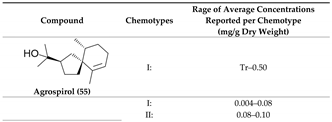
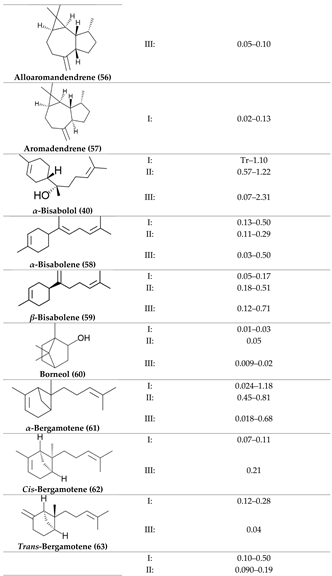
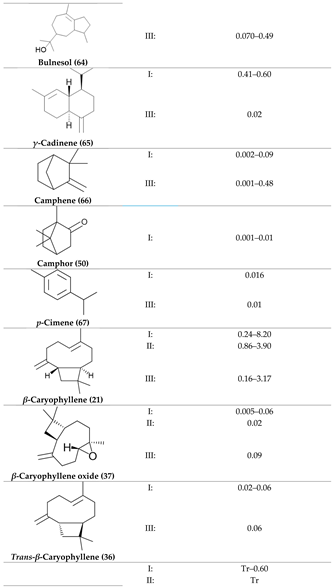
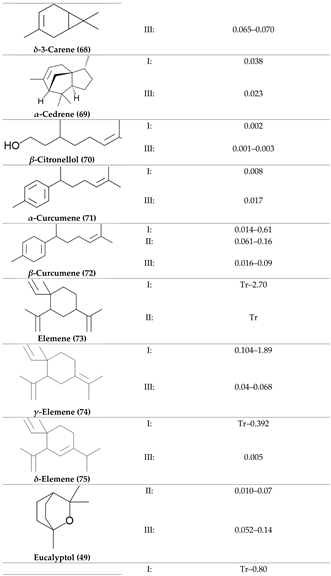
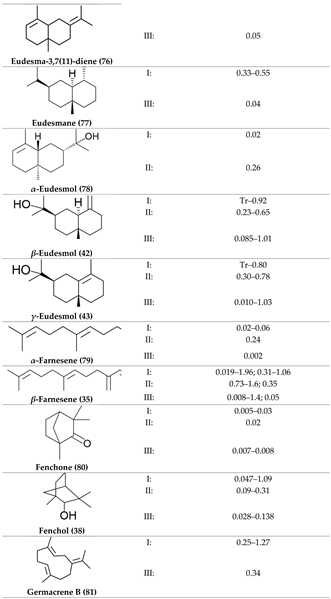
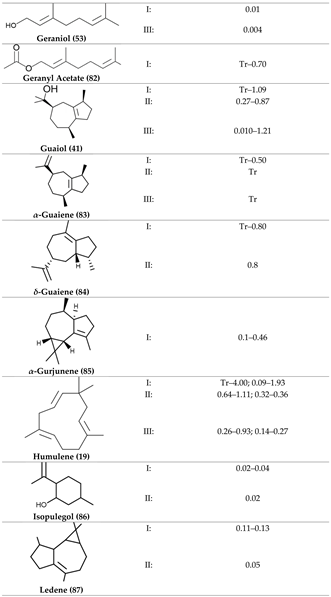
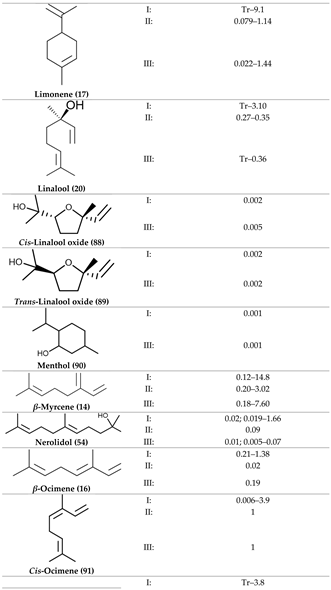
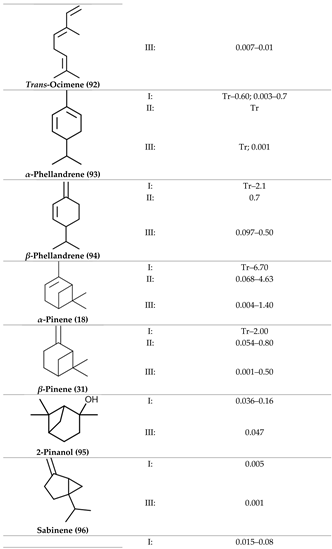
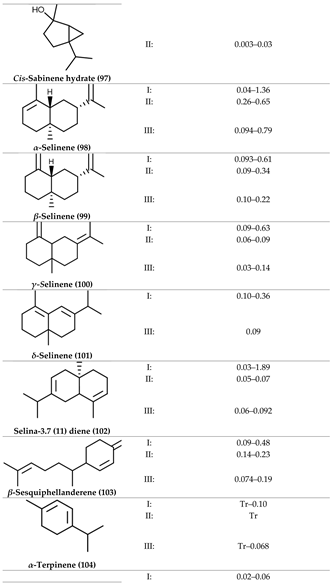
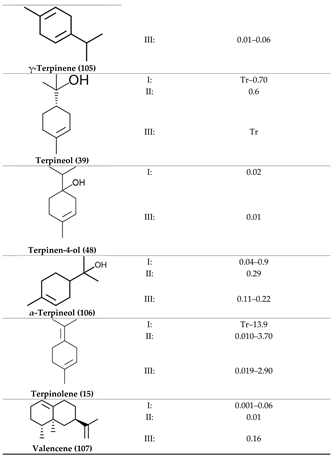
Error! Reference source not found. illustrates the variety and bioactivities of terpenes found in cannabis, with the focus on minor or secondary terpenes that are present in lower concentrations by mass. The concept of the entourage effect in cannabis, whether the interactions between phytochemicals contribute to a synergetic effect, has been both supported and challenged by various studies. The ongoing debate underscores the importance of further research into the interactions between phytochemicals within Cannabis sativa, particularly given the growing interest in potential synergy/entourage effects (Britton et al., 2018).

Table 2.
Concentrations of terpenes found in Cannabis species. Concentration ranges are provided by chemotype when available; Tr—trace (<level of quantitation). Adapted from (Chacon et al., 2022).
Table 2.
Concentrations of terpenes found in Cannabis species. Concentration ranges are provided by chemotype when available; Tr—trace (<level of quantitation). Adapted from (Chacon et al., 2022).
 |
 |
 |
 |
 |
 |
 |
 |
 |
 |
Meanwhile, systematic databases are essential for gathering experimental evidence on the combinations of major cannabinoids and terpenes contents in Cannabis flower and their effect on patient outcomes. Vigil et al., 2023 developed a clinically relevant, user-friendly, and scalable chemovar indexing system that summarizes the primary cannabinoid and terpene profiles and evaluates whether the most consumed chemovars differ in their treatment efficacy and experienced side effects. This chemovar indexing system serves as a proof-of-concept for assessing how distinct phytochemical combinations interact with user-specific characteristics to influence both general and individualized Cannabis consumption experiences and health outcomes. Ideally, randomized methods should be employed to evaluate differences in effects across chemovars.
Analysis of the five most frequently consumed chemovars revealed significant differences in effectiveness in symptom treatment for chronic pain, anxiety, and depression (ps < 0.001). While the effects varied in magnitude, all five chemovars were effective for these conditions, except for MC61 (myrcene 0.01-0.49%/-caryophyllene 0.01 to 0.49%/THC 20-25%/CBD 0.01-1.0%), which exacerbated symptoms of anxiety or depression. Additionally, the chemovars diverged in their association with experiencing positive, negative, and context-specific side effects. Specifically with two chemovars, MC61 and MC62 (myrcene 0.01-0.49%/ -caryophyllene 0.01-0.49%/THC 20-25%/CBD 1-5%), both were associated with two to three fewer positive side effects but up to one more negative and two more context-specific side effects compared to the other three chemovars.
A hypothesis of a synergistic effect between cannabinoids and terpenes has been postulated, given the so-called “entourage effect” (E. B. Russo & Marcu, 2017b). Up to date, no reliable scientific evidence of this synergy exists, at least at the cannabinoid (CB) receptor level (Piomelli, 2019). Nonetheless, it would be premature to deny the existence of either pharmacodynamic or pharmacokinetic interactions among active compounds present in Cannabis, as many biological activities have been attributed to its terpenes, including analgesic, anti-inflammatory, and anxiolytic properties (Andre et al., 2016).
Pioneering works by Fischedick and Hazekamp et al. demonstrated already in 2010 and 2012 that terpenes/terpenoids are in dried medicinal cannabis flower usually at concentrations mg/g. (Fischedick et al., 2010; Hazekamp & Fischedick, 2012). Also, as foreseen by Casano et al., 2011, “the relative content of terpenoids is strongly inherited while total yield per weight of tissue is more subjected to environmental factors.” The relative content (%) of terpenes and terpenoids commonly employed for chemo systematic studies, as demonstrated in this publication. Since receptors typically require their ligands at very low concentrations, understanding these terpenes and terpenoids could be important in therapeutic treatment. Thus, any preclinical studies and clinical trials using cannabis-herbal preparations and/or extracts, purified fractions, or any other product with medical purposes shall perform an exhaustive analytical characterization of all compounds that are in the herbal-derived product, even in very low concentrations and which are not being currently considered (Milay et al., 2020).
The observations discussed above have led to the proposal that THC (2) might be considered as a ‘silver bullet’ in therapeutic contexts, while other compounds derived from Cannabis could function collectively as a ‘synergistic shotgun’ (E. B. Russo, 2011a, 2019).
Until now, the majority of studies on synergy have concentrated mainly on the interactions between cannabinoid structures, although the original definition of the entourage effect arose from the interaction between 2-acyl-glycerol esters and cannabinoids. The potential for synergic effects from volatile and easily metabolized monoterpenes and monoterpenoids is limited by their very low concentrations in many cannabis preparations and the mode of administration. Oral consumption typically results in minimal therapeutic levels due to extensive first-pass metabolism. Even via inhalation, which might be expected to provide the best chance for these terpenes to have an impact is also constrained by the high rates of clearance and short half-lives of some monoterpenes, suggesting accumulation to therapeutic levels unlikely (Kohlert et al., 2000). Moreover, polyphenolic compounds, such as flavonoids, exhibited poor oral bioavailability, leading to very low plasma concentrations in vivo after ingestion (Wu et al., 2011). Consequently, the role of polyphenolic constituents of cannabis in contributing to any proposed entourage effect appears to be very limited.
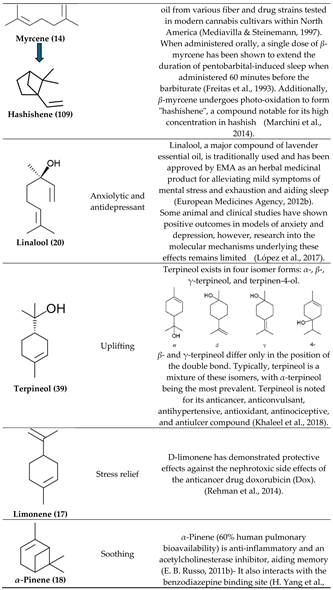
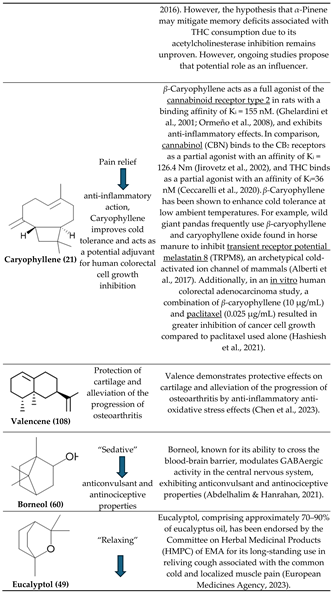
Linking to the current market lines largely described in general internet sites in the area of cannabis products, and as foreseen in Table 4 search motifs, evidence-based medicine will have to follow the classic paths with preclinical and clinical studies of chemically well-characterized cannabis-based preparations, to validate the truly influential effects of terpenes when administered jointly with cannabis, whether orally, with or without vaporization, or by inhalation. Error! Reference source not found. summarizes the state of the art of known individual effects of terpenes that can characterize them as influencers for potentially observable final effects.
Table 3.
The prevalent cannabis Terpenes as influencers aligned with the business market attributes.
Table 3.
The prevalent cannabis Terpenes as influencers aligned with the business market attributes.
 |
 |
 |
 |
5. Methodology
To achieve the objectives, a review of the scientific literature on cannabis entourage effects was designed and the PRISMA model (Preferred Reporting Items for Systematic Reviews and Meta-Analyses) was used to organize the information. Two research questions were formulated: 1) What are the Physiological Effects of Terpenes and Terpenoids found in Cannabis?; 2) What are the proven Entourage effects of Terpenes in Cannabis?
The first methodological approach to identify publications was an exploratory search in electronic databases with predefined keywords. Subsequently, the most relevant articles were consulted, the key phrases and search terms were identified, and Boolean phrases were defined for a systematic final search. The respective descriptors were identified using the medical subject headings (MeSH) terms in the PubMed/MEDLINE, Web of Science, and EBSCO databases (Library, Information Science & Technology Abstracts, and Academic Search Complete).
An electronic bibliographic search was carried out using MEDLINE via PubMed, Scopus, Web of Science, and Cochrane, covering the total accessible period until 22nd December 2023, with the following questions:
Which are the Physiological Effects of Terpenes and Terpenoids found in Cannabis?
(((Physiological Effects) AND (Terpenes)) AND (Terpenoids)) AND (Cannabis)
366 results, only 13 answered objectively to the question.
2) What are the proven Entourage effects of Terpenes in Cannabis?
(Entourage effects) AND (Terpenes)) AND (Cannabis)
49 results, only 16 answering objectively to the question.
To obtain the most accurate information possible, we additionally searched each terpene considered most representative and analyzed each article to find concrete studies of the “entourage” effect in cannabis. The results are summarized in reporting how 1424 were found, Duplicates were eliminated.
All articles located through various scientific repository platforms (B-on, Scopus, Web of Science, Pub Med) were analyzed.
Of the 415 articles relating to the main research questions 1) and 2) formulated, all assessed, one by one, were considered enlightening to answer the question 29 articles that are cited in this document (Error! Reference source not found.), although 102 in total are referenced to understand the background and the general information under the state of the art of the evidence-based cannabis entourage Effect.
Figure 16.
Prisma Flow Diagram of the research results on questions 1) and 2).
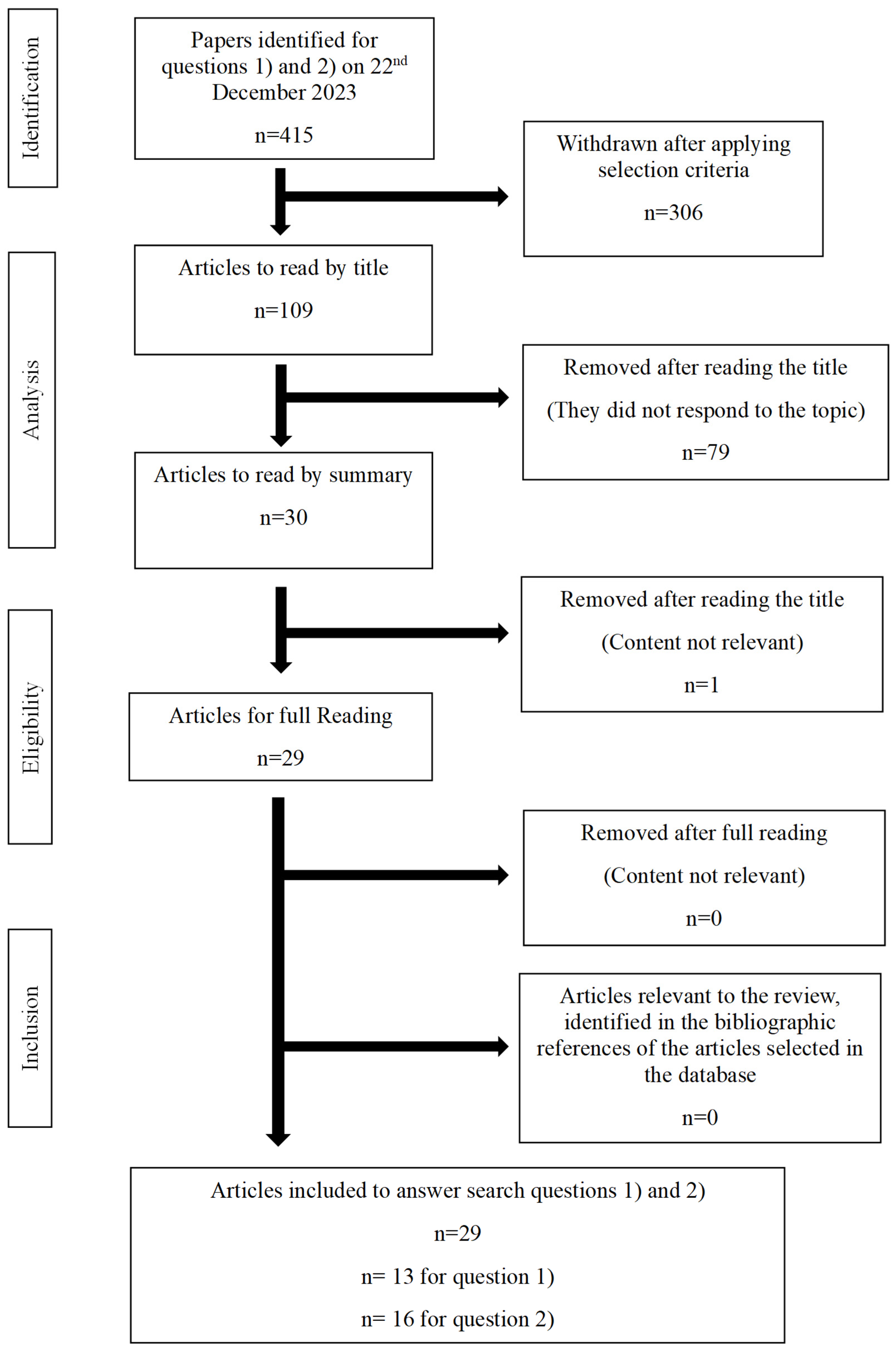
Table 4.
Search Keywords and results in Pub Med Platform for the period 2013-2023.
| Terpene | Search Keywords | N. publications |
| Myrcene (relaxing) | (myrcene) AND (cannabis) | 58 None for relaxing 1 no effect |
| Linalool (sedative) | (linalool) AND (cannabis) | 6 31 for sedative effect alone |
| Terpinolene (uplifting) | (terpinolene) AND (cannabis) | 1133 Terpinolene x effect: none uplifting related |
| Limonene (stress relief) | (limonene) AND (cannabis) | 42 3 for stress relief |
| Pinene (soothing) | (pinene) AND (cannabis) | 48 0 soothing |
| Caryophyllene (pain relief) | (caryophyllene) AND (cannabis) | 95 5 for analgesic synergies /cannabis terpenes & CBD |
| Valencene (euphoria) | (valencene) AND (cannabis) | 0 - no study on cannabis |
| Borneol (sedative) | (borneol) AND (cannabis) | 2 with cannabis 10 refs for borneol AND sedative |
| Eucalyptol (relaxing) | (eucalyptol) AND (cannabis) | 6~3/5 on Eucalyptol AND relaxing but in mixtures |
6. Conclusions
The term ‘entourage effect’ is frequently employed in the field of medicinal cannabis to describe a type of ‘herbal synergy’, wherein the primary cannabinoids, Δ9-THC (2) and CBD (3), are thought to have their effects enhanced or modulated by other compounds present in the plant and its extracts. This concept is plausible, particularly when considering minor Phyto cannabinoids, monoterpenes, sesquiterpenes, and sesquiterpenoids. However, the practical application of this effect is complicated by several factors, including variability in the levels of minor secondary metabolites, across different cannabis preparations, the often-limited scope of analytical methods used, and the low bioavailability of many of these components of interest.
A major challenge in leveraging the entourage effect clinically is akin to issues faced by many herbal medicines, without a clear understanding of the key active agents, it is very difficult to produce reliable products with a consistent level of these constituents. For cannabis, even products with consistent levels of the same chemovar can exhibit variability in their secondary metabolite profiles due to differences in cultivation conditions and processing methods. While employing a combination of HPCL and GC for profiling may improve product consistency, this approach relies on the assumption that all the significant ‘entourage compounds’ can be detected using these techniques. Further, to the author’s knowledge, there are no clinical trials specifically designed to validate the entourage effect in medicinal cannabis.
In conclusion, while current research suggests a potential overlap in therapeutic benefits between cannabinoids and terpenes as influencers, the hypothesis that these effects are additive or synergistic remains unproven. Further research is expected to understand which factors may enhance cannabinoid efficacy in an additive or synergistic manner.
Supplementary Materials
The following supporting information can be downloaded at the website of this paper posted on Preprints.org, Table S1: Selected Cannabis sativa L.-derived cannabinoids, their targets, mechanisms of action, and potential resultant pharmacological effects; Table S2: Selected Cannabis sativa L.-derived terpenes, their targets, mechanisms of action, and potential resultant pharmacological effects.
Author Contributions
Conceptualization, PR, MS, AMC, MCC, CPL, RA, APG.; formal analysis, MCC, PR and RA.; investigation, MCC and APG.; resources, LMR and MS.; data curation, RA, PR and RA.; writing—APG, RA and MCC; writing—review and editing, APG, RA, CPL and PR.; visualization, AMC and CPL.; supervision, MCC and PR.; project administration, AMC and MS and LMR.; funding acquisition, MS and LMR. All authors have read and agreed to the published version of the manuscript.
Funding
This research was funded by Fundação para a Ciência e Tecnologia (FCT, Portugal) through the projects with DOIs 10.54499/UIDP/04567/2020 and 10.54499/UIDB/04567/2020 (https://doi.org/10.54499/UIDP/04567/2020), awarded to CBIOS and by SOMAI Pharmaceuticals.
Conflicts of Interest
The authors from SOMAÍ Pharmaceuticals and Lusófona university are collaborating under a formal contract for this research. While authors from both a commercial entity and an academic institution contributed to this study, the research was conducted objectively and without any influence from financial or commercial interests that could be construed as a potential conflict of interest.
References
- Abdelhalim, A., & Hanrahan, J. (2021). Biologically active compounds from Lamiaceae family: Central nervous system effects (pp. 255–315). [CrossRef]
- Abdollahi, M., Sefidkon, F., Calagari, M., Mousavi, A., & Mahomoodally, M. F. (2020). Impact of four hemp (Cannabis sativa L.) varieties and stage of plant growth on yield and composition of essential oils. Industrial Crops and Products, 155, 112793. [CrossRef]
- Alberti, T., Barbosa, W., Vieira, J., Raposo, N., & Dutra, R. (2017). (−)-β-Caryophyllene, a CB2 Receptor-Selective Phytocannabinoid, Suppresses Motor Paralysis and Neuroinflammation in a Murine Model of Multiple Sclerosis. International Journal of Molecular Sciences, 18(4), 691. [CrossRef]
- Andre, C. M., Hausman, J.-F., & Guerriero, G. (2016). Cannabis sativa: The Plant of the Thousand and One Molecules. Frontiers in Plant Science, 7. [CrossRef]
- Arévalo, R. A., Bertoncini, E. I., Guirado, N., & Chaila, S. (2006). Los términos cultivar o variedad de caña de azúcar (Saccharum spp.). REVISTA CHAPINGO SERIE HORTICULTURA, 12(1), 5–9. https://www.redalyc.org/articulo.oa?id=60912102.
- Bailey, L. H., & Bailey, E. Z. (1976). Hortus third: a concise dictionary of plants cultivated in the United States and Canada (Issue BOOK). MacMillan Publishing Co. http://worldveg.tind.io/record/2320.
- Bautista, J. L., Yu, S., & Tian, L. (2021). Flavonoids in Cannabis sativa: Biosynthesis, Bioactivities, and Biotechnology. ACS Omega, 6(8), 5119–5123. [CrossRef]
- Ben-Shabat, S., Fride, E., Sheskin, T., Tamiri, T., Rhee, M.-H., Vogel, Z., Bisogno, T., De Petrocellis, L., Di Marzo, V., & Mechoulam, R. (1998). An entourage effect: inactive endogenous fatty acid glycerol esters enhance 2-arachidonoyl-glycerol cannabinoid activity. European Journal of Pharmacology, 353(1), 23–31. [CrossRef]
- Berman, P., Futoran, K., Lewitus, G. M., Mukha, D., Benami, M., Shlomi, T., & Meiri, D. (2018). A new ESI-LC/MS approach for comprehensive metabolic profiling of phytocannabinoids in Cannabis. Scientific Reports, 8(1), 14280. [CrossRef]
- Blasco-Benito, S., Seijo-Vila, M., Caro-Villalobos, M., Tundidor, I., Andradas, C., García-Taboada, E., Wade, J., Smith, S., Guzmán, M., Pérez-Gómez, E., Gordon, M., & Sánchez, C. (2018). Appraising the “entourage effect”: Antitumor action of a pure cannabinoid versus a botanical drug preparation in preclinical models of breast cancer. Biochemical Pharmacology, 157, 285–293. [CrossRef]
- Boggs, D. L., Nguyen, J. D., Morgenson, D., Taffe, M. A., & Ranganathan, M. (2018). Clinical and Preclinical Evidence for Functional Interactions of Cannabidiol and Δ9-Tetrahydrocannabinol. Neuropsychopharmacology, 43(1), 142–154. [CrossRef]
- Brickell, C. D., Alexander, C., Cubey, J. J., David, J. C., Hoffman, M. H. A., Leslie, A. C., Malécot, V., & Jin, X. (2009). Internacional code for nomenclature for cultivated plants (International Society for Horticultural Science, Ed.; 9th ed.).
- Britton, E. R., Kellogg, J. J., Kvalheim, O. M., & Cech, N. B. (2018). Biochemometrics to Identify Synergists and Additives from Botanical Medicines: A Case Study with Hydrastis canadensis (Goldenseal). Journal of Natural Products, 81(3), 484–493. [CrossRef]
- Buchbauer, G., Jirovetz, L., Jäger, W., Plank, C., & Dietrich, H. (1993). Fragrance Compounds and Essential Oils with Sedative Effects upon Inhalation. Journal of Pharmaceutical Sciences, 82(6), 660–664. [CrossRef]
- Caesar, L. K., & Cech, N. B. (2019). Synergy and antagonism in natural product extracts: when 1 + 1 does not equal 2. Natural Product Reports, 36(6), 869–888. [CrossRef]
- Casano, S., Grassi, G., Martini, V., & Michelozzi, M. (2011). VARIATIONS IN TERPENE PROFILES OF DIFFERENT STRAINS OF CANNABIS SATIVA L. Acta Horticulturae, 925, 115–121. [CrossRef]
- Cascio, M. G., Zamberletti, E., Marini, P., Parolaro, D., & Pertwee, R. G. (2015). The phytocannabinoid, Δ9-tetrahydrocannabivarin, can act through 5-HT1A receptors to produce antipsychotic effects. British Journal of Pharmacology, 172(5), 1305–1318. [CrossRef]
- Castillo-Arellano, J., Canseco-Alba, A., Cutler, S. J., & León, F. (2023). The Polypharmacological Effects of Cannabidiol. Molecules, 28(7), 3271. [CrossRef]
- Ceccarelli, I., Fiorenzani, P., Pessina, F., Pinassi, J., Aglianò, M., Miragliotta, V., & Aloisi, A. M. (2020). The CB2 Agonist β-Caryophyllene in Male and Female Rats Exposed to a Model of Persistent Inflammatory Pain. Frontiers in Neuroscience, 14. [CrossRef]
- Chacon, F. T., Raup-Konsavage, W. M., Vrana, K. E., & Kellogg, J. J. (2022). Secondary Terpenes in Cannabis sativa L.: Synthesis and Synergy. Biomedicines, 10(12), 3142. [CrossRef]
- Chen, S., Meng, C., He, Y., Xu, H., Qu, Y., Wang, Y., Fan, Y., Huang, X., & You, H. (2023). An in vitro and in vivo study: Valencene protects cartilage and alleviates the progression of osteoarthritis by anti-oxidative stress and anti-inflammatory effects. International Immunopharmacology, 123, 110726. [CrossRef]
- Christensen, C., Rose, M., Cornett, C., & Allesø, M. (2023). Decoding the Postulated Entourage Effect of Medicinal Cannabis: What It Is and What It Isn’t. Biomedicines, 11(8), 2323. [CrossRef]
- Classen, A., Meyer, F. G., Trueblood, E. E., & Heller, J. L. (2001). The Great Herbal of Leonhart Fuchs. De historia stirpium commentarii insignes, 1542. German Studies Review, 24(3), 595. [CrossRef]
- Costa, M. do C., Duarte, P., Neng, N. R., Nogueira, J. M. F., Costa, F., & Rosado, C. (2015). Novel insights for permeant lead structures through in vitro skin diffusion assays of Prunus lusitanica L., the Portugal Laurel. Journal of Molecular Structure, 1079, 327–336. [CrossRef]
- De Petrocellis, L., Ligresti, A., Moriello, A. S., Allarà, M., Bisogno, T., Petrosino, S., Stott, C. G., & Di Marzo, V. (2011). Effects of cannabinoids and cannabinoid-enriched Cannabis extracts on TRP channels and endocannabinoid metabolic enzymes. British Journal of Pharmacology, 163(7), 1479–1494. [CrossRef]
- Dijkshoorn, L., Ursing, B. M., & Ursing, J. B. (2000). Strain, clone and species: comments on three basic concepts of bacteriology. Journal of Medical Microbiology, 49(5), 397–401. [CrossRef]
- Dobetsberger, C., & Buchbauer, G. (2011). Actions of essential oils on the central nervous system: An updated review. Flavour and Fragrance Journal, 26(5), 300–316. [CrossRef]
- dos Santos, É. R. Q., Maia, J. G. S., Fontes-Júnior, E. A., & do Socorro Ferraz Maia, C. (2022). Linalool as a Therapeutic and Medicinal Tool in Depression Treatment: A Review. Current Neuropharmacology, 20(6), 1073–1092. [CrossRef]
- Duggan, P. J. (2021). The Chemistry of Cannabis and Cannabinoids. Australian Journal of Chemistry, 74(6), 369–387. [CrossRef]
- Durbin, D. J., King, J. M., & Stairs, D. J. (2024). Behavioral Effects of Vaporized Delta-8 Tetrahydrocannabinol, Cannabidiol, and Mixtures in Male Rats. Cannabis and Cannabinoid Research, 9(2), 601–611. [CrossRef]
- Elisabetsky, E., Silva Brum, L. F., & Souza, D. O. (1999). Anticonvulsant properties of linalool in glutamate-related seizure models. Phytomedicine, 6(2), 107–113. [CrossRef]
- ElSohly, M. A., Radwan, M. M., Gul, W., Chandra, S., & Galal, A. (2017). Phytochemistry of Cannabis sativa L. (pp. 1–36). [CrossRef]
- Elzinga S, & Fischedick J. (2015). Cannabinoids and Terpenes as Chemotaxonomic Markers in Cannabis. Natural Products Chemistry & Research, 03(04). [CrossRef]
- European Medicines Agency. (2012a). Assessment report on Lavandula angustifolia Miller, aetheroleum and Lavandula angustifolia Miller, flos.
- European Medicines Agency. (2012b). EMA/HMPC/143181/2010 Community Herbal Monograph on Lavandula Angustifolia Miller, Aetheroleum. https://www.ema.europa.eu/en/documents/herbal-monograph/final-community-herbal-monograph-lavandula-angustifolia-miller-aetheroleum_en.pdf.
- European Medicines Agency. (2023). European Union herbal monograph on Eucalyptus globulus Labill.; Eucalyptus polybractea R.T. Baker; Eucalyptus smithii R.T. Baker, aetheroleum EMA/HMPC/320292/2023. draft-european-union-herbal-monograph-eucalyptus-globulus-labill-eucalyptus-polybractea-rt-baker-eucalyptus-smithii-rt-baker-aetheroleum-revision-1_en.pdf.
- European Scientific Cooperative on Phytotherapy. (2009). ESCOP Monographs: The Scientific Foundation for Herbal Medicinal Products. Second Edition, Supplement 2009 (Thieme Medical Publishers, Ed.).
- Ferber, S. G., Namdar, D., Hen-Shoval, D., Eger, G., Koltai, H., Shoval, G., Shbiro, L., & Weller, A. (2020). The “Entourage Effect”: Terpenes Coupled with Cannabinoids for the Treatment of Mood Disorders and Anxiety Disorders. Current Neuropharmacology, 18(2), 87–96. [CrossRef]
- Fischedick, J. T., Hazekamp, A., Erkelens, T., Choi, Y. H., & Verpoorte, R. (2010). Metabolic fingerprinting of Cannabis sativa L., cannabinoids and terpenoids for chemotaxonomic and drug standardization purposes. Phytochemistry, 71(17–18), 2058–2073. [CrossRef]
- Freitas, J. C., Presgrave, O. A., Fingola, F. F., Menezes, M. A., & Paumgartten, F. J. (1993). Effect of beta-myrcene on pentobarbital sleeping time. Brazilian Journal of Medical and Biological Research = Revista Brasileira de Pesquisas Medicas e Biologicas, 26(5), 519–523. http://europepmc.org/abstract/MED/8257941.
- Gallily, R., Yekhtin, Z., & Hanuš, L. O. (2015). Overcoming the Bell-Shaped Dose-Response of Cannabidiol by Using <i>Cannabis</i> Extract Enriched in Cannabidiol. Pharmacology & Pharmacy, 06(02), 75–85. [CrossRef]
- Gao, C., Xin, P., Cheng, C., Tang, Q., Chen, P., Wang, C., Zang, G., & Zhao, L. (2014). Diversity Analysis in Cannabis sativa Based on Large-Scale Development of Expressed Sequence Tag-Derived Simple Sequence Repeat Markers. PLoS ONE, 9(10), e110638. [CrossRef]
- Ghelardini, C., Galeotti, N., Di Cesare Mannelli, L., Mazzanti, G., & Bartolini, A. (2001). Local anaesthetic activity of β-caryophyllene. Il Farmaco, 56(5–7), 387–389. [CrossRef]
- Hanuš, L. O., & Hod, Y. (2020). Terpenes/Terpenoids in <b><i>Cannabis</i></b>: Are They Important? Medical Cannabis and Cannabinoids, 3(1), 25–60. [CrossRef]
- Hashiesh, H. M., Sharma, C., Goyal, S. N., Sadek, B., Jha, N. K., Kaabi, J. Al, & Ojha, S. (2021). A focused review on CB2 receptor-selective pharmacological properties and therapeutic potential of β-caryophyllene, a dietary cannabinoid. Biomedicine & Pharmacotherapy, 140, 111639. [CrossRef]
- Hazekamp, A., & Fischedick, J. T. (2012). Cannabis - from cultivar to chemovar. Drug Testing and Analysis, 4(7–8), 660–667. [CrossRef]
- Heblinski, M., Santiago, M., Fletcher, C., Stuart, J., Connor, M., McGregor, I. S., & Arnold, J. C. (2020). Terpenoids Commonly Found in Cannabis sativa Do Not Modulate the Actions of Phytocannabinoids or Endocannabinoids on TRPA1 and TRPV1 Channels. Cannabis and Cannabinoid Research, 5(4), 305–317. [CrossRef]
- Hillig, K. W. (2004). A chemotaxonomic analysis of terpenoid variation in Cannabis. Biochemical Systematics and Ecology, 32(10), 875–891. [CrossRef]
- Huestis, M. A. (2005). Pharmacokinetics and Metabolism of the Plant Cannabinoids, Δ 9-Tetrahydrocannibinol, Cannabidiol and Cannabinol (pp. 657–690). [CrossRef]
- Ioannidis, K., Tomprou, I., Mitsis, V., & Koropouli, P. (2022). Genetic Evaluation of In vitro Micropropagated and Regenerated Plants of Cannabis sativa L. Using SSR Molecular Markers. Plants, 11(19), 2569. [CrossRef]
- Jenkins, B. W., Moore, C. F., Covey, D., McDonald, J. D., Lefever, T. W., Bonn-Miller, M. O., & Weerts, E. M. (2023). Evaluating Potential Anxiolytic Effects of Minor Cannabinoids and Terpenes After Acute and Chronic Oral Administration in Rats. Cannabis and Cannabinoid Research, 8(S1), S11–S24. [CrossRef]
- Jin, D., Dai, K., Xie, Z., & Chen, J. (2020). Secondary Metabolites Profiled in Cannabis Inflorescences, Leaves, Stem Barks, and Roots for Medicinal Purposes. Scientific Reports, 10(1), 3309. [CrossRef]
- Jirovetz, L., Buchbauer, G., Ngassoum, M. B., & Geissler, M. (2002). Aroma compound analysis of Piper nigrum and Piper guineense essential oils from Cameroon using solid-phase microextraction–gas chromatography, solid-phase microextraction–gas chromatography–mass spectrometry and olfactometry. Journal of Chromatography A, 976(1–2), 265–275. [CrossRef]
- Johnson, A. L., Verbitsky, R., Hudson, J., Dean, R., & Hamilton, T. J. (2023). Cannabinoid type-2 receptors modulate terpene induced anxiety-reduction in zebrafish. Biomedicine & Pharmacotherapy, 168, 115760. [CrossRef]
- Johnson, J. R., Burnell-Nugent, M., Lossignol, D., Ganae-Motan, E. D., Potts, R., & Fallon, M. T. (2010). Multicenter, Double-Blind, Randomized, Placebo-Controlled, Parallel-Group Study of the Efficacy, Safety, and Tolerability of THC:CBD Extract and THC Extract in Patients with Intractable Cancer-Related Pain. Journal of Pain and Symptom Management, 39(2), 167–179. [CrossRef]
- Khaleel, C., Tabanca, N., & Buchbauer, G. (2018). α-Terpineol, a natural monoterpene: A review of its biological properties. Open Chemistry, 16(1), 349–361. [CrossRef]
- Kohlert, C., van Rensen, I., März, R., Schindler, G., Graefe, E. U., & Veit, M. (2000). Bioavailability and Pharmacokinetics of Natural Volatile Terpenes in Animals and Humans. Planta Medica, 66(6), 495–505. [CrossRef]
- Koltai, H., & Namdar, D. (2020). Cannabis Phytomolecule “Entourage”: From Domestication to Medical Use. Trends in Plant Science, 25(10), 976–984. [CrossRef]
- Lamarck, J.-B. de M. de. (1783). Encyclopédie méthodique: Botanique (T.-C. A. (París), C.-J. P. (París) Henri Agasse (Paris), Ed.).
- Laprairie, R. B., Bagher, A. M., Kelly, M. E. M., & Denovan-Wright, E. M. (2015). Cannabidiol is a negative allosteric modulator of the cannabinoid CB 1 receptor. British Journal of Pharmacology, 172(20), 4790–4805. [CrossRef]
- Laws, J. S., & Smid, S. D. (2024). Characterizing cannabis-prevalent terpenes for neuroprotection reveal a role for α and β-pinenes in mitigating amyloid β-evoked neurotoxicity and aggregation in vitro. NeuroToxicology, 100, 16–24. [CrossRef]
- Lee, S., Kim, E. J., Kwon, E., Oh, S. J., Cho, M., Kim, C. M., Lee, W., & Hong, J. (2023). Identification of Terpene Compositions in the Leaves and Inflorescences of Hybrid Cannabis Species Using Headspace-Gas Chromatography/Mass Spectrometry. Molecules, 28(24), 8082. [CrossRef]
- Lewis, M., Russo, E., & Smith, K. (2018). Pharmacological Foundations of Cannabis Chemovars. Planta Medica, 84(04), 225–233. [CrossRef]
- Linck, V. de M., da Silva, A. L., Figueiró, M., Luis Piato, Â., Paula Herrmann, A., Dupont Birck, F., Bastos Caramão, E., Sávio Nunes, D., Moreno, P. R. H., & Elisabetsky, E. (2009). Inhaled linalool-induced sedation in mice. Phytomedicine, 16(4), 303–307. [CrossRef]
- Linnaeus, C. (1753). Species plantarum (Holmiae: Laurentii Salvii, Ed.). [CrossRef]
- López, V., Nielsen, B., Solas, M., Ramírez, M. J., & Jäger, A. K. (2017). Exploring Pharmacological Mechanisms of Lavender (Lavandula angustifolia) Essential Oil on Central Nervous System Targets. Frontiers in Pharmacology, 8. [CrossRef]
- Maccarrone, M., Di Marzo, V., Gertsch, J., Grether, U., Howlett, A. C., Hua, T., Makriyannis, A., Piomelli, D., Ueda, N., & van der Stelt, M. (2023). Goods and Bads of the Endocannabinoid System as a Therapeutic Target: Lessons Learned after 30 Years. Pharmacological Reviews, 75(5), 885–958. [CrossRef]
- Marchini, M., Charvoz, C., Dujourdy, L., Baldovini, N., & Filippi, J.-J. (2014). Multidimensional analysis of cannabis volatile constituents: Identification of 5,5-dimethyl-1-vinylbicyclo [2.1.1]hexane as a volatile marker of hashish, the resin of Cannabis sativa L. Journal of Chromatography A, 1370, 200–215. [CrossRef]
- McDougall, J. J., & McKenna, M. K. (2022). Anti-Inflammatory and Analgesic Properties of the Cannabis Terpene Myrcene in Rat Adjuvant Monoarthritis. International Journal of Molecular Sciences, 23(14), 7891. [CrossRef]
- McPartland, J. M., & Russo, E. B. (2014). Non-Phytocannabinoid Constituents of Cannabis and Herbal Synergy. In Handbook of Cannabis (pp. 280–295). Oxford University Press. [CrossRef]
- Mediavilla, V., & Steinemann, S. (1997). Essential oil of Cannabis sativa L. strains. Journal of the International Hemp Association, 4(2), 80–82.
- Milay, L., Berman, P., Shapira, A., Guberman, O., & Meiri, D. (2020). Metabolic Profiling of Cannabis Secondary Metabolites for Evaluation of Optimal Postharvest Storage Conditions. Frontiers in Plant Science, 11. [CrossRef]
- Morales, P., Hurst, D. P., & Reggio, P. H. (2017). Molecular Targets of the Phytocannabinoids: A Complex Picture (pp. 103–131). [CrossRef]
- Nallathambi, R., Mazuz, M., Namdar, D., Shik, M., Namintzer, D., Vinayaka, A. C., Ion, A., Faigenboim, A., Nasser, A., Laish, I., Konikoff, F. M., & Koltai, H. (2018). Identification of Synergistic Interaction Between Cannabis-Derived Compounds for Cytotoxic Activity in Colorectal Cancer Cell Lines and Colon Polyps That Induces Apoptosis-Related Cell Death and Distinct Gene Expression. Cannabis and Cannabinoid Research, 3(1), 120–135. [CrossRef]
- Namdar, D., Anis, O., Poulin, P., & Koltai, H. (2020). Chronological Review and Rational and Future Prospects of Cannabis-Based Drug Development. Molecules, 25(20), 4821. [CrossRef]
- Niu, J., Straubinger, R. M., & Mager, D. E. (2019). Pharmacodynamic Drug–Drug Interactions. Clinical Pharmacology & Therapeutics, 105(6), 1395–1406. [CrossRef]
- Ormeño, E., Baldy, V., Ballini, C., & Fernandez, C. (2008). Production and Diversity of Volatile Terpenes from Plants on Calcareous and Siliceous Soils: Effect of Soil Nutrients. Journal of Chemical Ecology, 34(9), 1219–1229. [CrossRef]
- Peana, A. T., D’Aquila, P. S., Panin, F., Serra, G., Pippia, P., & Moretti, M. D. L. (2002). Anti-inflammatory activity of linalool and linalyl acetate constituents of essential oils. Phytomedicine, 9(8), 721–726. [CrossRef]
- Pereira da Silva Oliveira, A., do Céu Costa, M., & Pires Bicho, M. (2023). Use of Medicinal Plants: Interindividual Variability of Their Effects from a Genetic and Anthropological Perspective. In Medicinal Plants - Chemical, Biochemical, and Pharmacological Approaches [Working Title]. IntechOpen. [CrossRef]
- Pertwee, R. G. (2008). The diverse CB1 and CB2 receptor pharmacology of three plant cannabinoids: Δ9-tetrahydrocannabinol, cannabidiol and Δ9-tetrahydrocannabivarin. British Journal of Pharmacology, 153(2), 199–215. [CrossRef]
- Peterson, B., Weyers, M., Steenekamp, J. H., Steyn, J. D., Gouws, C., & Hamman, J. H. (2019). Drug Bioavailability Enhancing Agents of Natural Origin (Bioenhancers) that Modulate Drug Membrane Permeation and Pre-Systemic Metabolism. Pharmaceutics, 11(1), 33. [CrossRef]
- Piomelli, D. (2019). Waiting for the Entourage. Cannabis and Cannabinoid Research, 4(3), 137–138. [CrossRef]
- Piomelli, D., & Russo, E. B. (2016). The Cannabis sativa Versus Cannabis indica Debate: An Interview with Ethan Russo, MD. Cannabis and Cannabinoid Research, 1(1), 44–46. [CrossRef]
- Rehman, M. U., Tahir, M., Khan, A. Q., Khan, R., Oday-O-Hamiza, Lateef, A., Hassan, S. K., Rashid, S., Ali, N., Zeeshan, M., & Sultana, S. (2014). D-limonene suppresses doxorubicin-induced oxidative stress and inflammation via repression of COX-2, iNOS, and NFκB in kidneys of Wistar rats. Experimental Biology and Medicine, 239(4), 465–476. [CrossRef]
- Rice, S., & Koziel, J. A. (2015). Characterizing the Smell of Marijuana by Odor Impact of Volatile Compounds: An Application of Simultaneous Chemical and Sensory Analysis. PLOS ONE, 10(12), e0144160. [CrossRef]
- Ross, S. A., & ElSohly, M. A. (1996). The Volatile Oil Composition of Fresh and Air-Dried Buds of Cannabis sativa. Journal of Natural Products, 59(1), 49–51. [CrossRef]
- Russo, E. B. (2011a). Taming THC: potential cannabis synergy and phytocannabinoid-terpenoid entourage effects. British Journal of Pharmacology, 163(7), 1344–1364. [CrossRef]
- Russo, E. B. (2011b). Taming THC: potential cannabis synergy and phytocannabinoid-terpenoid entourage effects. British Journal of Pharmacology, 163(7), 1344–1364. [CrossRef]
- Russo, E. B. (2019). The Case for the Entourage Effect and Conventional Breeding of Clinical Cannabis: No “Strain,” No Gain. Frontiers in Plant Science, 9. [CrossRef]
- Russo, E. B., & Marcu, J. (2017a). Cannabis Pharmacology: The Usual Suspects and a Few Promising Leads. In Advances in Pharmacology (Vol. 80, pp. 67–134). [CrossRef]
- Russo, E. B., & Marcu, J. (2017b). Cannabis Pharmacology: The Usual Suspects and a Few Promising Leads (pp. 67–134). [CrossRef]
- Russo, E., & Guy, G. W. (2006). A tale of two cannabinoids: The therapeutic rationale for combining tetrahydrocannabinol and cannabidiol. Medical Hypotheses, 66(2), 234–246. [CrossRef]
- Santiago, M., Sachdev, S., Arnold, J. C., McGregor, I. S., & Connor, M. (2019). Absence of Entourage: Terpenoids Commonly Found in Cannabis sativa Do Not Modulate the Functional Activity of Δ 9 -THC at Human CB 1 and CB 2 Receptors. Cannabis and Cannabinoid Research, 4(3), 165–176. [CrossRef]
- Sawler, J., Stout, J. M., Gardner, K. M., Hudson, D., Vidmar, J., Butler, L., Page, J. E., & Myles, S. (2015). The Genetic Structure of Marijuana and Hemp. PLOS ONE, 10(8), e0133292. [CrossRef]
- Schultes, R. E., Klein, W. M., Plowman, T., & Lockwood, T. E. (1974). Cannabis: an example of taxonomic neglect. Botanical Museum Leaflets, Harvard University, 23(9), 337–367. http://www.jstor.org/stable/41762285.
- Shen, J., Niijima, A., Tanida, M., Horii, Y., Nakamura, T., & Nagai, K. (2007). Mechanism of changes induced in plasma glycerol by scent stimulation with grapefruit and lavender essential oils. Neuroscience Letters, 416(3), 241–246. [CrossRef]
- Shirley, N., Allgeier, L., LaNier, T., & Coyle, H. M. (2013). Analysis of the NMI01 Marker for a Population Database of scp Cannabis scp Seeds. Journal of Forensic Sciences, 58(s1). [CrossRef]
- Silva Brum, L. F., Emanuelli, T., Souza, D. O., & Elisabetsky, E. (2001). Effects of linalool on glutamate release and uptake in mouse cortical synaptosomes. Neurochemical Research, 26(3), 191–194. [CrossRef]
- Silva, A. C. R. da, Lopes, P. M., Azevedo, M. M. B. de, Costa, D. C. M., Alviano, C. S., & Alviano, D. S. (2012). Biological Activities of a-Pinene and β-Pinene Enantiomers. Molecules, 17(6), 6305–6316. [CrossRef]
- Small, E. (2016). Cannabis: a complete Guide. CRC Press. [CrossRef]
- Small, E., & Cronquist, A. (1976). A pratical and natural taxonomy for cannabis. TAXON, 25(4), 405–435. [CrossRef]
- Soler, S., Gramazio, P., Figàs, M. R., Vilanova, S., Rosa, E., Llosa, E. R., Borràs, D., Plazas, M., & Prohens, J. (2017). Genetic structure of Cannabis sativa var. indica cultivars based on genomic SSR (gSSR) markers: Implications for breeding and germplasm management. Industrial Crops and Products, 104, 171–178. [CrossRef]
- Sommano, S. R., Chittasupho, C., Ruksiriwanich, W., & Jantrawut, P. (2020). The Cannabis Terpenes. Molecules, 25(24), 5792. [CrossRef]
- Sriwichai, T., Junmahasathien, T., Sookwong, P., Potapohn, N., & Sommano, S. R. (2019). Evaluation of the Optimum Harvesting Maturity of Makhwaen Fruit for the Perfumery Industry. Agriculture, 9(4), 78. [CrossRef]
- Stone, N. L., Murphy, A. J., England, T. J., & O’Sullivan, S. E. (2020). A systematic review of minor phytocannabinoids with promising neuroprotective potential. British Journal of Pharmacology, 177(19), 4330–4352. [CrossRef]
- Ternelli, M., Brighenti, V., Anceschi, L., Poto, M., Bertelli, D., Licata, M., & Pellati, F. (2020). Innovative methods for the preparation of medical Cannabis oils with a high content of both cannabinoids and terpenes. Journal of Pharmaceutical and Biomedical Analysis, 186, 113296. [CrossRef]
- Tooker, J. F., & Frank, S. D. (2012). Genotypically diverse cultivar mixtures for insect pest management and increased crop yields. Journal of Applied Ecology, 49(5), 974–985. [CrossRef]
- Turner, C. E., Elsohly, M. A., & Boeren, E. G. (1980). Constituents of Cannabis sativa L. XVII. A Review of the Natural Constituents. Journal of Natural Products, 43(2), 169–234. [CrossRef]
- Usher, G. (1996). The Wordsworth dictionary of botany. Wordsworth Edition .
- Vigil, J. M., Stith, S. S., Brockelman, F., Keeling, K., & Hall, B. (2023). Systematic combinations of major cannabinoid and terpene contents in Cannabis flower and patient outcomes: a proof-of-concept assessment of the Vigil Index of Cannabis Chemovars. Journal of Cannabis Research, 5(1), 4. [CrossRef]
- Vitale, R. M., Iannotti, F. A., & Amodeo, P. (2021). The (Poly)Pharmacology of Cannabidiol in Neurological and Neuropsychiatric Disorders: Molecular Mechanisms and Targets. International Journal of Molecular Sciences, 22(9), 4876. [CrossRef]
- Wanas, A. S., Radwan, M. M., Chandra, S., Lata, H., Mehmedic, Z., Ali, A., Baser, K., Demirci, B., & ElSohly, M. A. (2020). Chemical Composition of Volatile Oils of Fresh and Air-Dried Buds of Cannabis c hemovars, Their Insecticidal and Repellent Activities. Natural Product Communications, 15(5), 1934578X2092672. [CrossRef]
- Wang, Y.-H., Avula, B., ElSohly, M., Radwan, M., Wang, M., Wanas, A., Mehmedic, Z., & Khan, I. (2018). Quantitative Determination of Δ9-THC, CBG, CBD, Their Acid Precursors and Five Other Neutral Cannabinoids by UHPLC-UV-MS. Planta Medica, 84(04), 260–266. [CrossRef]
- Weiss, R. F., & Fintelmann, V. (2000). Herbal Medicine. Thieme. https://books.google.pt/books?id=mF2gFrO0jI8C.
- Wong, H., & Cairns, B. E. (2019). Cannabidiol, cannabinol and their combinations act as peripheral analgesics in a rat model of myofascial pain. Archives of Oral Biology, 104, 33–39. [CrossRef]
- Worth, T. (2019). Unpicking the entourage effect. Nature, 572(7771), S12–S13. [CrossRef]
- Wu, B., Kulkarni, K., Basu, S., Zhang, S., & Hu, M. (2011). First-Pass Metabolism via UDP-Glucuronosyltransferase: a Barrier to Oral Bioavailability of Phenolics. Journal of Pharmaceutical Sciences, 100(9), 3655–3681. [CrossRef]
- Yang, H., Woo, J., Pae, A. N., Um, M. Y., Cho, N.-C., Park, K. D., Yoon, M., Kim, J., Lee, C. J., & Cho, S. (2016). α-Pinene, a Major Constituent of Pine Tree Oils, Enhances Non-Rapid Eye Movement Sleep in Mice through GABA A-benzodiazepine Receptors. Molecular Pharmacology, 90(5), 530–539. [CrossRef]
- Yang, Y., Zhang, Z., Li, S., Ye, X., Li, X., & He, K. (2014). Synergy effects of herb extracts: Pharmacokinetics and pharmacodynamic basis. Fitoterapia, 92, 133–147. [CrossRef]
- Zafar N. (2017). Herbal Bioenhancers: A Revolutionary Concept in Modern Medicine. World J Pharmaceut Res , 16(6), 381–397.
- Zagzoog, A., Mohamed, K. A., Kim, H. J. J., Kim, E. D., Frank, C. S., Black, T., Jadhav, P. D., Holbrook, L. A., & Laprairie, R. B. (2020). In vitro and in vivo pharmacological activity of minor cannabinoids isolated from Cannabis sativa. Scientific Reports, 10(1), 20405. [CrossRef]
- Zhang, J., Yan, J., Huang, S., Pan, G., Chang, L., Li, J., Zhang, C., Tang, H., Chen, A., Peng, D., Biswas, A., Zhang, C., Zhao, L., & Li, D. (2020). Genetic Diversity and Population Structure of Cannabis Based on the Genome-Wide Development of Simple Sequence Repeat Markers. Frontiers in Genetics, 11. [CrossRef]
Figure 15.
Structural representations of the enantiomers of α-pinene and β-pinene.
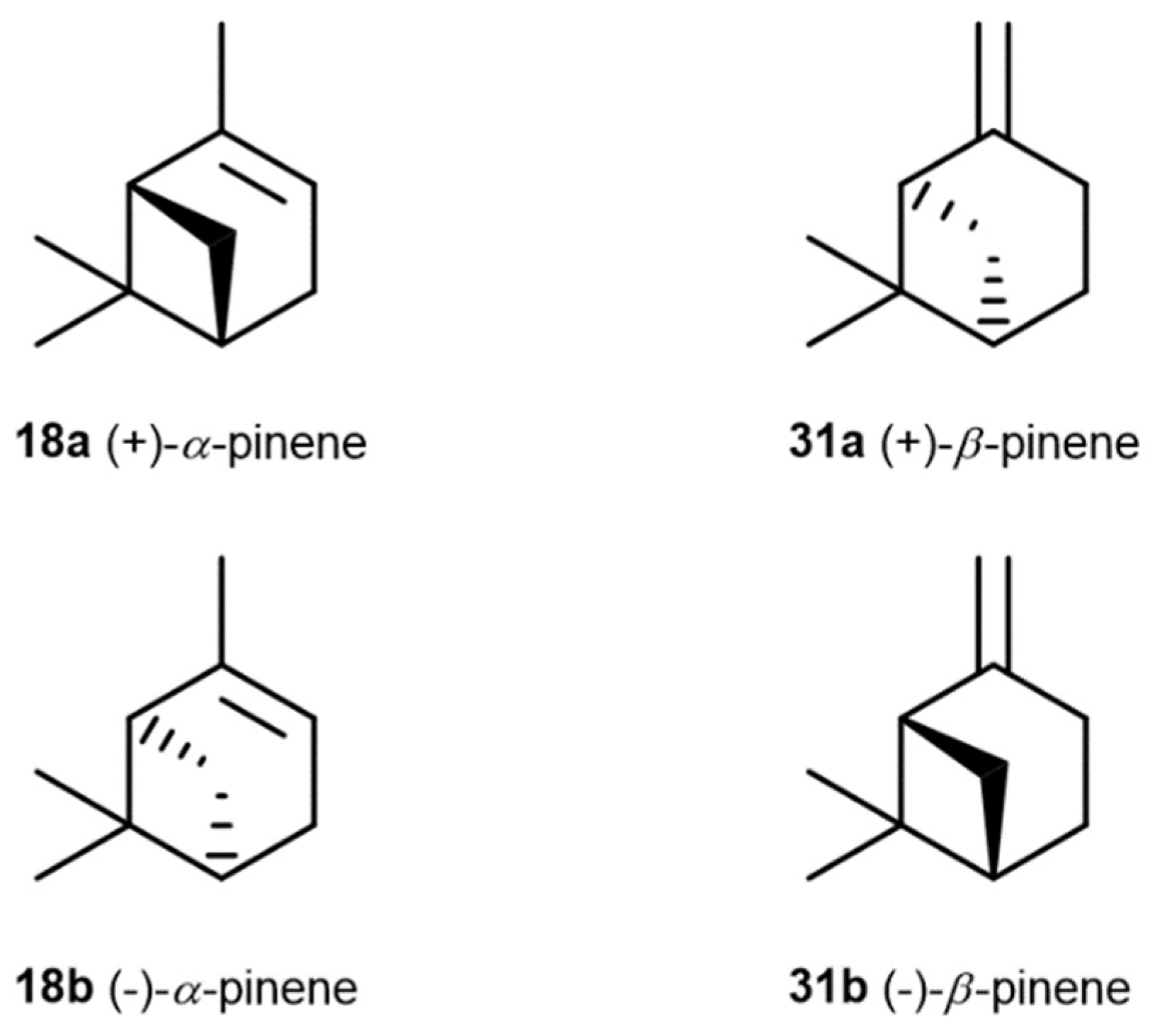
Table 1.
Current definitions for Strain, Variety and Cultivar (Tooker & Frank, 2012).
| Strain | Variety | Cultivar | |
| Definition and Usage | Commonly used in the cannabis community, but scientifically incorrect in the context of plants. Refers to a specific genetic variant or subtype within a bacterial species | A more accurate and appropriate term to describe different Cannabis variants. It is defined as a species’ adaptation due to climate shifts, soil changes, diseases, etc. | A more accurate and appropriate term to describe different Cannabis variants. It is defined as a species’ adaptation due to climate shifts, soil changes, diseases, etc. |
| Characteristics | Primarily used in microbiology for bacteria, viruses, etc. Unique genetic characteristics may be present | Result of adaptations to habitat changes due to accidental factors. Reflects the diversity within the Cannabis species. | Created through deliberate breeding or agricultural techniques. Human intervention is involved in improving uniform traits. |
Disclaimer/Publisher’s Note: The statements, opinions and data contained in all publications are solely those of the individual author(s) and contributor(s) and not of MDPI and/or the editor(s). MDPI and/or the editor(s) disclaim responsibility for any injury to people or property resulting from any ideas, methods, instructions or products referred to in the content. |
© 2024 by the authors. Licensee MDPI, Basel, Switzerland. This article is an open access article distributed under the terms and conditions of the Creative Commons Attribution (CC BY) license (http://creativecommons.org/licenses/by/4.0/).
Copyright: This open access article is published under a Creative Commons CC BY 4.0 license, which permit the free download, distribution, and reuse, provided that the author and preprint are cited in any reuse.