
Submitted:
16 September 2024
Posted:
17 September 2024
You are already at the latest version
Abstract
This study aims to understand the role of BPJS Kesehatan as a variable that mediates or mediates the relationship between emergency services and patient satisfaction. This can include how administrative processes, access to services, or costs incurred by BPJS affect the relationship between service and satisfaction. Quantitative studies of a correlational nature are a part of this investigation. In order to forecast endogenous variables (Y) Purchase decisions, researchers conduct correlational studies, which examine the link between one or more variables and other factors. Here, X represents emergency services, Y stands for patient satisfaction, and M for BPJS are the exogenous variables. The purpose of this research is to examine the role of BPJS as a moderator between the impact of emergency services on patients' levels of satisfaction. There were 120 people that filled out the survey, and the margin of error was 10% (based on a 90% truth rate and a 10% error rate). Purposive sampling was used to select participants for the aforementioned studies. Warppls 8.0 and the Warp Partial Least Square program were utilized for data analysis in this investigation. The study found that PKD significantly and positively affected 71% of participants' happiness with the impact they received. With a 63% influence, PKD has a favorable and statistically significant effect on BPJS. Patient satisfaction is significantly impacted by BPJS, which has a favorable association. When looking at the connection between community satisfaction and emergency services, BPJS is a key mediator. Community satisfaction can be enhanced through the provision of fast and excellent emergency services, and BPJS plays a vital role in mediating this relationship. The beneficial effect of emergency services on community satisfaction can be amplified if BPJS is able to offer sufficient coverage while simultaneously reducing costs and expediting administrative processes.
Keywords:
BPJS
; Service
; Patient Satisfaction
Background
Emergency services are one of the most vital elements in the health system, especially because of their nature that is directly related to life safety. Emergency Departments (ERs) are often the first entry point for patients who need immediate treatment. Therefore, the quality of service in the ER greatly determines the success rate of medical treatment and overall patient satisfaction. Emergency services are a crucial aspect of the health system, designed to provide immediate medical care in life-threatening conditions.(Angelica and Demiyati 2023)
A frequent phenomenon in the ER is long wait times, which is one of the main problems complained about by patients and their families. According to the data that is currently available, excessive patient volumes and a lack of medical resources are the main causes of long wait times in the emergency room. When the number of patients who come in exceeds the existing capacity, a triage system is used to classify cases based on the level of urgency. However, the imbalance between demand and capacity often causes patients to have to wait longer than expected, which can worsen their condition and add to the discomfort.(Setyorini et al., 2018) In addition to waiting time, the significance of the quality of the interactions between patients and medical staff phenomenon in emergency services.
Poor or inadequate communication from medical personnel can increase patient anxiety and uncertainty. In emergency situations, patients and their families are often in a state of high stress, so effective communication skills are crucial. A clear explanation of the procedure, prognosis, and treatment plan can help reduce tension and improve patient satisfaction even if they are in critical condition.(Hikmat and Bakhriansyah 2024)
The limitation of medical facilities and equipment is also a phenomenon that affects the quality of services in the ER. Many hospitals face challenges in providing adequate medical facilities to handle complex emergency cases. The lack of state-of-the-art medical equipment or adequate facilities can hinder the ability of the medical team to provide optimal care. This often leads to a decrease in service quality and patient satisfaction, as well as an increased risk of complications or delays in treatment.(Ribowo et al., 2024) Managerial and coordination issues also often arise in the ER.
An inefficient management system can lead to errors in patient handling, delays in the treatment process, and confusion in coordination between medical teams. Especially in complex emergency situations, poor coordination can slow down the workflow and affect treatment outcomes. Effective management, clear workflows, and a good coordination system are essential to ensure that every patient receives prompt and appropriate care.(Rini et al., 2023)
In Indonesia, the healthcare system faces major challenges in meeting the needs of patients in emergency situations. Hospitals must be ready with adequate facilities and medical personnel to handle emergency cases quickly and effectively. A substantial percentage of Indonesians are covered by the national health insurance program, BPJS Kesehatan, which affects their ability to receive emergency medical treatment. In this context, the Health Social Security Administration Agency (BPJS) plays an important role as a provider of health social security with the National Health Insurance Program (JKN) which allows access to medical services to the public, including emergency services. BPJS Kesehatan, as a health social security system initiated by the Indonesia government, has a very important role in providing access to health services to the public.(Fitriani, 2023)
However, with a wide range of participants, BPJS is often faced with challenges in terms of service quality and efficiency, especially in emergency conditions. This raises questions about the extent of BPJS’s role in mediating on the connection between happy patients and good emergency care. While BPJS Kesehatan has implemented various initiatives to improve access and quality of services, there are still reports of patient dissatisfaction with emergency services. Various studies show that patients often experience obstacles such as long waiting times, lack of adequate medical facilities, and inefficient hospital management. This phenomenon is a concern because contented patients are better able to judge the efficacy of medical care and can affect long-term health outcomes.(Korengkeng and Lainsamputty 2022)
Previous studies have shown that the quality of service in the ER has a significant relationship with patient satisfaction. For example, research by Susanto et al. (2018) shows that aspects such as response time, diagnostic accuracy, and attitude of medical personnel greatly affect patient satisfaction levels in the ER. However, the study generally does not consider the role of BPJS Kesehatan as an intervening variable that can affect this dynamic. On the other hand, research by Rachmawati (2019) found that BPJS Kesehatan participants often face challenges in getting quick access to services in the ER compared to patients who pay for themselves or have private insurance. Lower levels of BPJS patient satisfaction may result from these delays, which are frequently driven by more complicated administrative procedures and high patient numbers. While there has been some research on what makes patients happy or sad about their healthcare, the only study that has looked at the connection between emergency services and patient satisfaction has focused on BPJS Kesehatan as a mediator. To better understand the dynamics of emergency services under the BPJS program, this research gap must be filled.
Patients’ experiences and satisfaction levels vary by health insurance type, according to the study. In an effort to better the quality of health facility emergency services, particularly for BPJS participants, this research is important. In order to enhance patient happiness and overall service quality, it is necessary to identify the elements that impact patient satisfaction and the function of BPJS Kesehatan as an intervening variable. By doing so, a strategy may be developed.
Theoretical Studies
Emergency Services
Academic abstracts shed light on several facets of emergency services, including big data, technology integration, EMS, and emergency response protocols, in response to the query regarding emergency services. The use of big data in emergency services is being considered for the purpose of examining matters such as business trends, service levels, societal efficiency, and criminal activities. By facilitating the acquisition and analysis of data in real-time, enhancing interagency cooperation, and offering insights into business patterns and service levels, it can improve emergency preparedness and response (Zhang et al., 2017). Technology Integration: According to Damaševičius et al. (2023), the Internet of Emergency Services (IoES) could change the way emergency response is done by allowing for the collection of information in real-time and making it easier for responders to work together. The mission of emergency medical services (EMS) is to respond rapidly and appropriately to calls for prehospital treatment and medical transportation in a way that is safe and effective, with a focus on system design, resource structuring, and operational capabilities(Gunderson, 2021) Emergency Response Protocols: Emergency response protocols involve the coordination and collaboration of multiple emergency services to save lives and properties, emphasizing the importance of service discovery protocols and interoperability for efficient disaster management(Pazzi et al., 2010)(Jerman-Blažič et al., 2016) Given the diverse insights from the abstracts, it’s evident that emergency services encompass a wide range of topics, including the use of big data, technology integration, EMS systems, and emergency response protocols. However, the abstracts do not directly address the specific operational aspects of emergency services, such as dispatching, incident assignment, and call-taking processes. Therefore, while the abstracts provide valuable insights into the broader aspects of emergency services, they do not offer detailed information on the day-to-day operational procedures of emergency services.
Emergency services are a type of medical service provided to treat urgent or potentially life-threatening health conditions that require rapid response and immediate treatment. These services include rapid diagnosis, stabilization measures, and emergency care for patients who have experienced trauma, heart attack, stroke, or other critical medical conditions. The main goal of this service is to save lives, prevent further damage, and initiate recovery steps as quickly as possible.
Emergency service indicators are used to assess the effectiveness and quality of emergency services in handling critical situations. Some of the key indicators include:
- Response Time
The time it takes for the emergency medical team to respond and arrive at the patient’s location. The faster the response, the more likely the patient is to be helped properly.
- 2.
- Emergency Department (ER) Handling Time
Measure how long patients have to wait before receiving treatment in the emergency room. Prompt handling is essential in emergency situations.
- 3.
- Resource Availability
The availability of medical equipment, medicines, and medical personnel who are trained and adequate to handle various types of emergency conditions.
- 4.
- Quality of Medical Care
Assessment of the standard of medical care provided during an emergency, including the expertise of medical personnel and protocols implemented.
Patient Satisfaction
Patient satisfaction is a crucial aspect of healthcare, influencing compliance, treatment outcomes, and the overall efficiency and quality of the healthcare system(Hageman et al., 2015)(Lleshi & Mustafa, 2025) (Baummer-Carr & Nicolau, 2017) Here are some key insights on patient satisfaction and its influencing factors: Influencing Factors: A number of factors affect patients’ levels of satisfaction with their healthcare, including their level of knowledge, mental health, expectations before their visit, the quality of the treatment they receive, the amount they spend, and how convenient it is (Hageman et al., 2015) (Liu & Fang, 2019) (Hu et al., 2019) Age and Demographics: Patient age and sociodemographic characteristics play a role in satisfaction levels, with younger patients being more concerned about medical expenditure, and older patients prioritizing medical service quality. Healthcare Quality and Services: The quality of medical services, including the qualifications and service attitude of medical staff, as well as the integrity and accuracy of diagnosis, are crucial for patient satisfaction(Li et al., 2021) (Fang et al., 2019) Hospital Environment: Factors such as hospital convenience, facilities, and environment also impact patient satisfaction. Policy Implications: The findings suggest the need for tailored healthcare services and policies that deal with healthcare affordability and access discrepancies, with the goal of enhancing satisfaction, particularly for marginalized communities. Regrettably, not a single abstract touches on the difficulties and possible effects of patient satisfaction on healthcare organizations. Based on the evidence supplied, it appears that patient satisfaction is influenced by multiple factors. Improving healthcare outcomes and overall satisfaction requires addressing these aspects.
For people seeking medical attention, nothing matters more than the quality of the treatment they receive. In addition to the existence of sufficient physical facilities and environment, the attitude, knowledge, and abilities of officers in giving service, communication, information, etiquette, and punctuality are all factors that are taken into account when evaluating the quality of good service. One of the most important factors in determining the quality of services provided by an organization to the public is the human element. Hospital staff, including doctors, nurses, and other medical and non-medical support workers, have a responsibility to their patients and their families to provide excellent customer service.(Suryanto and Ernawati, 2010)
The degree to which patients are satisfied with their healthcare treatments is indicative of that quality. In order to ensure that every patient is completely satisfied, the quality of medical care must be impeccable. One measure of a company’s success is the level of happiness its customers express. Customers’ happiness directly correlates to a company’s bottom line and market share, therefore the idea has taken root. Customer or patient satisfaction is the degree to which a patient feels about the health treatment they received after comparing it to their expectations.In 1998, Wiranto
The level of service provided determines whether patients are satisfied. When workers go out of their way to fulfill consumers’ requests for services, they are providing service. When a service is good in the eyes of the patient, it means it was able to address their needs, as measured by how they felt about the service overall (satisfied, disappointing, and time spent receiving it).In 1996, Damsky and Brannon
The point of satisfaction for the hospital begins with the welcome of the patient upon their arrival and continues until the patient departs. One of the factors that determines how a patient perceives the health services given by a hospital is their prior experience with the admittance procedure, since it is the first service that the hospital provides. It follows that the initial point of contact between patients and healthcare providers is crucial in gathering information on the quality of care the patient receives. (Damsky and Brannon 1996)
Social Security Administration Agency (BPJS)
BPJS (Social Security Organizing Agency) is a public legal entity formed based on Law Number 24 of 2011 in Indonesia. The goal is to organize a social security program to provide health and welfare protection to all Indonesia people. BPJS consists of two types, namely BPJS Kesehatan and BPJS Ketenagakerjaan. BPJS Kesehatan specifically manages the National Health Insurance (JKN) program, which came into effect on January 1, 2014. (2011, n.d.)
BPJS Kesehatan is a public legal entity formed to organize the National Health Insurance (JKN) program for all Indonesia people. The system works on the principle of social insurance and the principle of equity, where participants pay the collected contributions to fund health services. BPJS Kesehatan has several basic principles, such as:(Damsky and Brannon 1996).
- Mandatory Membership: All Indonesia citizens are required to be BPJS participants.
- Comprehensive Benefits: Includes promotive, preventive, curative, and rehabilitative services.
- Social Justice: This system is designed to ensure access to health services for all, regardless of economic status.
Health services, service quality, and patient satisfaction are common places to bring up BPJS, particularly in light of the fact that its implementation is an ever-expanding subject. The theoretical foundation upon which BPJS is based is social welfare, in which the state actively provides citizens with essential services in order to safeguard and enhance their welfare. Access to health services should not be contingent on a person’s ability to pay; rather, it should be a universally guaranteed social right, according to BPJS Kesehatan.(Wiranto, 1998)
Research Methods
Quantitative studies including a correlational methodology are part of this study (Yusuf, 2017). Research that examines the link between one or more variables and other variables is known as correlation research, and its goal is to predict future values of those variables. Y is the intrinsic variable representing the choice to buy. Here, X represents emergency services, Y stands for patient satisfaction, and M for BPJS are the exogenous variables. The purpose of this research is to examine the role of BPJS as a moderator between the impact of emergency services on patients’ levels of satisfaction. Utilizing the Hair Formula, the sample size was determined. This study employs a scale of 10 due to its large-scale social nature. As a result, 120 respondents make up the sample, with a margin of error of 10% (i.e., an error rate of 10% and a truth rate of 90%). The aforementioned studies use a sample method called "Purposive sampling.
Results and Discussion
Measurement Model Analysis
After collecting all of the respondents’ information, we ran tests for convergent and discriminant validity as well as significance to analyze the results.
In the research measurement model, there are several evaluations that must be tested, namely:

Table 3.
1 Measurement Model Evaluation Criteria Construction Reflective.
| Measurement Criteria | Parameter | Value Constraints |
|---|---|---|
| Indicator Reliability | Loading Factor | 0.70 for confirmatory research, but 0.4-07 can still be considered for exploratory research. |
| Internal Consistency Reliability | Composite Reliability $Cronbach Alpha | 0.7 for composite reliability and Cronbach Alpha in confirmatory research. However, 0.6-07 is still acceptable for exploratory research. |
| Convergent Validity | Average Variance Extracted (AVE) | Greater than 0.5 for confirmatory and exploratory research |
| Discriminant Validity | Square Root Of AVE Correlation Between Constructs | Square Root Of AVE > Correlation Between Constructs |
Sumber: Fornell & Larcker (1981), Hair et al. (2013).
In the research measurement model, there are several evaluations that must be tested, namely:
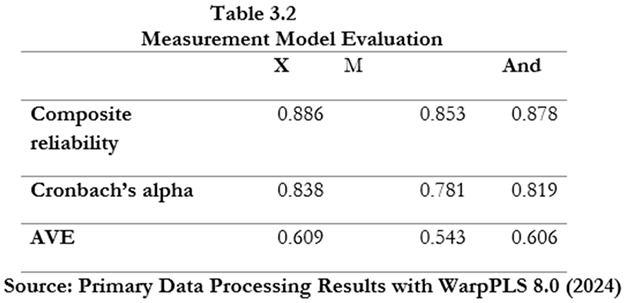
Based on the table above, the Composite Reliability image on the variable is Emergency Service of 0.886. Patient Service variable of 0.853 and BPJS of 0.878. which means that of all variables has a Composite Reliability value greater than 0.7 which means that it has met the requirements in the evaluation of the measurement model.
The Cronbach’s Alpha value in the variables is Emergency Service of 0.838, Patient Service variance of 0.781, and BPJS of 0.819. which means that of all variables have a Cronbach’s Alpha value greater than greater than 0.6-0.7 which signifies that it is no longer necessary to consider the matter and has been declared feasible.
A value of 0.609 for Emergency Service, 0.543 for Patient Service Variance, and 0.606 for BPJS is the average variance extracted from the variables. It may be concluded that it meets the model evaluation criteria and can proceed to the next stage because the Average Variance Extracted value of all variables is more than 0.5.
Table 4.
3 Loading Factor for Emergency Service Variables, BPJS Patient Satisfaction.
| Service | BPJS Patient Satisfaction | ||||
|---|---|---|---|---|---|
| Indicator | LF | Indicator | LF | Indicator | LF |
| PKD1 | 0.789 | KP1 | 0.709 | BPJS1 | 0.811 |
| PKD 2 | 0.792 | KP 2 | 0.550 | BPJS 2 | 0.954 |
| PKD 3 | 0.876 | KP 3 | 0.845 | BPJS 3 | 0.833 |
| PKD 4 | 0.919 | KP 4 | 0.872 | BPJS 4 | 0.954 |
Source: Primary Data Processing Results with WarpPLS 8.0 (2024).
The following improvement indicators have fulfilled the loading factor criteria: emergency services, patient satisfaction, and BPJS. These indicators have values between 0.60 and 0.70, which is more than 0.70, showing that the loading factor is satisfied.
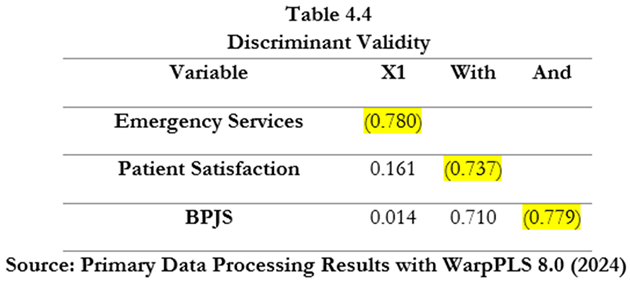
Given that the square root of AVE is greater than the correlation coefficient between constructs in each column, it can be inferred from table 4.4 that the discriminant validity of each variable has been qualified. These results show that each indicator of the variable can measure the variable more closely than with other variables. Emergency services accurately measure the satisfaction variable to BPJS by 0.780. for the BPJS mediating variable (M) the square root value is 0.779 which means it is greater than the previous square root. Patient satisfaction with a square root value of 0.737 was also smaller than the previous AVE.
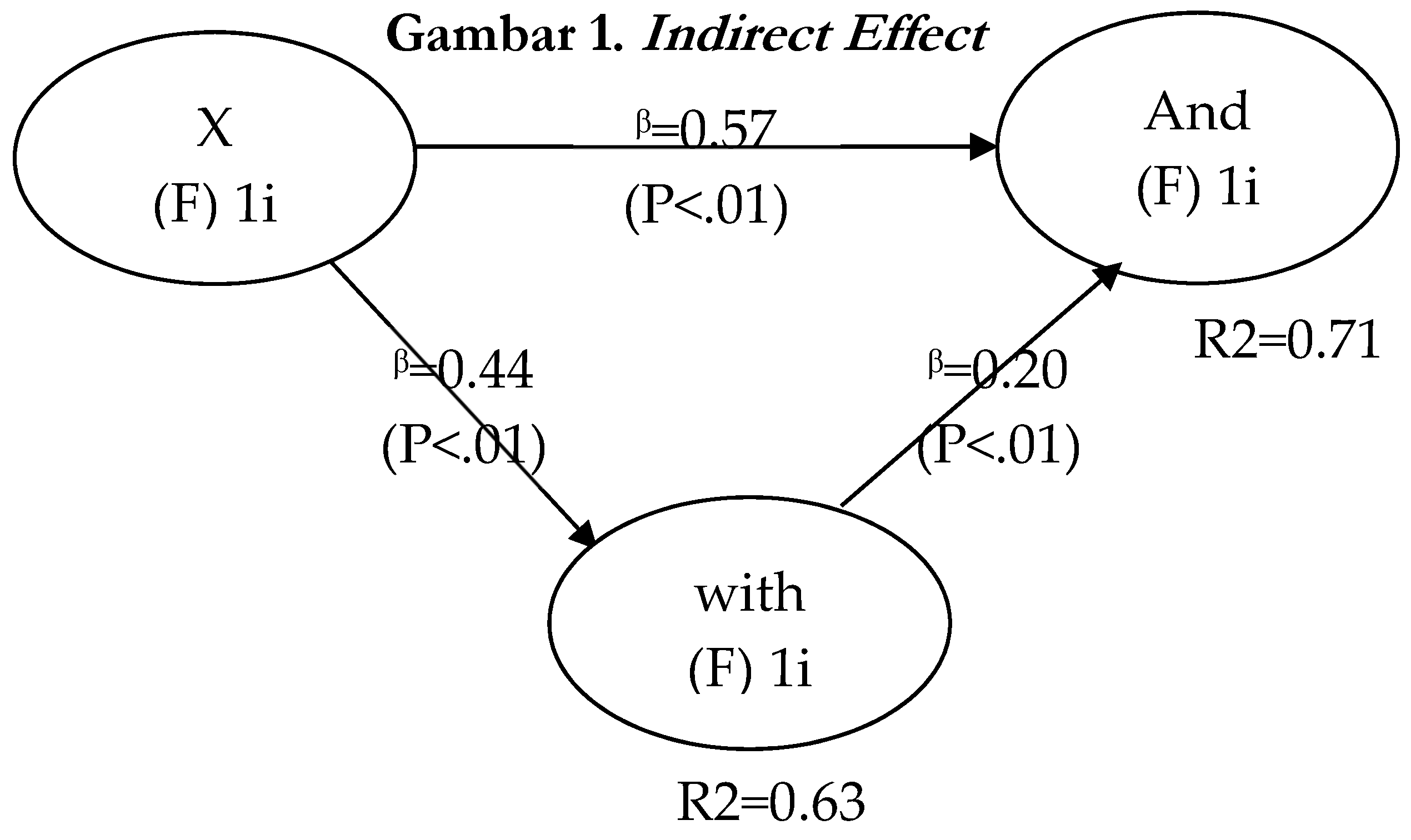
Figure 1 illustrates the correlation between BPJS and happy patients. A p-value of 0.01 is much smaller than 0.05, and the figure yields a positive path coefficient of 0.20. This indicates that BPJS positively correlates with the improvement in patient satisfaction, accounting for 71% of the total increase (or 0.71). That BPJS significantly affects patient satisfaction is supported by the data.
There is a beneficial and substantial impact of PKD. A whopping 71% are satisfied with the help they’ve received. With a 63% influence, PKD has a favorable and statistically significant effect on BPJS. Patient satisfaction is significantly impacted by BPJS, which has a favorable association with it.
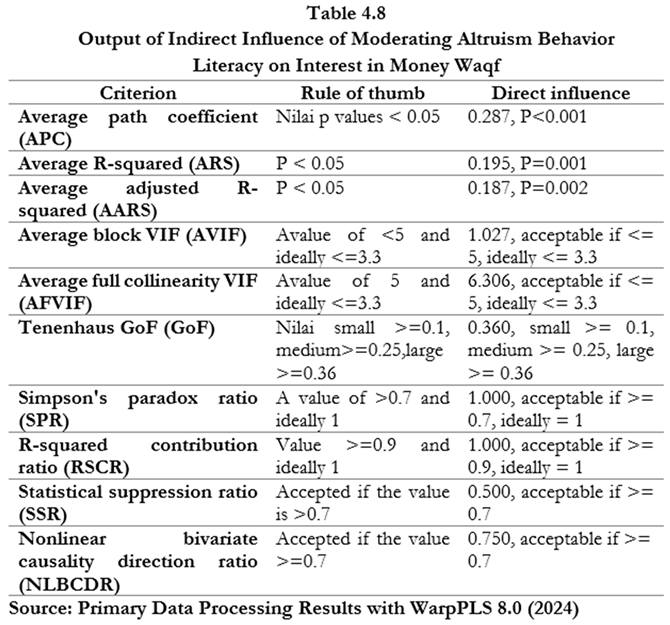
Based on the data in the table, we can see that the APC has an index value of 0.287 and a p-value lower than 0.001. A score of 6.306 is also below 5, a Tenenhaus (Gof) value of 0.360 falls into the significant category, and a Simpson’s Paradox Ratio (SPR) of 0.7, which is 1,000, are all indicators of statistical significance. The p-value for ARS is less than 0.001, while the p-value for AARS is less than 0.001. All three of these requirements have been satisfied: an R-Squared Contribution Ratio (RSCR) of 0.500 (more than 0.9), an SSR of 0.7 (greater than 1,000), and an NLBCDR of 0.750 (higher than 0.7, greater than 0.750).
Positive and Significant Influence of Emergency Services on Community Satisfaction with BPJS as a Mediation Variable
Emergency services are one of the critical aspects of the health care system. These services include quick and effective response to life-threatening situations, such as accidents, heart attacks, strokes, and other emergency conditions. Research shows that quality emergency services have a positive and significant influence on community satisfaction. Here are some of the reasons behind these findings: In emergency situations, speed of response is a key factor that determines patient safety. When people experience critical conditions, they hope that help will come soon. Responsive emergency services, both in terms of ambulance arrival time and on-site medical treatment, provide a sense of security and increase public confidence in the health system. When these expectations are met, people tend to feel satisfied.
In the context of health services in Indonesia, emergency care services have a very important role, especially for people who rely on the national health insurance system such as BPJS (Social Security Administration Agency). When emergency services are reviewed together with BPJS as a mediation variable, it can be seen that there are complex but significant interactions that affect the level of community satisfaction. Good emergency services involve quick response, accurate diagnosis, and appropriate medical care. The speed and effectiveness of these services greatly determine the safety and health outcomes of patients. People tend to feel satisfied if they receive prompt emergency handling, both in the field (ambulance) and in health facilities. However, in the case of people who use BPJS, there are several additional factors that need to be considered, such as whether the available facilities are adequate for BPJS participants, the availability of medicines, and policies related to emergency handling.
Conclusions
Analysis using WarpPLS 8.0 software helped PKD on Patient Satisfaction that BPJS uncover the results. There is a favorable and statistically significant relationship between BPJS and patient satisfaction, which in turn is influenced by PKD. These results support the proposed hypothesis, which was based on the previous study’s hypothesis that there was a positive and substantial association and influence. Therefore, the hypothesis was accepted in this study.
The preceding description leads one to believe that BPJS is a key moderator between community satisfaction and emergency services. Community satisfaction can be enhanced through the provision of fast and excellent emergency services, and BPJS plays a vital role in mediating this relationship. The beneficial effect of emergency services on community satisfaction can be amplified if BPJS is able to offer sufficient coverage while simultaneously reducing costs and expediting administrative processes. On the other hand, if there are problems in the scope of services or delays in the BPJS administration process, this positive influence can be weakened.
Thus, a good integration between the quality of emergency services and the BPJS system is very important in improving overall community satisfaction.
References
- 2011, U. N. 24 tahun. (n.d.). Undang-Undang Republik Indonesia Nomor 24 Tahun 2011 tentang Badan Penyelenggara Jaminan Sosial.
- Angelica, R., & Demiyati, C. (2023). Analisis Kualitas Pelayanan Kesehatan Terhadap Kepuasan Pasien Unit Rawat Inap Rumah Sakit Ibu Dan Anak Setya Bakti Tahun 2022. Jurnal Ilmu Kesehatan Dan Gizi ( JIG ), 1(3), 42–57. [CrossRef]
- Baummer-Carr, A., & Nicolau, D. P. (2017). The challenges of patient satisfaction: influencing factors and the patient--provider relationship in the United States. Expert Review of Anti-Infective Therapy, 15(10), 955–962. [CrossRef]
- Damaševičius, R., Bacanin, N., & Misra, S. (2023). From sensors to safety: Internet of Emergency Services (IoES) for emergency response and disaster management. Journal of Sensor and Actuator Networks, 12(3), 41. [CrossRef]
- Damsky, B., & Brannon, L. (1996). Patient Satisfaction: Evaluating and Achieving Quality in Care. Saunders.
- Fang, J., Liu, L., & Fang, P. (2019). What is the most important factor affecting patient satisfaction--a study based on gamma coefficient. Patient Preference and Adherence, 515–525. [CrossRef]
- Fitriani. (2023). Pengaruh Penerapan Patient Centered Care Terhadap Kepuasan Pasien Melalui Mutu Pelayanan Kesehatan Sebagai Variabel Intervening Di Rumah Sakit Umum Daerah (Rsud) Labuang Baji Tahun 2023. … And Medicine Journal.
- Gunderson, M. (2021). Principles of EMS system design. Emergency Medical Services: Clinical Practice and Systems Oversight, 2, 16–31. [CrossRef]
- Hageman, M. G. J. S., Briët, J. P., Bossen, J. K., Blok, R. D., Ring, D. C., & Vranceanu, A.-M. (2015). Do previsit expectations correlate with satisfaction of new patients presenting for evaluation with an orthopaedic surgical practice? Clinical Orthopaedics and Related Research®, 473, 716–721. [CrossRef]
- Hikmat, R., & Bakhriansyah, M. (2024). Analisis Faktor Pelayanan Yang Berpengaruh Terhadap Kepuasan Pasien di Banjarmasin. Jurnal Ners, 8(31), 1437–1445.
- Hu, L., Zhou, B. P., Liu, S., Wang, Z., & Liu, Y. (2019). Outpatient satisfaction with tertiary hospitals in china: the role of sociodemographic characteristics. International Journal of Environmental Research and Public Health, 16(19), 3518. [CrossRef]
- Jerman-Blažič, B., Matskanis, N., & others. (2016). Semantic ontology design for a multi-cooperative first responder interoperable platform. Computing and Informatics, 35(6), 1249–1276.
- Korengkeng, L. C., & Lainsamputty, F. (2022). Karakteristik pasien dan hubungannya dengan kepuasan terhadap pelayanan di instalasi gawat darurat. Al-Asalmiya Nursing: Jurnal Ilmu Keperawatan (Journal of Nursing Sciences), 11(1), 17–28. [CrossRef]
- Li, C., Liao, C., Meng, X., Chen, H., Chen, W., Wei, B., & Zhu, P. (2021). Effective analysis of inpatient satisfaction: the random forest algorithm. Patient Preference and Adherence, 691–703. [CrossRef]
- Liu, L., & Fang, J. (2019). Study on potential factors of patient satisfaction: based on exploratory factor analysis. Patient Preference and Adherence, 1983–1994. [CrossRef]
- Lleshi, S., & Mustafa, B. (2025). Patient satisfaction with nursing care and information received from nurses. Multidisciplinary Science Journal, 7(1), 2025036. [CrossRef]
- Pazzi, R. W., Abrougui, K., De Rezende, C., & Boukerche, A. (2010). Service discovery protocols for VANET based emergency preparedness class of applications: a necessity public safety and security. International Conference on Information Systems, Technology and Management, 1–7. [CrossRef]
- Ribowo, R., Lampung, U. B., Layanan, K., Pelanggan, L., & Sakit, R. (2024). Analisis Pengaruh Kualitas Layanan terhadap Loyalitas Pelanggan Pada Rumah Sakit Mutiara Bunda Tulang Bawang. 5(3), 3613–3621. [CrossRef]
- Rini, A. P., Firmansyah, N. F., Widiastuti, N., Christyowati, Y. I., & Fatirul, A. N. (2023). Pendekatan Terintegrasi dalam Pengembangan Kurikulum Abad 21. Jurnal Ilmiah Pendidikan Holistik (JIPH), 2(2), 171–182. [CrossRef]
- Setyorini, U., Tinggi, S., Ekonomi, I., & Bangil, Y. (2018). Analisis Pengaruh Kualitas Pelayanan Terhadap Kepuasan Pasien (Studi Kasus Pada Pasien Pengguna BPJS RSI Masyithoh Bangil). Jurnal Ilmu Manajemen, 2(1), 1–7.
- Supriyanto, & Ernawati. (2010). Kepuasan Pasien: Konsep, Teori dan Pengukurannya. Graha Ilmu.
- Wiranto. (1998). Kepuasan Pasien: Teori dan Aplikasinya dalam Pelayanan Kesehatan. Universitas Indonesia.
- Yusuf, M. (2017). Metode Penelitian Kuantitatif, Kualitatif Dan Gabungan. Kencana.
- Zhang, J., Chen, J., Zheng, Y., & Yuan, H. (2017). Applications of big data in public safety emergency services. 2017 IEEE 2nd International Conference on Big Data Analysis (ICBDA), 354–357. [CrossRef]
Figure 1.
illustrates the connection between PKD and the level of satisfaction felt by patients. With a p-value of 0.01—small from 0.05—the figure produces a positive path coefficient of 0.57. With a contribution of 0.71, or 71%, PKD shows a positive link with the increase in Patient Satisfaction. A 71% satisfaction rate with the influence of PKD against BPJS demonstrates that the drug has a beneficial and statistically significant effect. A positive route coefficient of 0.44 and a p-value of 0.01 (small from 0.05) are shown in Figure 1. With a contribution of 0.63, or 63%, PKD shows a positive connection with the increase in BPJS. A p-value of 0.01 indicates that PKD significantly and positively affected BPJS by 63%.
Figure 1.
illustrates the connection between PKD and the level of satisfaction felt by patients. With a p-value of 0.01—small from 0.05—the figure produces a positive path coefficient of 0.57. With a contribution of 0.71, or 71%, PKD shows a positive link with the increase in Patient Satisfaction. A 71% satisfaction rate with the influence of PKD against BPJS demonstrates that the drug has a beneficial and statistically significant effect. A positive route coefficient of 0.44 and a p-value of 0.01 (small from 0.05) are shown in Figure 1. With a contribution of 0.63, or 63%, PKD shows a positive connection with the increase in BPJS. A p-value of 0.01 indicates that PKD significantly and positively affected BPJS by 63%.
Disclaimer/Publisher’s Note: The statements, opinions and data contained in all publications are solely those of the individual author(s) and contributor(s) and not of MDPI and/or the editor(s). MDPI and/or the editor(s) disclaim responsibility for any injury to people or property resulting from any ideas, methods, instructions or products referred to in the content. |
© 2024 by the authors. Licensee MDPI, Basel, Switzerland. This article is an open access article distributed under the terms and conditions of the Creative Commons Attribution (CC BY) license (http://creativecommons.org/licenses/by/4.0/).
Copyright: This open access article is published under a Creative Commons CC BY 4.0 license, which permit the free download, distribution, and reuse, provided that the author and preprint are cited in any reuse.


