
Submitted:
14 September 2024
Posted:
16 September 2024
You are already at the latest version
Abstract
Rapid urbanisation and city expansion worldwide have significantly increased impervious surfaces such as roads, buildings, and pavements. These impervious surfaces impede water infiltration into the ground, resulting in escalated surface runoff during rainfall. This has been exacerbated by climate change and heightened precipitation levels, resulting in recurrent annual flooding. Conventional drainage systems are now insufficient to cope with the amplified surface runoff, contributing to the escalating flood occurrences. Sustainable urban drainage systems such as green roofs, swales, and permeable pavements were developed as modern flood control techniques to replace the traditional drainage system approach by optimising resource utilisation and developing novel and more productive technologies. While most SUD techniques are sustainable in design, construction, and operation, permeable pavements are considered one of the least sustainable SUD techniques. This has garnered considerable attention from researchers who have been studying the design of a more sustainable permeable pavement system by utilising sustainable and recycled materials. This paper reviews the performance of permeable pavements systems using findings from extensive reviews and analyses of scientific publications on permeable pavements. It introduces a future solution and design of permeable pavements using recycled materials. The study will consist of two permeable pavement systems, one incorporating recycled materials in its layers and the other using traditional construction materials. The data collected from both systems will be compared to determine their performance.
Keywords:
sustainable urban design
; permeable pavement
; pollutant removal
; flood mitigation
1. Introduction
Sustainable Urban Drainage Systems (SuDS) are a set of innovative techniques for managing and mitigating the environmental impact of urban runoff and stormwater (Rathnayake and Srishantha, 2017). SuDS complements traditional centralized sewer systems, aiming to reduce the impacts of urban hydrological changes and enhance re-silience against severe rainfall events in urban areas (Zhu et al., 2019). These systems can mitigate the effects of intense rainfall (Tang et al., 2021) and are recognized for delivering numerous environmental advantages. This includes reducing the repercussions of climate change (Ghodsi et al., 2020; Roseboro et al., 2021), in addition to providing ecological, social, and other potential financial benefits in the long run (Wolf, 2003; Hamann et al., 2020, Ferrans, et al. 2022).
Sustainable Urban Drainage System (SuDS) was developed as a response to widespread flooding in the late 1990s and early 2000s and a desire to manage surface water runoff more sustainably (Cole et al., 2020). In the UK, the incorporation of SUDs in new development has been helped by the passing of key legislations such as the Water Act of 2003, which aimed at the management of water resources and the Flood and Water Management Act of 2010, which made SuDS mandatory for all new developments and redevelopments in England and established SuDS Approving Bodies (SABs) within local authorities.
Globally, there is a growing widespread adoption of Sustainable Drainage Systems (SuDS) in new developments, with few variations in approach and design. Still, the same concept and goal remain broadly similar (Fletcher et al. 2015). For example, it is known as Water Sensitive Design (WSUD) in Australia (Radcliffe, J.C., 2018.), Decentralized Rainwater Management in Germany and Sustainable Drainage System (SDS) in Spain (Scuderi, A., 2019). Despite these regional differences in terminology, the fundamental principles and objectives persist, underscoring a global commitment to sustainable and effective water management practices.
Sustainable Drainage Systems (SuDS) can be implemented in various formats, with some structures located above ground and others installed underground (Woods-Ballard et al., 2007). The most beneficial SuDS designs manage and utilize rainfall near its source, using surface structures incorporating plant life (Greater London Authority, 2020). To meet a site’s overall design objectives, it’s common for a SuDS scheme to employ an amalgamation of different SuDS elements (Woods-Ballard et al., 2007). The UK is one of the few countries incorporating “sustainability” in their urban drainage system (Woods-Ballard et al., 2007). Sustainability is a key requirement for local authorities to evaluate before development plans are approved (Woods-Ballard et al., 2007).
When selecting the type of SuDS design to implement, the criteria to consider de-pend on four key factors: water quality, water quantity, amenity design, and the environment (Woods-Ballard et al., 2007). These factors influence the type of SuDS to be implemented in an area. While it is common that more than one type of SuDS will fit the requirements, planners usually depend on key site conditions, including planning & construction constraints, water quality, water resources, and architectural and landscape requirements, to make their final choice.
Consequently, for a SuDS design to be effective, it must improve water quantity and quality while offering amenity and biodiversity value. When these issues are handled in the design and construction, the result is a long-lasting and sustainable system (Woods-Ballard et al., 2007).
The incorporation of the four factors shown in Figure 1 above in the design of drainage systems has led to the development of modern SuDs techniques, including permeable pavement systems (PPS), swales, green roofs, rain gardens, and retention ponds (Monroe, 2020). These systems are better placed to manage urban runoff using processes that mimic natural water management processes. SuDs techniques can be used individually or in combination, depending on the site’s specific requirements, including reducing the volume, velocity, and frequency of flooding (Monroe and Tota-Maharaj, 20202.
Permeable pavements are some of the most utilized SuDS techniques globally in stormwater management as an effective solution in handling floods and surface runoffs (Marchioni and Becciu 2014). The structure of a permeable pavement system consists of different layers made of materials with adequate porosity to allow water to infiltrate through their surfaces (Monrose and Tota-Maharaj 2017). These pavements reduce surface runoff and can improve water quality by trapping the pollutants and solid particulates in the water.
Another feature of a permeable system which makes it attractive in managing stormwater is its storage capacity. This ensures that a permeable pavement system cannot just divert water from the surface to the underground but can collect, store, and release captured water after the storm (Hein and Schaus 2013). Several researchers have shown the capacity of permeable systems in stormwater storage. A laboratory investigation of the hydrological performance of a permeable pavement system found that 40% or more of the total rainfall was retained within a permeable pavement structure (Alsubih et al. 2017).
Despite its numerous advantages, Permeable Pavement Systems (PPS) are one of the least sustainable SuDS techniques due to the construction approach and materials used. To improve the sustainability of Permeable pavement systems, researchers have been looking at a more sustainable approach to the design of porous pavements. With the growing objective to encourage the use of recycled waste products in construction, researchers, including Lu et al., 2019 and Monrose et al., 2019 have reported encouraging results on the incorporation of recycled waste materials in the subbase layer of permeable pavements. However, a research gap still exists in the performance of these systems.
The objective of this paper is to endorse and promote the utilization of Permeable Pavement Systems (PPS) as a validated and sustainable approach to stormwater control by providing a review of the existing literature on permeable pavement systems. In addition, the paper also aims to contribute to the goal of improving the sustainability of permeable pavement systems by introducing a future solution to the design of permeable pavement systems using recycled materials
2. Design of Permeable Pavement System (PPS)
Permeable pavement systems (PPSs) are designed to promote stormwater infiltration through a mechanism of permeable layer installed at the top of its underlying structure (Kuruppu et al., 2019 and Tota-Maharaj et al., 2017, Imran et al. (2013) observe that PPS is designed to capture water on the pavement surface. As the water infiltrates through the pavement layers, it is treated, with some quantities stored in the layers, and the rest are infiltrated into the groundwater systems. PPS uniquely offer the chance to collect and store stormwater by serving as a catchment and storage area within the subgrade structure (Bateni, 2020). However, being load-bearing structures, permeable pavement is also designed to support pedestrians and light traffic loads. The design of permeable pavements considers both the hydrological performance and the structural capacity (Hein, 2014). In evaluating the hydrological performance, the water infiltration rate, storage, and retention are all considered, while the structural performance accesses the loading-bearing capacity of the permeable pavement (Hein 2014). The structural design of a permeable pavement does not consider traffic loading design (which is determined by Eq. 2.23b, CD 224) (Kia et al., 2021).
There are three primary types of permeable pavement systems, include permeable interlocking pavers (concrete and composite materials), permeable grid systems (Concrete or composite materials) and pervious concrete (poured-in-place or pre-cast) (Monrose 2020). Many options are available and are being for by different countries designing and constructing a permeable pavement system, for stormwater harvesting (Beecham et al. 2010; Scholz 2013; Kazemi and Hills 2015). To date, there are no universally accepted structural design procedures for all types of permeable pavements (Weiss et al. in 2019).
Based on the materials used, soil condition, and the design approach adopted, permeable pavements can be constructed in three different ways (Antunes et al., 2018), namely,
- Complete or full infiltration: This refers to the complete penetration of water through a porous surface into the subgrade. Ideally, the subgrade should consist of sand or possess high permeability similar to sand, facilitating the passage of water through the subgrade to reach the groundwater (Danish Road Directorate, 2015; Muttuvelu et al., 2018.
- Partial infiltration: This method integrates aspects of both complete infiltration and reservoir utilization. The subbase within the pavement structure serves as a reservoir with an overflow mechanism, and simultaneous seepage through the subgrade takes place. This blend enables regulated water retention and drainage (Danish Road Directorate, 2015; Muttuvelu et al., 2018).
- No infiltration: In cases where the subgrade primarily consists of clay and/or silt fractions, natural soil impermeability prevents water from infiltrating. Instead, the subbase material serves as a reservoir for water storage. If the subgrade has permeability but regulations prohibit water infiltration, a waterproof membrane can be placed on the subgrade before laying the pavement (Danish Road Directorate, 2015, Muttuvelu et al., 2018).
The structure of the three types of permeable pavement is highlighted in Figure 3 below.
A typical permeable pavement system comprises of 5-7 layers (Kuruppu, et al., 2019) as shown in Figure 3. These layers all contribute to the structural stability and the hydrological performance of the permeable pavement. Traditionally, these layers are made of unsustainable construction materials (e.g., rocks, gravel, sand), emitting a large carbon footprint. To improve the sustainability of permeable pavement, recent studies have begun to explore alternatives such as waste and recycled materials to replace some of the traditional construction materials. A study conducted by Rahman et al., 2015 on the use of recycled concrete aggregates (RCA) derived from construction and demolition waste as a subbase of permeable pavements found the material to be a viable choice as a replacement for traditional subbase materials. The study analysed the hydraulic, geotechnical, and water quality performances. Monrose et al. 2019 used Crushed Concrete Aggregates (CCA), Carbon-Negative Aggregates (CNA) and Cement-bounded Expanded Polystyrene beads (C-EPS) as subbase materials. The research compared the hydrological and water quality performance of permeable pavement constructed with naturally occurring materials such as crushed basalt and quartzite aggregates. The study reported that permeable pavements constructed with recycled materials had better performance.
3. Impact of PPS on Water Quality
Urbanization has led to a rise in impervious surfaces like streets, driveways, roofs, parking lots, and sidewalks, which accumulate pollutants such as sediment, debris, salts, fertilizers, as well as vehicle-related contaminants like brake and tire dust and petroleum-based fluids. Interestingly, urban permeable surfaces, including lawns, have been observed to generate more pollutants than their non-urban grassy counterparts (Tu and Smith, 2018). These contaminants persist on surfaces until rainfall washes them into storm drains, ultimately transporting them to surface waters. This process poses risks such as the harm to marine and aquatic life, loss of aesthetic appeal, and the contamination of drinking water (Pilon et al., 2019).
Recent studies has demonstrated the effectiveness of permeable pavement systems in mitigating stormwater pollutants, as indicated by recent research. In a water quality assessment conducted by Pilon et al. (2019), impervious asphalt and pervious concrete parking areas were examined. The study involved directing stormwater across asphalt pavement before allowing it to infiltrate the pervious concrete and an aggregate sub-base below. The results revealed a notable decrease in total suspended solids, nitrate, chemical oxygen demand, and polycyclic aromatic hydrocarbons when comparing untreated asphalt runoff to the treated runoff.
In a 22-month study conducted by Selbig et al. (2019) in Madison, Wisconsin, the effectiveness of three permeable pavements in improving stormwater runoff quality was assessed. These permeable surfaces successfully reduced sediment and pollutant loads from runoff originating from an asphalt parking lot that was five times larger than the area covered by the permeable pavements. All three types of surfaces exhibited comparable reduction levels, approximately 60%, for total suspended solids. Notably, clogging occurred after about one year, primarily attributed to winter sand application, resulting in elevated sediment load during spring runoff (Selbig et al., 2019).
In a separate study, Seungbum et al. (2010) investigated the impact of total phosphorus, total nitrogen, artificial zeolite, silica fume, glass fiber, and concrete strength on seawater purification. The research indicated excellent seawater purification performance when the targeted void ratio was increased.
4. Maintenance of Permeable Pavement System
Effective maintenance of permeable pavements is essential to ensure their long-term functionality, especially in diverse climates ranging from freezing regions to areas with heavy rainfall. Regular maintenance practices include biannual vacuuming to remove sediment and organic debris, which is critical to prevent surface clogging that can severely reduce the pavement’s permeability (Kayhanian, M., et al., 2019).
Permeable pavement consists of layers with high porosity, enabling stormwater to permeate through both the surface and underlying layers. These layers typically include a reservoir course, facilitating the eventual infiltration of water into the natural soil or its discharge into a drainage system (Chandrappa and Biligiri, 2016; Ralla and Saadeh, 2018). Beyond its advantages in reducing traffic noise and enhancing driving safety during rainy conditions, this type of pavement construction yields several favorable environmental outcomes.
Among the key environmental benefits attributed to permeable pavements, two stand out prominently. Firstly, they effectively manage stormwater by reducing the volume of runoff. Secondly, they contribute to establishing low-impact urban infrastructure by preserving the natural hydrologic function of the area through groundwater recharge (Rowe et al., 2010; Hein and Schaus, 2013). The sustained ability of permeable pavements to deliver environmental benefits is contingent upon their capacity to uphold high surface infiltration performance over time. This performance is closely tied to the drainage properties inherent in both the surface and base courses of the pavement (Singer et al., 2022).
Leipard et al. (2015) emphasized the crucial role of material selection during the design phase of permeable pavements to ensure adequate drainage properties, enabling the anticipated infiltration of the designed runoff volume. Winston et al. (2016) recommended regular surface sweeping using a commercial vacuum unit on an annual or biannual basis to prevent sediment buildup and maintain porosity. They cautioned against using high-pressure water systems or compressed air units, as these methods could push particles deeper into the pavement.
Fassman and Blackbourn (2010) advocated for the routine cleaning and maintenance of drainage pipes and structures beneath porous pavements to prevent infiltration reduction and clogging. Sarsam (2016) proposed signage and training for facility personnel to mitigate dirt accumulation from heavy vehicles on porous surfaces. Additionally, the prevention of construction and hazardous materials on permeable pavements was encouraged to avoid groundwater contamination. Regular sweeping and clearance of litter and debris from drainage areas contributing to permeable pavements were also highlighted (Woods-Ballard et al., 2007). Paver or grid systems with grass should be regularly mowed, and clippings removed, while seal coats should never be applied to permeable pavements to maintain their functionality (Fassman and Blackbourn, 2010).
Hein and Eng (2015) noted that if stormwater drainage becomes compromised, the surface may need replacement. Uneven paver surfaces can be repaired by lifting and redistributing the bedding layer, with the need for new filler stone. Weed growth can be managed through regular sweeping and vacuuming to prevent aesthetic issues, especially on surfaces with infrequent traffic (Jackman, 2010). Ontario’s ban on cosmetic herbicides led to the recommendation of annual vacuuming for permeable interlocking concrete pavers to enhance their operational lifespan. Avoiding the spread of sand on permeable pavement to prevent clogging, using deicers in moderation, and conducting annual inspections in spring were also suggested practices (Fay et al., 2017z; Sehgal et al., 2023).
In colder climates, special attention should be given to snow and ice management, avoiding the use of sand and minimizing the application of salt to prevent clogging and damage to the pavement surface. (Gulliver, J.S., 2015). It is also recommended to set snowplough blades slightly higher to avoid scraping the pavement and storing snow on permeable pavement surfaces to prevent sediment build-up. (Low Impact Development Stormwater Management Planning and Design Guide, n.d.).
Gulliver, J.S., (2015) recommended that in areas with higher rainfall, more frequent inspections may be necessary to ensure that the permeable pavement continues to function effectively. For instance, checking for ponding after significant rain events and ensuring that the drainage areas are free of debris are essential tasks. The maintenance plan should be tailored to the specific environmental conditions, with routine tasks scheduled more frequently in harsher climates or areas with heavy usage. For example, in dryer regions, regular checks for wind-blown sediment may be required to maintain permeability. Overall, the maintenance frequency should be adjusted based on the observed performance and the specific demands of the location.
5. Hydrological Performance of Permeable Pavement System
When placed over soils with high infiltration rates, permeable pavement can be useful for enhancing stormwater hydrology and water quality. Palla et al. (2015) investigated the hydrological response of a permeable pavement when subjected to different rainfall intensities and slopes. The study investigated two kinds of permeable pavements: a concrete cell (CC) that was 210mm deep and a pervious brick (PB) that was 190mm deep. Both types had two filter layers: recycled glass aggregate and gravel and coarse sand. The discharge coefficients for each pavement were calculated to examine the hydrological response in their study thoroughly. These coefficients represent the ratio of the discharge volume to the inflow volume and were measured at the end of the rainfall event, corresponding to a steady 15 minutes of rainfall intensity. Based on the study’s findings, no surface runoff was detected in any of the tests conducted. The discharge coefficients for CC and PB were observed to range between 0.55-0.75 during periods of high rainfall intensity (98 mm/h in 15 minutes) and 0.01-0.12 during periods of low rainfall intensity (17 mm/h in duration 15 min). According to the findings, steeper slopes were linked to better drainage outcomes. Moreover, the study suggested that using recycled aggregate as a substitute for sand and gravel in permeable pavements is a feasible alternative (Palla et al., 2015).
Permeable pavements help reestablish a more natural hydrologic balance and reduce runoff volume by trapping and slowly releasing precipitation into the ground instead of allowing it to flow into storm drains and out to receiving waters as effluent (Zanoni et al., 2019). This same process also reduces the peak discharge rates by preventing large, fast pulses of precipitation through the stormwater system (Zanoni et al., 2019). Permeable pavement can reduce the concentration of some pollutants either physically (by trapping it in the pavement or soil), chemically (bacteria and other microbes can break down and utilize some pollutants), or biologically (plants that grow in-between some types of pavers can trap and store pollutants) (Dussaillant, 2002). By slowing down the process, permeable pavements can cool down the temperature of urban runoff, reducing the stress and impact on the stream or lake environment. By controlling the runoff at the source, such as a parking lot, permeable pavement can also reduce the need for or the required size of a regional BMP, such as a wet detention pond, which saves money and effort (Firouzan, 2018).
Besides that, another benefit of permeable pavement is the reduced need to apply road salt for de-icing in the wintertime. Researchers at the University of New Hampshire have observed that permeable asphalt only needs 0 to 25% of the salt routinely applied to normal asphalt (Houle et al., 2009). Other researchers have found that the air trapped in the pavement can store heat and release it to the surface, promoting the melting and thawing of snow and ice (Roseen et al. 2012).
Permeable pavement can be an effective solution for improving the outdoor thermal environment through evaporative cooling (Kevern et al. 2009a, Hisada et al. 2006; Santamouris 2013; Roseen et al. 2012; Brown and Borst 2015; Tota-Maharaj and Paul 2015). In addition, PPSs can warm up the surrounding environment during cold climates by acting as a geothermal heat pump (Tota-Maharaj and Paul 2015). Standing water issues such as odour and mosquito breeding which arise in detention ponds and wetlands (Gingrich et al. 2006; Metzger et al. 2018), can be minimized using PPSs, as they infiltrate and store water underneath the surface.
6. Innovation and Future Research
While permeable pavements represent a straightforward water management system that numerous researchers have shown to be effective at reducing surface runoff, multiple aspects within this domain still need to be explored. There remains a growing need to continue exploring more sustainable options in the design and construction of permeable pavements. Currently, available researchers have favored construction waste materials such as recycled concrete aggregates (PCA), crushed brick (CB), recycled aggregates (RA), and carbon-negative aggregates (CNA), among others, in their research for alternatives to traditional construction materials. The idea behind this approach is to provide alternative usage of waste materials, which will help to reduce waste disposal and a cleaner construction industry (Monrose et al., 2019). However, fewer researchers have explored the use of sustainable and recycled waste materials outside the construction industry. Currently, there is a knowledge gap in the performance of newer sustainable materials in permeable pavement construction.
This review improves the research gap in the use of new sustainable materials in the design of permeable pavements by introducing new research that is currently ongoing in the civil engineering department of Nottingham Trent University. The research aims at exploring additional material that could be used to replace traditional natural occurring construction materials. The primary objectives of the research are listed below:
- To design a permeable pavement system using sustainable materials and conduct hydrological and water quality tests to determine the model’s performance under laboratory settings.
- To investigate the impact of rainfall intensity towards the performance of permeable systems.
- To compare the results of the research with other research conducted using recycled waste materials and traditional construction materials.
The research will introduce three recyclable materials, coconut coir, Cameroon Calaba Clay, and recycled carbon charcoal in the permeable pavement layers. Coconut coir will be used in the sub-grade while Cameroon Calaba Clay and recycled Carbon Charcoal will be used in the subbase of the permeable pavement to replace traditional construction materials.
6.1. Design Approach
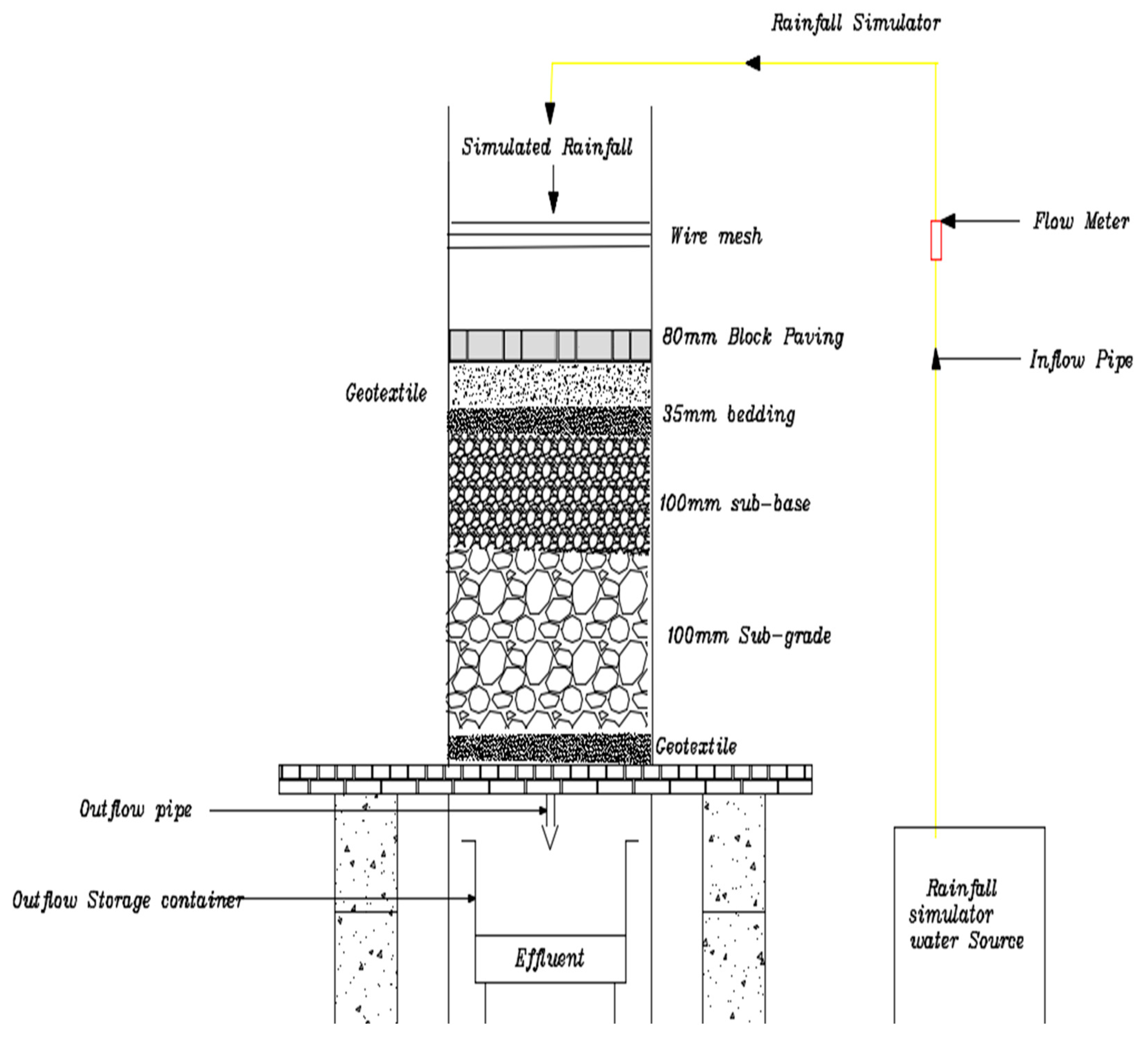
A laboratory scale model of a permeable pavement rig will be constructed with guidance from Alsubih 2017, Monrose 2020, and Woods-Ballard et al., 2007. The rig will be designed as an enclosed system with tank-like properties using 19 mm (or about 3/4 inch) thick construction-grade plywood.
To ensure the rig is watertight, a 2 mm thick layer of a commercially available PVC-based pond liner will be applied to the interior of the rig. The liner will serve as an impermeable barrier, preventing any water from seeping through the plywood and distorting the research data.
A rainfall simulator will be designed to deliver water into the permeable pavement rig system in a controlled environment that mimics natural rainfall events. To achieve this, the rainfall simulator will be engineered to simulate rain droplets that mirror actual rainfall. It is necessary to simulate specific rainfall parameters such as volume, depth, intensity, and duration that meet the demands of research and experimentation.
The rainfall simulator design will be composed of the following parts.
- Water Source: The water source for the rainfall simulation will be ordinary tap water delivered from a tap in the fluids and hydraulic laboratory. Using a pipe network and a flow meter, the flow from the tap will be controlled to suit the experiment’s needs.
- Flow meter: The flow meter used for the experiment will be the Gardena 8188-20 Water Meter. This control system will regulate the intensity and duration of the rainfall. Using a flow meter will ensure that water delivery into the permeable pavement is kept constant during the experimentation. The flow meter is calibrated to measure the total volume (L) delivered into the permeable pavement during the rainfall simulation and flow rate (L/min).
- Pipe System: A network of PVC pipes will be designed and connected to the flowmeter. The pipe system will comprise of 12.5mm PVC pipes and run across the permeable pavement rig. To simulate rainfall, 2.5mm diameter holes will be drilled in the underside of the pipes at 50mm apart.
- Outflow and Collection System/Container: The water collection system consists of a bucket placed at the end of the outlet pipe to collect discharge from the pavement rig.
Figure 4.
Schematics of the laboratory setup of the permeable pavement.
6.2. Performance Evaluation of the Permeable Pavement System
The two research phases will be conducted in the laboratory, one will determine the hydrological performance and the other will focus on evaluating the water quality performance of the permeable pavement. As highlighted in section 2, permeable pavement consists of three systems based on the water filtration design of the pavement (see Figure 3) For this research, the permeable pavement system C will be used. This system allowed water to be collected in the subgrade using a pipe.
Hydrological performance of the permeable pavement system will involve understanding the effects of recycled materials on the pavement’s ability to attenuate and retain stormwater. To evaluate the pavement’s hydrological performance, the values for the following parameters will be obtained for all hydrological simulations:
- Rainfall data(inflow).
- Outflow rate and volume.
- Retention and storage capacity.
- Total rainfall volume (mm)
- Rainfall duration (min)
- Rainfall intensity (l/min) and (mm/h)
- Experiment Lag time (min)
The test for water quality performance will assess the permeable pavement’s efficacy in removing pollutants from rainwater runoffs, hence improving water quality by measuring its ability to remove pollutants. The experiment will evaluate the pollutant removal efficiencies of permeable pavements constructed with recycled or recyclable materials as sub-base components in a permeable pavement system. Special water quality parameters data will be collected from the effluents from the pavement; The water quality parameters are shown in Table 1.
The parameters selected for both the hydrological and water quality test are in line with previous research conducted on permeable pavement performance. The need to use similar parameters is to aid comparison of results with those of other studies previously published.
6.3. Experiment Procedure
Rainfall simulations will be conducted once per day, with a minimum antecedent dry period of 24 hours preceding each rainfall simulation; this is in accordance with other research by Alsubih et al., 2017, and Monrose, 2019. In total Nine (9) rainfall events will be simulated over two weeks for each experiment. Conducting the experiment over two weeks will provide an average trend of the pavement performance and reliability of the data collated. For all the experiments, a constant 15-minute duration will be employed for each rainfall simulation, with an average rainfall intensity of 0.75L/min applied to the permeable pavement. The experiment will be conducted indoors, where evaporation from the rigs during rainfall simulation is negligible.
7. Conclusions
This review offers a comprehensive summary of the current literature concerning sustainable urban drainage systems, mainly focusing on permeable pavement systems. Numerous research studies have established the effectiveness of permeable pavement in controlling excess runoffs during heavy rainfall and reducing pollutants in the runoffs. However, to ensure that permeable systems are more sustainable, this review suggests a novel permeable pavement system using recycled materials could be designed. The system will consist of a rig which will house the permeable pavement layers, a rainfall simulator that will deliver water into the permeable pavement rig system in a controlled environment that mimics natural rainfall events, and a water source.
Author Contributions
Conceptualization, S.T. and S.A.; methodology S.T. and S.A.; writing— original draft preparation, S.T.; writing—review and editing, S.T. and S.A.; supervision, S.A. All authors have read and agreed to the published version of the manuscript.
Funding
This research received no external funding.
Institutional Review Board Statement
Not applicable.
Informed Consent Statement
Not applicable.
Data Availability Statement
Not applicable.
Acknowledgments
The authors gratefully acknowledge the assistance of Prof. Paul Harrison, Dean of School of Computing and Engineering, University of Huddersfield, who reviewed and provided comments that greatly improved the manuscript.
Conflicts of Interest
The authors declare no conflict of interest.
References
- Rathnayke, U. and Srishantha, U., 2017. Sustainable urban drainage systems (SUDS)–what it is and where do we stand today?. Engineering and Applied Science Research, 44(4), pp.235-241.
- Zhu, Z.; Chen, Z.; Chen, X.; Yu, G. An assessment of the hydrologic effectiveness of low impact development (LID) practices for managing runoff with different objectives. J. Environ. Manag. 2019, 231, 504–514. [CrossRef]
- Tang, S.; Jiang, J.; Zheng, Y.; Hong, Y.; Chung, E.S.; Shamseldin, A.Y.; Wei, Y.; Wang, X. Robustness analysis of storm water quality modelling with LID infrastructures from natural event-based field monitoring. Sci. Total Environ. 2021, 753, 142007. [CrossRef]
- Ghodsi, S.H., 2021. Urban Stormwater Management and Green Infrastructure Planning: Predicting and Abating Combined Sewer Overflows (Doctoral dissertation, State University of New York at Buffalo).
- Roseboro, A.; Torres, M.N.; Zhu, Z.; Rabideau, A.J. The Impacts of Climate Change and Porous Pavements on Combined Sewer Overflows: A Case Study of the City of Buffalo, New York, USA. Front. Water 2021, 3. [CrossRef]
- Fletcher, T.D., Shuster, W., Hunt, W.F., Ashley, R., Butler, D., Arthur, S., Trowsdale, S., Barraud, S., Semadeni-Davies, A., Bertrand-Krajewski, J.L. and Mikkelsen, P.S., 2015. SUDS, LID, BMPs, WSUD and more–The evolution and application of terminology surrounding urban drainage. Urban water journal, 12(7), pp.525-542.
- Radcliffe, J.C., 2018, September. Australia’s water sensitive urban design. In 2018 International Sponge City Conference (pp. 38-52).
- Sturiale, L.; Scuderi, A. The Role of Green Infrastructures in Urban Planning for Climate Change Adaptation. Climate 2019, 7, 119. [CrossRef]
- Woods-Ballard, B., Kellagher, R., Martin, P., Jefferies, C., Bray, R. and Shaffer, P., 2007. The SUDS manual (Vol. 697). London: Ciria.
- Monrose, J., 2017. Hydrologic performance of permeable pavement systems utilising various sub-base material for Caribbean application. In 14th IWA/IARH Internatioal conference on urban drainage (pp. 1147-1154).
- Monrose, J.J. and Tota-Maharaj, K., 2022. Considerations for Use of Permeable Pavement Systems within Urban Settings across Caribbean Small Island Developing States. Water Resources Resilience for Small Island Developing States (SIDS), p.30.
- Hein, D.K. and Schaus, L., 2013. Permeable Pavement Design and Construction: What Have We Learned Recently?. In Green Streets, Highways, and Development 2013: Advancing the Practice (pp. 31-44).
- Alsubih, M.; Arthur, S.; Wright, G.; Allen, D. Experimental study on the hydrological performance of a permeable pavement. Urban Water J. 2017, 14, 427–434. [CrossRef]
- Monrose, J.; Tota-Maharaj, K.; Mwasha, A. Assessment of the physical characteristics and stormwater effluent quality of permeable pavement systems containing recycled materials. Road Mater. Pavement Des. 2021, 22, 779–811. [CrossRef]
- Kuruppu, U.; Rahman, A.; Rahman, M.A. Permeable pavement as a stormwater best management practice: a review and discussion. Environ. Earth Sci. 2019, 78, 327. [CrossRef]
- Imran, H.; Akib, S.; Karim, M.R. Permeable pavement and stormwater management systems: a review. Environ. Technol. 2013, 34, 2649–2656. [CrossRef]
- Bateni, N., 2020. Permeable Road Pavement with Subsurface Precast Micro-Detention Storage: A Green Pavement Practice (Doctoral dissertation, University of Malaya (Malaysia)).
- Hein, D.K. and Eng, P., 2015. Maintenance Guidelines for Permeable Interlocking Concrete Pavement Systems’‘. In International Conference on Concrete Block Pavements.
- Kia, A., Wong, H.S. and Cheeseman, C.R., 2021. High-strength clogging resistant permeable pavement. International Journal of Pavement Engineering, 22(3), pp.271-282.
- Beecham, S.C., Lucke, T. and Myers, B., 2010. Designing porous and permeable pavements for stormwater harvesting and reuse (Doctoral dissertation, International Association for Hydro-Environment Engineering and Research).
- Scholz, M. Water Quality Improvement Performance of Geotextiles Within Permeable Pavement Systems: A Critical Review. Water 2013, 5, 462–479. [CrossRef]
- Tota-Maharaj, K., Grabowiecki, P., Akintunde, B. & Coupe, S. J. (2012) The performance and effectiveness of geotextiles within permeable pavements for treating concentrated stormwater. In: Sixteenth International Water Technology Conference, IWTC 16. Istanbul, Turkey 7–10 May 2012. pp. 1–13.
- Kazemi, F.; Hill, K. Effect of permeable pavement basecourse aggregates on stormwater quality for irrigation reuse. Ecol. Eng. 2015, 77, 189–195. [CrossRef]
- Weiss, P.T.; Kayhanian, M.; Gulliver, J.S.; Khazanovich, L. Permeable pavement in northern North American urban areas: research review and knowledge gaps. Int. J. Pavement Eng. 2019, 20, 143–162. [CrossRef]
- Antunes, L.N.; Ghisi, E.; Thives, L.P. Permeable Pavements Life Cycle Assessment: A Literature Review. Water 2018, 10, 1575. [CrossRef]
- Danish Road Directorate; COWI A/S. Permeable Belægninger; Ministry of Transportation: Copenhagen, Denmark, 2015; pp. 1–98.
- Muttuvelu, D.V. Permeable Pavements-Analysis of Unbound Permeable Subbase Material. Master’s Thesis, Aalborg University, Aalborg, Denmark, 2018.
- Rahman, M. A., Imteaz, M. A., Arulrajah, A., Piratheepan, J. & Disfani, M. M. (2015b) Recycled construction and demolition materials in permeable pavement systems: geotechnical and hydraulic characteristics. Journal of Cleaner Production. 90 pp. 183–194.
- Tu, M.-C.; Smith, P. Modeling Pollutant Buildup and Washoff Parameters for SWMM Based on Land Use in a Semiarid Urban Watershed. Water, Air, Soil Pollut. 2018, 229, 121. [CrossRef]
- Pilon, B.S.; Tyner, J.S.; Yoder, D.C.; Buchanan, J.R. The Effect of Pervious Concrete on Water Quality Parameters: A Case Study. Water 2019, 11, 263. [CrossRef]
- Selbig, W.R.; Buer, N.; Danz, M.E. Stormwater-quality performance of lined permeable pavement systems. J. Environ. Manag. 2019, 251, 109510. [CrossRef]
- Park, S.B.; Lee, B.J.; Lee, J.; Jang, Y.I. A study on the seawater purification characteristics of water-permeable concrete using recycled aggregate. Resour. Conserv. Recycl. 2010, 54, 658–665. [CrossRef]
- Kayhanian, M.; Li, H.; Harvey, J.T.; Liang, X. Application of permeable pavements in highways for stormwater runoff management and pollution prevention: California research experiences. Int. J. Transp. Sci. Technol. 2019, 8, 358–372. [CrossRef]
- Chandrappa, A.K.; Biligiri, K.P. Pervious concrete as a sustainable pavement material – Research findings and future prospects: A state-of-the-art review. Constr. Build. Mater. 2016, 111, 262–274. [CrossRef]
- Ralla, A., 2018. Sustainable mitigation of stormwater runoff through fully permeable pavement. California State University, Long Beach.
- Rowe, A., Borst, M. and O’Connor, T., 2010. Environmental effects of pervious pavement as low impact development installation in urban regions. Chapter, 13, pp.344-366.
- Singer, M.N.; Hamouda, M.A.; El-Hassan, H.; Hinge, G. Permeable Pavement Systems for Effective Management of Stormwater Quantity and Quality: A Bibliometric Analysis and Highlights of Recent Advancements. Sustainability 2022, 14, 13061. [CrossRef]
- Leipard, A.R., Kevern, J.T. and Richardson, J.R., 2015. Hydraulic characterization and design of permeable interlocking concrete pavement. In World Environmental and Water Resources Congress 2015 (pp. 292-301).approach. Water Research, 221, p.118755.
- Winston, R.J., Al-Rubaei, A.M., Blecken, G.T., Viklander, M. and Hunt, W.F., 2016. Maintenance measures for preservation and recovery of permeable pavement surface infiltration rate–The effects of street sweeping, vacuum cleaning, high pressure washing, and milling. Journal of environmental management, 169, pp.132-144.
- Fassman, E.A.; Blackbourn, S. Urban Runoff Mitigation by a Permeable Pavement System over Impermeable Soils. J. Hydrol. Eng. 2010, 15, 475–485. [CrossRef]
- Sarsam, S.I., 2016. Pavement maintenance management system: a review. Trends in Transport Engineering and Applications, 3(2), pp.19-30.
- Jackman, M., 2010. Storm and Surface Water Maintenance Standards.
- Fay, L., Akin, M., Shi, X. and Veneziano, D., Revised Chapter 8, Winter Operations and Salt, Sand and Chemical Management, of the Final Report on NCHRP 25-25 (04).
- Sehgal, K.; Sidhu, V.; Oswald, C.; Drake, J. Year-round monitoring of chloride releases from three zero-exfiltration permeable pavements and an asphalt parking lot. J. Environ. Manag. 2023, 328, 116903. [CrossRef]
- Gulliver, J.S., 2015. Permeable pavements in cold climates: state of the art and cold climate case studies.
- Low Impact Development Stormwater Management Planning and Design Guide (n.d.) ‘Permeable Pavement’, Version 1.0. [PDF] Available at: [https://sustainabletechnologies.ca/app/uploads/2013/02/4.7-Permeable-Pavement.pdf] (Accessed: [25/08/24]).
- Palla, A.; Gnecco, I.; Carbone, M.; Garofalo, G.; Lanza, L.; Piro, P. Influence of stratigraphy and slope on the drainage capacity of permeable pavements: laboratory results. Urban Water J. 2015, 12, 394–403. [CrossRef]
- Zanoni, L., Boysen, A., Carlson, M. and Harris, J., 2019. The Benefits of Using Porous Asphalt Pavement in Comparison with Other Forms of Pervious Pavements. University of Illinois at Chicago: Chicago, IL, USA.
- Dussaillant, A.R., 2002. Stormwater infiltration and focused groundwater recharge in a rain garden: numerical modeling and field experiment. The University of Wisconsin-Madison.
- FIROUZAN, A., 2018. Green path. Green infrastructure as solution for climate change in order to make resilient city. Milano Rogoredo-Porta Romana.
- Roseen, R.M., Ballestero, T.P., Houle, K.M., Briggs, J.F. and Houle, J.J., 2009. Pervious concrete and porous asphalt pavements performance for stormwater management in northern climates. In Cold Regions Engineering 2009: Cold Regions Impacts on Research, Design, and Construction (pp. 311-327).
- Roseen, R.M.; Ballestero, T.P.; Houle, J.J.; Briggs, J.F.; Houle, K.M. Water Quality and Hydrologic Performance of a Porous Asphalt Pavement as a Storm-Water Treatment Strategy in a Cold Climate. J. Environ. Eng. 2012, 138, 81–89. [CrossRef]
- Brown, R.A.; Borst, M. Nutrient infiltrate concentrations from three permeable pavement types. J. Environ. Manag. 2015, 164, 74–85. [CrossRef]
- Tota-Maharaj, K.; Paul, P. Sustainable Approaches for Stormwater Quality Improvements with Experimental Geothermal Paving Systems. Sustainability 2015, 7, 1388–1410. [CrossRef]
- Gingrich, J.B.; Anderson, R.D.; Williams, G.M.; O'Connor, L.; Harkins, K. STORMWATER PONDS, CONSTRUCTED WETLANDS, AND OTHER BEST MANAGEMENT PRACTICES AS POTENTIAL BREEDING SITES FOR WEST NILE VIRUS VECTORS IN DELAWARE DURING 2004. J. Am. Mosq. Control. Assoc. 2006, 22, 282–291. [CrossRef]
- Kohnert, K., Juhls, B., Muster, S., Antonova, S., Serafimovich, A., Metzger, S., Hartmann, J. and Sachs, T., 2018. Toward understanding the contribution of waterbodies to the methane emissions of a permafrost landscape on a regional scale—A case study from the Mackenzie Delta, Canada. Global change biology, 24(9), pp.3976-3989.
Figure 1.
The four pillars of a good Sustainable Urban Drainage System (SUDS). Reproduced with permission from Ref. [34], 2020, Monrose et al.
Figure 1.
The four pillars of a good Sustainable Urban Drainage System (SUDS). Reproduced with permission from Ref. [34], 2020, Monrose et al.
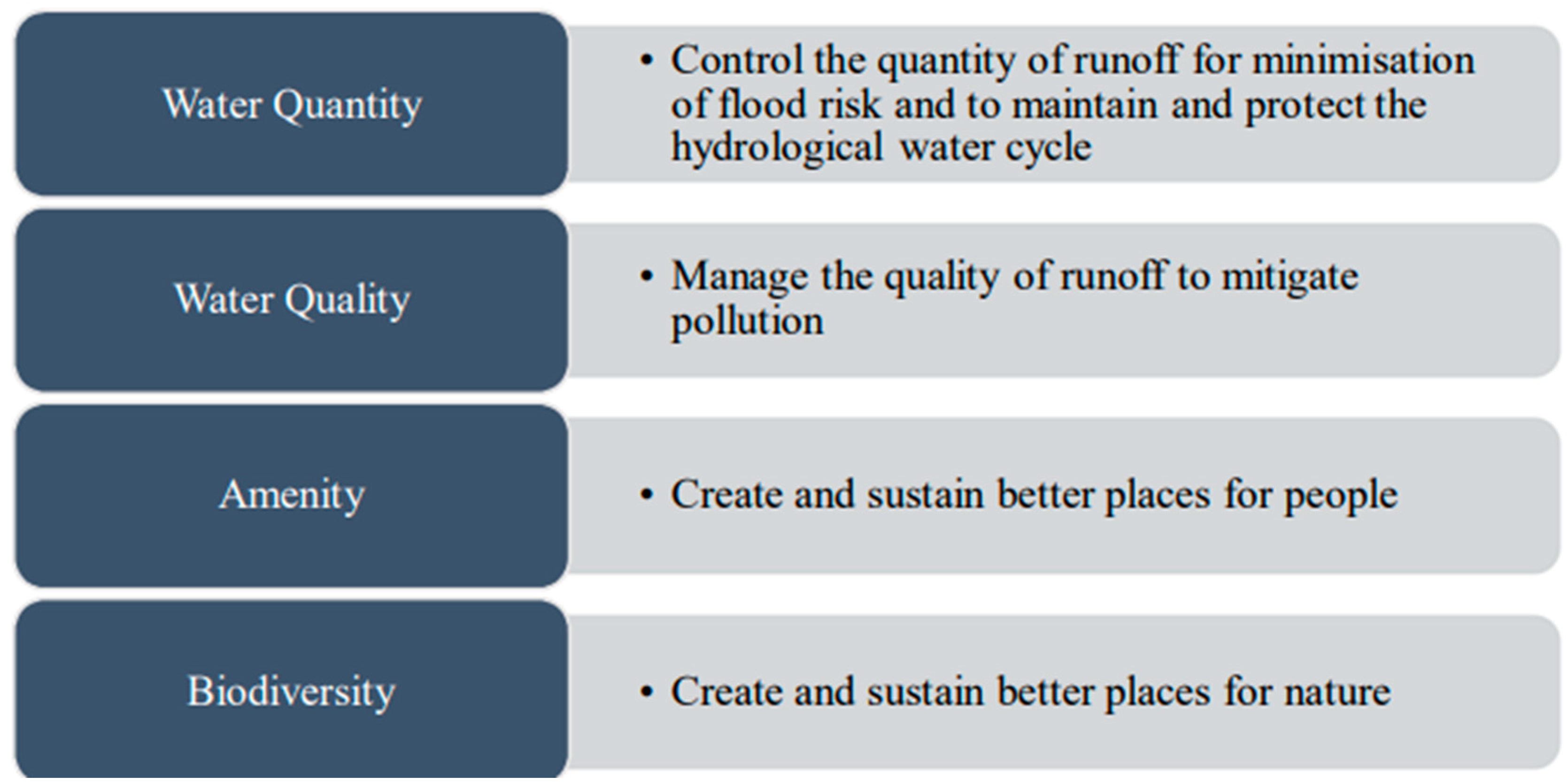
Figure 2.
Differences in the functionality of a traditional pavement and a permeable pavement system (PPS). Reproduced with permission from Ref. [92], 2022, Muttuvelu et al.
Figure 2.
Differences in the functionality of a traditional pavement and a permeable pavement system (PPS). Reproduced with permission from Ref. [92], 2022, Muttuvelu et al.
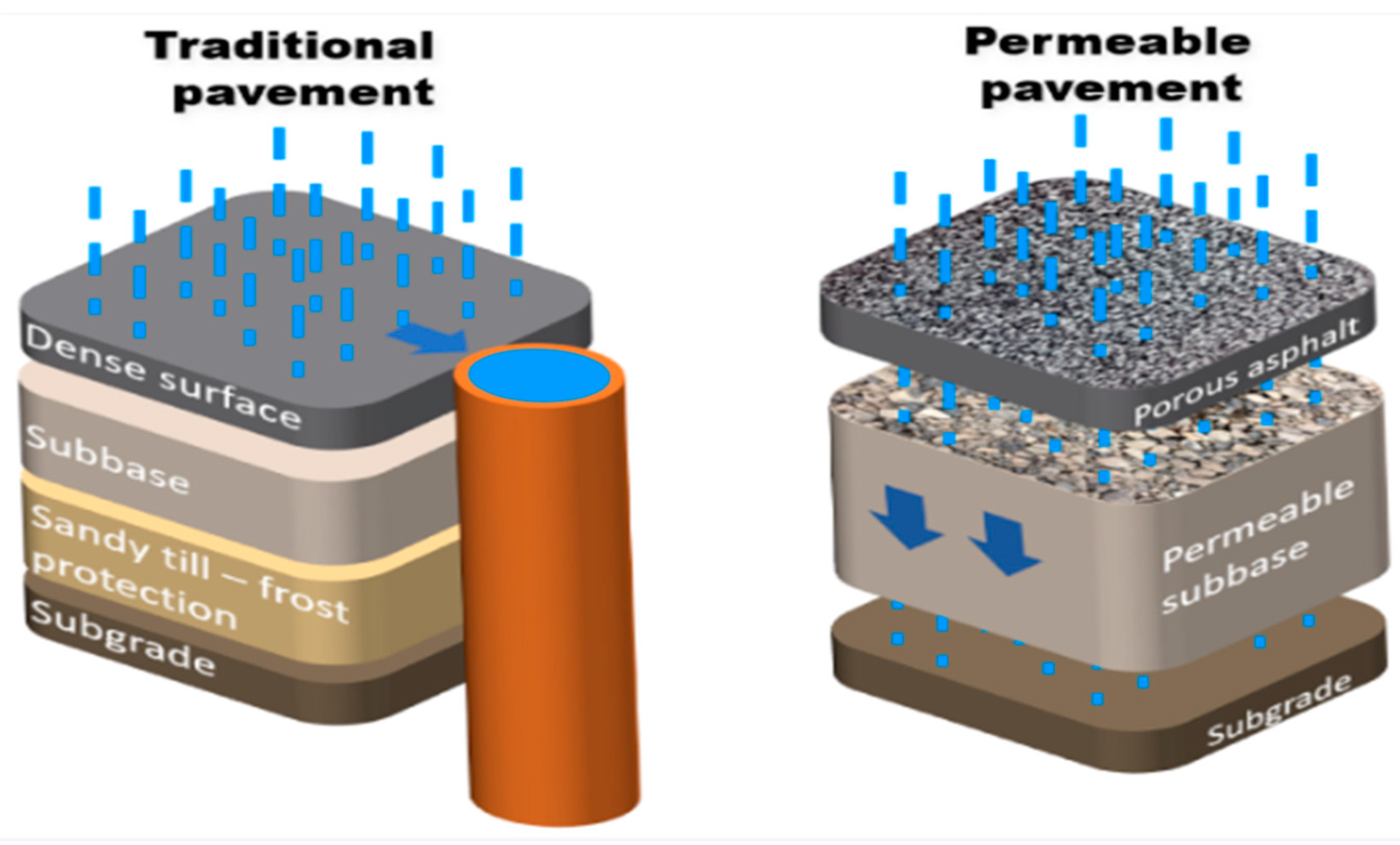
Figure 3.
Overview of permeable pavement systems: (a) with complete or full infiltration; (b) with partial infiltration; (c) No infiltration. Reproduced with permission from Ref. [89], 2018, Antunes et al.
Figure 3.
Overview of permeable pavement systems: (a) with complete or full infiltration; (b) with partial infiltration; (c) No infiltration. Reproduced with permission from Ref. [89], 2018, Antunes et al.
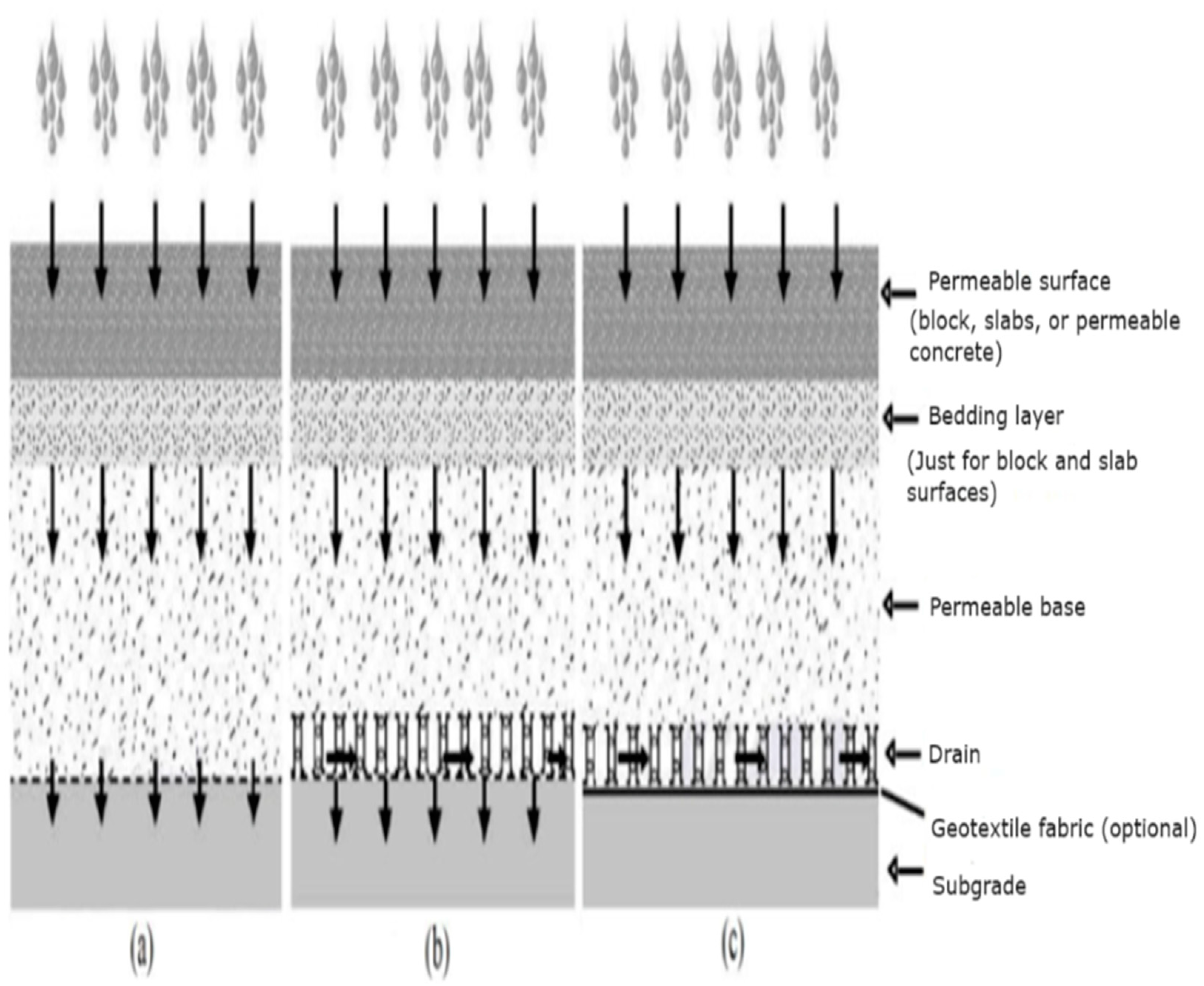

Table 1.
Water quality parameters that will be used to determine the permeable pavement water quality performance.
Table 1.
Water quality parameters that will be used to determine the permeable pavement water quality performance.
| Prefix | Meaning | Units |
|---|---|---|
| Temp | Probe Temperature | OC |
| ORP | Oxidation Reduction Potential | mV |
| pH | pH (Acidity/Alkalinity | pH |
| DO | Dissolved Oxygen | %Sat |
| DO | Dissolved Oxygen | mg/L |
| EC | Electrical Conductivity | µS/cm |
| TDS | Total Dissolved Solids | mg/L |
| SAL | Salinity | PSU |
| SSG | Sea Water Specific Gravity | σt |
| BARD | Barometric Pressure | mb |
Disclaimer/Publisher’s Note: The statements, opinions and data contained in all publications are solely those of the individual author(s) and contributor(s) and not of MDPI and/or the editor(s). MDPI and/or the editor(s) disclaim responsibility for any injury to people or property resulting from any ideas, methods, instructions or products referred to in the content. |
© 2024 by the authors. Licensee MDPI, Basel, Switzerland. This article is an open access article distributed under the terms and conditions of the Creative Commons Attribution (CC BY) license (http://creativecommons.org/licenses/by/4.0/).
Copyright: This open access article is published under a Creative Commons CC BY 4.0 license, which permit the free download, distribution, and reuse, provided that the author and preprint are cited in any reuse.