

Submitted:
09 September 2024
Posted:
10 September 2024
You are already at the latest version
Abstract
There are considerable benefits in applying Artificial Intelligence to automation in modern industries including Oil and Gas Industries. Oil and Gas Industries have many complex systems in their production and flow line. The failure of gas equipment will have serious consequences including financial and environmental issues. Condition monitoring of oil and gas equipment provides the condition of components, machines, systems, equipment, data hardware, and even software. The predictive maintenance and industry 4.0 applications have more advantages in petrochemical industries to make a safer economic environment and this paper addresses the Artificial Intelligence (AI) application of condition monitoring for Oil and Gas Industries. To understand the effectiveness of AI in condition monitoring for oil and gas industries, a case study related to the condition monitoring of drilling machine is conducted and applied Artificial Neural Network (ANN) algorithm to analyze and predict the potential failures. The novelty of this work is the proposal of an approach for tool wear monitoring in drilling using acoustic emission sensors for feature extraction and considering wavelet packet decomposition for further analysis. The extracted features from WPD are given as input for ANN to identify the healthiness of the drill bit and machine. This work aims to find the effectiveness of AI-based condition monitoring in enhancing effectiveness of monitoring and the safety of equipment in Oil and Gas Industries.
Keywords:
Artificial Intelligence
; oil and gas sector
; condition monitoring
; Artificial Neural Network (ANN)
; Wavelet Packet Decomposition (WPD)
1. Introduction
The ongoing fourth Industrial revolution focuses on cyber-physical and biological systems including the technologies of Machine learning, Deep learning, Robotics, Internet of Things, Virtual Reality, etc. In this digital era, Artificial Intelligence plays an important role in fault diagnosis and routine maintenance. Tool wear monitoring is a challenging aspect in cutting tool industries and it requires real-time monitoring to reduce cost and scraps [1]. The recent reviews and developments in the field of digital data acquisition and signal analysis using AI techniques give promising results for machine condition monitoring in modern industries. Intelligent algorithms such as Artificial Neural Networks (ANN), Fuzzy logic Systems, Genetic Algorithms (GA), Support Vector Machine (SVM), etc. give support and attention to fill the need for accurate and precise condition monitoring. The efficiency of this technique depends on accurate diagnostics in early-stage detection and data analysis using various algorithms. In the oil and gas industry, AI-based Condition Monitoring offers many benefits which are listed in Figure 1.
Normally, the condition of the tool is analyzed based on mathematical models by collecting the data using sensors. Since mathematical model and analysis are more complex, there is an increasing trend for machine learning-based analysis to predict the tool conditions more accurately [2].
The oil and gas industry is one of the largest industries globally, playing a vital role in the improvement of the global economy. It consists of three main sectors: upstream, midstream, and downstream. The upstream sector, also known as exploration and production, focuses on locating oil and gas reserves, drilling wells, and extracting crude and natural gas. The upstream sector has various hazards related to drilling operations such as blowouts, well control, and monitoring issues. Midstream contains the storage, transportation, and processing of crude oil and natural gas. It has activities like transportation, storage, and gas processing. Hazards in this include leaks, spills, and accidents during transportation. The downstream sector is for refining and processing crude oil and gas into finished products like gasoline, diesel, and other petroleum products. This sector dealt with the distribution and marketing of the products. Hazards in the downstream are fires, explosions, and chemical release issues.
So, each sector in the petroleum industry has its own set of unique hazards and safety considerations. Companies in this oil and gas sector prioritize safety measures and employ various techniques including Artificial intelligence to reduce risks and ensure the safety of the workers and environment. Normally, the upstream sector has different mechanical machines that are needed to extract oil and gas from natural resources. In this, condition monitoring is an essential part of finding the healthiness of the machines to maintain the machines’ life and to give a proper working environment.
In this work, the data will be collected from acoustic sensors using data acquisition technologies. In this regard, we used National Instrument’s DAQ hardware and signal conditioning hardware. The tool wear data was collected using Lab VIEW software. The collected data was analyzed using an Artificial Neural Network algorithm for condition monitoring of the drill bit. Overall, all of the information about drill bit monitoring and its outcome of analysis is stored in cloud storage for further and future analysis.
2. AI-based Condition Monitoring in Oil and Gas Industries—An Overview
In the present industrial scenario, condition monitoring plays a huge role in the oil and gas industries to identify the reliability and performance of equipment and assets that are involved in upstream, midstream, and downstream sectors. AI algorithms can analyze real-time data that are received from various equipment such as pumps, compressors, turbines, pipelines, and drilling machines. By monitoring continuously, AI will provide early warnings of equipment issues that will allow for predictive maintenance. One of the key benefits of AI in condition monitoring is its capacity to handle big data and identify patterns that may not be easily detectable by other manual algorithms or human operators. AI algorithms can learn from past data and use that knowledge to predict future equipment behavior, allowing more accurate and appropriate maintenance decisions [3]. Additionally, AI can integrate with other technologies like the Internet of Things (IoT) and edge computing to allow real-time monitoring and data analysis. This gives fast response to critical issues and the ability to make data-driven decisions on time. By implementing AI-based condition monitoring systems, oil and gas companies can optimize maintenance agendas, reduce costs associated with high-cost maintenance, and improve overall system performance. This leads to improved operational efficiency, extended equipment lifespan, more profitability and enhanced performance prediction.By analyzing large amounts of data from sensors and equipment, AI algorithms can detect patterns and anomalies that may indicate potential equipment failures. This allows companies to schedule maintenance activities proactively, reducing downtime and optimizing asset utilization. Furthermore, AI-powered systems are being utilized for real-time monitoring and control of drilling operations. By continuously analyzing data from drilling sensors, AI algorithms can detect drilling inefficiencies, identify potential hazards, and optimize drilling parameters. This not only improves drilling efficiency but also enhances safety by minimizing the risk of accidents. Overall, AI is revolutionizing the oil and gas industry by enabling companies to make data-driven decisions, optimize operations, and improve safety. As technology continues to advance, we can expect even more innovative applications of AI in this sector.
The applications of AI in the oil and gas industries include predictive maintenance, condition monitoring, fault diagnosis, asset lifecycle management, and knowledge management. Which is shown in Figure 2.
3. Literature Review
Yasir Hasan Ali discusses artificial intelligence applications in machine conditions and fault diagnosis. In this, he has discussed various AI algorithms like an artificial neural network, spling neural network, genetic algorithm-based fault diagnosis fuzzy logic-based all diagnosis, and support vector-based fault diagnosis. He has concluded that AI will be the future of condition monitoring for effective preventive maintenance [4]. As per the company website www. Sigga.com “Industry 4.0 and 5.0 Technology and data analysis capability make Condition Based Maintenance (CBM) truly predictive. The application of machine learning gives another level of efficiency to set parameters and to make end-to-end digital processes in the oil and gas sector [5]. Lior Kitain wrote an article on condition monitoring for the oil and gas industry in which he mentioned that oil and gas plants have more complex systems and that failure in complex systems has serious consequences. He added that IoT and AI have many advantages for the improvement in condition monitoring solutions [6]. The star view research (2022) stated that condition monitoring is required in pump condition monitoring, vessel maintenance and monitoring, virtual Rig monitoring, tank pressure monitoring, plant performance monitoring, and IoT-based pipeline monitoring in the petroleum sector [7]. Miho Klaic et al. applied a decision tree-based machine learning algorithm in a stone drilling machine to identify tool wear with different conditions. The researchers considered the cutting force and motor current to extract the features in this paper. The researchers concluded that the success rate of identification of tool wear is 90% and assured that the proposed methodology is more reliable [8]. The research gap in this paper is the comparison of the result with the other algorithms. The author has taken the decision tree as a tool and has not used another tool for his further comparison of the obtained result. Rui Zhao et al. have surveyed in their paper related to deep learning and its application to machine health monitoring. He has reviewed 108 technical articles and concluded in this way “It is believed that deep learning will have a more and more prospective future impacting machine health monitoring, especially in the age of big machinery data”. So, this survey indicates that deep learning can be used in a precise way to monitor tool wear and also the paper concluded that deep learning is a promising technique to assess tool wear [9]. P.Krishnakumar et al. used vibration and acoustic emission for tool condition monitoring during high-speed milling of Ti-6Al-4V. Discrete wavelet transform (DWT) was used to extract coefficients from vibration and acoustic emission signals using haar, daubechies, biorthogonal, and reverse biorthogonal l;l wavelets. Different machine learning algorithms like decision trees, Naïve Bayes, SVM, and ANN are used to predict the tool condition. SVM based on vibration data predicts the tool condition more effectively than decision trees, Naïve Bayes, and ANN, with a prediction accuracy of 99.26 % [10]. Yaochen Shi (2020) identified the wear in the drill bit based on the Local Mean Decomposition (LMD) and BP neural network. The research team used a multi-signal platform to acquire different parameters from the drilling machine. Then the feature parameter is trained by the combination of noise-assisted LMD method and BP neural network. The result of the research outcome states that the accuracy of monitoring drill bit wear with a single signal of acoustic emission is 91.6%, and the accuracy of monitoring drill bit wear with multi-signal fusion is 95.8%[11]. This paper contains good research content related to the proposed research of drilling tool condition monitoring but does not address many deep learning algorithms and the result comparison. Lang Dai developed an Improved Deep Learning Model for Online Tool Condition Monitoring Using Output Power Signals. The output power from the sensor which is mounted on the cutting tool holder during its operation is used for analysis. This data is analyzed using wider first-layer kernels (WCONV), and long short-term memory (LSTM) which is available in the deep learning algorithms [12]. The weakness of the paper is addressing of output power signal. This paper is more on the output power signals and its analysis on deep learning algorithms which needs more study on the condition monitoring of the tool. Qun wang et al., have done an overview of Overview of Tool Wear Monitoring Methods Based on Convolutional Neural Networks. From the paper Qun wang et al., concluded that it is feasible and reliable to apply convolution neural networks in tool wear and condition monitoring. They have added that the convolution neural network can improve prediction accuracy, which is a great significance of the Convolutional Neural Network (CNN) technology [13]. Chacon et al., proposed a methodology that uses multi-threshold count-based feature extraction at multi multi-resolution level based on wavelet packet transform for extracting a redundant and non-optimal feature map from the AE signal. Recursive feature elimination is performed to reduce and optimize the number of features and random forest regression is used to estimate the tool wear, its performance is compared with other ML techniques like RF, SVM, ANN, K-nearest neighbors (KNN) and Decision Tree (DT), to obtain the lowest Root Mean Squared Error (RMSE) for predicting tool flank wear [14]. Arun et al. monitored a cylindrical grinding machine using an acoustic emission sensor. Acoustic emission signal features are correlated with surface roughness produced from the grinding process. The condition of the grinding wheel is predicted using different machine-learning techniques such as decision trees, ANN, and SVM. SVM is more effective in predicting the grinding wheel condition [15]. Cesar et al., describe a method to characterize the dresser wear condition using AE signal. Initially, the study of the frequency content of the raw AE signal was carried out to identify the features that correlate with dresser wear [16].
4. Modeling of Condition-Based Maintenance Approach Using AI
Traditional type monitoring involves a measurement system that contains sensors and then the sensor data will undergo signal condition to process the signal. The processed signal will be converted from analog to digital and then the feature extraction will happen. Then the classification or identification of machine status will be decided by analyzing the feature extraction. The traditional type of machine condition monitoring integrating with AI is given in Figure 3. AI can do predictive maintenance by analyzing historical data and identifying patterns of failure. By learning from past data, AI algorithms can predict when a particular component or system is likely to fail in the future.
For example, consider a plant that currently performs maintenance according to a pre-set schedule. The rigidity of the schedule leaves the possibility of malfunction and low-performance rates that will only be dealt with once the next scheduled check takes place. On top of this, production will have to be halted so that inspections can be performed, and this downtime includes equipment that is 100% healthy.To discuss the challenges faced by the oil and gas plants in terms of maintenance of machinery and equipment monitoring, the organization of an oil and gas system with the following four elements can greatly improve the condition. 1.Wireless sensors 2. Gateway device 3. Dedicated cloud 4. Dashboard
Wireless sensors: These sensors are useful in various equipment such as motors, pumps, turbines, heat exchangers, compressors, and various drives. These sensors will monitor continuously the health and performance of the equipment, and data collection on many parameters like temperature, vibration, pressure, velocity, flow, etc.
Gateway device: The gateway device is used to collect data from wireless sensors. This ensures hassle-free communication between the wireless sensors, the system, and the dedicated cloud storage. This data will be used for further analysis using an algorithm.
Dedicated cloud: The data which is collected from the Data acquisition device will be stored in a dedicated cloud infrastructure. The cloud platform gives the necessary power and storage capacity to handle big data which is generated by sensors. Machine learning and deep learning algorithms can be applied to this data to identify the faults and potential equipment issues.
Dashboard: The system should have a dashboard where the plant operators and maintenance team will get information and control and monitor the system. The dashboard will give real-time insights into the equipment’s health and performance, displaying alerts and notifications when abnormalities are detected. This allows preventive maintenance and also minimizes downtime.
By including this monitoring system, the plant engineer can do presetting of the maintenance schedule for a more proactive condition-based maintenance approach. In this system, equipment health can be monitored, possibly by allowing timely interventions by experts, risk can be reduced, malfunctions will be deducted, and risk will be reduced. Minimizing production downtime ensures improved profit for the industry. Additionally, AI-based systems help to meet the requirements of vendors and regulatory bodies by providing up-to-date equipment monitoring data.
Measurement of different parameters that are involved in the upstream sector in oil and gas industries and the issues related to condition monitoring and assets involved is given in Table 1.
4. AI-Based Condition Monitoring System in a Machine Tool—A Case Study for Oil and Gas Industries
At the beginning of the 20th century, oil wells were using cable tool drilling in which a weighted chisel-shaped drill bit was suspended from a cable to lever the surface. The up and down movement of the lever will do the chipping of the surface to make a hole. After the development of mechanical machines with CNC, rotary drilling systems were introduced in the oil and gas industries. In this drill bit will get downward when the bearings are hitting a downward direction. This has more advantages than the cable type of drilling method. However, there is a chance of drill bit wear/failure which will end the lifecycle of the bit. To find toll wear or failure in the drill bit, there are two types of condition monitoring. One is direct and the other is indirect condition monitoring. In direct conditions, the sensor will measure the parameters, or the image will be taken from the cutting tool, and then the signal (or) image will be analyzed using mathematical modeling as shown in Figure 4. However, in many condition monitoring applications, it is not feasible to apply a direct method to monitor the desired parameter. Instead, the effects of variations of the parameter on the behavior of the system or other parameters are required to be measured. Using this indirect method, variations in the parameter are monitored indirectly.
This research aims to develop a strategy to determine the drill bit wear state using an indirect method using operation vibration analysis.
In the analysis of the frequency spectrum of stationary signals, normally FFT is used to investigate the vibration signal using a time-frequency approach. Wavelets will provide a time-frequency representation of the signal in which wavelets are irregular and asymmetric wavelet transform analysis can do the short history of wavelets and also prove time-frequency representation. This can be used as an input signal in ANN-based analysis. The wavelet function is given in Equation (1).
Discrete wavelets transform splits the signal x(t) into an approximation (S) and a detail (T), which are the lower and higher frequency ranges of the signal can be defined using Equations (2) and (3)
The wavelet dilation and translation are controlled by variables m and n, respectively. This is known as the father scaling function which is given in Equation (4).
To have wavelet packet decomposition, the principle of wavelet transform has been applied. This method analyses signals in a wider range.
The approximation will split into second level and the approximation procedure will continue. The m-level decomposition will transfer to m+1 ways as shown in Figure 5. WPD analysis will give high and low-frequency ranges by generating a set of packets.
The energy of wavelet in each level decomposition related to approximation and relevant co-efficient s is calculated as per the formulas of Equations (5)–(8)
The total wavelet energy at level 1 is
And the next level of m+1 is
The relative energy of the wavelet packet will be calculated as per the formula given in Equation (9).
For bit wear multi-classification, the softmax transfer function was used to determine the probability of output class (k) using equation 10 for the input n. The probabilities for each class will range from 0 and 1, and the total of all class probabilities is equal to 1. The class with the highest probability determines the output class. The hidden layer transfer function was a logistic sigmoid in the form of Equation (11) with an output range of (0, 1).
The hidden layer transfer function is calculated using the following equation (Equation (11)).
Then, the neural network model is applied to minimize the global function error. The loss or error function can be calculated as given in Equation (12).
where yi is the model output, ti is target value label.
The neural network model is given in Figure 6 to analyze the WPD.
Experimental Setup
The experimental setup has CNC drill, specified drill bit, NI Cdaq-7174, acoustic emission sensor, signal conditioning, LabVIEW software and ANN software. The AE sensor was mounted on the tool holder of drill bit and the signal had sent to the signal condition device. Signal conditioning is used to filter and amplify signals and then it is fetched to DAQ to analyze using LabVIEW software. The drilling condition has been set to 12mm/min feed rate and the rpm of 800. The drill bit has 3/16” drill diameter, the Overall length of 3 25/64”, flute length is 2 3/32”, and the angle point is 135. Using accelerometers, vibration data has been collected and analyzed in the life cycle of the drill bit as given in Figure 7. During the data collection, we used different faulty drill bits to collect more samples from the acoustic emission sensor. The ethical parameters such as lawfulness, fairness, transparency, accuracy, and storage of relevant data have been considered during data collection.
5. Results and Discussion
The collected data has been analyzed using WPD and then ANN. The validation of data has been done by measuring more number of times. However, there is a slight variation from one measurement to another measurement due to the nature of sound and vibration parameters. Noise has been filtered using a signal conditioning device which is provided by National Instruments. Wavelet packet Decomposition (WPD) is used to generate a time-frequency representation of the signal and concentrated on the various frequency bands. Figure 8 shows three levels of wavelet packet decomposition. Then the wavelet packets were analyzed over the drilling data. In the 3rd level. It is observed that the (3,1) packet is changing the working condition which may be due to the drill bit or hardness change of job material. WPD provides a clear analysis of low-frequency to high-frequency. When increasing the speed of the drill bit’s rotations, the bit fault shifts to (3,4). The relative energy on another packet like (3,0) (3,1) (3,2) is also described in Figure 8. The relative energy distribution is transferring from (3,1) to another level and in the end, it is found that (3,3) is getting the concentration of energy before the failure of the tool. Consequently, the wavelet packet energy creates the feature vector to describe the vibration signal to analyze the ANN model for bit state classification.
In the class-5-bit condition, the highest relative energy value is related to the packet (3, 3), which is considered as the bit fault frequency packet as shown in Figure 9. In the Figure 9, the wavelet packet and relative energy are given to understand the growth of the signal due to vibration. In class 1 wavelet packet (3,1) is in peak which is reduced in class 5. But there is another signal that is showing in class 5 is getting attention to predict the faulty signal with more accuracy
The challenge faced during AI-based condition monitoring is the collection of structured data with more consistency. The data will vary from one trial to the next trial. The fault which we have created in the tool may vary during the drilling, so that, the consistency in data collection will vary bit which is unavoidable in condition monitoring. This may affect the accuracy of AI results. Also, the wavelet packet decomposition has limitations related to shift sensitivity and directionality. This may affect to predict of the change point when the original signal has a phase change. The limitations of the proposed research are as follows
- Used acoustic emission sensor to collect the data in which we can use to predict the healthiness of the tool more effectively rather than the healthiness of the whole machine. RMS value of the energy level of the acoustic emission can be used to detect tool failure during drilling operation
- Used NI cDAQ -9174 for data collection and used only ANN for the analysis and not compared with other machine learning algorithms like SVM, KNN or DT.
6. Conclusion
The proposed research is coming under preventive maintenance which enables the cost saving, Long-term usage of machineries, Less periodic maintenance, etc. The proposed methodology is an industry-oriented online condition monitoring system that can be easily adapted by petroleum sectors with less investment. To date, there is no proper methodology to identify the condition of drilling machineries because of its complexity in nature. So, this method may open a path to monitor various drilling machines, rigs, grinding machines, etc in the proposed sector. One of the key advantages of AI in condition monitoring is its ability to handle complex and high-dimensional data. AI algorithms can process data from various sources, such as vibration sensors, temperature sensors, and pressure sensors, to identify correlations and patterns that may indicate equipment degradation or impending failures. In this work, An ANN model was designed, trained, and validated using the signal features extracted from the drilling machine. The feature vector consisted of the statistical features from the wavelet packets as well as bit penetration rate and control signals. This approach is used to warn the maintenance engineer about the drill bit condition and is a promising step toward drilling operations. AI also enables condition monitoring systems to adapt and improve over time. By continuously analyzing new data, AI algorithms can refine their models and detection capabilities and will become more accurate and efficient in identifying potential issues.
According to the research, AI is revolutionizing the oil and gas industry by enabling companies to make data-driven decisions, optimize operations, and improve safety. As technology continues to advance, we can expect even more innovative applications of AI in this sector.
In the future of this work, we can extend tool wear monitoring in drilling using a count-based approach for feature extraction considering wavelet packet transform and using the so extracted features as input for random forest regression (RFR) and comparing its performance with other well-used and researched ML techniques like SVM, KNN and decision trees which may give better result to identify the right deep learning algorithms. Also, many deep learning algorithms may give a more accurate prediction of the healthiness of the machine which needed a right comparison between them to get more accurate results. The predicted data can be integrated with IoT technologies and cloud-based data management.
In summary, AI in condition monitoring empowers industries to move from reactive to proactive maintenance strategies to analyze sensor data, predict failures, and optimize maintenance schedules.
Acknowledgments
The authors would like to acknowledge the National University of Science and Technology Management for allowed to do this research work and for publication.
Conflicts of Interest
The whole work copyright is to the authors and the given work does not have any conflict of interest.
References
- Waleed Abdulkarem, Rajakannu Amuthakkannan, Khalid F Al-Raheem: Centrifugal pump impeller crack detection using vibration analysis. In: 2nd International Conference on Research in Science, Engineering and Technology, pp206-211, (2014).
- Maamar Ali Saud AL Tobi , Ramachandran.KP., Saleh AL-Araimi., Rene Pacturan., Amuthakannan Rajakannu., Chetha Achuthan: Machinery Faults Diagnosis using Support Vector Machine (SVM) and Naïve Bayes classifiers; International Journal of Engineering Trends and Technology;70(12);PP26-34;(2022).
- 3. Maamar Ali Saud Al Tobi, Ramachandran K P, Saleh Al-Araimi, Rene Pacturan, Amuthakkannan Rajakannu, Geetha Achuthan: Machinery Fault Diagnosis using Continuous Wavelet Transform and Artificial Intelligence based classification; In: Proceedings of the3rd International Conference on Robotics Systems and Vehicle Technology July 2022; pp 51–59. [CrossRef]
- Yasir Hassan Ali, Artificial Intelligence Application in Machine Condition Monitoring and Fault ; Artificial Intelligence—Emerging Trends and Applications, Chapter: 14; 275-291;(2018).
- Sigga Technologies, (www.sigga.com): AI Applications for Condition-based Monitoring for EAM; (2022).
- Lior kitain, Condition Monitoring in the Oil and Gas Industry, Article: Available at: https://medium.com/@lior.kitain/condition-monitoring-in-the-oil-and-gas-industry-991805ea9335; (2018).
- Star view research—Market research Report—Report code—SR1728, Oil & Gas Condition Monitoring System Market Size, Share, Trend, Forecast, Competitive Analysis, and Growth Opportunity: 2022-2027 Available in: Oil & Gas Condition Monitoring System Market Size, Share, Trend, Forecast, Competitive Analysis, and Growth Opportunity: 2022-2027; (2022).
- Miho Klaic , Tomislav Staroveski, Toma Udiljak;, Tool Wear Classification using Decision Treesin Stone Drilling Applications: a Preliminary Study , 24th DAAAM International Symposium on Intelligent Manufacturing and Automation, 2013, Procedia Engineering, 69(2014), 1326-1336, Elsevier, Scence Direct; (2014). [CrossRef]
- Rui Zhao, Ruqiang Yan, Zhenghua Chen, Kezhi Mao, Peng Wang, and Robert X. Gao, Deep Learning and Its Applications to Machine Health Monitoring: A Survey IEEE Transactions on Neural Networks and Learning Systems vol. 14, no. 8, august 2015; (2015).
- P.Krishnakumar, K. Rameshkumar and K I Ramachandran,( Machine learning based tool condition classification using acoustic emission and vibration data in high speed milling process using wavelet features, Intelligent Decision Technologies , pp.1-18; (2018).
- Yaochen Shi, Hongyan Liu, Xuechen Zhang, Qinghua Li, and Xiaocheng Guo (2020), Wear Identification of Vibration Drilling Bit Based on Improved LMD and BP Neural Network, Journal of Mathematical Problems in Engineering, Hindawi, Volume 2020, Article ID 2386721, 9 pages Available from: https://doi.org/10.1155/2020/2386721. [CrossRef]
- 12. Lang Dai,Tianyu Liu,Zhongyong Liu,Lisa Jackson,Paul Goodall,Changqing Shen,and Lei Mao ;An Improved Deep Learning Model for Online Tool Condition Monitoring Using Output Power Signals, Journal of Shock and Vibration, Hindawi , Volume 2020, Article ID 8843314, 12 pages; 1155/ 2020/884(2020). [CrossRef]
- Wang, Q.; Wang, H.; Hou, L.; Yi, S. Overview of Tool Wear Monitoring Methods Based on Convolutional Neural Network. Appl. Sci. 2021, 11, 12041.https:// doi.org/10.3390/app112412041(2021).
- Chacón, F.; Luis, J.; de Barrena, F.; Telmo, G.A. A Novel Machine Learning-Based Methodology for Tool Wear Prediction Using Acoustic Emission Signals. Sensors, Vol. 21, 5984; (2021).
- Arun A, Rameshkumar K,Unnikrishnan D & Sumesh ATool condition monitoring of cylindrical grinding process using acoustic emission sensor, Materials Today: Proceedings. 5, pp.11888-11899; (2018).
- Cesar H R Martins, Paulo R. Aguiar, Arminio Frech Jr., & Eduardo Carlos Bianchi, Tool condition monitoring of single-point dresser using Acoustic emission and neural network models, IEEE Transactions on Instrumentation and Measurement 63 (3), pp.667-679; (2014).
Figure 1.
Benefits of AI-based condition monitoring in the oil and gas industry.
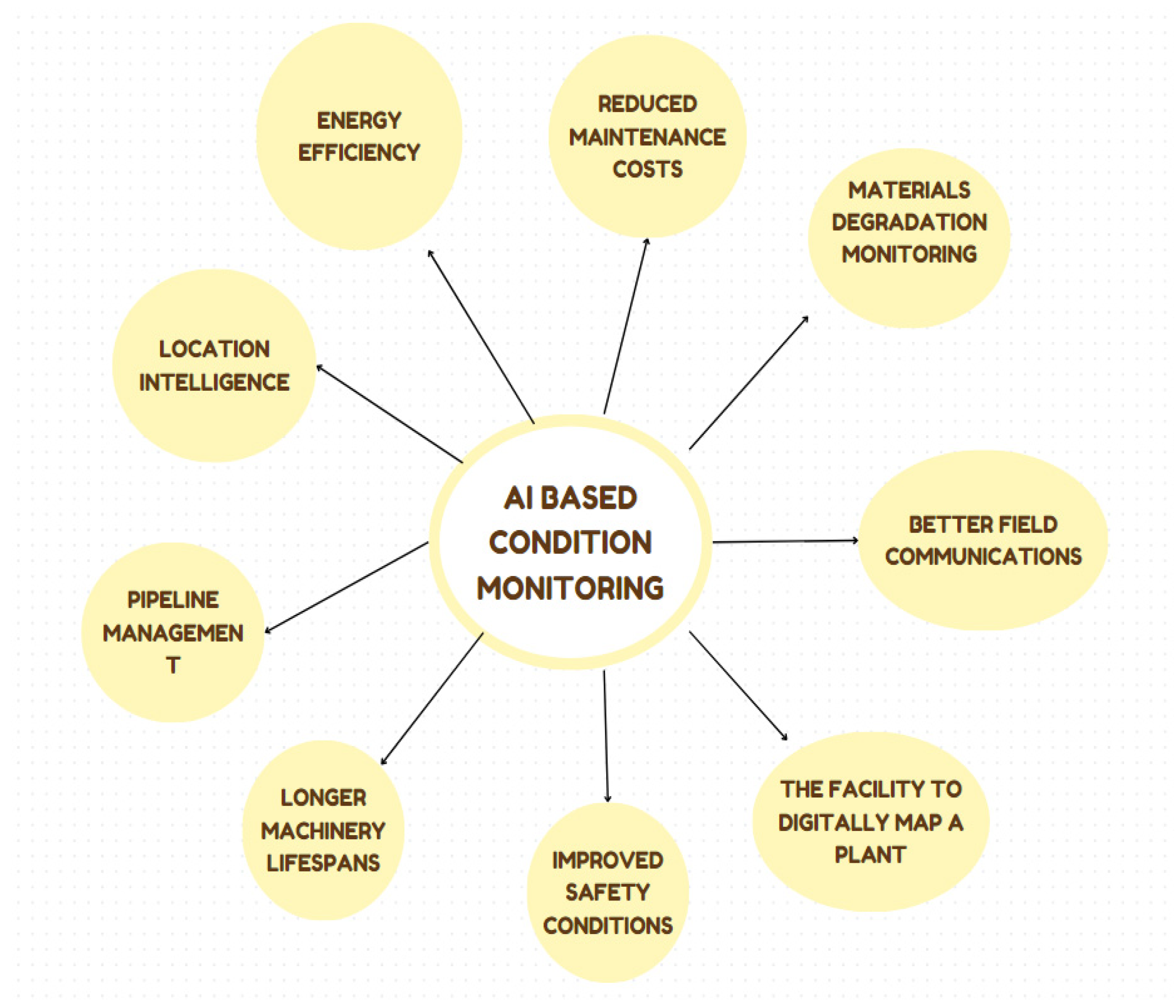
Figure 2.
Applications of AI-based condition monitoring in Oil and Gas Industries.
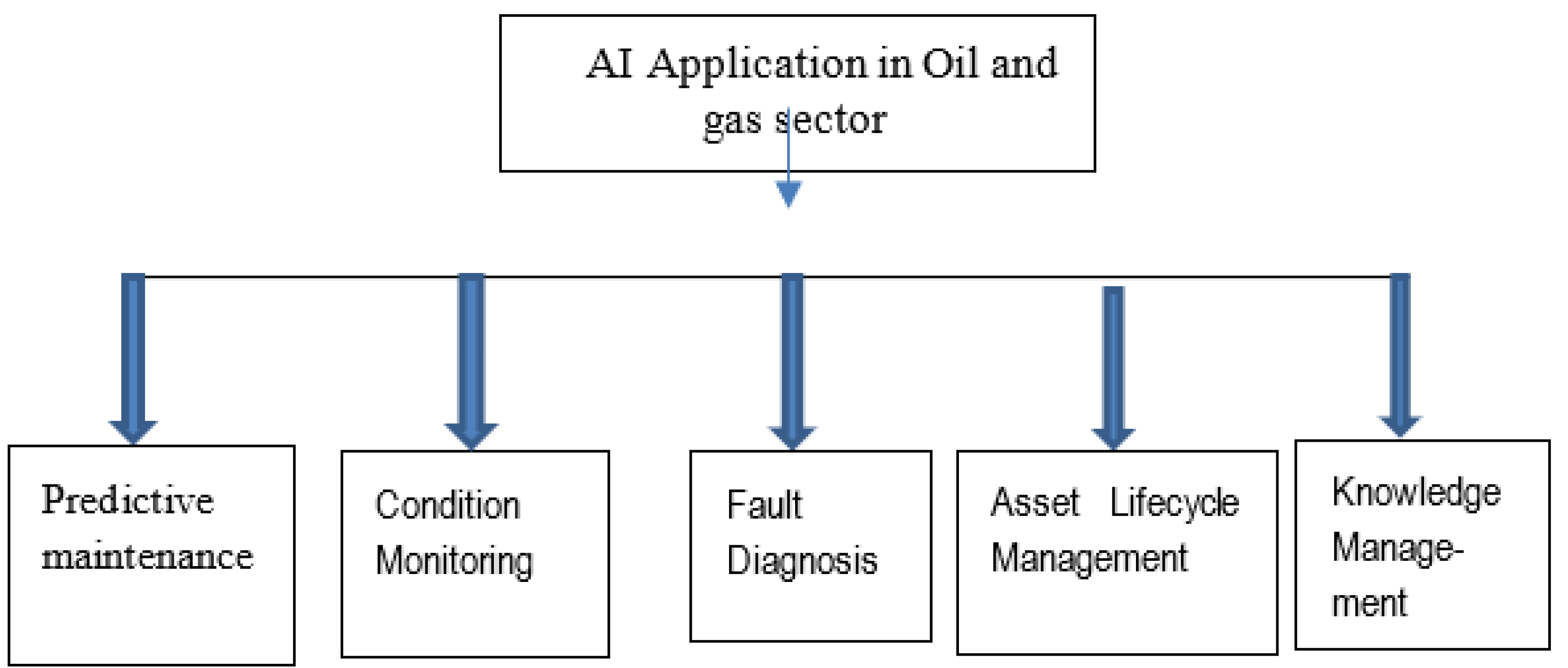
Figure 3.
Machine condition monitoring model integrating with AI techniques.
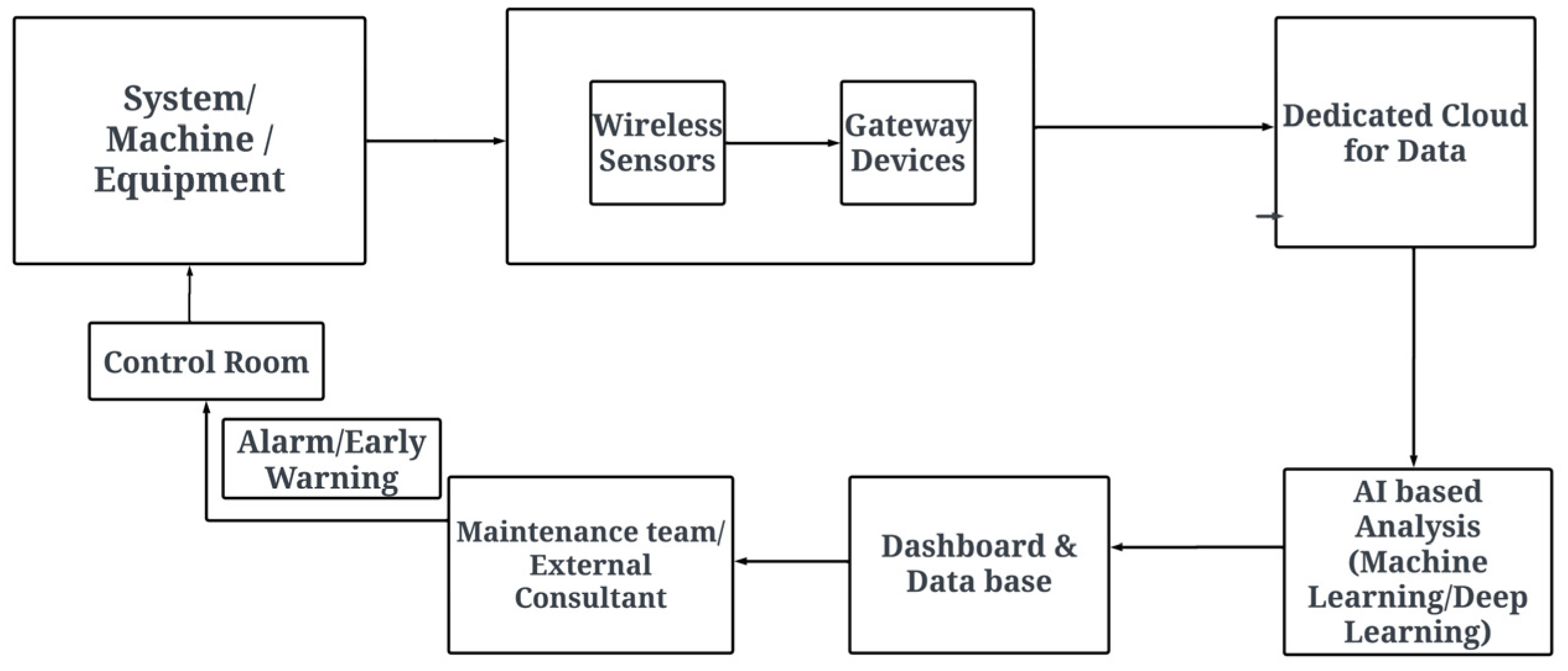
Figure 4.
Direct condition monitoring methodology.
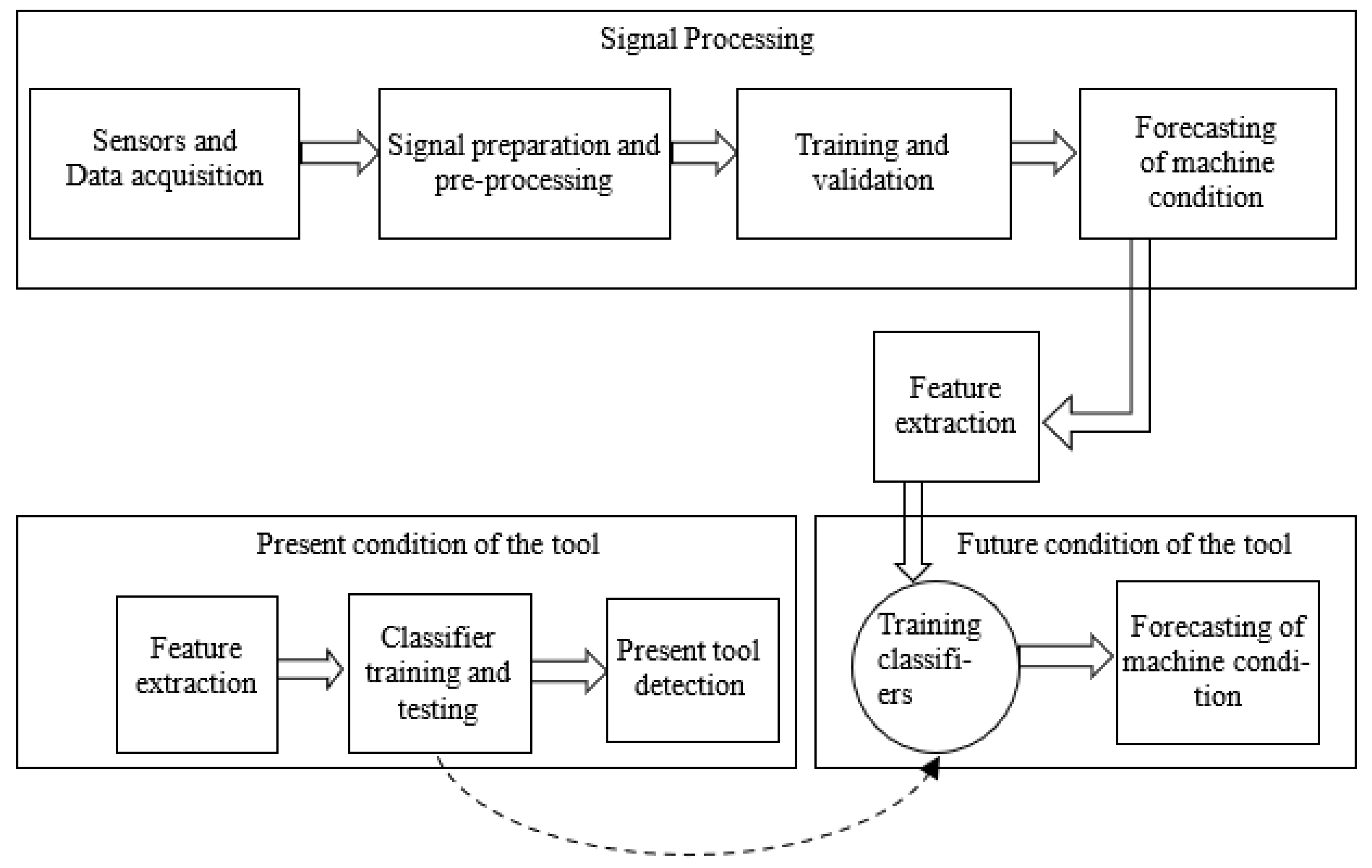
Figure 5.
Three-level wavelet transform and Three-level WPD.
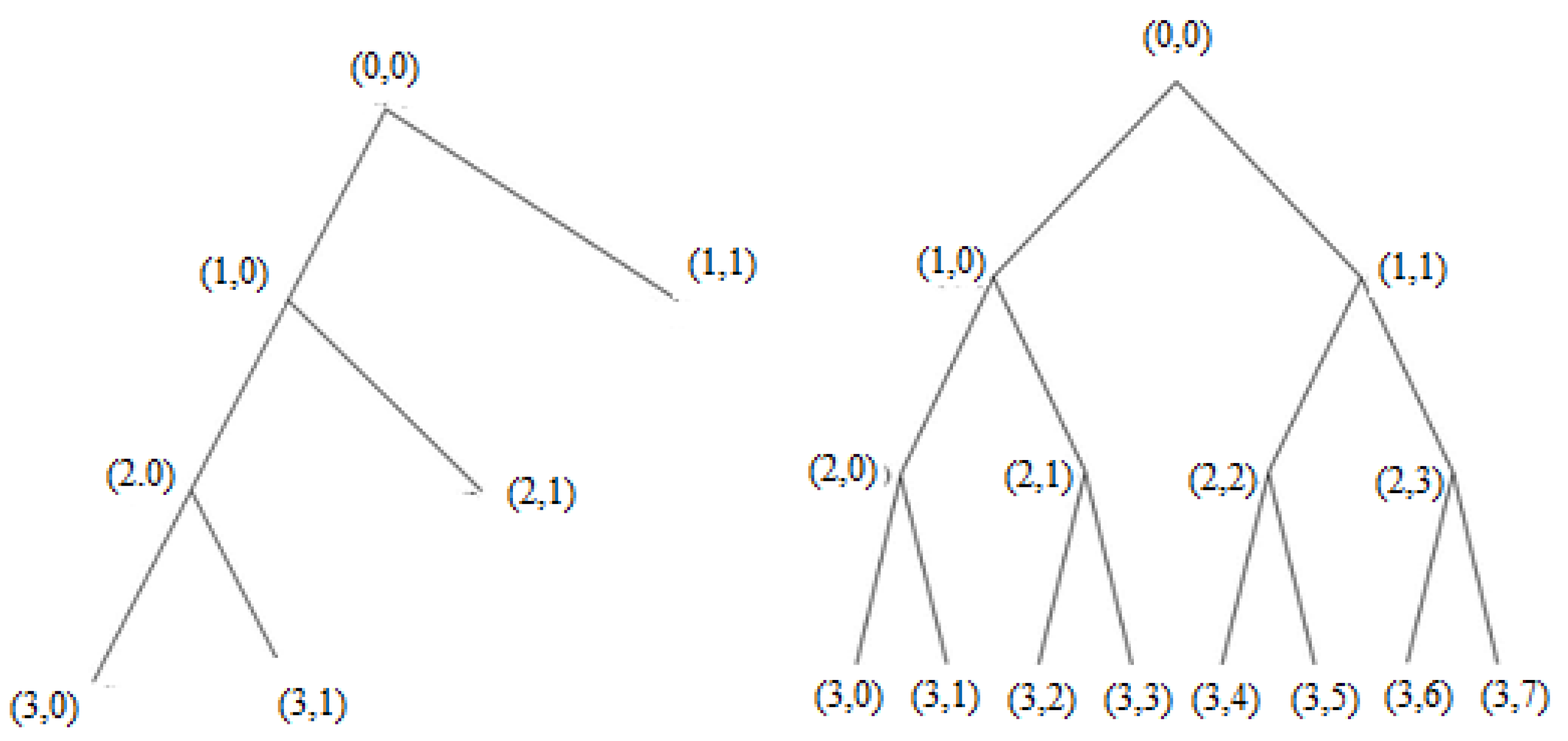
Figure 6.
Neural network model for signal analysis.
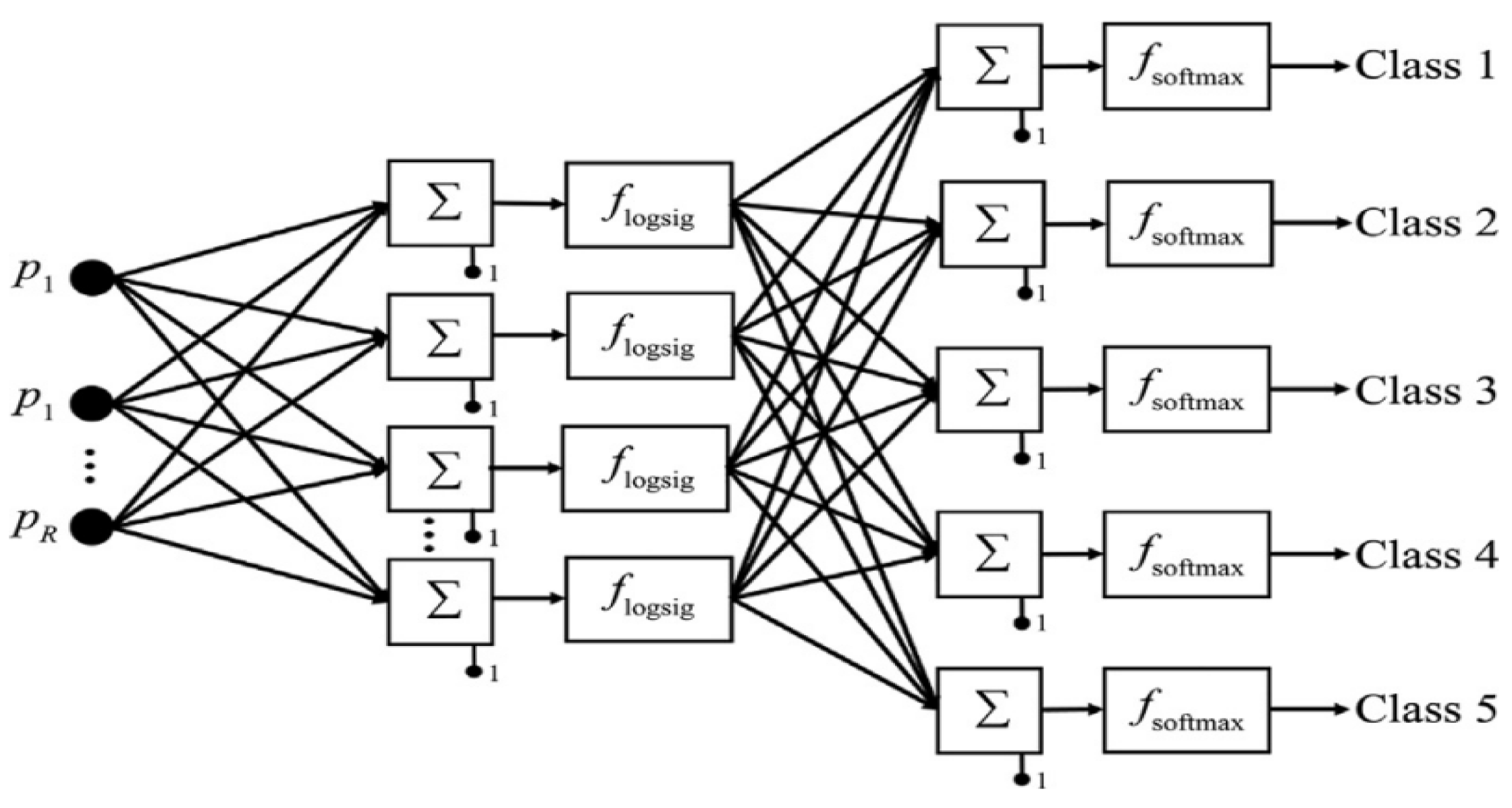
Figure 7.
Vibration signal collected using data acquisition.
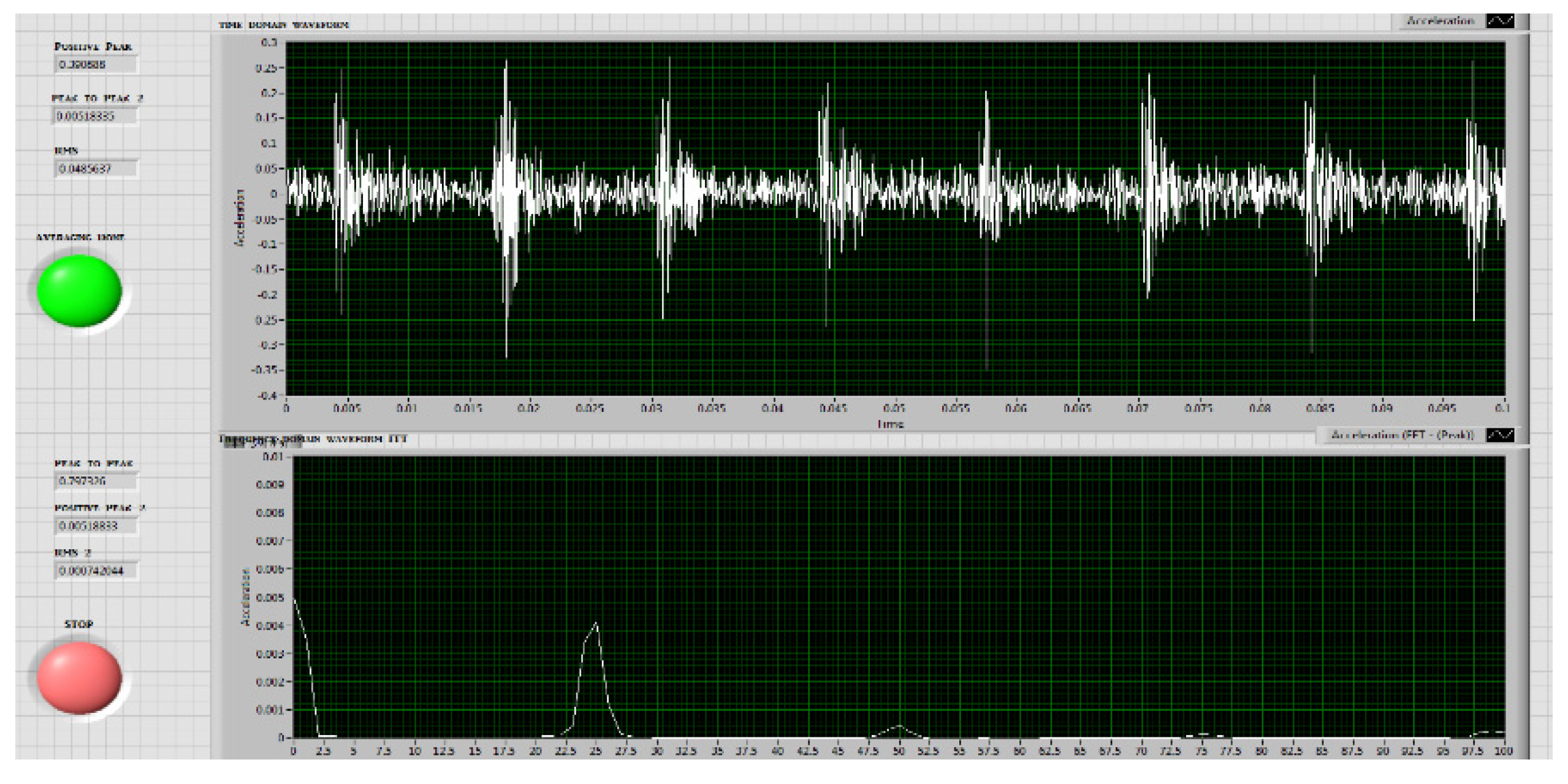
Figure 8.
Three-level WPD of the vibration signal.
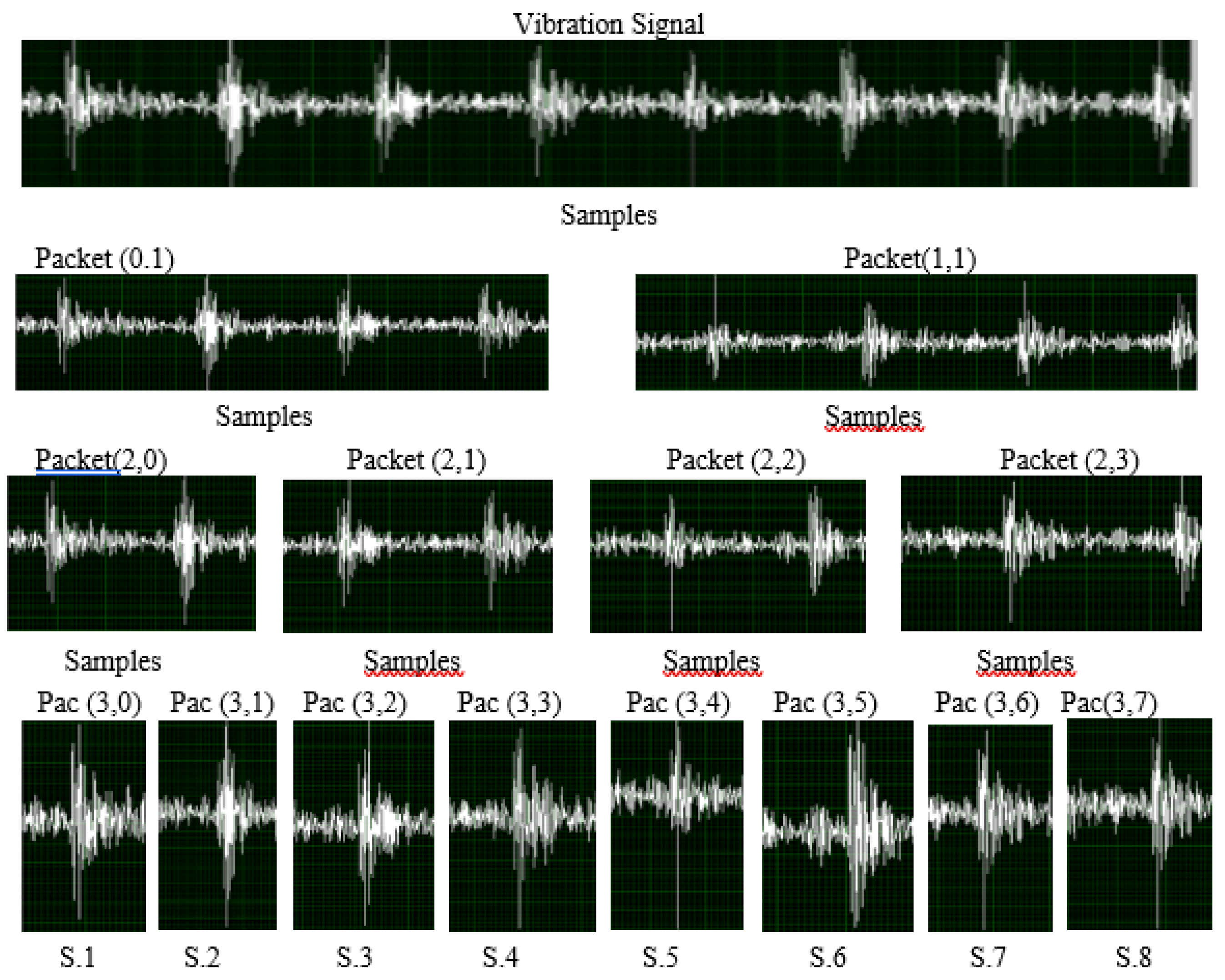
Figure 9.
Relative Energy distribution at the third level of Decomposition for drill bit wear classes 1 to 5.
Figure 9.
Relative Energy distribution at the third level of Decomposition for drill bit wear classes 1 to 5.
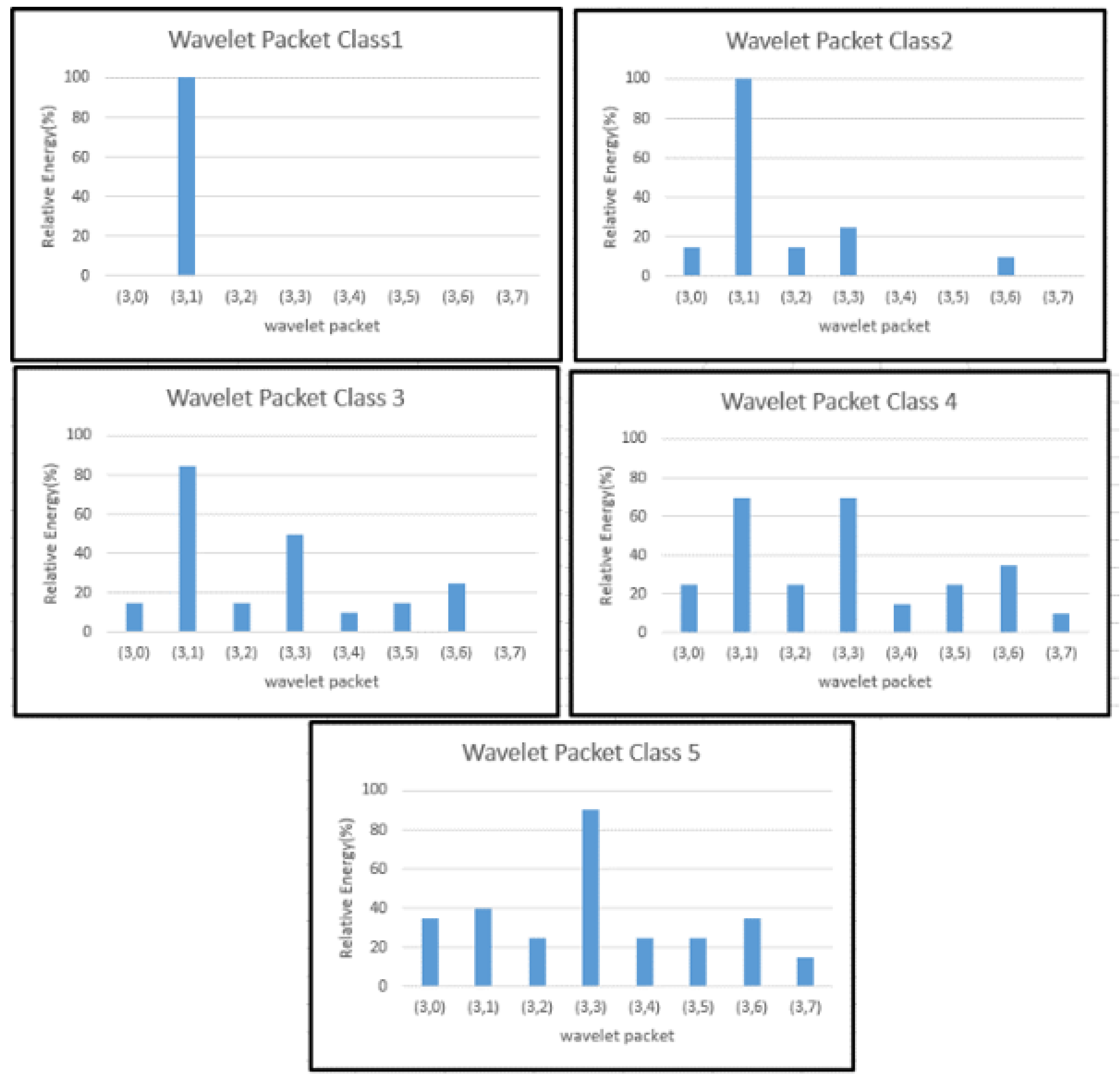

Table 1.
Parameter measurement in intelligent condition monitoring of the oil and gas sector.
| Measurement | Issues Detected | Typical Assets |
|---|---|---|
| Vibration | Detect mechanical faults such as imbalance, misalignment, looseness, and bearing failure | centrifugal pumps, motors, compressors |
| Temperature | From simple temperature readings to infrared thermography to catch temperature irregularities that can be caused by a part misalignment or belt issue | Motors, bearings, gearboxes |
| Oil level & condition | Testing lubricants & other fluids for level, chemical properties, contamination, viscosity, and foreign particles indicating degradation of the machine surface (ie. iron, silicon, aluminum silicate) | Compressors, gearboxes, transportation vehicles |
| Sound | Ultrasound testing can be used. It could be anything from leaking gases, under/over lubrication, to improperly seated parts | A wide range of equipment including equipment that has high-pressure fluids |
| Electrical | Evaluating changes in the electrical parameters including induction, pulse and frequency response, capacitance, and resistance. | Motors & other electrical systems |
Disclaimer/Publisher’s Note: The statements, opinions and data contained in all publications are solely those of the individual author(s) and contributor(s) and not of MDPI and/or the editor(s). MDPI and/or the editor(s) disclaim responsibility for any injury to people or property resulting from any ideas, methods, instructions or products referred to in the content. |
© 2024 by the authors. Licensee MDPI, Basel, Switzerland. This article is an open access article distributed under the terms and conditions of the Creative Commons Attribution (CC BY) license (http://creativecommons.org/licenses/by/4.0/).
Copyright: This open access article is published under a Creative Commons CC BY 4.0 license, which permit the free download, distribution, and reuse, provided that the author and preprint are cited in any reuse.


