

Submitted:
09 September 2024
Posted:
10 September 2024
You are already at the latest version
Abstract
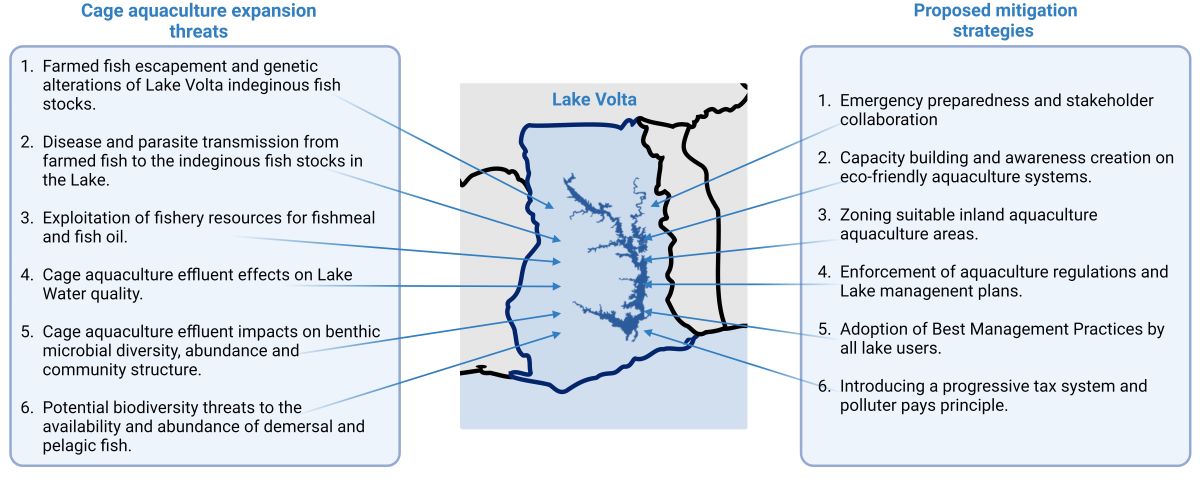
Lakes across the globe, including the Volta Lake in Ghana, face insidious threats from pollutants driven by high dependency on aquatic ecosystems. Cage aquaculture is expanding in Africa due to its potential to address food insecurity, provide livelihoods, and contribute to local economies. However, the uncontrolled expansion of cage aquaculture can have significant negative impacts on water resources, including environmental footprints that threaten biodiversity. Considering the intensification of cage aquaculture on the Volta Lake, we argue for a shift to sustainable alternative aquaculture systems. Deepening stakeholder collaborations are needed to enhance competence in mapping inland aquaculture areas, identifying eco-friendly alternatives, and strengthening aquaculture regulations and their enforcement in general and cage culture in particular on Lake Volta. This approach would promote best management practices. While competence building must be a continuous process to address knowledge gaps, the establishment of workable preparedness plans is needed in the event of emergencies. As the Lake is a hotspot for certain fish pathogens, implementing these strategies can reduce disease risks and subsequently decrease the development of resistance associated with excessive antimicrobial use in farmed fish.
Keywords:
Lake Volta
; cage aquaculture
; mapping inland areas
; law enforcement
; best management practices
; collaboration and capacity building
; emergency preparedness
1. A Global Perspective on Cage Aquaculture and Biodiversity
Over the past 40 years, aquaculture made significant contributions to global seafood production [1]. In 2020, global fisheries and aquaculture production amounted to 178 million tonnes, with aquaculture representing 49% (88 million tonnes) of the entire volumes [2]. There are different aquaculture holding units, namely cages, concrete or mobile tanks, ponds, flow through, and recirculatory aquaculture systems [3,4,5]. Ponds are the oldest and most dominant among the holding systems [6]. In the past 20 years however, cages have dominated and attracting worldwide attention for intensified production in natural and artificial water bodies [7,8,9].
The exponential growth of cage aquaculture poses severe threats to vital aquatic ecosystem services and can strongly interfere with freshwater and marine biodiversity [10,11,12,13,14]. Escaped fish from cages are almost inevitable due to accidents, flooding, and equipment failures. Escapees can cause genetic alterations in receiving wild stocks, which is one of the most significant impacts of cage aquaculture on biodiversity [13,15,16,17]. Precisely because farmed fish are selectively bred for faster growth, including modification of broodstock to produce infertile fry, escapees can have deleterious effects on wild fish stocks [18,19,20]. Apart from lionfish, which are less commonly farmed [21], tilapines are frequently cited as examples of the negative impacts of aquaculture-mediated invasive species, having successfully displaced numerous native species [13,22,23,24]. The movements of escapees and their increased chances of interacting with wild fish, increase the risks of transmitting diseases and parasites to wild fish populations [25,26]. The issues associated with escapees have contributed to the rapid development of antimicrobial resistance due to excessive antimicrobial use [27,28]. Biological interventions such as the use of cleaner fish to reduce parasites infestation are also implicated in the transmission of diseases to wild fish populations [29,30,31].
One important but often overlooked issue affecting marine and freshwater biodiversity in West Africa is the depletion of capture fishery resources used for aquafeed production. Fishmeal and fish oil, which are limited resources are derived from small pelagic such as anchovies, sardines, Atlantic herring, and menhaden [32,33,34]. Although marine fish farming is a big business, global production of fishmeal and fish oil have remained relatively stable at about 5 million tonnes and 1 million tonnes, respectively [35]. In 2020, 86% of fishmeal and 73% of fish oil from global marine production were used in aquaculture [36]. Unlike freshwater aquaculture, the demand for fishmeal and fish oil is highest in mariculture [37,38,39], which is predominantly practiced in advanced countries. This high demand contributes to the overexploitation of capture fisheries in relatively poorer countries [40]. Irrespective of the aquaculture type, these statistics highlight the exploitative pressure on the source ingredients harvested, including their derailed purpose as seafood intended for human consumption. The overexploitation of fisheries resources force affected countries to resort to aquaculture to meet fish nutritional needs. Capture fisheries and aquaculture remain volatile as their overexploitation continue to pose potential biodiversity threats.
The dispersion of faecal matter, dissolved nutrients and feed waste from floating cages are major sources of pollution in receiving waters and a clear example of the harmful impacts of aquaculture on biodiversity [41,42,43]. Unlike emerging closed cages, poorly sited and mismanaged open cages are associated with dire consequences, such as changes in microbial diversity, abundance, and community structure [44,45,46]. Benthic environmental footprint is a common concern in invertebrate communities due to the biofouling caused by different aquaculture wastes on the sediment, which reduces species richness [47,48,49]. Additional evidence supports the negative effects of aquaculture, namely, reduced diversity and lower species richness in zooplankton communities at cage sites [50].
Despite the negative effects of aquaculture on biodiversity, fish farming can also have positive impacts. These include reduced fishing pressure on already overexploited stocks, support for conservation efforts through the stocking of farmed fish, and increases in species diversity, abundance, and richness [13,51,52,53,54,55,56].
2. Negative Impacts of Lake Volta Cage Aquaculture in Ghana
Cage aquaculture commenced in Ghana in the mid-2000s with the establishment of the first commercial cage on Lake Volta [57,58]. Earlier on, fish farming began in 1953, with the conversion of irrigation reservoirs in the Northern region of the country [59]. Currently, most fish farmers prefer Lake Volta (Figure 1) for various reasons, including good water quality and flow rate, as well as optimal water depths [60,61]. Lake Volta contributes approximately 90% of the annual farmed production of Nile tilapia (Oreochromis niloticus) and African catfish (Clarias gariepinus). In 2021, Ghana earned approximately 140 million U.S. dollars from a total aquaculture production of 89,400 metric tonnes (Figure 2) [62]. Of this production, tilapia accounted for 68,740 metric tonnes, while catfish constituted 20,660 metric tonnes [63,64].
The socio-economic benefits derived from Lake Volta have made it the aquaculture hub in Ghana. Currently, Lake Volta is one of the few water resources that is not visibly polluted. However, future projections suggest that Lake Volta may lose its relevance and importance due to increasing pollution of other water bodies in Ghana through illegal mining [65]. Similar forecasts suggest that expanding cage culture beyond Lake Volta’s carrying capacity could lead to chemical and nutrient pollution, the introduction of non-native species and pathogens, as well as sediment and organic matter loading [66,67,68,69,70]. Some of these forecasts have already been substantiated [67,68]. Therefore, the objective of this paper is to provide alternative perspectives on rethinking cage aquaculture in Lake Volta to better protect its ecosystem services and biodiversity. This is particularly important and could inform trans-regional management decisions, as Lake Volta connects to the Volta Basin, which borders Benin, Burkina Faso, Côte d’Ivoire, Mali, and Togo.
Numerous studies have assessed the potential impacts of cage aquaculture on the physico-chemical parameters of Lake Volta. Majority of these studies concluded that there were no significant variations in water quality parameters, such as ammonia, pH, nutrient level, dissolved oxygen and the total suspended solids between cage sites and reference sites within the Lake. Additionally, comparisons of data collected over the past three decades with recent facts support these findings [57,71]. Nevertheless, concerns have been raised about fish culture-related impacts, such as effluents affecting Lake water quality when evaluating the social acceptance of cage aquaculture in Lake Volta [72].
Ongoing disease outbreaks and unusual mortalities in the Lake since 2018 have created increasingly stressful conditions for the farmed fish population. A recent study conducted by Zornu et al. [66] to understand tilapia mortalities in Lake Volta identified a combination of pathogens and non-infectious factors as contributors to these unusual mortalities. Farmed fish mortalities have been linked to water pollution from human-mediated pollutants, aquaculture wastes, and other non-infectious factors. Despite these challenges, the Fisheries Commission (FC) has projected an 8% annual growth in aquaculture production over the next three years [63]. Meeting this projected increase in annual fish production could trigger intensified production and the establishment of new cage farms on the Lake. Hosting additional cages on the Lake could lead to an increased influx of feed, assuming each farm on the Lake operates with an average Feed Conversion Ratio of 1.5 and at an annual growth rate of 8% [63]. Other consequences include the introduction of large amounts of aquaculture waste into the water and further deterioration of Lake water quality.
Aiming for higher fish production increases the risk of aquatic diseases with medium to large-scale effects. Consequently, Lake Volta will become the primary ecosystem affected by these diseases and a sink for chemical remnants introduced to combat diseases (Figure 3). Addressing fish diseases in Lake Volta has led to increased antimicrobial use and subsequent resistance [73,74]. Land-based aquaculture operations have its peculiar environmental issues, including but not limited to chemical pollution. Nonetheless, cage culture systems can aggravate negative environmental impacts on native species and lead to overall deterioration of the Lake. Native species in the Lake may contract diseases that could have originated from importation of unapproved fish species (Figure 3). Lake Volta also serves as a source of drinking water, which is treated by Ghana Water Company Limited (GWCL). The GWCL will therefore incur higher costs for treating the Lake water to make it potable. Water treatment costs in Ghana are generally rising due to mining, industrial, agricultural, housing, and commercial activities [65]. This implies that increases in water contaminants in Lake Volta will have significant economic implications for water treatment costs.
Finally, with most farms located downstream of the Lake (below the Akosombo dam), any planned or unplanned spillage from the dam could have devastating effects on floating cages and riparian communities. The 2023 water spillage from the Akosombo dam brought various destructions to fish farms and affected over 100 fishing communities. To safeguard the socio-economic wellbeing of fish farmers and riparian communities, it is prudent to seek alternative production systems. Cage fish farmers incurred losses of 46 million Ghana Cedis due to the dam spillage. This incident also raised ecological concerns, as unapproved foreign fish species from the cages escaped into the Lake. Non-indigenous fish species can outcompete local species, disrupt the Lake’s ecosystem balance, and alter ecological relationships [75]. The loss of genetic integrity in indigenous fish species is a potential consequence of the invasion of foreign species through aquaculture (Figure 3). Anane-Taabeah et al. [68] reported such a loss in Lake Volta, highlighting significant threats to native fish species that could ultimately impact fish food security. These arguments corroborate findings suggesting that non-native species have demonstrated superior competitive abilities, outcompeted indigenous species, and potentially led to the extinction of local strains [76,77]. Escapees can also affect local ecosystems in several adverse ways, posing threats such as hybridization, disease transmission, disruption of ecosystem health, predation on native stocks, competition, and alterations to habitat structure [78,79].
The consequences of escaped fish on the environment are multifaceted and have long-term implications for ecosystem stability. Therefore, mitigating the risks associated with introducing non-native species into the wild is crucial for safeguarding the integrity of natural ecosystems. Given these challenges, it is essential to consider environmentally sustainable alternatives rather than focusing solely on cage aquaculture. Countries within and outside Africa are feverishly pursuing diverse aquaculture systems to boost production and maximize socio-economic benefits. Advances in aquaculture engineering and research have made it possible to farm fish using alternative culture methods aside farming on natural water bodies. Some of these systems include raceways, aquaponics, ponds, and tanks constructed from various materials such as concrete, tarpaulin, and fiberglass. Shifting to these alternative systems can reduce the environmental footprint of aquaculture compared to the predominant open-water fish farming. The United States, Norway and Canada are among the few countries that have strict measures to regulate open cage fish farming [80,81]. Canada in particular is committed to considering only marine or land-based closed-containment systems for aquaculture licenses in coastal British Colombia [80]. It is vital to adopt such best practices to encourage the exploration of alternative culture systems suited to the Ghanaian terrain. Otherwise, any disaster related to cage aquaculture could be disastrous for Ghana’s fish food security.
3. Transitioning from Lake Volta Cage Aquaculture to Land-Based Fish Production
This section outlines strategies for rethinking cage aquaculture in Ghana, with a focus on protecting the Lake as a crucial ecosystem. The recommended strategies encompasses legal, environmental, and socio-economic dimensions, with the aim of preserving the Lake’s integrity for future equity.
3.1. Capacity Building (CB)
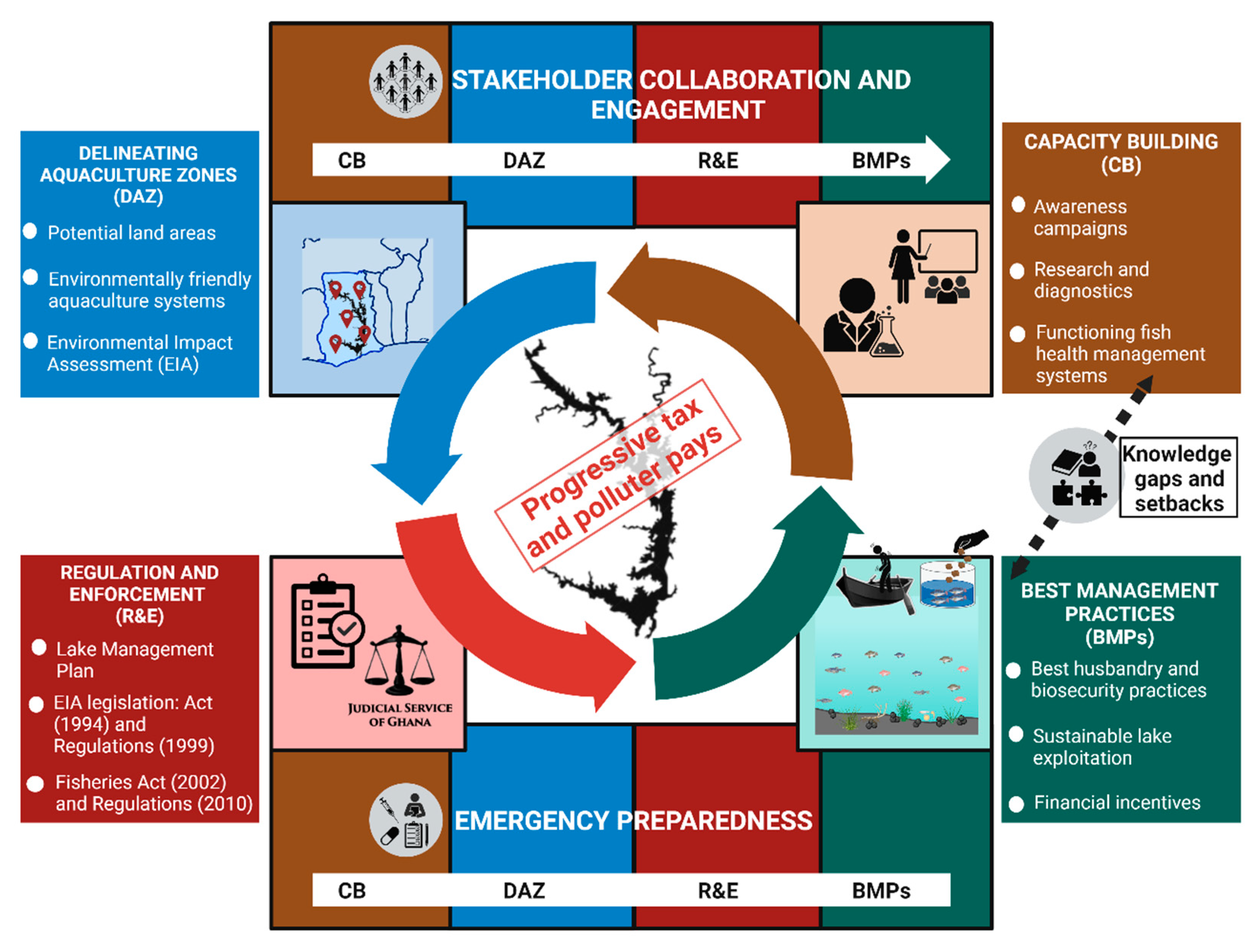
Individual and institutional capacity building are crucial for facilitating the shift from Lake Volta cage aquaculture to land-based production (Figure 4). The Water Resources Commission (WRC) in Ghana has been at the forefront of raising awareness since 2004, and this initiative extends beyond the aquaculture sector. Ghanaian regulatory bodies, such as the Fisheries Commission, Environmental Protection Agency (EPA), and Volta River Authority (VRA), have also instituted educational awareness campaigns through workshops and seminars for fish farmers and other key aquaculture stakeholders along the value chain. It is important to ensure that these capacity building initiatives focus not only on sharing knowledge about sustainable fish production and Lake management, but also on encouraging a shift towards eco-friendly aquaculture methods and practices [82,83]. Education can play pivotal roles in shaping people’s thoughts towards sustainable fish production. However, the aquaculture sector requires a balanced triad of academia, private, and public sector institutions, supported by strong collaborations and reformed policies that promote practical-oriented education. According to Zornu et al. [84], there is limited collaboration and synergy among this triad in Ghana when addressing aquaculture sustainability issues. Establishing strong partnerships among the various sectors could reveal industry needs and identify appropriate interventions. The government can then allocate resources effectively and task educational institutions with developing the competencies that the industry urgently needs.
Education should extend beyond formal settings, because the media can play a crucial role in disseminating information about the drawbacks of open-water cage farming. Media awareness programs have the potential to broaden citizens’ understanding of the ecological, social, economic, and physical impacts of uncontrolled cage aquaculture developments on the Lake. Additionally, research institutions must be better positioned to address industry issues through informed research and the dissemination of science-based interventions (Figure 4). As farmers become informed through research findings, they can better understand the broader impacts of their actions on the Lake ecosystem. This understanding can encourage responsible fish farming practices and the exploration of alternative aquaculture methods. Moreover, the government must invest in functioning fish health diagnostic laboratories and national reference laboratories as a foundation for establishing effective fish health management (Figure 4). Such investments can help build a robust framework for active and passive surveillance for aquaculture and environmental health management.
3.2. Delineating Aquaculture Zones (DAZ)
Mapping aquaculture areas in Ghana is currently limited to delineating suitable locations within aquatic ecosystems. This is evident in the 2012 Ghana National Aquaculture Development plan, highlighting the identification of high-priority aquaculture zones in Lake Volta [85]. Meanwhile, Lake Volta is already concentrated with floating cages, and designating additional aquaculture zones will only amplify the number of farms. To protect the Lake, it is necessary to explore lands suitable for aquaculture to facilitate the shift from cage aquaculture to land-based production (Figure 4). This will guide the integrated planning and management strategies of inland aquaculture to protect sensitive habitats, preserve biodiversity and reduce environmental impacts. Zoning disease-free and infected inland areas can facilitate effective surveillance monitoring, unlike the high-risk open waters of Lake Volta. The fish farm demography in Ghana is high fragmented, predominantly among small operators. Zoning can cluster small-scale farms into specific zones [86] for better regulation and extension services.
Additionally, delineating suitable inland aquaculture areas can guide the identification of closed-containment systems that create a controlled interphase between farmed fish and the environment. Such systems can be considered as eco- friendly alternative systems considering the minimal environmental impacts (Figure 4). Nevertheless, cage aquaculture which has higher environmental footprint is most preferred in Ghana due to higher production yields. In contrast, closed-containment units like earthen ponds are the most adopted systems in top aquaculture producing countries, namely Egypt, China, and Bangladesh [87,88]. Using ponds for aquaculture is constrained by factors such as land suitability and availability, water supply, dissolved oxygen availability, dependency on rainfall and nutrient run-off into nearby water bodies [89,90]. Nevertheless, ponds enable maximum control of waste by trapping and processing it within the system before discharge [91]. The trapping of untreated waste in ponds can lead to contamination of the aquifers that recharge these ponds. Contamination of aquifers can be mitigated by reducing chemical use in pond production and incorporating integrated agriculture-aquaculture to minimize waste, and maximize resource utilization, thereby enhancing overall productivity [91]. Other closed aquaculture systems such as Recirculating Aquaculture Systems (RAS), tank aquaculture, and raceway systems do not have direct interactions with aquatic ecosystems. RAS for example reduces water exchange through treatment methods like biofilters and mechanical filtration. However, RAS requires technical skills, high capital investment, and efficient energy use, making it challenging for smallholder farmers to adopt. With proper waste management systems, tanks and raceways could be more easily be adopted by many farmers, as they are independent and reduce reliance on waterbodies. Tanks and raceways also reduce water usage compared to traditional open aquaculture systems. Therefore, it is imperative to promote and invest in alternative aquaculture systems that are less ecologically disruptive and offer high production capacity.
The United Nations Environmental Programme advocates for Environmental Impact Assessments (EIAs) as a crucial tool for identifying the environmental, social, and economic impacts of a project. Environmental Impact Assessment (EIA) allows for the implementation of measures to mitigate adverse effects. After zoning aquaculture land areas and identifying environmentally friendly aquaculture systems, an EIA should be conducted, along with routine environmental monitoring (Figure 4). A comprehensive environmental assessment encompassing social, physical, chemical, and other consequential factors would help safeguard overall environmental health. To ensure farmers adhere to established standards for maintaining a healthy environment, aquaculture regulatory authorities should regularly monitor fish farm operations. The EPA has established guidelines and regulations related to EIAs for aquaculture projects and sound environmental stewardship. The EPA Act [92] and Regulations [93] legally empower the EPA to ensure an operational EIA system. It is crucial that the EPA’s mandates are diligently enforced on a routine basis to ensure compliance. Enforcing water quality standards is a key example of routine monitoring in aquaculture operations. Land-based establishments that pump water from waterbodies must undergo routine monitoring to enforce water quality standards. It is incumbent upon the VRA, as part of the regulatory bodies to implement these enforcements, especially for farms that continue operations on the Lake.
3.3. Regulation and Enforcement (R&E)
The majority of operational fish farms are neither registered nor compliant with the regulations established by Ghana’s FC, EPA, WRC, District Assembly, and the VRA for farmers operating on the Lake. Strict implementation of these regulations is vital for effectively managing cage farming on the Lake and inland aquaculture farms. This includes setting limits on the number of cages allowed on the Lake based on carrying capacity estimates. The VRA regulations provide a framework for monitoring and guiding aquaculture developments on Lake Volta. This framework is part of the comprehensive VRA Lake Management Plan, which aims to ensure the sustainable exploitation of Lake Volta [66]. Enforcing the Lake Management Plan, EIA Act and Regulations [92,93], as well as the Fisheries Act [94] and Regulations [95], can help secure the overall health and ecological balance of the Lake (Figure 4). The FC have imposed a ban on the importation of unapproved foreign fish strains through Acts and Regulations. Ports and harbour authorities must establish checkpoints to ensure that only approved species with well-documented health status are imported for research and commercial aquaculture. This will help preserve local fish diversity while reducing the risk of introducing exotic fish diseases and pathogens into the industry.
3.4. Adopting Best Management Practices (BMPs)
In addition to complying with legislative requirements, fish farmers must adopt Best Management Practices (BMPs) and ensure biosecurity compliance (Figure 4). The establishment and implementation of BMPs can promote optimal husbandry practices and bolster biosecurity measures, thereby minimizing the environmental impacts of cage farming on the lake and preventing fish diseases. Effectively implementing BMPs and biosecurity practices across all production systems serves as a preventative measure to reduce reliance on therapeutics. Consequently, reducing the use of synthetic chemicals can significantly preserve the Lake’s health, minimize antimicrobial resistance, and limit the environmental footprint of aquaculture on the environment and human health. Properly resourcing and equipping extension officers will enable them to offer continuous guidance to individual farmers and corporate entities on BMPs and biosecurity measures. Furthermore, stakeholders such as fishermen, riparian households, agro farms, and industries must act responsibly in their use of the Lake to ensure its long-term sustainability.
For fish farmers, providing financial incentives such as subsidies and tax credits for adopting eco-friendly practices can be an effective strategy to promote BMPs and reduce environmental impacts. Farming practices that avoid environmental degradation enhance the social acceptability of aquaculture and support international fish trade [85]. Consequently, the industry can achieve a balance between economic profitability and environmental stewardship by pursuing eco-friendly approaches. However, building the necessary industry competence, delineating aquaculture zones, ensuring law enforcement, and implementing BMPs may be insufficient to prevent setbacks in the sector. No food production sector is immune to setbacks and unexpected disasters such as flooding, pests, disease outbreaks, and massive mortalities. It is important to prioritize routine individual and infrastructural capacity building, through formal and informal education, supported by research and diagnostics facilities. This approach will help the industry in proactively bridging knowledge gaps to address emerging issues (Figure 4) and in better anticipating unexpected natural and non-natural events.
3.5. Emergency Preparedness and Stakeholder Collaboration & Engagement
Unexpected natural and non-natural events are best tackled through emergency preparedness. This is particularly important for Lake Volta cage aquaculture, which continues to face challenges such as exotic diseases and recurrent flooding events. Aquaculture regulatory authorities must be proactive in formulating contingency plans based on routine practice and familiarity to protect the industry, safeguard farmer livelihoods and preserve the Lake fish stocks, which are essential for food security. The FC and the Veterinary Services Directorate must collaborate to implement surveillance systems for aquaculture and fish health monitoring to facilitate rapid responses to diseases. Stakeholder partnerships are essential, as they enable competent aquaculture authorities to maximize the use of limited resources in fulfilling their mandates. By initiating dialogues among key aquaculture authorities, we can guide aquaculture development and its integration into the wider ecosystem without threatening vital ecosystem functions and services. Capacity building, mapping aquaculture zones, regulation and enforcement, and implementing BMPs can progress through intimate sector collaborations (Figure 4). Similarly, emergency preparedness can benefit from joint planning to ensure robust and swiftly executed plans during adversities.
3.6. Progressive Tax System and Polluter Pays Principle
Implementing Progressive Tax System (PTS) and Polluter Pays Principle (PPP) is recommended to encourage sustainable fish farming and BMPs on the Lake. The PTS involves applying higher tax rates to farmers who continue cage farming on the Lake. Additionally, introducing the PPP [96,97] ensures that farmers who persist with Lake aquaculture are fined for environment damages caused by inevitable waste discharges from floating cages. The PPP can be implemented gradually over time to reduce the number of cages on the Lake. First, it is important to identify the actual polluters, namely cage farmers operating on small, medium, and large scales. The fines for waste generation will then be determined based on fish biomass produced in the cages. This approach will compel farmers to shift to production systems offering maximum control over waste management, treatment, and disposal. In developing countries, implementing the PPP can be challenging, as small and medium sized farmers may lack the financial resources to bear the costs [96,98]. By introducing PTS and PPP, farmers can be encouraged to explore eco-friendly alternatives that are not solely reliant on water resources.
4. Government’s Role in Transitioning from Open-Water to Land-Based Aquaculture
Good aquaculture governance creates an enabling environment for effective productivity and long-term industry growth [99]. Limited technical know-how among Ghanaian fish farmers is often reported as inadequate knowledge of fish husbandry practices [61,100,101]. It is insufficient for farmers to have requisite aquaculture knowledge without awareness of environmental sustainability. The government must identity and provide the necessary human competence and infrastructure for the industry [99]. This can be a collaboration with the Aquaculture Sectorial Chamber [85] or National Aquaculture Committee in identifying the needed human competence and infrastructure for a sustainable industry. The government can support infrastructure such as laboratories while resourcing education and research institutions to enhance industry competence and diagnostic services. In addition, the government should use media as an educational tool to amplify knowledge among aquaculture stakeholders. This knowledge should encompass technical feasibility in fish reproductive biology, culture systems, husbandry and management, legislation and enforcement. Gaining understanding of aquaculture environmental and social interactions is imperative for spatial planning and creating inland aquaculture zones [102]. Nonetheless, it is incumbent on government to allocate human resources such as aquaculture and veterinary officers, and develop essential infrastructure like electricity and road networks to enhance transport and access to inputs and outputs within and beyond zoned areas.
Fish farm registration in Ghana is burdened by complex bureaucratic protocols across multiple institutions, resulting in weak enforcement. The current FfD Ghana project in collaboration with the Fisheries Commission is addressing this concern through a proposed one-stop-shop regime. The government must then monitor and regulate registered farms to ensure compliance with the Aquaculture Code of Conduct and to ensure operations within environmental and ethical boundaries. The Canadian government is committed to considering only marine or land-based closed-containment systems for aquaculture licenses in Coastal British Colombia [80]. Adopting such closed-containment systems in Ghana can be challenging. Therefore, government through the competent Ministries can introduce PTS and PPP policies in both land and water-based aquaculture. However, due to higher environmental footprints of water-based aquaculture and large-scale operations [103,104], penalties for environmental pollution will be significant. This can include penalties for non-compliance measured in penalty units as adopted in Ghana’s marine captures fisheries [94]. Adhering to regulatory standards fulfils BMPs or Aquaculture Code of Conduct, as farmers are responsible for implementing specific measures to minimize negative environmental impacts. By fully enforcing all industry regulations, the government can prevent fish farmers from prioritizing short-term gains over environmental and societal well-being.
In addition to the interagency collaborations evolving through the one-stop-shop permitting system, government’s involvement in partnership between farmers, academic, and research institutions cannot be overemphasized [84]. Government should intentionally fund academic and research institutions in this cross-sectoral partnership to generate critical knowledge for contingency planning and sustainable aquaculture development. The sector Ministry can solicit innovative proposals through competitive bidding, focussing on scientific and technological advancements that drive aquaculture growth. Research should be based on industry needs and provide innovative production systems and resilient seeds. It should also identify suitability of inland areas based on environmental data, water availability and quality to develop inland-specific criteria for aquaculture zoning and planning. Government must prioritize resourcing aquaculture development and ensure fiscal constraints do not hinder human competence and infrastructural growth in the industry.
5. Conclusion
This opinion-based paper highlighted the possible threats associated with the expansion of Lake Volta cage aquaculture, including emerging issues related to national food security and water preservation. To mitigate these threats and preserve the Lake and its biodiversity, several comprehensive strategies have been recommended. These strategies include capacity building, identifying high-priority inland aquaculture zones, conducting stringent environmental impact assessments, enforcing aquaculture and Lake Management Regulations, and implementing BMPs and biosecurity measures. Collaborative efforts among academic, private, and public sector aquaculture institutions are crucial for advancing these strategies. Emergency preparedness is also vital for anticipating both expected and unexpected disasters, which can be attainable through joint stakeholder consultations. Providing financial support to fish farmers can serve as an incentive to the adoption of eco-friendly aquaculture practices. Conversely, continuing cage aquaculture on the Lake could lead to increased taxation and costs associated with pollution. Given that the Lake is a hotspot for certain fish pathogens, implementing these strategies can reduce disease risks and subsequently decrease the use of antimicrobials.
Author Contributions
P.K.B and K.F.A.: Investigation, Formal analyses, Writing—original draft, review and editing. J.Z.: Investigation, Formal analyses, Visualization, Writing—original draft, review and editing. M.A., D.N.B., K.I., and A.A.: Investigation, Formal analyses, Writing—review and editing. S.E.A.: Supervision, Investigation, Visualization, Validation, Writing—review and editing. S.A.: Supervision, Investigation, Validation, Writing—review and editing. K.S.C.: Conceptualization, Funding acquisition, Project administration, Validation, Writing—review and editing. All authors have read and agreed to the published version of the manuscript.
Funding
This work was supported by the Norwegian Agency for Development Cooperation (NORAD) under Grant (RAF-19/0051) for the Aquatic Animal Health Africa project, and Grant (GHA 17/0005) for the Fish for Development project in Ghana.
Data Availability Statement
Data sharing not applicable.
Acknowledgments
This study was conducted as part of the Aquatic Animal Health Africa (Grant No. RAF-19/0051) and Ghana Fish for Development (Grant No. GHA 17/0005) projects, both funded by the Norwegian Agency for Development Cooperation (NORAD).
Conflicts of interest: The authors declare no conflicts of interests, and the sponsors did not influence the perspectives shared in this article.
References
- Nadarajah, S.; Flaaten, O. Global aquaculture growth and institutional quality. Marine Policy. 2017, 84, 142–151. [Google Scholar] [CrossRef]
- FAO. Towards Blue Transformation. The State of World Fisheries and Aquaculture (SOFIA). Rome: Food and Agriculture Organization, 2022. p. 266. [CrossRef]
- Araujo, G.S.; da Silva, J.W.A.; Cotas, J.; Pereira, L. Fish Farming Techniques: Current Situation and Trends. Journal of Marine Science and Engineering. 2022, 10, 1598. [Google Scholar] [CrossRef]
- Etuk, E.A.; Ogban, G.O.; Idiong, C.I. A comparative economic analysis of aquaculture production systems in Southern Agricultural Zone of Cross River State, Nigeria. African Journal of Agricultural Research. 2021, 17, 104–111. [Google Scholar] [CrossRef]
- Losordo, T.M.; Ray, L.E.; DeLong, D.P. Flow-through and recirculating systems. Developments in Aquaculture and Fisheries Science. 2004, 545–560. [Google Scholar] [CrossRef]
- Swann, L. A Basic Overview of Aquaculture History. Technical Bulletin Series. 1992, Iowa State University, Ames, Iowa.
- Kumar, V.; Karnatak, G. Engineering consideration for cage aquaculture. IOSR Journal of Engineering (IOSRJEN). 2014. [CrossRef]
- Mwebaza-Ndawula, L.; Vincent, K.; Magezi, G.; Naluwayiro, J.; Gandhi-Pabire, W.; Henry, O. Effects of cage fish culture on water quality and selected biological communities in northern Lake Victoria, Uganda. Uganda Journal of Agricultural Sciences. 2013, 14, 61–75. [Google Scholar]
- Huguenin, J.E. The design, operations and economics of cage culture systems. Aquacultural Engineering. 1997, 16, 167–203. [Google Scholar] [CrossRef]
- Osei, L.K.; Asmah, R.; Aikins, S.; Karikari, A.Y. Effects of Fish Cage Culture on Water and Sediment Quality in the Gorge Area of Lake Volta in Ghana: A Case Study of Lee Fish Cage Farm. Ghana J. Sci. 2019, 60, 1–16. [Google Scholar] [CrossRef]
- Otu, M.K.; Bureau, D.P.; Podemski, C.L. Freshwater Cage Aquaculture: Ecosystems Impacts from Dissolved and Particulate Waste Phosphorus. Fisheries and Oceans Canada. Doc. 2017, 2017/059. v+ 55 p. Available online: https://waves-vagues.dfo-mpo.gc.ca/library-bibliotheque/40643761.pdf (accessed on 30 April 2024).
- Price, C.; Black, K.D.; Hargrave, B.T.; Morris Jr., J. A. Marine cage culture and the environment: effects on water quality and primary production. Aquaculture Environment Interactions. 2015, 6, 151–174. [Google Scholar] [CrossRef]
- Diana, J.S. Aquaculture Production and Biodiversity Conservation. BioScience. 2009, 59, 27–38. [Google Scholar] [CrossRef]
- Watts, J.; Conklin, D.E. A review of the literature on the environmental impacts of marine fish cage culture. UNICIENCIA. 1998, Pp. 143-155.
- Glover, K.A.; Pertoldi, C.; Besnier, F.; Wennevik, V.; Kent, M.; Skaala, Ø. Atlantic salmon populations invaded by farmed escapees: quantifying genetic introgression with a Bayesian approach and SNPs. BMC Genetics. 2013, 14, 1–19. [Google Scholar] [CrossRef] [PubMed]
- Naylor, R.L.; Williams, S.L.; Strong, D.R. Aquaculture- A Gateway for exotic species. Science. 2001, 294, 1655–1656. [Google Scholar] [CrossRef] [PubMed]
- Stokesbury, M.J.W.; Lacroix, G.L.; Price, E.L.; Knox, D.; Dadswell, M.J. Identification of scale analysis of farmed Atlantic salmon juveniles in southwestern New Brunswick rivers. Transactions of the American Fisheries Society. 2001, 130, 815–822. [Google Scholar] [CrossRef]
- Silva, S.S.D.; Nguyen, T.T.T.; Turchini, G.M.; Amarasinghe, U.S.; Abery, N.W. Alien Species in Aquaculture and Biodiversity: A Paradox in Food Production. AMBIO: A Journal of the Human Environment. 2009, 38, 24–28. [Google Scholar] [CrossRef]
- Goldburg, R.; Naylor, R. Future seascapes, fishing, and fish farming. Frontiers in Ecology and Environment. 2005, 31, 21–28. [Google Scholar] [CrossRef]
- Hulata, G. Genetic manipulations in aquaculture: a review of stock improvement by classical and modern technologies. Genetica. 2001, 111, 155–73. [Google Scholar] [CrossRef]
- Hixon, M.A.; Green, S.J.; Albins, M.A.; Akins, J.L.; Morris, J.A. Jr. Lionfish: a major marine invasion. Mar Ecol Prog Ser. 2016, 558, 161–165. [Google Scholar] [CrossRef]
- Abd Hamid, M.; Md Sah, A.S.R.; Idris, I.; Mohd Nor, S.A.; Mansor, M. Impacts of Tilapia Aquaculture on Native Fish Diversity at an Ecologically Important Reservoir. PeerJ. 2023, 11, e15986. [Google Scholar] [CrossRef]
- Kour, R.; Bhatia, S.; Sharma, K.K. Nile Tilapia (Oreochromis niloticus) as a successful biological invader in Jammu (J&K) and its impacts on native ecosystem. International Journal of Interdisciplinary and Multidisciplinary Studies (IJIMS). 2014, 1, 1–5. [Google Scholar]
- Canonico, G.C.; Arthington, A.; McCrary, J.K.; Thieme, M.L. The effects of introduced tilapias on native biodiversity. Aquatic Conservation: Marine and Freshwater Ecosystems. 2005, 15, 463–483. [Google Scholar] [CrossRef]
- Krkosek, M.; Lewis, M.A.; Morton, A.; Frazer, L.N.; Volpe, J.P. Epizootics of wild fish induced by farm fish. Proceedings of the National Academy of Sciences. 2006, 133, 15506–15510. [Google Scholar] [CrossRef] [PubMed]
- Krkosek, M.; Lewis, M.A.; Volpe, J.P.; Morton, A. Fish farms and sea lice infestations of wild juvenile salmon in Broughton Archipelago -a rebuttal to Brooks (2005). Fisheries Science. 14, 1–11. [CrossRef]
- Chen, J.; Sun, R.; Pan, C.; Sun, Y.; Mai, B.; Li, Q.X. Antibiotics and food safety in aquaculture. J. Agric. Food Chem. 2020, 68, 11908–11919. [Google Scholar] [CrossRef] [PubMed]
- Watts, J.E.M.; Schreier, H.J.; Lanska, L.; Hale, M.S. The Rising Tide of Antimicrobial Resistance in Aquaculture: Sources, Sinks and Solutions. Marine drugs. 2017, 15, 158. [Google Scholar] [CrossRef]
- Erkinharju, T.; Dalmo, R.A.; Hansen, M.; Seternes, T. Cleaner fish in aquaculture: review on diseases and vaccination. Reviews in Aquaculture. 2021, 13, 189–237. [Google Scholar] [CrossRef]
- Haugland, G.T.; Olsen, A.B.; Ronneseth, A.; Andersen, L. Lumpfish (Cyclopterus lumpus L.) develop amoebic gill disease (AGD) after experimental challenge with Paramoeba perurans and can transfer amoebae to Atlantic salmon (Salmo salar L.). Aquaculture 2017, 478, 48–55. [Google Scholar] [CrossRef]
- VKM; Rimstad, E.; Basic, D.; Gulla, S.; Hjeltnes, B.; Mortensen. S. Risk assessment of fish health associated with the use of cleaner fish in aquaculture. Opinion of the Panel on Animal Health and Welfare of the Norwegian Scientific Committee for Food and Environment. VKM report 2017, 2017:32, ISBN: 978-82-8259-289-5, ISSN: 2535-4019. Norwegian Scientific Committee for Food and Environment (VKM), Oslo, Norway.
- Newton, R.W.; Maiolo, S.; Malcorps, W.; Little, D.C. Life Cycle Inventories of marine ingredients. Aquaculture. 2023, 565. [Google Scholar] [CrossRef]
- Einarsson, M.I.; Jokumsen, A.; Bæk, A.M.; Jacobsen, C.; Pedersen, S.A.; Samuelsen, T.A.; Pálsson, J.; Eliasen, O.; Flesland, O. Nordic Centre of Excellence Network in Fishmeal and Fish oil. 2019, 1-124. [CrossRef]
- Naylor, R.L.; Goldburg, R.J.; Primavera, J.H.; Kautsky, N.; Beveridge, M.C.; Clay, J.; Folke, C.; Lubchenco, J.; Mooney, H.; Troell, M. Effect of aquaculture on world fish supplies. Nature. 2000, 405, 1017–1024. [Google Scholar] [CrossRef]
- IFFO. Key facts. IFFO—The Marine Ingredients Organization. 2024. (Accessed June 18, 2024) Available online: https://www.iffo.com/key-facts.
- IFFO. By-product. In: Marine Ingredients Organization. 2021. (Accessed June 18, 2024) Available online: www.iffo.com/product.
- EUMOFA—European Market Observatory for Fisheries and Aquaculture Products. Fishmeal and fish oil—Production and Trade Flows in the EU, 2021; ISBN 978-92-76-28913-5. [CrossRef]
- Kok, B.; Malcorps, W.; Tlusty, M.F.; Eltholth, M.M.; Auchterlonie, N.A.; Little, D.C.; Harmsen, R.; Newton, R.W.; Davies, S.J. Fish as feed: Using economic allocation to quantify the Fish In: Fish Out ratio of major fed aquaculture species. Aquaculture. 2020, 528. [Google Scholar] [CrossRef]
- Olsen, Y. Resources for fish feed in future mariculture. Aquaculture Environment Interactions. 2011, 1, 187–200. [Google Scholar] [CrossRef]
- Chuenpagdee, R.; Degnbol, P.; Bavinck, M.; Jentoft, S.; Johnson, D.; Pullin, R.; Williams, S. Challenge and concerns in capture fisheries and aquaculture. In: Fish for life. Interactive governance for fisheries. MARE Publications Series, Amsterdam. [CrossRef]
- Garno, Y.S.; Riyadi, A.; Iskandar, I.; Kendarto, D.R.; Sachoemar, S.I.; Susanto, J.P.; Widodo, L.; Suwedi, N.; Prayogo, T.; Dewa, R.P.; et al. The Impact of Aquaculture in Floating Net Cages Exceeding the Carrying Capacity on Water Quality and Organic Matter Distribution: the Case of Batur Lake, Indonesia. Polish Journal of Environmental Studies. 2024, 33, 3651–3663. [Google Scholar] [CrossRef]
- Price, C.S; Morris, J.A.; Jr. Marine Cage Culture and the Environment: Twenty-first Century Science Informing a Sustainable Industry. NOAA Technical Memorandum NOS NCCOS. 2013, 164, 158. [Google Scholar]
- Doglioli, A.M.; Magaldi, M.G.; Vezzulli, L.; Tucci, S. Development of a numerical model to study the dispersion of wastes coming from a marine fish farm in the Ligurian Sea (Western Mediterranean). Aquaculture. 2004, 231, 215–235. [Google Scholar] [CrossRef]
- Gorlach-Lira, K.; Pacheco, C.; Carvalho, L.C.T.; Melo, J.H.N.; Crispim, M.C. The influence of fish culture in floating net cages on microbial indicators of water quality. Brazilian Journal of Biology. 2013, 73, 457–463. [Google Scholar] [CrossRef]
- Bissett, A.; Burke, C.; Cook, P.L.M.; Bowman, J.P. Bacterial community shifts in organically perturbed sediments. Environmental Microbiology 2007, 9, 46–60. [Google Scholar] [CrossRef]
- Felsing, M.; Glencross, B.; Telfer, T. Preliminary study on the effects of exclusion of wild fauna from aquaculture cages in a shallow marine environment. Aquaculture. 2005, 243, 159–174. [Google Scholar] [CrossRef]
- Holmer, M. Environmental issues of fish farming in offshore waters: perspectives, concerns and research needs. Aquaculture Environment Interactions. 2010, 1, 57–70. [Google Scholar] [CrossRef]
- Klaoudatos, S.D.; Klaoudatos, D.S.; Smith, J.; Bogdanos, K.; Papageorgiou, E. Assessment of site specific benthic impact of floating cage farming in the eastern Hios Island, Eastern Aegean Sea, Greece. Journal of Experimental Marine Biology and Ecology. 2006, 338, 96–111. [Google Scholar] [CrossRef]
- Soto, D.; Norambuena, F. Evaluation of salmon farming effects on marine systems in the inner seas of southern Chile: A large-scale mensurative experiment. Journal of Applied Ichthyology, 2004, 20, 493–501. [Google Scholar] [CrossRef]
- AL-Keriawy, H.H.A. Impact of Fish Farming in floating cages on zooplankton Community in Euphrates River, Iraq. IOP Conference Series: Earth and Environmental Science. 2021, 722. [CrossRef]
- Dias, J.D.; Takahashi, E.M.; Santana, N.F.; Bonecker, C.C. Impact of fish cage-culture on the community structure of zooplankton in a tropical reservoir. Iheringia. Série Zoologia. 2011, 101, 75–84. [Google Scholar] [CrossRef]
- Trushenski, J.; Flagg, T.; Kohler, C. Use of hatchery fish for conservation, restoration, and enhancement of fisheries. 2010, 261–293. In W. Hubert and M. Quist, editors. Inland fisheries management in North America, 3rd edition. American Fisheries Society, 8 February 5506. [Google Scholar]
- FAO. Contributing to food security and nutrition for all. The State of World Fisheries and Aquaculture (SOFIA). Rome: Food and Agriculture Organization, 2016, pp. 200. ISBN: 9789251093085.
- Machias, A.; Karakassis, I.; Labropoulou, M.; Somarakis, S.; Papadopoulou, K.N.; Papaconstantinou, C. Changes in wild fish assemblages after the establishment of a fish farming zone in an oligotrophic marine eco system. Estuarine, Coastal and Shelf Science. 2004, 60, 771–779. [Google Scholar] [CrossRef]
- Romakkaniemi, A.; Pera, I.; Karlsson, L.; Jutila, E.; Carlsson, V.; Pakarinen, T. Development of wild Atlantic salmon stocks in the rivers of the northern Baltic sea in response to management measures. ICES Journal of Marine Sciences. 2003, 60, 329–342. [Google Scholar] [CrossRef]
- Machias, A.; Karakassis, I.; Giannoulaki, M.; Papadopoulou, K.N.; Smith, C.J.; Somarakis, S. Response of demersal fish communities to the presence of fish farms. Marine Ecology Progress Series. 2005, 288, 241–250. [Google Scholar] [CrossRef]
- Asmah, R.; Karikari, A.Y.; Abban, E.K.; Ofori, J.K; Awity, L.K. Cage Fish Farming in the Volta Lake and the Lower Volta: Practices and Potential Impacts on Water Quality. Ghana J. Sci. 2014, 54, 33–47. [Google Scholar]
- Kassam, L. Aquaculture and food security, poverty alleviation and nutrition in Ghana: Case study prepared for the Aquaculture for Food Security, Poverty Alleviation and Nutrition project. WorldFish. 2014. [CrossRef]
- Frimpong, S.K; Adwani, A. The Challenges and Prospects of Fish Farming in Ghana: A Project Management Perspective. International Journal of ICT and Management. 2015, 3, 29–34. [Google Scholar]
- Asmah, R.; Falconer, L.; Telfer, T.C.; Karikari, A.Y.; Al Wahaibi, M.; Xia, I.F.; Handisyde, N.; Quansah, K.E.; Amoah, D.K.; Alshihhi, J.; Ross, L.G. Waterbody Scale Assessment Using Spatial Models to Identify Suitable Locations for Cage Aquaculture in Large Lake Systems: A Case Study in Volta Lake, Ghana. Aquaculture Research 2021, 52, 3854–3870. [Google Scholar] [CrossRef]
- Rurangwa, E.; Agyakwah, S. K.; Boon, H.; Bolman, B.C. Development of Aquaculture in Ghana: Analysis of the Fish Value Chain and Potential Business Cases; IMARES Wageningen UR: IJmuiden, 2015.
- Fisheries Commission. National fisheries and aquaculture policy. 2021. In: Zornu, J.; Oyih, M.; Binde, M.; Viglo, J.; Agbekpornu, H.; Nkansa, M.; Tavornpanich, S.; Norheim, K.; Brun, E.; Cudjoe, K.S. Stakeholder perspectives on the 2023 Ghana national aquaculture development plan: an integration within the ecosystem approach framework. Aquaculture, Fish and Fisheries. 2023, 3, 459–471. [Google Scholar] [CrossRef]
- MOFAD. Annual report—2022, Ministry of Fisheries and Aquaculture Development. 2023.
- World Bank. Aquaculture production in Ghana from 2008 to 2021 (in 1,000 metric tons). 2024. https://www.statista.com/statistics/1118781/aquaculture-production-in-ghana/ (Accessed March 10, 2024).
- MWRWH. National Water Policy. The Ministry of Water Resources, Works and Housing. 2007.
- Zornu, J.; Tavornpanich, S.; Brun, E.; van Zwieten, P.A.M.; van de Leemput, I.; Appenteng, P.; Anchirinah, J.; Cudjoe, K.S. Understanding tilapia mortalities and fish health management in Lake Volta: a systematic approach. Front. Sustain. Food Syst. 2023, 7, 1249898. [Google Scholar] [CrossRef]
- Ramírez-Paredes, J.G.; Paley, R.K.; Hunt, W.; Feist, S.W.; Stone, D.M.; Field, T.R.; Haydon, D.J.; Ziddah, P.A.; Nkansa, M.; Guilder, J.; et al. First detection of Infectious Spleen and Kidney Necrosis Virus (ISKNV) associated with massive mortalities in farmed tilapia in Africa. Transbound. Emerg. Dis. 2021, 68, 1550–1563. [Google Scholar] [CrossRef] [PubMed]
- Anane-Taabeah, G.; Frimpong, E.A.; Hallerman, E. Aquaculture-mediated invasion of the genetically improved farmed Tilapia (GIFT) into the lower Volta Basin of Ghana. Diversity. 2019, 11, 188. [Google Scholar] [CrossRef]
- Akpojotor, E. Development of Carrying Capacity Estimates for Zonation of Cage Aquaculture in Lake Volta, Ghana. 2015. [CrossRef]
- Akrasi, S.A. The assessment of suspended sediment inputs to Volta Lake. Lakes & Reservoirs: Research & Management. 2005, 10, 179–186. [Google Scholar] [CrossRef]
- Karikari, A.Y.; Asmah, R.; Anku, W.W.; Amisah, S.; Trevor, T.; Lindsay, R. Assessment of cage fish farm impacts on physico-chemical parameters of the Volta Lake in Ghana. Journal of Fisheries and Coastal Management. 2021, 3, 22–35. [Google Scholar] [CrossRef]
- Abban, K.E.; Agbenyega, O.; Asmah, R.; Afele, J.T.; Ofori, L.A.; Nimo, E. Assessment of social acceptance of caged fish culture for improvement and sustainability: A study on Volta Lake, Ghana. International Journal of Multidisciplinary Research and Growth Evaluation. 2022. [CrossRef]
- Duodu, S.; Ayiku, A.N.A.; Adelani, A.A.; Daah, D.A.; Amoako, E.K.; Jansen, M.D.; Cudjoe, K.S. Serotype distribution, virulence and antibiotic resistance of Streptococcus agalactiae isolated from cultured tilapia Oreochromis niloticus in Lake Volta, Ghana. Diseases of Aquatic Organisms. 2024, 158, 27–36. [Google Scholar] [CrossRef]
- Abarike, E.D.; Atuna, R.A.; Agyekum, S.; Akongyuure, D.N.; Alhassan, E.H. Isolation and Characterization of Aeromonas Jandaei from Nile Tilapia in Lake Volta, Ghana, and Its Response to Antibiotics and Herbal Extracts. Journal of aquatic animal health. 2022, 34, 140–148. [Google Scholar] [CrossRef]
- Appleyard, S.A.; Mather, P.B. Genetic characterization of cultured tilapia in Fiji using allozymes and random amplified polymorphic DNA. Asian Fisheries Science. 2002, 15. [Google Scholar] [CrossRef]
- Taabu-Munyaho, A.; Marshall, B.E.; Tomasson, T.; Marteinsdottir, G. Nile perch and the transformation of Lake Victoria. African Journal of Aquatic Science. 2016, 41, 127–142. [Google Scholar] [CrossRef]
- Kitchell, J.F. , Schindler, D.E., Ogutu-Ohwayo, R., Reinthal, P.N. The Nile Perch in Lake Victoria: interactions between predation and fisheries. Ecological Applications. 1997, 7, 653–664. [Google Scholar] [CrossRef]
- FAO. Yearbook of Fisheries Statistics. Rome, Italy. 2024. [CrossRef]
- Rao, D.; Perrino, E.S.; Barreras, E. The sustainability of tilapia fish farming in Ghana. Blue Kitabu Research Institute. 2012, 37–40. [Google Scholar]
- DFO. Responsible, realistic, and achievable: The Government of Canada announces transition from open-net pen salmon aquaculture in coastal British Columbia. Fisheries and Oceans Canada. 2024. Available online: https://www.canada.ca/en/fisheries-oceans/news/2024/06/responsible-realistic-and-achievable-the-government-of-canada-announces-transition-from-open-net-pen-salmon-aquaculture-in-coastal-british-columbia.html. (Accessed August 08, 2024).
- Garlock, T.; Asche, F.; Anderson, J.; Bjørndal, T.; Kumar, G.; Lorenzen, K.; Ropicki, A.; Smith, M. D.; Tveterås, R. A Global Blue Revolution: Aquaculture Growth across Regions, Species, and Countries. Reviews in Fisheries Science & Aquaculture. 2020, 28, 107–116. [Google Scholar] [CrossRef]
- Dabi, M.; Dzorvakpor, S.E.A. The Impact of Aquaculture on the Environment: A Ghanaian Perspective. The International Journal of Science & Technology. 2015, 3. Retrieved on February 20 2024. https://www.internationaljournalcorner.com/index.php/theijst/article/view/124516.
- Amoah, A.; Dorm-Adzobu, C. Application of contingent valuation method (CVM) in determining demand for improved rainwater in coastal savanna region of Ghana, West Africa. Journal of Economics and sustainable development. 2013, 4, 1–24. [Google Scholar]
- Zornu, J.; Tavornpanich, S.; Shimaa, A.E.; Addo, S.; Nyaga, P.; Dverdal, M.J.; Norheim, K.; Brun, E.; Cudjoe, K.S. Bridging knowledge gaps in fish health management through education, research, and biosecurity. Frontiers in Sustainable Food Systems. 2023, 7. [Google Scholar] [CrossRef]
- Zornu, J.; Oyih, M.; Binde, M.; Viglo, J.; Agbekpornu, H.; Nkansa, M.; Tavornpanich, S.; Norheim, K.; Brun, E.; Cudjoe, K.S. Stakeholder perspectives on the 2023 Ghana national aquaculture development plan: an integration within the ecosystem approach framework. Aquaculture, Fish and Fisheries. 2023, 3, 459–471. [Google Scholar] [CrossRef]
- Hishamunda, N.; Ridler, N.; Bueno, P.; Yap, W. Commercial aquaculture in Southeast Asia: some policy lessons. Food Policy. 2009, 34, 102–107. [Google Scholar] [CrossRef]
- Chironjib, S.S.C.; Puja, R. Aquaculture practices in Bangladesh: A synopsis on prospects, productivity, and problems. Journal of the World Aquaculture Society. 2024, 55, 4–25. [Google Scholar] [CrossRef]
- Rothuis, A.J., van Duijn, A.P., Roem, A.J., Ouwehand, A., van der Pijl, W., Rurangwa, E. Aquaculture business opportunities in Egypt. Wageningen UR. 2013. Available on: https://edepot.wur.nl/258663. (Accessed February 8, 2024).
- Li, X.; Zhang, Y.; Chen, Y. Environmental benefits of pond aquaculture: A review of nutrient management approaches. Aquaculture Research. 2019, 50, 691–705. [Google Scholar]
- Bosma, R.H.; Verdegem, M.C.J. Sustainable aquaculture in ponds: Principles, practices and limits. Livestock Science. 2011, 139, 58–68. [Google Scholar] [CrossRef]
- Hasimuna, O.; Maulu, S.; Nawanzi, K.; Lundu, B.; Mphande, J.; Phiri, C.; Kikamba, E.; Siankwilimba, E.; Siavwapa, S.; Chibesa, M. Integrated agriculture-aquaculture as an alternative to improving small-scale fish production in Zambia. Frontiers in Sustainable Food Systems. 2023, 7. [Google Scholar] [CrossRef]
- Environmental Impact Assessment (EIA). Legislation Act 490, legal backing for established EIA system to be implemented in Ghana. 1994. Available online: https://www.eia.nl/documenten/00000062.docx. (Accessed April 29, 2024).
- Environmental Assessment Regulations. LI. 1625, Environmental Assessment Regulations. 1999. Available online: https://faolex.fao.org/docs/pdf/gha78169.pdf. (Accessed April 29, 2024).
- Fisheries Act. Act 625, License for aquaculture and recreational fishing. Available online: 2002. Available online: https://faolex.fao.org/docs/pdf/gha34737.pdf. (Accessed April 29, 2024).
- Fisheries Regulations. LI. 1968, Fish seed production certificate and fish transfer permit. 2010. Available online: https://faolex.fao.org/docs/pdf/gha151991.pdf. (Accessed April 29, 2024).
- Abhishek, G.; Suresh, K.; Gurjar, S.C. Circular system of resource recovery and reverse logistics approach: key to zero waste and zero landfill. Advanced Organic Waste Management. 2022, 365–381. [Google Scholar] [CrossRef]
- OECD. Recommendation of the Council on the Implementation of the Polluter-Pays Principle, OECD/LEGAL/0132. 2022. Available on: https://legalinstruments.oecd.org/public/doc/11/11.en.pdf. (Accessed April 30, 2024).
- Luppi, B.; Parisi, F.; Rajagopalan, S. The rise and fall of the polluter-pays principle in developing countries. International Review of Law & Economics. 2012, 32, 135–144. [Google Scholar] [CrossRef]
- Hishamunda, N.; Ridler, N.; Martone, E. Policy and governance in aquaculture: lessons learned and way forward. FAO Fisheries and Aquaculture Technical Paper No. 577. Rome, FAO. 2014.
- Abarike, E.A. Review of Ghana’s Aquaculture Industry. Journal of Aquaculture Research and Development. 2018, 9, 545. [Google Scholar] [CrossRef]
- Anane-Taabeah, G.; Frimpong, E.A.; Amisah, S.; Agbo, N. Constraints and opportunities in cage aquaculture in Ghana. In: L. Liping and K. Fitzsimmons (Eds.), Better science, better fish, better life: Proceedings of the ninth international symposium on tilapia in aquaculture. 2011. pp. 182–190. April 22–24, Shanghai. AquaFish Collaborative Support Program.
- Aguilar-Manjarrez, J.; Soto, D.; Brummett, R.
- Kashindye, B.B.; Nsinda, P.; Kayanda, R.; Ngupula, G.W.; Mashafi, C.A.; Ezekiel, C.N. Environmental impacts of cage culture in Lake Victoria: the case of Shirati Bay-Sota, Tanzania. Springerplus. 2015, 4, 475. [Google Scholar] [CrossRef]
- Masser, M. What is cage culture? SRAC publication No. 160. 2008. https://www.ncrac.org/files/inline-files/SRAC0160.pdf.
Figure 1.
Map of the Volta Lake, situated in the eastern part of Ghana. The Lake generally flows southward through Ghana into the Volta estuary, where it empties into the Gulf of Guinea.
Figure 1.
Map of the Volta Lake, situated in the eastern part of Ghana. The Lake generally flows southward through Ghana into the Volta estuary, where it empties into the Gulf of Guinea.
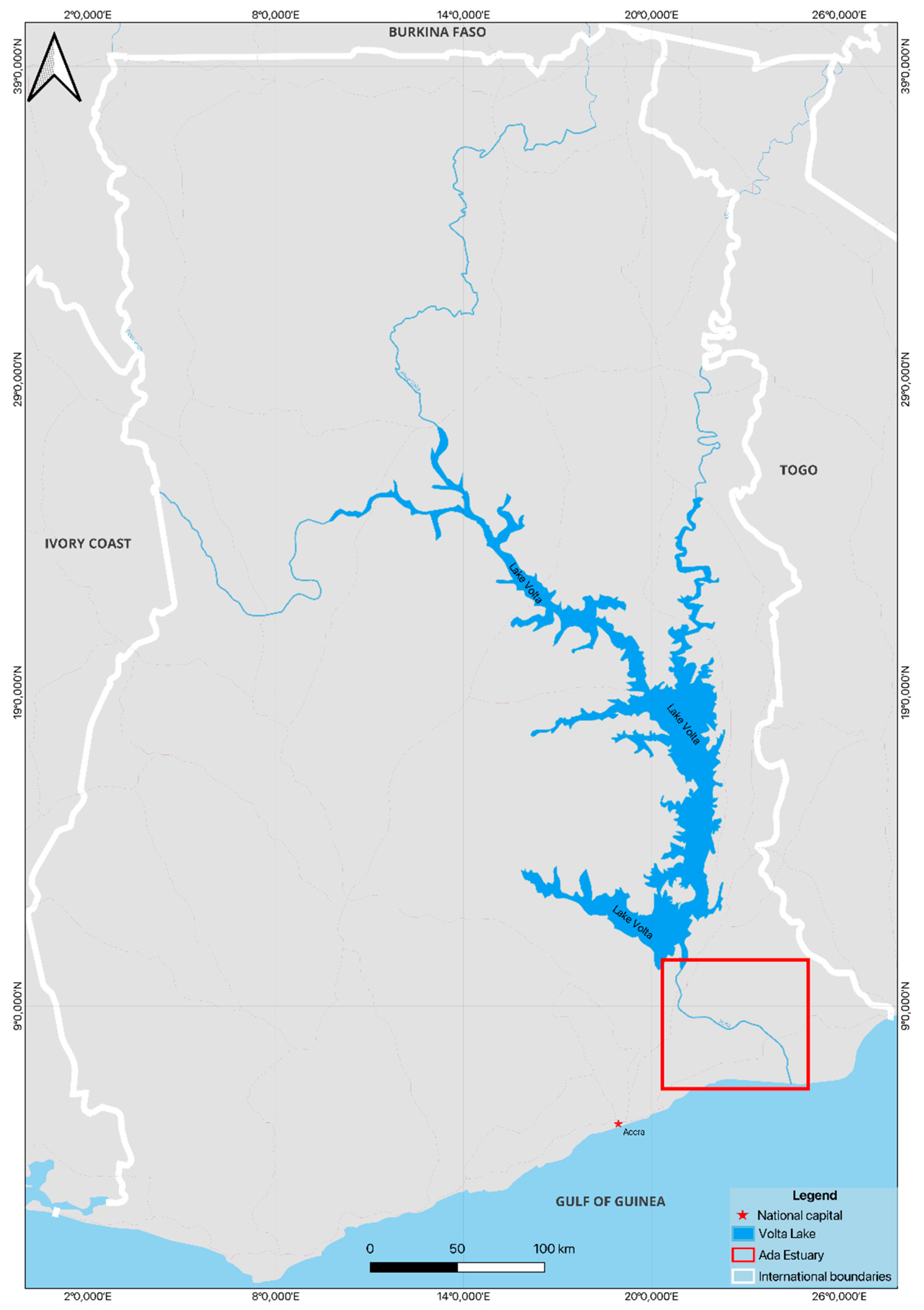
Figure 2.
Ghanaian aquaculture production (2005-2021) [62].
Figure 2.
Ghanaian aquaculture production (2005-2021) [62].
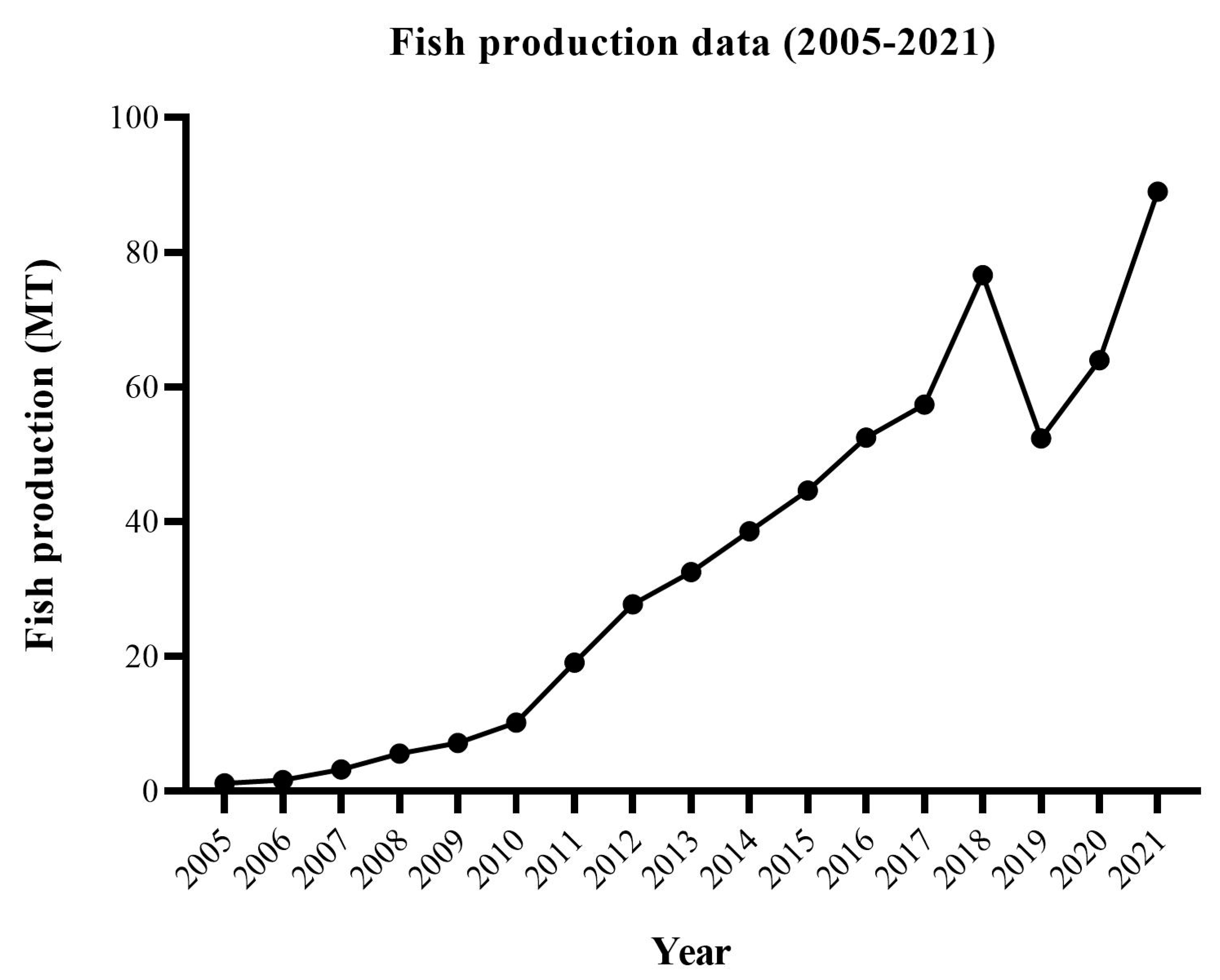
Figure 3.
Negative impacts of unregulated cage aquaculture on Lake Volta. The figure illustrates the aquaculture-mediated introduction of non-indigenous fish species and pathogens. This includes potential effects on indigenous fish species as non-native fish species escape from floating cages. The intensification of cage aquaculture on the Lake becomes a catalyst for the proliferation of fish pathogens of exotic and endemic origin, leading to the establishment diseases. Consequently, the excessive use of chemicals to manage fish diseases, along with increased feed usage due to aquaculture intensification, contributes to water pollution. Created with BioRender.com .
Figure 3.
Negative impacts of unregulated cage aquaculture on Lake Volta. The figure illustrates the aquaculture-mediated introduction of non-indigenous fish species and pathogens. This includes potential effects on indigenous fish species as non-native fish species escape from floating cages. The intensification of cage aquaculture on the Lake becomes a catalyst for the proliferation of fish pathogens of exotic and endemic origin, leading to the establishment diseases. Consequently, the excessive use of chemicals to manage fish diseases, along with increased feed usage due to aquaculture intensification, contributes to water pollution. Created with BioRender.com .
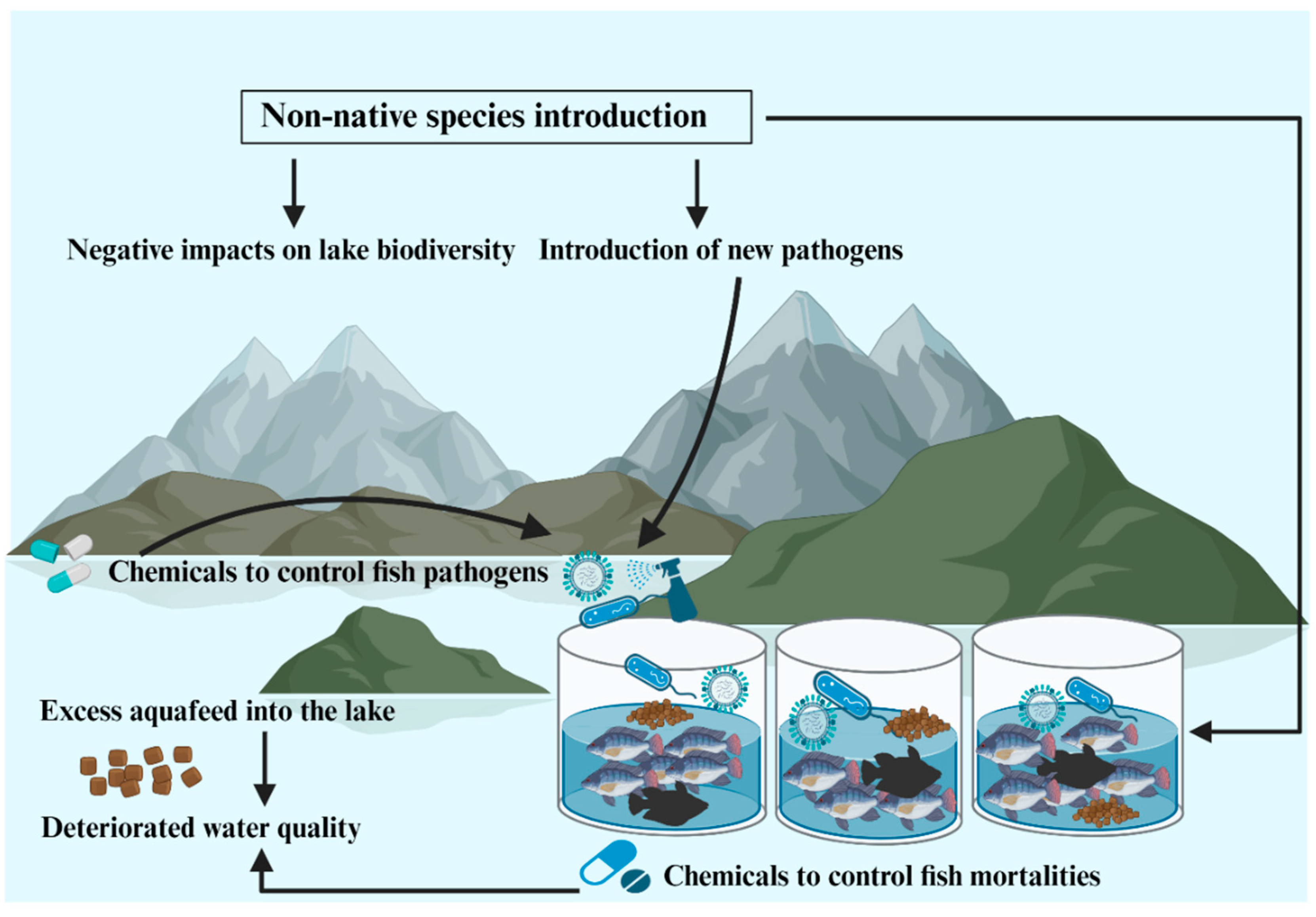
Figure 4.
Transitioning from Lake Volta Cage Aquaculture to Land-based production. The strategies involve deepening stakeholder collaborations among institutions and individuals to build capacity (CB) for delineating aquaculture zones (DAZ), identifying eco-friendly options, as well as Regulating and Enforcing (R&E) Lake and aquaculture regulations. Enforcing existing legislations will encourage farmers to pursue Best Management Practices (BMPs). CB is necessary for bridging knowledge gaps and finding innovative ways to address industry setbacks. Emergency preparedness can also benefit from stakeholder collaborations to ensure robust and swiftly executed plans during adversities. Created with BioRender.com.
Figure 4.
Transitioning from Lake Volta Cage Aquaculture to Land-based production. The strategies involve deepening stakeholder collaborations among institutions and individuals to build capacity (CB) for delineating aquaculture zones (DAZ), identifying eco-friendly options, as well as Regulating and Enforcing (R&E) Lake and aquaculture regulations. Enforcing existing legislations will encourage farmers to pursue Best Management Practices (BMPs). CB is necessary for bridging knowledge gaps and finding innovative ways to address industry setbacks. Emergency preparedness can also benefit from stakeholder collaborations to ensure robust and swiftly executed plans during adversities. Created with BioRender.com.
Disclaimer/Publisher’s Note: The statements, opinions and data contained in all publications are solely those of the individual author(s) and contributor(s) and not of MDPI and/or the editor(s). MDPI and/or the editor(s) disclaim responsibility for any injury to people or property resulting from any ideas, methods, instructions or products referred to in the content. |
© 2024 by the authors. Licensee MDPI, Basel, Switzerland. This article is an open access article distributed under the terms and conditions of the Creative Commons Attribution (CC BY) license (http://creativecommons.org/licenses/by/4.0/).
Copyright: This open access article is published under a Creative Commons CC BY 4.0 license, which permit the free download, distribution, and reuse, provided that the author and preprint are cited in any reuse.