
Submitted:
07 September 2024
Posted:
10 September 2024
You are already at the latest version
Abstract
Ensuring adequate food supplies has become a critical issue with a rapidly growing global population and increasing demand for protein-rich foods. In Baghlan province, Afghanistan, many poultry farms have been forced to cease operations due to insufficient infrastructure and resources, leaving a significant gap in meeting the region's growing demand for poultry products. This study aims to identify the key factors affecting the sustainability and development of broiler farms in Baghlan province as perceived by farm owners. The primary research tool was a researcher-developed questionnaire, whose validity and reliability were confirmed. The study population comprised all broiler farm owners in Baghlan Province, from which a sample of 91 was selected using the Morgan table and complete enumeration sampling method. The findings revealed that approximately 54% of respondents expressed moderate satisfaction with their farms. Importance-Performance Analysis (IPA) was conducted to assess the relative importance and performance of various factors affecting the development and sustainability of the farms. The results indicated that having a qualified expert, the farmer's educational level, the poultry house ventilation system, and being a local resident were considered highly important factors for farm success but were underperforming. Based on limited existing research in the region, these findings provide valuable insights for enhancing poultry farm development and food security in Baghlan province and throughout Afghanistan. The study offers specific recommendations for addressing the identified challenges and improving the sustainability of poultry farming in the region.
Keywords:
Poultry farming
; Importance -performance
; Baghlan
; Afghanistan
1. Introduction
Poultry includes domesticated birds such as chickens, turkeys, ducks, geese, quails, guinea fowl, and others, primarily raised for meat, feathers, or eggs (Vaarst et al., 2015; Osuji, 2019; Phiri et al., 2023). Poultry constitute a fascinating and diverse group of animals (Vaarst et al., 2015) that are raised in a wide range of production systems, primarily for meat, eggs, and manure for crop fertilization. Meat and eggs are among the most common animal-based foods, consumed globally across diverse cultures, traditions, and religions, and are key to food security and nutrition (Mottet and Tempio, 2017). Poultry products (eggs and meat) are highly nutritious for humans and provide good economic returns to farmers (Osuji, 2019). Poultry have a greater ability than other animal species to convert a wide variety of feedstuffs, including agricultural residues, household waste, and food processing by-products, into animal products and protein sources (Vaarst et al., 2015).
Poultry is generally an important source of nutrition. In the livestock sector, poultry emerges as the most efficient subsector in using natural resources and providing protein to meet the growing global demand. Poultry is particularly important for smallholders and impoverished rural and urban communities, and it is primarily produced on a large scale through intensive operations, making it one of the fastest-growing sub-sectors of agriculture (Mottet and Tempio, 2017). Poultry production is characterized by its efficiency, rapid growth, and short production cycles, making it a more attractive option compared to other livestock. The high demand for poultry products, with over 50 billion chickens raised annually for meat and eggs as reported by Nwalieji at the National Center for Biotechnology Information, highlights its significant role in global food security (Osuji, 2019). Poultry farming has become a crucial strategy for poverty alleviation and ensuring food and nutrition security, especially in developing countries (Osuji, 2019; Etuah et al., 2020). Their contributions to food security, protein supply, and livelihoods make them invaluable animals globally (Vaarst et al., 2015). Poultry farming plays a significant economic, nutritional, and sociocultural role in the livelihoods of poor rural and urban households in many developing countries. Poultry farming contributes to household food security and enhances sustainable agriculture in many developing economies (Osuji, 2019).
Poultry farming provides income and employment opportunities for farmers, service providers, and many individuals involved throughout the value chain. As part of the livestock industry, the poultry sector is the fastest-growing segment of global meat production, with developing countries playing a prominent role (Phiri et al., 2023). Poultry meat is a rich source of animal protein and is increasingly preferred over beef due to its adaptability, flavor, ease of preparation, health considerations, nutrient composition, and contribution to food security. Poultry meat is a good source of protein, containing essential elements such as phosphorus, and has lower fat content compared to other meats (Osuji, 2019). Global poultry meat consumption averages around 13.6 kg per capita, ranging from 1.77 kg in India to 43.81 kg in the United States in 2014 (Vaarst et al., 2015). This can be attributed to the fact that poultry production has a lower environmental impact.
Broilers, or meat chickens, typically reach market weight within 6 weeks of age, depending on the diet and feed provided by the farmer. Broilers have become popular due to their short growth cycle and lower initial investment requirements. They offer a higher feed conversion rate in a shorter time compared to other poultry types. Poultry meat is widely consumed across diverse cultures, making it a staple in many households. The demand for broiler meat is projected to continue growing due to urbanization, rapid population growth, and changing consumer preferences (Phiri et al., 2023).
According to Ogolla (2016), factors affecting poultry production are not only based on physical inputs such as land area, labor, feed consumption, vaccine usage, and energy consumption, but also include socio-economic, demographic, organizational, and non-physical factors. Socio-economic factors such as age, education level, years of poultry farming, experience, engagement in other income-generating activities besides poultry farming, and access to credit also play a crucial role. Osuji (2019) showed that farm experience, medication costs, farm size and disease occurrence are statistically significant at a 10% probability level, indicating that these are the key factors affecting poultry production. The major constraints against poultry production were high feed costs, insufficient funding, outbreaks of disease and high transportation costs. The study recommended that the government should provide credit facilities to poultry producers to alleviate funding shortages and provision of appropriate vaccines in the study area. Anosike et al. (2018) identified several challenges in poultry farming in Nigeria, including high disease incidence and pest attacks, lack of access to credit, inadequate technical knowledge, high mortality rate, high feed costs, poor quality of chicks, inadequate extension services, limited access, and high veterinary service costs. Adeyonu et al. (2022) found that the amount of feed and labor positively affects broiler production, while medication and vaccination costs have a negative impact. Small-scale broiler producers can improve their technical and financial returns by reducing mortality rates, feed conversion rates, and production time. Profitability in broiler production significantly increases with the reduction of these production costs, especially for feed and day-old chicks. Additionally, higher education levels, capacity utilization ratios, and broiler production all contribute to higher farm-level efficiency (Ramukhithi, 2023). Furthermore, Phiri et al. (2023) found that broiler farming training, farming experience, education level, access to extension services, access to credit, and household size significantly determine broiler enterprise profitability across various scales, with only training impacting profitability across all three scales.
Evidence suggests that broiler farms in Baghlan province lack adequate facilities and infrastructure, which has prevented them from meeting the growing demand of the community. According to the Department of Agriculture, approximately 400 farms were active in this region. However, recent surveys indicate that most of these farms have ceased operations due to various factors. This study aims to investigate the job satisfaction of broiler farm owners and the significance of factors influencing the development of broiler farms from the perspective of farm owners. Given the scarcity of scientific research in this area, the findings of this study could contribute to improving food security and promoting the development of broiler farms in this province and across Afghanistan.
2. Materials and Methods
2.1. Study Area
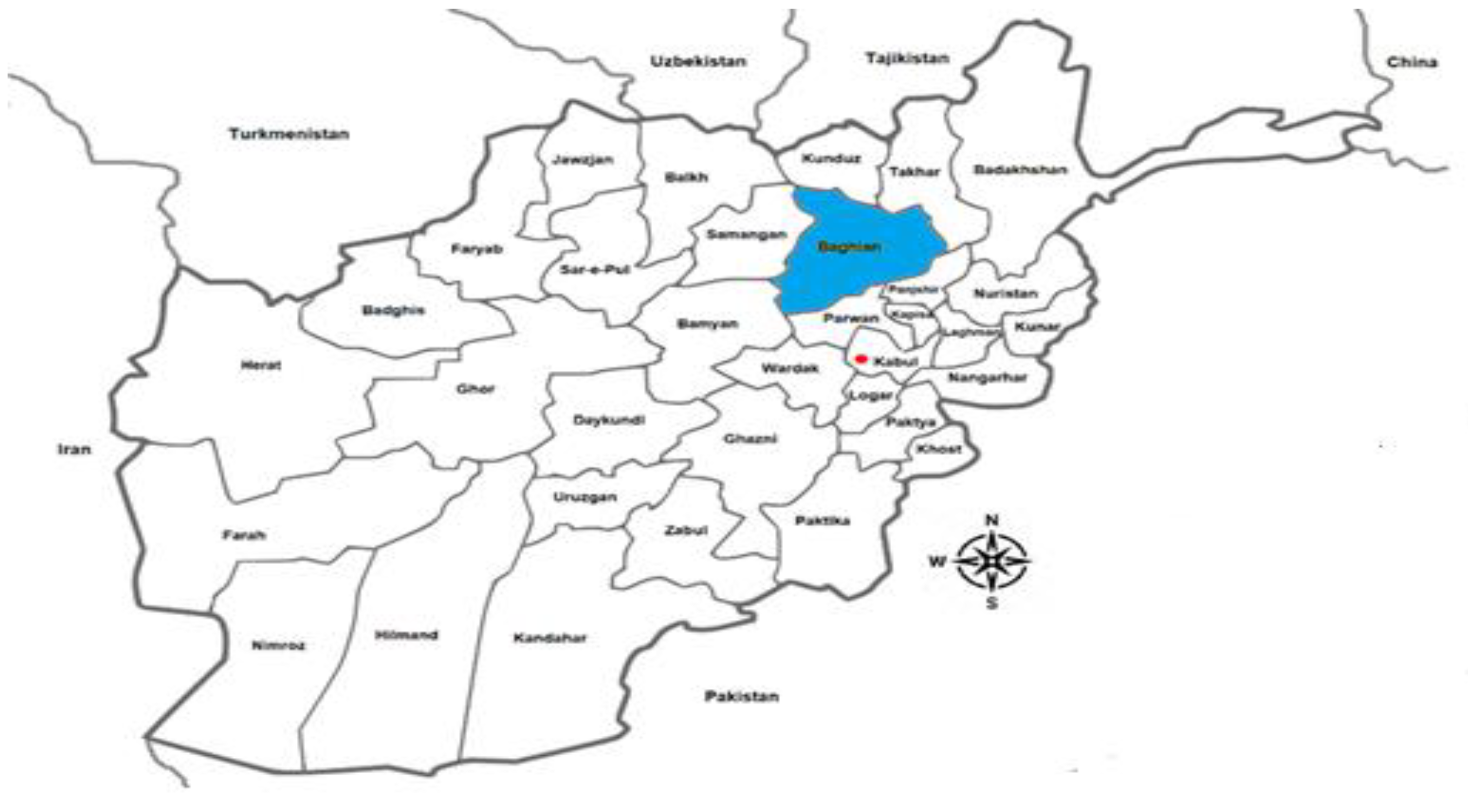
Baghlan province, spanning 21,112 km2 and home to approximately 1,053,200 inhabitants (Province Profile of Baghlan, 2019), is strategically located in northeastern Afghanistan. Situated at an average elevation of 550 meters above sea level, along the Kabul-Mazar-i-Sharif highway. The province’s fertile valleys, abundant water resources, and diverse mineral deposits have positioned it as a significant agricultural and industrial hub in the country (Baghlan Province Profile, 2019). This study aims to investigate the factors influencing production efficiency in broiler farms within Baghlan province and to propose strategies for improving the poultry sector.
Figure 1.
Map of Afghanistan and the study area.
2.2. Data Collection Tools
This study employed a survey research design to collect primary data. A questionnaire was developed as the primary research instrument. The questionnaire was initially drafted based on a thorough review of relevant literature and theories. Subsequently, a group of experts from the Departments of Agricultural Economics and Extension and Animal Science at Baghlan University provided feedback on the questionnaire. After incorporating their feedback, the final questionnaire was prepared, consisting of 33 closed-ended items.
2.3. Study Population
The study population consisted of all broiler farm owners in Baghlan province. A sample size of 91 owners was determined using Morgan’s table to ensure the representativeness of the population. These farmers were directly involved in the day-to-day operations of their farms.
2.4. Data Analysis Methods
For data analysis, in addition to descriptive statistics such as mean and standard deviation, importance-performance analysis and coefficient of variation were utilized. Importance-Performance Analysis is a cost-effective, straightforward, and intuitive method for organizing information about the characteristics of a product or service. It provides attractive intuitive strategies for industry and determines their priority for implementation, ultimately aiming to achieve satisfaction for the majority of customers (Azar et al., 2013). Importance-Performance Analysis (IPA) was first introduced by Martilla and James in 1977 has since become a valuable tool for managers to assess their organization’s strengths and weaknesses. As part of marketing research methods, IPA analyzes customer attitudes toward distinct products with service characteristics and also helps experts prioritize improvement opportunities for product and service features. More importantly, IPA simultaneously identifies the most significant characteristics influencing customer satisfaction and the underperforming features of the organization that need to be improved promptly, thereby recommending strategies to management for providing better customer service (Bamdadsoofi et al., 2016). Importance-Performance Analysis (IPA) is a method for measuring the gap between expectations (importance) and perceptions (performance) regarding the phenomenon under study, making it an essential gap analysis tool. By plotting the IPA matrix, the position and status of each variable are determined based on its two dimensions of importance and performance (perceived quality). A two-dimensional matrix is formed, with the vertical axis representing importance and the horizontal axis representing individuals’ perceptions of the status (performance or quality) of each feature. This two-dimensional matrix is called the Importance-Performance (Status) Matrix. Based on how important each indicator is (desired status) and the extent of the organization’s performance regarding this indicator (current status), four quadrants can be identified.
- -
- Quadrant I: Maintain Performance Excellence - This quadrant represents factors with both high importance and high performance, requiring continued focus.
- -
- Quadrant II: Critical Focus - Factors in this quadrant are highly important but have low performance, necessitating immediate improvement efforts.
- -
- Quadrant III: Low Priority - Factors in this quadrant have high performance but low importance, suggesting that they can be maintained or de-emphasized as needed.
- -
- Quadrant IV: Low Priority - Factors in this quadrant have both low importance and low performance, indicating that they can be eliminated (Shafaghat & Rezaei, 2021).
| Quadrant I Critical Focus (high importance, low performance) |
Quadrant II Maintain Performance Excellence (high importance, high performance) |
| Quadrant III (lower priority, lower importance) |
Quadrant IV (high performance, low importance) |
3. Results and Discussion
The findings of this study revealed that approximately 54% of the respondents expressed a moderate level of job satisfaction. Moreover, 12% of the participants were illiterate, while 36.3% possessed only basic literacy skills. The average age of the respondents was 35 years. Additionally, the research indicated that about 53% of farm owners had not received any extension services. Despite this, their average farming experience was approximately 6 years. Furthermore, the average capacity of poultry farms in the province was determined to be 2738 chickens (Table 1).
3.1. Importance-Performance Analysis of Factors Affecting the Sustainability of Broiler Farms in Baghlan Province
To assess the importance-performance of factors influencing the sustainability of broiler farms in Baghlan province, a comprehensive literature review, a review of previous studies, and semi-structured interviews with broiler farm owners were conducted to identify key sustainability factors. As detailed in the methodology section, the Importance-Performance Analysis (IPA) technique was employed to evaluate the relative importance and performance of each identified factor. Table 2 presents the performance and importance scores for each factor affecting the sustainability of broiler farms, as measured by individual items.
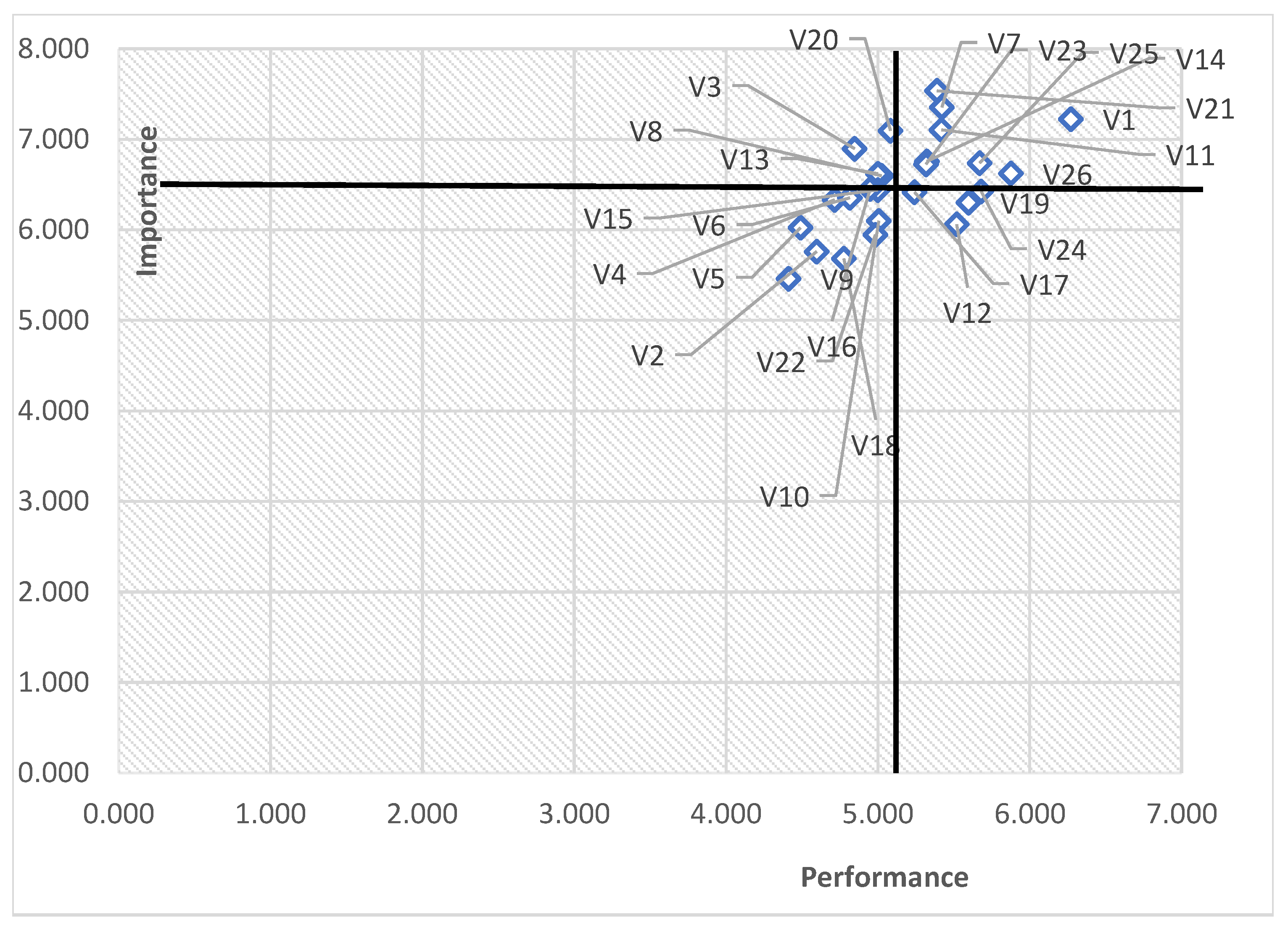
As illustrated in Figure 2, the relative positions of each variable in the IPA matrix were determined. Variables such as farm location, union membership, workforce training, insurance coverage, market access, feed type, and provision of production inputs at appropriate prices were positioned in Quadrant I, indicating high importance and high performance. Conversely, variables like having an expert, farmer’s educational level, a ventilation system, and being a local resident exhibited high importance but low performance. Furthermore, variables including availability of a veterinarian, participation in training programs, consulting with colleagues, farmer’s specialized knowledge, feed availability, access to microcredit, number of poultry houses, distance between residence and farm, storage area size, and farm capacity were found to have both low importance and low performance. Finally, variables including the distance between poultry houses and the warehouse, increased interaction and cooperation among broiler producers, distance from the farm to the nearest district, and poultry house length were positioned in the low-importance but high-performance quadrant. The resulting Importance-Performance Analysis matrix is summarized as follows.
The descriptive statistics revealed that the average age of the participants was 35 years. Given that they are at the threshold of middle age, it can be anticipated that technical and specialized training for poultry farmers are readily available and considered a necessity. Furthermore, over 12.1% of the participants were illiterate, while approximately 36.3% (33 individuals) had literacy skills limited to reading and writing. Considering this low level of education, appropriate methods should be employed to enhance learning and improve their technical and specialized knowledge. Farmers with higher education and more experience in broiler production can better understand and utilize resources, leading to cost savings and increased efficiency (Adnan Khan & Bilal, 2019; Aji et al., 2023). Moreover, continuous education and access to extension services are essential for improving profitability in various aspects of broiler production (Phiri et al., 2023). Training programs can assist farmers in adopting best practices in raising, feeding, lighting, and vaccination programs (Aji et al., 2023).
The Importance-Performance Analysis (IPA) revealed that variables such as farm location, union membership, workforce training, insurance coverage, market access, feed type, and the availability of quality production inputs at reasonable prices were positioned in Quadrant I, indicating high importance and high performance. Conversely, variables including availability of a veterinarian, farmer participation in training programs, farmer consultations with colleagues, farmer’s specialized knowledge, feed availability, access to microcredit, number of poultry houses, distance between residence and farm, storage area size, and farm capacity were found to have both low importance and low performance. However, variables including the distance between poultry houses and the warehouse, increased interaction and cooperation among broiler producers, distance from the farm to the nearest district, and poultry house length were positioned in the low-importance but high-performance quadrant. Although these variables had high performance but low importance, farmers should still pay attention to them to avoid wasting resources. Moreover, the findings indicated that the most critical factors affecting the sustainability of broiler farms, which exhibited high importance but low performance, were the availability of an expert, the farmer’s educational level, the ventilation system, and whether the farmer was a local resident. In fact, experts can play a valuable role in improving farm profitability and development by ensuring high-quality feed and chicks and implementing effective management techniques (Kawsar et al., 2013; Muazu et al., 2024). Additionally, experts can guide farmers in accessing credit facilities and subsidies, which can significantly reduce production costs and improve profitability (Adnan Khan & Bilal, 2019; Ifeanyichukwu, 2022). Furthermore, experts can provide the necessary technical support to address these issues and consequently improve farm performance (Kawsar et al., 2013; Saha et al., 2021). In summary, the presence of an expert in broiler production can enhance profitability by optimizing feed conversion, improving resource utilization through education and experience, providing essential training and extension services, reducing mortality rates, facilitating access to financial resources, and offering technical support.
Another variable that exhibited high importance but low performance was the farmers’ education level. Indeed, the farmer’s education level is crucial for farm sustainability. Educated farmers demonstrate a better understanding and application of resources and procedures, leading to efficient use of inputs and cost savings. It is important to note that education, along with training, farming experience, and access to extension services, significantly determines the profitability of broiler production (Phiri et al., 2023; Kawsar et al., 2013). Higher education levels are associated with greater effectiveness and profitability (Rahman and Haider, 2023). Educated farmers are more likely to adopt new technologies and improve their management skills, which enhance productivity and profitability (Ifeanyichukwu, 2022; Rahman and Haider, 2023). Overall, higher education levels among broiler producers lead to improved management practices, increased efficiency, and enhanced profitability.
Furthermore, being a local resident or native of the region where the farm is located can influence profitability in various ways. As this study’s findings indicate, one of the factors contributing to the sustainability of farms in Baghlan province is the farmer being a local resident. Indeed, local farmers often receive a positive reception from the community, which can lead to better employment opportunities and active participation in social activities. This harmonious relationship between the farmer and the community can indirectly support farm operations (Hisyam et al., 2023). Local or resident farmers are more likely to have better access to local resources, including credit facilities, extension services, and training programs, which are crucial for improving farm management practices and profitability (Ali et al., 2015; Phiri et al., 2023). Local farmers often possess greater experience and a better understanding of local farming conditions, which enhances their ability to manage resources efficiently and improve production outcomes (Adnan Khan & Bilal, 2019; Aji et al., 2023; Muazu et al., 2024). Factors such as education, farming experience, and household size, which are often more favorable for local residents, significantly determine the profitability of broiler production (Ali et al., 2015; Muazu et al., 2024). Overall, being a local or resident owner of a broiler farm can enhance profitability through better community integration, access to resources, and accumulated local knowledge and experience.
Another variable that was positioned in the second quadrant, indicating high importance but low performance, was the ventilation system. According to the findings of this study, the ventilation system is identified as one of the most important factors in the development and sustainability of poultry farms. Despite its significance, it has shown low performance. As mentioned in the problem statement, evidence suggests that poultry farms in Baghlan province lack adequate infrastructure and standards. Research indicates that a proper ventilation system significantly influences the profitability and improvement of broiler production by impacting several key factors. Proper ventilation helps reduce heat stress, a major limitation on the productivity and survival of broilers (Ali et al., 2015). Effective ventilation systems can reduce mortality rates and improve feed conversion ratios, leading to better overall performance and profitability (Aji et al., 2023; Singh and Kamala, 2023). Improved ventilation decreases mortality rates, which is a vital indicator of farm performance and efficiency in broiler production (Aji et al., 2023). Ventilation helps maintain optimal environmental conditions, which can enhance feed conversion efficiency. This is crucial as feed costs constitute a substantial portion of total production costs (Zimunya & Dube, 2021). A better feed conversion ratio implies more efficient feed utilization, resulting in higher profitability (Ali et al., 2015; Kawsar et al., 2013). Proper ventilation contributes to disease control by maintaining air quality and reducing the concentration of harmful pathogens, which decreases the need for medications and vaccines, thereby reducing production costs and improving profitability (Islam et al., 2014; Praveena & Bojiraj, 2017). Ventilation systems, when combined with other management practices such as timely vaccination and proper feeding programs, enhance the overall economic efficiency of broiler farms. In summary, effective ventilation is crucial for reducing heat stress, lowering mortality rates, improving feed conversion efficiency, controlling diseases, and increasing overall economic efficiency, all of which contribute to broiler production profitability.
Based on the findings of this study, the following recommendations are put forward to enhance the sustainability and profitability of poultry farms:
- -
- Poultry farmers must engage experts in various fields to leverage their insights for improving farm development and addressing deficiencies. Additionally, farmers should possess the capability to manage workers, market their products effectively, and maintain order within the farm environment to maximize profitability.
- -
- Investing in education and training programs is crucial for the poultry sector. By providing farmers with the necessary knowledge and skills, these programs can contribute to the long-term sustainability of farms. Government agencies and industry stakeholders should collaborate to develop and implement comprehensive training initiatives.
- -
- Poultry houses should be constructed according to scientific standards to ensure optimal conditions for bird health and productivity. Factors such as lighting, ventilation, and humidity should be carefully considered to create a suitable environment for poultry.
- -
- Finally, government policies should be implemented to promote the consumption of domestically produced poultry products (meat and eggs). In this regard, Government support is crucial for encouraging significant private-sector investment in the development of poultry farms. By prioritizing local products, governments can support the domestic poultry industry and encourage farmers to adopt sustainable practices. Furthermore, governments can provide financial incentives and technical assistance to small-scale farmers to enhance their productivity and competitiveness.
4. Conclusions
This study highlights the critical factors influencing the sustainability and profitability of broiler farms in Baghlan province. Importance-Performance Analysis (IPA) identified several high-performing variables like farm location, union membership, and market access, which are vital to farm success. However, other factors, including access to veterinarians, farmer education, and the availability of experts, demonstrated both high importance and low performance, underscoring the need for targeted improvements. The availability of an expert emerged as a pivotal factor, as experts can enhance farm profitability by optimizing management techniques, ensuring high-quality inputs, and facilitating access to financial resources. Similarly, farmer education is crucial for the effective use of resources, adoption of new technologies, and overall farm sustainability. Local residency further contributes to profitability through better community integration and access to local resources. A key infrastructural element, the ventilation system, was identified as highly important but underperforming. Proper ventilation is essential for reducing heat stress, lowering mortality rates, and improving feed conversion efficiency, all of which are critical for economic efficiency and profitability.
To enhance the sustainability of broiler farms, the study recommends engaging experts, investing in education and training programs, adhering to scientific standards in farm construction, and advocating for supportive government policies. By addressing these areas, broiler farms in Baghlan province can significantly improve their sustainability and profitability, contributing to the region’s overall poultry industry development.
References
- Vaarst, M.; Steenfeldt, S.; Horsted, K. Sustainable development perspectives of poultry production. J. World’s Poult. Sci. 2015, 71, 609-620.. [CrossRef]
- Osuji, M. N. Assessment of factors affecting poultry (broiler) production in Imo state, Nigeria. Asian Journal of Agricultural Extension, Economics & Sociology 2019, 35, 1-6..
- Phiri, P. T.; Ruzhani, F.; Madzokere, F.; Madududu, P. Factors affecting the profitability of smallholder broiler production in Mutare district, Manicaland Province, Zimbabwe: A quantile regression approach. Cogent Economics & Finance 2023, 11, 2242660..
- Mottet, A.; Tempio, G. Global poultry production: current state and future outlook and challenges. J. World’s Poult. Sci. 2017, 73, 245-256.. [CrossRef]
- Etuah, S.; Ohene-Yankyera, K.; Liu, Z.; Mensah, J. O.; Lan, J. Determinants of cost inefficiency in poultry production: Evidence from small-scale broiler farms in the Ashanti region of Ghana. Trop. Anim. Health Prod. 2020, 52, 1149-1159.. [CrossRef]
- Ogolla, M. A. Factors Influencing Poultry Production Among Poultry Farmers in Eldoret Town. Doctoral dissertation, Uasin Gishu County, Kenya, University Of Nairobi , 2016.
- Anosike, F. U.; Rekwot, G. Z.; Owoshagba, O. B.; Ahmed, S.; Atiku, J. A. Challenges of poultry production in Nigeria: A review. Niger. J. Anim. Prod. 2018, 45, 252-258.. [CrossRef]
- Adeyonu, A. G.; Odozi, J. C. What are the Drivers of Profitability of Broiler Farms in the North-central and South-west Geo-political Zones of Nigeria?. SAGE Open 2022, 12, 21582440211071076.. [CrossRef]
- Ramukhithi, T. F.; Nephawe, K. A.; Mpofu, T. J.; Raphulu, T.; Munhuweyi, K.; Ramukhithi, F. V.; Mtileni, B. An Assessment of Economic Sustainability and Efficiency in Small-Scale Broiler Farms in Limpopo Province: A Review. Sustainability 2023, 15, 2030.. [CrossRef]
- Provincial profile Baghlan province. economic perspective. 2019.
- Azar, A.; Khosravani, F.; Jalali, R. Research in soft operations. Tehran: Industrial Management Organizatio 2013.
- Bamdadsoofi, J.; Godrat, S.R.; Mansouri Mohammad abadi, S.; Ranjbar, M. Performance evaluation of library of accounting and management faculty of Allameh Tabataba’i university, using importance-performance analysis (IPA) approach. Knowledge Retrieval and Semantic System, 2016, 3.
- Shafaghat, A.; Rezaei, S.J. Analysis of the importance-performance matrix of innovation indicators in defence scientific and research centres. Military Management Quarterly Journal 2021, 21, 89-114.
- Adnan Khan, M.; Bilal, B. Profitability Analysis of Poultry Farming. Int. J. Soc. Sci. 2019, 1, 33-54.
- Aji, J. M. M.; Rondhi, M.; Suwandari, A.; Hapsari, T. D.; Januar, J.; Yanuarti, R. Determinants of Cost Inefficiency and Farmer.
- Performance in Broiler Contract Farming. Trop. J. Anim. Sci. 2023, 46, 382-388. [CrossRef]
- Kawsar, M. H.; Chowdhury, S. D.; Raha, S. K.; Hossain, M. M. An analysis of factors affecting the profitability of small-scale broiler farming in Bangladesh. J. World’s Poult. Sci. 2013, 69, 676-686. [CrossRef]
- Muazu, A.; Idi, S.; Gomina, A.; Yisa, F.; Afuwal, W.; Yakubu, I. Socioeconomic dynamics and profitability drivers in broiler chicken production in Sabon Gari Local government area of Kaduna state, Nigeria. FUDMA-JAAT 2024, 10, 31-38. [CrossRef]
- Ifeanyichukwu, N. P. Profitability of Small-Scale Broiler Farmers Production in Okpe Local Government Area of Delta State. DUJOPAS 2022. 7. 33-41.
- Saha, A.; Sharmin, S.; Jahan, M. Measuring the Profitability of Small Scale Poultry Producers through Contractual System in Bangladesh. Am. J. Food Technol. 2021, 9, 90-95.
- Rahman, M. M.; Haider, M. Z. DOES FARMERS’EDUCATION AFFECT THE PROFITABILITY OF SHRIMP FARMING? EVIDENCE FROM THE COASTAL REGION OF BANGLADESH. KU Studies 2023, 225-239.
- Hisyam, B.; Media, I.; Taqiuddin, M. The impact of broiler contract farming on socio-economic improvement of farmers in west Lombok. International Journal of Science and Technology Research Archive 2023, 05, 114–121. [CrossRef]
- Ali, Y.; Jahan, S.; Islam, A.; Islam, M. A. Impact of socio-economic factors on production performance of small and medium size broiler farming in Bangladesh. J. New Sci. 2015, 15, 479-487.
- Singh, B.; Kamala. Economic Analysis of Profitability and Broiler Production in Punjab. Indian J Econ Dev 2023, 19, 805-813.
- Zimunya, K. T.; Dube, L. Profitability of broiler contract growers in Chegutu District of Zimbabwe. Sch J Agric Vet Sci 2021, 8, 87-94. [CrossRef]
- Islam, F.; Hossain, M. H.; Akhtar, A.; Hossain, M. S. Prospect and challenges in broiler farming of Barguna district in Bangladesh. J. biosci. agric. res. 2014, 2, 44-51. [CrossRef]
- Praveena, S.; Bojiraj, M. A. cross sectional study on constraints in broiler farming at Perambalur district of Tamil Nadu. Asian J. Anim. Sci. 2017, 12, 120-123. [CrossRef]
Figure 2.
Importance-performance matrix of factors affecting the development of poultry farms in the study area.
Figure 2.
Importance-performance matrix of factors affecting the development of poultry farms in the study area.
| Symbols | Variables | Importance | Performance |
|---|---|---|---|
| V1 | Access to market | 7.223 | 6.270 |
| V2 | Availability of feed ration | 5.761 | 4.597 |
| V3 | The education level of the farmer | 6.896 | 4.847 |
| V4 | Participation of poultry farmers in educational and technical programs | 6.332 | 4.715 |
| V5 | Specialized information of poultry farmers | 6.023 | 4.490 |
| V6 | Consultation of poultry farmers with colleagues | 6.354 | 4.815 |
| V7 | Location of the poultry farm | 7.353 | 5.421 |
| V8 | Local or resident status of the poultry farmer | 6.597 | 5.023 |
| V9 | Number of poultry houses | 5.460 | 4.411 |
| V10 | Poultry capacity | 6.100 | 5.006 |
| V11 | Type of feed ration | 7.105 | 5.418 |
| V12 | Length of the poultry house | 6.061 | 5.518 |
| V13 | Poultry house ventilation system | 6.620 | 5.000 |
| V14 | Number of permanent workers | 6.756 | 5.323 |
| V15 | Having a veterinarian | 6.441 | 5.000 |
| V16 | Distance from residence to poultry farm | 6.452 | 4.949 |
| V17 | Distance of the poultry farm from the nearest district | 6.417 | 5.241 |
| V18 | Storage area | 5.683 | 4.776 |
| V19 | Distance of the houses from the storage | 6.302 | 5.597 |
| V20 | Having an expert | 7.095 | 5.083 |
| V21 | Having insurance | 7.536 | 5.389 |
| V22 | Access to small loans | 5.945 | 4.983 |
| V23 | Membership in unions | 6.724 | 5.316 |
| V24 | Increased interaction and cooperation among broiler producers | 6.424 | 5.680 |
| V25 | Training of workforce | 6.738 | 5.669 |
| V26 | Providing production inputs at reasonable prices and quality | 6.623 | 5.876 |
| Frequency | Percent | Valid Percent | ||
|---|---|---|---|---|
| Age | Less than 30 | 25 | 27.5 | 27.5 |
| From 30 to 50 years | 58 | 63.7 | 63.7 | |
| Above 50 years | 8 | 8.8 | 8.8 | |
| Total | 91 | 100 | 100 | |
| Education | Illiterate | 11 | 12.1 | 12.1 |
| Basic literacy skills | 33 | 36.3 | 36.3 | |
| High school graduate | 36 | 39.6 | 39.6 | |
| Bachelor’s degree | 11 | 12.1 | 12.1 | |
| Total | 91 | 100 | 100 | |
| Job satisfaction | Low | 17 | 18.7 | 18.7 |
| Moderate | 49 | 53.8 | 53.8 | |
| High | 25 | 27.5 | 27.5 | |
| 91 | 100 | 100 | ||
| Access to extension training | Yes | 41 | 45.1 | 45.1 |
| No | 50 | 54.9 | 54.9 | |
| Total | 91 | 100 | 100 |
| Quadrant ICritical Focus(high importance, low performance) | Quadrant IIMaintain Performance Excellence(high importance, high performance) |
| Quadrant III(lower priority, lower importance) | Quadrant IV(high performance, low importance) |

Table 1.
Personal information of the studied individuals.
| Frequency | Percent | Valid Percent | ||
|---|---|---|---|---|
| Age | Less than 30 | 25 | 27.5 | 27.5 |
| From 30 to 50 years | 58 | 63.7 | 63.7 | |
| Above 50 years | 8 | 8.8 | 8.8 | |
| Total | 91 | 100 | 100 | |
| Education | Illiterate | 11 | 12.1 | 12.1 |
| Basic literacy skills | 33 | 36.3 | 36.3 | |
| High school graduate | 36 | 39.6 | 39.6 | |
| Bachelor’s degree | 11 | 12.1 | 12.1 | |
| Total | 91 | 100 | 100 | |
| Job satisfaction | Low | 17 | 18.7 | 18.7 |
| Moderate | 49 | 53.8 | 53.8 | |
| High | 25 | 27.5 | 27.5 | |
| 91 | 100 | 100 | ||
| Access to extension training | Yes | 41 | 45.1 | 45.1 |
| No | 50 | 54.9 | 54.9 | |
| Total | 91 | 100 | 100 |
Table 2.
Calculation of importance-performance of factors affecting the development of broiler farms in Baghlan province.
Table 2.
Calculation of importance-performance of factors affecting the development of broiler farms in Baghlan province.
| Symbols | Variables | Importance | Performance |
|---|---|---|---|
| V1 | Access to market | 7.223 | 6.270 |
| V2 | Availability of feed ration | 5.761 | 4.597 |
| V3 | The education level of the farmer | 6.896 | 4.847 |
| V4 | Participation of poultry farmers in educational and technical programs | 6.332 | 4.715 |
| V5 | Specialized information of poultry farmers | 6.023 | 4.490 |
| V6 | Consultation of poultry farmers with colleagues | 6.354 | 4.815 |
| V7 | Location of the poultry farm | 7.353 | 5.421 |
| V8 | Local or resident status of the poultry farmer | 6.597 | 5.023 |
| V9 | Number of poultry houses | 5.460 | 4.411 |
| V10 | Poultry capacity | 6.100 | 5.006 |
| V11 | Type of feed ration | 7.105 | 5.418 |
| V12 | Length of the poultry house | 6.061 | 5.518 |
| V13 | Poultry house ventilation system | 6.620 | 5.000 |
| V14 | Number of permanent workers | 6.756 | 5.323 |
| V15 | Having a veterinarian | 6.441 | 5.000 |
| V16 | Distance from residence to poultry farm | 6.452 | 4.949 |
| V17 | Distance of the poultry farm from the nearest district | 6.417 | 5.241 |
| V18 | Storage area | 5.683 | 4.776 |
| V19 | Distance of the houses from the storage | 6.302 | 5.597 |
| V20 | Having an expert | 7.095 | 5.083 |
| V21 | Having insurance | 7.536 | 5.389 |
| V22 | Access to small loans | 5.945 | 4.983 |
| V23 | Membership in unions | 6.724 | 5.316 |
| V24 | Increased interaction and cooperation among broiler producers | 6.424 | 5.680 |
| V25 | Training of workforce | 6.738 | 5.669 |
| V26 | Providing production inputs at reasonable prices and quality | 6.623 | 5.876 |
Disclaimer/Publisher’s Note: The statements, opinions and data contained in all publications are solely those of the individual author(s) and contributor(s) and not of MDPI and/or the editor(s). MDPI and/or the editor(s) disclaim responsibility for any injury to people or property resulting from any ideas, methods, instructions or products referred to in the content. |
© 2024 by the authors. Licensee MDPI, Basel, Switzerland. This article is an open access article distributed under the terms and conditions of the Creative Commons Attribution (CC BY) license (http://creativecommons.org/licenses/by/4.0/).
Copyright: This open access article is published under a Creative Commons CC BY 4.0 license, which permit the free download, distribution, and reuse, provided that the author and preprint are cited in any reuse.


