

Submitted:
06 September 2024
Posted:
10 September 2024
You are already at the latest version
Abstract
This review examines eutrophication in freshwater ecosystems, a widespread environmental issue stemming from excessive nutrient input, largely due to human activities. The study explores the origins, consequences, evaluation techniques, and control methods for eutrophication. Primary causes include agricultural discharge, urban development, and climate shifts. The effects are far-reaching, impacting biodiversity, water quality, and socio-economic factors. The assessment utilizes a combination of chemical, physical, and biological markers, with cutting-edge technologies like remote sensing improving monitoring efforts. Mitigation strategies are diverse, incorporating preventative actions (such as nutrient limitation and land management), corrective measures (including bio-manipulation and chemical applications), and regulatory initiatives (like water quality guidelines and nutrient exchange schemes). While case studies demonstrate successful interventions, they also reveal ongoing challenges, particularly ecosystem unpredictability and climate change influences. The research highlights the promise of emerging technologies, notably machine learning, in enhancing management practices. Knowledge gaps persist, especially regarding eutrophication-biodiversity dynamics in tropical environments and the socio-economic ramifications of interventions. The study emphasizes the importance of flexible, comprehensive approaches that blend scientific insights with practical solutions and strong policy structures to tackle this intricate environmental challenge in an era of climate change.
Keywords:
Biodiversity
; Bio-manipulation: Climate shift
; Eutrophication
; Nutrient inputs
; Remote sensing
1. Introduction
Eutrophication, caused by excessive nutrient enrichment in water bodies, is a significant environmental challenge for freshwater ecosystems on a global scale. Primarily driven by nitrogen and phosphorus inputs, this process results in the overproduction of algae and aquatic plants, leading to a cascade of ecological disturbances, including oxygen depletion (hypoxia), loss of biodiversity, and severe water quality degradation (Kakade et al., 2021; Meerhoff et al., 2022; Wurtsbaugh et al., 2019). The accelerated pace of eutrophication, largely due to human activities such as agriculture, urbanization, and industrialization, has transformed it from a natural phenomenon occurring over geological timescales into an urgent environmental crisis.
Freshwater systems are essential for maintaining biodiversity, providing water for human consumption and agriculture, supporting recreational activities, and sustaining various economic sectors. However, their vulnerability to eutrophication threatens these vital functions, leading to widespread ecological and socioeconomic consequences (Hwang, 2020; Wurtsbaugh et al., 2019; Y. Zhang et al., 2021). The impacts of eutrophication are extensive, ranging from harmful algal blooms that produce toxins detrimental to aquatic life and human health, to the degradation of water quality that necessitates costly treatment processes. These effects disrupt the ecological balance and pose significant risks to public health, economic stability, and the livelihoods of communities that rely on these water resources (Mishra, 2023; Y.-F. Sun et al., 2023).
The global prevalence of eutrophication has emphasized the need for effective management strategies. Addressing this issue requires a multifaceted approach that tackles both the root causes of nutrient pollution and the mitigation of its effects. Management strategies include best practices in agriculture to reduce nutrient runoff, advancements in wastewater treatment technologies, and restoration techniques aimed at improving water quality. Additionally, the complexity of eutrophication demands the integration of scientific understanding with practical interventions and robust policy frameworks (Jilbert et al., 2020; Malone & Newton, 2020).
Compounding the challenge of eutrophication is the looming threat of climate change, which is likely to exacerbate nutrient cycles and intensify eutrophic conditions. Changes in precipitation patterns, temperature increases, and extreme weather events can alter the dynamics of nutrient loading and algal growth, further complicating management efforts (Kratina et al., 2012; Meerhoff et al., 2022). Therefore, developing adaptive management strategies that account for the potential impacts of climate change is crucial for the long-term protection and restoration of freshwater ecosystems.
This review aims to comprehensively analyze eutrophication in freshwater systems, with a focus on current and emerging management strategies. By synthesizing existing research and case studies of successful interventions, this article aims to contribute to the ongoing efforts to combat eutrophication and safeguard the integrity of freshwater ecosystems for future generations. Understanding the dynamics of eutrophication and refining management approaches is imperative for preserving these essential water resources.
2. Causes of Eutrophication
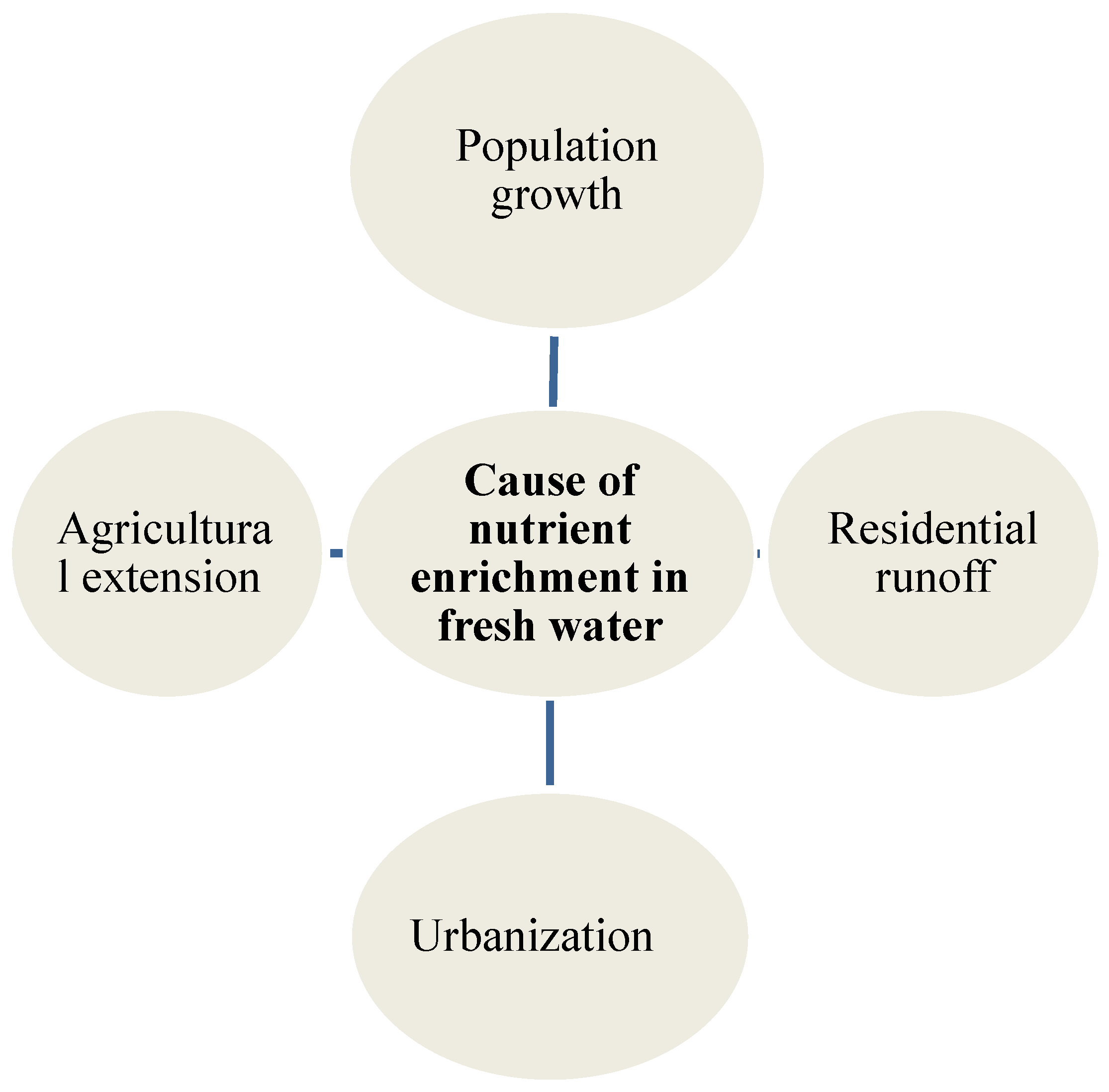
Eutrophication in freshwater systems is primarily driven by the excessive input of nutrients, particularly nitrogen (N) and phosphorus (P). These nutrients often enter water bodies through agricultural runoff, where fertilizers, livestock waste, and soil erosion are significant contributors (Griffith & Gobler, 2020). Urban areas also contribute to nutrient loading through untreated or inadequately treated wastewater, stormwater runoff, and industrial effluents, all of which carry substantial amounts of nutrients into rivers, lakes, and other freshwater bodies (Wurtsbaugh et al., 2019).
Land use changes, including urbanization, deforestation, and agricultural expansion, have significantly disrupted natural nutrient cycles. Urbanization increases impervious surfaces, which accelerates the runoff of nutrients into water bodies, while deforestation reduces the capacity of forests to absorb and retain these nutrients, further increasing the risk of nutrient pollution in freshwater systems (Ephraim Motaroki Menge, 2023; Zhan et al., 2023).
Climate change exacerbates eutrophication by altering precipitation patterns and increasing temperatures. Warmer temperatures enhance the metabolic rates of aquatic organisms, leading to more rapid nutrient cycling and algal growth (Meerhoff et al., 2022). Additionally, changes in precipitation can influence the timing and magnitude of nutrient inputs, potentially leading to more frequent and intense eutrophic events. Atmospheric deposition of nitrogen oxides and ammonia, resulting from industrial and agricultural activities, also contributes to nutrient loading in freshwater systems (Pesce et al., 2018; Rodgers, 2021; Sinha et al., 2017).
The introduction of non-native species, such as invasive aquatic plants or filter-feeding bivalves, can further alter nutrient cycling and trophic interactions, complicating the management of eutrophication (Yan et al., 2016). Human activities cause complex stressors, harming freshwater ecosystems and water quality. Effective management of eutrophication requires a multifaceted approach that addresses the diverse sources of nutrient pollution and the additional pressures from climate change and species introductions (Bezerra et al., 2018; Gallardo et al., 2016; Malone & Newton, 2020).
Figure 1.
Simplified illustration of eutrophication driven in fresh water.
3. Effects of Eutrophication on Freshwater Ecosystems
The immediate impact of eutrophication is on water quality. It leads to decreased oxygen levels, less light penetration, and lower pH levels. The biological oxygen demand increases, while nutrient levels, particularly nitrogen and phosphorus, become elevated. These changes are often accompanied by the accumulation of harmful substances, further degrading water quality (Tewabe et al., 2017). Physically, eutrophication increases evapotranspiration rates and may cause minor temperature increases due to organic matter decomposition. It also alters the heat transfer dynamics between the water surface and the atmosphere(Hwang, 2020; Keerthi Reddy et al., 2024; Le Moal et al., 2019; Suresh et al., 2023).
Biodiversity loss is a critical consequence of eutrophication. The rapid growth of eutrophic plants leads to intense competition with native species for space, nutrients, and sunlight. This competition often leads to the displacement of underwater plant species and disrupts animal communities (Cook et al., 2018). It reduces water availability and may cause the extinction of plants that serve as food sources for various species (Glibert, 2017). Studies have shown negative impacts on indigenous fish populations, likely due to the decline in water quality and habitat alteration (Wang et al., 2021).
The economic impacts of eutrophication are substantial and multifaceted. Fisheries and aquaculture operations suffer from reduced catches and increased water treatment costs. Tourism in affected areas declines as algal blooms, unpleasant odors, and poor water quality deter visitors (Landry & Ramankutty, 2015; Randrianasolo et al., 2019). This leads to reduced revenue for regions dependent on water-based recreation. Water treatment costs for both drinking water and wastewater increase significantly. In agricultural settings, eutrophication can lead to land loss, disrupt irrigation systems by reducing water flow by 40–95%, and cause structural damage to infrastructure like bridges (Yu, 2021). Additionally, waterfront property values often decrease in affected areas(Nielsen et al., 2019; Sundblad et al., 2020).
The social impacts of eutrophication are equally worrying. There is an increase in health risks, including higher incidences of skin rashes, coughs, and various waterborne diseases such as malaria, encephalitis, bilharzia, and gastrointestinal issues (Vantarakis, 2021). The potential contamination of drinking water sources poses a significant threat to public health. Communities dependent on fishing for their livelihoods are particularly vulnerable to the effects of eutrophication(Dodds et al., 2009; Mishra, 2023). The recreational value of water bodies diminishes, affecting the quality of life for residents and potentially affecting mental health and well-being (Firehun et al., 2013).
Eutrophication also has implications for climate change. Under anaerobic conditions, the decomposition of eutrophic biomass releases methane (CH4) and carbon dioxide (CO2), both potent greenhouse gases contributing to global warming (Beaulieu et al., 2019; H. Sun et al., 2021). This connection between local water quality issues and global climate dynamics underlines the far-reaching consequences of eutrophication.
4. Assessment and Monitoring of Eutrophication
Effective assessment and monitoring of eutrophication involve several key components, including indicators and parameters, sampling and analysis methods, and remote sensing and modeling approaches.
4.1. Indicators and Parameters
Eutrophication assessment relies on several key indicators and parameters that provide insight into water bodies' nutrient status and ecological health. These indicators can be broadly categorized into chemical, physical, and biological parameters; each offers unique insights into the eutrophication process.
Nutrient concentrations, particularly nitrogen (N) and phosphorus (P) are primary indicators as their elevated levels often trigger algal blooms. Total nitrogen (TN) and total phosphorus (TP) are essential parameters for this assessment. Raised levels of these nutrients are indicative of eutrophication. For instance, oligotrophic (nutrient-poor) waters typically have TP concentrations below 10 µg/L, while eutrophic (nutrient-rich) waters can exceed 100 µg/L (Ding et al., 2018).
Chlorophyll-a concentration serves as a direct measure of algal biomass and is a primary indicator of phytoplankton presence. Higher concentrations of chlorophyll-a correlate with increased algal growth, signaling eutrophication. While reference values vary, oligotrophic waters generally have chlorophyll-a level below 2 µg/L, with higher levels indicating more eutrophic conditions (García–Nieto et al., 2024).
Dissolved oxygen (DO) is critical for aquatic life, and low levels can signify eutrophic conditions due to increased organic matter decomposition. The Biological Oxygen Demand (BOD), which measures the oxygen microorganisms require to decompose organic matter, is also monitored. High BOD values often indicate eutrophic conditions with excessive organic load. pH levels are monitored as eutrophication can alter water chemistry, potentially affecting aquatic life. Eutrophic waters may experience significant pH fluctuations due to intense photosynthetic activity and subsequent decomposition processes (Cuni-Sanchez et al., 2021).
Biological indices provide valuable insights into ecosystem responses to eutrophication. Various biotic indices, such as the Mean Trophic Rank (MTR) and diatom community composition, are employed to evaluate the biological response to nutrient enrichment. These indices reflect the diversity and abundance of species sensitive to eutrophication. Water transparency, measured using Secchi disk depth, is another crucial physical indicator. Reduced transparency often indicates high phytoplankton biomass and nutrient levels. Eutrophic conditions typically result in Secchi depths of less than 1 meter, reflecting the increased turbidity caused by algal growth (Schneider et al., 2020).
Primary productivity measures the rate of photosynthesis in aquatic systems and is often used to assess the overall health of the ecosystem. High primary productivity can indicate eutrophic conditions, particularly in nutrient-rich waters. Lastly, the frequency and intensity of Harmful Algal Blooms (HABs) are crucial indicators of severe eutrophication. These blooms can produce toxins harmful to aquatic life, humans, and livestock, making them a significant concern in water quality management. By integrating various indicators such as nutrient levels, chlorophyll-a concentrations, biological indices, and HAB occurrences, researchers and water managers can gain a comprehensive understanding of a water body's trophic status and the extent of eutrophication (Jaroszewicz et al., 2021).
4.2. Sampling and Analysis Methods
Effective eutrophication assessment requires systematic sampling and analysis methods to accurately capture the complex dynamics of aquatic ecosystems. These methods encompass a range of techniques, from field sampling to laboratory analysis and biological assessments (Raza et al., 2019).
- Sampling Strategies
Water sampling forms the cornerstone of eutrophication assessment. It involves regular collection from various depths and locations within a water body, using equipment such as bottles, Van Dorn samplers, or integrated samplers. This approach helps capture spatial and temporal variations in nutrient levels and other parameters. Due to the variability of nutrient concentrations, especially in enriched waters, frequent sampling is necessary. Seasonal variations can significantly affect nutrient levels, so a comprehensive sampling strategy typically includes multiple sampling events throughout the year (Blaen et al., 2016).
Sample collection protocols are crucial for ensuring data quality. Water samples should be collected at various depths and locations to account for stratification and spatial variability. Standard protocols for sample handling and preservation are essential to avoid contamination and degradation of samples. This includes proper labeling, immediate cooling, and adherence to specific preservation techniques for different parameters. Sediment sampling is equally important, as nutrients like phosphorus can accumulate in sediments and be released under certain conditions. Core or grab samplers are used to collect sediment samples for nutrient content and chemical analysis. The depth and location of sediment samples are carefully chosen to represent the overall conditions of the water body (Birgand et al., 2016).
- 2.
- Laboratory Analysis
Laboratory analysis of these samples employs a range of standard methods to quantify various parameters:
- Spectrophotometry is commonly used for nutrient analysis, particularly for total nitrogen (TN) and total phosphorus (TP). This method provides quantitative data essential for assessing eutrophication status.
- Fluorimetry is the preferred method for chlorophyll-a measurement, offering high sensitivity and specificity for this key indicator of algal biomass.
- Titration is typically used for dissolved oxygen determination, providing crucial information about the oxygen status of the water body.
These analytical methods provide precise, quantitative data that forms the basis for assessing the trophic status of a water body.
- 3.
- Biological Assessments
Biological monitoring complements these chemical analyses by assessing the composition and abundance of aquatic organisms (Sagova-Mareckova et al., 2021).
- Phytoplankton: Microscopy is used to identify and quantify different algal species, providing insights into the primary producers driving eutrophication.
- Zooplankton: Similar microscopic techniques are employed to assess the abundance and diversity of these important grazers.
- Benthic invertebrates: These organisms are often collected using specialized sampling equipment and then identified and counted under a microscope.
- Molecular techniques: Advanced methods like DNA barcoding or metabarcoding are increasingly used for more precise identification of species, especially for microorganisms.
Changes in these community structures can indicate eutrophication impacts on the ecosystem. Various biotic indices, such as the Mean Trophic Rank (MTR) or specific diatom indices, are calculated based on these biological assessments to provide a standardized measure of ecosystem health.
4.3. Remote Sensing and Modeling Approaches
Advancements in technology have significantly enhanced our ability to monitor and assess eutrophication in aquatic ecosystems. These advanced approaches, including remote sensing, modeling, and integrated assessment tools, allow for more comprehensive, large-scale, and real-time monitoring of water bodies. By leveraging these technologies, scientists and water resource managers can gain deeper insights into eutrophication dynamics, predict future trends, and make informed decisions for ecosystem management (El-Sheekh et al., 2021).
Remote Sensing
Remote sensing technologies have revolutionized the way we monitor eutrophication over large spatial and temporal scales. Satellite and aerial imaging provide valuable data on water quality parameters associated with eutrophication (Chang et al., 2015)
- Chlorophyll-a Detection: Satellites equipped with multispectral sensors can detect and quantify chlorophyll-a concentrations in surface waters. For example, the Sea-Viewing Wide Field-of-View Sensor (SeaWiFS) has been instrumental in providing global data on ocean color, which is closely related to phytoplankton abundance (Hussein & Assaf, 2020).
- Algal Bloom Monitoring: Remote sensing allows for the detection and tracking of algal blooms over vast areas. Sensors can detect changes in water color associated with these blooms, providing early warning systems for potentially harmful algal proliferation (Sebastiá-Frasquet et al., 2020)
- Water Clarity Assessment: Satellite data can be used to estimate water transparency, often correlated with the trophic state of water bodies. This is particularly useful for monitoring changes in water clarity over time, which can indicate progressing eutrophication (Hu et al., 2021).
- Temperature Monitoring: Thermal sensors on satellites can measure surface water temperatures, which is crucial for understanding the physical conditions that may promote algal growth and stratification in water bodies (Bouffard et al., 2018).
Recent advancements in this field include the use of hyperspectral sensors, which can provide more detailed spectral information, allowing for better discrimination between different types of algae and more accurate estimation of water quality parameters (Stuart et al., 2019).
Hydrodynamic and Ecological Models
Modeling approaches have become increasingly sophisticated, allowing for complex simulations of nutrient dynamics and algal growth in aquatic systems (Robson, 2014).
- Nutrient Loading Models: Tools like the Soil and Water Assessment Tool (SWAT) simulate the movement of nutrients from terrestrial sources into water bodies. These models help in identifying major nutrient sources and predicting how changes in land use or management practices might affect nutrient inputs (Janjić & Tadić, 2023).
- Water Quality Models: The Water Quality Analysis Simulation Program (WASP) is an example of a model that simulates various water quality parameters, including dissolved oxygen, nutrients, and algal biomass. Such models can predict how changes in nutrient loads might affect water quality over time.
- Ecosystem Models: More complex ecological models integrate physical, chemical, and biological processes to simulate entire ecosystem responses to eutrophication. These models can include factors such as food web dynamics and how changes in nutrient levels might cascade through different trophic levels.
- Climate Change Integration: Advanced models now incorporate climate change scenarios, allowing for predictions of how warming temperatures and changing precipitation patterns might interact with eutrophication processes in the future(Meerhoff et al., 2022).
These models are particularly valuable for scenario testing, allowing managers to explore the potential outcomes of different management strategies before implementation.
Integrated Assessment Tools
The true power of these advanced approaches lies in their integration, combining remote sensing data, in-situ measurements, and modeling outputs:
- Data Fusion: Techniques for combining data from multiple sources (satellite, in-situ sensors, and field sampling) have greatly improved. This allows for more robust and comprehensive assessments of water quality and eutrophication status (Batina & Krtalić, 2024).
- Real-time Monitoring Systems: Integration of remote sensing with in-situ sensors enables real-time or near-real-time monitoring of water bodies. For example, buoy systems equipped with various sensors can provide continuous data on parameters like dissolved oxygen, chlorophyll-a, and nutrient levels, which can be combined with satellite observations for a more complete picture (Gholizadeh et al., 2016).
- Machine Learning and AI: Advanced algorithms are increasingly used to analyze the vast amounts of data generated by these various sources. Machine learning techniques can help in identifying patterns, predicting algal blooms, and even automating the classification of satellite imagery for eutrophication assessment (Tyagi & Chahal, 2020).
- Decision Support Systems: Integrated tools that combine all these data sources and analytical techniques are being developed to support decision-making. These systems can provide water managers with up-to-date information on water quality, predictions of future conditions, and assessments of different management options (Liu et al., 2010).
The combination of these advanced approaches provides a robust framework for assessing and monitoring eutrophication. This comprehensive methodology enables scientists and resource managers to better understand the extent of eutrophication, predict its future impacts, and implement effective strategies to mitigate its effects on freshwater ecosystems. As these technologies continue to evolve, we can expect even more precise, timely, and comprehensive monitoring of eutrophication, leading to more effective management of this critical environmental issue (Wang et al., 2021).
5. Management Strategies
5.1. Preventive Measures
Nutrient Reduction at Source
Effective nutrient management begins with reducing nitrogen (N) and phosphorus (P) inputs at their sources. Tailored strategies are essential, as the specific characteristics of water bodies, such as depth and mixing dynamics, greatly influence the success of these interventions. For instance, the costs associated with N and P reduction can vary significantly, underscoring the need for empirical verification of strategies before they are widely implemented (Qin et al., 2020). Moreover, managing nutrient export from rivers presents additional challenges, complicating efforts to control eutrophication (Seitzinger et al., 2010).
One of the most effective ways to manage eutrophication is by controlling nutrient input at the source. This involves mitigating the release of nutrients from agricultural runoff, sewage, and industrial effluents. It is crucial to Implement advanced wastewater treatment technologies to remove nutrients before they enter water bodies. Practical measures such as banning phosphate detergents and promoting low-phosphate fertilizers can also significantly reduce nutrient loads. By targeting nutrient sources, we can prevent the excessive growth of algae and other aquatic plants, which are the primary drivers of eutrophication.
Land Use Management
Land use practices play a fundamental role. In influencing nutrient runoff into water bodies. Understanding the effects of land use change is critical for developing effective management strategies (Jacobson et al., 2017). Implementing riparian buffers and sustainable agricultural practices, such as contour farming, cover cropping, and no-till farming, can significantly reduce nutrient loading from agricultural lands by minimizing soil erosion and preventing nutrient-rich sediments from entering aquatic systems (Loiselle et al., 2016). Additionally, urban planning must incorporate green infrastructure such as green roofs and permeable pavements to reduce runoff and enhance nutrient absorption. Managing agricultural phosphorus, particularly from nonpoint sources, is also essential for minimizing water quality impacts (Sharpley, 2016).
Best Agricultural Practices
Adopting best agricultural practices, like precision farming and integrated nutrient management, can substantially reduce nutrient runoff. These practices optimize fertilizer application rates and timing to match crop needs, minimizing excess nutrient availability and loss (Sharpley, 2016). The use of cover crops and conservation tillage improves soil health, reduces erosion, and limits nutrient runoff into waterways (Loiselle et al., 2016). Precision agriculture techniques, including the use of slow-release fertilizers, controlled irrigation, and integrated pest management, can also reduce the reliance on chemical inputs. Encouraging organic farming and crop rotation helps maintain soil health, further diminishing the need for synthetic fertilizers.
5.2. Remediation Techniques
Bio-Manipulation
Bio-manipulation involves altering the aquatic community structure to control algal blooms. For instance, introducing herbivorous fish or invertebrates that feed on algae can effectively reduce their biomass, restoring balance in eutrophic systems and promoting clearer water and healthier ecosystems (Paul et al., 2022).
Chemical Treatments
Chemical treatments, such as the application of aluminum sulfate or other coagulants, can precipitate phosphorus from water bodies, reducing its availability for algal growth (Intasan et al., 2021). Although effective, these methods can be costly and may have unintended ecological consequences, necessitating careful consideration (Tekile et al., 2017). Alternatives like calcium nitrate, which promotes the growth of beneficial bacteria that outcompete harmful algae, offer additional options but also require cautious application.
Aeration and Circulation
Aeration techniques enhance oxygen levels in water bodies, promoting aerobic conditions that inhibit harmful algal blooms. Artificial circulation, which improves water mixing and reduces stratification, has shown promise in improving water quality in eutrophic lakes (Wan et al., 2021). However, these techniques are more effective in smaller water bodies, and their success in larger systems may be limited, necessitating continuous operation and maintenance.
5.3. Policy and Regulatory Approaches
Water Quality Standards
Establishing stringent water quality standards is essential for controlling nutrient inputs and protecting aquatic ecosystems. Developing phosphorus-based nutrient criteria can guide effective management efforts (Jarvie et al., 2013). Regulatory frameworks must be adaptive and consider local conditions effective in mitigating eutrophication. Governments and environmental agencies use these standards to monitor water quality, enforce penalties for non-compliance, and offer incentives for pollution reduction.
Nutrient Trading Programs
Nutrient trading programs can incentivize reductions in nutrient discharges by allowing entities that exceed their nutrient limits to purchase credits from those that reduce their discharges below required levels. This market-based approach provides a cost-effective solution for nutrient management (Moal et al., 2019). For instance, farmers who implement best practices to reduce nutrient runoff can sell credits to wastewater treatment plants. Successful nutrient trading programs require a robust regulatory framework, accurate nutrient monitoring, and active participation from all stakeholders.
International Cooperation
Eutrophication often spans borders, making international cooperation crucial for effective management. Joint efforts in monitoring, research, and policy development can enhance the effectiveness of strategies across regions( Moal et al., 2019). Collaborative frameworks enable the sharing of best practices and technologies, leading to improved water quality on a larger scale. Regional agreements, like the Baltic Sea Action Plan, and global initiatives, such as the United Nations' Sustainable Development Goals, foster international collaboration to combat eutrophication.
6. Case Studies
6.1. Successful Management Examples
Several regions have successfully managed eutrophication, offering valuable lessons for other areas facing similar challenges.
In China, the restoration of Lake Taihu highlights the effectiveness of integrated management approaches that address multiple stressors, including nutrient loading from agriculture and urban runoff (Xu et al., 2016). Stricter regulations on phosphorus discharges and the promotion of best agricultural practices have led to measurable improvements in water quality and biodiversity in the lake.
In Europe, the Water Framework Directive (WFD) has facilitated collaborative efforts among member states to reduce nutrient pollution in freshwater bodies. The WFD has been instrumental in establishing nutrient reduction targets, resulting in significant decreases in nutrient loads to rivers and lakes across the continent (Grizzetti et al., 2021). This example emphasizes the effectiveness of regulatory frameworks combined with local stakeholder engagement in achieving successful eutrophication management.
In Africa, Lake Victoria serves as a notable study for successful eutrophication management. The Lake Victoria Environmental Management Project (LVEMP) implemented various strategies aimed at reducing nutrient inflow from agricultural runoff and urban waste. The project emphasized community engagement and sustainable agricultural practices, resulting in improved water quality and biodiversity recovery (Y. Zhang et al., 2021). Similarly, in Ethiopia, the management of Lake Tana has seen initiatives focused on controlling nutrient inputs from surrounding agricultural activities. The implementation of buffer zones and the promotion of sustainable agricultural practices have resulted in a reduction in nutrient pollution, demonstrating effective local governance and community involvement (Golubkov & Golubkov, 2023).
6.2. Challenges and Lessons Learned
Despite successes, challenges persist in managing eutrophication. One significant issue is the variability in responses to management interventions across different ecosystems. For example, emphasizes that the impacts of eutrophication on biodiversity can vary significantly between large lakes and small water bodies, necessitating tailored management strategies (Rosset et al., 2014). Additionally, the complexity of nutrient dynamics and the influence of external factors, such as climate change and land use changes, complicate management efforts (Savage et al., 2010). Lessons learned from these challenges include the need for adaptive management strategies that incorporate ongoing monitoring and research to refine approaches based on ecological responses. The case of South Africa illustrates the difficulties faced in controlling nutrient inputs despite legislative efforts, highlighting the importance of comprehensive management strategies that address both point and non-point sources of pollution (Van Ginkel, 2011).
7. Future Perspectives
7.1. Emerging Technologies for Eutrophication Management
Emerging technologies are pivotal in enhancing eutrophication management. Remote sensing technologies, such as satellite imagery, are increasingly used to monitor algal blooms and nutrient concentrations in water bodies. For instance, the application of MODIS (Moderate Resolution Imaging Spectroradiometer) has improved the assessment of chlorophyll-a concentrations, a key indicator of eutrophication (VanBavel & Tuna, 2014). Additionally, machine-learning algorithms are being employed to model eutrophication dynamics, providing insights for more effective management strategies (Van Caneghem et al., 2016).
7.2. Research Needs and Knowledge Gaps
Despite advancements, significant knowledge gaps persist regarding the interactions between eutrophication and biodiversity, particularly in tropical freshwater systems. Research is needed to understand the specific effects of eutrophication on different aquatic communities and their resilience to environmental changes (Bergström et al., 2013). Furthermore, there is a need for comprehensive studies that evaluate the socio-economic impacts of eutrophication management interventions, particularly in developing regions like Africa (Tamm et al., 2015).
7.3. Potential Impacts of Climate Change on Management Strategies
Climate change poses additional challenges to eutrophication management. Increased temperatures and altered precipitation patterns can exacerbate nutrient loading and promote harmful algal blooms (Uriza, 2023). For example, the synergistic effects of warming and eutrophication on zooplankton predator-prey interactions can lead to increased phytoplankton blooms, further complicating management efforts (H. Zhang et al., 2021). Therefore, management strategies must be adaptable to changing climatic conditions, incorporating climate projections to anticipate future challenges and inform proactive measures (Silvenius et al., 2014).
8. Conclusion
Freshwater ecosystems globally face the ongoing challenge of eutrophication, with significant ecological, economic, and societal impacts. This analysis highlights the complexity of eutrophication processes and the diverse strategies needed for effective control. Successful mitigation efforts, as shown by global case studies, combine preventative actions, restoration methods, and regulatory measures, with a focus on reducing nutrient input at the source. Progress has been made through improved agricultural practices, advanced wastewater treatment, and optimal land management. Flexible water quality criteria, nutrient credit trading, and global collaboration are key to addressing eutrophication on various scales. Emerging technologies, like remote sensing and AI, are enhancing monitoring and management strategies. However, the challenge is exacerbated by climate change, requiring adaptable approaches. Despite advances, knowledge gaps persist, particularly regarding eutrophication's effects on biodiversity in tropical regions and its socio-economic impacts in developing nations. The varied responses of ecosystems to eutrophication highlight the need for tailored management strategies. While understanding and managing eutrophication has improved, it remains a complex, evolving issue. Ongoing progress depends on integrating advanced technologies with adaptable management, fostering international cooperation, and addressing climate change. Sustained efforts are crucial for protecting biodiversity, ensuring sustainable water use, and advancing broader environmental goals.
Funding
This review received no external funding.
Conflict of Interest
The authors report no conflicts of interest.
List of Abbreviations
| AI | Artificial Intelligence |
| BOD | Biological Oxygen Demand |
| DO | Dissolved Oxygen |
| HABs | Harmful Algal Blooms |
| LVEMP | Lake Victoria Environmental Management Project |
| MTR | Mean Tropic Rank |
| N | Nitrogen |
| P | Phosphorus |
| SeaWiFS | Sea-Viewing Wide Field-of-View Sensor |
| TN | Total Nitrogen |
| TP | Total Phosphorus |
| WASP | Water Quality Analysis Simulation Program |
| WFD | Water Framework Directive |
| SWAT | Soil and Water Assessment Tool |
References
- Batina, A.; Krtalić, A. Integrating Remote Sensing Methods for Monitoring Lake Water Quality: A Comprehensive Review. Hydrology 2024, 11, 92. [Google Scholar] [CrossRef]
- Beaulieu, J.J.; DelSontro, T.; Downing, J.A. Eutrophication will increase methane emissions from lakes and impoundments during the 21st century. Nat. Commun. 2019, 10, 1375. [Google Scholar] [CrossRef]
- Bergström, U.; Sundblad, G.; Downie, A.; Snickars, M.; Boström, C.; Lindegarth, M. Evaluating eutrophication management scenarios in the Baltic Sea using species distribution modelling. J. Appl. Ecol. 2013, 50, 680–690. [Google Scholar] [CrossRef]
- Bezerra, L.A.V.; Angelini, R.; Vitule, J.R.S.; Coll, M.; Sánchez-Botero, J.I. Food web changes associated with drought and invasive species in a tropical semiarid reservoir. Hydrobiologia 2018, 817, 475–489. [Google Scholar] [CrossRef]
- Birgand, F.; Aveni-Deforge, K.; Smith, B.; Maxwell, B.; Horstman, M.; Gerling, A.B.; Carey, C.C. First report of a novel multiplexer pumping system coupled to a water quality probe to collect high temporal frequency in situ water chemistry measurements at multiple sites. Limnol. Oceanogr. Methods 2016, 14, 767–783. [Google Scholar] [CrossRef]
- Blaen, P.J.; Khamis, K.; Lloyd, C.E.M.; Bradley, C.; Hannah, D.; Krause, S. Real-time monitoring of nutrients and dissolved organic matter in rivers: Capturing event dynamics, technological opportunities and future directions. Sci. Total Environ. 2016, 569, 647–660. [Google Scholar] [CrossRef]
- Bouffard, D.; Kiefer, I.; Wüest, A.; Wunderle, S.; Odermatt, D. Are surface temperature and chlorophyll in a large deep lake related? An analysis based on satellite observations in synergy with hydrodynamic modelling and in-situ data. Remote Sens. Environ. 2018, 209, 510–523. [Google Scholar] [CrossRef]
- Cantoral Uriza, E.A. Cyanotoxins bioaccumulation in freshwater ecosystems in Latin America: a review. Hidrobiológica 2023, 33, 353–365. [Google Scholar] [CrossRef]
- Chang, N.-B.; Imen, S.; Vannah, B. Remote sensing for monitoring surface water quality status and ecosystem state in relation to the nutrient cycle: a 40-year perspective. Crit. Rev. Environ. Sci. Technol. 2015, 45, 101–166. [Google Scholar] [CrossRef]
- Cook, S.C.; Housley, L.; Back, J.A.; King, R.S. Freshwater eutrophication drives sharp reductions in temporal beta diversity. Ecology 2018, 99, 47–56. [Google Scholar] [CrossRef]
- Cuni-Sanchez, A.; Sullivan, M.J.P.; Platts, P.J.; Lewis, S.L.; Marchant, R.; Imani, G.; Hubau, W.; Abiem, I.; Adhikari, H.; Albrecht, T.; et al. High aboveground carbon stock of African tropical montane forests. Nature 2021, 596, 536–542. [Google Scholar] [CrossRef]
- Ding, S.; Chen, M.; Gong, M.; Fan, X.; Qin, B.; Xu, H.; Gao, S.; Jin, Z.; Tsang, D.C.W.; Zhang, C. Internal phosphorus loading from sediments causes seasonal nitrogen limitation for harmful algal blooms. Sci. Total Environ. 2018, 625, 872–884. [Google Scholar] [CrossRef]
- Dodds, W.K.; Bouska, W.W.; Eitzmann, J.L.; Pilger, T.J.; Pitts, K.L.; Riley, A.J.; Schloesser, J.T.; Thornbrugh, D.J. Eutrophication of U.S. Freshwaters: Analysis of Potential Economic Damages. Environ. Sci. Technol. 2009, 43, 12–19. [Google Scholar] [CrossRef]
- El-Sheekh, M.; Abdel-Daim, M.M.; Okba, M.; Gharib, S.; Soliman, A.; El-Kassas, H. Green technology for bioremediation of the eutrophication phenomenon in aquatic ecosystems: a review. African J. Aquat. Sci. 2021, 46, 274–292. [Google Scholar] [CrossRef]
- Ephraim Motaroki Menge Evaluating the impact of land-use change on Arbuscular Mycorrhizal Fungi (AMF) diversity and function. Int. J. Sci. Res. Arch. 2023, 10, 546–556. [CrossRef]
- Firehun, Y.; Struik, P.C.; Lantinga, E.A.; Taye, T. Joint use of insects and fungal pathogens in the management of water hyacinth (Eichhornia crassipes): perspectives for Ethiopia. J. Aquat. Plant Manag. 2013, 51, 109–121. [Google Scholar]
- Gallardo, B.; Clavero, M.; Sánchez, M.I.; Vilà, M. Global ecological impacts of invasive species in aquatic ecosystems. Glob. Chang. Biol. 2016, 22, 151–163. [Google Scholar] [CrossRef]
- García–Nieto, P.J.; García–Gonzalo, E.; Fernández, J.R.A.; Muñiz, C.D. Forecast of chlorophyll-a concentration as an indicator of phytoplankton biomass in El Val reservoir by utilizing various machine learning techniques: A case study in Ebro river basin, Spain. J. Hydrol. 2024, 639, 131639. [Google Scholar] [CrossRef]
- Gholizadeh, M.H.; Melesse, A.M.; Reddi, L. A comprehensive review on water quality parameters estimation using remote sensing techniques. Sensors 2016, 16, 1298. [Google Scholar] [CrossRef]
- Glibert, P.M. Eutrophication, harmful algae and biodiversity — Challenging paradigms in a world of complex nutrient changes. Mar. Pollut. Bull. 2017, 124, 591–606. [Google Scholar] [CrossRef]
- Golubkov, M.S.; Golubkov, S.M. Secchi Disk Depth or Turbidity, Which Is Better for Assessing Environmental Quality in Eutrophic Waters? A Case Study in a Shallow Hypereutrophic Reservoir. Water 2023, 16, 18. [Google Scholar] [CrossRef]
- Griffith, A.W.; Gobler, C.J. Harmful algal blooms: A climate change co-stressor in marine and freshwater ecosystems. Harmful Algae 2020, 91, 101590. [Google Scholar] [CrossRef]
- Grizzetti, B.; Vigiak, O.; Udias, A.; Aloe, A.; Zanni, M.; Bouraoui, F.; Pistocchi, A.; Dorati, C.; Friedland, R.; De Roo, A.; et al. How EU policies could reduce nutrient pollution in European inland and coastal waters. Glob. Environ. Chang. 2021, 69, 102281. [Google Scholar] [CrossRef]
- Hu, M.; Ma, R.; Cao, Z.; Xiong, J.; Xue, K. Remote estimation of trophic state index for inland waters using Landsat-8 OLI imagery. Remote Sens. 2021, 13, 1988. [Google Scholar] [CrossRef]
- Hussein, N.M.; Assaf, M.N. Multispectral Remote Sensing Utilization for Monitoring Chlorophyll-a Levels in Inland Water Bodies in Jordan. Sci. World J. 2020, 2020, 5060969. [Google Scholar] [CrossRef]
- Hwang, S.-J. Eutrophication and the Ecological Health Risk. Int. J. Environ. Res. Public Health 2020, 17, 6332. [Google Scholar] [CrossRef]
- Intasan, W.; Chaichana, R.; Anurakpongsatorn, P. Efficiency of Glutinous Rice Straw Extracts (RD-Six) and Water Hyacinth in Inhibiting Algal Growth and Reducing Nutrients from a Hyper-eutrophic Pond. Environ. Nat. Resour. J. 2021, 19, 24–33. [Google Scholar] [CrossRef]
- Jacobson, P.C.; Hansen, G.J.A.; Bethke, B.J.; Cross, T.K. Disentangling the effects of a century of eutrophication and climate warming on freshwater lake fish assemblages. PLoS One 2017, 12, e0182667. [Google Scholar] [CrossRef]
- Janjić, J.; Tadić, L. Fields of application of SWAT hydrological model—a review. Earth 2023, 4, 331–344. [Google Scholar] [CrossRef]
- Jaroszewicz, B.; Cholewińska, O.; Chećko, E.; Wrzosek, M. Predictors of diversity of deadwood-dwelling macrofungi in a European natural forest. For. Ecol. Manage. 2021, 490. [Google Scholar] [CrossRef]
- Jarvie, H.P.; Sharpley, A.N.; Withers, P.J.A.; Scott, J.T.; Haggard, B.E.; Neal, C. Phosphorus Mitigation to Control River Eutrophication: Murky Waters, Inconvenient Truths, and “Postnormal” Sciencea. J. Environ. Qual. 2013, 42, 295–304. [Google Scholar] [CrossRef]
- Jilbert, T.; Couture, R.-M.; Huser, B.J.; Salonen, K. Preface: Restoration of eutrophic lakes: current practices and future challenges. Hydrobiologia 2020, 847, 4343–4357. [Google Scholar] [CrossRef]
- Kakade, A.; Salama, E.-S.; Han, H.; Zheng, Y.; Kulshrestha, S.; Jalalah, M.; Harraz, F.A.; Alsareii, S.A.; Li, X. World eutrophic pollution of lake and river: Biotreatment potential and future perspectives. Environ. Technol. Innov. 2021, 23, 101604. [Google Scholar] [CrossRef]
- Keerthi Reddy, B.; Meena, S.; Brath Gautam, P.; Kumar Meena, K.; Chandra Rai, D. Optical, thermal, FTIR, SEM-EDX and 1H NMR analysis of Chenopodium album (Bathua) powder prepared using different drying techniques. Microchem. J. 2024, 201, 110537. [Google Scholar] [CrossRef]
- Kratina, P.; Greig, H.S.; Thompson, P.L.; Carvalho-Pereira, T.S.A.; Shurin, J.B. Warming modifies trophic cascades and eutrophication in experimental freshwater communities. Ecology 2012, 93, 1421–1430. [Google Scholar] [CrossRef]
- Landry, J.S.; Ramankutty, N. Carbon cycling, climate regulation, and disturbances in Canadian Forests: Scientific principles for management. Land 2015, 4, 83–118. [Google Scholar] [CrossRef]
- Le Moal, M.; Gascuel-Odoux, C.; Ménesguen, A.; Souchon, Y.; Étrillard, C.; Levain, A.; Moatar, F.; Pannard, A.; Souchu, P.; Lefebvre, A.; et al. Eutrophication: A new wine in an old bottle? Sci. Total Environ. 2019, 651, 1–11. [Google Scholar] [CrossRef]
- Liu, S.; Duffy, A.H.B.; Whitfield, R.I.; Boyle, I.M. Integration of decision support systems to improve decision support performance. Knowl. Inf. Syst. 2010, 22, 261–286. [Google Scholar] [CrossRef]
- Loiselle, S.A.; Gasparini Fernandes Cunha, D.; Shupe, S.; Valiente, E.; Rocha, L.; Heasley, E.; Belmont, P.P.; Baruch, A. Micro and Macroscale Drivers of Nutrient Concentrations in Urban Streams in South, Central and North America. PLoS One 2016, 11, e0162684. [Google Scholar] [CrossRef]
- Malone, T.C.; Newton, A. The Globalization of Cultural Eutrophication in the Coastal Ocean: Causes and Consequences. Front. Mar. Sci. 2020, 7. [Google Scholar] [CrossRef]
- Meerhoff, M.; Audet, J.; Davidson, T.A.; De Meester, L.; Hilt, S.; Kosten, S.; Liu, Z.; Mazzeo, N.; Paerl, H.; Scheffer, M.; et al. Feedback between climate change and eutrophication: revisiting the allied attack concept and how to strike back. Inl. Waters 2022, 12, 187–204. [Google Scholar] [CrossRef]
- Mishra, R.K. The Effect of Eutrophication on Drinking Water. Br. J. Multidiscip. Adv. Stud. 2023, 4, 7–20. [Google Scholar] [CrossRef]
- Nielsen, R.; Hoff, A.; Waldo, S.; Hammarlund, C.; Virtanen, J. Fishing for nutrients – economic effects of fisheries management targeting eutrophication in the Baltic Sea. Ecol. Econ. 2019, 160, 156–167. [Google Scholar] [CrossRef]
- Paul, B.; Purkayastha, K. Das; Bhattacharya, S.; Gogoi, N. Eco-bioengineering tools in ecohydrological assessment of eutrophic water bodies. Ecotoxicology 2022, 31, 581–601. [Google Scholar] [CrossRef]
- Pesce, M.; Critto, A.; Torresan, S.; Giubilato, E.; Santini, M.; Zirino, A.; Ouyang, W.; Marcomini, A. Modelling climate change impacts on nutrients and primary production in coastal waters. Sci. Total Environ. 2018, 628–629, 919–937. [Google Scholar] [CrossRef]
- Qin, B.; Zhou, J.; Elser, J.J.; Gardner, W.S.; Deng, J.; Brookes, J.D. Water Depth Underpins the Relative Roles and Fates of Nitrogen and Phosphorus in Lakes. Environ. Sci. Technol. 2020, 54, 3191–3198. [Google Scholar] [CrossRef]
- Randrianasolo, Z.H.; Razafimahatratra, A.R.; Razafinarivo, R.N.G.; Randrianary, T.; Rakotovololonalimanana, H.; Rajemison, A.H.; Mamitiana, A.; Andriamanalina, R.L.; Rakotosoa, A.; Ramananantoandro, T. Which allometric models are the most appropriate for estimating aboveground biomass in secondary forests of Madagascar with Ravenala madagascariensis? Sci. African 2019, 6, e00147. [Google Scholar] [CrossRef]
- Raza, A.; Razzaq, A.; Mehmood, S.S.; Zou, X.; Zhang, X.; Lv, Y. Impact of Climate Change on Crops Adaptation and Strategies to Tackle Its Outcome : A Review. Plants 2019, 8, 34. [Google Scholar] [CrossRef]
- Robson, B.J. When do aquatic systems models provide useful predictions, what is changing, and what is next? Environ. Model. Softw. 2014, 61, 287–296. [Google Scholar] [CrossRef]
- Rodgers, E.M. Adding climate change to the mix: responses of aquatic ectotherms to the combined effects of eutrophication and warming. Biol. Lett. 2021, 17. [Google Scholar] [CrossRef]
- Rosset, V.; Angélibert, S.; Arthaud, F.; Bornette, G.; Robin, J.; Wezel, A.; Vallod, D.; Oertli, B. Is eutrophication really a major impairment for small waterbody biodiversity? J. Appl. Ecol. 2014, 51, 415–425. [Google Scholar] [CrossRef]
- Sagova-Mareckova, M.; Boenigk, J.; Bouchez, A.; Cermakova, K.; Chonova, T.; Cordier, T.; Eisendle, U.; Elersek, T.; Fazi, S.; Fleituch, T. Expanding ecological assessment by integrating microorganisms into routine freshwater biomonitoring. Water Res. 2021, 191, 116767. [Google Scholar] [CrossRef]
- Savage, C.; Leavitt, P.R.; Elmgren, R. Effects of land use, urbanization, and climate variability on coastal eutrophication in the Baltic Sea. Limnol. Oceanogr. 2010, 55, 1033–1046. [Google Scholar] [CrossRef]
- Schneider, S.C.; Biberdžić, V.; Braho, V.; Gjoreska, B.B.; Cara, M.; Dana, Z.; Đurašković, P.; Eriksen, T.E.; Hjermann, D.; Imeri, A. Littoral eutrophication indicators are more closely related to nearshore land use than to water nutrient concentrations: A critical evaluation of stressor-response relationships. Sci. Total Environ. 2020, 748, 141193. [Google Scholar] [CrossRef]
- Sebastiá-Frasquet, M.-T.; Aguilar-Maldonado, J.-A.; Herrero-Durá, I.; Santamaría-del-Ángel, E.; Morell-Monzó, S.; Estornell, J. Advances in the monitoring of algal blooms by remote sensing: A bibliometric analysis. Appl. Sci. 2020, 10, 7877. [Google Scholar] [CrossRef]
- Seitzinger, S.P.; Mayorga, E.; Bouwman, A.F.; Kroeze, C.; Beusen, A.H.W.; Billen, G.; Van Drecht, G.; Dumont, E.; Fekete, B.M.; Garnier, J.; et al. Global river nutrient export: A scenario analysis of past and future trends. Global Biogeochem. Cycles 2010, 24. [Google Scholar] [CrossRef]
- Sharpley, A. Managing agricultural phosphorus to minimize water quality impacts. Sci. Agric. 2016, 73, 1–8. [Google Scholar] [CrossRef]
- Silvenius, F.; Grönman, K.; Katajajuuri, J.-M.; Soukka, R.; Koivupuro, H.-K.; Virtanen, Y. The Role of Household Food Waste in Comparing Environmental Impacts of Packaging Alternatives. Packag. Technol. Sci. 2014, 27, 277–292. [Google Scholar] [CrossRef]
- Sinha, E.; Michalak, A.M.; Balaji, V. Eutrophication will increase during the 21st century as a result of precipitation changes. Science (80-. ). 2017, 357, 405–408. [Google Scholar] [CrossRef]
- Stuart, M.B.; McGonigle, A.J.S.; Willmott, J.R. Hyperspectral Imaging in Environmental Monitoring: A Review of Recent Developments and Technological Advances in Compact Field Deployable Systems. Sensors 2019, Vol. 19, Page 3071 2019, 19, 3071. [Google Scholar] [CrossRef]
- Sun, H.; Lu, X.; Yu, R.; Yang, J.; Liu, X.; Cao, Z.; Zhang, Z.; Li, M.; Geng, Y. Eutrophication decreased CO2 but increased CH4 emissions from lake: A case study of a shallow Lake Ulansuhai. Water Res. 2021, 201, 117363. [Google Scholar] [CrossRef]
- Sun, Y.-F.; Guo, Y.; Xu, C.; Liu, Y.; Zhao, X.; Liu, Q.; Jeppesen, E.; Wang, H.; Xie, P. Will “Air Eutrophication” Increase the Risk of Ecological Threat to Public Health? Environ. Sci. Technol. 2023, 57, 10512–10520. [Google Scholar] [CrossRef]
- Sundblad, G.; Bergström, L.; Söderqvist, T.; Bergström, U. Predicting the effects of eutrophication mitigation on predatory fish biomass and the value of recreational fisheries. Ambio 2020, 49, 1090–1099. [Google Scholar] [CrossRef]
- Suresh, K.; Tang, T.; van Vliet, M.T.H.; Bierkens, M.F.P.; Strokal, M.; Sorger-Domenigg, F.; Wada, Y. Recent advancement in water quality indicators for eutrophication in global freshwater lakes. Environ. Res. Lett. 2023, 18, 063004. [Google Scholar] [CrossRef]
- Tamm, M.; Freiberg, R.; Tõnno, I.; Nõges, P.; Nõges, T. Pigment-Based Chemotaxonomy - A Quick Alternative to Determine Algal Assemblages in Large Shallow Eutrophic Lake? PLoS One 2015, 10, e0122526. [Google Scholar] [CrossRef]
- Tekile, A.; Kim, I.; Lee, J.-Y. 200 kHz Sonication of Mixed-Algae Suspension from a Eutrophic Lake: The Effect on the Caution vs. Outbreak Bloom Alert Levels. Water 2017, 9, 915. [Google Scholar] [CrossRef]
- Tewabe, D.; Asmare, E.; Zelalem, W.; Mohamed, B. Identification of impacts, some biology of water hyacinth (Eichhornia crassipes) and its management options in Lake Tana, Ethiopia. Net J. Agric. Sci. 2017, 5, 8–15. [Google Scholar] [CrossRef]
- Tyagi, A.K.; Chahal, P. Artificial intelligence and machine learning algorithms. In Challenges and applications for implementing machine learning in computer vision; IGI Global, 2020; pp. 188–219. [Google Scholar]
- Van Caneghem, J.; De Greef, J.; Block, C.; Vandecasteele, C. NOx reduction in waste incinerators by selective catalytic reduction (SCR) instead of selective non catalytic reduction (SNCR) compared from a life cycle perspective: a case study. J. Clean. Prod. 2016, 112, 4452–4460. [Google Scholar] [CrossRef]
- Van Ginkel, C. Eutrophication: Present reality and future challenges for South Africa. Water SA 2011, 37. [Google Scholar] [CrossRef]
- VanBavel, E.; Tuna, B.G. Integrative Modeling of Small Artery Structure and Function Uncovers Critical Parameters for Diameter Regulation. PLoS One 2014, 9, e86901. [Google Scholar] [CrossRef]
- Vantarakis, A. Eutrophication and Public Health. Chem. Lake Restor. Technol. Innov. Econ. Perspect. 2021, 23–47. [Google Scholar]
- Wan, Q.; Song, H.; Ju, K.; Zhang, X.; Wang, C.; Li, L.; Xue, F. Purification of Eutrophic River Water Using a Biological Aerated Filter with Functional Filler. Polish J. Environ. Stud. 2021, 30, 1841–1852. [Google Scholar] [CrossRef]
- Wang, H.; García Molinos, J.; Heino, J.; Zhang, H.; Zhang, P.; Xu, J. Eutrophication causes invertebrate biodiversity loss and decreases cross-taxon congruence across anthropogenically-disturbed lakes. Environ. Int. 2021, 153, 106494. [Google Scholar] [CrossRef]
- Wurtsbaugh, W.A.; Paerl, H.W.; Dodds, W.K. Nutrients, eutrophication and harmful algal blooms along the freshwater to marine continuum. WIREs Water 2019, 6. [Google Scholar] [CrossRef]
- Xu, D.; Cai, Y.; Jiang, H.; Wu, X.; Leng, X.; An, S. Variations of Food Web Structure and Energy Availability of Shallow Lake with Long-Term Eutrophication: A Case Study from Lake Taihu, China. CLEAN – Soil, Air, Water 2016, 44, 1306–1314. [Google Scholar] [CrossRef]
- Yan, Z.; Han, W.; Peñuelas, J.; Sardans, J.; Elser, J.J.; Du, E.; Reich, P.B.; Fang, J. Phosphorus accumulates faster than nitrogen globally in freshwater ecosystems under anthropogenic impacts. Ecol. Lett. 2016, 19, 1237–1246. [Google Scholar] [CrossRef]
- Yu, W. Regional Algae Bloom: Natural Disaster Causes Economic Setback in Private Fishing Charter in Southwest Florida. IOP Conf. Ser. Earth Environ. Sci. 2021, 657, 012046. [Google Scholar] [CrossRef]
- Zhan, Y.; Yao, Z.; Groffman, P.M.; Xie, J.; Wang, Y.; Li, G.; Zheng, X.; Butterbach-Bahl, K. Urbanization can accelerate climate change by increasing soil <scp> N 2 O </scp> emission while reducing <scp> CH 4 </scp> uptake. Glob. Chang. Biol. 2023, 29, 3489–3502. [Google Scholar] [CrossRef]
- Zhang, H.; Zhang, P.; Wang, H.; García Molinos, J.; Hansson, L.; He, L.; Zhang, M.; Xu, J. Synergistic effects of warming and eutrophication alert zooplankton predator–prey interactions along the benthic–pelagic interface. Glob. Chang. Biol. 2021, 27, 5907–5919. [Google Scholar] [CrossRef]
- Zhang, Y.; Li, M.; Dong, J.; Yang, H.; Van Zwieten, L.; Lu, H.; Alshameri, A.; Zhan, Z.; Chen, X.; Jiang, X.; Xu, W.; et al. A Critical Review of Methods for Analyzing Freshwater Eutrophication. Water 2021, 13, 225. [Google Scholar] [CrossRef]
Disclaimer/Publisher’s Note: The statements, opinions and data contained in all publications are solely those of the individual author(s) and contributor(s) and not of MDPI and/or the editor(s). MDPI and/or the editor(s) disclaim responsibility for any injury to people or property resulting from any ideas, methods, instructions or products referred to in the content. |
© 2024 by the authors. Licensee MDPI, Basel, Switzerland. This article is an open access article distributed under the terms and conditions of the Creative Commons Attribution (CC BY) license (http://creativecommons.org/licenses/by/4.0/).
Copyright: This open access article is published under a Creative Commons CC BY 4.0 license, which permit the free download, distribution, and reuse, provided that the author and preprint are cited in any reuse.


