

Submitted:
07 September 2024
Posted:
09 September 2024
You are already at the latest version
Abstract
This study examines the feasibility and efficacy of utilizing generative AI technology to create inclusive online dating educational materials, focusing on integrating easy-to-read principles to enhance accessibility while improving efficiency and reducing the cost of material production. As online dating becomes increasingly prevalent, providing easily comprehensible safety education for special populations, such as individuals with disabilities and adolescents, is of paramount importance. This research developed an innovative AI-generated educational framework that combines easy-to-read principles with generative AI technology, aiming to enhance both the accessibility and production efficiency of educational materials.
The study compared three AI generation strategies: independent generation by ChatGPT, independent generation by Claude, and Claude utilizing materials generated by ChatGPT. We evaluated 36 educational units through a mixed-methods approach for readability and accessibility. Results indicate that ChatGPT performed optimally in generating easily readable content (average compliance rate of 93.00%), followed by the strategy Claude using ChatGPT-generated materials (91.67%). Statistical analysis revealed significant differences among these strategies (p < 0.05). The research also found that employing AI generation technology significantly reduced material production time and costs, providing educators with a more efficient tool.
The findings of this study underscore the significant potential of generative AI technology in creating inclusive educational resources. This not only opens up new avenues for enhancing online safety awareness and educational accessibility for special populations but also provides material developers with more efficient, cost-effective production methods. The empirical evidence presented here for the application of AI in inclusive education is a significant step forward. The study also proposes recommendations for future research and practice, aiming to further improve the accessibility, effectiveness, and production efficiency of online dating education.
Keywords:
Generative AI
; Easy-to-Read
; Online Dating Education
; Inclusive Design
; Material Production Efficiency
1. Introduction
With the increasing popularity of online dating platforms, the widespread use of online dating also brings a series of risks. Ensuring user safety and enhancing their experience have become critical social issues. This is particularly crucial for specific groups, such as individuals with disabilities and teenagers, who are also frequent users of online dating. However, traditional educational methods often need to effectively convey the potential risks and safety measures of online dating. Therefore, developing educational resources that cater to their needs is necessary. To achieve these goals, it is essential to understand more about the communication and health literacy needs of individuals with intellectual disabilities and consider the appropriateness of the current information(Mateos-Sanchez et al., 2022).
In recent years, promoting inclusivity for vulnerable groups has gained attention. As a critical approach, the principles of easy-to-read design are widely recognized for creating understandable content for individuals with disabilities and those with low literacy levels(Suárez-Figueroa et al., 2024). However, many of those involved in creating and disseminating easy-to-read content face a dilemma: a need for more confidence in developing easy-to-read materials. This is due, on one hand, to the difficulty of creation and, on the other, to the significant time and financial resources required to implement easy-to-read materials effectively(Terras et al., 2021). Existing research has confirmed that generative AI technology holds extensive potential for applications in the fields of education and information dissemination(Baidoo-Anu & Ansah, 2024). The theoretical framework of this study is built upon the following two core theories:
1.1. Inclusive Education and Easy-To-Read Principles
The concept of inclusive education emphasizes creating equal learning opportunities for all learners(Huang, 2022), Inclusion, especially for individuals with diverse learning needs, has been recognized as a priority in national and international legislation and strategies. (Nations, 2006). Previous research has shown that easy-to-read principles are highly effective in helping individuals with low literacy or cognitive impairments understand complex information. These principles have been applied in various educational fields, such as medical education and public health information dissemination, with positive results(Sun et al., 2021). Easy to Read is translating complex and difficult textual content into simple and easy-to-understand language, combined with corresponding images, aims to help individuals with intellectual disabilities, children, the elderly, and non-native speakers better understand information, promoting effective communication. (Maaß, 2020; Sun et al., 2021), Ensuring the right to access information for individuals with reading comprehension difficulties improves their daily lives(Suárez-Figueroa et al., 2024). At the same time, this also serves as a means of protecting their right to receive and disseminate information.
In fact, Easy-to-Read has specific guidelines aimed at helping people make information more accessible to read and understand. The process of creating easy-to-read materials must follow these standards, including the selection of written and spoken words, as well as images. Additionally, the process must go through quality control and certification procedures(Europe, 2021). To achieve the goal of inclusion, it is crucial to keep the information simple and free of industry jargon, as not everyone can understand complex text. There should be a format that everyone can comprehend, such as using images or an easy-to-read structure. The key is to keep the message straightforward and accessible to all(Terras et al., 2021).
Although we recognize the numerous benefits of providing easy-to-read information, creators of easy-to-read materials believe that producing such materials is challenging. Many of these challenges are practical, reflecting available resources, technology, and time limitations(Terras et al., 2021). Creating easy-to-read materials typically requires significant resources, including selecting the subject matter, structuring its presentation, illustrating, and formatting. This process relies heavily on the workforce and demands considerable time and money, making it a significant test of available resources(Suárez-Figueroa et al., 2024; Terras et al., 2021).
Therefore, the digitization of easy-to-read materials is a crucial direction for enhancing the effectiveness of easy-to-read development(Sun et al., 2021). Due to the breakthrough developments in AI technology in recent years, some scholars have begun to explore the application of OpenAI's large language model (LLM), ChatGPT, to simplify sentences according to Easy-to-Read (E2R) guidelines(Uricchio et al., 2024). Utilizing AI technology to assist in the creation of easy-to-read materials is indeed a highly promising tool that must be taken seriously (Suárez-Figueroa et al., 2024).
1.2. The Application of AI in the Creation of Educational Materials
The end of 2022 marked a significant milestone in the evolution of AI, particularly with the release of OpenAI's ChatGPT. This event catapulted AI into the realm of generative AI, a domain driven by the rapid advancements in deep learning and natural language processing technologies. Generative AI models, such as the ChatGPT series, are built on deep learning principles, leveraging neural network computations to enable computers to engage in deep learning. By integrating multiple learning models, these systems give rise to large language models (LLMs) capable of reasoning and making judgments on a wide array of tasks, from mathematics to language. Natural Language Processing (NLP) is the ability to extract insights from unstructured text data, allowing computers to interpret, manipulate, and understand human language. In the context of generative AI technology, the system can comprehend human language, process it, and then respond in a manner humans can understand. As a result, generative AI introduces more significant equity into environments such as healthcare in the United States, where it can summarize the contents of medical consent forms and translate them into more easily understood language, thereby making medical information more accessible to the general public(Uricchio et al., 2024). Moreover, computers perceive images as a series of pixels that form a picture, whereas text and images are fundamentally different computational elements for a computer. Consequently, enabling a computer to understand and interpret images to generate insights has always been challenging (Tamilkodi et al., 2024). OpenAI's DALL-E model makes it possible for text to generate images (Baidoo-Anu & Ansah, 2024; Gupta et al., 2024; Reddy et al., 2021; Westphal & Seitz, 2024). In the past, AI was capable of processing images to generate text outputs. However, artificial intelligence has now evolved to execute suitable content creation tasks, including generating new content (Feuerriegel et al., 2024).
The breakthroughs of generative AI in natural language processing and image generation will be the primary focus of this research. Integrating past efforts to advocate for easy-to-read, inclusive, and equitable content with advancements in technological frameworks represents a significant opportunity to enhance the quality of inclusive educational materials.
2. Materials and Methods
This study employs a mixed-methods approach to evaluate and compare the effectiveness of different AI models in generating easy-to-read online safety education materials. The research is divided into several key stages: AI model comparison, validation of AI-generated lesson plan frameworks, evaluation of AI-generated lesson plan frameworks, and the use of AI to ensure the completeness of easy-to-read educational materials. The research process is illustrated in the Figure 1 below:
2.1. AI Model Comparison
The breakthroughs of generative AI in natural language processing and image generation will be the primary focus of this research. Integrating past efforts to advocate for easy-to-read, inclusive, and equitable content with advancements in technological frameworks represents a significant opportunity to enhance the quality of inclusive educational materials.

Table 1.
AI model.
| AI model | Developer | Initial release |
| Claude-3.5- Sonnet | Anthropic | June 20, 2024 |
| Gemini-1.5-Pro | May 14, 2024 | |
| GPT-4o | OpenAI | March 14, 2023 |
Source: https://www.anthropic.com/claude; https://deepmind.google/technologies/gemini/pro/; https://openai.com/.
A comparison of three AI language models was conducted based on the criteria for designing educational materials for easy-to-read online friendships. During testing, each criterion was scored as 0 or 1 to evaluate the presence of the required functionality. This study compared the capabilities of AI models through two processes. First, an AI-generated assessment of foundational knowledge from concept to educational material was conducted. Second, the AI was evaluated on its ability to generate content that integrates easy-to-read principles with online friendship issues. The execution process is shown in Figure 2 below:
2.1.1. AI-Generated Foundation Building and Evaluation from Concept to Educational Materials
For comprehensiveness, when considering AI-generated lesson plans, it is essential to assess whether the AI genuinely possesses the fundamental knowledge required for creating relevant educational content or if the generated material lacks the necessary information. Therefore, this study evaluates and verifies the AI's capabilities across six critical areas of basic knowledge:
1. Understanding of Conceptual Knowledge
2. Explanation of Conceptual Knowledge Sources
3. Application of Conceptual Knowledge
4. Advanced Application Conceptual Knowledge
5. Upload Additional Reference Data
6. Conceptual Data Generate Ability
2.1.2. AI-Generated Easy-to-Read Principles and Online Friendship Educational Materials Construction and Evaluation
After evaluating the fundamental knowledge that AI-generated educational materials should possess, this study integrated easy-to-read principles with online friendship materials using three different AI language models. The study constructed and generated text and image-based educational materials, conducting functionality evaluations to establish a framework for AI-generated easy-to-read materials. This process included eight evaluation criteria:
1. Construction of Educational Content
2. Planning Specific Rules for Creating Educational Materials
3. Translating Educational Materials into Text and Images
4. Integrating Rules and Translating Educational Materials into Text and Images
5. Organizing Special Rules
6. Integrating Special Rules into Planned Educational Content
7. Generating Commands for Producing Integrated Educational Illustrations
8. Using Generated Commands to Create Images and Text
2.2. Establishing the Framework for AI-Generated Educational Materials
Based on the results of the AI model comparison in Section 2.1, we can gain a clearer understanding of the effectiveness of AI-generated lesson plans. Following this, the study will utilize different AI-generated commands and select the AI system that produces the best lesson plan structure and performance to generate lesson plans, thereby confirming the efficiency of the AI-generated lesson plan framework.
The primary objective of this step is to construct an AI-generated, easy-to-read lesson plan framework. This involves inputting various AI generation commands and assessing the proportion of outputs that adhere to easy-to-read principles. The essential elements that must be included in the AI-generated commands are as follows (Figure 3):
1. Establishing easy-to-read principles
2. Setting up the online safety education content, with explanations tailored for individuals with disabilities and youths under 12 years old
3. Integrating easy-to-read principles with online safety educational materials to generate lesson content
4. Creating AI-generated image prompts based on the generated lesson content
5. Using AI-generated prompts with DALL-E 3 to produce corresponding educational text and illustrations
The content and procedures of AI-generated command inputs significantly affect the results of AI-generated lesson plans. To establish the framework for easy-to-read AI-generated online safety education, after presenting the results of different AI-generated lesson plans, this study adopts a dual-AI system to determine the proportion of outputs that align with easy-to-read principles. The evaluation measures the extent to which the AI-generated lesson plan framework produces materials that comply with easy-to-read principles. The method for the dual-AI system to determine the compliance rate with easy-to-read principles is shown in Figure 4.
1. Integrate the easy-to-read principle assessment standards of the two AI systems, ChatGPT and Claude.
2. Evaluate each generated content, calculating its percentage score based on adherence to easy-to-read principles.
This process and development evaluation ensured the high quality and readability of AI-generated content, establishing a repeatable and verifiable evaluation framework that provides a solid methodological foundation for subsequent research.
2.3. Evaluation of the AI-Generated Educational Framework
Based on the AI-generated educational framework, the practical application focused on "Dangers to Be Aware of in Online Friendships." A complete, easy-to-read online friendship educational material was developed, and statistical analysis was conducted on the produced materials to evaluate the practical outcomes of the AI-generated framework. This study used descriptive statistics to calculate the average adherence percentage and standard deviation for each strategy and employed one-way ANOVA and subsequently paired t-tests for inferential statistical analysis, using a p-value of < 0.05 as the threshold for statistical significance.
2.4. Ethical Considerations
Since the focus of this study is on evaluating AI-generated technologies and the assessment of AI-generated easy-to-read online friendship materials, and it does not involve the collection of personal data or the handling of sensitive information, ethical review is not required. All interactions on the platform are conducted in a controlled environment, and user privacy is not involved. This design choice is intended to ensure the research's transparency and the users' safety.
3. Results
This section may be divided by subheadings. It should provide a concise and precise description of the experimental results, their interpretation, as well as the experimental conclusions that can be drawn.
3.1. Comparison of AI Generative Systems
3.1.1. Evaluation of Basic Knowledge in AI-Generated Content from Concept to Educational Materials
When selecting an appropriate generative AI model to create easy-to-read and understandable educational content, we will assess the ability of the three most advanced AI generative systems available today to construct such materials. The Table 2 below presents the primary knowledge evaluation results of these three most potent AI generative systems in the context of constructing easy-to-read educational materials:
In evaluating foundational conceptual knowledge construction, Claude and ChatGPT performed very well, exceeding 90%. However, ChatGPT demonstrated superior performance, achieving 100% capability.
3.1.2. Evaluation of AI-Generated Integration of Easy-to-Read Principles and Online Friendship Educational Materials
After evaluating the basic knowledge generated by the AI for easy-to-read content, an advanced assessment was conducted on the three major AI generative systems. This evaluation focused on their ability to construct educational materials and integrate easy-to-read principles. It also assessed their capability to generate prompts from the integrated content and, more importantly, create easy-to-read online friendship materials in text and image formats. The Table 3 below presents the results of this advanced evaluation:
Since Claude does not have the function of graphic generation, the function of making graphic generation prompts is relatively inferior to ChatGPT, but it performs very well in the construction of restrictive rules to integrate the content of teaching materials. However, in the overall evaluation, ChatGPT demonstrated the best AI-generated content capabilities.
Based on the above analysis, although Claude is unable to generate illustrations or plan the integration of text and images for educational materials, both Claude and ChatGPT performed well in creating content and adhering to easy-to-read principles. They both effectively produced AI image generation prompts. Building on these results, this study seeks to use the AI image generation prompts from both systems in conjunction with DALL-E 3, an AI image generator, to create easy-to-read educational materials.
3.2. Establishing the AI-Generated Educational Framework
Based on the foundational and advanced knowledge required for AI generation outlined in Section 3.1, this study first uses Claude and ChatGPT to establish the framework for AI-generated educational materials. Following easy-to-read principles, the focus is on the topic of online safety, specifically the creation of educational materials on the issue of "Recognizing Safe and Unsafe Behavior," with clear goals and corresponding image content.
3.2.1. Claude AI Generation Process
Claude generates easy-to-read online safety materials, including both illustrations and accompanying text, as shown in the Table 4 below:
It is evident that after the online safety educational materials are generated, when further adapted into easy-to-read formats, the images produced by Claude appear out of focus and somewhat disorganized.
3.2.2. ChatGPT AI Generation Process
ChatGPT generates easy-to-read online safety materials, including both illustrations and accompanying text, as shown in the table below:
Table 5.
ChatGPT AI generation process.
| AI image generation promt | AI-generated image results | |
| Safe Behavior Online | Prompt: "Create an image of a child using a computer with a friendly and positive expression. The child should be typing on the keyboard, with a visible checklist next to the computer screen. The checklist should include three items with tick marks: 'Kind words,' 'Talking to a friend,' and 'No personal info shared.' The background should be a simple, comfortable room setting, like a bedroom or study area, to emphasize a safe and familiar environment." | 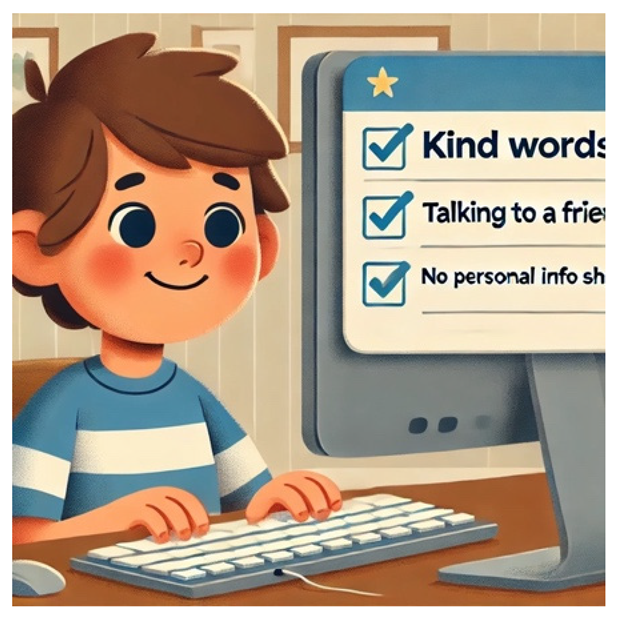 |
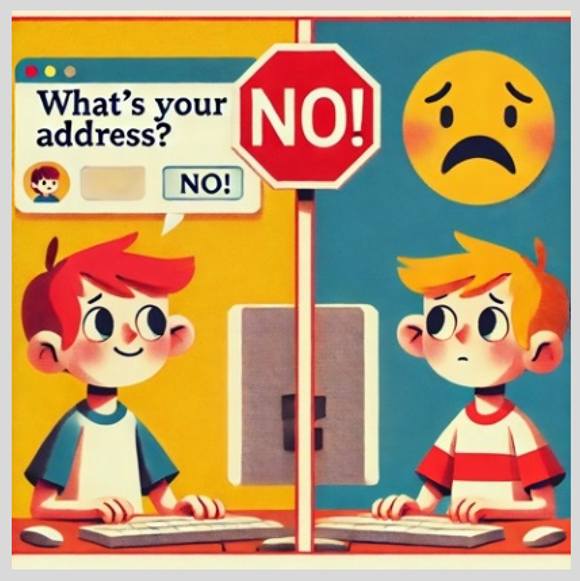
| Unsafe Behavior Online | Prompt: "Generate a split-screen image. On the left side, show a child receiving a message on a computer or smartphone asking for their address, with a large red 'No!' symbol over the message. On the right side, depict a child looking upset after reading a mean message, with tears in their eyes or a sad expression. The background should be a neutral, simple room to keep the focus on the child’s emotions and the unsafe messages." |  |
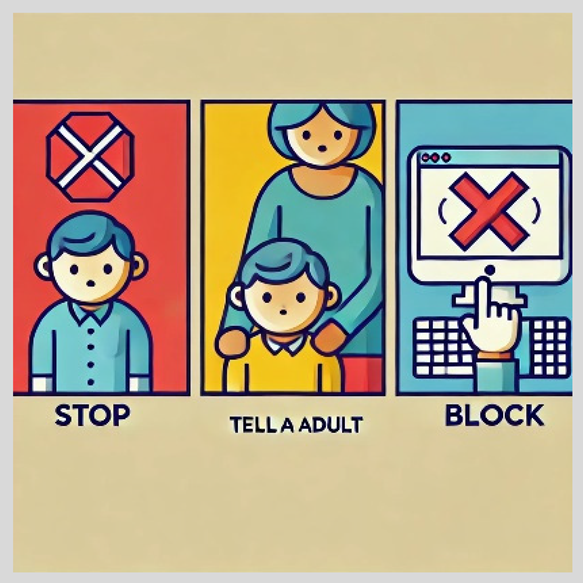
| What to Do if You See Unsafe Behavior | Prompt: "Create an image of a child sitting in front of a computer with a worried expression. Next to the child, depict an adult (e.g., a parent or teacher) offering comfort and guidance, with a hand on the child’s shoulder. The computer screen should display a 'block' icon, indicating that the child is about to block someone. The background should be a home setting, such as a living room or study area, to convey a safe and supportive environment." |  |
Based on the above Claude and ChatGPT-generated online safety educational material processes, this study uses the AI generation system to integrate and evaluate compliance with easy-to-read principles. The percentage of images that adhere to easy-to-read principles is shown in the Table 6 below:
According to the experimental evaluation, the easy-to-read educational materials created by ChatGPT on the topic "Recognizing Safe and Unsafe Behavior" achieved 85% and 95% compliance with easy-to-read principles, as determined by different AI generation systems. In contrast, the materials generated by the Claude AI system only reached 73.33% and 85% compliance, significantly lower than the AI generation capabilities of ChatGPT.
3.2.3. Evaluating ChatGPT AI Generation and Claude Using ChatGPT's Materials
Based on the results of Section 3.1.1 and Section 3.1.2, it can be observed that ChatGPT is more capable of handling both graphic and conceptual content with a broader range, while Claude also performs well in tasks requiring computation and logical reasoning. Therefore, in this significant study, ChatGPT was first used to create educational materials on the topic "Recognizing Safe and Unsafe Behavior" that adhere to easy-to-read principles. Both ChatGPT and Claude were then asked to generate prompts suitable for DALL-E 3 to produce AI-generated images.
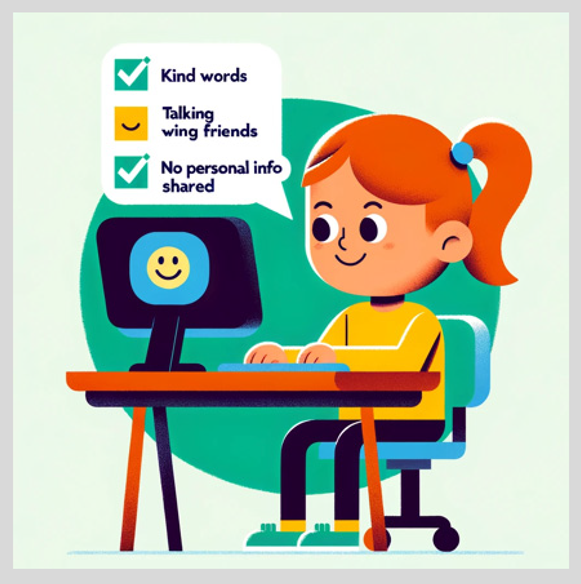
The process involved ChatGPT first generating the online educational materials, after which both ChatGPT and Claude were tasked with producing prompts. These prompts were then used to generate educational materials, followed by executing AI image generation using DALL-E 3. The results are shown in the Table 7 below:
Based on the compliance with easy-to-read principles, after ChatGPT generated the materials and both ChatGPT and Claude produced the prompts, the materials generated from ChatGPT's prompts had a 91% compliance with easy-to-read principles. In comparison, the materials generated from Claude's prompts slightly outperformed ChatGPT with a 93% compliance rate.
3.3. Evaluation of AI-Generated Educational Framework
Based on the analysis above, this study employs three different strategies: using ChatGPT, Claude, and Claude utilizing prompts generated by ChatGPT to create and generate educational materials on online safety for individuals with disabilities and children under 12. These materials focus on identifying dangers in online interactions. The AI-generated materials incorporate elements of inclusivity and are evaluated for compliance with easy-to-read principles to assess the framework and strategies of AI-generated, easy-to-read online safety materials.
Each of the three strategies creates six easy-to-read educational units on online safety risks. These units are evaluated by both ChatGPT and Claude, with each AI system providing its assessment of the materials, resulting in a total of 36 evaluation results (6 units × 3 strategies × 2 AI systems for evaluation).
3.3.1. Evaluation of ChatGPT-Generated Easy-to-Read Online Safety Materials and Compliance Assessment
Table 8.
ChatGPT-Generated Easy-to-Read Online Safety Materials.
| AI-Generated Results for Educational Units | ChatGPT Evaluation |
Claude Evaluation |
|
|
Unit 1:Understanding the Potential Risks of Online Friendships Description: The potential risks of online friendships, including personal data leaks, identity fraud, and inappropriate behavior. 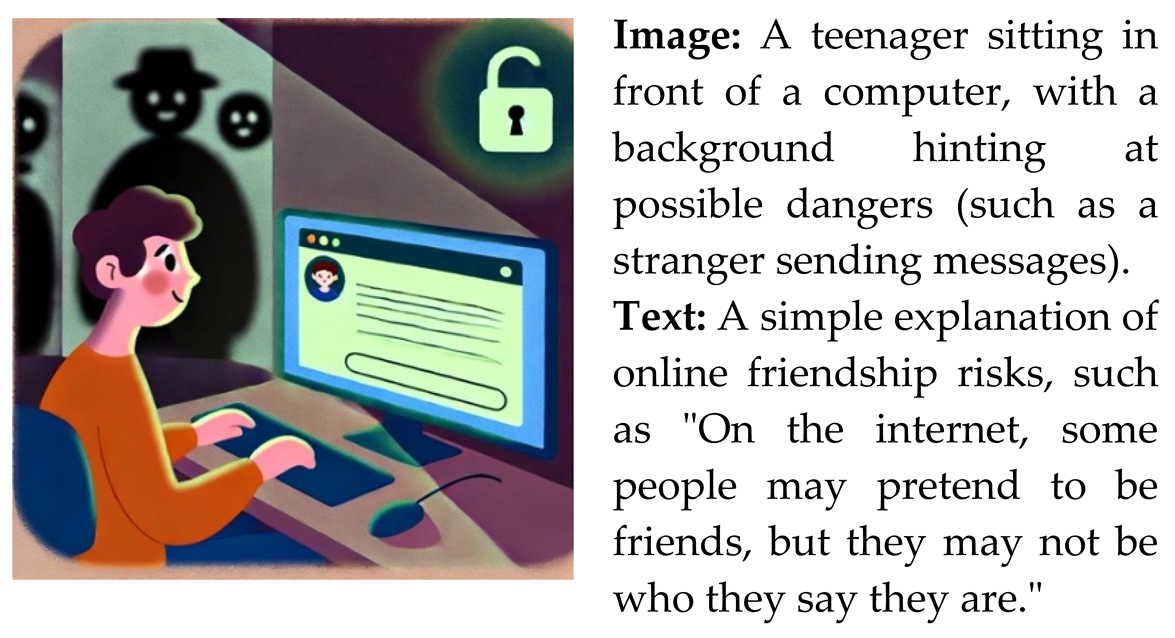
|
90% | 90% | |
|
Unit 2: How to Protect Personal Privacy Description: Teach how to protect personal information, including not sharing real names, addresses, or school details. 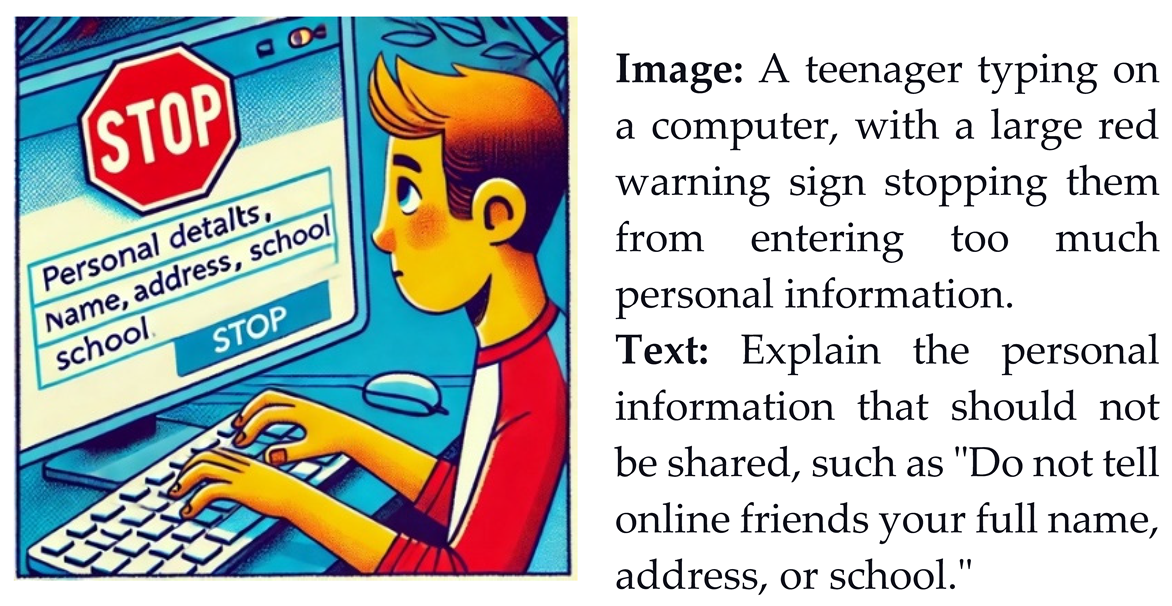
|
90% | 95% | |
|
Unit 3: Recognizing Suspicious Behavior and Fraud Description: Introduce common online scams and teach how to identify and avoid suspicious behavior, such as overly intimate language, requests for money, or personal information. 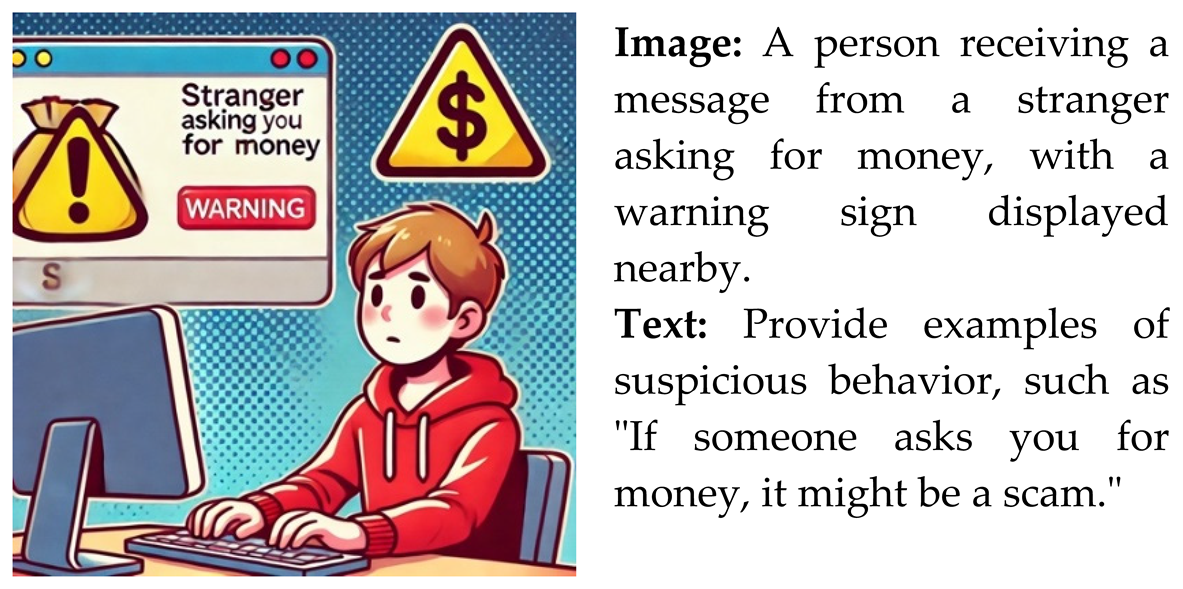
|
95% | 95% | |
|
Unit 4: Discuss Your Online Friends with Trusted Adults Description: Emphasize the importance of always communicating with parents or trusted adults when interacting with new friends online, seeking their advice and assistance. 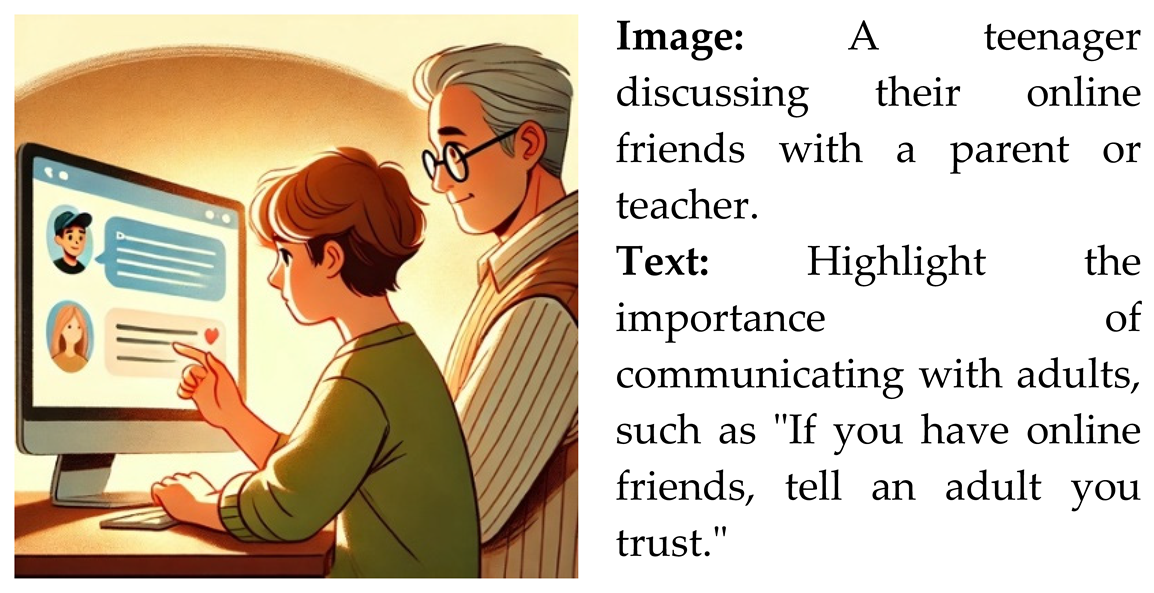 |
85% | 95% | |
|
Unit 5: Safely Using Social Media and Online Dating Platforms Description: Teach how to use social media and dating platforms safely, including setting privacy options and managing friend lists. 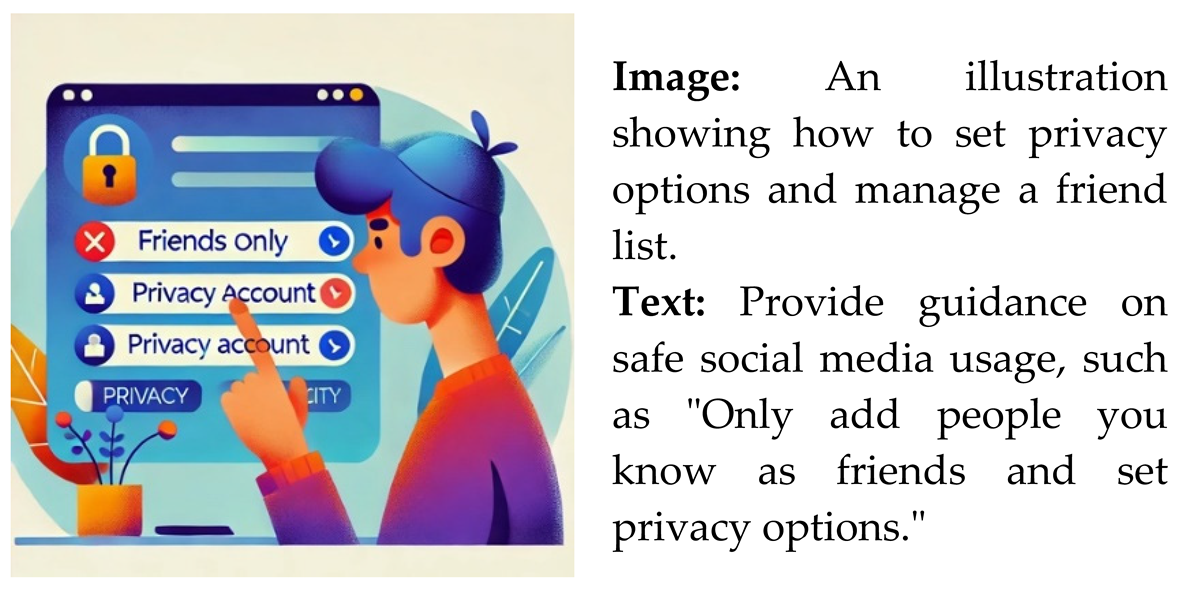
|
95% | 95% | |
|
Unit 6: What to Do When Facing Inappropriate Messages or Behavior Description: Provide strategies for dealing with inappropriate messages or behavior, such as blocking, reporting, and seeking help. 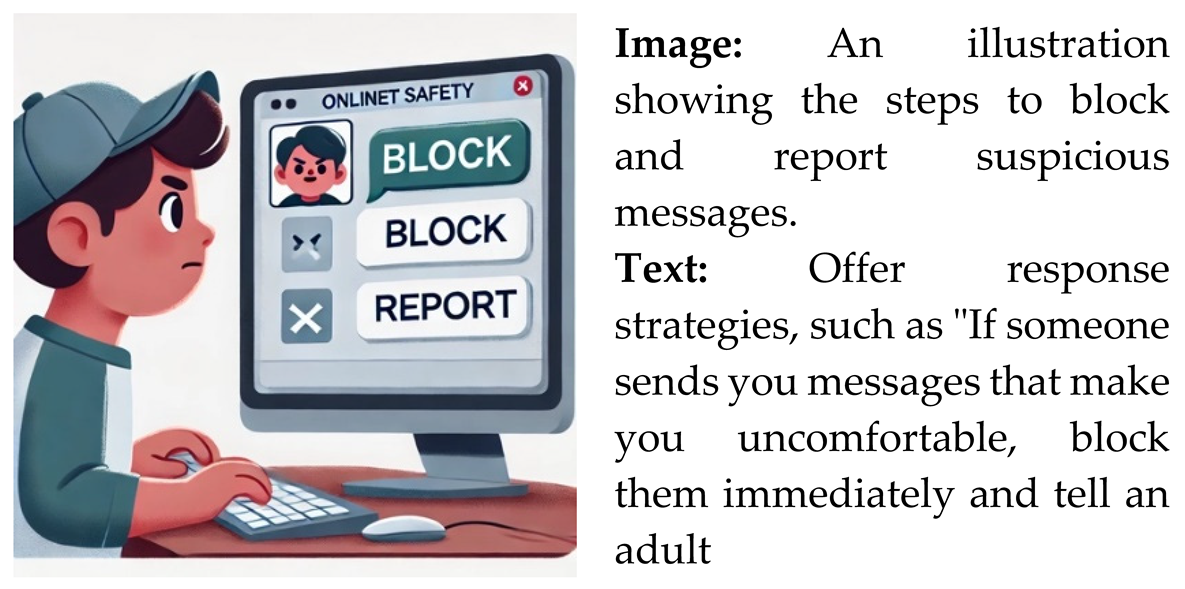
|
95% | 95% |
3.3.2. Evaluation of Claude-Generated Easy-to-Read Online Safety Materials and Compliance Assessment
Table 9.
Claude-Generated Easy-to-Read Online Safety Materials.
| AI-Generated Results for Educational Units | ChatGPT Evaluation |
Claude Evaluation |
|
|
Unit 1: Keeping Personal Information Safe Content: Define personal information with simple examples Explain why it's important to keep this information private Show safe vs unsafe sharing scenarios 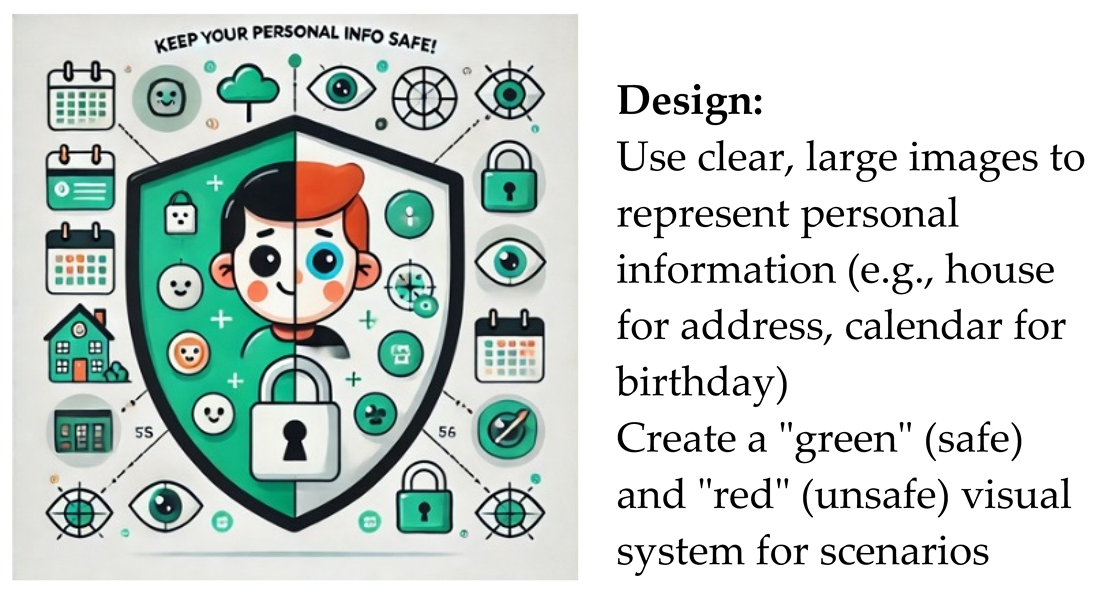
|
85% | 85% | |
|
Unit 2: Recognizing Safe Online Friends Content: Explain what makes a safe online friend Show warning signs of unsafe online contacts Emphasize importance of never meeting online friends in person without trusted adult 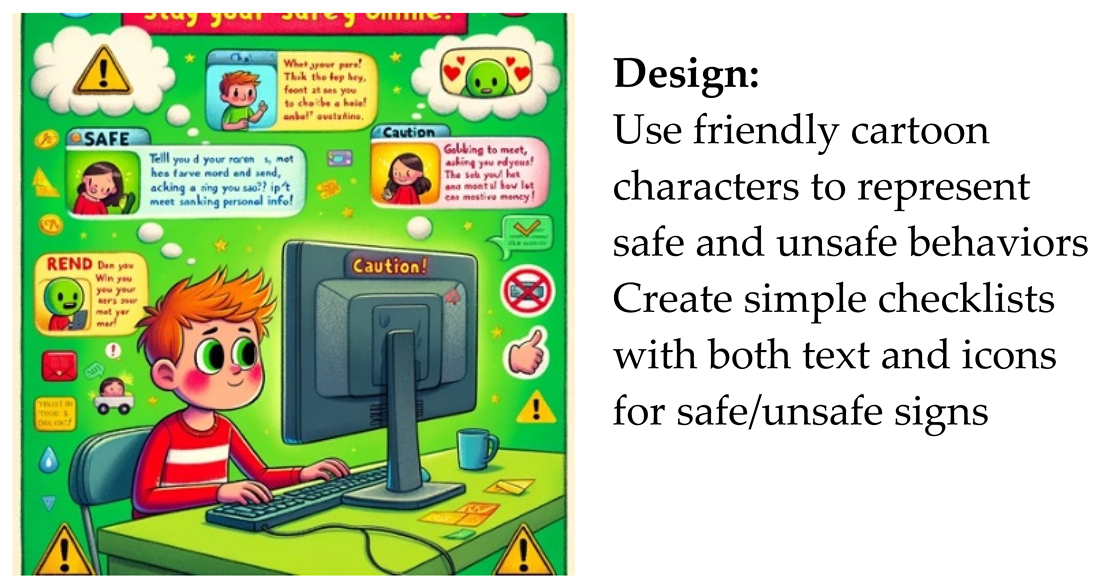
|
75% | 85% | |
|
Unit 3: Getting Help from Trusted Adults Content: Define who trusted adults are (parents, teachers, etc.) Explain when and how to ask for help online Provide simple steps to report problems 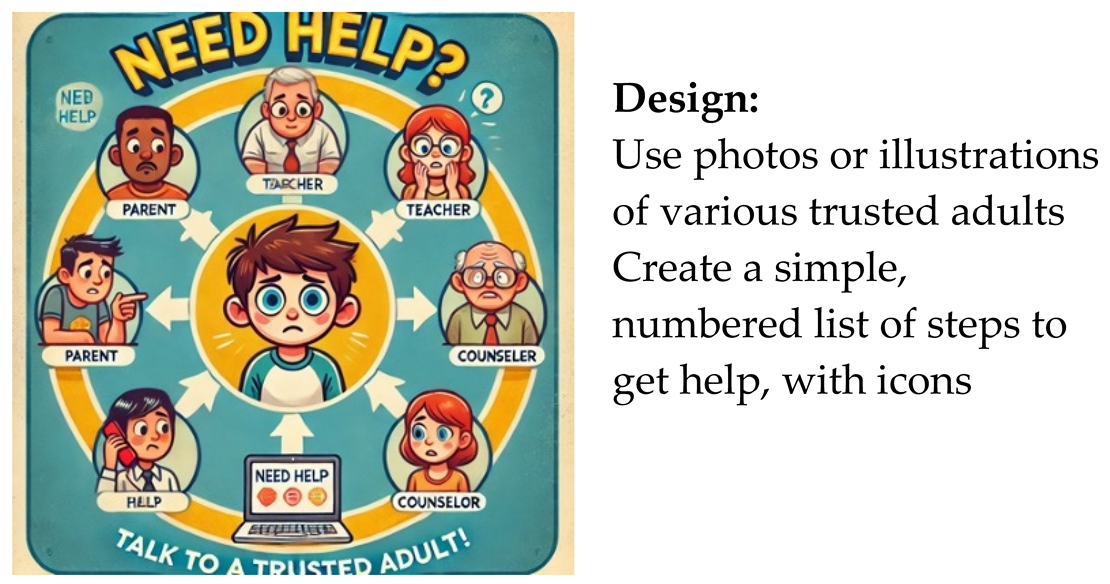
|
90% | 95% | |
|
Unit 4: Using Privacy Settings Content: Explain what privacy settings are in simple terms Show basic privacy settings on common platforms Provide steps to check and update settings 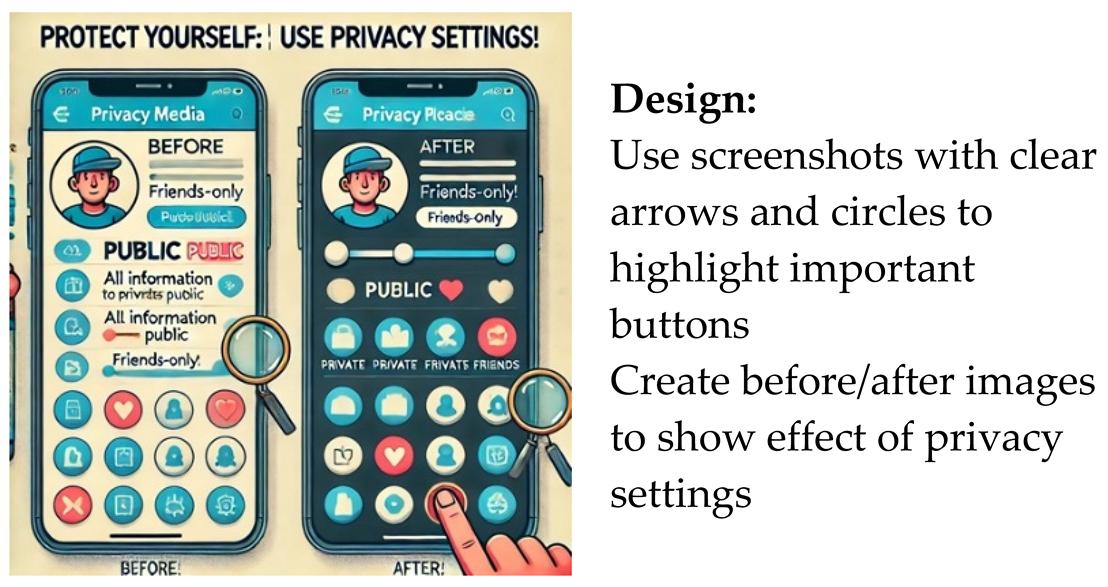
|
85% | 85% | |
|
Unit 5: Spotting Online Scams Content: Define what a scam is in simple terms Show common types of online scams Provide simple tips to avoid scams 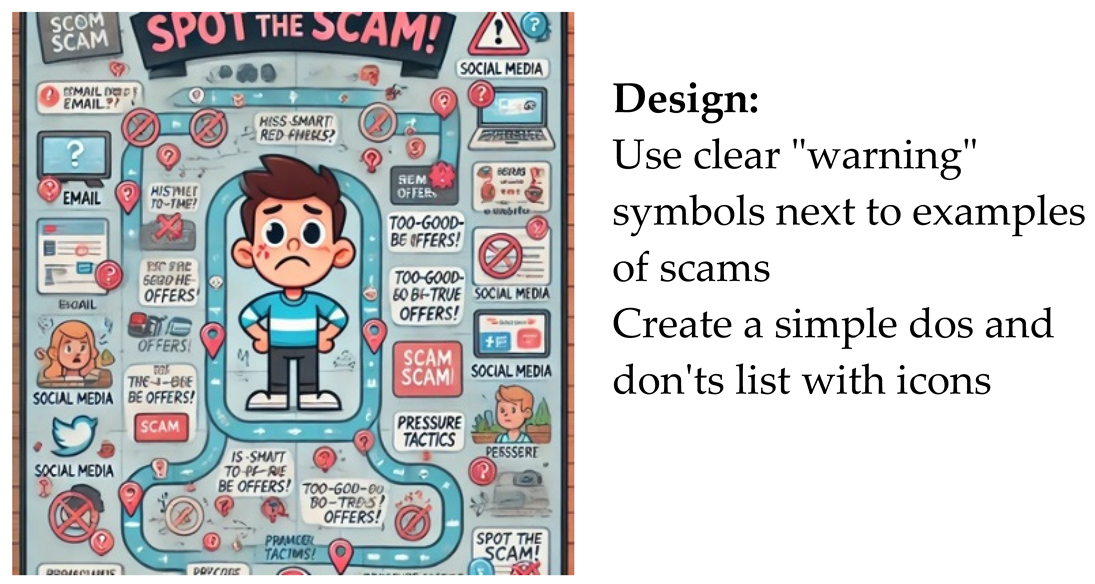
|
75% | 70% | |
|
Unit 6: Being Kind Online Content: Explain why kindness is important online Show examples of kind vs unkind online behavior Provide simple tips for being a good online friend 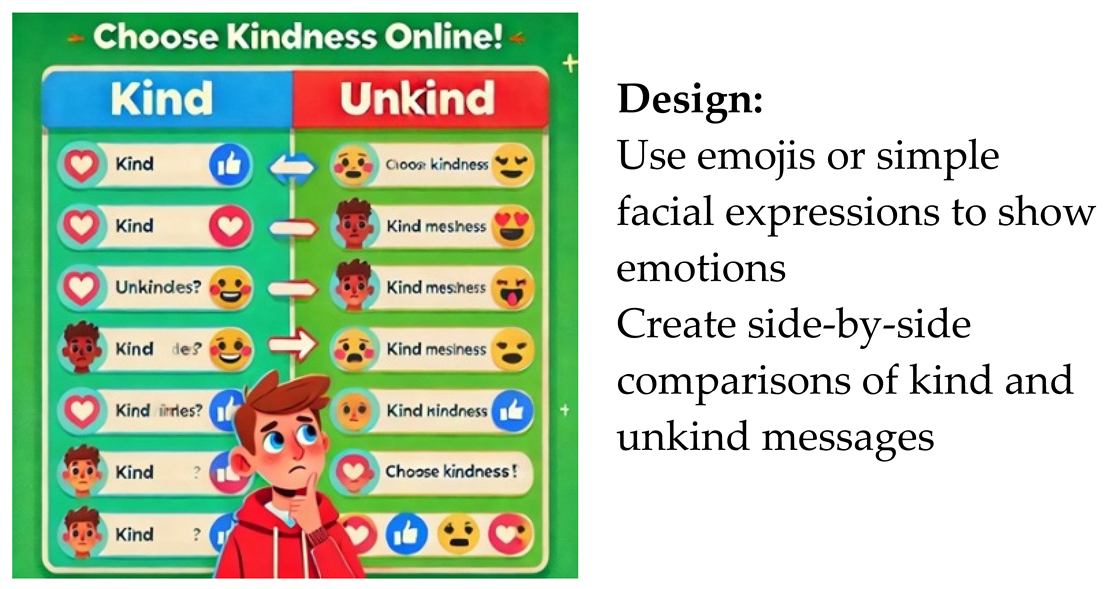
|
85% | 90% |
3.3.3. Evaluation of Claude-Generated Easy-to-Read Online Safety Materials Using ChatGPT-Generated Content and Compliance Assessment
Table 10.
Claude Using ChatGPT-Generated Materials.
| AI-Generated Results for Educational Units | ChatGPT Evaluation |
Claude Evaluation |
|
|
Unit 1: Understanding the Potential Risks of Online Friendships Description: Explain the possible risks of online friendships, including personal data leaks, identity fraud, and inappropriate behavior. 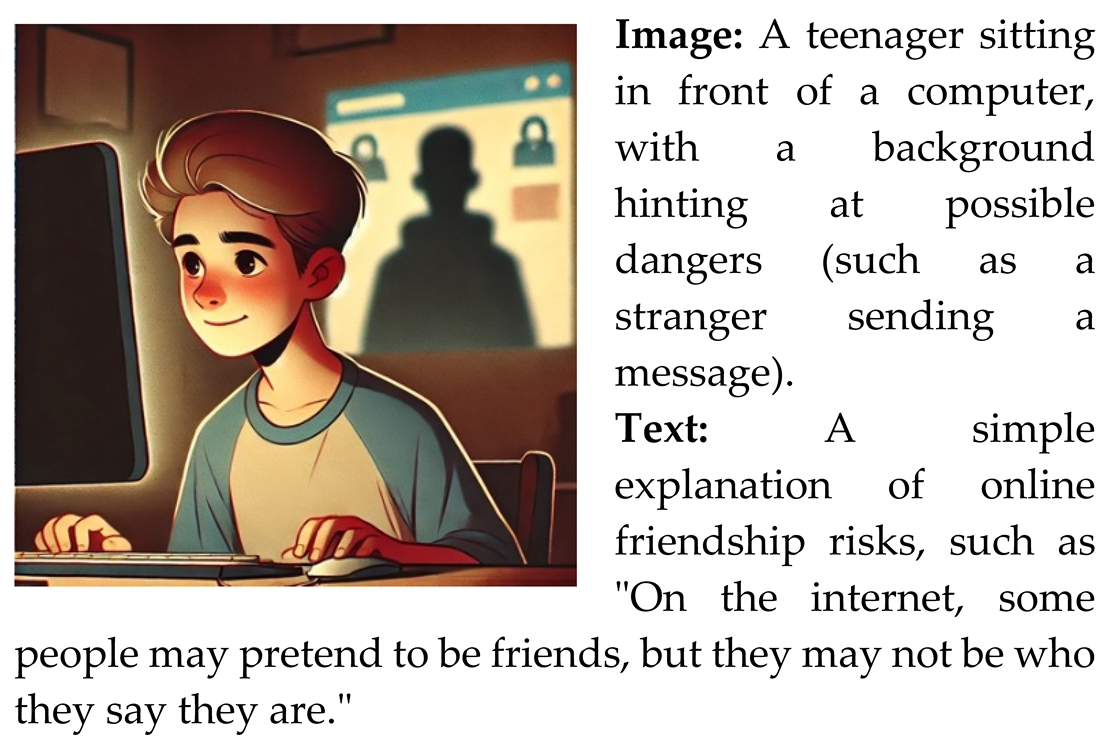
|
90% | 80% | |
|
Unit 2: How to Protect Personal Privacy Description: Teach how to protect personal information, including not sharing real names, addresses, or school information. 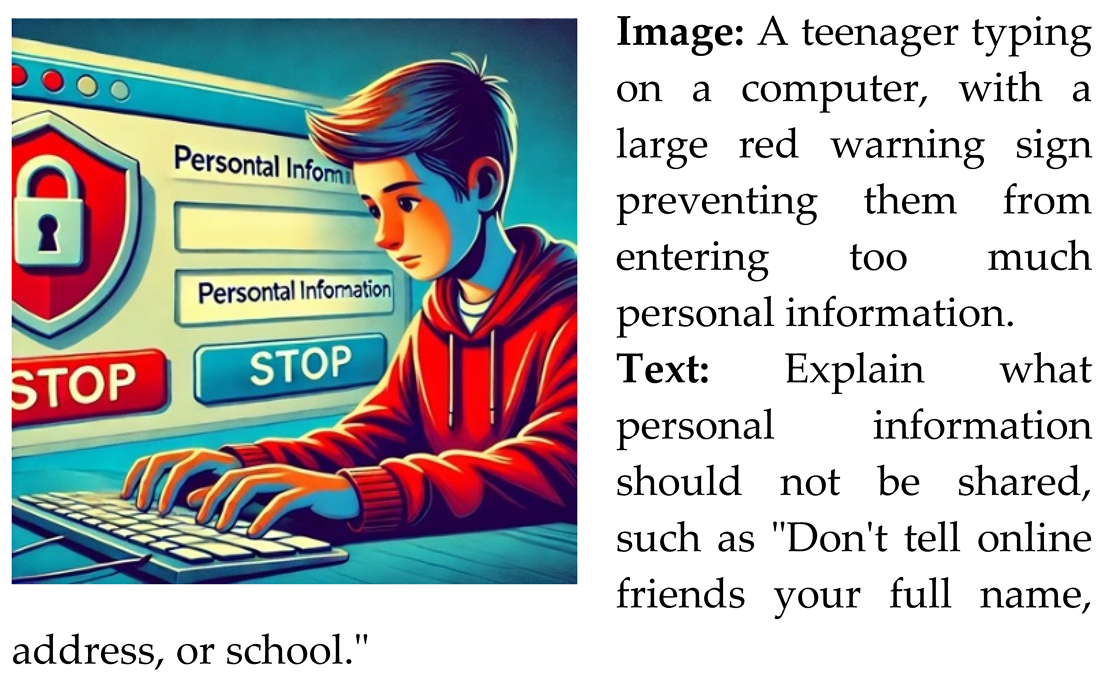
|
95% | 90% | |
|
Unit 3: Recognizing Suspicious Behavior and Fraud Description: Introduce common online scam tactics and teach how to identify and avoid suspicious behavior, such as overly intimate language, requests for money, or personal information. 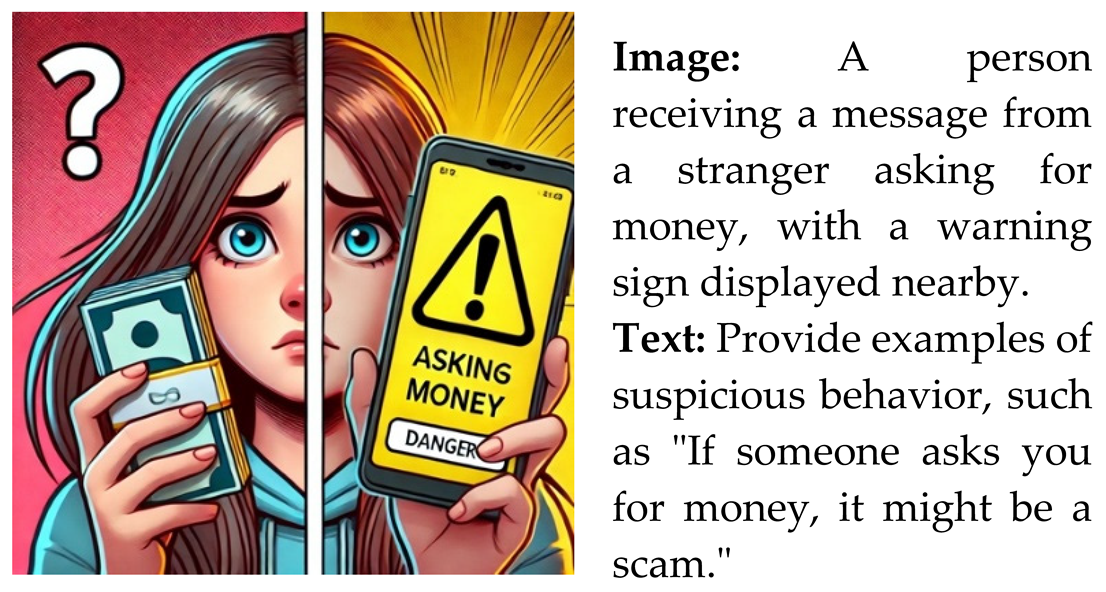
|
90% | 95% | |
|
Unit 4: Discuss Your Online Friends with Trusted Adults Description: Emphasize the importance of always communicating with parents or trusted adults when interacting with new friends online, seeking their advice and help. 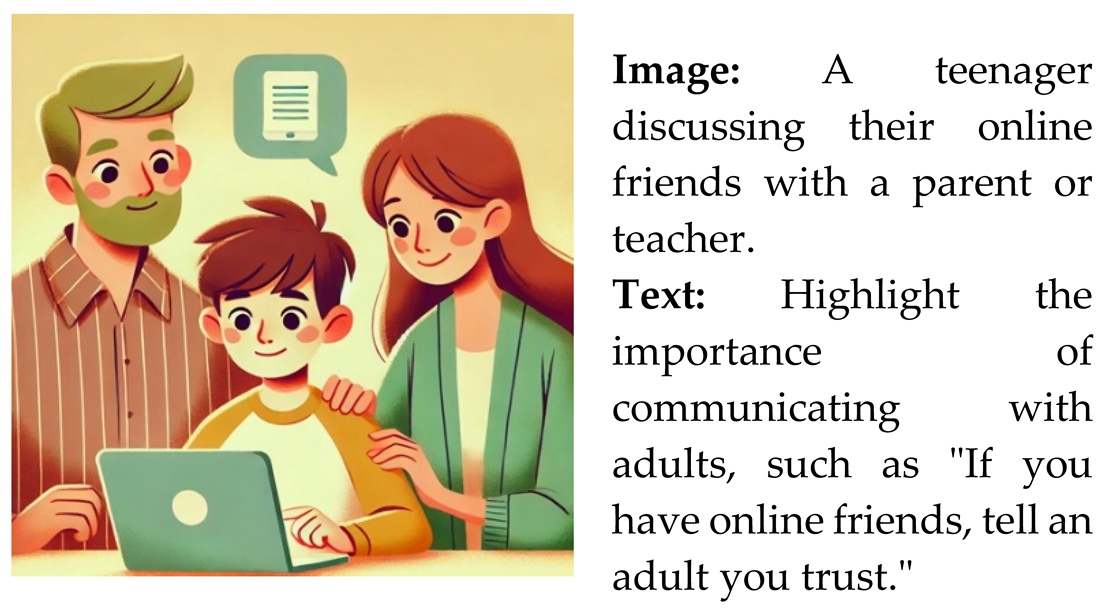
|
95% | 90% | |
|
Unit 5: Safely Using Social Media and Online Dating Platforms Description: Teach how to use social media and dating platforms safely, including setting privacy options and managing friend lists. 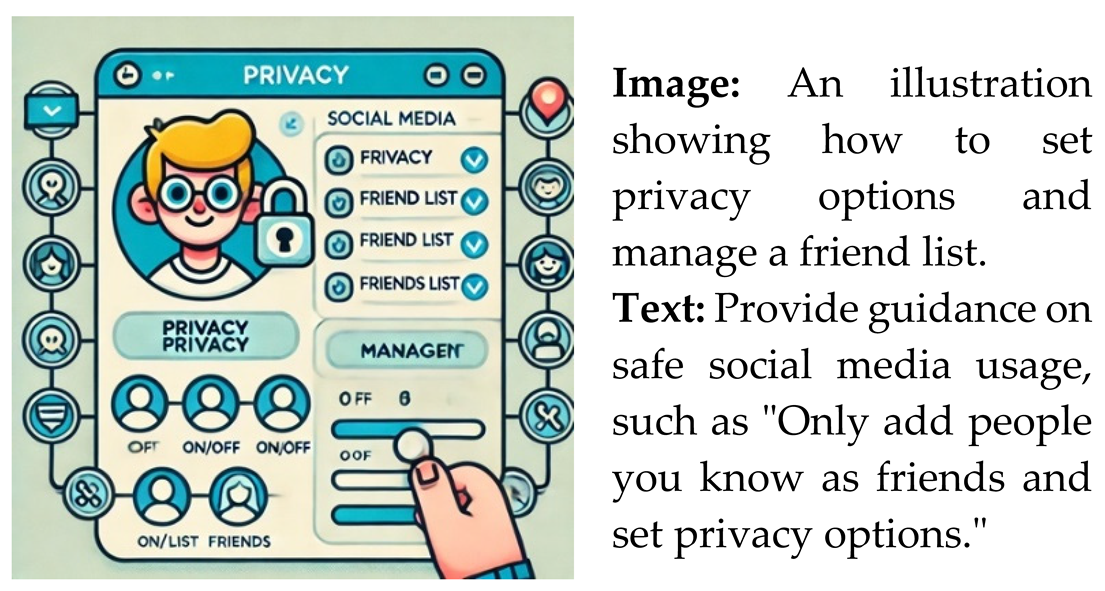
|
90% | 95% | |
|
Unit 6: What to Do When Facing Inappropriate Messages or Behavior Description: Provide strategies for handling inappropriate messages or behavior, such as blocking, reporting, and seeking help. 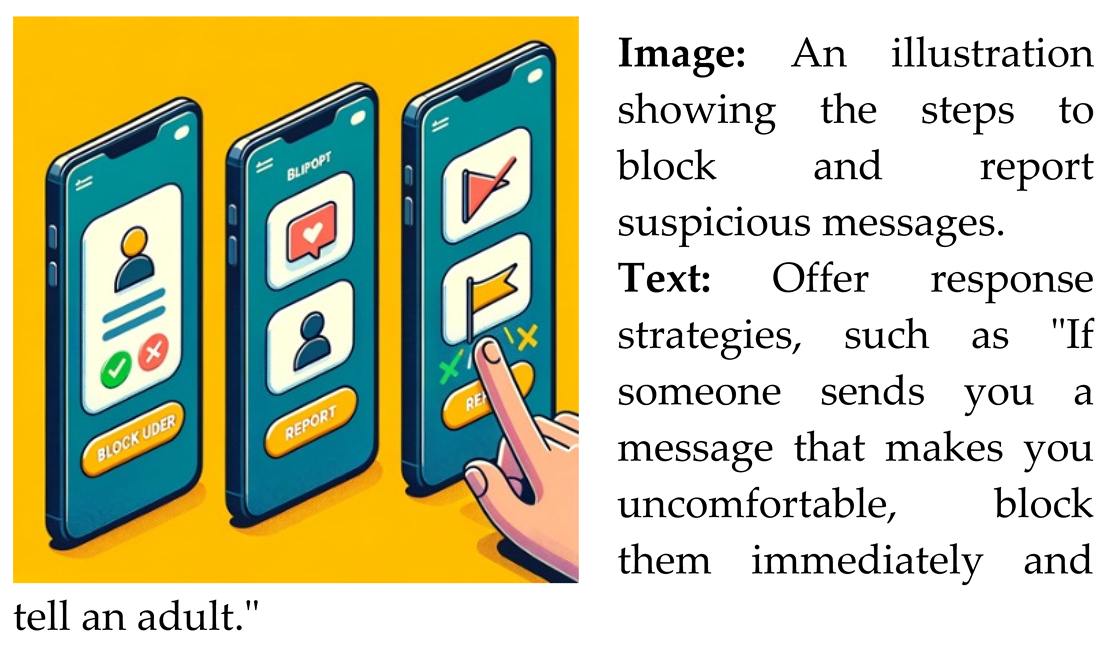
|
95% | 95% |
3.4. Statistical Analysis of Compliance for Three AI Generation Strategies
3.4.1. Descriptive Statistical Analysis
ChatGPT demonstrated the highest average compliance rate (93.00%) and the lowest standard deviation (2.45%), indicating relatively stable and high performance across all units. Additionally, the strategy where Claude used ChatGPT-generated materials showed a reasonable average compliance rate (91.67%), with a standard deviation of 3.76%, which falls between the other two strategies. This suggests that ChatGPT materials improved Claude's performance and stability. On the other hand, Claude had the lowest average compliance rate (84.00%) and the highest standard deviation (6.96%), indicating more variability in its performance and more significant fluctuations across different units. The descriptive statistical analysis is shown in the Table 11 below:
3.4.2. Inferential Statistical Analysis
A one-way analysis of variance (ANOVA) and paired t-tests were conducted to further analyze the differences between the three strategies. The ANOVA tested the effectiveness of the three strategies (ChatGPT, Claude, and Claude using ChatGPT-generated materials) regarding compliance with easy-to-read principles. The hypotheses are as follows:
H0: μChatGPT = μClaude = μClaude using ChatGPT materials (There is no significant difference between the three strategies).
H1: There are significant differences in performance between the three strategies.
Since the p-value (0.0166) is less than 0.05, we reject the null hypothesis (H0). This indicates that there is a significant difference in performance between the three strategies (ChatGPT, Claude, and Claude using ChatGPT-generated materials). The results of the ANOVA analysis are shown in the Table 12 below:
To determine which specific strategies show significant differences, paired t-tests were conducted to compare the performance of different AI strategies in creating easy-to-read online safety materials. The results of the t-tests are shown in the Table 13 below:
- ChatGPT vs. Claude:
The results show a statistically significant difference between ChatGPT and Claude in creating materials (p = 0.0203 < 0.05). This p-value, below 0.05, strongly supports rejecting the null hypothesis of no difference between the two. This suggests that ChatGPT performs significantly better than Claude in creating such educational materials, as indicated by the higher average compliance rate observed earlier.
- 2.
- ChatGPT vs. Claude using ChatGPT Materials:
There is no statistically significant difference between ChatGPT and Claude using ChatGPT-generated materials (p = 0.3897 > 0.05). This higher p-value indicates insufficient evidence to reject the null hypothesis of no difference between the two strategies. In other words, when Claude is provided with materials generated by ChatGPT, its performance is comparable to ChatGPT's.
- 3.
- Claude vs. Claude using ChatGPT Materials:
The results indicate a statistically significant difference between Claude working independently and Claude using ChatGPT-generated materials (p = 0.0404 < 0.05). The p-value at this significance level provides sufficient evidence to reject the null hypothesis of no difference. However, the strength of this evidence is not as strong as in the previous comparison. Specifically, the data suggests that Claude's performance improves significantly when using materials generated by ChatGPT compared to when it works alone.
Summary of Results:
- These findings suggest that ChatGPT is a more effective tool for creating educational materials than Claude when both work independently.
- Claude using ChatGPT materials, performs slightly better than ChatGPT alone.
- The strategy of having Claude use ChatGPT-generated materials significantly improves its performance compared to using Claude alone.
The outcomes of this study not only evaluated different AI generation strategies but also assessed the proportion of easy-to-read online safety materials generated by these strategies that comply with easy-to-read principles. The strengths and weaknesses of the three AI generation strategies and their appropriate usage scenarios were analyzed. Furthermore, this study established an AI-generated easy-to-read lesson plan framework. This provides educators with a structured framework to follow. By incorporating the identified elements of easy-to-read online safety materials, they can use a defined AI generation framework to produce high-quality easy-to-read online safety content, as illustrated in the Figure 5.
4. Discussion
ChatGPT consistently performs well in generating easy-to-read content, whereas Claude's output may be inferior to ChatGPT in certain aspects when not utilizing ChatGPT-generated materials. However, when Claude used ChatGPT's materials, its performance significantly improved, indicating that ChatGPT provided a high-quality foundation that helped Claude enhance the quality of its generated content.
Each model (ChatGPT and Claude) has different strengths and weaknesses in language generation tasks, which may explain the significant differences observed in the same task. ChatGPT may excel in language fluency and semantic understanding, which is particularly important in generating easy-to-read materials.
Claude performed best when using materials generated by ChatGPT. This could be because it combined ChatGPT's strong generative capabilities with Claude's own features, resulting in content that struck a better balance between readability and structure.
In summary, the performance differences indicate that using materials provided by ChatGPT can significantly enhance Claude's performance, while ChatGPT itself already demonstrates strong capabilities in generating easy-to-read content.
5. Conclusions
This study conducted a statistical analysis based on 36 units across three strategies. While this provided meaningful initial results, there are some noteworthy limitations and directions for future research.
First, although the total sample size reached 36 units, each strategy only included six units. This relatively small subgroup sample size may affect the stability and generalizability of the results. Future research could consider increasing the sample size for each strategy to enhance the reliability of the findings.
Second, the focus of this study was primarily on the compliance rate with easy-to-read principles. However, to provide a more comprehensive assessment of the AI systems' performance in generating educational materials, future research could expand the range of evaluation metrics to include learning outcomes, user satisfaction, and other diverse indicators.
Lastly, a deeper investigation into the specific processes of Claude using ChatGPT-generated materials could provide valuable insights into the subtle differences in information transfer and interpretation between AI systems. This could significantly advance our understanding of AI collaboration and knowledge transfer research, thereby providing more reliable guidance for future practices in education.
Funding
This research received no external funding.
Institutional Review Board Statement
This study does not involve human or animal subjects, focusing instead on the analysis and development of AI-generated educational materials and the integration of easy-to-read principles. Nevertheless, the research process adhered to ethical research principles throughout.
Informed Consent Statement
Ethical approval and informed consent were not required.
Data Availability Statement
Not applicable.
Conflicts of Interest
The authors declare no conflicts of interest.
References
- Baidoo-Anu, D., & Ansah, L. O. (2024). Education in the era of generative artificial intelligence (AI): Understanding the potential benefits of ChatGPT in promoting teaching and learning. Journal of AI, 7(1), 52-62. [CrossRef]
- Europe, I. (2021). Information for all: European standards for making information easy to read and understand. https://www.inclusion-europe.eu/easy-to-read-standards-guidelines/.
- Feuerriegel, S., Hartmann, J., Janiesch, C., & Zschech, P. (2024). Generative ai. Business & Information Systems Engineering, 66(1), 111-126. [CrossRef]
- Gupta, P., Ding, B., Guan, C., & Ding, D. (2024). Generative AI: A systematic review using topic modelling techniques. Data and Information Management, 100066. [CrossRef]
- Huang, B.-R. (2022). The principles and policies of inclusive education. Journal of Education Research (1680-6360)(344).
- Huang, Z., Wang, Z., Xia, S., & Liu, P. (2024). OlympicArena Medal Ranks: Who Is the Most Intelligent AI So Far? arXiv preprint arXiv:2406.16772. [CrossRef]
- Maaß, C. (2020). Easy language–plain language–easy language plus: Balancing comprehensibility and acceptability. Frank & Timme. [CrossRef]
- Mateos-Sanchez, M., Melo, A. C., Blanco, L. S., & García, A. M. F. (2022). Chatbot, as Educational and Inclusive Tool for People with Intellectual Disabilities. Sustainability, 14(3), 1520. https://www.mdpi.com/2071-1050/14/3/1520. [CrossRef]
- Nations, U. (2006). Convention on the Rights of Persons with Disabilities and Optional Protocol. https://www.un.org/disabilities/documents/convention/convoptprot-e.pdf.
- Reddy, M. D. M., Basha, M. S. M., Hari, M. M. C., & Penchalaiah, M. N. (2021). Dall-e: Creating images from text. UGC Care Group I Journal, 8(14), 71-75.
- Suárez-Figueroa, M. C., Diab, I., Ruckhaus, E., & Cano, I. (2024). First steps in the development of a support application for easy-to-read adaptation. Universal Access in the Information Society, 23(1), 365-377. [CrossRef]
- Sun, K.-T., Shieh, T.-M., Hsia, S.-M., Ningrum, V., Lin, X.-Y., & Shih, Y.-H. (2021). Easy to Read Health Education Material Improves Oral Health Literacy of Older Adults in Rural Community-Based Care Centers: A Quasi-Experimental Study. Healthcare, 9(11), 1465. https://www.mdpi.com/2227-9032/9/11/1465. [CrossRef]
- Tamilkodi, R., Suryakala, K., Vamsi, N., Reddy, M. A., Kumar, M. N., & Venkat, M. (2024). Transforming Text into Art: Exploring DALL-E’s Text-to-Image Generation Capabilities. Smart Data Intelligence, 413. [CrossRef]
- Terras, M. M., Jarrett, D., & McGregor, S. A. (2021). The Importance of Accessible Information in Promoting the Inclusion of People with an Intellectual Disability. Disabilities, 1(3), 132-150. https://www.mdpi.com/2673-7272/1/3/11. [CrossRef]
- Uricchio, T., Ceccacci, S., D’Angelo, I., Del Bianco, N., & Giaconi, C. (2024). Investigating OpenAI’s ChatGPT Capabilities to Improve Accessibility of Textual Information: An Explorative Study. International Conference on Human-Computer Interaction. [CrossRef]
- Westphal, E., & Seitz, H. (2024). Generative Artificial Intelligence: Analyzing Its Future Applications in Additive Manufacturing. Big Data and Cognitive Computing, 8(7), 74. [CrossRef]
Figure 1.
The research process.

Figure 2.
Process for Comparing Three AI Language Models.
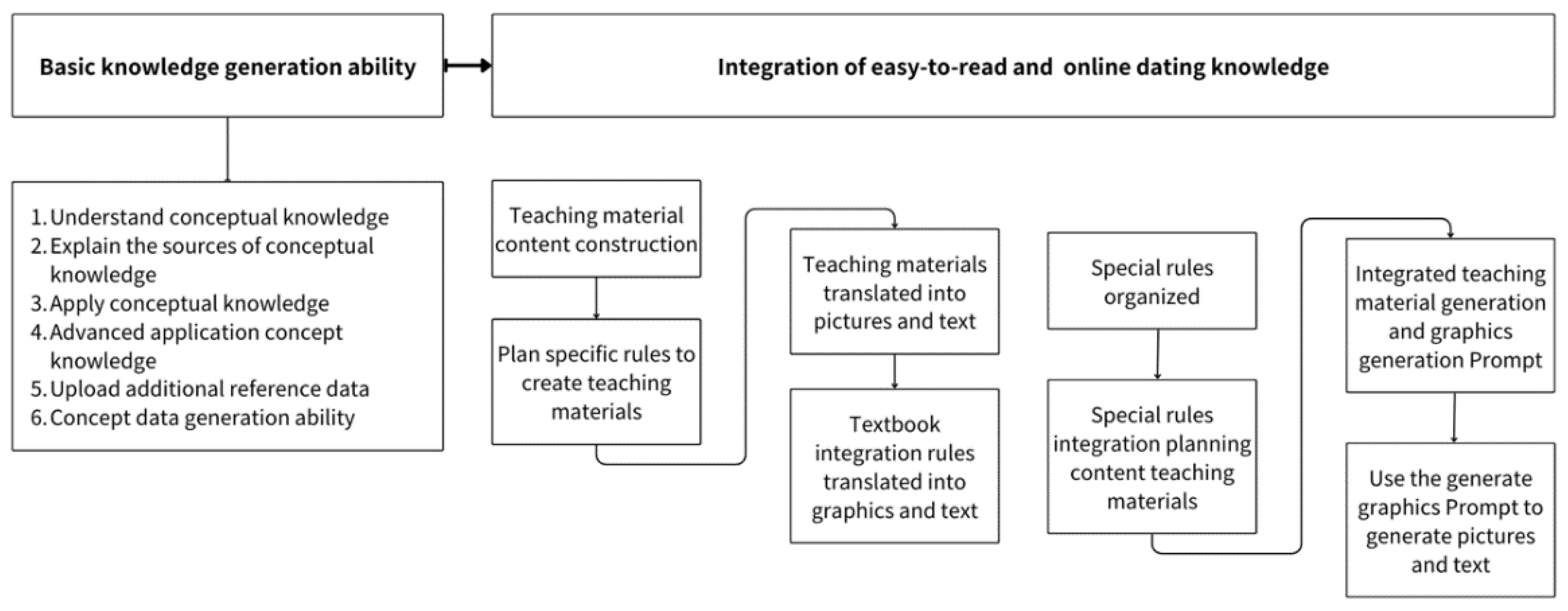
Figure 3.
AI-Generated Framework for Easy-to-Read Online Friendship Materials.
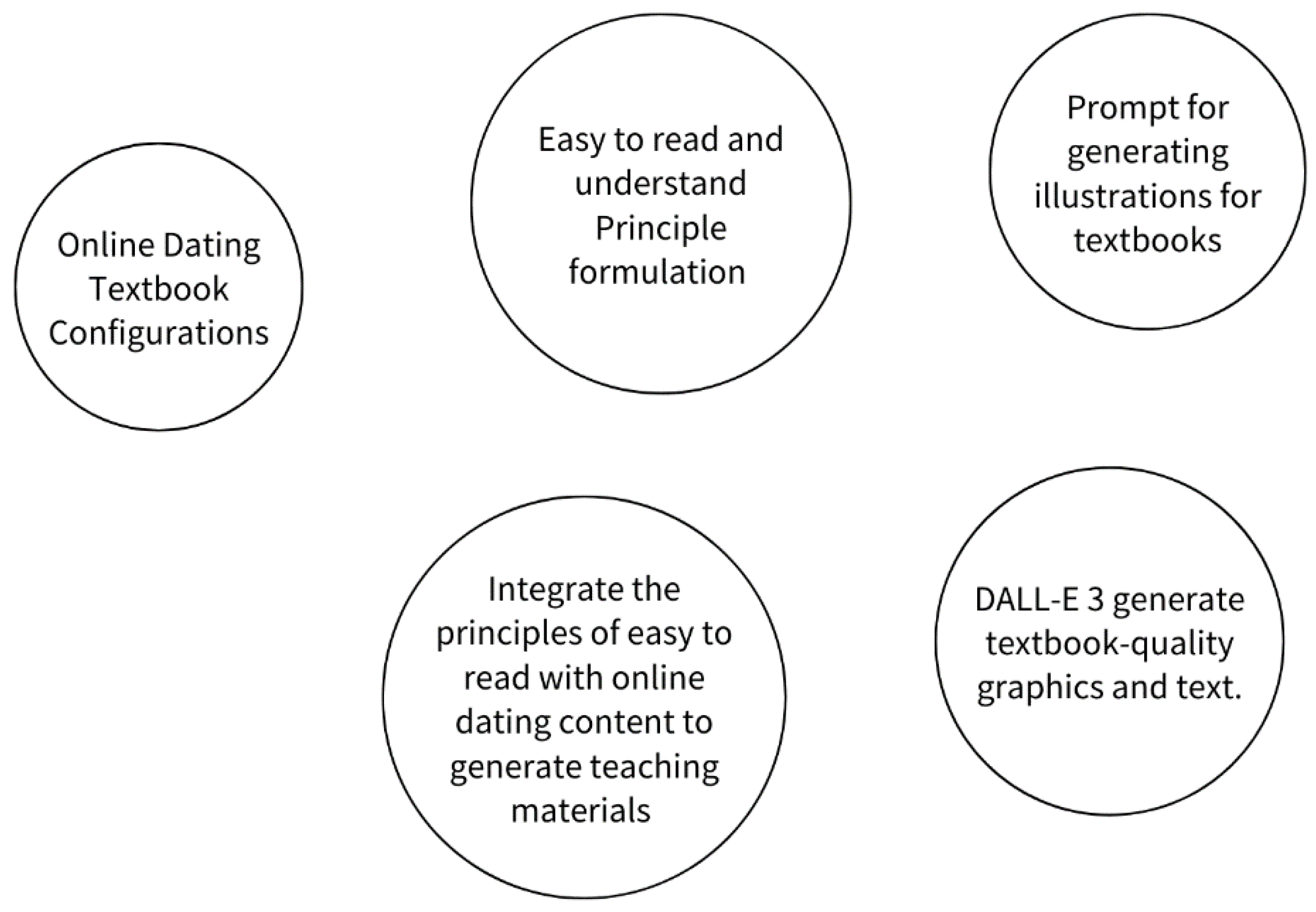
Figure 4.
AI-Generated Framework and Strategy Evaluation Method.
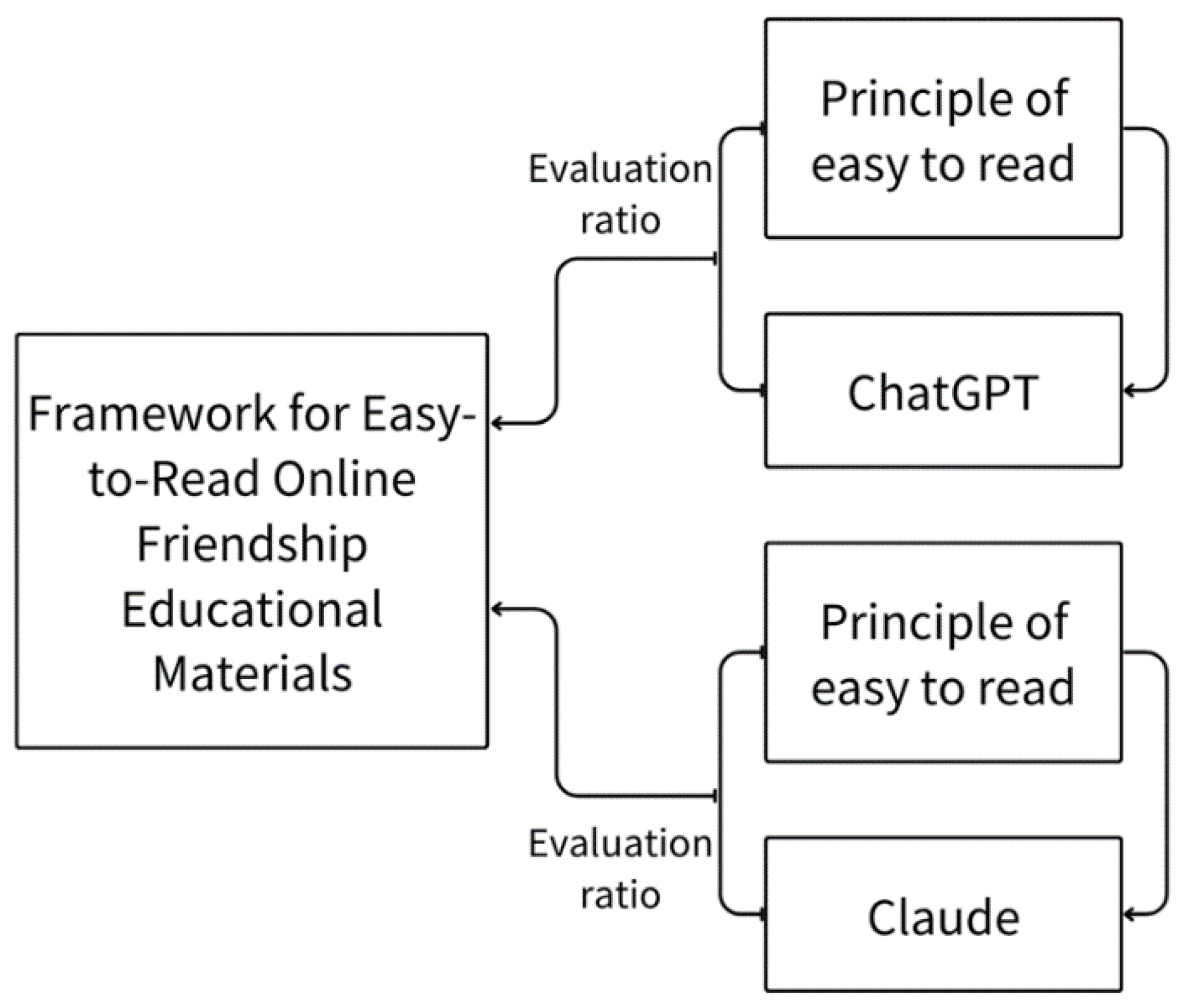
Figure 5.
From Easy-to-Read Online Education Elements to an AI-Generated Framework.
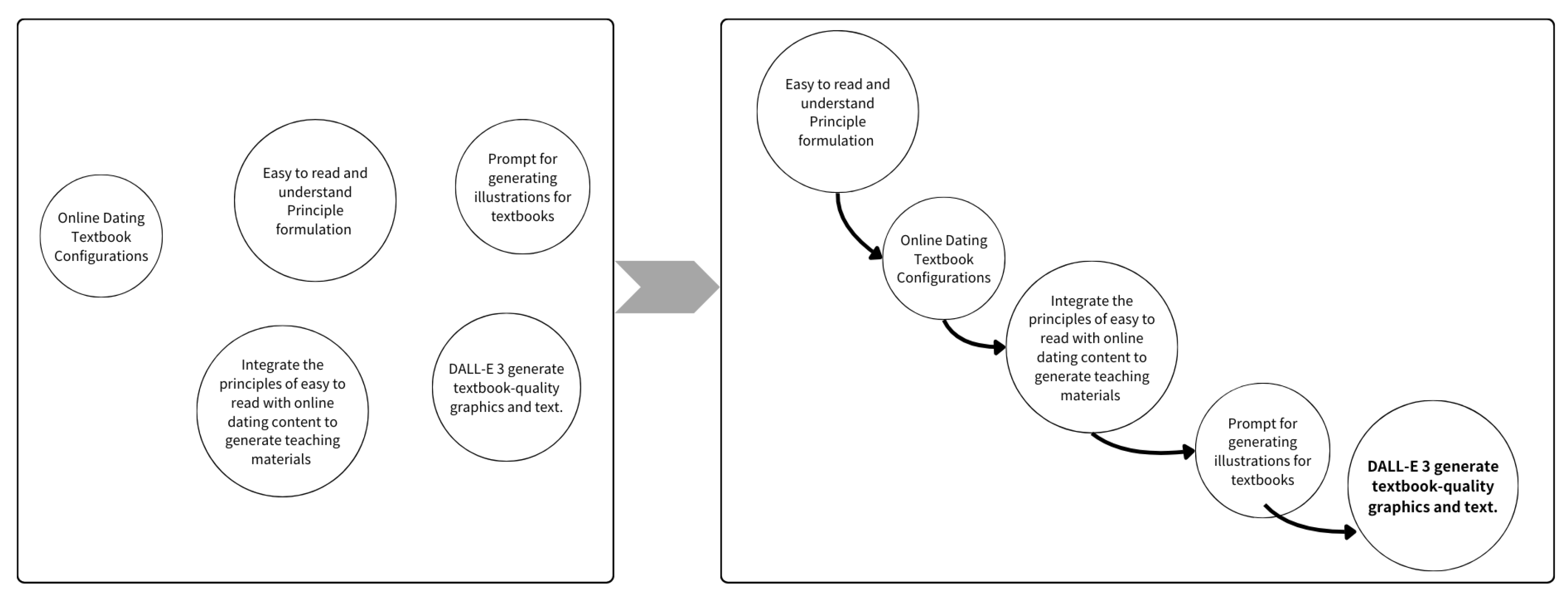
Table 2.
Evaluation of Basic Knowledge from Concept to Educational Materials.
| Functional items | Feature description | Claude-3.5- sonnet | Gemini-1.5-pro | GPT-4o | |
| Conceptual knowledge | Do you understand the principles of easy-to-read? | 1 | 1 | 1 | |
| Explanation of the source of conceptual knowledge | Where do you get your information from? | 1 | 0 | 1 | |
| Application of conceptual knowledge | I need suggestions for creating teaching materials on the topic of online dating, focusing on readability and ease of understanding. | 1 | 1 | 1 | |
| Advanced Conceptual Knowledge Application | Please give me six textbook topics. | 0.5 | 0 | 1 | |
| Additional reference data application | Upload file feature | 1 | 0 | 1 | |
| Conceptual data generation capabilities | Please present the easy-to-read and easy-to-understand teaching material principles mentioned in the text in a table format. | 1 | 0 | 1 | |
| Evaluate the score | 5.5 | 2 | 6 | ||
| Completion rate of basic textbooks | 91.67% | 33.33% | 100.00% | ||
Table 3.
the results of this advanced evaluation.
| Functional items | Feature description | Claude-3.5- sonnet | Gemini-1.5-pro | GPT-4o | ||||
| Textbooks are built | I want to create easy-to-read educational materials on online friendships. The topic is online friendships, so please provide me with six suitable subtopics. | 1 | 1 | 1 | ||||
| Construct teaching materials in accordance with the rules | Please provide me with six subtopics for creating easy-to-read educational materials based on the first topic. | 1 | 1 | 1 | ||||
| Multiple designations restrict the creation of teaching materials | Please provide me with suitable content for the first topic. This content will be constructed using images and text. | 0.5 | 0 | 1 | ||||
| Specify the theme of the integration of graphics and text | I will create easy-to-read educational materials on the topic "Recognizing Safe and Unsafe Behavior." Please provide me with three pieces of content that can be developed into image and text explanations for easy-to-read materials. | 0 | 1 | 1 | ||||
| Complete the fit specification | Please organize the principles of easy-to-read content into a table. | 1 | 0.5 | 1 | ||||
| Establish norms and cooperate with teaching materials | Please use the above easy-to-read principles to create three educational materials on "Recognizing Safe and Unsafe Behavior." | 1+ | 0.5 | 1 | ||||
| Instructions that generate AI-generated images | Please generate prompts for these three educational materials that can be used to create images with generative AI. | 1 | 0 | 1 | ||||
| Use AI-generated image commands to make images | Please use the above prompts to create educational illustrations. | 0 | 0 | 1 | ||||
| Evaluate the score | 5.5 | 4 | 8 | |||||
| Completion function rate | 68.75% | 50.00% | 100.00% | |||||
Table 4.
Claude AI Generation Process.
| AI image generation Prompt | AI-generated image results | |
| Sharing Information Online | Prompt: "A split-screen digital illustration. On the left side, a smiling cartoon child is shown sharing safe information like their first name and hobbies, with green check marks next to them. On the right side, the same child looks worried, with red X marks next to unsafe information like full name and address. The background should be a simplified, colorful representation of the internet with icons for websites and apps. The style should be friendly and suitable for children." | 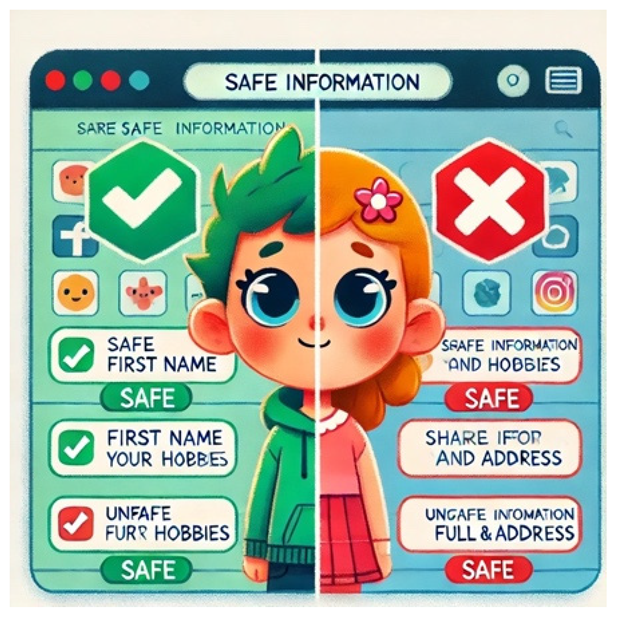 |
| Messaging Online | Prompt: "A cartoon-style illustration of a child using a smartphone. The phone screen is divided into two parts. On the top half, show messages from known friends with happy face emojis, representing safe messaging. On the bottom half, show grayed-out messages from unknown senders with question mark icons, representing unsafe messaging. Include a small figure of an adult (parent or teacher) in the background, symbolizing the importance of adult guidance. Use bright, cheerful colors and a style appealing to children." | 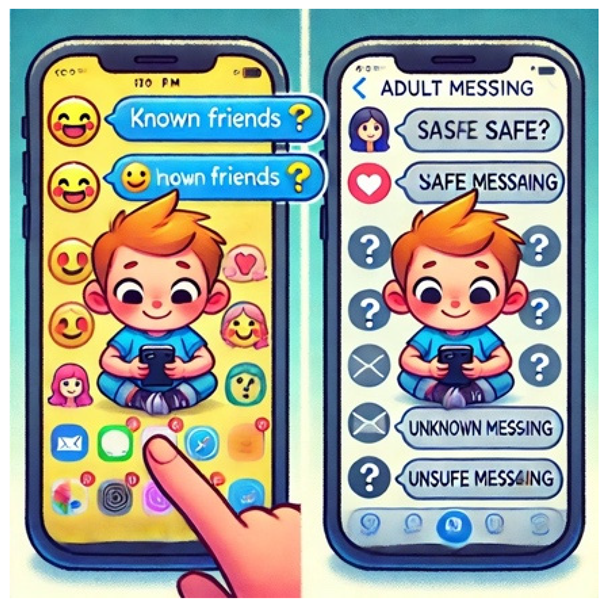 |
| Sharing Photos Online | Prompt: "A digital drawing of a child's room with a large, colorful 'sharing board' on the wall. The board is split into two sections: 'Safe to Share' and 'Not Safe to Share'. In the 'Safe to Share' section, pin cartoon images of a pet, a landscape, and a child's drawing. In the 'Not Safe to Share' section, show crossed-out images of a school building, a house, and a child's portrait. Include a cartoon child standing nearby, looking thoughtful. The style should be playful and educational, with clear, bold outlines and vibrant colors." | 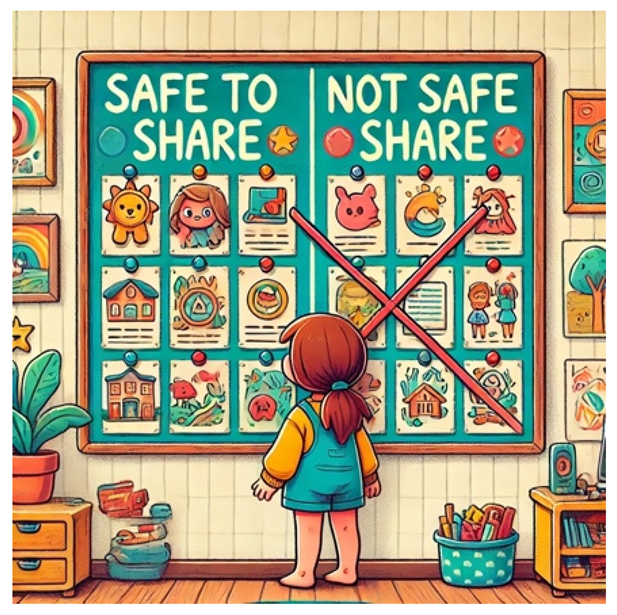 |
Table 6.
The percentage of images with easy-to-read principles.
| Evaluation system | Evaluation system | ||||
| AI generation system | Textbook unit | Claude | Average | ChatGPT | Average |
| Claude |
|
65% | 73.33% | 85%. | 85.00% |
|
75% | 80%. | |||
|
80% | 90% | |||
| ChatGPT |
|
90% | 85.00% | 100% | 95.00% |
|
80% | 85% | |||
|
85% | 100% | |||
Table 7.
ChatGPT AI Generation and Claude using ChatGPT's Materials.
| ChatGPT Prompt | Claude Prompt | |
| Safe Behavior Online | 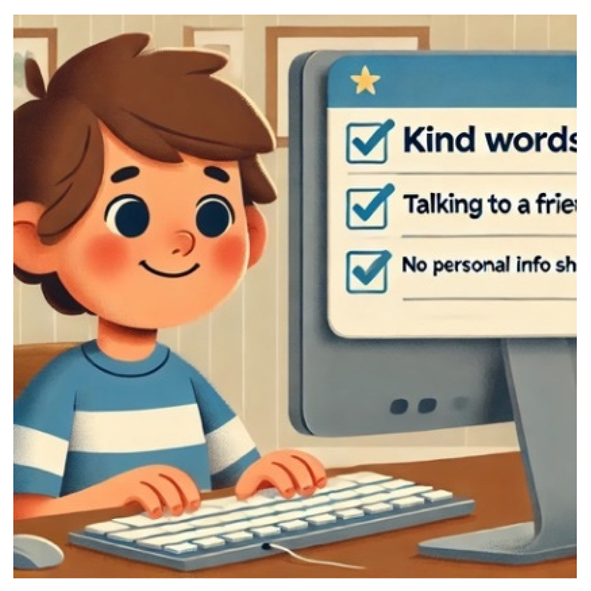 |
 |
| Determine compliance with the principle | ChatGPT: 100% Claude: 95% |
ChatGPT: 90% Claude: 90% |
| Unsafe Behavior Online |  |
 |
| Determine compliance with the principle | ChatGPT: 85% Claude: 90% |
ChatGPT: 100% Claude: 95% |
| What to Do if You See Unsafe Behavior |  |
 |
| Determine compliance with the principle | ChatGPT: 100% Claude: 80% |
ChatGPT: 95% Claude: 90% |
| Average | 91% | 93% |
Table 11.
descriptive statistical analysis.
| ChatGPT Generate | Claude Generate | Claude using ChatGPT-generated materials | ||||||
| ChatGPT Evaluation |
Claude Evaluation | Average | ChatGPT Evaluation |
Claude Evaluation | Average | ChatGPT Evaluation |
Claude Evaluation | Average |
| 90% | 90% | 90% | 85% | 85% | 85% | 90% | 80% | 0.85 |
| 90% | 95% | 93% | 75% | 85% | 80% | 95% | 90% | 0.925 |
| 95% | 95% | 95% | 90% | 95% | 93% | 90% | 95% | 0.925 |
| 85% | 95% | 90% | 85% | 85% | 85% | 95% | 90% | 0.925 |
| 95% | 95% | 95% | 75% | 70% | 73% | 90% | 95% | 0.925 |
| 95% | 95% | 95% | 85% | 90% | 88% | 95% | 95% | 0.95 |
| Average: 93.00% | Average: 84.00% | Average: 91.67% | ||||||
| Standard Deviation: 2.45 | Standard Deviation: 6.96 | Standard Deviation:3.76 | ||||||
Table 12.
ANOVA analysis.
| Degrees of Freedom (df) | The sum of Squares (SS) | Mean Square (MS) | F-value | p-value | |
|---|---|---|---|---|---|
| Between Groups | 2 | 281.72 | 140.86 | 5.31 | 0.0166 |
| Within Groups | 15 | 397.92 | 26.53 | ||
| Total | 17 | 679.64 |
Table 13.
T-tests.
| Comparison | t-value | p-value |
|---|---|---|
| ChatGPT vs. Claude | 3.35 | 0.0203 |
| ChatGPT vs. Claude using ChatGPT | 0.94 | 0.3897 |
| Claude vs. Claude using ChatGPT | -2.75 | 0.0404 |
Disclaimer/Publisher’s Note: The statements, opinions and data contained in all publications are solely those of the individual author(s) and contributor(s) and not of MDPI and/or the editor(s). MDPI and/or the editor(s) disclaim responsibility for any injury to people or property resulting from any ideas, methods, instructions or products referred to in the content. |
© 2024 by the authors. Licensee MDPI, Basel, Switzerland. This article is an open access article distributed under the terms and conditions of the Creative Commons Attribution (CC BY) license (http://creativecommons.org/licenses/by/4.0/).
Copyright: This open access article is published under a Creative Commons CC BY 4.0 license, which permit the free download, distribution, and reuse, provided that the author and preprint are cited in any reuse.


