
Submitted:
06 September 2024
Posted:
06 September 2024
Read the latest preprint version here
Abstract
In this paper, the distribution of prime numbers is expressed based on proving the Riemann hypothesis. The modality to the distribution of prime numbers is one of the most important results of proving the Riemann hypothesis. The relationship between three numbers, three, six, and nine, and the modality to the distribution of prime numbers, is one of the results of Riemann's zeta function. Prime numbers are classified into six groups of single-digit numbers. There are no prime numbers in groups of three, six, and nine. The groups are made based on the sum of the internal digits. And for each set, there is an angle in the complex plane. The distance between the prime numbers in each group has a regular pattern. This pattern is a multiple of the numbers three, six, and nine. According to Euler's number, for an angle of 60 degrees, the real part of the cosine is 0.5. Accordingly, all prime numbers are related to angles greater than 60 degrees to 90 degrees. As a result, based on the relationship between the golden spiral and the complex conjugate of the zeta function, the function in The 1/2 point becomes zero.
Keywords:
prime numbers
; Riemann's hypothesis
; three numbers 3
; 6
; 9
1. Introduction
Prime and composite numbers have been recognized for thousands of years [1]. There have been numerous methods described for studying the distribution of prime numbers [2,3,4]. Most of these studies show the complexity of the problem of the distribution of prime numbers. The distribution of prime numbers plays an important role in various scientific fields [5]. Also, the proof of the Riemann hypothesis is directly related to the distribution of prime numbers. The higher-dimensional proof of the Riemann hypothesis presents an effective method for prime number distribution. based on geometric and topological methods, defines the complex structure of prime numbers across dimensions, revealing a connection between primes and the underlying number fields [6]. The geometric approach to physics and mathematics problems, particularly in higher dimensions like general relativity, is a conventional method for explaining and solving various issues [7,8,9].
Accordingly, in this study, we identify different groups of prime numbers. These groups have simple repeating patterns. The distribution patterns of prime numbers in each group establish a direct relationship with three numbers, three, six, and nine. Based on this, different groups of prime numbers can be identified. For example, the number 11 belongs to the number 2 group. Because the center of the field and the properties of the number are determined by the sum of its internal digits. Of course, it seems that there is no prime number in the group of six, three and nine. This paper delves into investigating the connection between the golden spiral and complex numbers within the complex plane. Furthermore, it examines distinct sets of prime numbers in the complex number plane by utilizing geometric relationships. Based on this, a proof for Riemann’s hypothesis is given.
2. Golden Spiral
The equation for the eccentricity of an ellipse can be written based on trigonometric functions. (2.1)
The Fibonacci sequence causes the eccentricity. The different ratios of the sequence are directly related to the slope and growth rate of the golden spiral. (2.2) Figure 1
A Circular sector equal to the radius rotates around the circumference of the ellipse along with the spiral and ellipse rotation. (2.3)
Different angles form right triangles in the area of the golden spiral. The hypotenuses of these triangles have certain ratios with each other. Figure 1
Based on eccentricity, simulations of the golden ratio can be tested. (2.4) The imaginary part of the new equation does not align with geometric rules. Naturally, this suggests the presence of higher dimensions. For instance, the eccentricity of an ellipse within a circle transforms an angle of 45 degrees into 26. Figure 2
3. Prime Numbers
We Define each prime number with an angle according to the definition of prime numbers. (3.1)
Any angle can be expressed by Euler’s number in the plane of complex numbers. (3.2)
Based on this, according to the rotation angle of the golden spiral, and the definition of the golden ratio, we simulate the equation of the golden spiral. (3.3) This study is to investigate the connection of the eccentricity of the ellipse with the golden ratio. Figure 3
4. Result
As a result of the introduction of prime numbers on the page of complex numbers, we group the numbers according to the definition of prime numbers based on different angles. First, we write each prime number based on five prime numbers in base two. (4.1)
Accordingly, every prime number belongs to a group. The sum of the internal digits of a number shows the number’s dependence on the group. None of the prime numbers belongs to the group three six and nine. Also, the distance between the first two numbers in each of the groups is an integer multiple of the numbers three, six and nine. Table 1
In group 5, the distance between numbers always jumps, but all groups follow regular patterns. (4.2)
Mirror numbers are specified in each group. These numbers have special properties in a group. Table 1
Based on this, it is suggested to identify and classify prime numbers in each group. There is a simple equation for each group. And also an equation to identify an N prime number is predictable.
According to the Riemann hypothesis, the zeta function is zero for the real part of 0.5. First, we rewrite the zeta function based on the defined angles. (4.3)
Two types of zeta functions are introduced due to right and left rounded angles. (4.4)
Regarding the golden spiral and the golden ratio, it should be noted that the ratios are related to the eccentricity of the ellipse. (4.5)
Appreciation
I appreciate Helma Sadat Mousavi, Lhm Razzazi, and all my esteemed professors for their guidance.
References
- Dickson, L. E. (1919). History of the Theory of Numbers (No. 256). Carnegie Institution of Washington.
- Koukoulopoulos, D. (2020). The distribution of prime numbers. American Mathematical Soc..
- De Koninck, J. M., & Luca, F. (2023). Analytic number theory: Exploring the anatomy of integers (Vol. 134). American Mathematical Society.
- Zaman, B. U. (2024). New prime number theory. Annals of Mathematics and Physics, 7(1), 158-161.
- Curtis, M., & Tularam, G. A. (2011). The importance of numbers and the need to study primes: The prime questions. Journal of Mathematics and Statistics, 7(4), 262-269. [CrossRef]
- mousavi, S. K. Six Dimension for Proof of Riemann Hypothesis. Preprints 2024, 2024081612. [CrossRef]
- Mousavi, S. K. (2023). The balance In the six dimensions of space-time description of quantum mechanics phenomena and nature of time. journal physics theories and applications, 7(1), 95-114. [CrossRef]
- mousavi, S. K. The General Balance in the Six Dimensional of Space-Time. Preprints 2023, 2023081112. [CrossRef]
- Mousavi, S. K. Six Dimensions for Proof of Riemann Hypothesis. [CrossRef]
Figure 1.
Golden spiral rotation and tangent ellipse.
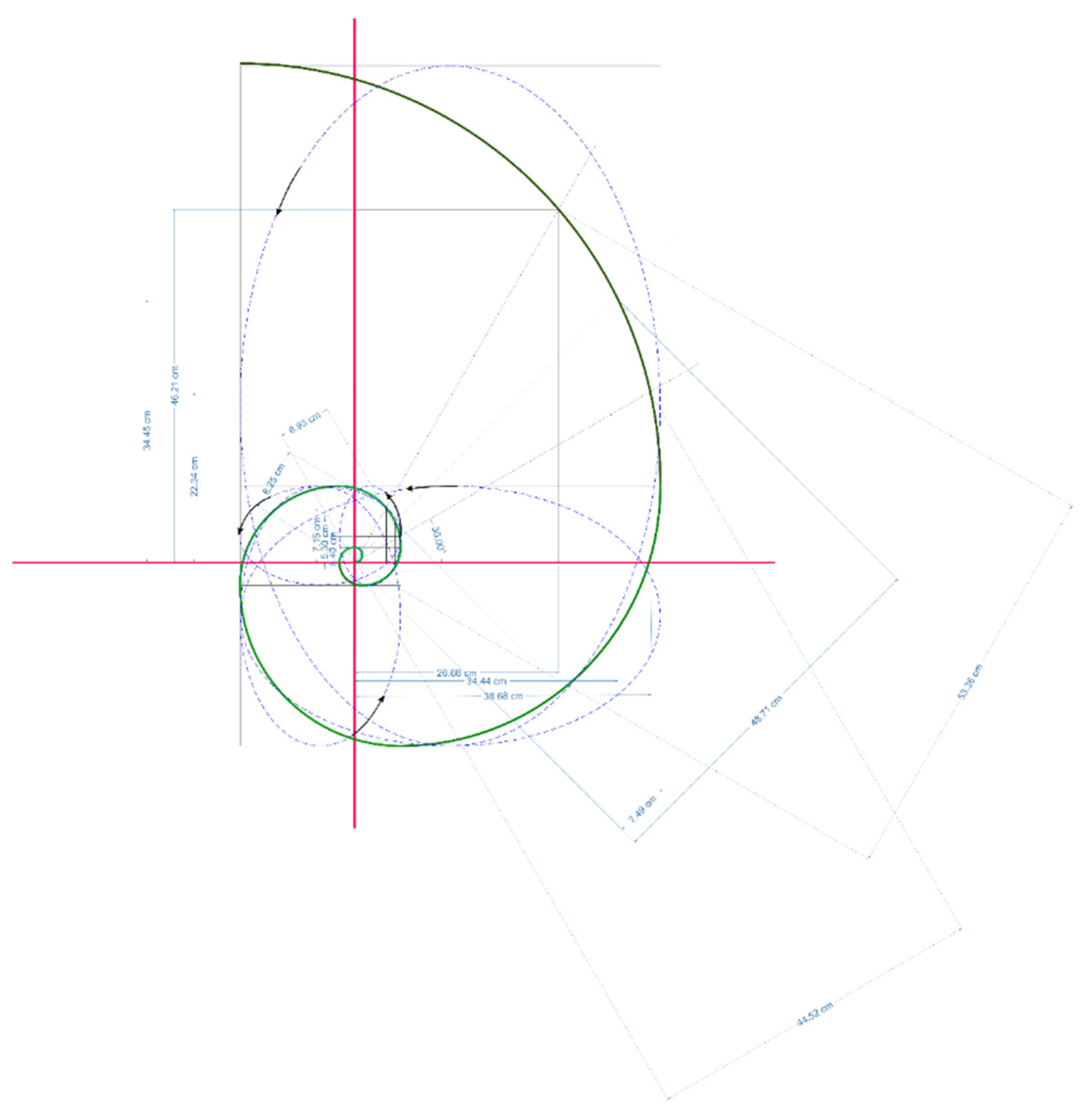
Figure 2.
Creating symmetry after rotation and angle contraction in ellipse eccentricity.
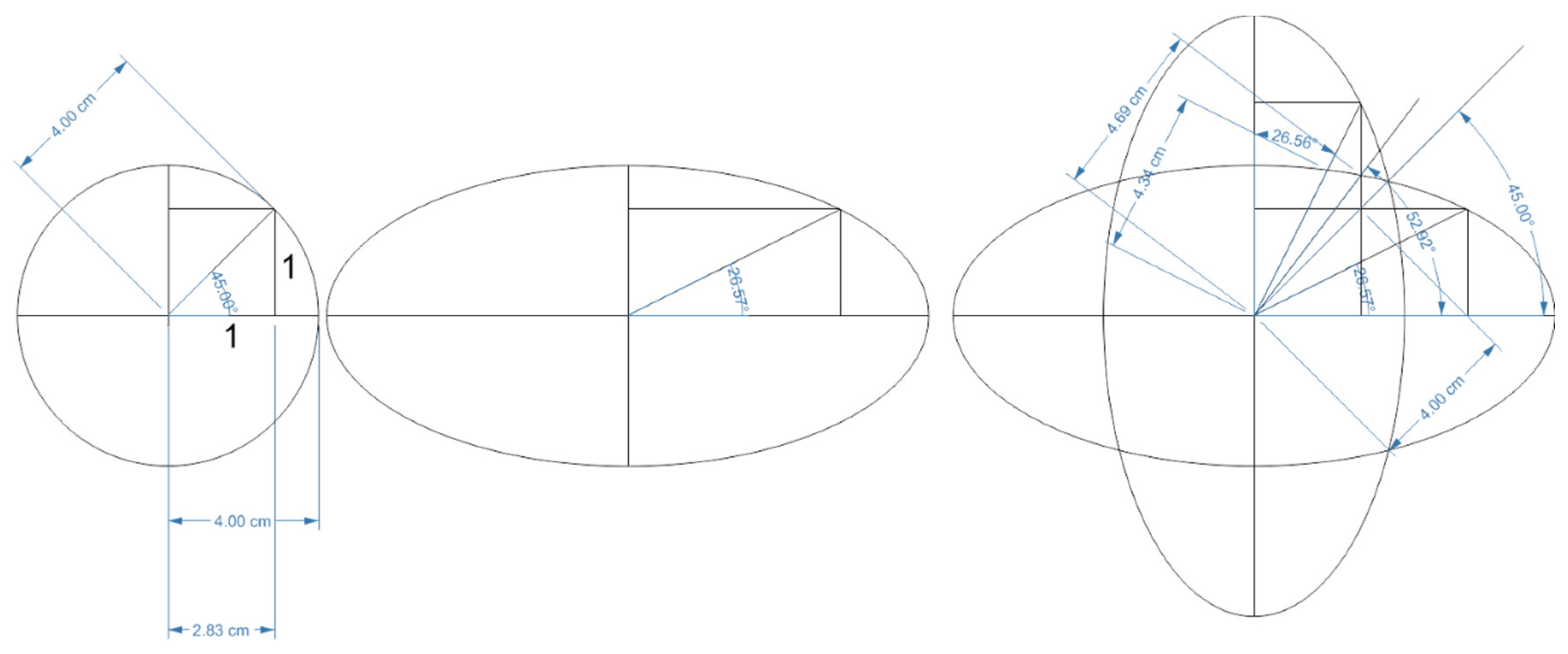
Figure 3.
plot of a golden spiral in the 3D plane of the complex number.
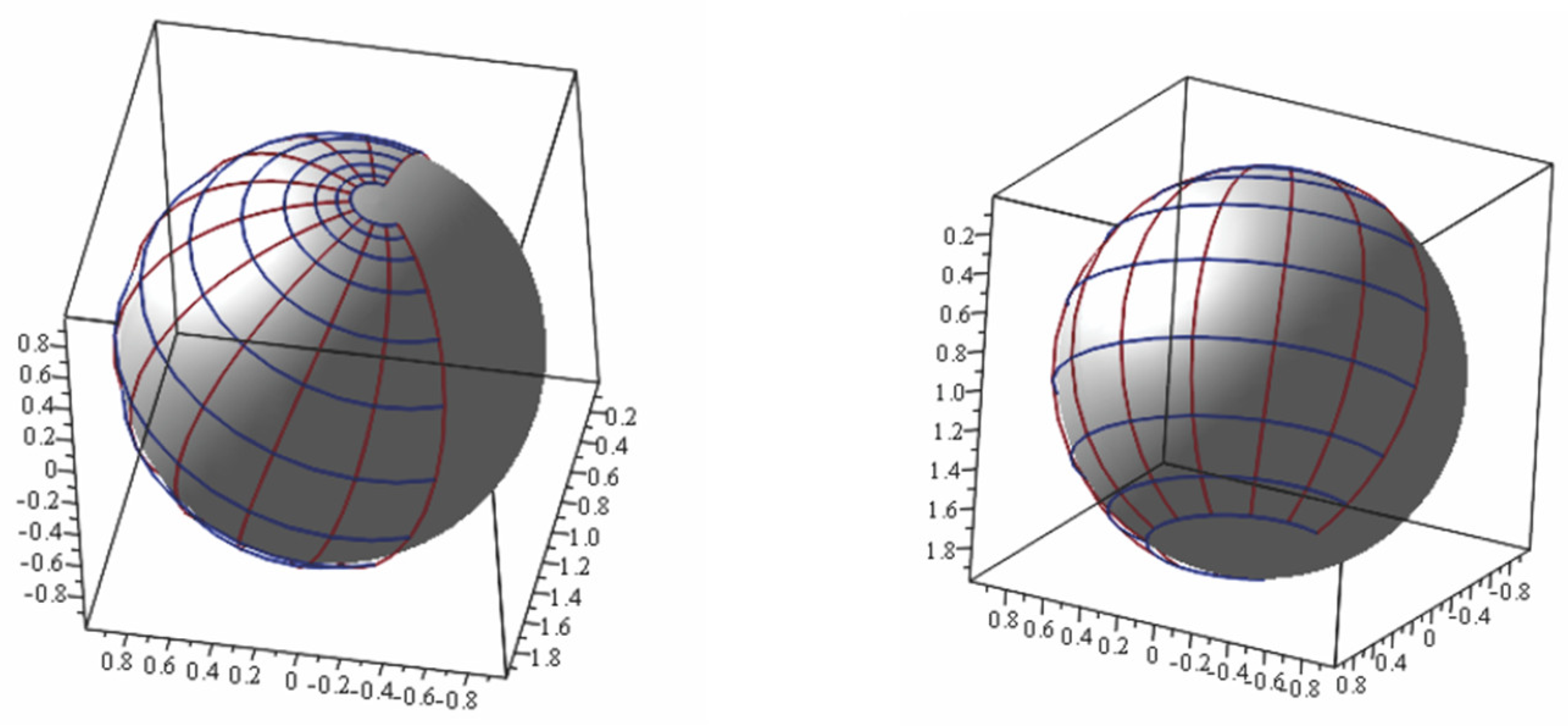

Table 1.
Different groups of prime numbers, no number is a member of three, six and nine groups.
| 1 | 2 | 3 | 4 | 5 | 6 | 7 | 8 | 9 |
| 19 | 11 | 13 | 23 | 43 | 17 | |||
| 37 | 29 | 31 | 41 | 61 | 53 | |||
| 73 | 47 | 67 | 59 | 79 | 71 | |||
| 109 | 83 | 103 | 113 | 97 | 89 | |||
| 127 | 101 | 241 |
Disclaimer/Publisher’s Note: The statements, opinions and data contained in all publications are solely those of the individual author(s) and contributor(s) and not of MDPI and/or the editor(s). MDPI and/or the editor(s) disclaim responsibility for any injury to people or property resulting from any ideas, methods, instructions or products referred to in the content. |
© 2024 by the authors. Licensee MDPI, Basel, Switzerland. This article is an open access article distributed under the terms and conditions of the Creative Commons Attribution (CC BY) license (http://creativecommons.org/licenses/by/4.0/).
Copyright: This open access article is published under a Creative Commons CC BY 4.0 license, which permit the free download, distribution, and reuse, provided that the author and preprint are cited in any reuse.


