

Submitted:
26 August 2024
Posted:
28 August 2024
You are already at the latest version
Abstract
Bacterial infection poses a serious threat to human life due to its rapidly growing resistance to antibacterial drugs, which is a significant public health issue. This study was focused on the design and synthesis of a new series of 25 analogues bearing 5-cyano-6-oxo-4-substituted phenyl-1,6-dihydropyrimidine scaffold hybridized with different substituted benzene-sulfonamides through thioacetamide linker M1-25 via the treatment of the key intermediates 2-mercapto-6-oxo-4-phenyl-1,6-dihydropyrimidine-5-carbonitriles 1a-c with different 2-chloro-N-substituted benzene-sulfonamide derivatives 4a-e overnight at room temperature. The spectroscopic data of all the new compounds (IR, 1H-NMR, 13C-NMR, and Mass) was studied in detail to confirm their molecular structures. The antimicrobial activity of the new molecules was studied against various Gram-positive, Gram-negative, and fungal strains. All the tested compounds showed promising broad spectrum antimicrobial efficacy, especially against K. pneumoniae and P. aeruginosa, with ZOI values ranging from 15 to 30 mm. Furthermore, the most promising compounds M6, M19,M 20, and M25 were subjected to minimum inhibitory concentration (MIC) and minimum bactericidal concentration (MBC) assays. In addition, the anti-virulence activity of the compounds was also examined using multiple biofilm assays. The new compounds revealed promising suppressing activity of microbial biofilm formation in the examined K. pneumoniae and P. aeruginosa microbial isolates. Additional in silico ADMET studies were conducted to represent their oral bioavailability, drug-likeness characteristics, and human toxicity risks. The obtained data suggest the newly prepared pyrimidine-benzene-sulfonamide derivatives may serve as model compounds amenable for further optimization and development of new antimicrobial and antisepsis candidates.
Keywords:
Thiopyrimidine
; benzene-sulfonamides
; antimicrobial activity
; bactericidal activity
; anti-virulence activity
; in silico ADMET
1. Introduction
Global public health is seriously threatened by the persistent spread of microbial diseases that are resistant to conventional therapies. According to estimates, antibiotic-resistant pathogenic bacterial infections claim the lives of 700,000 people worldwide each year. In the absence of novel approaches to prevention or treatment, it is projected that 10 million people will pass away from these infectious diseases annually by 2050 [1,2,3].
Multi-drug-resistant (MDR) bacteria have emerged as a result of illness exposure in hospitals, overconsumption, and inappropriate antibiotic use [4]. World Health Organization recently declared a global health day to be dedicated to “Combat drug resistance: no action today means no cure tomorrow,” which encouraged increased research efforts [4]. Antibiotic-resistant bacterial infections are known to be caused by bacteria living in biofilms rather than by free bacteria [4]. Three factors are thought to be responsible for the resistance of biofilm-forming bacteria to traditional antimicrobials: (1) the antimicrobial’s inability to pass through the biofilm; (2) the emergence of complex drug resistance characteristics; and (3) the deactivation or modification of antimicrobial enzymes by the biofilm [3]. Given the increased prevalence of life-threatening diseases, the goal is to create pharmaceutical regimens with improved antibacterial properties that offer more consistency and efficiency against infections by resistant bacterial pathogens [5,6].
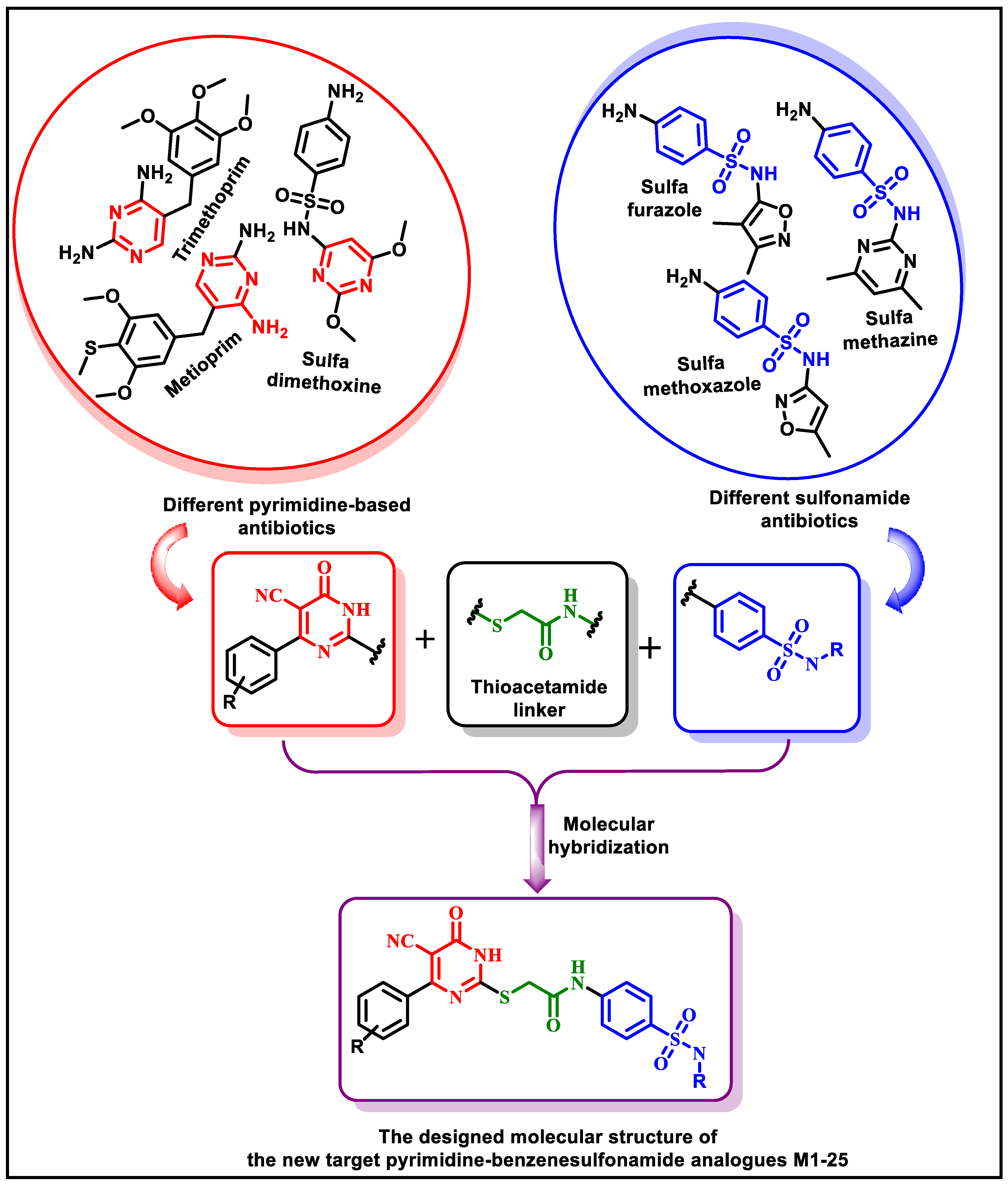
The earliest class of synthetic antibacterial medications are sulfonamides (Figure 1). Since the 1930s, they have been used in pharmaceutical therapeutics and have proven to be effective against a variety of pathogens and clinical infections [7].
Drugs classified as classical sulfonamides inhibit dihydropteroate synthase (DHPS). They compete with its natural substrate, PABA, thereby blocking folate biosynthesis and subsequently leading to defective thymidine biosynthesis. It has also been documented that sulfonamides interfere with the development of peptidoglycan in a variety of pathogens by blocking specific enzymes (MurB, MurD, and MurE) involved in its biosynthesis. Moreover, sulfonamides have the ability to suppress serine/threonine kinase (Stk1/PknB), resulting in increased sensitivity of MRSA to sublethal concentrations of β-lactams, thus reversing acquired resistance [7,8]. Another mode of action of sulfonamides is the inhibition of carbonic anhydrases (CAs) that participate in pH regulation and CO2 and bicarbonate-dependent biosynthetic pathways by catalyzing the interconversion between these two small molecules [9]. Figure 1 represents various FDA-approved sulfonamide antibiotics.
It is well recognized that several heterocyclic scaffolds serve as essential structural components in the majority of the world’s most widely prescribed medicinal pharmaceuticals. Among the heterocyclic substances with biological significance are derivatives of pyrimidines, and pyrimidine – carbonitriles [10,11,12,13,14]. The pyrimidine moiety is a crucial component of many physiologically active substances that occur naturally and is involved in both chemical and biological activities [15]. A pyrimidine-based nucleotide that function as a prosthetic scaffold for several enzymes, is involved in a variety of redox reactions in living beings [16].
Researchers have focused on a broad range of pyrimidine-carbonitrile ligands for many years, and these compounds have demonstrated significant roles as physiologically active drugs with antibacterial, antiviral, anticancer, and other properties [17,18,19,20,21,22].
Carbonitrile has significant diverse biological activities such as anti-allergic, antibacterial, antifungal, anti-HIV, anticonvulsant, anti-inflammatory, and β-lactamase inhibition [23,24,25,26]. It is characterized by various properties such as rigidity, stability in in vivo environments, hydrogen bonding ability, and modest dipole character [26]. Figure 2 represents different examples of FDA-approved pyrimidine-based antimicrobial drugs.
In search of more new potent multi-targeted sulfonamide or sulfonyl drugs to overcome the microbial resistance and reduce the adverse effects, many medicinal chemistry scholars focused on combinations of various substituted benzenesulfonamide ring with other heterocyclic molecules to develop novel formulations with greater effectiveness as well as less toxicity [27].
Also, it has been also reported that the thioacetamide molecule produces antifungal activity, in addition to its ability to interact with SH- and NH2-containing enzymes and proteins to reveal the antimicrobial activity [28,29].
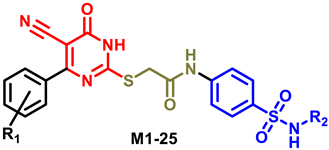
Taking into account the aforementioned considerations, we designed and created a novel series of substituted benzenesulfonamide derivatives conjugated with various substituted 5-cyano pyrimidine nuclei via a thioacetamide linkage with possible antimicrobial (antibacterial and antifungal) effectiveness. This study represents the synthesis of a series of 2-((5-cyano-6-oxo-4-substitutedphenyl-1,6-dihydropyrimidin-2-yl)thio)-N-(4-(N-substituted sulfamoyl)phenyl) acetamide derivatives M1–25 (Figure 3). The antimicrobial efficacy of the new target compounds was tested against several human pathogenic microbes (bacteria and fungi). Furthermore, the minimum inhibitory concentration (MIC) and the minimal bactericidal concentration (MBC) values were determined for the most potent analogues which aided in examining the synergistic effects of tested compounds. In addition, the anti-virulence activity of latter molecules obtained by their prevention of biofilm formation was also assessed. Moreover, in silico methodologies to determine their physicochemical parameters were analyzed in the eyes of Lipinski’s rule of five. Further pharmacokinetic parameters were calculated using, Swiss ADME program.
2. Results and Discussion
2.1. Chemistry
The synthetic pathway of the target compounds M1-25 was illustrated in Scheme 1. The 6-substituted-4-oxo-2-thioxo-1,2,3,4-tetrahydropyrimidine-5-carbonitriles (1a-e) were obtained through a one-pot reaction of thiourea, ethyl cyanoacetate, and the appropriate aldehyde in the presence of K₂CO₃, providing quantitative yields as previously reported [30]. The 2-chloro-N-(4-(N-substitutedsulfamoyl)phenyl)acetamide compounds 4a-e were synthesized via acetylation of various substituted 4-amino-N-substituted benzenesulfonamide derivatives 3a-e with chloroacetyl chloride in anhydrous THF at -10°C under basic conditions [31]. Subsequently, coupling of the key starting 2-thioxo-1,2,3,4-tetrahydropyrimidine compounds 1 with chloroacetamide compounds 4-1-5 in DMF under basic conditions led to the formation of the target 5-cyano-6-oxo-4-phenyl-1,6-dihydropyrimidine-based analogues M1-25 in excellent yields (Table 1). The structures of the novel compounds were confirmed by their spectral data (1H NMR, 13CNMR, and Mass spectra).
In the 1H NMR spectra of the target pyrimidine-benzenesulfonamide analogs M1-25, the amidic NH protons of both the acetamide linker and dihydropyrimidine ring appeared as singlets and very broad singlets downfield in the δ 10.0–13.71 ppm range. The aromatic protons are resolved into four distinct peaks within the range δ 6.80–8.0 ppm. In addition, the 2H of the thioacetamide group appeared as a singlet signal in the region of δ 3.88-4.30 ppm, while the sulfamoyl aliphatic or hetero alicyclic protons appeared in the upfield range at δ 1.03-3.15 ppm (more detail in the Supporting file). Mass spectrometry represented molecular ion peaks of all of the new target benzenesulfonamide derivatives compounds M1-25 which were in agreement with their expected molecular formulae.
2.2. Biological Evaluation
2.2.1. Antimicrobial Activity Determination
The newly synthesized sulfonamide compounds M1-25 were assessed for their antimicrobial characteristics against the bacterial isolates E. coli ATCC-25922, K. pneumoniae, P. aeruginosa ATCC 27,853 as Gram-negative bacteria, S. aureus ATCC 6538, S. epidermidis ATCC 35984, and B. subtilis ATCC 6633 as Gram-positive bacteria, and the fungal strain C. albicans ATCC-10231.
These specific strains were selected because of their capacity to form biofilms and in addition to their notable effect on plant and human health. Utilizing the agar-well diffusion process [32], the average diameter of the inhibition zones in millimeters was measured for each tested analogue (3000 µg/mL) against every kind of microbial growth surrounding the discs [32] (Table 2, Figure 4).
The obtained results showed that all the examined analogues are promising antimicrobial candidates against most of tested microbial isolates, producing ZOI ranging from 15 to 30 mm. Interestingly, the bacterial strains K. pneumoniae and P. aeruginosa bacterial strains exhibited great sensitivity towards all the target compounds M1–25. Both K. pneumoniae and P. aeruginosa are multidrug-resistant pathogens and are associated with serious hospital-acquired infections such as pneumonia and various sepsis syndromes [33,34,35]. So, these new pyrimidine-benzenesulfonamides can be considered as basic scaffolds for the synthesis of new drugs of high antimicrobial activity that can overcome the virulence and antibiotic resistance of these two organisms.
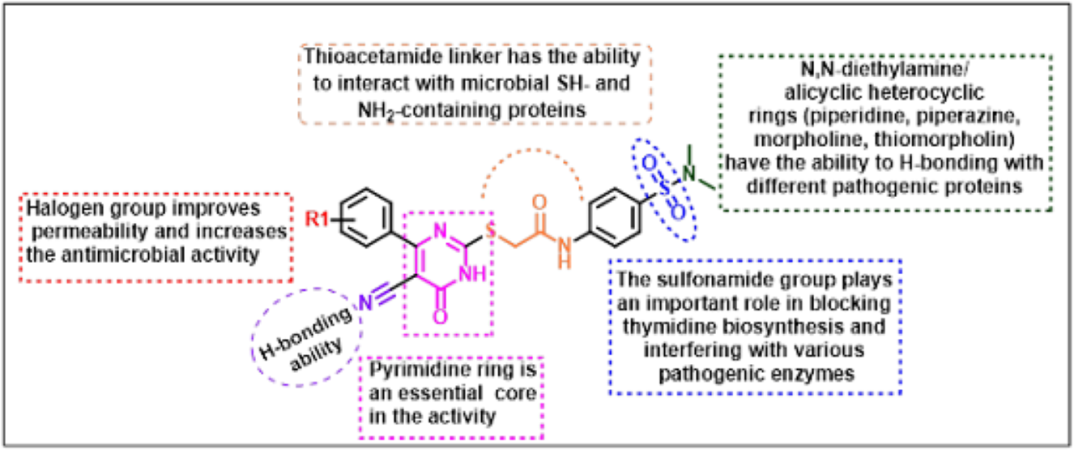
Moreover, the halophenyl-5-cyano-6-oxo-1,6-dihydropyrimidin-2-yl-thio-N-substituted sulfonyl phenyl acetamide derivatives M6, M19, M20, and M25 exhibited the most potent wide-spectrum antimicrobial activity against all the examined isolates, producing ZOIs ranging from 15 to 30 mm. Halogenation may improve permeability and enhance the antimicrobial activity of the sulfonamide pharmacophore. In addition, the halogenated derivatives may also be effective against other multidrug-resistant (MDR) pathovars like S. aureus and S. pneumoniae [36,37] (Figure 5).
2.2.2. MIC and MBC of Selected Compounds against More Susceptible Bacteria
Moreover, minimum inhibitory concentration (MIC (μg/m)) as well as the minimum bactericidal concentration (MBC(μg/mL)) assays were performed for the promising compounds M6, M19, M20, and M25 against K. pneumonia and P. aeruginosa bacterial strains using the double-sequence dilution method [38,39]. The MIC assay represents the lowest concentration of antimicrobial agent that greatly inhibits microbial growth, while the MBC demonstrates the lowest level of antimicrobial agent leading to microbial death. According to Clinical and Laboratory Standards Institute (CLSI), antibacterial agents are usually evaluated as bactericidal if the MBC is no more than four times the MIC values [40].
The obtained results were summarized in Table 3. It was noticed that the MIC values for the tested compounds were 375 µg/mL against both bacterial strains. On the other hand, the MBC values showed variability among the compounds and bacterial strains. For Klebsiella pneumoniae, the MBC values for compounds 6 and 19 was 1500 µg/mL, while for compounds 21 and 25, it was 7500 µg/mL. For Pseudomonas aeruginosa, the MBC for all four compounds was consistent at 1500 µg/mL. Based on the obtained results, it could be detected that the ratio of MBC/MIC is equal to 4 in the case of compounds M6 and M9 against both K. pneumonia and P. aeruginosa confirming their bactericidal activity. With regard to compounds M20 and M25, their MBC/MIC ratios revealed their bactericidal against P. aeruginosa strain and their bacteriostatic impact on K. pneumoniae these data implied the newly synthesized sulfonamide derivatives had potentiality to be developed and optimized as bactericidal agents against some resistant strains.
2.2.3. Determination of the Antibiofilm Effect of the Most Promising Compounds Using TCP Method
A serious public health issue results from infections by microbial biofilms where bacterial biofilms have been demonstrated to be thousand times more resistant to antibacterial drugs compared to those in the planktonic forms [41]. Persistence of the gram-negative airway pathogens such as K. pneumoniae and P. aeruginosa their survival within the lung is mainly attributed to biofilm through colonization of endotracheal tubes and airways. In addition to the adaptation of these pathogens to the biofilm lifestyle [41,42,43,44].
In our study, incubation of K. pneumonia and P. aeruginosa with the most promising four tested compounds M6, M19, M20, and M25 at MIC, 2MIC and 4MIC concentrations for 24 h showed moderate to good biofilm formation prevention, with a percentage of inhibition up to 90 % against K. pneumonia and 91.8% against P. aeruginosa (Figure 6 and Figure 7). The inhibitory ability of these compounds to biofilm formation makes it a promising source of drug leads to control microbial biofilm growth.
2.3. Physicochemical Properties and ADMET (Absorption, Distribution, Metabolism, Excretion and Toxicity) Studies
The physicochemical properties of the promising candidates M6, M9, M20 and M25 were assessed and illustrated in Table 4. It could be seen that all the compounds follow Lipinski’s rule. The hits showed that H-bonds acceptor <10, H-bonds donor <5 and logP <5. The compounds showed molecular weight roughly > 500 D, which is considered a violation of the Lipinski’s rule. Even though the compounds violate one parameter, the drugs still follow Lipinski’s rule. In addition, the recently published data suggested that there is a tendency for orally effective small molecule inhibitors to slightly exceed the 500 D [45]. It could be seen in Table 3, most of the molecules showed slightly high total polar surface area (TPSA). In general, these results indicate these promising inhibitors have excellence oral bioavailability and good absorbance.
In order to obtain deep understanding of the pharmacokinetic profile of the hits, the ADMET properties were calculated. The prediction of ADMET is considered an essential study to predict the pharmacokinetic and bioavailability properties of drug-like compounds [46,47,48]. The ADMET results (Table 5) illustrated that, the compounds have a moderate water solubility and good intestinal absorbance. In addition, the hits showed logKp values <-2.5 which indicates the compounds have reasonable skin permeability. The distribution results of the promising hits showed logBB <-1 and logPS <-3 which indicates the inhibitors are poorly distributed to the brain or CNS.
While the metabolism calculations indicate that the inhibitors are metabolized by CYP3A4 enzyme while they could not be substrates or inhibitors for CYP2D6 or CYP1A2 enzymes respectively. The low values of the total clearance of the four molecules reveal that they have good half-lives, and the toxicity study showed no hERG inhibition properties or AMES mutagenicity which suggests the compounds are not mutagenic or tumorigenic.
The bioavailability radars of the compounds (Figure 8) showed that the compounds have good pharmacokinetic properties. The pink area of the radars illustrated the lipophilicity, size of the molecules, insolubility, instauration and the flexibility properties. The compounds are almost within the range of conformity. While the polarity properties are slightly increased over the range. In general, the pharmacokinetic properties of the compounds are promising and can be optimized.
In conclusion, compounds M6, M9, M20 and M25 showed satisfactory ADMET properties, the results indicated good absorption, poor penetration to blood brain barrier or the CNS, excellent clearance properties and no toxicity.
3. Conclusion
In this study, we have synthesized novel 25 analogues bearing 5-cyano-6-oxo-4-substituted phenyl-1,6-dihydropyrimidine scaffold hybridized with various substituted benzene-sulfonamide derivatives through a thioacetamide linker M1-25. These compounds exhibited considerable promise as antimicrobial agents, demonstrating broad-spectrum efficacy against Gram-positive, Gram-negative, and fungal pathogens, with notable effectiveness against the resistant strains K. pneumoniae and P. aeruginosa. The positive results from minimum inhibitory concentration (MIC), minimum bactericidal concentration (MBC), and biofilm suppression assays underscore their capability to inhibit microbial growth and virulence. Preliminary ADMET (absorption, distribution, metabolism, excretion, and toxicity) profiling suggests that these derivatives possess favorable drug-like properties and manageable toxicity. Collectively, these findings underscore the potential of these pyrimidine-benzene-sulfonamide derivatives as promising candidates for further development and optimization in the treatment of microbial infections.
4. Experimental
4.1. Chemistry
All reagents and solvents were purchased from commercial suppliers and used without purification unless stated otherwise. The instruments used to determine melting points, spectral data (IR, 1H NMR, 13C NMR, and mass), as well as chemical analyses were included in a detailed description of the in the file of Supporting Information.
4.1.1. General Procedure for Preparation of 6-Substituted-4-oxo-2-thioxo-1,2,3,4-tetrahydropyrimidine-5-carbonitriles [30].
A mixture of thiourea (1.839g, 24 mmol), a suitable aldehyde (24 mmol), ethylcyanoacetate (2.734g, 24 mmol), and K2CO3 (4.837g, 24 mmol) was added to a round bottom flask, followed by ethanol (50 mL). The reaction mixture was then heated under reflux for 12 hours and monitored by TLC. The resulting creamy precipitate was filtered, ethanol washed, and vacuum dried. The product was then dissolved in the minimum amount of hot water (100 mL) and acidified with glacial acetic acid to pH 4. The white precipitate was suction filtered and then recrystallized from aqueous DMF.
4.1.1.1. 2-Mercapto-6-oxo-4-phenyl-1,6-dihydropyrimidine-5-carbonitrile (1a)
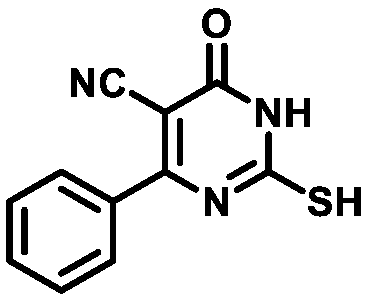
White powder, 81%. mp 255.oC. 1H NMR (400 MHz, DMSO-d6) δ 7.58 (dd, J = 8.1, 6.6 Hz, 2H), 7.62 – 7.65 (m, 1H), 7.68 (dd, J = 6.9, 1.7 Hz, 2H), 13.20 (s, 1H), 13.34 (s, 1H). 13CNMR (101 MHz, DMSO) δ 91.3, 115.2, 128.9, 129.2, 129.8, 132.6, 159.0, 161.4, 176.7.
4.1.1.2. 4-(4-Bromophenyl)-2-mercapto-6-oxo-1,6-dihydropyrimidine-5-carbonitrile (1b)
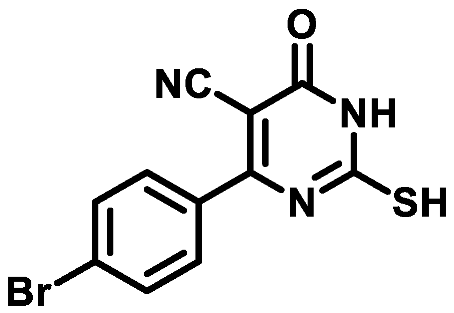
White powder, 85%. mp 284 °C. 1H NMR (400 MHz, DMSO-d6) δ 7.63 (d, J = 8.6 Hz, 2H), 7.80 (d, J = 8.5 Hz, 2H), 13.18 (s, 1H), 13.35 (s, 1H). 13C NMR (101 MHz, DMSO) δ 91.5, 115.0, 126.3, 129.0, 131.3, 132.0, 158.8, 160.4, 176.6.
4.1.1.3. 4-(4-Fluorophenyl)-2-mercapto-6-oxo-1,6-dihydropyrimidine-5-carbonitrile (1c)
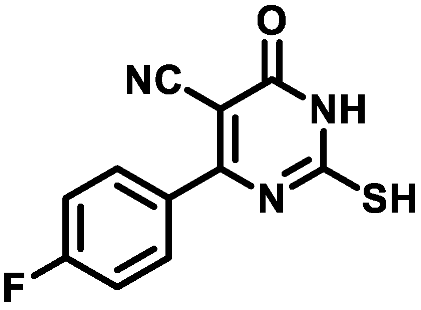
White powder, 84%. mp 270-272 oC, 1H NMR (400 MHz, DMSO-d6) δ 7.44 (dt, 2H), 7.76 (dd, 2H), 13.22 (s, 1H), 13.36 (s, 1H).13CNMR (101 MHz, DMSO) δ 91.4, 115.2, 116.0, 116.3, 126.2, 126.2, 132.1, 132.2, 158.9, 160.5, 163.4, 165.8, 176.6.
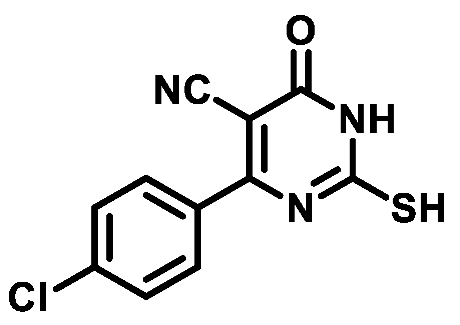
4.1.1.4. 4-(4-Chlorophenyl)-2-mercapto-6-oxo-1,6-dihydropyrimidine-5-carbonitrile (1d)
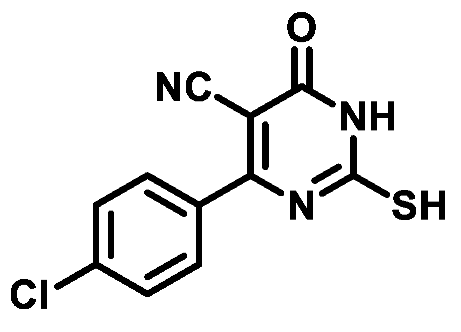
White powder, 86%. mp 252.oC, 1H NMR (400 MHz, DMSO-d6) δ 7.67 (d, J = 8.8 Hz, 2H), 7.71 (d, J = 8.7 Hz, 2H), 13.22 (s, 1H), 13.38 (s, 1H). 13CNMR (101 MHz, DMSO) δ 91.5, 115.1, 128.6, 129.1, 131.2, 137.4, 158.9, 160.4, 176.6.
4.1.1.5. 4-(3-Chlorophenyl)-2-mercapto-6-oxo-1,6-dihydropyrimidine-5-carbonitrile (1e)
Yellow powder, 80%. mp 229.oC, 1HNMR (400 MHz, DMSO-d6) δ 7.57 – 7.67 (m, 2H), 7.72 (dt, J = 7.7, 1.8 Hz, 1H), 7.78 (t, J = 1.9 Hz, 1H), 13.24 (s, 1H), 13.40 (s, 1H). 13CNMR (101 MHz, DMSO) δ 91.7, 114.9, 128.0, 129.1, 130.9, 131.7, 132.3, 133.4, 158.8, 160.0, 176.6.
4.1.2. General Procedure for Preparation of N-substituted sulfonyl phenyl acetamides 2
To a solution of 4-acetylaminobenzenesulfonyl chloride (2.34 g, 10 mmol) in methanol, 20 mL of appropriate amine (20 mmol) was added dropwise at room temperature. The reaction mixture was refluxed for 4 hours. After cooling, the solvent was removed under pressure, and water (50 mL) was added. The mixture was stirred at room temperature for 30 minutes. The solid obtained was filtered, washed with cold water, and dried. The compound formed was then recrystallized with 50% ethanol.
4.1.2.1. N-(4-(N,N-diethylsulfamoyl)phenyl)acetamide (2a)
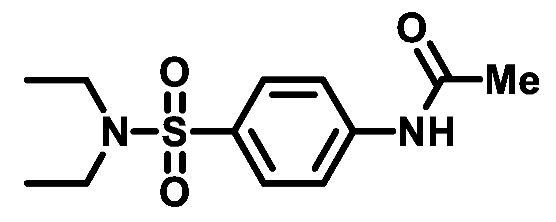
White powder, 2.30g, 85%, 1H NMR (400 MHz, DMSO-d6) ) δ 1.03 (t, J = 7.1 Hz, 6H), 2.09 (s, 3H), 3.13 (q, J = 7.1 Hz, 4H), 7.71 (d, J = 8.9 Hz, 2H), 7.78 (d, J = 8.7 Hz, 2H), 10.30 (s, 1H). 13CNMR (101 MHz, DMSO) δ 14.5, 24.6, 42.2, 119.2, 128.3, 133.9, 143.4, 169.5.
4.1.2.2. N-(4-(piperidin-1-ylsulfonyl)phenyl)acetamide (2b)
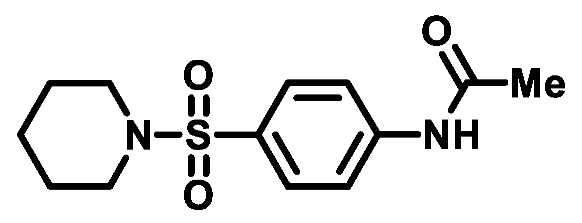
White powder, 2.42g, 86%, 1H NMR (400 MHz, DMSO-d6) δ 1.36 (m, 2H), 1.54 (p, J = 5.8 Hz, 4H), 2.10 (s, 3H), 2.86 (t, J = 5.5 Hz, 4H), 7.66 (d, J = 8.8 Hz, 2H), 7.81 (d, J = 8.8 Hz, 2H), 10.33 (s, 1H). 13CNMR (DMSO-d6, 101 MHz): δ 23.4, 24.6, 25.1, 47.0, 119.1, 129.1, 129.5, 143.8, 169.5.
4.1.2.3. N-(4-((4-methylpiperazin-1-yl)sulfonyl)phenyl)acetamide (2c)
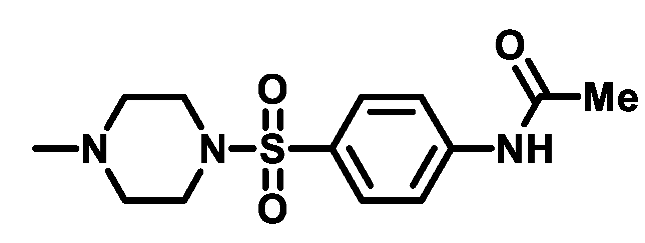
White powder, 2.51g, 84%.1H NMR (400 MHz, DMSO-d6) δ 2.10 (s, 3H), 2.14 (s, 3H), 2.36 (t, J = 4.9 Hz, 4H), 2.87 (t, J = 5.0 Hz, 4H), 7.66 (d, J = 8.8 Hz, 2H), 7.83 (d, J = 8.8 Hz, 2H), 10.36 (s, 1H)13C NMR (101 MHz, DMSO) δ 24.6, 45.7, 46.2, 54.0, 119.1, 128.9, 129.2, 144.0, 169.5.
4.1.2.4. N-(4-(morpholinosulfonyl)phenyl)acetamide (2d)
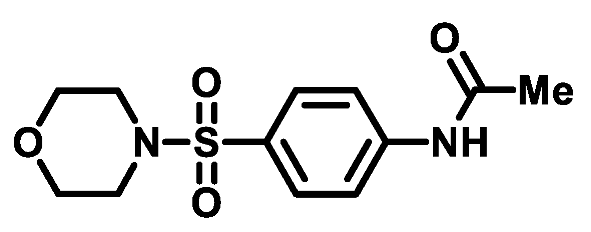
White powder, 2.39g, 84%. 1H NMR (400 MHz, DMSO-d6) δ 2.11 (s, 3H), 2.84 (t, 4H), 3.62 (t, J = 4.7 Hz, 4H), 7.67 (d, J = 8.7 Hz, 2H), 7.84 (d, J = 8.8 Hz, 2H), 10.38 (s, 1H). 13CNMR (101 MHz, DMSO) δ 24.6, 46.4, 65.7, 119.2, 128.4, 129.4, 144.1, 169.6.
4.1.2.5. N-(4-(thiomorpholinosulfonyl)phenyl)acetamide (2e)
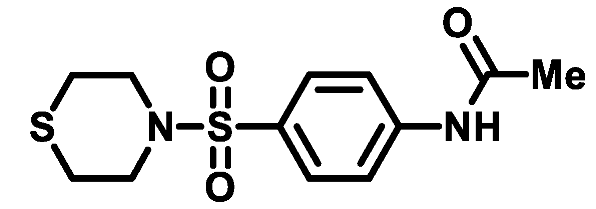
White powder, 2.67 g, 89%.1HNMR (400 MHz, DMSO-d6) δ 2.10 (s, 3H), 2.66 (t, 4H), 3.18 (t, 4H), 7.68 (d, J = 8.8 Hz, 2H), 7.83 (d, J = 8.9 Hz, 2H), 10.37 (s, 1H). 13CNMR (101 MHz, DMSO) δ 24.6, 26.9, 48.2, 119.2, 128.9, 130.1, 144.0, 169.6.
4.1.3. General Procedure for Preparation of 4-amino-benzenesulfonamides 3
A substituted sulfonyl phenyl acetamide 2 (10 mmol) was added to concentrated HCl (10 mL) and methanol (10 mL) and heated at 80–90°C for two hours. The solution became clear upon heating. After two hours, the solution was concentrated using a rotary evaporator. The resulting solution was then neutralized to pH 7 by the addition of a saturated aqueous solution of Na₂CO₃. The product was washed with cold water and recrystallized with ethanol.
4.1.3.1. 4-Amino-N,N-diethylbenzenesulfonamide (3a)
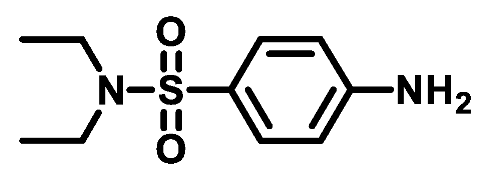
White powder, 2.10g, 92%.1H NMR (400 MHz, DMSO-d6) δ 1.02 (t, J = 7.1 Hz, 6H), 3.07 (q, J = 7.1 Hz, 4H), 5.93 (s, 2H), 6.62 (d, J = 8.7 Hz, 2H), 7.39 (d, J = 8.7 Hz, 2H). 13CNMR (101 MHz, DMSO) δ 14.5, 42.0, 113.3, 125.1, 129.1, 153.1.
4.1.3.2. 4-(Piperidin-1-ylsulfonyl)aniline (3b)
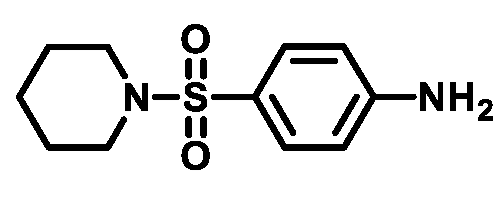
White powder, 2.16g, 90%.1H NMR (400 MHz, DMSO-d6) δ 1.18 – 1.45 (m, 2H), 1.53 (p, J = 5.7 Hz, 4H), 2.79 (t, J = 5.4 Hz, 4H), 6.00 (s, 2H), 6.65 (d, J = 8.7 Hz, 2H), 7.34 (d, J = 8.7 Hz, 2H). 13CNMR (101 MHz, DMSO) δ 23.5, 25.2, 47.0, 113.2, 120.7, 129.9, 153.5.
4.1.3.3. 4-((4-Methylpiperazin-1-yl)sulfonyl)aniline (3c)
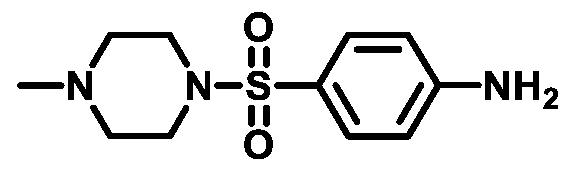
White powder, 2.28 mg, 89%. 1HNMR (400 MHz, DMSO-d6) δ 2.13 (s, 3H), 2.34 (t, J = 4.9 Hz, 4H), 2.80 (t, J = 4.9 Hz, 4H), 6.05 (s, 2H), 6.66 (d, J = 8.7 Hz, 2H), 7.35 (d, J = 8.7 Hz, 2H). 13CNMR (101 MHz, DMSO) δ 45.8, 46.1, 54.0, 113.2, 119.9, 130.0, 153.7.
4.1.3.4. 4-(Morpholinosulfonyl)aniline (3d)
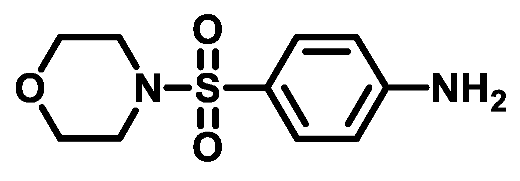
White powder, 2.23g, 92%.1H NMR (400 MHz, DMSO-d6) δ 2.78 (t, 4H), 3.61 (t, 4H), 6.09 (s, 2H), 6.67 (d, J = 8.7 Hz, 2H), 7.36 (d, J = 8.7 Hz, 2H). 13CNMR (101 MHz, DMSO) δ 46.4, 65.8, 113.2, 119.3, 130.2, 153.8.
4.1.3.5. 4-(Thiomorpholinosulfonyl)aniline (3e)
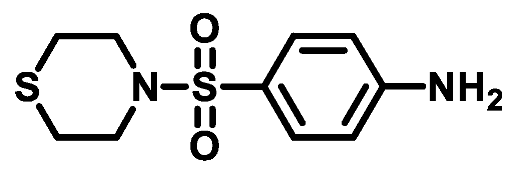
White powder, 2.41g, 93%.1H NMR (400 MHz, DMSO-d6) δ 2.65 (t, 4H), 3.11 (t, 4H), 6.06 (s, 2H), 6.66 (d, J = 8.7 Hz, 2H), 7.36 (d, J = 8.7 Hz, 2H). 13CNMR (101 MHz, DMSO) δ 26.9, 48.2, 113.3, 121.0, 129.7, 153.7.
4.1.4. General Procedure for Preparation of N-substituted sulfonyl phenyl chloro- acetamides [31].
In a flame-dried flask, chloroacetyl chloride (0.631 mg, 5.5 mmol) was added dropwise at 0°C to a solution of sulfonylaniline 3 (1.00 g, 4.3 mmol) in anhydrous THF (30 mL) containing K₂CO₃ (1.18 g, 8.6 mmol). The reaction mixture was stirred for 4 hours and monitored by TLC. After reaction completion, water (60 mL) was added, and the aqueous layer was extracted with ethyl acetate. The organic layer was dried over anhydrous Na₂SO₄, and the solvent was evaporated to yield compound 4. The crude product was used for the next step without further purification.
4.1.4.1. 2-Chloro-N-(4-(N,N-diethylsulfamoyl)phenyl)acetamide (4a)
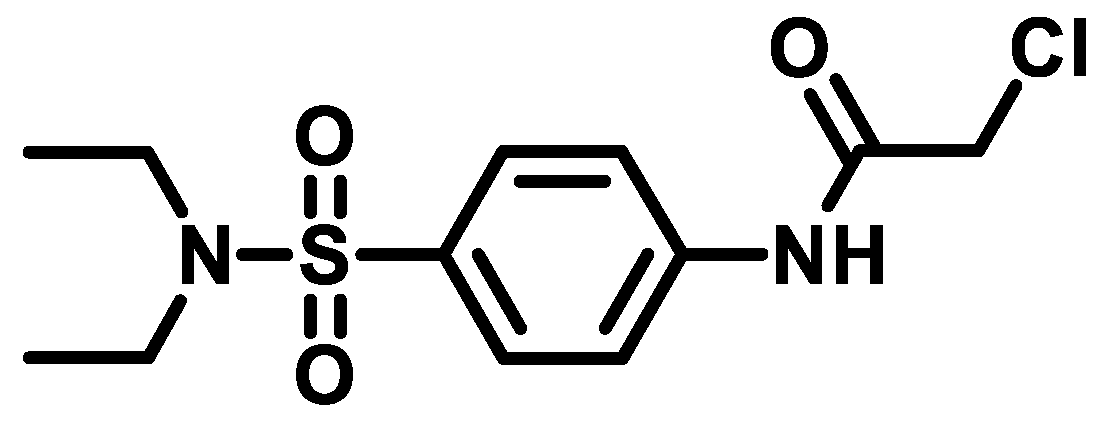
White powder, 88%, 1H NMR (400 MHz, Chloroform-d) δ 1.05 (t, J = 7.2 Hz, 6H), 3.16 (q, J = 7.1 Hz, 4H), 4.15 (s, 2H), 7.68 (d, J = 2.5 Hz, 4H), 8.91 (s, 1H). 13CNMR (101 MHz, CDCl3) δ 14.1, 42.1, 43.1, 120.0, 128.0, 135.6, 141.0, 165.1.
4.1.4.2. 2-Chloro-N-(4-(piperidin-1-ylsulfonyl)phenyl)acetamide (4b)
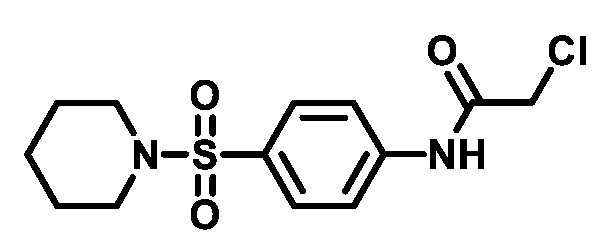
White powder, 91%.1H NMR (400 MHz, DMSO-d6δ 1.30 – 1.38 (m, 2H), 1.53 (t, J = 5.6 Hz, 4H), 2.86 (t, J = 5.4 Hz, 4H), 4.31 (s, 2H), 7.70 (d, J = 8.8 Hz, 2H), 7.83 (d, J = 8.8 Hz, 2H), 10.70 (s, 1H). 13C NMR (101 MHz, DMSO) δ 23.3, 25.1, 44.0, 47.0, 119.6, 129.2, 130.5, 142.9, 165.8.
4.1.4.3. 2-Chloro-N-(4-((4-methylpiperazin-1-yl)sulfonyl)phenyl)acetamide (4c)
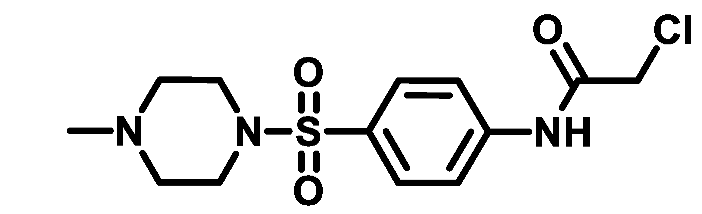
White powder, 94%.1HNMR (400 MHz, DMSO-d6) δ 2.13 (s, 3H), 2.35 (t, J = 5.0 Hz, 4H), 2.87 (t, J = 4.9 Hz, 4H), 4.32 (s, 2H), 7.71 (d, J = 8.8 Hz, 2H), 7.85 (d, J = 8.8 Hz, 2H), 10.79 (s, 1H).13CNMR (101 MHz, DMSO) δ 44.0, 45.7, 46.2, 53.9, 119.7, 129.3, 129.8, 143.1, 165.9.
4.1.4.4. 2-Chloro-N-(4-(morpholinosulfonyl)phenyl)acetamide (4d)
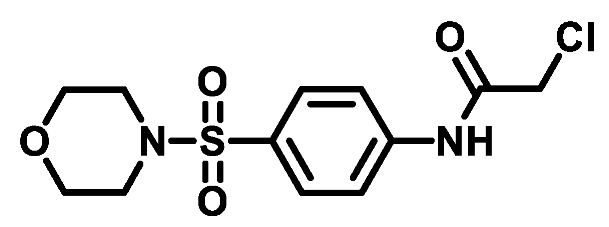
White powder, 89%, 1H NMR (400 MHz, Chloroform-d) δ 3.02 (t, 4H), 3.75 (t, 4H), 4.24 (s, 2H), 7.75 (d, J = 9.0 Hz, 2H), 7.79 (d, J = 9.0 Hz, 2H), 8.48 (s, 1H). 13CNMR (101 MHz, CDCl3) δ 42.8, 46.0, 66.1, 119.8, 129.2, 131.1, 141.1, 164.3.
4.1.4.5. 2-Chloro-N-(4-(thiomorpholinosulfonyl)phenyl)acetamide (4e)
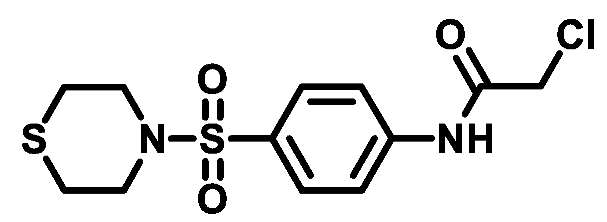
White powder, 85%. 1H NMR (400 MHz, DMSO-d6) δ 2.66 (q, J = 4.8, 4.2 Hz, 4H), 3.20 (q, J = 4.8, 4.2 Hz, 4H), 4.32 (d, J = 3.4 Hz, 2H), 7.72 (d, J = 8.7 Hz, 2H), 7.85 (d, J = 8.7 Hz, 2H), 10.73 (s, 1H). 13C NMR (101 MHz, DMSO) δ 26.9, 44.0, 48.2, 119.8, 129.0, 131.0, 143.1, 165.9.
4.1.5. General Procedure for Preparation of Final Target Compounds M1-25
In a dry oven flask, A mixture of compound 1 (1.30 mmole) and K₂CO₃ (1.43 mmole) in 10 mL DMF was stirred for 20 minutes under nitrogen. Then, the appropriate sulfonyl acetamide compound 4 (1.30 mmole) was added to the flask. The reaction mixture was stirred for 20–34 hours under nitrogen at room temperature and monitored by TLC. Upon completion of the reaction, water (60 mL) was added, and the mixture was acidified with glacial acetic acid. Precipitation formed, which was then filtered, washed with cold water, and purified by flash column chromatography.
4.1.5.1. 2-((5-Cyano-6-oxo-4-phenyl-1,6-dihydropyrimidin-2-yl)thio)-N-(4-(N,N- diethylsulfamoyl)phenyl)acetamide (M1)
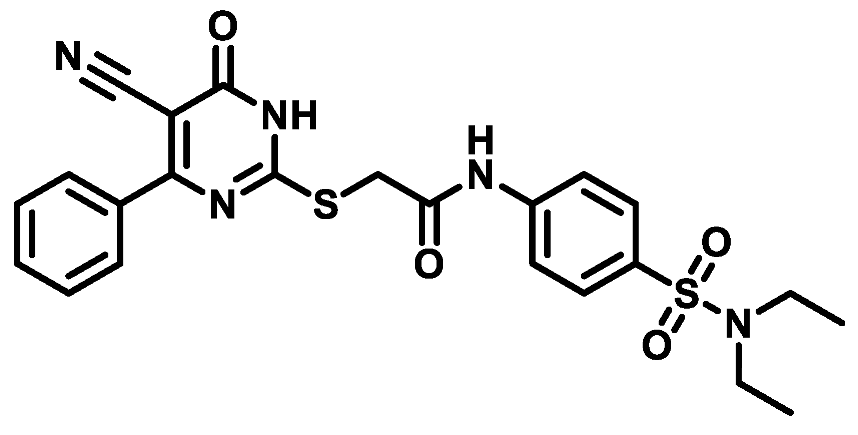
White powder, mp 207-210, 601 mg, 93%.1H NMR (400 MHz, DMSO-d6) δ 1.03 (t, J = 7.1 Hz, 6H), 3.15 (q, J = 7.1 Hz, 4H), 4.20 (s, 2H), 7.29 (t, J = 7.7 Hz, 2H), 7.50 (t, J = 7.5 Hz, 1H), 7.74 (d, J = 9.1 Hz, 2H), 7.77 (d, J = 9.4 Hz, 2H), 7.82 (d, J = 7.8 Hz, 2H), 10.78 (s, 1H). 13CNMR (101 MHz, DMSO) δ 14.4, 36.1, 42.1, 93.5, 116.3, 119.3, 128.4, 128.8, 129.2, 132.0, 134.3, 135.5, 143.1, 161.8, 166.3, 166.5, 167.5. MS (ESI) m/z (%): 498.1450 [M+H].
4.1.5.2. 2-((5-Cyano-6-oxo-4-phenyl-1,6-dihydropyrimidin-2-yl)thio)-N-(4-(piperidin-1-ylsulfonyl)phenyl)acetamide (M2)
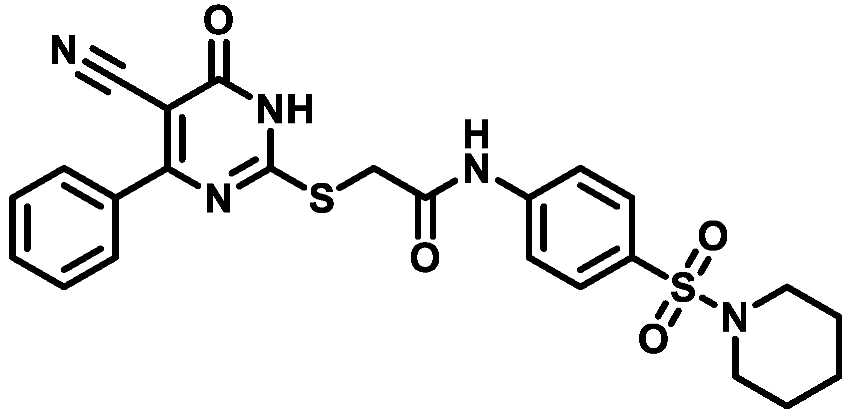
White powder, mp 184-186 629 mg, 95%. 1H NMR (400 MHz, DMSO-d6) δ 1.35 (p, 2H), 1.54 (t, J = 5.8 Hz, 4H), 2.86 (t, J = 5.5 Hz, 4H), 4.22 (s, 2H), 7.29 (t, J = 7.7 Hz, 2H), 7.49 (t, J = 7.5 Hz, 1H), 7.69 (d, J = 8.7 Hz, 2H), 7.82 (dd, J = 10.5, 8.1 Hz, 4H), 10.76 (s, 1H), 13.71 (s, 1H). 13CNMR (101 MHz, DMSO) δ 23.4, 25.1, 36.2, 47.1, 93.7, 116.2, 119.2, 128.8, 129.2, 129.2, 130.0, 132.0, 135.5, 143.4, 161.6, 166.2, 166.5, 167.5. MS (ESI) m/z (%): 509.1640 [M+H].
4.1.5.3. 2-((5-Cyano-6-oxo-4-phenyl-1,6-dihydropyrimidin-2-yl)thio)-N-(4-((4-methylpiperazin-1-yl)sulfonyl)phenyl)acetamide (M3)
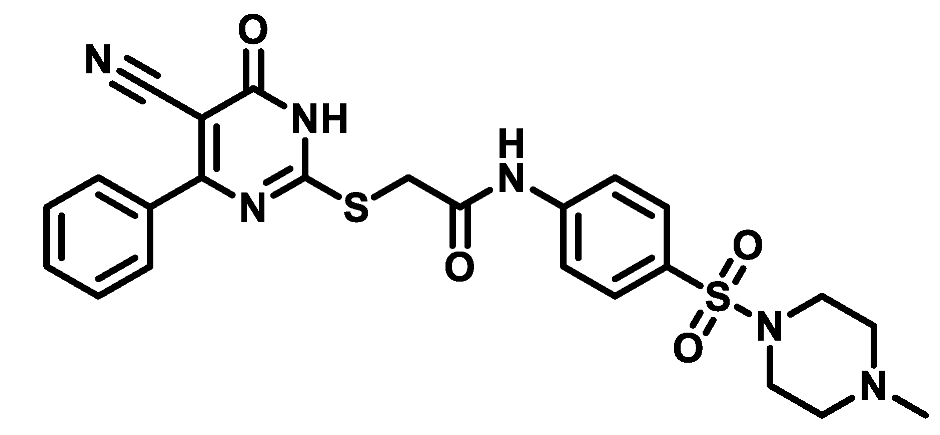
White powder, mp 213-215 ºC, 641 mg, 94%, 1H NMR (400 MHz, DMSO-d6) δ 2.67 (s, 3H), 3.16 (s, 8H), 4.10 (s, 2H), 7.37 (t, J = 7.8 Hz, 2H), 7.51 (t, J = 7.4 Hz, 1H), 7.73 (d, J = 8.8 Hz, 2H), 7.81 (d, J = 7.7 Hz, 2H), 7.85 (d, J = 8.4 Hz, 2H), 11.15 (s, 1H). 13CNMR (101 MHz, DMSO) δ 36.0, 42.9, 43.9, 52.4, 92.1, 117.8, 119.4, 128.5, 128.7, 129.0, 129.5, 131.5, 136.4, 144.1, 167.6, 167.7. MS (ESI) m/z (%): 525.1303 [M+H].
4.1.5.4. 2-((5-Cyano-6-oxo-4-phenyl-1,6-dihydropyrimidin-2-yl)thio)-N-(4-(morpholinosulfonyl)phenyl)acetamide (M4)
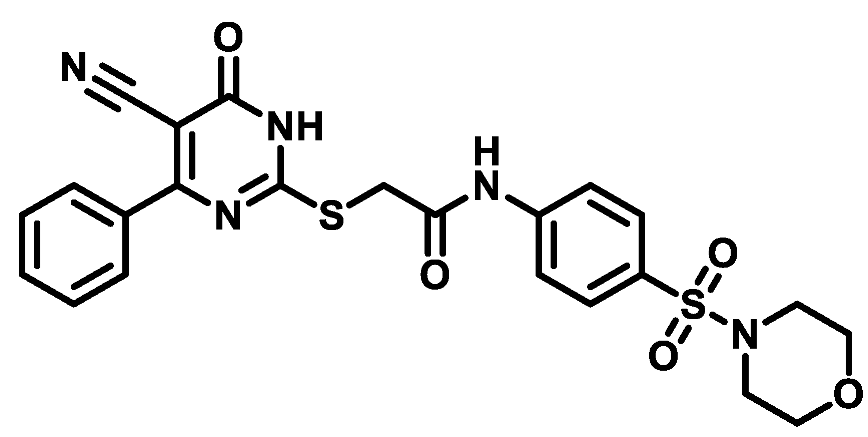
White powder, mp 205-208 ºC, 598 mg, 90%1HNMR (400 MHz, DMSO-d6) δ 2.85 (t, J = 4.7, 4.1 Hz, 4H), 3.62 (t, J = 4.7 Hz, 4H), 3.88 (s, 2H), 7.39 (t, J = 7.3 Hz, 2H), 7.46 (t, J = 7.3 Hz, 1H), 7.67 (d, J = 8.8 Hz, 2H), 7.76 (d, J = 7.0 Hz, 2H), 7.82 (d, J = 8.8 Hz, 2H), 11.42 (s, 1H).13CNMR (101 MHz, DMSO) δ 35.8, 46.4, 65.8, 90.2, 119.1, 120.0, 128.5, 128.7, 129.4, 130.3, 137.8, 143.9, 167.7, 168.9. MS (ESI) m/z (%): 512.5891 [M+H].
4.1.5.5. 2-((5-Cyano-6-oxo-4-phenyl-1,6-dihydropyrimidin-2-yl)thio)-N-(4-(thiomorpholinosulfonyl)phenyl)acetamide (M5)
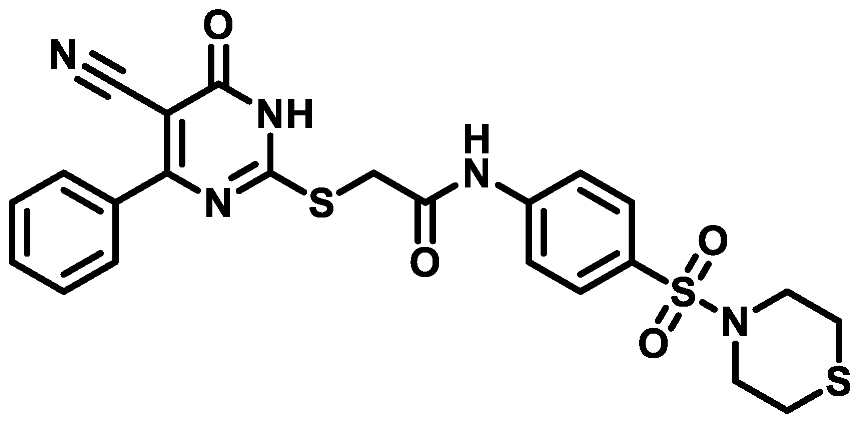
White powder, mp 216-219 ºC, 610, 89%. 1H NMR (400 MHz, DMSO-d6) δ 2.66 (t, J = 4.7 Hz, 4H), 3.19 (t, J = 4.7 Hz, 4H), 3.88 (s, 2H), 7.39 (t, J = 7.5 Hz, 2H), 7.46 (t, J = 7.3 Hz, 1H), 7.68 (d, J = 8.7 Hz, 2H), 7.75 (d, J = 7.5 Hz, 2H), 7.81 (d, J = 8.7 Hz, 2H), 11.38 (s, 1H). 13CNMR (101 MHz, DMSO) δ 26.9, 35.8, 48.2, 90.2, 119.2, 120.0, 128.5, 128.7, 129.0, 130.2, 130.3, 137.8, 143.8, 161.5 167.7, 168.9, 171.7. MS (ESI) m/z (%): 528.6730 [M+H].
4.1.5.6. 2-((4-(4-Bromophenyl)-5-cyano-6-oxo-1,6-dihydropyrimidin-2-yl)thio)-N-(4-(N,N-diethylsulfamoyl)phenyl)acetamide (M6)
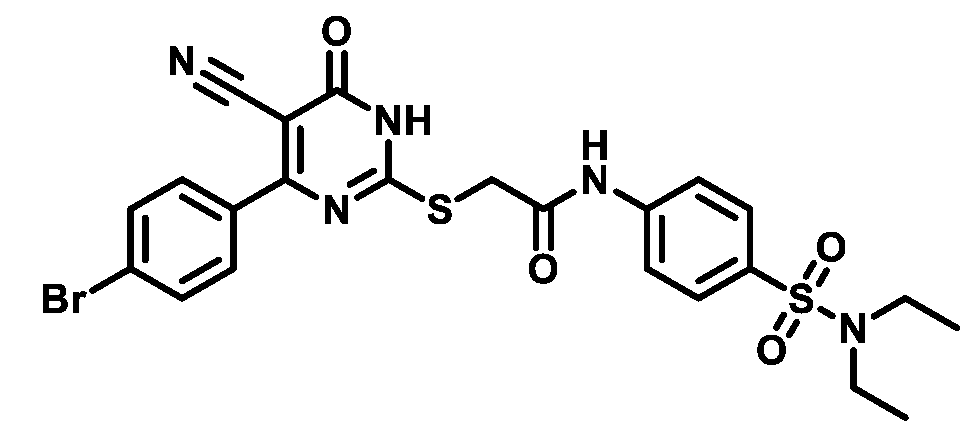
White powder, mp 242-245 ºC, 696 mg, 93%. 1H NMR (400 MHz, DMSO-d6) δ 1.03 (t, J = 7.1 Hz, 6H), 3.15 (q, J = 7.1 Hz, 4H), 4.19 (s, 2H), 7.46 (d, J = 8.4 Hz, 2H), 7.76 (d, J = 6.2 Hz, 6H), 10.70 (s, 1H). 13CNMR (101 MHz, DMSO) δ 14.4, 36.1, 42.2, 93.8, 116.0, 119.3, 125.9, 128.4, 131.1, 131.8, 134.3, 134.6, 142.9, 161.3, 166.4, 166.4, 166. 5. MS (ESI) m/z (%):574.0240 [M-H].
4.1.5.7. 2-((4-(4-Bromophenyl)-5-cyano-6-oxo-1,6-dihydropyrimidin-2-yl)thio)-N-(4-(piperidin-1-ylsulfonyl)phenyl)acetamide (M7)
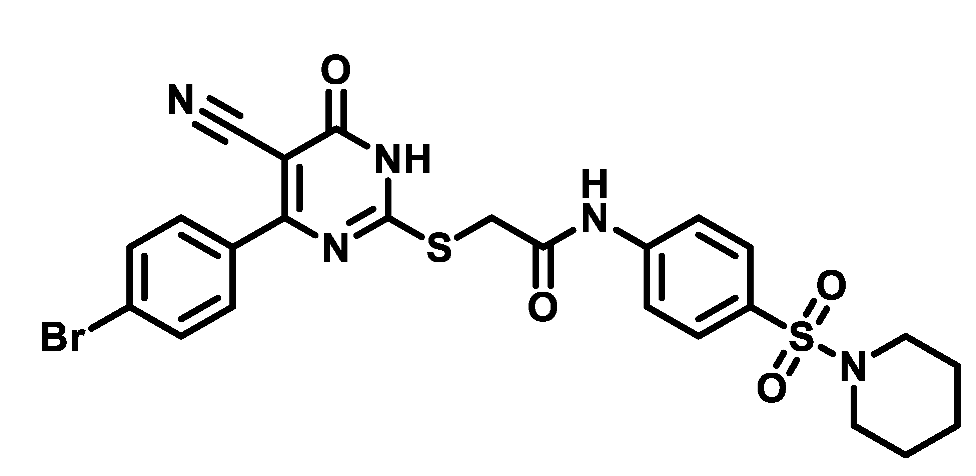
White powder, mp 257-260 ºC, 734 mg, 96%. 1H NMR (400 MHz, DMSO-d6) δ 1.35 (p, J = 5.4, 4.7 Hz, 2H), 1.54 (t, J = 5.7 Hz, 4H), 2.86 (t, J = 5.4 Hz, 4H), 4.19 (s, 2H), 7.45 (d, J = 8.4 Hz, 2H), 7.68 (d, J = 8.6 Hz, 2H), 7.75 (d, J = 8.5 Hz, 2H), 7.79 (d, J = 8.7 Hz, 2H), 10.74 (s, 1H). 13CNMR (101 MHz, DMSO) δ 23.4, 25.1, 36.1, 47.1, 93.8, 116.0, 119.2, 125.9, 129.1, 130.0, 131.2, 131.8, 134.6, 143.2, 161.3, 166.4, 166.5, 166.5. MS (ESI) m/z (%): 588.0470 [M+H].
4.1.5.8. 2-((4-(4-Bromophenyl)-5-cyano-6-oxo-1,6-dihydropyrimidin-2-yl)thio)-N-(4-((4-methylpiperazin-1-yl)sulfonyl)phenyl)acetamide (M8)
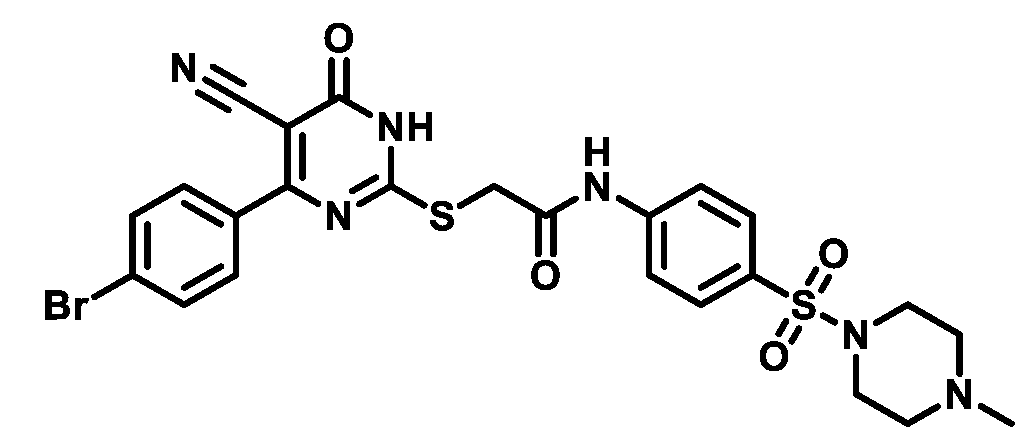
White powder, mp 230-233 ºC, 745mg, 95%, 1H NMR (400 MHz, DMSO-d6) δ 2.64 (s, 3H), 3.09 (s, 8H), 3.99 (s, 2H), 7.60 (d, J = 8.6 Hz, 2H), 7.72 (d, J = 4.0 Hz, 2H), 7.74 (d, J = 3.8 Hz, 2H), 7.86 (d, J = 8.8 Hz, 2H), 11.21 (s, 1H). 13CNMR (101 MHz, DMSO) δ 35.9, 43.3, 44.2, 52.6, 91.1, 118.7, 119.4, 124.5, 128.3, 129.5, 130.8, 131.7, 136.3, 144.1, 166.5, 168.2. MS (ESI) m/z (%): 603.0240 [M+H].
4.1.5.9. 2-((4-(4-Bromophenyl)-5-cyano-6-oxo-1,6-dihydropyrimidin-2-yl)thio)-N-(4-(morpholinosulfonyl)phenyl)acetamide(M9)
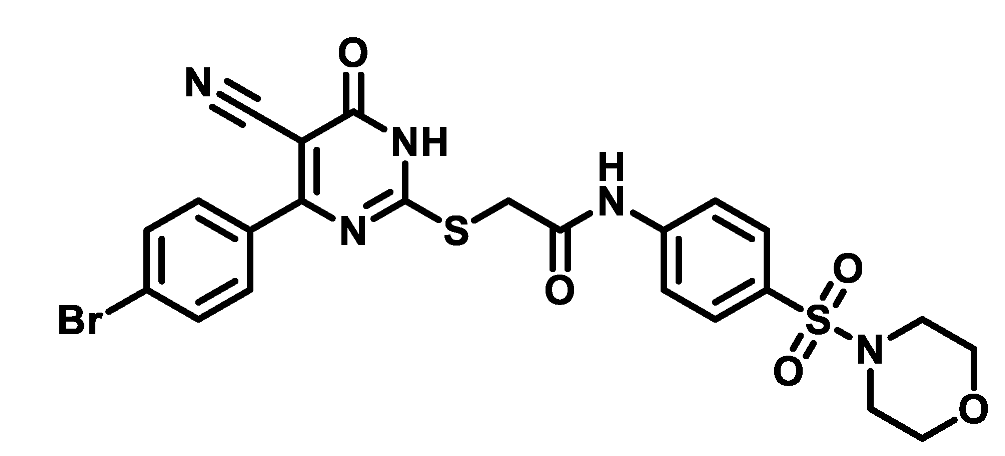
White powder, mp 218-222 ºC, 698mg, 91%, 1H NMR (400 MHz, DMSO-d6) δ 2.86 (t, J = 4.7 Hz, 4H), 3.64 (t, J = 4.8 Hz, 4H), 4.21 (s, 2H), 7.48 (d, J = 8.5 Hz, 2H), 7.70 (d, J = 8.6 Hz, 2H), 7.77 (d, J = 8.4 Hz, 2H), 7.82 (d, J = 8.6 Hz, 2H), 10.77 (s, 1H). 13CNMR (101 MHz, DMSO) δ 36.2, 46.4, 65.8, 93.8, 116.1, 119.3, 125.9, 128.9, 129.5, 131.1, 131.8, 134.7, 143.6, 166.5, 166.6. MS (ESI) m/z (%): 590.0540 [M+H].
4.1.5.10. 2-((4-(4-Bromophenyl)-5-cyano-6-oxo-1,6-dihydropyrimidin-2-yl)thio)-N-(4-(thiomorpholinosulfonyl)phenyl)acetamide (M10)
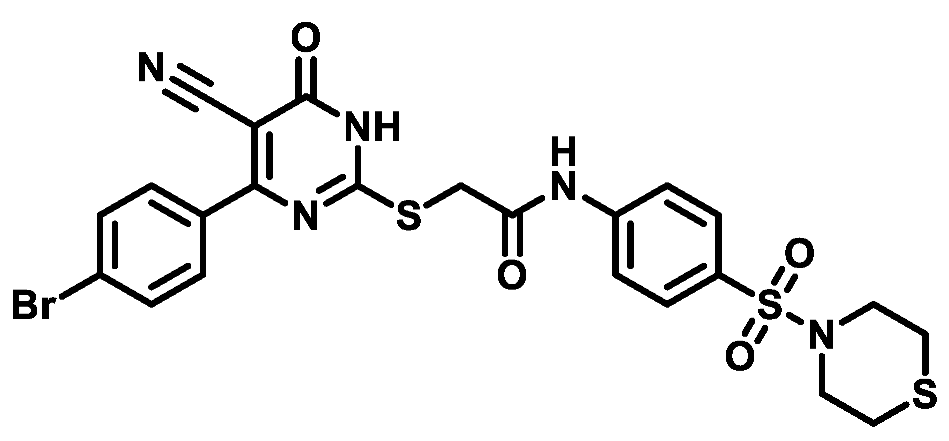
White powder, mp 224-226 ºC, 693mg, 88%, 1H NMR (400 MHz, DMSO-d6) δ 2.68 (t, J = 4.9 Hz, 4H), 3.20 (t, J = 5.0 Hz, 4H), 4.20 (s, 2H), 7.49 (d, J = 8.5 Hz, 2H), 7.71 (d, J = 8.6 Hz, 2H), 7.76 (d, J = 8.4 Hz, 2H), 7.81 (d, J = 8.6 Hz, 2H), 10.77 (s, 1H). 13C NMR (101 MHz, DMSO) δ 26.9, 48.3, 93.8, 116.0, 119.3, 125.9, 129.0, 130.5, 131.1, 131.8, 134.6, 143.5, 161.3, 166.4, 166.5, 166.6. MS (ESI) m/z (%): 606.0120 [M+H].
4.1.5.11. 2-((4-(4-Fluorophenyl)-5-cyano-6-oxo-1,6-dihydropyrimidin-2-yl)thio)-N-(4-(N,N-diethylsulfamoyl)phenyl)acetamide (M11)
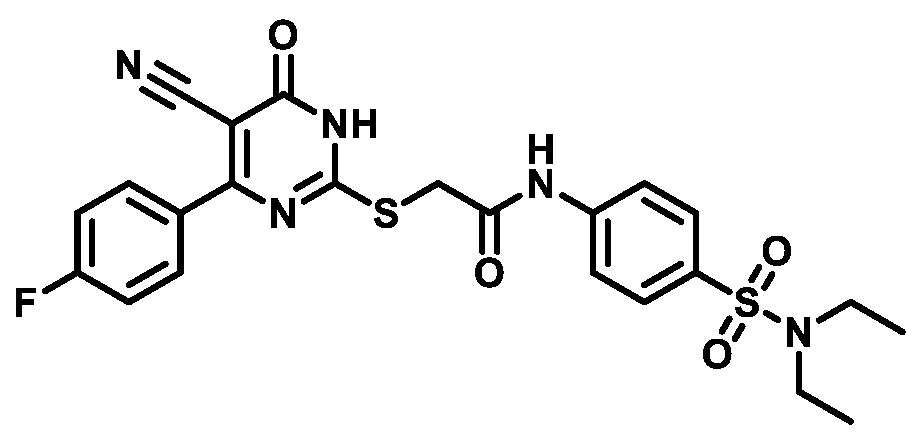
White powder, mp 248-251 ºC, 630mg, 94%, 1H NMR (400 MHz, DMSO-d6)δ 1.03 (t, J = 7.1 Hz, 6H), 3.15 (q, J = 7.1 Hz, 4H), 4.21 (s, 2H), 7.13 (t, J = 8.8 Hz, 2H), 7.76 (s, 4H), 7.93 (dd, 2H), 10.72 (s, 1H), 13.96 (s, 1H).13CNMR (101 MHz, DMSO) δ 14.4, 36.1, 42.1, 93.5, 115.7, 115.9, 116.2, 119.3, 128.5, 131.9, 131.9, 134.3, 142.9, 163.1, 165.6, 166.3, 166.5. MS (ESI) m/z (%): 516.6984 [M+H].
4.1.5.12. 2-((4-(4-Fluorophenyl)-5-cyano-6-oxo-1,6-dihydropyrimidin-2-yl)thio)-N-(4-(piperidin-1-ylsulfonyl)phenyl)acetamide (M12)
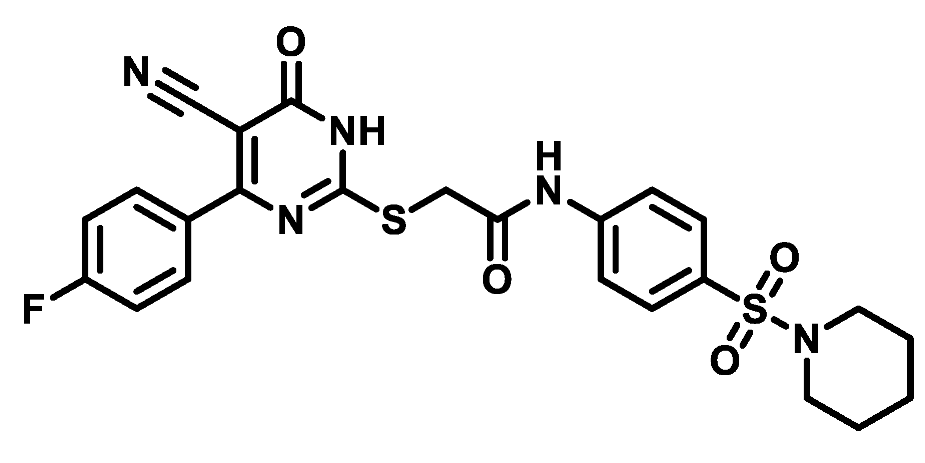
White powder, mp 177-180 ºC, 630mg, 92%, 1H NMR (400 MHz, DMSO-d6) δ 1.36 (p, 2H), 1.54 (t, J = 5.7 Hz, 4H), 2.86 (t, J = 5.4 Hz, 4H), 4.22 (s, 2H), 7.11 (t, J = 8.8 Hz, 2H), 7.69 (d, J = 8.7 Hz, 2H), 7.80 (d, J = 8.7 Hz, 2H), 7.93 (dd, J = 8.7, 5.6 Hz, 2H), 10.75 (s, 1H), 13.95 (s, 1H). 13CNMR (101 MHz, DMSO) δ 23.4, 25.1, 36.2, 47.1, 93.5, 115.7, 115.9, 116.2, 119.2, 129.2, 130.0, 131.9, 132.0, 143.3, 163.1, 165.6, 166.2, 166.3, 166.5. MS (ESI) m/z (%): 528.1124 [M+H].
4.1.5.13. 2-((4-(4-Fluorophenyl)-5-cyano-6-oxo-1,6-dihydropyrimidin-2-yl)thio)-N-(4-((4-methylpiperazin-1-yl)sulfonyl)phenyl)acetamide (M13)
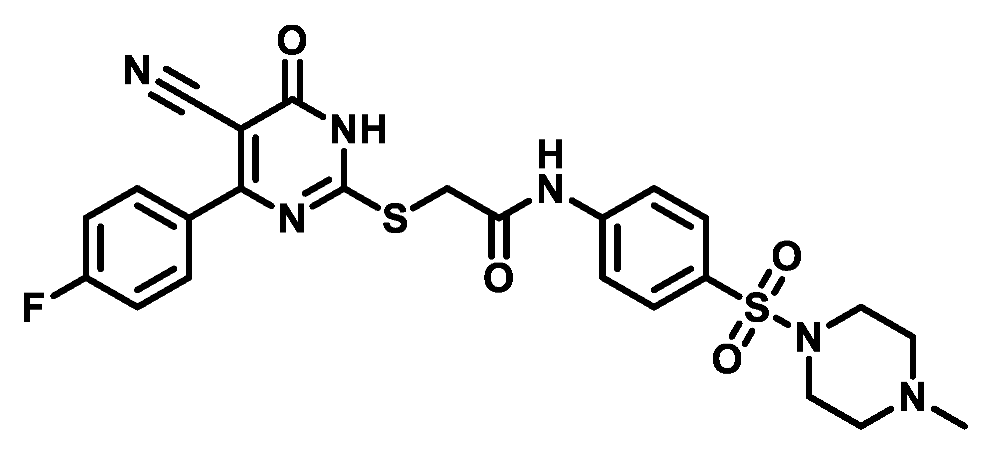
White powder, mp 213-215 ºC, 641mg, 91%,1H NMR (400 MHz, DMSO-d6) δ 2.60 (s, 3H), 3.04 (s, 8H), 3.98 (s, 2H), 7.23 (t, J = 8.9 Hz, 2H), 7.73 (d, J = 8.8 Hz, 2H), 7.86 (t, 4H), 11.24 (s, 1H). 13C NMR (101 MHz, DMSO) δ 35.9, 43.5, 44.4, 52.8, 90.9, 115.5, 115.8, 118.9, 119.4, 128.3, 129.5, 131.2, 131.3, 133.5, 133.6, 144.0, 162.5, 165.0, 166.5, 167.8, 168.3, 170.2. MS (ESI) m/z (%): 543.7064 [M+H].
4.1.5.14. 2-((4-(4-Fluorophenyl)-5-cyano-6-oxo-1,6-dihydropyrimidin-2-yl)thio)-N-(4-(morpholinosulfonyl)phenyl)acetamide (M14)
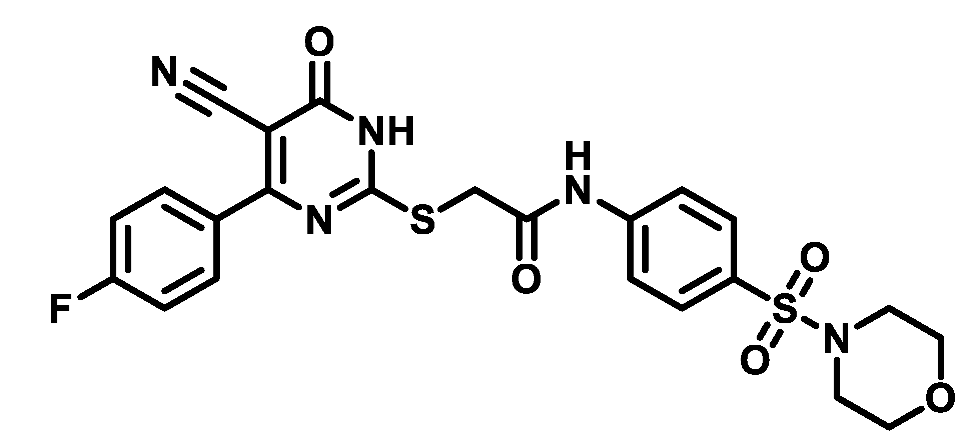
White powder, mp 270-274 ºC, 640mg, 93%, 1H NMR (400 MHz, DMSO-d6) δ 2.85 (t, J = 4.2 Hz, 4H), 3.63 (t, J = 4.7 Hz, 4H), 4.24 (s, 2H), 7.14 (t, J = 8.8 Hz, 2H), 7.70 (d, J = 8.9 Hz, 2H), 7.82 (d, J = 8.9 Hz, 2H), 7.94 (dd, J = 8.7, 5.6 Hz, 2H), 10.77 (s, 1H). 13CNMR (101 MHz, DMSO) δ 36.2, 46.4, 65.8, 93.6, 115.8, 116.0, 116.1, 119.3, 128.9, 129.5, 131.9, 132.0, 143.6, 161.4, 163.1, 165.6, 166.1, 166.4, 166.6. MS (ESI) m/z (%): 530.7637 [M+H].
4.1.5.15. 2-((4-(4-Fluorophenyl)-5-cyano-6-oxo-1,6-dihydropyrimidin-2-yl)thio)-N-(4-(thiomorpholinosulfonyl)phenyl)acetamide (M15)
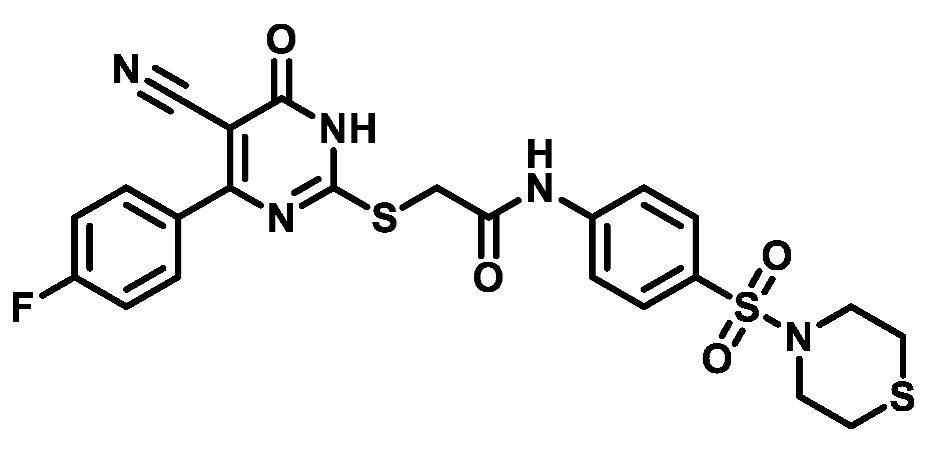
White powder, mp 195-198 ºC, 652mg, 92%, 1H NMR (400 MHz, DMSO-d6) δ 2.65 (t, J = 5.2 Hz, 4H), 3.18 (t, J = 5.0 Hz, 4H), 4.21 (s, 2H), 7.12 (t, J = 8.7 Hz, 2H), 7.70 (d, J = 8.7 Hz, 2H), 7.79 (d, J = 8.6 Hz, 2H), 7.92 (dd, J = 8.6, 5.4 Hz, 2H), 10.78 (s, 1H). 13CNMR (101 MHz, DMSO) δ 26.9, 36.1, 48.2, 93.5, 115.8, 116.0, 116.2, 119.4, 129.0, 130.6, 131.8, 131.9, 143.4, 161.5, 163.1, 166.2, 166.4, 166.6. MS (ESI) m/z (%): 546.6345 [M+H].
4.1.5.16. 2-((4-(4-Chlorophenyl)-5-cyano-6-oxo-1,6-dihydropyrimidin-2-yl)thio)-N-(4-(N,N-diethylsulfamoyl)phenyl)acetamide (M16)
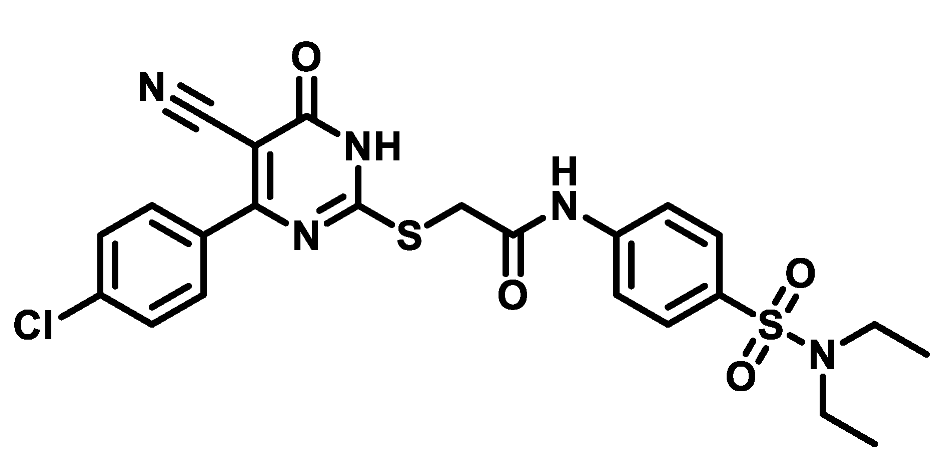
White powder, mp 230-233. ºC, 650mg, 94%, 1H NMR (400 MHz, DMSO-d6) δ 1.02 (t, J = 7.1 Hz, 7H), 3.14 (q, J = 7.1 Hz, 4H), 4.18 (s, 2H), 7.32 (d, J = 8.5 Hz, 2H), 7.74 (s, 4H), 7.83 (d, J = 8.5 Hz, 2H), 10.72 (s, 1H). 13CNMR (101 MHz, DMSO) δ 14.4, 36.2, 42.2, 93.8, 116.0, 119.3, 128.5, 128.8, 131.0, 134.3, 134.3, 137.0, 142.9, 161.4, 166.3, 166.4,166.4. MS (ESI) m/z (%): 532.0280 [M+H].
4.1.5.17. 2-((4-(4-Chlorophenyl)-5-cyano-6-oxo-1,6-dihydropyrimidin-2-yl)thio)-N-(4-(piperidin-1-ylsulfonyl)phenyl)acetamide (M17)
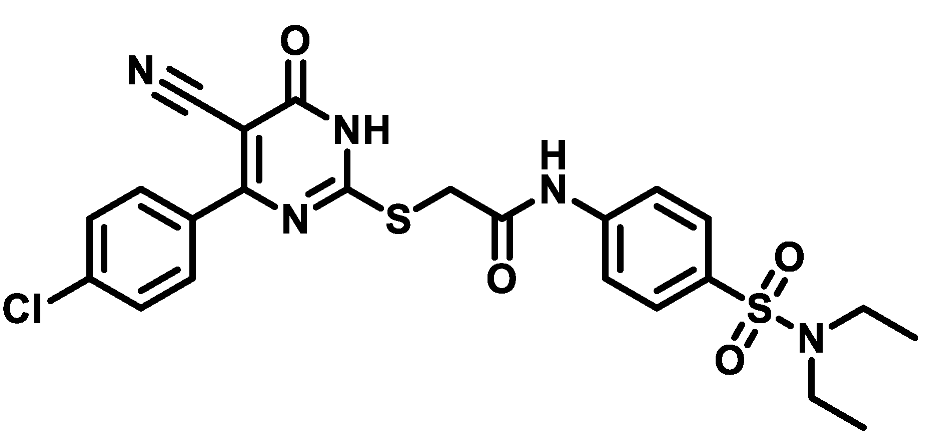
White powder, mp 238-240 ºC, 671mg,95%. 1H NMR (400 MHz, DMSO-d6) δ 1.35 (p, J = 6.0 Hz, 2H), 1.53 (p, J = 5.7 Hz, 4H), 2.85 (t, J = 5.4 Hz, 4H), 4.19 (s, 2H), 7.31 (d, J = 8.4 Hz, 2H), 7.68 (d, J = 8.6 Hz, 2H), 7.79 (d, J = 8.7 Hz, 2H), 7.83 (d, J = 8.5 Hz, 2H), 10.75 (s, 1H). 13CNMR (101 MHz, DMSO) δ 23.4, 25.1, 36.1, 47.1, 93.8, 116.0, 119.2, 128.8, 129.2, 130.0, 131.0, 134.3, 137.0, 143.2, 161.4, 166.3, 166.4, 166.5. MS (ESI) m/z (%): 544.0680 [M+H].
4.1.5.18. 2-((4-(4-Chlorophenyl)-5-cyano-6-oxo-1,6-dihydropyrimidin-2-yl)thio)-N-(4-((4-methylpiperazin-1-yl)sulfonyl)phenyl)acetamide (M18)
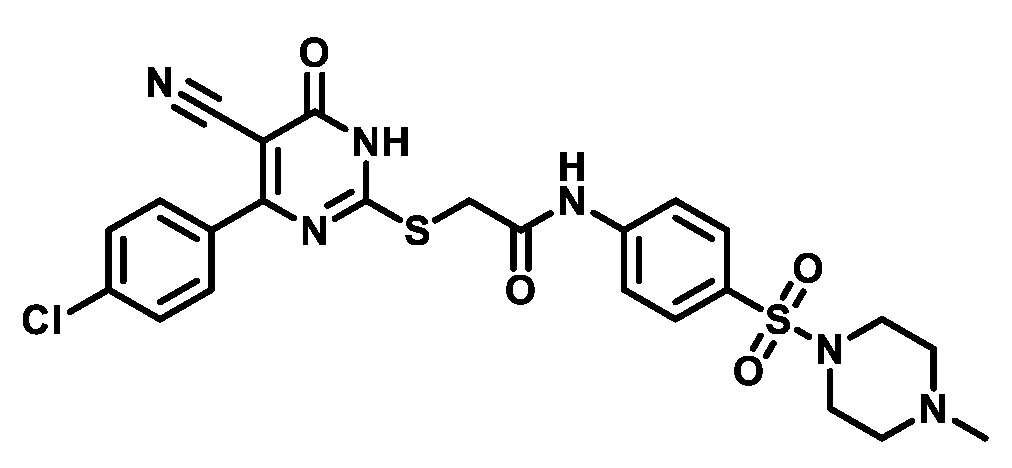
White powder, mp 225-227 ºC, 657mg, 93%, 1H NMR (400 MHz, DMSO-d6) δ 2.55 (s, 3H), 2.99 (s, 8H), 3.91 (s, 2H), 7.39 (d, J = 8.6 Hz, 2H), 7.65 (d, J = 8.7 Hz, 2H), 7.74 (d, J = 8.6 Hz, 2H), 7.78 (d, J = 8.7 Hz, 2H), 11.15 (s, 1H). 13CNMR (101 MHz, DMSO) δ 35.9, 43.4, 44.3, 52.7, 91.0, 118.8, 119.3, 128.3, 128.8, 129.5, 129.8, 130.6, 135.7, 135.9, 144.1, 166.4, 168.3. MS (ESI) m/z (%): 559.0910 [M+H].
4.1.5.19. 2-((4-(4-Chlorophenyl)-5-cyano-6-oxo-1,6-dihydropyrimidin-2-yl)thio)-N-(4-(morpholinosulfonyl)phenyl)acetamide (M19)
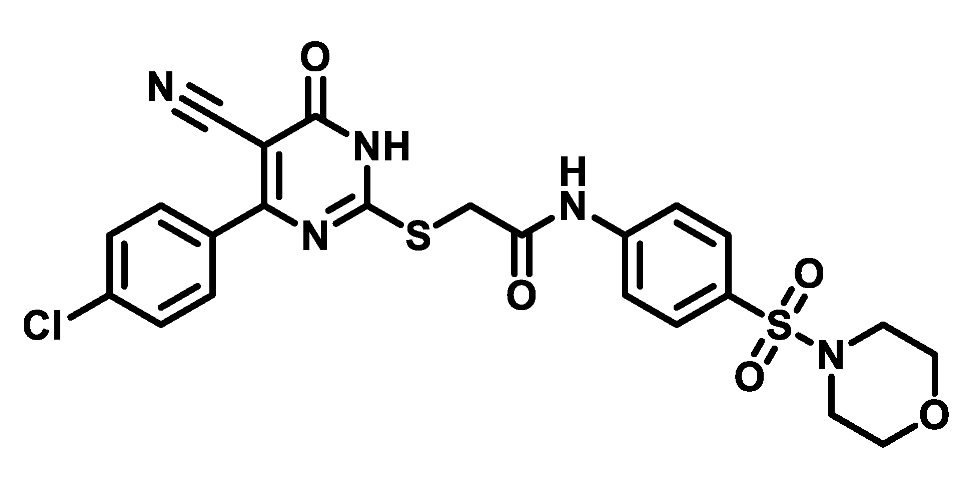
White powder, mp 198-200 ºC, 646 mg, 91%, 1H NMR (400 MHz, DMSO-d6) δ 2.86 (t, J = 3.8 Hz, 4H), 3.64 (t, J = 4.7 Hz, 4H), 4.21 (s, 2H), 7.36 (d, J = 8.6 Hz, 2H), 7.70 (d, J = 8.8 Hz, 2H), 7.83 (d, J = 8.8 Hz, 2H), 7.85 (d, J = 8.7 Hz, 2H), 10.80 (s, 1H). 13CNMR (101 MHz, DMSO) δ 36.2, 46.4, 65.8, 93.7, 116.2, 119.3, 128.8, 128.9, 129.5, 131.0, 134.4, 136.9, 143.6, 166.3, 166.6, 166.7. MS (ESI) m/z (%): 546.0620 [M+H].
4.1.5.20. 2-((4-(4-Chlorophenyl)-5-cyano-6-oxo-1,6-dihydropyrimidin-2-yl)thio)-N-(4-(thiomorpholinosulfonyl)phenyl)acetamide (M20)
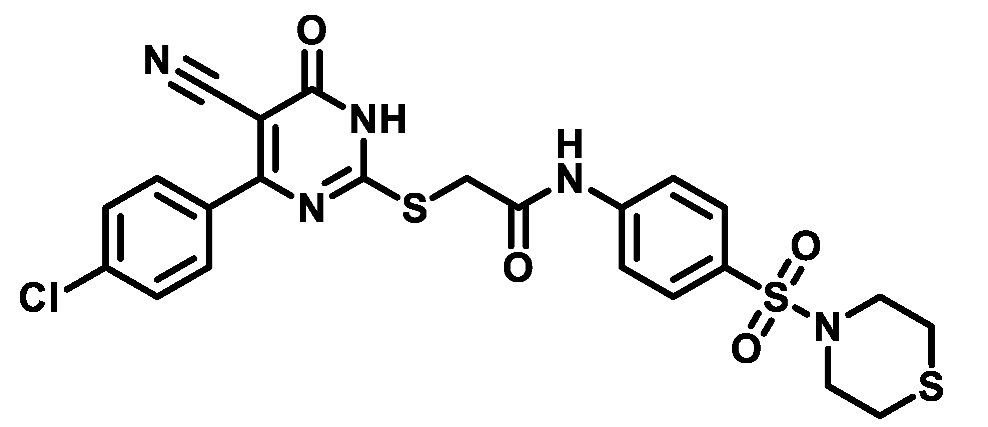
White powder, mp 210-214 ºC, 686 mg, 94%, 1H NMR (400 MHz, DMSO-d6) δ 2.66 (t, J = 4.7, 4.3 Hz, 4H), 3.19 (t, J = 4.5 Hz, 4H), 4.21 (s, 2H), 7.34 (d, J = 8.6 Hz, 2H), 7.70 (d, J = 8.8 Hz, 2H), 7.81 (d, J = 8.7 Hz, 2H), 7.85 (d, J = 8.6 Hz, 2H), 10.76 (s, 1H). 13CNMR (101 MHz, DMSO δ 26.9, 36.2, 48.3, 93.8, 116.0, 119.3, 128.9, 129.0, 130.5, 131.0, 134.3, 137.0, 143.5, 161.4, 166.3, 166.6. MS (ESI) m/z (%): 562.0420 [M+H].
4.1.5.21. 2-((4-(3-Chlorophenyl)-5-cyano-6-oxo-1,6-dihydropyrimidin-2-yl)thio)-N-(4-(N,N-diethylsulfamoyl)phenyl)acetamide (M21)
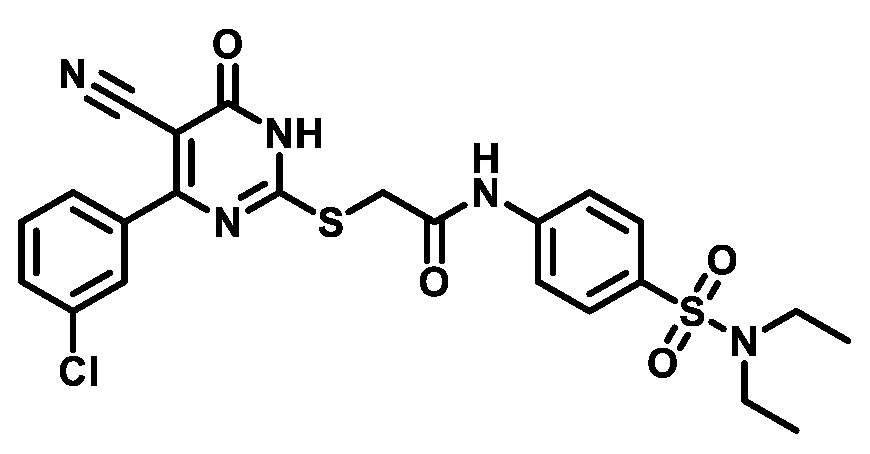
White powder, mp 255-258 ºC, 608 mg, 88%,1H NMR (400 MHz, DMSO-d6) δ 1.02 (t, J = 7.1 Hz, 6H), 3.13 (q, J = 7.1 Hz, 4H), 4.20 (s, 2H), 7.36 (t, J = 7.9 Hz, 1H), 7.55 (d, J = 7.4 Hz, 1H), 7.72 (d, J = 4.7 Hz, 4H), 7.76 (d, J = 8.0 Hz, 1H), 7.79 (d, J = 2.5 Hz, 1H), 10.71 (s, 1H). 13C NMR (101 MHz, DMSO) δ 14.4, 36.1, 42.2, 94.3, 115.9, 119.5, 127.8, 128.4, 128.6, 130.7, 131.8, 133.8, 134.4, 137.5, 142.8, 161.4, 166.2, 166.3, 166.6. MS (ESI) m/z (%): 532.0350 [M+H].
4.1.5.22. 2-((4-(3-Chlorophenyl)-5-cyano-6-oxo-1,6-dihydropyrimidin-2-yl)thio)-N-(4-(piperidin-1-ylsulfonyl)phenyl)acetamide (M22)
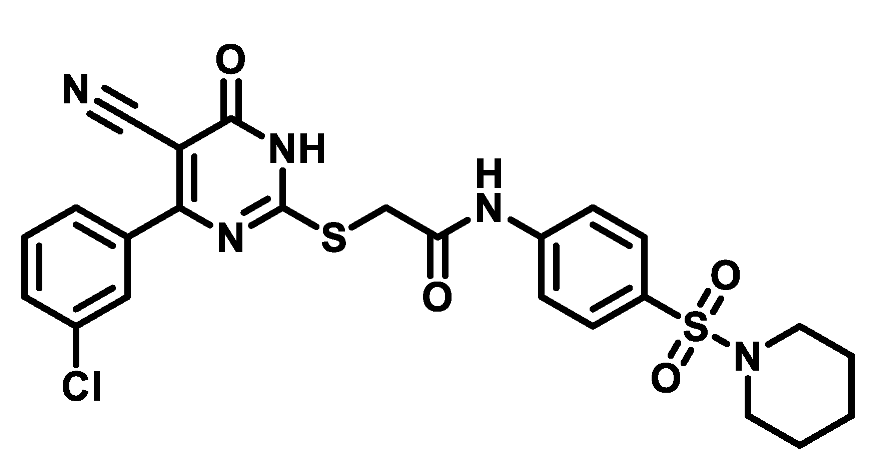
White powder, mp 262-265 ºC, 629 mg, 89%, 1H NMR (400 MHz, DMSO-d6) δ 1.35 (p, 2H), 1.54 (p, 4H), 2.84 (t, J = 5.0 Hz, 4H), 4.21 (s, 2H), 7.38 (t, J = 8.0 Hz, 1H), 7.55 (d, J = 7.9 Hz, 1H), 7.65 (d, J = 8.6 Hz, 2H), 7.78 (dd, 4H), 10.75 (s, 1H).. 13CNMR (101 MHz, DMSO) δ 23.4, 25.1, 36.1, 47.1, 94.3, 116.0, 119.3, 127.8, 128.6, 129.1, 130.0, 130.7, 131.8, 133.7, 137.6, 143.3, 166.2, 166.4, 166.7. MS (ESI) m/z (%): 544.0950 [M+H].
4.1.5.23. 2-((4-(3-Chlorophenyl)-5-cyano-6-oxo-1,6-dihydropyrimidin-2-yl)thio)-N-(4-((4-methylpiperazin-1-yl)sulfonyl)phenyl)acetamide (M23)
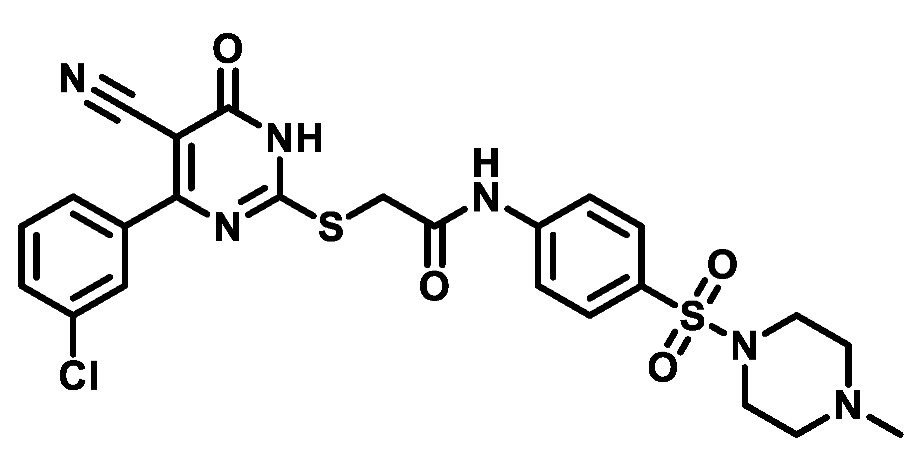
White powder, mp 242-245 ºC, 617 mg, 85%,1H NMR (400 MHz, DMSO-d6) δ 2.67 (s, 3H), 3.11 (s, 8H), 4.01 (s, 2H), 7.44 (t, J = 7.9 Hz, 1H), 7.56 (d, J = 7.6 Hz, 1H), 7.75 (dd, 4H), 7.87 (d, J = 8.8 Hz, 2H), 11.19 (s, 1H).13C NMR (101 MHz, DMSO) δ 35.9, 43.1, 44.1, 52.5, 91.5, 118.5, 119.4, 127.5, 128.3, 128.4, 129.5, 130.6, 130.7, 133.5, 139.1, 144.1, 166.1, 168.1, 170.3. MS (ESI) m/z (%): 559.0840 [M+H].
4.1.5.24. 2-((4-(3-Chlorophenyl)-5-cyano-6-oxo-1,6-dihydropyrimidin-2-yl)thio)-N-(4-(morpholinosulfonyl)phenyl)acetamide (M24)
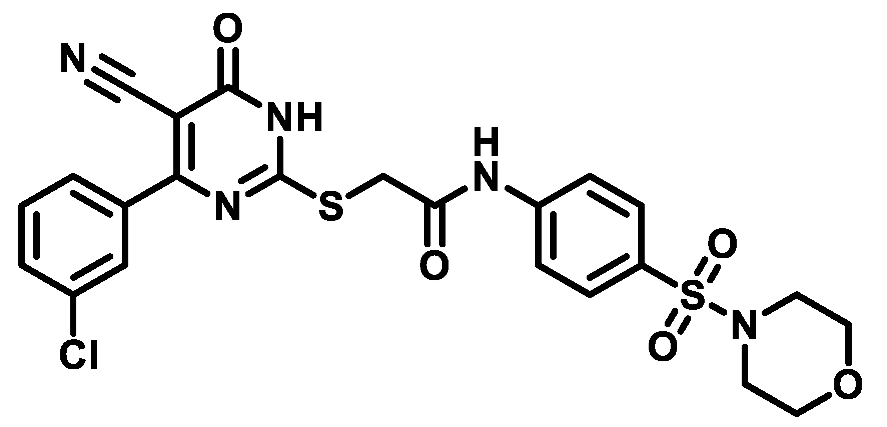
White powder, mp 261-264 ºC, 582 mg, 82%, 1H NMR (400 MHz, DMSO-d6) δ 2.76 (t, J = 4.4 Hz, 4H), 3.57 (t, J = 5.9, 3.5 Hz, 4H), 4.16 (s, 2H), 7.29 (t, J = 7.9 Hz, 1H), 7.49 (d, J = 8.4 Hz, 1H), 7.60 (d, J = 8.8 Hz, 2H), 7.72 (d, J = 4.8 Hz, 2H), 7.74 (d, J = 6.6 Hz, 2H), 10.70 (s, 1H), 13.96 (s, 1H).13CNMR (101 MHz, DMSO) δ 36.2, 46.4, 65.8, 94.4, 115.9, 119.4, 127.8, 128.6, 128.8, 129.4, 130.7, 131.8, 133.8, 137.5, 143.6, 161.3, 166.2, 166.4, 166.6. MS (ESI) m/z (%): 546.0240 [M+H].
4.1.5.25. 2-((4-(3-Chlorophenyl)-5-cyano-6-oxo-1,6-dihydropyrimidin-2-yl)thio)-N-(4-(thiomorpholinosulfonyl)phenyl)acetamide (M25)
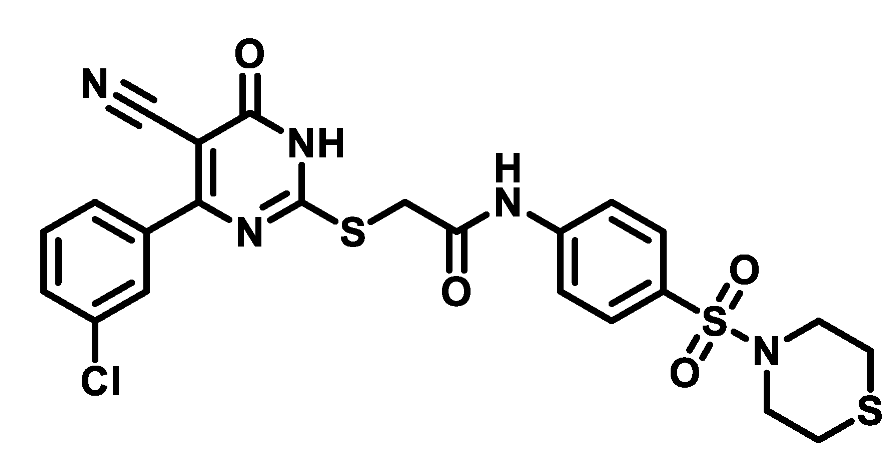
White powder, mp 245-247 oC, 613 mg, 84%, 1H NMR (400 MHz, DMSO-d6) δ 2.67 (t, J = 6.2 Hz, 4H), 3.18 (t, J = 4.1 Hz, 4H), 4.20 (s, 2H), 7.36 (t, J = 7.9 Hz, 1H), 7.57 (dd, J = 8.3, 2.1 Hz, 1H), 7.68 (d, J = 8.8 Hz, 2H), 7.79 (d, J = 8.0 Hz, 2H), 7.81 (d, J = 4.5 Hz, 2H), 10.83 (s, 1H). 13CNMR (101 MHz, DMSO) δ 26.9, 48.3, MS (ESI) m/z (%):574.0240 [M+H].116.3, 119.4, 127.8, 128.6, 129.0, 130.4, 130.6, 131.7, 133.7, 137.8, 143.5, 166.2, 166.6. MS (ESI) m/z (%): 562.0910 [M+H].
4.2. Biological Evaluation
4.2.1. Materials
This study utilized 25 chemical compounds labeled M1 to M25. All compounds were tested at a concentration of 3000 µg/mL.
4.2.2. Bacterial Strains
The antibacterial activity of the compounds was assessed against a panel of bacterial strains. More details are presented in the file of Supplementary information.
4.2.3. Agar Diffusion-Based Screening of Antimicrobial Activity
The antibacterial screening was performed using the agar diffusion method[49]. More details are presented in the file of Supplementary information.
4.2.4. Measurement of Inhibition Zones
The antibacterial activity was evaluated by measuring the diameter of the inhibition zones in millimeters (mm) around each well. More details are presented in the file of Supplementary information.
4.2.5. Determination of Minimum Inhibitory Concentration (MIC)
4.2.6. Determination of Minimum Bactericidal Concentration (MBC)
The Minimum Bactericidal Concentration (MBC) was determined as [40] following the MIC assay by subculturing 100 µL from each well that showed no visible growth onto fresh agar plates. The plates were incubated at 37°C for 24 hours. The MBC was defined as the lowest concentration of the compound that resulted in a 99.9% reduction in the initial bacterial inoculum. More details are presented in the file of Supplementary information.
4.2.7. Antibiofilm Assay of the Selected Compounds by Tissue Culture Plate Method (TCP):
4.3. Physicochemical Properties and ADMET (Absorption, Distribution, Metabolism, Excretion and Toxicity) Studies
Supplementary Materials
The following supporting information can be downloaded at the website of this paper posted on Preprints.org.
Funding
This research received no external funding.
Declaration of Competing Interest
The authors declare that they have no known competing financial interests or personal relationships that could have appeared to influence the work reported in this paper.
Data availability
Data will be made available on request. S.S.A., M.M.A., Y.M.S., H.M.A., A.N.E., M.K.A., S.H.A.
Institutional Review Board Statement
Not applicable.
Informed Consent Statement
Not applicable.
Data Availability Statement
Not applicable.
Acknowledgments
Prairie View University (PVAMU) Faculty startup funds 552509-00018. PVAMU’s Office of Research Advancement, and We express our gratitude to Prof. Tadhg Begley for his invaluable help and assistance.
Conflicts of Interest
The authors declare no conflict of interest.
Sample Availability
Samples of the compounds are not available from the authors.
References
- Xue, Y.J., et al., Design, synthesis and evaluation of carbazole derivatives as potential antimicrobial agents. J Enzyme Inhib Med Chem, 2021. 36(1): p. 295-306. [CrossRef]
- Singh, K., et al., Design, Synthesis, DFT, docking Studies, and antimicrobial evaluation of novel benzimidazole containing sulphonamide derivatives. Bioorg Chem, 2024. 149: p. 107473. [CrossRef]
- Almalki, A.J., et al., Synthesis, Antimicrobial, Anti-Virulence and Anticancer Evaluation of New 5(4H)-Oxazolone-Based Sulfonamides. Molecules, 2022. 27(3): p. 671.
- García Altares, M., Structural Diversity of Microalgal Marine Toxins. 2017. p. 35-88.
- Bsharat, I., et al., Synthesis, characterization, antibacterial and anticancer activities of some heterocyclic imine compounds. Journal of Molecular Structure, 2023. 1289: p. 135789. [CrossRef]
- Wu, P., et al., Synthesis and biological evaluation of pentacyclic triterpenoid derivatives as potential novel antibacterial agents. Bioorg Chem, 2021. 109: p. 104692. [CrossRef]
- Vornhagen, J., et al., Kinase Inhibitors that Increase the Sensitivity of Methicillin Resistant Staphylococcus aureus to β-Lactam Antibiotics. Pathogens, 2015. 4(4): p. 708-21. [CrossRef]
- Krátký, M., et al., Improving the antimicrobial activity of old antibacterial drug mafenide: Schiff bases and their bioactivity targeting resistant pathogens. Future Med Chem, 2023. 15(3): p. 255-274. [CrossRef]
- Zhang, X.J., et al., Topical Sulfamylon cream inhibits DNA and protein synthesis in the skin donor site wound. Surgery, 2006. 139(5): p. 633-9. [CrossRef]
- Krátký, M., Novel Sulfonamide Derivatives as a Tool to Combat Methicillin-Resistant Staphylococcus Aureus. Future Medicinal Chemistry, 2024. 16(6): p. 545-562. [CrossRef]
- Liu, X.-Y., et al., Novel carbazole derivatives designed by an ortho-linkage strategy for efficient phosphorescent organic light-emitting diodes. Journal of Materials Chemistry C, 2018. 6(15): p. 4300-4307. [CrossRef]
- Ghorbani-Choghamarani, A., P. Moradi, and B. Tahmasbi, Ni-SMTU@boehmite: as an efficient and recyclable nanocatalyst for oxidation reactions. RSC Advances, 2016. 6(61): p. 56458-56466. [CrossRef]
- Keypour, H., et al., Cadmium (II) macrocyclic Schiff-base complexes containing piperazine moiety: Synthesis, spectroscopic, X-ray structure, theoretical and antibacterial studies. Journal of Molecular Structure, 2018. 1155: p. 196-204. [CrossRef]
- Zayed, E.M., et al., Synthesis, Characterization, DFT, Docking, Antimicrobial and Thermal study of Pyrimidine - Carbonitrile ligand and its Metal Complexes. Journal of Molecular Structure, 2023. [CrossRef]
- Sharma, V., N. Chitranshi, and A.K. Agarwal, Significance and biological importance of pyrimidine in the microbial world. Int J Med Chem, 2014. 2014: p. 202784. [CrossRef]
- Robinson, P.K., Enzymes: principles and biotechnological applications. Essays Biochem, 2015. 59: p. 1-41. [CrossRef]
- Rajabi, F., S. De, and R. Luque, An Efficient and Green Synthesis of Benzimidazole Derivatives Using SBA-15 Supported Cobalt Nanocatalysts. Catalysis Letters, 2015. 145: p. 1566-1570. [CrossRef]
- Lal, K., J.P. Lalitmohan, and B.B. Mahendra, A Green Protocol for One-Pot Biginelli Condensation Catalyzed by Para Toulene Sulfonic Acid under Microwave Irradiation. Letters in Organic Chemistry, 2016. 13(4): p. 255-262.
- Kalčic, F., et al., Polysubstituted Pyrimidines as Potent Inhibitors of Prostaglandin E(2) Production: Increasing Aqueous Solubility. ChemMedChem, 2021. 16(18): p. 2802-2806. [CrossRef]
- Kasralikar, H.M., et al., Design and Synthesis of Novel 1,2,3-triazolyl-pyrimidinone Hybrids as Potential Anti-HIV-1 NNRT Inhibitors. Journal of Heterocyclic Chemistry, 2018. 55(4): p. 821-829.
- Zayed, E.M., M.A. Zayed, and M. El-Desawy, Preparation and structure investigation of novel Schiff bases using spectroscopic, thermal analyses and molecular orbital calculations and studying their biological activities. Spectrochimica Acta Part A: Molecular and Biomolecular Spectroscopy, 2015. 134: p. 155-164. [CrossRef]
- Zayed, E.M., et al., Synthesis, characterization, antimicrobial, and docking study of novel 1-(furanyl)-3-(pyrrolyl)propenone-based ligand and its chelates of 3d-transition metal ions. Applied Organometallic Chemistry, 2022. 36(1): p. e6489.
- Kamal, R., et al., Synthesis, Anthelmintic and Antimicrobial Evaluation of New 2-Arylidene-1-(4-methyl-6-phenylpyrimidin-2-yl)hydrazines. ChemistrySelect, 2019. 4(2): p. 713-717.
- Farag, A.M., et al., Removal of hazardous pollutants using bifunctional hydrogel obtained from modified starch by grafting copolymerization. Int J Biol Macromol, 2018. 120(Pt B): p. 2188-2199. [CrossRef]
- Kalčic, F., et al., Polysubstituted Pyrimidines as mPGES-1 Inhibitors: Discovery of Potent Inhibitors of PGE2 Production with Strong Anti-inflammatory Effects in Carrageenan-Induced Rat Paw Edema. ChemMedChem, 2020. 15(15): p. 1398-1407. [CrossRef]
- Mahmoudi-Gom Yek, S., et al., Heterogenized magnetic graphene oxide-supported N-Schiff base Cu (II) complex as an exclusive nanocatalyst for synthesis of new pyrido [2,3-d]pyrimidine-7-carbonitrile derivatives. Applied Organometallic Chemistry, 2020. 34(12): p. e5989.
- Zhao, C., et al., Pharmaceutical and medicinal significance of sulfur (S(VI))-Containing motifs for drug discovery: A critical review. Eur J Med Chem, 2019. 162: p. 679-734.
- Dharuman, S., et al., Synthesis and Structure-Activity Relationship of Thioacetamide-Triazoles against Escherichia coli. Molecules, 2022. 27(5). [CrossRef]
- Ghorab, M.M., et al., Novel N-(Substituted) Thioacetamide Quinazolinone Benzenesulfonamides as Antimicrobial Agents. Int J Nanomedicine, 2020. 15: p. 3161-3180. [CrossRef]
- Khalifa, A., et al., Isatin-pyrimidine hybrid derivatives as enoyl acyl carrier protein reductase (InhA) inhibitors against Mycobacterium tuberculosis. Bioorg Chem, 2023. 138: p. 106591. [CrossRef]
- Altamimi, A.-M.S., et al., Symmetric molecules with 1,4-triazole moieties as potent inhibitors of tumour-associated lactate dehydrogenase-A. Journal of Enzyme Inhibition and Medicinal Chemistry, 2018. 33(1): p. 147-150. [CrossRef]
- Jondle, C.N., et al., Klebsiella pneumoniae infection of murine neutrophils impairs their efferocytic clearance by modulating cell death machinery. PLoS Pathog, 2018. 14(10): p. e1007338. [CrossRef]
- Aghamohammad, S., et al., First Report of Extended-Spectrum Betalactamase-Producing Klebsiella pneumoniae Among Fecal Carriage in Iran: High Diversity of Clonal Relatedness and Virulence Factor Profiles. Microb Drug Resist, 2020. 26(3): p. 261-269. [CrossRef]
- Bodey, G.P., et al., Infections caused by Pseudomonas aeruginosa. Rev Infect Dis, 1983. 5(2): p. 279-313.
- Aspatwar, A., et al., Mycobacterium tuberculosis β-Carbonic Anhydrases: Novel Targets for Developing Antituberculosis Drugs. Int J Mol Sci, 2019. 20(20). [CrossRef]
- Faleye, O.S., et al., Halogenated Antimicrobial Agents to Combat Drug-Resistant Pathogens. Pharmacological Reviews, 2024. 76(1): p. 90-141. [CrossRef]
- Khalaf, H.S., et al., Synthesis, Docking, Computational Studies, and Antimicrobial Evaluations of New Dipeptide Derivatives Based on Nicotinoylglycylglycine Hydrazide. Molecules, 2020. 25(16): p. 3589. [CrossRef]
- Princiotto, S., et al., The antimicrobial potential of adarotene derivatives against Staphylococcus aureus strains. Bioorganic Chemistry, 2024. 145: p. 107227. [CrossRef]
- Tangadanchu, V.K.R., Y.F. Sui, and C.H. Zhou, Isatin-derived azoles as new potential antimicrobial agents: Design, synthesis and biological evaluation. Bioorg Med Chem Lett, 2021. 41: p. 128030. [CrossRef]
- Mirghani, R., et al., Biofilms: Formation, drug resistance and alternatives to conventional approaches. AIMS Microbiol, 2022. 8(3): p. 239-277. [CrossRef]
- Riquelme, Sebastian A., D. Ahn, and A. Prince, Pseudomonas aeruginosa and Klebsiella pneumoniae Adaptation to Innate Immune Clearance Mechanisms in the Lung. Journal of Innate Immunity, 2018. 10(5-6): p. 442-454. [CrossRef]
- Mohsenipour, Z. and M. Hassanshahian, The Effects of Allium sativum Extracts on Biofilm Formation and Activities of Six Pathogenic Bacteria. Jundishapur J Microbiol, 2015. 8(8): p. e18971. [CrossRef]
- Mounir, R., et al., Unlocking the Power of Onion Peel Extracts: Antimicrobial and Anti-Inflammatory Effects Improve Wound Healing through Repressing Notch-1/NLRP3/Caspase-1 Signaling. Pharmaceuticals, 2023. 16(10): p. 1379.
- Roskoski, R., Jr., Properties of FDA-approved small molecule protein kinase inhibitors. Pharmacol Res, 2019. 144: p. 19-50. [CrossRef]
- López-López, E., J.J. Naveja, and J.L. Medina-Franco, DataWarrior: an evaluation of the open-source drug discovery tool. Expert Opin Drug Discov, 2019. 14(4): p. 335-341. [CrossRef]
- Pires, D.E.V., T.L. Blundell, and D.B. Ascher, pkCSM: Predicting Small-Molecule Pharmacokinetic and Toxicity Properties Using Graph-Based Signatures. Journal of Medicinal Chemistry, 2015. 58(9): p. 4066-4072. [CrossRef]
- Parvekar, P., et al., The minimum inhibitory concentration (MIC) and minimum bactericidal concentration (MBC) of silver nanoparticles against Staphylococcus aureus. Biomater Investig Dent, 2020. 7(1): p. 105-109. [CrossRef]
- Vollaro, A., et al., PYED-1 Inhibits Biofilm Formation and Disrupts the Preformed Biofilm of Staphylococcus aureus. Antibiotics (Basel), 2020. 9(5). [CrossRef]
- Delafield, F.P., et al., Decomposition of poly-beta-hydroxybutyrate by pseudomonads. J Bacteriol, 1965. 90(5): p. 1455-66.
Figure 1.
Examples of various FDA-approved sulfonamide antibiotics.
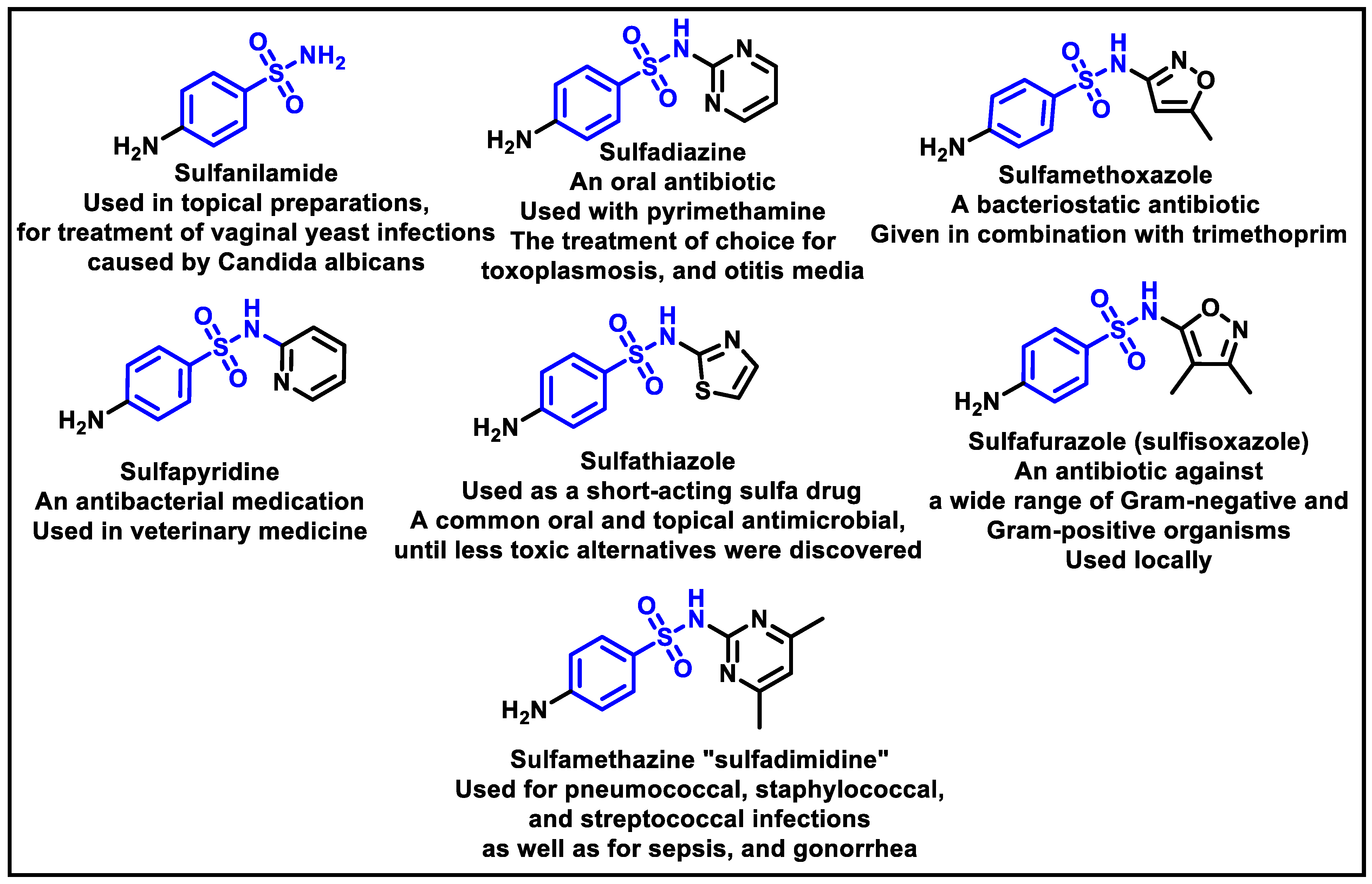
Figure 2.
Different examples of FDA-approved pyrimidine-based antimicrobial drugs.
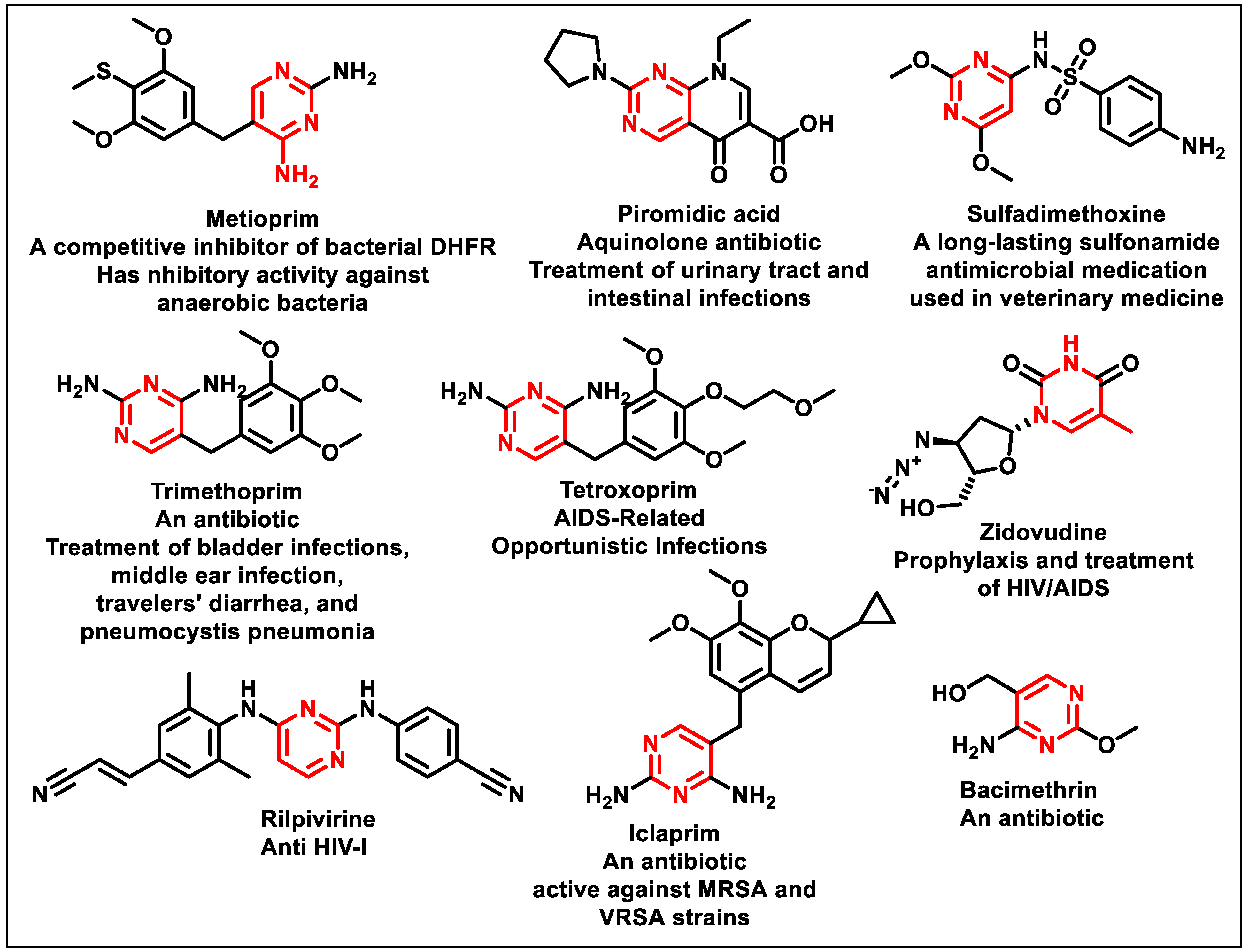
Figure 3.
The proposed molecular structures of the new pyrimidine-benzenesulfonamide compounds M1-25.
Figure 3.
The proposed molecular structures of the new pyrimidine-benzenesulfonamide compounds M1-25.
Scheme 1.
Synthesis of the target pyrimidine-benzene-sulfonamide analogs M1-25.
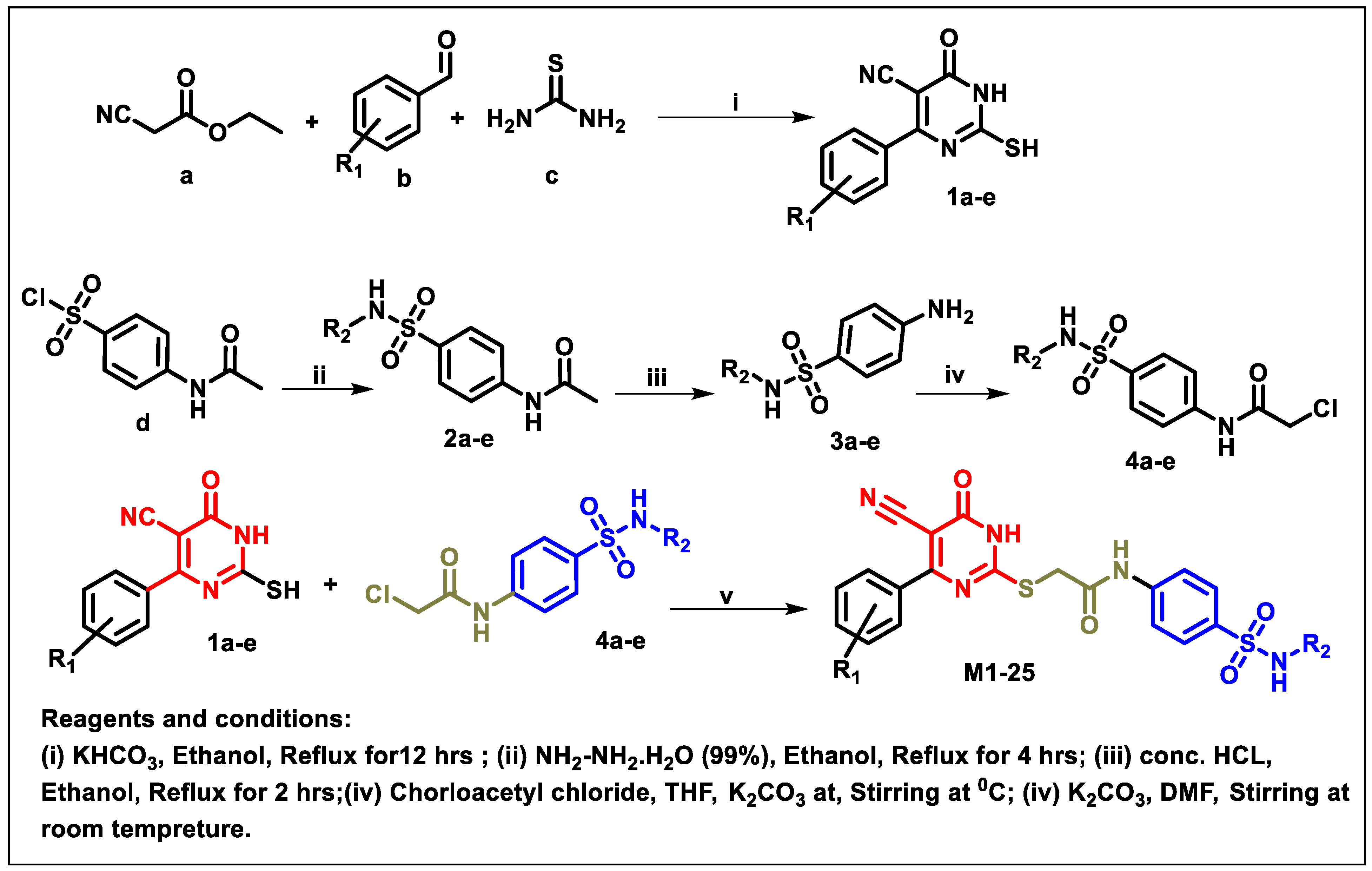
Figure 4.
Zone of inhibition (mm) of the new sulfonamide compounds (3000 µg/ml) against various microbial strains.
Figure 4.
Zone of inhibition (mm) of the new sulfonamide compounds (3000 µg/ml) against various microbial strains.
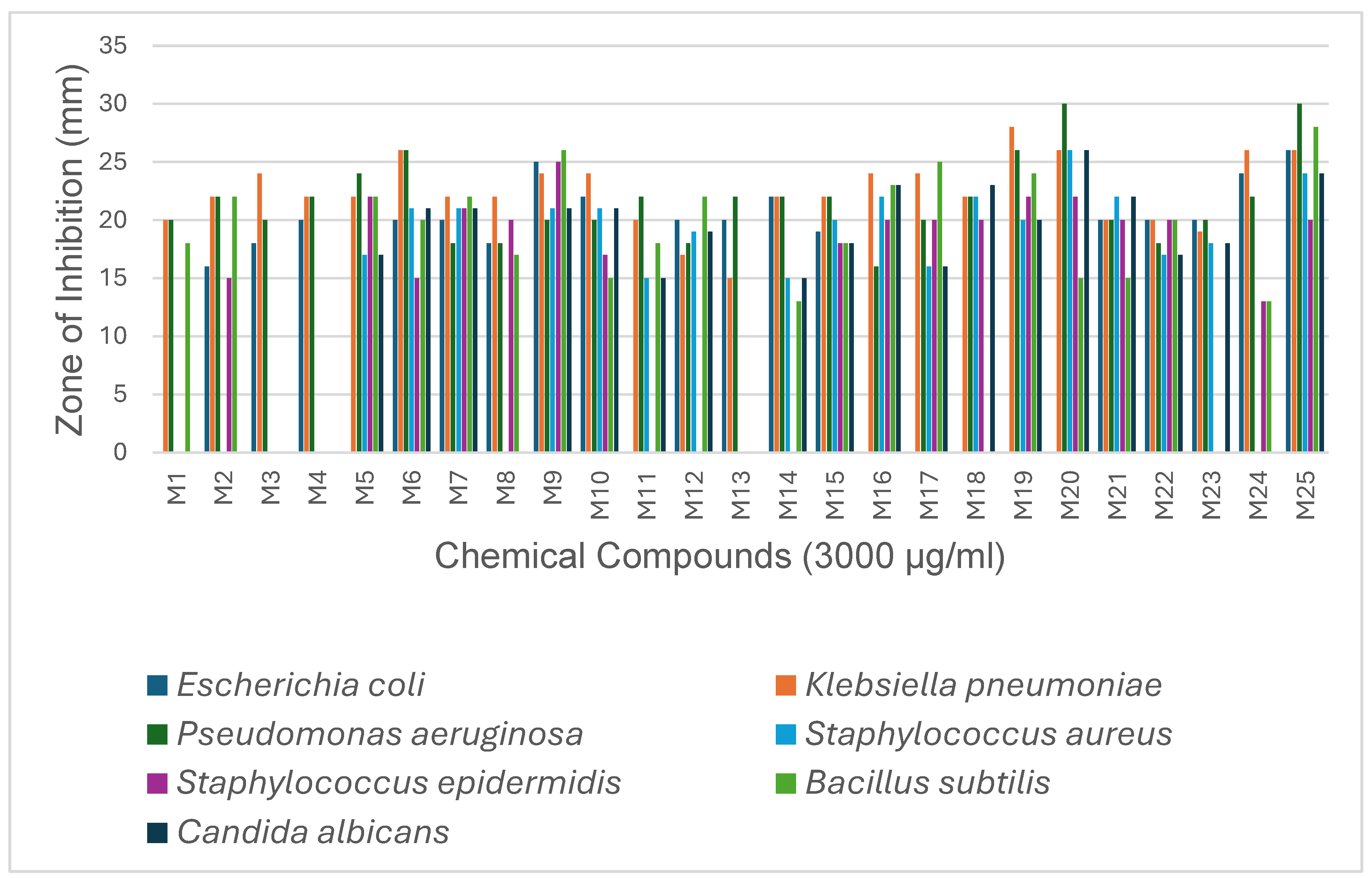
Figure 5.
Structure-Activity Relationship of the new compounds in terms of antimicrobial activity.
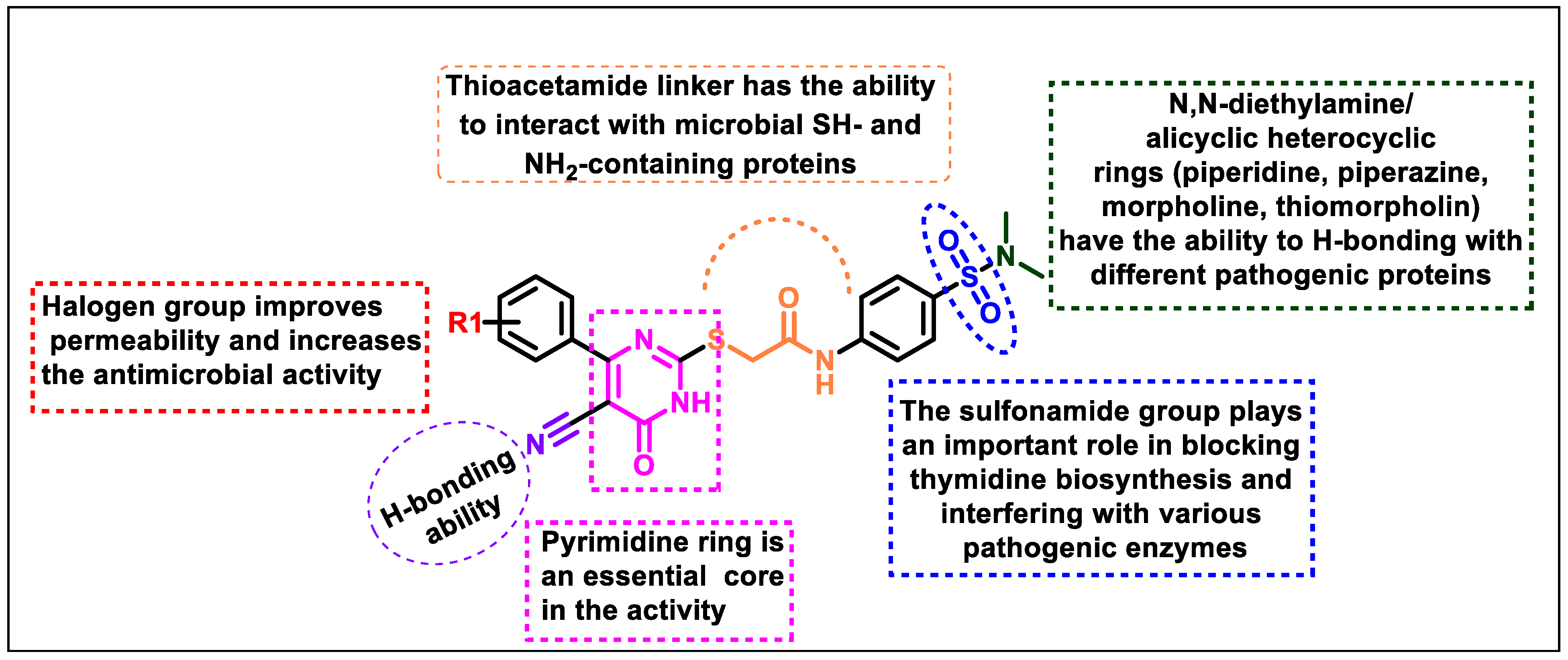
Figure 6.
The inhibitory effect of the tested drugs M6, M19, M20, and M25 on biofilm formation by K. pneumonia.
Figure 6.
The inhibitory effect of the tested drugs M6, M19, M20, and M25 on biofilm formation by K. pneumonia.
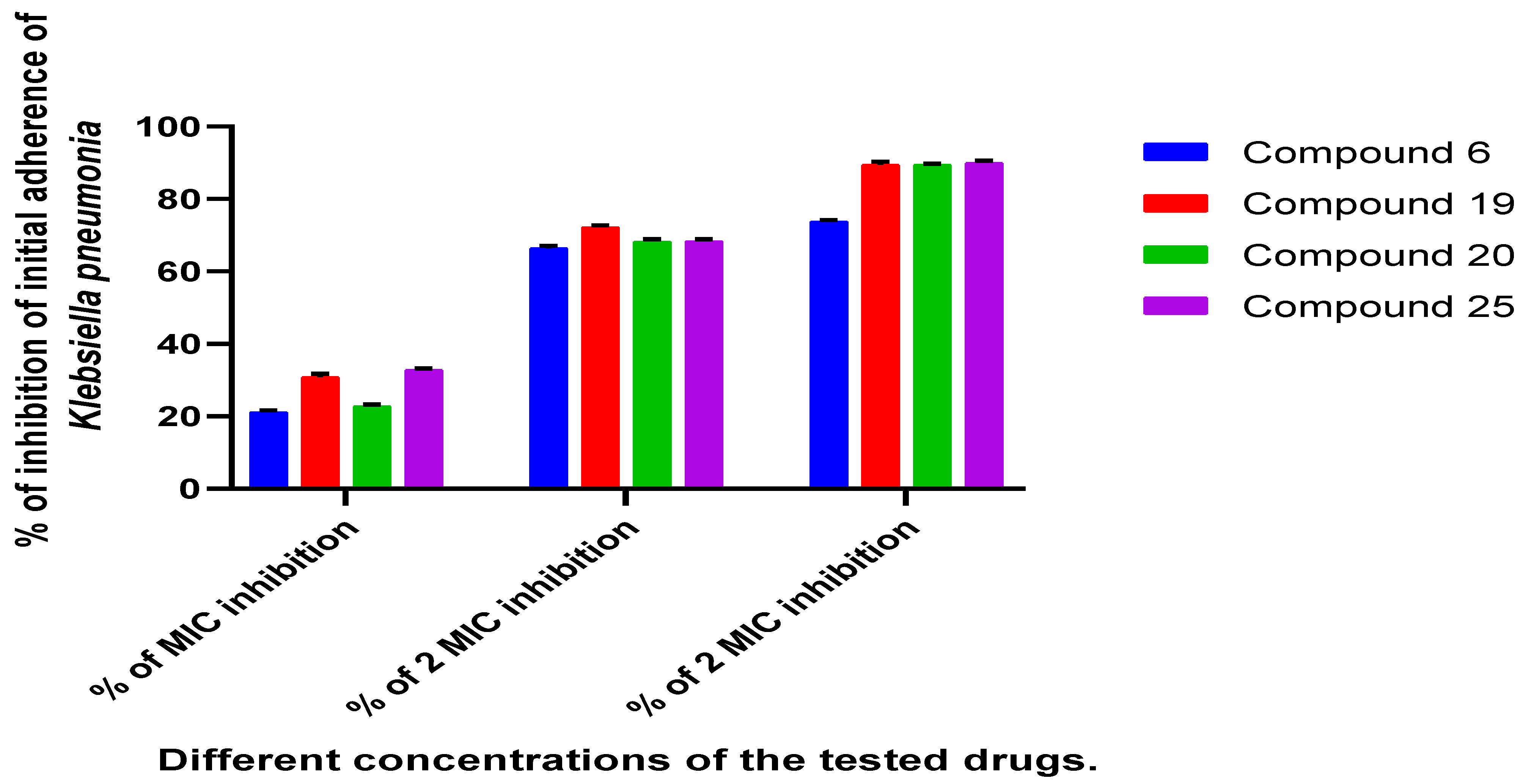
Figure 7.
The inhibitory effect of the tested compounds 6, 19, 20, and 25 on biofilm formation by P. aeruginosa.
Figure 7.
The inhibitory effect of the tested compounds 6, 19, 20, and 25 on biofilm formation by P. aeruginosa.
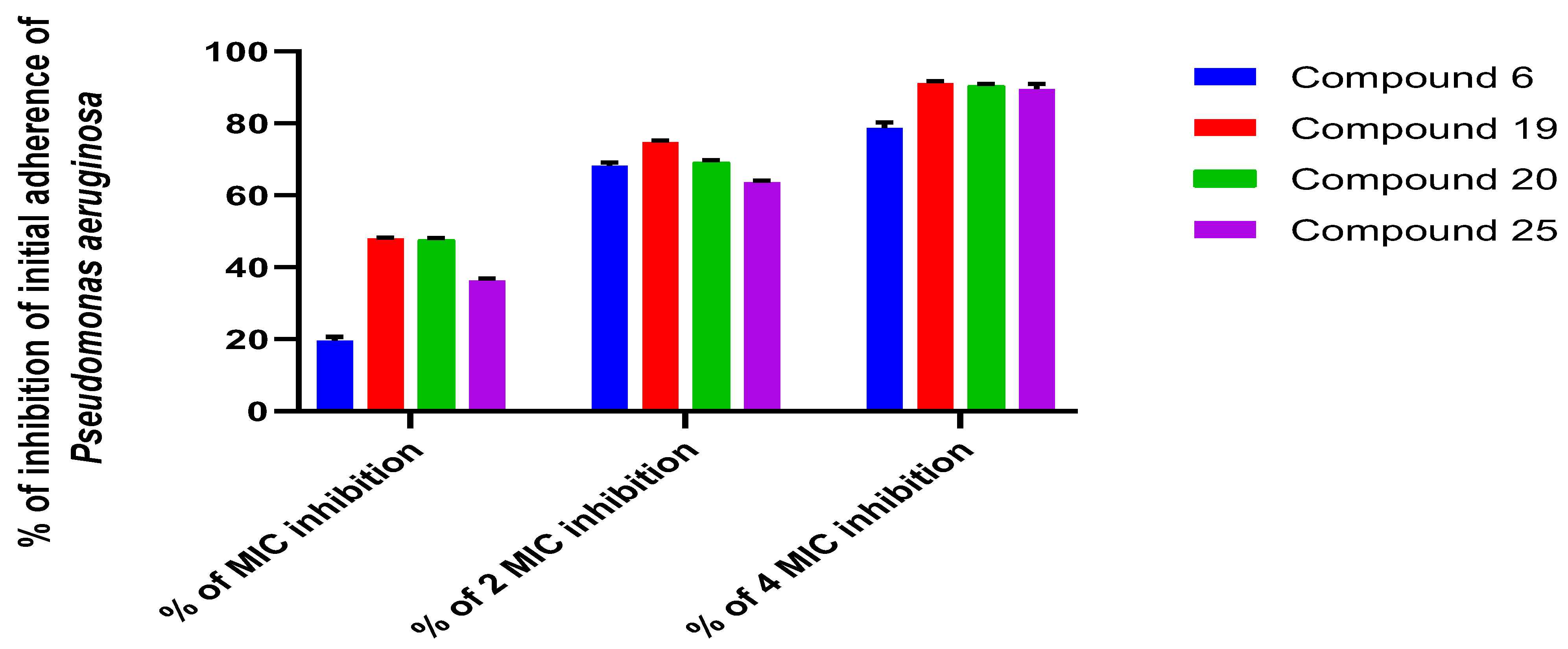
Figure 8.
The bioavailability radars of (A) compound 6, (B) compound 9, (C) compound 20 and (D) compound 25. The pink areas indicate the optimum properties range. The compounds are almost within the range of conformity, and accepted pharmacokinetics properties.
Figure 8.
The bioavailability radars of (A) compound 6, (B) compound 9, (C) compound 20 and (D) compound 25. The pink areas indicate the optimum properties range. The compounds are almost within the range of conformity, and accepted pharmacokinetics properties.
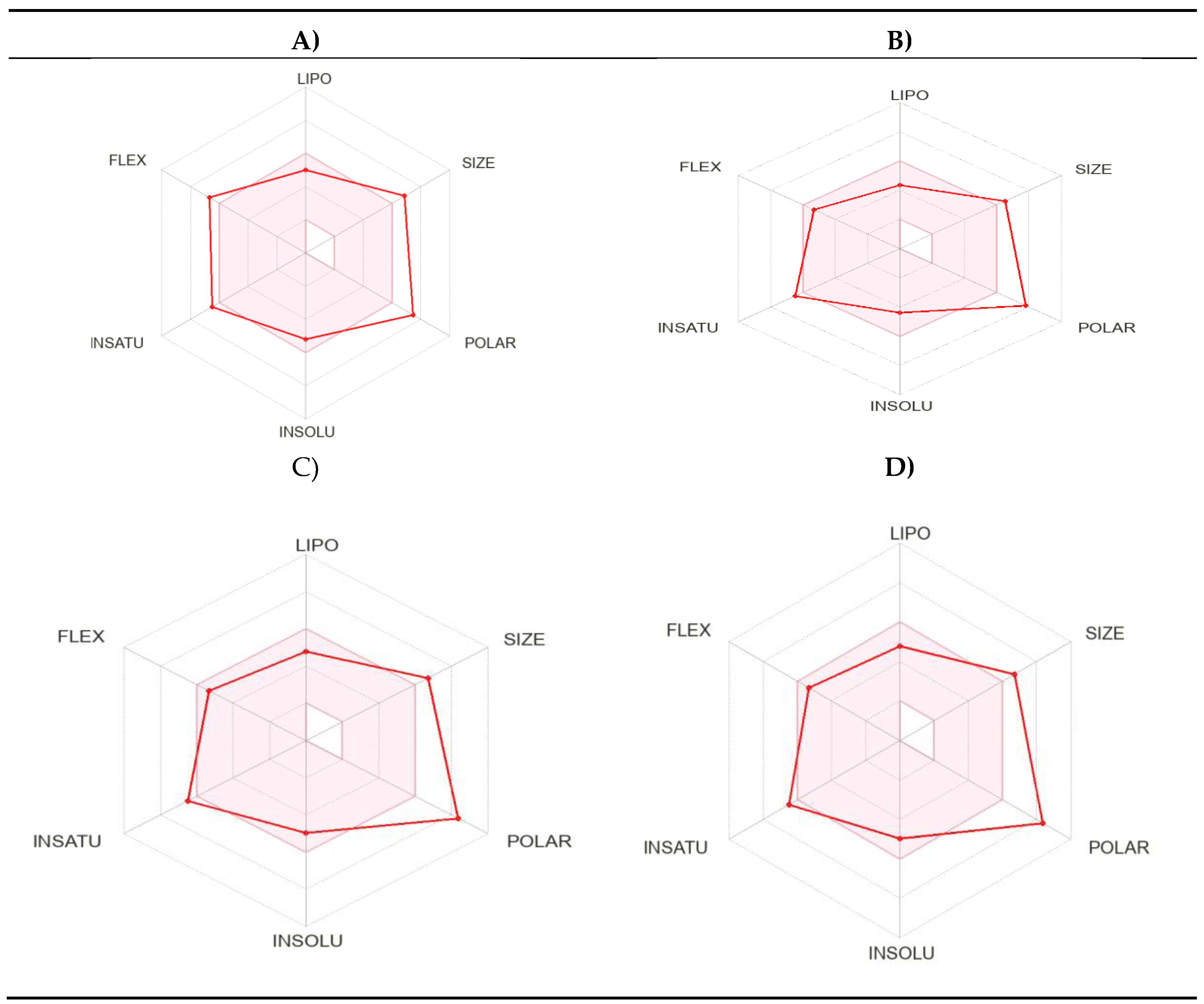

Table 1.
Molecular structures of the target compounds M1-25.
 | |||||
| Compounds | R1 | R2 | Compounds | R1 | R2 |
| M1 | H |  |
M14 | 4-Cl |  |
| M2 | H |  |
M15 | 4-Cl |  |
| M3 | H |  |
M16 | 4-F |  |
| M4 | H |  |
M17 | 4-F |  |
| M5 | H |  |
M18 | 4-F |  |
| M6 | 4-Br |  |
M19 | 4-F |  |
| M7 | 4-Br |  |
M20 | 4-F |  |
| M8 | 4-Br |  |
M21 | 3-Cl |  |
| M9 | 4-Br |  |
M22 | 3-Cl |  |
| M10 | 4-Br |  |
M23 | 3-Cl |  |
| M11 | 4-Cl | |
M24 | 3-Cl | |
| M12 | 4-Cl | |
M25 | 3-Cl | |
| M13 | 4-Cl | |
|||
Table 2.
The antimicrobial potency of the new molecules 1-25, expressed as µg/mL.
| Microbial organisms | M 1 |
M2 | M3 | M 4 |
M 5 |
M 6 |
M 7 |
M 8 |
M 9 |
M 10 |
M 11 |
M 12 |
M 13 |
M 14 |
M 15 |
M 16 |
M 17 |
M 18 |
M 19 |
M 20 |
M 21 |
M 22 |
M 23 |
M 24 |
M 25 |
|---|---|---|---|---|---|---|---|---|---|---|---|---|---|---|---|---|---|---|---|---|---|---|---|---|---|
|
E. coli ATCC-25922 |
0 | 16 | 18 | 20 | 0 | 20 | 20 | 18 | 25 | 22 | 0 | 20 | 20 | 22 | 19 | 0 | 0 | 0 | 0 | 20 | 0 | 20 | 20 | 24 | 26 |
| K. pneumoniae | 20 | 22 | 24 | 22 | 22 | 26 | 22 | 22 | 24 | 24 | 20 | 17 | 15 | 22 | 22 | 24 | 24 | 22 | 28 | 26 | 20 | 20 | 19 | 26 | 26 |
|
P. aeruginosa ATCC 27853 |
20 | 22 | 20 | 22 | 24 | 26 | 18 | 18 | 20 | 20 | 22 | 18 | 22 | 22 | 22 | 16 | 20 | 22 | 26 | 30 | 20 | 18 | 20 | 22 | 30 |
|
S. aureus ATCC 6538 |
0 | 0 | 0 | 0 | 17 | 21 | 21 | 0 | 21 | 21 | 15 | 19 | 0 | 15 | 20 | 22 | 16 | 22 | 20 | 26 | 22 | 17 | 18 | 0 | 24 |
|
S. epidermidis ATCC 35984 |
0 | 15 | 0 | 0 | 22 | 15 | 21 | 20 | 25 | 17 | 0 | 0 | 0 | 0 | 18 | 20 | 20 | 20 | 22 | 22 | 20 | 20 | 0 | 13 | 20 |
|
B. subtilis ATCC 6633 |
18 | 22 | 0 | 0 | 22 | 20 | 22 | 17 | 26 | 15 | 18 | 22 | 0 | 13 | 18 | 23 | 25 | 0 | 24 | 15 | 15 | 20 | 0 | 13 | 28 |
|
C. albicans ATCC-10231 |
0 | 0 | 0 | 0 | 17 | 21 | 21 | 0 | 21 | 21 | 15 | 19 | 0 | 15 | 18 | 23 | 16 | 23 | 20 | 26 | 22 | 17 | 18 | 0 | 24 |
Table 3.
MIC and MBC results for the most potent compounds against the respiratory bacterial strains.
Table 3.
MIC and MBC results for the most potent compounds against the respiratory bacterial strains.
| Chemical Compounds | Bacterial strains | MIC μg/mL | MBC μg/mL |
|---|---|---|---|
| M6 | Klebsiella pneumoniae | 375 + 0.00 | 1500 + 0.45 |
| Pseudomonas aeruginosa | 375 + 0.00 | 1500 + 0.00 | |
| M19 | Klebsiella pneumoniae | 375 + 0.00 | 1500 + 0.29 |
| Pseudomonas aeruginosa | 375 + 0.00 | 1500 + 0.00 | |
| M20 | Klebsiella pneumoniae | 375 + 0.00 | 7500 + 0.00 |
| Pseudomonas aeruginosa | 375 + 0.00 | 1500 + 0.00 | |
| M25 | Klebsiella pneumoniae | 375 + 0.00 | 7500 + 0.00 |
| Pseudomonas aeruginosa | 375 + 0.00 | 1500 + 0.00 |
Table 4.
Physicochemical properties and Lipinski’s rule of the most promising compounds.
| Compound No. | MW | HBA | HBD | logP (o/w) | TPSA Å2 |
Num. rotatable bonds | Lipinski |
|---|---|---|---|---|---|---|---|
| M6 | 576.49 | 6 | 2 | 3.04 | 169.7 | 8 | Yes; 1 violation: MW>500 |
| M9 | 546.02 | 7 | 2 | 1.72 | 178.9 | 6 | Yes; 1 violation: MW>500 |
| M20 | 562.09 | 6 | 2 | 2.35 | 195 | 6 | Yes; 1 violation: MW>500 |
| M25 | 562.09 | 6 | 2 | 2.39 | 195 | 6 | Yes; 1 violation: MW>500 |
MW = molecular weight, HBA = Hydrogen bond acceptor, HBD = Hydrogen bond donor, log Po/w = Octanol-Water partition coefficient, TPSA=total polar surface area.
Table 5.
In silico ADMET prediction of compounds M6, M9, M20 and 25.
| Compound M6 | Compound M9 | Compound M20 |
Compound M25 |
|
|---|---|---|---|---|
|
Absorption Water solubility (log mol/L) Intestinal absorption Skin permeability (log Kp) |
-4.0 82.4 -2.7 |
-3.8 78.7 -2.7 |
-3.8 85.1 -2.7 |
-3.8 85.2 -2.7 |
|
Distribution Blood brain permeability(log BB) CNS permeability (log PS) |
-1.46 -2.78 |
-1.43 -3.45 |
-1.42 -2.73 |
-1.42 -2.73 |
|
Metabolism CYP2D6 substrate CYP3A4 substrate CYP1A2 inhibitor |
No Yes No |
No Yes No |
No Yes No |
No Yes No |
|
Excretion Total clearance (log ml/min/Kg) Renal OCT2 substrate |
0.1 NO |
0.2 No |
0.1 No |
0.1 No |
|
Toxicity AMES toxicity hERG inhibitor Tumorigenic Irritant |
No No No No |
No No No No |
No No No No |
No No No No |
Disclaimer/Publisher’s Note: The statements, opinions and data contained in all publications are solely those of the individual author(s) and contributor(s) and not of MDPI and/or the editor(s). MDPI and/or the editor(s) disclaim responsibility for any injury to people or property resulting from any ideas, methods, instructions or products referred to in the content. |
© 2024 by the authors. Licensee MDPI, Basel, Switzerland. This article is an open access article distributed under the terms and conditions of the Creative Commons Attribution (CC BY) license (http://creativecommons.org/licenses/by/4.0/).
Copyright: This open access article is published under a Creative Commons CC BY 4.0 license, which permit the free download, distribution, and reuse, provided that the author and preprint are cited in any reuse.


