
Submitted:
26 August 2024
Posted:
27 August 2024
You are already at the latest version
Abstract
The article explores the integration of generative artificial intelligence with active methodologies in modern education, highlighting how this combination can transform pedagogical practices and promote more personalized and effective learning. The study investigates the application of tools such as ChatGPT , which enhance the personalization of teaching, providing immediate feedback and adjusting content to students' individual needs. The research is structured into three chapters: the first addresses practical strategies for applying these methodologies with AI, the second evaluates their effectiveness in learning and the third presents practical examples of integration. Adapting teaching through AI was a central element in developing a more efficient learning environment aligned with the specific needs of each student. The results point to a significant increase in student engagement, understanding and retention of content, although they highlight the need for careful and ethical implementation to avoid challenges such as superficiality in learning and data privacy issues. It is concluded that the integration of generative AI with active methodologies can significantly transform the educational environment, but must be carried out in a balanced and responsible way, complementing traditional pedagogical practices and ensuring the comprehensive training of students.
Keywords:
Inteligência Artificial Generativa
; Metodologias Ativas
; Personalização do Ensino
; Aprendizagem Eficaz
; Integração Pedagógica
1. Introduction
The research explores the interaction between generative artificial intelligence and active methodologies in modern education, aiming to understand how this integration can transform pedagogical practices by promoting more effective and personalized learning, adapted to students’ needs. “The application of active methodologies in higher education will guarantee students the skills and competencies necessary to exercise their professions” (Maciel, 2022, p. 7). The study investigates how artificial intelligence, when integrated with active methodologies, can streamline the teaching process, personalizing it and contributing to a more engaging education, as pointed out by Assis (2023) and Saraiva Jr. (2024). The central objective is to explore this integration to transform educational practices and improve learning effectiveness.
Ferreira (2019) proposes that the integration of technologies [.... ] into pedagogical practices can enhance teaching and maximize learning. Specifically, we seek to develop practical strategies for educators, evaluate the effectiveness of this combination for student learning and present practical examples of its application in different educational contexts. The author observes that students, as they are already familiar with new technologies, quickly adhere to pedagogical practices that use NICTs (Ferreira, 2019).
The research is motivated by the need to adapt pedagogical practices to technological advances, using artificial intelligence to enhance active methodologies and promote more dynamic and personalized education. According to Maciel (2023), traditional teaching does not meet the pedagogical needs of today’s world, which reinforces the need for new ways of applying active methodologies. Methodologically, the study is bibliographic, exploratory and descriptive, using systematic literature reviews and qualitative methods for content analysis, according to Bardin (2011, p. 57). The research is structured into three chapters: the first addresses practical strategies for applying active methodologies with generative AI; the second evaluates the effectiveness of these methodologies in learning through qualitative analyzes and case studies; and the third presents practical examples of integration between active methodologies and AI, documenting applications in different educational contexts. “The integration of digital tools with active methodologies allows for the personalization of teaching on a scale that would be difficult to achieve with traditional methods. These tools allow teaching to be adapted to the individual needs of each student, which significantly improves the effectiveness of learning” (Maciel, 2022, p. 113). The introduction highlights the evolution of educational practices, which aim to prepare students for a world in constant transformation, placing them at the center of the learning process. Active methodologies are emphasized for promoting active participation, collaboration and the development of critical and creative skills, facing challenges in contexts that require greater personalization. Generative artificial intelligence emerges as a solution to overcome these limitations, providing more dynamic learning adapted to the needs of students. The hypothesis is that this integration can transform the educational environment, promoting more effective and personalized learning.
2. Materials and Methods
The methodology is qualitative in nature, adopting the hypothetical-deductive method to investigate how the integration of generative AI with active methodologies can transform educational practices, using systematic literature reviews and data synthesis to deduce conclusions from the established hypotheses, according to Bardin (2011) and Lakatos (2003). The research is basic in nature, with the objective of deepening theoretical knowledge about the integration of generative AI and active methodologies, without focusing on immediate application, contributing to the advancement of scientific knowledge ( Lakatos , 2003, p. 19). The methodology applied aims to evaluate the effectiveness and practical possibilities of AI in personalizing teaching and improving active methodologies, as described by the same authors. The bibliographical survey places the study in the academic context, delimiting the topic and synthesizing previous contributions, which is essential to explore and describe educational phenomena that are still little studied. Finally, the research highlights the importance of balance between the use of technology and human interactions, essential for the integral development of students.
3. Development
The integration of generative artificial intelligence (Generative AI) with active methodologies in modern education offers both opportunities and challenges. “The modern classroom should be an environment of experimentation” (Maciel, 2022, p. 91). Recent studies demonstrate that tools like ChatGPT can significantly improve academic performance, personalization of teaching and student engagement. Li (2023) highlights that the use of ChatGPT in flipped learning approaches results in notable improvements in student performance, self-efficacy and learning attitudes, thanks to the personalized support and instant feedback that the technology offers (Li, 2023, p .47). Ferreira (2024) points out that the combination of Genially with Google Forms provides more rigorous control of data and immediate feedback for students. Meroto et al. (2024, p. 15) emphasize that adaptive AI systems, which adjust the level of difficulty according to the student’s performance, make learning more engaging and continuous. Franqueira et al. (2024, p. 4) reinforce that AI allows content to be adapted to the rhythm of each student, promoting inclusive and personalized learning. Ferreira (2024), highlights the importance of adapting active methodologies to new technologies to maximize their impact on the educational process. However, there are significant challenges to this integration. “Challenges of creating ways of educating young people in their native territory and how to educate educators in this new world foreign to them, that is: in the world of new information and communication technologies” (Ferreira, 2019, p. 84). Campos and Lastória (2020) warn of the risk of superficial learning due to excessive dependence on algorithms, highlighting the need to use AI as a complement that encourages critical thinking and student autonomy (Campos & Lastória , 2020, p. 9 ). Doneda et al. (2018, p. 10) emphasize the importance of ensuring transparency and fairness in AI systems, protecting student data and ensuring equity in access to technologies to avoid the expansion of educational inequalities.
Therefore, although Generative AI has the potential to transform the educational environment, it is essential to consider ethical and pedagogical aspects so that this transformation is positive and accessible to everyone.
Figure 1.
Aspects of AI-Enhanced Active Methodologies. Source: Author himself.
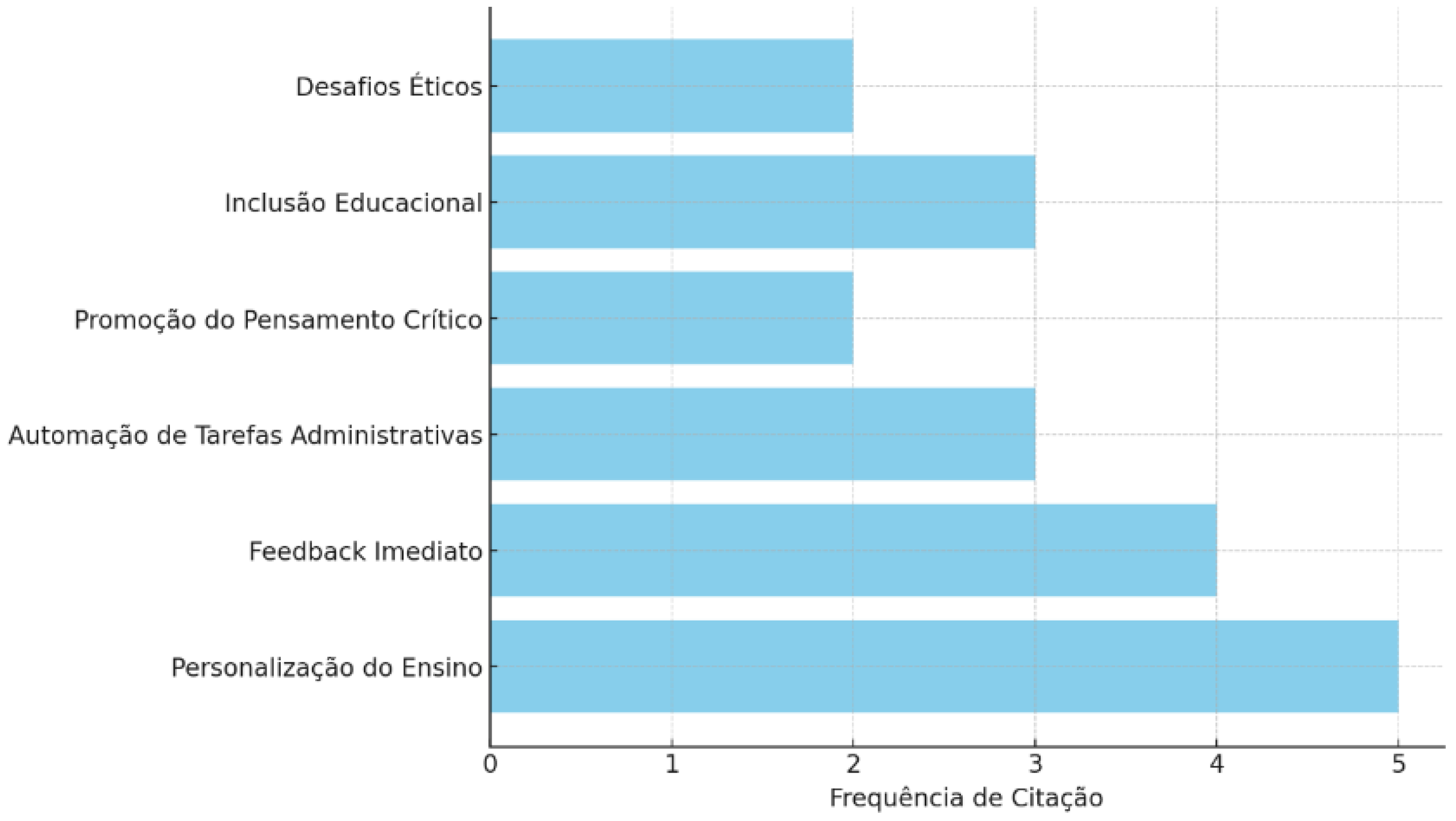
The qualitative analysis of the integration of artificial intelligence (AI) into active methodologies highlights its potential in several areas of the educational process. The personalization of teaching emerges as one of the main benefits, allowing learning to be adapted to the individual needs of students, which results in a more effective and inclusive process (Franqueira, 2024; Isín Vilema , 2024; Maciel, 2024). Providing immediate feedback through AI is highly valued as it enables real-time error correction, facilitating continuous learning (Franqueira, 2024; Xiao , 2023). Furthermore, the automation of administrative tasks, such as correcting tests, frees teachers to focus on more strategic pedagogical activities (Camada and Durães, 2020). AI also contributes to promoting critical thinking and student autonomy, as long as it is accompanied by adequate pedagogical support. (Campos and Lastória , 2020, p. 9).
Another relevant point is the potential of AI to promote educational inclusion, guaranteeing access to personalized education, regardless of students’ limitations ( Isín Vilema , 2024, p. 187). “Education must be constantly redefined and reevaluated” (Maciel, 2022, p. 136). However, it is essential that ethical issues, such as transparency and data protection, are carefully addressed so that the technology is applied in a responsible and inclusive way ( Doneda et al., 2018, p. 10).
3.1. Strategies for the Application of Active Methodologies Integrated with Generative Artificial Intelligence
The integration of Generative Artificial Intelligence, such as ChatGPT, with active methodologies has the potential to transform education, providing more dynamic and personalized learning environments. To achieve this, it is essential that teachers receive continuous training, using AI as a support tool, without replacing human interaction, which guarantees the personalization of teaching and the development of critical and creative skills. “Teachers must change the way they assess students, providing them with more interactive options.” (Ferreira, 2024, p. 2) Tools such as ChatGPT allow content to be adapted to the pace and individual needs of students, offering immediate feedback, which speeds up the correction of errors and makes teaching more effective and engaging ( Meroto et al., 2024; Boulay , 2023). However, it is imperative to avoid excessive dependence on technology, which can compromise students’ autonomy and result in superficial learning (Schneider & Pea , 2021). The author concludes that the successful use of technologies in education depends on the way they are implemented and the environment in which they are applied (Ferreira, 2019). Ethical issues, such as the risk of algorithmic bias, require rigorous attention from educators, who must complement the results generated by AI with their analyzes to ensure justice and equity in the educational process (Morales & Fernandez, 2022). The automation of administrative tasks, such as correcting tests, frees teachers for more complex pedagogical activities and individualized monitoring of students (Camada & Durães, 2020). Examples such as the use of ChatGPT in flipped classrooms show the potential of these tools to improve academic performance, reinforcing the importance of balancing technology with traditional pedagogical practices (Li, 2023; Campos & Lastória , 2020). Thus, the careful and ethical integration of AI into active methodologies can transform educational practices, creating a more effective learning environment adapted to contemporary needs.
Ethical concerns associated with the use of artificial intelligence in education encompass scientific integrity, bias in training data, plagiarism, reliability of information, and impact on knowledge production. The increase in academic productivism and misconduct, such as plagiarism, intensify the need for a careful analysis of the use of AI in the production and dissemination of scientific knowledge (PERES, 2023, p. 02).
3.2. Evaluating the Effectiveness of Active Methodologies in conjunction with Generative Artificial Intelligence
The integration of active methodologies with Generative Artificial Intelligence, such as the use of ChatGPT , has revolutionized modern education, providing more personalized teaching, adapted to the individual needs of students and increasing engagement, understanding and knowledge retention ( Boulay , 2023, p. 80; Meroto et al., 2024, p. 15; Although this approach positively transforms educational dynamics, it requires caution. Campos and Lastória (2020, p. 9) warn that excessive dependence on AI can compromise the development of critical thinking and student autonomy, resulting in superficial training. Furthermore, Doneda et al. (2018, p. 10) emphasize the importance of ensuring transparency and equity in AI systems to avoid the expansion of educational inequalities. Silva (2023, p. 45) reinforces the need for careful planning so that technology complements, and does not replace, cognitive development.
Therefore, the balance between the use of AI and the promotion of critical thinking is essential to ensure robust and comprehensive training, as demonstrated by research.
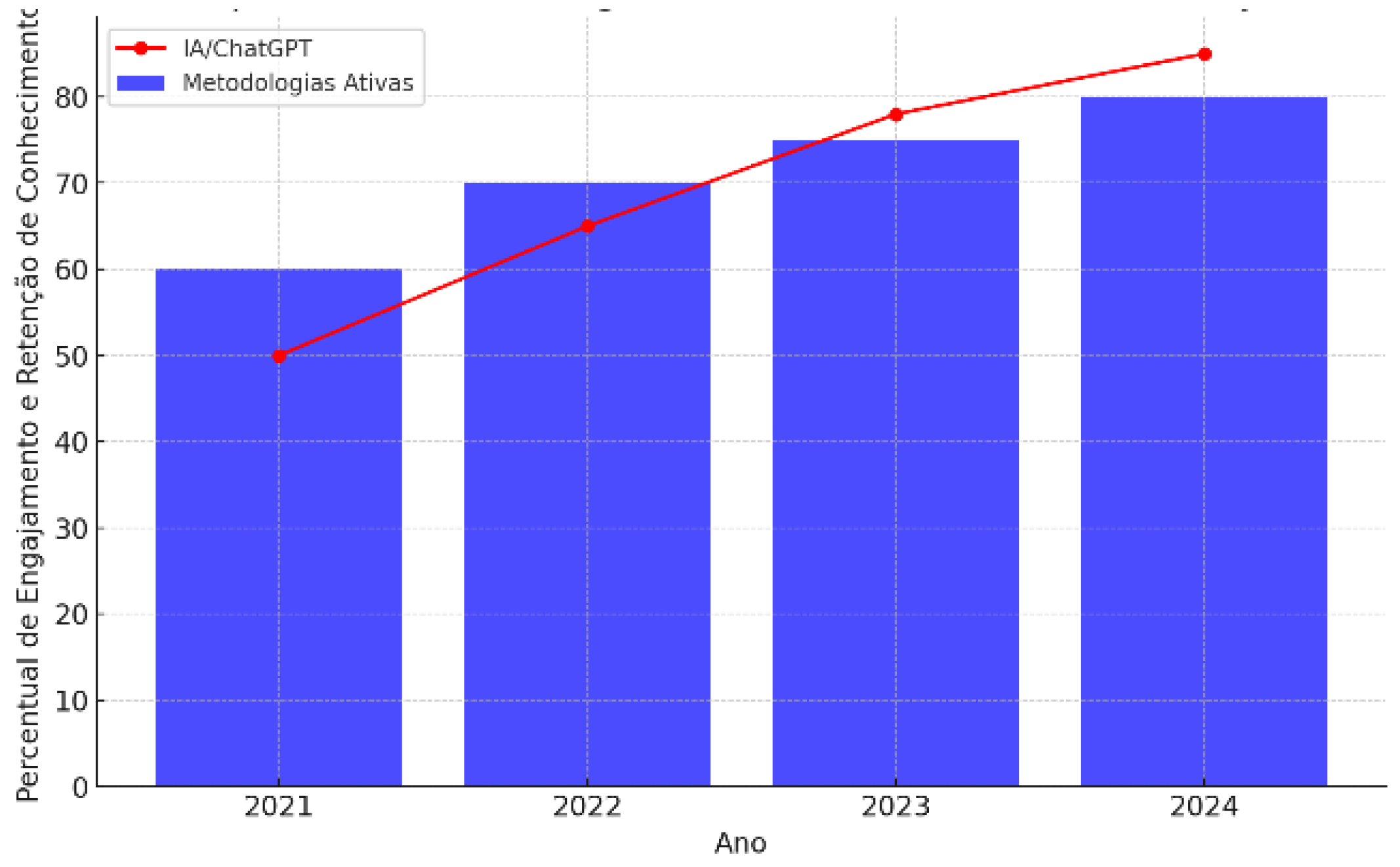
Figure 2.
Impact of Active Methodologies and AI/ ChatGPT in Education. Source: Author himself.
As pointed out by Guimarães et al. (2023, p. 3), “the continuous and constant use of technologies that encompass Artificial Intelligence concepts has been changing the way society, in general, learns”.
The integration of active methodologies with the use of ChatGPT has a significant impact on student engagement during the teaching-learning process, as evidenced by the comparative graphs. Initially, Chart 1 reveals engagement levels without the use of AI, showing a substantial increase with the introduction of ChatGPT . This increase intensifies when AI is applied in a contextualized way, promoting a more dynamic and adaptive learning experience. “ Gamification awakens interest, increases participation, develops creativity and autonomy.” (Ferreira, 2024, p. 3). Franqueira et al. (2024, p. 5) highlight that AI, by personalizing teaching and improving feedback, frees teachers from repetitive tasks and creates a more inclusive and effective educational environment, enhancing the transformation of the teaching environment.
Figure 3.
Comparison of Active Methodologies with and without AI. Source: Author himself.
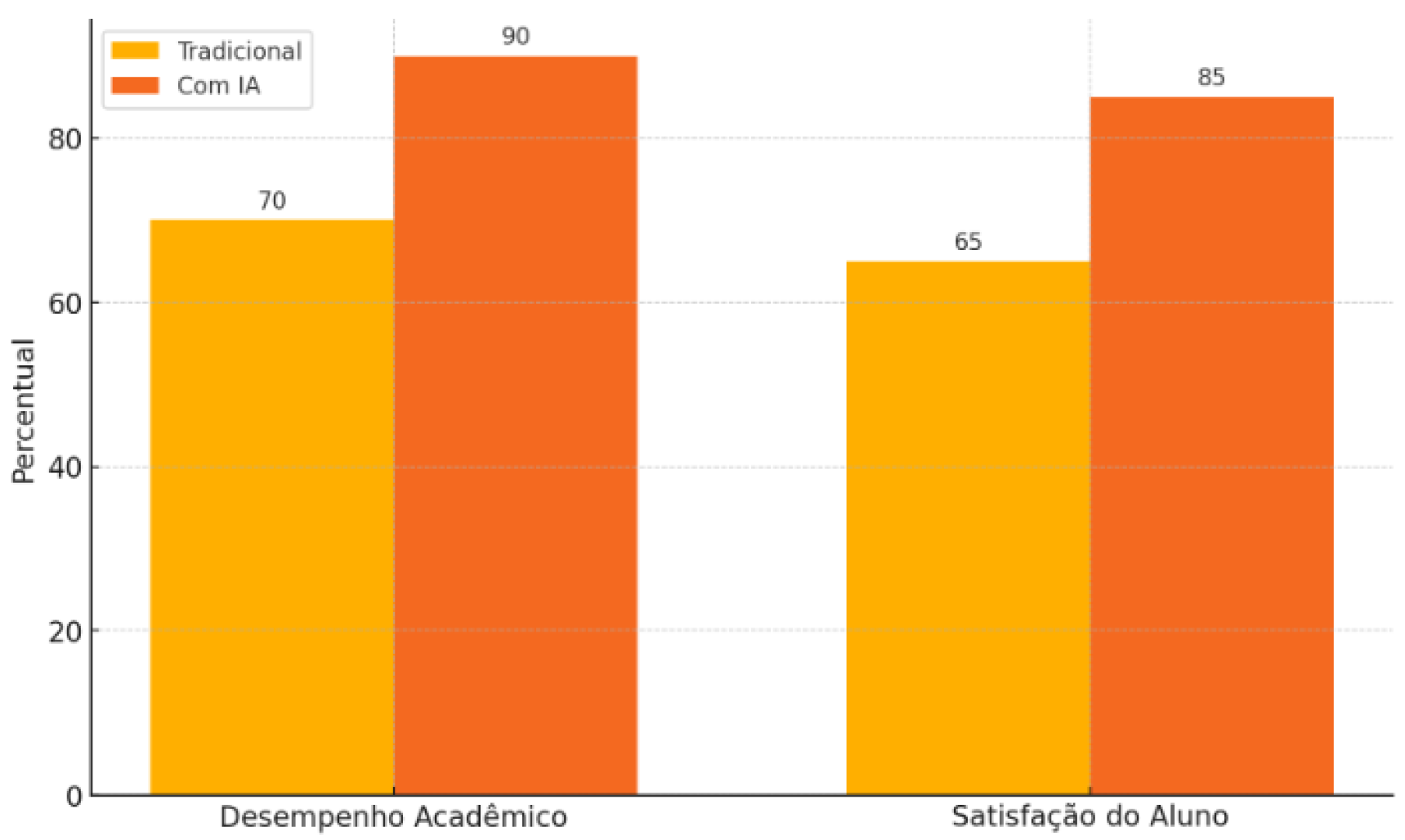
The integration of Artificial Intelligence (AI) with active methodologies demonstrates great potential for improving the quality of teaching and learning. Data suggests that this combination not only improves academic performance, but also increases student satisfaction, showing that traditional methods can be significantly enriched with adaptive technological support. “Student satisfaction is greater in courses that use active methodologies” (Maciel, 2022, p. 82). Educational institutions should consider implementing these tools to create more interactive and personalized learning environments. According to Ferreira (2019), NICTs can be powerful tools when integrated into educational methodologies, helping to evolve teaching. Evaluating the effectiveness of active methodologies when combined with Generative AI, such as ChatGPT , is essential to understand how this integration can transform the teaching-learning process. Recent studies reveal that the application of AI in educational environments significantly improves student performance, especially in engagement, comprehension and content retention, with AI adjusting the pace and content according to students’ individual needs, promoting faster learning. targeted and effective ( Meroto et al., 2024, p. 15). However, excessive dependence on technologies can limit the development of students’ critical and creative thinking, making it necessary to balance the use of AI with pedagogical practices that encourage these skills (Schneider and Pea , 2021, p. 55). Furthermore, the automation of administrative tasks, such as correcting tests, can free teachers for more relevant pedagogical activities, but it also runs the risk of distancing them from students if not well monitored (Camada and Durães, 2020).
Ethical issues emerge, particularly with regard to the privacy and security of student data, requiring a critical analysis of the data protection policies adopted by educational institutions ( Doneda et al., 2018, p. 10). Algorithmic bias is another concern, as it can perpetuate inequalities in the education system; Therefore, it is essential to compare the results generated by AI with traditional assessments to ensure fair and equitable treatment for all students (Morales and Fernandez, 2022, p. 7). In short, the effectiveness of active methodologies combined with AI must be evaluated holistically, considering both the immediate results and the long-term impacts on the integral development of students, ensuring that technological integration complements and does not replace traditional pedagogy (Campos and Lastória , 2020, p. 9).
3.3. Practical Examples of Integration between Active Methodologies and Generative Artificial Intelligence
The integration of active methodologies with Generative Artificial Intelligence (AI) has the potential to transform teaching-learning, providing more personalized and effective learning. Tools such as ChatGPT allow the adaptation of the pace and content according to the individual needs of students, improving aspects such as performance, engagement, comprehension and information retention ( Meroto et al., 2024, p. 15). Despite the advantages, there are concerns about the superficiality of learning, as excessive dependence on technologies can limit the development of critical and creative thinking ( Boulay , 2023, p. 80). Thus, the evaluation of this integration must consider both academic results and the development of superior cognitive skills (Schneider and Pea , 2021, p. 55), making it necessary to monitor the automation of administrative tasks to avoid distancing between teachers and students (Layer and Durães, 2020).
Ethical issues such as privacy and security of student data also need to be rigorously analyzed ( Doneda et al., 2018, p. 10), and algorithmic bias must be tackled through comparisons between AI results and traditional assessments to ensure equity (Morales and Fernandez, 2022, p. 7). In the modern educational context, the practical application of AI is seen in flipped classrooms, where ChatGPT offers personalized content and task automation, allowing teachers to focus on more complex pedagogical activities. Furthermore, AI promotes educational inclusion by adapting materials and methods to the specific needs of students, especially in collaborative contexts, facilitating the collective construction of knowledge (Lima and Freitas, 2019, p. 67). “Self-directed learning, which is encouraged by active methodologies, prepares students not only for academic success, but also for lifelong continuing education. By learning to learn, students develop the ability to adapt to new situations and acquire new knowledge independently, which is essential in a world in constant change” (Maciel, 2022, p. 107). However, the implementation of AI must be conducted ethically and responsibly, with attention to privacy and security issues, ensuring that algorithmic decisions are transparent and fair ( Doneda et al., 2018; Morales and Fernandez, 2022).
The feedback provided by AI, particularly effective in exact subjects, helps to quickly correct errors and strengthen understanding of content ( Boulay , 2023, p. 80). Maciel (2022) notes that the use of continuous feedback is fundamental in active methodologies, allowing students to correct their mistakes and continually improve during the learning process. It is essential that teachers use AI as a complementary tool, promoting critical reflection and ensuring that technology does not replace traditional pedagogical practices, essential for the development of social and interpersonal skills (Schneider and Pea , 2021; Campos and Lastória , 2020). Teachers must change the way they assess students, offering them more interactive assessment options, and, at the same time, providing teachers with real conditions to: assess student performance, analyze the strengths relating to the subject taught and weaknesses that need to be addressed and reinforced.” (Ferreira, 2024, p. 2). When applied in a balanced way, the integration of AI into active methodologies can contribute to a more inclusive and effective education, better preparing students for the contemporary challenges.

Table 1.
Improvement of Active Methodologies, by AI.
| Active Methodology | AI Enhancement | Benefits | Challenges | Results | Author (Year, Page) |
|---|---|---|---|---|---|
| Flipped Classroom classroom ) | Using ChatGPT to prepare content and guide pre -class activities. | Increased student engagement, personalization of learning. | Dependence on technology, need for teacher training. | Improves understanding of content and greater student autonomy. The flipped classroom puts the student at the center of the educational process | Saraiva Júnior (2024, p. 2-3) (Maciel, 2022, p. 72) |
| Problem-Based Learning (PBL) | AI can provide personalized suggestions and guidance to students, helping them solve complex problems. | Stimulating creativity and critical thinking, supporting problem solving. | Risk of information overload and difficulty in assessing the originality of ideas generated by AI. | More innovative projects aligned with real-world problems, greater collaboration between students. | Saraiva Júnior (2024, p. 4-5) |
| Collaborative Learning | Using ChatGPT to facilitate group discussions and provide instant feedback on interactions. | Improves communication between students, immediate and accurate feedback. | Challenges related to moderating discussions and ensuring equitable participation. | Increased student participation and quality of discussions, development of interpersonal and cooperative skills. | Góes & Porto (2024, p. 5) |
| Case Study | Generative AI can create detailed scenarios and simulations based on real data. | Allows students to explore diverse solutions and make informed decisions. | Reliance on AI to create scenarios, which can limit originality of thinking. | Development of critical thinking and decision-making skills. | Saraiva Júnior (2024, p. 5-6) |
| Assessment Rubrics | ChatGPT can assist teachers in creating assessment rubrics, establishing clear and objective criteria. | Establishing clear standards for evaluation. | Need for teacher training to properly use AI. | Fairer and more objective assessments, aligned with expected academic performance. Rubrics provide fair and objective assessment | Góes & Porto (2024, p. 6) (Maciel, 2022, p. 64). |
| Critical Thinking | AI encourages the development of critical thinking by proposing challenges that require in-depth analysis and reflection. | Prepares students to face complex problems. | Risk of excessive dependence on technology. | Students more prepared to deal with complex problems, developing intellectual autonomy. | Saraiva Júnior (2024, p. 5-6) |
Source: Author himself.
The integration between active methodologies and Artificial Intelligence, particularly through the use of ChatGPT , is bringing significant advances in education by personalizing learning and increasing student engagement. However, technological dependence and the need for teacher training are challenges to be faced. The author states that the use of new technologies also requires the adaptation of teachers, who need to be trained for this new digital environment (Ferreira, 2019). “The continued training of teachers is fundamental to the success of active methodologies, as they require specific pedagogical skills and mastery of new technologies. Without adequate training, teachers may feel unprepared to apply these methodologies effectively, which can compromise learning results” (Maciel, 2022, p. 90). The observed results point to a more interactive, inclusive and effective education, with great potential to shape the future of learning.
4. Results and Discussion
Analysis of the integration of generative artificial intelligence (AI) with active methodologies in modern education reveals significant potential to transform pedagogical practices, providing more effective and personalized learning. AI, exemplified by the use of ChatGPT , adapts teaching to students’ individual needs, promoting greater engagement, content retention and motivation for learning, as highlighted by Li (2023) and Meroto et al. (2024). In flipped learning contexts, ChatGPT has been essential in providing immediate and personalized support, resulting in significant improvements in students’ academic performance. Boulay (2023) reinforces the importance of immediate feedback provided by AI, which facilitates the correction of errors and promotes continuous learning, in addition to relieving the administrative burden on teachers, allowing them to focus on more complex pedagogical activities. However, implementing AI in education requires a careful and ethical approach, considering aspects such as data privacy and mitigating algorithmic biases, which can perpetuate inequalities.
Morales and Fernandez (2022) warn that AI systems can reinforce existing biases in training data, emphasizing the need for careful oversight by educators to ensure equity. Schneider and Pea (2021) also warn about the dangers of superficiality in learning, suggesting that AI should be used as a complement, and not a replacement, for traditional pedagogical practices, so as not to compromise the development of students’ critical thinking. Campos and Lastória (2020) agree that AI feedback should complement human interaction, promoting student autonomy. The automation of administrative tasks, such as correcting tests, is also highlighted as a significant benefit, freeing up time so that teachers can focus on more effective pedagogical strategies and individualized monitoring of students, as stated by Camada and Durães (2020) and Ferreira (2024). However, it is imperative to ensure that dependence on these technologies does not limit traditional teaching skills and human interaction, essential for the integral development of students, as warned by Franqueira et al. (2024).
The integration between active methodologies and generative AI, despite the challenges, has demonstrated promising results in different educational contexts, as evidenced by the study by Meroto et al. (2024), which documents the practical application of AI in a programming course, where the use of ChatGPT facilitated autonomous and personalized learning, resulting in significant improvements in the quality of projects. For the benefits of AI to be accessible to all students, Doneda et al. (2018) emphasize the importance of ensuring that decisions made by AI algorithms are transparent and fair. It is concluded that the integration of generative AI with active methodologies can transform the educational environment, offering personalization and increased effectiveness, but must be carried out in an ethical and responsible way, ensuring that technology complements, and does not replace, the essential elements of human training . “Modern professional training requires innovative teaching methods” (Maciel, 2022, p. 80).
Figure 4.
Integrating AI with Active Methodologies: Advocates vs Critics. Source: Author himself.
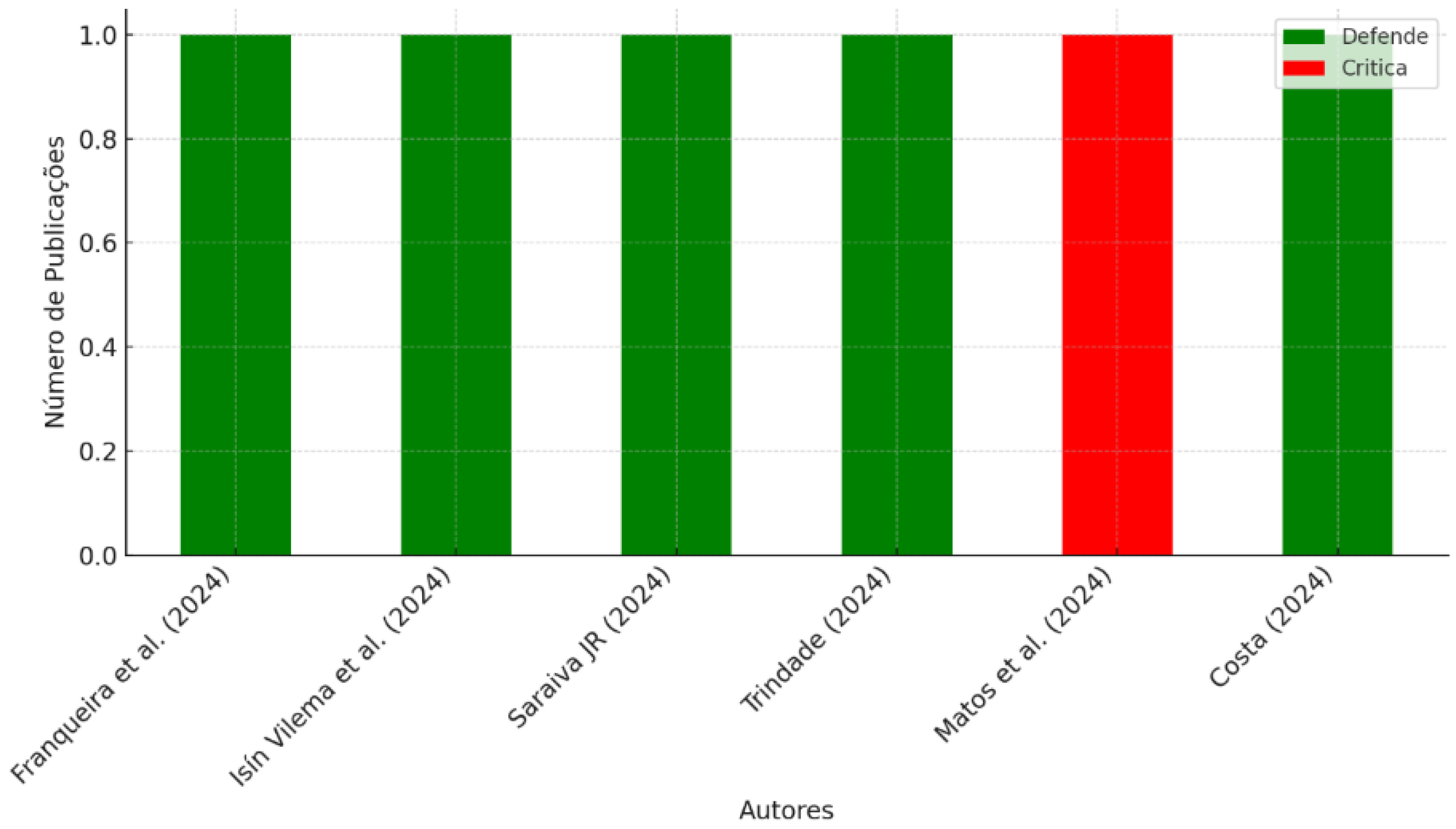
The integration of generative artificial intelligence (AI) with active methodologies has been widely advocated by authors such as Franqueira et al. (2024) and Isín Vilema et al. (2024), who highlight the potential of these technologies to personalize teaching and improve classroom interaction [Franqueira, 2024; Isín Vilema , 2024]. However, Matos et al. (2024) raise criticism, pointing to possible ethical challenges and the need for careful implementation [Matos, 2024, p. 102].
The graph above illustrates the proportion of authors who defend and criticize the integration of AI with active methodologies, showing a mostly positive trend, with few critical voices. According to Maciel (2022, p. 10), “In this line, it can be stated that, [.... ] few higher education institutions effectively change their status quo, and guarantee all the necessary resources, to support to the transcendence of the traditional, to new active ways of teaching.” The use of active methodologies combined with artificial intelligence, especially tools like ChatGPT , has proven to be an emerging and innovative practice in modern education. These approaches promote more dynamic, interactive and personalized learning, providing students with the opportunity to explore knowledge in a more autonomous and collaborative way.
“It is imperative to create new teaching methods” (Ferreira, 2019, p. 84). ChatGPT ‘s ability to provide quick responses, create educational content and support critical skills development is transforming the teaching environment, making it more adapted to contemporary student needs.
Figure 5.
Impact of Integrating Active Methodologies with ChatGPT on Learning. Source: Author himself.
Figure 5.
Impact of Integrating Active Methodologies with ChatGPT on Learning. Source: Author himself.
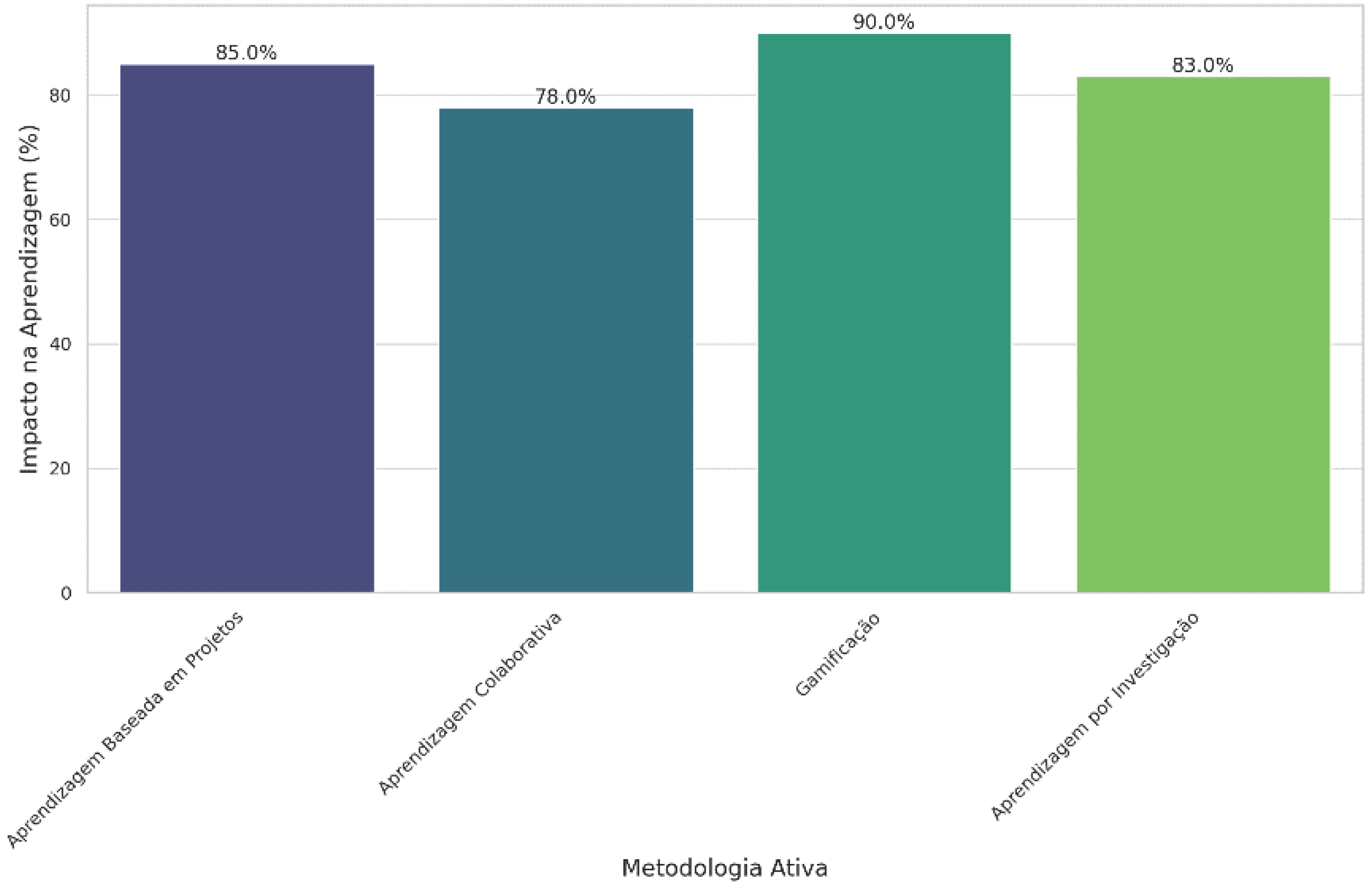
This graph illustrates the positive impact of using ChatGPT in conjunction with several active methodologies. Ferreira (2024), in his investigation, identifies that gamification not only evaluates students’ performance, but also motivates them to continually improve. It is observed that project-based learning and gamification , when combined with the use of artificial intelligence, have high levels of impact on student learning, reinforcing the effectiveness of this integration in modern education. “Project-based learning is one of the most effective integrations of theory and practice” (Maciel, 2022, p. 105). Using the ABP methodology in the classroom allows students to develop essential skills such as autonomy, creativity, and problem-solving skills (Maciel, 2021). According to Guimarães et al. (2023, p. 4), “technologies based on Artificial Intelligence and Active Methodologies have been of great relevance for different areas of knowledge and especially with regard to Education, as the desire is to improve teaching-learning”. This excerpt demonstrates the growing importance of these technologies in enhancing the educational process.
5. Conclusion
The research investigated the integration of generative Artificial Intelligence (AI) with active methodologies, highlighting its potential to transform modern education. The automation of administrative tasks, such as correcting tests and managing grades, allowed teachers to focus on more complex pedagogical activities, improving individual student monitoring.
However, the research also identified significant challenges, such as the risk of shallow learning due to over-reliance on technology, as well as issues surrounding the privacy and security of student data. These challenges highlight the need for careful and ethical implementation of AI, ensuring that the technology complements, but does not replace, traditional pedagogical practices, promoting the integral development of students. The methodology used was bibliographic, exploratory and descriptive, based on systematic literature reviews, which enabled an in-depth understanding of the impacts of this integration. The adaptation of teaching made possible by AI was essential to create a more efficient learning environment aligned with the specific needs of each student.
However, ethical challenges such as algorithmic bias and data privacy require ongoing and critical oversight by educators, ensuring that AI is used fairly and equitably. In summary, the study demonstrated that the combination of generative AI with active methodologies has the potential to profoundly change the educational environment, but requires a considered approach to optimize the advantages and reduce risks. The adoption of these technologies must be done responsibly, ensuring that their benefits are widely accessible and contribute to more effective and equitable education. Future research should expand studies to different educational contexts and develop pedagogical strategies that promote the critical use of AI, avoiding technological dependence and ensuring privacy and equity in the use of these tools.
Funding
This research received no external funding.
Data Availability Statement
No new data were created or analyzed in this study.
Conflicts of interest
The author declares that there is no conflict of interest.
References
- ASSIS, ACML Artificial intelligence in education: Constitutionally appropriate use. In: VIII International Congress on Human Rights of Coimbra, 2023. Available at: ( https://www.trabalhoscidhcoimbra.com/ojs/index.php/anaiscidhcoimbra/article/view/3259 ). Accessed on: 01 Jun. 2024.
- BOUILLY, B. Artificial intelligence in education and ethics. RE@D - Distance Education and Elearning Magazine , v. 6, no. 1, p. 75-91, 2023. Available at: https://repositorioaberto.uab.pt/handle/10400.2/14808 ). Accessed on: 01 Jun. 2024.
- LAYER, MY; DURÃES, GM Teaching artificial intelligence in basic education: A new horizon for Brazilian research. In: Brazilian Symposium on Informatics in Education (SBIE) 2020, Porto Alegre. Annals [...]. Porto Alegre: Brazilian Computing Society, 2020. p. 1553-1562. Available at: ( https://doi.org/10.5753/cbie.sbie.2020.1553 ) . Accessed on: 01 Jun. 2024. [CrossRef]
- CAMPOS, LFAA; LASTORIA, LACN Semi-training and artificial intelligence in teaching. Pro-Positions , v. 31, p. 1-12, 2020. Available at: ( https://www.scielo.br/j/pp/a/RMMLt3y3cwPs9f4cztTtMSv/ ) . Accessed on: 01 Jun. 2024.
- DONEDA, DCM; MENDES, LS; SOUZA, CAP; ANDRADE, NNG Initial considerations on artificial intelligence, ethics and personal autonomy. Think, v. 23, no. 4, p. 1-17, 2018. Available at: ( https://doi.org/10.5020/2317-2150.2018.8257 )Accessed on: 01 Jun. 2024. [CrossRef]
- FERREIRA, Thiago Maciel. A New Educational Reality: Active Methodologies Empowered by Generative AI. International Research Journal en Sciences Sociales , Assunção, v. 15, no. 1, p. 83-102, 2024. [CrossRef]
- FERREIRA, Thiago Maciel (2024, August 22). A New Educational Reality: Active Methodologies Empowered by Generative AI. Even3 Publications. [CrossRef]
- FERREIRA, Thiago M. A New Educational Reality: Active Methodologies Empowered by Generative AI. Available at: <osf.io/sa5n2>.
- FRANQUEIRA, AS; RODRIGUES, CAD; COSTA, FS; CHAGAS, JC; SOUZA, MML; GOMES, WT The role of artificial intelligence in supporting personalized teaching. Cognitionis - Scientific Journal , vol. 7, no. 2, p. 1-8, 2024. Available at: https://doi.org/10.38087/2595.8801.395 ). Accessed on: 01 Jun. 2024. [CrossRef]
- LI, H.-F. Effects of a ChatGPT-based flipped learning guiding approach on learners ‘ courseware project performances and perceptions . Australasian Journal of Educational Technology, vol. 39, no. 5, p. 40-58, 2023. Available at: ( https://doi.org/10.14742/ajet.8923 ) . Accessed on: 01 Jun. 2024. [CrossRef]
- MACIEL, Thiago Ferreira. The Application of Active Methodologies in Higher Education and their Influence on Teaching. 2022. 174 p. Thesis (Doctorate in Education Sciences) – Universidad Autónoma de Asunción, Asunción, Paraguay, 2022. Available at: ( https://doi.org/10.29327/4379046 ). [CrossRef]
- MACIEL-FERREIRA, T. Active Methodologies in Communication with Deaf Students: Evaluation of an Action Research Experience. International Research Journal en Sciences Sociales , p. 24-51, 2021. [CrossRef]
- MACIEL-FERREIRA, T. Co-creating Education: Active Methodologies, Inclusion, Learning, Technologies and Assessments. 2023. ISBN 9786553872141.
- MACIEL-FERREIRA, T. New Methods for a New Education. International Research Journal en Sciences Sociales , vol. 15, no. 1, p. 83-102, 2019. Available at: ( https://doi.org/10.18004/riics.2019.junio.83-102 ). [CrossRef]
- MEROTO, MBN; GUIMARÃES, CD; DA SILVA, CK; CARVALHO, FMS; GONÇALVES JUNIOR, PA; OLIVEIRA, RF; SILVA, TPA; CASTRO, VA Revolutionizing education: exploring the potential of artificial intelligence to transform teaching and learning methods. Foco Magazine, v. 17, no. 1, e4124, 2024. Available at: ( https://doi.org/10.54751/revistafoco.v17n1-060 ) . Accessed on: 01 Jun. 2024. [CrossRef]
- MORALES, AO; FERNANDEZ, P. Addressing Bias in Artificial Intelligence in Education . Journal of Research in Educational Technology, vol. 13, no. 4, p. 1-15, 2022.
- ROBINSON, WI; LEE, MJ Digital Divide: Impact of Access on Students ‘ Performance. Computers & Education , vol. 154, p. 1-17, 2020.
- SCHNEIDER, B.; PEA, R. The Promise and Profile of Artificial Intelligence in Education . International Journal of Artificial Intelligence in Education , vol. 31, no. 1, p. 55-70, 2021.
Disclaimer/Publisher’s Note: The statements, opinions and data contained in all publications are solely those of the individual author(s) and contributor(s) and not of MDPI and/or the editor(s). MDPI and/or the editor(s) disclaim responsibility for any injury to people or property resulting from any ideas, methods, instructions or products referred to in the content. |
© 2024 by the authors. Licensee MDPI, Basel, Switzerland. This article is an open access article distributed under the terms and conditions of the Creative Commons Attribution (CC BY) license (http://creativecommons.org/licenses/by/4.0/).
Copyright: This open access article is published under a Creative Commons CC BY 4.0 license, which permit the free download, distribution, and reuse, provided that the author and preprint are cited in any reuse.


