

Submitted:
23 August 2024
Posted:
27 August 2024
You are already at the latest version
Abstract
In this contribution, the propylamine-functionalized cellulose (Cell-Pr-NH2) was employed as the catalyst in the three-component reaction between hydroxylamine hydrochloride, various type of aryl/heteroaryl aldehydes, ethyl acetoacetate/ethyl 4-chloroacetoacetate/ or ethyl 3-oxohexanoate. The results of these experiments were the formation of 3,4-disubstituted isoxazol-5(4H)-one heterocycles. The desired five-membered heterocyclic compounds were obtained in good to high yields at room temperature. The investigation of different solvents led us to the conclusion that water is the best solvent to perform the current one-pot, three-component reactions. Attempts to find the optimum catalyst loading clearly showed that 14 mg of Cell-Pr-NH2 seems to be sufficient to carry out the reactions. This method has highlighted some principles of green chemistry including less waste generation, atom economy, use of water as an environmentally friendly solvent, and energy saving. Purification without chromatographic methods, mild reaction conditions, simple work-up, low-cost reaction medium, saving time, and obtainable precursors are other notable features of this one-pot fashion.
Keywords:
Isoxazol-5(4H)-ones
; propylamine-functionalized cellulose
; β-keto ester
; water
1. Introduction
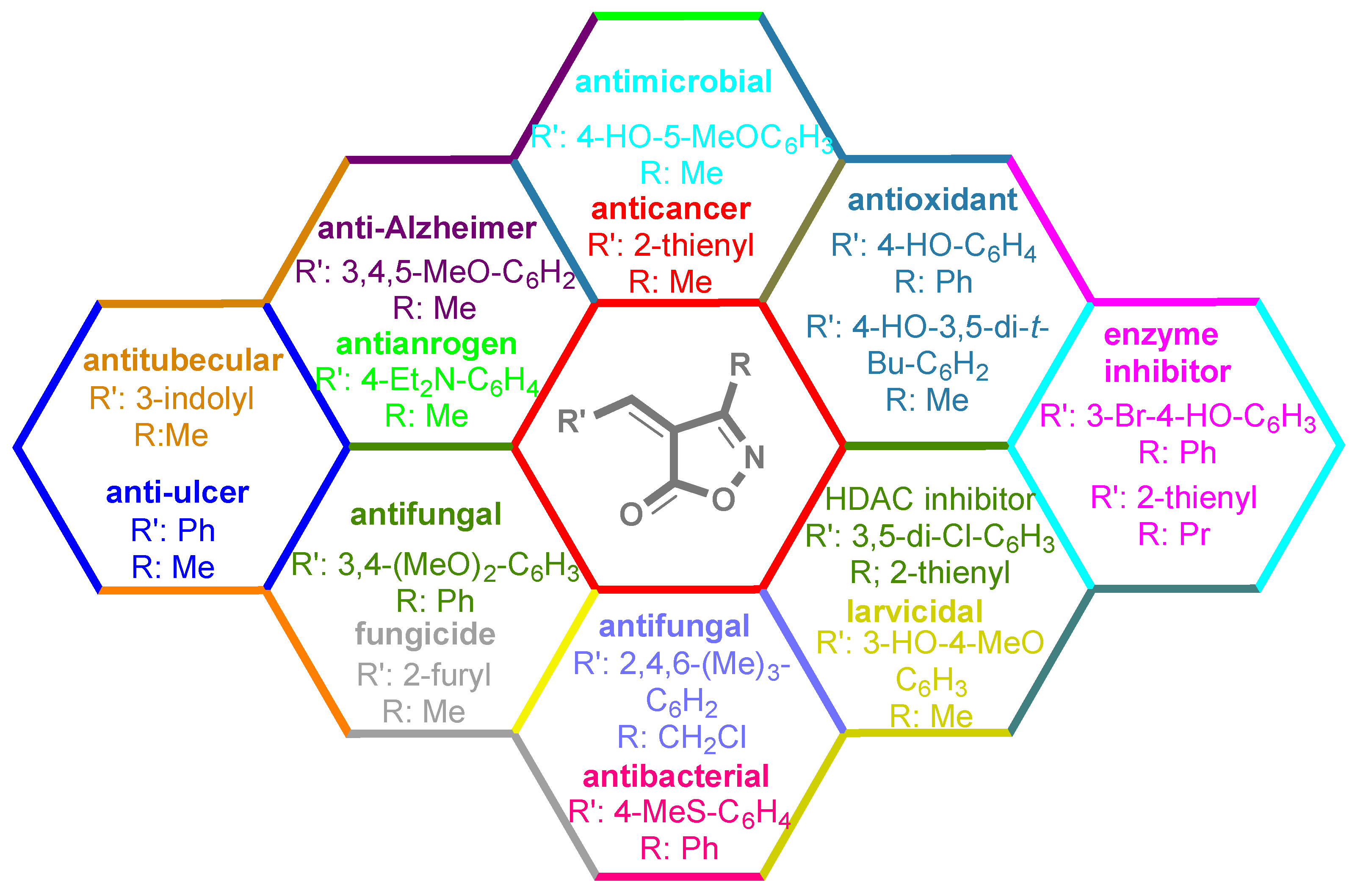
Isoxazoles, as one of the most important five-membered N,O-containing heterocyclic compounds, display numerous pharmacological activities including anti-inflammatory, anti-obesity, antibacterial, anticonvulsant, antirheumatic, antifungal, antitumor, anti-mycobacterial, and antiviral [1]. Among the heterocyclic rings available in drugs, isoxazole ranks 33 [2], and among the drugs available in the market that have this attractive heterocyclic ring, we can mention oxacillin, cloxacillin, sulfisoxazole, sulfamethoxazole, isocarboxazid, leflunomide, valdecoxib, and dicloxacillin [3,4,5]. The arylideneisoxazol-5(4H)-one is present in vast variety of bioactive compounds, agrochemicals, and nonlinear optical (NLO) materials [6]. Additionally, these heterocycles act as promising drug candidates for anti-ulcer [7], anti-obesity [8], antioxidant [9], anti-Alzheimer [10], antimicrobial [11], anticancer [12], antifungal [13], antitubercular [13,14], enzyme inhibitor [15], larvicidal [16], antibacterial [17], and fungicide [18] applications (Figure 1). Furthermore, arylidenesoxazol-5-ones have been used as flexible building blocks for the synthesis of various heterocycles [19], alkynes [20], β-amido-N-allylated products [21], γ-functionalized ketones [22], and other functionalized molecules [23]. Because of the auspicious biological activities of the arylideneisoxazol-5(4H)-one and their technical applications, developing efficient and green procedures to synthesizing these heterocycles remains attractive to organic and medicinal chemists. In recent years, various catalysts have been reported for their synthesis, some of which include sodium acetate using 150 W halogen lamp in EtOH/H2O [16], 2-aminopyridine [24], lipase [25], Stiglich’s base [26], sodium acetate in EtOH [27], sodium malonate [28], guanidine hydrochloride [29], sodium acetate in EtOH under visible light [30], N-bromosuccinimide (NBS) [31], citrazinic acid [32], 2,2'-bipyridine]-1,1'-diium perchlorate [33], potassium hydrogen phthalate [34], piperazine [35], potassium phthalimide [36], salicylic acid [37], sulfanilic acid [38], hydantoin potassium salt [39], sodium cyclamate [40], NHC-precursor [41], malic acid [42], triphenylphosphine (TPP) [43], glycine [44], L-valine [45], boric acid [46], nickel(II) acetate [47], potassium iodide (KI) [48], 2-hydroxy-5-sulfobenzoic acid [49], succinic acid [50], eucalyptol [51], urea [52], vitamin B1 [53], nano-SiO2-H2SO4 [54], deep eutectic solvents (DESs) [55], nano-ZnO [56], nano-MgO [57], nano-SiO2 [58], sodium benzoate using ultrasound [59], potassium bromide (KBr) under microwave irradiation [60], gluconic acid aqueous solution (50 wt % GAAS) [61], magnetic nanocomposite [62], sodium sulfide [63], pyridinium p-toluenesulfonate (PPTS) [64], fruit extracts [65], and NaCl [66]
On the other hand, multicomponent reactions (MCRs) are among the most extensive and diverse chemical transformations in organic synthesis and medicinal chemistry, which enable the rapid synthesis of various heterocyclic compounds from at least three starting materials [67]. The majority of the atoms from starting materials are incorporated into final products [68]. Due to the economic cost issue, high efficiency, mild conditions, atom-, step, and pot-economy, as well as following principles of green chemistry, MCRs can be considered as significant, environmentally friendly, cost-effectiveness, and the most successful processes in organic synthesis [69].
Cellulose-derived materials are used in numerous fields such as biology, medicine, tissue engineering, ultraviolet (UV) protection, and artificial blood vessels due to wide availability, biodegradability, biocompatibility, and inexpensiveness [70]. Nano-cellulose-grafted amines are also used in catalytic organic transformations [71]. Based on the above considerations, finding a sustainable and environmentally friendly catalyst for the synthesis of heterocycles is desirable for synthetic chemistry scholars, not only from the synthetic point of view but also for observing aspects of green chemistry principles. For this purpose, we tried to use a useful and efficient catalyst for the synthesis of isoxazol-5(4H)-one derivatives (Scheme 1).
2. Materials and Methods
The mixture of β-keto esters (1a-1c, 1 mmol), hydroxylamine hydrochloride (2, 1 mmol), aldehyde derivatives (3, 1 mmol), and catalytic amount of Cell-Pr-NH2 (C, 14 mg) in water (10 mL) were stirred at room temperature. After the completion of the reaction, monitored through TLC analysis, the precipitates formed were filtered off, washed with ethanol (3 × 10 mL), and air-dried to provide the heterocyclic products (4a-4ae).
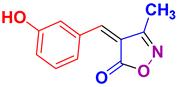
4-(3-Hydroxybenzylidene)-3-methylisoxazol-5(4H)-one (4e)1H NMR (400 MHz, DMSO-d6): δ 2.28 (s, 3H, CH3), 7.08 (d, 1H, J = 8.0 Hz, Ar-H), 7.39 (t, 1H, J = 8.0 Hz, Ar-H), 7.79 (d, 1H, J = 7.6 Hz, Ar-H), 7.85 (s, 1H, H-vinyl), 7.95 (s, 1H, Ar-H), 9.96 (s, 1H, OH); 13C NMR (100 MHz, DMSO-d6): δ 11.7 (H-vinyl), 118.9, 119.9, 121.8, 125.8, 130.2, 134.1, 152.3, 157.8, 162.6 (C=N), 168.2 (C=O).
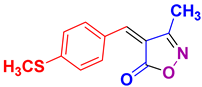
3-Methyl-4-(4-(methylthio)benzylidene)isoxazol-5(4H)-one (4i)1H NMR (500 MHz, CDCl3): δ 2.30 (s, 3H, CH3), 2.55 (s, 3H, SCH3), 7.30 (d, J = 8.6 Hz, 2H, Ar-H), 7.33 (s, 1H, H-vinyl), 8.32 (d, J = 8.6 Hz, 2H, Ar-H); 13C NMR (CDCl3, 125 MHz): δ 11.6 (CH3), 14.5 (SCH3), 125.1, 125.3, 128.8, 134.2, 148.6, 148.9, 161.1 (C=N), 167.9 (C=O).
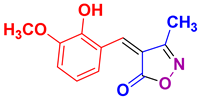
4-(2-Hydroxy-3-methoxybenzylidene)-3-methylisoxazol-5(4H)-one (4j)1H NMR (500 MHz, CDCl3): δ 2.24 (s, 3H, CH3), 3.86 (s, 3H, OCH3), 6.89 (t, J = 8.1 Hz, 1H, Ar-H), 7.26 (dd, J = 1.2, 8.1 Hz, 1H, Ar-H), 8.11 (s, 1H, H-vinyl), 8.32 (dd, J = 1.2, 8.4 Hz, Ar-H), 10.34 (s, 1H, OH); 13C NMR (125 MHz, CDCl3): δ 12.5 (CH3), 58.4 (OCH3), 116.8, 118.6, 119.8, 139.3, 145.0, 147.6, 149.5, 152.9, 162.2 (C=N, 176.1 (C=O).
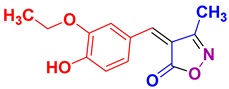
4-(3-Ethoxy-4-hydroxybenzylidene)-3-methylisoxazol-5(4H)-one (4k)1H NMR (500 MHz, DMSO-d6): δ 1.41 (t, J = 6.9 Hz, 3H, CH3CH2), 2.27 (s, 3H, CH3), 4.14 (q, J = 6.9 Hz, 2H, CH2O), 6.99 (d, J = 8.4 Hz, 1H, Ar-H), 7.80 (s, 1H, H-vinyl), 7.90 (dd, J = 2.1, 8.4 Hz, 1H, Ar-H), 8.54 (d, J = 2.1 Hz, 1H, Ar-H), 10.72 (s, 1H, OH); 13C NMR (125 MHz, DMSO-d6): δ 11.8 (CH3), 15.1 (CH3CH2), 64.3 (CH2O), 114.1, 116.3, 118.1, 125.5, 132.0, 147.1, 152.4, 154.5, 162.8 (C=N), 169.5 (C=O).
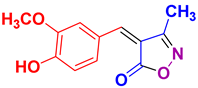
4-(4-Hydroxy-3-methoxybenzylidene)-3-methylisoxazol-5(4H)-one (4l)
1H NMR (500 MHz, DMSO-d6): δ 2.28 (s, 3H, CH3), 3.89 (s, 3H, OCH3), 6.98 (d, J = 8.4 Hz, 1H, Ar-H), 7.90 (s, 1H, H-vinyl), 7.93 (dd, J = 1.8, 8.4 Hz, 1H, Ar-H), 8.56 (d, J = 1.8 Hz, 1H, Ar-H), 10.81 (s, 1H, OH); 13C NMR (125 MHz, DMSO-d6): δ 11.9 (CH3), 55.8 (OCH3), 114.1, 116.2, 117.3, 125.6, 132.2, 148.1, 152.3, 154.4, 162.9 (C=N), 169.6 (C=O).
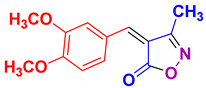
4-(3,4-Dimethoxybenzylidene)-3-methylisoxazol-5(4H)-one (4m)1H NMR (300 MHz, DMSO-d6): δ 2.29 (s, 3H, CH3), 3.86 (s, 3H, OCH3), 3.93 (s, 3H, OCH3), 7.22 (d, J = 9.0 Hz, 1H, Ar-H), 7.87 (s, 1H, Ar-H), 8.03 (d, J = 9.0 Hz, 1H, Ar-H), 8.51 (s, 1H, H-vinyl); 13C NMR (75 MHz, DMSO-d6): δ 11.8 (CH3), 55.9 (OCH3), 56.5 (OCH3), 112.1, 115.5, 116.1, 126.5, 131.5, 148.8, 152.2, 154.8, 162.8 (C=N), 169.3 (C=O).
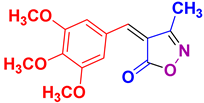
3-Methyl-4-(3,4,5-trimethoxybenzylidene)isoxazol-5-(4H)-one (4n)1H NMR (500 MHz, CDCl3): δ 2.30 (s, 3H, CH3), 3.96 (s, 6H, OCH3), 3.99 (s, 3H, OCH3), 7.32 (s, 1H, H-vinyl), 7.84 (s, 2H, Ar-H); 13C NMR (125 MHz, CDCl3): δ 11.8 (CH3), 56.6 (OCH3), 60.8 (OCH3), 112.4, 117.5, 128.5, 143.5, 152.3, 152.8, 162.6 (C=N), 168.8 (C=O).
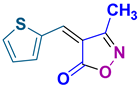
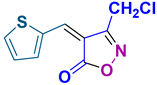
3-Methyl-4-(thiophen-2-ylmethylene)isoxazol-5(4H)-one (4o)1H NMR (300 MHz, DMSO-d6): δ 2.29 (s, 3H, CH3), 7.39-7.42 (m, 1H, Ar-H), 8.24 (d, J = 3.0 Hz, 1H, Ar-H), 8.27 (s, 1H, H-vinyl), 8.34 (d, J = 6.0 Hz, 1H, Ar-H); 13C NMR (75 MHz, DMSO-d6): δ 11.6 (CH3), 113.5, 129.5, 136.7, 141.6, 142.1, 143.5, 162.1 (C=N), 169.0 (C=O).
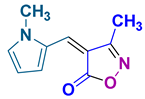
3-Methyl-4-((1-methyl-1H-pyrrol-2-yl)methylene)isoxazol-5(4H)-one (4p)1H NMR (500 MHz, CDCl3): δ 2.26 (s, 3H, CH3), 3.84 (s, 3H, N-CH3), 6.41 (dd, J = 2.3, 4.5 Hz, 1H, Ar-H), 7.13 (t, J = 2.0 Hz, 1H, Ar-H), 7.16 (s, 1H, H-vinyl), 8.56 (dd, J = 1.5, 4.5 Hz, 1H, Ar-H); 13C NMR (125 MHz, CDCl3 + DMSO-d6): δ 11.1 (CH3), 34.2 (N-CH3), 112.2, 126.0, 129.2, 131.6, 134.9, 160.9 (C=N), 169.2 (C=O).
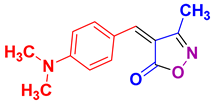
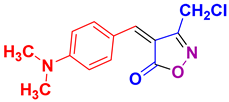
3-(Chloromethyl)-4-(4-(dimethylamino)benzylidene)isoxazol-5(4H)-one (4v)1H NMR (300 MHz, DMSO-d6): δ 3.22 (s, 6H, N(CH3)2), 4.54 (s, 2H, CH2Cl), 6.78 (d, J = 8.6 Hz, 2H, Ar-H), 7.55 (s, 1H, H-vinyl), 8.47 (d, J = 7.2 Hz, 2H, Ar-H); 13C NMR (75 MHz, DMSO-d6): δ 35.6 (N(CH3)2), 40.4 (CH2Cl), 111.8, 121.6, 125.5, 138.4, 150.5, 154.7, 160.8 (C=N), 169.7 (C=O).
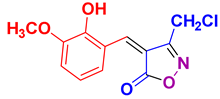
3-(Chloromethyl)-4-(2-hydroxy-3-methoxybenzylidene)isoxazol-5(4H)-one (4w) 1H NMR (300 MHz, DMSO-d6): δ 3.85 (s, 3H, OCH3), 4.88 (s, 2H, CH2Cl), 6.87 (t, J = 8.1 Hz, 1H, Ar-H), 7.26 (d, J = 8.1 Hz, 1H, Ar-H), 8.34 (d, J = 8.2 Hz, 1H, Ar-H), 8.42 (s, 1H, H-vinyl), 10.45 (s, 1H, OH); 13C NMR (75 MHz, DMSO-d6): δ 35.4 (CH2Cl), 56.3 (OCH3), 113.3, 118.2, 118.7, 119.6, 123.4, 146.6, 147.8, 149.8, 161.4 (C=N), 167.5 (C═O).
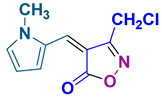
3-(Chloromethyl)-4-((1-methyl-1H-pyrrol-2-yl)methylene)isoxazol-5(4H)-one(4aa)1H NMR (500 MHz, DMSO-d6): δ 3.92 (s, 3H, N-CH3), 4.94 (s. 2H, CH2Cl), 6.53-6.54 (m, 1H, Ar-H), 7.72 (t, J = 1.6 Hz, 1H, Ar-H), 7.78 (s, 1H, H-vinyl), 8.44 (dd, J = 1.6, 4.5 Hz, 1H, Ar-H); 13C NMR (125 MHz, DMSO-d6): δ 34.8 (N-CH3), 35.9 (CH2Cl), 103.2, 113.7, 127.0, 130.1, 134.8, 138.5, 161.8 (C=N), 169.6 (C=O).
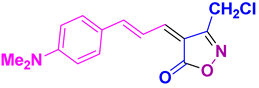
3-(Chloromethyl)-4-(3-(4(dimethylamino)phenyl)allylidene)isoxazol-5(4H)-one (4ab)1H NMR (500MHz, CDCl3): δ 3.11 (s, 6H, N(CH3)2), 4.49 (s, 2H, CH2Cl), 6.69 (d, J = 8.6 Hz, 2H, Ar-H), 7.34 (d, J = 3.5, 6.9 Hz, 1H, =CH), 7.55 (dd, J = 3.5, 6.7 Hz, 1H, =CH), 7.61 (d, J = 8.6 Hz, 2H, Ar-H), 8.90 (m, 1H, =CH); 13C NMR (125 MHz, CDCl3): δ 35.5 (CH2Cl), 40.1 (N(CH3)2), 112.0, 118.1, 123.1, 132.3, 150.4, 153.3, 155.4, 159.2, 164.1 (C=N), 169.0 (C=O).
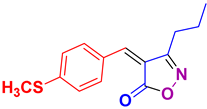
4-(4-(Methylthio)benzylidene)-3-propylisoxazol-5(4H)-one (4ac)1H NMR (500 MHz, CDCl3): δ 1.01 (t, J = 7.2 Hz, 3H, CH3CH2CH2), 1.81 (sex, J = 7.5 Hz, 2H, CH3CH2CH2), 2.59 (s, 3H, SCH3), 2.68 (t, J = 7.5 Hz, 2H, CH3CH2CH2), 7.45 (d, J = 8.7 Hz, 2H, Ar-H), 7.92 (s. 1H, H-vinyl), 8.42 (d, J = 8.7 Hz, 1H, Ar-H); 13C NMR (125 MHz,CDCl3): δ 13.9 (CH3CH2CH2), 14.5 (SCH3), 19.8 (CH3CH2CH2), 27.6 (CH3CH2CH2), 112.2, 114.9, 116.2, 126.4, 131.4, 148.7, 166.3 (C═N), 169.1 (C=O).
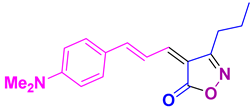
(4-(Dimethylamino)phenyl)allylidene)-3-propylisoxazol-5(4H)-one (4ad)1H NMR( 500 MHz, CDCl3): δ 1.04 (t, J = 7.5 Hz, 3H, CH3CH2CH2), 1.74 (sex, J = 7.3 Hz, 2H, CH3CH2CH2), 2.55 (t, J = 7.3 Hz, 2H, CH3CH2CH2), 3.11 (s, 6H, N(CH3)2), 6.68 (d, J = 8.9 Hz, 2H, Ar-H), 7.22-7.27 (m, 1H, =CH), 7.46-7.51 (m, 1H, =CH), 7.56 (d, J = 8.9 Hz, 2H, Ar-H), 8.09-8.15 (m, 1H, =CH); 13C NMR (125 MHz, CDCl3): δ 13.9 (CH3CH2CH2), 20.2 (CH3CH2CH2), 27.9 (CH3CH2CH2), 40.1 (N(CH3)2), 111.9, 118.2, 123.2, 131.2, 131.7, 148.5, 152.8, 153.3, 163.0 (C=N), 170.5 (C=O).
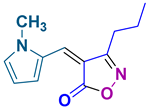
4-((1-Methyl-1H-pyrrol-2-yl)methylene)-3-propylisoxazol-5(4H)-one (4ae)1H NMR (500 MHz, DMSO-d6): δ 0.98 (t, J =7.2 Hz, 3H, CH3CH2CH2), 1.68 (sex, J = 7.4, 2H, CH3CH2CH2), 2.67 (t, J = 7.3, 2H, CH3CH2CH2), 3.91 (s, 3H, N-CH3), 6.45 (dd, J = 1.6, 2.4 Hz, 1H, Ar-H), 7.51 (s, 1H, H-vinyl), 7.58 (t, J = 1.7 Hz, 1H, Ar-H), 8.38 (dd, J = 1.6 Hz, 1H, Ar-H); 13C NMR (125 MHz, DMSO-d6): δ 14.2 (CH3CH2CH2), 19.9 (CH3CH2CH2), 27.4 (CH3CH2CH2), 34.7 (N-CH3), 106.5, 112.7, 125.8, 129.7, 133.7, 164.8 (C=N), 170.0 (C=N).
3. Results and Discussion
This The propylamine-functionalized cellulose (Cell-Pr-NH2, C) was synthesized based on the literature [71]. Briefly, microcrystalline cellulose (A, 10 g) and AlCl3·6H2O (10 g) in water (100 mL) was stirred at RT for 12 h. The mixture was the filtered, the residue was exposed to ammonia, washed with water, and dried in vacuum to produce the Cell-alumina (Cell-Al2O3) composite (B). Cell-Al2O3 composite (B, 10.0 g) and (3-aminopropyl)- trimethoxysilane (6.98 mL, 40.0 mmol) were mixed at refluxing toluene for 24 h. After cooling, the mixture was filtered off and washed with toluene. Finally, drying at RT in vacuum led to the formation of the Cell-Pr-NH2 (C) (Figure 2). The X-ray diffraction (XRD) pattern of the Cell-Pr-NH2 (C) is shown in Figure 3. The three peaks at 2θ = 15.5º, 22.5º and 34.5º, which are related to crystallographic planes (101), (002), and (040) are due to microcrystalline cellulose [72]. These peaks are also observed in the XRD pattern of other cellulose source containing NH2 functional group [73]. Other peaks at 2θ = 16.7º and 21.5º can be attributed to other parts of the catalyst (probably, incorporation of amino groups on the cellulose surface.) (Figure 3). Of course, the peak located at 2θ = 16.4º is also found in microcrystalline cellulose [75].
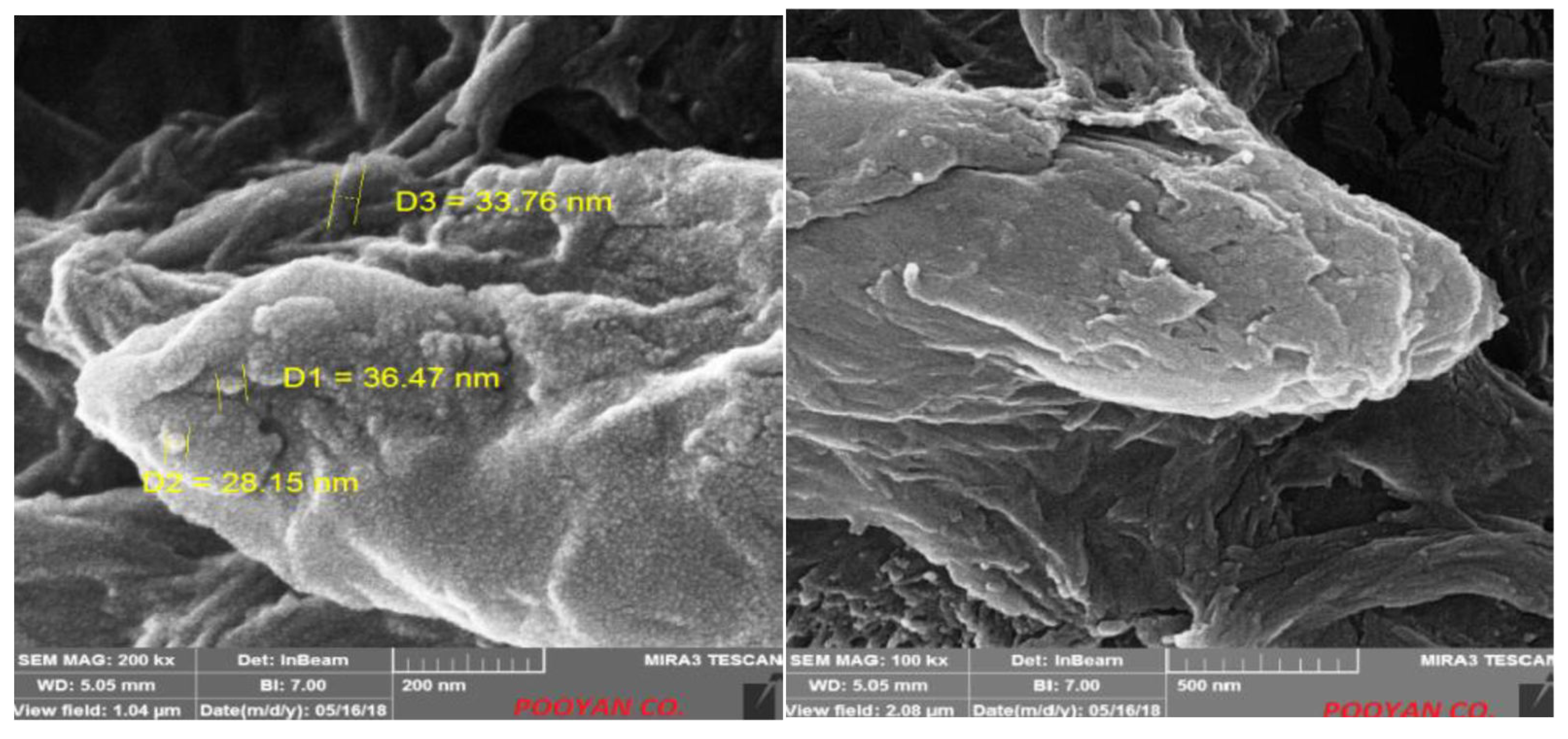
The field emission scanning electron microscopy image (FE-SEM) indicates the rough structure of cellulose and the presence of new parts. In parts of the micrographs, nano-sized spots can be seen (Figure 4, left), which size is approximately 28 to 36 nm.
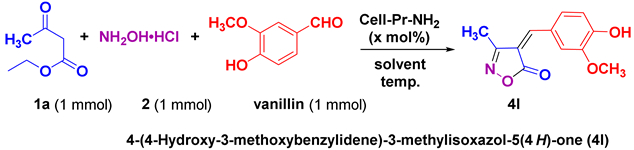
The one-pot, three-component reaction of ethyl acetoacetate (1a), hydroxylamine hydrochloride (2), and vanillin was first designated for investigation with the aim of achieve the best conditions for carrying out the reaction. The experimental results of these studies are listed in Table 1. When the reaction was carried out without a catalyst in water at room temperature (RT), a yellow solid product was obtained after 40 min with a yield of 50% (Table 1, Entry 1). Continuation of the reaction did not change the efficiency appreciably. After purification, measuring the melting point (214-216 ºC; Lit.52 215-217 ºC), and recording the 1H and 13C nuclear magnetic resonance (NMR) spectra, it was determined that the compound formed is the expected heterocycle, i.e., 4-(4-hydroxy-3-methoxybenzylidene)-3-methylisoxazol-5(4H)-one (4l). The 1H NMR spectrum of this compound exhibited the peaks of CH3, OCH3, H-vinyl, OH as four characteristic singlet signals at δ 2.28, 3.89, 7.90, and 10.81 ppm, respectively. Furthermore, two doublet peaks at δ 6.98 (J = 8.4 Hz) and 8.56 ppm, as well as a doublet of doublets peak at δ 7.93 ppm were assigned to three protons of benzene ring. The 1H NMR decoupled spectrum of 4l showed 12 distinct signals in agreement with the desired product. The characteristic signals of CH3, OCH3, C=N, and C=O carbons were observed at δ 11.9, 55.8, 162.9, and 169.6 ppm, respectively. Six carbons of the benzene ring, one carbon of the vinyl group, and the 4-position of the isoxazolone ring appeared in the expected regions (114.1-154.4 ppm). After observing this favorable result, we decided to continue the experiments in order to find the best reaction conditions. In this context, important parameters such as the amount of catalyst, the type of solvent, and reaction temperature were investigated. The reactions were performed under aqueous conditions at RT. Various amounts of cell-Pr-NH2 (C) as the catalyst (2-14 mg) were loaded into the reaction mixture in water solvent. It was found that using 14 mg of cell-Pr-NH2 (C) led to the best results in terms of reaction time (25 min) and isolated reaction yield (97%) (Table 1, Entry 8). Due to this excellent result, other catalyst loading values were not checked and 14 mg of cell-Pr-NH2 (C) as the catalyst was used to check other parameters. After testing various catalyst loading in water at RT, some solvents available in our laboratory were investigated. Solvents including ethanol (EtOH), acetone (CH3COCH3), chloroform (CHCl3), dimethylformamide (DMF), n-hexane, and a mixture of EtOH-H2O (1:1, v: v) were screened at room temperature (Table 1, Entries 9-14). It was observed that these solvents did not have a significant and acceptable effect on the reaction times or yields. In some solvents such as CHCl3 and DMF, small amount of the product 4l was seen (checked with the help of TLC analysis) and the reactants remained almost intact (Table 1, Entries 11 and 12). When the reaction was carried out in the solvent-free conditions and using the optimal amount of catalyst at RT, no favorable results were obtained (Table 1, Entry 15). The search for checking the temperature parameter led us to explore other temperatures in addition to the room temperature. The reaction was investigated at different temperatures in water solvent and using the optimal amount of the catalyst. Two results are given in the optimization table (Table 1, Entries 16 and 17). No significant results were obtained in all these studies. With all this controversy, it can be concluded that the best conditions for carrying out the reaction are water as a solvent for reaction, 14 mg of cell-Pr-NH2 (C) as the catalyst, and RT (Table 1, Entry 8).
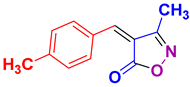
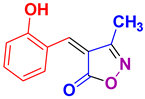
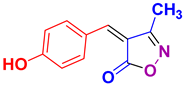
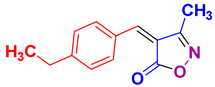
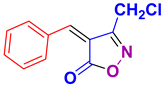
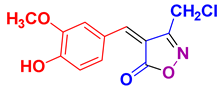
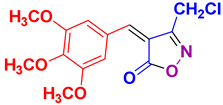
After optimizing the reaction conditions, the substrate scope of the reaction was explored using ethyl acetoacetate (1a), hydroxylamine hydrochloride (2), and substituted benzaldehydes. Consequently, using 14 mg of cell-Pr-NH2 (C) in H2O at RT, the reaction between ethyl acetoacetate (1a), hydroxylamine hydrochloride (2), benzaldehyde/or structurally diverse substituted benzaldehydes produced a broad spectrum of arylideneisoxzol-5(4H)-ones (4a-4n). The results indicate that aryl aldehydes with the electron-donating groups participate better in this three-component reaction and produce the corresponding heterocyclic products in good to excellent yields (Table 2, Entries 1-14). When heteroaryl aldehydes such as thiophene-2-carboxaldehyde and N-methyl-2-pyrrolecarboxaldehyde were used, the cyclocondensation reaction proceeded well and the corresponding products (4o and 4p) were obtained in high isolated yields and reasonable reaction times (Table 2, Entries 15 and 16). In addition, the scope of the substrate was further explored. In this context, ethyl 4-chloroacetoacetate (1b) was employed instead of ethyl acetoacetate (1a). A good result was obtained when benzaldehyde was used as precursor (Table 2, Entry 17). When the substituted benzaldehydes containing electron-donating functional groups including, OCH3, CH3, N(CH3)2, and OH in different positions at the aryl ring were used in this three-component catalytic reaction, the processes proceeded well and the corresponding 3-chloromethyl substituted isoxazole-5(4H)-ones (4r-4y) were obtained in good to excellent yields and in satisfactory reaction times (Table 2, Entries 18-25). We also tested two five-membered heteroaryl aldehydes, thiophene-2-carbaldehyde and 1-methyl-1H-pyrrole-2-carbaldehyde, in reaction with ethyl 4-chloroacetoacetate (1b) and hydroxylamine hydrochloride (2). Fortunately, the two desired heterocyclic products (4z and 4aa) were synthesized with excellent isolated reaction yields (Table 2, Entries 26 and 27). Under the optimized reaction conditions as described in Table 1, Entry 8, the use of the α,β-unsaturated aldehyde containing a phenyl ring (4-(dimethylamino)cinnamaldehyde) was also fruitful and the desired heterocyclic product (4ab) was formed in excellent isolated yield of reaction and short reaction time (Table 2, Entry 28). Moreover, under optimal conditions, the attempt to use ethyl 3-oxohexanoate (1c) as a β-keto ester precursor was fruitful. In this regard, three heterocycles 4ac-4ae were successfully synthesized and the target compounds were isolated with satisfactory yields along with rational reaction times (Table 2, Entries 29-31).
Cellulose is partially soluble in ethanol [74]. Since the amount of catalyst containing cellulose is very small, it dissolves in ethanol during the washing process. The filtrate containing the catalyst can be reused in subsequent reactions. The catalyst was reused three times (25 min, 95%; 50 min, 85%; 65 min, 80).
This reaction is comparable to some other similar reactions in several aspects (Table 3). Albeit each of the methods revealed has its own merits but frequently suffers from some problems. This cyclocondensation process is comparable with some other similar chemical transformations in several aspects such as reaction yield, reaction time, type of reaction medium, amount of catalyst, and reaction temperature. From the efficiency point of view, it is superior to entries 1-4 and 7-13. From the aspect of the reaction medium, it is better than cases 11 and12 because no organic solvent was used. In comparison with methods 1-4 and 6-13, which are included in Table 3, the current reaction has been implemented in a shorter reaction time. It should also be noted that this reaction was carried out at RT, but when 2,2′-bpy (Table 3, Entry 4), [H2-BiPyr][ClO4]2 (Table 3, Entry 5), 50 wt % aq. GAAS (Table 3, Entry 11), and PPTS (Table 3, Entry 13) were used as catalysts, harsh reaction conditions (70 °C and reflux) are needed.
Although we did not carry out mechanistic investigations, but based on the literature [76], the mechanism drawn in Scheme 2 can be proposed for the reaction. The Cell-Pr-NH2 catalyst helps the released hydroxylamine to initiate the oximation reaction and nucleophilic attack of the NH2OH on the carbonyl carbon of the β-keto ester (1a-1c) leads to the formation of oxime intermediate A. Intermediate A was cyclized to generation 3-substituted-isoxazole-5(4H)-ones (B). In the presence of catalyst, In the presence of the catalyst, cyclic intermediates B are enolized to intermediates C. Finally, the Knoevenagel condensation reaction between enolized 3-substituted-isoxazole-5(4H)-ones (C) and activated aldehydes (D) leads to the formation of the corresponding heterocycles (4a-4ae) (Scheme 2).
4. Conclusions
In conclusion, this work introduces an efficient and green procedure to synthesize 3,4-disubstituted isoxzol-5(4H)-ones, heterocyclic compounds with potential biological activity, using commercially available starting materials. The reactions have been successfully implemented under aqueous conditions in the presence of Cell-Pr-NH2 as the catalyst at RT. Employing this method for the synthesis of isoxazole-5(4H)-one heterocycles have advantages including ease of reaction implementation, simplicity of product purification, reasonable yields, acceptable reaction times, performing the reactions in non-organic solvents, as well as cheap, the availability and abundance of the reaction solvent.
Supplementary Materials
The following supporting information can be downloaded at: www.mdpi.com/xxx/s1, Figure S1: title; Table S1: title; Video S1: title.
Author Contributions
Conceptualization, H.K.; investigation, S.G.; data curation, S.G.; writing—original draft preparation, H.K; S.G.; writing—review and editing, H.K.; supervision, H.K.; project administration, H.K.; All authors have read and agreed to the published version of the manuscript.
Funding
This research received no external funding.
Data Availability Statement
The data of this study are available via request from the corresponding author.
Acknowledgments
We would to express our thankfulness to the Shahrekord University.
Conflicts of Interest
The authors declare no conflicts of interest.
References
- (a) Dengale, S.G.; Akolkar, H.N.; Darekar, N.R.; Shaikh, M.H.; Deshmukh, K.K.; Mhaske, S.D.; Karale, B.K.; Raut, D.N.; Khedkar, V.M. Synthesis and Biological Evaluation of 2-(4,5,6,7-Tetrahydrobenzo[c]Isoxazol-3-yl)-4H-Chromen-4-Ones. Polycycl. Aromat. Comp. 2002, 42, 6337-6351. doi:10.1080/10406638.2021.1982733; (b) Thakur, A.; Verma, M.; Bharti, R.; Sharma, R. Oxazole and isoxazole: From one-pot synthesis to medical applications. Tetrahedron 2022, 119, 132813. doi:10.1016/j.tet.2022.132813; (c) Arya, G.C.; Kaur, K.; Jaitak, V. Isoxazole derivatives as anticancer agent: A review on synthetic strategies, mechanism of action and SAR studies. Eur. J. Med. Chem. 2021, 221, 113511. doi:10.1016/j.ejmech.2021.113511; (d) Farooq, S.; Ngaini, Z. Synthesis of Benzalacetophenone-based Isoxazoline and Isoxazole Derivatives. Curr. Org. Chem. 2022, 26, 679-692. doi:10.2174/1385272826666220408120350.
- Pattanayak, P.; Chatterjee, T. Synthesis of (4-Trifluoromethyl)isoxazoles through a Tandem Trifluoromethyloximation/Cyclization/Elimination Reaction of α,β-Unsaturated Carbonyls. J. Org. Chem. 2023, 88, 5420-5430. doi:10.1021/acs.joc.2c03053.
- Zhu, J.; Mo, J.; Lin, H.Z.; Chen, Y.; Sun, H.P. The recent progress of isoxazole in medicinal chemistry. Bioorg. Med. Chem. 2018, 26, 3065-3075. doi:10.1016/j.bmc.2018.05.013.
- Agrawal, N.; Mishra, P. The synthetic and therapeutic expedition of isoxazole and its analogs. Med. Chem. Res. 2018, 27, 1309-1344. doi:10.1007/s00044-018-2152-6.
- Pandhurnekar, C.P.; Pandhurnekar, H.C.; Mungole, A.J.; Butoliya, S. S.; Yadao, B.G. A review of recent synthetic strategies and biological activities of isoxazole. J. Heterocycl. Chem. 2023, 60, 536-565. doi:10.1002/jhet.4586.
- Yang, Y.; Zhao, J.; Zhang, X.; Hu, Z.; Wu, Y. Synthesis and characterization of a new isoxazolone-based nonlinear optical crystal: MPMOI, CrystEngComm 2023, 25, 1313-1318. doi:10.1039/D2CE01299E.
- Razzaq, S.; Minhas, A.M.; Qazi, N.G.; Nadeem, H.; Khan, A.U.; Ali, F.; Hassan, S.S.; Bungau, S. Novel Isoxazole Derivative Attenuates Ethanol-Induced Gastric Mucosal Injury through Inhibition of H+/K+-ATPase Pump, Oxidative Stress and Inflammatory Pathways. Molecules 2022, 27, 5065. doi:10.3390/molecules27165065.
- Kafle, B.; Aher, N.G.; Khadka, D.; Park, H.; Cho, H. Isoxazol-5(4H)one Derivatives as PTP1B Inhibitors Showing an Anti-Obesity Effect. Chem. Asian J. 2011, 6, 2073-2079. doi:10.1002/asia.201100154.
- (a) Sukanya, S.H.; Venkatesh, T.; Kumar R.S. Bodke, Y.D. Facile TiO2 NPs catalysed synthesis of substituted-4-Hydroxy/methoxy benzylidene derivatives as potent antioxidant and anti-tubercular agents. Chem. Data Collect. 2021, 33, 100713. doi:10.1016/j.cdc.2021.100713; (b) Kuchana, M.; Bethapudi, D.R.; Ediga, R.K.; Sisapuram, Y. Synthesis, in-Vitro Antioxidant Activity and In-Silico Prediction of Drug-Likeness Properties of a Novel Compound: 4-(3,5-Di-Tert-Butyl-4-Hydroxybenzylidene)-3-Methylisoxazol-5(4H)-One. J. Appl. Pharm. Sci. 2019, 9, 105-110. doi:10.7324/JAPS.2019.90915.
- Ali, M.; Saleem, U.; Anwar, F.; Imran, M.; Nadeem, H.; Ahmad, B.; Ali, T.; Atta-ur-rehman, Ismail, T. Screening of Synthetic Isoxazolone Derivative Role in Alzheimer’s Disease: Computational and Pharmacological Approach. Neurochem. Res. 2021, 46, 905-920. doi:10.1007/s11064-021-03229-w.
- (a) Kadam, H.K.; Salkar, K.; Naik, A.P.; Naik, M.M.; Salgaonkar, L.N.; Charya, L.; Pinto, K.C.; Mandrekar, V.K.; Vaz, T. Silica Supported Synthesis and Quorum Quenching Ability of Isoxazolones Against Both Gram Positive and Gram-Negative Bacterial Pathogens. ChemistrySelect 2021, 6, 11718-11728. doi:10.1002/slct.202101798; (b) Wang, Y.; Du, D.M. Highly Diastereo- and Enantioselective Synthesis of Isoxazolone-Spirooxindoles via Squaramide-Catalyzed Cascade Michael/Michael Addition Reactions. J. Org. Chem. 2020, 85, 15325-15336. doi:10.1021/acs.joc.0c02150.
- (a) Badiger, K.B.; Khatavi, S.Y.; Kamanna, K. Green synthesis of 3-methyl-4-(hetero)aryl methylene isoxazole-5(4H)-ones using WEOFPA/glycerol: evaluation of anticancer and electrochemical behaviour properties. RSC Med. Chem. 2022, 13, 1367-1377. doi:10.1039/d2md00191h; (b) Bhatt, T.D.; Gojiya, D.G.; Kalavadiya, P.L.; Joshi, H.S. Rapid, Greener and Ultrasound Irradiated One-Pot Synthesis of 4-(Substituted-1H-Pyrazol-4-yl)Methylene)-3-Isopropylisoxazol-5(4H)-ones and Their In Vitro Anticancer Activity. ChemistrySelect 2019, 4, 11125-11129. doi:10.1002/slct.201902164.
- Nongrum, R.; Nongkhlaw, R.; Majaw, S.P.; Kumari, J.; Sriram, D.; Nongkhlaw, R. A nano-organo catalyst mediated approach towards the green synthesis of 3-methyl-4-(phenyl)methylene-isoxazole-5(4H)-one derivatives and biological evaluation of the derivatives as a potent anti-fungal and anti-tubercular agent. Sustain. Chem. Pharm. 2023, 32, 100967. doi:10.1016/j.scp.2023.100967.
- Chande, M.S.; Verma, R.S.; Barve, P.A.; Khanwelkar, R.R.; Vaidya, R.B.; Ajaikumar, K.B. Facile synthesis of active antitubercular, cytotoxic and antibacterial agents: a Michael addition approach. Eur. J. Med. Chem. 2005, 40, 1143-1148. doi:10.1016/j.ejmech.2005.06.004.
- (a) Saleem, A.; Farooq, U.; Bukhari, S.M.; Khan, S.; Zaidi, A.; Wani, T.A.; Shaikh, A.J.; Sarwar, R.; Mahmud, S.; Israr, M.; Khan, F.A.; Shahzad, S.A. Isoxazole Derivatives against Carbonic Anhydrase: Synthesis, Molecular Docking, MD Simulations, and Free Energy Calculations Coupled with In Vitro Studies. Acs Omega 2022, 7, 30359-30368, doi:10.1021/acsomega.2c03600; (b) Kim, S.J.; Yang, J.; Lee, S.; Park, C.; Kang, D.; Akter, J.; Ullah, S.; Kim, Y.J.; Chun, P.; Moon, H.R. The tyrosinase inhibitory effects of isoxazolone derivatives with a (Z)-β-phenyl-α,β-unsaturated carbonyl scaffold,” Bioorg. Med. Chem. 2018, 26, 3882-3889. doi:10.1016/j.bmc.2018.05.047.
- Sampaio, A.B.S.; Mori, M.S.S.; Albernaz, L.C.; Espindola, L.S.; Salvador, C.E.M.; Andrade, C.K.Z.; Continuous Flow Photochemical Synthesis of 3-Methyl-4-arylmethylene Isoxazole-5(4H)-ones through Organic Photoredox Catalysis and Investigation of Their Larvicidal Activity. Catalysts 2023, 13, 518. doi:10.3390/catal13030518.
- (a) Oraby, A.K.; Abdellatif, K.R.A.; Abdelgawad, M.A.; Attia, K.M.; Dawe, L.N.; Georghiou, P.E.; 2,4-Disubstituted Phenylhydrazonopyrazolone and Isoxazolone Derivatives as Antibacterial Agents: Synthesis, Preliminary Biological Evaluation and Docking Studies. ChemistrySelect 2018, 3, 3295-3301. doi:10.1002/slct.201800174; (b) Alizadeh, N.; Kiyani, H.; Albadi, J. Green and three-component synthesis of isoxazolones using natural sunlight and investigating their antibacterial activity. Appl. Chem. 2023, 18, 125-148. doi:10.22075/chem.2022.28043.2093; (C) Wazalwar, S.S.; Banpurkar, A.R.; Perdih, F. Aqueous phase synthesis, crystal structure and biological study of isoxazole extensions of pyrazole-4-carbaldehyde derivatives. J. Mol. Struct. 2017, 1150, 258-267. doi:10.1016/j.molstruc.2017.08.094.
- Gadkari, Y.U.; Jadhav, N.L.; Hatvate, N.T.; Telvekar, V.N. Concentrated Solar Radiation Aided Green Approach for Preparative Scale and Solvent-Free Synthesis of 3-Methyl-4-(hetero)arylmethylene Isoxazole-5(4H)-ones. ChemistrySelect 2020, 5, 12320-12323. doi:10.1002/slct.202003348.
- (a) Uvarova, E.S.; Kutasevich, A.V.; Lipatov, E.S.; Mityanov, V.S. Assembly of isoxazol-5-one with 2-unsubstituted imidazole N-oxides and aldehydes. Org. Biomol. Chem. 2023, 21, 651-659. doi:10.1039/d2ob02157a; (b) Galenko, E.E.; Linnik, S.A.; Khoroshilova, O.V.; Novikov, M.S.; Khlebnikov, A.F. Isoxazole Strategy for the Synthesis of α-Aminopyrrole Derivatives. J. Org. Chem. 2019, 84, 11275-11285. doi:10.1021/acs.joc.9b01634; (c) Galenko, E.E.; Kryukova, M.A.; Novikov, M.S.; Khlebnikov, A.F. An Isoxazole Strategy for the Synthesis of Fully Substituted Nicotinates. J. Org. Chem. 2021, 86, 6888-6896. doi:10.1021/acs.joc.1c00286; (d) Galenko, E.E.; Novikov, M.S.; Khlebnikov, A.F. “[2 + 2] Cycloaddition/Retro-Electrocyclization/Decarboxylation Reaction Sequence: Access to 4-Aminopyridines from Methylideneisoxazolones and Ynamines. J. Org. Chem. 2023, 88, 8854-8864. doi:10.1021/acs.joc.3c00654.
- Sabitha, G.; Reddy, M.M.; Archana, B.; Yadav, J.S. A Convenient Synthesis of Benzopyranacetylenes. Synth. Commun. 1998, 28, 573-581, doi:10.1080/00397919808005928.
- Wan, S.H.; Li, X.A.; Liu, Y.H.; Liu, S.T.N-Allylation versus C-allylation of intermediates from aza-Michael adducts of arylideneisoxazol-5-ones. Org. Biomol. Chem. 2020, 18, 9516-9525. doi:10.1039/D0OB01998D.
- Macchia, A.; Summa, F.F.; Monaco, G.; Eitzinger, A.; Ofial, A.R.; Di Mola, A.; Massa, A. Access to β-Alkylated γ-Functionalized Ketones via Conjugate Additions to Arylideneisoxazol-5-ones and Mo(CO)6-Mediated Reductive Cascade Reactions. Acs Omega 2022, 7, 8808-8818. doi:10.1021/acsomega.1c07081.
- (a) MacChia, A.; Eitzinger, A.; Brière, J.F.; Waser, M.; Massa, A. Asymmetric Synthesis of Isoxazol-5-ones and Isoxazolidin-5-ones. Synthesis 2021, 53, 107-122. doi:10.1055/s-0040-1706483; (b) Martínez-Pardo, P.; Laviós, A.; Sanz-Marco, A.; Vila, C.; Pedro, J.R.; Blay, G. Enantioselective Synthesis of Functionalized Diazaspirocycles from 4-Benzylideneisoxazol-5(4H)-one Derivatives and Isocyanoacetate Esters. Adv. Synth. Catal. 2020, 362, 3564-3569. doi:10.1002/adsc.202000611; (c) da Silva, A.F.; Fernandes, A.A.G.; Thurow, S.; Stivanin, M.L.; Jurberg, I.D.; Isoxazol-5-ones as Strategic Building Blocks in Organic Synthesis. Synthesis 2018, 50, 2473-2489. doi:10.1055/s-0036-1589534.
- Faramarzi, Z.; Kiyani, H. Organocatalyzed Three-Component Synthesis of Isoxazol-5(4H)-Ones under Aqueous Conditions. Heterocycles 2021, 102, 1779-1790. doi:10.3987/COM-21-14488.
- Kapale, S.S.; Gadkari, Y.U.; Chaudhari, H.K. Lipase Catalyzed One-Pot Synthesis of 3-Methyl-4-(Hetero) Arylmethyleneisoxazole-5(4H)-Ones under Aqueous Conditions. Polycycl. Aromat. Comp. 2022, 43, 4856-4865. 10.1080/10406638.2022.2096649,.
- Faramarzi, Z.; Kiyani, H. Steglich’s Base Catalyzed Three-Component Synthesis of Isoxazol-5-Ones. Polycycl. Aromat. Comp. 2023, 43, 3099-3121. doi:10.1080/10406638.2022.2061533.
- Parveen, M.; Aslam, A.; Ahmad, A.; Alam, M.; Silva, M.R.; Silva, P.S.P. A facile & convenient route for the stereoselective synthesis of Z-isoxazol-5(4H)-ones derivatives catalysed by sodium acetate: Synthesis, multispectroscopic properties, crystal structure with DFT calculations, DNA-binding studies and molecular docking studies. J. Mol. Struct. 2020, 1200, 127067. doi:10.1016/j.molstruc.2019.127067.
- Gharehassanlou, S.; Kiyani, H. A Catalytic Three-Component Synthesis of Isoxazol-5(4H)-Ones under Green Conditions. Indian J. Chem. 2022, 61, 515-520. doi:10.56042/ijc.v61i5.63643.
- Barkule, A.B.; Gadkari, Y.U.; Telvekar, V.N. One-Pot Multicomponent Synthesis of 3-Methyl-4-(Hetero)Arylmethylene Isoxazole-5(4H)-Ones Using Guanidine Hydrochloride as the Catalyst under Aqueous Conditions. Polycycl. Aromat. Comp. 2022, 42, 5870-5881. doi:10.1080/10406638.2021.1959353.
- Saikh, F.; Das, J.; Ghosh, S. Synthesis of 3-methyl-4-arylmethylene isoxazole-5(4H)-ones by visible light in aqueous ethanol. Tetrahedron Lett. 2013, 54, 4679-4682. doi:10.1016/j.tetlet.2013.06.086.
- Kiyani, H.; Kanaani, A.; Ajloo, D.; Ghorbani, F.; Vakili, M. N-Bromosuccinimide (NBS)-Promoted, Three-Component Synthesis of α,β-Unsaturated Isoxazol-5(4H)-Ones, and Spectroscopic Investigation and Computational Study of 3-Methyl-4-(thiophen-2-ylmethylene)isoxazol-5(4H)-one. Res. Chem. Intermed. 2015, 41, 7739-7773. doi:10.1007/s11164-014-1857-5.
- Ostadzadeh, H.; H. Kiyani, Synthesis of Isoxazole-5(4H)-Ones Using Citrazinic Acid as an Organocatalyst in Aqueous Conditions. Org. Prep. Proced. Int. 2023, 55, 538-548. doi:10.1080/00304948.2023.2192601.
- Aleaba, G; Asadi, S.K.; Daneshvar, N.; Shirini, F. Introduction of [2,2'-Bipyridine]-1,1'-Diium Perchlorate as a Novel and Highly Efficient Dicationic Brönsted Acidic Organic Salt for the Synthesis of 3-Methyl-4-Arylmethylene Isoxazole-5(4H)-one Derivatives in Water. Polycycl. Aromat. Comp. 2022, 42, 7569-7581. doi:10.1080/10406638.2021.2005641.
- Kiyani, H.; Ghorbani, F. Efficient Tandem Synthesis of a Variety of Pyran-Annulated Heterocycles, 3,4-Disubstituted Isoxazol-5(4H)-ones, and α,β-Unsaturated Nitriles Catalyzed by Potassium Hydrogen Phthalate in Water. Res. Chem. Intermed. 2015, 41, 7847-7882. doi:10.1007/s11164-014-1863-7.
- Daroughezadeh, Z.; Kiyani, H. Efficient and Aqueous Synthesis of 3,4-Disubstituted Isoxazol-5(4H)-one Derivatives Using Piperazine under Green Conditions. Heterocycles 2022, 104, 1625-1640. doi:10.3987/COM-22-14686.
- Kiyani, H.; Ghorbani, F. Potassium Phthalimide as Efficient Basic Organocatalyst for the Synthesis of 3,4-Disubstituted Isoxazol-5(4H)-ones in Aqueous Medium. J. Saudi Chem. Soc. 2017, 21, S112-S119. doi:10.1016/j.jscs.2013.11.002.
- Mosallanezhad, A.; Kiyani, H. Green Synthesis of 3-Substituted-4-Arylmethylideneisoxazol-5(4H)-one Derivatives Catalyzed by Salicylic Acid. Curr. Organocatal. 2019, 6, 28-35. doi:10.2174/2213337206666190214161332.
- Kiyani, H.; Mosallanezhad, A. “Sulfanilic Acid-Catalyzed Synthesis of 4-Arylidene-3-Substituted Isoxazole-5(4H)-ones. Curr. Org. Synth. 2018, 15, 715-722. doi:10.2174/1570179415666180423150259.
- Reihani, N.; Kiyani, H. Three-Component Synthesis of 4-Arylidene-3-Alkylisoxazol-5(4H)-ones in the Presence of Potassium 2,5-Dioxoimidazolidin-1-ide. Curr. Org. Chem. 2021, 25, 950-962. doi:10.2174/1385272825666210212120517.
- Daroughezadeh, Z.; H. Kiyani, Synthesis of Arylideneisoxazol-5-ones Catalyzed by Sodium Cyclamate. Heterocycles 2023, 106, 1187-1197. doi:10.3987/COM-23-14859.
- Delfani, A.M.; Kiyani, H.; Zamani, M. An Expeditious Synthesis of Ethyl-2-(4-(arylmethylene)-5-oxo-4,5-dihydroisoxazol-3-yl)acetate Derivatives. Curr. Org. Chem. 2022, 26, 1575-1584. doi:10.2174/1385272827666221124105402.
- Tahmasabi, S.Z.; Kiyani, H.; Samimi, H.A. Efficient Synthesis of 4-Arylmethylene-3-methylisoxazol-5(4H)-one Derivatives Catalyzed by Malic Acid. Lett. Org. Chem. 2023, 20, 167-174. doi:10.2174/1570178619666220903155012.
- Daroughehzadeh, Z.; Kiyani, H. Arylideneisoxazole-5(4H)-one Synthesis by Organocatalytic Three-Component Hetero-Cyclization. Polycycl. Aromat. Comp. 2024, 44, 3200-3221. doi:10.1080/10406638.2023.2231602.
- Kiyani, H.; Jabbari, M.; Mosallanezhad, A. Efficient Three Component Synthesis of 3,4-Disubstituted isoxazol-5(4H)-ones in Green Media. Jordan J. Chem. 2014, 9, 279-288. doi:10.12816/0025980P.
- Kour, P.; Ahuja, M.; Sharma, P.; Kumar, A.; Kumar, A. An Improved Protocol for the Synthesis of 3,4-Disubstituted Isoxazol-5(4H)-ones through L-Valine-Mediated Domino Three-Component Strategy. J. Chem. Sci. 2020, 132, 108. doi:10.1007/s12039-020-01801-5.
- Kiyani, H.; Ghorbani, F. Boric Acid-Catalyzed Multi-Component Reaction for Efficient Synthesis of 4H-Isoxazol-5-ones in Aqueous Medium. Res. Chem. Intermed. 2015, 41, 2653-2664. doi:10.1007/s11164-013-1411-x.
- Kiyani, H.; Samimi, H.A. Nickel-Catalyzed One-Pot, Three-Component Synthesis of 3,4-Disubstituted Isoxazole-5(4H)-ones in Aqueous Medium. Chiang Mai J. Sci. 2017, 44, 1011-1121. http://cmuir.cmu.ac.th/jspui/handle/6653943832/63929.
- Mosallanezhed, A.; Kiyani, H. KI-Mediated three-component reaction of hydroxylamine hydrochloride with aryl/heteroaryl aldehydes and two β-oxoesters. Orbit. Electron. J. Chem. 2018, 10, 133-139. https://doi.org/10.17807/orbital.v10i2.1134.
- Kiyani, H.; Darbandi, H.; Mosallanezhad, A.; Ghorbani, F. 2-Hydroxy-5-sulfobenzoic acid: an efficient organocatalyst for the three-component synthesis of 1-amidoalkyl-2-naphthols and 3,4-disubstituted isoxazol-5(4H)-ones. Res. Chem. Intermed. 2015, 41, 7561-7579. doi:10.1007/s11164-014-1844-x.
- Ghogare, R.S.; Patankar-Jain, K.; Momin, S.A.H. A Simple and Efficient Protocol for the Synthesis of 3,4-Disubstituted Isoxazol-5(4H)-ones Catalyzed by Succinic Acid Using Water as Green Reaction Medium. Lett. Org. Chem. 2021, 18, 83-87. doi:10.2174/1570178617999200721011300.
- Kundu, T.; Mitra, B.; Ghosh, P. Eucalyptol: An Efficient, Unexplored, Green Media for Transition Metal Free Synthesis of 2,3-Dihydroquinazolin-4(1H)-one Derivatives and Isoxazolone Derivatives. Synth. Commun. 2023, 53, 779-794. doi:10.1080/00397911.2023.2197118.
- Haydari, F.; Kiyani, H. Urea-Catalyzed Multicomponent Synthesis of 4-Arylideneisoxazol-5(4H)-one Derivatives under Green Conditions. Res. Chem. Intermed. 2023, 49, 837-858. doi:10.1007/s11164-022-04907-2.
- Zhang, D.; Liu, C.; Ren, L.; Li, W.; Luan, B.; Zhang, Y. Vitamin B1-Catalyzed Multicomponent Reaction for Efficient Synthesis of an Isoxazolone Compound by Using Ultrasound in a Water and Its Selective Identification of Metal Ions. ChemistrySelect 2023, 8, e202204658. doi:10.1002/slct.202204658.
- Ghorbani, F.; Kiyani, H.; Pourmousavi, S.A. Facile and Expedient Synthesis of α,β-Unsaturated Isoxazol-5(4H)-ones under Mild Conditions. Res. Chem. Intermed. 2020, 46, 943–959. doi:10.1007/s11164-019-03999-7.
- (55) Damghani, F.K.; Kiyani, H.; Pourmousavi, S.A. Green Three-Component Synthesis of Merocyanin Dyes Based on 4-Arylideneisoxazol-5(4H)-ones. Curr. Green Chem. 2020, 7, 217-225. doi:10.2174/2213346107666200122093906; (b) Khoshdel, M.A.; Mazloumi, M.; Zabihzadeh, M.; Shirini Sustainable, F. Scalable, and One-Pot Synthesis of Isoxazol-5(4H)-one and 1,2,4-Triazoloquinazolinone Derivatives Using a Natural Deep Eutectic Solvent. Polycycl. Aromat. Comp. (2023): doi:10.1080/10406638.2023.2254894; (c) Atharifar, H.; Keivanloo, A.; Maleki, B. Greener Synthesis of 3,4-Disubstituted Isoxazole-5(4H)-ones in a Deep Eutectic Solvent. Org. Prep. Proced. Int. 2020, 52, 517-523. doi:10.1080/00304948.2020.1799672.
- Aslanpour, S.; Kiyani, H. Rapid Synthesis of Fully Substituted Arylideneisoxazol-5(4H)-one Using Zinc Oxide Nanoparticles. Res. Chem. Intermed. 2023, 49, 4603-4619. doi:10.1007/s11164-023-05059-7.
- Kiyani, H.; Ghorbani, F. Expeditious Green Synthesis of 3,4-Disubstituted Isoxazole-5(4H)-Ones Catalyzed by Nano-MgO. Res. Chem. Intermed. 2016, 42, 6831-6844. doi:10.1007/s11164-016-2498-7.
- Mosallanezhad, A.; Kiyani, h. Green Synthesis of Arylideneisoxazol-5-Ones Catalyzed by Silicon Dioxide Nanoparticles. Polycycl. Aromat. Comp. (2023): 1-16. doi:10.1080/10406638.2023.2259564.
- Konkala, V.S.; Dubey, P.K. One-pot Synthesis of 3-phenyl-4-pyrazolylmethylene-isoxazol-(5H)-ones Catalyzed by Sodium Benzoate in Aqueous Media under the Influence of Ultrasound Waves: A Green Chemistry Approach. J. Heterocycl. Chem. 2017, 54, 2483-2492. https://doi.org/10.1002/jhet.2848.
- Kulkarni, P. An efficient solvent-free synthesis of 3,4-disubstituted isoxazole-5(4H)-ones using microwave irradiation. J. Indian Chem. Soc. 2021, 98, 100013. doi:10.1016/j.jics.2021.100013.
- Shitre, G.V.; Patel, A.R.; Ghogare, R.S. Green synthesis of 3,4-disubstituted isoxazol-5(4H)-one using Gluconic acid aqueous solution as an efficient recyclable medium. Org. Commun. 2023, 16, 87-97. doi:10.25135/acg.oc.151.2304.2762.
- Mirani-Nezhad, S.; Pourmousavi, S.A.; Zare, E.N.; Heidari, G.; Hosseini, S.; Peyvandtalab, M. Magnetic poly(1,8-diaminonaphthalene)-nickel nanocatalyst for the synthesis of antioxidant and antibacterial isoxazole-5(4H)-ones derivatives. Heliyon 2023, 9, e15886. doi:10.1016/j.heliyon.2023.e15886.
- Liu, Q.; Hou, X. One-Pot Three-Component Synthesis of 3-Methyl-4-Arylmethylene- Isoxazol-5(4H)-Ones Catalyzed by Sodium Sulfide. Phosphor. Sulfur, Silicon Relat. Element. 2012, 187, 448-453. doi:10.1080/10426507.2011.621003.
- Laroum, R.; Debache, A. New eco-friendly procedure for the synthesis of 4-arylmethylene-isoxazol-5(4H)-ones catalyzed by pyridinium p-toluenesulfonate (PPTS) in aqueous medium. Synth. Commun. 2018, 48, 1876-1882, doi:10.1080/00397911.2018.1473440.
- (a) Patil, B.M.; Shinde, S.K.; Jagdale, A.A.; Jadhav, S.D.; Patil, S.S. Fruit Extract of Averrhoa Bilimbi: A Green Neoteric Micellar Medium for Isoxazole and Biginelli-like Synthesis. Res. Chem. Intermed. 2021, 47, 4369-4398. doi:10.1007/s11164-021-04539-y; (b) Popatkar, B.B.; Mane, A.A.; Meshram, G.A. Tomato Fruit Extract: An Environmentally Benign Catalytic Medium for the Synthesis of Isoxazoles Derivatives. Indian J. Chem. 2021, 60B, 1362-1367. doi:123456789/58323B.
- Haidary, F.; Kiyani, H. Green and clean synthesis of 4-arylideneisoxazol-5-ones using NaCl aqueous solution. Sustain. Chem. Environ. 2024, 5, 100066. doi:10.1016/j.scenv.2024.100066.
- Li, X.; Wang, Q.; Zheng, Q.; Kurpiewska, K.; Kalinowska-Tluscik, J.; Dömling, A. Access to Isoquinolin-2(1H)-yl-acetamides and Isoindolin-2-ylacetamides from a Common MCR Precursor. J. Org. Chem. 2022, 87, 14463-14475. doi:10.1021/acs.joc.2c01905.
- Xu, R.; Wang, Z.; Zheng, Q.; Patil, P.; Dömling, A. A Bifurcated Multicomponent Synthesis Approach to Polycyclic Quinazolinones. J. Org. Chem. 2022, 87, 13023-13033. https://doi.org/10.1021/acs.joc.2c01561.
- (a) Kamalifar, S.; Kiyani, H. Facile and Efficient Synthesis of 9-Aryl-1,8-Dioxo-Octahydroxanthenes Catalyzed by Sulfacetamide. Polycycl. Aromat. Comp. 2022, 42, 3675-3693. doi:10.1080/10406638.2021.1872656; (b) Kiyani, H.; Samimi, H.; Ghorbani, F.; Esmaieli, S. One-pot, four-component synthesis of pyrano[2,3-c]pyrazoles catalyzed by sodium benzoate in aqueous medium. Curr. Chem. Lett. 2013, 2, 197-206. doi:10.5267/j.ccl.2013.07.002.
- (a) Pena-Pereira, F.; Lavilla, I.; de la Calle, I.; Romero, V.; Bendicho, C. Detection of gases and organic vapours by cellulose-based sensors. Anal. Bioanal. Chem. 2023, 415, 4039-4060. doi:10.1007/s00216-023-04649-z; (b) Abdelhamid, H.N.; Mathew, A.P. Cellulose-Based Nanomaterials Advance Biomedicine: A Review. Int. J. Mol. Sci. 2022, 23, 5405. doi:10.3390/ijms23105405.
- (a) Karhale, S.; Bhenki, C.; Rashinkar, G.; Helavi, V. Covalently anchored sulfamic acid on cellulose as heterogeneous solid acid catalyst for the synthesis of structurally symmetrical and unsymmetrical 1,4-dihydropyridine derivatives. New J. Chem. 2017, 41, 5133-5141. doi: 10.1039/c7nj00685c; (b) Karhale, S. Grafting of sulphamic acid on functionalized sawdust: A novel solid acid catalyst for the synthesis of 1,8-dioxo-octahydroxanthenes. Res. Chem. Intermed. 2020, 46, 3085-3096. doi:10.1007/s11164-020-04136-5.
- (a) Pharande, P.S.; Rashinkar, G.S.; Pore, D.M. Cellulose Schiff base-supported Pd(II): An efficient heterogeneous catalyst for Suzuki Miyaura cross-coupling. Res. Chem. Intermed. 2021, 47, 4457-4476. doi:10.1007/s11164-021-04528-1; (b) Bezerra, R.D.S.; Leal, R.C.; da Silva, S.M.; Morais, I.S.A.; Marques, H.C.T.; Osajima, A.J.; Meneguin, B.A.; Barud, H.D.S.; da Silva Filho, C.E. Direct Modification of Microcrystalline Cellulose with Ethylenediamine for Use as Adsorbent for Removal Amitriptyline Drug from Environment. Molecules 2017, 22, 2039. doi:10.3390/molecules22112039.
- Qiao, Y.; Teng, J.; Wang, S.; Ma, H. Amine-Functionalized Sugarcane Bagasse: A Renewable Catalyst for Efficient Continuous Flow Knoevenagel Condensation Reaction at Room Temperature. Molecules 2018, 23, 43. doi:10.3390/molecules23010043.
- Abdi, M.M.; Tahir, P.M.; Liyana, R.; Javahershenas. R. A Surfactant Directed Microcrystalline Cellulose/Polyaniline Composite with Enhanced Electrochemical Properties. Molecules 2018, 23, 2470. doi:10.3390/molecules23102470.
- Naz, S.; Ahmad, N.; Akhtar, J.; Ahmad, N.M.; Ali, A.; Zia, M. Management of citrus waste by switching in the production of nanocellulose. IET Nanobiotechnol. 2016, 10, 395-399. doi:10.1049/iet-nbt.2015.0116.
- (a) Safari, J.; Ahmadzadeh, M.; Zarnegar, Z. Sonochemical synthesis of 3-methyl-4-arylmethylene isoxazole-5(4H)-ones by amine-modified montmorillonite nanoclay. Catal. Commun. 2016, 86, 91-95. doi:10.1016/j.catcom.2016.08.018; (b) Mirzazadeh, M.; Mahdavinia, G.H. Fast and Efficient Synthesis of 4-Arylidene-3-phenylisoxazol-5-ones. E-J. Chem. 2012, 9, 425-429. doi:10.1155/2012/562138; (c) Safari, J.; Ahmadzadeh, M.; Zarnegar, Z. Ultrasound-assisted Method for the Synthesis of 3-Methyl-4-arylmethylene Isoxazole-5(4H)-ones Catalyzed by Imidazole in Aqueous Media. Org. Chem. Res. 2016, 2, 134-139. doi:10.22036/ORG.CHEM..2016.15347.
Figure 1.
Representative some synthetically bioactive heterocycles with isoxazol-5(4H)-one skeleton.
Figure 1.
Representative some synthetically bioactive heterocycles with isoxazol-5(4H)-one skeleton.
Scheme 1.
Synthesis of isoxazol-5(4H)-ones (4a-4ae) using Cell-Pr-NH2 (C) as the catalyst.
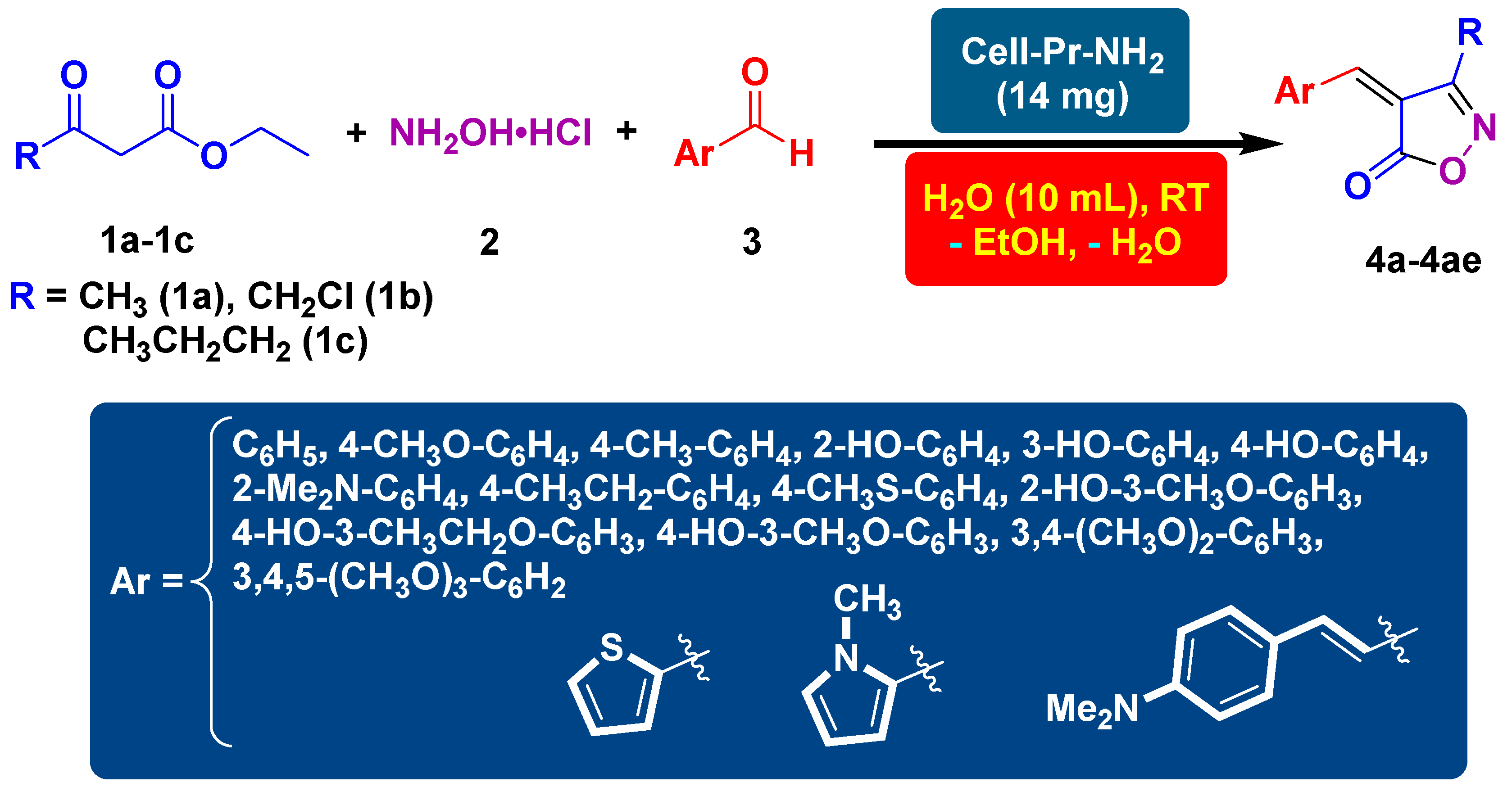
Figure 2.
Preparation of cellulose propylamine (Cell-Pr-NH2) (C).
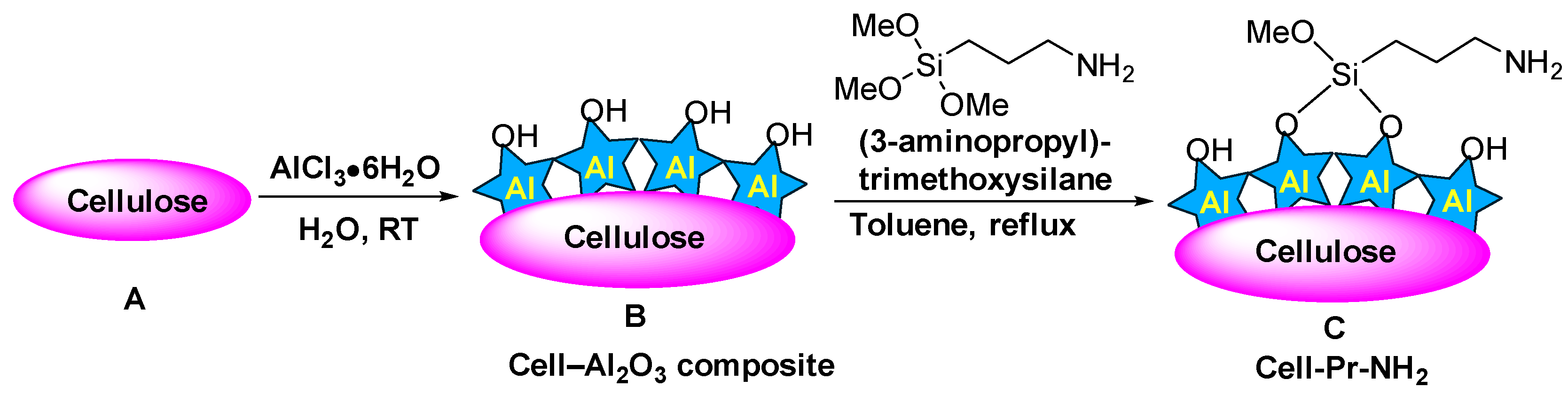
Figure 3.
XRD pattern of aminopropyl cellulose Cell-Pr-NH2 (C).
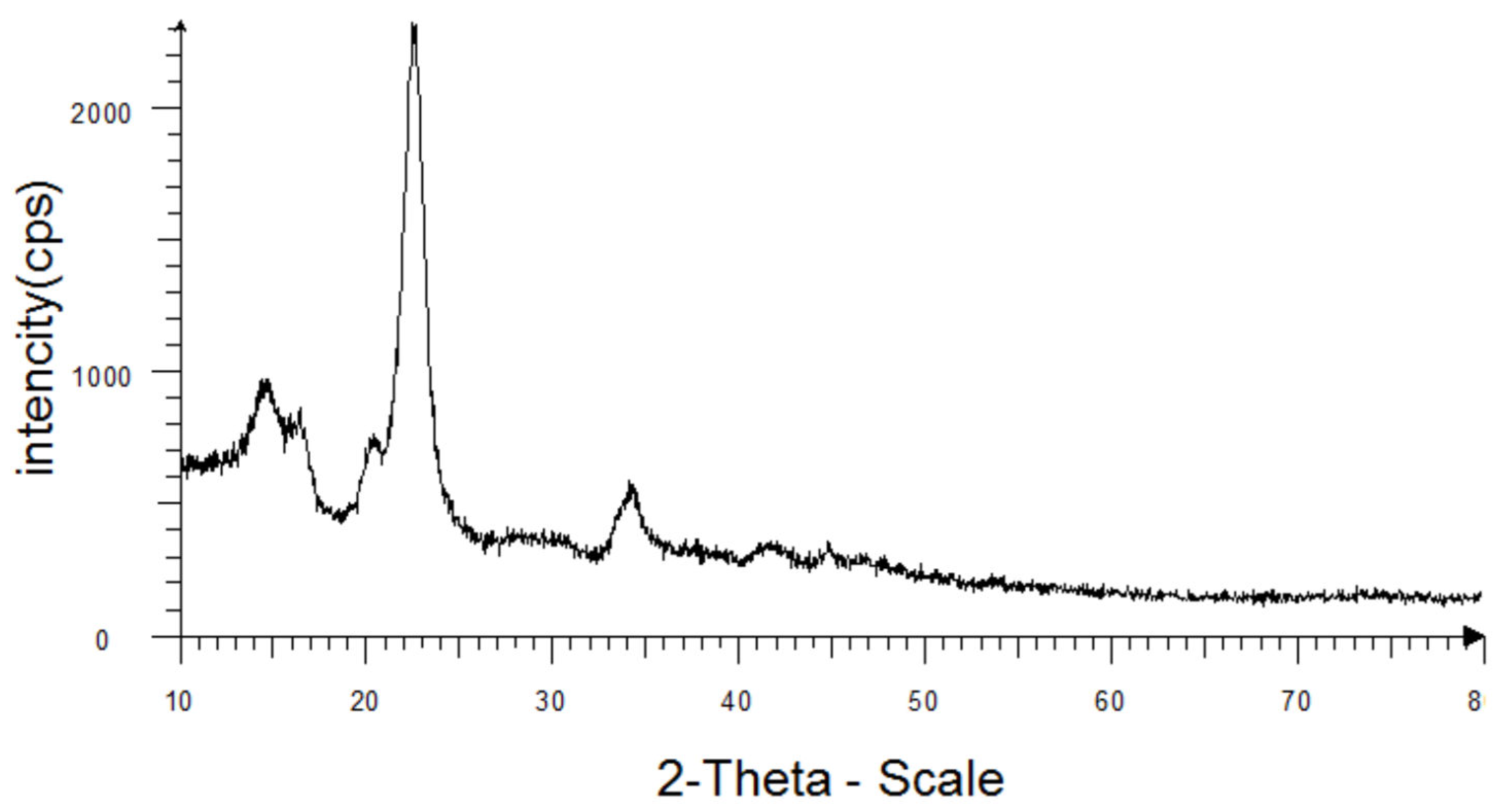
Figure 4.
Field emission scanning electron microscopy (FESEM) micrographs of Cell-Pr-NH2 (C).
Scheme 2.
Synthesis of Plausible mechanism for the formation isoxazol-5(4H)-ones (4a-4ae).
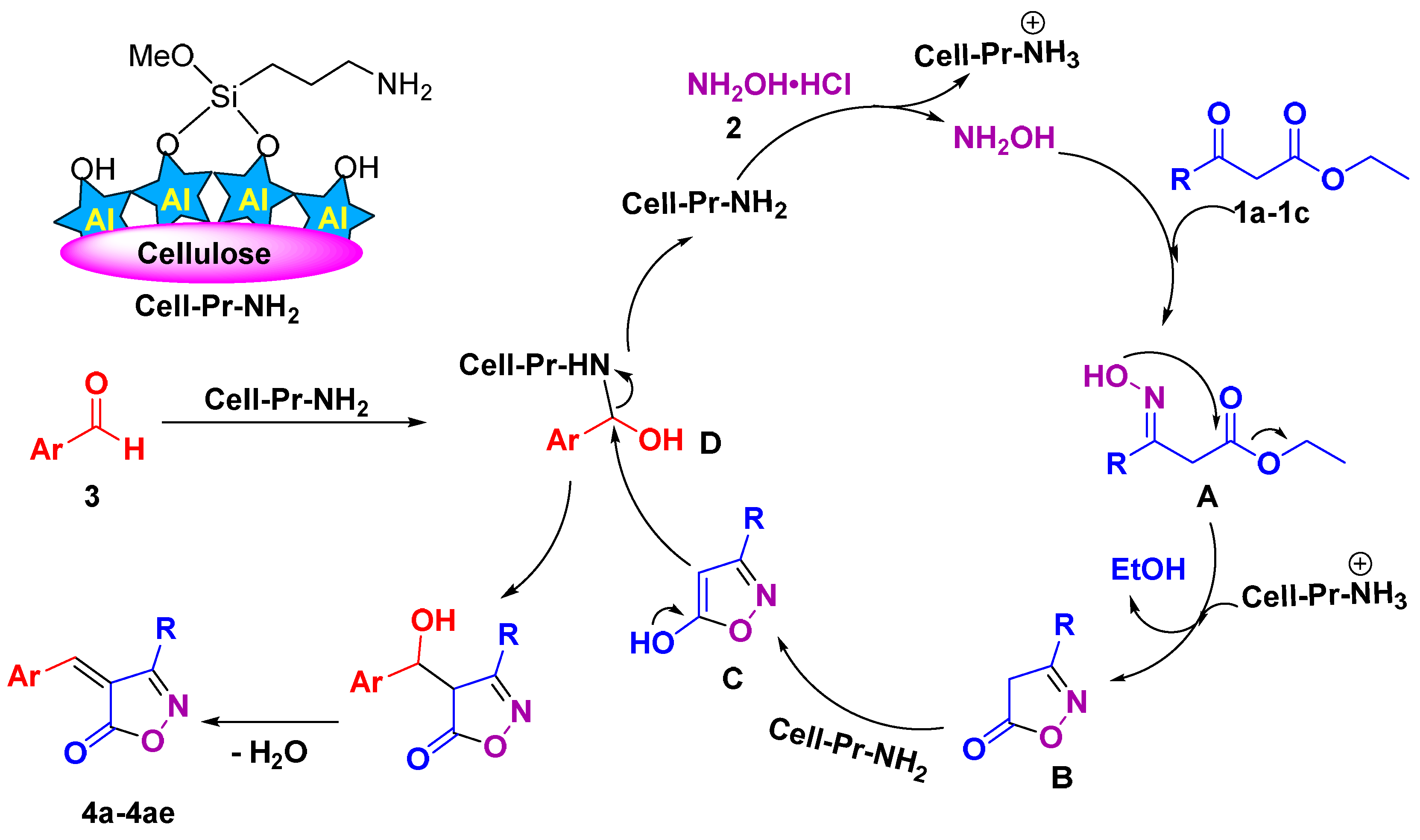

Table 1.
Optimization of the reaction conditions.
 | |||||
| Entry | Solvent | Catalyst (mg) | Temp. (ºC) | Time (min) | Isolated yields (%) |
| 1 | H2O | - | RT | 75 | 40 |
| 2 | H2O | 2 | RT | 75 | 50 |
| 3 | H2O | 4 | RT | 60 | 55 |
| 4 | H2O | 6 | RT | 50 | 65 |
| 5 | H2O | 8 | RT | 45 | 70 |
| 6 | H2O | 10 | RT | 30 | 85 |
| 7 | H2O | 12 | RT | 30 | 88 |
| 81 | H2O | 14 | RT | 25 | 97 |
| 9 | EtOH | 14 | RT | 45 | 65 |
| 10 | CH3COCH3 | 14 | RT | 80 | 20 |
| 11 | CHCl3 | 14 | RT | 80 | trace |
| 12 | DMF | 14 | RT | 80 | Trace |
| 13 | n-Hexane | 14 | RT | 80 | 45 |
| 14 | H2O: EtOH (1:1) | 14 | RT | 50 | 60 |
| 15 | - | 14 | RT | 80 | 35 |
| 16 | H2O | 14 | 50 | 60 | 70 |
| 17 | H2O | 14 | Reflux | 65 | 62 |
1 Optimized Conditions.
Table 2.
Substrate scope of aldehydes and β-keto esters for the synthesis of isoxazole-5(4H)-ones (4a-4ae).a
Table 2.
Substrate scope of aldehydes and β-keto esters for the synthesis of isoxazole-5(4H)-ones (4a-4ae).a
| Entry | Compounds structure | Time (min)/isolated yields (%) | Melting points (Lit. [ref.]) |
|---|---|---|---|
| 1 |
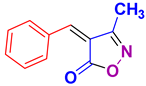 4a 4a
|
40/85 | 140-142 (141-143 [52]) |
| 2 |
 4b 4b
|
35/94 | 176-178 (175-177 [52]) |
| 3 |
 4c 4c
|
45/90 | 136-137 (134-136 [52]) |
| 4 |
 4d 4d
|
30/85 | 200-202 (198-200 [52]) |
| 5 |
 4e 4e
|
37/92 | 202-204 (201-203 [52]) |
| 6 |
 4f 4f
|
40/94 | 211-212 (211-213 [52]) |
| 7 |
 4g 4g
|
40/90 | 225-227 (226-228 [52]) |
| 8 |
 4h 4h
|
55/85 | 87-89 (88-90 [24]) |
| 9 |
 4i 4i
|
45/89 | 128-130 (128-130 [39]) |
| 10 |
 4j 4j
|
35/93 | 218-220 (217-219 [52]) |
| 11 |
 4k 4k
|
27/94 | 135-137 (135-138 [39]) |
| 12 |
 4l 4l
|
25/97 | 213-214 (212-214 [52]) |
| 13 |
 4m 4m
|
30/91 | 127-128 (126-128 [52]) |
| 14 |
 4n 4n
|
40/92 | 170-172 (171-173 [52]) |
| 15 |
 4o 4o
|
45/90 | 146-148 (145-147 [52]) |
| 16 |
 4p 4p
|
40/96 | 212-214 (213-215 [28]) |
| 17 |
 4q 4q
|
45/80 | 182-184 (181-183 [52]) |
| 18 |
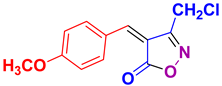 4r 4r
|
38/92 | 176-178 (175-177 [52]) |
| 19 |
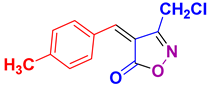 4s 4s
|
45/90 | 178-179 (177-178 [52]) |
| 20 |
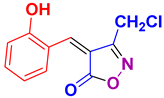 4t 4t
|
30/85 | 198-200 (200-201 [52]) |
| 21 |
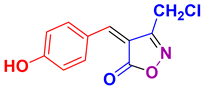 4u 4u
|
40/94 | 184-185 (184-186 [52]) |
| 22 |
 4v 4v
|
40/91 | 179-181 (178-181 [52]) |
| 23 |
 4w 4w
|
45/87 | 167-169 (166-168 [52]) |
| 24 |
 4x 4x
|
25/96 | 144-146 (143-144 [52]) |
| 25 |
 4y 4y
|
45/93 | 128-130 (128-130 [52]) |
| 26 |
 4z 4z
|
45/88 | 137-138 (137-139 [52]) |
| 27 |
 4aa 4aa
|
50/92 | 82-84 (82-83 [28]) |
| 28 |
 4ab 4ab
|
35/92 | 212-215 (New) |
| 29 |
 4ac 4ac
|
35/92 | 146-148 (145-148 [39]) |
| 30 |
 4ad 4ad
|
50/93 | 158-160 (New) |
| 31 |
 4ae 4ae
|
50/89 | 145-148 (New) |
a The reactions were conducted by means of 1a-1c (1 mmol), 2 (1 mmol), and aldehyde derivatives (3, 1 mmol) in H2O (10 mL) in the presence of the catalyst (14 mg) at RT.
Table 3.
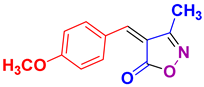
Comparison of various catalysts applied in synthesis of 4-(4-methoxybenzylidene)-3-methylisoxazol-5(4H)-one (4b).
Table 3.
Comparison of various catalysts applied in synthesis of 4-(4-methoxybenzylidene)-3-methylisoxazol-5(4H)-one (4b).
| Entry | Catalyst (amount)/conditions | Time (min) | Yield (%) | Refs. |
|---|---|---|---|---|
| 1 | Silica-TLC grade (1 g)/H2O, RT | 1440 | 91 | [11a] |
| 2 | Lipase (30 mg)/H2O, RT | 60-120 | 82 | [25] |
| 3 | Guanidine hydrochloride (15 mol%)/H2O, RT | 70 | 88 | [29] |
| 4 | 2,2′-bpy (10 mg)/H2O, reflux | 70 | 80 | [33] |
| 5 | [H2-BiPyr][ClO4]2/H2O, reflux | 30 | 96 | [33] |
| 6 | KHP (10 mol%)/H2O, RT | 45 | 95 | [34] |
| 7 | Salicylic acid (15 mol%)/H2O, RT | 90 | 90 | [37] |
| 81 | Sulfanilic acid (20 mol%)/H2O, RT | 65 | 91 | [38] |
| 9 | Succinic acid (10)/H2O, RT | 90 | 88 | [50] |
| 10 | Eucalyptol (1 mL)/RT | 180 | 84 | [51] |
| 11 | 50 wt % aq. GAAS (5 mL)/70 °C | 45 | 92 | [61] |
| 12 | Na2S·9H2O (5 mol%), EtOH, RT | 90 | 88 | [63] |
| 13 | PPTS (5 mol%)/H2O, reflux | 60 | 65 | [64] |
| 14 | cell-Pr-NH2 (14 mg)/H2O, RT | 35 | 94 | [This work] |
Disclaimer/Publisher’s Note: The statements, opinions and data contained in all publications are solely those of the individual author(s) and contributor(s) and not of MDPI and/or the editor(s). MDPI and/or the editor(s) disclaim responsibility for any injury to people or property resulting from any ideas, methods, instructions or products referred to in the content. |
© 2024 by the authors. Licensee MDPI, Basel, Switzerland. This article is an open access article distributed under the terms and conditions of the Creative Commons Attribution (CC BY) license (http://creativecommons.org/licenses/by/4.0/).
Copyright: This open access article is published under a Creative Commons CC BY 4.0 license, which permit the free download, distribution, and reuse, provided that the author and preprint are cited in any reuse.


