

Submitted:
23 August 2024
Posted:
27 August 2024
You are already at the latest version
Abstract
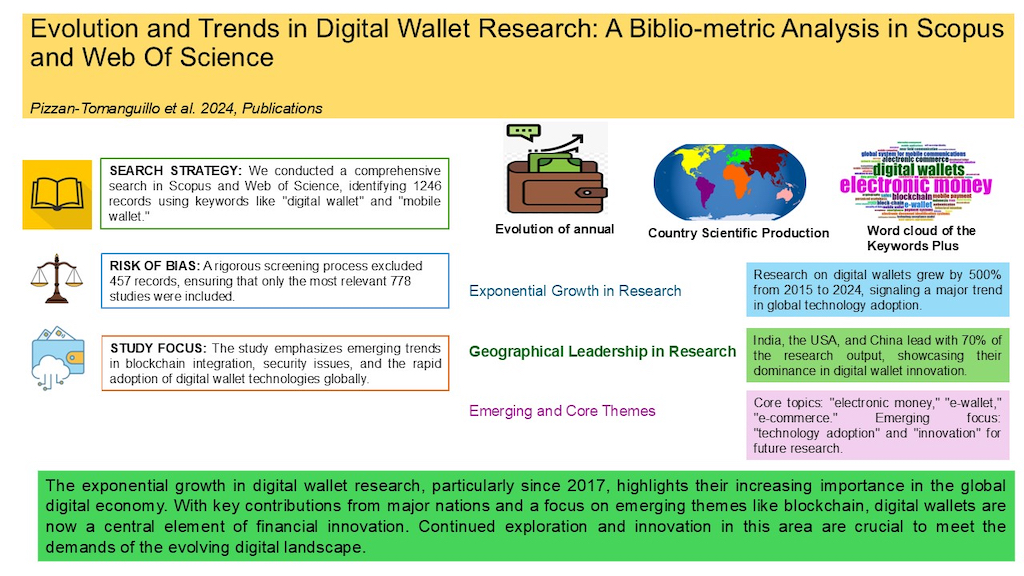
A significant part of the global economy is focused on financial technologies, such as digital wallets, a rapidly growing sector. In 2020, 2.4 billion people used digital banking services globally, and this figure is projected to rise to 3.6 billion by 2026. This study aims to evaluate the current state and future trends in research on digital wallets using scientific databases. The methodology employed was a scoping review that analyzed 778 documents after the eligibility process. The terms used were “digital wallet,” “mobile wallet,” and “e-wallet.” Results indicate that India, the United States, and China lead in digital wallet research. Factors such as data security, ease of use, and integration with traditional payment systems significantly influence the adoption of digital wallets. Despite numerous studies, this article provides the first in-depth bibliometric analysis using Scopus and Web of Science. There has been an exponential research increase over the last decade, with a shift towards technological adoption and innovation. Less developed but key topics such as “digital wallets,” “blockchain,” and “block-chain” are fundamental yet have potential for further development. Driving themes like “electronic money,” “e-wallet,” and “electronic commerce” are central and highly developed, indicating their relevance and high research activity.
Keywords:
digital wallet
; bibliometric analysis
; innovation
; technology
; Scopus
; Web of Science
; research trends
; systematic
1. Introduction
Over the past decade, the adoption of digital wallets has experienced exponential growth, driven primarily by the global trend toward cashless payments in multiple sectors. This phenomenon has been catalyzed by advances in mobile technology and a growing preference for digital transactions [1]. In 2020, the global digital banking user base was 2.4 billion, with expectations to reach 3.6 billion within four years [2]. Additionally, with the implementation of economic policies, digital wallet users are projected to grow to 3.4 billion by 2022 and surpass 5.2 billion worldwide by 2026 [3]. A digital wallet is a technological tool that allows users to store, manage, and use electronic money securely through mobile devices and computers [4]. These tools emerged as a fundamental technological innovation, simplifying the way transactions are carried out in the digital realm [5]
The first versions of digital wallets began to emerge in the early 2000s in countries such as Japan and South Korea, where the adoption of advanced mobile technologies boomed. In Japan, services such as Osaifu-Keitai, introduced by NTT DoCoMo, allowed users to make mobile payments using their phones, marking the beginning of digital wallet adoption. In South Korea, the Moneta mobile payment service, launched by SK Telecom in 2001, was one of the first to allow users to make electronic payments using mobile devices [6,7]
In East Asian countries, digital wallets are growing rapidly owing to the national push toward digitalization and an expanding e-commerce sector [8]. Under the Thai government’s national electronic payment initiative, which aimed to transform the country into a cashless society, digital wallets have become an essential component of financial technology, providing users with convenience, speed, and increased transaction security. For example, the Indian government has actively promoted the use of digital payments through initiatives such as Digital India, which has led to the rapid adoption of digital wallets such as Paytm and Google Pay [9]. In China, the popularity of services such as Alipay and WeChat Pay has transformed the financial landscape with mass adoption in both urban and rural areas [10,11].
In Latin America, economic policies are aimed at strengthening the economy through the implementation of digital wallets, considered fundamental tools for financial inclusion [12]. This service has become a daily necessity, particularly in developing countries, where cashless transactions using electronic wallets are replacing conventional transactions. Additionally, recent studies revealed that 56.35% believe that electronic wallets encourage users to spend more [13]
Moreover, there has been an increase in research on digital wallets, driven by the expansion of electronic banking and payment systems. The key factors driving the adoption of digital wallets include the interplay between their intuitive design, perceived utility, and reliability, along with the socioeconomic trends and regulatory frameworks that influence’ decisions to adopt these innovative platforms [14]. They provide a modern solution for storing, managing, and transacting digital currency and stand out for their convenience, advanced security measures, and accessibility [15]. Additionally, the integration of such technologies facilitates transactions within countries’ dynamic tourism industries, offering tourists a secure and simple means of managing funds [16,17,18,19]
However, previous studies have analyzed various aspects affecting the acceptance and adoption of digital payments, levels of customer satisfaction [20], such as stakeholder expectations [21], variations in cultural orientation [22], security and privacy risks [23,24]. These issues raise concerns about financial inclusion and data protection [25,26,27,28,29,30,31]. In the context of COVID-19, mobile wallets have established themselves as innovative and contactless payment solutions and have become an essential tool for personal finance management [32,33]. In line with the aforementioned perspectives, digital wallets have emerged as key elements in economic and technological transformation. These instruments have not only facilitated access to the global financial system but have also driven significant changes in how individuals and businesses manage their transactions and economic operations.
It is important to note that despite the perceived growing literature on digital wallets, no comprehensive bibliometric analysis has been conducted to synthesize the scientific development of this area. It is widely recognized that bibliometric reviews offer a comprehensive overview of the current state of scientific research on a specific topic, including key findings and prevailing trends. These aspects are essential for advancing knowledge and research in the field. This study aims to address this gap by providing a detailed analysis of publications on digital wallets from 2000 to May 2024, using the well-regarded Scopus and Web of Science (WoS) databases. These databases are noted for their thoroughness in collecting and organizing relevant scientific documents, providing data that are crucial for the analysis and evaluation presented in this study. Fundamental aspects, such as quantity, quality, geographical distribution, author contributions, and predominant themes in this field, are addressed to provide a comprehensive understanding of the current state and future trends of research on digital wallets. To achieve this purpose, we pose the following research questions: (i) Analyze the extent and depth of scientific research conducted to date on digital wallets; (ii) identify the main researchers and geographical areas that have the most investigated digital wallets; (iii) explore the facets of digital wallets that have been studied in the existing scientific literature; and (iv) identify emerging research topics related to digital wallets.
Based on the following paragraphs, the study is structured as follows: Section 2 provides a detailed description of the methodology employed in the study. Section 3 presents the results, utilizing VOSviewer and Biblioshiny tools. Section 4 discusses the findings and proposes future research areas in this field. Finally, Section 5 concludes with the main implications derived from the article.
2. Materials and Methods
Bibliometric analysis is a research methodology that is widely recognized and valued by academics worldwide [34,35]. Its growing adoption is due to several distinctive features, such as the ease of execution and availability of a wide range of specialized software, such as VOSviewer and Biblioshiny, as well as access to highly regarded databases, such as Scopus and Web of Science. Additionally, bibliometric analysis allows researchers to handle large volumes of data, thereby providing the ability to identify significant trends and patterns in scientific production [36]
2.1. Data Source, Data Extraction, and Study Selection
Bibliometric evaluation was performed using the Scopus and Web of Science (WoS) databases. The search strategy was designed around key terms essential to the field of study: “digital wallet,” “mobile wallet,” and “e-wallet.” These terms were used to filter the documents, including their presence in the titles, keywords, and abstracts. The methodology and phases of the selection process are described using the Preferred Reporting Items for Systematic Reviews and Meta-Analyses (PRISMA) framework, as illustrated in Figure 1. This framework provides an accurate and organized visualization of the information flow throughout the different stages of the literature review [37]
2.2. Search Strategy
The thematic selection of the research focused on seven areas of knowledge that are directly connected with the use and study of digital wallets: Business, Management and Accounting; Economics, Econometrics and Finance; Social Sciences; Decision Sciences; Computer Science; Engineering; and Psychology. Data were collected in May 2024. The search strategy was designed to maximize the retrieval of relevant literature, employing descriptors such as “digital wallet,” “mobile wallet,” and “e-wallet” and combining them with Boolean AND and OR operators to broaden the search. The specific equation used in Scopus for searching titles, abstracts, and keywords was TITLE-ABS-KEY “digital wallet” OR “mobile wallet” OR “e-wallet”). As for WoS, it was: TI= “digital wallet” OR “mobile wallet,” OR “e-wallet”).
Despite a large volume of articles initially available, the first results indicated a scarcity of documents, confirming the lack of review at the level of scientific research. Initially, 1,246 documents were identified, which were subjected to a rigorous filtering process described in the “Screening” section. This filter focused on articles published after 2000 and did not restrict the language of publication. Duplicate documents were carefully eliminated, resulting in a final set of 778 documents for analysis. The process of evaluating the quality of the documents was meticulous, ensuring that all selected studies were subjected to a double-blind peer review, as recommended by the Campos criteria. This ensured the reliability and validity of the data included in the analysis. The selected documents were organized and prepared for a detailed bibliometric analysis, employing statistical and visualization tools to identify key trends, patterns, and relationships within the field of digital wallets. Additionally, it was integrated into the Scoping Review methodology, which contributed to mapping the available literature, allowed for the identification of gaps in knowledge and provided an overview of the scope of the research.
2.3. Data Analysis and Visualization
VOSviewer was employed to conduct the bibliometric review [38], for visual analysis and keyword co-occurrence map generation, complemented by RStudio (Version 4.4.0) equipped with the Bibliometrix package, which facilitates a comprehensive analysis of quantitative data extracted from the literature [39]. The analyzed dataset comprised 778 documents derived from 499 different sources, with contributions from 1988 authors. 2209“Plus, keyword” and 1862 author-generated keywords were identified, reflecting the diversity and terminological richness of the database. This database has demonstrated significant annual growth of 12.88%, with an average rate of 11.16 citations per document, underlining its relevance to and impact on the academic community. In total, 2158 references were cataloged, evidencing a collection of relevant information for ongoing and future research.
3. Results
Bibliometric Analysis
Figure 2 illustrates the publication trend from 2000 to 2024, which demonstrates the notable interest and academic attention that scientific production on digital wallets has garnered. However, a decline is observed in 2023 and 2024. These findings underscore the emergence of digital wallets as a key research area and reflect their growing importance in the global digital economy.
Figure 3 presents a three-field plot that links countries, affiliations, and keywords, with a maximum of 20 entries per field. The figure illustrates the interconnections among the 14 countries, 19 keywords, and 19 affiliations. The most frequently used keywords include “e-wallet,” “digital wallet,” “mobile payment,” and “mobile wallet.” In terms of scientific production, the leading affiliations are Bina Nusantara University in Indonesia, UCSI University in Malaysia, University of Bayreuth in Germany, and University Malaysia Kelantan in Malaysia, all of which have published the most documents on this topic.
Figure 4 illustrates the main sources related to the topic during the analyzed period. The leading source in terms of the number of publications was “Lecture Notes in Networks and Systems,” closely followed by the “ACM International Conference Proceeding Series” and the “Journal of Retailing and Consumer Services.” At the lower end of the list is the “International Journal of Data and Network Science.” This distribution indicates that the most influential and frequently cited works were published in journals and conference series recognized in the fields of technology and consumer services.
Figure 5 presents a collaboration map of the countries involved in digital wallet research. Countries in blue represent those with scientific publications in this field. India has the highest research activity, followed by other countries, such as the United States and China, which also show high production. The lines connecting countries indicate international research collaborations and a global network of scientific cooperation. Countries marked in gray do not contribute to related publications.
Figure 6 shows the scientific production of the top ten authors in the field of digital wallets over time. In this figure, the size of the circles indicates the number of articles published by each author, with larger circles representing more publications. Additionally, the color of the circles reflects the number of citations per year, with a darker color indicating a higher number of citations. The image shows not only the productivity of each author but also the impact of their work on the scientific community, providing a clear view of the most influential and prolific researchers in this field.
Figure 7 shows a word cloud based on KeyPlus. The most prominent words in digital wallet research are “electronic money” and “digital wallets,” reflecting the primary focus of the studies. Other important keywords include “blockchain,” “electronic commerce,” “mobile payment,” and “e-wallet,” indicating the relevance of the underlying technologies and usage contexts. Terms such as “global system for mobile communications” and “near field communication” also appear frequently, noting the importance of technological infrastructure in the development and adoption of digital wallets.
Table 1 lists the authors with the highest number of publications in the field of digital wallets between 2000 and 2024. Rao H. from the University of Texas and Sedlmeir J. from the University of Luxembourg led with 8 publications each in the databases. Rao stands out, with a considerable number of citations in Scopus (14,350) and an H-index of 54, indicating a high impact on the scientific community. Sedlmeir also performed well, with 689 citations in Scopus and an H-index of 14. Other notable authors include Amoroso, Chawla, Hasan, Joshi, Sharma, Singh, Goel, and Kapoor, each contributing six to seven publications. Joshi and Singh, both from institutions in India, exhibited high citation numbers in WoS (3121 and 6039, respectively) and strong H-indices (29(W) and 41(S)), demonstrating their relevance and leadership in this field of study.
Figure 8 shows the thematic evolution of research on digital wallets across both databases, analyzed using R-Studio and Bibliometrix, from 2000 to 2024. In the period 2000-2012, the predominant themes included “data security,” “access control,” and “mobile telecommunications systems.” From 2013 to 2018, there was a transition to topics such as “electronic money,” “human-computer interaction,” and “network security.” network security. During 2019-2021, research focused on “fintech,” “consumer behavior,” and “technology adoption.” In the most recent period, from 2022 to 2023, the prominent terms include “digital wallets,” “e-learning,” and “adoption.” Finally, for 2024, emerging themes include “commerce,” “machine learning,” and “financial determinants.”
Figure 9 presents a thematic map of digital wallet research, analyzed through R-Studio and bibliometrix, and classifies the themes into four quadrants according to their density and centrality. In the upper right quadrant (motor themes), we find “electronic money,” “e-wallet,” and “electronic commerce,” which are central and highly developed, indicating their relevance and high research activity. The lower right quadrant (basic themes) includes “digital wallets,” “blockchain,” and “block-chain,” which are fundamental and widely studied, though with lower density. In the upper left quadrant (niche themes), topics such as “crime,” “credit cards,” and “e-learning” are specific and highly developed but less central. Finally, in the lower left quadrant (emerging or declining themes), we find “technology adoption,” “innovation,” and “consumption behavior,” which have low centrality and density, showing they are emerging areas or declining in interest.
Figure 10 shows a keyword co-occurrence map related to digital wallet research during the period 2000-2024, generated using VOSviewer. This map visualizes how keywords are interconnected, reflecting the focus areas and thematic relationships in the literature. Larger nodes, such as “electronic money, e-wallets, digital wallets,” and “mobile payments,” indicate highly recurrent and central terms in digital wallet research. The connections between these nodes suggest significant intersections between different topics. For example, “electronic money” is closely linked to “e-wallet,” “electronic commerce,” and “mobile payment,” mobile payment, indicating that these themes are frequently researched together.
4. Discussion
One of the fundamental goals for researchers in all academic fields is to keep up with the most recent literature and findings. The ability to synthesize knowledge from previous research is important for advancing and meaningfully contributing to one’s area of study. Bibliometric analyses are essential tools that offer an objective view of the literature, allowing researchers to contextualize studies within the academic framework. In addition, these methods facilitate the evaluation of the collected literature, helping to identify studies in various thematic and cross-cutting areas and thus better guide their research.
This study aims to evaluate the current state and future trends in research on digital wallets using scientific databases. A total of 778 documents from 499 sources were identified, with the participation of 1988 authors and more than 1862 author keywords. The analysis was further enriched using these databases to provide a comprehensive understanding of the research landscape in this emerging field. This review identified five areas of knowledge. This allowed us to answer research questions regarding scientific research on digital wallets.
Analyze the extent and depth of scientific research conducted to date on digital wallets.
According to the results of the evolution of scientific research on digital wallets (years 2000 -2024), a gradual increase in the number of articles published since 2000 was observed, with a notable increase from 2018 onwards. The number of publications peaks in 2023 and decline in 2024. However, this decrease may be because journals have not yet registered many publications in 2024. This pattern reflects an increase in academic and practical interest in digital wallets, likely driven by the growing adoption of fintech and changes in consumer behavior during the COVID-19 pandemic.
Identify the Top Researchers and Geographies that Have Done the Most Research on Digital Wallets.
The results indicated that India shows the highest research activity, followed by the United States and China, revealing a global network of scientific cooperation in this field. These findings differ from those reported by Bellido and Bartolo [12], who determined that the United States leads in digital wallet research, followed by India and China. This highlights the growing interest in India in developing research on digital wallets, driven by recently implemented policies [8,9]. The first two countries concentrate on most publications, and several authors have produced most of the literature on digital wallets. Similarly, stressed that India is one of the leading countries in the scientific production of the subject under investigation [40]. The most likely explanation for these findings is the recent push to adopt digital payment methods [41]. With a high level of technology diffusion, India is transforming into an information society and a knowledge-based economy [42].
Surprisingly, the main institutions that have contributed significantly to research on digital wallets do not come from India or the United States but from other regions of the world. The highlights include Bina Nusantara University in Indonesia, UCSI University in Malaysia, and the University of Bayreuth in Germany. This geographic diversity underscores the global nature of research in this field, with significant contributions from institutions located in regions not always recognized as traditional leaders in technology and finance [43,44]. Similarly, Rao (USA) and Sedlmeir (Luxembourg) led the study in terms of publications and citations. This distribution aligns with previous studies, which have demonstrated the importance of international collaboration and geographic diversification in technology research [21,22]. Other studies highlight the relevance of cultural and security factors in the adoption of digital payment technologies, which reflect the breadth and depth of research in this area [23,24].
Explore the Facets of Digital Wallets that Have Been Studied in the Existing Scientific Literature
The most used keywords in the final papers are “electronic money,” “digital wallets,” “blockchain,” and “electronic commerce,” reflecting the main areas of interest in research on digital wallets. Other significant keywords include “mobile payment,” “security,” “authentication,” and “consumption behavior.” Analyzing the thematic evolution in Figure 8, we observe that terms such as “security of data” and “electronic commerce” have been consistent. That security is important for the acceptance of new payment technologies [23]. Subsequently, interest shifted to “human-computer interaction” and “network security,” indicating an increase in the acceptance and use of digital payments and a need to improve user experience, in line with the observations of Apanasevic [21] on ease of use and user expectations.
Thematic diversification includes fintech, technology adoption, and blockchain and reflects the integration of emerging technologies and diversification of the digital financial ecosystem. The COVID-19 pandemic accelerated the adoption of fintech, a phenomenon also observed in the increase in studies on these topics during those years [24]. In addition, studies highlighted the important role of blockchain in transforming payment systems [45]. Similarly, in Figure 8, we find a solution and future line of research: the evolution of keywords toward “digital wallets” and “blockchain” shows promise for further exploration. The inclusion of terms such as “technology adoption,” “innovation,” and “consumption behavior” reflects the interest in understanding how these technologies are integrated into users’ daily lives. This thematic transition highlights the need for continued research on technology adoption and consumer behavior, offering valuable opportunities for researchers and policymakers to foster innovation and secure the adoption of digital wallets.
When focusing on keywords related to the design or methodology of the articles, we found that 71 articles used “survey,” 101 used “questionnaire,” and 64 used “qualitative research.” As previously mentioned, a traditional quantitative methodology might not be suitable for gaining a deeper understanding of the variable in question. Qualitative studies can provide a more complete and detailed view, as some authors have shown in their research [46].
In relation to keyword analysis, there is evidence on the frequency of word clouds, highlighting terms such as “electronic money,” “digital wallets,” and “electronic commerce.” Therefore, these words arise from criteria such as the adoption of digital payments, levels of customer satisfaction [20], such as stakeholder expectations [21], variations in cultural orientation [22], security and privacy risks [23,24], which are key factors in digital wallet research in the business environment. These three words are predominant because the application of digital wallets is predominant in commercial and financial activities [47]
Identify Emerging Research Topics Related to Digital Wallets
Figure 9 provides an intriguing insight into thematic evolution in digital wallet research, highlighting how certain topics have gained prominence while others have emerged or declined. Driving themes such as “electronic money,” “e-wallet,” and “electronic commerce” electronic commerce are highly central and developed, reflecting their important roles in today’s digital economy and vast scientific output [48]. In contrast, basic topics such as “digital wallets” and “blockchain”, are fundamental pillars that support the field, showing a substantial structure but with room for more innovation [21,24]. Niche topics, including “crime,” “credit cards,” and “e-learning,” while specific and less central, represent areas with particular applications and unique challenges significant to specific contexts. Conversely, emerging topics such as “technology adoption,” “innovation,” and “consumption behavior” stand out for their low density and centrality, suggesting a growing but still developing interest, recently explored by [47].
The findings of this review provide valuable insights for researchers and policymakers on the core and emerging issues in digital wallet research. Basic topics, such as “electronic money,” “e-wallet,” and “electronic commerce,” constitute the backbone of publications because of their high centrality and density, reflecting their importance in the development of the field. Niche topics such as “crime,” “credit cards,” and “e-learning” are specialized but less central. Emerging topics such as “technology adoption,” “innovation,” and “consumption behavior” indicate areas of growing interest. Based on these findings, policymakers can develop effective policies and strategies to promote financial inclusion through digital wallets. These policies might include measures to improve access to financial services via digital technologies, facilitate the integration of small businesses and entrepreneurs into the globalized market, and ensure the security and protection of users in the digital environment. Additionally, researchers can use these results as a guide to identify knowledge gaps and direct future research efforts.
Practical Implications and Future Research
Recent research figures published in Scopus and Web of Science have revealed growing attention toward digital wallets in recent years. The report shows that terms such as “electronic money,” “e-wallet,” and “blockchain” are central and highly developed. This analysis suggests that technology adoption and innovation are key areas in consumer behavior. Although countries such as India and the United States have led the volume of publications, other regions have significant research gaps. The absence of standard parameters to measure technological adoption prevents systematic comparisons between countries, indicating the need for more homogeneous and global studies in this field [46,49,50].
The lack of research on digital wallets in regions such as Latin America does not necessarily imply a lack of relevance for this topic. It is important to delve deeper into this topic to better understand the adoption and use of these technologies in the Global South. In addition, this study investigates how national, regional, and local income levels affect the adoption of digital wallets, which could be very revealing. Likewise, access to or difficulty in obtaining financial support presents another significant area of study, as these factors can influence the adoption of innovative financial technologies, such as digital wallets.
Another promising line of research explores the use of digital wallets to promote financial inclusion in underdeveloped regions. Barriers, such as access to technology and digital literacy, could offer practical solutions to increase adoption. Similarly, studying emerging technological innovations, such as artificial intelligence and blockchain, can contribute to the development of more secure and efficient digital wallets. Analyzing consumer behavior in different contexts and considering factors such as age, sex, and education are also essential.
Another interesting future line of research would be to compare the differences between technology and digital wallet adoption policies in the United States, Europe, and Asia to determine how these differences may influence the acceptance and use of these technologies. This comparison could help policymakers in emerging regions to design more effective strategies. In addition, a bibliometric review and possible research avenues can drive future studies toward a deeper understanding of the factors that affect the adoption of digital wallets, encouraging interdisciplinary and cross-sectional research in this technological field.
5. Conclusions
This article conducts a bibliometric review of articles indexed in Scopus and WoS focused on digital wallets over the past two decades. A notable exponential increase in the number of these publications has been observed over the last ten years. Most of the research comes from India, the United States, and China, with prolific authors such as Rao H. from the University of Texas and Sedlmeir J. from the University of Luxembourg. The most frequent keywords are “electronic money,” “digital wallets,” “blockchain,” and “electronic commerce.” In the past five years, topics such as “technology adoption” and “consumer behavior” have emerged. Additionally, driving themes such as “electronic money,” “e-wallet,” and “electronic commerce” were identified as being central and highly developed, indicating their relevance and high research activity.
On the other hand, there is a significant number of closely related topics, termed as basic themes, such as “electronic money,” “e-wallet,” and “blockchain,” which show the scientific interest in these areas within digital wallet research. This review offers a comprehensive overview of the most significant research published in the past two decades, underscoring the increasing significance of these technologies in the digital economy. Despite its relevance to the global economy, research on digital wallets did not gain significant traction until the 21st century. Since 2000, there has been an exponential growth in publications, especially since 2017, indicating that digital wallets have gained attention, as shown in this review.
Research on digital wallets has reached a peak in the number of scientific publications in the last five years. This topic is gaining momentum, as shown in the results. This bibliometric review allows researchers to assess the current direction of research and ensure that future efforts are conducted effectively, owing to the importance and practical implications of these technologies for the global digital economy. This growing interest underscores the need to continue exploring and developing innovative solutions for digital wallets.
Supplementary Materials
The following supporting information can be downloaded at the website of this paper posted on Preprints.org, File S1: Coded datasheet of the analyzed papers.
Author Contributions
Conceptualization, S.L.P.T.; methodology, N.P.P.T.; formal analysis, N.P.P.T. and S.V.L.R.; writing—original draft, C.D.R.B., S.L.P.T; and R.D.G.A.; review and editing, S.V.L.R.; N.P.P.T. and J.B.F.; supervision, T.V.P.G. and R.D.G.A.; project administration, T.V.P.G., C.D.R.B., N.P.P.T., and S.V.L.R. All authors have read and agreed to the published version of the manuscript.
Funding
This research received no external funding
Data Availability Statement
All data are available in the manuscript and Supplementary File S1
Conflicts of Interest
The authors declare no conflicts of interest.
References
- Sankaran, R.; Chakraborty, S. Factors Impacting Mobile Banking in India: Empirical Approach Extending UTAUT2 with Perceived Value and Trust. IIM Kozhikode Soc. Manag. Rev. 2021, 11, 7–24. [Google Scholar] [CrossRef]
- Jadil, Y.; Rana, N. P.; Dwivedi, Y. K. A Meta-Analysis of the UTAUT Model in the Mobile Banking Literature: The Moderating Role of Sample Size and Culture. J. Bus. Res. 2021, 132, 354–372. [Google Scholar] [CrossRef]
- Yang, M.; Al Mamun, A.; Mohiuddin, M.; Nawi, N. C.; Zainol, N. R. Cashless Transactions: A Study on Intention and Adoption of e-Wallets. Sustain. 2021, 13, 1–18. [Google Scholar] [CrossRef]
- Uribe-Linares, G. P.; Ríos-Lama, C. A.; Vargas-Merino, J. A. Is There an Impact of Digital Transformation on Consumer Behaviour? An Empirical Study in the Financial Sector. Economies 2023, 11, 1–16. [Google Scholar] [CrossRef]
- Gasanov, E. A.; Krasota, T. G.; Kulikov, A. V.; Pitsuk, I. L.; Primachenko, Y. V. A New Model Of Consumer Behaviour In The Digital Economy. AmurCon 2021 Int. Sci. Conf. 126. Eur. Proc. Soc. Behav. Sci. 2022, 126, 314–322. [Google Scholar] [CrossRef]
- Dahlberg, T.; Mallat, N.; Ondrus, J.; Zmijewska, A. Past, Present and Future of Mobile Payments Research: A Literature Review. Electron. Commer. Res. Appl. 2008, 7, 165–181. [Google Scholar] [CrossRef]
- Amoroso, D.; Magnier-Watanabe, R. Building a Research Model for Mobile Wallet Consumer Adoption: The Case of Mobile Suica in Japan. J. Theor. Appl. Electron. Commer. Res. 2012, 7, 94–110. [Google Scholar] [CrossRef]
- Hossain, A.; Quaresma, R.; Rahman, H. Investigating Factors Influencing the Physicians’ Adoption of Electronic Health Record (EHR) in Healthcare System of Bangladesh: An Empirical Study. Int. J. Inf. Manage. 2019, 44, 76–87. [Google Scholar] [CrossRef]
- Singh, N.; Sinha, N.; Liébana-Cabanillas, F. J. Determining Factors in the Adoption and Recommendation of Mobile Wallet Services in India: Analysis of the Effect of Innovativeness, Stress to Use and Social Influence. Int. J. Inf. Manage. 2020, 50, 191–205. [Google Scholar] [CrossRef]
- Nileshkumar, R. Digital Payment System in India- Pathway to Digital India. Peer Rev. Ref. J. 2024, 1, 55–58. [Google Scholar] [CrossRef]
- Deng, Z.; Lu, Y.; Deng, S.; Zhang, J. Exploring User Adoption of Mobile Banking: An Empirical Study in China. Int. J. Inf. Technol. Manag. 2010, 9, 289–301. [Google Scholar] [CrossRef]
- Bellido, G.; Bartolo, E. Billeteras Electrónicas: Una Herramienta Para El Emprendimiento En La Era Digital. Interconectando Saberes 2023, 15, 9–21. [Google Scholar] [CrossRef]
- Aji, H.; Adawiyah, W. How E-Wallets Encourage Excessive Spending Behavior among Young Adult Consumers? J. Asia Bus. Stud. 2022, 16, 868–884. [Google Scholar] [CrossRef]
- Ilieva, G.; Yankova, T.; Dzhabarova, Y.; Ruseva, M.; Angelov, D.; Klisarova-Belcheva, S. Customer Attitude toward Digital Wallet Services. Systems 2023, 11. [Google Scholar] [CrossRef]
- Pal, D.; Vanijja, V.; Papasratorn, B. An Empirical Analysis towards the Adoption of NFC Mobile Payment System by the End User. Procedia Comput. Sci. 2015, 69, 13–25. [Google Scholar] [CrossRef]
- Soodan, V.; Rana, A. Modeling Customers’ Intention to Use e-Wallet in a Developing Nation: Extending UTAUT2 with Security, Privacy and Savings. J. Electron. Commer. Organ. 2020, 18, 89–114. [Google Scholar] [CrossRef]
- Ajina, A.; Javed, H.; Ali, S.; Zamil, A. Are Men from Mars, Women from Venus? Examining Gender Differences of Consumers towards Mobile-Wallet Adoption during Pandemic. Cogent Bus. Manag. 2023, 10, 2178093. [Google Scholar] [CrossRef]
- Baxi, C.; Patel, K.; Patel, K.; Patel, V.; Acharya, V. Consumers’ Digital Wallet Adoption: Integration of Technology Task Fit and UTAUT. Int. J. Asian Bus. Inf. Manag. 2023, 15, 1–23. [Google Scholar] [CrossRef]
- Zaidan, H.; Shishan, F.; Al-Hasan, M.; Al-Mawali, H.; Mowafi, O.; Dahiyat, S. E. Cash or Cash-Less? Exploring the Determinants of Continuous Intention to Use e-Wallets: The Moderating Role of Environmental Knowledge. Compet. Rev. 2024, ahead-of-p (ahead-of-print).
- Bagla, R. K.; Sancheti, V. Gaps in Customer Satisfaction with Digital Wallets: Challenge for Sustainability. J. Manag. Dev. 2018, 37, 442–451. [Google Scholar] [CrossRef]
- Apanasevic, T.; Markendahl, J.; Arvidsson, N. Stakeholders’ Expectations of Mobile Payment in Retail: Lessons from Sweden. Int. J. Bank Mark. 2016, 34, 37–61. [Google Scholar] [CrossRef]
- Al-Okaily, M.; Lutfi, A.; Alsaad, A.; Taamneh, A.; Alsyouf, A. The Determinants of Digital Payment Systems’ Acceptance under Cultural Orientation Differences: The Case of Uncertainty Avoidance. Technol. Soc. 2020, 63, 101367. [Google Scholar] [CrossRef]
- Gupta, S.; Xu, H. Examining the Relative Influence of Risk and Control on Intention to Adopt Risky Technologies. J. Technol. Manag. Innov. 2010, 5, 22–37. [Google Scholar] [CrossRef]
- Johnson, V. L.; Kiser, A.; Washington, R.; Torres, R. Limitations to the Rapid Adoption of M-Payment Services: Understanding the Impact of Privacy Risk on M-Payment Services. Comput. Human Behav. 2018, 79, 111–122. [Google Scholar] [CrossRef]
- Alfie, N.; Sidi, J.; Junaini, S.; Chai, W.; Mit, E.; Gedat, R. Bridging the Digital Gap: A Systematic Review on UI/UX Design Considerations for Elderly-Friendly Digital Wallets. 2023 6th Int. Conf. Appl. Comput. Intell. Inf. Syst. Intell. Resilient Digit. Innov. Sustain. Living, ACIIS 2023 - Proc. 2023, Begawan. [CrossRef]
- Behera, C.; Kumra, R. Two Decades of Mobile Payment Research: A Systematic Review Using the TCCM Approach. Int. J. Consum. Stud. 2024, 48, e13003. [Google Scholar] [CrossRef]
- Iscan, C.; Kumas, O.; Akbulut, F.; Akbulut, A. Wallet-Based Transaction Fraud Prevention Through LightGBM With the Focus on Minimizing False Alarms. IEEE Access 2023, 11, 131465–131474. [Google Scholar] [CrossRef]
- Oliveira, T.; Thomas, M.; Baptista, G.; Campos, F. Mobile Payment: Understanding the Determinants of Customer Adoption and Intention to Recommend the Technology. Comput. Human Behav. 2016, 61, 404–414. [Google Scholar] [CrossRef]
- Sakalauskas, E.; Bendoraitis, A.; Lukšaite, D.; Butkus, G.; VitkutE- -Adzgauskiene, D. Tax Declaration Scheme Using Blockchain Confidential Transactions. Inform. 2023, 34, 603–616. [Google Scholar] [CrossRef]
- Lo, W. W.; Kulatilleke, G. K.; Sarhan, M.; Layeghy, S.; Portmann, M. Inspection-L: Self-Supervised GNN Node Embeddings for Money Laundering Detection in Bitcoin. Appl. Intell. 2023, 53, 19406–19417. [Google Scholar] [CrossRef]
- Iscan, C.; Akbulut, F. Fraud Detection Using Recurrent Neural Networks for Digital Wallet Security. UBMK 2023 - Proc. 8th Int. Conf. Comput. Sci. Eng. 2023, 538–542. [CrossRef]
- Kapoor, A.; Sindwani, R.; Goel, M.; Shankar, A. Mobile Wallet Adoption Intention amid COVID-19 Pandemic Outbreak: A Novel Conceptual Framework. Comput. Ind. Eng. 2022, 172, 108646. [Google Scholar] [CrossRef]
- Michell, C.; Winarto, C. N.; Bestari, L.; Ramdhan, D.; Chowanda, A. Systematic Literature Review of E-Wallet: The Technology and Its Regulations in Indonesia. 2022 Int. Conf. Inf. Technol. Syst. Innov. ICITSI 2022 - Proc. 2022, 64–69. [CrossRef]
- Ellegaard, O.; Wallin, J. A.; Dk, S. The Bibliometric Analysis of Scholarly Production: How Great Is the Impact? Scientometrics 2015, 105, 1809–1831. [Google Scholar] [CrossRef]
- Waltz, M.; Matos, R.; Braga, L. A.; Batista, F.; Galvão, C. A Bibliometric and Descriptive Analysis of Inclusive Education in Science Education. Stud. Sci. Educ. 2021, 57, 241–263. [Google Scholar] [CrossRef]
- Niknejad, N.; Ismail, W.; Bahari, M.; Hendradi, R.; Salleh, A. Z. Mapping the Research Trends on Blockchain Technology in Food and Agriculture Industry: A Bibliometric Analysis. Environ. Technol. Innov. 2021, 21, 101272. [Google Scholar] [CrossRef]
- Farisyi, S.; Musadieq, M. Al; Utami, H. N.; Damayanti, C. R. A Systematic Literature Review: Determinants of Sustainability Reporting in Developing Countries. Sustain. 2022, 14, Page 10222 2022, 14, 10222. [Google Scholar] [CrossRef]
- Van, N.; Waltman, L. Software Survey: VOSviewer, a Computer Program for Bibliometric Mapping. Scientometrics 2010, 84, 523–538. [Google Scholar] [CrossRef] [PubMed]
- Aria, M.; Cuccurullo, C. Bibliometrix: An R-Tool for Comprehensive Science Mapping Analysis. J. Informetr. 2017, 11, 959–975. [Google Scholar] [CrossRef]
- Sahi, A. M.; Khalid, H.; Abbas, A. F.; Khatib, S. F. A. The Evolving Research of Customer Adoption of Digital Payment: Learning from Content and Statistical Analysis of the Literature. J. Open Innov. Technol. Mark. Complex. 2021, 7, 230. [Google Scholar] [CrossRef]
- Loh, X. M.; Lee, V. H.; Tan, G. W. H.; Ooi, K. B.; Dwivedi, Y. K. Switching from Cash to Mobile Payment: What’s the Hold-Up? Internet Res. 2021, 31, 376–399. [Google Scholar] [CrossRef]
- Hassan, M.; Iqbal, A.; Iqbal, Z. Factors Affecting the Adoption of Internet Banking in Pakistan: An Integration of Technology Acceptance Model and Theory of Planned Behaviour. Int. J. Bus. Inf. Syst. 2018, 28, 342–370. [Google Scholar] [CrossRef]
- Balakrishnan, V.; Shuib, N. L. M. Drivers and Inhibitors for Digital Payment Adoption Using the Cashless Society Readiness-Adoption Model in Malaysia. Technol. Soc. 2021, 65, 101554. [Google Scholar] [CrossRef]
- Teng, S.; Khong, K. W. Examining Actual Consumer Usage of E-Wallet: A Case Study of Big Data Analytics. Comput. Human Behav. 2021, 121, 106778. [Google Scholar] [CrossRef]
- Sedlmeir, J.; Buhl, H. U.; Fridgen, G.; Keller, R. The Energy Consumption of Blockchain Technology: Beyond Myth. Bus. Inf. Syst. Eng. 2020, 62, 599–608. [Google Scholar] [CrossRef]
- Ramayanti, R.; Rachmawati, N. A.; Azhar, Z.; Nik Azman, N. H. Exploring Intention and Actual Use in Digital Payments: A Systematic Review and Roadmap for Future Research. Comput. Hum. Behav. Reports 2024, 13, 100348. [Google Scholar] [CrossRef]
- Chawla, D.; Joshi, H. Role of Mediator in Examining the Influence of Antecedents of Mobile Wallet Adoption on Attitude and Intention. Glob. Bus. Rev. 2023, 24, 609–625. [Google Scholar] [CrossRef]
- Chawla, D.; Joshi, H. Consumer Perspectives about Mobile Banking Adoption in India – a Cluster Analysis. Int. J. Bank Mark. 2017, 35, 616–636. [Google Scholar] [CrossRef]
- Adiani, W.; Aprianingsih, A.; Fachira, I.; Debby, T.; Maharatie, A. P. Social Influence, Financial Benefit, and e-Wallet Multi-Brand Loyalty: The Mediating Impact of Commitment. Cogent Bus. Manag. 2023, 11. [Google Scholar] [CrossRef]
- Sharma, P.; Sharma, S. Mapping the Intellectual Structure of Mobile Payment Research: A Bibliometric Analysis. SAGE Open 2023, 13. [Google Scholar] [CrossRef]
Figure 1.
PRISMA diagram.
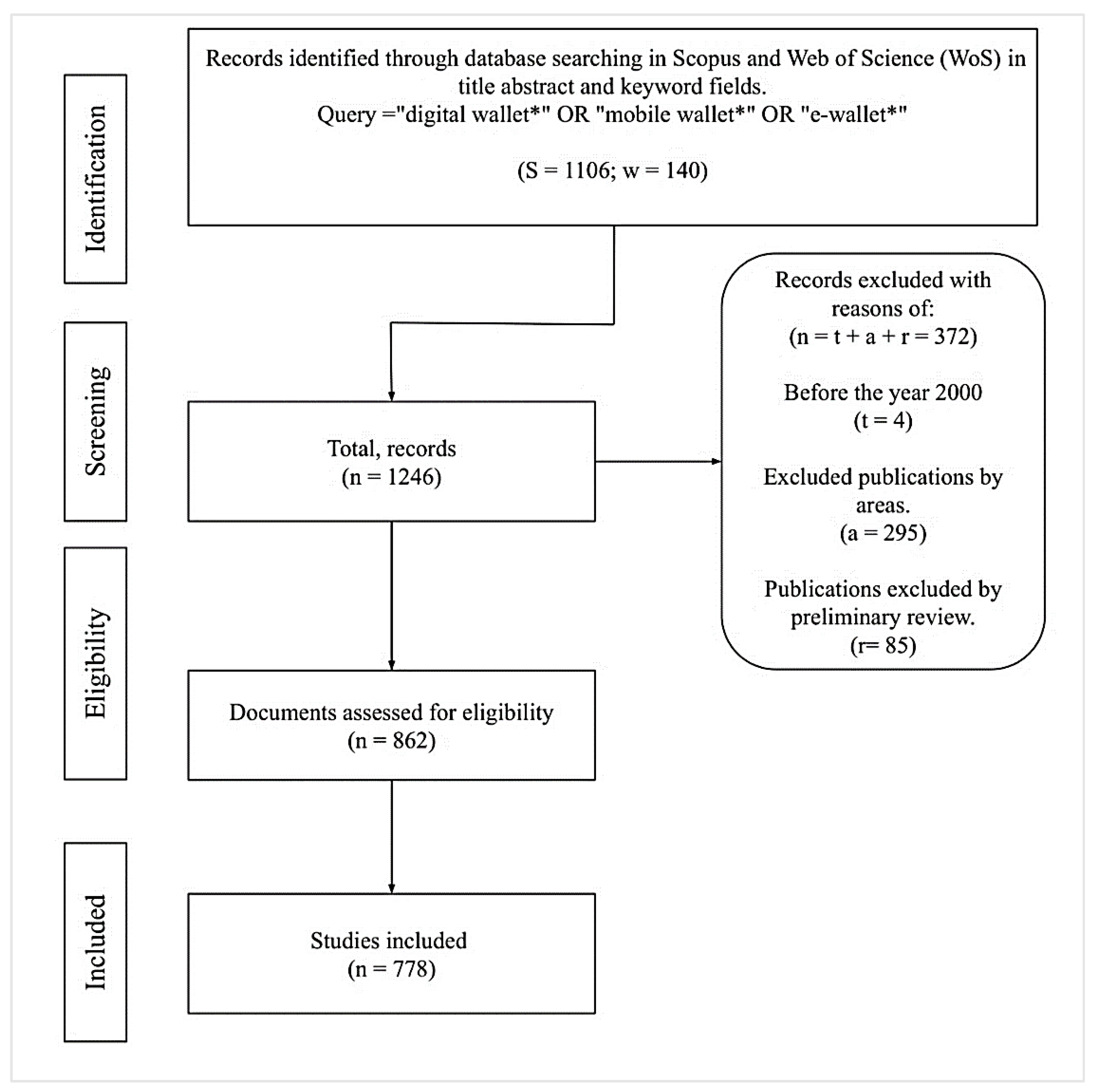
Figure 2.
Annual trend of scientific research on digital wallets (2000-2024) in WoS and Scopus analyzed with R-Studio and bibliometrix.
Figure 2.
Annual trend of scientific research on digital wallets (2000-2024) in WoS and Scopus analyzed with R-Studio and bibliometrix.
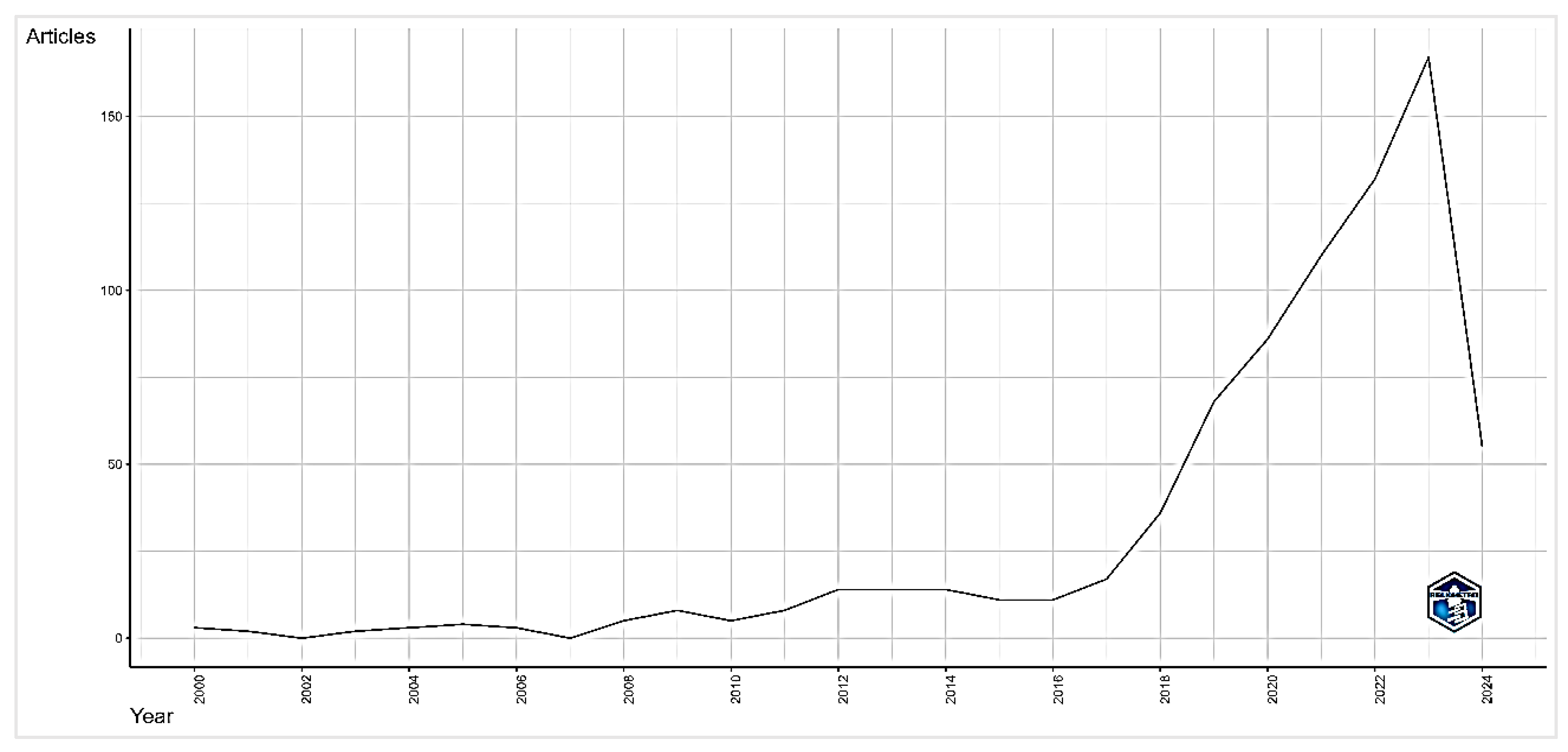
Figure 3.
Three-field diagram relating countries, affiliations, and keywords using R-Studio and bibliometrix in WoS and Scopus.
Figure 3.
Three-field diagram relating countries, affiliations, and keywords using R-Studio and bibliometrix in WoS and Scopus.
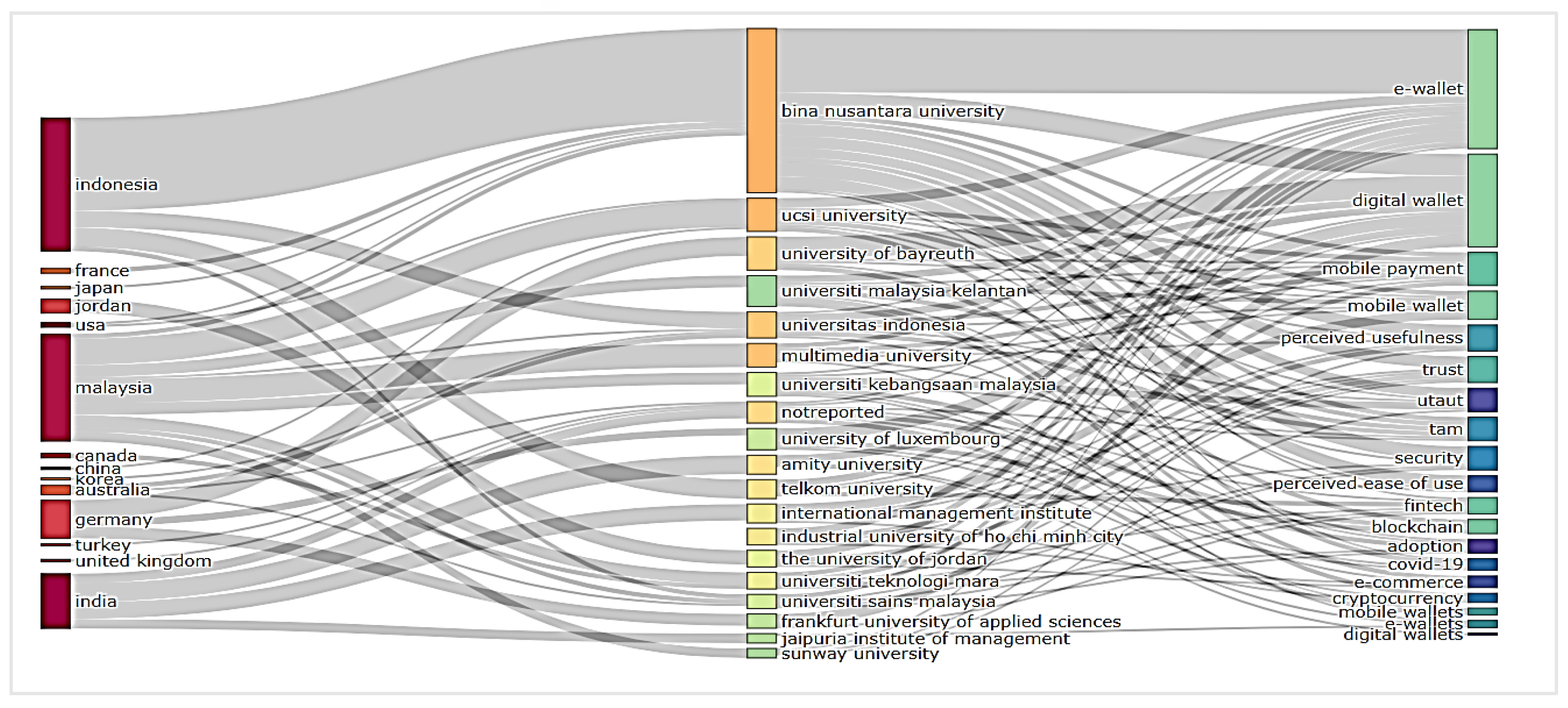
Figure 4.
Leading publication sources analyzed using R-Studio and bibliometrix in WoS and Scopus.
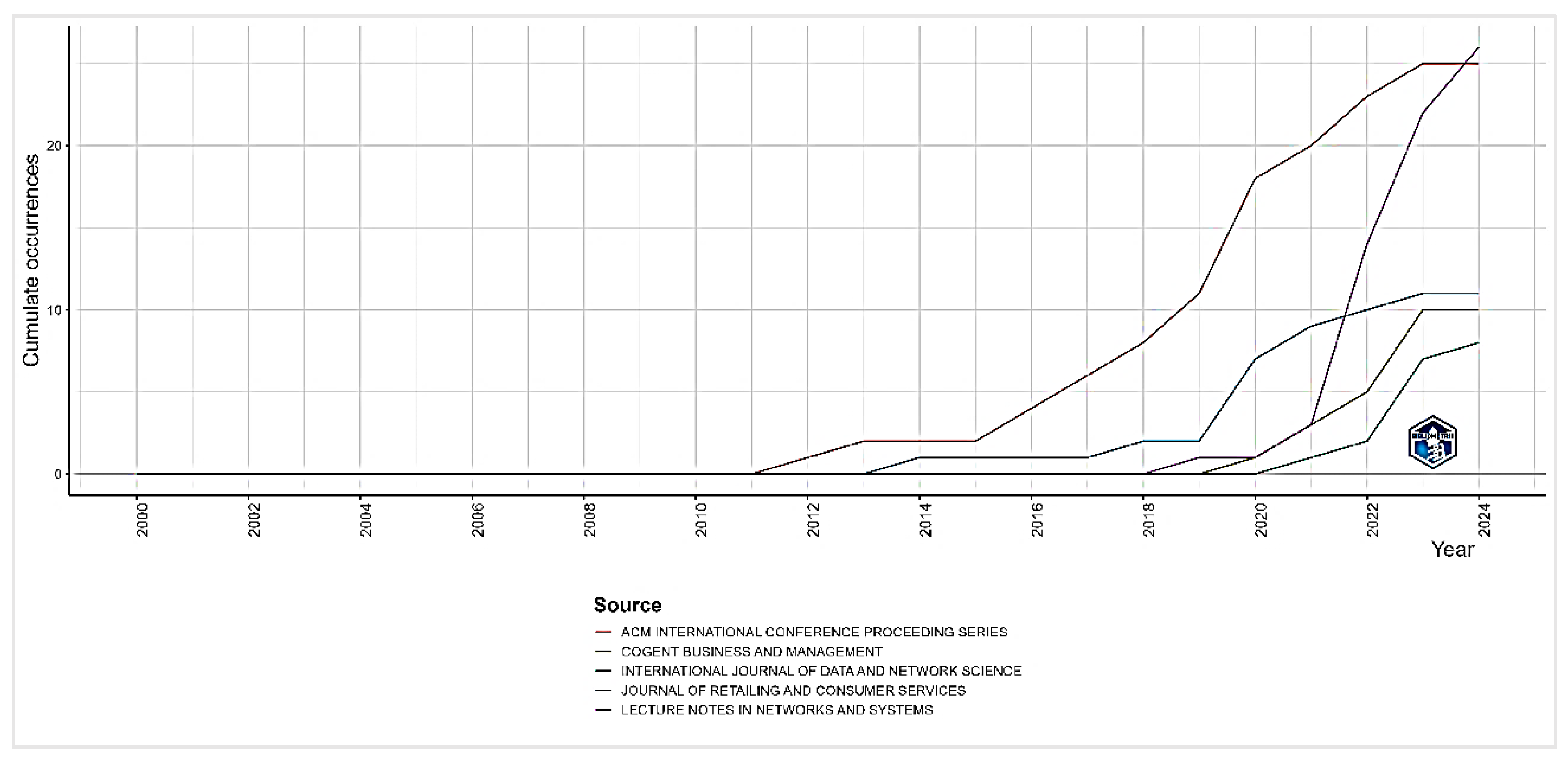
Figure 5.
Geographic distribution of Scientific production analyzed using R-Studio and bibliometrix in WoS and Scopus.
Figure 5.
Geographic distribution of Scientific production analyzed using R-Studio and bibliometrix in WoS and Scopus.
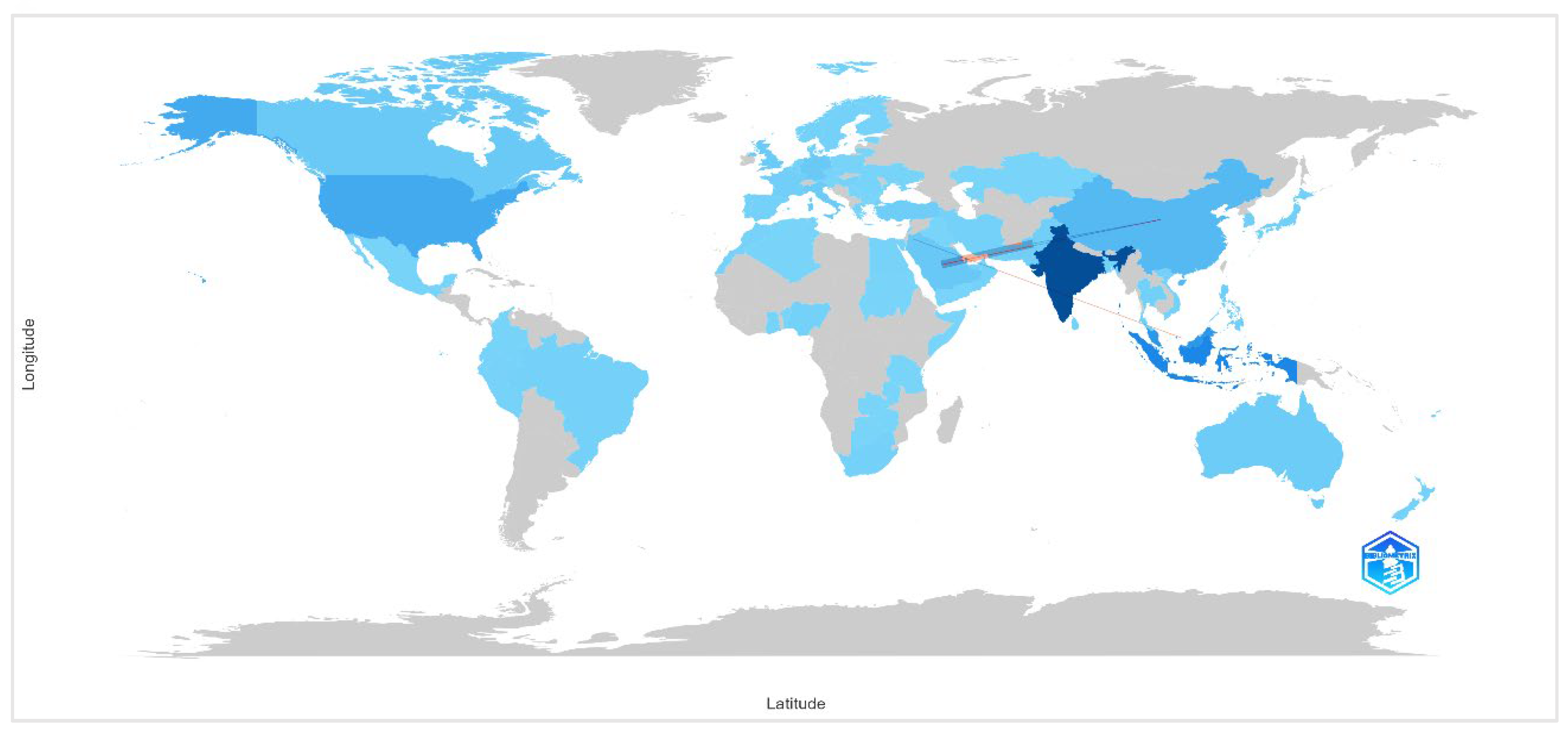
Figure 6.
Temporal evolution of author production in the field of digital wallets.
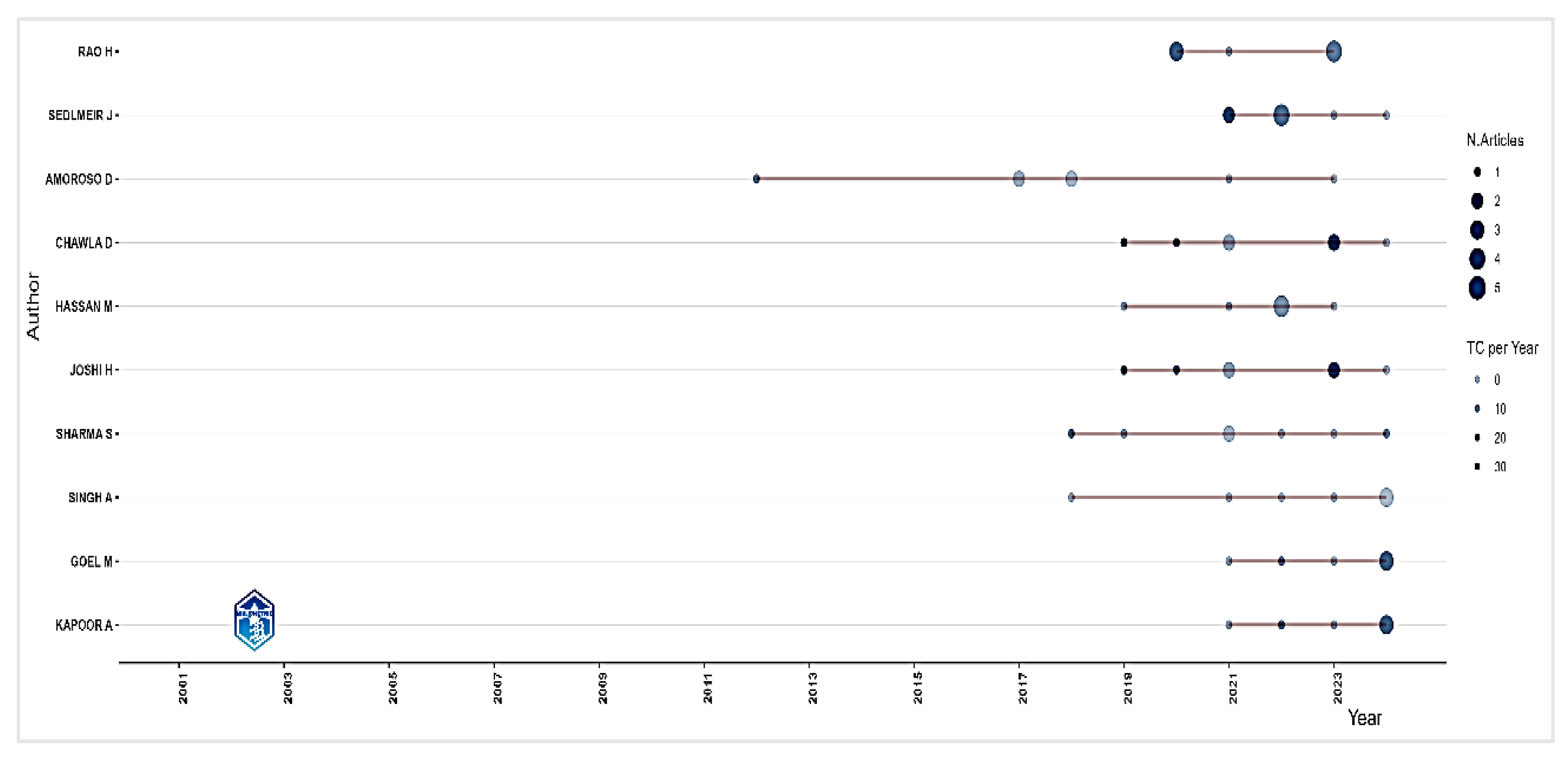
Figure 7.
Temporal evolution of author production in the field of digital wallets.
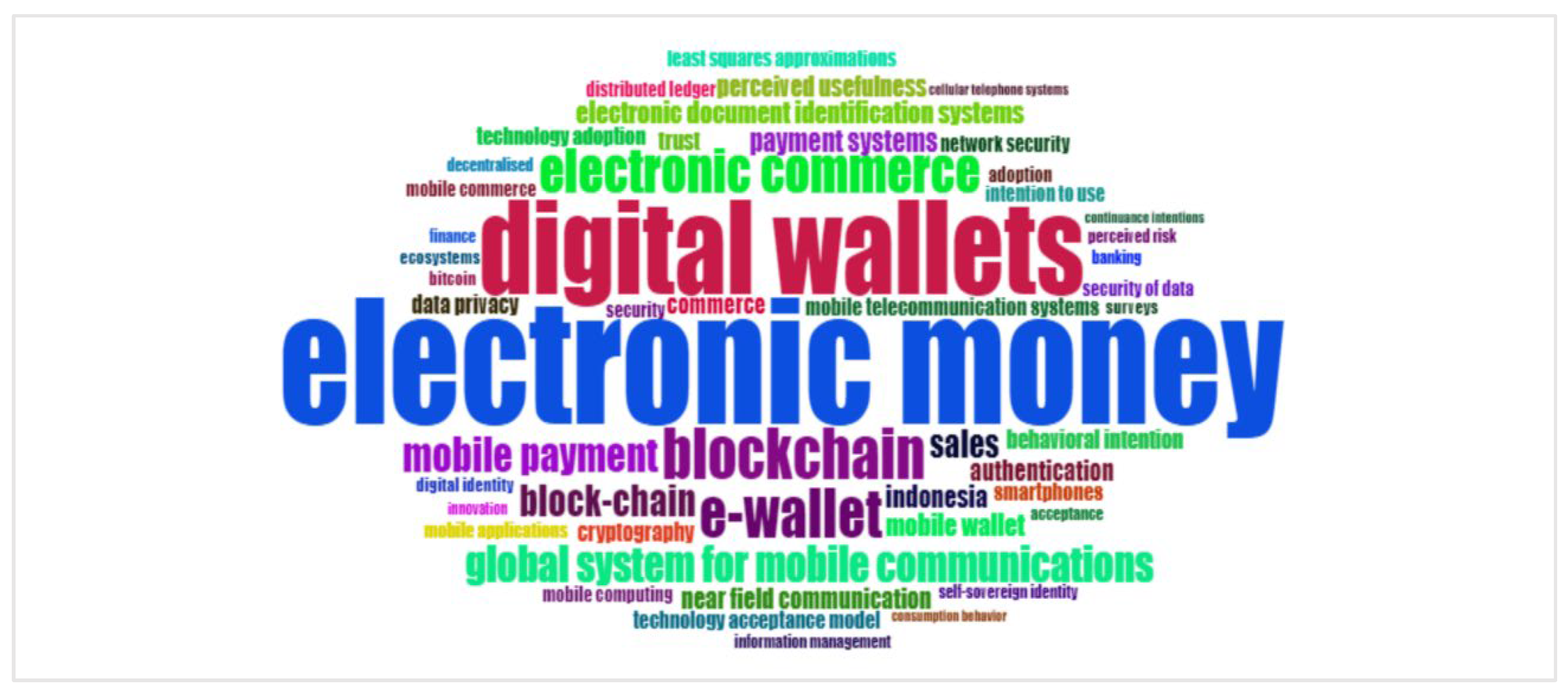
Figure 8.
Analysis of thematic evolution in WoS and Scopus using R-Studio and bibliometrix.
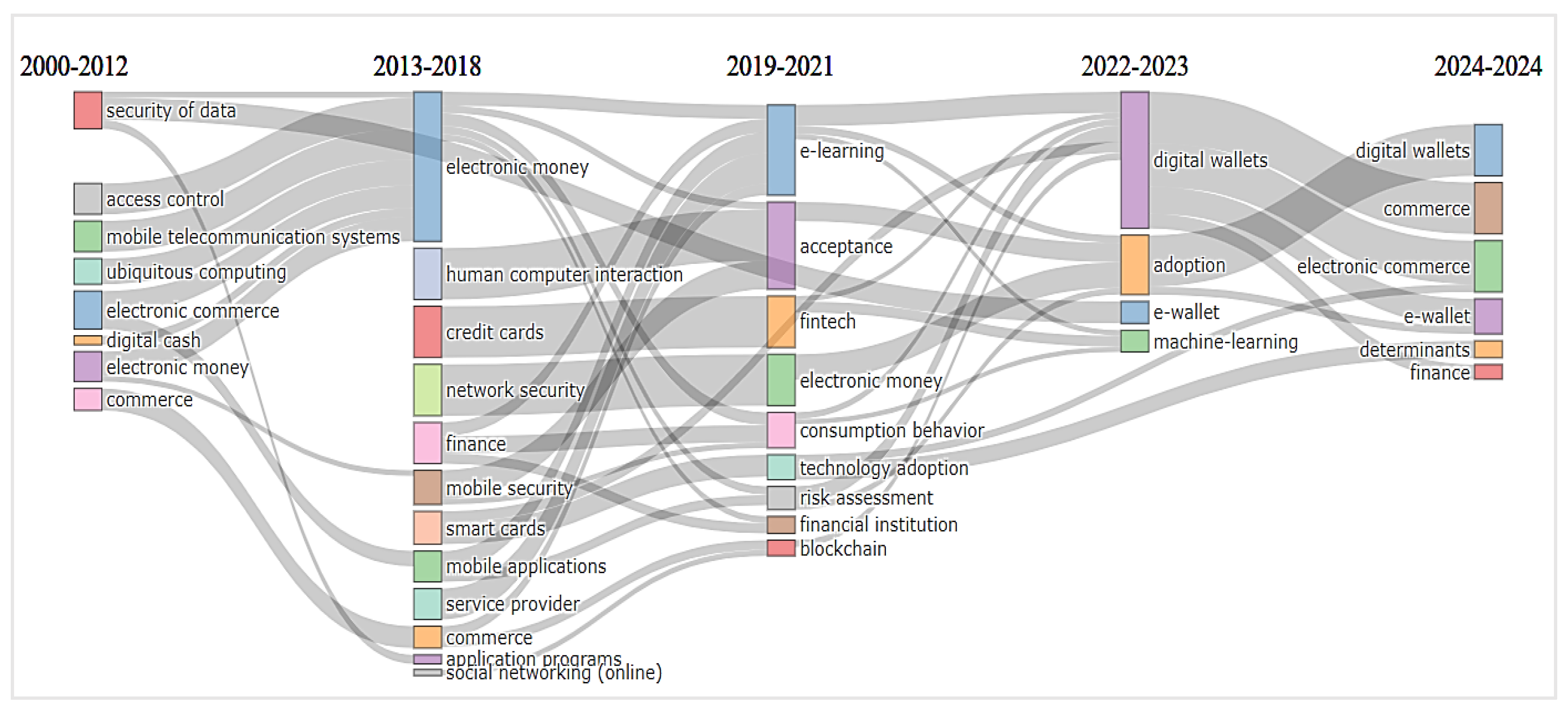
Figure 9.
Thematic map of research in WoS and Scopus analyzed with R-Studio and bibliometrix.
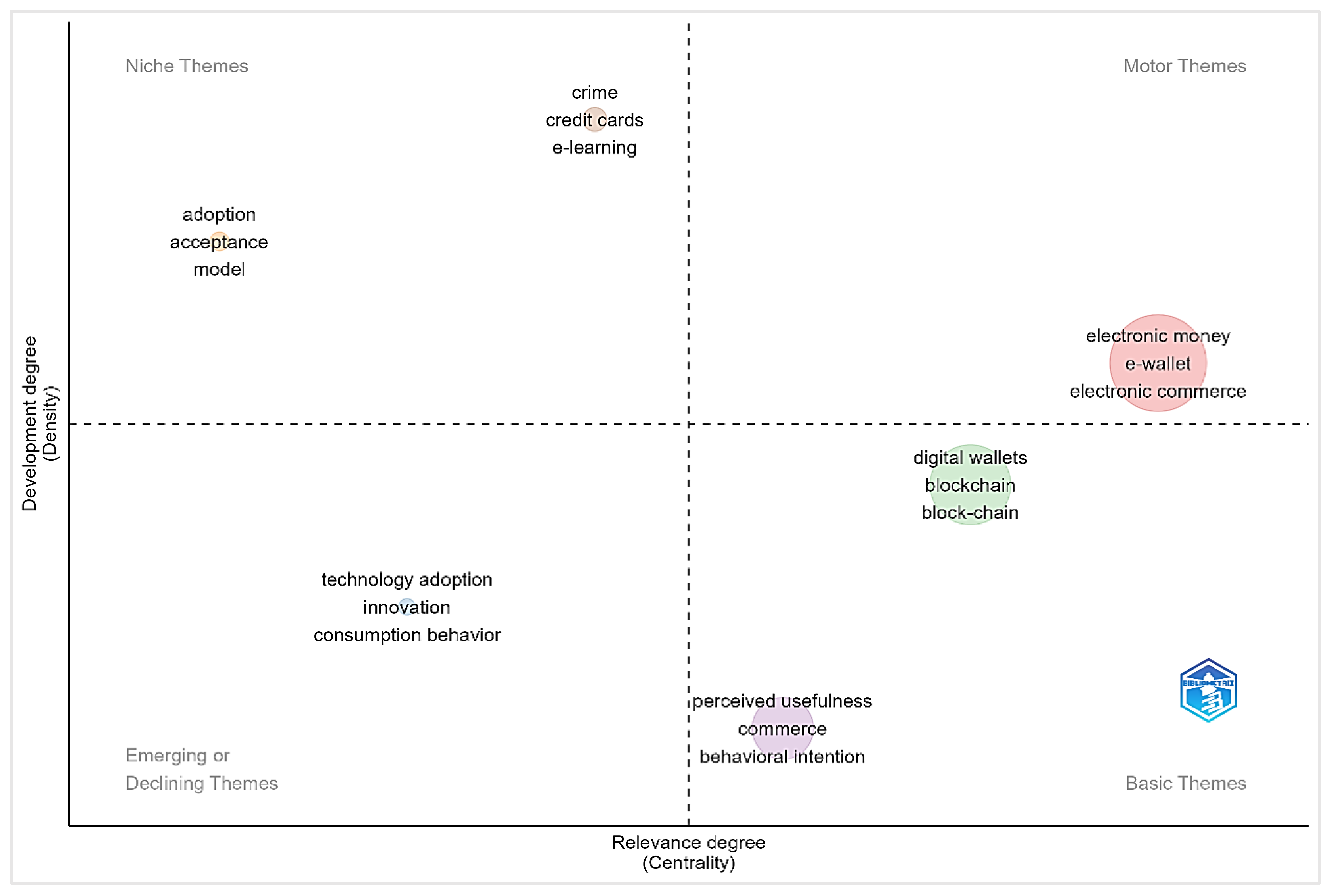
Figure 10.
Thematic map of research in WoS and Scopus analyzed with R-Studio and bibliometrix.
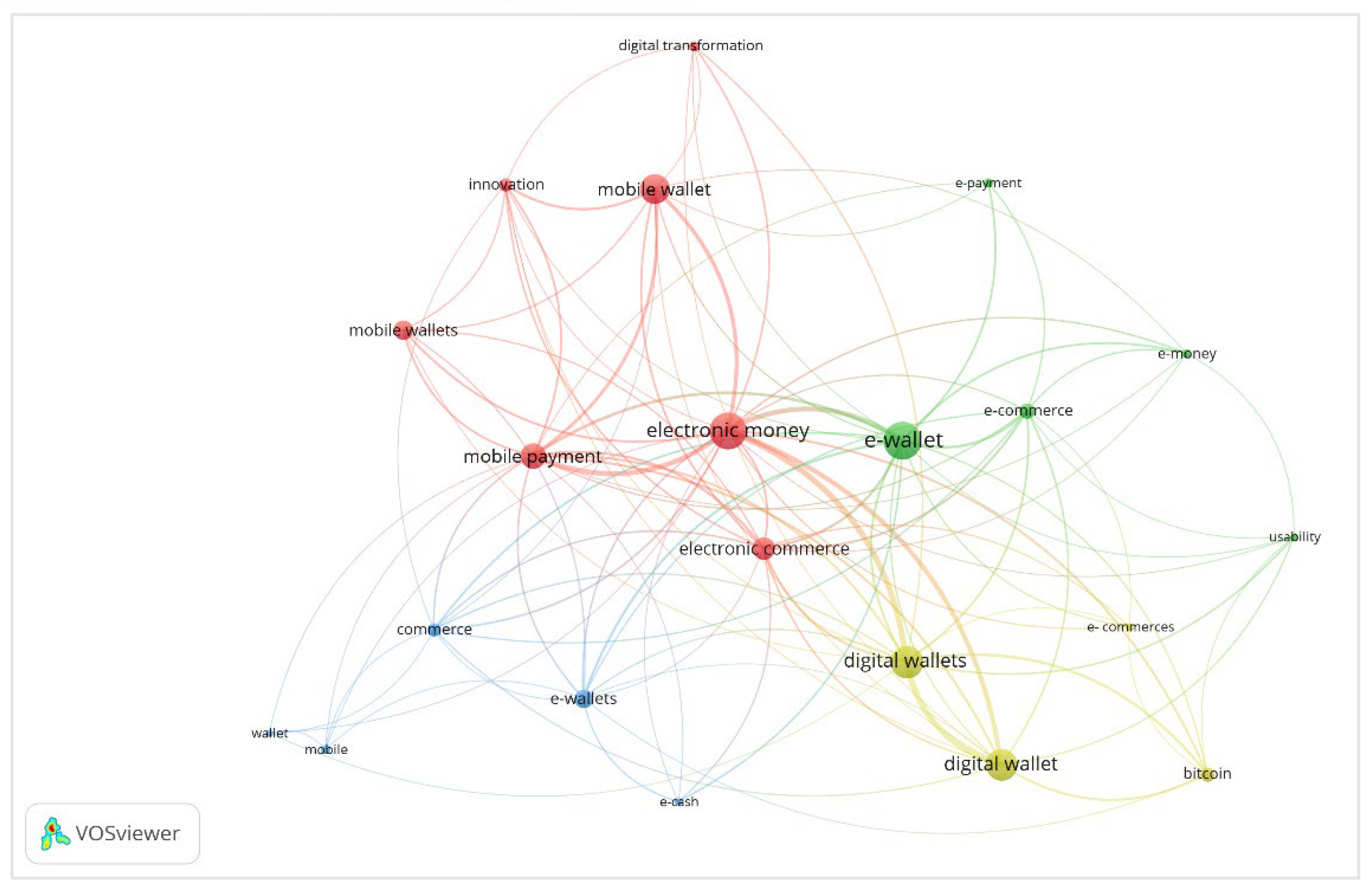

Table 1.
Authors with the highest number of publications in the field of study between 2000 and 2024.
Table 1.
Authors with the highest number of publications in the field of study between 2000 and 2024.
| Author | Institution | Country | Number of publications on the subject in both databases | Number of publications Scopus (S) WoS (W) | Number of citations Scopus (S) WoS (W) | Índice H Total Scopus (S) WoS (W) |
|---|---|---|---|---|---|---|
| RAO H. | The University of Texas | USA | 8 | 320(S) 231(W) | 14.350(S) 9.505(W) | 54(S) 45(W) |
| SEDLMEIR J. | University of Luxembourg | Luxembourg | 8 | 36(S) 21(W) |
689(S) 360(W) |
14(S) 9(W) |
| LOVING D. | Auburn University, Montgomery | USA | 7 | 80(S) 21(W) |
813(S) 307(W) |
12(S) 9(W) |
| CHAWLA D. | Government Medical College and Hospital | India | 7 | 173(S) 21(W) | 1732(S) 360(W) |
23(S) 9(W) |
| HASAN M. | Hashemite University | Jordan | 7 | 3(S) 2(W) |
0(S) 0(W) |
1(S) 0(W) |
| JOSHI H. | Institute of Technology Roorkee | India | 7 | 63(S) 190(W) | 724(S) 3121(W) |
15(S) 29(W) |
| SHARMA S. | Central Drug Research Institute India | India | 7 | 56(S) 46(W) |
1415(S) 361(W) |
20(W) 10(W) |
| SINGH A. | University of Delhi | India | 7 | 151(S) 3(W) |
6039(S) 36(W) |
41(S) 3(W) |
| GOEL M. | Pomona College | USA | 6 | 4(S) 2(W) |
39(S) 1(W) |
3(S) 1(W) |
| KAPOOR A. | University of Science & Technology | India | 6 | O(S) 5(W) |
0(S) 40(W) |
0(S) 3(W) |
Disclaimer/Publisher’s Note: The statements, opinions and data contained in all publications are solely those of the individual author(s) and contributor(s) and not of MDPI and/or the editor(s). MDPI and/or the editor(s) disclaim responsibility for any injury to people or property resulting from any ideas, methods, instructions or products referred to in the content. |
© 2024 by the authors. Licensee MDPI, Basel, Switzerland. This article is an open access article distributed under the terms and conditions of the Creative Commons Attribution (CC BY) license (http://creativecommons.org/licenses/by/4.0/).
Copyright: This open access article is published under a Creative Commons CC BY 4.0 license, which permit the free download, distribution, and reuse, provided that the author and preprint are cited in any reuse.


