
Submitted:
20 August 2024
Posted:
21 August 2024
You are already at the latest version
Abstract
Changes in hydrology from aridification in the U.S. Southwest have led to tension at the urban-rural divide about conservation and land management strategy. Strain on multi-generational agricultural livelihoods and a nearly 150-year-old Colorado River water adjudication system presents an opportunity for multidisciplinary solutions and symbiotic partnerships. In this study, producers in a small San Juan River headwater community in southwestern Colorado participated in a convergence research study developed collaboratively with community partners, prioritizing local objectives and policy needs. Acknowledging the historic and sometimes perceived role of academic institutions as representing urban interests, our goal was to highlight how research could support rural governance and identify rural interests. Respondents identified water availability and climate changes as the factor that most negatively affects operations. Respondents had interest in nature-based agroforestry methods like windbreak trees and drought-resistant crop species. Community members identified cost as the leading perceived barrier to implementing nature-based agricultural solutions, with over half of respondents indicating that programs to subsidize or eliminate cost would improve willingness to try nature-based methods. Analyses identified that satisfaction with community resources was positively correlated with scale of production, satisfaction with irrigation equipment, and familiarity with water rights. Further, our results outline barriers to perceptions about nature-based solutions on rural landscapes. We hope to contribute this model for wider applications in other regions to uncover place-based solutions to resource challenges and contribute to addressing stress at the urban-rural divide.
Keywords:
convergence research
; urban-rural divide
; nature-based solutions
; rural governance
; Colorado River
1. Introduction
As academic nomenclature replaces ‘drought’ with the less ephemeral ‘aridification’ in the U.S. Southwest [1], nature-based solutions could buffer ensuing challenges faced by food producing communities. Rural individuals are underrepresented in science and research, despite accounting for approximately 20% of the US population [2]. Survey-based research can help uncover agricultural innovations already happening in rural areas while highlighting potential for future adaptations to climate challenges. Increasing representation of rural communities in research can also help identify barriers to implementing new innovations, on a community scale. Broadly, the literature shows that growers have identified market unpredictability, unpredictability of natural methods for fertilizer and pest control as the largest barriers to implemented nature-based solutions, like regenerative agriculture [3]. Regenerative agriculture is an adaptation to existing methods of food production utilizing soil and land management to improve soil health, restore biodiversity and mitigate climate change, acknowledging farming and ranching as a holistic ecological system that relies on and exists within established ecosystems [4,5]. Even seemingly small modifications to conventional growing methods can have significant positive impacts on rural livelihoods, and regenerative agriculture in general can support long-term resilience to climate change through farm self-efficacy and wellbeing [6,7,8].
Innovations, such as regenerative agriculture, have a long history of being shared through farmer-to-farmer networks that could have a similar effect at the community scale [9]. Empowering rural governance through convergent research can help support representation of communities in the literature by bolstering social networks linking farmers and researchers. This is crucially important as emerging research shows a ‘crisis of trust’ in rural areas, where trust in local level systems is substantially higher than trust in national (outside) level systems [10]. Landowners, including farmers and ranchers, own and manage significant amounts of land in rural parts of the U.S., and are integral partners in furthering environmental policy [11] (pp. 502-518). Underscoring the need to focus on local governance frameworks to empower individuals and communities to engage in community action, especially during a time of exceptional polarization in the U.S., particularly across urban-rural divides [12]. Supporting local entities through convergent research can aid in supporting more participatory and consensus-based environmental policy, encouraging trust in local institutions [10].
Between 2000 and 2020, every region of the Southwest experienced higher mean temperatures than long-term averages [13]. Changes in hydrology from deforestation, soil depletion, and reduced snowpack from soils raising albedo are threats to the forests, streams, and food producing lands of the Southwest [13]. On a global scale, one third of all agricultural land has been deemed unusable due to soil degradation, mostly from overgrazing, chemical pesticides and fertilizers, heavy tillage, and land clearing [14]. Small and medium-sized farms could be more easily optimized for climate resilience than industrial-scale farms. Reimagining, adapting, and localizing food systems could mitigate challenges from climatic and social changes, wherein unsustainable massive-scale industrial systems of farming won’t meet rising demand [15] (pp. 627-639), [16] (pp. 39-45).
Food producing communities in the Southwest often rely on mountain headwaters to supply flows to bring irrigation water to streams or reservoirs and eventually ditches or pipes. Snow cover across mountainous regions of California, Nevada, Utah, Arizona, and New Mexico typically remains for six months or longer, supplying a reservoir that gradually melts during the early growing season [17] (pp.46-61), [18] (pp. 1007-1015). The EPA measured a snow water equivalent decline of 93% in snow telemetry (SNOTEL) network sites measured across the Intermountain West from 1955 to 2022, with an average snow water equivalent reduction of 23% across site areas [19]. Dust blown onto snow is an accelerant for snow melt, decreasing albedo, the amount of light reflected by snow. Melt acceleration from dust has been measured to bring melt-out events as much as 31-days earlier than expected [20]. Dust on snow is perpetuated by land management practices that induce topsoil erosion, which could be mitigated effectively by nature-based methods, like planting cover crops during off seasons [14].
Convergent solutions can ensure sustainability, community wellbeing and food system security as these trends of changing hydrology in the Intermountain West continue [1]. Southwest Colorado is one of many regions experiencing increased aridification due to climate change [21]. Those with junior water rights to Dolores’ McPhee reservoir in the Four Corners region received as little as 10% of adjudicated water during the 2021 growing season [22]. Dolores’ Water Conservancy District had to impose penalties for water overuse, and the Dolores River lost a valuable rainbow trout fishery [23]. Ecological and hydrological systems, Southwest Colorado’s place in the food system, and community wellbeing are all affected by aridification. Colorado’s 150-year-old prior appropriation water rights system is also under strain because of decreased runoff and streamflow [24].
Identifying and allowing agricultural producers to self-select adaptive methods that are of most interest could streamline efforts to connecting growers with resources and partnerships to aid in implementation. For this work, a survey created collaboratively with rural conservation districts helped to meet goals toward a management plan during a consensus process. Consensus methods have long been used in health and medicine to structure discussion around controversial topics and are now being employed more frequently for environmental policy [25] (pp. 979-983). In 2023 the seven Colorado Basin states committed to a consensus system to conserve at least 3 million-acre-feet of water through 2026 [26].
One small watershed was of interest to partnering conservation districts, where river flows are variable, and the waterway is over-appropriated for irrigation. Understanding what regenerative or conservation-based methods growers in this watershed are interested in could contribute to improved hydrologic flows. Building pathways for discourse between agricultural producers and academics is symbiotic and could contribute to food system resilience and uncover commonalities rooted in land ethic from diverse stakeholders.
2. Materials and Methods
This research survey was conducted in an arid headwater region of Southwestern Colorado and was designed with local conservation districts using convergent methods. Generally, convergent research focuses on innovation and solutions to complex issues by bringing together people from many backgrounds, disciplines, and ways of life [27]. The survey’s goal was to better understand agricultural producers’ perspectives about nature-based solutions, innovations, and conservation
2.1. Survey Development
The survey was created through a collaborative process with partnering conservation districts to ensure that data satisfied research goals while importantly meeting the needs of community partners. The surveyed population was limited to agricultural producers in one rural county of Southwest Colorado. Conservation districts requested that their exact location be kept anonymous for uses outside of direct community outreach and internal meetings and correspondence.
Agriculture in this area is dispersed and represented by small and medium-scale family farms. About 80% of the county’s population is white, about 14% Native American, and about 13% Latino. The region surveyed is on ancestral lands of Indigenous Peoples including Ute, Arapaho, Comanche, and Diné. Nature-based food growing was a part of land-based culture prior to colonization, and many of the methods described throughout this paper are rooted in Traditional Ecological Knowledge [28,29,30].
Study objectives and goals were identified and co-developed with partners, considering uses for local policy and academic research. Some questions, including one gauging synthetic fertilizer use, were requested by conservation district staff to meet data needs. This aligned with the project’s goals to be guided by the highest benefit of the watershed and community, as a convergent effort. Coordinators at conservation districts provided insight to ensure clarity of questions, ideal survey length, neutral wording, and community-appropriate survey incentives. The perspectives and contributions of conservation district staff were invaluable, given extensive experience working with agricultural producers in the region, understanding of ecology, and integration with the community. An overarching goal was to represent perceptions of agricultural producers in the area whose schedules couldn’t accommodate extensive time commitments. Engaging farmers and ranchers while considering schedule limitations, especially during early irrigation and growing season, was an objective.
During the development of the survey, conservation districts hosted workshops to address watershed management planning, engaging local individuals and groups including water rights holders. The goal of these workshops was to create a plan for the local river that is dynamic and responds quickly to changes in temperature as snow melts, changing flows rapidly over 12- and 24-hour time periods. Because of its hydrology, the waterway is sensitive to changes in climate and seasonality. It supplies over 50 irrigation ditches to community members with adjudicated water rights. The waterway management plan development process informed topics included in the survey.
2.2. Survey Design
The survey instrument took 10-15 minutes to complete. The instrument included 16 questions, including an open-ended final question for comments and suggestions. The paper version of the survey is included in Appendix A. To reduce survey length, Likert-style multiple-choice questions were used to judge favorability or disfavorability to certain topics. The survey was made available online via Qualtrics and physically via mail to accommodate any respondents without computer access. Survey recruitment was achieved through posters in local businesses with QR codes linking to the Qualtrics survey, emails from conservation districts to listservs, and distribution of paper surveys at meetings and events for farmers and ranchers. Producers in the small river watershed involved in the river management were targeted, with a higher volume of emails, posters, flyers, and community engagement taking place there. A five-dollar incentive to a popular, locally owned coffee shop was offered. Partnering with a local business was important to align with the project’s goals of community benefit and focus. Data was collected during Summer 2023, and most surveys were taken online via Qualtrics.
During data collection, an automated system took the survey ostensibly due to the advertised incentive to a local coffee shop. By utilizing IP address data and analysis of response times/quality the data was conservatively cleaned and bot responses removed [31]. This process is outlined in Appendix C.
3. Results
3.1. Demographic Results
In total, the survey had 60 respondents. 33 of those were in the small watershed with less irrigators and producers, targeted during recruitment by and for community partners. 27 respondents were in the wider county, geographically a much larger area. The total number of producers in the region has been omitted as it may identify the region where the survey was distributed. As seen in Figure 1, scale of production of respondents is relatively low. This is accurately representative of the region, where agriculture is widely dispersed among ranches. The average farm size was about 20-79 acres. 64% of agricultural land in the region is used for alfalfa or other hay, with ‘other hay’ representing other legume species grown for hay [32]. 51% of survey respondents identified growing alfalfa or other hay. USDA’s CroplandCROS raster data identified the sixth most common use for agricultural land in 2023 was fallow or idle cropland [32].
3.2. Methods of Highest Interest
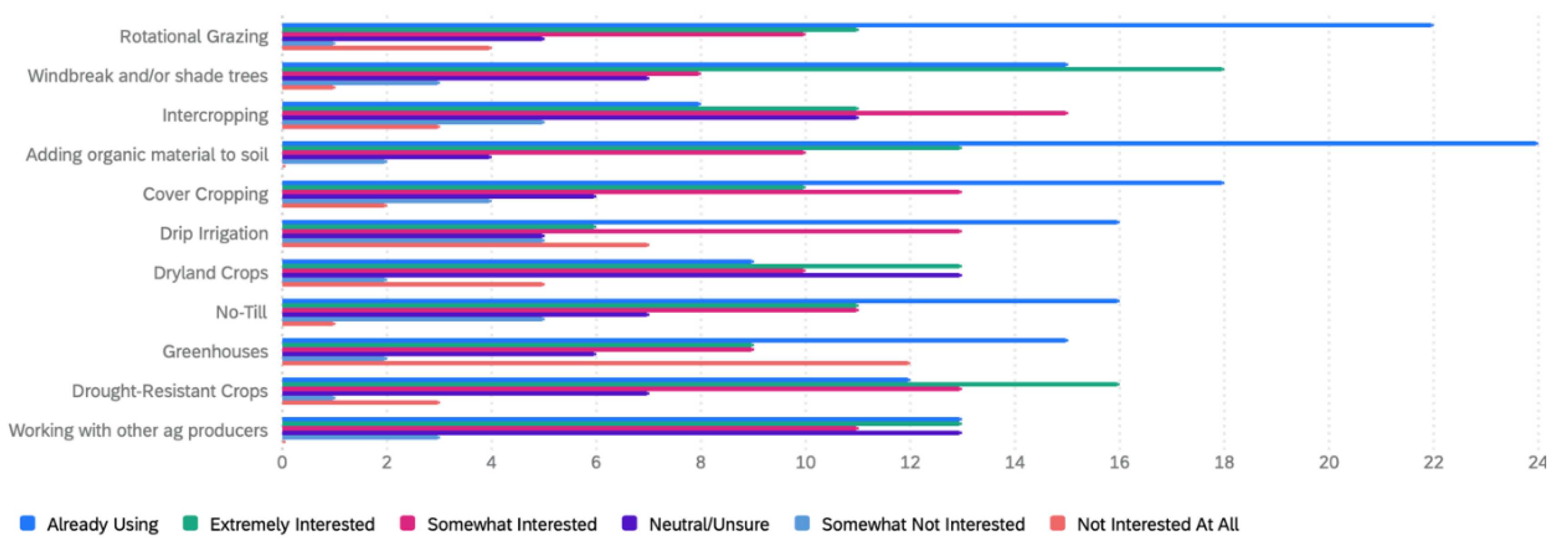
Understanding what methods are of interest and are already being used by producers in the county was gauged via the Likert scale on Question 9 (Appendix A). Nearly half (45%) of respondents identified already adding organic material to soil, and 41% of respondents identified actively implementing rotational grazing. Figure 3 shows that the methods of most ‘extreme interest’ were two agroforestry methods: windbreak and/or shade trees (34%) and drought-resistant crops (31%).
Figure 4.
Responses to Likert-style survey question: ‘how interested would you be in utilizing each of these methods on your land?’.
Figure 4.
Responses to Likert-style survey question: ‘how interested would you be in utilizing each of these methods on your land?’.
3.3. Perceived Barriers and Methods to Increase Willingness
To gauge climate-related challenges, questions 5 through 7 asked about how production had been negatively affected by water availability, soil quality, and temperature or weather changes. Water availability and temperature and weather changes are related and received similar response rates. As shown in percentages in Figure 5, 42 out of 53 respondents identified water availability as a challenge, while 39 out of 52 identified temperature and weather changes as challenges. Almost half of respondents identified soil quality as a challenge.
Figure 5.
Percent of respondents who selected water availability, temperature and weather changes, and soil quality, respectively, as negatively affecting production. Graphic style designed for community outreach and data sharing.
Figure 5.
Percent of respondents who selected water availability, temperature and weather changes, and soil quality, respectively, as negatively affecting production. Graphic style designed for community outreach and data sharing.
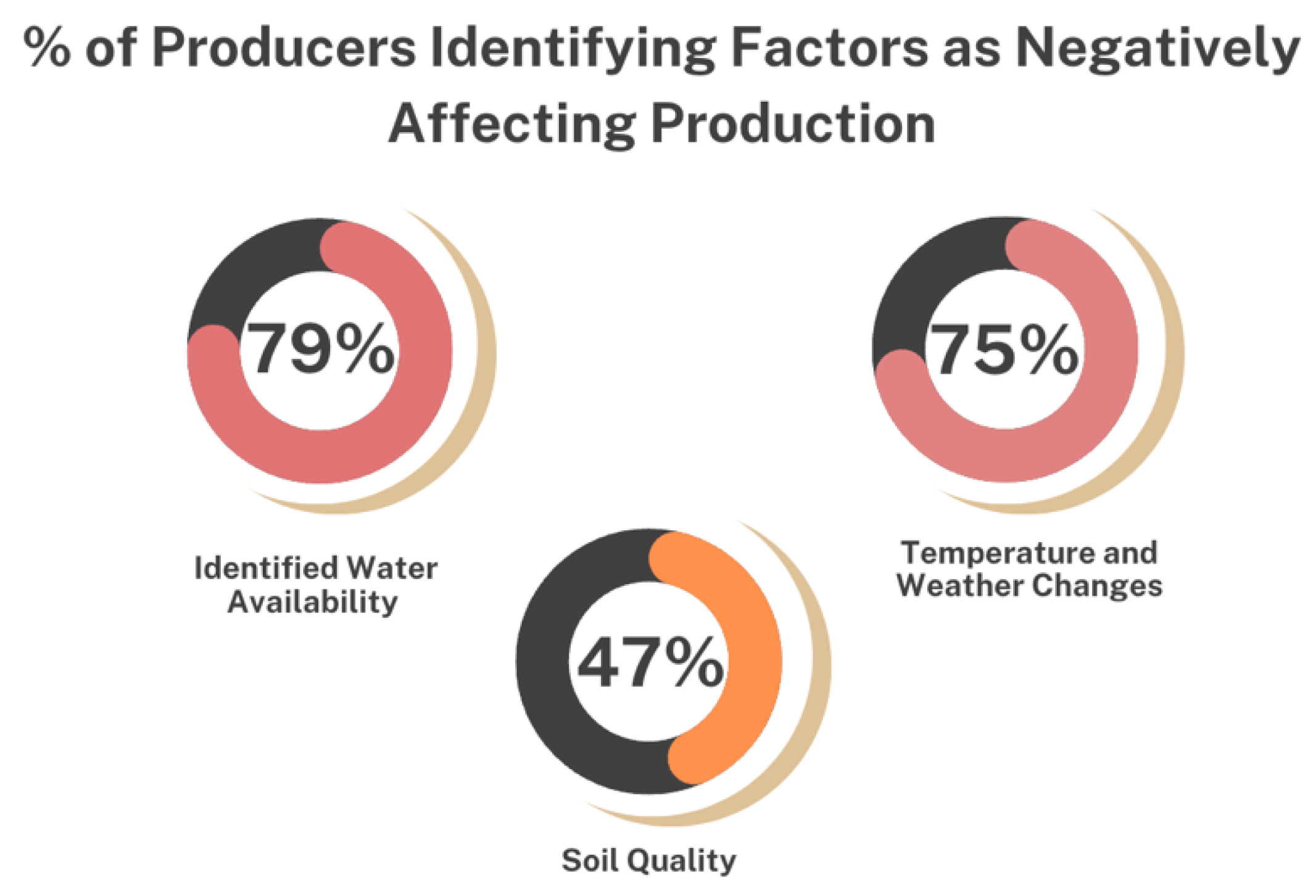
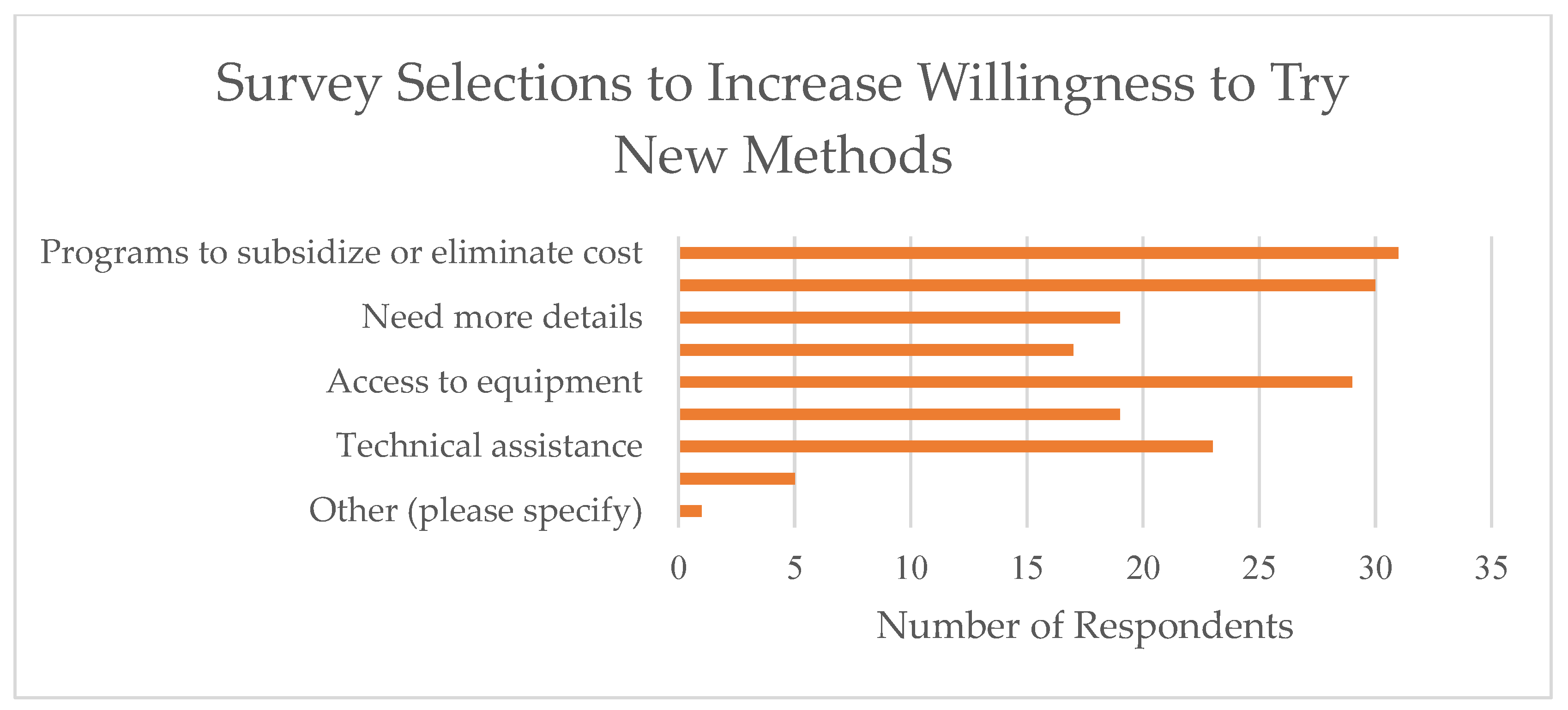
Figure 6.
Farmer-identified factors that would enable increased willingness to adopt nature-based solutions.
Figure 6.
Farmer-identified factors that would enable increased willingness to adopt nature-based solutions.
3.4. Statistical Analyses
Statistical analyses were conducted to identify significant correlations (p-value <0.05) between response variables. Prior to statistical analyses, we generated summary statistics, outlined in Table 1. These statistics indicated that respondents operated an average area of 20-79 acres. 68% of respondents reported satisfaction with community resources available to them. 59% of respondents were satisfied with their current irrigation equipment. 82% of respondents reported feeling knowledgeable about their water rights.
In Table 3, scale of production (designated ‘acres’ on Table 2) was compared to satisfaction with irrigation equipment (‘irrigation’), familiarity with water rights (‘water rights’) and satisfaction with community resources (‘community resources’) as dependent variables. There was no significant correlation between scale of production and irrigation satisfaction or knowledge of water rights, but a p-value of 0.00948 comparing acres and community resources indicated a significant correlation (Table 2). Community resource satisfaction was compared to scale of production, irrigation satisfaction, and water rights knowledge. Community resources was positively correlated with all other variables, (Table 3). In summary, those who responded with more satisfaction with community resources produced at a larger scale, identified a better familiarity with their water rights, and were more satisfied with their irrigation equipment. An example of these questions in the paper copy of the survey is located in Appendix B.
4. Discussion
Understanding regionally specific limitations and nuances in governance is foundational to the process of testing and integrating inherently place-based methods like nature-based solutions. Processes of political polarization in the United States and a growing urban-rural divide has potential to limit the straightforwardness of research applications [33]. In a written response, one respondent said, “If we aren’t taking care of the land, we aren’t making a living, period that’s it.” The same respondent also said, “We have no problem with saving the environment, but it is being pushed at us around every corner.”
This illustrates the need for initiatives that go beyond encouraging growers to be environmentally friendly, but instead work with communities to offer regionally relevant training and programs to support climate adapted practices that benefit producers and ecosystems. Integrating researched methods into on-the-ground transformation requires community-rooted inquiry. Convergent research focuses on innovation and solutions to complex issues by bringing together people from many backgrounds, disciplines, ways of life, and ways of knowing [27]. Much like diversity supports resilience in ecological systems [34] diverse perspectives can produce more versatile and place-based climate solutions.
Engaging local food producers about self-identified interests and concerns promotes a mindful approach to empowering land management that is conducive to functioning ecosystem services. The goal of this anonymous survey was to understand agricultural producers’ perceived limitations to, and preferences and perceptions about conservation topics including interest in nature-based solutions. Uncovering nature-based practices currently being utilized was an objective. Many multi-generational farms and ranches exist in the region, likely with generational ecological knowledge including high-level understanding of landscape variability. Generally, results showed that producers in the community are invested in water conservation and interested in methods like agroforestry (shade and windbreak trees) and drought-resistant crops. 64% of respondents to a question about values chose conserving water and water retention of soil as ‘extremely important,’ and no respondents selected ‘not important at all,’ reflecting the inherent adaptability of the surveyed community and unity around protecting water resources.
Focusing on adding organic material to soil or rotational grazing, both identified as already being used, could serve as gateways to further nature-based methods. Rotational grazing focuses on optimizing grazing pressure on forage plants by moving livestock methodically to improve soil health, increase nutrition available to livestock, and maximize forage plant yields [35]. Using soil organic matter as an amendment can increase nutrient availability in soils [36]. Building soil organic carbon through nature-based land management can mitigate soil degradation, often a costly issue, and aid in water [37]. Bare, sun-exposed soils or those dependent on chemical fertilizers can have negative impacts on water quality from runoff and can lead to topsoil loss. By focusing on rebuilding soil, producers can increase water percolation and retention, allow for clean runoff water, and even sequester carbon [38]. Adding compost or manure to soils can support ecosystem services by harboring diversity in invertebrate and microbial communities that increase nutrient cycling [39]. Other organic soil amendments like biochar help improve soil porosity, particularly in clay soils common to the U.S. Southwest [40] (pp. 346-353).
44% of respondents identified utilizing organic material as a nature-based amendment to soil, and 40% of respondents identified practicing rotational livestock grazing. These data support potential for producer-led innovation and knowledge sharing in the surveyed region. While water availability (79% response rate) and temperature and weather changes (72% response rate) were overwhelmingly identified by respondents as negatively affecting production, soil quality (47% response rate) was selected considerably less. This could reflect producers already using adaptive practices like rotational grazing and adding soil organic material amendments, potentially from passed down generational ecological knowledge.
Statistical analysis showed that those who indicated having higher satisfaction with community resources produced at a larger scale, identified better understanding of their water rights, and were more satisfied with irrigation equipment. For larger scale producers (farm size 20-79 acres), this result proves that community outreach in the region is contributing to positive outcomes, measurably, in terms of irrigation equipment satisfaction and understanding of water rights. Not all agricultural products require large scale land use though, as in the cases of tomato and apple production [41] (pp. 987-992). This correlation could also indicate that smaller scale producers don’t feel as accommodated or represented by currently available community resources.
Within communities, higher social connectivity increases resilience. Social capital, a connection based on trust and community norms, allows for cooperation which leads to collective benefit [42] (p. 312). Resilience within social systems can aid in more positive responses to political, socioeconomic, and environmental changes [43]. This includes environmental protection, as social capital can influence environmental behaviors and collective action toward a cause [42]. Increasing social capital through community engagement, outreach, and education increases connectivity, building resilience and contributing to environmental consciousness. Empowering small-scale food production could aid in creating a foundation for a shortened supply chain, limiting how much virtual water is exported. Supporting a wide variety of sustainably, locally produced commodities can help aid in rural community coherence and limit distribution costs for growers [44].
Social networks and contexts are foundational to knowledge sharing practices among agricultural producers [45]. Supporting the inherent framework of idea sharing could bolster adaptability to drought years and changing climate, as growers with knowledge of regionally specific rotational grazing practices share methods with interested producers.
5. Conclusions
Barriers to adopting nature-based or regenerative agriculture practices include cost and access to training. Additionally, water adjudication laws that disincentivize leaving water in-stream for conservation present barriers to adopting practices are more water efficient. [46]. Water use for alfalfa irrigation accounts for a significant amount of Colorado River water use. A 2024 water use accounting report listed cattle feed crops as consuming 90% of total water used by irrigated agriculture in the Upper Basin, more than three times the combined consumption of commercial, municipal, and industrial uses [47]. Also, the global alfalfa hay market has grown significantly due to increasing demand for dairy [48]. 2023 USDA data showed 64% of agricultural land in the surveyed county is being used for alfalfa or other legume crops cultivated for hay, and 51% of survey respondents identified growing alfalfa or other hay [32].
Drought resistant crops were of high interest in the surveyed community, highlighting an opportunity to prove the profitability, feasibility, and water saving potential of plant species adapted to desert conditions [49]. While some commonly grown crops like wheat and soybean have limited ability to photosynthesize due to heat in desert climates, arid adapted species have adapted over millions of years to cope with high temperatures [15]. Implementing arid adapted species as small pilot plots within existing agricultural fields could help test outcomes of different species in desert regions of the U.S. Southwest. This is particularly necessary as crop yields are being threatened by aridification, contributing to expansion of drylands in the Southwest [15].
As restrictions on alfalfa cultivation are imposed in other parts of the world, including the 2019 ban in Saudi Arabia, exporting alfalfa will become more lucrative and in demand [48]. Protecting increasingly arid landscapes will rely on supported transformation based on collaborative efforts. The top three means identified by respondents to increase willingness to try new methods were programs to subsidize or eliminate cost (60%), workshops or training (58%), and access to equipment (56%). Support for programs like these, along with policy amendments to allow for conservation use of adjudicated water, could support increased flows in the Colorado Basin, where 52% of all Colorado River water is used for agriculture [47].
Community-scale land management challenges call for community-scale response and action, like focusing on improving wellbeing while creating pathways to transform operations to biodiversity-friendly production [50]. Alongside climate models and analyses, individuals whose livelihoods are being affected by aridification should be an integral part of finding solutions to complex and evolving challenges of food production in the Southwest.
Engaging with producers through outreach should include both economic and ecosystem benefits and implications [51]. For researchers, supporting adaptability can include continuing to uncover resilient food growing methods for regional climates while collaborating with food producers to fill gaps of knowledge inherent between farmer and academic.
Supplementary Materials
The following supporting information can be downloaded at the website of this paper posted on Preprints.org, Figure S1: Scale of Production Identified by Respondents; Figure S2: Distribution of 2023 Land Use in Surveyed Region; Figure S4: Likert Responses, Willingness to Adopt; Figure S5: Percent of Producers Identifying Factors as Negatively Affecting Production; Figure S6: Survey Selections to Increase Willingness to Try New Methods; Table S1: Average Values for Statistical Analysis; Table S2: Linear Analysis, Acres; Table S3: Linear Analysis, Community Resources.
Author Contributions
Conceptualization, S.G.M. and R.R.R.; methodology, S.G.M.; software, S.G.M.; validation, S.G.M.; formal analysis, S.G.M.; investigation, S.G.M; resources, S.G.M.; data curation, S.G.M.; writing—original draft preparation, S.G.M; writing—review and editing, S.G.M, R.R.R; visualization, S.G.M; supervision, R.R.R.; project administration, R.R.R.; funding acquisition, R.R.R. All authors have read and agreed to the published version of the manuscript.
Funding
The Transformation Network is supported by a grant from the National Science Foundation’s Sustainable Regional Systems Program, which aims to support convergent research and education that will advance sustainable regional systems science, engineering, and education. (NSF Grant #2115169).
Institutional Review Board Statement
Ethical review and approval by Institutional Review Board were waived for this study due to exempt status.
Informed Consent Statement
Consent was waived due to IRB exempt status.
Data Availability Statement
The datasets presented in this article are not readily available due to technical limitations. Requests to access the datasets should be directed to Richard.Rushforth@nau.edu.
Acknowledgments
Thanks to Sean Ryan, Michele Mirey, and Arden Day for administrative and technical support. Thanks to our community partners and collaborators from local conservation districts for their support and insight, and to community members for participating in this survey. Thanks to Dr. James Allen and Dr. Alark Saxena from NAU School of Forestry for graduate advisement and professional paper review.
Conflicts of Interest
The authors declare no conflicts of interest data; in the writing of the manuscript; or in the decision to publish the results.
Appendix A
Agriculture Survey Questions
- How many years have you been an agricultural producer?
☐ 0-5 years ☐ 6-14 years ☐ 15-19 years ☐ ☐ 20 or more years
- 2.
- How many total acres of land do you produce on?
☐ 1-19 acres ☐ 20-79 acres ☐ 80-119 acres ☐ 120 or more acres
- 3.
- Where do you get water to support your production? Select as many as apply.
☐ Reservoir ☐ Stream Ditch ☐ Well Water ☐ Prefer not to say
☐ Other (Please Specify): _________________________________________________
- 4.
- Are you in the [anonymized] watershed?
☐ Yes ☐ No ☐ Unsure ☐ Prefer not to say
- 5.
- During your time producing in the area, has your production been negatively affected by: water availability?
- 6.
- Soil quality?
- 7.
- Temperature/weather changes?
- 8.
- What do you produce? Select as many as apply.
☐ Livestock ☐ Alfalfa or Other Hay ☐ Winter Wheat
☐ Vegetables ☐ Fruit (Orchard) ☐ Dry Beans
☐ Other (Please Specify): ______________________________________
- 9.
- Do you use synthetic fertilizer on your crops?
☐ Yes, yearly ☐ Yes, as needed ☐ No longer use ☐ Never used
- 10.
- How important are each of these topics to you? Check one box for each.
| Extremely Important | Somewhat Important | Neutral/ Unsure | Somewhat Not Important | Not Important At All | |
| Quality of Crops and/or Livestock | |||||
| Water Retention of Soil | |||||
| Production Cost Savings | |||||
| Nature and Wildlife | |||||
| Knowledge of Water Rights | |||||
| Watershed Health | |||||
| Working With Community | |||||
| Erosion Control | |||||
| Sustainability | |||||
| Conserving Water |
- 11.
- How interested would you be in utilizing each of these methods on your land? Check one box for each.
| Already Using | Extremely Interested | Somewhat Interested | Neutral/ Unsure | Somewhat Not Interested | Not Interested At All | |
| Rotational Grazing | ||||||
| Adding organic material to soil | ||||||
| Cover Cropping | ||||||
| Drip Irrigation | ||||||
| Dryland Crops | ||||||
| No-Till | ||||||
| Greenhouses | ||||||
| Drought-Resistant Crops | ||||||
| Working with other ag producers | ||||||
| Windbreak and/or shade trees | ||||||
| Intercropping |
- 12.
- Please list any other conservation practices you use or are interested in:
Would you feel willing to try new methods if there were (select all that apply):
☐ Programs to subsidize/eliminate cost ☐ Workshops or training ☐ Need more details
☐ Other ag producers also trying new methods ☐ Access to equipment
☐ Seed and materials ☐ Technical assistance ☐ Not interested
☐ Other (Please Specify):_______________________________________________________
- 13.
- Do you currently use methods to conserve water on your land?
☐ Yes, always have ☐ Yes, started recently ☐ No, but used to ☐ No, never
☐ No, but would like to start
Please list water conservation method(s):____________________________________________
- 14.
- Would you like to see more information being shared about (select all that apply):
☐ Colorado Water Law ☐ How to use irrigation systems ☐ New irrigation technology ☐ Methods to conserve water ☐ Incorporating ditch users into a ditch company ☐ None of these
- 15.
- How satisfied are you with community resources available to you?
Not At All Satisfied ☐ 1 ☐ 2 ☐ 3 ☐ 4 ☐ 5 Very Satisfied
- 16.
- How satisfied are you with your current irrigation equipment (diversions, headgates etc.)?
Not At All Satisfied ☐ 1 ☐ 2 ☐ 3 ☐ 4 ☐ 5 Very Satisfied
- 17.
- How familiar are you with the water rights on your land?
Not At All Familiar ☐ 1 ☐ 2 ☐ 3 ☐ 4 ☐ 5 Very Familiar
- 18.
- Do you have questions, comments, or suggestions?
Appendix B
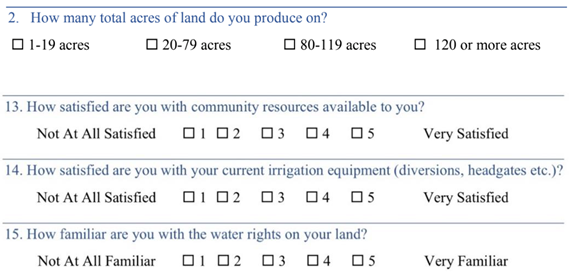
Responses to questions 2 and 13-15 were used for statistical analyses in R Studio. Sample from paper copy of survey.
Appendix C
Fraudulent Survey Response Mitigation
Initial Mitigation
- Over 100 responses were recorded in a single day after a second email recruitment, which was highly unlikely for this region, and alerted potential fraudulent responses.
- Survey was closed immediately.
- CAPTCHA added to beginning of survey before reopening to responses.
Post-Data Collection
- Identified ‘blocks’ of responses. Blocks mostly included many responses taken at the same time, especially late at night or very early morning in the survey region (MDT).
- Scanned responses for duplicate written answers or written answers not relevant to agriculture or other survey topics.
- Utilized generalized IP address data to identify responses that were recorded outside of the U.S. Southwest.
- Label responses as high-, medium-, and low-confidence, followed protocol outlined in Table B1.

Table A1.
Confidence level criteria and strategy.
| Confidence Level | Criteria | Strategy |
|---|---|---|
| High |
|
Kept all high-confidence responses. |
| Medium |
|
Consulted with Conservation Districts, thoroughly scan response for any criteria included in low-confidence response. |
| Low |
|
Marked as fraudulent response, removed from dataset. |
References
- Overpeck, J.T.; Udall, B. Climate Change and the Aridification of North America. Proc. Natl. Acad. Sci. U.S.A. 2020, 117, 11856–11858. [Google Scholar] [CrossRef] [PubMed]
- O'Neal, L.; Perkins, A. Rural Exclusion from Science and Academia. Trends Microbiol. 2021, 29, 953–956. [Google Scholar] [CrossRef]
- Lemke, S.; Smith, N.; Thiim, C.; Stump, K. Drivers and Barriers to Adoption of Regenerative Agriculture: Case Studies on Lessons Learned from Organic. Int. J. Agric. Sustain. 2024, 22. [Google Scholar] [CrossRef]
- Rhodes, C.J. Feeding and Healing the World: Through Regenerative Agriculture and Permaculture. Sci. Prog. (1933- ) 2012, 95, 345–446. [Google Scholar] [CrossRef]
- Schreefel, L.; Schulte, R.P.O.; de Boer, I.J.M.; Schrijver, A.P.; van Zanten, H.H.E. Regenerative Agriculture – The Soil Is the Base. Glob. Food Secur. 2020, 26, 100404. [Google Scholar] [CrossRef]
- Waters-Bayer, A.; Kristjanson, P.; Wettasinha, C.; van Veldhuizen, L.; Quiroga, G.; Swaans, K. Exploring the Impact of Farmer-Led Research Supported by Civil Society Organisations. Agric. Food Secur. 2015, 4, 4. [Google Scholar] [CrossRef]
- Tambo, J.A.; Wünscher, T. Farmer-Led Innovations and Rural Household Welfare: Evidence from Ghana. J. Rural Stud. 2017, 55, 263–274. [Google Scholar] [CrossRef]
- Brown, K.; Schirmer, J.; Upton, P. Can Regenerative Agriculture Support Successful Adaptation to Climate Change and Improved Landscape Health through Building Farmer Self-Efficacy and Wellbeing? Curr. Res. Environ. Sustain. 2022, 4, 100170. [Google Scholar] [CrossRef]
- Skaalsveen, K.; Ingram, J.; Urquhart, J. The Role of Farmers' Social Networks in the Implementation of No-Till Farming Practices. Agric. Syst. 2020, 181, 102824. [Google Scholar] [CrossRef]
- Hegewald, S. Locality as a Safe Haven: Place-Based Resentment and Political Trust in Local and National Institutions. J. Eur. Public Policy 2023, 31, 1749–1774. [Google Scholar] [CrossRef]
- Diamond, E.P. Understanding Rural Identities and Environmental Policy Attitudes in America. Perspect. Polit. 2023, 21, 502–518. [Google Scholar] [CrossRef]
- Jacobs, N.; Munis, B.K. Place-Based Resentment in Contemporary U.S. Elections: The Individual Sources of America’s Urban-Rural Divide. Polit. Res. Q. 2023, 76, 1102–1118. [Google Scholar] [CrossRef]
- MacDonald, G.M. Water, Climate Change, and Sustainability in the Southwest. Proc. Natl. Acad. Sci. U.S.A. 2010, 107, 21256–21262. [Google Scholar] [CrossRef]
- Rhodes, C.J. Feeding and Healing the World: Through Regenerative Agriculture and Permaculture. Sci. Prog. (1933- ) 2012, 95, 345–446. [Google Scholar] [CrossRef] [PubMed]
- Nabhan, G.P.; Riordan, E.C.; Monti, L.; et al. An Aridamerican Model for Agriculture in a Hotter, Water Scarce World. Plants People Planet 2020, 2, 627–639. [Google Scholar] [CrossRef]
- Gremmen, B. Regenerative Agriculture as a Biomimetic Technology. Outlook Agric. 2022, 51, 39–45. [Google Scholar] [CrossRef]
- Elias, E.; Rango, A.; Smith, R.; Maxwell, C.; Steele, C.; Havstad, K. Climate Change, Agriculture and Water Resources in the Southwestern United States. J. Contemp. Water Res. Educ. 2016, 158, 46–61. [Google Scholar] [CrossRef]
- Qin, Y.; Hong, C.; Zhao, H.; et al. Snowmelt Risk Telecouplings for Irrigated Agriculture. Nat. Clim. Chang. 2022, 12, 1007–1015. [Google Scholar] [CrossRef]
- EPA. Climate Change Indicators: Snowpack. U.S. Environmental Protection Agency (EPA). 2022, July.https://www.epa.gov/climate-indicators/climate-change-indicators-snowpack.
- Fassnacht, S.R.; Duncan, C.R.; Pfohl, A.K.D.; Webb, R.W.; Derry, J.E.; Sanford, W.E.; Reimanis, D.C.; Doskocil, L.G. Drivers of Dust-Enhanced Snowpack Melt-Out and Streamflow Timing. Hydrology 2022, 9, 47. [Google Scholar] [CrossRef]
- MacDonnell, L. The Law of the Colorado River: Coping with Severe Sustained Drought, Part II. 2021.
- Outcalt, C. Some Drought-Punished Farmers in SW Colorado Survived 2021 on 10% of Their Normal Water Supply. KSUT Public Radio. 2022, April 4.
- Southwestern Water Conservancy District. Ongoing Drought. 2022. https://swwcd.org/drought-in-sw-colorado/.
- Fleck, J.; Castle, A. Green Light for Adaptive Policies on the Colorado River. Water 2022, 14, 2. [Google Scholar] [CrossRef]
- Fink, A.; Kosecoff, J.; Chassin, M.; Brook, R.H. Consensus Methods: Characteristics and Guidelines for Use. Am. J. Public Health 1984, 74, 979–983. [Google Scholar] [CrossRef] [PubMed]
- U.S. Department of the Interior. Biden-Harris Administration Announces Historic Consensus System Conservation Proposal. 2023. https://www.doi.gov/pressreleases/biden-harris-administration-announces-historic-consensus-system-conservation-proposal.
- Wilson, N. On the Road to Convergence Research. BioScience 2019, 69, 587–593. [Google Scholar] [CrossRef]
- Lentz, D.L.; Slotten, V.; Dunning, N.P.; Jones, J.G.; Scarborough, V.L.; McCool, J.-P.; et al. Ecosystem Impacts by the Ancestral Puebloans of Chaco Canyon, New Mexico, USA. PLoS ONE 2021, 16, e0258369. [Google Scholar] [CrossRef] [PubMed]
- Park, S.; Hongu, N.; Daily, J.W. Native American Foods: History, Culture, and Influence on Modern Diets. J. Ethn. Foods 2016, 3, 171–177. [Google Scholar] [CrossRef]
- Randell, H.; Curley, A. Dams and tribal land loss in the United States. Environ. Res. Lett. 2023, 18, 094001. [Google Scholar] [CrossRef]
- Goodrich, B.; Fenton, M.; Penn, J.; Bovay, J.; Mountain, T. Battling bots: Experiences and strategies to mitigate fraudulent responses in online surveys. Appl. Econ. Perspect. Policy 2023, 45, 762–784. [Google Scholar] [CrossRef]
- United States Department of Agriculture (USDA) National Agricultural Statistics Service (NASS). Cropland Data Layer; USDA NASS Marketing and Information Services Office: Washington, D.C, 2024. [Google Scholar]
- Brown, T.; Mettler, S. Sequential Polarization: The Development of the Rural-Urban Political Divide, 1976–2020. Perspect. Polit. 2023, 1–29. [Google Scholar] [CrossRef]
- Walker, B.; Holling, C.S.; Carpenter, S.; Kinzig, A. Resilience, Adaptability, and Transformability in Social-Ecological Systems. Ecol. Soc. 2003, 9. [Google Scholar] [CrossRef]
- Baronti, S.; Ungaro, F.; Maienza, A.; et al. Rotational Pasture Management to Increase the Sustainability of Mountain Livestock Farms in the Alpine Region. Reg. Environ. Change 2022, 22, 50. [Google Scholar] [CrossRef]
- Gerke, J. The Central Role of Soil Organic Matter in Soil Fertility and Carbon Storage. Soil Syst. 2022, 6, 33. [Google Scholar] [CrossRef]
- Jordon, M.; Smith, P.; Long, P.; Bürkner, P.; Petrokofsky, G.; Willis, K. Can Regenerative Agriculture Increase National Soil Carbon Stocks? Simulated Country-Scale Adoption of Reduced Tillage, Cover Cropping, and Ley-Arable Integration Using RothC-26.3. SSRN Electron. J. 2021. [CrossRef]
- Elevitch, C.; Mazaroli, D.; Ragone, D. Agroforestry Standards for Regenerative Agriculture. Sustainability 2018, 10, 3337. [Google Scholar] [CrossRef]
- Kremen, C.; Miles, A. Ecosystem Services in Biologically Diversified versus Conventional Farming Systems: Benefits, Externalities, and Trade-Offs. Ecol. Soc. 2012, 17. Available online: http://www.jstor.org/stable/26269237. [CrossRef]
- Rasa, K.; Heikkinen, J.; Hannula, M.; Arstila, K.; Kulju, S.; Hyväluoma, J. How and Why Does Willow Biochar Increase a Clay Soil Water Retention Capacity? Biomass Bioenergy 2018, 119, 346–353. [Google Scholar] [CrossRef]
- Poore, J.; Nemecek, T. Reducing Food’s Environmental Impacts through Producers and Consumers. Science 2018, 360, 987–992. [Google Scholar] [CrossRef] [PubMed]
- Krasny, M.E. Advancing Environmental Education Practice; Cornell University Press: 2020; p. 312.
- Faulkner, L.; Brown, K.; Quinn, T. Analyzing Community Resilience as an Emergent Property of Dynamic Social-Ecological Systems. Ecol. Soc. 2018, 23. Available online: https://www.jstor.org/stable/26799048. [CrossRef]
- Anggraeni, E.W.; Handayati, Y.; Novani, S. Improving Local Food Systems through the Coordination of Agriculture Supply Chain Actors. Sustainability 2022, 14, 3281. [Google Scholar] [CrossRef]
- Thomas, E.; Riley, M.; Spees, J. Knowledge Flows: Farmers’ Social Relations and Knowledge Sharing Practices in ‘Catchment Sensitive Farming’. Land Use Policy 2020, 90, 104254. [Google Scholar] [CrossRef]
- FindLaw Staff. Colorado Revised Statutes Title 37. Water and Irrigation § 37-92-305. Standards with Respect to Rulings of the Referee and Decisions of the Water Judge—Definitions. 2022. https://codes.findlaw.com/co/title-37-water-and-irrigation/co-rev-st-sect-37-92-305/.
- Richter, B.D.; Lamsal, G.; Marston, L.; et al. New Water Accounting Reveals Why the Colorado River No Longer Reaches the Sea. Commun. Earth Environ. 2024, 5, 134. [Google Scholar] [CrossRef]
- Research and Markets. Global Alfalfa Hay Market 2018-2023: Saudi Arabia Imports Is Projected to Grow at a Maximum Rate, Due to the Country’s Banning of Forage Crops Production in 2019. Cision PR Newswire, November 8, 2018. https://www.researchandmarkets.com/reports/4520188/alfalfa-hay-market-share-analysis-industry?w=5.
- Walker, B.; Kinzig, A.; Langridge, J. Plant Attribute Diversity, Resilience, and Ecosystem Function: The Nature and Significance of Dominant and Minor Species. Ecosystems 1999, 2, 95–113. [Google Scholar] [CrossRef]
- Kadoya, T.; Takeuchi, Y.; Shinoda, Y.; et al. Shifting Agriculture Is the Dominant Driver of Forest Disturbance in Threatened Forest Species’ Ranges. Commun. Earth Environ. 2022, 3, 108. [Google Scholar] [CrossRef]
- Schoeneberger, M.M.; Bentrup, G.; Patel-Weynand, T. Agroforestry: Enhancing Resiliency in U.S. Agricultural Landscapes under Changing Conditions; General Technical Report WO-96; U.S. Department of Agriculture, Forest Service: Washington, DC, USA, 2017. [Google Scholar]
Figure 1.
Acres of land cultivated by respondents, illustrating the scale of production in surveyed region in SW Colorado. Results from question 2 of survey.
Figure 1.
Acres of land cultivated by respondents, illustrating the scale of production in surveyed region in SW Colorado. Results from question 2 of survey.
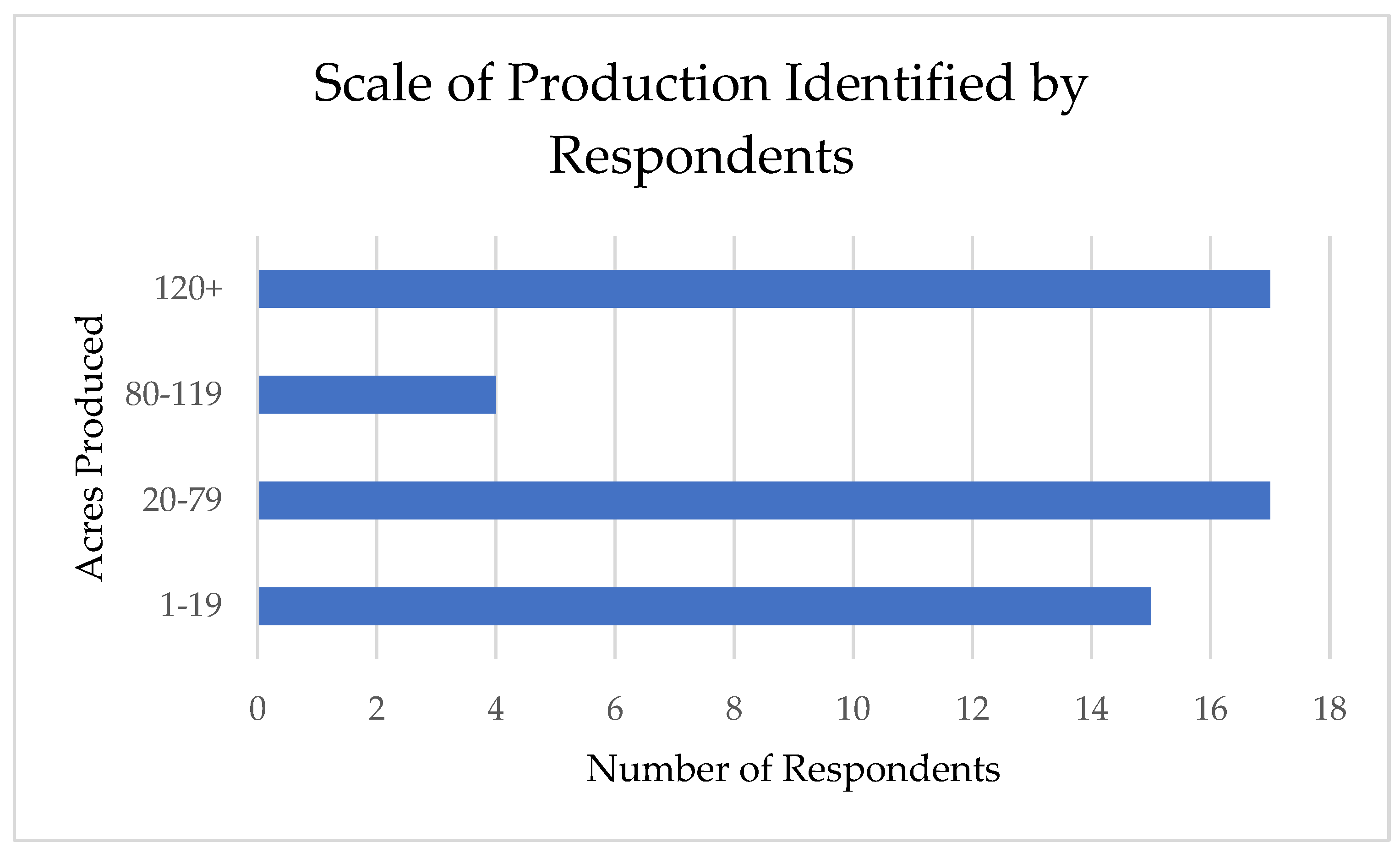
Figure 2.
Distribution of land use in surveyed region of SW Colorado [32].
Figure 2.
Distribution of land use in surveyed region of SW Colorado [32].
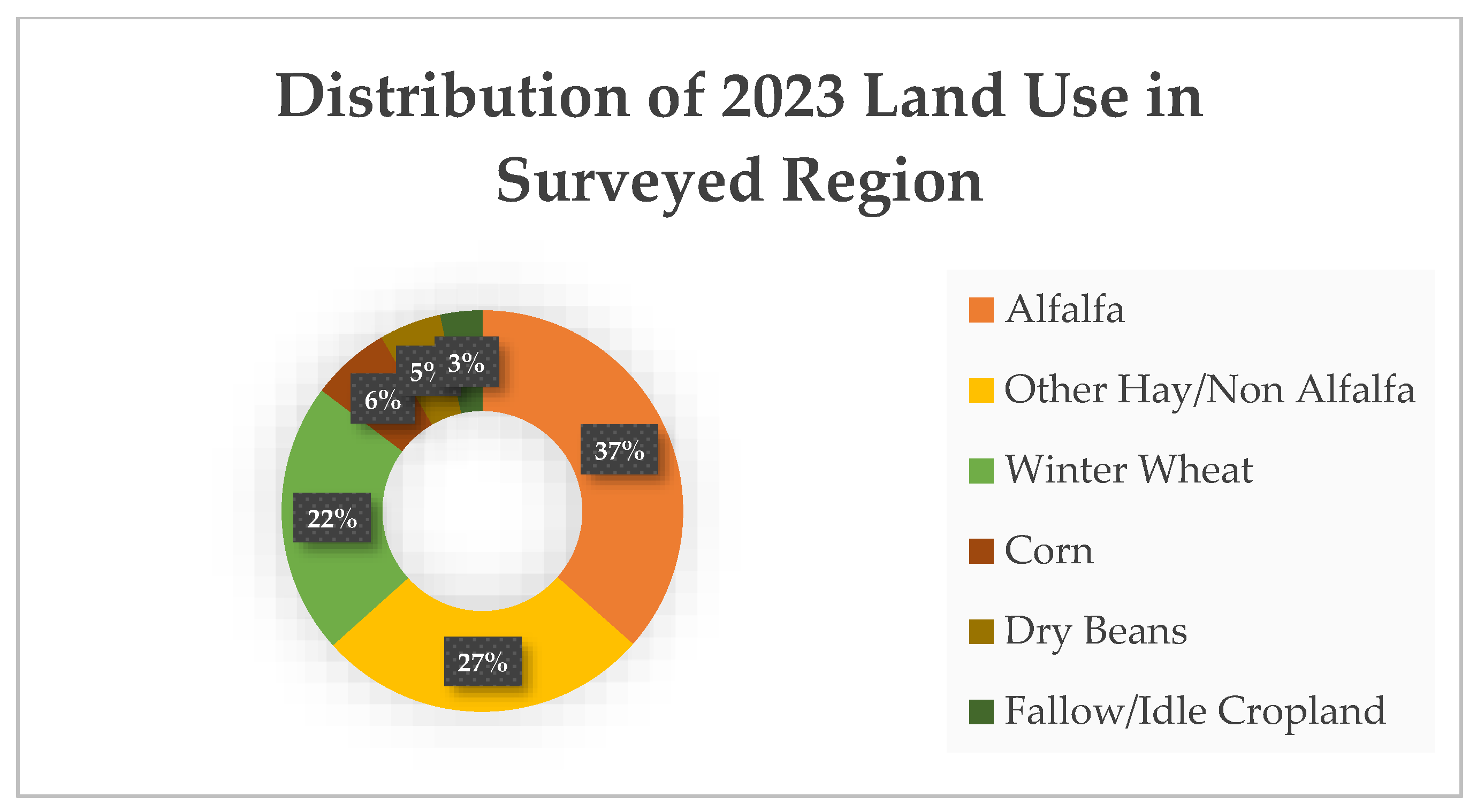
Table 1.
Average, minimum, maximum, standard deviation, and standard error values for variables represented in questions 13-16.
Table 1.
Average, minimum, maximum, standard deviation, and standard error values for variables represented in questions 13-16.
| Variable | Average | Min | Max | Std. Dev. | Std. Err. |
|---|---|---|---|---|---|
| Acres | 2.4 | 1 | 4 | 1.21 | 0.16 |
| Community Resources | 3.4 | 1 | 5 | 1.19 | 0.16 |
| Irrigation | 2.96 | 1 | 5 | 1.31 | 0.18 |
| Water Rights | 4.1 | 1 | 5 | 1.08 | 0.16 |
Table 2.
Variables analyzed in linear model analysis comparing acres (scale of production), with satisfaction with irrigation equipment, familiarity with water rights, and satisfaction with community resources, respectively.
Table 2.
Variables analyzed in linear model analysis comparing acres (scale of production), with satisfaction with irrigation equipment, familiarity with water rights, and satisfaction with community resources, respectively.
| Variables Compared via Linear Regression | Standard Error | P-Value | Statistical Significance (p-value <0.05) | Slope |
|---|---|---|---|---|
| Acres, Irrigation | 0.21 | 0.11 | No | 0.21 |
| Acres, Water Rights | 0.24 | 0.15 | No | 0.24 |
| Acres, Community Resources | 0.381 | 0.01 | Yes | 0.36 |
Table 3.
Variables analyzed in linear model analysis comparing satisfaction with community resources to satisfaction with irrigation equipment, familiarity with water rights, and acres (scale of production).
Table 3.
Variables analyzed in linear model analysis comparing satisfaction with community resources to satisfaction with irrigation equipment, familiarity with water rights, and acres (scale of production).
| Variables Compared via Linear Regression | Standard Error | P-Value | Statistical Significance (p-value <0.05) | Slope |
|---|---|---|---|---|
| Community Resources, Irrigation | 0.12 | 0.006 | Yes | 0.35 |
| Community Resources, Water Rights | 0.33 | 0.046 | Yes | 0.33 |
| Community Resources, Acres | 0.38 | 0.009 | Yes | 0.36 |
Disclaimer/Publisher’s Note: The statements, opinions and data contained in all publications are solely those of the individual author(s) and contributor(s) and not of MDPI and/or the editor(s). MDPI and/or the editor(s) disclaim responsibility for any injury to people or property resulting from any ideas, methods, instructions or products referred to in the content. |
© 2024 by the authors. Licensee MDPI, Basel, Switzerland. This article is an open access article distributed under the terms and conditions of the Creative Commons Attribution (CC BY) license (http://creativecommons.org/licenses/by/4.0/).
Copyright: This open access article is published under a Creative Commons CC BY 4.0 license, which permit the free download, distribution, and reuse, provided that the author and preprint are cited in any reuse.